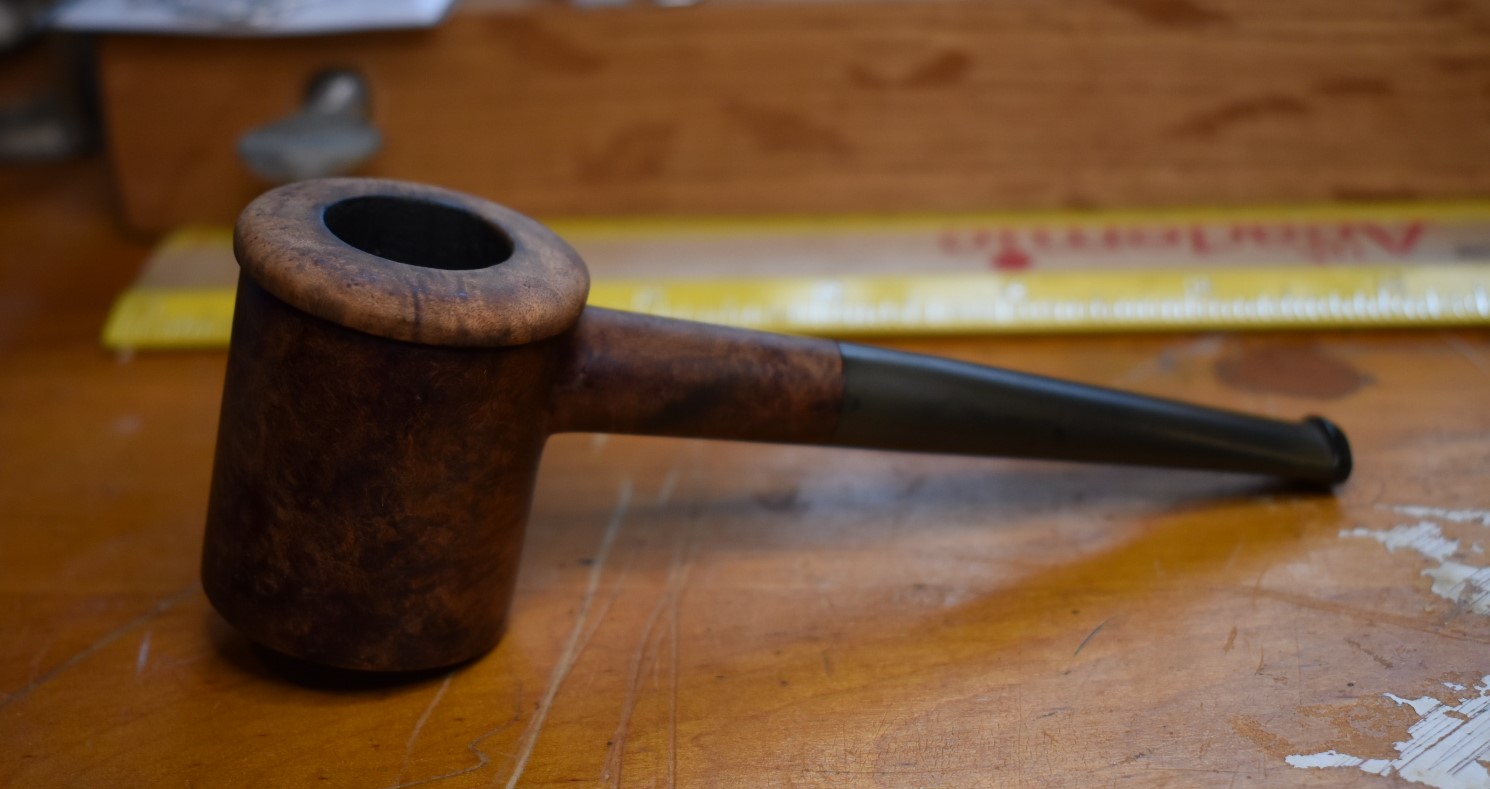
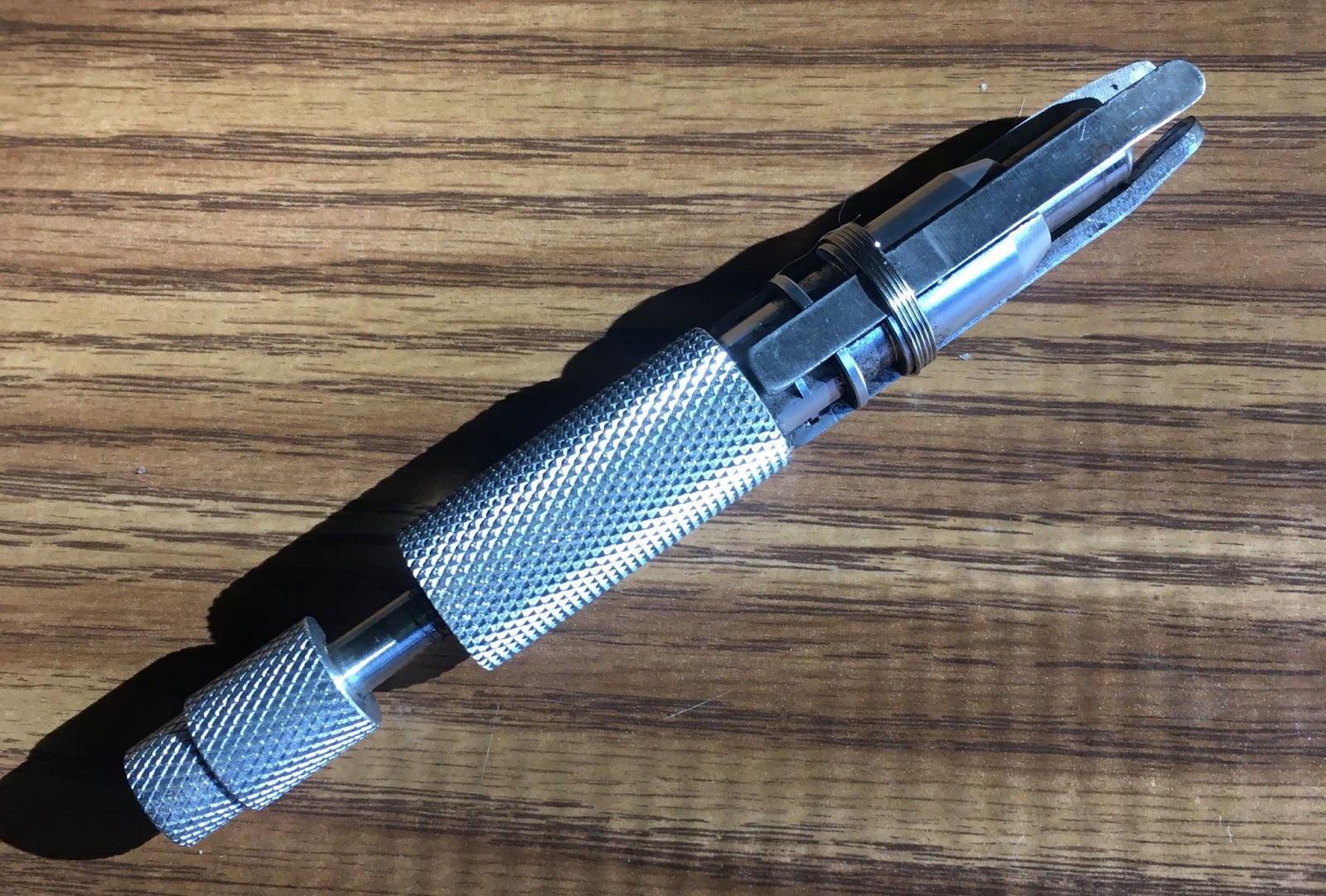
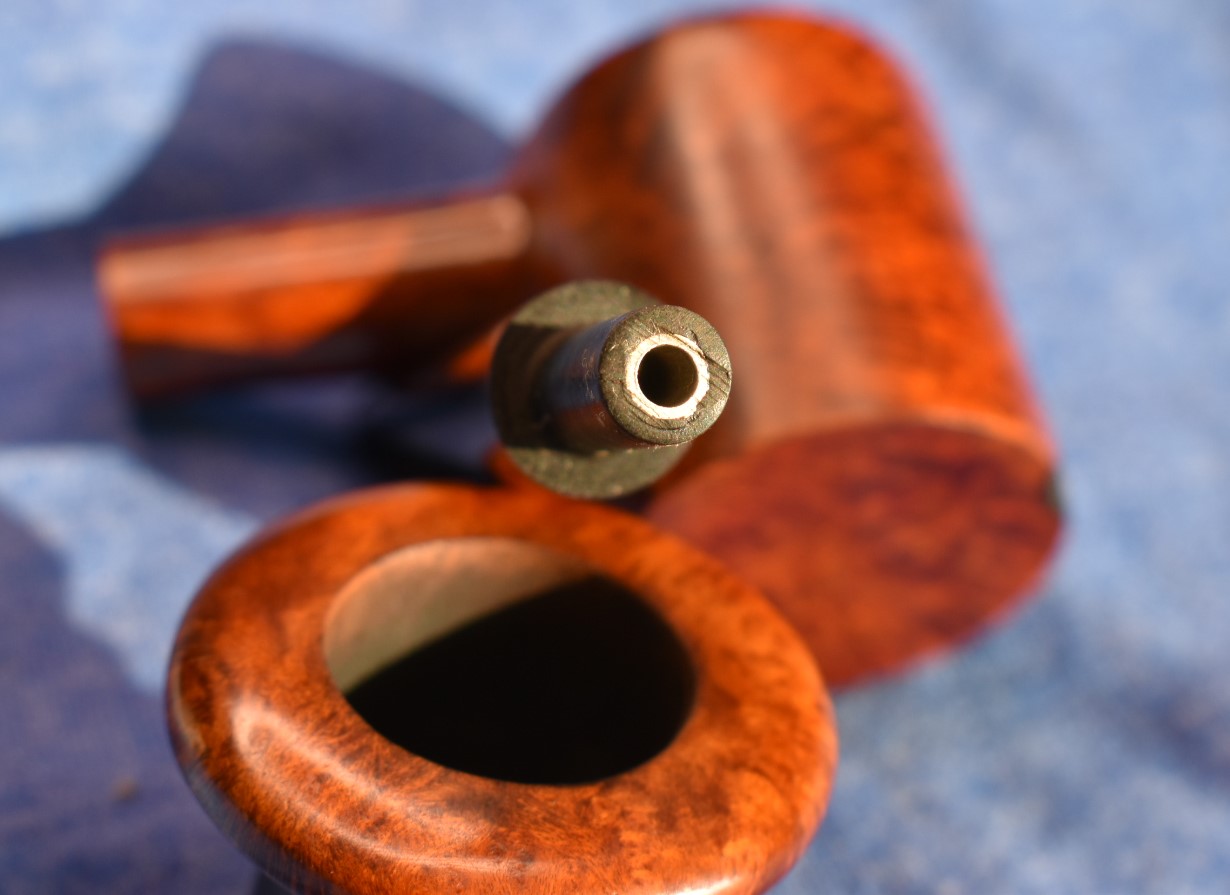
Skip to content
    • About

NebraskaPeteGeek

  • American Pipe Makers
  • British pipe Makers
  • Danish pipe Makers
  • French Pipe Makers
  • German Pipe Makers
  • Irish Pipe Makers
  • Italian Pipe Makers
  • Others or Unknown Pipe Makers
  • Restorations
  • A Brigham Restoration

    November 4th, 2023

    Written and photographed by John M. Young

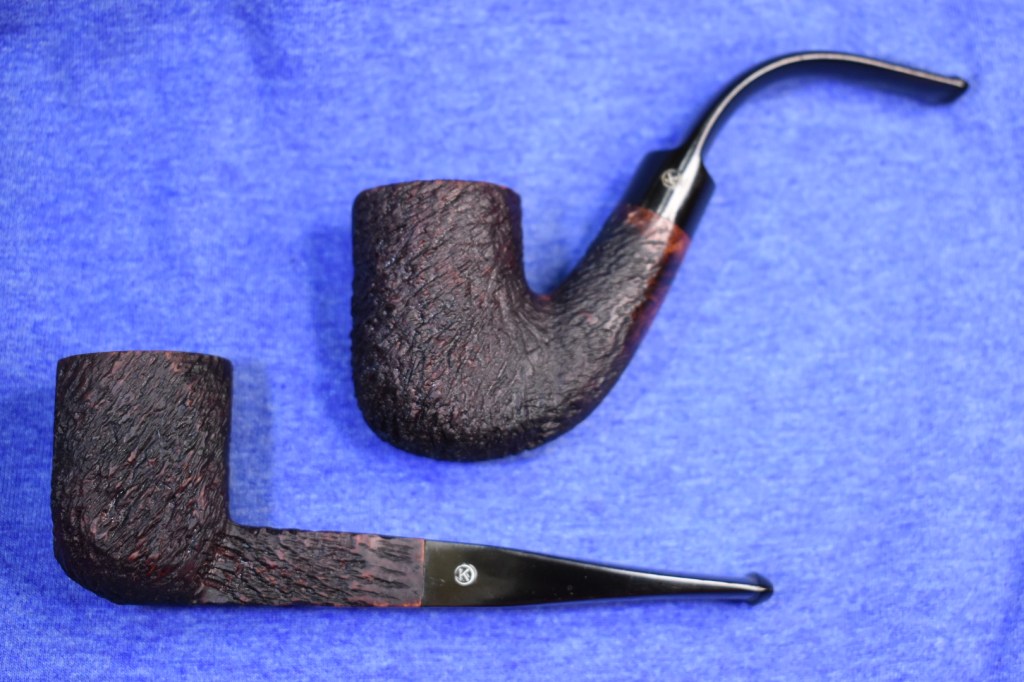
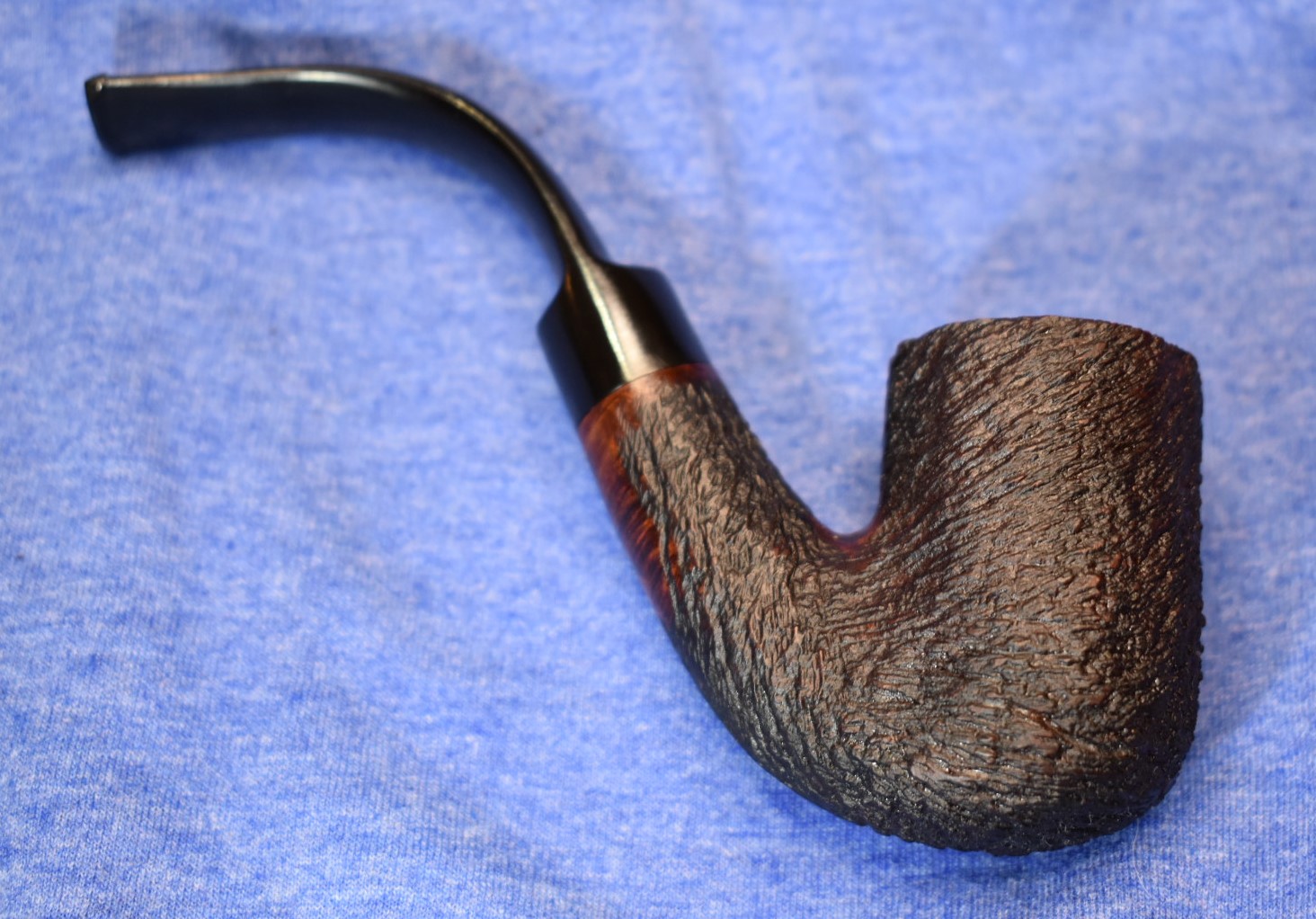
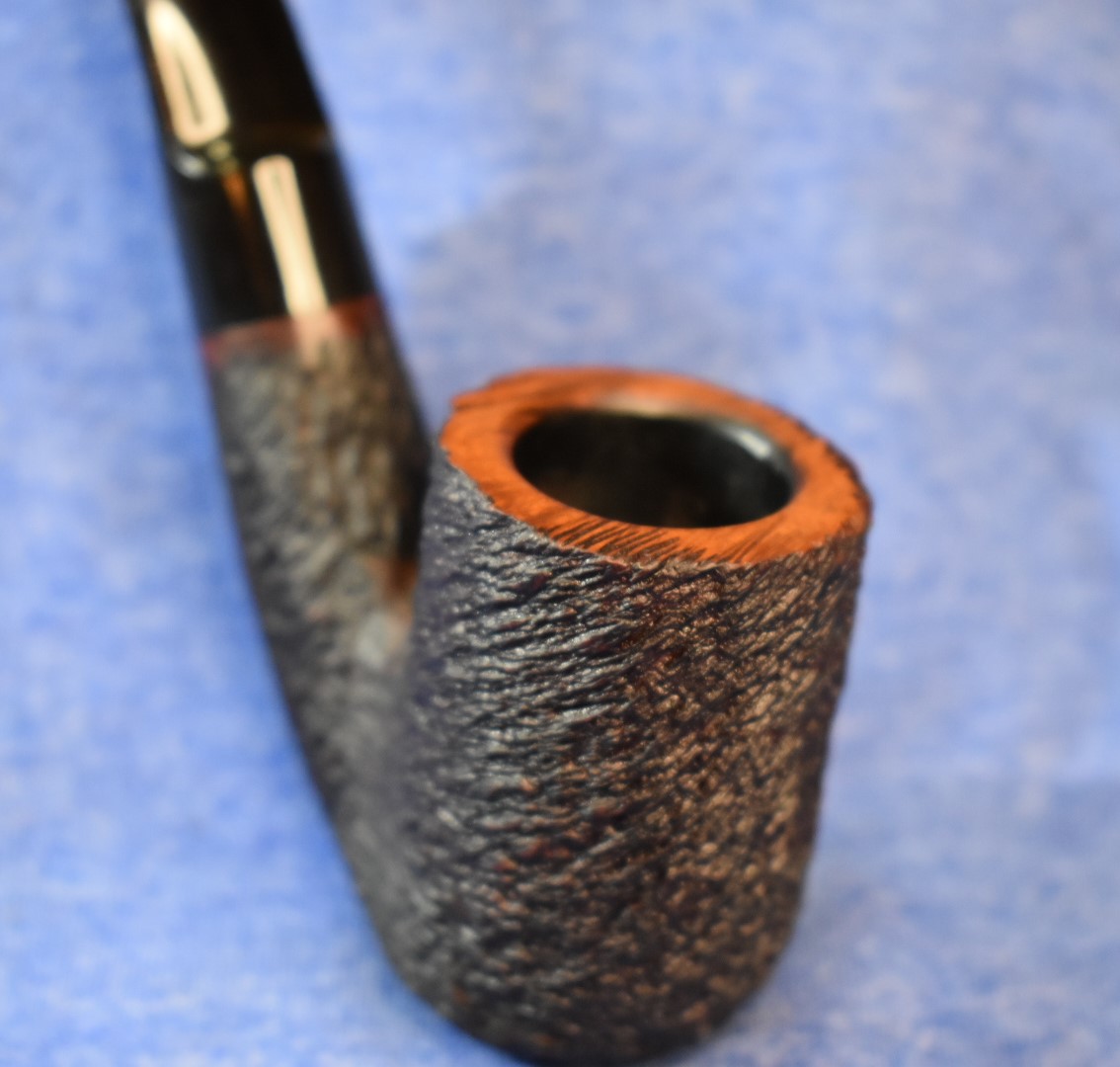
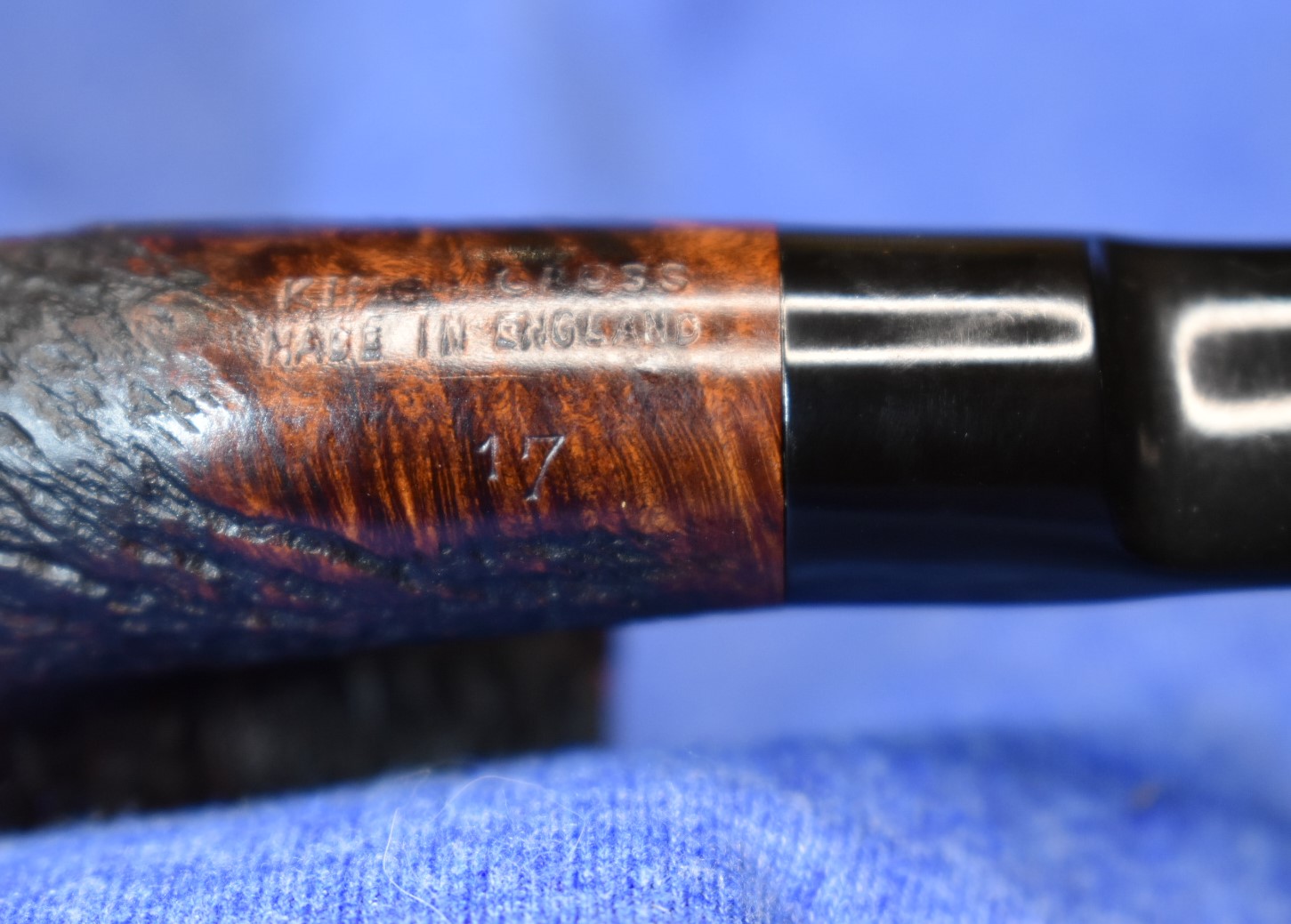
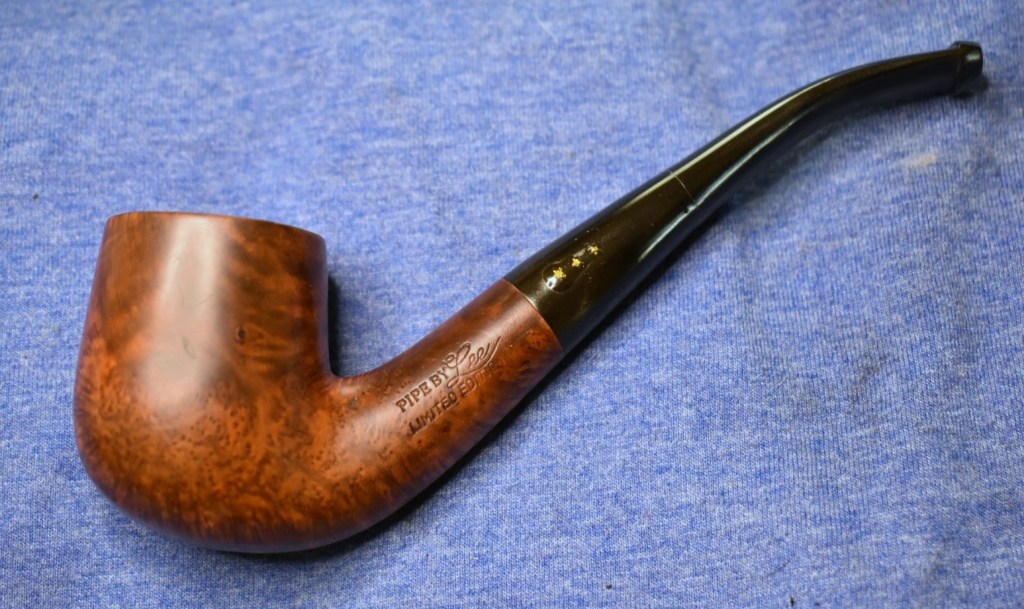
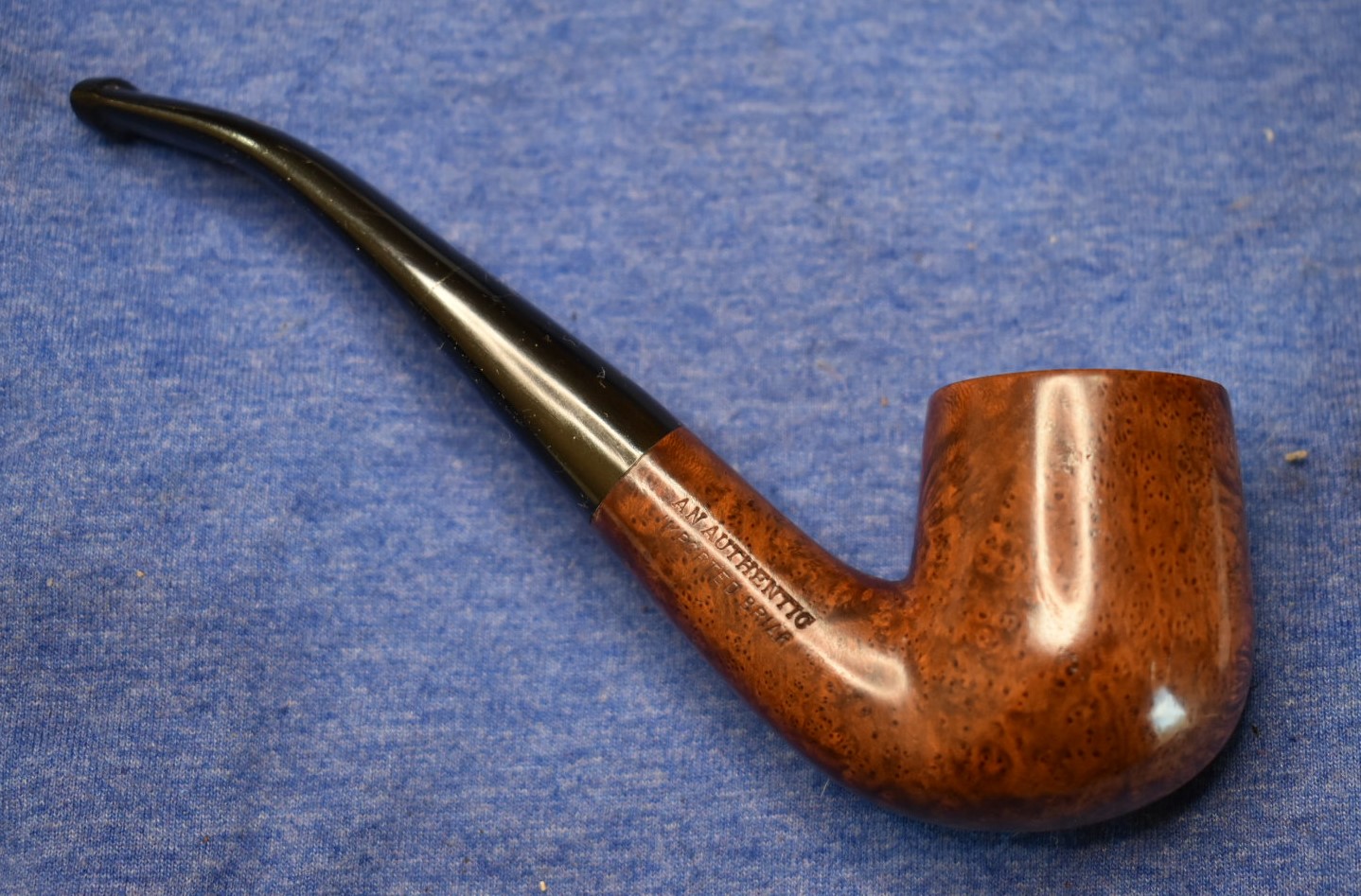
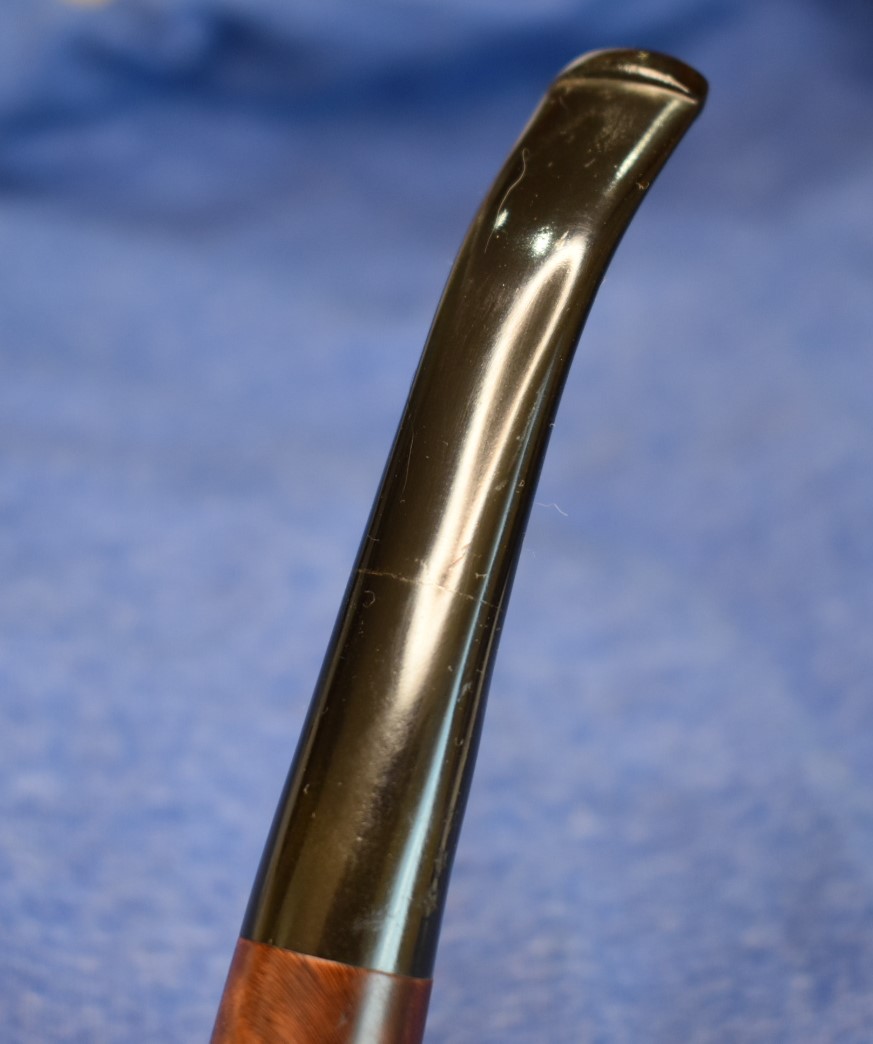
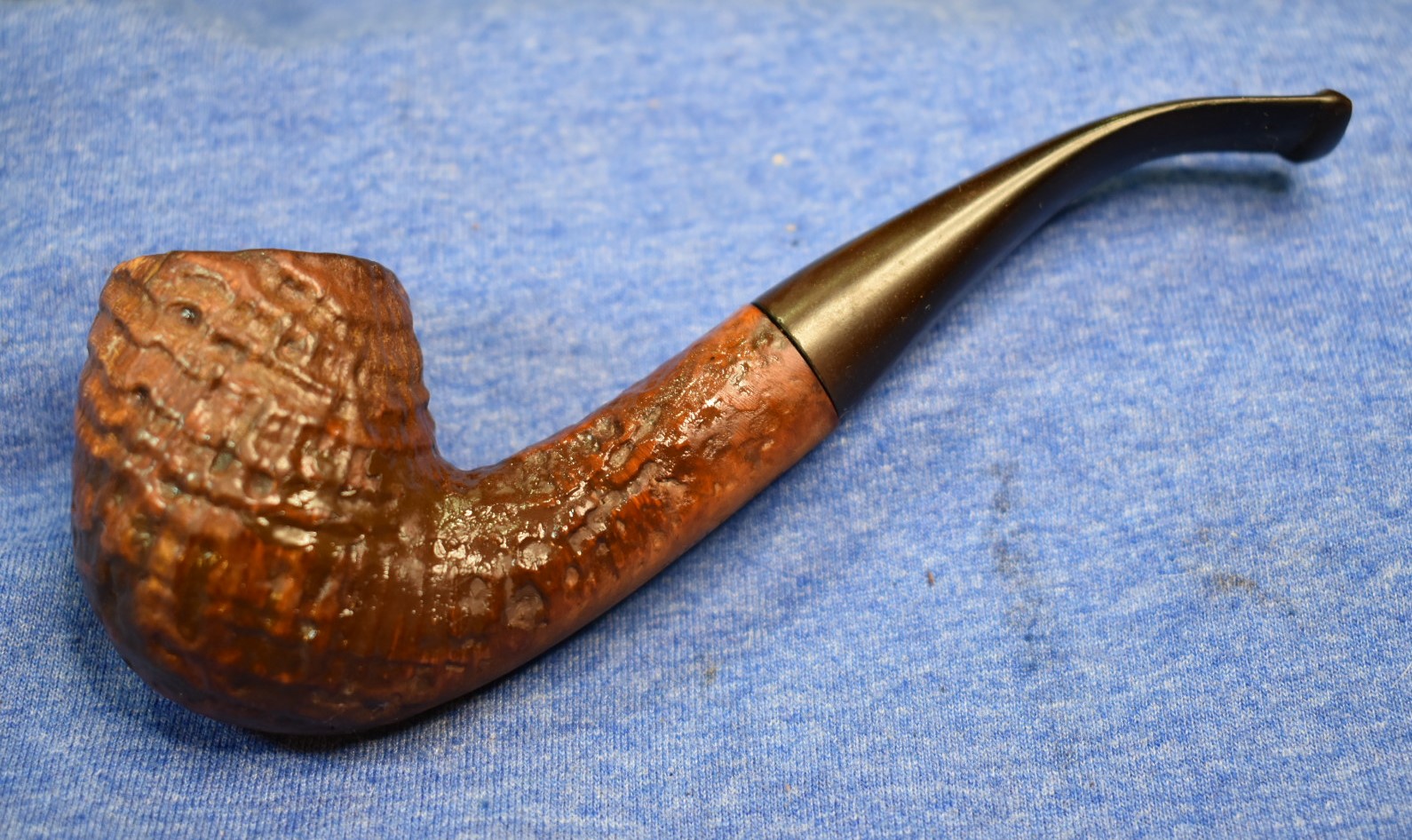
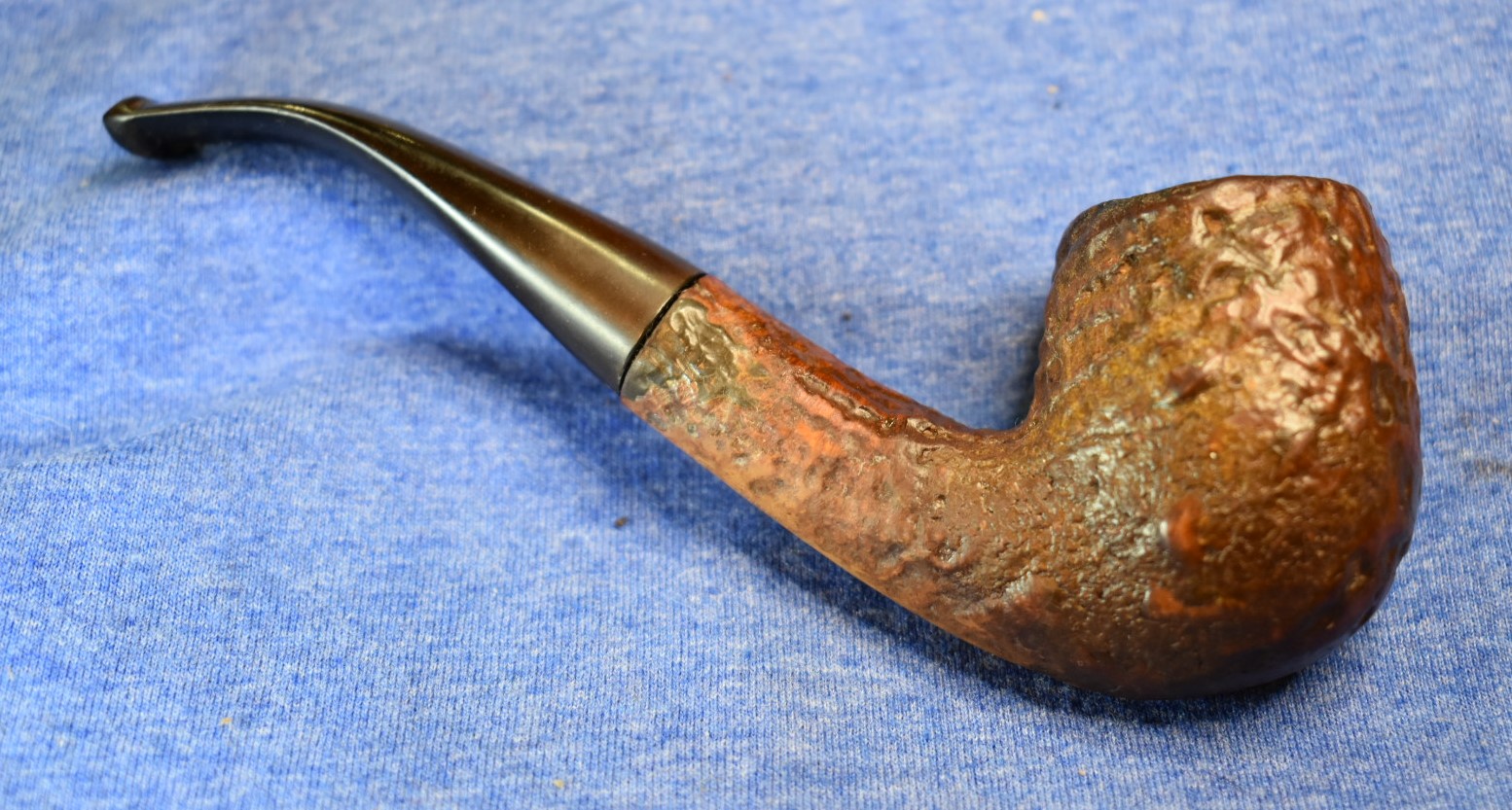
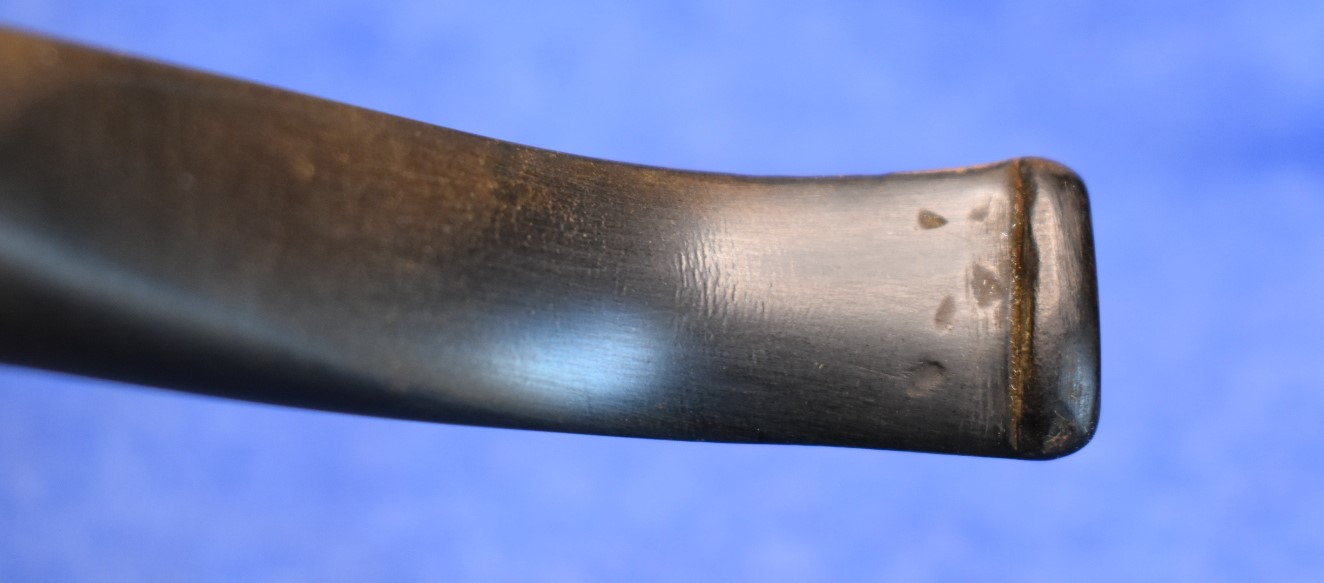
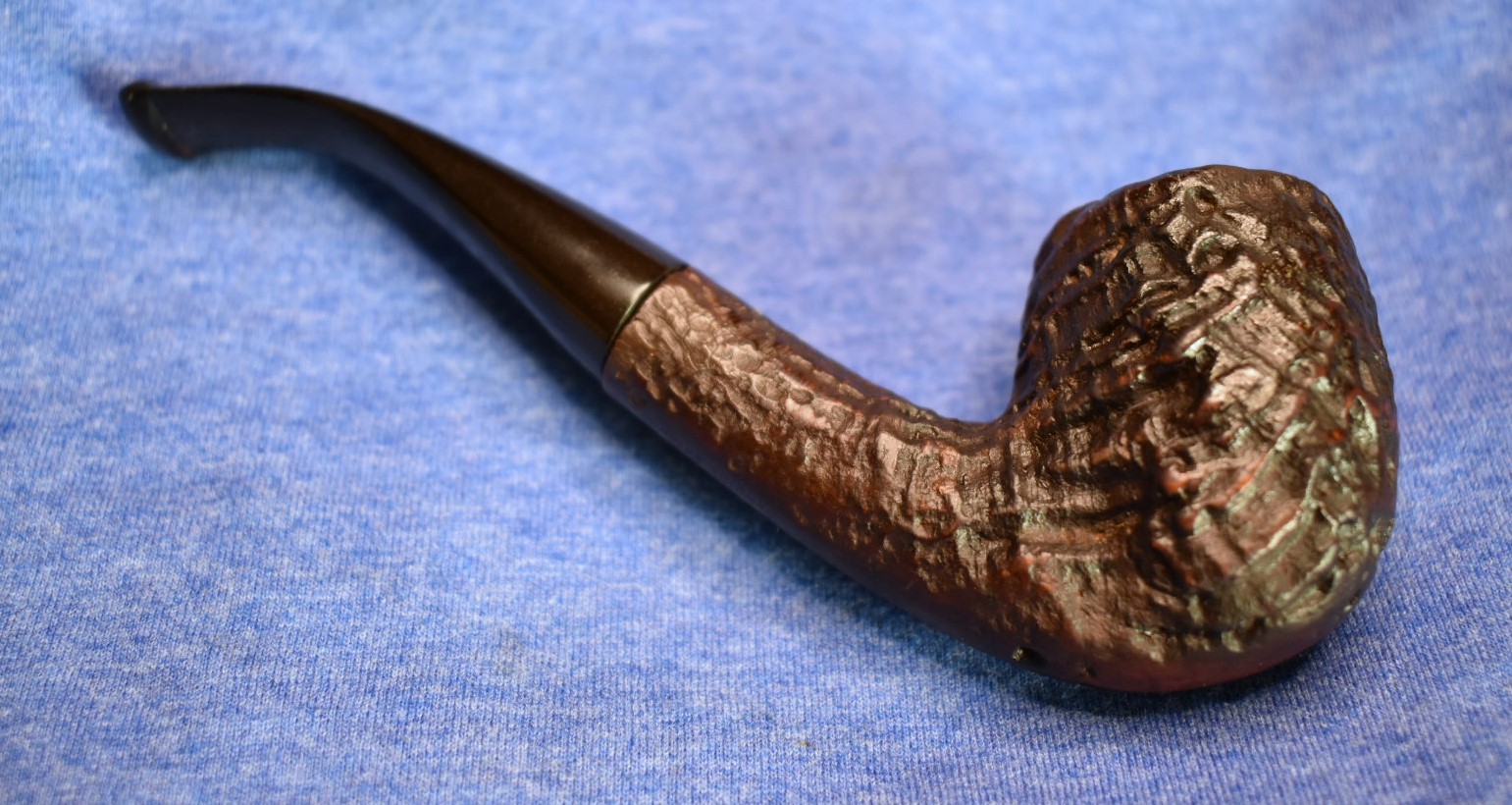
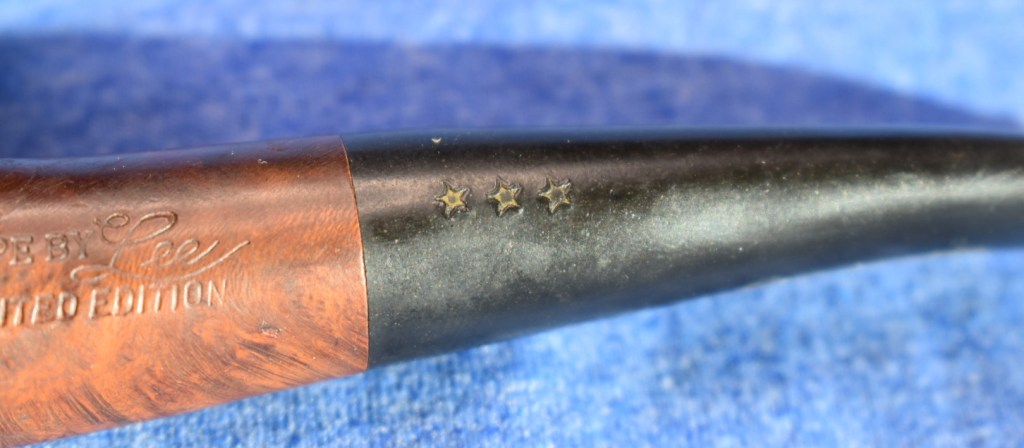
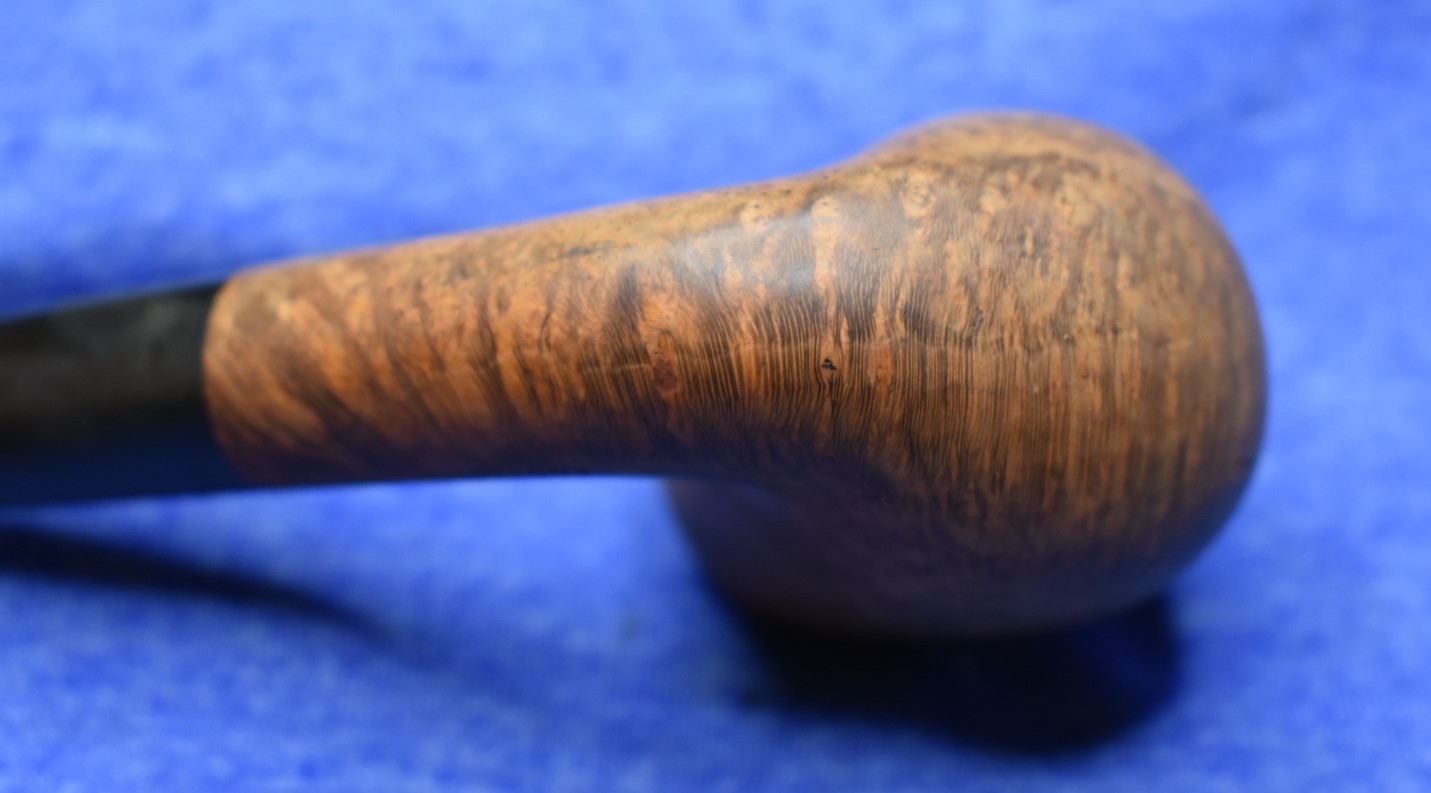
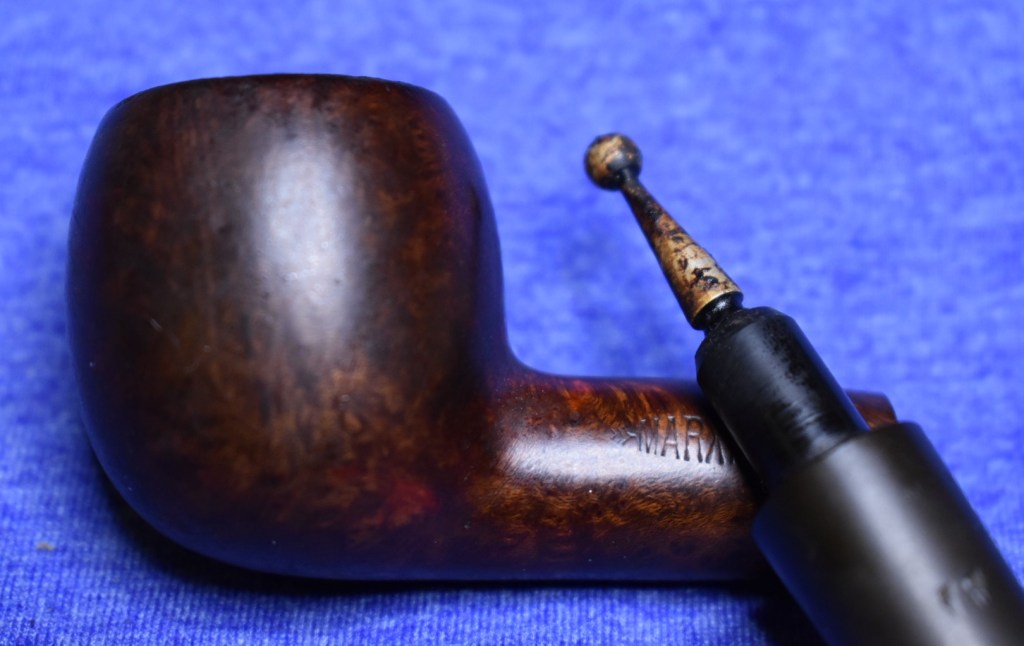
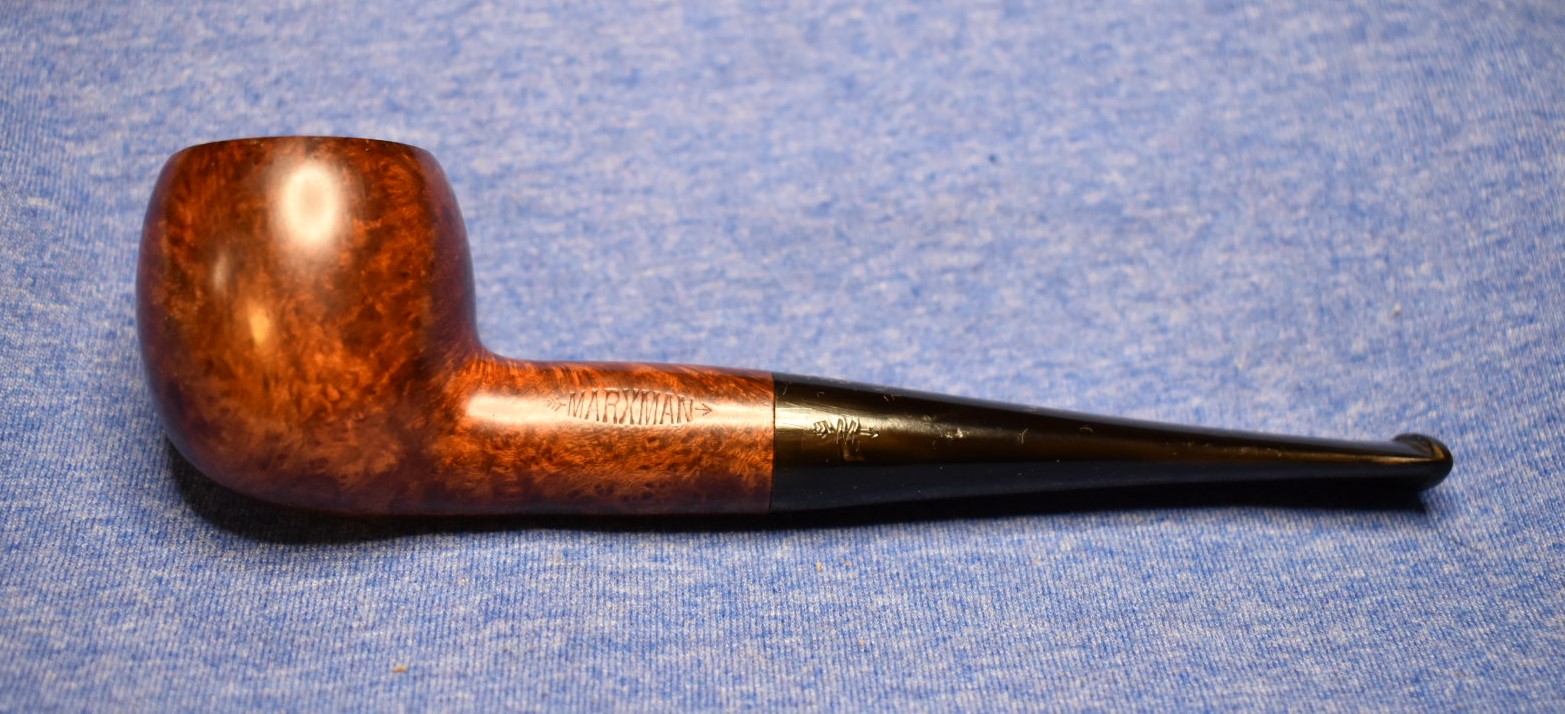
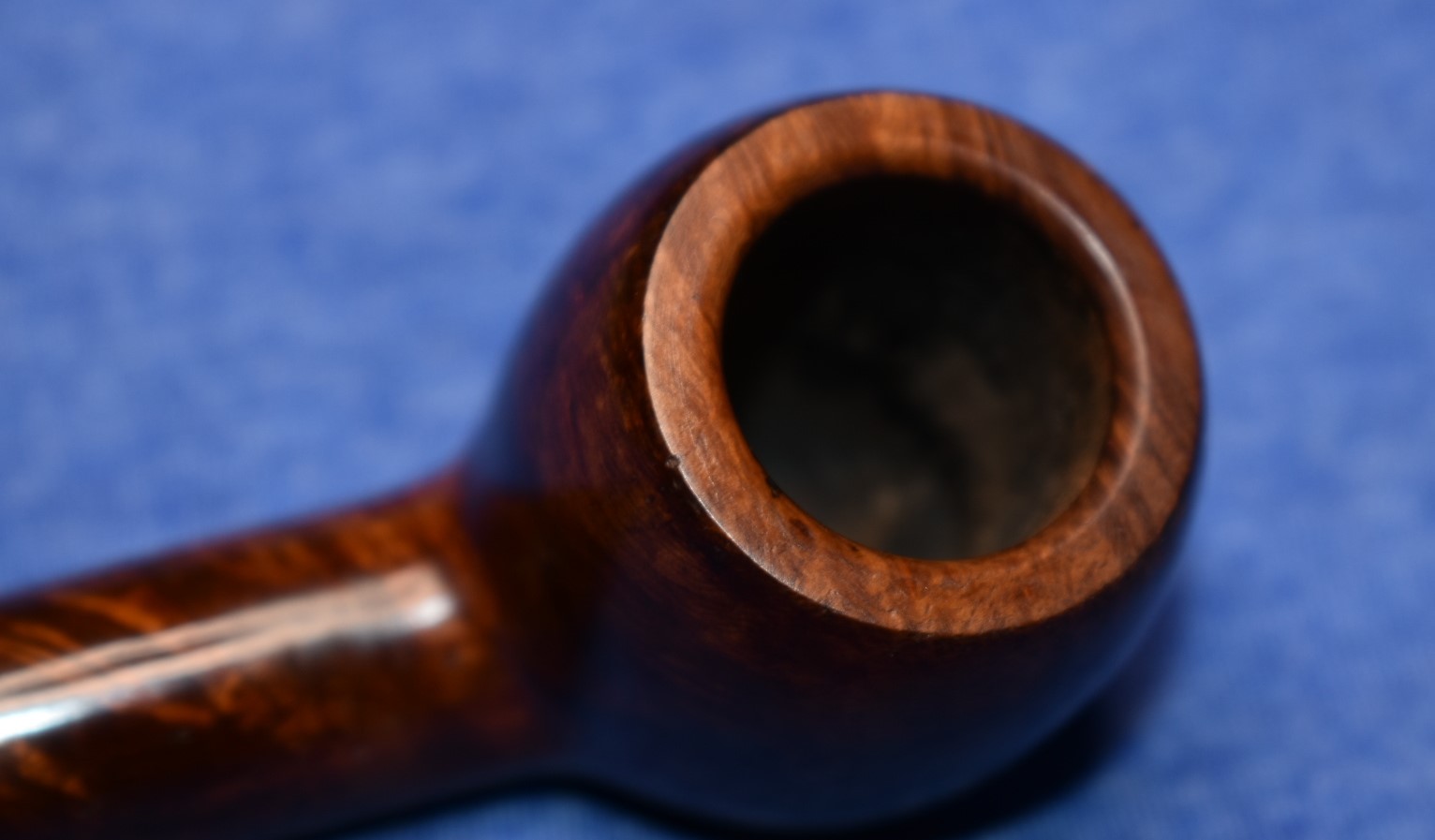
    It only seems fitting to do a Brigham restoration on a Canadian shape pipe as they are a Canadian company.  I have only smoked one Brigham pipe.  It is my Brigham 5 dot Bulldog, shape 526 and it is a joy to smoke.  I knew that Brigham was an old company and that they used their proprietary rock maple insert as some kind of “filter”. I also had some inkling that the brass dots that adorned the mouthpieces is an indication of the qualify of the briar used to make their pipes. Below is my Brigham bulldog.

    When I saw the Brigham Canadian shape 5, I thought, “I like Canadians and really only have 2 or 3.  I probably need another, eh?”  Okay, the “eh?” is terribly stereotypical but it made me smile.  For less than the price of a steak dinner I had the next subject of my hobby/obsession/calling(?) In my hands.

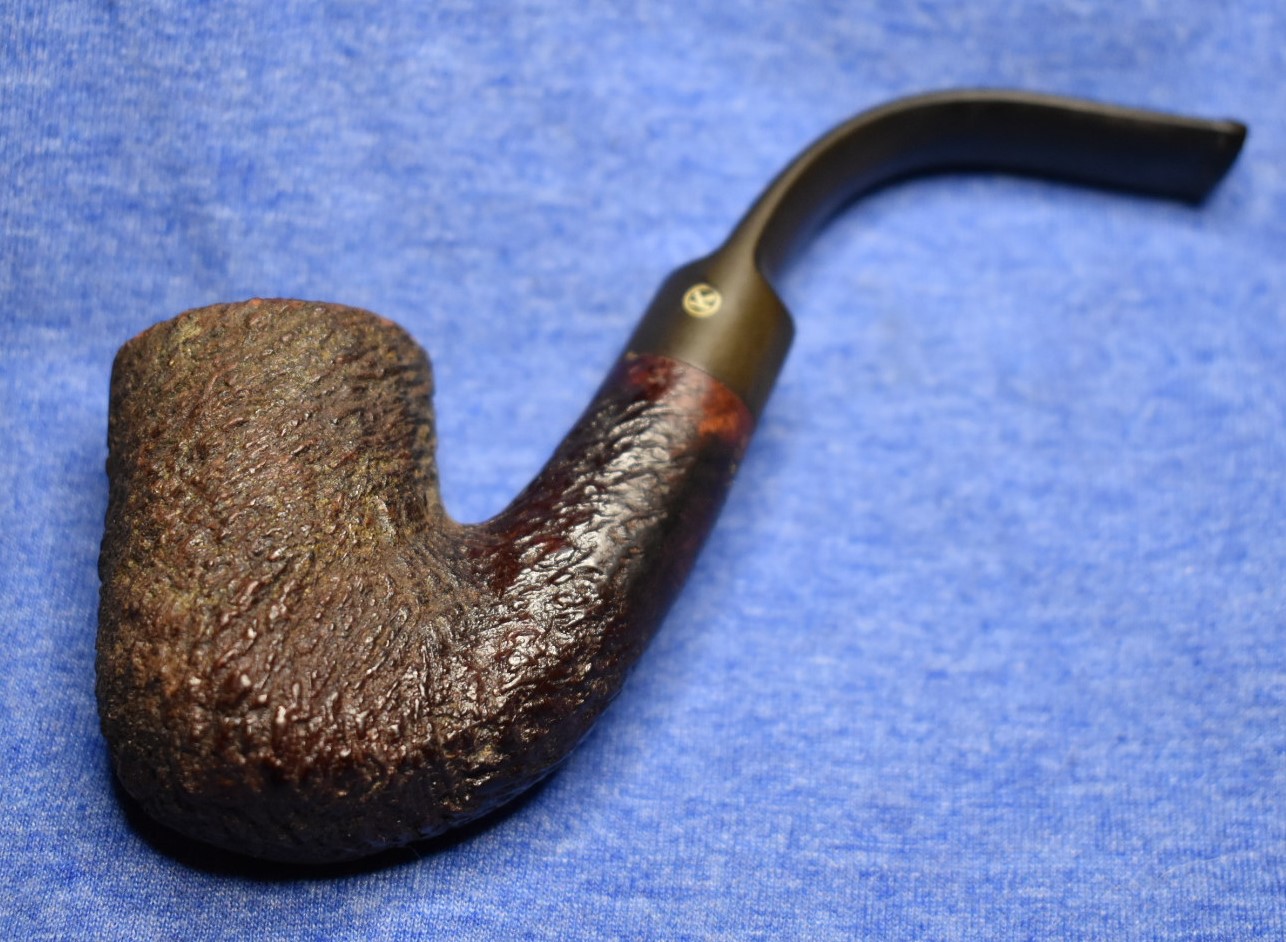
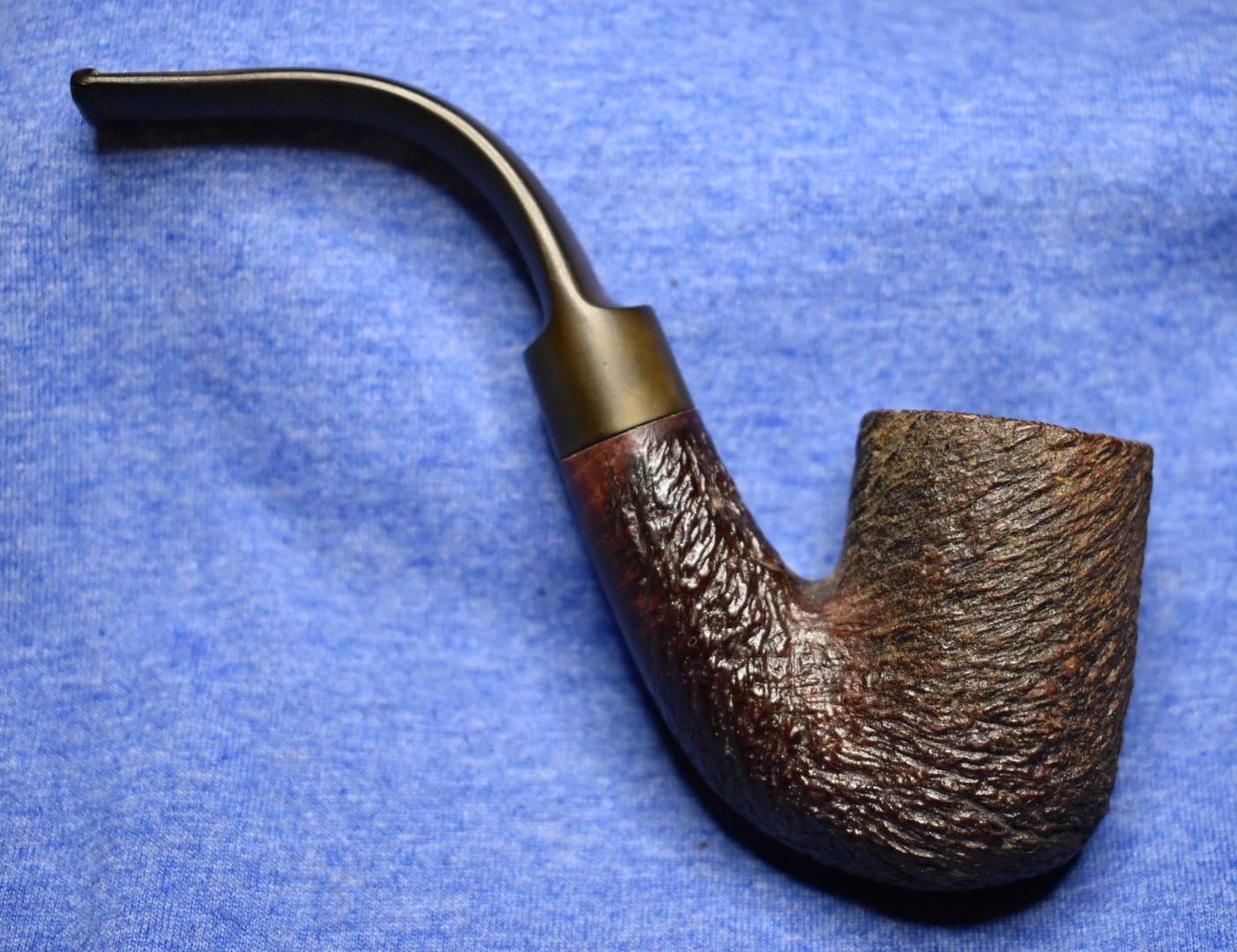
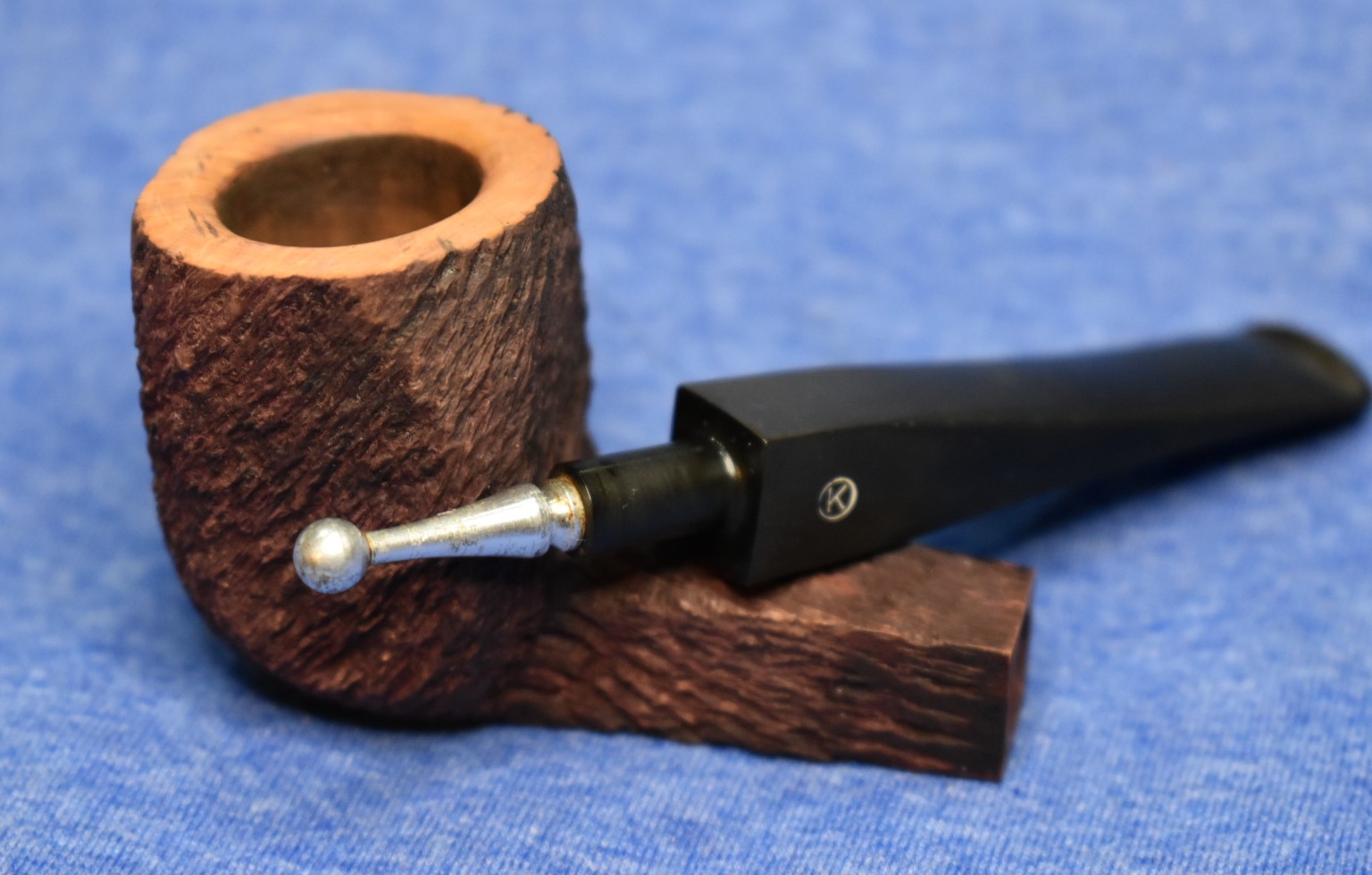
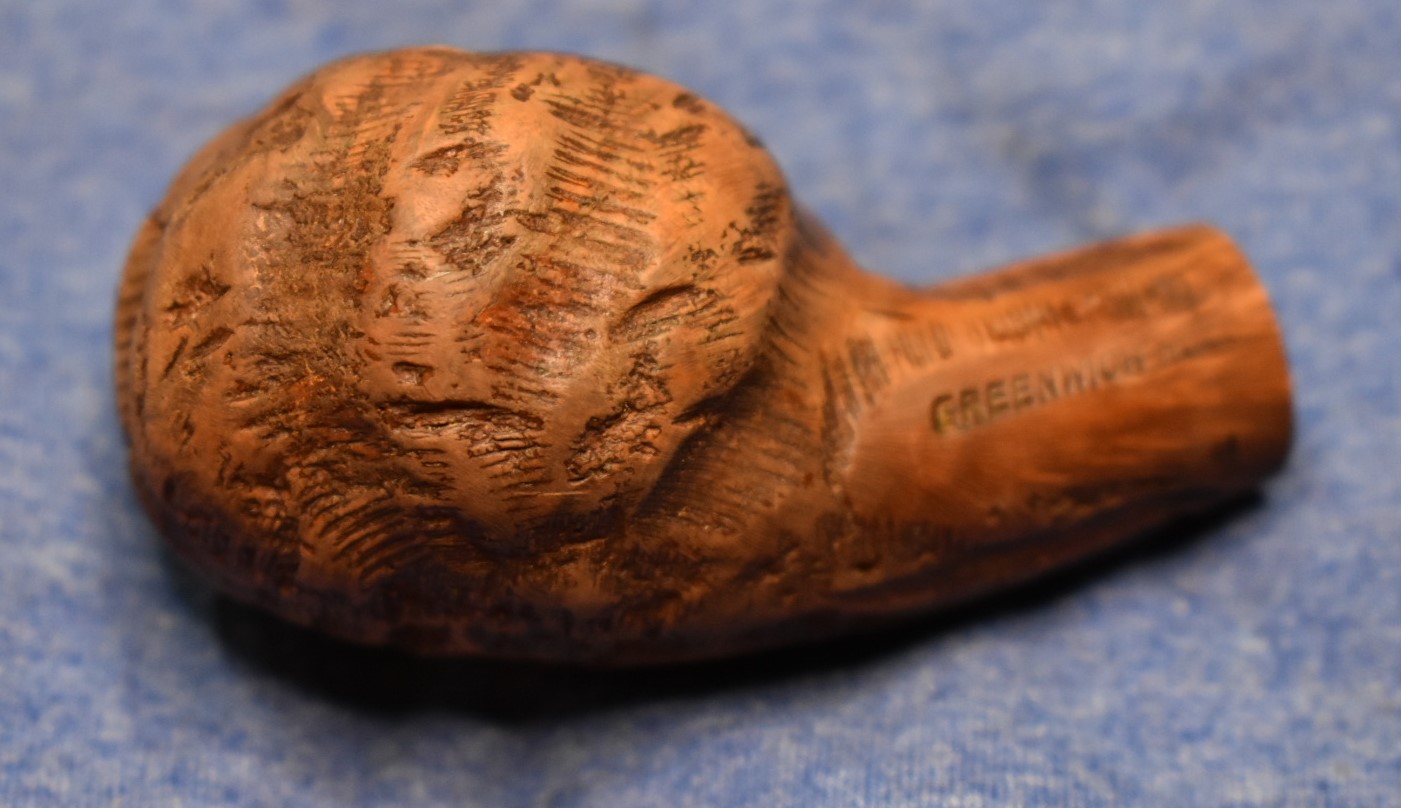
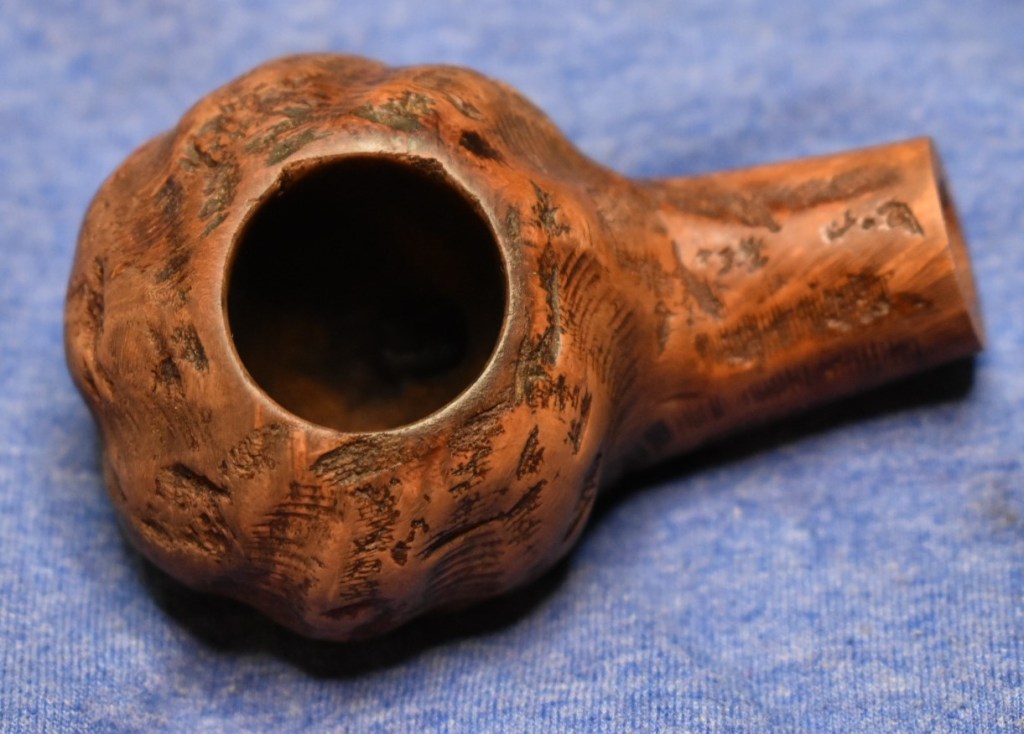
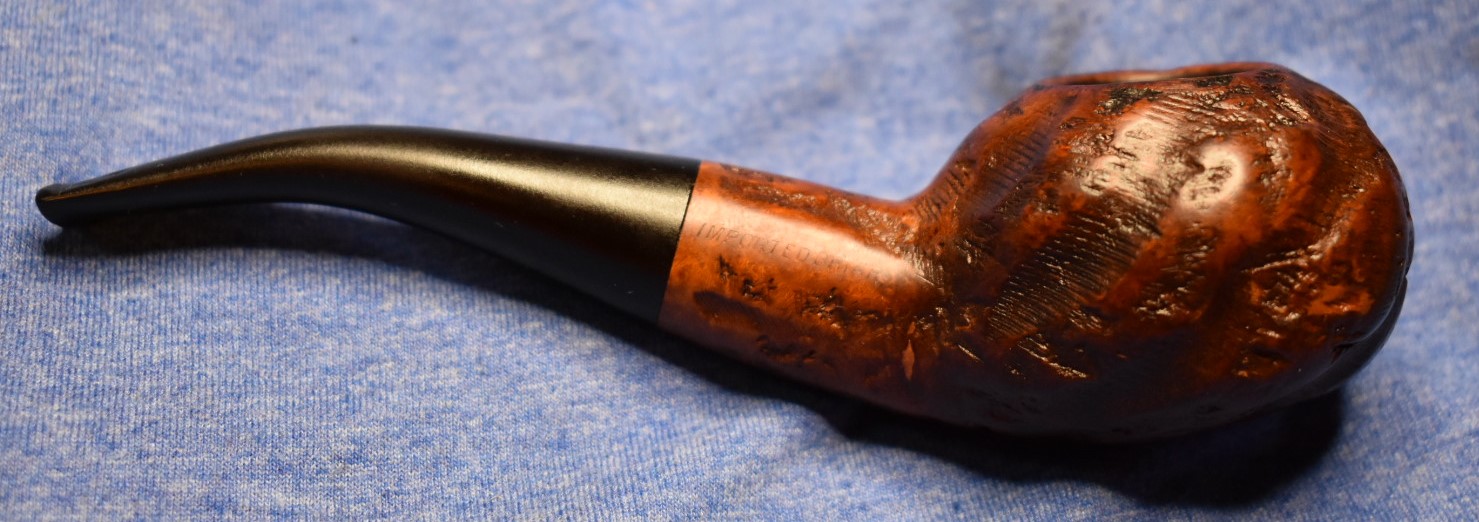
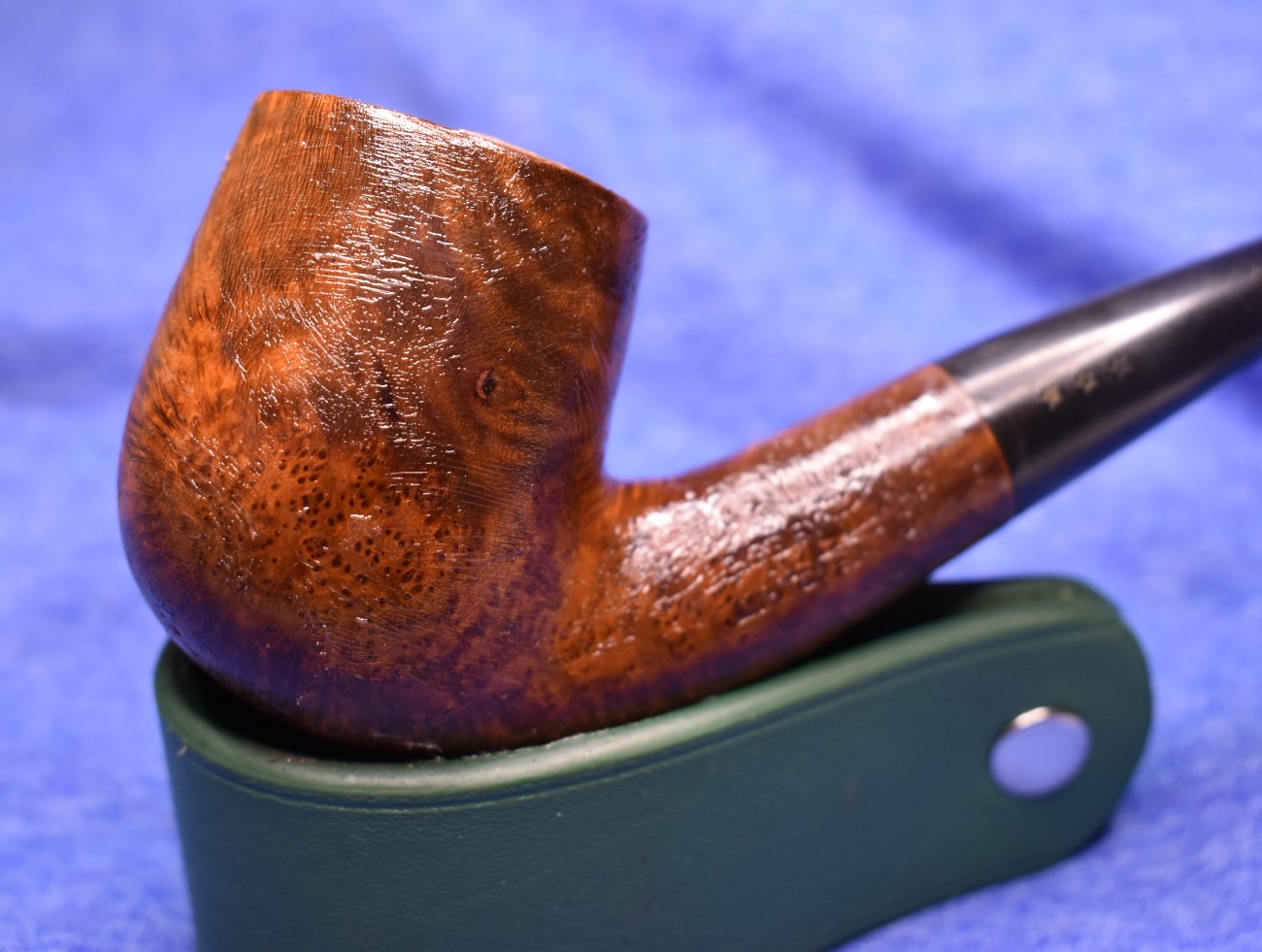
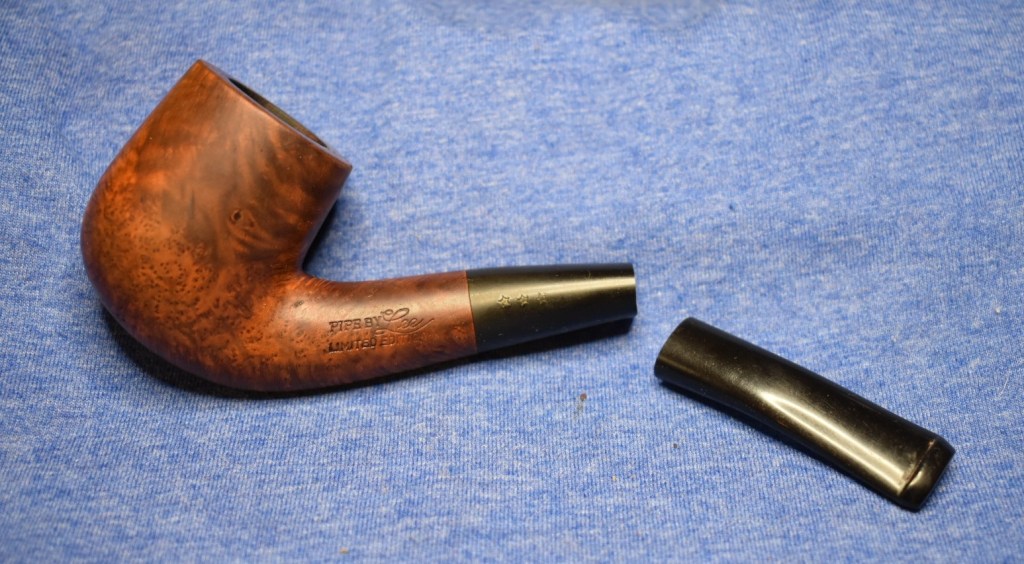
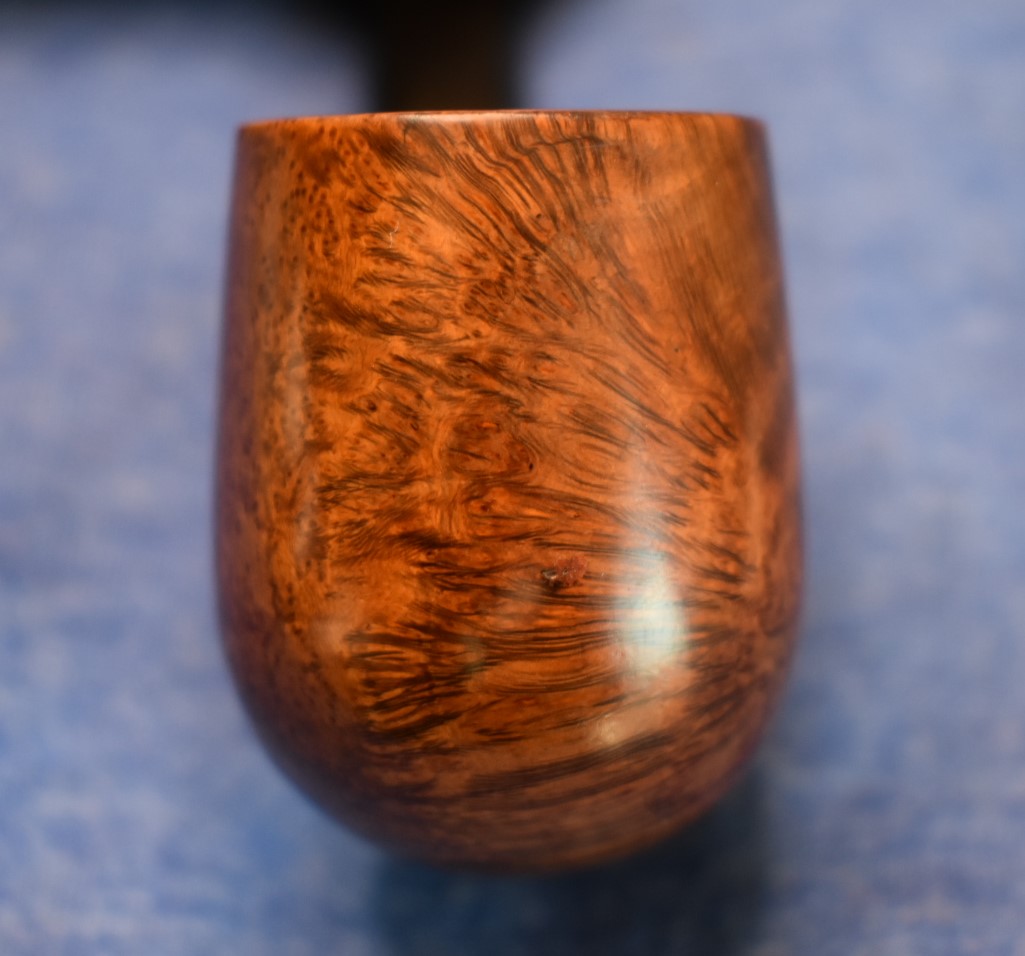
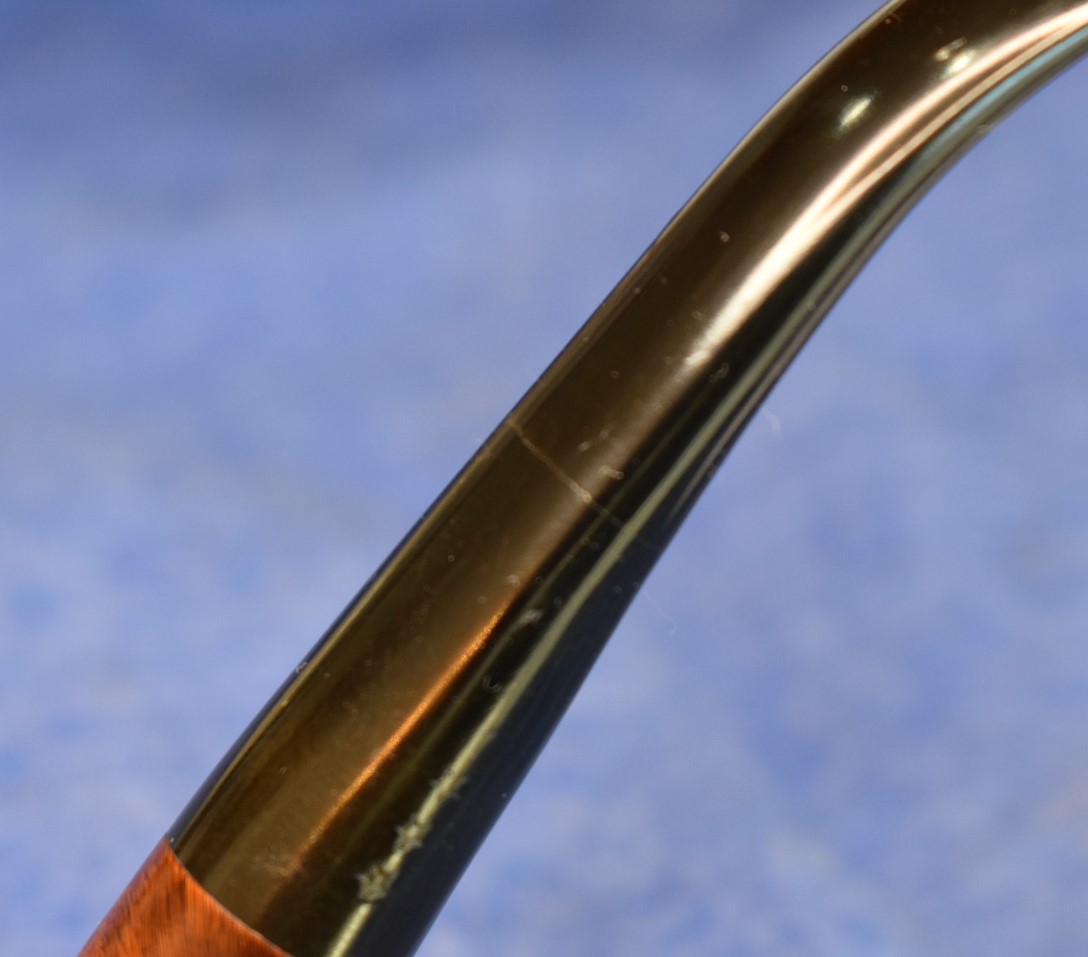
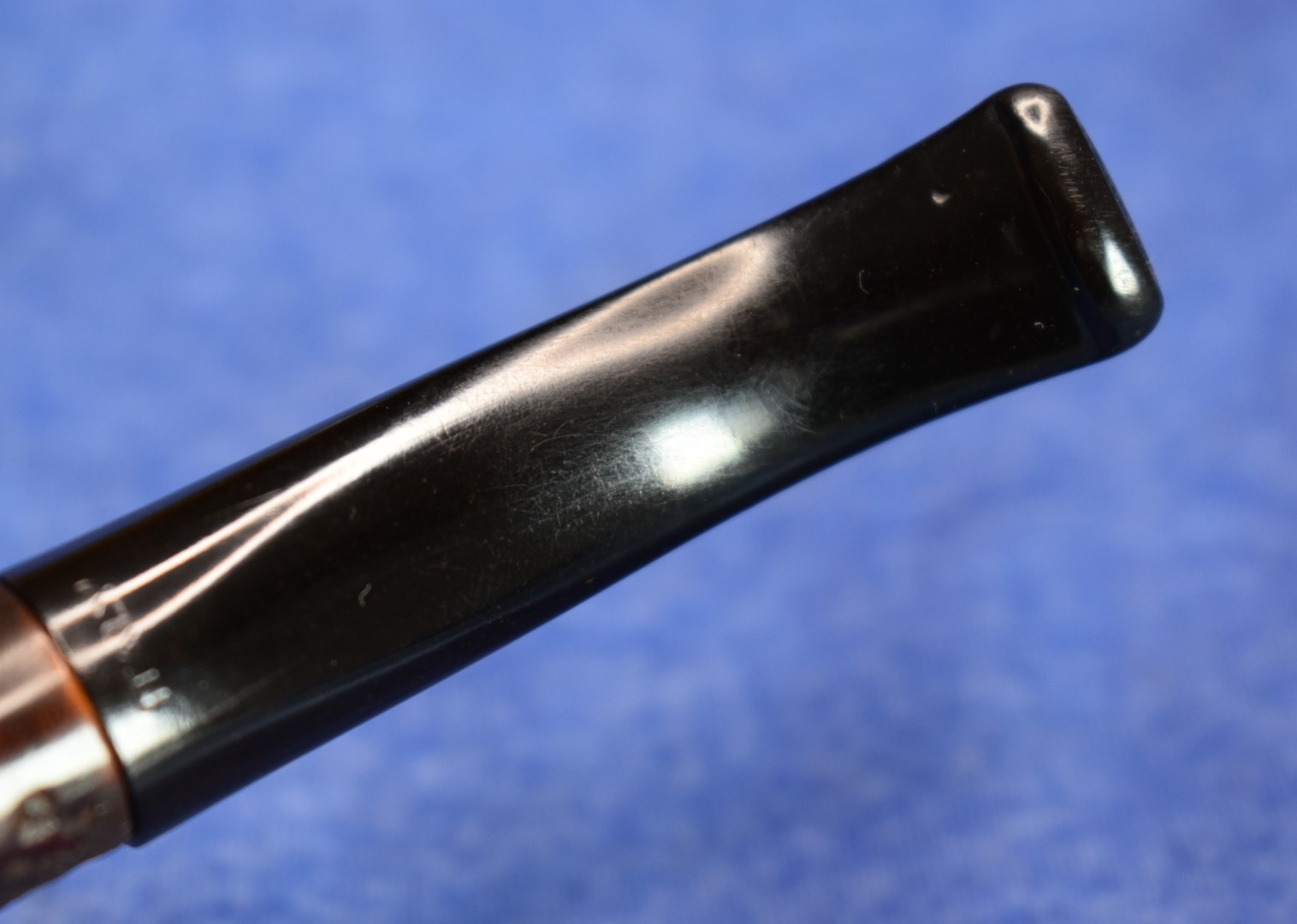
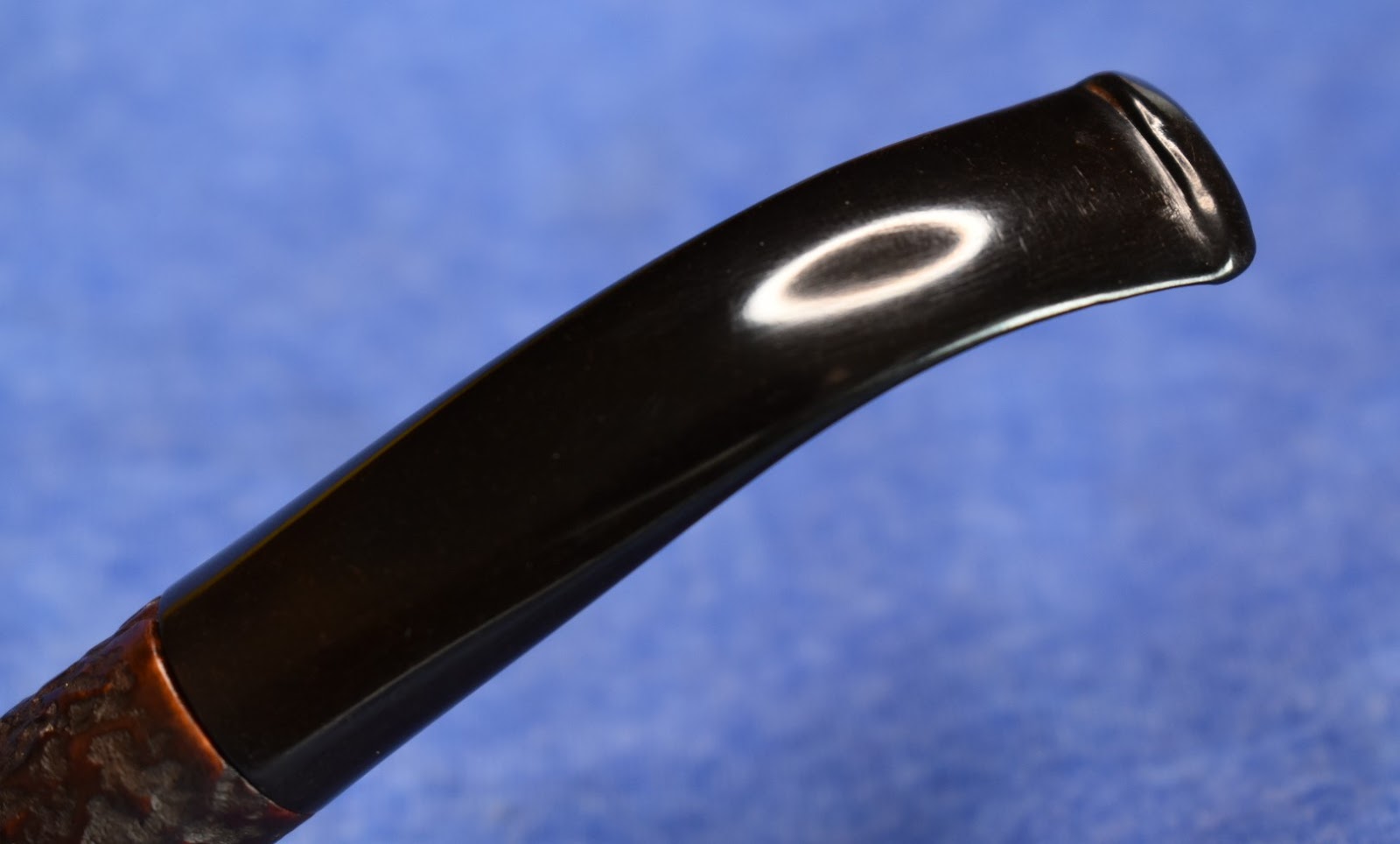
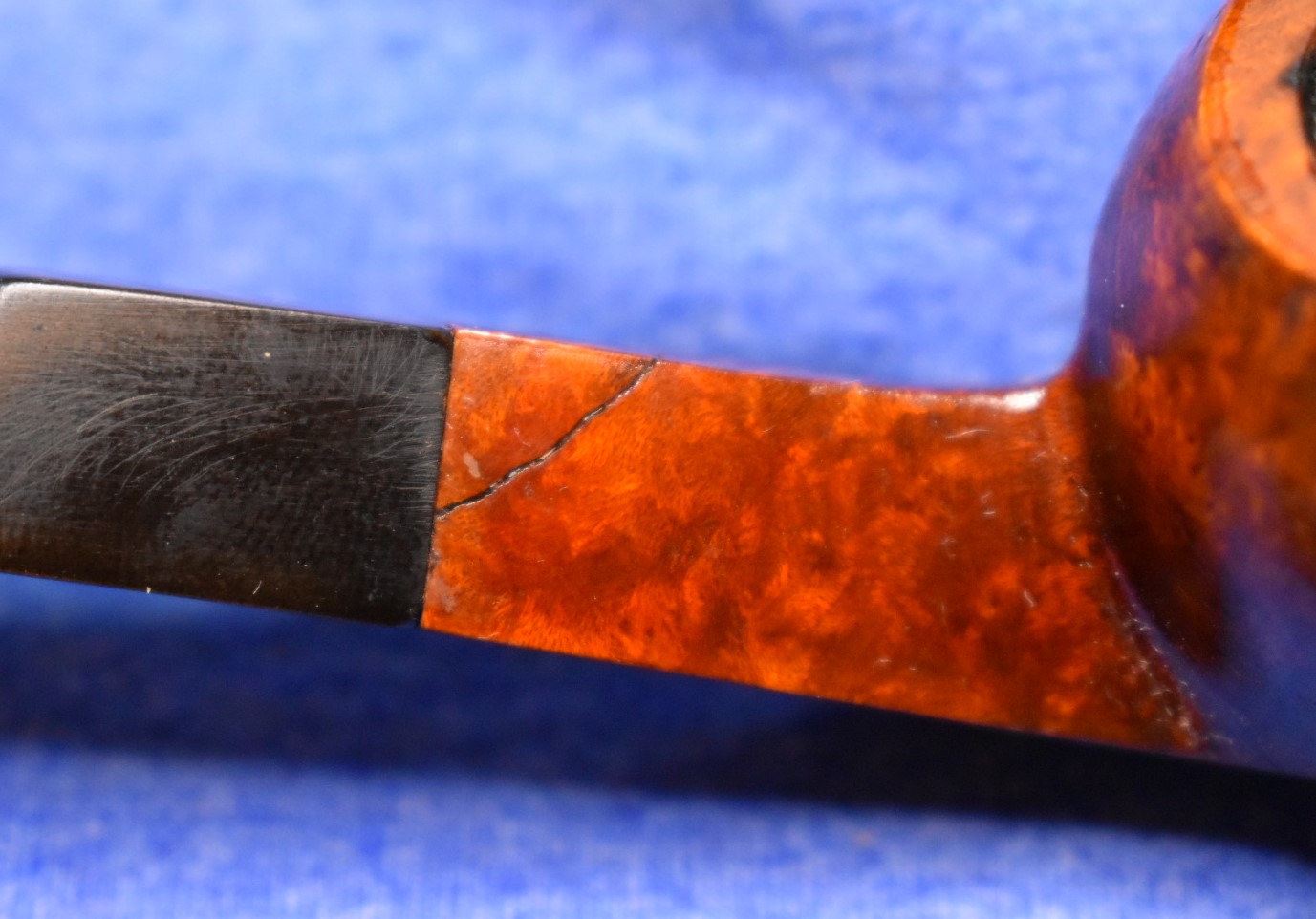
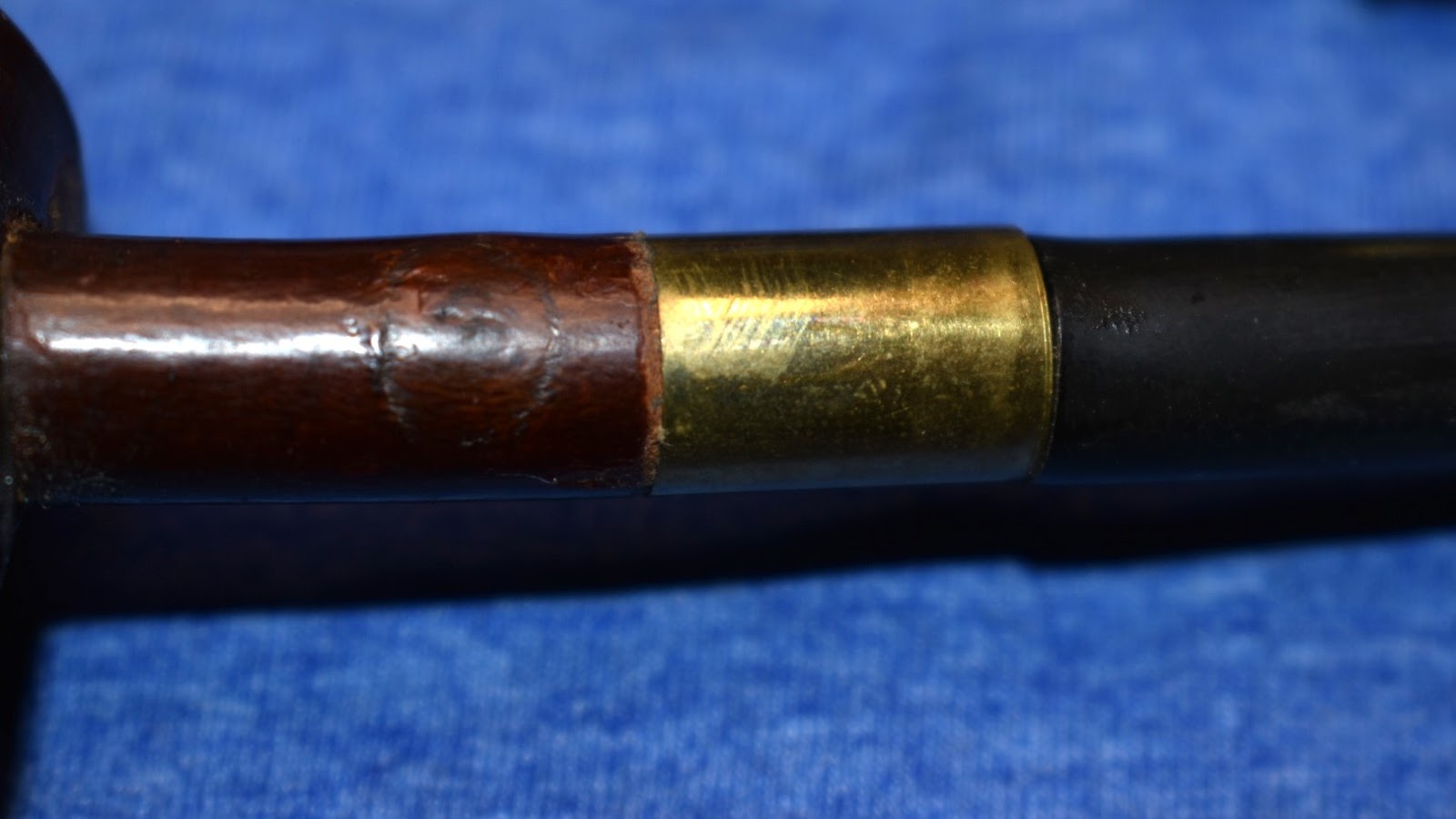
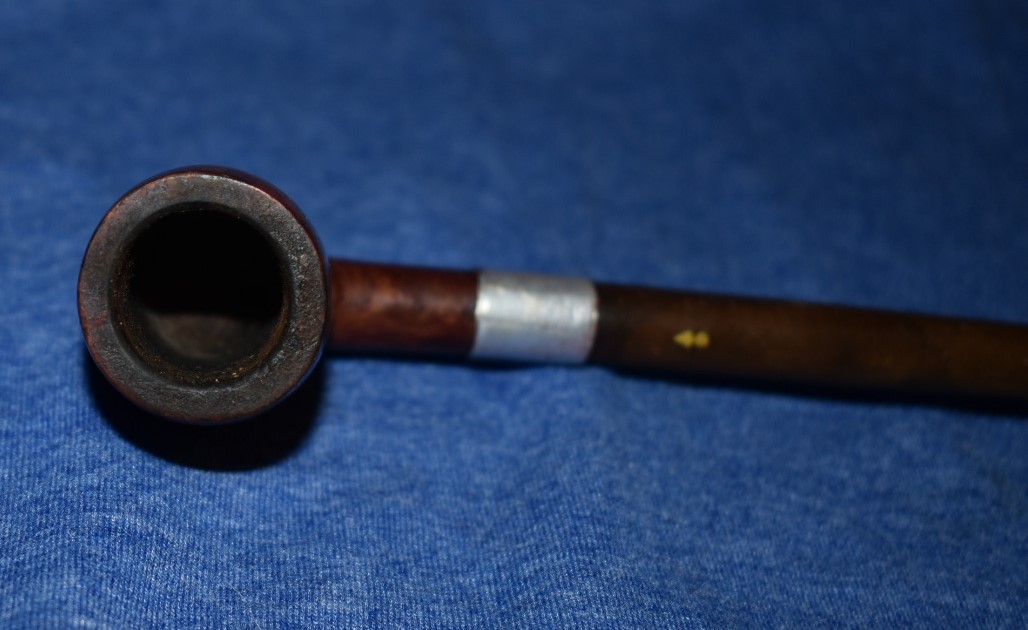
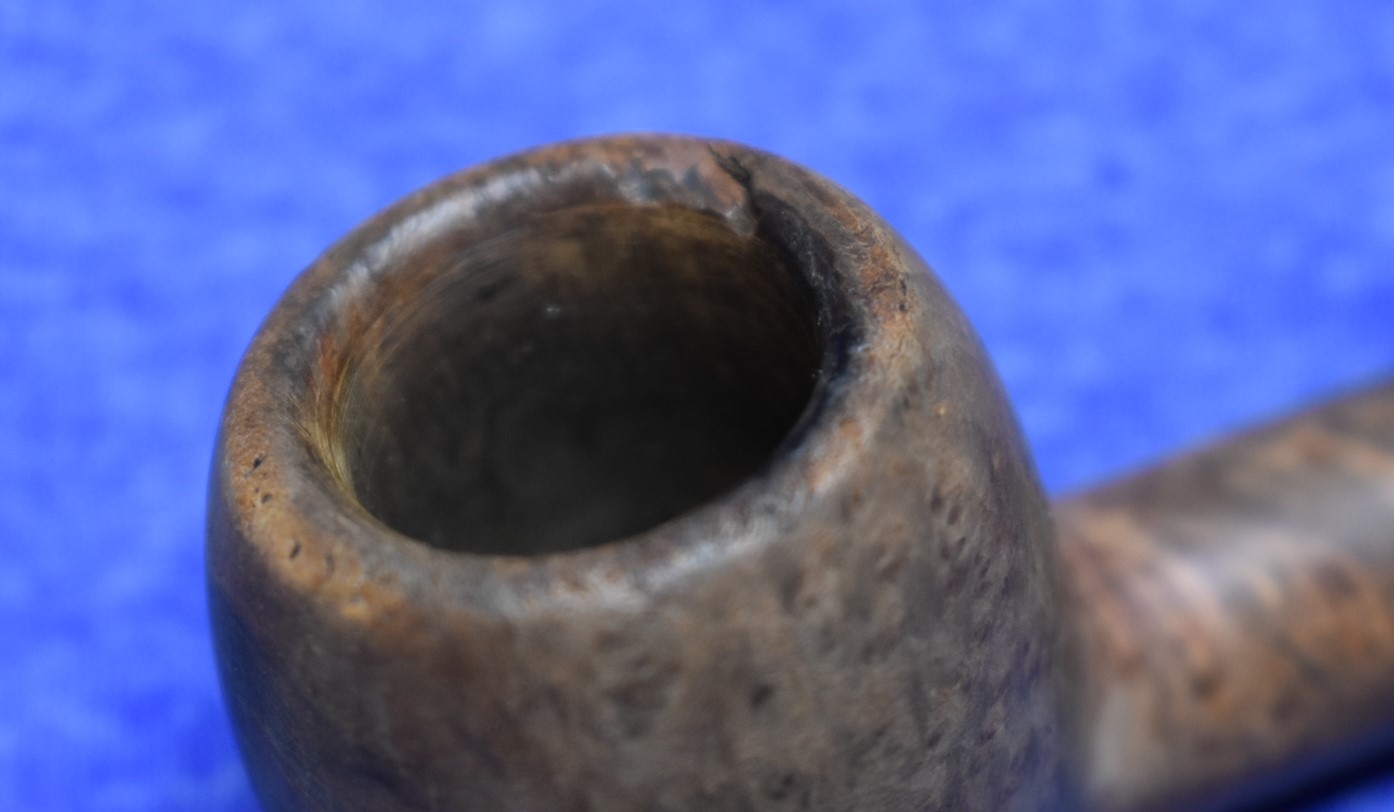
    The pipe (henceforth she/her) looked to be in good condition.  Her stem was very oxidized to a dark beige. Her briar looked good and the stampings were clear. She did have a bit of a lava coating on the rim and what could be a clear coat finish of some kind.  I hoped that it was just a thick layer of carnauba wax but, I know better.  She still had a rock maple insert in the stem and it was not dark brown or black.  Her tobacco chamber was not caked to any noticeable thickness. The latter two observations indicated that her previous owner smoked her infrequently but in the appropriate Brigham fashion – with an appropriate insert.  Here are some photos taken upon her arrival:

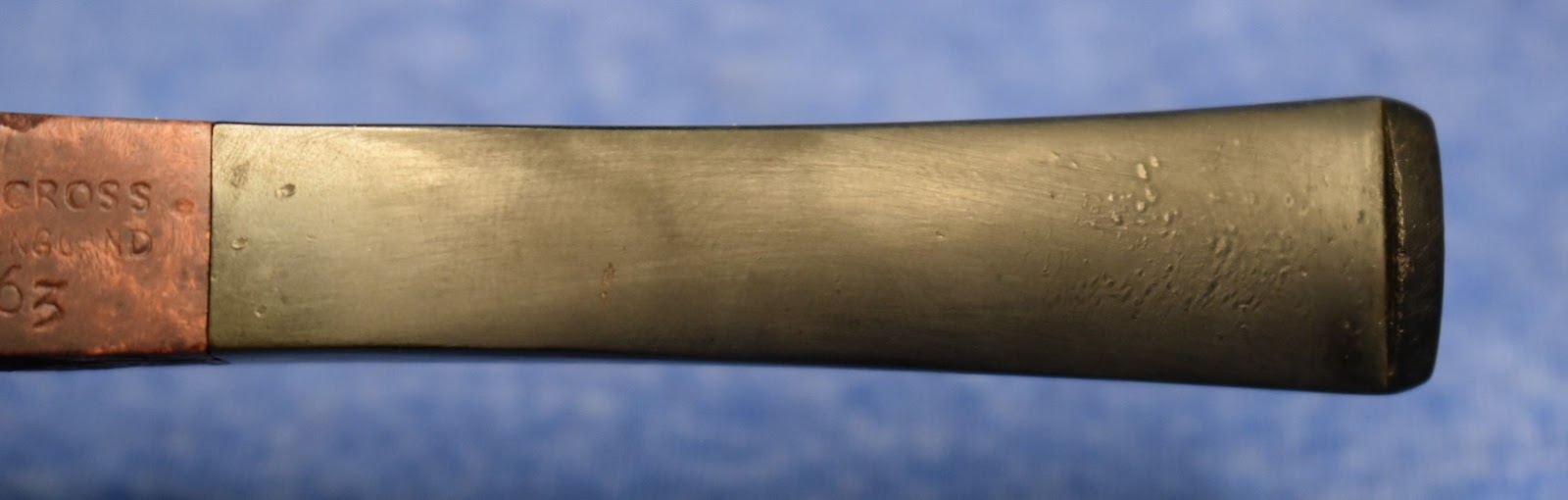
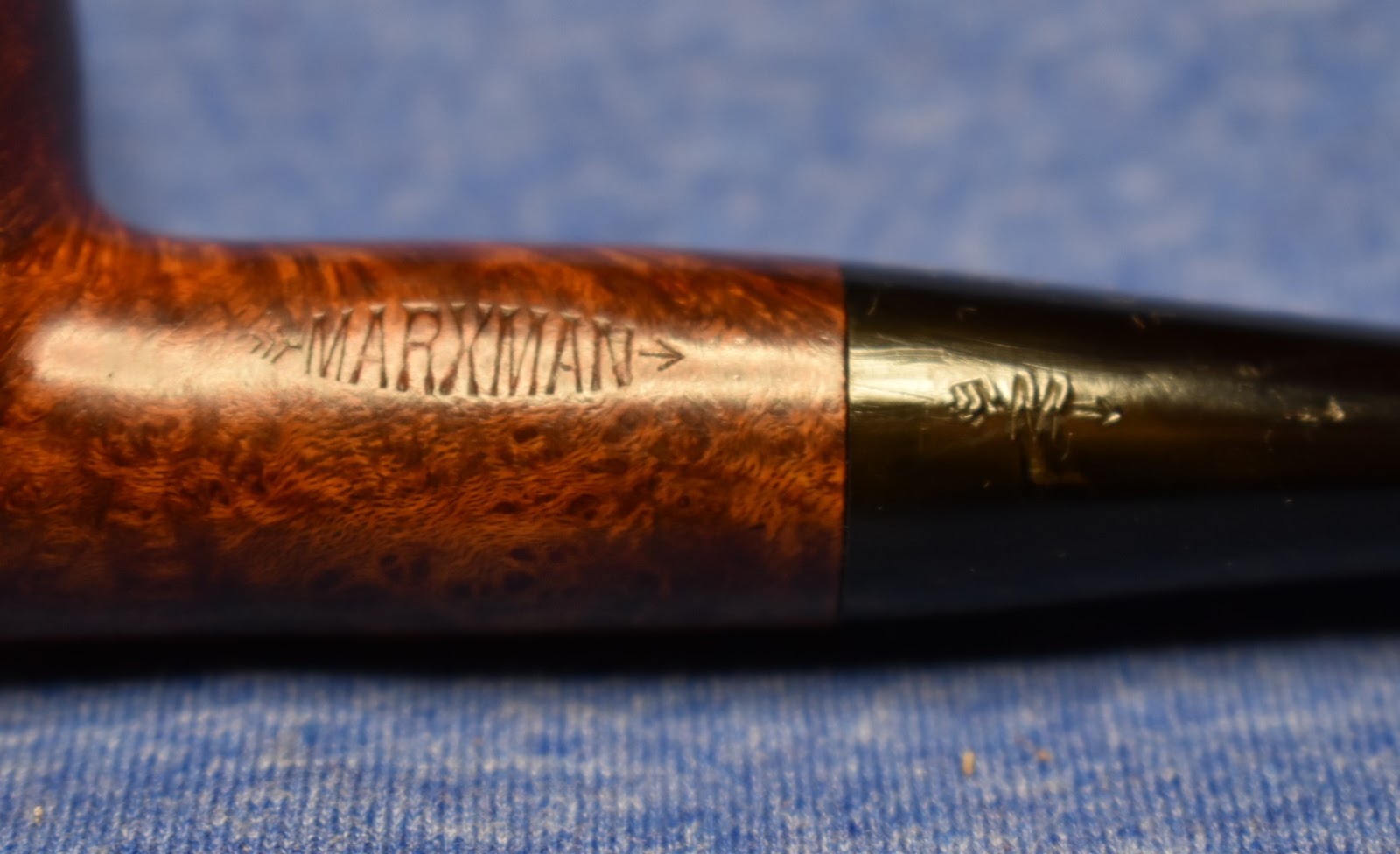
    Now for a little bit of Brigham history.  Just kidding, I won’t distract you with that.  I know you are dying to get to the restoration.  However, if you are interested, here are links to Brigham’s official history and from pipedia.org:  History | Brigham Enterprises Inc (brighampipes.com),  Brigham Pipes – Pipedia.  As for this pipe, she wanted to remain a bit mysterious.  Brigham pipes are supposed to have a 3 digit shape number.  This has been the case since 1938, the end of the “Patent Era”.  Very little data apparently survived from the origin of the company in 1906 through 1937.  This according to “Charles Lemon, originally appeared on: DadsPipes.com, and is used here by permission…here in its entirety.”  (Brigham Pipes – A Closer Look at Dots, Dates and Markings – Pipedia).  Anyway, this old girl has only a single number, 5.  The other stamps which are useful are the “Brigham” above “MADE IN CANADA”.  These stamps were used between the late 1960’s-1980. (Brigham Pipes – A Closer Look at Dots, Dates and Markings – Pipedia).  That means that this slightly mysterious gal was likely made between about 1970-1980.

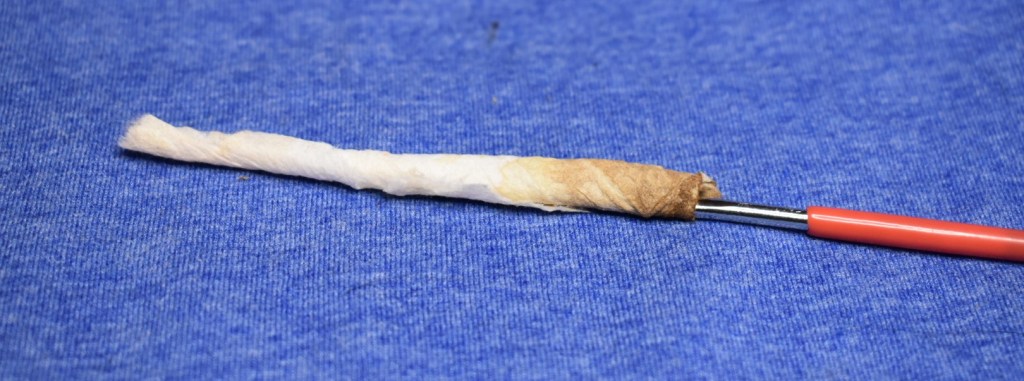
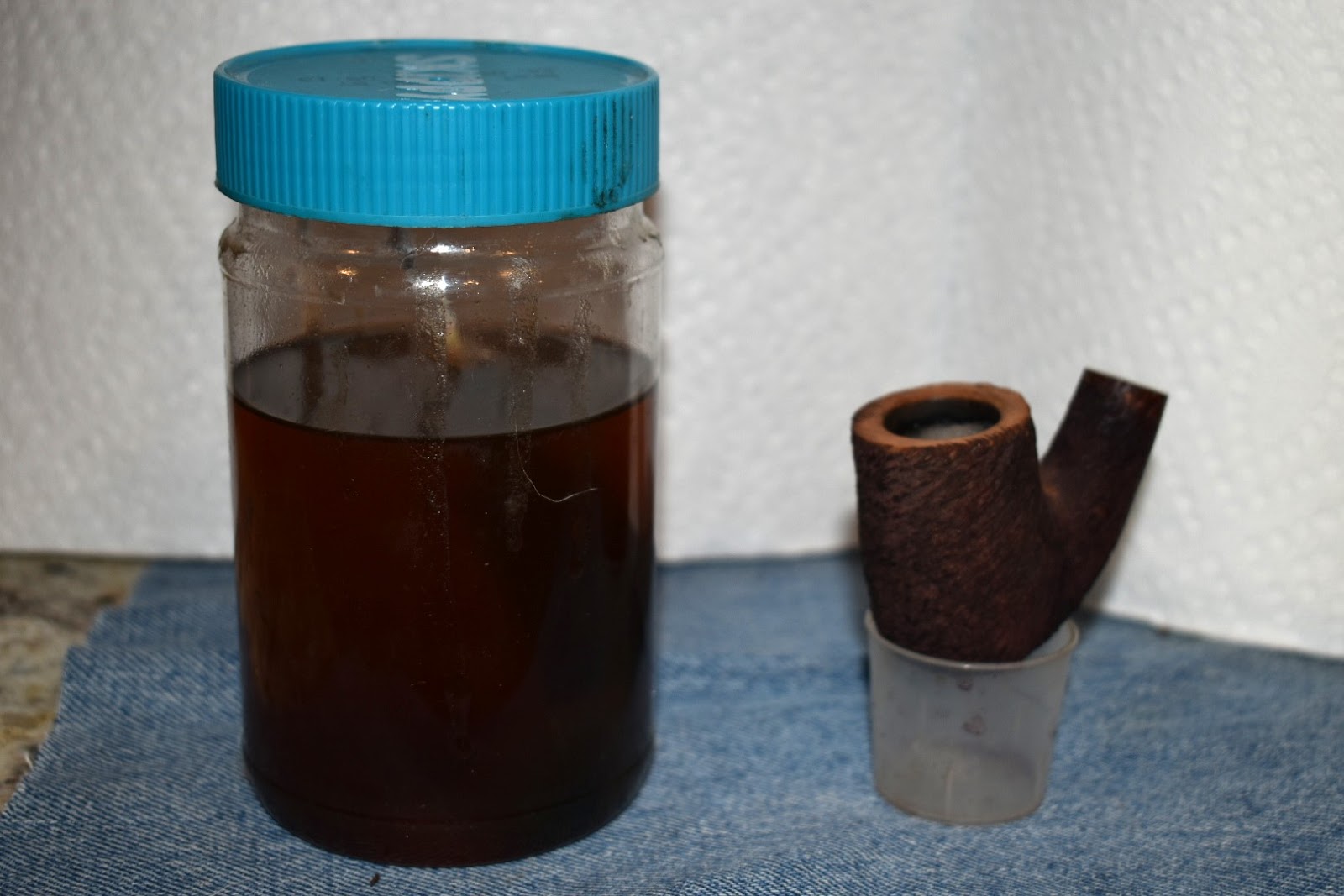
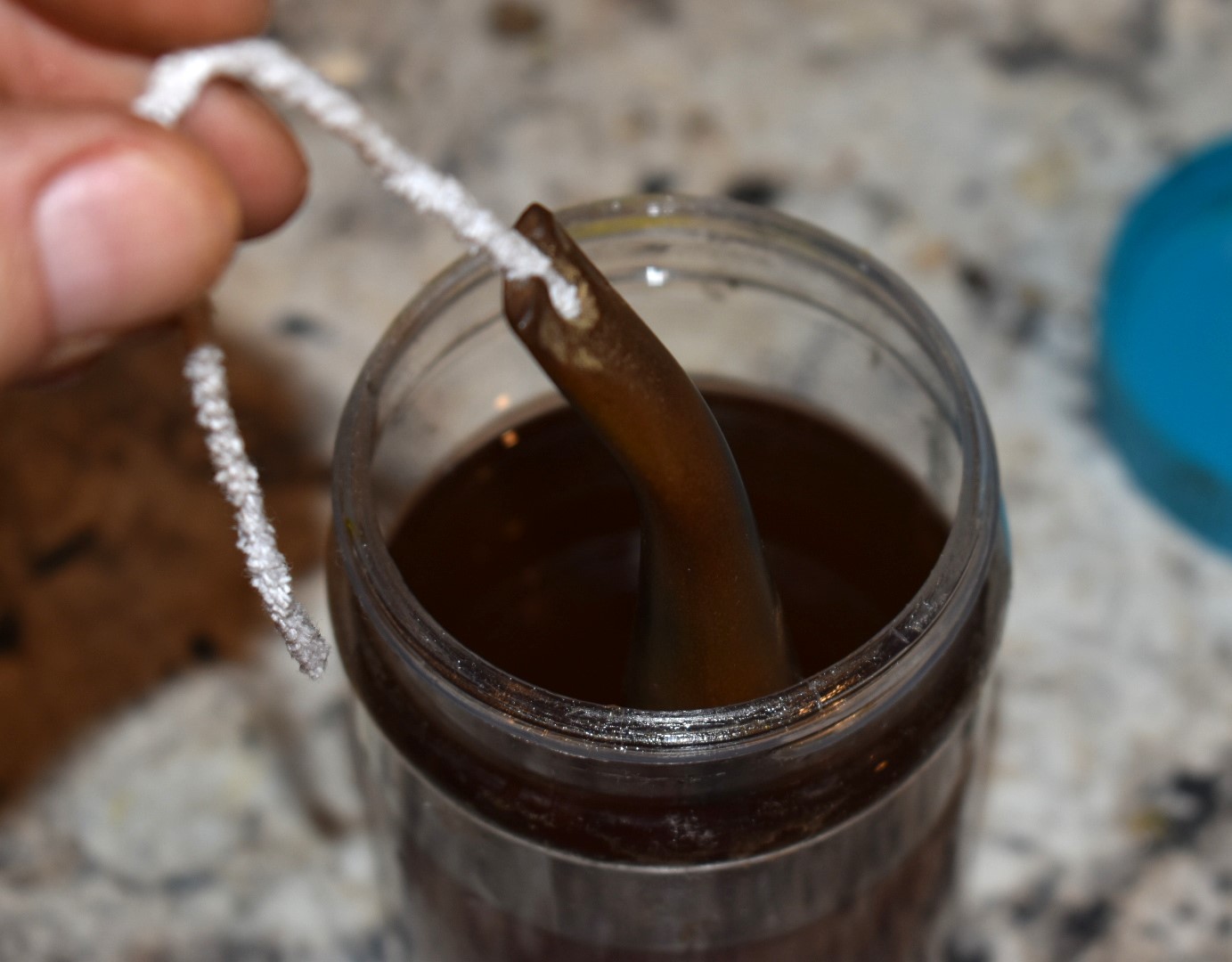
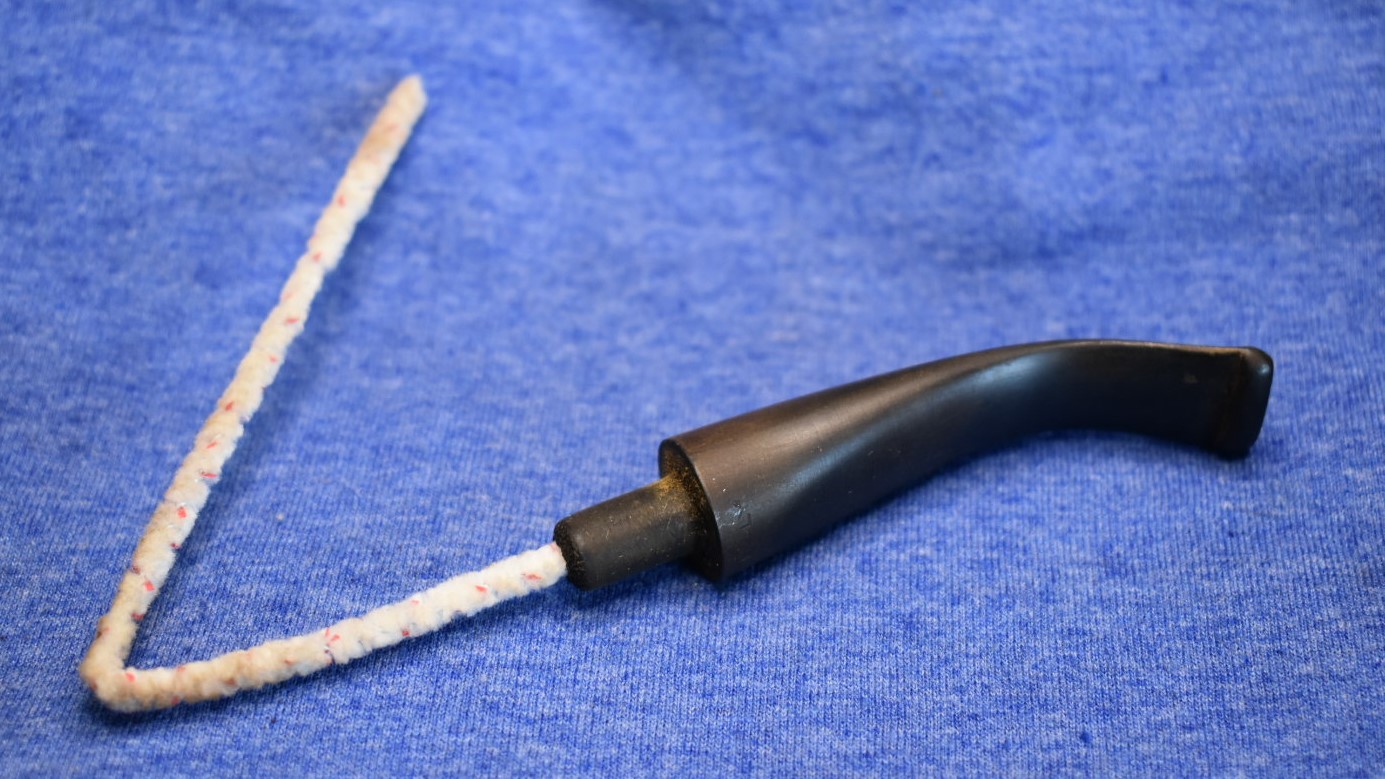
    On to the restoration.  Normally I start by addressing the stummel.  This pipe had such a bad case of stem oxidation that I started with that.  I removed the stem and the rock maple insert.  I used a pad of 0000 steel wool to buff off some of the oxidation.  All that did was to make the oxidation angry and a bit shiny.  I folded a pipe cleaner in half and inserted the doubled end into the aluminum stem tube. I then hung the stem in the jar of Lbepen Deoxidizing Solution (lbepen.com).  I had an appointment that would take a couple of hours so, I figured two hours was the right amount of time to leave the stem in the deoxidizing solution. 

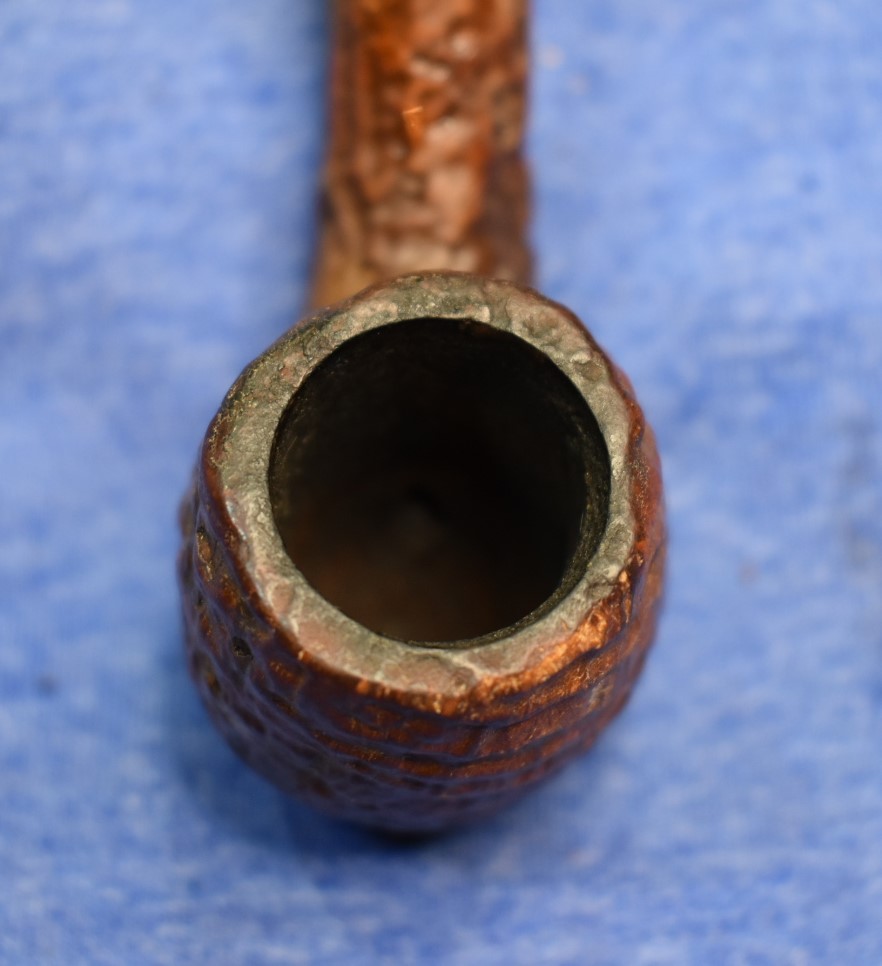
    Since I had a few minutes before I had to leave, I worked on cleaning up the stummel.  I reamed the tobacco chamber with the third largest reamer in the PipNet set and and reaming knife. The inside of the bowl was then sanded with 220 sandpaper around a wood dowel.  There was not much cake built up and the interior briar looked good after sanding.  Next was the interior of the shank.  I used 99% ethyl alcohol soaked cotton swabs to scrub the draught hole as far as I could reach.  They came out blackened with residue.  I stopped after using 5 cotton swabs as I thought I was not making much progress. Next was the rim.  There was a coating of dried smoking residue and tar, this is often referred to as lava.  The lava was moistened with a bit of saliva and gently scraped with a sharp pocket knife.  Using care to not scratch the underlying briar I removed most of the lava and I figured the remaining bit would come off with the next step of cleaning.   Get to your appointment!

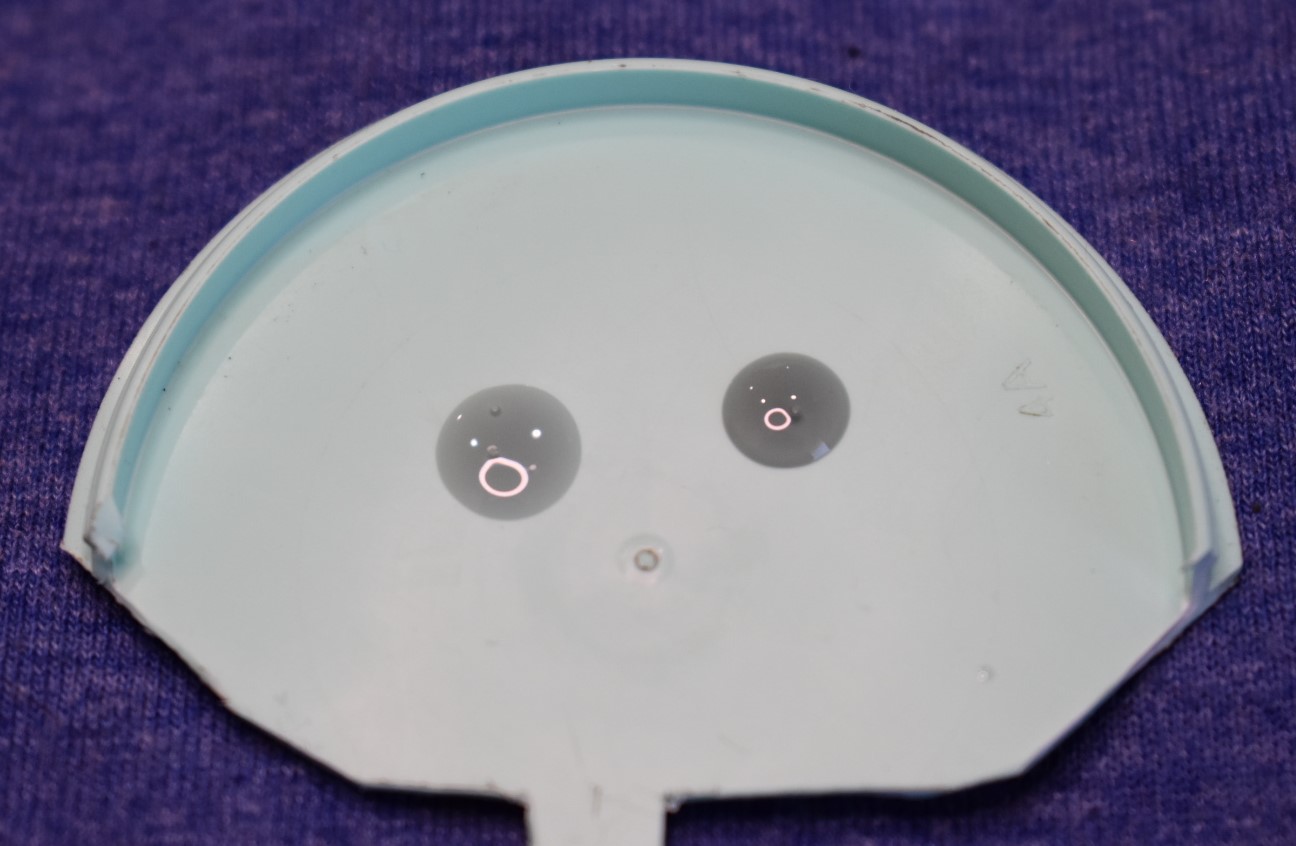
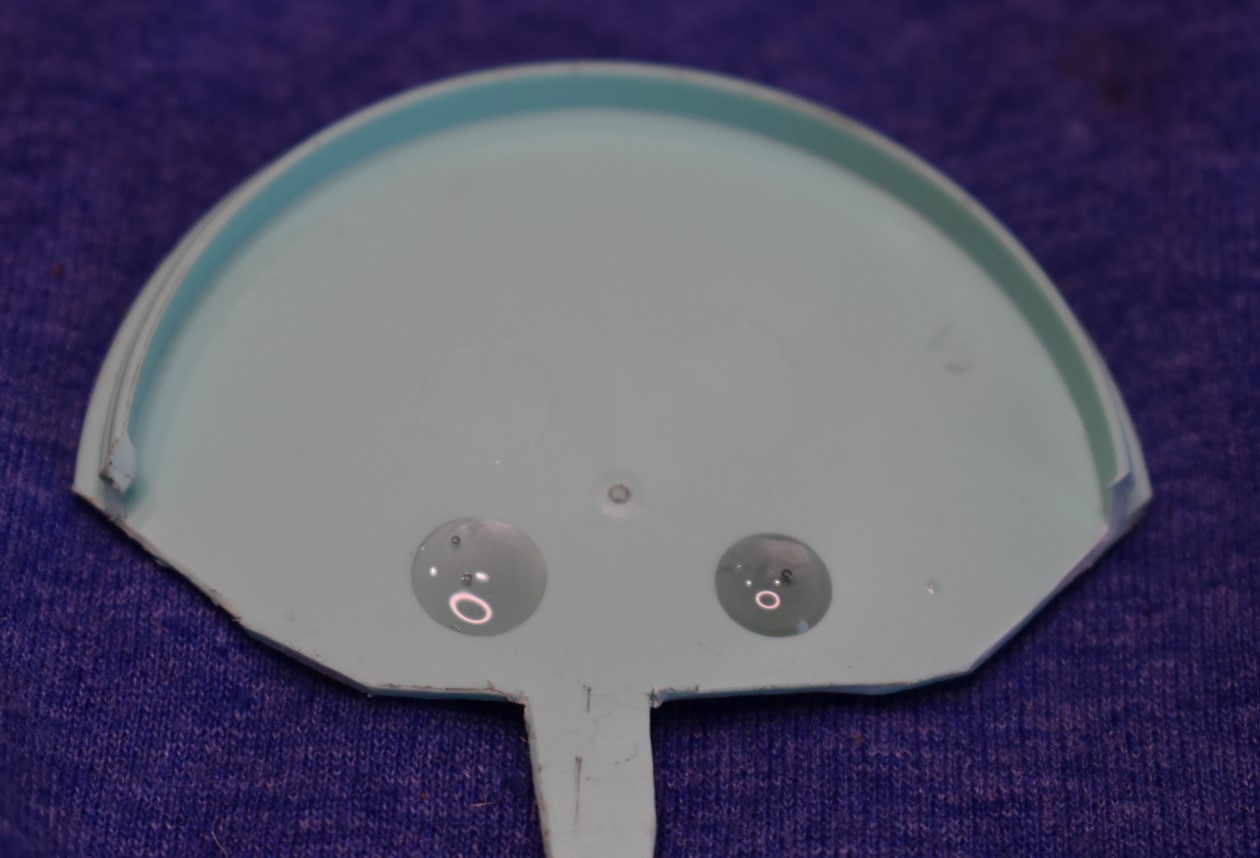
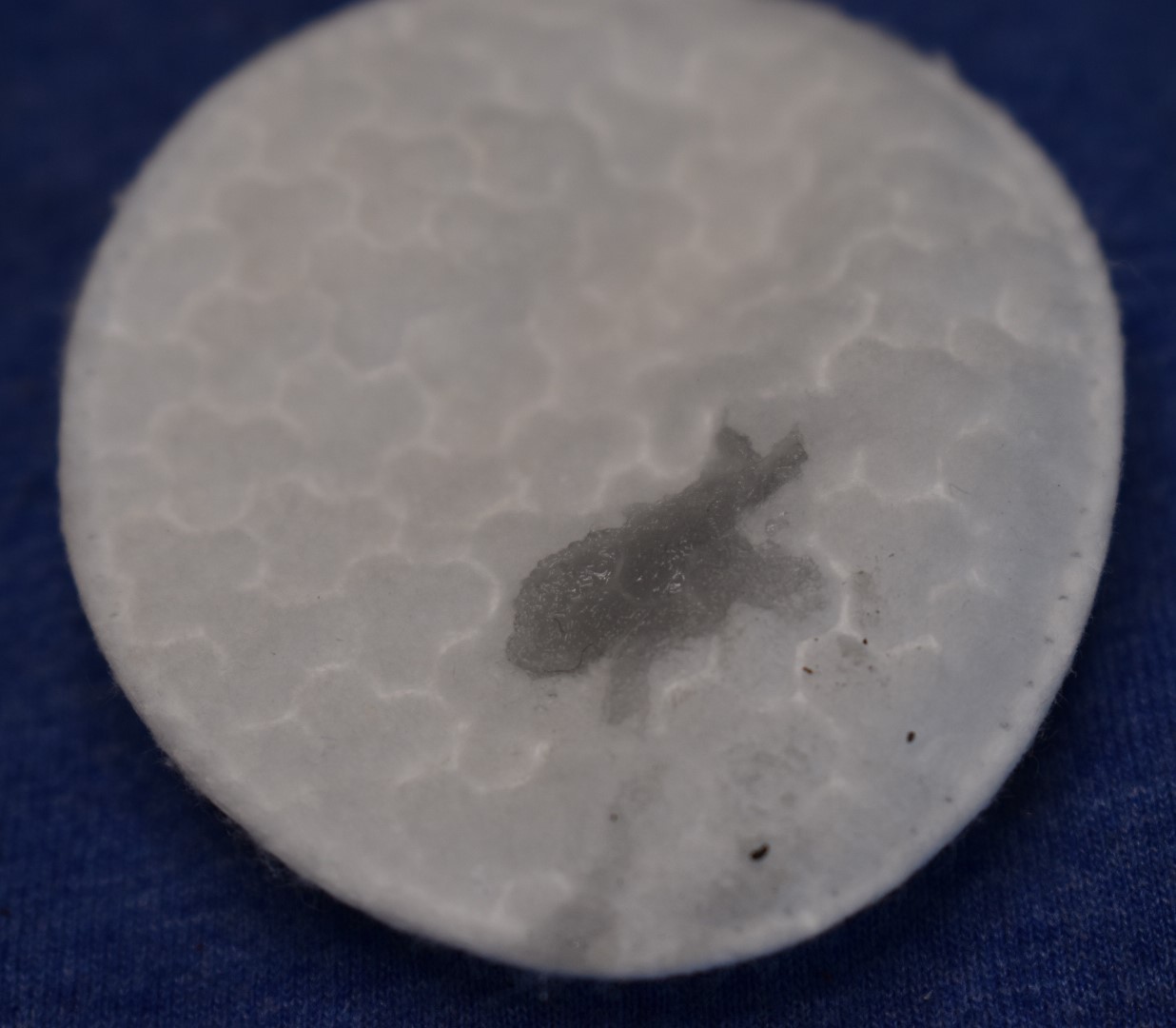
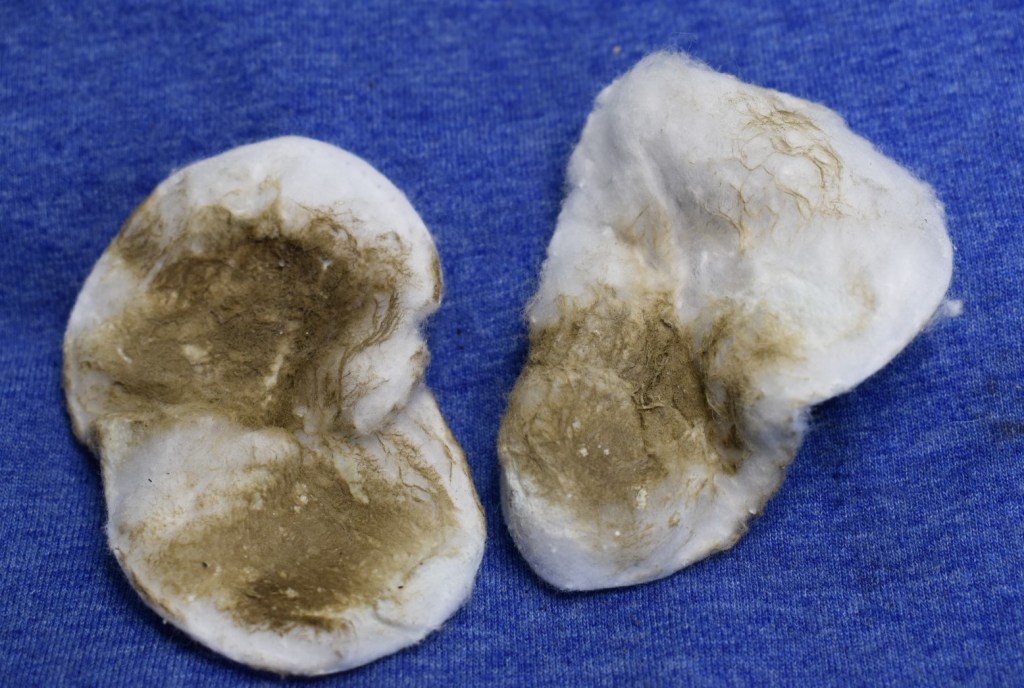
    Notice the purple ring on the make-up pad, that comes up later.

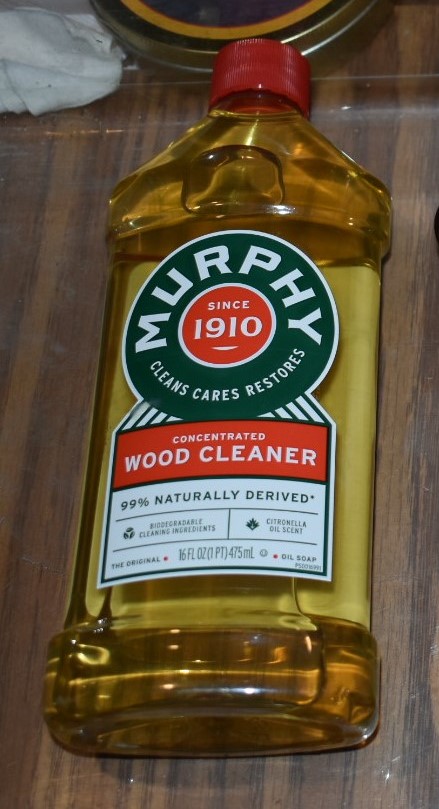
    When I returned from the appointment I continued.  To the sink.  With the tobacco chamber reamed, lava removed and internals pretty much cleaned it was time for the Murphy’s Oil Soap. I applied the oil soap to a medium stiffness toothbrush and scrubbed the externals of the stummel.  The soap was used straight and not diluted with water.  After scrubbing the soap was rinsed with warm water.  I was not completely happy with the black residue inside the shank (from earlier) so I used Dawn dish soap on a nylon bore brush to scrub the interior of the shank.  Once everything had been scrubbed, it was all thoroughly rinsed with warm water and dried with a towel. 

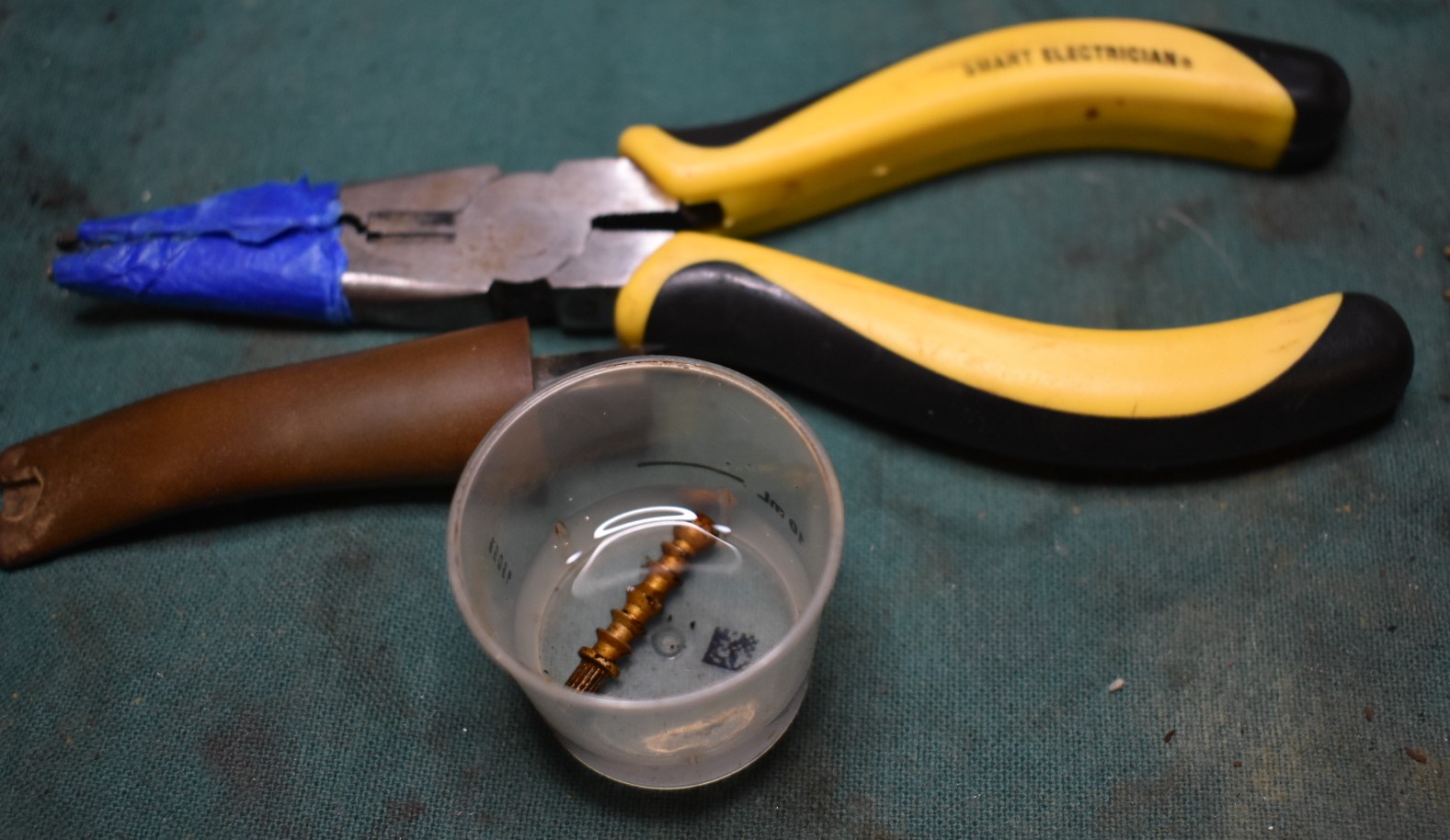
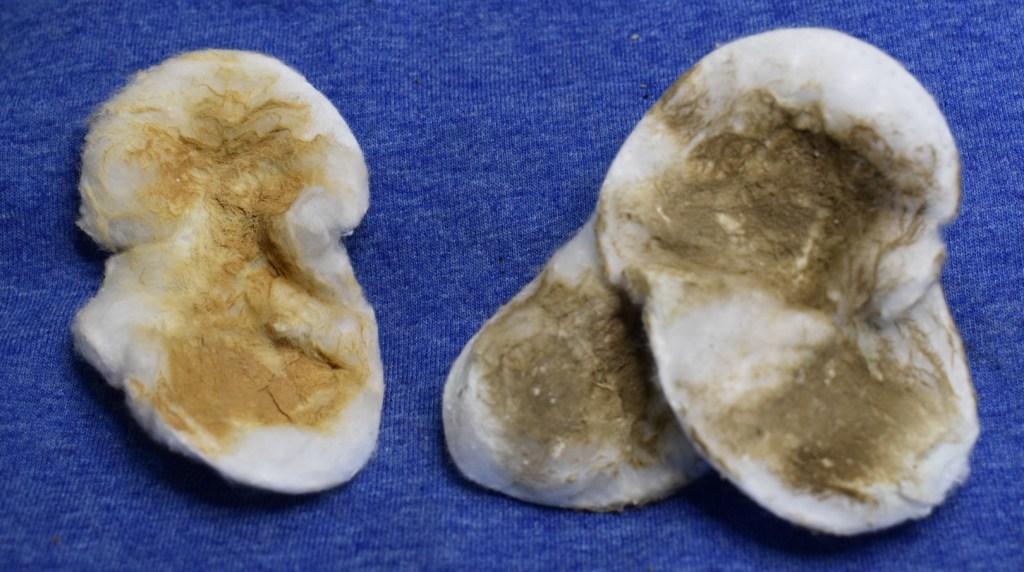
    Water is often considered the enemy of fine wood.  To remove the water that had soaked into the briar I liberally dampened a make-up remover pad with 99% ethyl alcohol and wiped the externals of the pipe.  I then poured about 5 ml of alcohol into the tobacco chamber and swished it around allowing the alcohol to flow into the shank as well.  I just plugged the end with my finger.  After it had sloshed about, I dumped it into a medicine cup.  The reason for the alcohol swirly is that 99% alcohol is hydrophilic (water loving).  It will pull the water out of the wood and into the alcohol.  The remaining alcohol dries very quickly.  I also used the alcohol to wipe down the entire stummel to see if there was finish that remained after the scrubbing and to removed any last bits of lava from the rim.  This is when I noticed the bright purple on the make-up pad.  I thought, “that’s weird”.  Being a retired chemistry teacher I thought, “that looks like potassium permanganate purple” and In the recesses of my memory there was something about using it to stain wood.  Sure enough, a quick internet search of potassium permanganate reveals that it is used to stain wood.

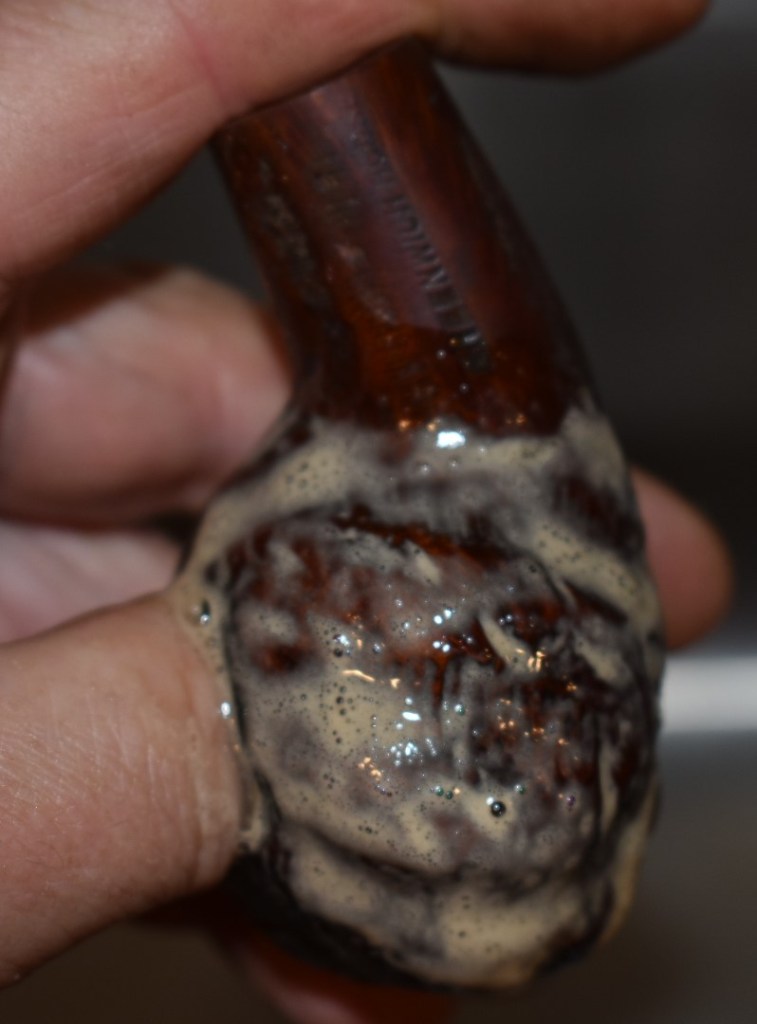
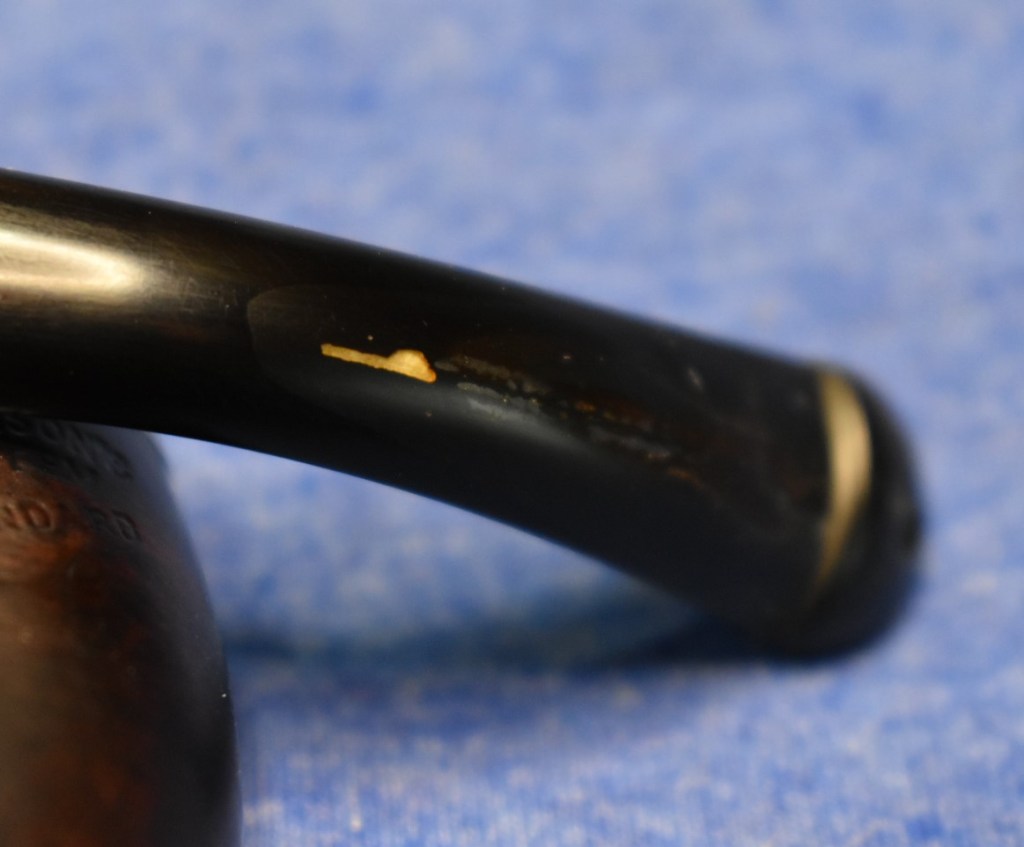
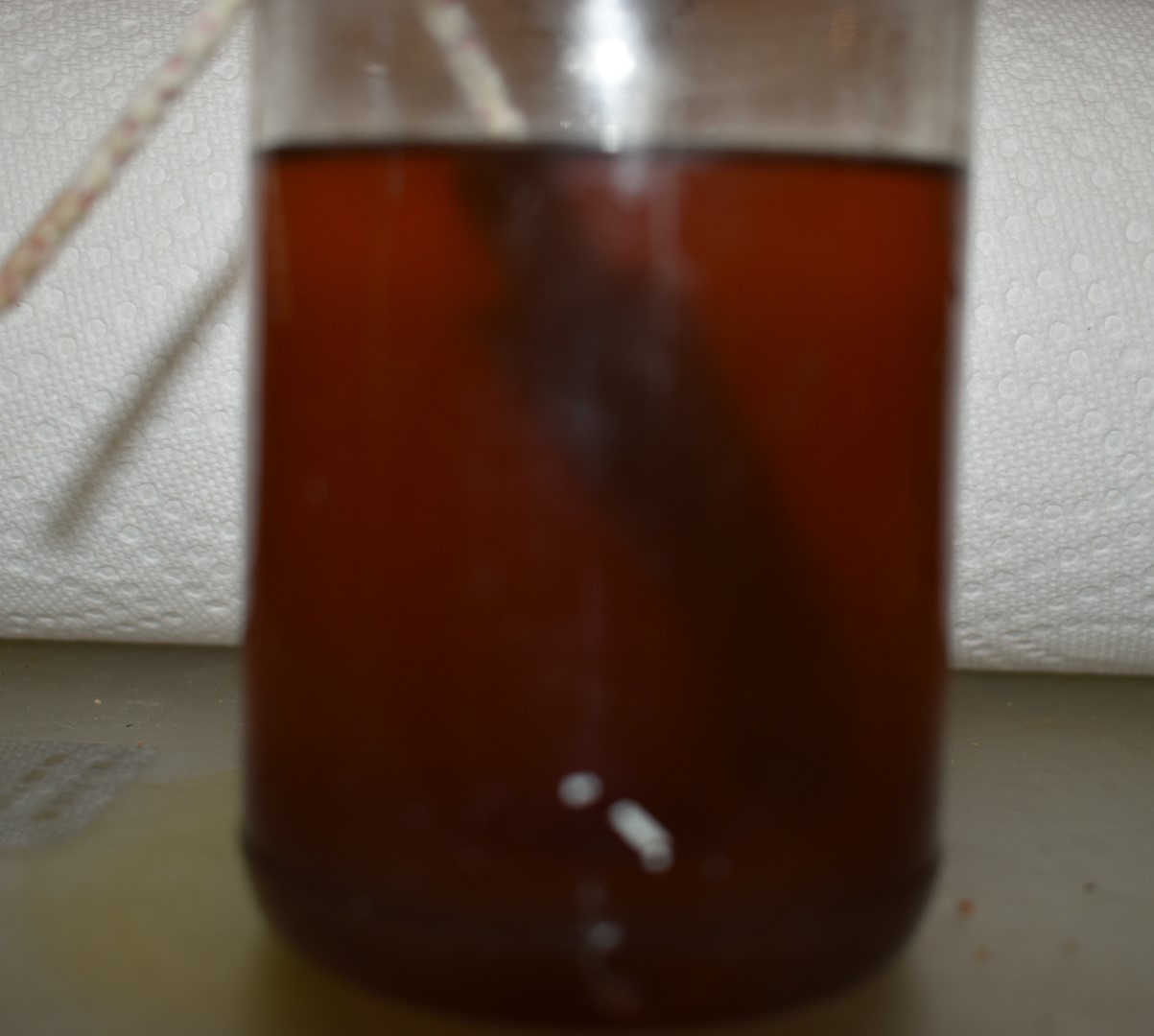
    More like 3 hours later, I removed the stem from the deoxidizing solution and allowed it to drip, the solution is not cheap but, I am so, I try to reuse as much as possible.  The oxidized aluminum bubbled up a bit, you can see it in the photo, right. The solution is very viscous that requires buffing with a rag immediately after removal and dripping of excess.  I vigorously rubbed the stem to remove the solution.  I recommend using nitrile gloves for this.  The interior of the stem also needs to be rid of the solution.  This is done with a couple of pipe cleaners run through the stem.  After the solution is thoroughly removed I wipe the stem down with mineral oil or Obsidian Oil.  I will usually allow the oil to soak into the stem while I return to work on the stummel.

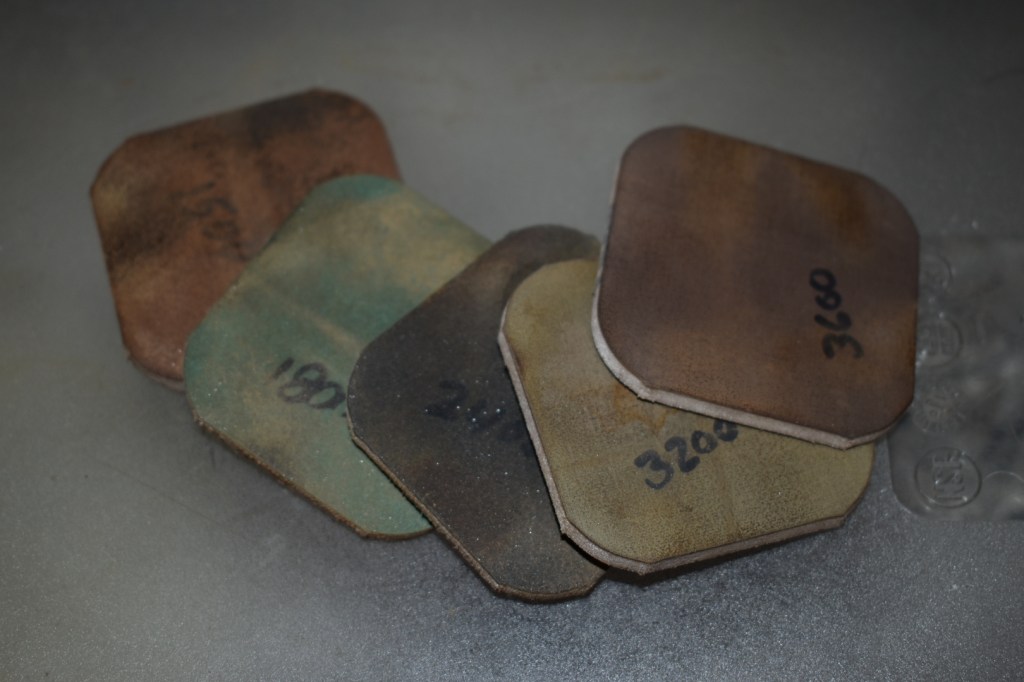
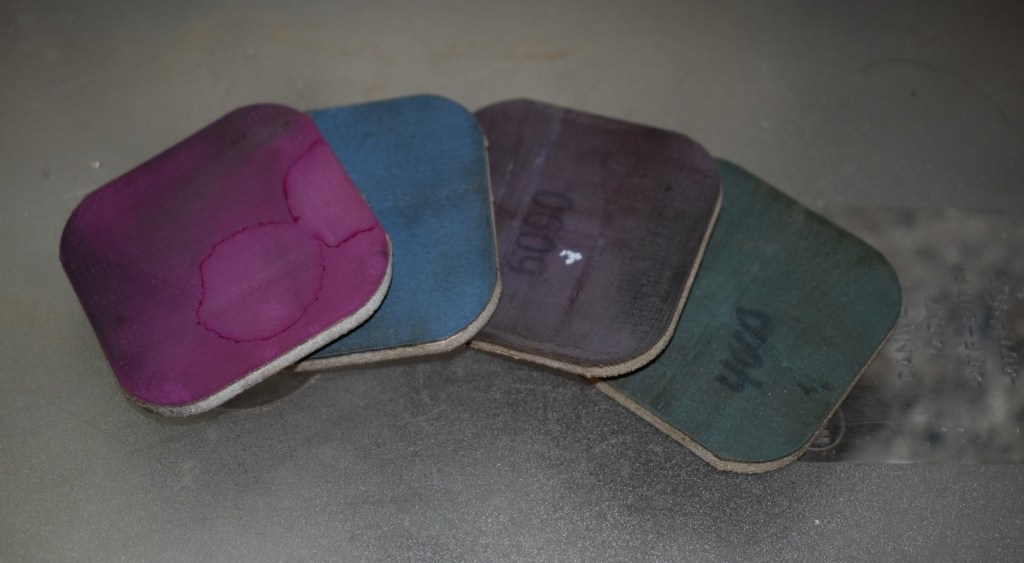
    Retuning to the stummel I wiped vigorously with alcohol dampened pads to see if I was removing any of the remaining finish.  The pads had a slight yellow-brown color to them.  I took this to be a little bit of shellac that remained after the oil soap scrub.  I then used a pad moistened with acetone to see if I got any additional finish off.  It was clean.  Good, no finish remained.  Time for the mico-mesh pads.  Since this stummel was in very good shape with no areas of deep scratching I did not have to start with 220 sandpaper.  I started with a 2400 micro-mesh pad slightly moistened with water. Being careful to avoid the stamped areas I continued using each of the pads in succession up to the 12000 grit pad.  In between each pad I wiped the stummel down with a make-up pad moistened with alcohol.  The final step with the stummel is to apply Lbepen’s Restoration Balm to the briar.

    Micro-mesh pads.

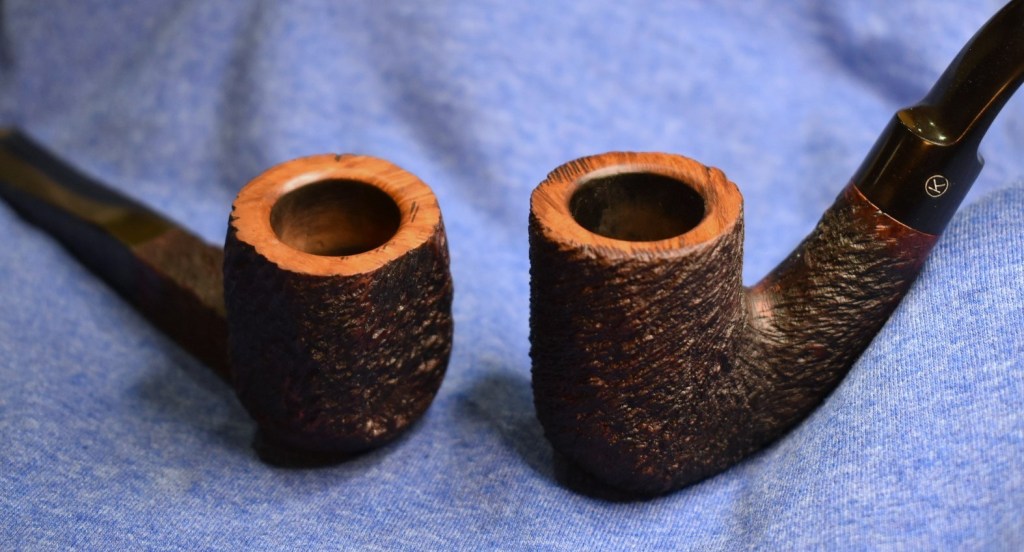
    Below you can see the cleaned pre-micro-mesh rim and the Restoration Balm coated stummel.

    I will usually allow the Restoration Balm to do what it does for 20 minutes to overnight.  In this case it was on for as long as it took me to finish the work on the stem.

    Returning my attention to the stem, I was not pleased with the level of oxidation removal.  It still appeared brownish in bright light.  I rubbed the oil from the stem with a clean dry cotton rag and re-dipped it into the deoxidizing solution.  This time I let it soak for about 30 minutes.  Upon removal I repeating the same steps as earlier.  This time it came out looking better but still some oxidation remained.  I knew this was going to be the most difficult part of this restoration.  I figured I’d try to remove more of the oxidation with Soft Scrub with Oxy-Clean.  A few make-up pads with Soft Scrub and a lot of elbow grease removed most of the oxidation. 

    I figured the rest would come off with the micro-mesh pads.  As with the stummel I began with a coarse grit, this time 1500, and worked my way finer and finer.  I rubbed down the stem with Obsidian Oil between each pad.  The final step in finishing the stem was to use Before and After Fine Polish  followed by the Extra Fine Polish.

    Stem done.  Stummel needs to have the Restoration Balm wiped off then this old girl can get reassembled and waxed.  I took the pipe to the buffer and applied several coats of carnauba wax.  When that was finished I final polished the wax with a microfiber polishing cloth to give it a little more shine.

    Overall, I am quite pleased to see how this 40-50 year old Brigham canadian turned out. I’m sure she will smoke quite well and continue to for many more years.  I thank you for reading the ramblings of this old pipe lover.  Below are some photos of the finished pipe.

  • A Peterson Pipe Notes Challenge: 

    November 2nd, 2023

    Ebony Finish of a Peterson Estate Pipe using Vinegar and Iron solution

    Written and photographed by John M. Young

    On October 9, 2023 Mark Irwin posed the following challenge in his blog: 

    “I’m offering a No Prize for anyone who cares to take up the Natural Ebony DIY Challenge with me. I’ve got an estate System on hand and want to try my hand at creating a genuine “Natural Ebony” using some of Adam’s iron vinegar finish. If you want to join me, I’ll run your post separately. Here’s the idea:

    • Use an estate P-Lip System
    • Remove the old finish
    • Create your own iron vinegar finish using Adam’s instructions (no Fiebings Black Dye allowed)
    • Use danish oil or other polish to bring up the shine
    • Document your work with photographs and your procedure
    • Submit photos and write-up to receive your No Prize”

    The above graphic and text are from Mark Irwin’s blog: https://petersonpipenotes.org/2023/10/29/367-a-history-of-petersons-ebony-finish-with-help-from-sykes-wilford-and-adam-davidson/

    Challenge accepted!  Being a retired science teacher and Certified Pete Geek, I couldn’t pass on this challenge.  

    Step 1) Make the solution.  

    The basics here are to put steel wool and vinegar into a 1 quart canning jar and wait.  Never having been a follower of “Keep It Simple Students” (KISS), I had to add a step.  I applied a bit of Dawn dishwashing detergent to two pads of 0000 steel wool.  The pads were then agitated with warm water and the soap to remove any oil on the steel wool. 

    Rinsing and rinsing removed the oil and most of the water.  The 2 pads were put into a 1 quart canning jar and 800 ml of vinegar (store brand, apple cider flavored, 5% acidity) was added.  This solution was allowed to sit for 36 hours with the lid loosely fixed on top.  Keep the lid loose as the reaction produces hydrogen gas.

    Speaking of reactions, what exactly is the vinegar doing with the steel wool?

    The reaction of iron and acetic acid is:

    Fe + 2 CH3CO2H → Fe(CH3CO2)2 + H2

    Solid aqueous solution aqueous solution gas

    After 24 hours, I was curious as to the effectiveness of the solution, so I applied a little bit on an unfinished piece of quarter round oak.  I applied a wetting coat to the oak and waited.  Overnight the wood had darkened significantly.  See figure below.

    I allowed the solution to react for an additional 12 hours and filtered the solution through a coffee filter and strainer.  

    Equipment used for first filtering.

    First filtering of solution.

    Residue from first filtering.

    The solution was then filtered through a second and subsequently a third coffee filter and funnel. 

    Second and Third filtering with funnel and coffee filter.

    Step 2) Select and prepare a pipe.

    While the solution was developing I needed to find a worthy victim, I mean a worthy subject.  I have a few Peterson estate pipes so this shouldn’t be too difficult.  I settled on one of the first Peterson pipes that I purchased.  A System Standard 314 with a P-lip.  I originally won it at an auction and restored it years ago.  The stem had been cleaned with rough pipe cleaners so many times it had a very slight groove cut all the way through the stem ahead of the button.  I repaired this with cyanoacrylate.  The wood was in great shape.

    The first step here was to remove any finish from the stummel.  Originally, I had sanded this pipe all the way down to bare wood and worked it from 220 grit to 400 grit sand paper then from 1500-12000 grit micromesh pads.  The wood was then treated with Restoration Balm (Lbepen.com) and buffed with carnauba wax.  

    This finish had to be removed.  I used cotton make-up removal pads with 99% ethyl alcohol to remove the wax.  I followed this up with a vigorous rubbing of acetone on a make-up pad.  I allowed the stummel to dry overnight. 

    Step 3) Solution meet pipe.

    After the vinegar iron solution had been filtered, as described above, I set up a portable vice as a drying station.  A cutting board was used to keep any drips off the countertop.

    Time for the first application.  I decided to use a cotton swab as an applicator for the vinegar iron solution.  This also allowed me to photograph the used swab in frame to keep track of the number of applications and the corresponding photo.

    Stummel after application 1 while it is still wet.

    Stummel after application 1 had dried.

    At this point I wondered what the stummel looked like under that film that was on the stummel.  I used a cotton handkerchief and gently buffed off the film.  The stummel had darkened up a bit and showed what looked like a contrast stain.

    I then used a fresh cotton swab and reapplied the vinegar iron solution.  I allowed this to dry for 30 minutes and applied a third coat.  Below are the photos taken with each of the second and third coats.

    After application 2 wet.

    After application 2 dry.

    After application 3 wet

    After application 3 dry.

    At this time I decided to let the vinegar iron solution do what it was going to do for several hours.  Each time I applied a fresh solution the pipe appeared to have a walnut color stain.  Perhaps I needed to allow it time to oxidize or react with the wood to develop the “black” color goal.

    Four hours later I was curious about the state of the wood beneath that hazy film.  I again used a cotton handkerchief to buff away the film.  Wow, it is much darker this time.  For the Peterson aficionados out there, it looked like a Peterson Heritage finish.

    The above two photos are after 4 hours and buffed with cotton cloth.

    I applied the vinegar iron solution for the fourth time, allowed it to dry for 30 minutes and reapplied it.  This brought the total applications of solutions to five.  I decided to let the pipe sit overnight and to examine the color in the morning.  Well, that was the intent, I decided to give it one more coat before I went to bed thus, bringing the total to 6 applications.

    Now, I’ll wait till morning.

    Morning came and the Peterson 31 looked remarkably the same as it did last night.  I buffed off the hazy residue with a paper towel and the cotton handkerchief.  The color had darkened very slightly.  When examining the results in sunlight the color appears to be a very dark brown with the wood grain visible.  The below photos illustrate it nicely.

    I wondered about the sanding I had done to this stummel as part of it’s original restoration.  I had sanded all the way to a 12000 grit micro-mesh pad.  I was concerned that sanding that finely did not allow the vinegar iron solution to penetrate into the wood as well as if the stummel were only sanded to 220 grit sandpaper.  The decision I am now faced with is three-fold:

    1. Apply the Danish oil and see if it “blackens” the finish.
    2. Apply a tannin booster (strong black tea solution) then apply additional vinegar iron solution.
    3. Sand the stummel with 220 grit sandpaper, apply the vinegar iron solution then re-sand to the desired 12000 micro-mesh level of finish.

    Faced with the above dilemma, I emailed Mark Irwin and asked him the following question:  “Do you think that using a tannin booster, strong black tea solution, is breaking any of the rules of this challenge?”  He replied quickly with the following response:  “John, I think as long as you’re using the iron vinegar in the process, we will leave the rest to you.” (Mark Irwin personal response email).

    That settled it for me.  I used 8 bags of black tea with 500 ml of boiling water.  I decanted about 10 ml of the tea into a plastic bowl (green) and stirred it with a cotton swab that I touched to the tip of a liquid dish soap dispenser.  I wanted a touch of soap to break the surface tension of the water/tea.  I applied the tea solution to the stummel of the Peterson 312.  The cotton swab turned black nearly immediately.  There must have been enough residual vinegar iron solution on the stummel to trigger the bonding of the iron to the tannins of the tea.  See the below photo of the very dark cotton swab. 

    The above photo shows the stummel wet with the black tea solution.  The cotton swab at the bottom of the frame was the swab used to apply the tea.

    I allowed the black tea solution to soak in for several minutes.  I decanted about 10 ml of vinegar iron solution into a plastic bowl (blue) so as to not contaminate the jar of vinegar iron solution.  While the stummel was still damp with the black tea solution I applied a coat of the vinegar iron solution.  I allowed this to dry for one hour.

    Here you can see the two swabs used, bottom.  The left swab is the black tea on the dry stummel.  The right swab was used to apply the vinegar iron solution still damp-with-tea stummel.

    After the drying time I used the cotton handkerchief to rub away the hazy residue.  Disappointment!  The stummel was still brown.  A lovely dark shade of brown but still brown.  In the sunlight the brown was even more evident.

    Here was my thought process at this point:  

    1. I think the high level of sanding created a surface that is not allowing the infiltration of the vinegar iron solution.
    2. I don’t want to go back and sand this stummel from 220 – 12000.
    3. The black tea and the vinegar iron solution together did make the wood darker.
    4. Hot water makes wood expand.  Expanded wood would allow greater penetration of a solution into said wood.

    New procedure:

    1. Heat black tea to about 140 degrees Fahrenheit (60C).
    2. Dip the stummel into the hot tea allowing it to soak for 3-4 minutes.
    3. While it is still hot, apply vinegar iron solution.
    4. Allow to dry.
    5. Buff the hazy film off with a cotton handkerchief.

    That sounds reasonable.  It doesn’t change or break any of the agreed upon rules.  

    Okay, do it.   I did and here are the results after I had given the stummel a quick rub with Nordicare Danish Oil and allowed it to dry.

    It worked.  

    Now hopefully you have stuck with this long article and not tried to repeat everything that I have outlined above as a step by step guide.  Kind of like that test you heard about. The one where a teacher said to read every question before starting the test and then the final question says “Write your name on the space provided and turn in the test”.  Don’t do what I did.  If I were to do this whole challenge again I would treat the “estate P-Lip System” from Mark’s rules, as a pipe that you are going to restore.  I used a “estate P-Lip System” that I had restored.  I think my experiment may had been much easier if I had used a stummel which had only been sanded with 220 grit sandpaper.  I do not know this for certain but, I believe that was the cause of my difficulty.  The final 5 procedures, directly above the preceding 2 photos, are probably all that you will need.  Now, the one thing that I am not certain about is sanding the stummel after you have used the vinegar iron solution.  It may be that you sand away some of the ebonised briar leaving a stummel that looks more like a contrast stained piece.  That would require you to re-do the above procedures or, perhaps just reapply the black tea solution followed by a reapplication of the vinegar iron solution.  You may have to do some experimenting to perfect this.

    For the final finish of my 312, I wanted something softer than a high gloss carnauba wax finish.  I opted to not use the buffer; rather, I went with Renaissance Micro-crystalline Wax Polish buffed with a shoe shine brush.  I applied 3 coats of this wax buffing between coats.  It gave me the soft finish I was after while still protecting the wood.  

    I had fun messing around with this challenge.  I appreciate Mark’s posts and his timely response to my questions.  I thank you all for reading the ramblings of an old pipe lover.  If you found any of this interesting I have a few restoration guides at https://scimansays1787.wordpress.com/.  If you are reading this at the wordpress site, thank you for that.

    Finally, here are a few photos of my finished DIY Ebony Peterson System Standard 312.

  • A Peterson Deluxe 8S Restoration

    November 1st, 2023

    Written and photographed by John M. Young

    In October of 2023 I first lay eyes on this auction on eBay.  I bid and won the below Peterson 8S.  As far as restores go this one looked pretty easy and a Deluxe for under $100 is not too bad at all.  

    The photos all looked good for a pipe from the 1970s.  The one slight issue that I noticed right off was the missing aluminum chimney or stem extension.  I could see the stem was threaded and I know from experience that Peterson Deluxe pipe typically have the chimney.  I thought, “no problem.  I have a couple spare chimneys that I’d purchased from https://www.smokingpipes.eu.  The U.S. version (https://www.smokingpipes.com) is usually sold out whereas the Dublin shop usually has them in stock.  

    While waiting for the 8S to arrive I went through The Peterson Pipe (the Big Book) to refresh myself with the history and lore of the new acquisition.  The “8” is actually one of the original Peterson Patent shapes dating back to the 1896 catalog.  I went to the Peterson Pipe Notes, by Mark Irwin, for a more condensed rendering of this shape history.Inb Blog “146. A Guide to System Shapes, 1896 – 2019, Part 1 (The 300 Shape Group)” mark Irwin does a great job summarizing this original shape:  

    “313 Medium Bent Dutch. 1896-Present.

    Length: 4.94 in. / 125.48 mm.
    Weight: 1.40 oz. / 39.69 g.
    Bowl Height: 1.78 in. / 45.21 mm.
    Chamber Depth: 1.53 in. / 38.86 mm.
    Chamber Diameter: 0.70 in. / 17.78 mm.
    Outside Diameter: 1.19 in. /30.23 mm.

    The 313 is an original Patent dutch billiard bowl, pictured in the 1896 catalog as shape 8 and listed in the 1906 catalog as one of the small Patents. It was given its current shape number as a 2nd Quality pipe in the 1937 catalog, where it also appears as a 3rd Quality pipe with shape number 363. That catalog also gives shape number 8S to its De Luxe version, where it also appears as a Classic Range 2004B (K and 1st Quality) and 338 (Kapet and De Luxe). In the late 1970s it was released in the Dunmore System line as number 73.”

    Quote from: https://petersonpipenotes.org/2019/09/03/146-a-guide-to-system-shapes-1896-2019-part-1-the-300-shape-group/

    Looking at the photos from eBay, I could make out the third stamping from the hallmark as a “C”.  I think it must be a 1970 based on the size of the “c”.  The final warning came in the description and stated that the pipe had, “burnt marks around the bowl edge inside part .”  So, when it arrives we will see an old pipe that is missing a chimney, has a charred rim and worn hallmarks – sounds like fun.

    It finally did arrive and to no surprise it was an old pipe that was missing a chimney, had a charred rim and had worn hallmarks.  Here are some photos taken prior to restoration:

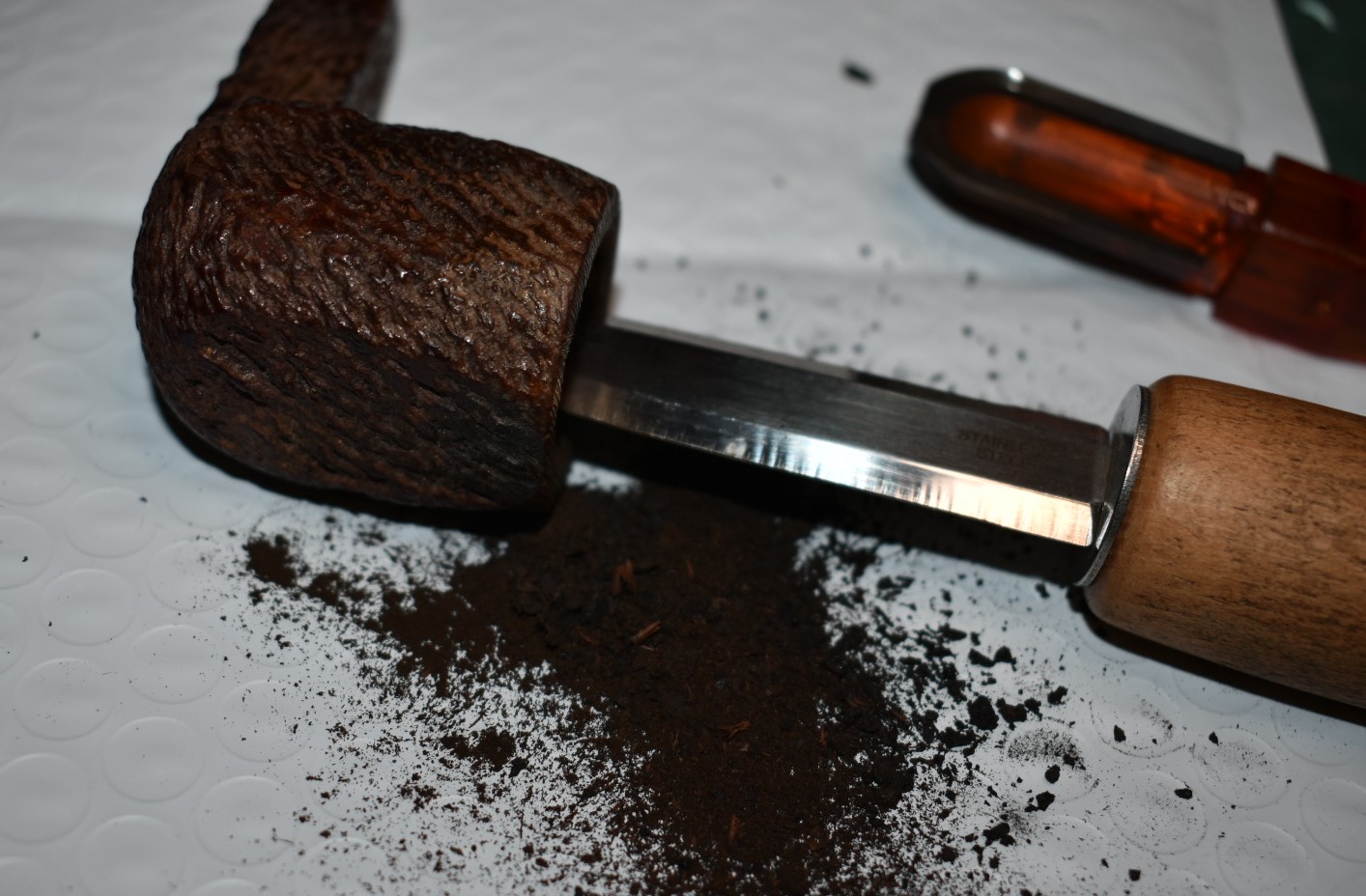
    As you can see the old 8S has some issues.  I began with the tobacco chamber.  It did not have a thick cake but I did want to see if the chamber had any charring issues of its own.  I used the PipNet reamer and the Smokingpipes knife to clean out the tobacco chamber (photo below).  After this was completed I sanded the interior of the tobacco chamber with 220 sandpaper on a wooden dowel.  The chamber looked good with no sign of any charring.  

    With the tobacco chamber finished I decided to clean the exterior of the stummel.  This was done using Murphy’s Oil Soap and a medium stiffness toothbrush.  The exteriors cleaned up without any issues.  The rim had some “lava”, the residue of dried tars.  However it was difficult to tell where the lava ended and the charring began.  I rinsed the exterior with warm water and used a damped finger to remove and sanding dust from the tobacco chamber.  Next was the draught hole.  I returned to the restoration bench and moistened a bristle pipe cleaner with 99% ethyl alcohol.  This was run through the draught hole to gauge how dirty it was.  The pipe cleaner came back quite blackened with tar.  Here I poured about 5 ml of alcohol down into the tobacco chamber.  Holding the stummel upright I used a small nylon brush to scrub and loosen/dissolve the old residue.  After a minute of scrubbing I would pour the alcohol into a small medicine cup and run a pipe cleaner through to check on the color of the pipe cleaner. Black = more scrubbing, brown = more scrubbing with progress, white = finished.  It was brown.  I refilled with another 5 ml of alcohol and repeated the scrubbing.  The result was cleaner than the first time.  I repeated with another 5 ml of alcohol.  Finally I started to get through the build-up of smoking residue.  I finished by using alcohol soaked bristle pipe cleaners until they cam out clean.  

    Next was the reservoir.  On a Peterson System pipe this is where the water from the smoke condenses and accumulates.  A diligent Pete smoker will twist a napkin or paper towel and dab out this condensate before dumping the ash or dottle.  All of my alcohol baths had softened the residues in the reservoir quite nicely.  I scraped with a round ended blade as much of the residue out as I could before using cotton swabs soaked in alcohol to clean out the reservoir.  After what seemed like hundreds of swabs was actually 15.  The reservoir was now clean. All of this soap, water and alcohol had taken quite a toll on the finish of the pipe.  I used a make-up removing pad dipped in alcohol to wipe away any wax that remained on the stummel.

    I decided to top the rim of the pipe using 220 wet/dry sandpaper on a countertop.  This ferrule is a little bit taller than the rim making topping a bit more difficult.  I wanted to apply a little bit more pressure to the charred areas closer to the ferrule while keeping the flat profile and altering the shape of the 8S as little as possible.  After I had sanded as much as I felt comfortable with the 220 grit I used a 400 grit paper to smooth out any scratch lines.  This left the stummel looking better but I was still not happy with the charred area.  I then used a small wood sphere wrapped in 220 sandpaper to chamfer the inside edge of the rim.  This helped but I was still not happy with the rim.  I quit worrying about it and moved on.  More on this later.

    With the finish removed it was time to start sanding the wood.  I noted exactly where the stamping were and made it a point to avoid sanding those areas.  I started with the 1500 grit micro-mesh sanding pad moistened with a few drops of water.  After sanding I wiped the stummel with a make-up pad moistened with alcohol.  I repeated the wet sanding with the 1800 grit micro-mesh pad and wiping with the make-up pad.  The subsequent micro-mesh pads were used dry with an alcohol wipe after each micro-mesh pad.  I worked up to the 12000 grit micro-mesh pad.

    The stem of this old 8S needed very little work.  First off, what is a Peterson chimney?  It is a tenon extension of the stem into the reservoir.  The tenon extension is called a chimney by employees at the Peterson factory.  They are part of Deluxe and Premier models.  Here you can see a diagram of a Peterson System pipe.  The chimney, though not labeled, is shown and I circled it in green.
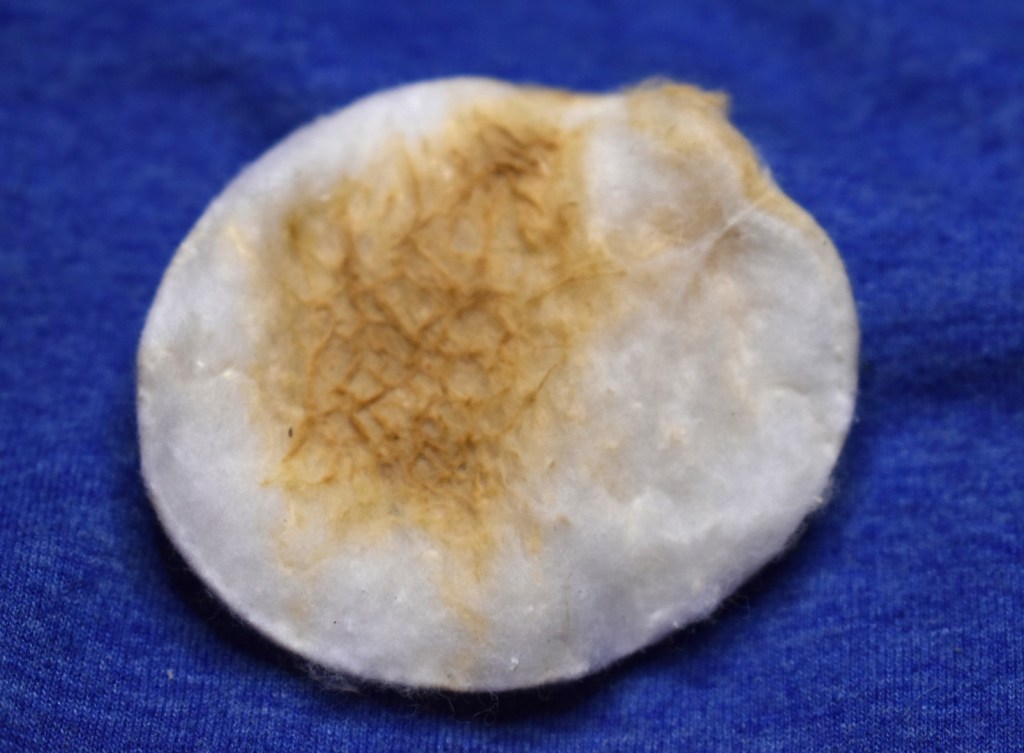
    Photo from:  https://petersonpipenotes.org/2018/08/30/105-peterson-system-day-2018/

    Below are examples of Peterson System pipe chimneys.  The Straight System pipes in the 120 shape and the 31 shape also have tenon extensions, these are shown in the photos below.  Today all of the chimneys are made of aluminum.  Prior to 1960 the tenon extensions were made of bone.  I have a couple of bone chimneys on System pipes.  In each case the bone is fused to the vulcanite stem.  When these bone chimneys eventually crack or break I will have to drill them out and replace them with a new aluminum chimney.

    Top pipe is a Peterson 31 Straight System pipe.  Below is a Deluxe XL339.  Both showing aluminum chimneys.

    Top pipe is a Peterson Premier 312.  Bottom pipe is a Peterson Straight System 120.  Both pipes have bone tenon extensions.

    Okay, now that we have had our Peterson chimney primer let’s try a new Peterson chimney in the old 8S.  No luck there. The old style chimney is a slightly larger diameter than the new one.  The below photo shows the new chimney flopping about in the threads.

    Fortunately I have a friend, Christian Baxter, who is a machinist.  Normally he is building custom machines for testing prosthetics for humans.  When asked, he was glad to work on something “important” for a change.  Relativity, not just for physics.  Christian is an amazing machinist and showed me some true reality altering things that could be done with a metal lathe.  After a few minutes of work he had manufactured a very nice chimney for the 8S.

    The above two photos are Christian Baxter’s lovely work making a replacement chimney.

    The last thing that the stem needed was a good cleaning, micro-meshing and polish.  The cleaning was done with bristle pipe cleaners dipped in 99% ethyl alcohol.  These were run through the stem until the came out clean.  The micro-mesh sanding of the stem was done in the same way as with the stummel – starting with 1500-1800 (wet),  and working up to 12000.  I wiped the stem off with Obsidian Oil between each micro-mesh pad.  After the 12000 pad, I polished the stem using Fine Polish followed by the Extra Fine Polish from Lbepen.com. 

    The restoration was nearly finished.  Here are a few photos before the final buff and application of the carnauba wax.

    As previously stated, I was not happy with my attempts to repair the charred rim.  I mention this with some photos on a Facebook group that I frequent.  One gentleman there, Sascha Mertens from Germany, mentioned that he uses a technique where he applies petroleum jelly to the charred area then uses a sharp knife to very carefully scrape the charred wood leaving behind undamaged briar.  I had not heard of this technique and decided to give it a try.  My first step was to get out my old German Boker pocket knife and give it a very sharp edge.  It only seemed appropriate to use a German knife with this new German advice.

    Next, I applied the petroleum jelly and allowed it to soak the charred wood for a few minutes.  I then careful began using the edge of the knife, held vertically, to lightly scrape the charred areas.  I wiped the jelly/char off on a make-up removal pad and repeated the char scraping.  It worked just like Sascha said.  Below are the photos of the results.  

    The results were very nice.  I was at last happy with the way the rim looked.  Thank you Sascha Mertens.

    The final step was to apply a high quality carnauba wax with the buffer.  This step really made the 8S shine and returned her to the near glorious condition when she left the Peterson factory.  This project would not have been possible without the assistance of Christian Baxter, machinist extraordinaire, and Sascha Mertens.  Their advice and skills made this restoration a success.  And thank you for reading the ramblings of an old pipe lover.

    Here are some final photos of the Peterson Deluxe 8S. 

  • A Yello-Bole Aristocrat Airograte Restore

    October 30th, 2023

    Written and photographed by John M. Young

    I am not sure why I am drawn to metal pipes.  I love the all-briar classics as well as the artisanal briar and exotic material pipes that are being produced by true artists.  There is just something nostalgic about the old Falcons, Vikings, Kaywoodie Filters and this Yello-Bole that draws me in.  Perhaps it is a childhood memory of the next door neighbor, Mr. Chase as he smoked his metal pipe smelling oh so good as he worked on his yard.  

    Over the summer of 2023 I came across this Yello-Bole.  The Ebay listing showed a dull gray pipe with a nearly black bole.  The starting bid was under $10.  How could I refuse?

    Screen snip of photo taken from Ebay listing 

    The Yello-Bole Aristocrat Airograte can be seen here in an advertisement from 1966.  

    File:Yello Bole AirOGrate 1966.jpg – Pipedia

    Pipedia also states the following about Yello-Bole’s metal pipes:

    “The Yello Bole Aristocrat Airograte: An Aluminum and wood pipe with a twist. This pipe doesn’t have a bowl per say, but more a briar cylinder that screws into the base of the body. At the bottom of the bowl is a metal grate, thus allowing air to be pulled through all the tobacco and reducing any chance of clogging. The lower bowl catches all moisture and tar reducing bite. These pipes can be had in a silver/chrome finish as well as a soft gold finish. The stem of these pipes has cooling fins up each side, and can be found in a straight or bent form.”

    • Two Examples and details, courtesy Chris Rigol
    • Yello-bole 20230531 181813.jpg
    • Yello-bole 20230531 181928.jpg 
    • Yello-bole 20230531 182016.jpg 
    • Yello-bole 20230531 182029.jpg 
    • Yello-bole 20230531 182038.jpg 

    Yello-Bole – Pipedia

    I was the only bidder on this auction.  Perhaps this should have told me something.  The anticipation for the arrival of my prize was short and upon arrival I initially thought that this would be a quick and easy addition to my collection.  Sure, it was oxidized and dirty but estate pipes usually are.  Below are some photos of how the pipe appeared when it arrived.

    Nothing too bad, right?  Sure, the aluminum had oxidation, a bit of “lava” on the rim and the need for light reaming, no problem. The nylon mouthpiece looked good.  As I began closer examination of the pipe my thoughts of “quick and easy” started to dissolve.  Upon disassembly I said, “Wow, this bowl is really stuck to the aluminum.”   The bowl had enough shellac to drown an entire Erica Arborea plant and what is that build-up in the bowl?

    The gunk in the bottom of the bowl was just unsmoked tobacco.  That came out easily.  The aluminum reservoir was thickly coated in a dried smoke condensate of tar.  The screen was dirty with tobacco and a good deal of tar.  I assumed that the tar was also throughout the shank and stem as well.  This looks like a job for some 99% ethyl alcohol.  I first tried a bit of alcohol on a paper towel inside the reservoir.  This did little other than making the paper towel dirty.

    I decided that the shank/stem and aluminum screen needed to soak in the alcohol bath for an hour or so..

    While the alcohol softened and started to dissolve the tars I began working on the wooden bowl.  The bowl had a little bit of lava on the rim and a light cake build-up inside the tobacco chamber.  I used the PipNet reamer and the Smokingpipes knife to clean out the tobacco chamber.

    I then took the bowl over to the sink and used Murphy’s Oil Soap and a medium stiffness toothbrush to remove the dirt and grime from the bowl as well as the lava from the rim.  After a rinse of warm water the bowl came back to the bench.  I tried to remove the “shellac” from the bowl with a cotton boll soaked in alcohol.  What I assumed was a thick coating of shellac turned out to be some other type of clear coating as this should have readily dissolved with alcohol had it been shellac.  If alcohol doesn’t work then try acetone.  Bingo, the clear coat was not clear at all but, red.  After numerous acetone soaked cotton bolls I could see wood.

    This also revealed the fills that the finish had concealed.

    I decided to leave them for the time being and see what they looked like after the Restoration Balm did it’s magic.  

    After the aluminum shank had soaked for about an hour I removed it from the alcohol bath.  The tars had softened and dissolved quite well.  I began cleaning the reservoir with cotton bolls and cotton swabs soaked in clean alcohol to further rid the aluminum of it’s tar.   This worked quite well.  The screen was a different matter.  Upon removing it from the alcohol bath and scrubbing it with alcohol soaked cotton bolls it still remained yellow with several screen holes filled with tar.  I used the toothbrush and Dawn dish soap to scrub the screen.  This worked on getting rid of the last of the tars and yellow color but many holes remained filled.  I returned to the bench and used a fly tying bodkin to clear out the remaining “clogs”.  After needling the screen clean I rinsed it with clean alcohol.

    The draught of the pipe was remarkably clean.  Perhaps the alcohol bath had worked better there or the previous owner was not averse to running a pipe cleaner through the stem.  Either way the draught was cleaned out with bristle pipe cleaners soaked with alcohol.  

    The nylon mouthpiece was in quite good shape which was nice as nylon is not very easy to return to a pristine condition.  All that was done there was to clean it well with the toothbrush Dawn dish soap and alcohol.  

    I worked some Before & After Restoration Balm (Lbepen.com) into the wood bowl with my finger tip.  I allowed this to sit for 30 minutes.  While waiting for the Restoration balm to do its work I took the aluminum to the buffer.  I used white diamond buffing compound to clean away the oxidation from tha aluminum.  All of the corners were tedious to work through but eventually a nice bright polish was seen on the aluminum again.  After the restoration Balm had done what it does, I buffed the excess off with a cotton towel and was glad to see that the wood had some of it’s luster returned.  

    Here are some photos of the finished Yello-Bole Aristocrat Airograte:

    As you can see the old girl has returned to some semblance of her factory fresh glory.  I now understand where the term “Airograte” comes from.  The screen, or grate, allows for the airflow.  As this is a pipe that I planned to keep for my personal collection and use I did not spend time trying to make the nylon stem new again.  Overall I am very pleased by how she turned out.  Thank you for reading the ramblings of an old pipe lover.

  • A Dr. Grabow Westbrook Restoration.

    October 30th, 2023

    Written and photographed by John M. Young

    We all know of Dr. Grabow pipes and likely have our own opinions of them.  Anyway you look at it Dr. Grabow pipes are an American icon.  I do not feel the need to examine the history of the brand and am including links regarding history for those who are interested.

    History:   

    Tobacco Pipes:  https://www.tobaccopipes.com/dr-grabow-history/#:~:text=The%20famous%20smoking%20pipe%20brand,US%20patent%20number%201.896%2C800.

    Pipedia:

    https://pipedia.org/wiki/Dr._Grabow

    Pipedia timeline: 

    https://pipedia.org/wiki/Dr._Grabow_Pipe_History_Timeline

    Current Dr. Grabow:

    https://www.drgrabow.net/

    After I retired from being a high school science teacher for 32 years I started restoring estate pipes.  As part of my education in the realm of restorations I came across the blogs of Seve Laug (https://rebornpipes.com/).  I have to say how impressed I was at his knowledge and skills.  Unfortunately my own knowledge and skills were quite undeveloped.  Fortunately, ignorance is curable.  Through the avid consumption of articles and practice restoring estate pipes I developed a passable set of skills of my own. I received this Dr. Grabow Westbrook as part of a “grab bag” of pipes for restoration from Steve Laug’s partner, Kenneth Lieblich (kenneth@knightsofthepipe.com).  

    The Westbrook series began in the mid-1950’s.  I have to admit that I was drawn to them because of the orange spade.  Amazingly, my attraction to them was shared by Dr. Grabow aficionados and according to Dr. Grabow Models (Series,Line) Names Through the Years:  “WESTBROOK (c1955? to about 1985 or so) — One of the earliest RJR pipes and very sought after even today, long after the special offer program stopped.” https://pipedia.org/wiki/Dr._Grabow_Models_(Series,Line)_Names_Through_the_Years 

    So either I accidentally chose a good one or there are a lot of folks who like orange.

    This old Westbrook looked dirty and well worn or, as my father used to say “rode hard and put away wet”.  

    Upon reaming the bowl with a PIPNET I discovered that the previous owner liked to scrape the bowl with a sharp tipped knife.  There was a hole all the way through the briar.  The edges did not appear charred so I figured he was just a scraper.  The next step was to clean away the years of accumulated dirt, oils and grime.  This was done using a medium stiffness toothbrush and Murphy’s Oil Soap.  Since the pipe was rusticated I also used a brass brush, 12 gauge shotgun bore brush, with the oil soap to get the “lava” from the rustication on the rim and the deeper grooves.  The following two photos show the hole after the pipe was cleaned and reamed. 

    At this point I was faced with a decision.  Should I:

    1. Scrap the whole restoration and use the pipe as salvage/parts.
    2. Fill the bottom of the bowl with J-B Weld and top that with a “pipe mud”.
    3. Drill out a regular hole in the bowl and make a briar plug and fit it to the hole.

    I have a thing for old Dr. Grabow pipes and Westbrooks in particular, so option 1 didn’t seem very good.  I had used the J-B Weld method with pipes that had suffered the scrapings of misguided owners before and had good results but, never with a hole all the way through.  I had never tried to fashion a plug so, I went with the “let’s make a plug” method, option 3. Maybe I could also build some new skills.

    Not having access to a drill press I tried drilling out the hole by stepping up larger and larger drill bits with a hand drill.  This worked ok until I got to the final bit, ⅜  inch.  The final bit chipped the briar making the hole irregular.  Hmm, does this warrant the purchase of a drill press?  Anyway, I can always fill rough spots.

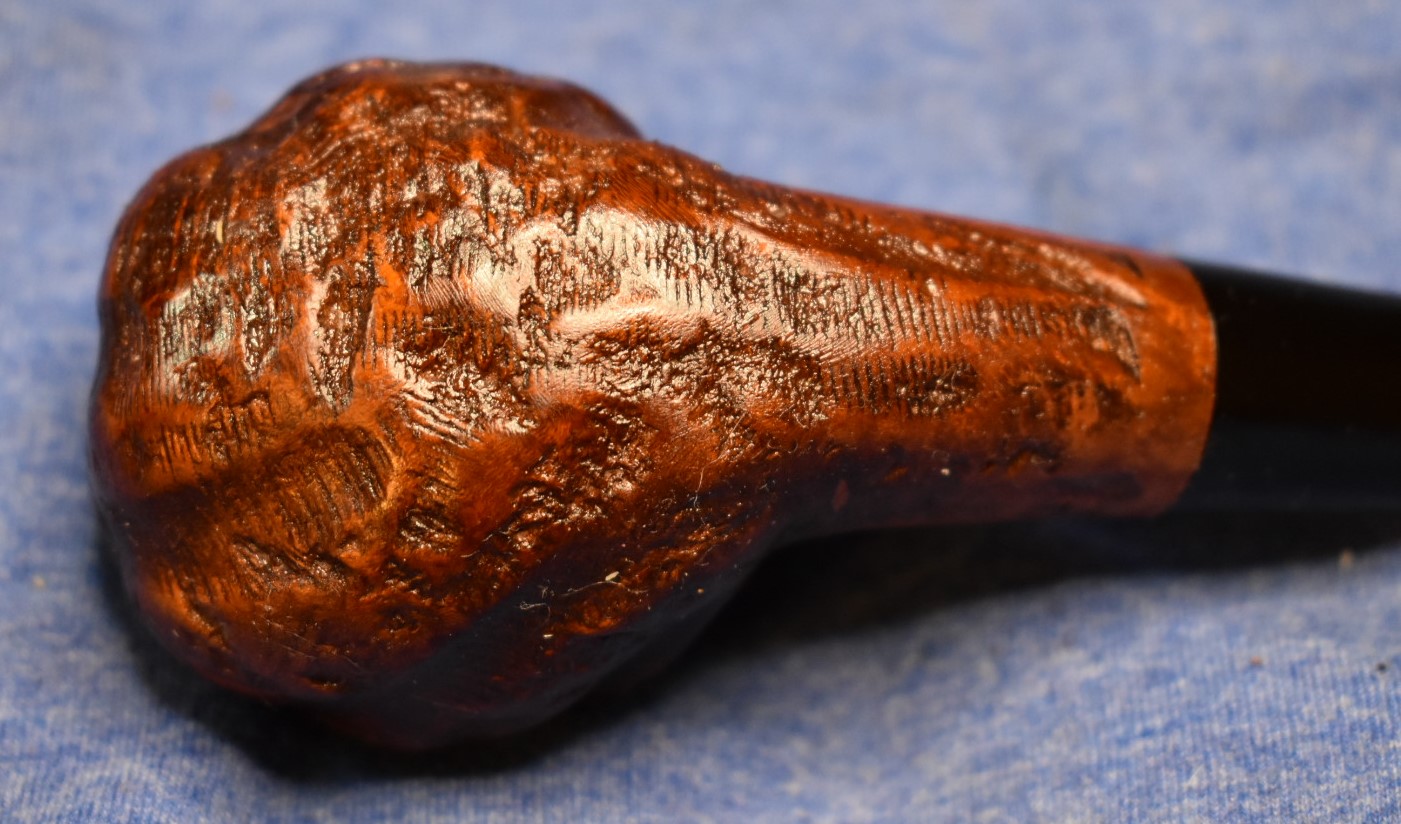
    It was time to find a suitable plug doner.  I had an old no-name bullnose that I had previously used for a piece of briar and the bottom looks to be nice and thick.  Four cuts later I had the beginnings of a plug.

    Shaping of the plug was done with small needle files of various shapes and sand paper.  This did  lead to cramping of the hands. The small notch that you can see on the second photo below was the original draught hole.  I kept it intact as a reference point to line up with the Westbrook’s draught hole.

    Eventually the plug was fit as well as I was going to get it.  I put a bead of J-B EWeld around the sides of the plug and fit it into place using the draught groove to align it to the Westbrooks draught hole.  The inside looked good.

    It turned out that the plug was not quite thick enough to completely fill the hole on the bottom of the pipe.  This led me to do some creative fill work.

    I had had enough hand cramping and fiddling with small pieces of wood.  At this point I decided to make a slurry of clear J-B Weld mixed with briar dust from other restore projects.  I filled in the remaining hole with this slurry and allowed it to dry for several days.  Eventually it became hard enough to file and sand.  

    During the drying I had plenty of time to address a very used and abused stem.  The good news with the stem was that the orange clover leaf Dr. Grabow logo lined up perfectly with the shank.

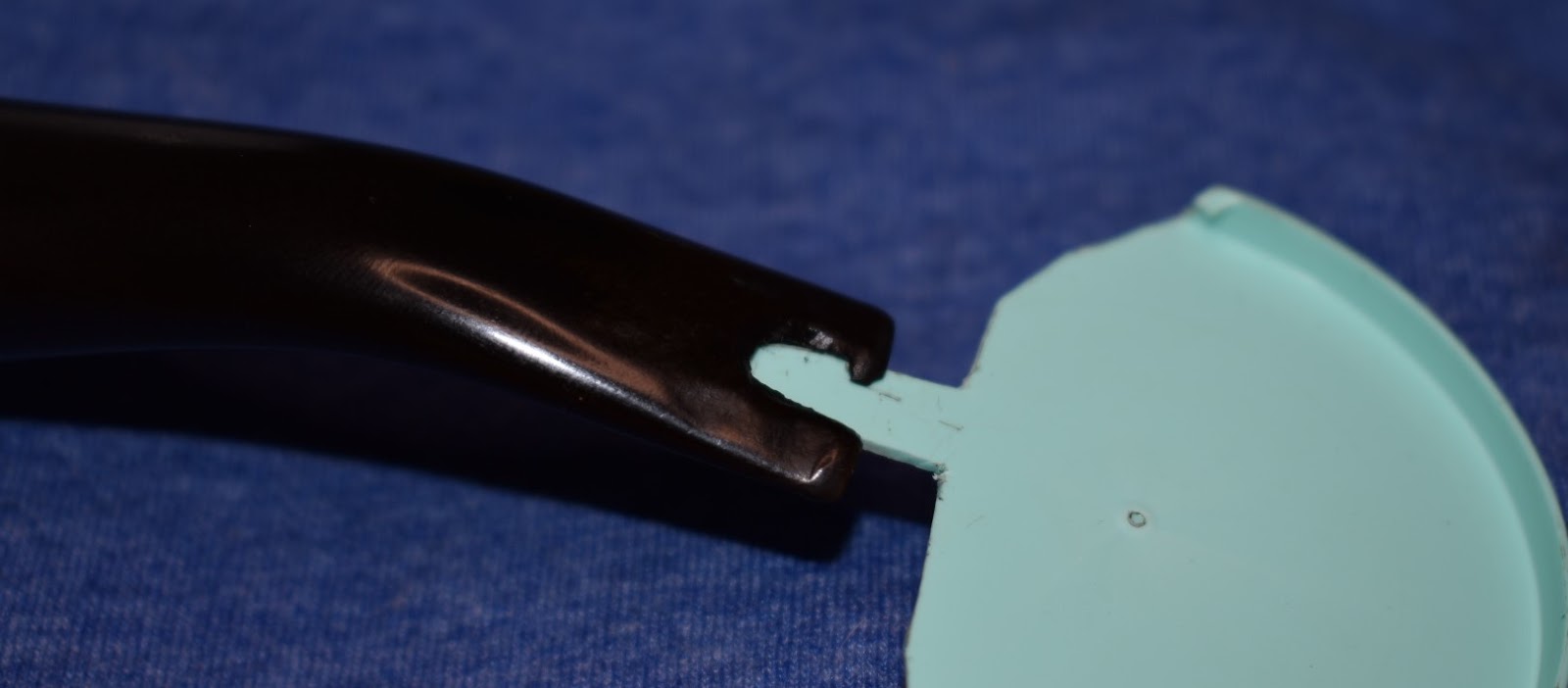
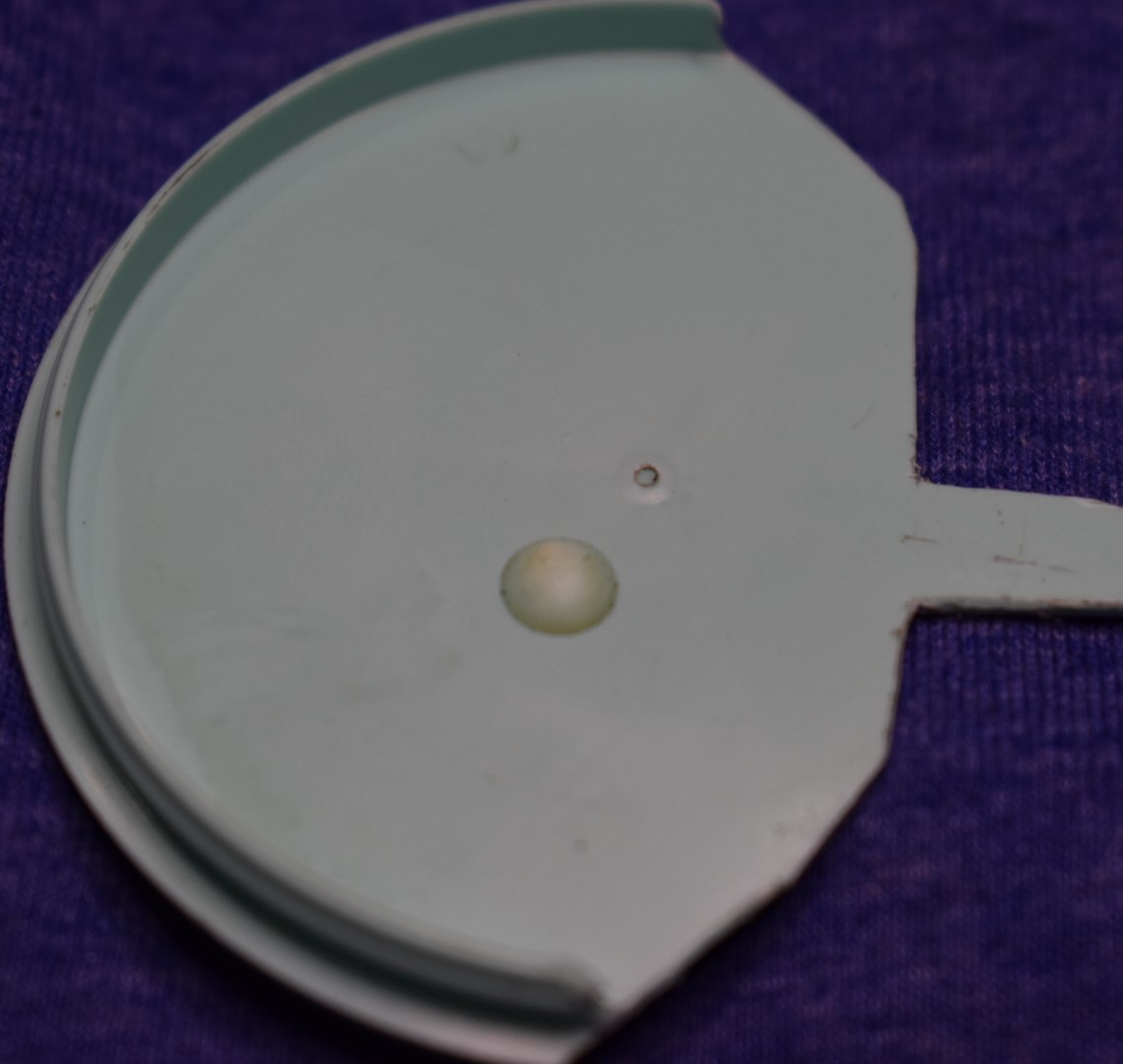
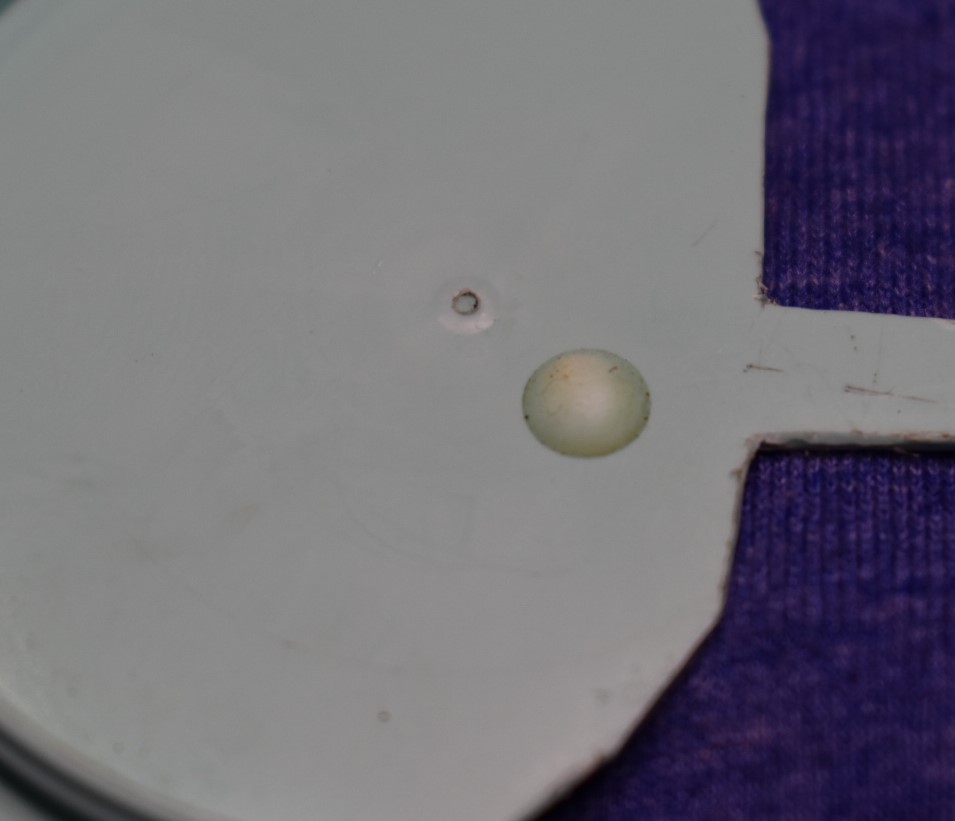
    I neglected to take pictures throughout the restoration of the stem.  I started by carefully scraping the worst of the calcium deposits and oxidation with a sharp knife.  After that I used a wet/dry 220 sandpaper with a light touch to remove the oxidation.  I then dropped the stem into Before & After Extra Strength Deoxidizer (For Sale | La Belle Epoque (lbepen.com) for about an hour. After removing the stem from the deoxidizer I let the stem drip much of the chemical back into the container.  After the drip dry, I vigorously rubbed the remaining chemical with a cotton rag and ran pipe cleaners through the draught hole.  As soon as I had removed all the deoxidizer with the rag and pipe cleaners I applied a coat of mineral oil to the stem and ran a wet-with-mineral-oil pipe cleaner through the stem.  To repair the hole chewed through the mouthpiece, I used a piece of plastic cut from a plastic container.  Here are a couple of examples with different pipe stem for scale:

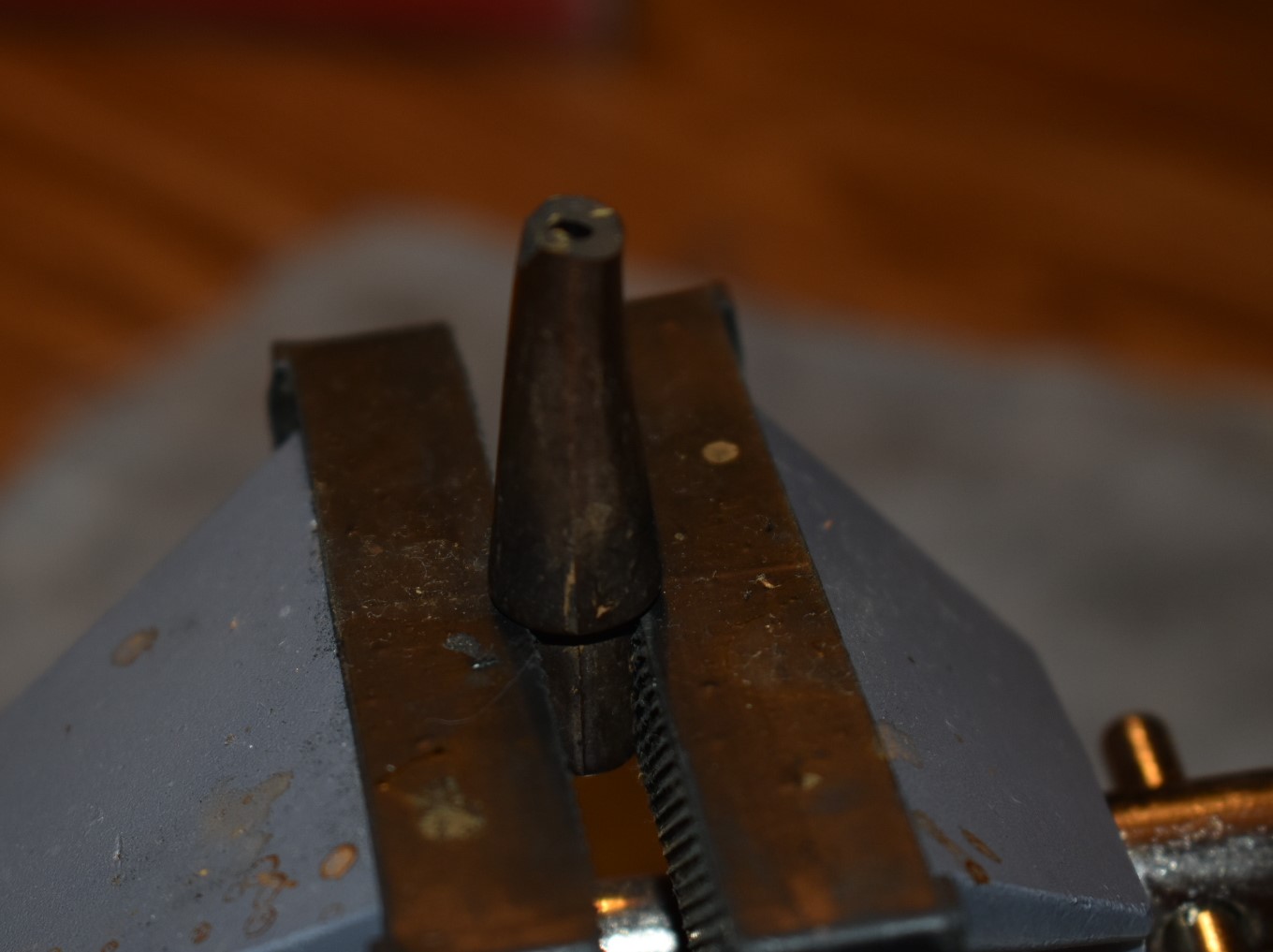
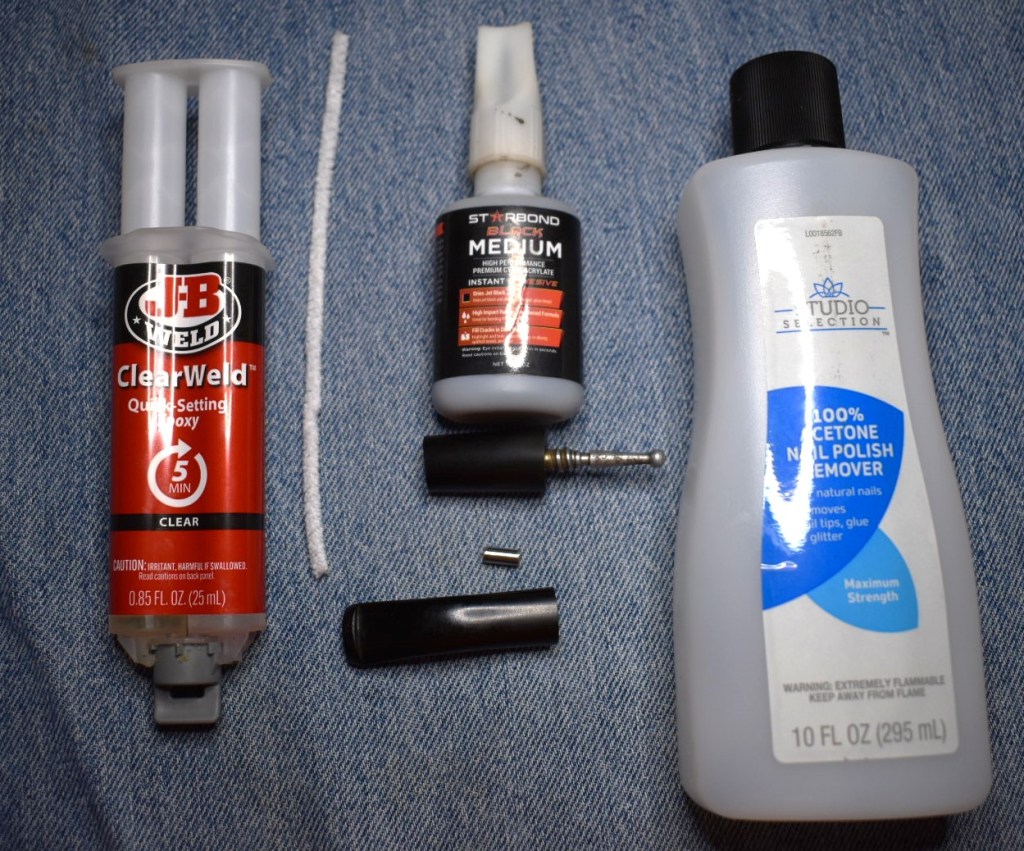
    I coated the narrow part of the plastic with petroleum jelly and inserted it into the mouthpiece.  I  then used STARBOND black cyanoacrylate (super glue, abbreviated CA) to build up the missing material.  The CA does not adhere to petroleum jelly.  I will usually do a light coat of CA and spray it with STARBOND Accelerator to get it to dry almost instantly.  Repeat as necessary to fill in the missing material.  The repaired spot is then filed with a fine flat needle file and sanded with 220 then 400 grit wet/dry sandpaper.  After the sandpaper, I used micromesh pads with grits 1500-12000.  Obsidian Oil is used on a cotton cloth between each micromesh pad.  The final polishing was done with Before & After Fine Polish and Extra Fine Polish (Lbepen.com).  The finished stem looked good.

    After the J-B Weld had completely cured and hardened I was able to shape it with a file and sandpaper.  The J-B Weld/briar-dust patch was significantly darker than the existing briar..  Fortunately the rustication allowed me to conceal the patch with a few cuts made with a cut-off wheel on the Dremel MultiPro and applications of Fiebing’s Light Brown Leather Dye blended the patch fairly well.

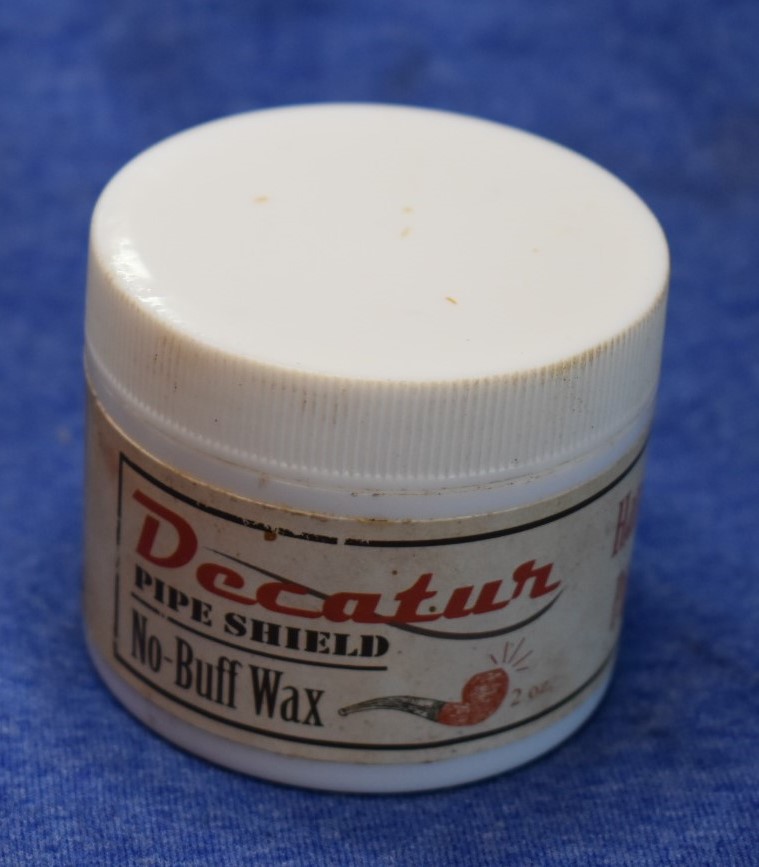
    I admit to not being a woodcarver nor having the best tools for the job.  It did however work well enough for this old Westbrook and my approval.  Due to the rustication of the pipe there was minimal sanding to be done.  I did lightly hit the high points with the 3200 and 4000 micromesh pads.  After that light sanding I wiped the whole pipe off with 99% ethyl alcohol.  I rubbed in a liberal amount of Before & After Restoration Balm (Lbepen.com) with my fingertips and let it dry for an hour.  I Rubbed away excess balm and buffed the bowl with the inside of a cotton athletic sock.  The final treatment of the wood was a light coat of Decatur Pipe Shield No Buff Wax applied with my finger and worked into the rustication with a toothbrush.  The wax was allowed to dry for 30 minutes then was buffed off with a shoe-shine brush.

    Below are some photos of the finished pipe:

    She may not look as good as she did when she left the factory but she smokes very nicely and has many years and many bowls of tobacco in her future.  Thank you for reading the ramblings of an old pipe lover.

    John

  • A Peterson Cara 314 Restore

    October 30th, 2023

    Written and photographed by John M. Young

    In April of 2023 I came across an Ebay auction of this lovely Peterson’s Cara.  The birdseyes caught my eye and I decided that I’d give bidding a try.  The original photos showed a dark spot on the bottom of the stummel and in the description the seller mentioned that the dark spot may indicate a plug. 

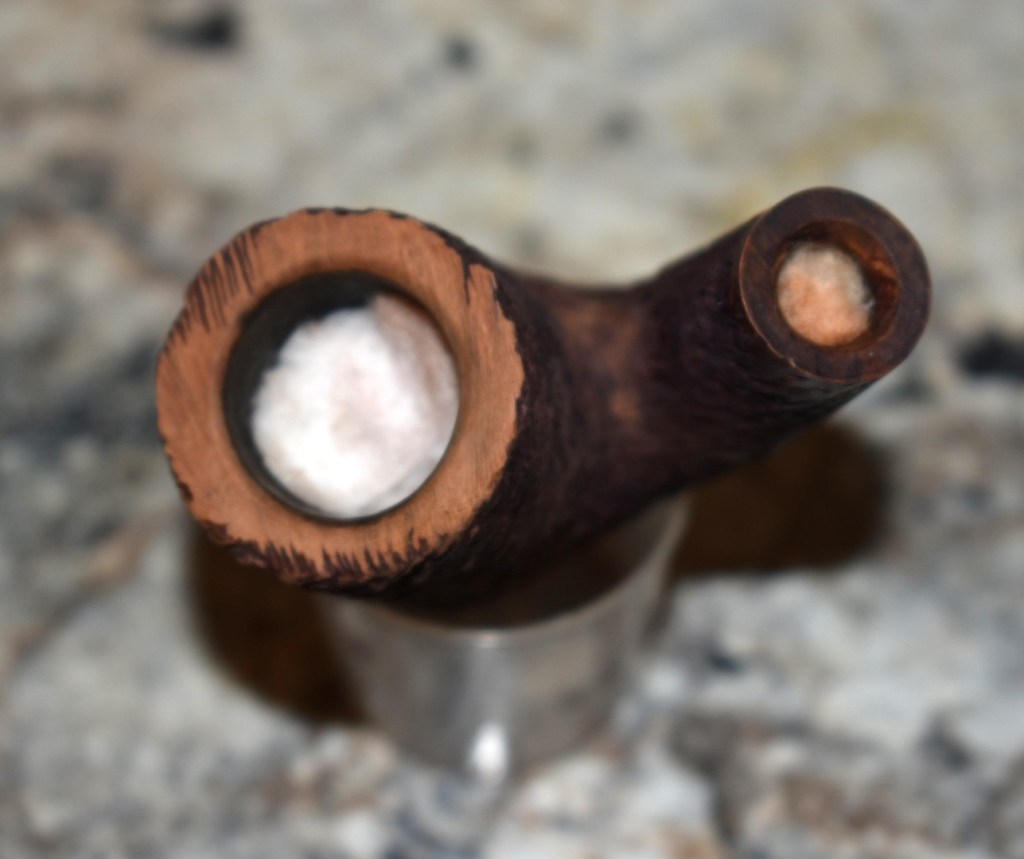
    Upon winning the auction and receiving the pipe it did indeed appear that a previous owner had plugged the bottom of the stummel.  An inspection of the inside of the bowl did not immediately explain why a plug would have been necessary.  As I was cleaning the pipe I discovered that there were two draught holes.  The top one was completely choked with tar and smoking residue.  The bottom draught hole started at the bottom of the well and connected to the bottom of the tobacco chamber.  Strange, indeed.  

    I used a reaming tool to open the top draught hole.  This top hole is the correct or factory draught.  The two draught passageways ran parallel to one another together and were separated by about 1/16th an inch of briar along their lengths.  You will have to forgive the lack of photos documenting this as I do not have a camera nor lighting adequate to show what I was seeing with my eyes.  Hopefully the diagrams will clarify any confusion.  Confusion is something I had quite a bit of at this point.  Below (Figure 1) is an image of a Peterson system similar to that of the Cara (figure 1).  It is not exactly what I had to deal with but it is very similar.
    Figure 1*

    I again focused my attention to the bottom of the tobacco chamber.  The bottom of the chamber did have a hole drilled into it.  This hole was obviously not something of Peterson’s doing.  The drilled hole ran directly into the second, lower, draught hole and lined up with the hole all the way through the stummel which was not a hole as it had been plugged.

    I then began to piece together what I believe to have happened to this poor old Cara. I think that the top draught hole had become clogged with use.  The owner, not understanding the inner workings of a Peterson system, decided that a new hole was needed.  My guess is the poor fellow thought the bottom of the well was where the draught hole should be.  He then began drilling a hole to open up the airway.  Or in this case to make a new airway.  He missed the bottom of the tobacco chamber due to the angle of the ferrule, his drill bit, geometry and physics.  See figure 2.  The red lines represent the new airway that was drilled.

    Figure 2

     To solve this problem he then drilled a hole in the bottom of the tobacco chamber to connect to his new airway.  This is when he drilled all the way through the stummel.  See figure 3.  The light blue area shows the connecting hole drilled that went through the bottom of the stummel.

    Figure 3

    Upon seeing his new creation he decided to plug the hole.  This he did with a piece of briar and cyanoacrylate glue.  His plug worked well although he decided that sanding the plug smooth was an unnecessary step.  Figure 4 shows the plug in brown.

    Figure 4

    His drilling had accomplished what he wanted, an airway that connected the bottom of the tobacco chamber to the mouthpiece.  How long the previous owner used the pipe this way is unknown.  I do give the guy credit for solving the problem of a clogged airway but wish he would have had a better understanding of the Peterson system.  The Cara line of pipes originally was released in 1980, long before the availability of internet searches.  

    I figured the best way to resolve this whole two hole problem was to completely fill the second draught hole and the hole in the bottom of the tobacco chamber with J-B Weld.  I mixed the two part epoxy as per the instructions.  I then used a plastic pipette to slowly draw-up the epoxy into the pipette. I then carefully inserted the pipette into the well and slowly injected the J-B Weld into the hole.  I repeated this with the hole through the tobacco chamber.  Eventually I was able to fill the holes with the epoxy.  I have tried to show this in figure 5.  The brown section shows the plug while the green area shows the J-B Weld.

    Figure 5

    The plug scar after sanding and Restoration Balm:

    Repaired interior of well:

    It is hard to see but, the dark circle, center, is the draught hole.  The bit of reflection is light reflecting off the J-B Weld repair.

    Repaired interior of the tobacco chamber:

    The cleaning and restoration of the exterior of the Cara 314 were much more typical of any older pipe.  The first step was to ream the tobacco chamber with the PipNet reaming tool and Low Country Reamer (reaming knife from smokingpipes.com).  The interior was then sanded to inspect for interior charring, none was found.  The well and draught  were scrubbed with Dawn dish soap and appropriately sized nylon bore brushes and rinsed with warm water.  The well and draught were further cleaned with cotton swabs and pipe cleaners dipped in 99% ethyl alcohol.  The ethyl alcohol, being hydrophilic, absorbs and removes much of the water used during the previously mentioned rinsing.  

    The exterior of the stummel was scrubbed with a medium stiff toothbrush and Murphy’s Oil Soap to remove the oils and dirt from years of handling.  The top of the bowl did have some lava build up which came off nicely with the oil soap.  This revealed an area of charring at the rear of the rim.  I topped the entire stummel using gentle sanding with 220 wet/dry sandpaper on a table top.  This was followed by sanding with 400 wet/dry sandpaper also on a table top.  The rim of the pipe was then restrained using stain markers (Diaxism Total Furniture Repair System) in Cherry and Oak stains.The entire stummel was sanded with micromesh pads from 1800-6000 grit.  The wood was then rubbed with Restoration Balm and allowed to dry for 30 minutes.  The Balm was buffed with the inside of a cotton athletic sock.

    The exterior of the stem was in remarkably good condition.  Perhaps the seller of this pipe had access to a buffer and had buffed some of the oxidation off prior to posting the pipe on Ebay.  The interior of this stem was very restricted with tars and tobacco smoking residue.  I scrubbed the interior with nylon brushes and Dawn dish soap for quite some time.  Finally after numerous scrub/rinse cycles the stem was appearing cleaned.  I then ran several bristle pipe cleaners dipped in ethyl alcohol through the stem until they were clean.  The water and alcohol from all this cleaning did accentuate the oxidation on the outside of the stem.  I rubbed down the stem with 0000 steel wool and dropped it into the Before & After deoxidizing solution for about an hour.  Upon removing it I allowed the solution to drip from the stem.  Vigorous rubbing with a cotton rag removed the remaining deoxidizer.  The inside of the stem was cleaned of deoxidizer with several pipe cleaners.  Both the interior and exterior were liberally coated with mineral oil after the rubbing.  

    After the oxidation was removed I worked the stem with 1500-12000 grit micromesh pads.  I wiped the stem with Obsidian oil on a cotton make-up removal pad in between each micropad.  Finally I used Before & After Fine and Extra Fine polishes with a cotton cloth.  After the extra fine polish was removed I applied a final coat of Obsidian Oil to the stem and let it stand for 20 minutes.  

    Photos of the finished Peterson Cara:

    The old Peterson Cara 314 turned out quite nicely.  The birdseyes are numerous and very attractive.  The pipe now smokes very well and is a pleasure to add to my collection.  I have to admit that she took a lot more work and hours than I originally thought she would, however, she comes from a grand old pipemaker and has many years ahead of her.  Thank you for reading the ramblings of an old pipe lover.

    *The original Peterson system crossection diagram was taken from:  https://www.smokingpipes.com/smokingpipesblog/single.cfm/post/the-complete-guide-the-peterson-system-pipe-startling-revelations-about-charles-petersons-greatest-invention 

←Previous Page
1 … 23 24 25

Blog at WordPress.com.

Privacy & Cookies: This site uses cookies. By continuing to use this website, you agree to their use.
To find out more, including how to control cookies, see here: Cookie Policy
 

Loading Comments...
 

    • Subscribe Subscribed
      • NebraskaPeteGeek
      • Join 37 other subscribers
      • Already have a WordPress.com account? Log in now.
      • NebraskaPeteGeek
      • Subscribe Subscribed
      • Sign up
      • Log in
      • Report this content
      • View site in Reader
      • Manage subscriptions
      • Collapse this bar