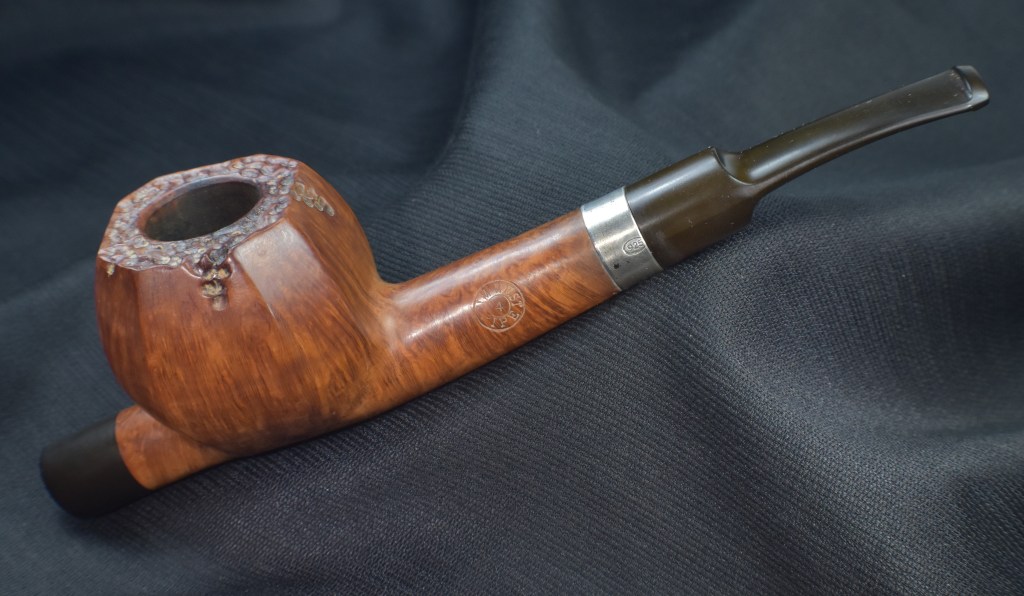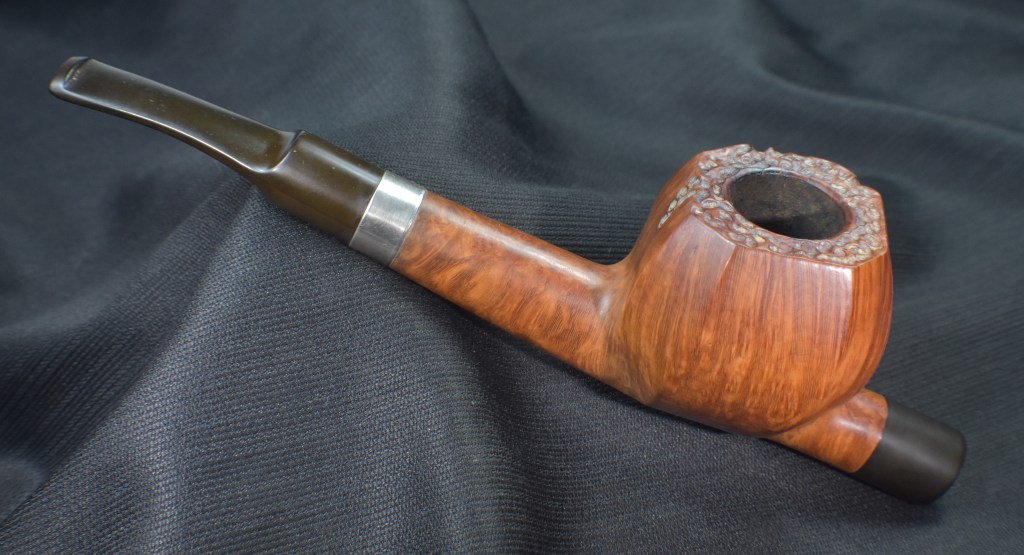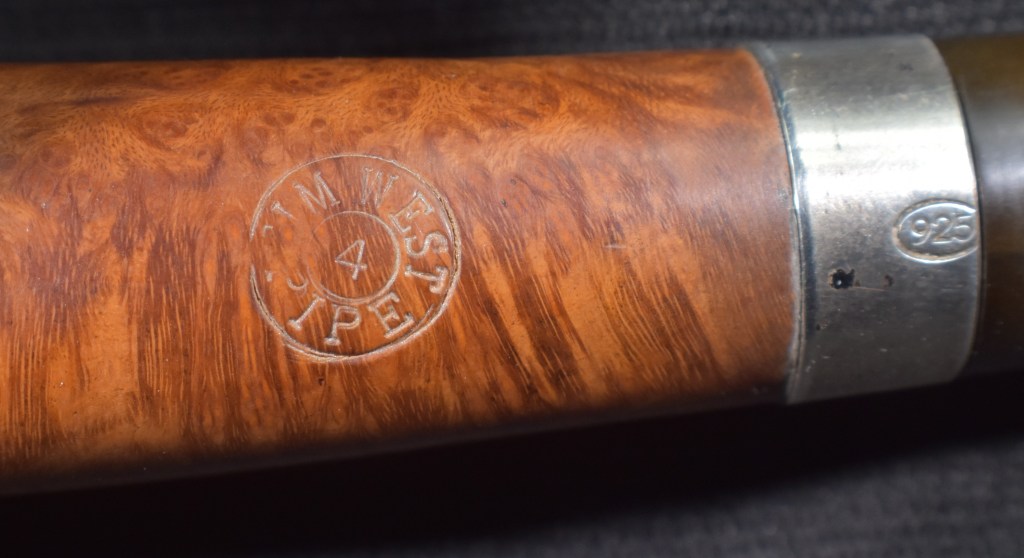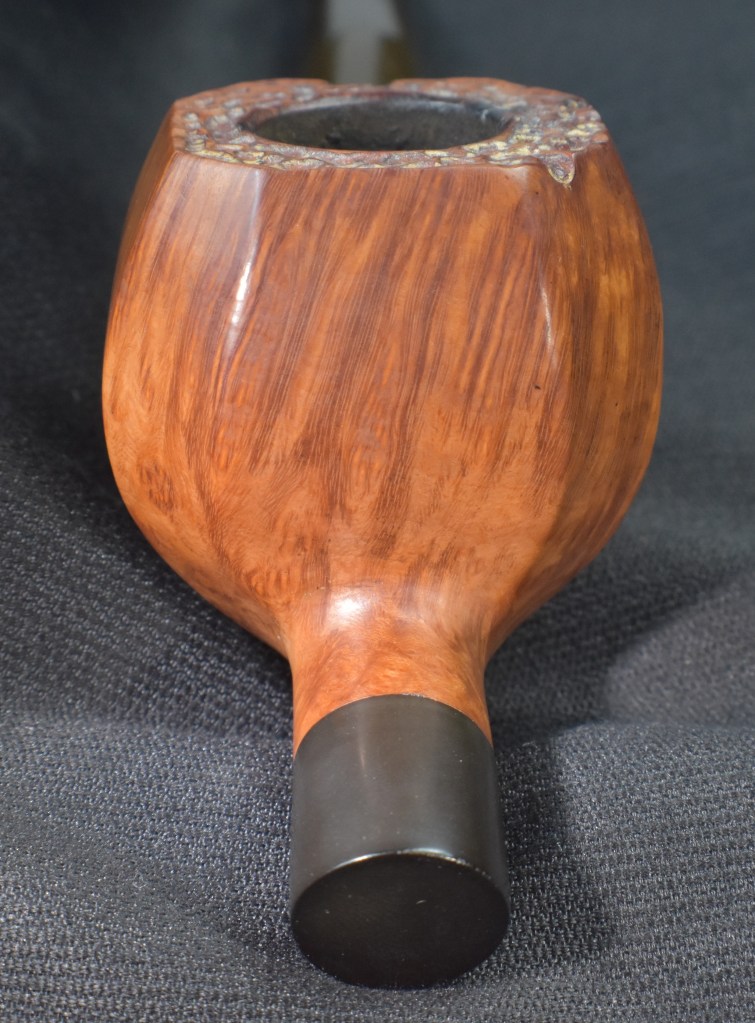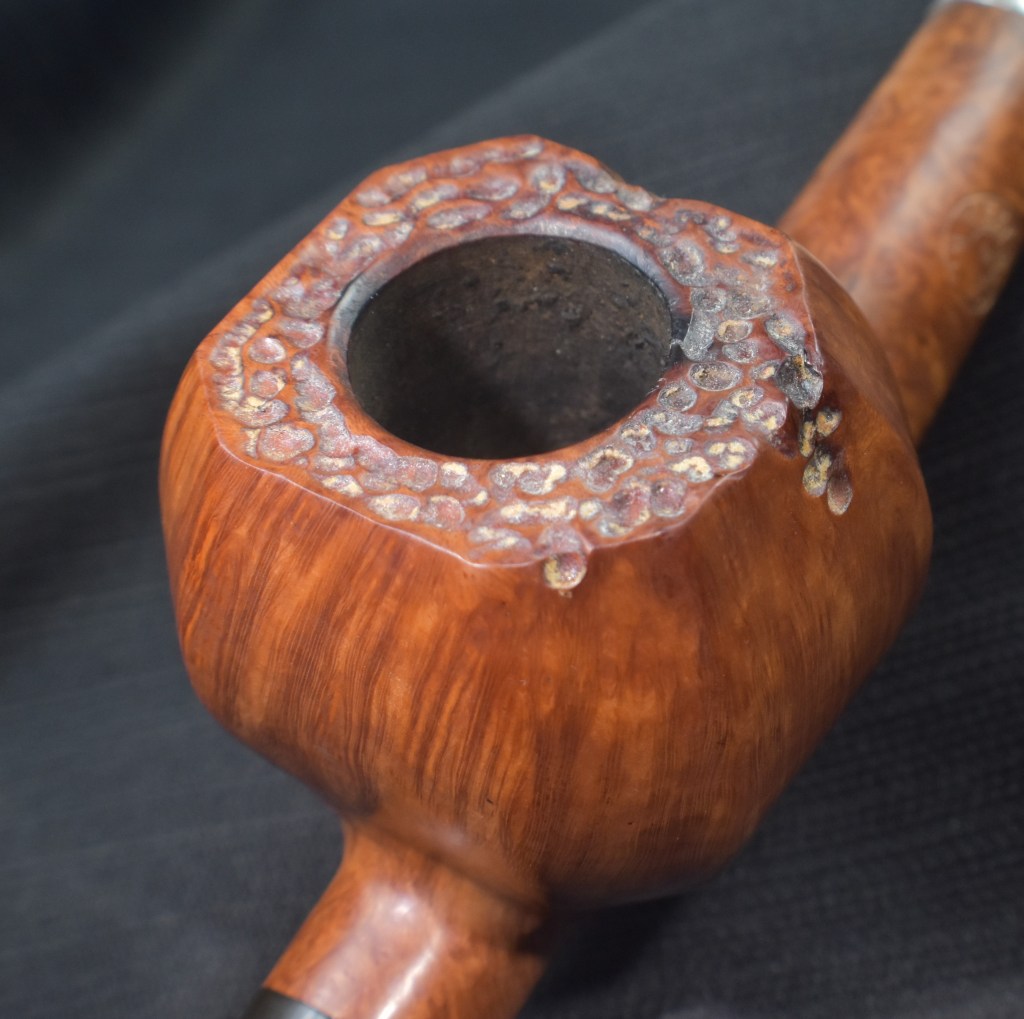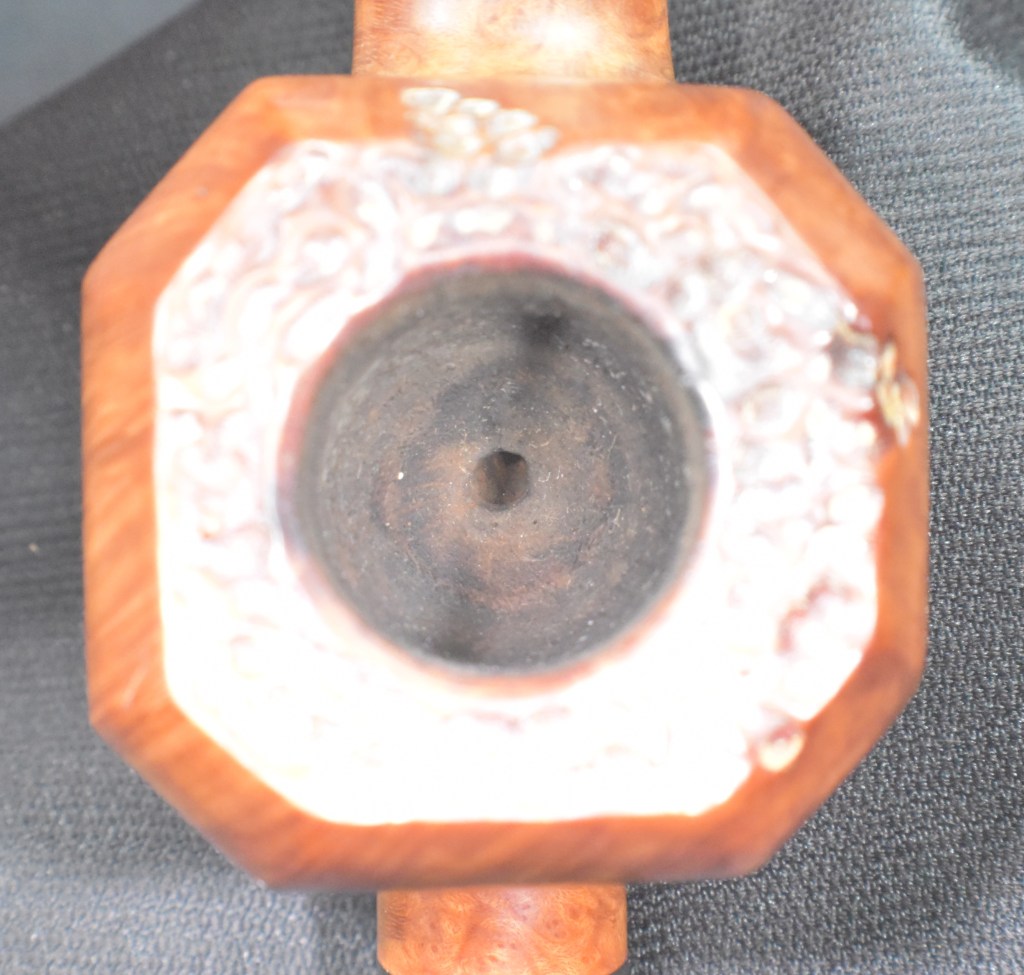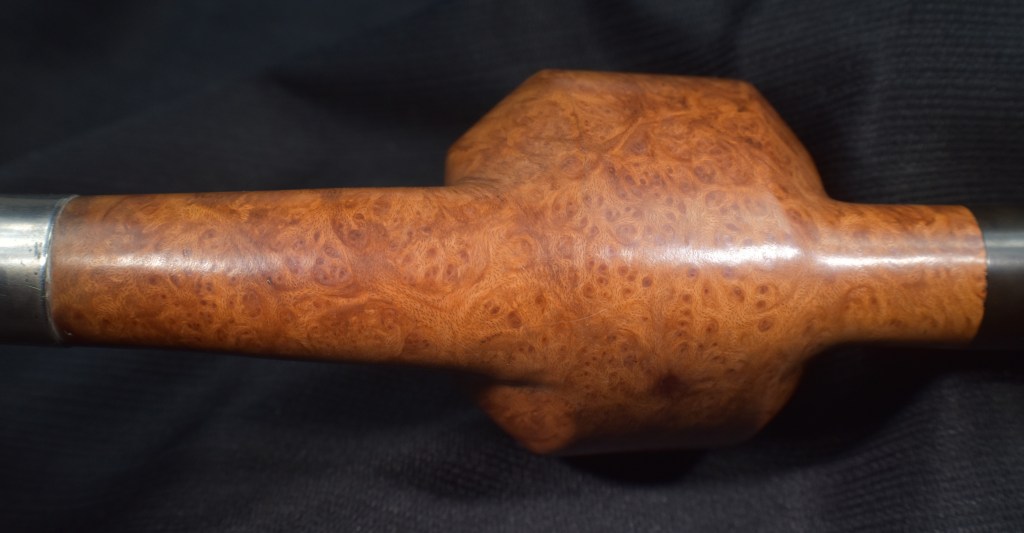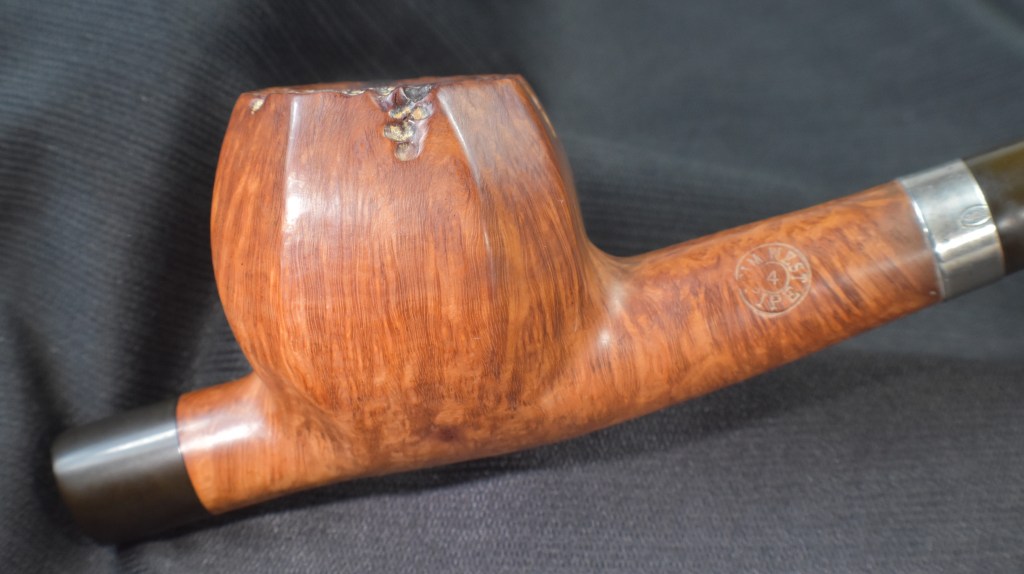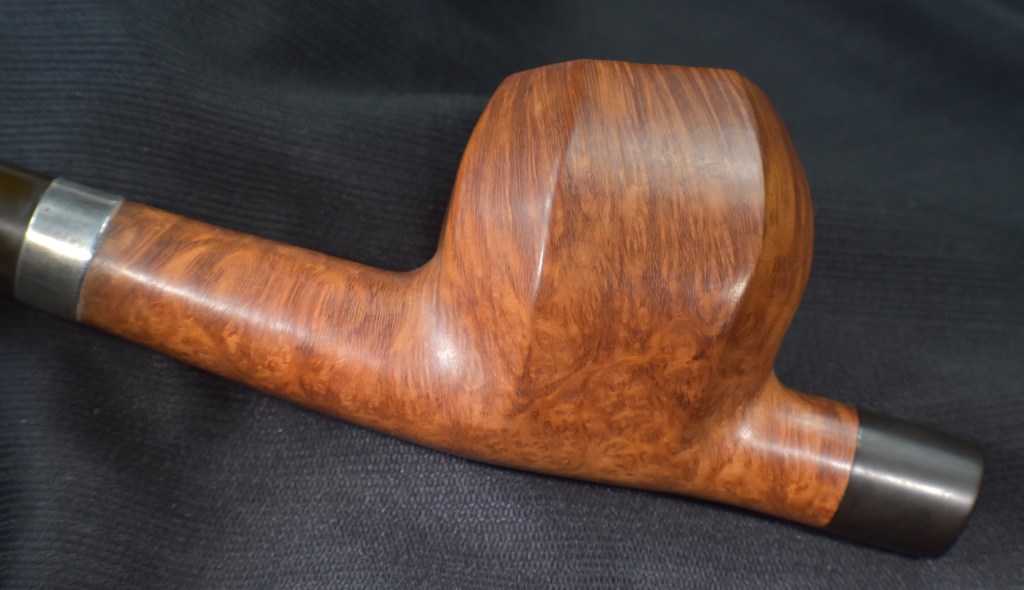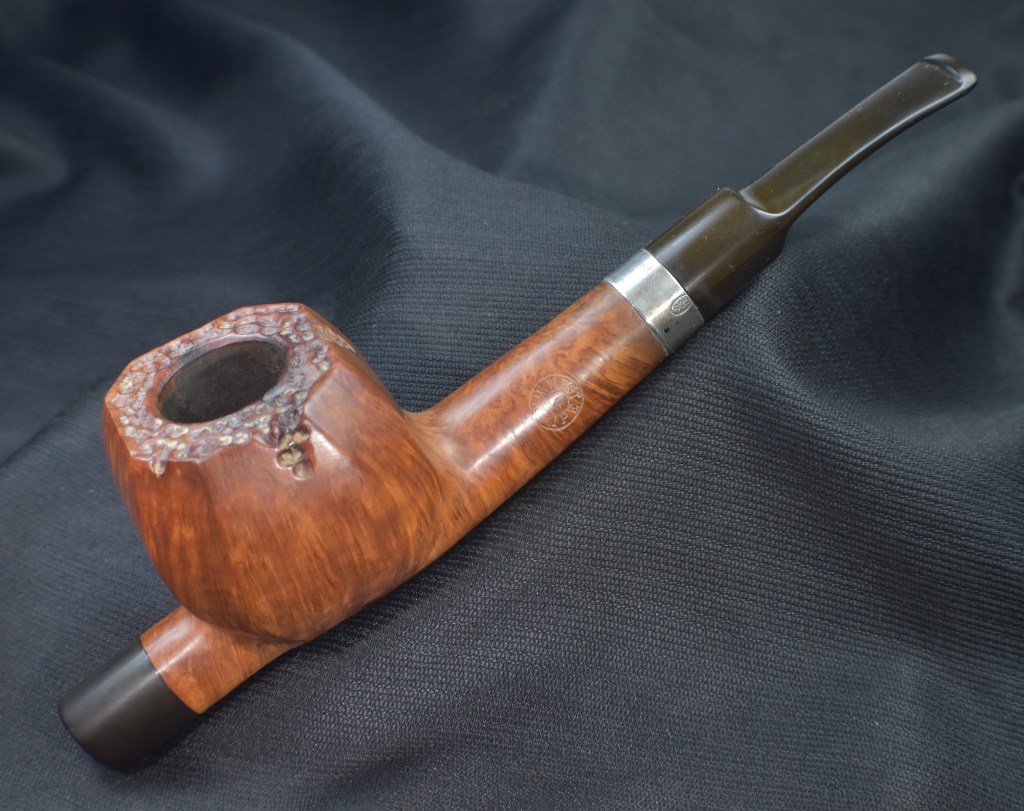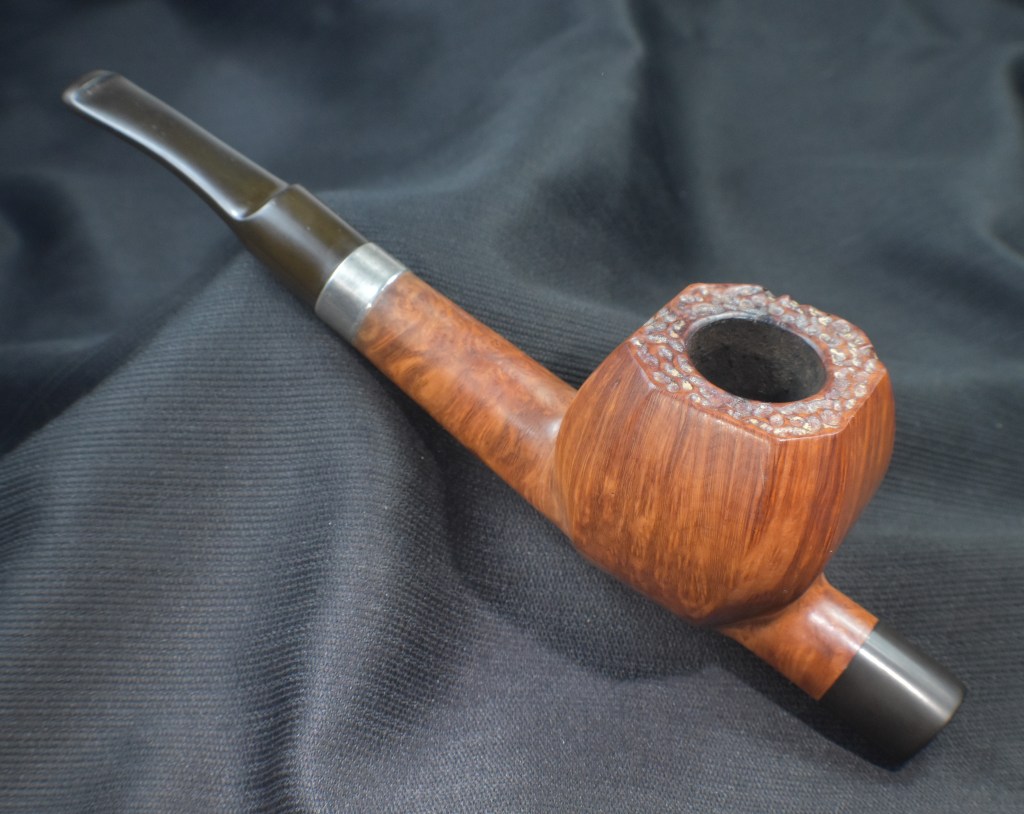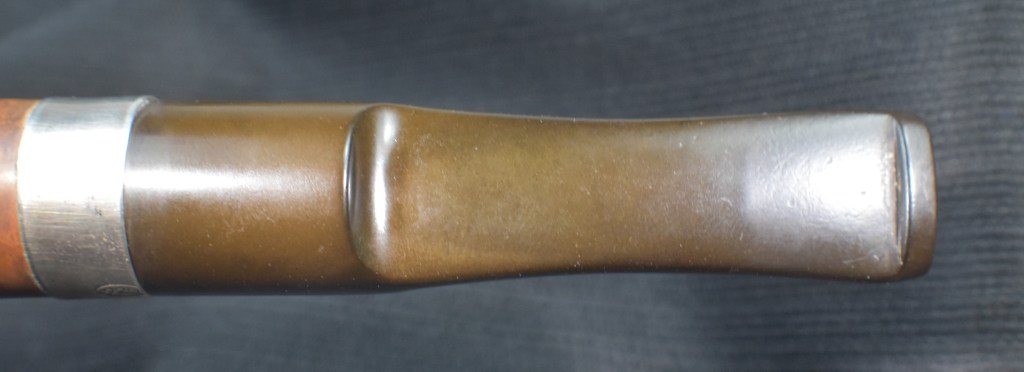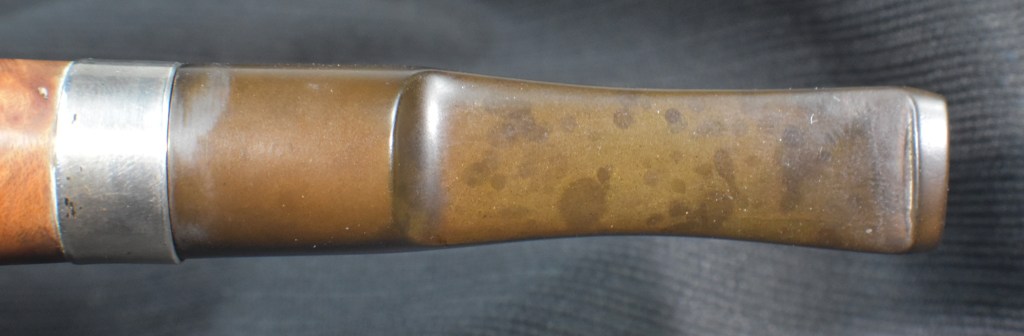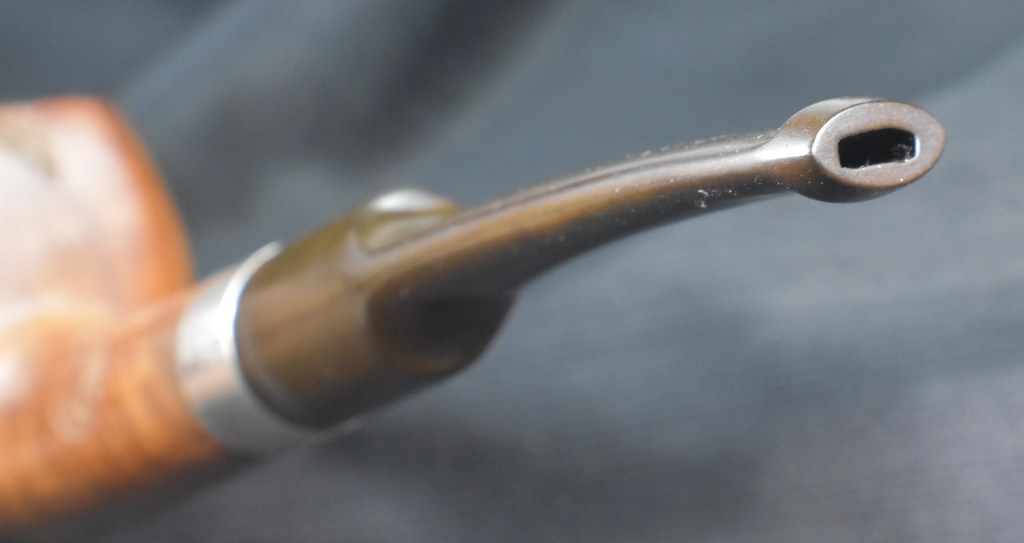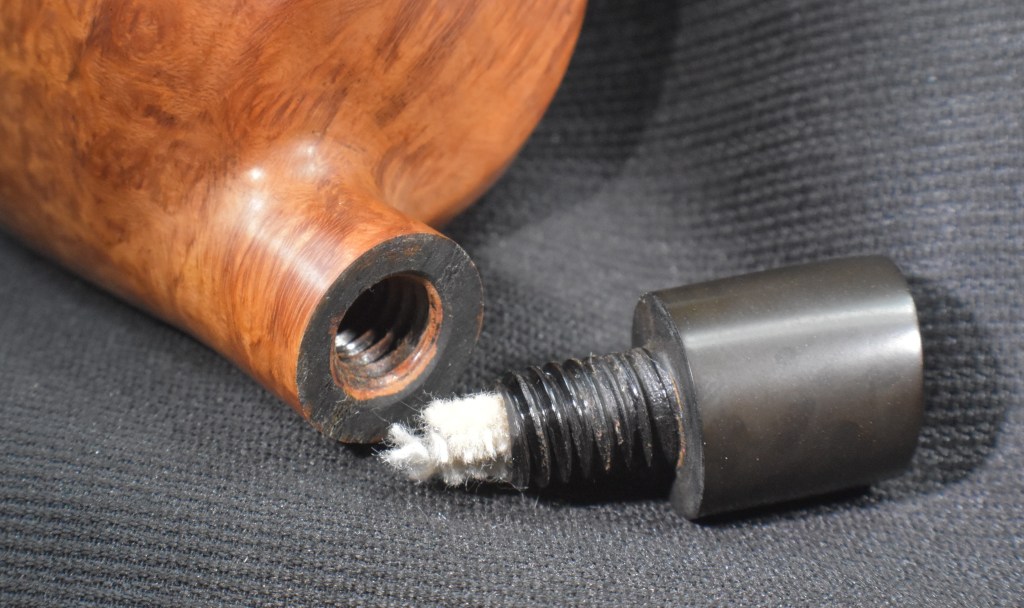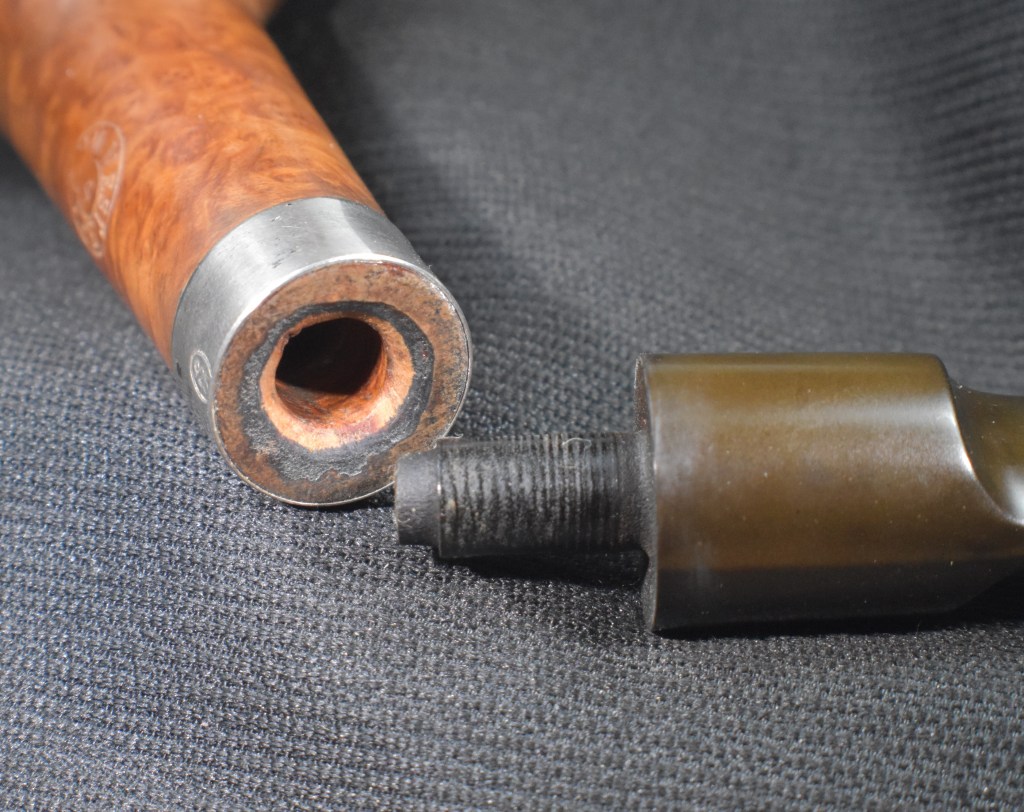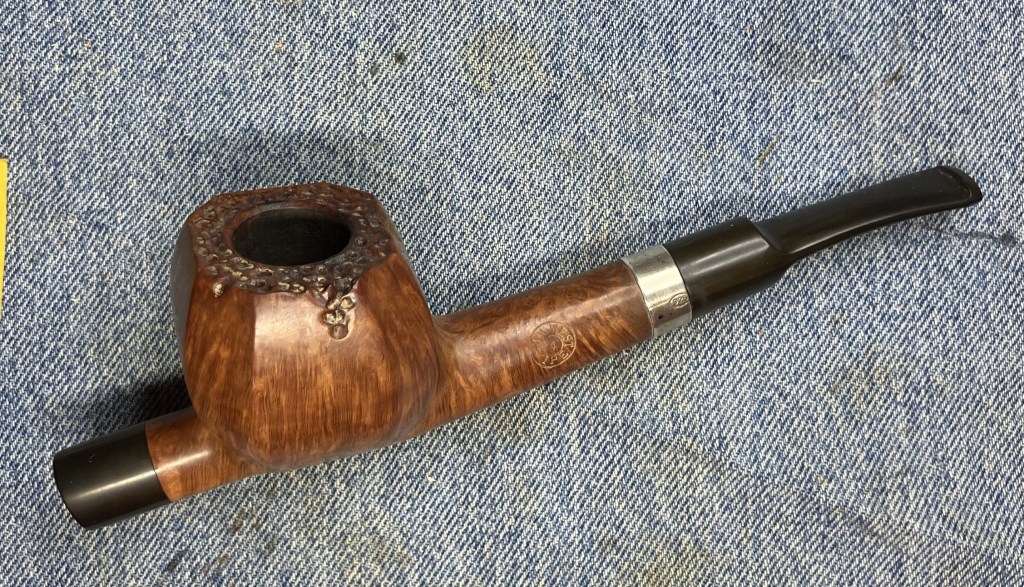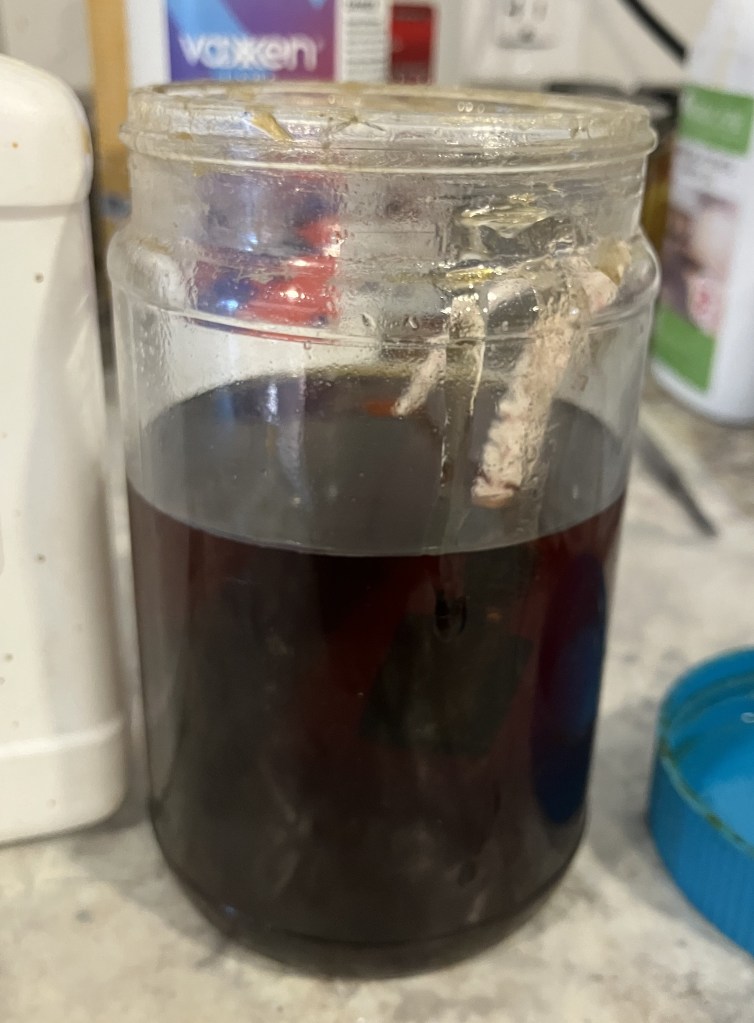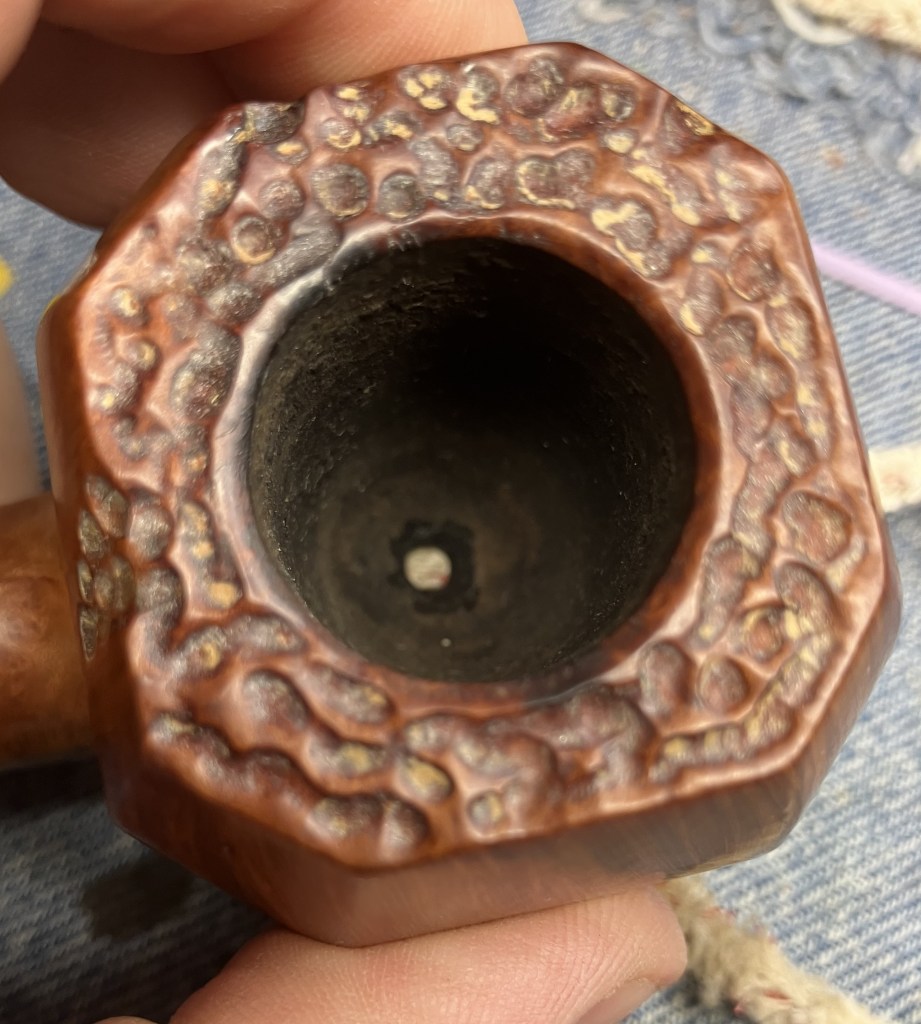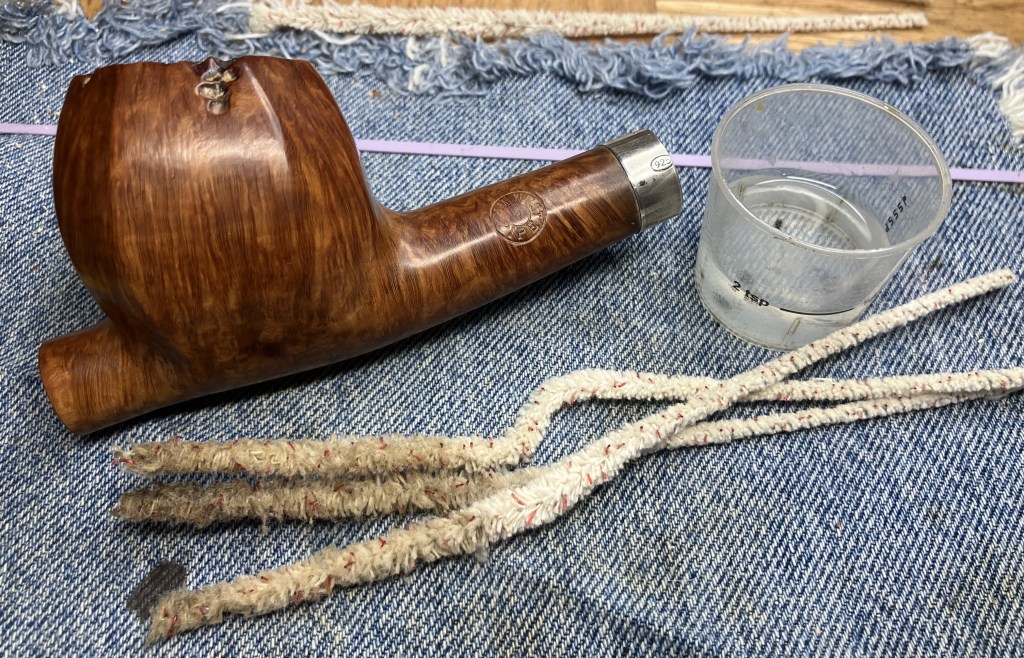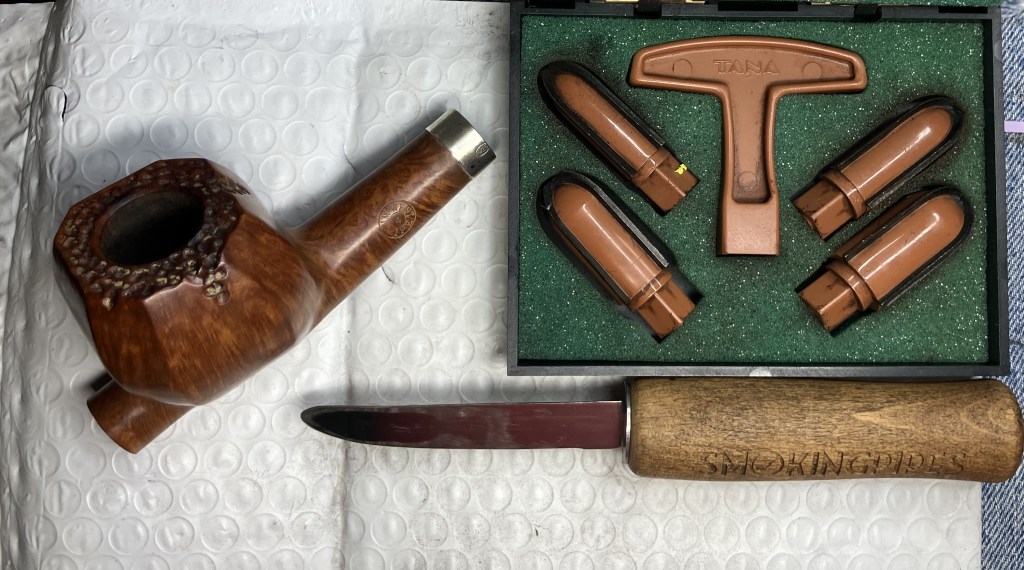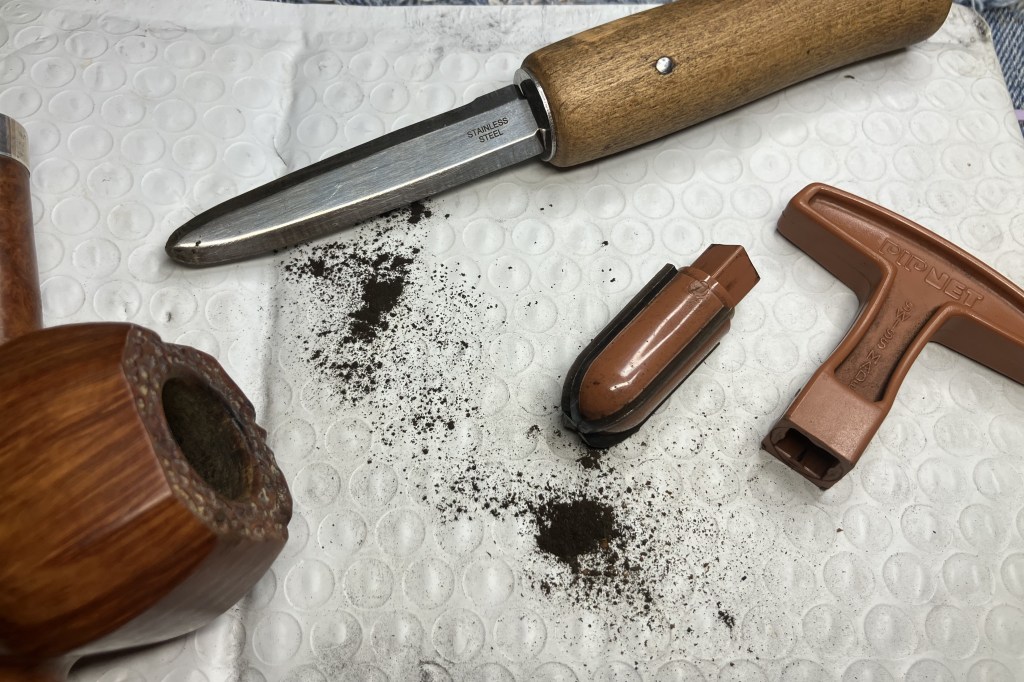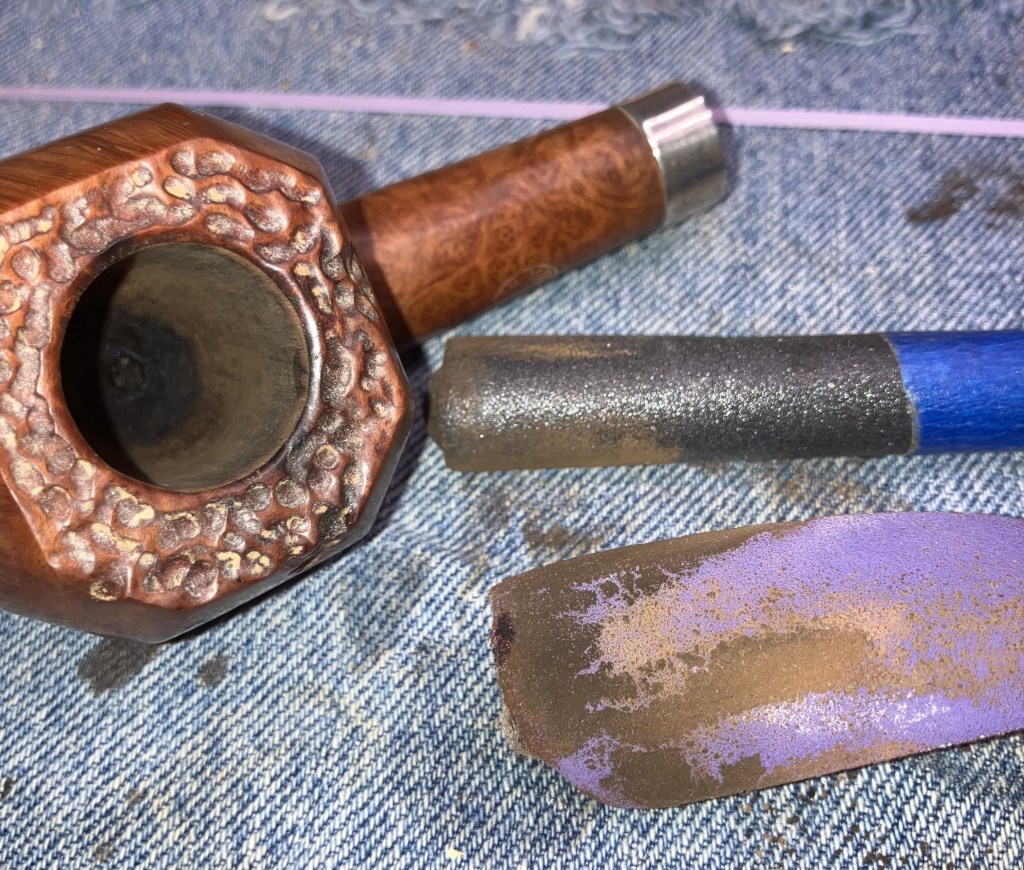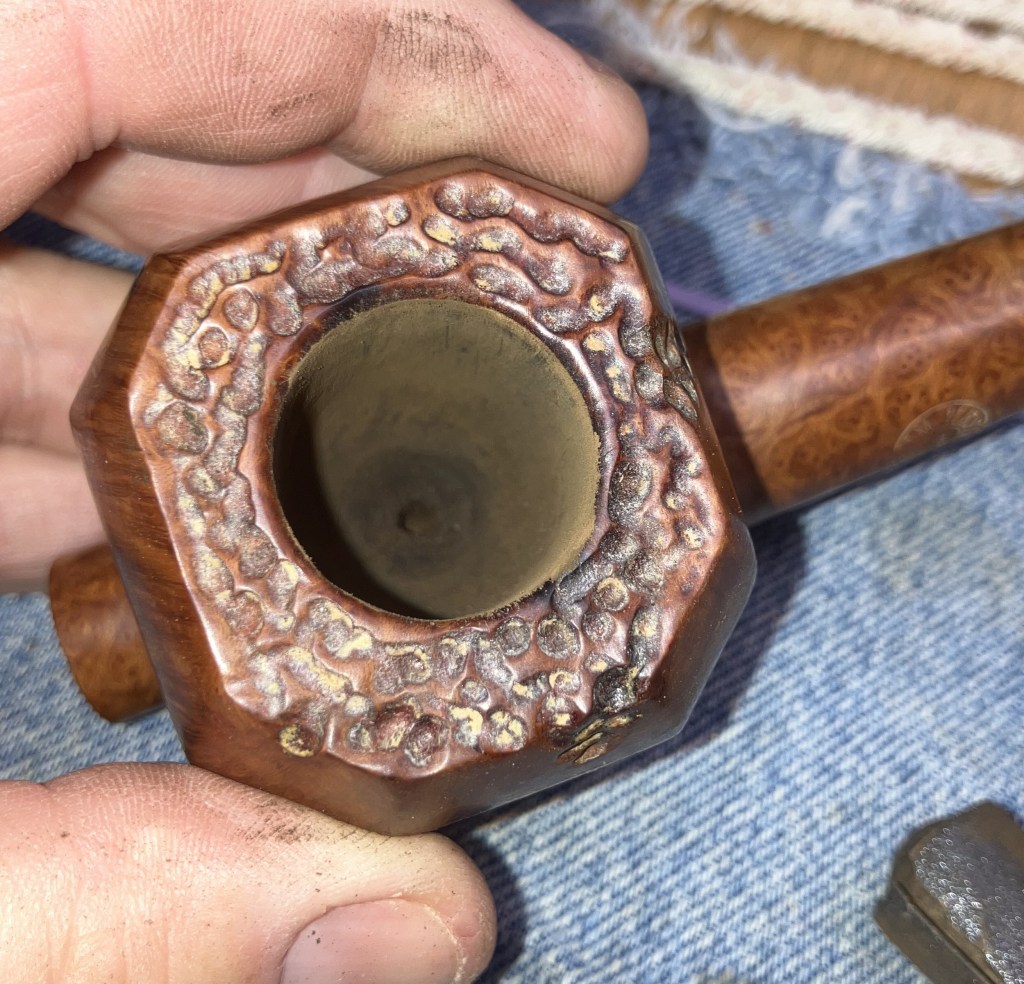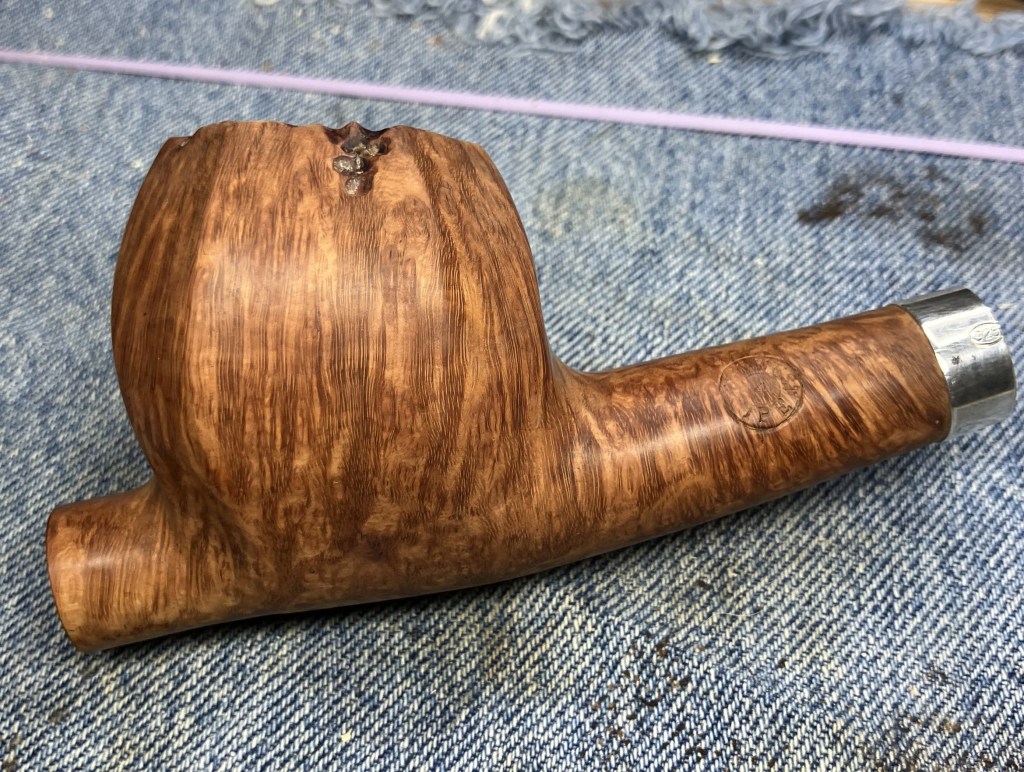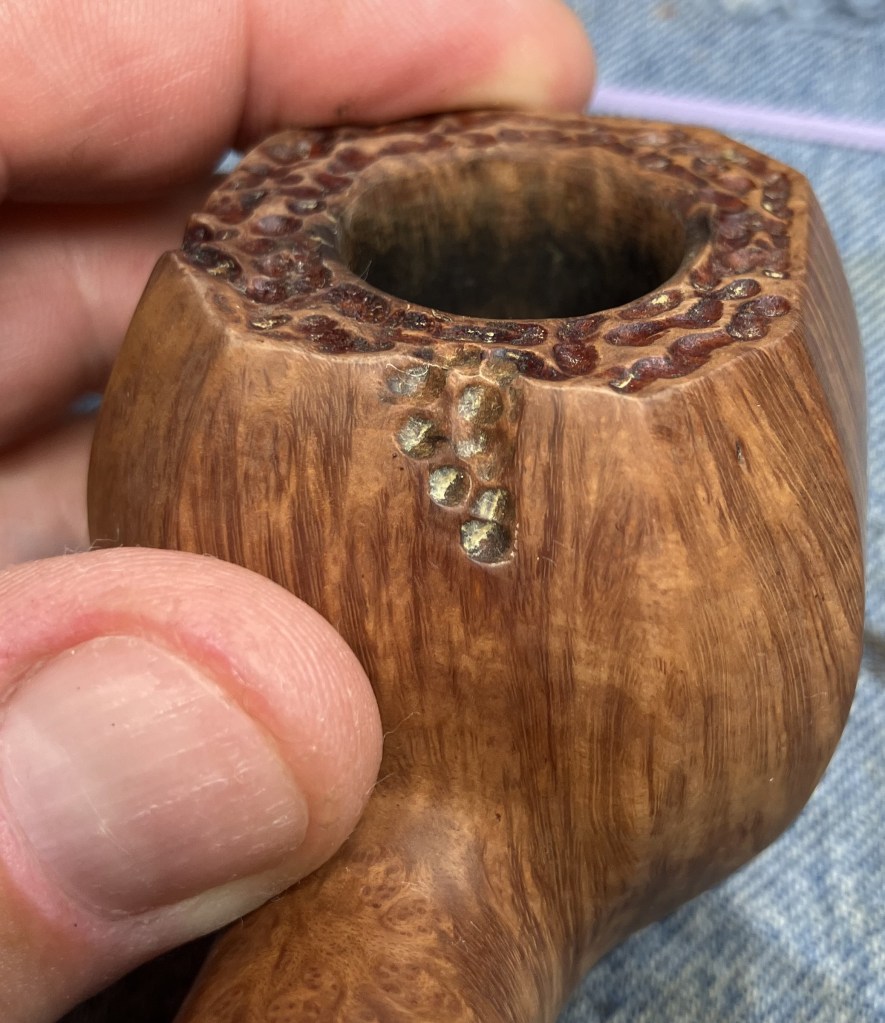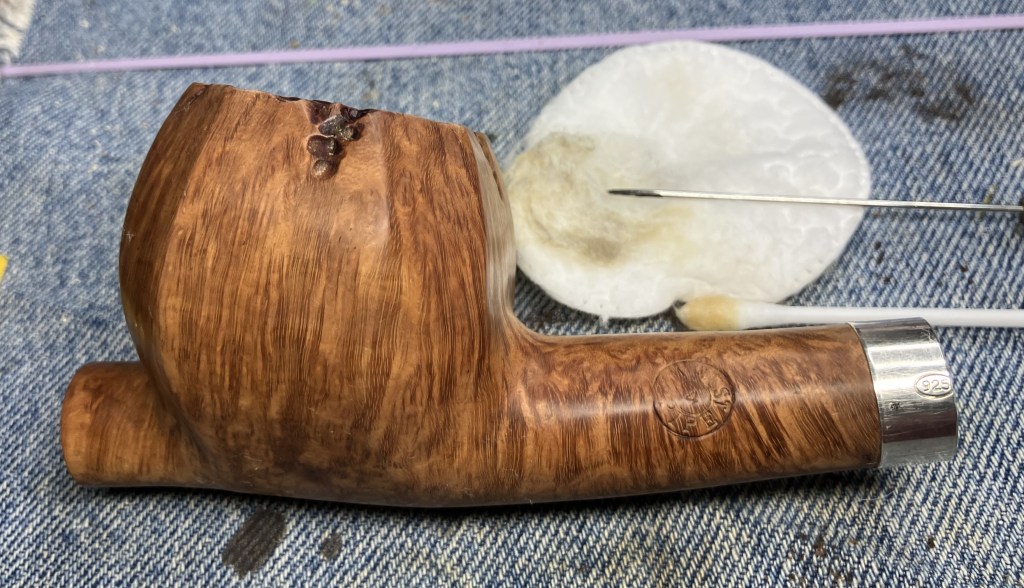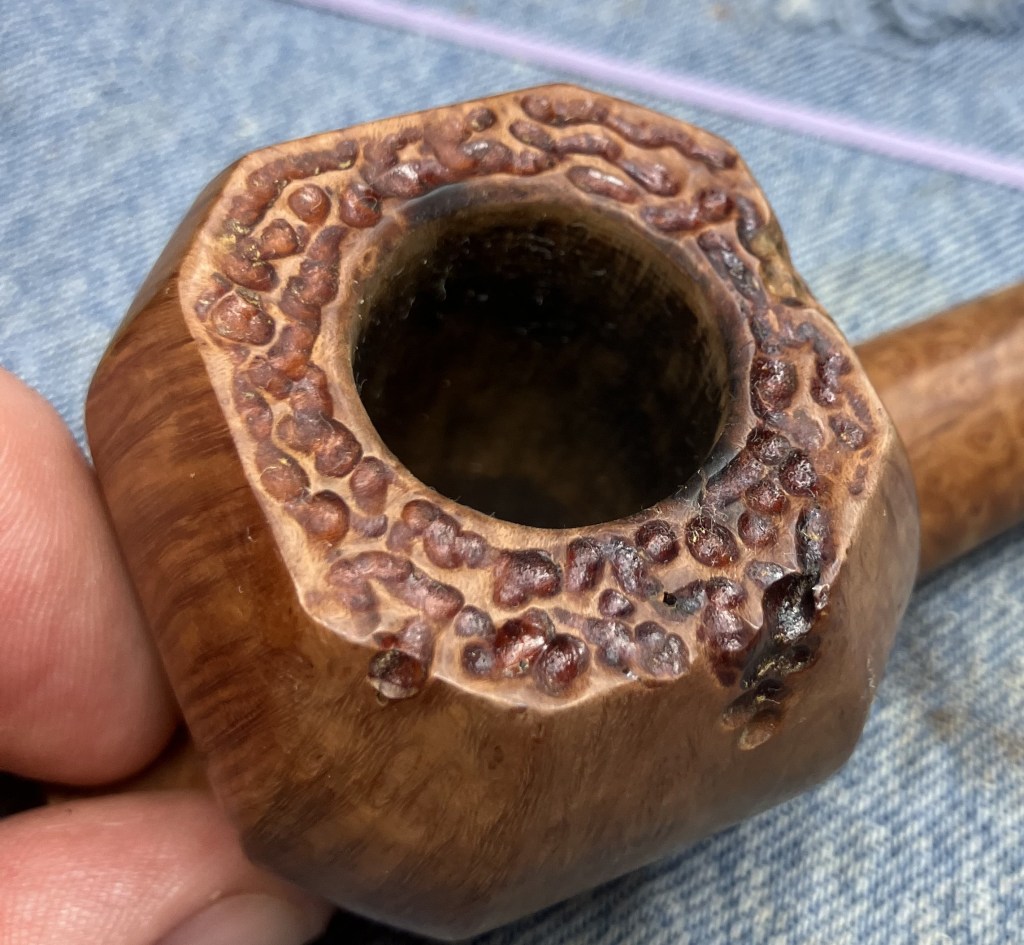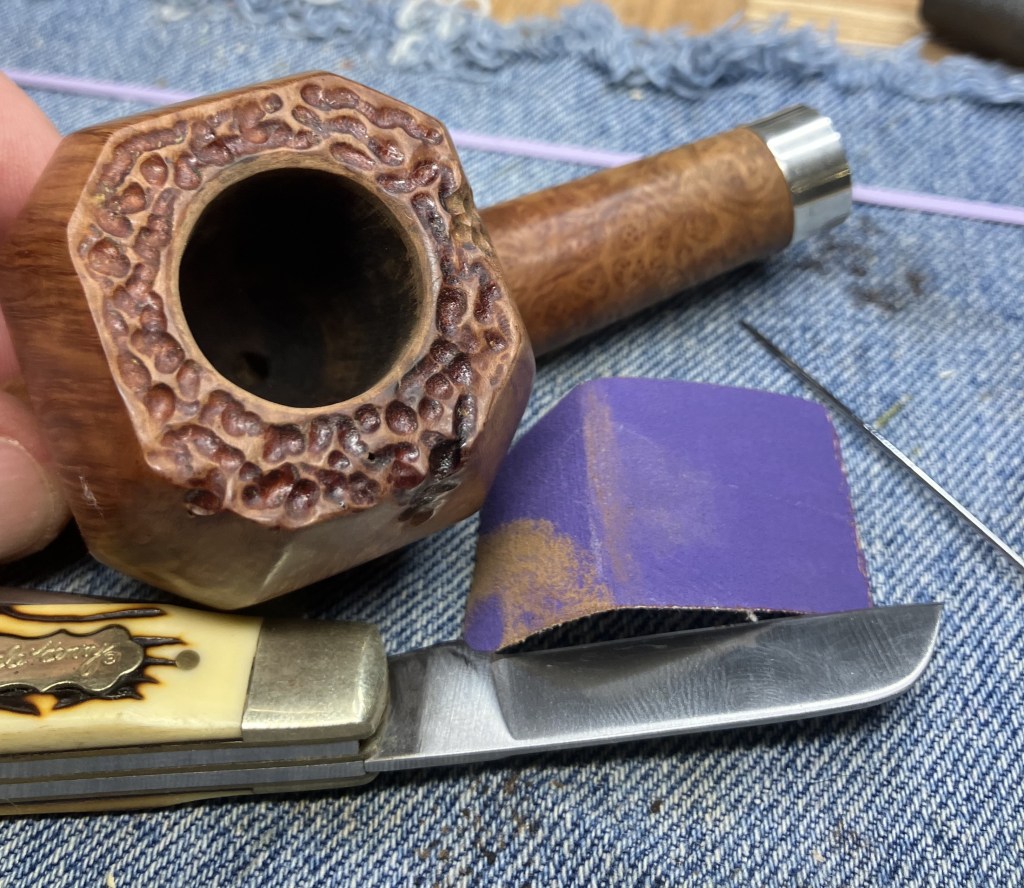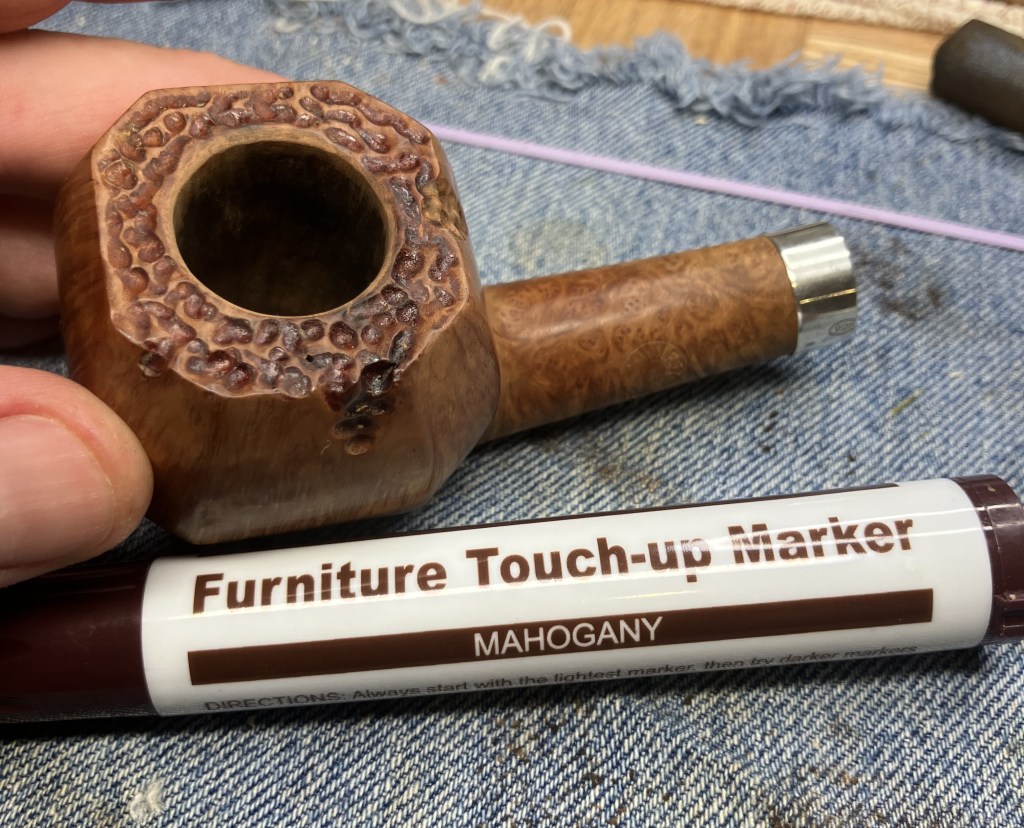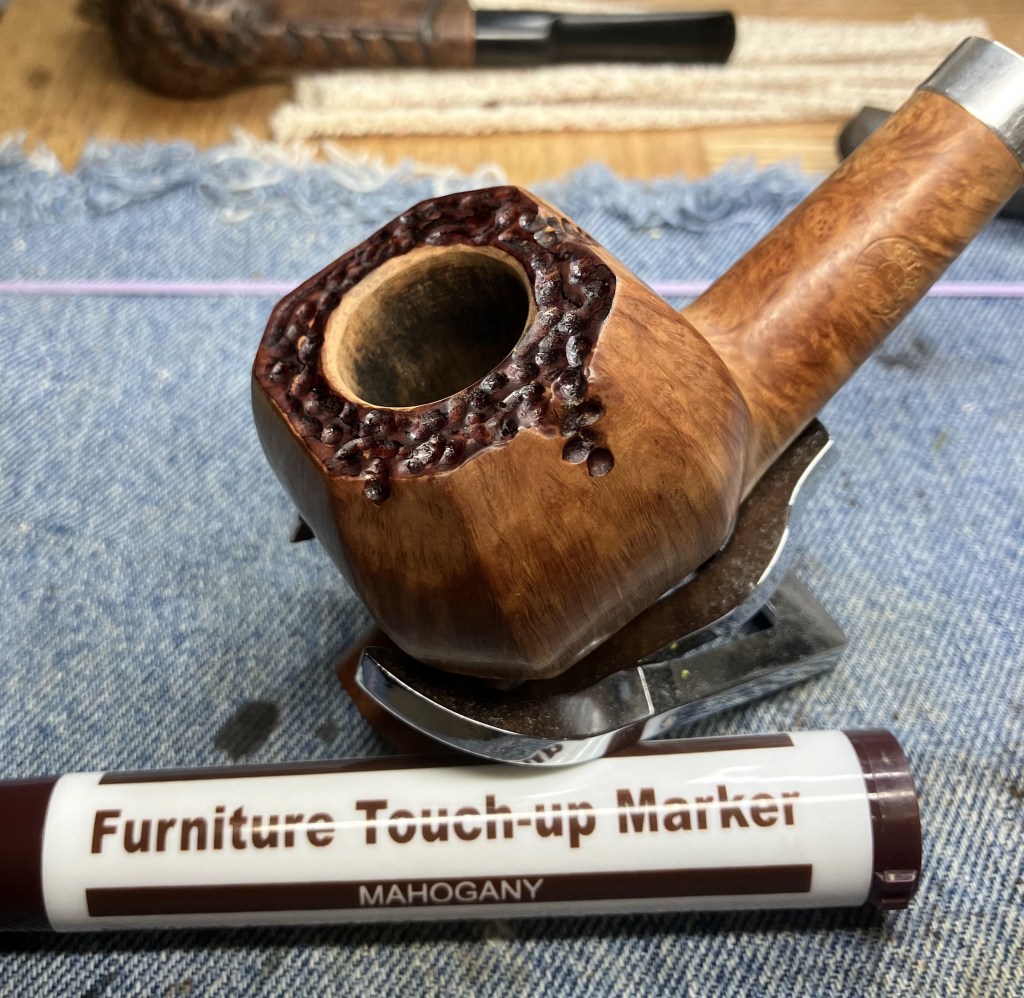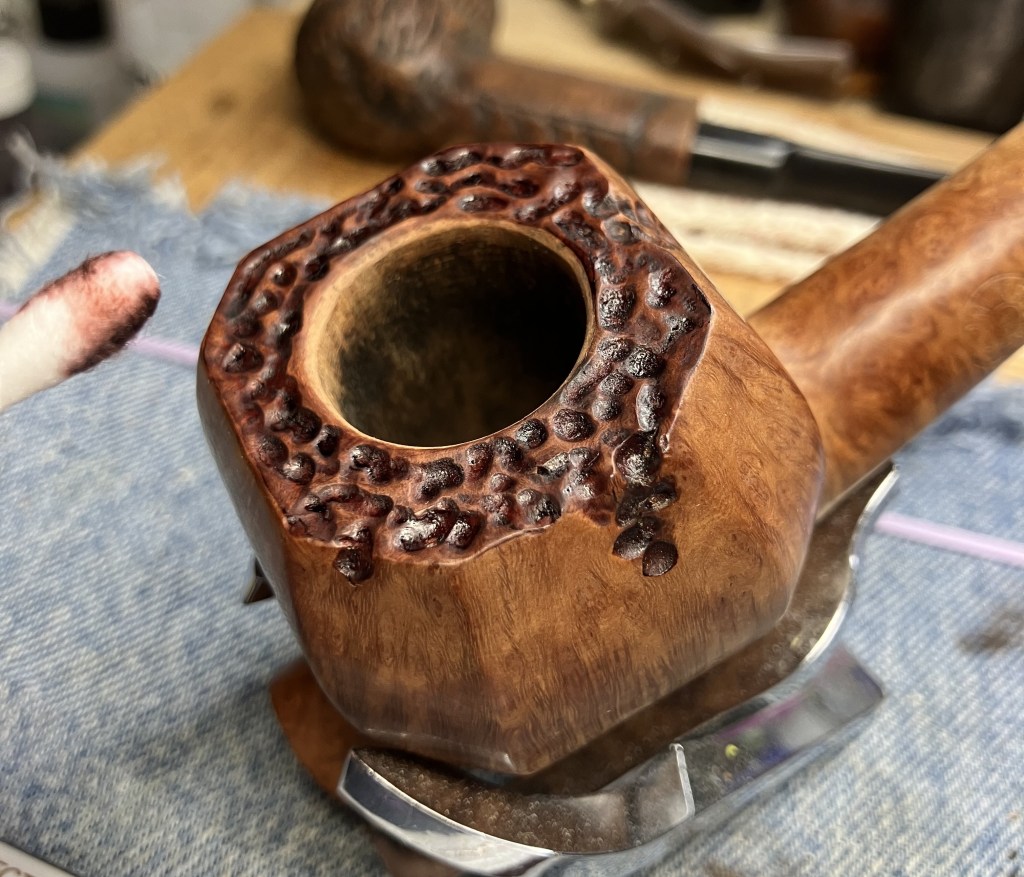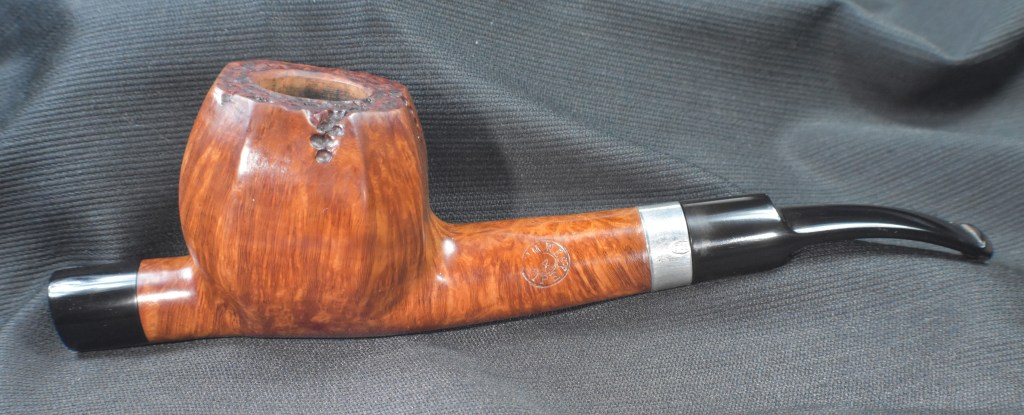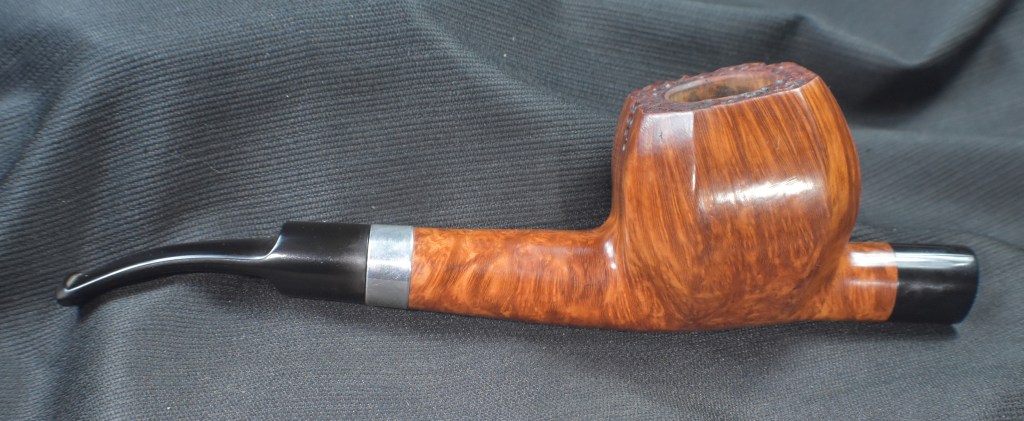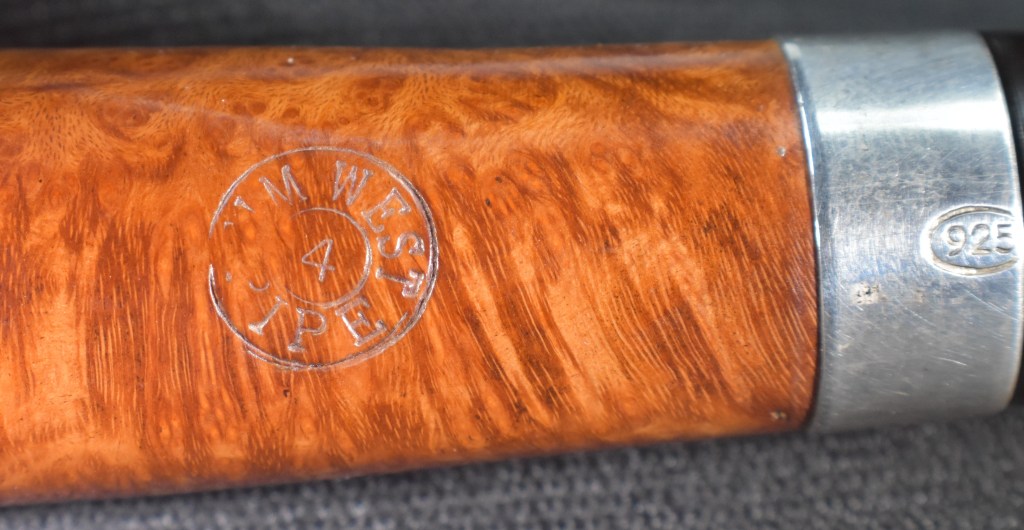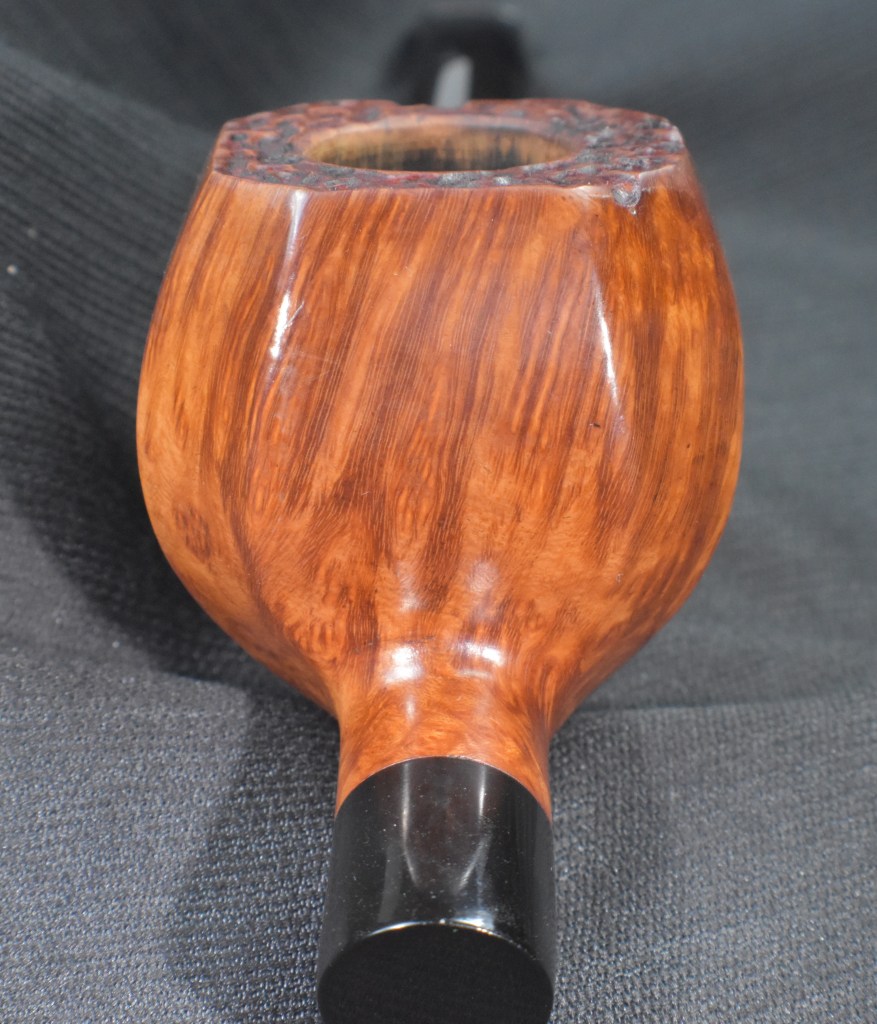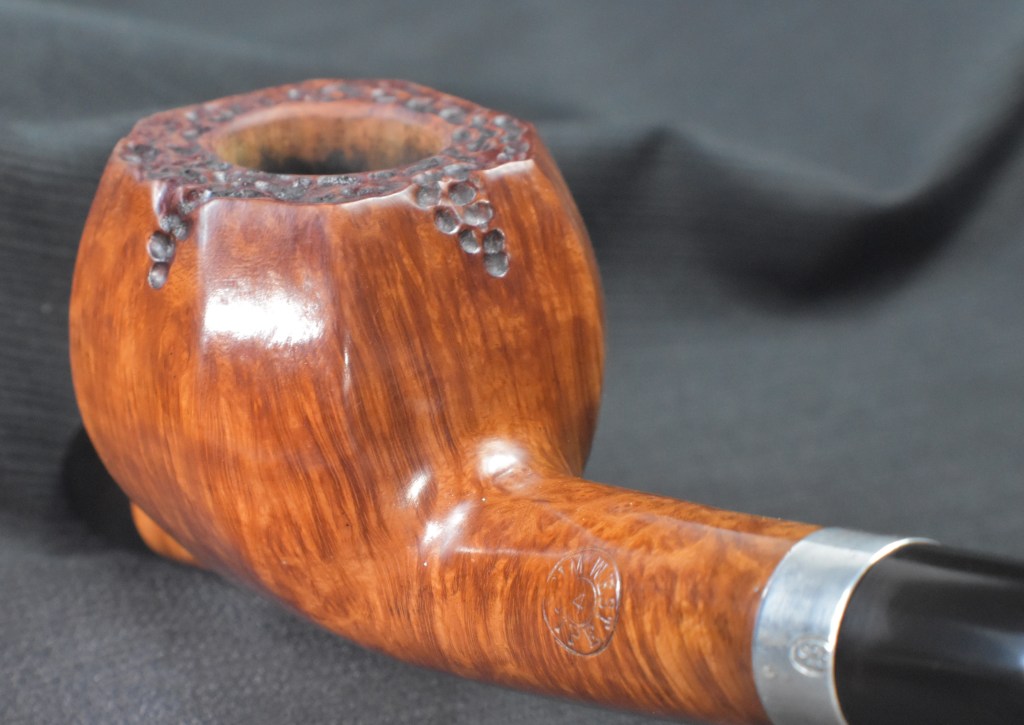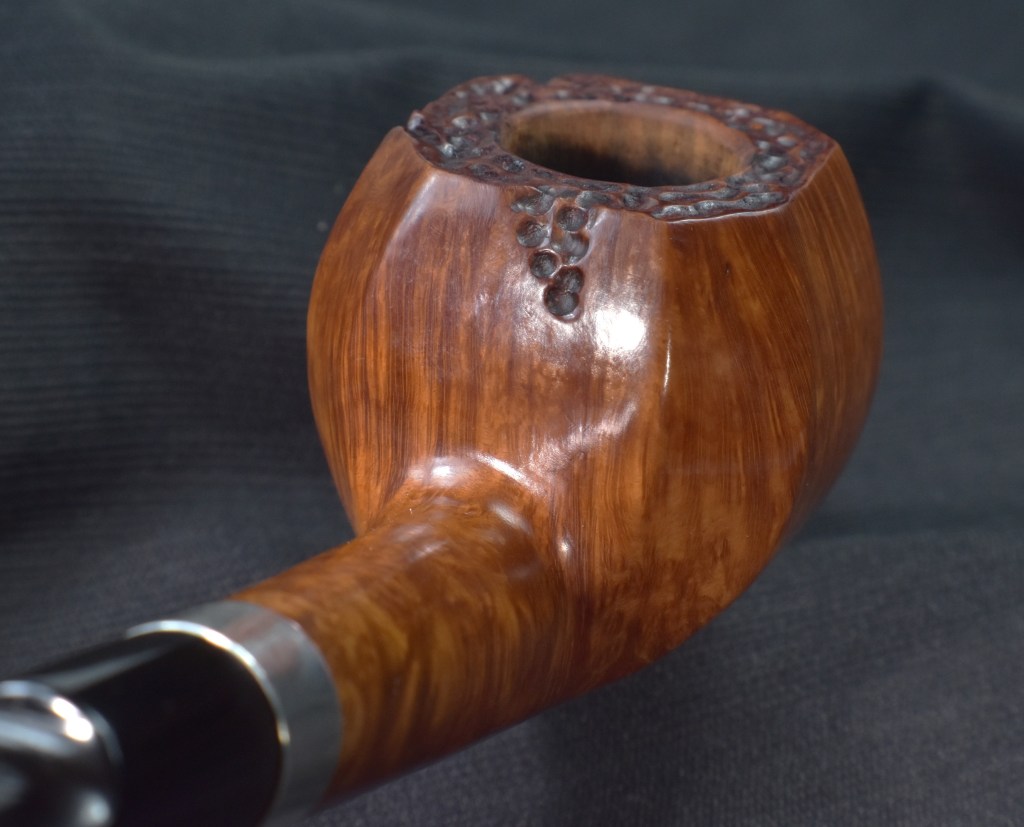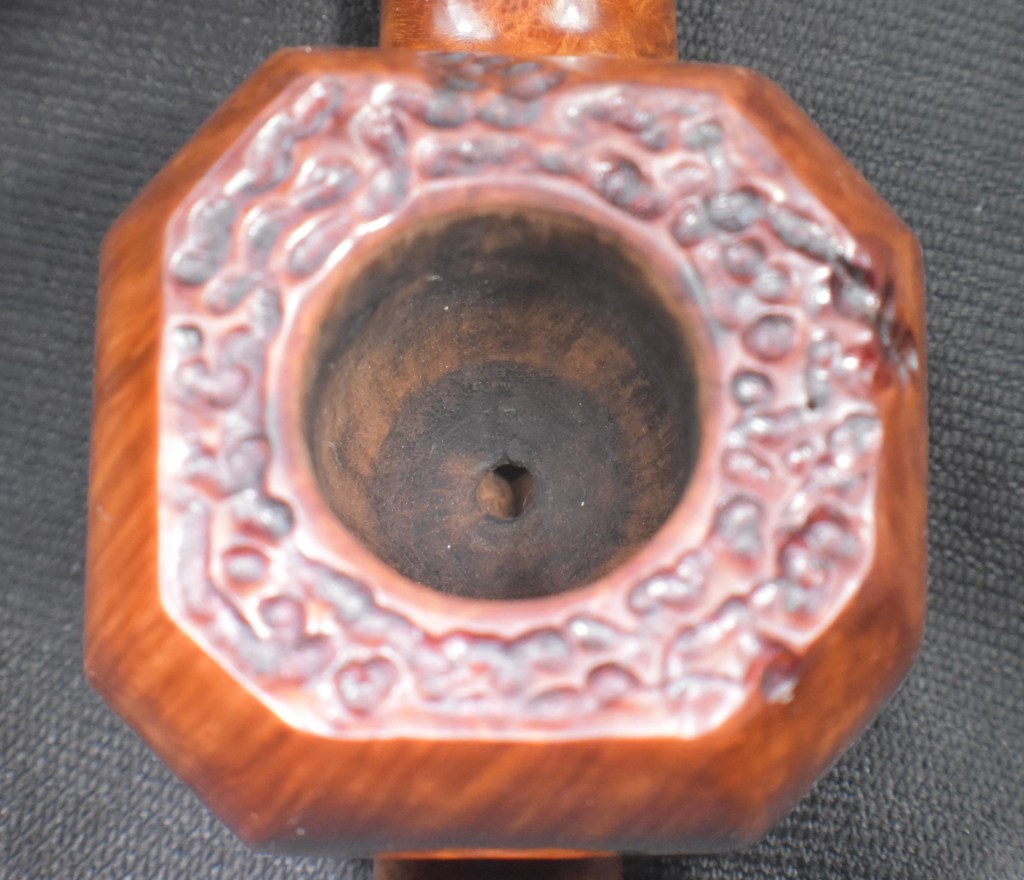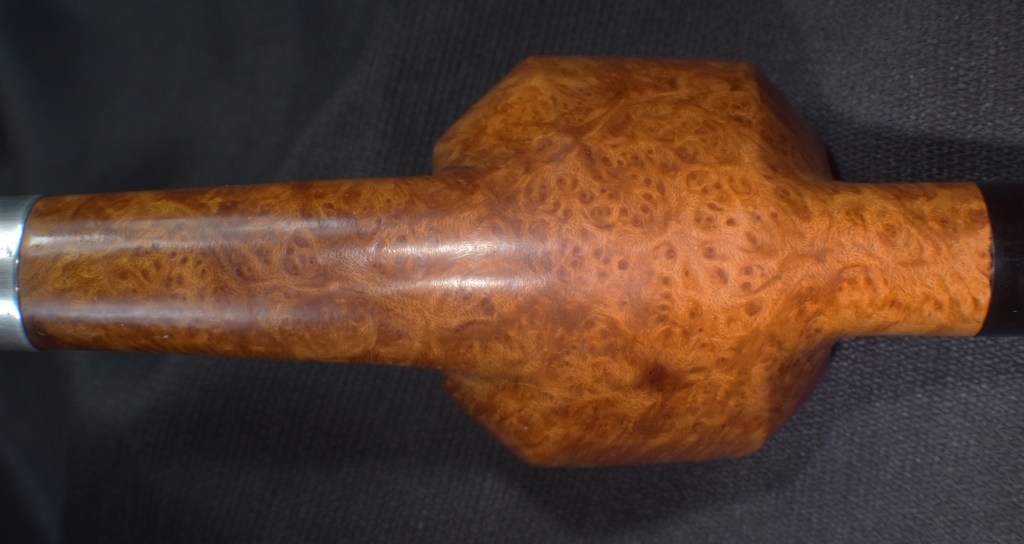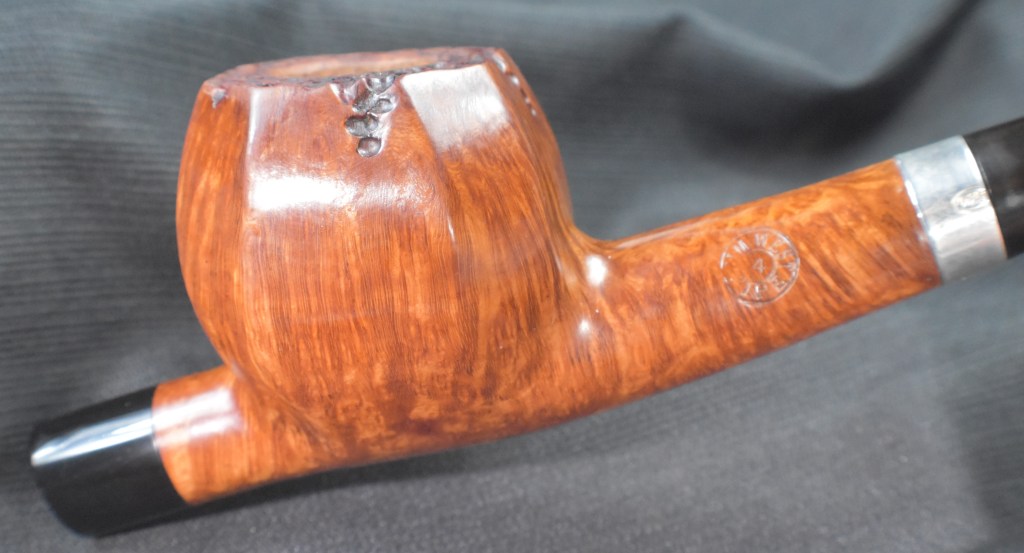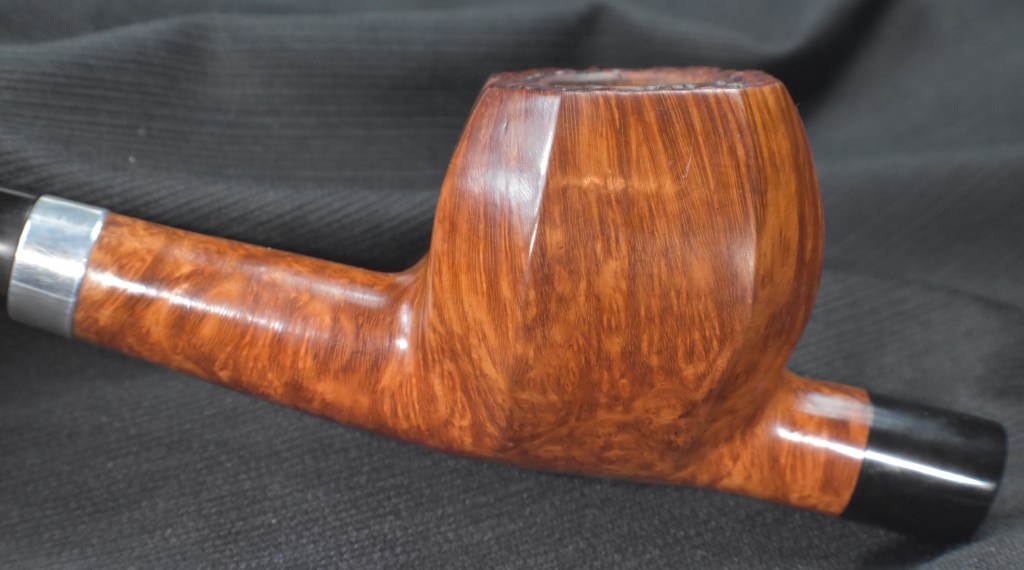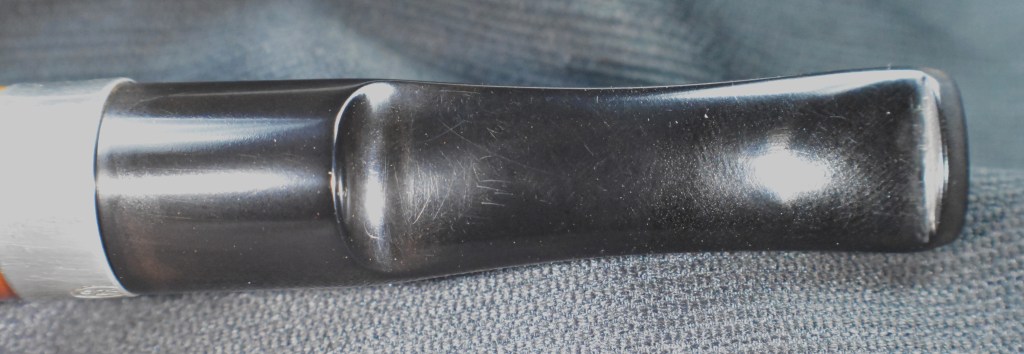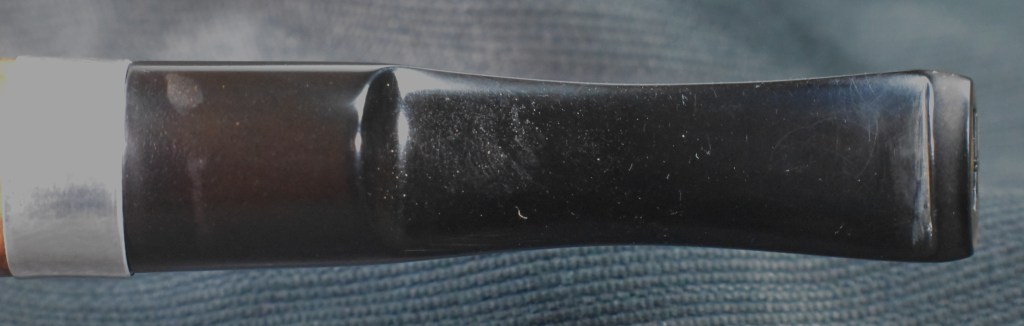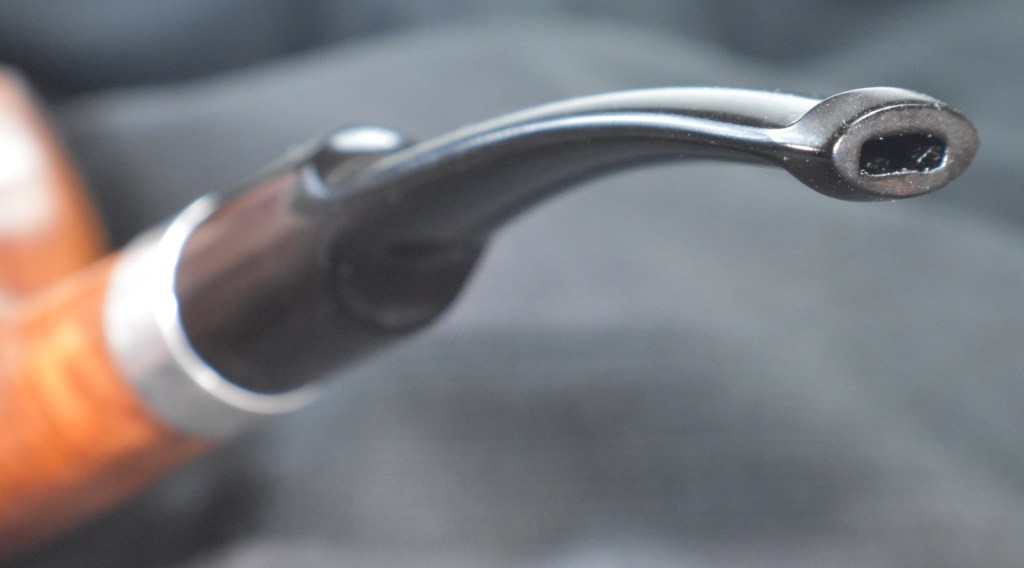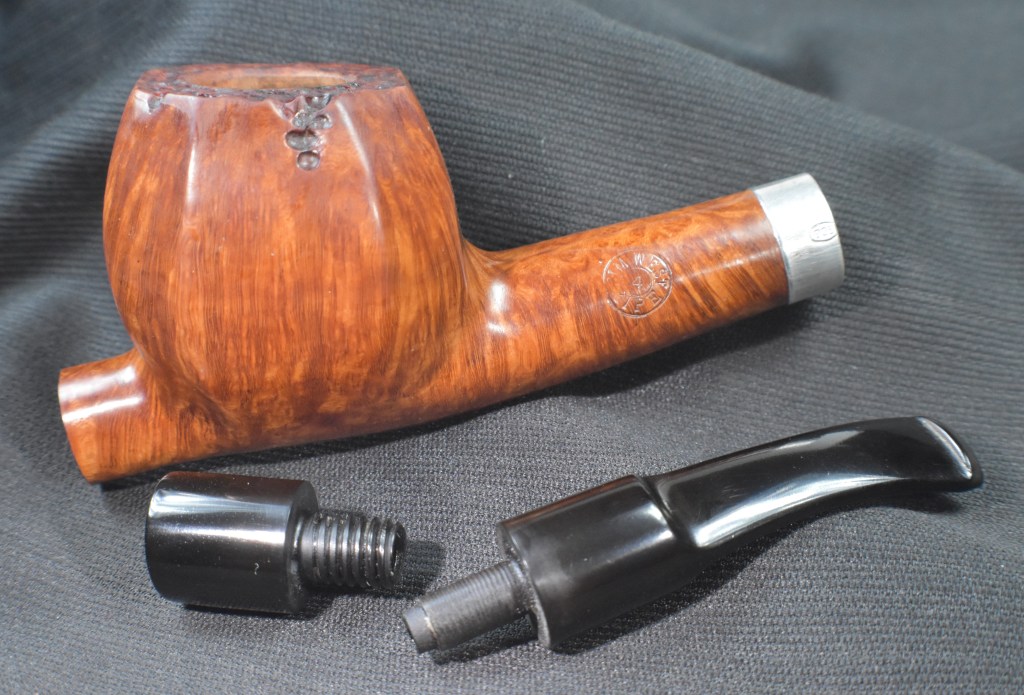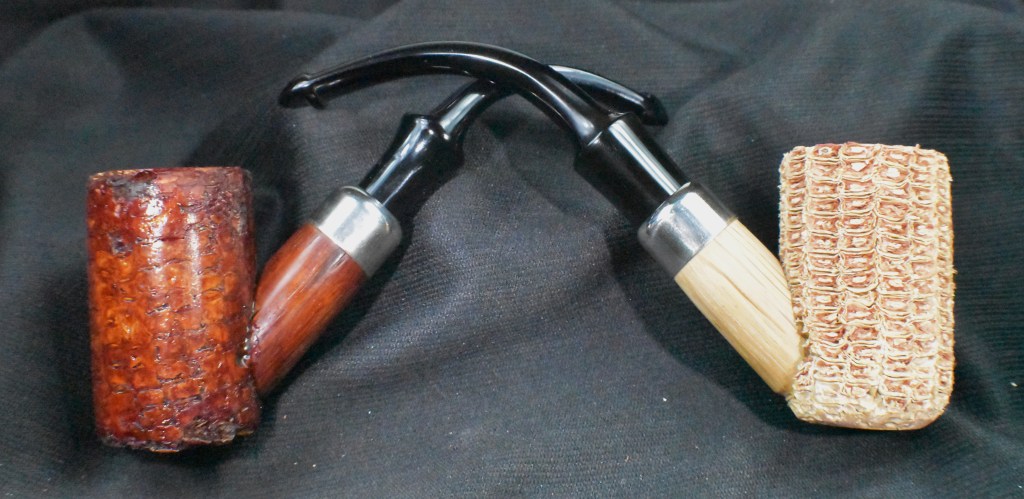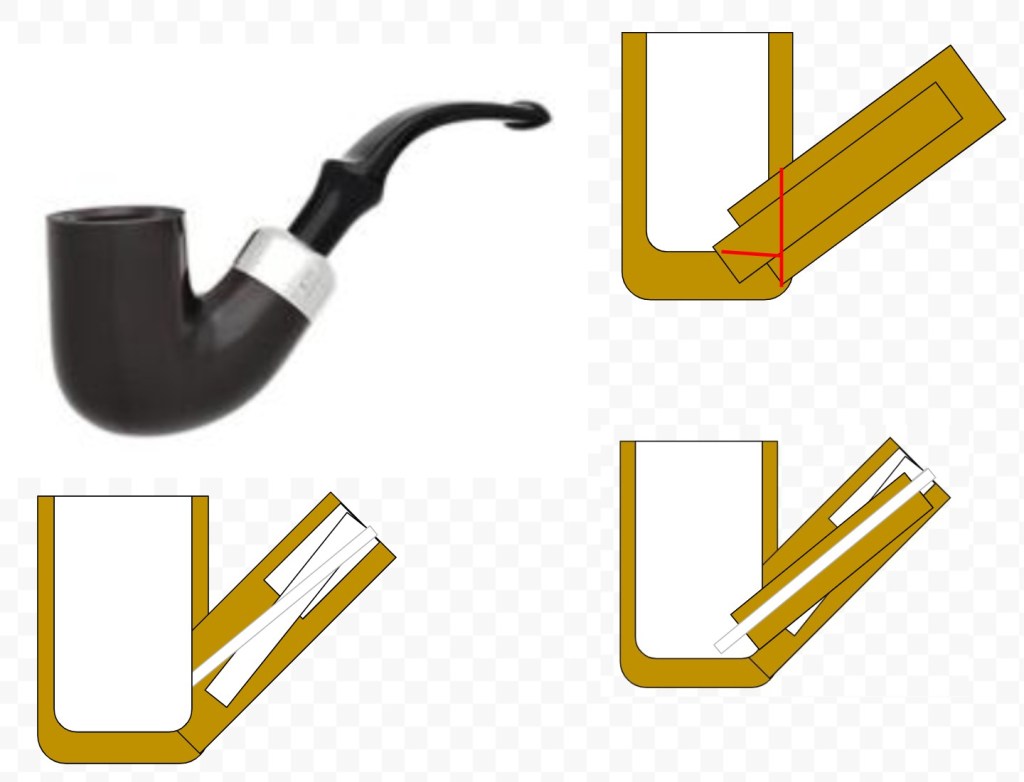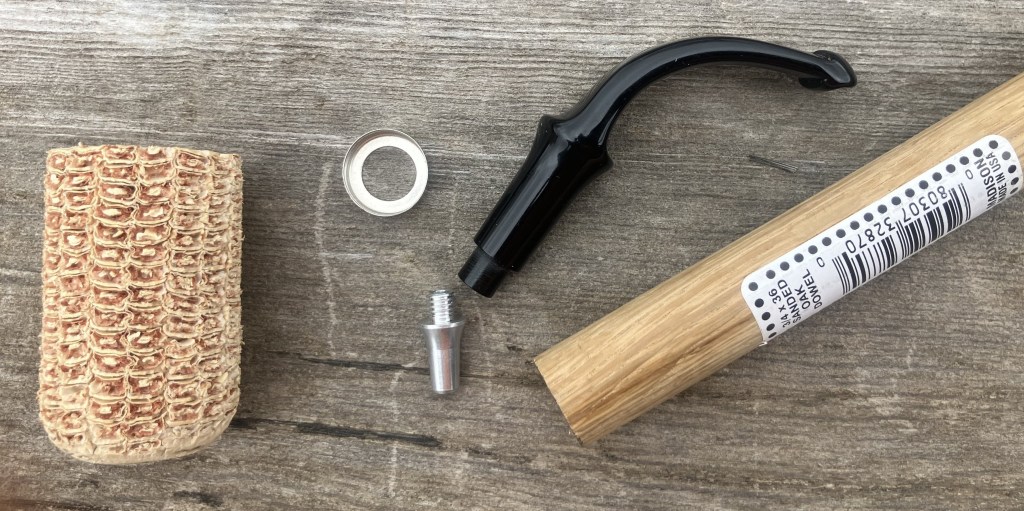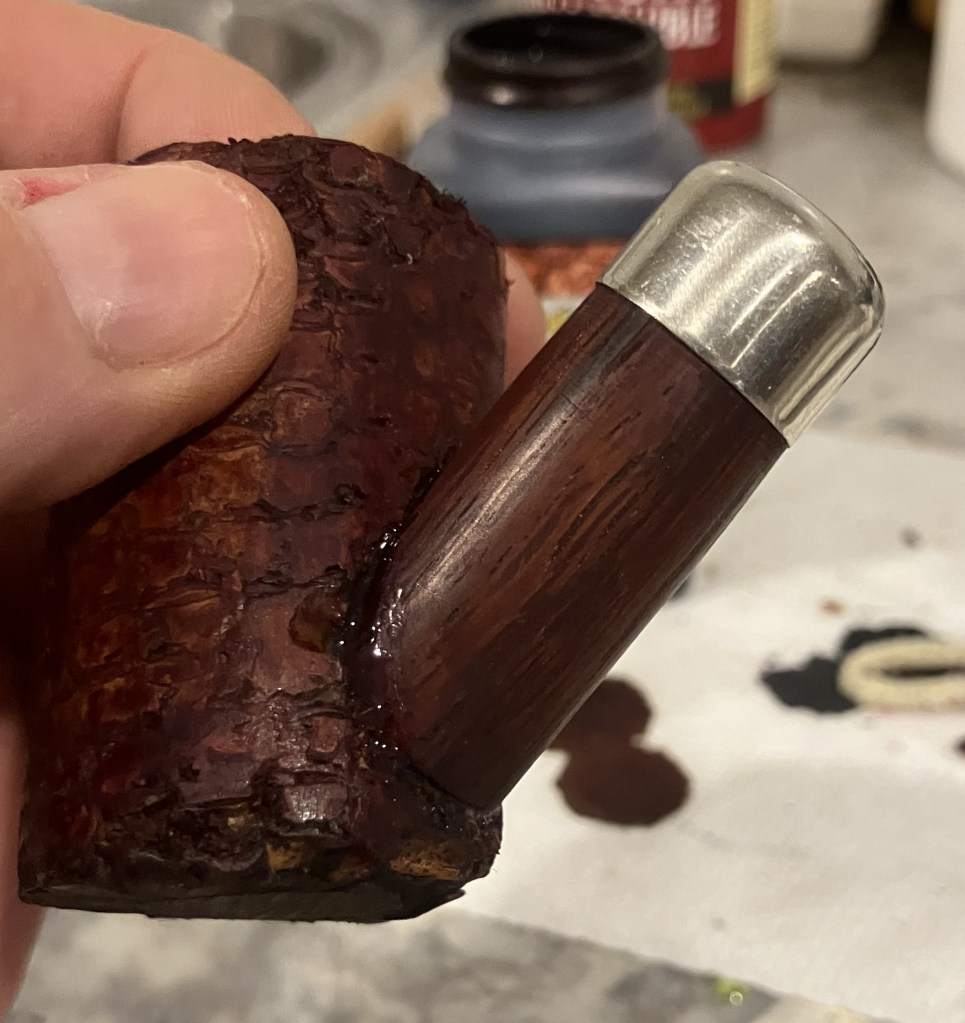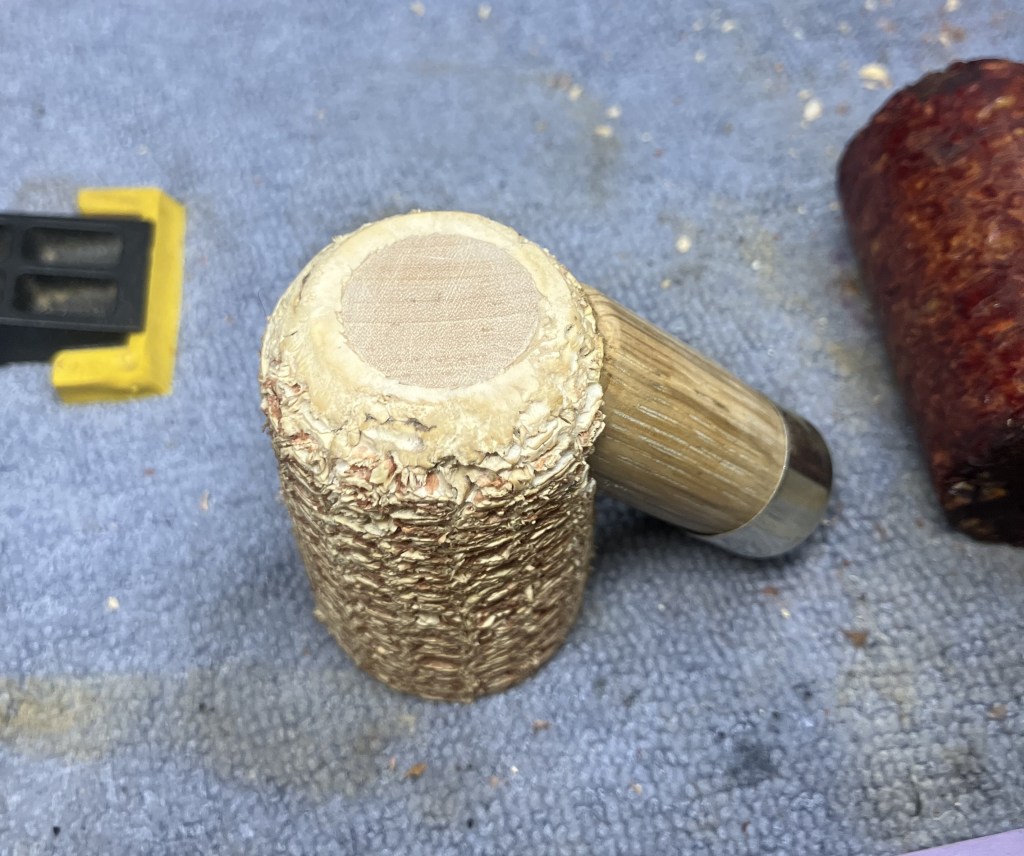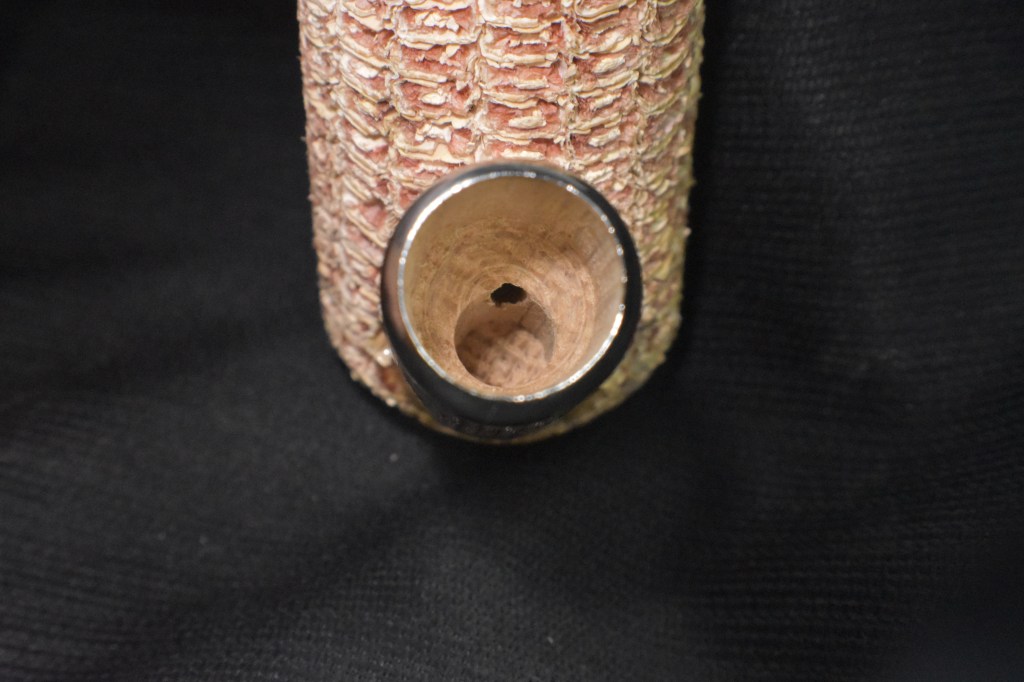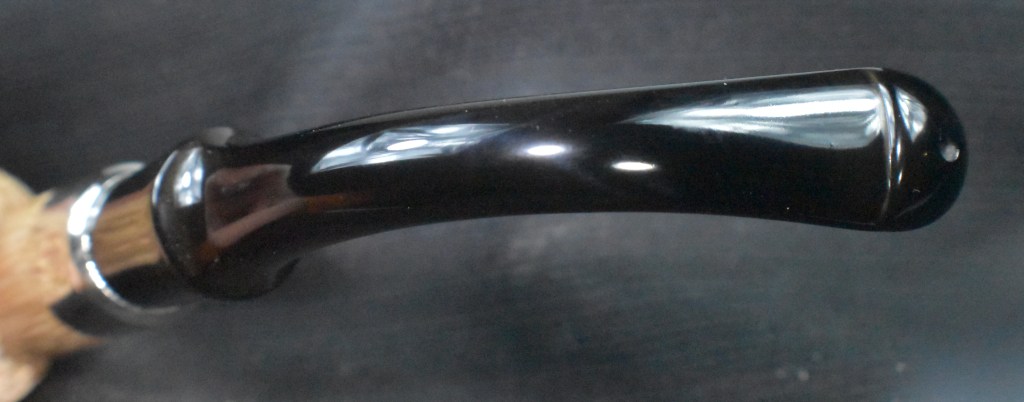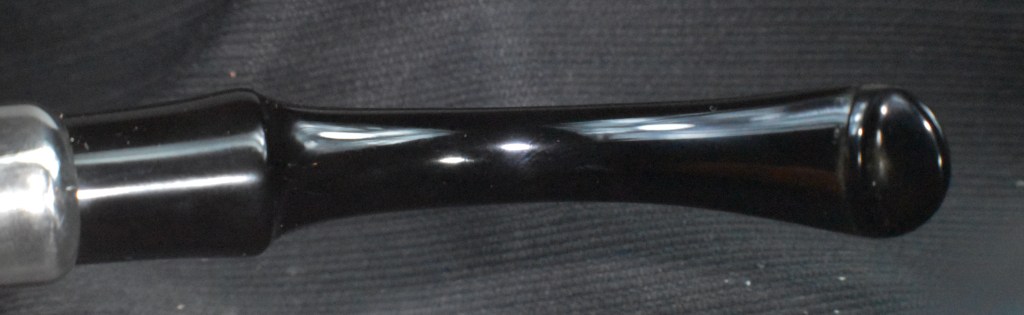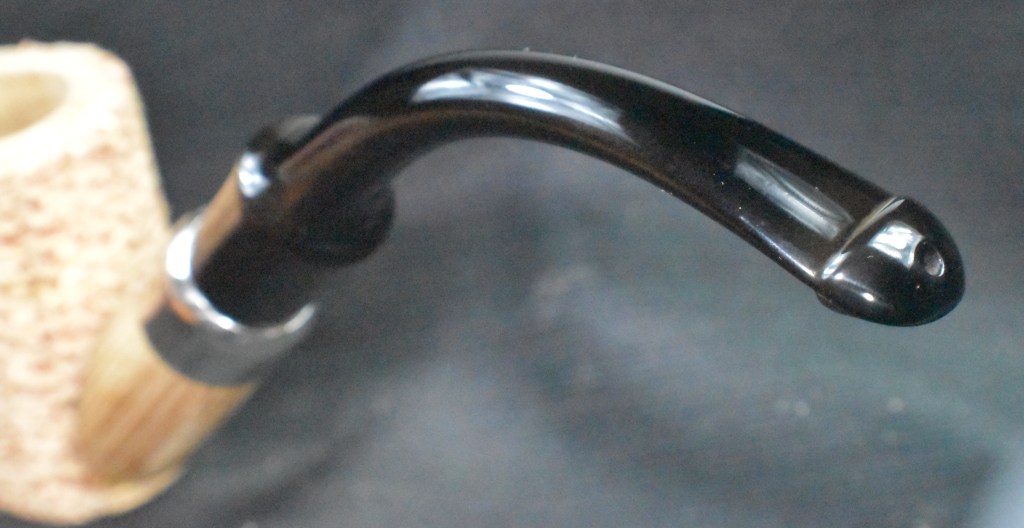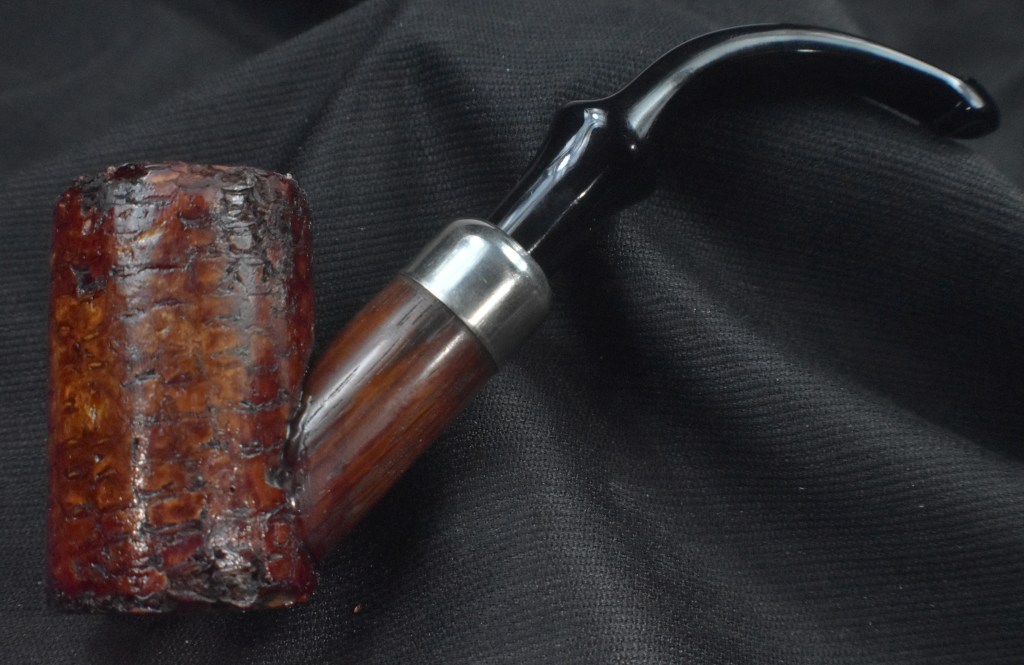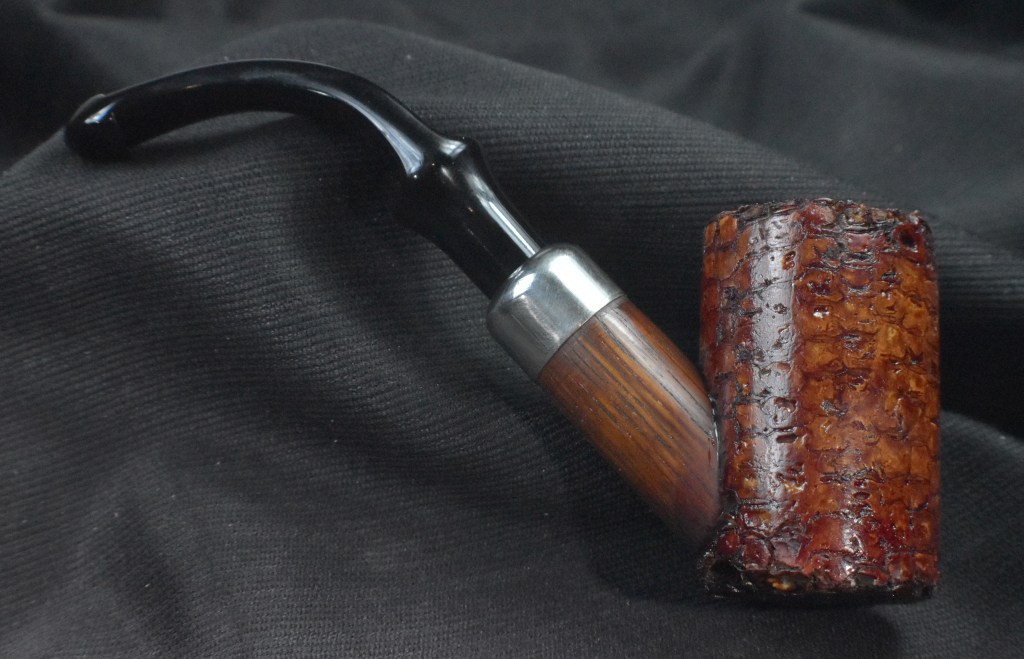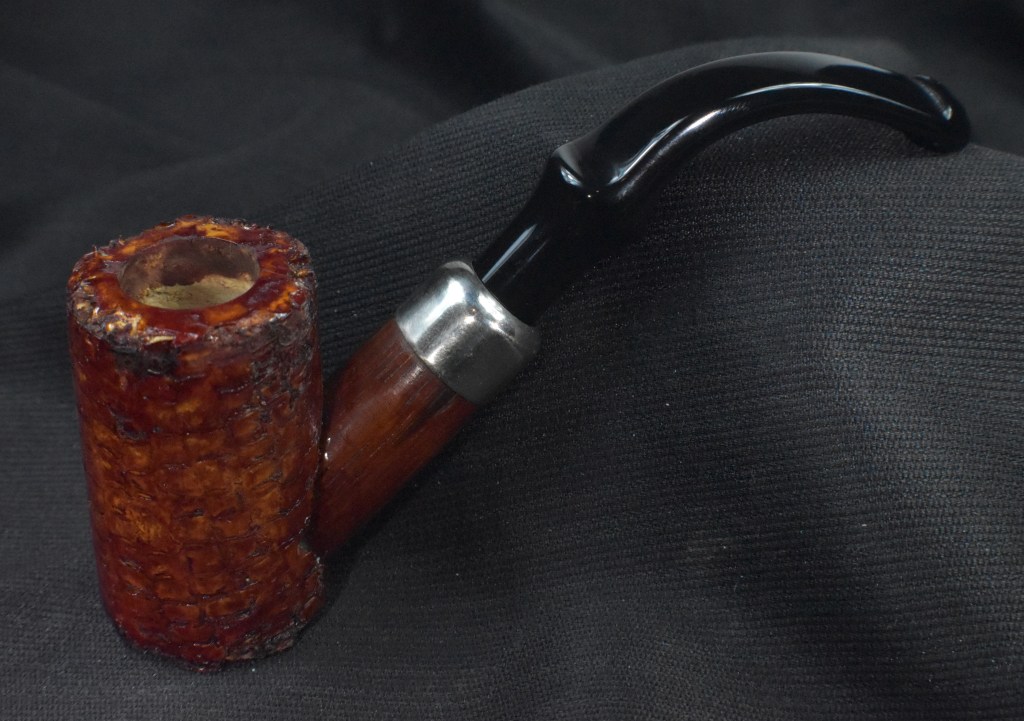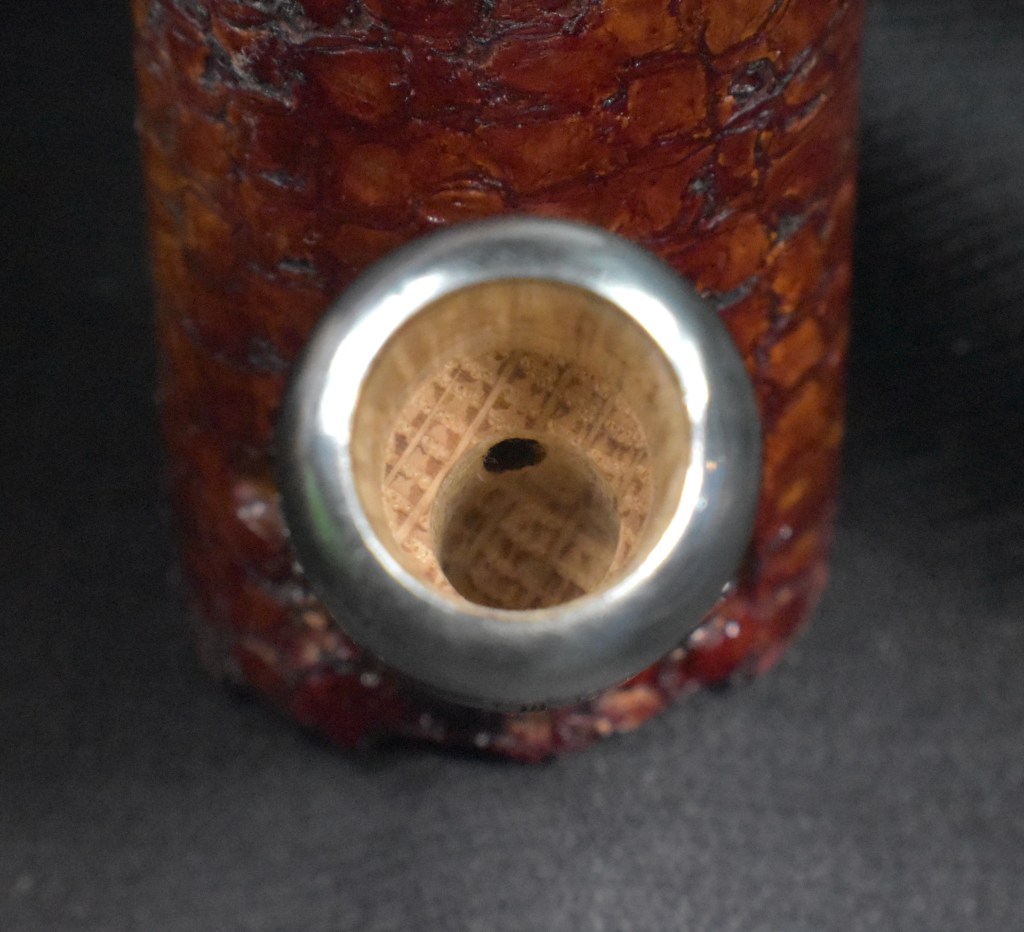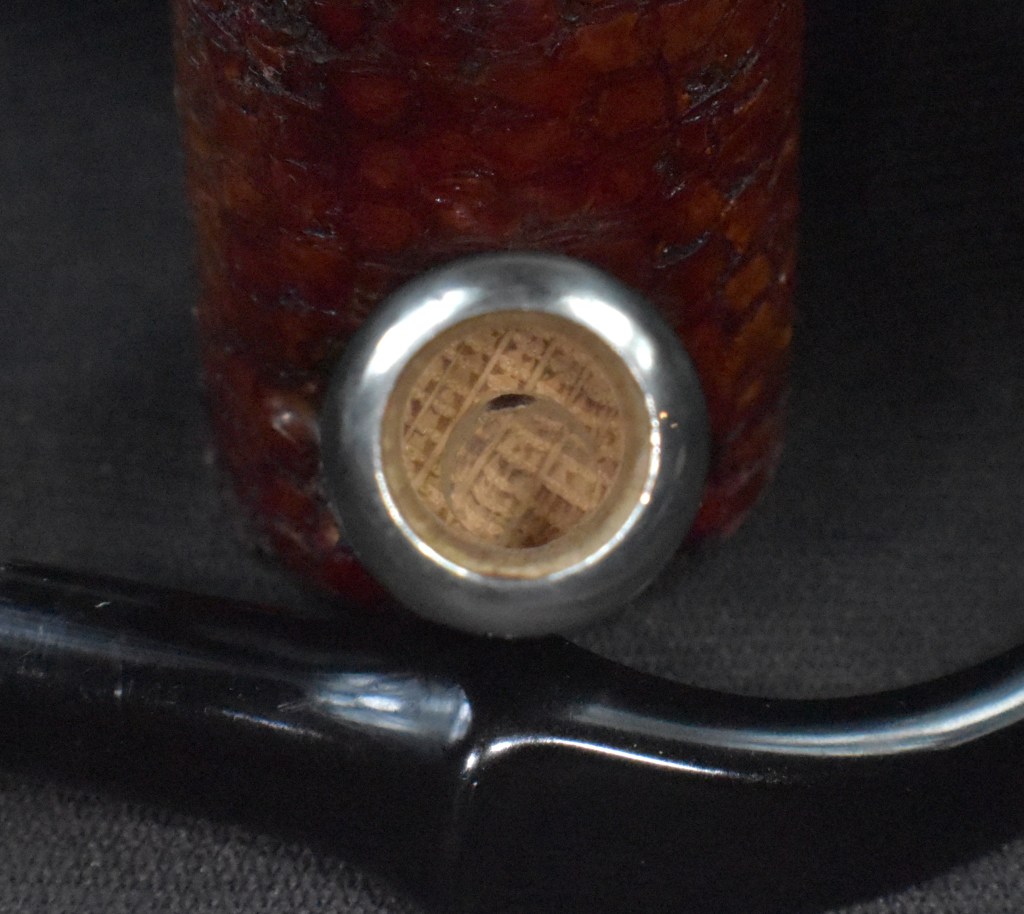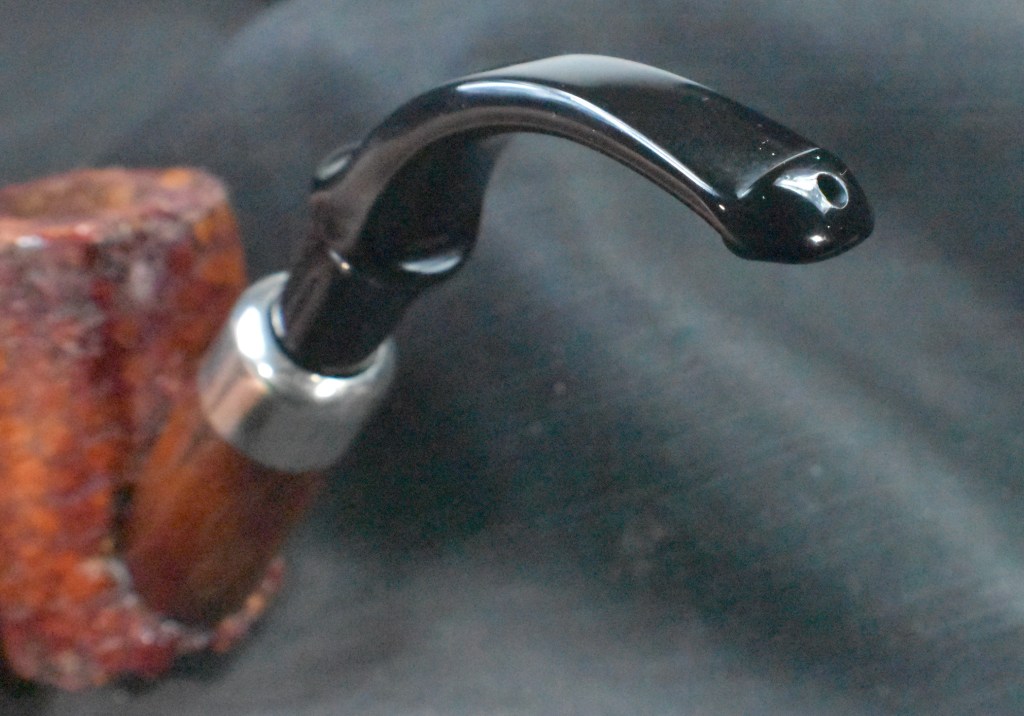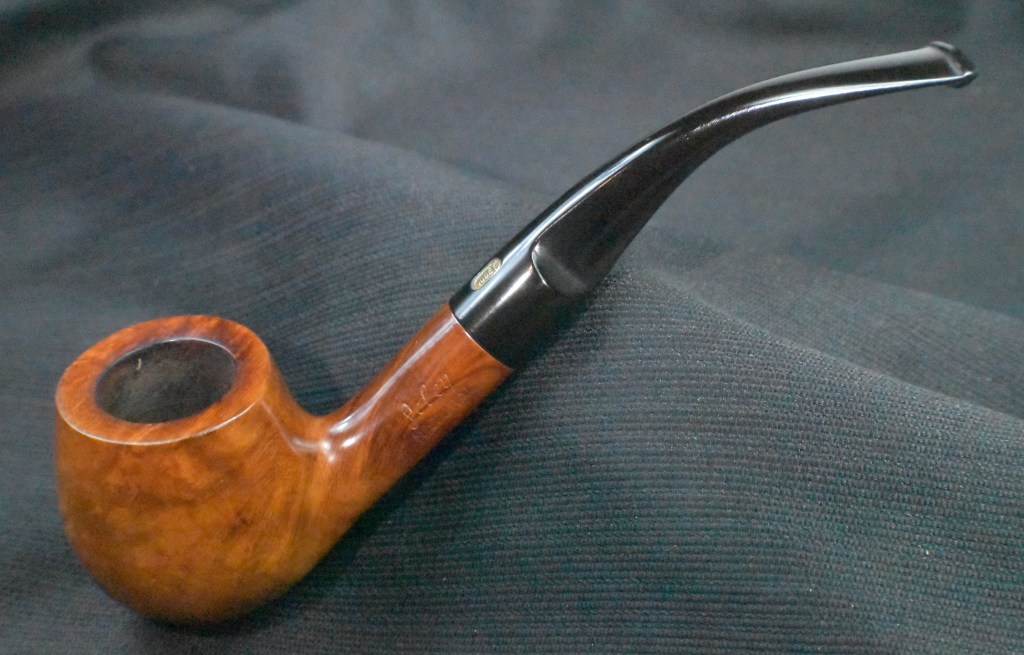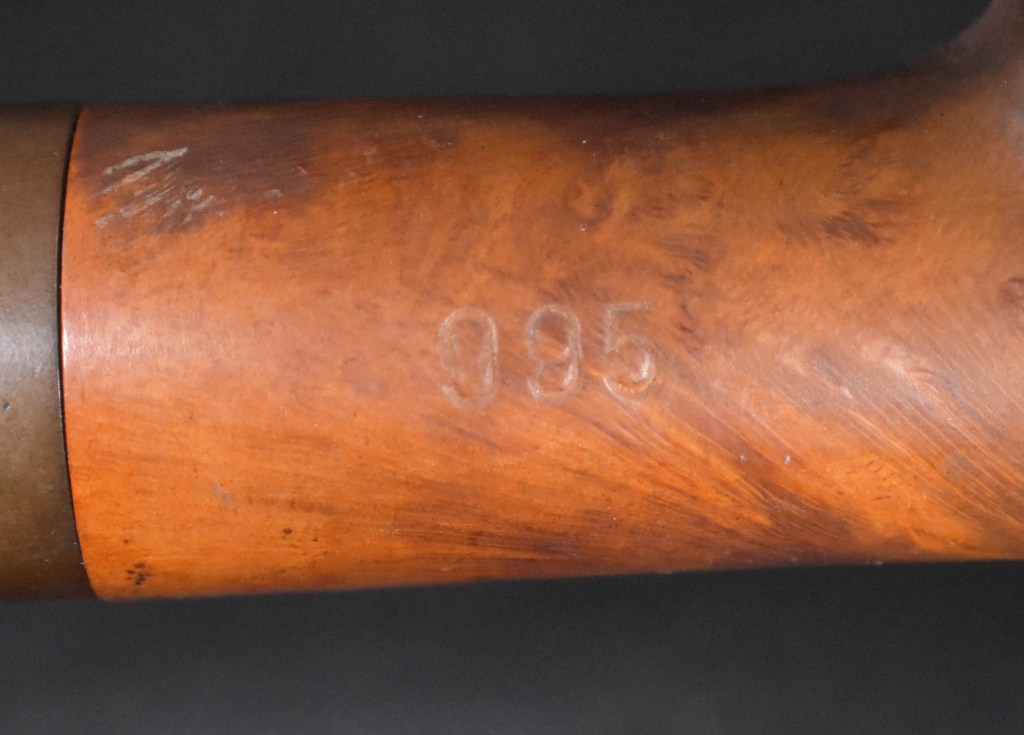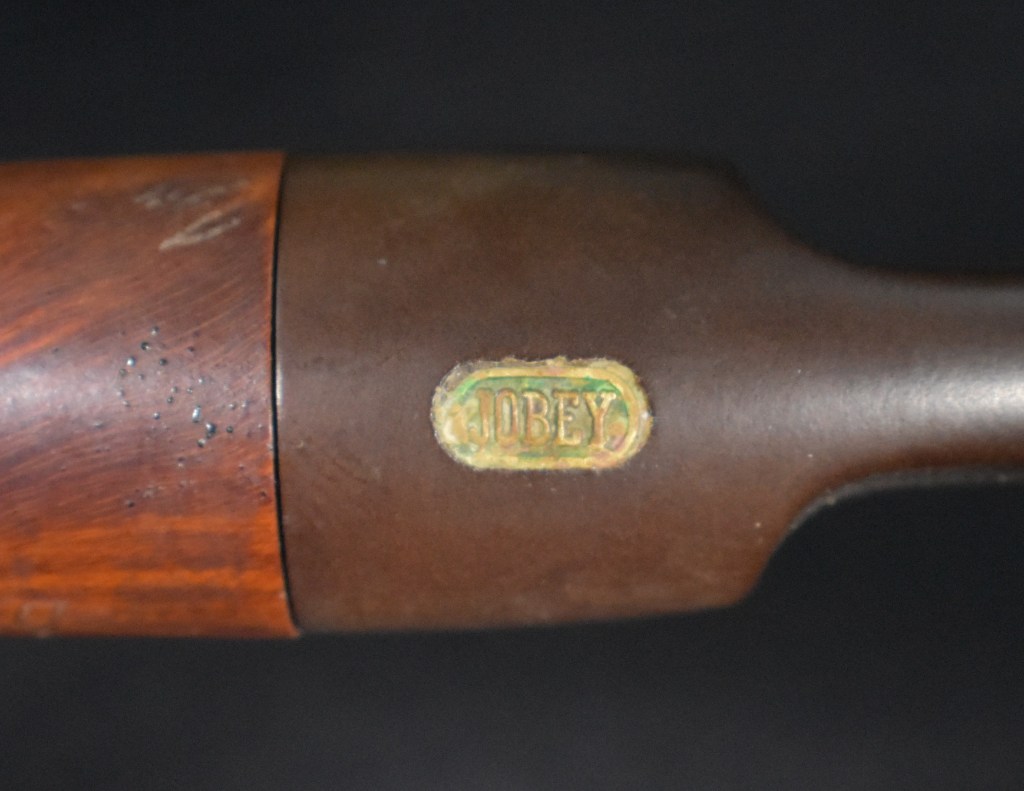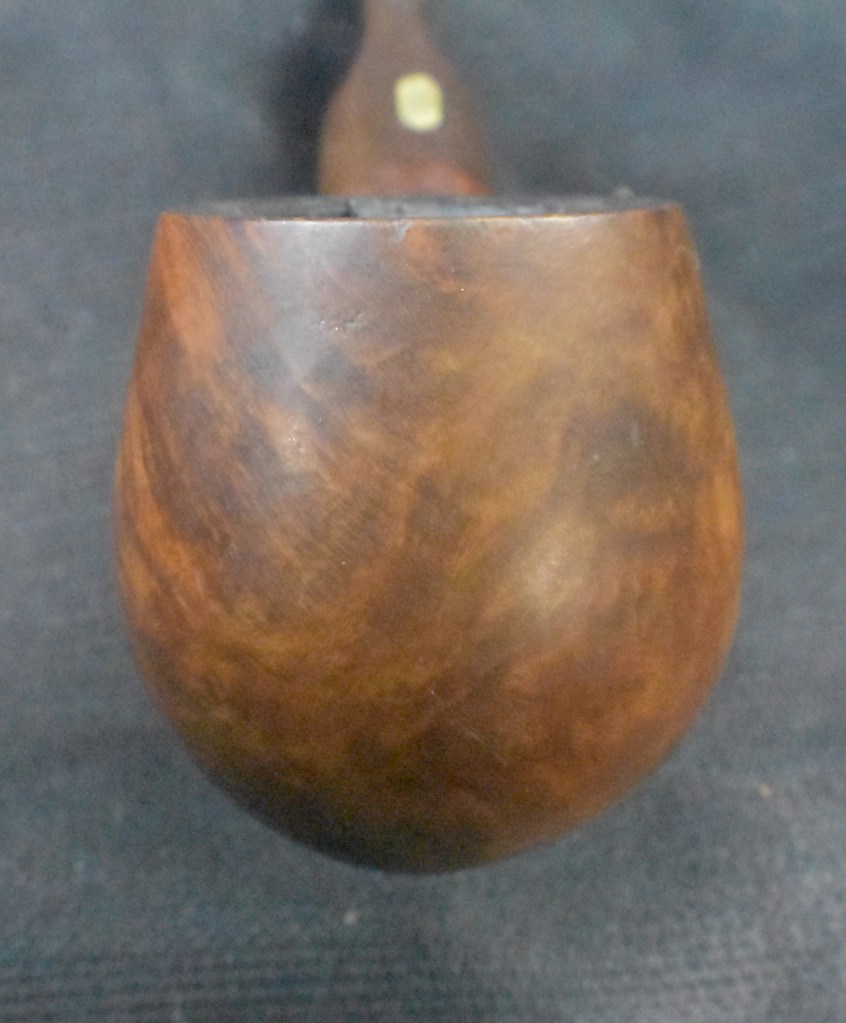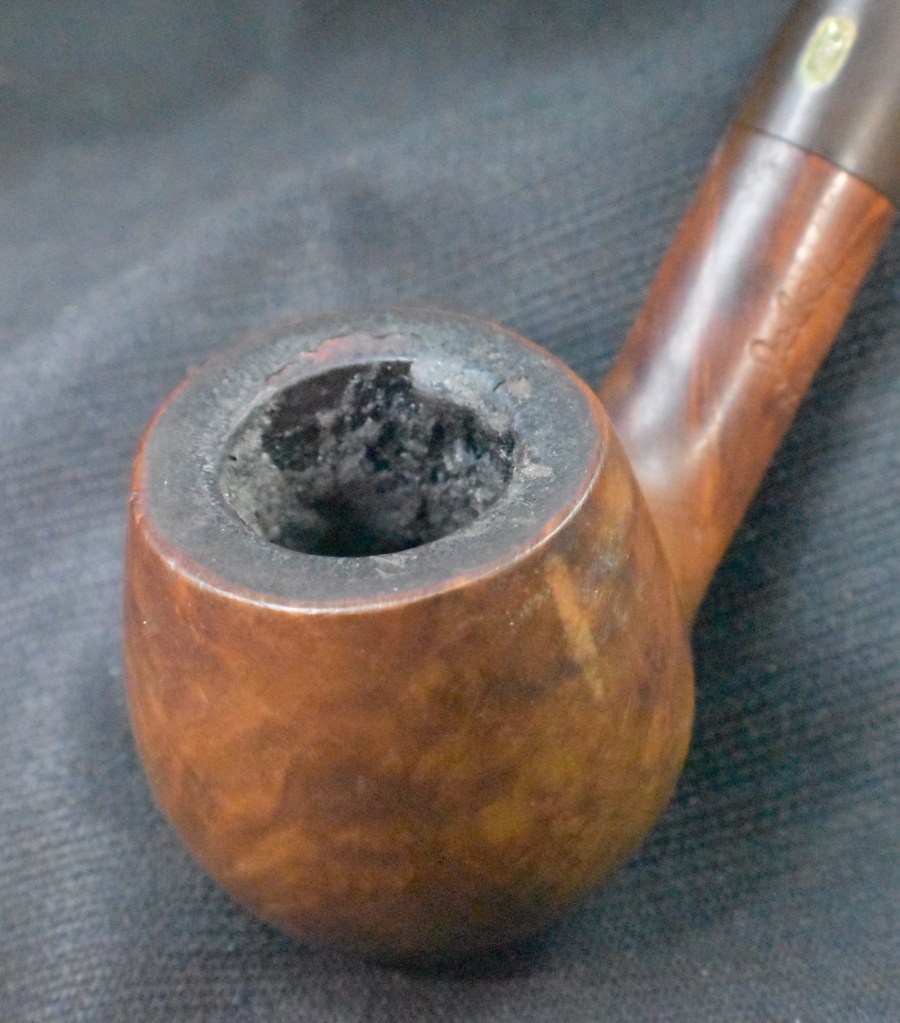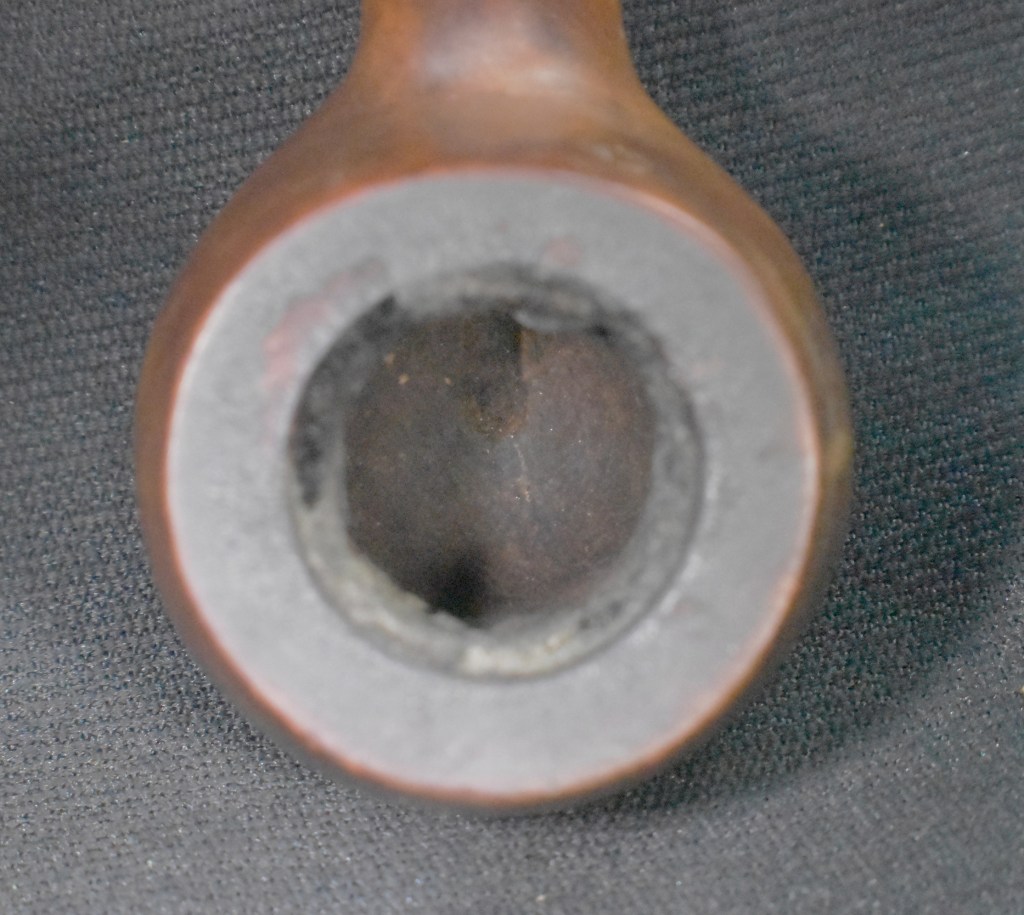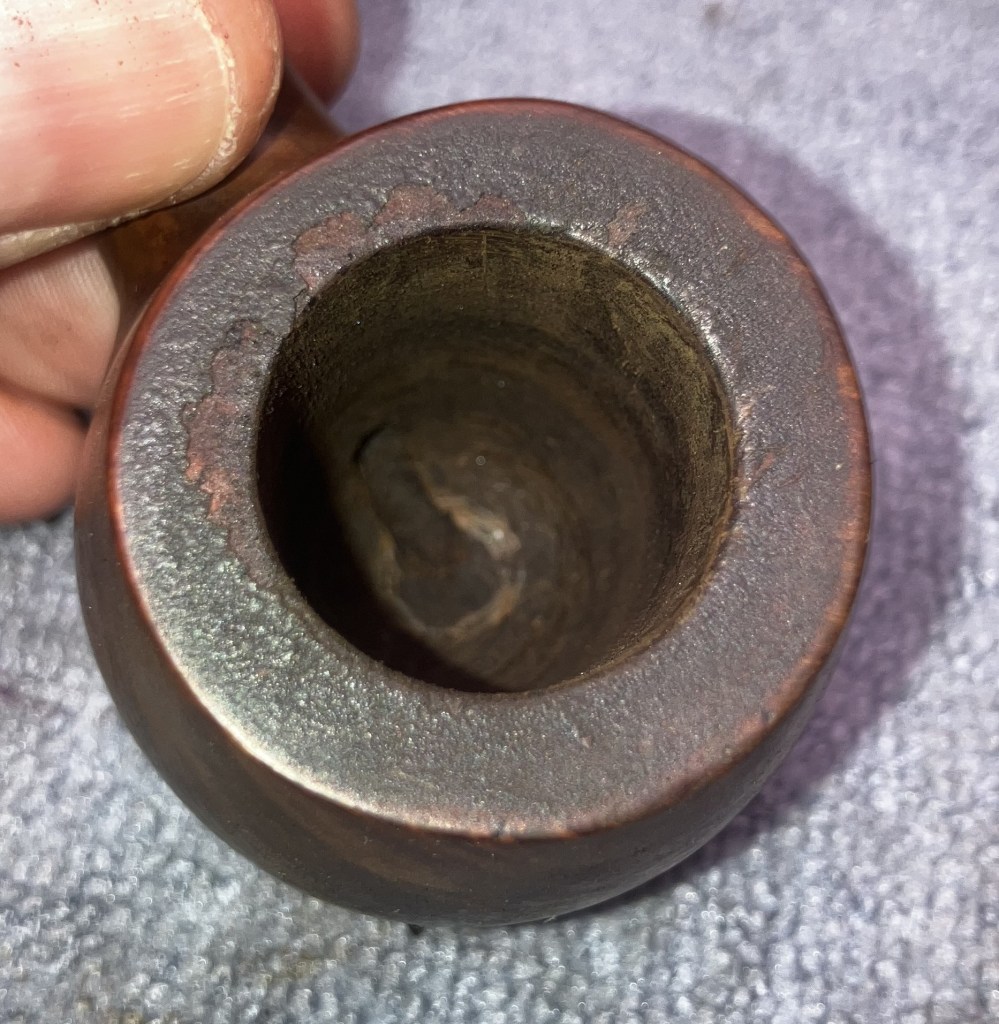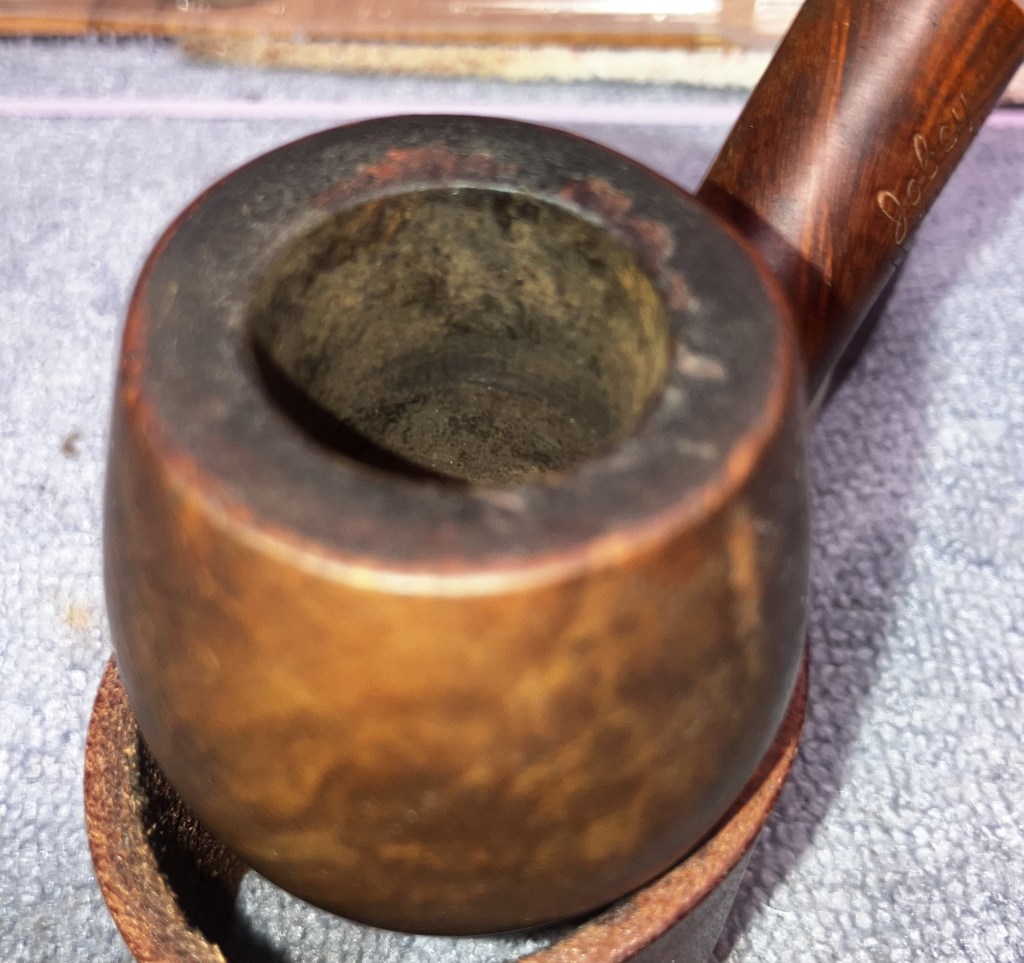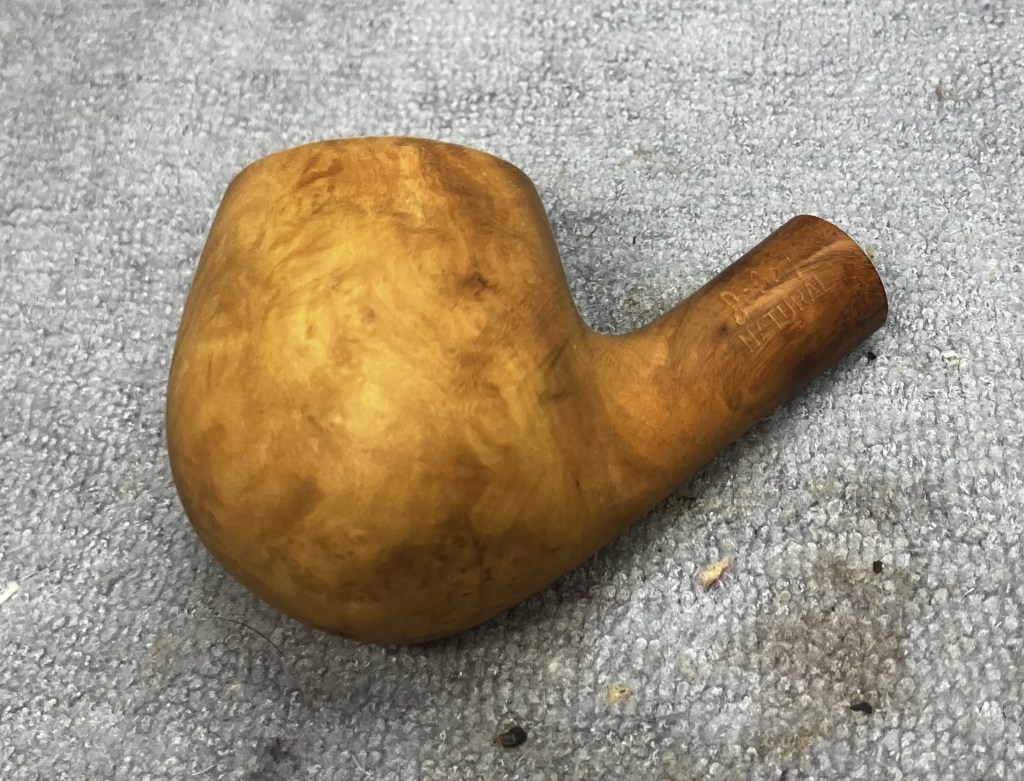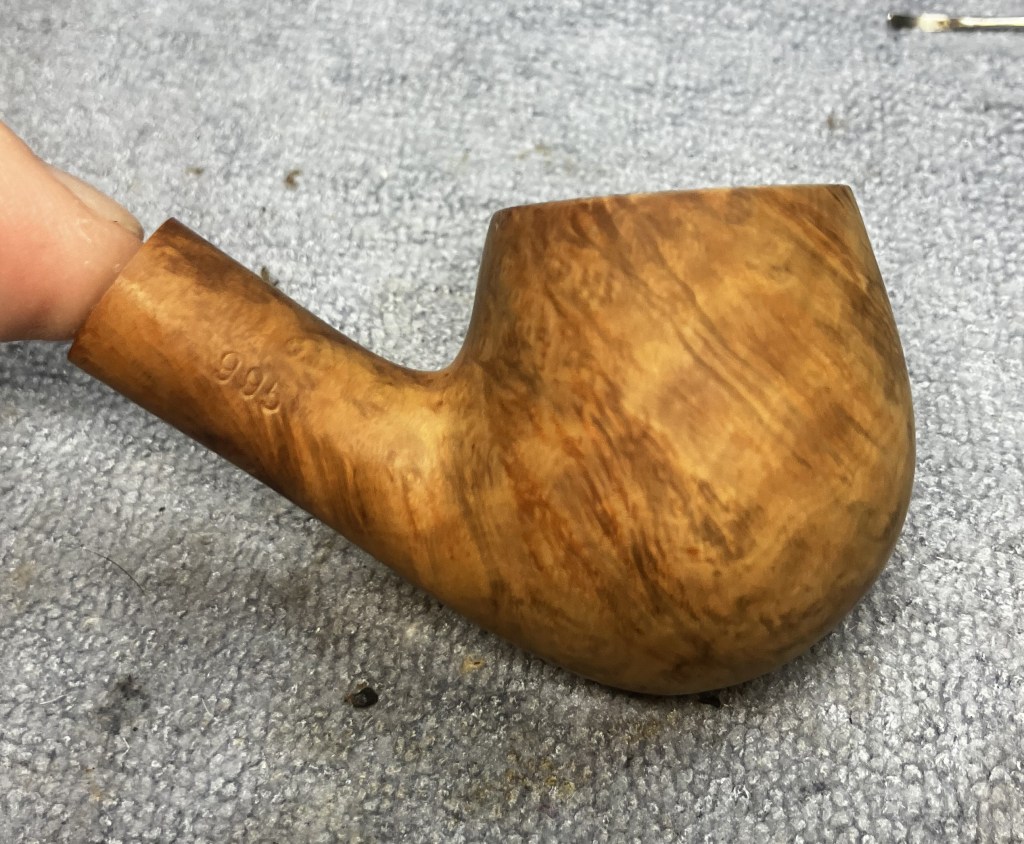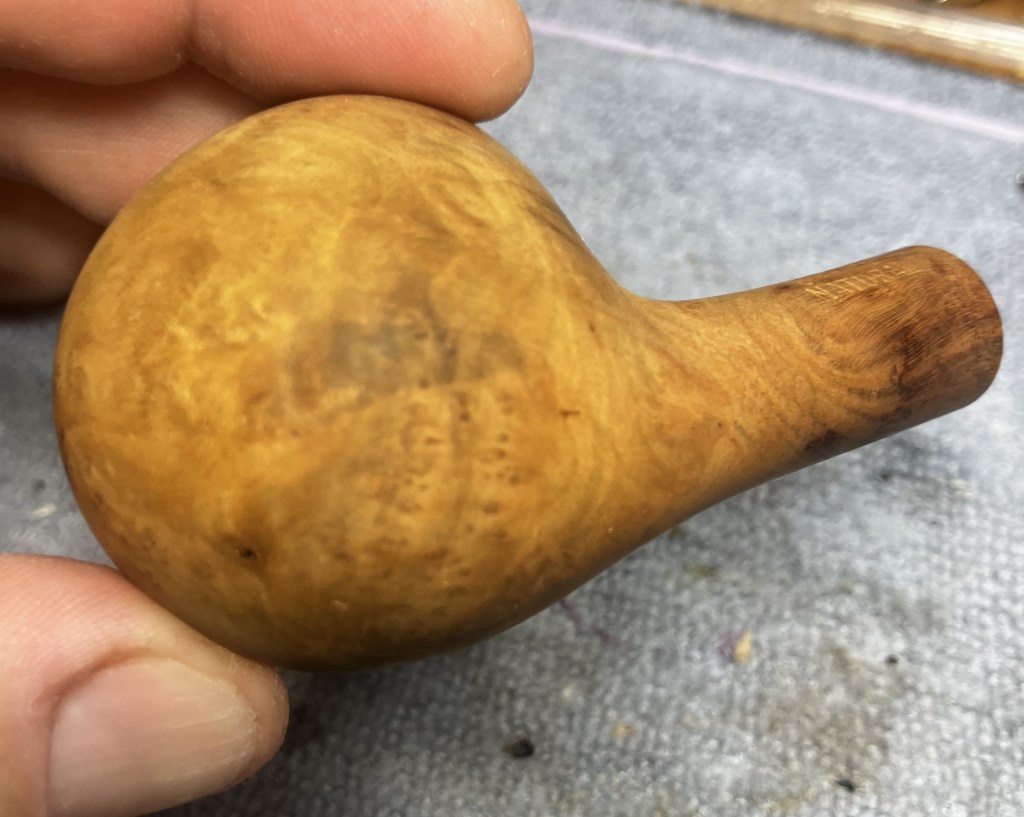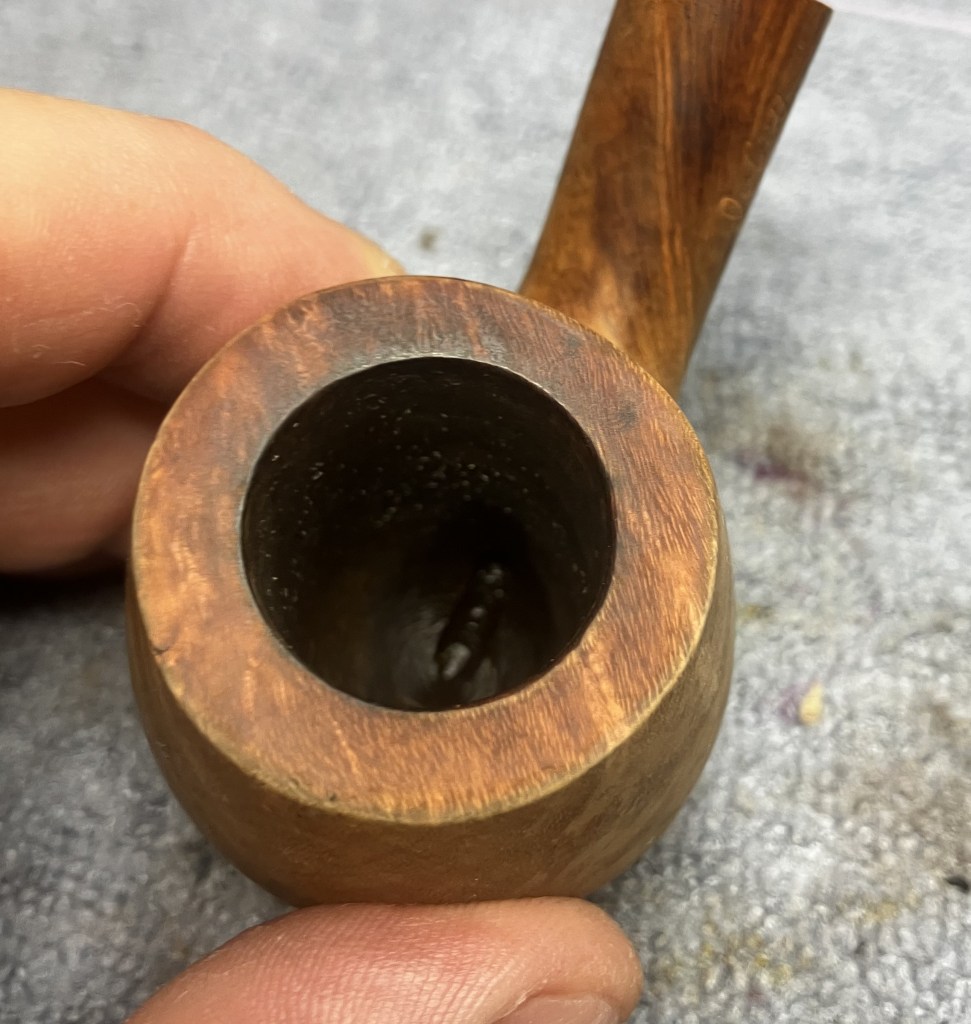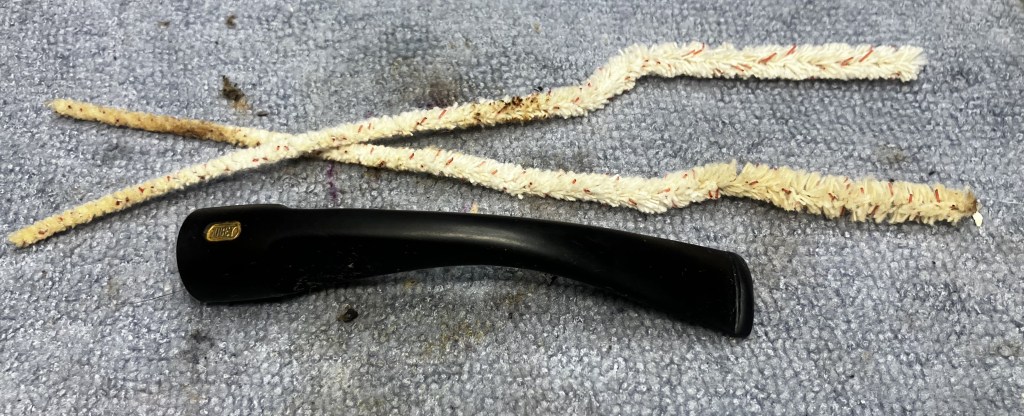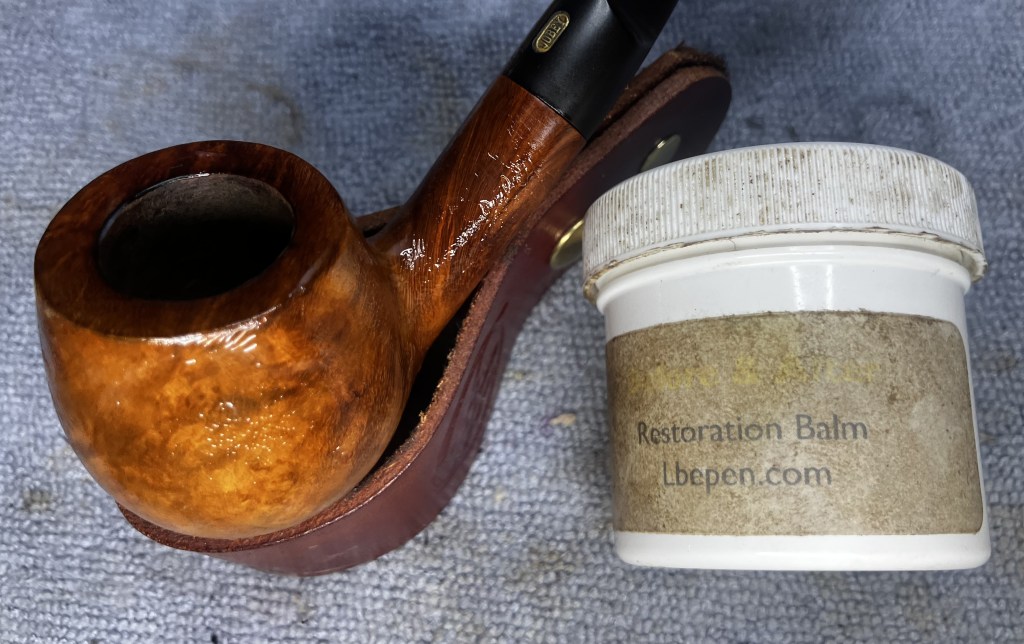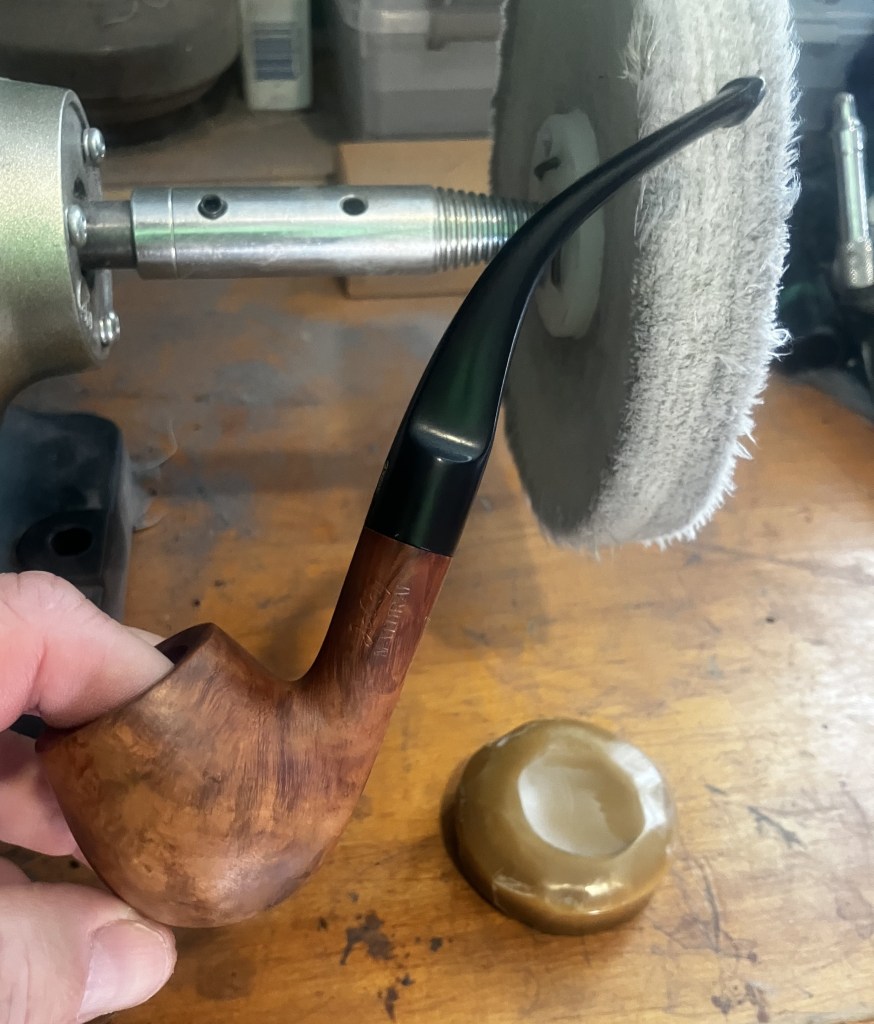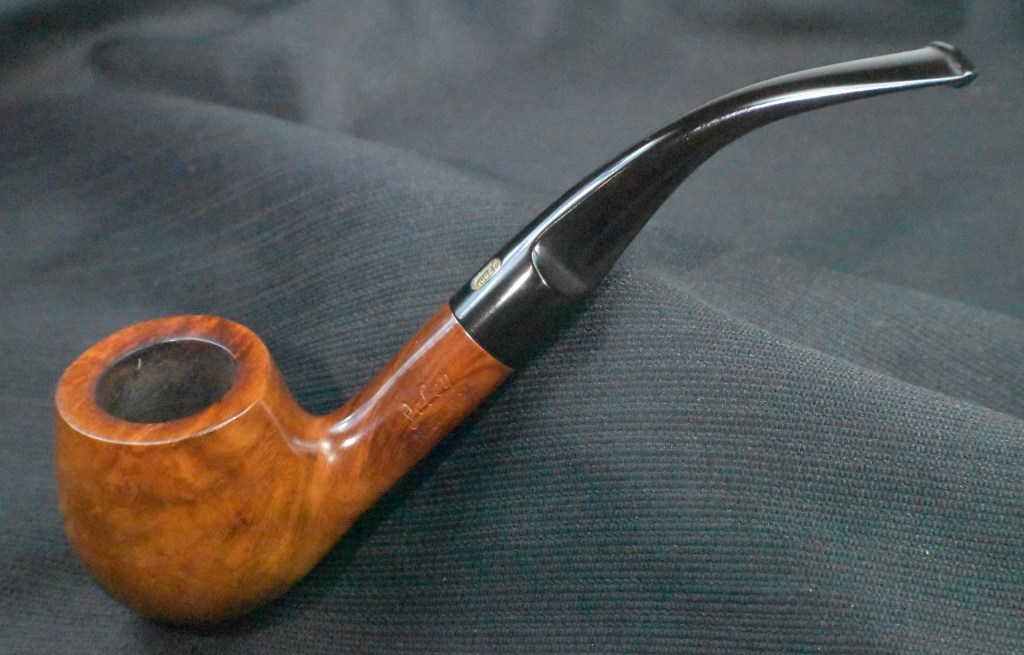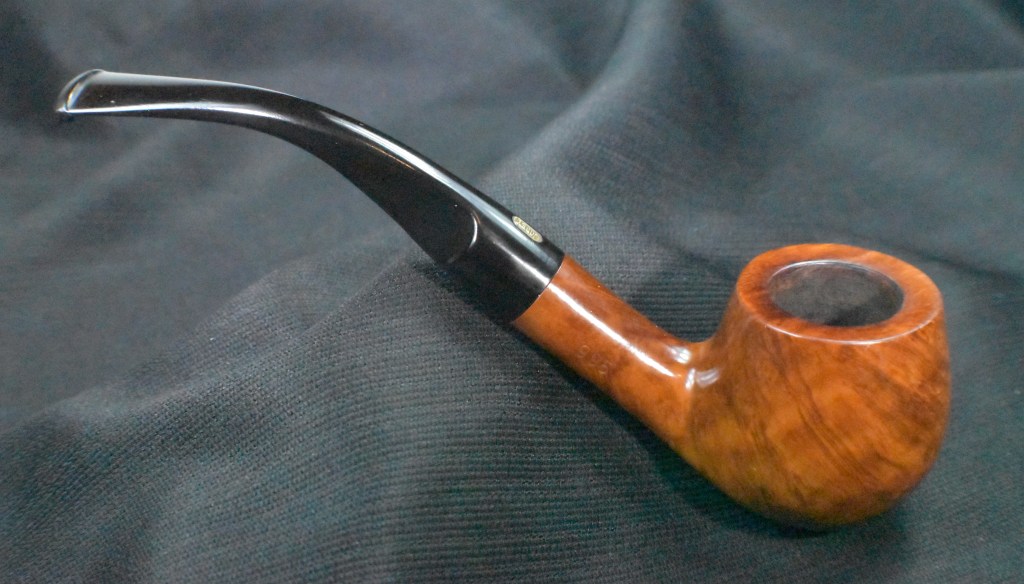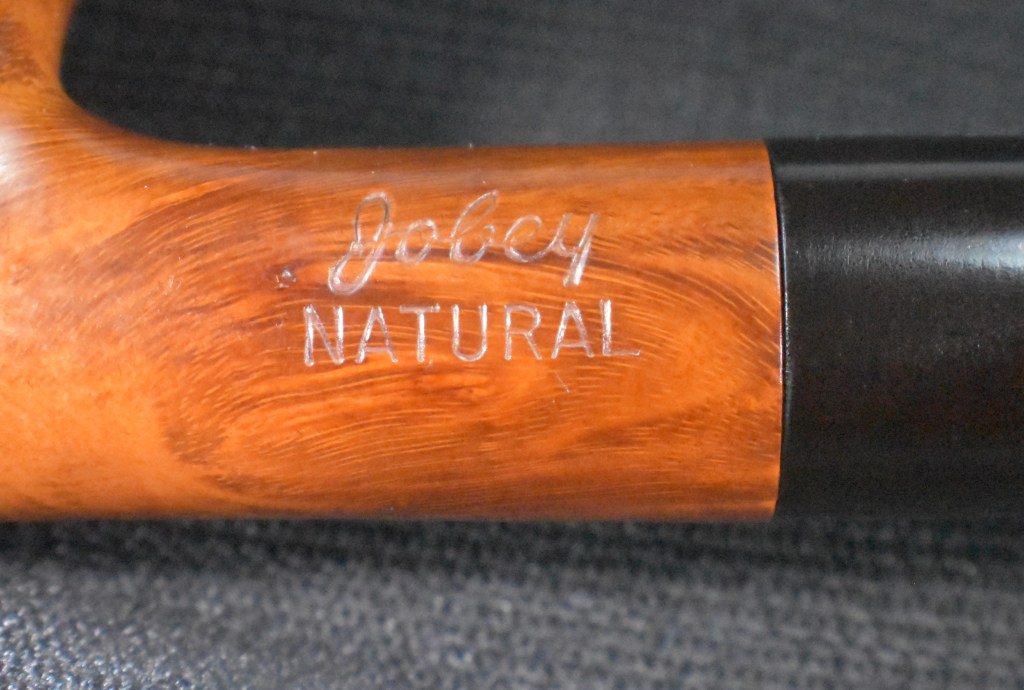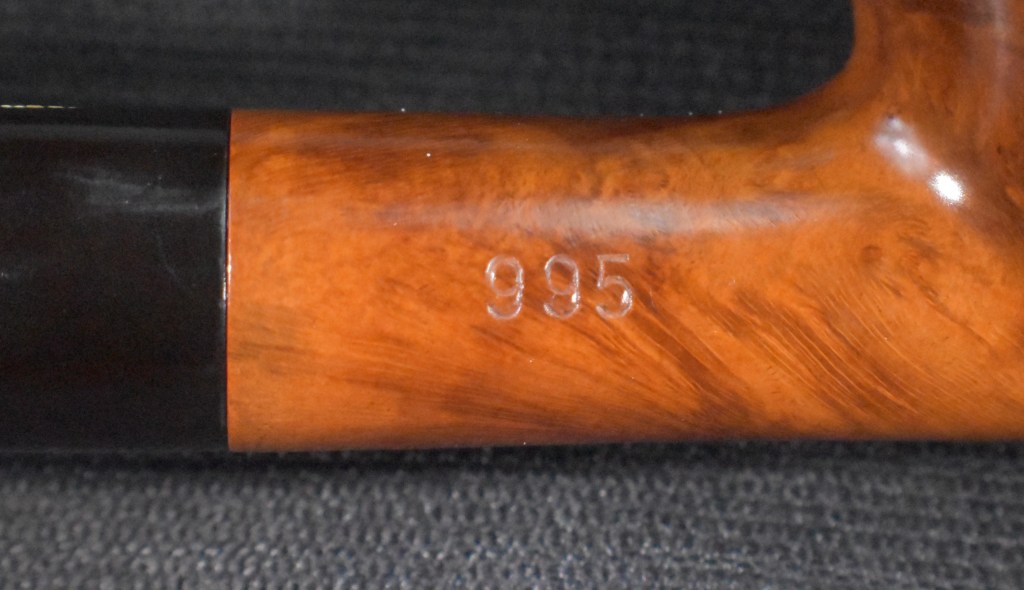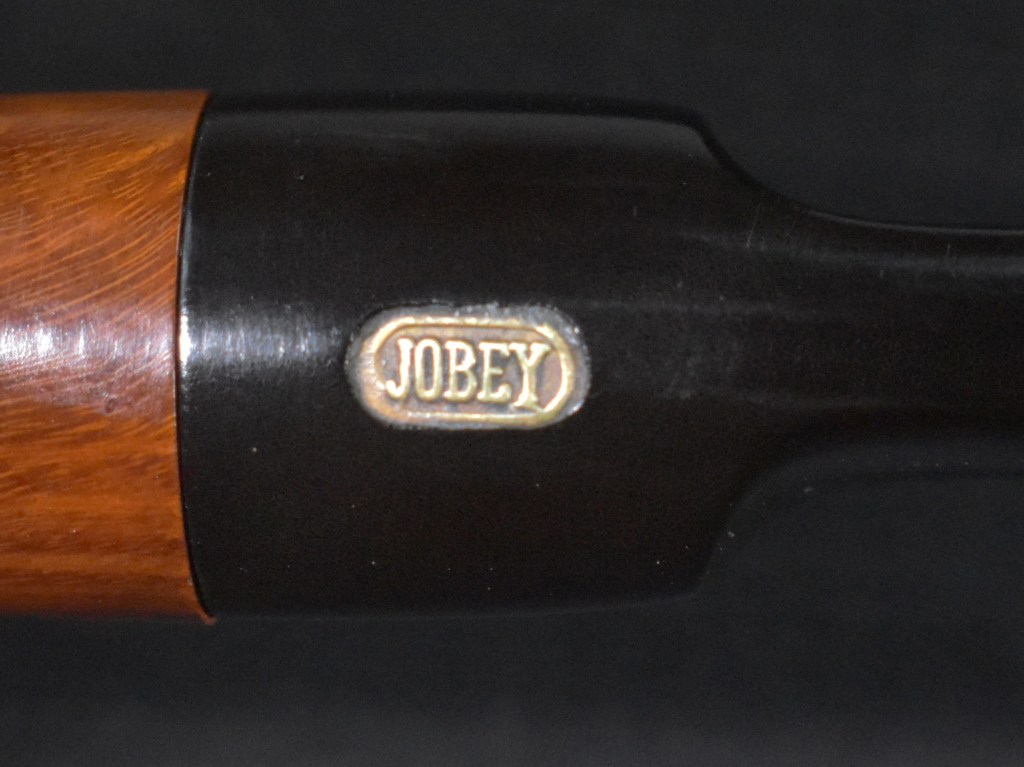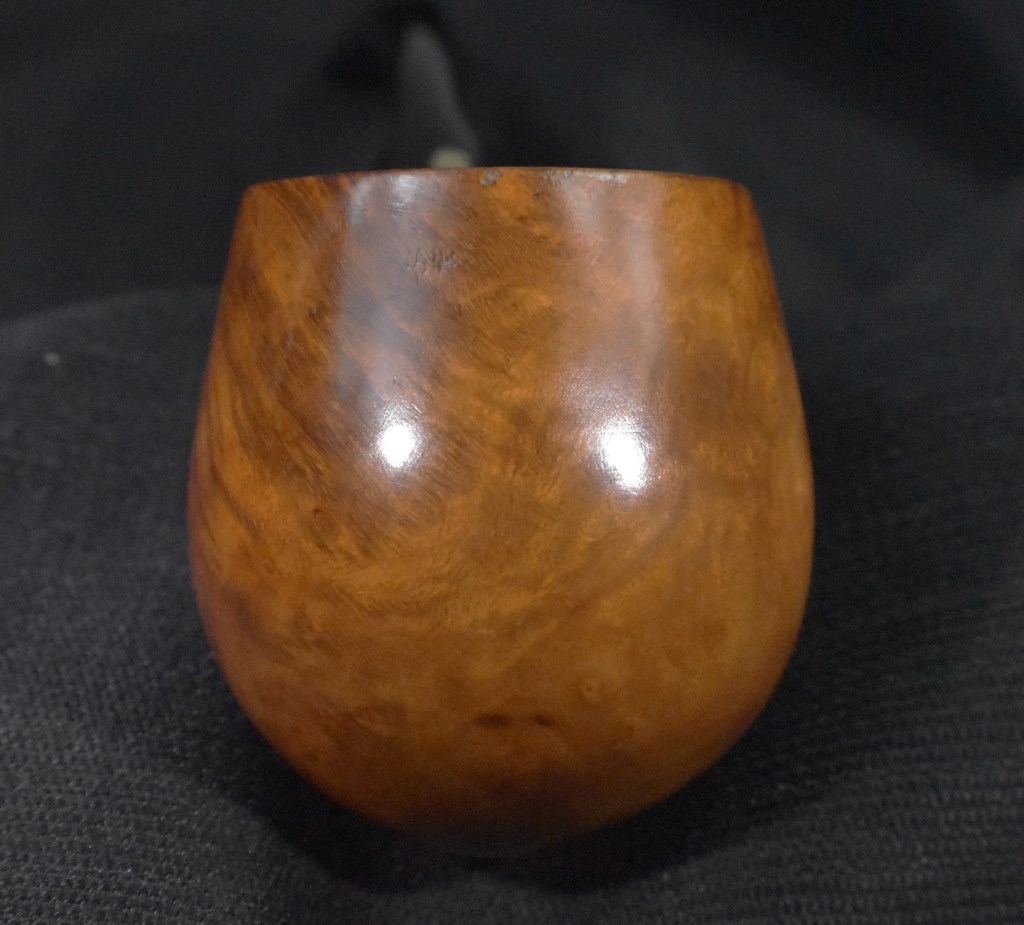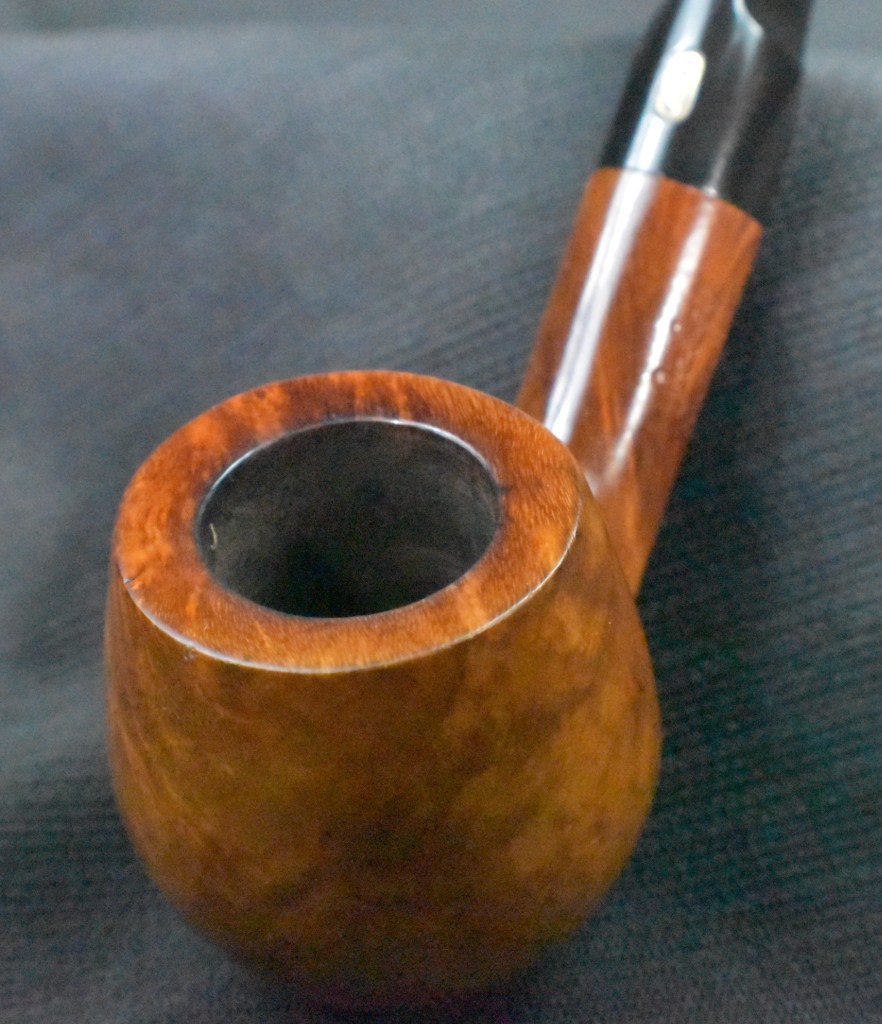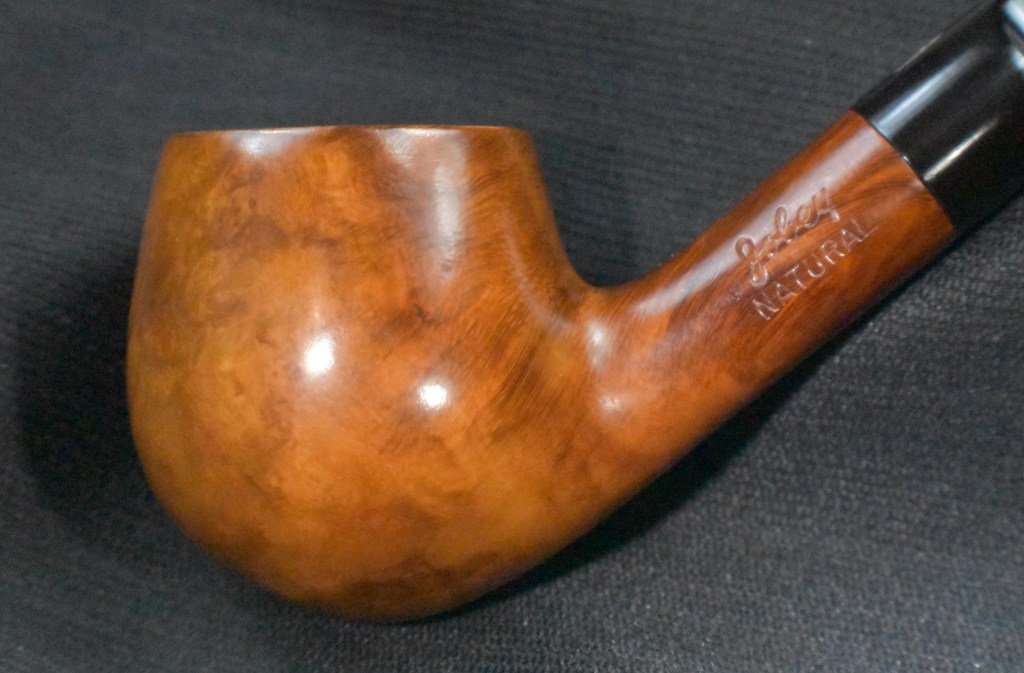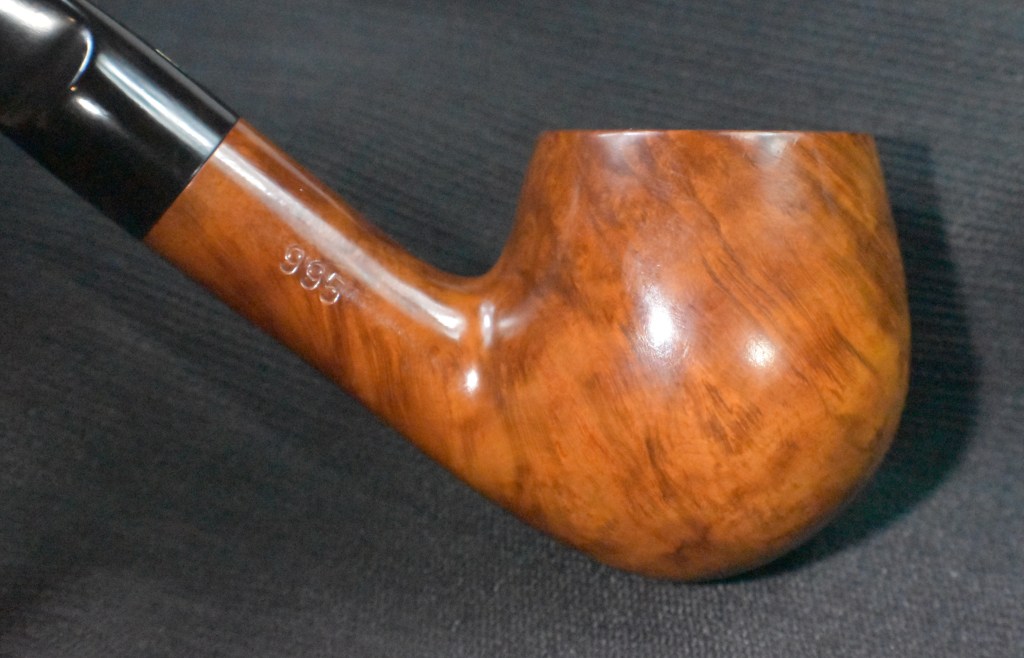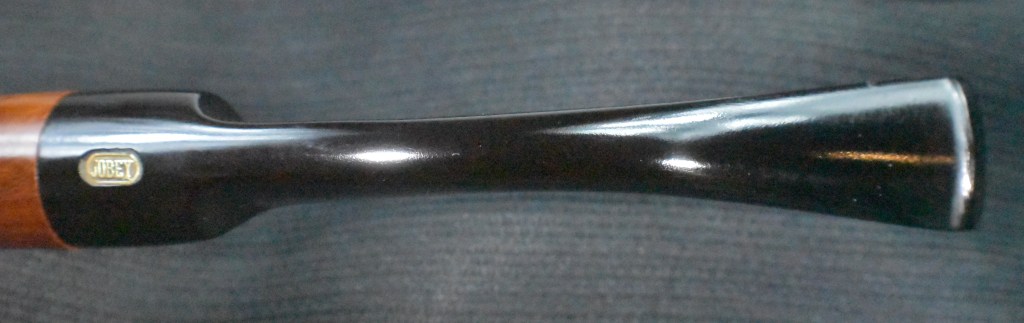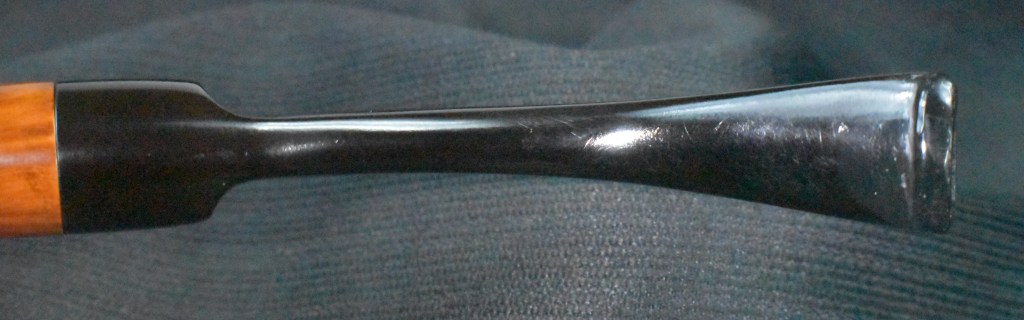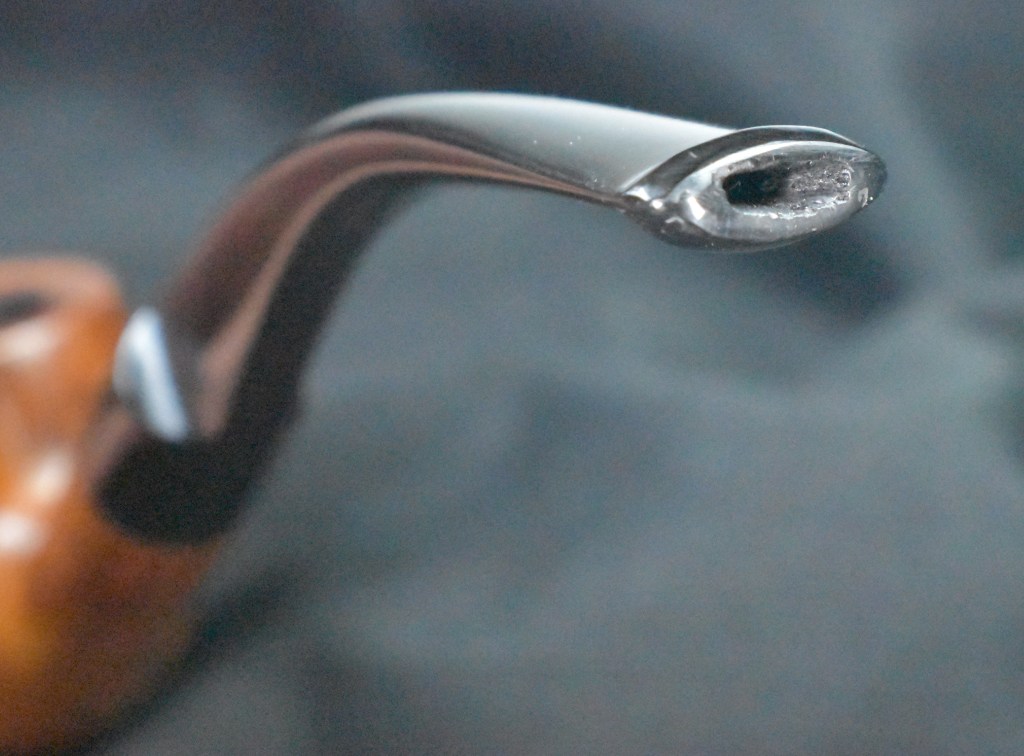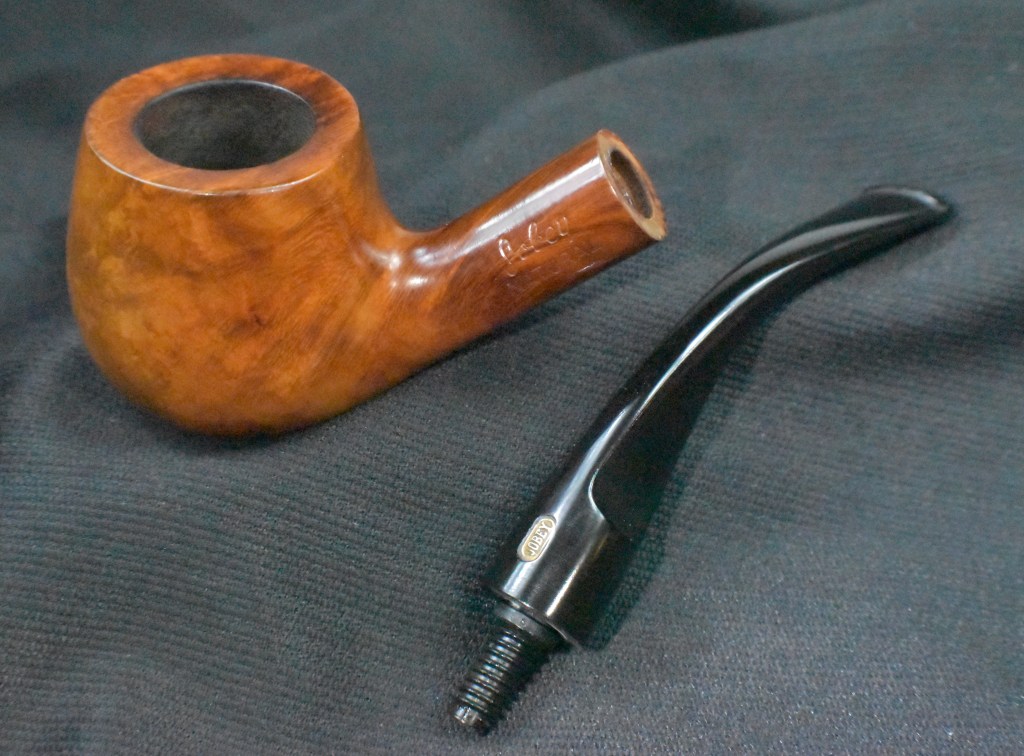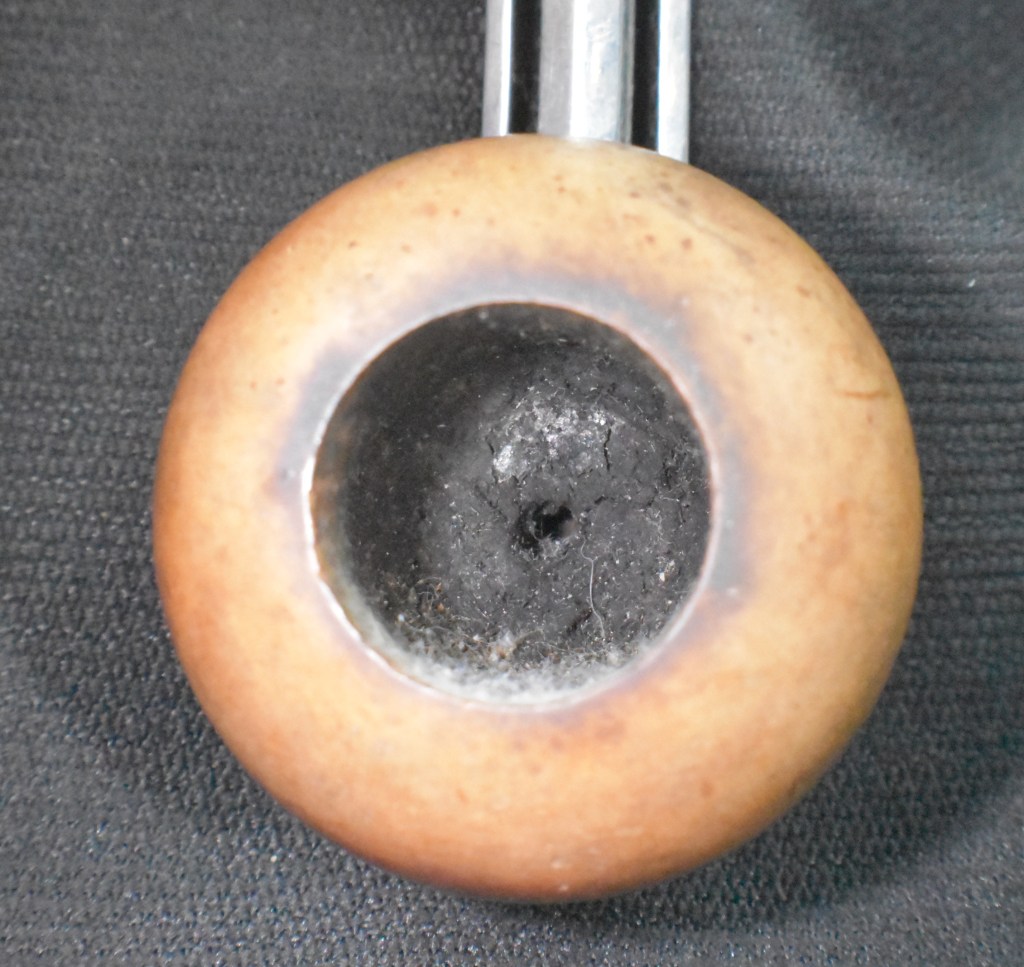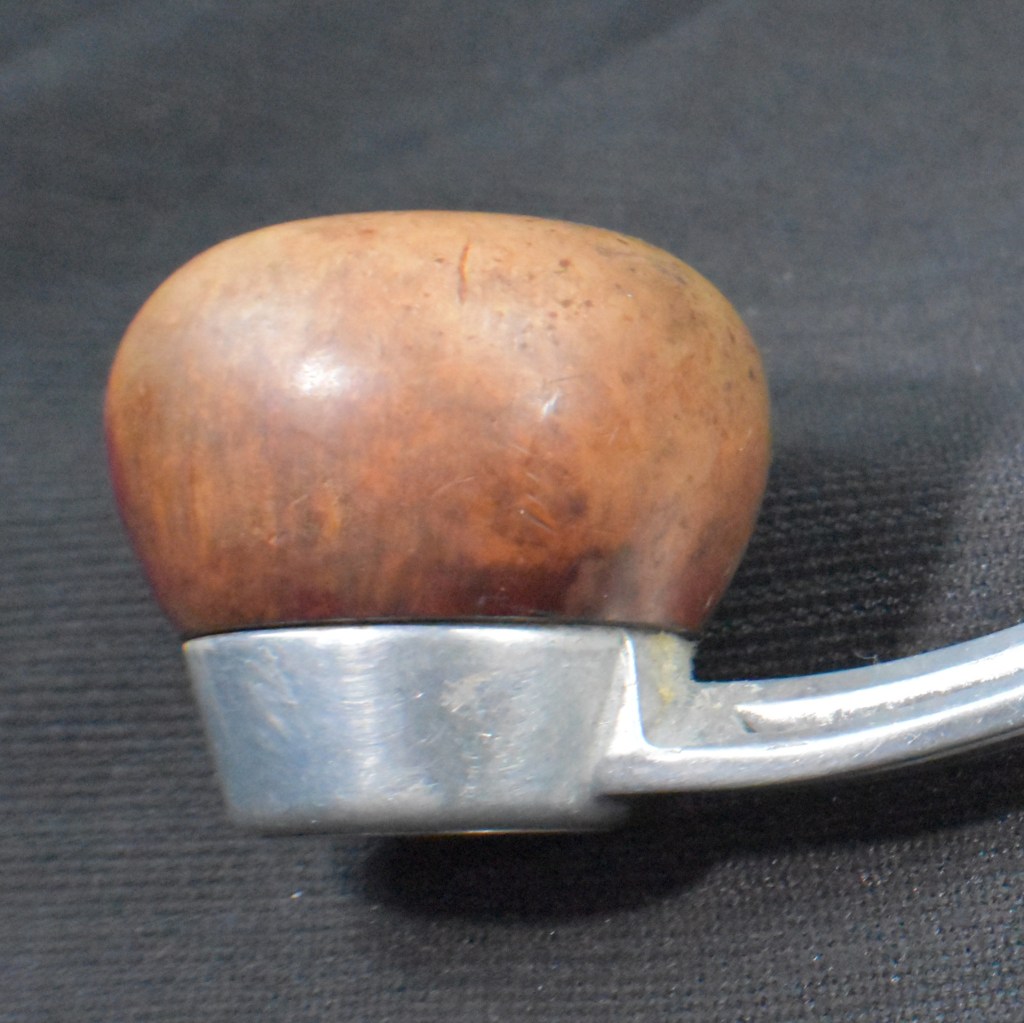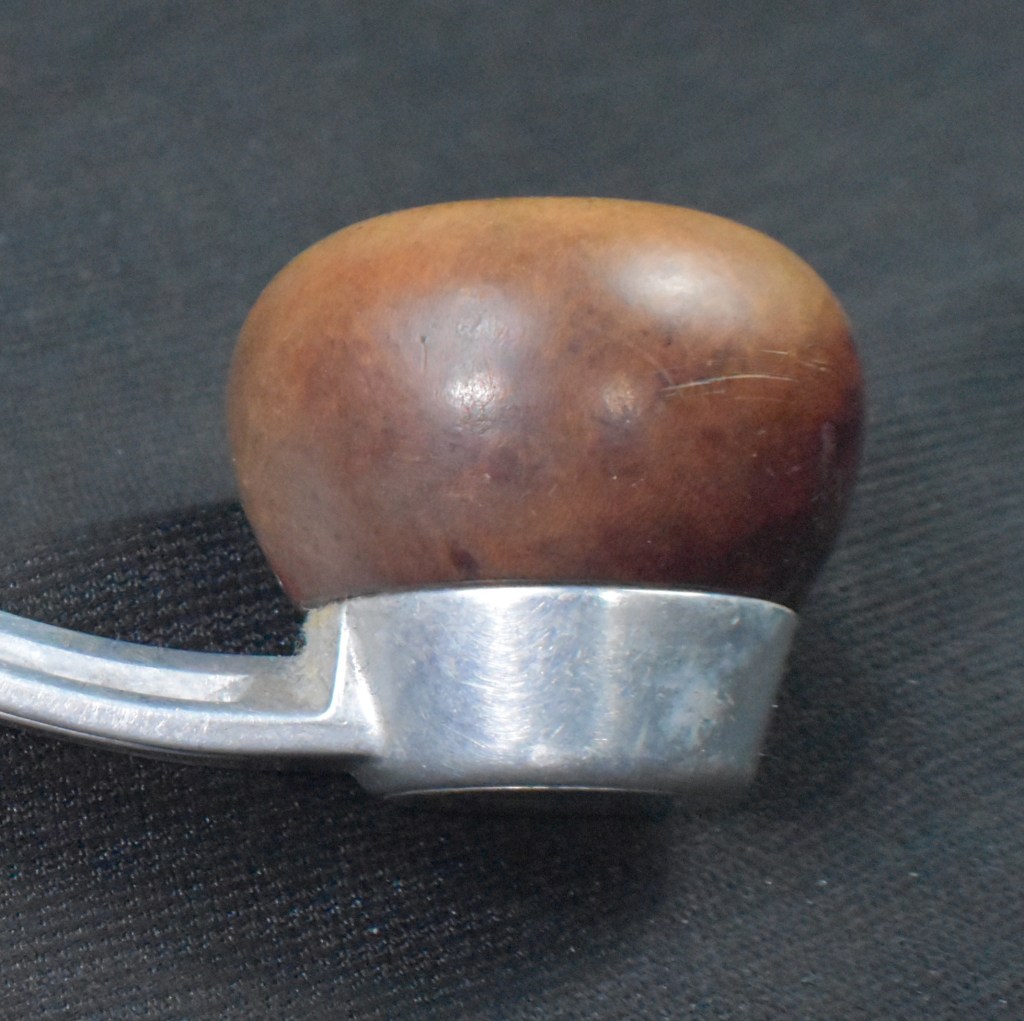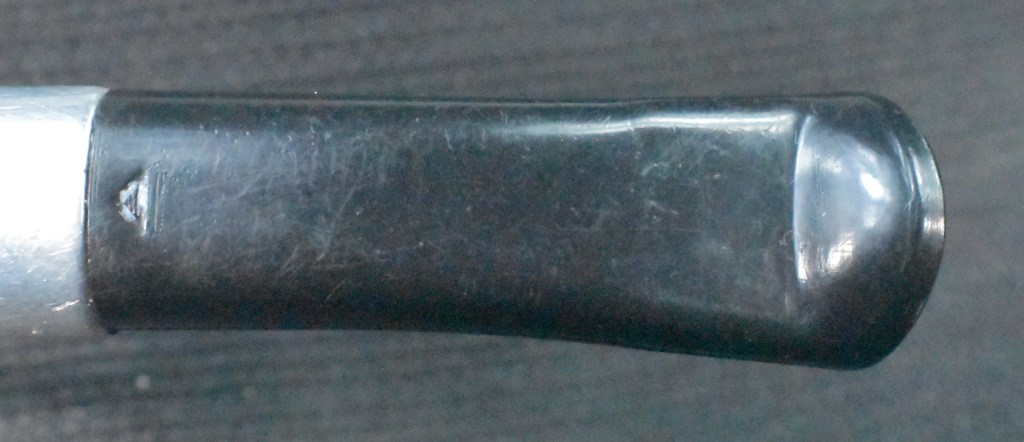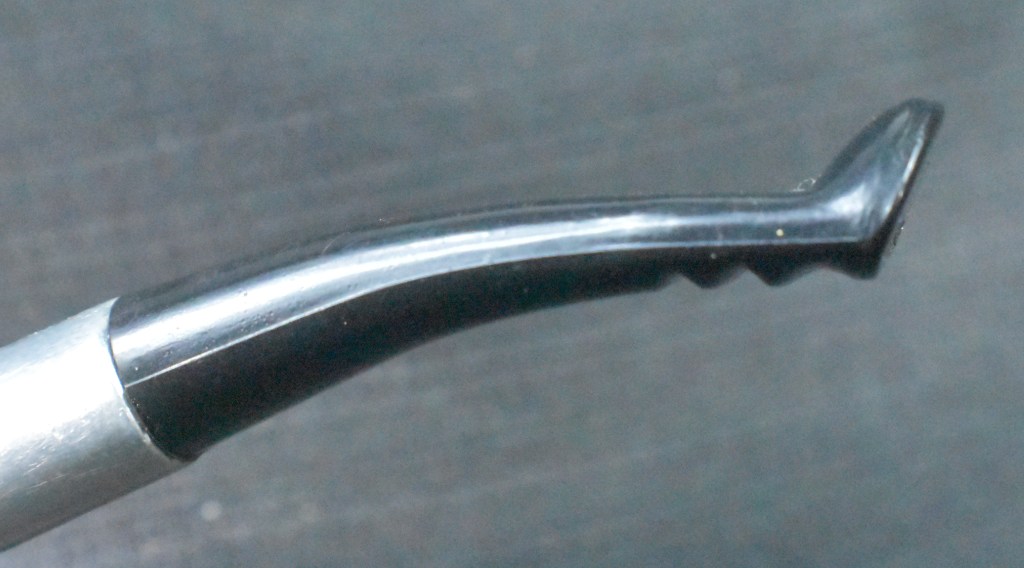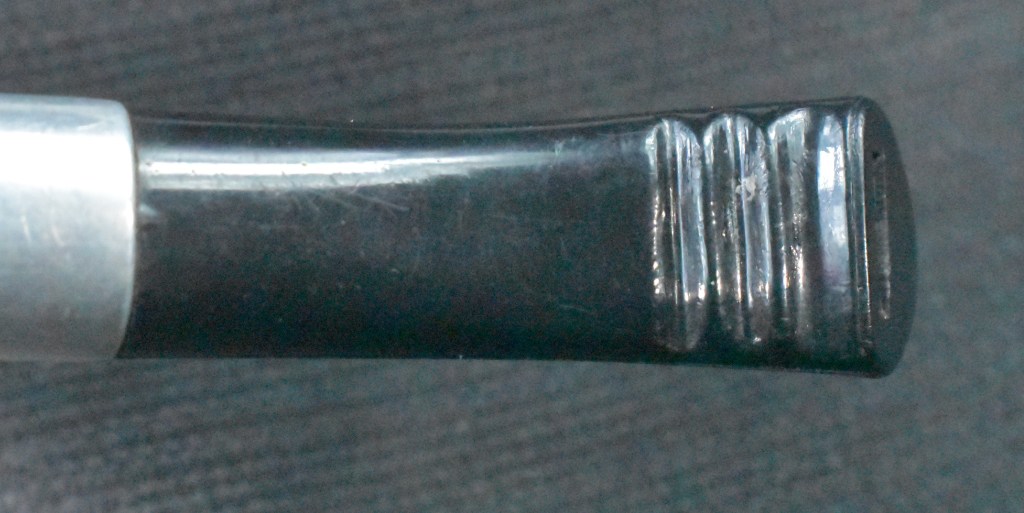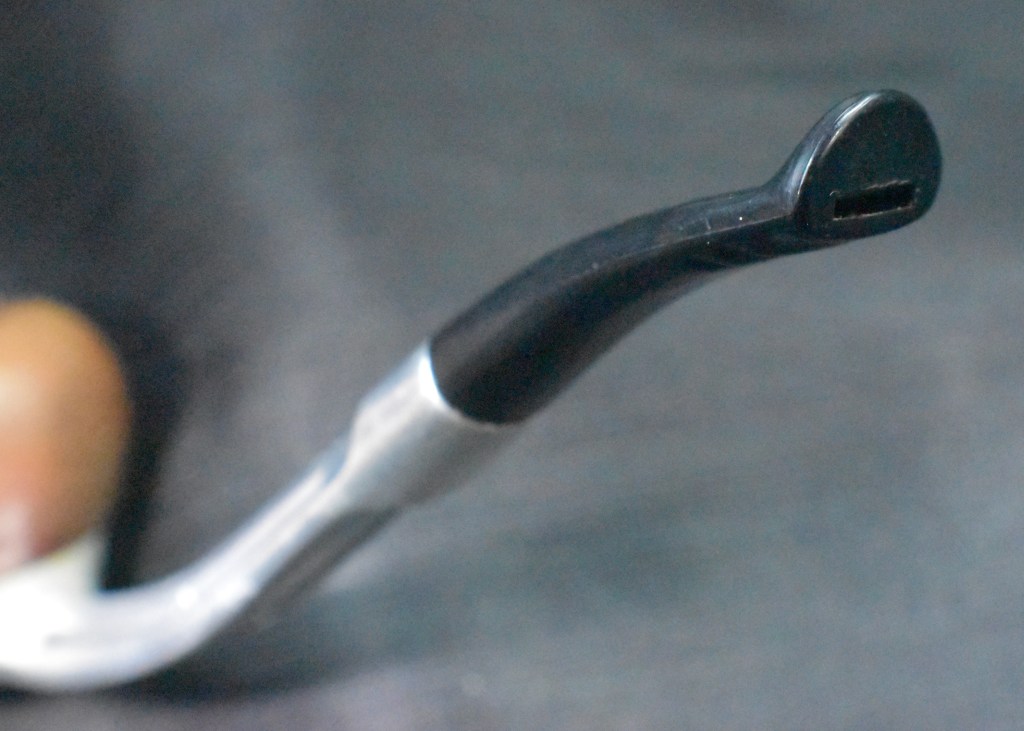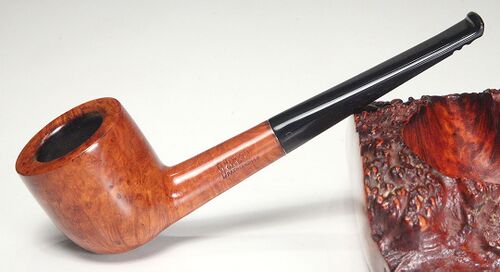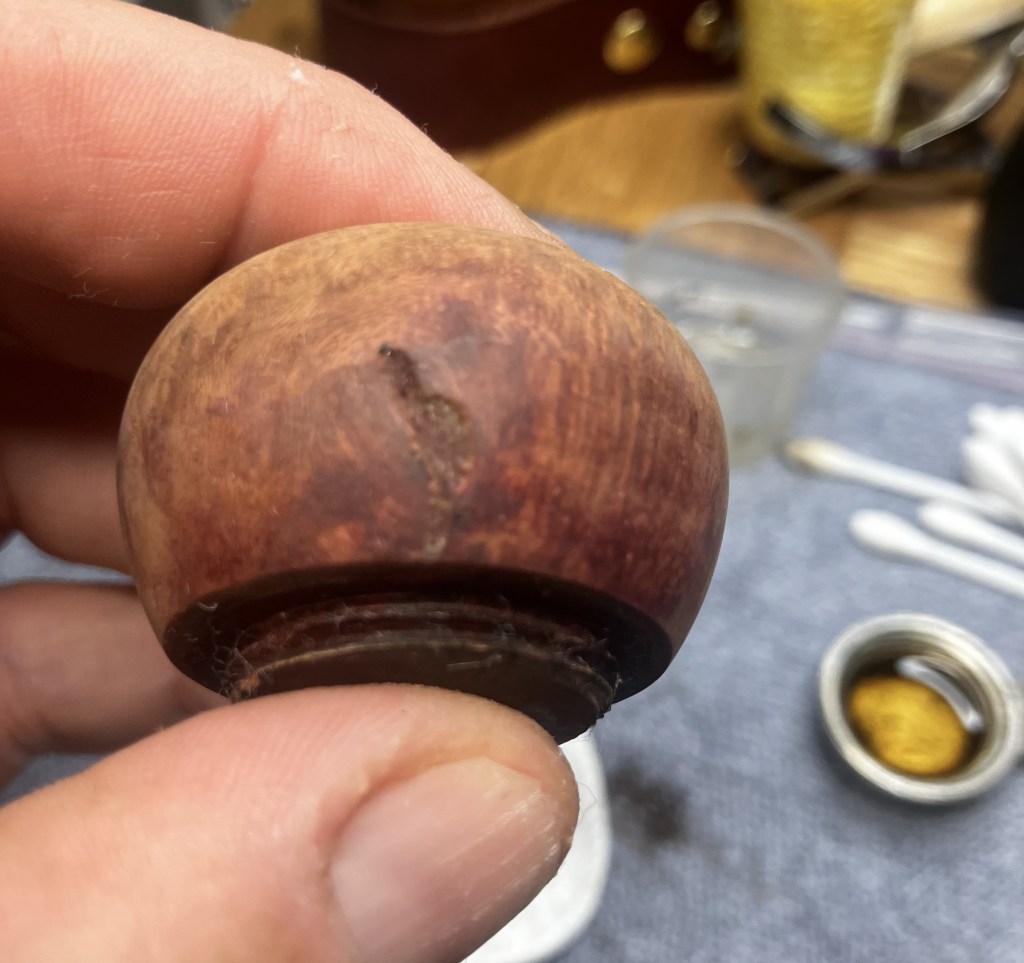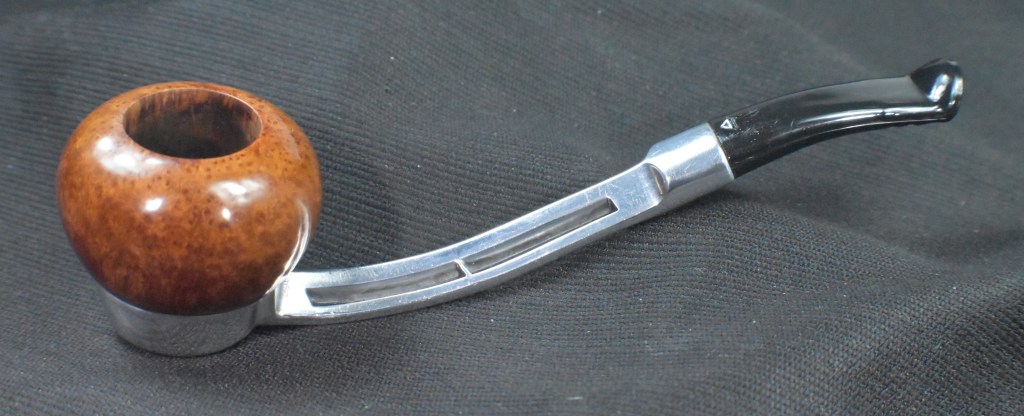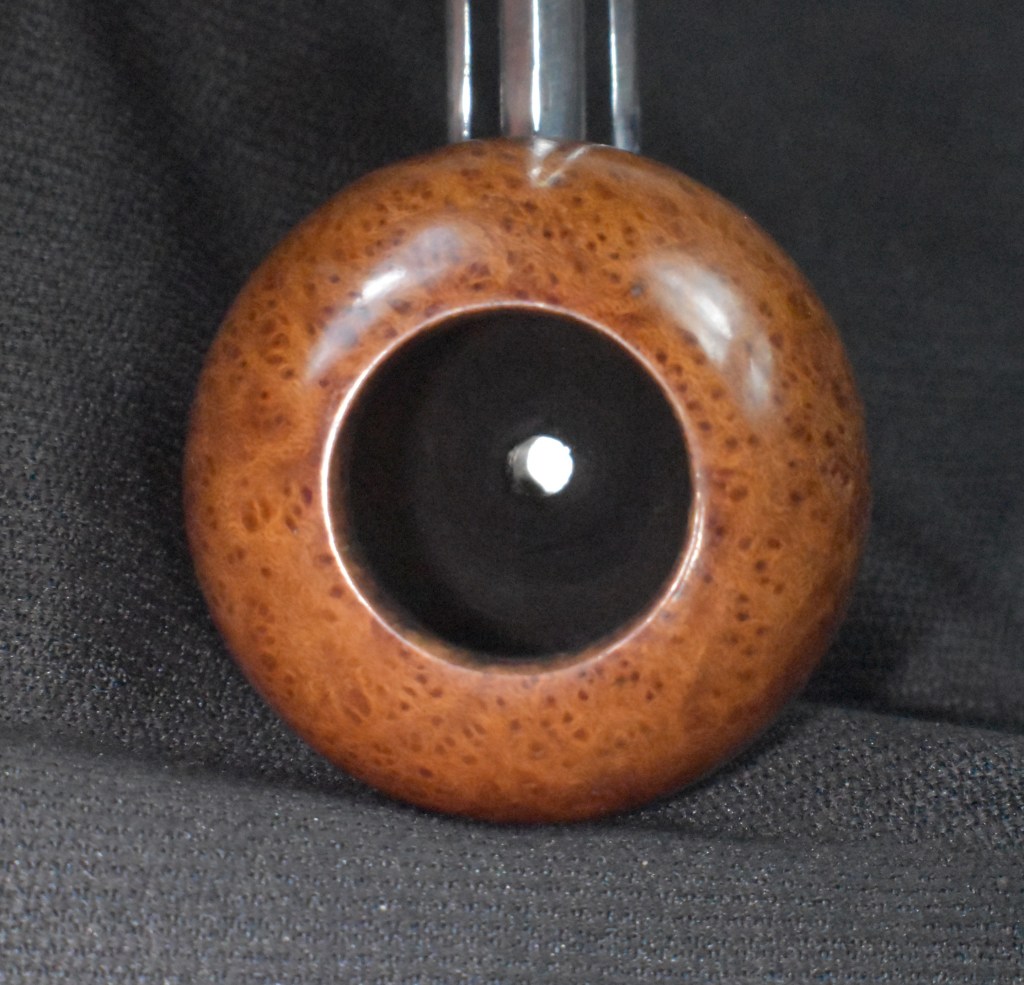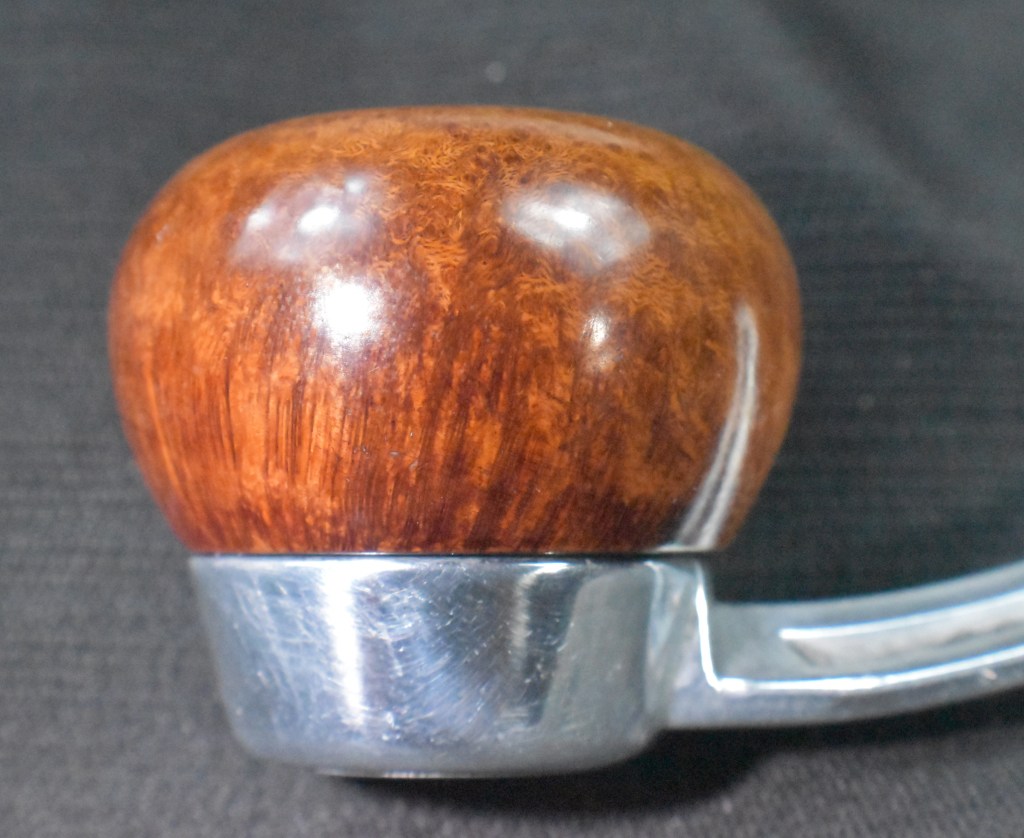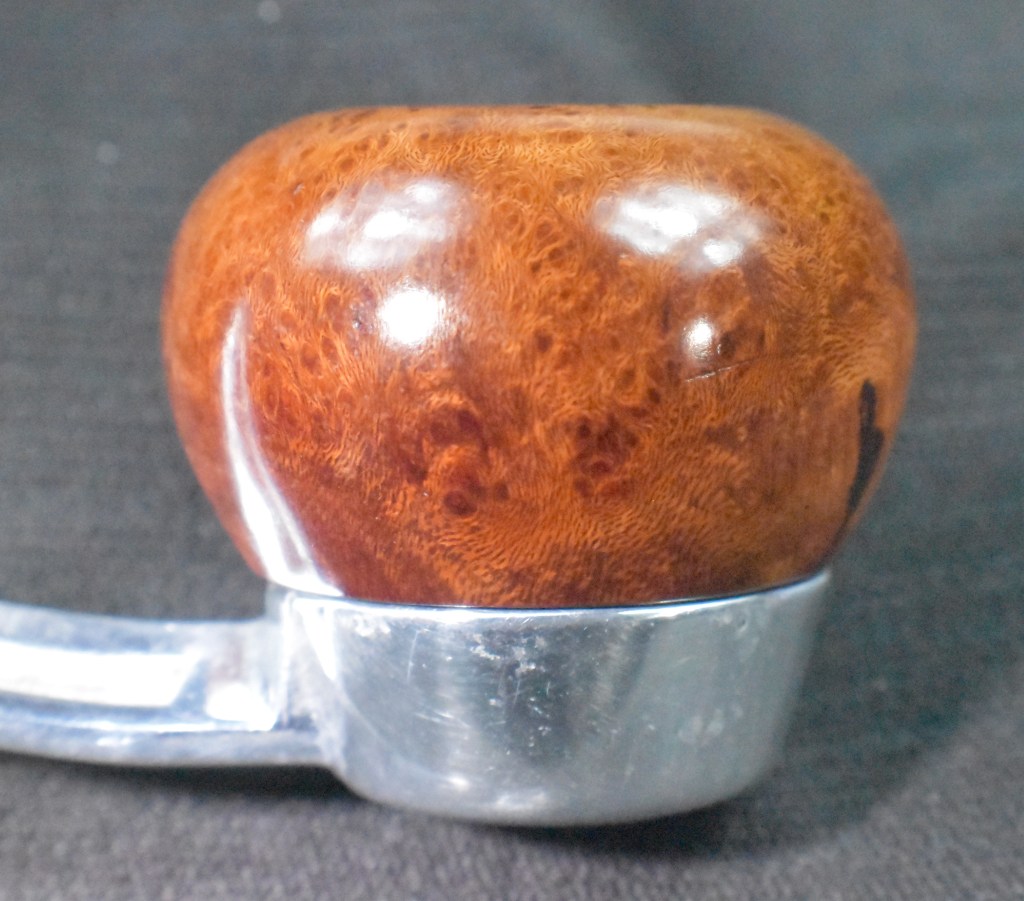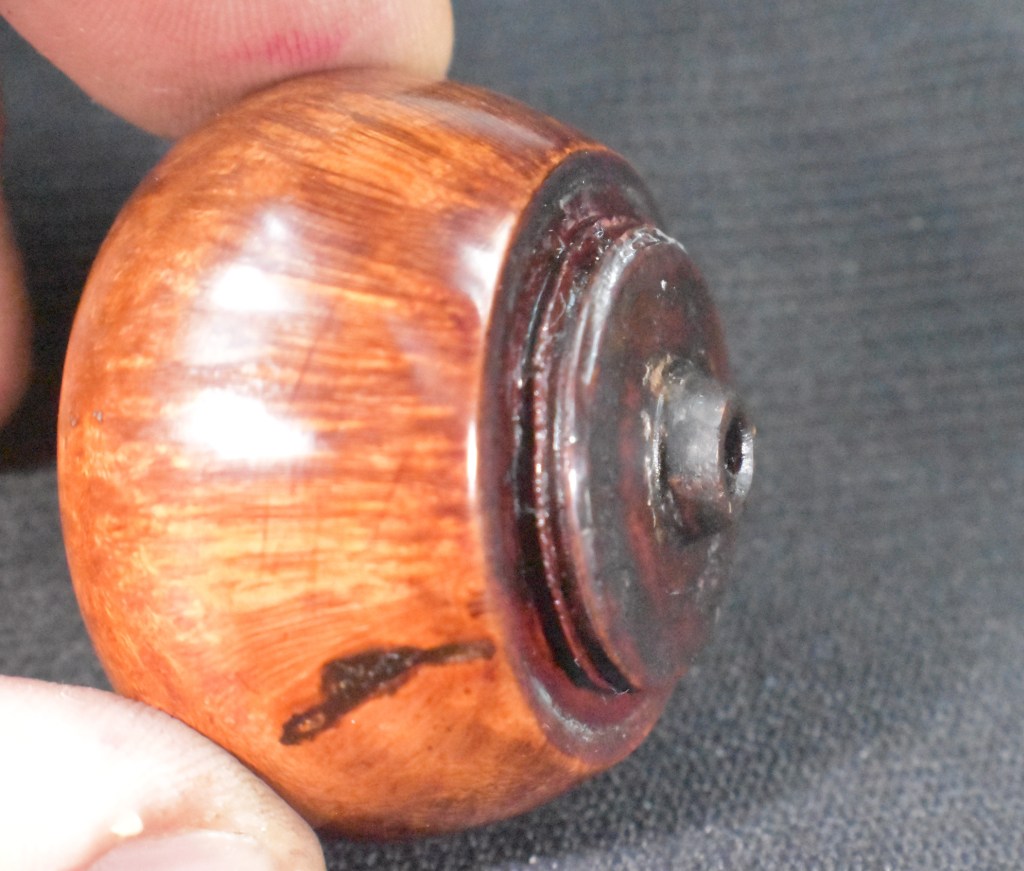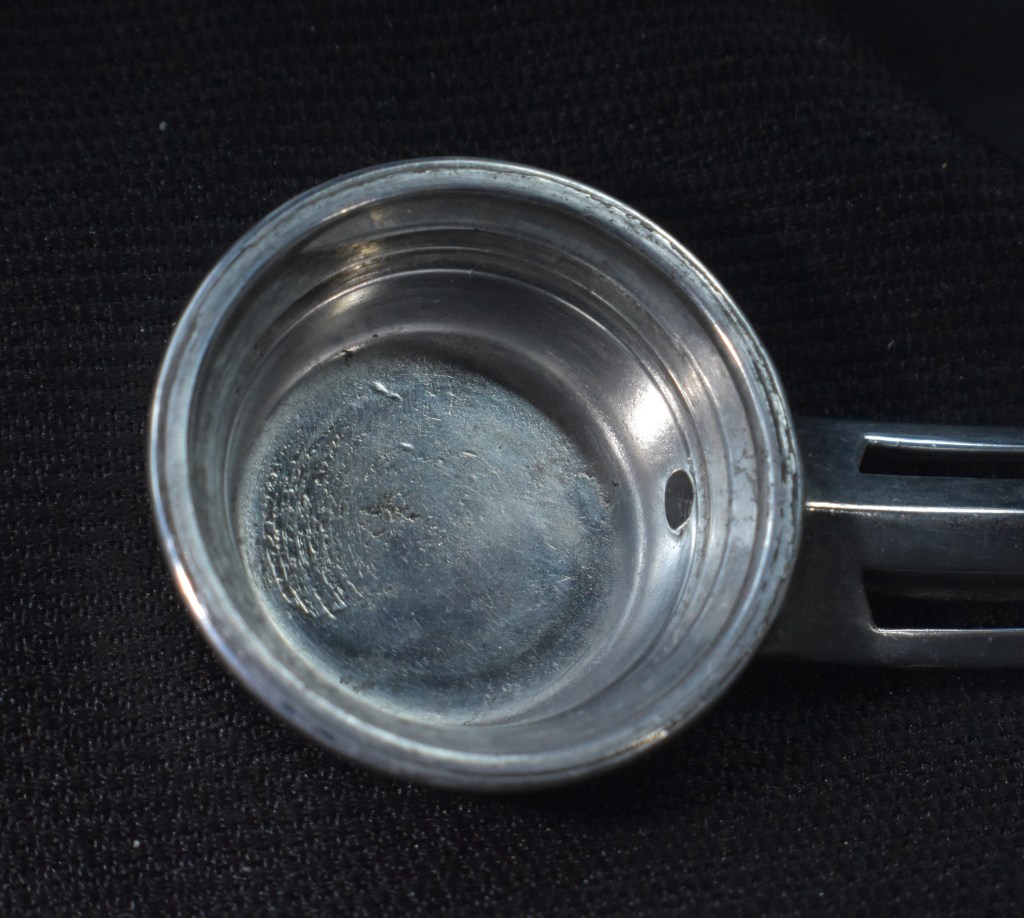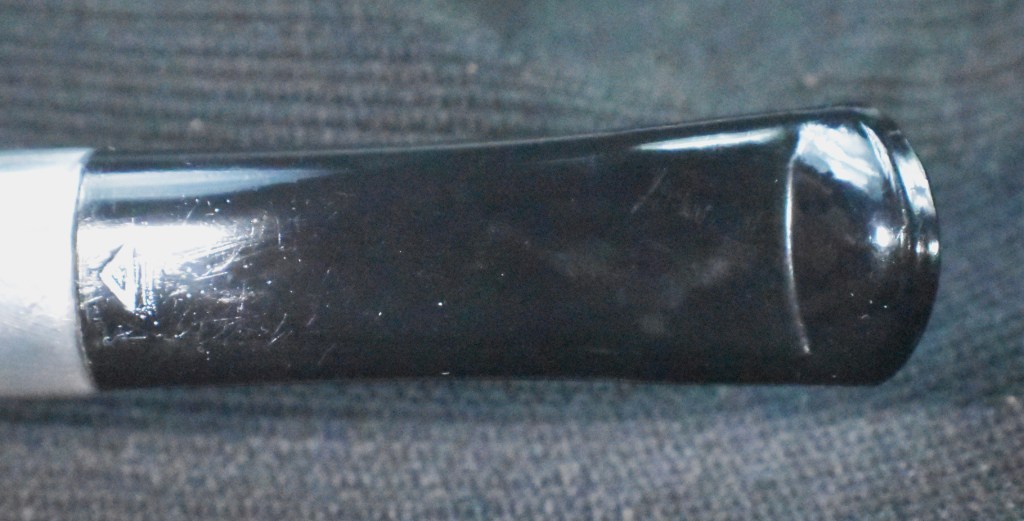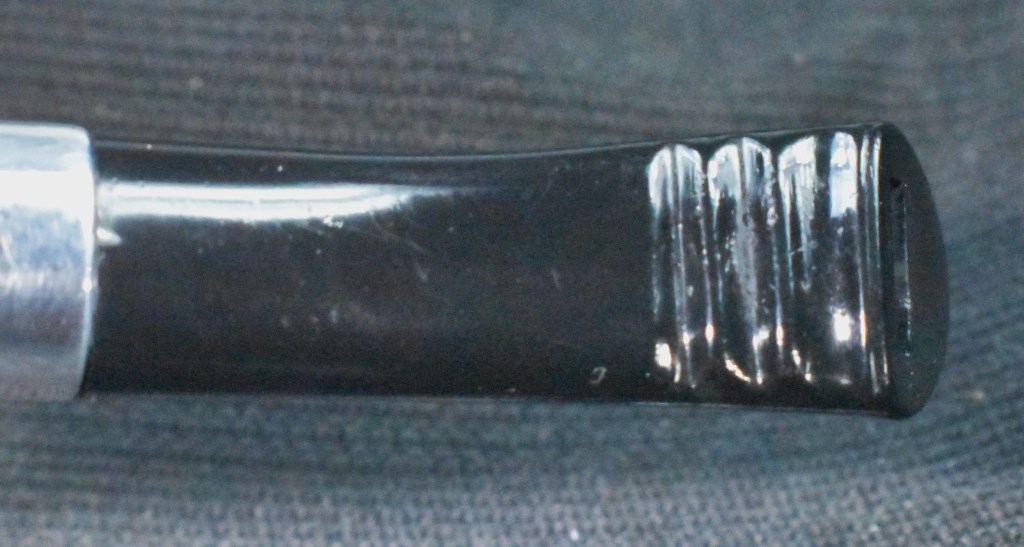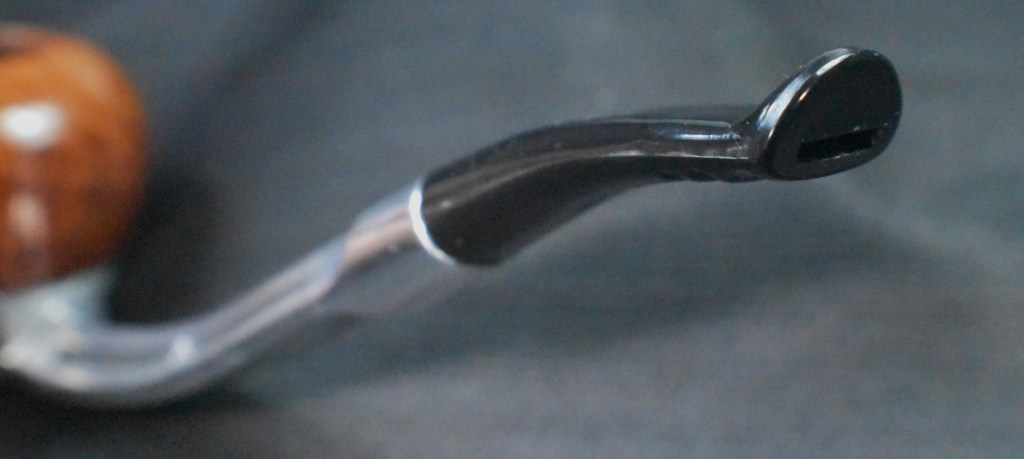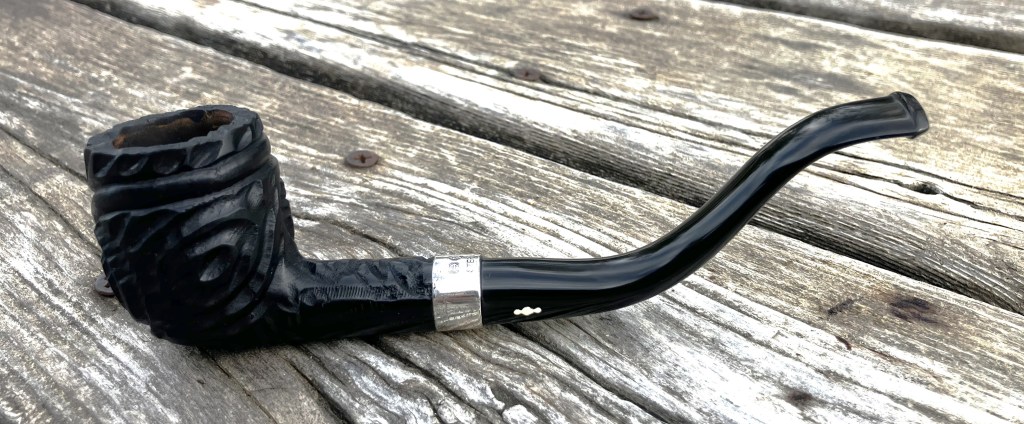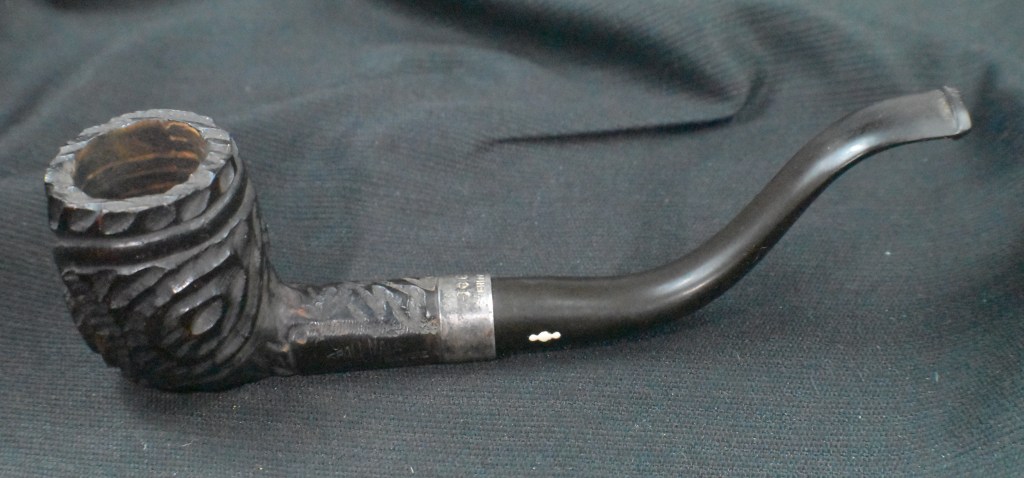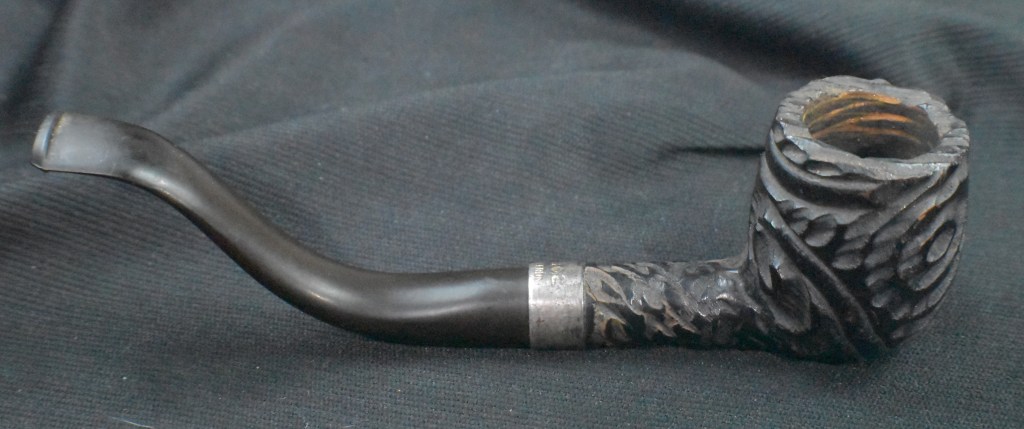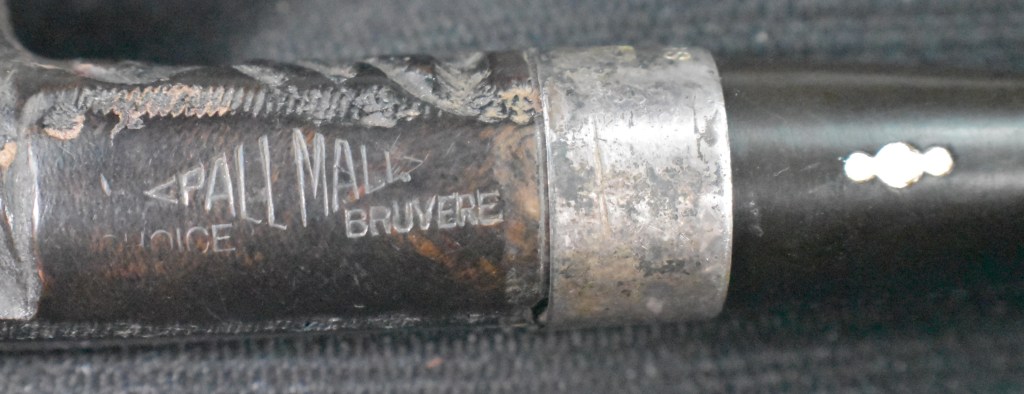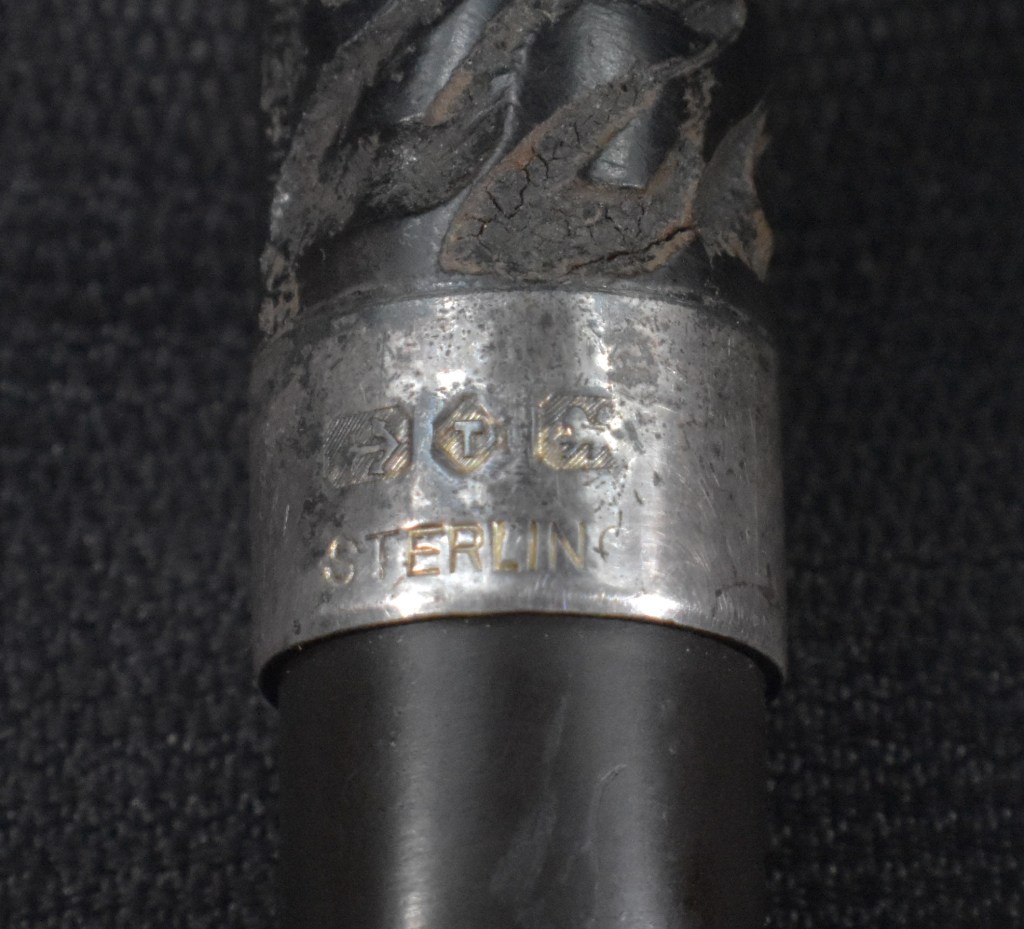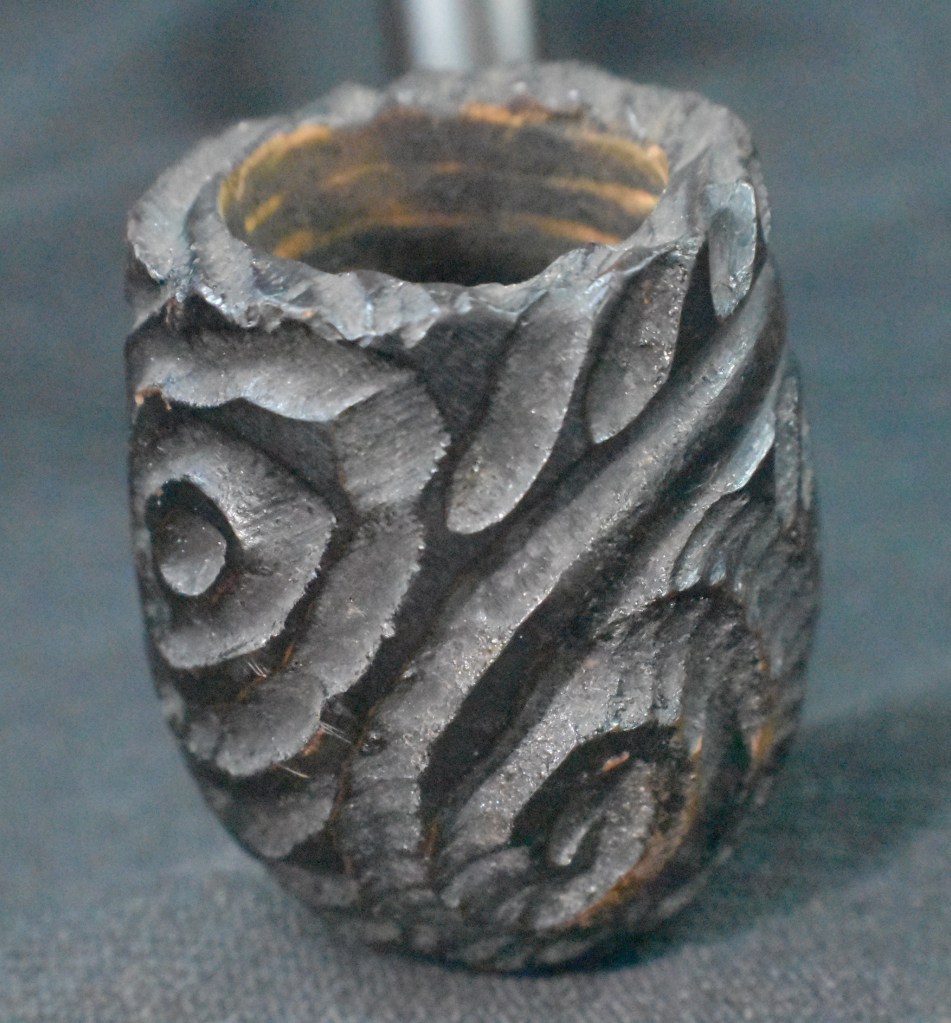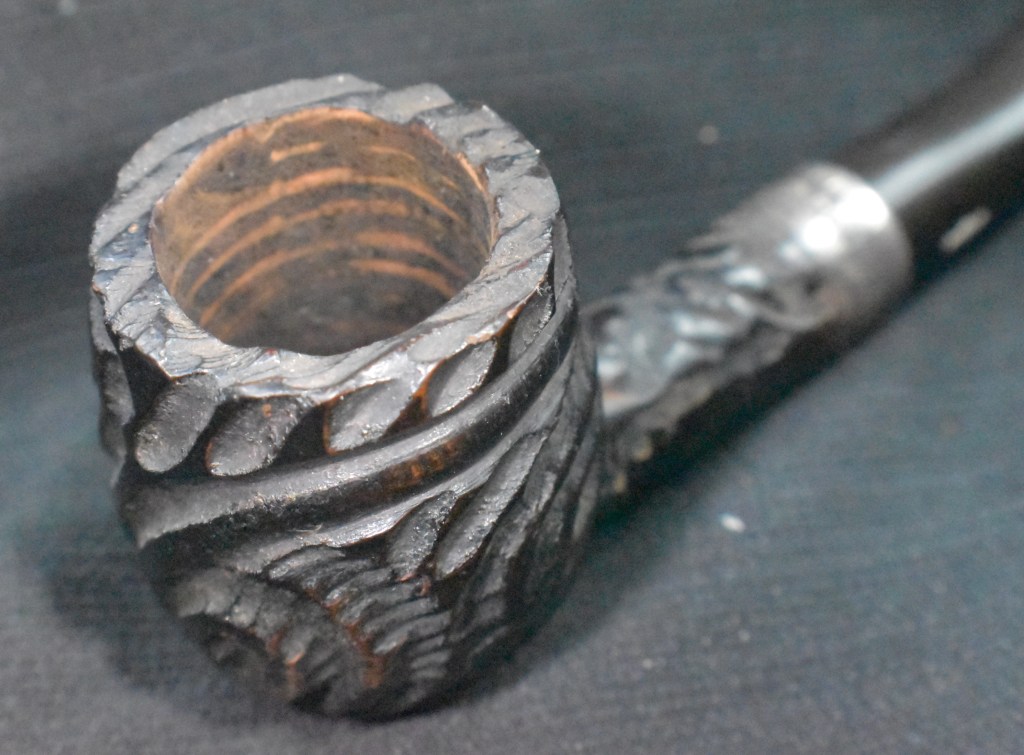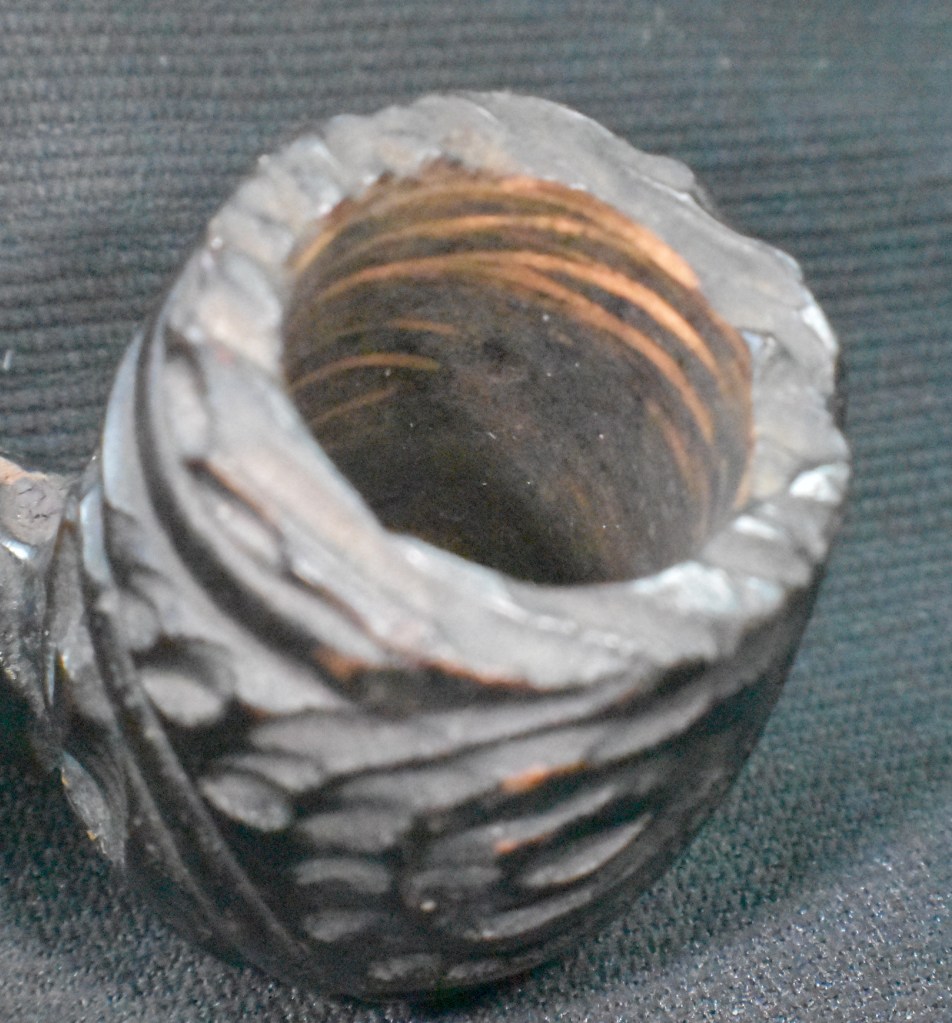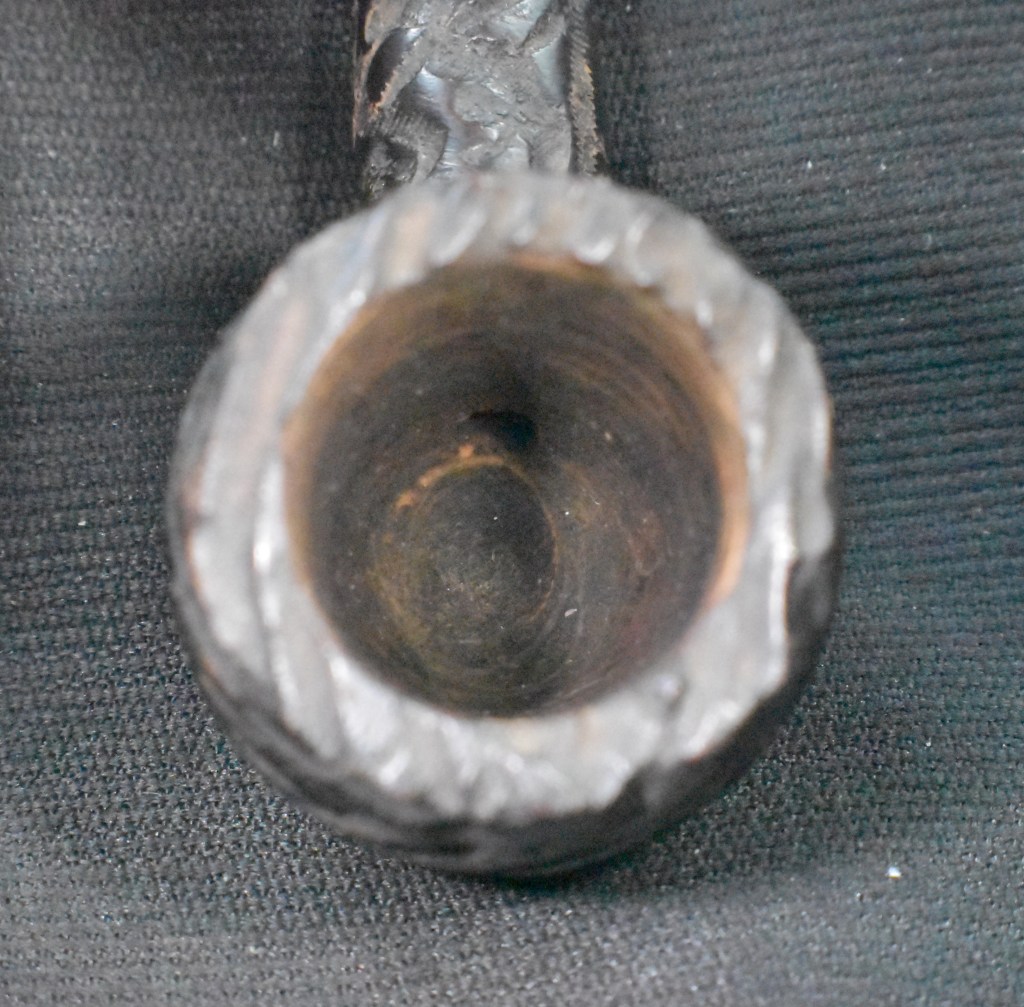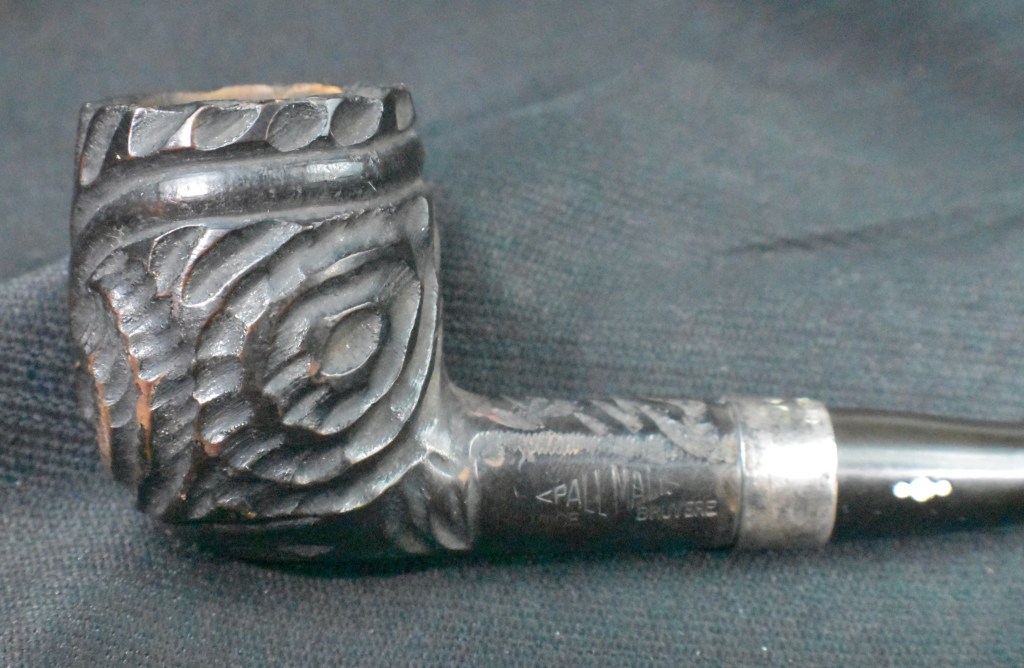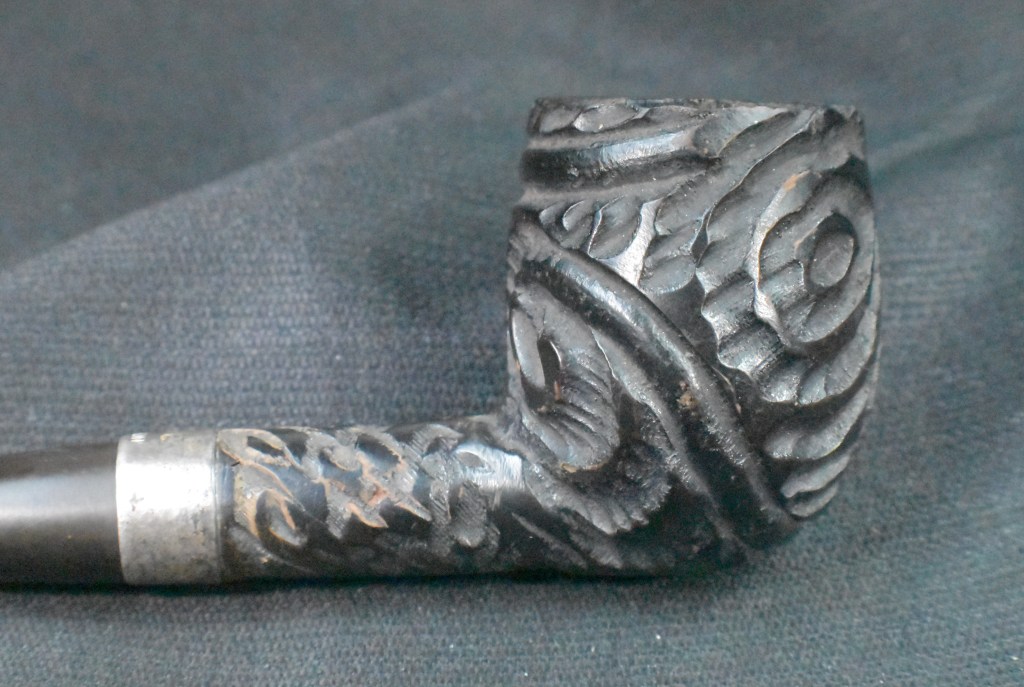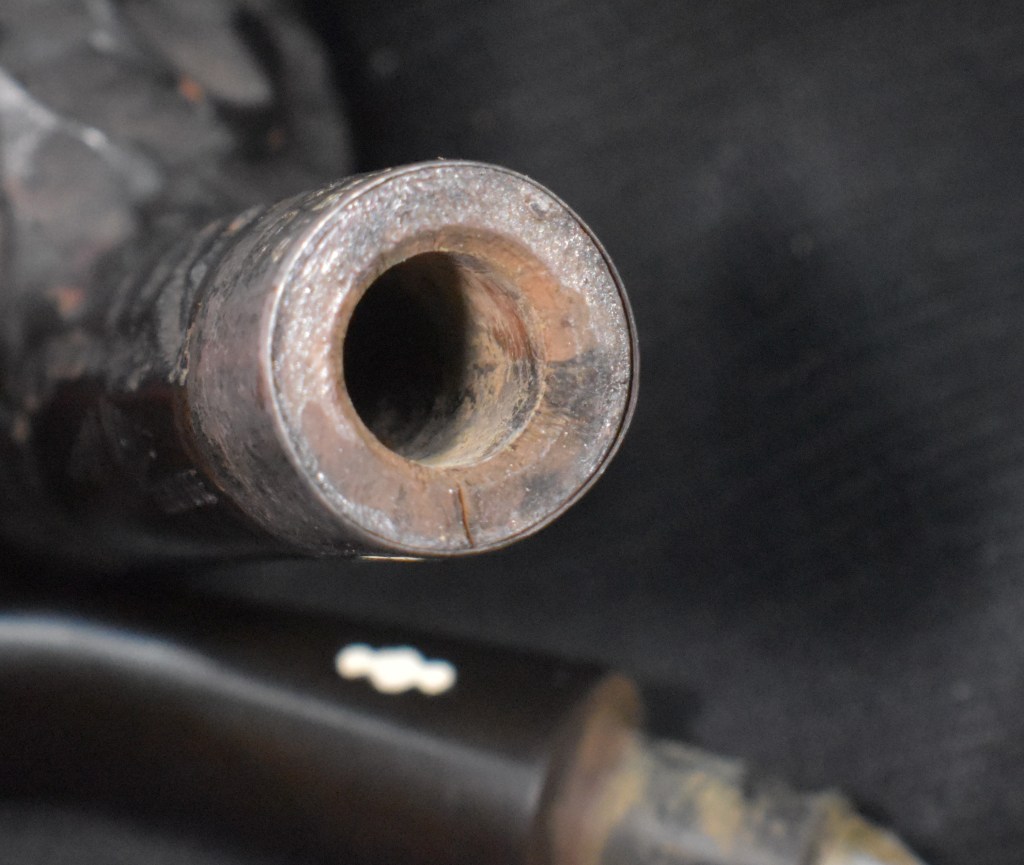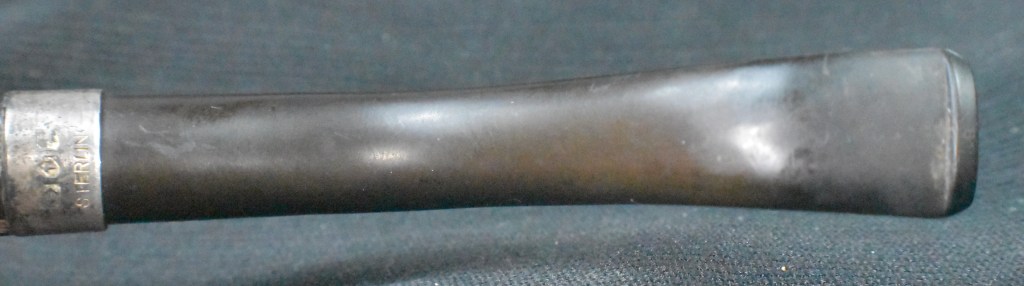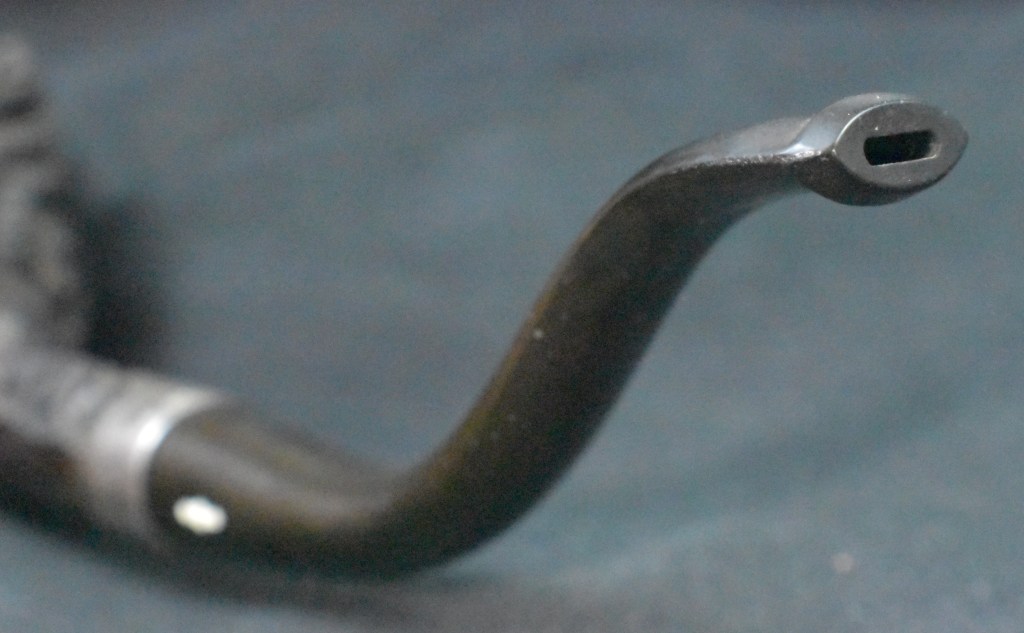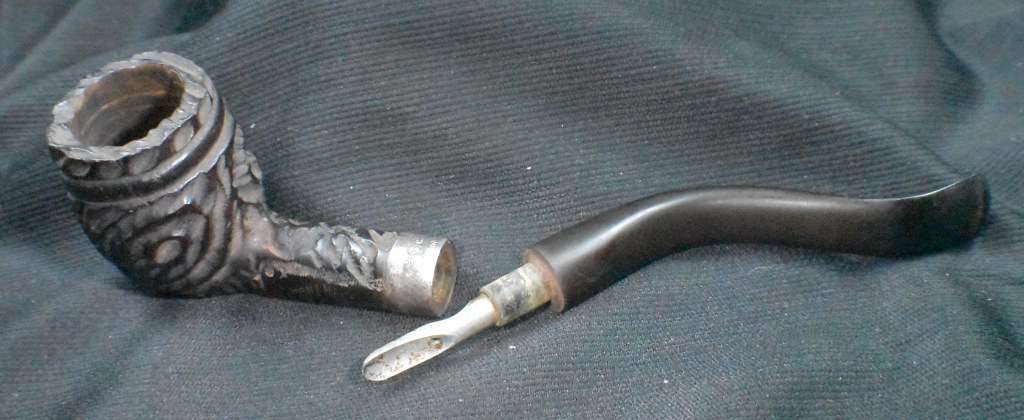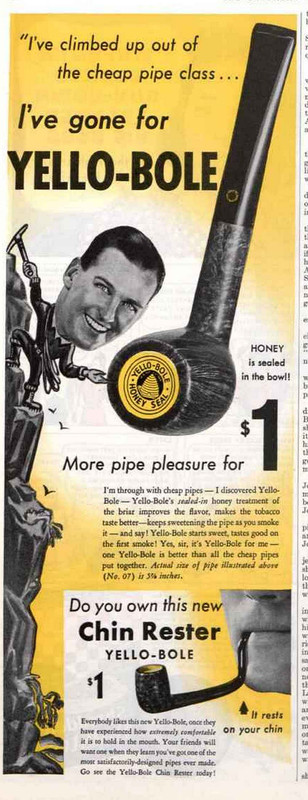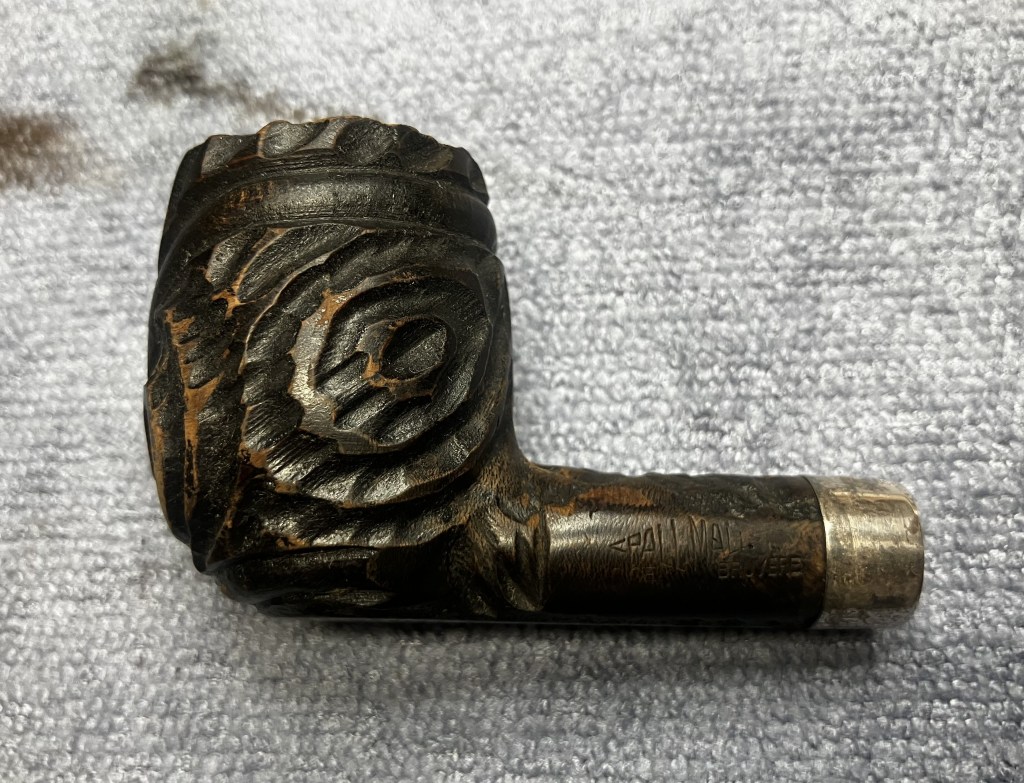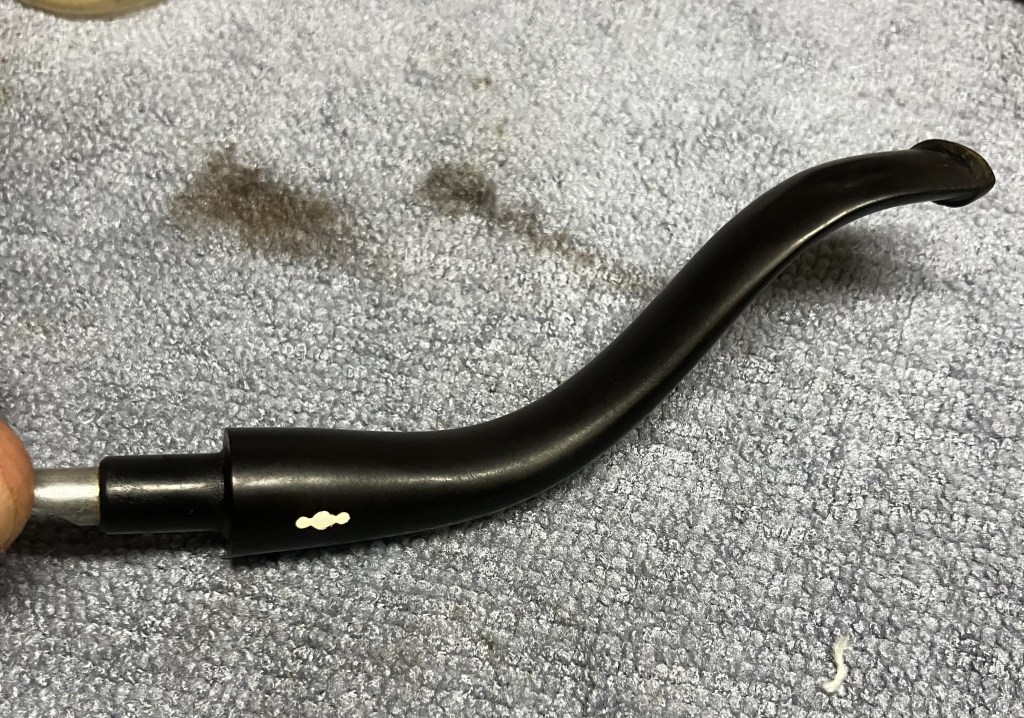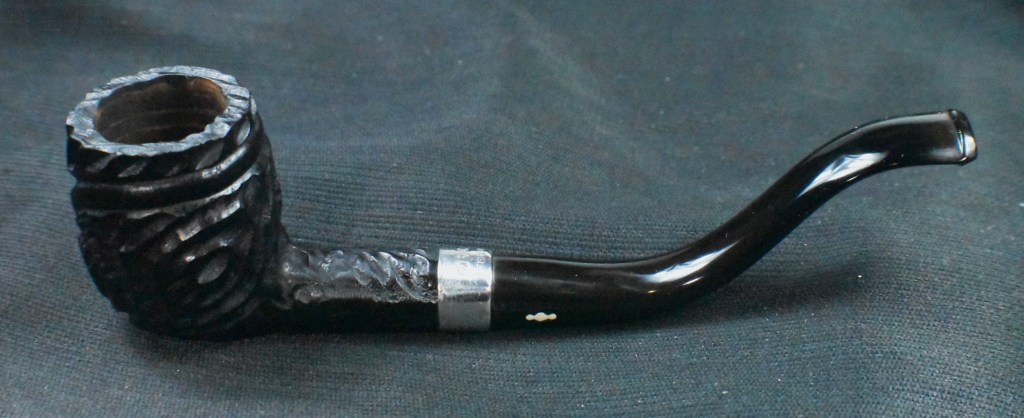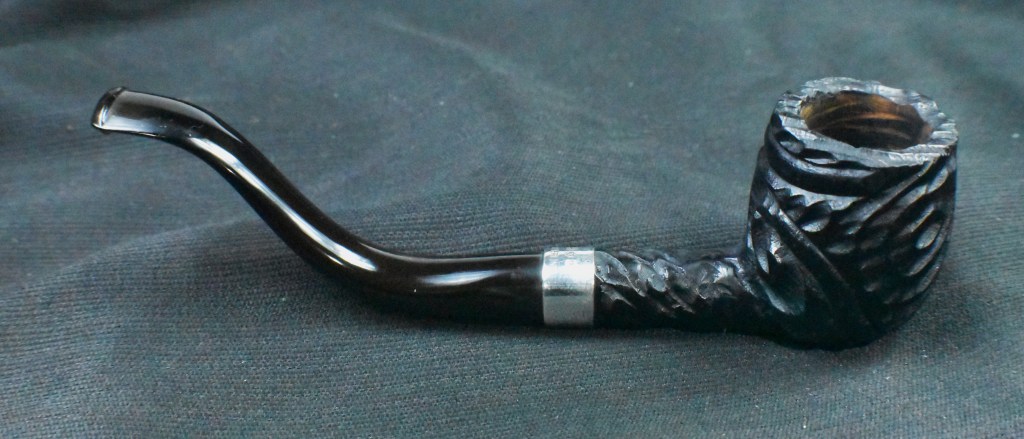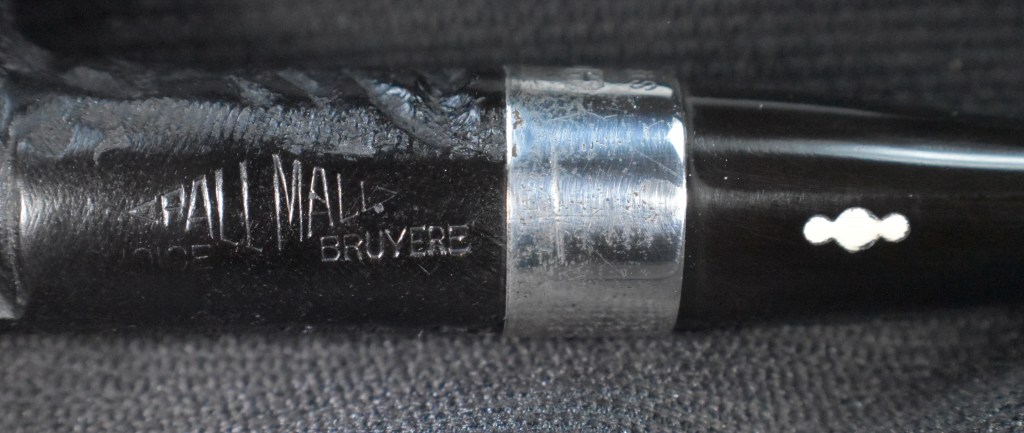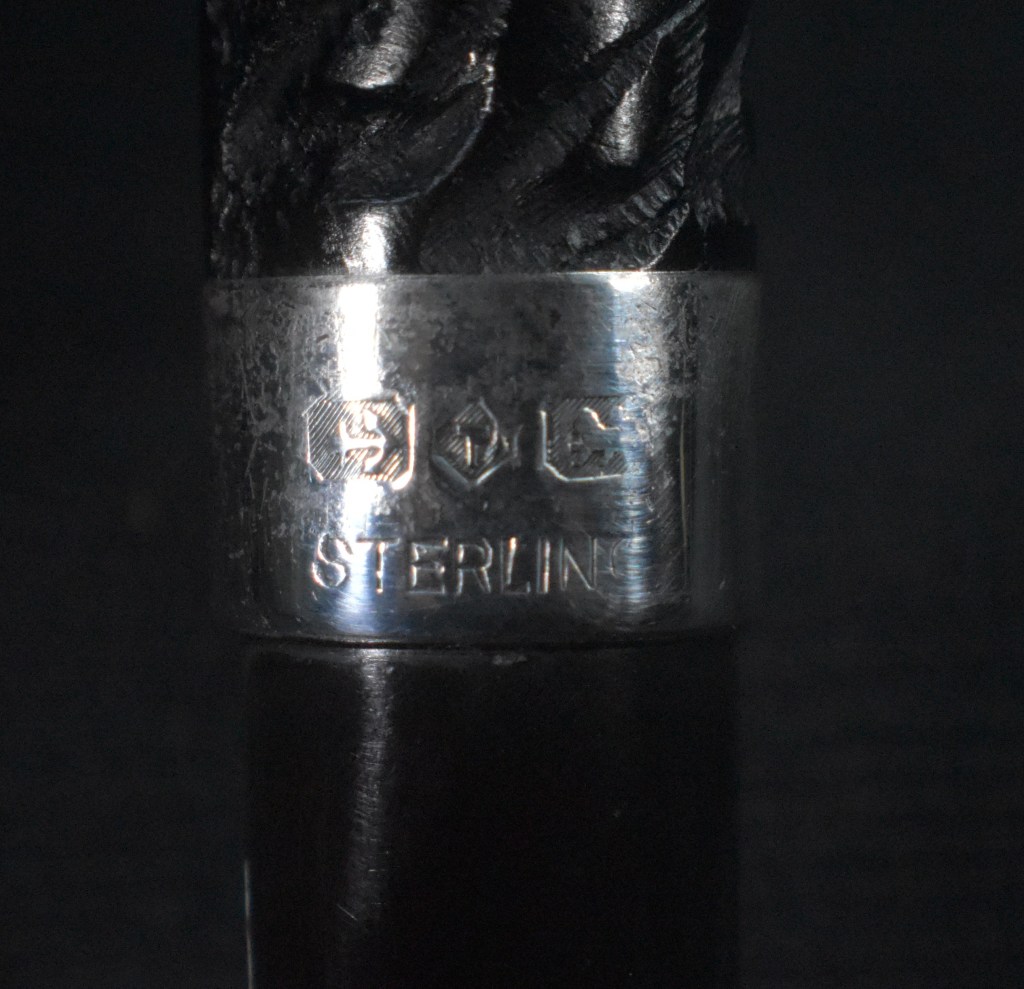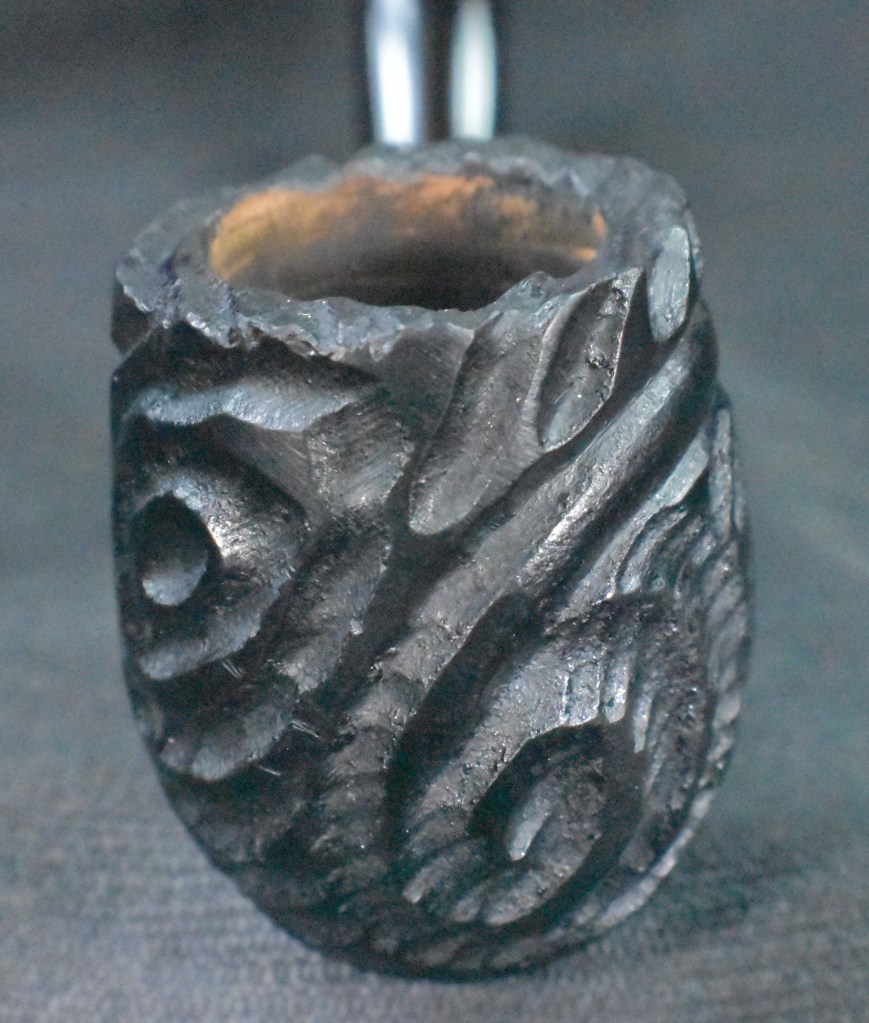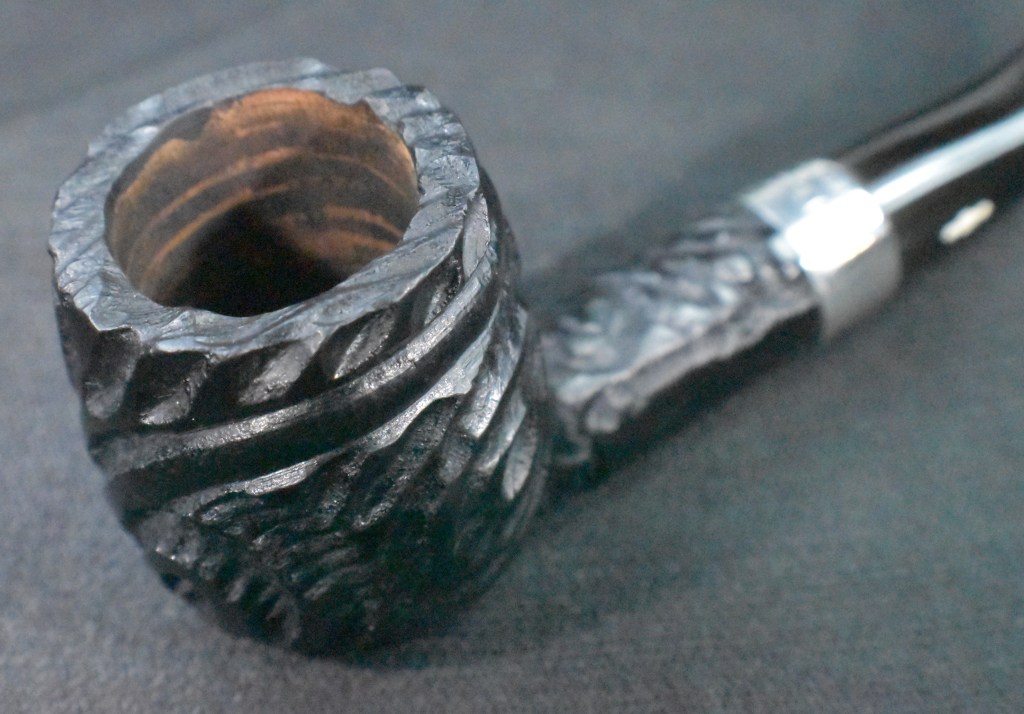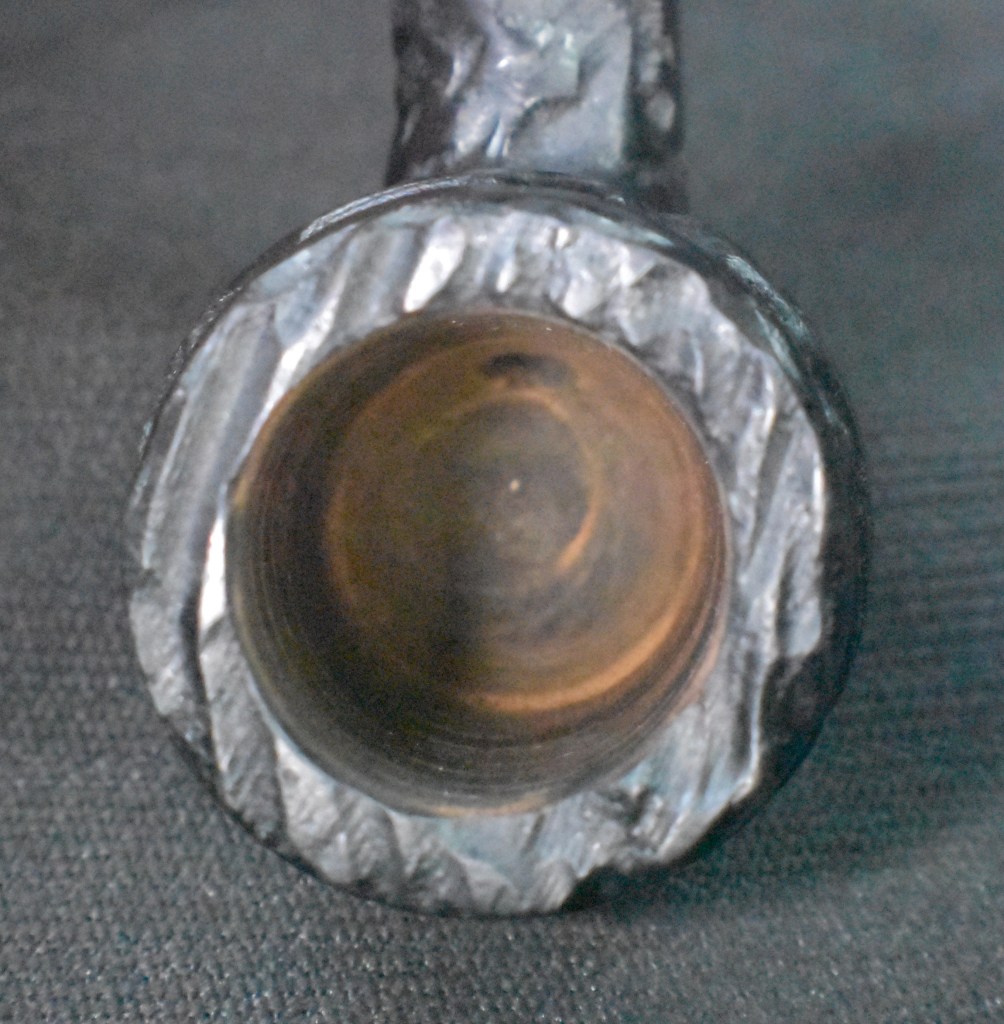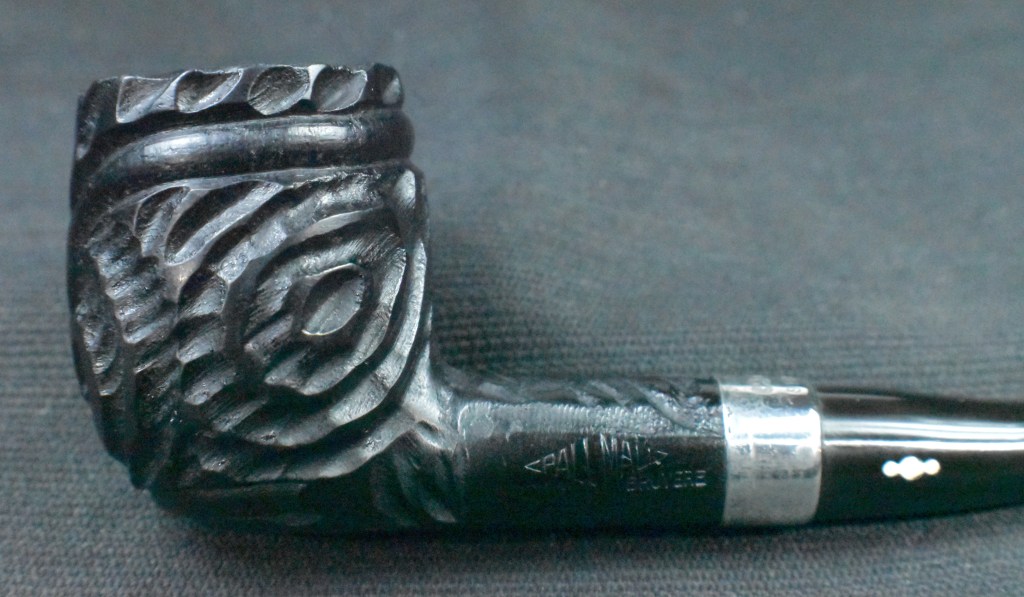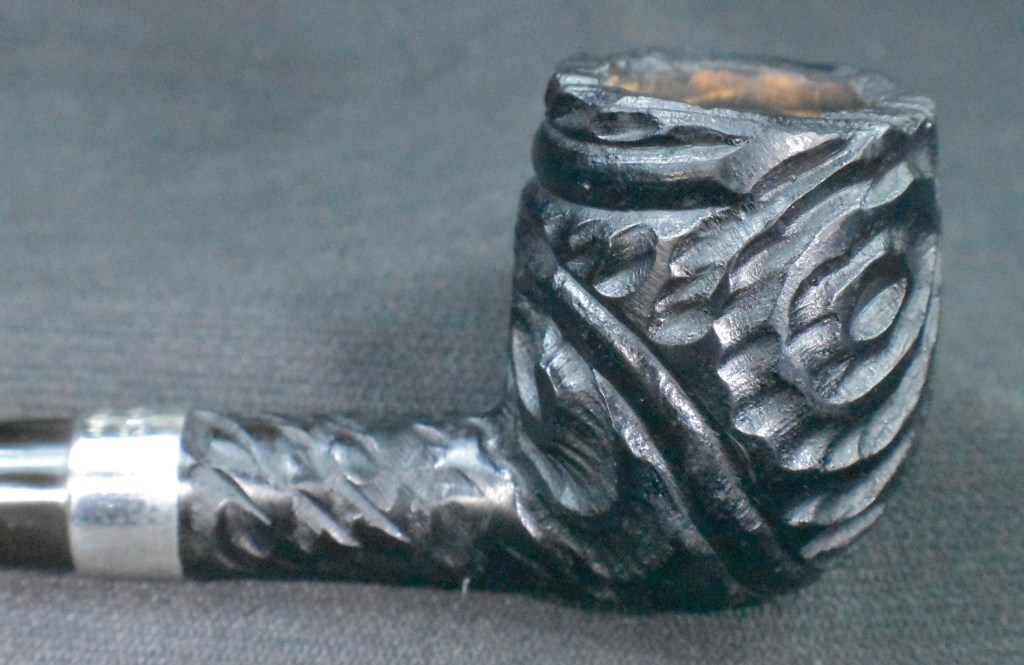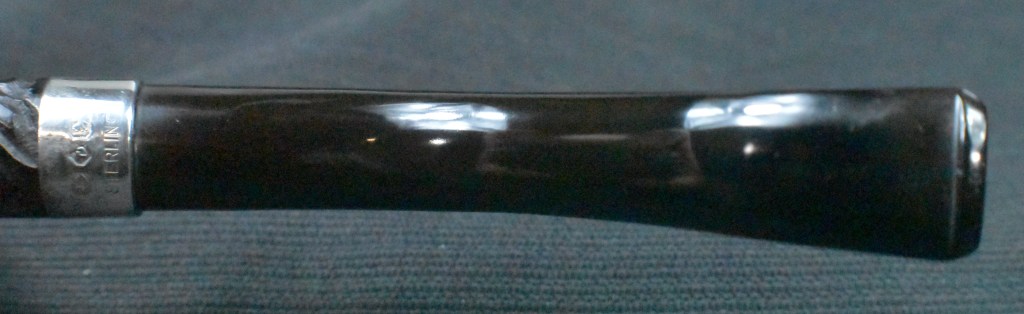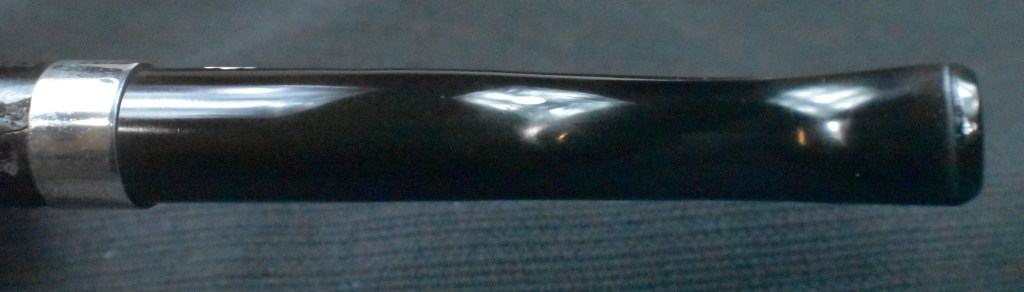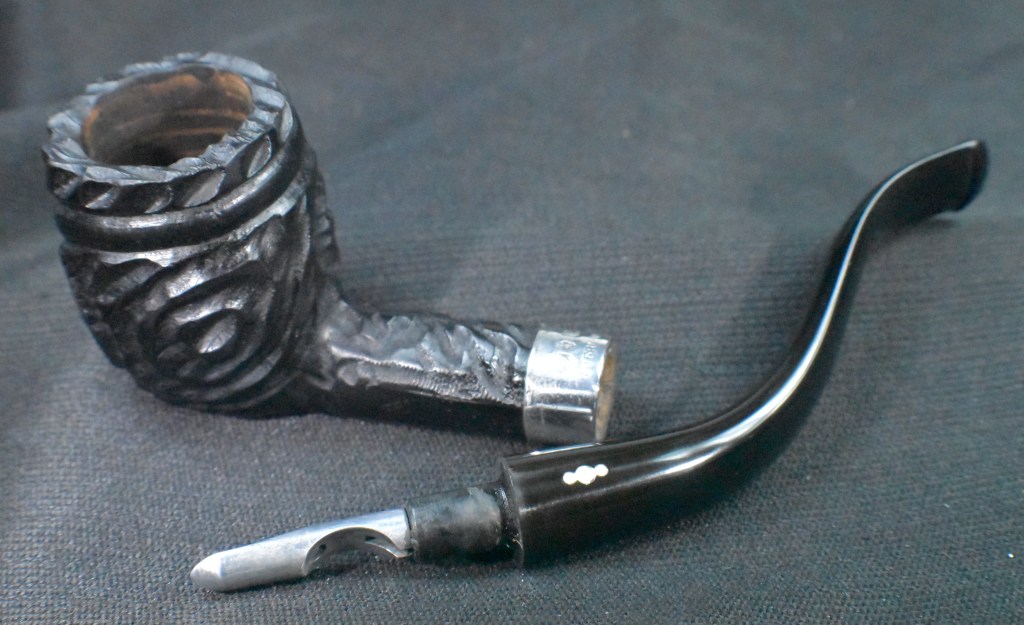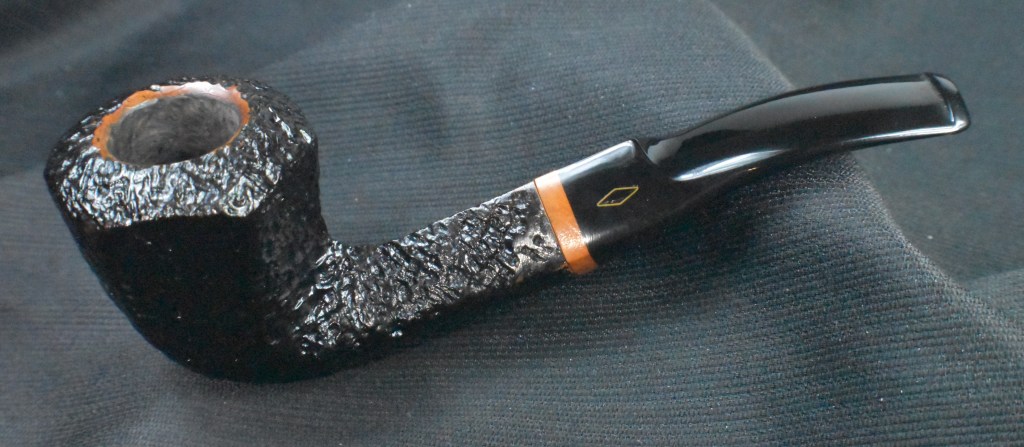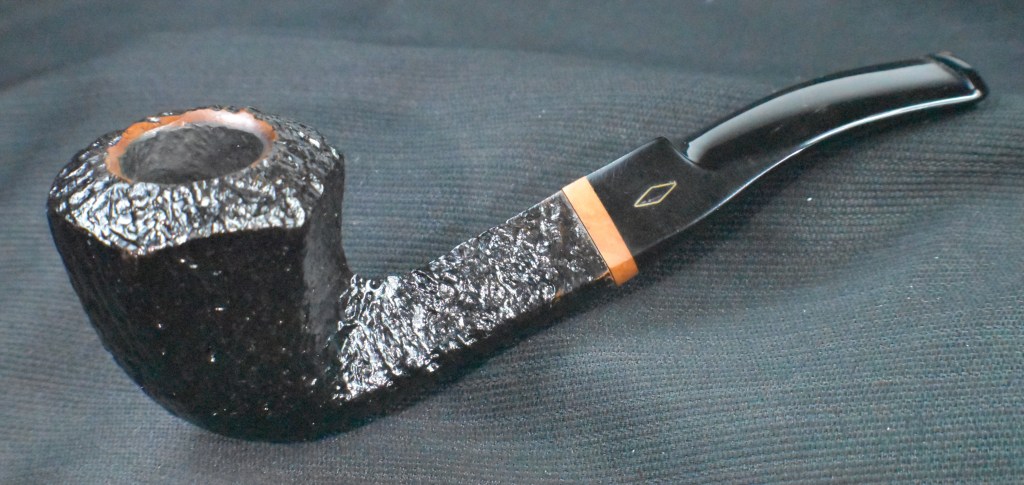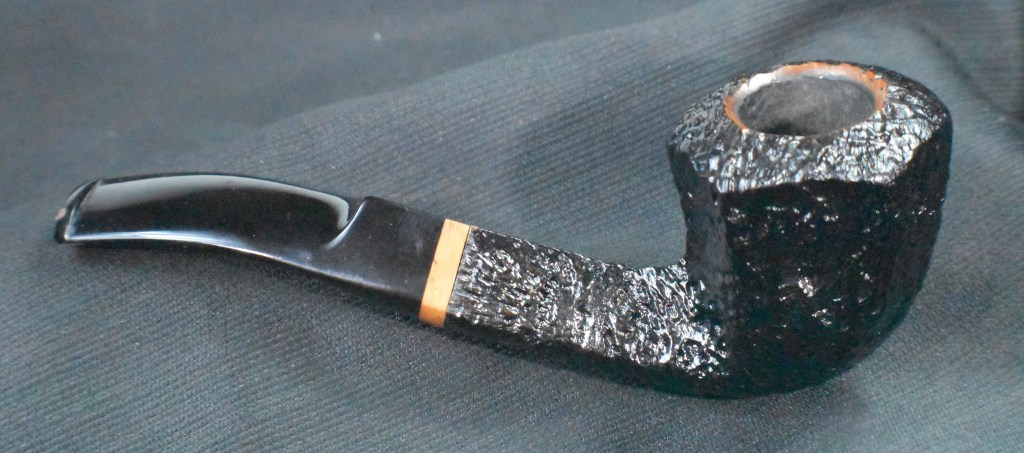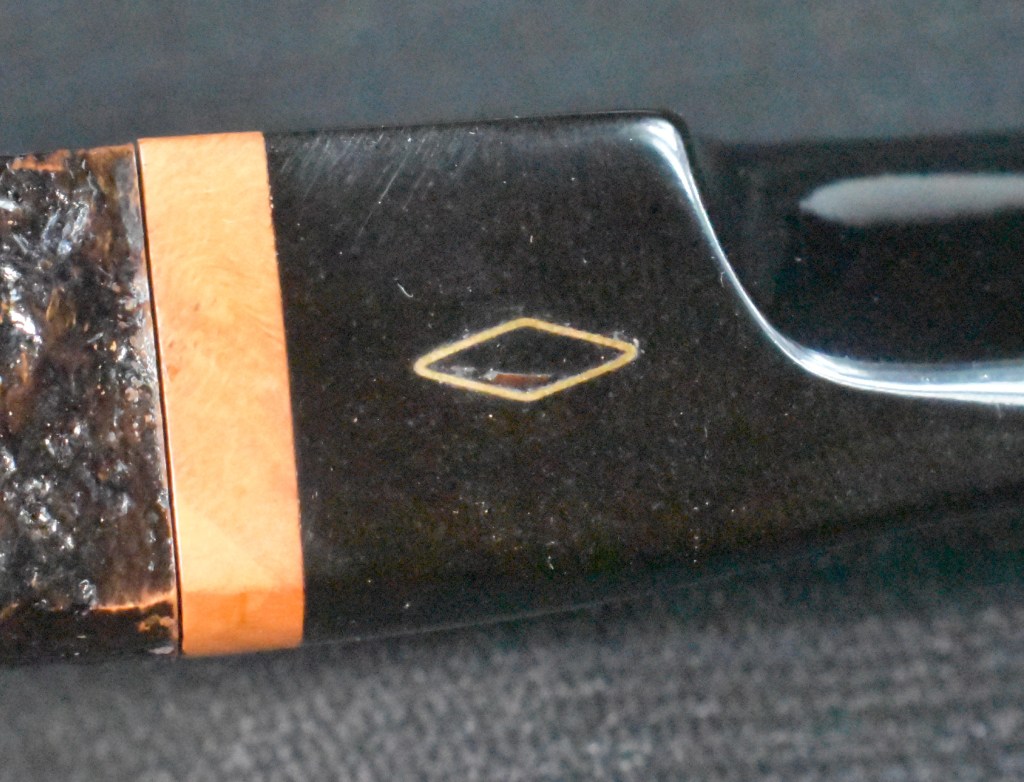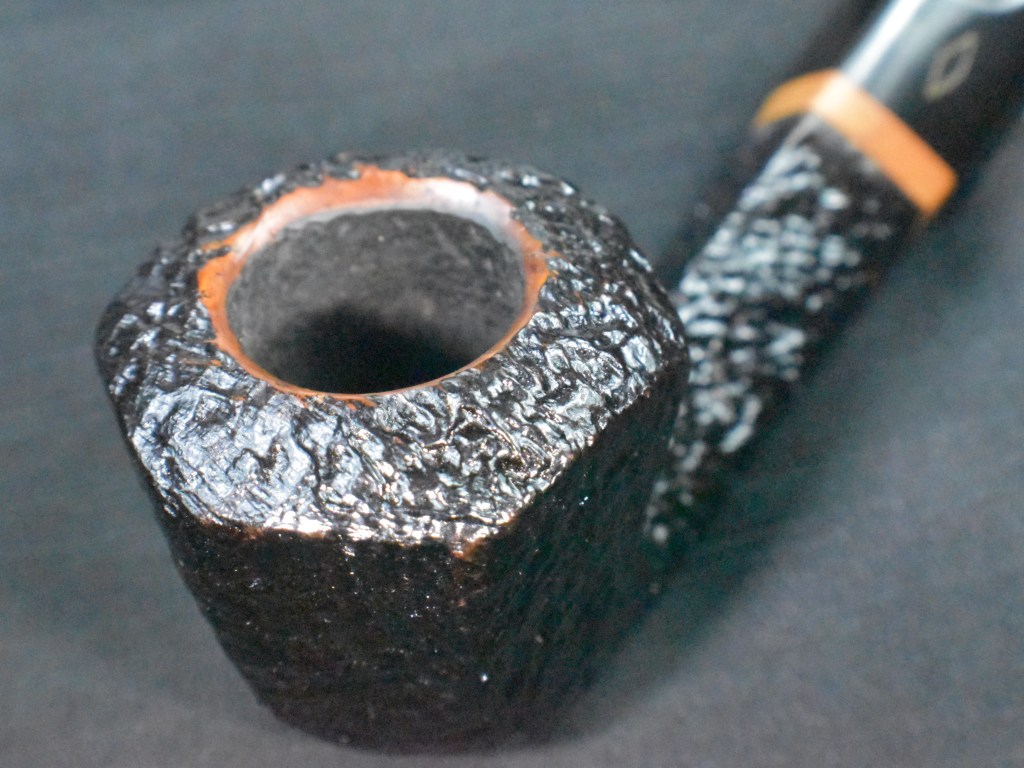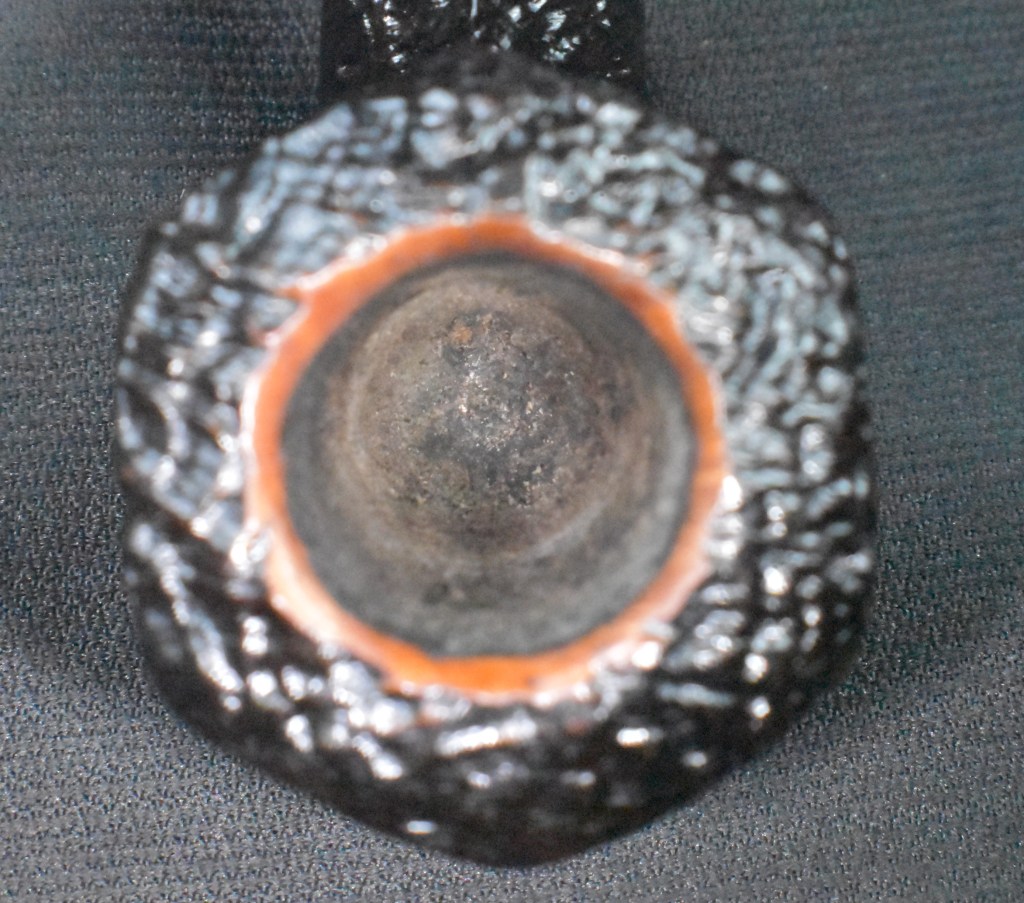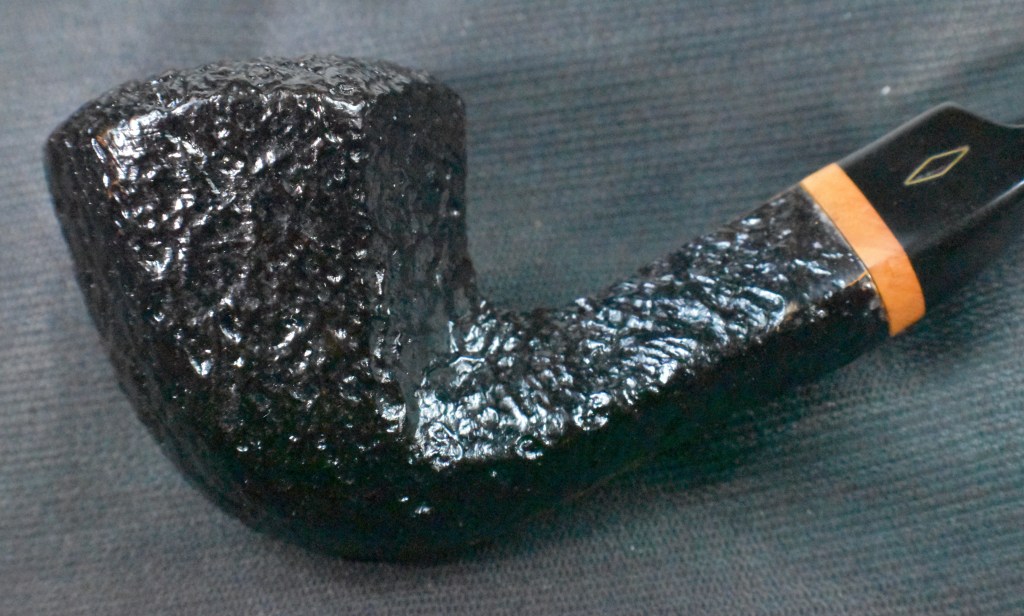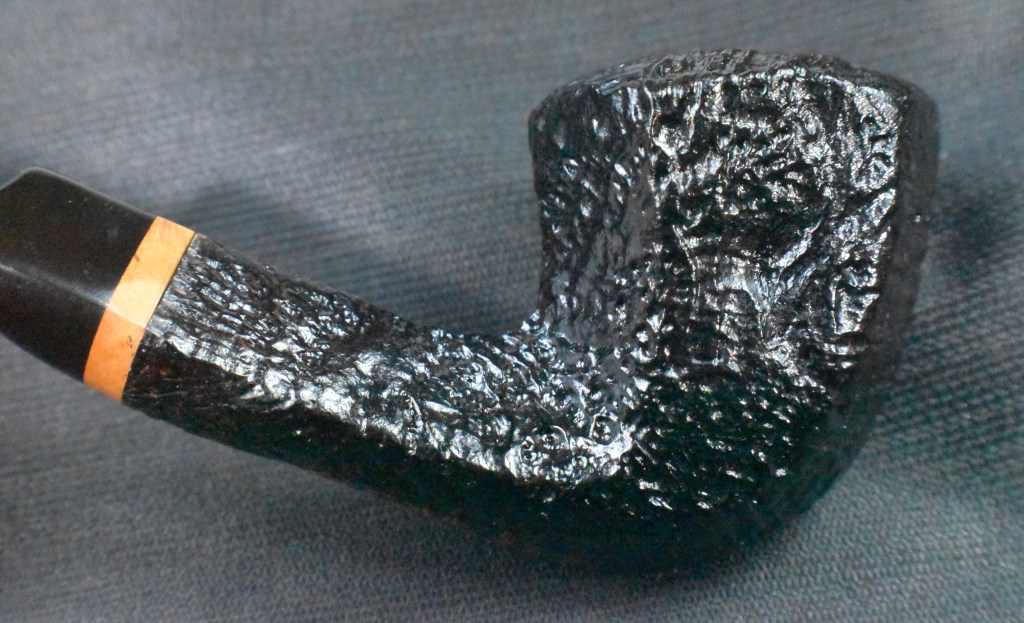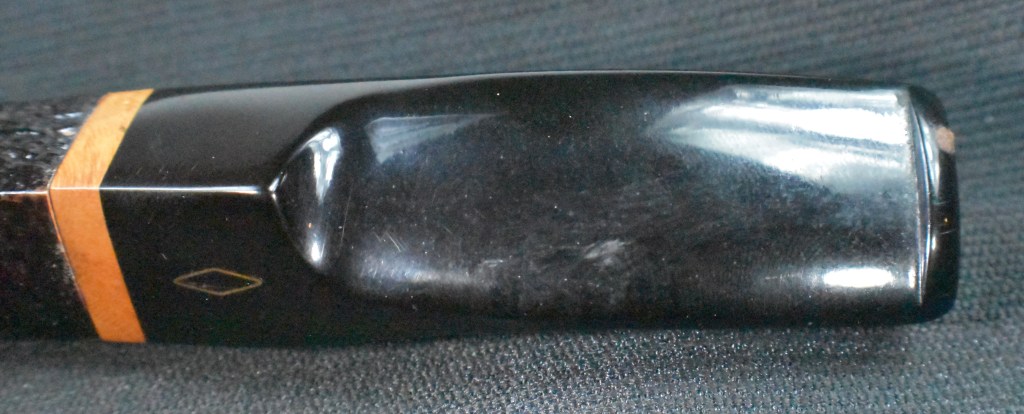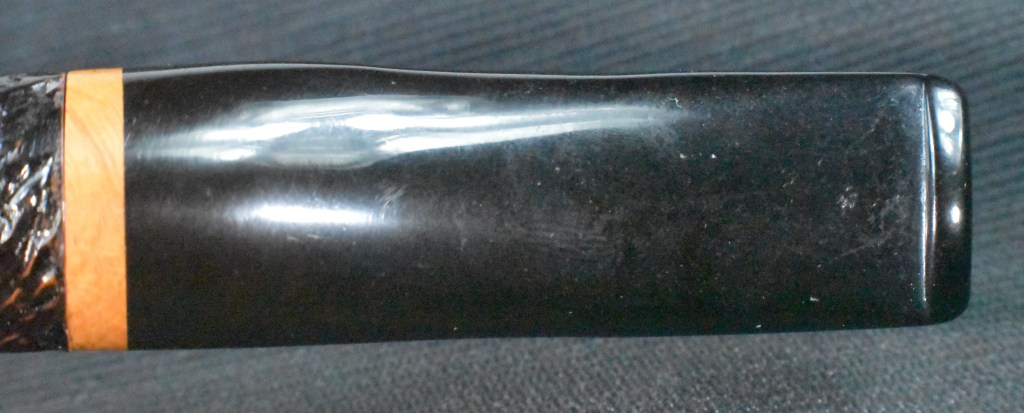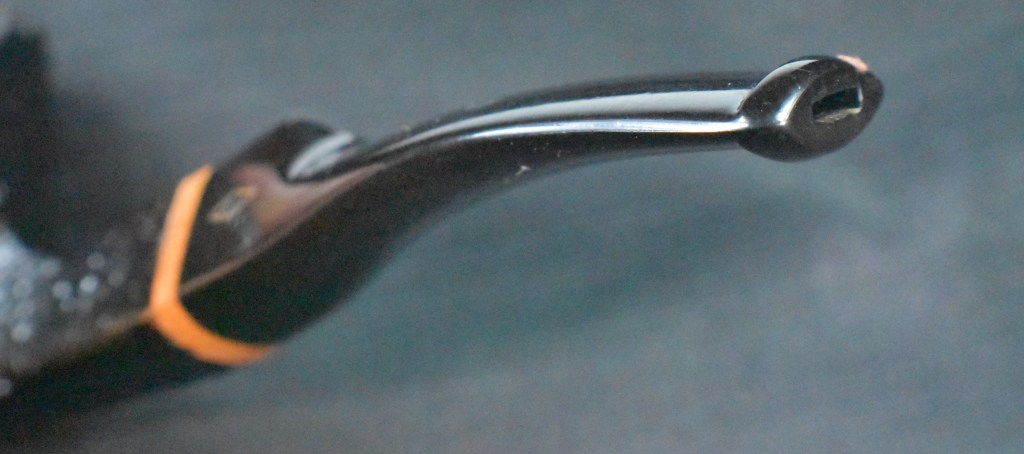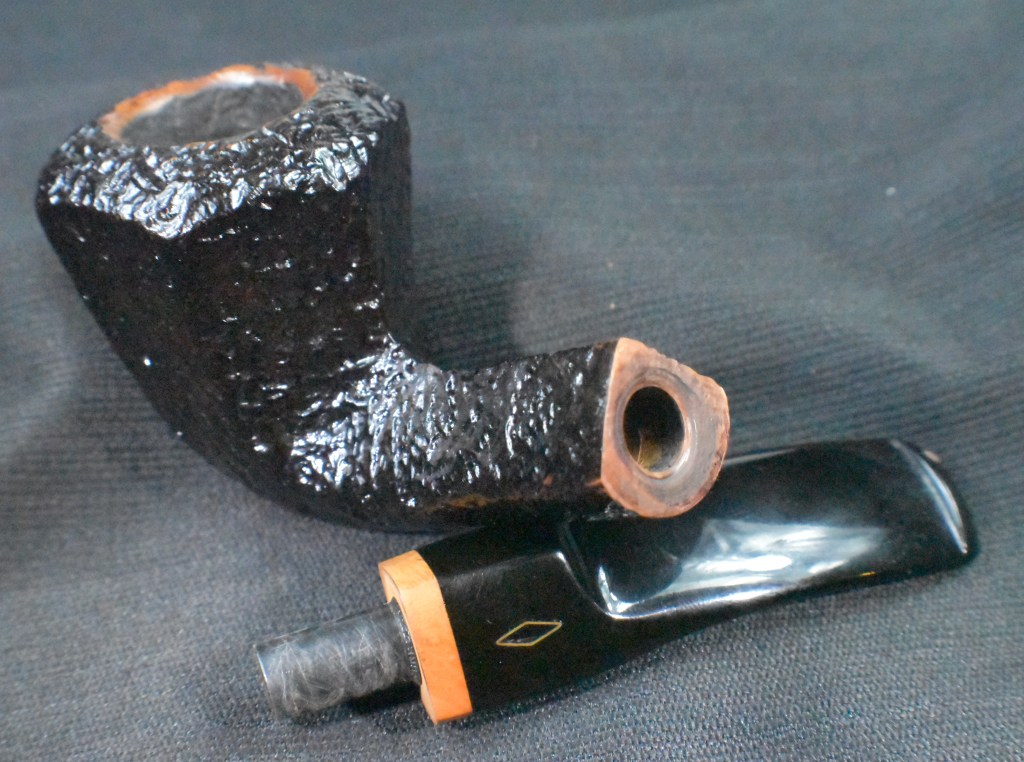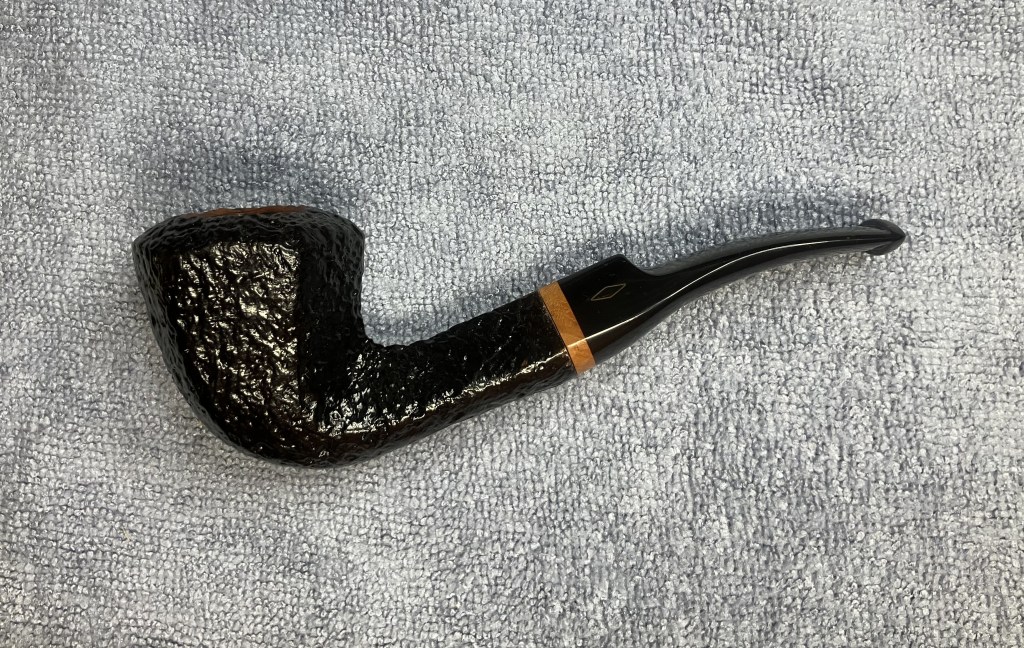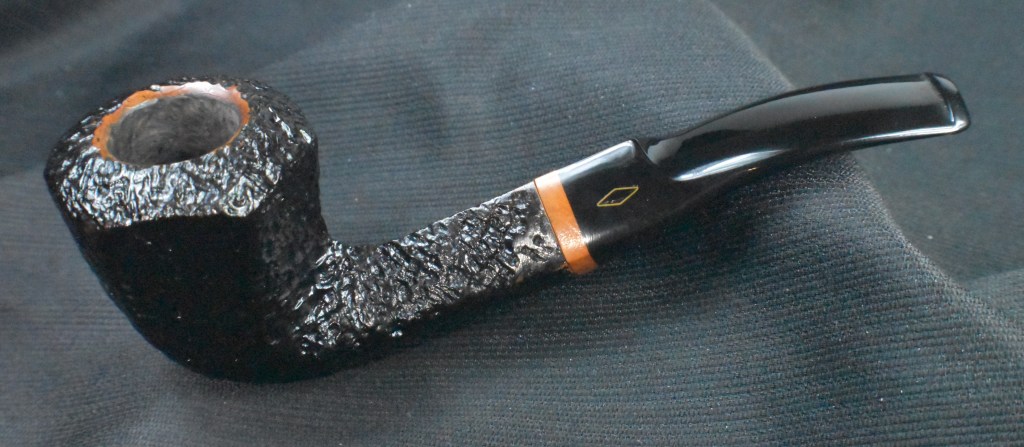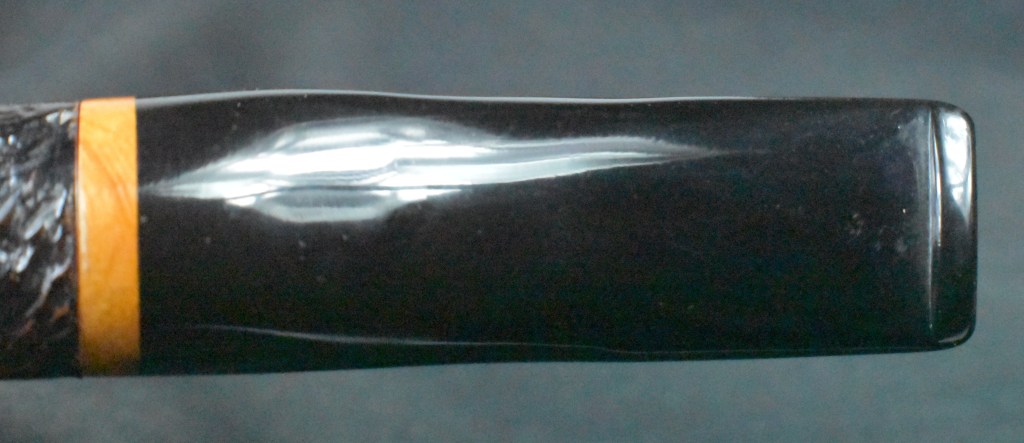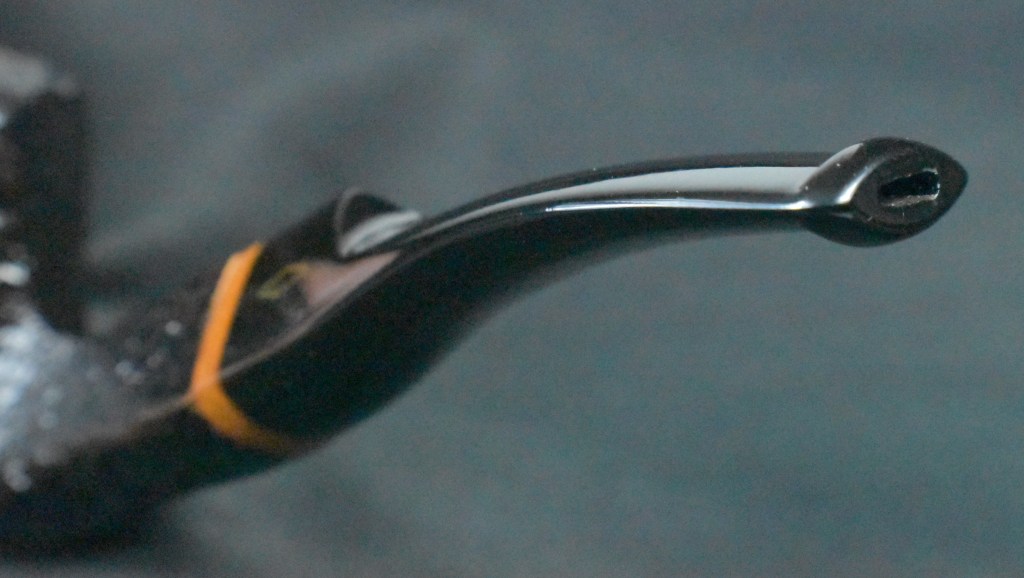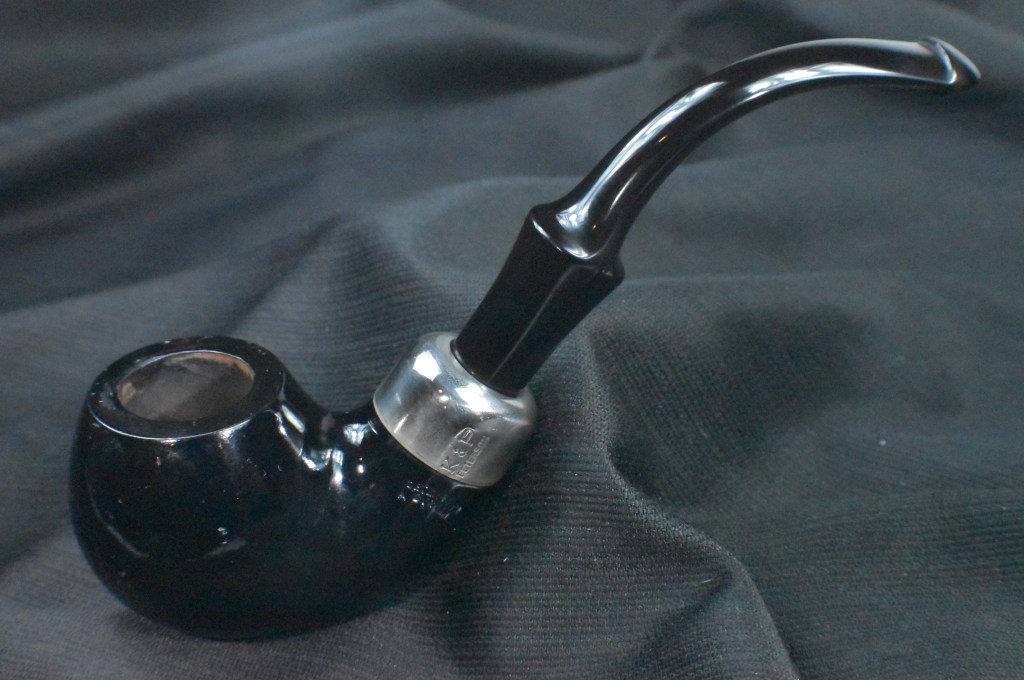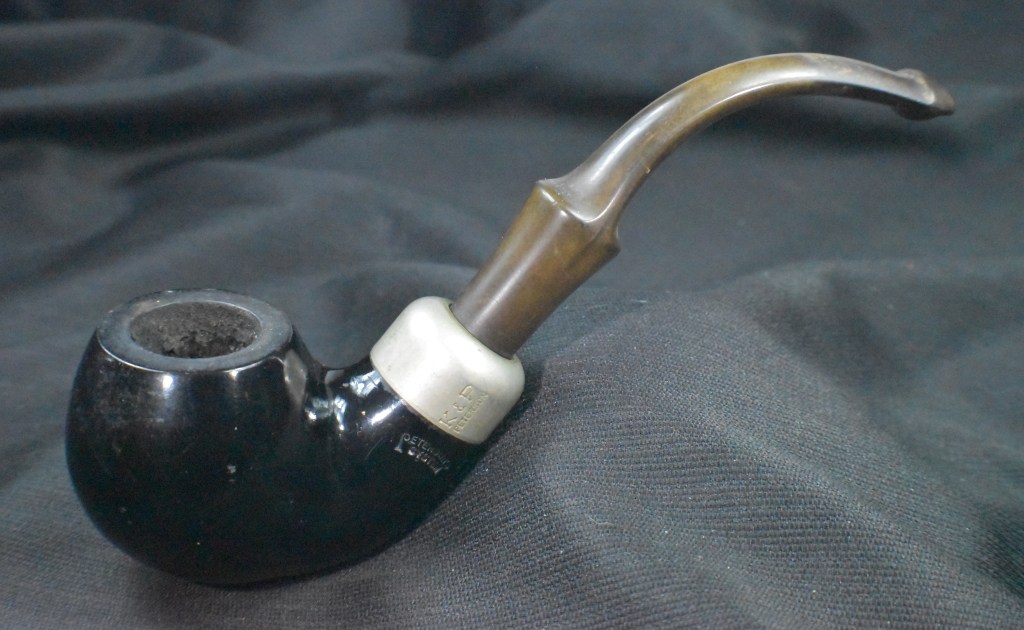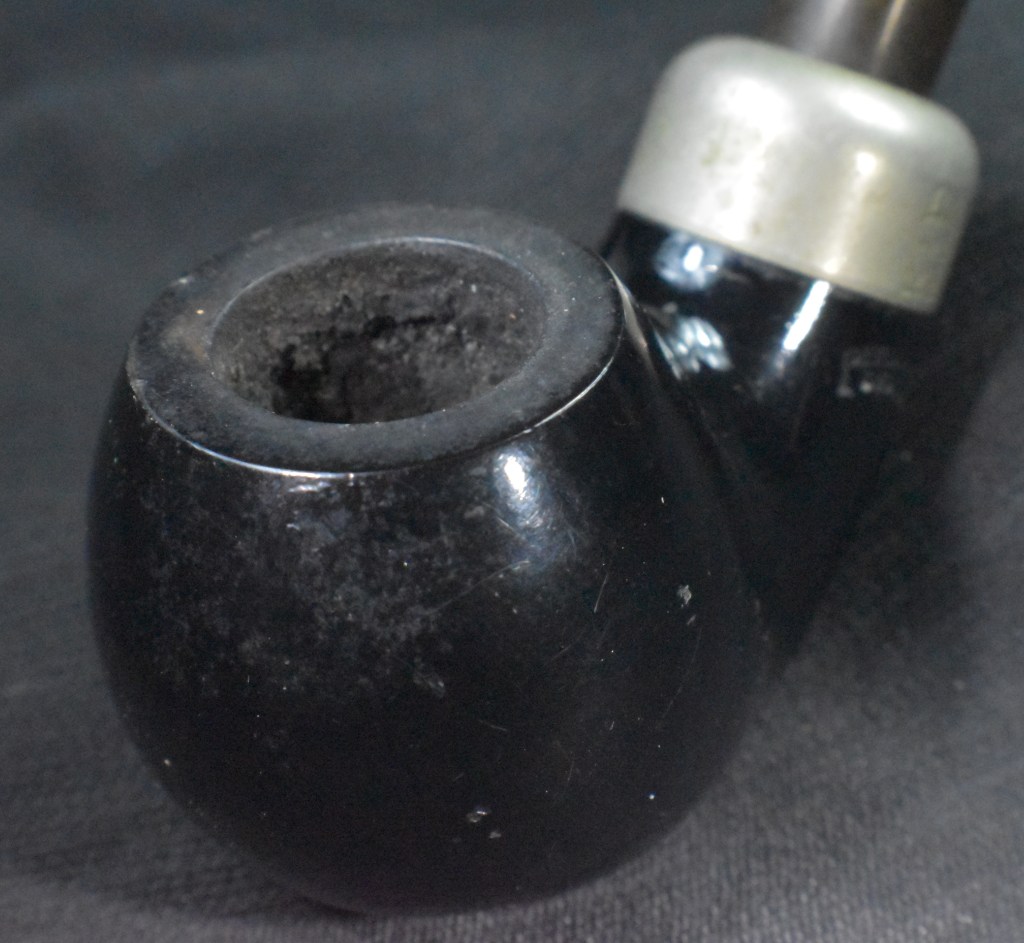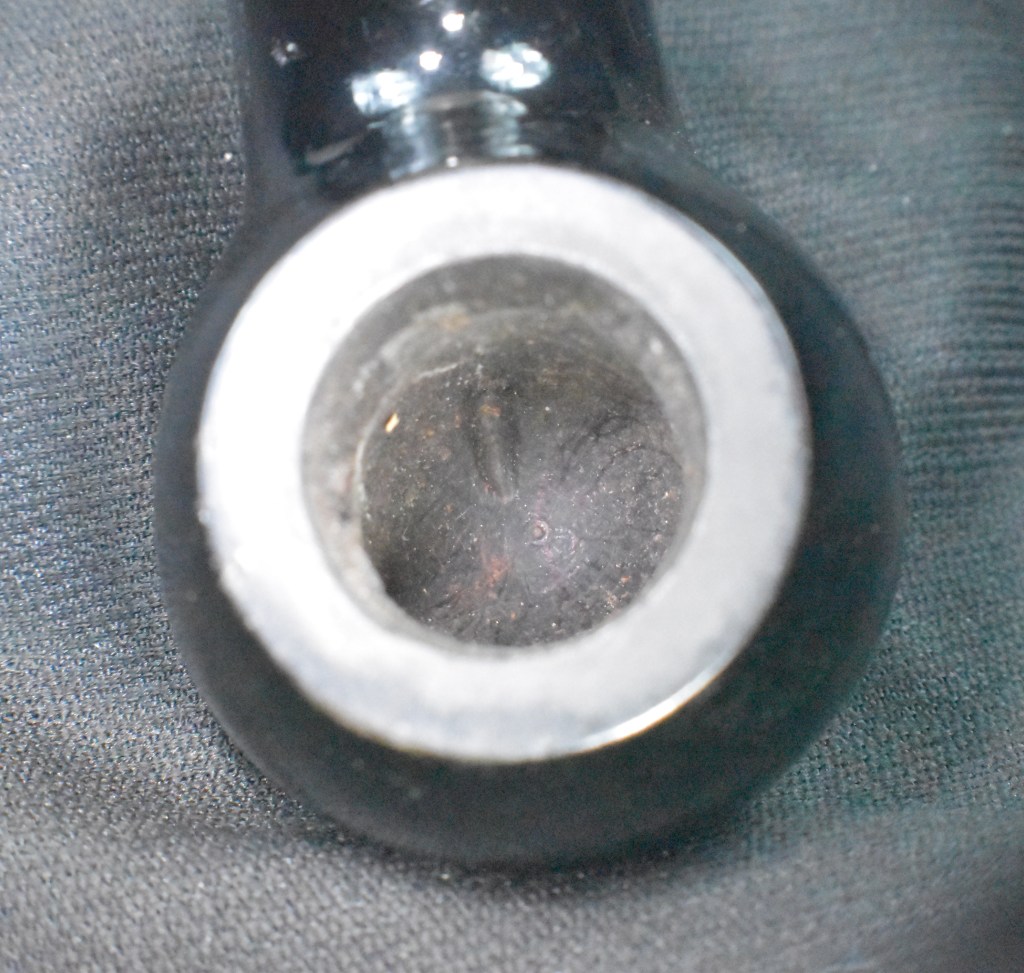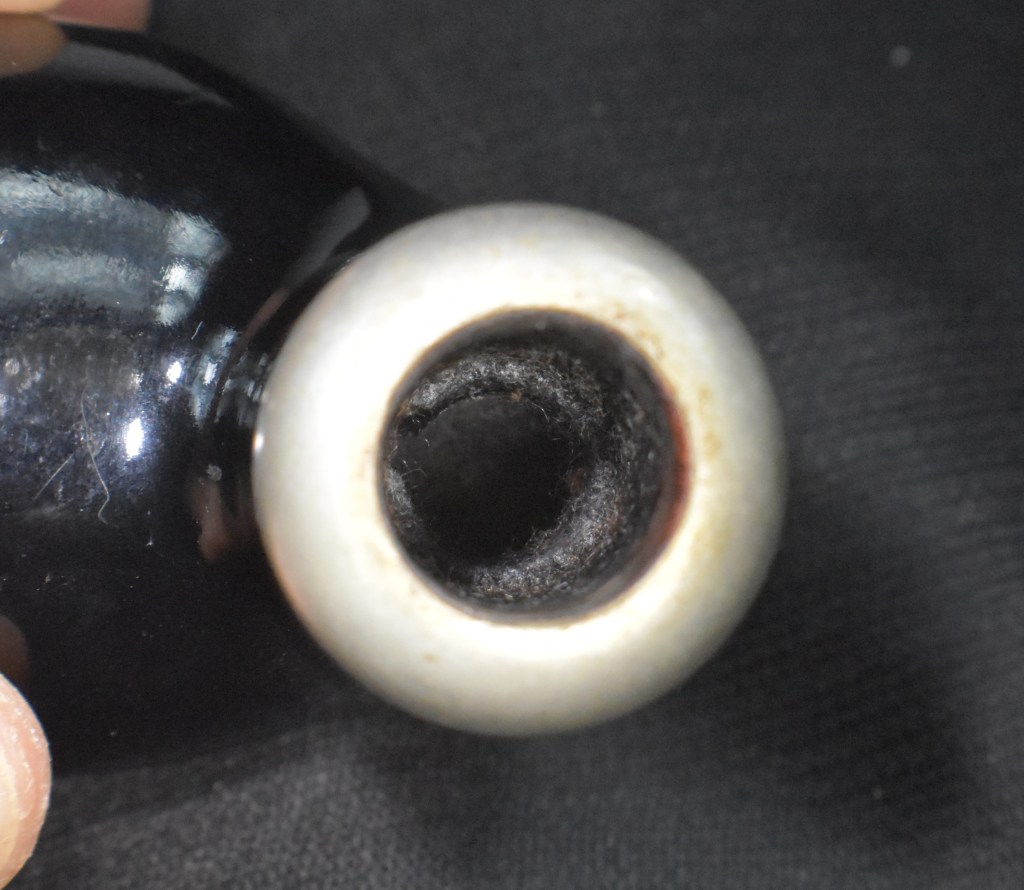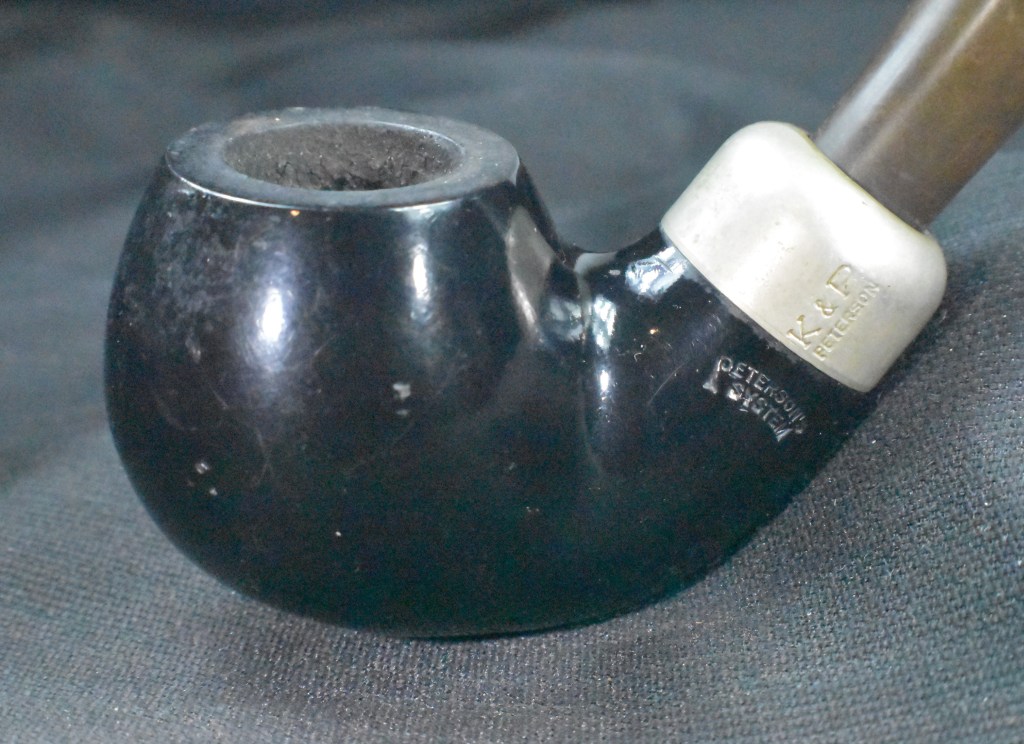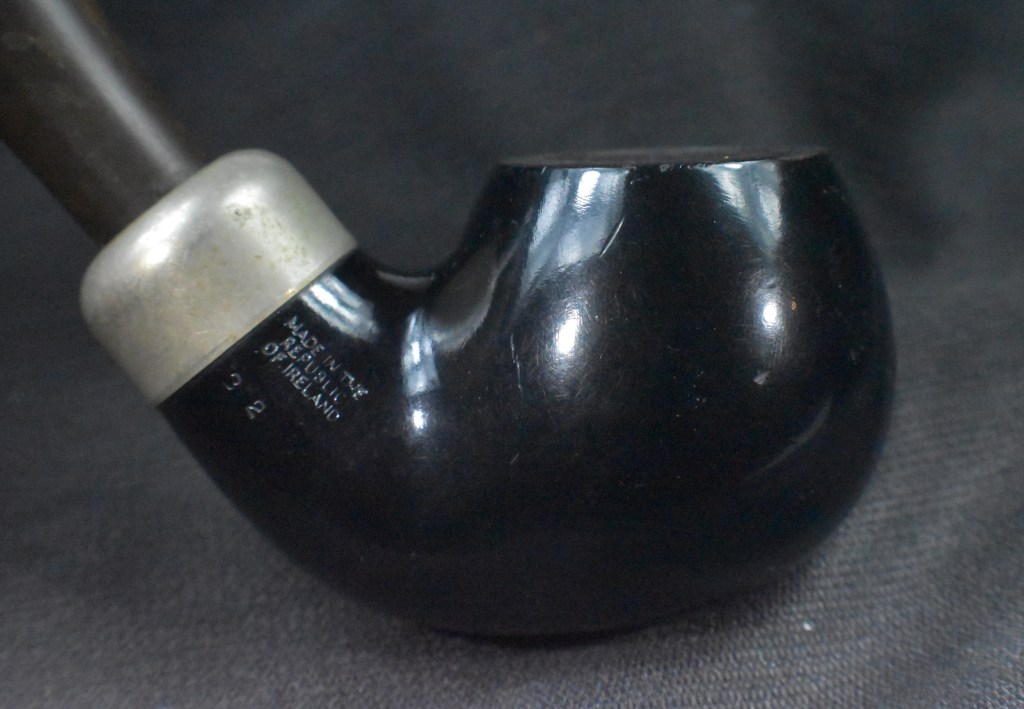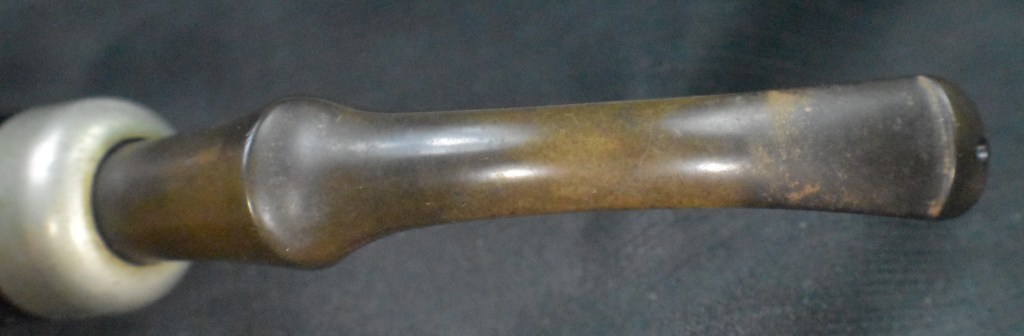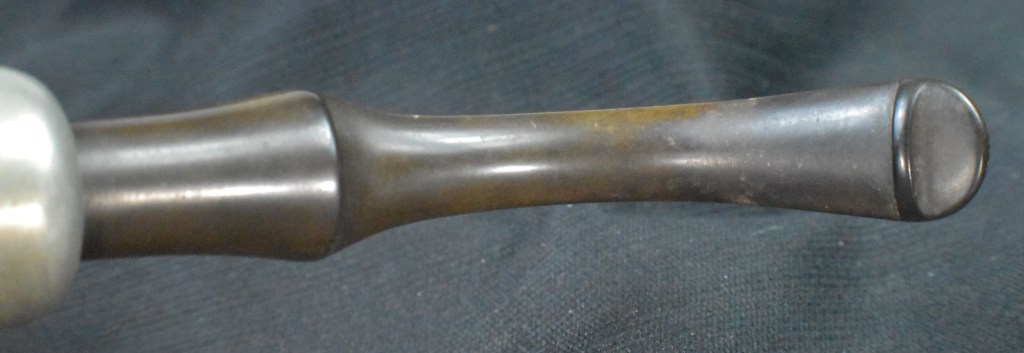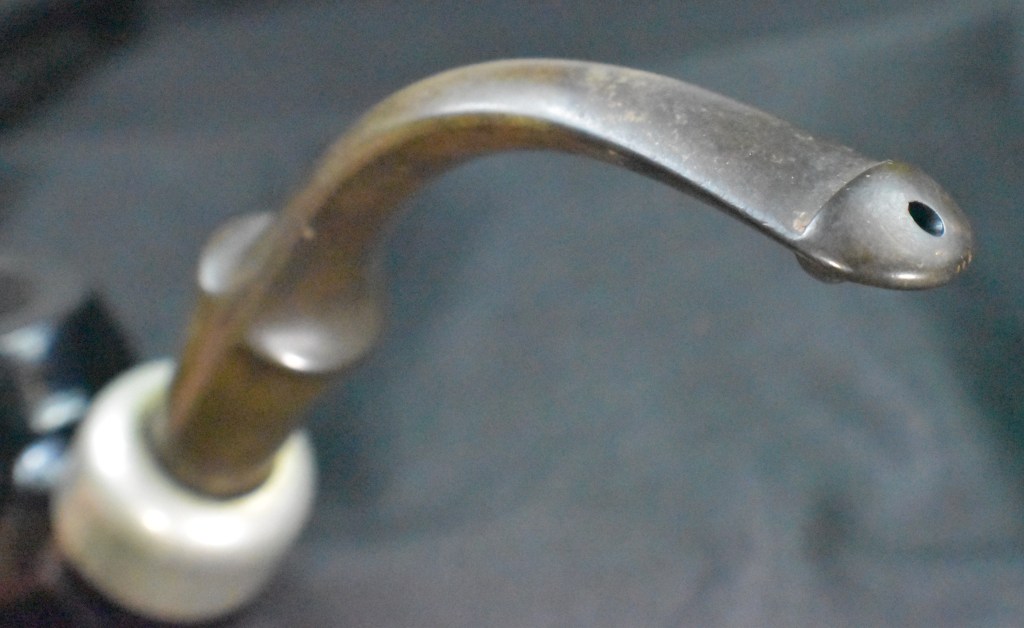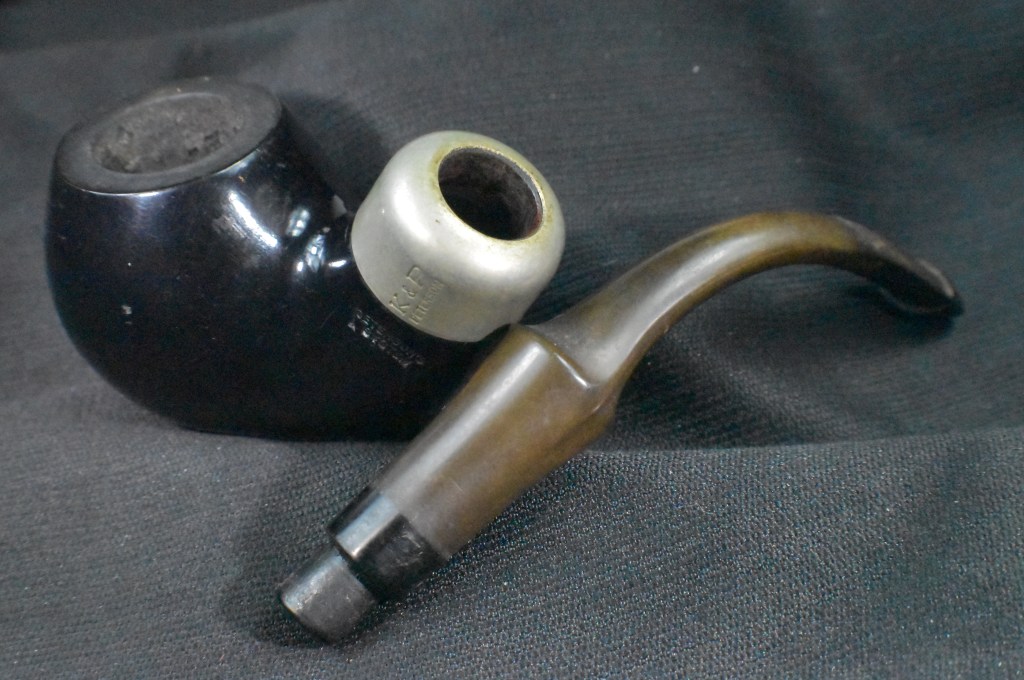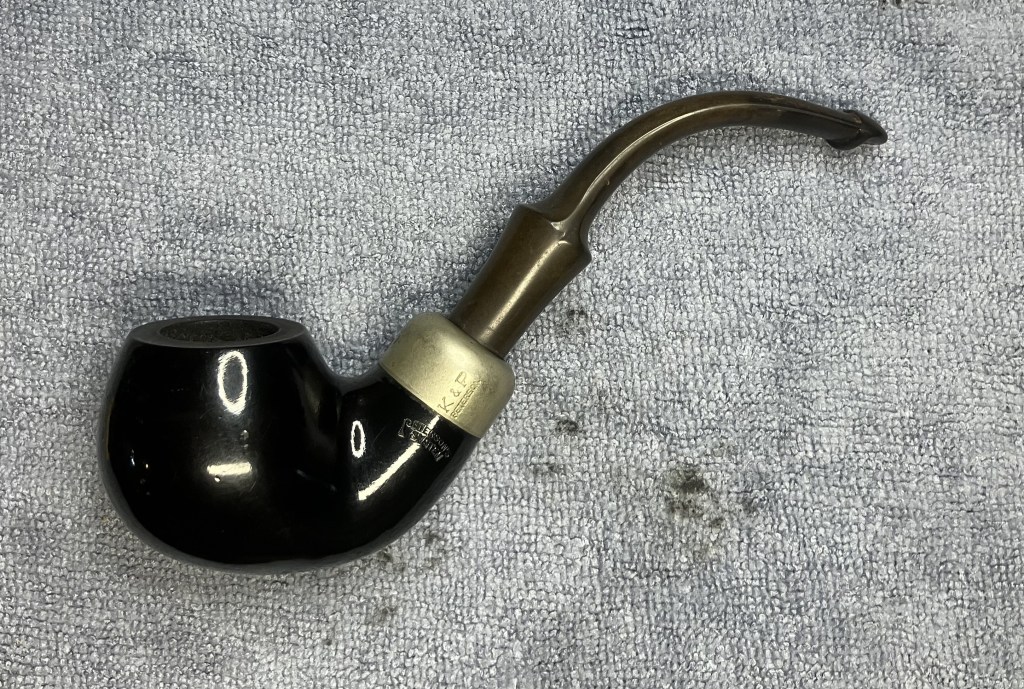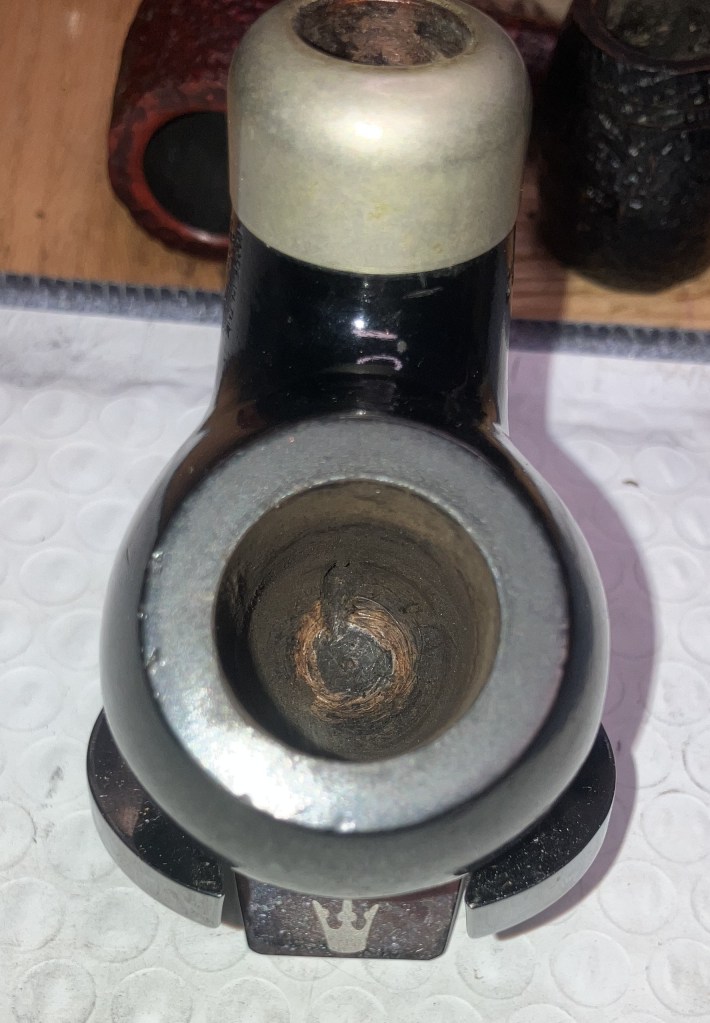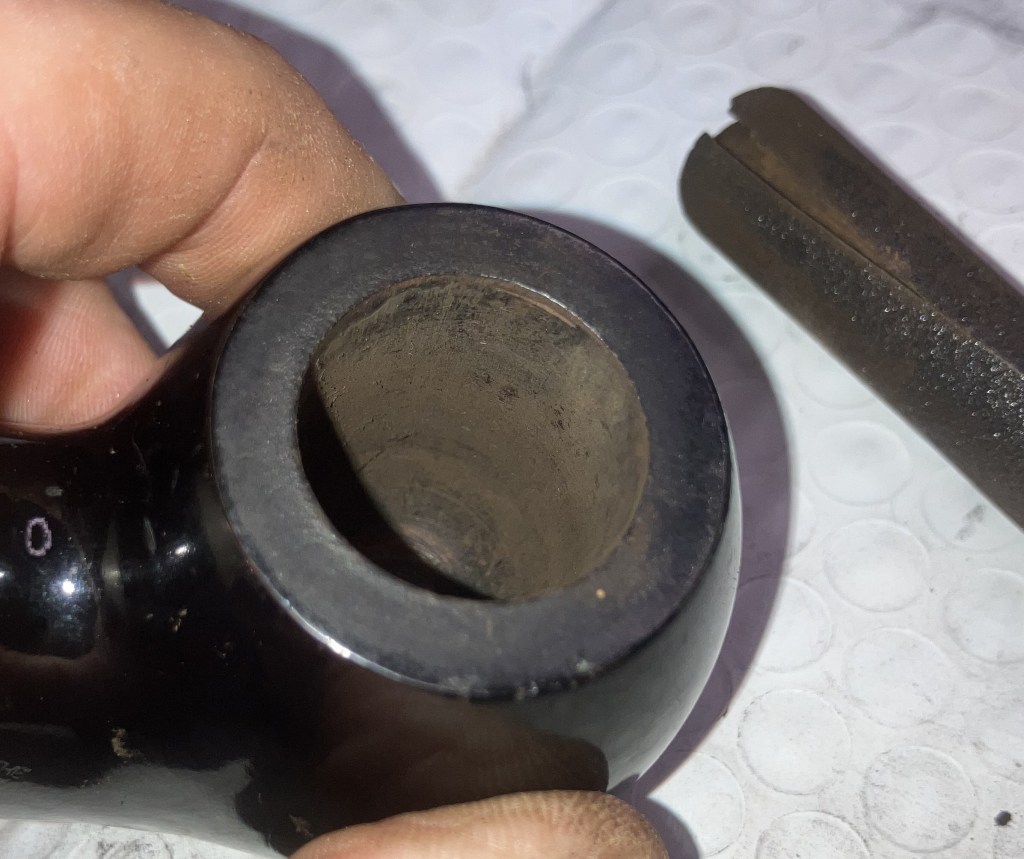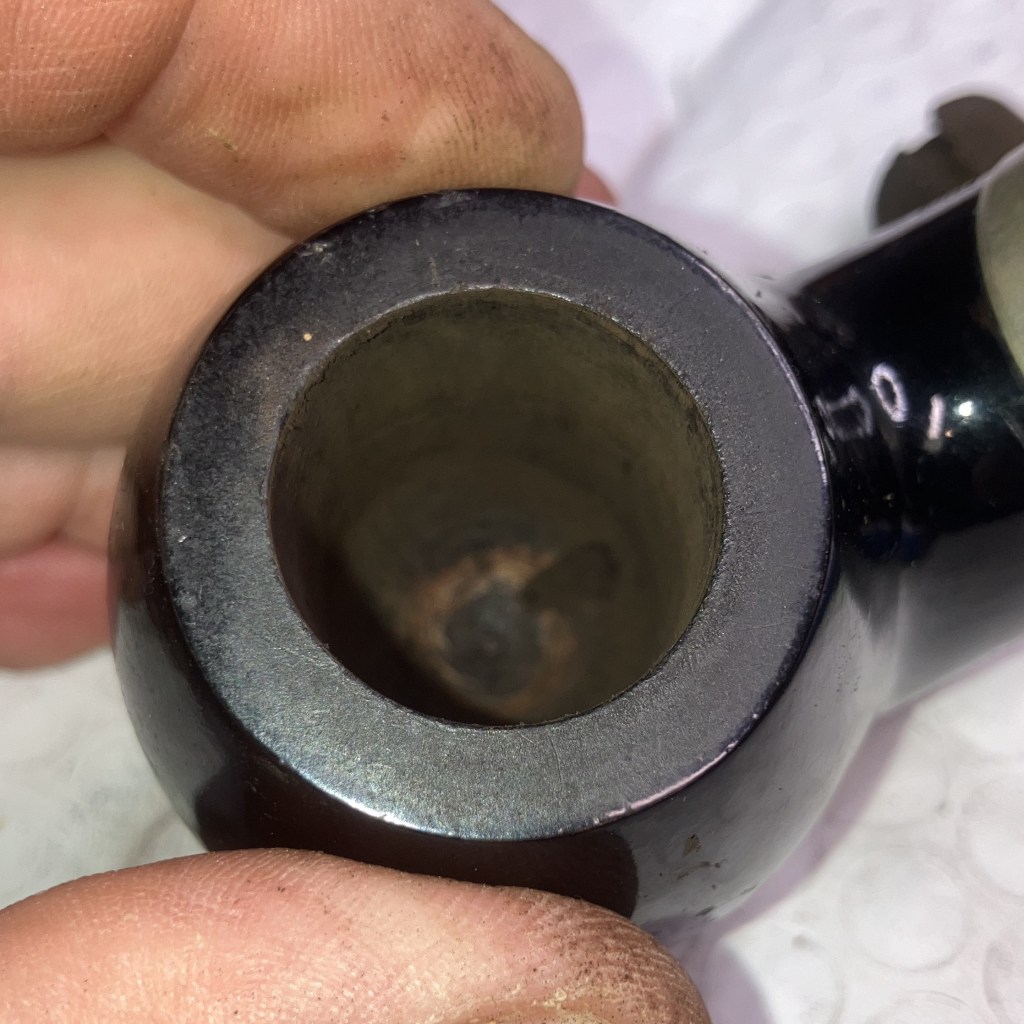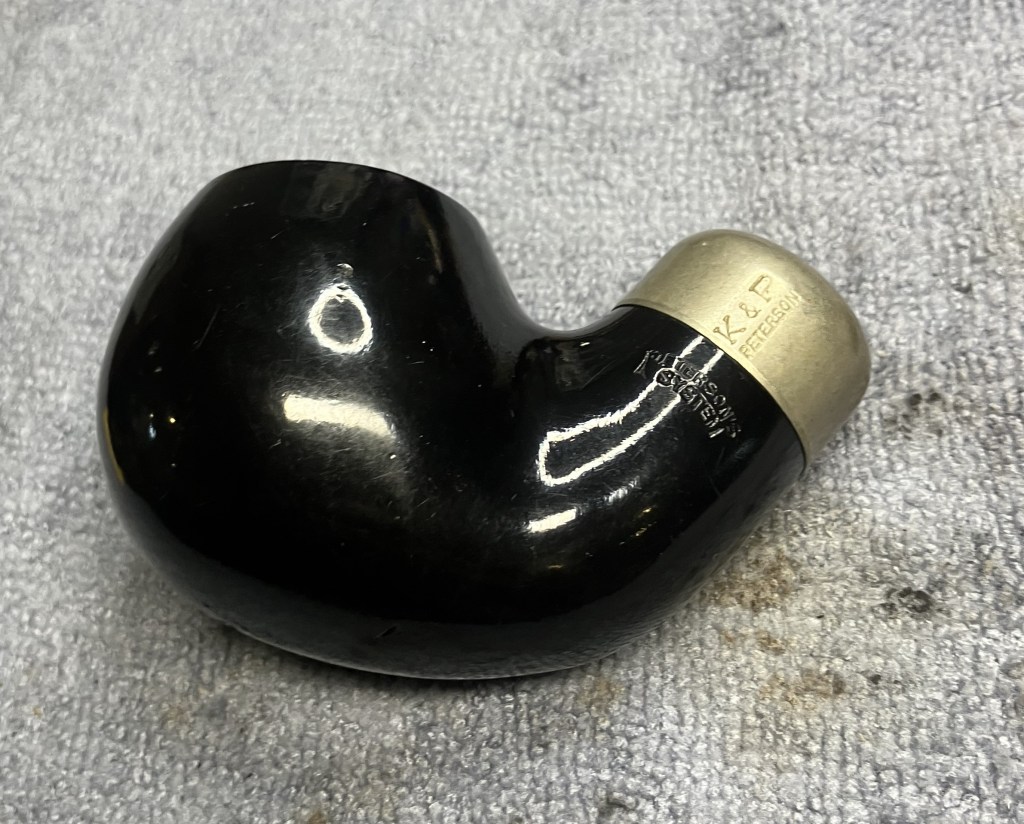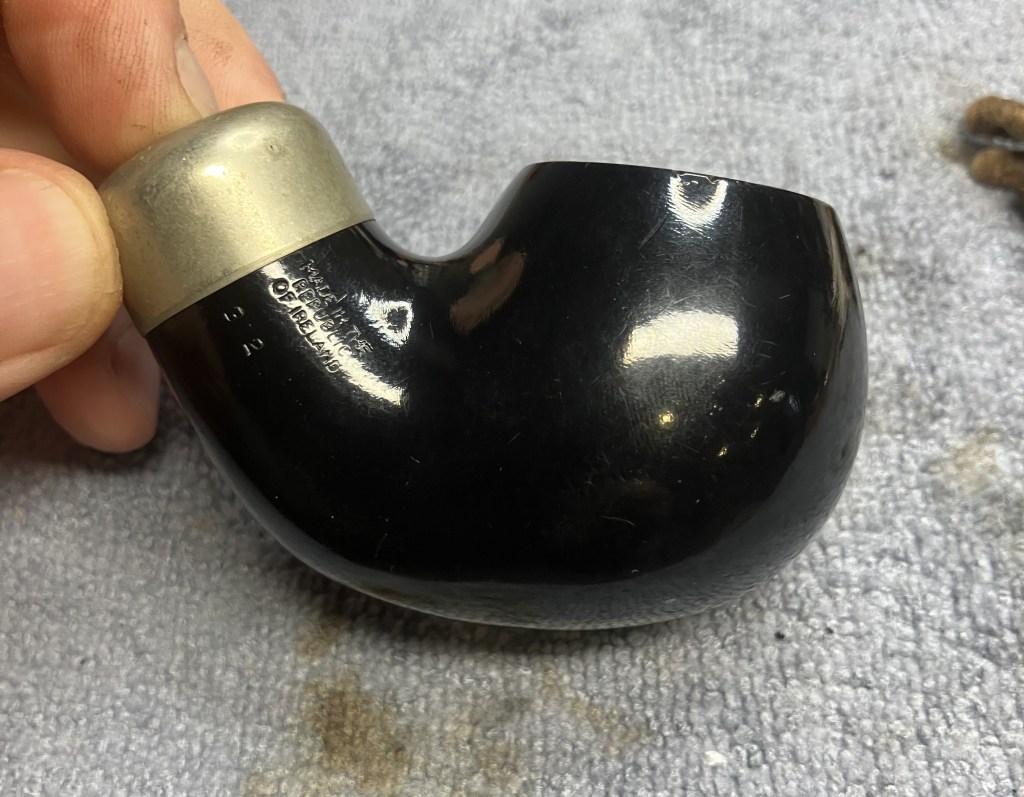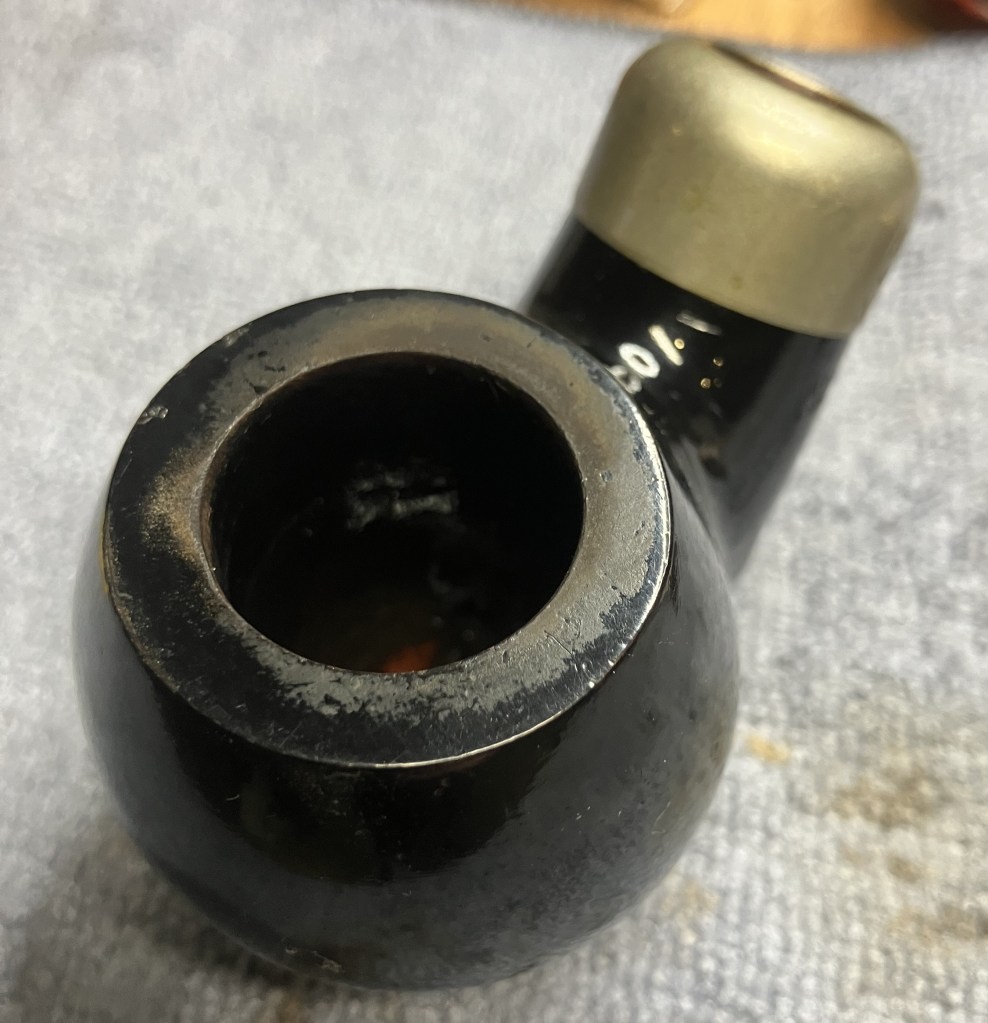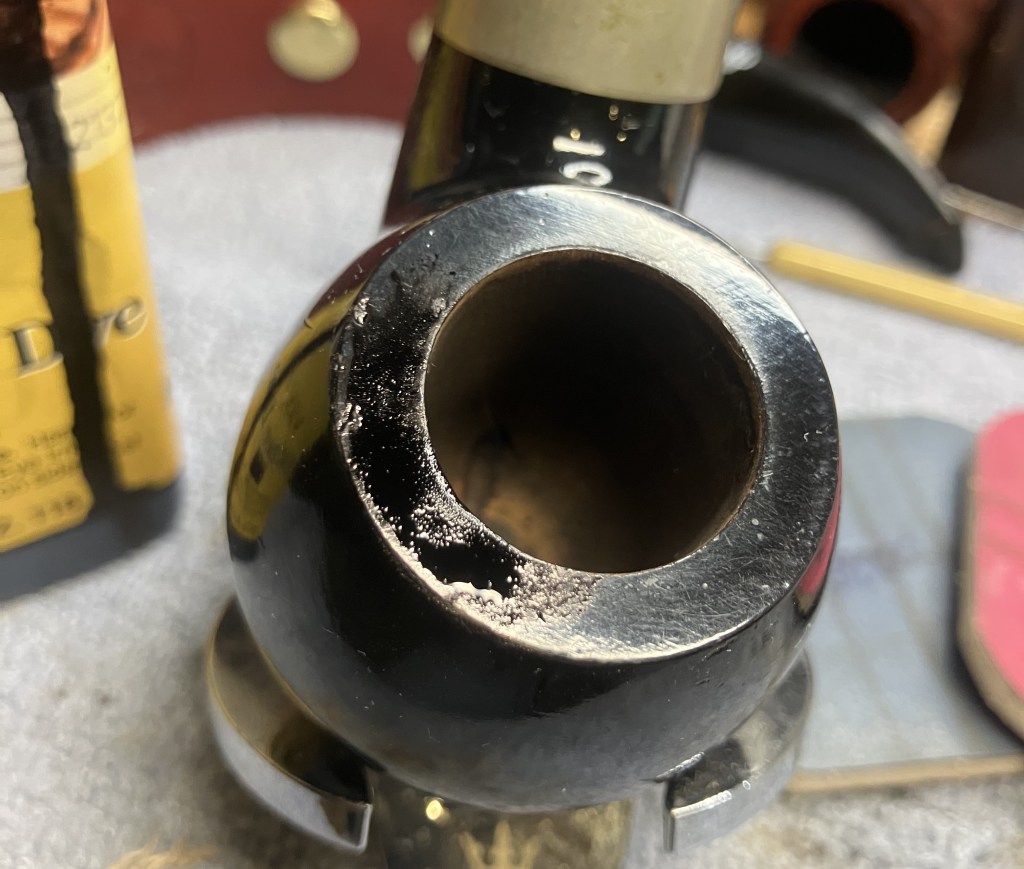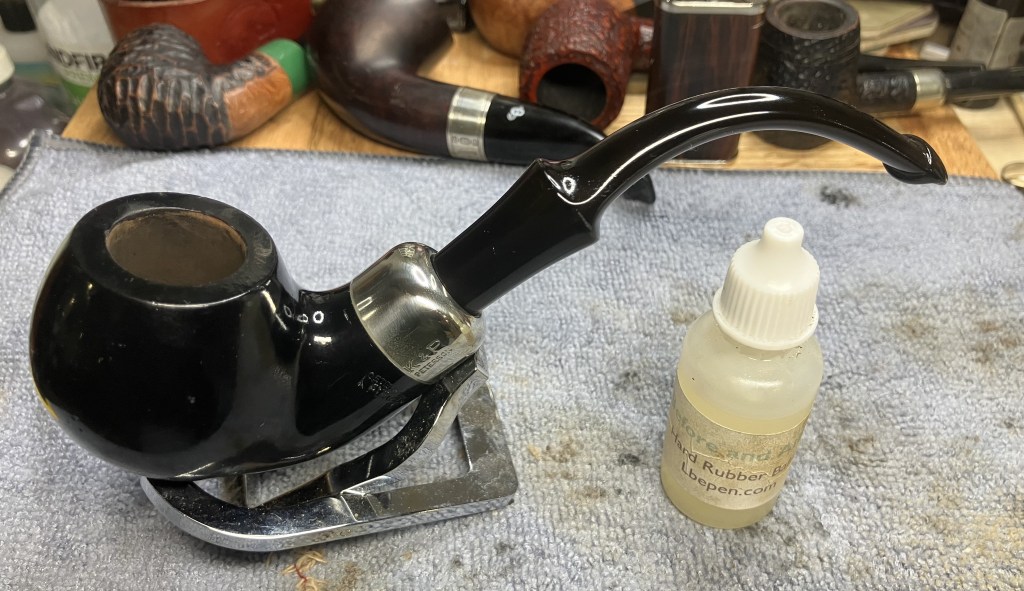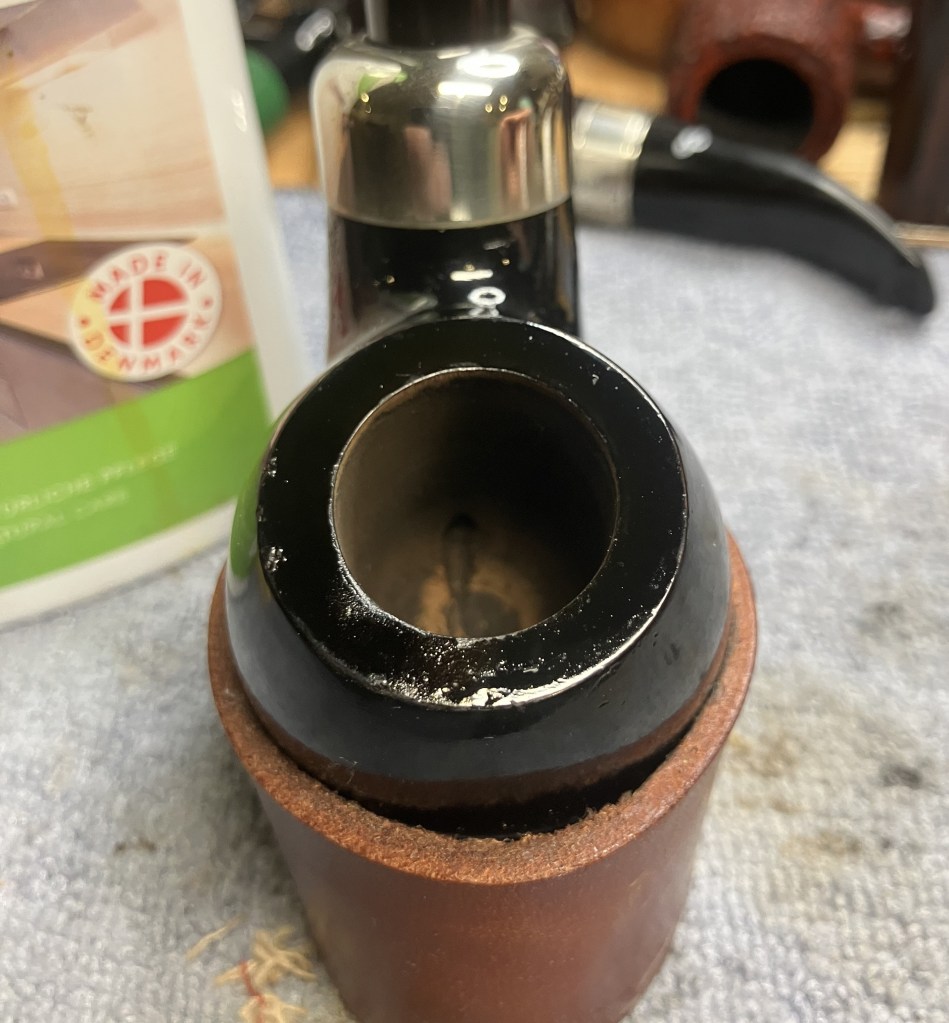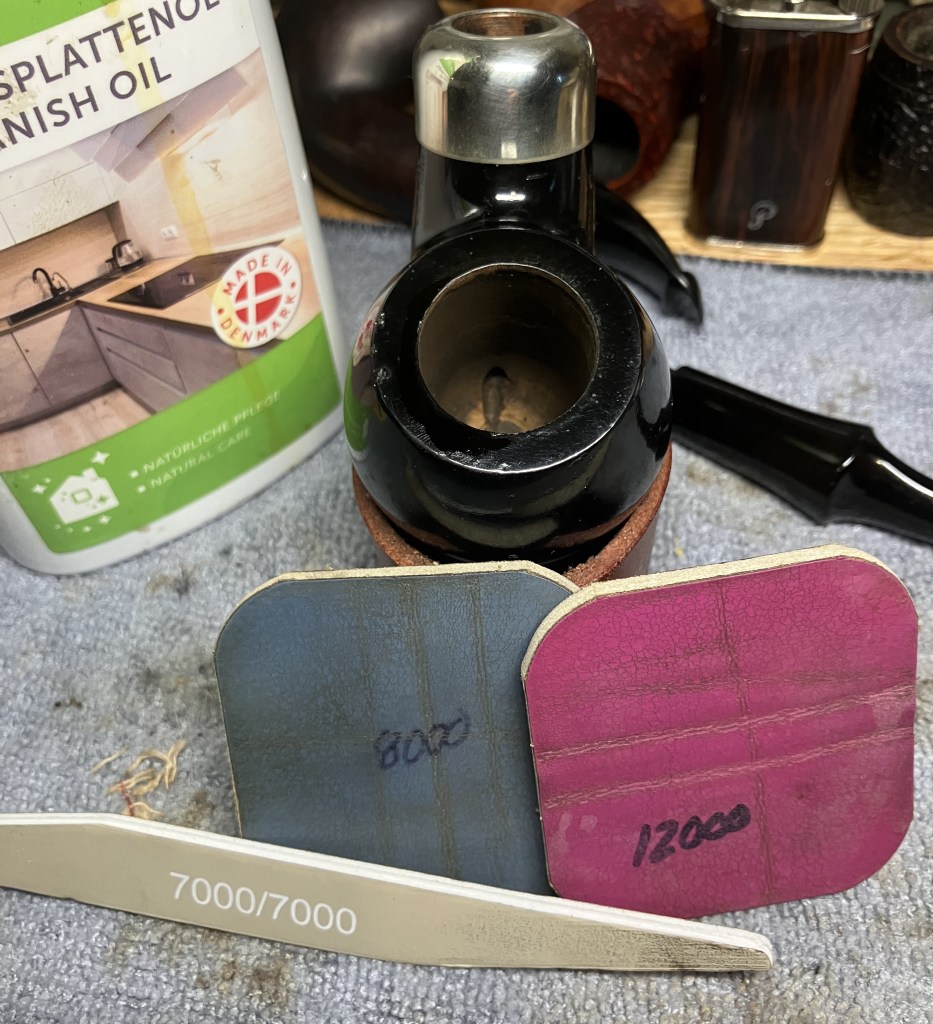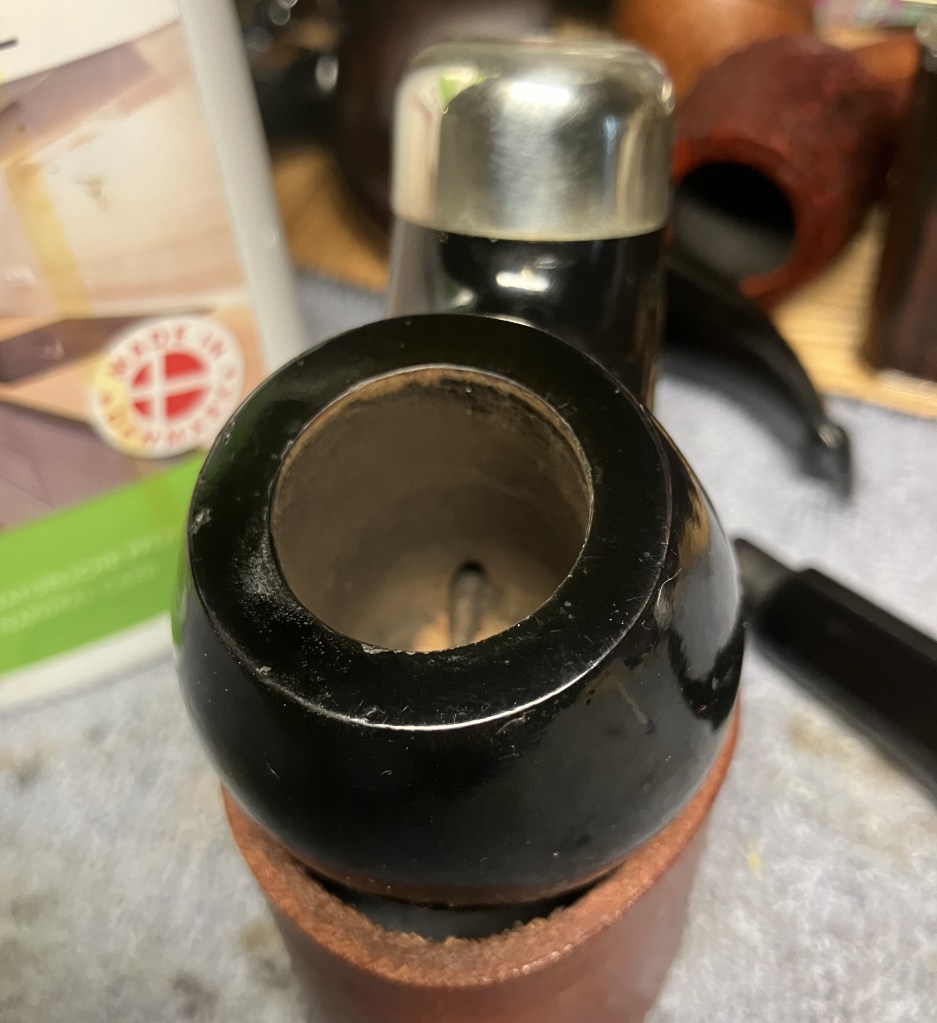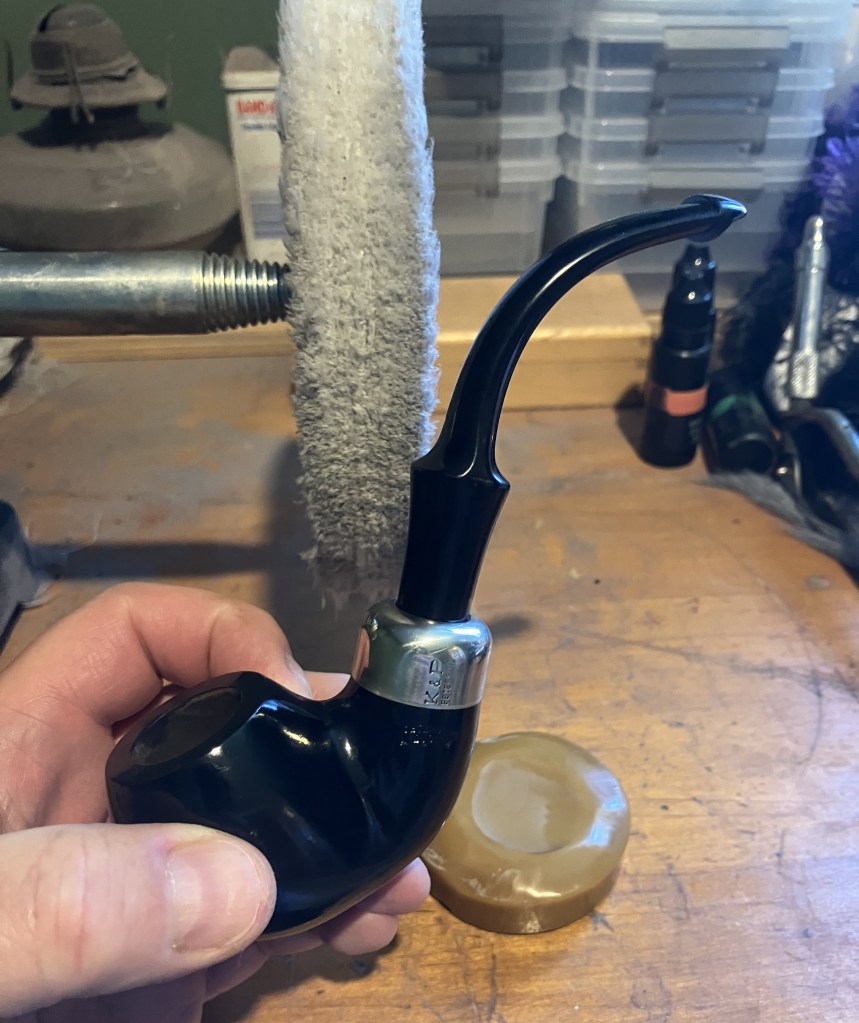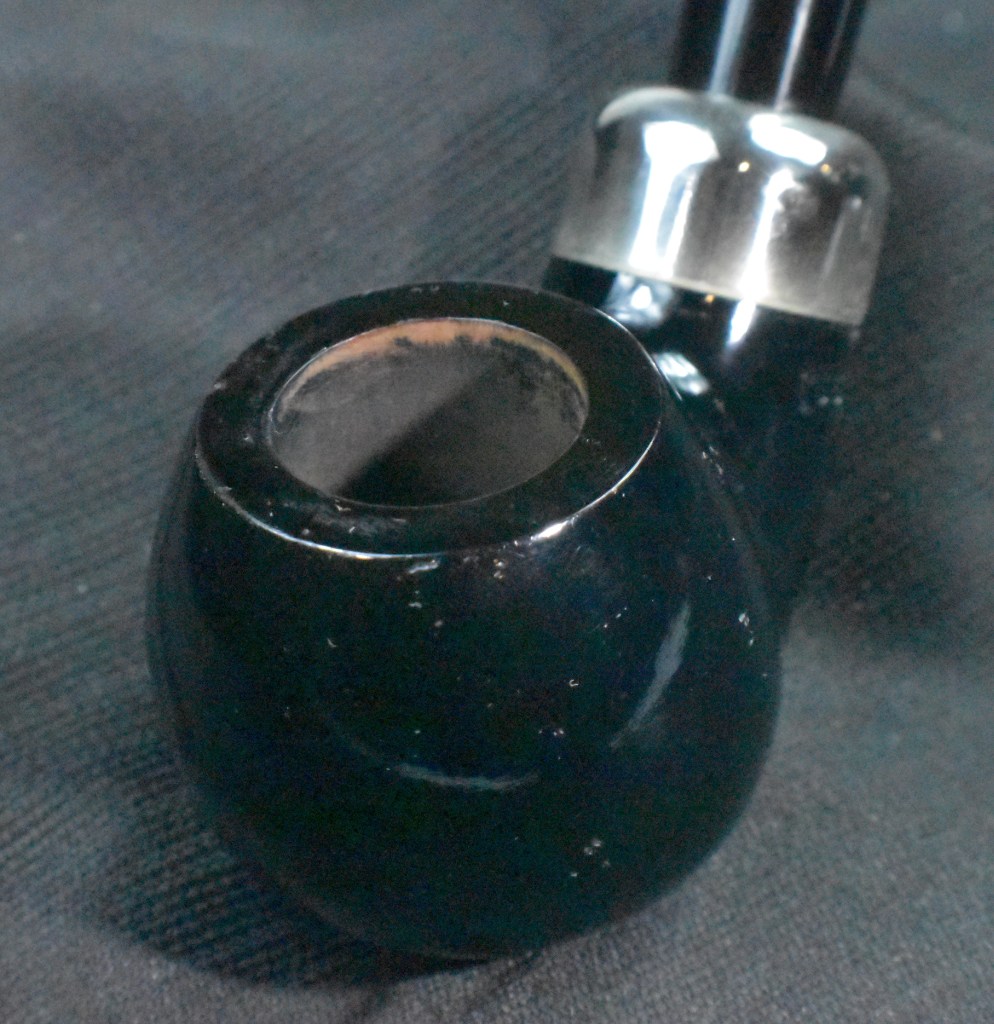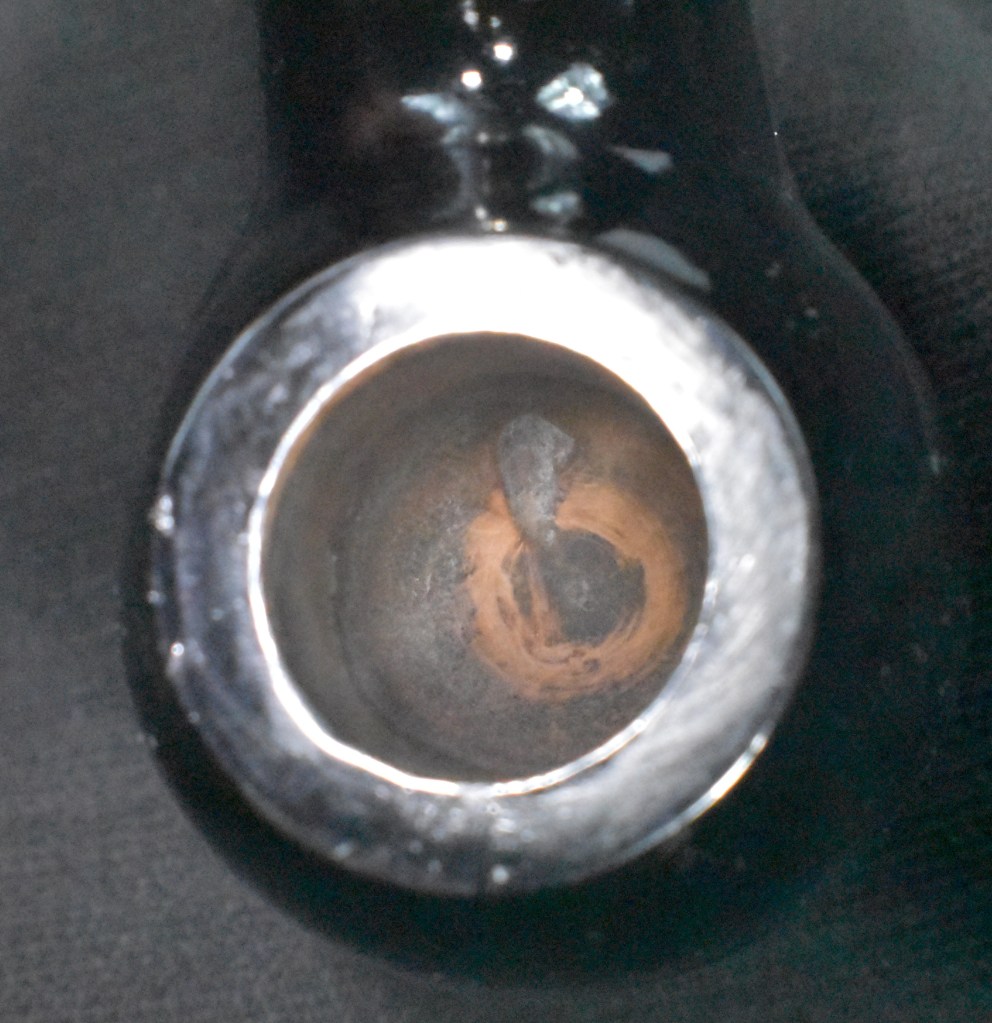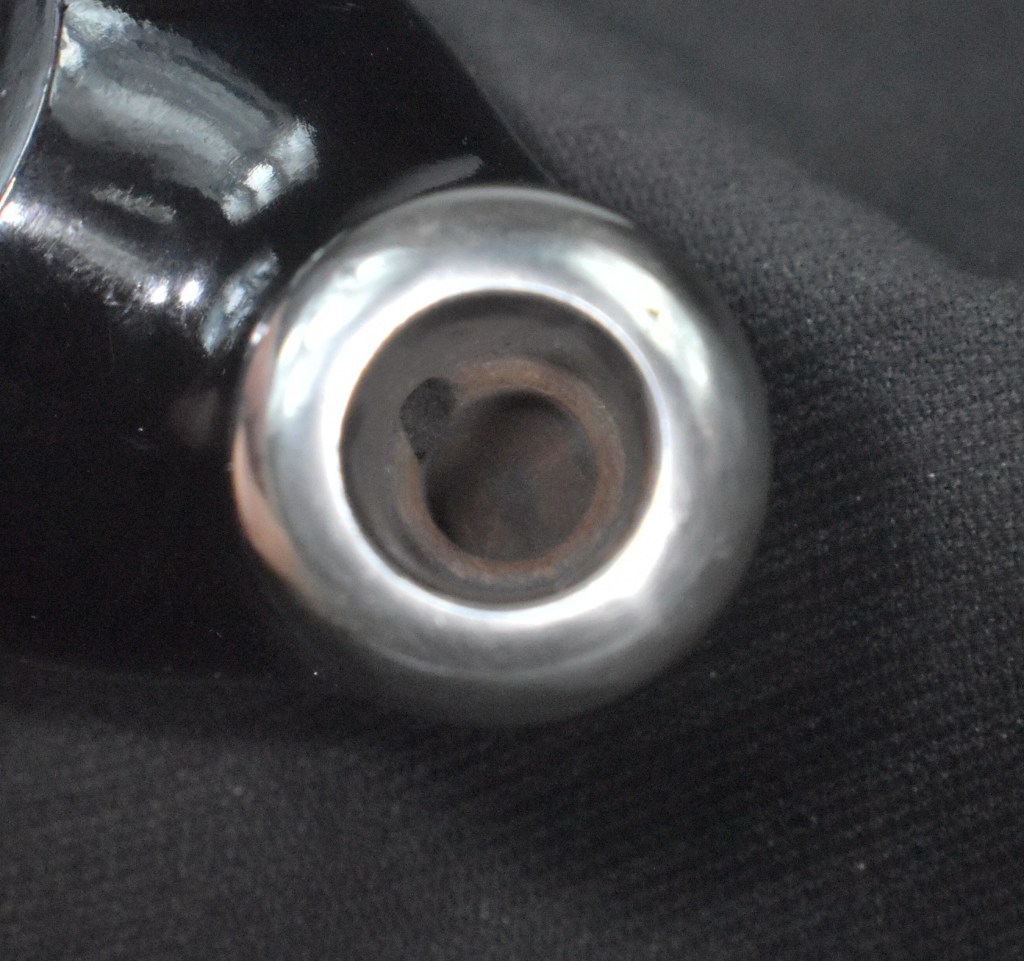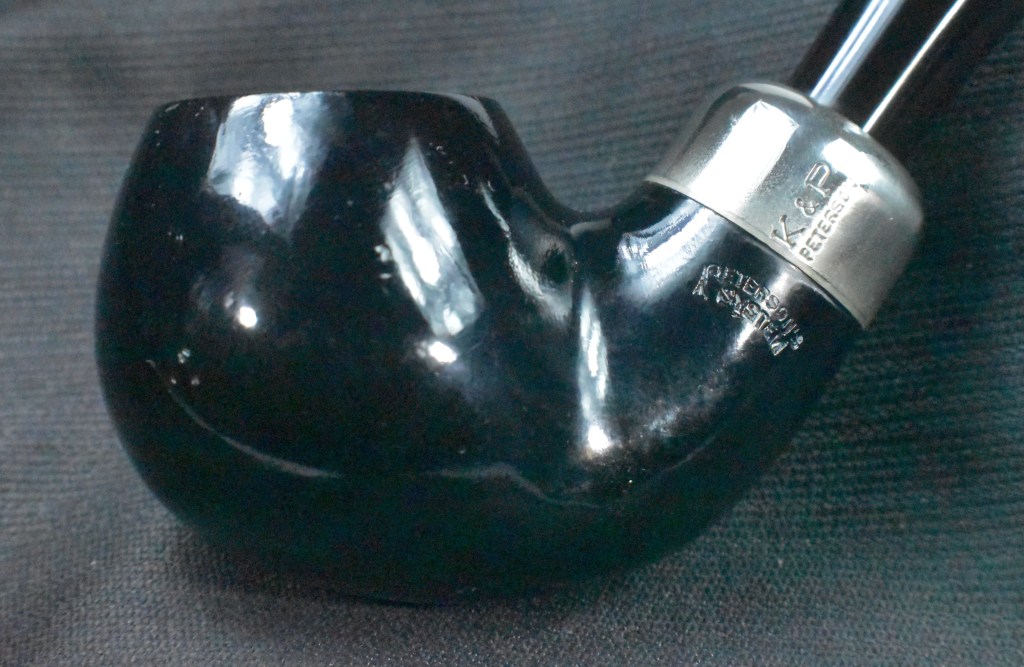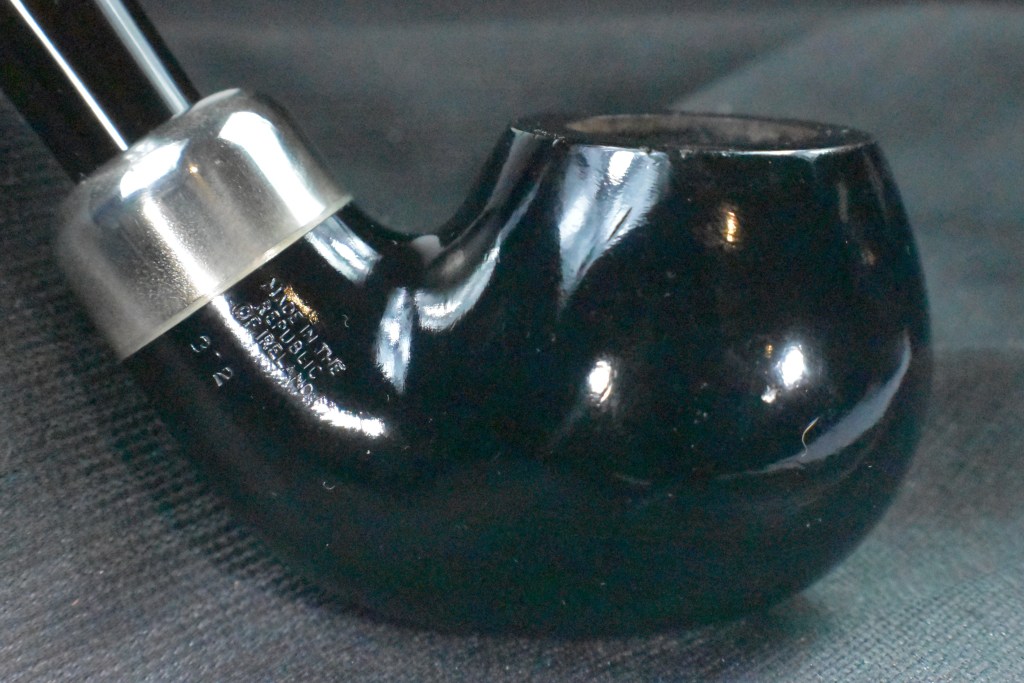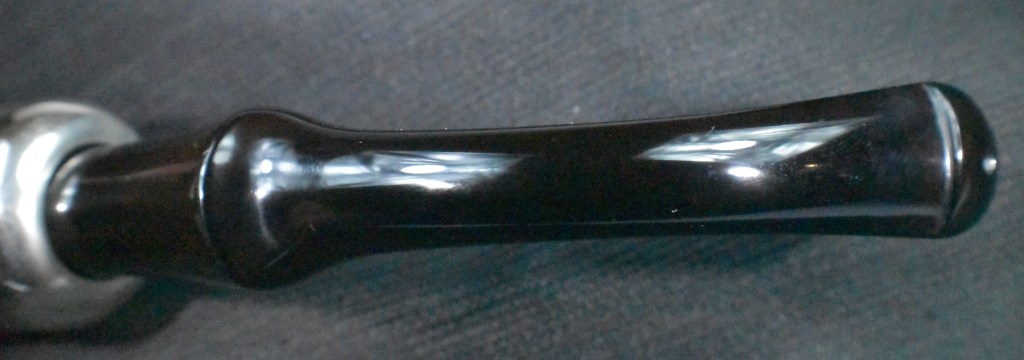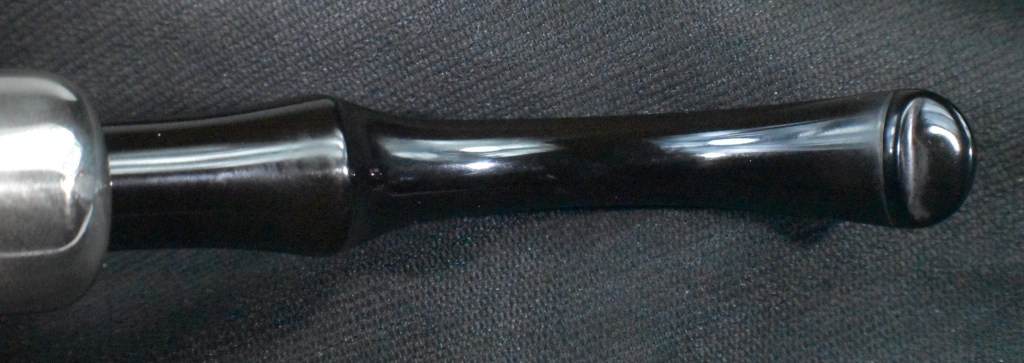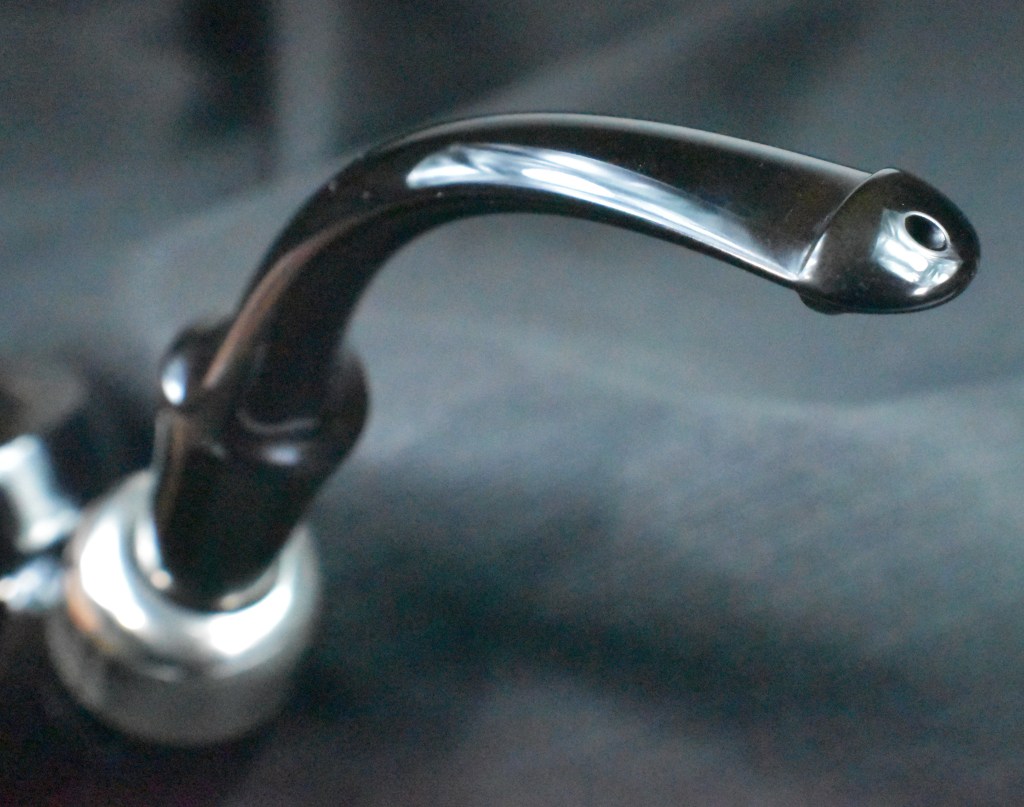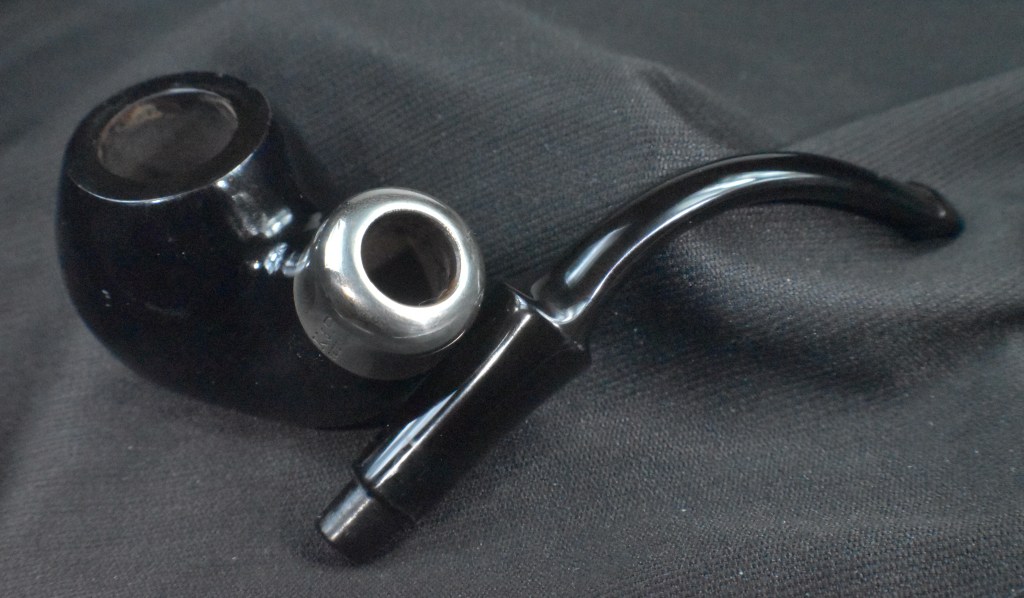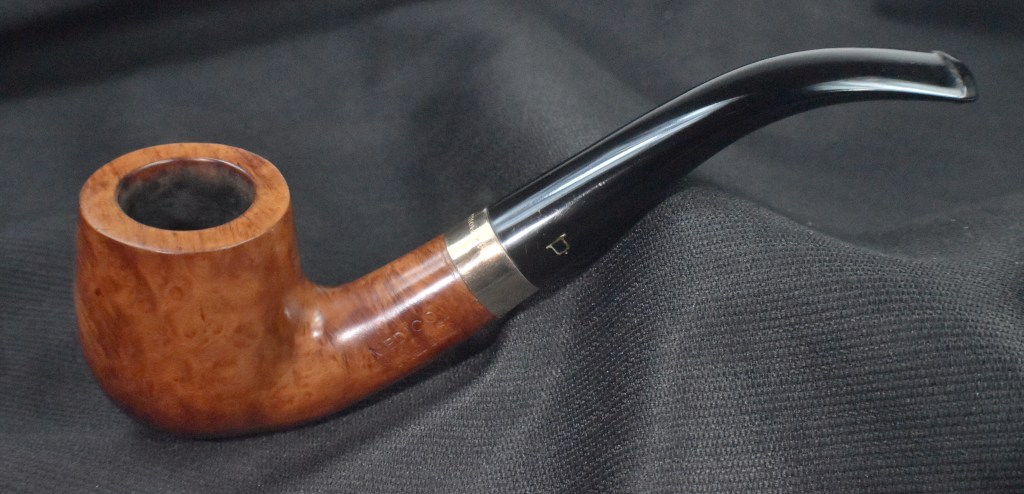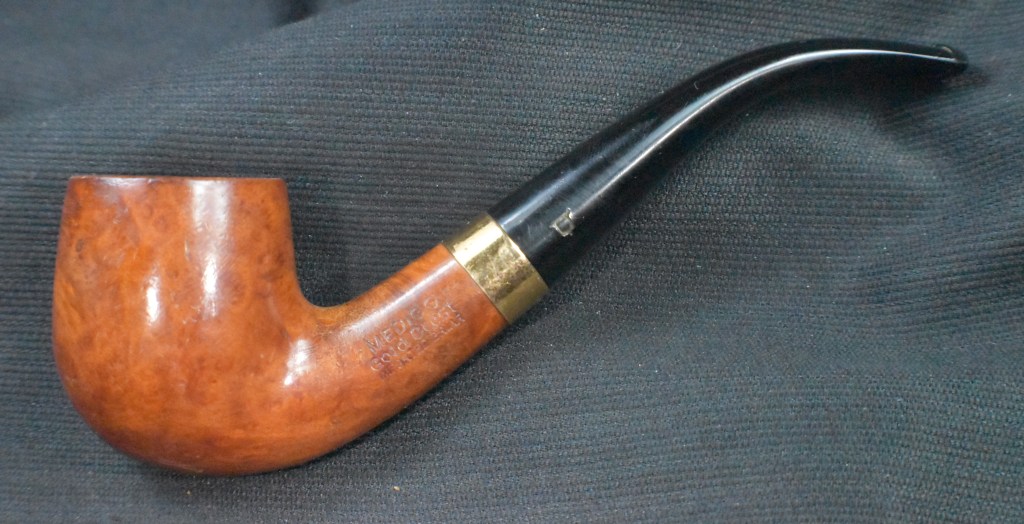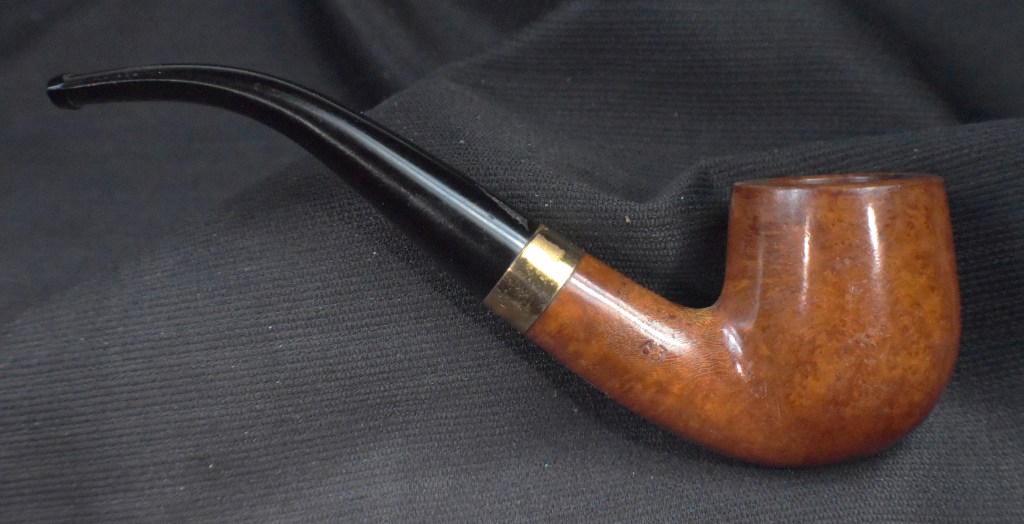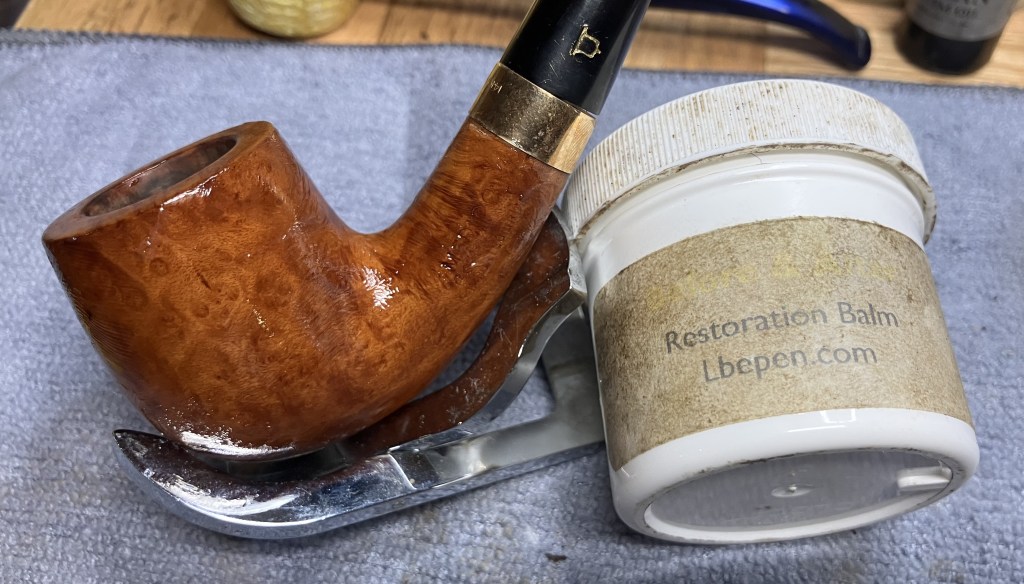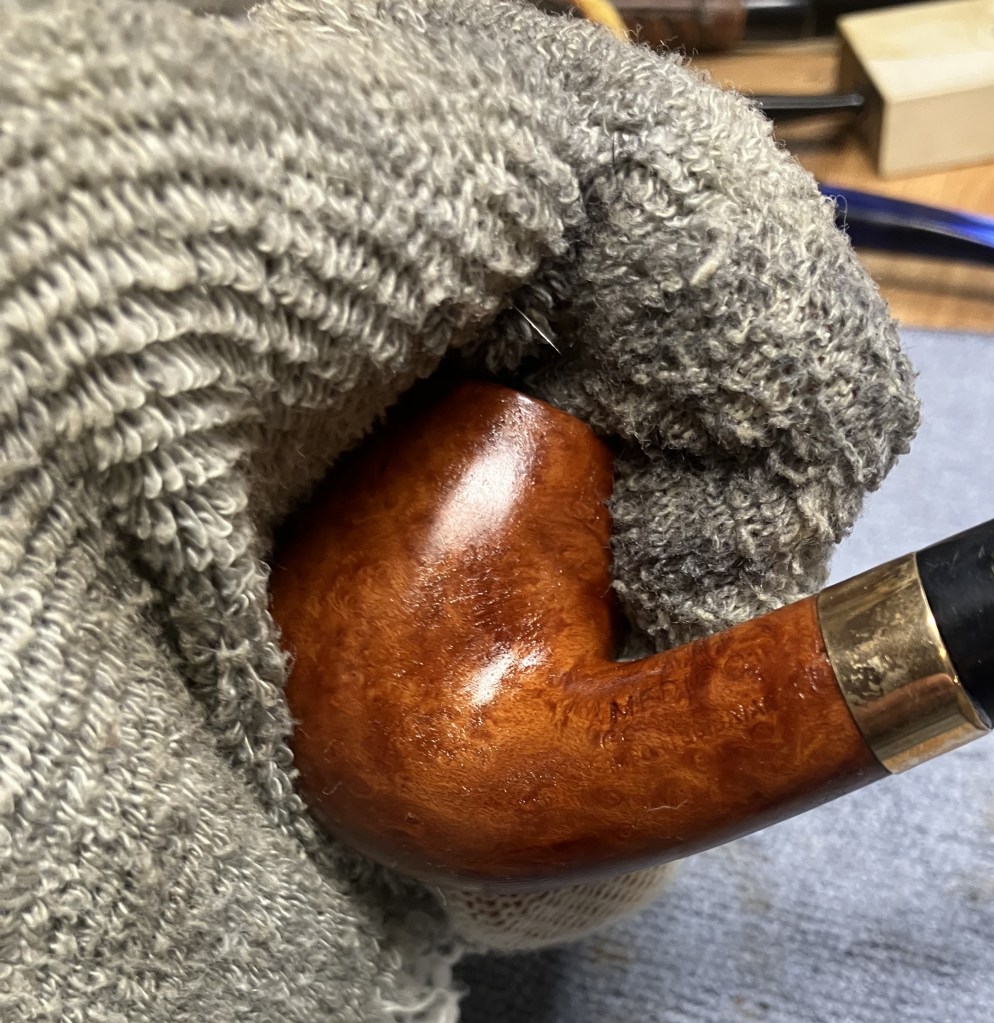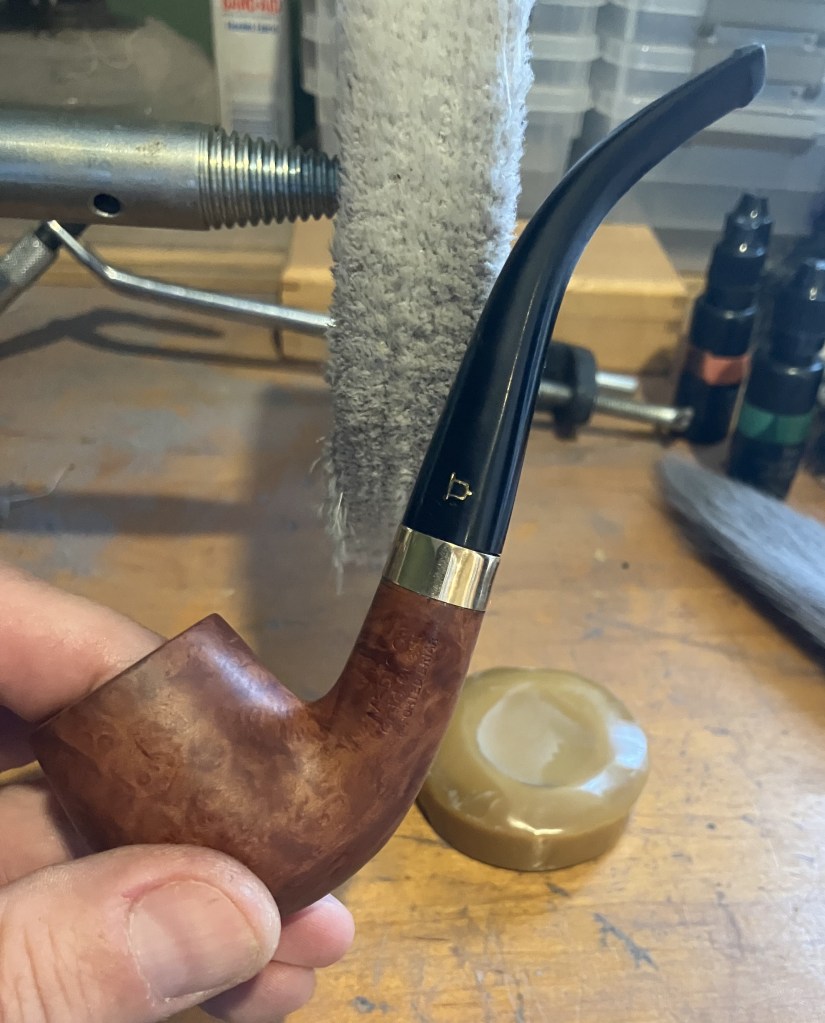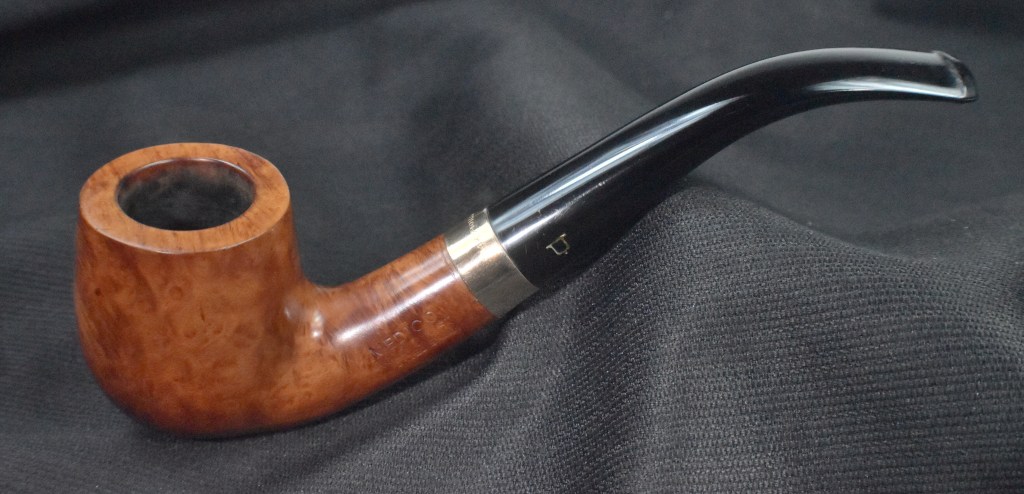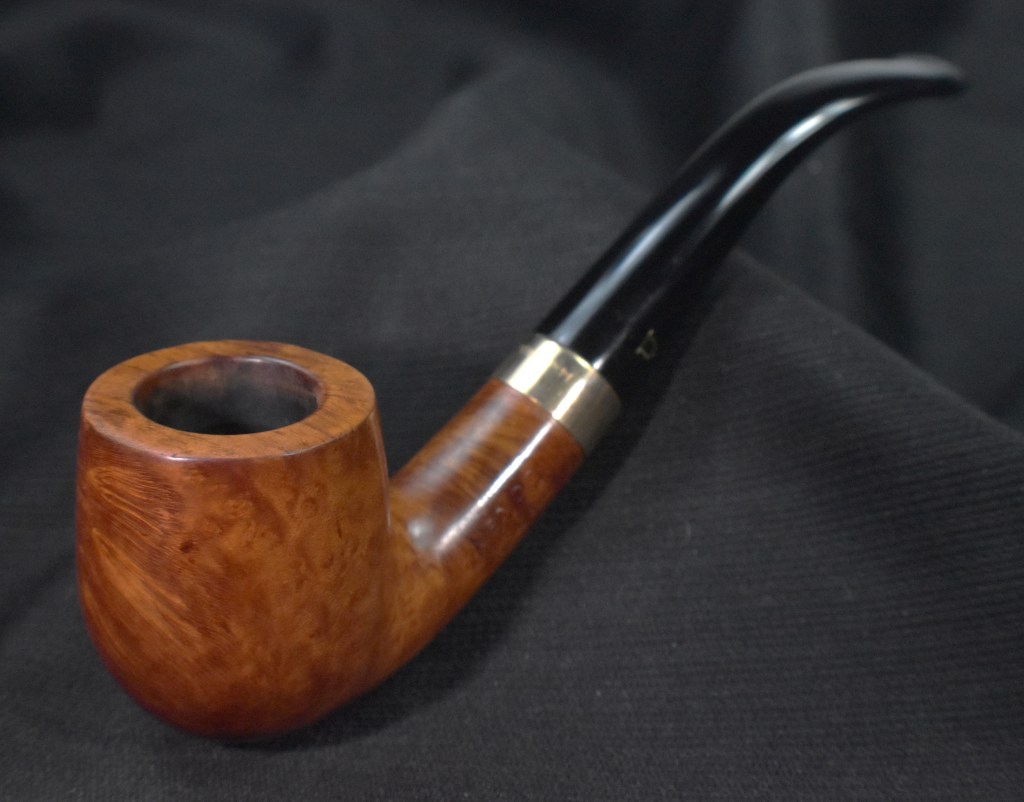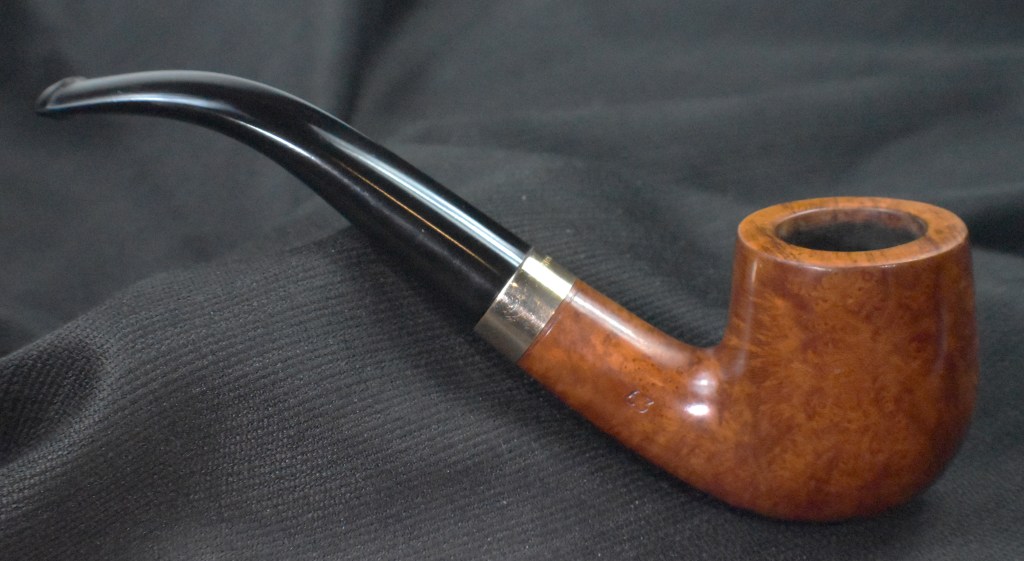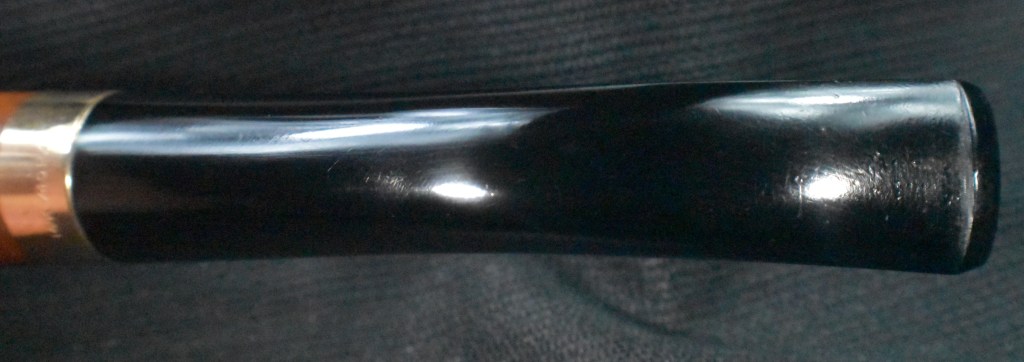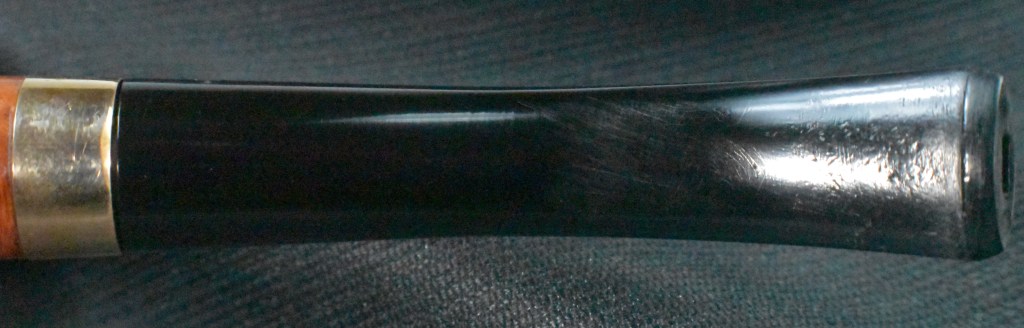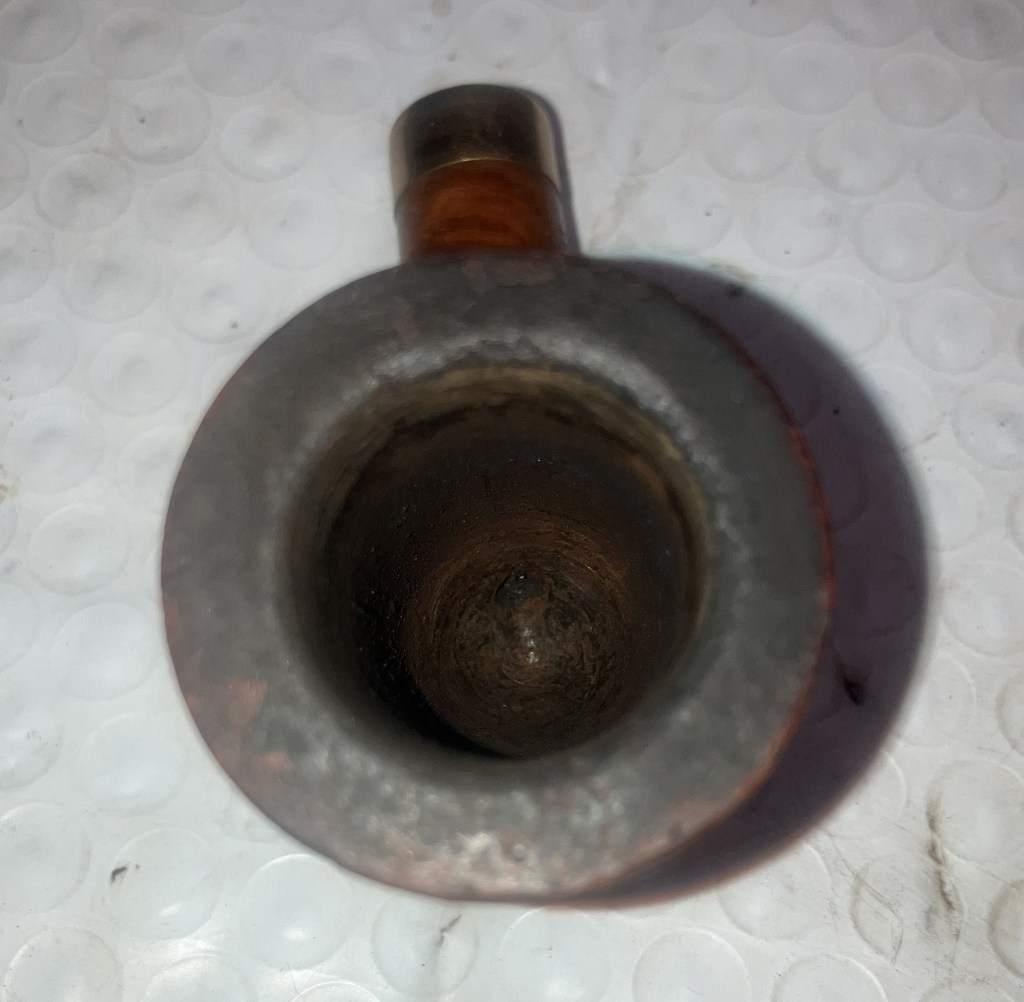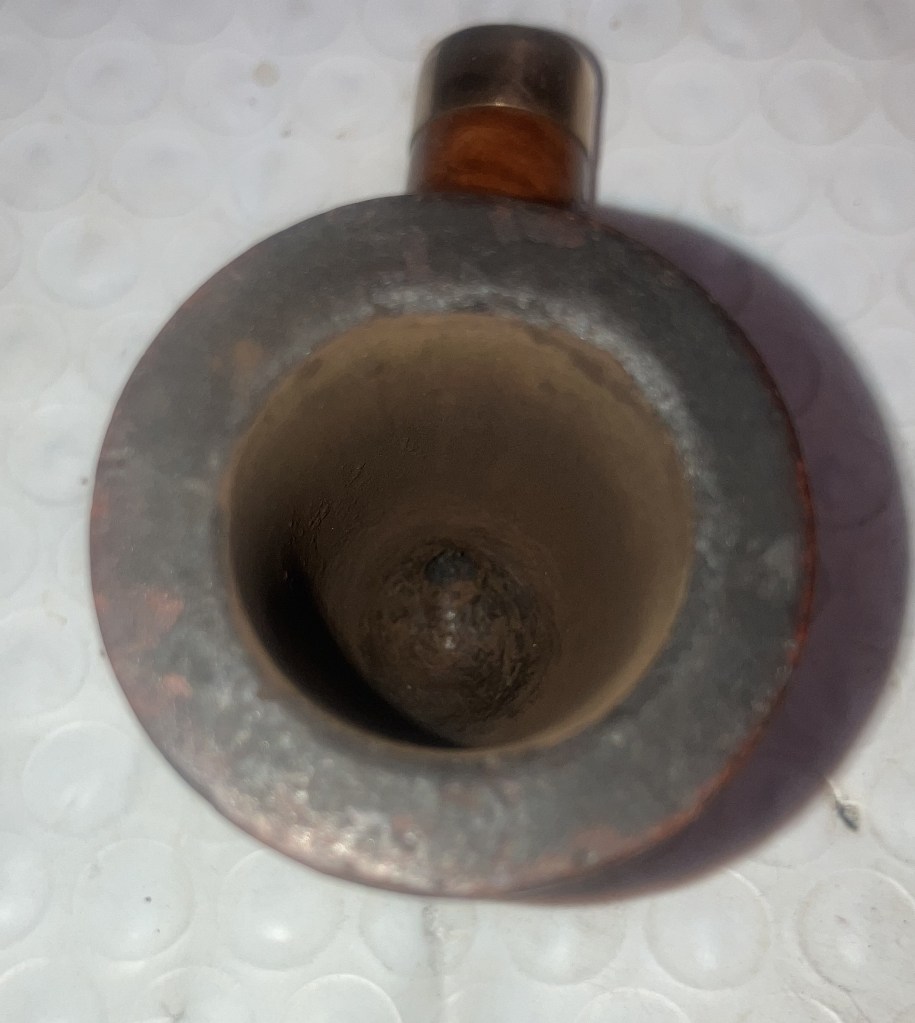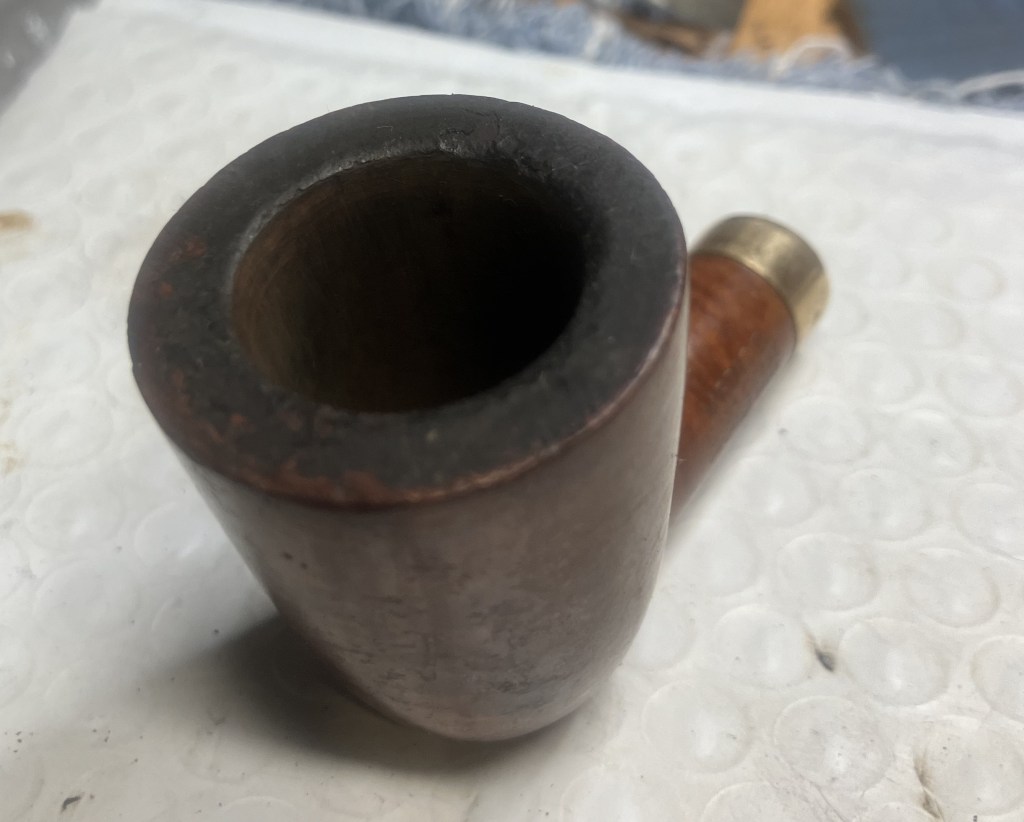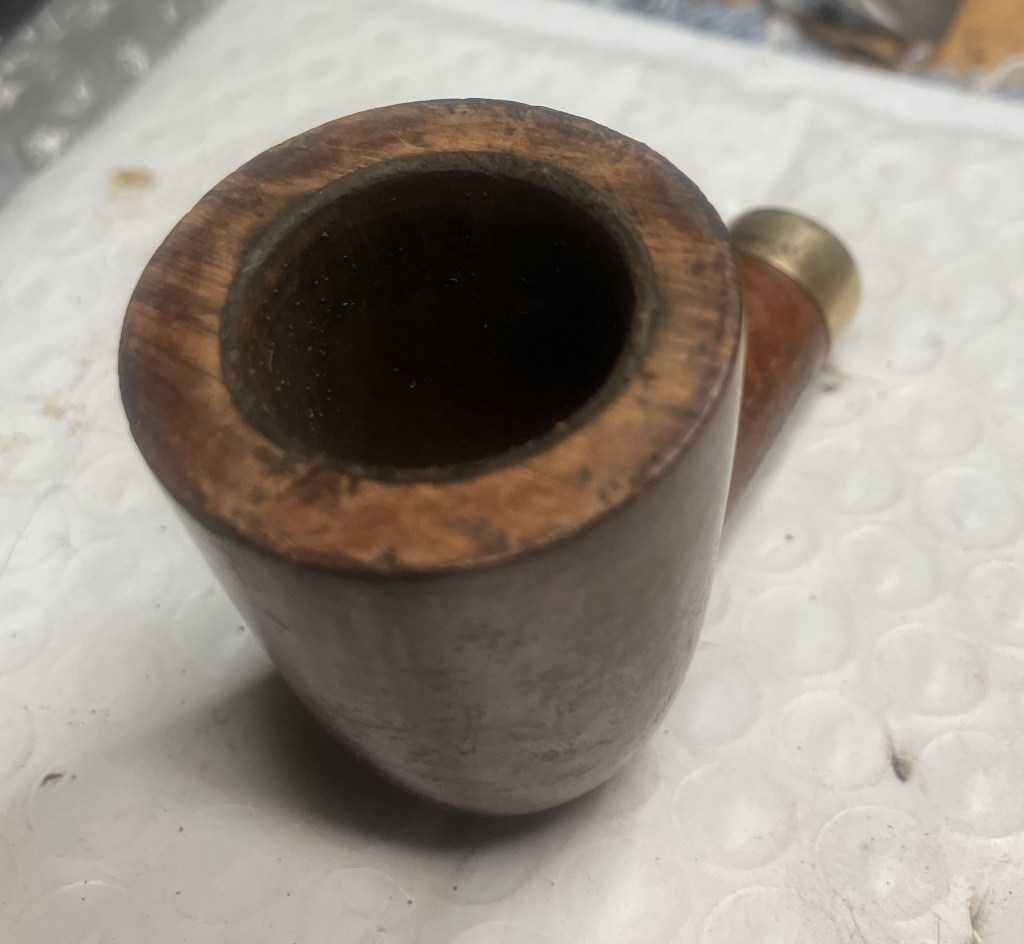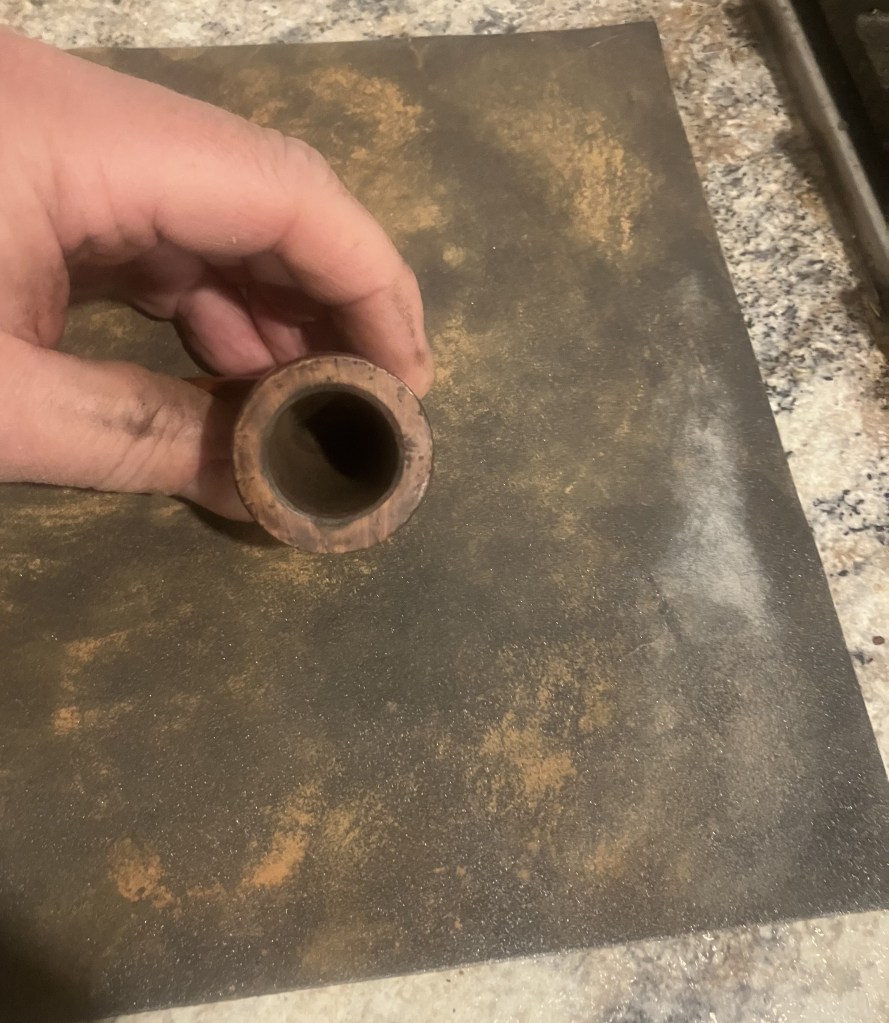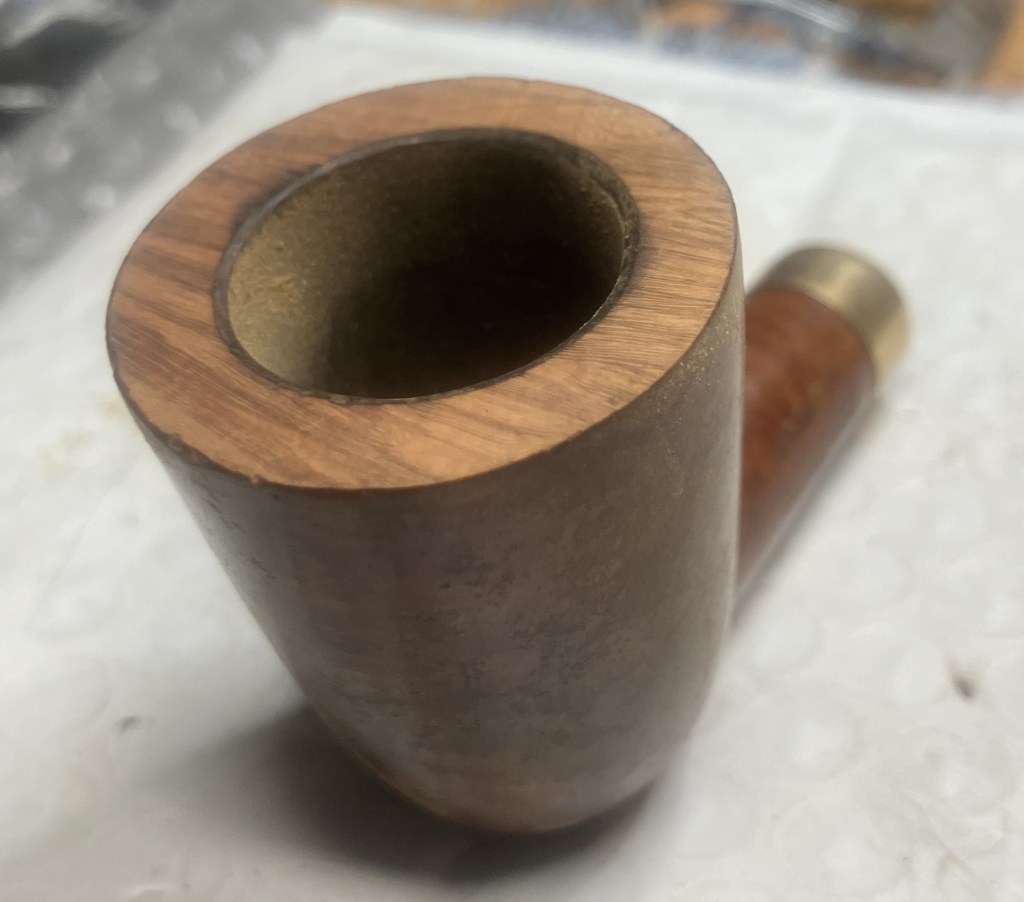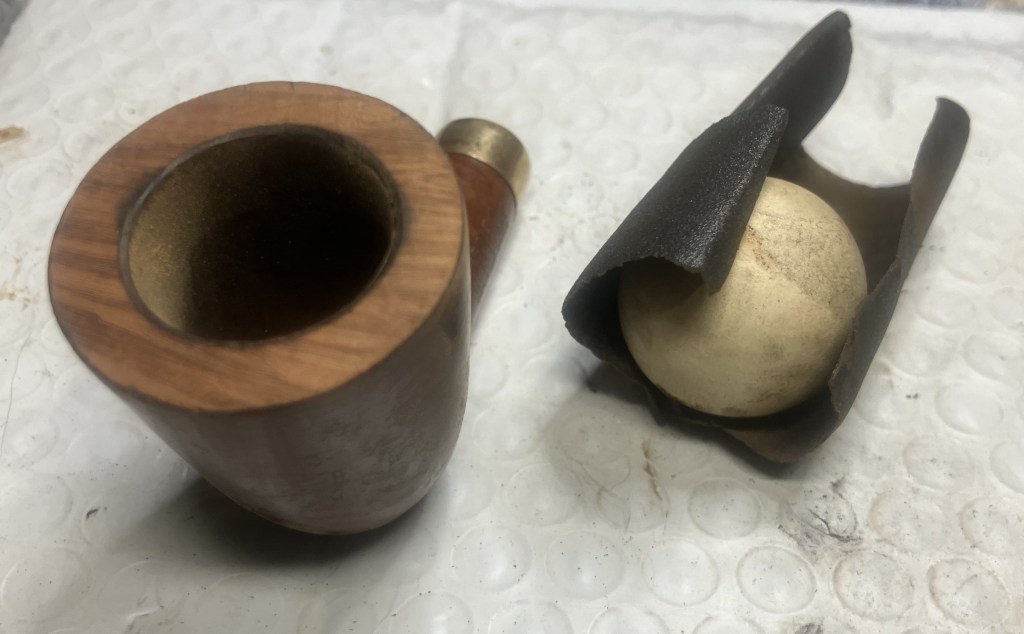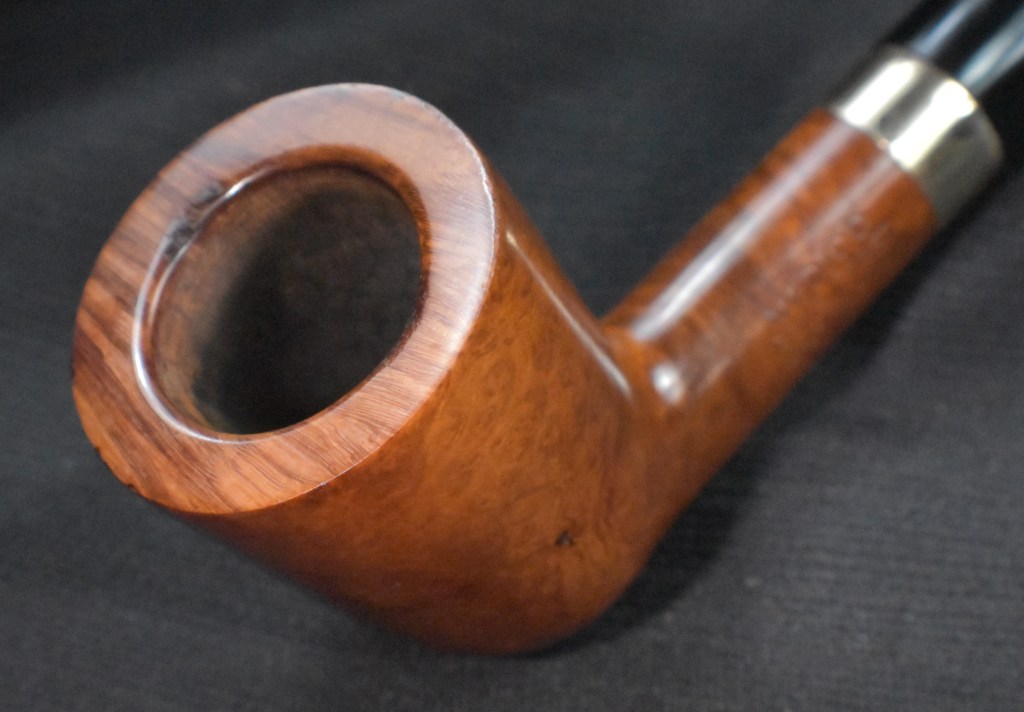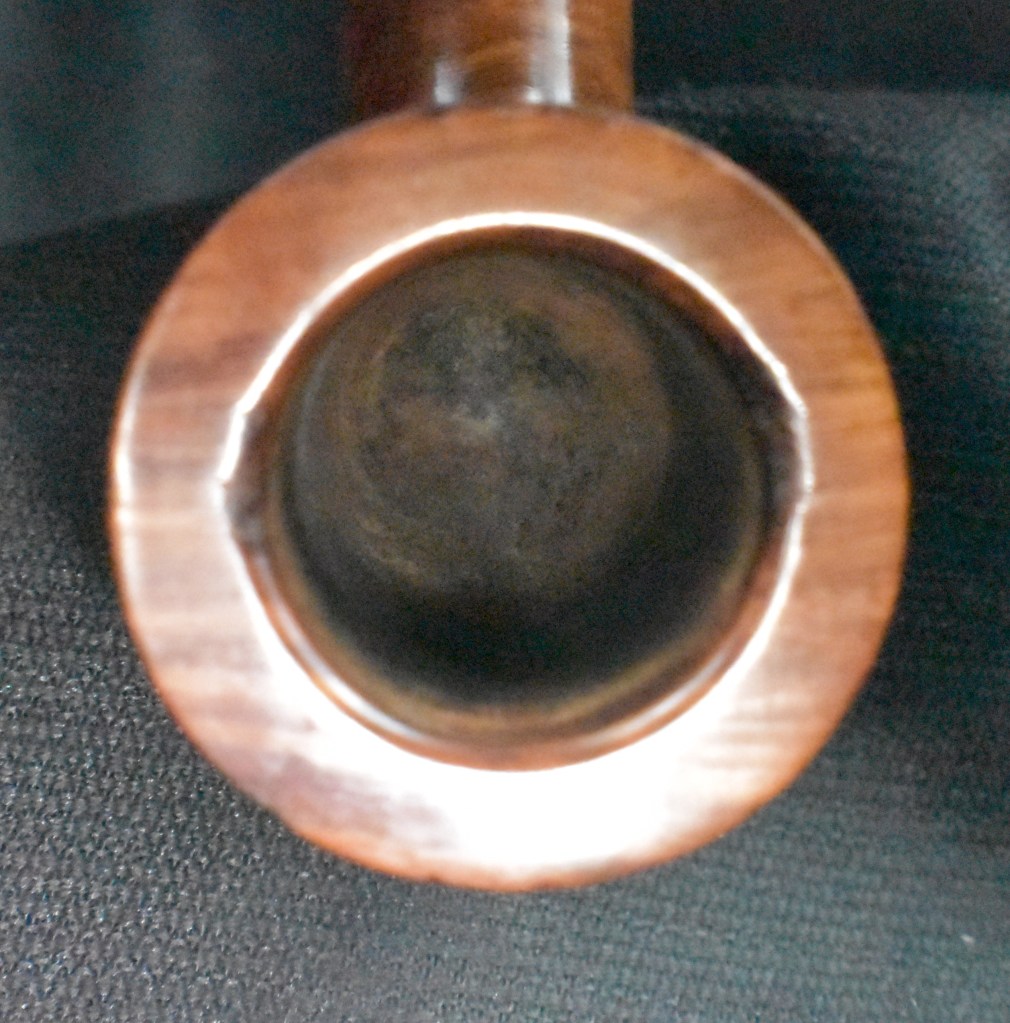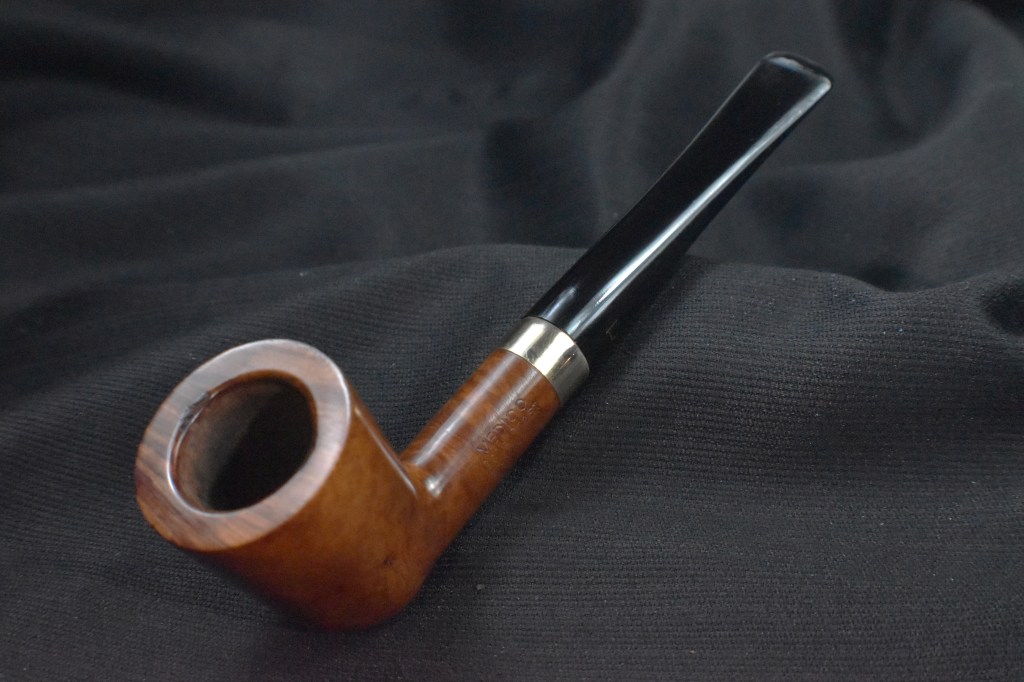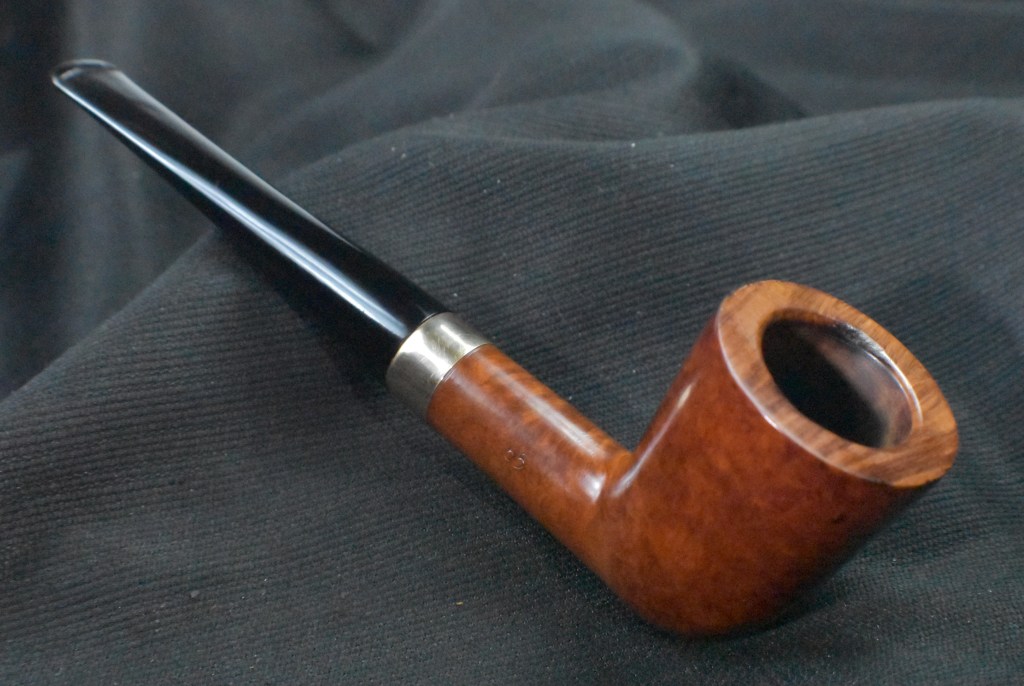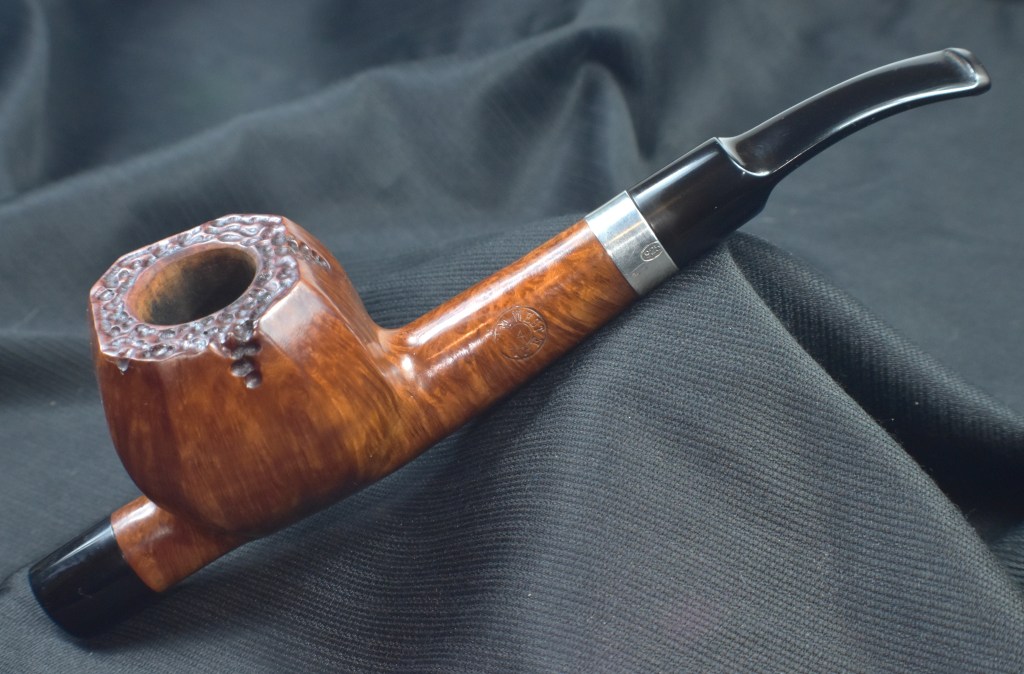
This Brebbia was picked-up as an estate pipe bound for my personal collection. I thought I needed a panel and had been searching for a Savinelli Ottogono bent billiard for what seemed like a couple of years. I saw this little darling and thought, “that is a great shape”. The auction timed out with no one wanting to pay the buyer their asking price. I watched and waited for another posting period or two and the pipe remained. I finally broke-down and made an offer that I thought was reasonable. The offer was accepted and the Brebbia made it’s way to the wilds of southeast Nebraska. Upon arrival I was amazed at the condition of the pipe. It looked far better than the description or photos indicated. Happy, but I have to admit, disappointed at the same time for the restoration would be so uneventful. Actually a cleaning and polishing would be a better description than calling this a restoration. Anyway, The below photos were taken of the pipe prior to it being worked on.
It really did look like a new pipe. You could tell that it had been smoked a couple of times by the condition of the tobacco chamber, the light cake build up and sure there were a couple of light tooth marks on the stem, but this pipe was in great shape. This one was going to be a breeze.
Background
The official Brebbia site, Pipe Brebbia | Official Website and Online Shop has a very nice history of the company section, History. This is recommended reading for those more interested in the brand and history. In a nutshell, Brebbia and Savinelli are like siblings. They grew up together then split off and went their separate ways. Like I said, a nutshell – a very small one too.
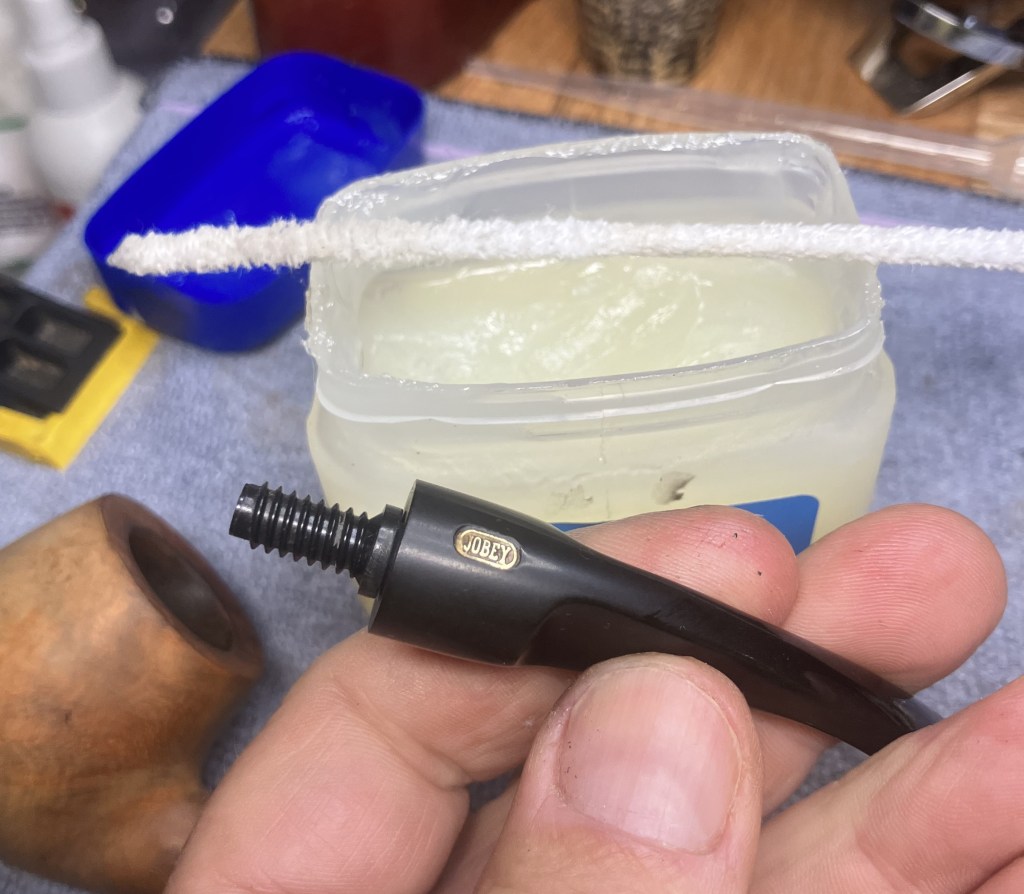
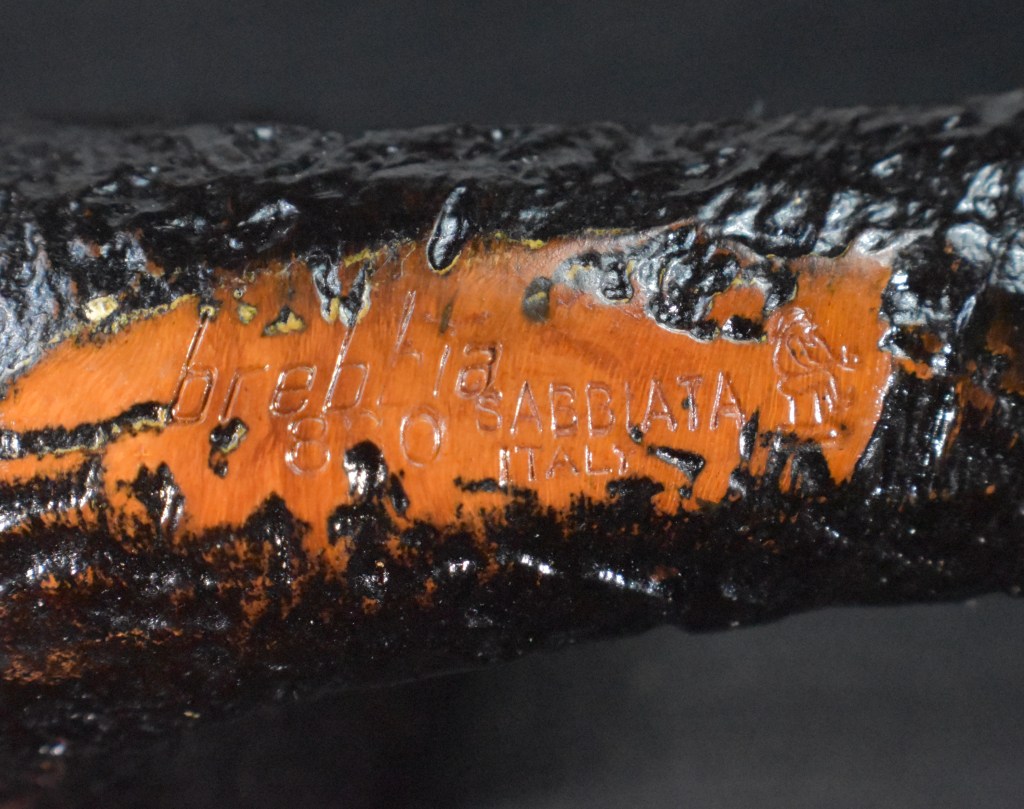
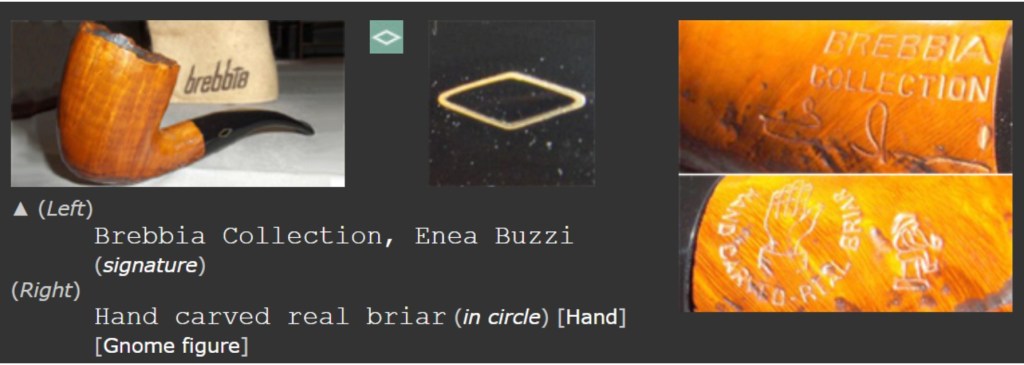
Additional reading about Brebbia can be found at Brebbia – Pipedia. As for the Brebbia logos, Brebbia — Pipes : Logos & Markings has a nice selection of photos including this one showing both the stem logo and the “Golden Gnome” as on the Brebbia in hand:
(Brebbia — Pipes : Logos & Markings). As for the date of production of this pipe, I could not find anything specific to the Sabbiata line other than the following:
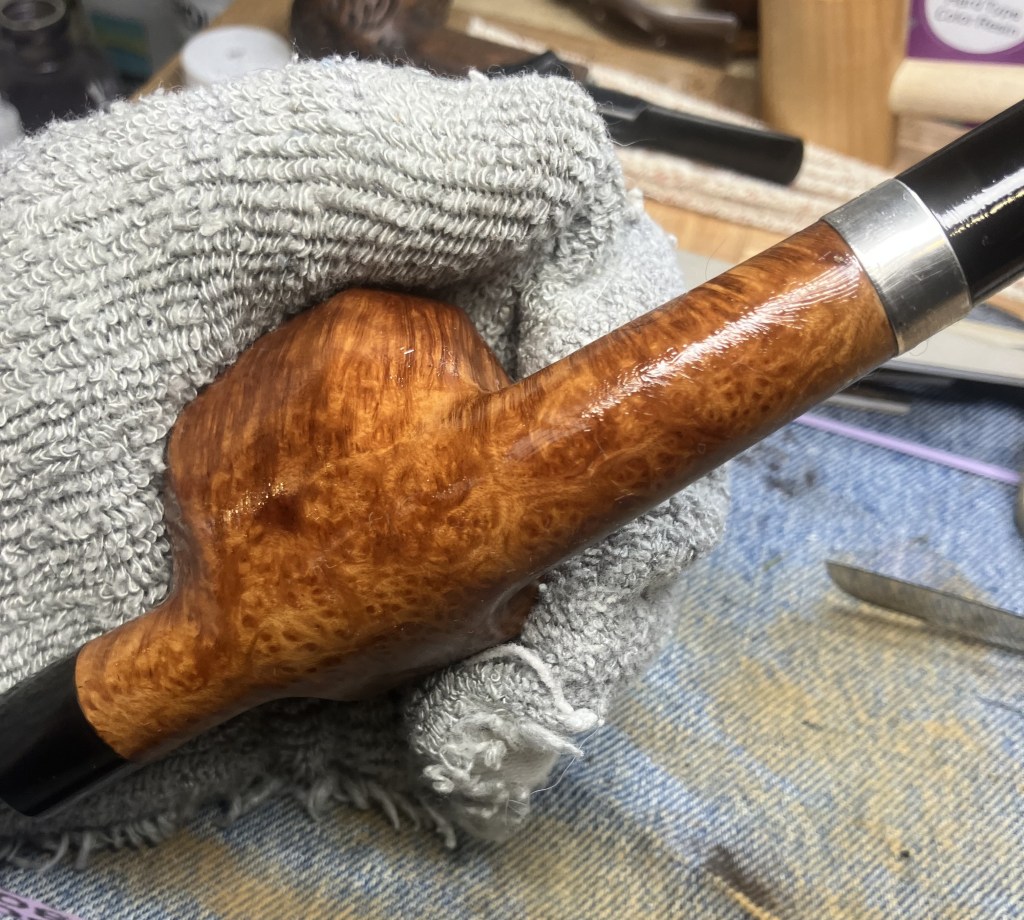
After the photo shoot for the before photos the Brebbia made it to the workbench. The verdict is still out on the new cloth surface protection towels. They look OK for photography but everything seems to snag on the fabric and wants to lift the cloth from the surface. I think I prefer the denim pieces but they were getting very stained.
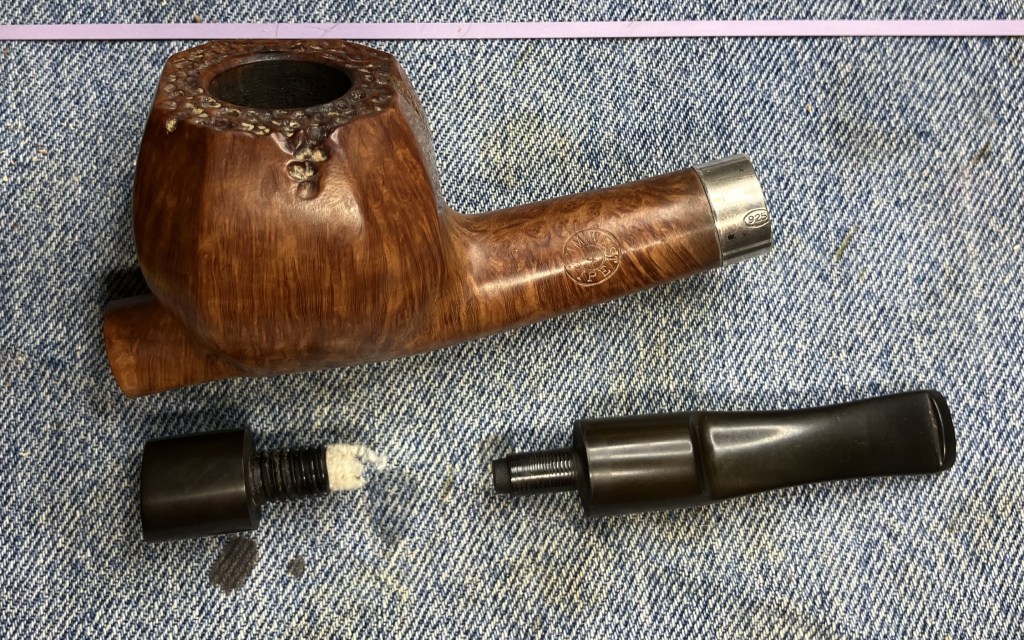
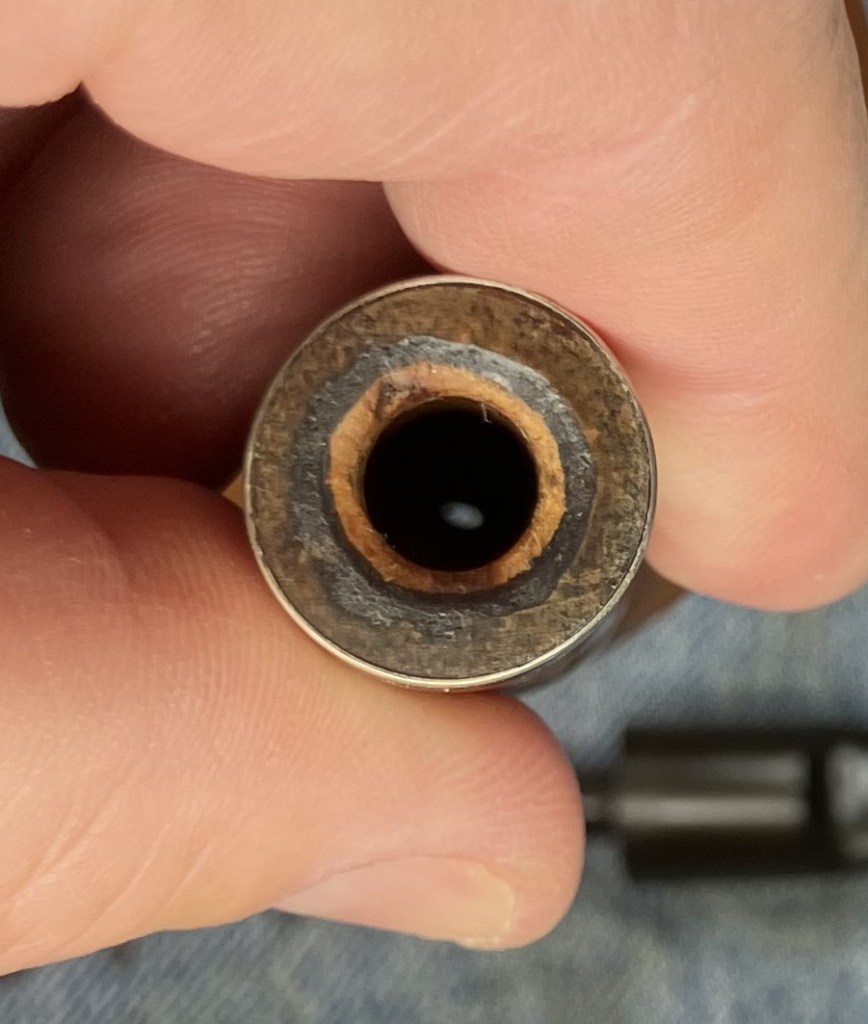
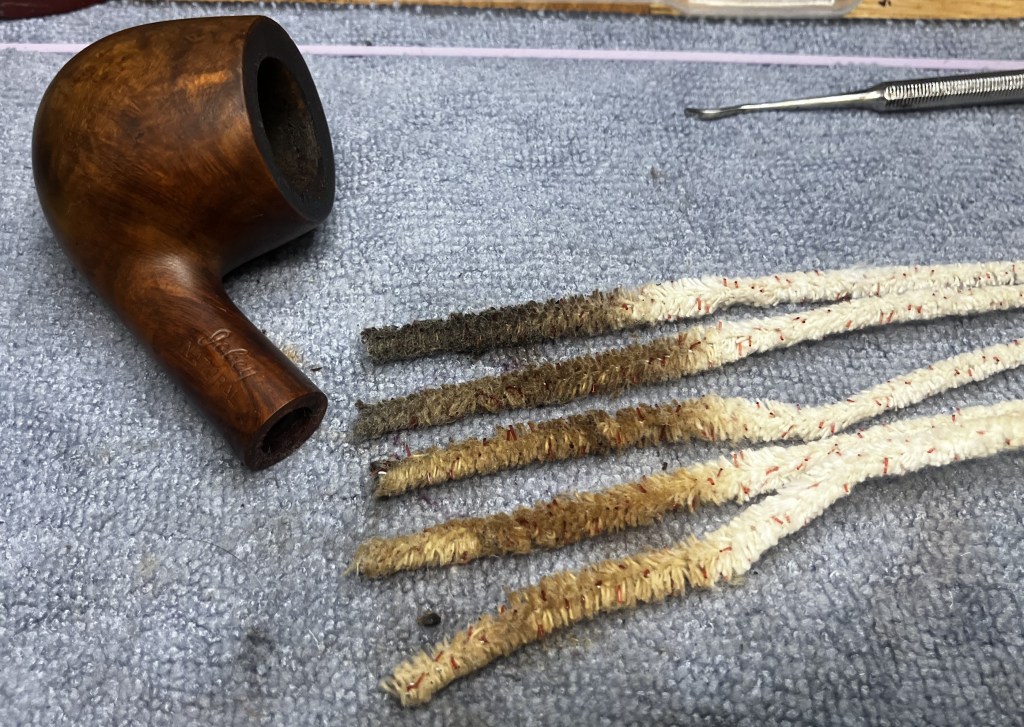
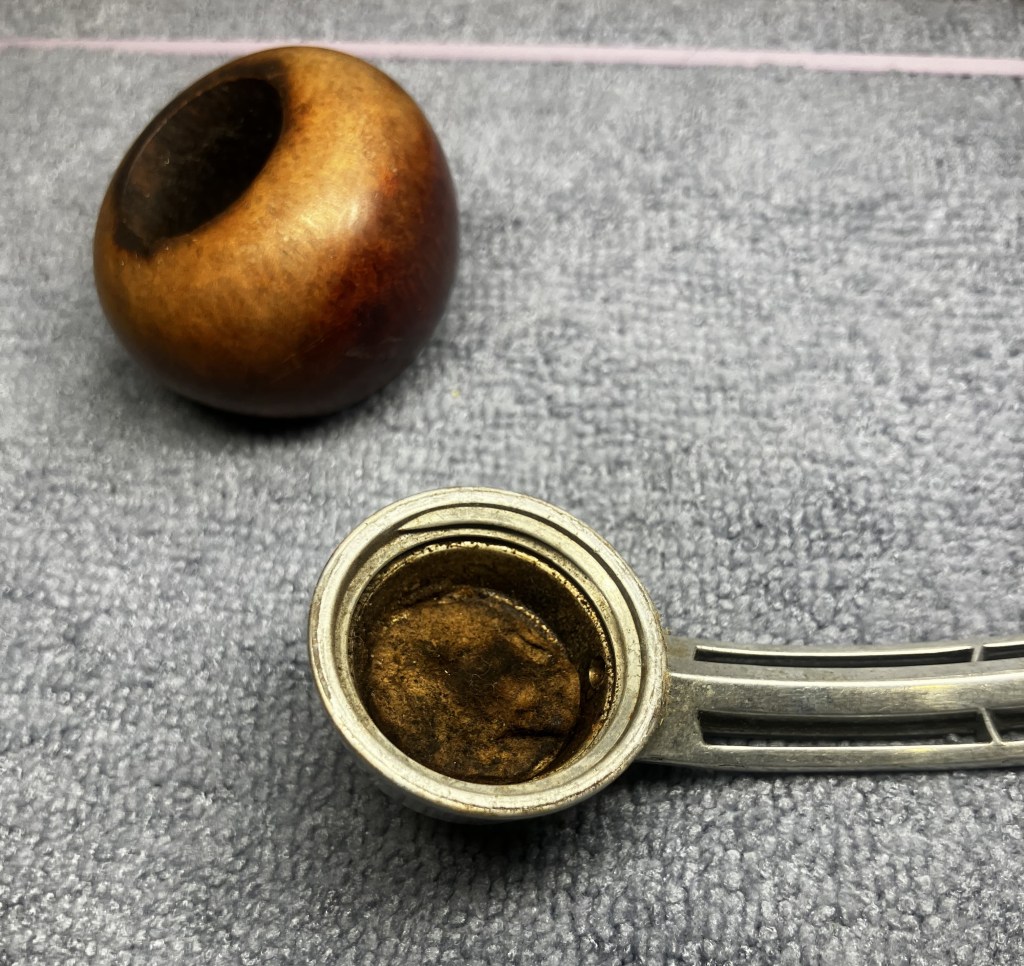
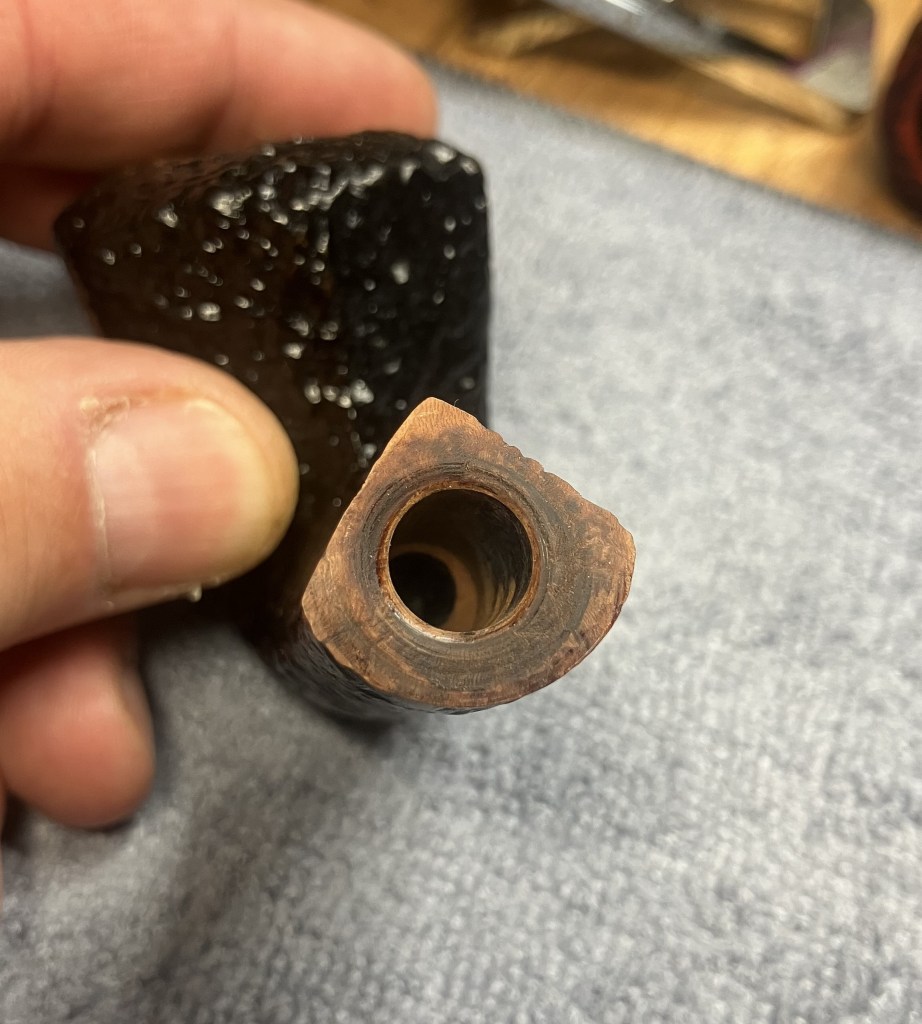
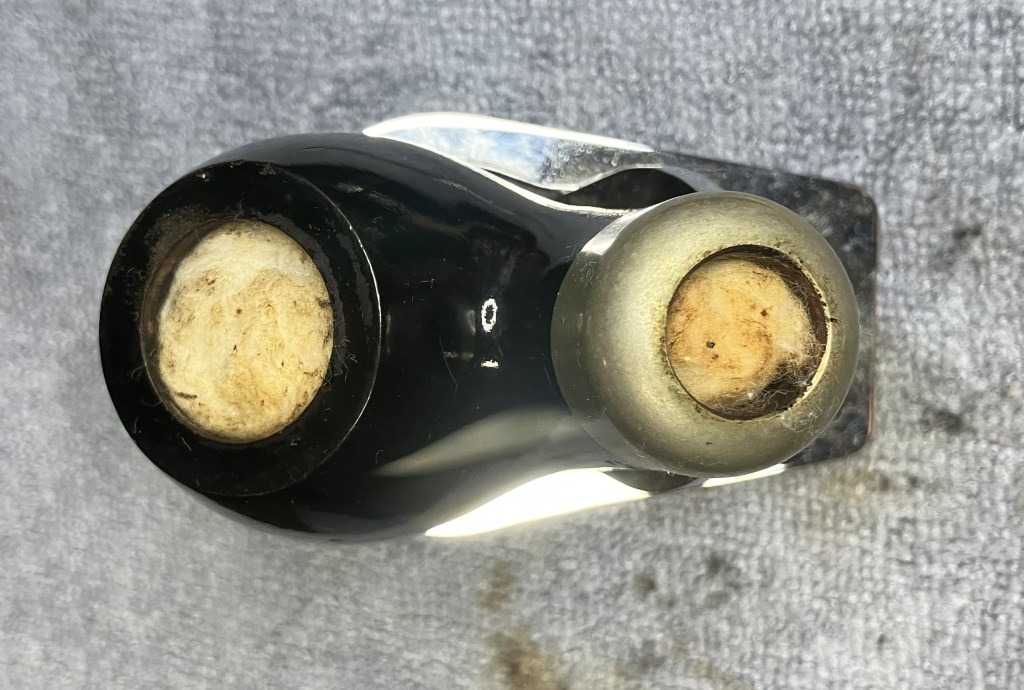
A look down the mortise showed a very clean shank.
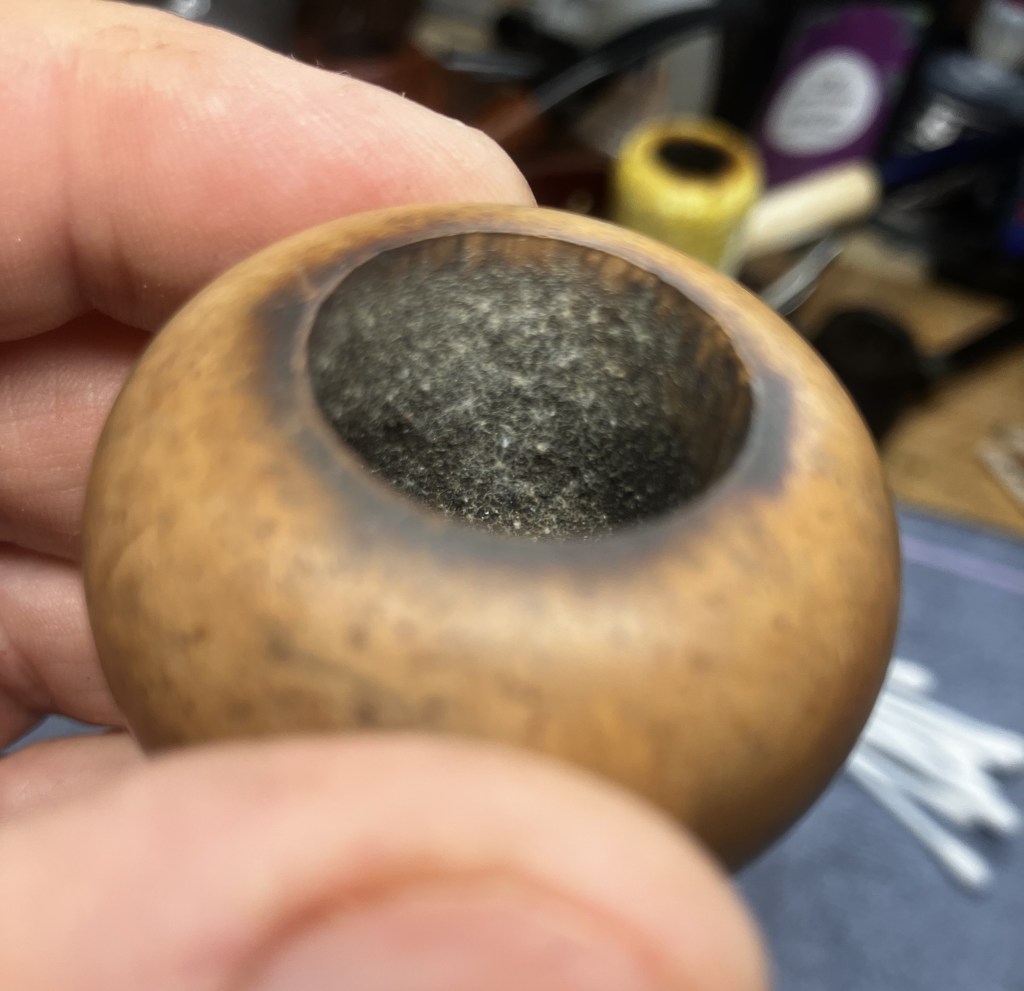
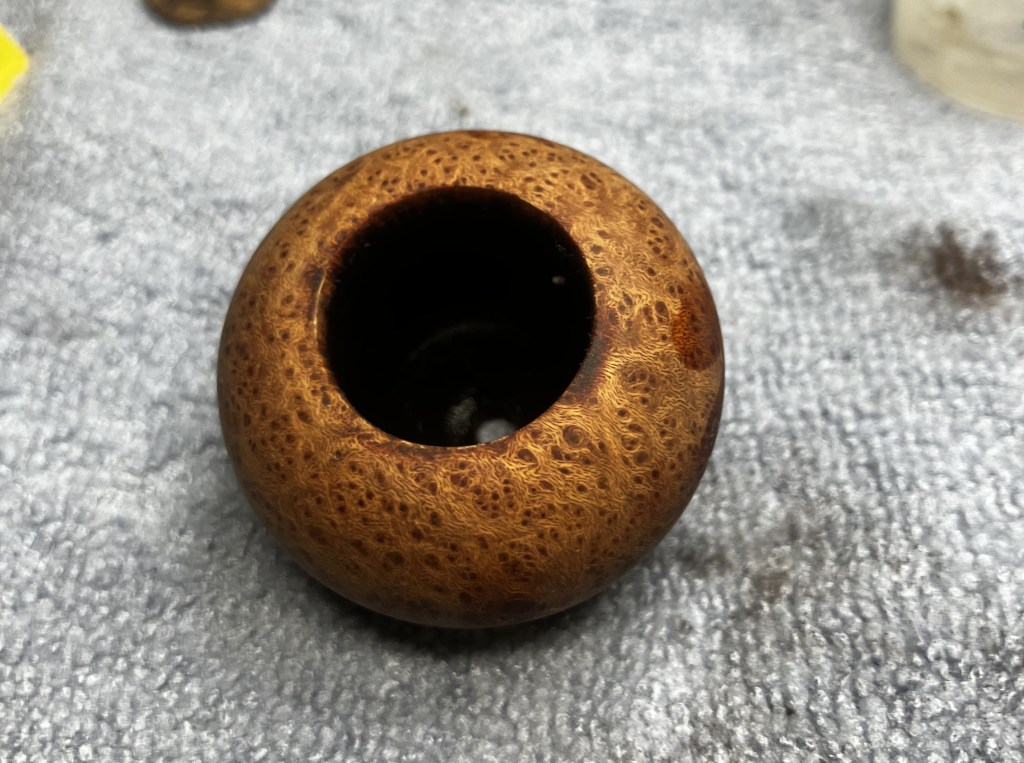
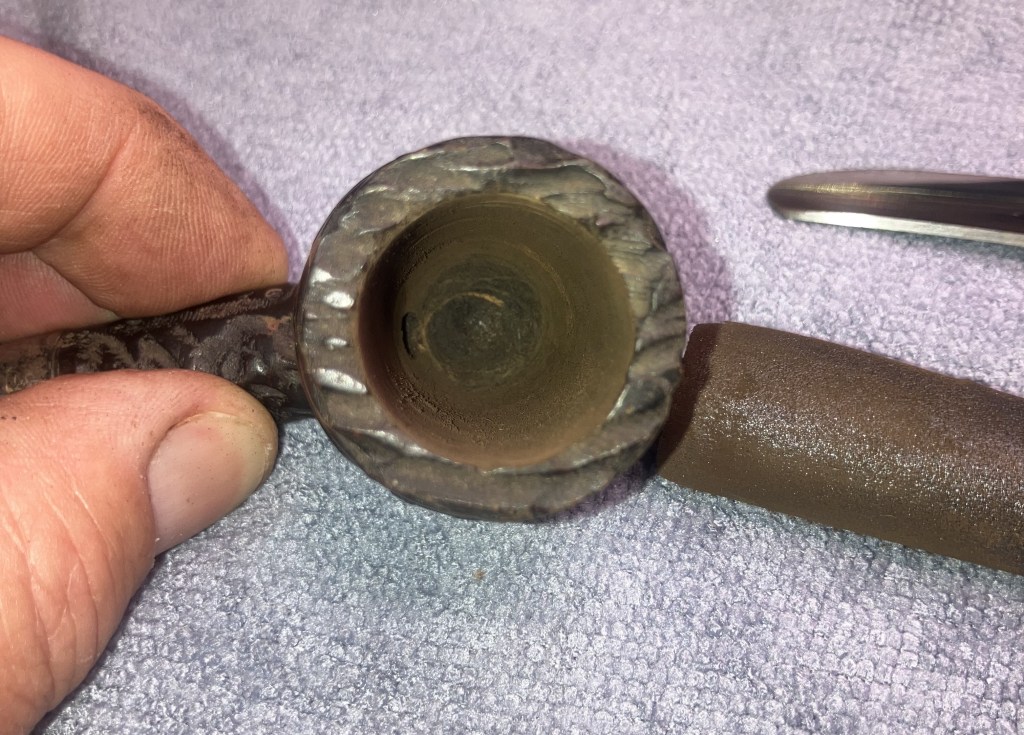
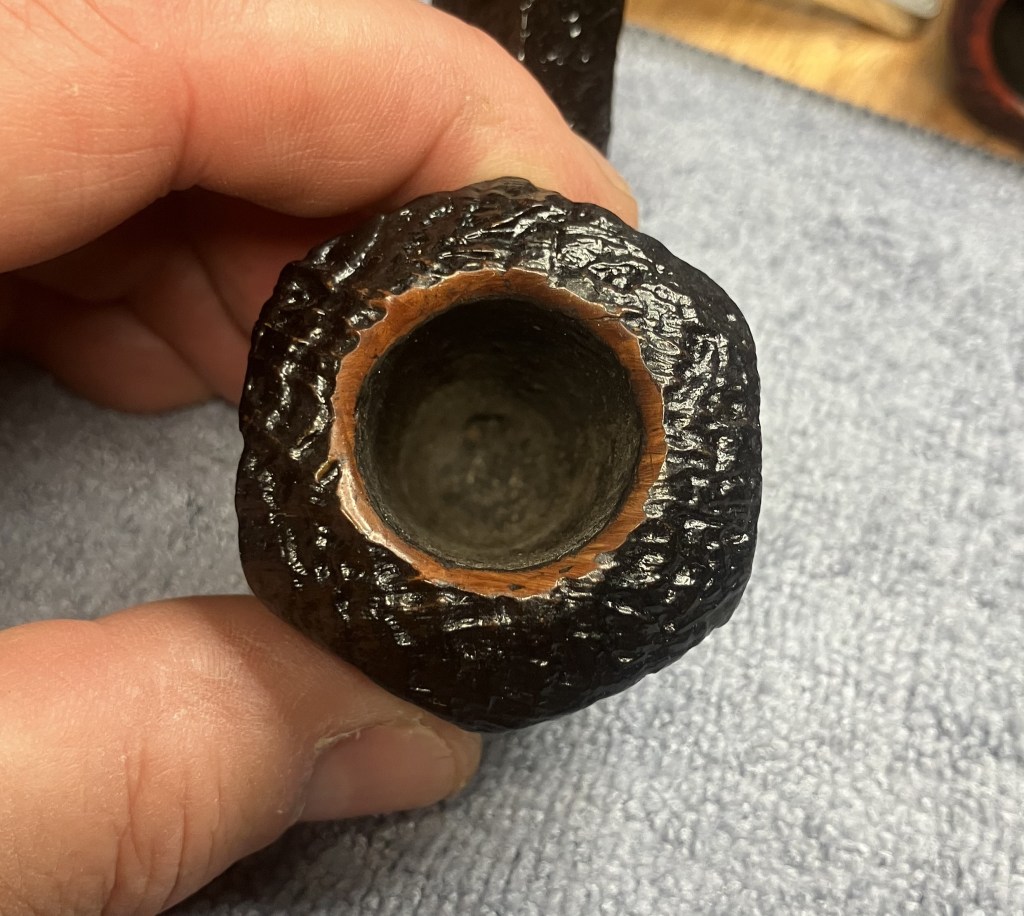
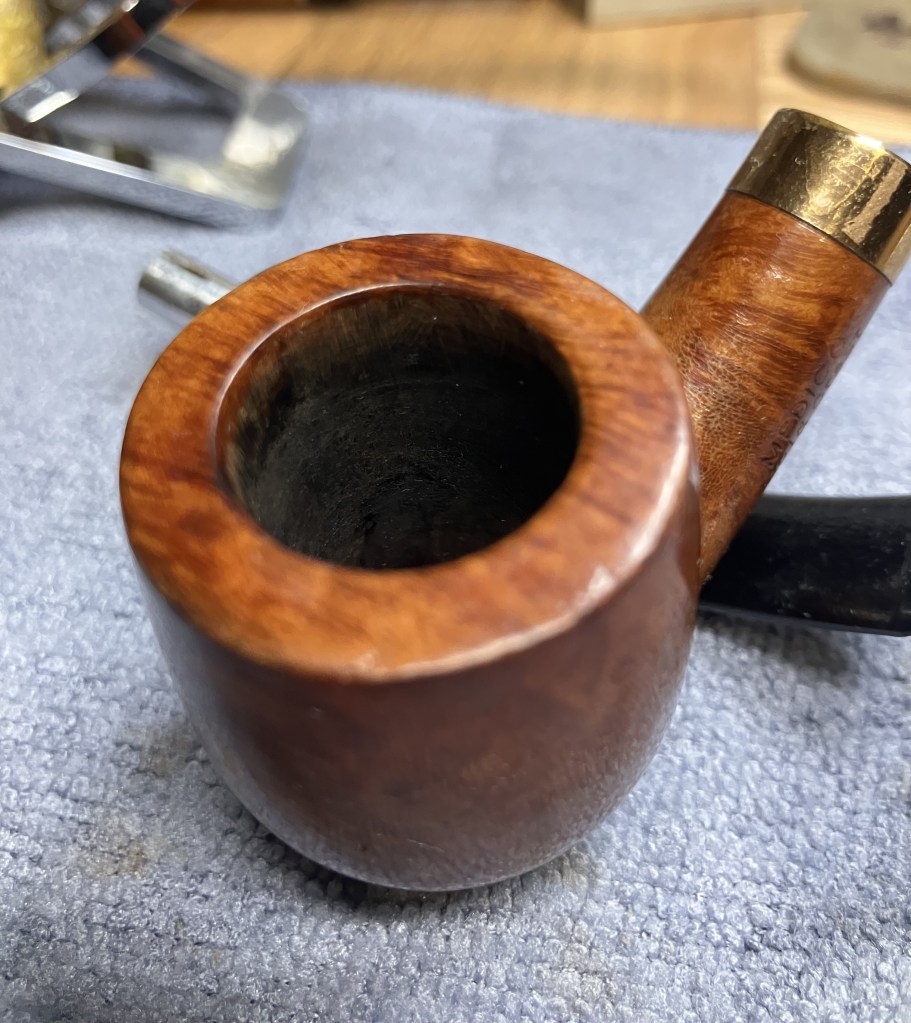
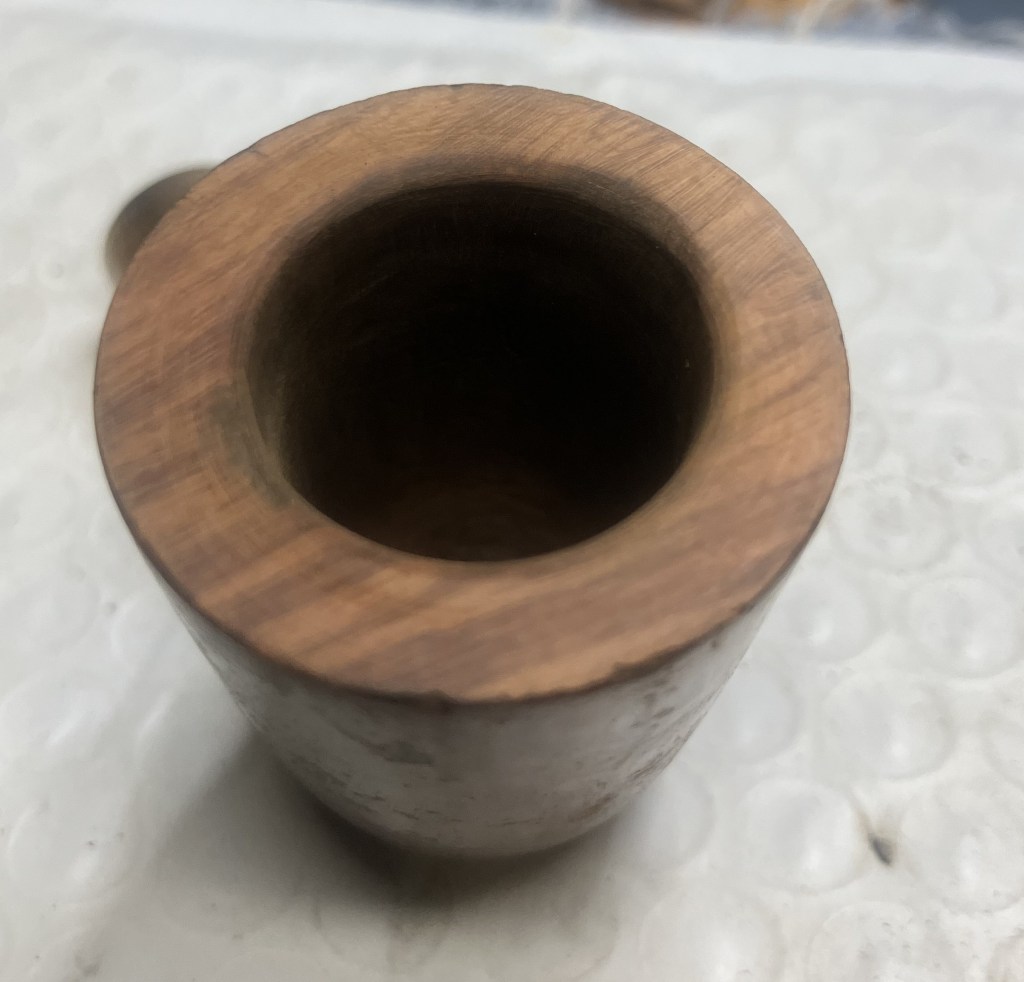
The tobacco chamber was also clean but did show signs of use.
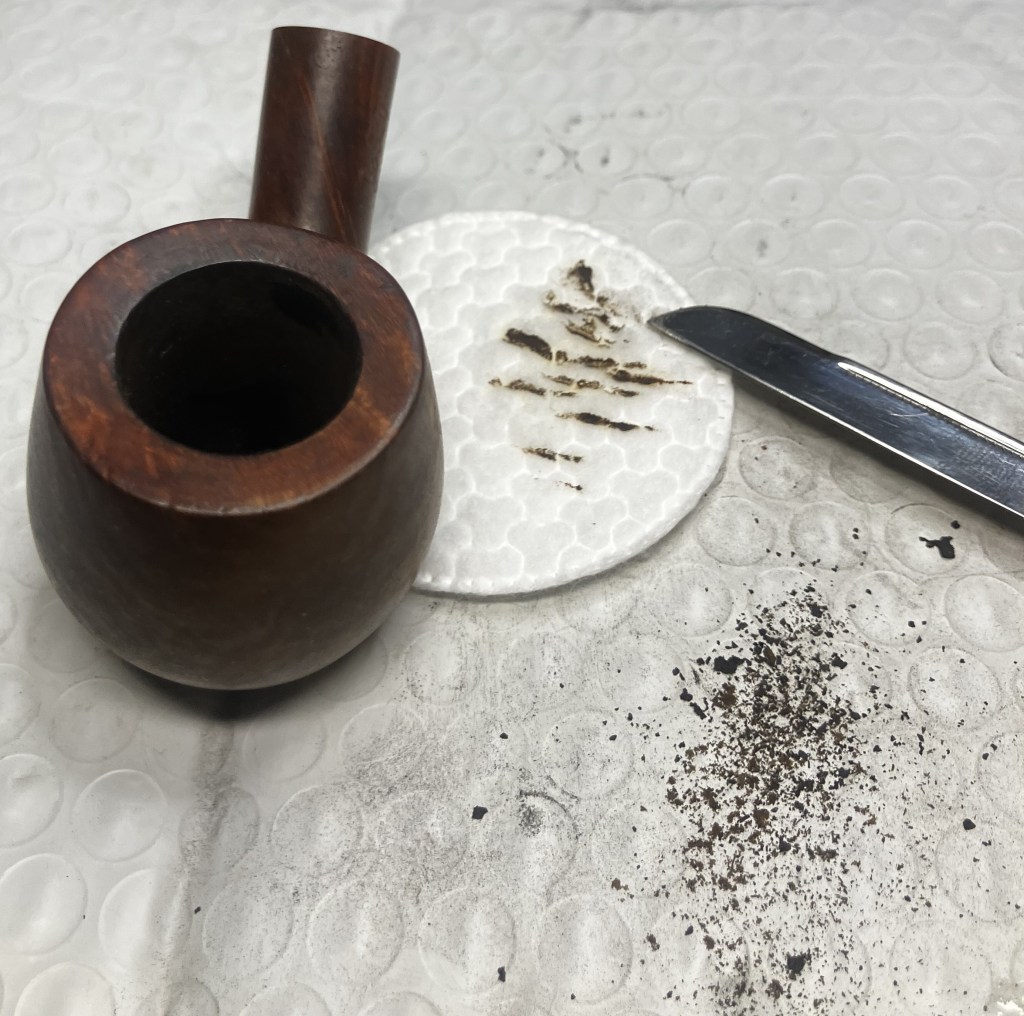
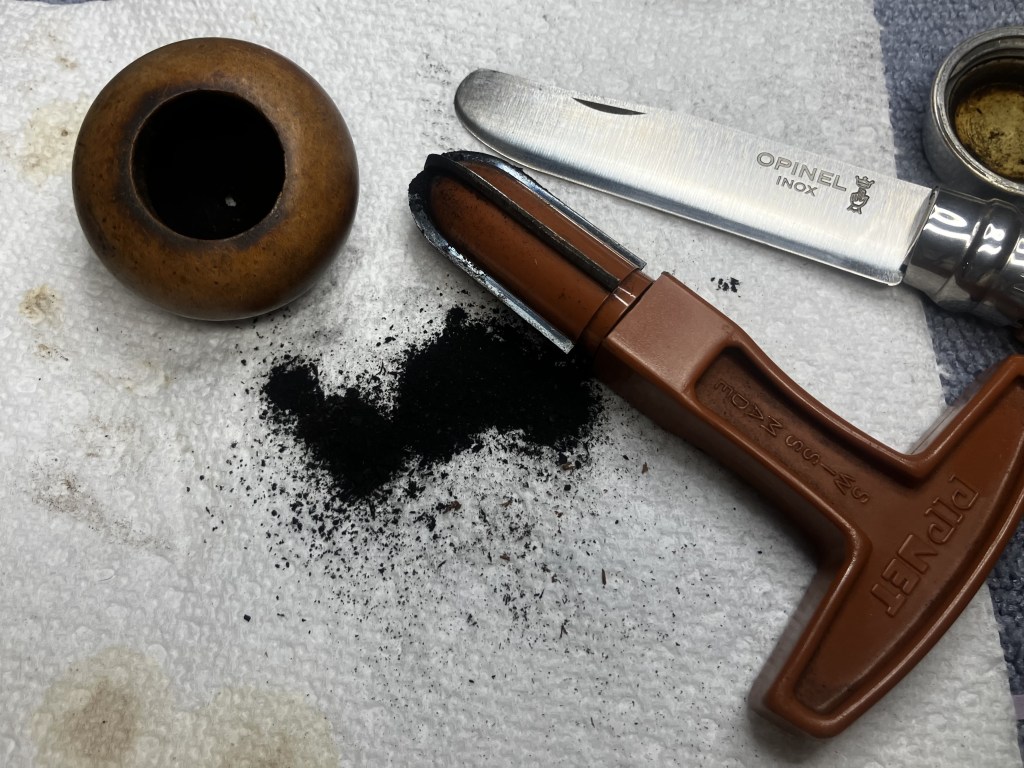
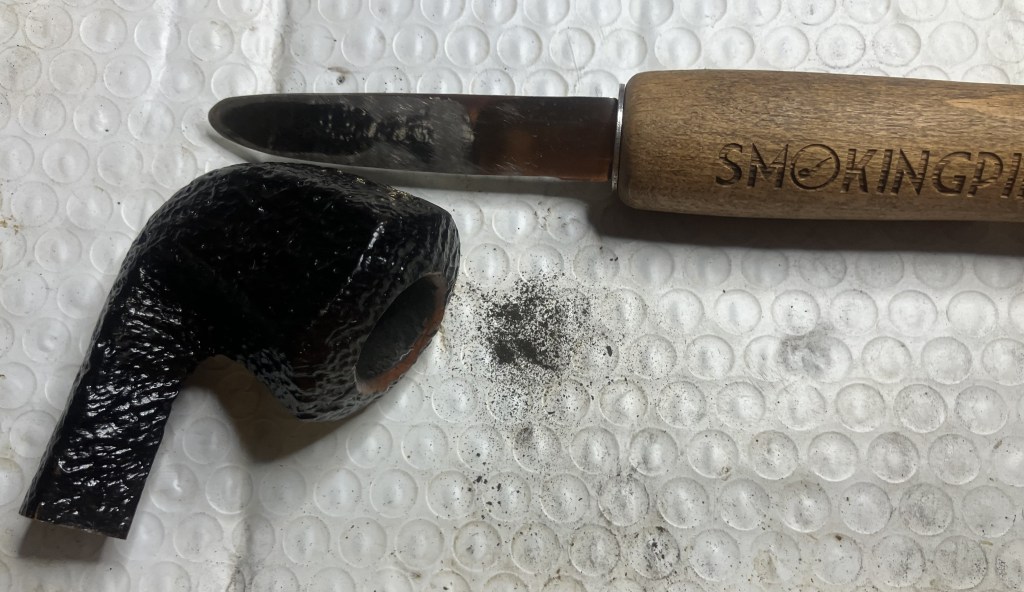
The only tool I used for reaming was the Smokingpipes Low Country reamer. And it didn’t have much to do.
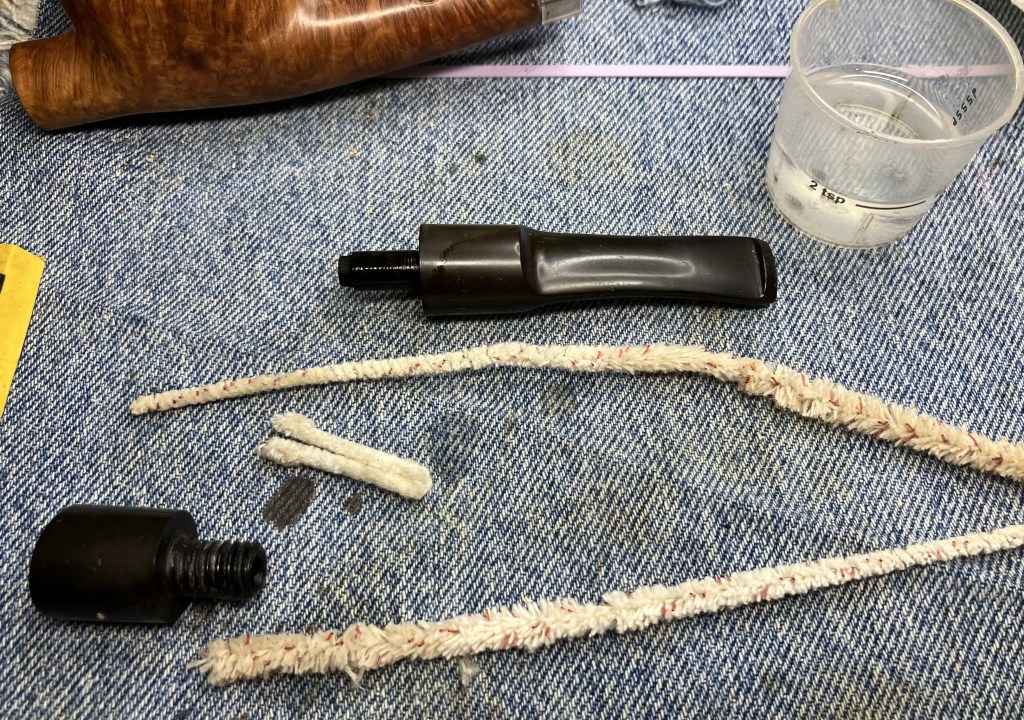
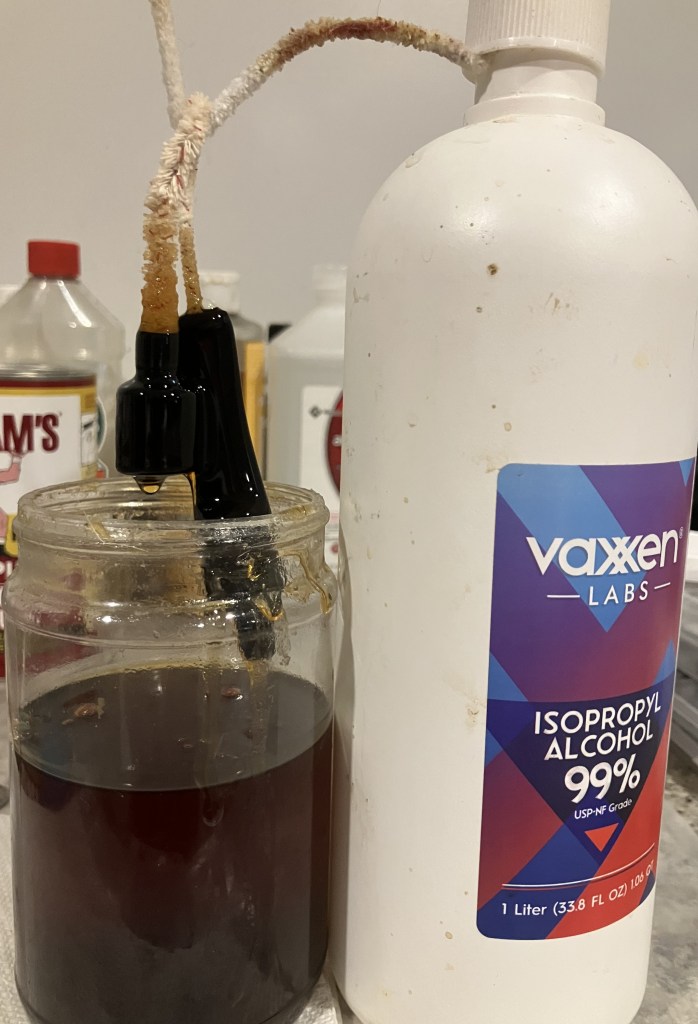
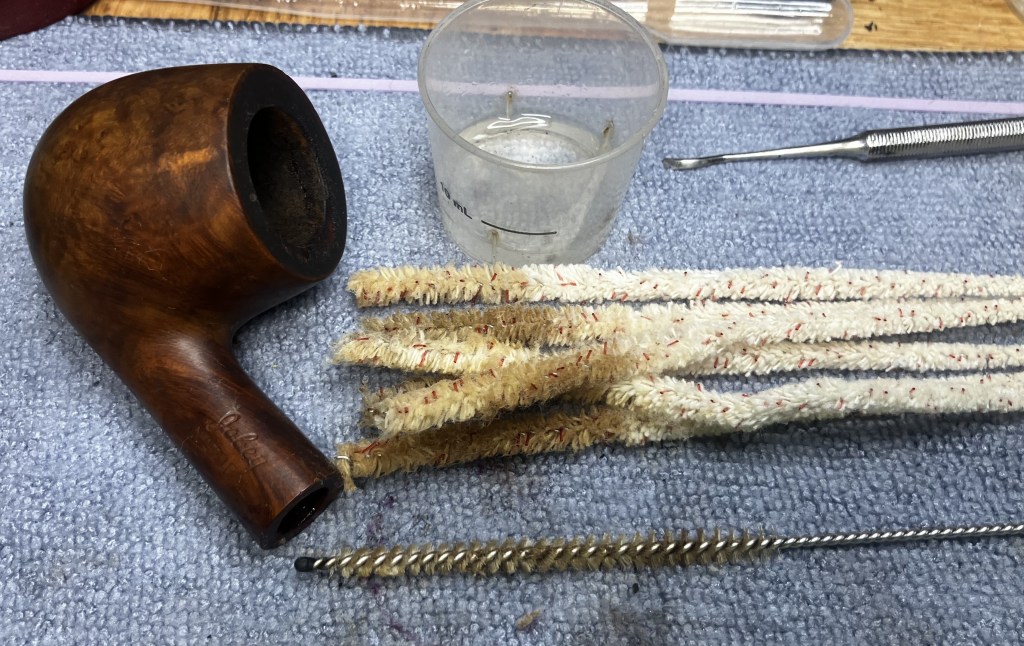
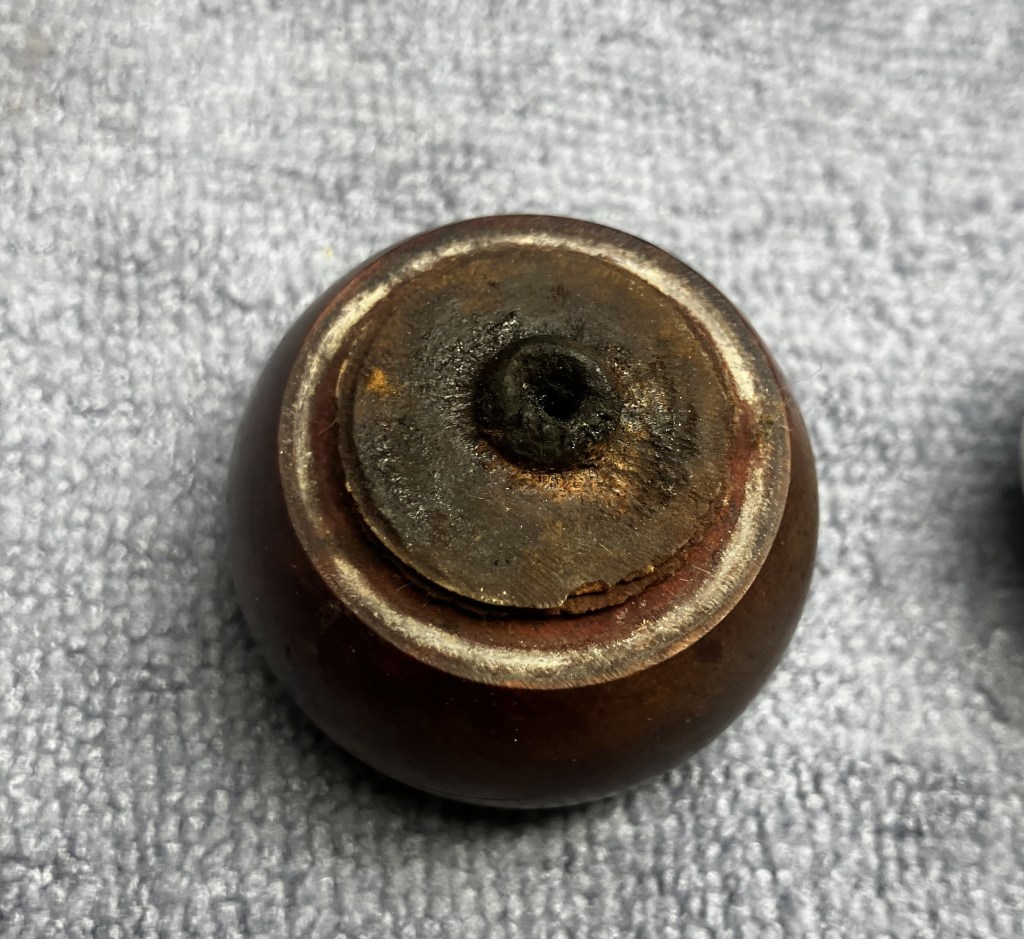
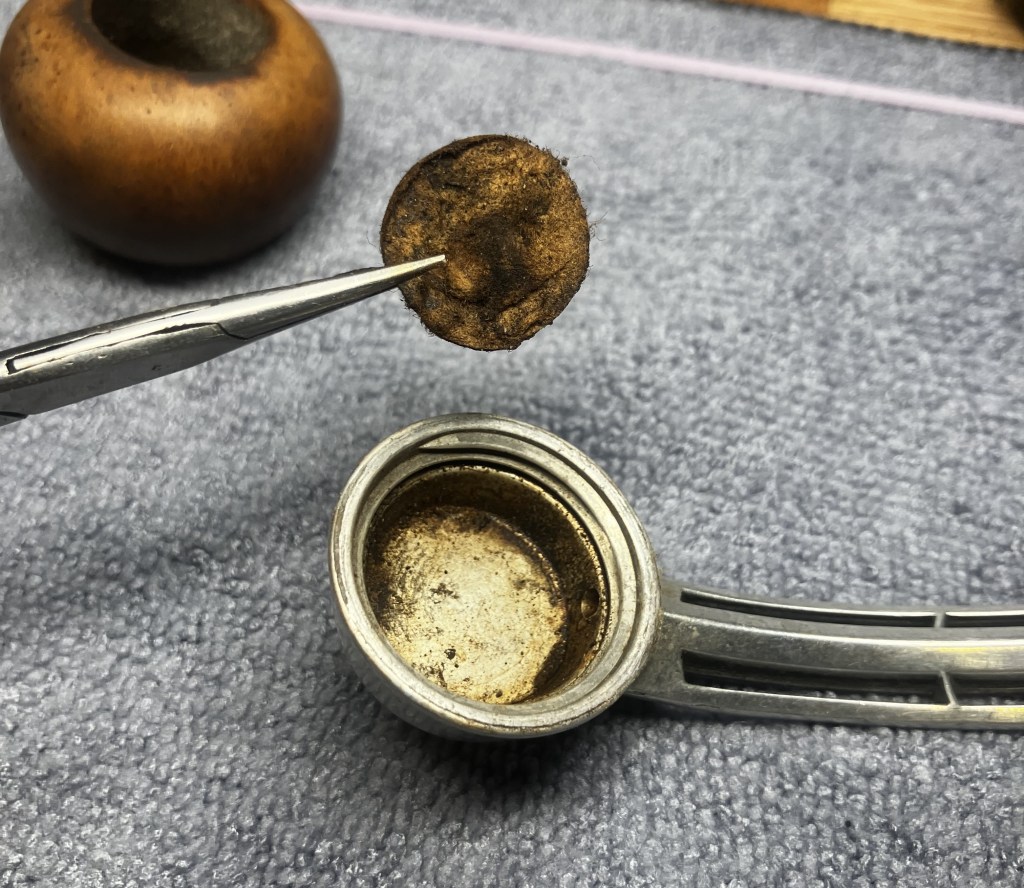
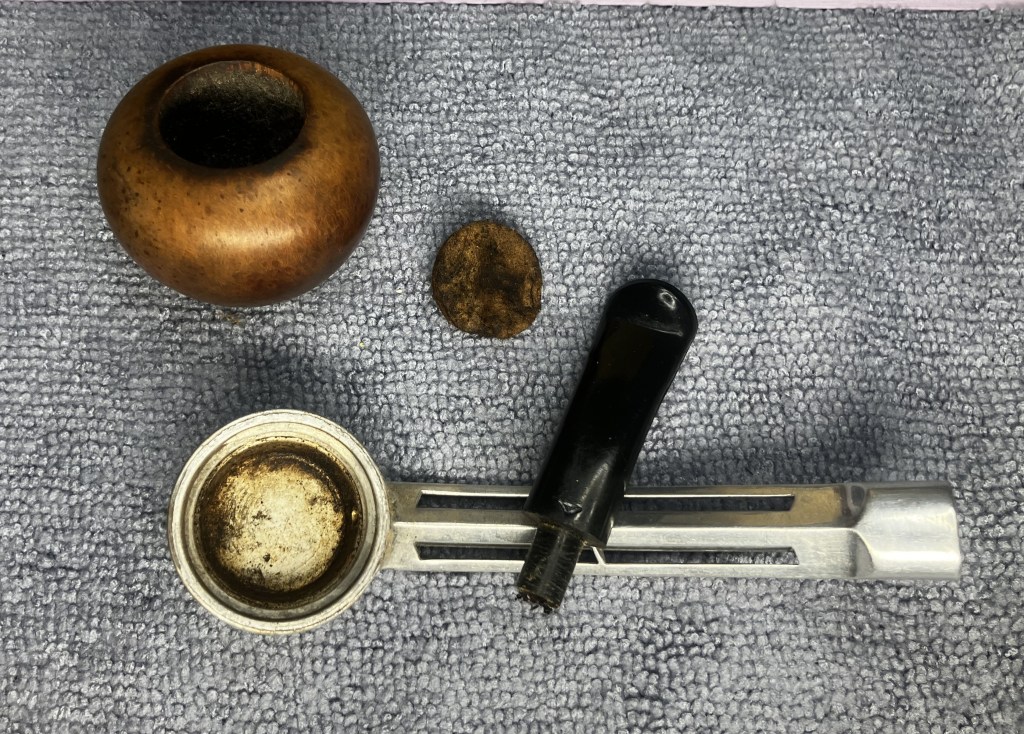
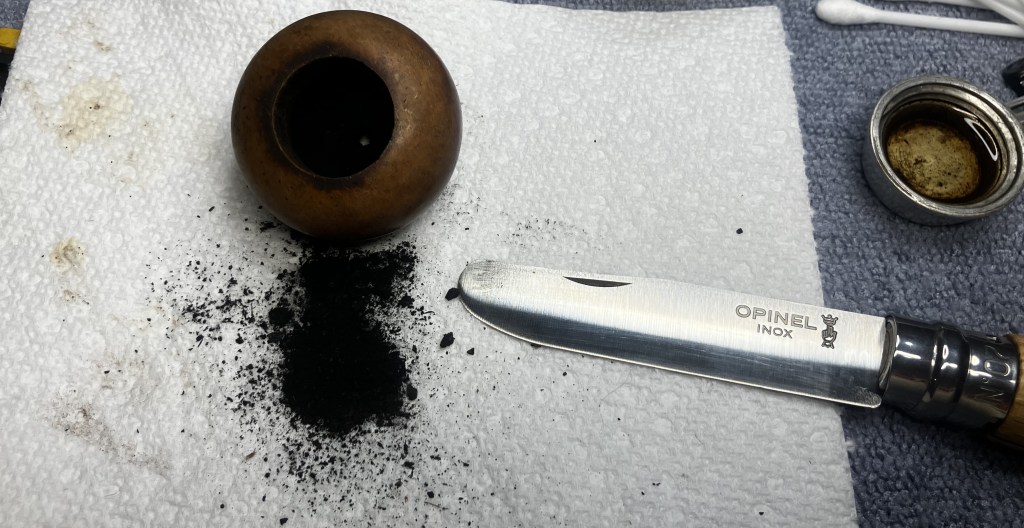
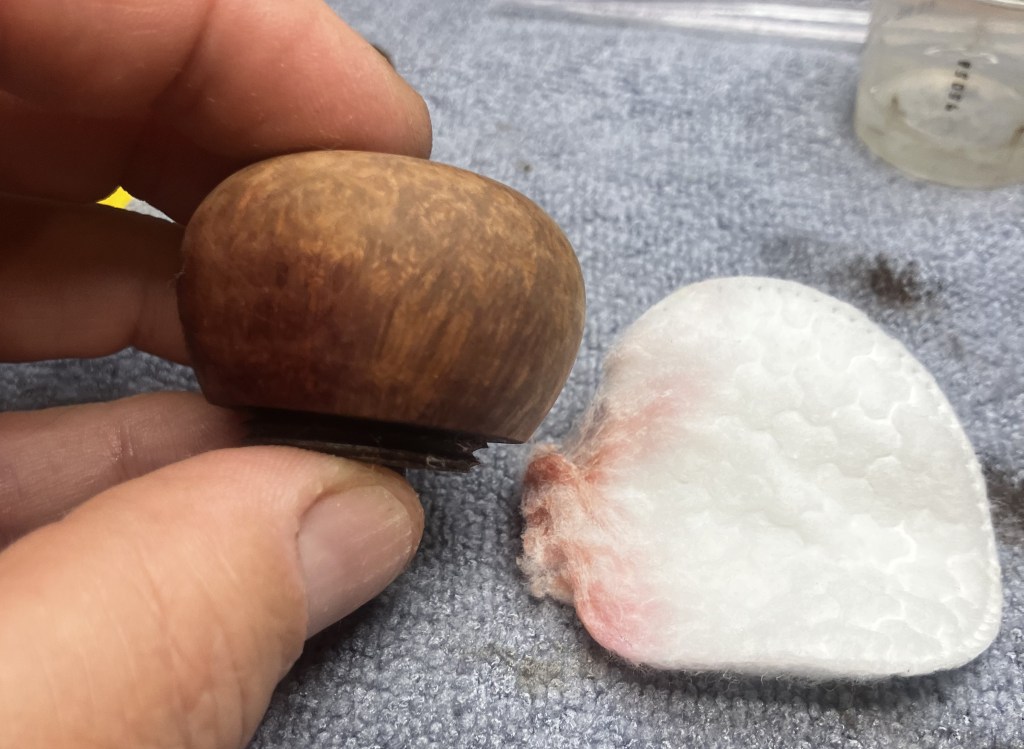
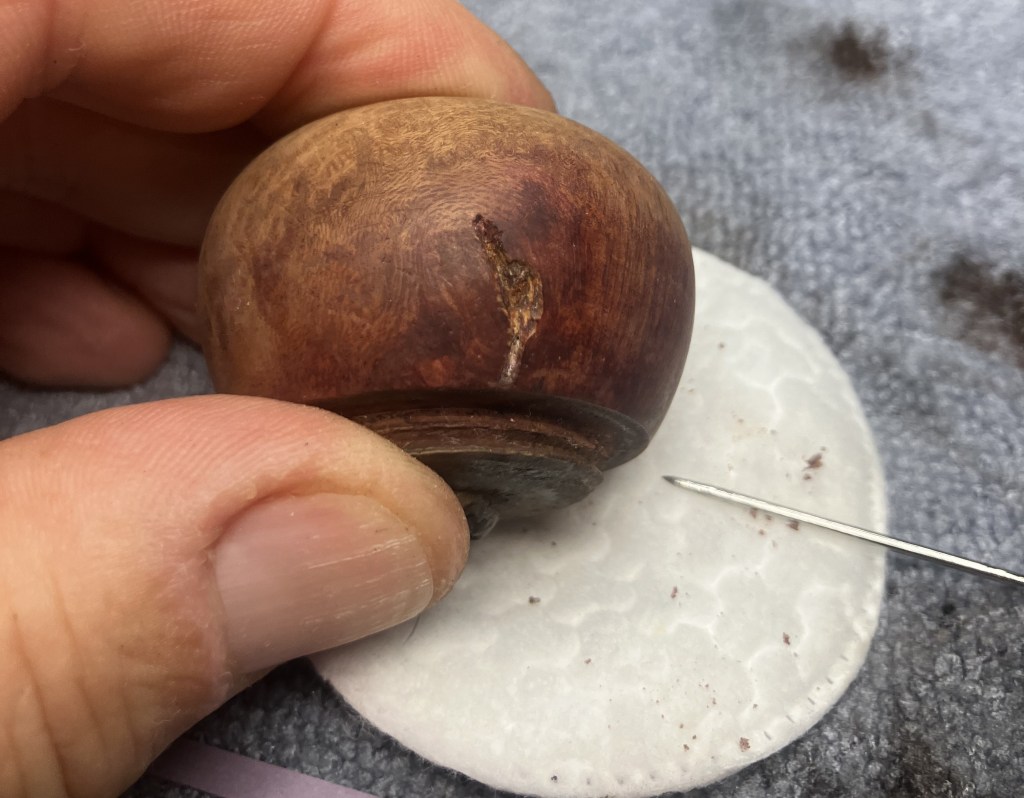
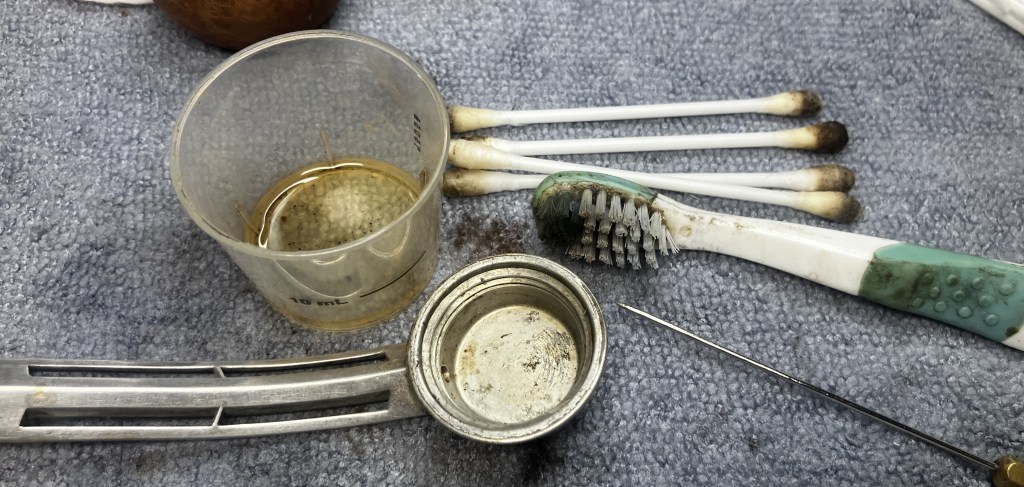
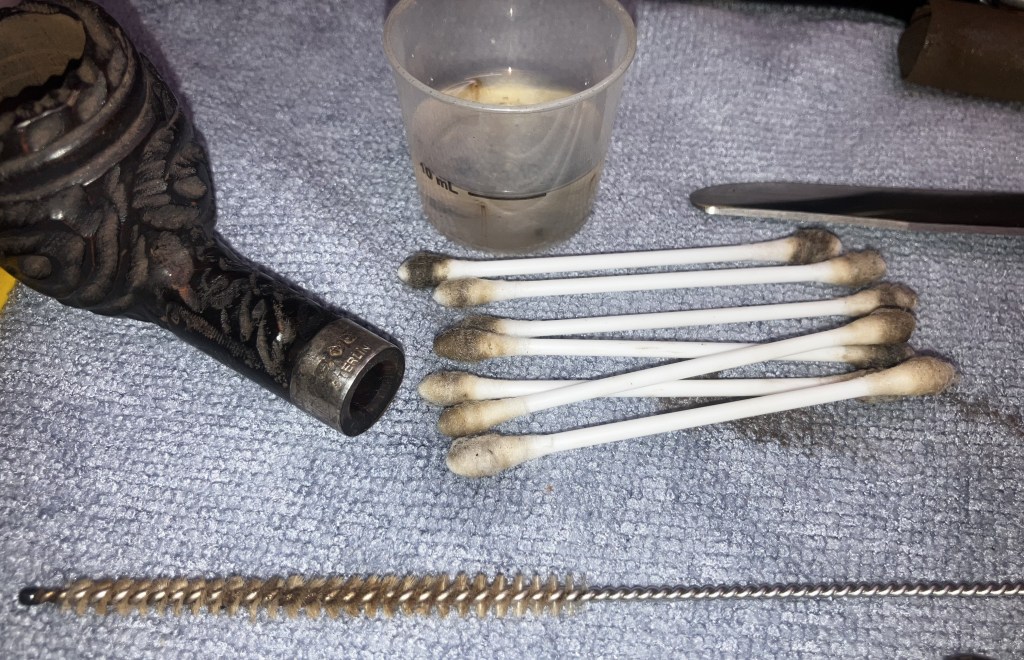
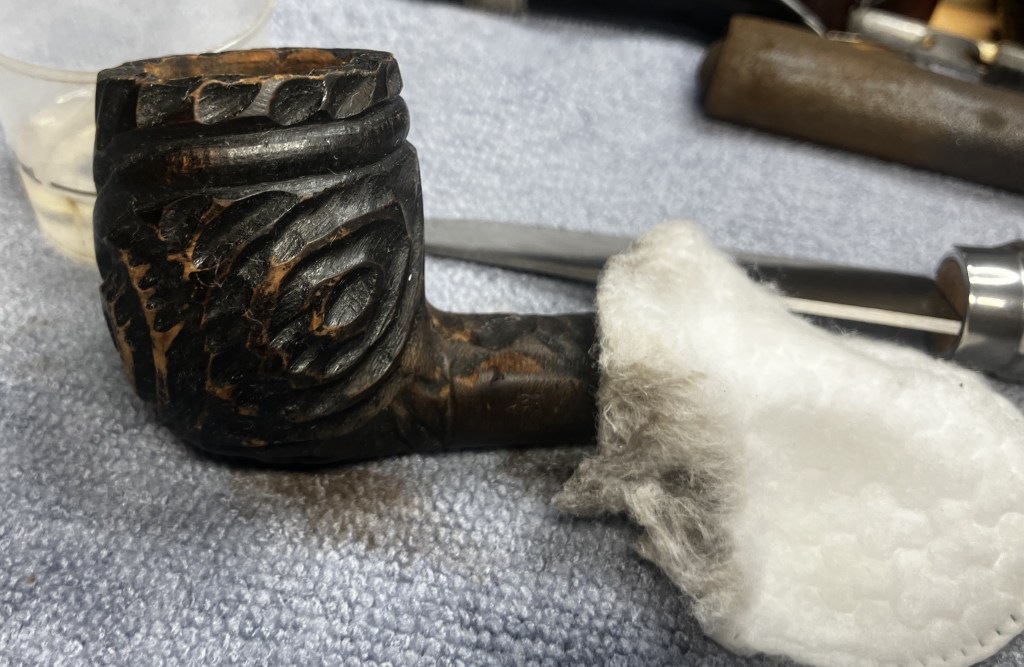
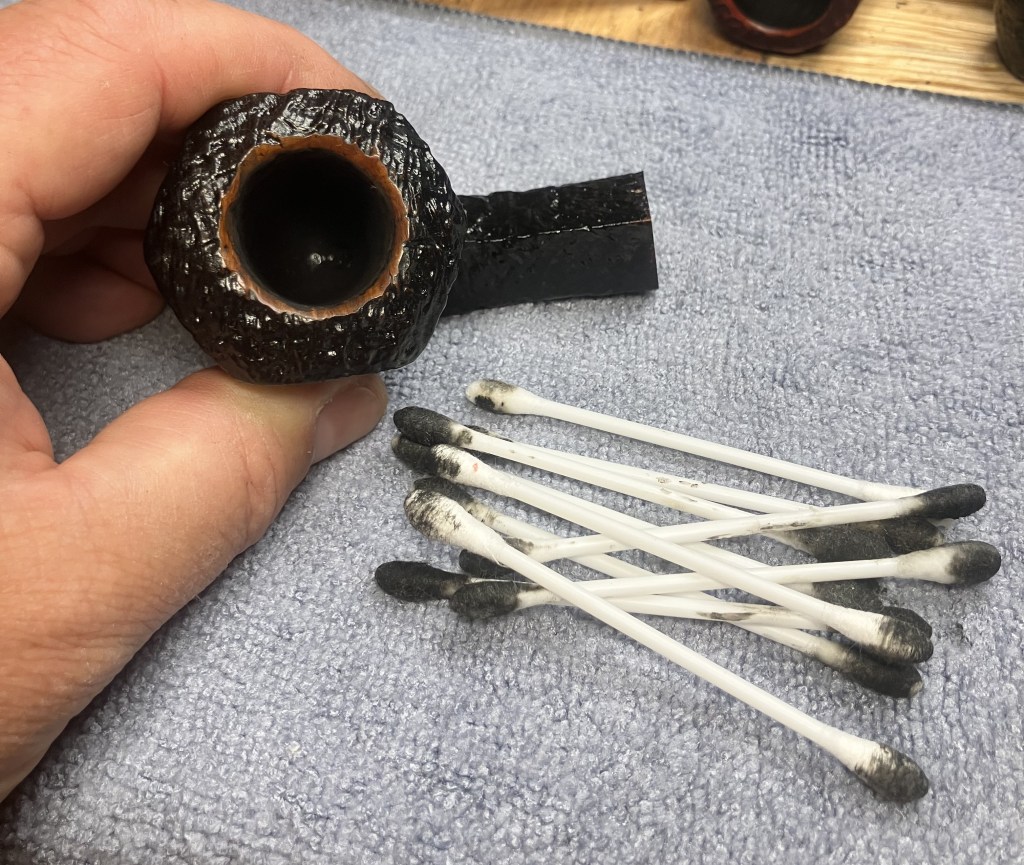
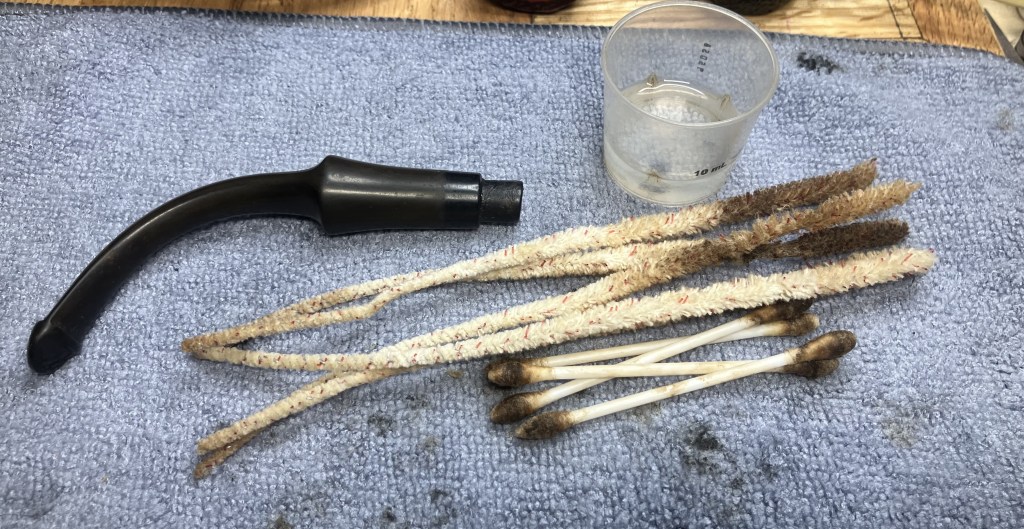
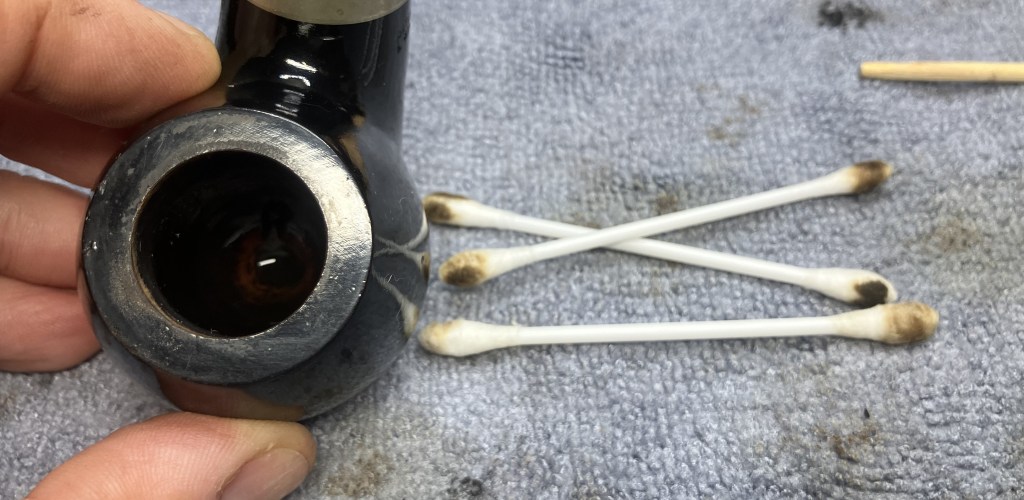
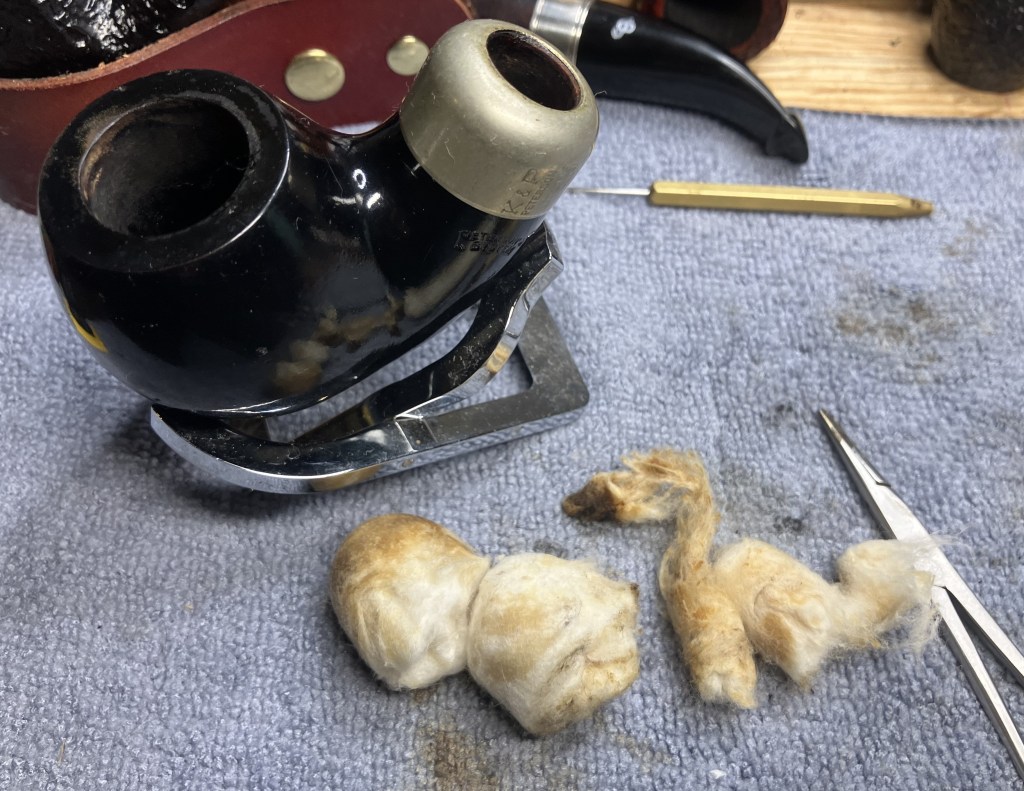
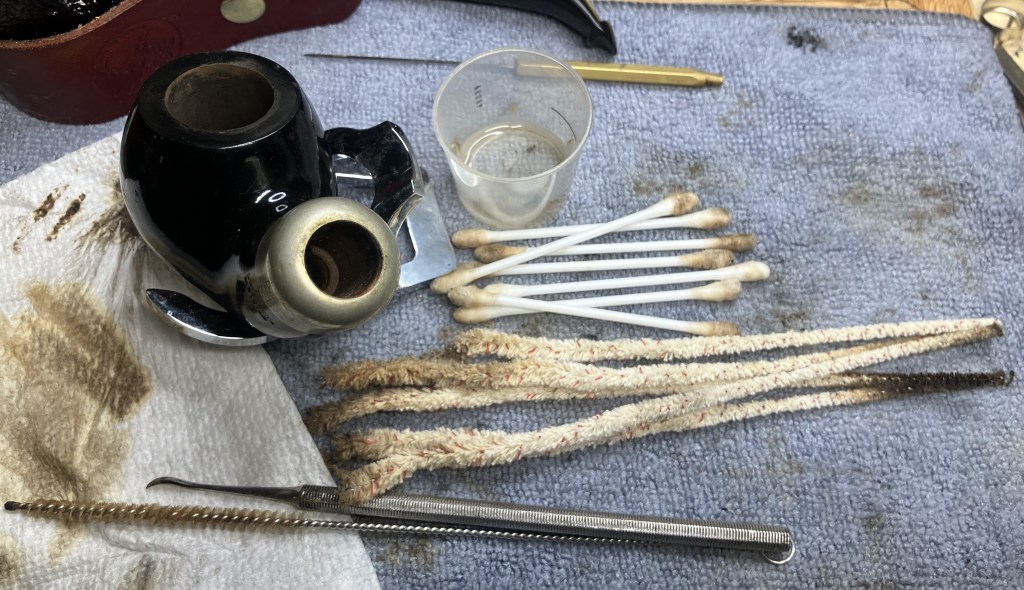
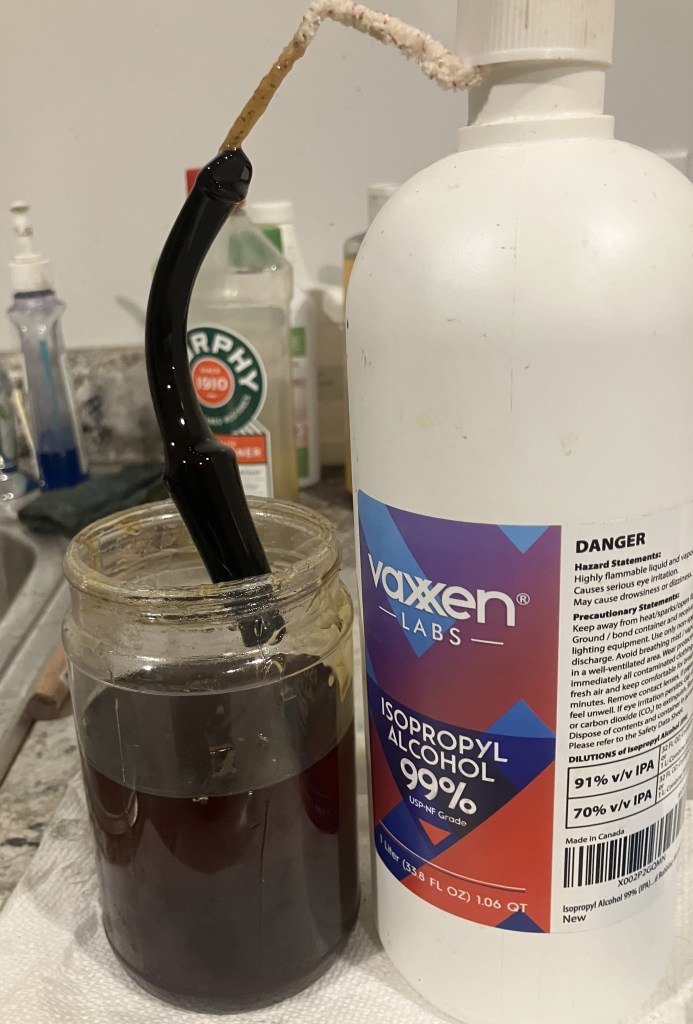
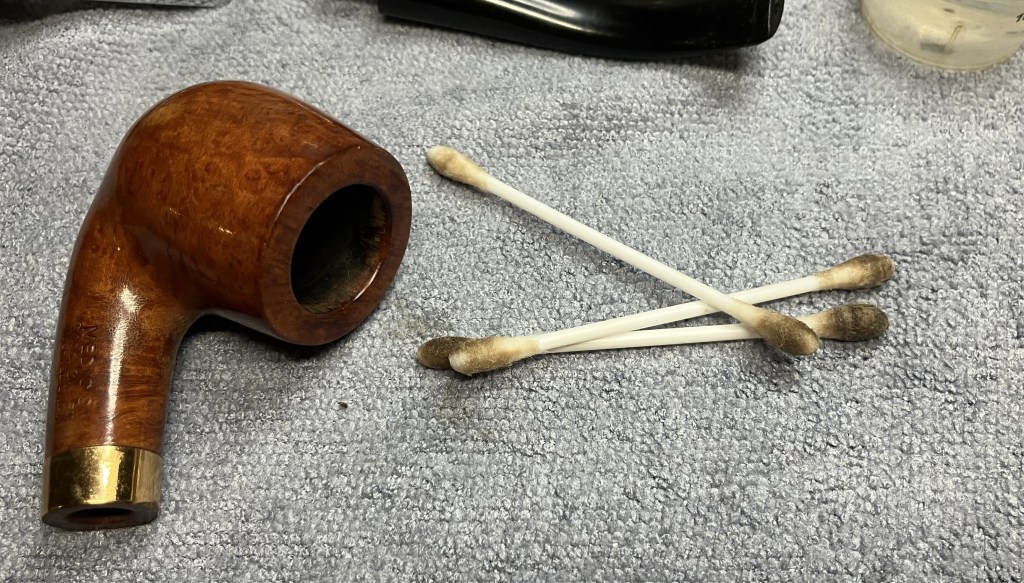
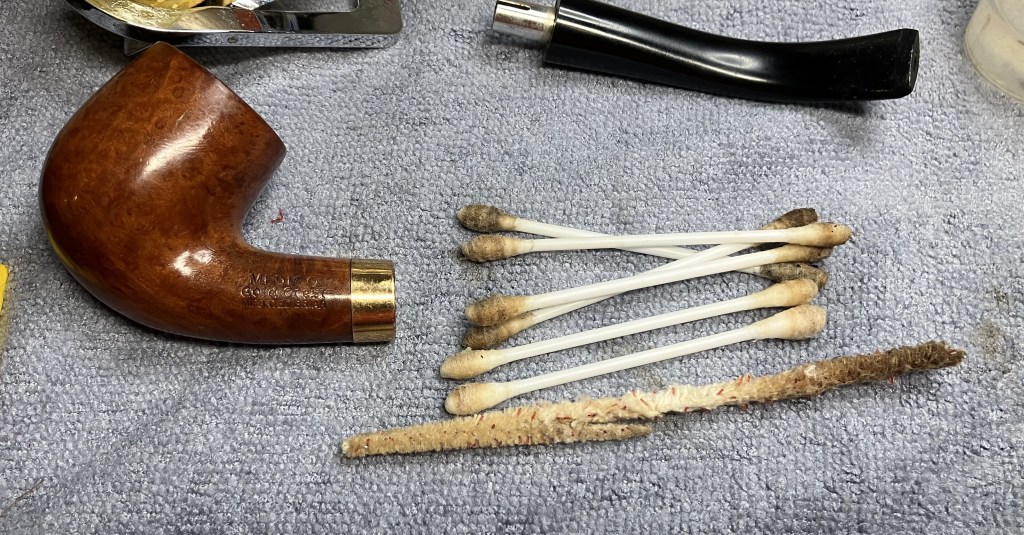
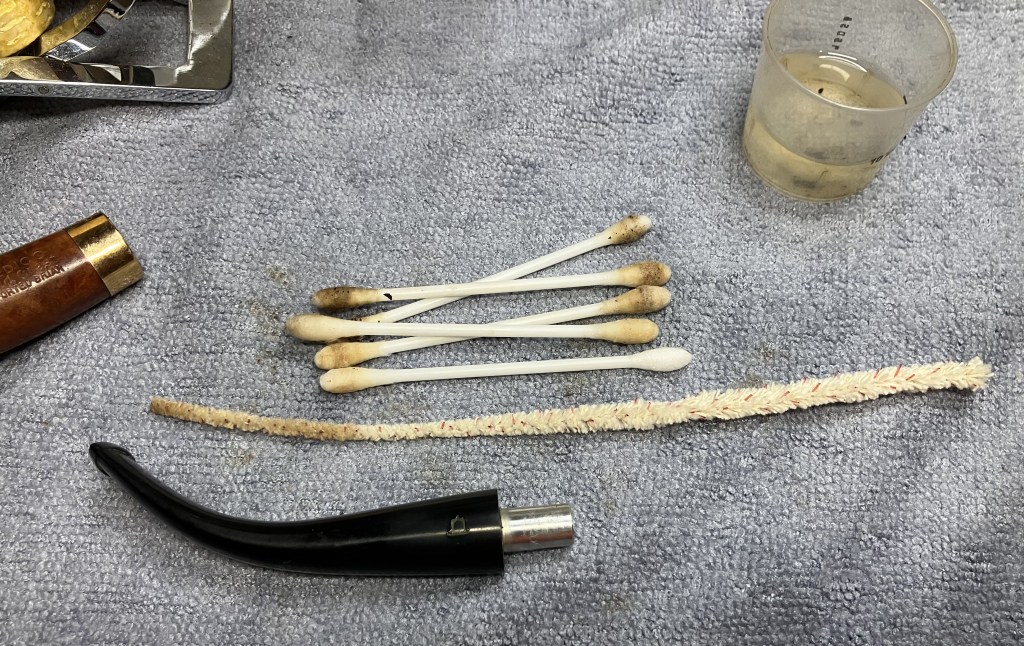
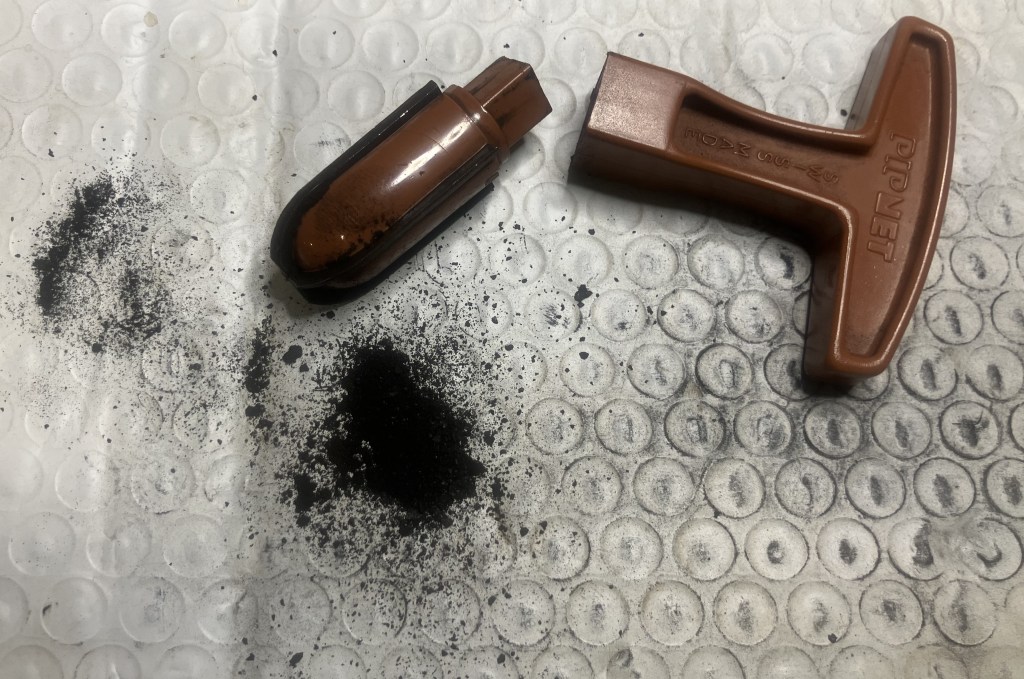
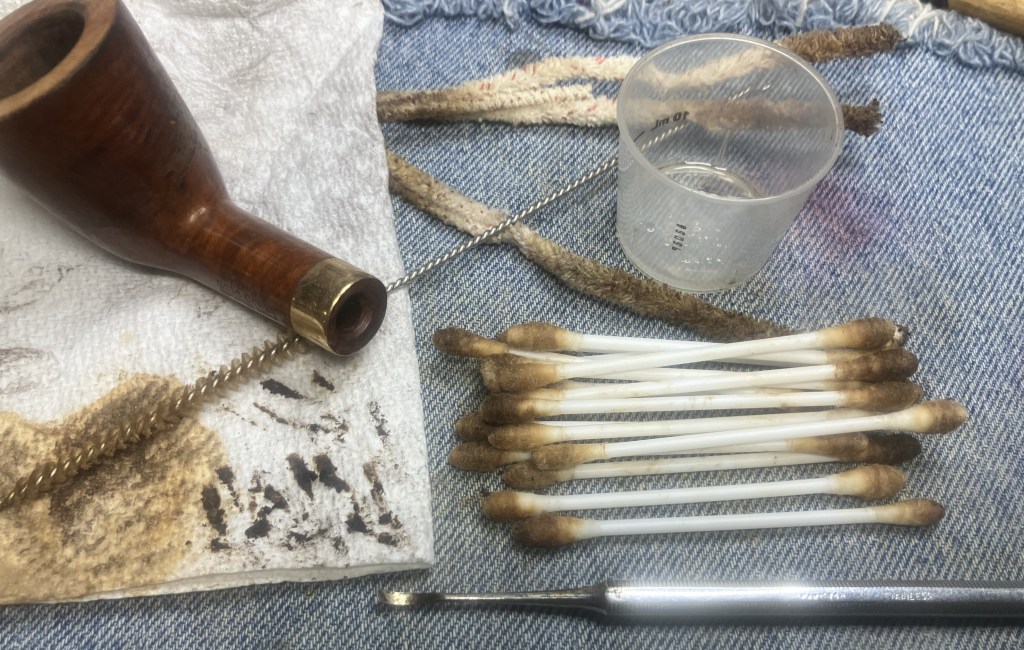
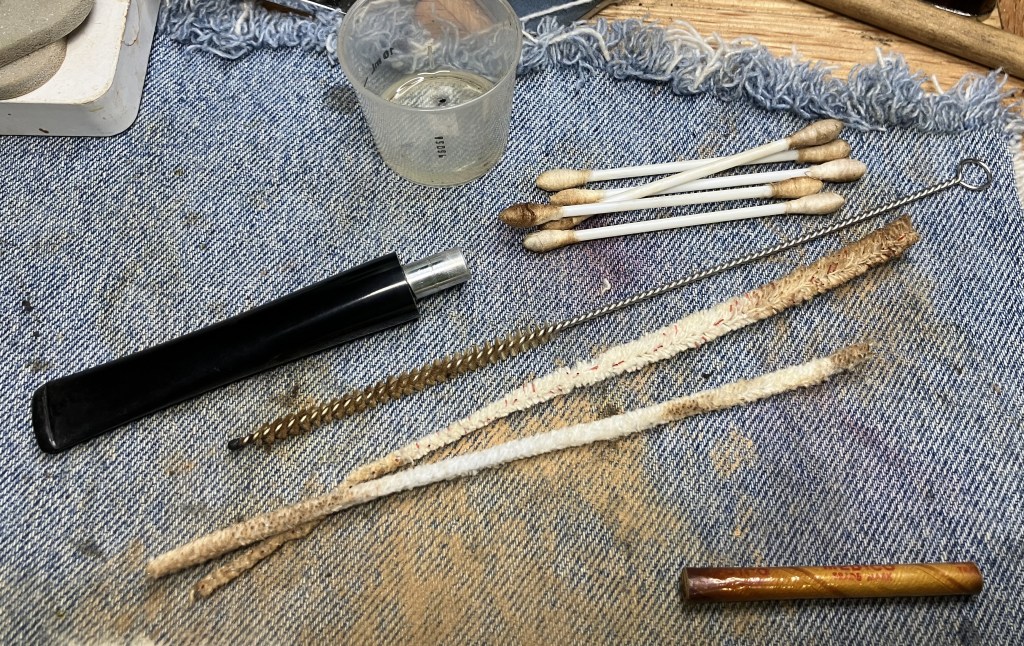
I started swabbing the chamber out with cotton swabs dipped in 99% ethyl alcohol and discovered that Bebbia used a rather thickly applied bowl coating.
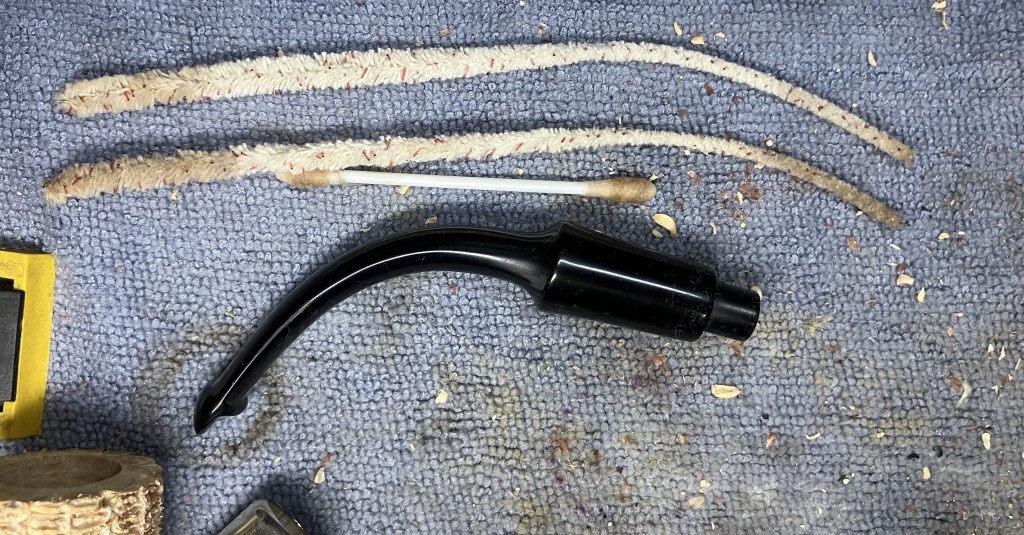
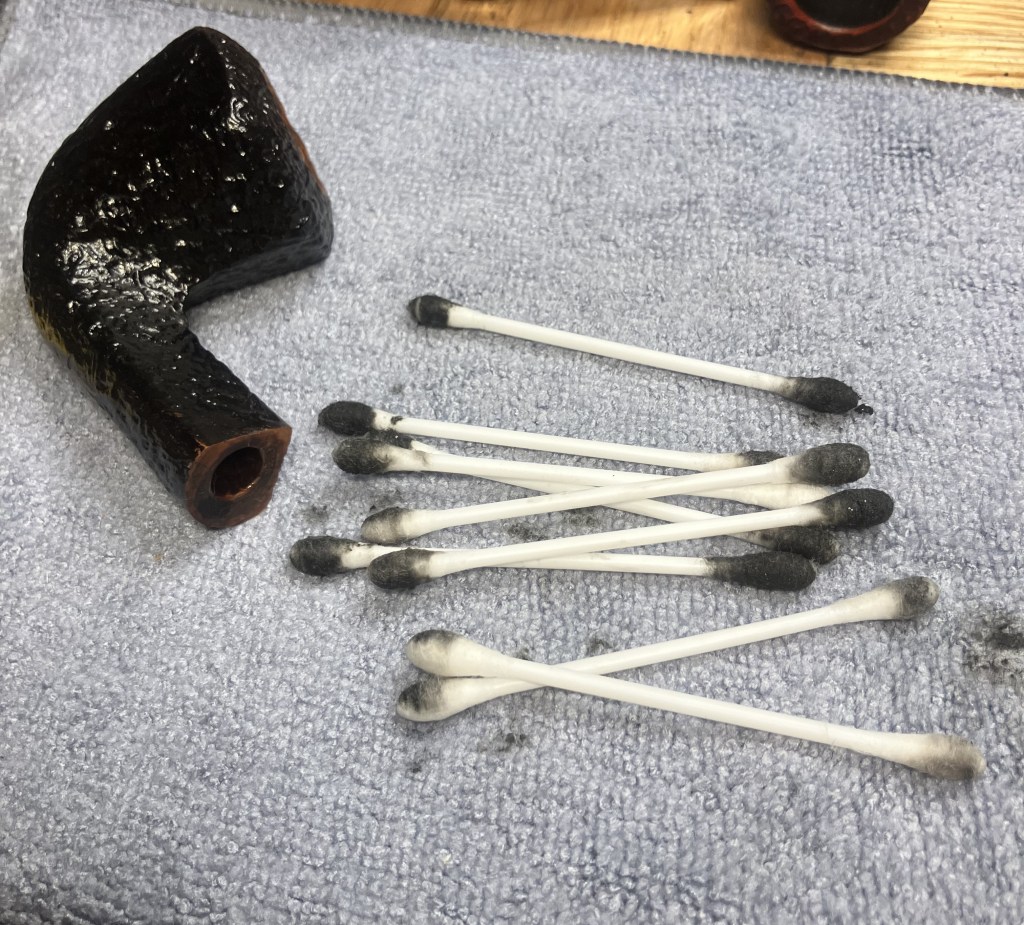
The coating must have been sprayed into the bowl and allowed into the shank because cleaning it with the same method provided the same black stained cotton swabs.
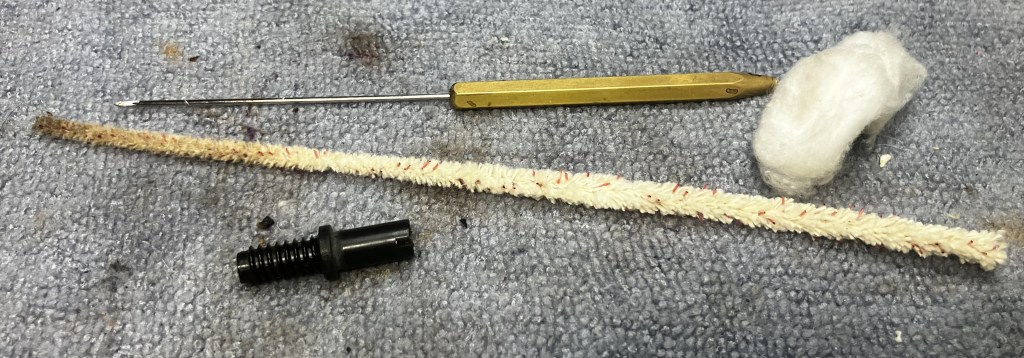
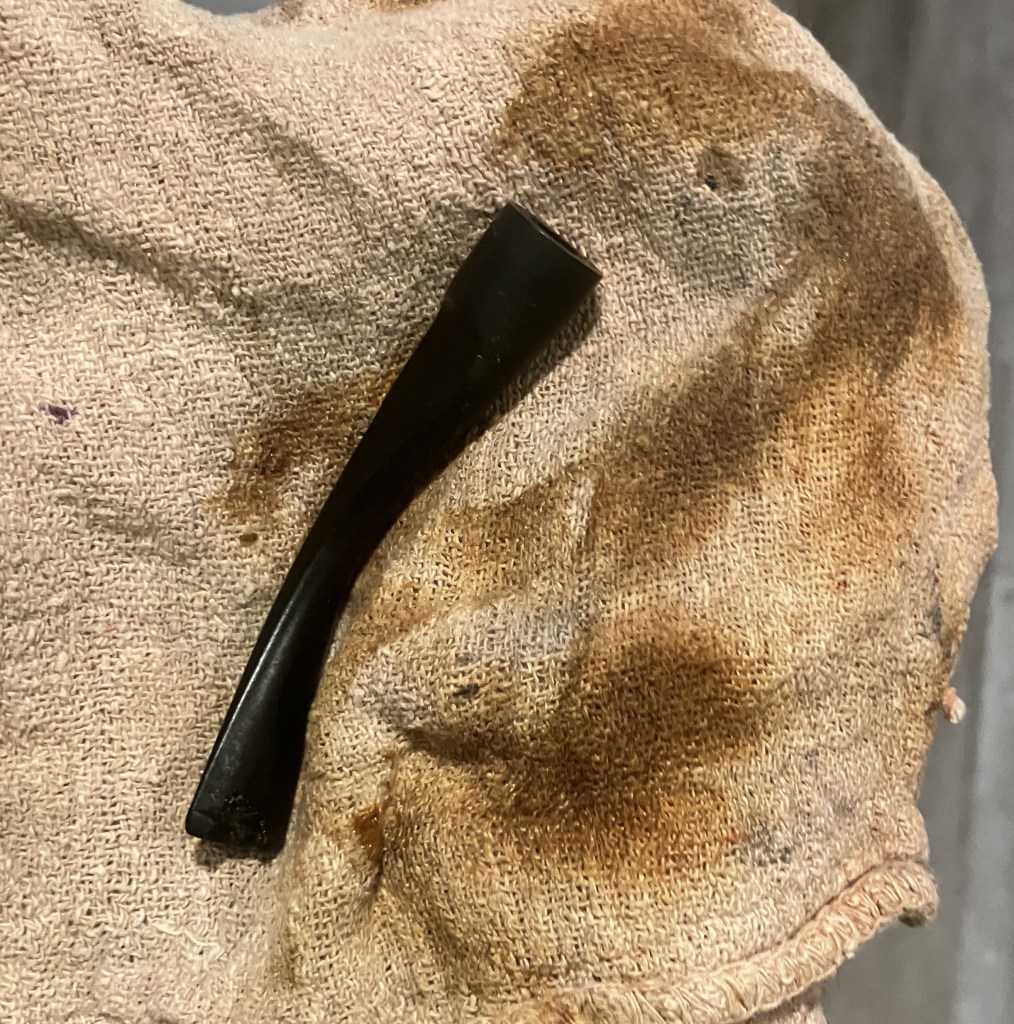
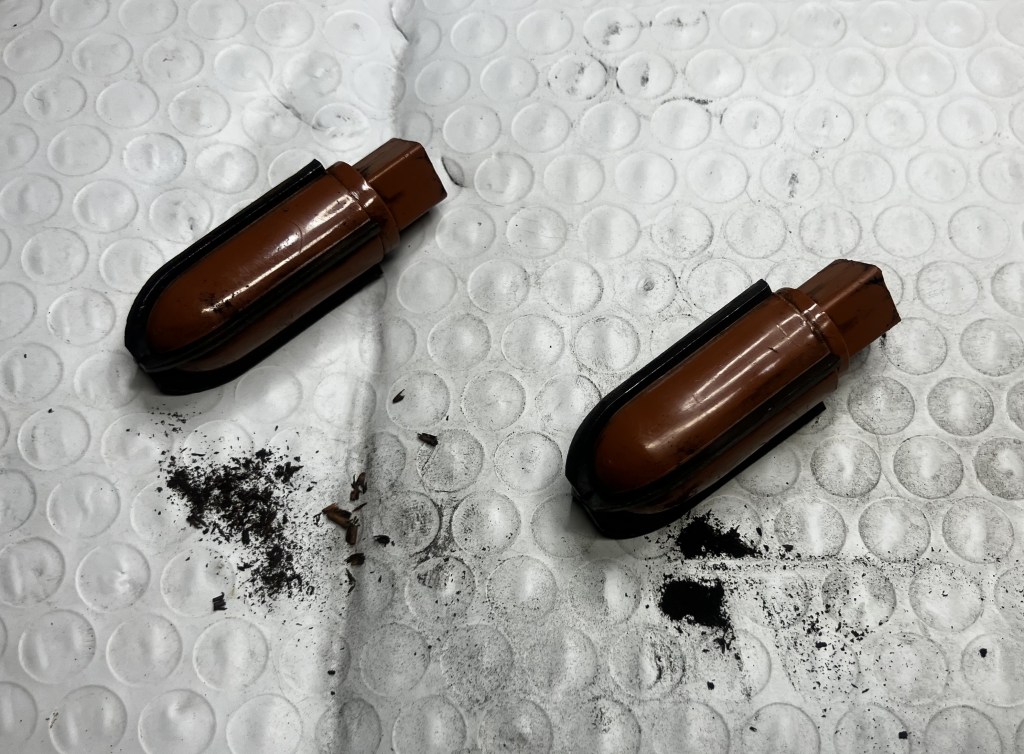
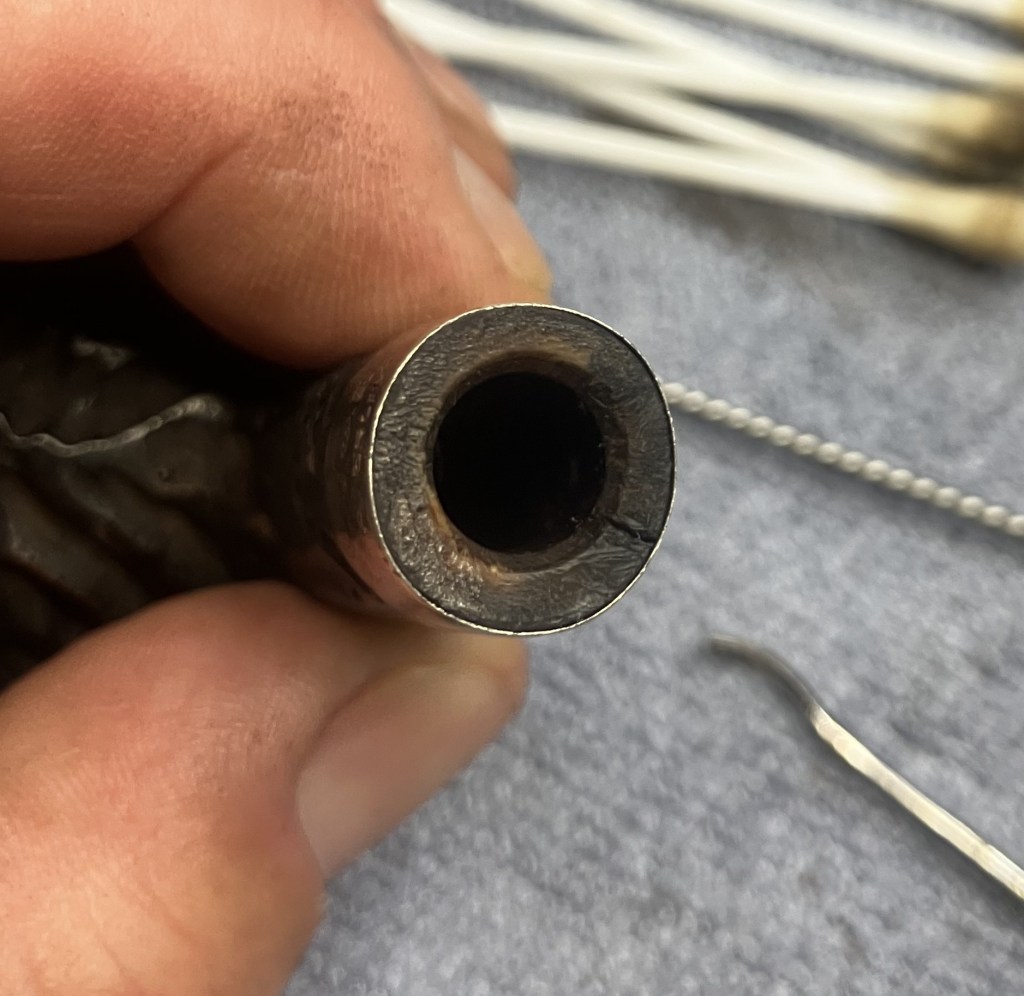
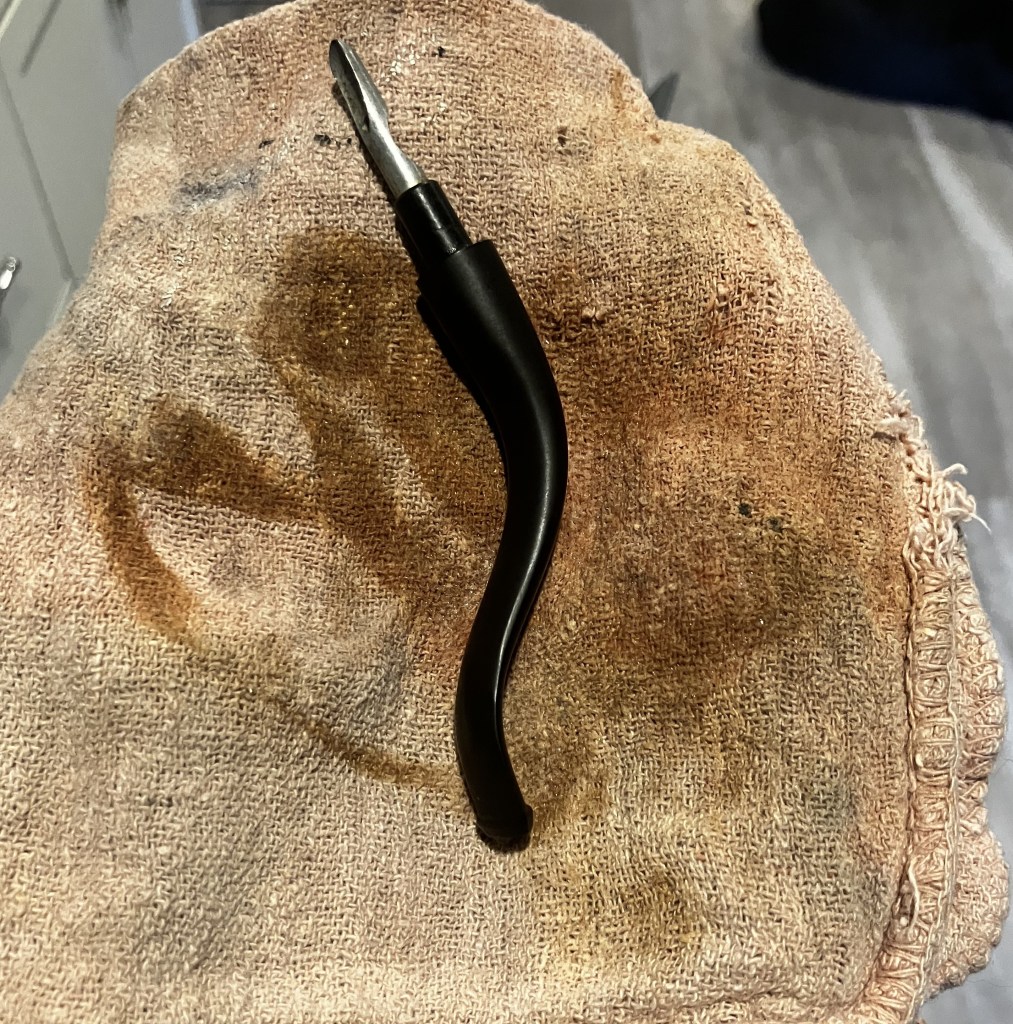
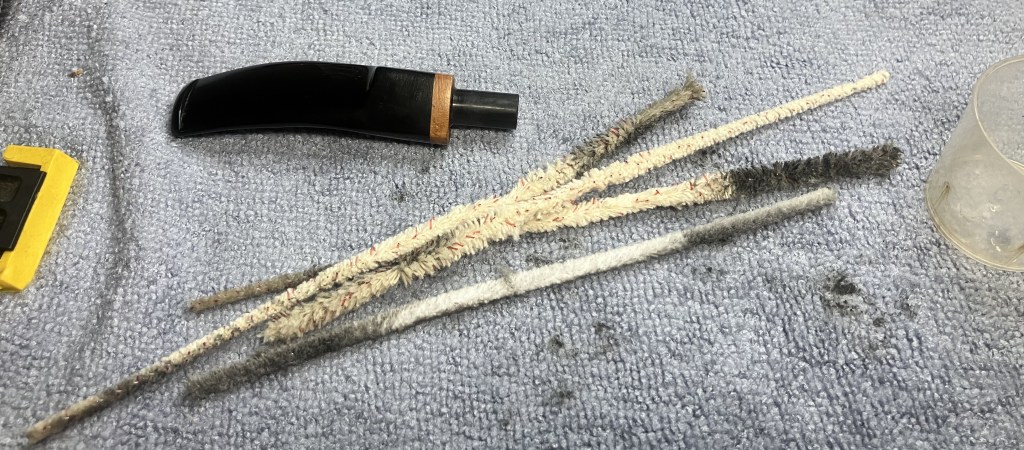
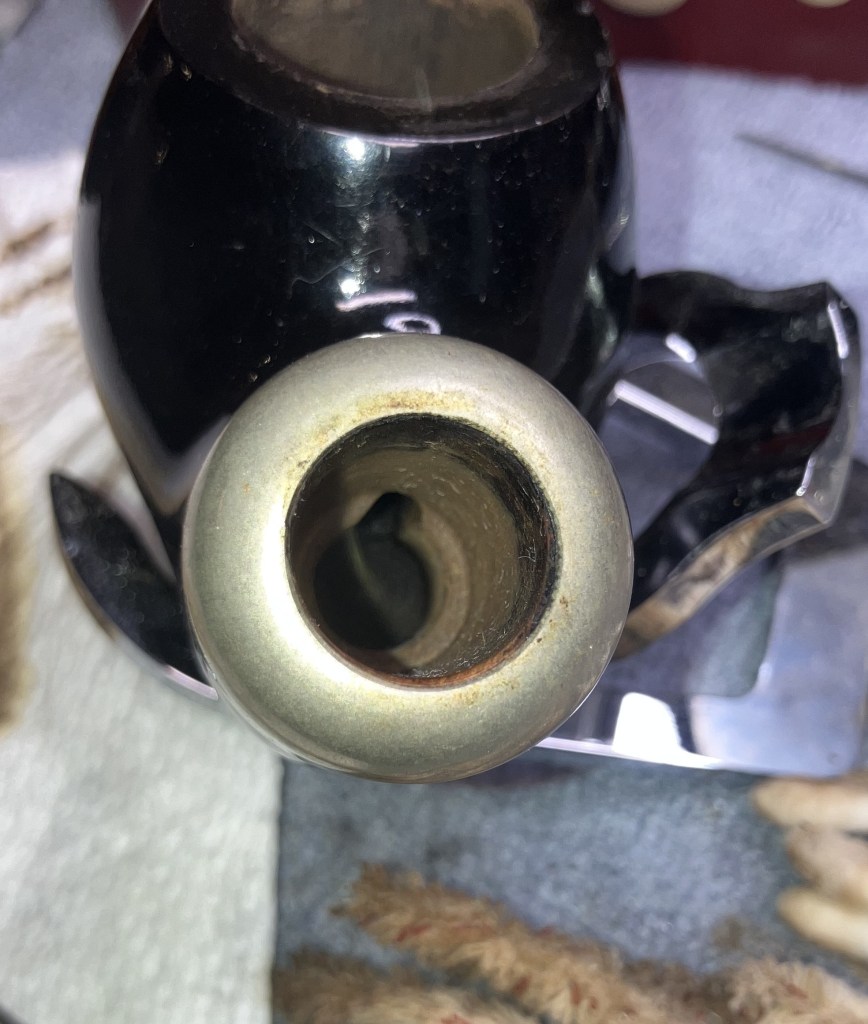
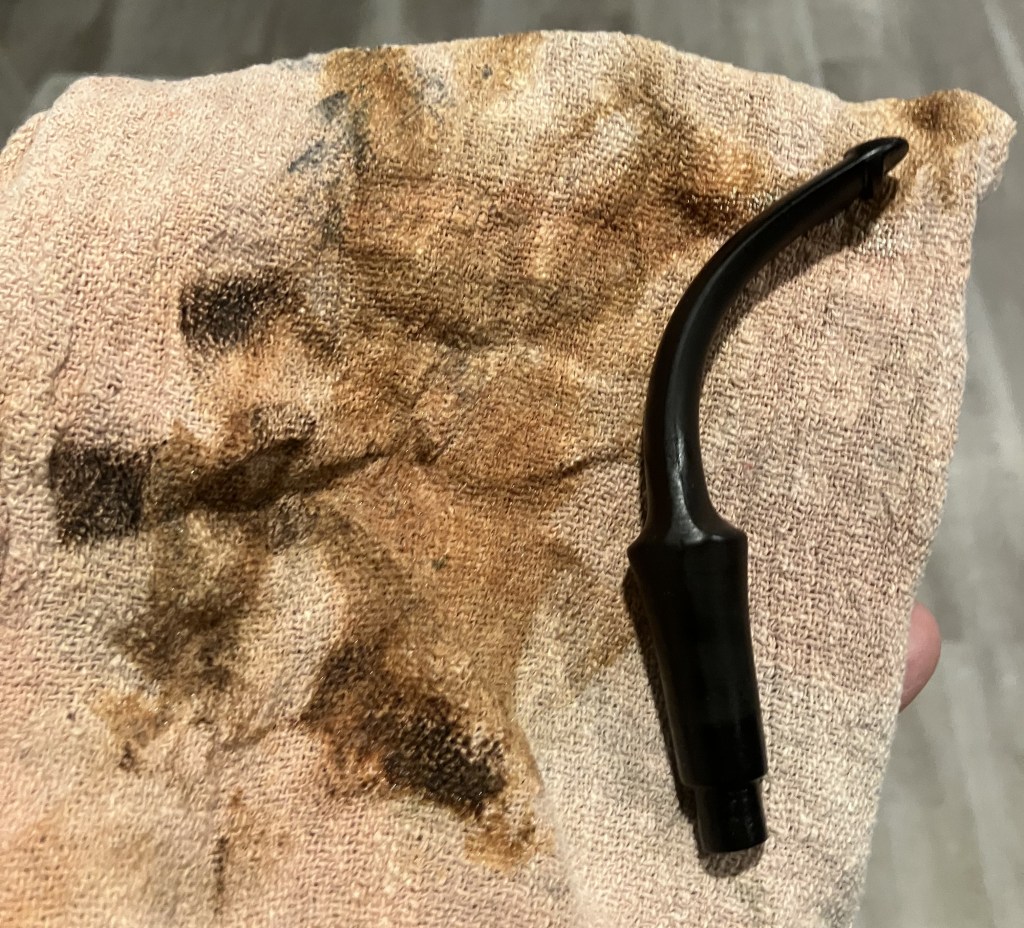
Some of the coating must have also made its way into the stem.
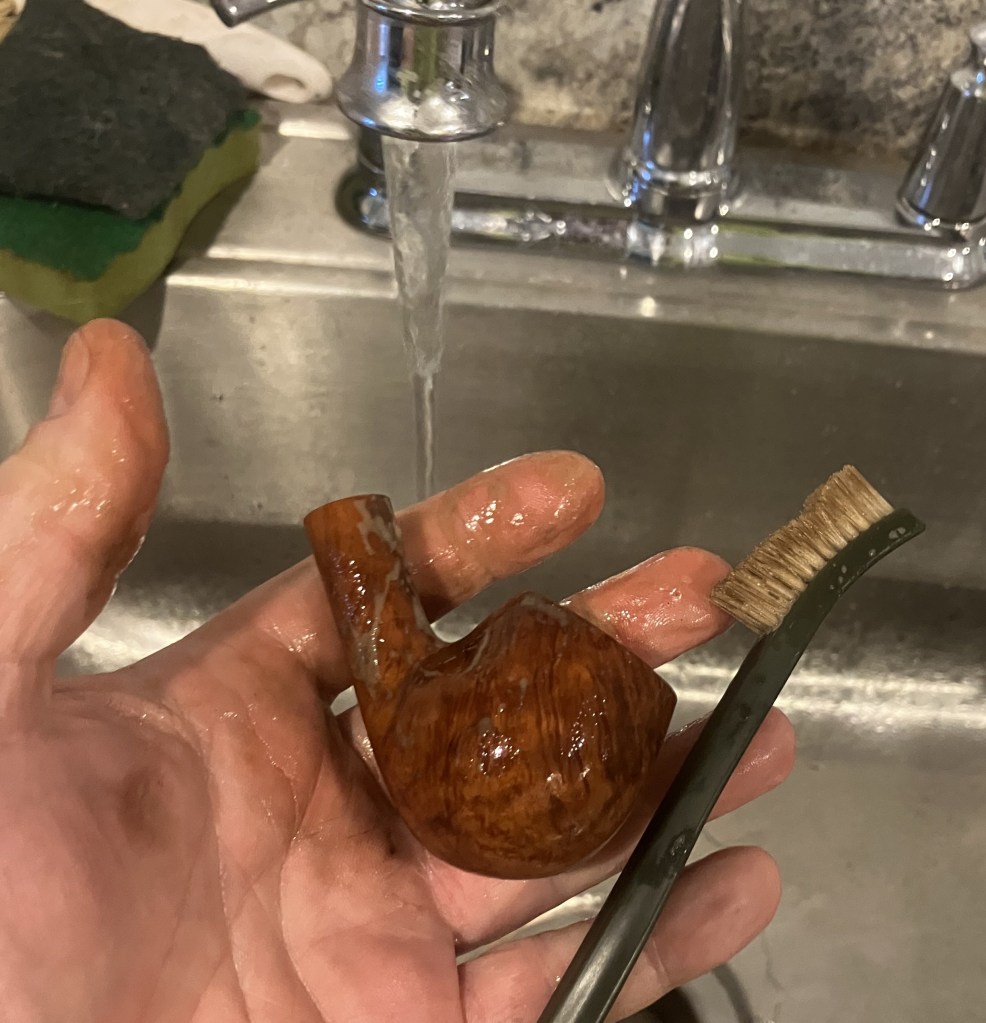
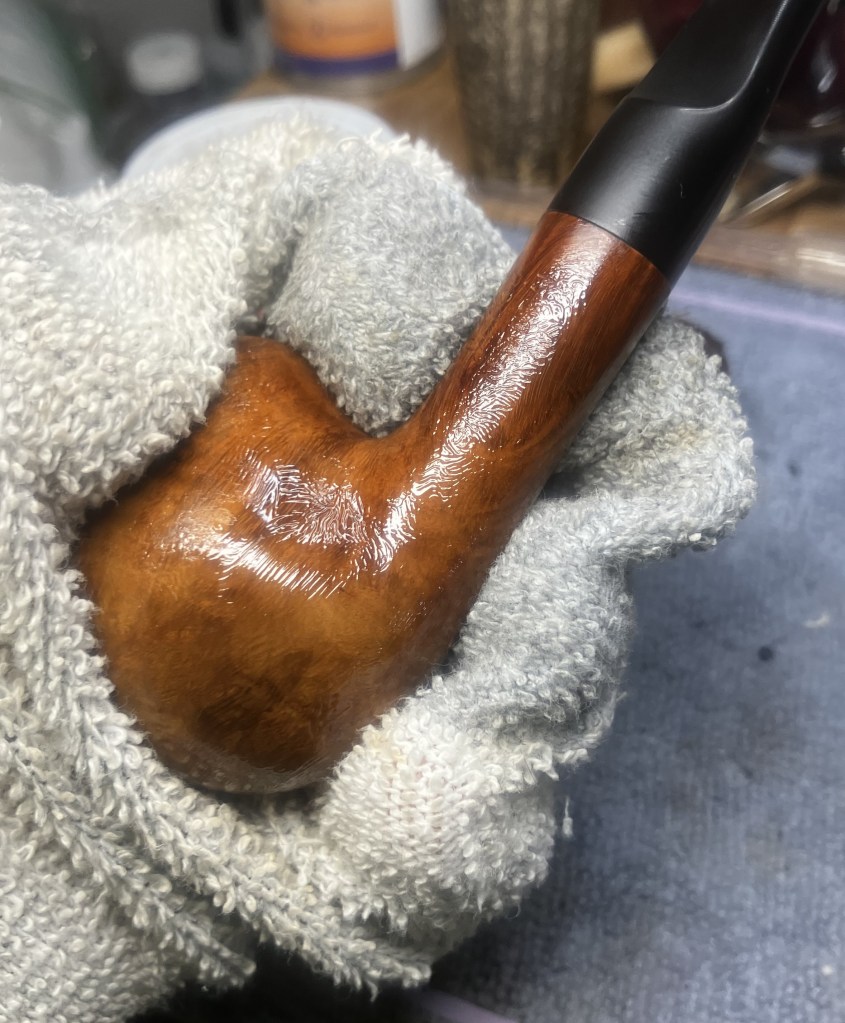
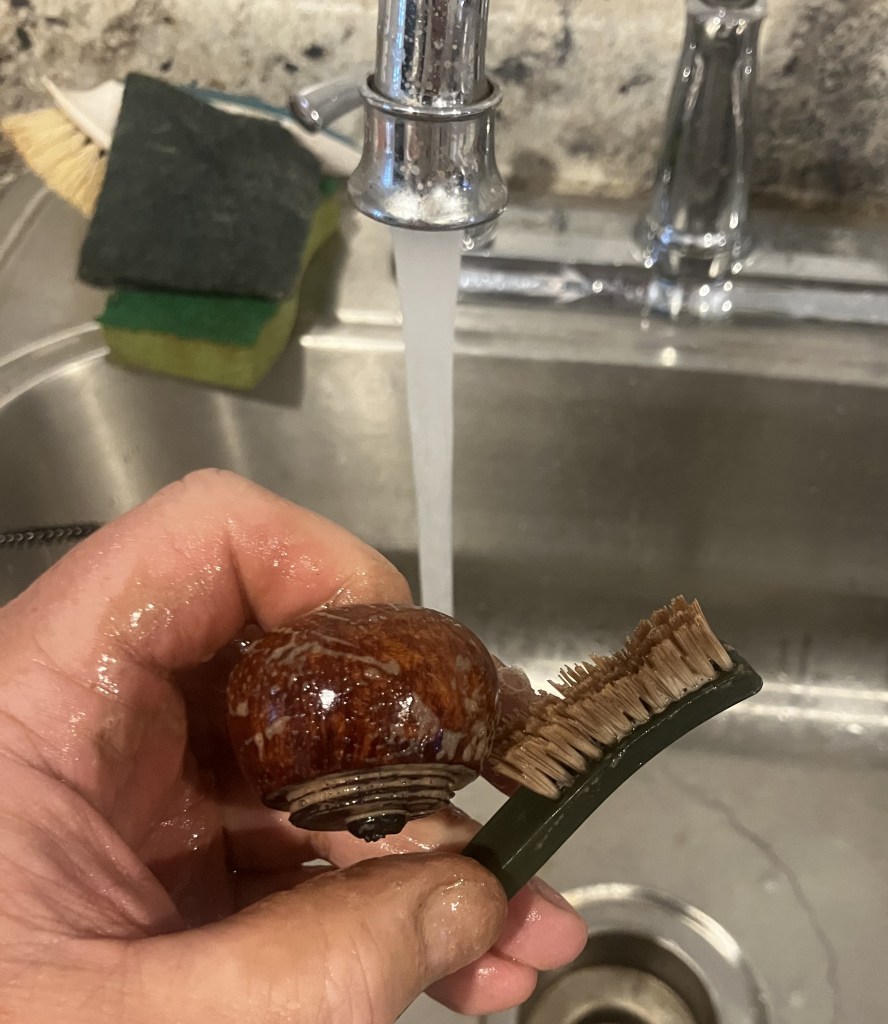
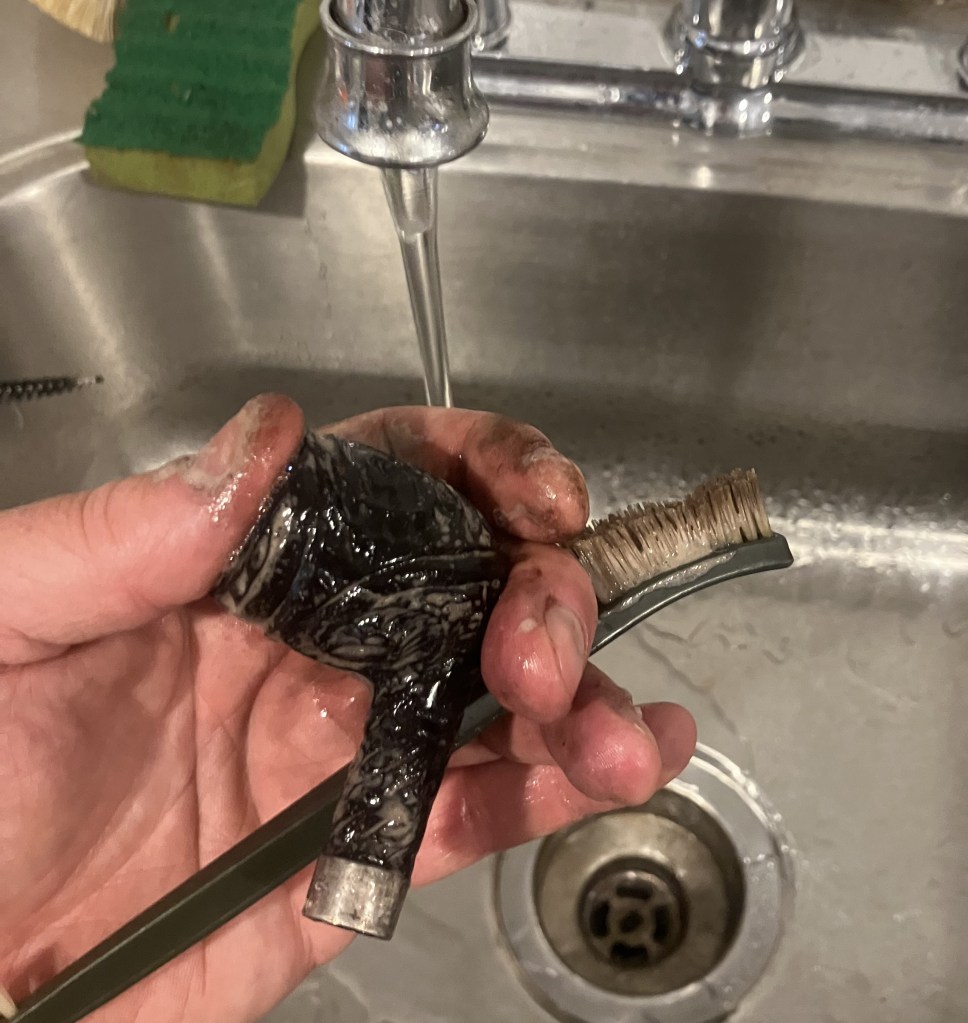
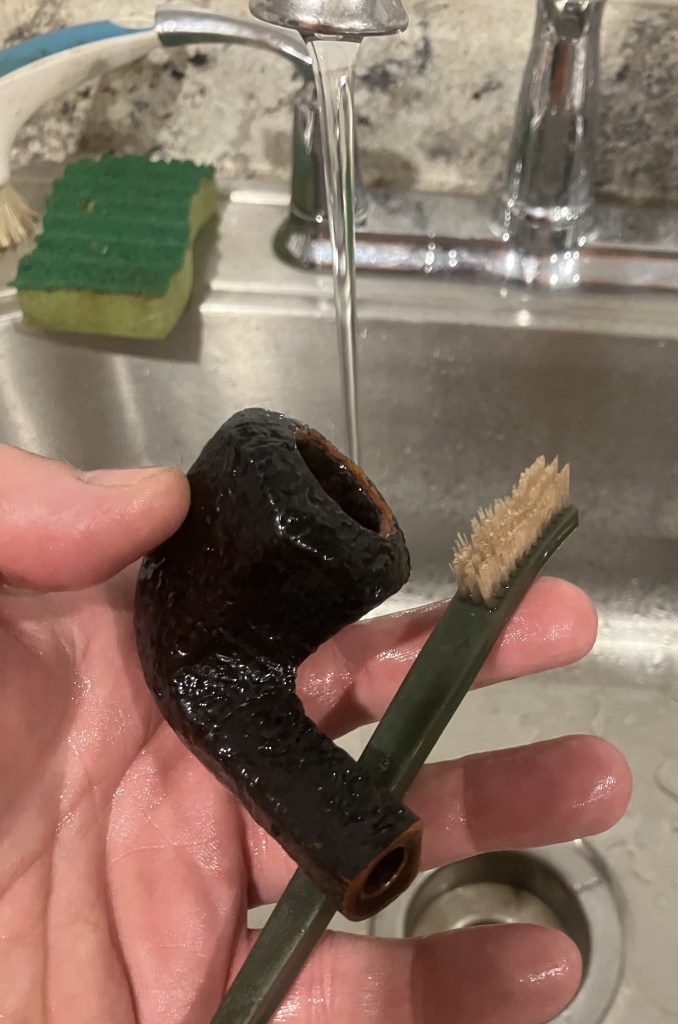
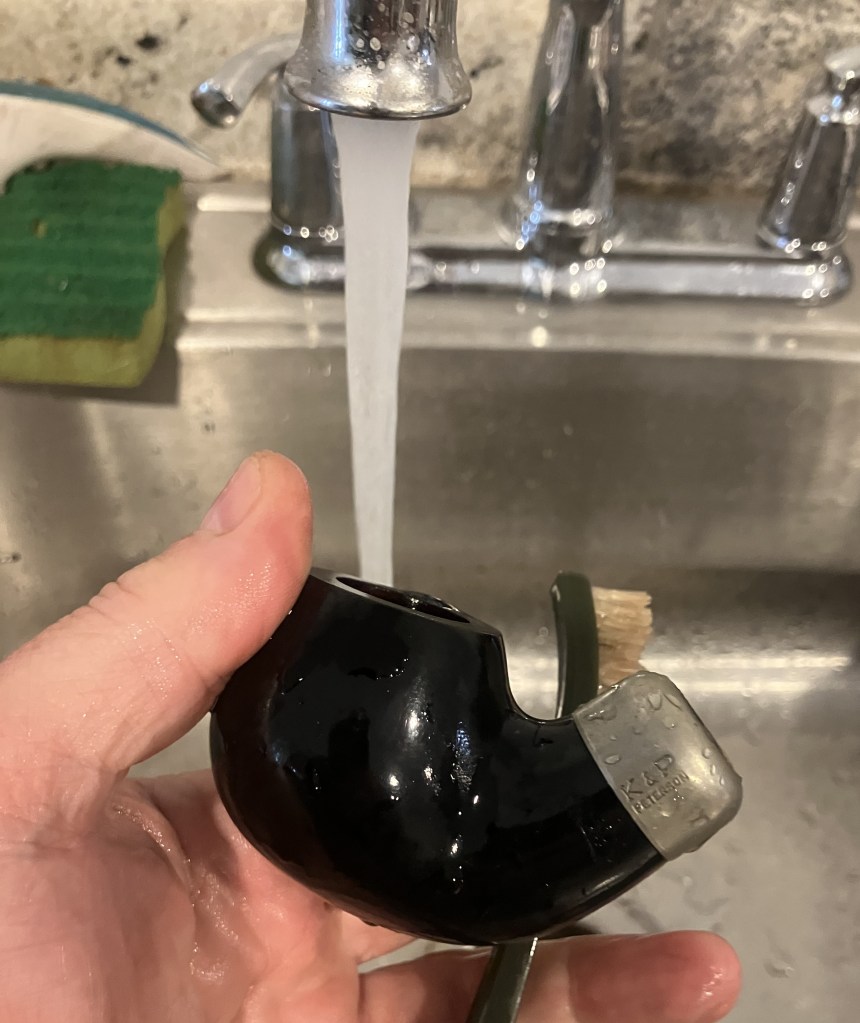
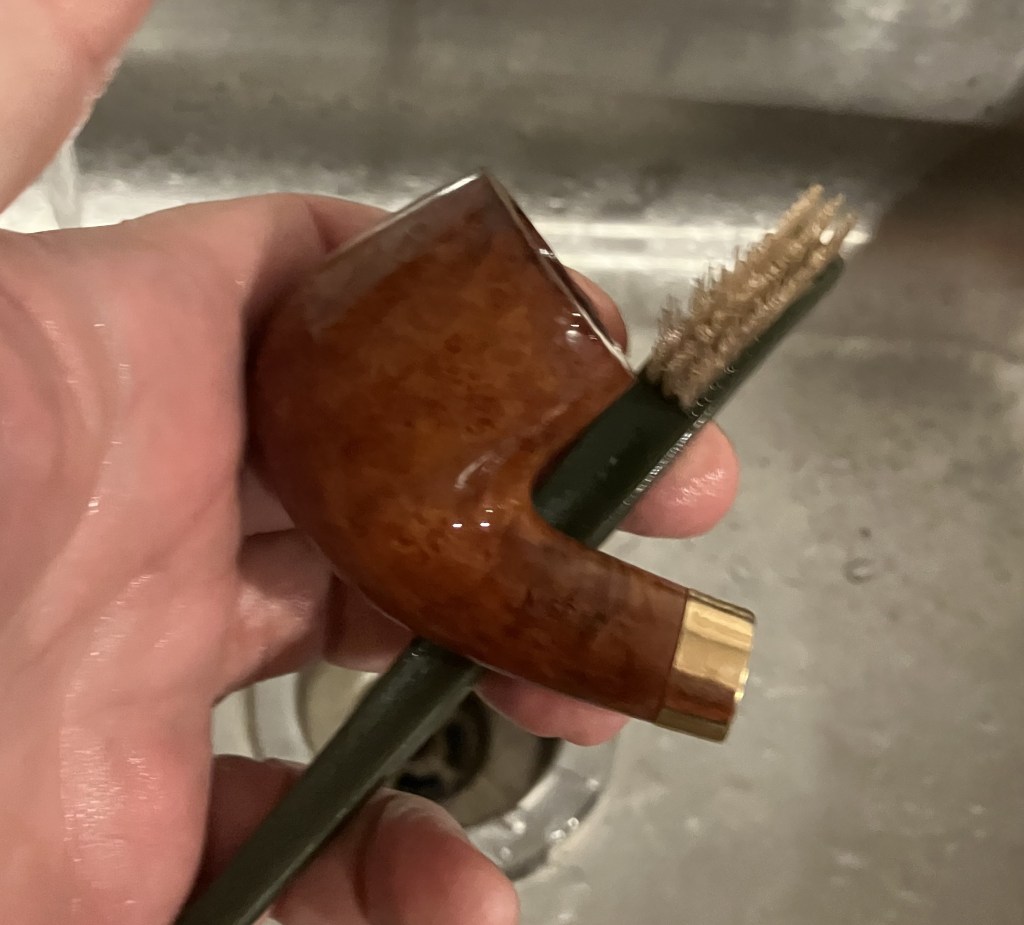
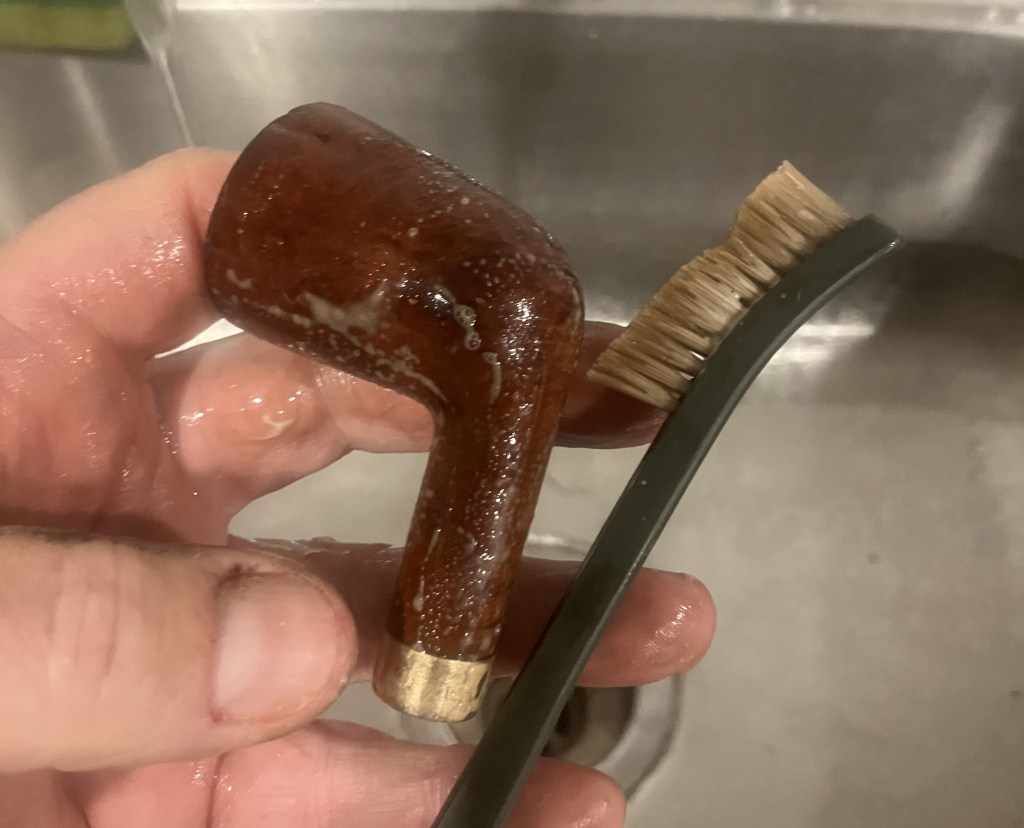
With that bowl coating stuff removed, I was able to say, “To the sink!” Here the stummel was scrubbed with undiluted Murphy Oil Soap and a nylon brush. The soap was rinsed away with warm water and the stummel dried with a cotton hand towel.
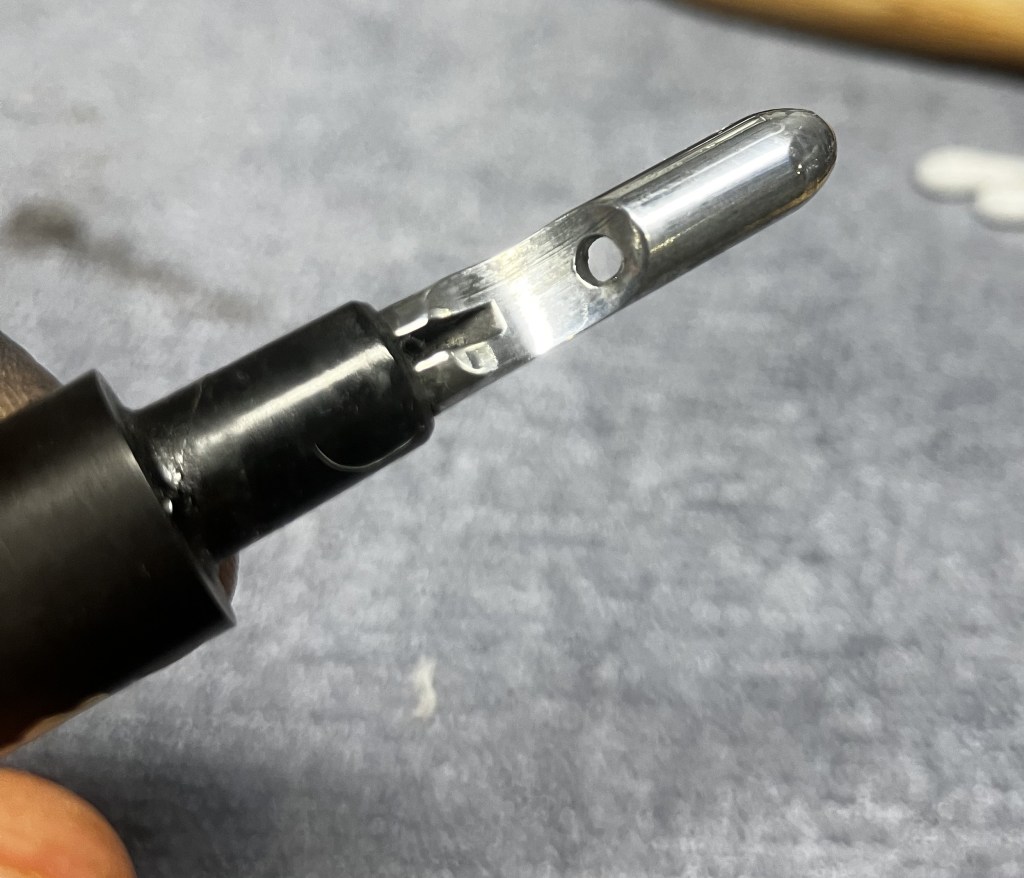
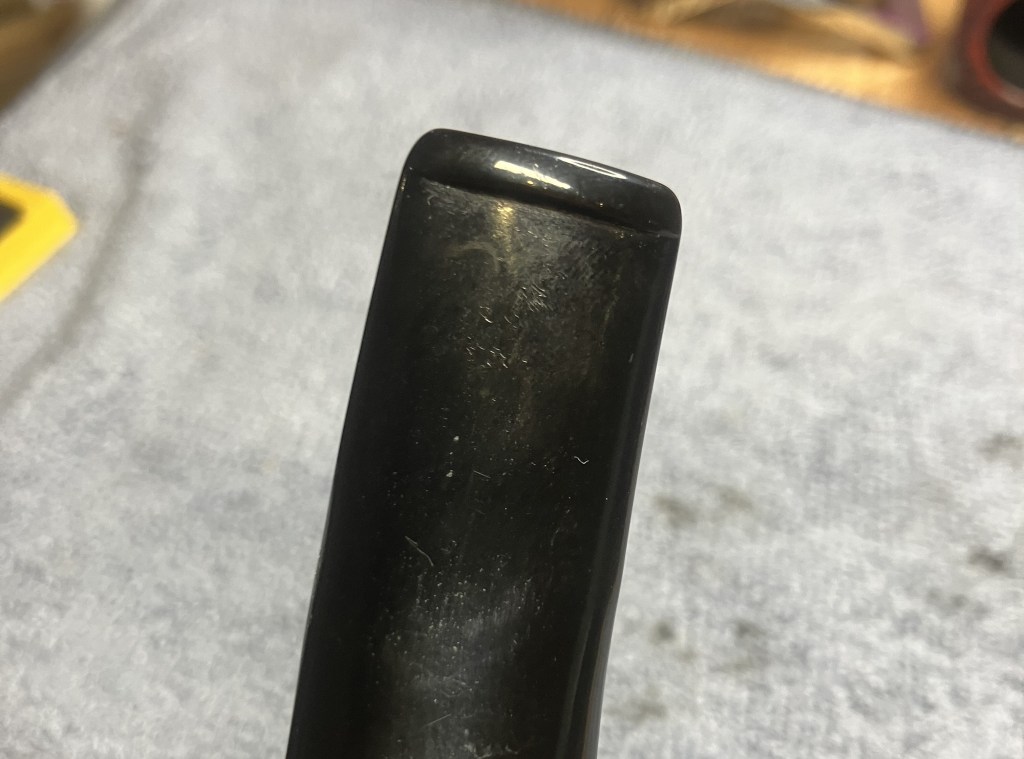
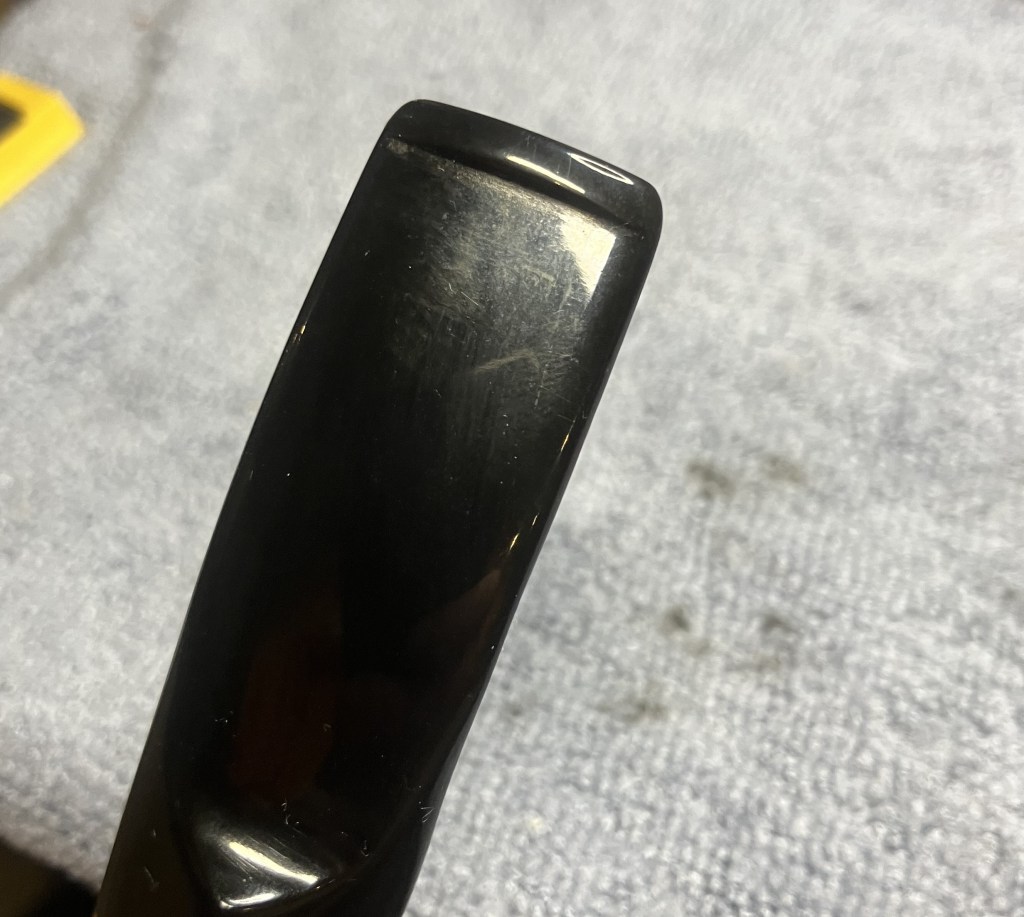
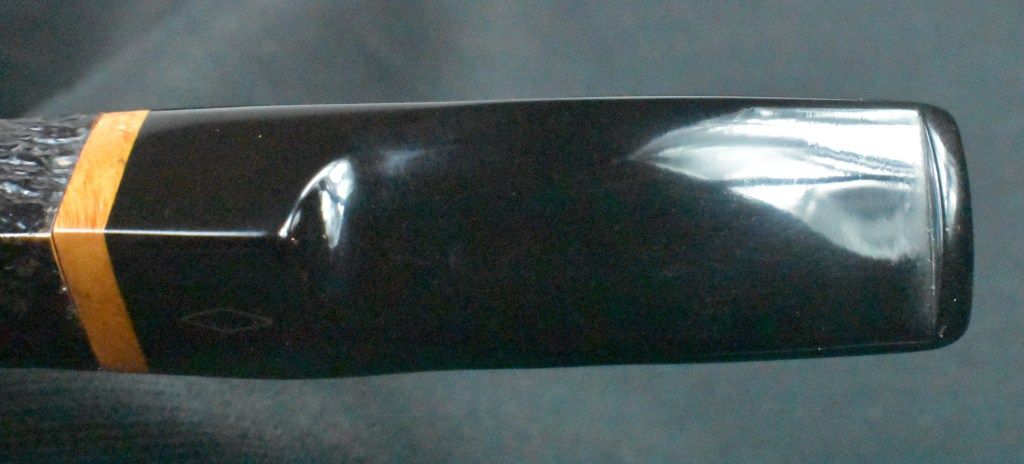
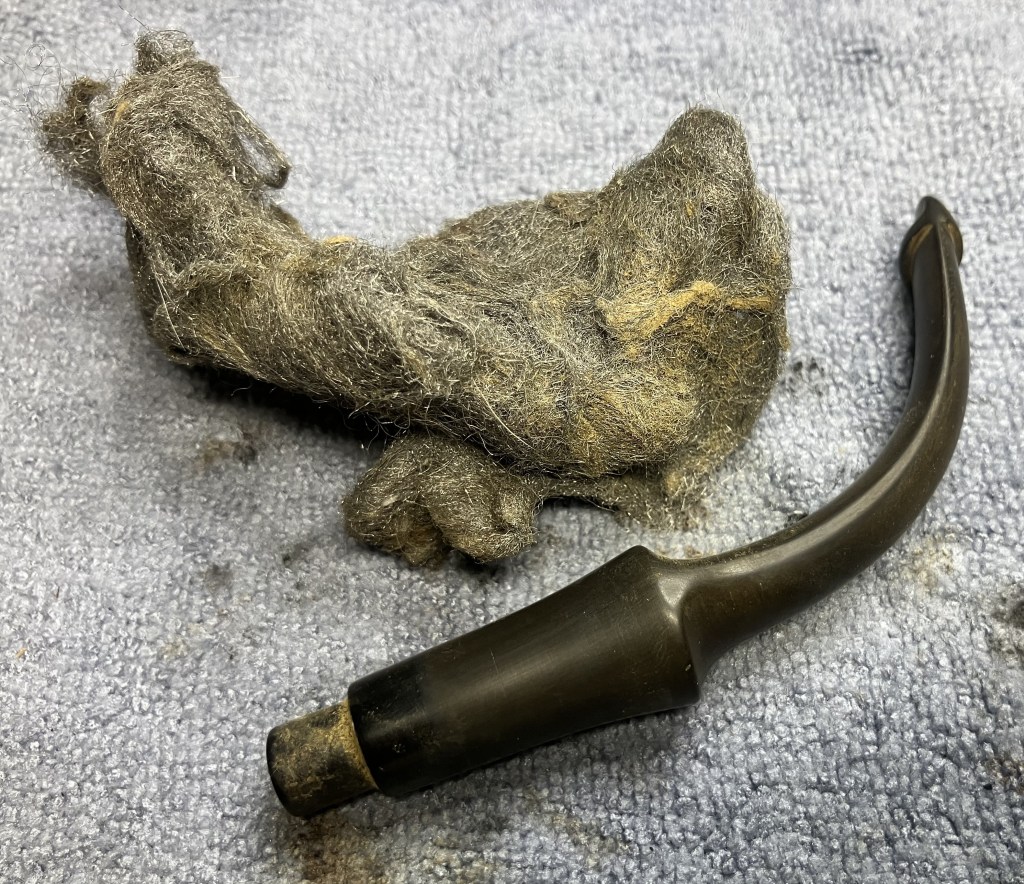
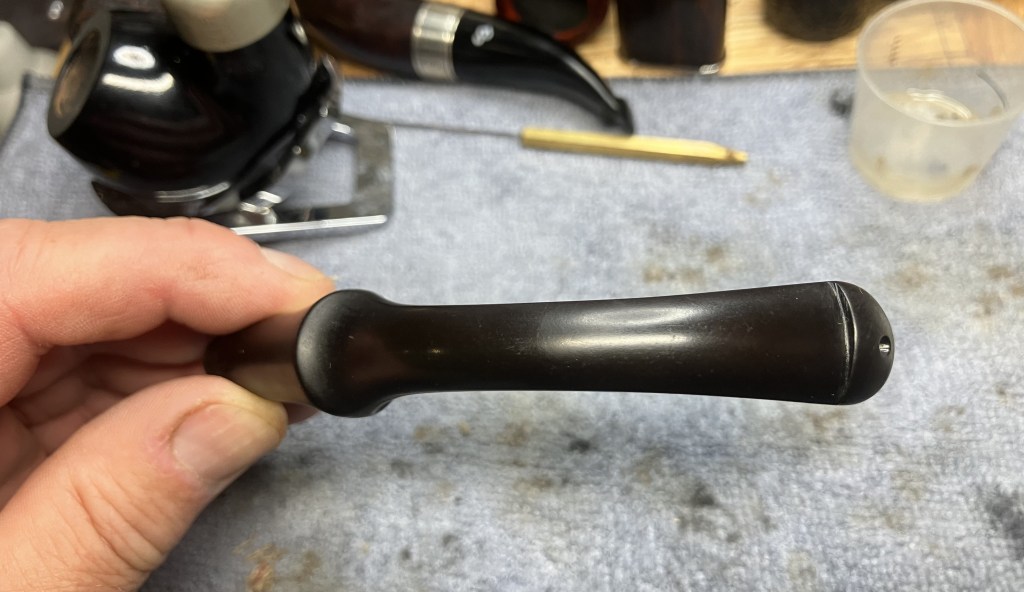
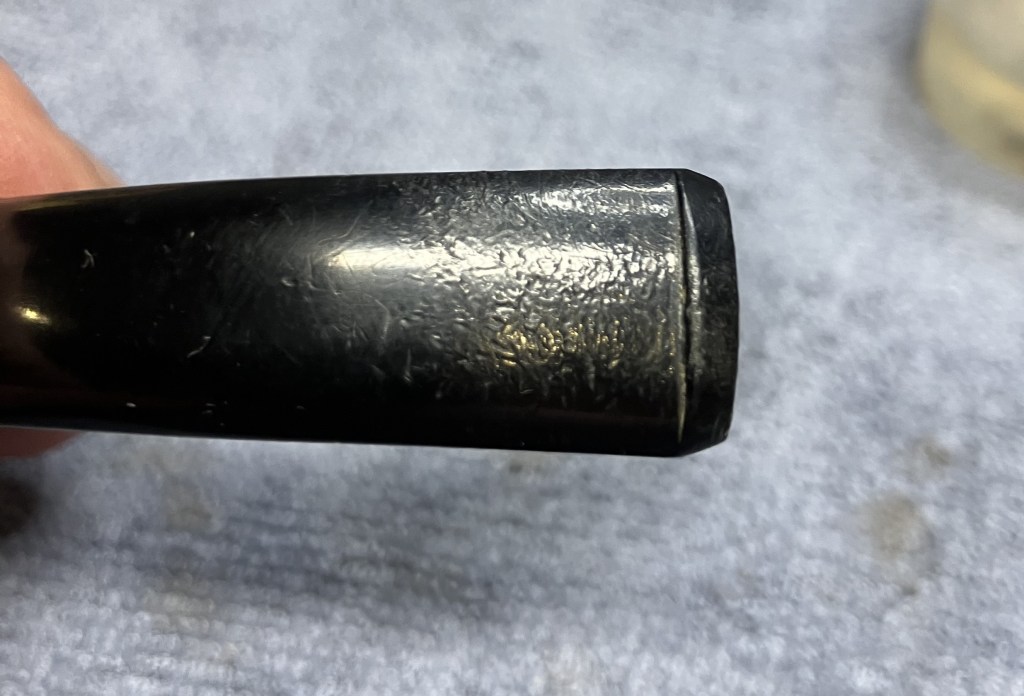
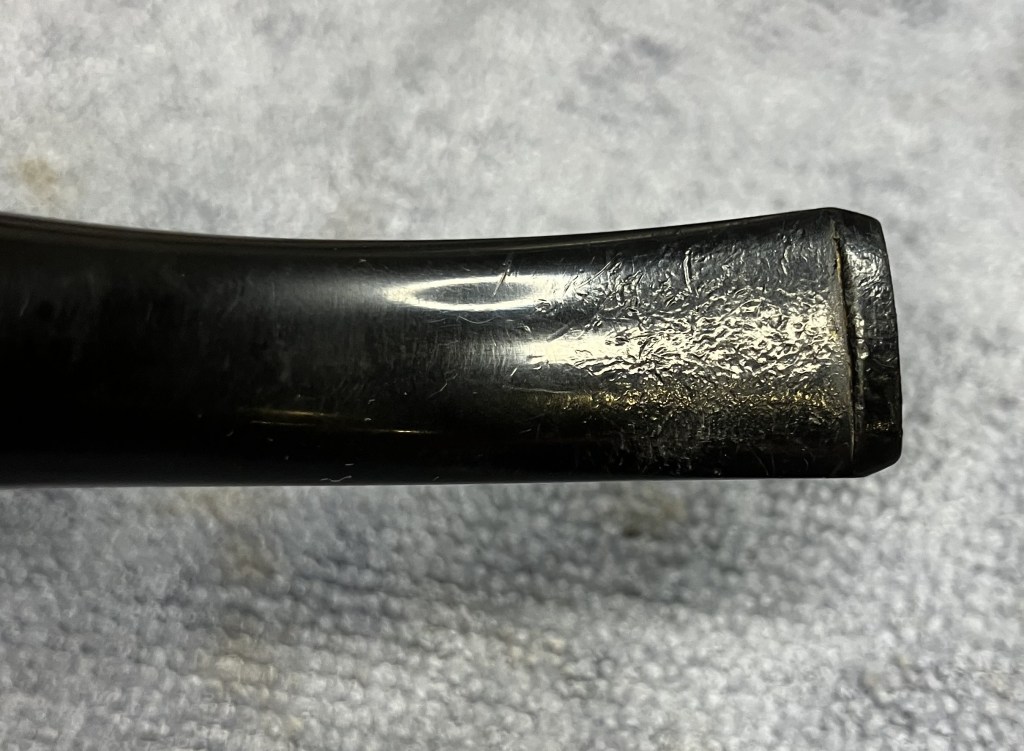
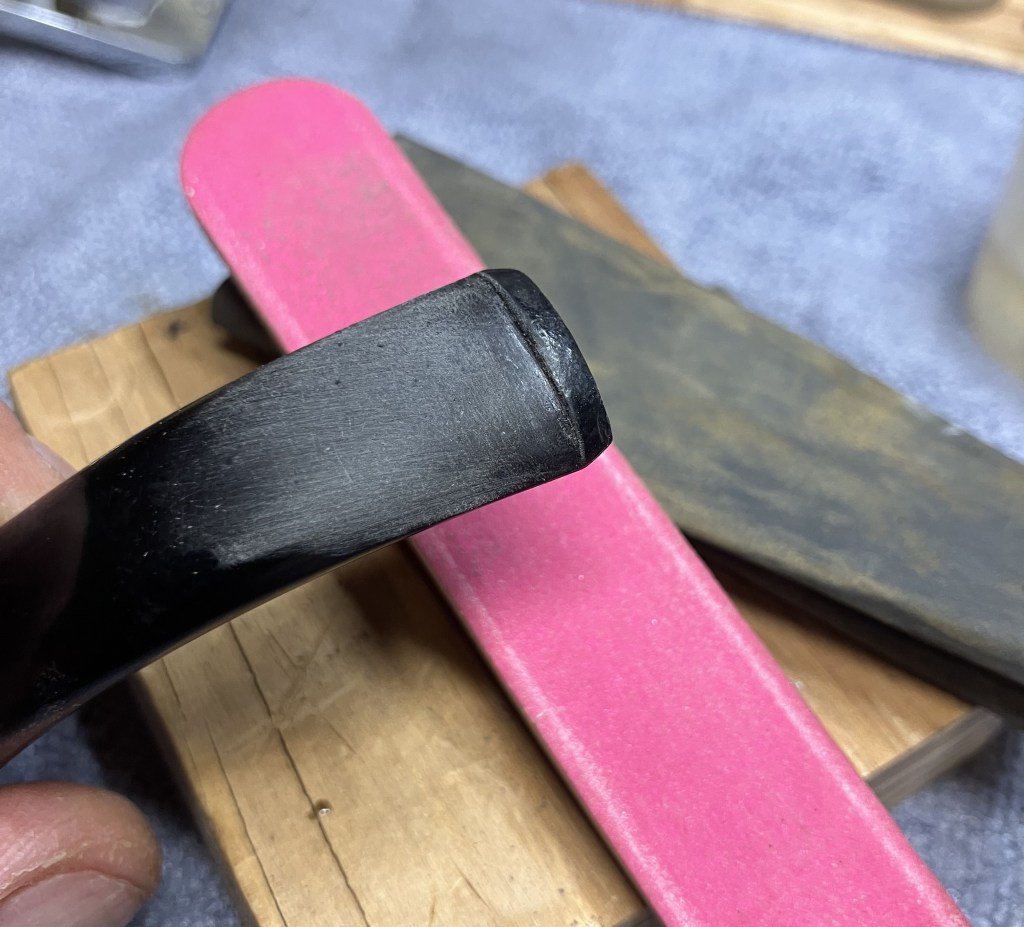
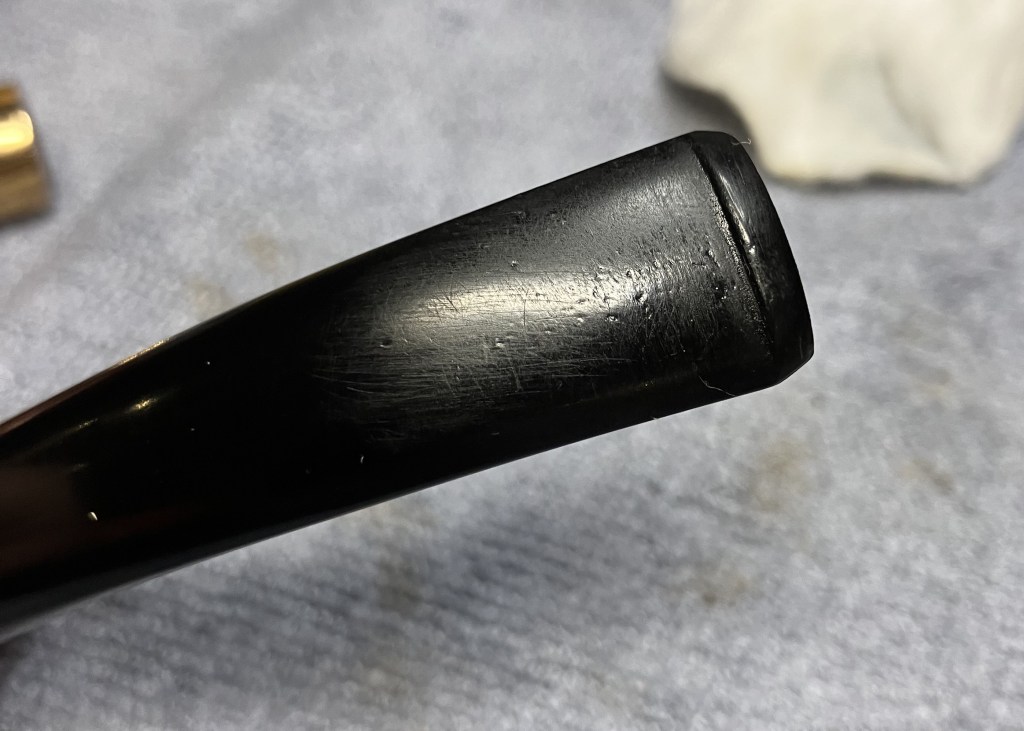
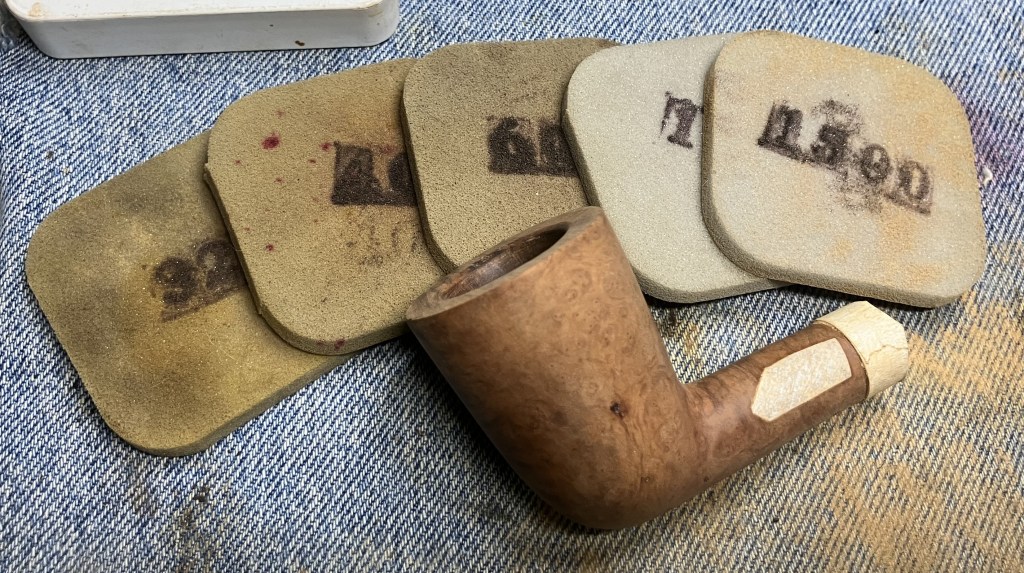
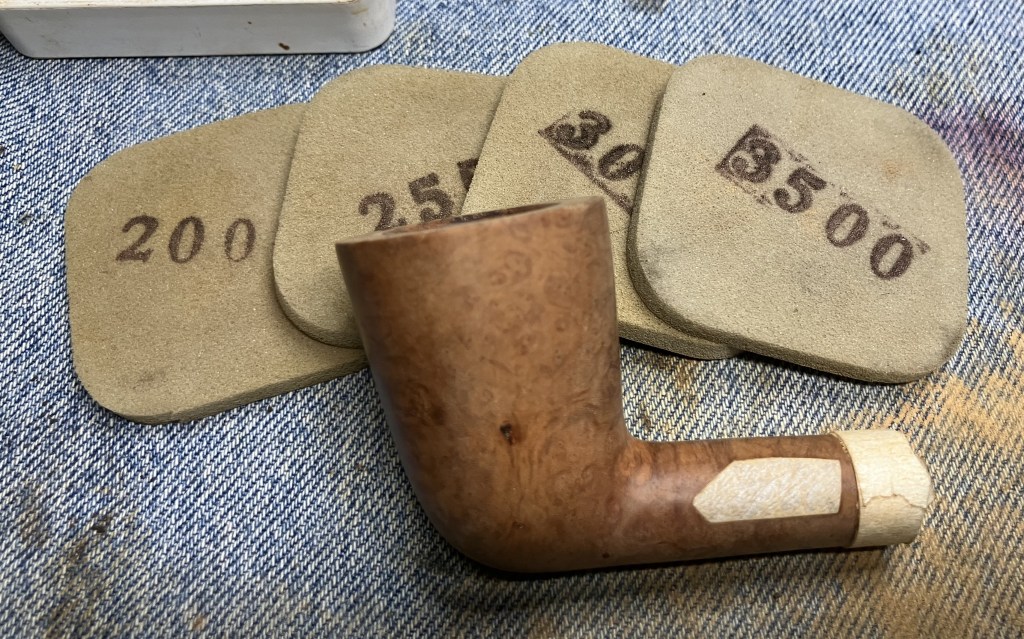
The stem showed ever-so-light tooth chatter scars.
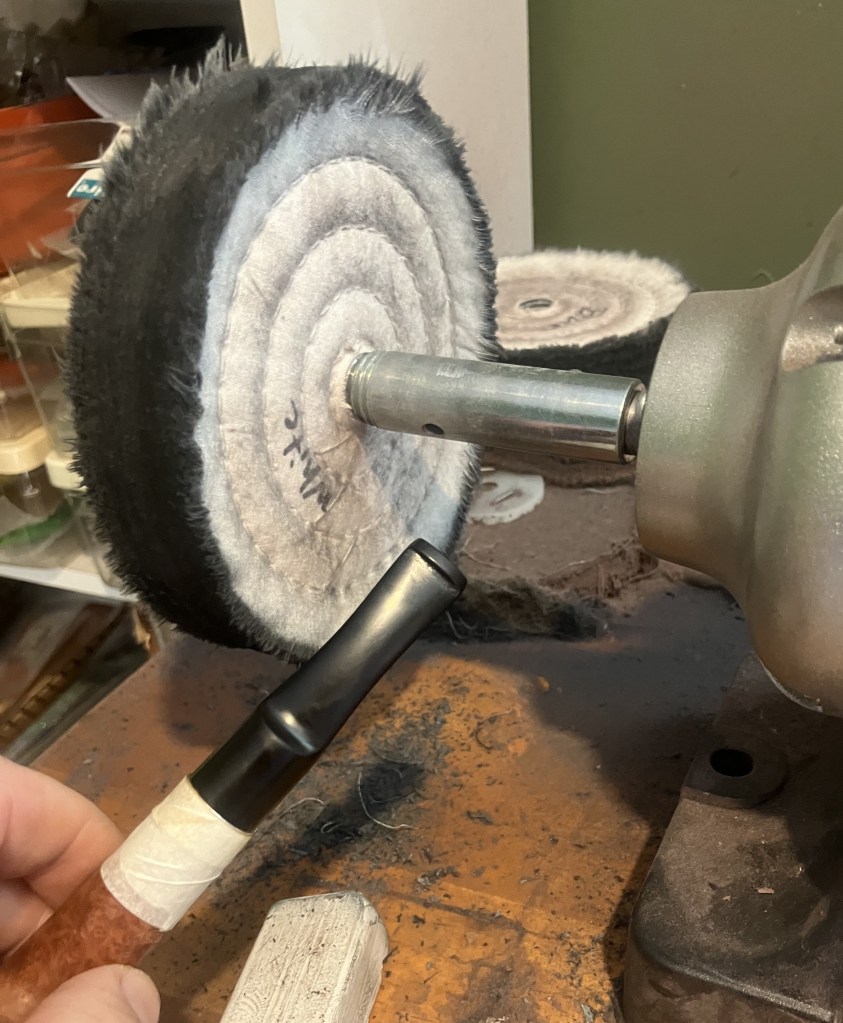
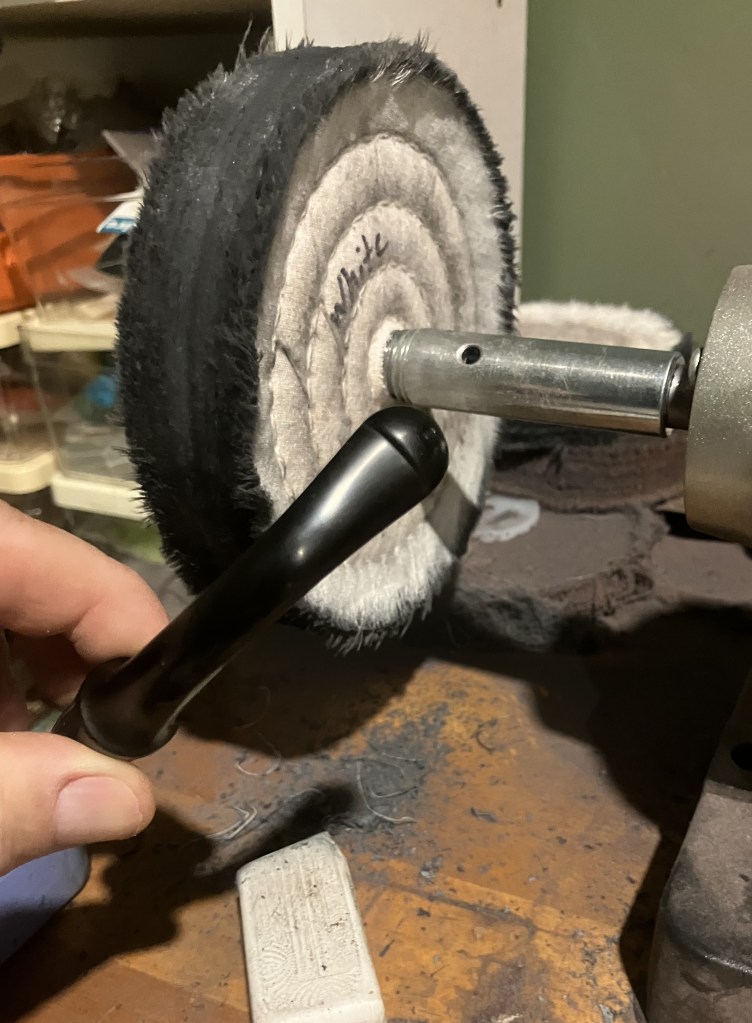
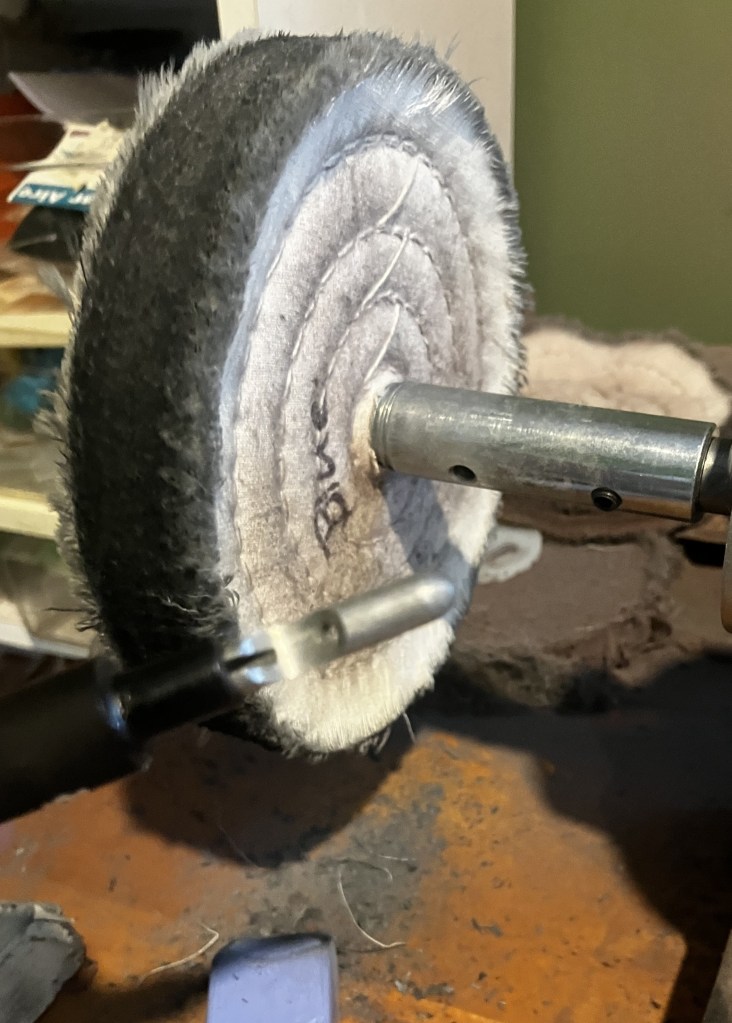
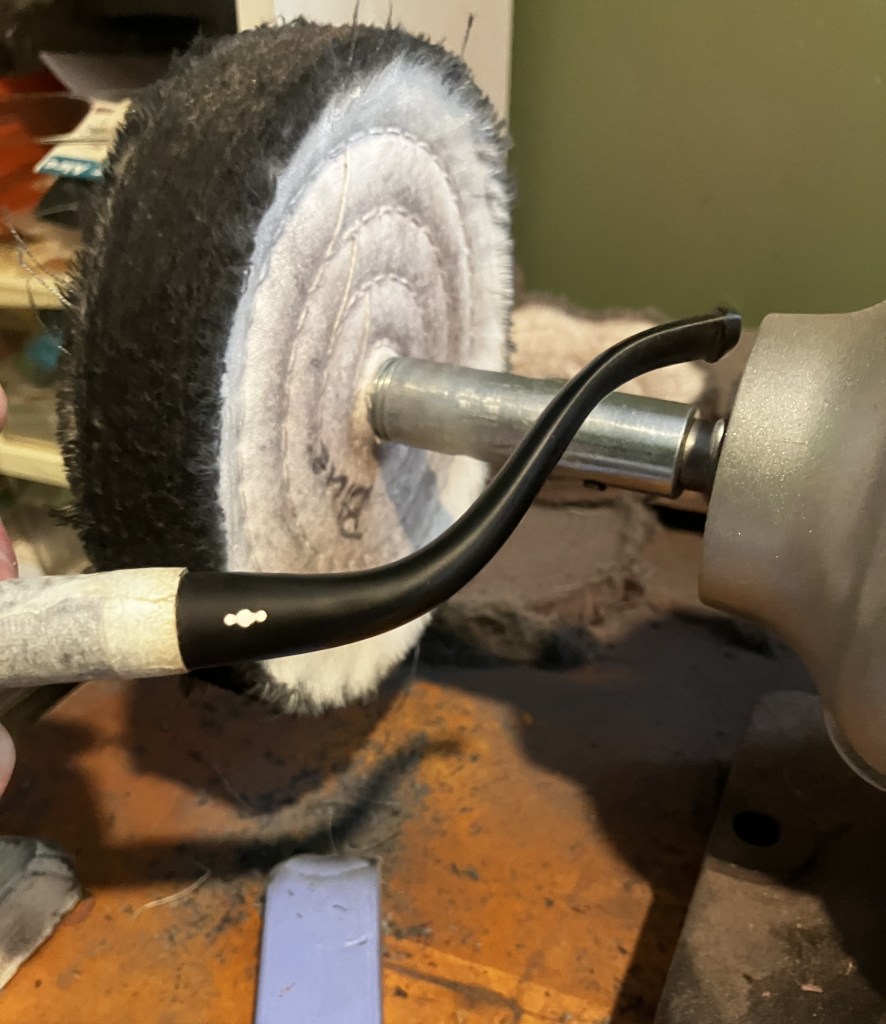
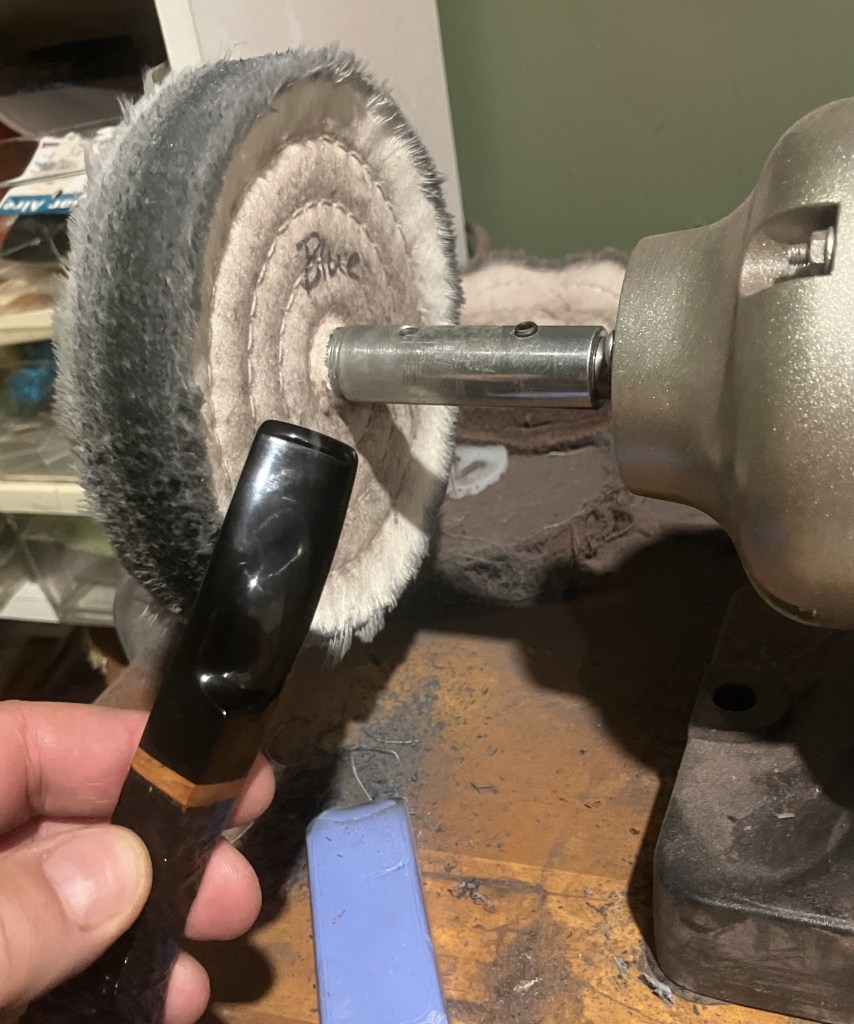
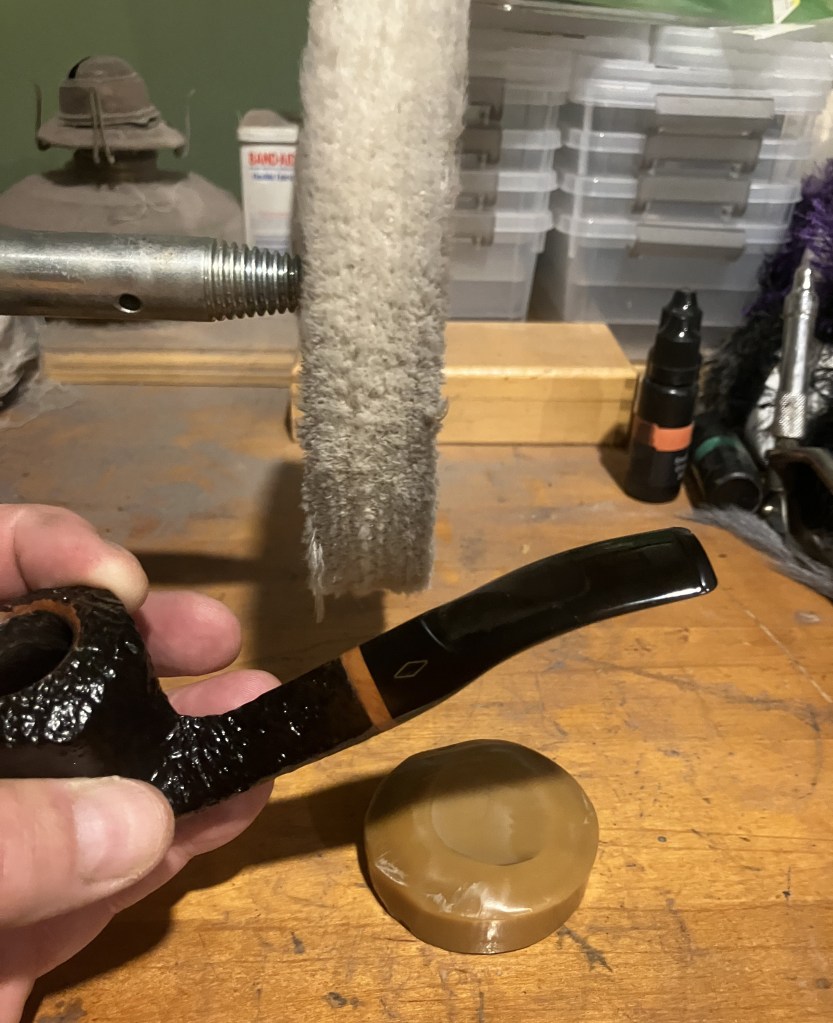
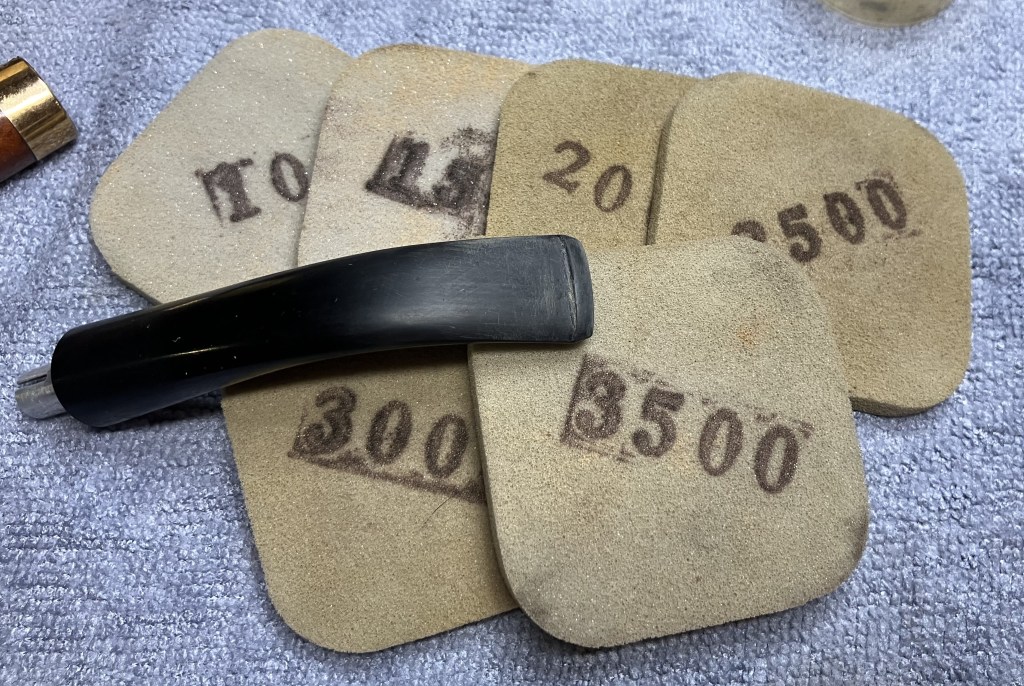
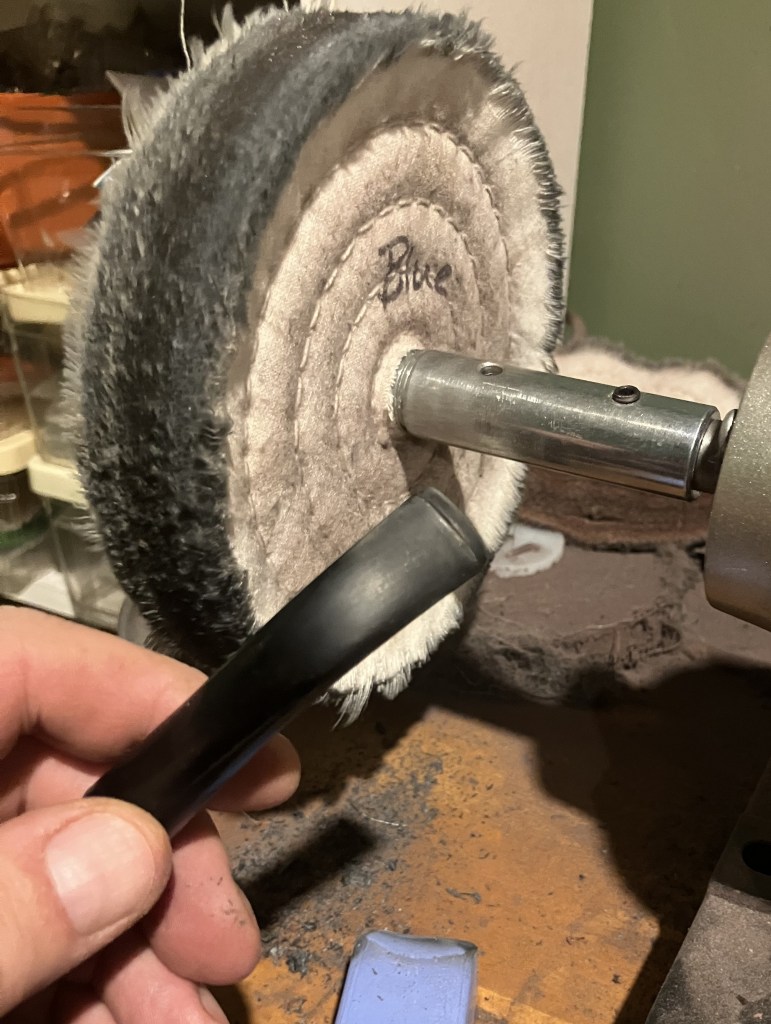
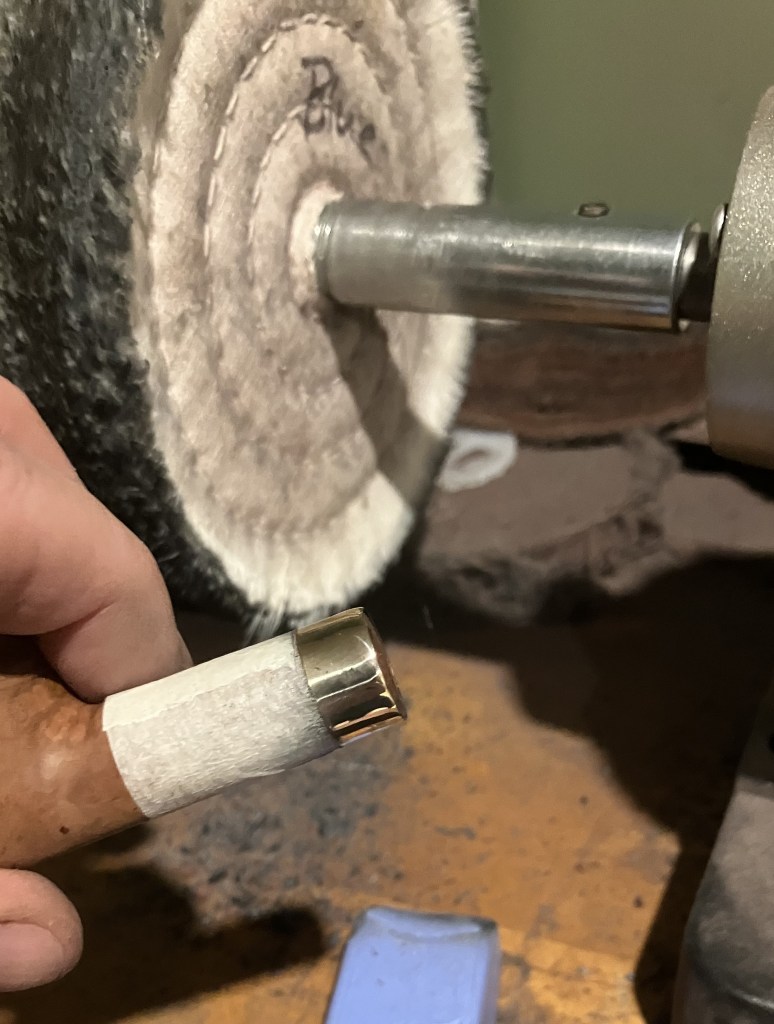
I did not think that sanding or micro-meshing was necessary to address this and that buffing with Blue Diamond compound would take care of the marks.
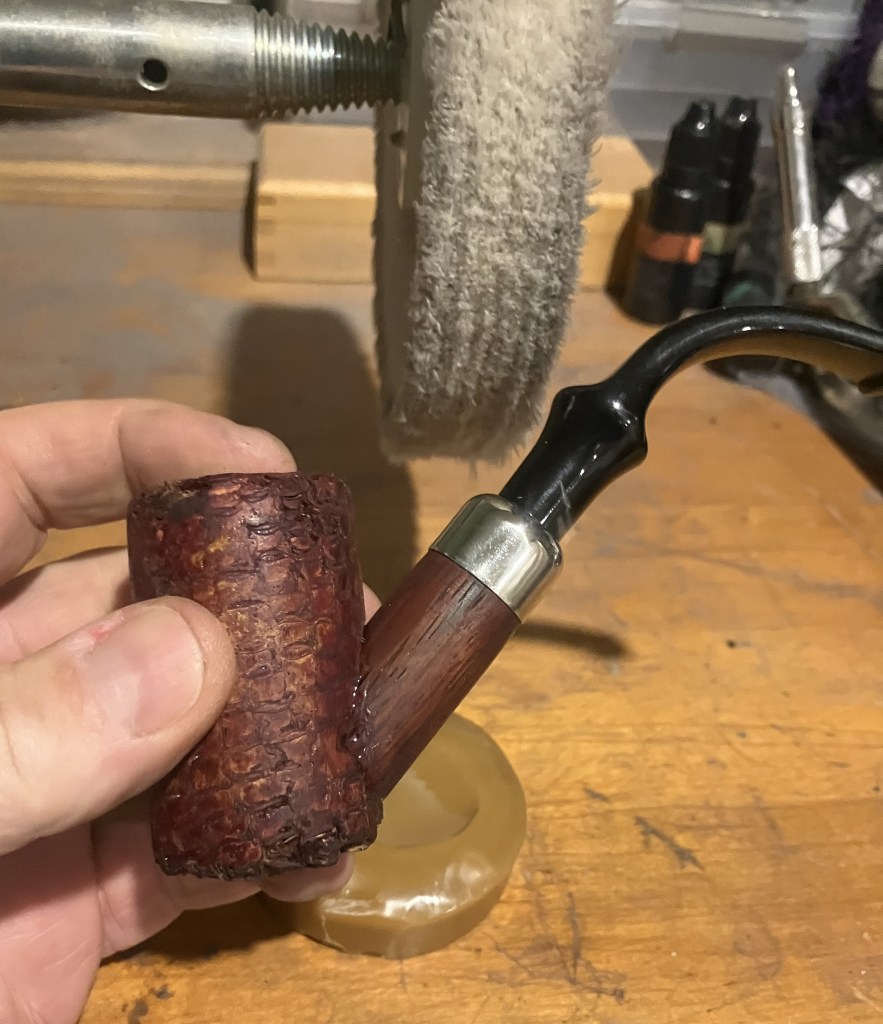
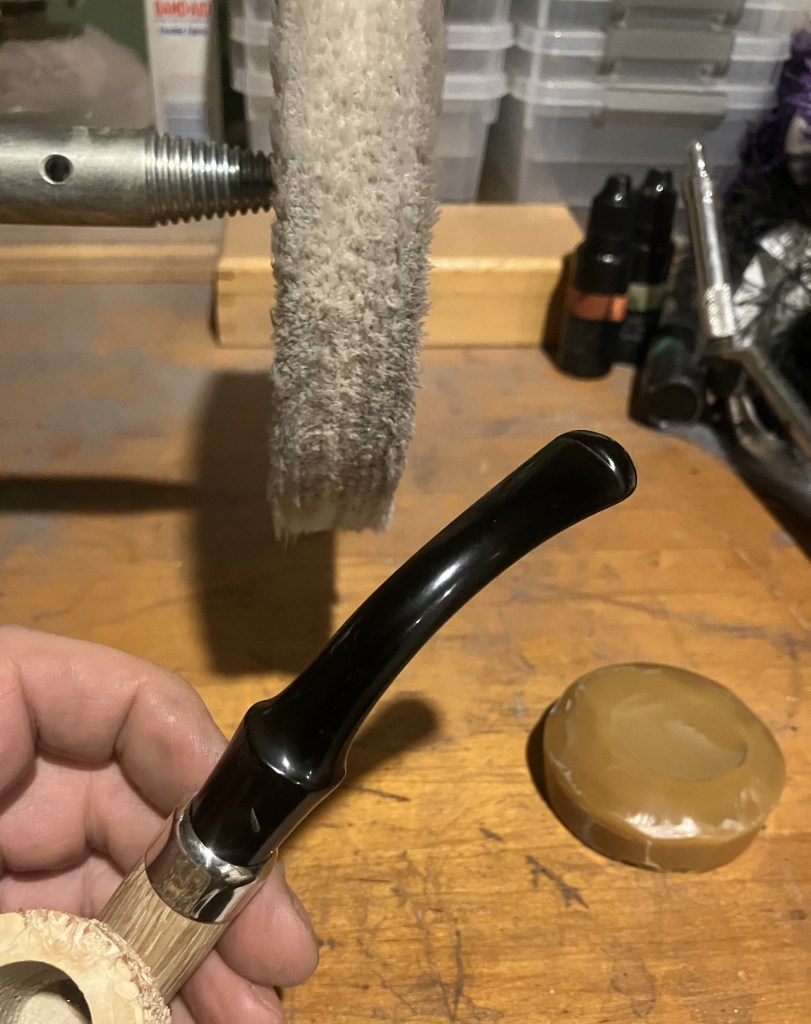
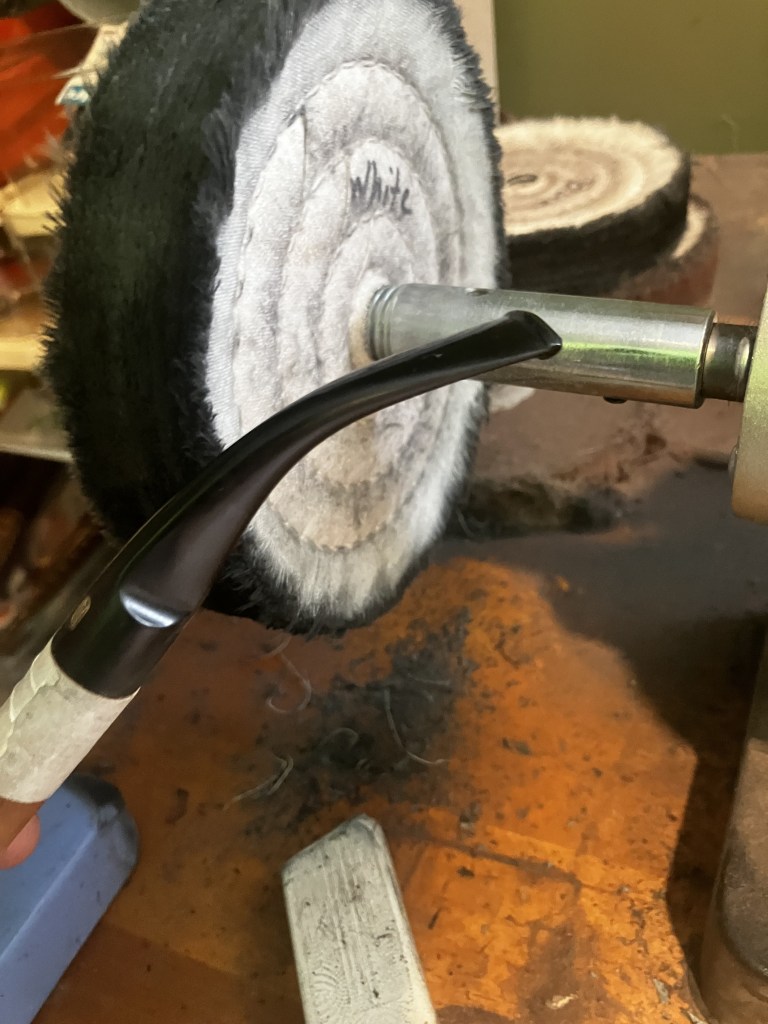
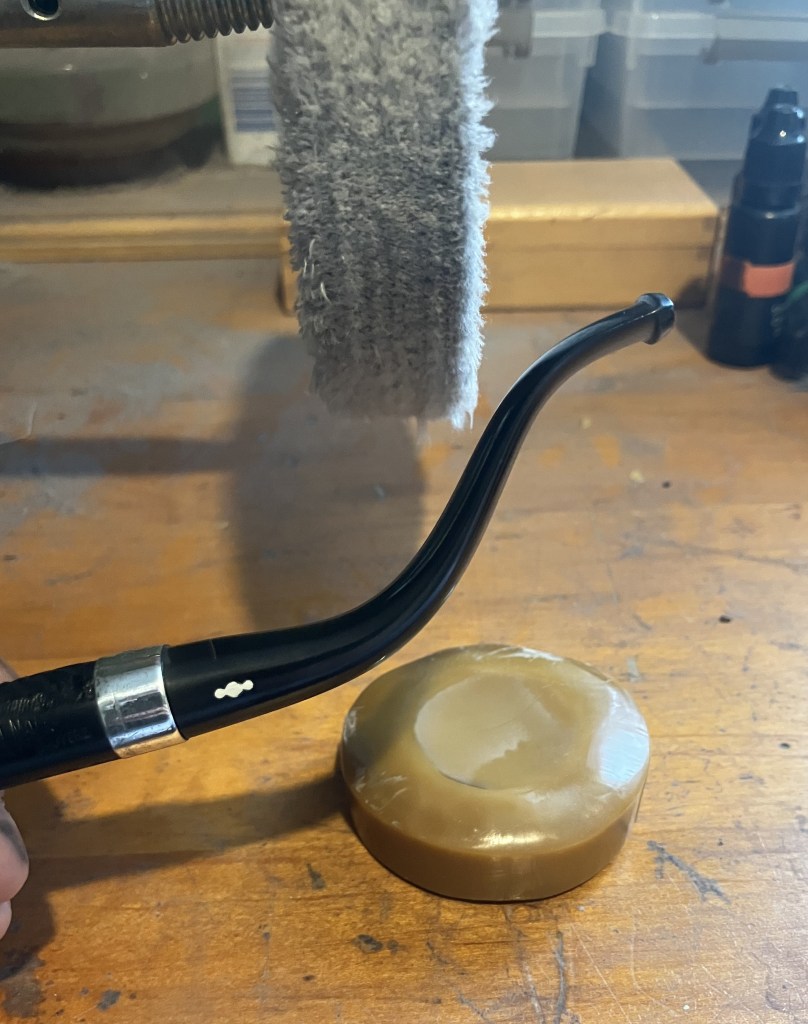
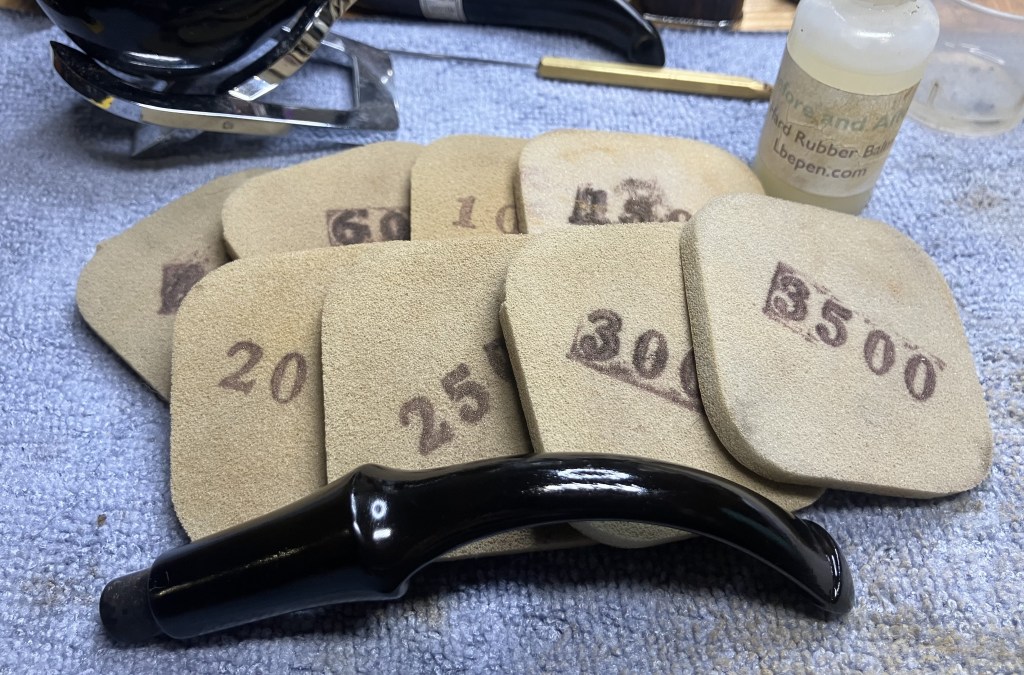
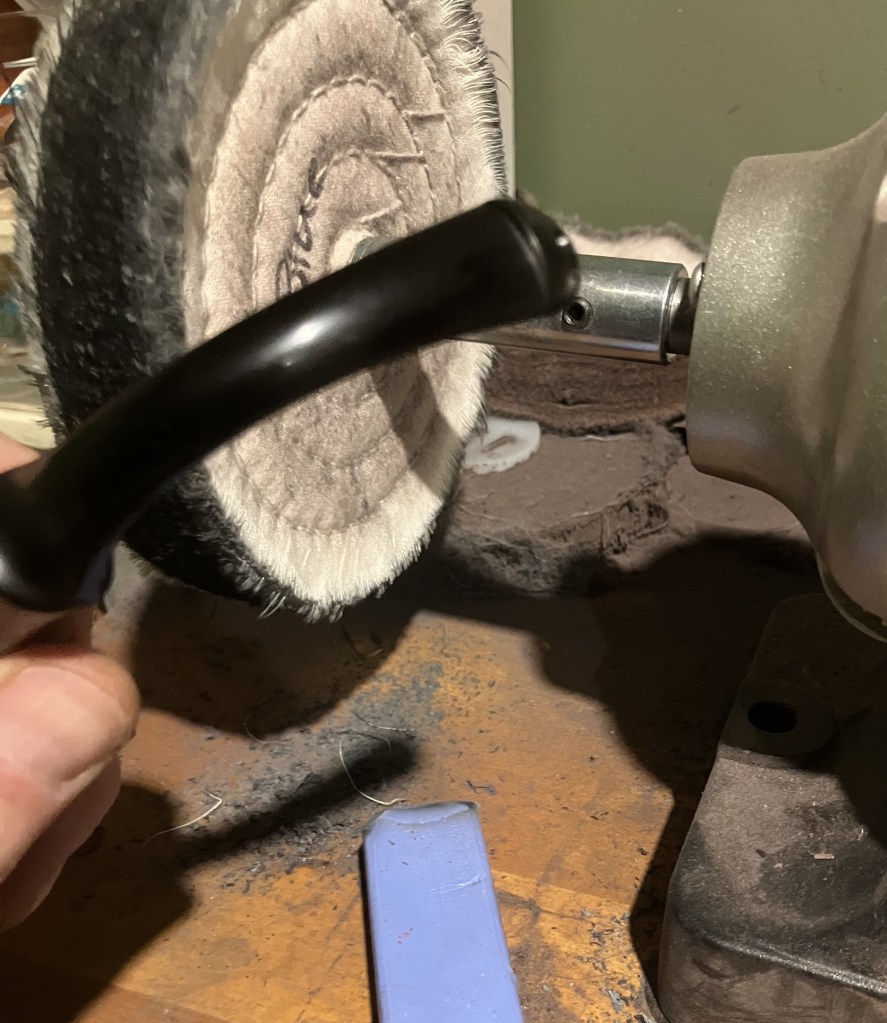
A couple of coats of carnauba wax at the buffer and the stem looked like new.
That’s it. That is all I did. I didn’t even bother taking a full set of after photos since the pipe didn’t look enough different to warrant taking them. I can say that it is a fine smoker and will be used and enjoyed for many years to come (hopefully).
The dimensions of the Brebbia Sebbiata 880 are:
Length: 5.78 in./ 146.81 mm.
Weight: 2.06 oz./ 58.40 g. (with band)
Bowl Height: 2.03 in./ 51.56 mm.
Chamber Depth: 1.64 in./ 41.66 mm.
Chamber Diameter: 0.75 in./ 19.05 mm.
Outside Diameter: 1.60 in./ 40.64 mm. (each facet was slightly different)
I do hope that you have found something here useful to your own pipe care, maintenance or restorations. If you like this sort of thing, please click the like and subscribe buttons. Thank you for reading the ramblings of an old pipe lover.
Loading…
Below are some photos of the finished Brebbia Sabbiata 880:
I have probably said this before, I love Peterson pipes and fishing. Now in fishing, catch and release is where fish are pursued,caught and then released. Hmm, I guess that didn’t need explanation. Anyway, a similar process can be done with pipes. A given specimen can be pursued, obtained, restored then collected or sold to a new owner. This restoration is even better than that, I got to restore a Peterson Ebony 302 for someone else. I didn’t have to pursue, obtain or look for a buyer. I’ve probably said this before too, “I’m lazy”.
Tom reached out to me to restore a well loved pipe of his. He apparently had been impressed with my restorations while abusing himself by reading my blog. He sent me some photos and I agreed to restore the pipe – it’s a Peterson, of course I’d restore it.
He packed up the pipe and sent it to the wilds of southeast Nebraska. Below are some photos taken prior to working on the Ebony.
Well loved, well used and well cared for, were terms that came to mind. The ebony finish was nearly pristine. I didn’t want to do anything to it other than cleaning and waxing except for the rim – that would take a bit of work. There was a light cake in the tobacco chamber and the reservoir showed signs of frequent use. The nickel collar was tarnished and should buff nicely. The stem was suffering from oxidation and looked to be where the majority of time would be spent. Overall this was going to be a fun project.
Background
I had to count how many Peterson pipes I had blogged about. I ran out of fingers and toes but used the dog’s feet to assist in the task, then I got sidetracked, darn ADHD. Let’s just say between 30-40. Adding to that all the pipes restored prior to blogging would likely put the number at closer to 100. Have I mentioned that I like Peterson pipes?
Back to the background. Peterson pipes or Kapp and Peterson, if you prefer, is the oldest operational pipe manufacturer in the world. Summarizing the history of Peterson would require a large book and perhaps a blog. Good thing Mark Irwin has provided both of these: The Peterson Pipe: The Story of Kapp and Peterson, written by Mark Irwin and Gary Malmberg, and petersonpipenotes.org (PPN). For a less lengthy summary Peterson – Pipedia provides a nice article.
For this pipe in particular I refer to Mark’s blog post on Ebony finished Peterson pipes: 367. A History of Peterson’s Ebony Finish, With Help from Sykes Wilford and Adam Davidson – Peterson Pipe Notes. As Mark discusses in the post, the ebony finish is difficult to perfect. This is the main reason I was glad to see that Tom’s 302 was in such great shape. It relieved me of having to try to reestablish a beautiful ebony finish myself. The 303 was added to Peterson’s line-up in 1978. Here is a description of the 303 from PPN:
“302 Extra-Large Apple. 1978-Present.
Length: 5.75 in. / 146.05 mm. Weight: 2.30 oz. / 65.20 g. Bowl Height: 1.72 in. / 43.69 mm. Chamber Depth: 1.39 in. / 35.31 mm. Chamber Diameter: 0.80 in. / 20.32 mm. Outside Diameter: 1.74 in. / 44.20 mm.
The 302 and its smaller, less jowly sibling the 303, first appeared in the 1978 Peterson-Glass catalog and were issued simultaneously as the De Luxe Systems XL2S (later 2S) and 3S, the Classic Range 02 / XL02 and 03, and in the Dunmore System as the 70 and 73. Peterson describes the 302 shape as “an extra-large apple” in the 1986 catalog and the 303 as a “medium apple.” If you look at this bowls closely, whether in new or vintage pipes, you’ll notice there are actually two shapes, one wider at the back and bottom of the shank and the other more rounded. This stems, I suspect, from outsourcing to two different bowl sources, as the difference is too great to be merely a sanding problem. In any event, I like and smoke both. The fat-bottom seems to have been the model for the Lestrade Sherlock Holmes, XL23. For both the 302 and 303, it’s worth seeking out the early-issue mouthpiece versions (pre-1990), some being quite short and some longer, but all possessing the wide saddle and the Comfort P-Lip.” (146. A Guide to System Shapes, 1896 – 2019, Part 1 (The 300 Shape Group) – Peterson Pipe Notes). To narrow down this 303’s historyI again refer to Mark Irwin’s PPN with two quotes
1) “From 1979 until now many Pete lines have been given the ebony treatment” and
I suppose I could just ask Tom, when he got this pipe, eh? That is what I did and here is his reply: “Yessir I got this last year from an estate sale in the heights in Little Rock. The fella that owned it was a huge part and mentor of many pipe smokers @ The Pipe & Tobacco Shop in Little Rock. I had no idea that all the pipes I bought at his estate sale were his. It’s a huge honor to have some of his pipes but my memory of his name I just can’t remember. He was around 90 when he passed.” (personal communicationTom Gilliam, AKA: AR Piper). Tom then said he would reach out to the owner of the shop.
The 302 made the 20 foot journey from the photo table to the workbench.
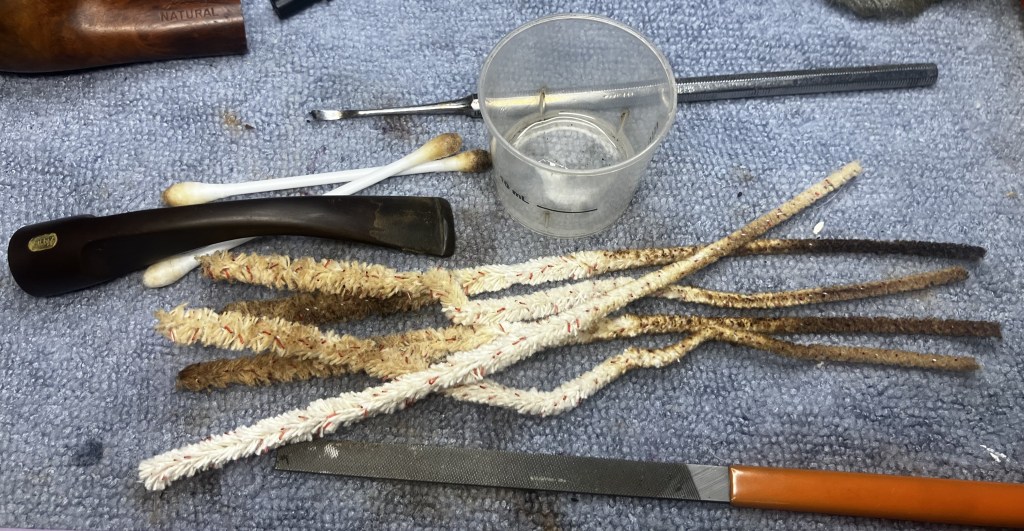
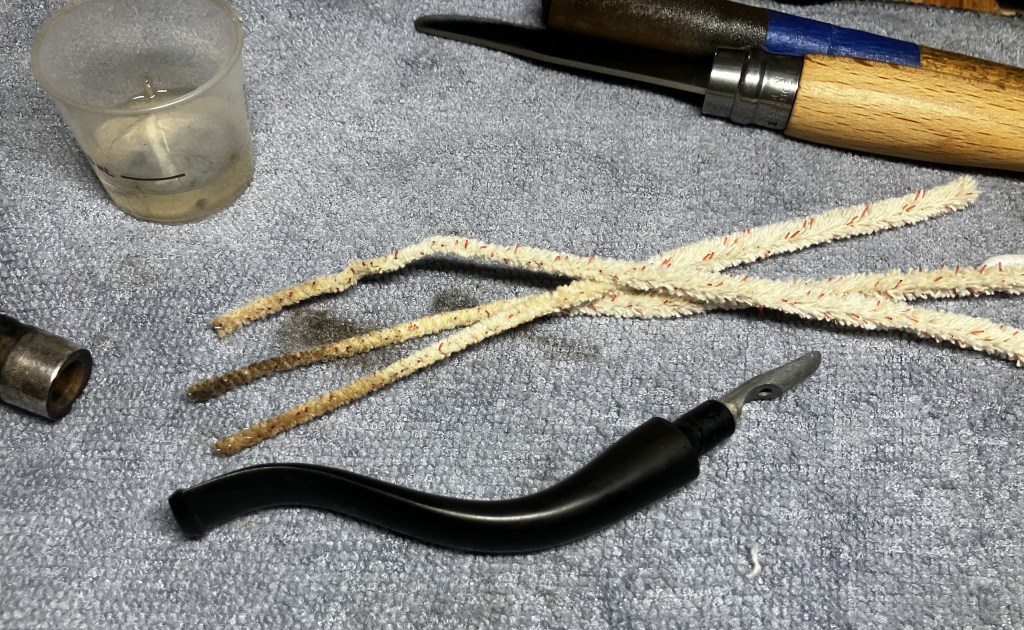
I began with the stem, cleaning it with 99% ethyl alcohol, cotton swabs and bristle pipe cleaners.
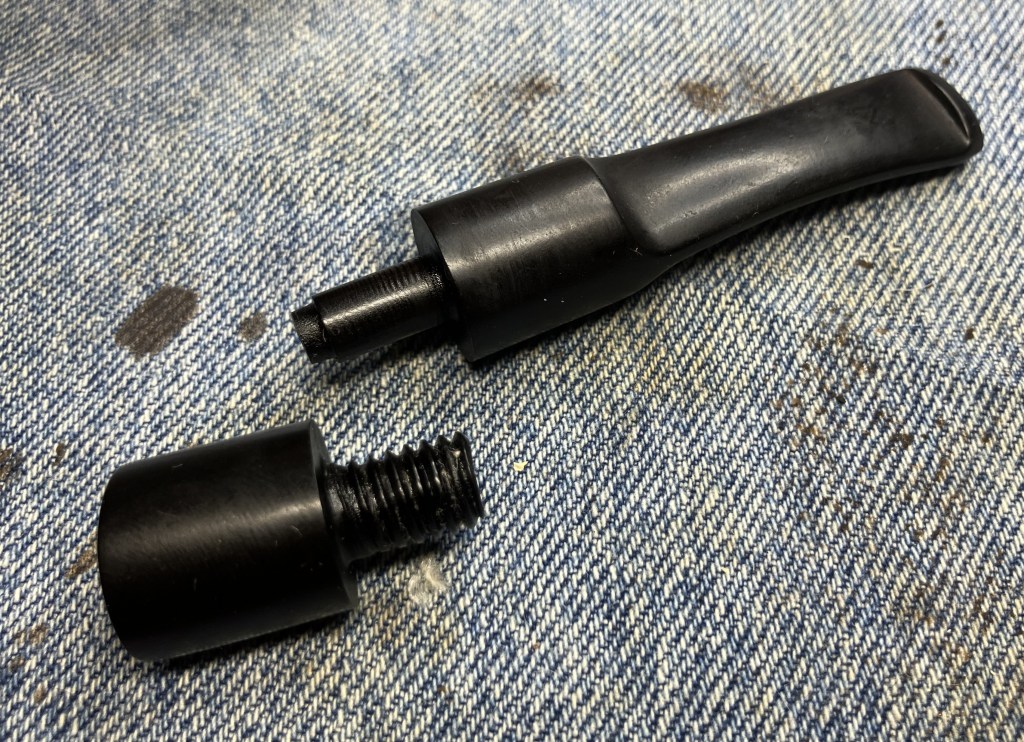
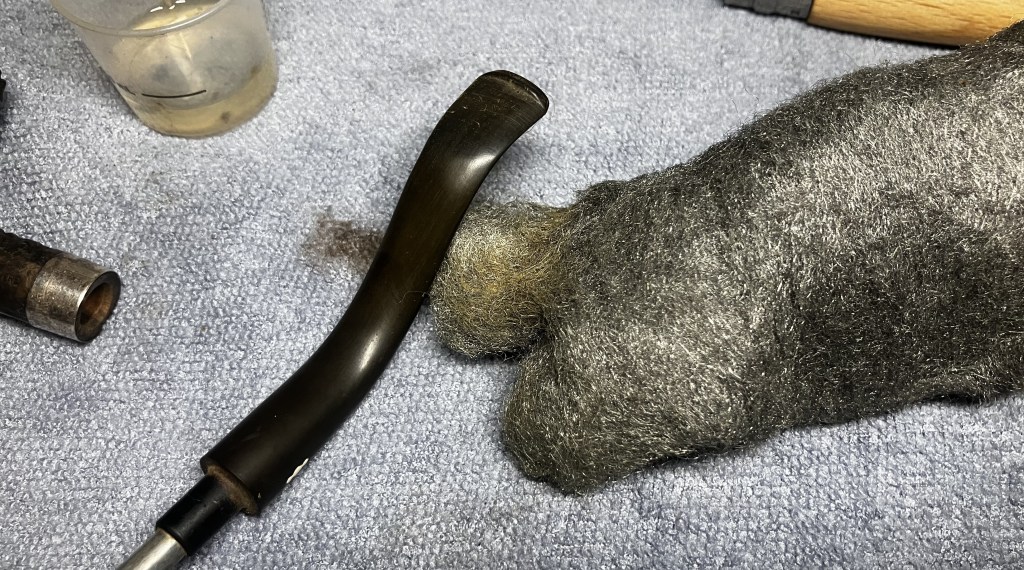
The surface of the stem was rubbed with 0000 steel wool to remove some of the surface oxidation.
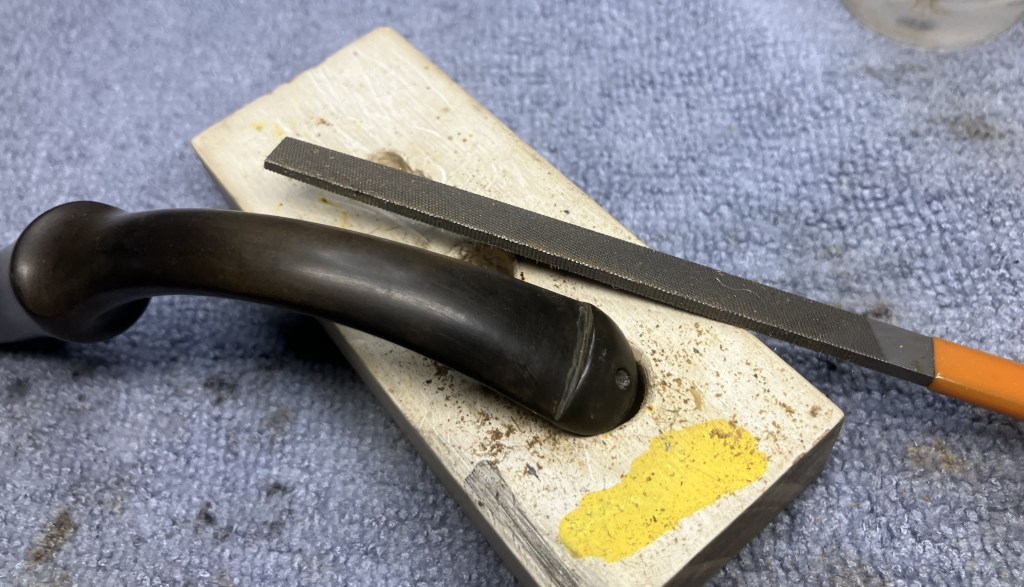
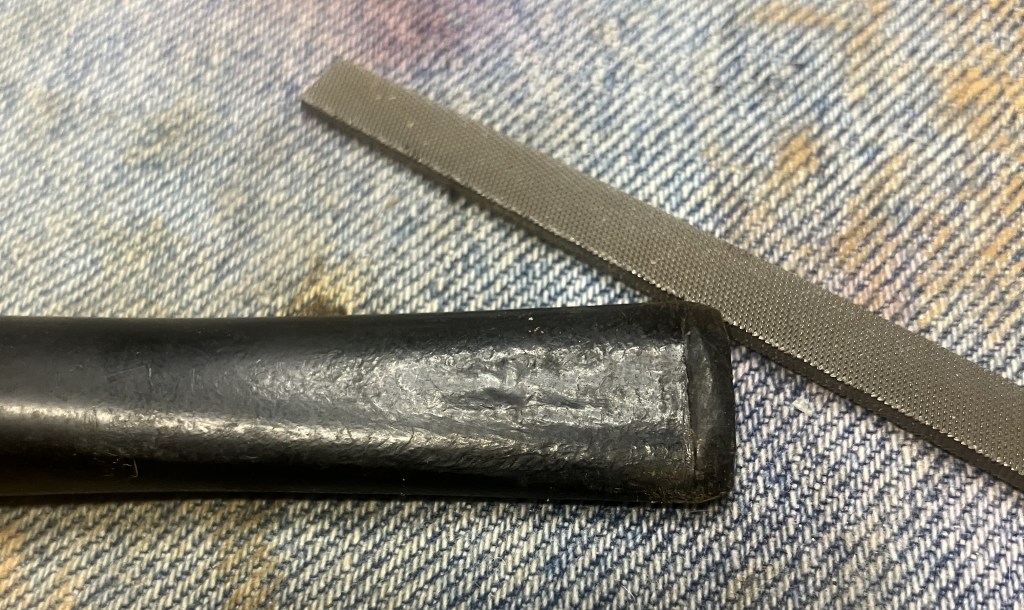
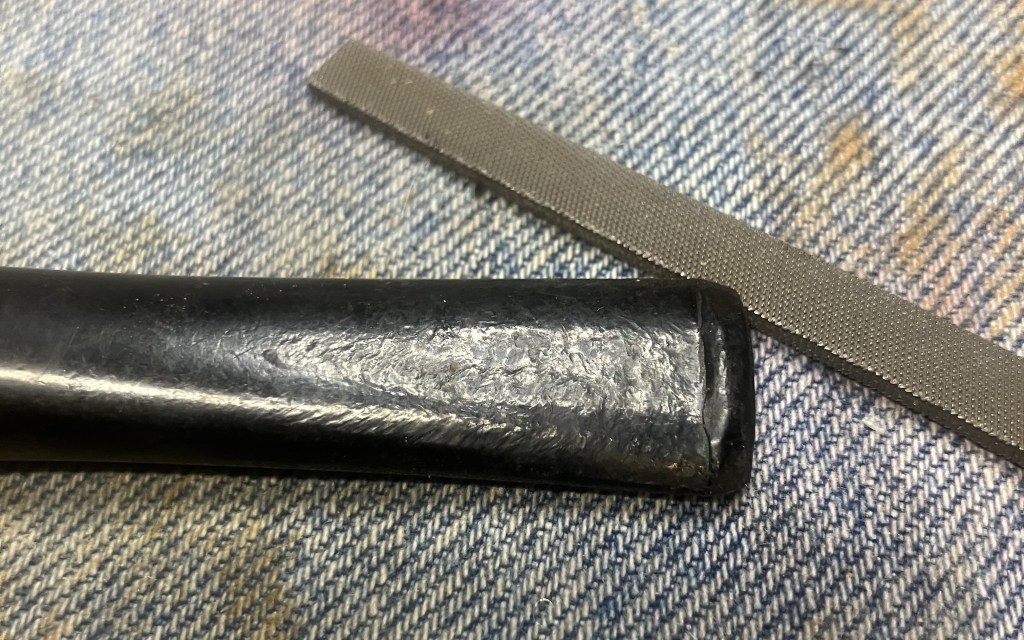
I used a small flat file to sharpen the edges of the button.
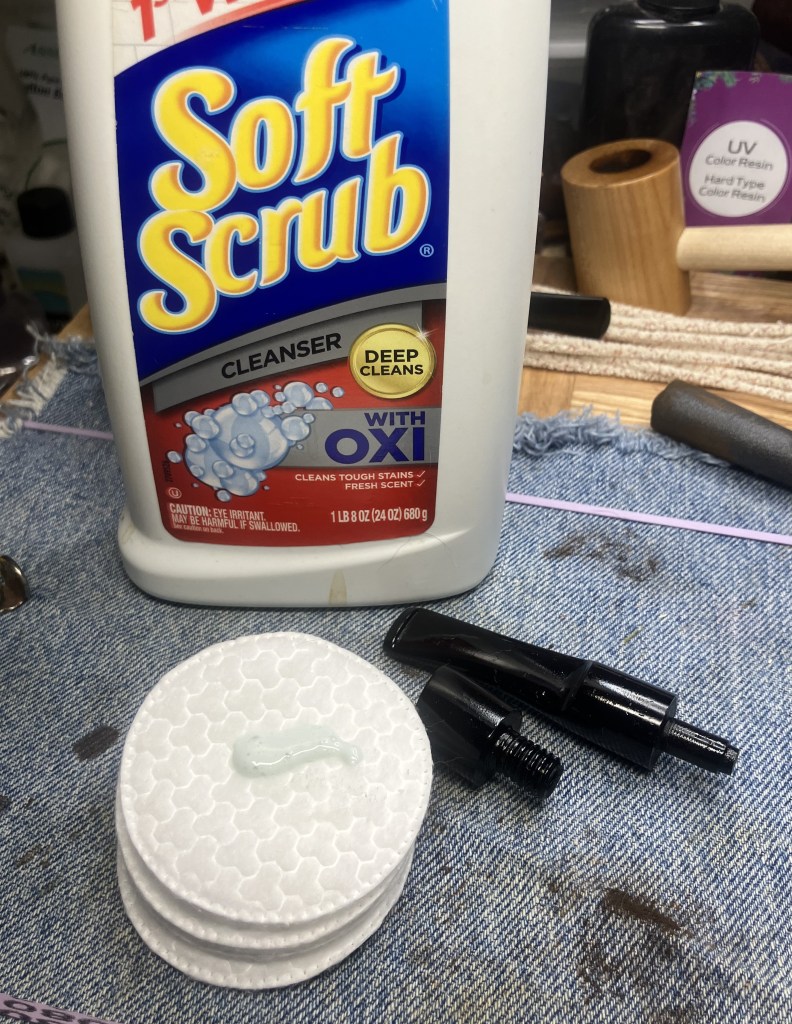
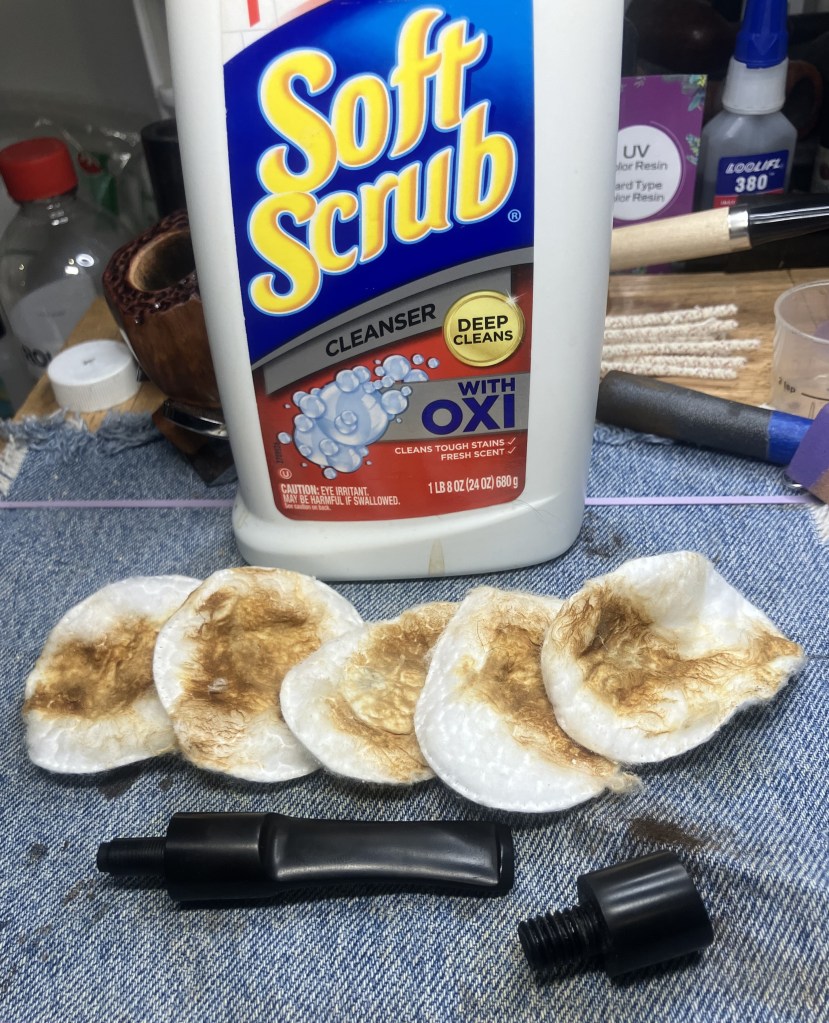
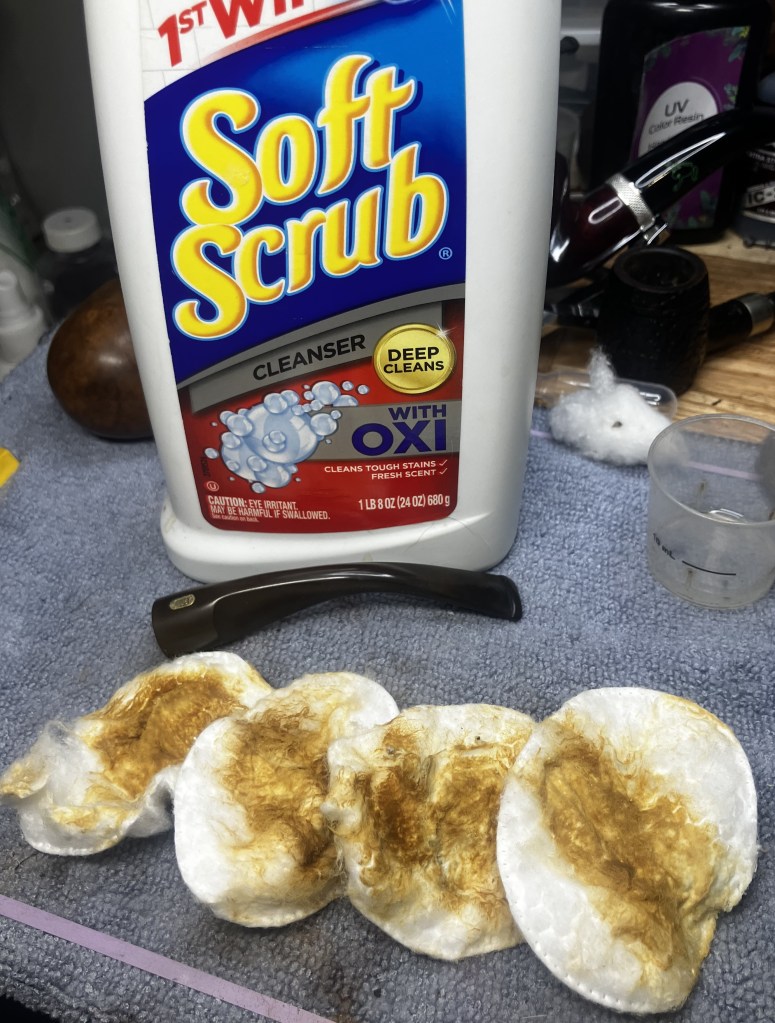
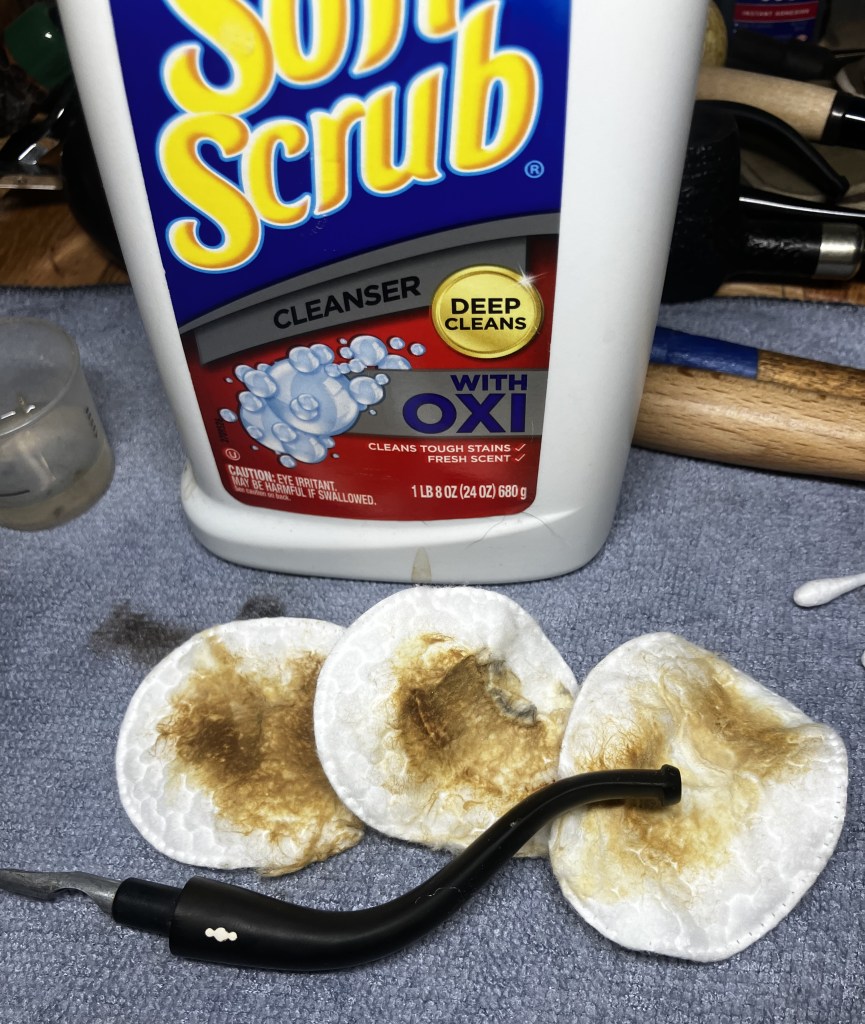
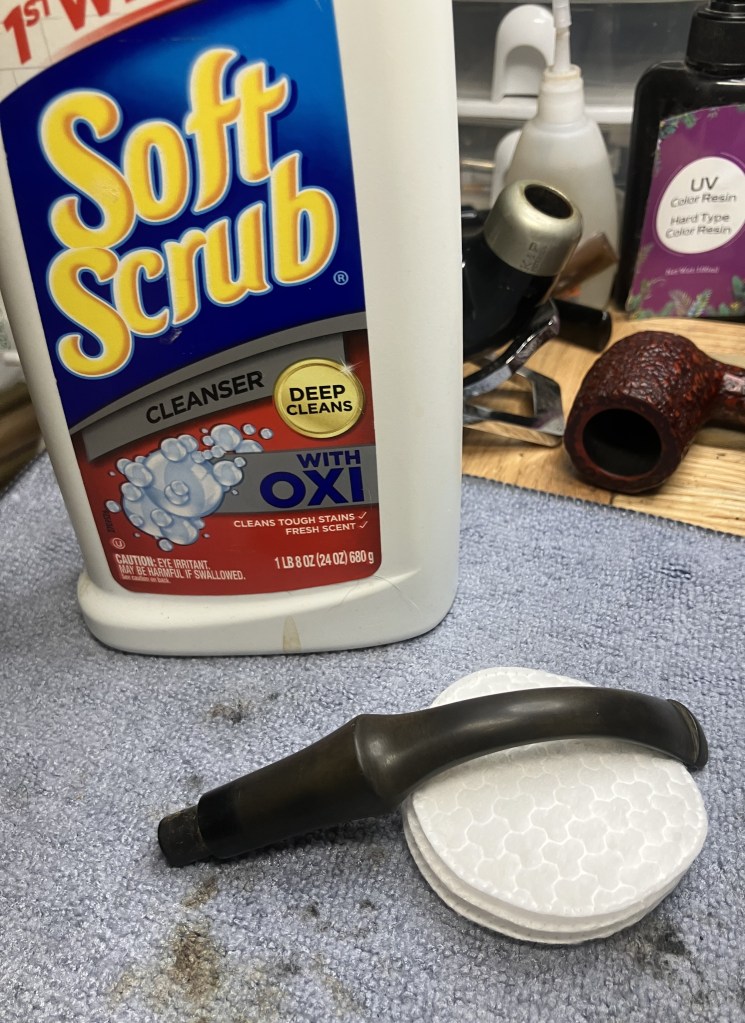
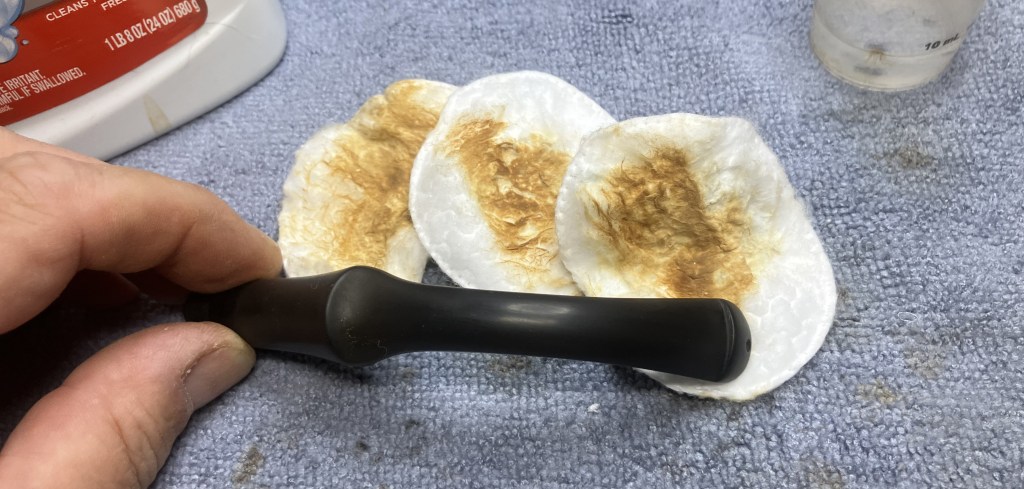
Next, the stem was scrubbed with Soft Scrub cleanser on make-up pads.
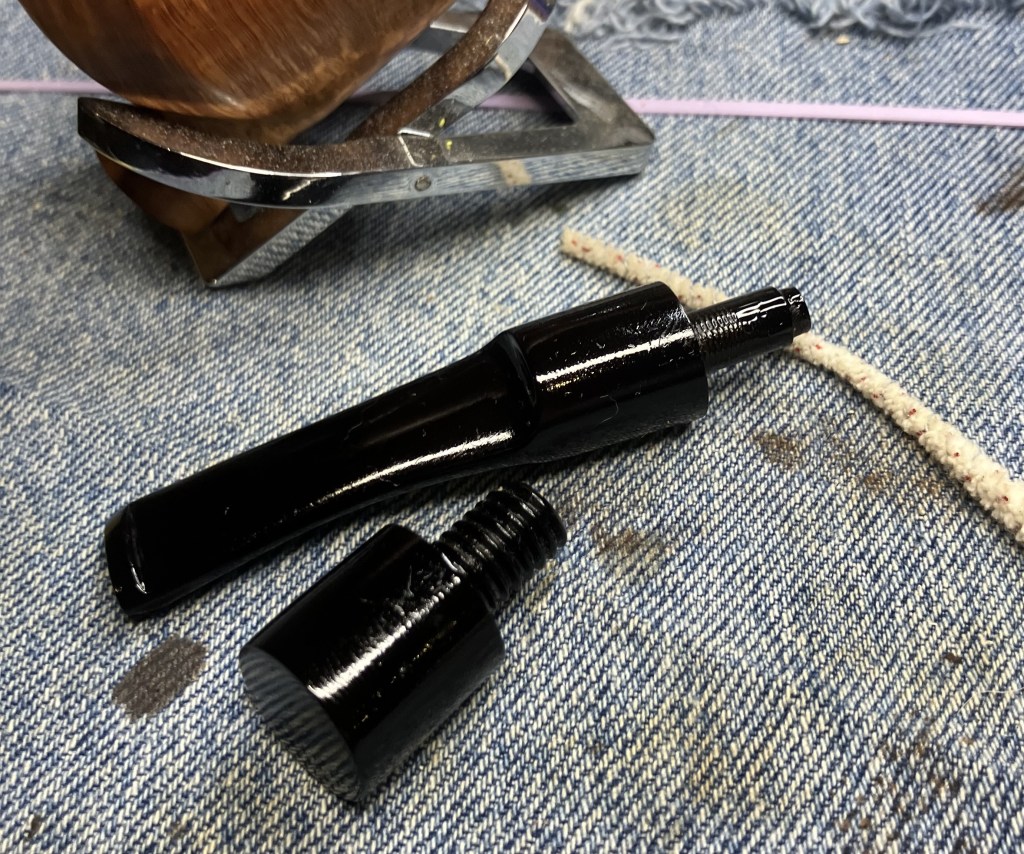
This removed more of the surface oxidation.
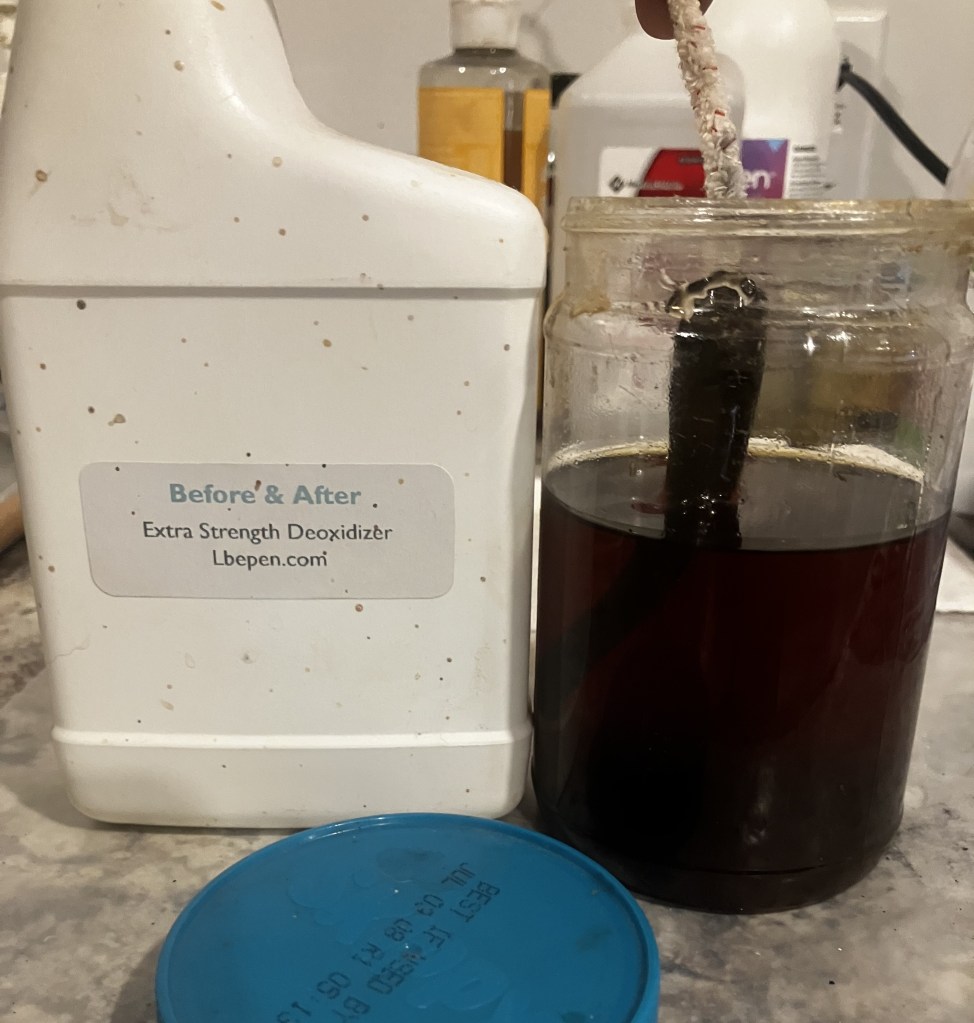
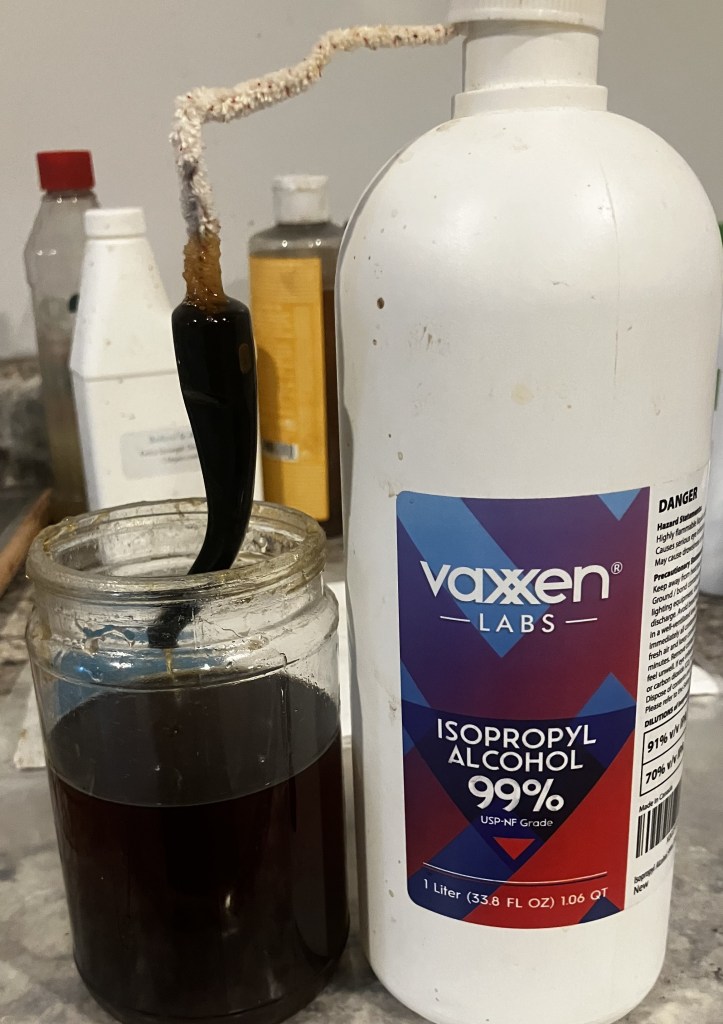
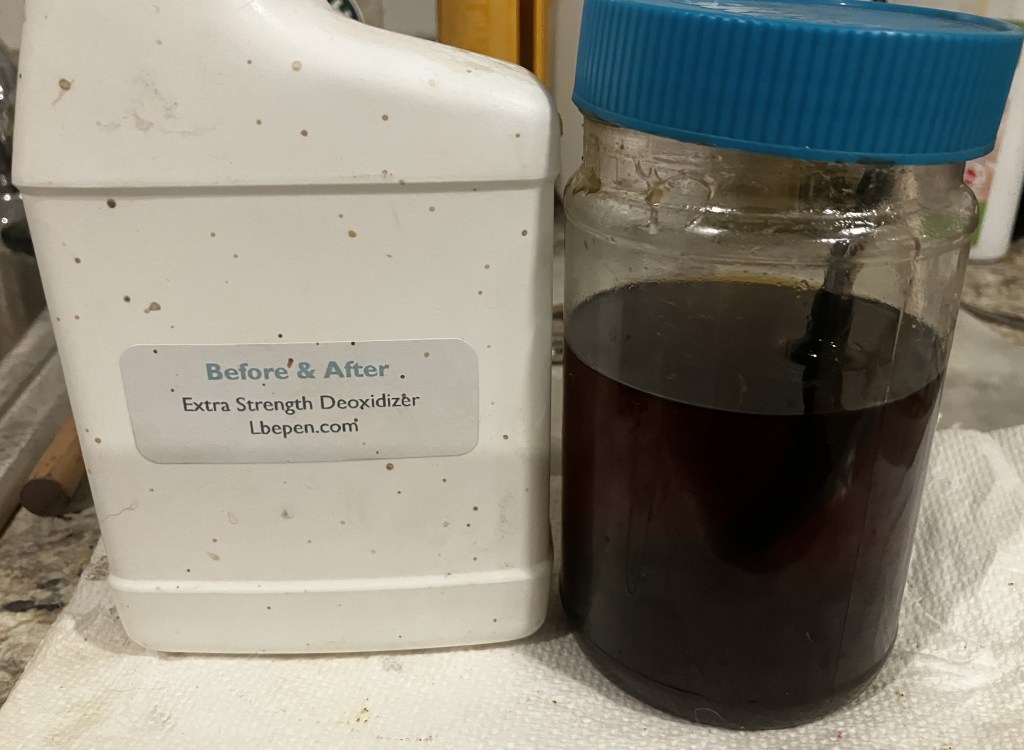
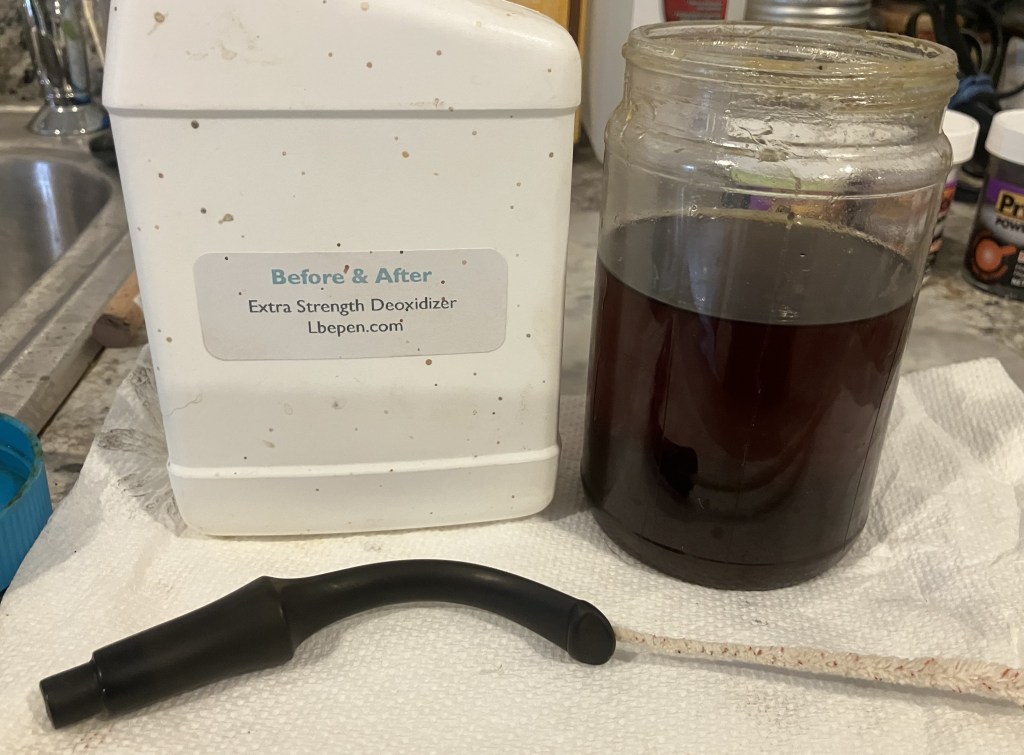
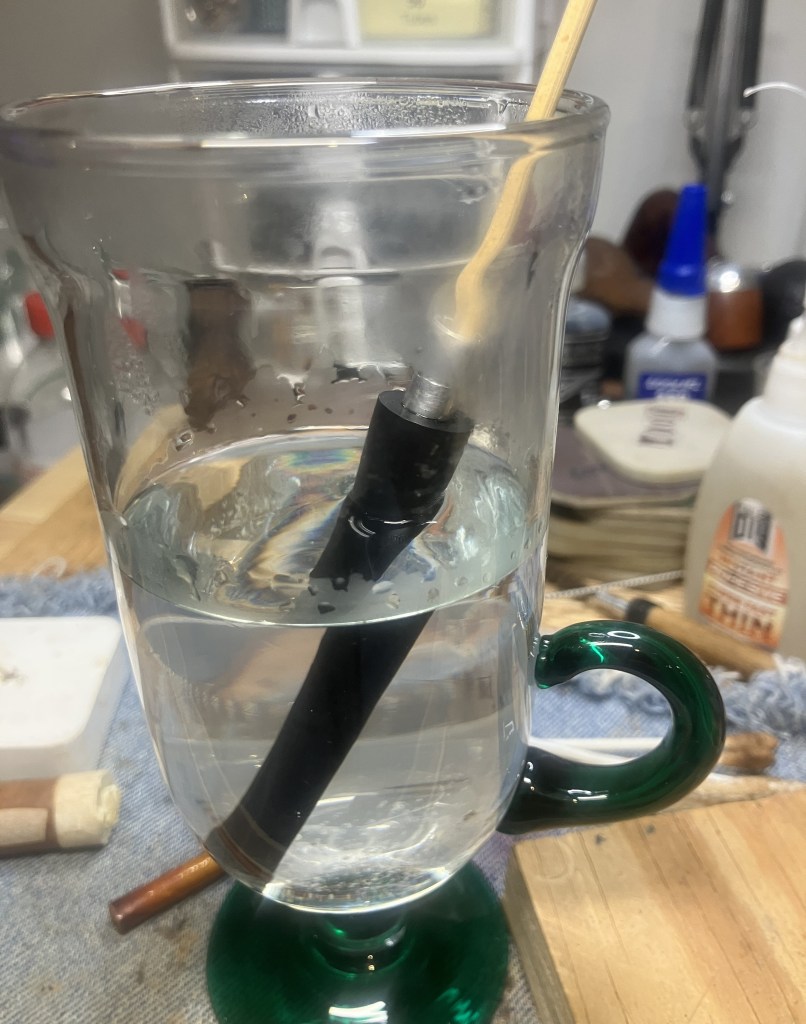
A pipe cleaner was inserted into the airway and the stem was suspended in Before and After Extra Strength Deoxidizer (deox).
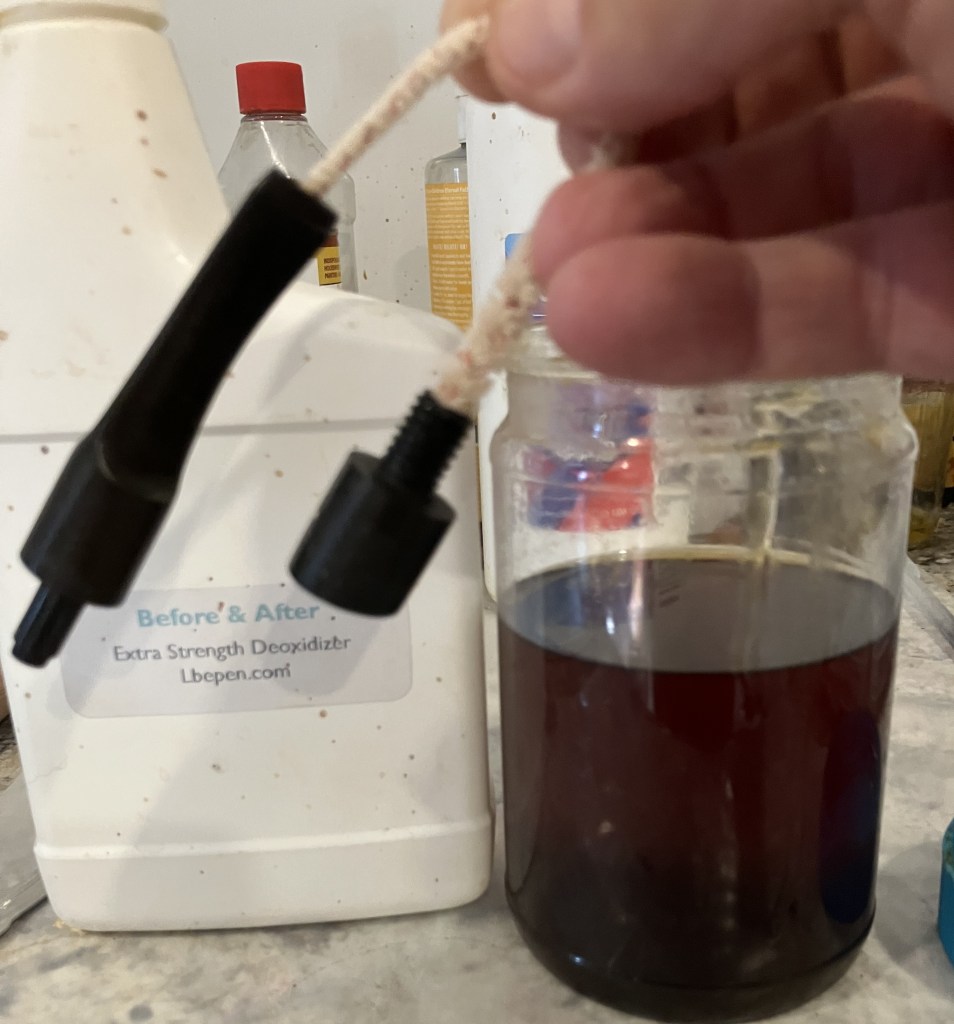
This stem was a bit longer than the depth of the deoxidizer so I propped the jar at an angle to fully submerge the stem.
I turned my attention to the stummel and the light layer of cake within.
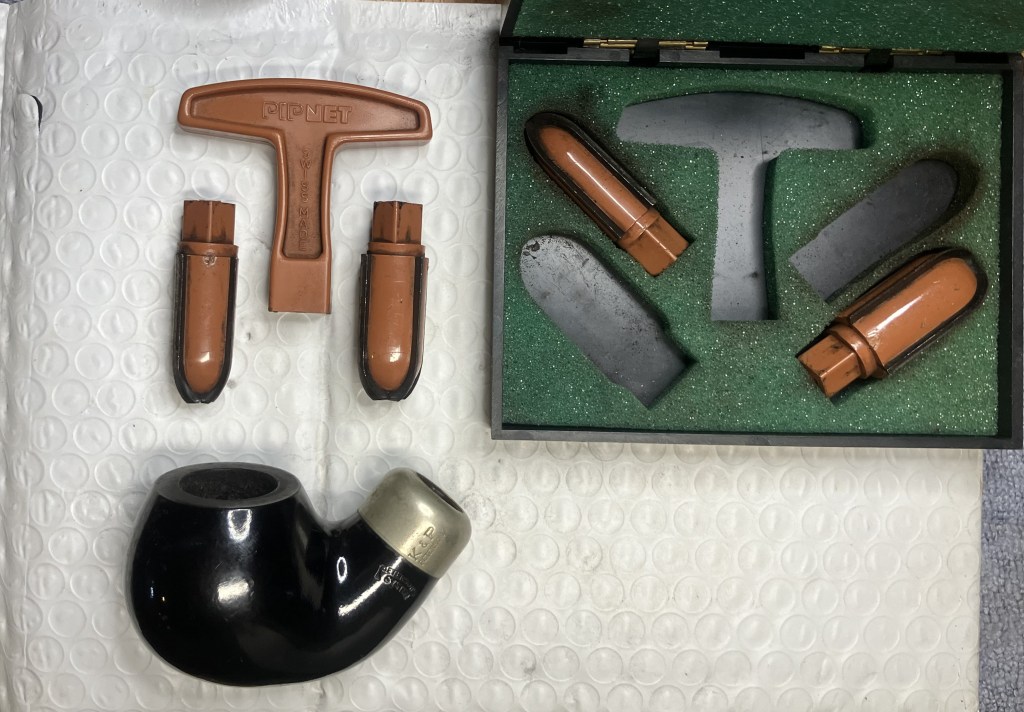
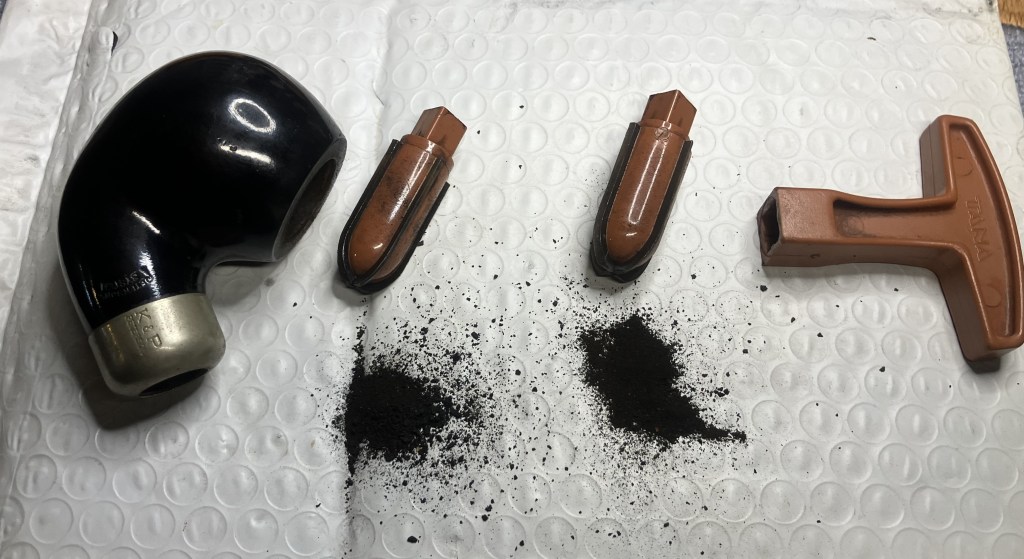
The number 2 and 3 blades of the PipNet worked very nicely.
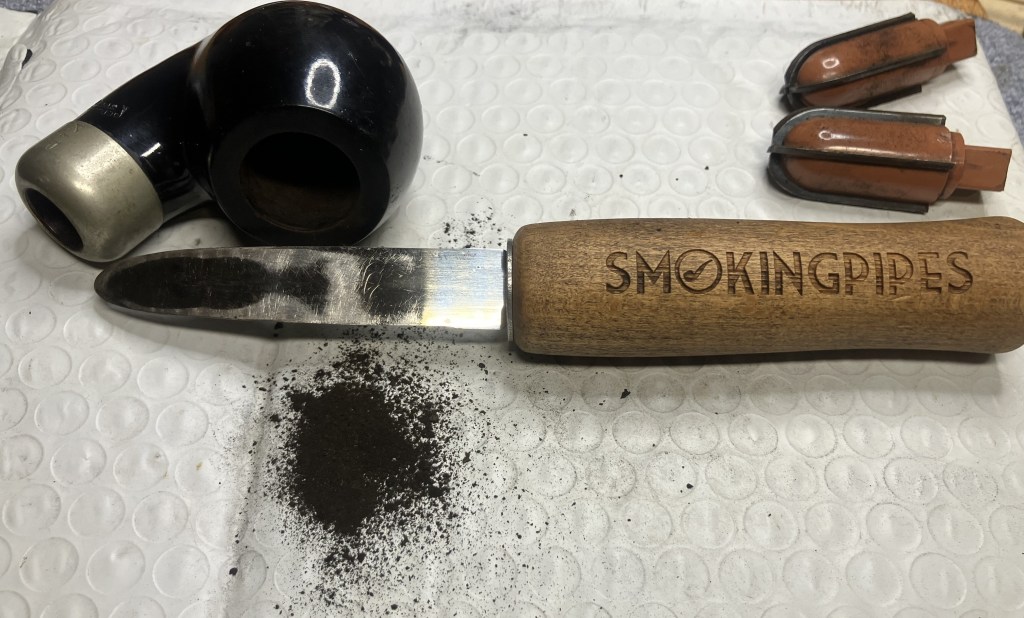
There was a small amount of clean-up that had to be done with a Smokingpipes Low Country reamer.
Looking down the tobacco chamber, I couldn’t see any signs of damage due to excessive heat.
Sanding the tobacco chamber with 220 sandpaper wrapped around a wood dowel then with 300 grit paper and my finger. Exposing the bare briar within the chamber confirmed the excellent condition of the tobacco chamber.
It was at this point I started cleaning out the shank and reservoir. This took a rather large number of alcohol dipped cotton swabs and bristle pipe cleaners. I also used a dental scraper and a nylon shank brush, also dipped in alcohol. I apparently failed to photograph any of this process. I could have sworn I took photos but there was nothing on the phone. Feel free to use your imagination of a pile of soiled cotton swabs.
To the sink! The stummel was taken to the sink for a scrub with undiluted Murphy Oil Soap and a nylon brush. The soap was rinsed with warm water and the stummel dried with a cotton hand towel.
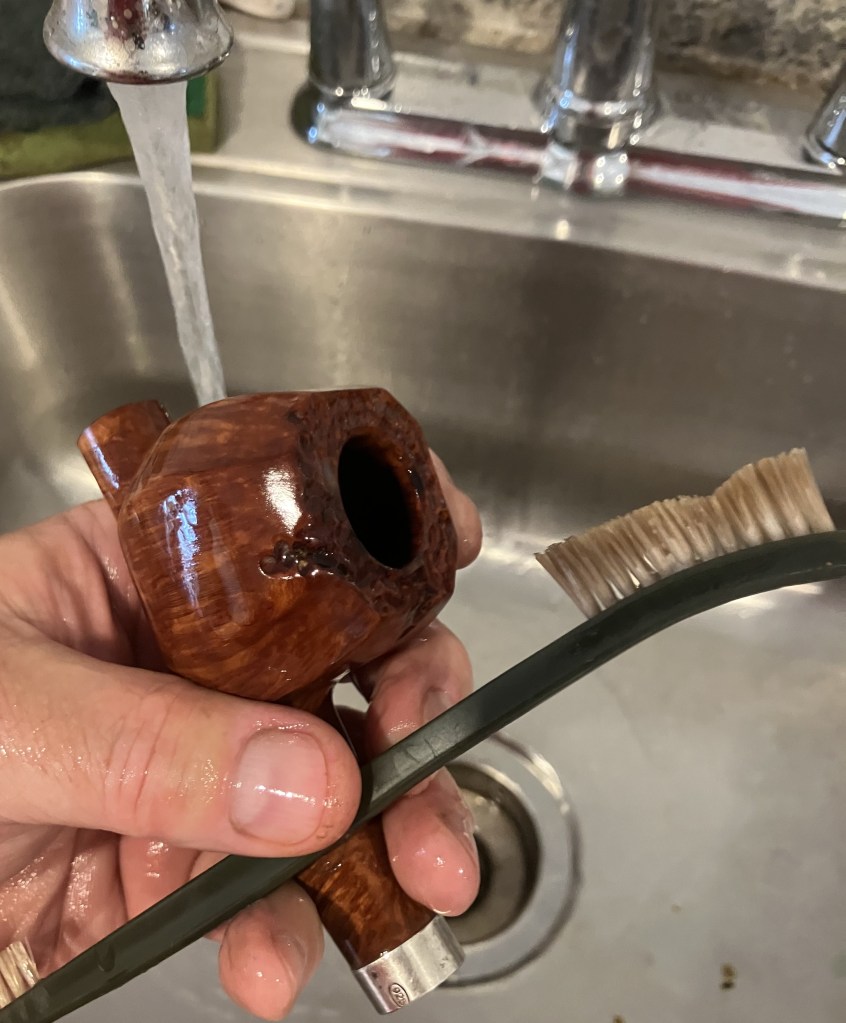
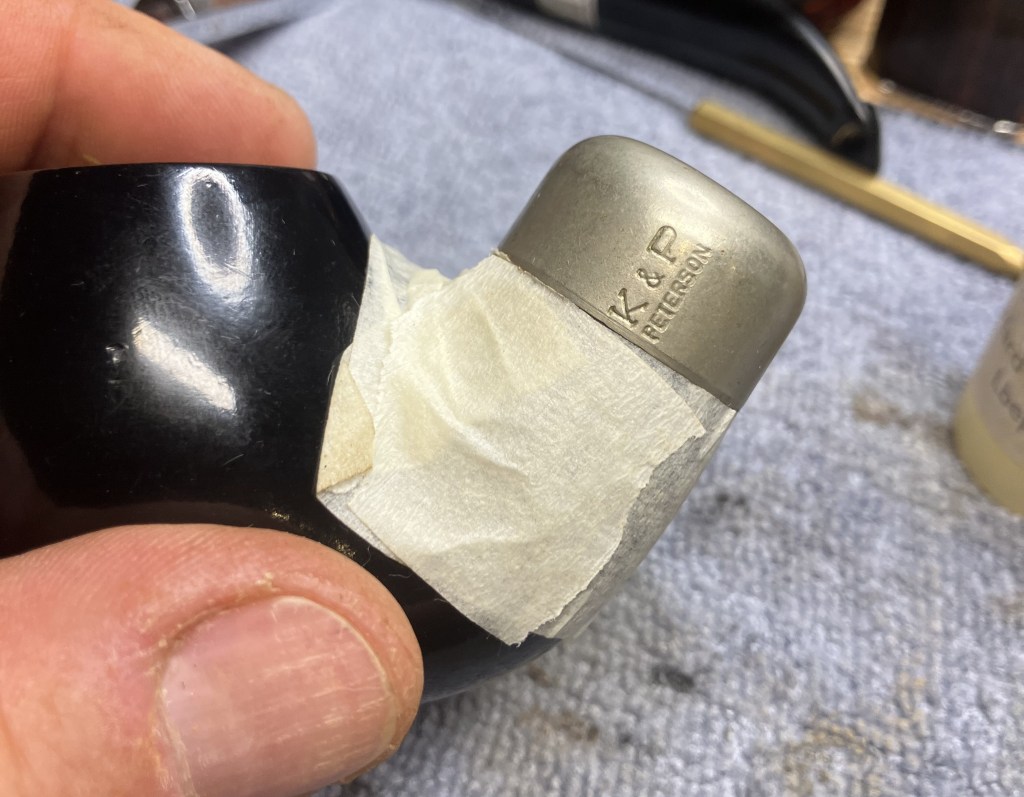
The stummel looked great except for the tarnished collar.
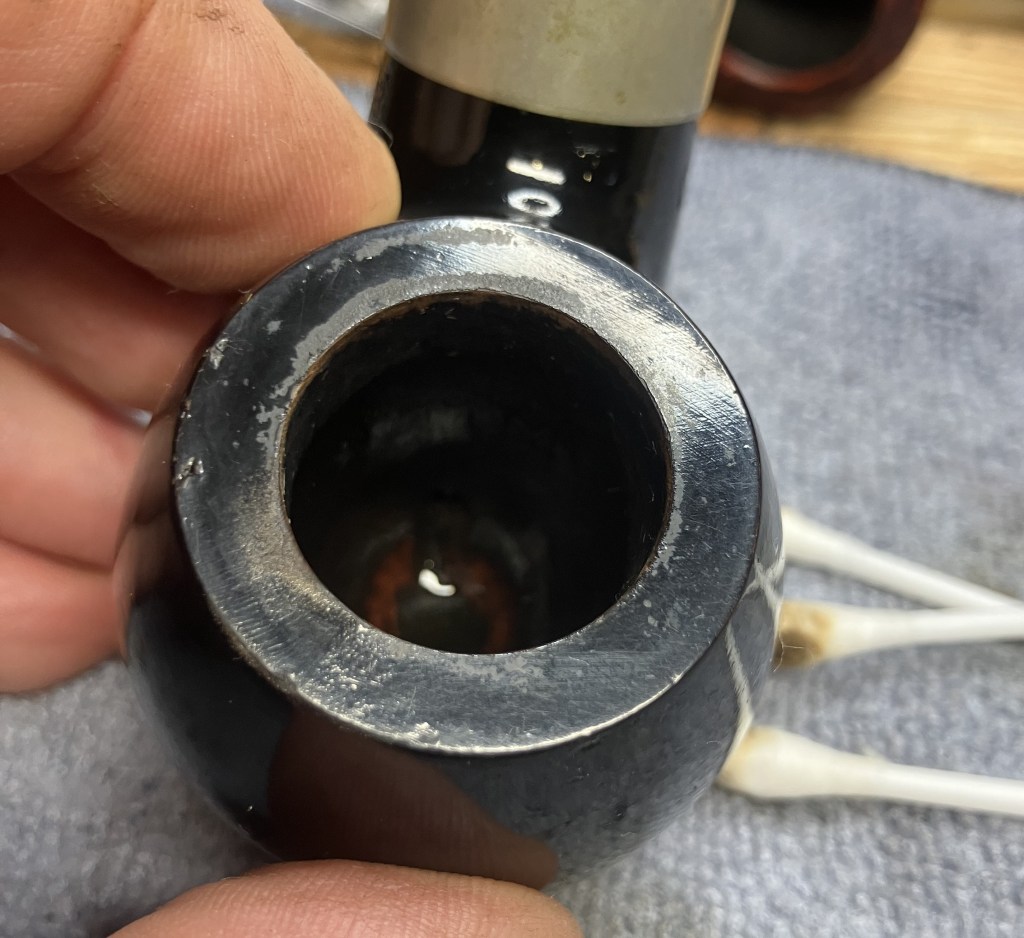
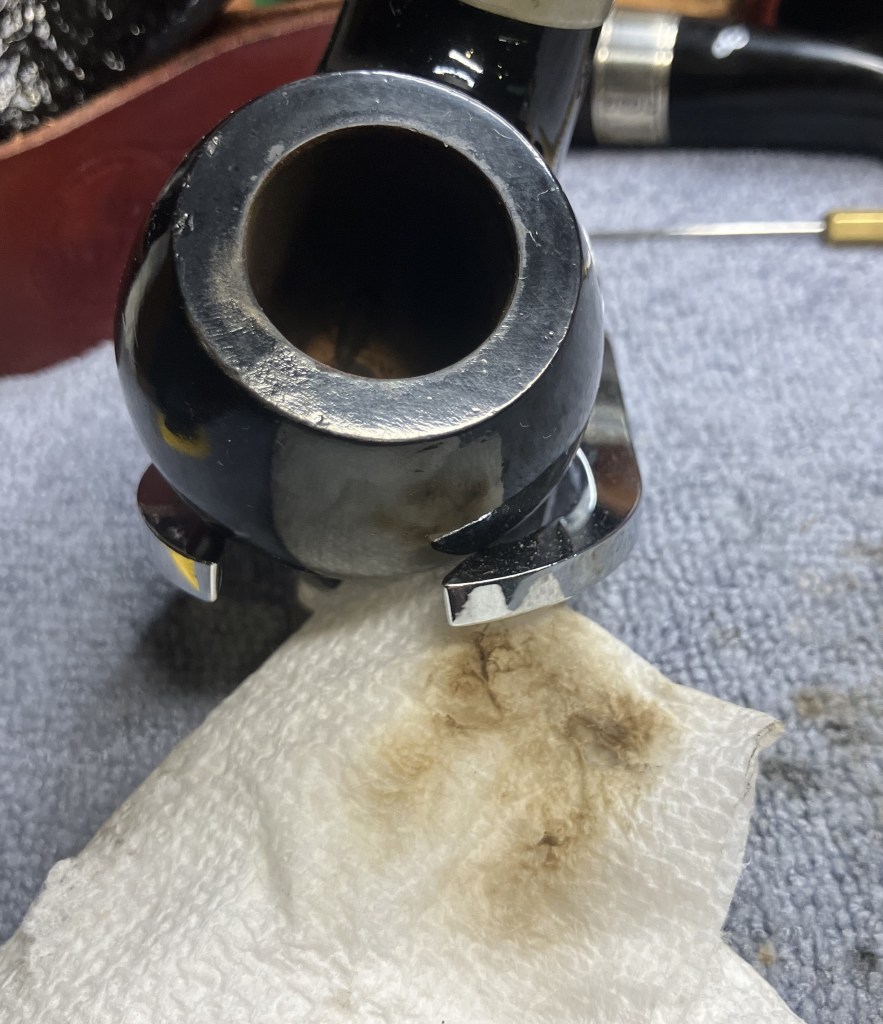
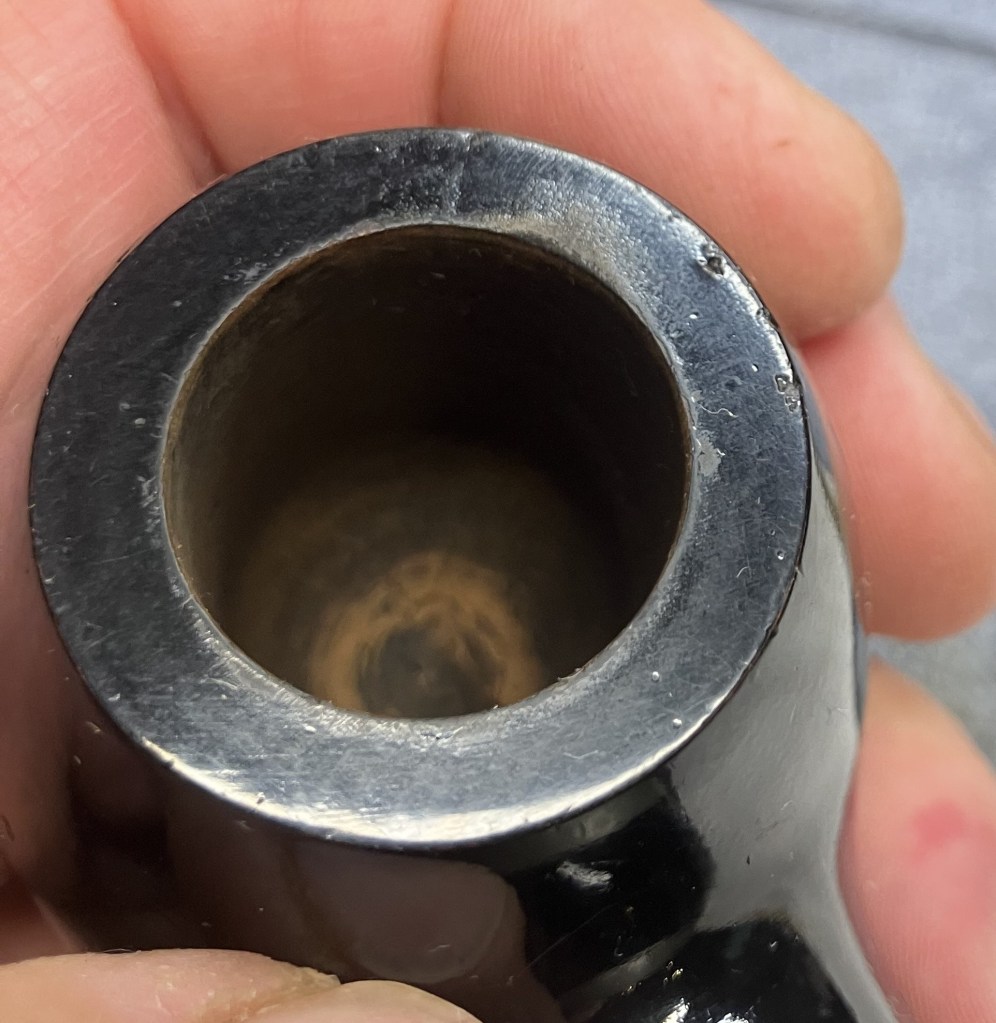
I was hoping that the scrub would remove the light lava deposits from the rim. Wrong. Normally I would scrape the rim with a sharp knife blade but I did not want to risk marring the ebony finish.
A more conservative approach was used – alcohol dipped cotton swabs.
The cotton swab scrubbing was slow and still there remained either some lava or slightly charred edges.
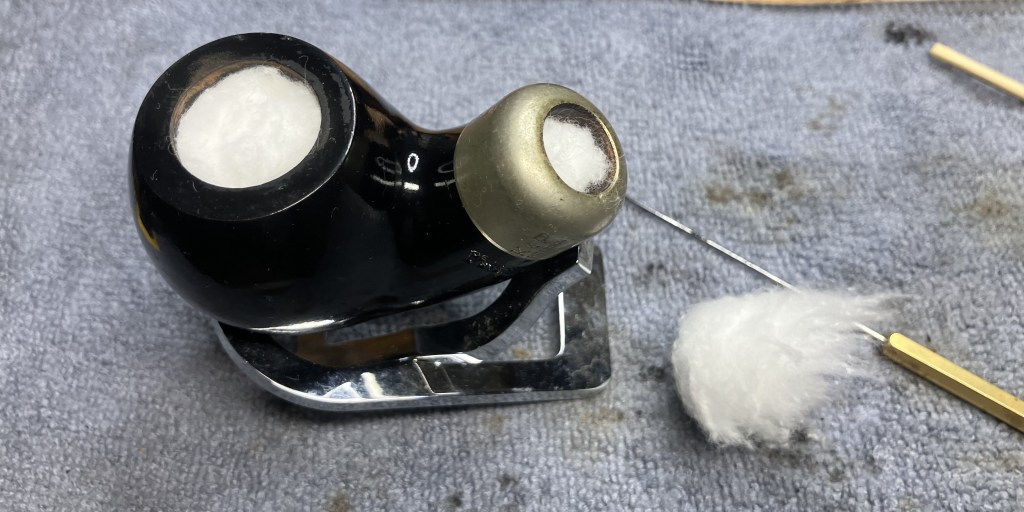
I needed time to think about how to deal with the rim so I figured I would do an alcohol cotton treatment. This would also help in loosening the remaining tar deposits within the airway, reservoir and shank. The bowl and airways were packed with cotton.
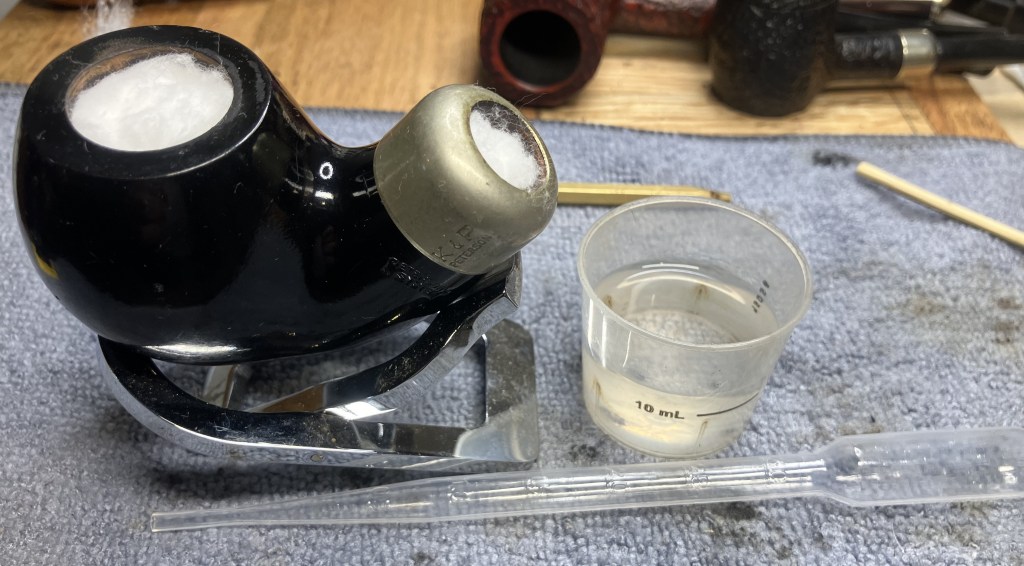
Since this was a larger chambered pipe, I figured about 12-15 ml of 99% ethyl alcohol would be needed. This would be added using a disposable pipette.
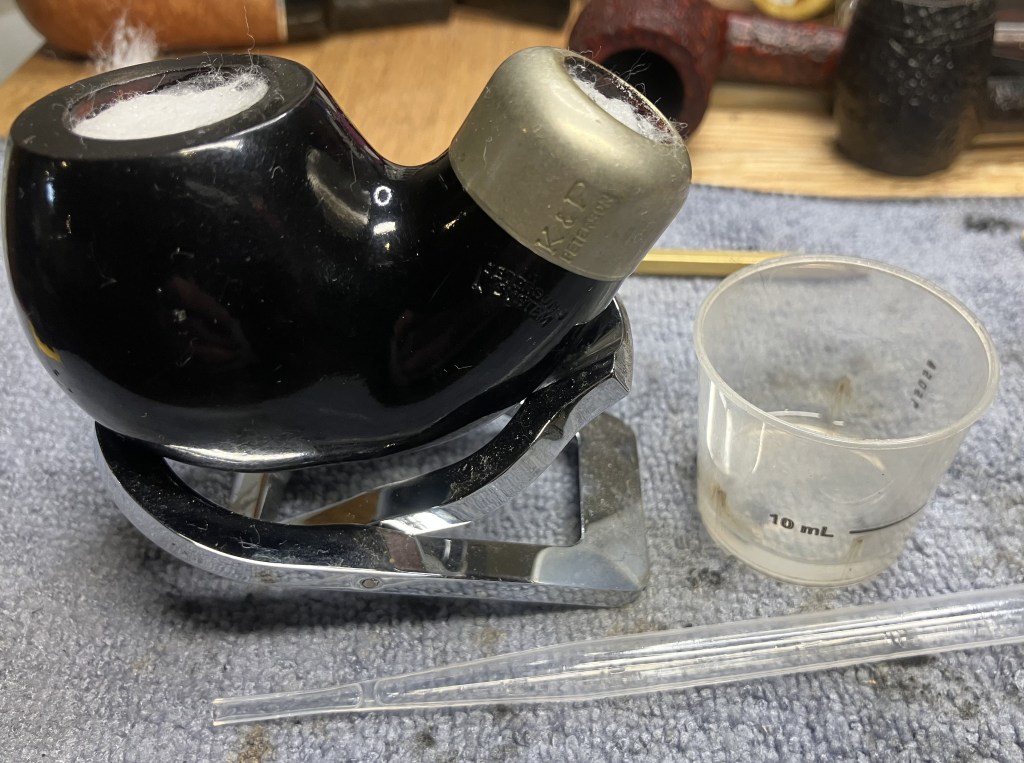
I was close, it took about 11 ml of alcohol to saturate the cotton.
8 hours later I returned to the pipe. The alcohol had dissolved the residues in and on the briar. As the alcohol evaporates these dissolved bits are moved to the cotton.
The cotton was removed.
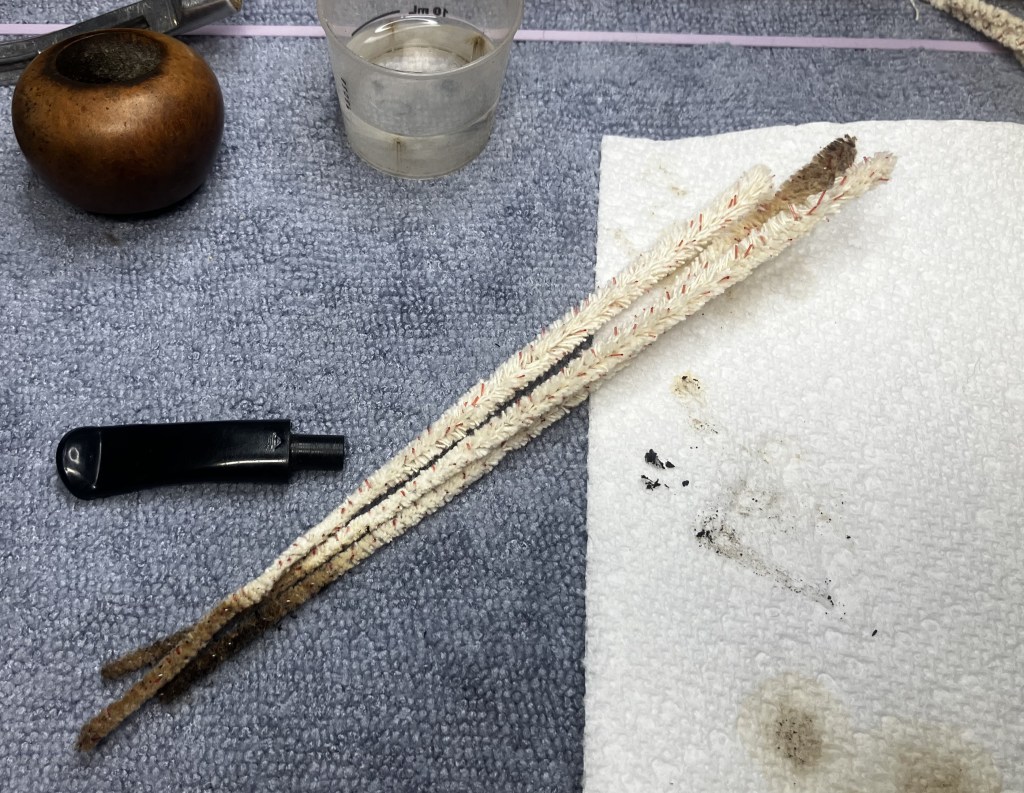
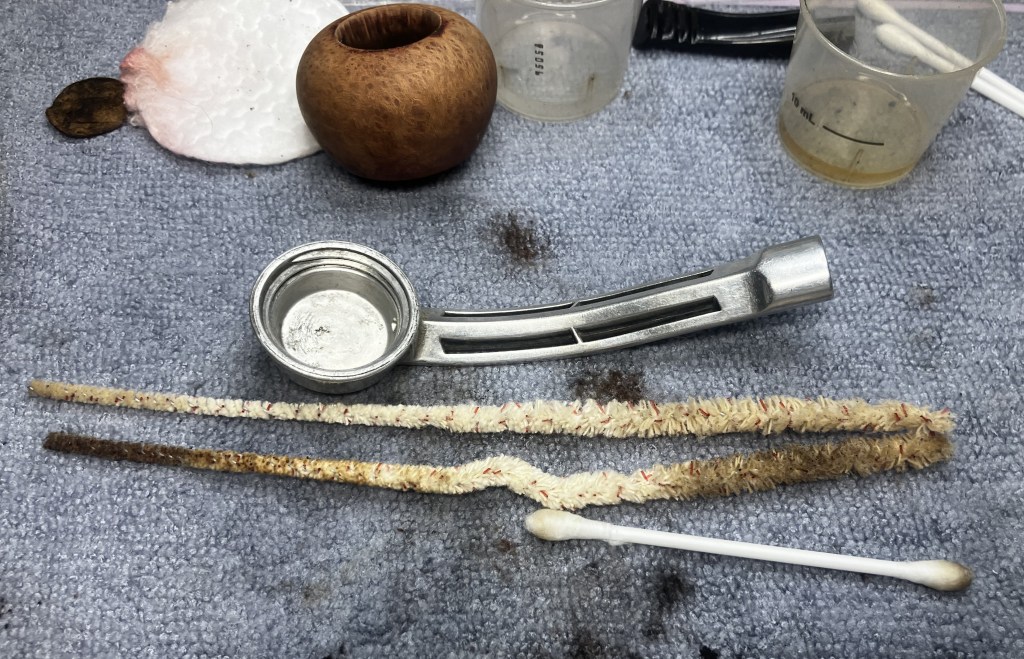
Another round of airway cleaning commenced. The heavily stained pipe cleaners are from the draft hole between the tobacco chamber and the airway of the shank. I had apparently forgotten to clean this during the early cleaning of the shank. This was probably due to me being very busy forgetting to take photographs.
Anyway, the shank and reservoir were now clean.
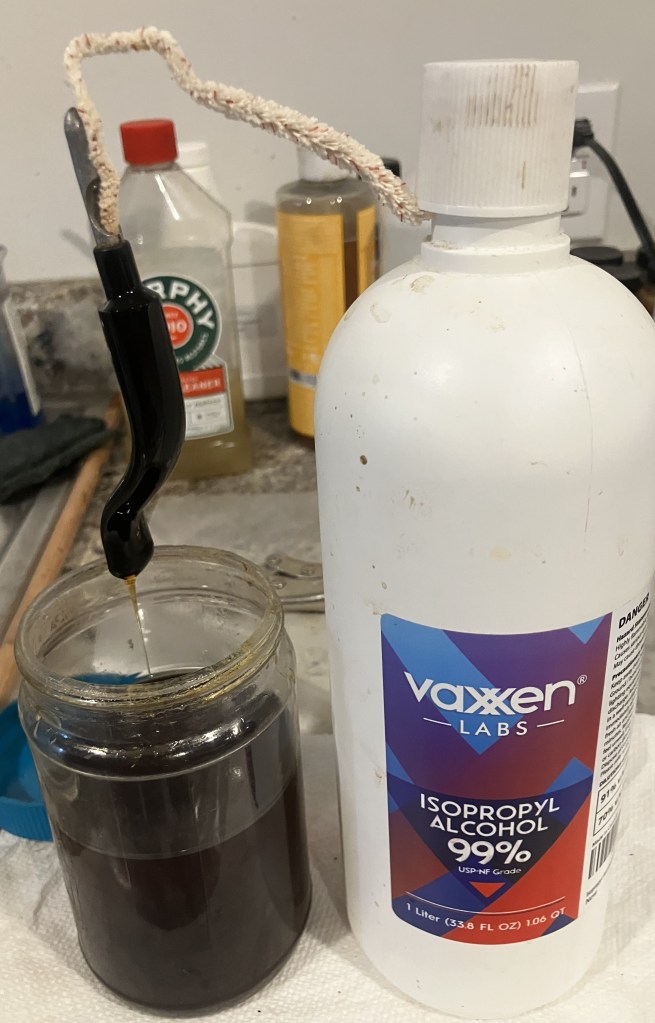
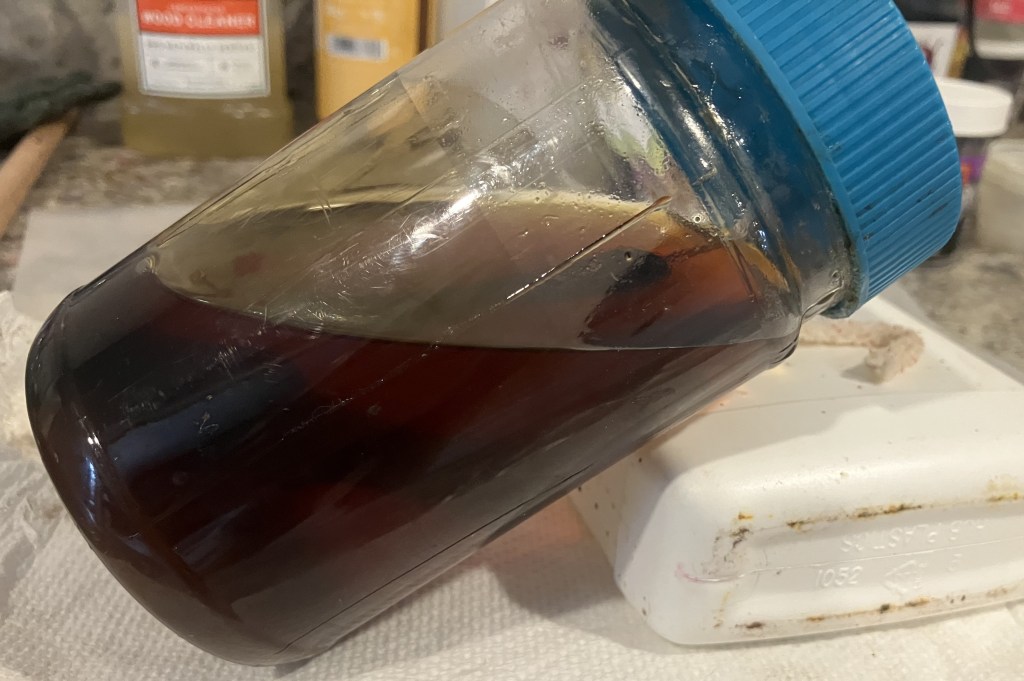
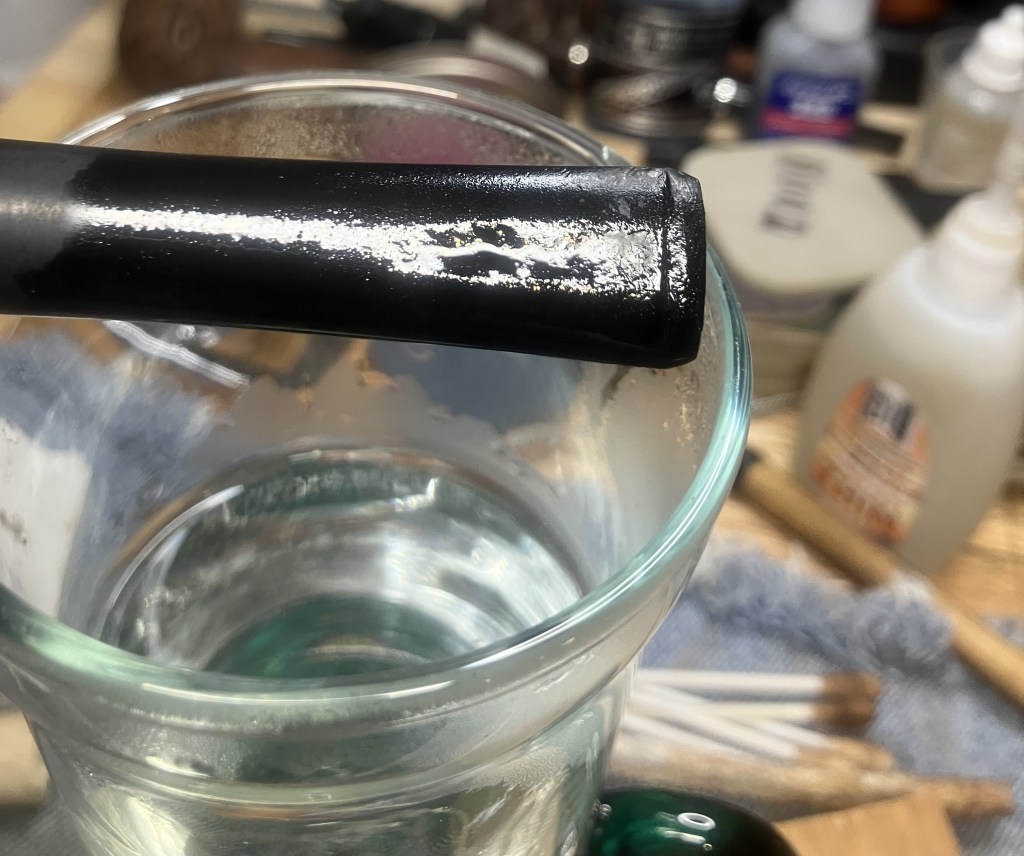
The stem was removed from the deox, having spent over 8 hours submerged. I used the patented Drip-O-Matic 3000 to allow some of the excess deox solution to drip back into the jar.
While the Drip-O-Matic 3000 was doing its job, I turned my attention back to that troublesome rim. With closer examination (squinting) I concluded that a good deal of the rim’s imperfections was still lava, not charring. I utilized a very high-tech technique to remove this stubborn material – saliva, a paper towel and a lot of rubbing. Well, that’s high tech here in the wilds of southeast Nebraska.
There was still one area that was charring on the rim. It looked like the previous owner held the pipe with his left hand and lit the pipe with his right hand from the 1:00-2:00 position.
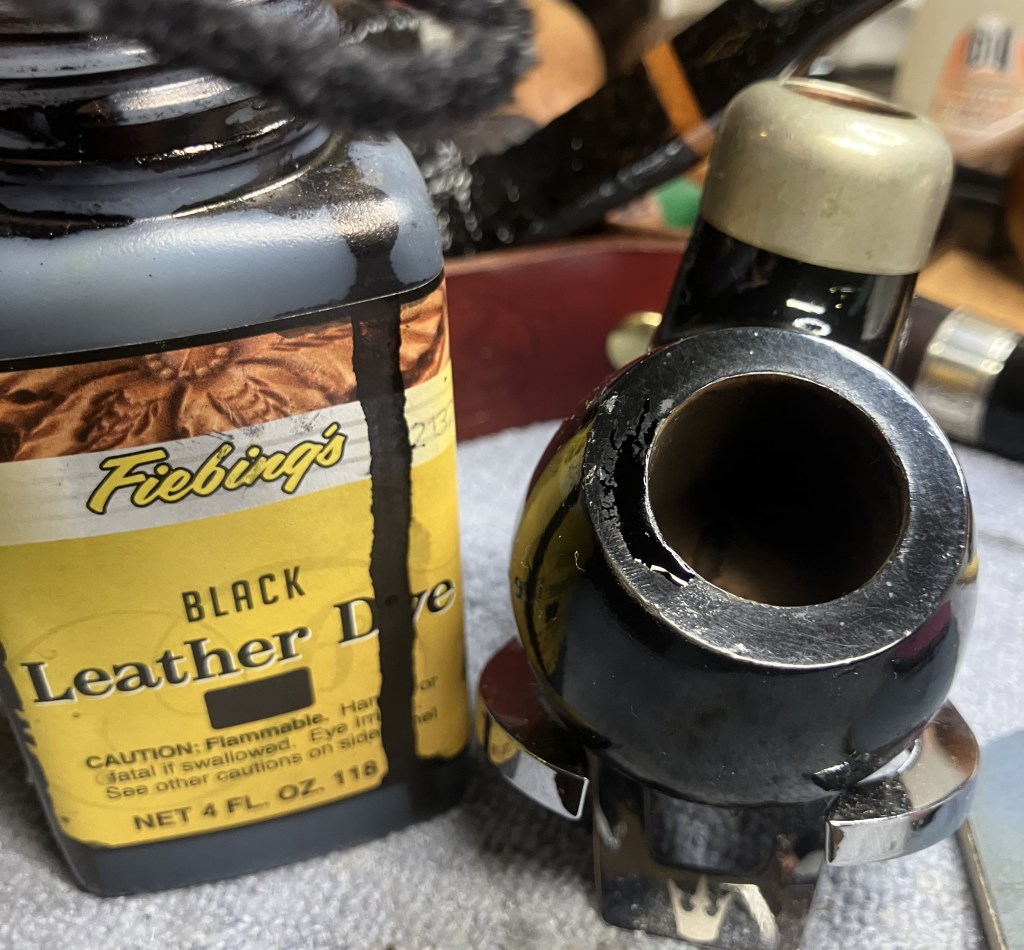
I thought maybe I could reapply a coating or two of Fiebing’s Black Leather Dye and this would miraculously erase the damage.
Hmm, maybe more than one of two applications…
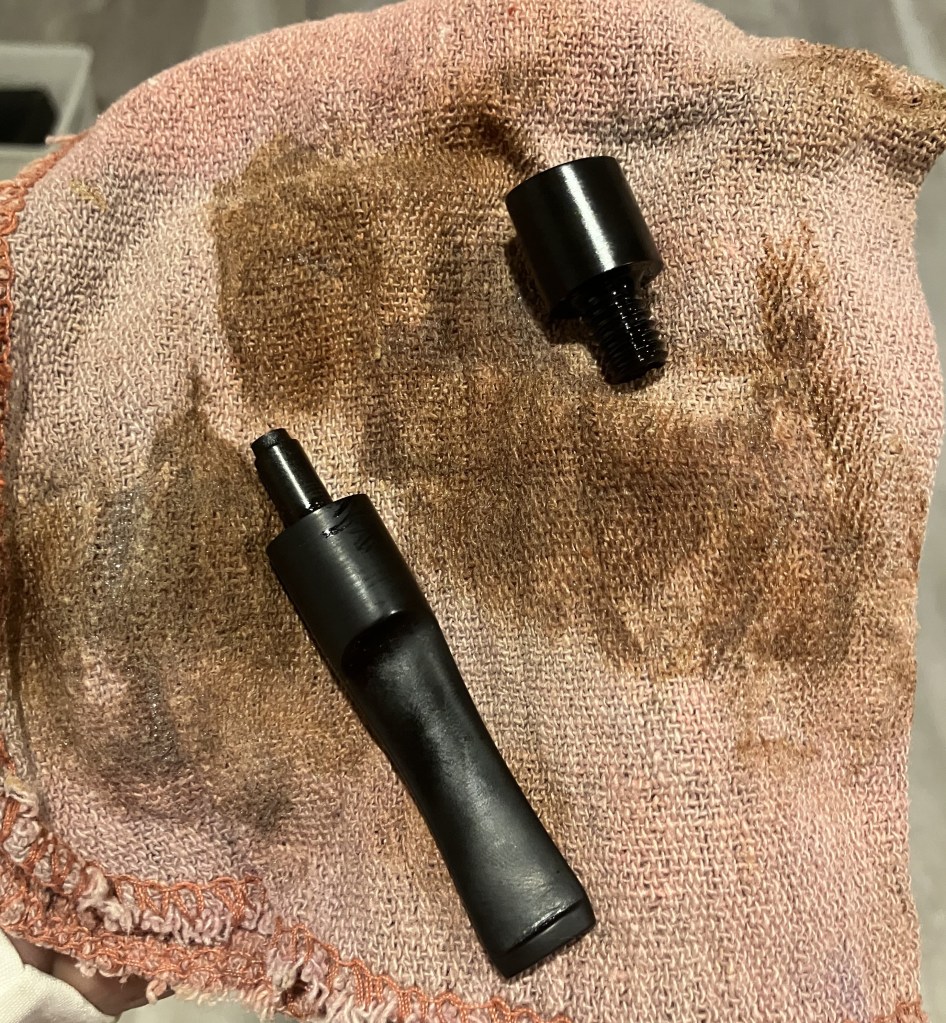
While the Fiebing’s was drying, I returned to the stem. A coarse shop rag was used to vigorously rub the stem. This removes the oxidized vulcanite that the deox solution has softened and does a lovely job of staining a clean coarse shop rag.
With the shop rag thoroughly defiled and the stem looking much better, it was time to start sanding the stem to return it to factory fresh.
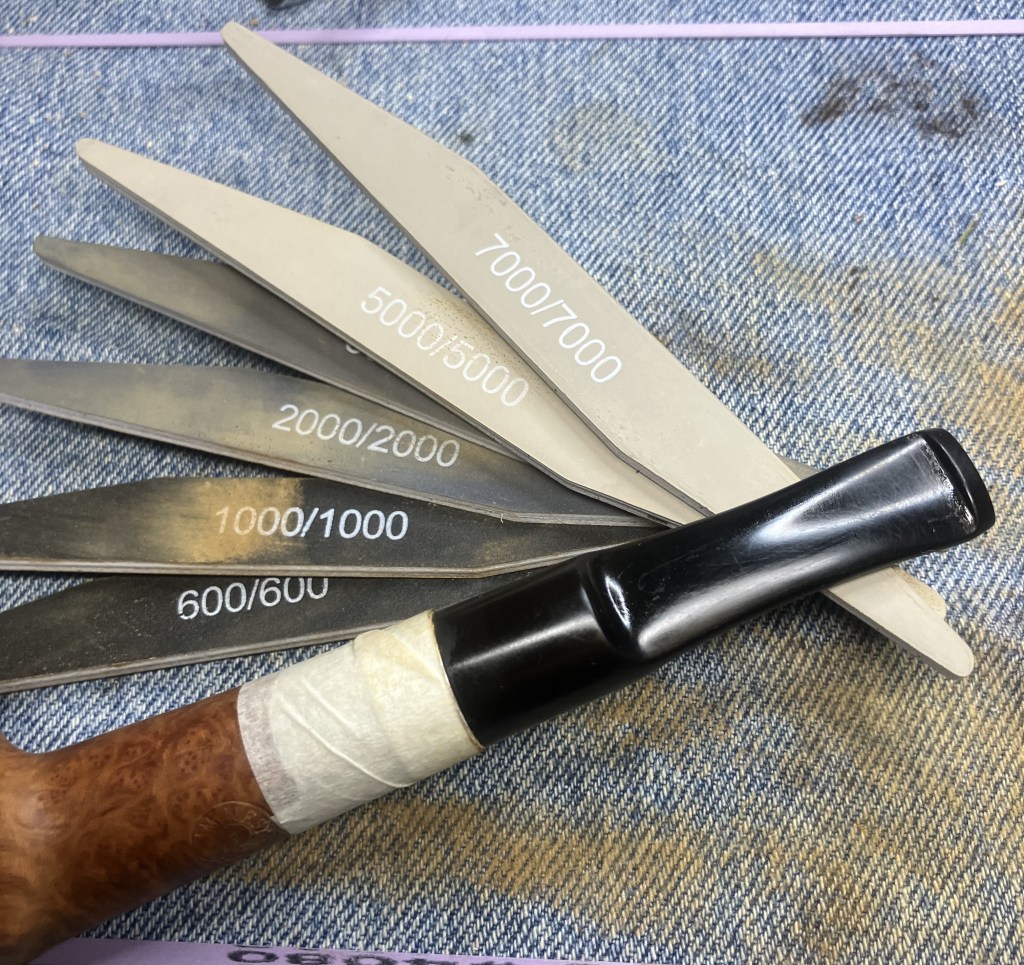
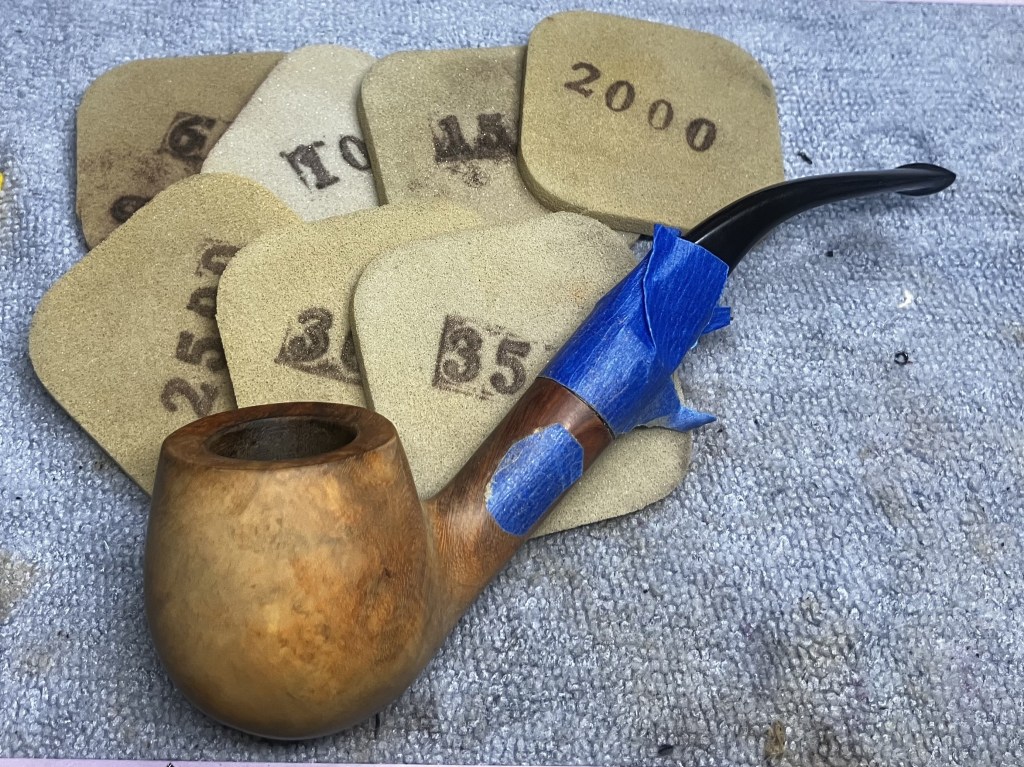
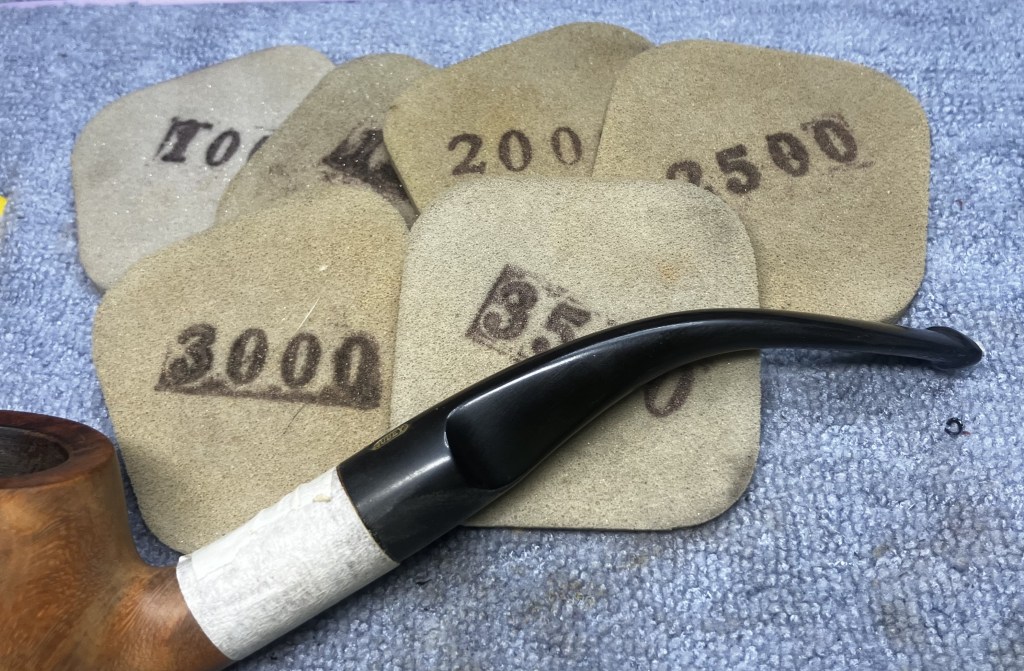
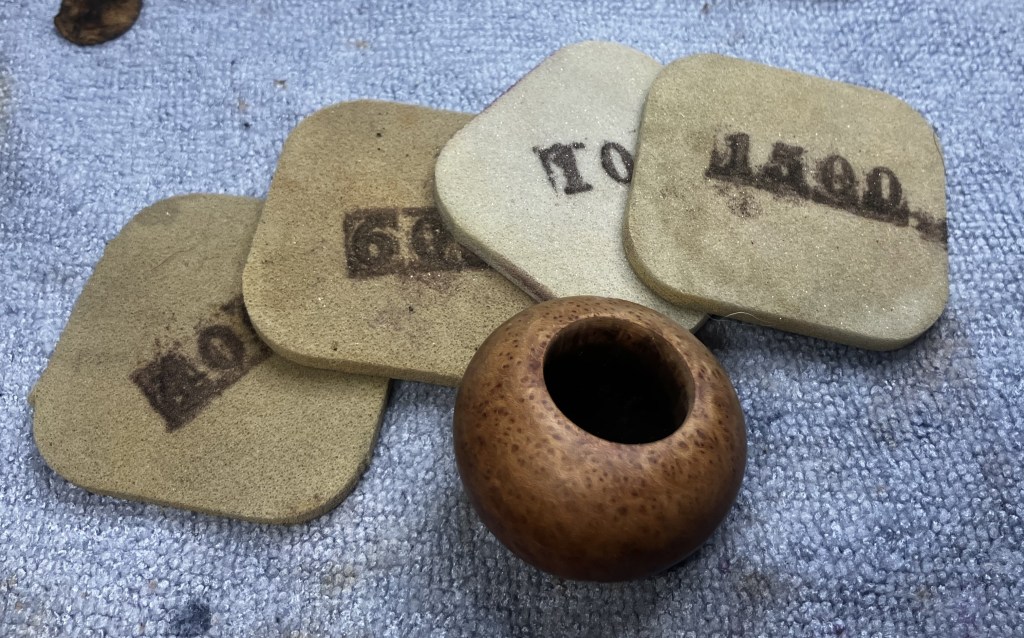
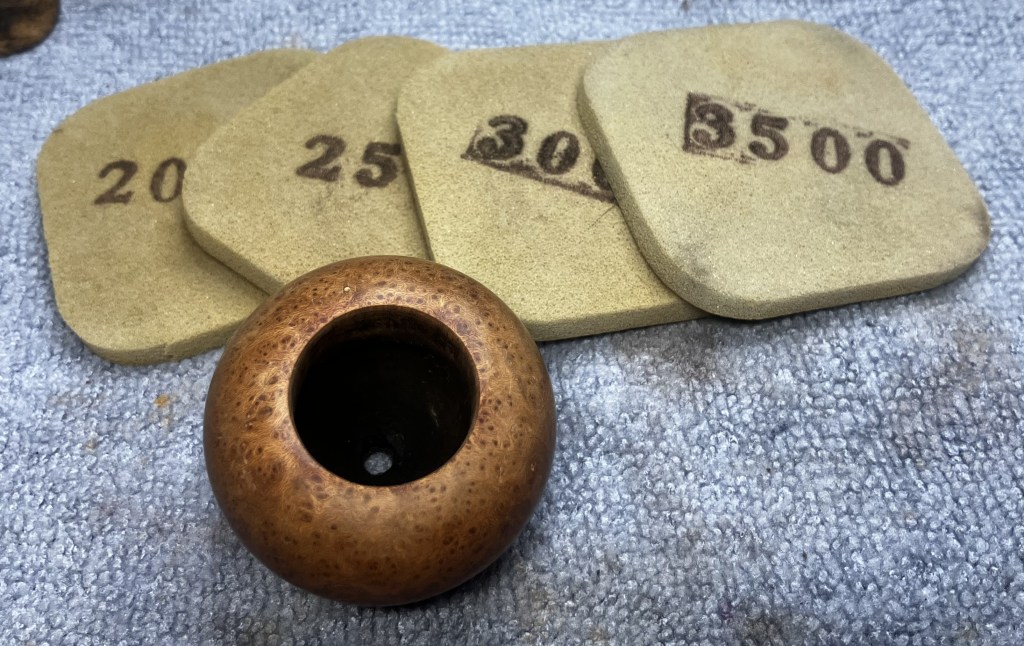
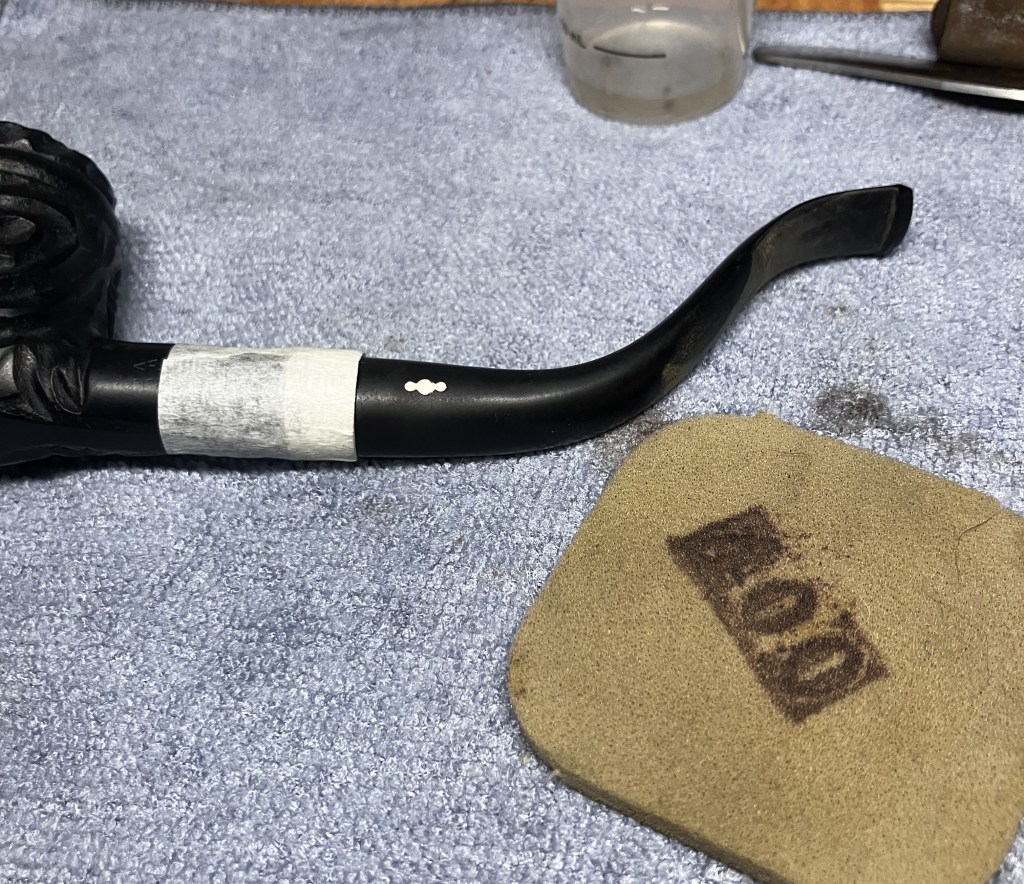
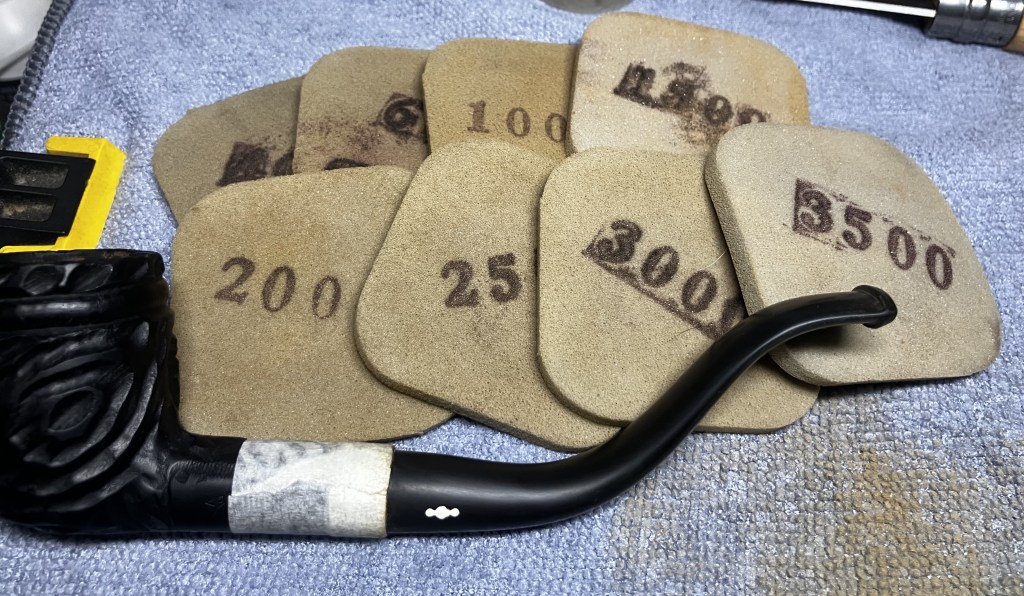
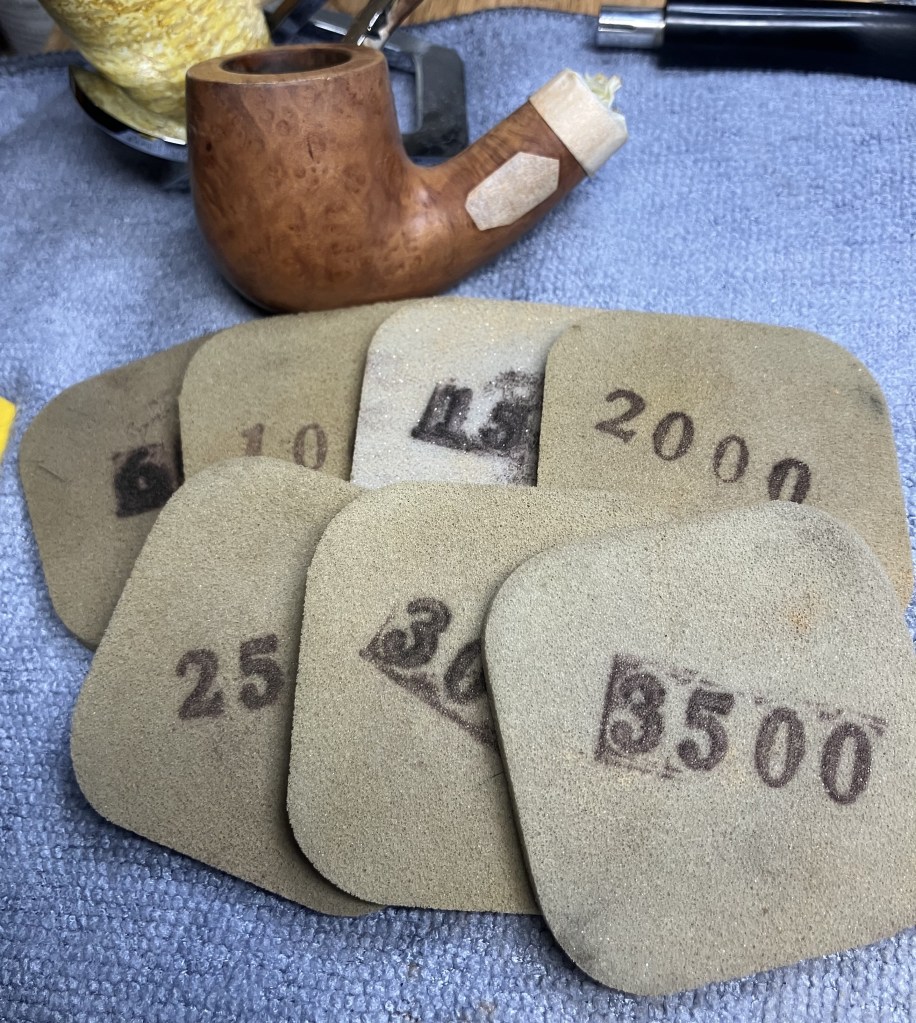
A series of sanding sponges in grits from 400-3500 were used. Between each sponge the stem was rubbed with a drop of Before and After Hard Rubber Balm and wiped with a paper towel. This wiping removed sanding debris from the stem. Once finished I coated the stem with the balm and allowed it to sit.
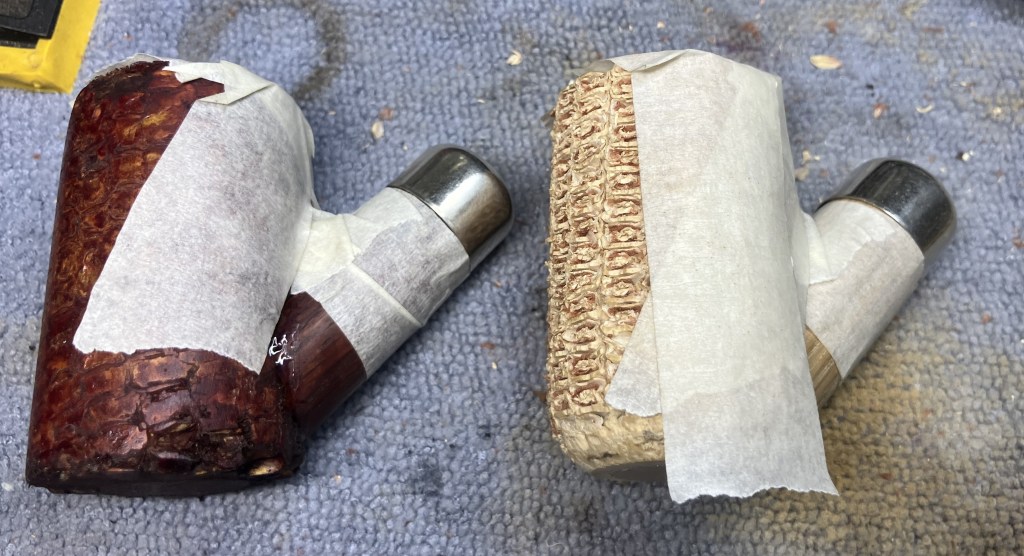
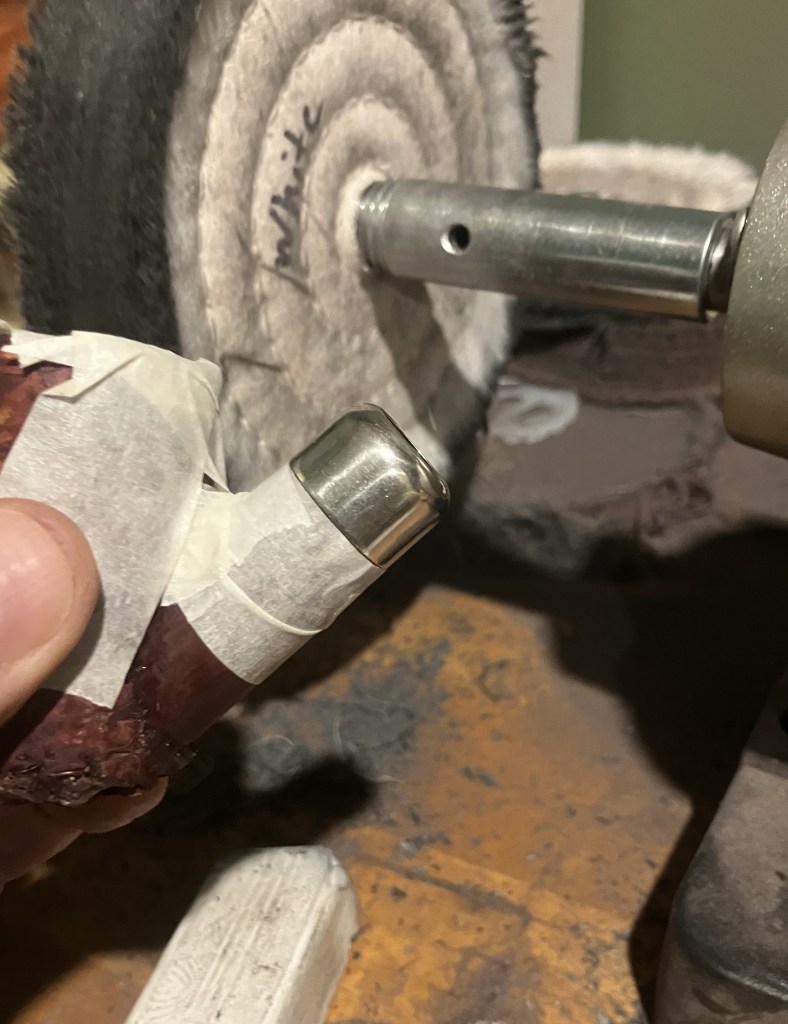
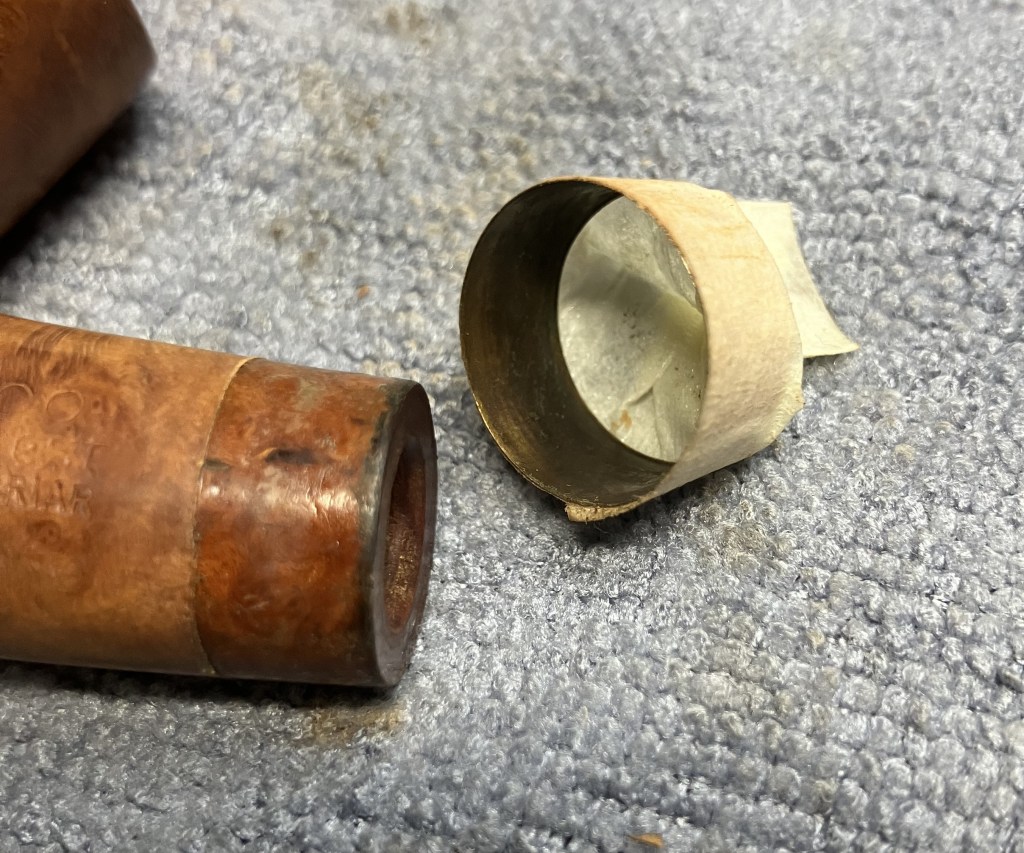
Time to make that tarnished collar shine. I wrapped the shank with masking tape to protect it from buffing.
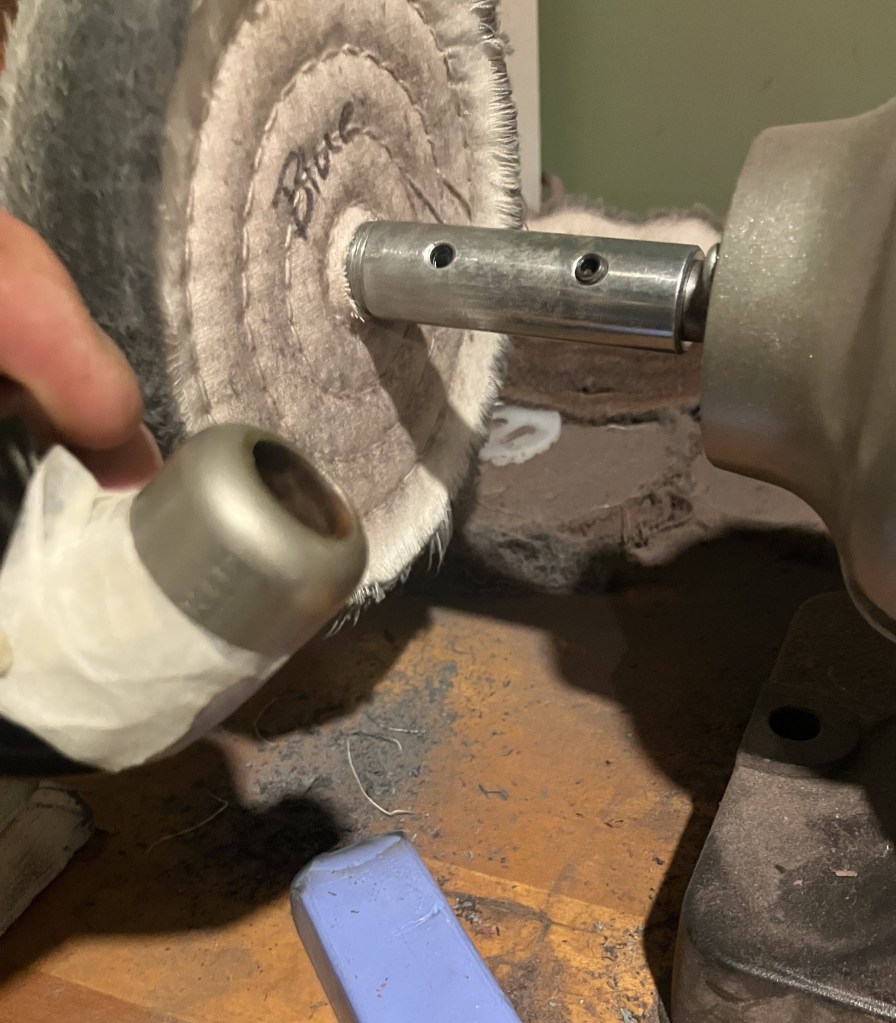
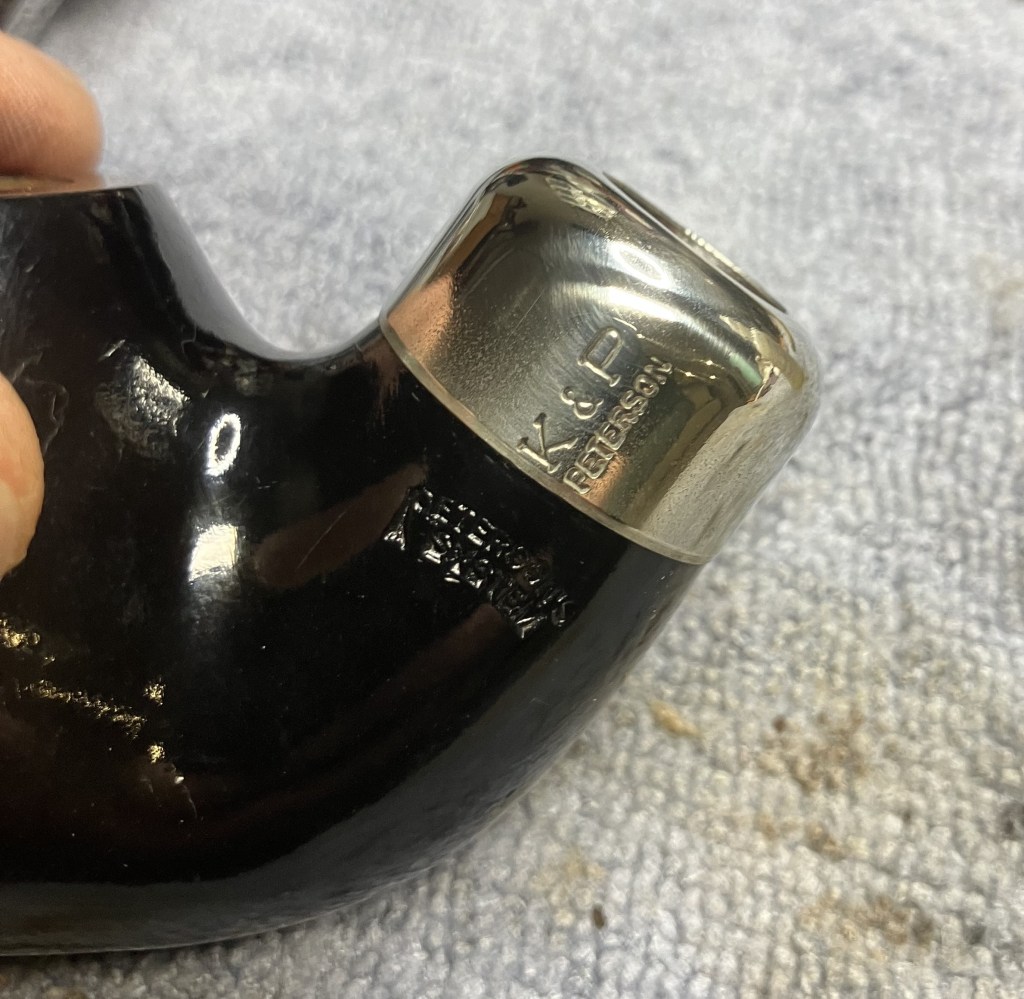
The nickel was polished with Blue Diamond at the buffer.
The results were a great improvement.
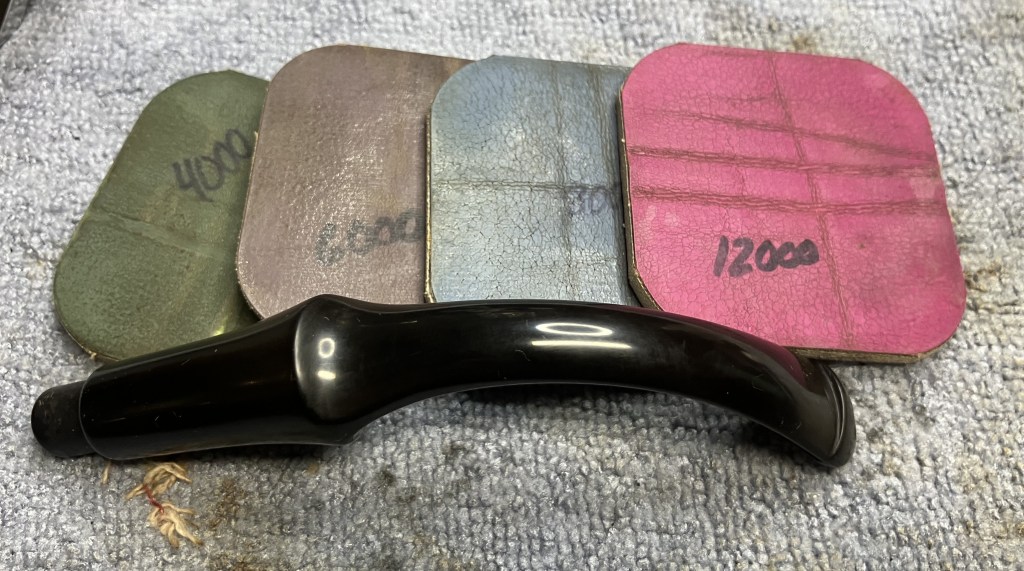
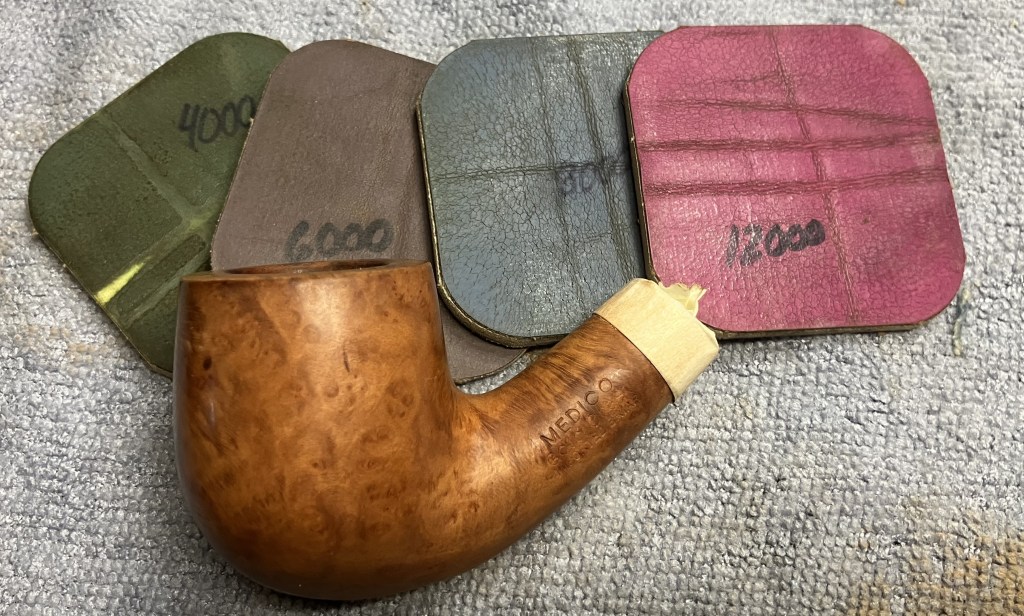
Back to the stem. I used 4000-12000 micro-mesh pads to work the stem, again with the Before and After balm and wiping between pads.
The stem was then buffed with Blue Diamond at the buffer.
A final coating of Before and After Hard Rubber Balm was given to the stem and it was reunited with the stummel.
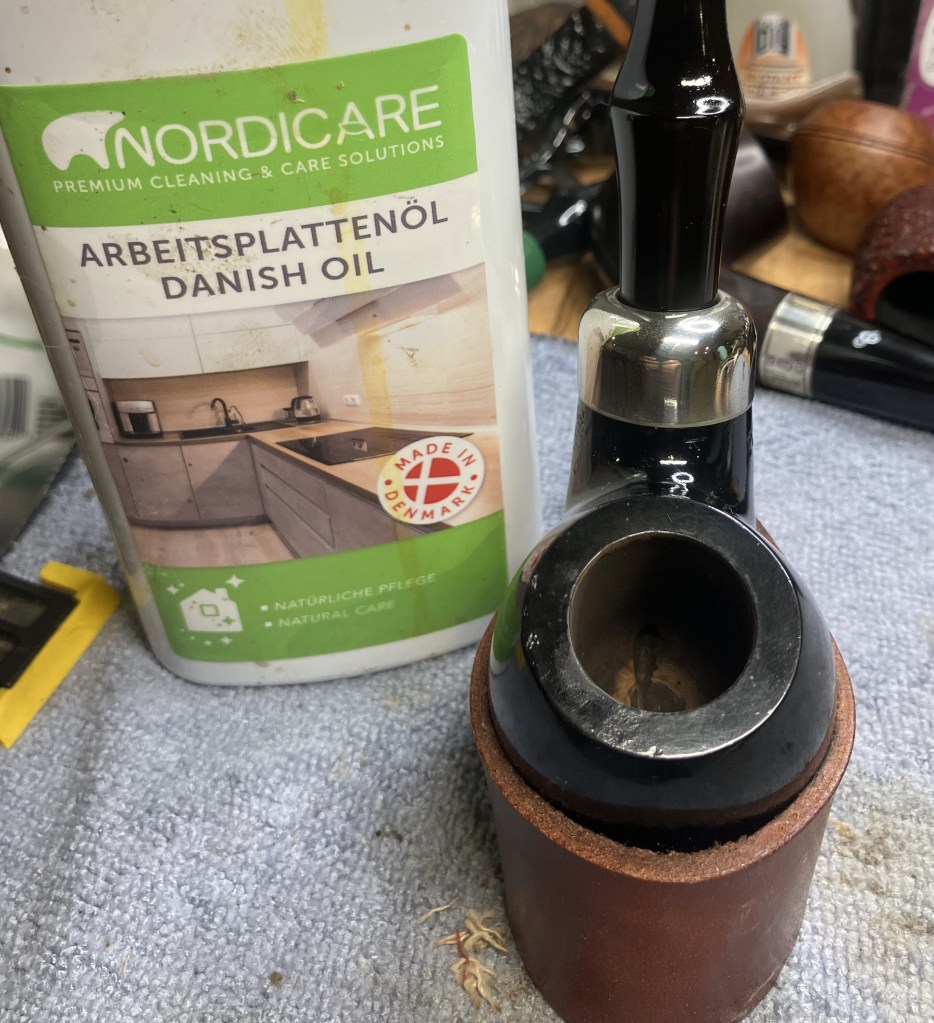
The black Fiebing’s Leather Dye worked well at making the stubborn spot on the rim black but it was still noticeable. I thought that maybe a coati or two of Danish oil would help conceal the blemish.
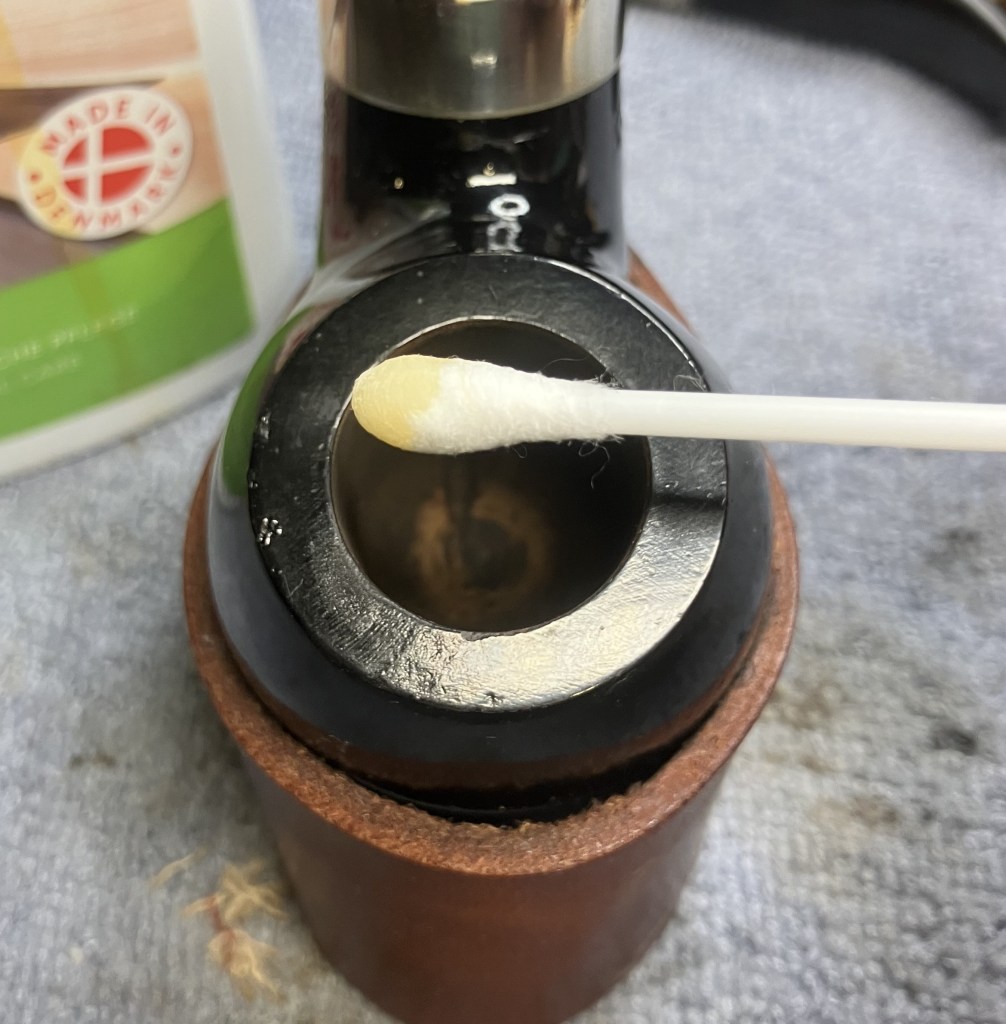
This was applied to the rim with a cotton swab.
The whole rim was coated to help blend the spot.
Then several more mini applications to the spot, itself. After the oil dried I worked the spot with 7000, 8000 and 12000 grit micro-mesh.
The stubborn little spot remained noticeable. I finally surrendered to failure. I thought maybe, just maybe, that the carnauba waxing would finally smooth the blemish, but didn’t hold much faith in that.
Several coats of carnauba wax were applied to both the stem and stummel.
The final step was a hand buffing with a microfiber polishing cloth which really brought out the shine.
What a chubby cheeked beauty. This Peterson System Standard 302 Ebony restored wonderfully. The glossy black finish was well maintained by the previous owner and needed little work. The slightly charred spot on the rim was fixed with a touch of black dye,Danish oil, polishing and disappeared with the waxing. The oxidation of the stem was removed and revealed the lovely black high gloss vulcanite. This glossy black matches the stummel and is accentuated by the polished nickel collar. Overall, I think the pipe looks nearly as great as it probably did exiting the Peterson factory in Dublin. I am sure that Tom, will enjoy many years of relaxing contemplation with this pipe. The dimensions of the Peterson System Standard 302 Ebony areas follows:
Length: 6.09 in./ 154.69 mm.
Weight: 2.58 oz./ 73.14 g.
Bowl Height: 1.88 in./ 47.75 mm.
Chamber Depth: 1.40 in./ 35.56 mm.
Chamber Diameter: 0.80 in./ 20.32 mm.
Outside Diameter: 1.79 in./ 45.47 mm.
I do hope that you have found something here useful to your own pipe care, maintenance or restorations. If you like this sort of thing, please click the like and subscribe buttons. Thank you for reading the ramblings of an old pipe lover.
Loading…
Below are some photos of the finished Peterson System Standard 302 Ebony.
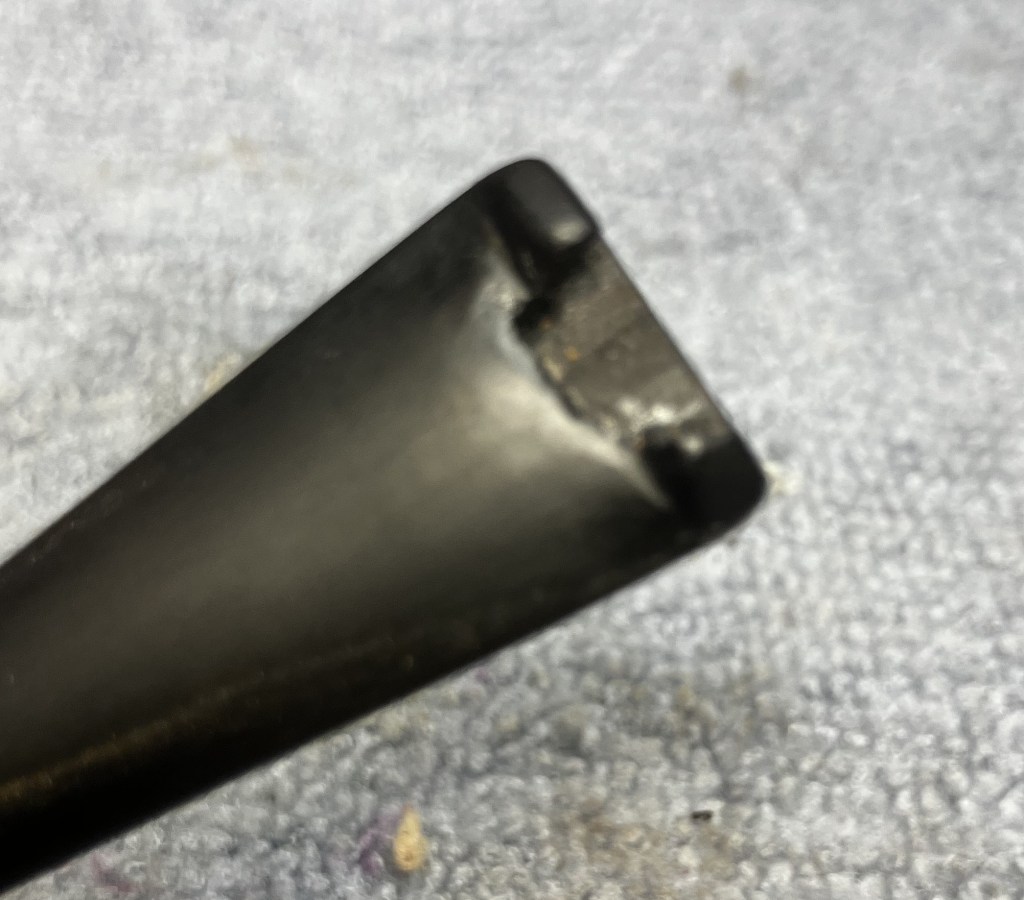
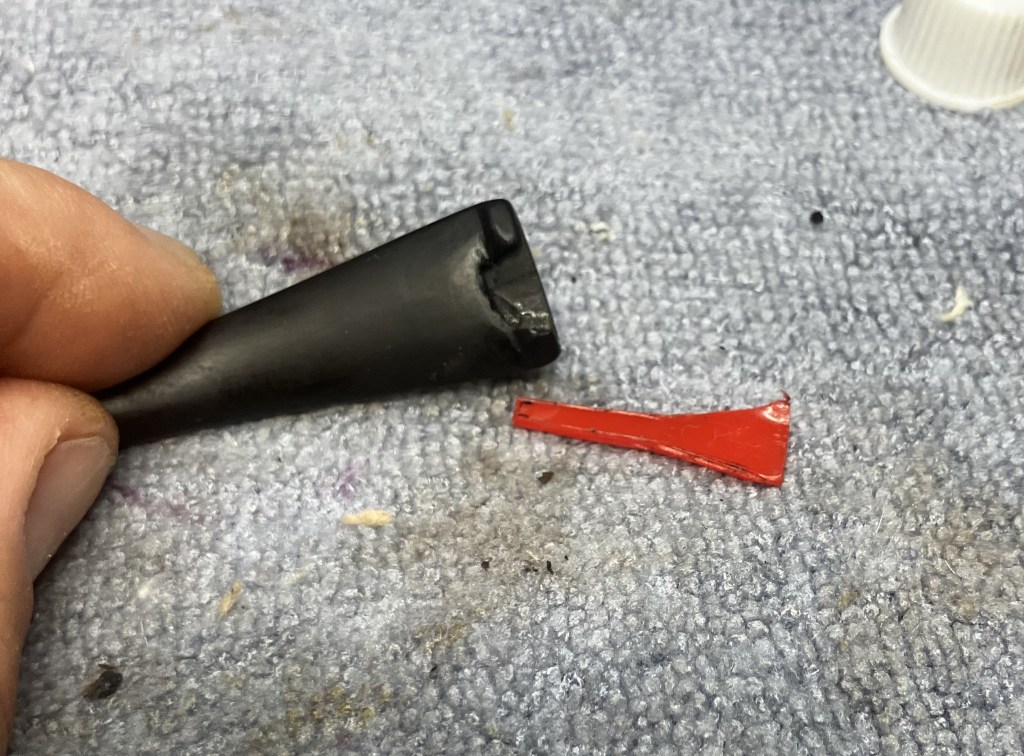
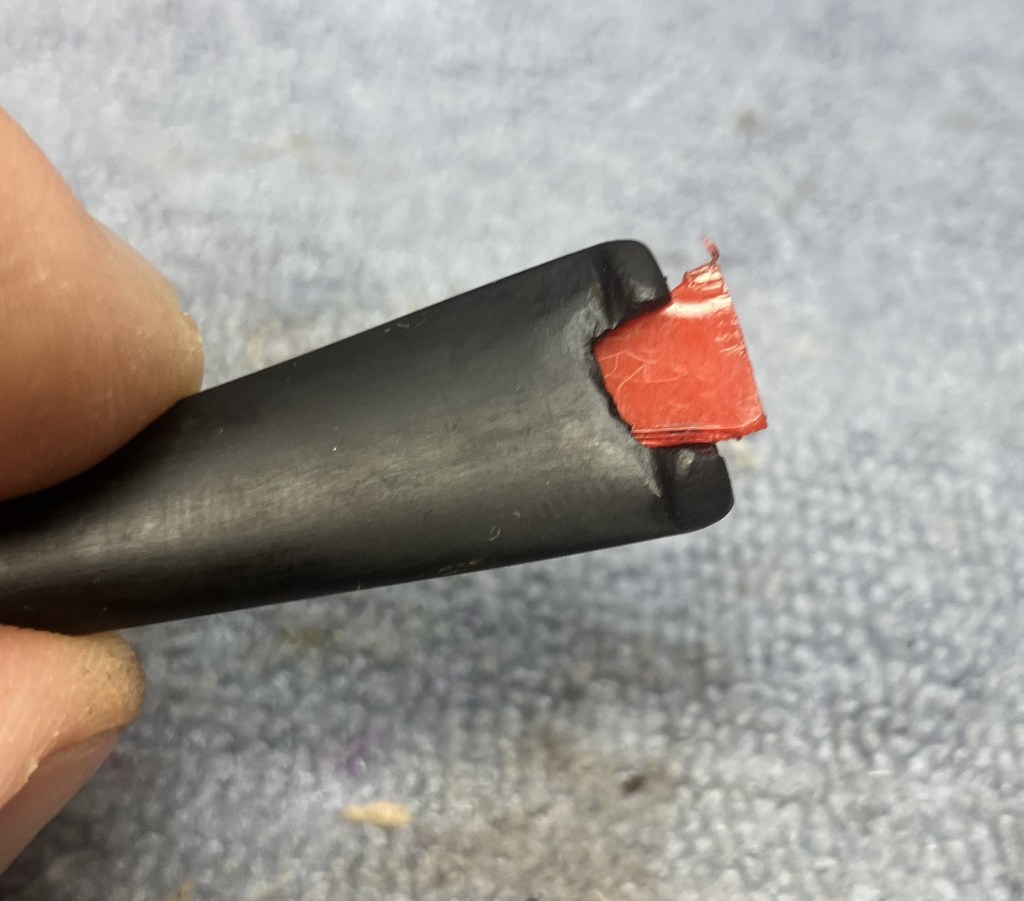
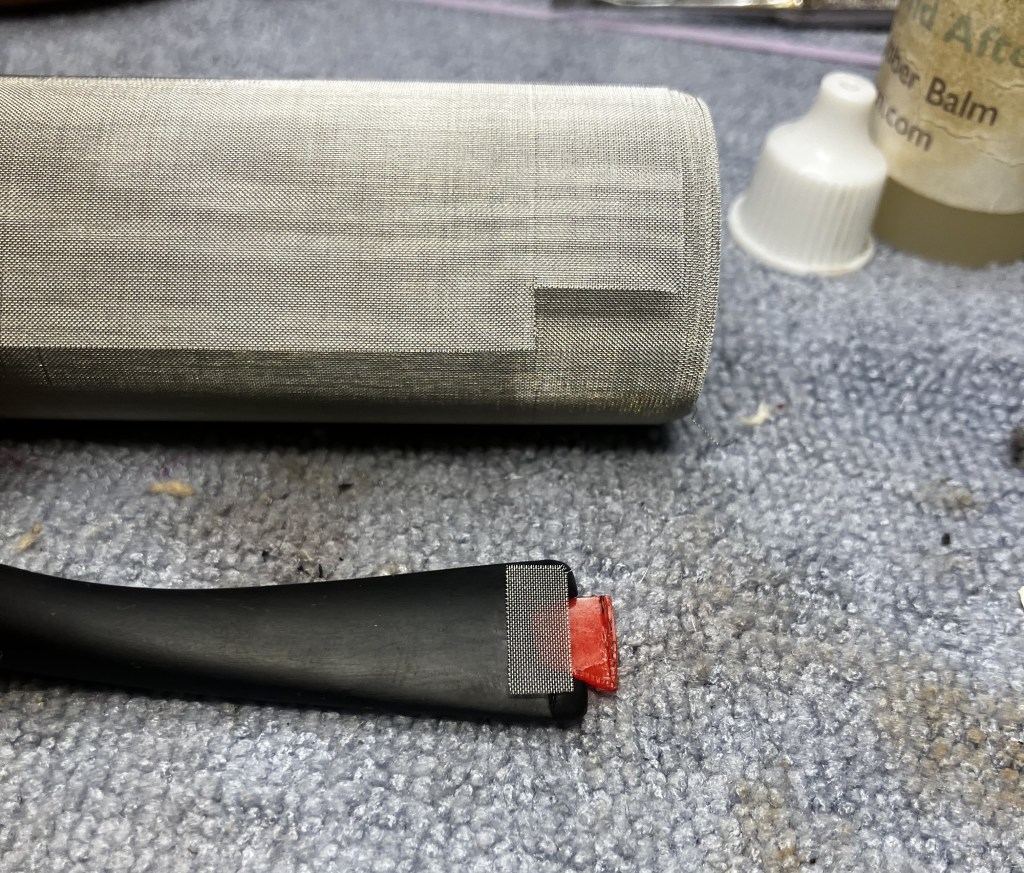
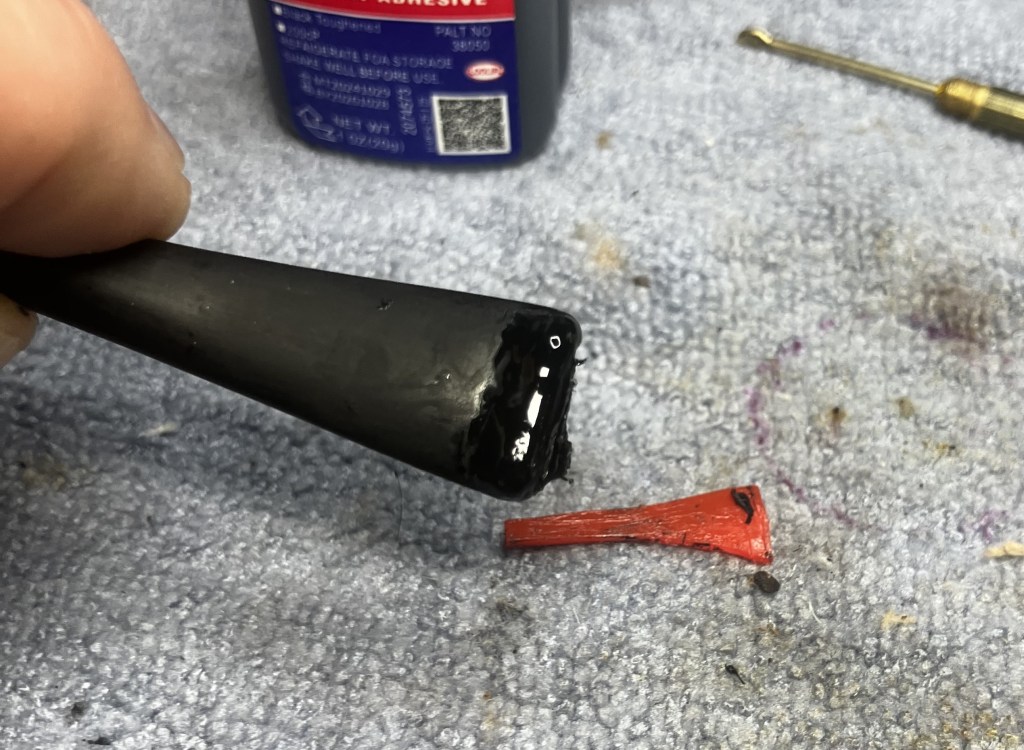
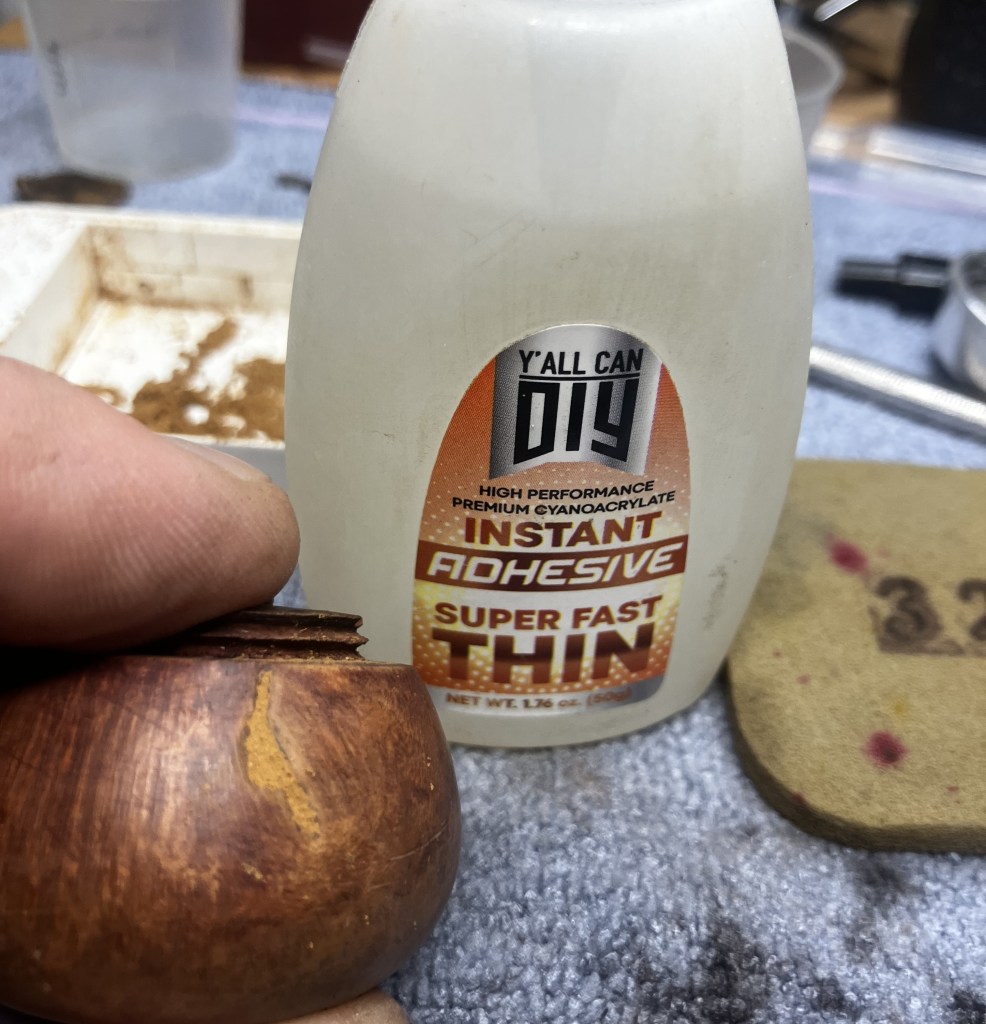
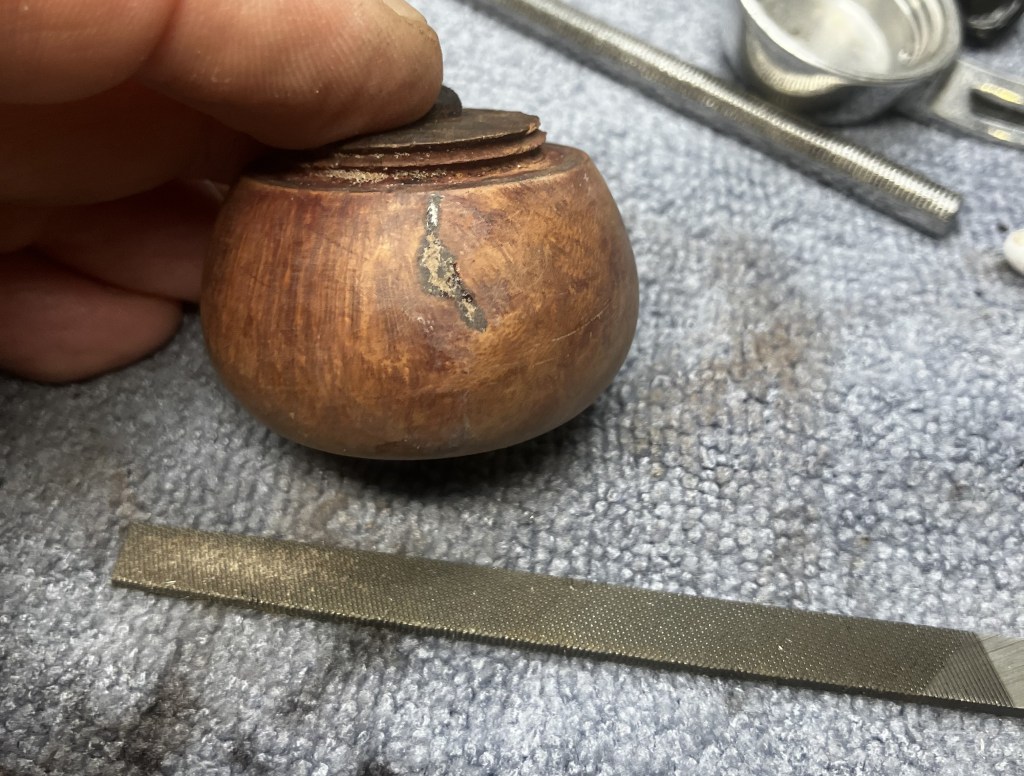
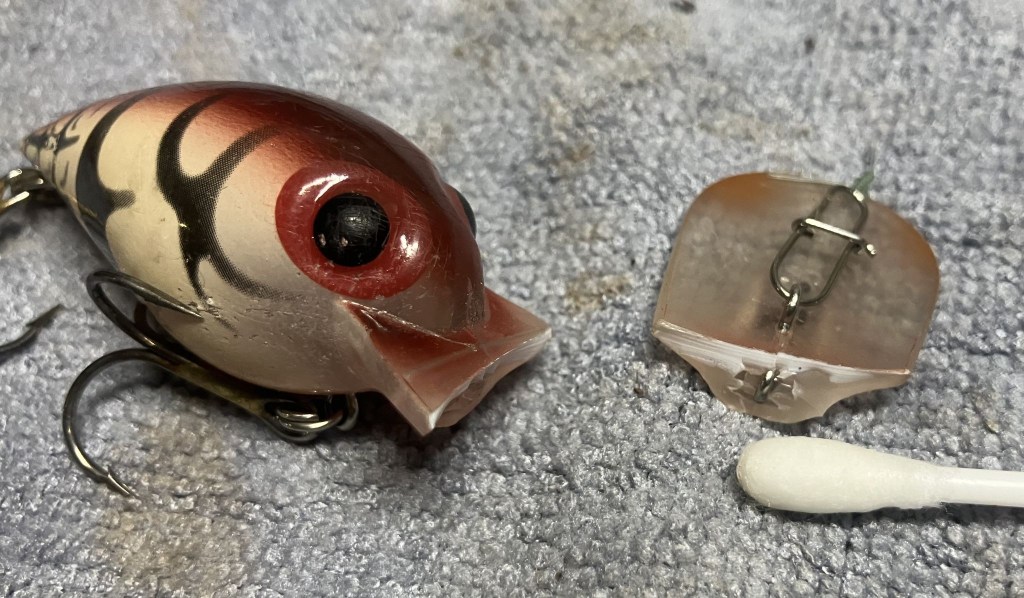
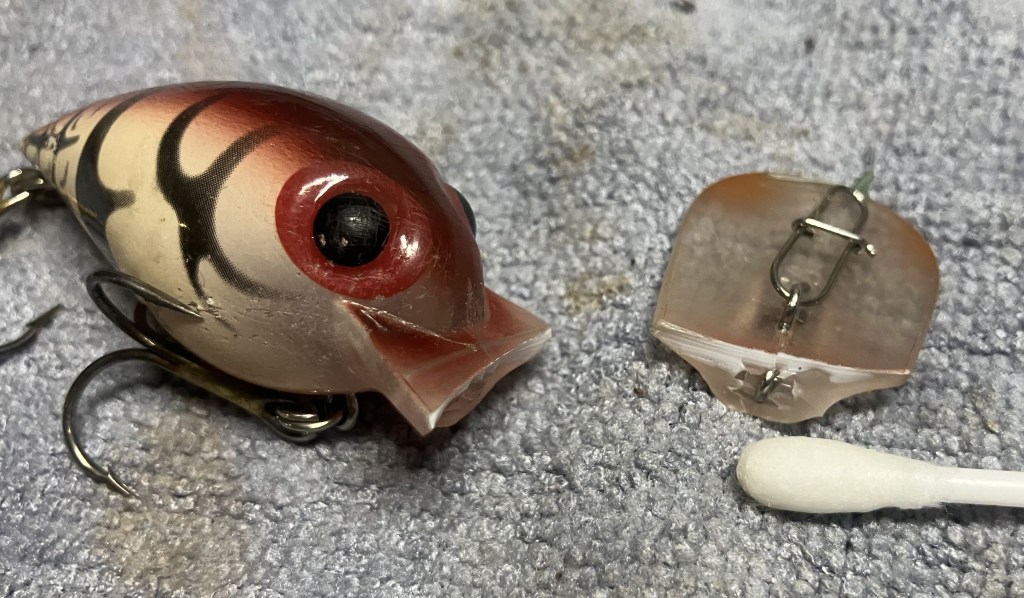
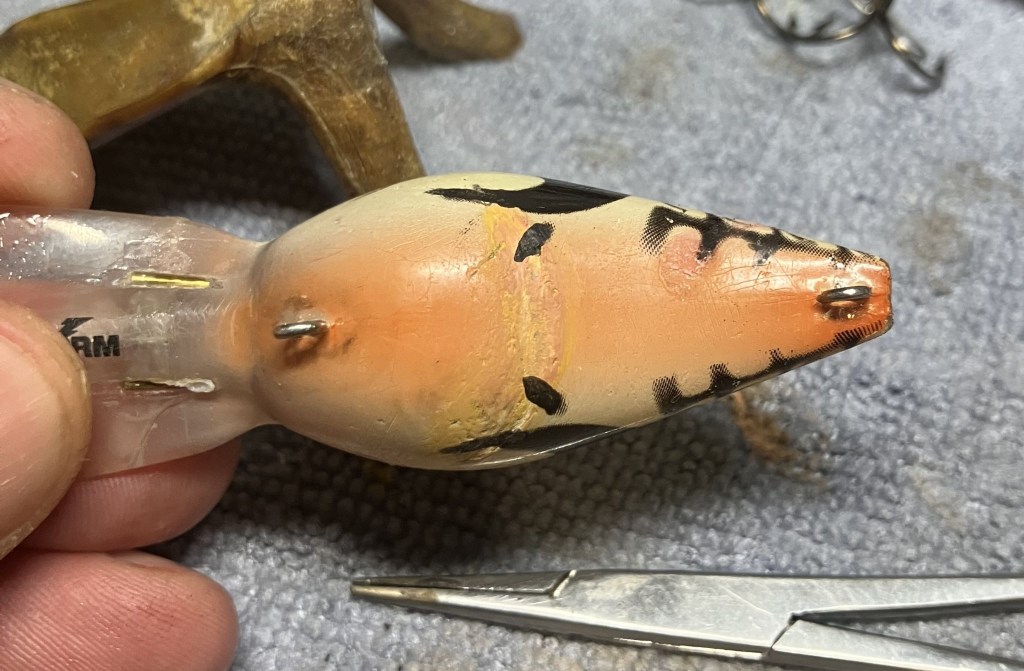
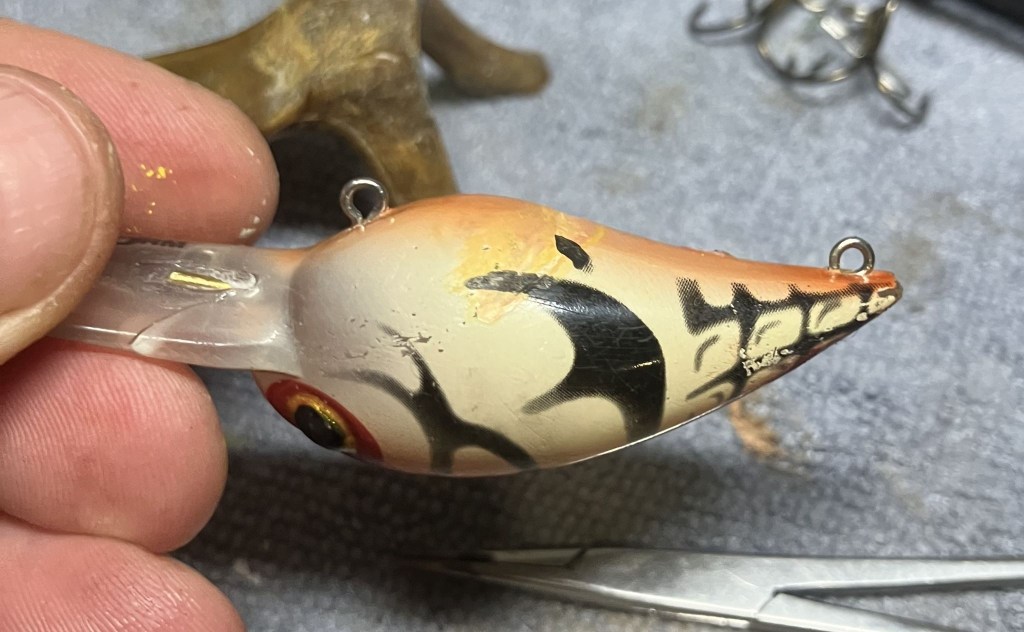
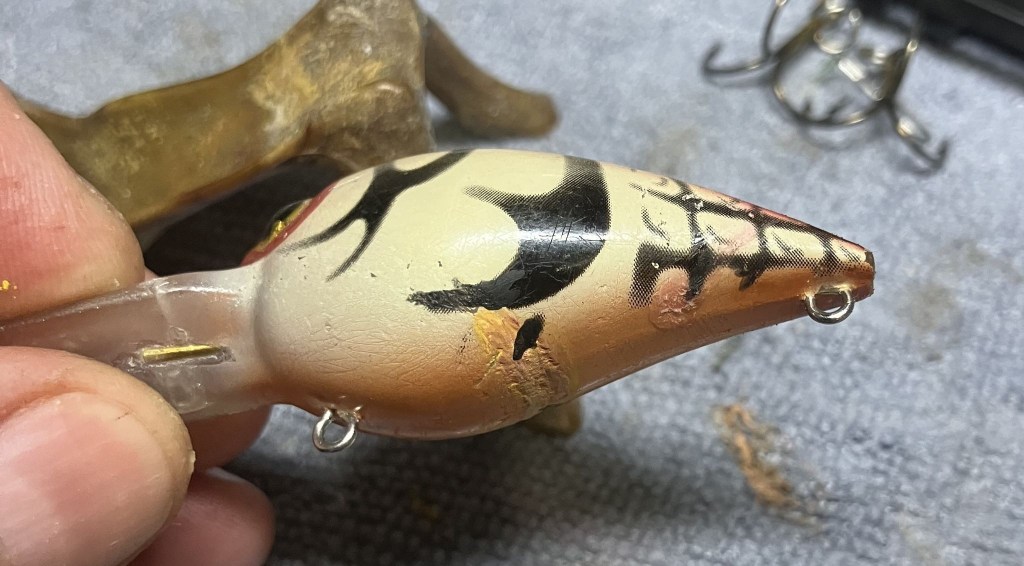
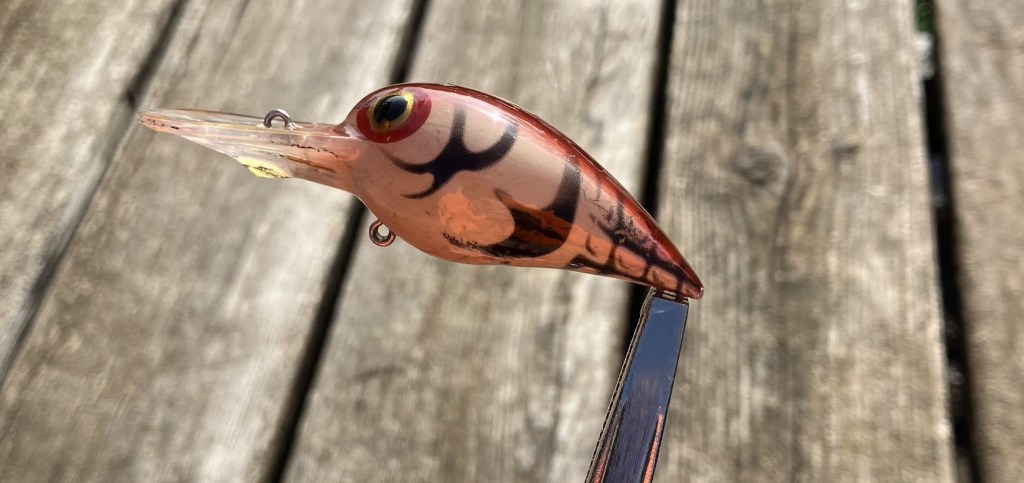
Not a pipe indeed. If you have read my blogs for a while you may have picked up on one of my other vices, fishing. A buddy of mine, let’s call him Matt, had (still has but I’m trying for grammatical correctness) a beloved Storm crank bait. As you may have noticed from the above photo it suffered a catastrophic break. When I saw the pieces on the deck of Matt’s bass boat I immediately felt his pain. You know that little devil that pops up whispering nerdowell things in your ear? Mine was saying, “Hah, he’ll never catch more fish than you with that lure again!” Darn little devil. After a morning of fishing Matt had once again caught more fish than me even without the use of his beloved bait. I looked at the pieces and thought, “I can fix this”. Matt said to give it a try, it was getting any better laying on the deck of his boat but at the same time, I couldn’t help but notice that it had not gotten picked up and thrown away. Perhaps some things are just too painful to disregard. That brings us to the blog for this week. How can a pipe restorer repair a broken plastic lip of a crank bait?
The Restoration
The bait made it to the workbench. It is weird typing that without the word “pipe” in there.
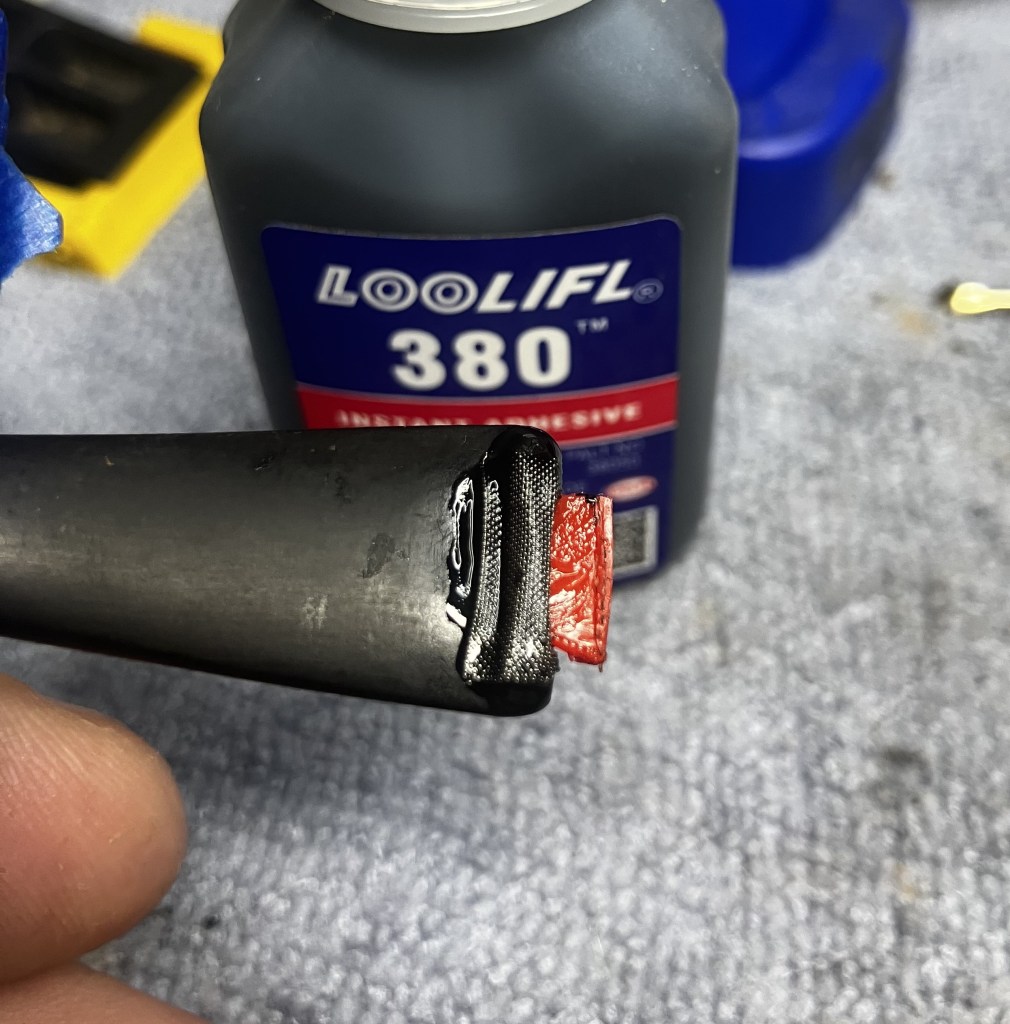
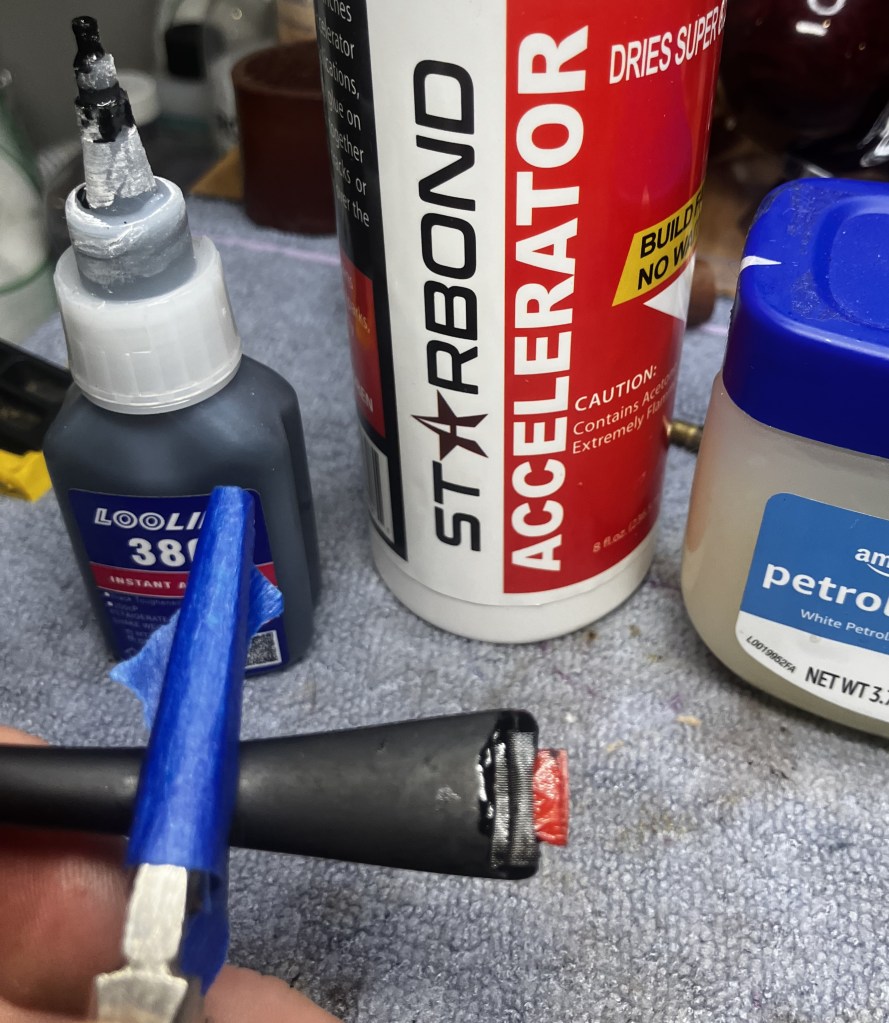
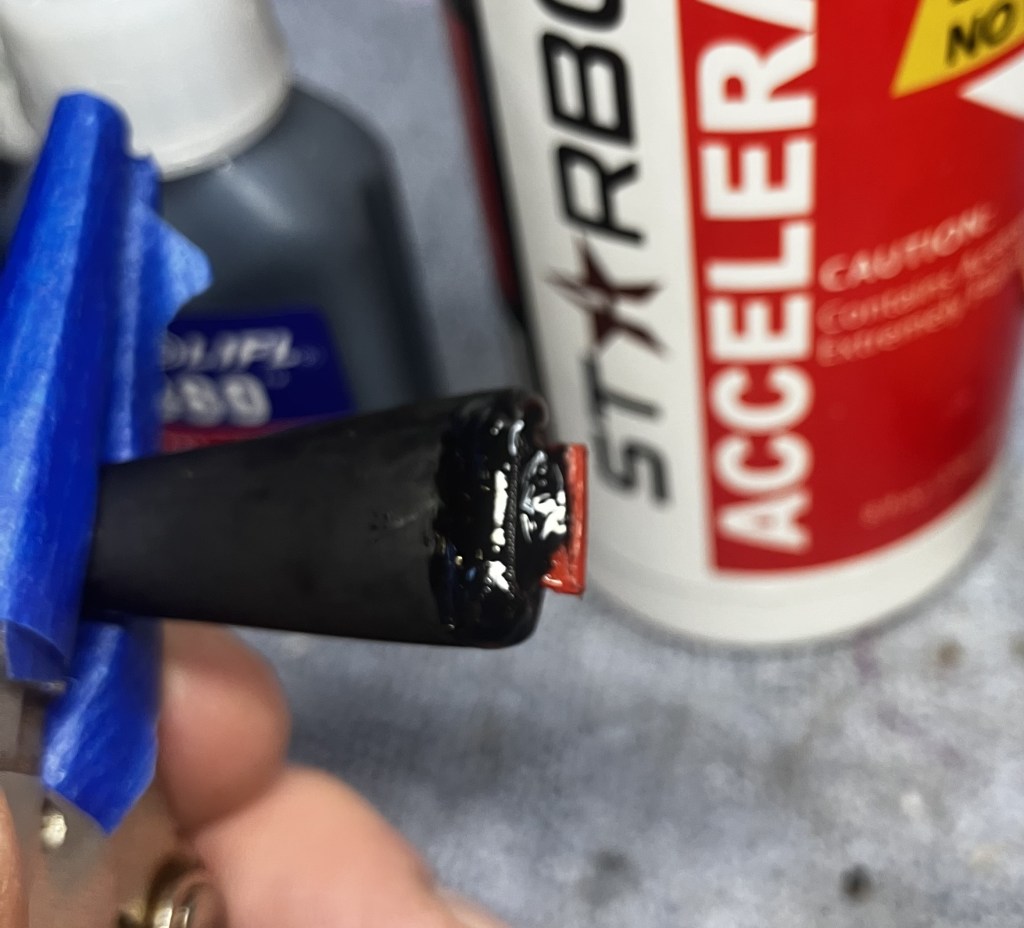
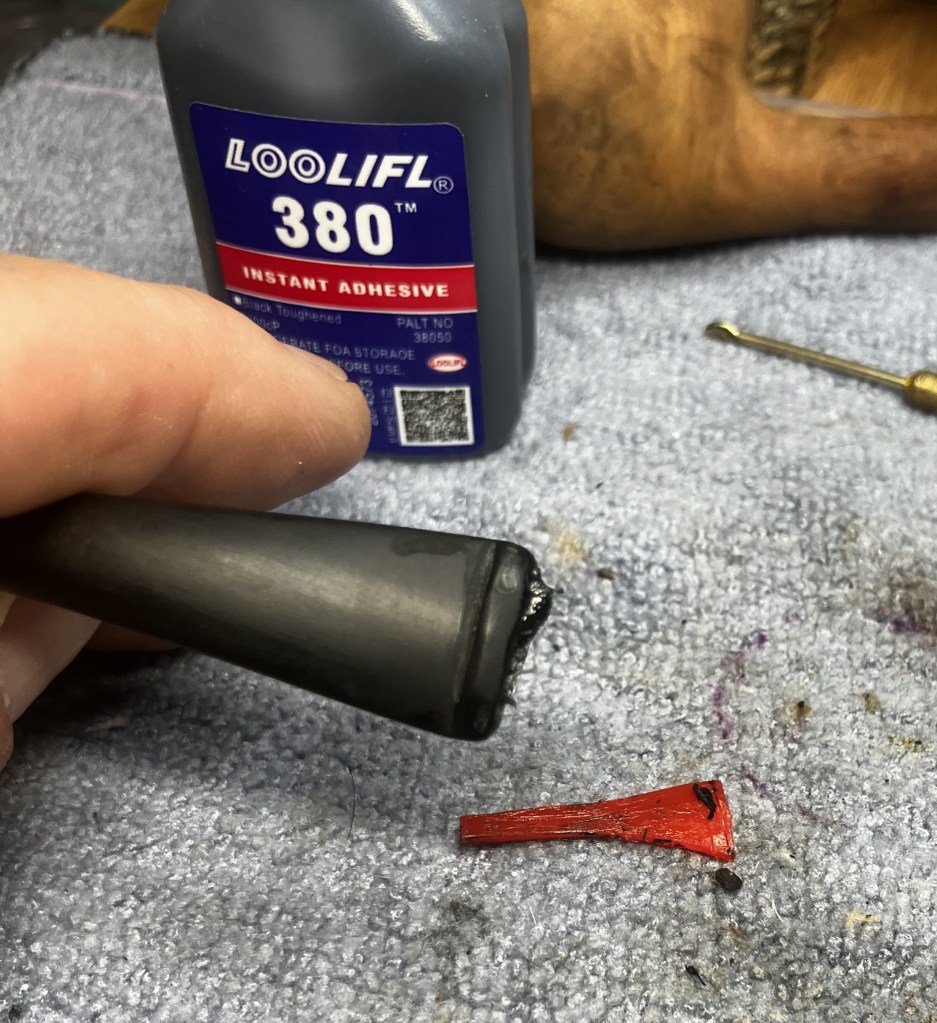
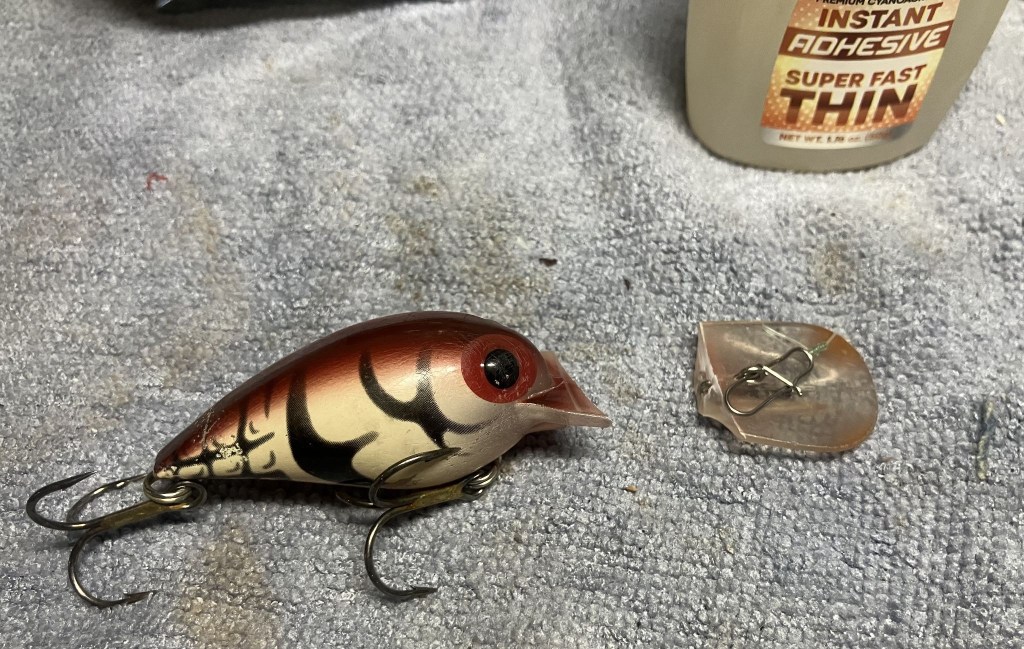
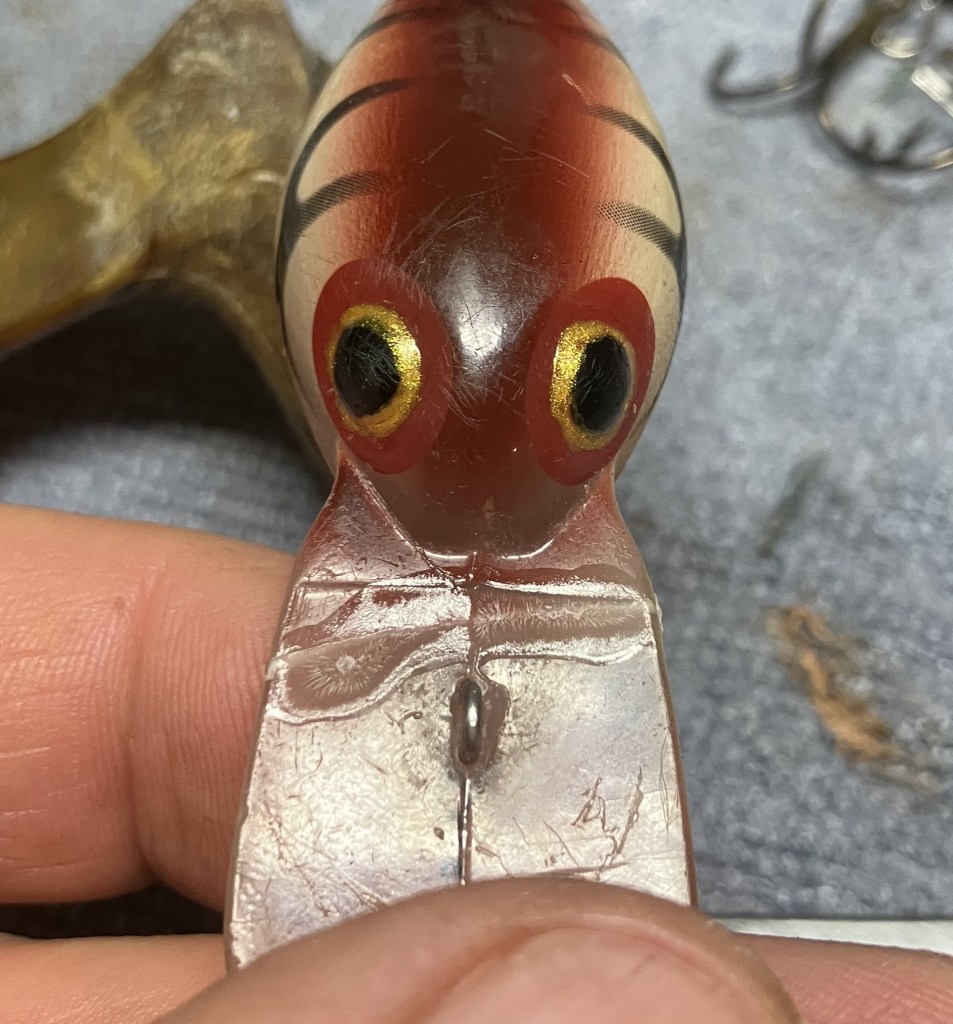
My first thought was to tack the lip back together with some cyanoacrylate (CA, super glue). Not as a permanent repair but to get the lip back into its original position and alignment. I also thought about completely removing the line tie and redrilling a new hole through the old line tie and into the molded resin body of the lure, then fashioning a new line tie and glueing it into position. I judged that might significantly weaken the lip and would likely affect the movement of the lure through the water, so opted against that.
The surfaces to be glued were cleaned using 99% ethyl alcohol on a cotton swab.
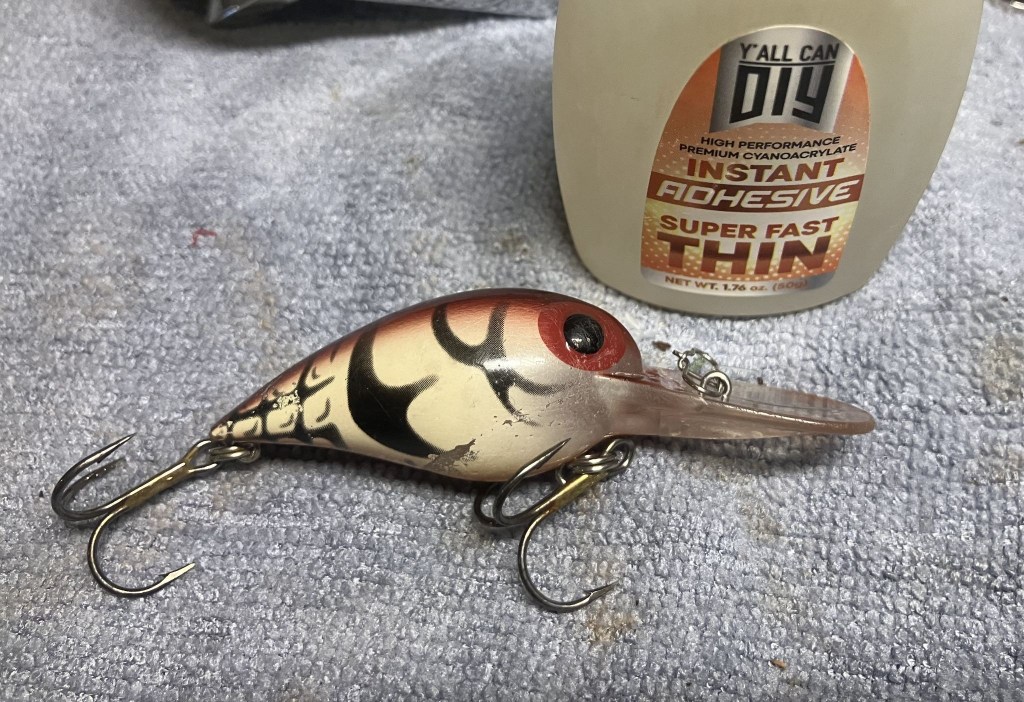
Next a drop of CA was applied to the surface and the lip was reattached. Additional CA was allowed to fill the cracked surface of the seam. The Thin CA is very thin, imagine that, and penetrates well into any slight crack.
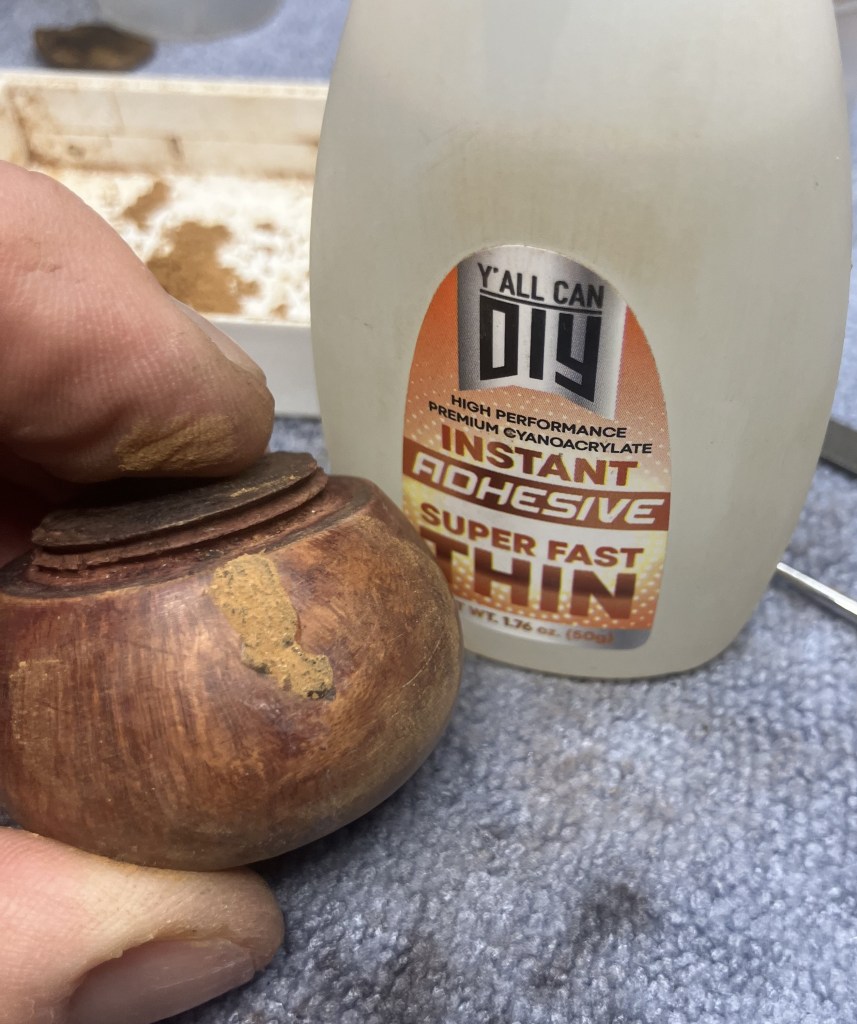
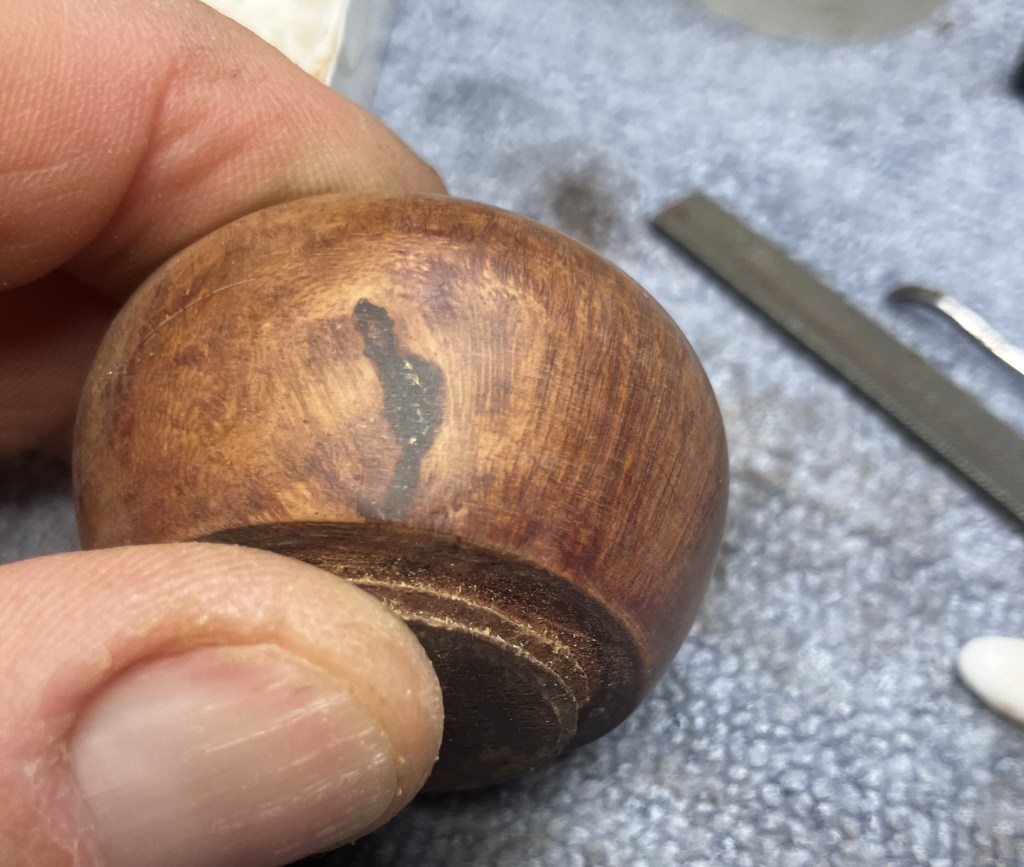
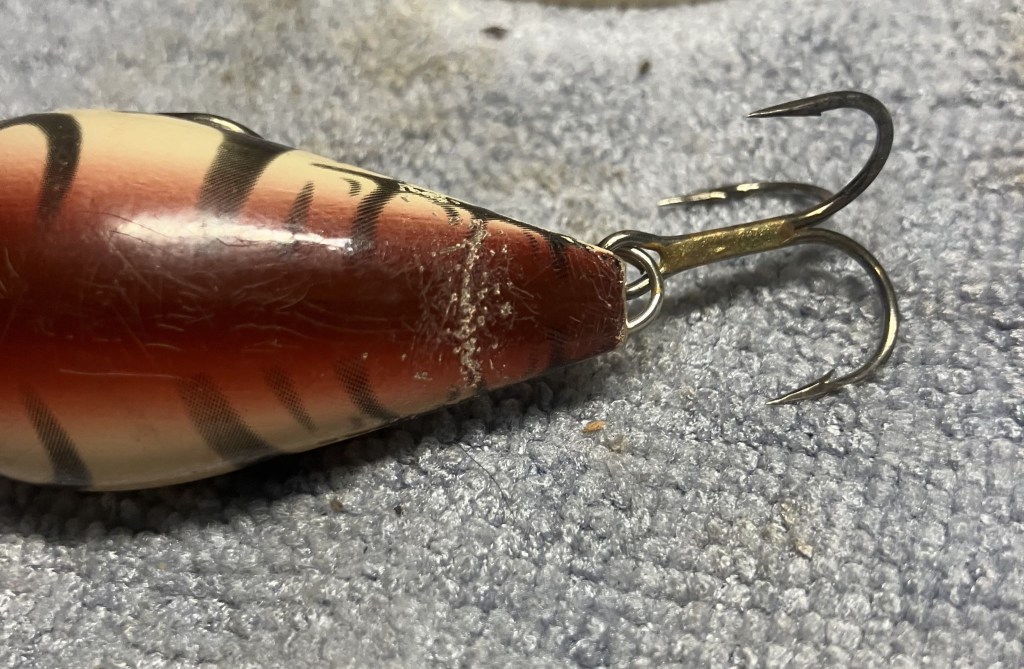
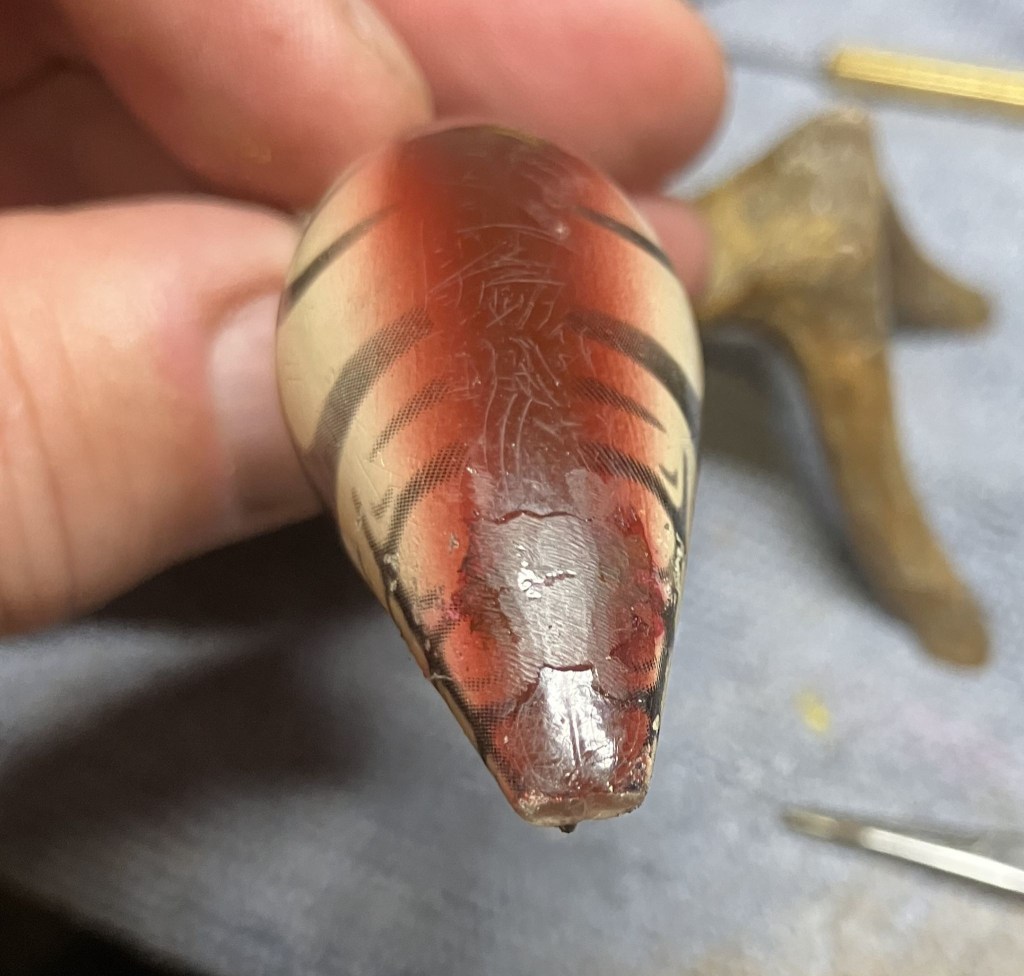
While allowing the glue to cure, I thought I should attempt to repair the “hook rash” or wear on the finish of the bait caused by frequent run-ins with the hooks. That brown looked very similar to a mahogany wood stain.
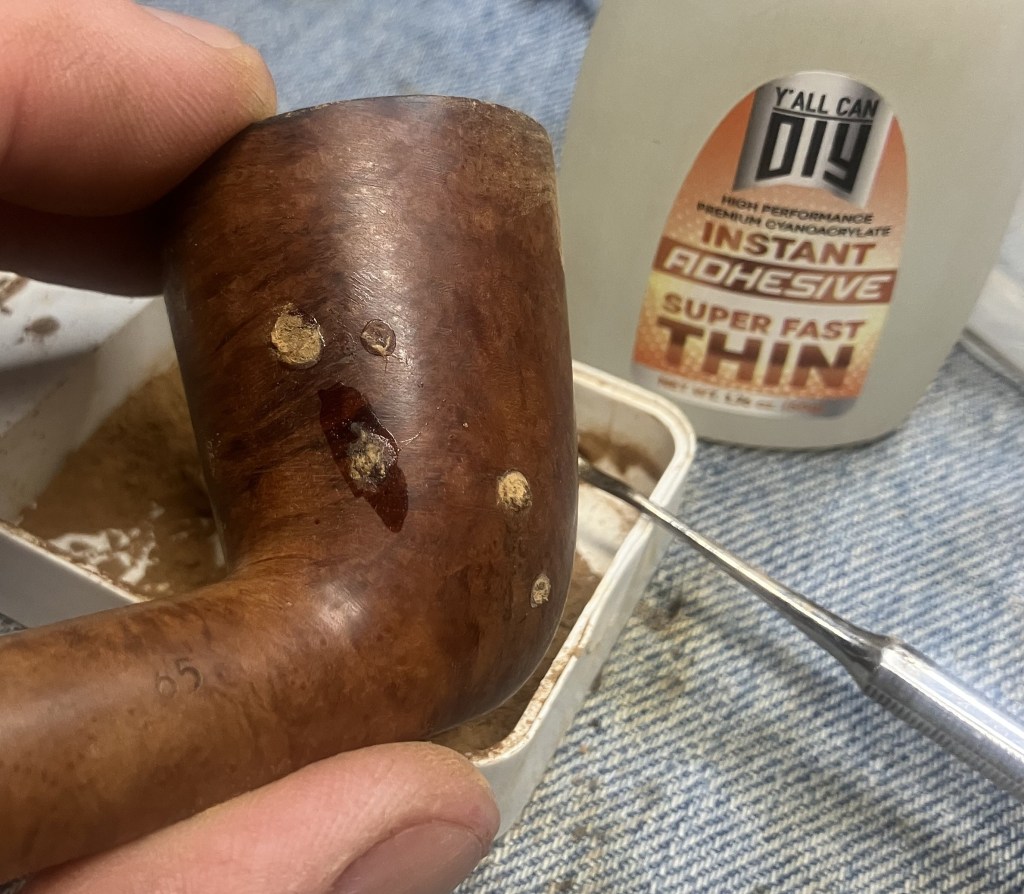
Sure enough, mahogany matched quite well. A little bit of Thin CA locked that stain in place. Now both ends of the bait were untouchable until the CA cured, unless I felt the need to attach the bait to my fingers.
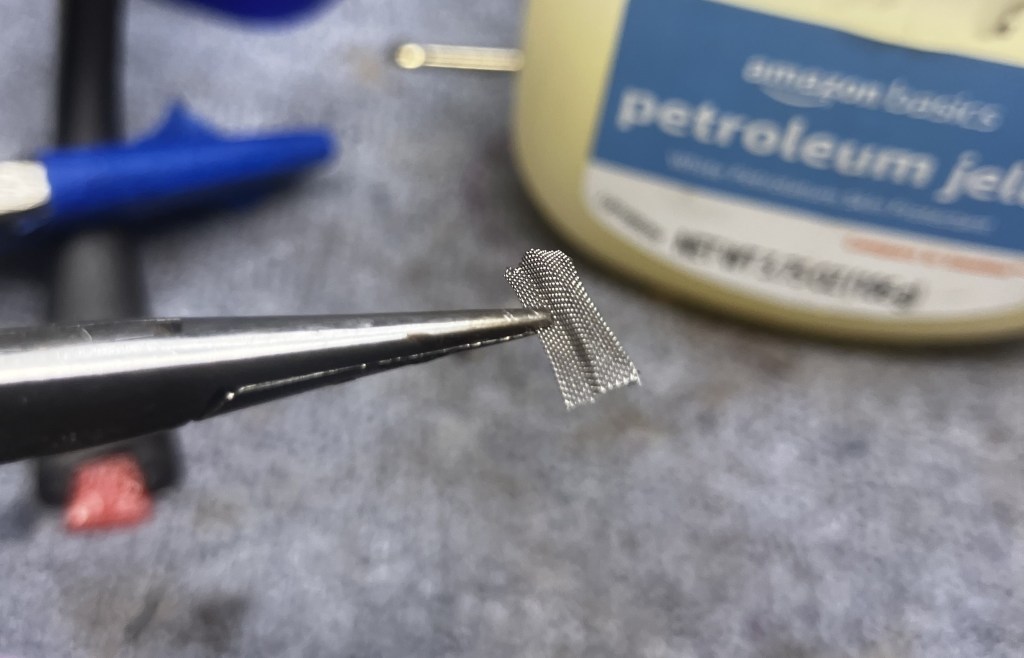
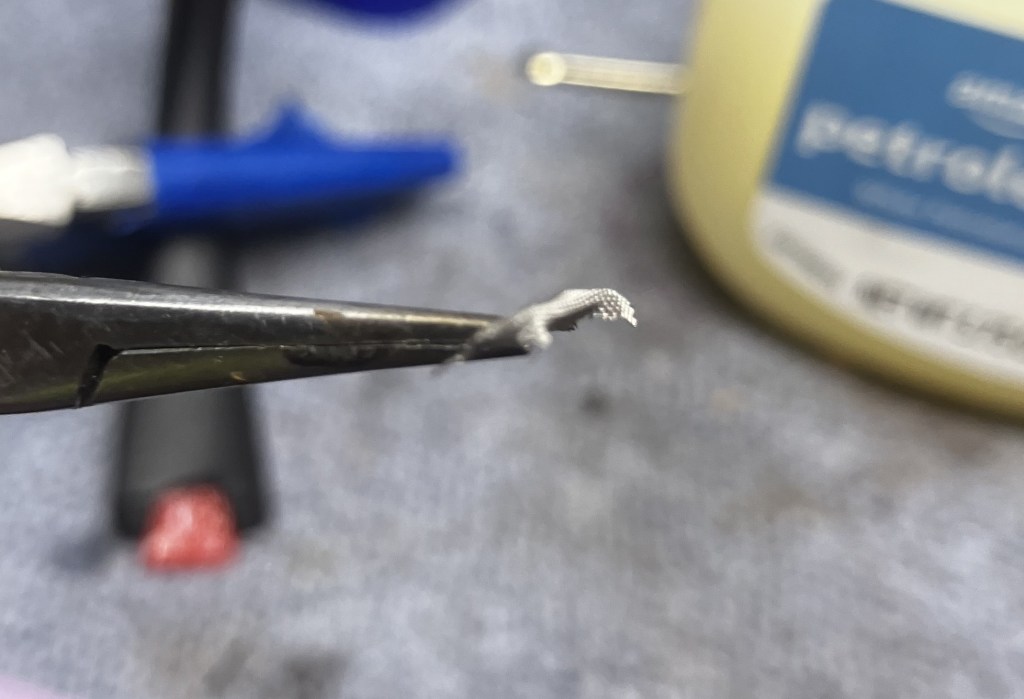
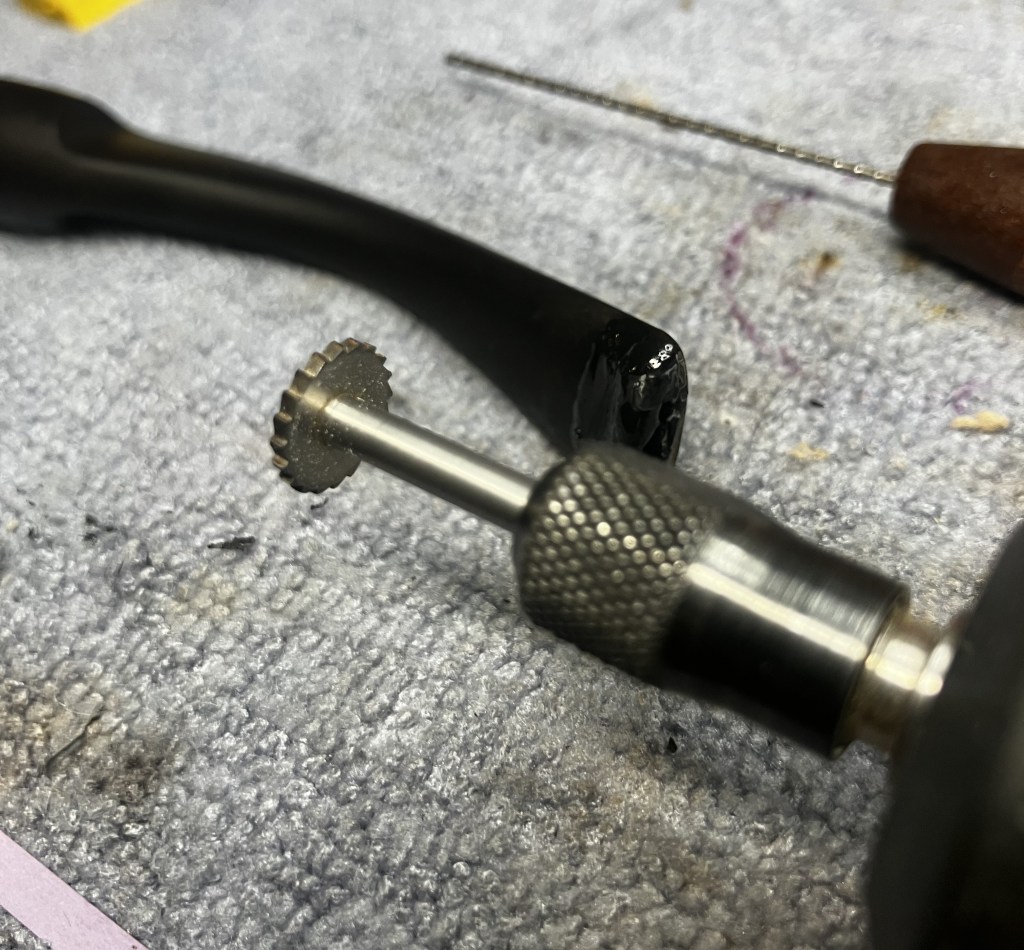
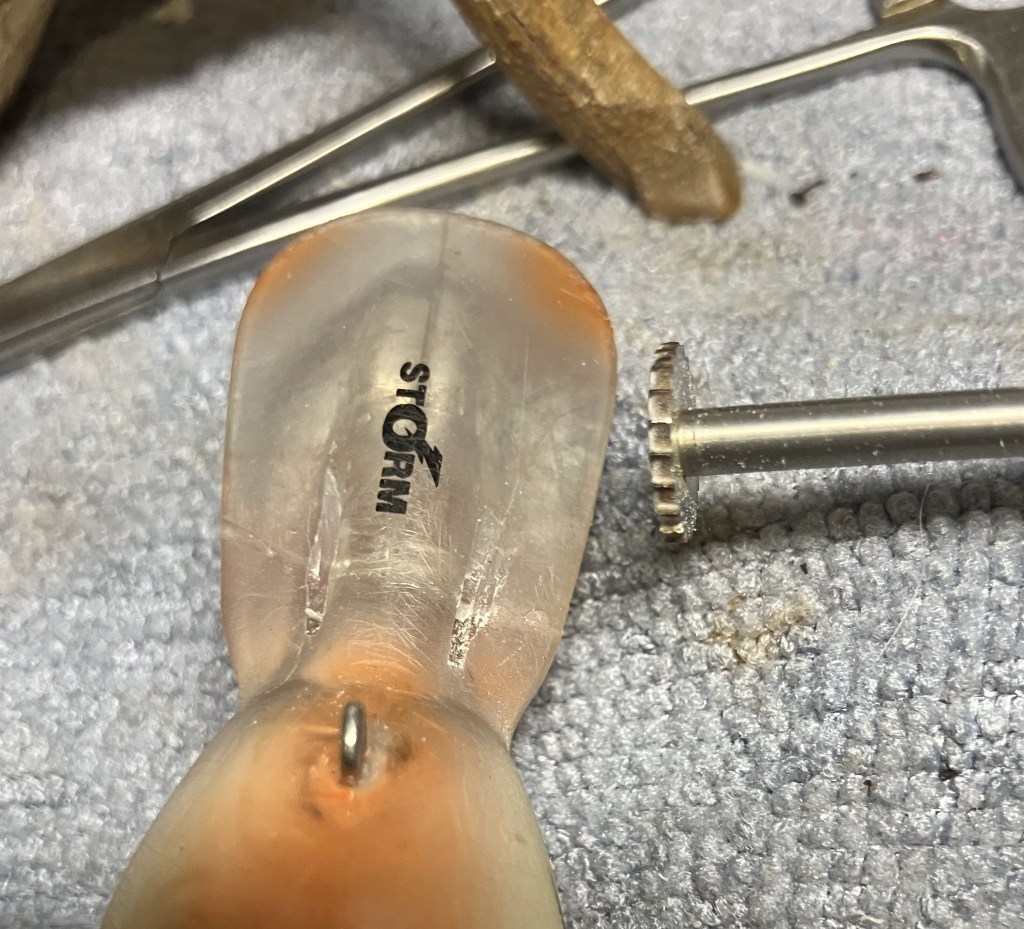
After the CA had completely cure, I used a Dremel rotary tool with a cut-off bit to make two grooves into the lip intersecting the previous break. My grand plan was to use two 2 mm brass rods to reinforce the lip. These would be glued in place with CA then encased in 24 hour epoxy resin which would later be carved to a semblance of the original lip but be slightly thicker. The brass rods, CA and Epoxy all come together to repair and strengthen the break. In my imagination, this worked gloriously.
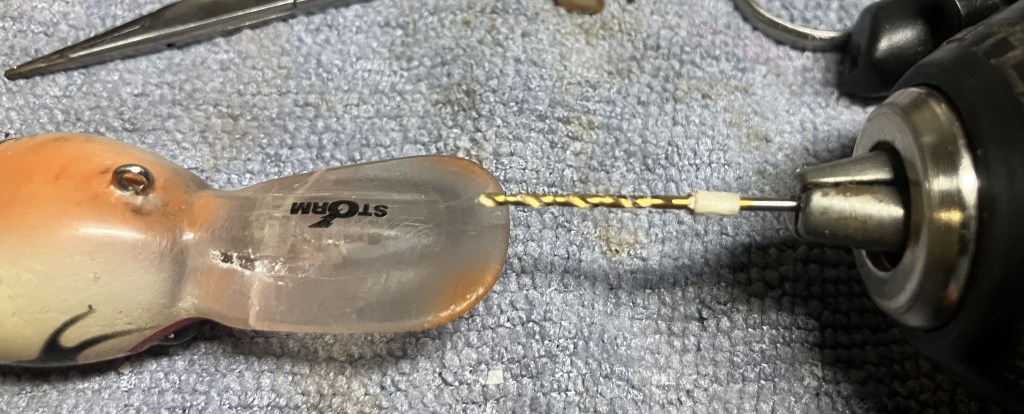
To further anchor the 2 mm brass rods I drilled a 2 mm hole into the resin body of the bait.
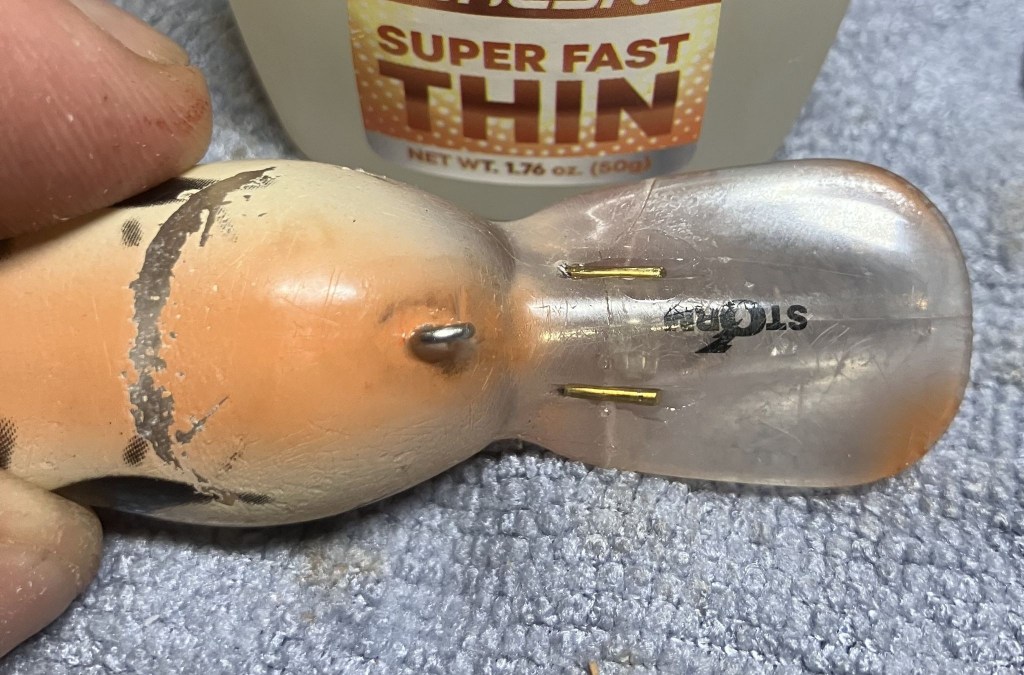
The brass rods were measured and cut. They were then pressed into the holes and fit nicely into the grooves cut with the Dremel. These received a drop of Thin CA to tack them into place while the epoxy cured.
I thought the eyes needed a bit more flair, so I painted a gold iris around the black eye. OK, I was really just keeping busy while the CA fully cured but it still looks cooler, eh?
I also blended some acrylic model paint to cover the hook rash on the belly of the bait. Had I been thinking I would have given this a light coat of thin CA to seal the paint as well. Too bad I wasn’t thinking.
The black was touched up as well and also not protected with CA.
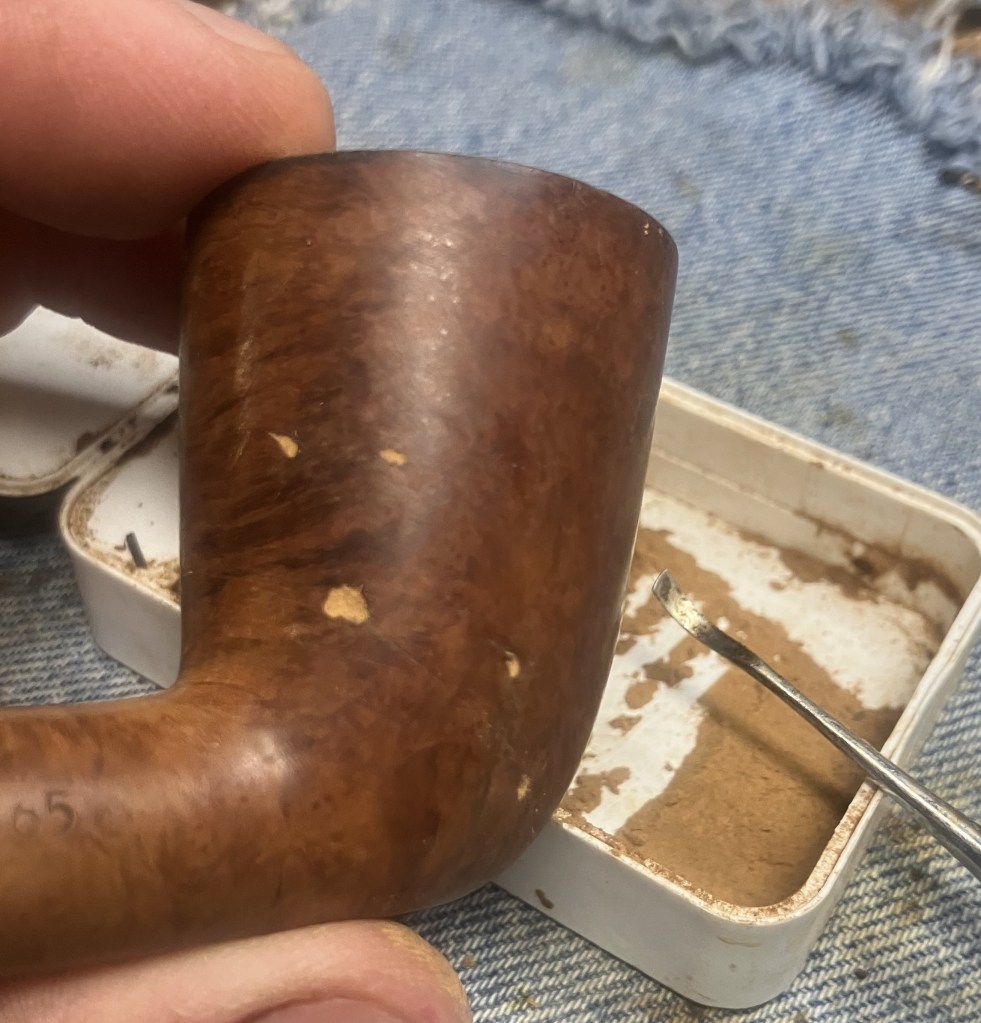
The Protected mahogany spot was filed smooth, not quite finished in the photo below.
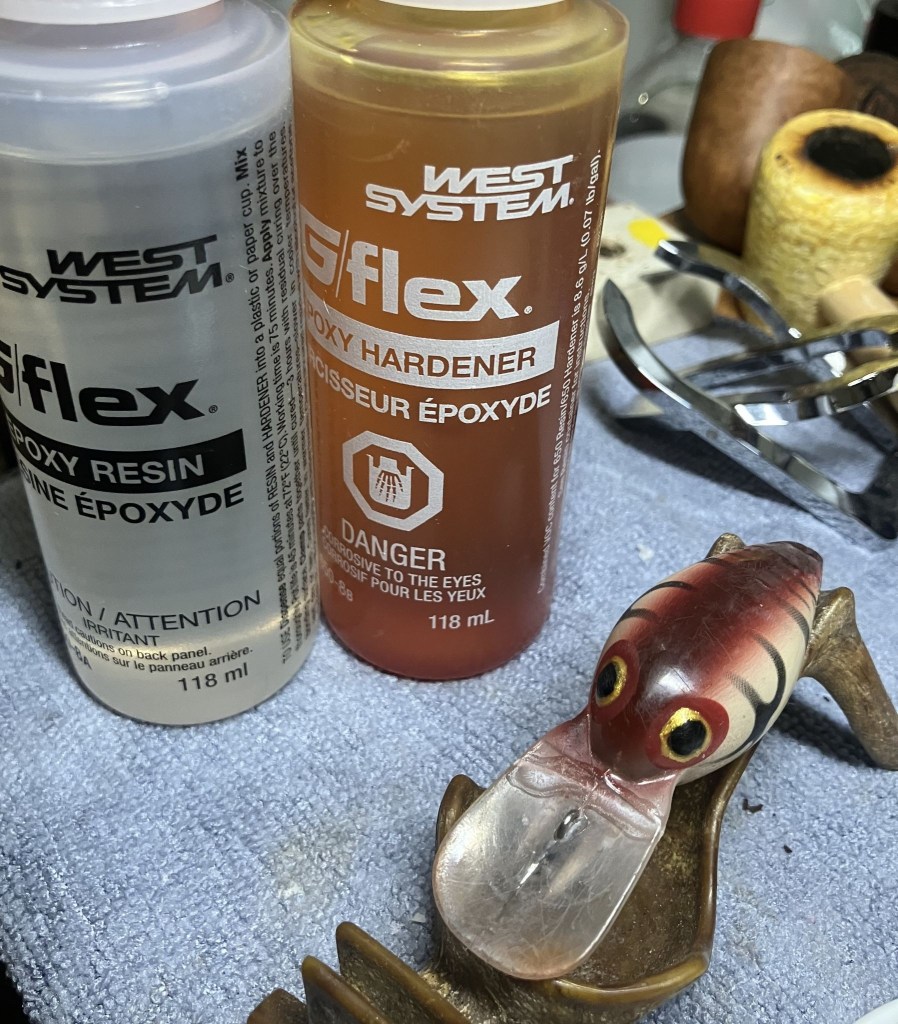
I chose West System G/flex epoxy for this repair. For no other reason that these were new bottles and the tips were not gunked up like my other epoxies were.
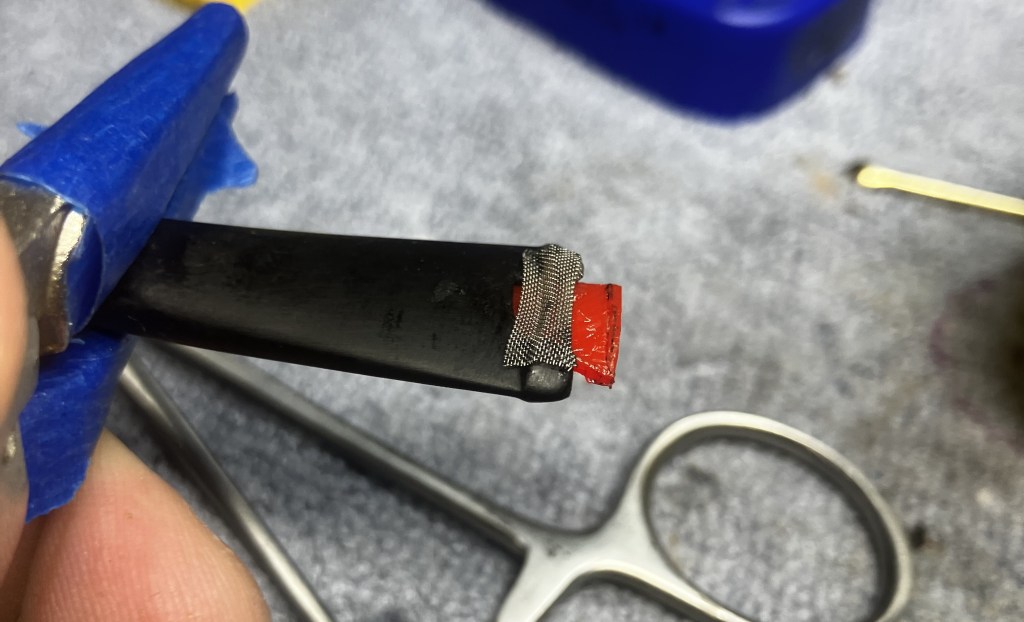
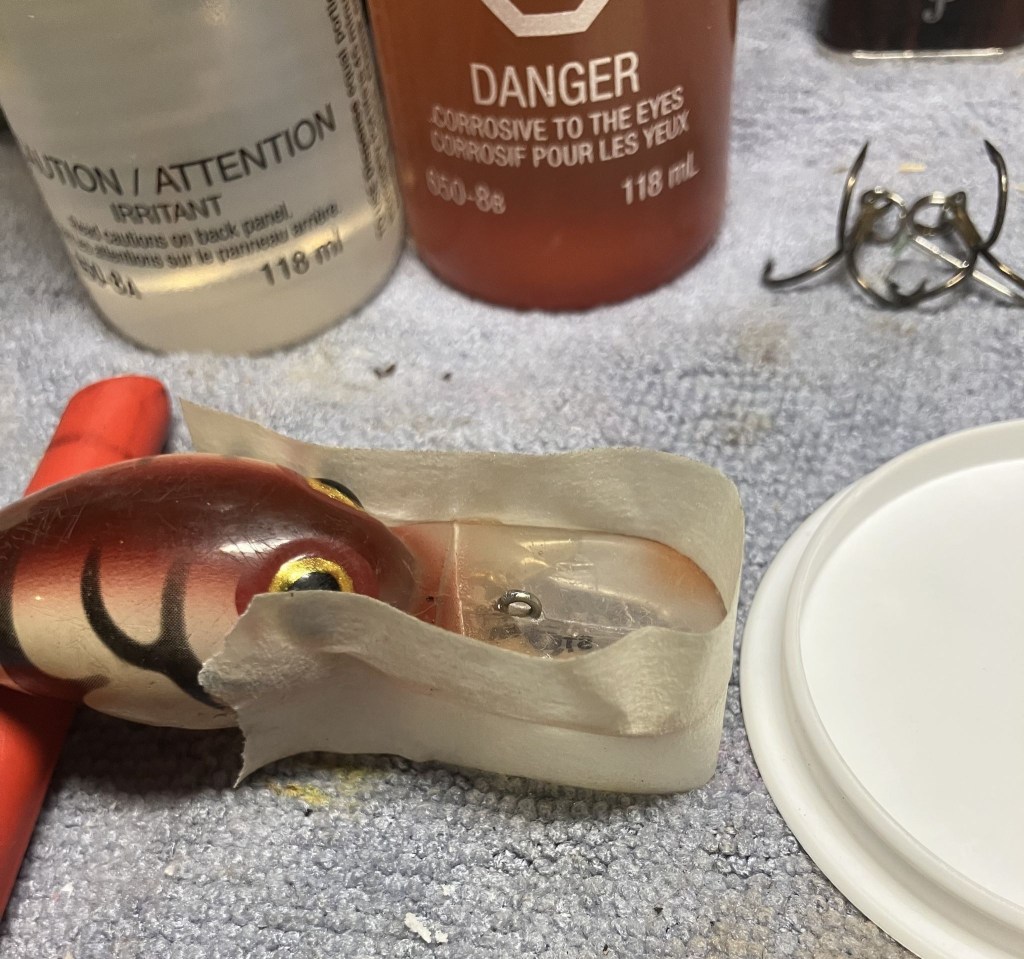
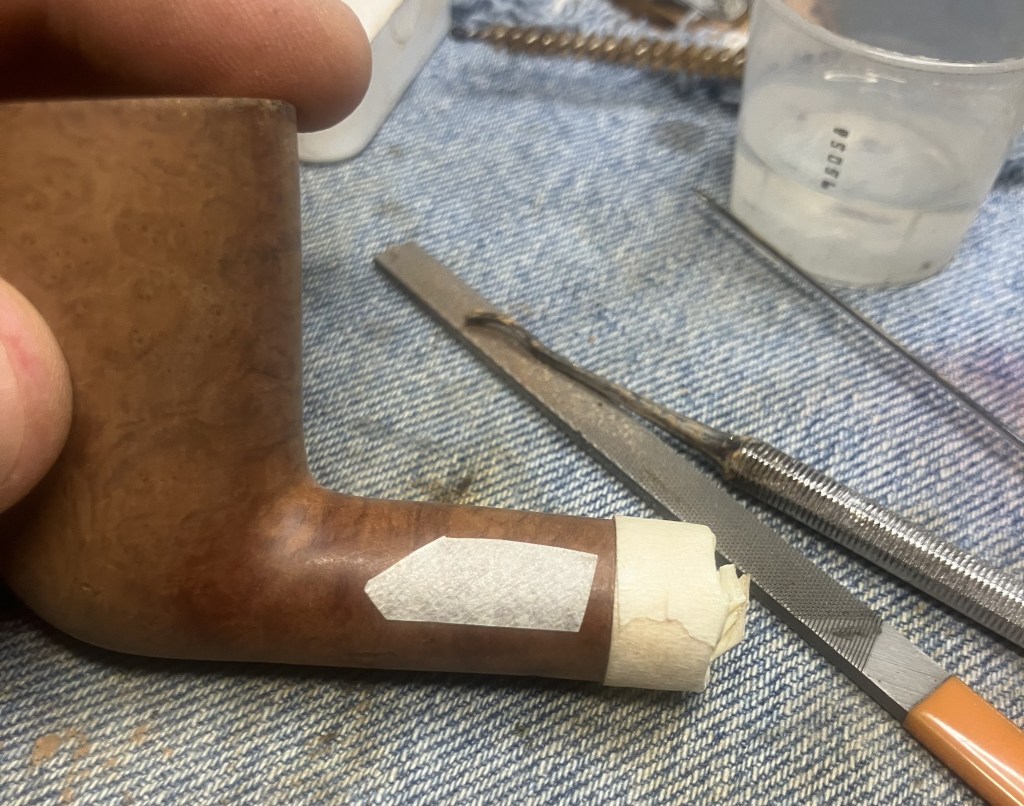
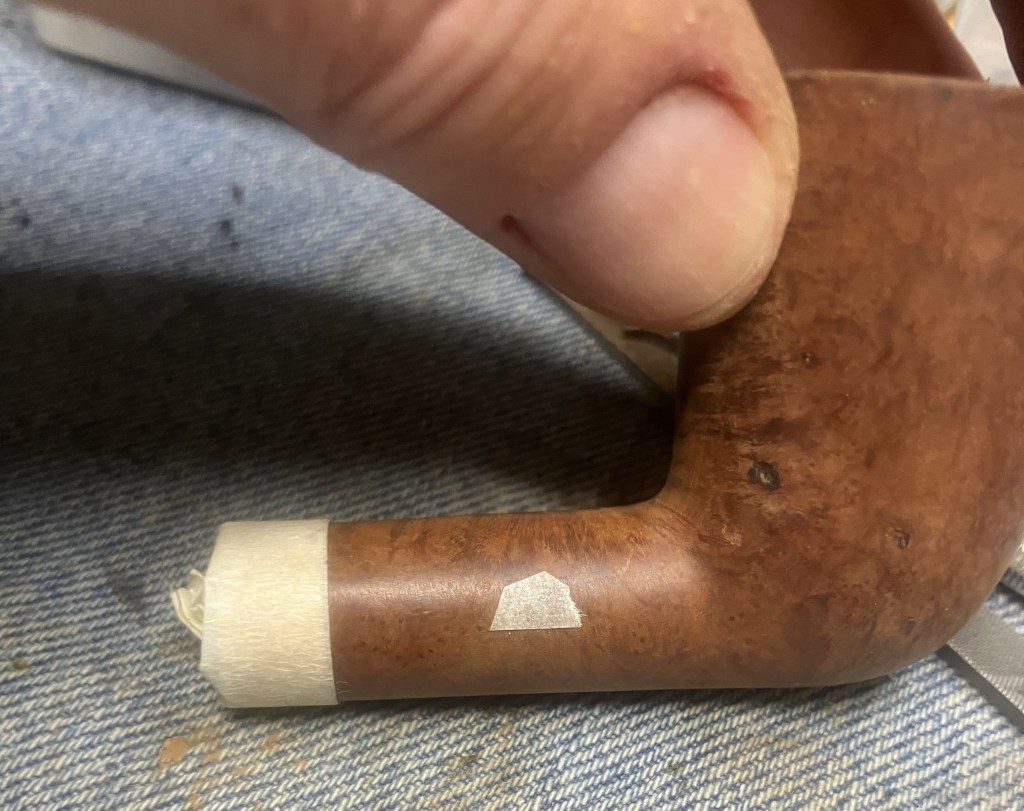
Using masking tape, I made a dam around the lip to contain the epoxy and keep it from flowing over the edges. The epoxy was mixed as per label instructions and applied to the lip both on top and bottom. The bait was set up level and allowed to cure for 24 hours.
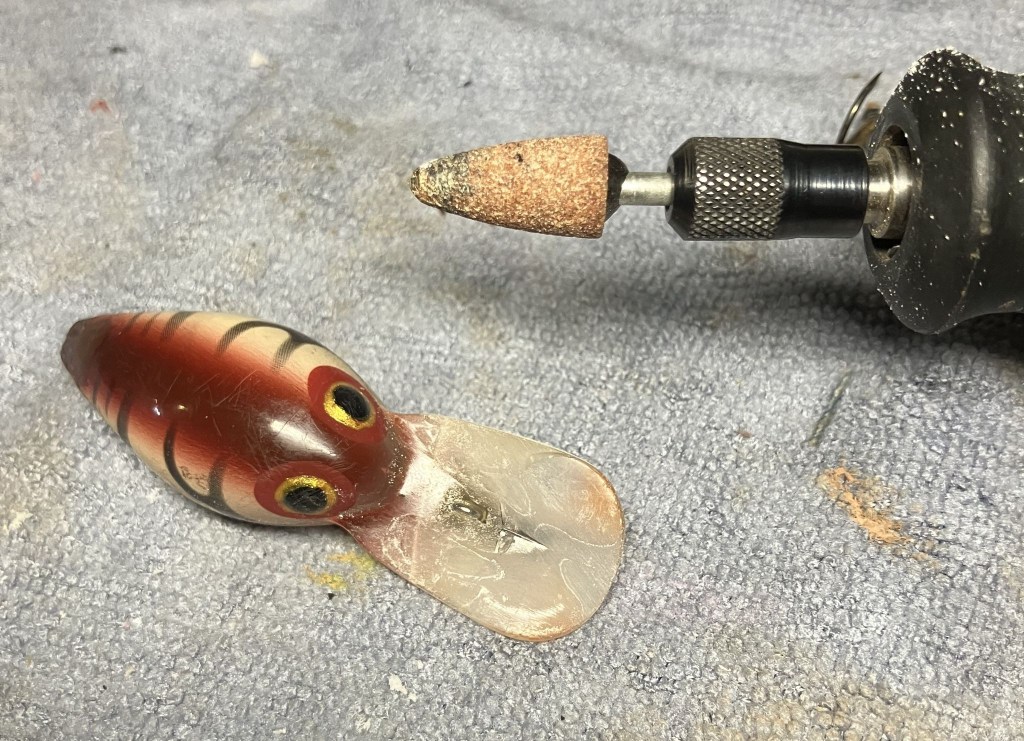
The next day the line tie was completely encased in hardened epoxy. Don’t worry, this was part of the intended thickening of the lip. A grinding bit was used in the Dremel to carve and reshape the hardened epoxy.
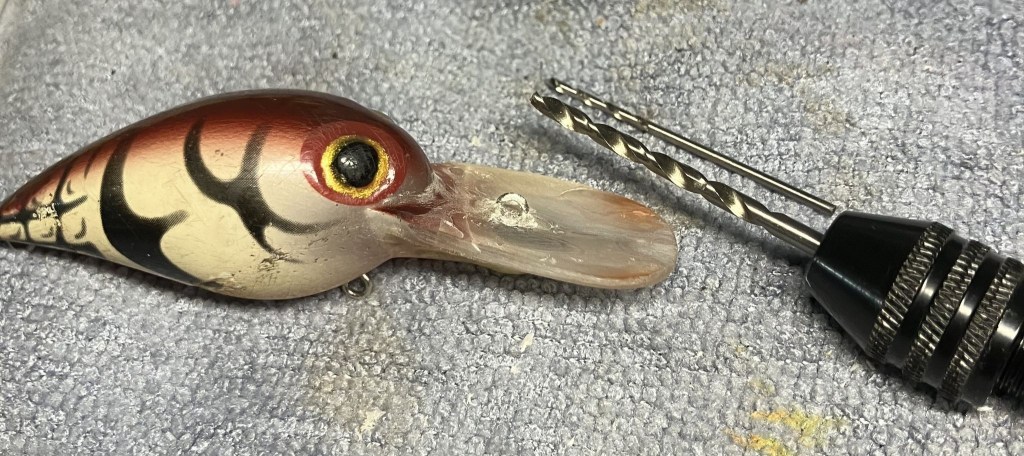
I used a hand drill with a couple of bits to drill out the epoxy from the line tie eye.
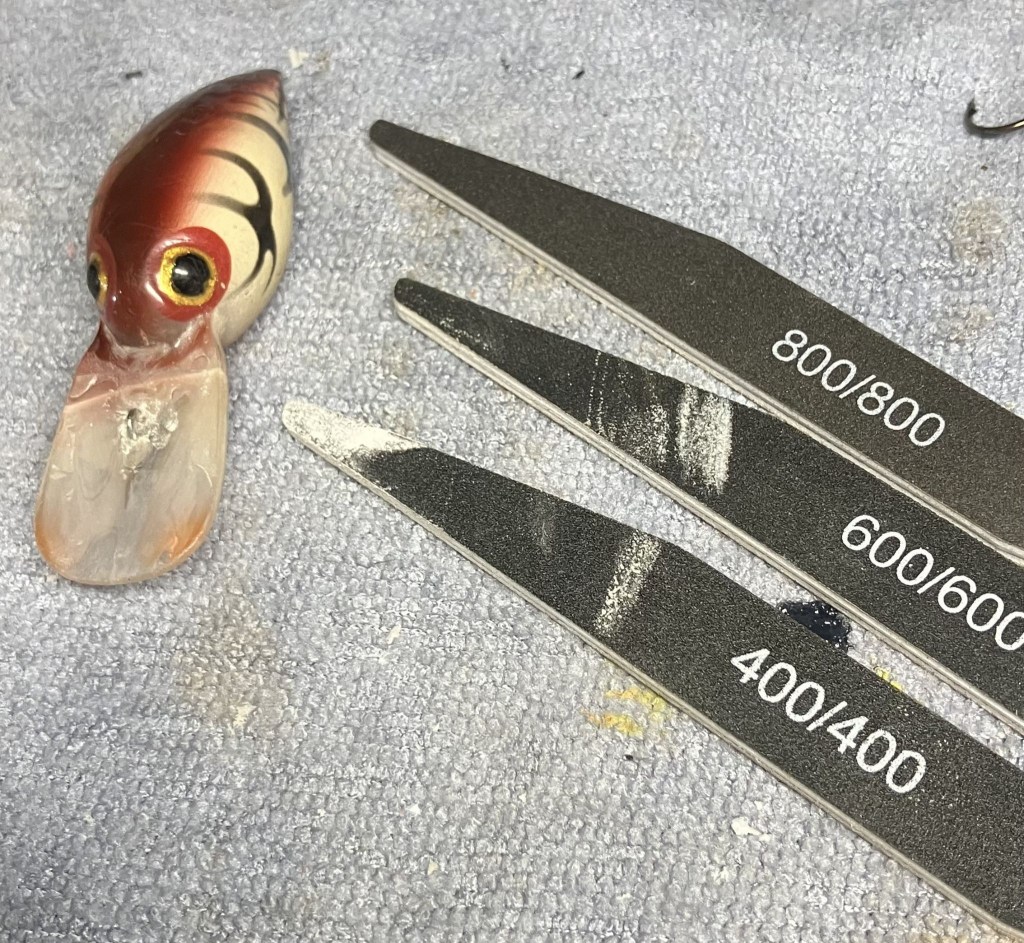
The epoxy was finish sanded and slightly shaped using sanding boards in 400-800 grit.
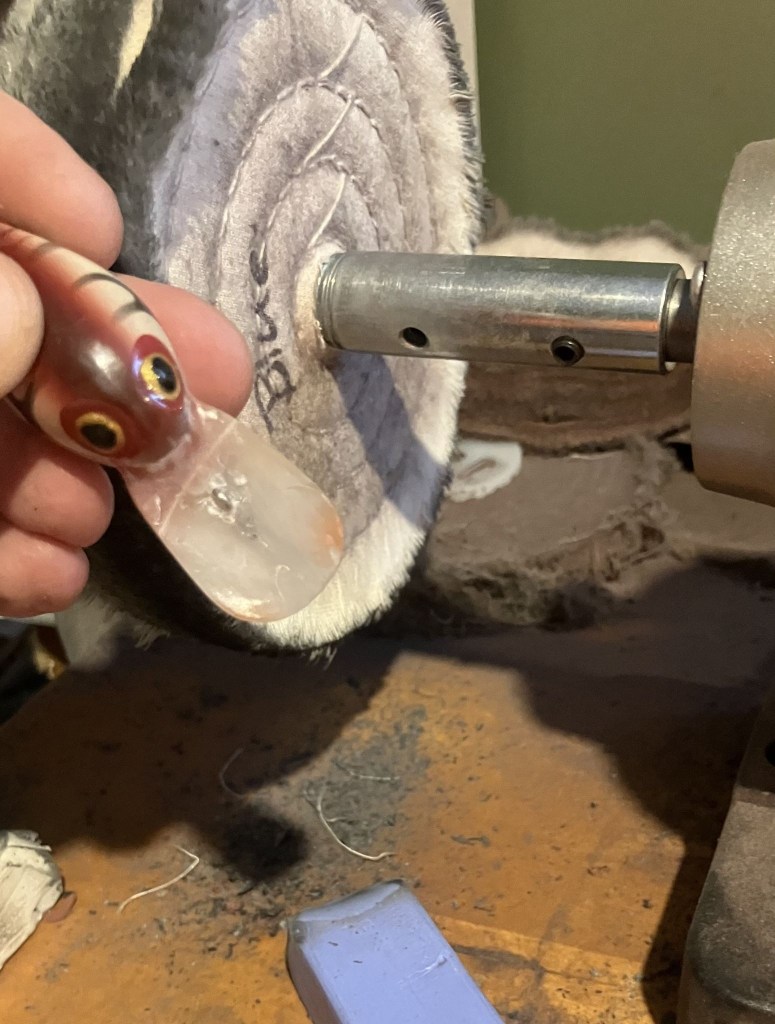
Once the epoxy was shaped to my satisfaction I buffed the bait with Blue Diamond compound on the buffing wheel. This is where protecting the new paint would have really been a good idea. The buffing kind of removed most of my beautiful color matching. DOH!
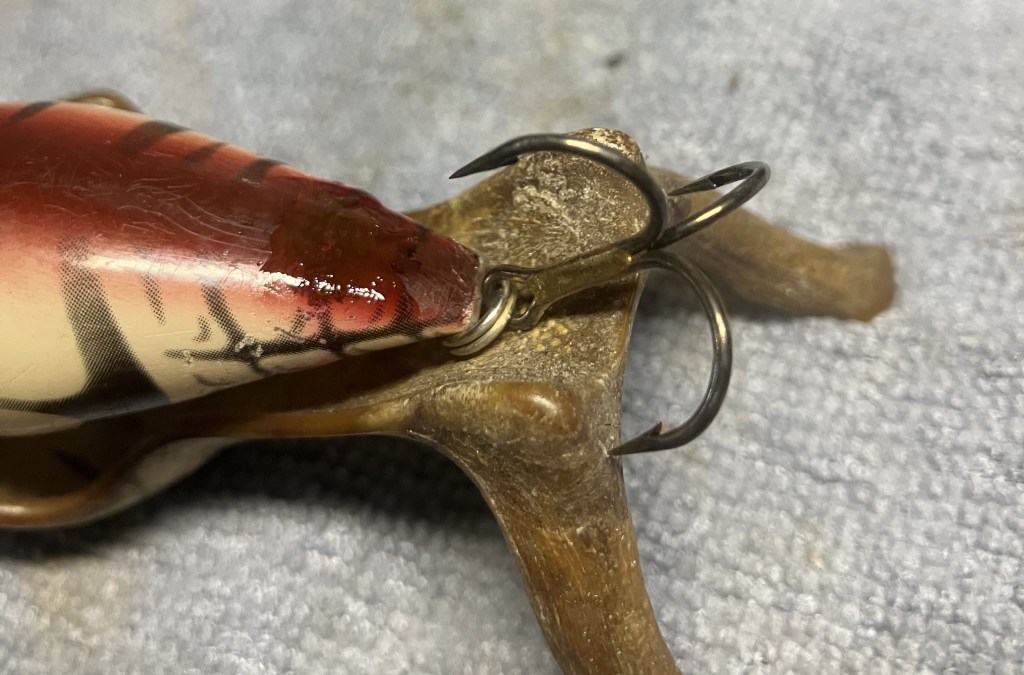
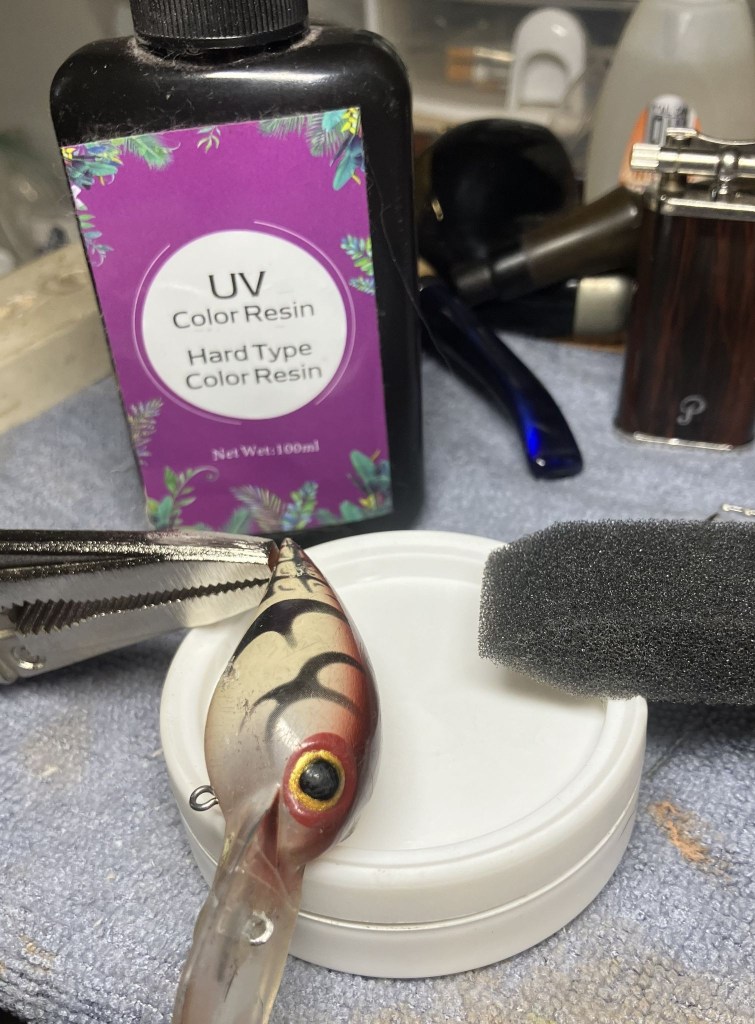
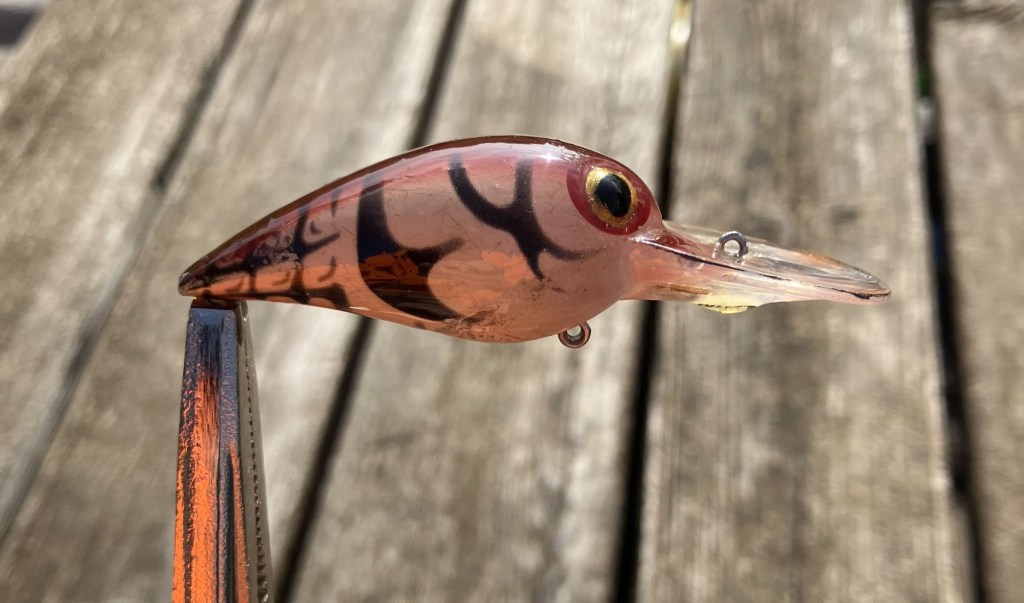
Chinese UV resin was applied to the bait and allowed to cure in sunlight for 20 minutes. After the first coat a second coat was added and allowed to cure for another 30 minutes.
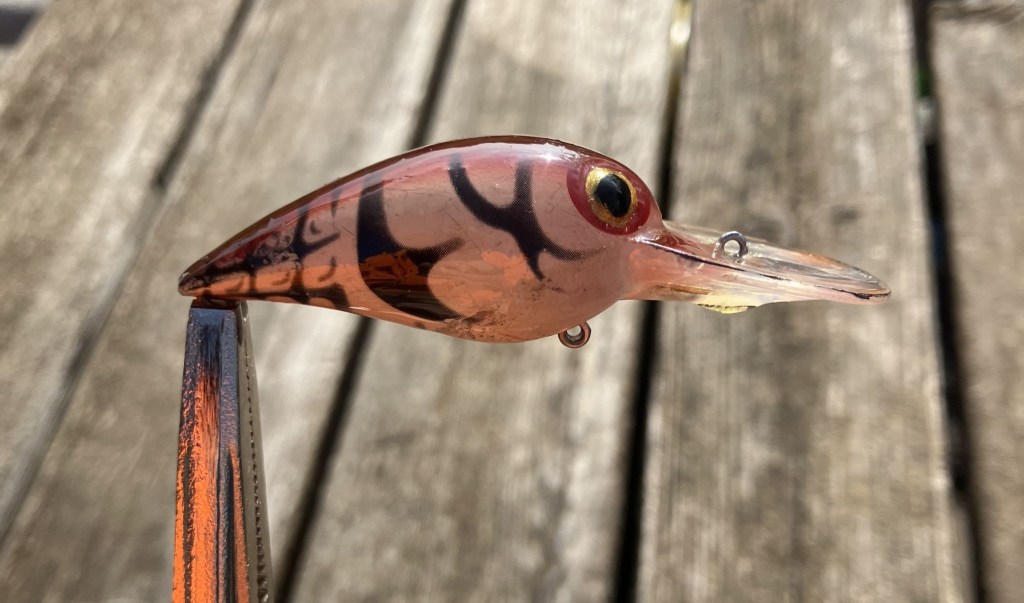
Below is the bait as it was being set in the sun for Chinese UV resin curing.
The hardware was reattached and the bait returned to Matt. Here is the point where you ask, “Didn’t you sharpen all the hooks for him?” Heck no, he is always catching more fish than me anyway.
I do hope that you have found something useful or at least entertaining in this “not-a-pipe” restoration. Feel free to like, comment and/or subscribe. The next blogs will most likely be a return to pipe restorations but you never know.
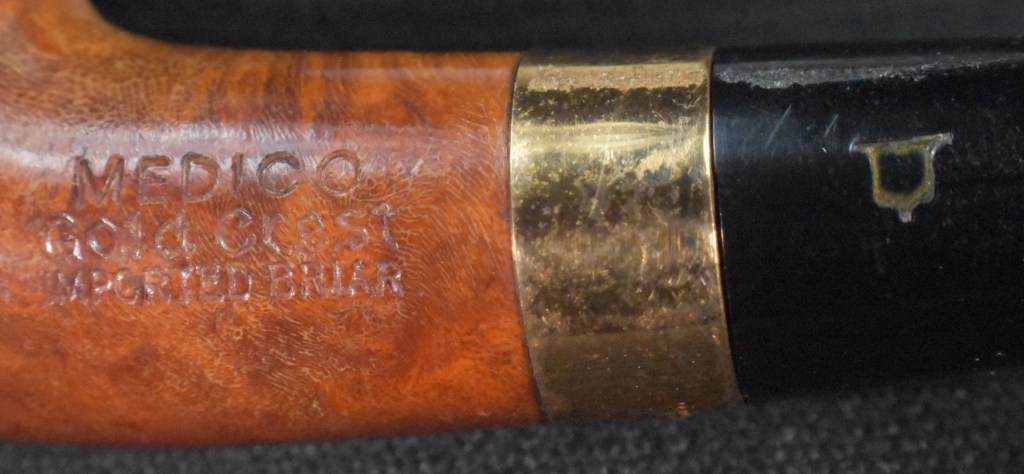
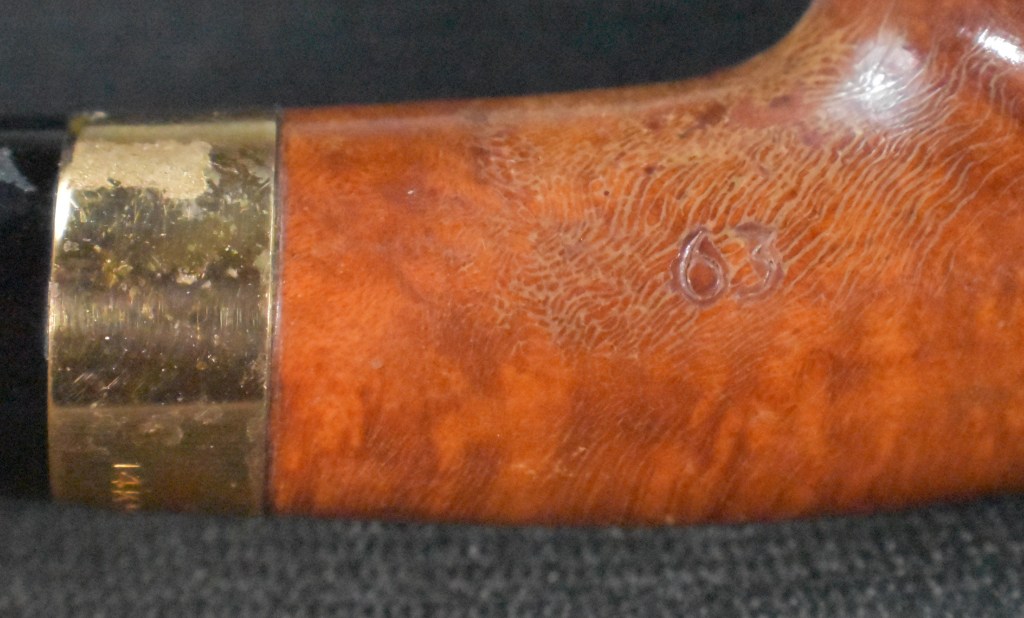
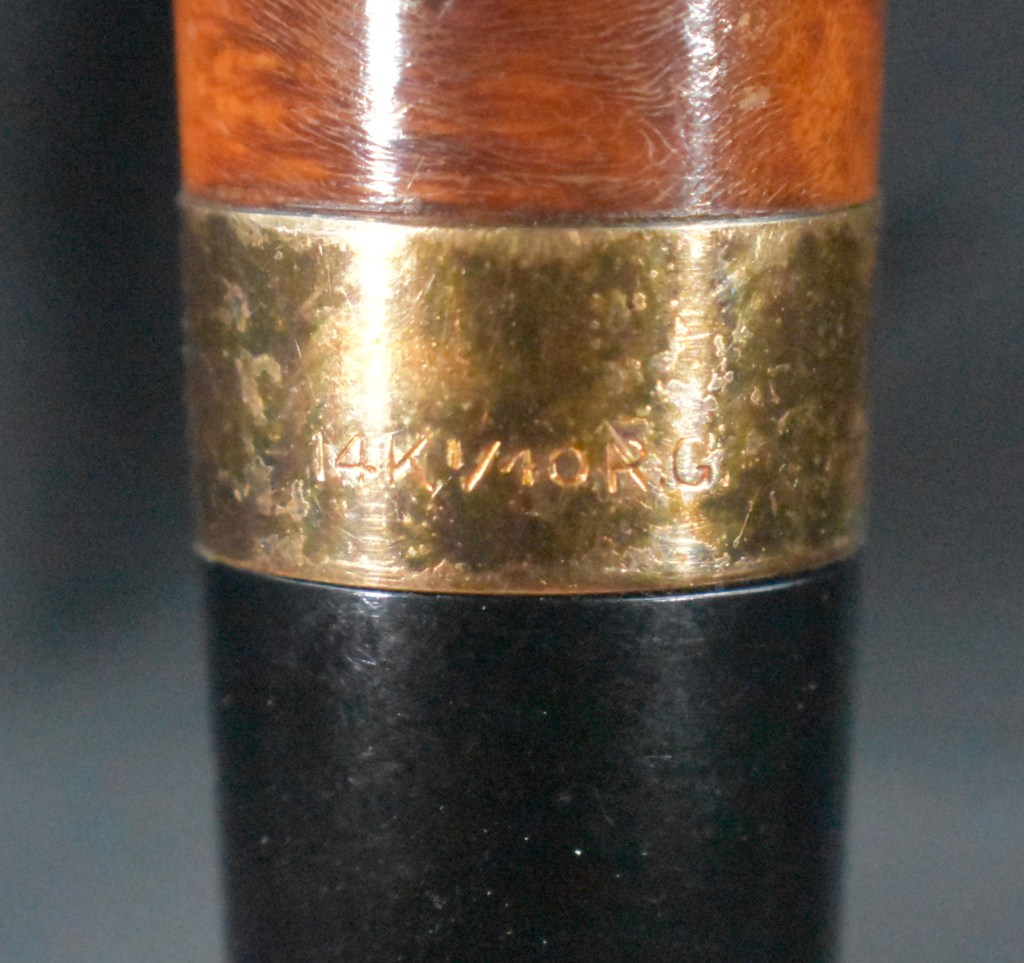
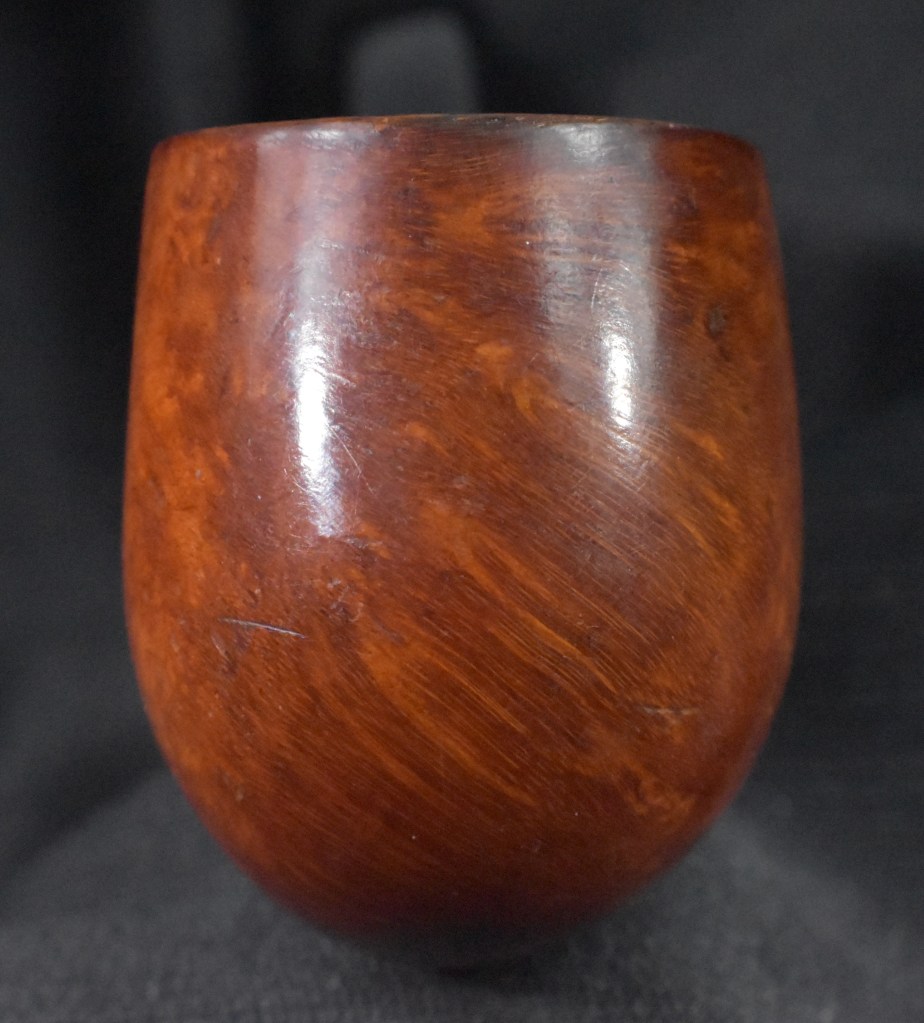
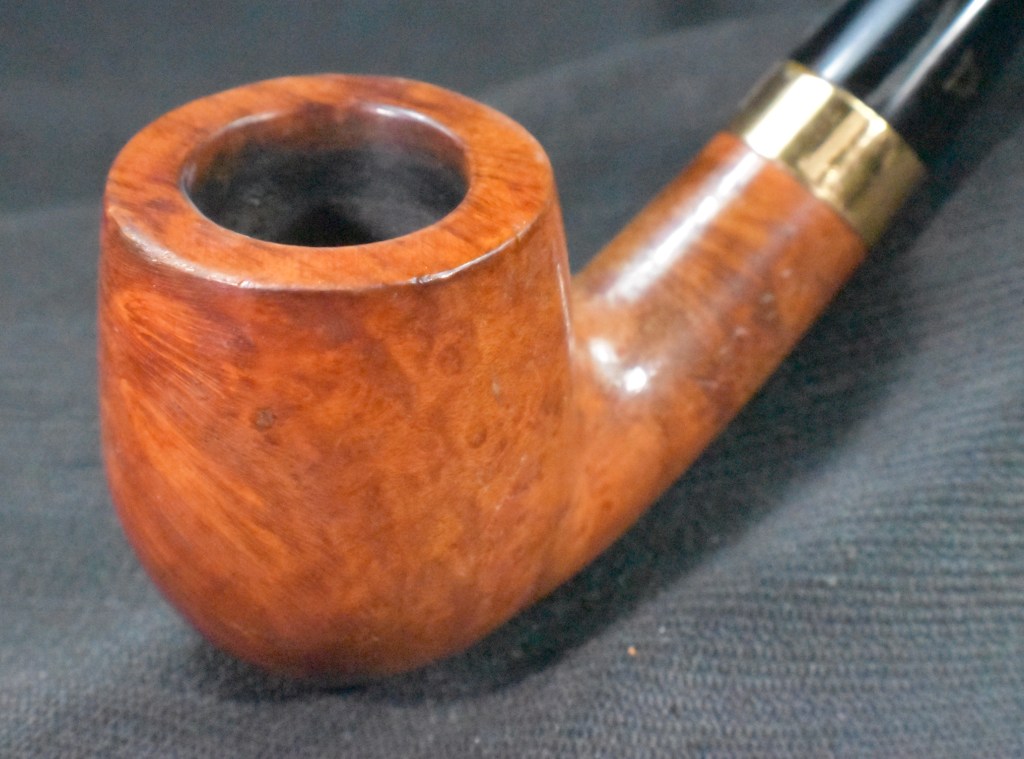
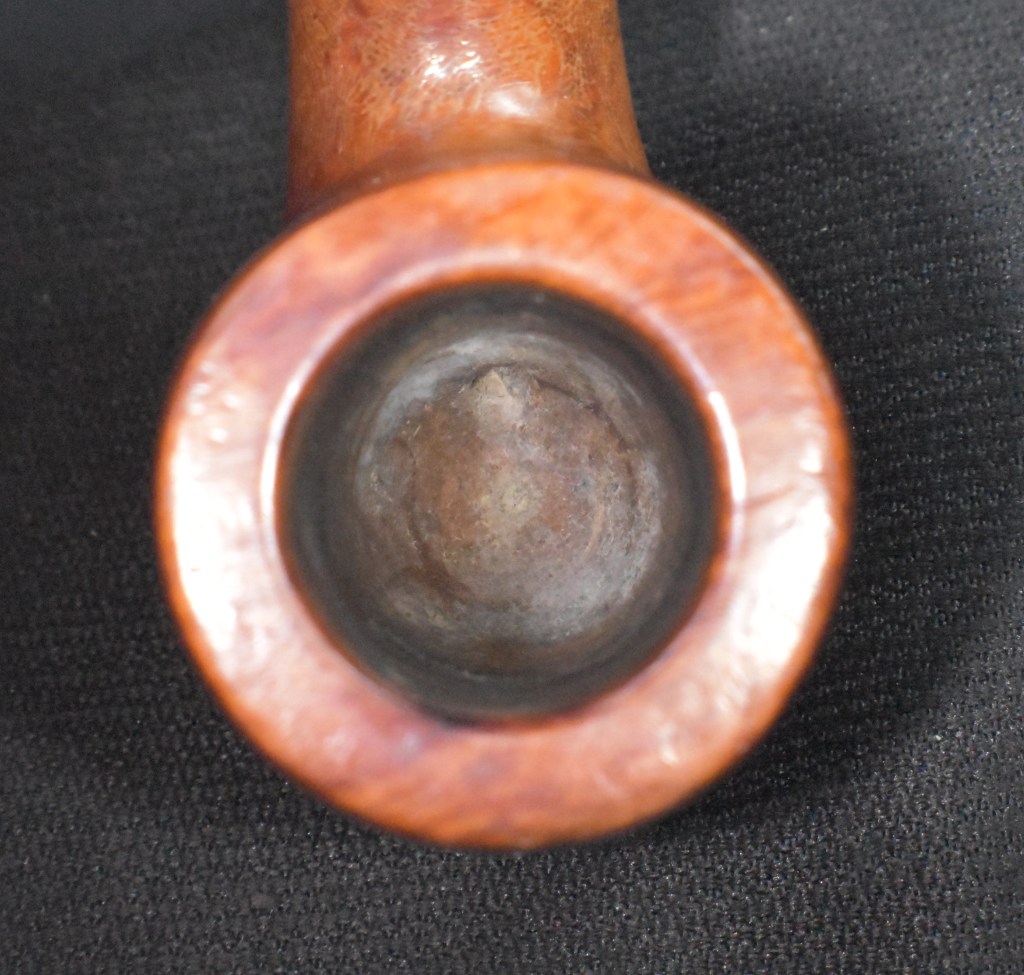
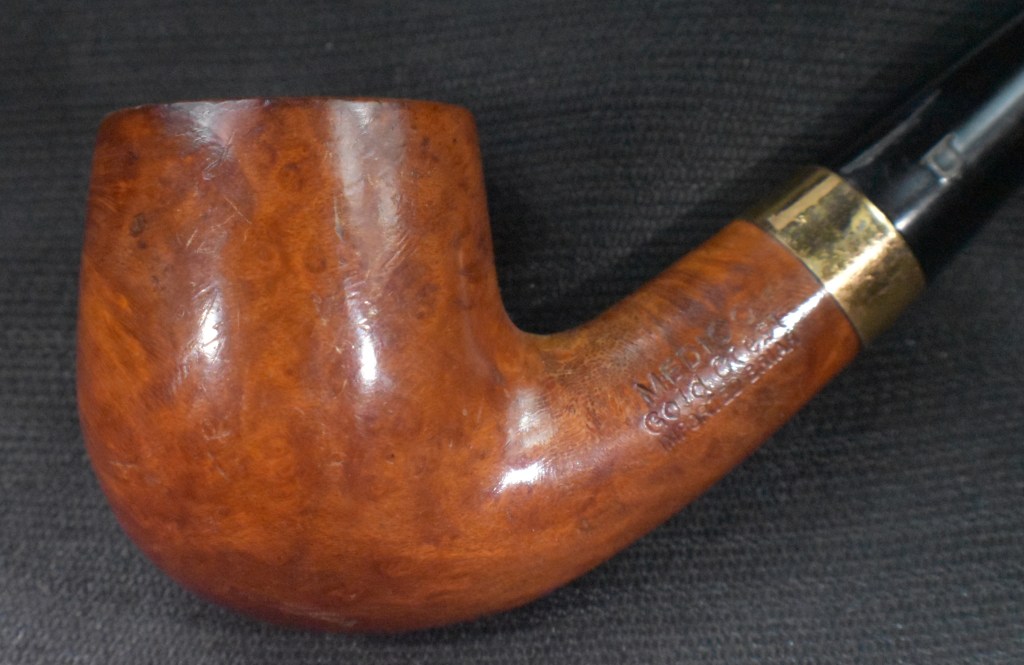
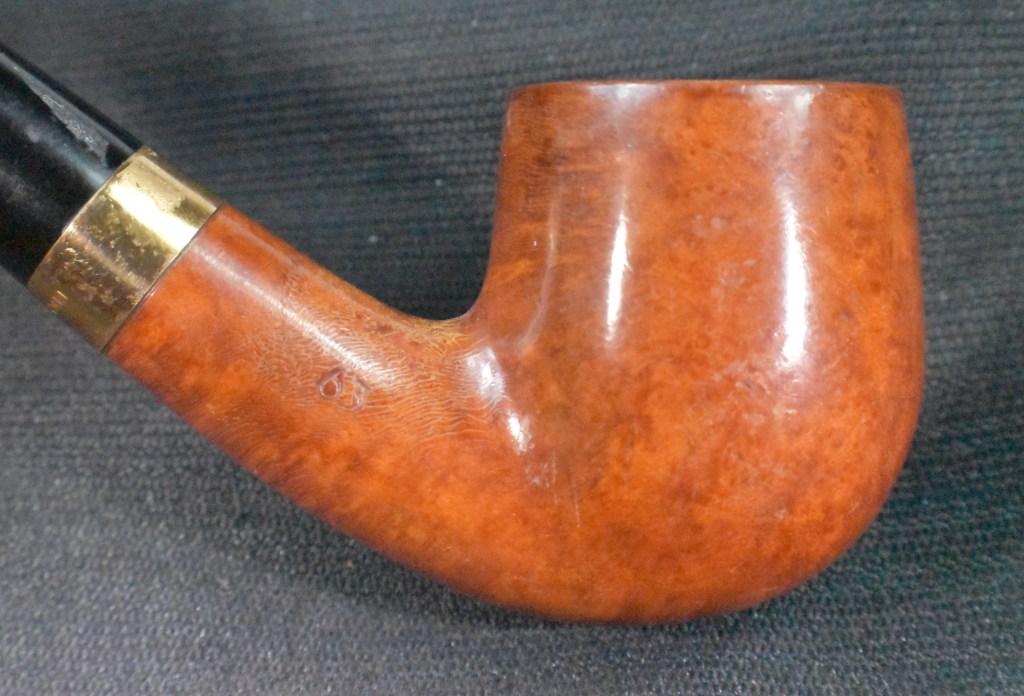
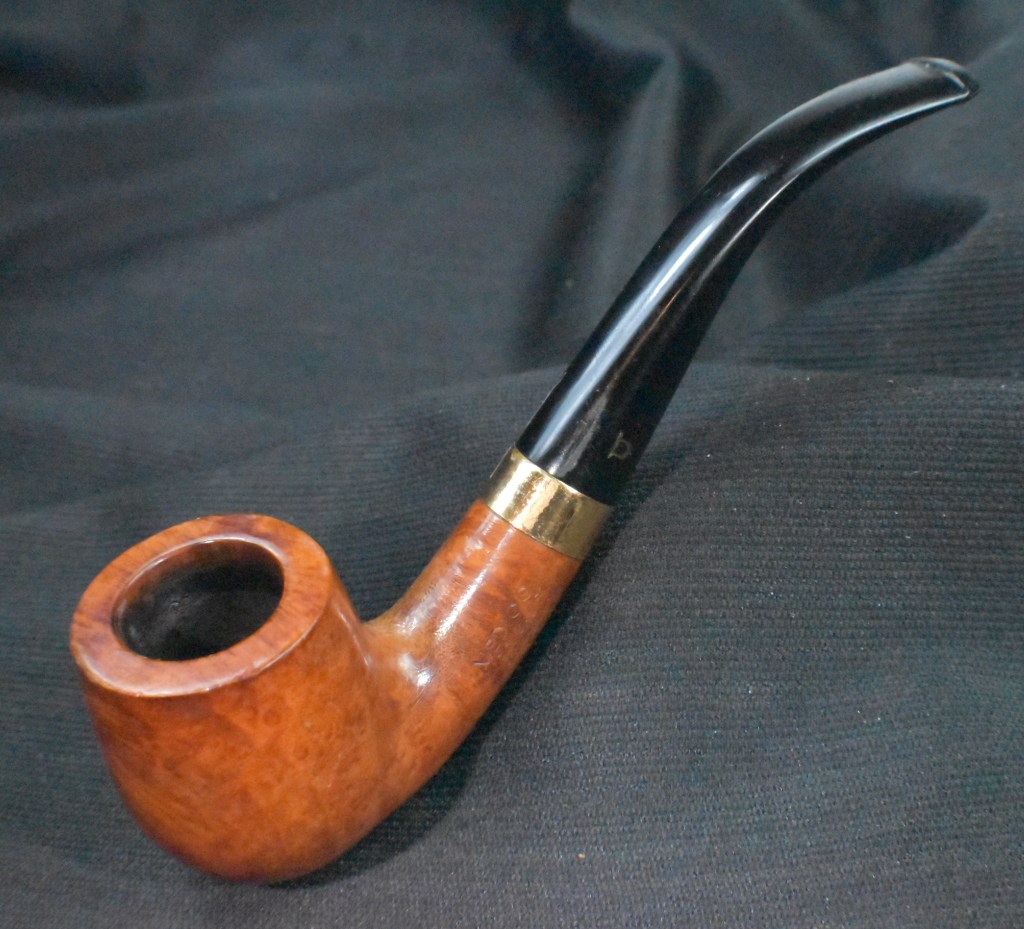
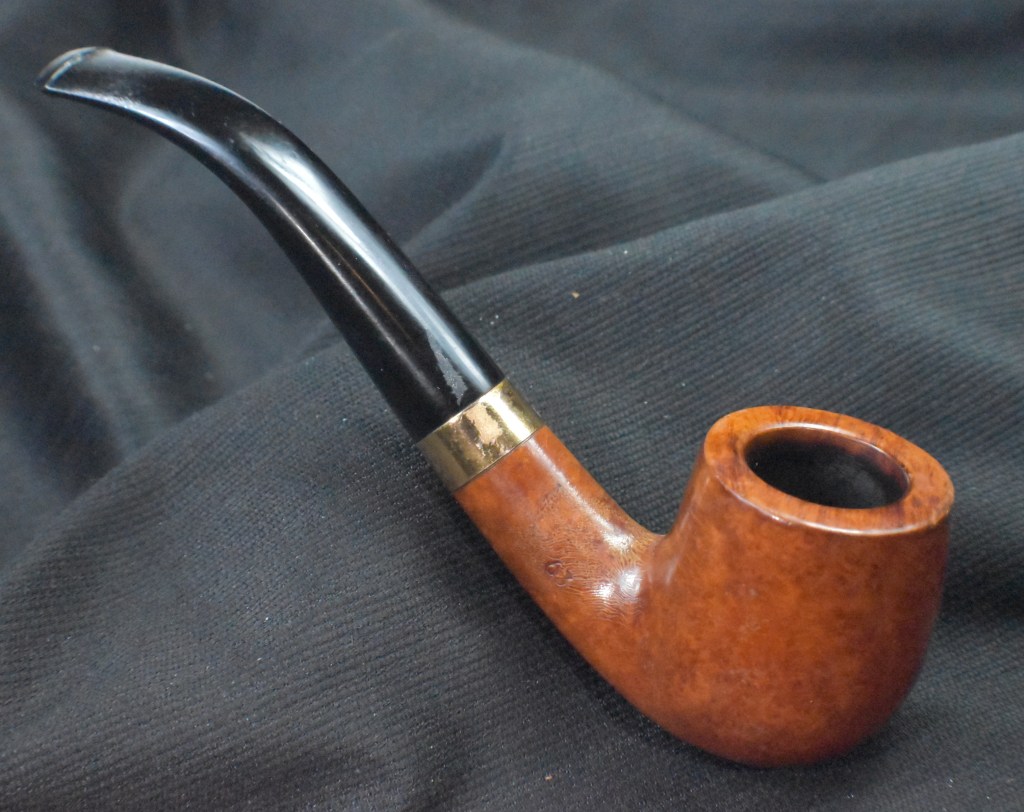
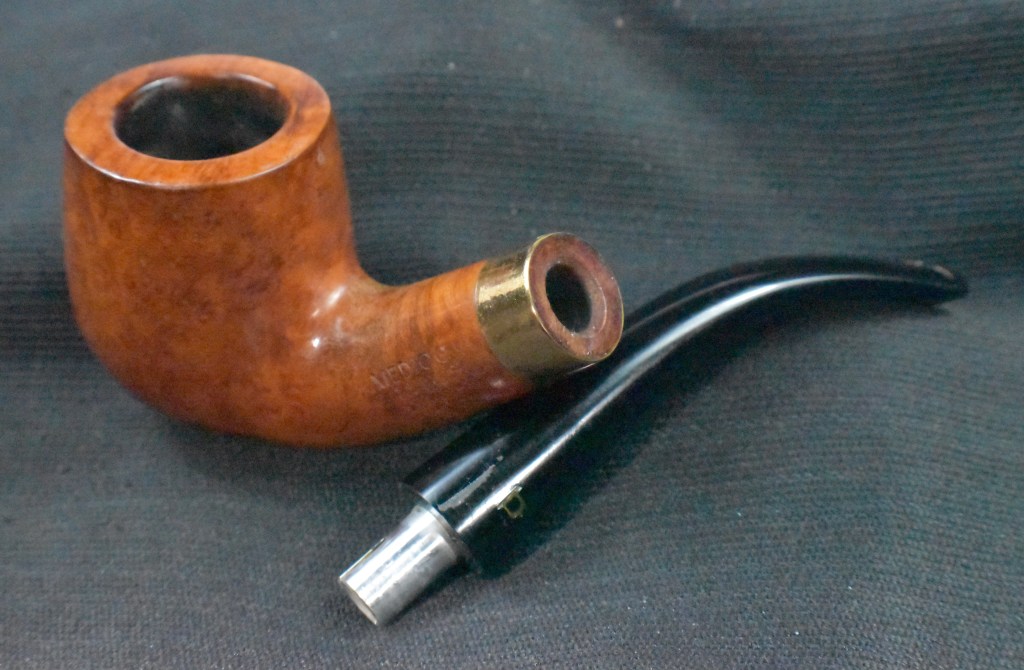
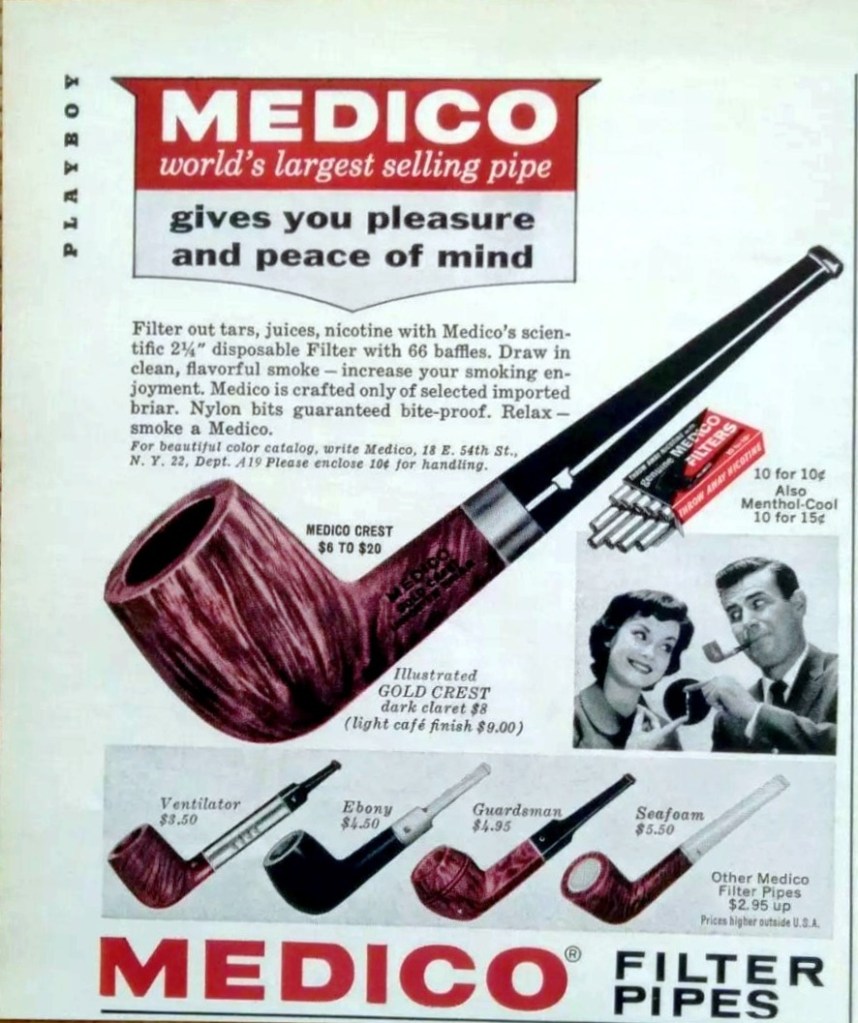
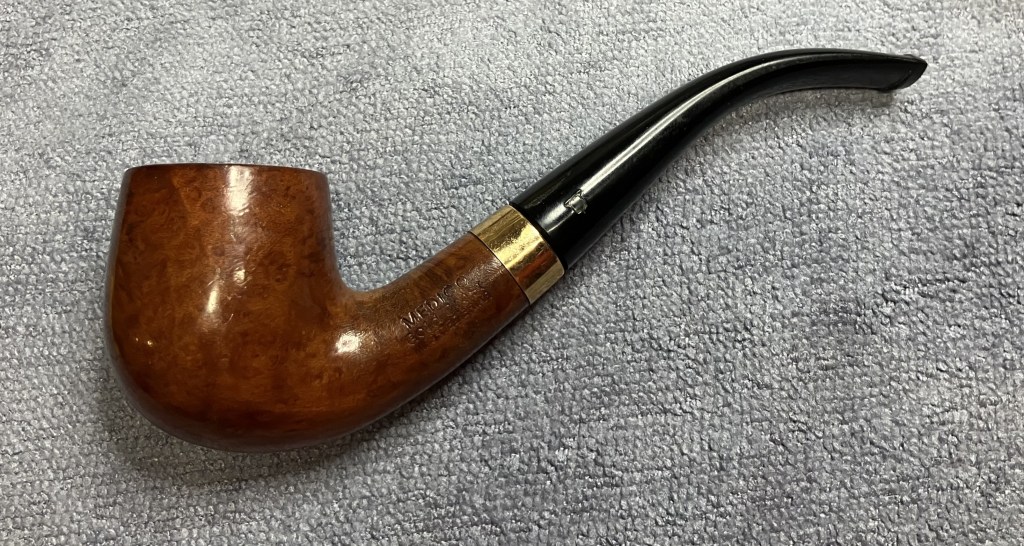
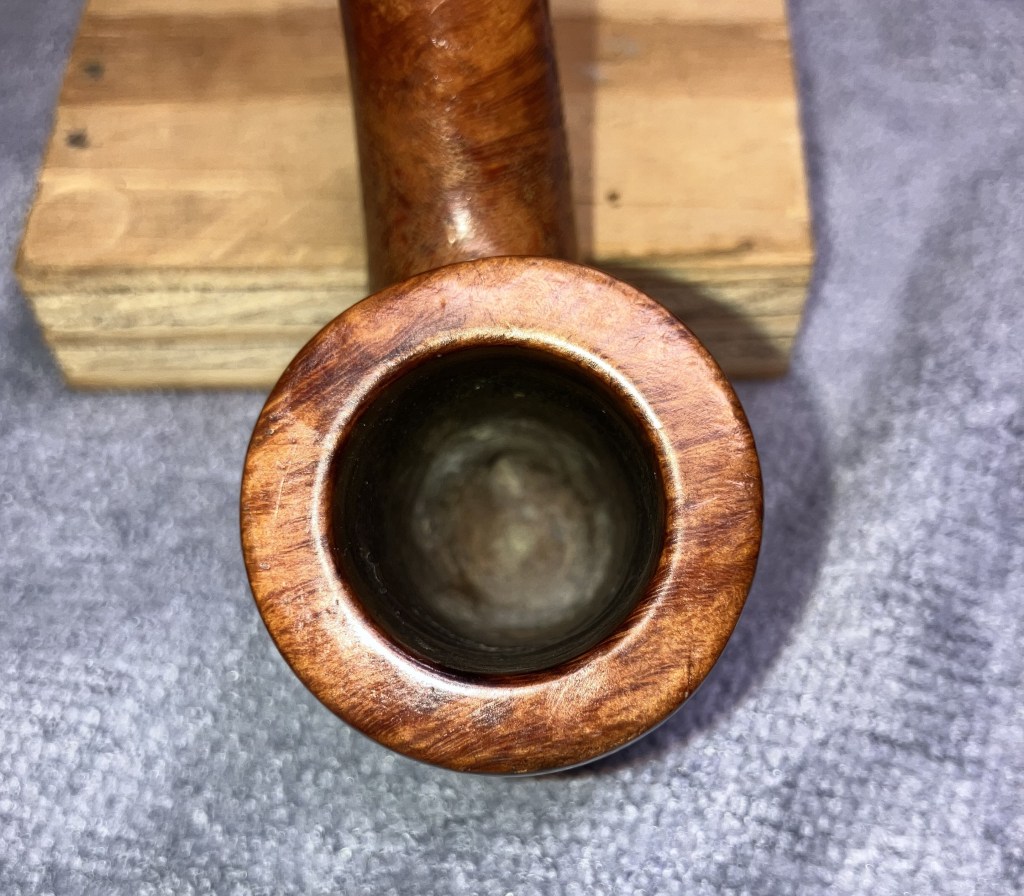
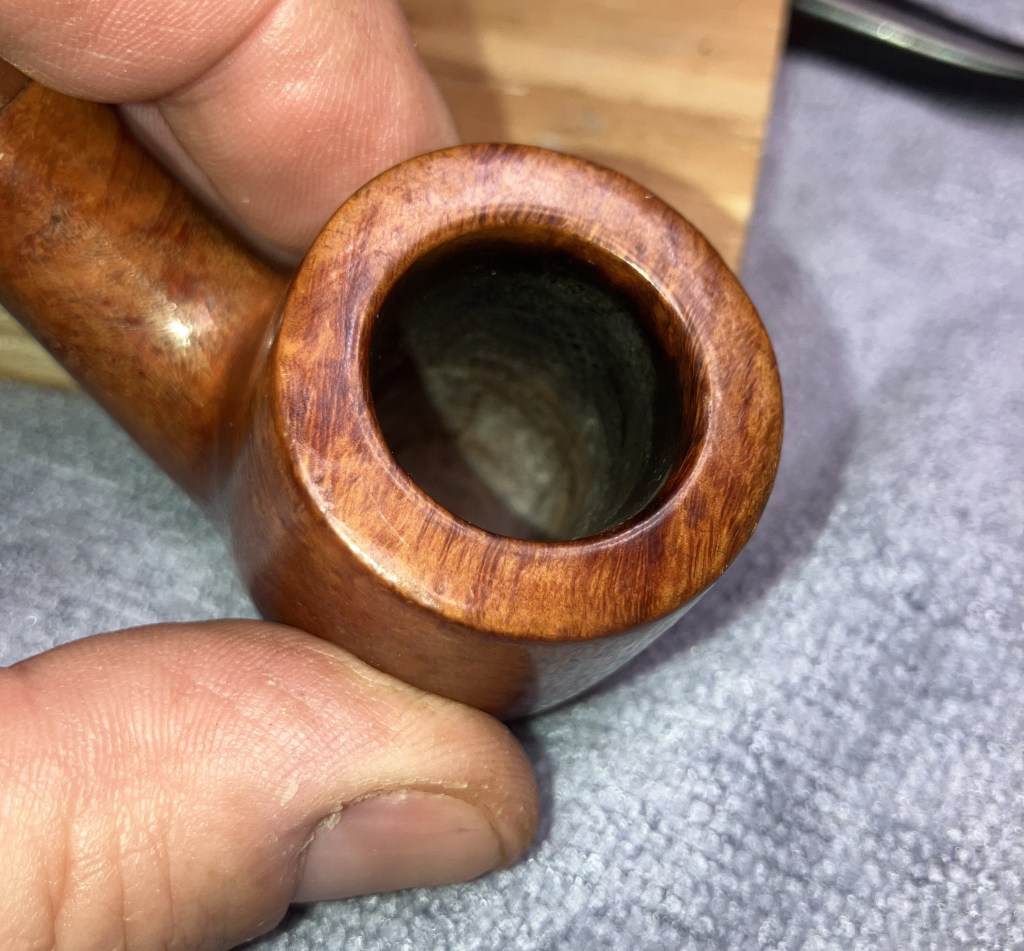
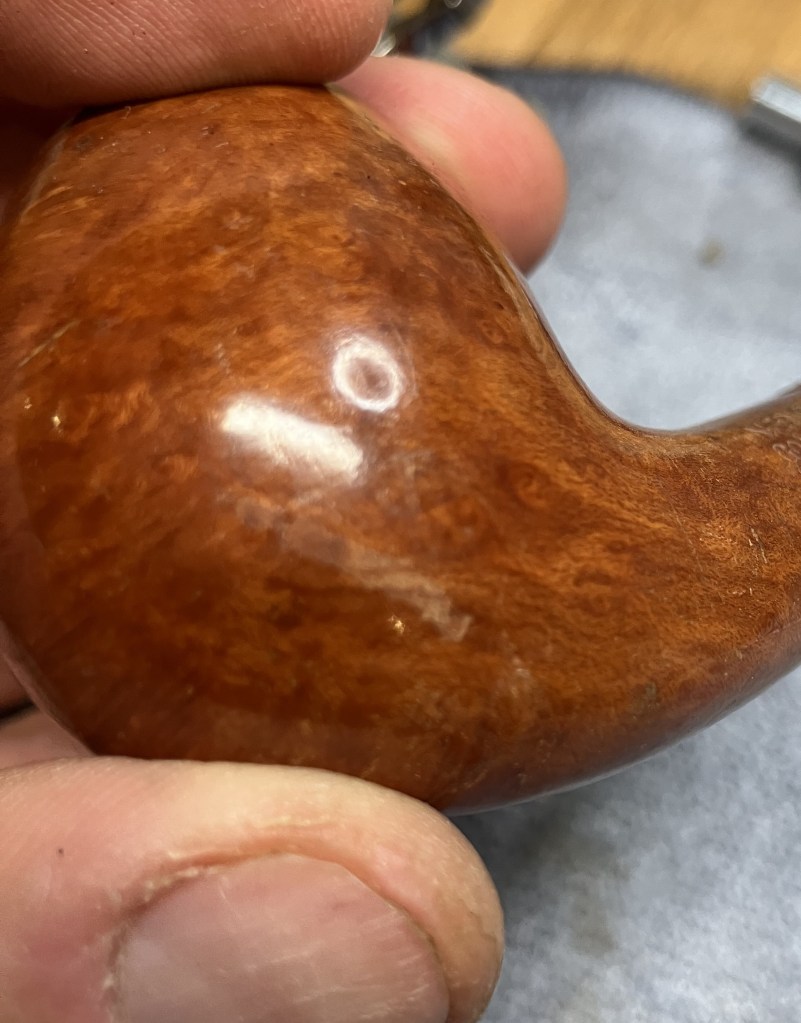
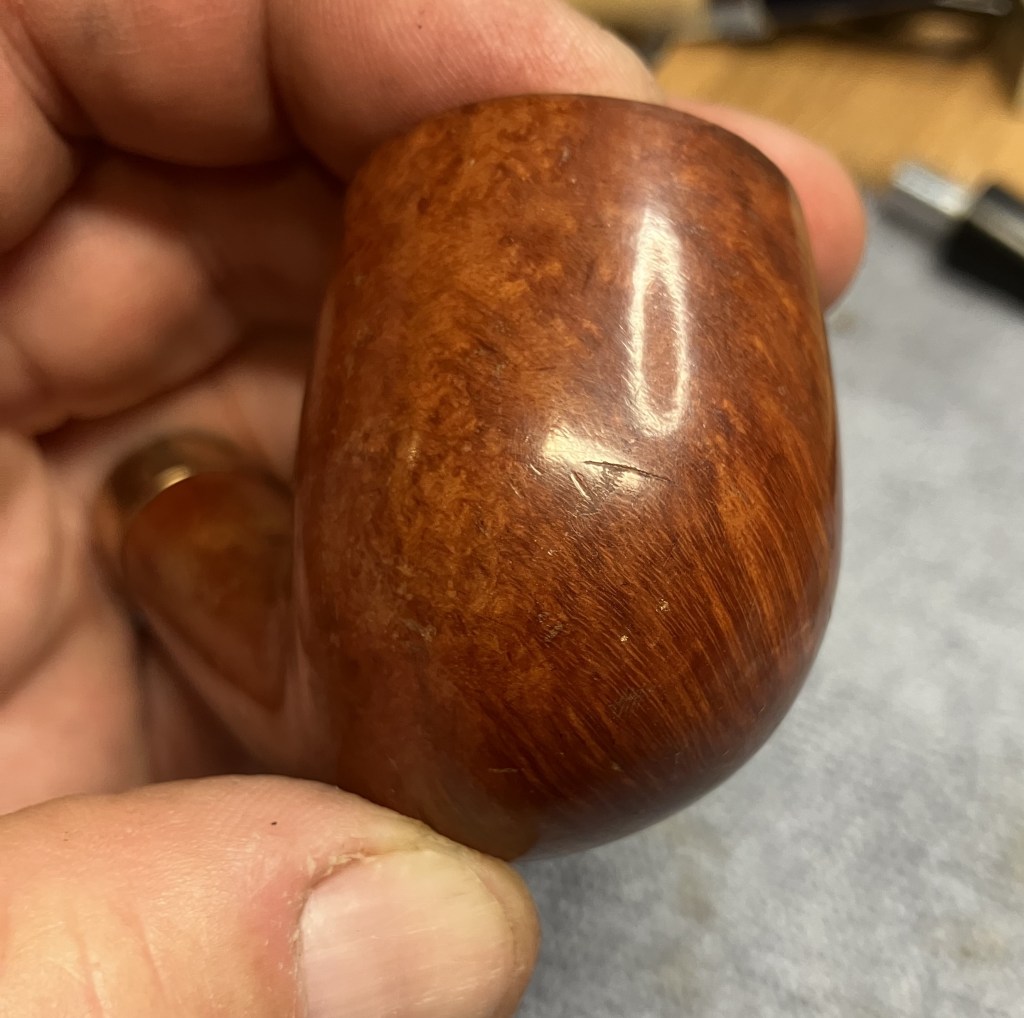
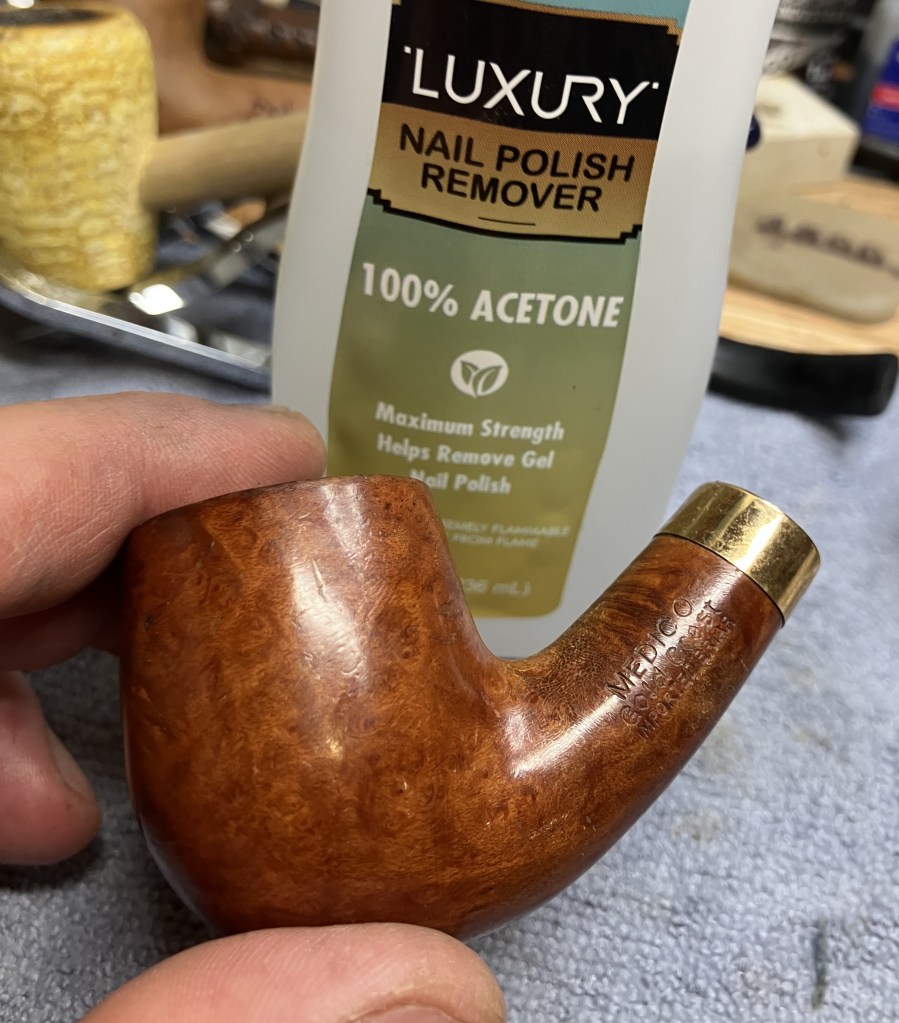
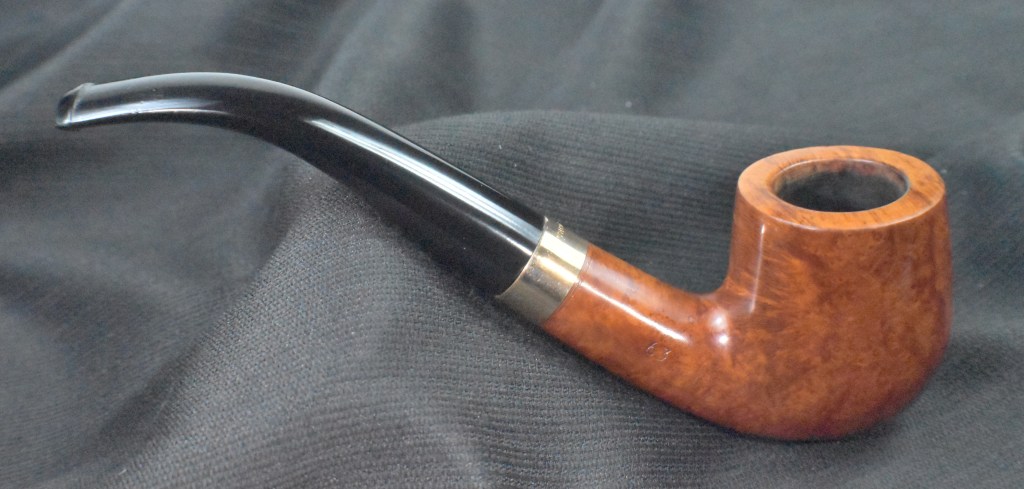
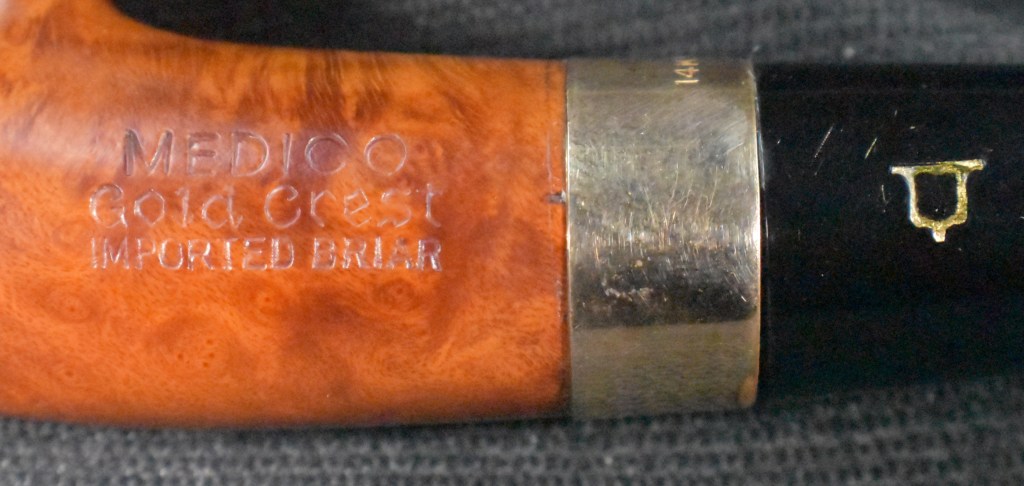
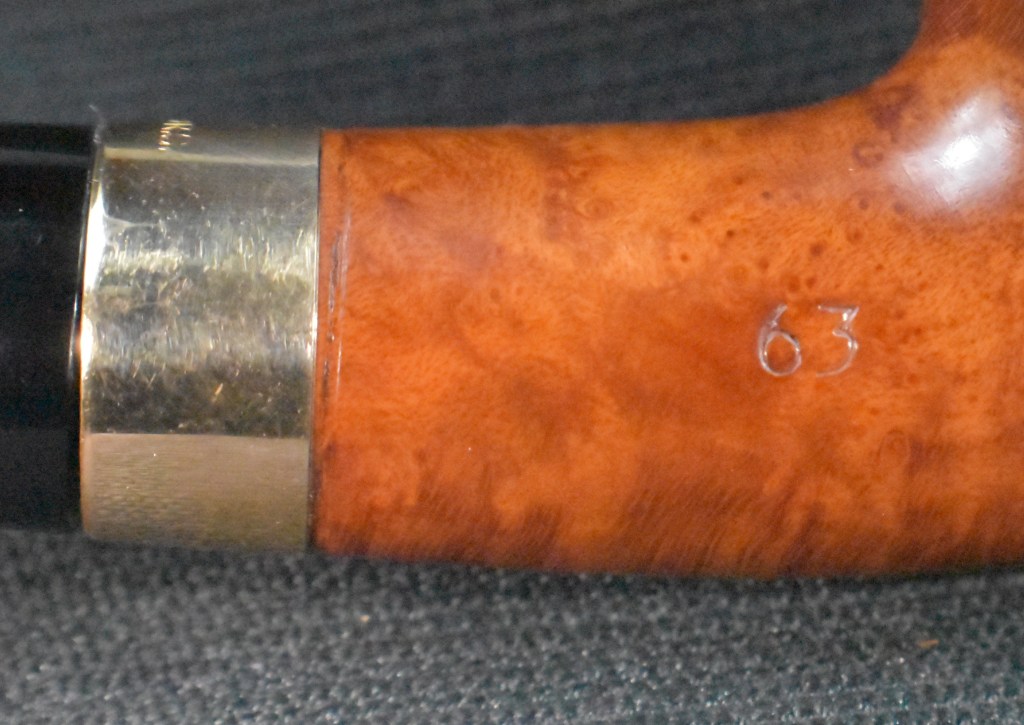
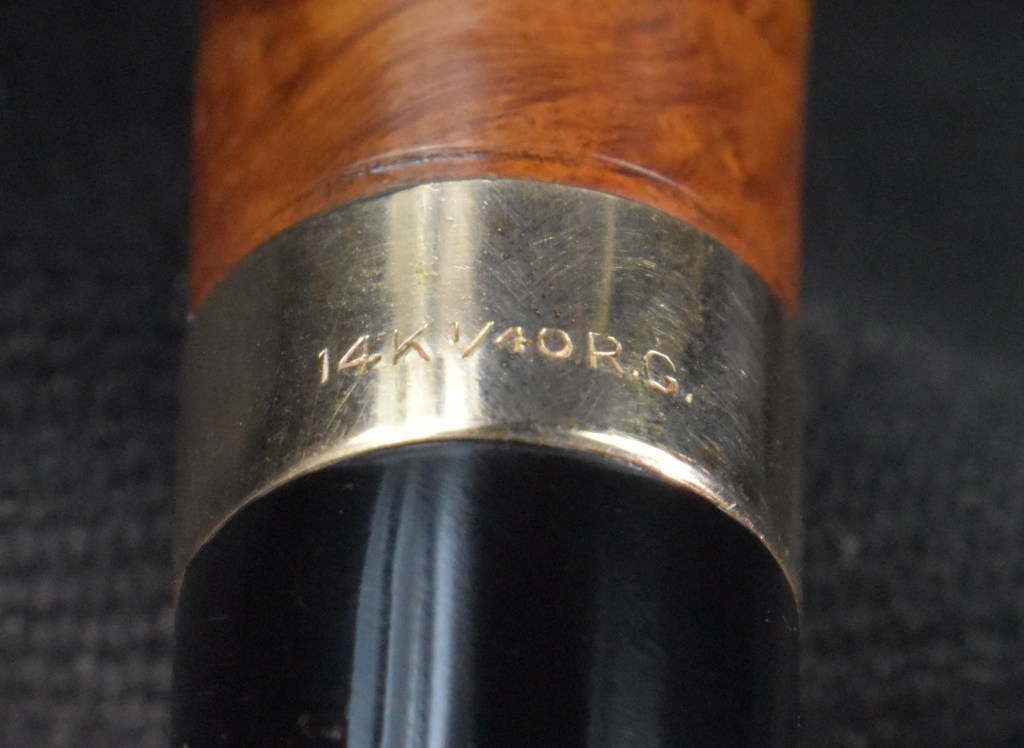
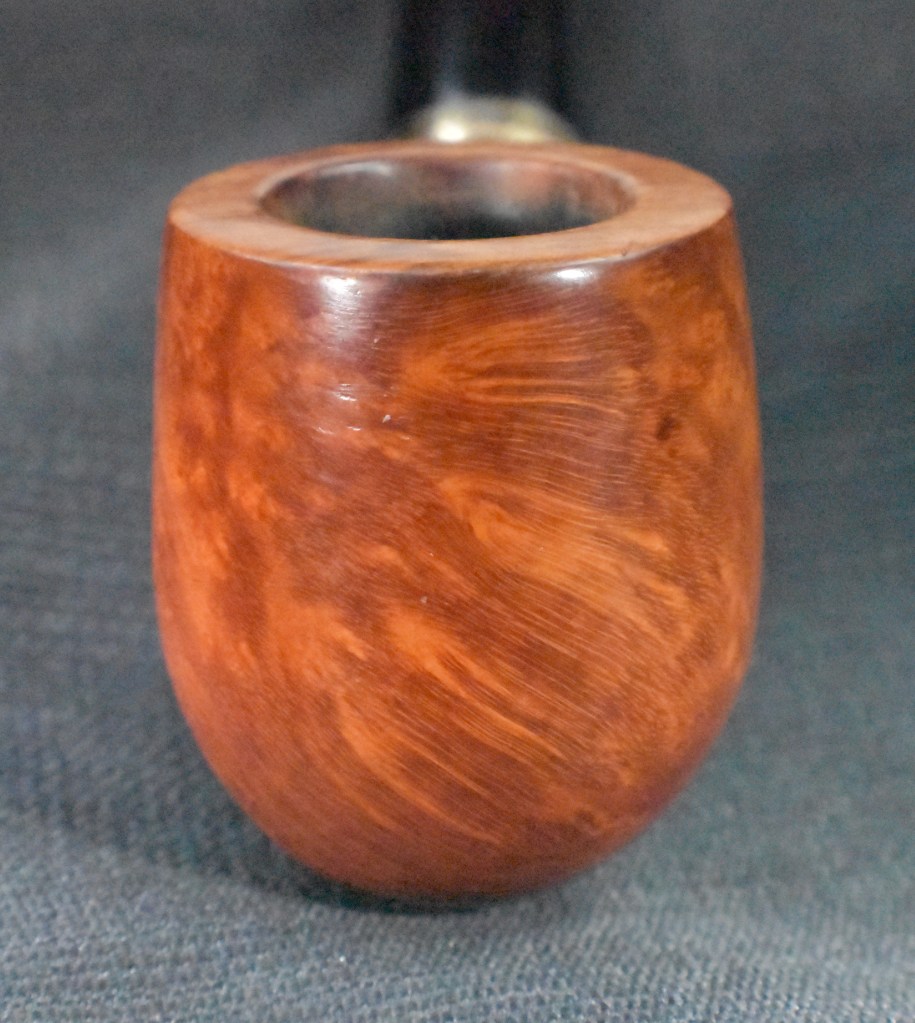
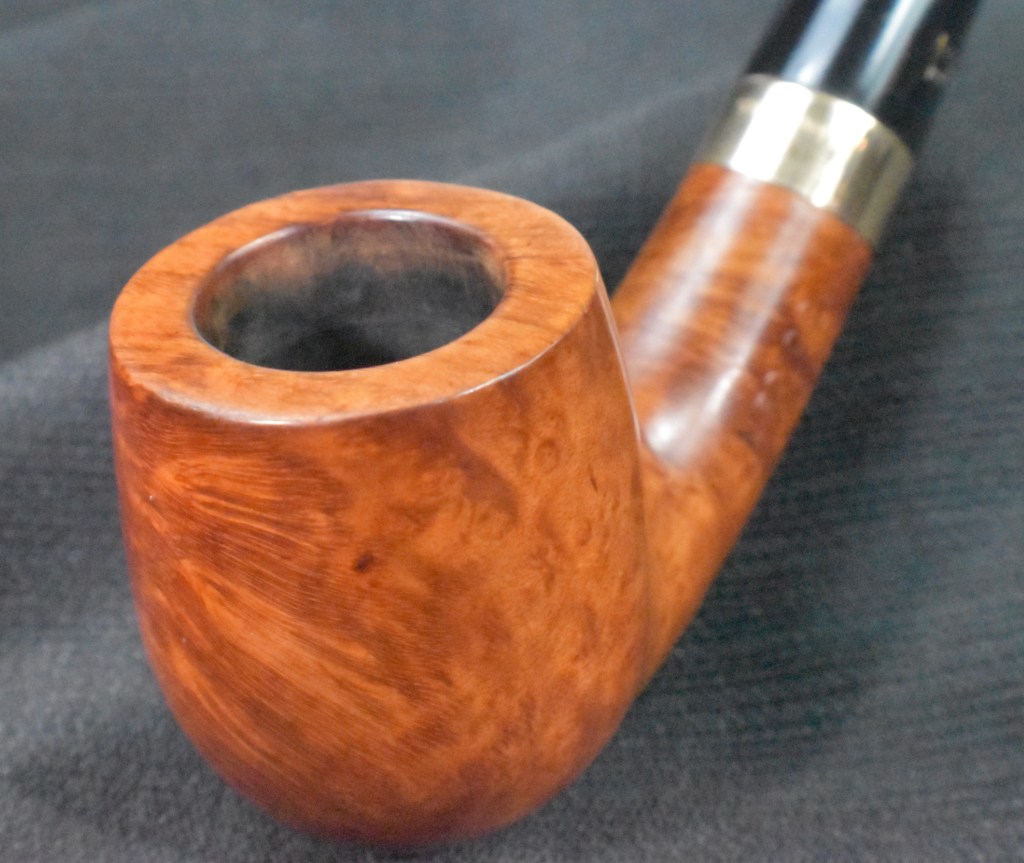
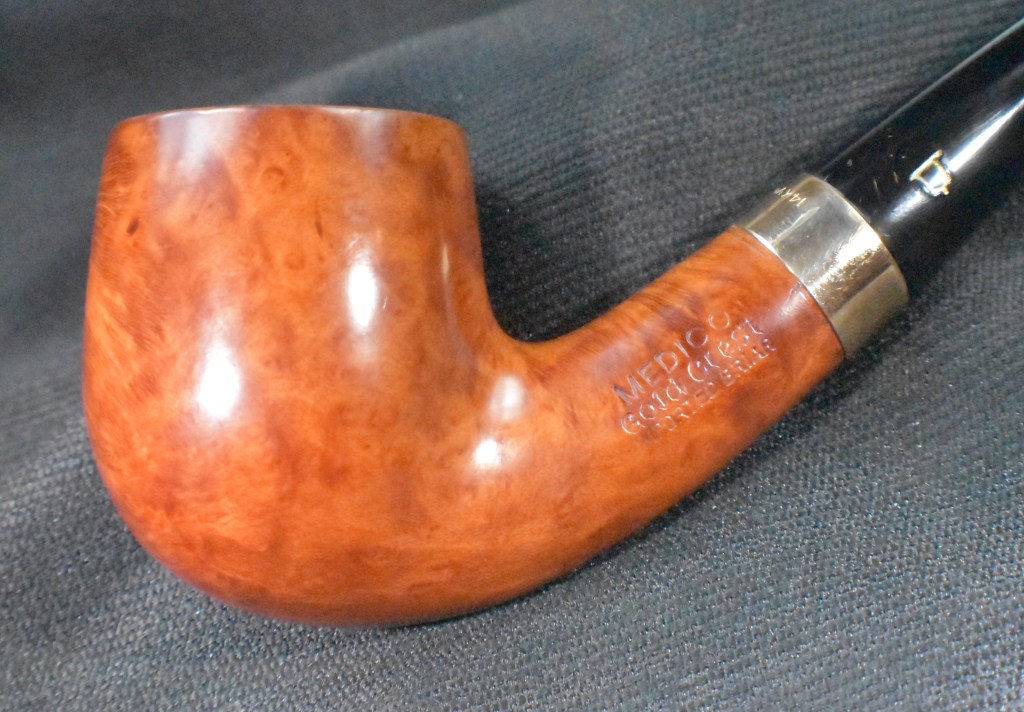
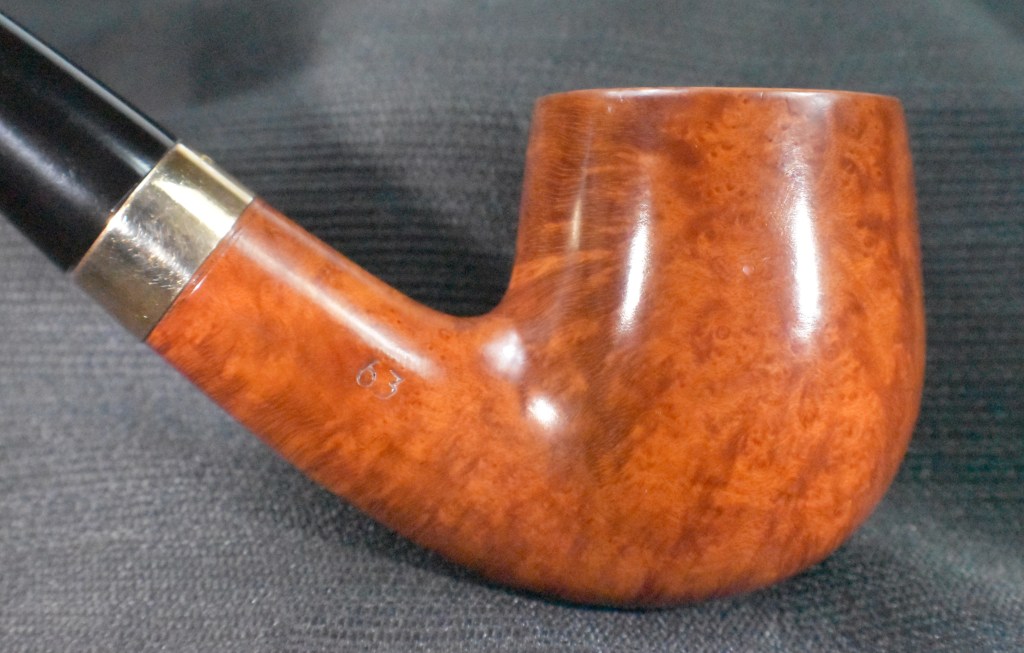
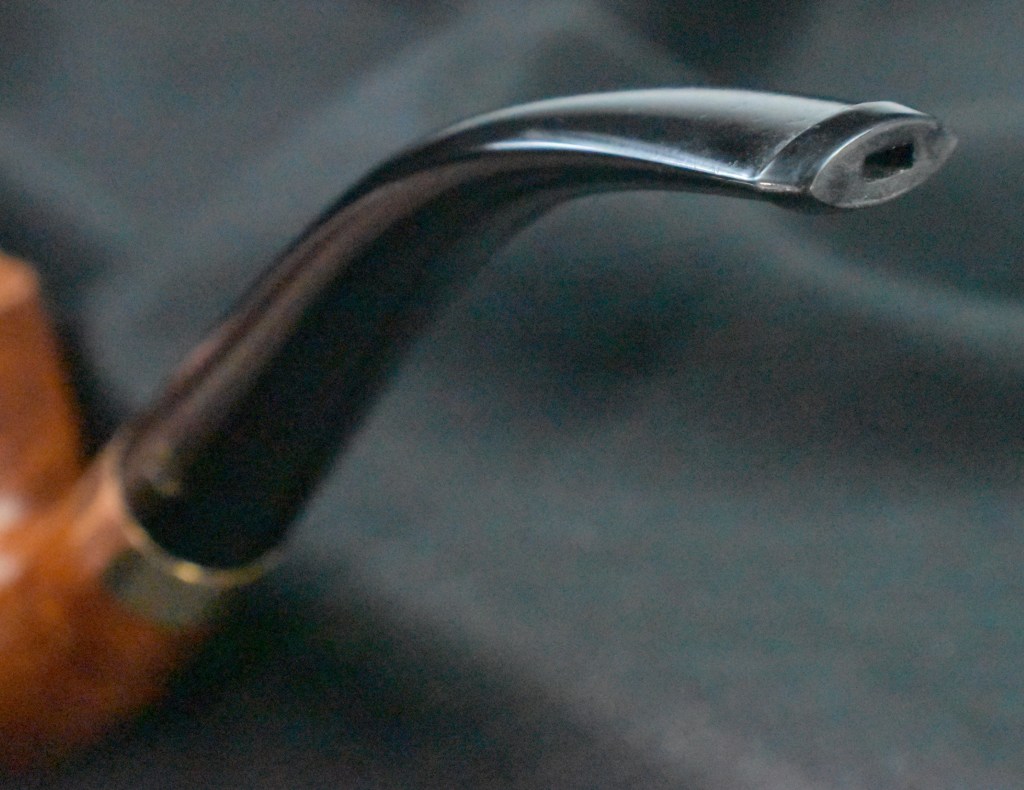
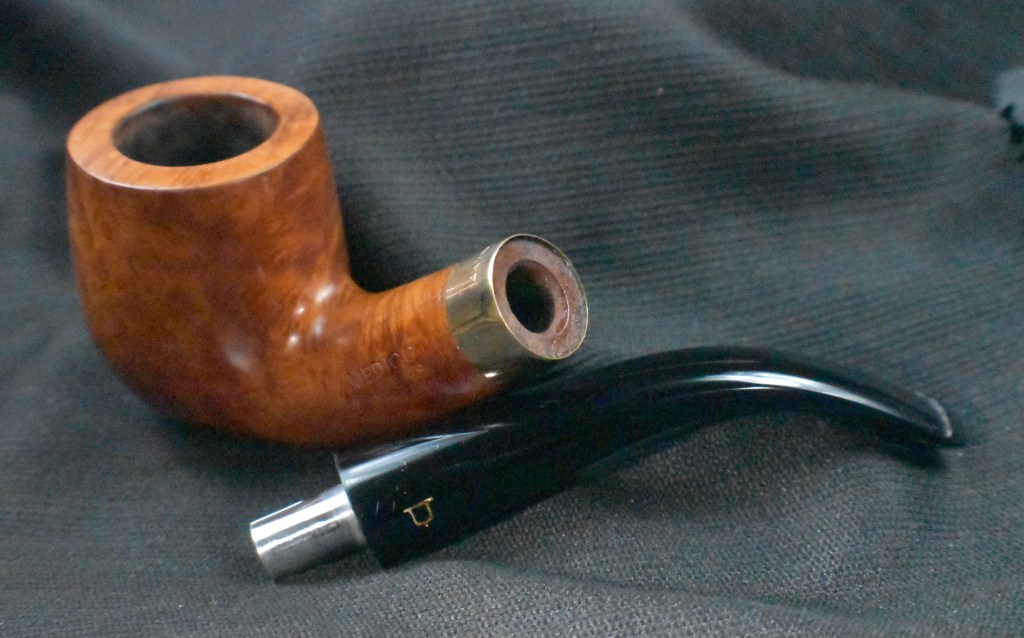
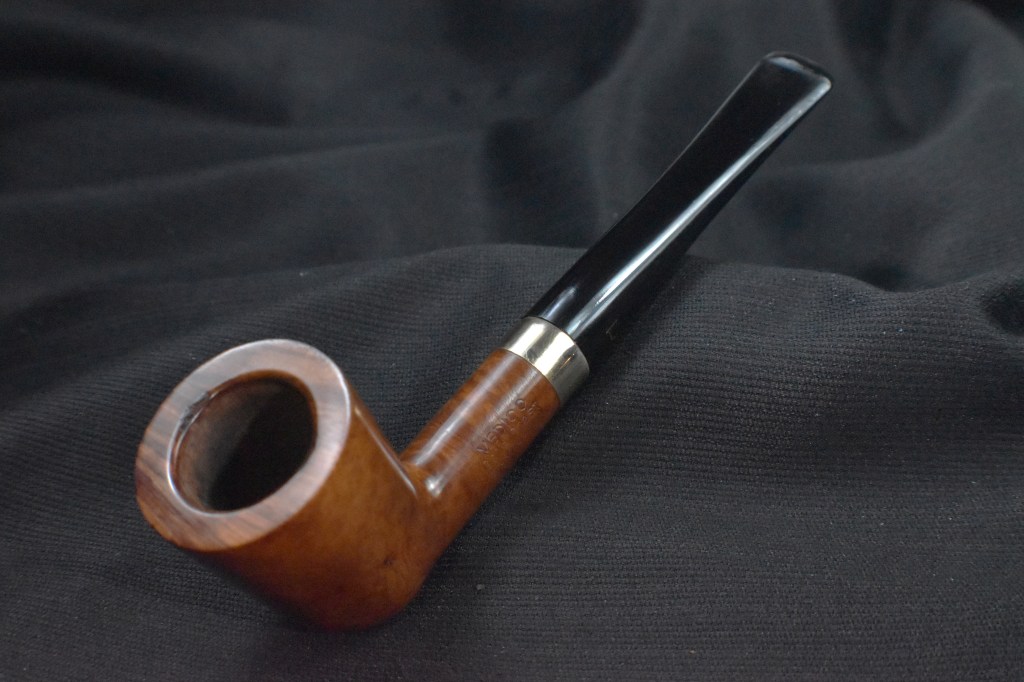
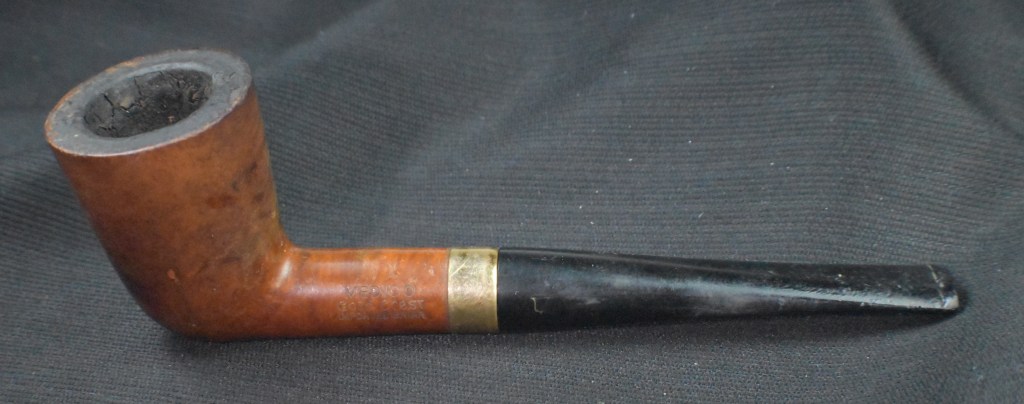
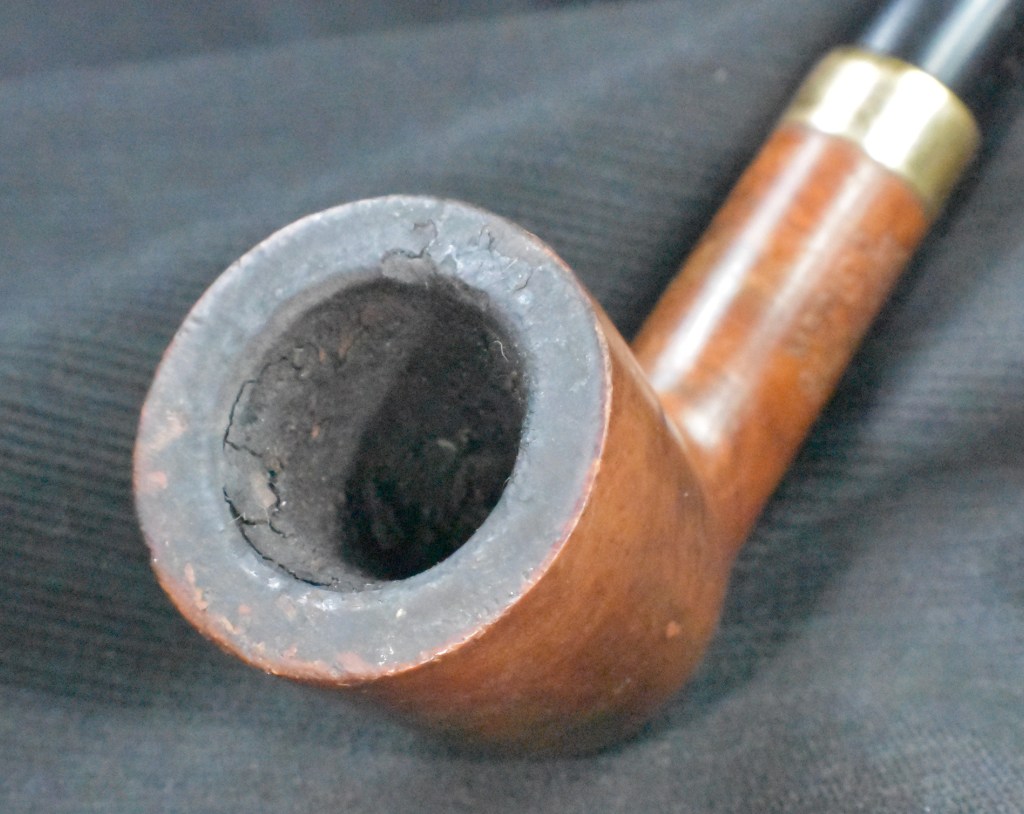
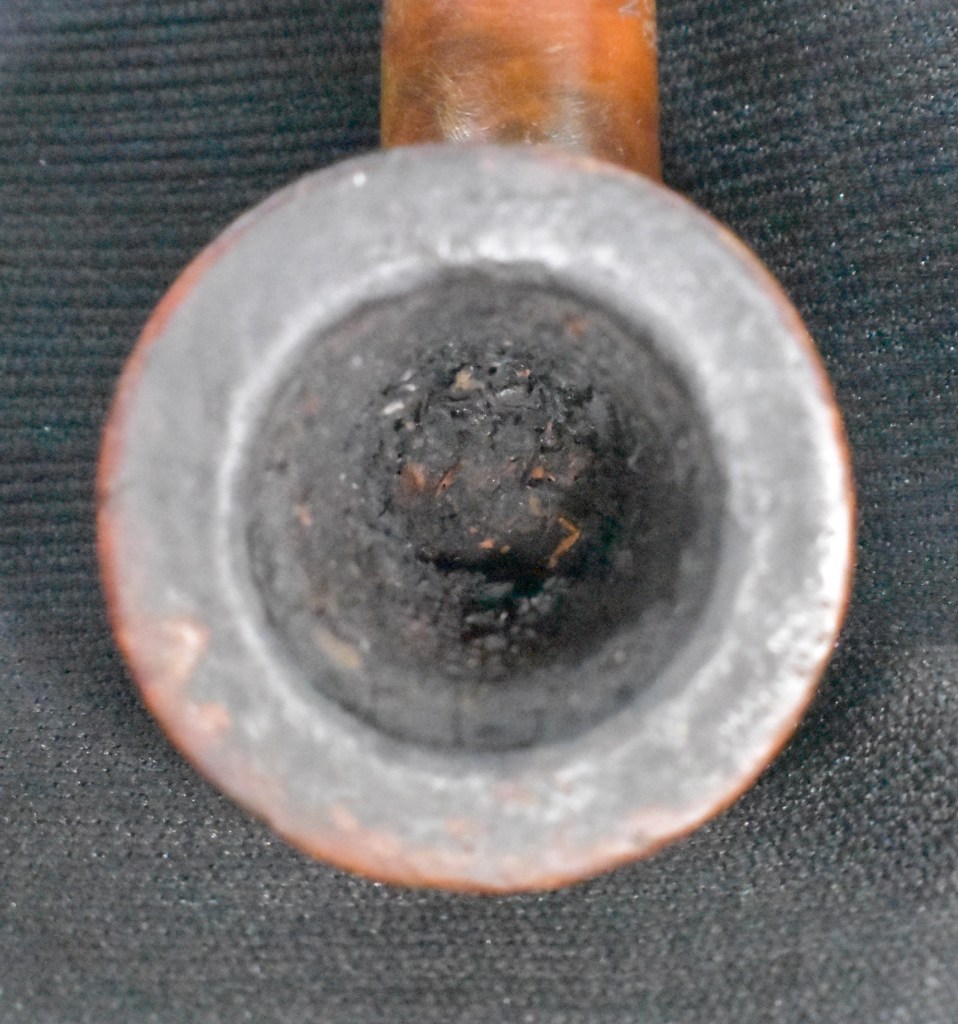
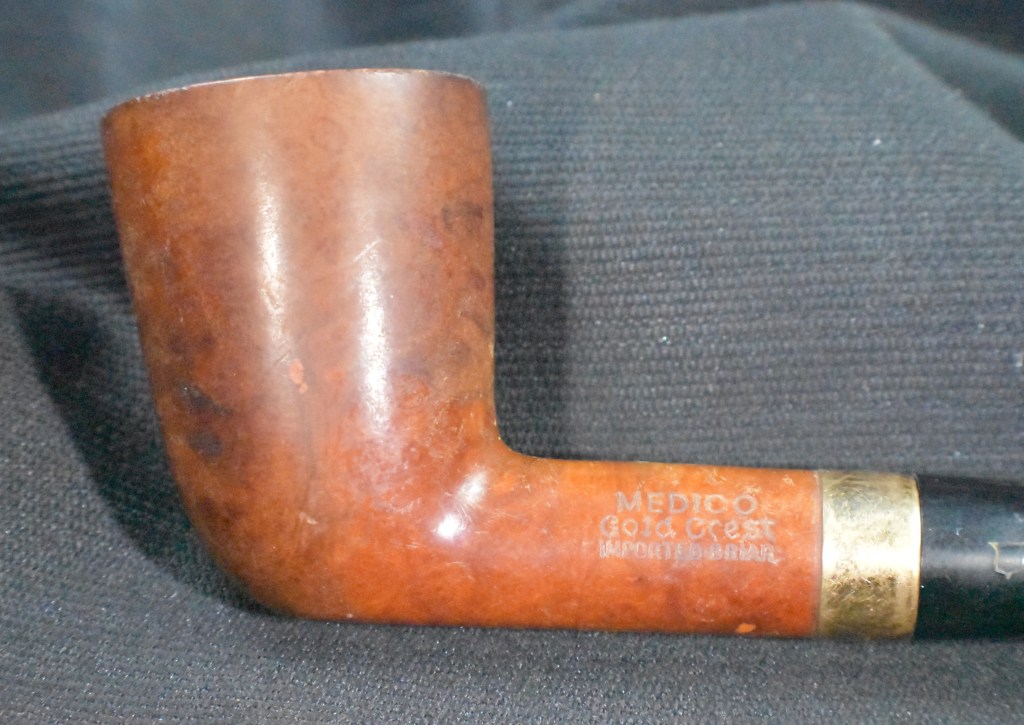
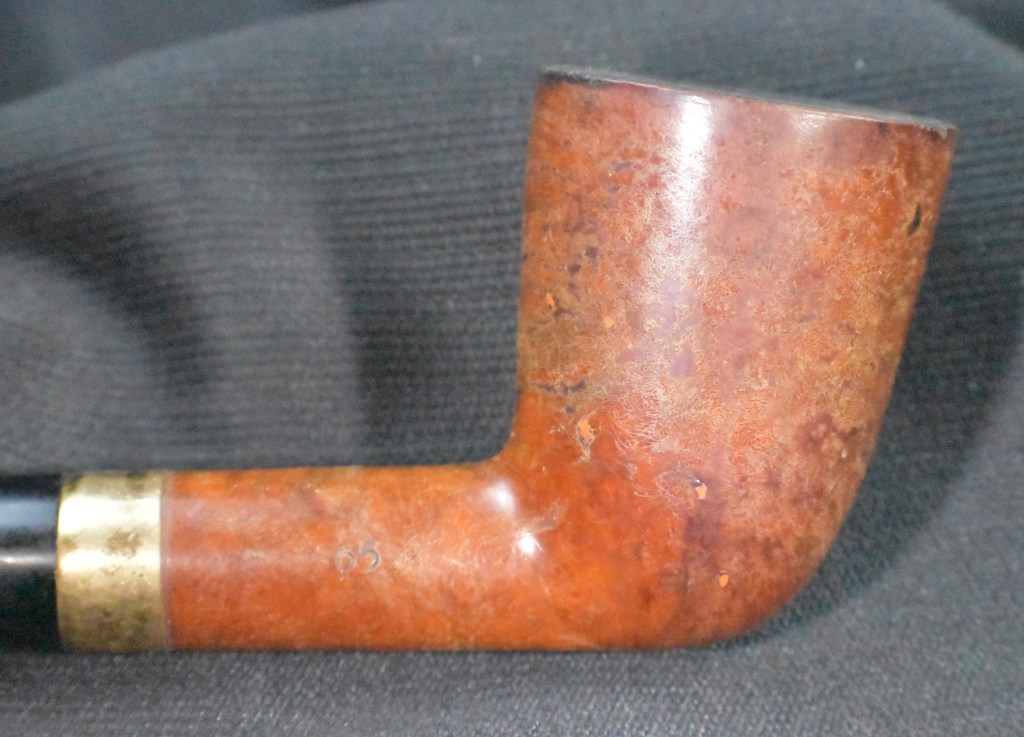
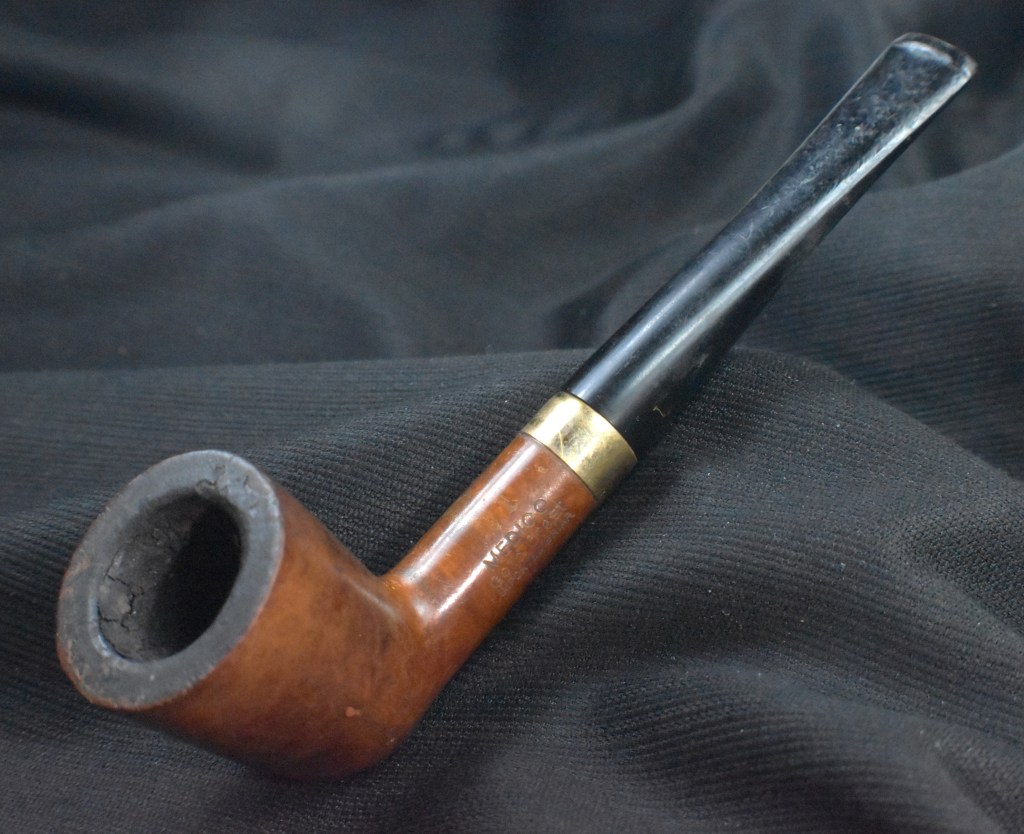
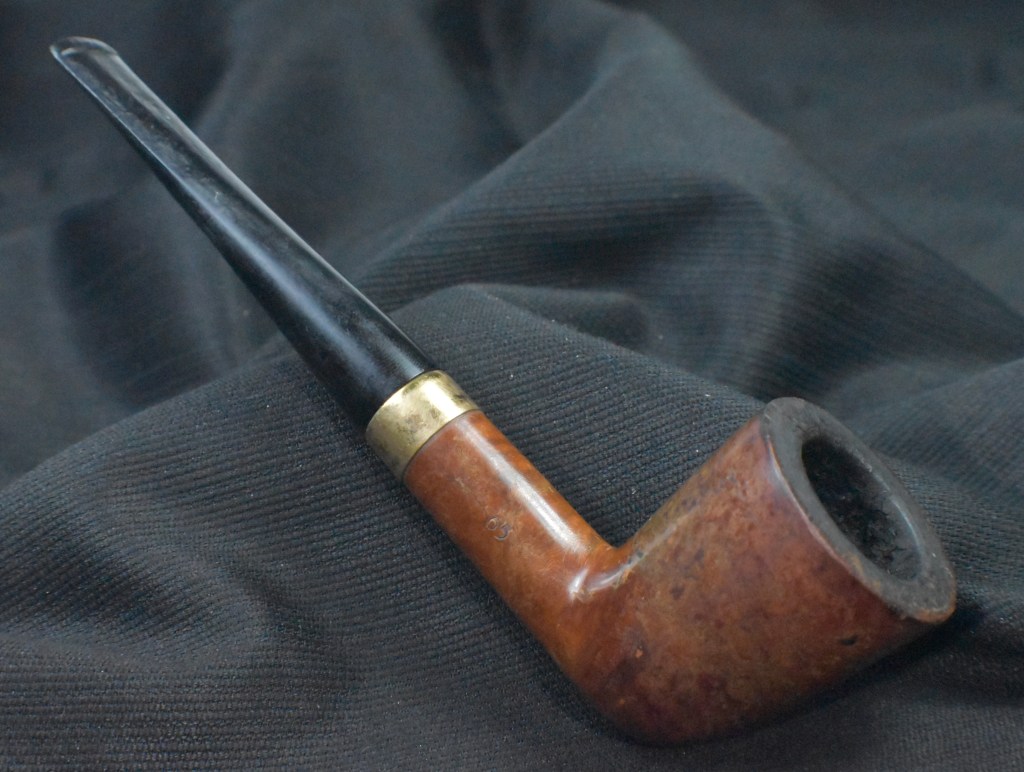
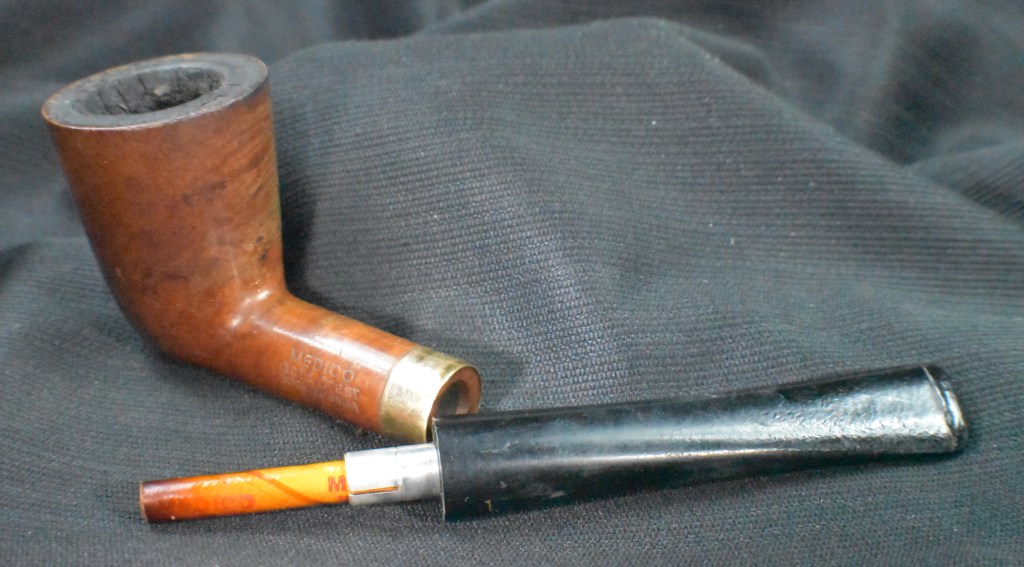
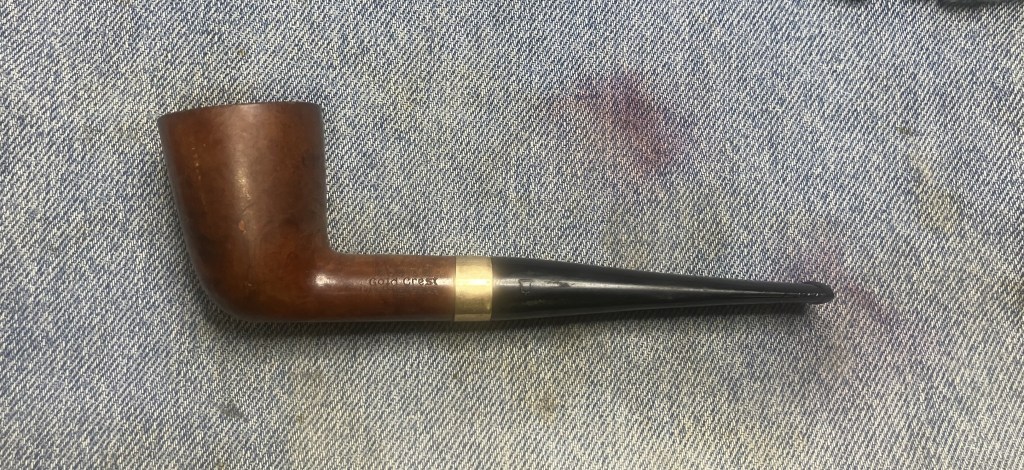
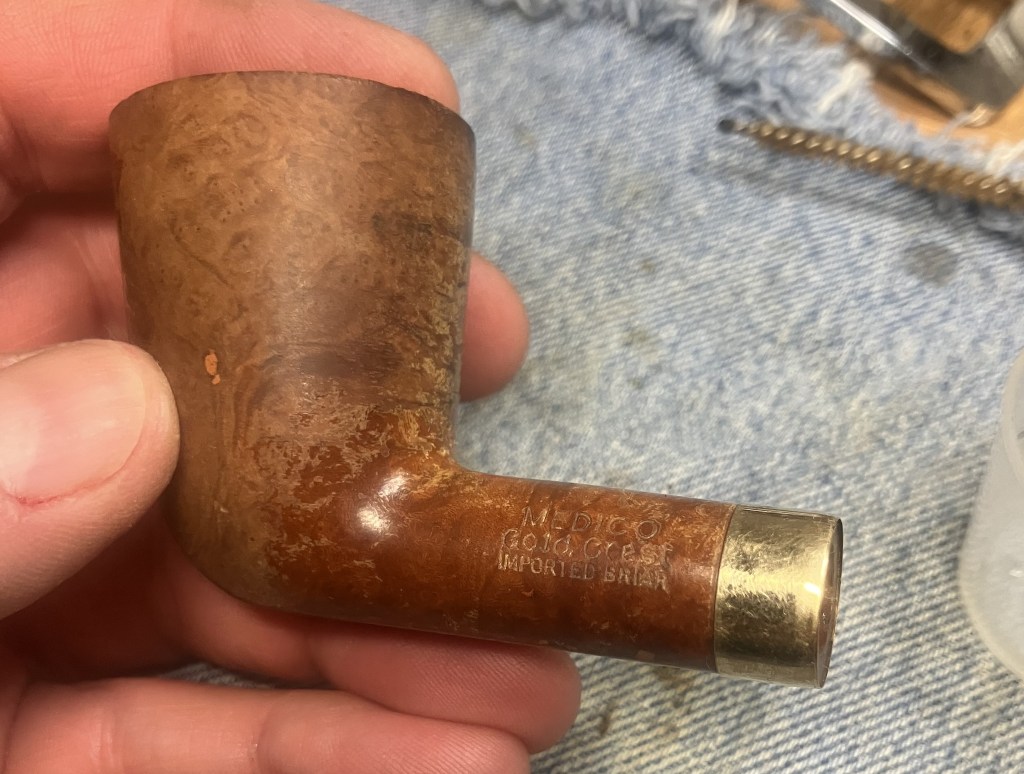
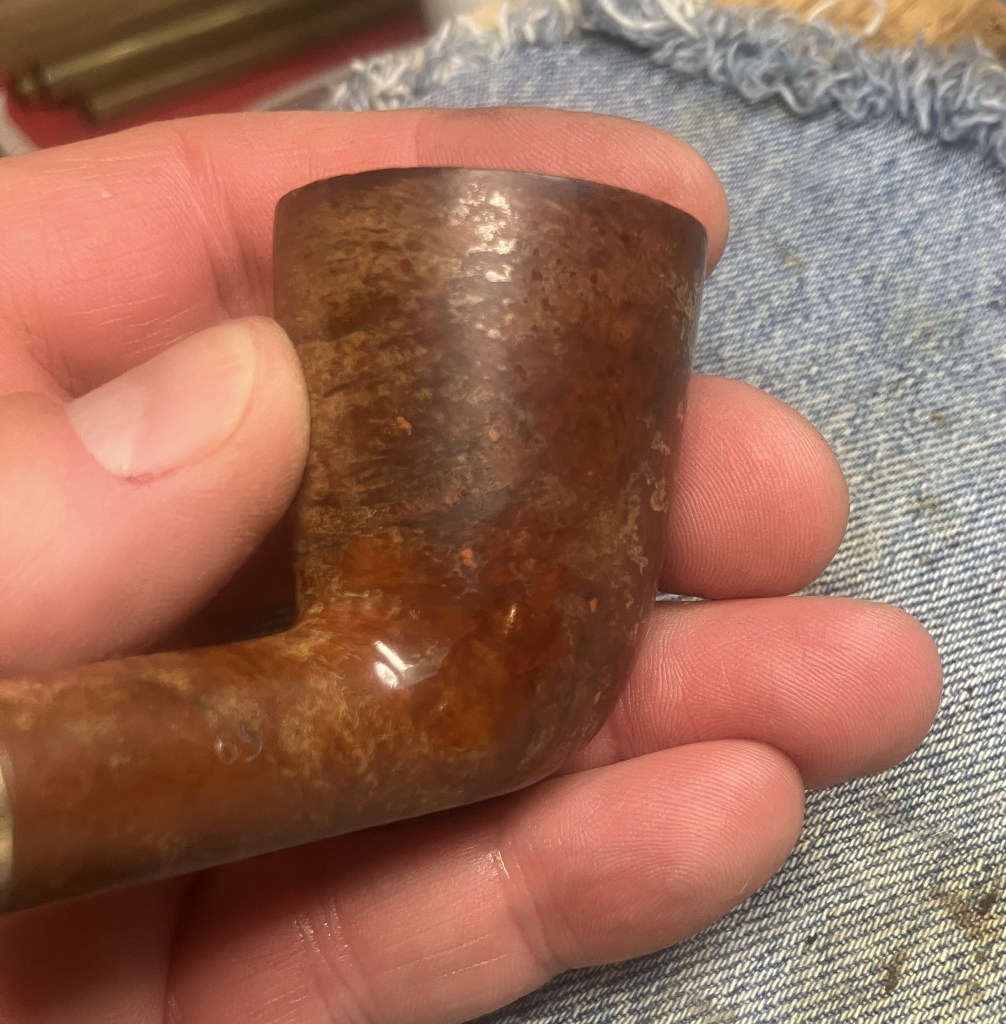
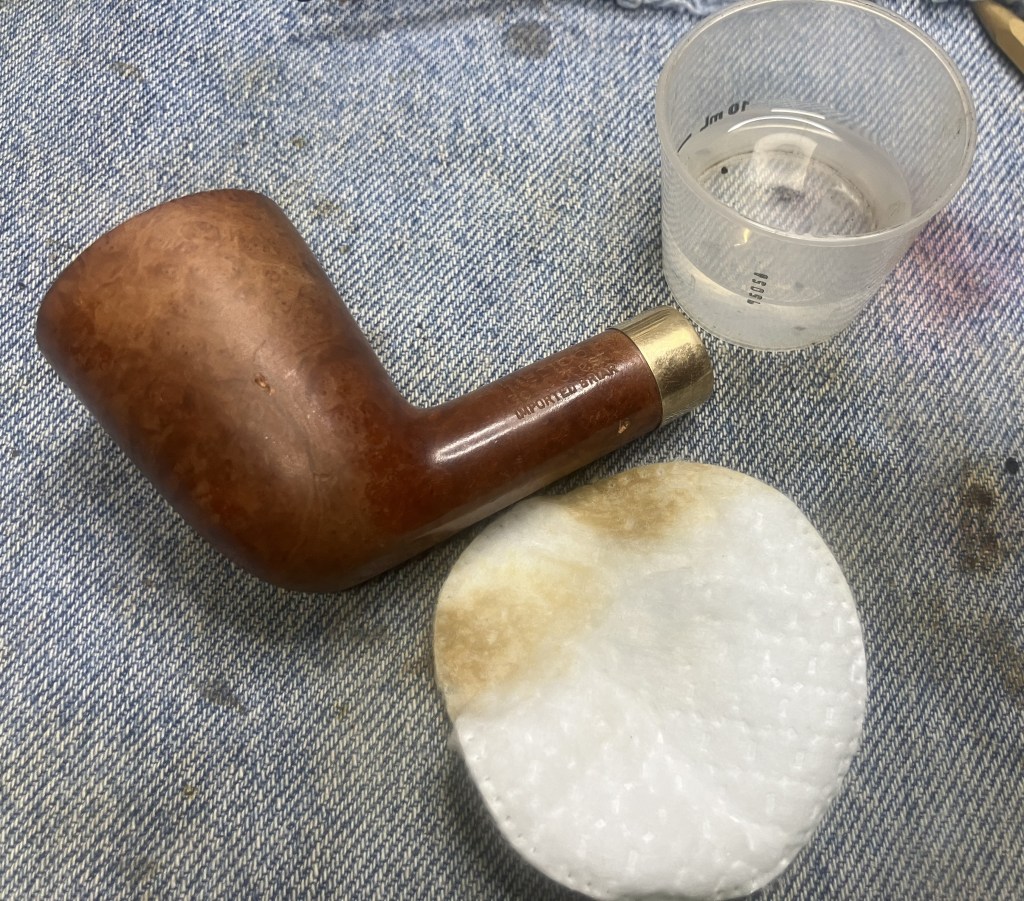
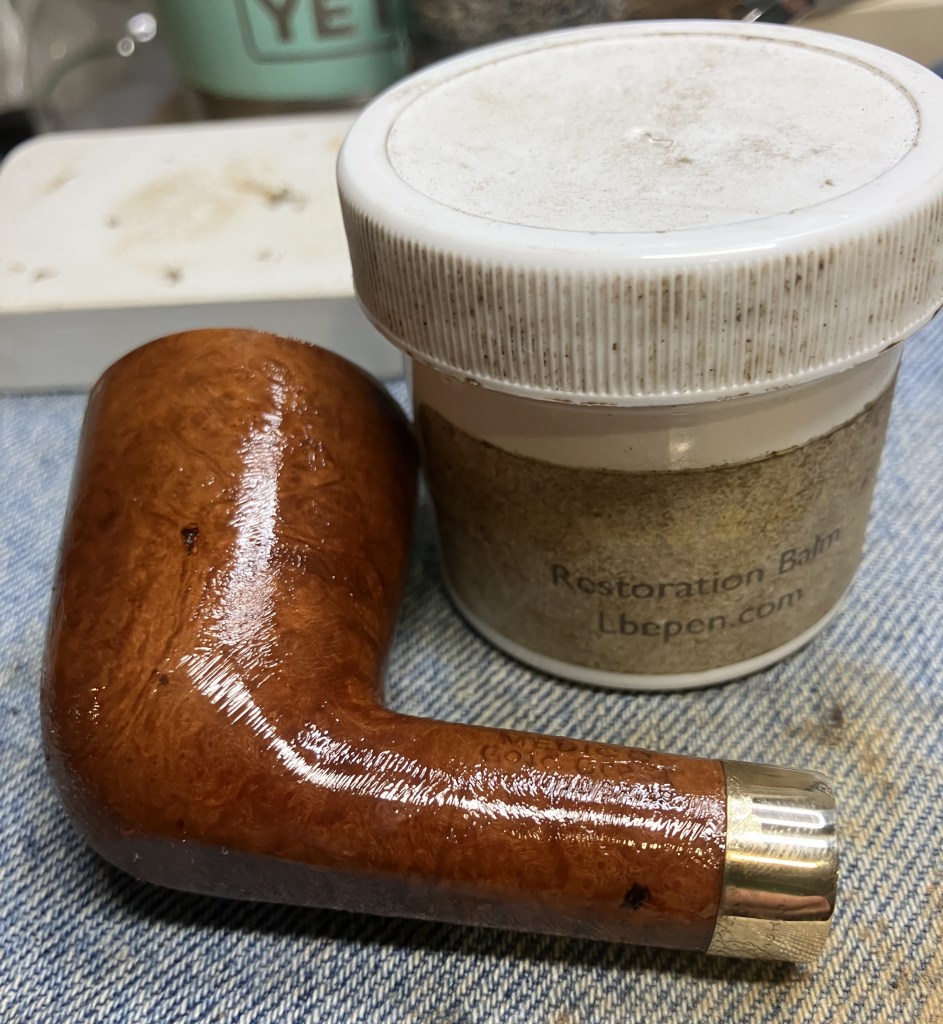
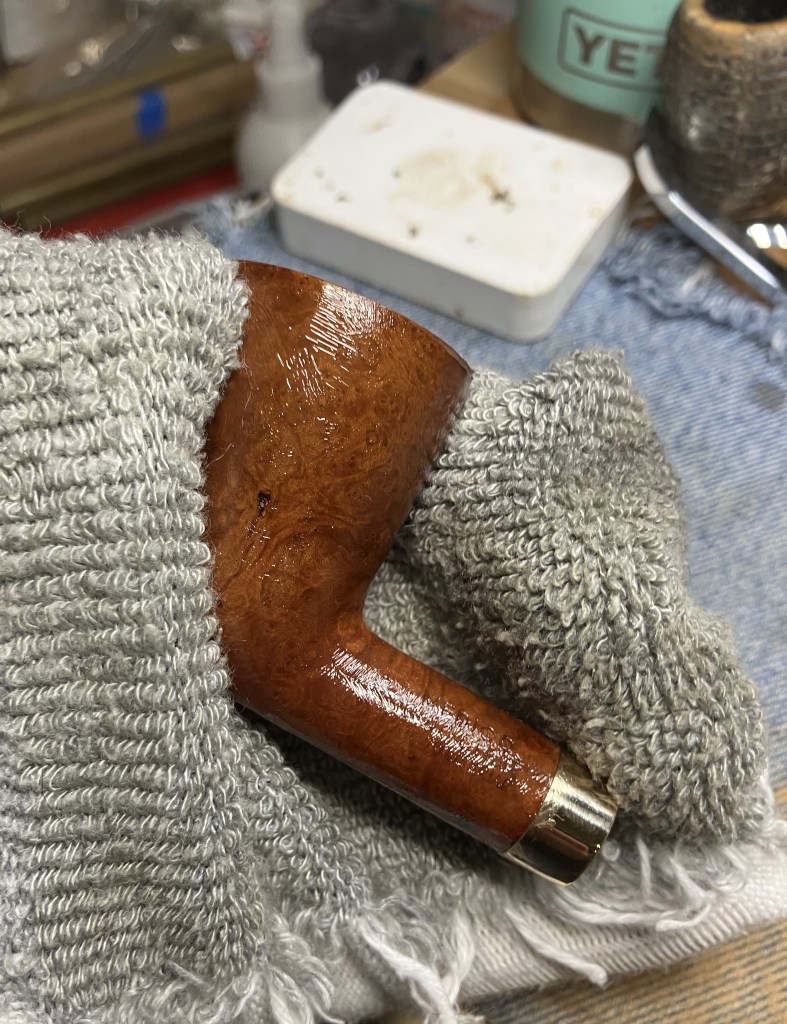
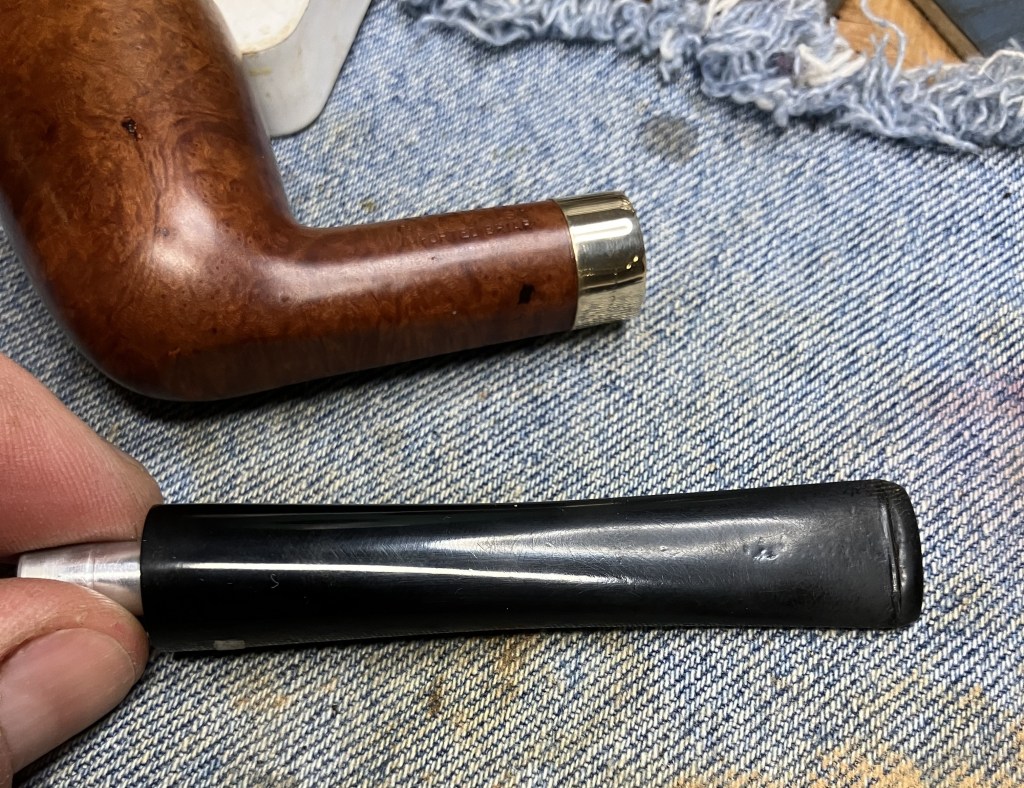
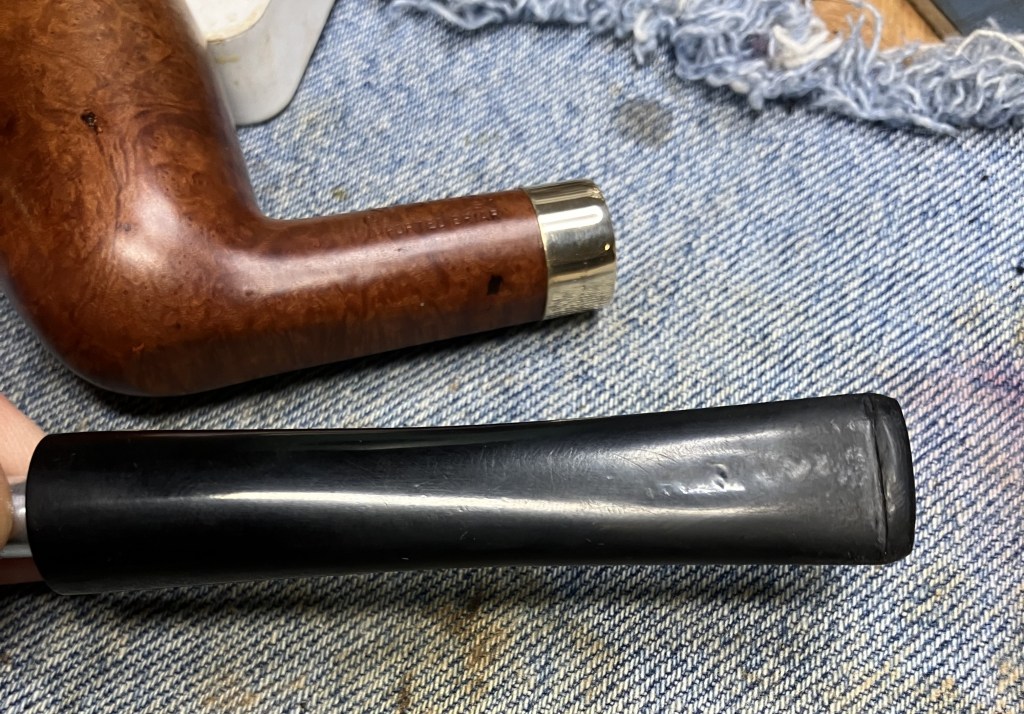
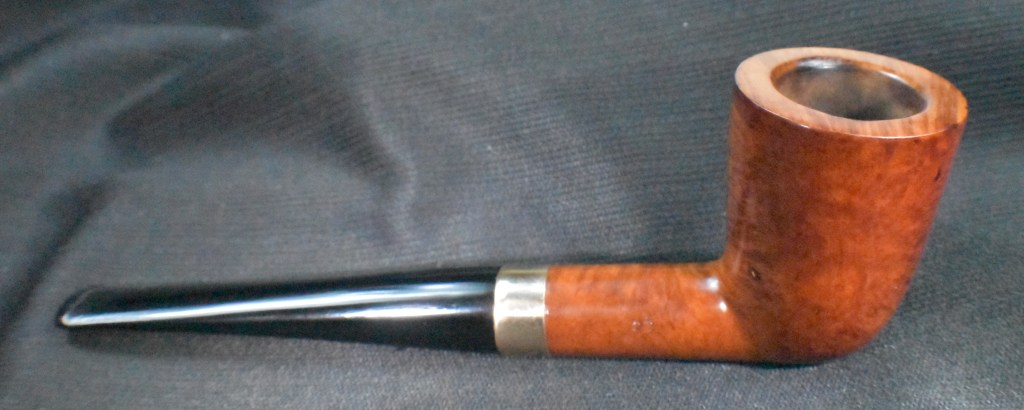
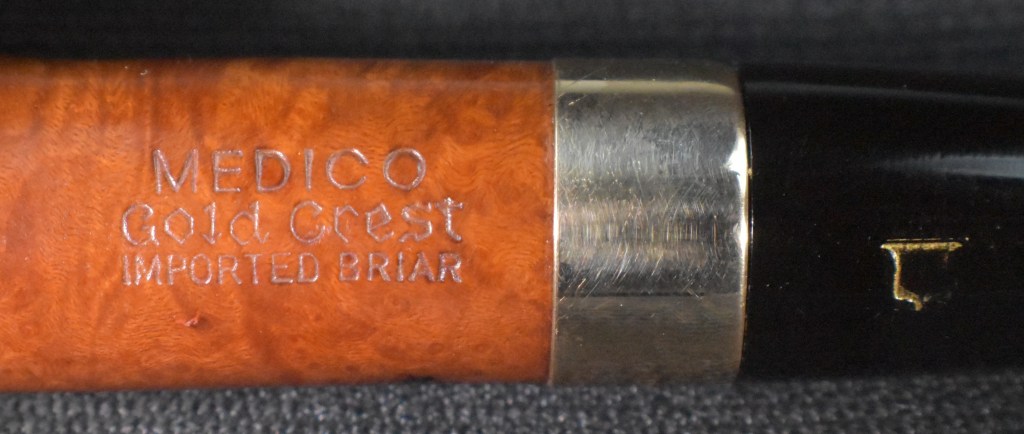
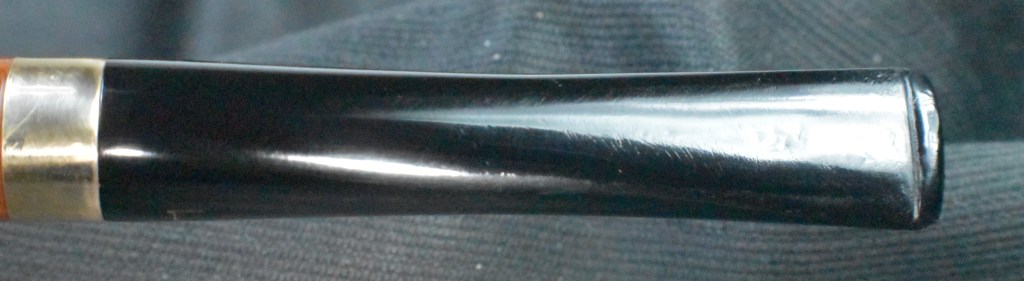
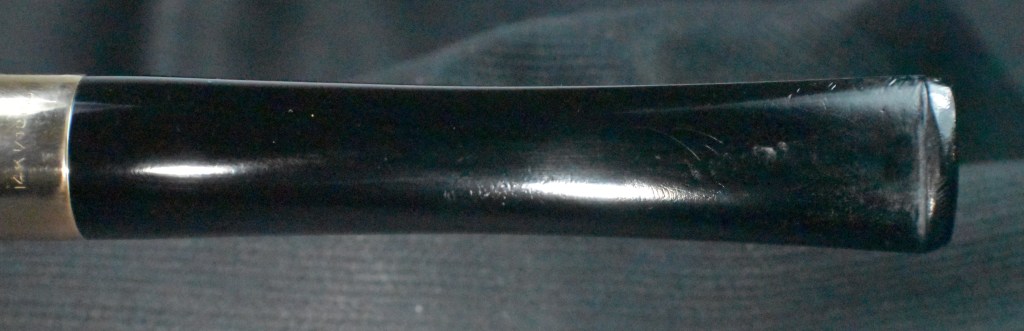
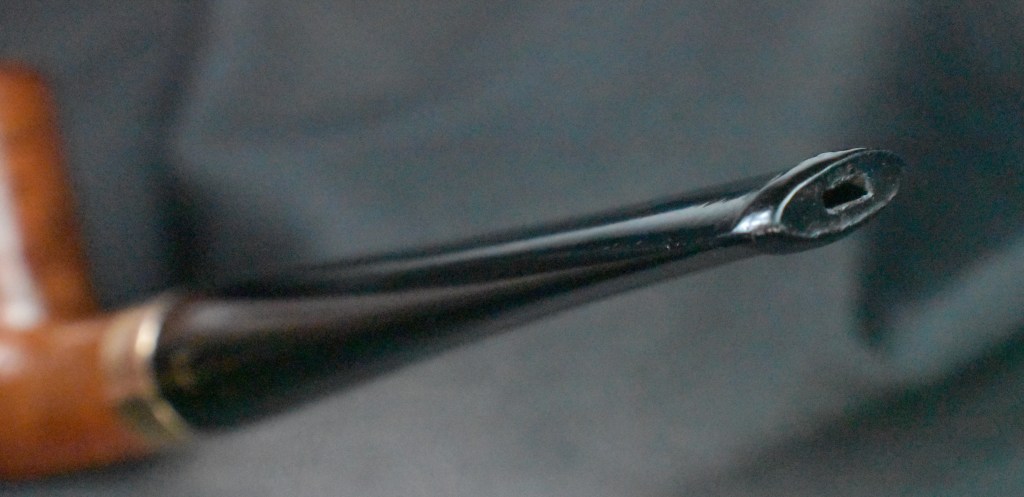
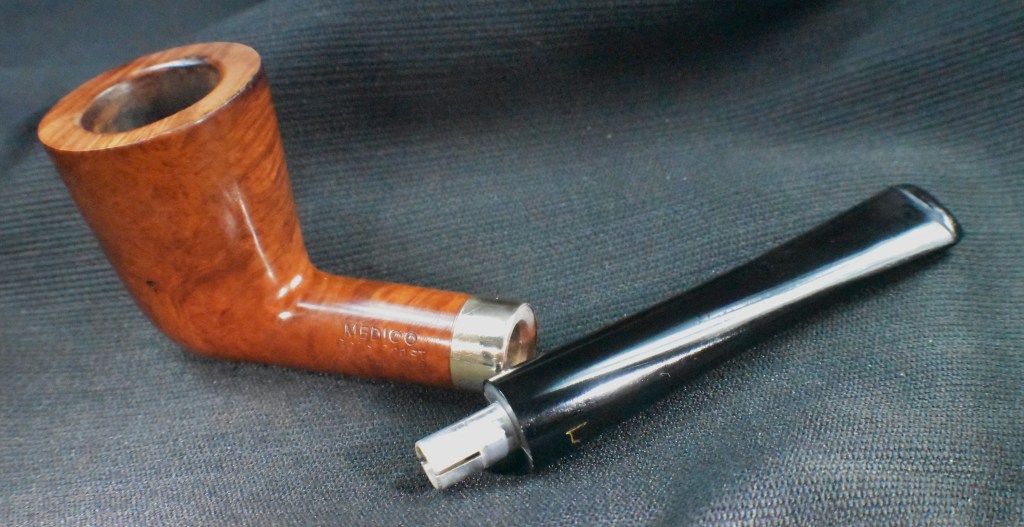
I’m not sure why I am drawn to these old Medico pipes. I don’t smoke them. I’d gladly exchange them for US monetary units, but nevertheless I like restoring them. Maybe that is enough. The rolled gold band does make them look classy and the briar is usually of good quality. I do not like restoring the nylon stems, though I kind of like the way a nylon stem feels between my teeth. For whatever reason, I picked up this one from eBay for a very reasonable price. Maybe someone will want a matching pair, the Dublin from the previous blog post and this one would make an attractive duo of Medico Gold Crests. Below you can see some photos of the Bent Billiard before I began work.
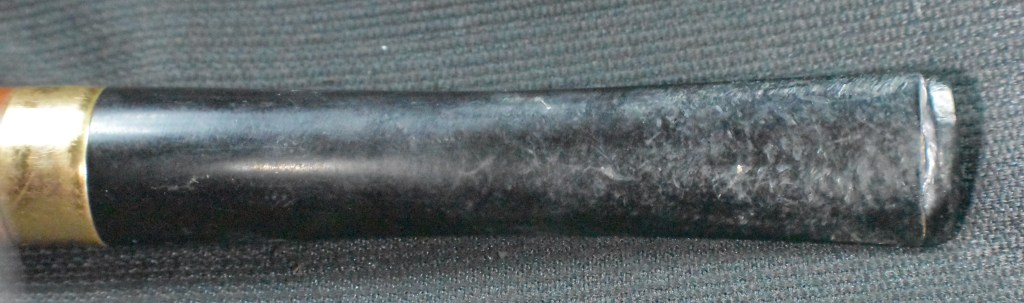
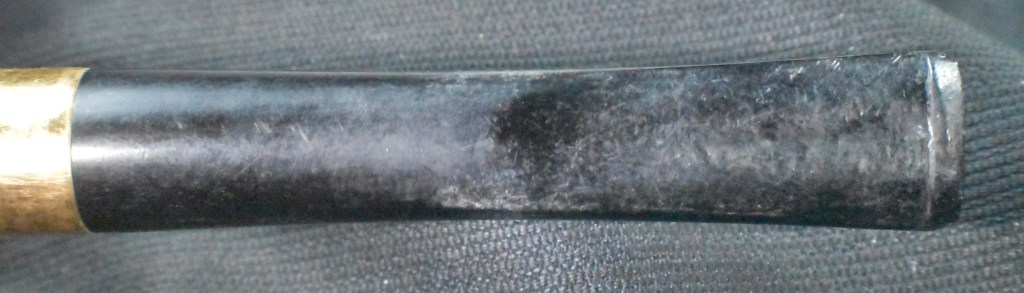
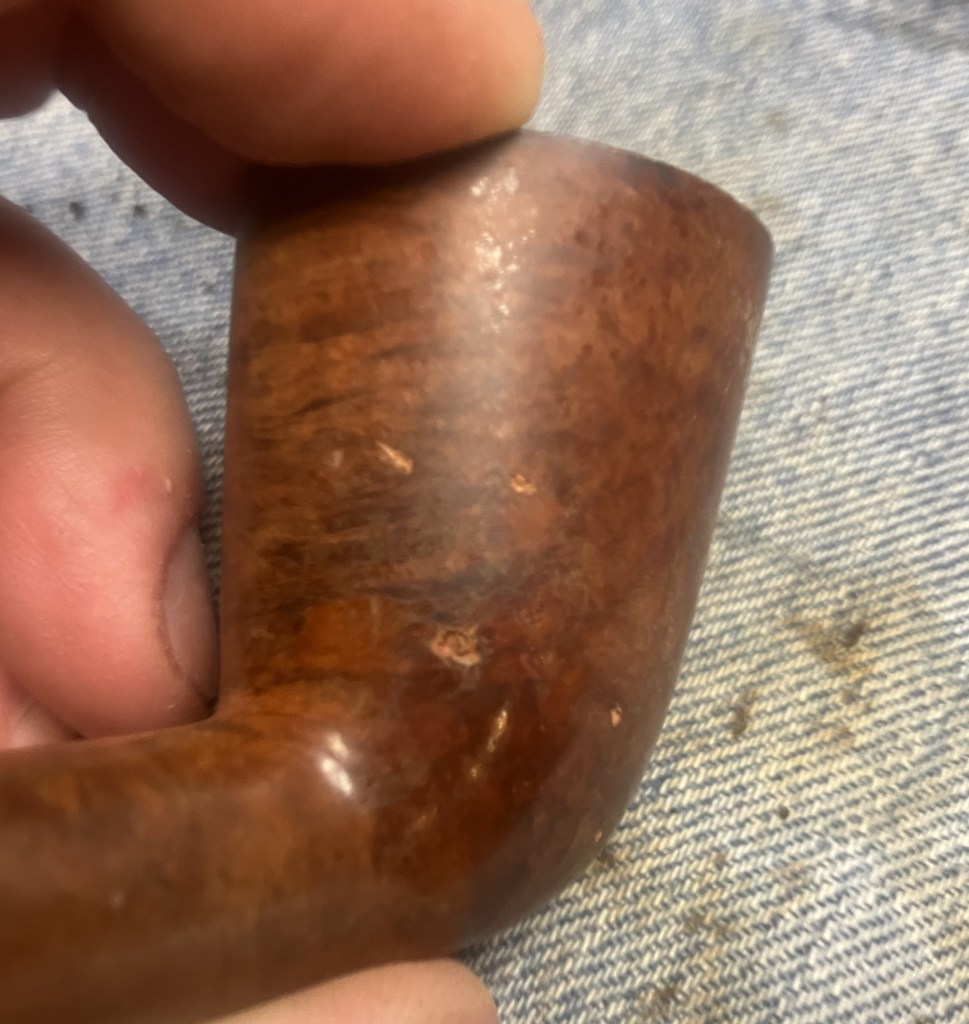
The pipe looked as if it had only been smoked a handful of times. The clear coat finish was cracking, from age and would have to be removed. There were a few dents and dings on the briar but I thought that a hot iron and a wet cloth would allow the briar to expand and return to the original state. Overall an easy restoration.
Background
The following is taken from a restoration I did of a Medico meerschaum Gold Crest pipe:
“According to TobaccoPipes.com,
“When you trace the Medico tobacco pipes history, you have to trace it back to the origins of the company that created it. The company that originated the Medico brand is the S.M Frank & Co. This company dates back to the year 1900. In that year, a man named Sam Frank began selling pipes and related tobacco products. Eventually, the company began making its own line of pipes. With the help of an experienced pipe manufacturer, Ferdinand Feuerbach, the company produced the popular Royal DeMuth and Hesson Guard Milano tobacco pipes. The company continued to grow well into the early part of the 1930s.
By the early 1930s, there were some concerns about the tars and nicotine found in tobacco smoke. In order to mellow out the flavor of hot tobacco smoke as well as to capture the tars and nicotine, the S.M. Frank & Co. introduced the Medico pipe filter. This is an absorbent paper filter that many people still use to this day. In order to accommodate the new filter, the company developed an accompanying brand of pipes known as Medico. That line of pipes continues in production today.
The company ended up buying some of their main competition in 1955. That year the Kaywoodie brands came under the S.M. Frank Company. The Medico brand continued production through this transition without many changes. The next big change for the brand came in the late 1960s. In 1966, the company developed a synthetic material that combined the traditional briar wood with resins. It is known as Brylon. At that time, all Medico pipes were made from imported briar wood. In order to keep production costs down, the company began offering some lines with Brylon. Today, that is still true.
Today, the Medico brand of pipes is still a top selling one for the S.M Frank & Co. This line of pipes comes in thirteen different finishes with five made of briar wood and the rest from Brylon. All come with the push bit with a filter inside. The filter is easily changed out when the smoker desires. In the briar wood finishes, this line includes the Silver Crest, Premier, Bold Rebel, Kensington, and Windsor. In the Brylon, the line includes the Lancer, Apollo, Standard, Varsity, Conqueror, Medalist, Cavalier, and V.E.Q. As far as price, the briar wood pipes tend to be higher in cost that the Brylon ones.” (Medico Pipes History | TobaccoPipes.com)
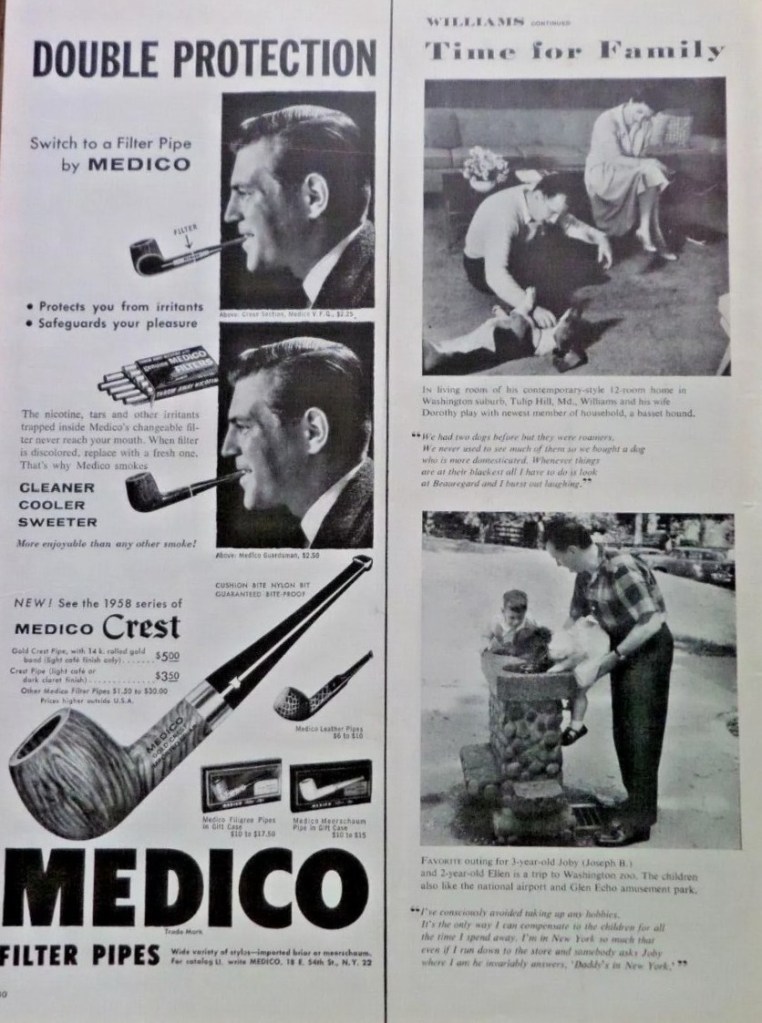
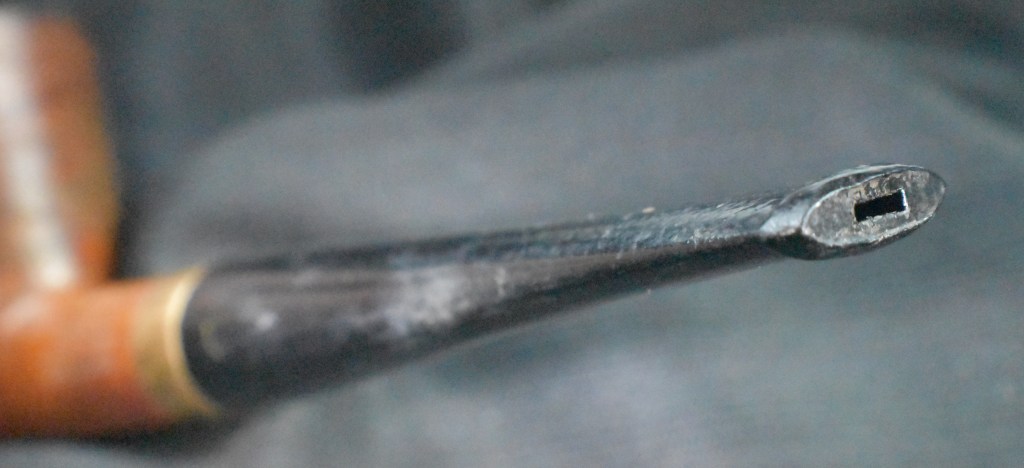
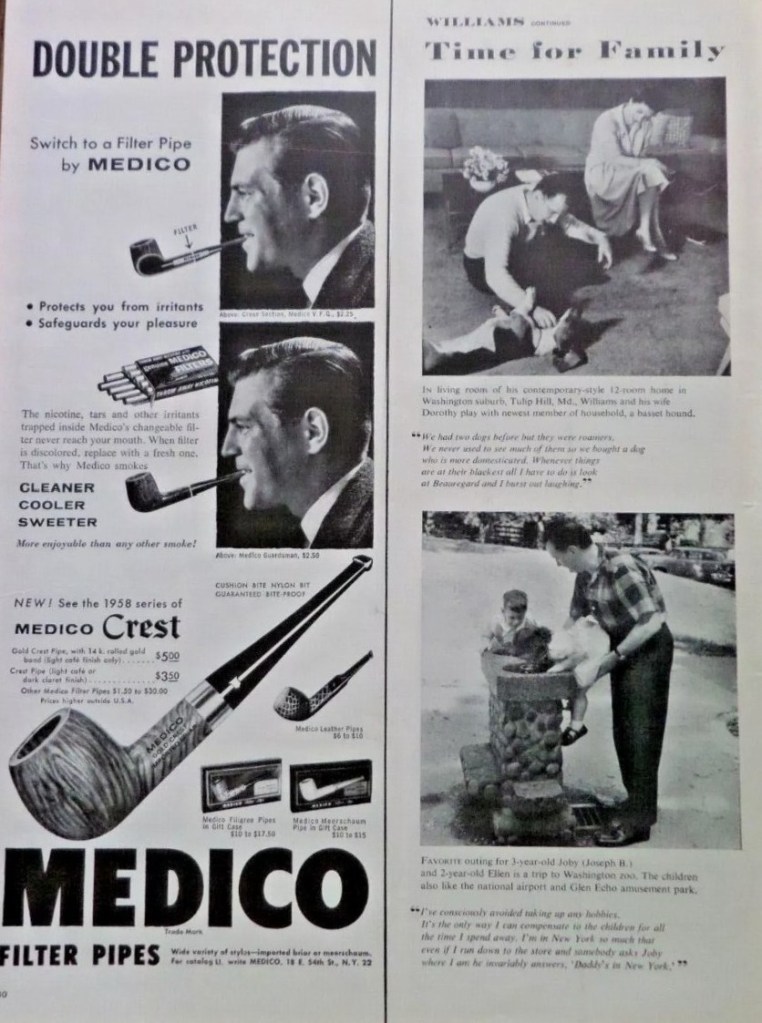
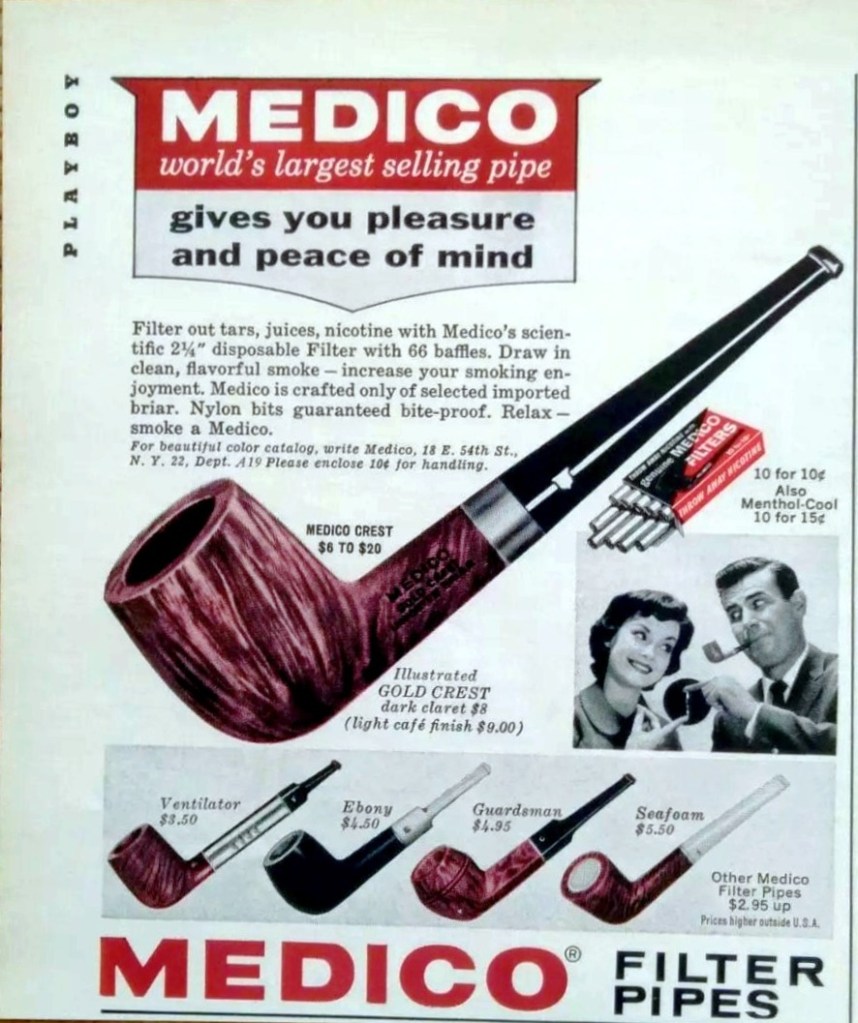
I was unable to precisely identify the years in which the Gold Crest line was made. I did find a couple of print advertisements from 1958 and 1966, at least that is what the eBay sellers were claiming. The first ad is from 1958 and shows a Gold Crest with a list price of $5. The ad says “NEW! See the 1958 series of MEDICO Crest”. This could be read as meaning that the Crest line changed from year to year or that 1958 was the first year of the line.
The second ad looks quite “1966” but it doesn’t mention the Gold Crest pipe. Neither advertisement had the M within the crest as with the Medico Gold Crest in hand.
The pipe was taken to the workbench and a new cloth workbench cover. Yeah, I finally decided to try something different than the denim pieces.
The tobacco chamber looked very clean.
And the rim was nearly pristine.
I used 99% ethyl alcohol and cotton swabs to clean out the tobacco chamber.
Next came the cleaning of the shank, again with alcohol, cotton swabs and bristle pipe cleaners.
The rim needed nothing special.
To the sink! The stummel was scrubbed with undiluted Murphy Oil Soap and a nylon brush. After rinsing the soap with warm water the stummel was dried with a cotton hand towel.
The stem was cleaned as with the shank.
Now for the part that I dislike, restoring the nylon mouthpiece. There was some tooth chatter on the top and bottom.
I used a small flat file to smooth the surfaces.
After filing an emery board and 400 grit sand paper were used.
The stem then was sanded with a series of sanding sponges from 1000-3500 grits.
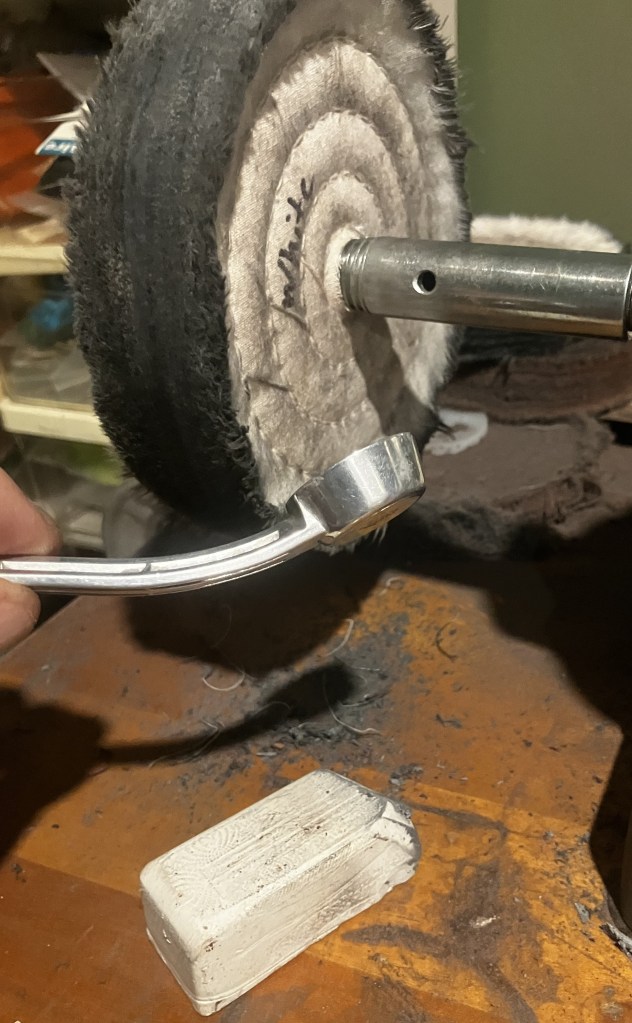
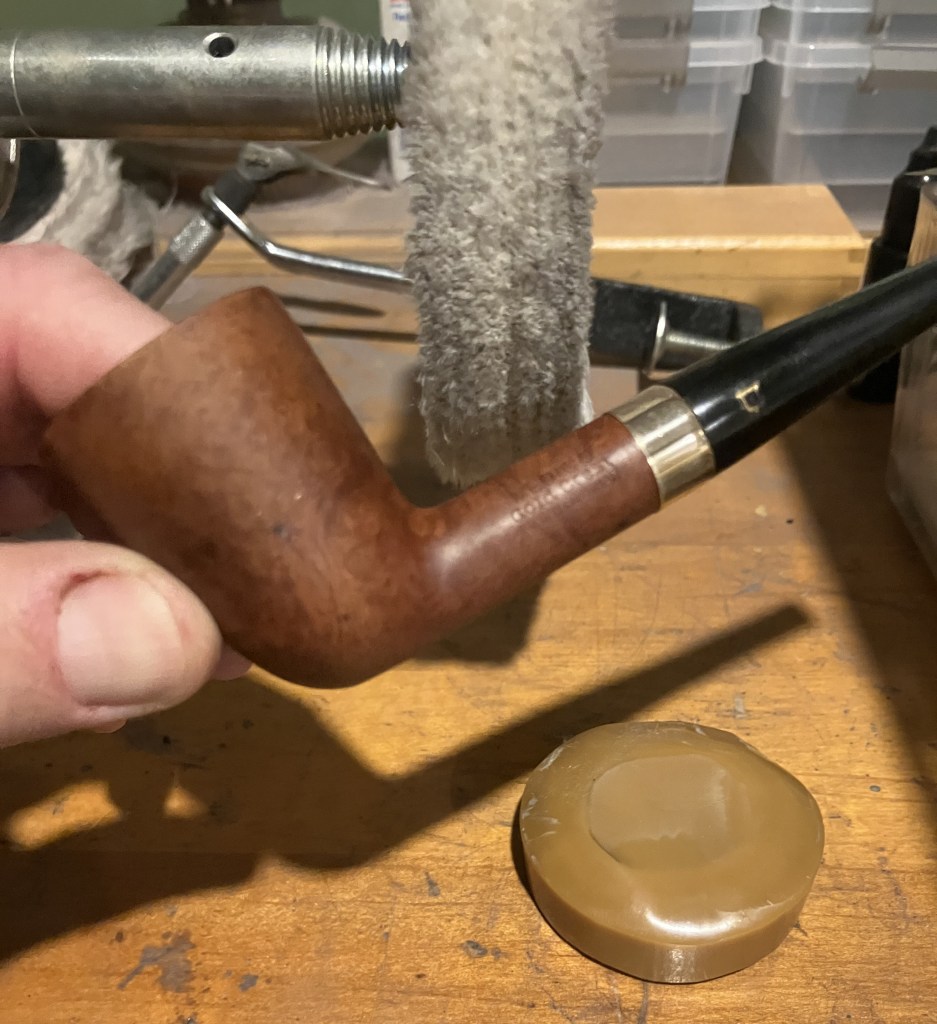
Buffing the stem came next with blue buffing compound.
Have I mentioned how much I don’t like polishing nylon stems? More buffing was called for.
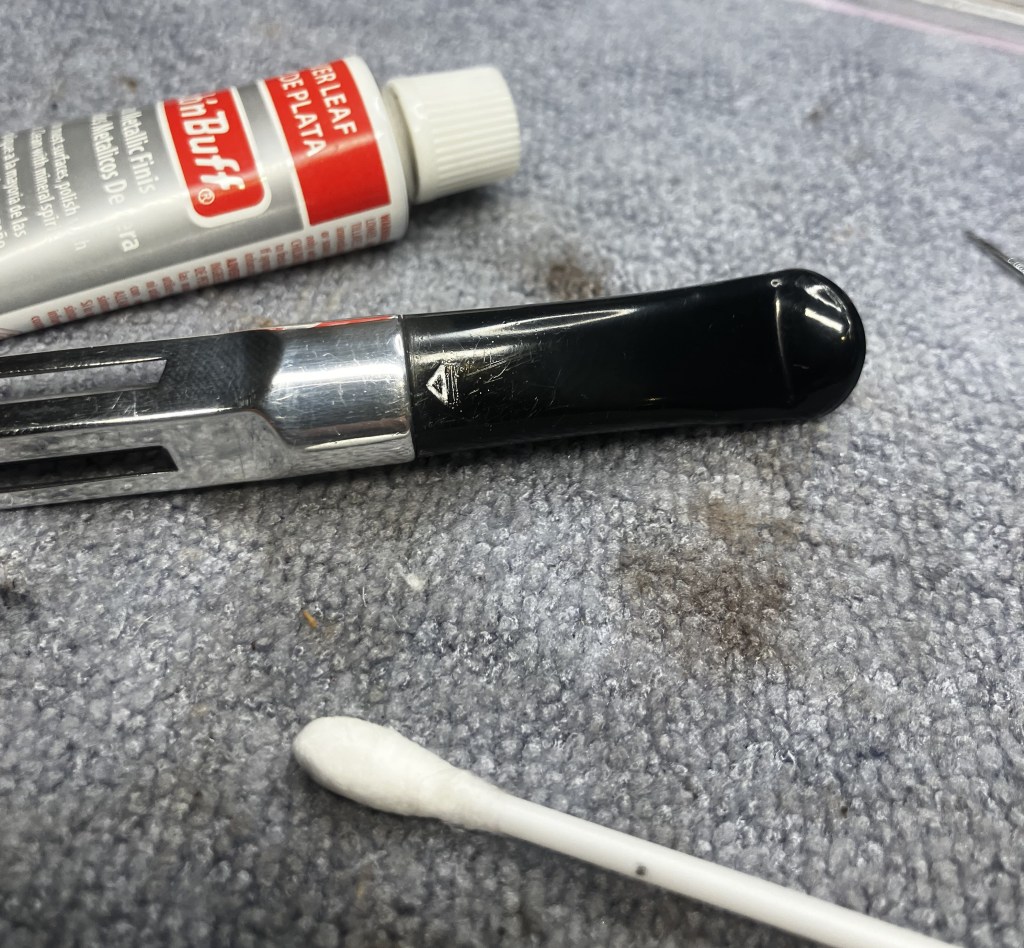
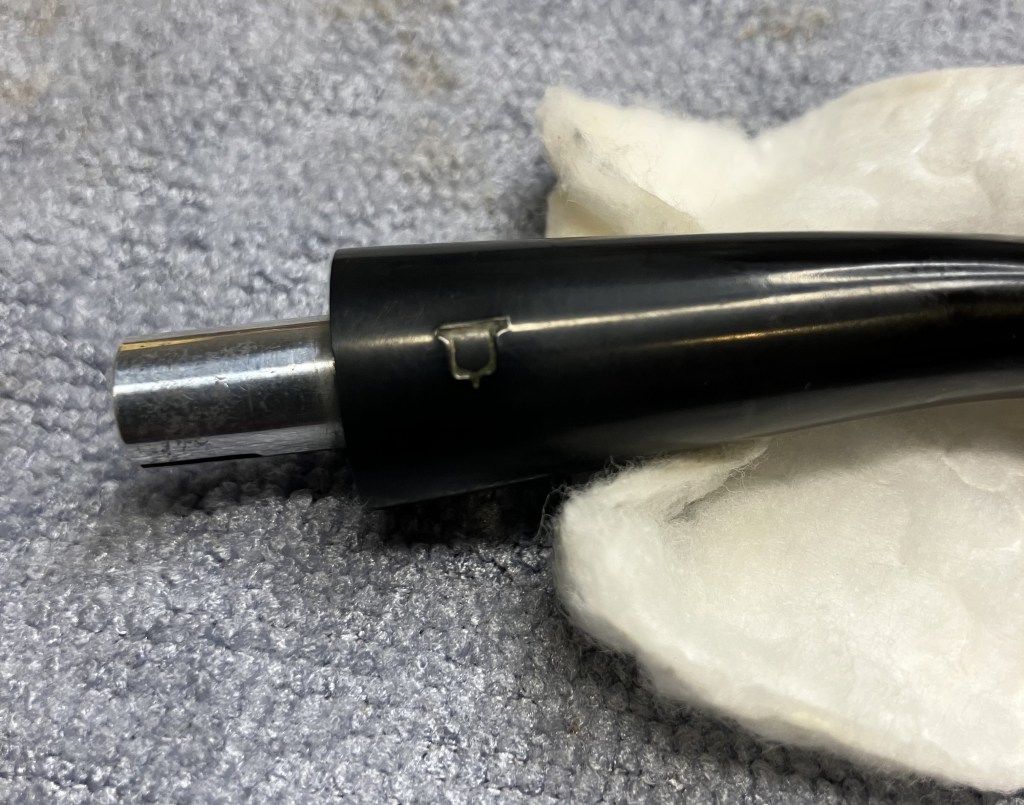
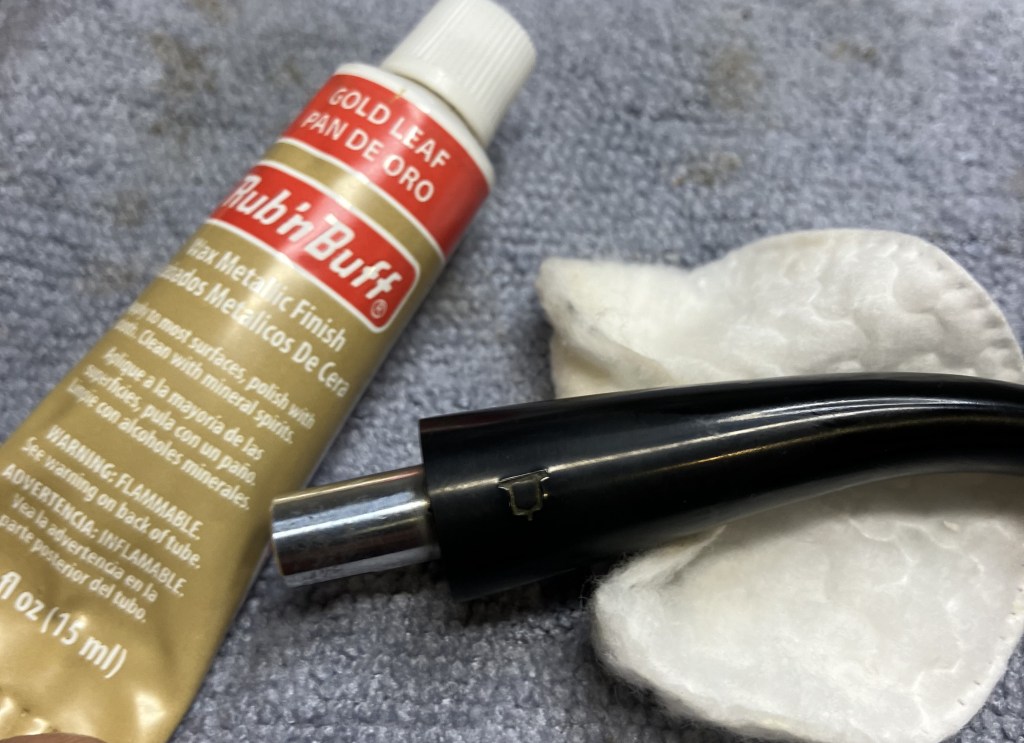
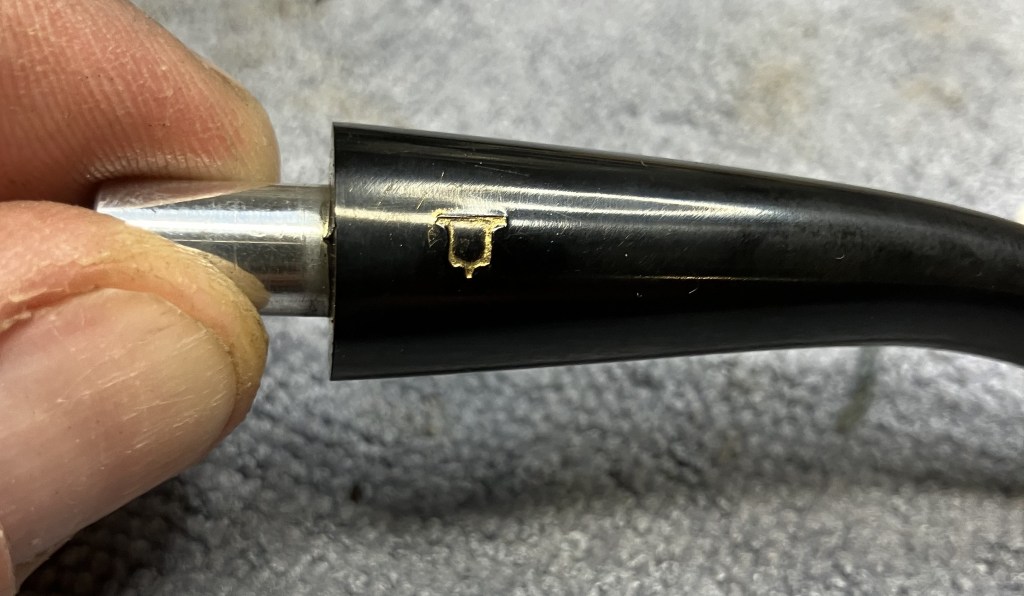
Once the buffing was done, I cleaned the Gold Crest logo with alcohol.
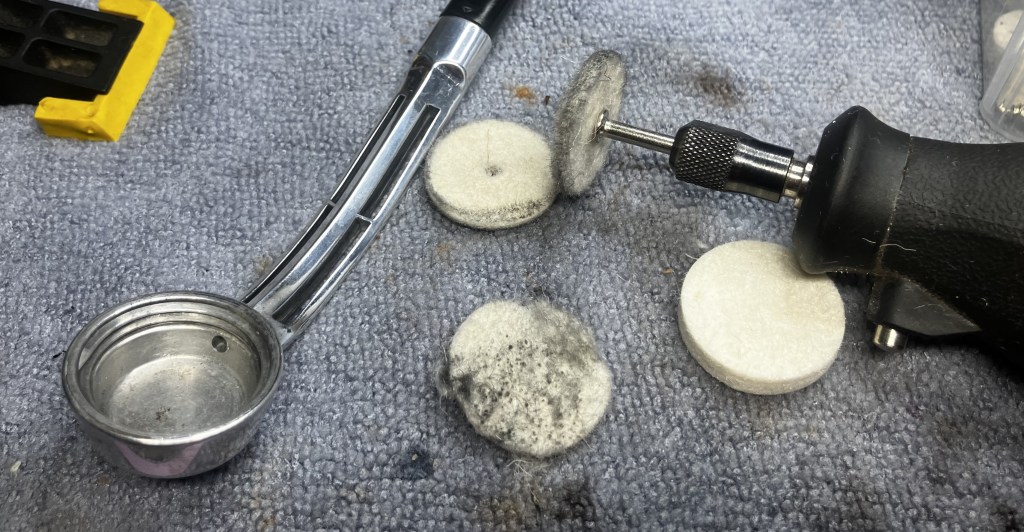
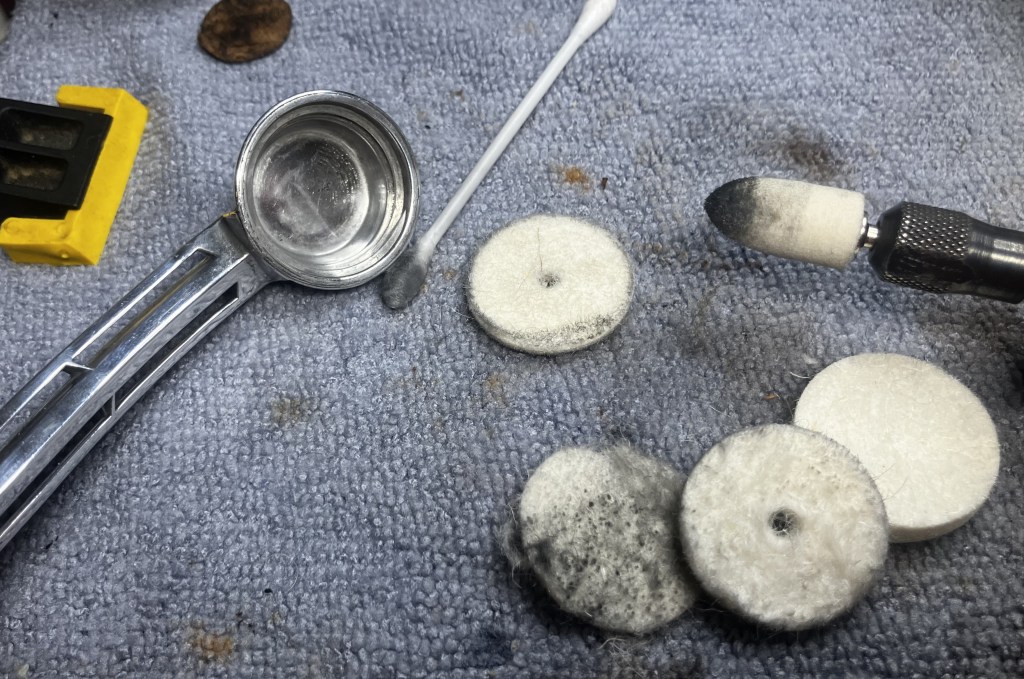
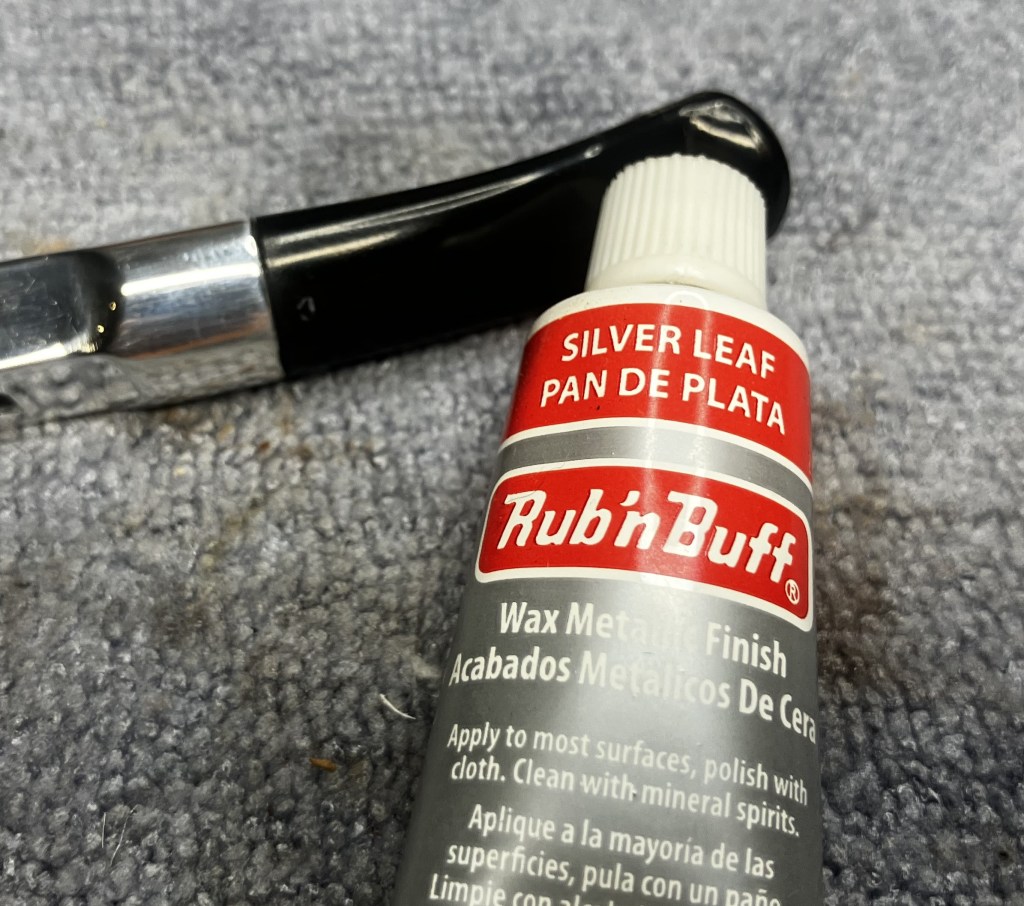
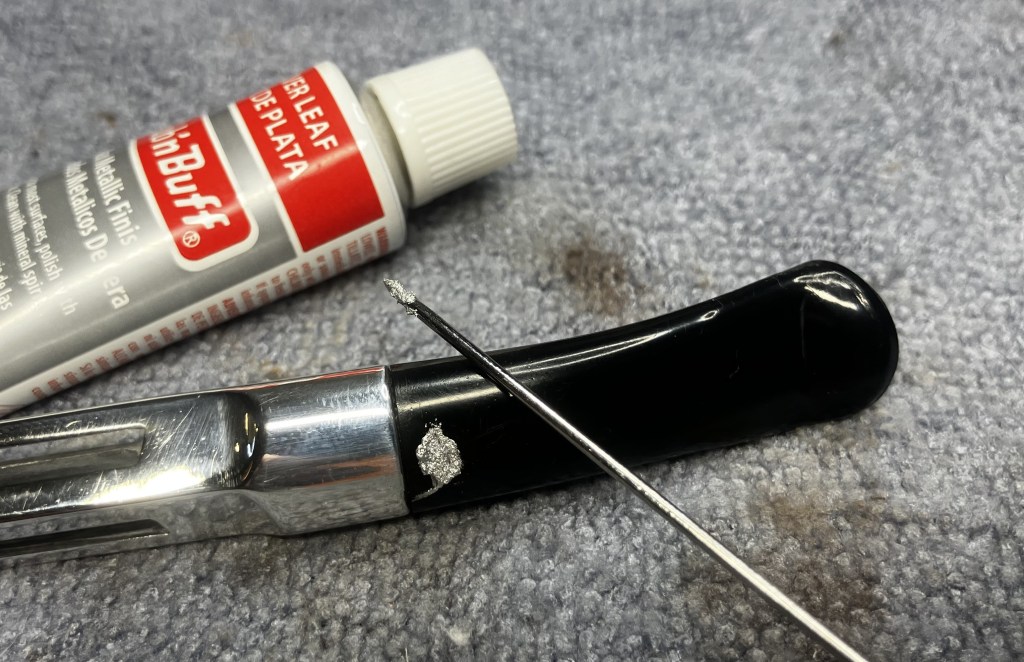
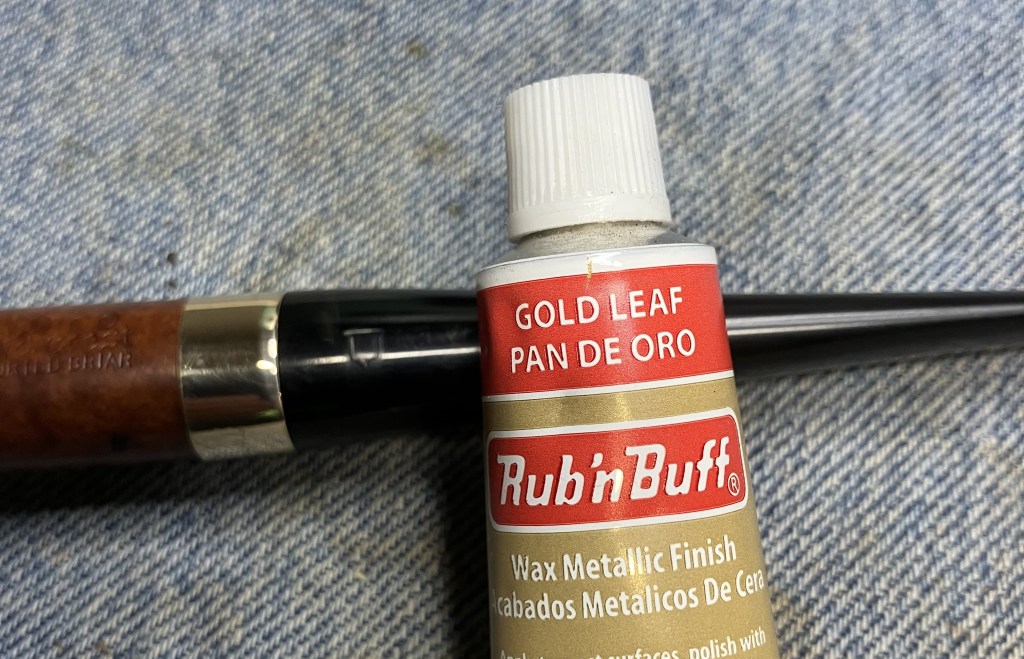
Gold leaf Rub’nBuff was the new logo coating of choice.
The Rub’nBuff was applied and then hand buffed with a soft cloth.
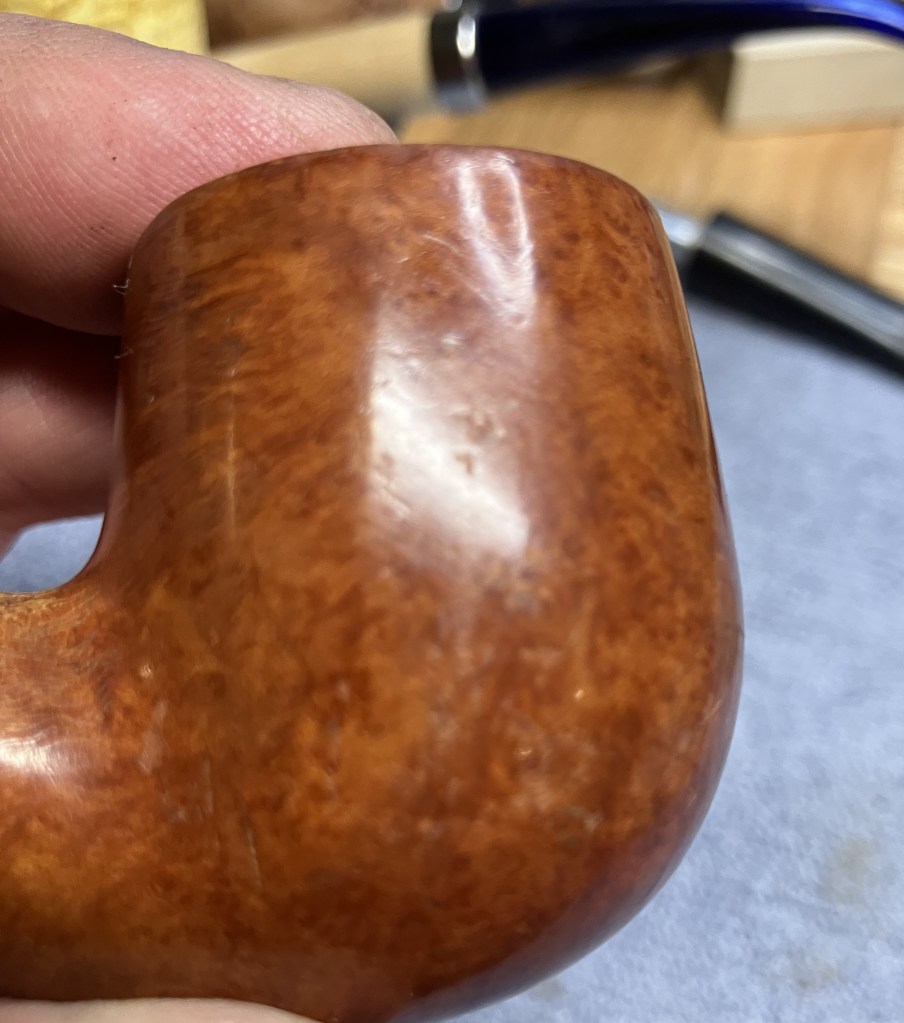
The next three images attempt to show the dents and dings that I planned on steaming out.
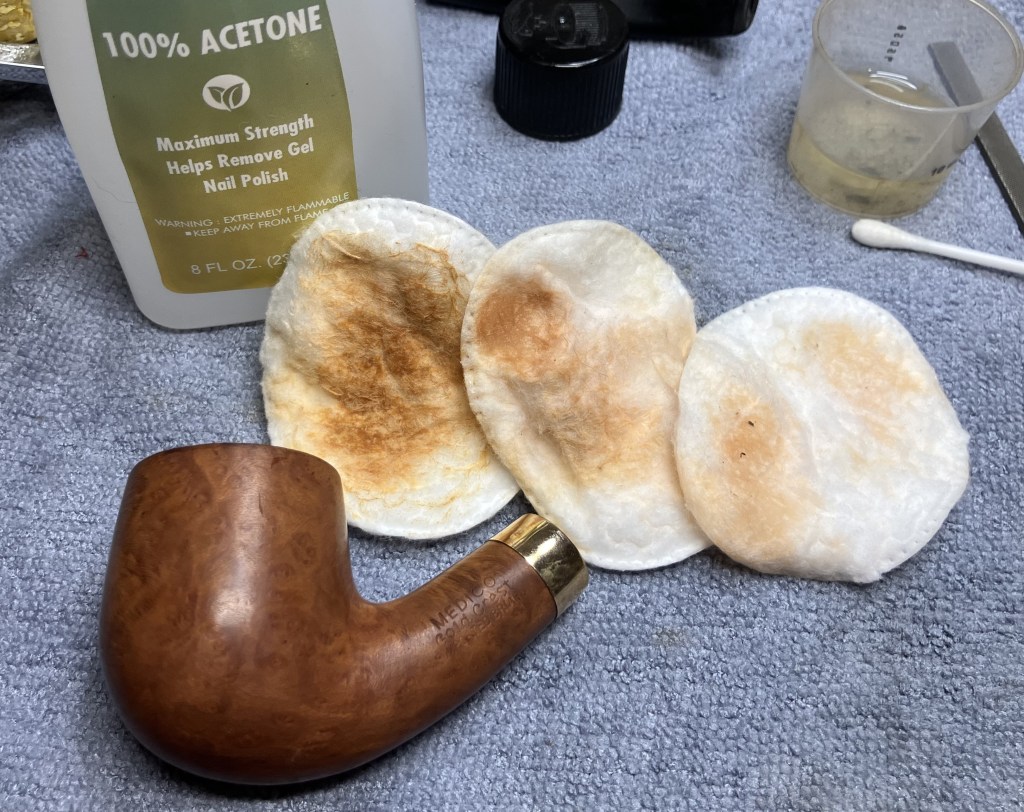
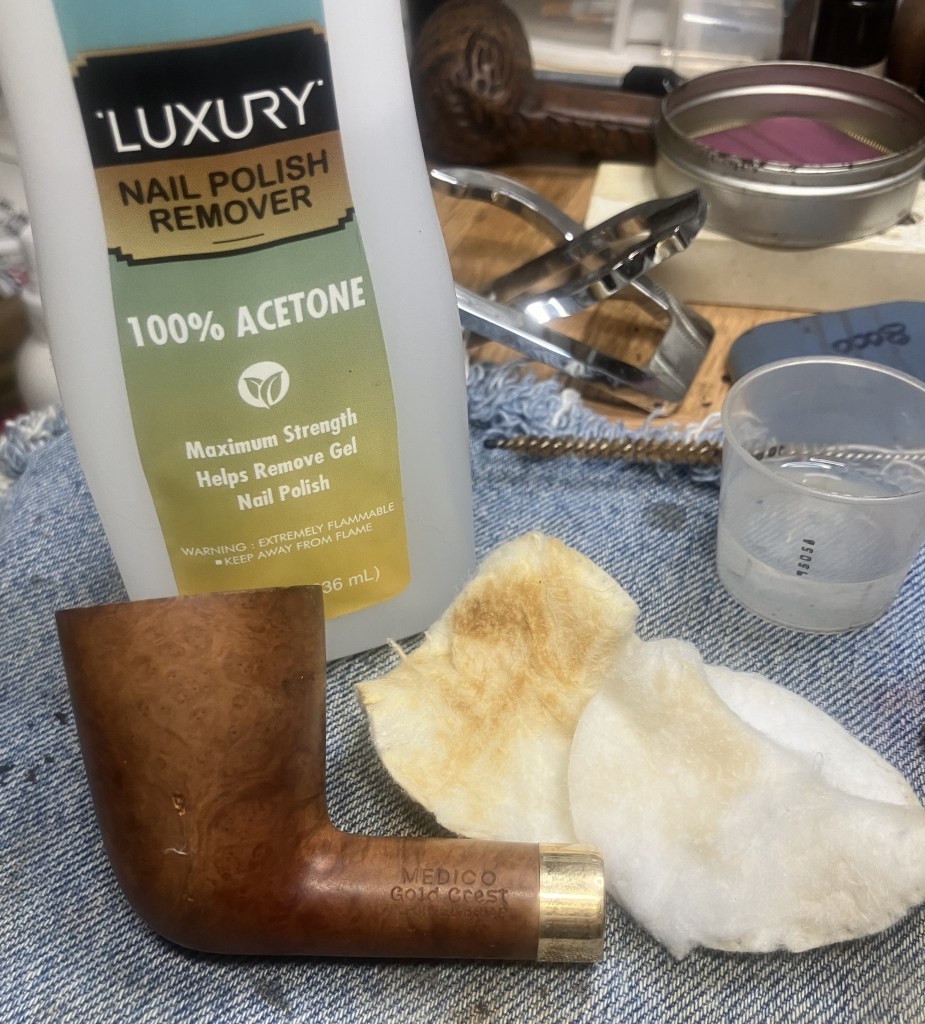
Before steaming, I wanted to remove the clear coat. Acetone was the solvent that worked best to remove this.
I applied acetone to make-up pads and rubbed away the old finish.
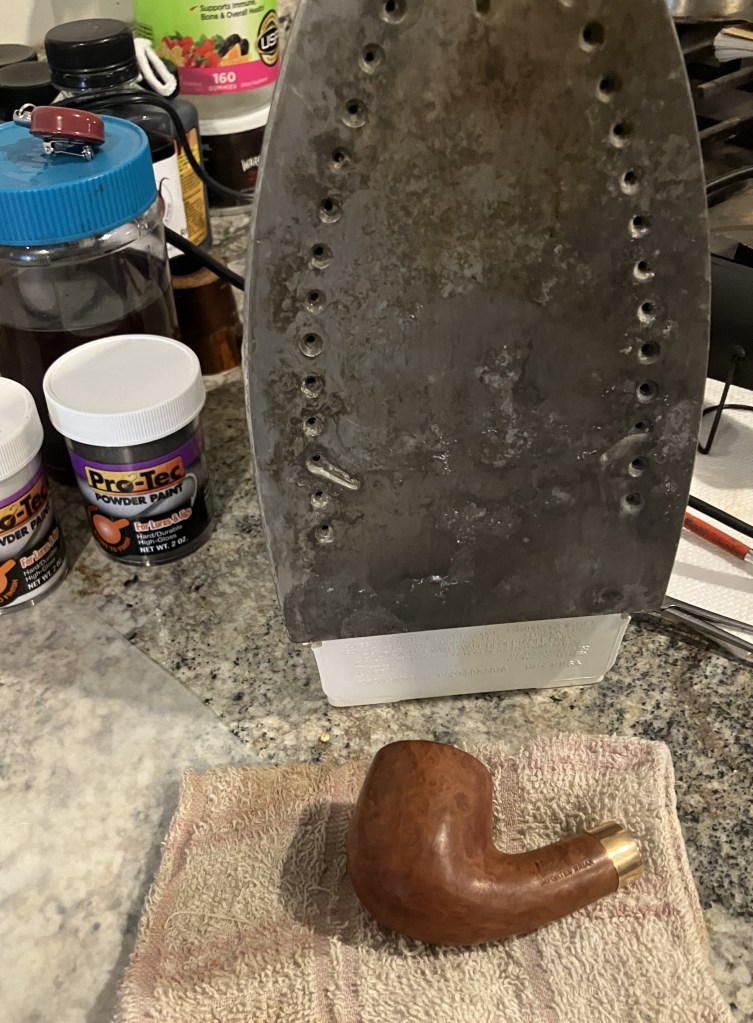
An electric iron and damp cloth provided the steam. This worked very nicely.
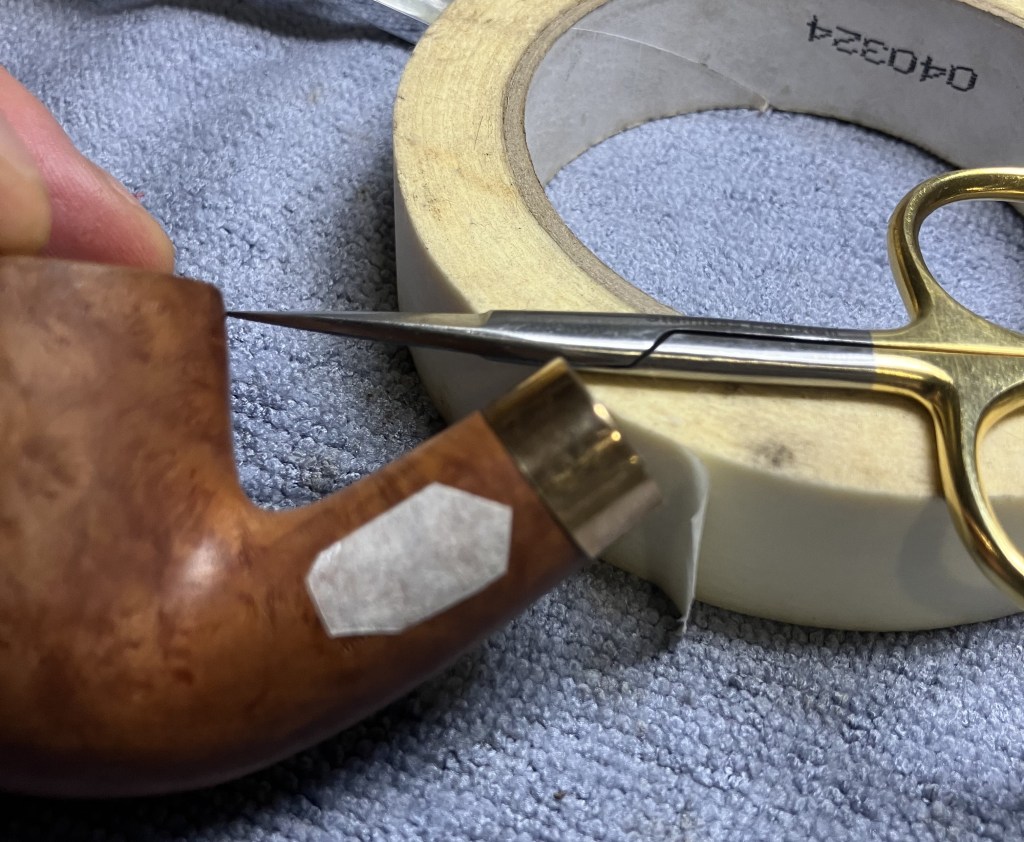
The stampings were covered with masking tape to protect them from sanding.
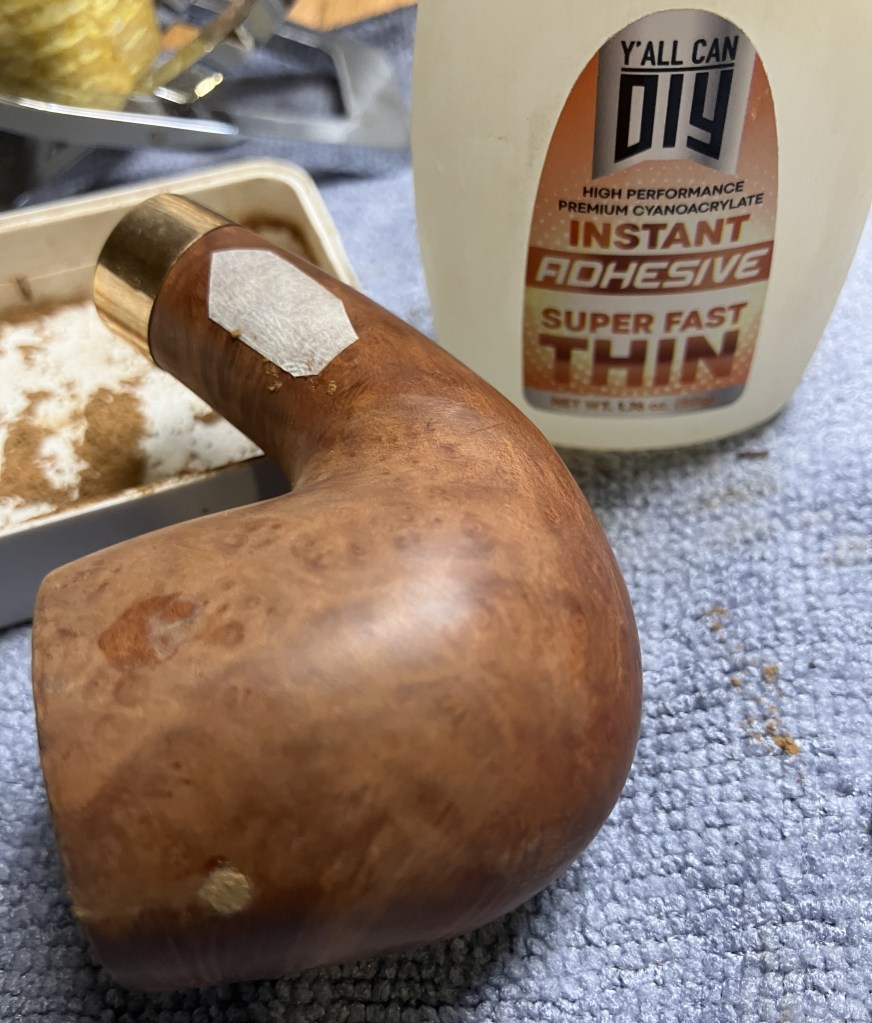
The old fills were picked out and new fill material was added. I used a small drop of thin cyanoacrylate (CA, super glue) in the fill then pressed briar dust onto the wet CA.
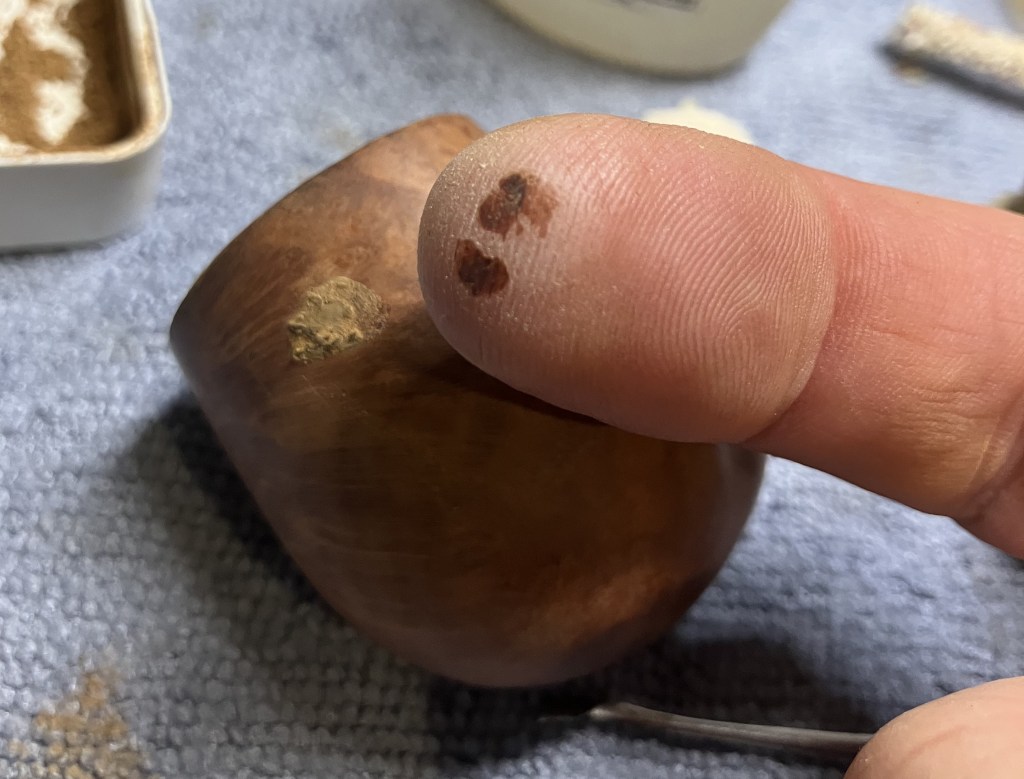
I used my finger tip to press the briar dust into the wet CA. Really, I was not picking snuff boogers from my nose.
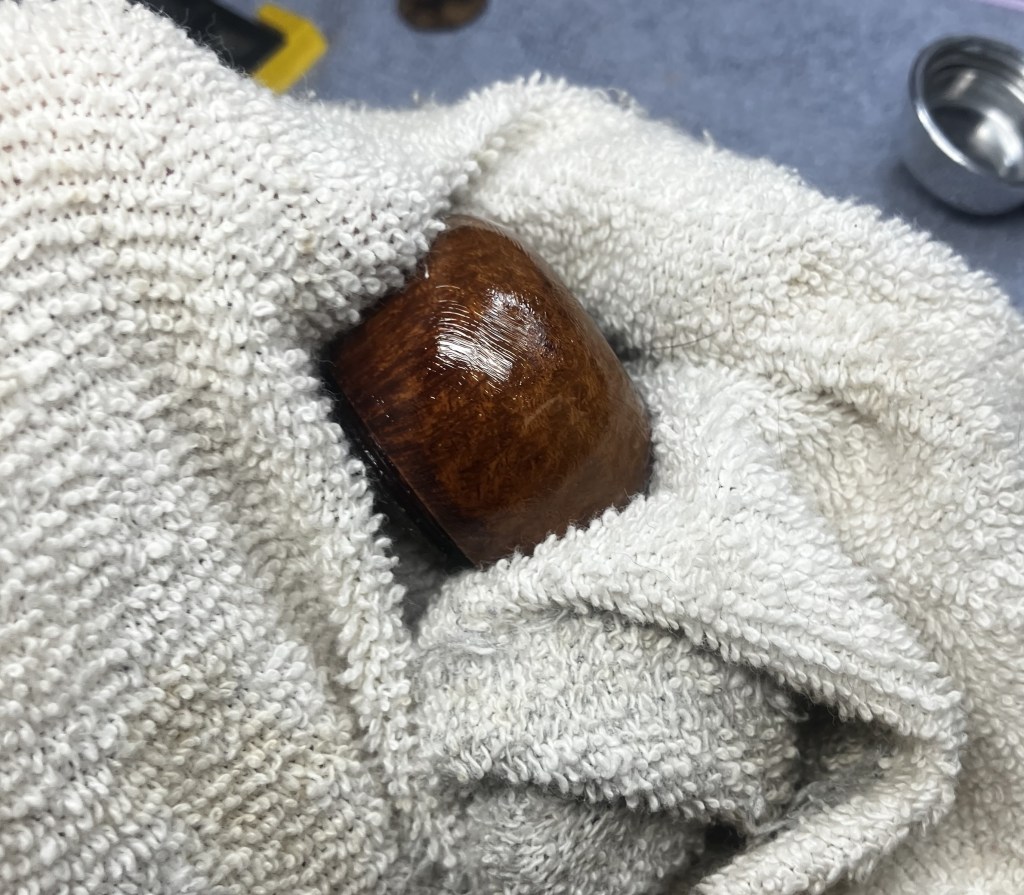
The band was also masked for its protection then the briar was sanded using a series of sanding sponges from 600-3500 grit. In between each sponge the stummel was wiped with a make-up pad wetted with alcohol.
The stummel was then worked with micro-mesh pads from 4000-12000. Again with wiping between each pad.
When removing the tape from the band the whole band slid off. Apparently the alcohol from the wiping had softened the glue. DOH!
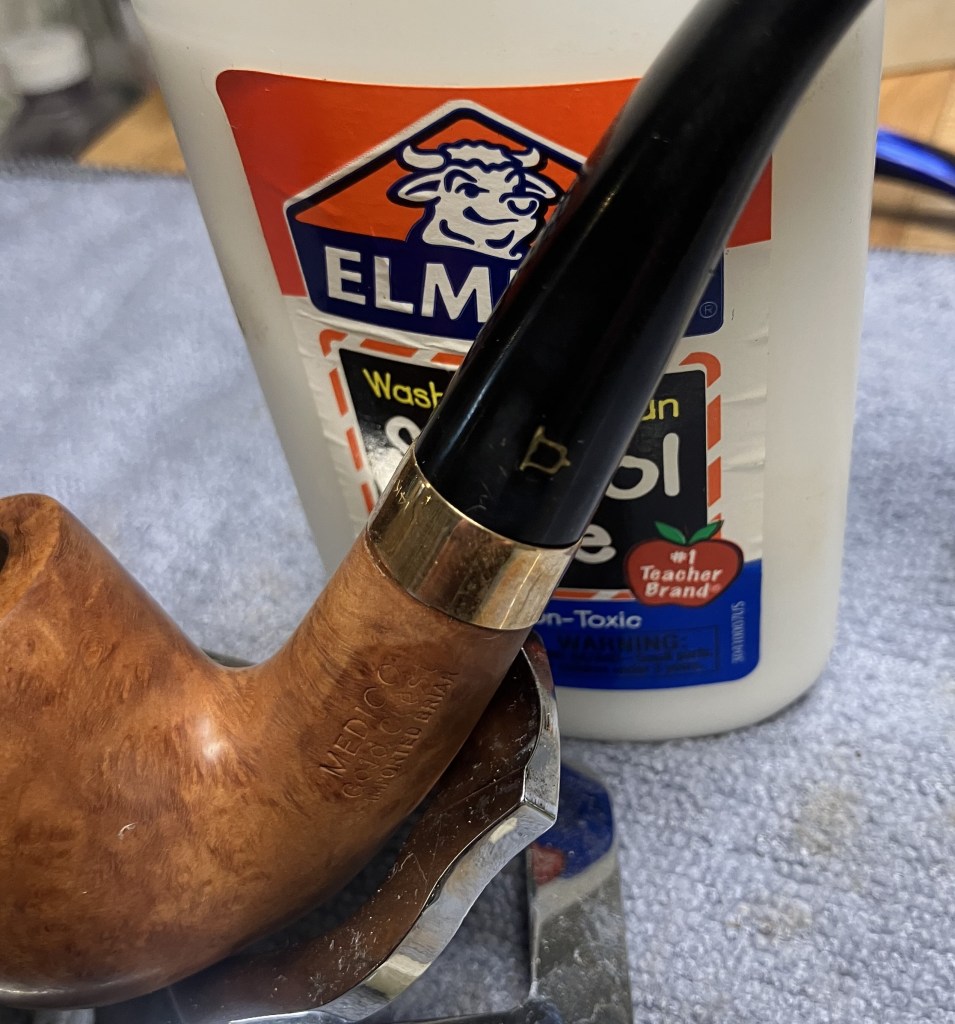
A light coating of white all purpose glue was applied to the shank end and the band was re-glued.
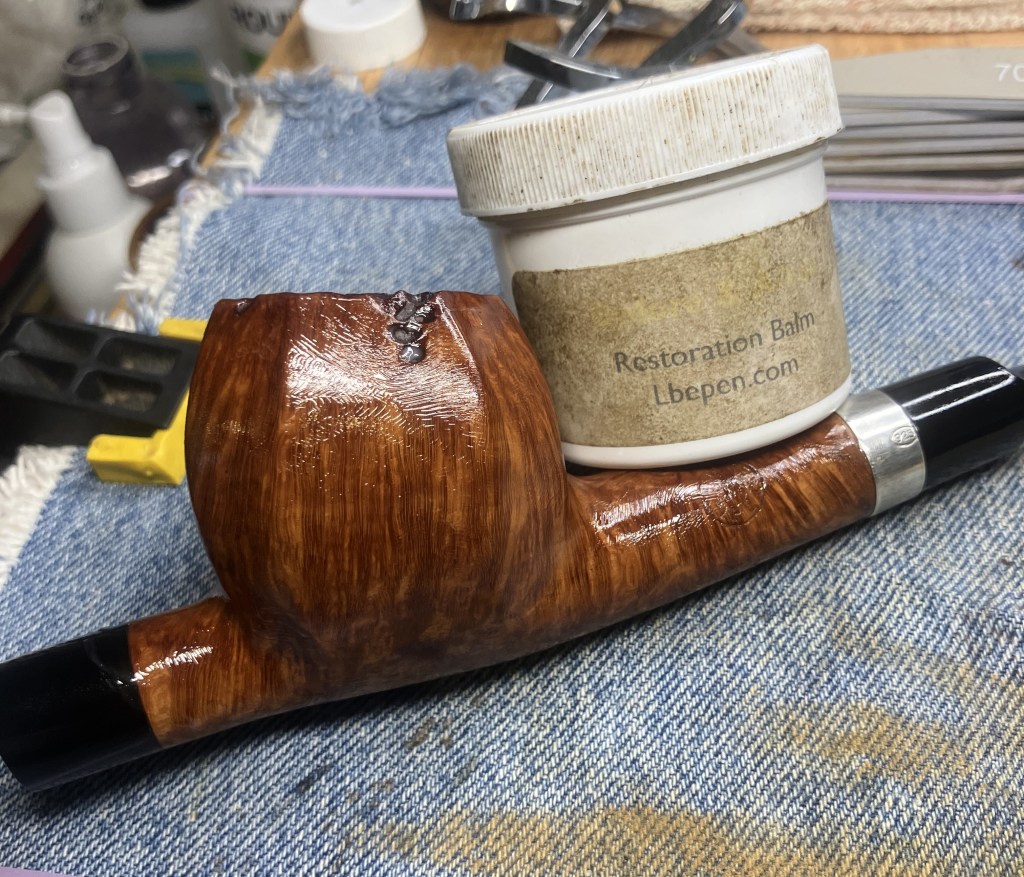
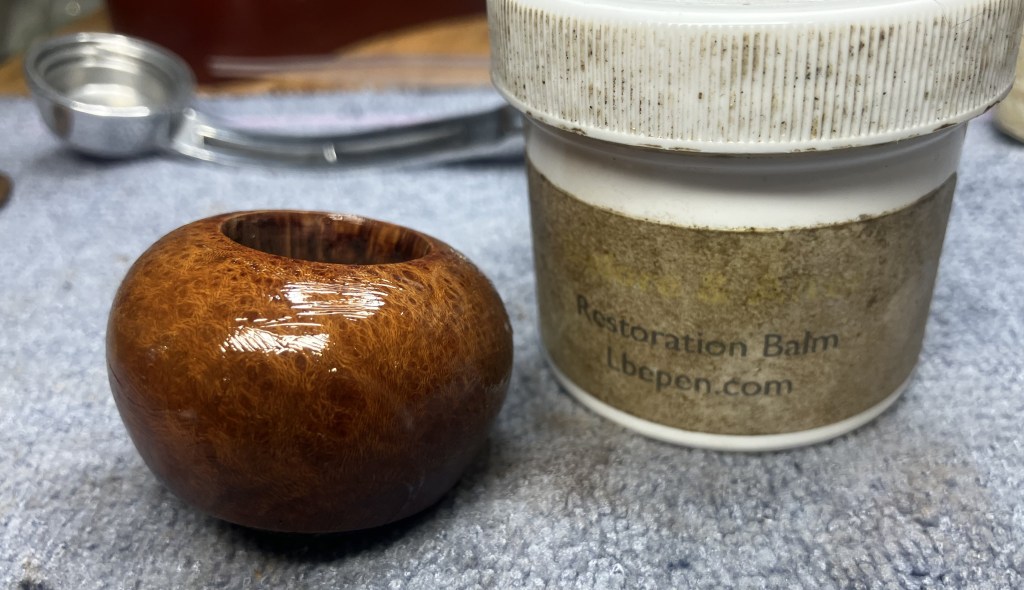
Before and After Restoration Balm was applied to the briar and allowed to work its magic for 20 minutes.
The excess balm was hand buffed with an inside out athletic sock.
The pipe was then given several coats of carnauba wax at the buffer.
The final step before heading to the photo table was a hand buffing with a microfiber polishing cloth.
I think this Medico Gold Crest bent billiard turned out beautifully. The graceful curves of this shape are extremely comfortable both in hand and clenched. Removing the old clear coat and restoring the briar allows the grain to shine. Though not perfect, the stem is far far smoother than it was. When regluing the band I adjusted it to show no gap between the shank and stem. This did leave a slight ring ahead of the band. This pipe will surely be a great smoking pipe with or without a filter. The dimensions of this Medico Gold Crest bent billiard are:
Length: 5.54 in./ 140.72 mm.
Weight: 1.31 oz./ 37.14 g.
Bowl Height: 1.75 in./ 44.45 mm.
Chamber Depth: 1.58 in./ 40.13 mm.
Chamber Diameter: 0.72 in./ 18.29 mm.
Outside Diameter: 1.41 in./ 35.81 mm.
I do hope that you have found something here useful to your own pipe care, maintenance or restorations. If you like this sort of thing, please click the like and subscribe buttons. Thank you for reading the ramblings of an old pipe lover.
Loading…
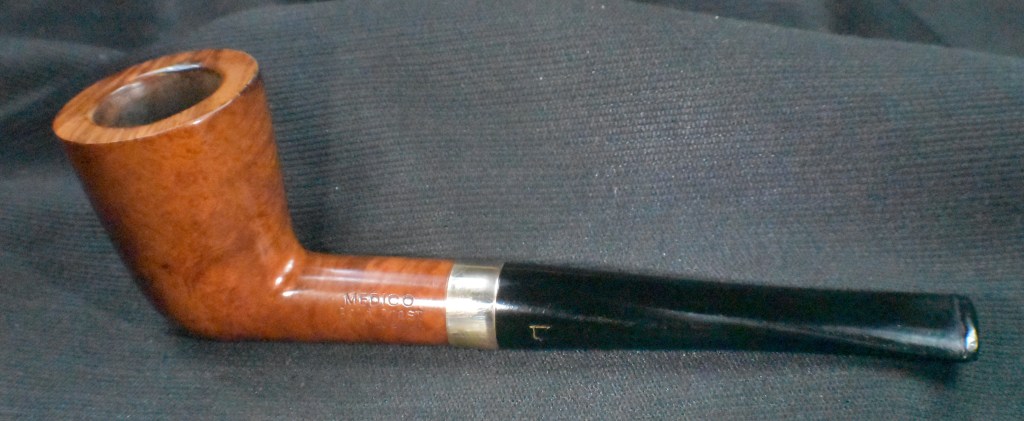
Below are some photos of the finished Medico Gold Crest 63 Bent Billiard.
I am writing this on Saint Patrick’s Day and it’s a beautifully shaped Dublin pipe. Coincidence? I know, I should have been working on a Peterson but have you seen the auction prices of used Peterson’s lately? Anyway, this lovely (well, it will be lovely) Medico came to me as an attempt to invest in the gold market surge. Another pathetic attempt at humor.
OK, it has been several days since I started writing this blog. I don’t know why but I was just having a terrible time sitting to do the writing. It’s not because of the pipe, it’s a beauty. Oh well, here goes.
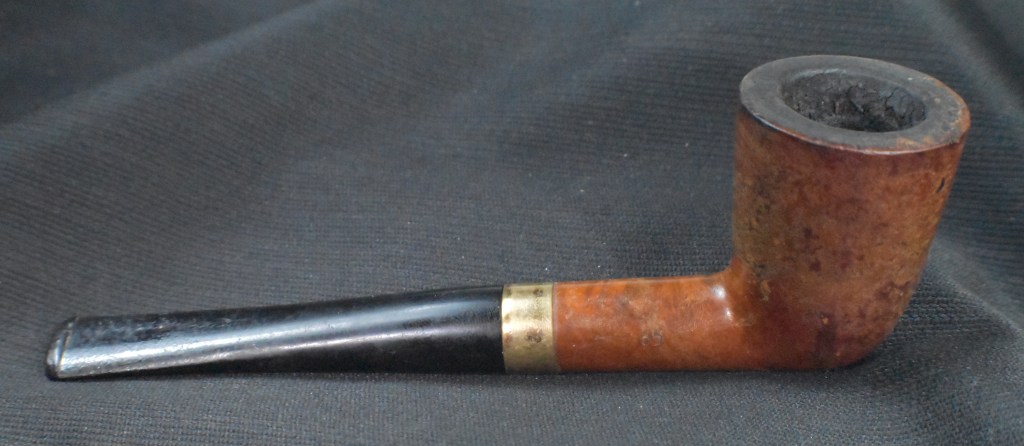
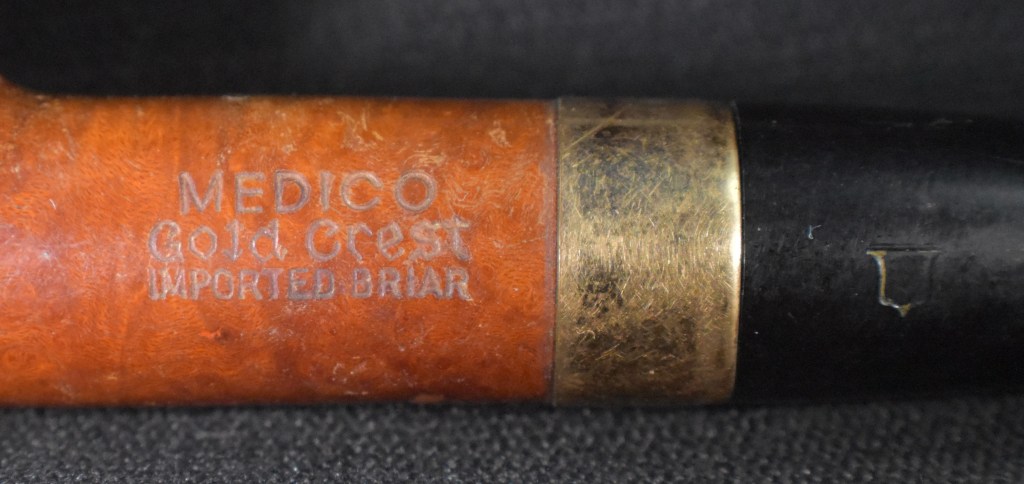
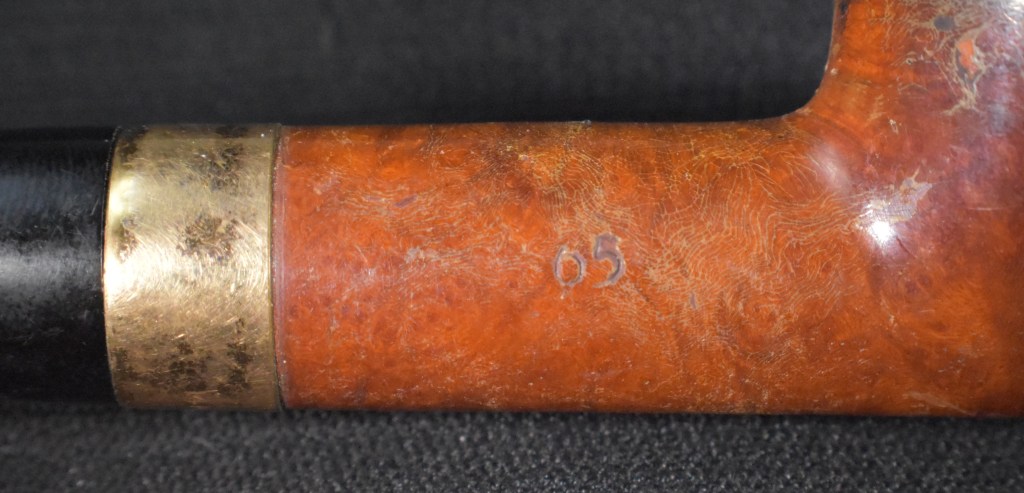
The below photos are of the Medico Gold Crest before I started work on it.
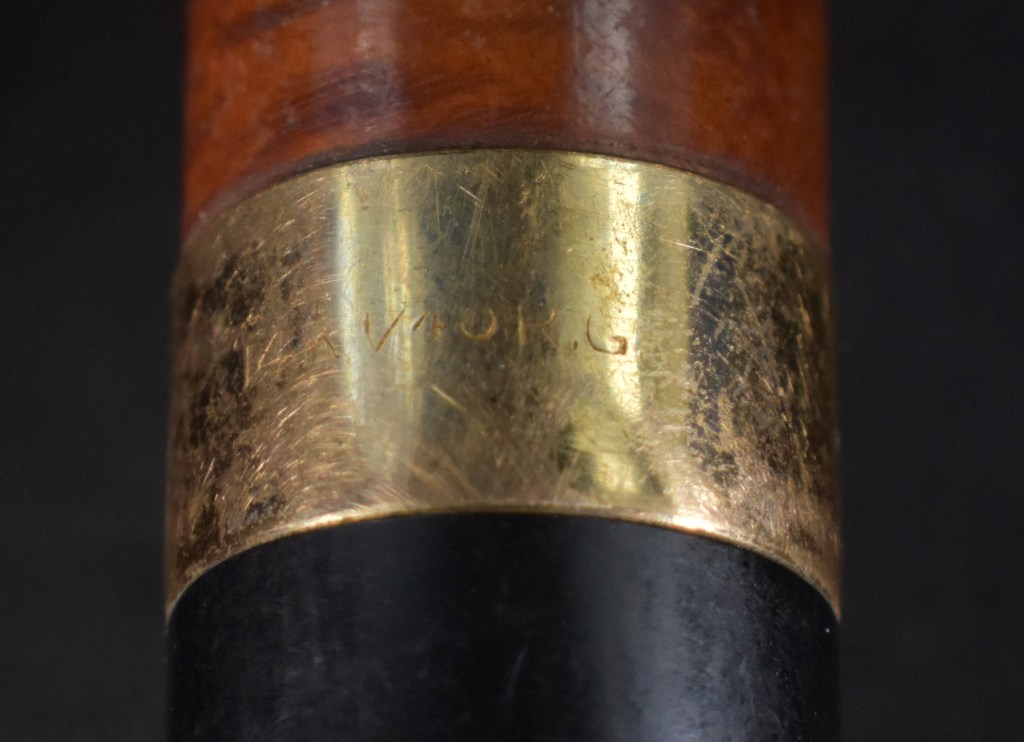
Overall a typical well used and loved pipe. It needed reaming and rim work. The stem was gnawed on nylon which would require more time than a vulcanite stem. There were numerous old fills that would need to be replaced. The gold Rolled Gold (“R.G.” from the stamp) would need buffing. Overall a typical restoration.
Background
I am going to use the “Background” from a Gold Crest Meerschaum pipe I restored a while back. “According to TobaccoPipes.com,
“When you trace the Medico tobacco pipes history, you have to trace it back to the origins of the company that created it. The company that originated the Medico brand is the S.M Frank & Co. This company dates back to the year 1900. In that year, a man named Sam Frank began selling pipes and related tobacco products. Eventually, the company began making its own line of pipes. With the help of an experienced pipe manufacturer, Ferdinand Feuerbach, the company produced the popular Royal DeMuth and Hesson Guard Milano tobacco pipes. The company continued to grow well into the early part of the 1930s.
By the early 1930s, there were some concerns about the tars and nicotine found in tobacco smoke. In order to mellow out the flavor of hot tobacco smoke as well as to capture the tars and nicotine, the S.M. Frank & Co. introduced the Medico pipe filter. This is an absorbent paper filter that many people still use to this day. In order to accommodate the new filter, the company developed an accompanying brand of pipes known as Medico. That line of pipes continues in production today.
The company ended up buying some of their main competition in 1955. That year the Kaywoodie brands came under the S.M. Frank Company. The Medico brand continued production through this transition without many changes. The next big change for the brand came in the late 1960s. In 1966, the company developed a synthetic material that combined the traditional briar wood with resins. It is known as Brylon. At that time, all Medico pipes were made from imported briar wood. In order to keep production costs down, the company began offering some lines with Brylon. Today, that is still true.
Today, the Medico brand of pipes is still a top selling one for the S.M Frank & Co. This line of pipes comes in thirteen different finishes with five made of briar wood and the rest from Brylon. All come with the push bit with a filter inside. The filter is easily changed out when the smoker desires. In the briar wood finishes, this line includes the Silver Crest, Premier, Bold Rebel, Kensington, and Windsor. In the Brylon, the line includes the Lancer, Apollo, Standard, Varsity, Conqueror, Medalist, Cavalier, and V.E.Q. As far as price, the briar wood pipes tend to be higher in cost that the Brylon ones.” (Medico Pipes History | TobaccoPipes.com)
I was unable to precisely identify the years in which the Gold Crest line was made. I did find a couple of print advertisements from 1958 and 1966, at least that is what the eBay sellers were claiming. The first ad is from 1958 and shows a Gold Crest with a list price of $5. The ad says “NEW! See the 1958 series of MEDICO Crest”. This could be read as meaning that the Crest line changed from year to year or that 1958 was the first year of the line.
The second ad looks quite “1966” but it doesn’t mention the Gold Crest pipe. Neither advertisement had the M within the crest as with the Medico Gold Crest in hand.
The pipe was taken from the photo table to the workbench where it received a semi-clean denim piece.
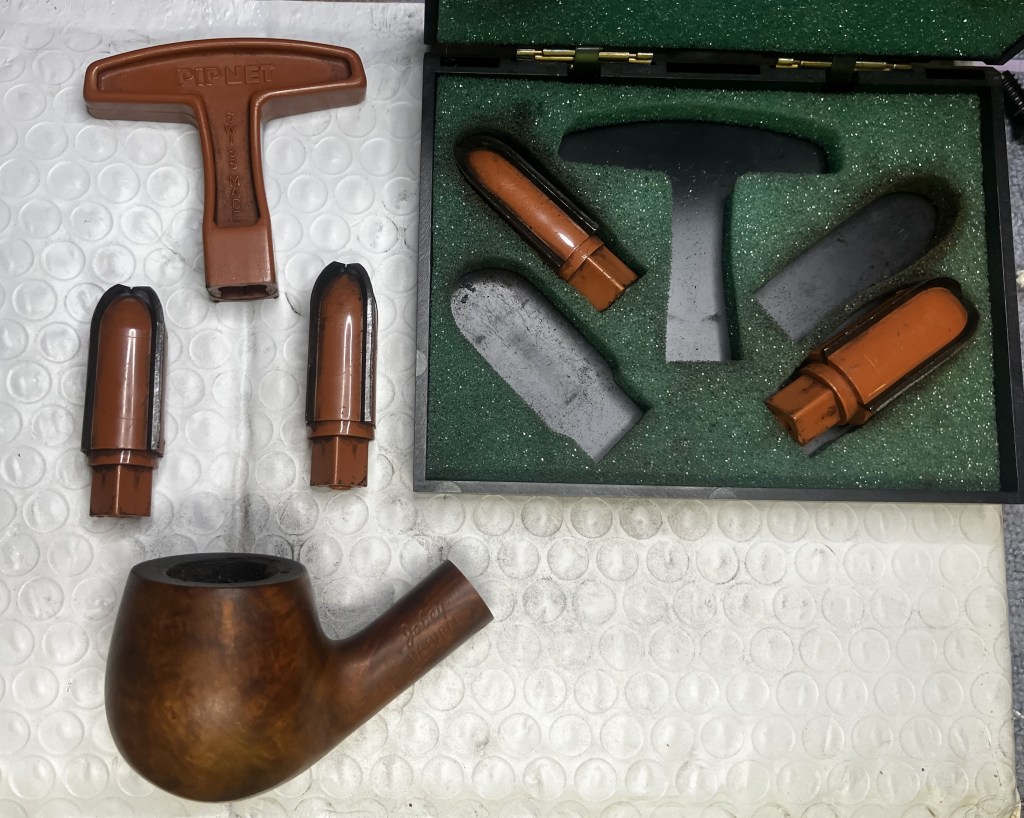
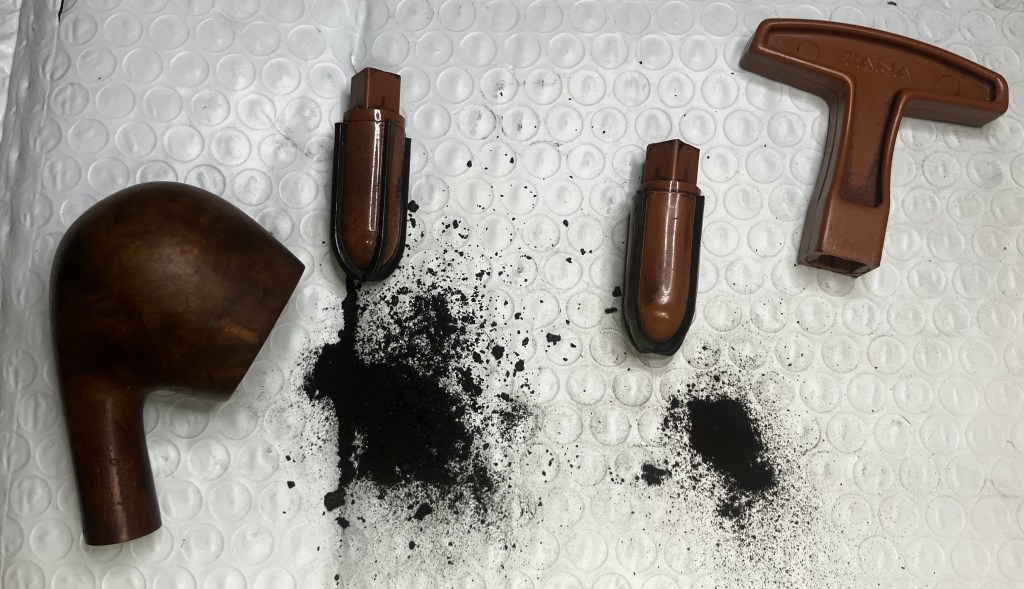
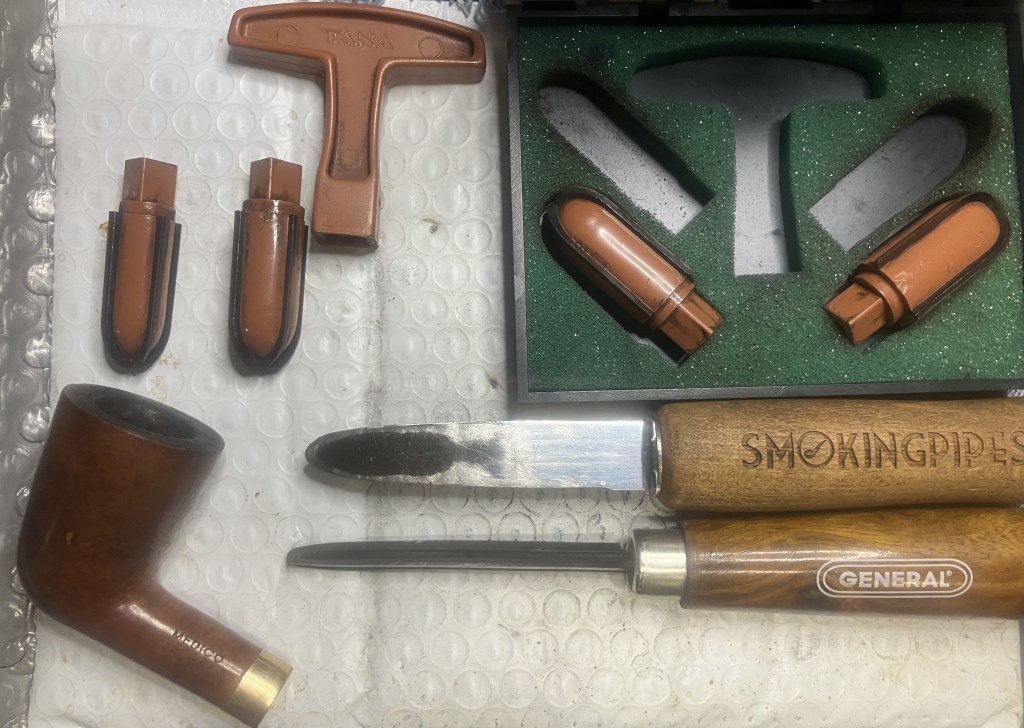
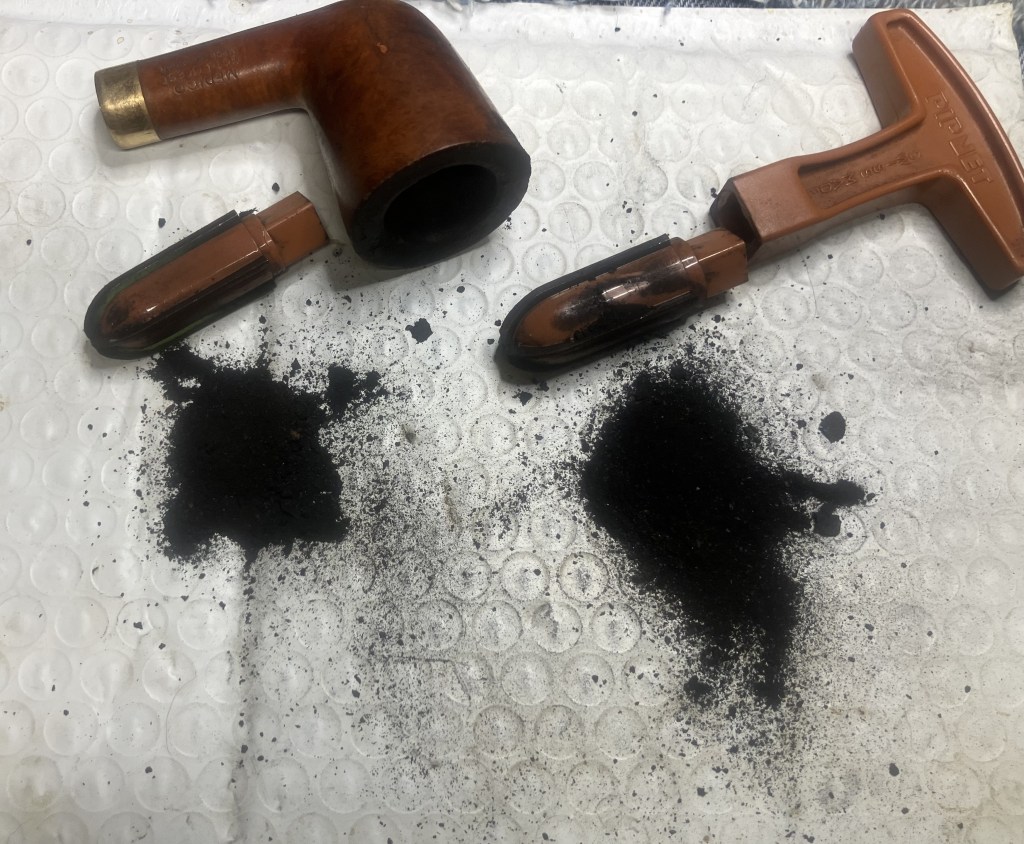
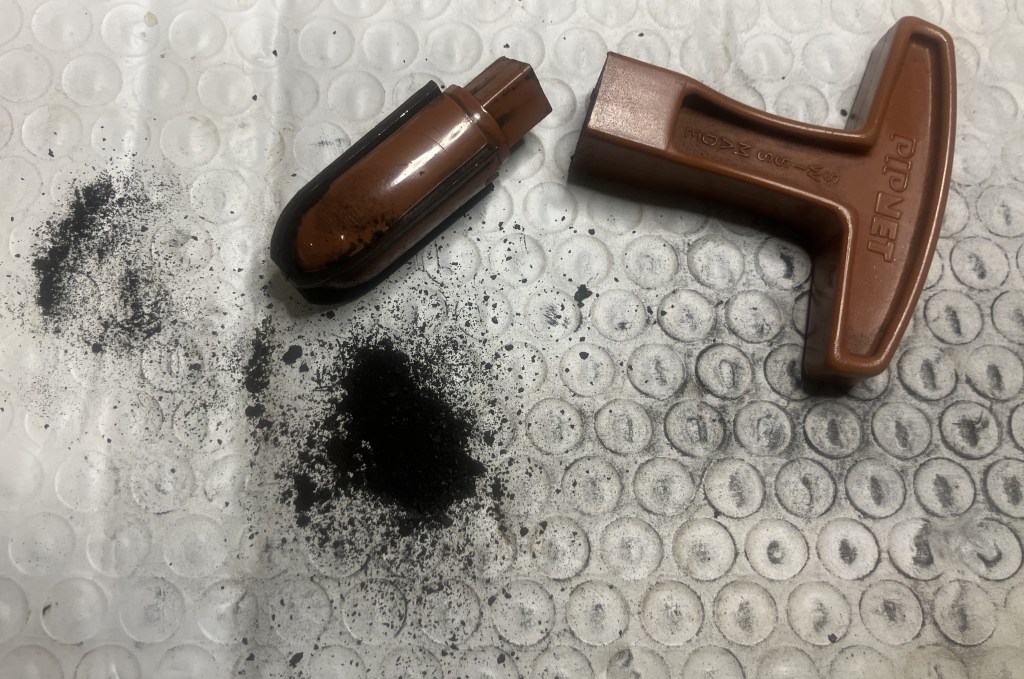
The first step was to reem the tobacco chamber. I thought the PipNet with the #1 and #2 blades would be sufficient.
They were but the chamber was more caked than I initially thought.
The #3 blades came out and did a bit of work also.
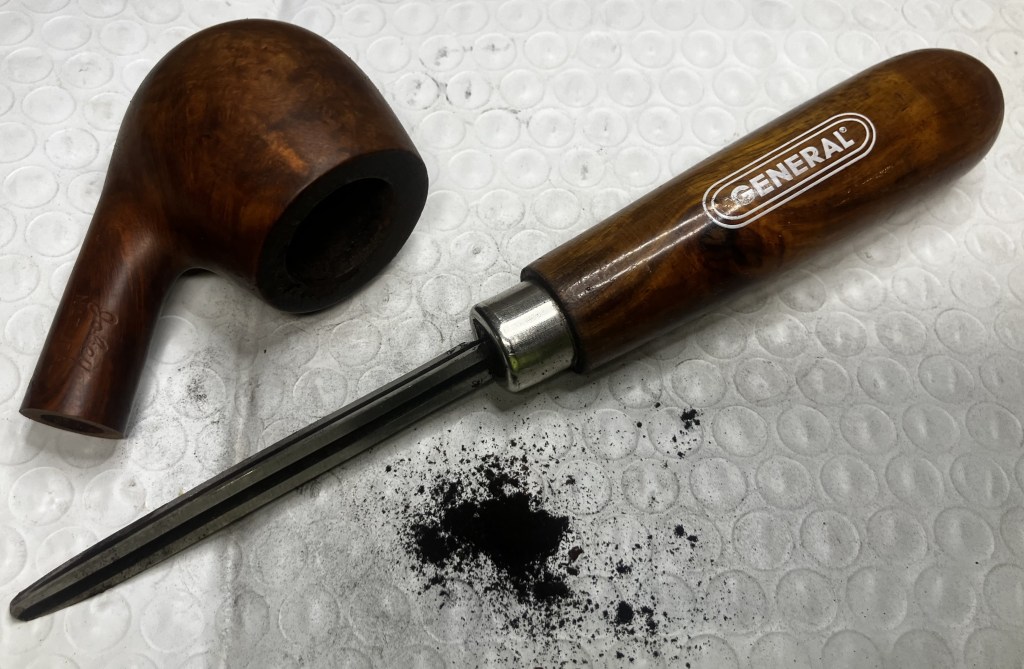
The Smokingpipes Low Country reamer and the General triangular scraper also were used.
Below is a photo of the reemed chamber.
Once sanded it looked much better and showed no signs of heat damage.
The rim was encrusted in smoking residues or lava.
This was moistened with saliva and scraped with a sharp pocket knife, revealing the slightly damaged rim seen below.
I topped the rim using 320 sandpaper laid on a countertop. Followed by 400 sandpaper.
The topped rim looked far better. The inner rim did show some signs of charring from lighters on both the right and left sides.
I tried to sand the inner rim with a wooden sphere wrapped in 320 sandpaper.
The sanding helped but there remained slight depressions on both the left and the right. I didn’t want to alter the bore any more than I had to.
The shank was cleaned out using cotton swabs, bristle pipe cleaners, a dental scraper, nylon shank brush and a good deal of 99% ethyl alcohol.
To the sink! The stummel was taken to the sink for a scrub with undiluted Murphy Oil Soap and a nylon brush. The soap was rinsed with warm water and dried with a cotton hand towel.
There remained some clear coat finish on the stummel.
I am not a fan of clear coats.
I tried to remove the finish with 99% ethyl alcohol. This did little.
Between the scrubbing and the alcohol the old fills were softened. This made them easier to pick out using a fly tying bodkin.
I tried using 100% acetone on a cotton make-up pad. The finish succumbed to this solvent readily.
The pits were packed with briar dust.
The briar dust then had a small drop of thin cyanoacrylate (CA, super glue) applied via a disposable tip on the CA bottle. Each new fill was filed with a small flat file. If additional briar dust and CA were needed a second application was done.
The stampings and gold band were covered in masking tape to protect them from the sanding which was soon to follow.
I switched to working on the stem for some reason. I guess I had put it off long enough. Medico nylon stems are not easy to restore as they do not take well to using black CA for filling pits, dents or other teeth marks. I began with a small flat file.
Augh, so much tooth trauma.
The center of the stem had been bent inwards from biting, collapsing the airway a little. I thought that if I were to heat the nylon with boiling water then force a bamboo skewer into the airway, I might be able to reform it.
I would love to say this worked beautifully but I’d be lying. It did slightly improve the denting but only slightly. I then tried heating the stem with a heat gun. Again, I met only slight improvements.
Giving up on my attempts at restoring the stem to new condition, I called my improvement good and cleaned out the airway with alcohol, pipe cleaners, cotton swabs and a shank brush.
Okay, back to the stummel. This was sanded with a series of sanding sponges from 320-1500. Between each sponge I wiped the stummel with a make-up pad dipped in alcohol.
The sanding continued with sponges 2000-3500 with the same wiping between sponges.
The band was polished on the buffer with a blue buffing compound. I was afraid that it might obliterate the very light stampings and it pretty much did.
The stummel received a coating of Before and After Restoration Balm and was allowed to sit for 30 minutes.
The remaining balm was hand buffed away with an inside out athletic sock.
After all the filing and attempted stretching of the nylon, The stem was sanded with a series of sanding sponges then buffed on the buffer. The below photos show the stem as good as I was able to get it.
Yeah, it is better but I don’t even want to think about the amount of time I spent to get it to the condition that you see in those two photos.
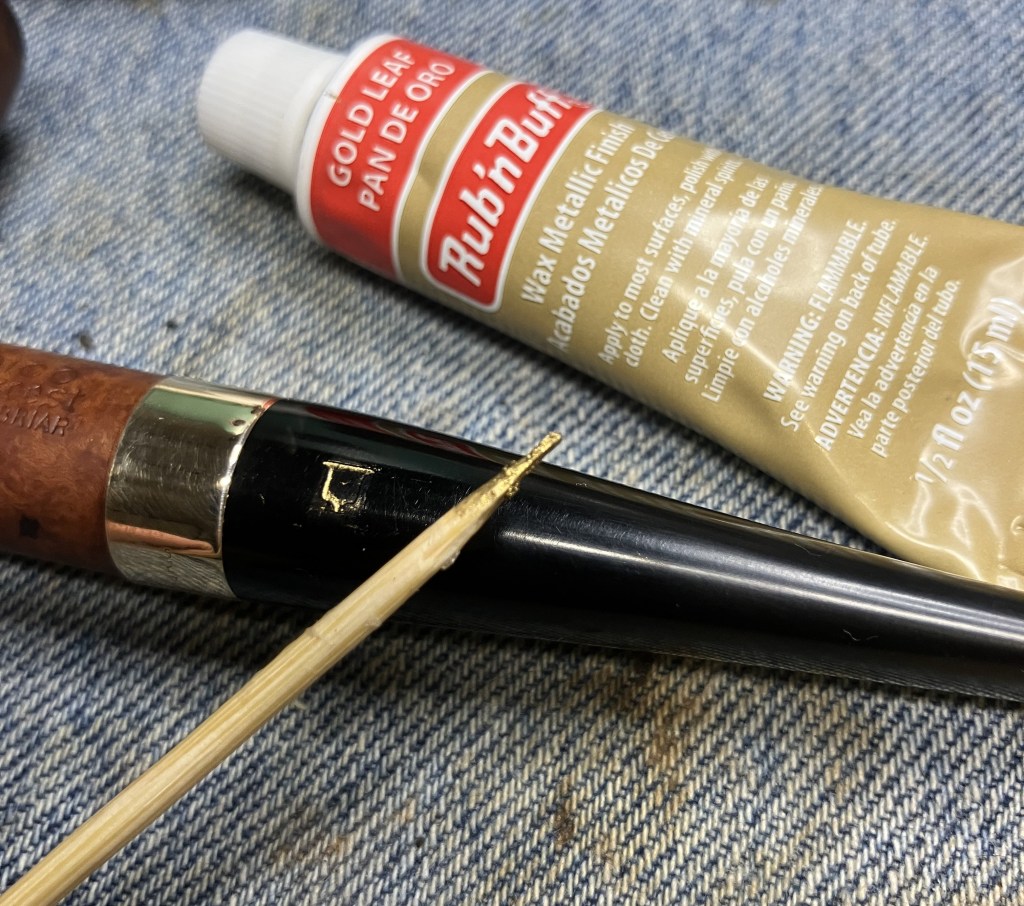
I still needed to refresh the gold crest on the stem. For this I opted to use Rub’n’Buff Gold Leaf wax.
I applied the gold with one of the bamboo skewers and after sharpening the tip with a pocket knife. The wax was allowed to dry for a couple of minutes then hand buffed with a soft cloth.
The pipe was then taken to the buffer for several coats of carnauba wax.
The final step was a hand buffing with a microfiber polishing cloth.
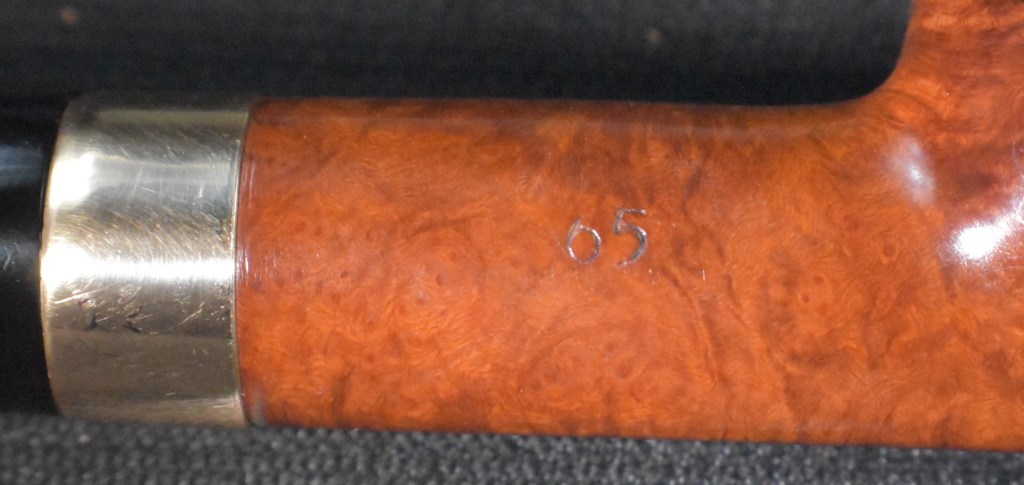
This Medico Gold Crest Dublin did turn out very nicely. The briar shows good edge grain front and read with lovely striping. There is not much bird’s eye to the grain which would make it even more interesting. The nylon of the stem is far better now than when the restoration began. I still have not discovered a good or efficient way to restore nylon. Perhaps someday. Until then I have to accept that my abilities are taxed and accept this as good enough. The gold band did polish up well at the cost of the lightly stamped 14K 1/40 R.G. stamping. I am sure that this lovely Dublin will be a fine smoking pipe and bring someone many more hours of smoking contemplation. The dimensions of the Medico Gold Crest 65 Dublin are:
Length: 5.98 in./ 151.89 mm.
Weight: 1.16 oz./ 32.88 g.
Bowl Height: 1.81 in./ 45.97 mm.
Chamber Depth: 1.56 in./ 39.62 mm.
Chamber Diameter: 0.82 in./ 20.83 mm.
Outside Diameter: 1.38 in./ 35.05 mm.
I do hope that you have found something here useful to your own pipe care, maintenance or restorations. If you like this sort of thing, please click the like and subscribe buttons. Thank you for reading the ramblings of an old pipe lover.
Loading…
Below are some photos of the finished Medico Gold Crest 65 Dublin:
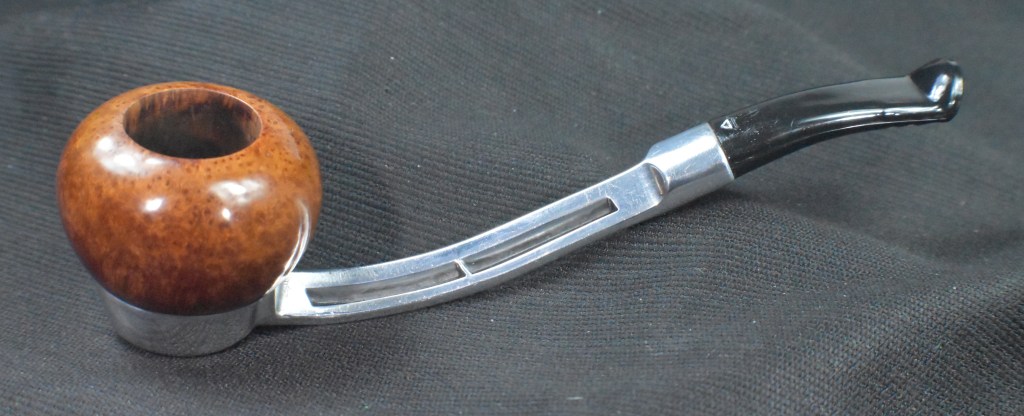
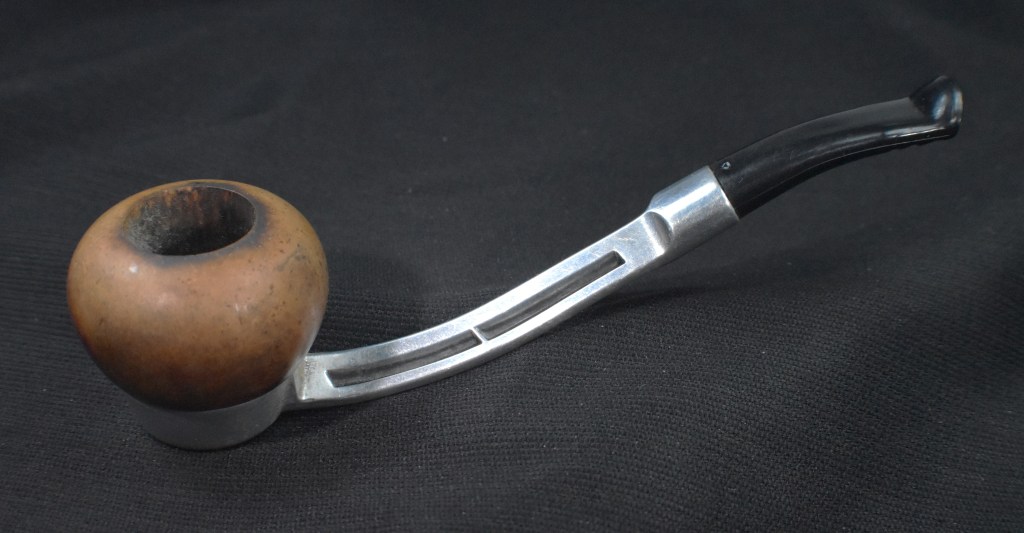
I know, I know, you have seen me restore two of these already. “How is this one different?”, you ask. Well, it was in far worse condition than the other two. Yeah, that’s not much of a reason. OK, I like working on them. They’re kind of ugly yet at the same time there is just something about them that intrigues me. Maybe because they look like a gimmick pipe but these actually work. Given I have only kept one for my own personal use. This pipe came from an eBay auction where I was the sole bidder. Maybe for good reason. Upon arrival the pipe sported the traditional stampings, J. RETTKE over WASHINGTON MO. next to PAT. JUNE 12, 1962 on the bottom of the pipe. Below are some photos taken before I began work on the pipe.
Oh the horror. It’s not that bad, really. The pipe was filthy and heavily used. That should tell me that it was a great smoking pipe. Why else would someone use it that much, right? I failed to photograph the stem for the “before” section, apologies. It was in bad shape. The Medico stems that J. Rettke used were a mix of nylon and vulcanite. I say this because I have encountered both in my Rettke restorations. This one was a well chewed nylon stem. The bowl had a thick cake and scraps of tobacco still within. There was a thick lava deposit on the rim. The exterior of the pipe was dirty and I thought this filth was masking the briar grain. The screw in aluminum “whirler” (J. Rettke’s name for the part) was stuck. This one was going to require some time.
Background
I will use the research I did from my first J. Rettke pipe for the “Background” section and include it here:
“I started my research on Rettke pipes with a pipedia.org search on “rettke”. Below is the short entry from that site.
“J. Rettke, Washington MO, PAT. June 12 1962. The silver colored thumbscrew below the stem unscrews and is a 2⅜” corkscrew like device. The company is now gone having been purchased by Missouri Meerschaum. This odd looking pipe is made of briar and has a lower chamber with a metal condenser and an upper chamber that contains a filter. The smoke leaves the bowl thru the lower chamber then into the upper and out the stem. It smokes dry and cool. It has a large bowl.”
(Rettke – Pipedia) I could not read the above newspaper article even by zooming in.
The next search was using Google patent and searching for “Rettke 1962”. This search turned up the original patent diagrams:
My next search was for Steve Laug’s Rebornpipes.com. Steve Laug did a Rettke restoration back in 2017 and contained links to the State Historical Society of Missouri. I could not get this site to produce the same document or to even display the link Mr. Laug has in his blog post. I will link Steve Laug’s blog here: Restoring a J. Rettke Patent Pipe from Washington, Missouri | rebornpipes. It is a very well written and researched piece that does contain a transcript of the newspaper article as well as several photographs of Julius Rettke and the pipe making process.
My favorite quotes from the newspaper article are,
“The work is done in Mr. Rettke’s basement of his home at Third and Market streets. He doesn’t work at it every day only when he feels like it. He likes to fish and that comes before his pipes in the summer.”
I can completely understand the lack of enthusiasm for pipe work when fishing is taking a priority.
And this quote:
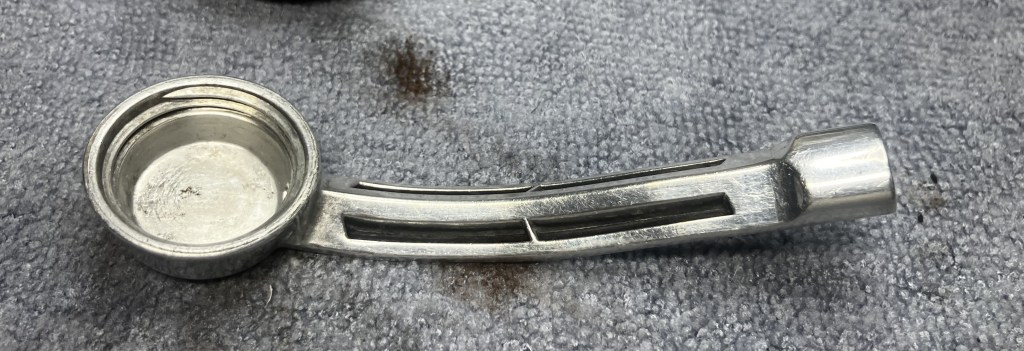
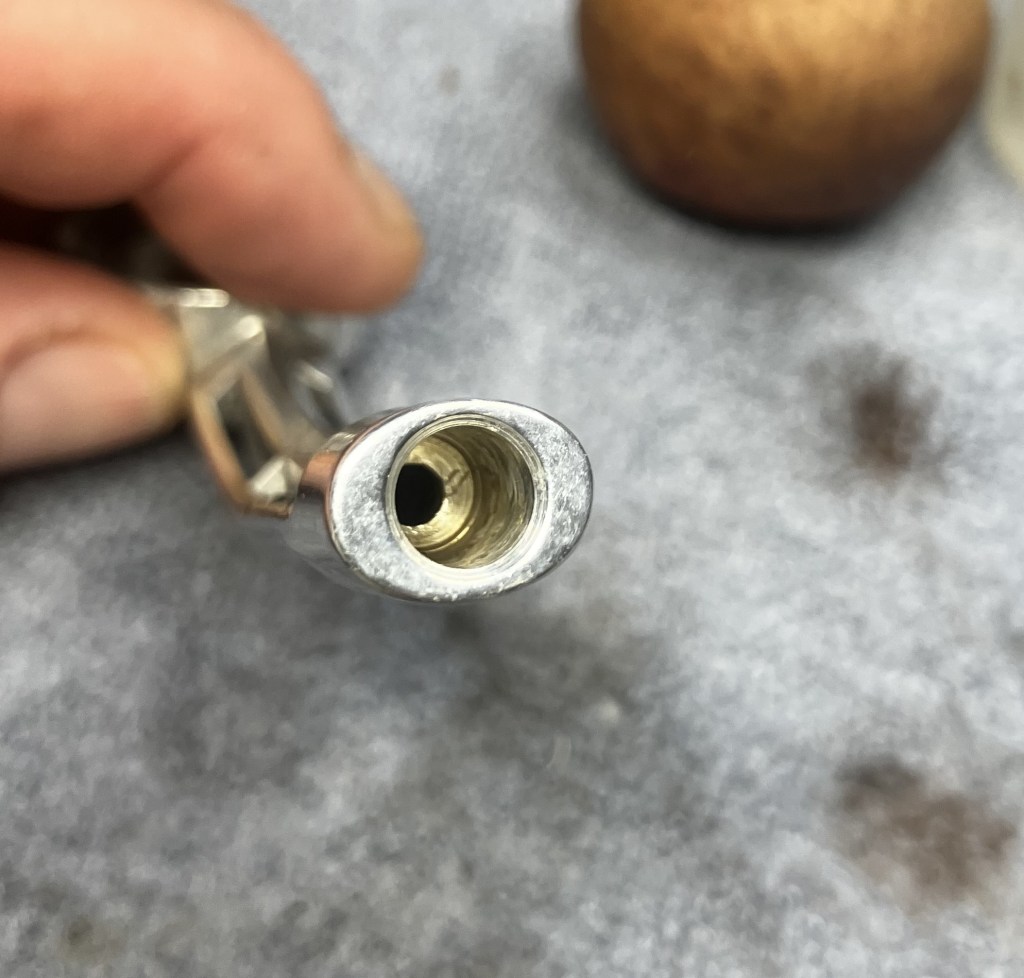
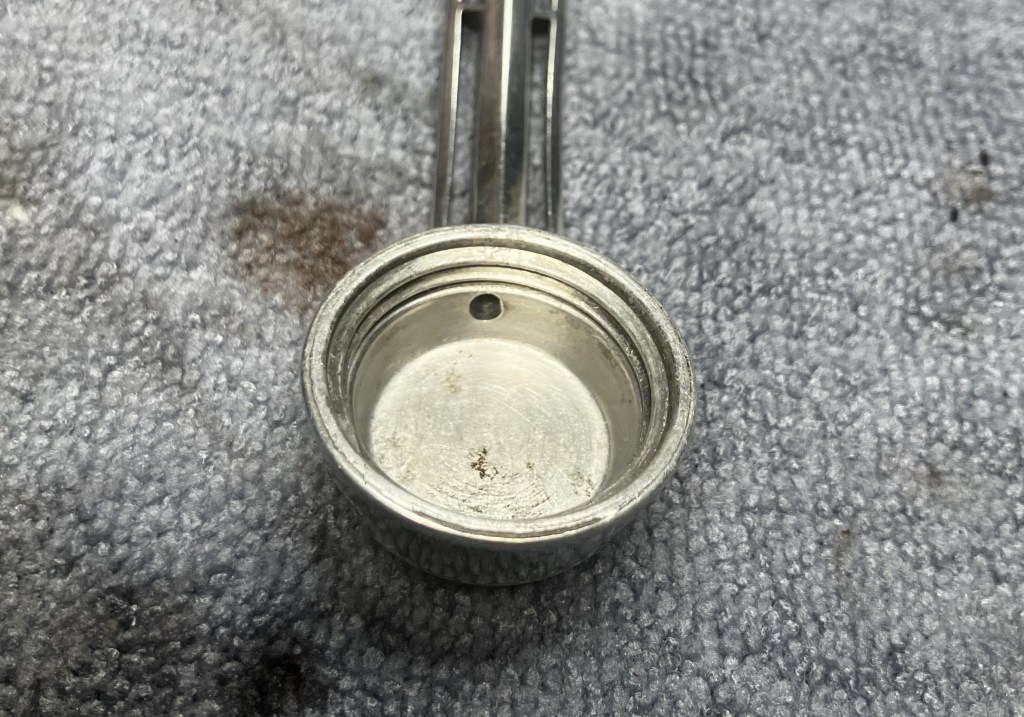
“Mr. Rettke received his patent on his pipe in 1962. What makes his pipe different from others on the market is the path the smoke takes from the bowl, and the passage of smoke through a twisted piece of aluminum, or a “whirler.” The smoke also travels through a standard filter in a standard hard-rubber stem. The “whirler” has a rubber tip that shows on the outside of the pipe under the stem. The “whirler” also can be used as a pipe cleaning tool. It pulls out easily for cleaning purposes.” Here the newspaper article talks about a rubber tipped “whirler”. That is how the whirler of my pipe is made. The other Rettke pipes I saw in photos all had a knurled aluminum tip. This little fact is mostly non-important, I just found it interesting.
Now for the fun part: How does this pipe work? In the news article transcript it said, “four holes are bored.” under the photo of J. Rettke at the drill press. I read that after I had done my exploration of the stummel and it was in near complete agreement of what I observed.
Using the above photos, I overlaid some image features to indicate the “four” drillings.
Not to be a smart ass, but I think Mr. Rettke would agree that there were actually 5 drillings. The final hole would be a hole at the bottom of the tobacco chamber connecting the airway to the lower chamber. I’ll blame the reporter for the oversight and not Mr. Rettke.” (A Rettke Pipe Restoration for the Real American Pipe Smokers (RAPS) Facebook group – NebraskaPeteGeek). It seems weird to quote myself but, I’m far too lazy to rewrite all that. Feel free to take a look at the other two Rettke restorations. Here is the second: A J. Rettke Restoration – NebraskaPeteGeek.
The Restoration
I wrapped the knurled end of the whirler with a thick piece of leather and gripped it with a pliers to free it from the stummel for the “before” photos. Below is the pipe on the workbench.
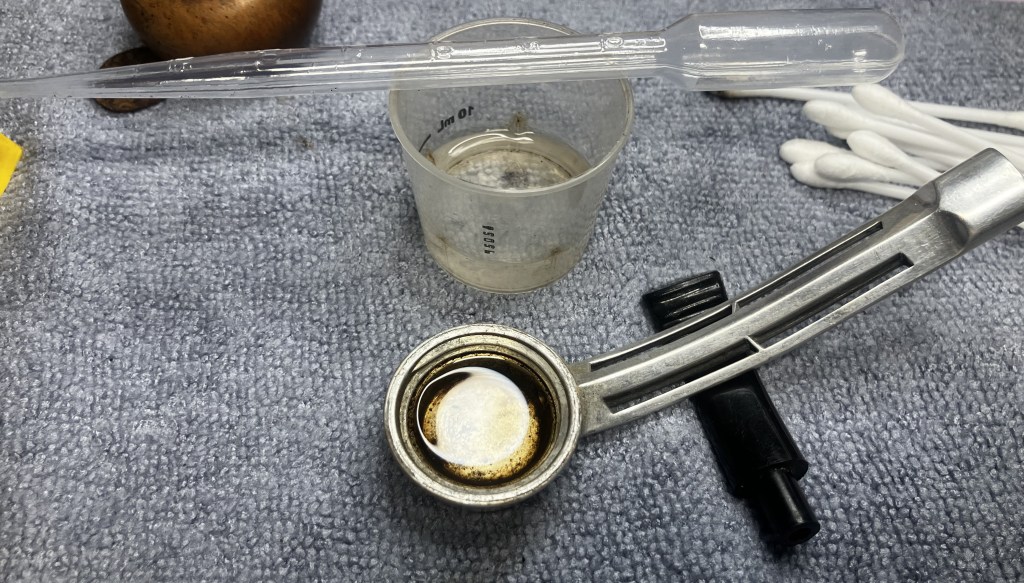
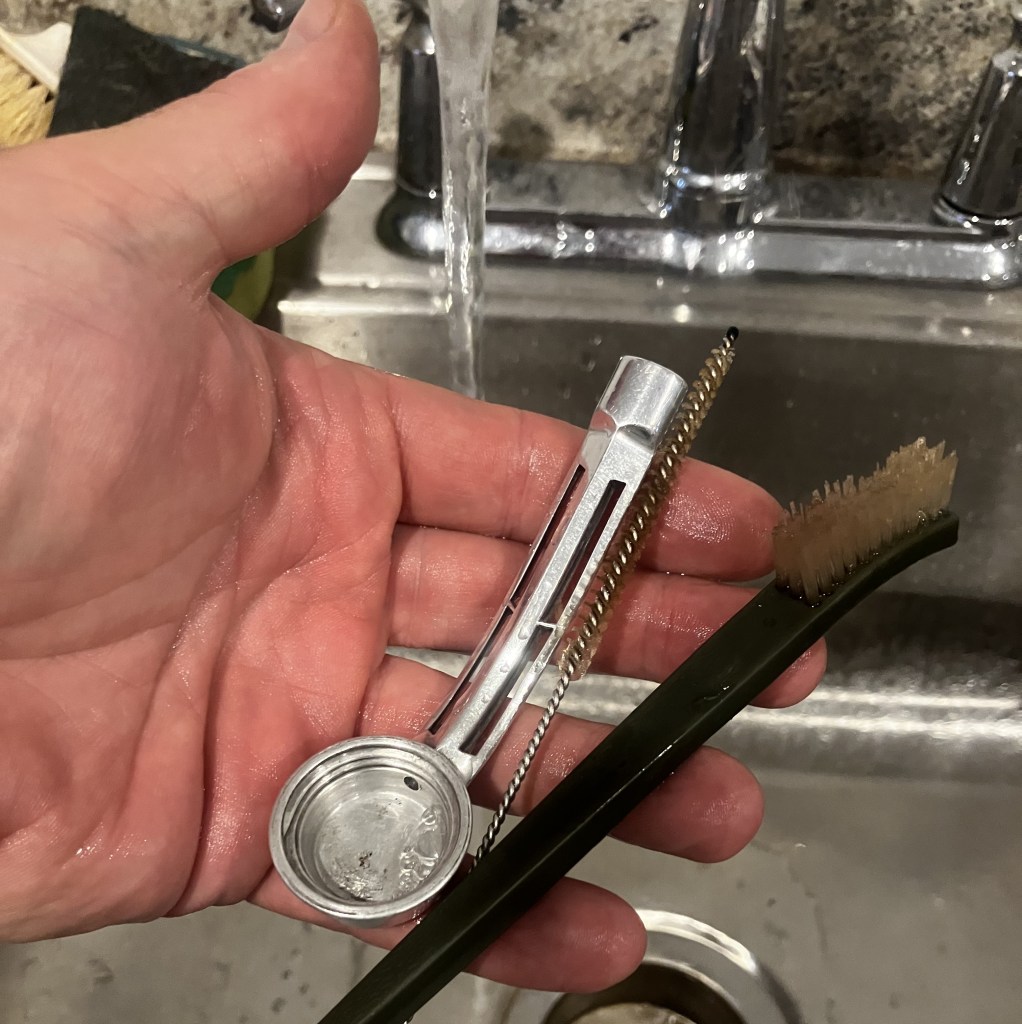
The whirler was too long for the medicine cup so it got an old snuff can lid with enough 99% ethyl alcohol to soak the aluminum.
The airway of the shank was as disgusting as the rest of the pipe. I tried to moisten the tar deposits with alcohol dipped cotton swabs. I also used a .22 caliber brass bore brush to lightly scrub the upper and lower chambers. There was also some scraping with a dental scraper.
The reaming used three of the PipNet blades.
The first blade.
The second blade.
And the third blade.
Old Mr. Rettke must have had a drill bit with a more conical bottom as I needed to use the Kleen-Reem to ream that part of the tobacco chamber.
Even after all that the chamber needed scraping with the Smokingpipes Low Country reamer and the General triangular scraper.
Finally, the chamber was reamed. The walls were remarkably intact and undamaged by the many bowls of tobacco.
To rid the rim of it’s lava, I employed a new tool or toy. A cabinet scraper. The rim was moistened with saliva and allowed to soften for a few minutes.
The cabinet scraper performed admirably but revealed that the rim appeared to be stained or dyed black. I had never seen a black Rettke pipe before. Maybe it wasn’t as filthy as I suspected.
To the sink! Here the stummel was scrubbed with a nylon brush and undiluted Murphy Oil Soap. Yeah, it was filthy. The soap was rinsed with warm water and the stummel dried with a cotton hand towel.
Hmm, back at the bench it became obvious that the briar had indeed been dyed black. It wasn’t just dye though, it was like old Mr. Rettke had mixed the dye with lacquer. I wiped the stummel with a make-up pad dipped in 99% ethyl alcohol and it removed a lot of black.
I started sanding to see if I could penetrate the finish. It worked. I thought to myself, “a smooth black fishing is a tough thing to master. Maybe Mr. Rettke was trying his hand at that kind of finish to mask some flaws in this piece of briar?” Yes, it was all conjecture, but it makes for an interesting story.
This pipe had a very sharp rim both inside and outside the tobacco chamber. To mask the dings and wear, I added a slight bevel to the inner rim using sandpaper and a wooden sphere. The outer rim was also beveled using a life and sandpaper.
I know, I was jumping around a lot with the different parts of the restoration. I next cleaned the whirler. I do that when I am thinking about how to go about doing something with a restoration. Repetitive activities help lubricate my thought process.
The whirler cleaned up nicely.
Hmm, there was a fill on the top of the shank, the parabolic light mark seen below. I wondered if this was what Mr. Rettke was trying to conceal with the black? I proceeded to pack the airways with cotton.
I figured that it would take a bit over 10 ml of ethyl alcohol to saturate the cotton. Using a disposable pipette I added alcohol until all of it was saturated.
I was right, a bit more than 10 ml. The alcohol would be left to evaporate, dissolving the tars and moving them to the cotton over the next several hours.
I turned my attention to the stem. It too was dirty and took several cotton swabs and bristle pipe cleaner dipped in alcohol to clean.
Here is a photo of the condition of the stem before working to smooth it. Yikes!
Filing was the first step. I used a small flat file to reestablish the button and remove some of the dents from teeth.
The filing and sanding with a 320 sanding sponge continued on both the top and bottom of the stem. Darn that nylon.
Taking a break from the stem, I thought about how to repair the two dings on the bottom left of the stummel. The alcohol was still soaked into the cotton within the airways and would be interfered with by my manipulations.
I first tried to raise the dents using a hot iron and a wet cotton cloth.
This worked a little bit but the dents remained.
I filled the dents with briar dust and pressed the dust into the depressions.
This cyanoacetate (CA, super glue) was added to the briar dust.
This was filed using a small flat file.
An additional application of briar dust and CA was used and more filing and a bit of sanding smoothed the damage.
The next day the cotton was removed.
Another airway cleaning with cotton swabs and bristle pipe cleaners went much better that the first one.
The stummel was sanded with a series of sanding sponges from 600-3500 grits. Between each sponge the stummel was wiped with a make-up pad wetted with alcohol to remove sanding debris.
The stummel was then worked with micro-mesh pads 4000-12000. The wiping was done as with the sanding sponges between each pad.
The stummel was coated in Before and After Restoration Balm and allowed to sit for 20 minutes. I liked the way the removal of the black finish had left a finish like a contrast dye on the briar.
The excess Restoration Balm was wiped from the stummel using an inside out athletic sock.
It’s here that I realized that I had neglected to photograph all the sanding and buffing that I did on the stem. This is probably due to the fact that I do not enjoy working on nylon stems very much. They always seem like you are taking two steps forward and one step back while trying to give them a nice finish and even after a mile’s worth of steps they don’t look great. Well the stummel did look great and both the stem and stummel received several coats of carnauba wax at the buffer.
The final step was a hand buffing of the pipe with a microfiber polishing cloth before the “finished” photo shoot..
I doubt I will ever get tired of restoring J. Rettke pipes. This one turned out very nicely. Yeah, the stem still shows some signs of chompage but it is far better than it was before the restoration. The tobacco chamber was well preserved by all that cake and it looks great. The refinishing of the briar appears dramatically better than I expected. The contrast dye, though unexpected, shows off the wood grain beautifully. At the end of the first Rettke restoration, I said, “Overall this is a very nice and interesting historical pipe. I would consider this an artisanal pipe from a time before artisanal was cool.” Those two statements also apply to this pipe. The dimensions of the J. Rettke are:
Length: 5.39 in./ 136.91 mm.
Weight: 1.25 oz./ 35.44 g.
Bowl Height: 1.93 in./ 49.02 mm.
Chamber Depth: 1.46 in./ 37.08 mm.
Chamber Diameter: 0.75 in./ 19.05 mm.
Outside Diameter: 1.36 in./ 34.54 mm.
I do hope that you have found something here useful to your own pipe care, maintenance or restorations. If you like this sort of thing, please click the like and subscribe buttons. Thank you for reading the ramblings of an old pipe lover.
Loading…
Below are some photos of the finished J. Rettke pipe.
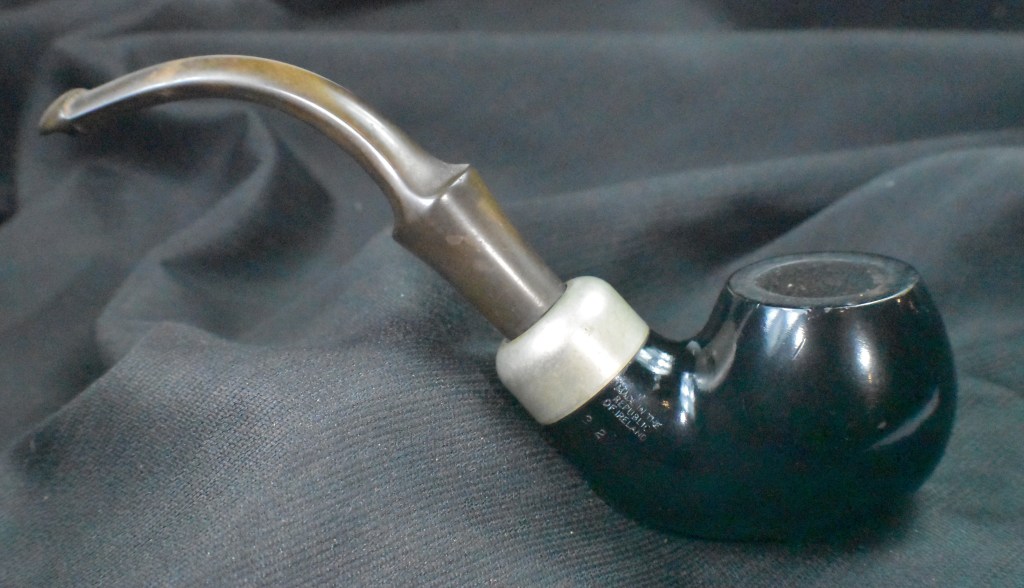
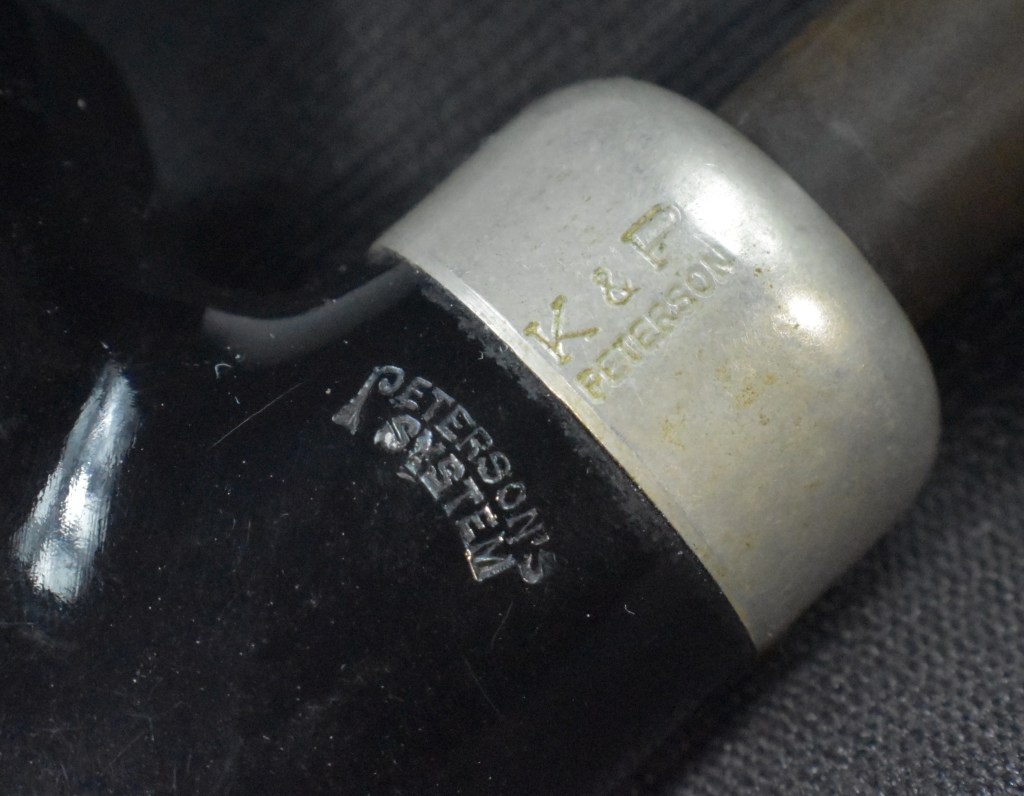
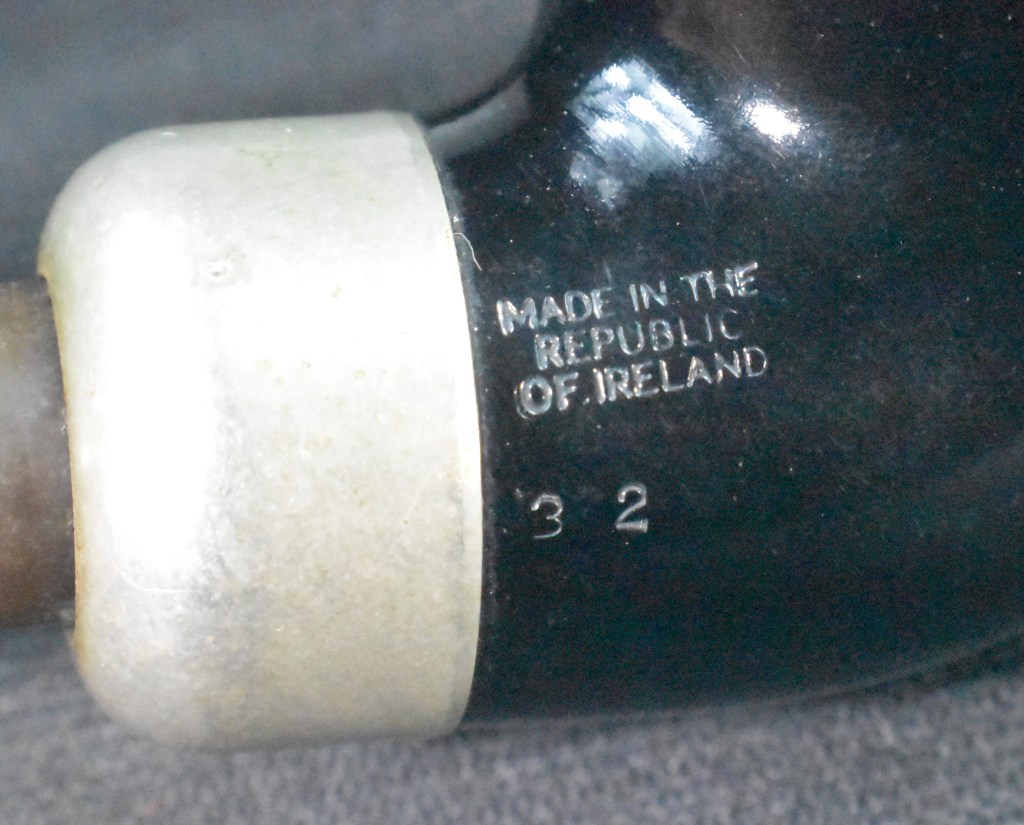
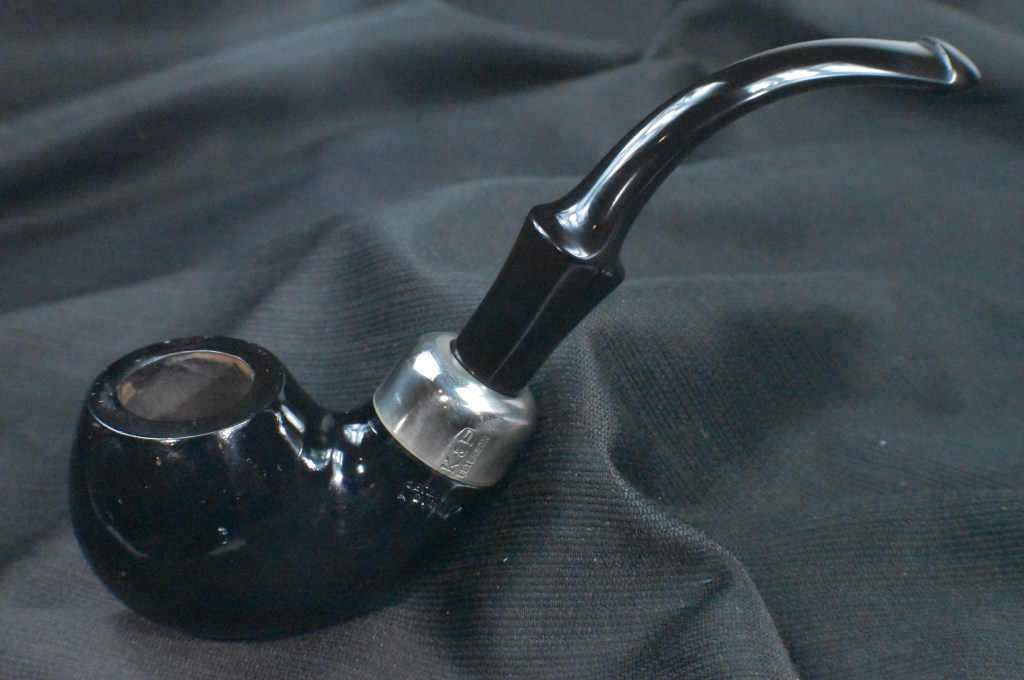
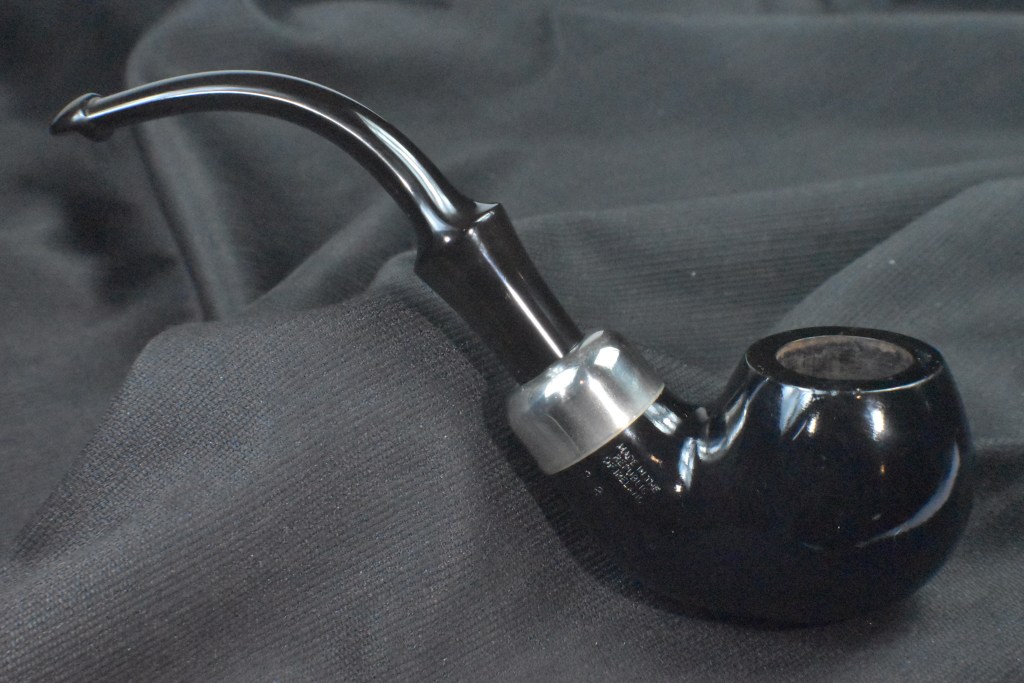
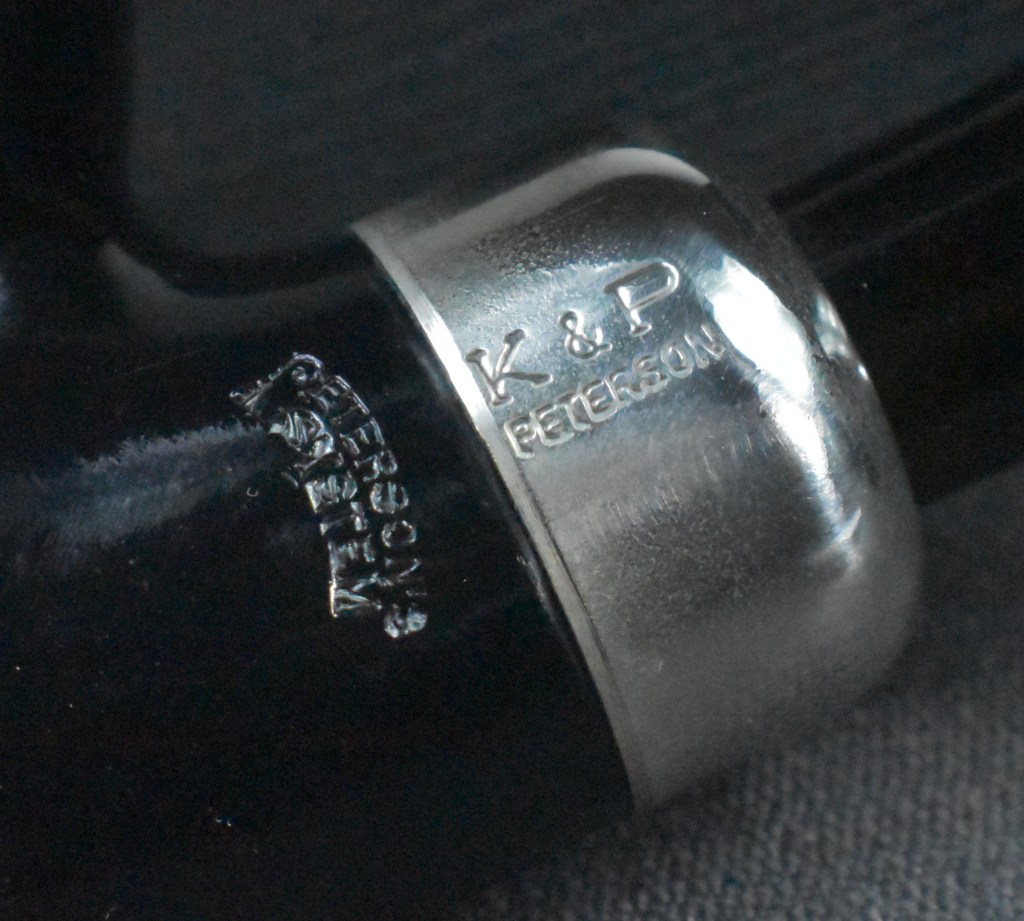
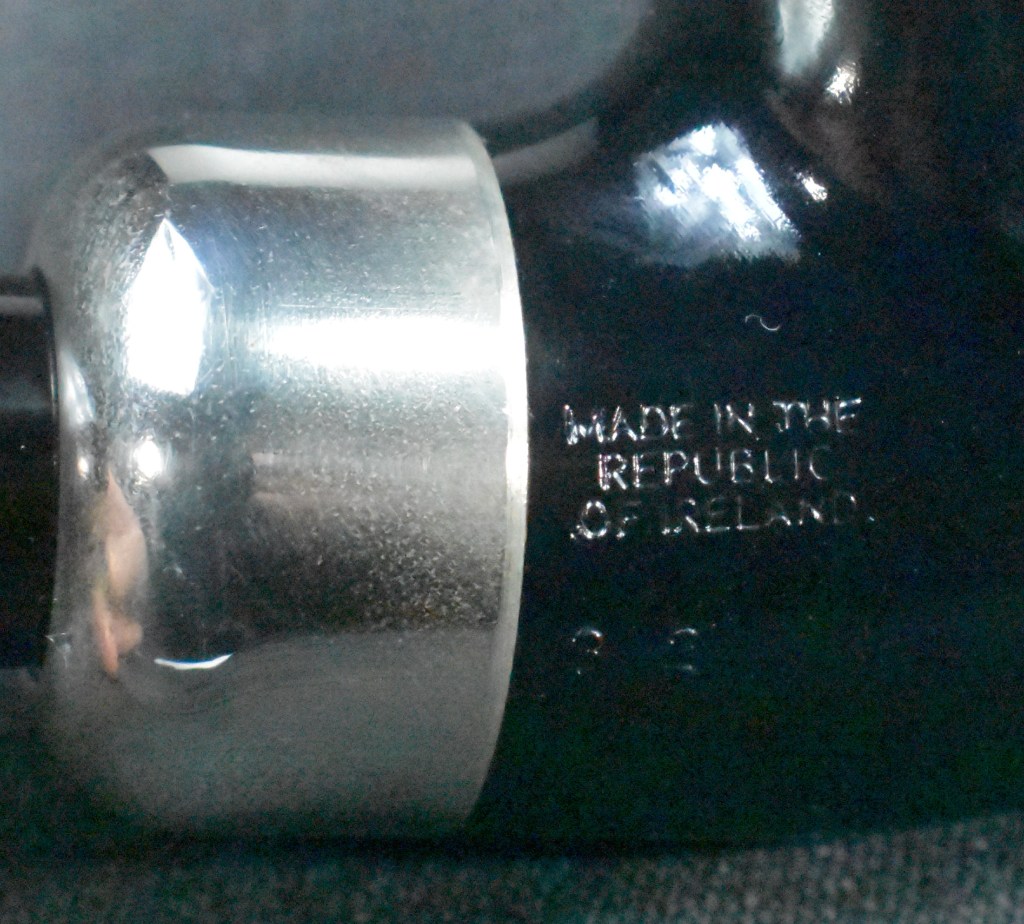
It seems strange to me that of all the Peterson pipes that I own, I have shown few restorations of them. This is because I was not documenting or blogging about them when they were restored. The blog has only been a lifestyle since October of 2023 and these pipes were acquired and restored long before that. This 301 is a re-restore. “Huh?”, you say. Well It was a pipe that I purchased on the estate market cleaned up and used for several years. Now someone has expressed an interest in acquiring their own 301 and asked if I had one available. Since pipes were made for smoking and this lovely Pete does not get very frequently used, I decided it would be better off with a companion who would use it. Where it came from originally is a question I cannot answer. Likely an eBay auction though. When it was purchased, also unknown, but probably early 2020s. The pipe was stamped PETERSON’S Over SYSTEM over STANDARD on the left shank and MADE IN THE over REPUBLIC over OF IRELAND over 301 on the right shank. The stampings are all crisp and clear. There was no signature P on the stem which I felt as if it was missing something without it also lacking was the faux hallmarks on the nickel ferrule. It was only stamped with K&P over PETERSONS. Below are some photos I took of the pipe before beginning this restoration.
The pipe was in good shape overall. There were some tooth dents on the stem and slight oxidation. I apparently did not restore the stem, other than removing the oxidation, from when I first got the pipe. The tobacco chamber had been reamed, again probably from my cleaning. There were a few spots where the old fills were failing and a spot on the front of the outside rime where the pipe had been knocked. In general a “light” restoration was required.
Background
If you have read my previous blogs, thank you, and you are probably aware that I am a fan of Peterson pipes. Like many Peterson fan boys, or Pete Geeks as some call us, I could go on ad nauseum about Peterson pipes, their history and the remarkable innovations that made Peterson pipes the legend that they are. I will refrain from doing this again and give you a few sources of information which will allow you to read about the history of the company. For a great history Mark Irwin and Gary Marlburg’s book is a must read for a Pete Geek.
The last source is Peterson Pipe Notes. Mark Irwin has blogged about many particular Peterson lines, features and histories over the years. I can wholeheartedly recommend his blog and free subscription at
https://petersonpipenotes.org/ His posts are searchable for specific items of interest and will open an entire hoard of rabbit holes for you to delve into. Yes, you will get emails but only for things like the weekly blog post and occasional Peterson pipe drops (like the Peterson Pipe Notes Pipe of the Year) or offers for cool Pete Geek merchandise.
The Restoration
The 301 made its way to the workbench for a second time. Well, not the current workbench, this workbench is only a couple years old but you know what I mean.
I started with a light rubdown of the stem with 0000 steel wool.
That was followed with a cleaning of the inside of the stem with 99% ethyl alcohol, pipe cleaners and cotton swabs.
The shank was cleaned in similar fashion. Whew, I would have been embarrassed if this pipe was dirtier than that.
The tobacco chamber was sanded with 320 sandpaper wrapped around a wood dowel and by 320 on my finger. There was no sign of any heat damage to the chamber.
The rim did have a very light lava residue and a few dings.
The stem was suspended in Before and After Extra Strength Deoxidizer (deox) by inserting a pipe cleaner into the button and hanging it in the solution. I figured that 6-8 hours would be plenty of time for this stem.
The stummel was scrubbed with undiluted Murphy Oil Soap and a nylon brush. The soap was rinsed with warm water and the stummel dried with a cotton hand towel.
The scrub did soften the fill material as well as removed the dirt and most of the wax on the briar.
A wipe with 99% ethyl alcohol removed any remaining wax and a bit of the original stain as can be seen on the cotton make-up pad.
The old fill material was picked out using a fly tying bodkin.
The new fill would be made of Briar dust pressed into the pits then topped with thin cyanoacrylate (CA, super glue). Below is a photo of a dental scraper which makes a fine little scoop for the briar dust and has a flat underside used to press the dust into pits.
Thin CA works best for this type of fill.
The disposable fine tip applicators are a godsend for delivering tiny drops of CA to the new fills.
I allowed the CA to cure on its own rather than applying a spritz of a drying accelerator. 20 minutes later the drops looked like little scabs.
These were filed with a small flat file.
After filing the new fills were sanded with a 600 grit sanding sponge. If any holes or voids were visible then a second application of briar dust and CA were used.
The damage to the front of the rim needed a similar repair.
Here, I applied the CA to the damaged area first, then pressed the rim into the container of briar dust. This pressed the dust into the wet CA. Fling the new fill material and repeating with additional CA and briar dust to build up the damaged area.
With the rim fill needing to be flattened to match the rim, I decided to lightly top the rim. This was done with 400 grit sandpaper laid flat on a countertop. A figure eight pattern was used while sanding. Bah, the sandpaper was getting full of dust.
I cleaned the sandpaper at the sink and repeated the light stopping of the rim.
The rim looked much better but now the inner rim showed light charring from lighting the tobacco.
A 2 inch wooden sphere was used with a piece of 320 sandpaper to uniformly sand the inner rim. This does add a slight bevel to the rim which was not a feature of the original pipe.
The ferrule and stamps were masked to protect them from sanding.
Both the left and right sides.
After the first little bit of sanding I discovered a small dent that I hadn’t noticed. It lined up with the wood grain concealing it.
It bothered me so much that I got out the iron and a wet cloth. This steaming will usually raise dents very well.
It did and the dent was no longer assailing my limited sensibilities.
The sanding resumed with a series of sanding sponges from 320-3500 grit. Between each sponge the stummel was wiped with an alcohol wetted make-up pad to remove sanding debris.
The sanding sponges gave way for the micro-mesh pads. I went with 4000-12000 with wipings between each pad as with the sanding sponges.
The shank was masked off to protect the newly sanded shank from the buffing wheel.
The ferrule was buffed with white buffing compound and the dedicated wheel.
The results were quite nice.
Before and After Restoration Balm was the next step. A nice thick coating over the briar was allowed to sit for 30 minutes.
An inside out athletic sock was used to wipe away the remaining balm and hand polish the stummel.
It was time to remove the stem from its deox bath. It had been in the solution for over 8 hours. The Drip-O-Matic 3000 was rebuilt and allowed excess deox solution to drip back into the container for a few minutes.
A coarse shop rag was used to wipe away the remaining solution as well as to buff away the softened oxidized vulcanite. The residue can be seen in the photo below.
The bite zone of the stem was filed with a small flat file to reestablish the button’s edges and reduce the dents from Chompy, the previous owner.
Filing was done on both the bottom and top bite zones. Darn that Chompy.
Some of the dents required the use of a black CA to fill the depressions.
I did use a CA drying accelerator for curing these fills. They were then filed and sanded smooth. Some required additional applications of CA.
Below you can see the larger dent still had a tiny spot that required a second drop of black CA.
The stem got a similar sanding regimen, the series of sanding sponges 320-1500. Wiping between sponges was mineral oil and paper towels rather than alcohol and make-up pads.
It was getting late so I gave the stem a liberal coating of Mark Hoover’s Before and After Hard Rubber Balm and went to bed. I doubt that letting the vulcanite soak in this product does anything but it made me feel good about myself and I slept well.
The next morning I wiped the Hard Rubber Balm from the stem and continued sanding with 2000-3500 grits sanding sponges.
I opted to polish the stem with white buffing compound rather than going to the micro-mesh pads. I have been trying to work on my buffing skills.
With the stummel finished and the stem buffed to a beautiful gloss, I coated both with several layers of carnauba wax at the buffer.
The final step was a hand buffing with a microfiber polishing cloth which raised the level of shine to a stunning point.
Another Peterson System Standard 301 that looks as good or better than when it left the factory in Dublin. Peterson is known to sand to 400 grit before polishing. This pipe has a finish that is sanded and polished finer than that. The “Comfort Lip” stem cleaned-up and polished beautifully. The original stain or dye on this briar was maintained and enhanced during the restoration. The nickel ferrule also polished-up very well. This shank strengthening feature is a lovely transition from the smooth finished briar to the glossy black vulcanite. The dimensions of the Peterson System Standard 301 are:
Length: 5.74 in./ 145.80 mm.
Weight: 1.69 oz./ 47.91 g. (with band)
Bowl Height: 1.80 in./ 45.72 mm.
Chamber Depth: 1.51 in./ 38.35 mm.
Chamber Diameter: 0.81 in./ 20.57 mm.
Outside Diameter: 1.44 in./ 36.58 mm.
I do hope that you have found something here useful to your own pipe care, maintenance or restorations. If you like this sort of thing, please click the like and subscribe buttons. Thank you for reading the ramblings of an old pipe lover.
Loading…
Below are some photos of the finished Peterson System Standard 301.
I have wanted to work on a cavalier style pipe for quite some time. Unfortunately, they always seem to exceed what I am willing to pay for them. Perhaps this is what piques my interest even more, peoples’ apparent desire to obtain a cavalier. They must be good smokers, eh? Well, I came across this estate lot on eBay and it had a cavalier, along with a couple of other interesting pipes. The description called it a “Bireba” and it had a wonky looking band. I figured what the heck, I’d never heard of Bireba and it looked like a fun pipe to work on.
I won the auction for what I considered a reasonable price and the pipes made the short 185 mile journey from Lawrence Kansas to the wilds of southeast Nebraska. Upon arrival I couldn’t figure out why such a poor fitting band was even put on this pipe. I first thought that it was a repair of a cracked shank. The mortise was in perfect condition. Then I thought, decorative, but why such a poor fit.
The band seemed too loose to be of any real purpose. The finish was worn away from the band sliding up and down the shank. It was while inspecting the stampings under the band that I discovered this pipe was actually a Brebbia. I thought, “Cool, I’ve never worked on a Brebbia before” and “Sweet, I didn’t pay what Brebbias normally cost.” The stampings read, BREBBIA over ITALY offset was the Alpina in a scrolling cursive with the tail of the final “a”sweeping below forming an underline. Anyway, here are a few photos of the pipe prior to working on it.
A shot of what I first saw.
Here is a shot with the band in its “proper” place.
Finally a photo of the stampings without the band.
Bah, cavalier pipes are difficult to photograph. This pipe was in relatively good condition. Yeah, the finish was worn through the factory black dye, especially where the band rubbed through. The tobacco chamber looked either recently reamed or seldom used. The stem has some minimal oxidation and a couple of tooth dents. Overall this looked like a relaxing restoration.
Background
I started researching Brebbia with a look at what pipephil.eu had to say. Brebbia appears to have used a wide array of stamps, lines and logos over the years, here are a few: Brebbia — Pipes : Logos & Markings. Alas, none of the examples were of a Brebbia Alpina.
Next stop on the research express was pipedia.org. This entry was relatively short, so I included it in its entirety, minus the photos:
“Pipe Brebbia Srl, or better the M.P.B. (Manifattura Pipe Brebbia) was born in 1953 from the denouement of the association between Achille Savinelli and Enea Buzzi in 1947, where the first was employed in the marketing and the second in manufacturing of pipes under the name of Savinelli. It was made in exclusive up to 1953 and extended without further rights up to 1956.
The production, which is always careful and perfect, has continued in a traditional way for 60 years, using old lathes for the first steps, but finishing every piece by hand.
The secret of their manufacture, if we may put it this way, is the respect for the traditions with the experience acquired in several years of successful work, which could be summed up in two words: high quality.
The factory is currently managed by Enea’s son, Luciano.
For the last few decades, many of Brebbia’s pipes have been made by a number of small, otherwise independent pipe manufacturers, being marketed under the trade name Brebbia. For the northern European market, 9mm filter pipes are being produced, some of which employ VAUEN‘s Konex system (which ensures a good seat of the filter).” (Brebbia – Pipedia)
I was unable to find any information about the Alpina line. A quick Google search of “Brebbia Alpina tobacco pipe” did turn up this:
Before I begin the next section, I think a quick diagram of the drillings of this pipe might be helpful. Below, I took a photo of this pipe and overlaid the drillings (not perfectly to scale). The tobacco chamber and the draft through the shank are in a light green. The drilling of the draft hole from the tobacco chamber to the shank is done in a light gray. If you want a pipe that you can run a pipe cleaner through the stem and exit via the tobacco chamber, this pipe is not for you.
The Restoration
The pipe made its way to the workbench and a cleanish piece of denim. The confusing band was removed.
I began with reaming the tobacco chamber. I thought that the PipNet would be the correct tool.
The conically drilled chamber proved my supposition wrong. The Kleen-Reem was the correct tool. Either way there was little for the reamer to do.
The scrapers were used to remove the little cake at the button of the chamber.
Sanding with 320 sandpaper wrapped around a wood dowel showed that the chamber had no signs of any heat damage.
Next came the shank cleaning. This was surprising. There was some cake in the tobacco chamber. Given, not much, but the shank was much cleaner than I would have thought.
Surprise number two, was the depth that the shank was drilled.
Nearly an entire cotton swab fit into the drilling.
I was not expecting that.
I used a forceps to hold the cotton swabs and dipped them in 99% ethyl alcohol. This pipe was showing signs that it had either been well cleaned by a previous steward or it had not been smoked very much.
The stem cleaning was next. Here I used bristle pipe cleaners and 99% ethyl alcohol.
The mortise was drilled slightly smaller than the draft hole.
The stummel was taken to the sink for a scrubbing with a nylon brush and undiluted Murphy Oil Soap. The soap was rinsed with warm water and the stummel dried with a cotton hand towel.
Back at the workbench it was obvious that the scrub had removed even more of the black finish.
A thorough wiping with a make-up pad dipped in alcohol removed a little more of the black.
Below are photos showing the sides, front and back of the pipe.
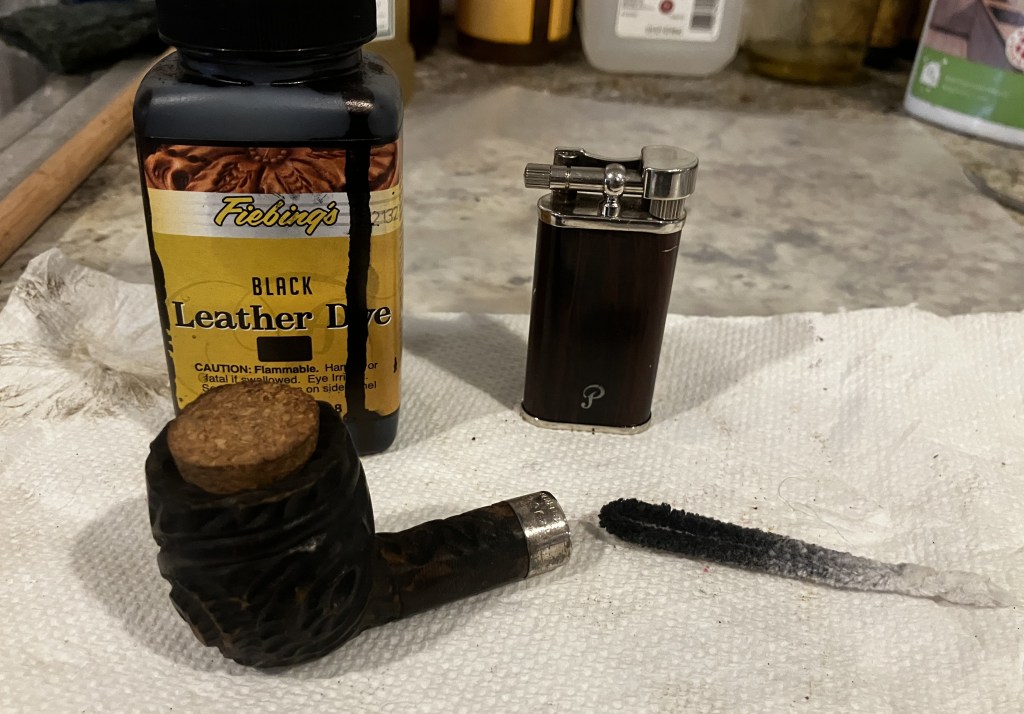
To remedy the worn black finish, I chose to apply Fiebing’s Black Leather Dye. Below is the dye kit; a cork to plug the tobacco chamber, a folded pipe cleaner as the applicator and a lighter to flame the dye heating it and evaporating the dye’s solvent (alcohol).
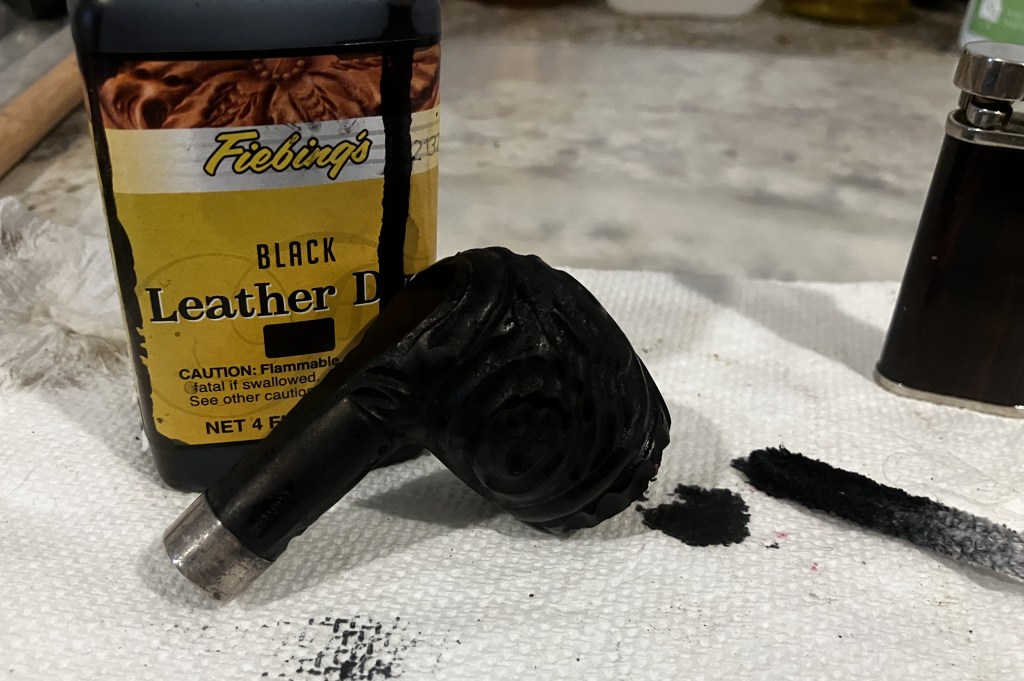
Several coats of black dye were applied with a couple flamings. The stummel was allowed to dry for about an hour.
Yeah, there is a reason I need at least 3 layers of paper towels under me when dying a stummel.
During the drying time, I turned my attention to the stem. There was bite damage to the top of the button.
To hold the stem I used a wood block in which I had previously drilled various size holes for this very purpose.
The underside of the stem had additional bite marks.
I used a fine flat file and sanding to try to reestablish the button and remove the tooth damage
This met with success except for one small tooth dent that I needed black cyanoacrylate (CA, super glue) to fill and repair.
One drop of black CA is all that was needed.
This drop was spritzed with a CA drying accelerator.
The drop was then filed and sanded smooth.
I rubbed on a little bit of Obsidian Oil to see if the fill was noticeable. It was nearly invisible.
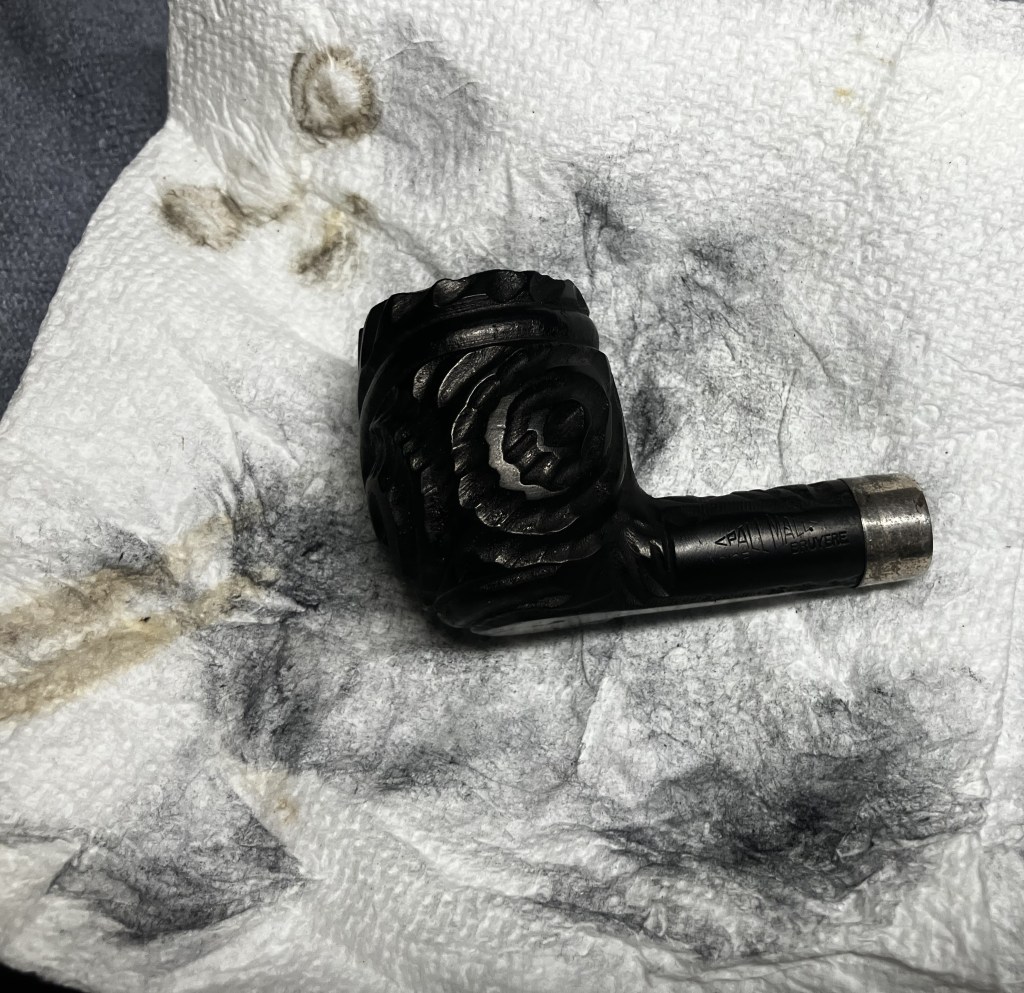
I retrieved the stummel. The black dye looked good and the wear marks were gone.
Next, I masked off the shank and fitted the stem. I had sanded the bite zone of the pipe to 1000 grit with sanding sponges during the repairs to the button. I thought that the rest of the stem would be fine if I just buffed the stem at the buffing wheel. Besides, I wanted to work on my buffing skills.
Starting with the rouge buffing compound and the dedicated rouge wheel, I buffed the stem.
I wiped the rouge compound from the stem then switched wheels and proceeded to use white compound.
The stem looked great. I removed the masking tape and applied a coat of Before and After Restoration Balm with a baby tooth brush. This was allowed to rest for 20 minutes.
After the resting, the stummel was hand buffed with an inside out athletic sock to remove the excess balm.
I figured that I should buff the band as well. Maybe the next owner of this pipe would want the band and if so, it should look good. I used a corn cob pipe shank to hold the band during the buffing.
The band fit over the cob’s band and was snug.
Back to the buffer.
Below you can see the polished band on the pipe.
And the pipe without the band.
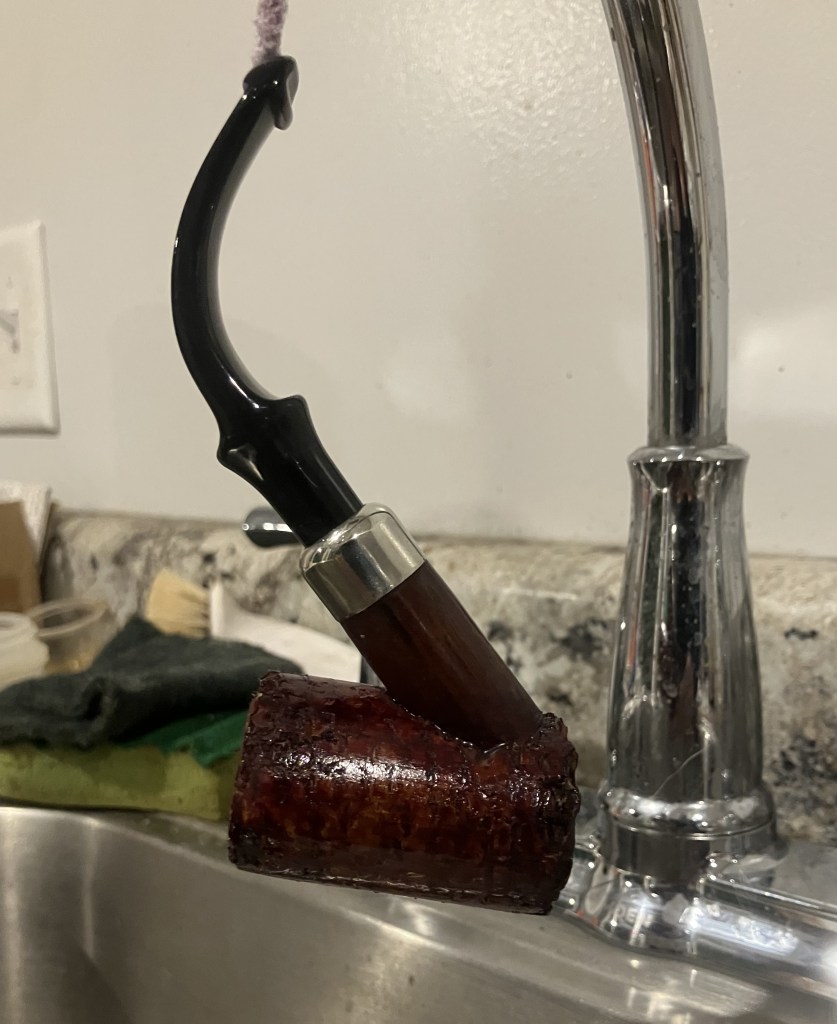
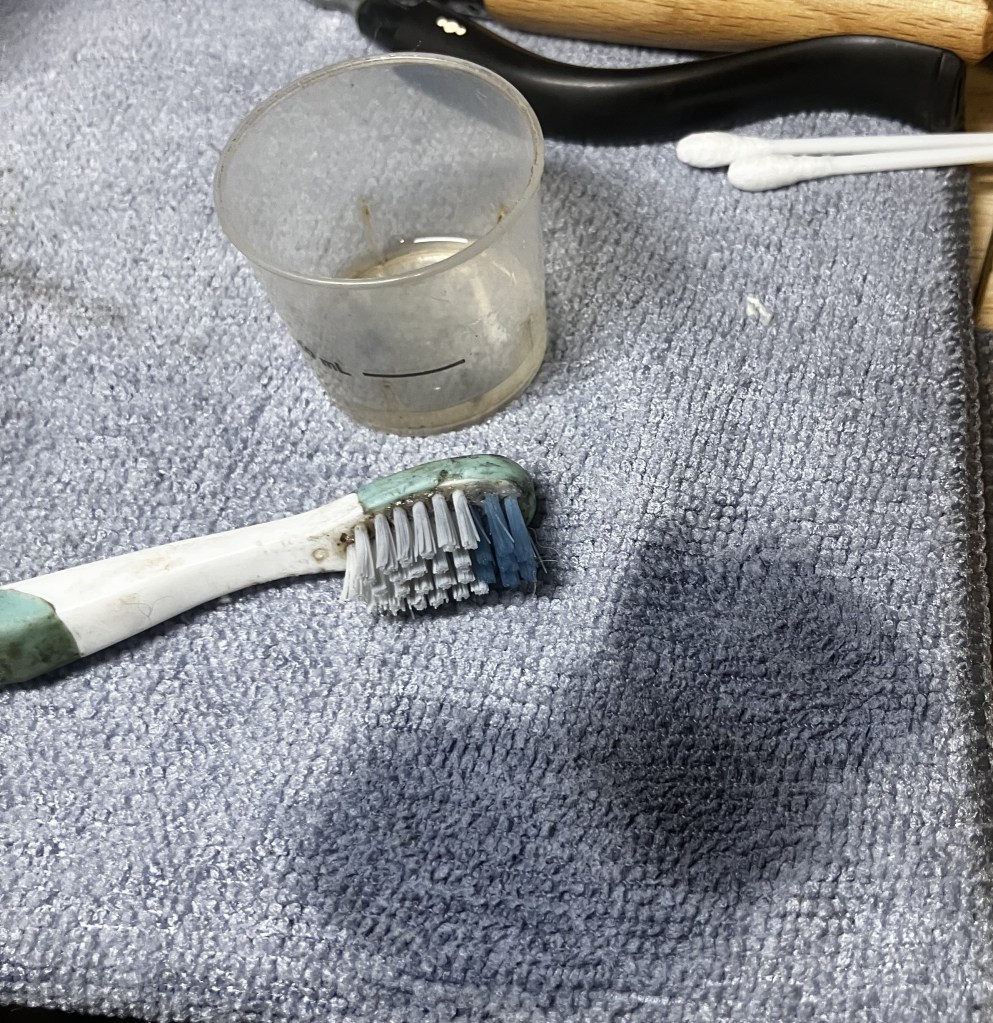
Well, it looks like someone came and used my baby tooth brush and did not clean it when finished. Hmm, I wonder who that could have been? Oh well, cleaning the brush was done by dipping it in 99% ethyl alcohol and brushing the denim work-top protector a couple of times.
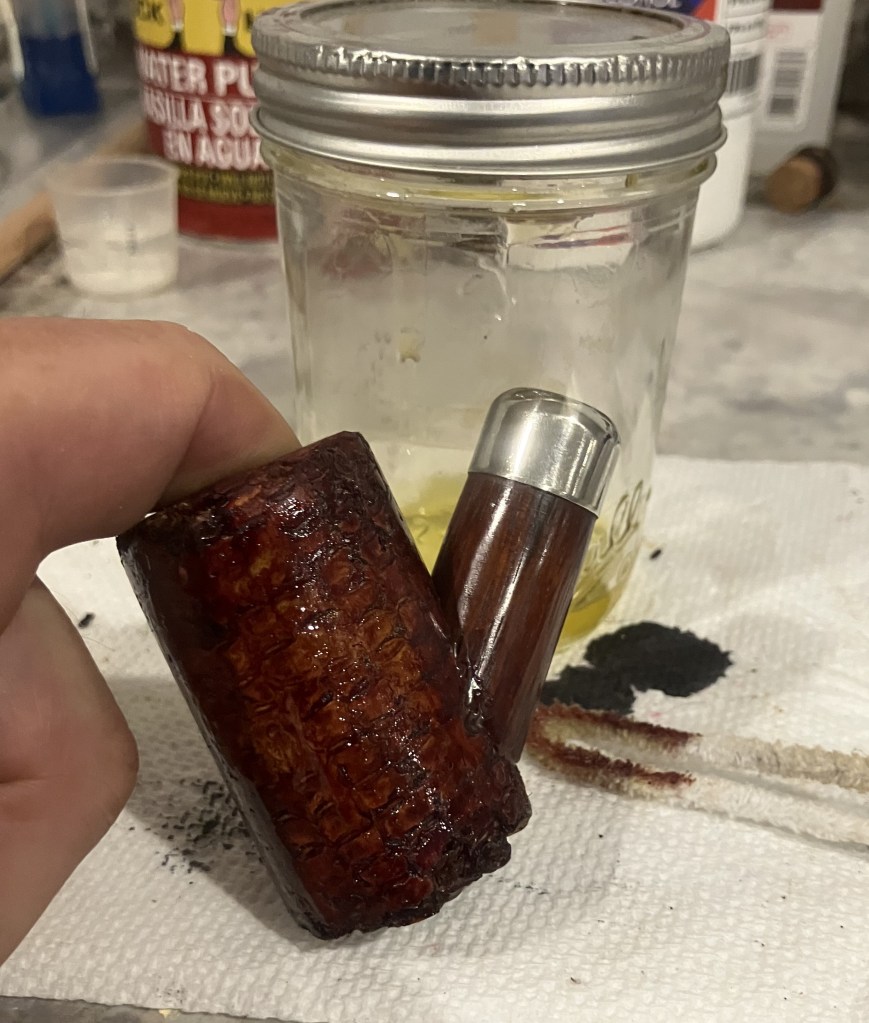
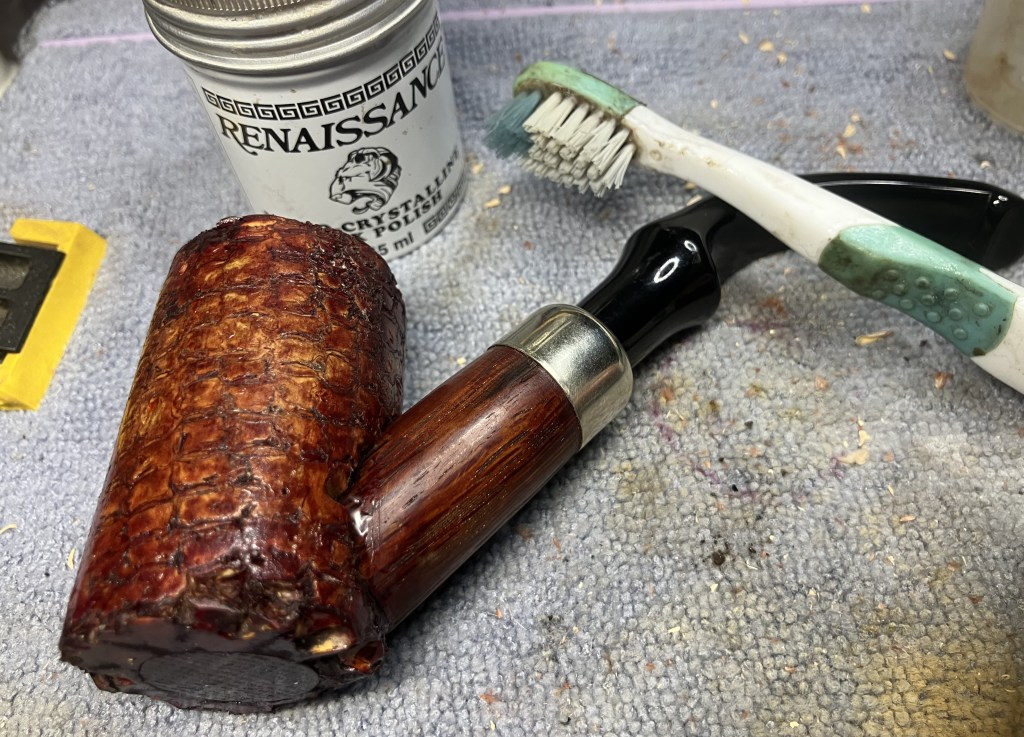
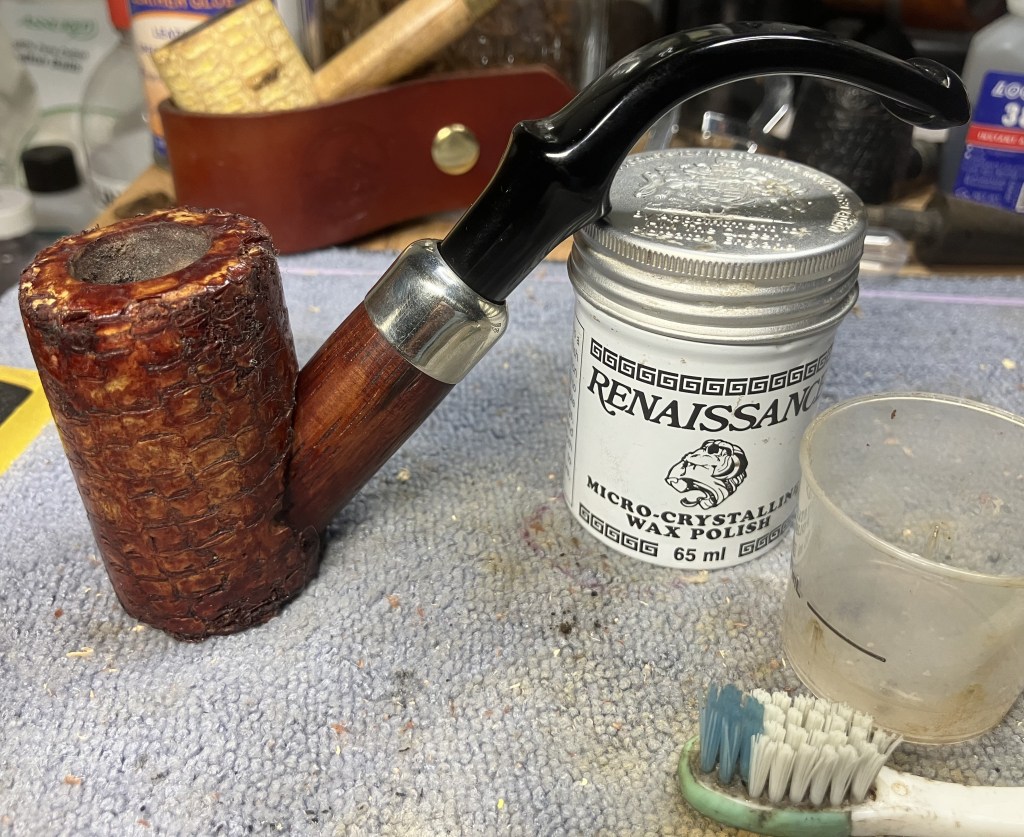
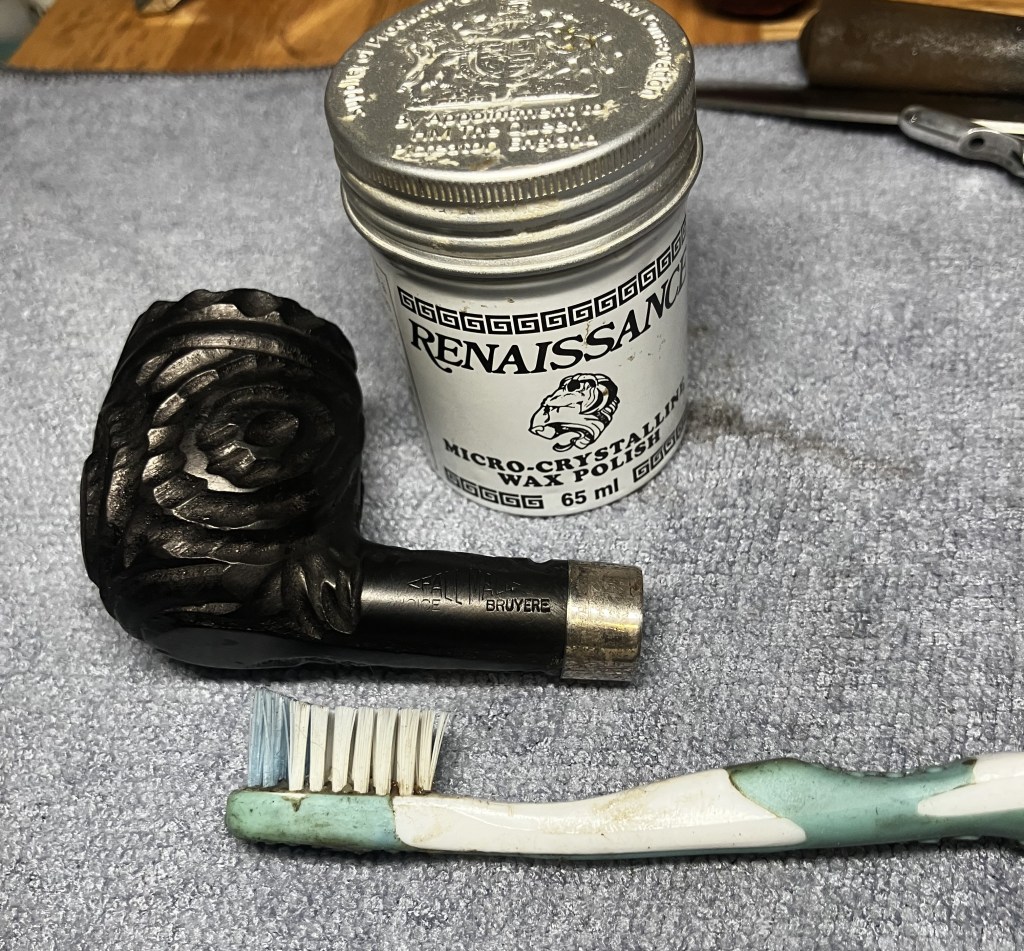
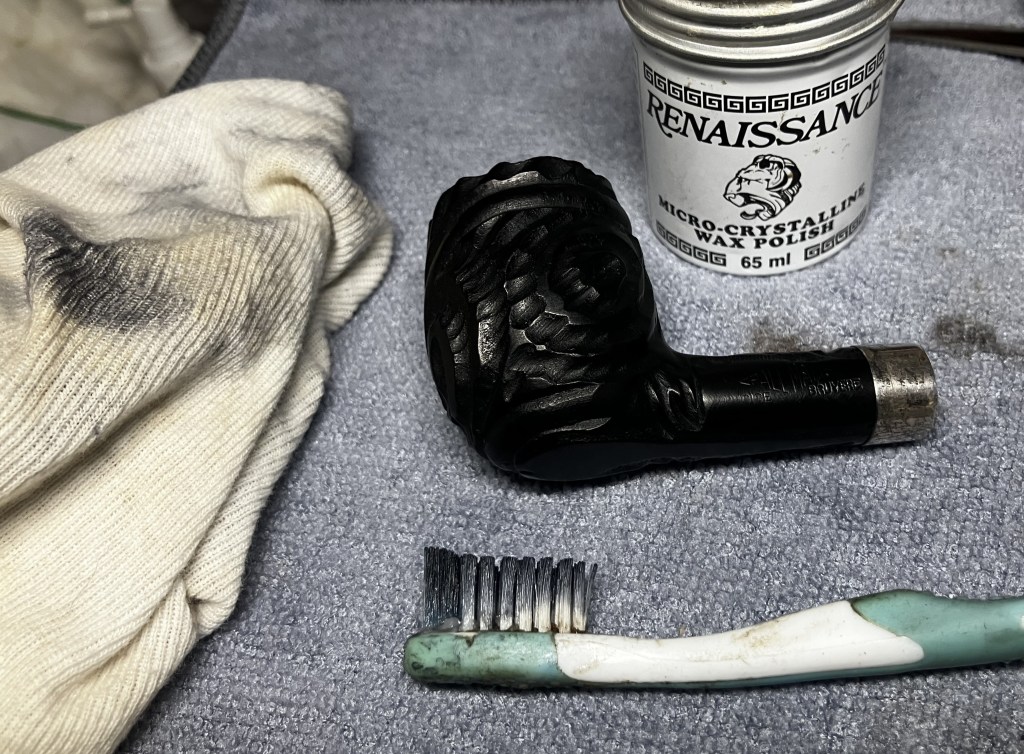
I like using Renaissance Micor-Crystaline Wax for rusticated pipes. “How much wax?”, you ask. About this much.
Baby tooth brush time, the little brush works very well to work the wax into all of the rustication crevasses.
As per the label instructions the wax was hand buffed with a soft cloth.
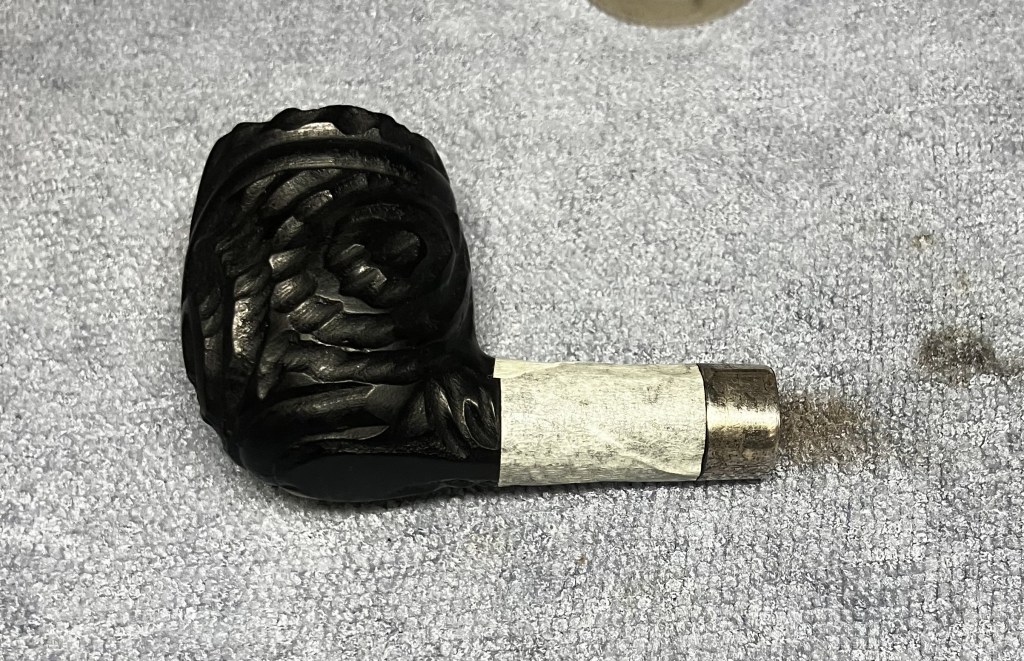
A little bit of shoe shine brush work to make sure there is no accumulated wax “white” film in the depressions.
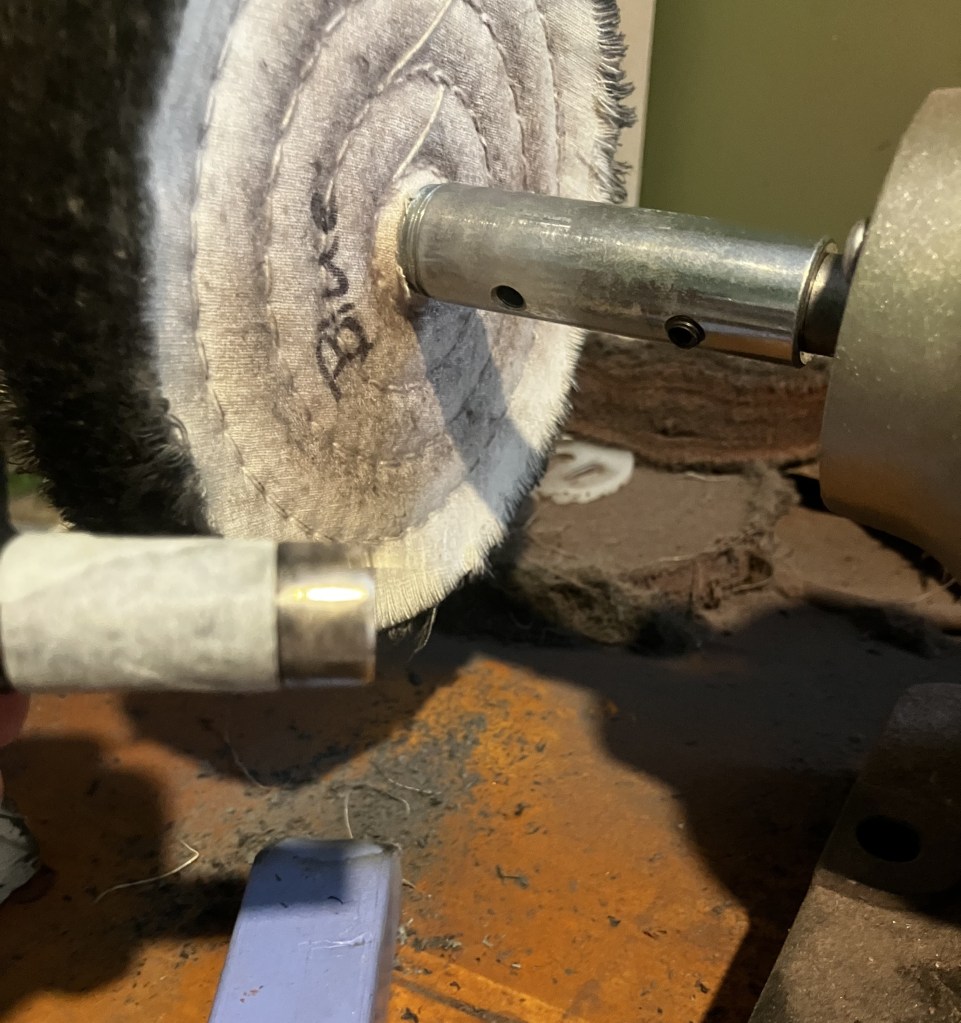
The stem and stamping area received several coats of carnauba wax applied with the buffer.
Normally this would be the end but I wanted to clean the baby toothbrush after the Renaissance Wax in case the granddaughters come over for a grandpa sleep-over. Just kidding, I have toothbrushes for them.
This Brebbia Alpina Cavalier turned out very beautifully. I still don’t know what is going on with the band but then my input wasn’t asked for or needed when this pipe was made. The black dye returned the pipe to its original colors. The button reshaping turned out very nicely and appears as original as well. The stem polished up very nicely and the glossy black provides an interesting contrast with the rusticated black briar. The drillings of this pipe should allow the moisture from the smoke to condense out and drip the liquid into the large chamber or shank extension. This should act as a very large reservoir for accumulating liquid. Kind of like a Peterson System pipe on steroids. The band could be customized and included if the next owner would prefer it on or off. The dimensions of the Brebbia Alpina Cavalier are:
Length: 5.76 in./ 146.30 mm.
Weight: 1.55 oz./ 4394 g. (with band)
Bowl Height: 1.78 in./ 45.21 mm.
Chamber Depth: 1.36 in./ 34.54 mm.
Chamber Diameter: 0.71 in./ 18.03 mm.
Outside Diameter: 1.39 in./ 35.31 mm.
I do hope that you have found something here useful to your own pipe care, maintenance or restorations. If you like this sort of thing, please click the like and subscribe buttons. Thank you for reading the ramblings of an old pipe lover.
Loading…
Below are some photos of the finished Brebbia Alpina Cavalier.
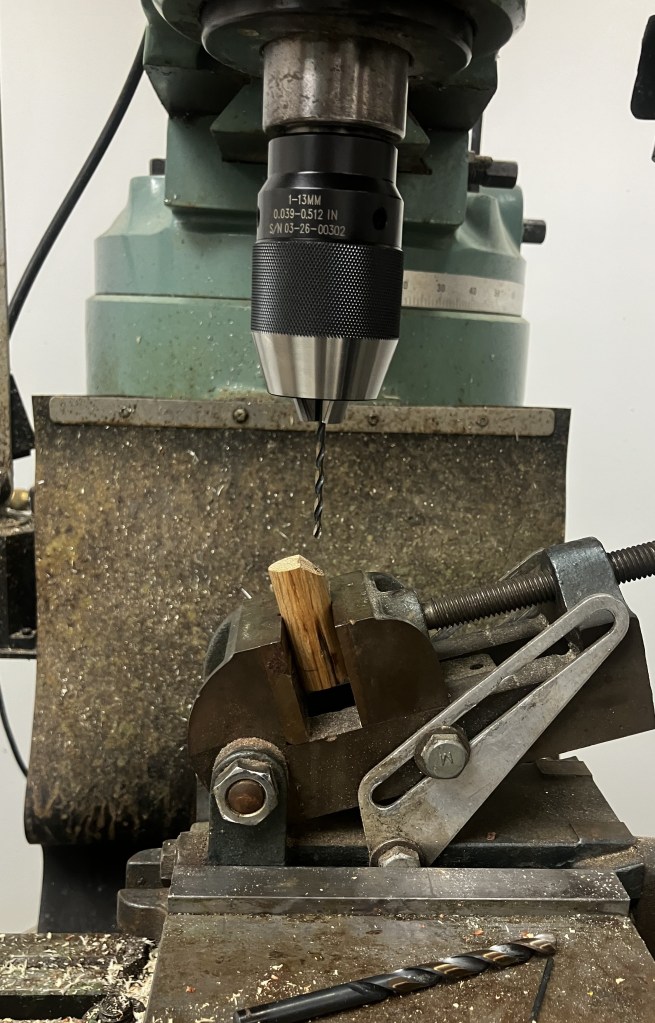
Finally, photos of the finished pipe with and without the band. If you are interested in this pipe let me know which you would prefer. I can glue the band in place for you, if that is the way you would like it or leave it off. I will include it with the pipe if you prefer it unattached.
I do love a smooth bent billiard. There is just something classic and elegant about the shape. This Wally Frank Naturals is a nice example of a bent billiard and it also has the distinction of a classic American name. The pipe caught my eye on the eBay auction due it having the original box and pipe sleeve. I was surprised when I won the pipe for the meager bid that I made. Perhaps it looked like too much work for someone to give the poor old girl. A journey from South Carolina to Nebraska shortly after Thanksgiving and the pipe arrived. The stampings were clear and read: WALLY FRANK over NATURALS. No shape number nor country of manufacture. This led me to believe it truly was an American made pipe. Below are some photographs I took of the pipe prior to starting work.
Overall, the pipe was in very good shape. The box is just a fun piece of ephemera that you don’t see frequently with estate pipes. There were a few pits that would require filling. The “Natural” finish would have to be maintained. The stem showed little evidence of oxidation, I thought that it must have been stored in that box and never saw the light of day. Of course a reaming of the tobacco chamber and a thorough cleaning were needed, but this looked like a very relaxing restoration.
Background
I am going to use my own writing on the background of Wally Frank from a blog I wrote back in June of 2024.
“Okay, back to my editorializing about Wally. The huge variety, nearly schizophrenic in nature, of Wally Frank style pipes may be due to his constantly trying to keep his offerings fresh in a competitive pipe market. Frank’s pipes were not what I would consider high end pipes. He was likely going after customers with less disposable income and mimicking a variety of popular styles . He was known to venture throughout Europe searching for less known carvers and small shops where he could purchase quality at lower prices. Wally Frank’s unique pipe offerings may make more sense when you consider the Wally Frank “Pipe of the Month Club”, an early subscription pipe offer. He apparently wanted to keep the customers satisfied with new and unique offerings. Here is the order form from http://www.pipephil.eu/logos/en/logo-w1.html
The date on the form is difficult to make out but, I think it is 1947. $1 in January of 1947 is equivalent to $14.58 in April of 2024 (https://www.bls.gov/data/inflation_calculator.htm). Who wouldn’t jump at the chance to get a new pipe every month for $15 dollars today?
The first paragraph about Wally Frank from Pipedia pretty much sums up Frank’s contributions to our hobby:
Wally Frank, Ltd. was one of America’s oldest and most respected names in pipes and tobaccos, beginning in the early 1930’s. Wally Frank operated a chain of tobacco stores in New York City (the flagship store was in Lexington Avenue) and had a vast catalog business for pipes and pipe tobaccos. Their numerous private-label pipes were made by many makers, includingCharatan,Sasieni,Weber, and many others. Wally Frank, Ltd. also owned thePioneer brand of meerschaum pipes, made from both Turkish and African meerschaum. In addition to importing pipes, he had many pipes made in his own name and also employed pipemakers likePeter Stokkebye,Svend Bang, andEd Burak (who later became the owner ofConnoisseur). As a result, each Wally Frank pipe must be individually evaluated on its own merit. (Wally Frank – Pipedia) Mr. Frank did this for many years, Wordcat.org is a library of print material available via interlibrary loans. They have several Wally Frank catalogs available from 1930-1958 (au:Wally Frank, Ltd. – Search Results (worldcat.org)).
Due to the large number of sources of Wally Frank pipes there is no Wally Frank shape chart to use as with Dunhill, Peterson, Kaywoodie and other manufacturers. I looked through the several Wally Frank pipes that I have kept for personal use and I could find only one with a shape number stamped on the pipe. And that is a Custombilt pipe from the Wally Frank Era of ownership. So, in a sense not really a Wally Frank pipe. The
I apparently neglected to take a photo of the pipe arriving at the workbench and jumped right to the stem. Slight creases could be seen on the stem. I assumed these were from the bending of the stem, likely after it had been polished. There was also some light tooth chatter.
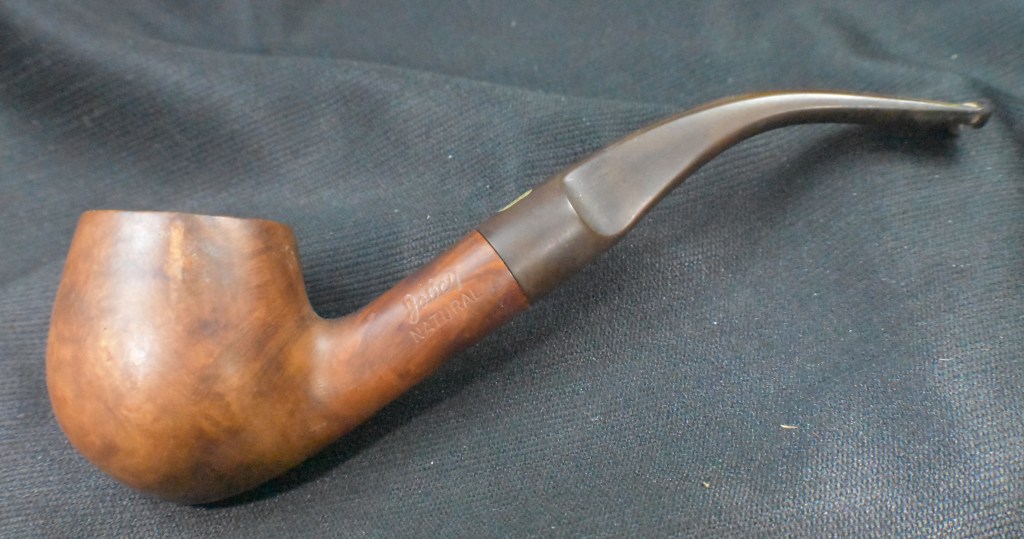
The chatter on the bottom of the stem was also visible but here, there were fewer creases.
The tobacco chamber had a light development of cake.
Due to the chamber being right in between the blades of the PipNet, I had to use the Kleen-Reem, Smokingpipes Low Country reamer and the General triangular scraper.
I was a bit surprised with the amount of cake removed.
Once sanded with 320 sandpaper wrapped around a wood dowel, I could see that the tobacco chamber was free of any heat damage.
The rim was encrusted with smoking residue or lava.
This was moistened with saliva and allowed to soak while I went upstairs to sharpen the pocket knife on a stone. Once that was done the rim was scraped with the resharpened blade.
The airway of the shank was cleaned with 99% ethyl alcohol on cotton swabs and bristle pipe cleaners.
The same alcohol and pipe cleaners were used with the stem. Well, different pipe cleaners, I mean the same is ridiculous because the first ones were dirty. Stupid English… My students used to find it funny when I said that. Most of them were English Language Learners and loved it when I made fun of English.
At the sink, I scrubbed the stummel with undiluted Murphy Oil Soap and a nylon brush. The soap was rinsed with warm water and dried with a cotton hand towel.
Back at the workbench the stummel was wiped with a make-up pad wetted with 99% ethyl alcohol. Very little color came off the briar indicating that it was clean of dirt and wax.
I went to work picking old fill material from the observable pits using a fly tying bodkin.
Several surface flaws were noted and I hoped that these could be filled with cyanoacrylate (CA, super glue)
The larger pits would require briar dust and CA.
There was also a small flaw on the rim. This would be tougher for fill due to the bevel of the rim.
The larger pits were packed with briar dust by pressing the dust in with my finger tip or the curved back of the dental scraper..
Using a fine disposable applicator tip on the bottle of CA, I applied a small drop of Thin CA to the briar dust.
Once set-up the new fill was filed with a small flat file then smoothed with a 400 grit sanding sponge. If the fill required additional briar dust , more was added and the CA application repeated.
The process was repeated for the rim.
Now, I bet you are wondering, “why does this clown have a tea pot on his workbench?” Good question. This clown thought that I did not have any round surface large enough for sanding the bevel of this rim. Violla, a tea pot might just be a fitting curve.
And it was.
I held a piece of 400 sandpaper in place on the teapot and was able to sand the curved bevel quite well.
Covering the stamps with masking tape to protect them from sanding was necessary.
The stem was then sanded with 320-600 sanding sponges. There was also a little bit of filing of the tooth chatter, but I failed to photograph that. You can see the tip of the file in the photo below, though.
The stummel was then sanded to match the stem. Between sponges I wiped the stummel with an alcohol wetted make-up pad. The stem was rubbed with mineral oil and wiped with a dry paper towel between sponges.
The sanding and wiping continued through the series of sanding sponges to 3500.
After the sponges came the micro-mesh pads. These were wiped as with the sanding sponges except I used Obsidian Oil on the stem rather than mineral oil.
I placed a pipe cleaner in the stem then used a heat gun to heat the vulcanite and rebend it
The stem was then polished on the buffer with white buffing compound.
A coating of Before and After Restoration Balm was applied to the briar and allowed to work its magic for 30 minutes.
A thorough hand buffing of the stummel with an inside out athletic sock was used to remove the excess balm.
The final steps were to apply several coats of carnauba wax to the shank and stem with the buffer. This was followed by a hand buffing of the pipe with a microfiber polishing cloth.
I think this old Wally Frank Natural Bent Billiard turned out very well. The “Natural” nishing of the briar looks good though it does not conceal the fills. Fills in briar are necessary to give a smooth pipe the expected uniform even surface. I have not found a way to have them match the color of briar, perhaps someday a product will be discovered to aid this dilemma. The stem was in good condition before but looks very good with the removal of the creases and the adjusted bend. The stark difference between the glossy black and the natural briar is very attractive. The dimensions of the Wally Frank Natural Bent Billiard are:
Length: 5.94 in./ 1540.88 mm.
Weight: 1.57 oz./ 35.3 g.
Bowl Height: 1.95 in./ 49.53 mm.
Chamber Depth: 1.65 in./ 41.91.02 mm.
Chamber Diameter: 0.76 in./ 19.30 mm.
Outside Diameter: 1.51 in./ 38.35 mm.
I do hope that you have found something here useful to your own pipe care, maintenance or restorations. If you like this sort of thing, please click the like and subscribe buttons. Thank you for reading the ramblings of an old pipe lover.
Below are some photos of the finished Wally Frank Natural Bent Billiard.
This is another “tag-along” pipe, one of those unintended-though-not-unwanted but part of the estate lot. This one is a Medico Medalist in the author shape. I have to say that Medico makes a very attractive author. The pipe arrived here last May and has been patiently waiting for restoration in the queue. The pipe is stamped MEDICO over Medalist (in script) over IMPORTED BRIAR on the left shank. No shape number nor country of manufacture (COM). There was also a stamped and painted M in between two aluminum rings on the stem. Below are some photos I took prior to beginning work.
Background
Medico pipes have a long history all the way back to SM Frank around 1900. According to TobaccoPipes.com,
“When you trace the Medico tobacco pipes history, you have to trace it back to the origins of the company that created it. The company that originated the Medico brand is the S.M Frank & Co. This company dates back to the year 1900. In that year, a man named Sam Frank began selling pipes and related tobacco products. Eventually, the company began making its own line of pipes. With the help of an experienced pipe manufacturer, Ferdinand Feuerbach, the company produced the popular Royal DeMuth and Hesson Guard Milano tobacco pipes. The company continued to grow well into the early part of the 1930s.
By the early 1930s, there were some concerns about the tars and nicotine found in tobacco smoke. In order to mellow out the flavor of hot tobacco smoke as well as to capture the tars and nicotine, the S.M. Frank & Co. introduced the Medico pipe filter. This is an absorbent paper filter that many people still use to this day. In order to accommodate the new filter, the company developed an accompanying brand of pipes known as Medico. That line of pipes continues in production today.
The company ended up buying some of their main competition in 1955. That year the Kaywoodie brands came under the S.M. Frank Company. The Medico brand continued production through this transition without many changes. The next big change for the brand came in the late 1960s. In 1966, the company developed a synthetic material that combined the traditional briar wood with resins. It is known as Brylon. At that time, all Medico pipes were made from imported briar wood. In order to keep production costs down, the company began offering some lines with Brylon. Today, that is still true.
Today, the Medico brand of pipes is still a top selling one for the S.M Frank & Co. This line of pipes comes in thirteen different finishes with five made of briar wood and the rest from Brylon. All come with the push bit with a filter inside. The filter is easily changed out when the smoker desires. In the briar wood finishes, this line includes the Silver Crest, Premier, Bold Rebel, Kensington, and Windsor. In the Brylon, the line includes the Lancer, Apollo, Standard, Varsity, Conqueror, Medalist, Cavalier, and V.E.Q. As far as price, the briar wood pipes tend to be higher in cost that the Brylon ones.” (Medico Pipes History | TobaccoPipes.com)
The days of “drug store pipes” are apparently over. I typed in the following question:
“Are Medico tobacco pipes sold at physical Walmart, Walgreen’s or drug stores anymore?”
Next I typed in, “Where can I buy a new Medico tobacco pipe?” into Google and got this:
Clicking the first link, Medico Pipes Exclusive Full Line Retailer!!!, took me to a remarkably blank page where not a single pipe was listed. Now please do not think that I am speaking ill of WVSmokshop.com, I have ordered from them and will continue to order from them. They are the only retailer where I can find Captain Black Copper which is a favorite aromatic of mine. The fact remains, Medico pipes are not readily available outside of the used or estate market. As for when this particular Medico Medalist was produced, I cannot say with certainty. I would hazard a guess between 1960-1980.
The Restoration
The Medalist made it from the photo table to the workbench minus the used filter from the stem.
I started with the stem. There was tooth chatter on both the top and bottom surface of the bite zone.
The interior of the stem was cleaned with 99% ethyl alcohol on cotton swabs and bristle pipe cleaners.
The tooth chatter was filed with a small flat file.
I scrubbed the stem with Soft Scrub cleanser on make-up pads. Usually I do this after soaking a stem in a deoxidizing solution, I do not know why I’d always used that order, deox first the scrubbing.
After the Soft Scrub I suspended the stem into Before and After Extra Strength Deoxidizer. I left the stem in the solution for 2-3 hours.
I turned my attention to the reaming of the tobacco chamber.
The PipNet and the #2 blade did this quickly with the Smokingpipes Low Country reamer doing some cleanup.
The chamber looked good. Next, I sanded the tobacco chamber with 320 sandpaper wrapped around a wood dowel. There was no damage to the chamber from heat.
I cleaned the shank with alcohol, cotton swabs and bristle pipe cleaners along with some scraping with a dental scraper.
I scrubbed the stummel with undiluted Murphy Oil Soap and a nylon brush over the sink. The soap was rinsed with warm water and the stummel dried with a cotton hand towel.
Back at the workbench the stummel looked clean but was coated with a clear coat finish. I am not a fan of clear coat finishes, so it had to go.
Having already used 99% ethyl alcohol, I knew the finish was impervious to that solvent. I tried acetone on a cotton swab to see if it would dissolve the finish. I did.
To save myself time, I placed the stummel into a jar with acetone and let it soak for 20 minutes.
The stummel was removed and wiped with a paper towel. The vast majority of the finish had been removed.
I used acetone on make-up pads to scrub most of the remaining finish from the briar.
The acetone had softened the worst of the fills. I used a fly tying bodkin to pick the old fill material from the stummel.
A light sanding with a 320 sanding sponge and another wiping with acetone and the clear coat was gone.
In preparation for the sanding, I covered the stamping with masking tape.
The finish free rim looked like it could use a light topping.
A few figure eights on a piece of 400 grit sandpaper laid on the countertop.
The one fill to rework was refilled and packed with briar dust.
To this dust , I added a tiny drop of Thin cyanoacrylate (CA, super glue). The thin mixture penetrates and bonds the dust to the briar.
The new fill was filed then sanded smooth.
After a couple of hours’ish, I pulled the stem from the deox and let the excess solution drip back into the jar for a few minutes.
The stem was then vigorously rubbed with a coarse shop rag to absorb the remaining solution and abrade the softened oxidized rubber. This scrubbing the stem with Soft Scrub before the deox, will need more experimentation, but it seemed to work better.
The stem was lightly sanded then rubbed with mineral oil. It looked pretty darn good.
The pipe was reassembled and sanded, intact, with a series of sanding sponges 320-1500 grit. The stummel was wiped with a make-up pad wetted with alcohol between sponges while the stem was rubbed with mineral oil and wiped with a paper towel. Both wipings were to remove sanding debris.
The sanding continued with 2000-3500 grit sponges and repeated wipings between each sponge.
The pipe was then worked with micro-mesh pads 4000-12000, again the whipping between pads. I will add that instead of mineral oil I used Obsidian Oil on the stem.
A coating of Before and After Restoration Balm was applied to the briar and allowed to sit for 20 minutes.
An inside out athletic sock was used to hand buff the stummel and remove excess balm.
The stamps were re-masked with fresh masking tape to protect the stamps from buffing.
The pipe was then buffed using white buffing compound.
The M logo on the stem had lost it’s paint and some of detail during the deoxidation. I used a white acrylic model paint to repaint the logo.
The results were not as good as the original but the loss of detail was the price of deoxidation.
The pipe then received several coats of carnauba wax from the buffer.
The final step was hand buffing with a microfiber polishing cloth.
I think this Medico Medalist turned out quite well. I love the author shape and am reminded to use an author off the rack when writing blogs. The briar grain of this pipe is pretty but I wonder if I should have given it a contrast dye. That might have made the existing bird’s eyes stand out better. The grain is still very nice for a drug store pipe. The stem polished up very well and the glossy black does accentuate the existing briar grain well. The dimensions of this Medico Gold Crest meerschaum apple are:
Length: 6.30 in./ 160.02 mm.
Weight: 0.96 oz./ 27.22 g.
Bowl Height: 1.29 in./ 32.77 mm.
Chamber Depth: 1.07 in./ 27.18 mm.
Chamber Diameter: 0.71 in./ 18.03 mm.
Outside Diameter: 1.53 in./ 38.86 mm.
I do hope that you have found something here useful to your own pipe care, maintenance or restorations. If you like this sort of thing, please click the like and subscribe buttons. Thank you for reading the ramblings of an old pipe lover.
Loading…
Below are some photos of the finished Medico Medalist Author.