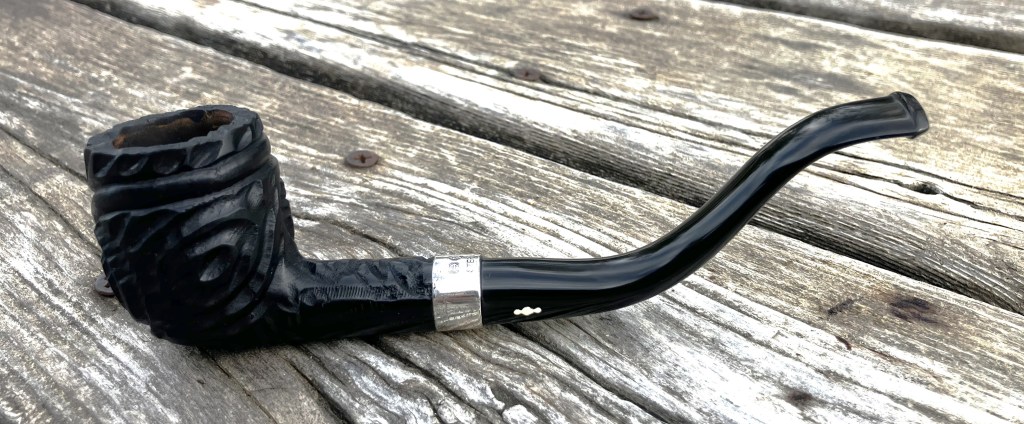
Photographed and written by
John M. Young
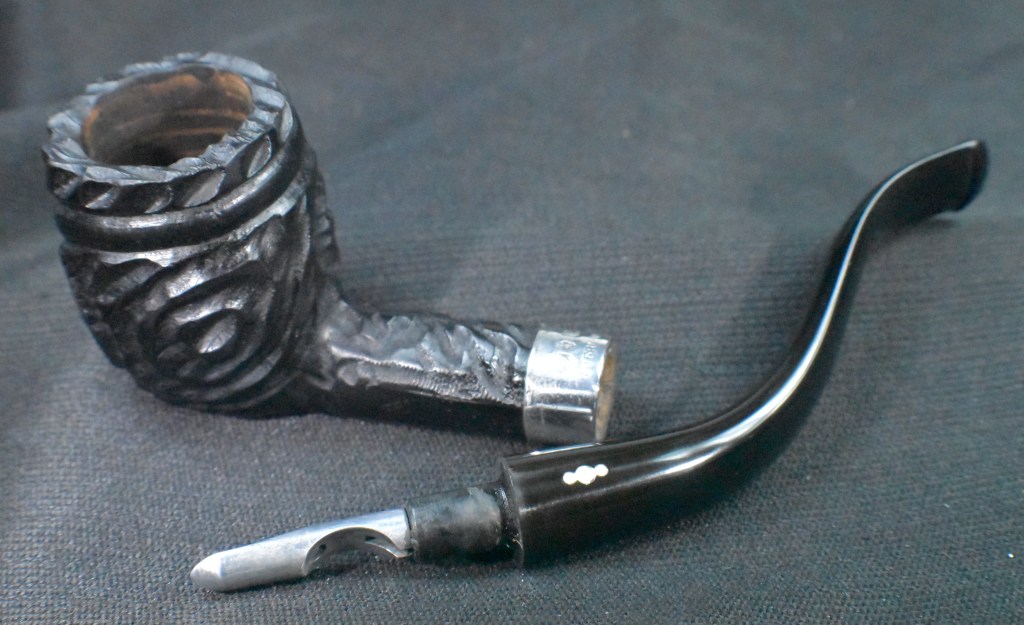
I have a fondness for the unusual and this pipe stem fits that description. I had been looking for a Kaywoodie Chinrester or a Yello-Bole Chin Rester (spelling apparently matters) for a couple of years. Each one that would show-up on eBay would sell for amounts I didn’t feel comfortable with. Eventually this Pall Mall Chinrester style pipe appeared. The bidding continued as normal but I either got lucky or collectors didn’t realize that this pipe was a Yello-Bole. I actually thought the Pall Mall stamping made the pipe even more interesting. Upon arrival I took the below set of photos.
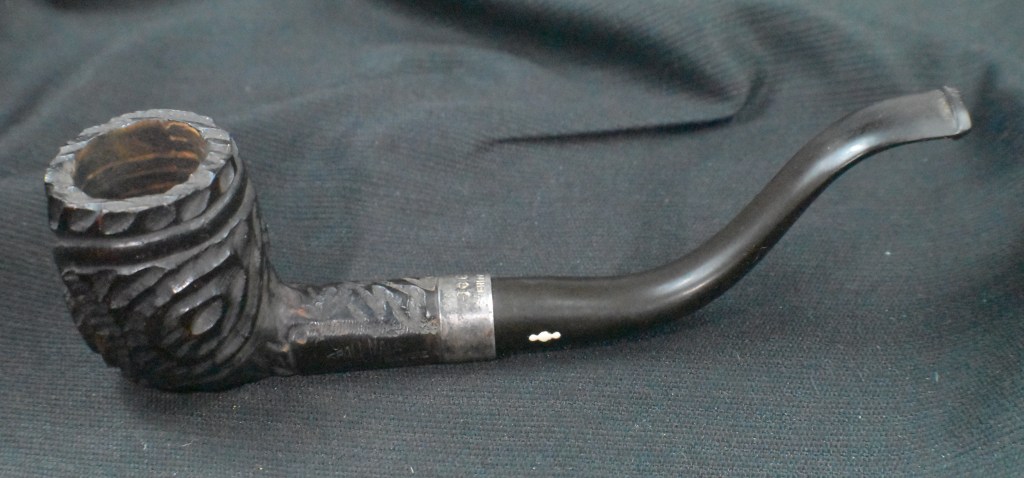
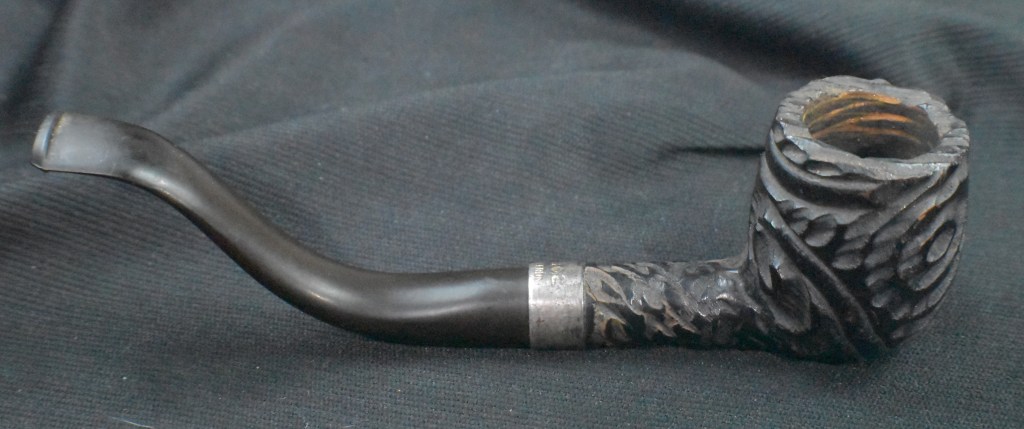
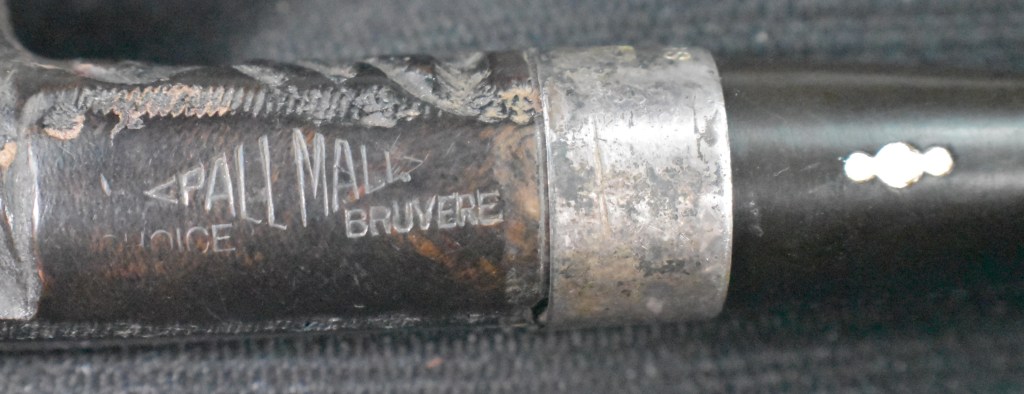
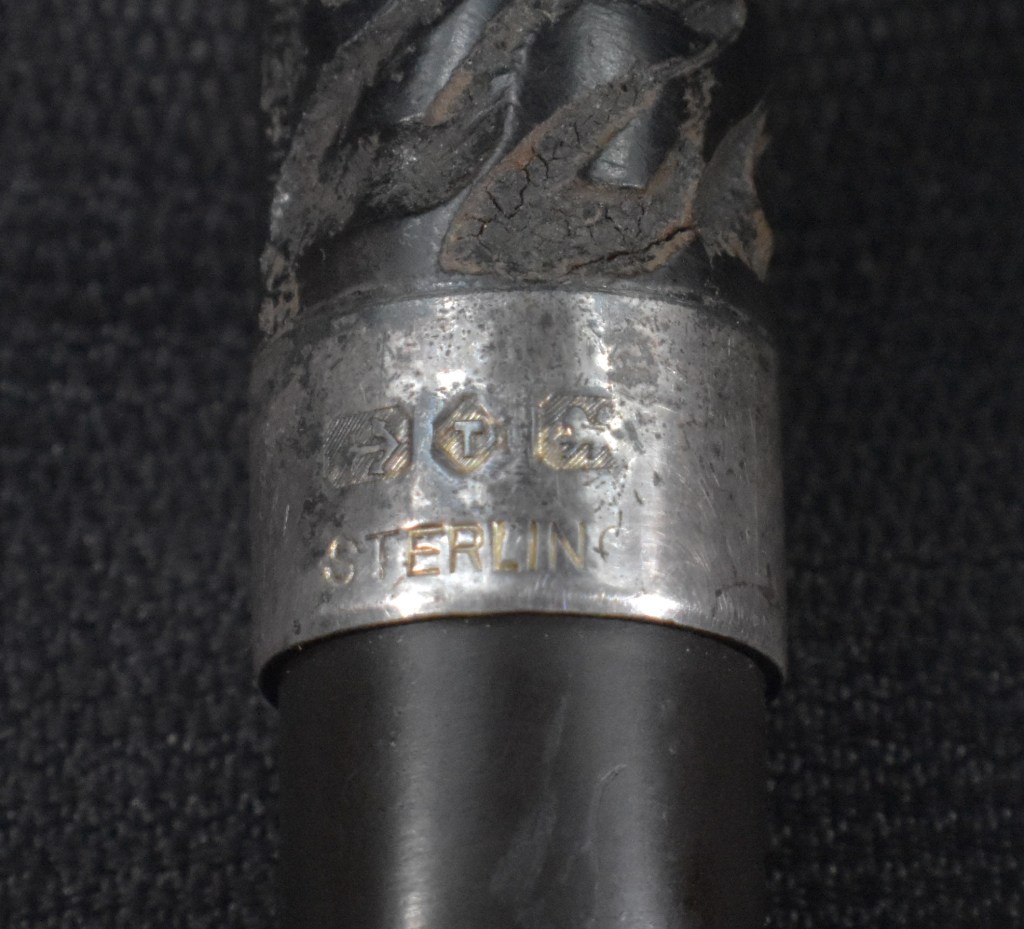
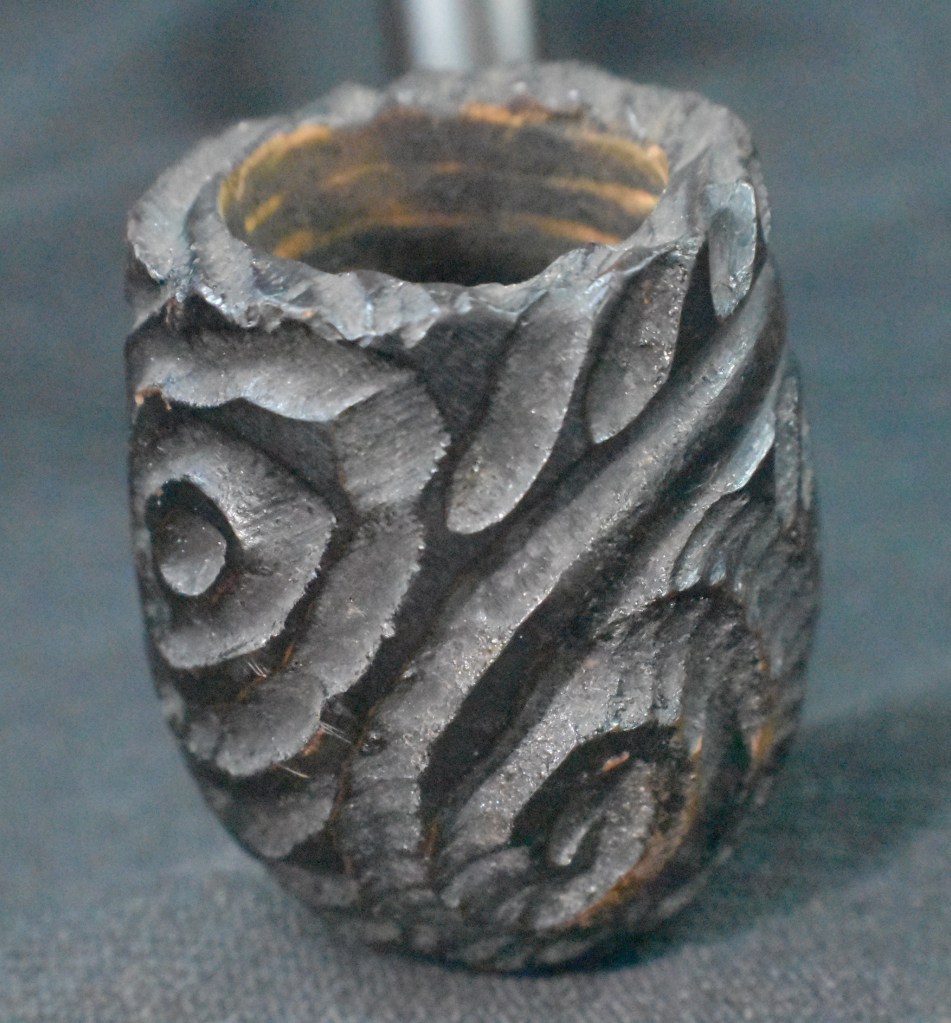
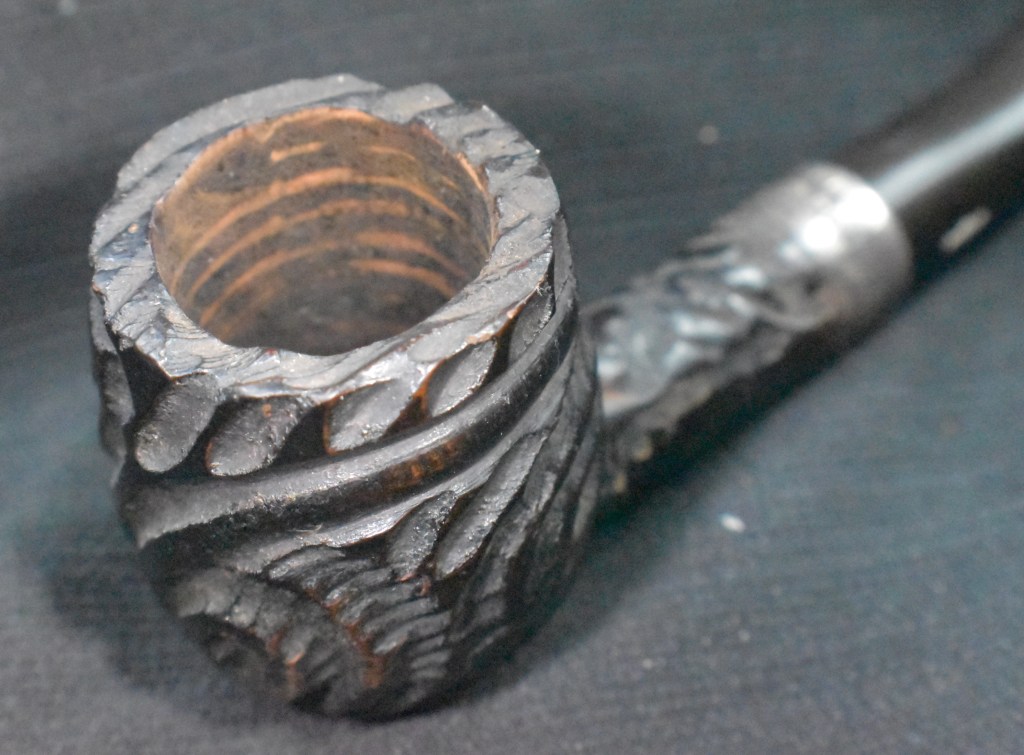
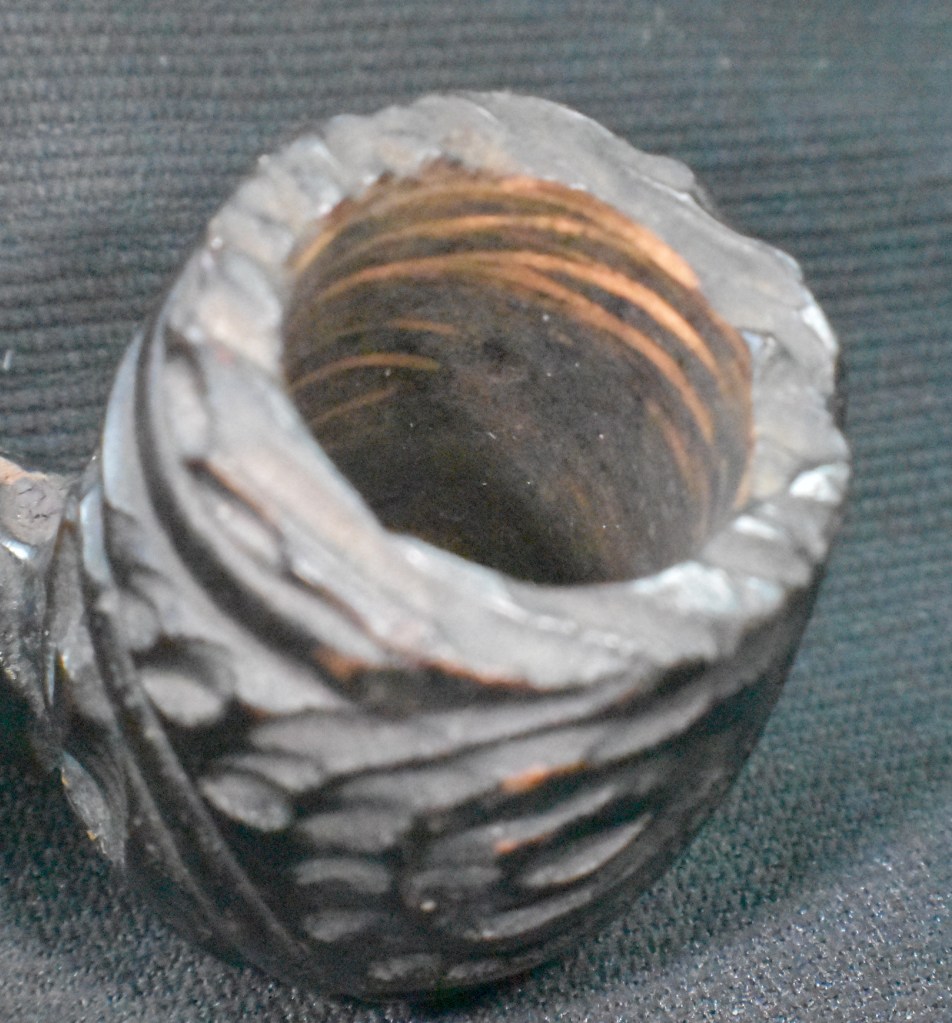
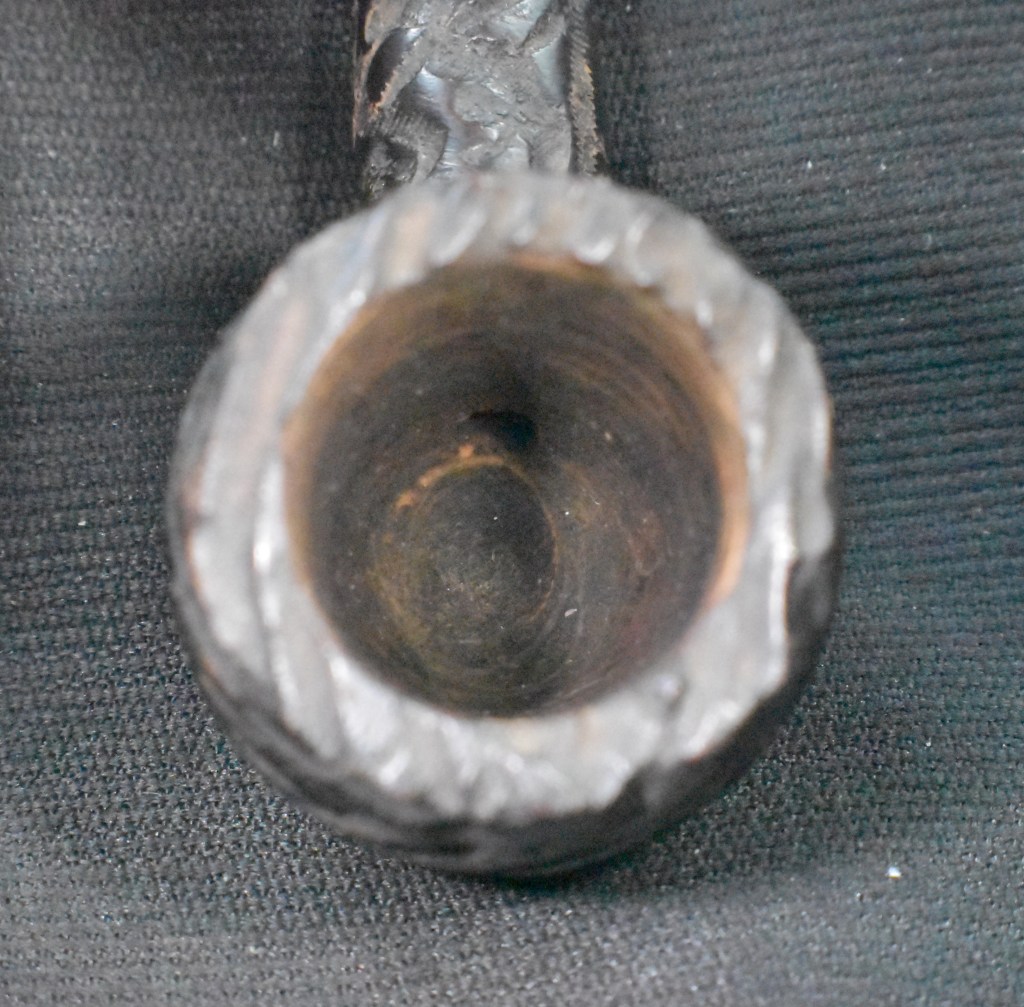
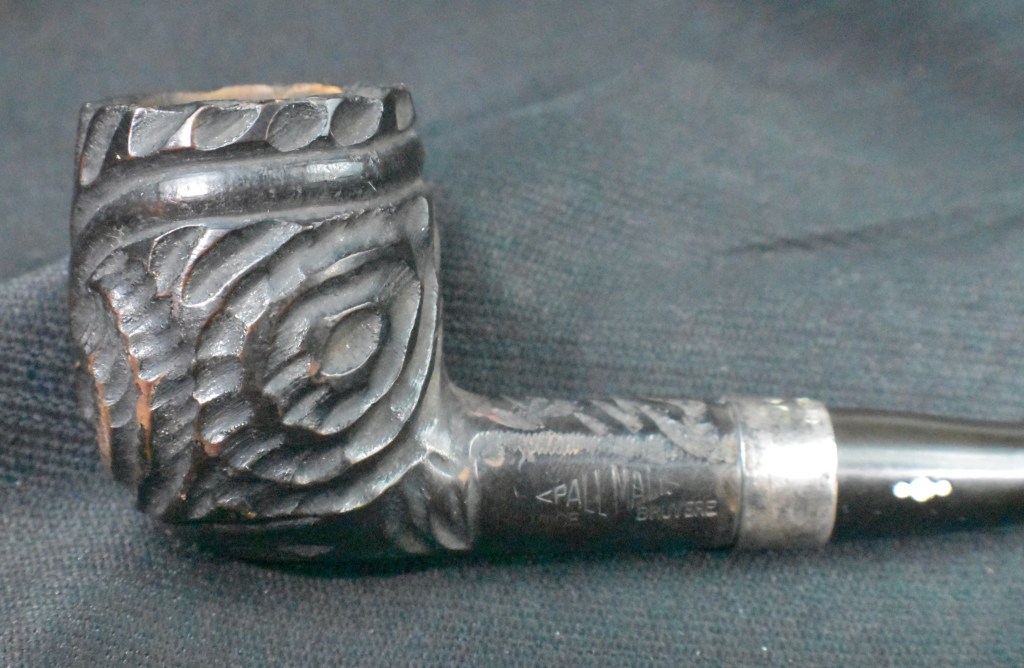
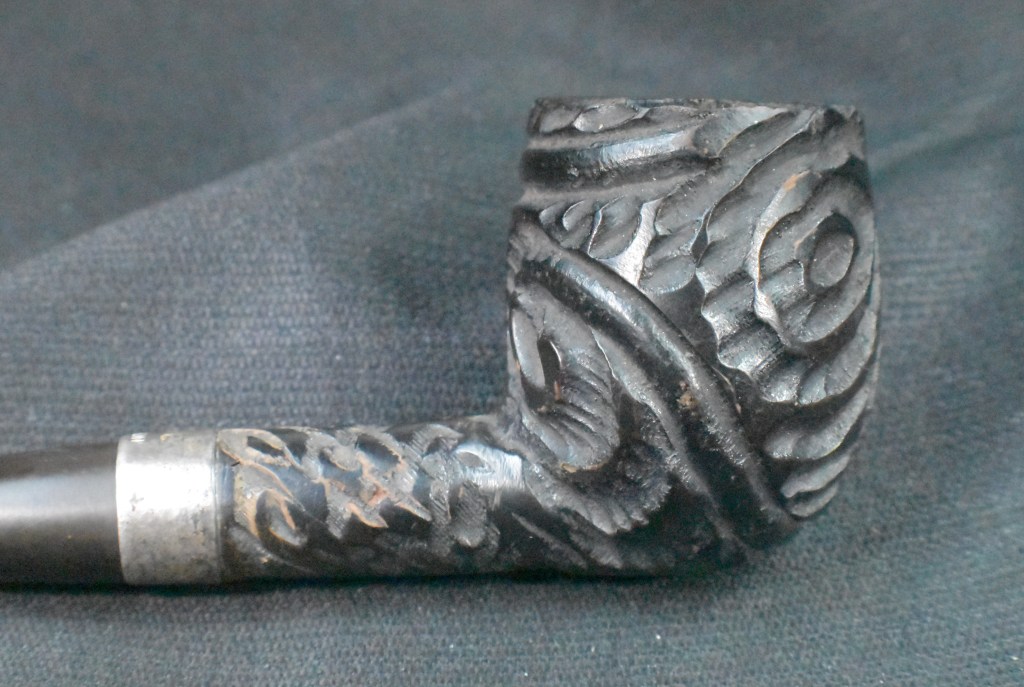
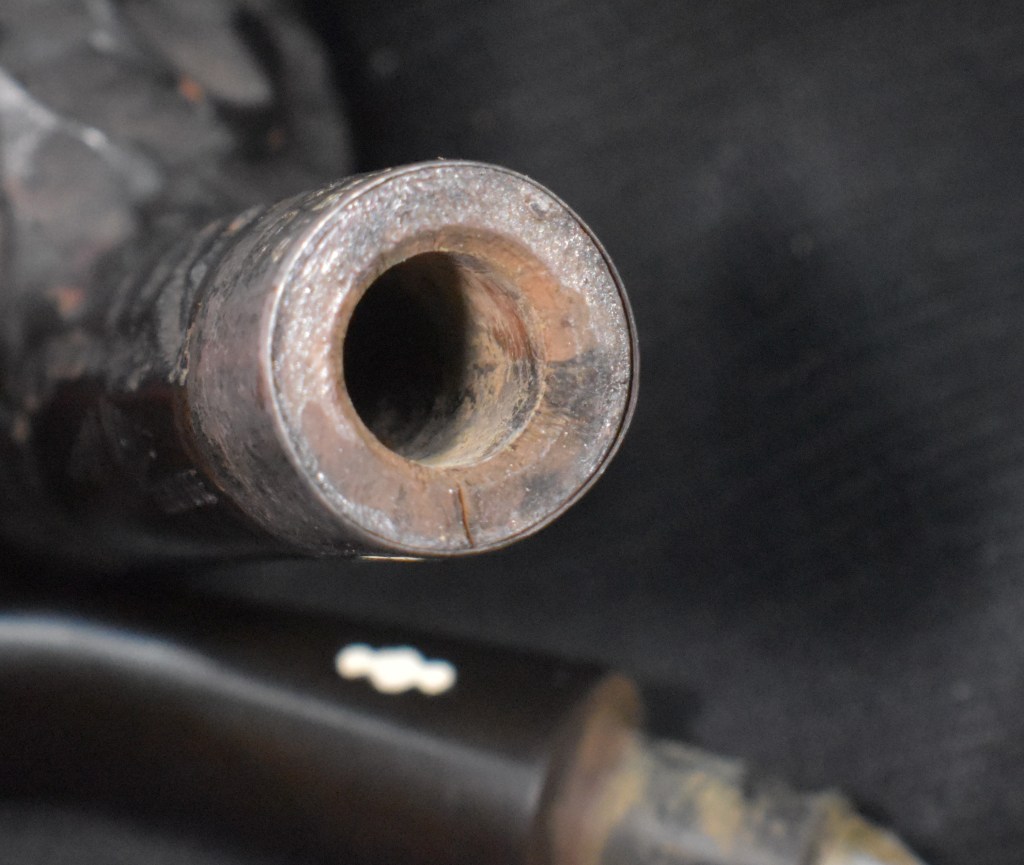
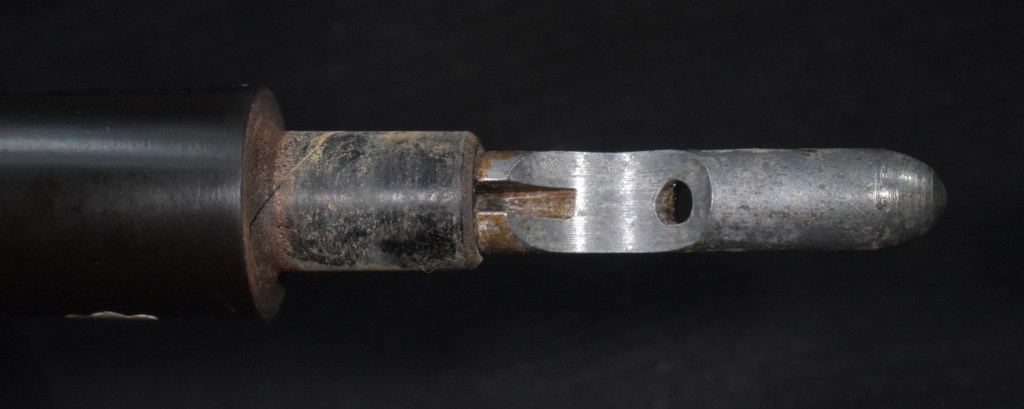
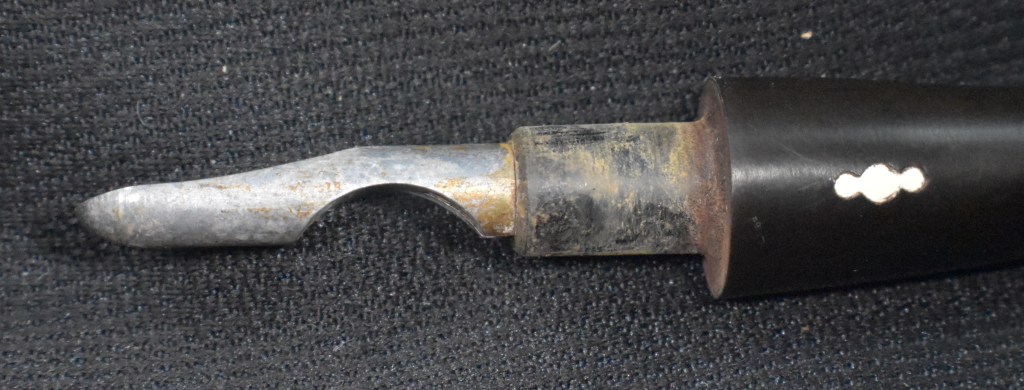
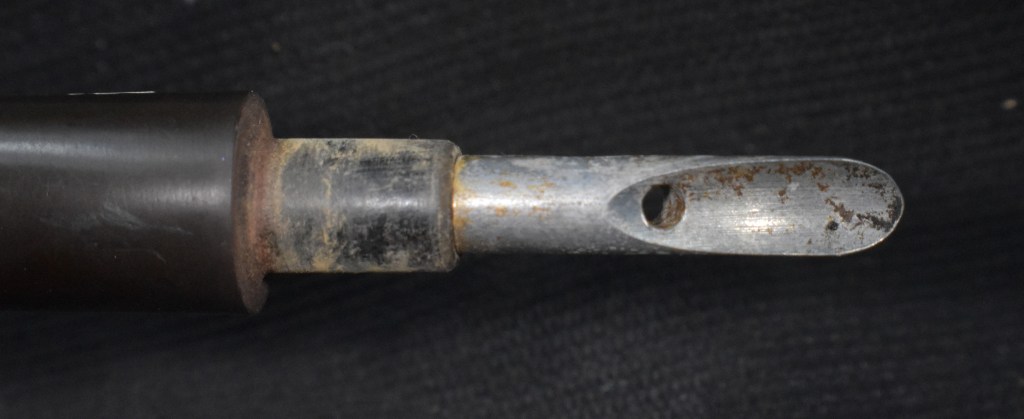
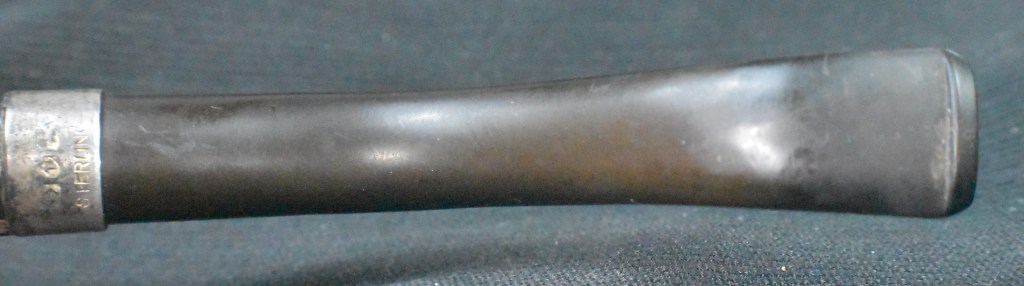
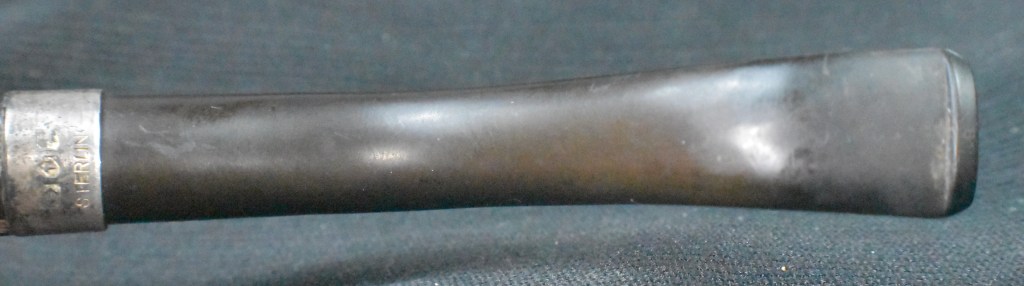
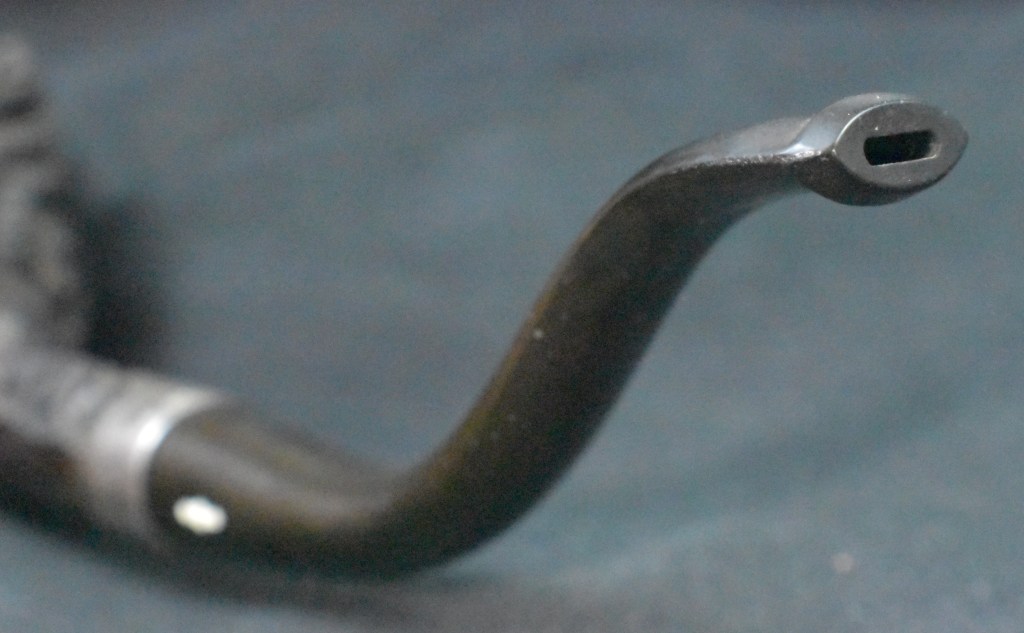
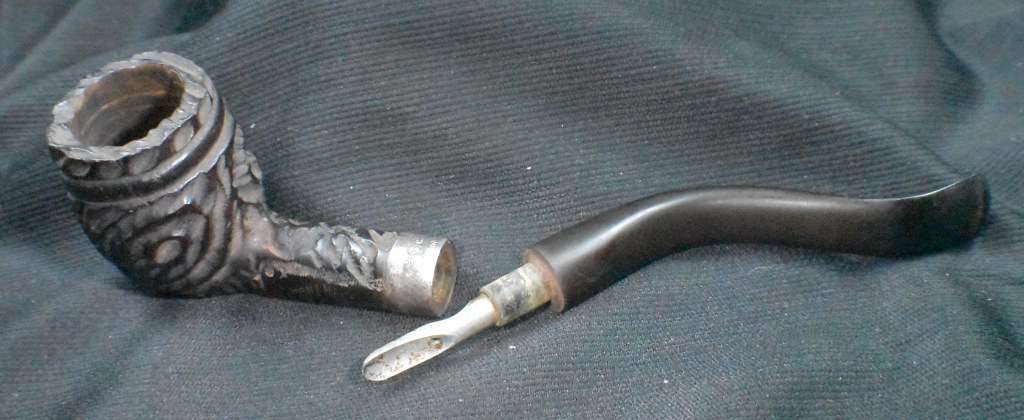
I noticed that there were corkscrew marks in the tobacco chamber. I thought that marks would be deeper gouges in the briar, caused by a vigorous reaming with a post hole digger, but they turned out to be nearly imperceptible to my finger. Given, I have multiple sclerosis and can’t feel much with my fingers, but still they were not deep gouges. The stem was oxidized but had obviously not been stored in a brightly lit room. The aluminum stinger showed signs of oxidation again indicating the pipe’s age. The finish did show signs of handling which had worn away the black dye/stain to reveal briar underneath. Overall this looked like a fun restoration without any major rebuilding of damage.
Background
Yello-Bole was an offshoot of Kaywoodie which in turn was formed from Kaufman Brothers and Bondy (KB&B). This was a gradual shift and is summarized nicely in the following entry in pipedia.org:
“According to Hacker (1), the firm of Kaufmann Bros. & Bondy (KB&B) began producing the Kaywoodie (2) Pipe in 1915. Hacker notes that:
“The company was originally started in 1851 in New York by two brothers named Kaufmann, who sold meerschaums and clays that a third :brother sent them from Vienna. Business thrived and in 1854 the Kaufmanns took in a partner named Bondy. … The three partners retired :in 1898, but their relatives continued on with the firm, which had begun to manufacture their own briar pipes under the KB&B trademark. :In 1915 the Kaywoodie brand was created as a marketing umbrella for a new briar pipe which the KB&B company introduced. …”‘
The “marketing umbrella” mentioned by Hacker included lower grade Kaywoodies that were later marketed under the “Yello-Bole” name. (According to a 1948 Yello-Bole catalog, “Yello-Boles have been on the market since 1933. About 25 millions of these pipes have been sold”). Hacker concludes his history of Kaywoodie Pipes by noting that:
“The KB&B briar pipe brand existed from 1900 until just after World War I (with some overlapping with the Kaywoodie from 1915 — 1917), :and collectors refer to the KB&B as a Kaywoodie transition pipe. During the early years of the 20th century a number of filter systems :were designed by the KB&B firm and incorporated into their Kaywoodie Pipes under the names of Synchro-Stem and Kaywoodie Drinkless3 :filters. During the late 1920’s and throughout the 30’s the Kaywoodie became a highly respected pipe in spite of its filter system (which :was popular among many smokers of the era) primarily due to the fine quality of the straight grain and the flame grain models. :Unfortunately, the hard-to-get-briar years of World War II marked the decline of the Kaywoodie Pipe, a plummet from which it has never :recovered as far as collectors are concerned….”” (Collector’s Guide to Kaywoodie Pipes – Pipedia )
Two advertisements of the Yelllo-Bole Chinrester are shown below:
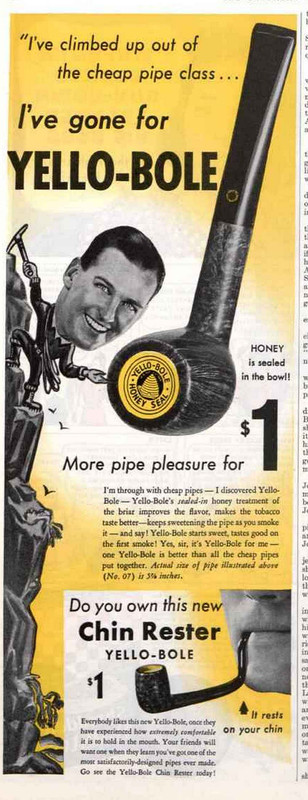
(Ad from 1939 Saturday Evening Post | Pipe Smokers Forums of PipesMagazine.com)
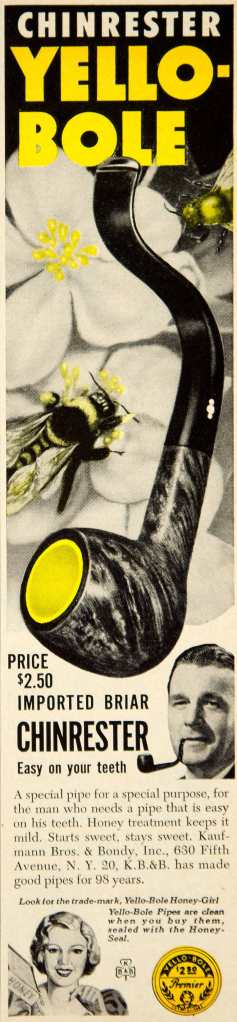
I focus on the Yello-Bole Chin Rester as the stem logo is used in the Pall Mall pipe. Kaywoodie also produced a similar stemmed pipe and apparently referred to it as the “Chinrester”, all one word. These two advertisements clearly show that the Chin Rester was in production from at least 1939-1949. In an attempt to narrow this range down, I used pipedia.org’s Kaywoodie Shape Numbers page to create the following table. The term “chinrester” was used rather than “Chin Rester” by the author, but I think that makes no difference.
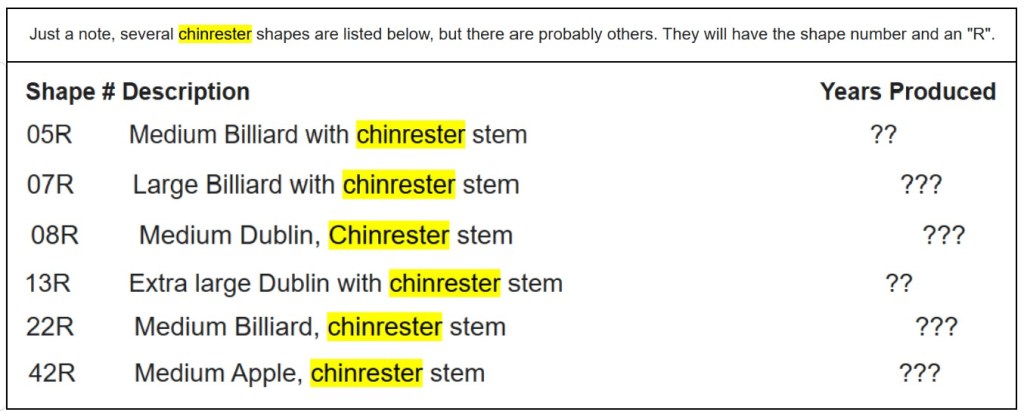
(Kaywoodie Shape Numbers – Pipedia ). Hmm, that doesn’t seem to help narrow anything down, now does it?
Further in the pipedia.org Kaywoodie Collector’s Guide page it states,
“Other interesting entries in the 1955 catalog included:
- Export Pipes— Pipes without the Kaywoodie screw-in filter system. Available in Super Grain to Connoisseur grade pipes.
- Fit Rite. “Fit Rite” refers to the design of the bit (“absolutely flat on top and bottom from the tip right to the saddle”).
- Chesterfield8— Identical to the Peterson System Pipe (reservoir in pipe shank to collect moisture, Peterson style lip, military mounting). Available in Super Grain, Relief Grain, Flame Grain, and Connoisseur grades.
- Chinrester. “S-Shaped” bit— “Chinrester pipes perform a special function by resting comfortably on the chin, thereby easing the strain on smokers whose jaws tire quickly or whose teeth are weak.”
- Stembiter. “For smokers with strong teeth who bite through their pipe bits.” The bit was “notched” in front of the lip of the bit to “conform to the shape of the teeth”. The bit incorporated a 3-way smoke passage with two of the passages terminating in the lip-end of the bit and the third in the notch on the top of the bit9. (Also see “Durobit”, Section 3.4).
- White Briar— “Bowls of prime imported briar, with hard white finish that keeps its lustre and sparkling whiteness.”
- Filter-Plus— Interchangeable bowls in metal shanks. Two basic models were available. The 1955 model featured six “screw-on” interchangeable bowls. In the late 1950’s (after 1955) or early 60’s, the Filter-Plus Deluxe pipe was introduced (“gold-like” finish on shank). In the early to mid-1960’s, the Filter Pipes featured a “strap-on” bowl with a threaded base for ceramic filters. The bowl on these pipes was held in place with a spring-loaded pin that could be released by pulling the bit.
- Drinkless Tuckaway–Smaller versions of “popular shapes”. Available in smooth or carved finishes (Also see Section 3.5)” (Collector’s Guide to Kaywoodie Pipes – Pipedia ). Bah, this further widens the range of possible dates to the 1955 Kaywoodie catalog.
I do find it funny that the above section uses a quote about “weak teeth”,
“Chinrester. “S-Shaped” bit— “Chinrester pipes perform a special function by resting comfortably on the chin, thereby easing the strain on smokers whose jaws tire quickly or whose teeth are weak.”
Stembiter. “For smokers with strong teeth who bite through their pipe bits.” The bit was “notched” in front of the lip of the bit to “conform to the shape of the teeth”. The bit incorporated a 3-way smoke passage with two of the passages terminating in the lip-end of the bit and the third in the notch on the top of the bit9. (Also see “Durobit”, Section 3.4).” (Collector’s Guide to Kaywoodie Pipes – Pipedia ). Below is an image of this advertising.
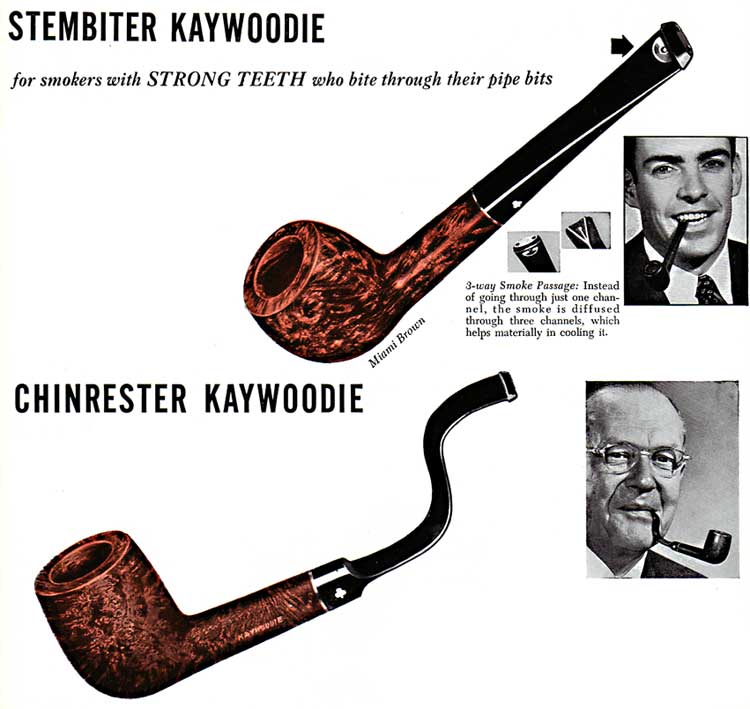
(File:Kaywoodie OtherPipes kwg-26i.jpg – Pipedia). I do not think that an ad campaign like that would be very successful today. No one I can think of wants to be targeted with real or perceived flaws.
I did find one piece of the dating puzzle in the pipedia.org Yello-Bole entry. It states the following:
“Tips for Dating Yello-Bole Pipes
- KBB stamped in the clover leaf indicates it was made in 1955 or earlier as they stopped this stamping after being acquired by S.M. Frank.
- Pipes from 1933-1936 they were stamped “Honey Cured Briar”
- Post 1936 pipes were stamped “Cured with Real Honey”
- Pipe stems stamped with the propeller logo were made in the 1930’s or 1940’s – no propellers were used after the 1940’s.
- Yello Bole used a 4 digit code stamped on the pipe in the 1930’s.
- Pipes with the Yello-Bole circle stamped on the shank it were made in the 1930’s, this stopped after 1939.
- Pipes stamped BRUYERE rather than BRIAR it was made in the 1930’s.
” (Yello-Bole – Pipedia ). The fourth bullet point declares that the propeller logo was not used after the 1940s. I think that it is safe to assume that this pipe was most likely produced by Yello-Bole between 1939-1949 for Pall Mall. Perhaps as a coupon pipe as an offer to reward Pall Mall tobacco buyers with a unique pipe.
The Restoration
The pipe made the 20 foot journey from the photo table to the workbench.
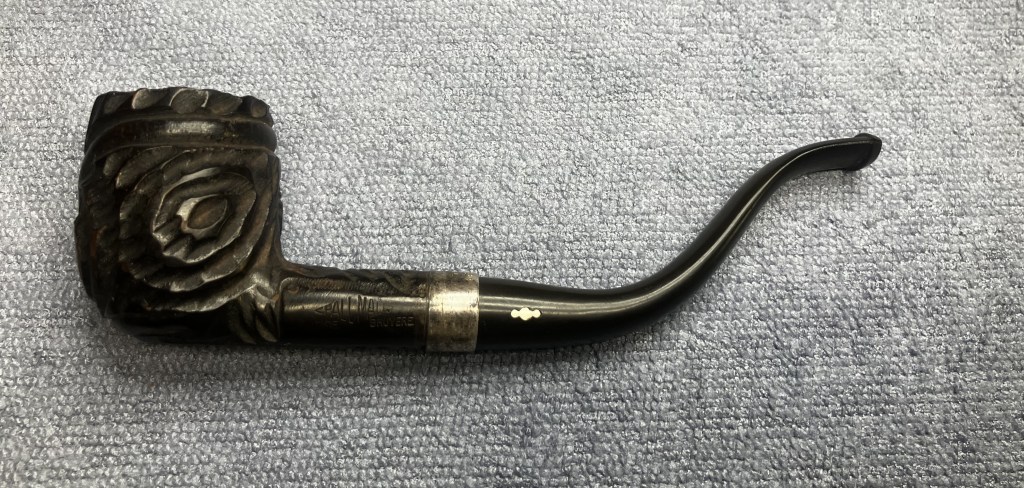
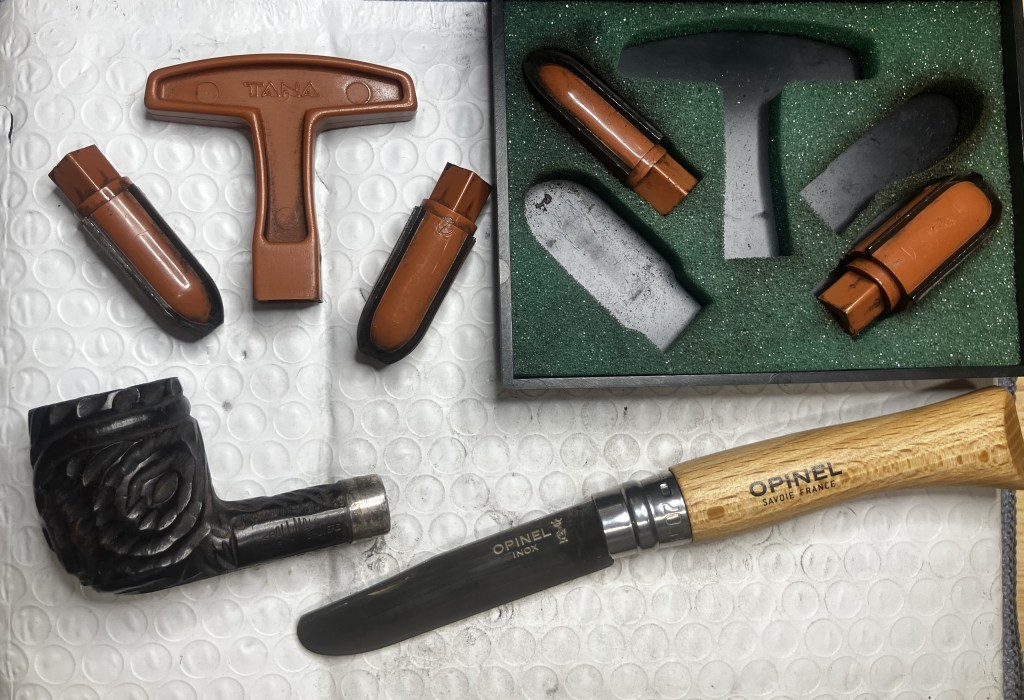
The reaming was mainly done with the #2 and #3 blades of the PipNet. You may have noticed a new addition to the ream team, that is an Opinel child’s first knife. Once again my German buddy, Sascha Mertens shared a great idea. He mentioned the rounded tip of these knives and he was absolutely correct. It makes a nice addition to the bench tools.
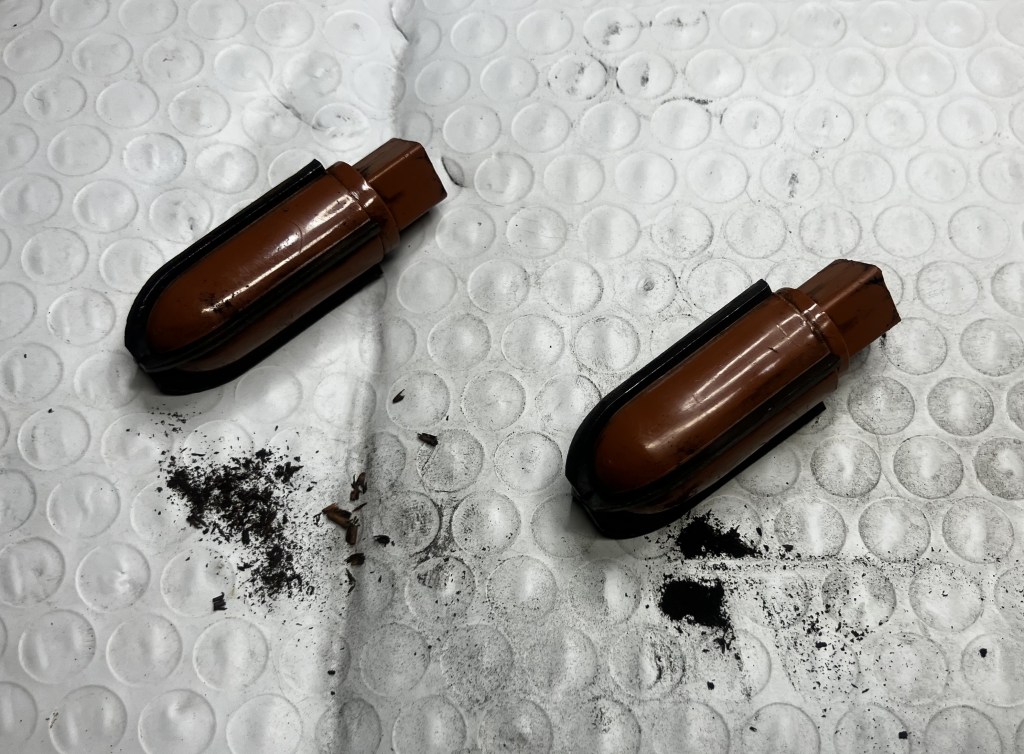
There was very little cake for the PipNet to remove.
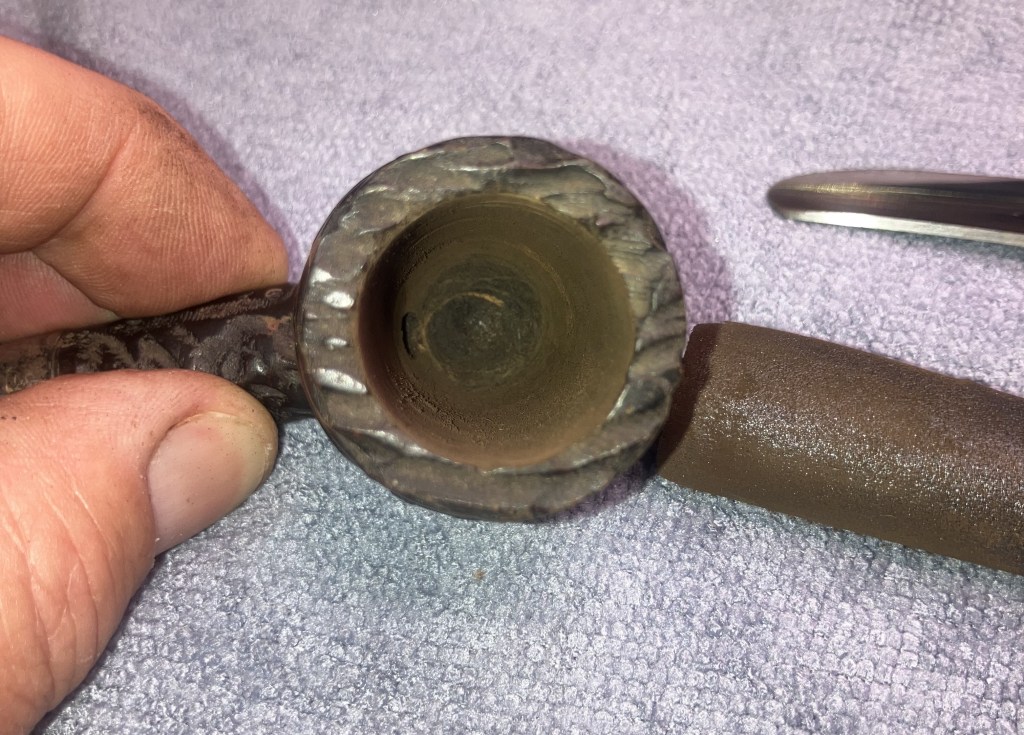
A light scraping with the Opinel and sanding with 320 grit paper wrapped around a wood dowel revealed bare briar with no noticeable heat damage.
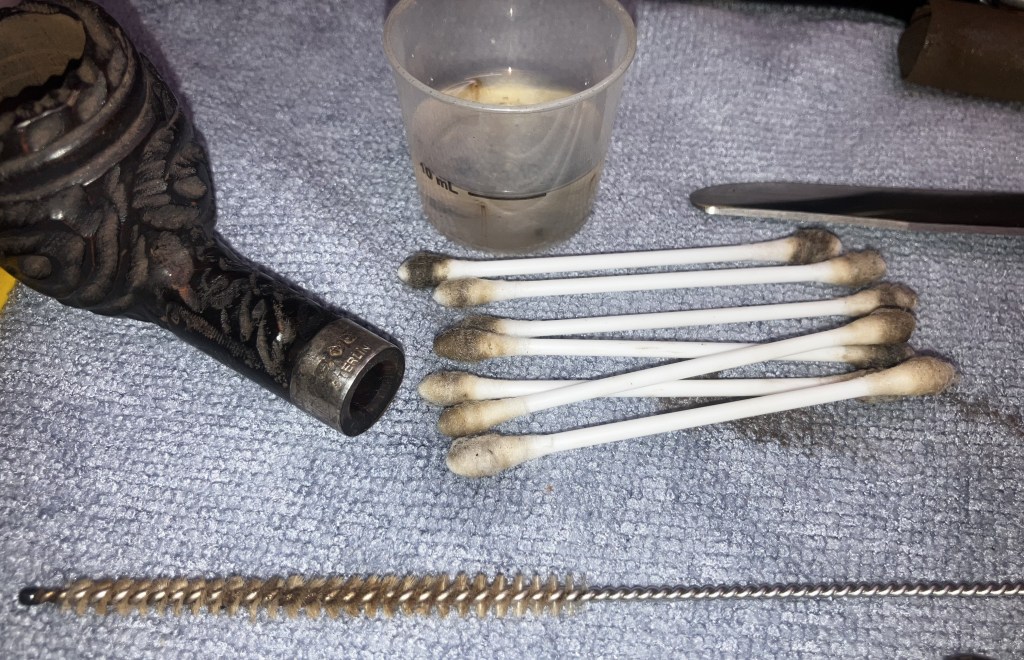
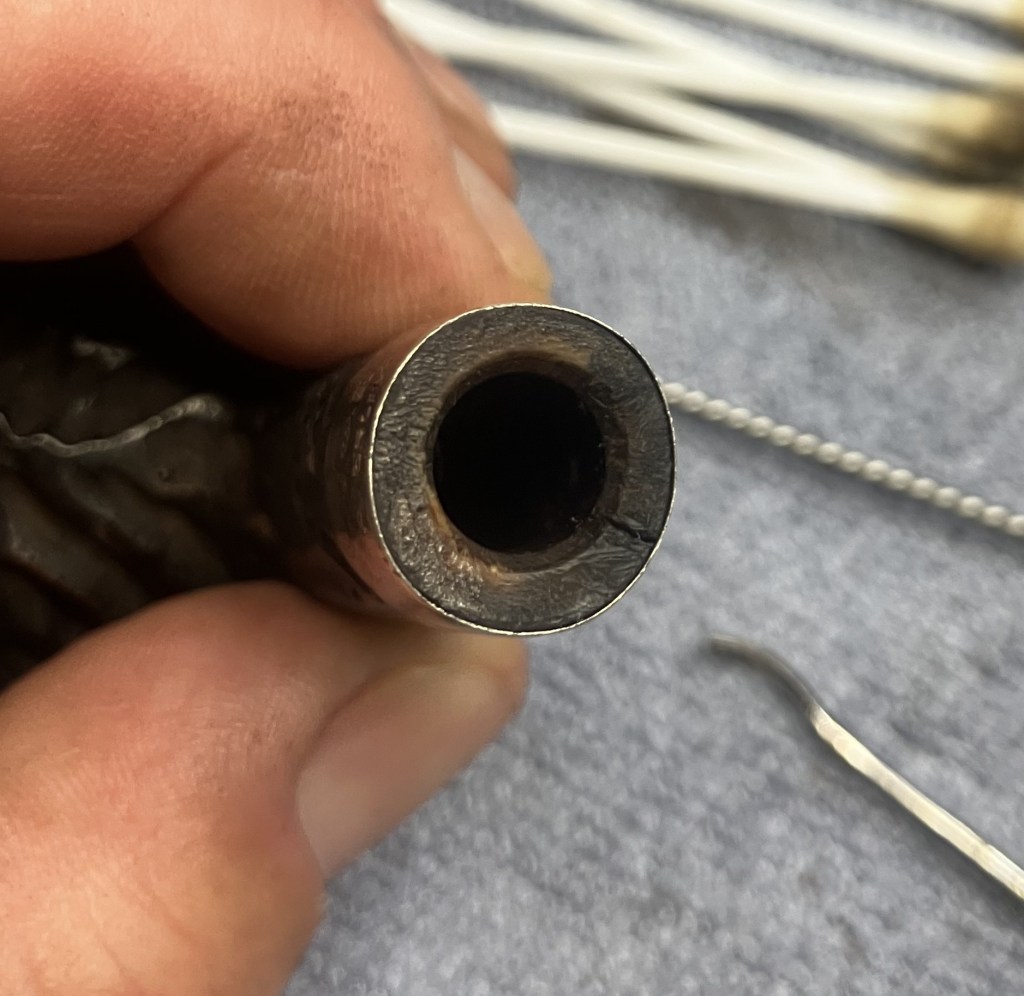
The shank was cleaned out using cotton swabs and 99% ethyl alcohol. A shank brush also with alcohol joined the fun.
There was a small crack in the shank which appeared to be quite superficial. Maybe this was repaired at one point with the addition of the band or maybe the band was part of the original pipe.
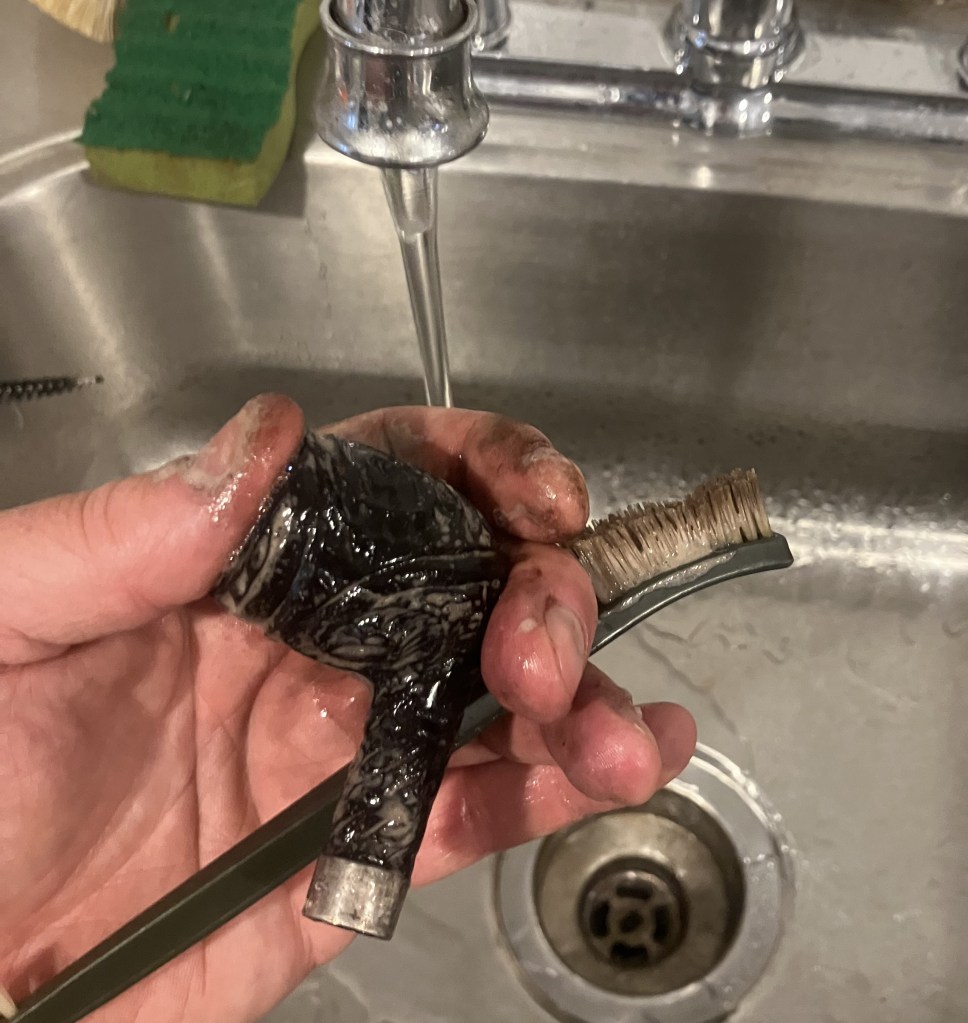
To the sink! The stummel was scrubbed with undiluted Murphy Oil Soap and a nylon brush. The soap was rinsed with warm water and the stummel dried with a cotton hand towel.
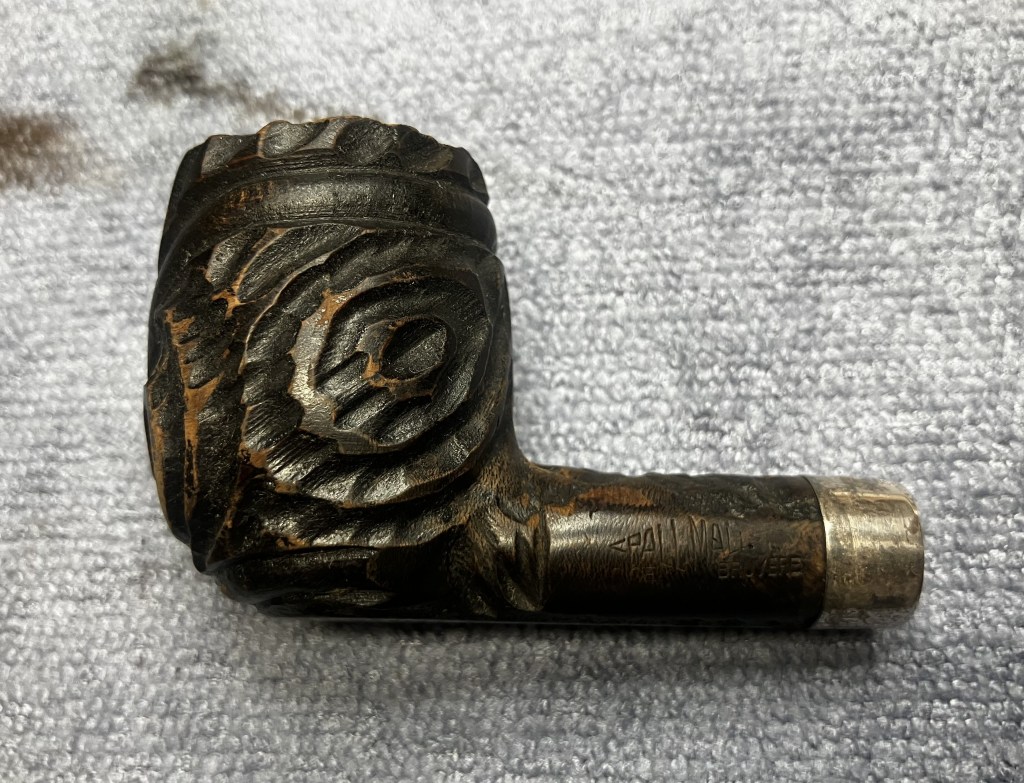
The stummel looked much better without the accumulated dust and dirt.
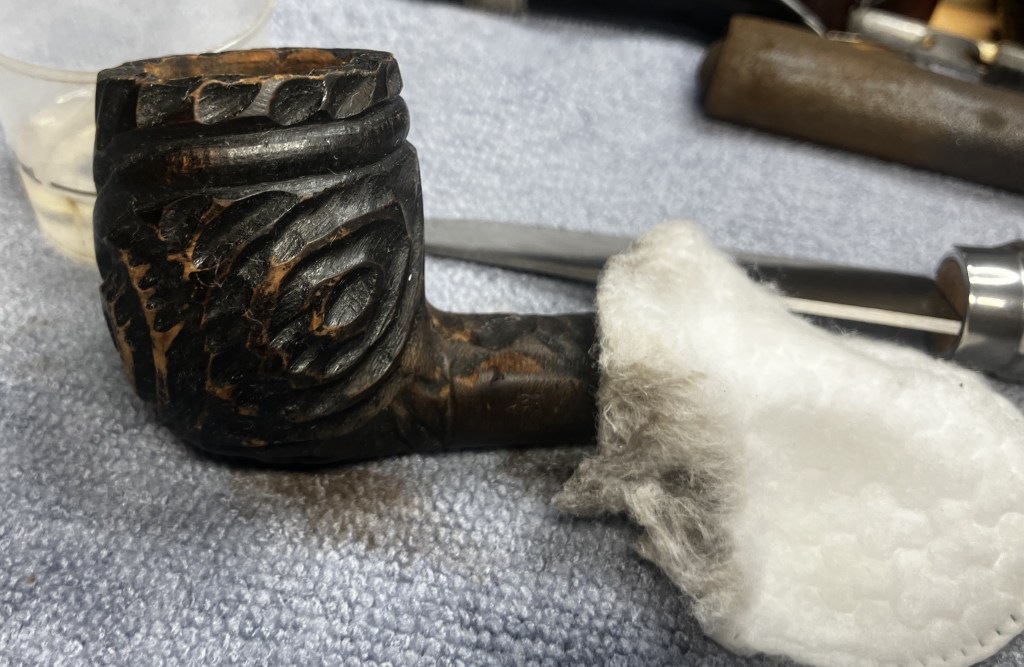
I wiped the stummel with 99% ethyl alcohol on a cotton make-up pad. Little black dye/stain came off with this wiping. I figured that the previous handling this pipe had gotten had removed most all that would come off.
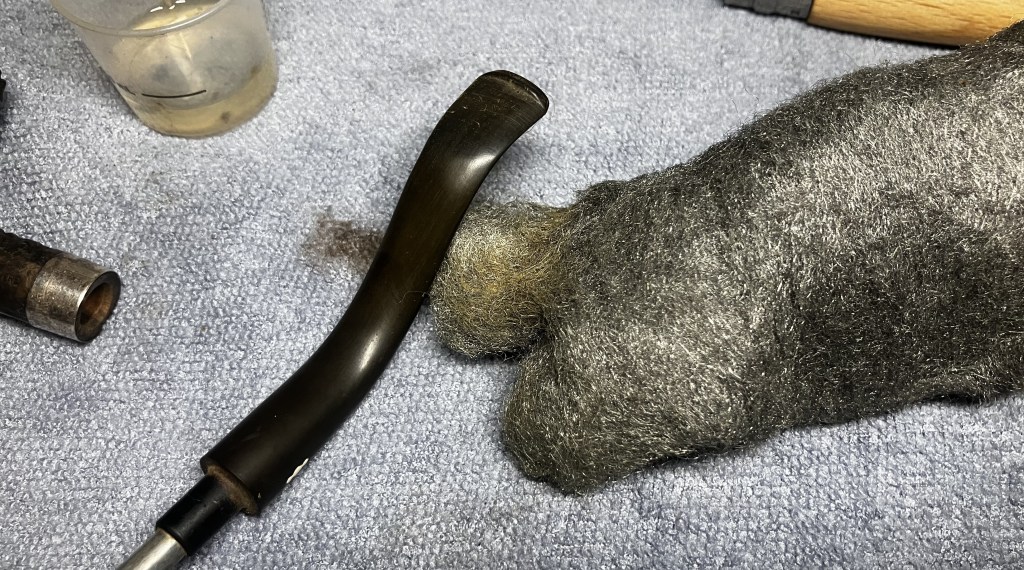
Switching to the stem, I gave the vulcanite a quick rub with 0000 steel wool.
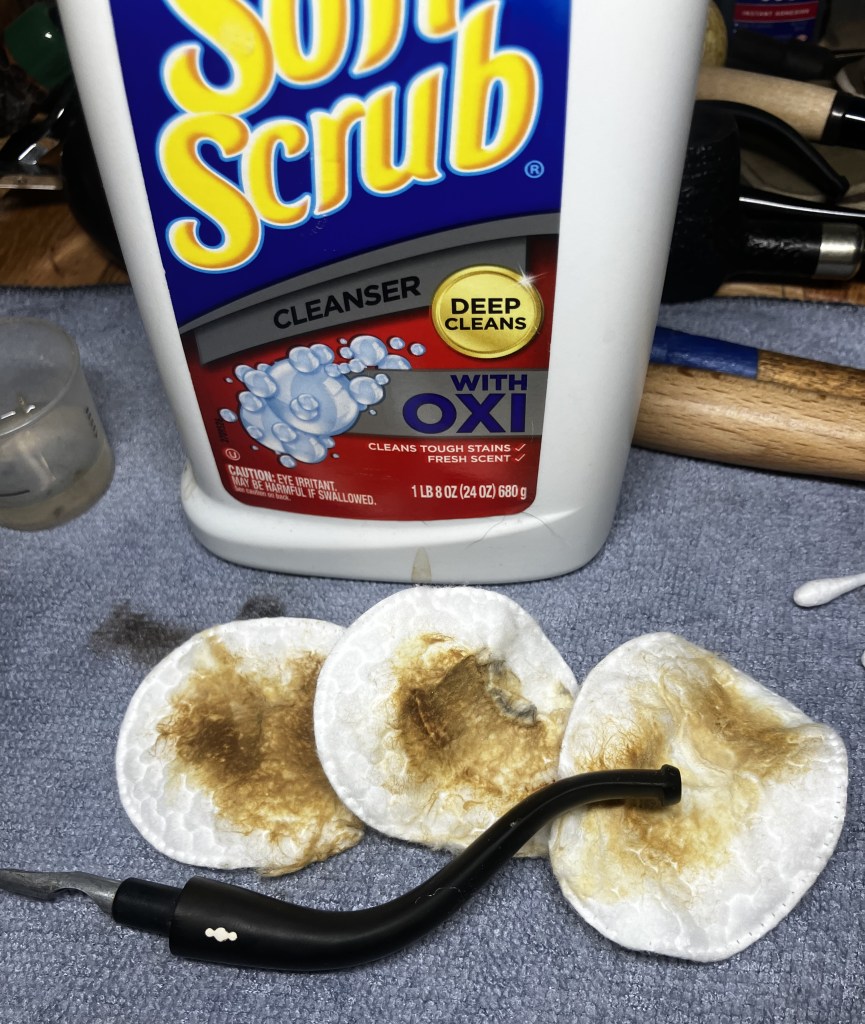
Then a scrub with Soft Scrub cleanser on make-up pads. This removed a good deal of the surface oxidation.
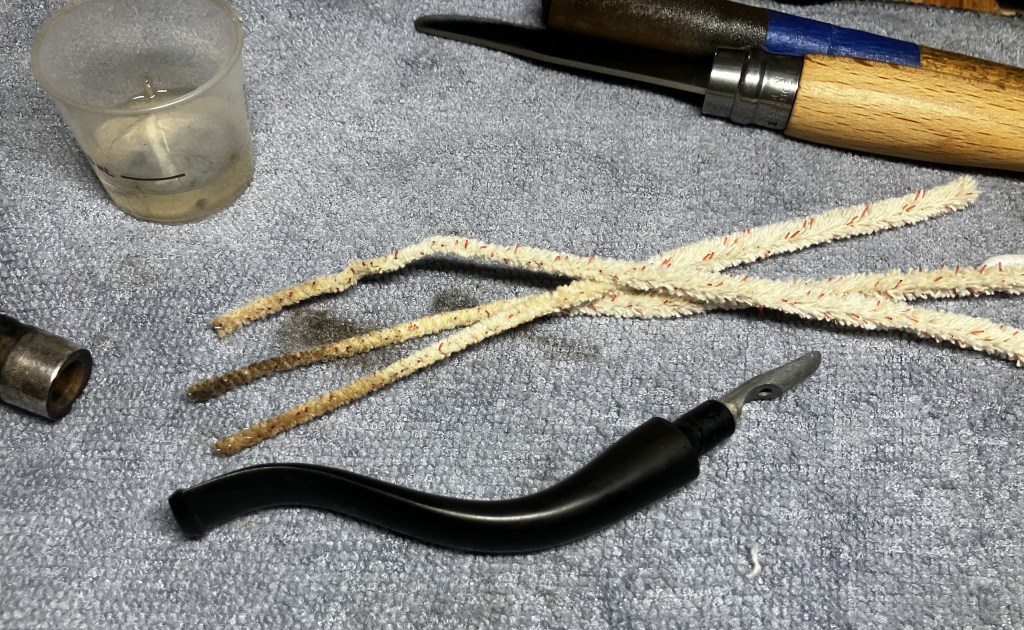
The airway was cleaned with pipe cleaners and 99% ethyl alcohol. The contorted path was surprisingly easy to work a pipe cleaner through. Even the stinger accepted a pipe cleaner.
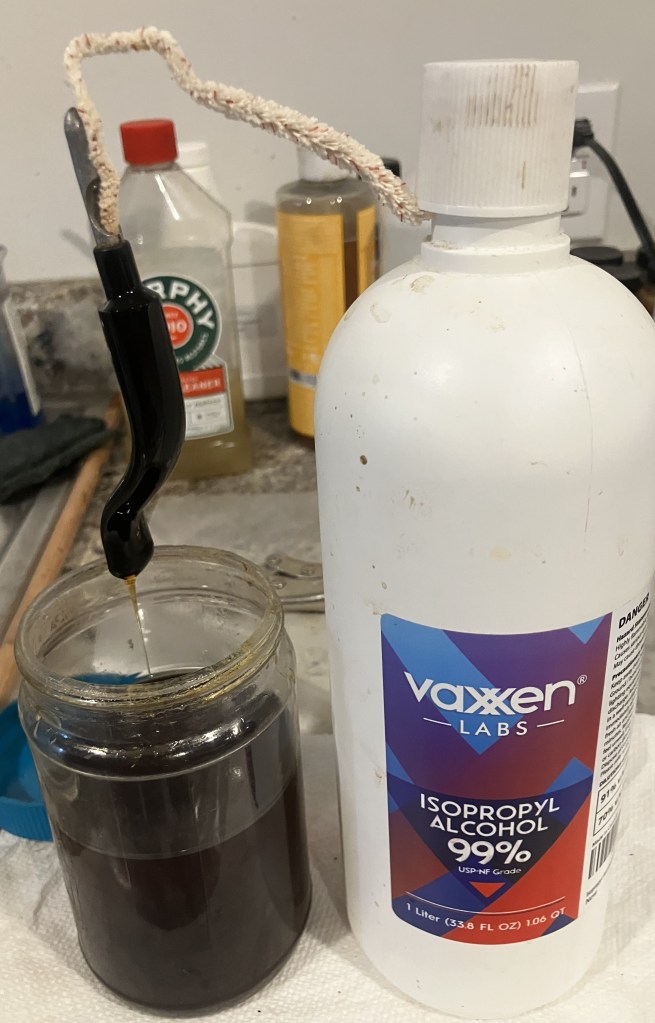
The stem was then suspended in Before and After Extra Strength Deoxidizer (deox) for 3 hours.
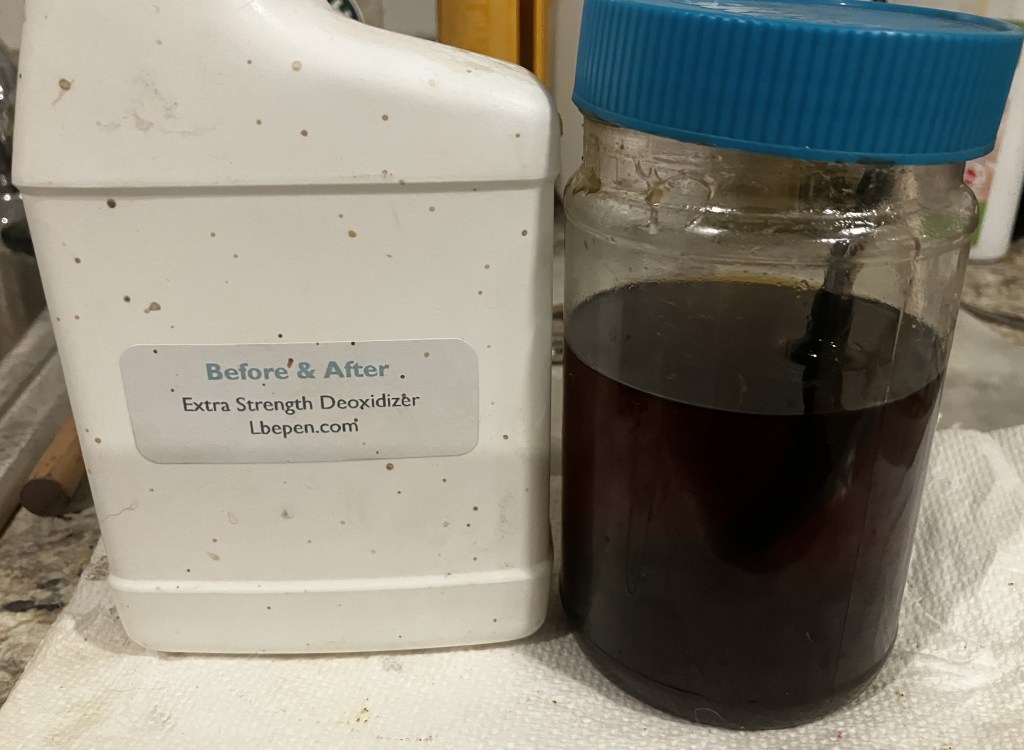
Once removed from deox the stem was allowed to drip excess deox solution back into the jar using the patented Drip-O-Matic 3000 device.
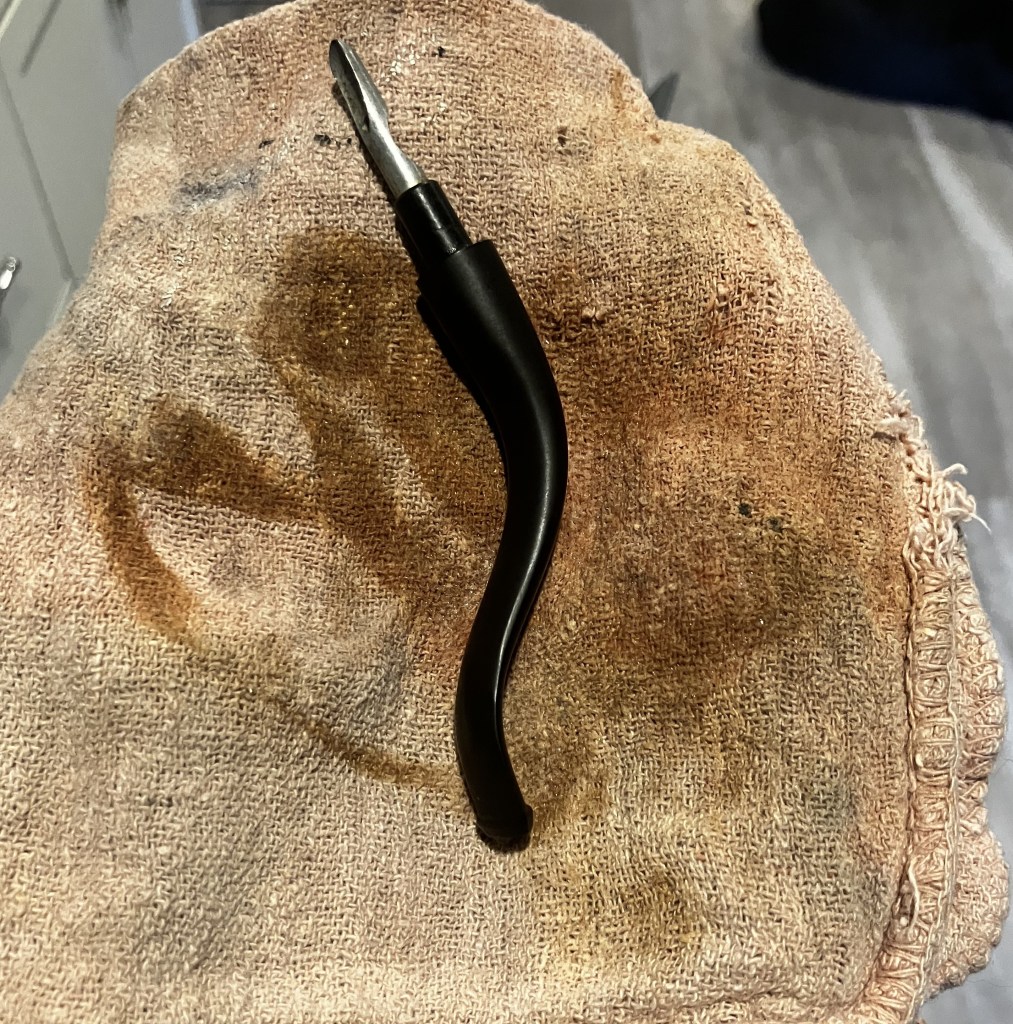
A vigorous rubbing with a coarse shop rag removed more of the oxidized rubber from the pipe stem.
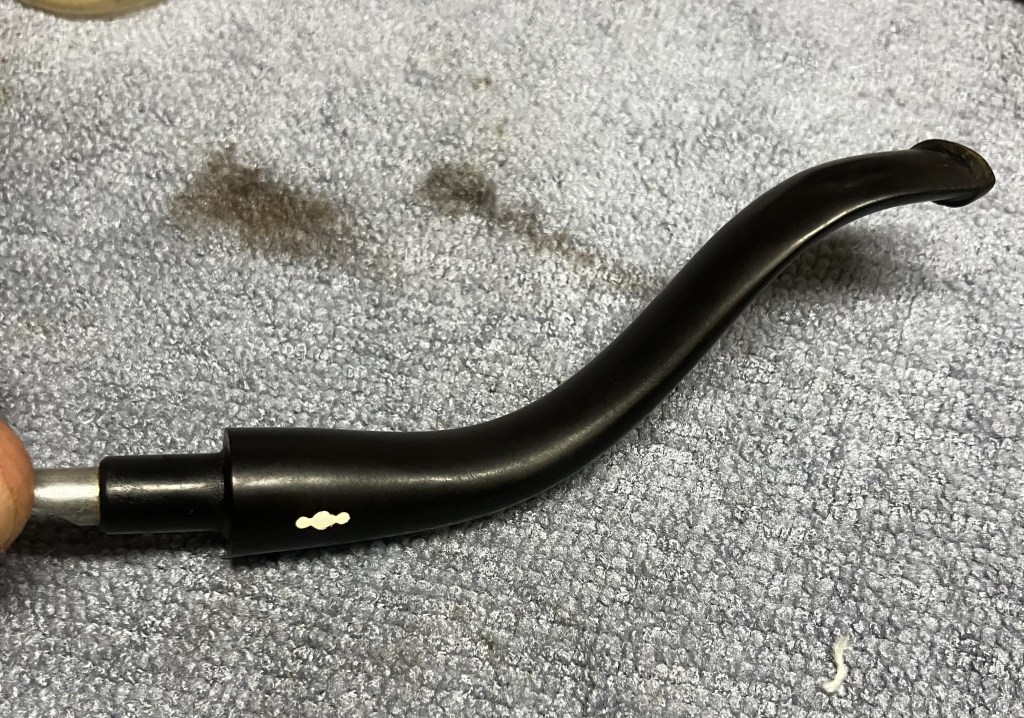
Stems look far better black, eh?
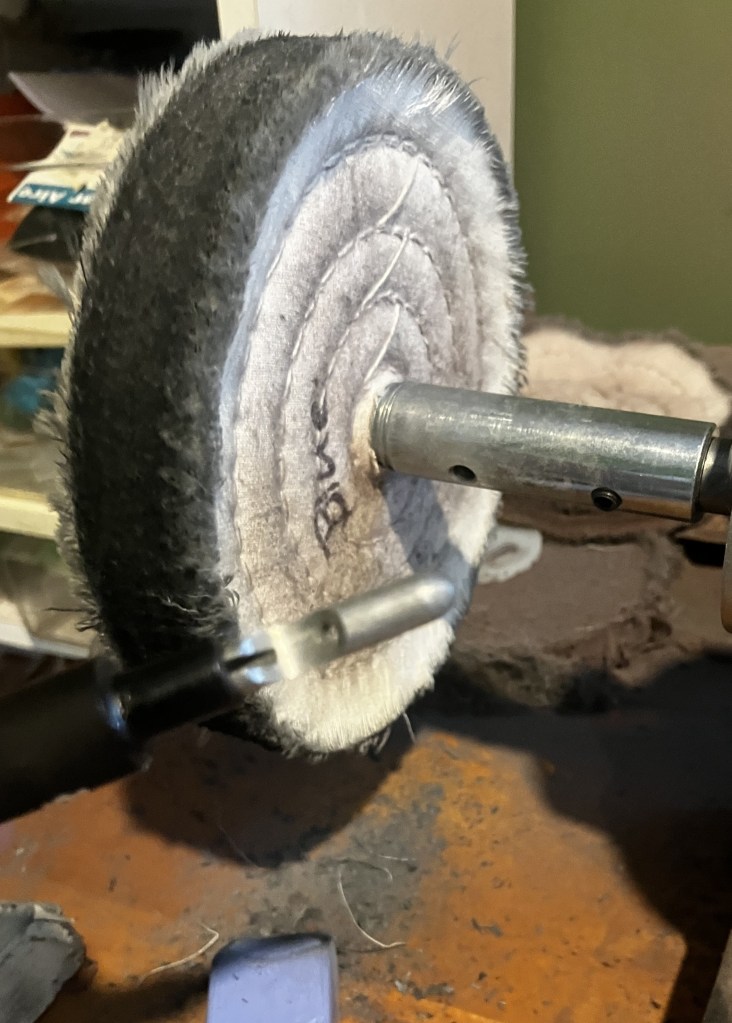
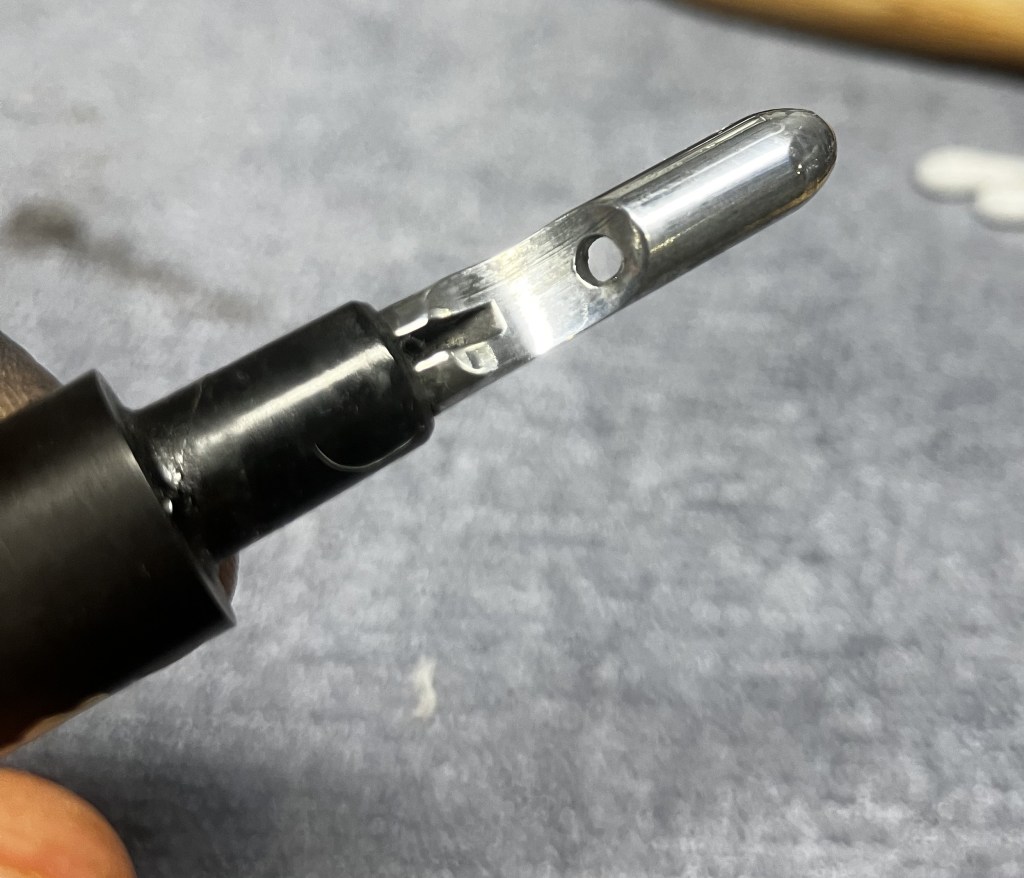
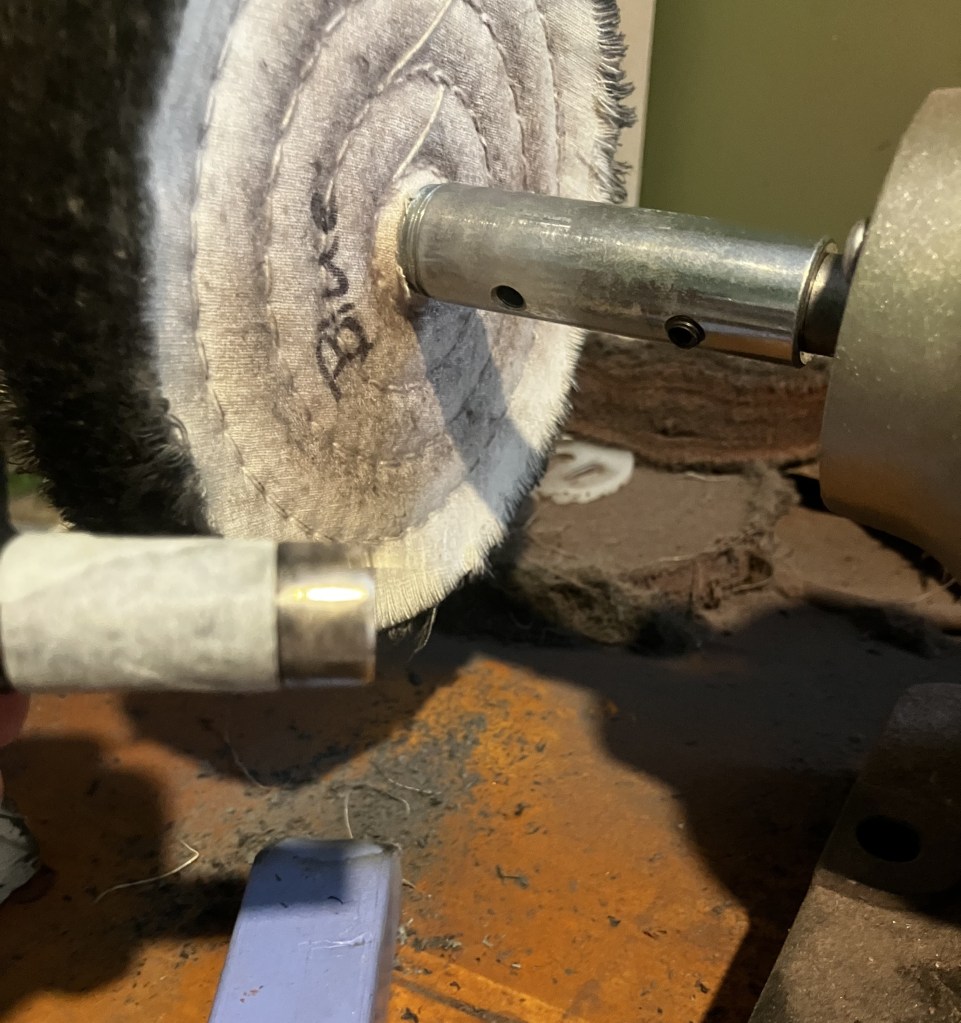
I buffed the stinger with Blue Diamond on the buffer.
It looked much better without the oxidation.
Next, I used black Fiebing’s Leather Dye to restore the black finish to the stummel. The tobacco chamber was plugged with a cork to keep dye from the chamber. The dye was applied with folded pipe cleaner and flamed between coats. The flaming burns off the alcohol solvent and better fixes the dye to the briar. 3 coats were applied.
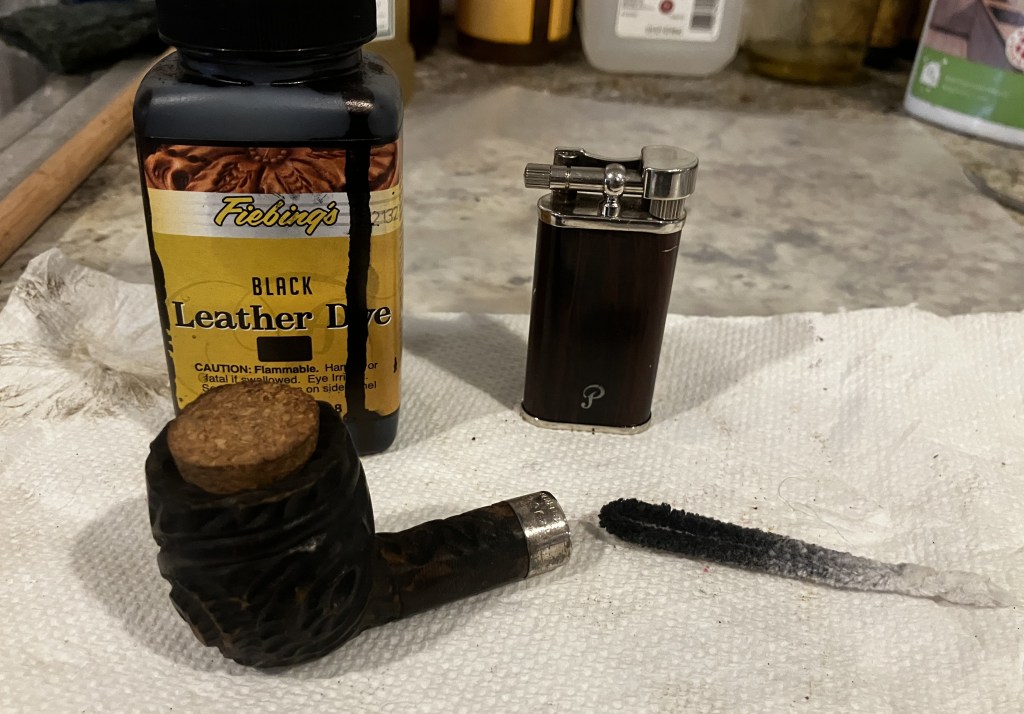
The stummel was allowed to dry for a couple of hours.
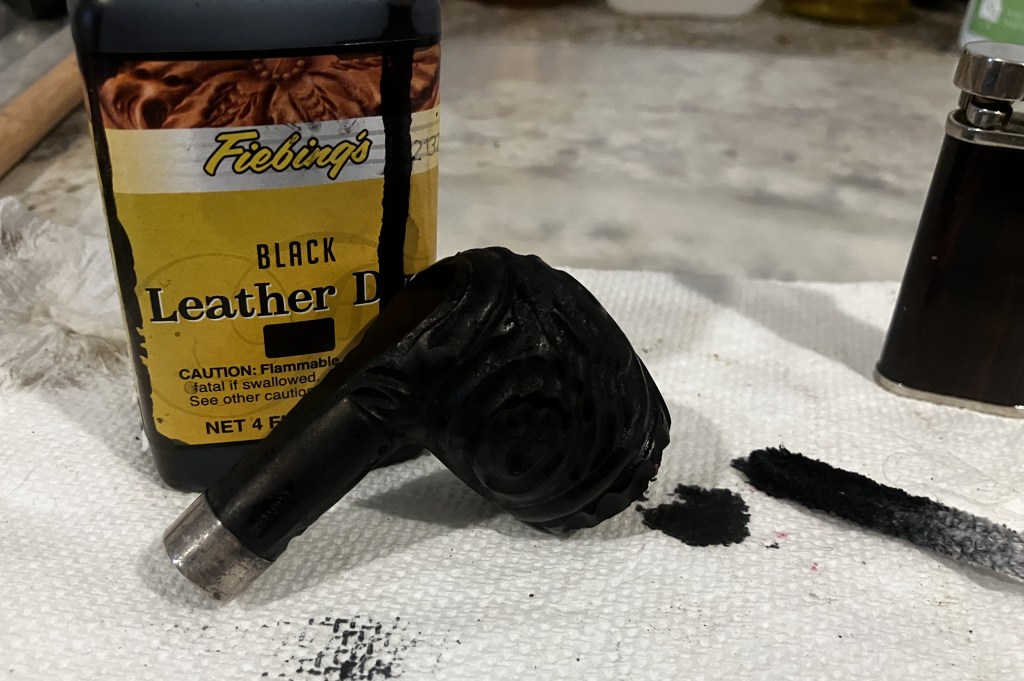
Once dry, I hand buffed the stummel with a paper towel to remove excess black. As you can see, not very much came off on the paper towel.
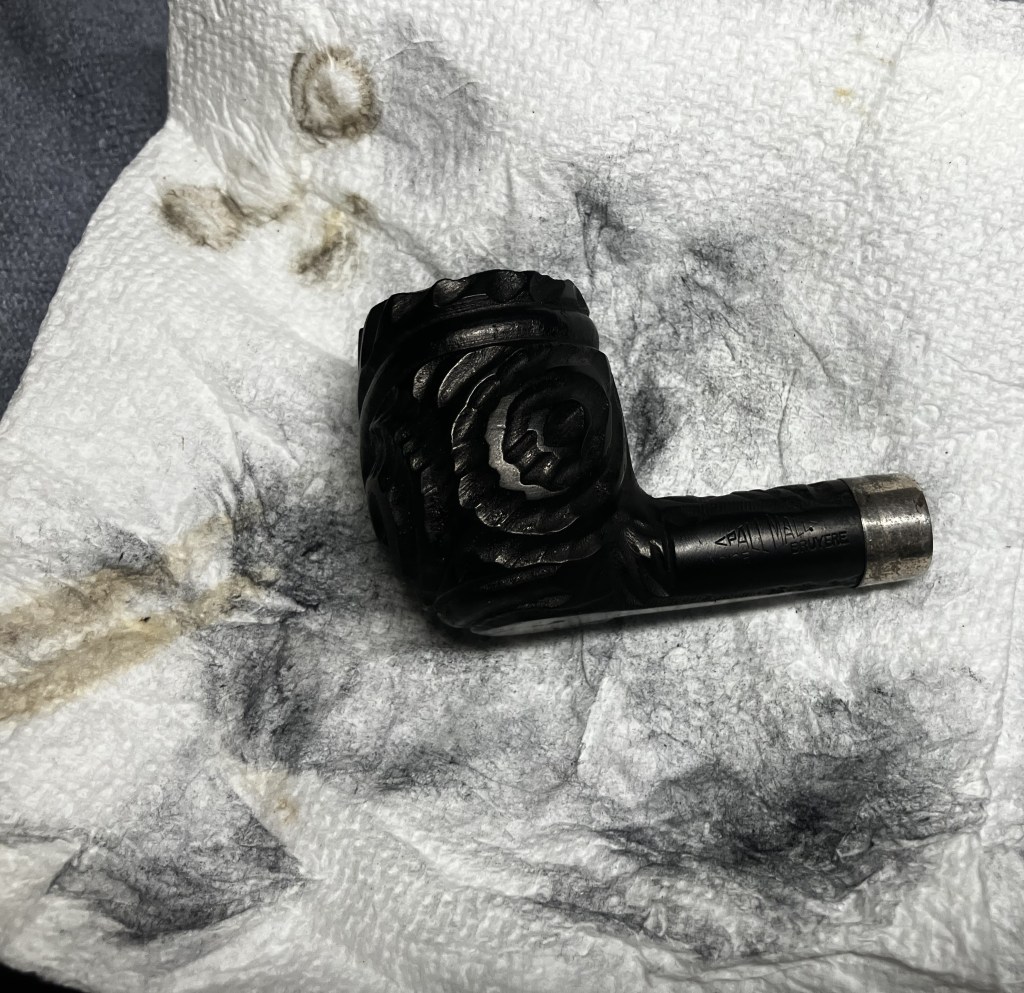
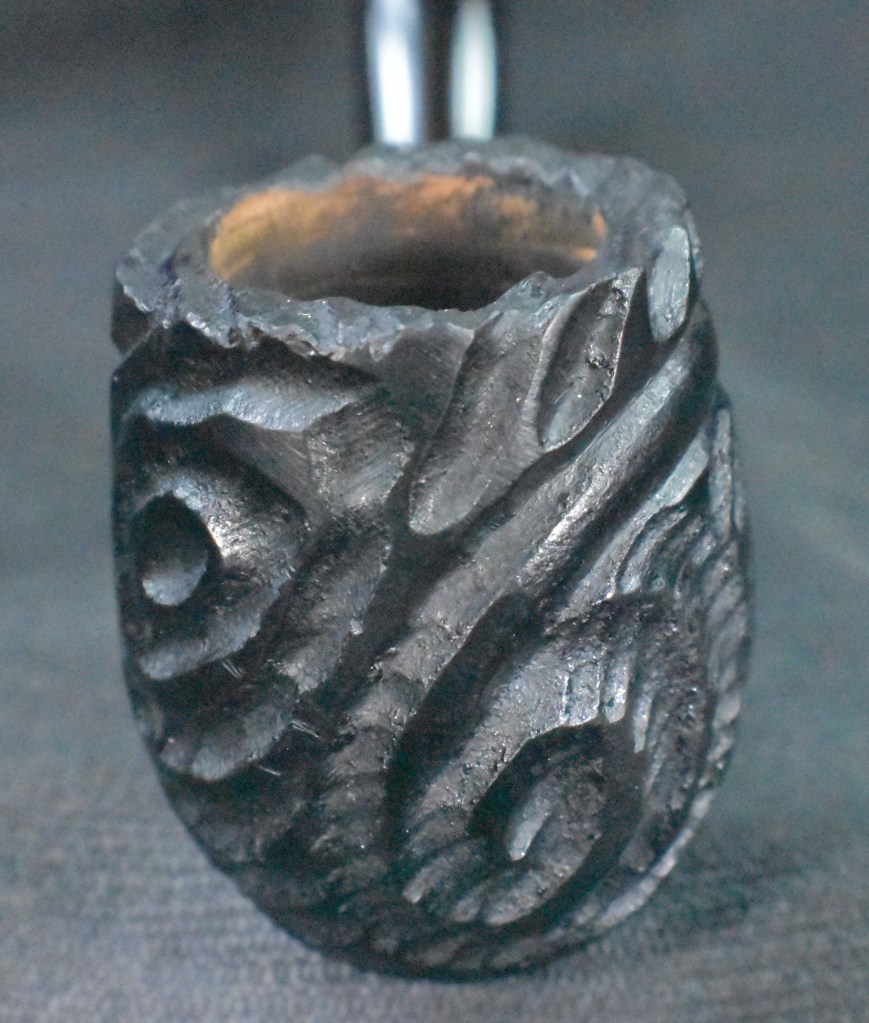
Renaissance Micro-Crystalline wax was used on the heavily carved stummel. This was worked into the carvings with a baby toothbrush.
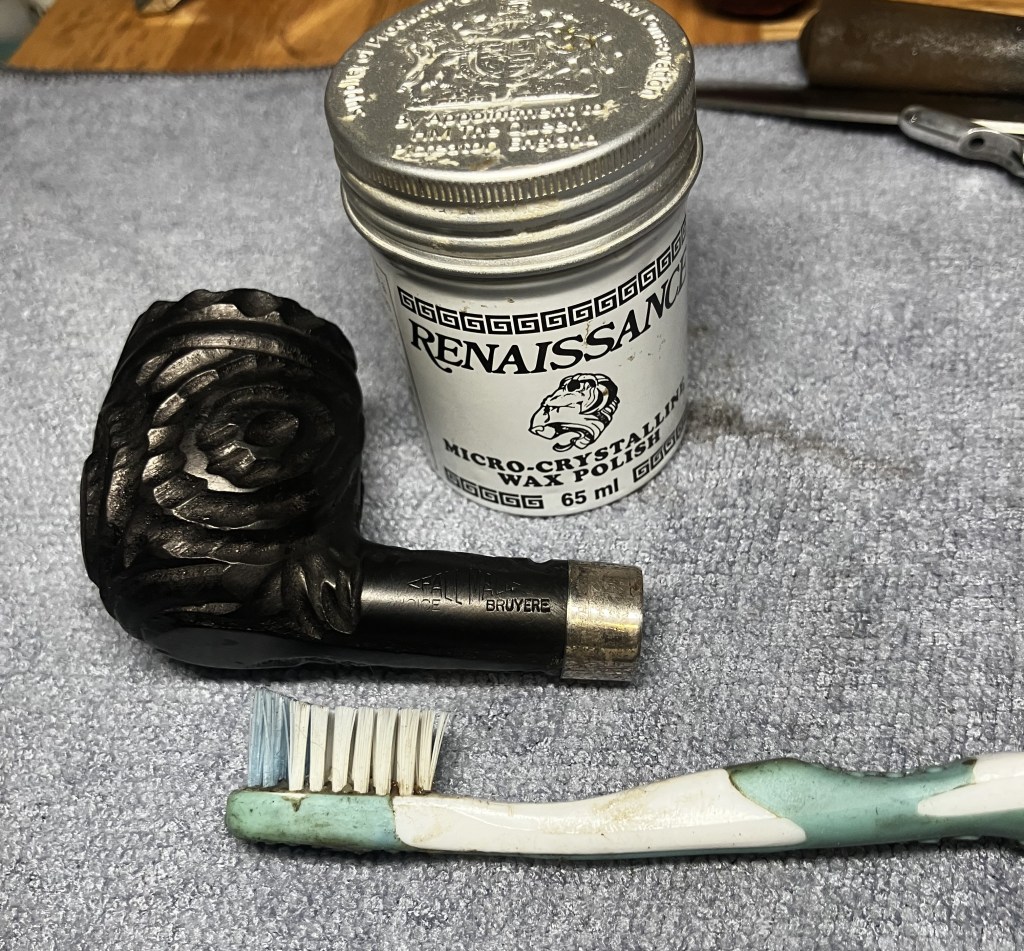
After working the wax in, I hand buffed the stummel with a soft cloth.
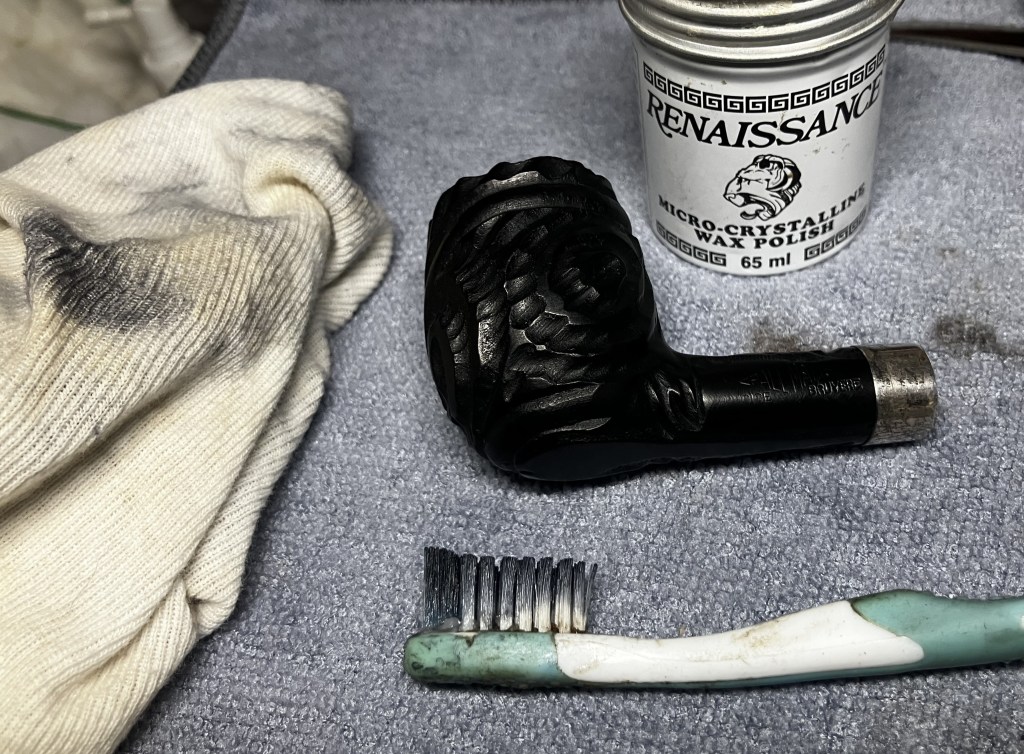
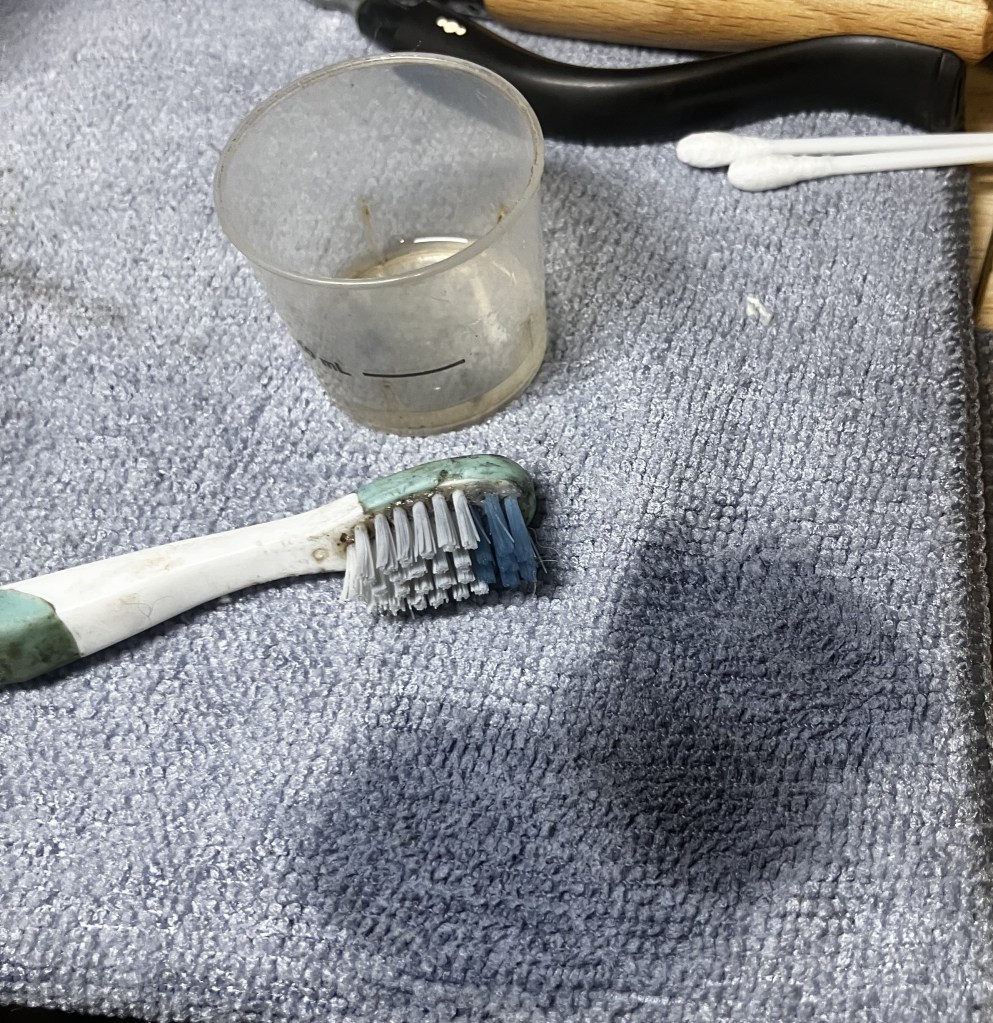
The baby toothbrush was cleaned with alcohol and the workbench cover.
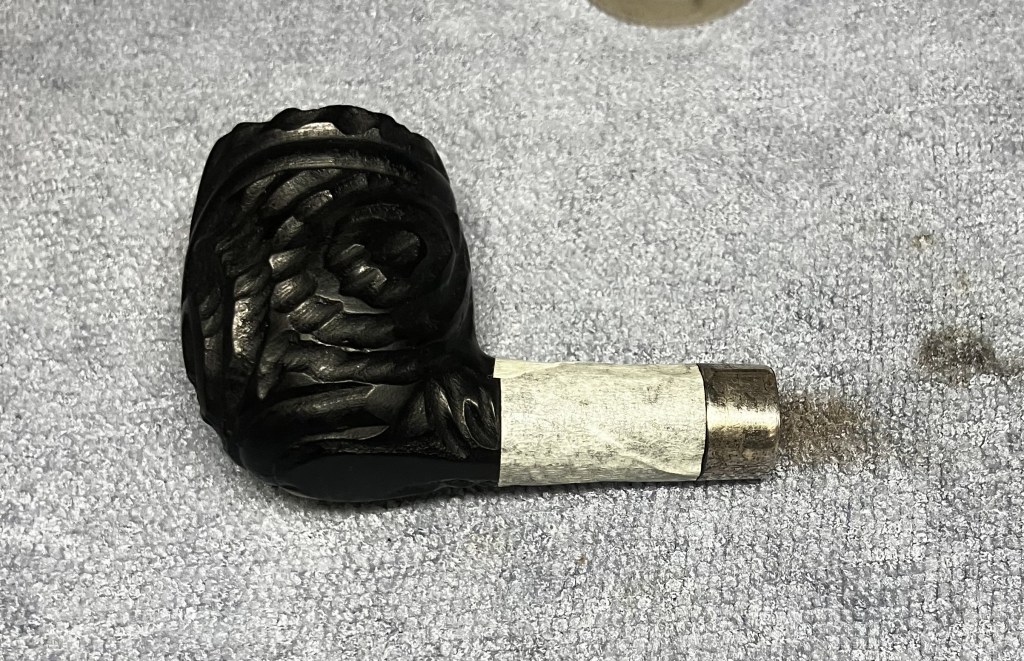
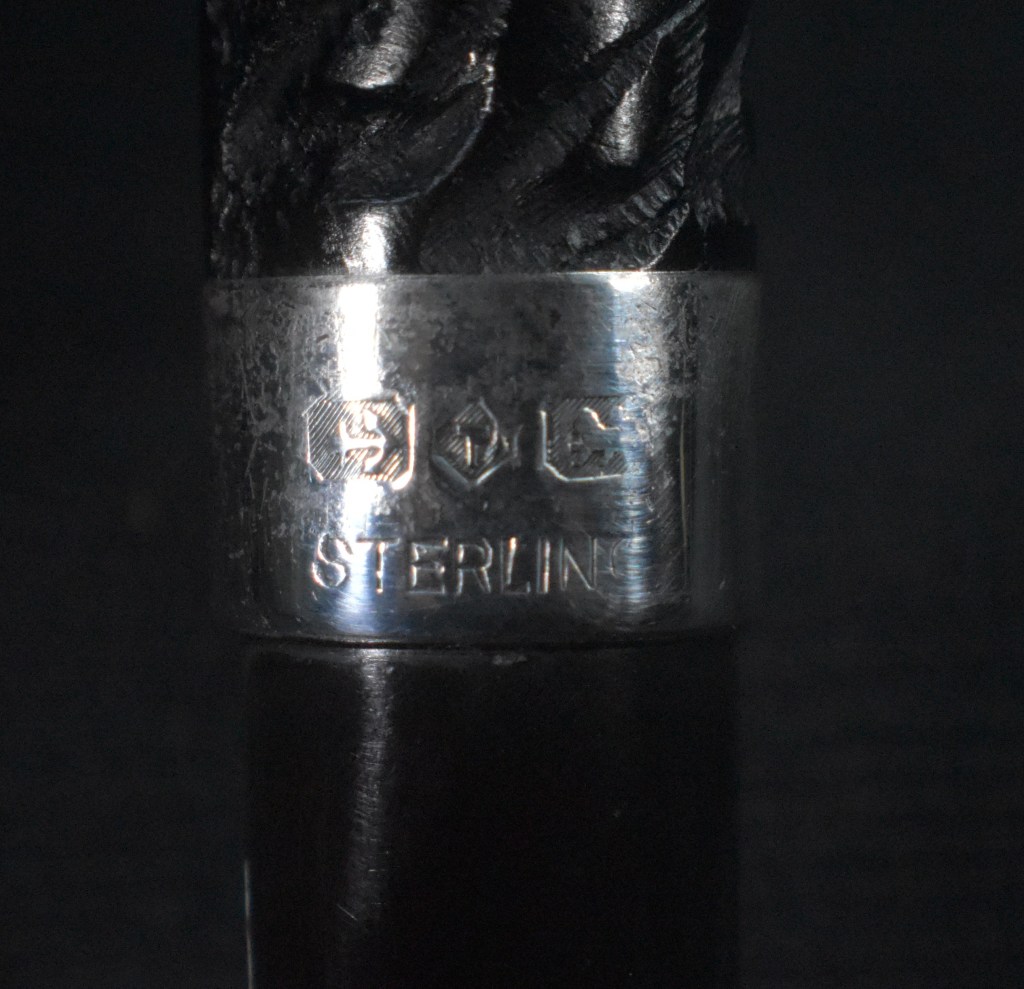
The shank was masked to protect it while I buffed the sterling silver band.
Again the buffer and Blue Diamond were used to buff the band.
The band was then masked to protect it from the sanding. I wanted the stem attached to the stummel. This allowed a better handle for the sanding of the stem.
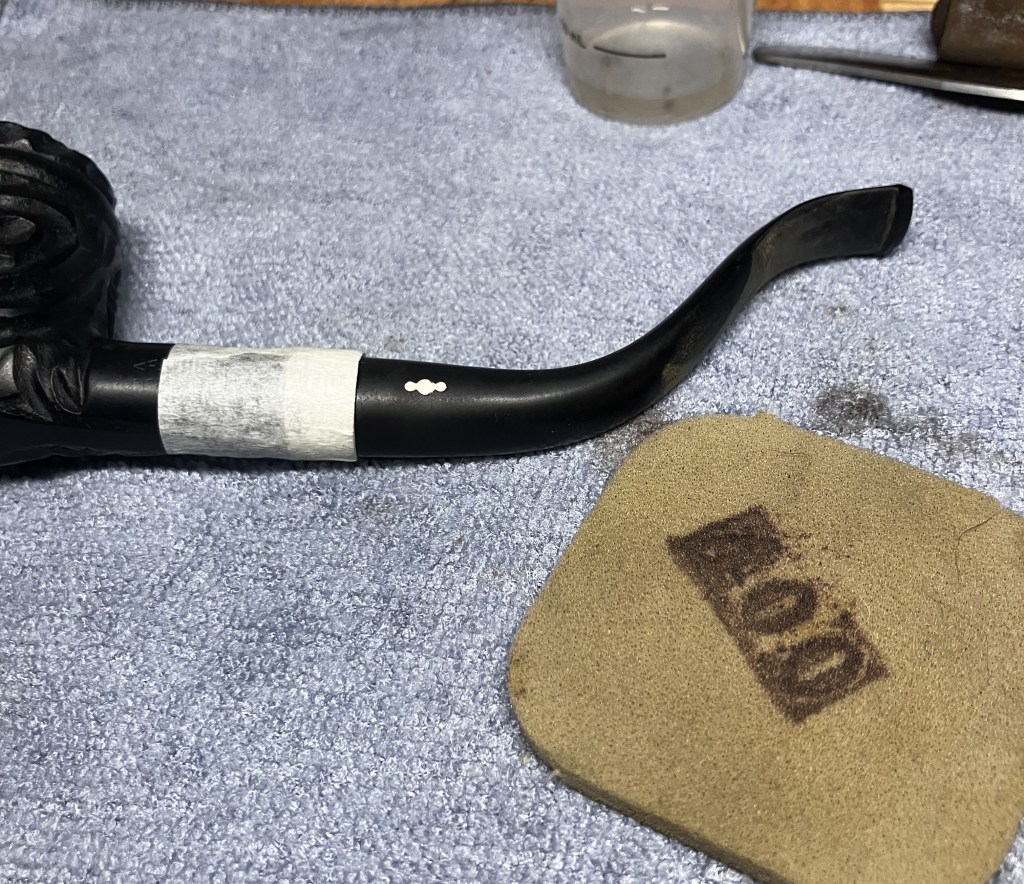
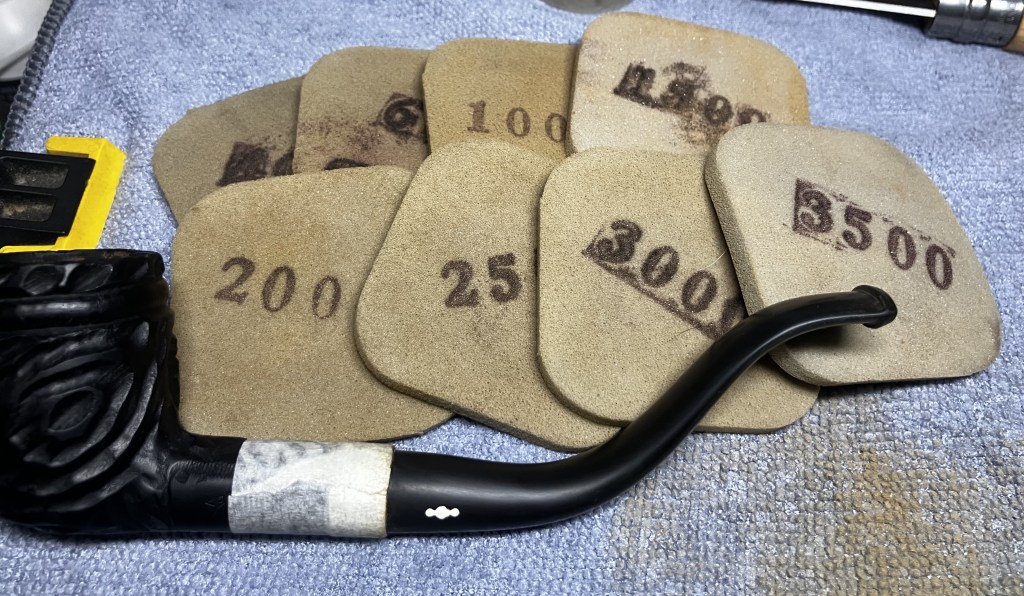
The stem was sanded with a series of sanding sponges from 400-3500 grit. Between sanding sponges the stem was wiped of sanding debris with a paper towel.
I returned to the buffer and the Blue Diamond to buff the vulcanite.
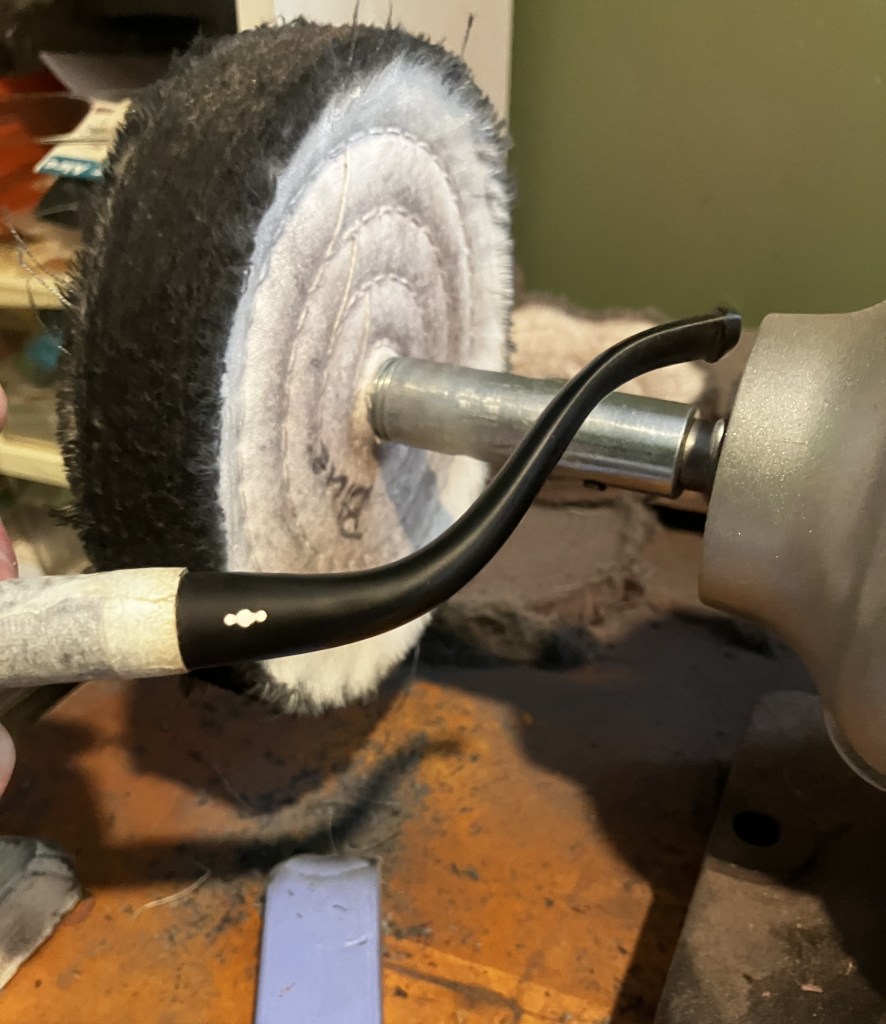
The stem and band was then given several coats of carnauba wax with the buffer. I avoided waxing the stummel as I did not want to allow a build up of wax on the carvings.
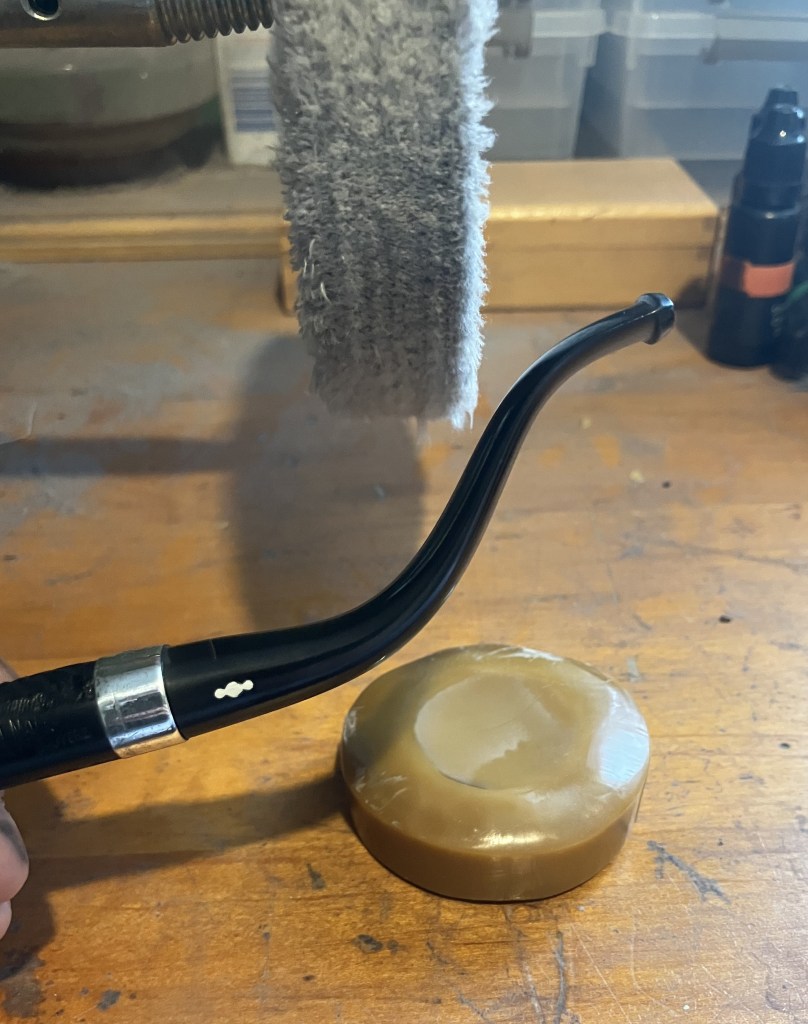
The whole pipe was then hand buffed with a microfiber polishing cloth,
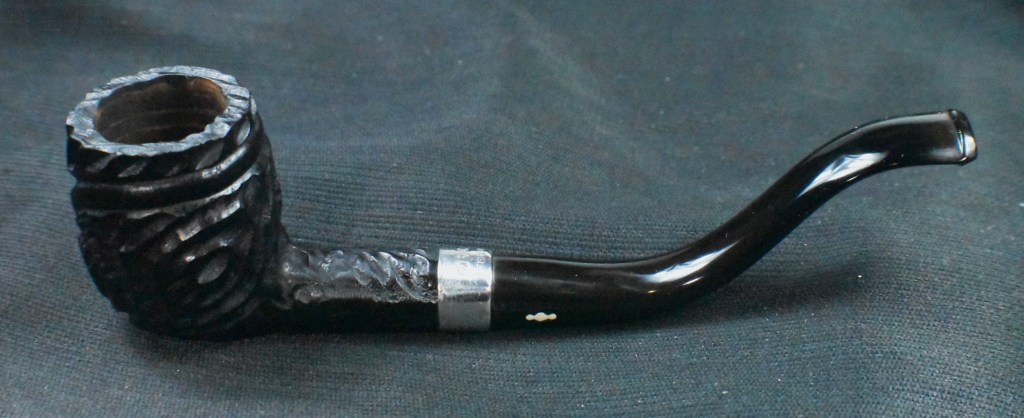
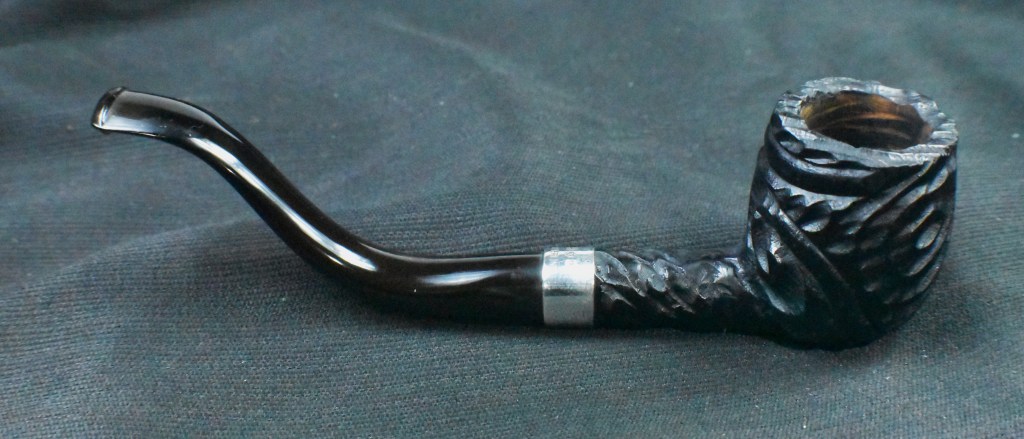
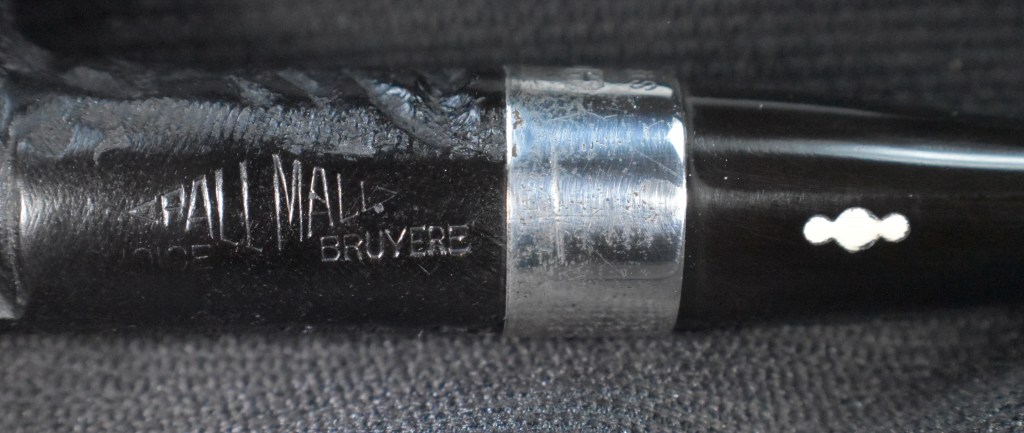
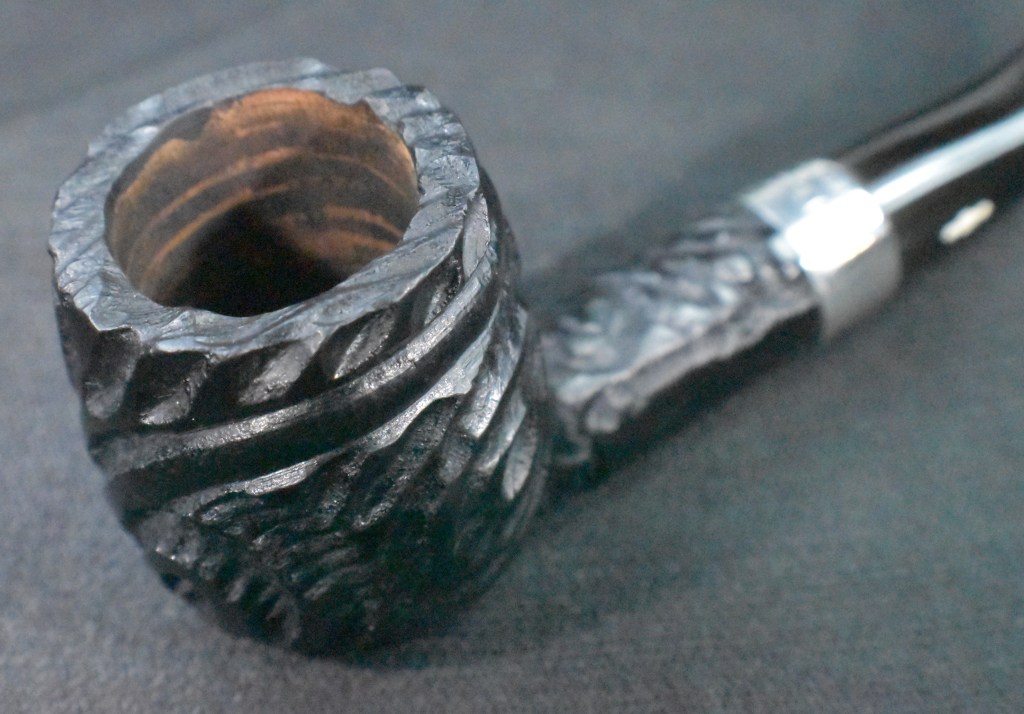
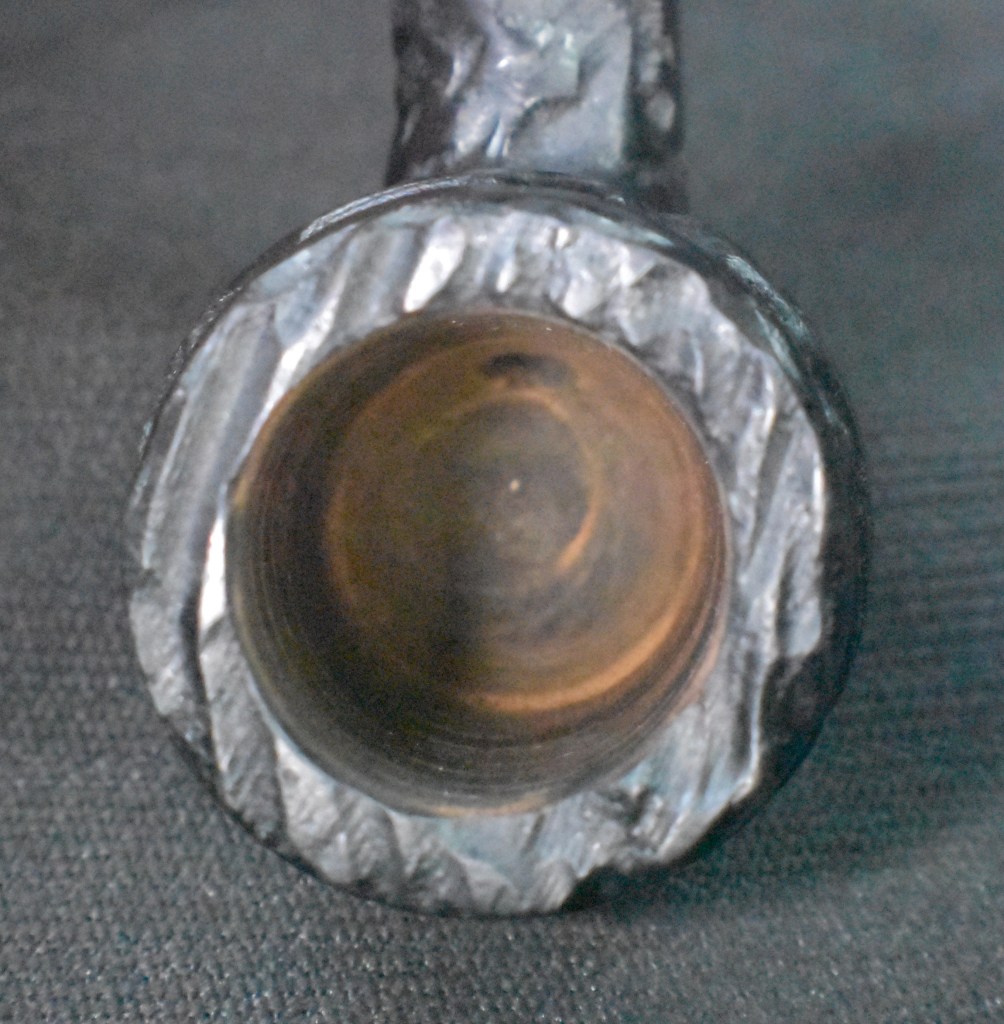
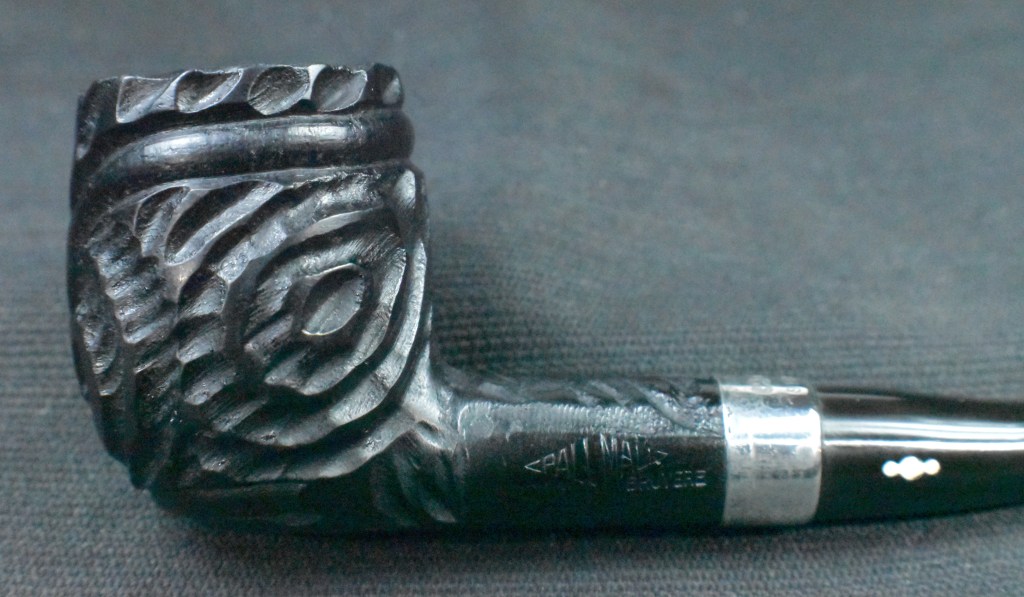
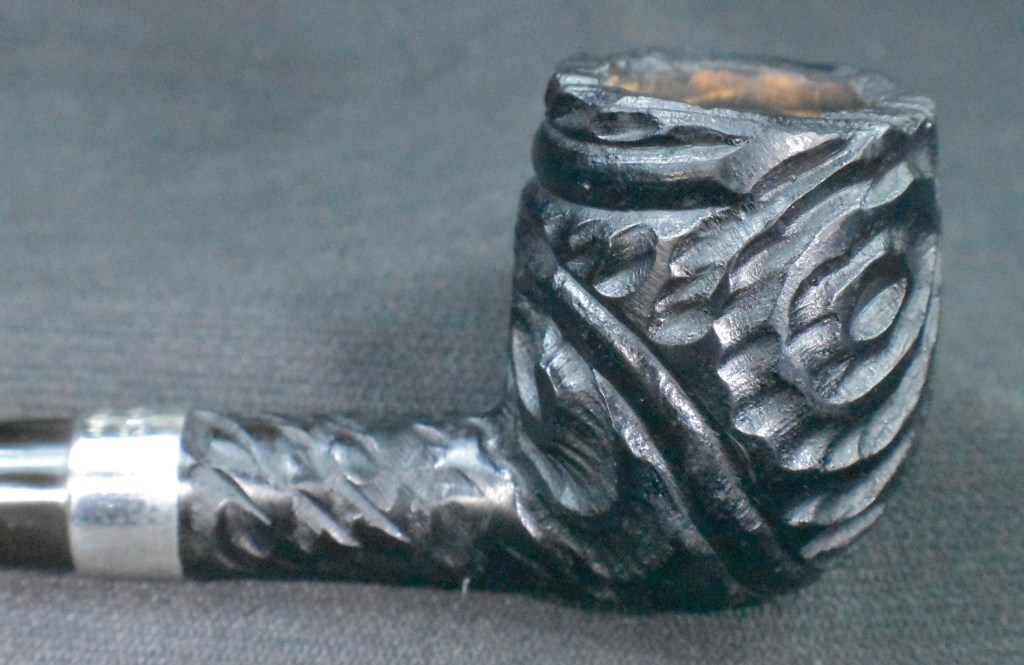
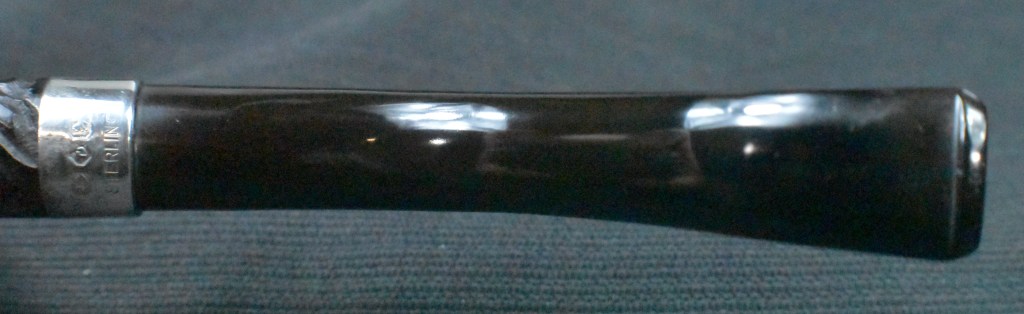
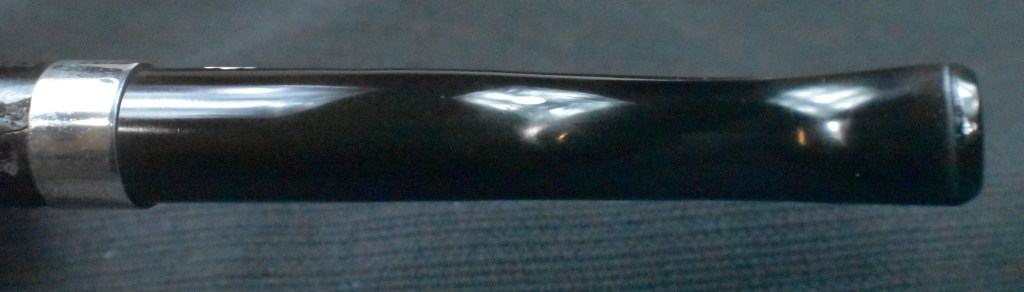
The Pall Mall Billiard Chinrester turned out very nicely. The black carvings are set off beautifully from the black stem with the sterling silver band. I am not sure if the band was original or not but it certainly was well done and accentuates the joint between the stem and stummel. The textural difference between the carved briar and the gloss black stem is another unique feature of this pipe. It gives a nice tactile grip and a very attractive look to the pipe. Weighing in at .93 ounces or 26 grams, the chinrester stem really isn’t a necessary feature. The pipe is very light but it is remarkably comfortable. I can certainly see why this style of pipe lasted for over 10 years. Though I also think it looks a little silly, perhaps that was actually what led to it’s decline: Death by a thousand giggles. The dimensions of the Pall Mall Billiard Chinrester are:
Length: 5.77 in./ 146.56 mm.
Weight: 0.93 oz./ 26.37 g. (with band)
Bowl Height: 1.69 in./ 42.93 mm.
Chamber Depth: 1.53 in./ 38.86 mm.
Chamber Diameter: 0.73 in./ 1.54 mm.
Outside Diameter: 1.35 in./ 34.29 mm. (each facet was slightly different)
I do hope that you have found something here useful to your own pipe care, maintenance or restorations. If you like this sort of thing, please click the like and subscribe buttons. Thank you for reading the ramblings of an old pipe lover.
Below are some photos of the finished Pall Mall Billiard Chinrester:
 NebraskaPeteGeek

One response to “A Pall Mall Carved Billiard Chinrester”
Hey John, enjoyed you write up on the Chin Rester. I have a Kaywoodie 42R Chinrester in my personal collection that I’ve yet to restore. They are marvels :-).
LikeLike