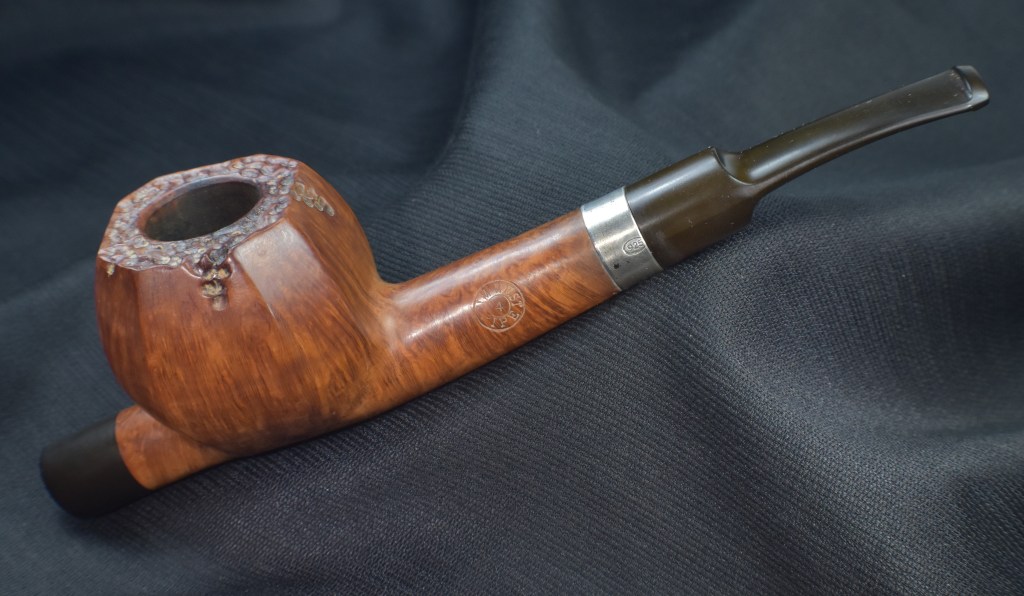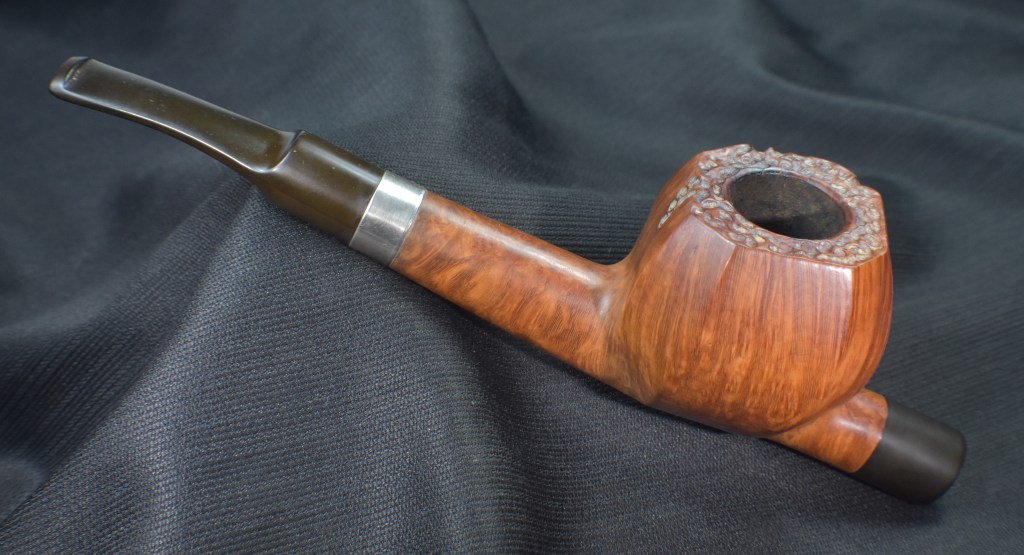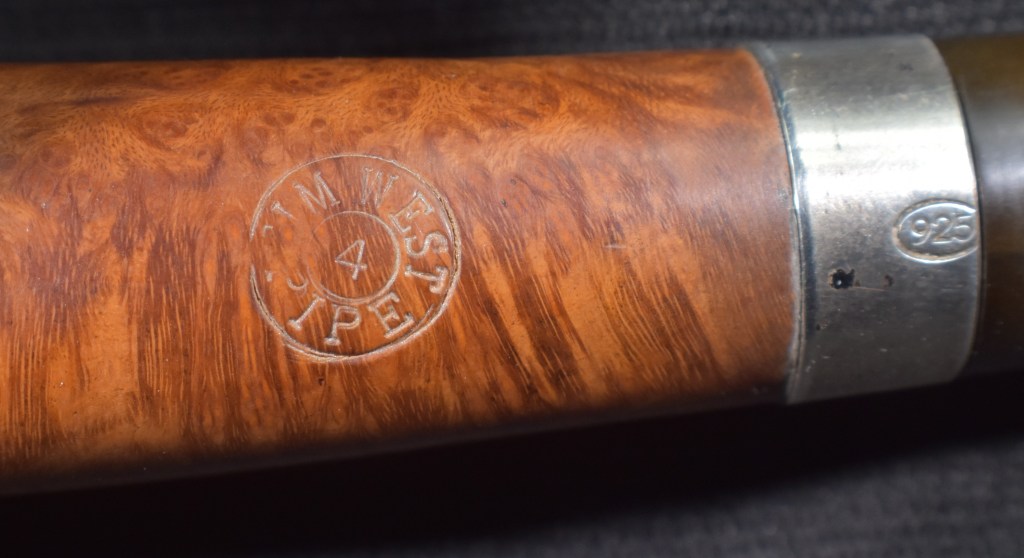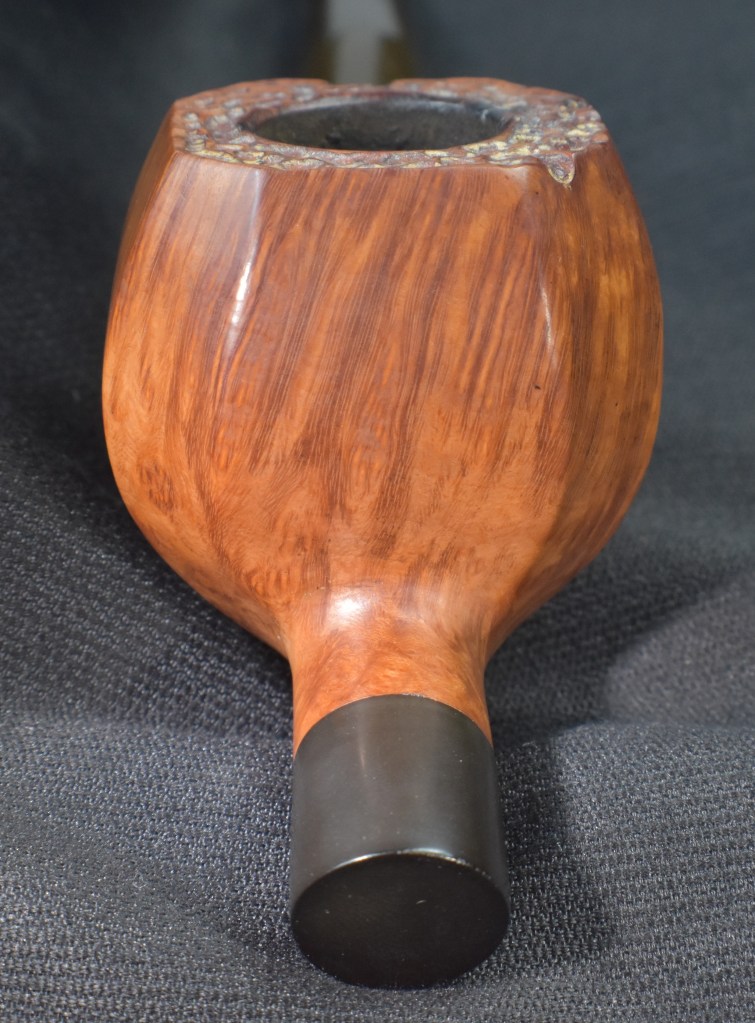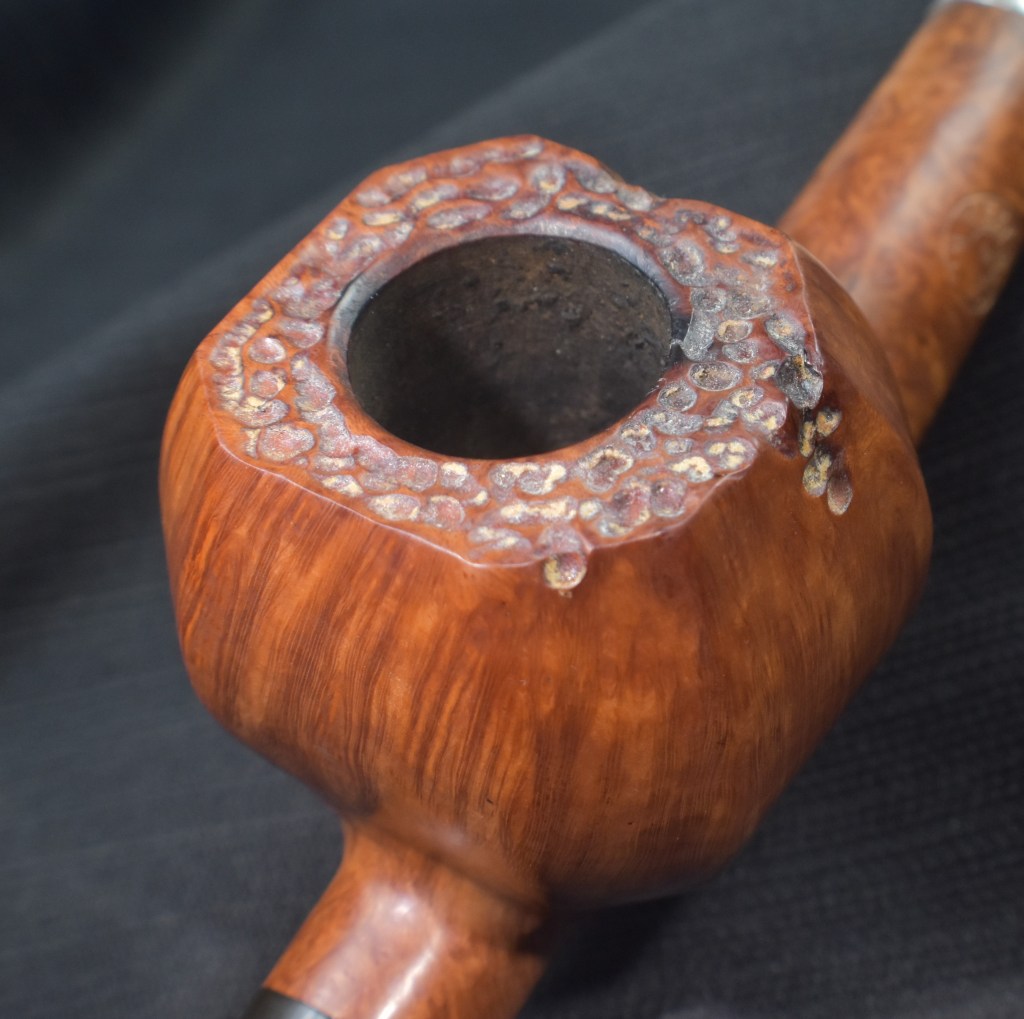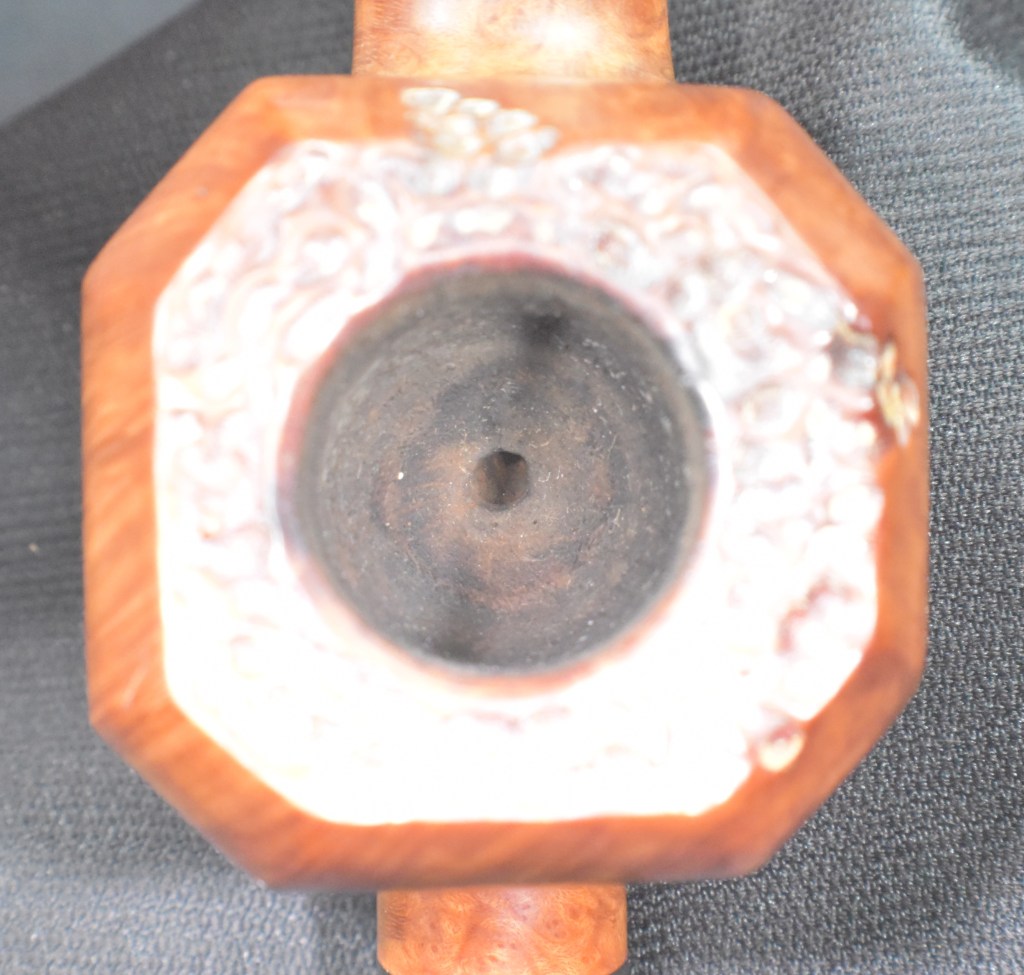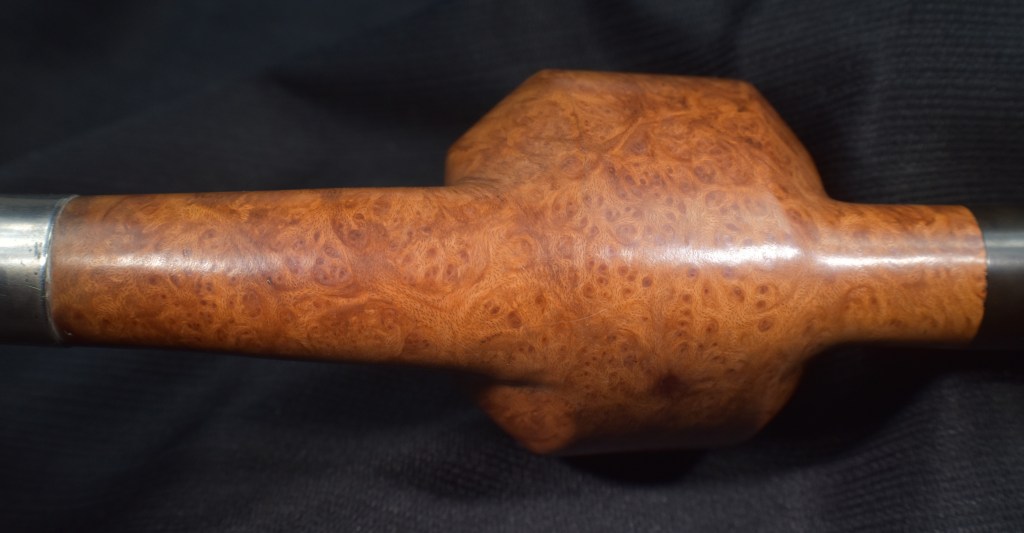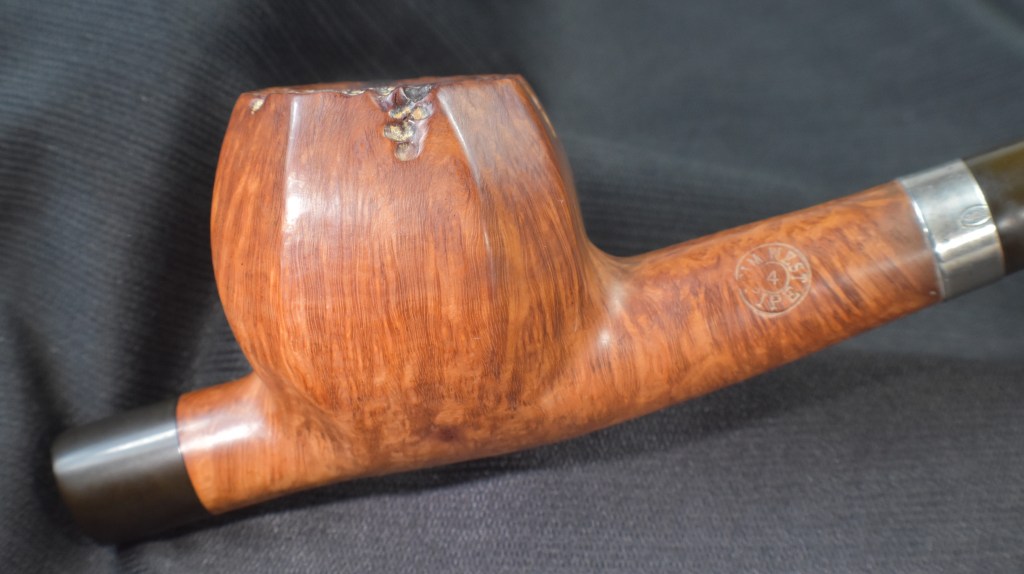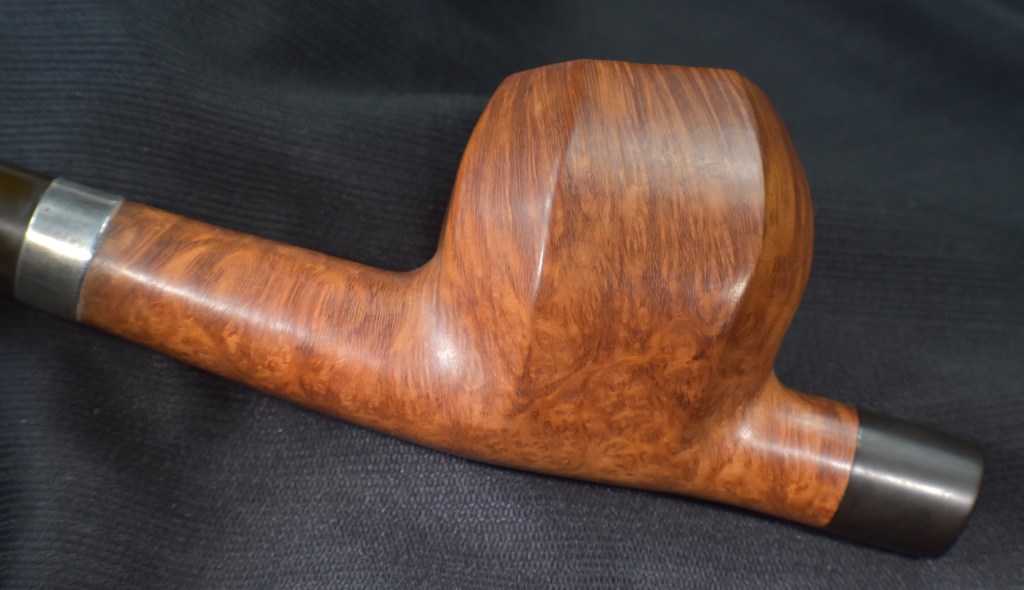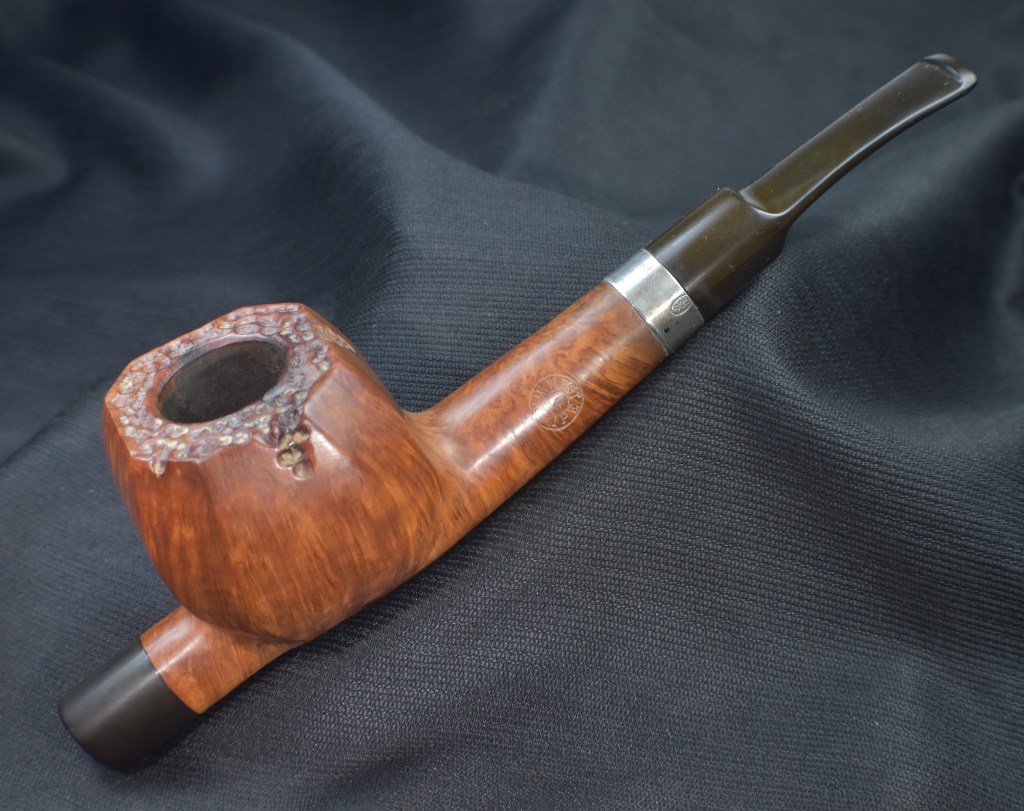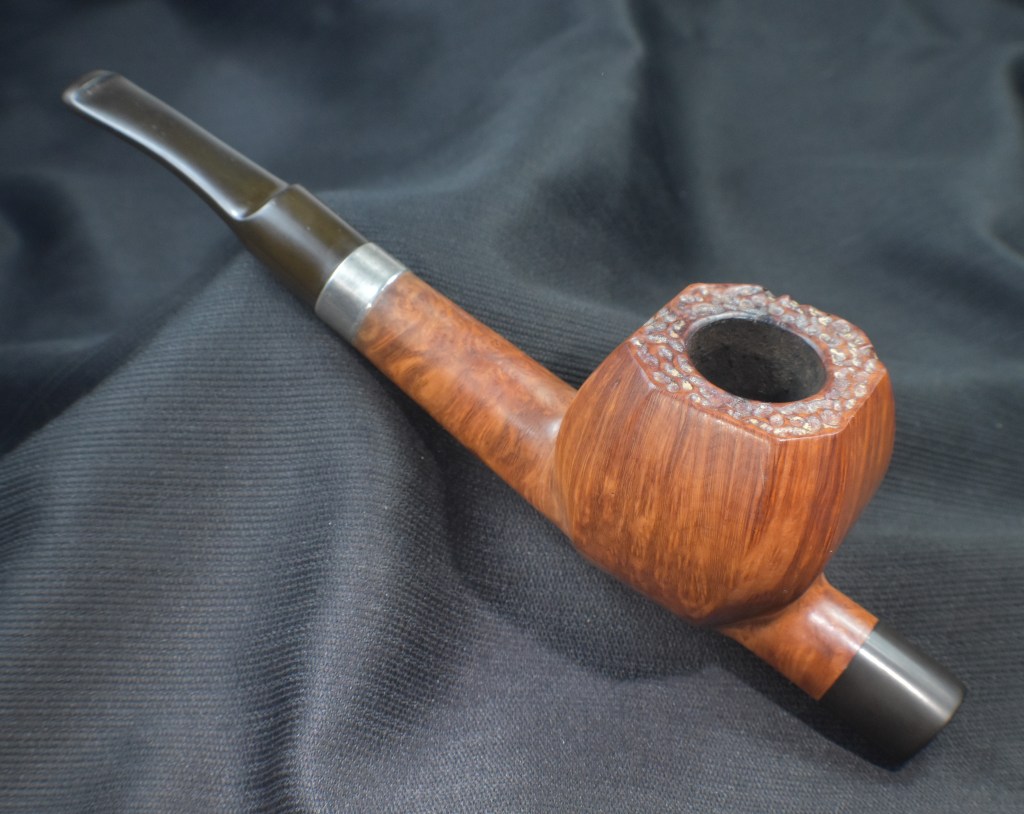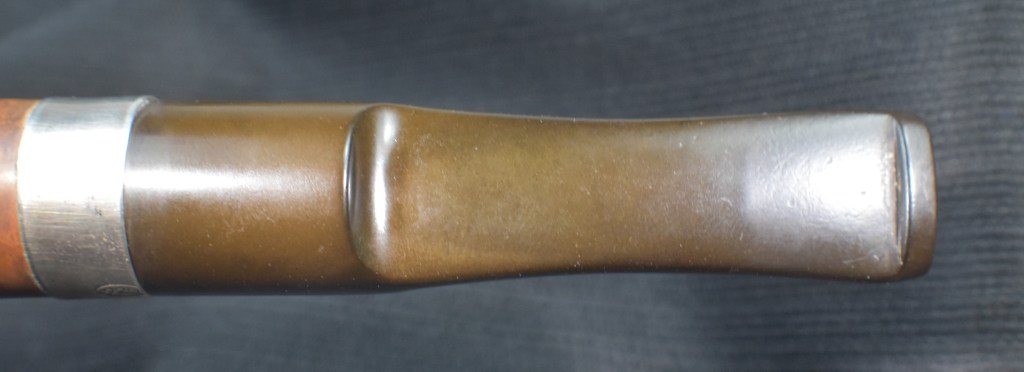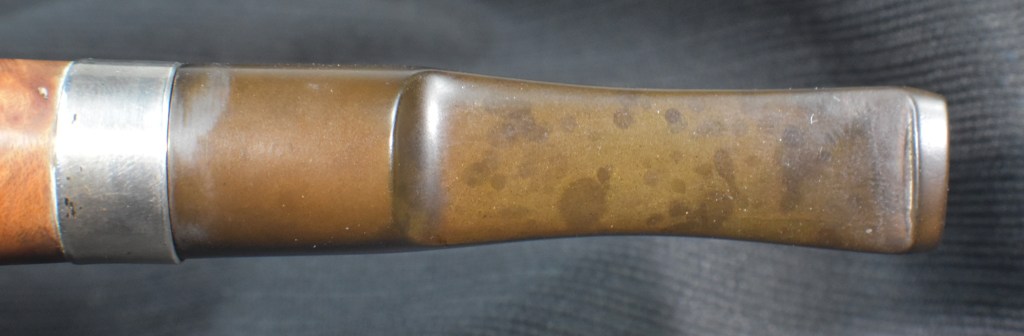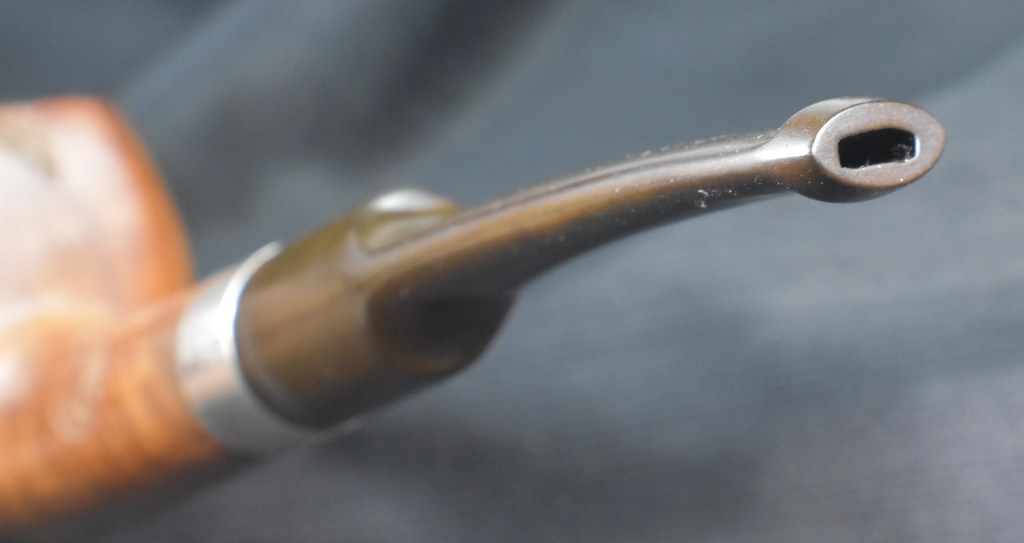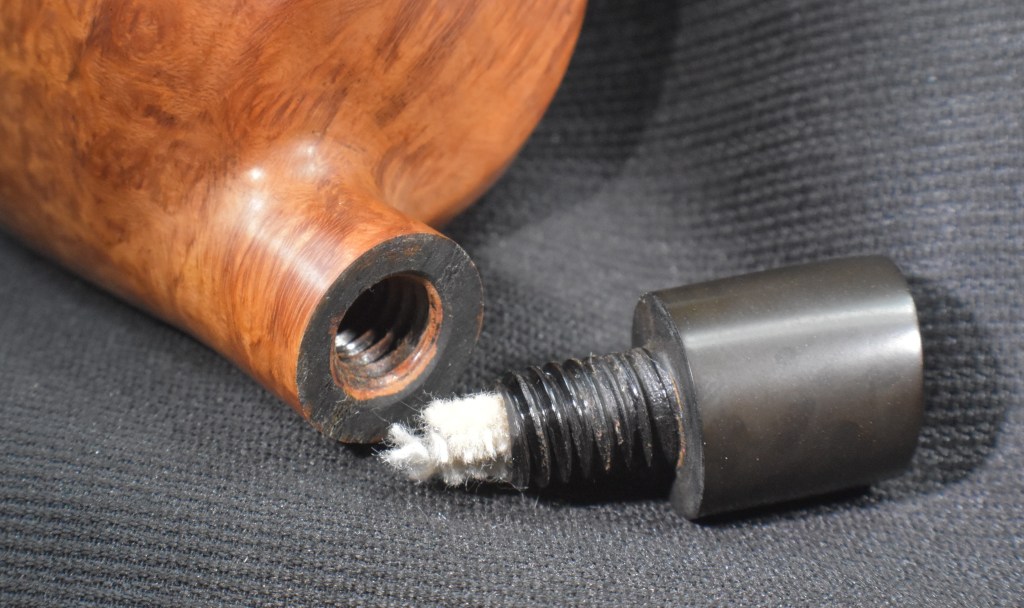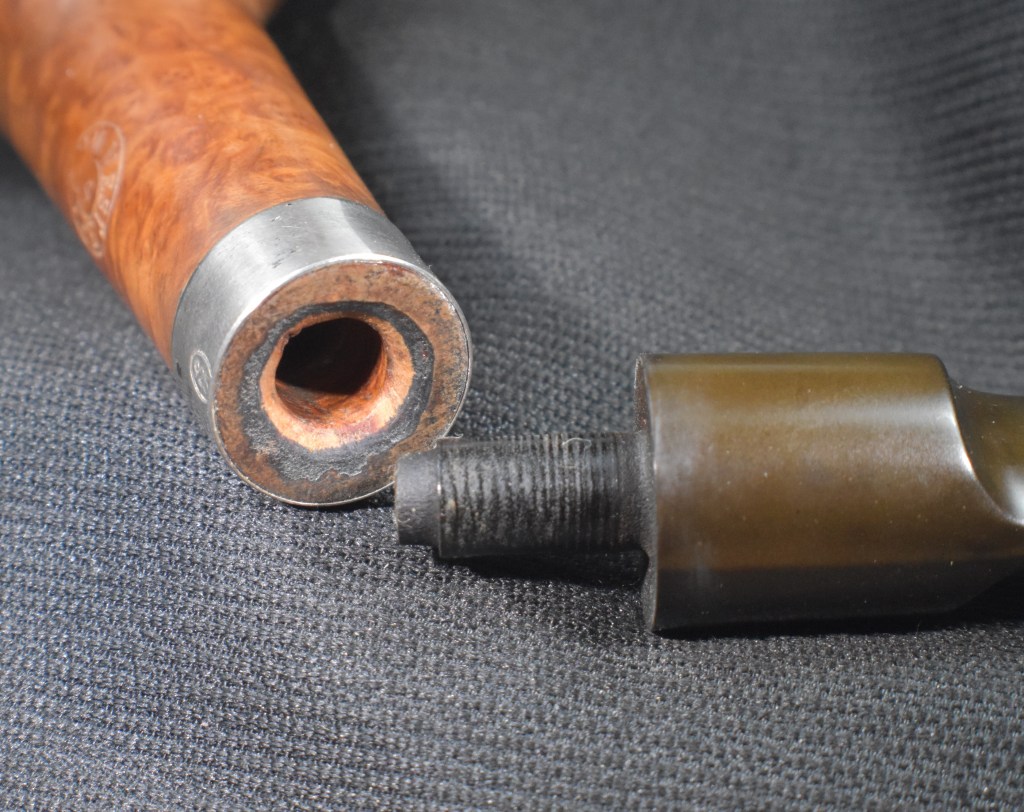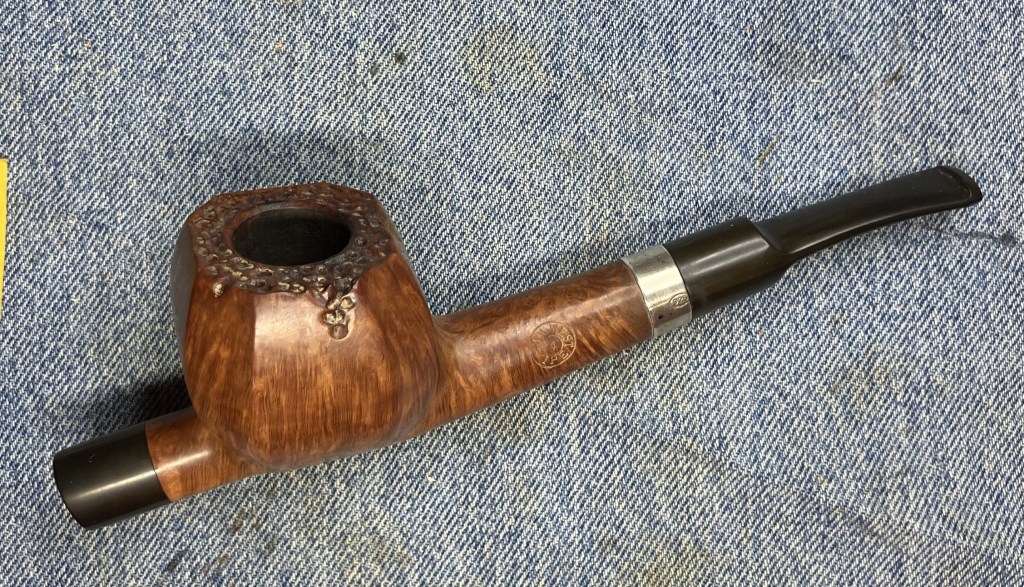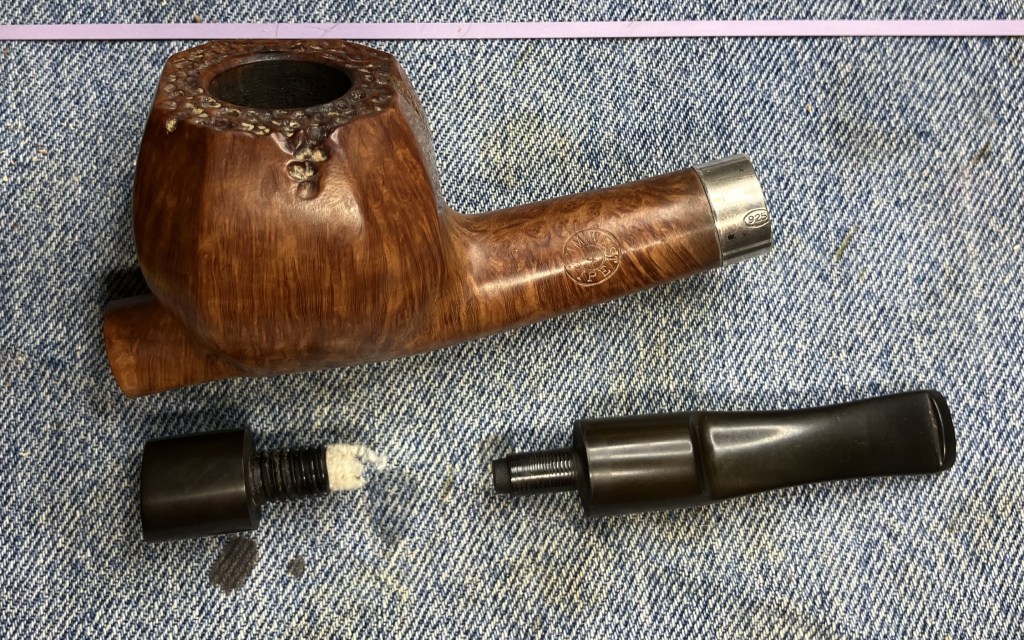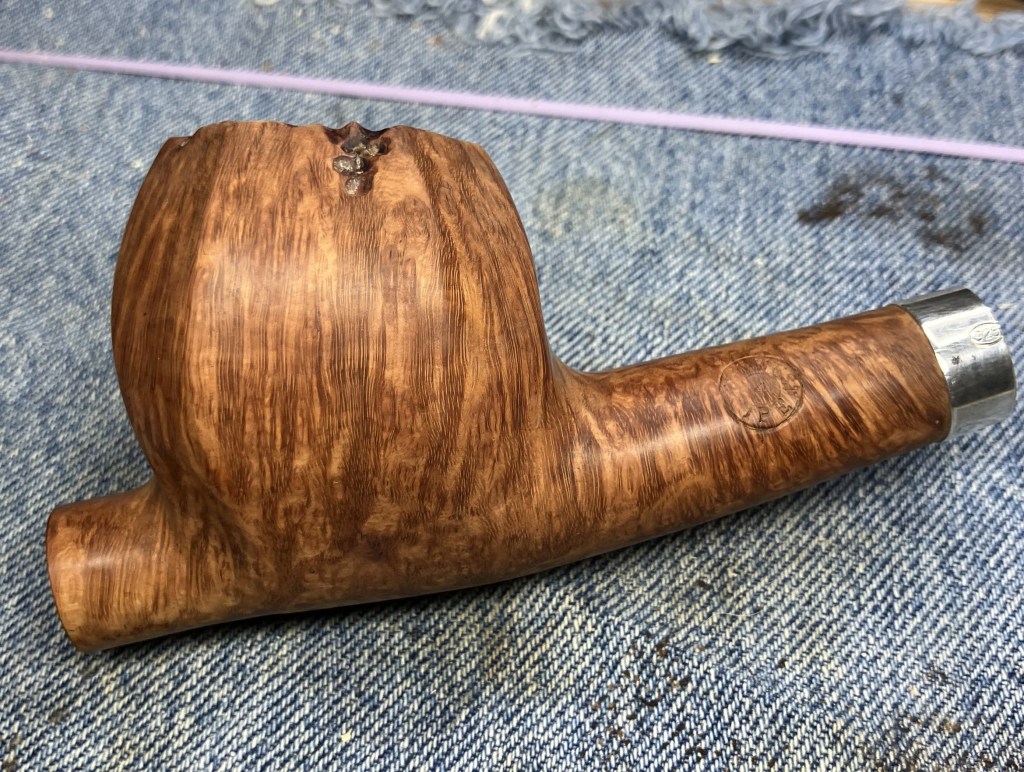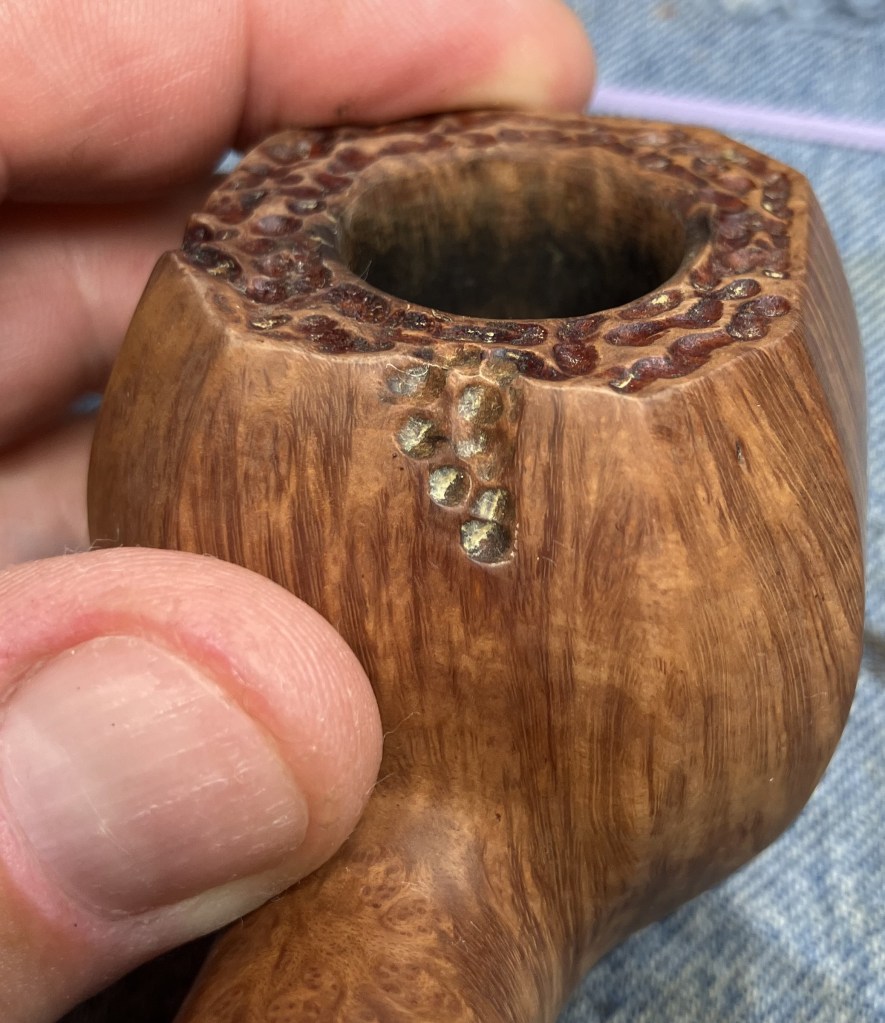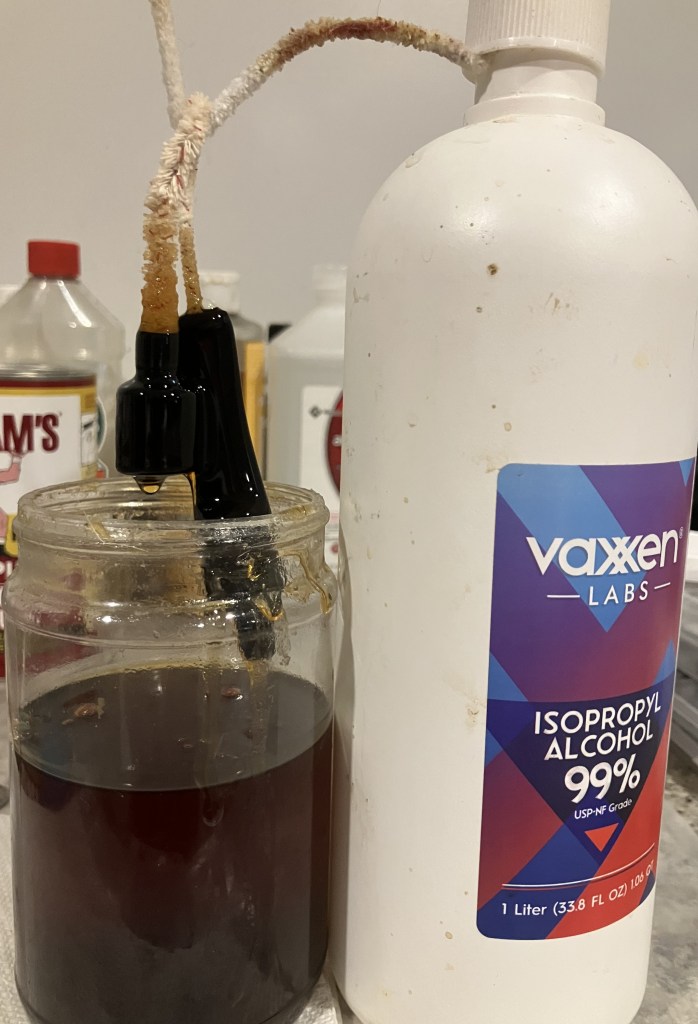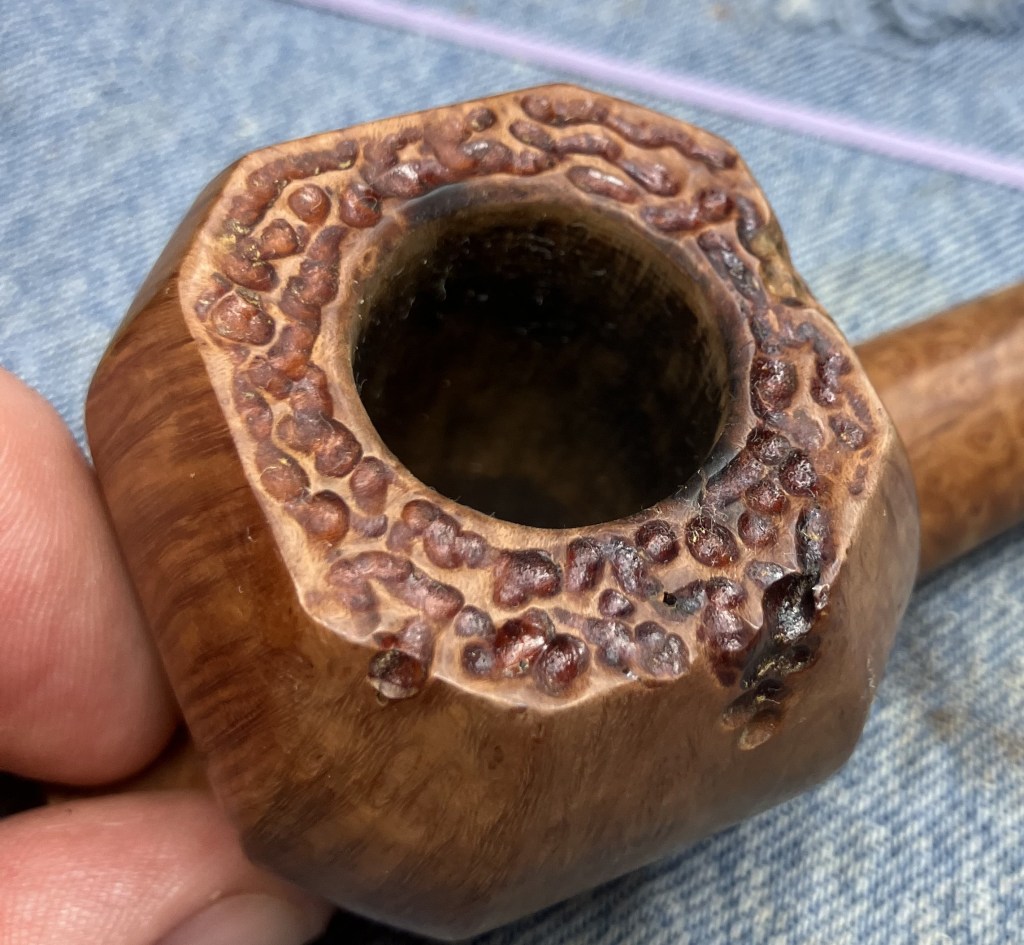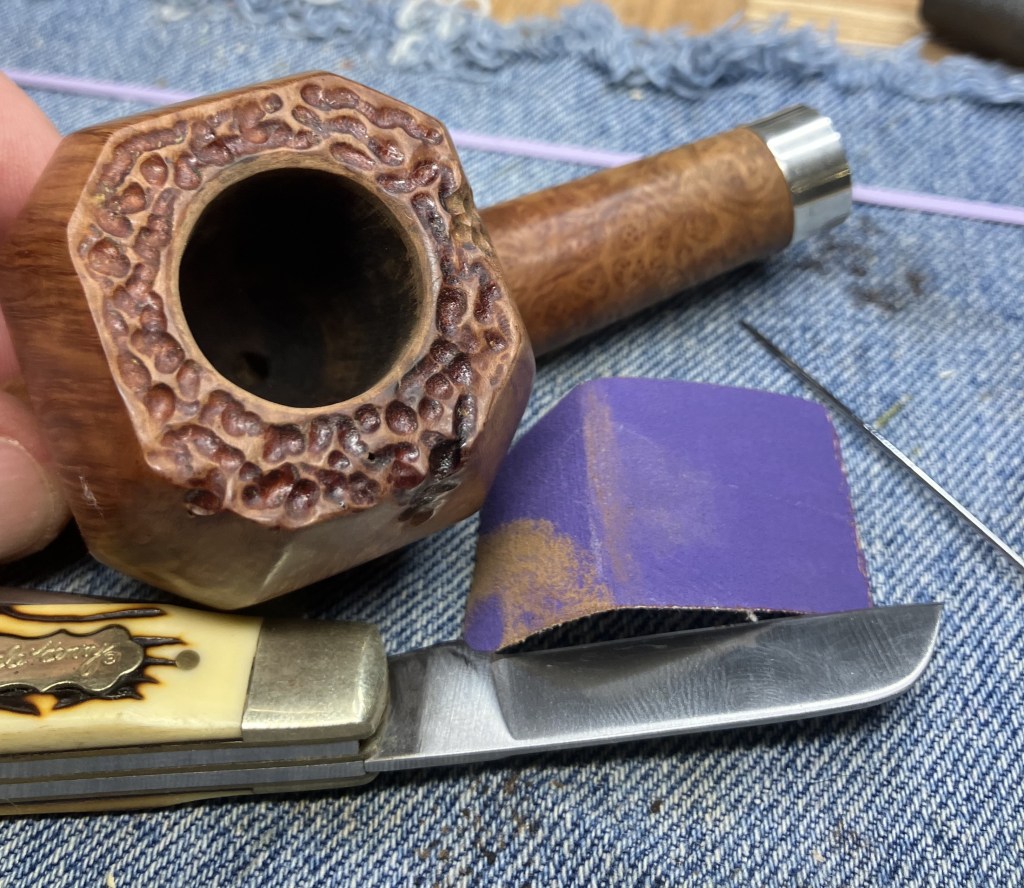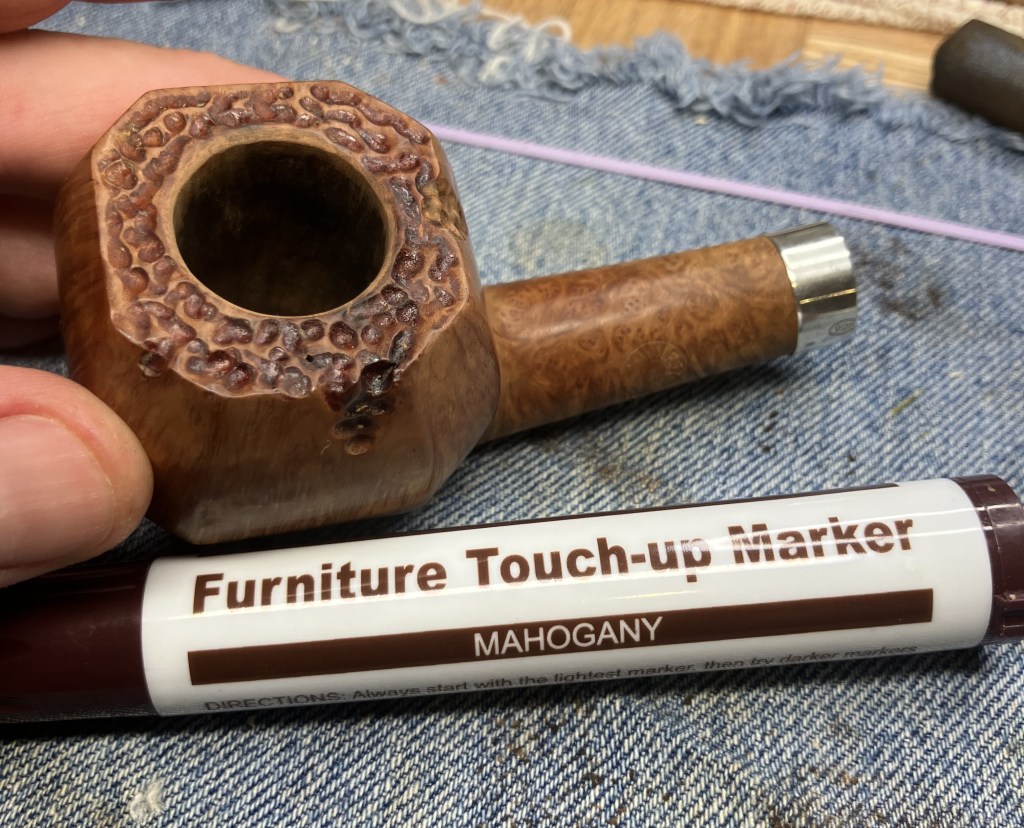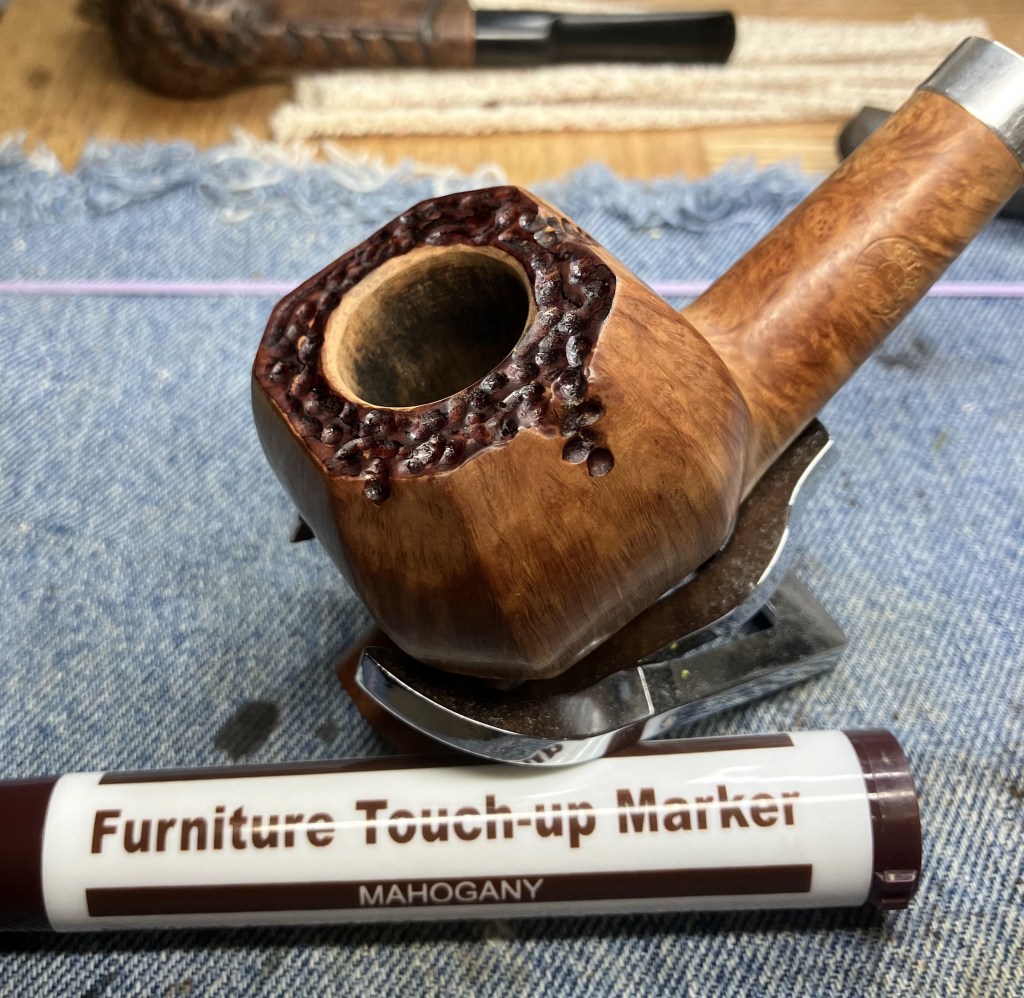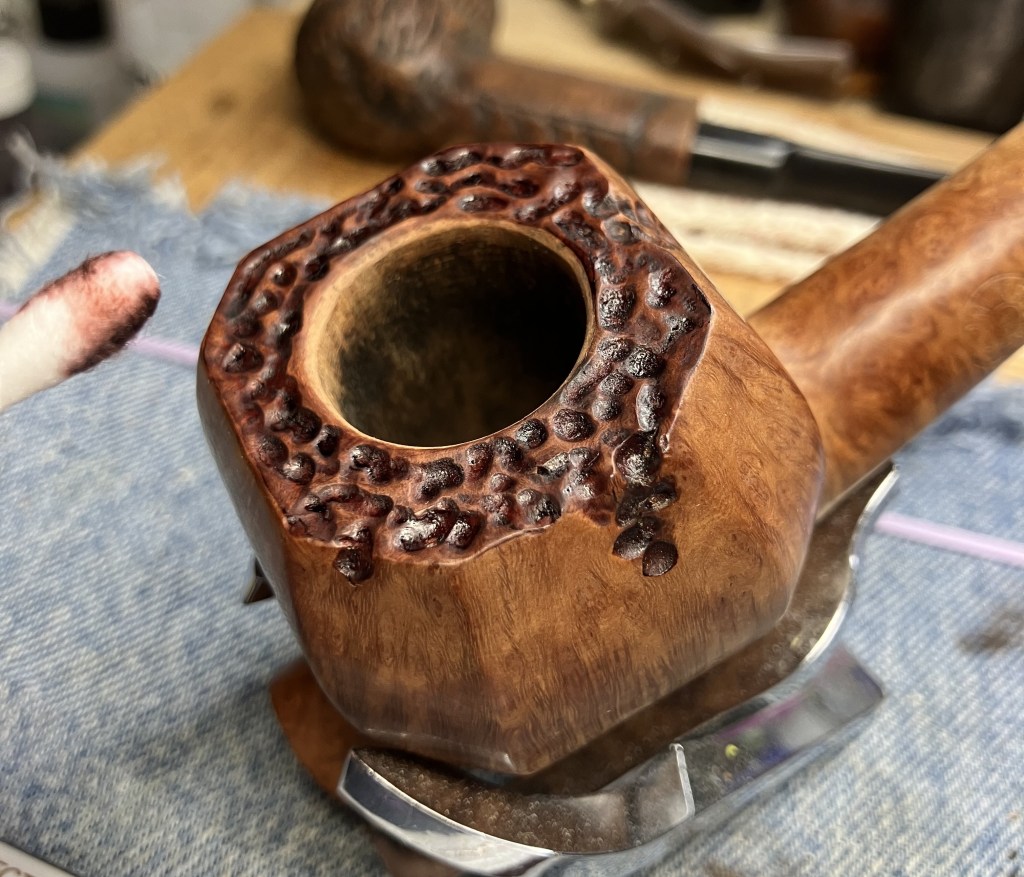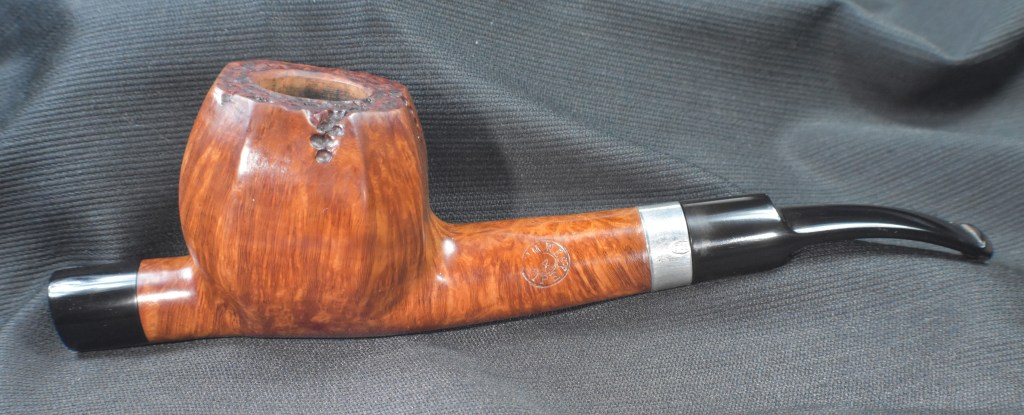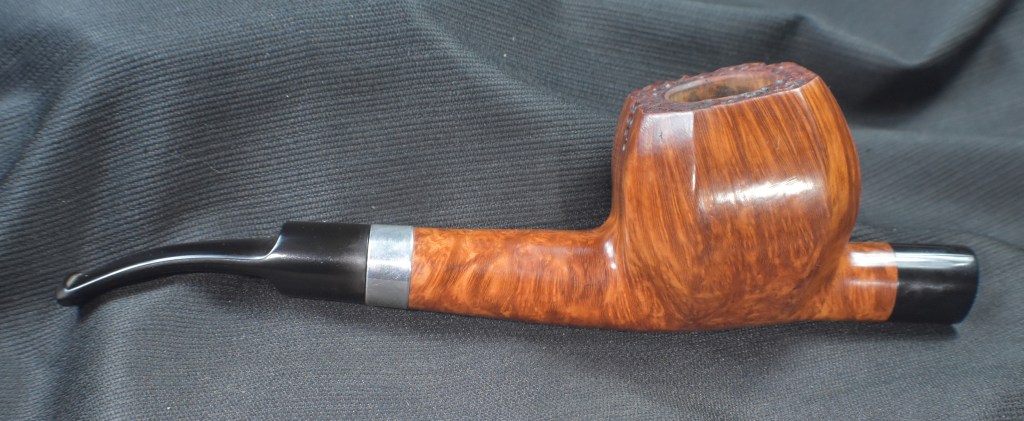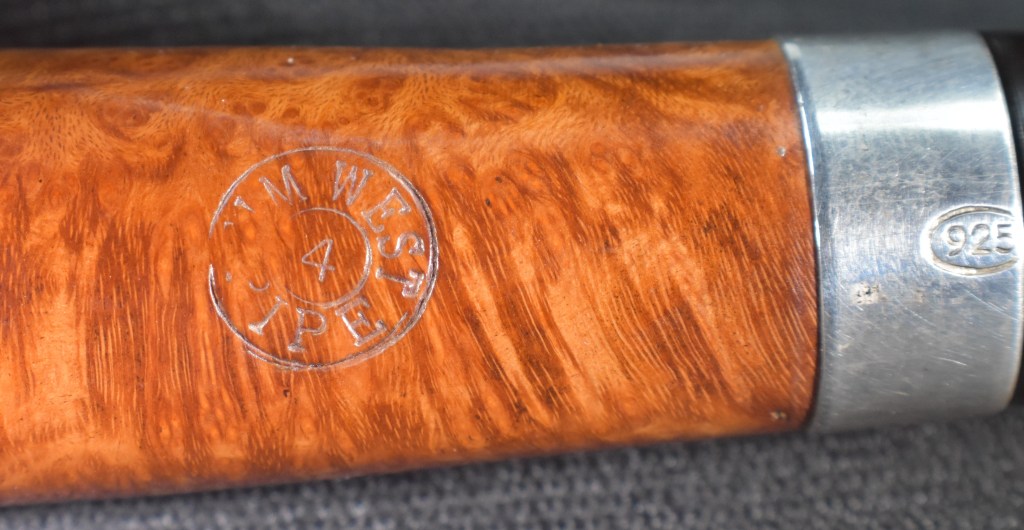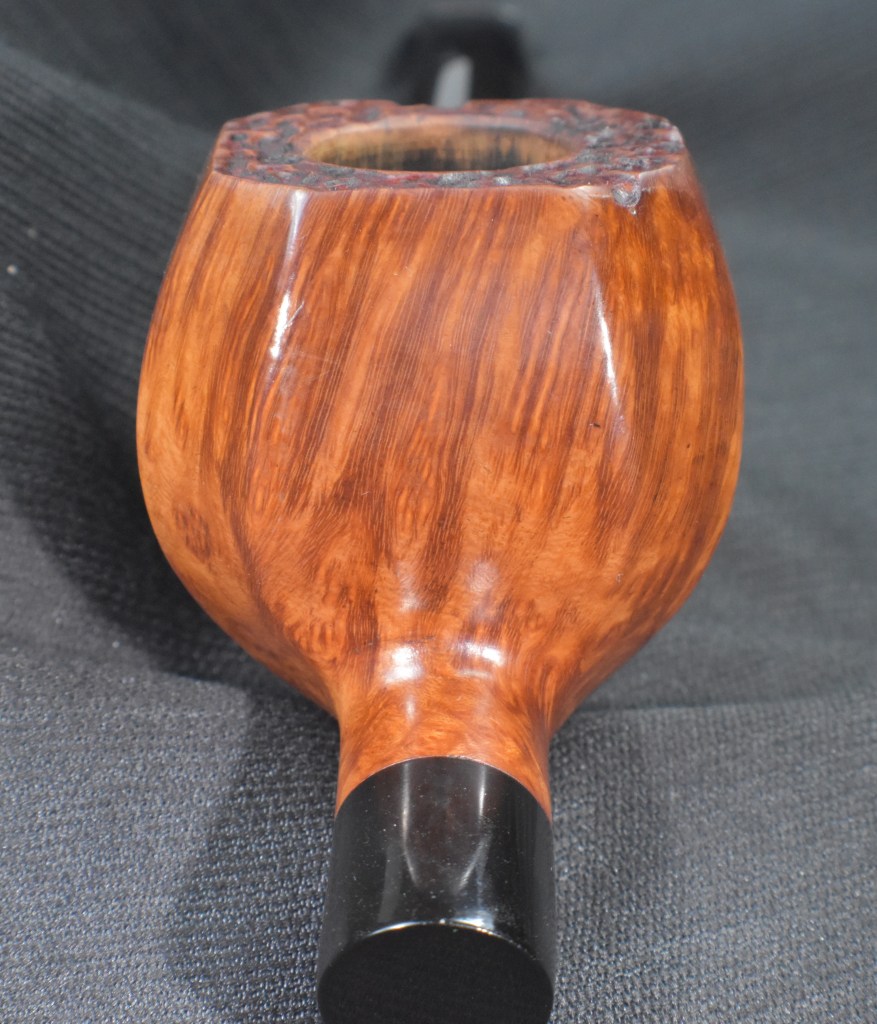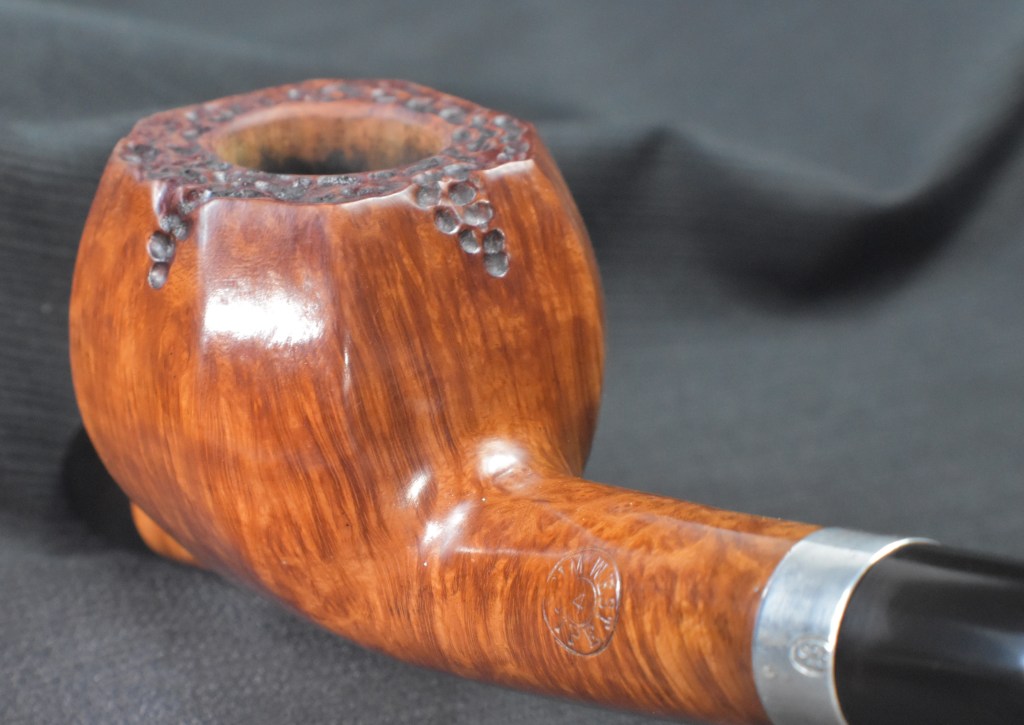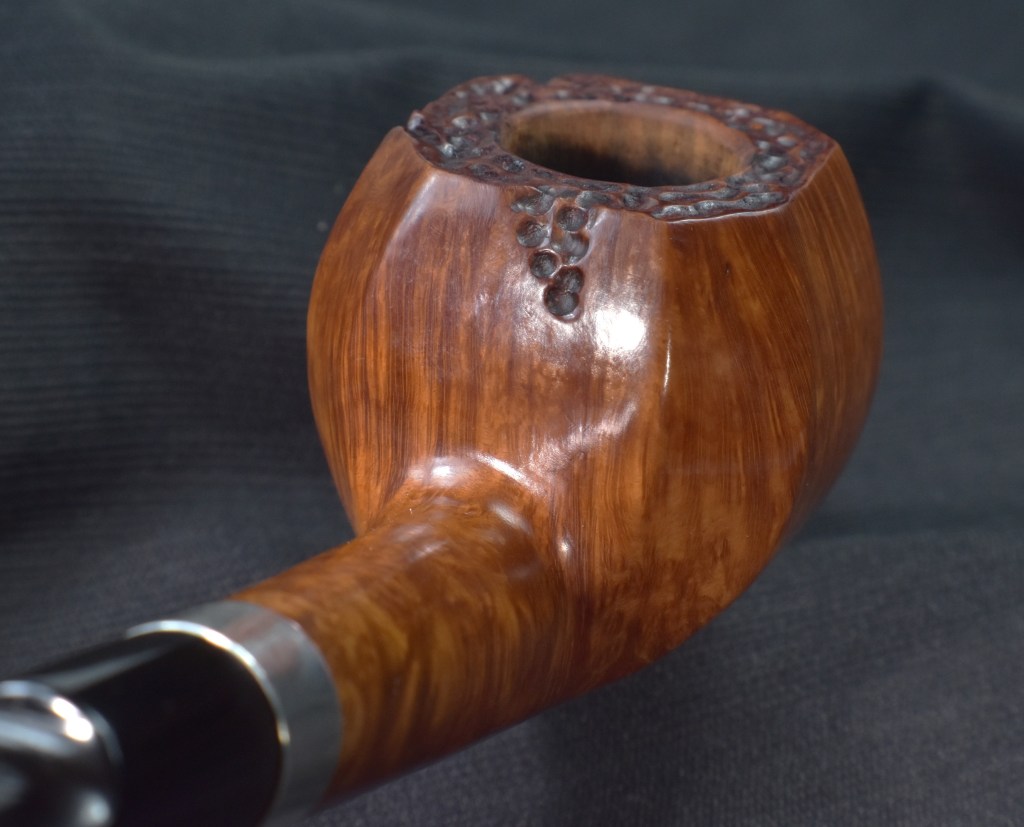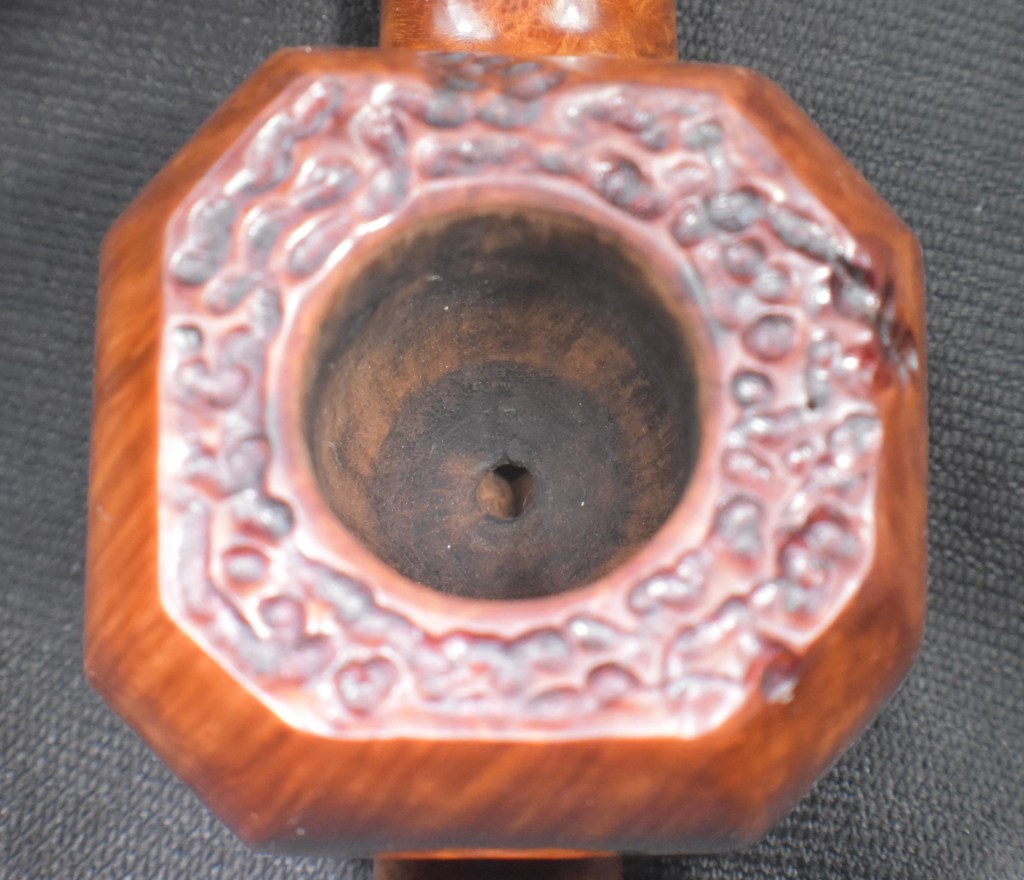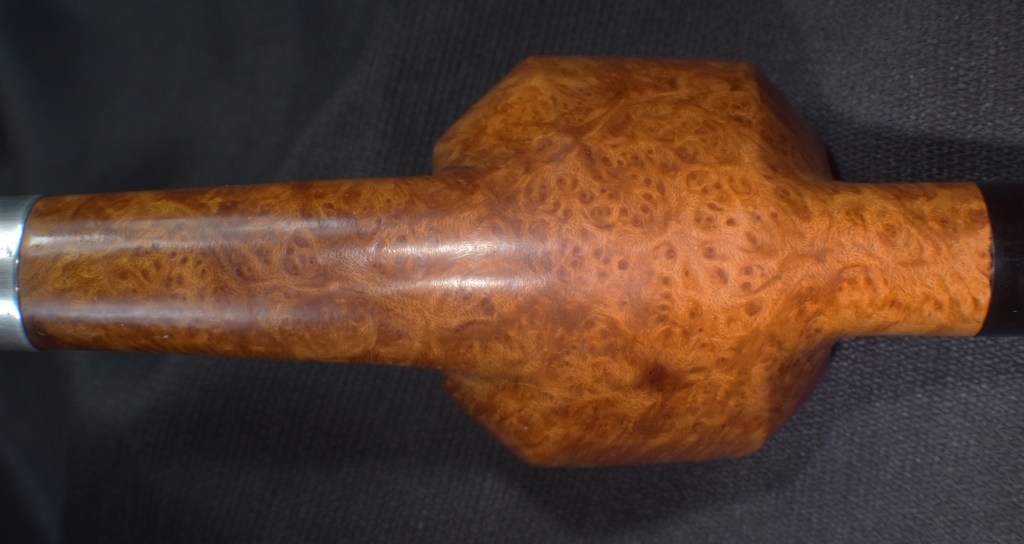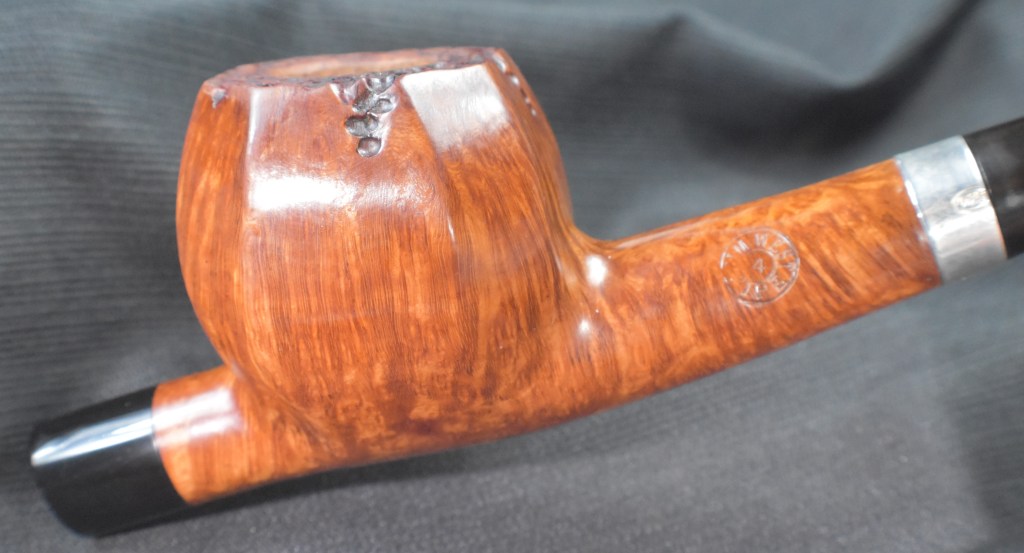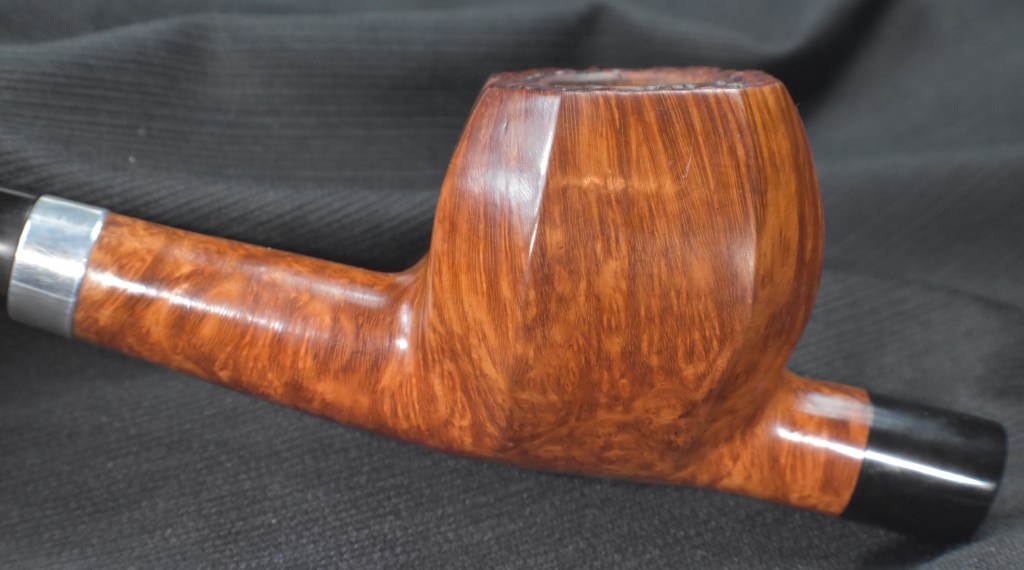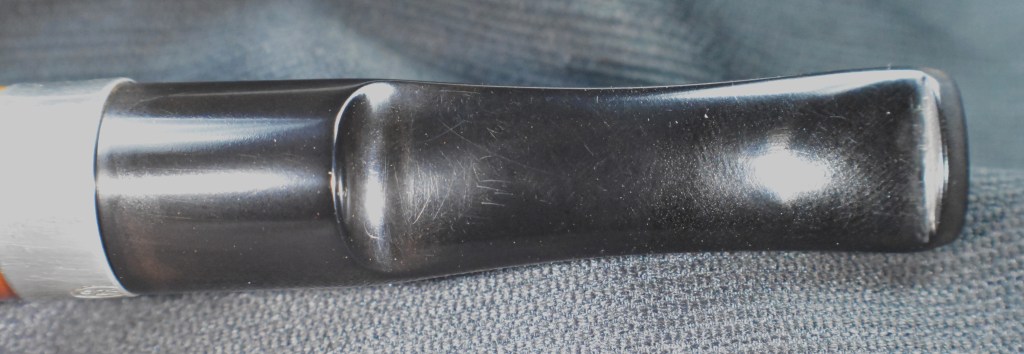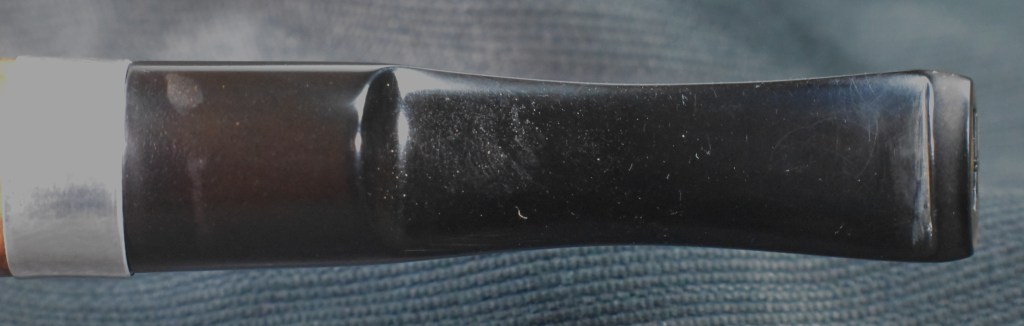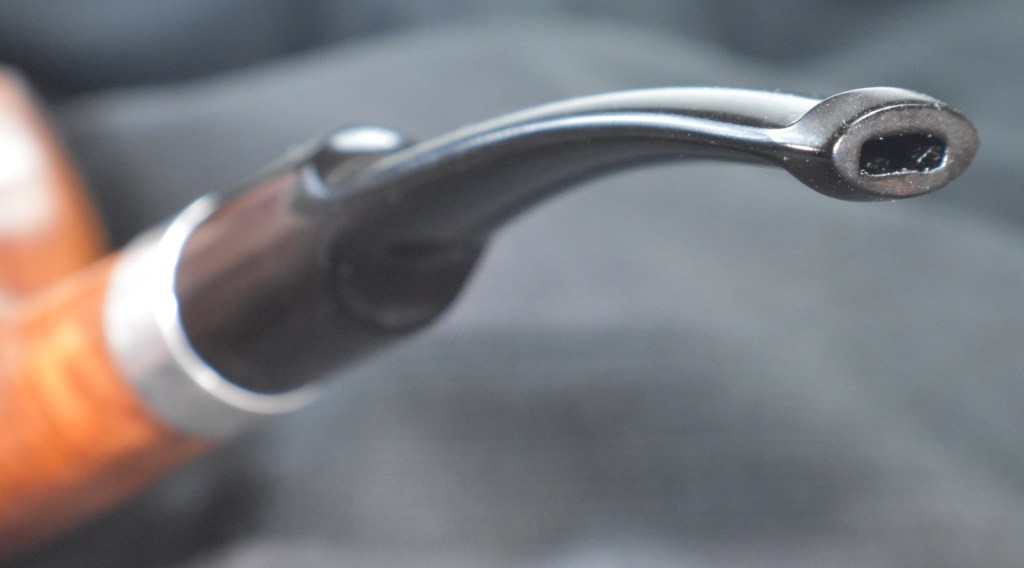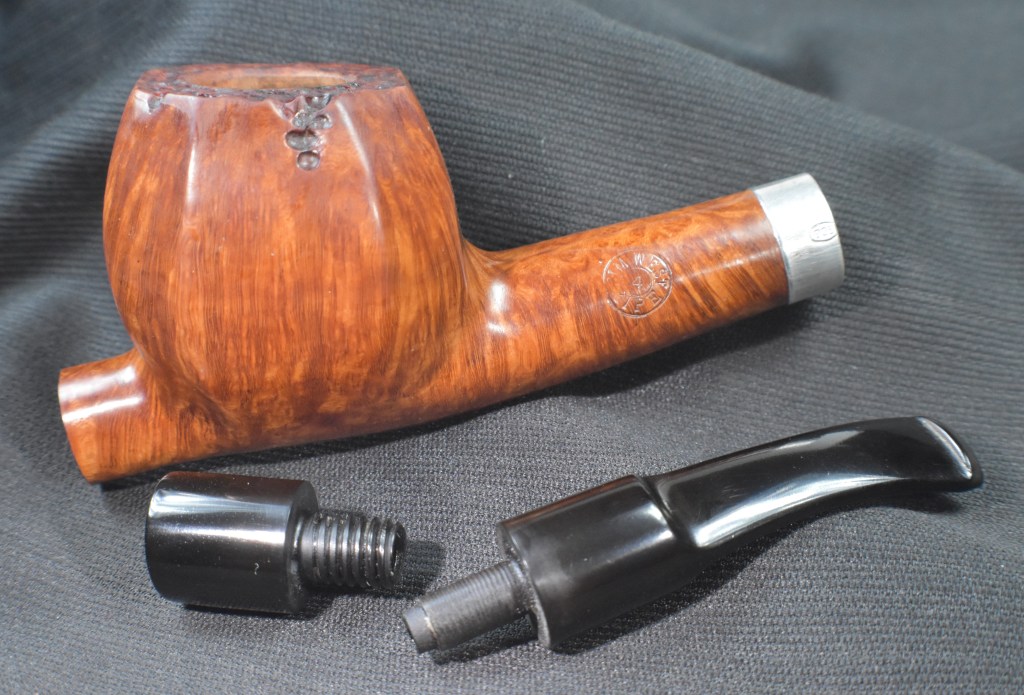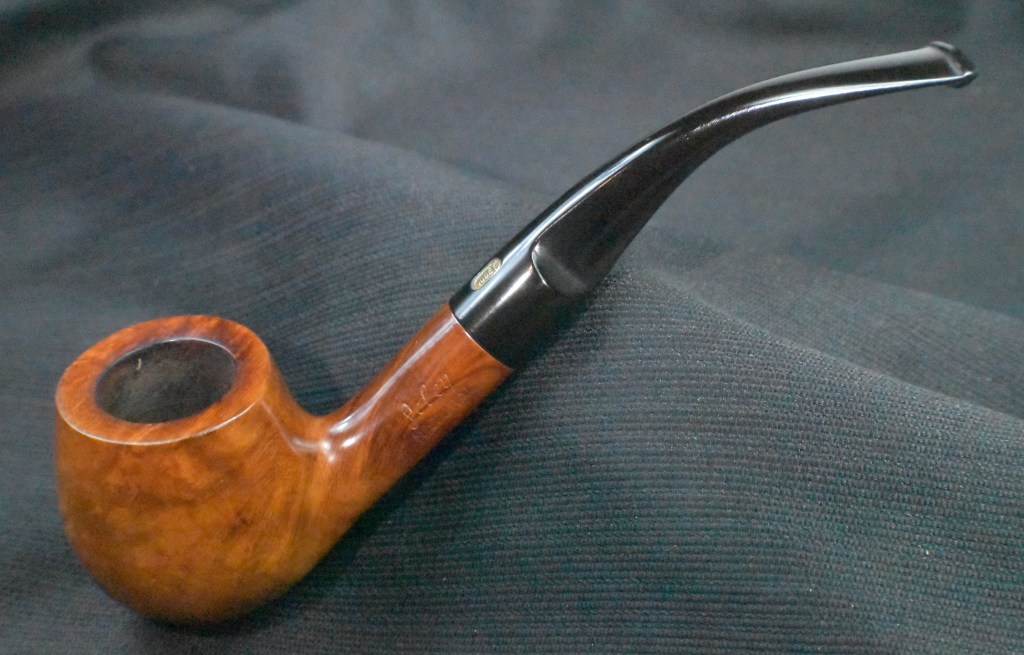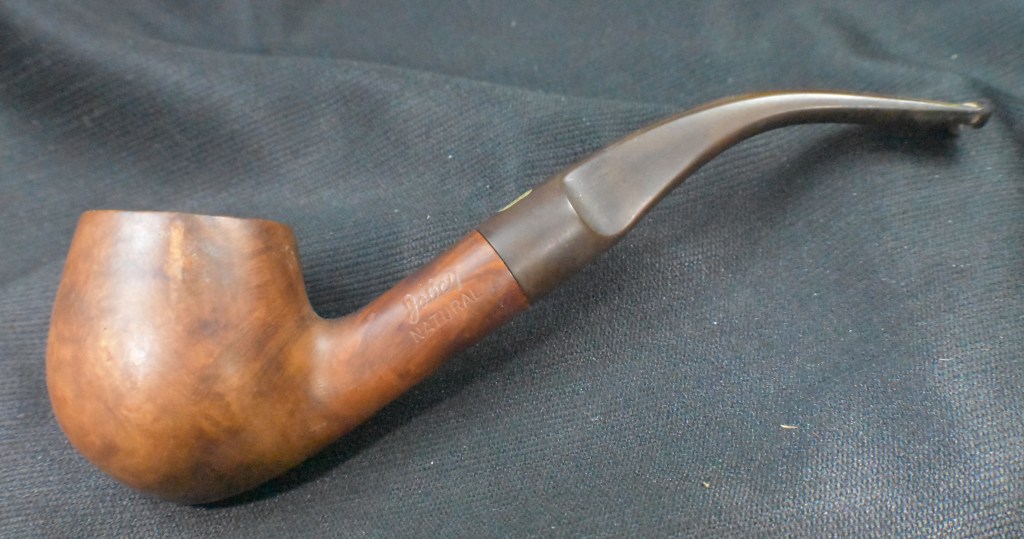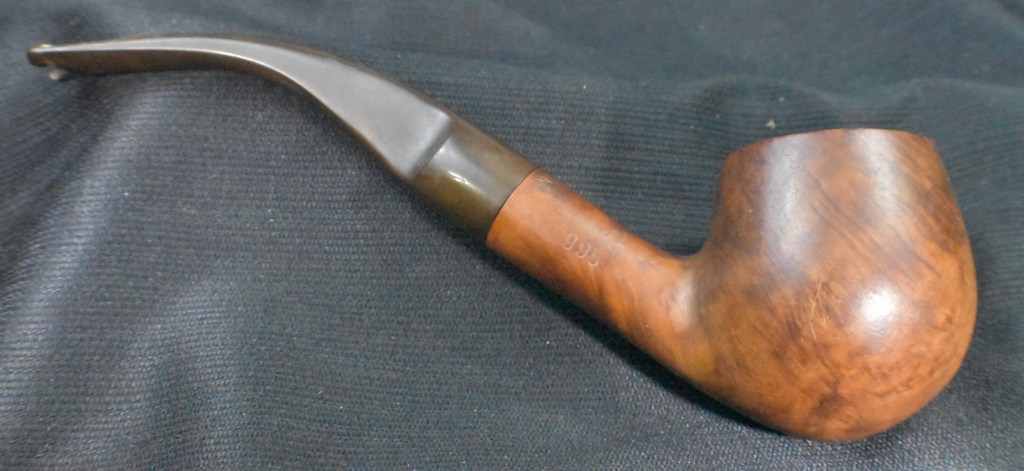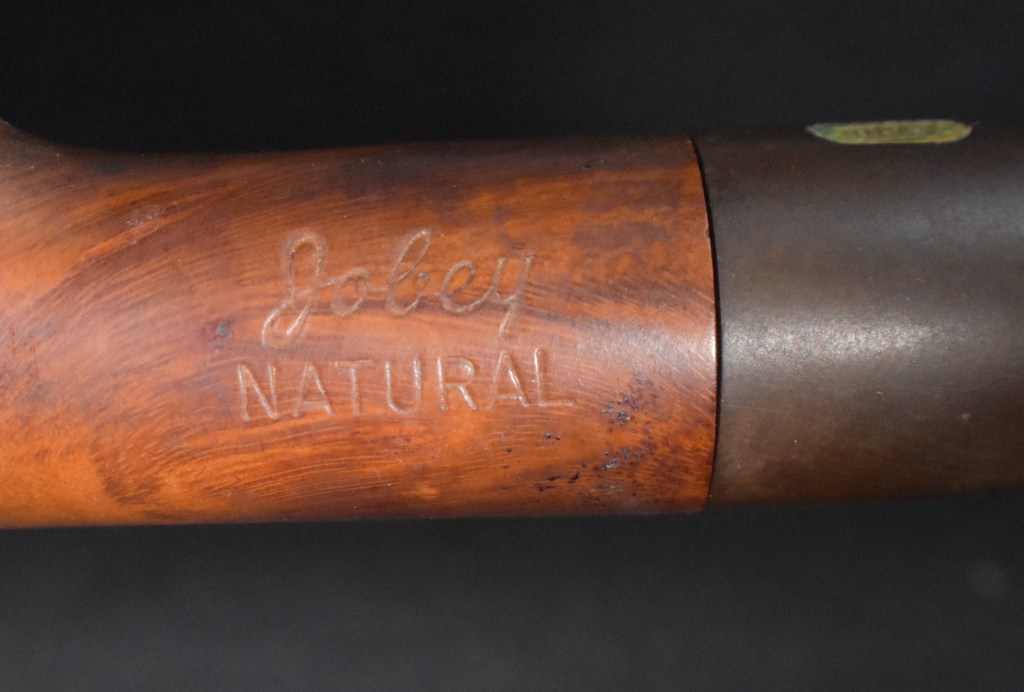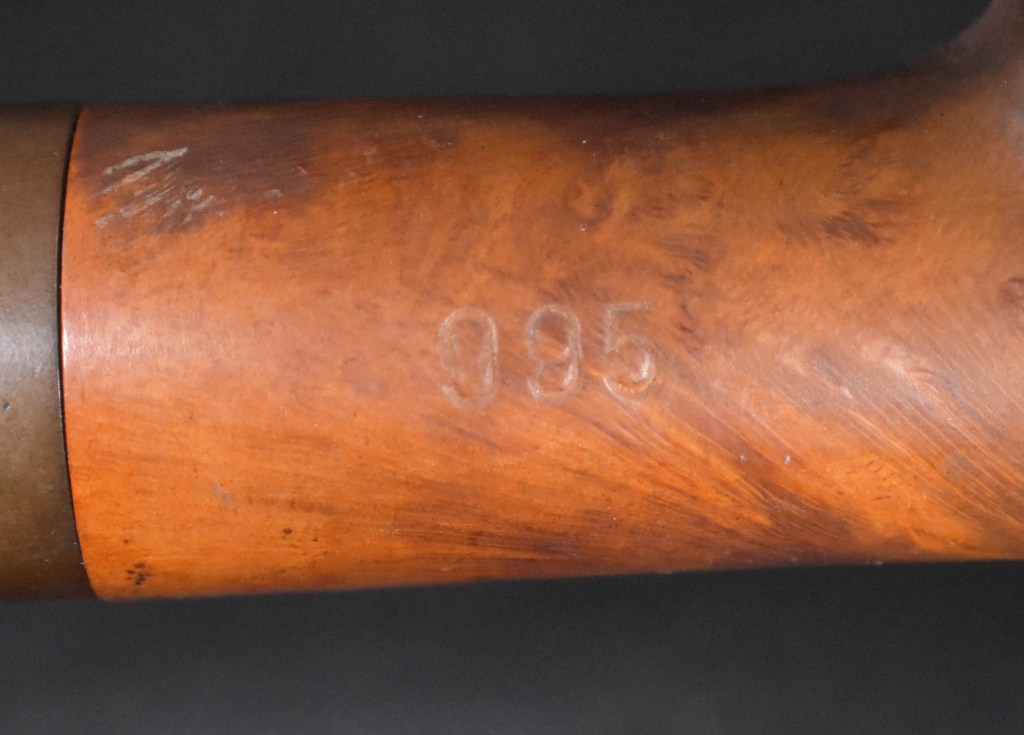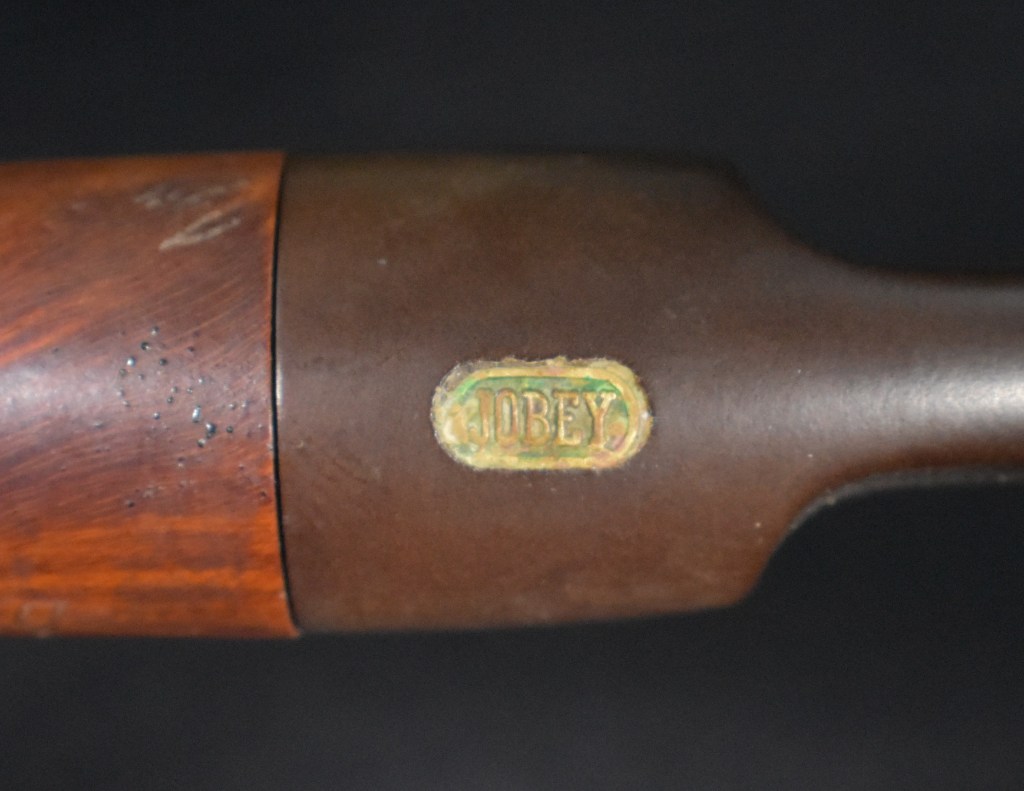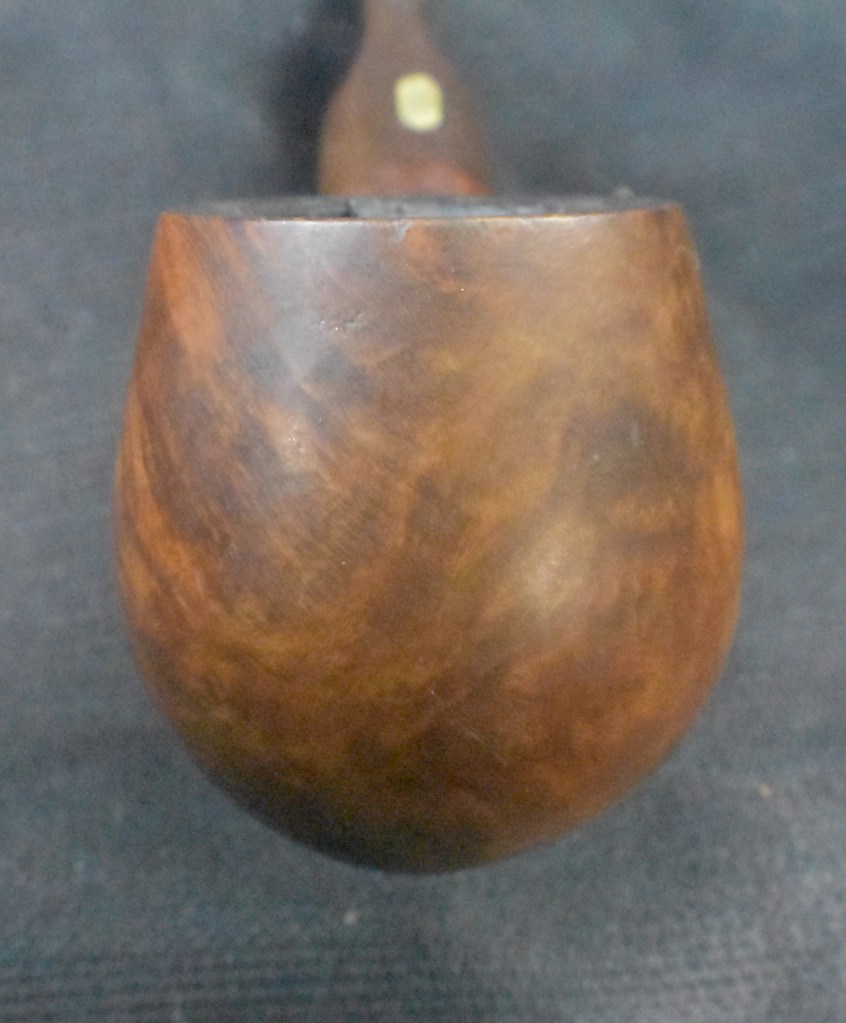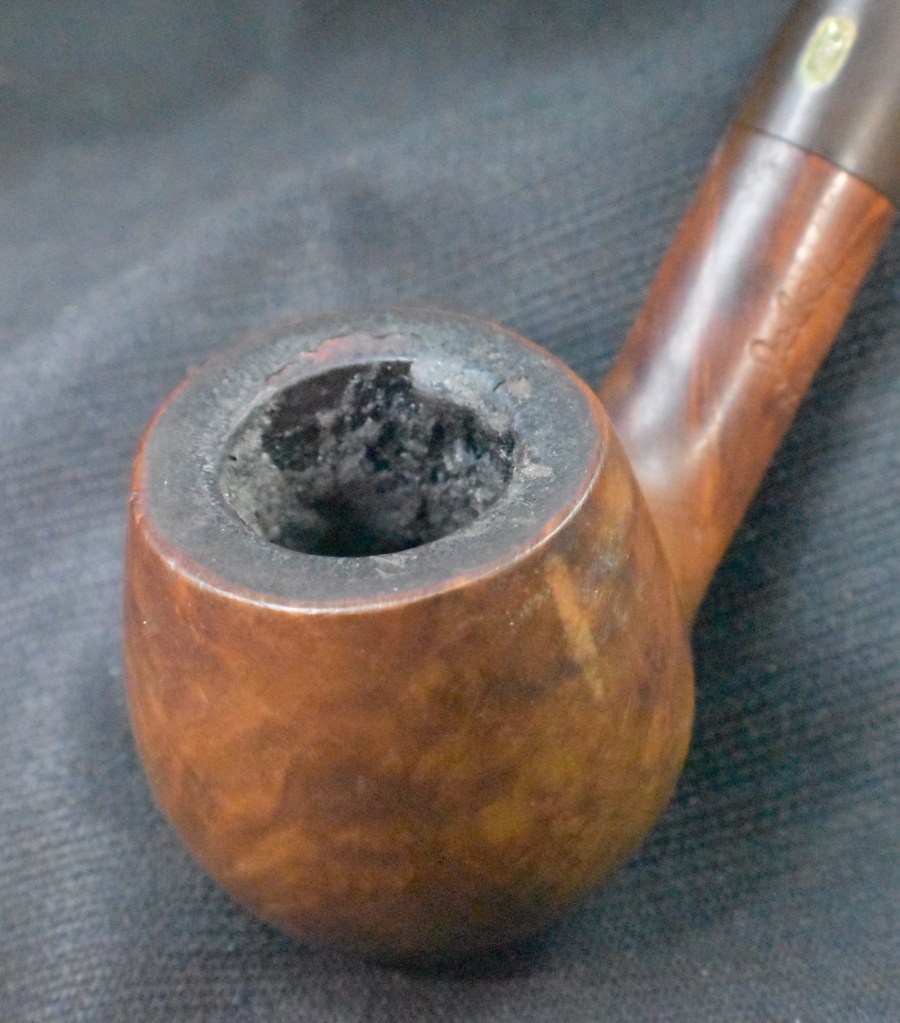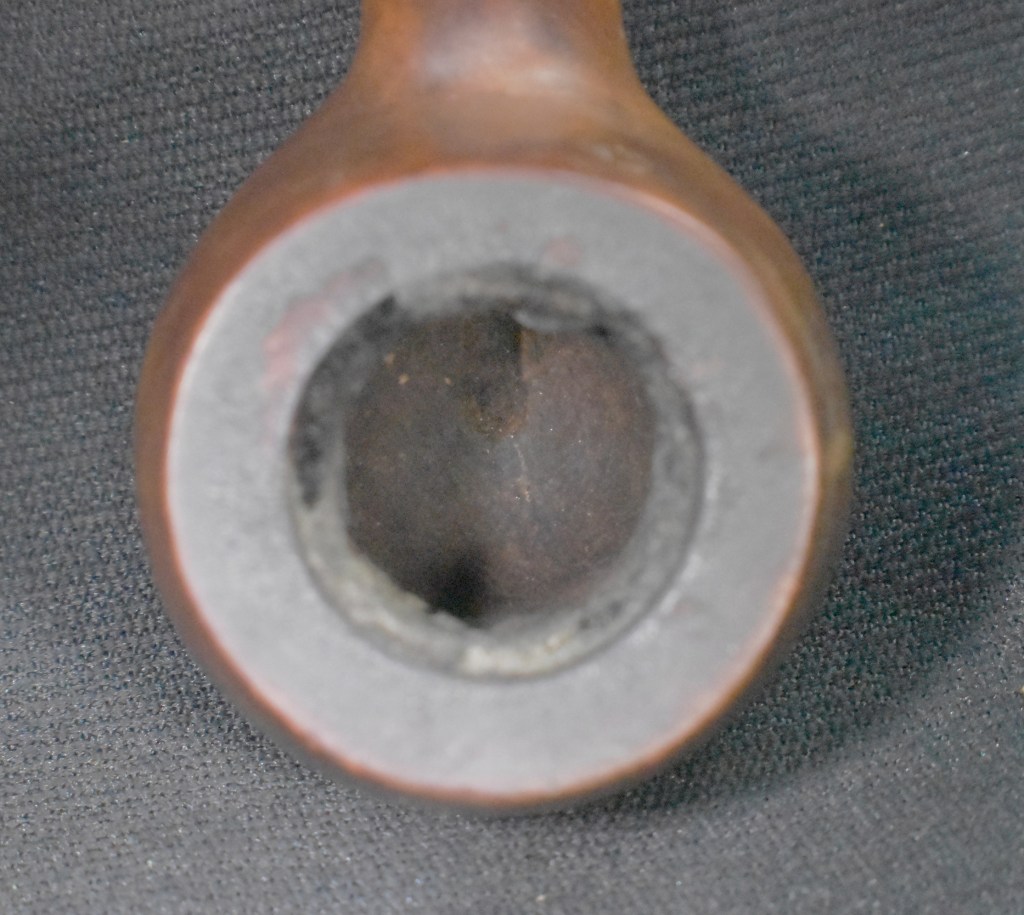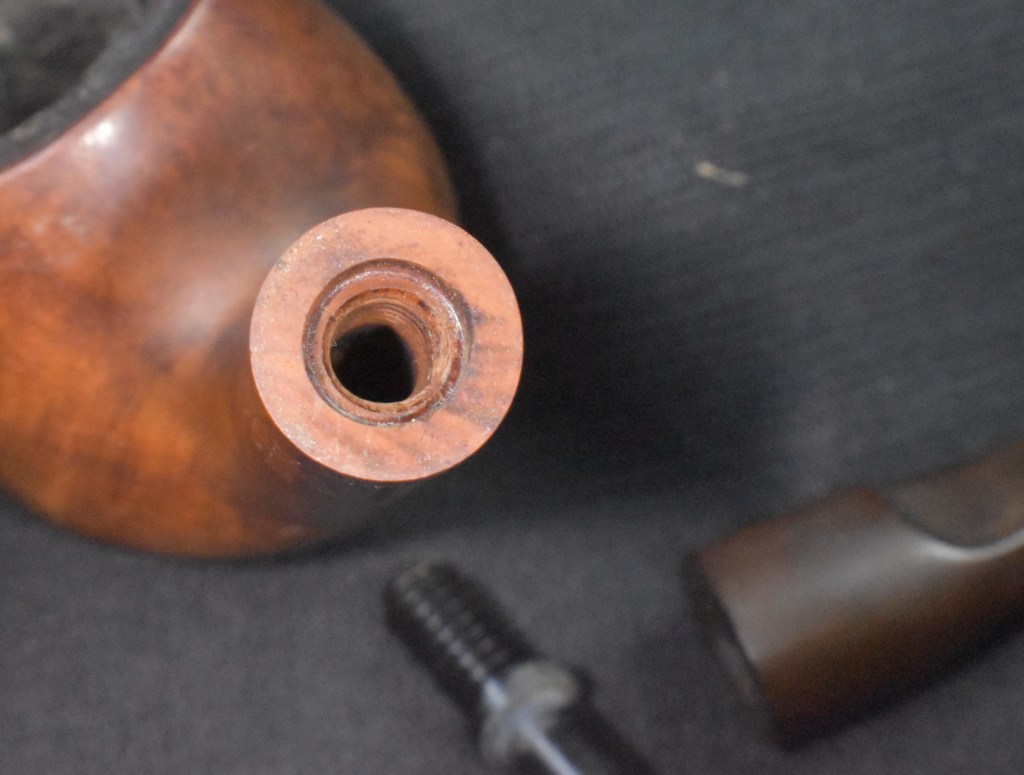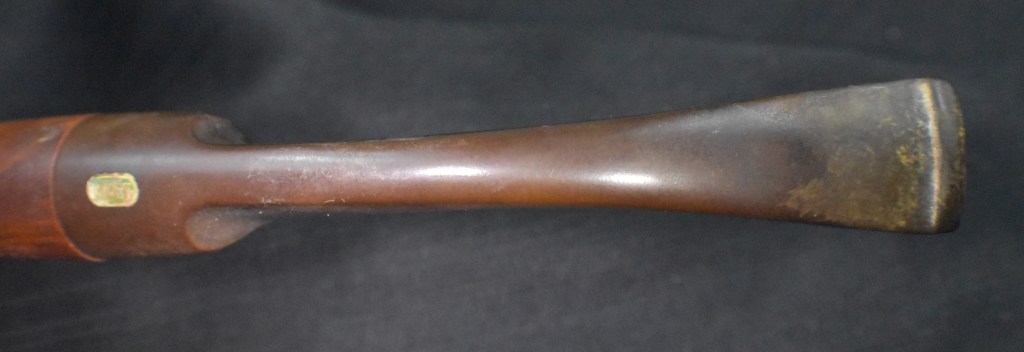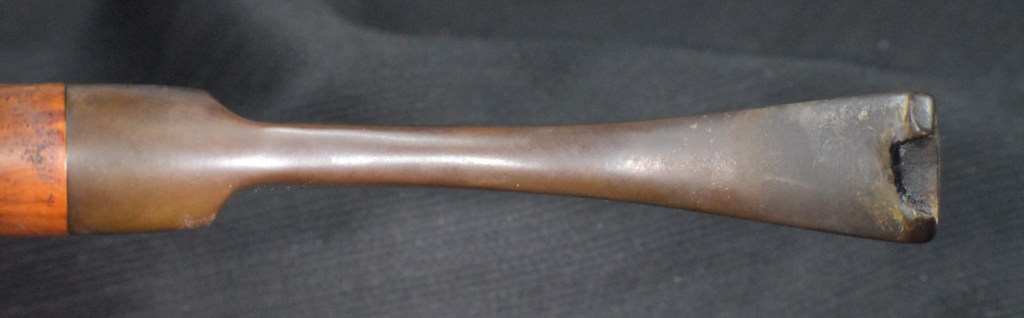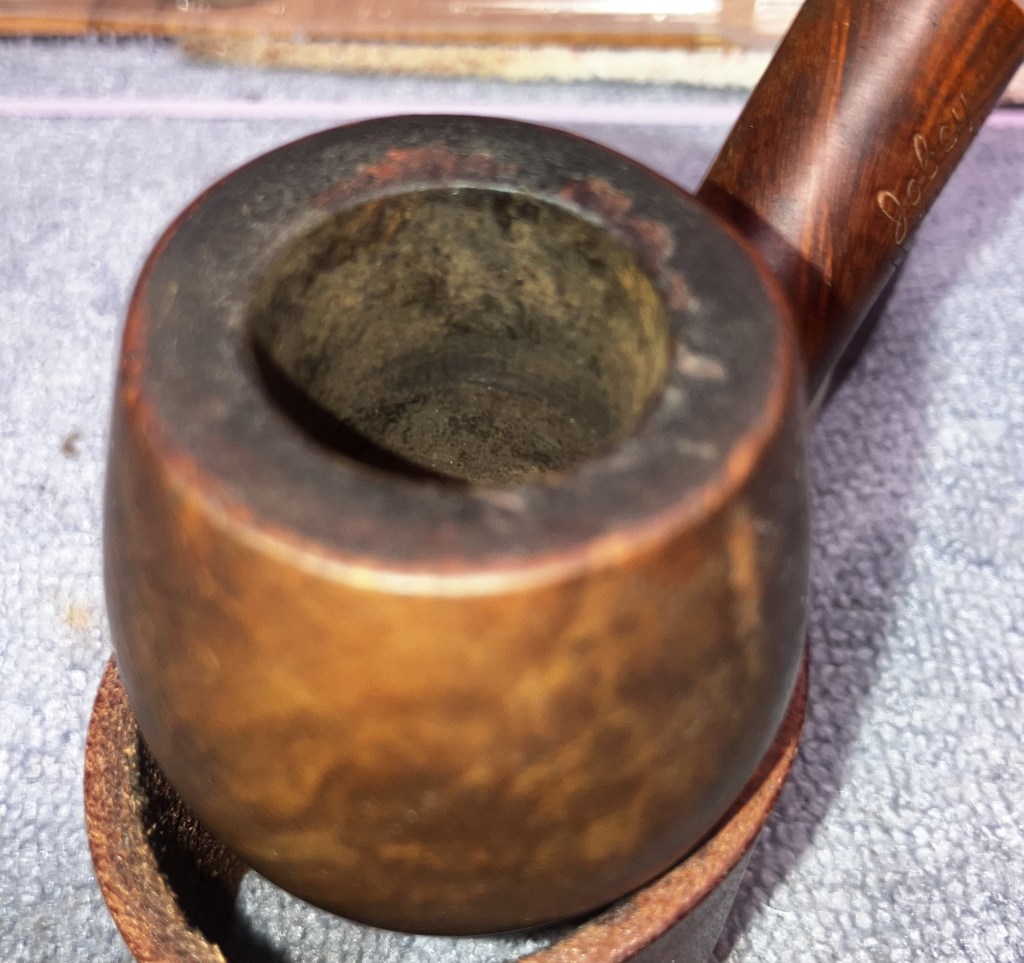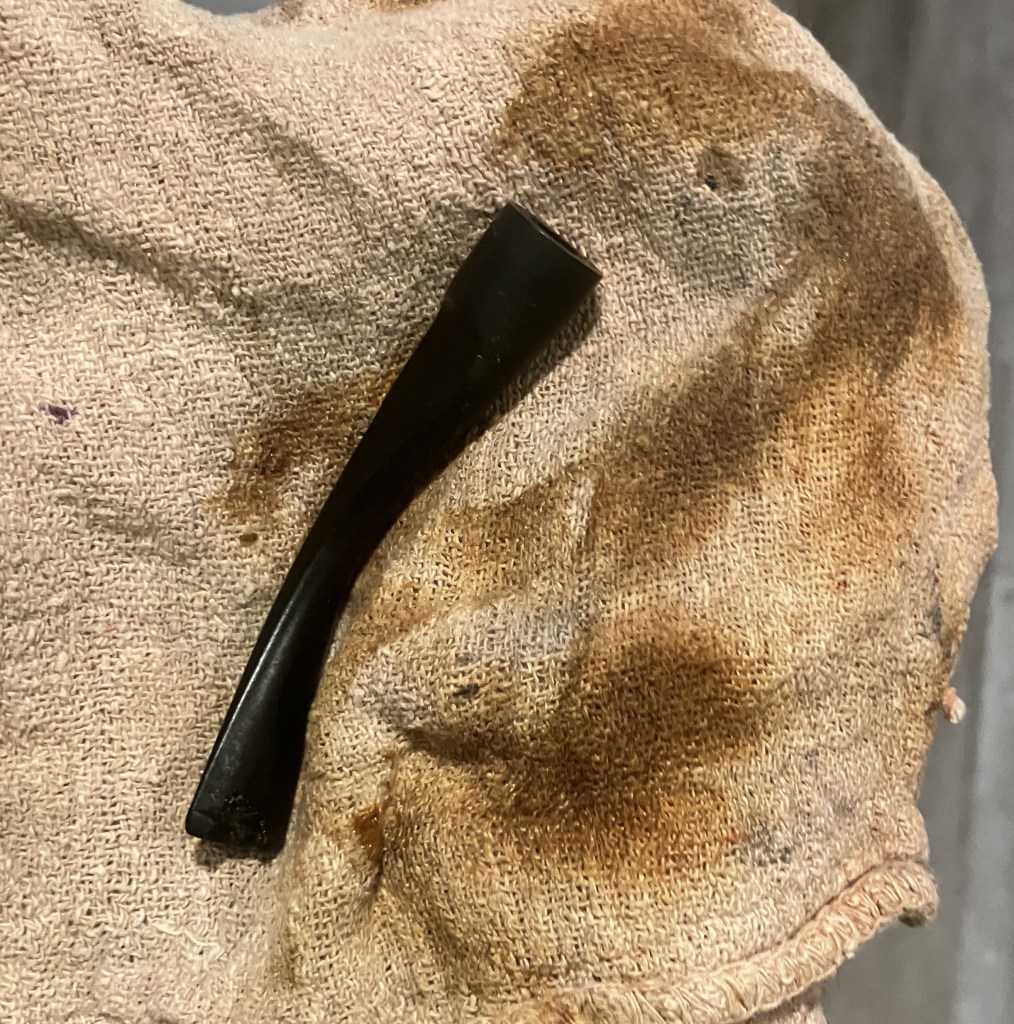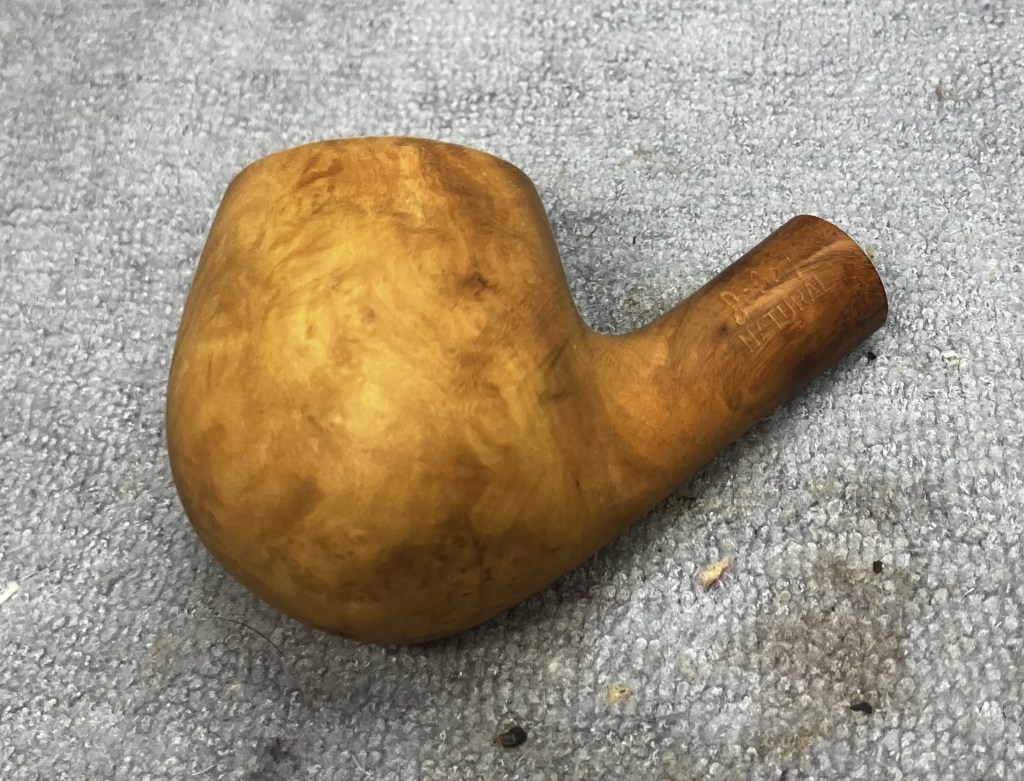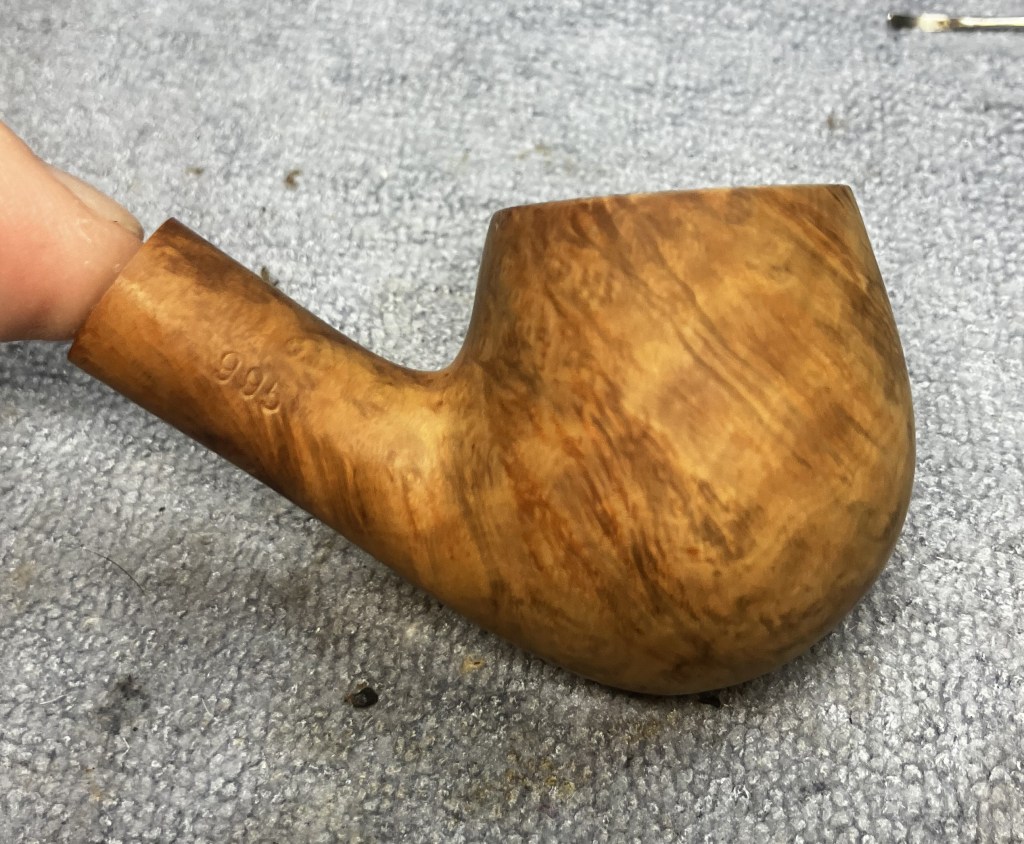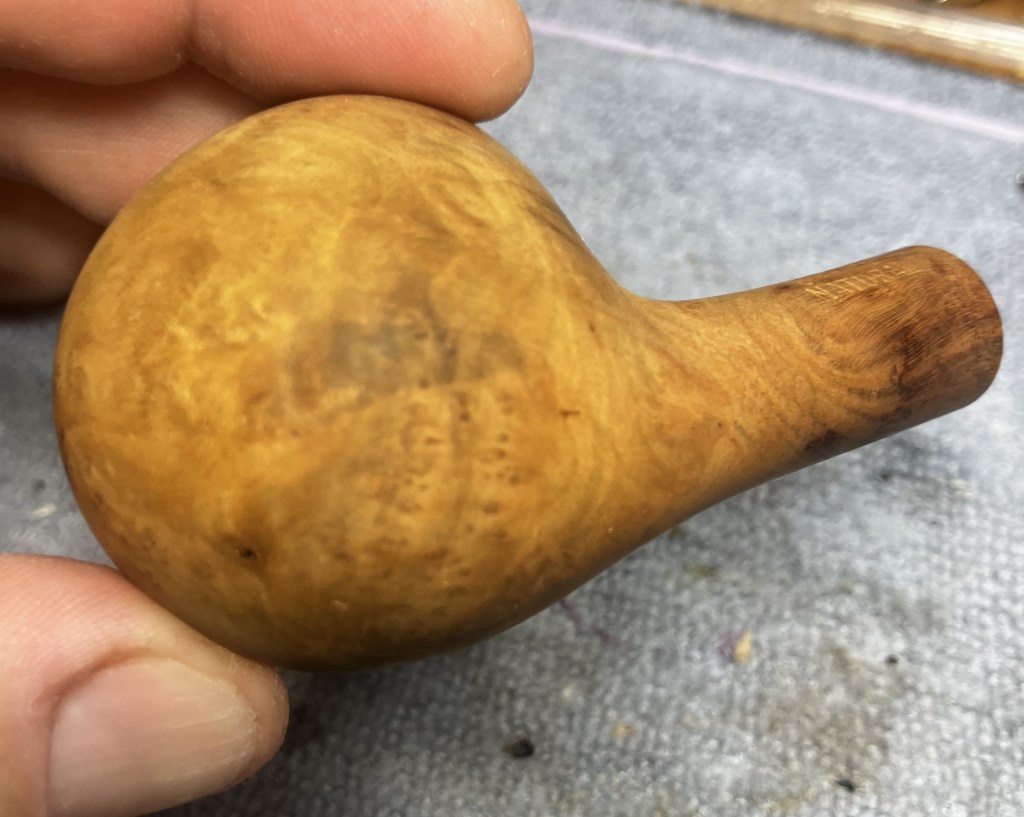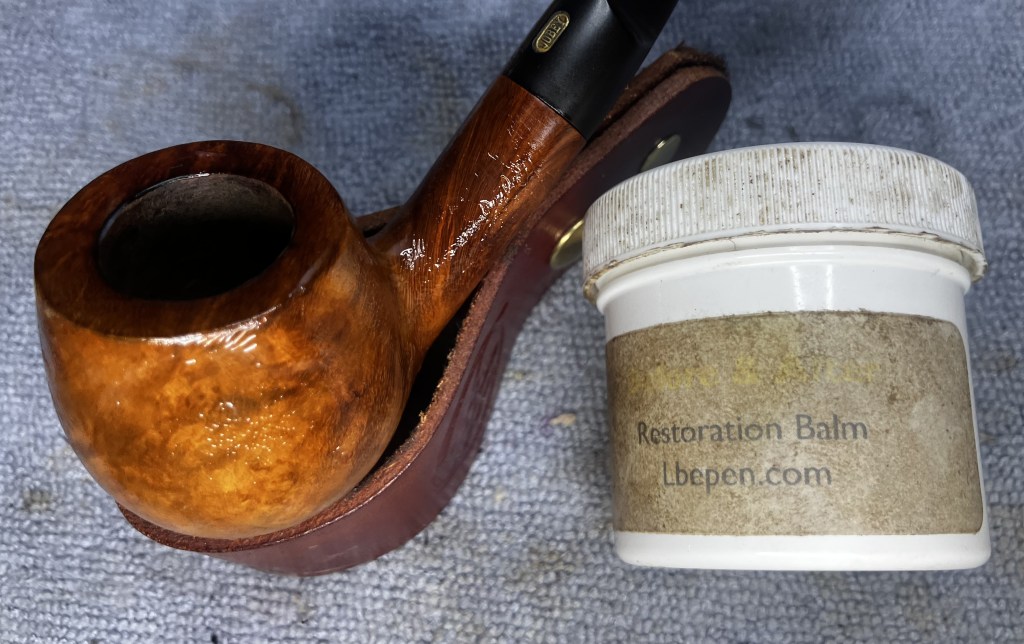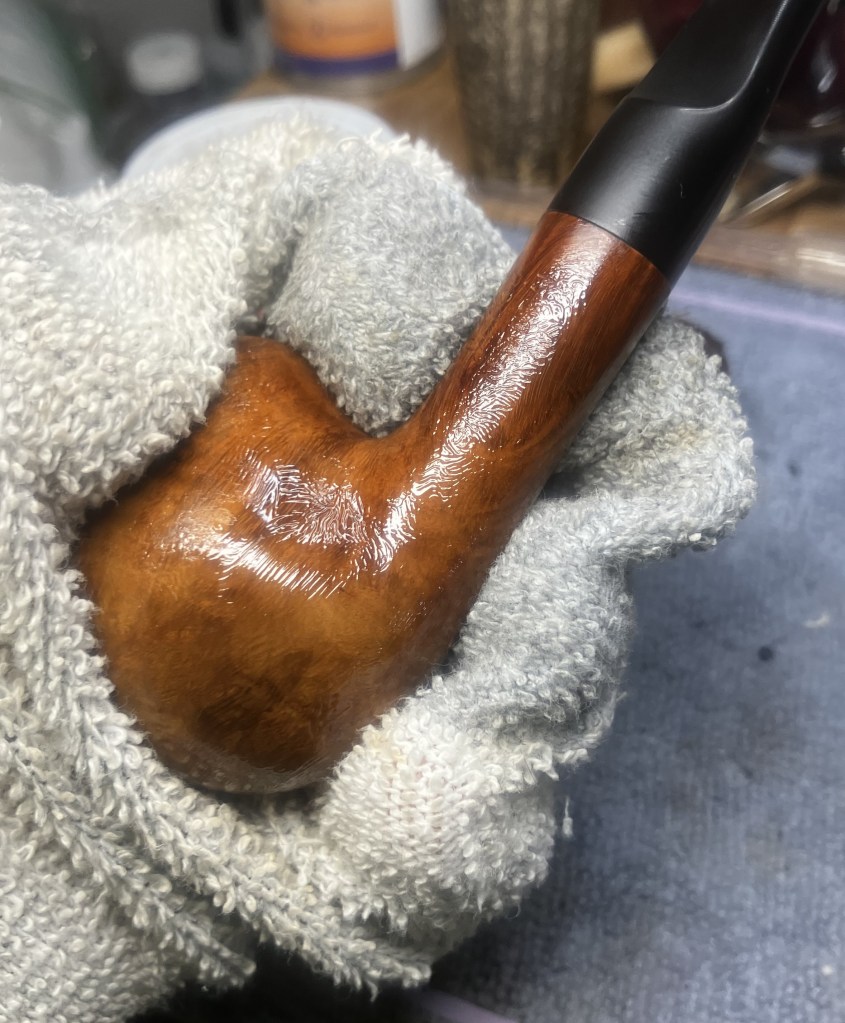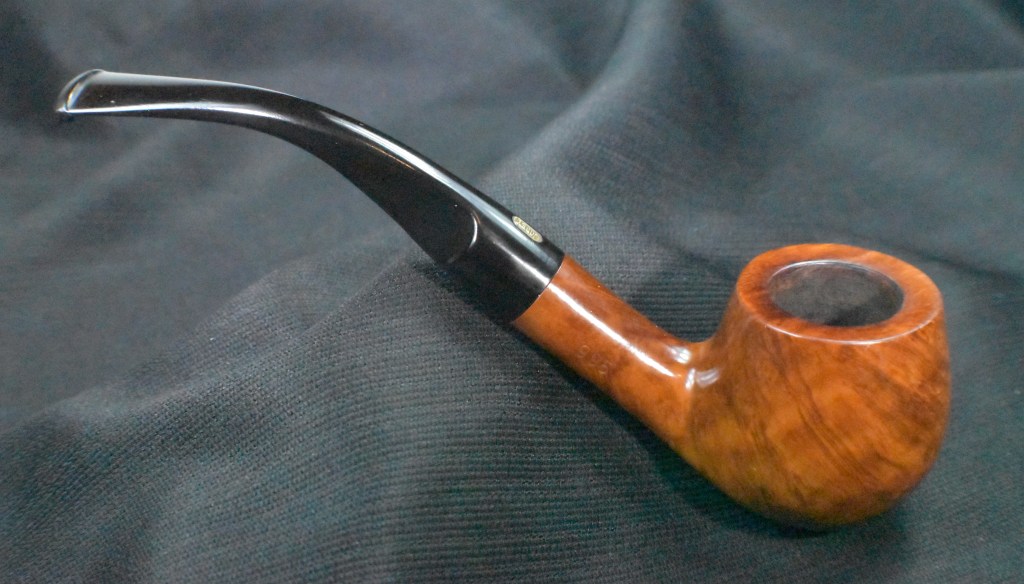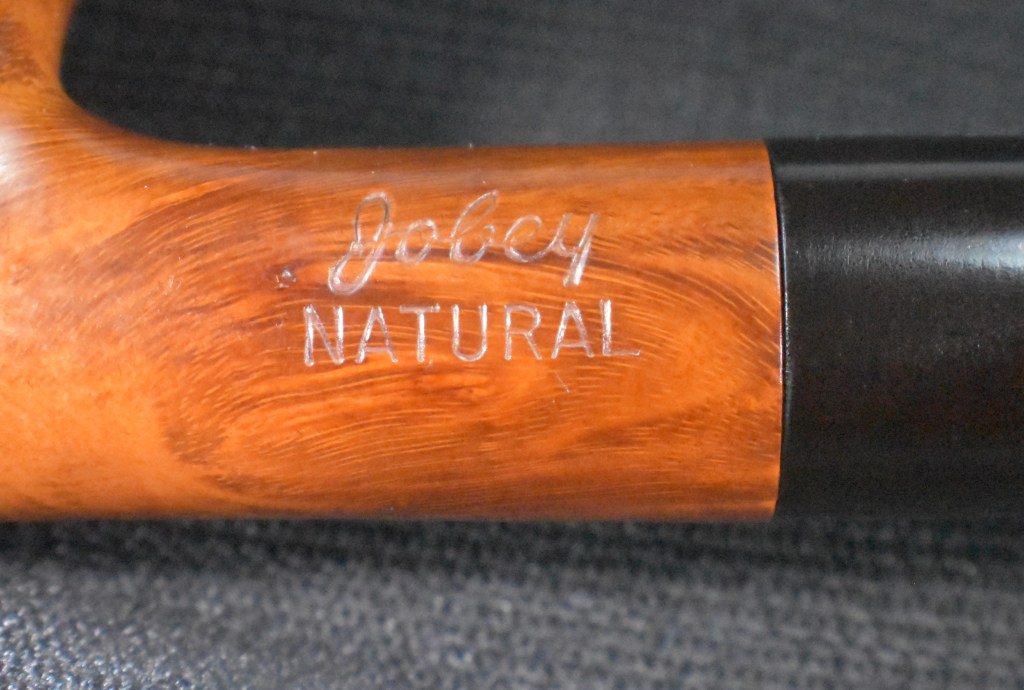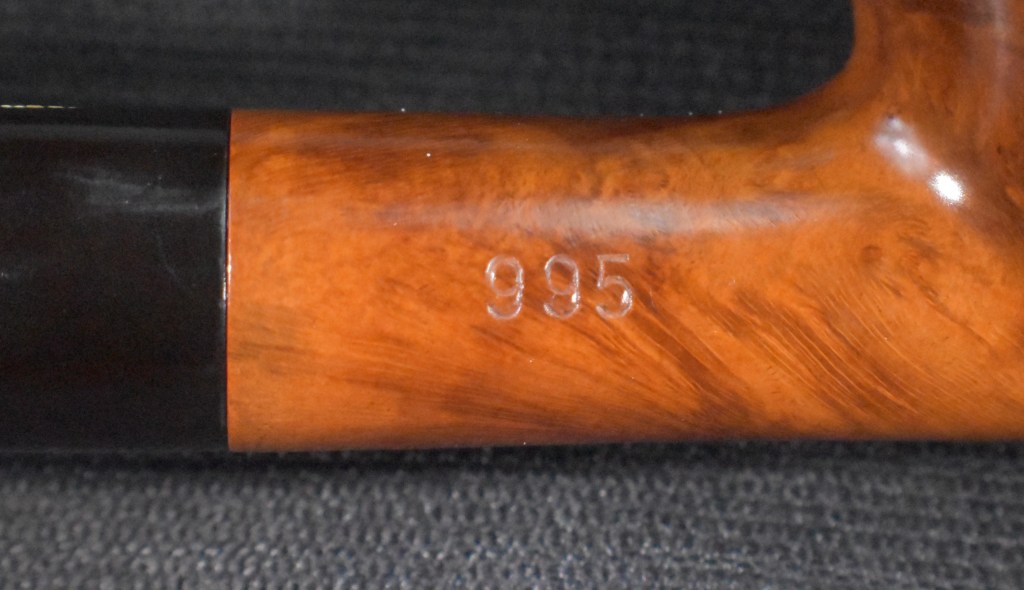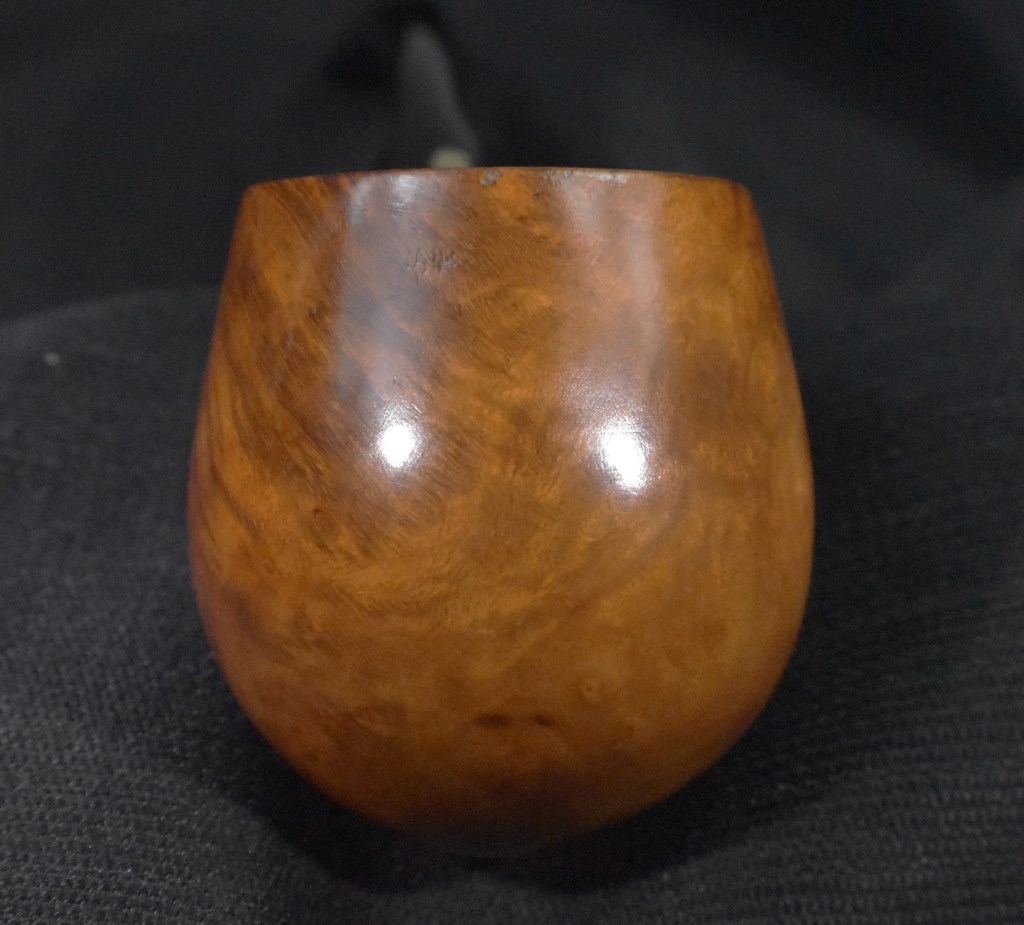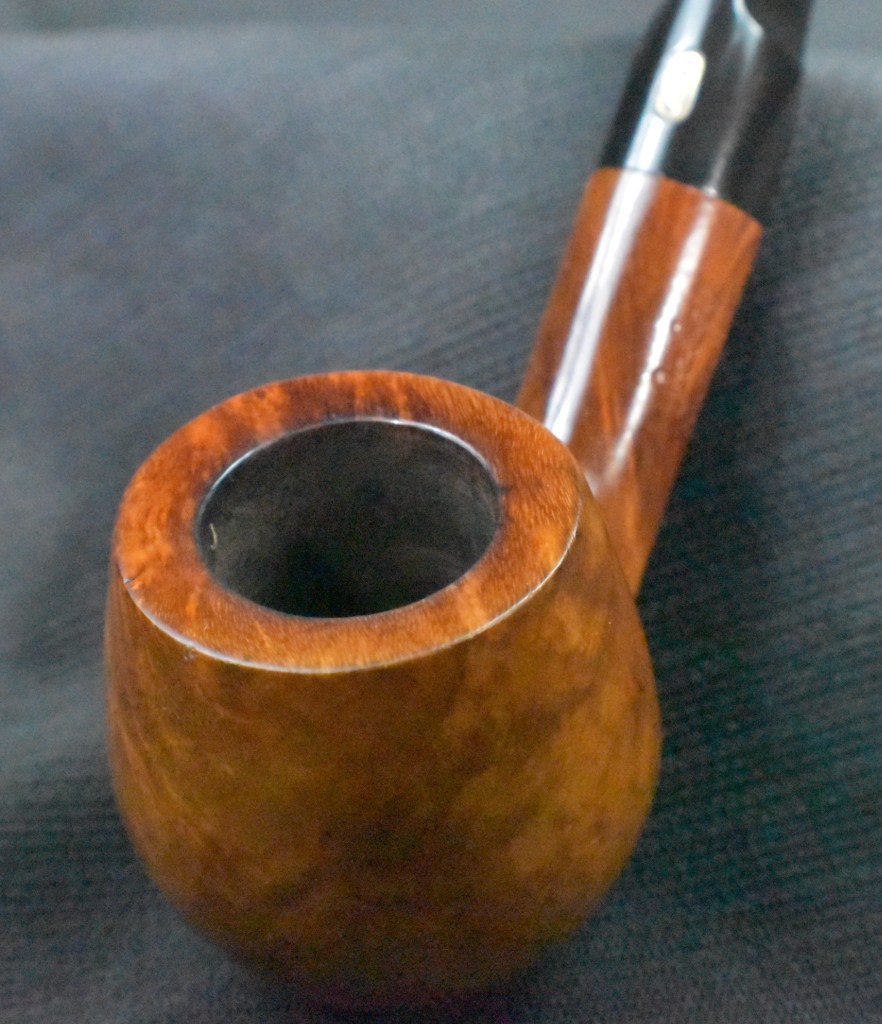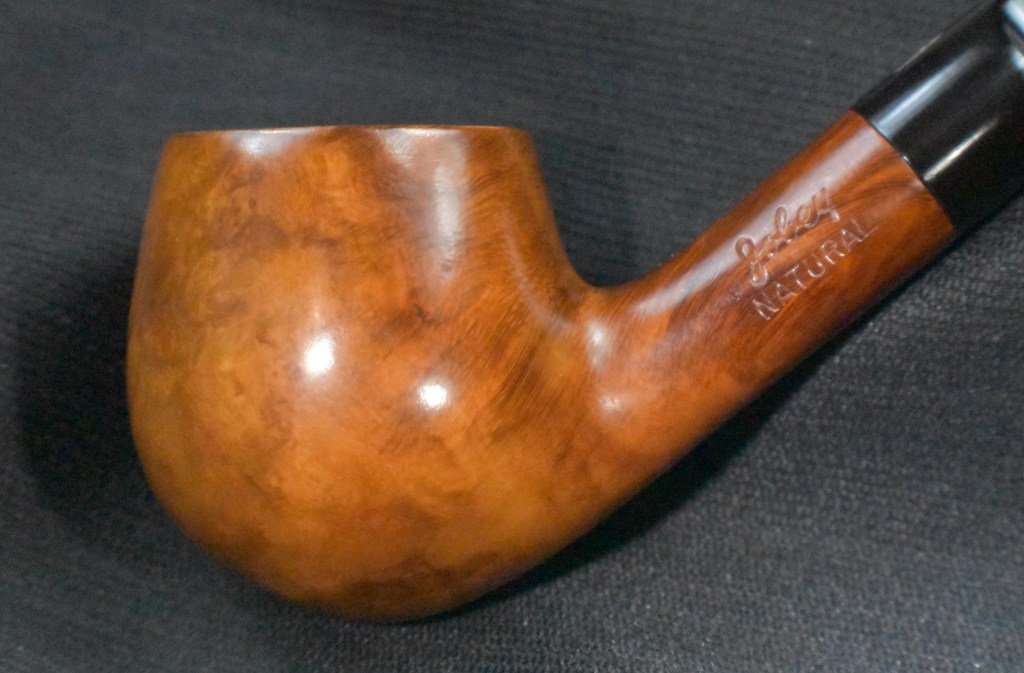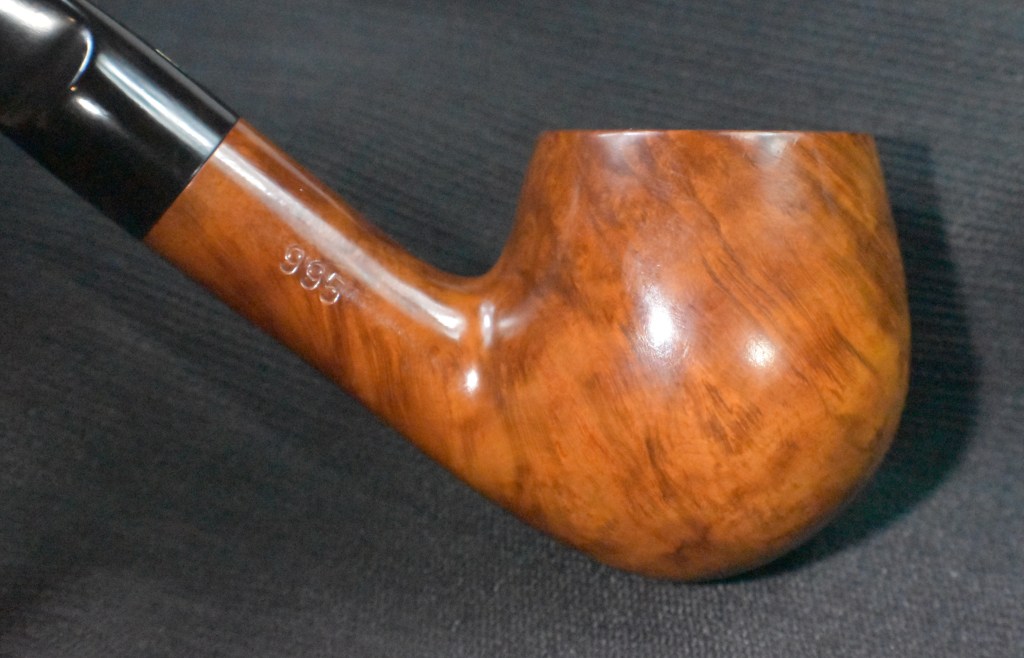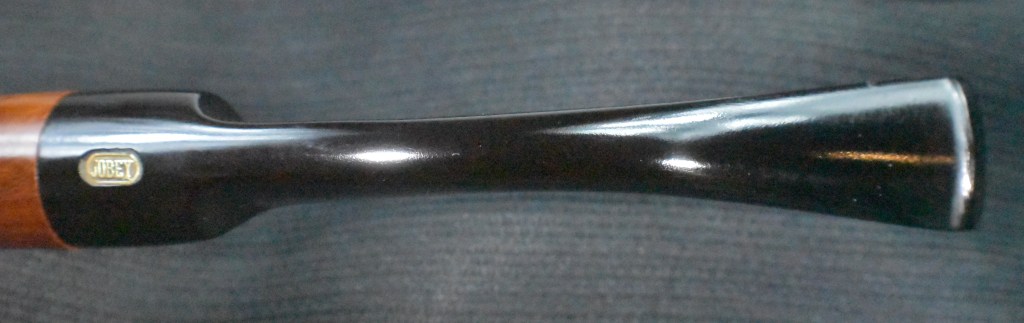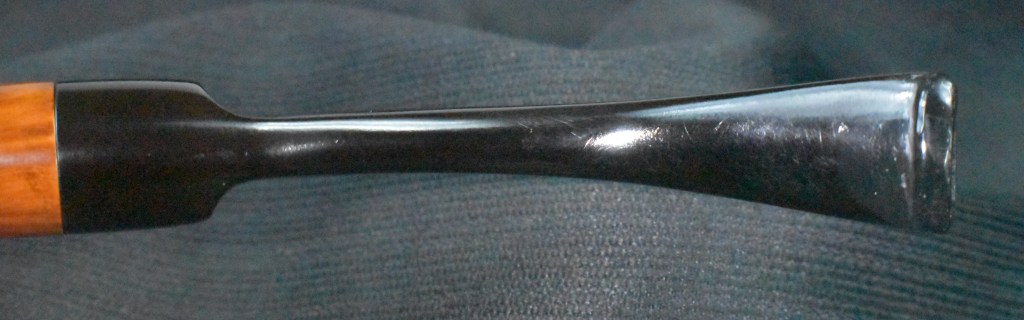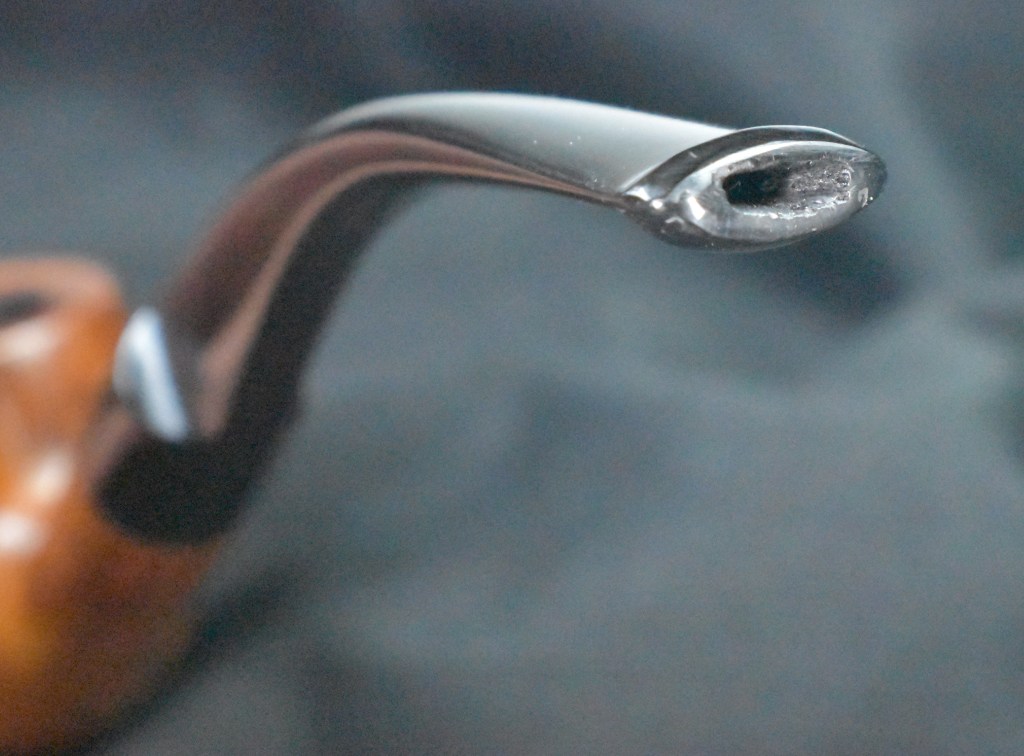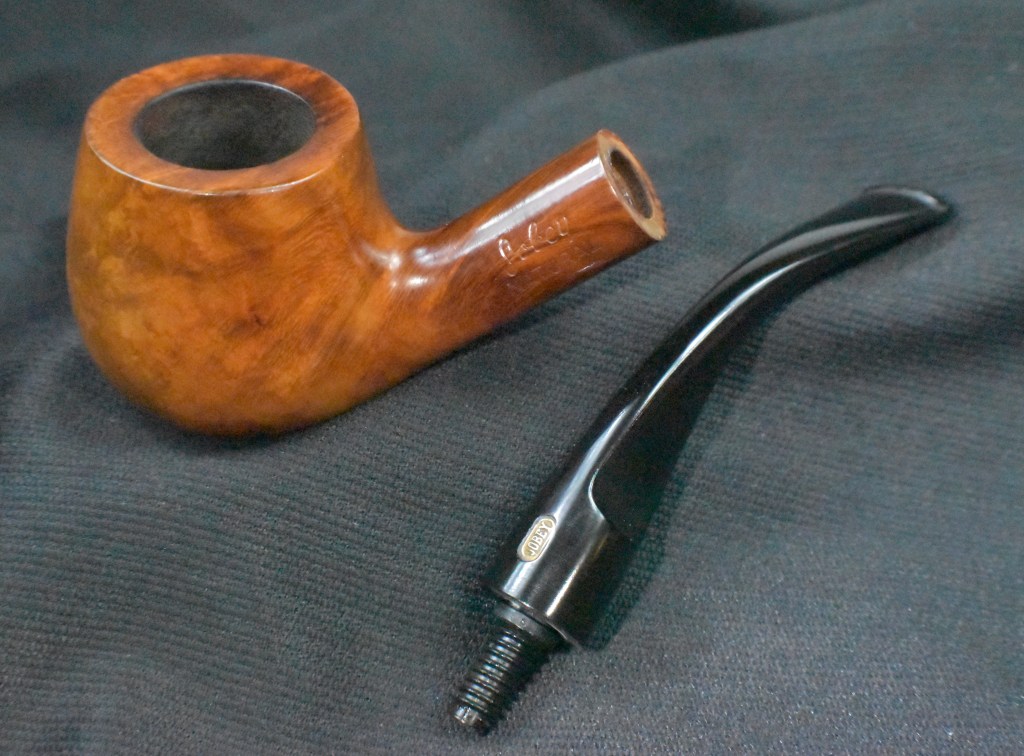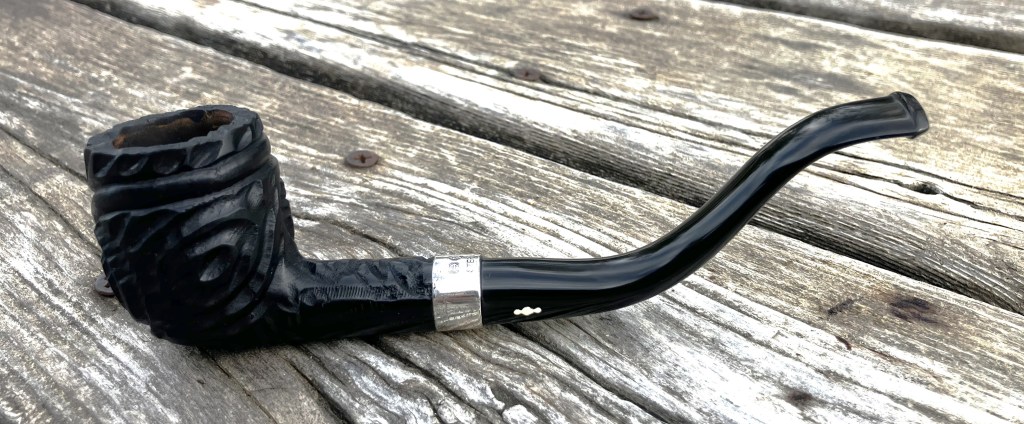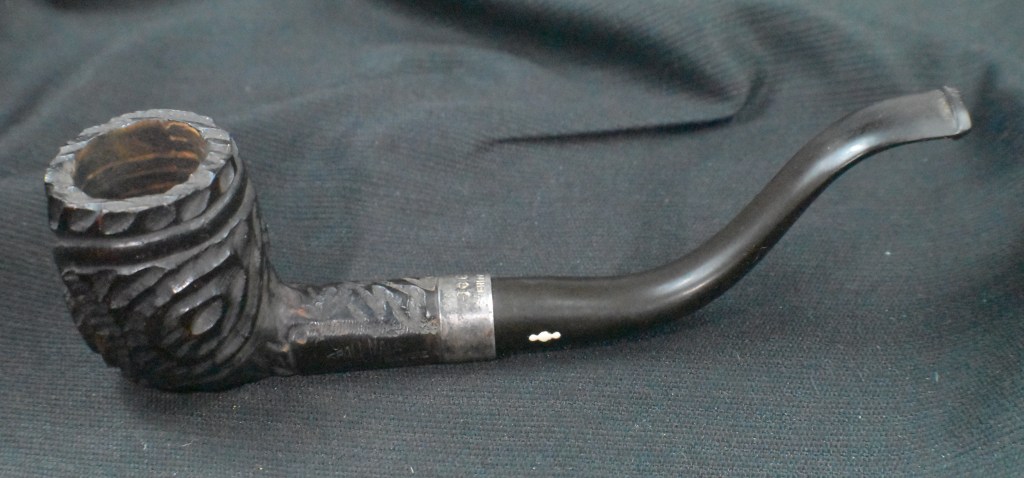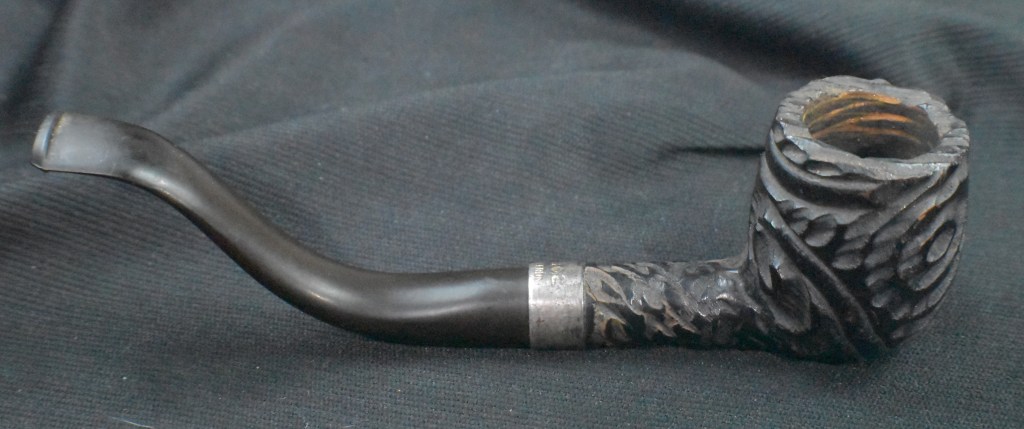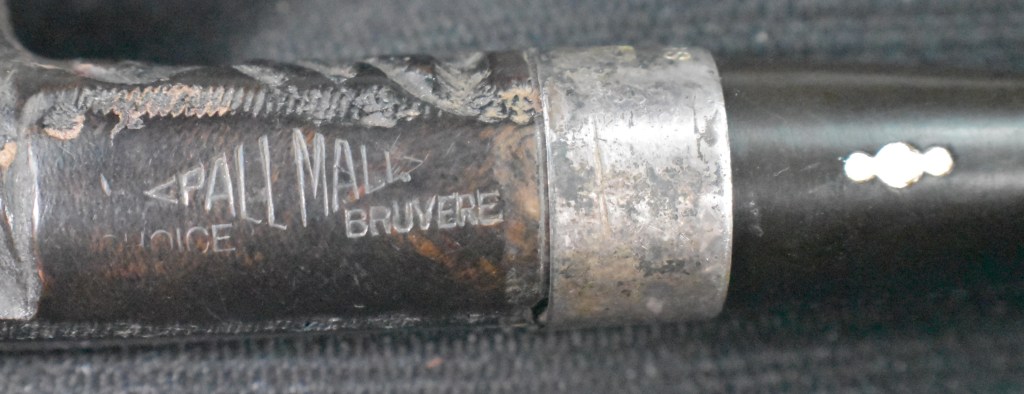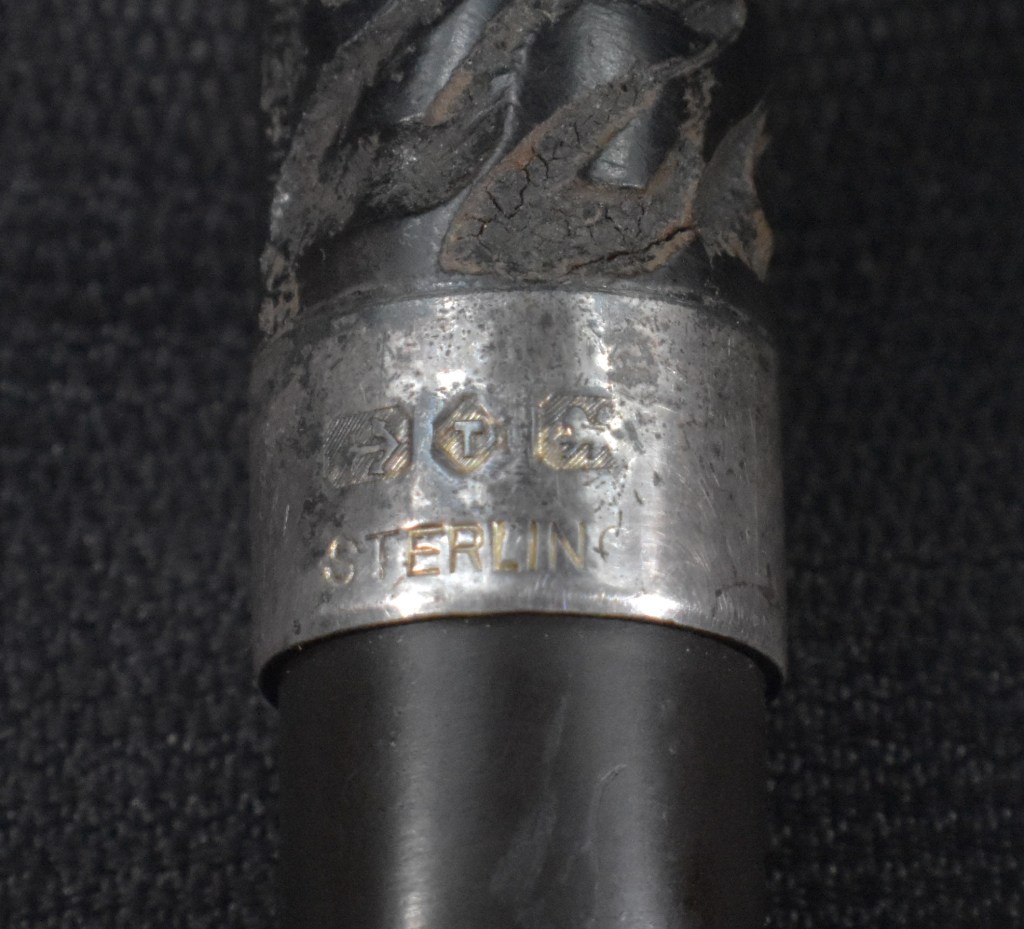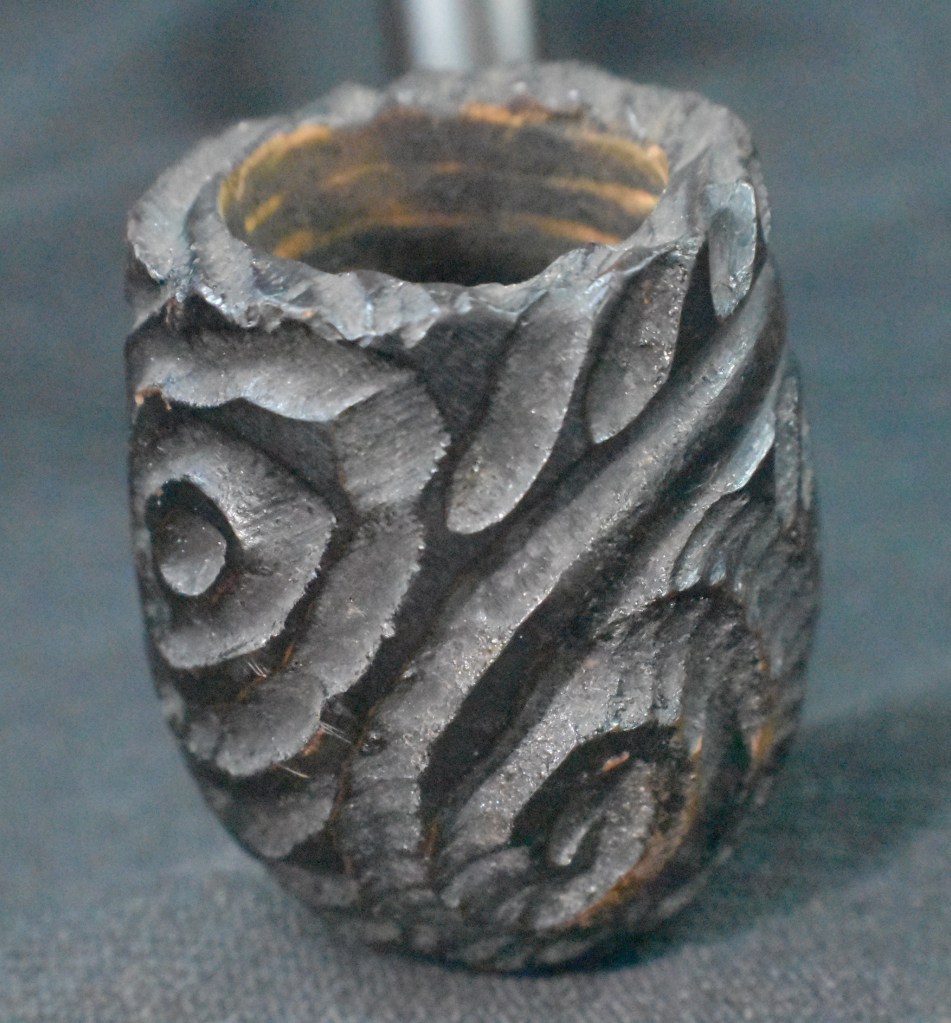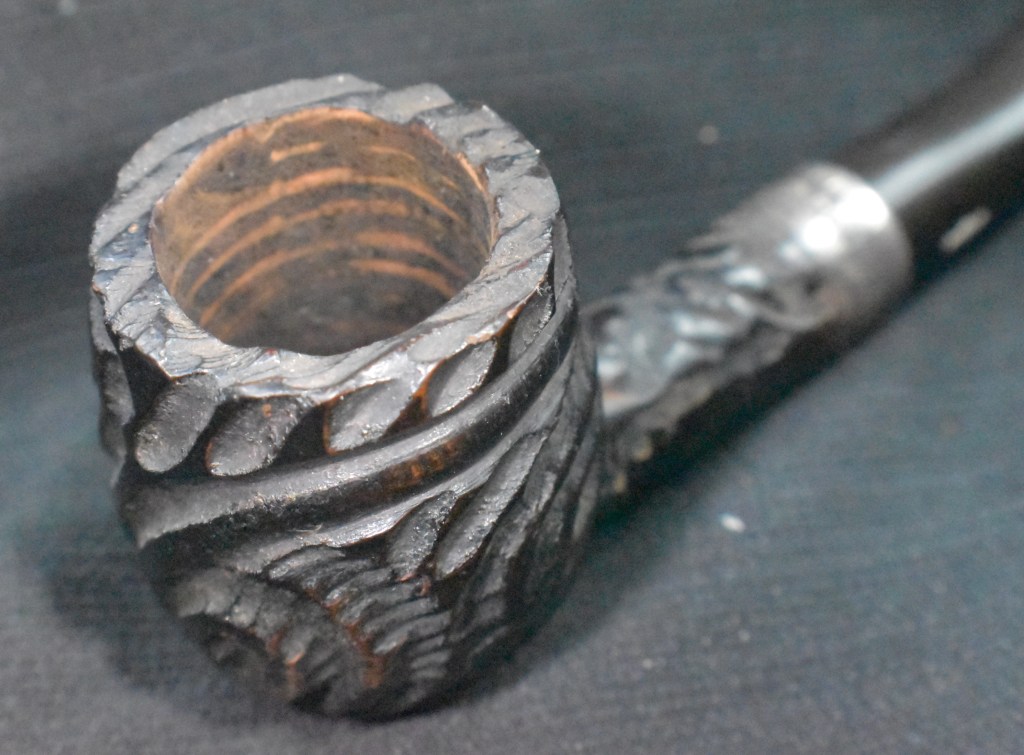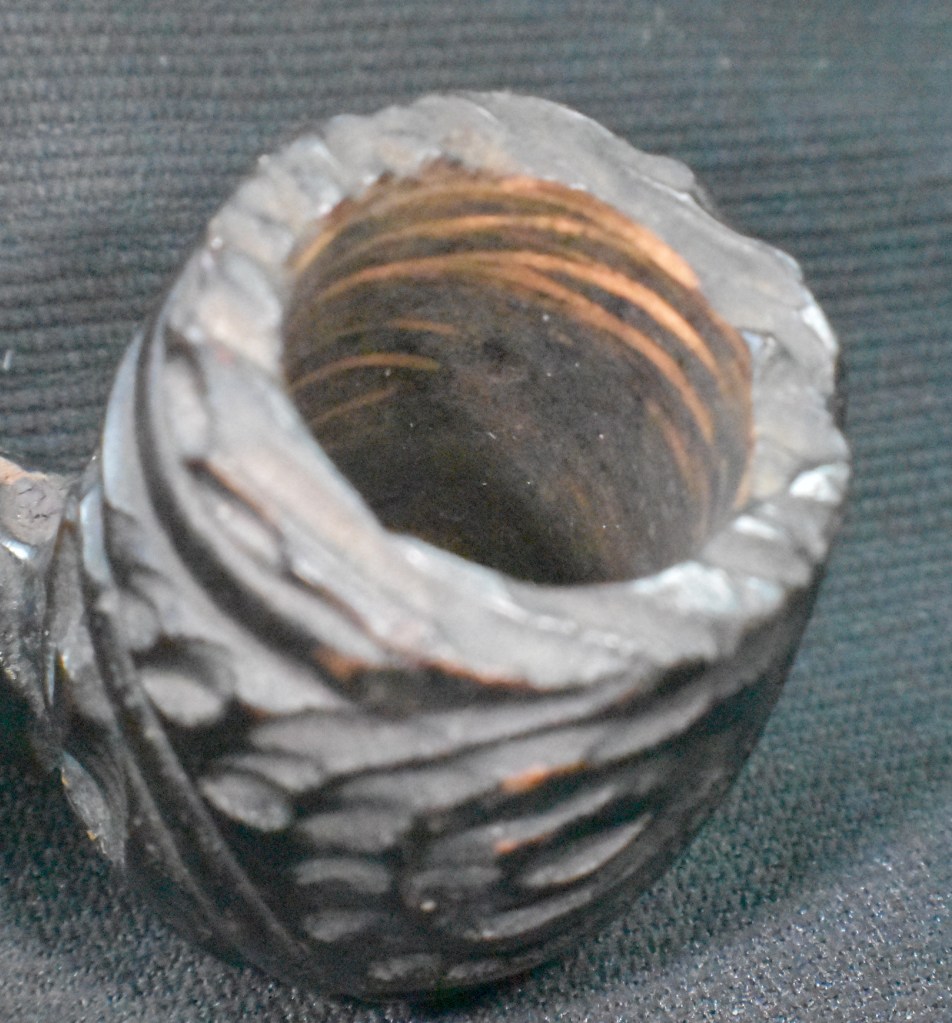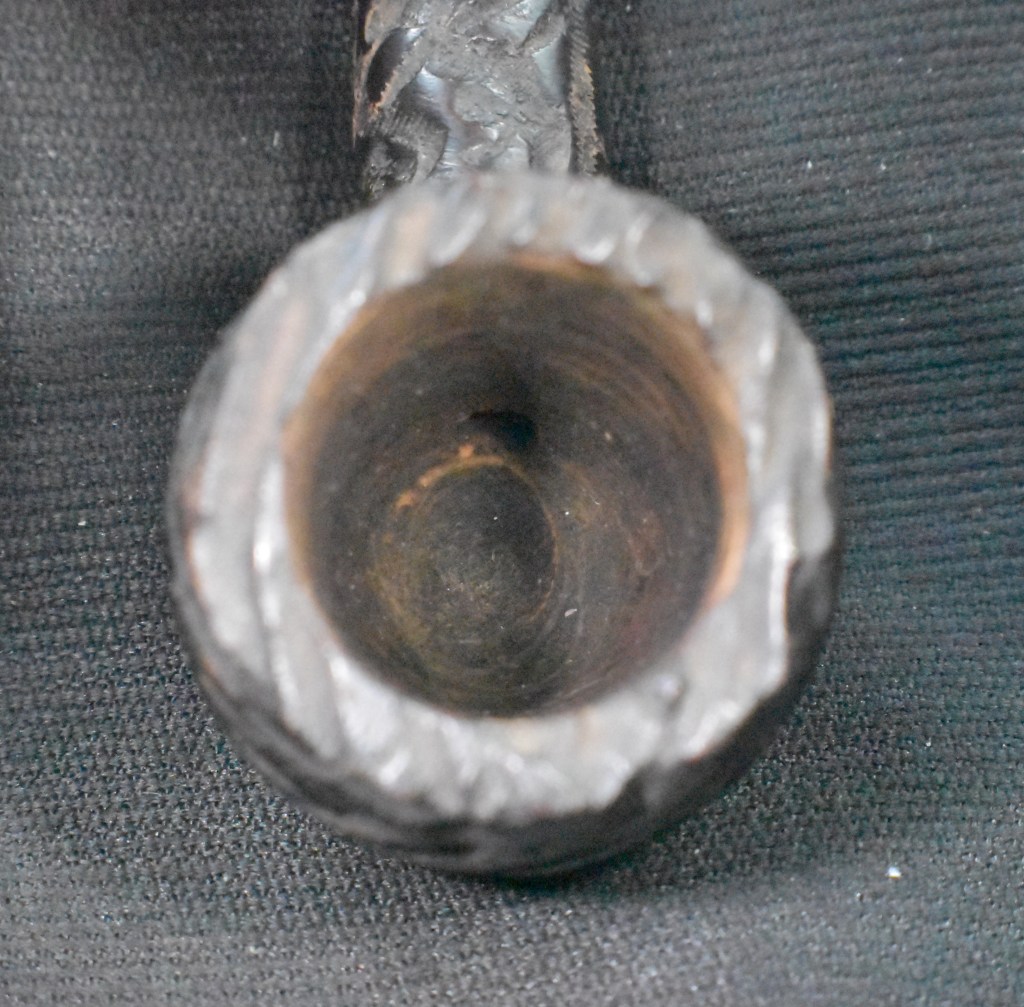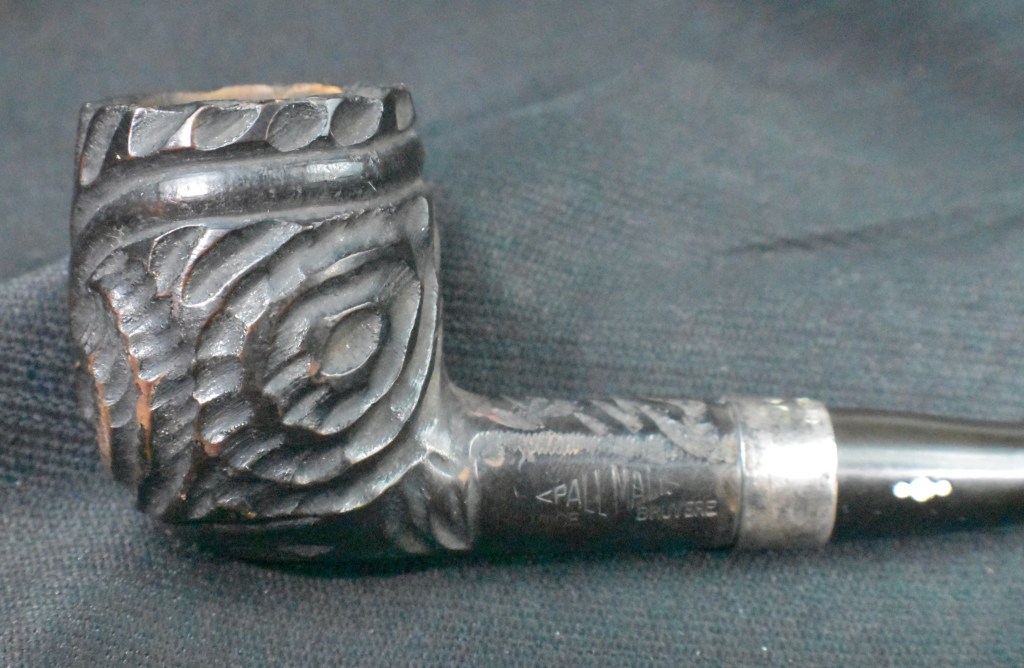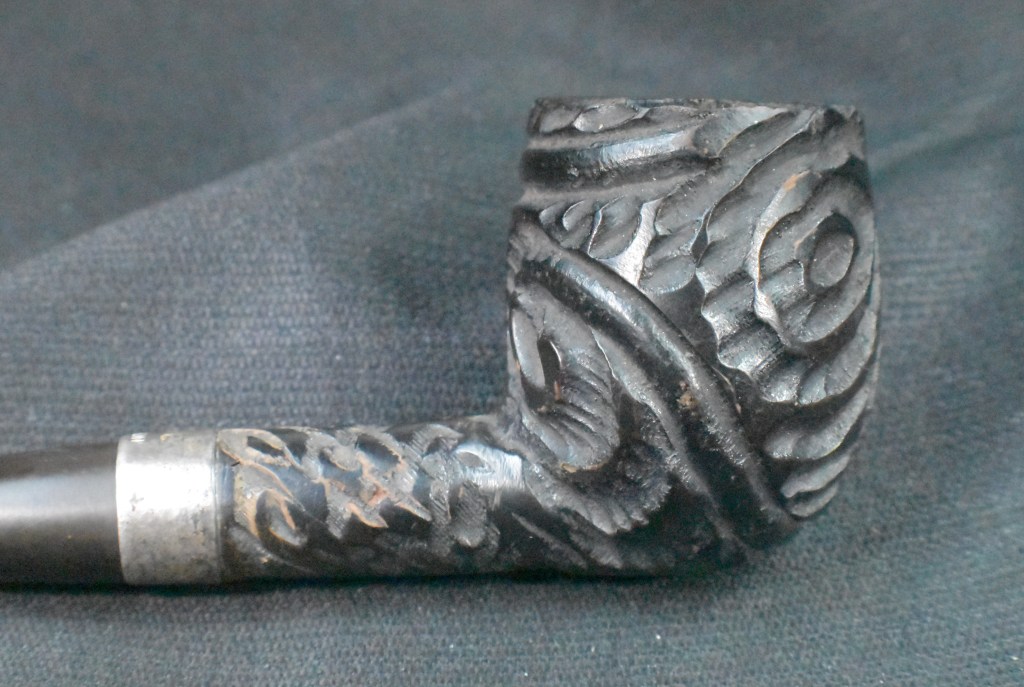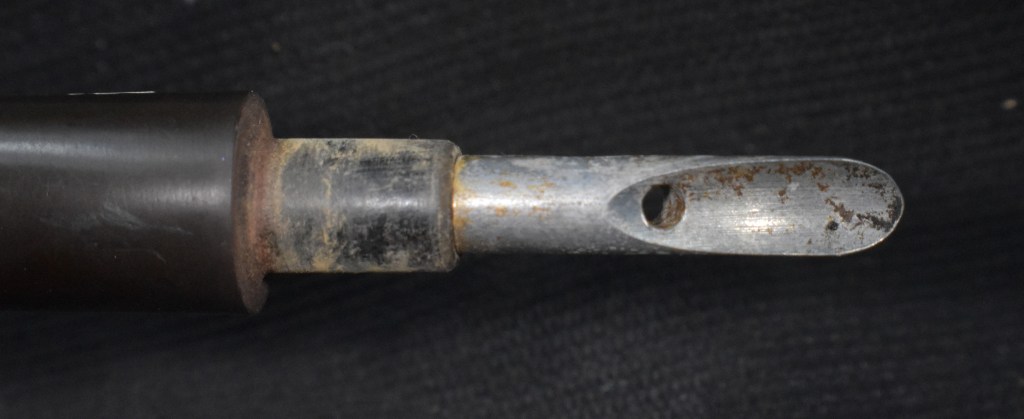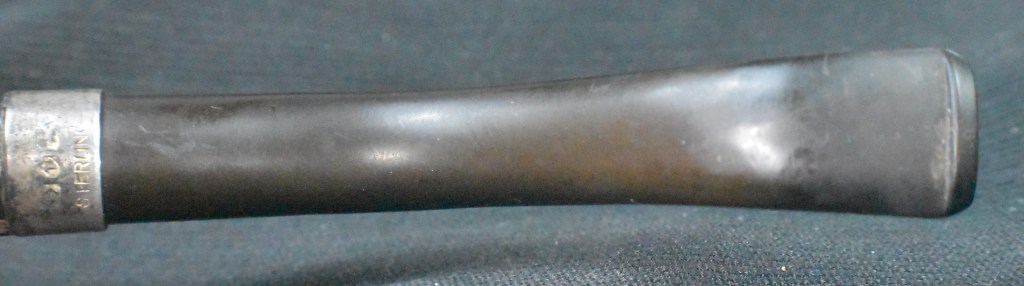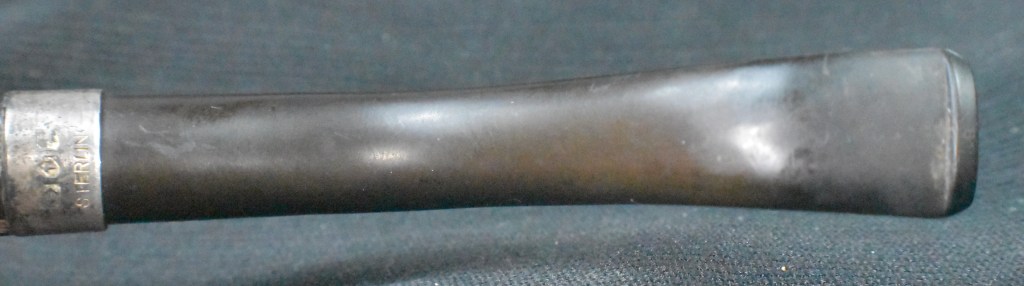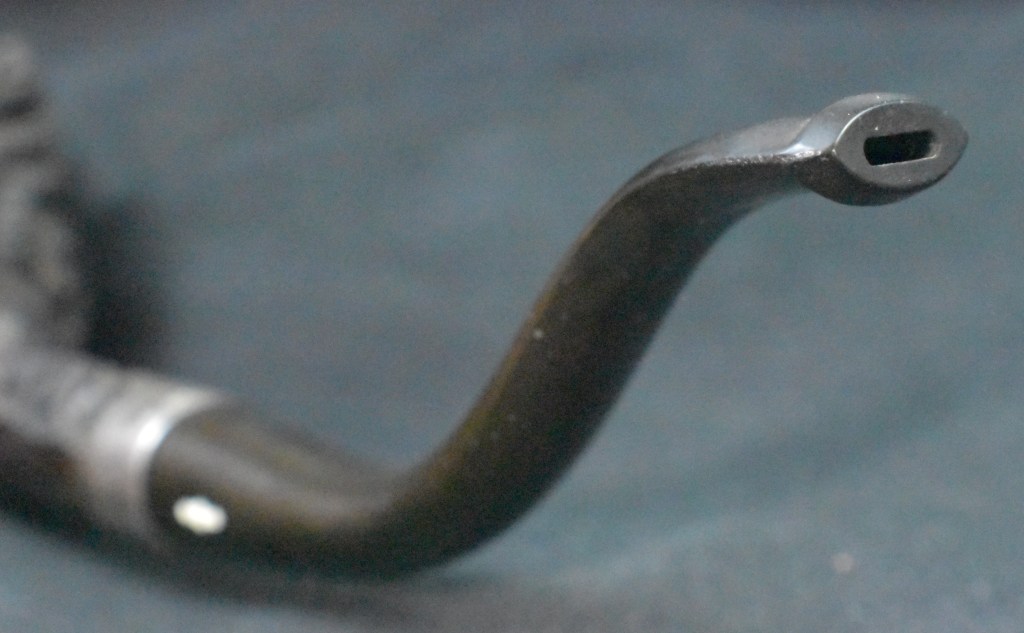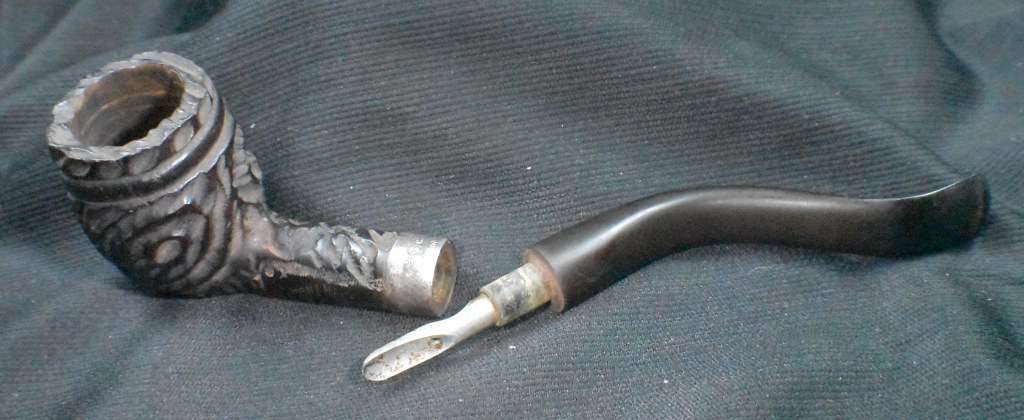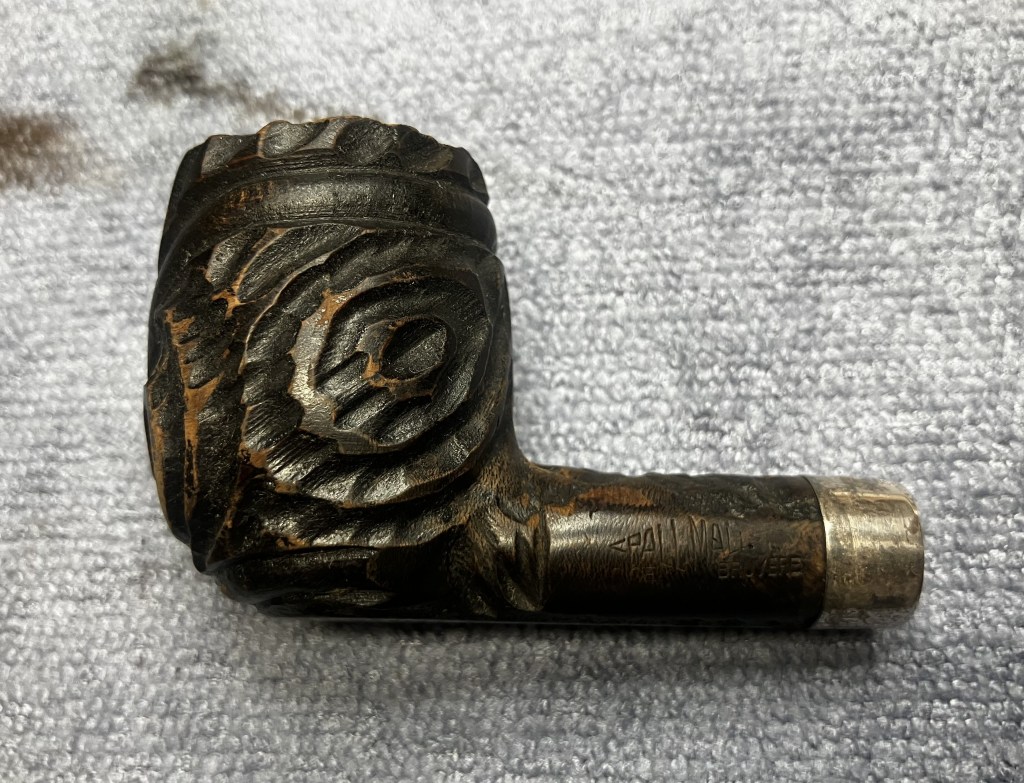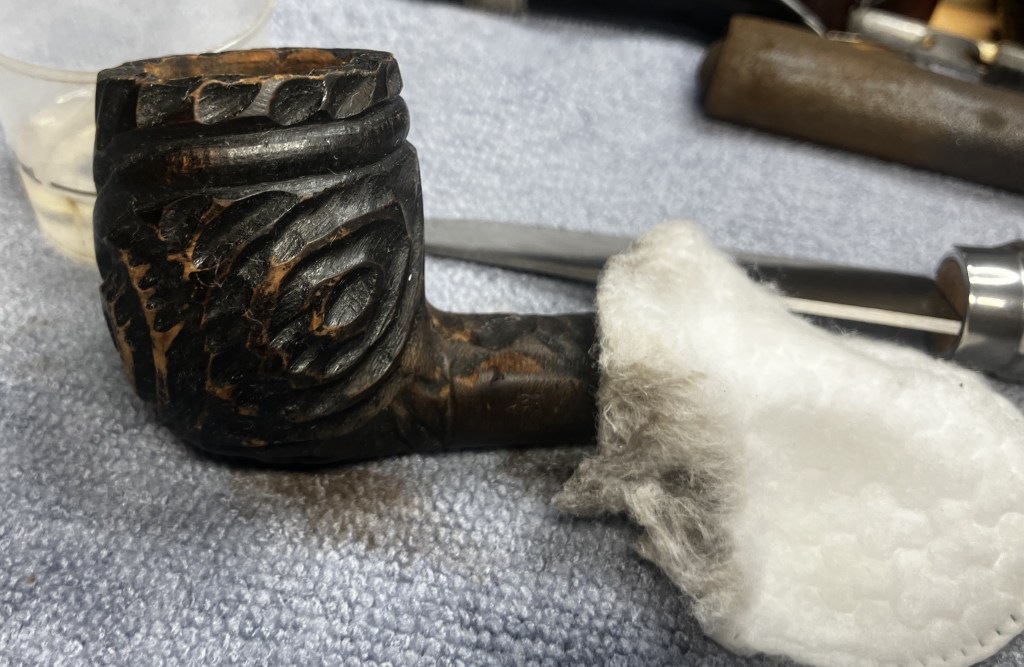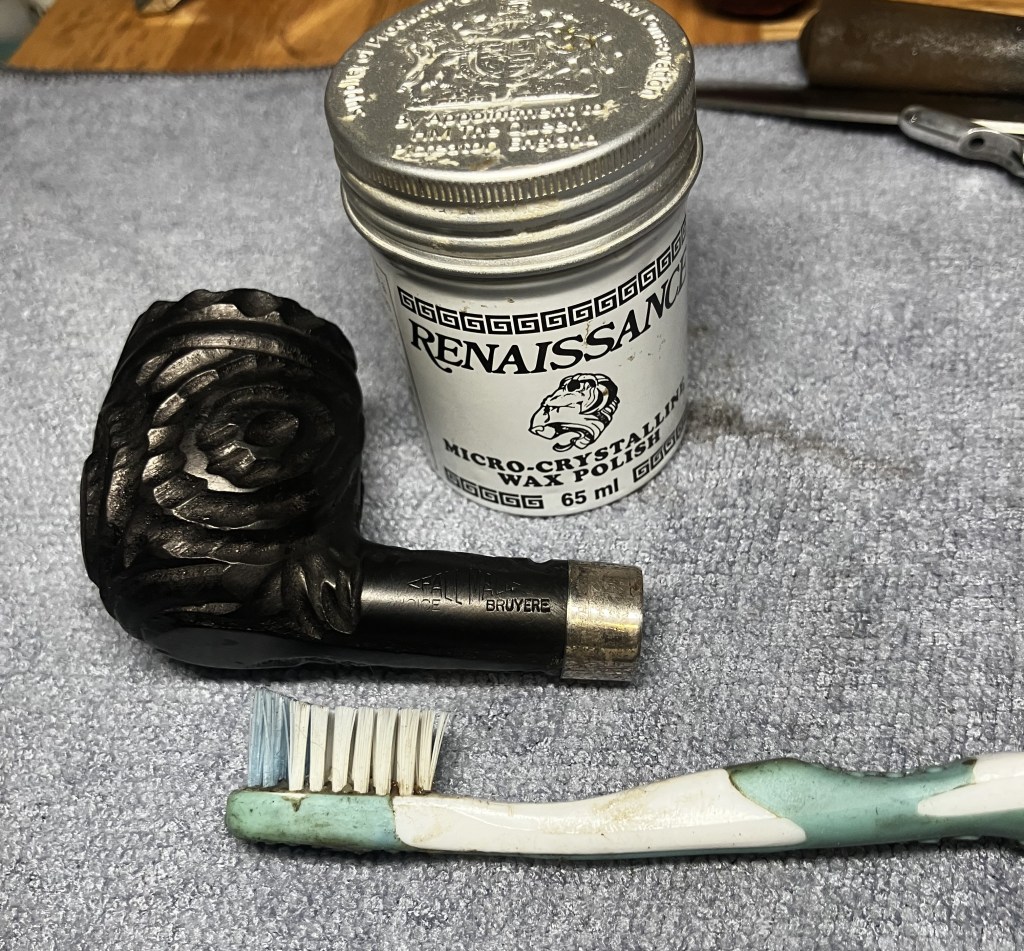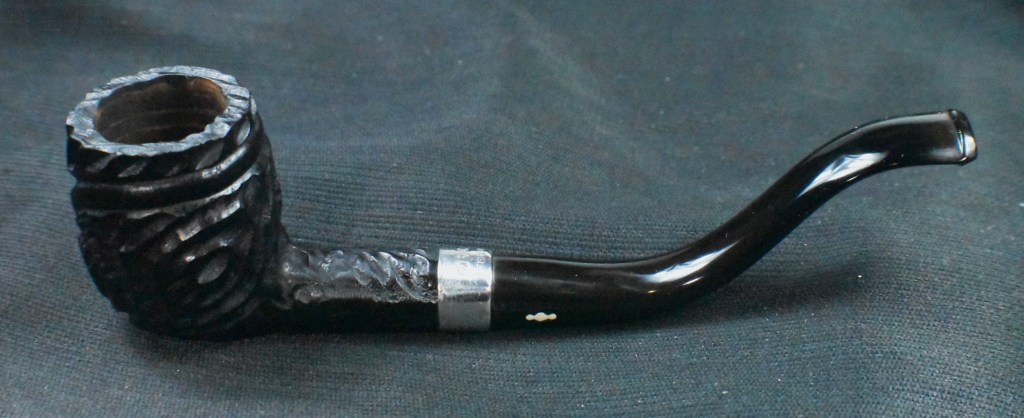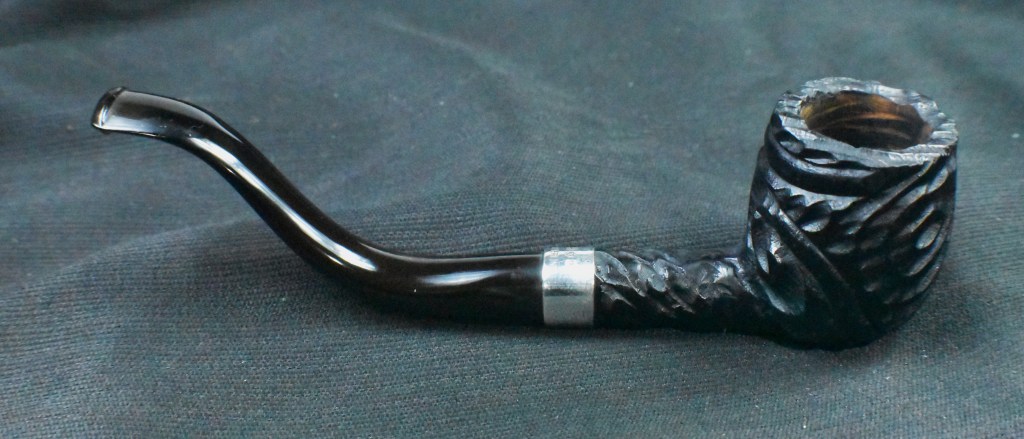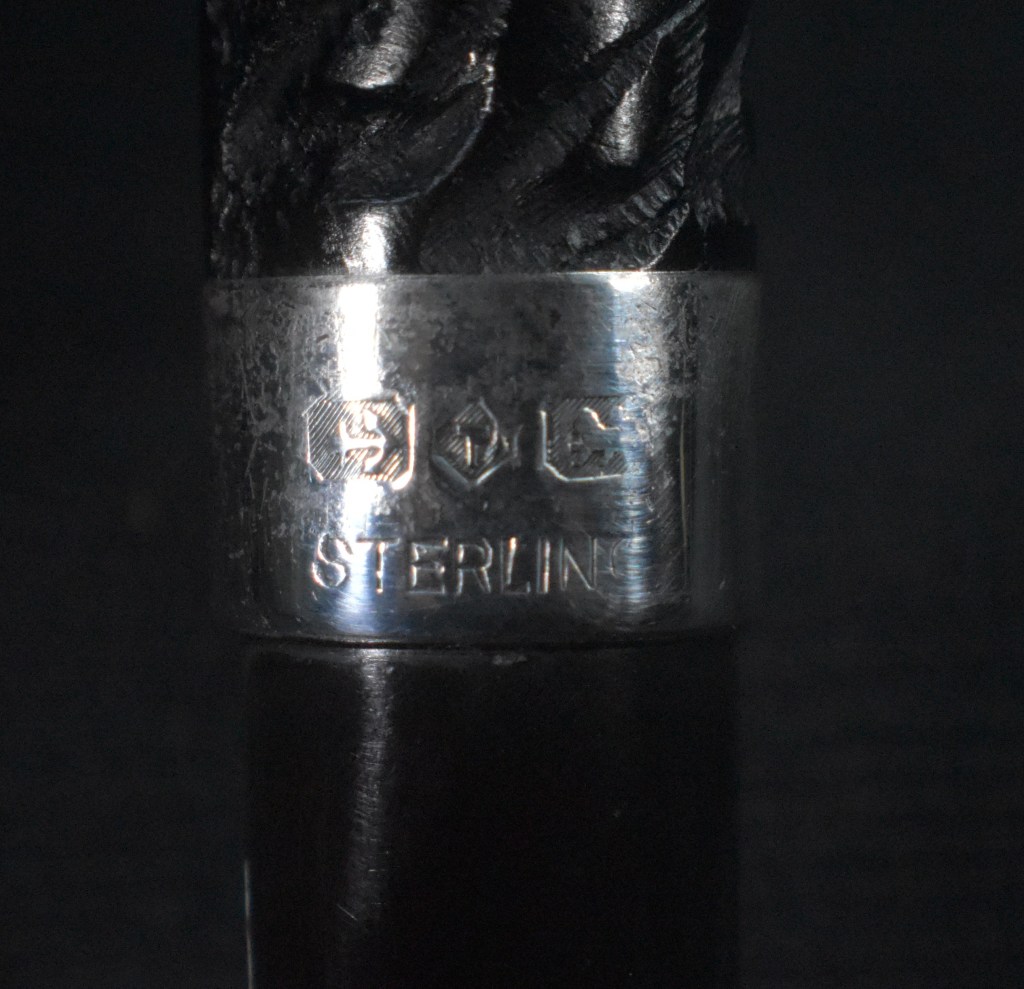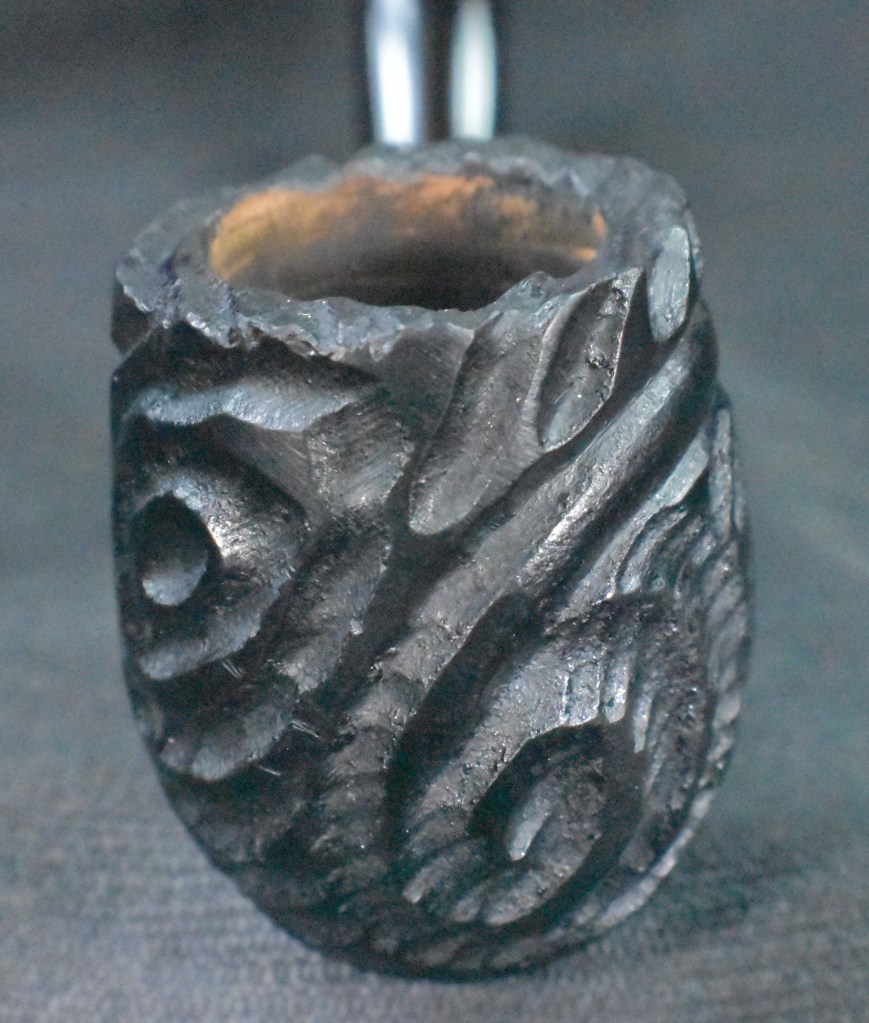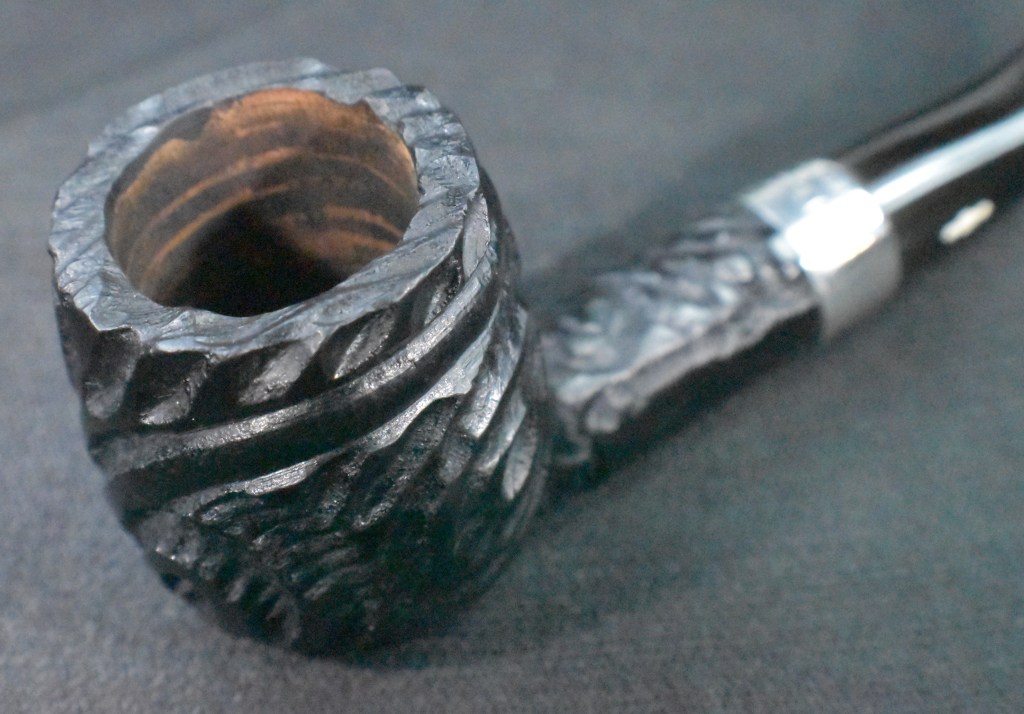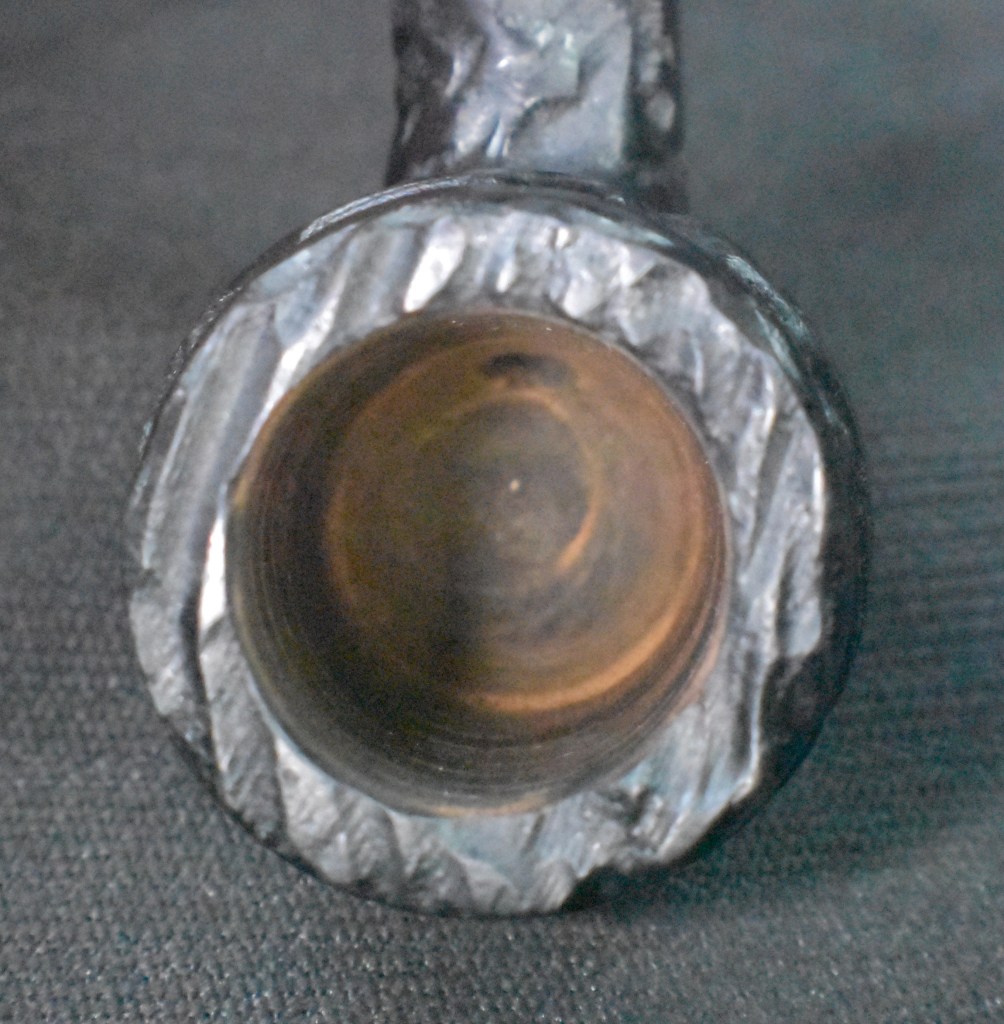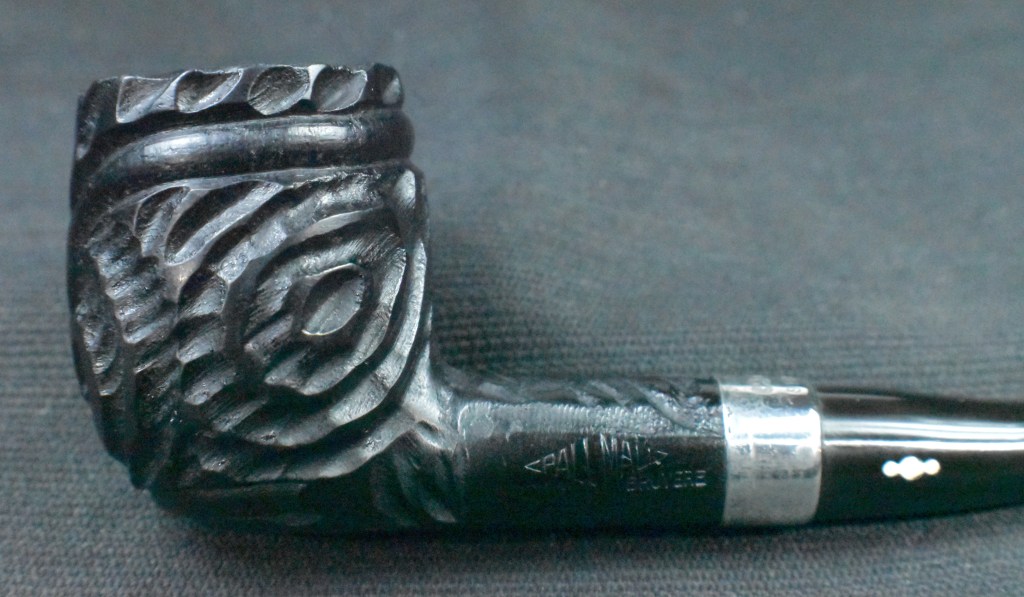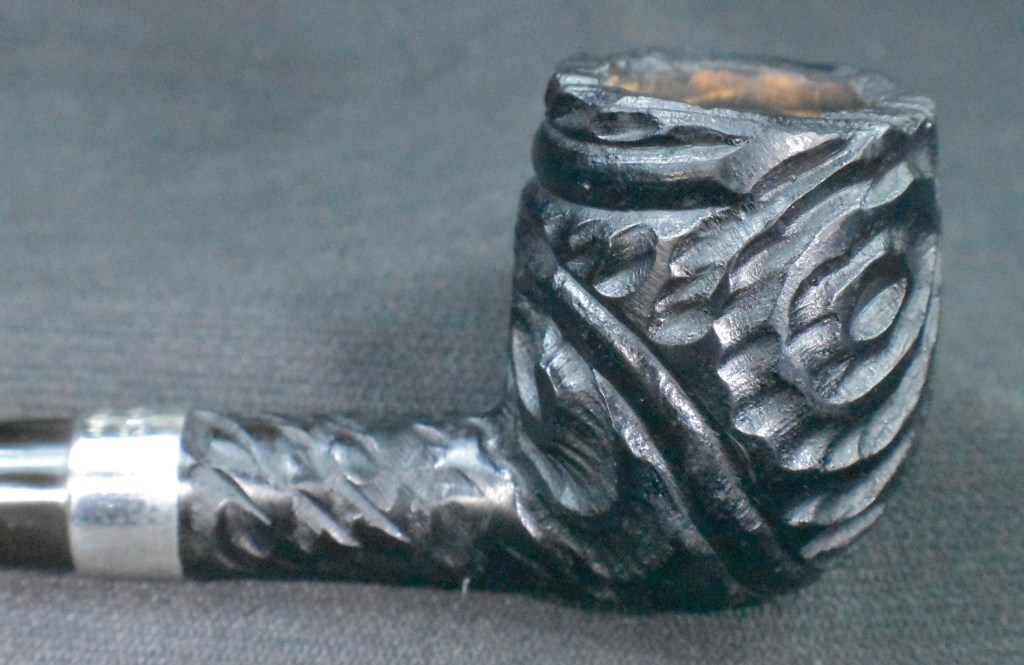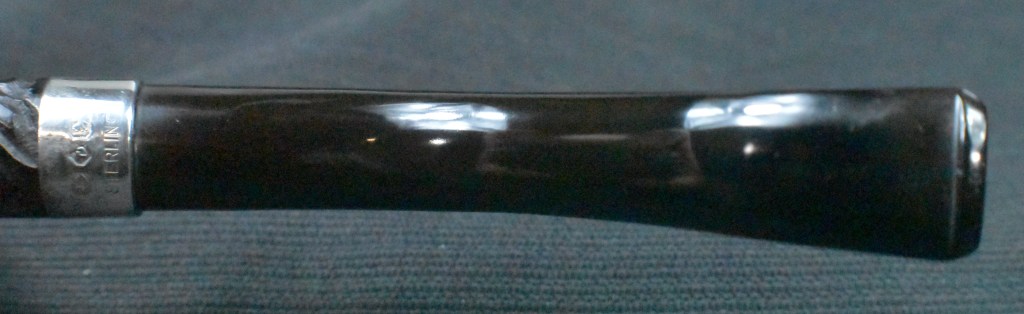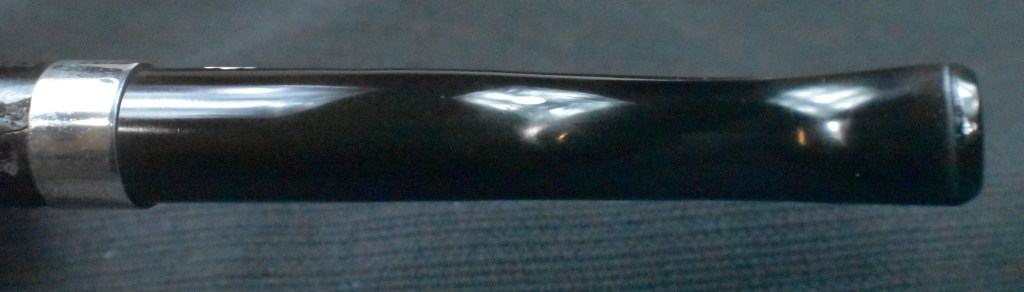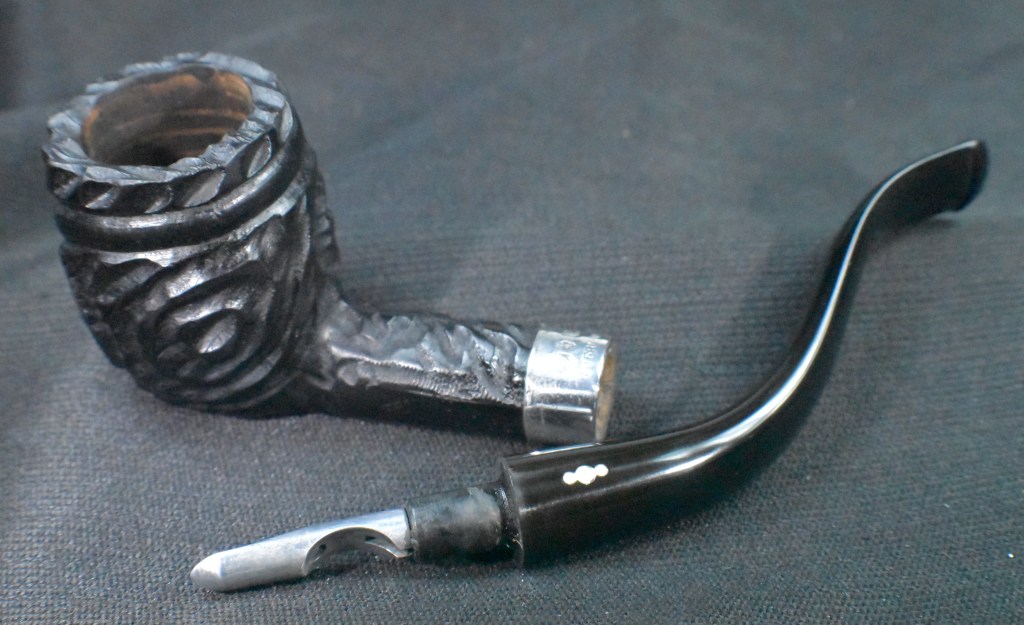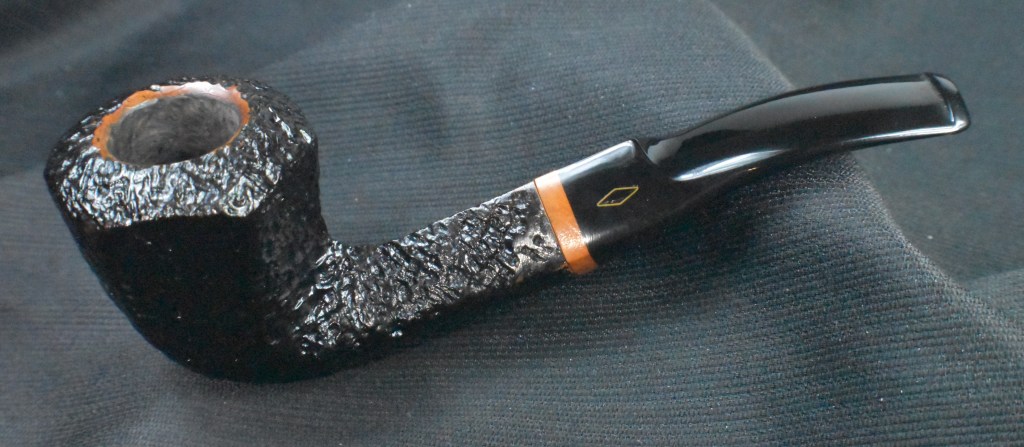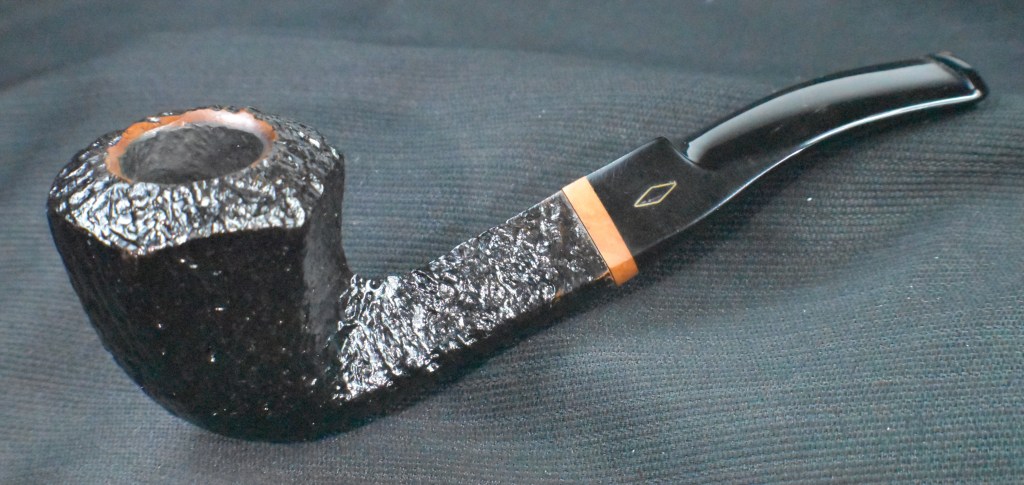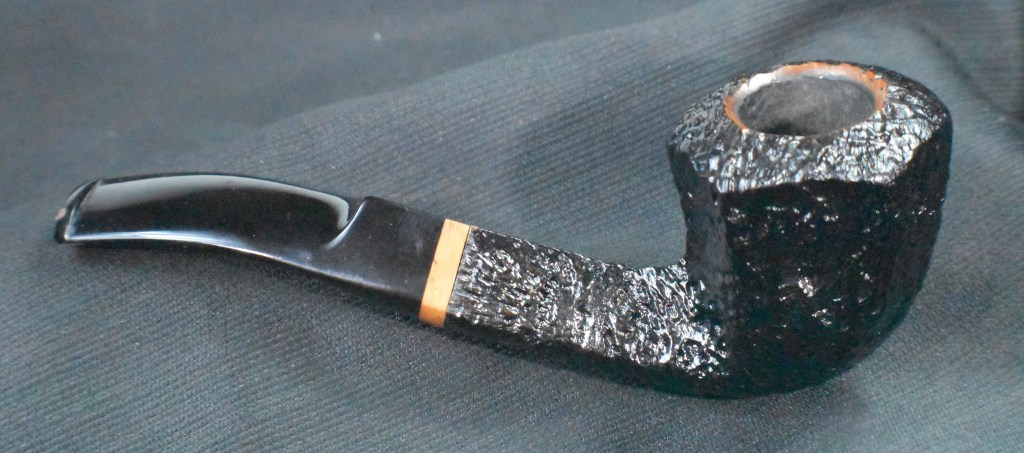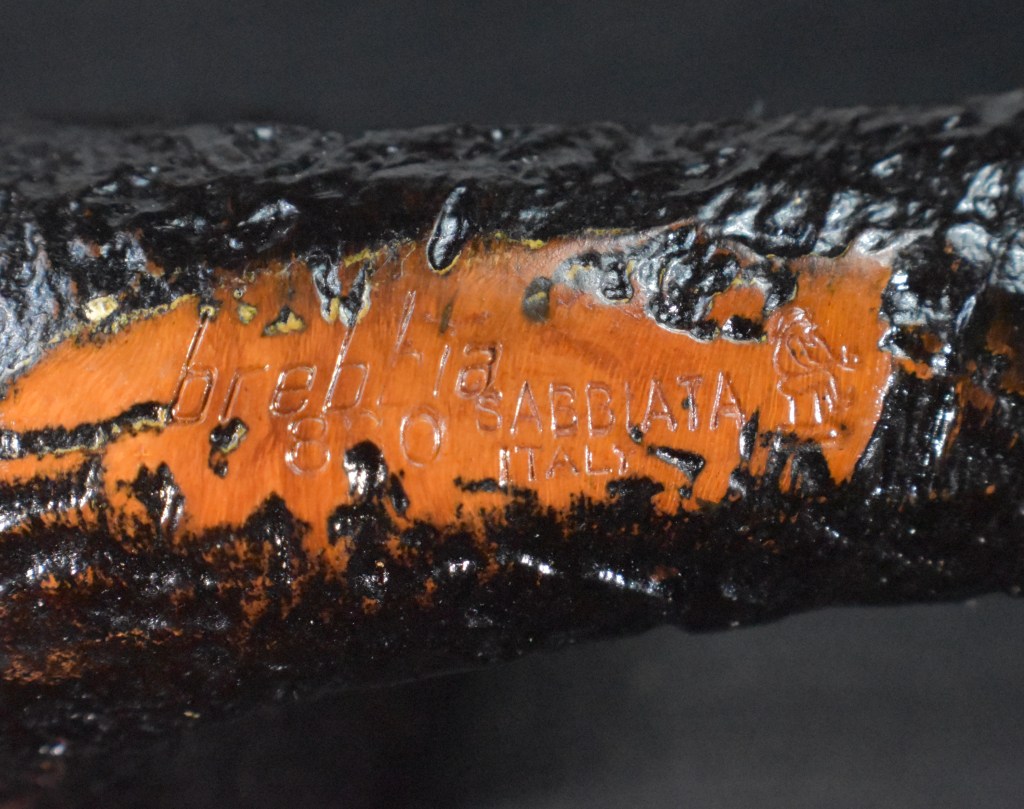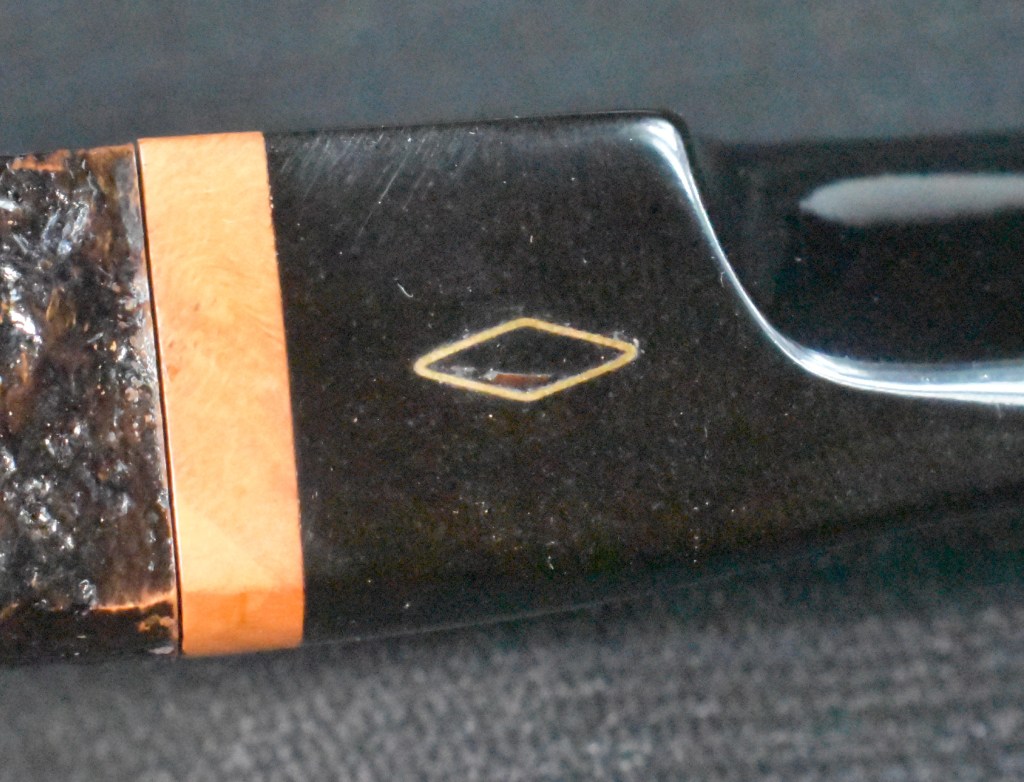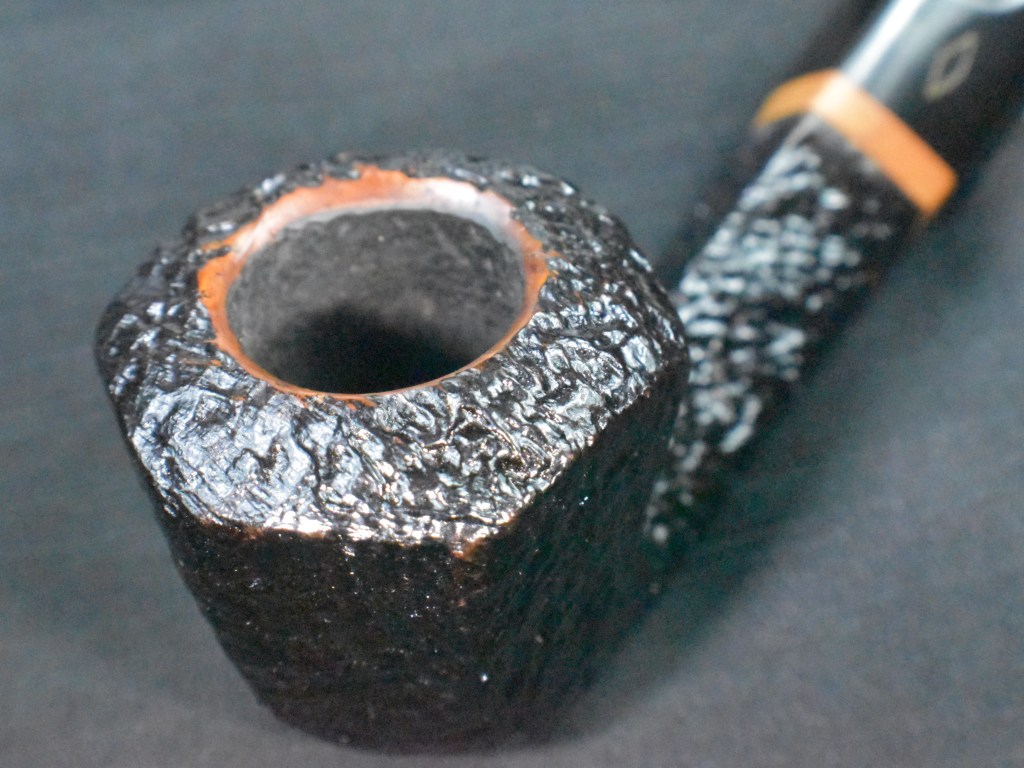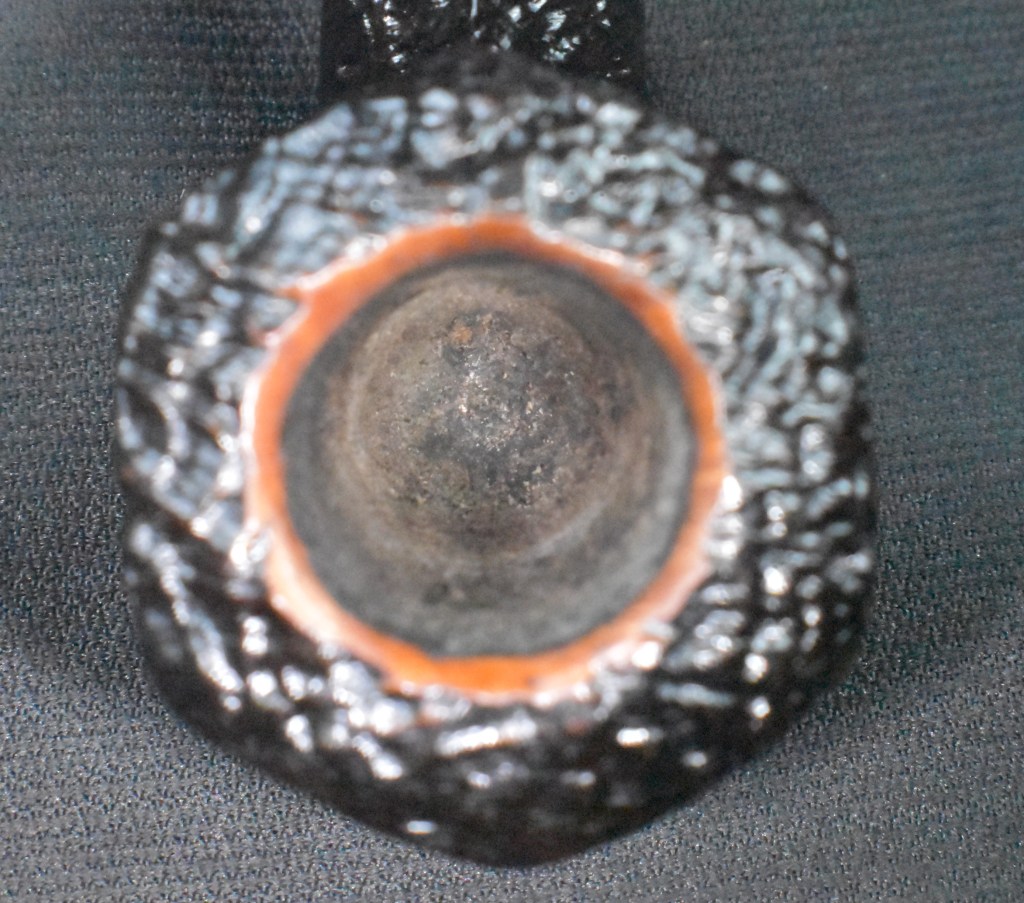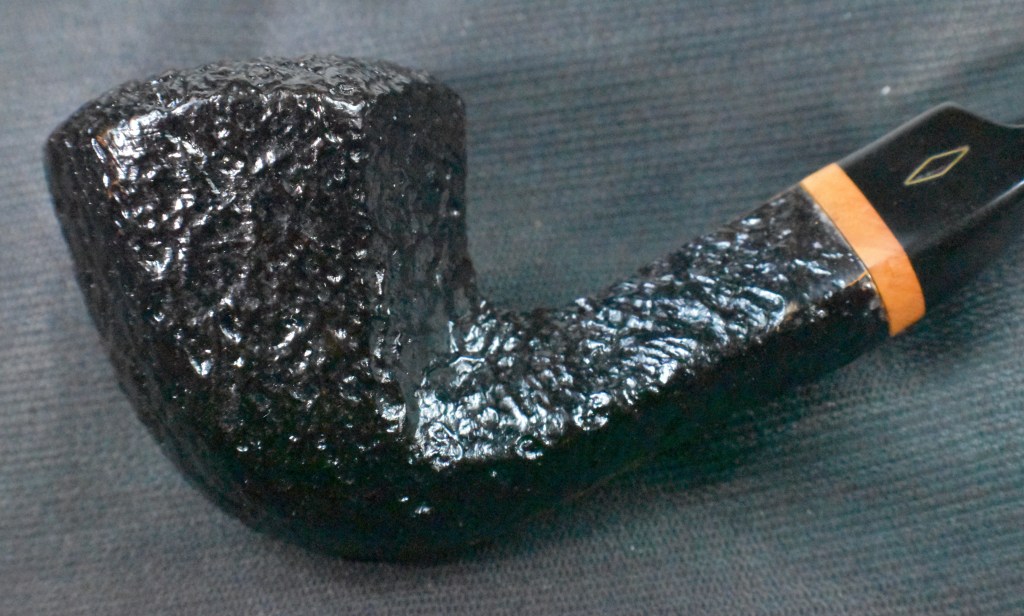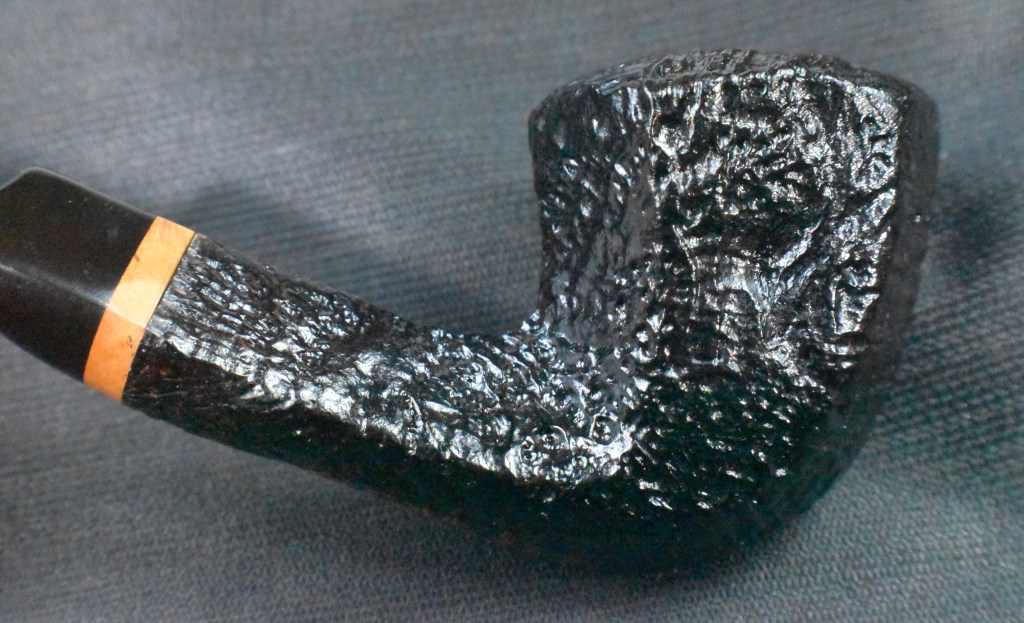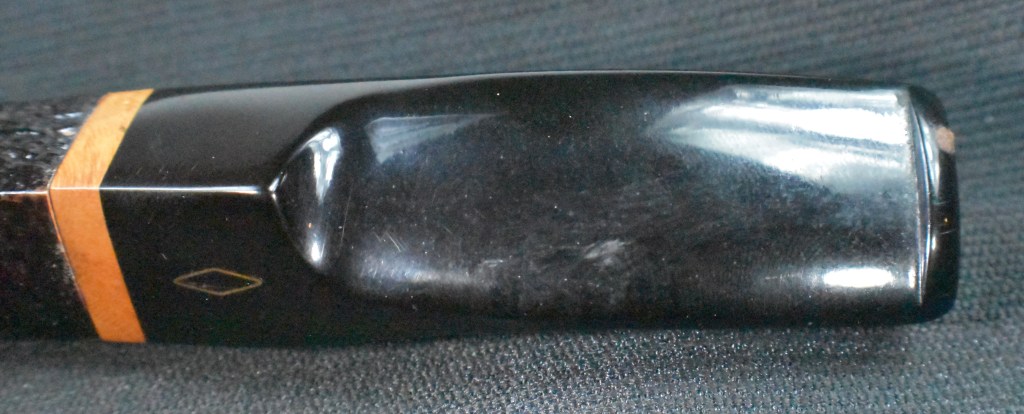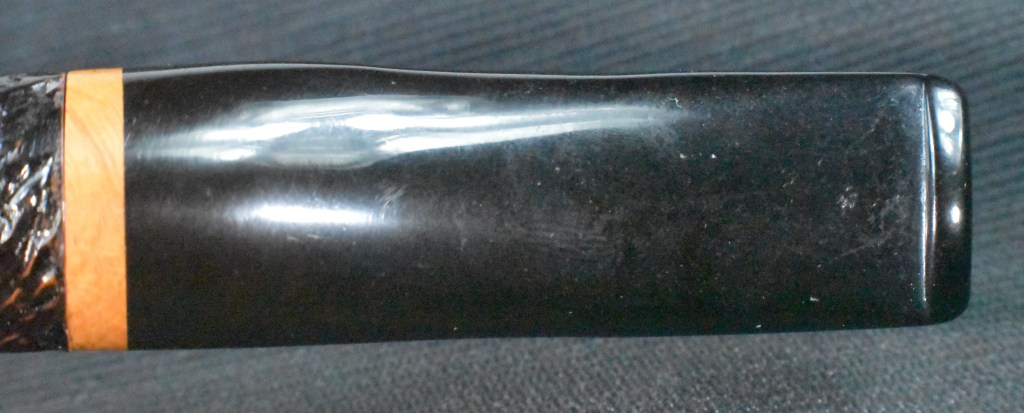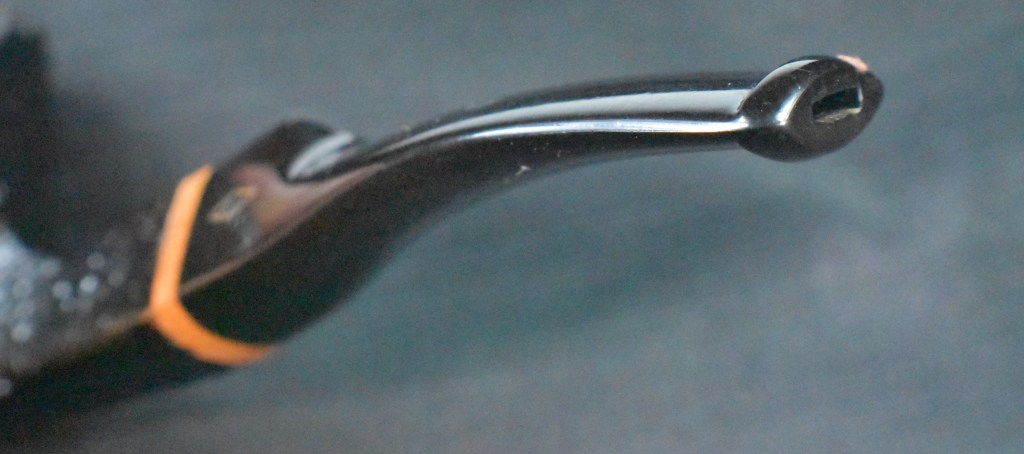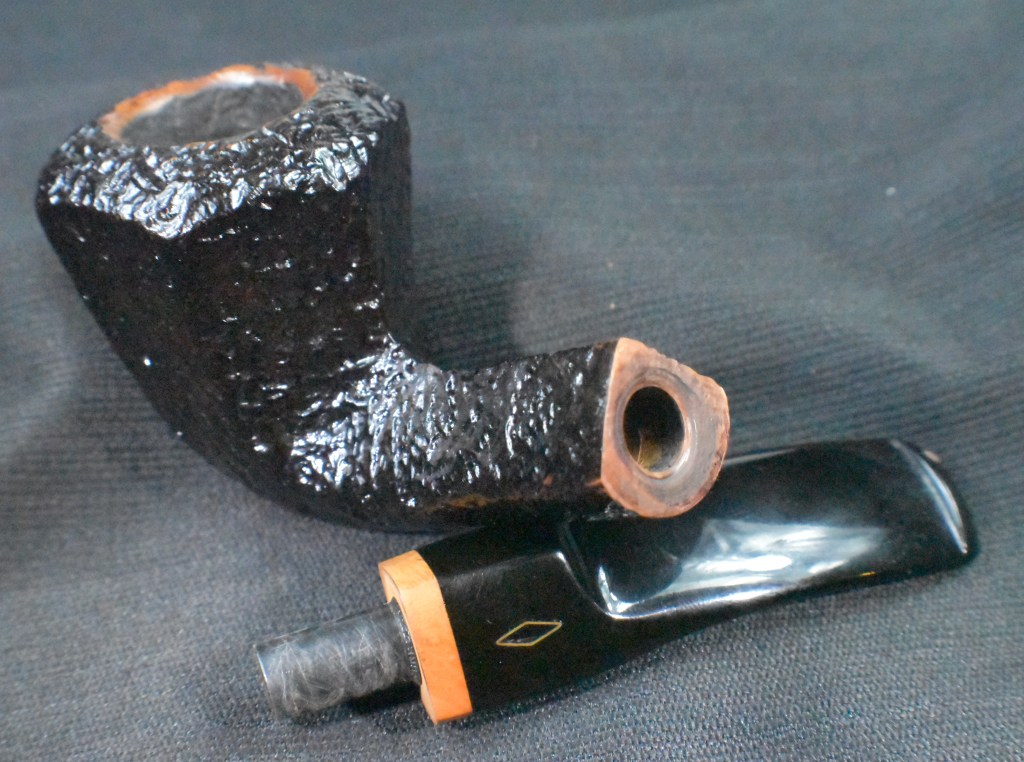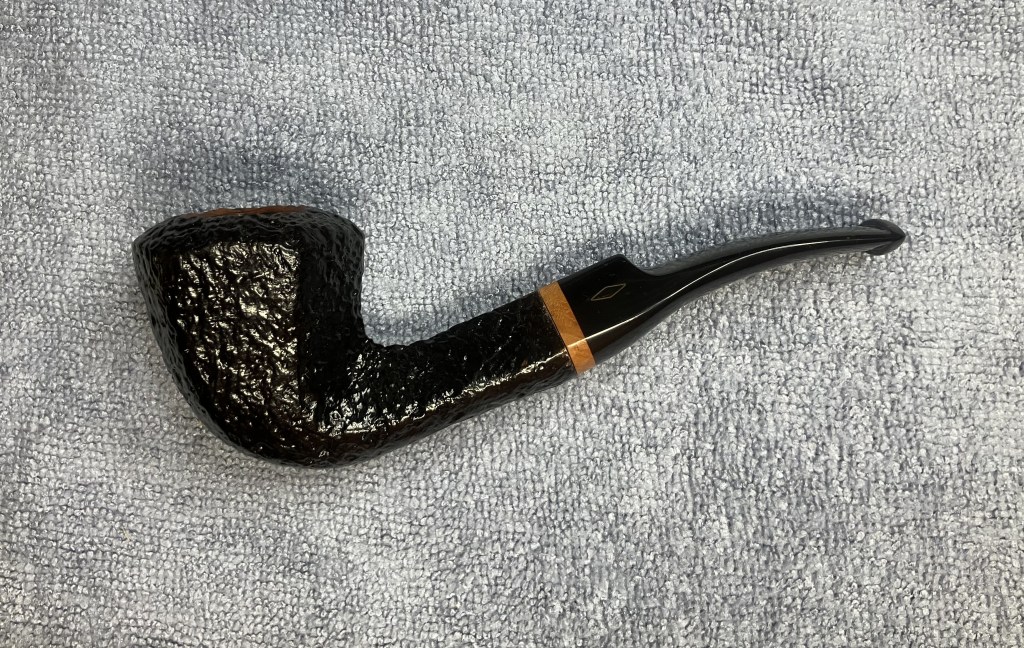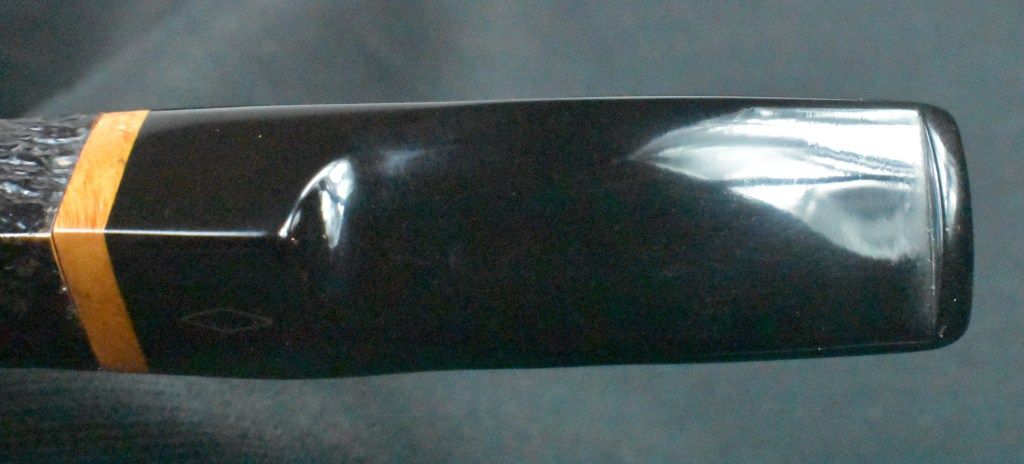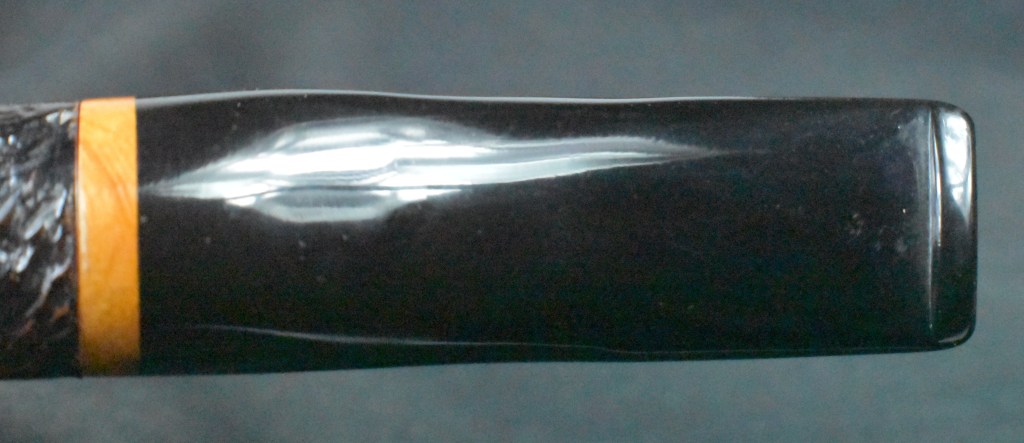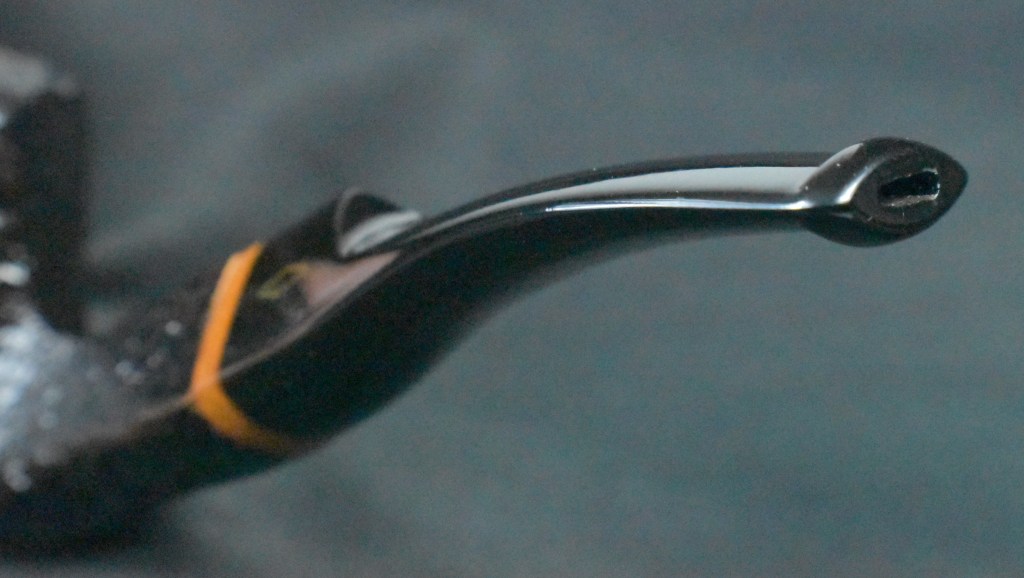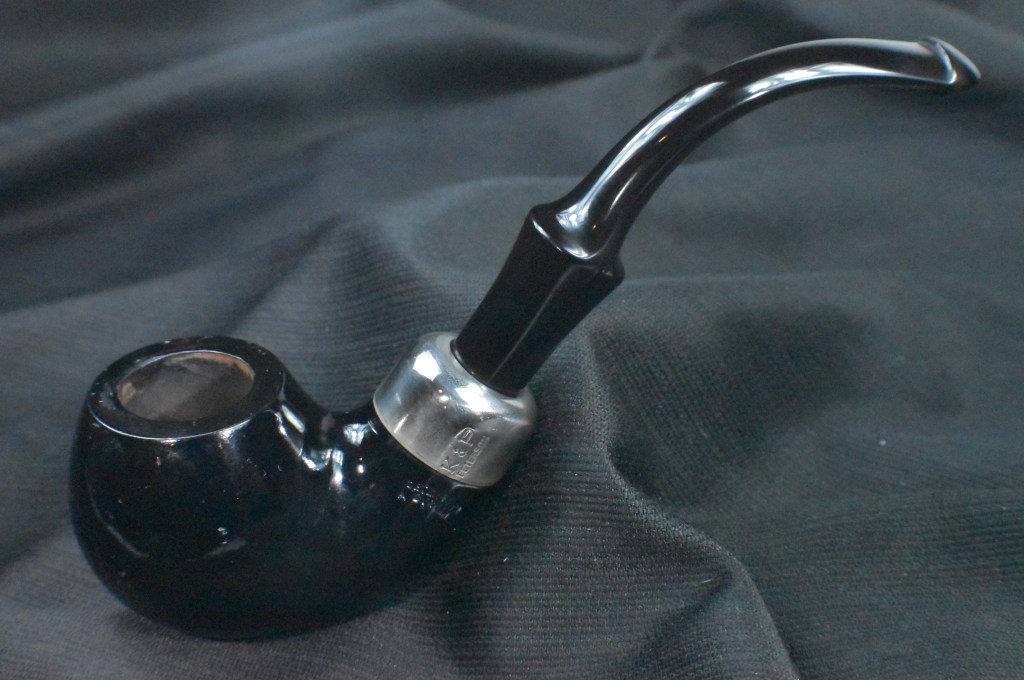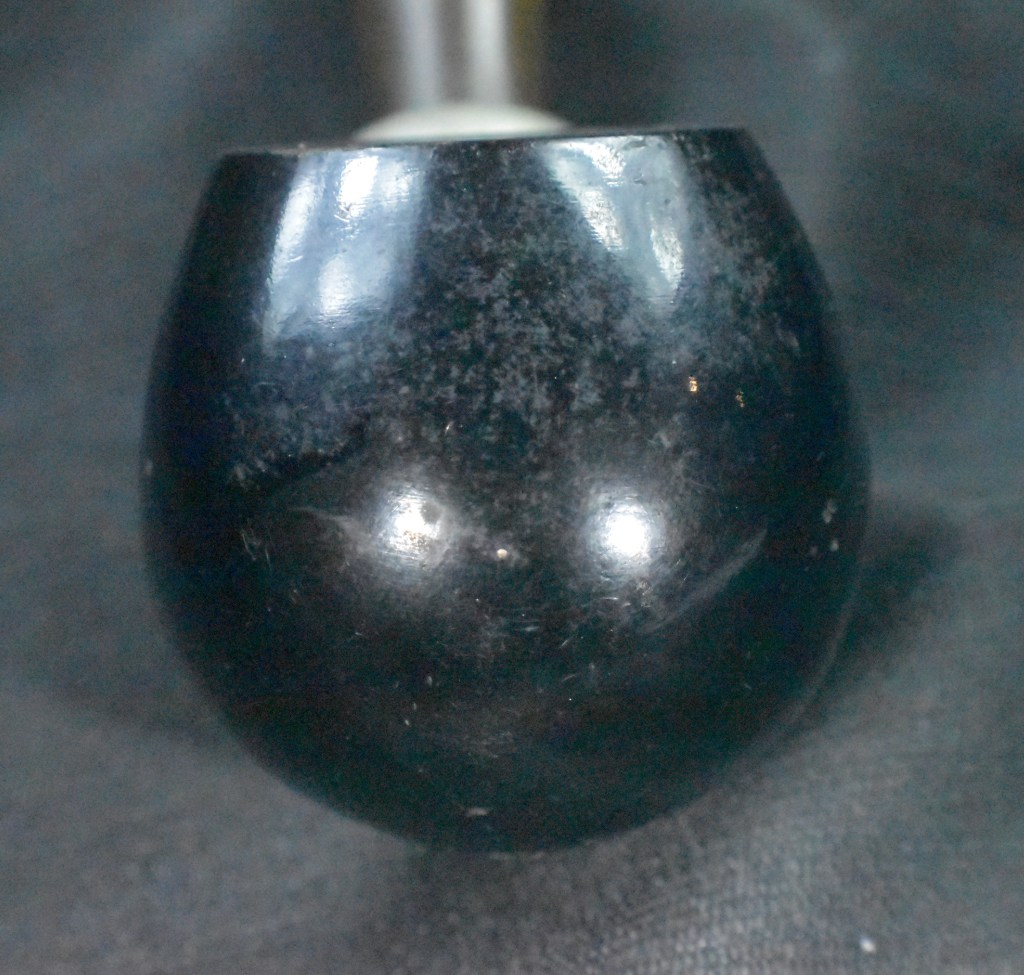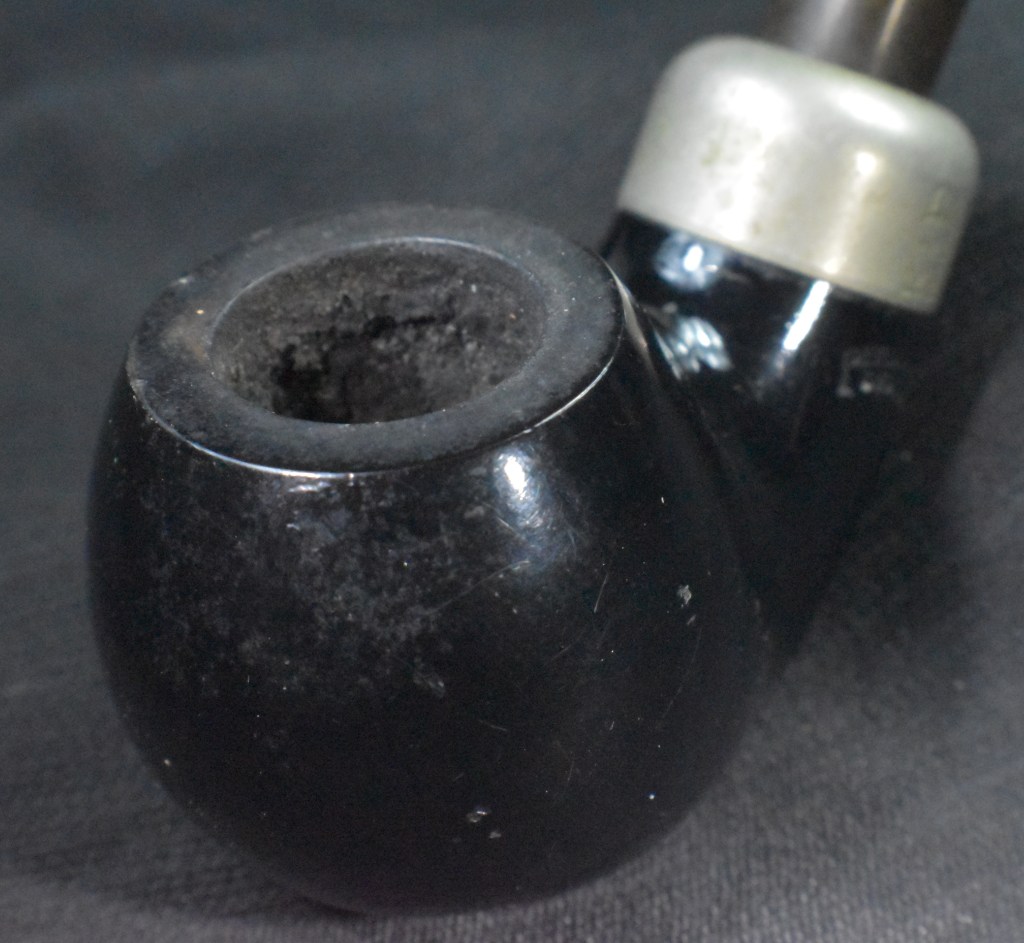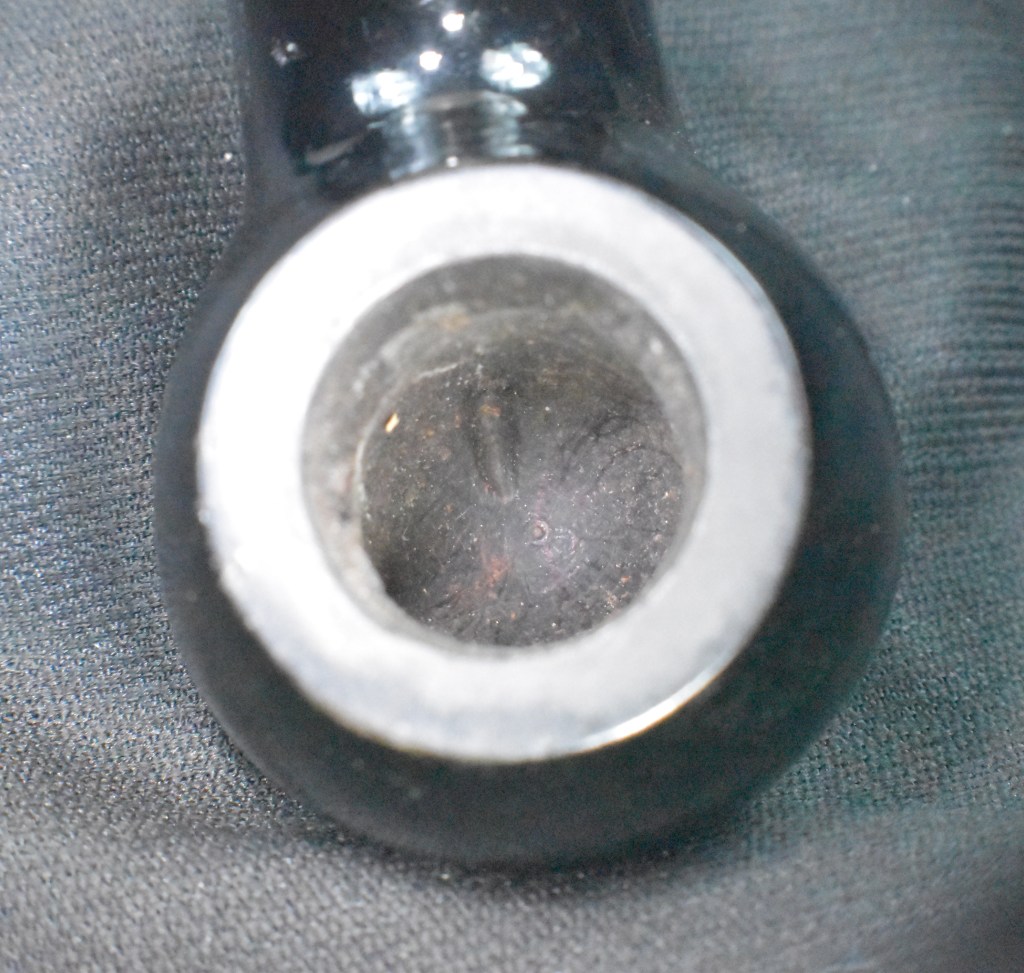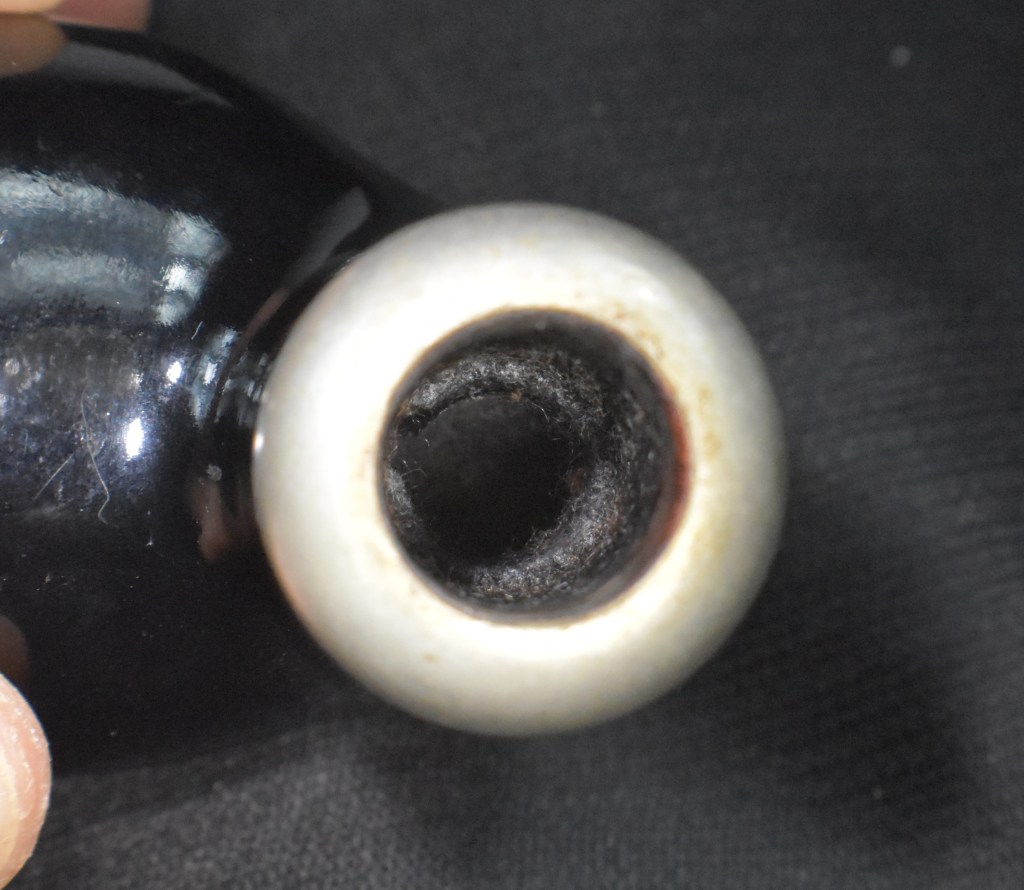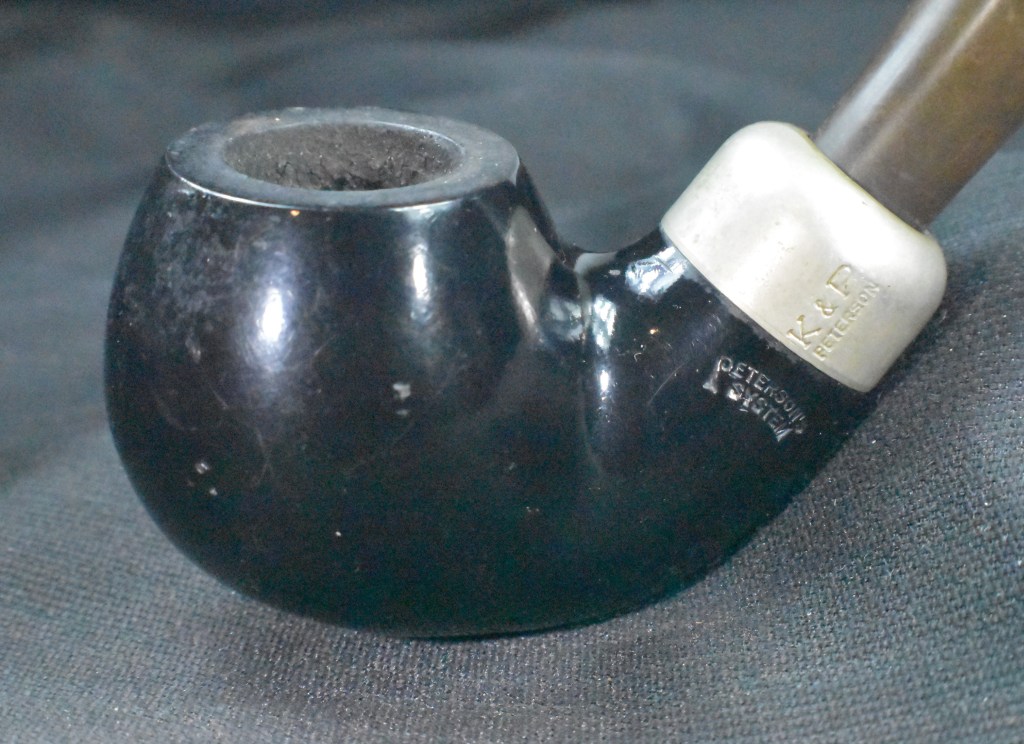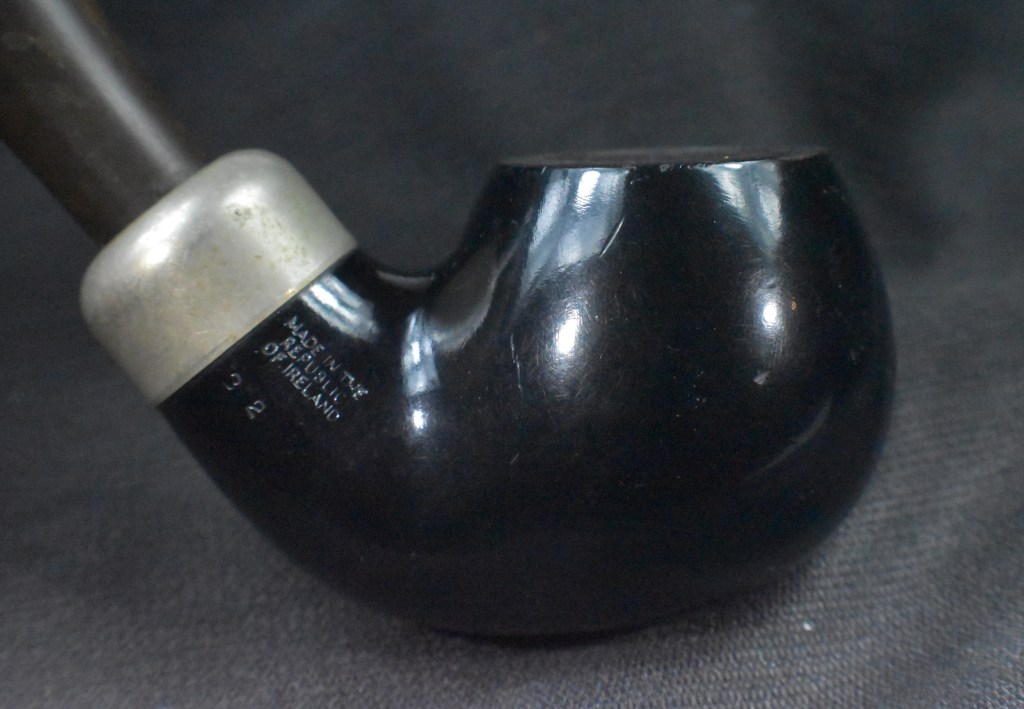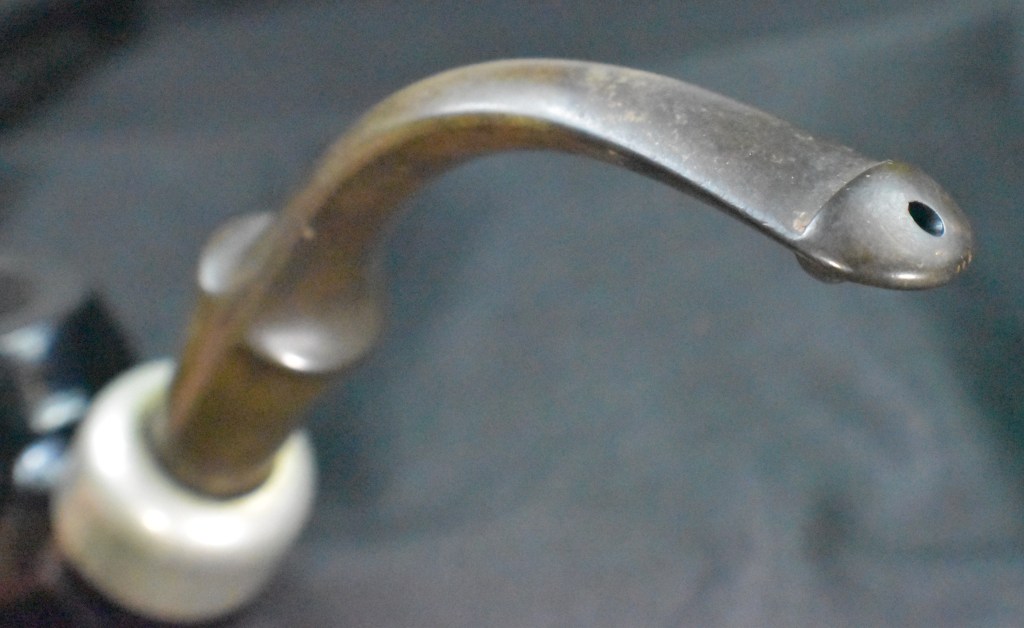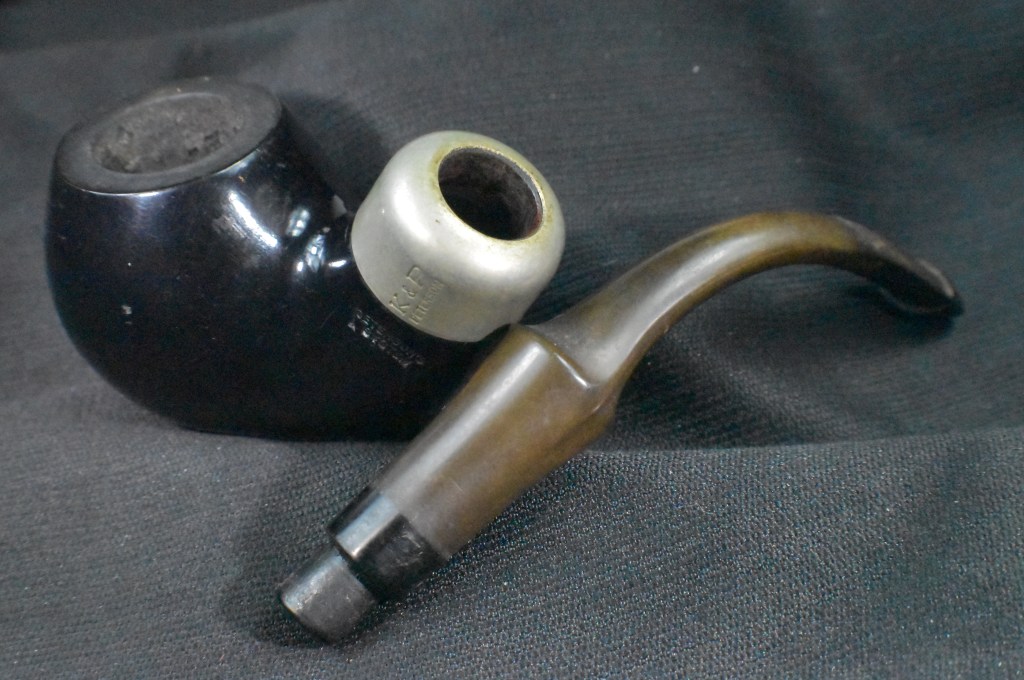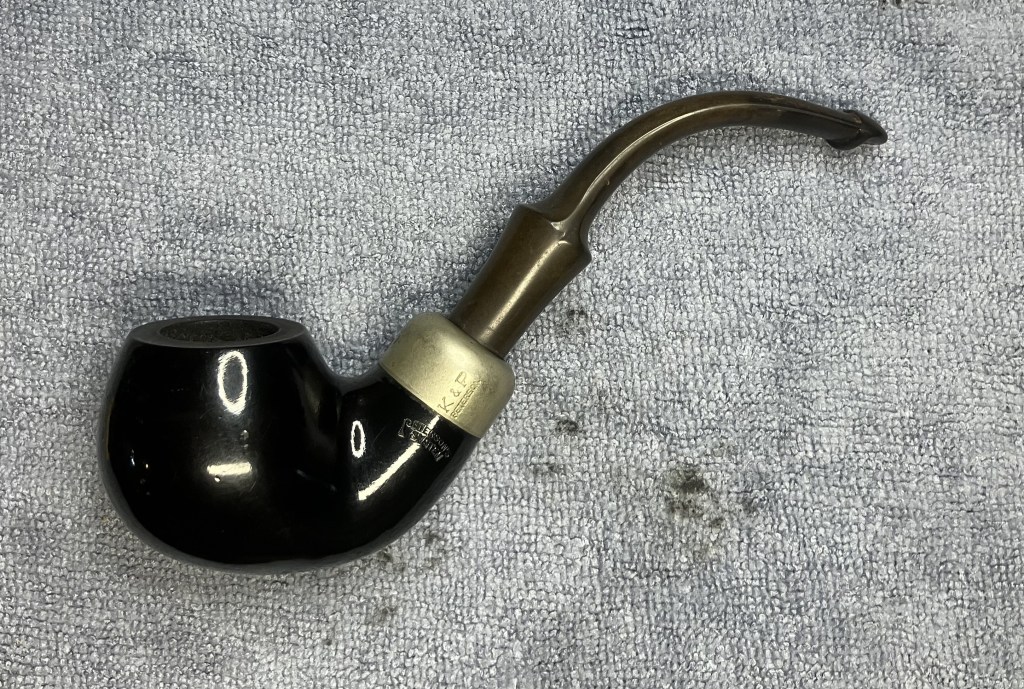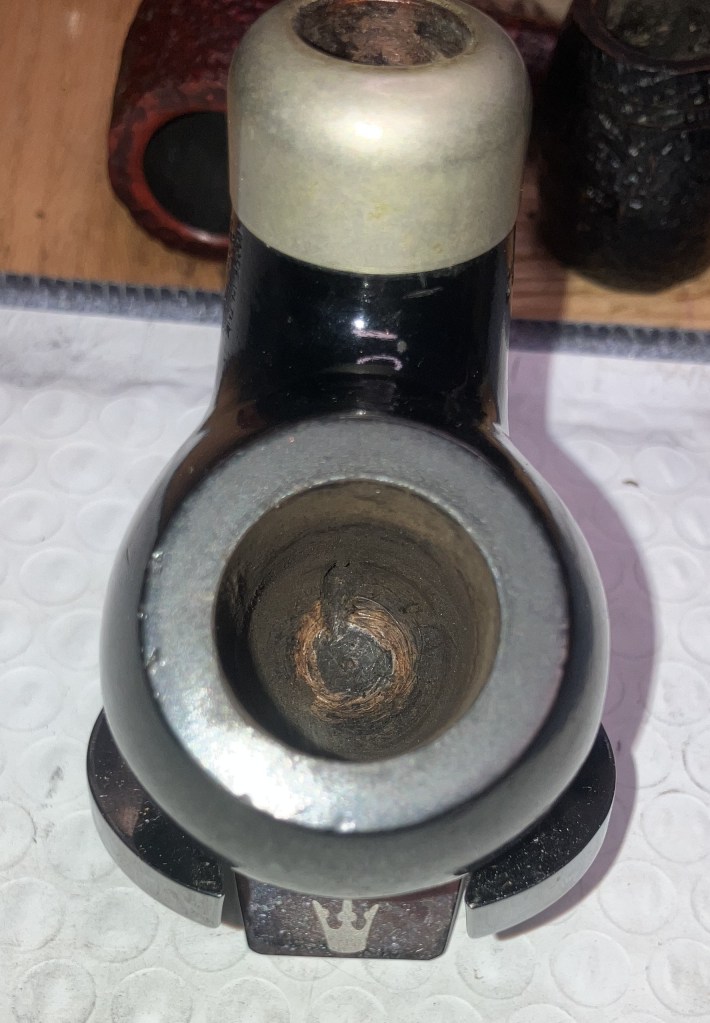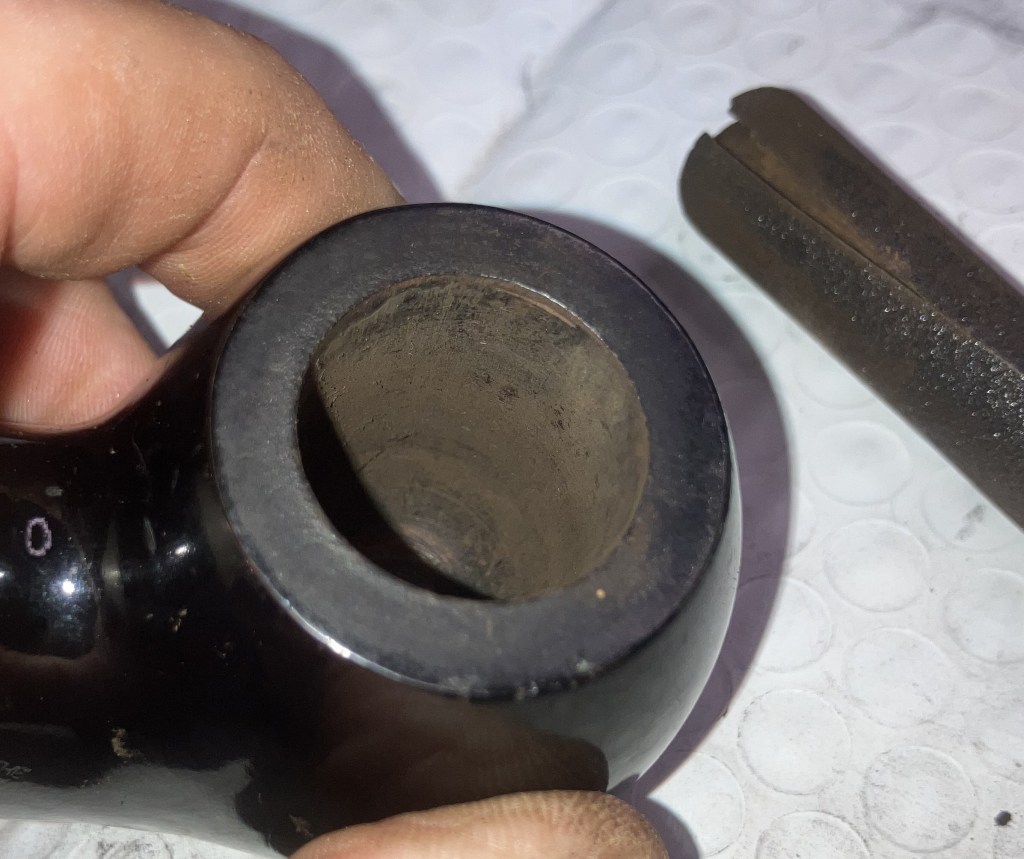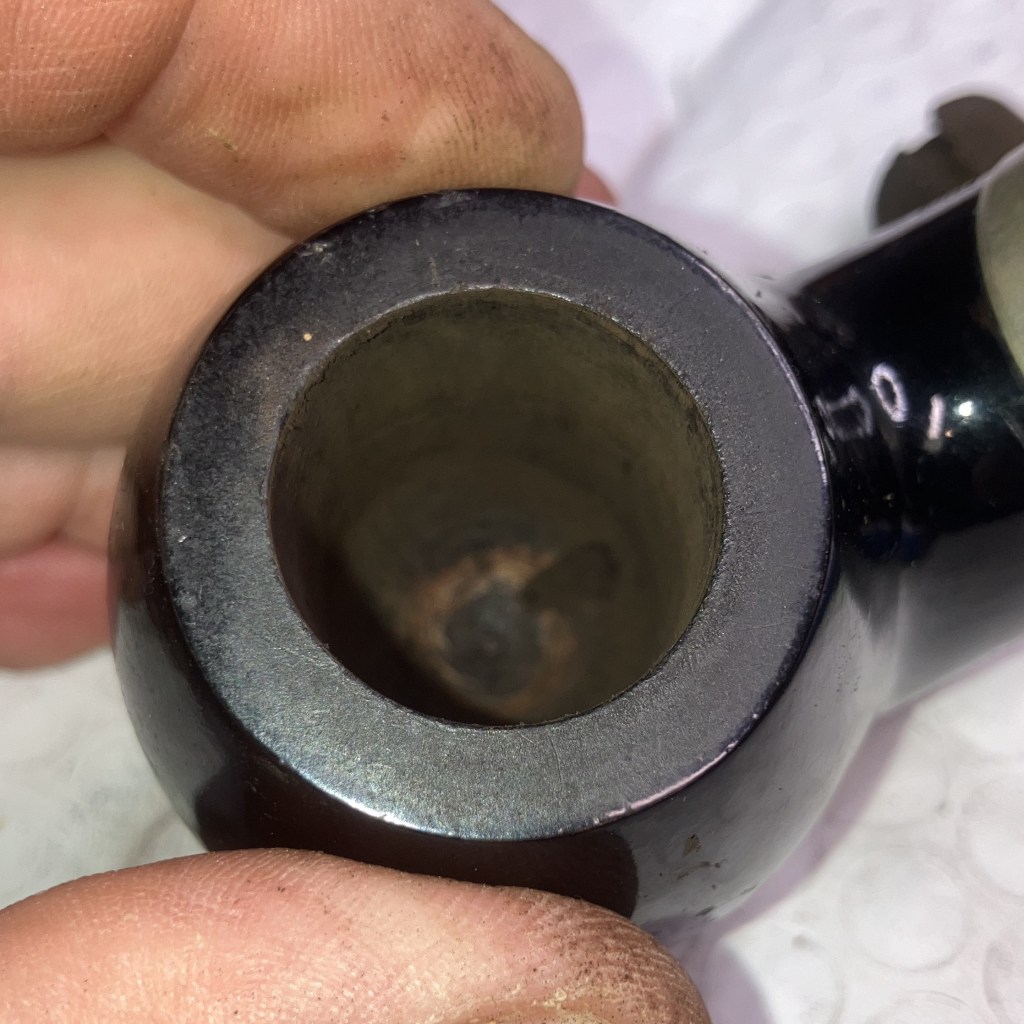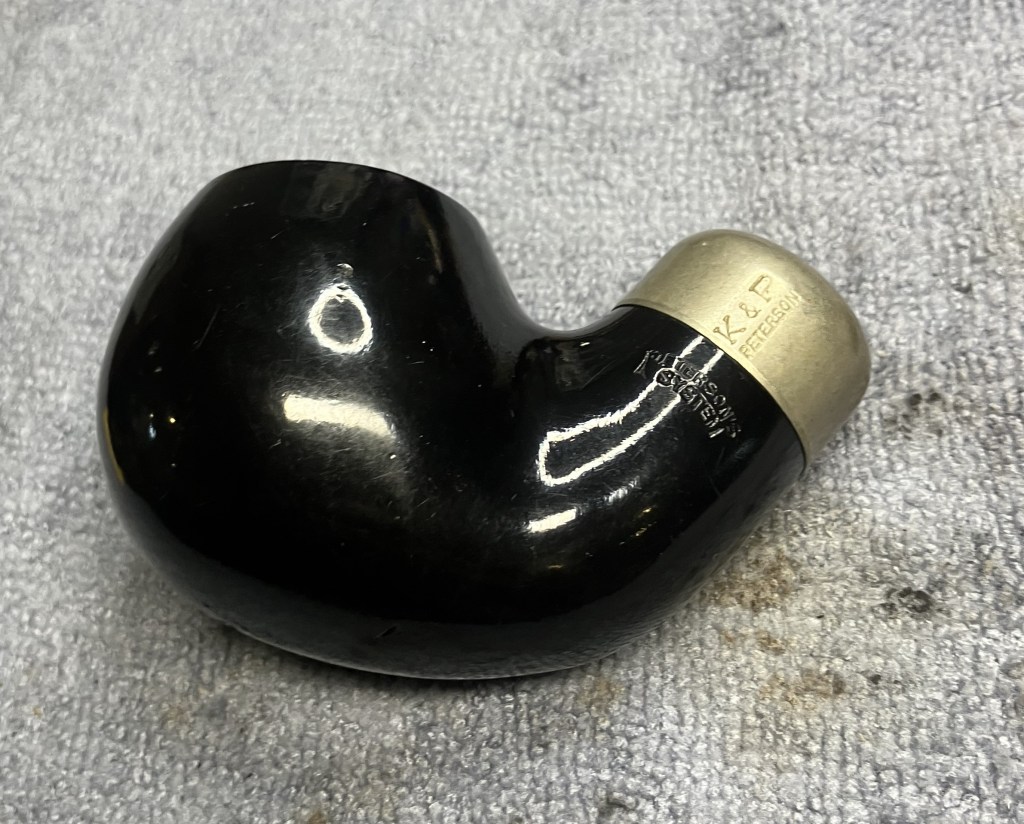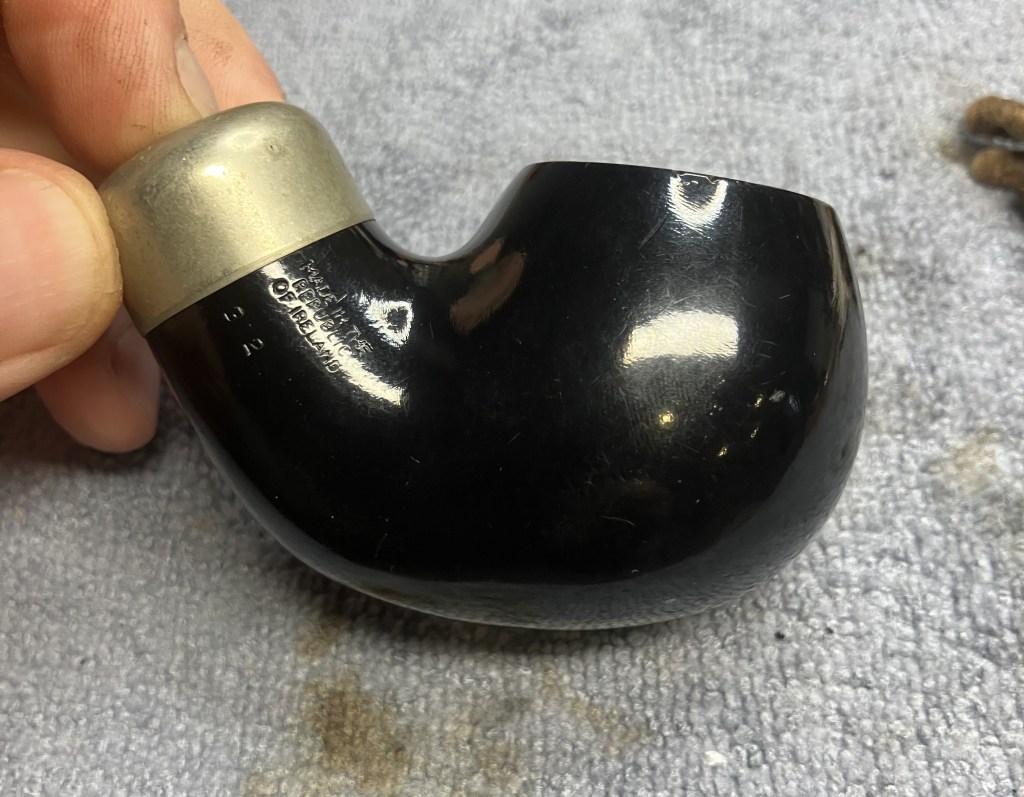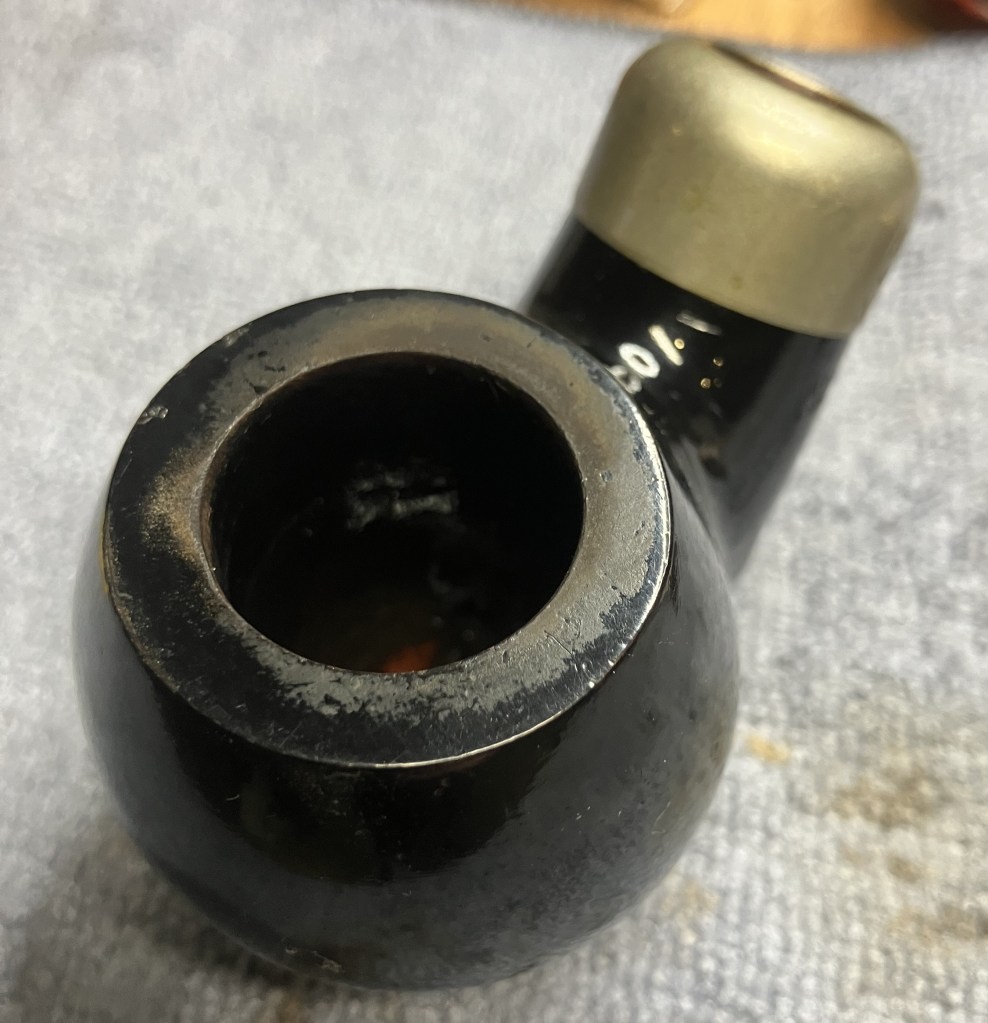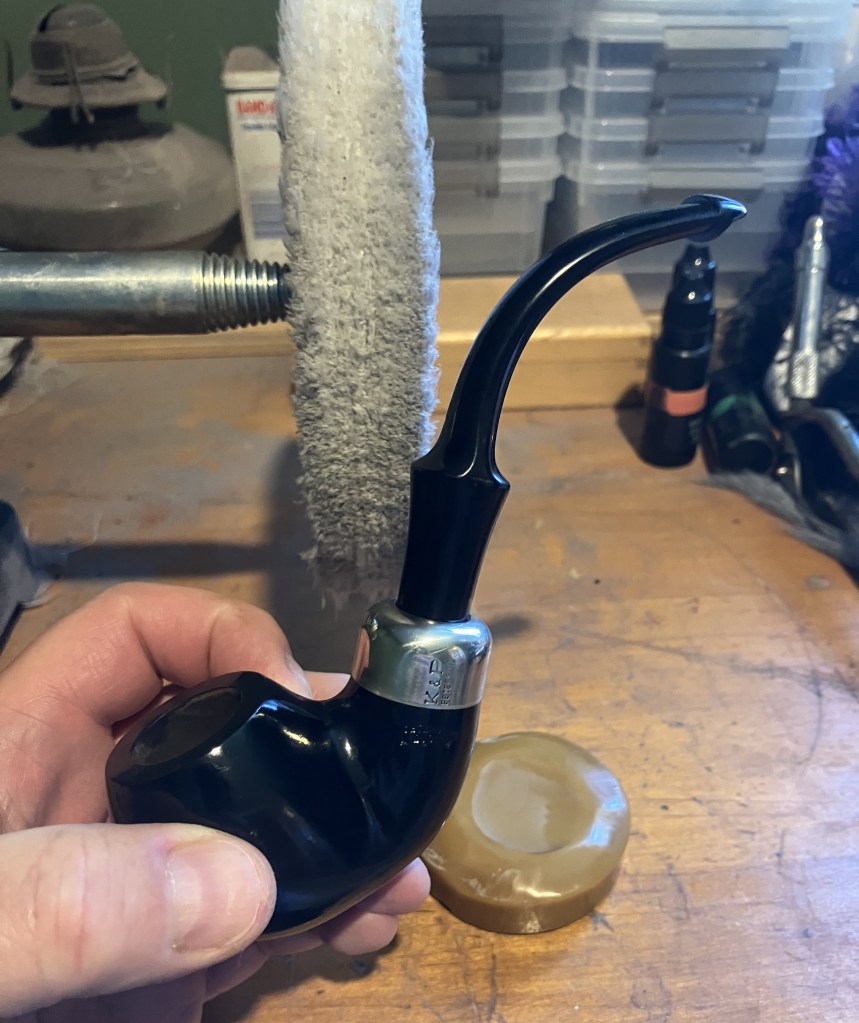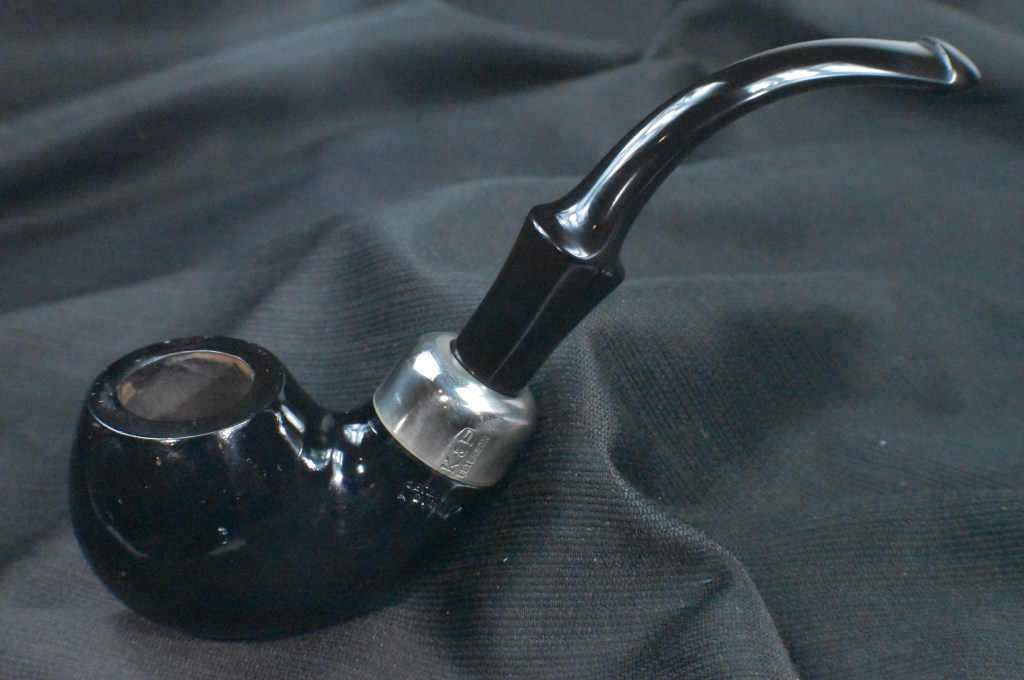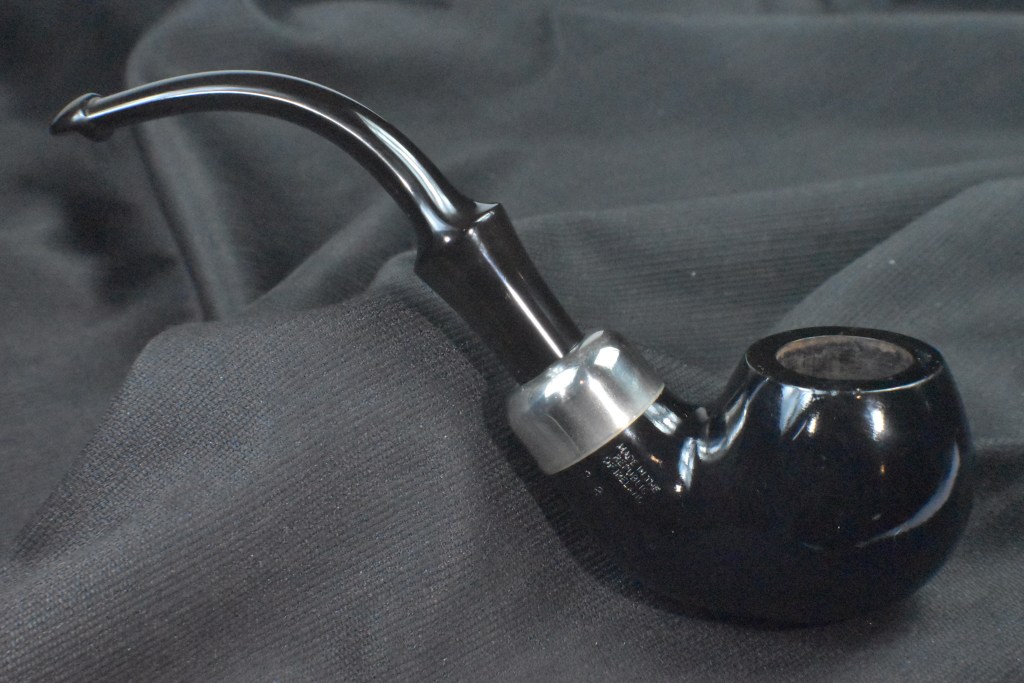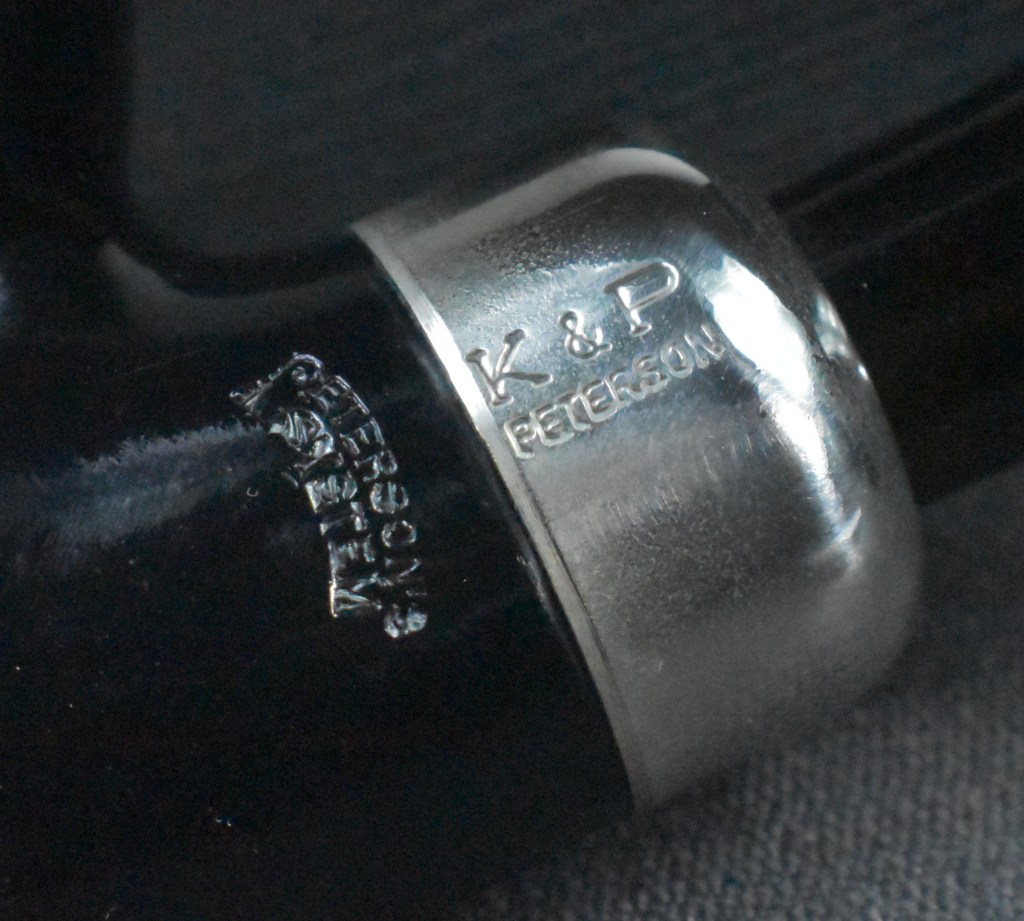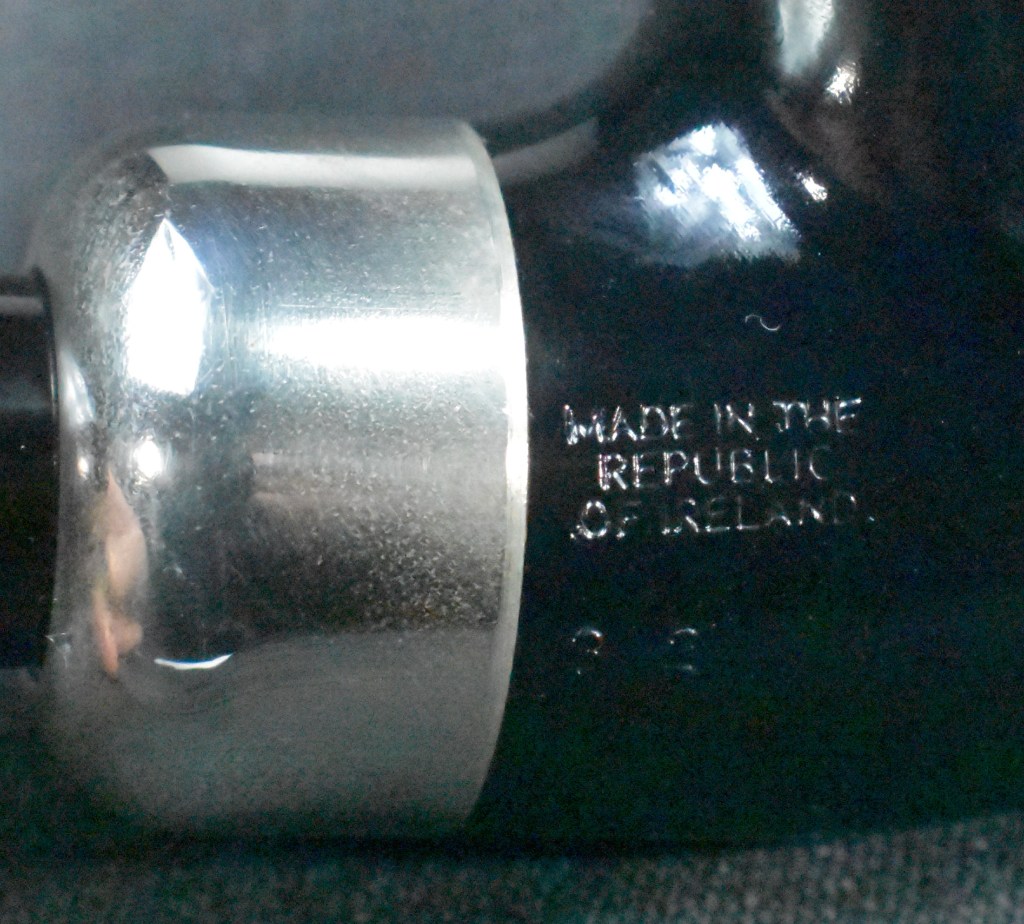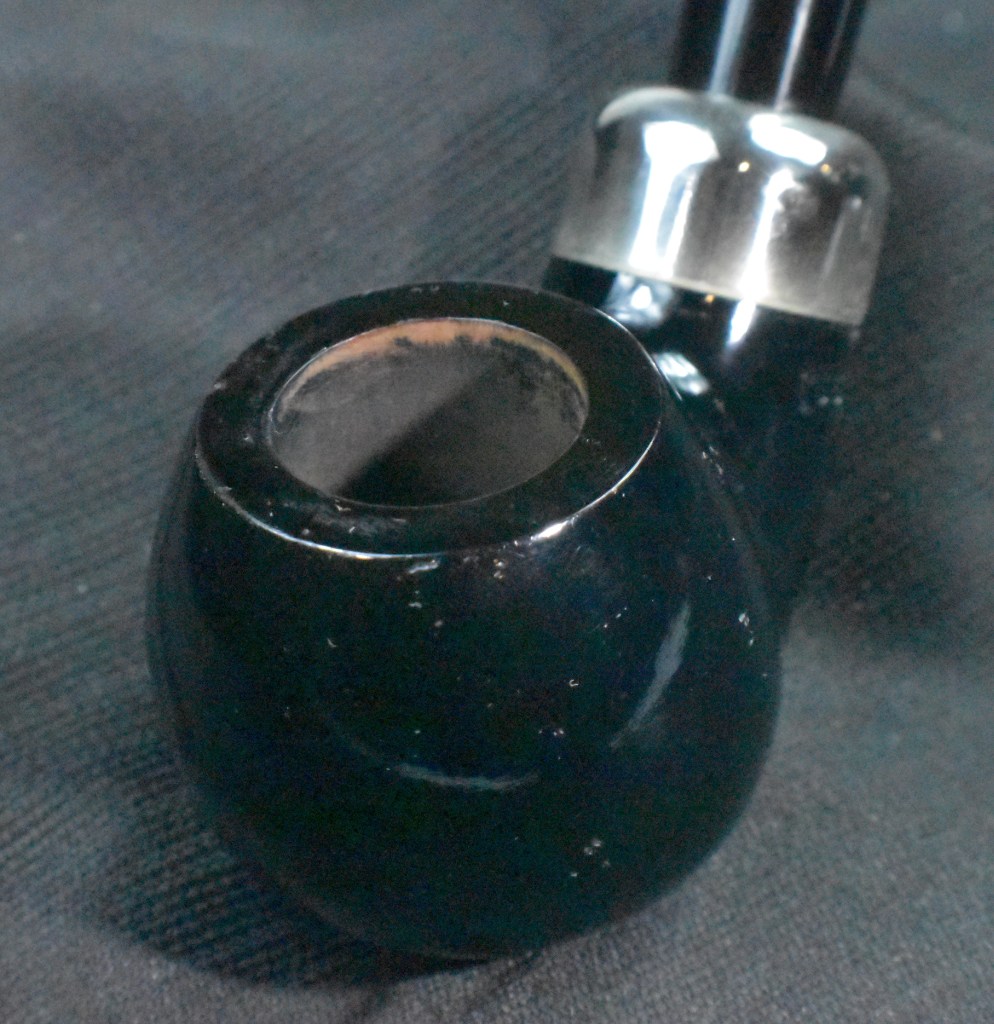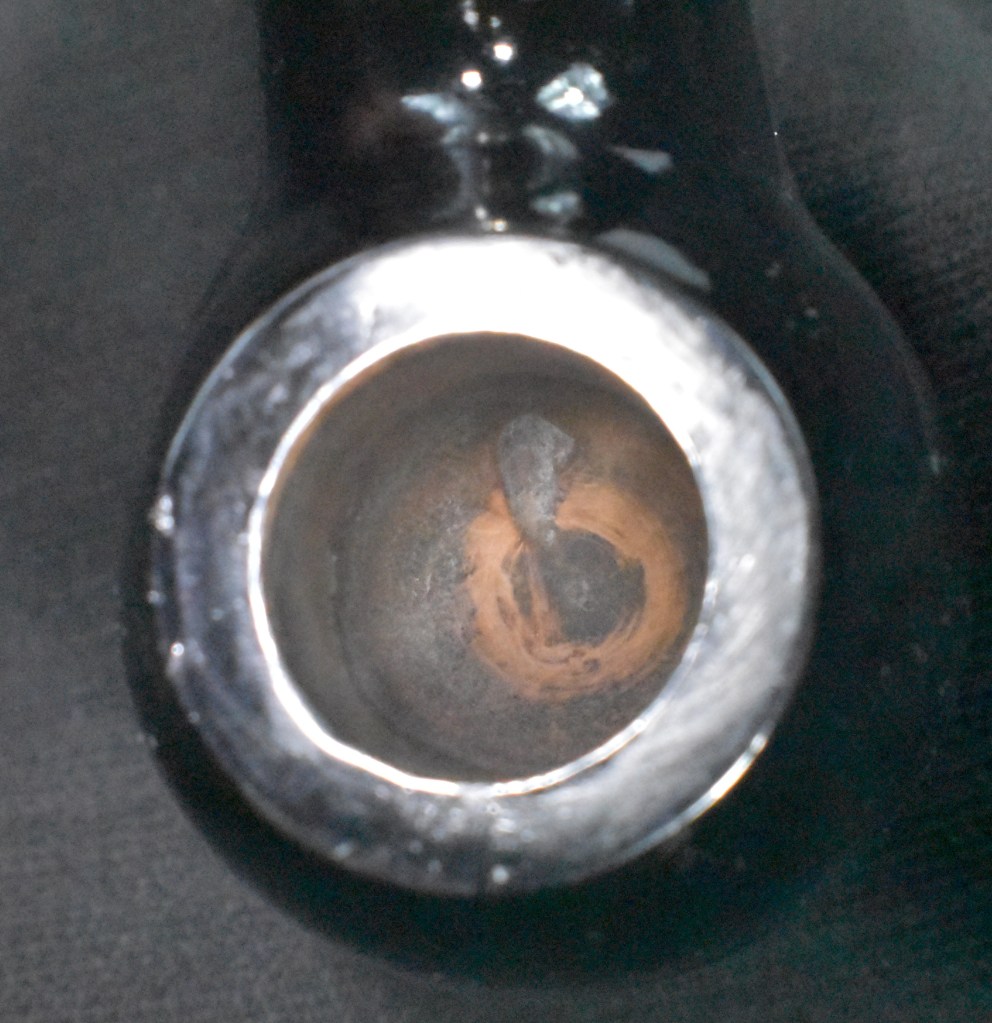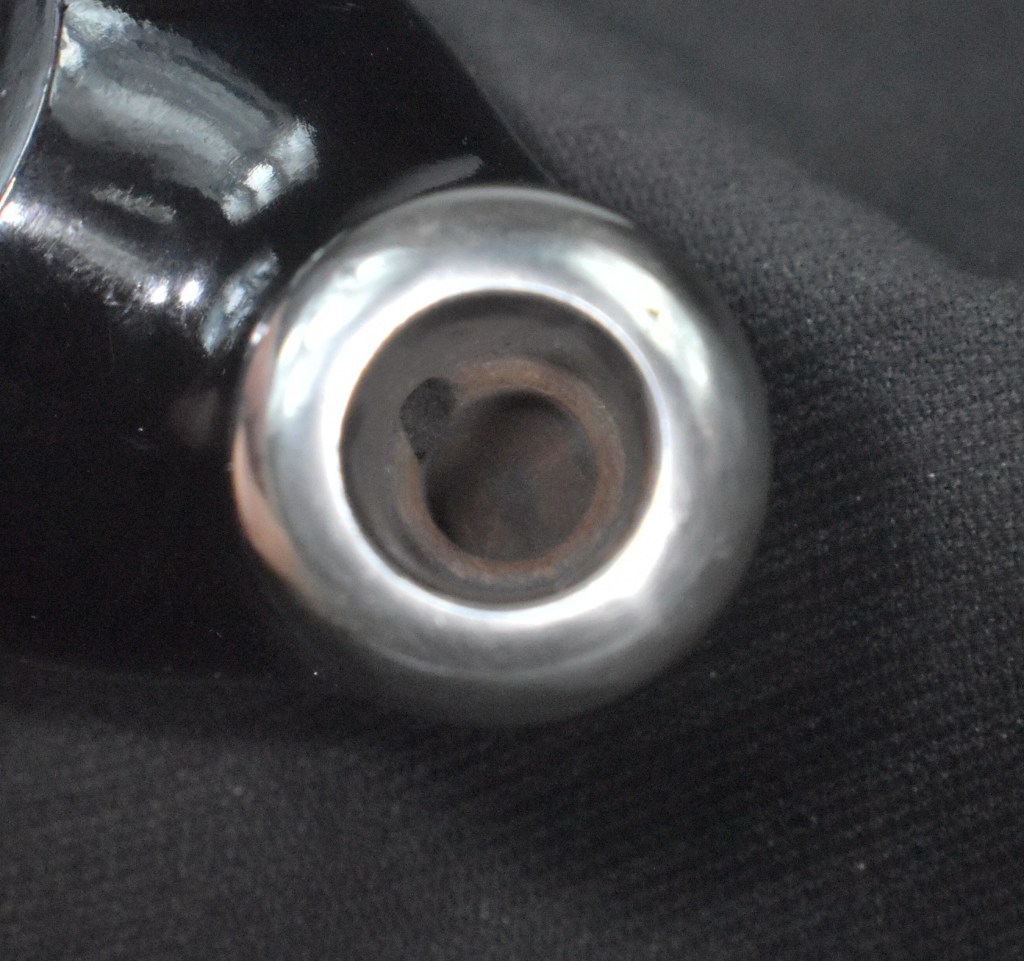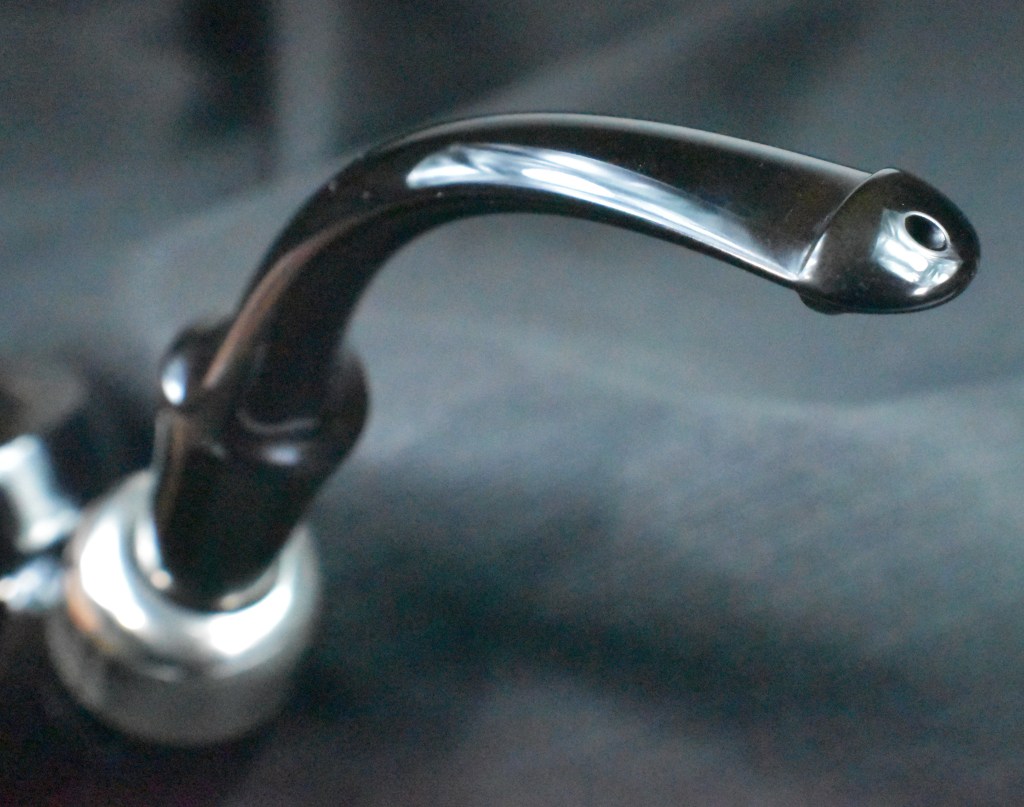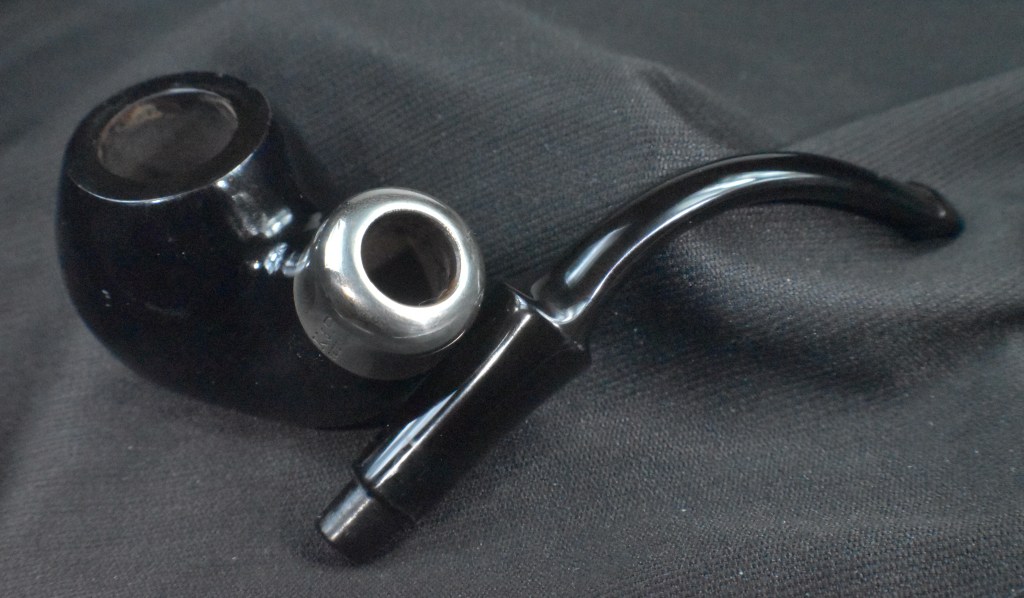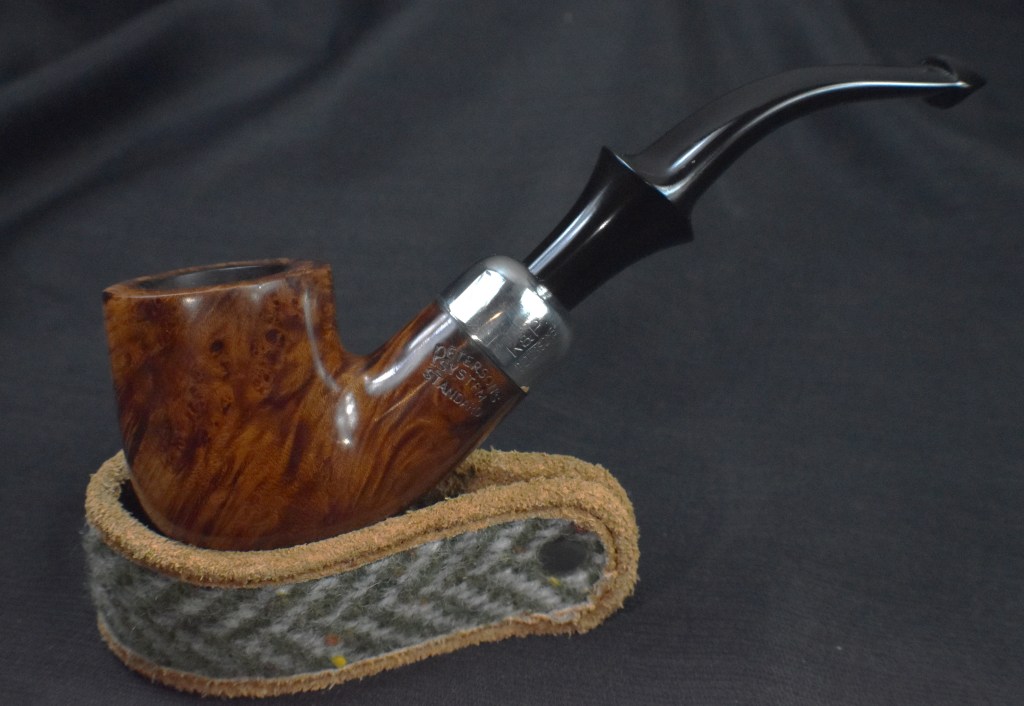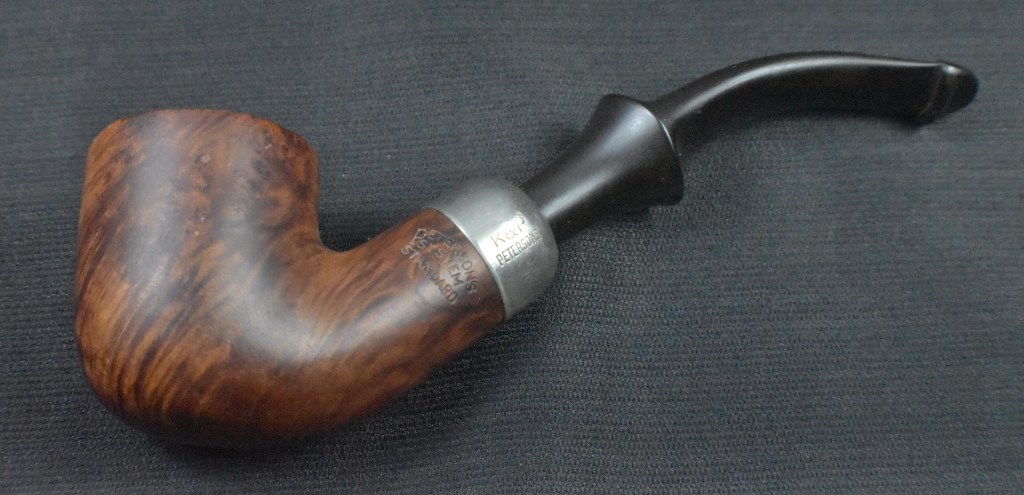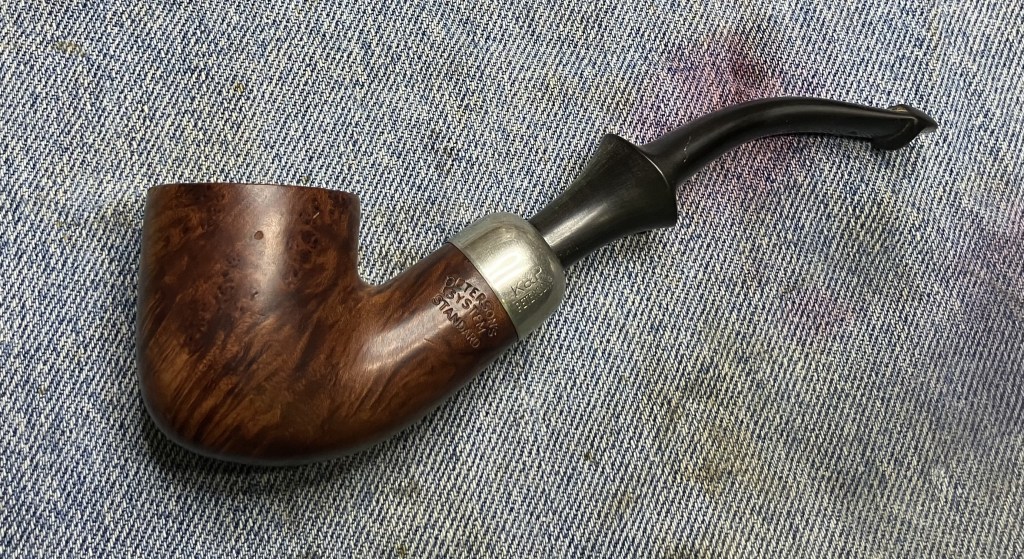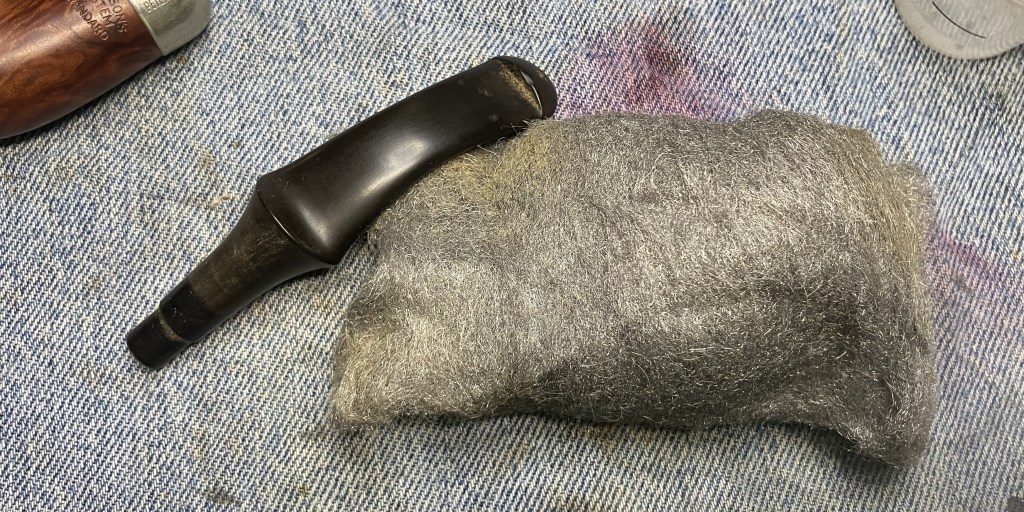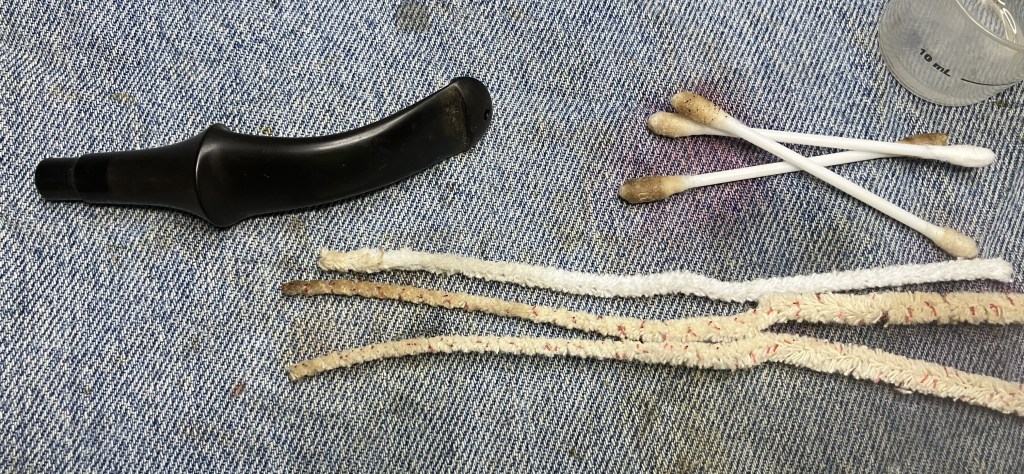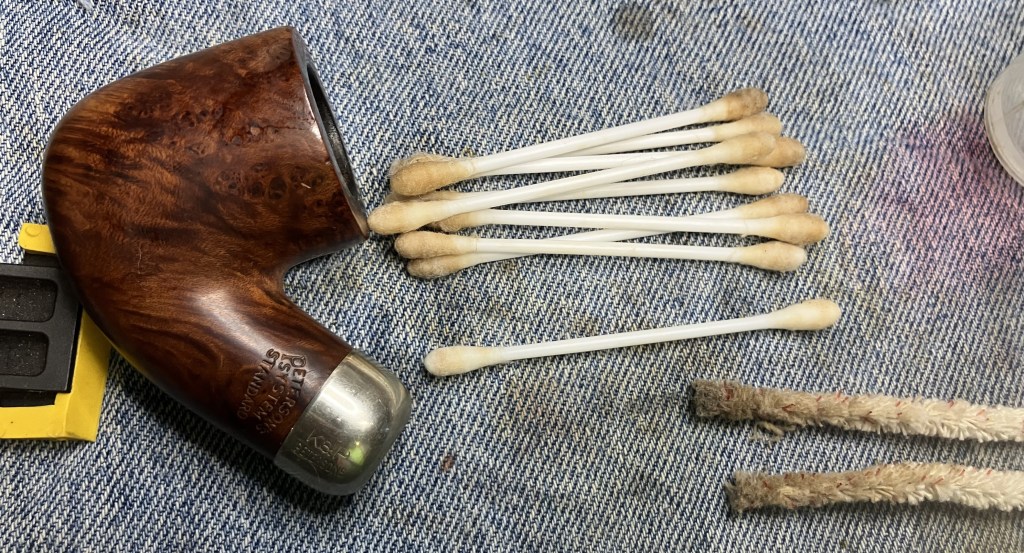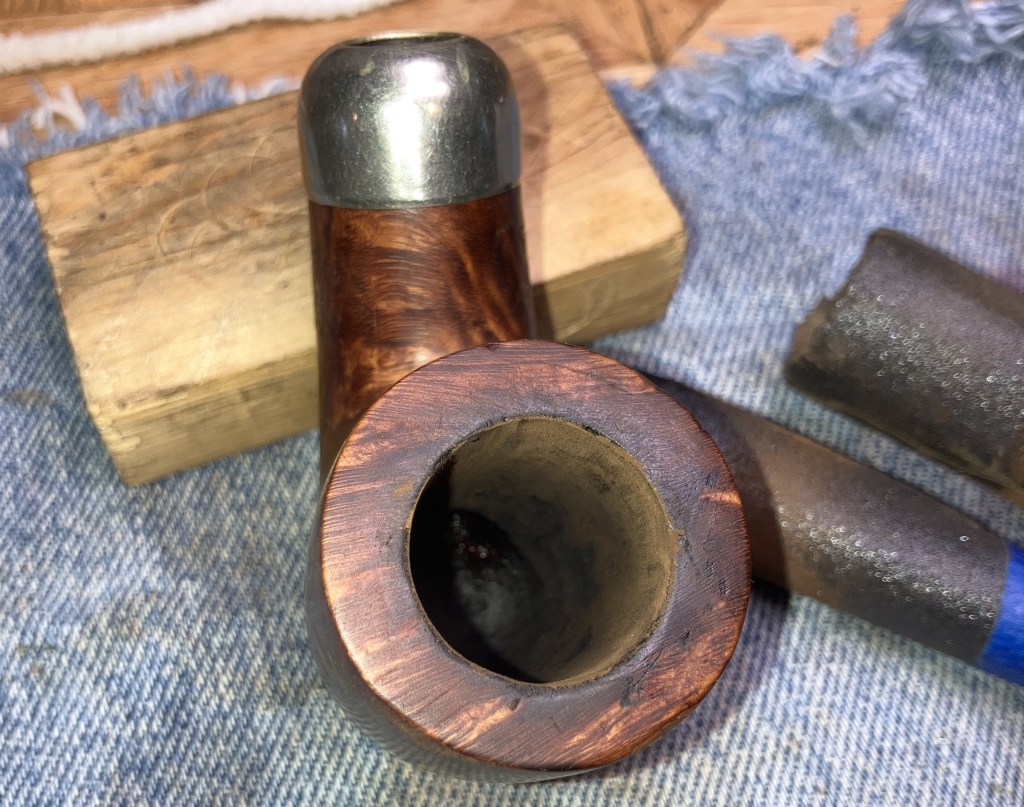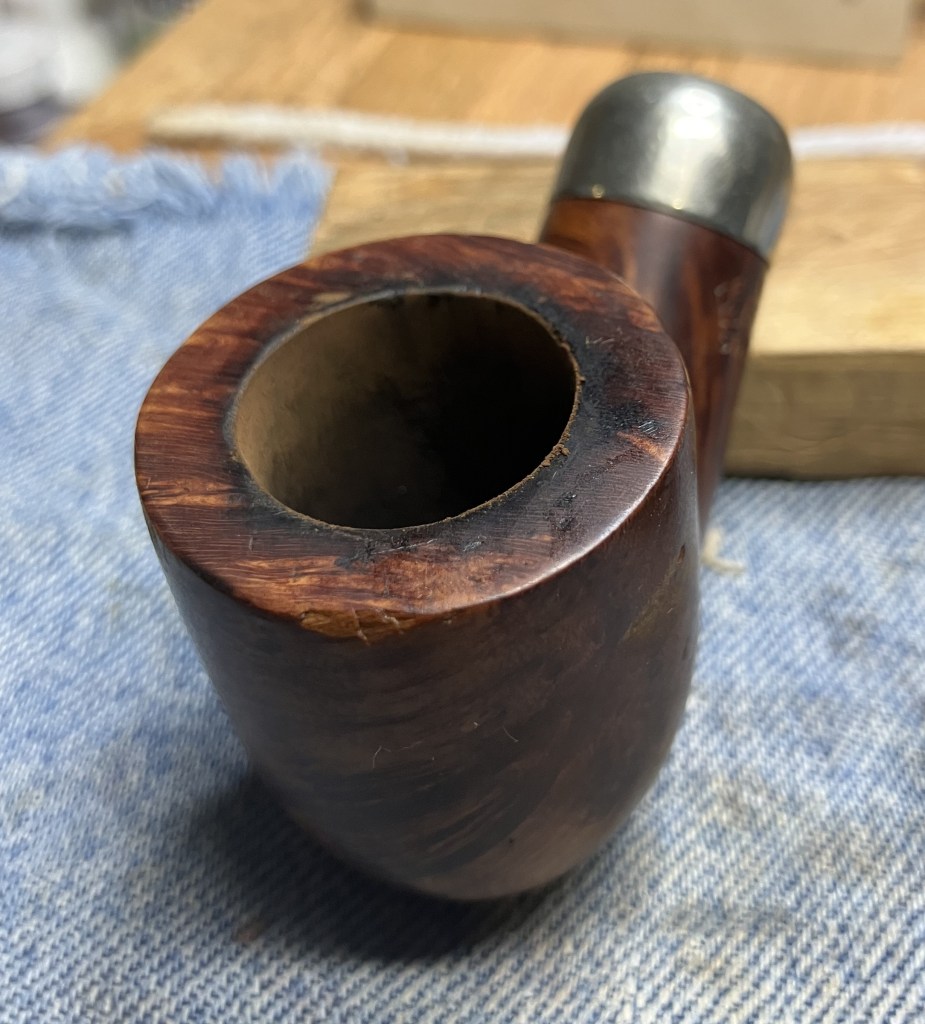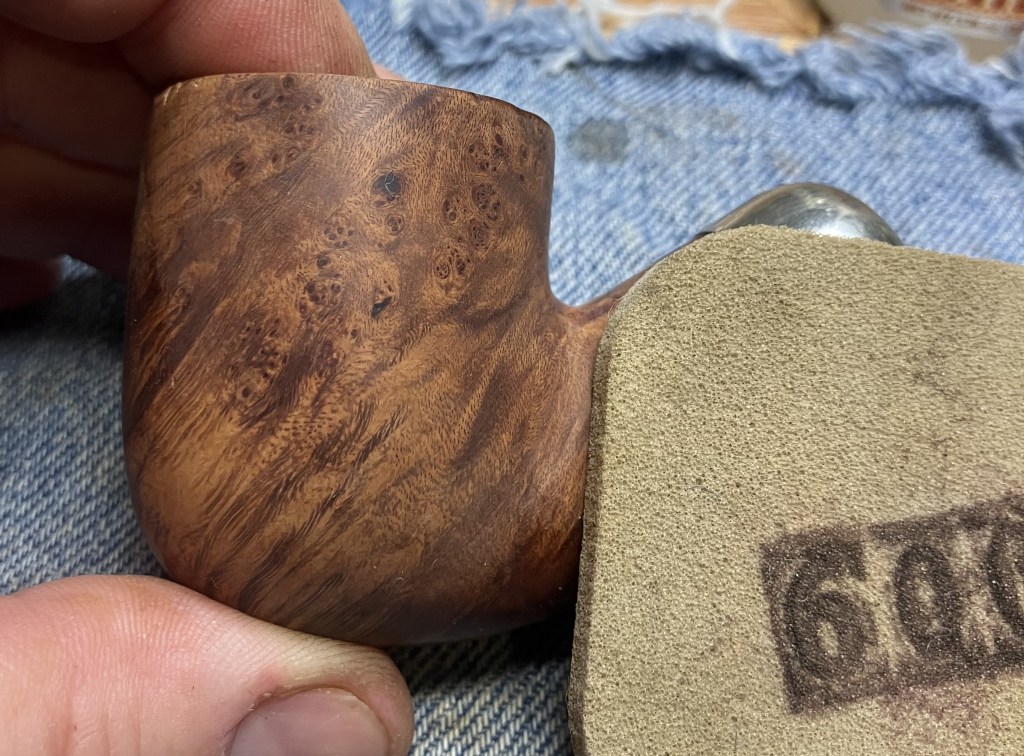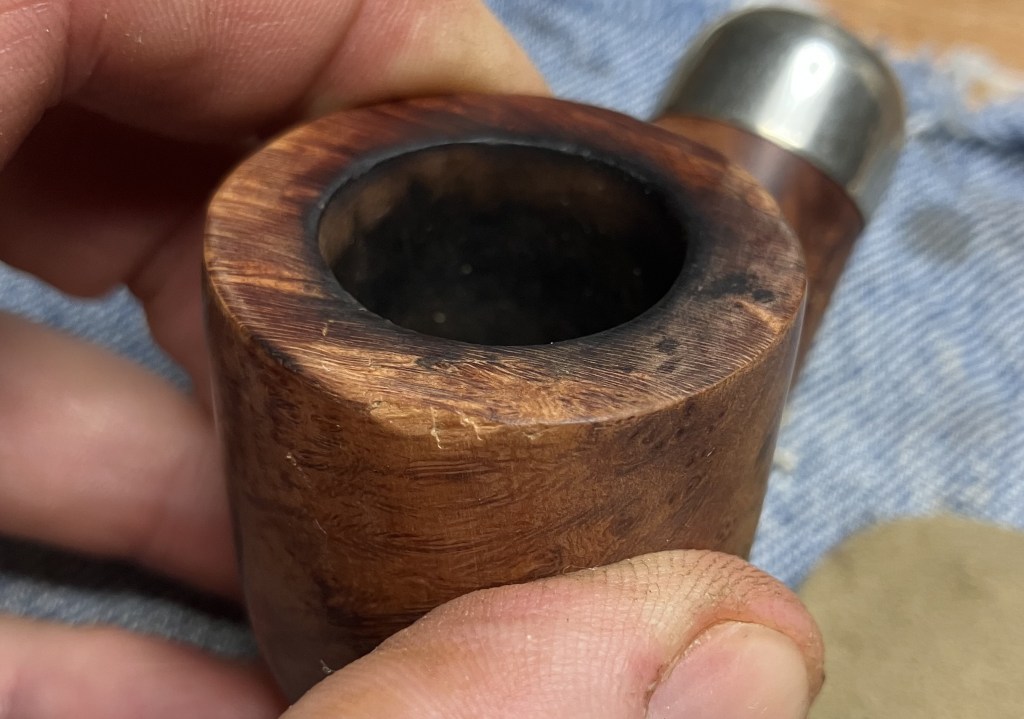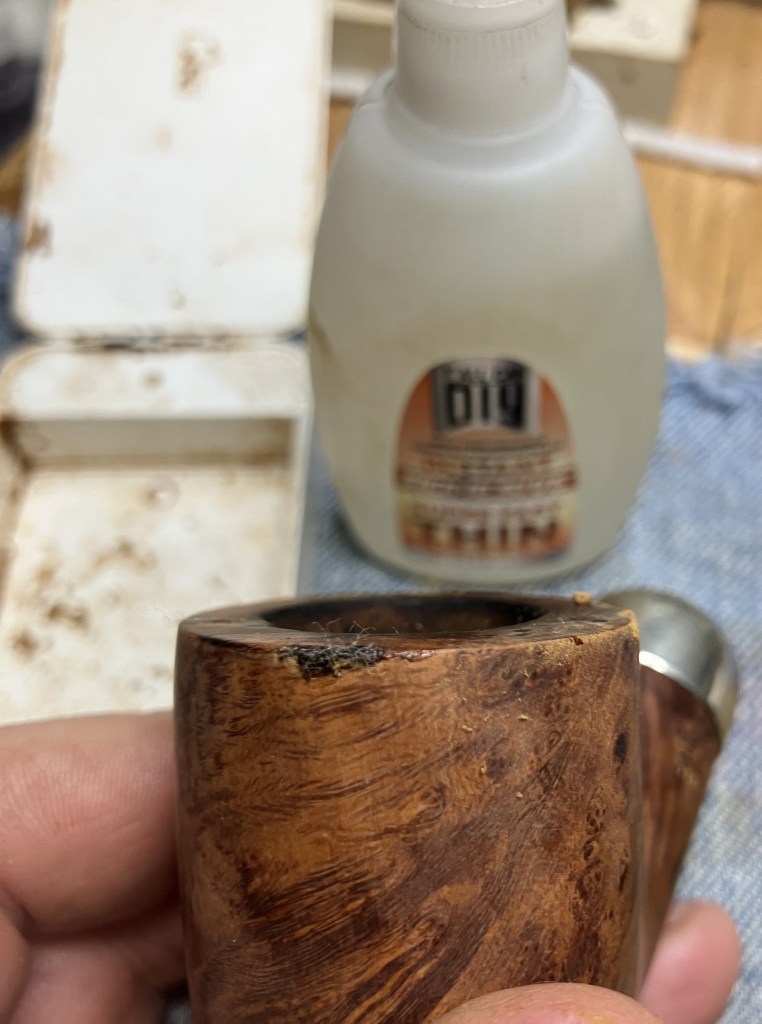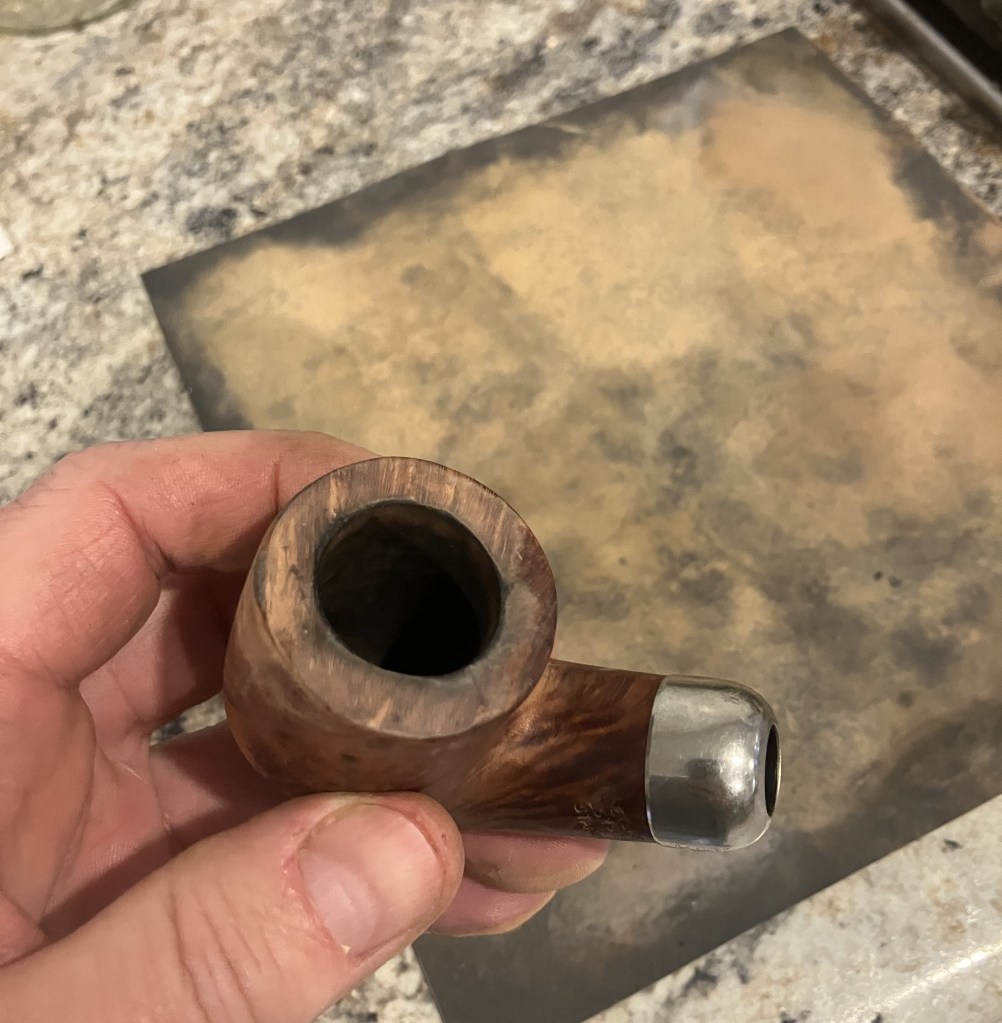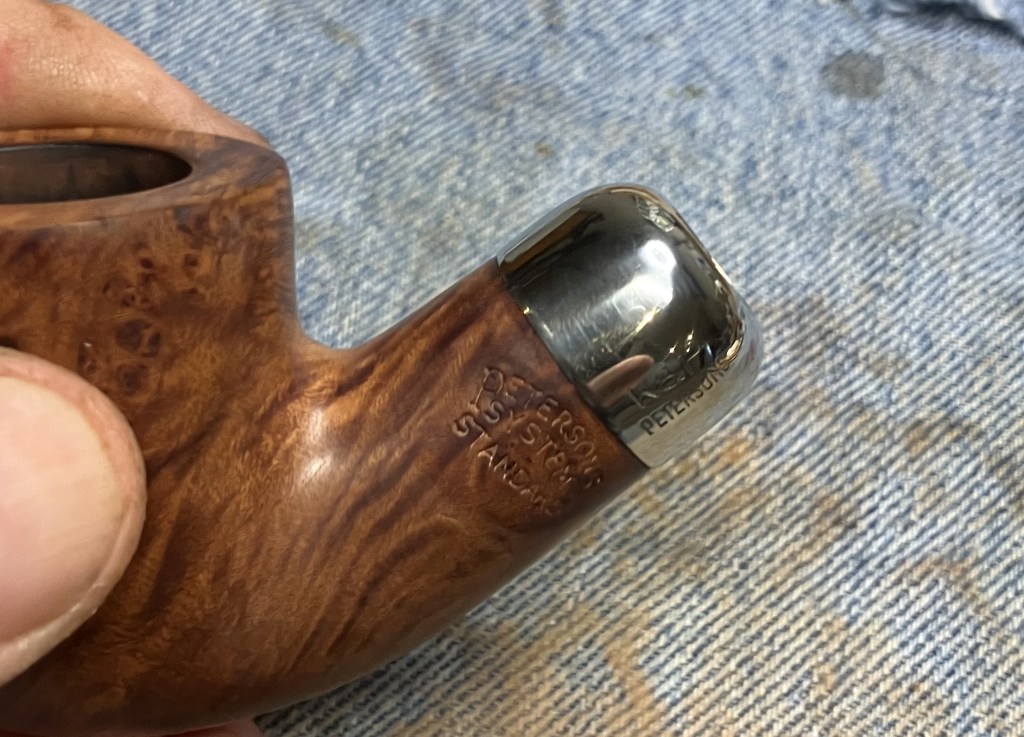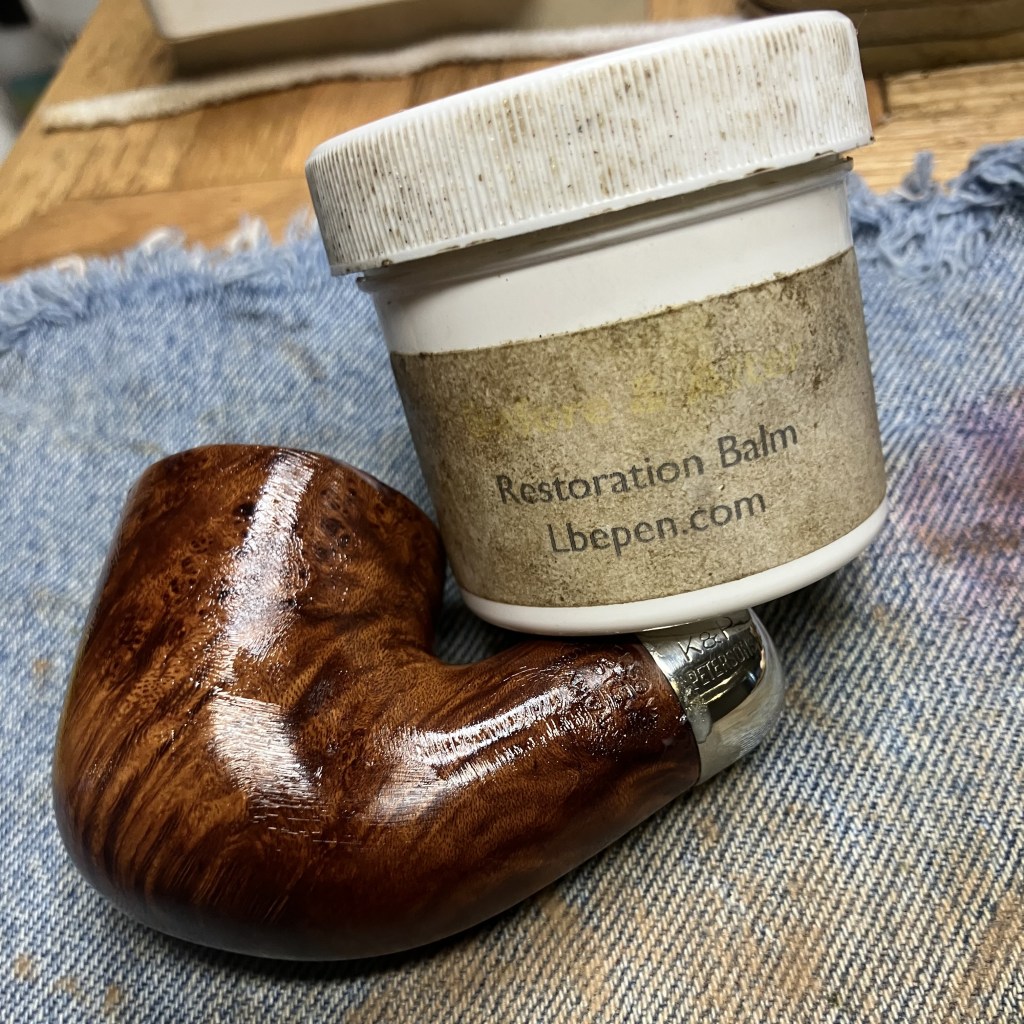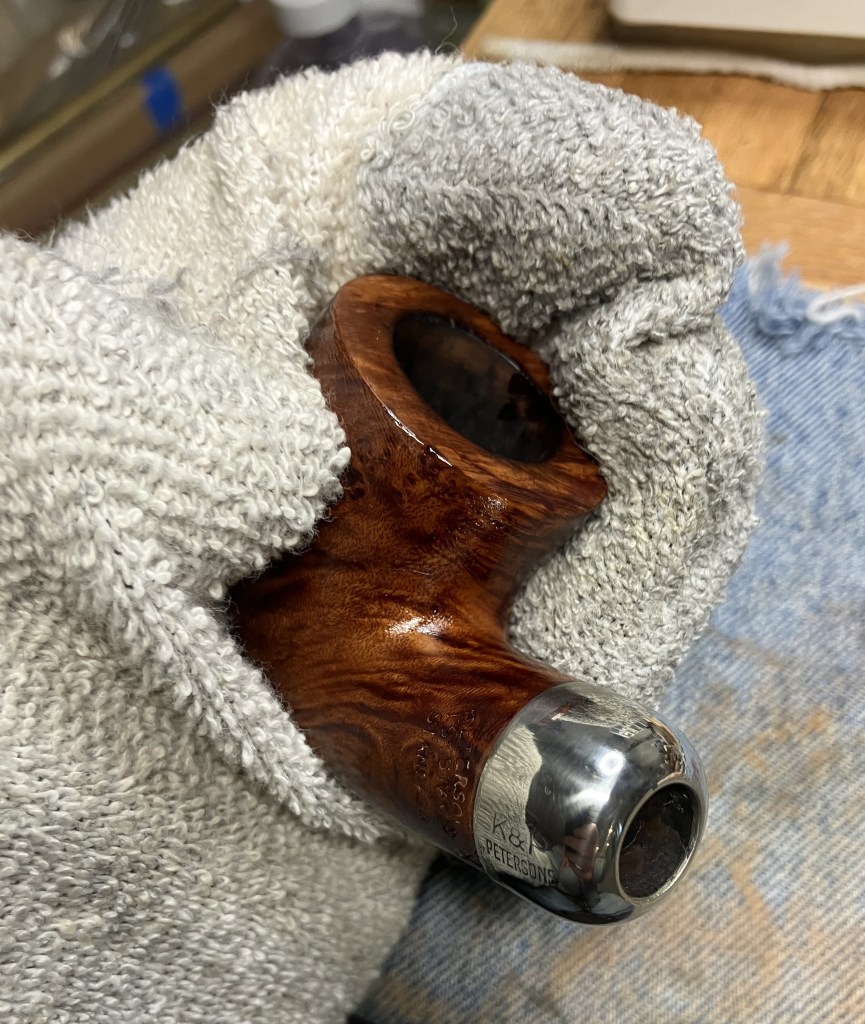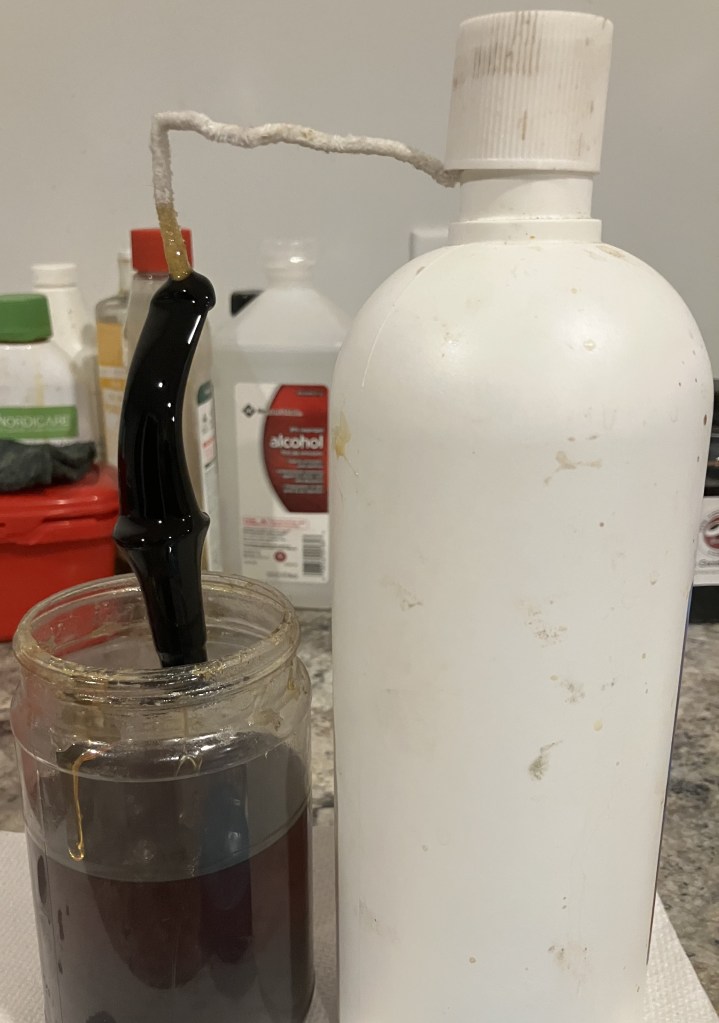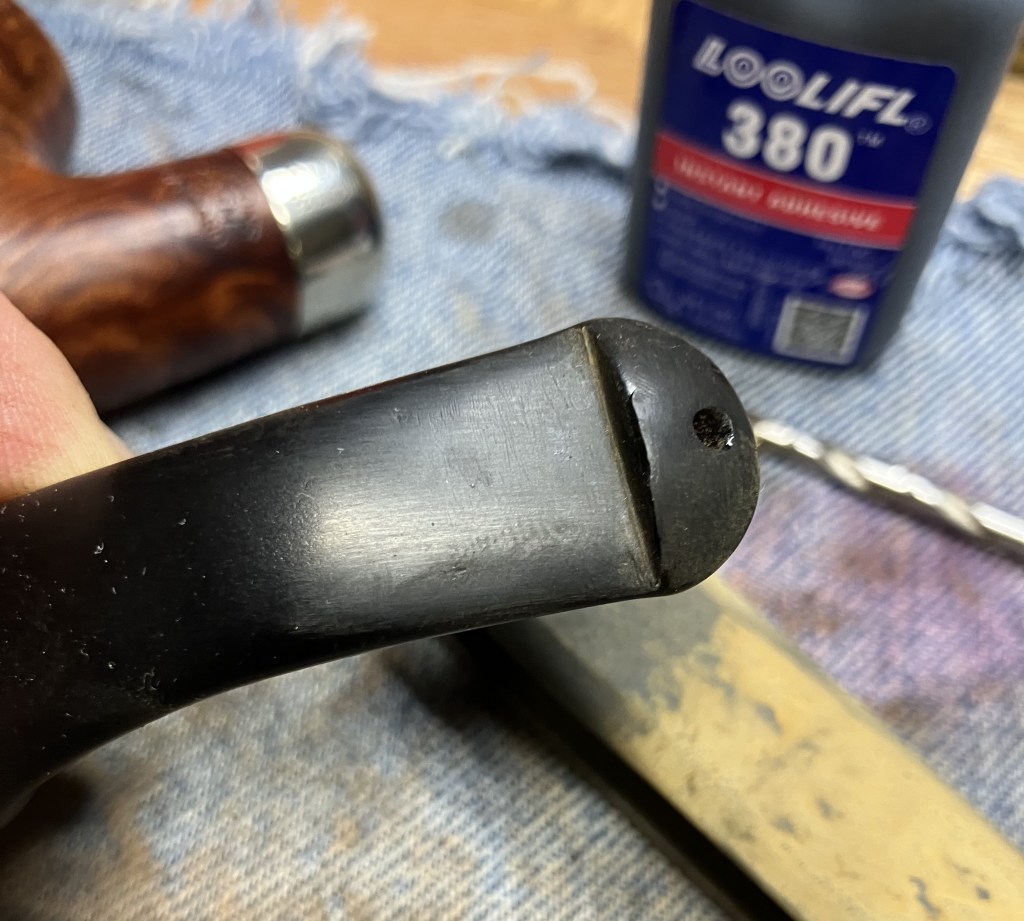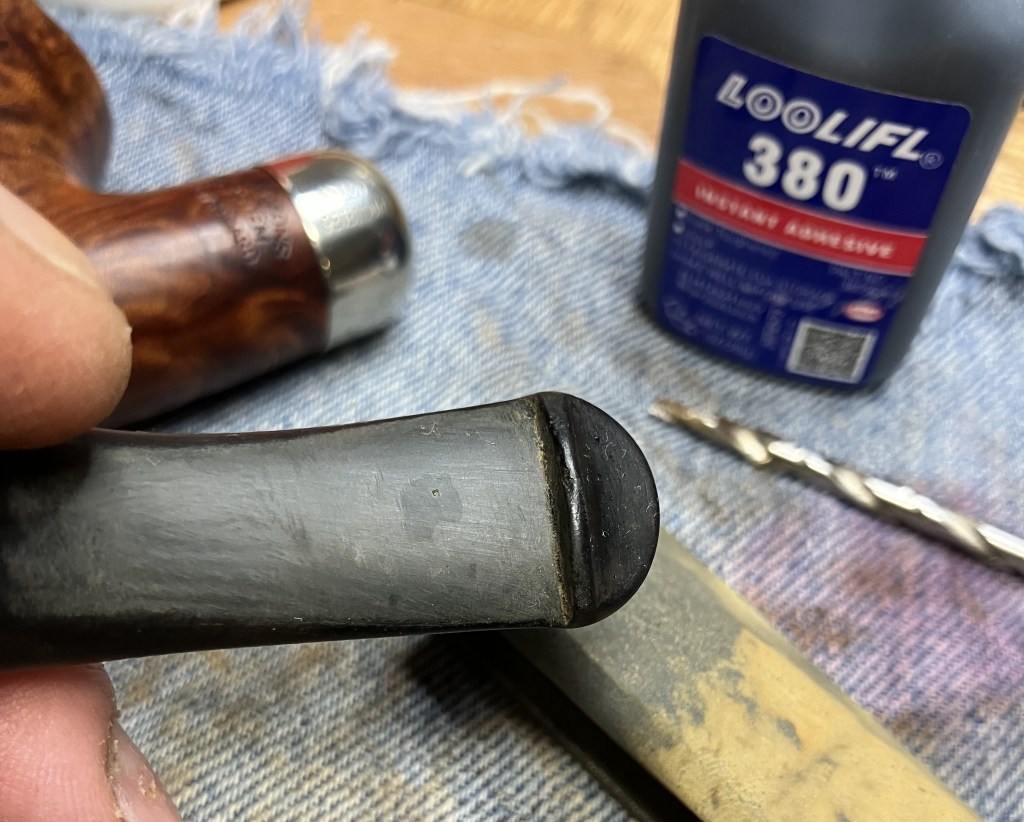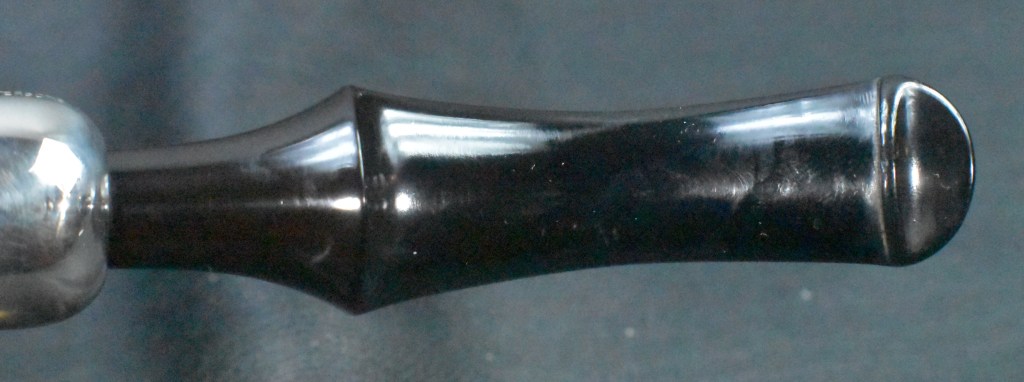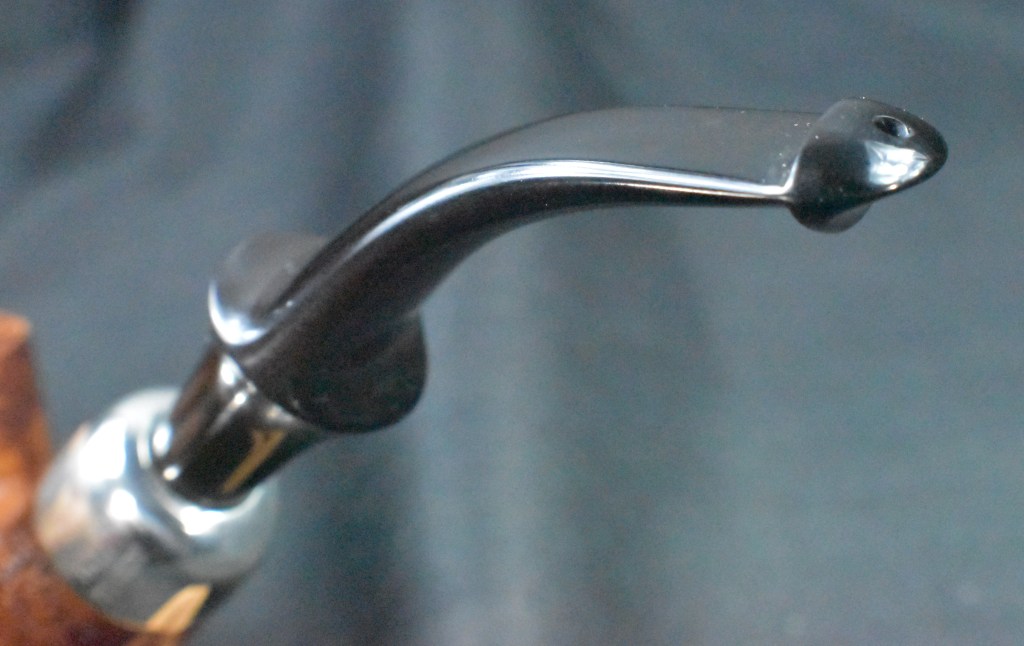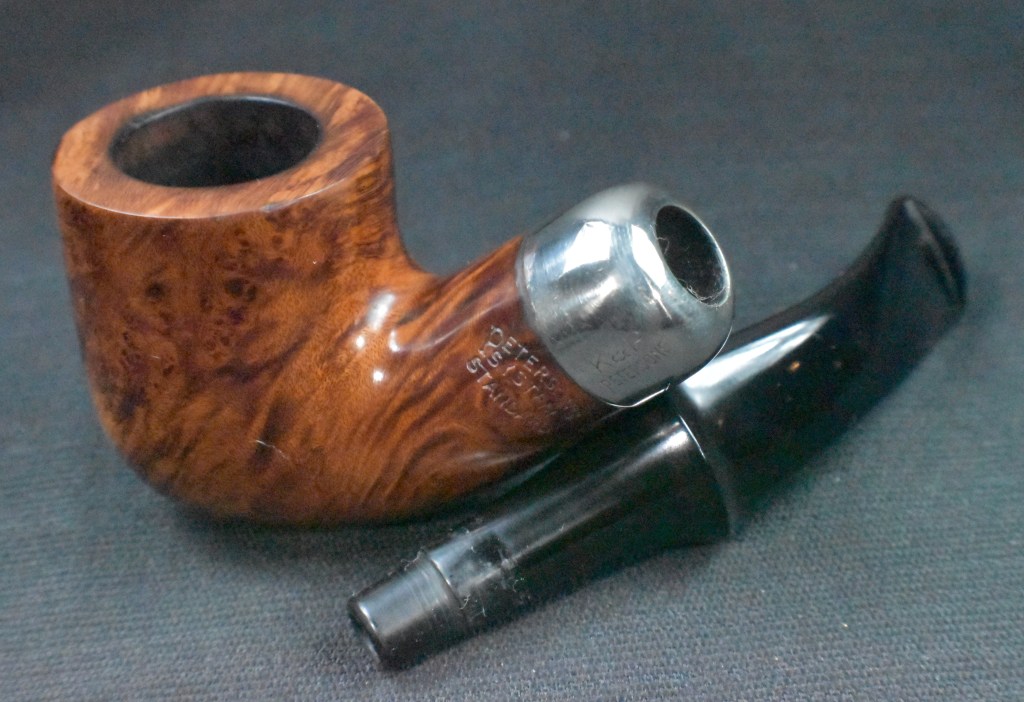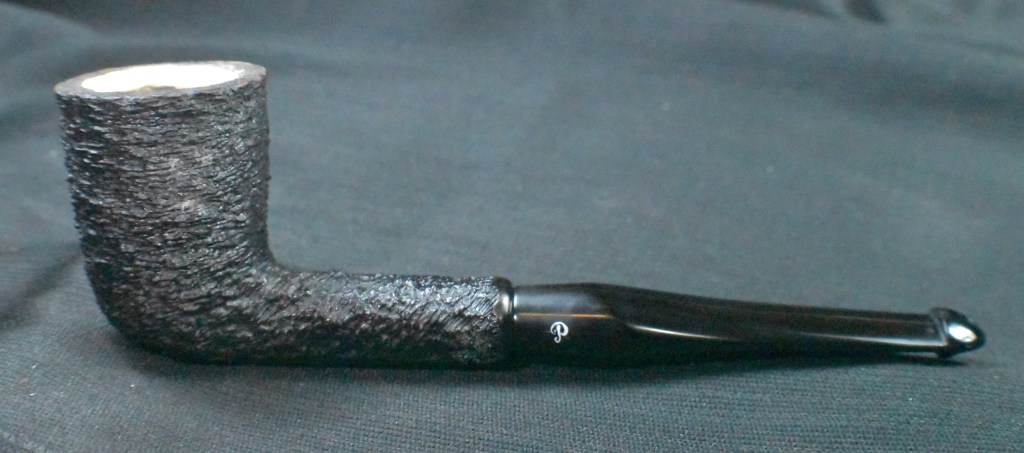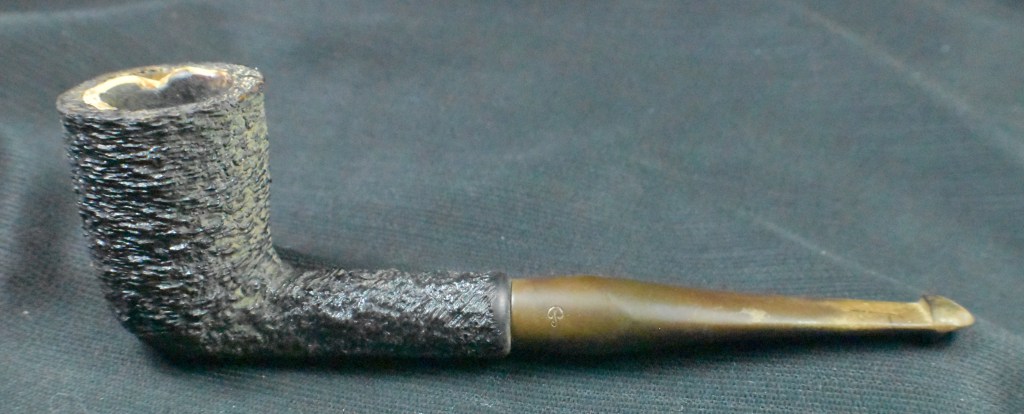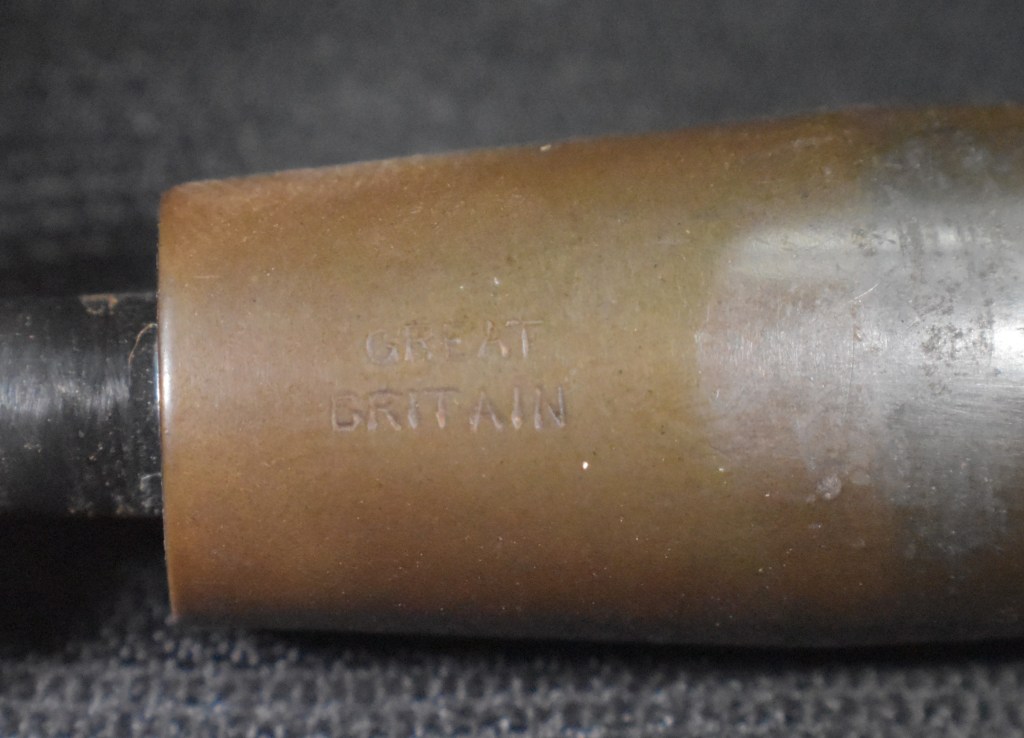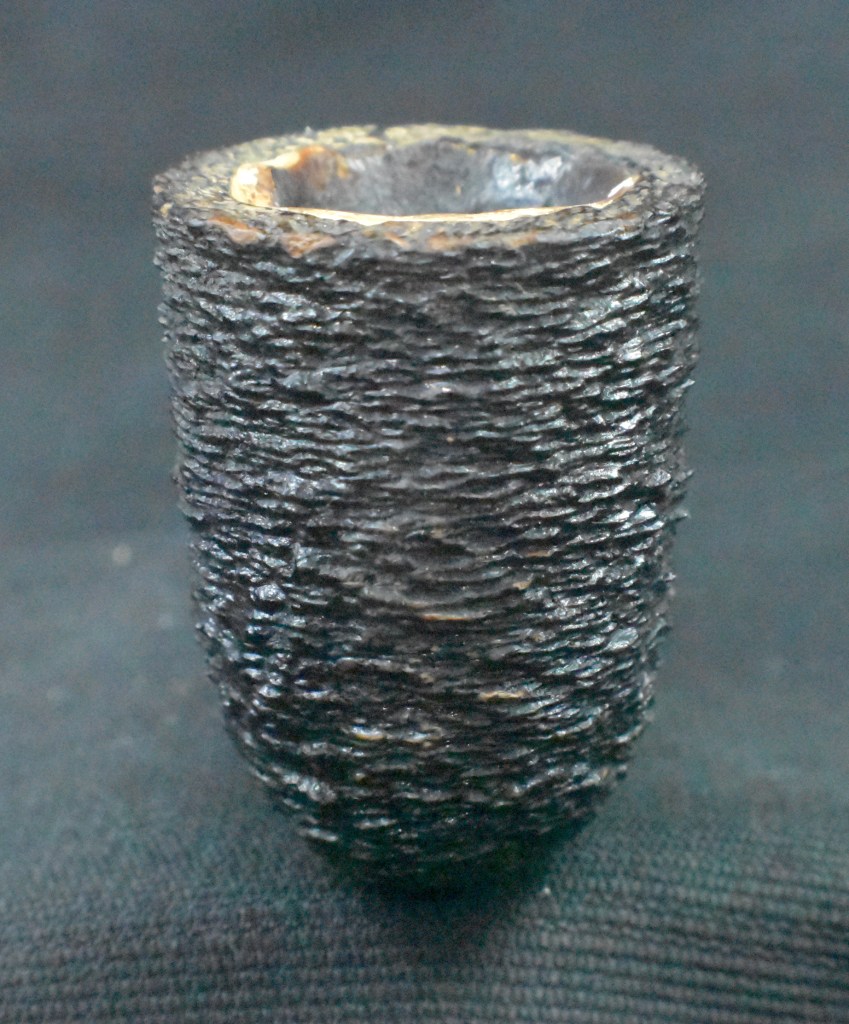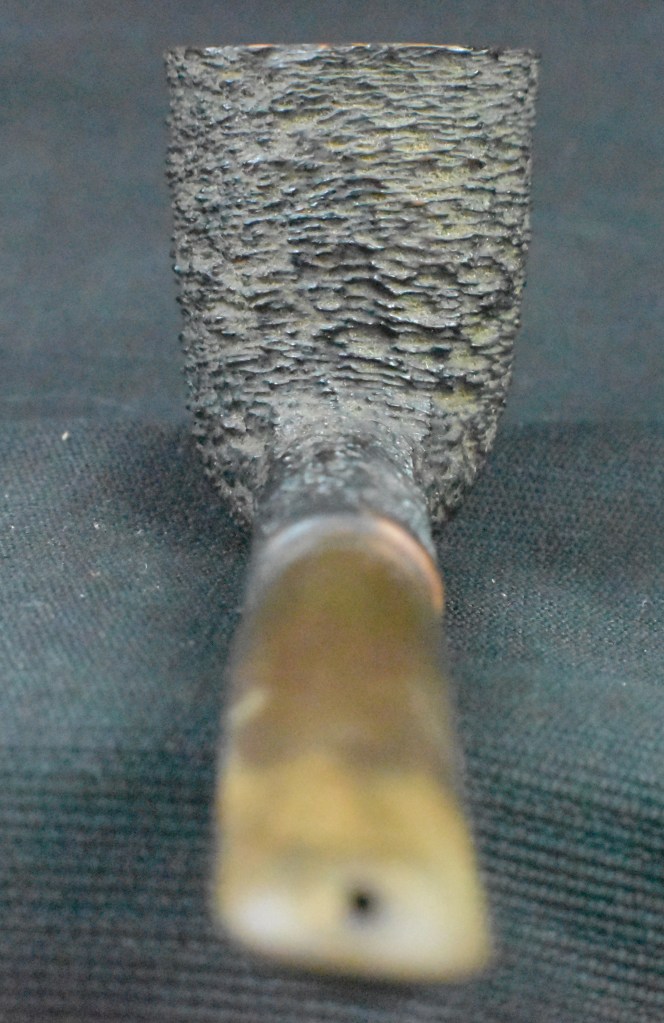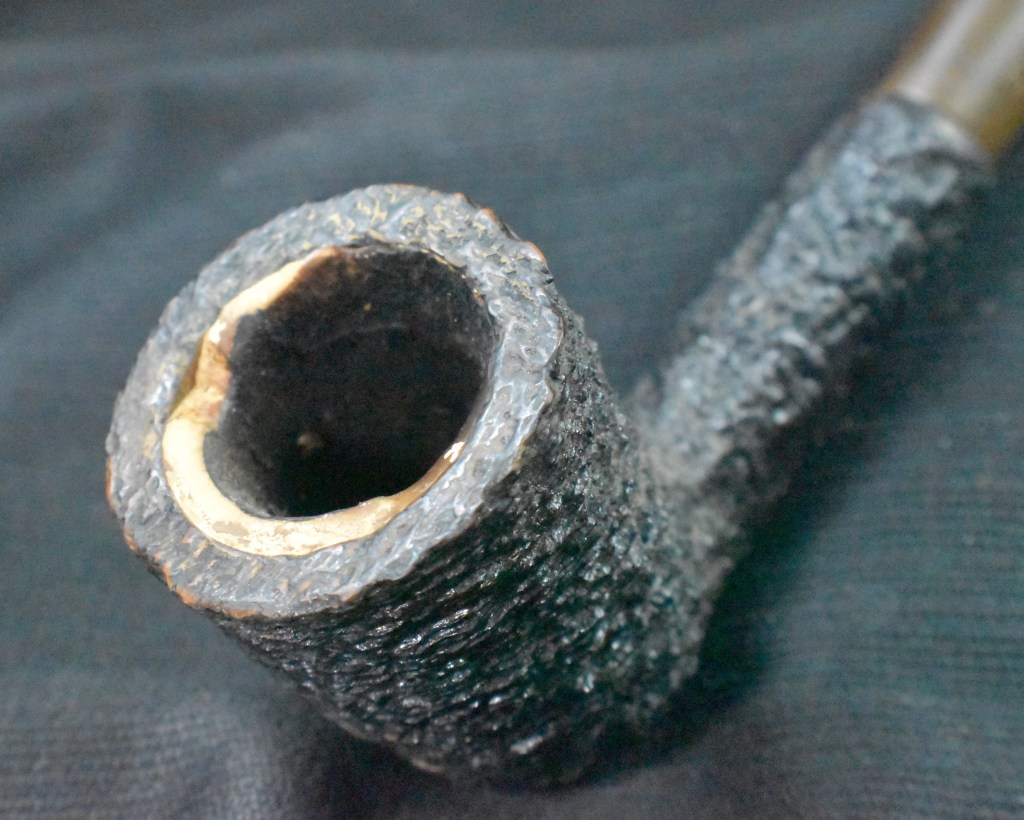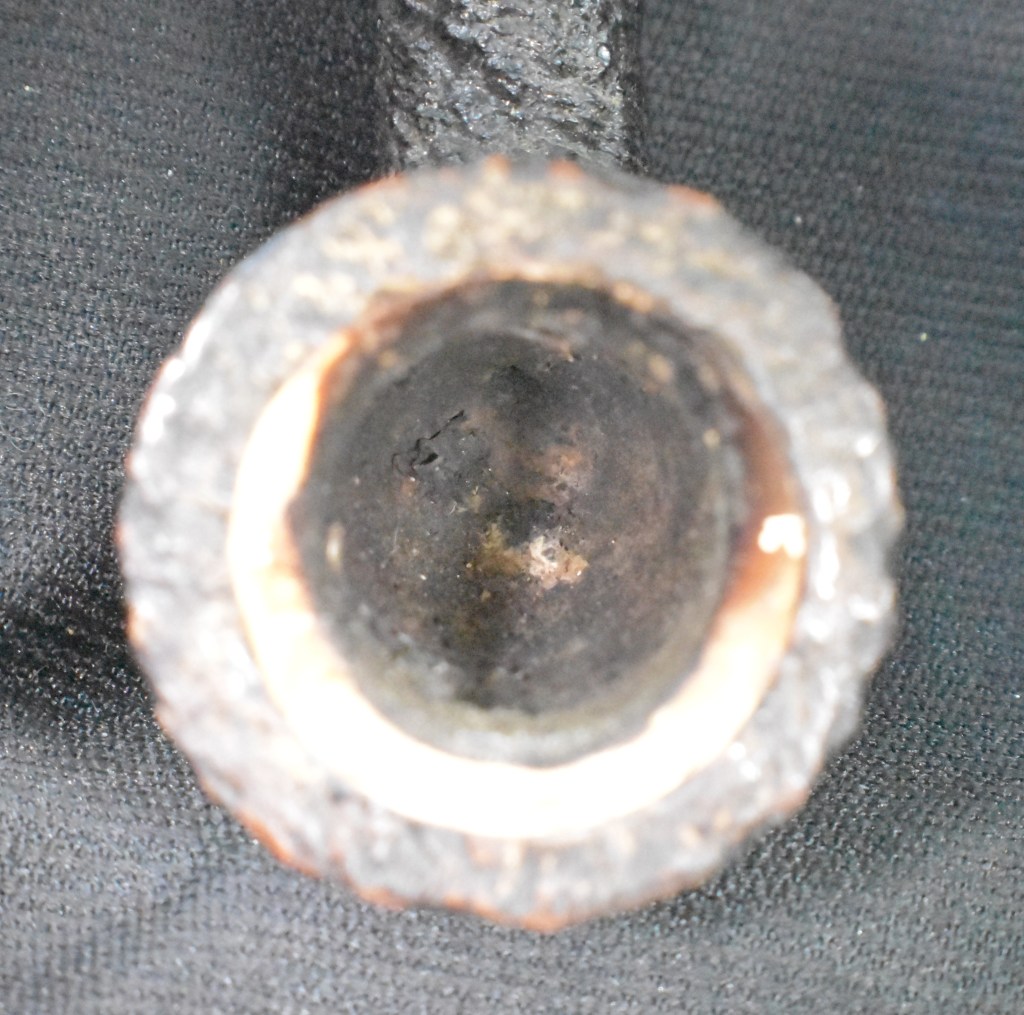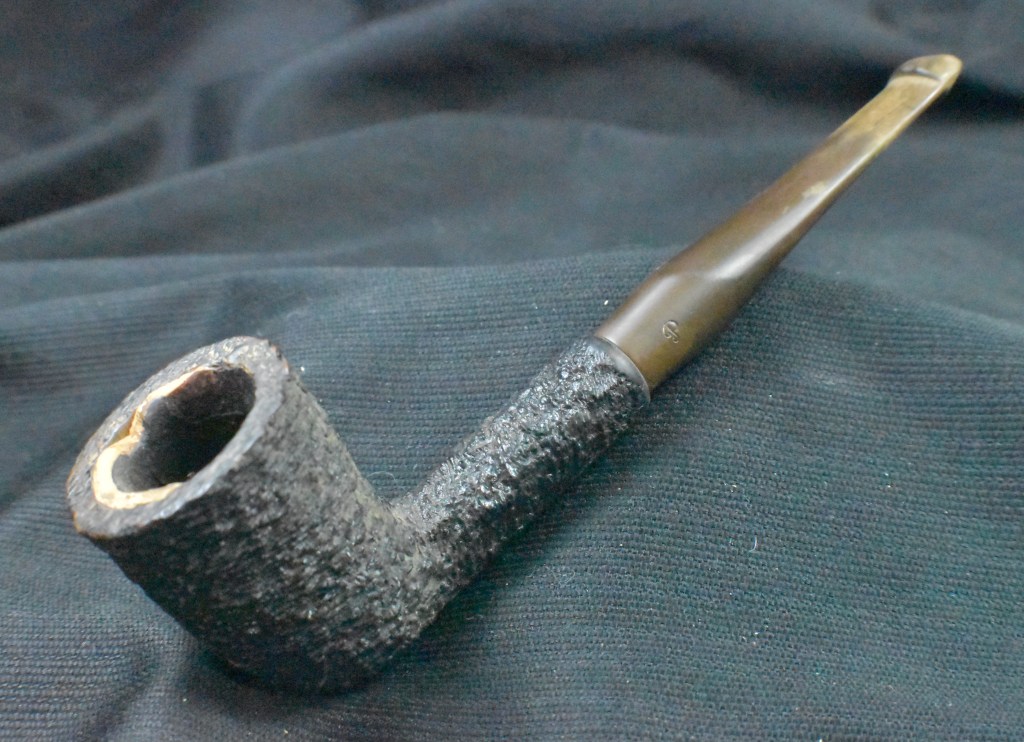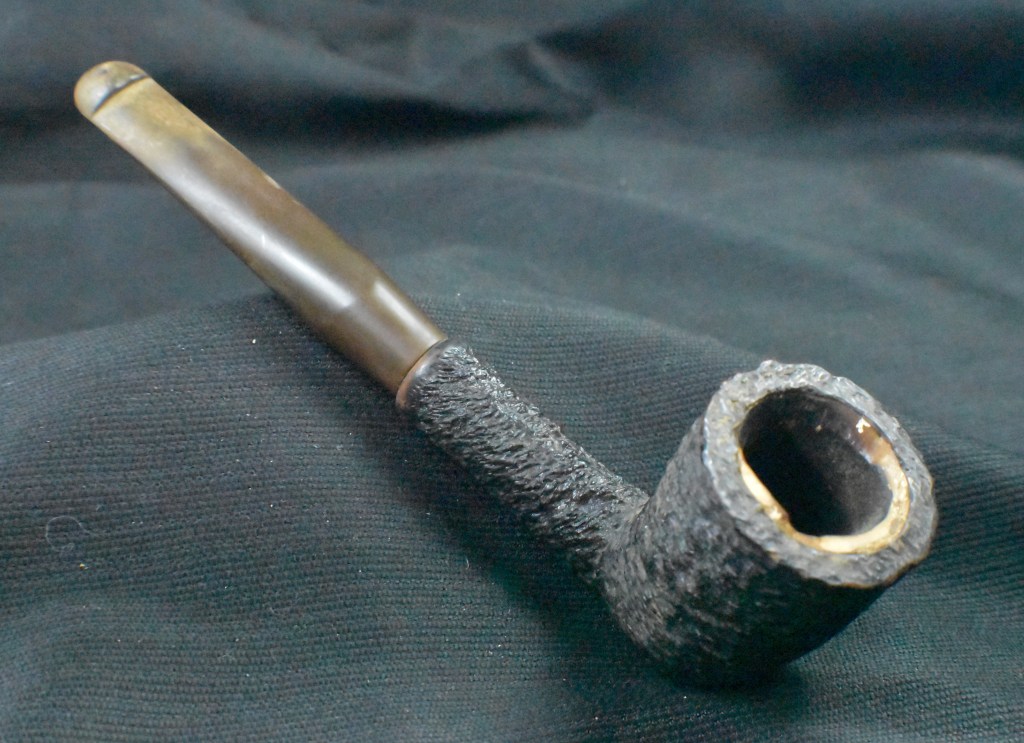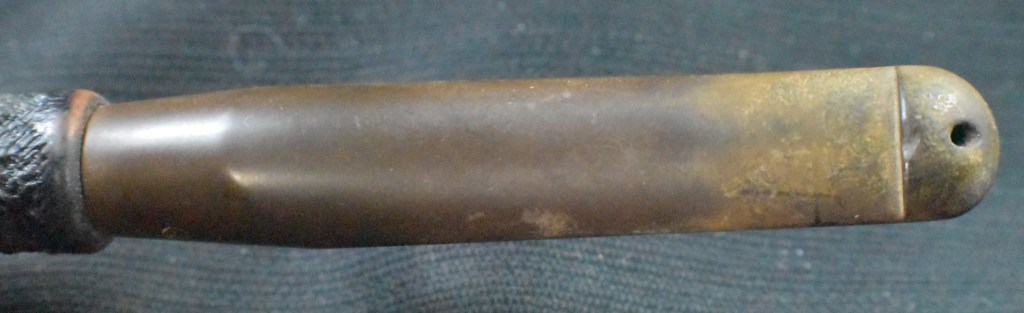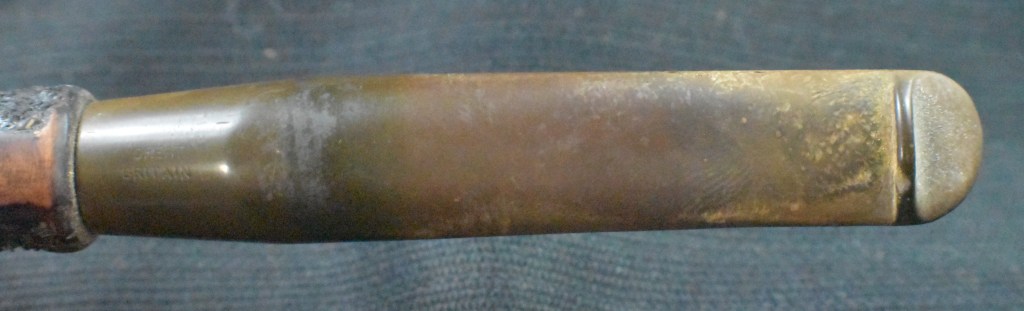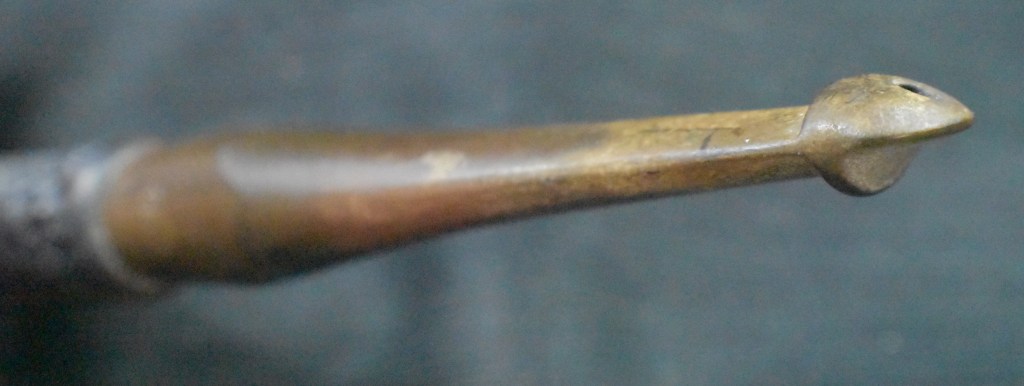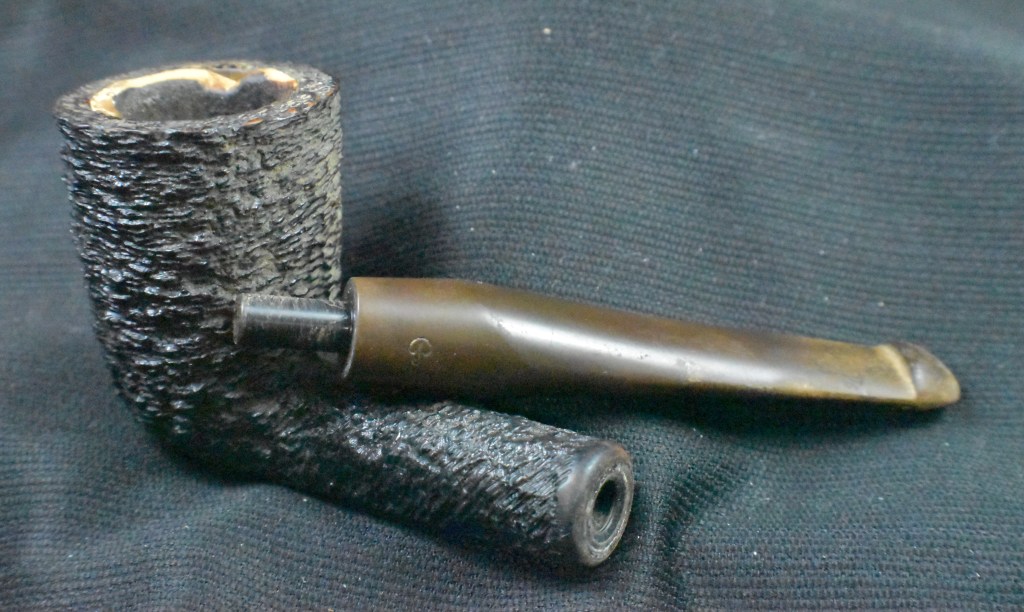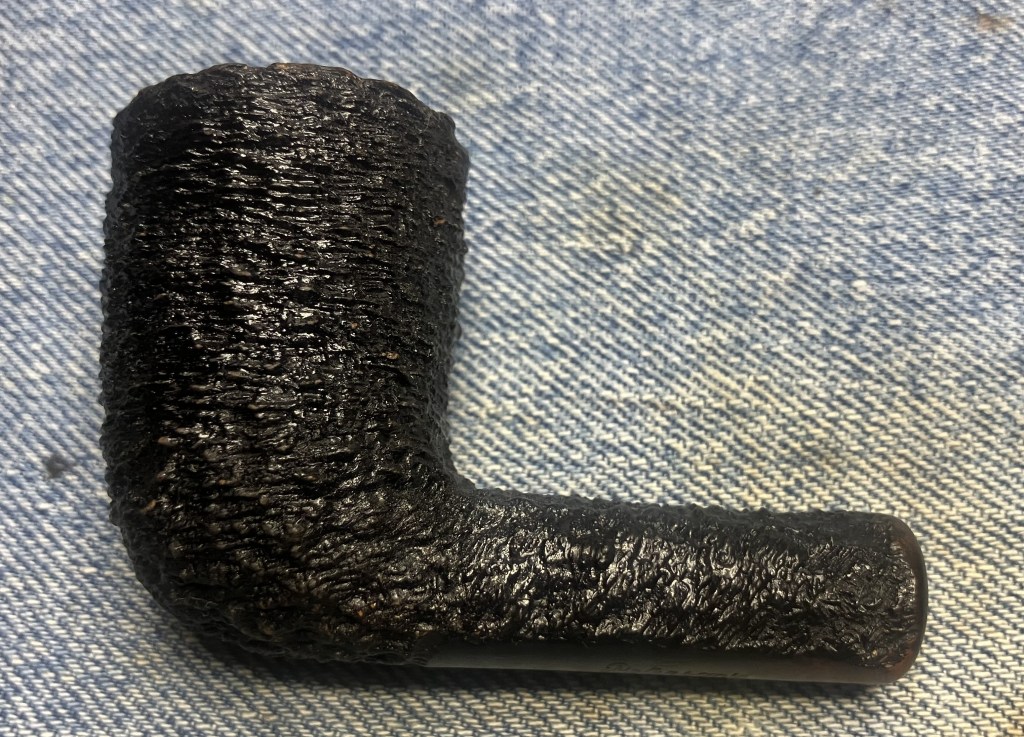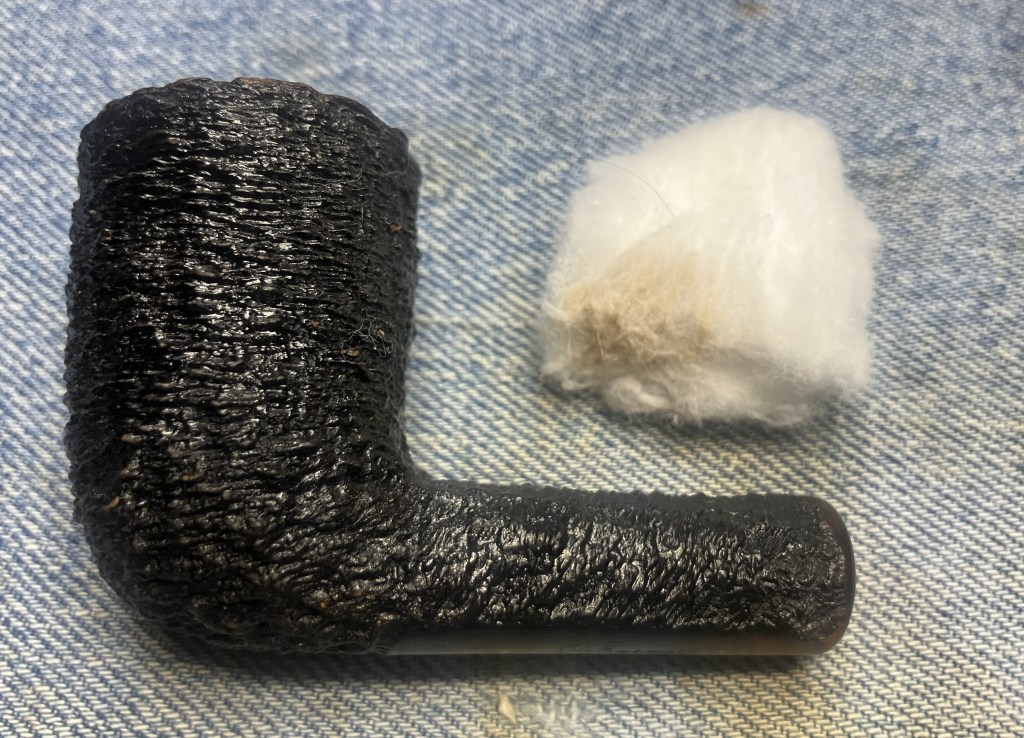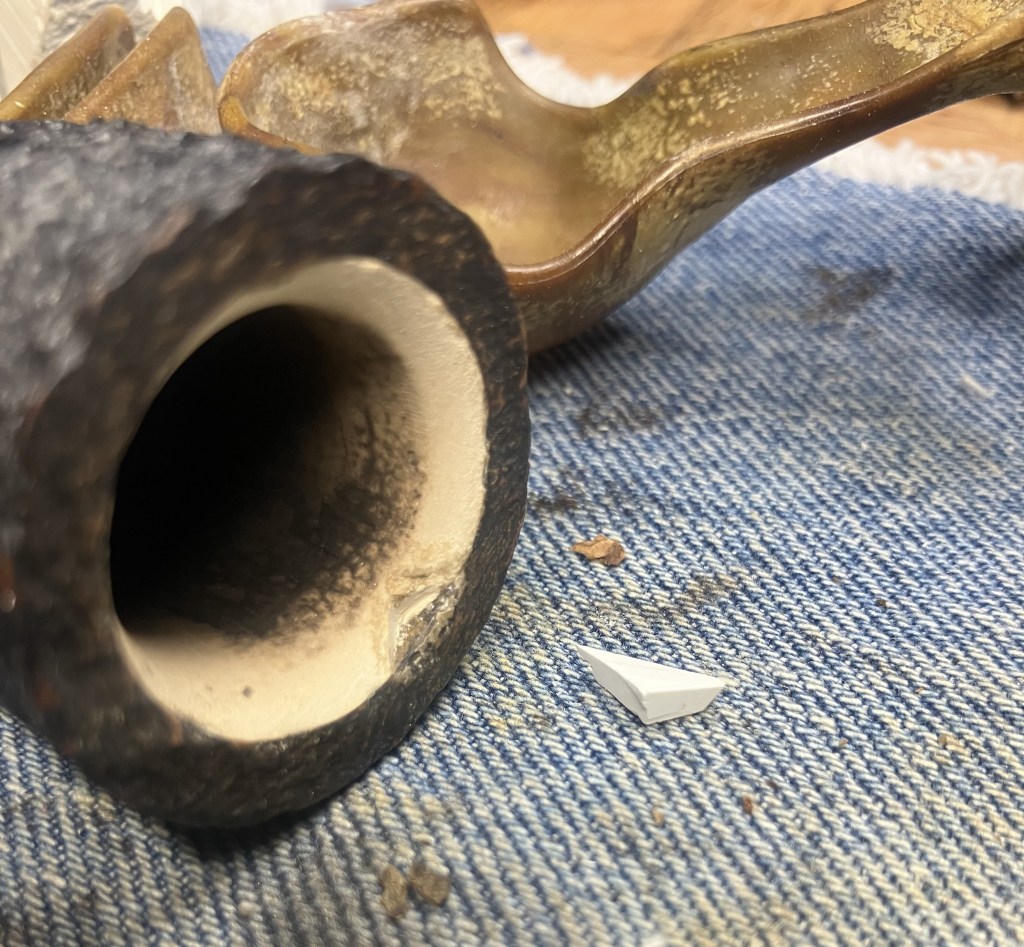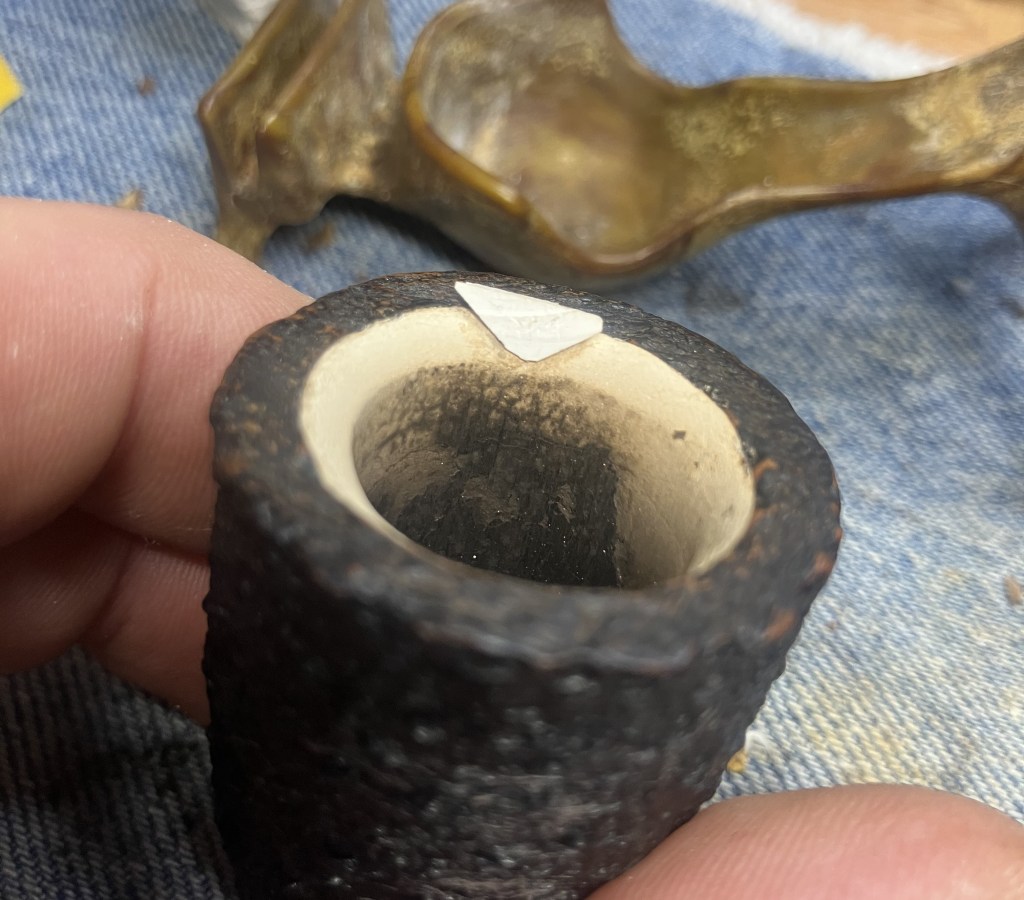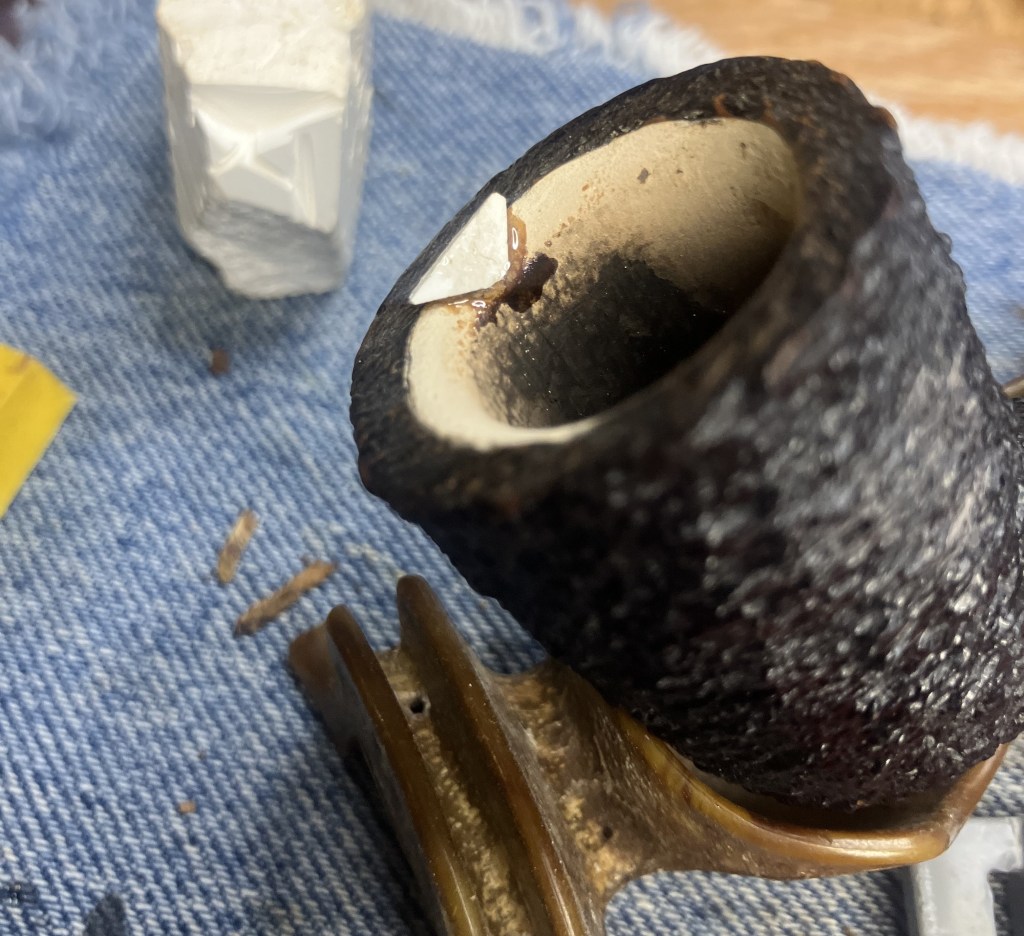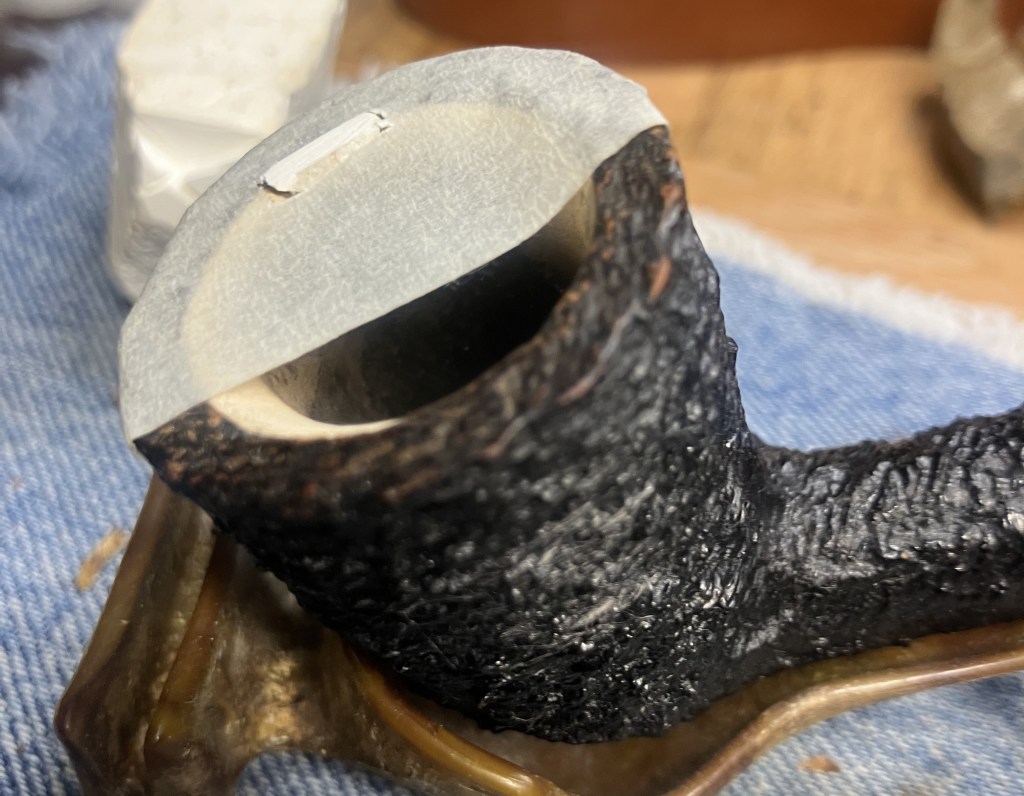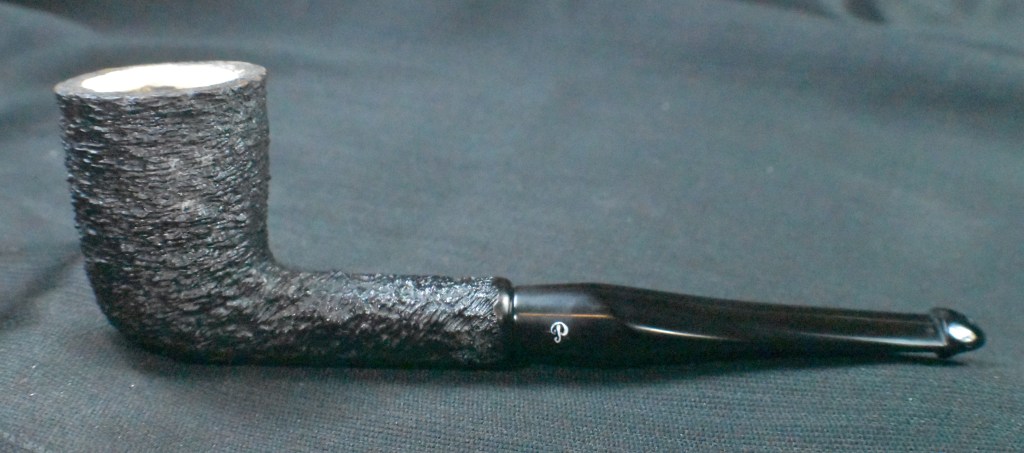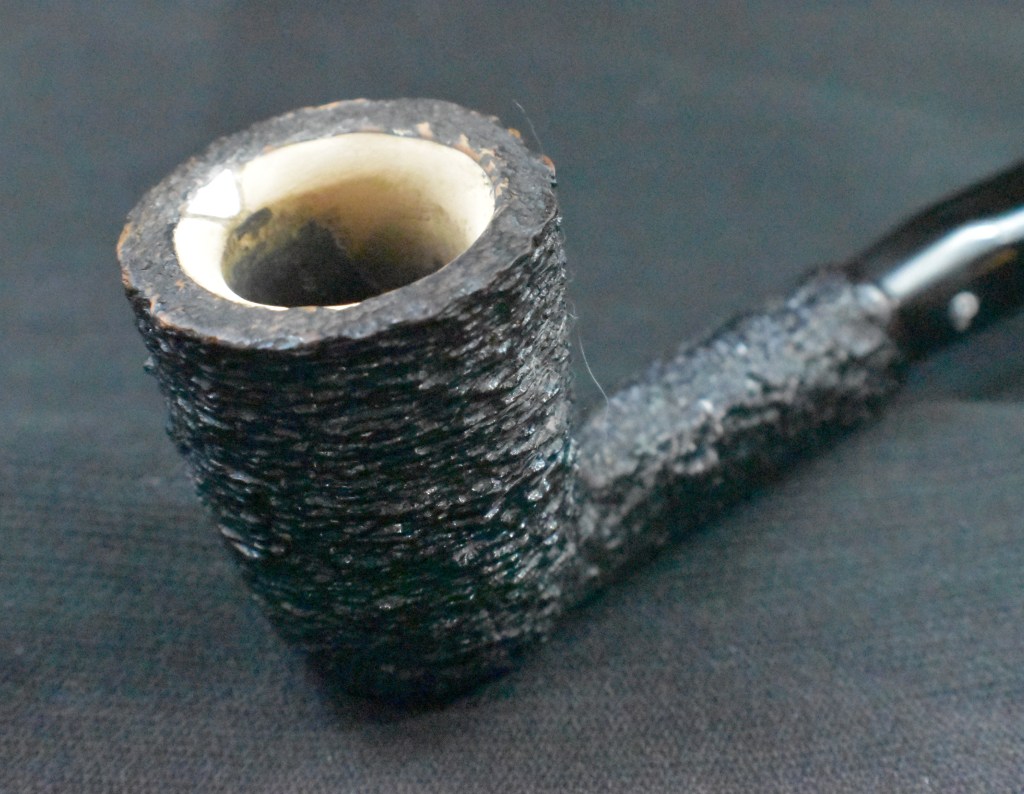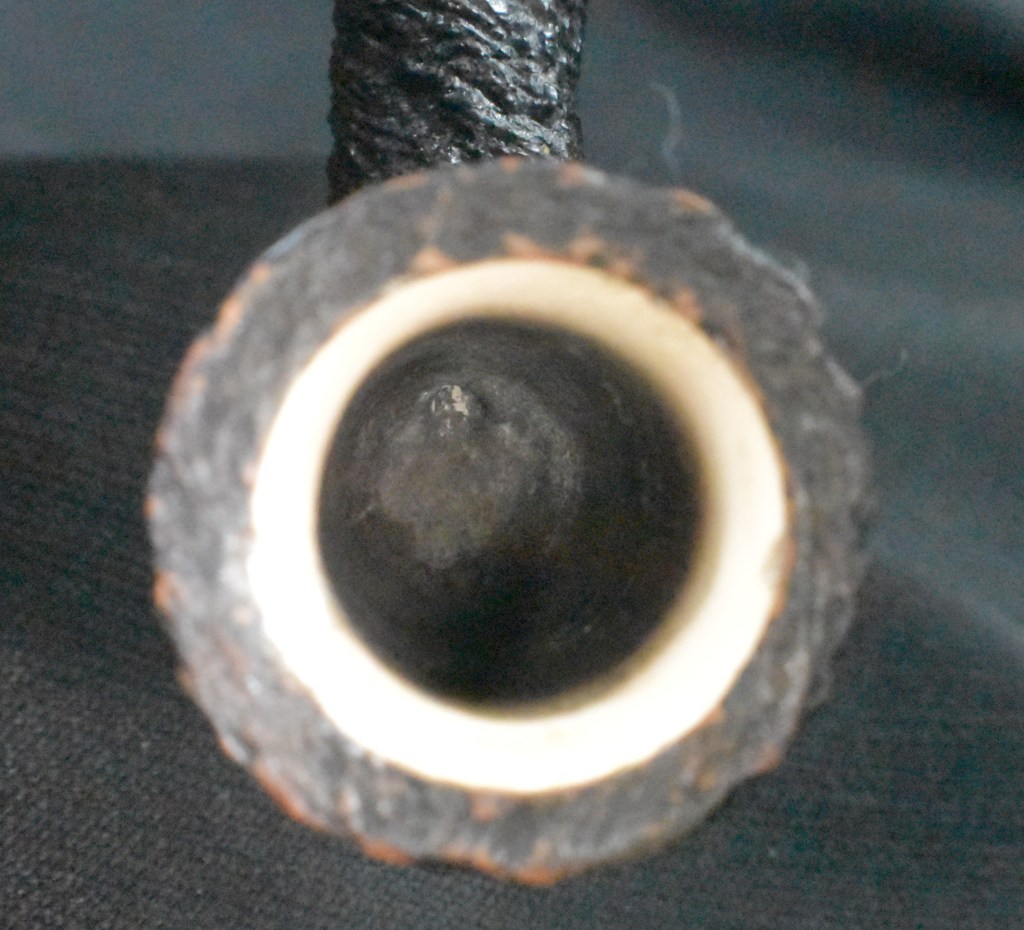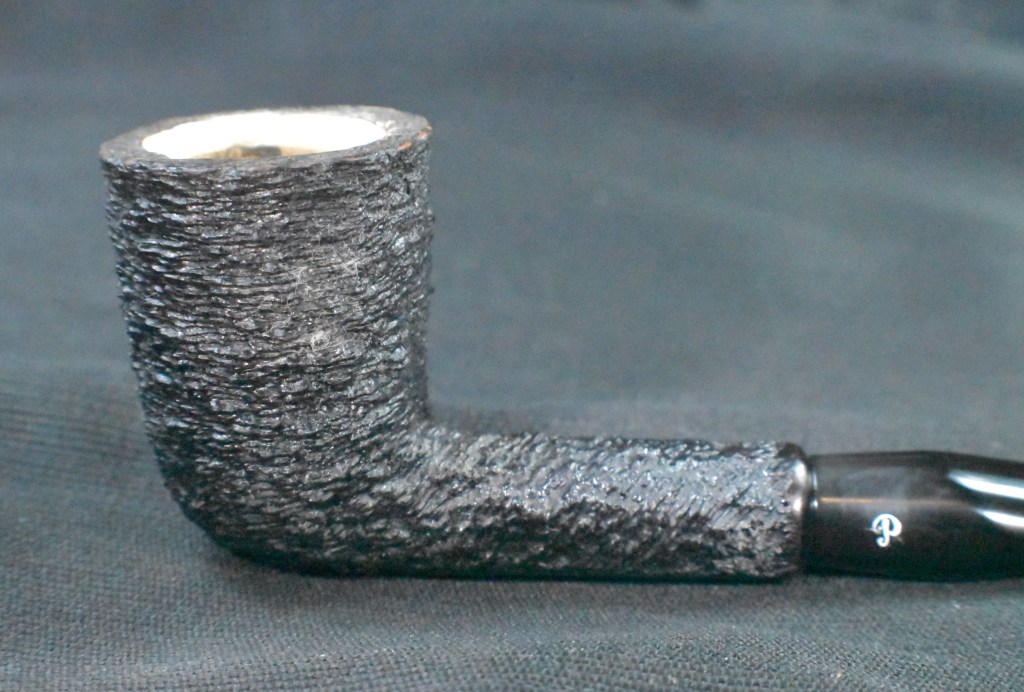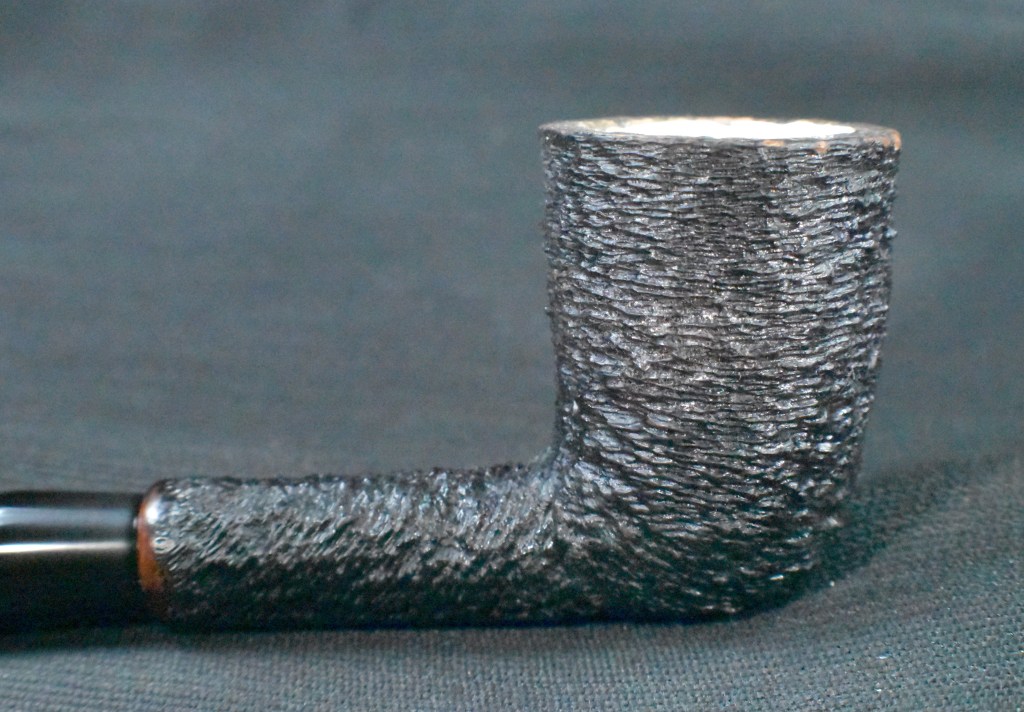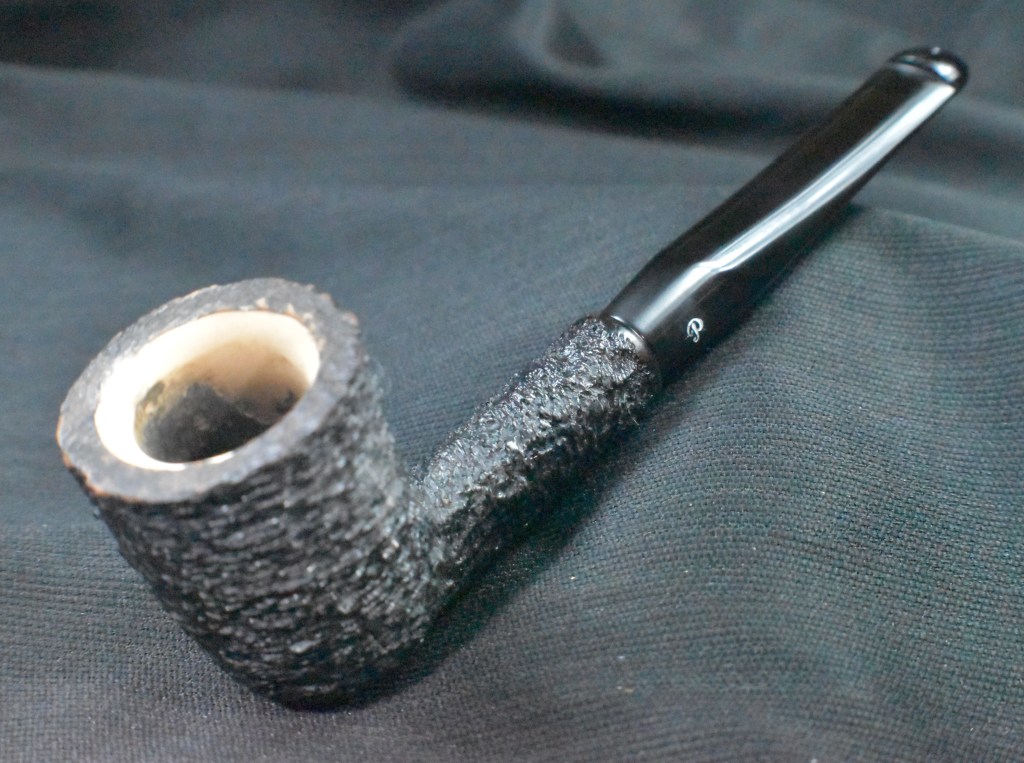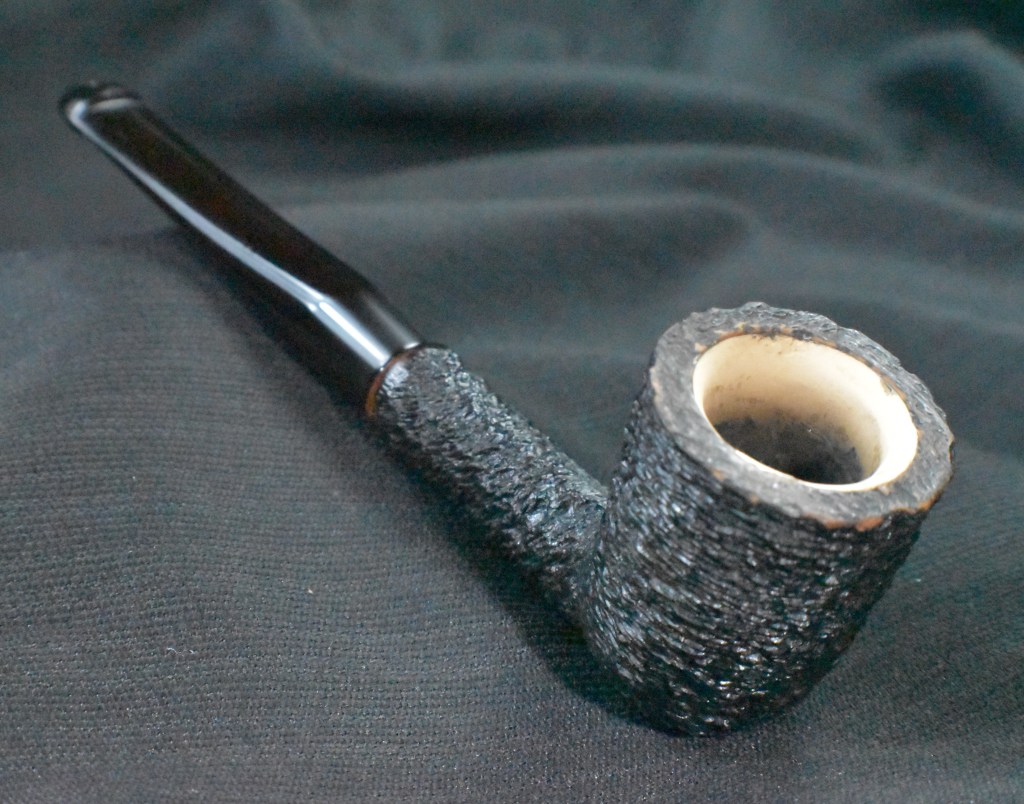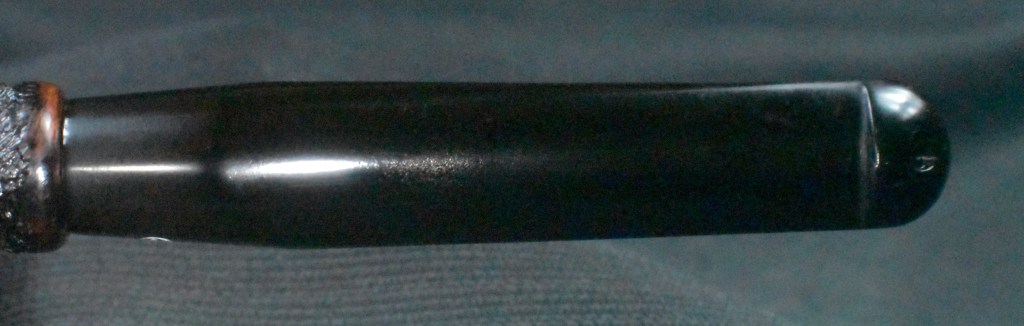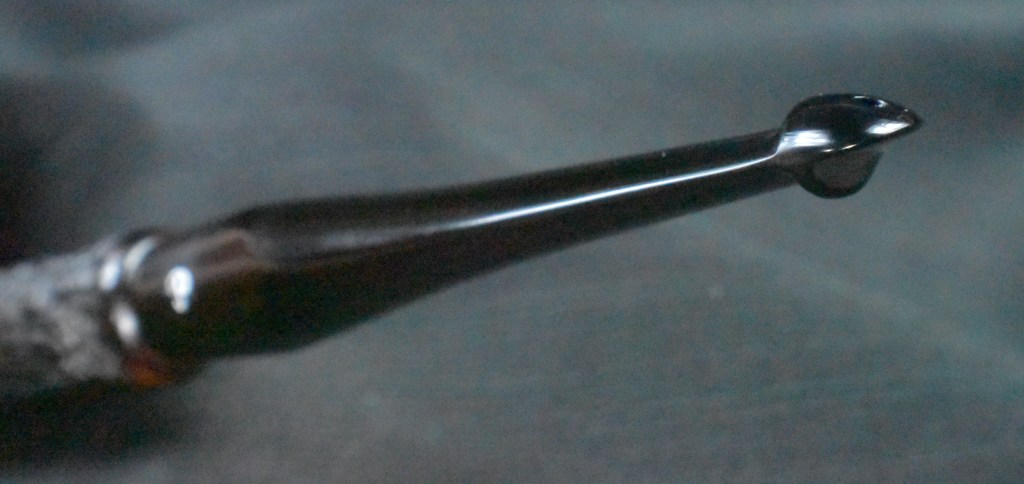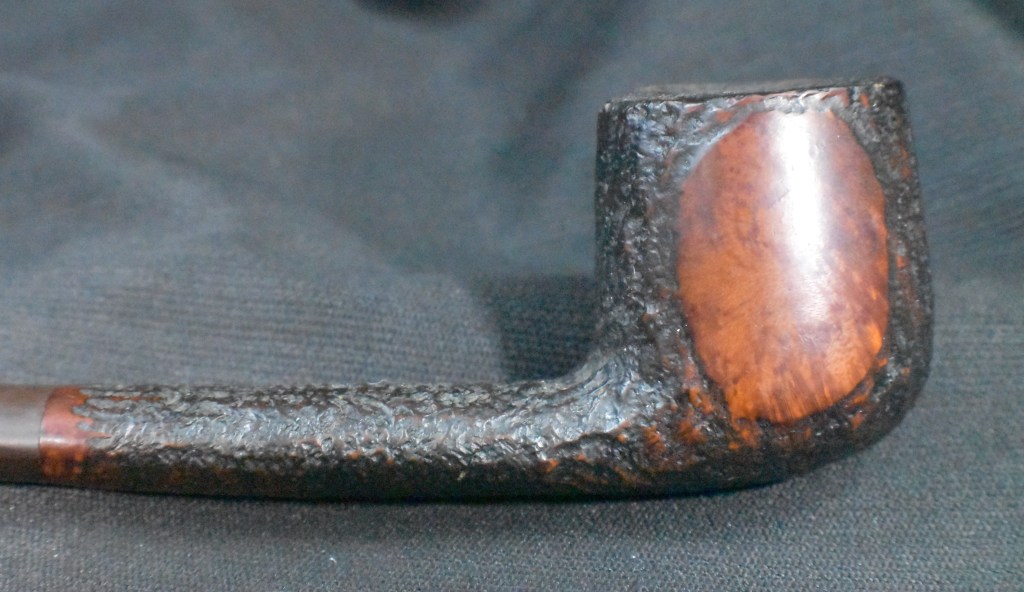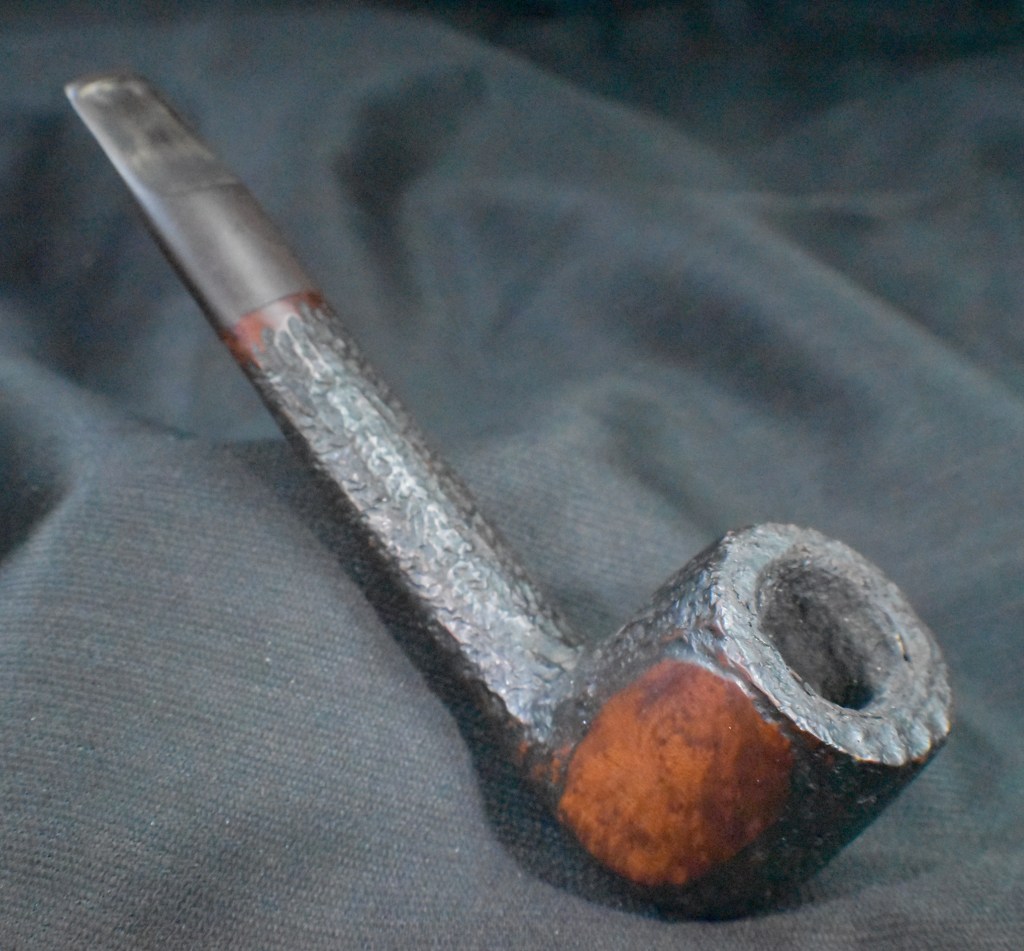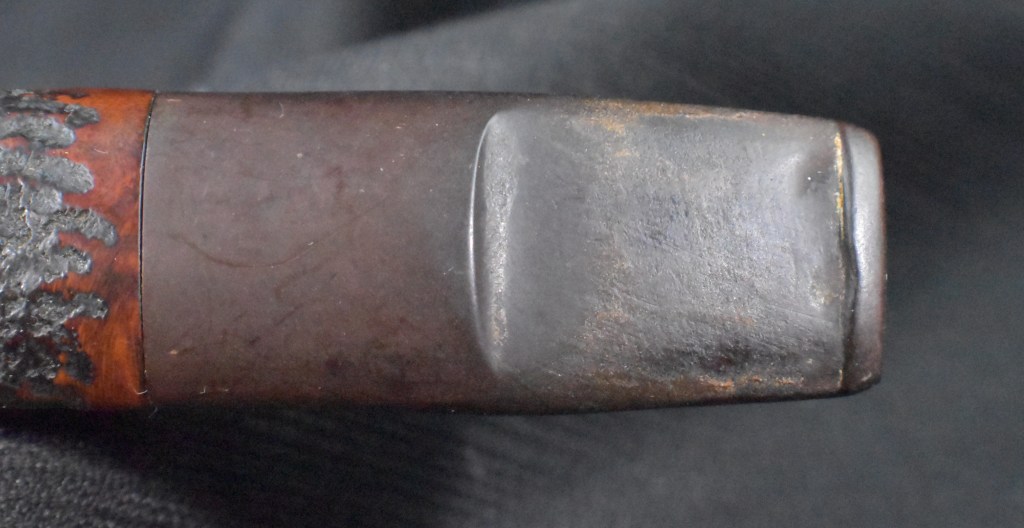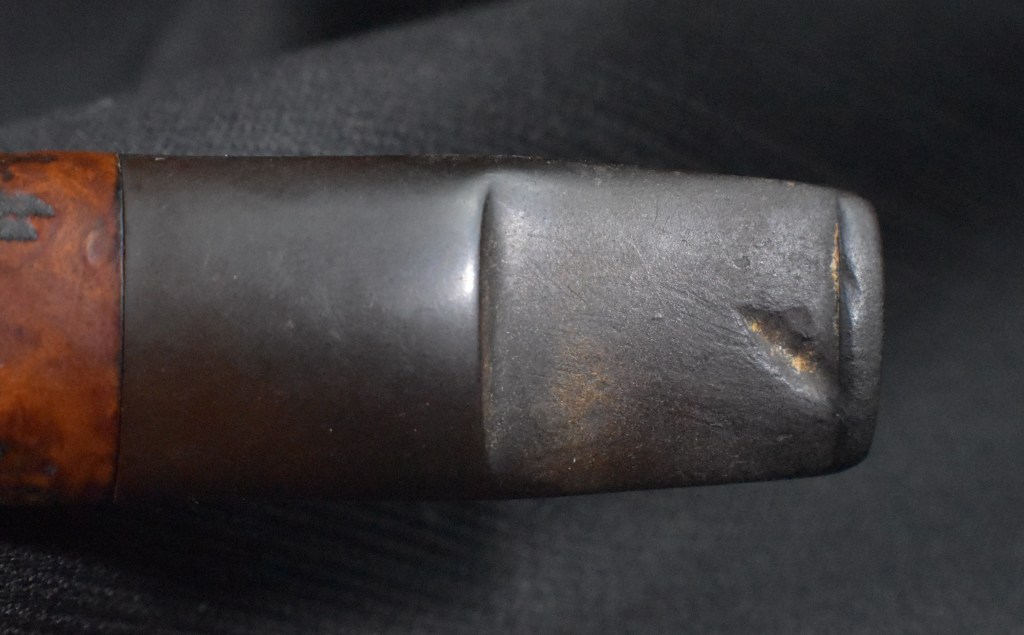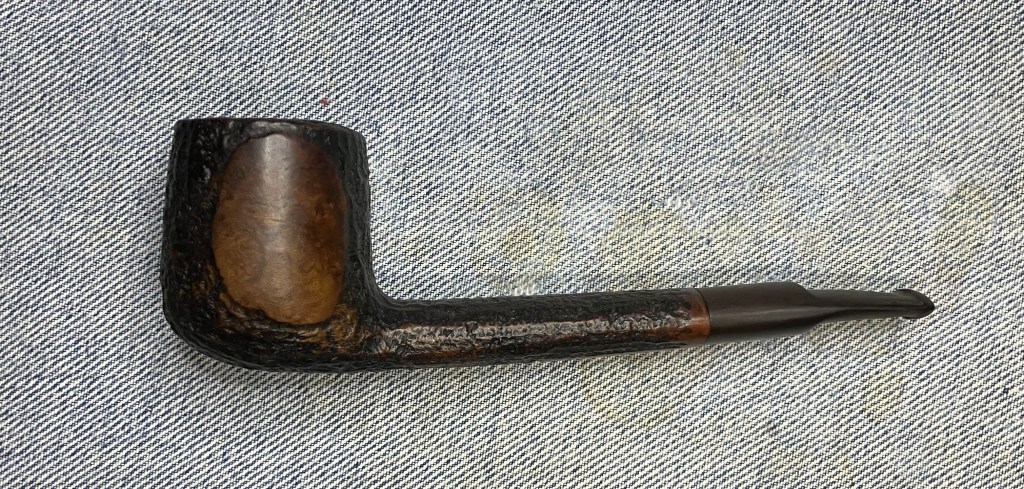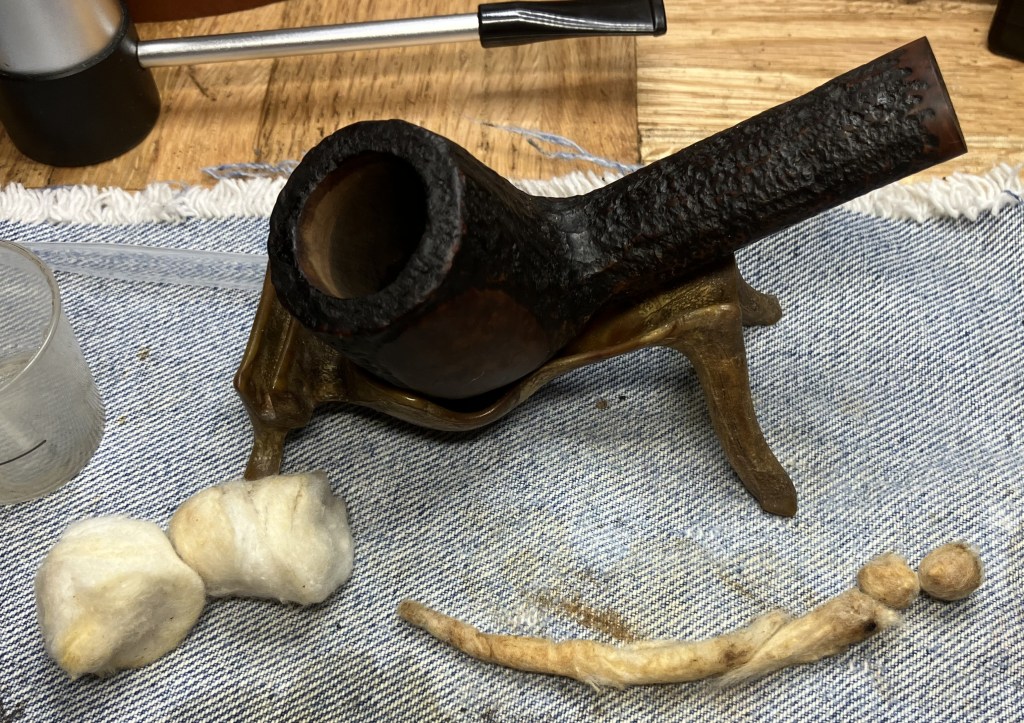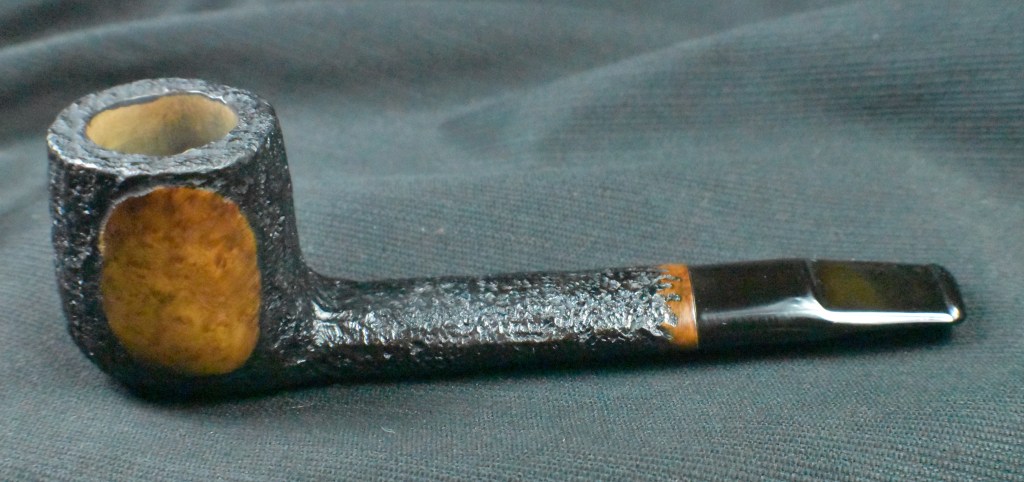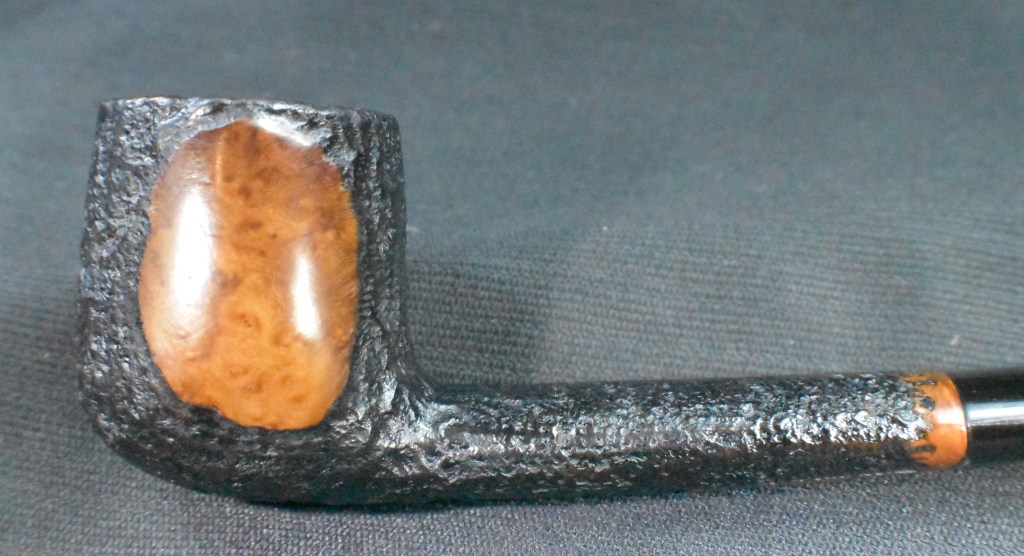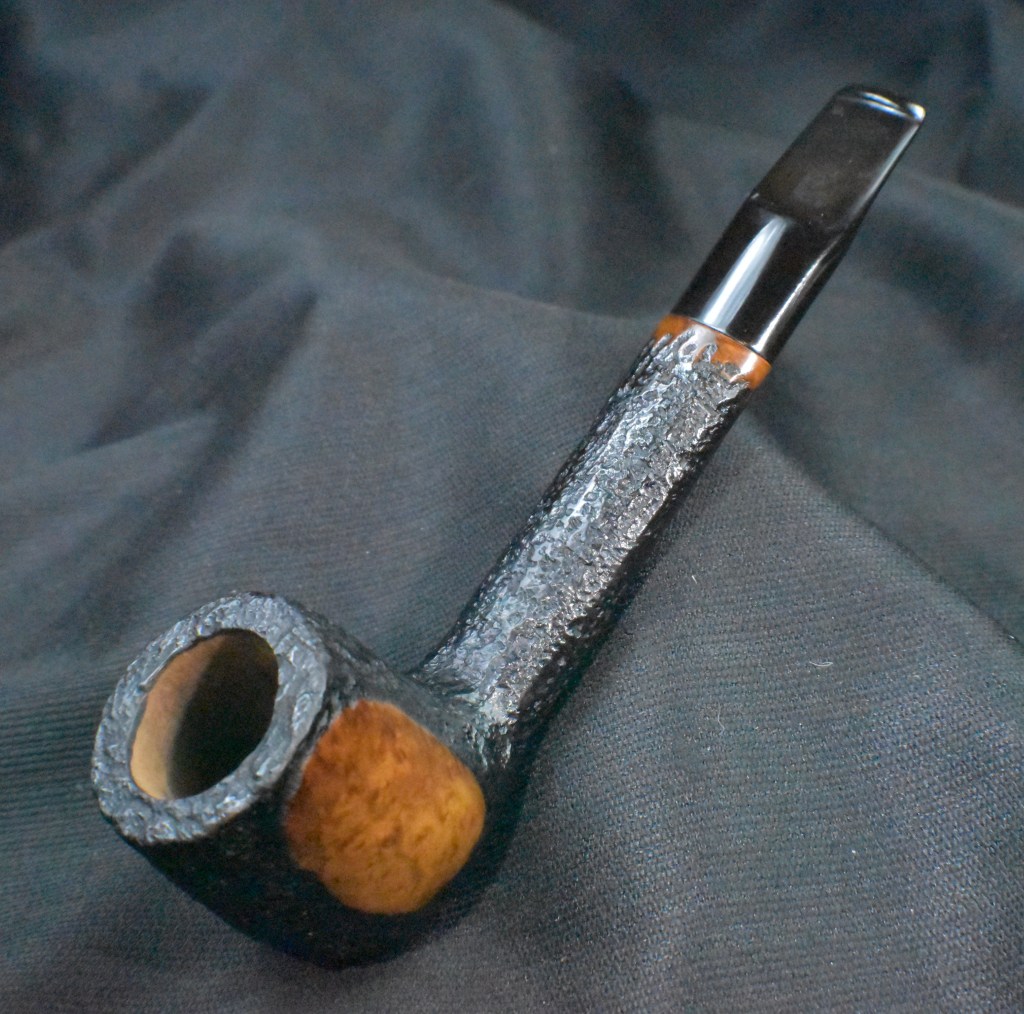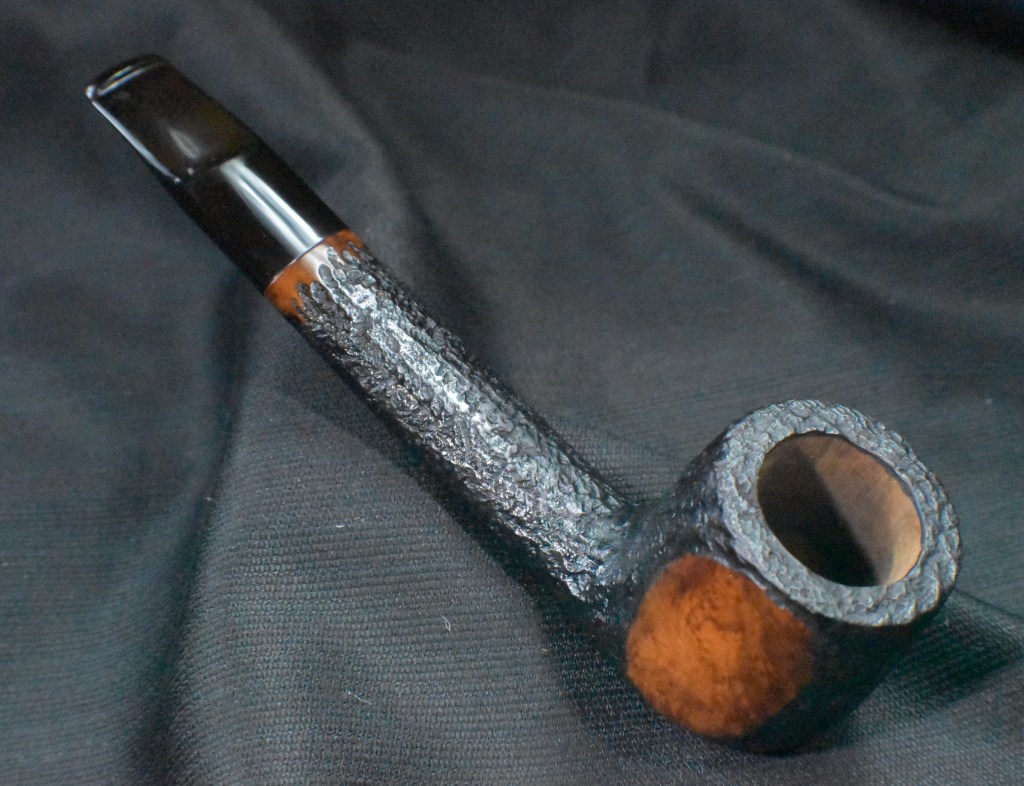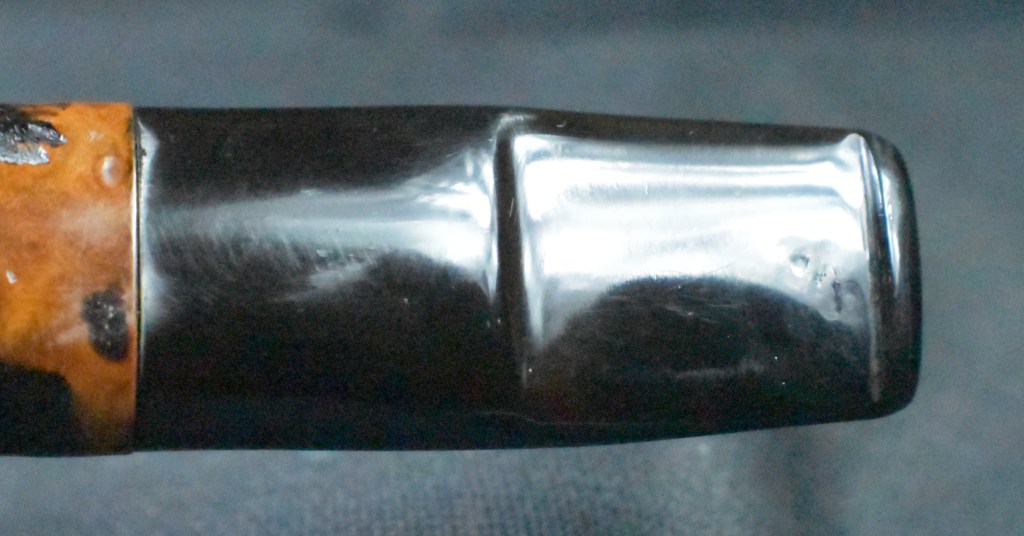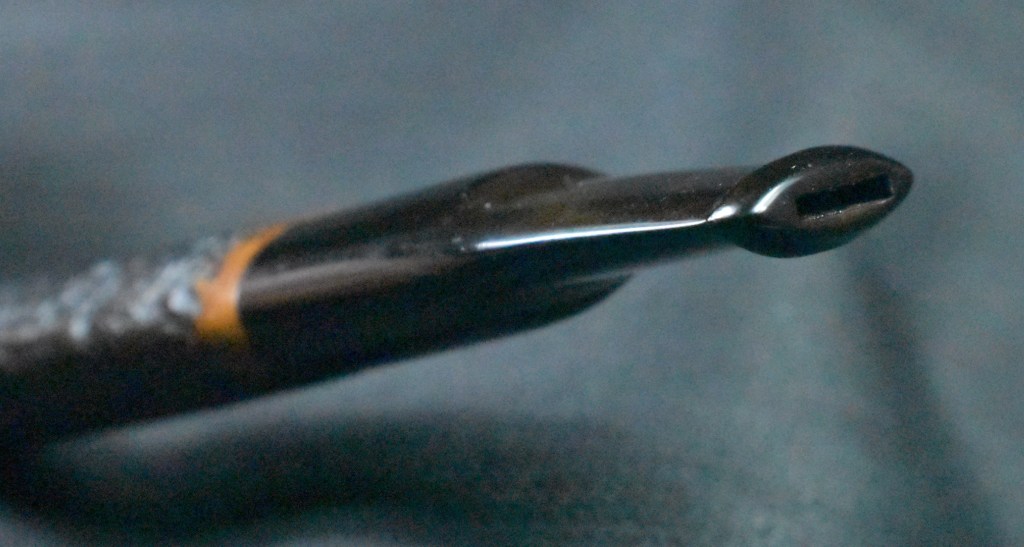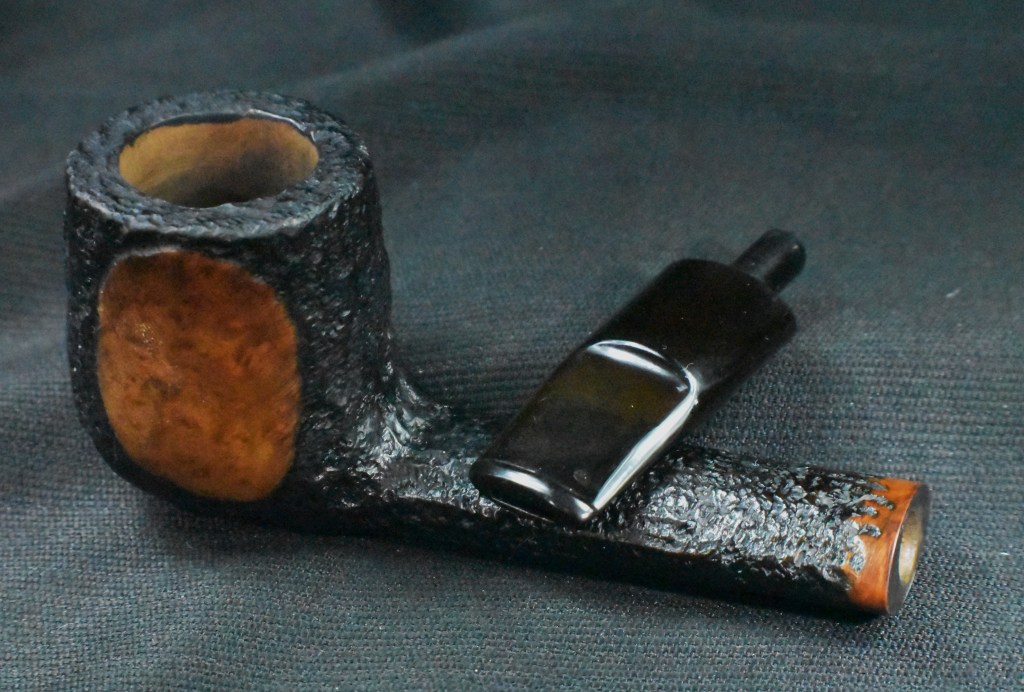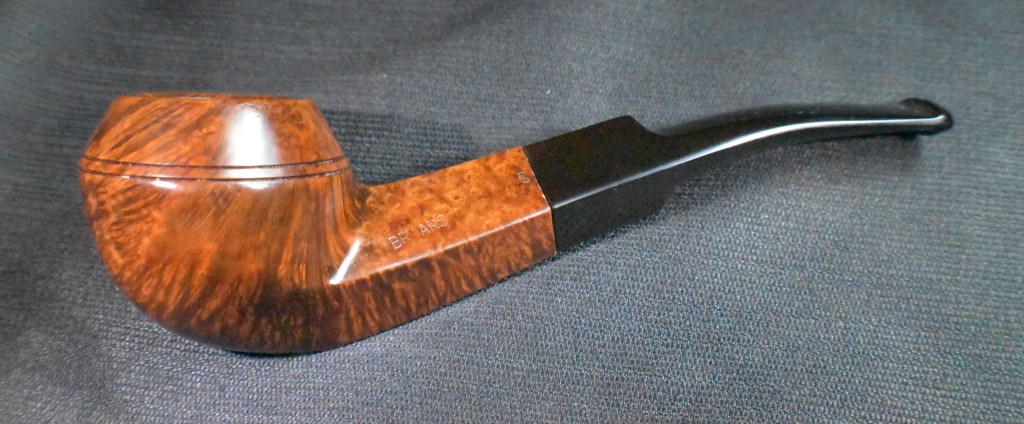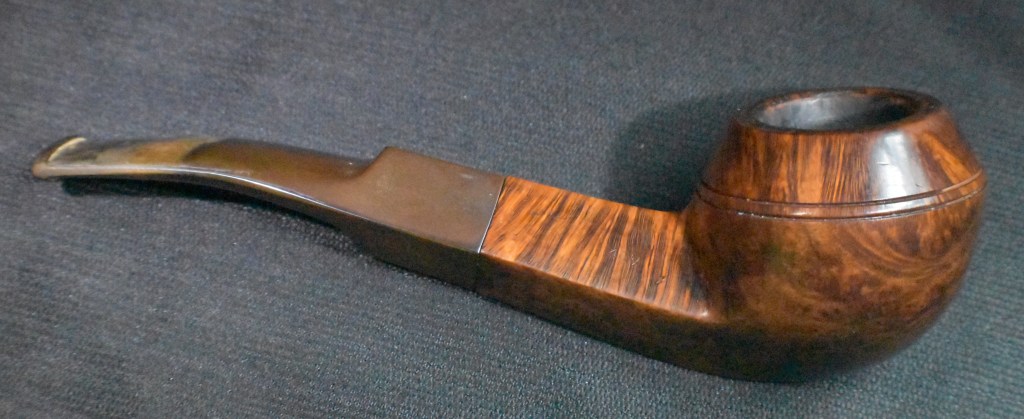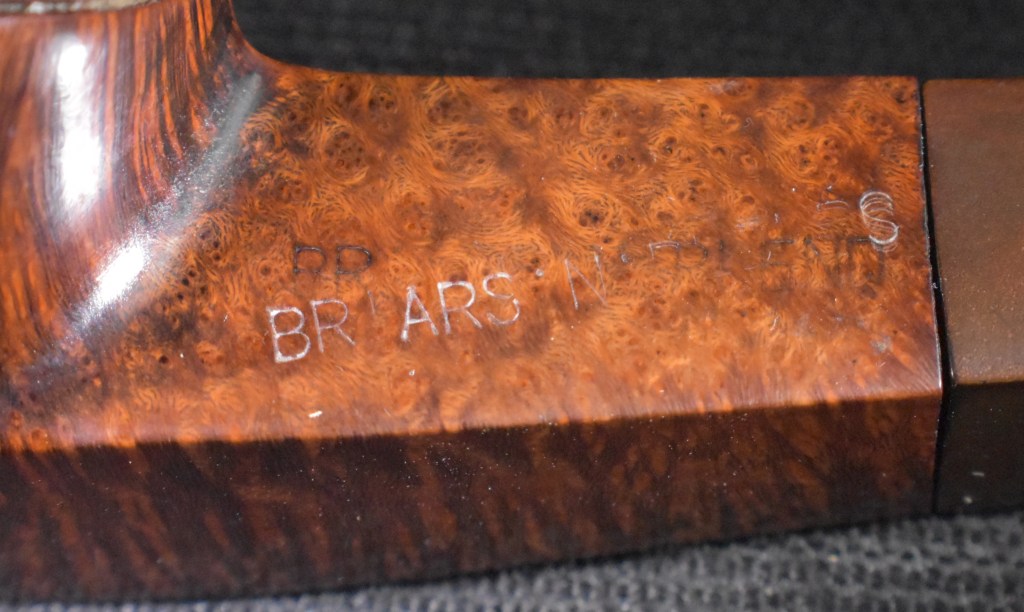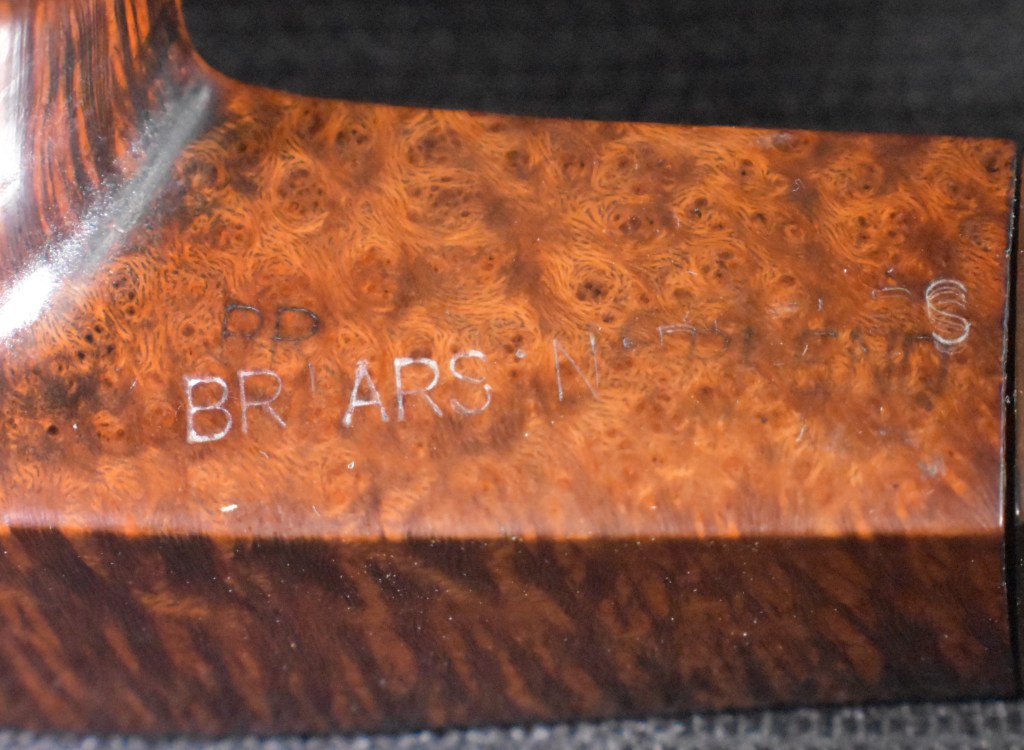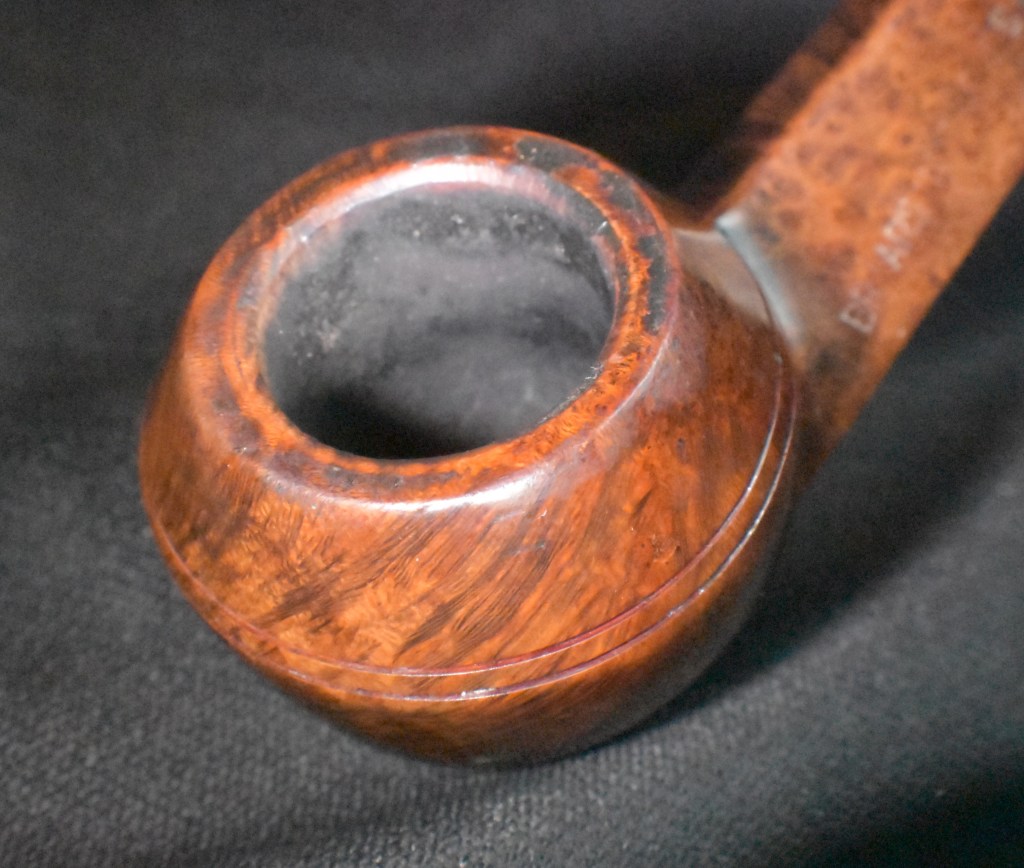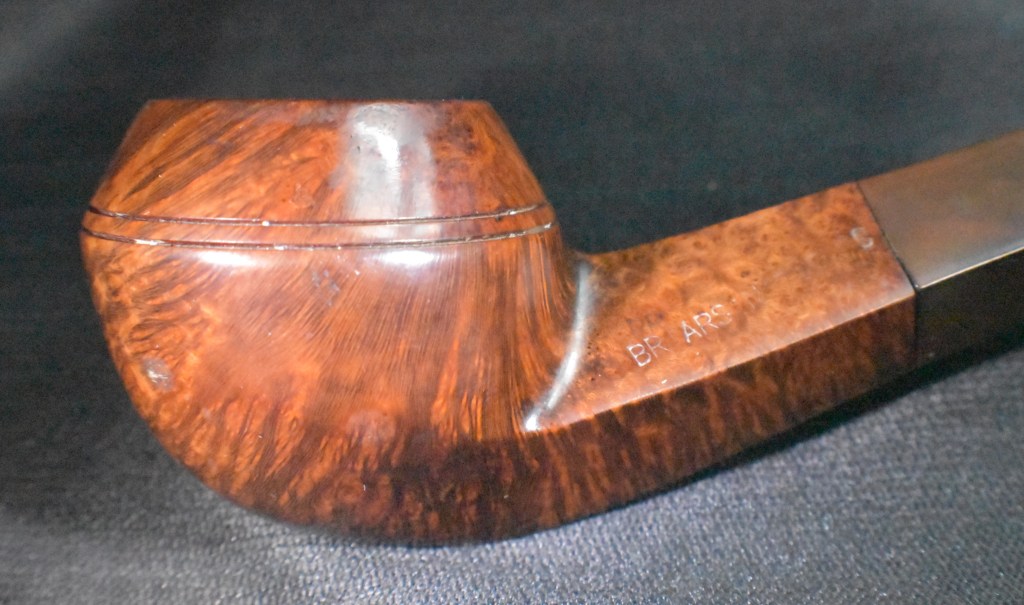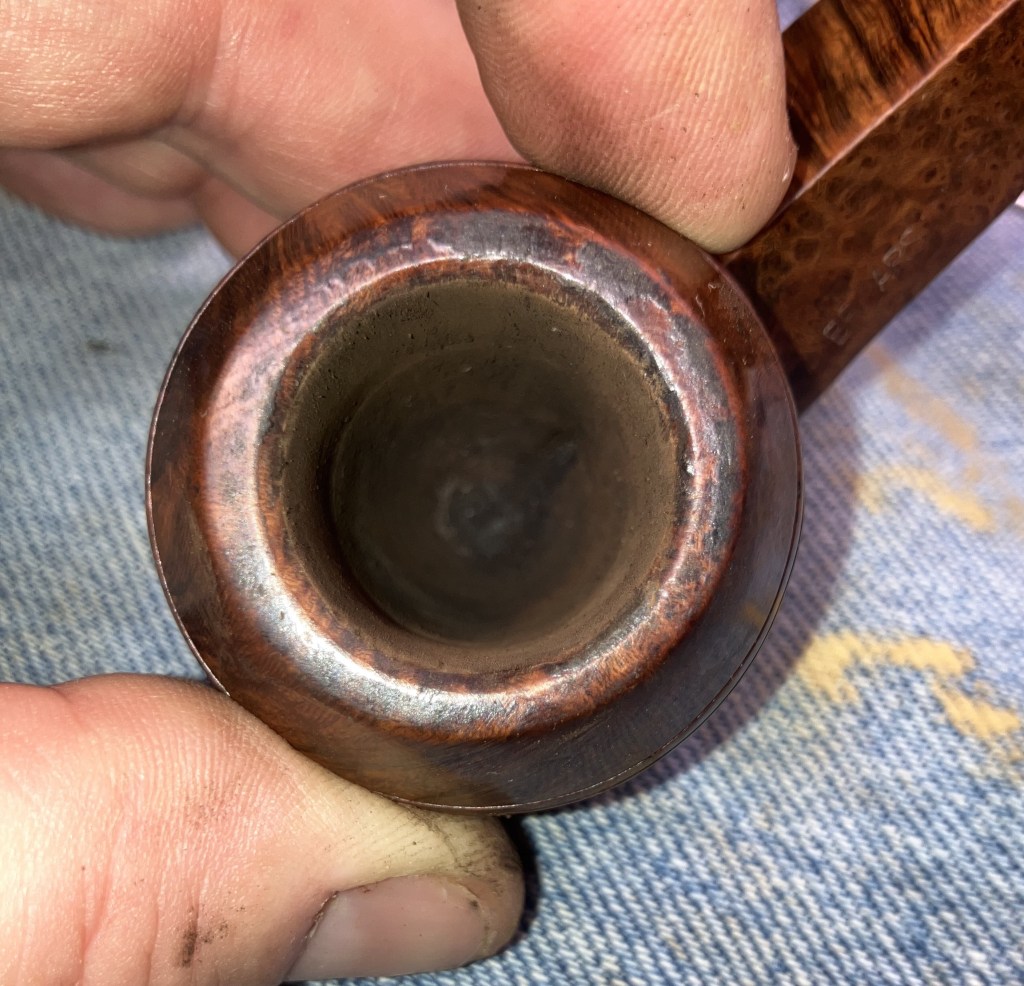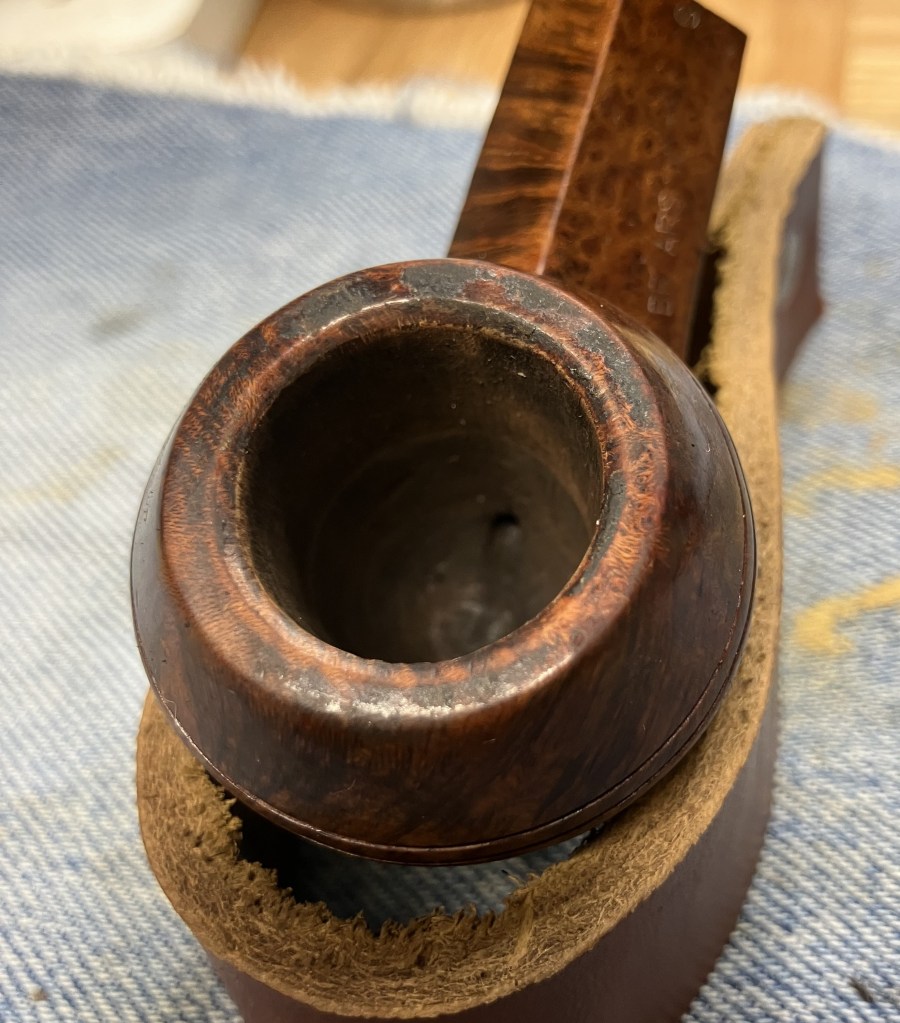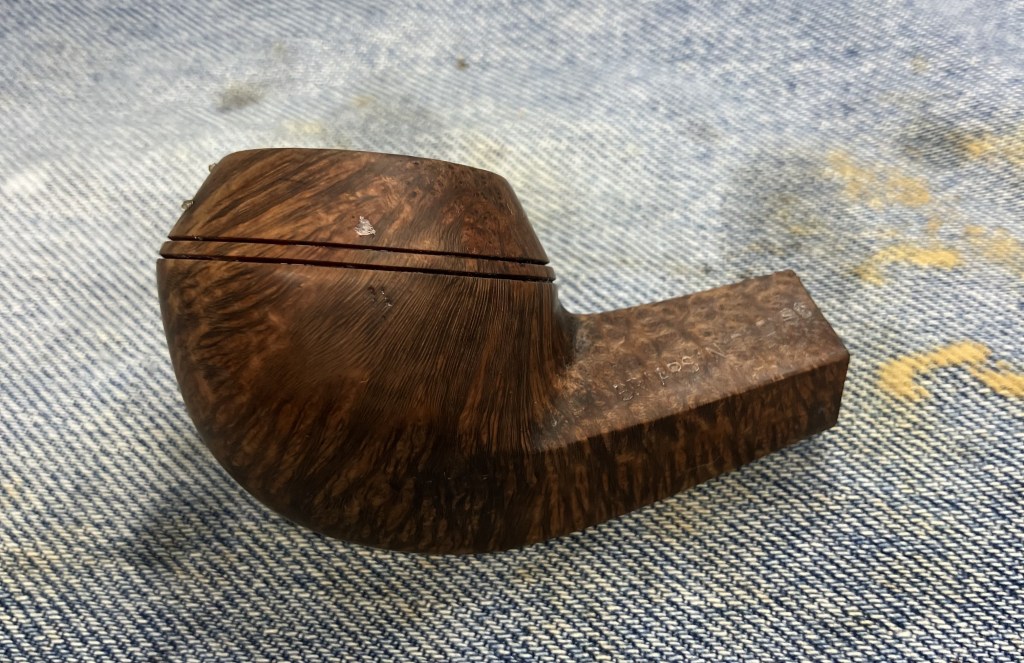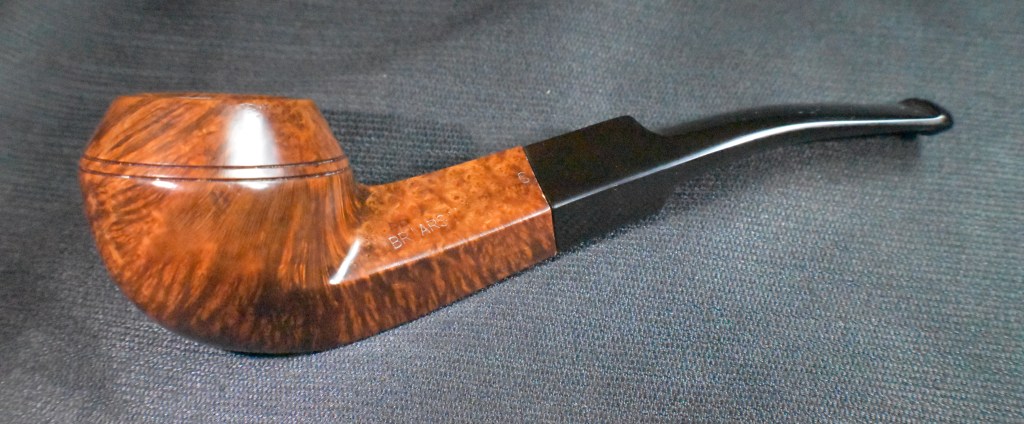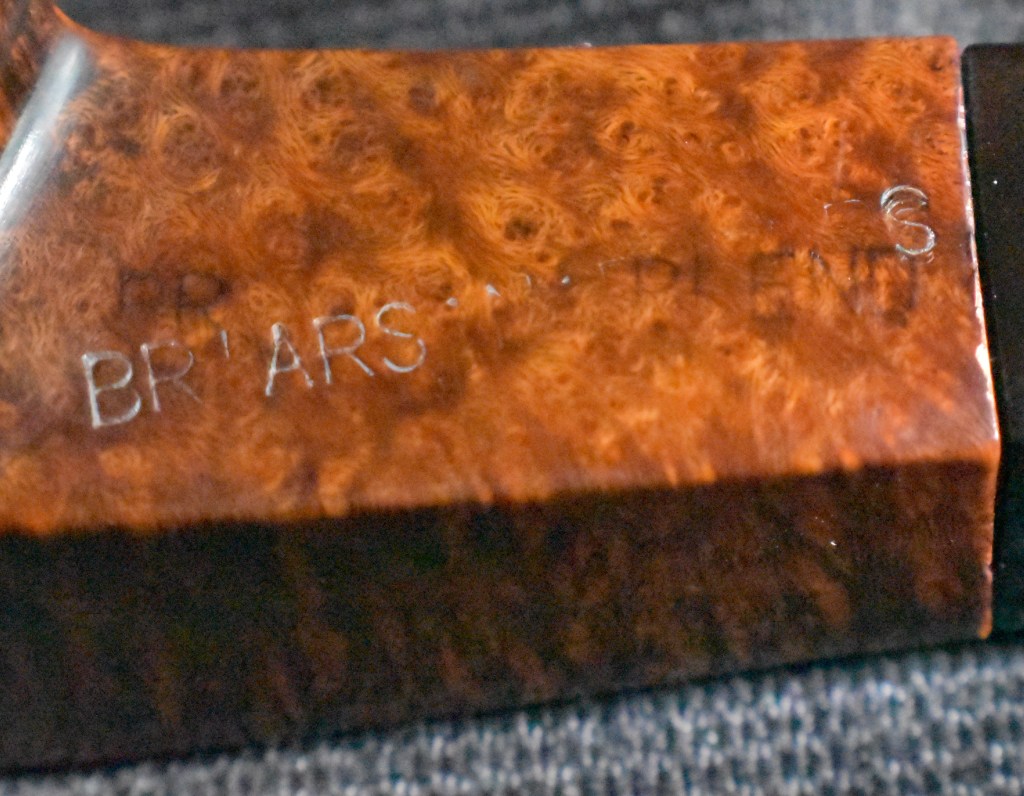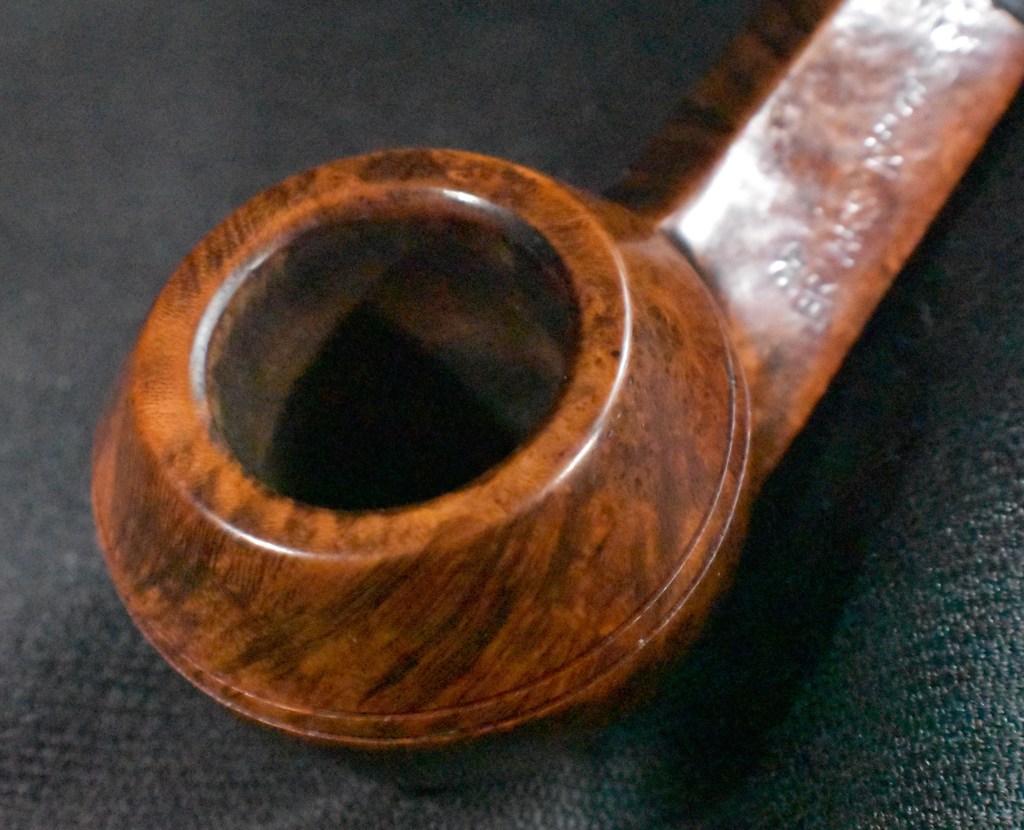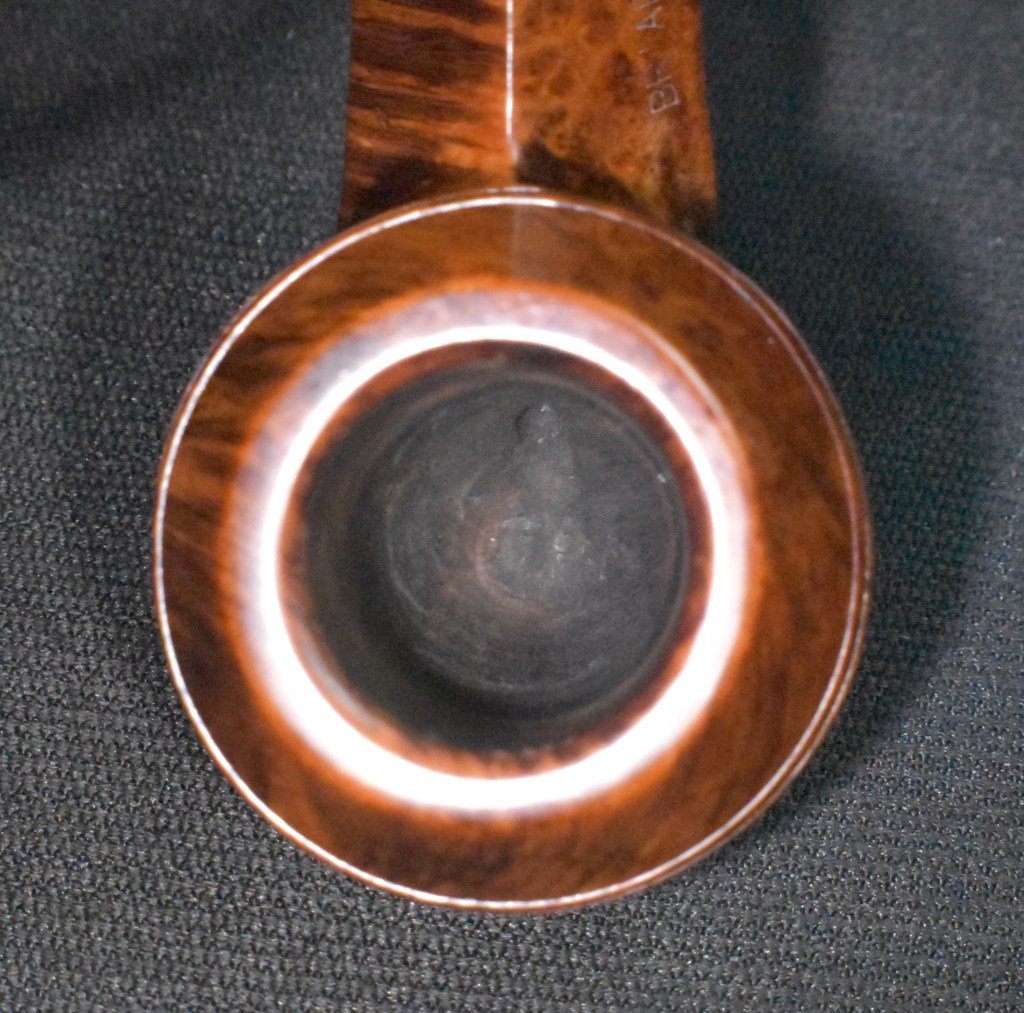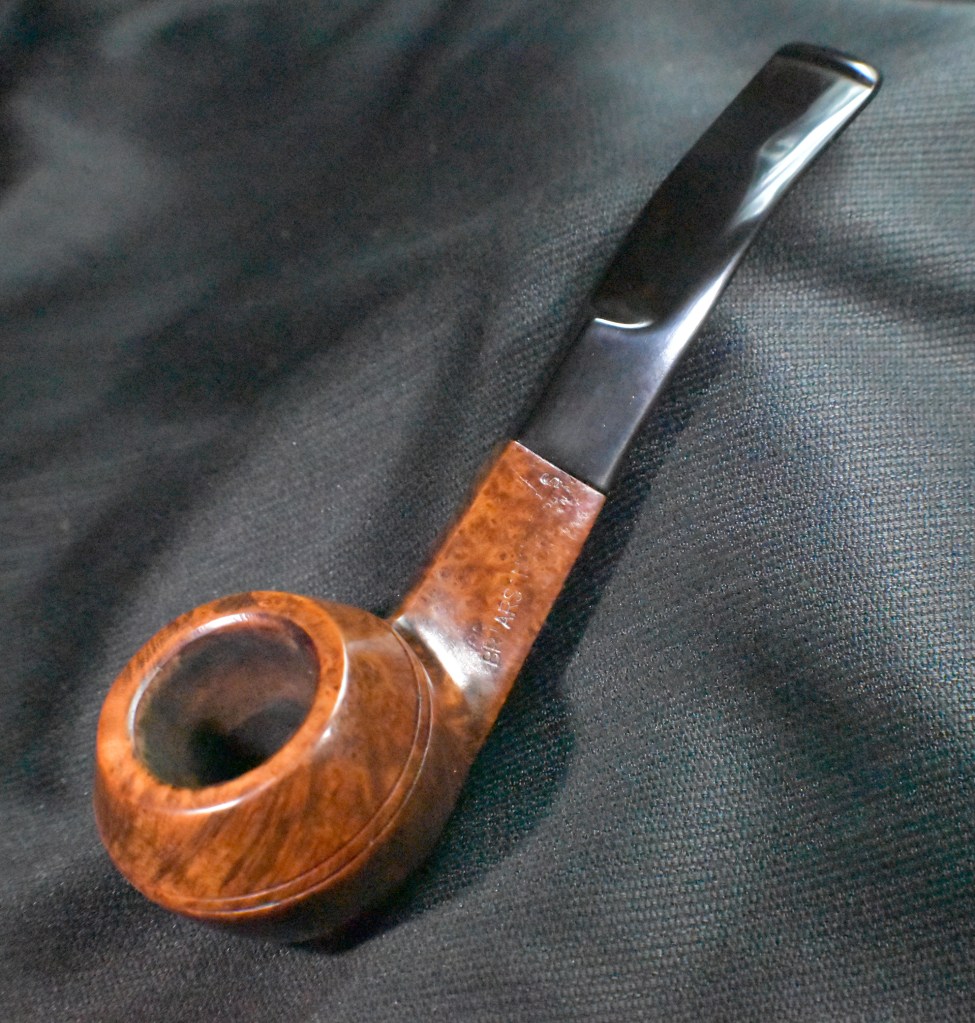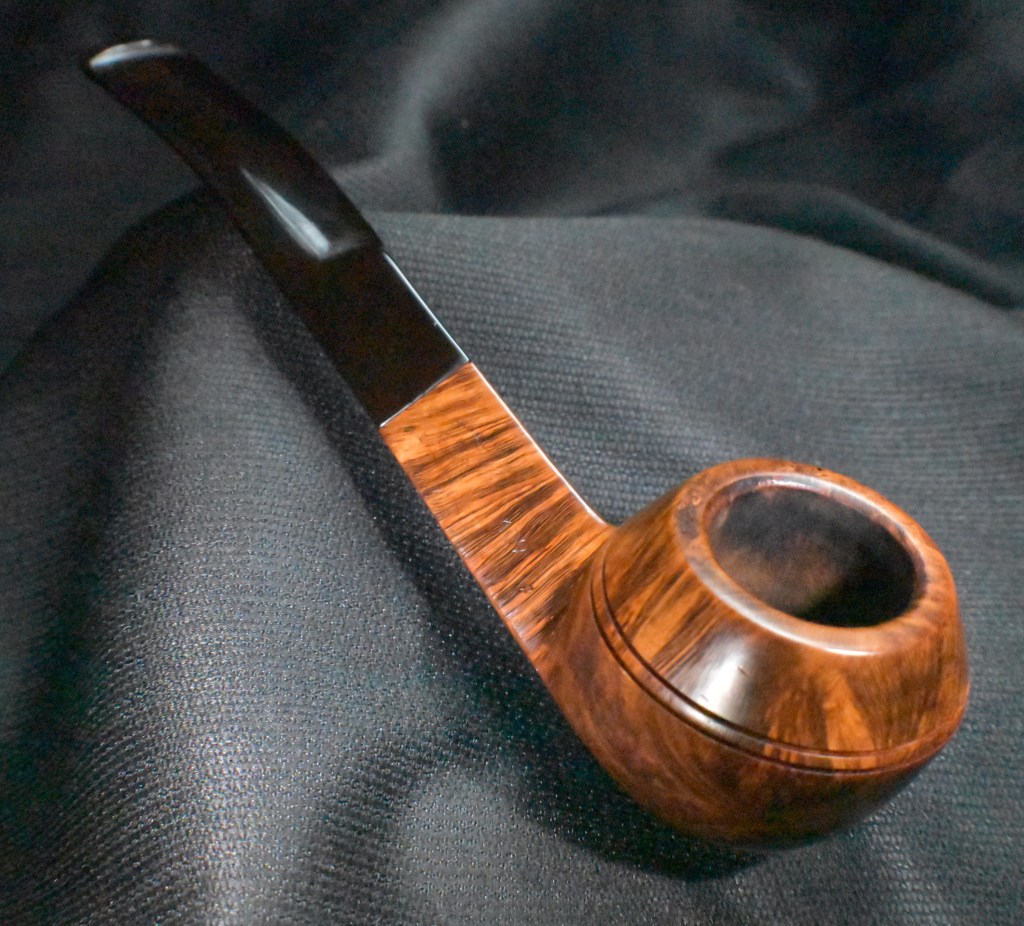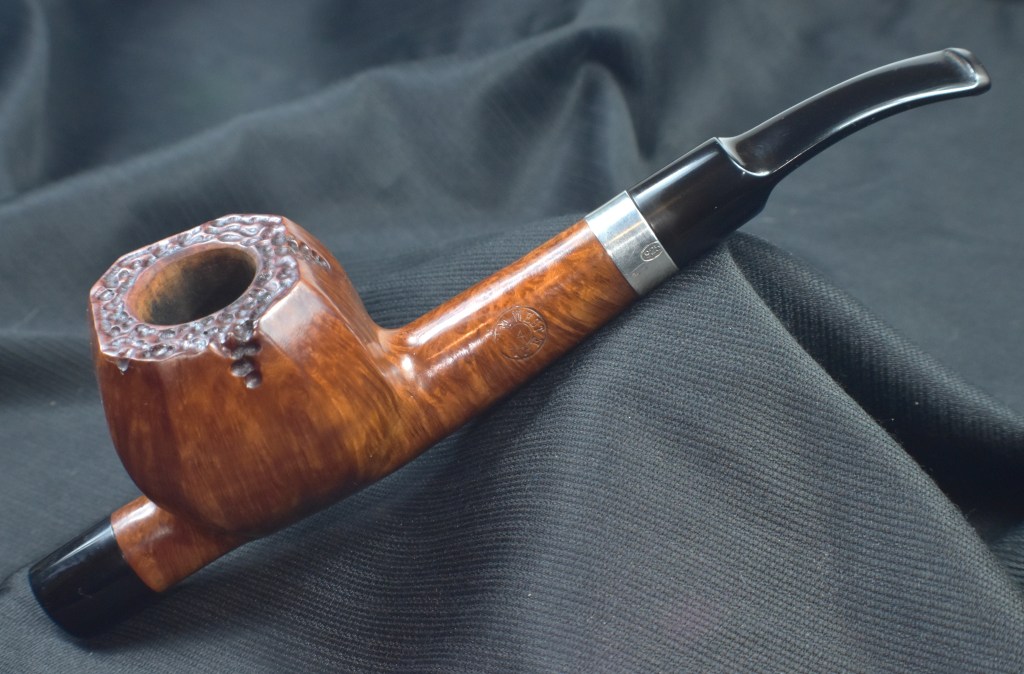
This Brebbia was picked-up as an estate pipe bound for my personal collection. I thought I needed a panel and had been searching for a Savinelli Ottogono bent billiard for what seemed like a couple of years. I saw this little darling and thought, “that is a great shape”. The auction timed out with no one wanting to pay the buyer their asking price. I watched and waited for another posting period or two and the pipe remained. I finally broke-down and made an offer that I thought was reasonable. The offer was accepted and the Brebbia made it’s way to the wilds of southeast Nebraska. Upon arrival I was amazed at the condition of the pipe. It looked far better than the description or photos indicated. Happy, but I have to admit, disappointed at the same time for the restoration would be so uneventful. Actually a cleaning and polishing would be a better description than calling this a restoration. Anyway, The below photos were taken of the pipe prior to it being worked on.
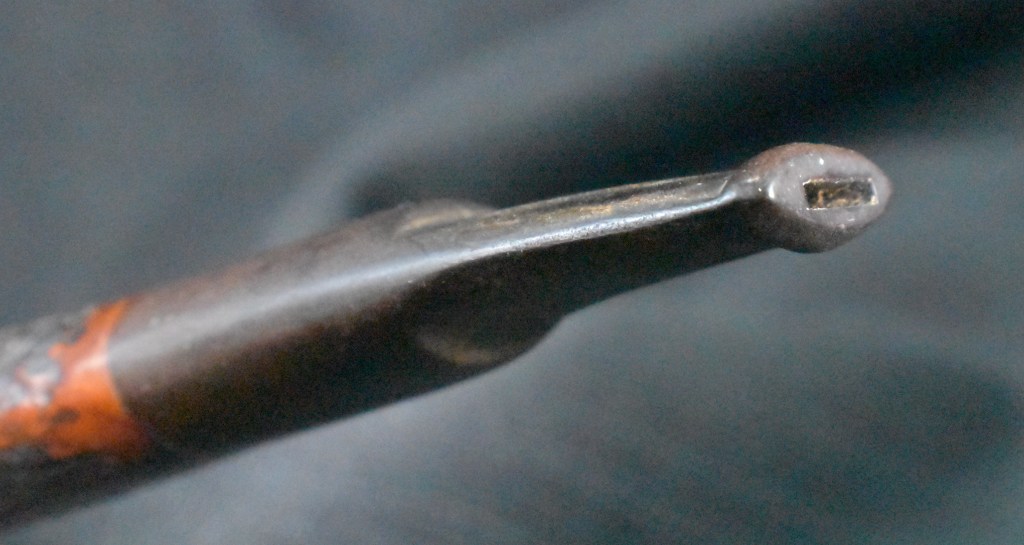
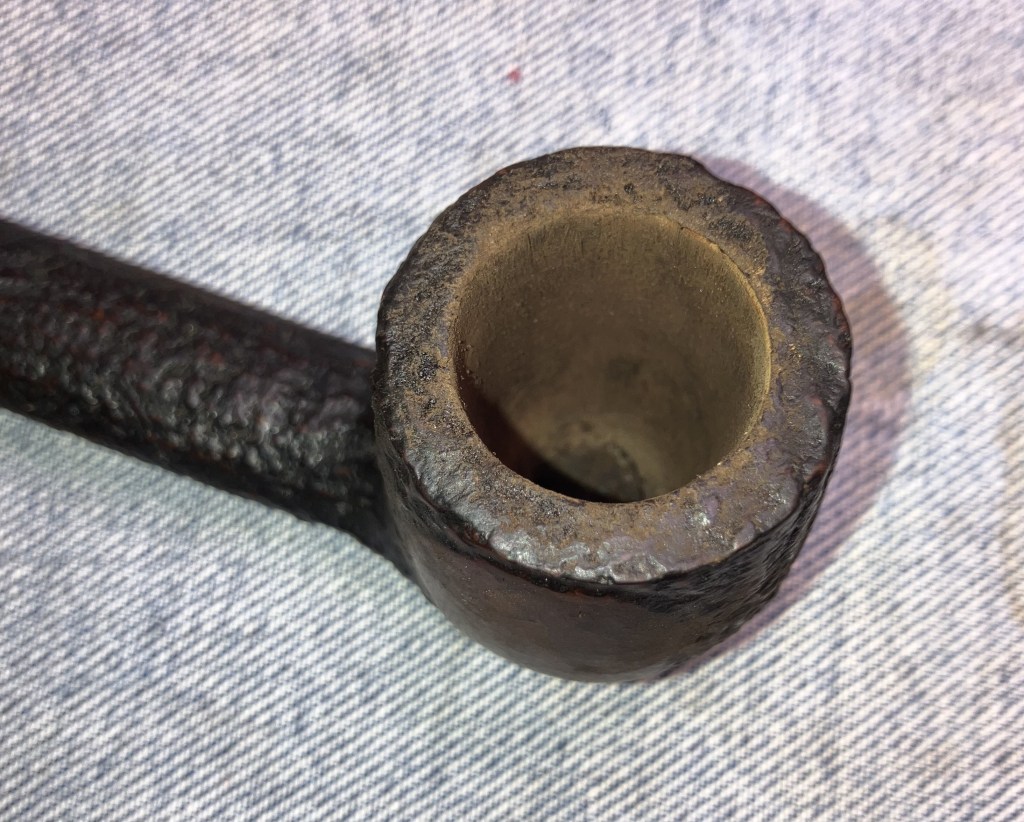
It really did look like a new pipe. You could tell that it had been smoked a couple of times by the condition of the tobacco chamber, the light cake build up and sure there were a couple of light tooth marks on the stem, but this pipe was in great shape. This one was going to be a breeze.
Background
The official Brebbia site, Pipe Brebbia | Official Website and Online Shop has a very nice history of the company section, History. This is recommended reading for those more interested in the brand and history. In a nutshell, Brebbia and Savinelli are like siblings. They grew up together then split off and went their separate ways. Like I said, a nutshell – a very small one too.
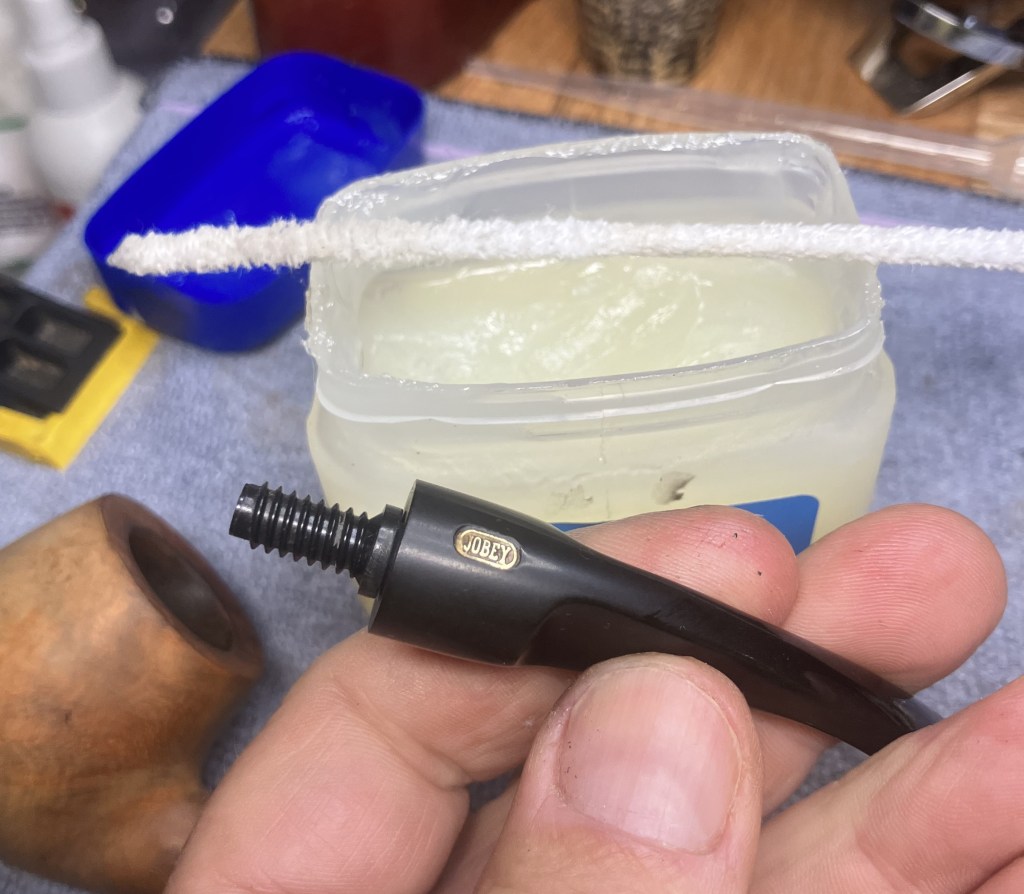
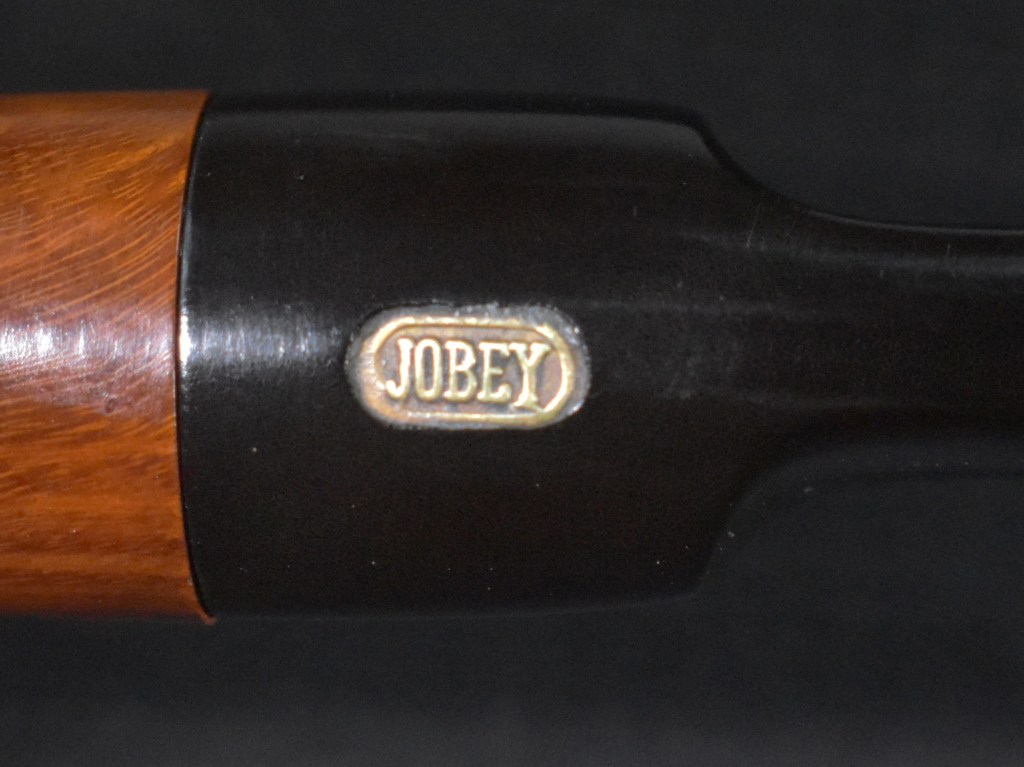
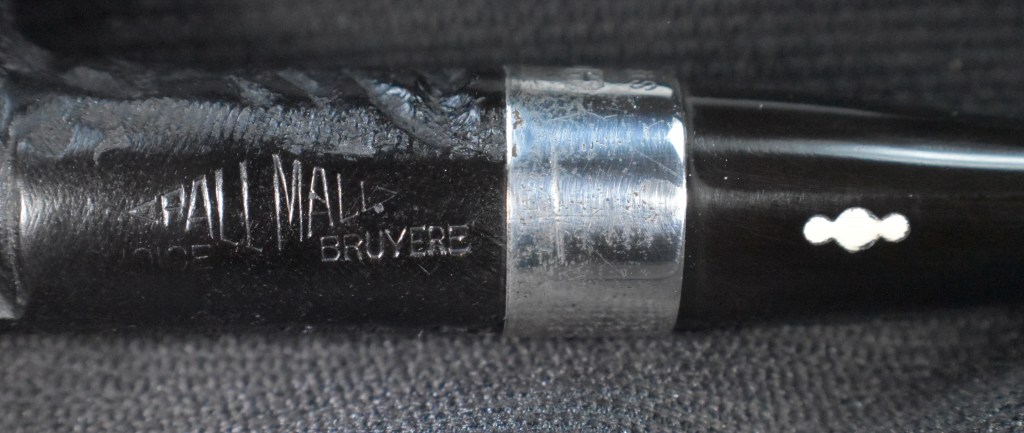
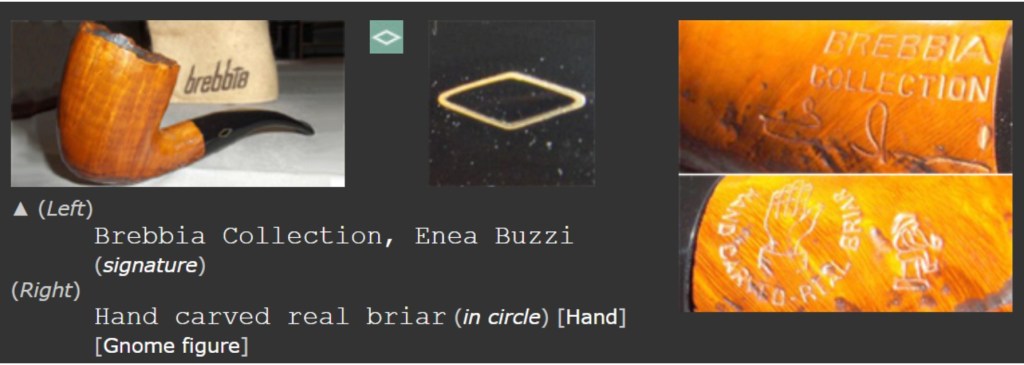
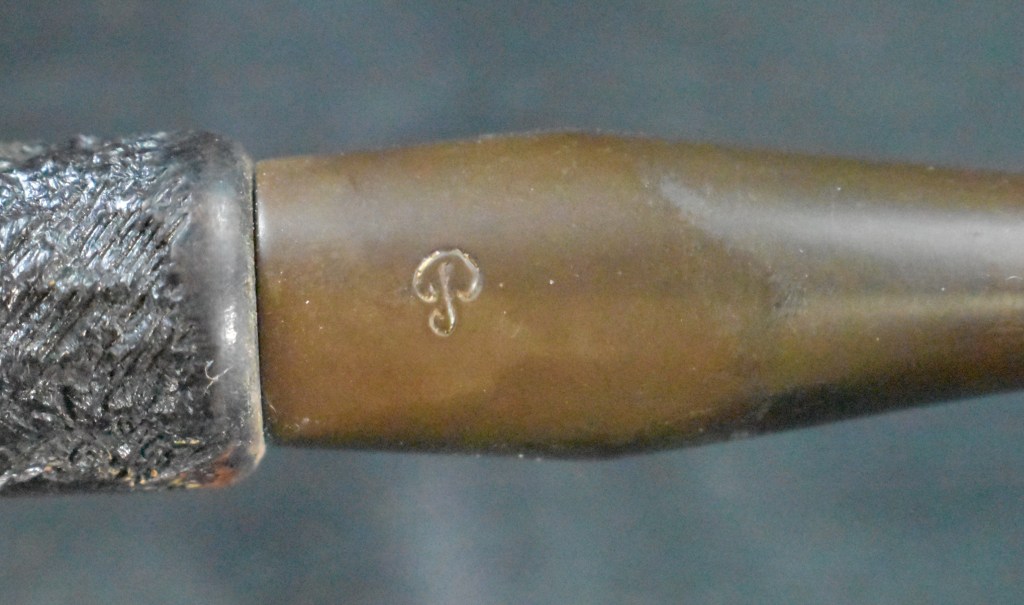
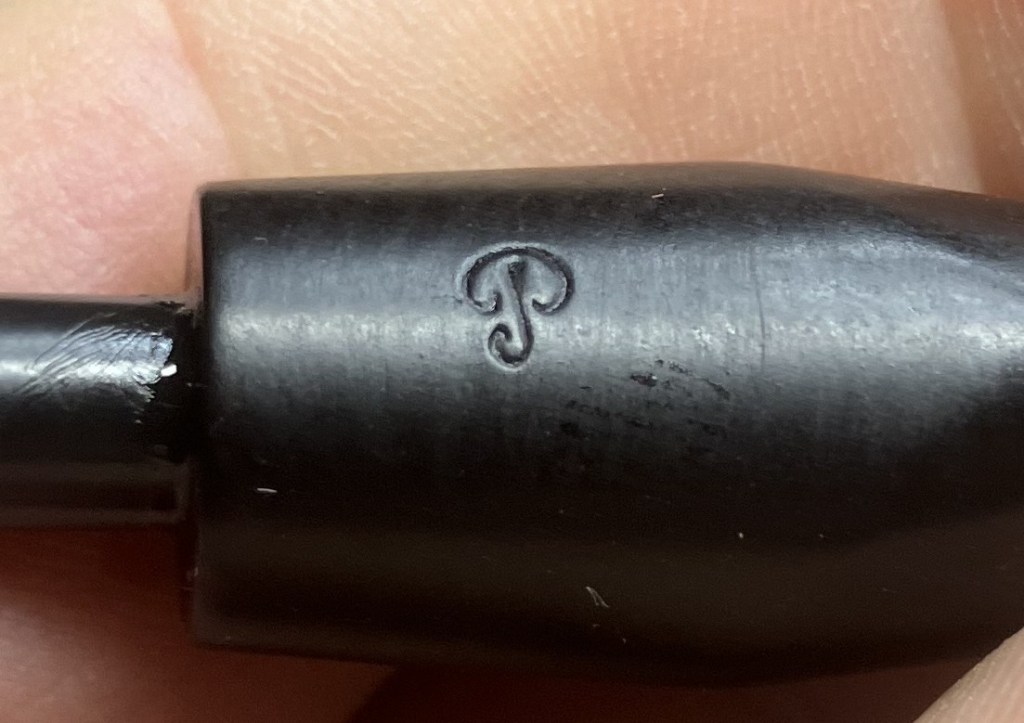
Additional reading about Brebbia can be found at Brebbia – Pipedia. As for the Brebbia logos, Brebbia — Pipes : Logos & Markings has a nice selection of photos including this one showing both the stem logo and the “Golden Gnome” as on the Brebbia in hand:
(Brebbia — Pipes : Logos & Markings). As for the date of production of this pipe, I could not find anything specific to the Sabbiata line other than the following:
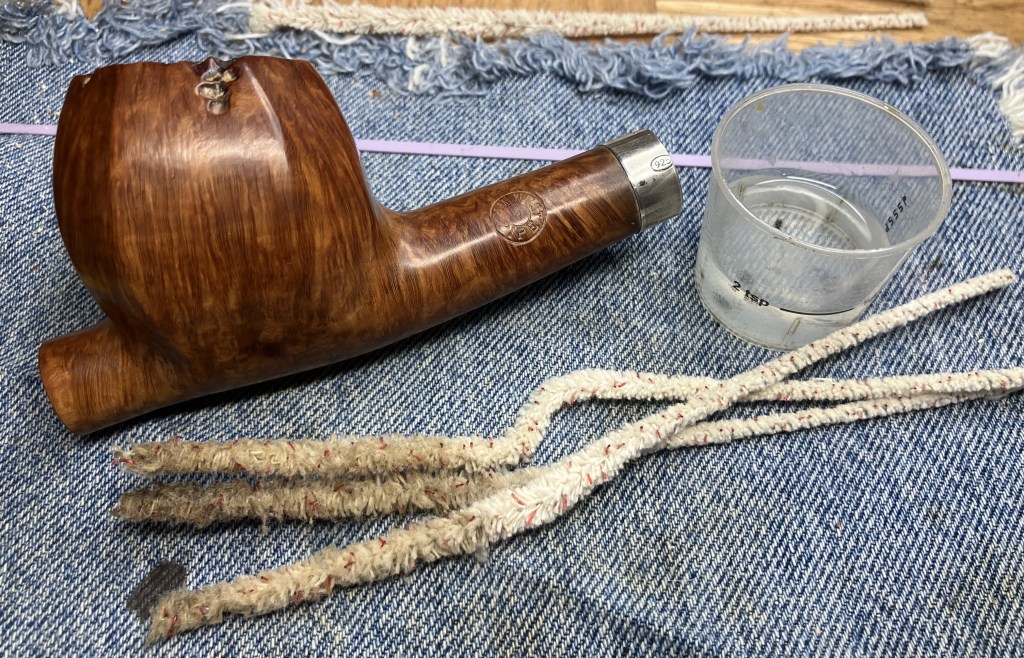
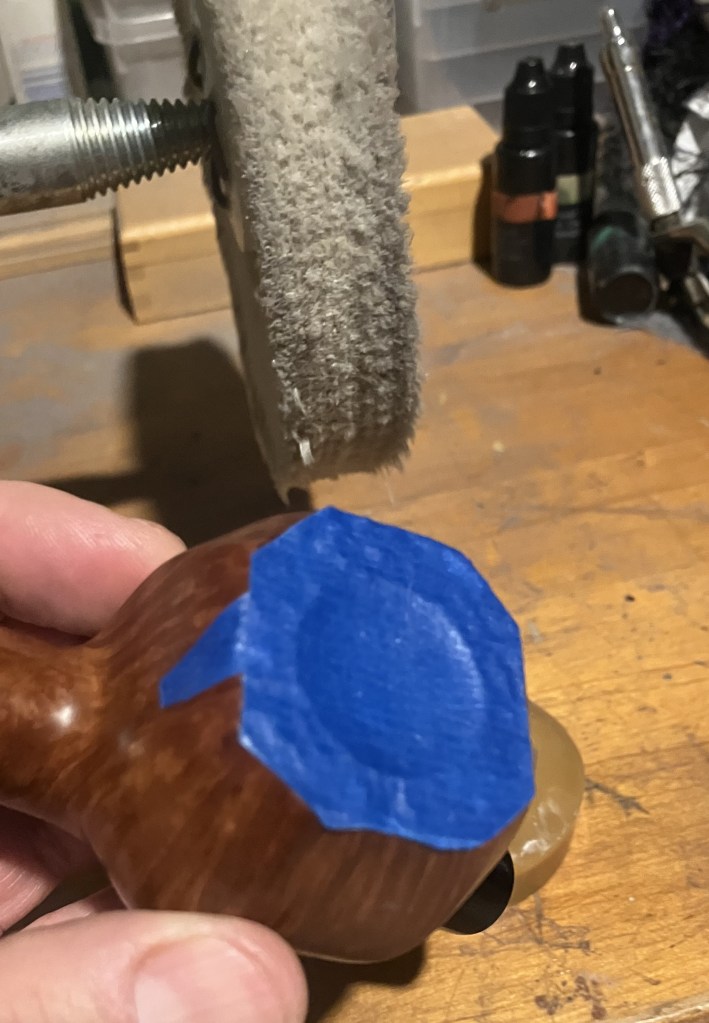
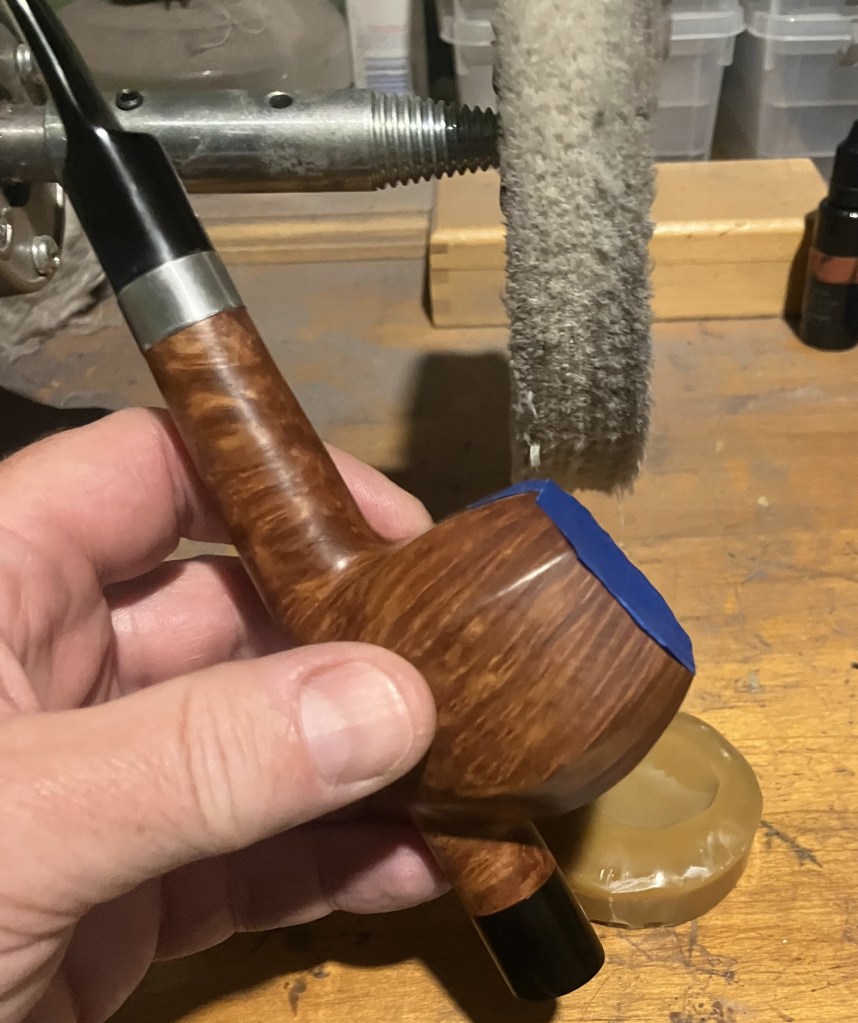
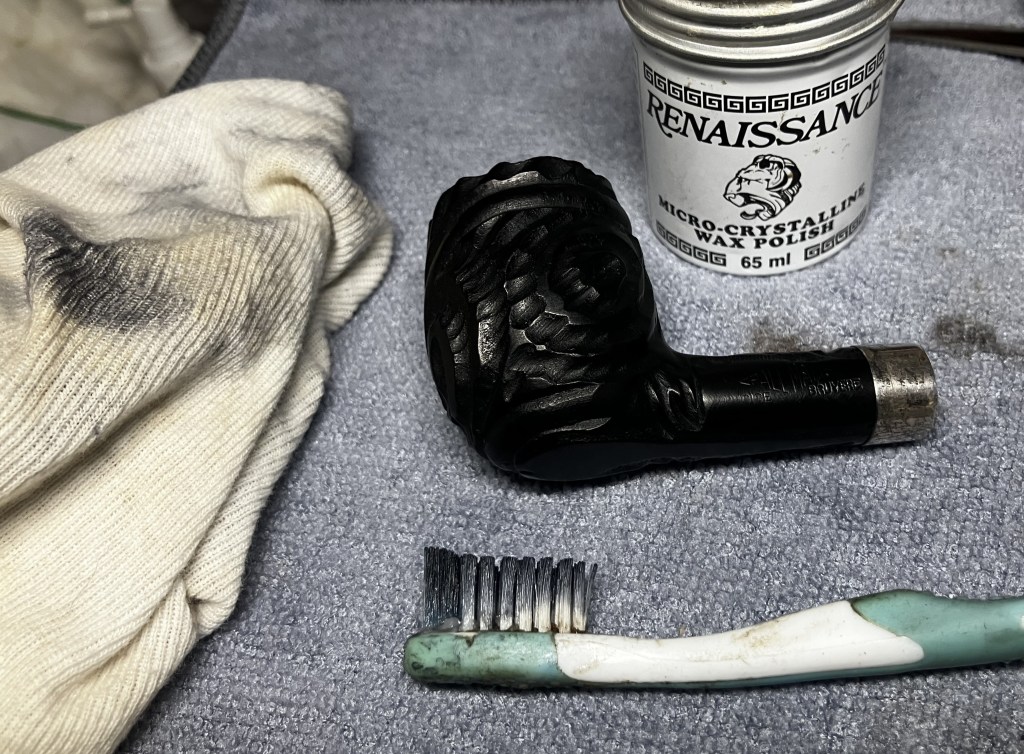
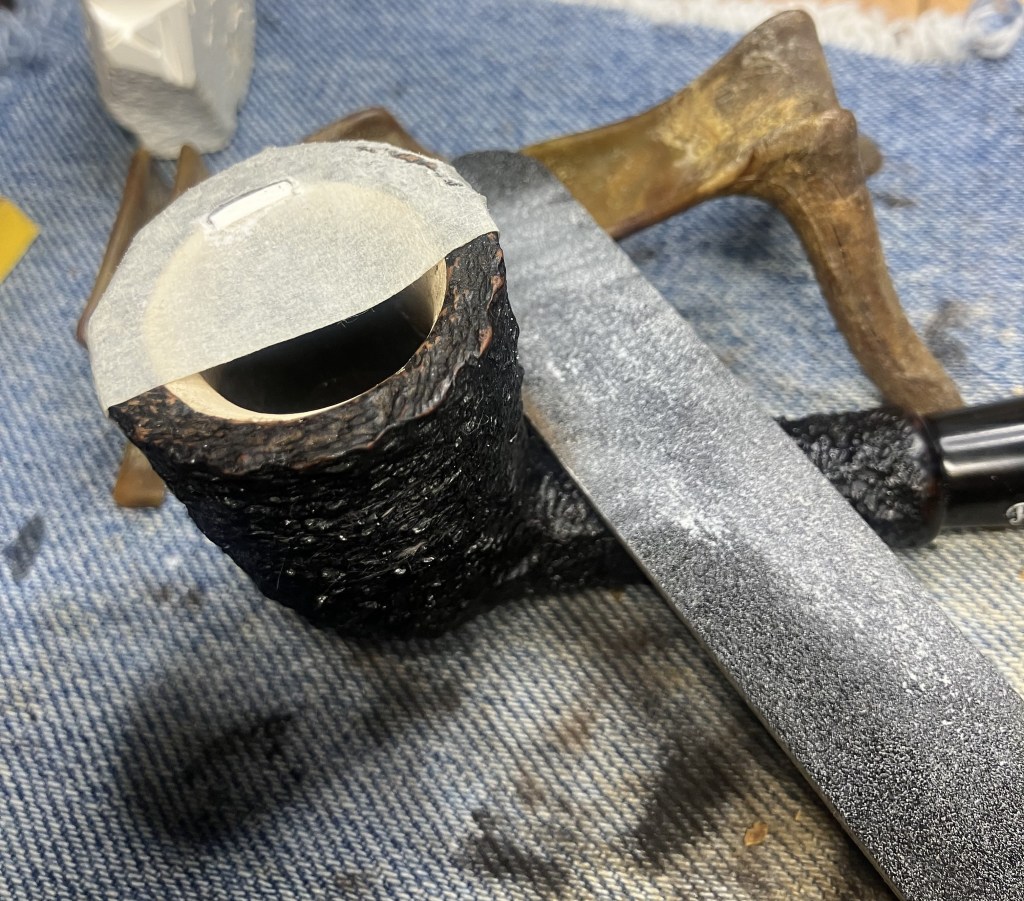
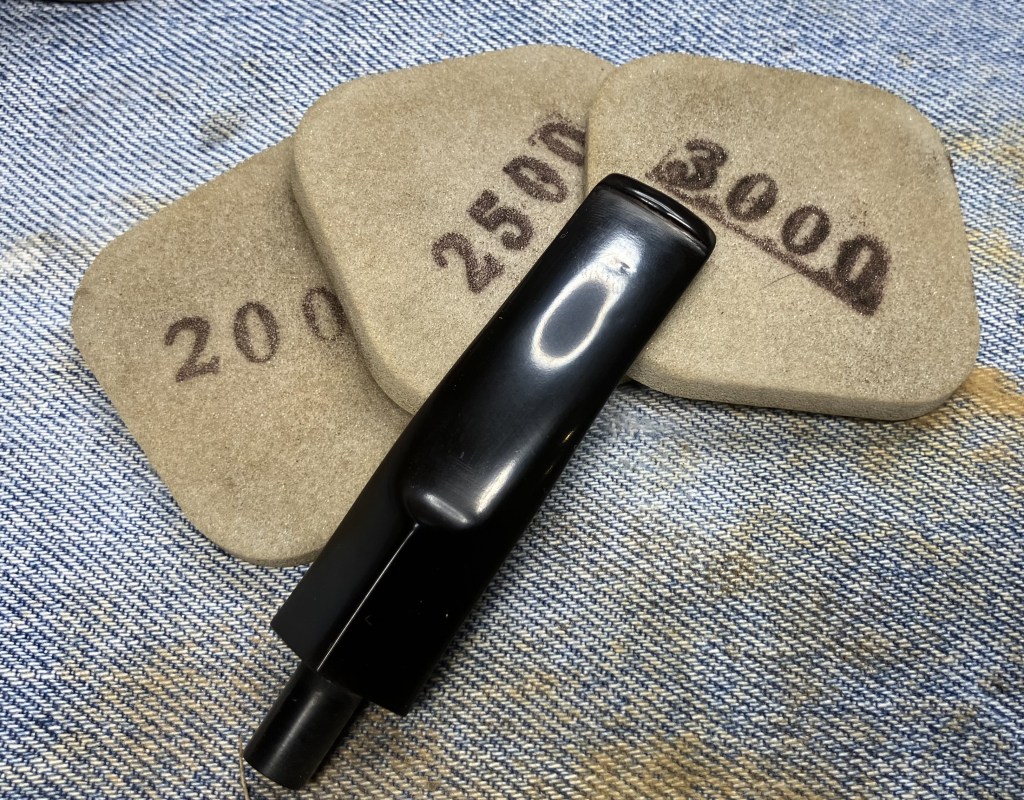
After the photo shoot for the before photos the Brebbia made it to the workbench. The verdict is still out on the new cloth surface protection towels. They look OK for photography but everything seems to snag on the fabric and wants to lift the cloth from the surface. I think I prefer the denim pieces but they were getting very stained.
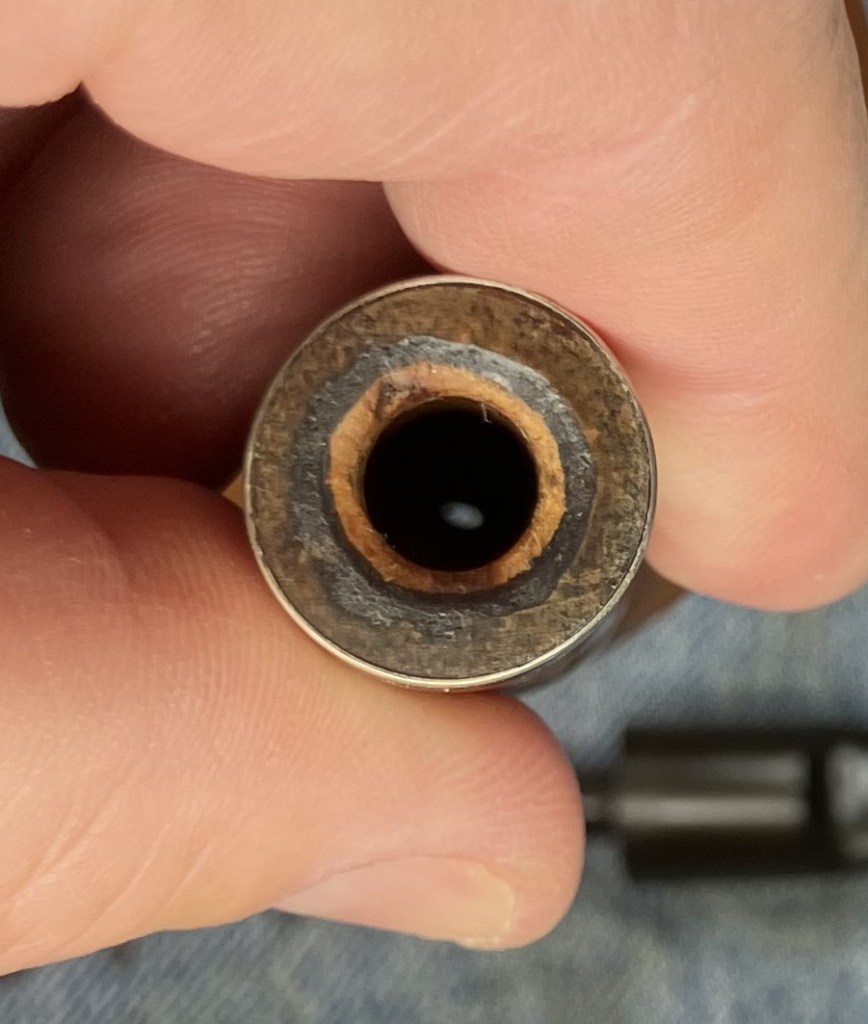
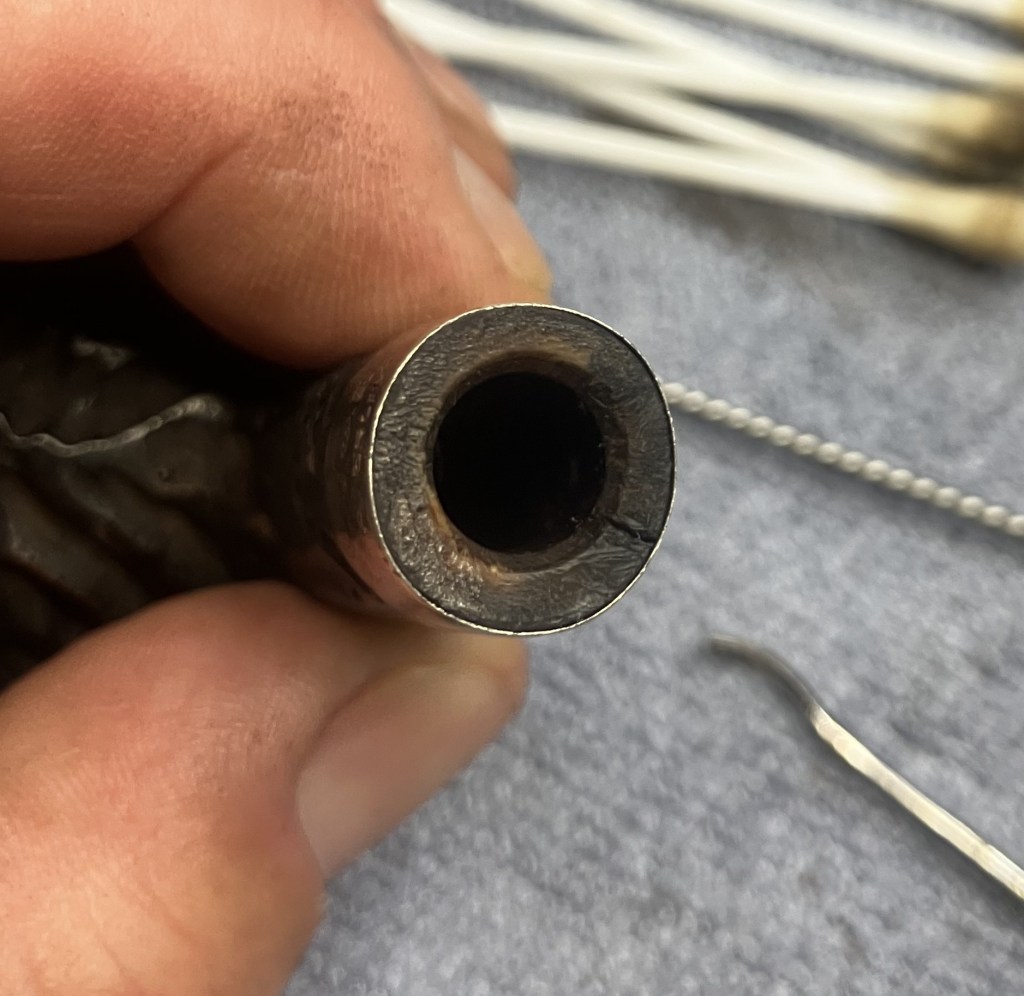
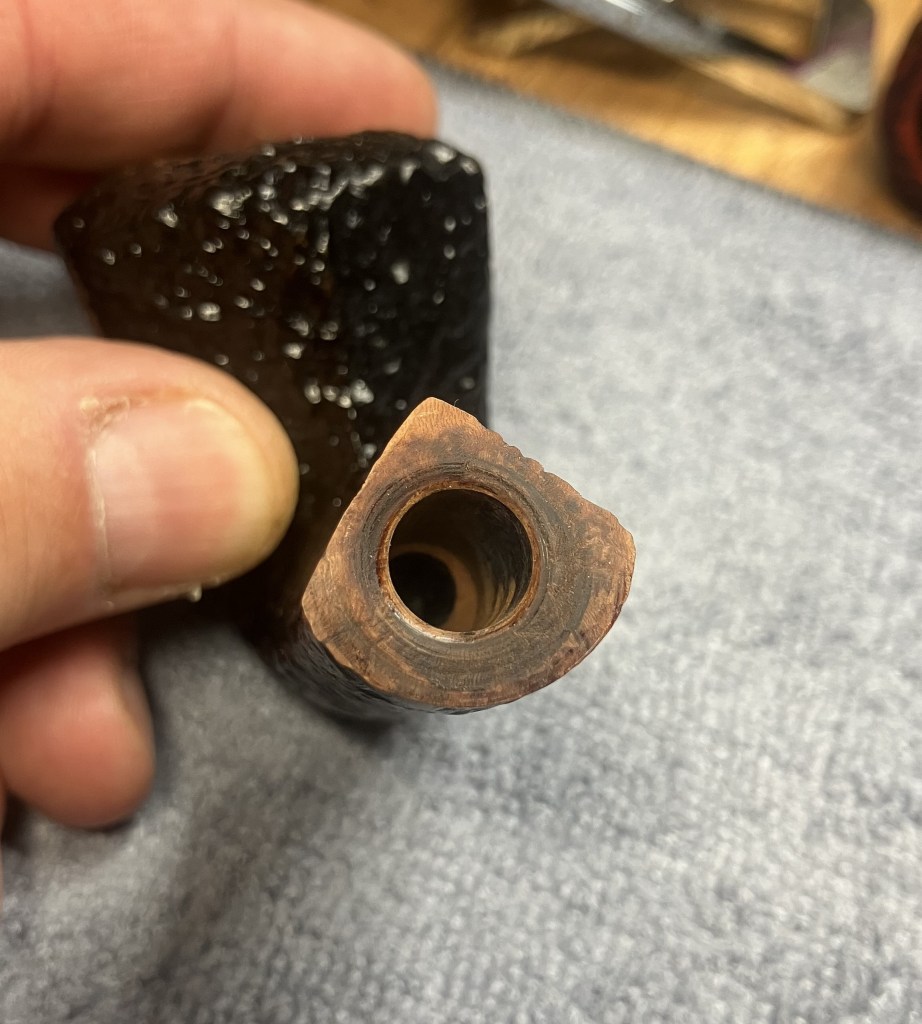
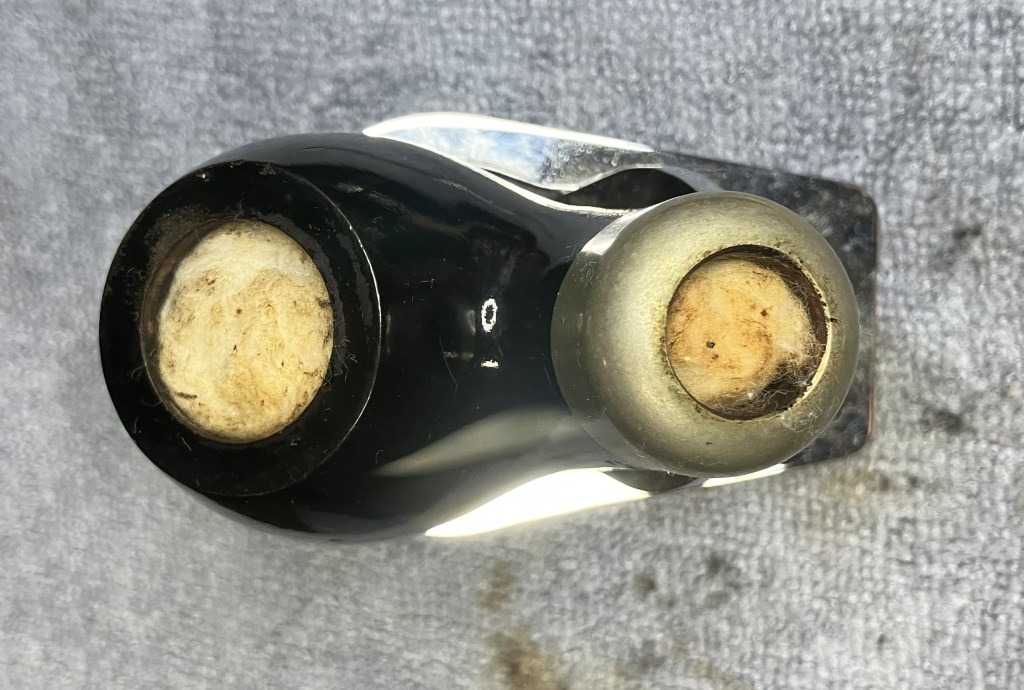
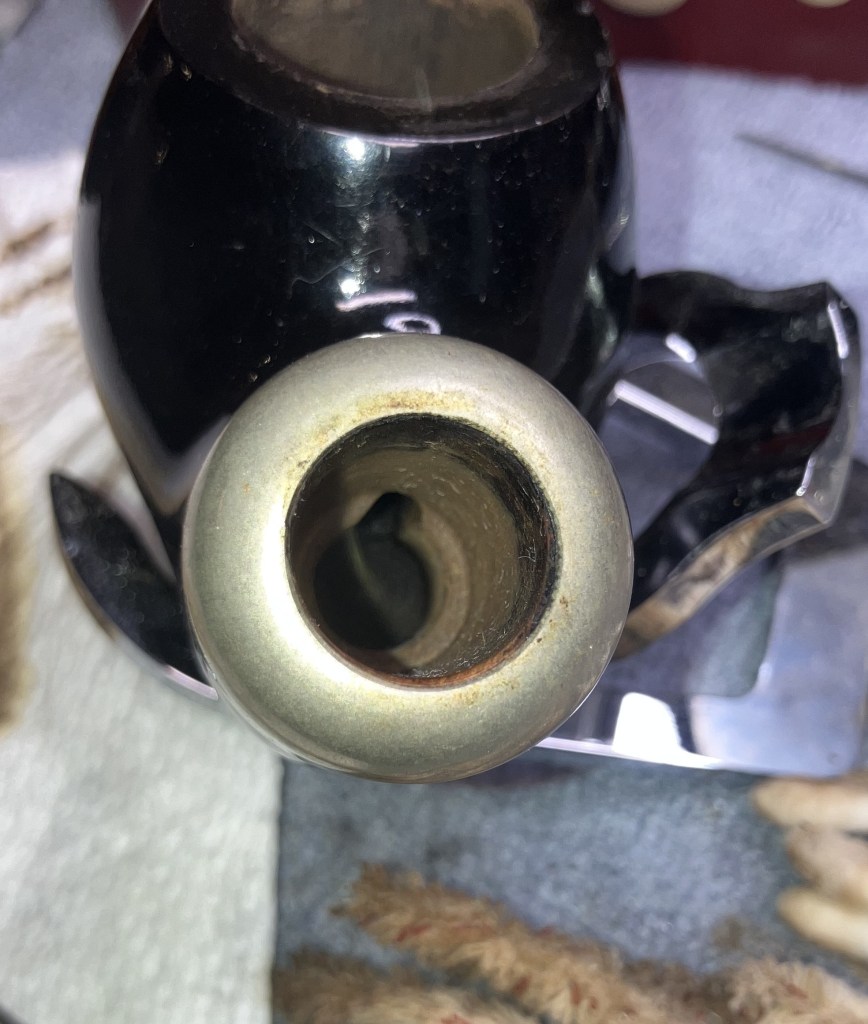
A look down the mortise showed a very clean shank.
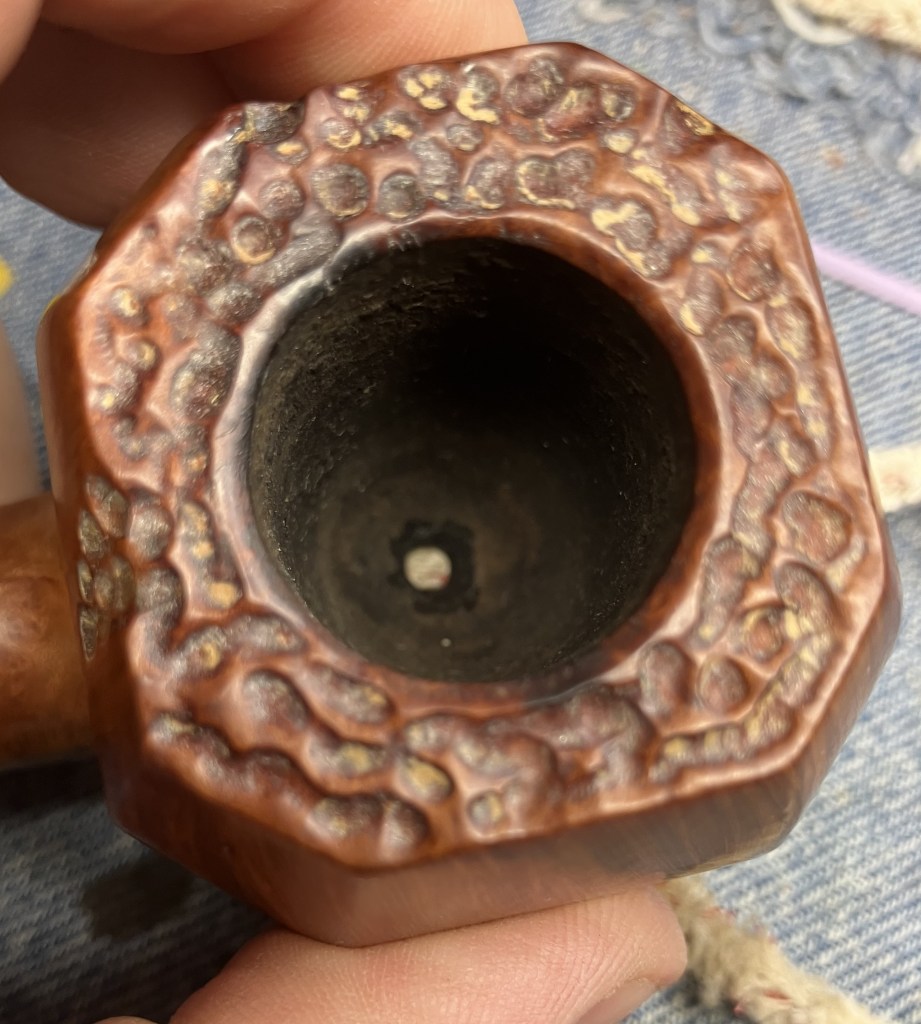
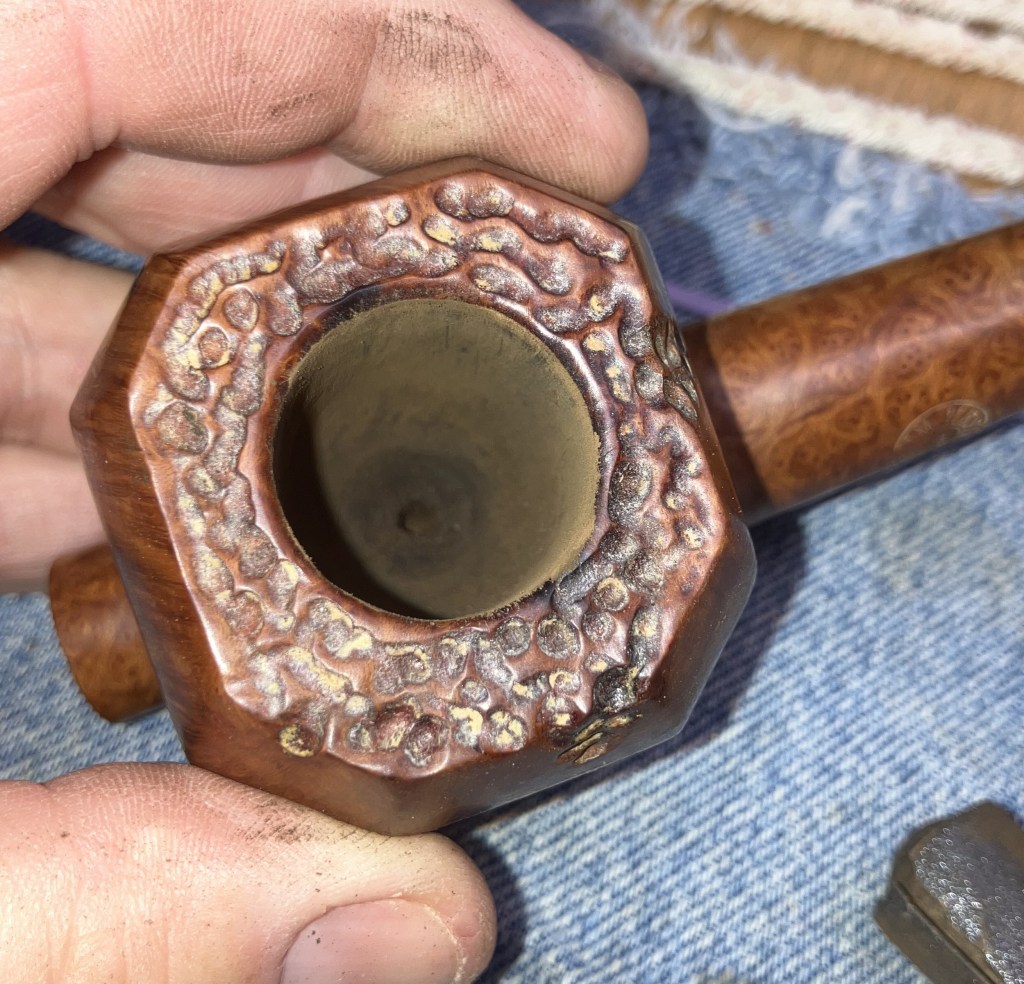
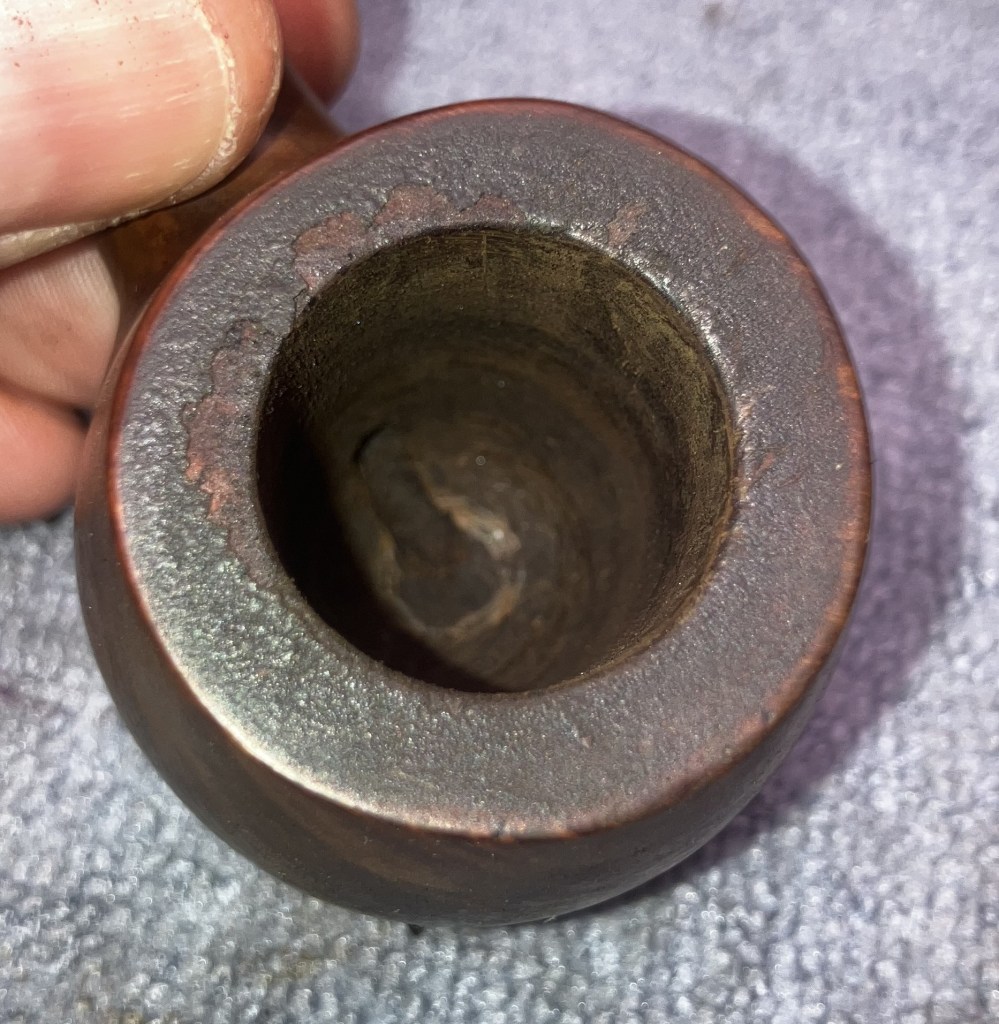
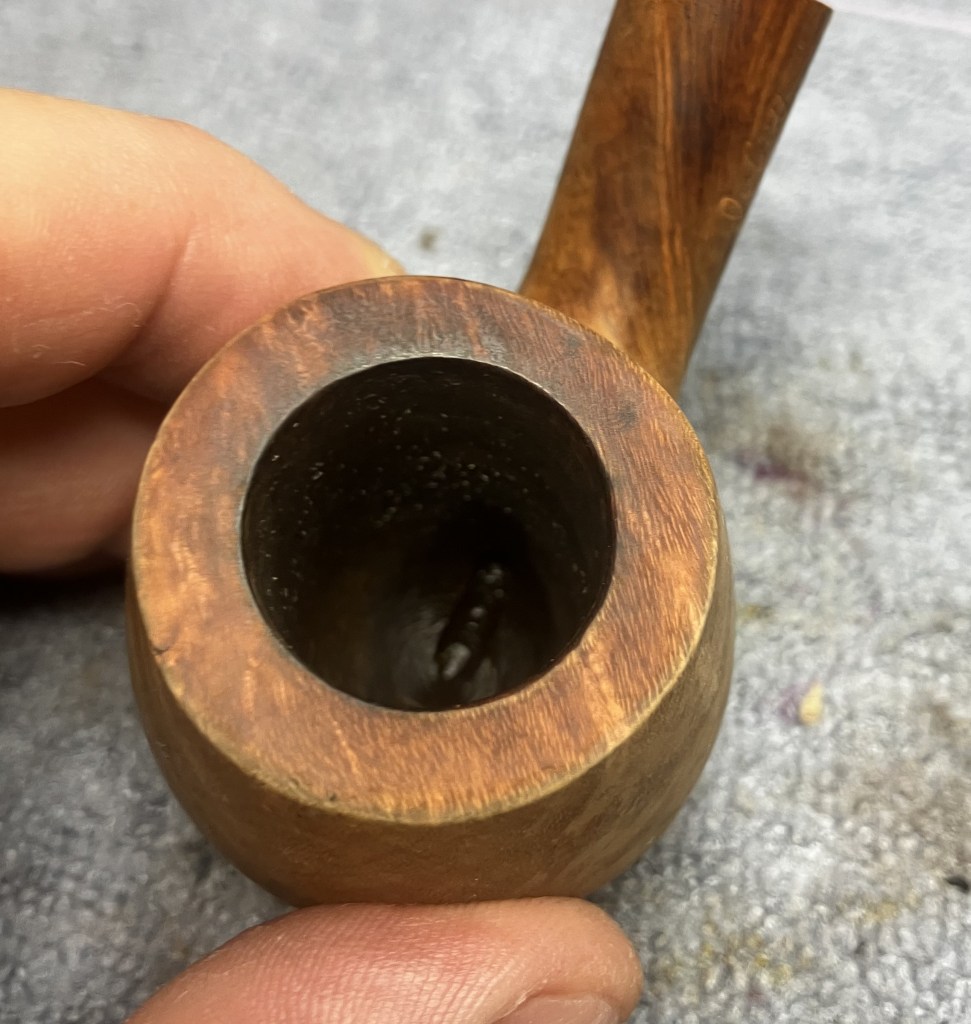
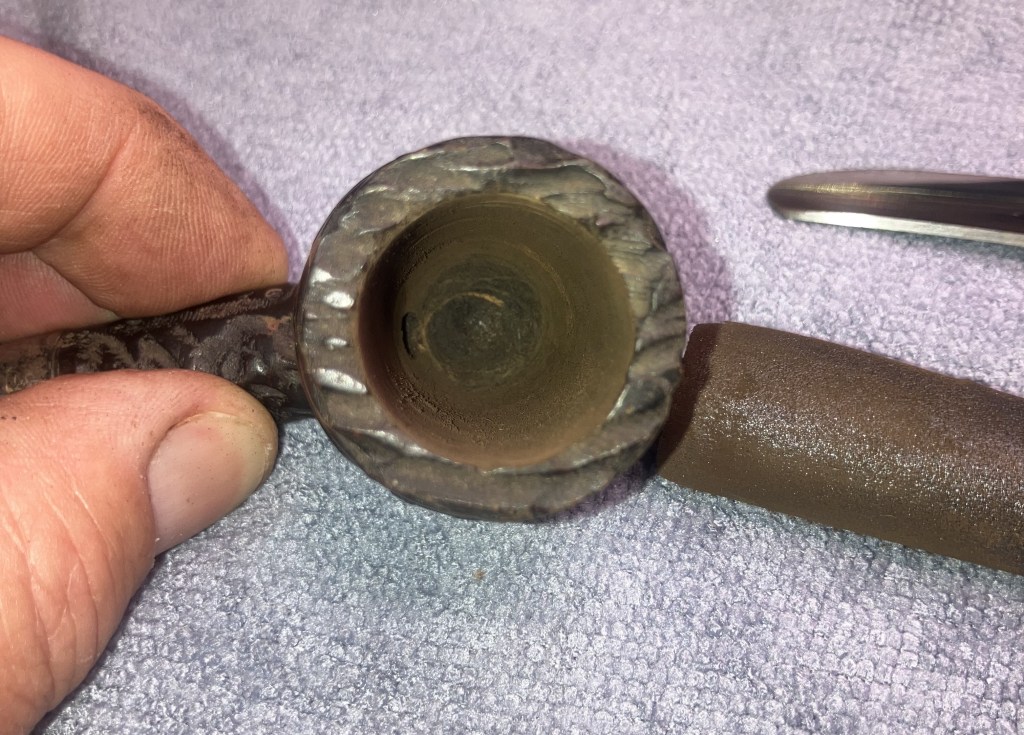
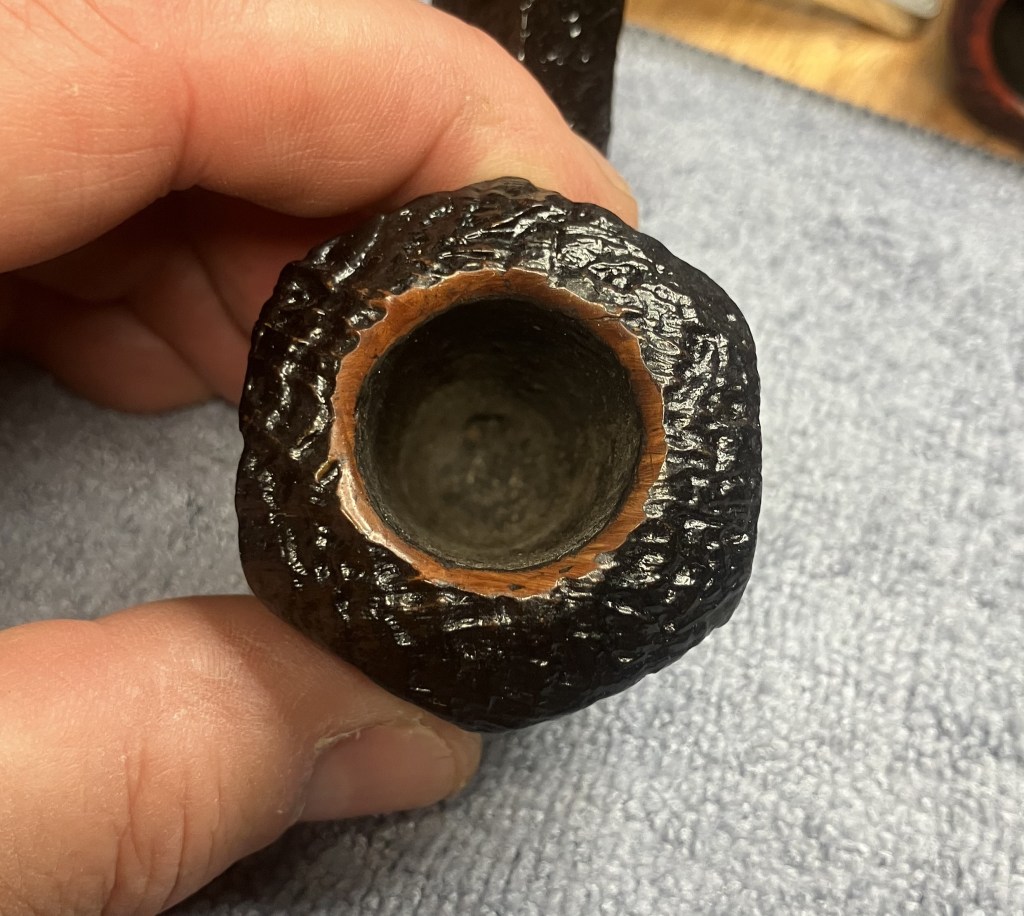
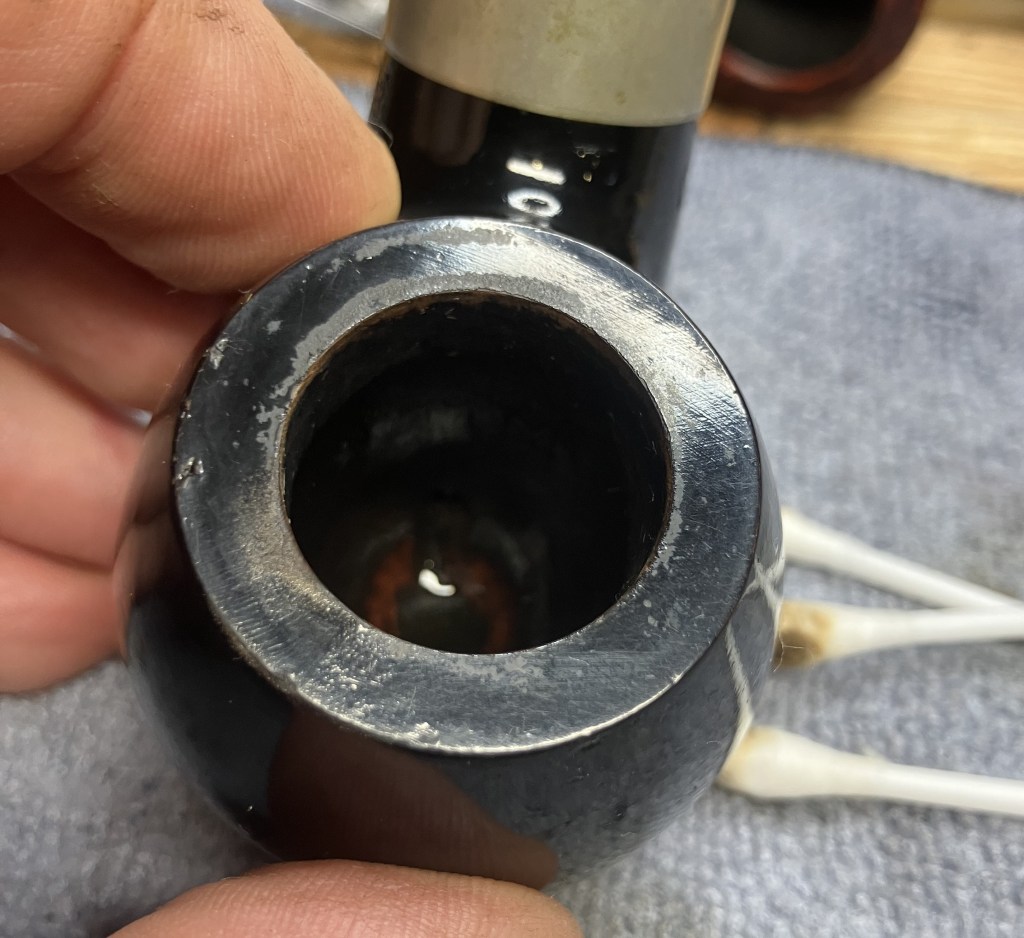
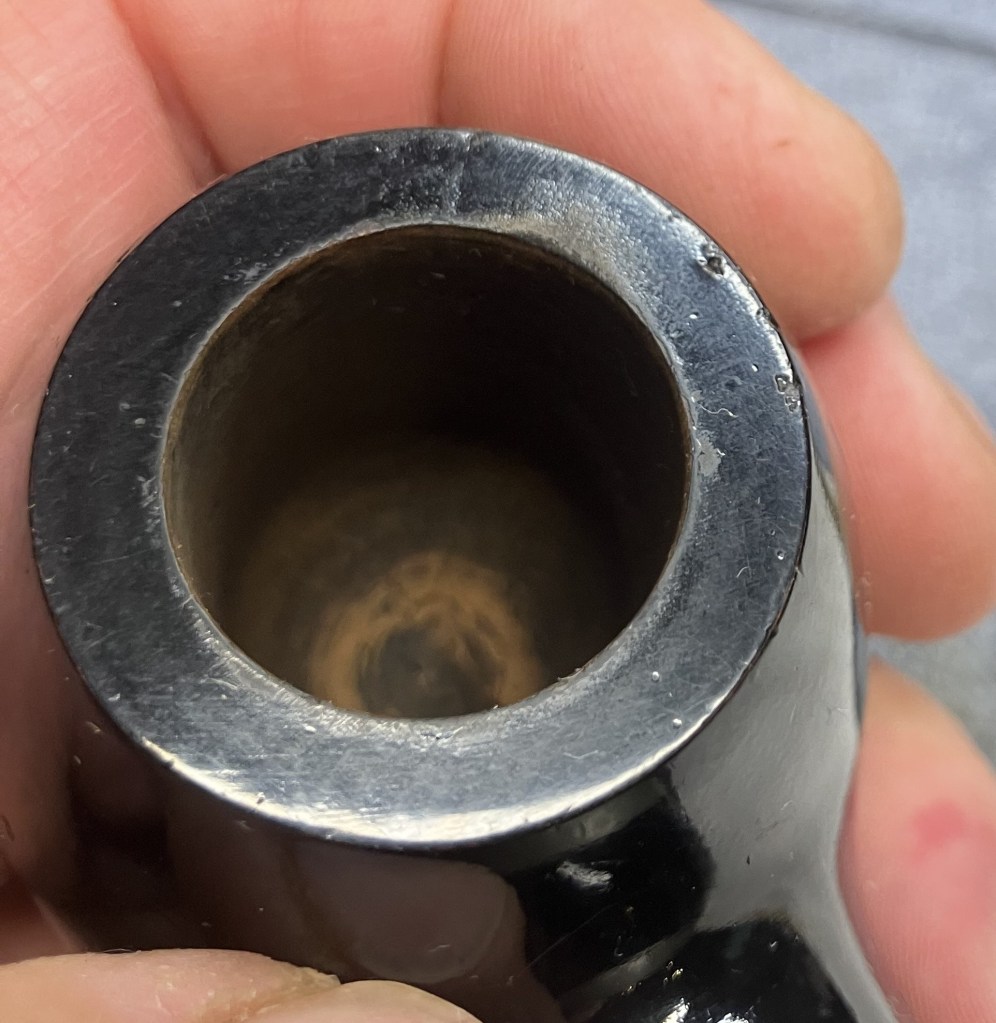
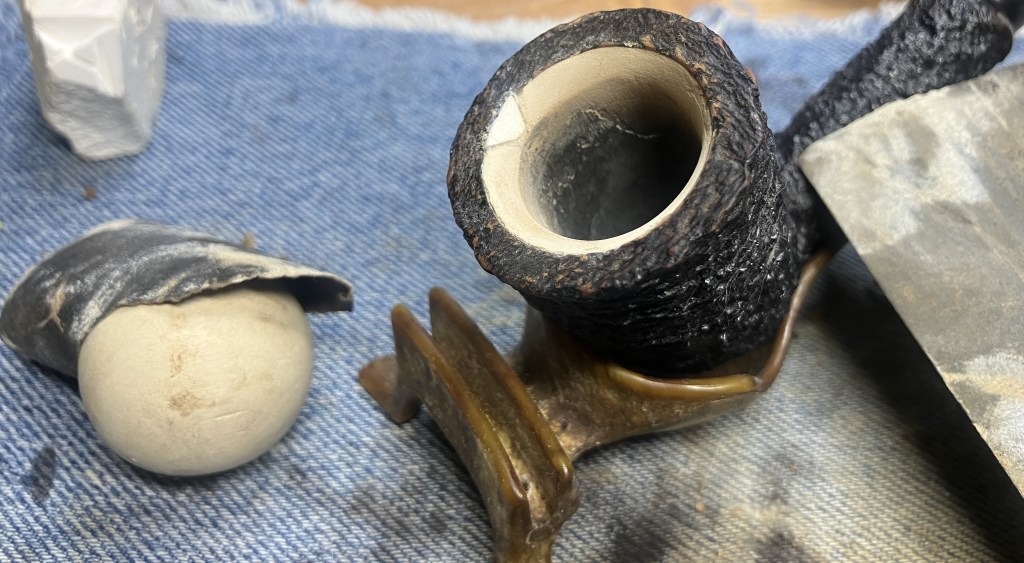
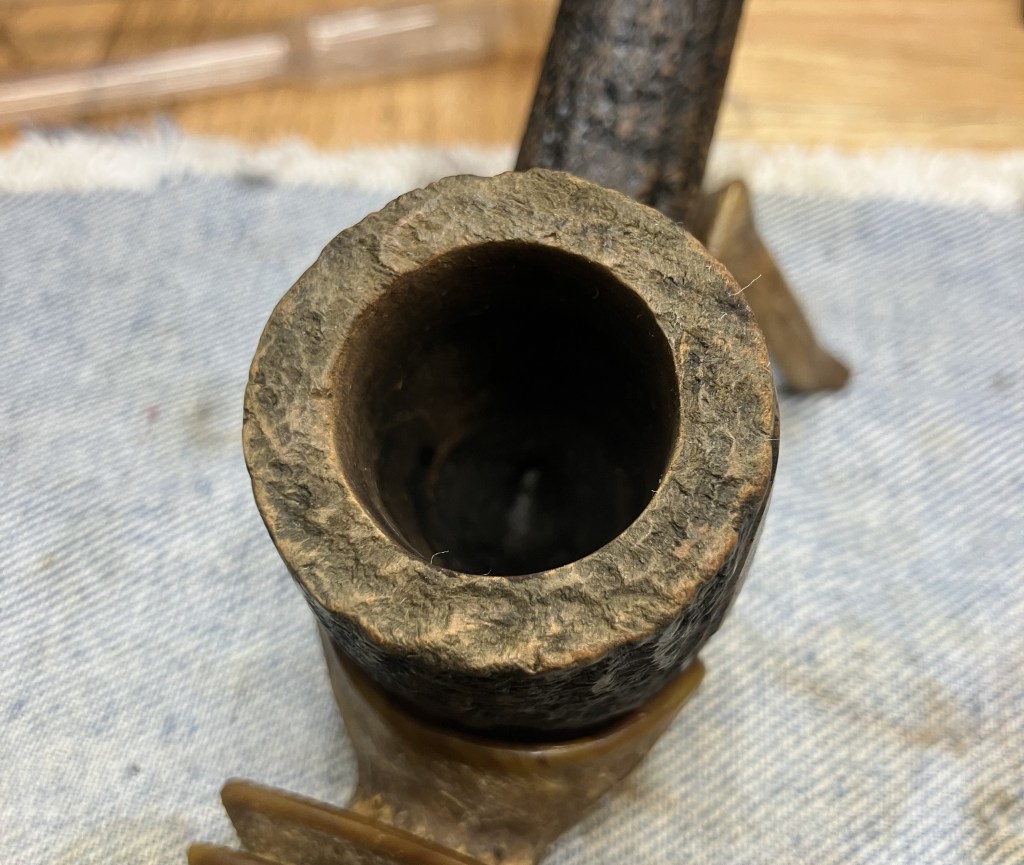
The tobacco chamber was also clean but did show signs of use.
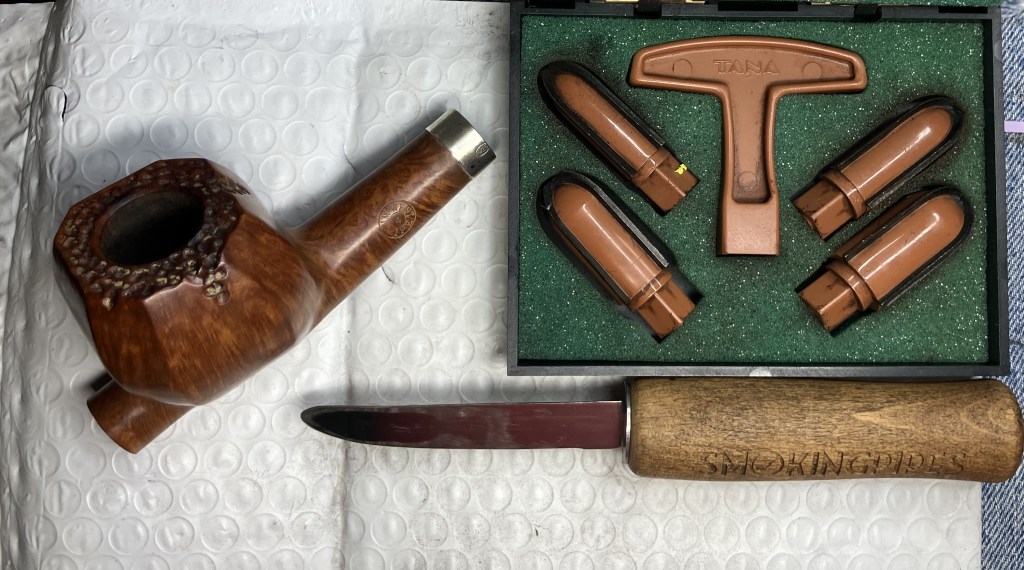
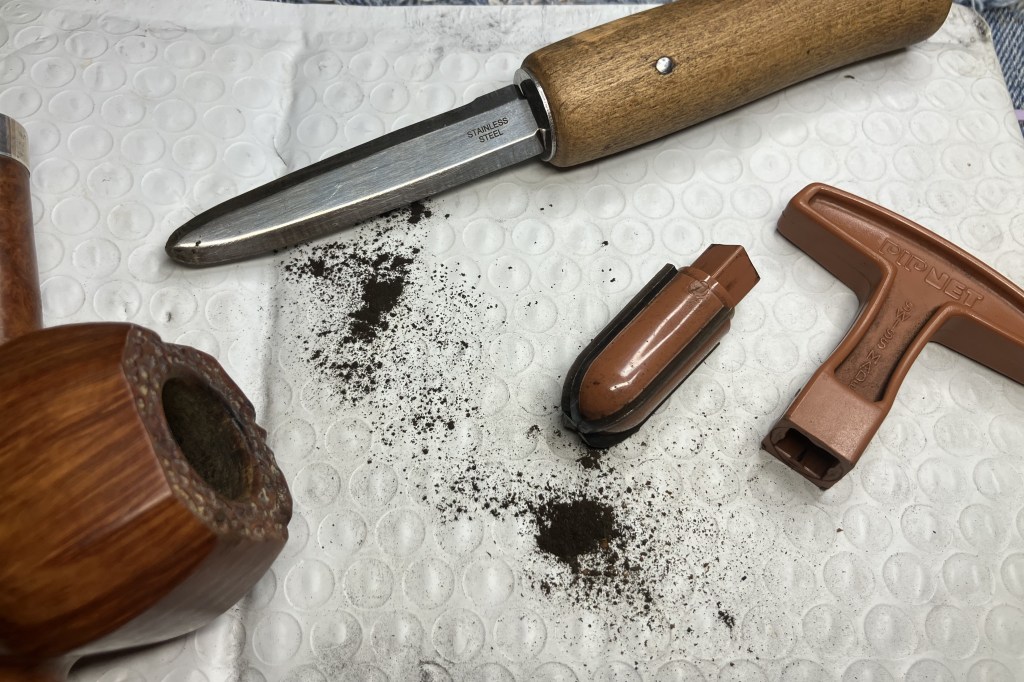
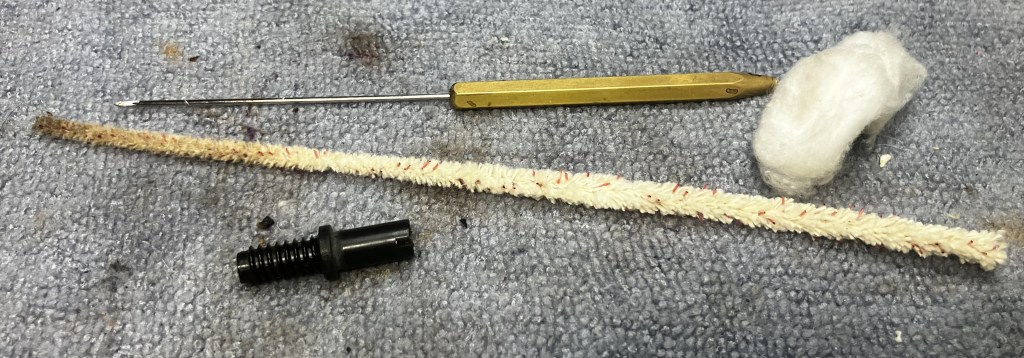
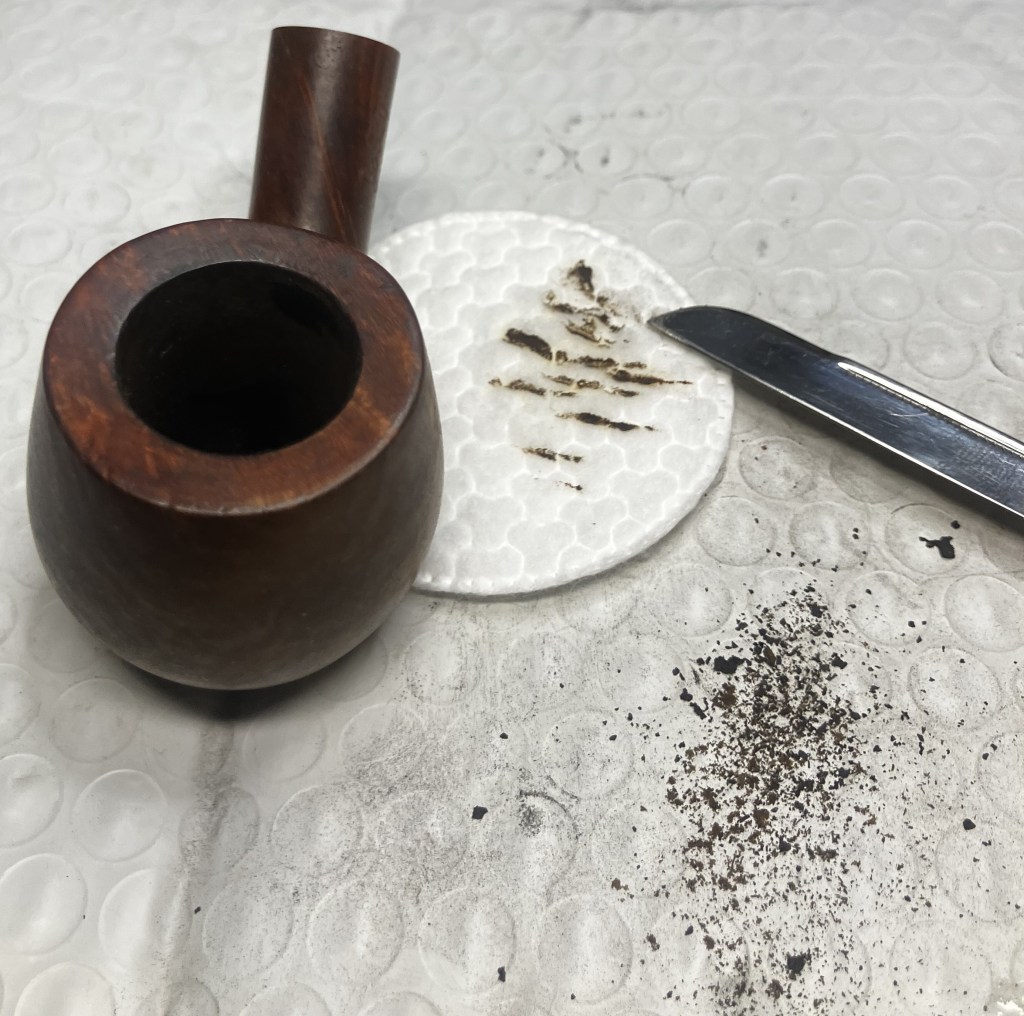
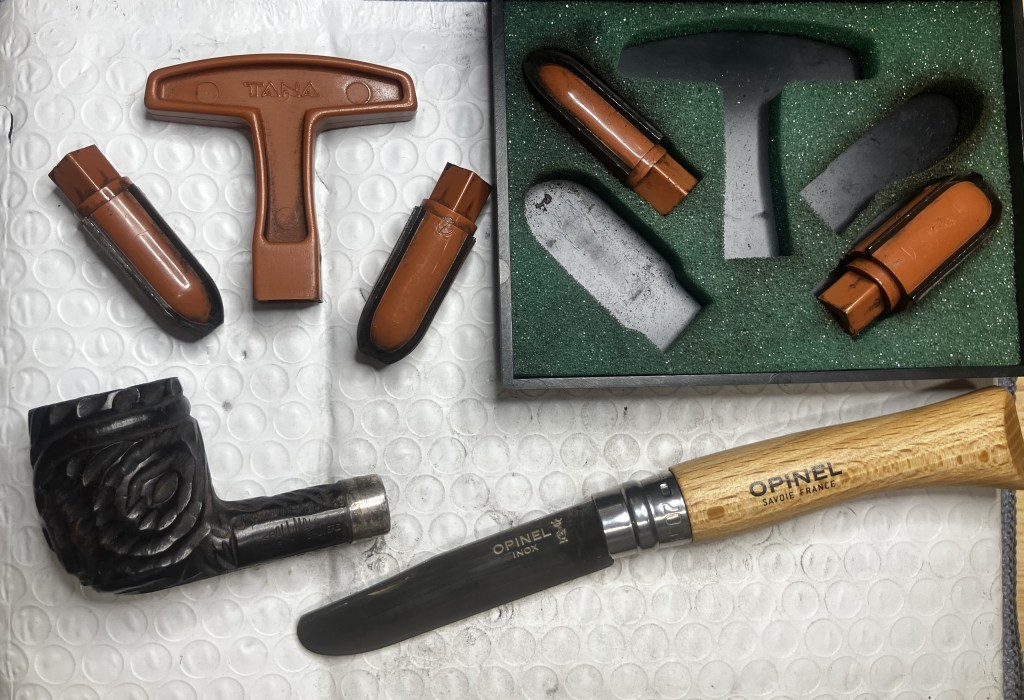
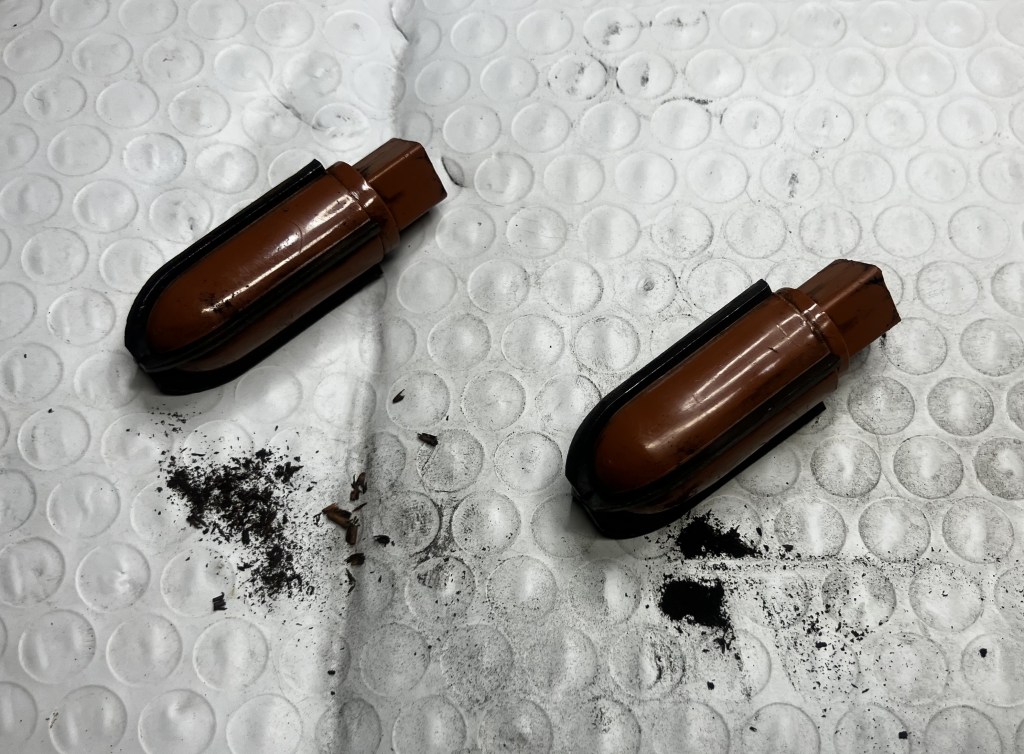
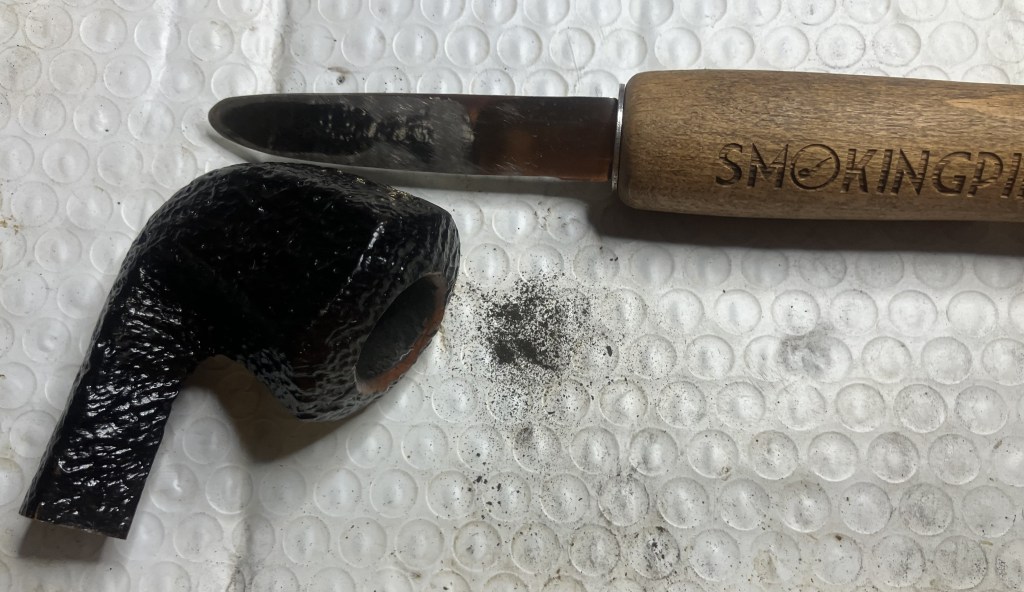
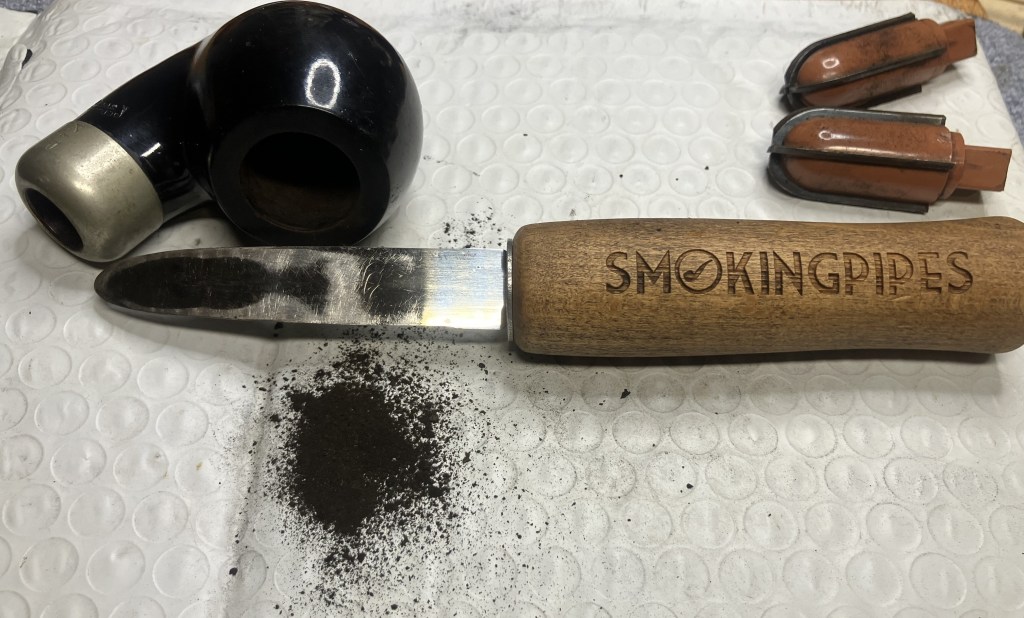
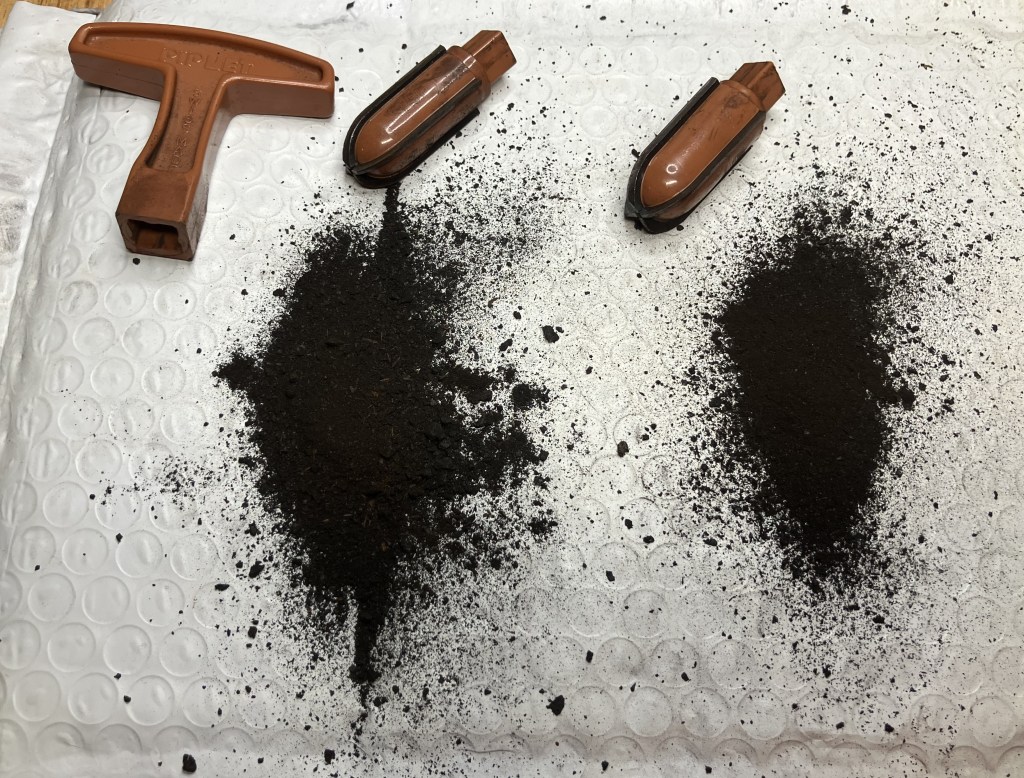
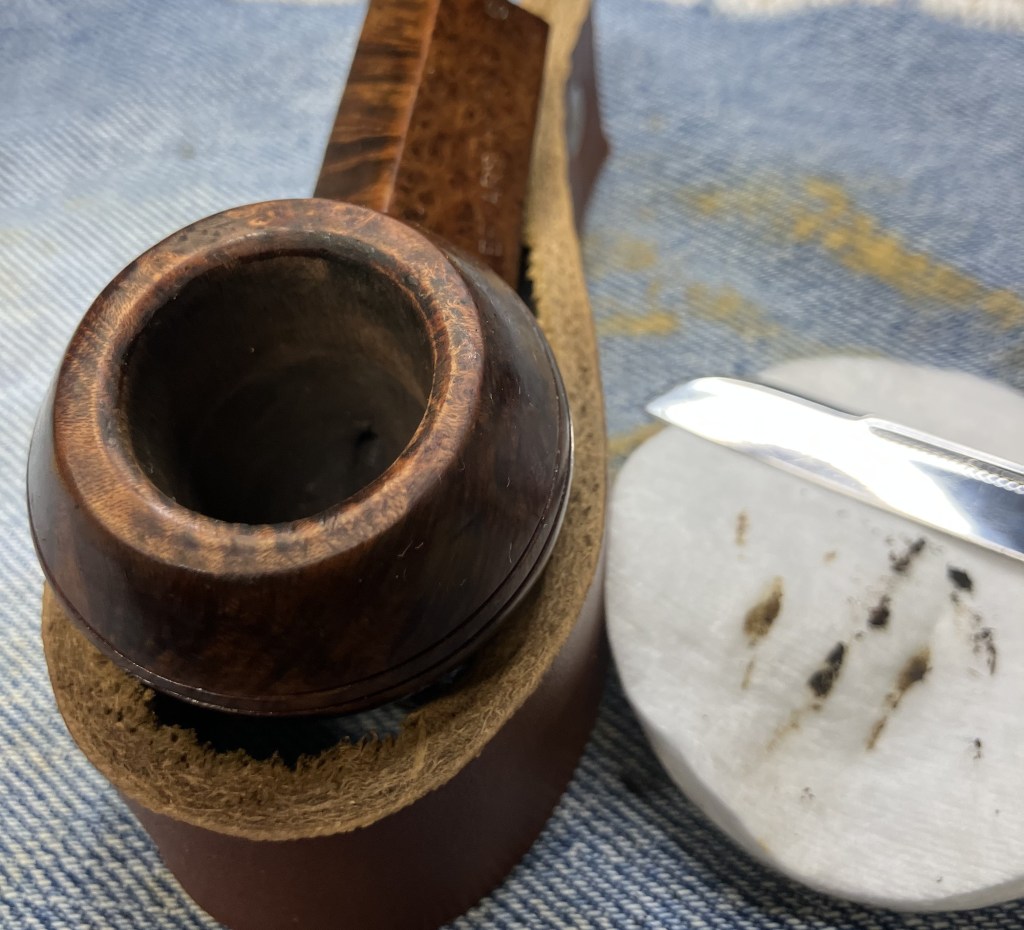
The only tool I used for reaming was the Smokingpipes Low Country reamer. And it didn’t have much to do.
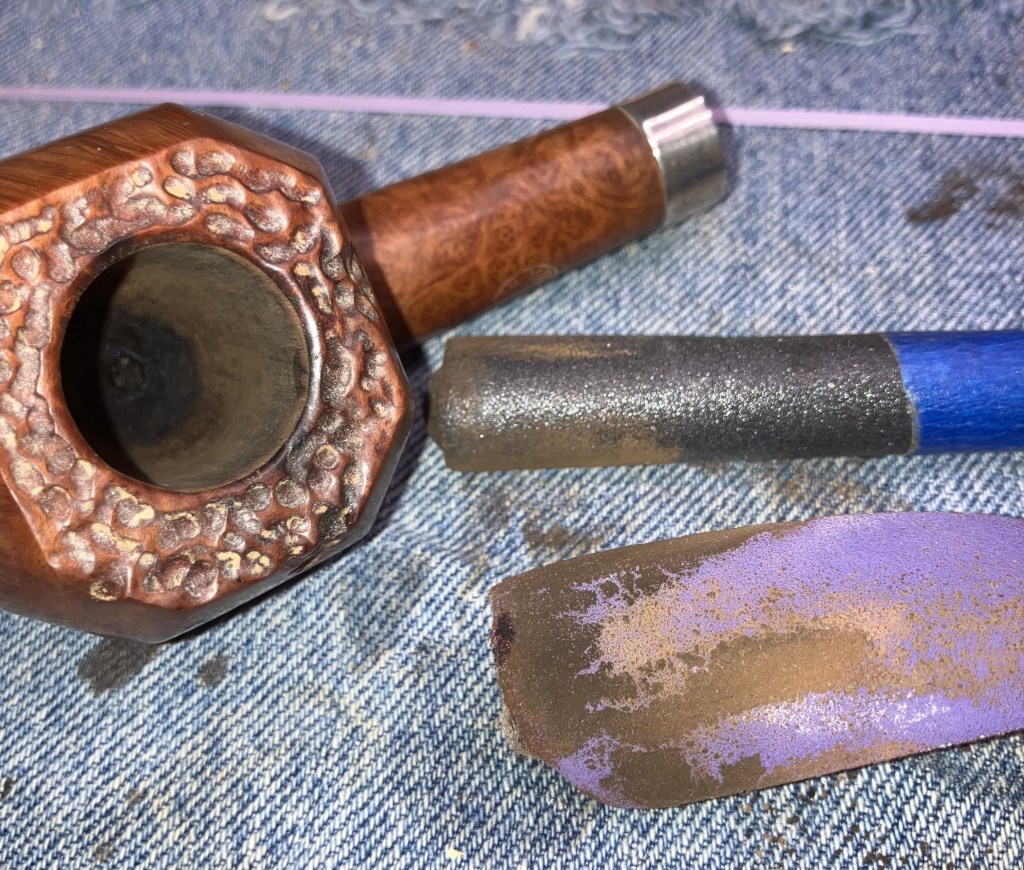
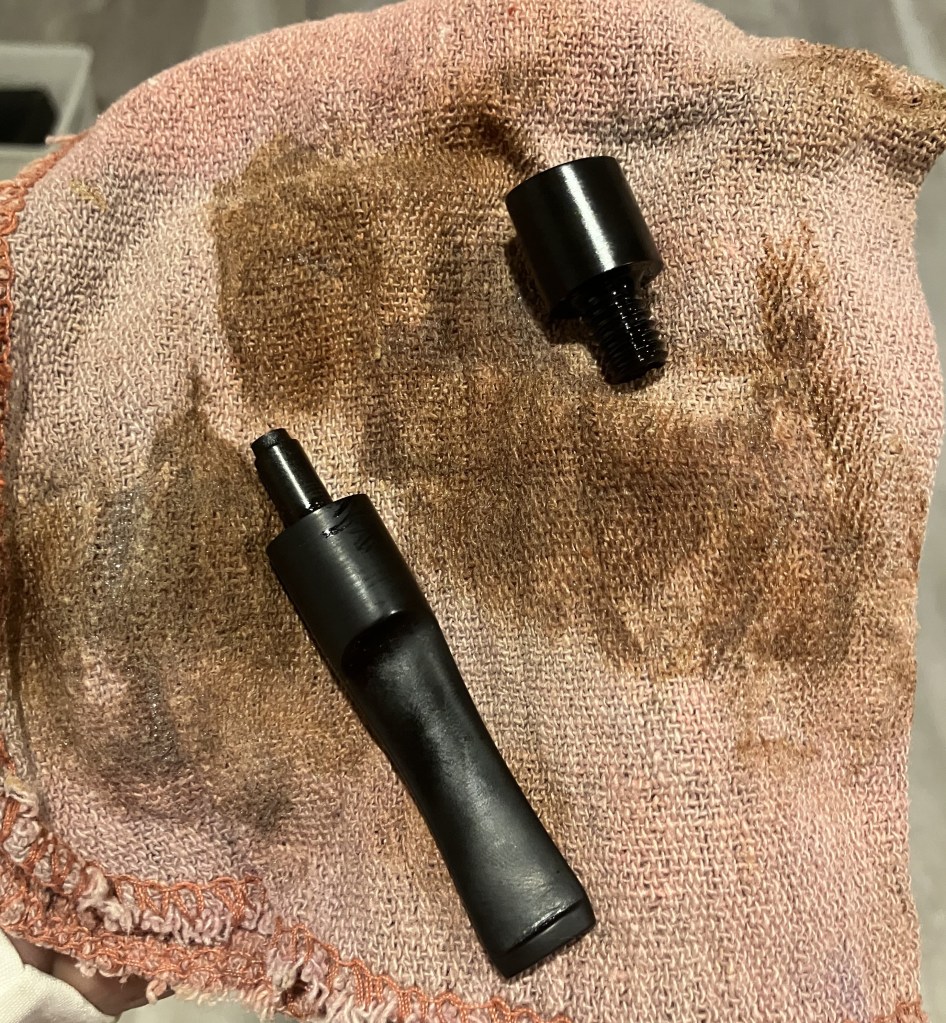
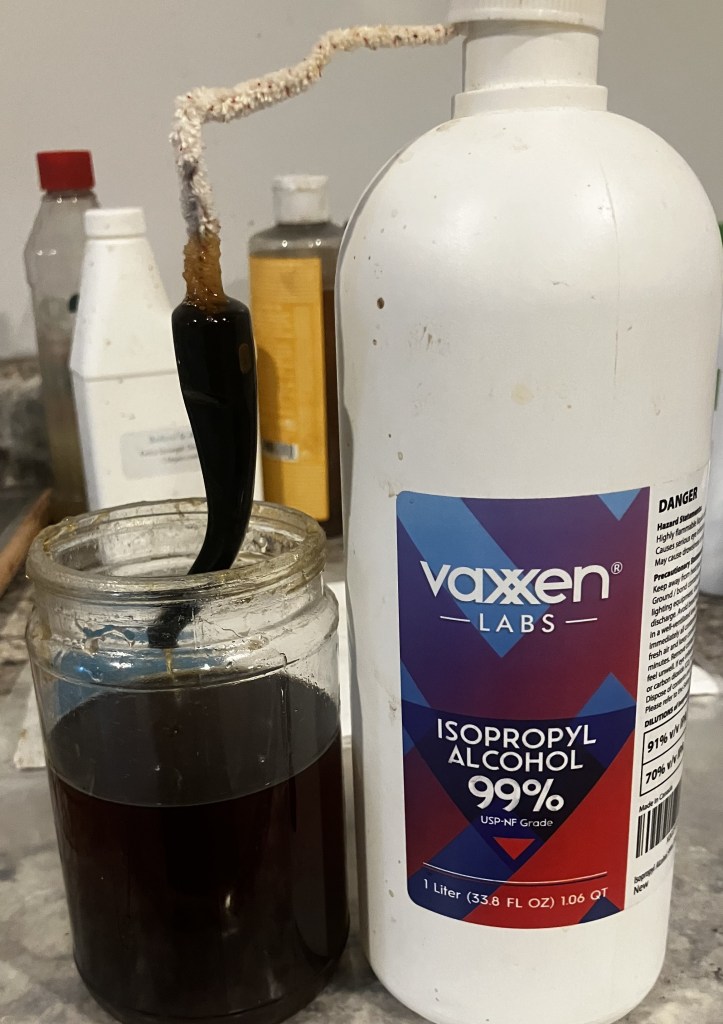
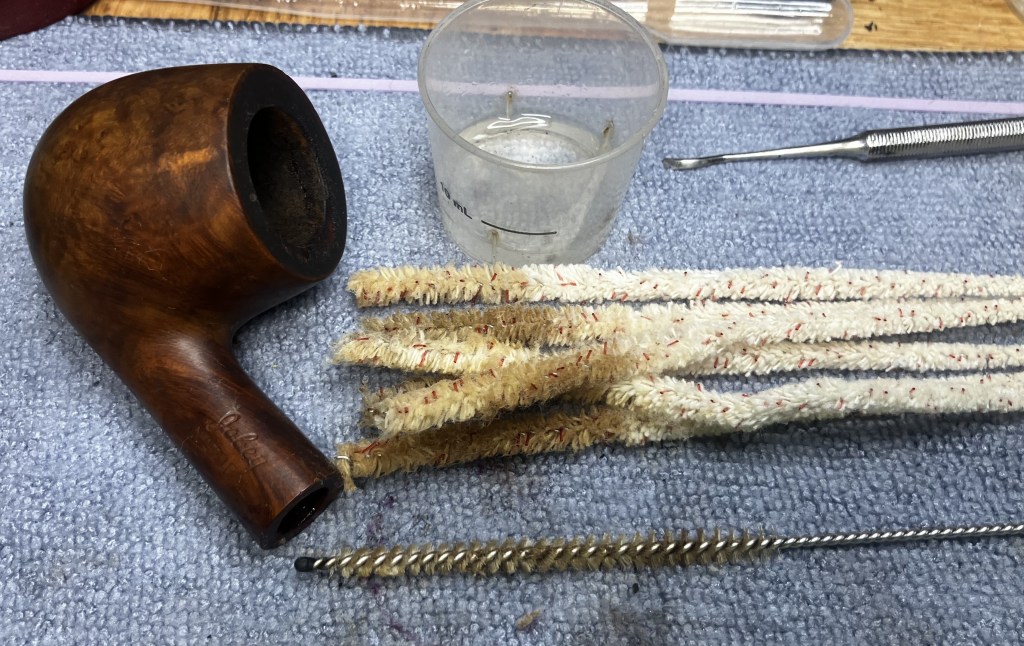
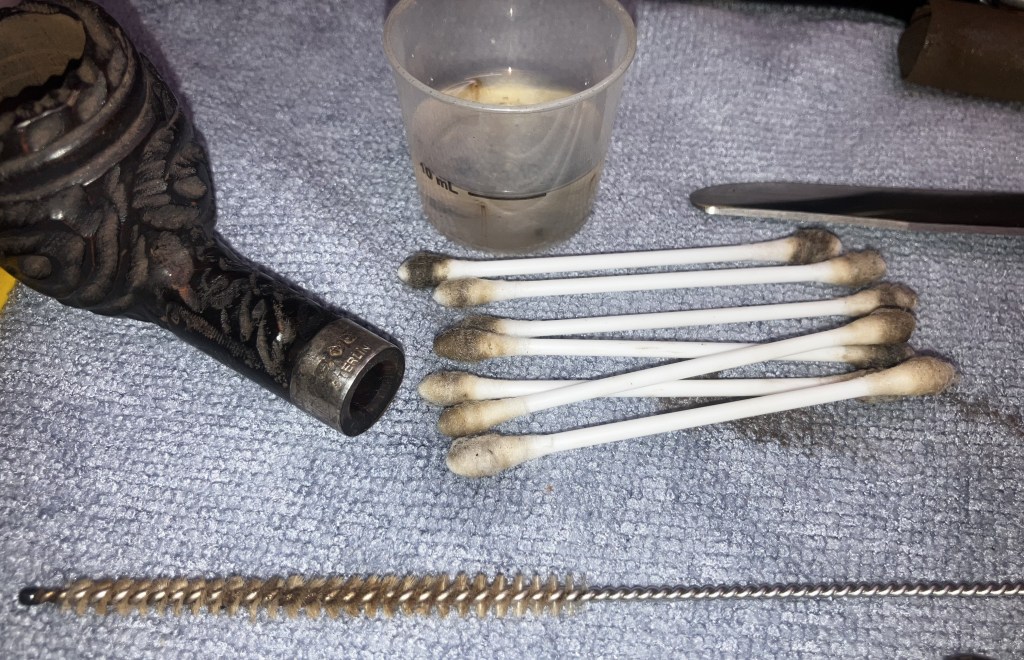
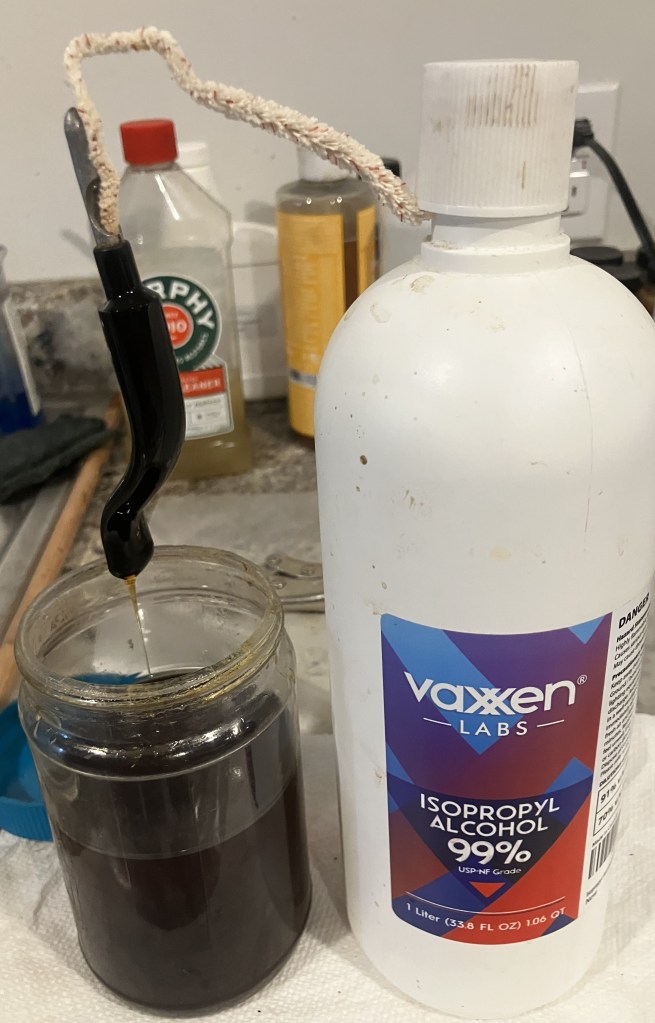
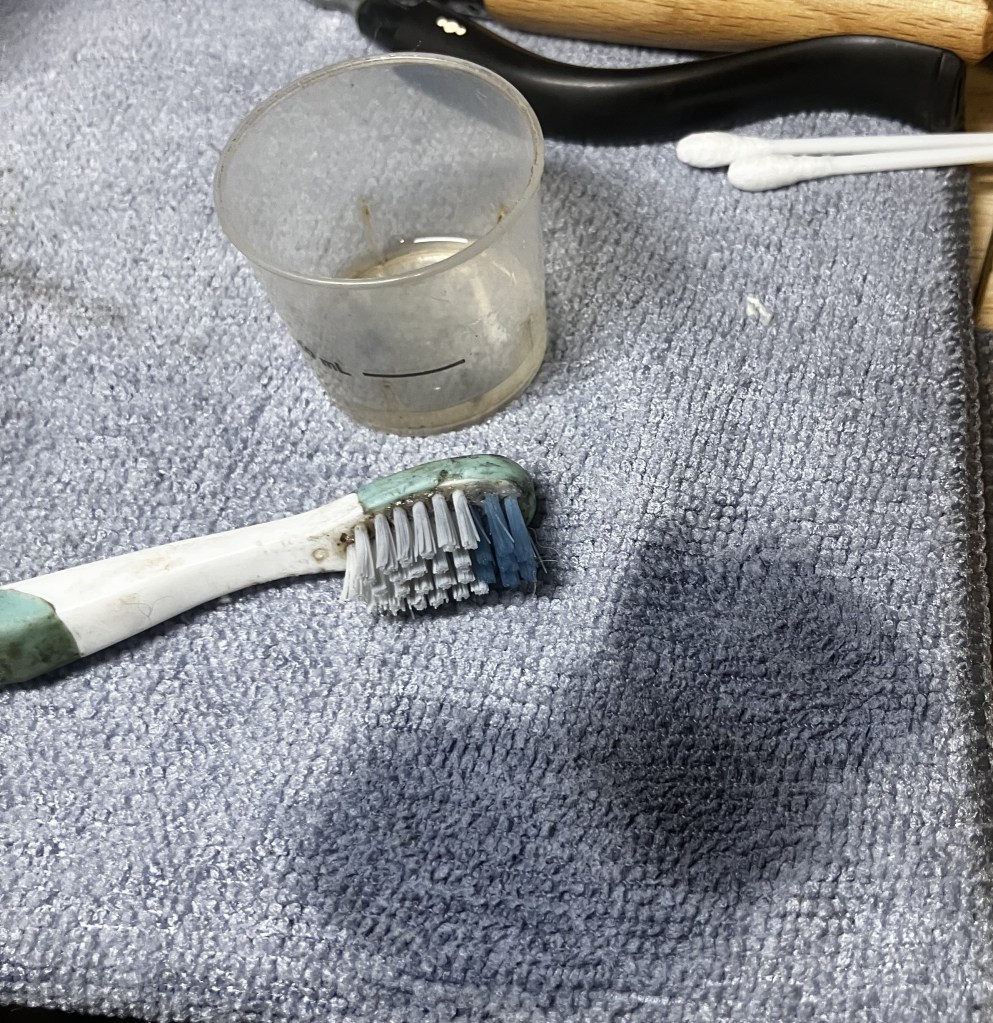
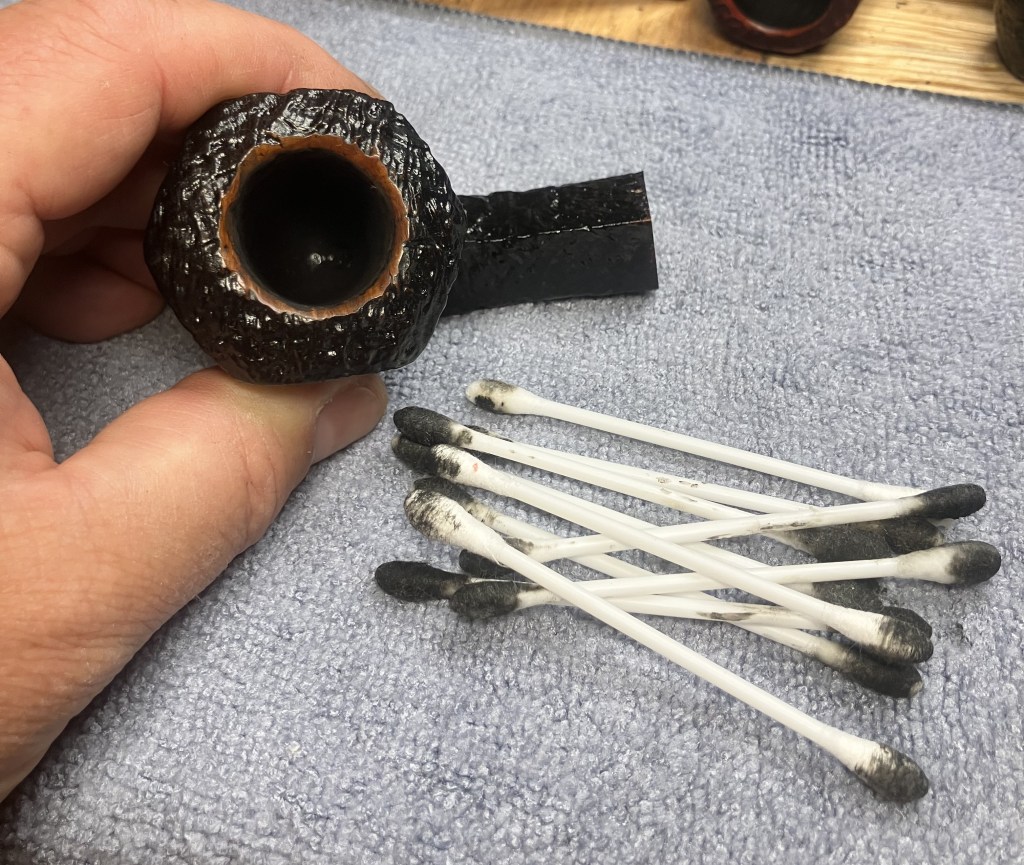
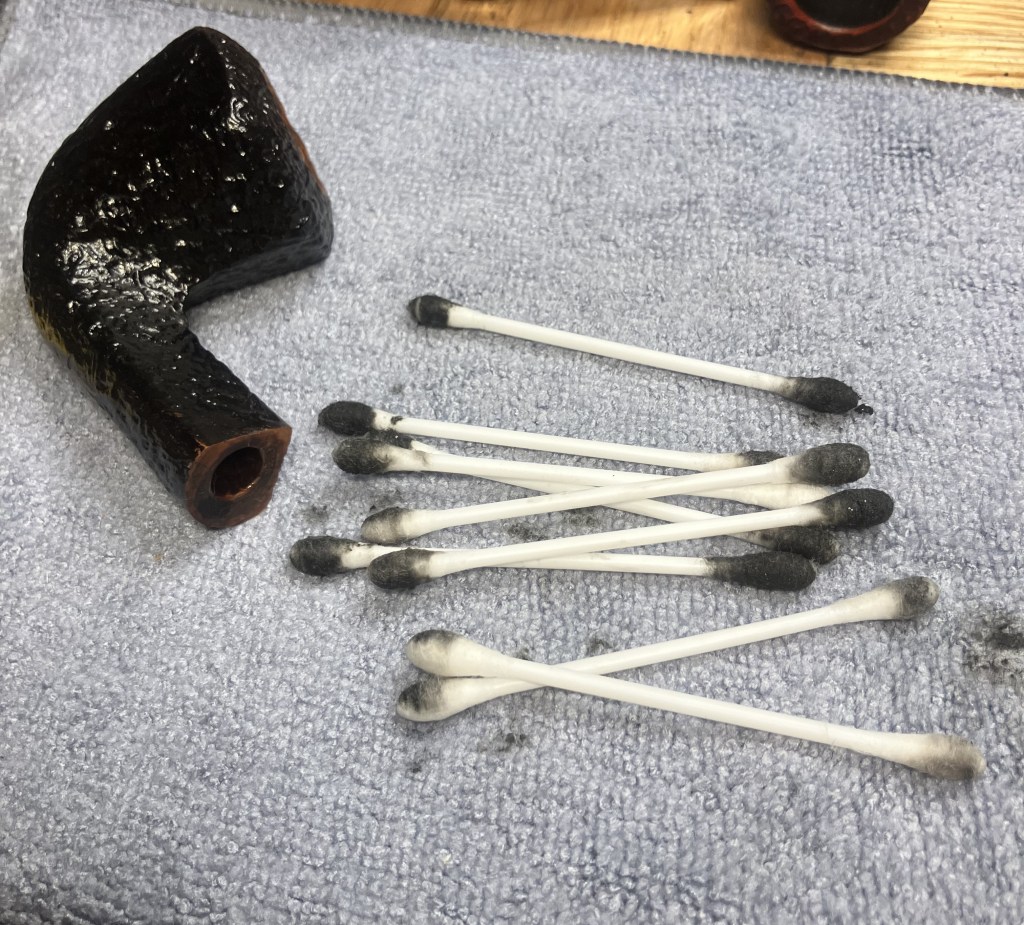
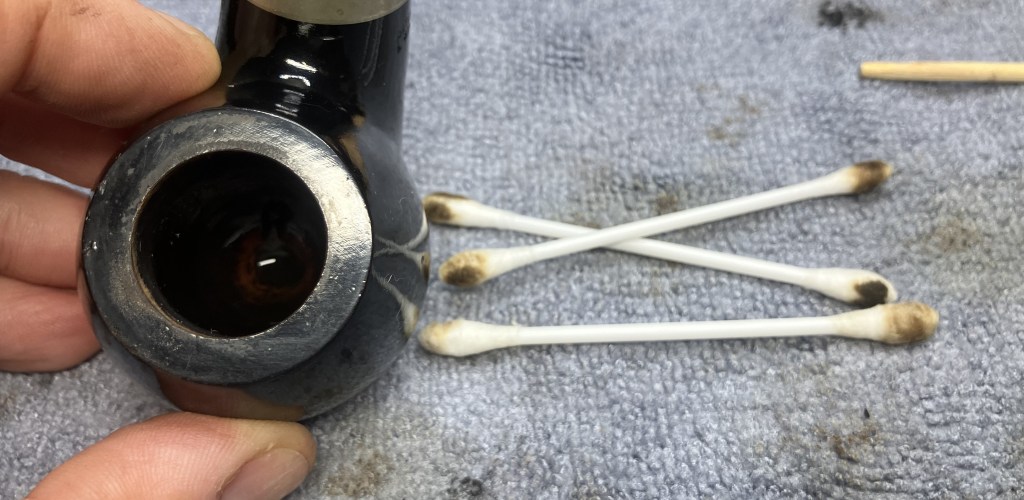
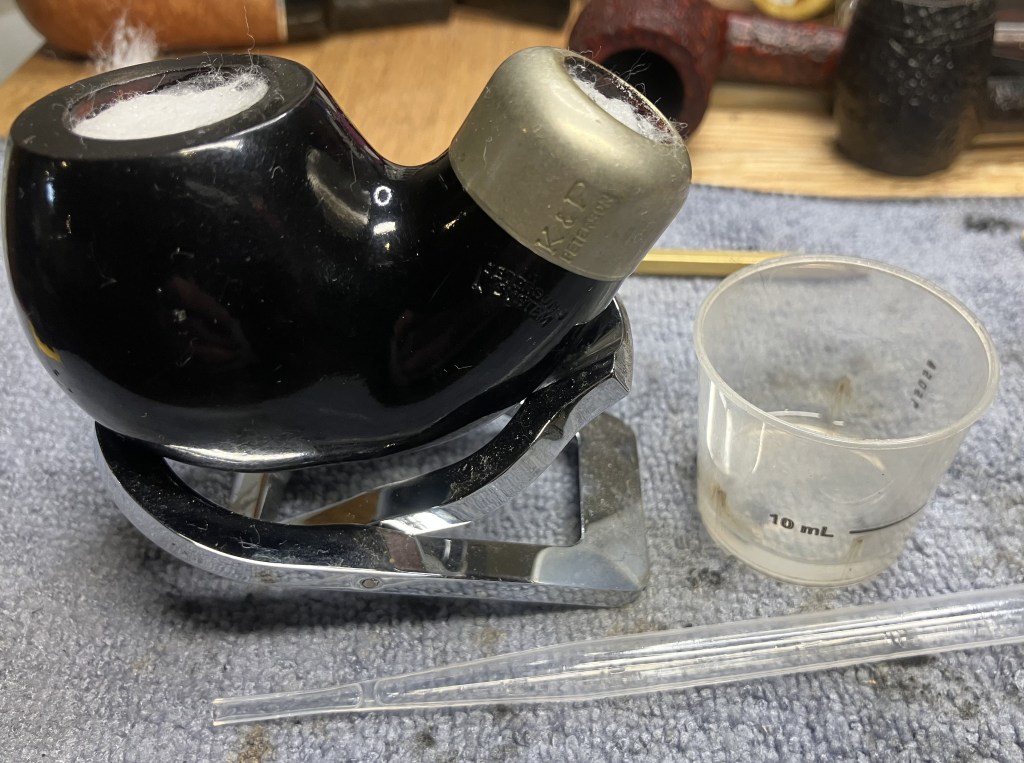
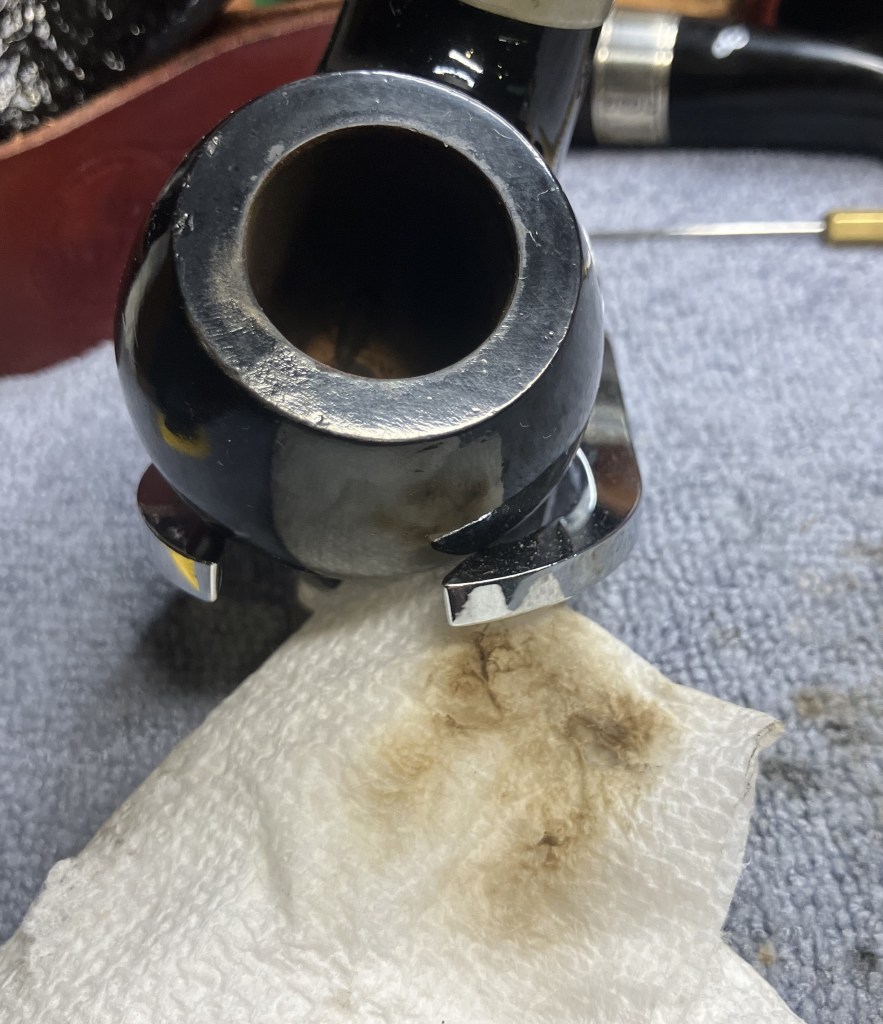
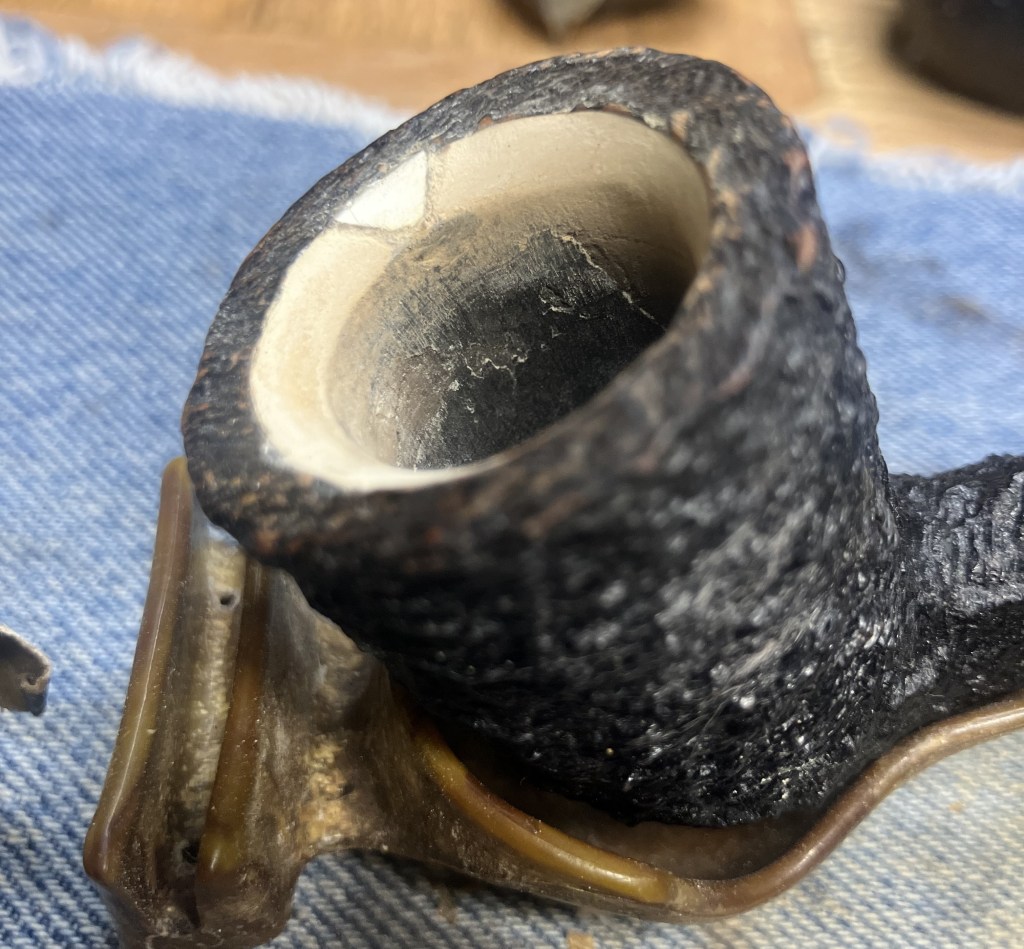
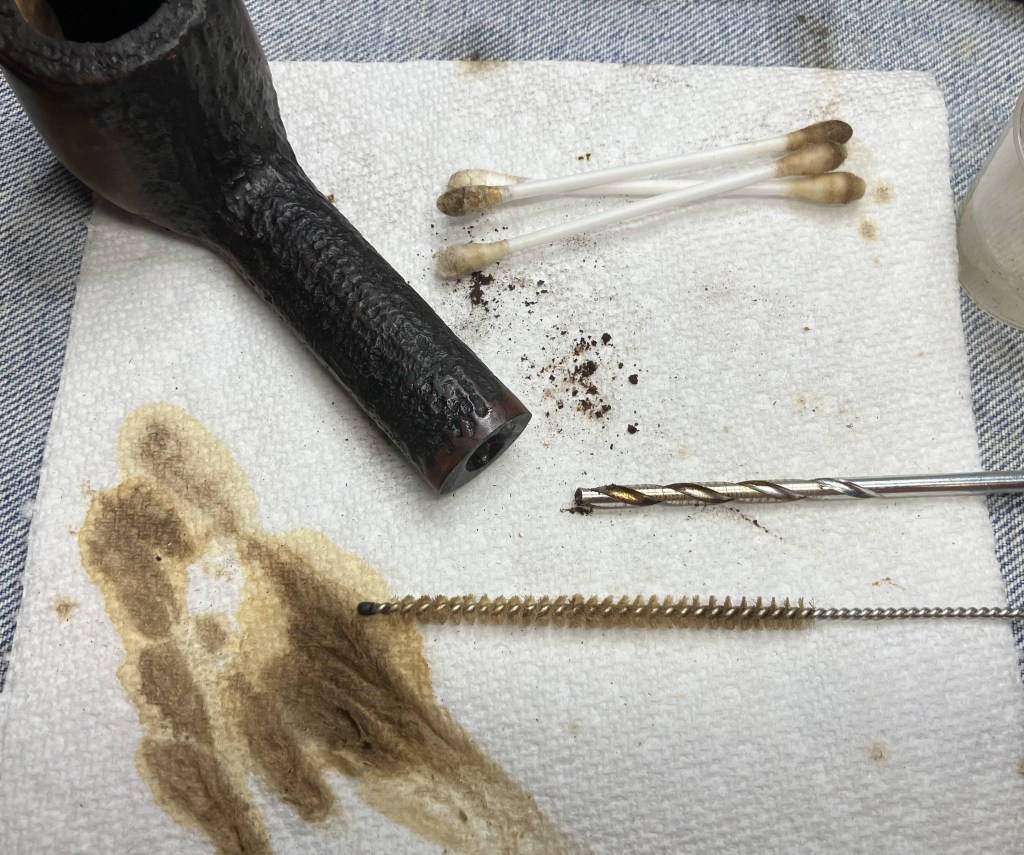
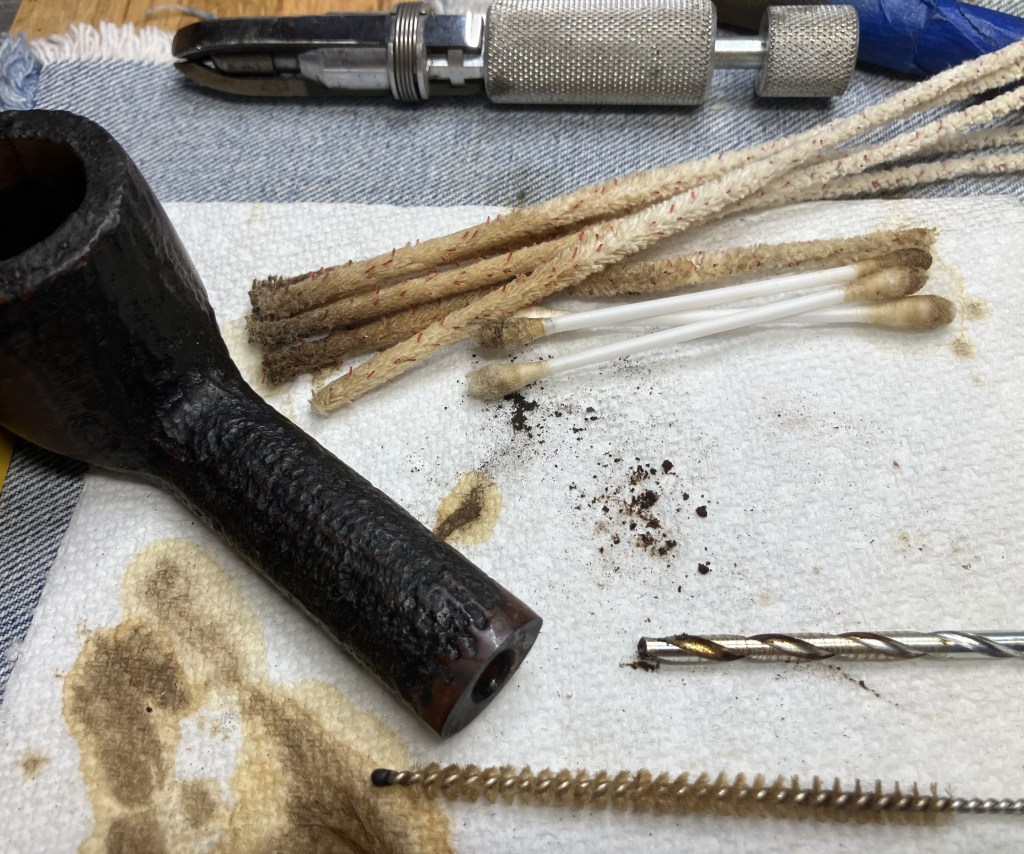
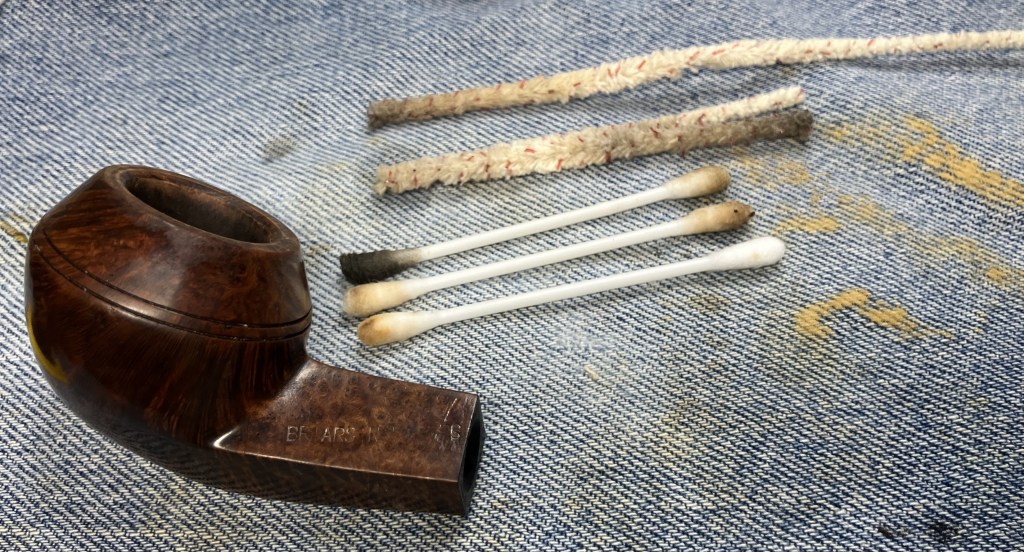
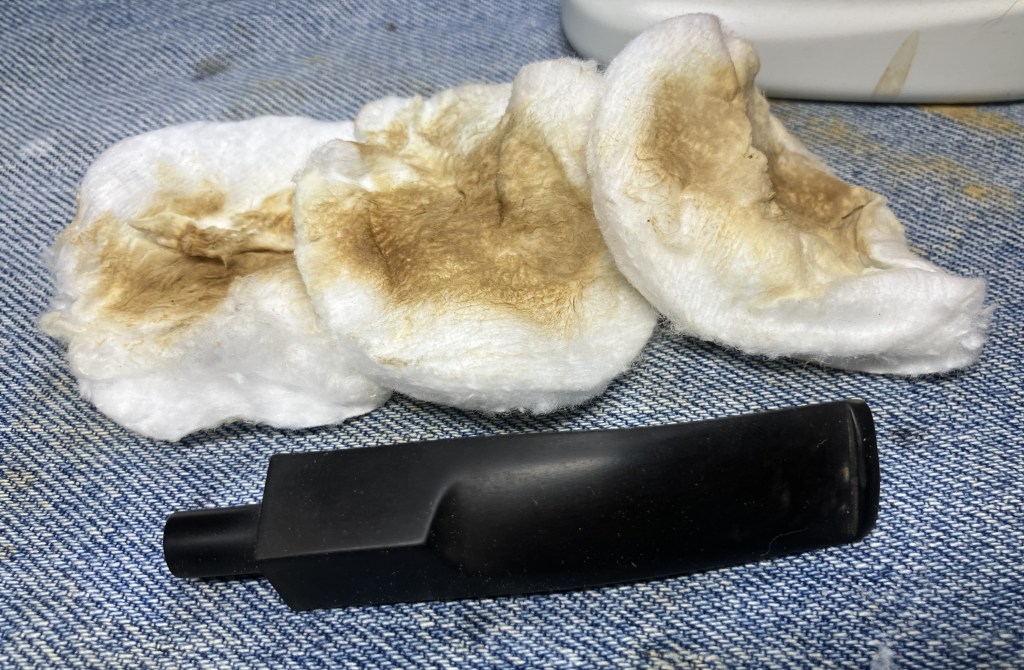
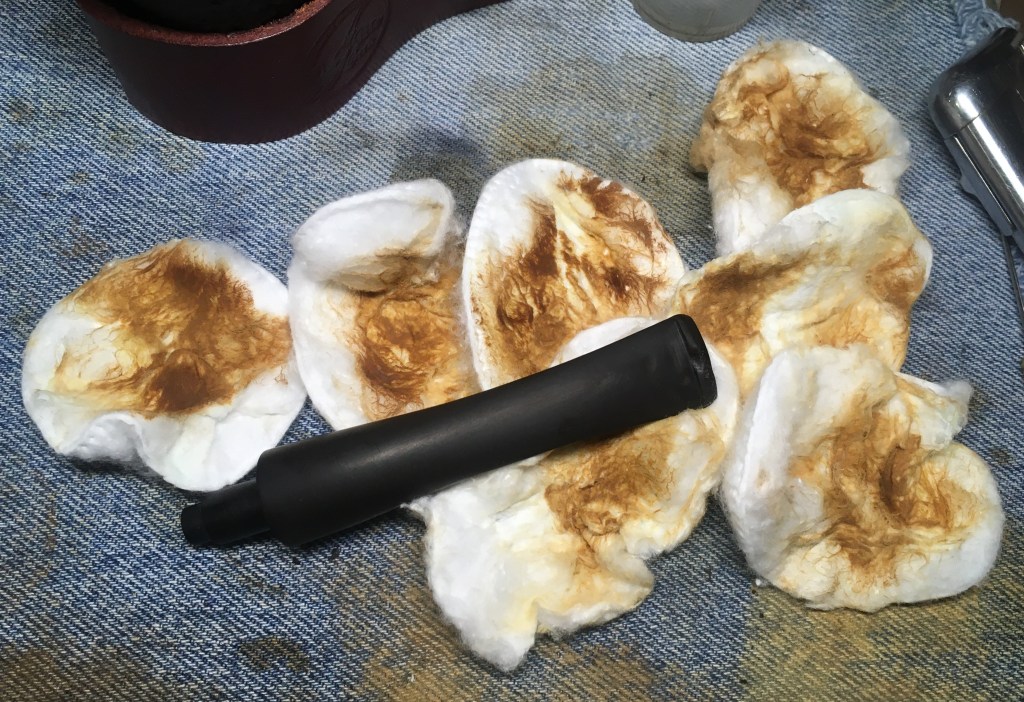
I started swabbing the chamber out with cotton swabs dipped in 99% ethyl alcohol and discovered that Bebbia used a rather thickly applied bowl coating.
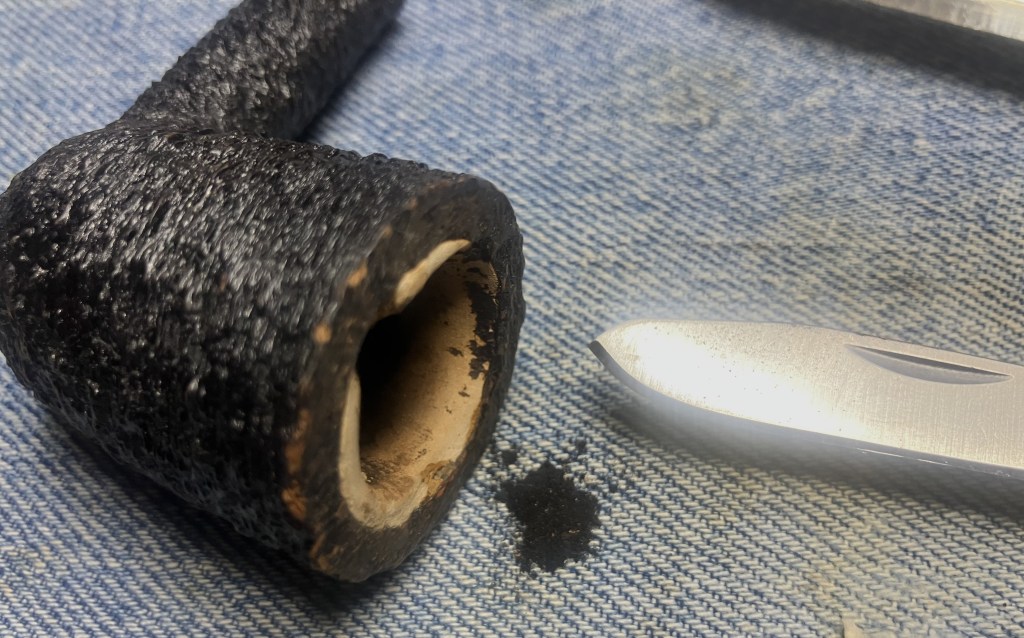
The coating must have been sprayed into the bowl and allowed into the shank because cleaning it with the same method provided the same black stained cotton swabs.
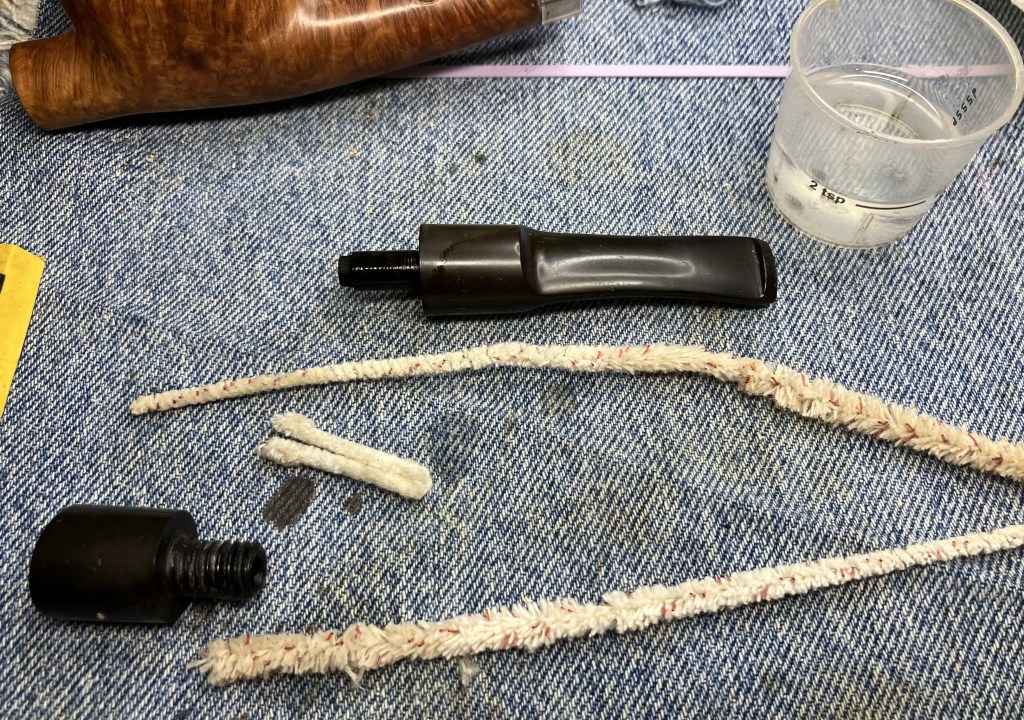
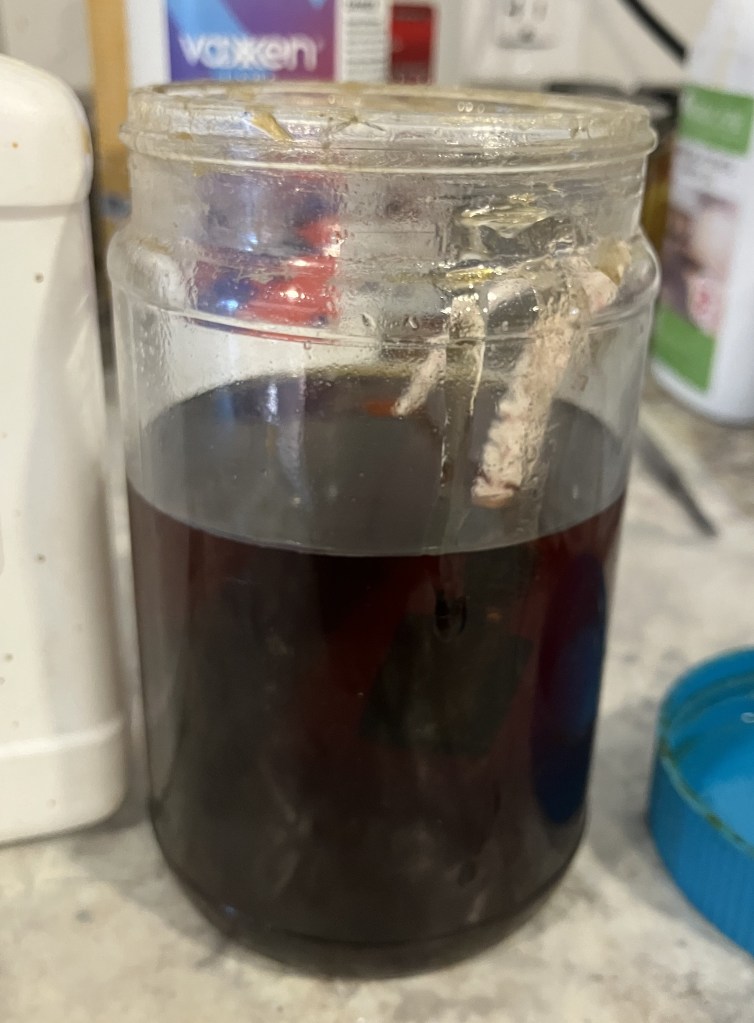
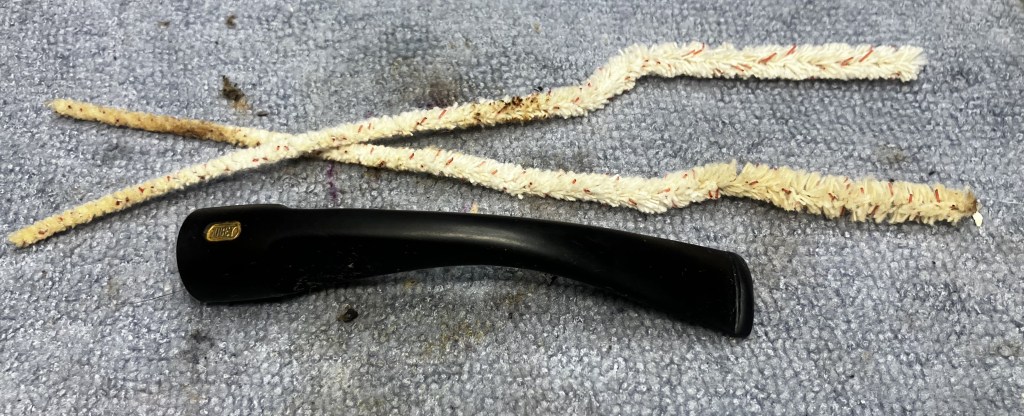
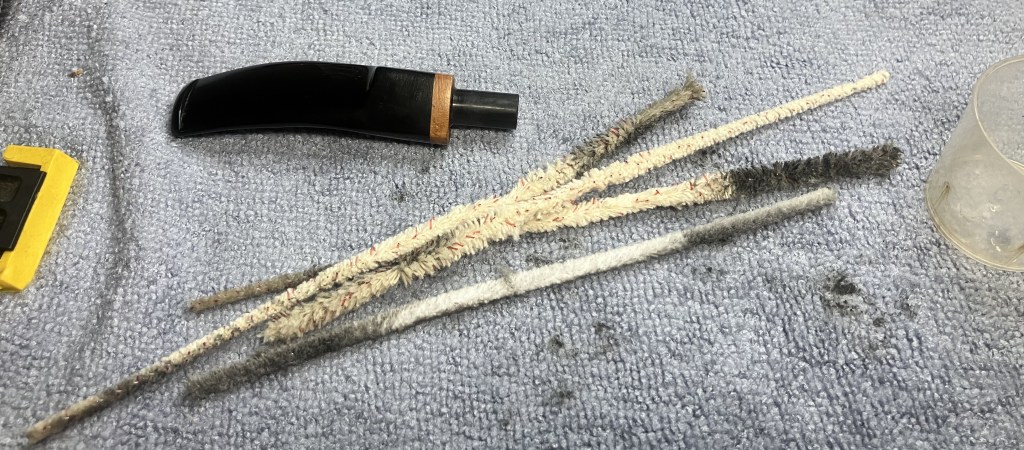
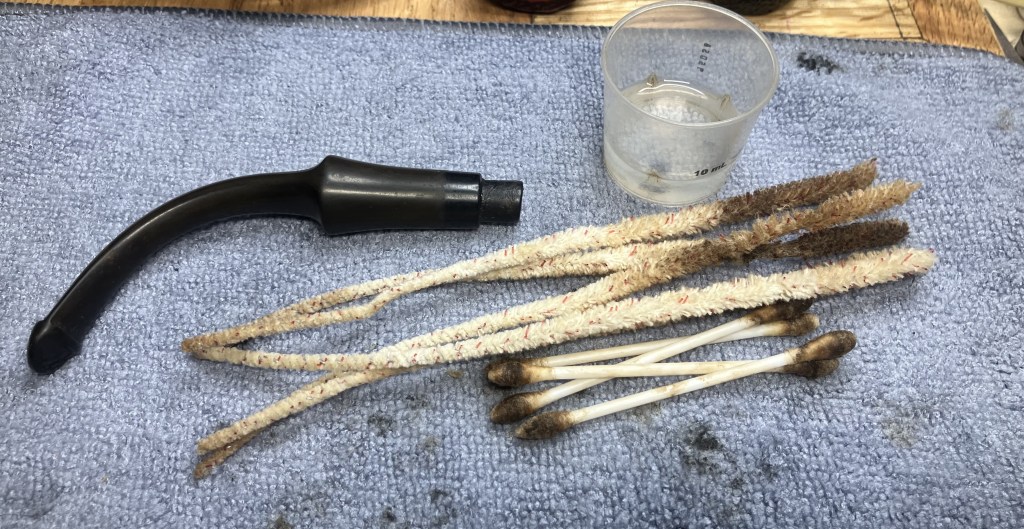
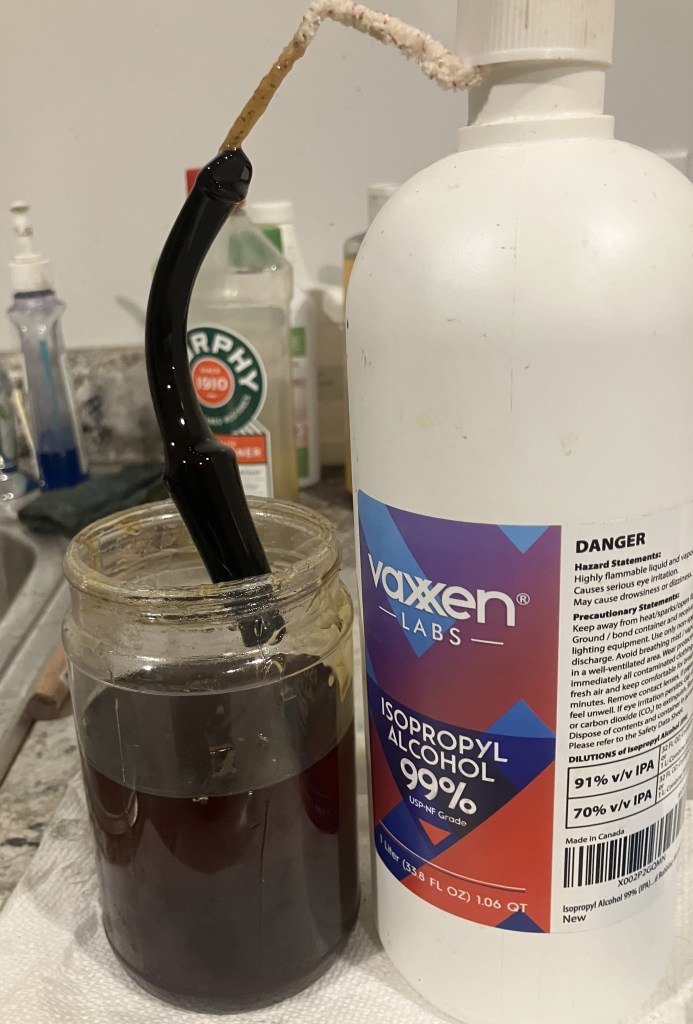
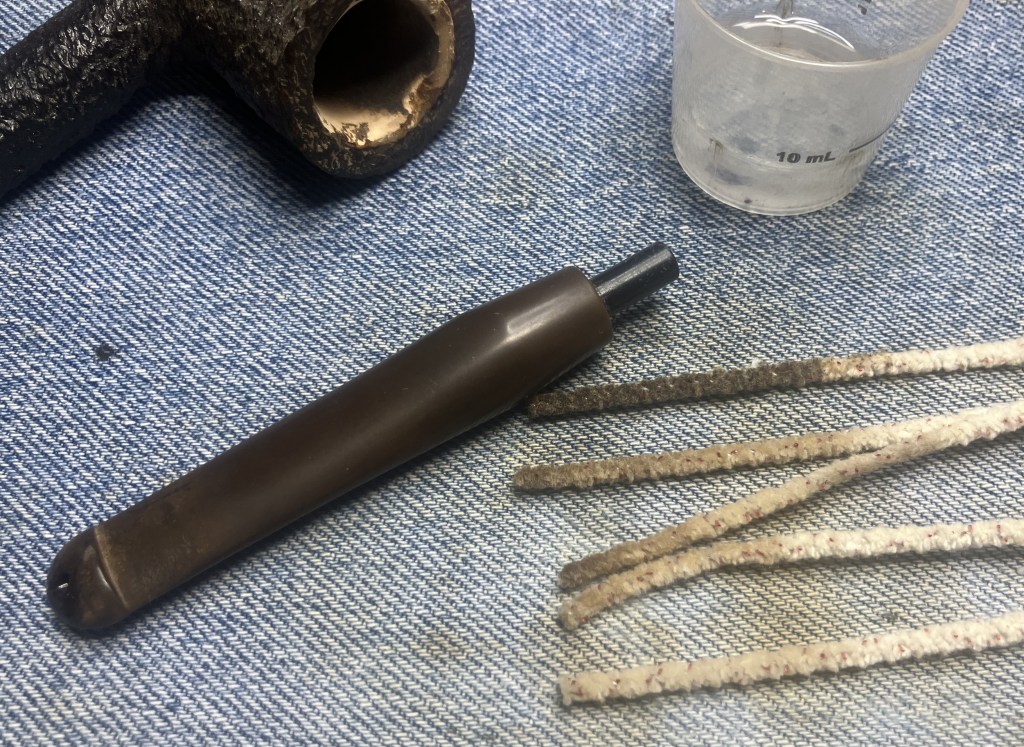
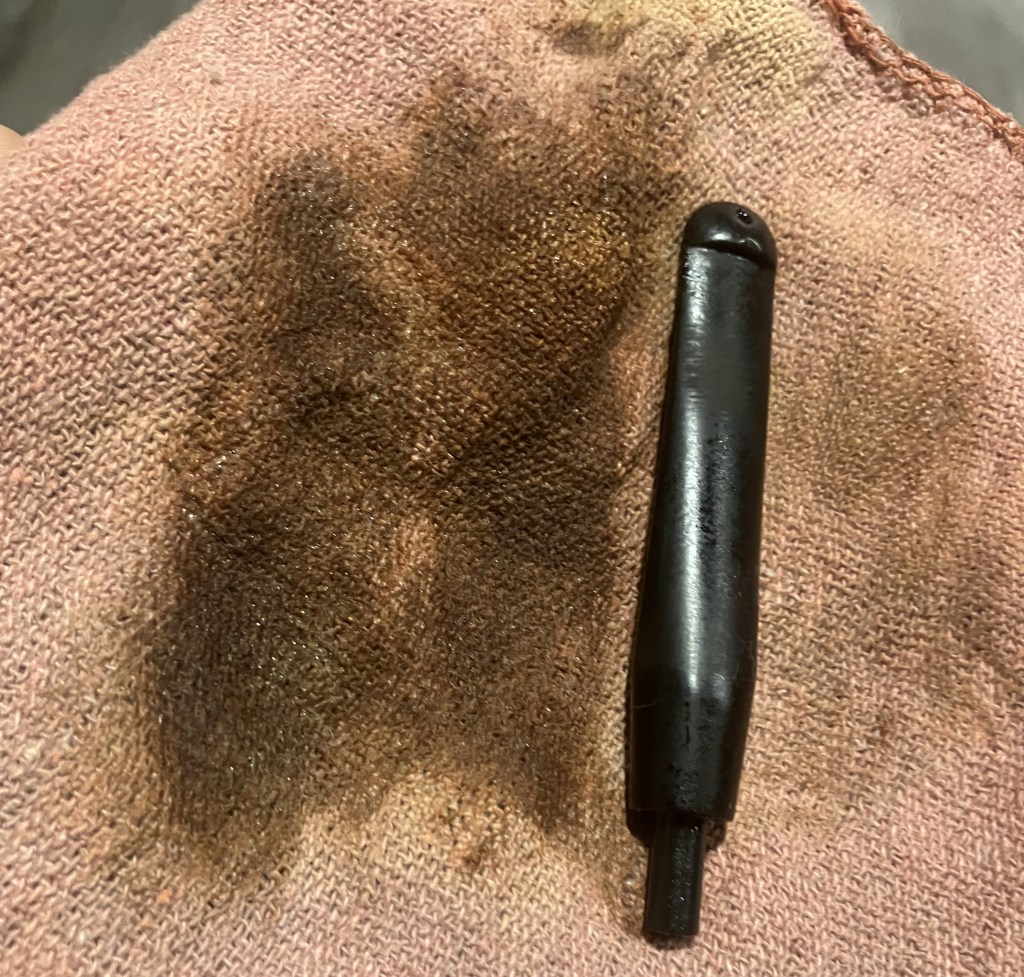
Some of the coating must have also made its way into the stem.
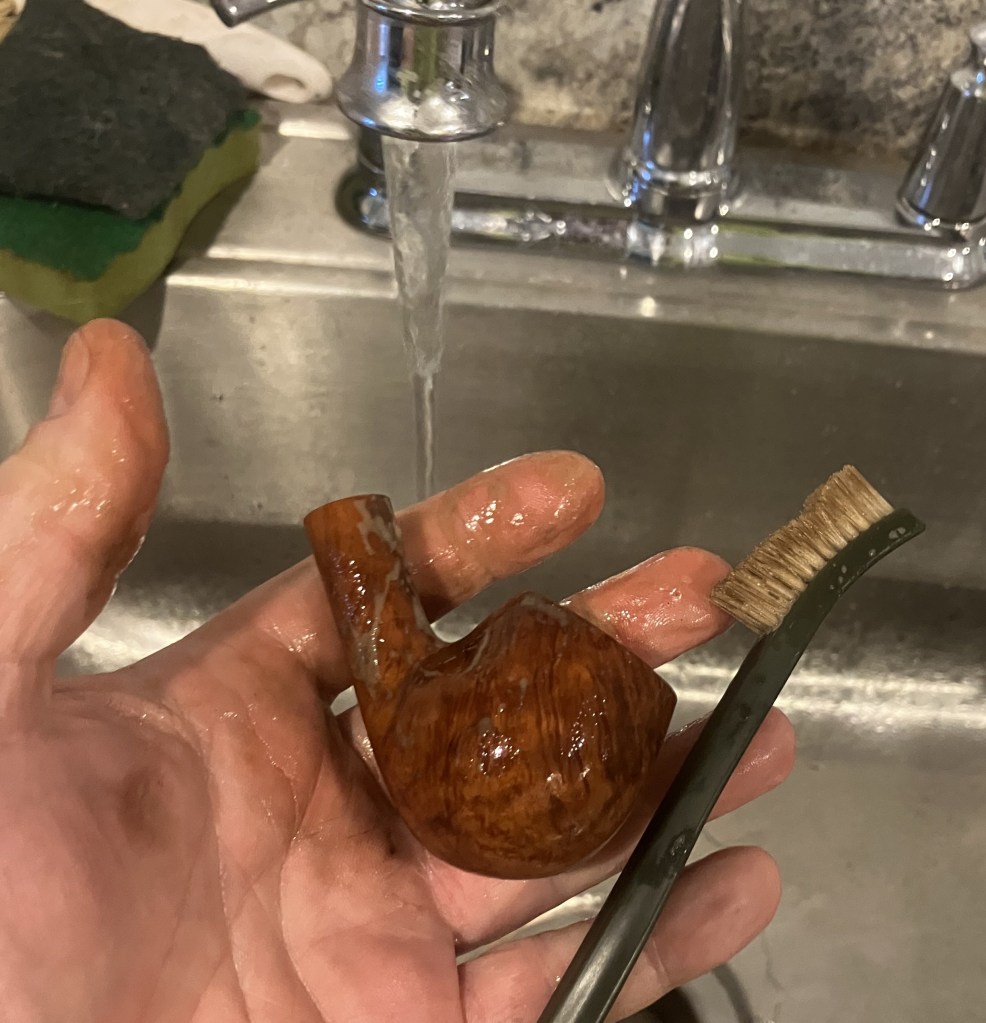
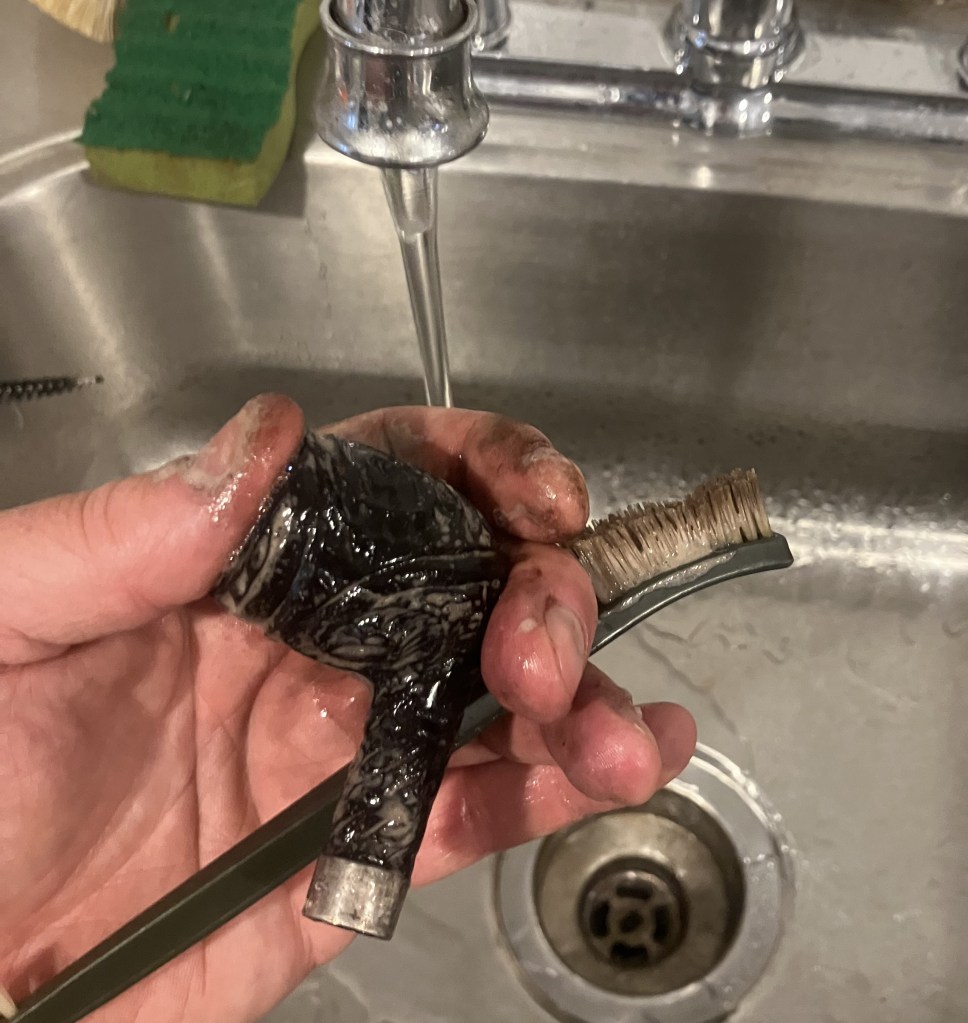
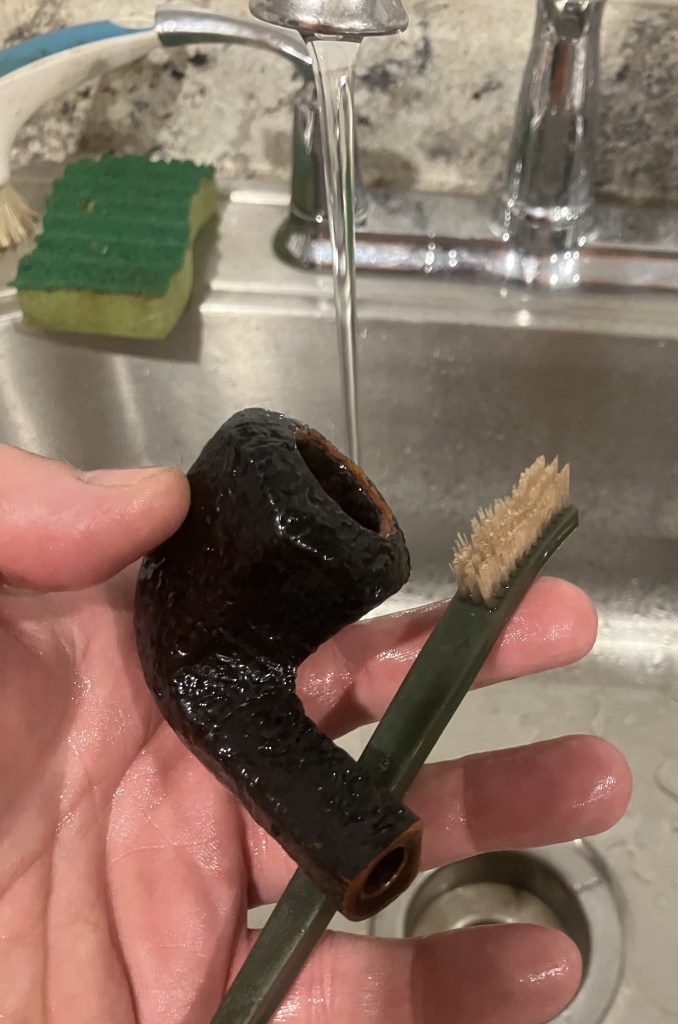
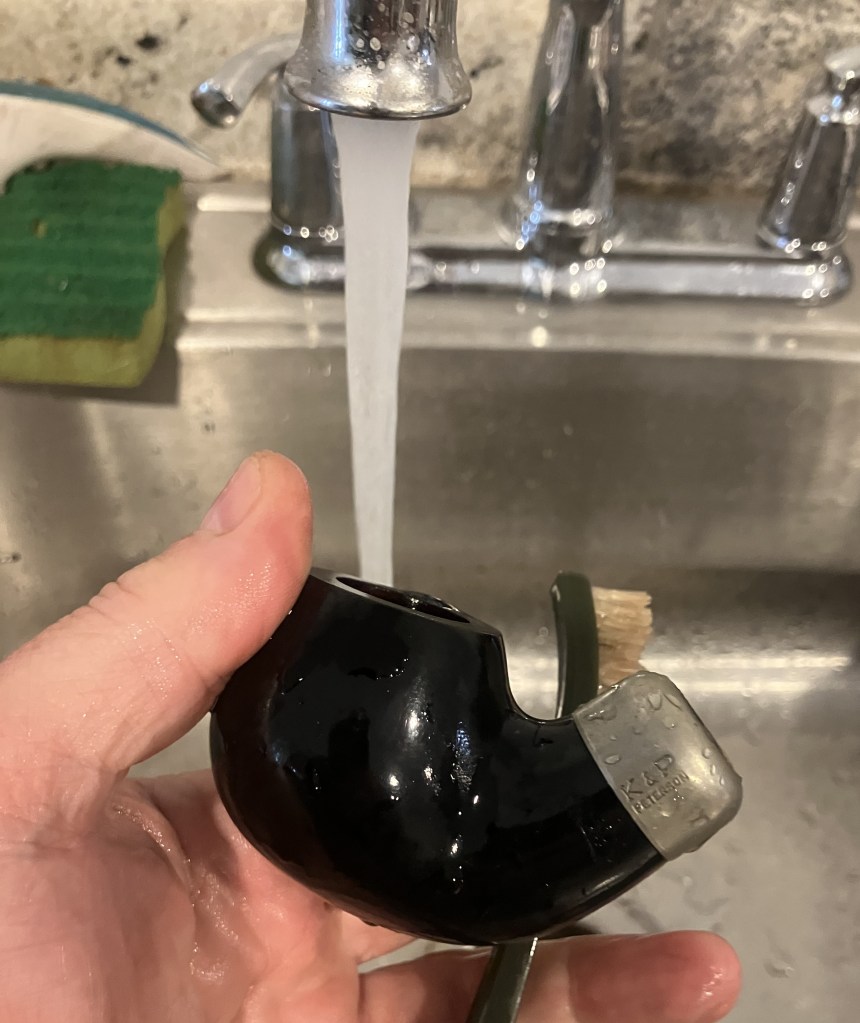
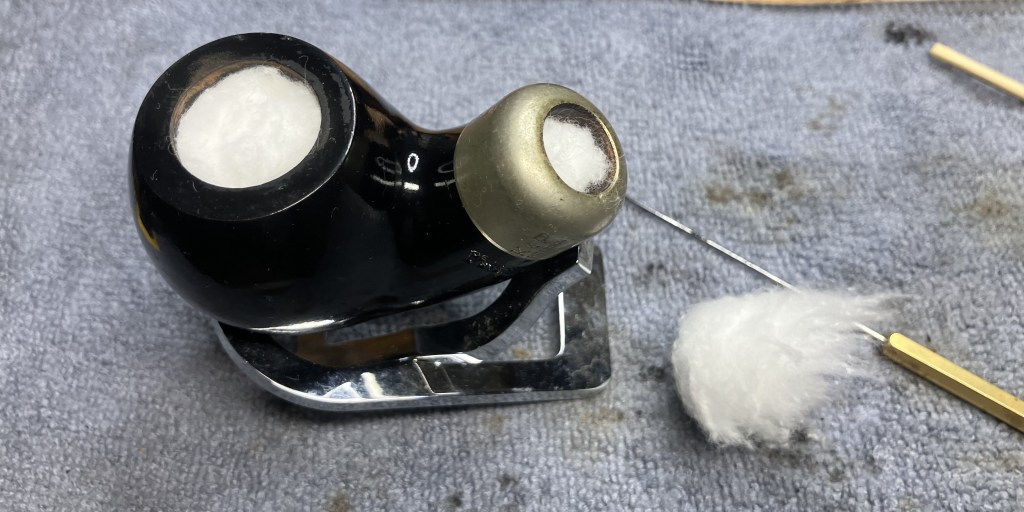
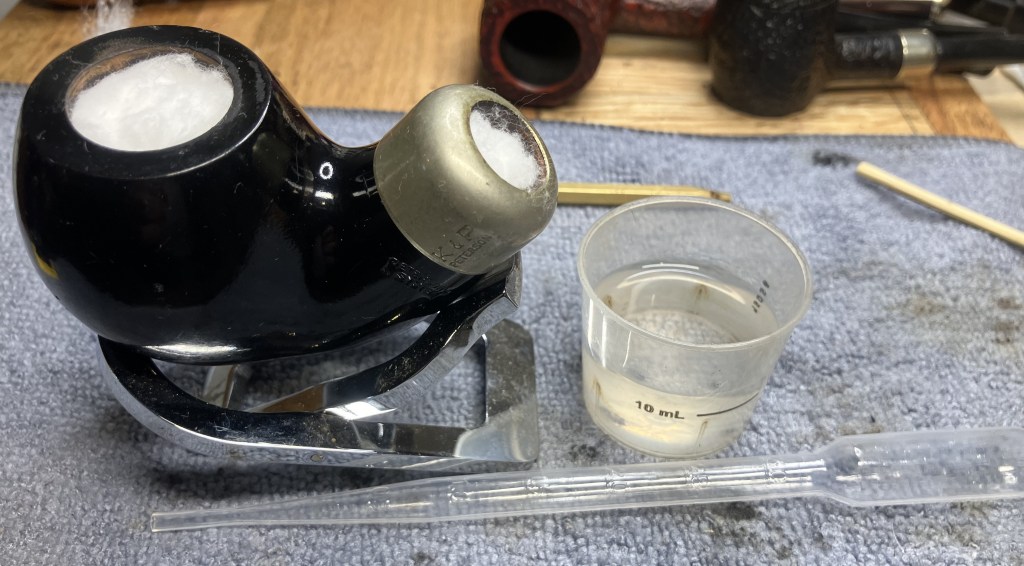
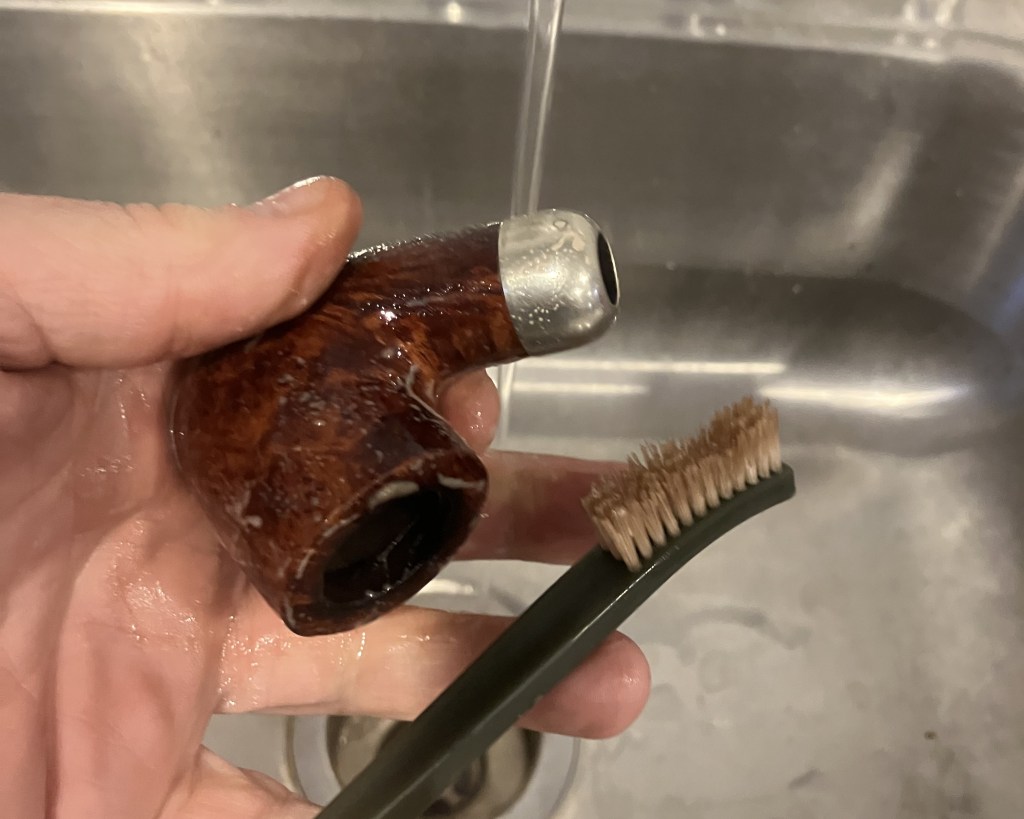
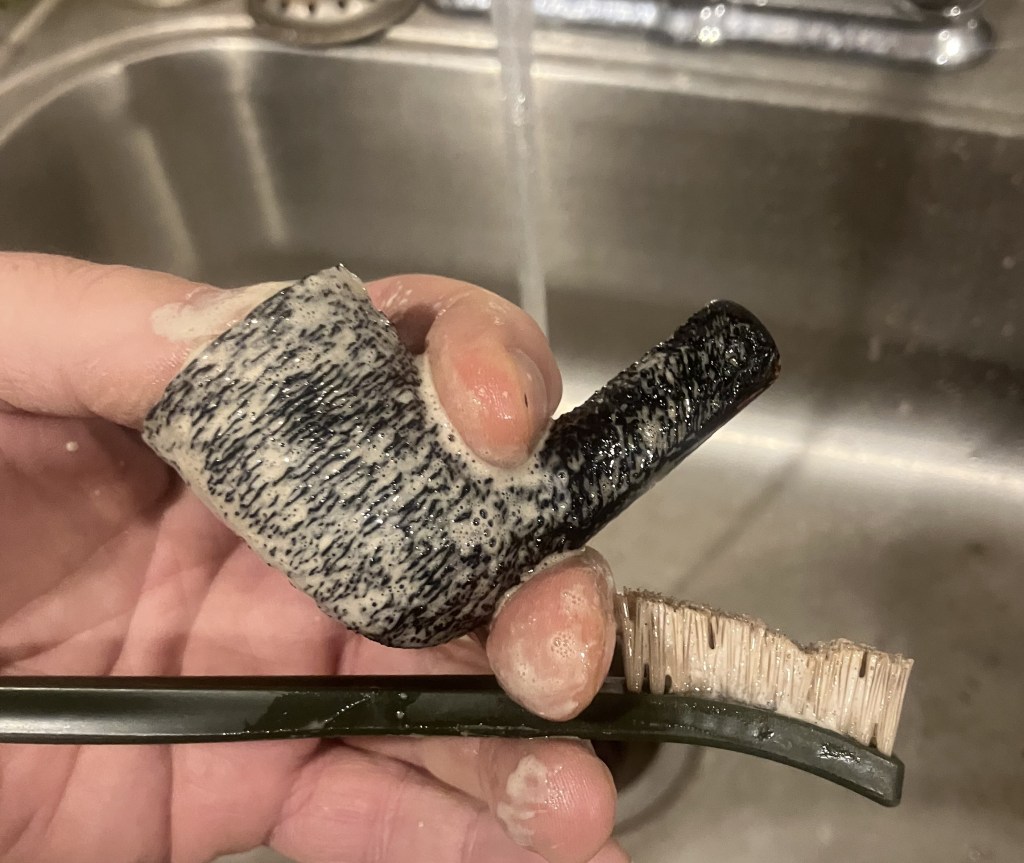
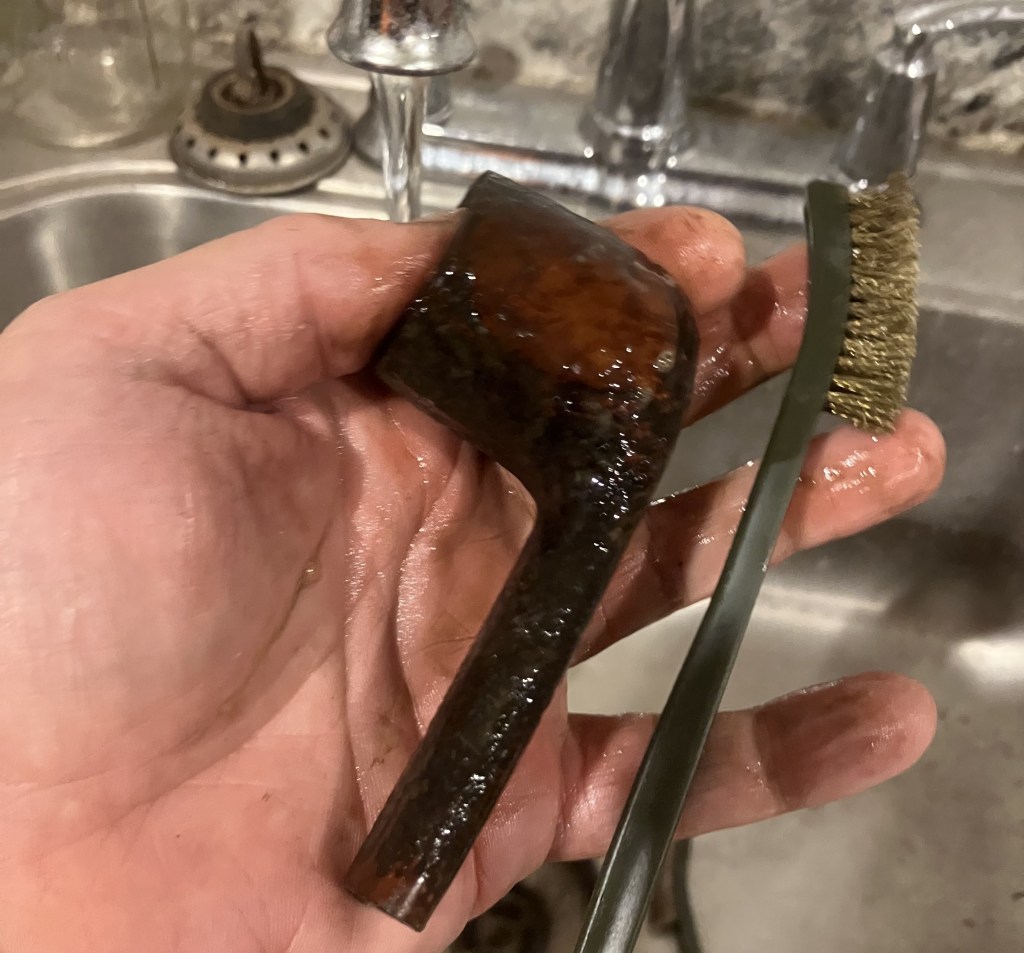
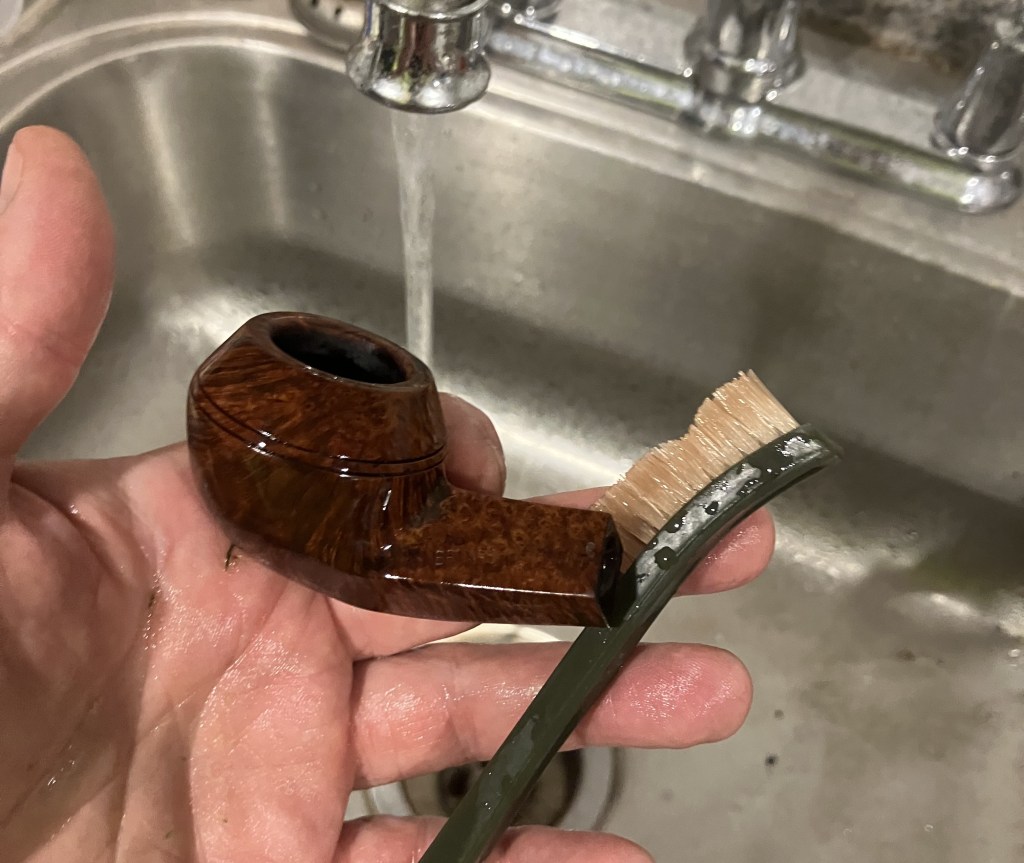
With that bowl coating stuff removed, I was able to say, “To the sink!” Here the stummel was scrubbed with undiluted Murphy Oil Soap and a nylon brush. The soap was rinsed away with warm water and the stummel dried with a cotton hand towel.
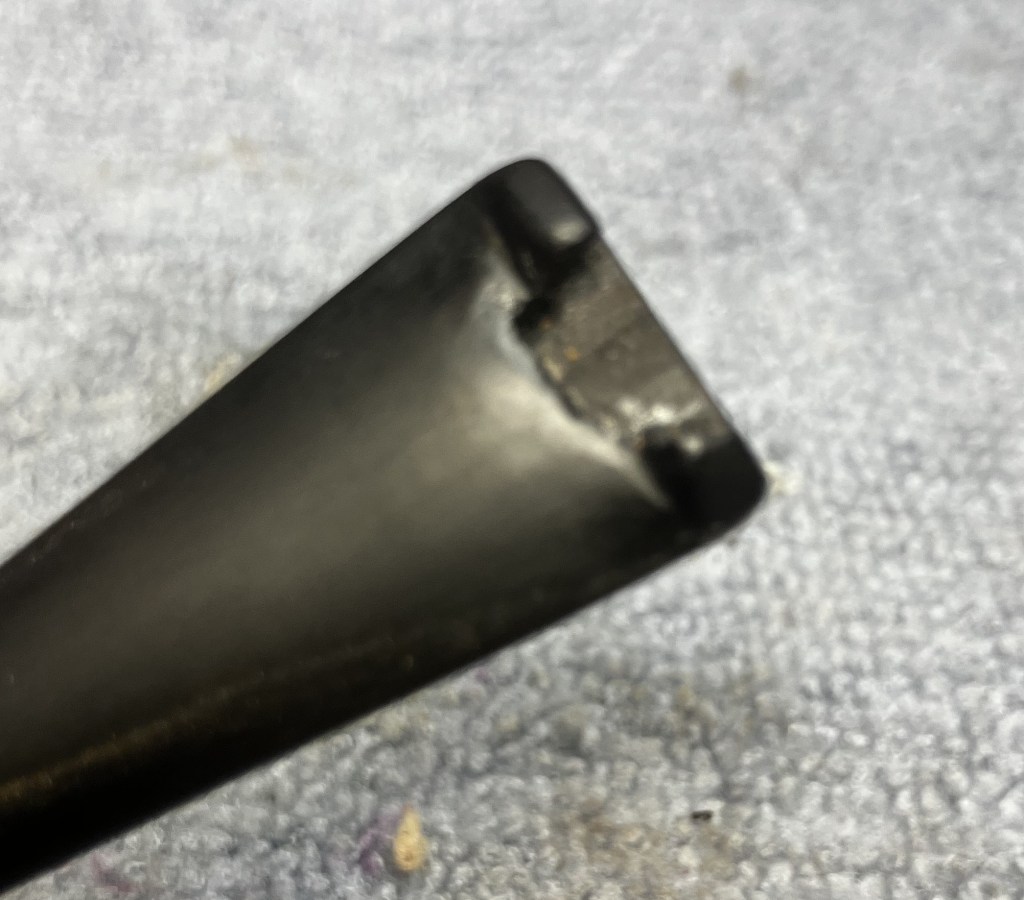
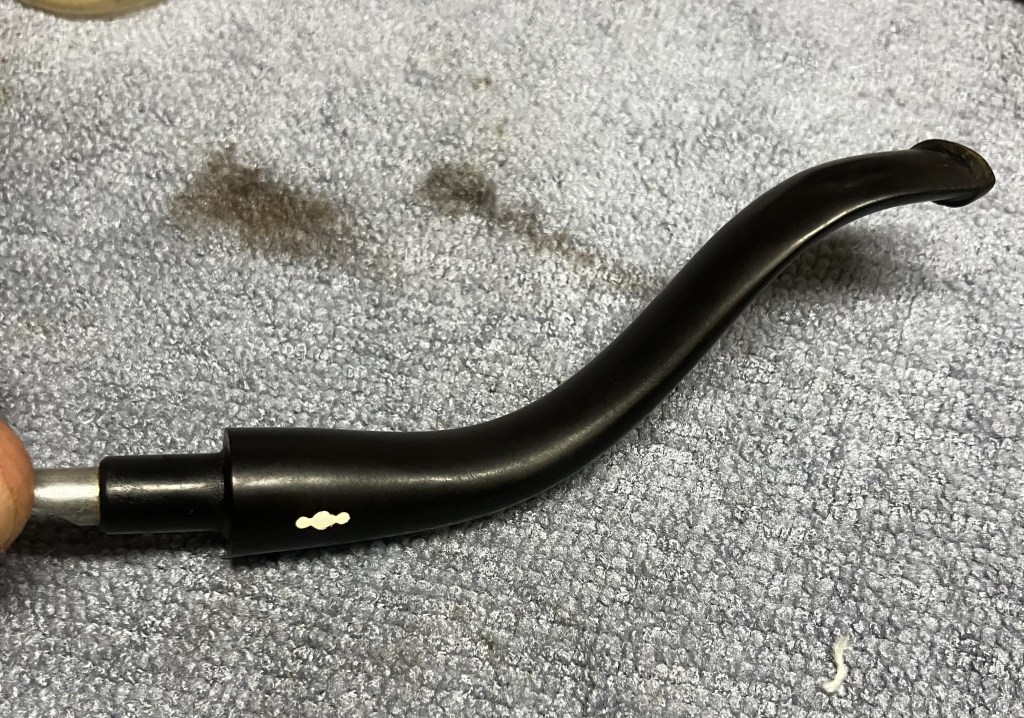
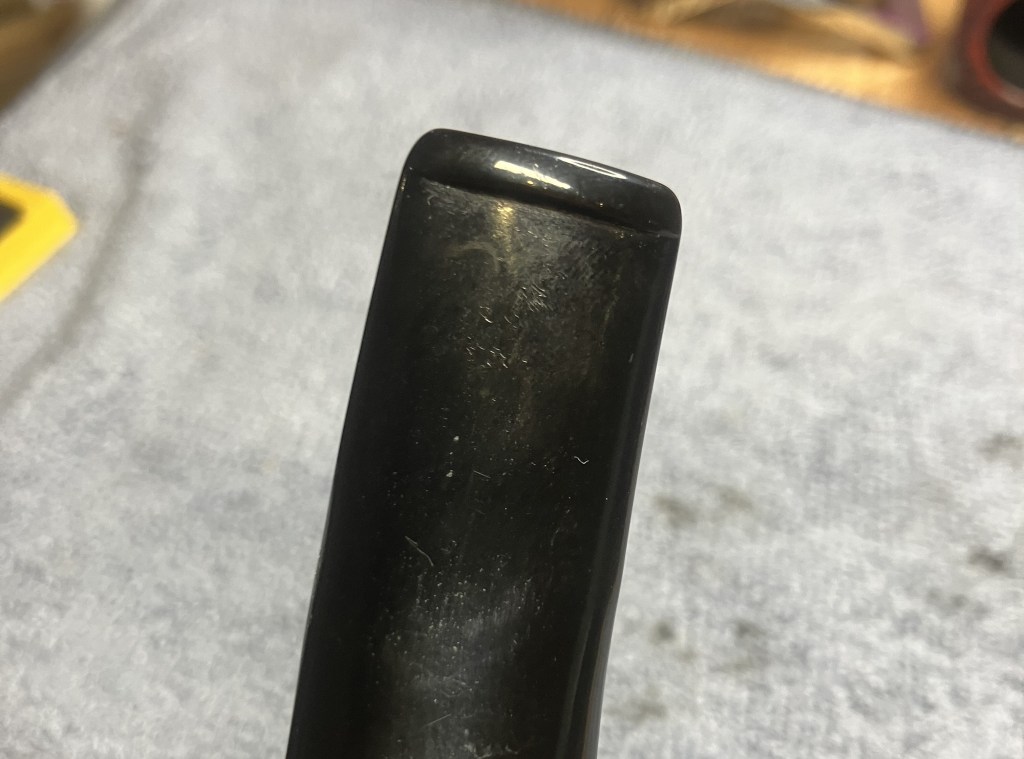
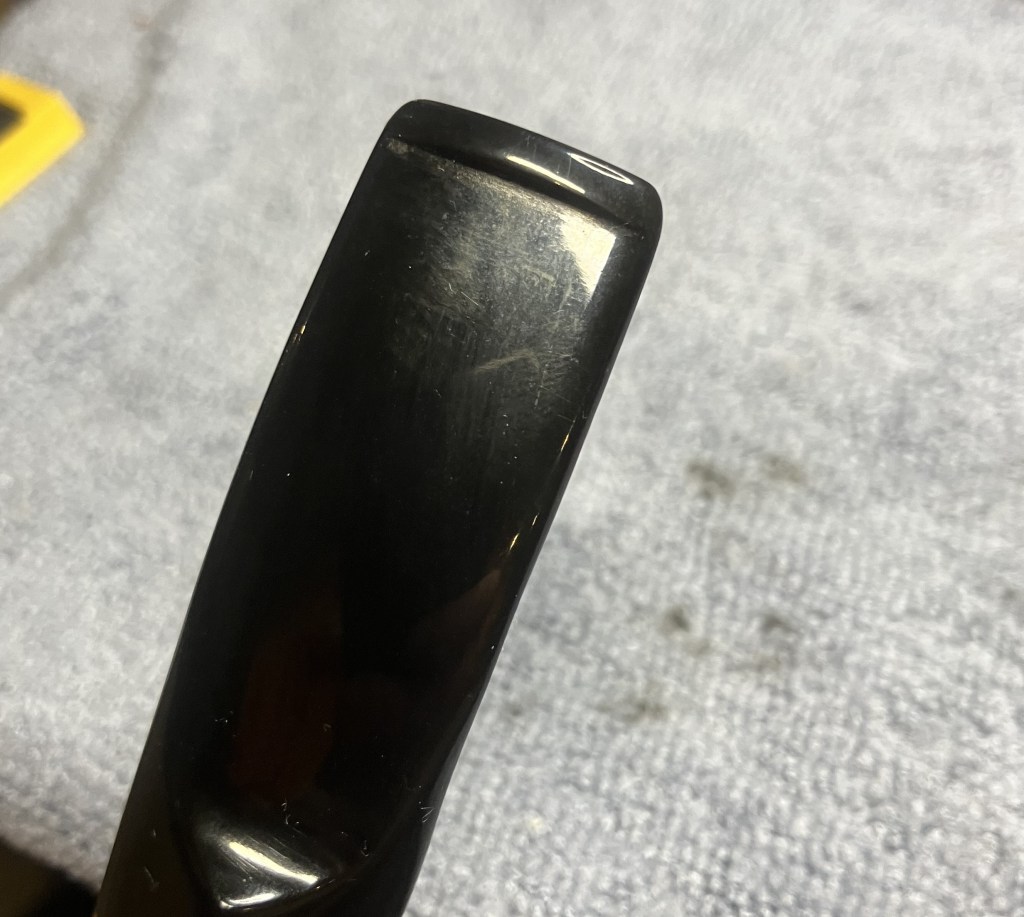
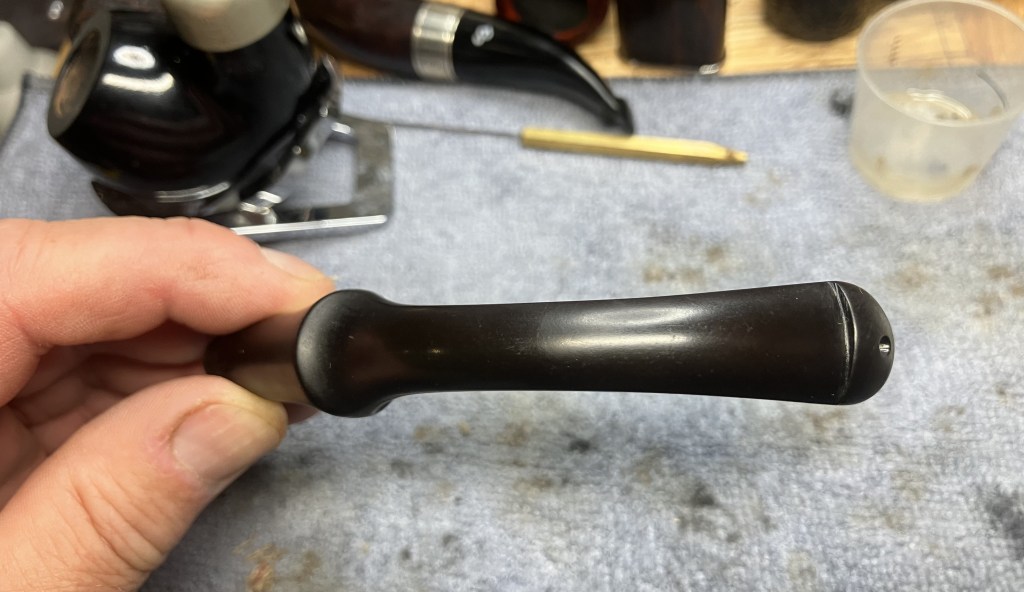
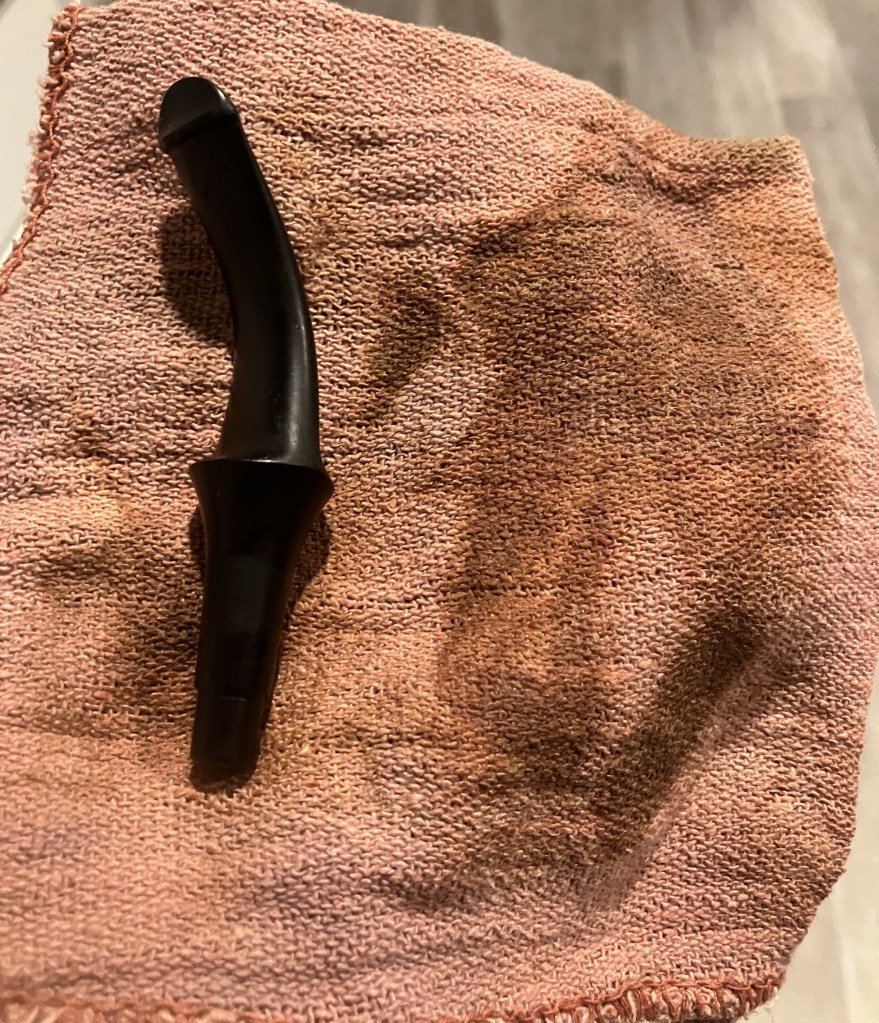
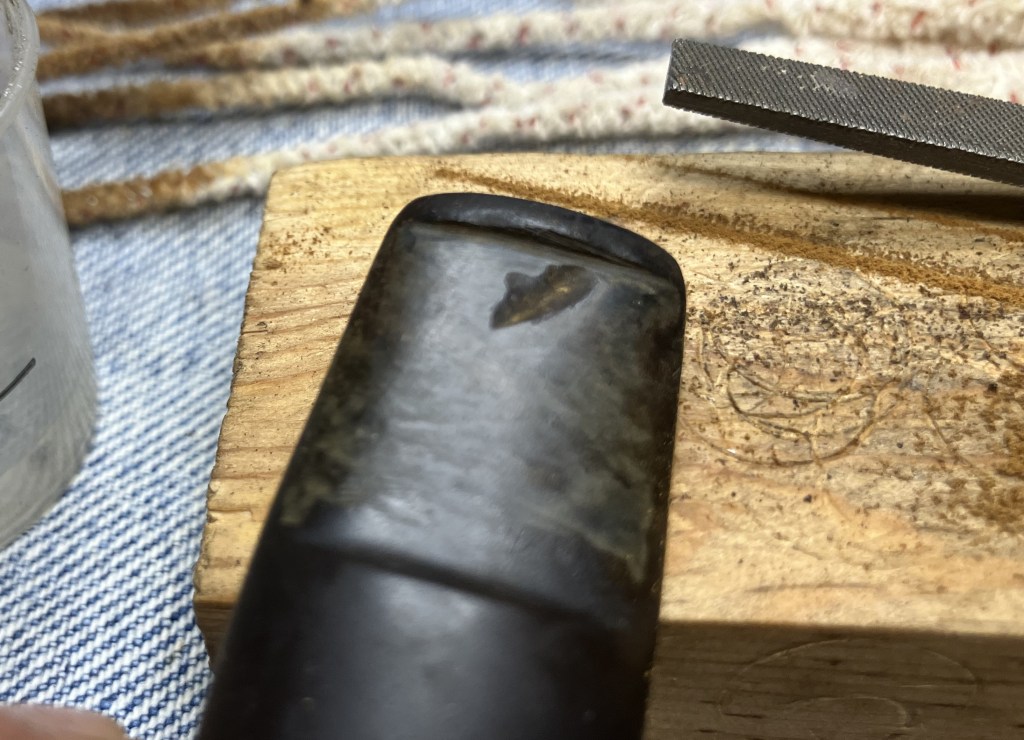
The stem showed ever-so-light tooth chatter scars.
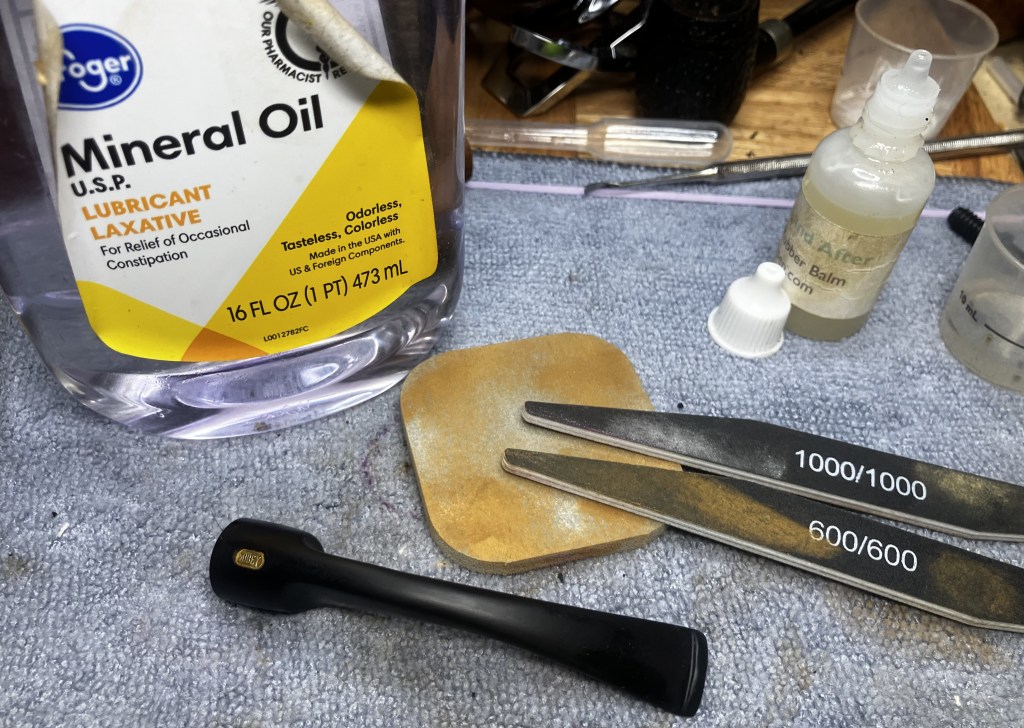
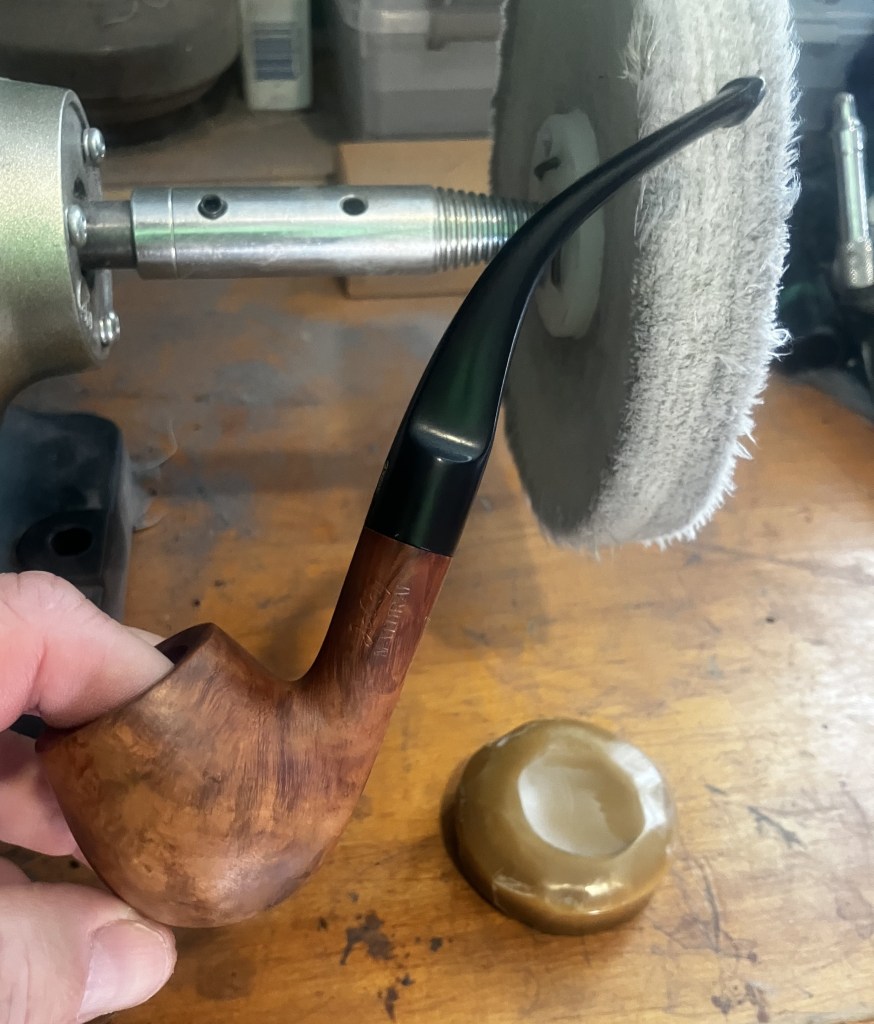
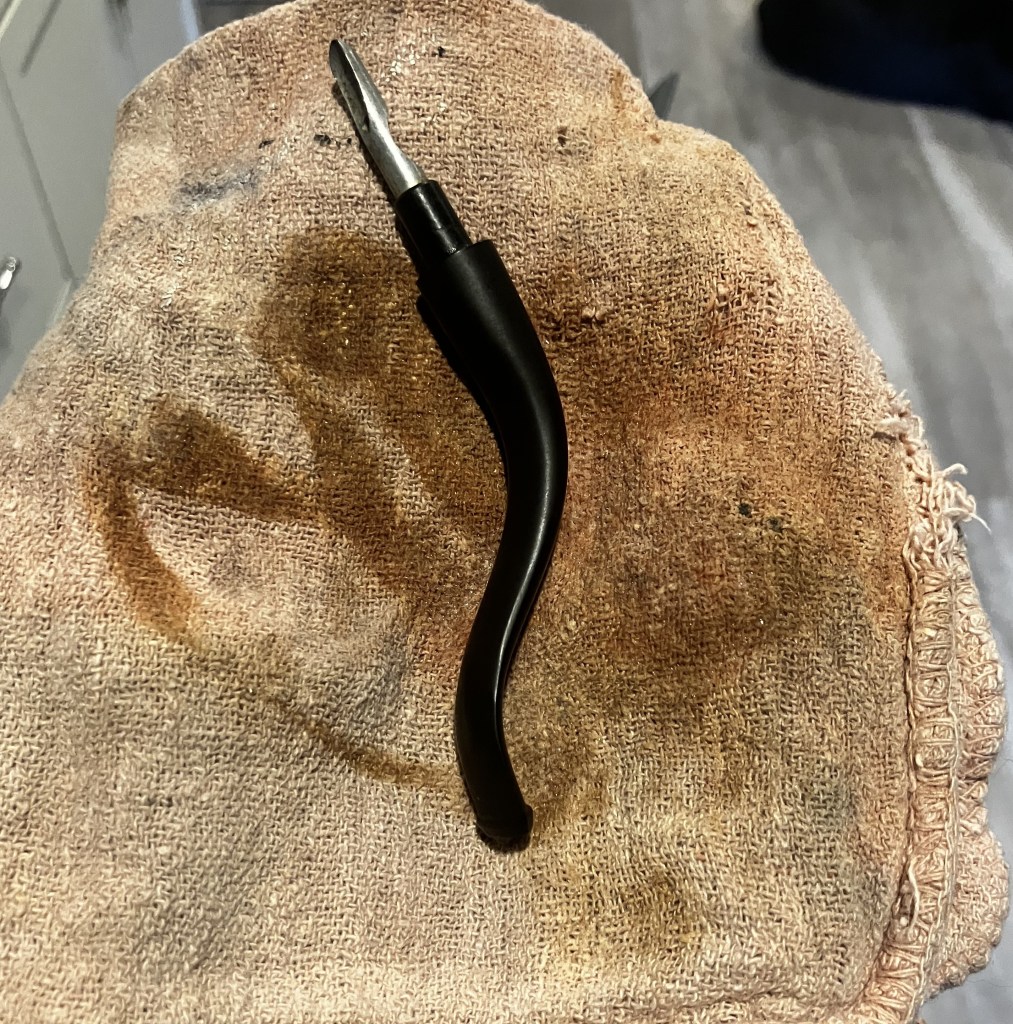
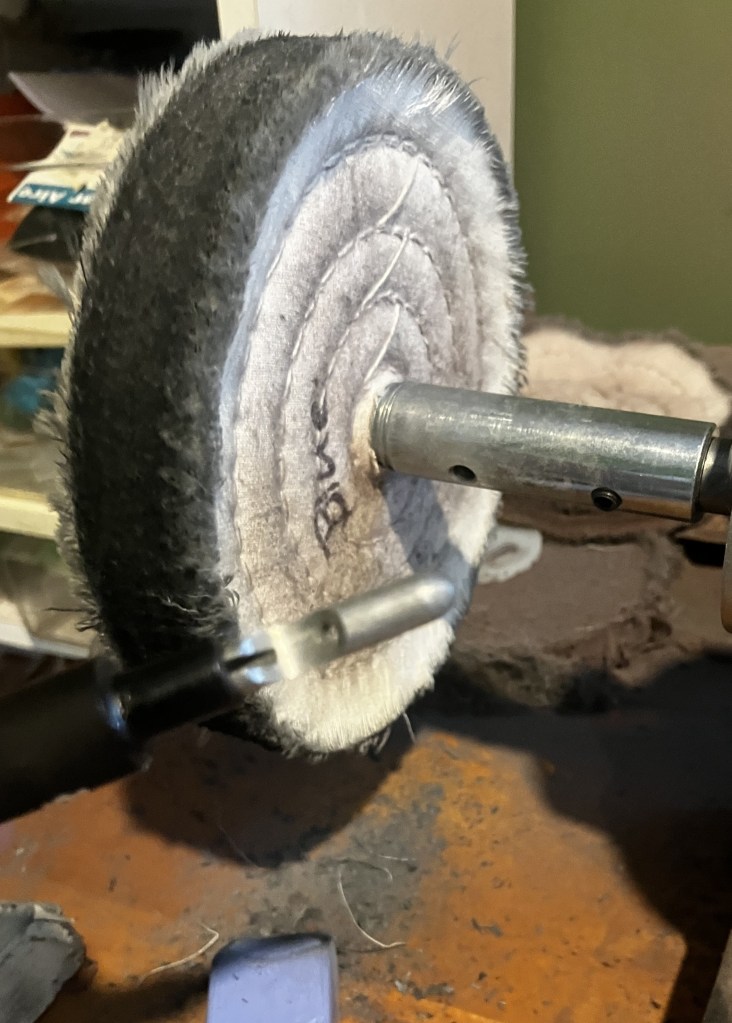
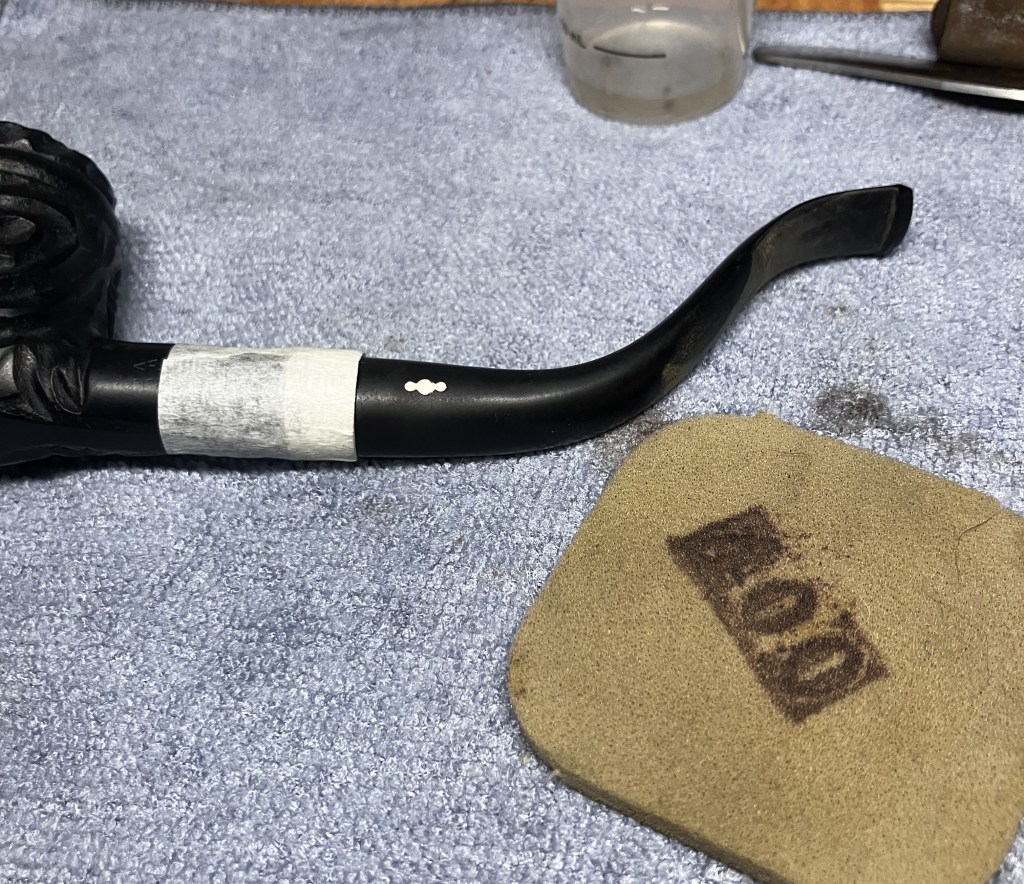
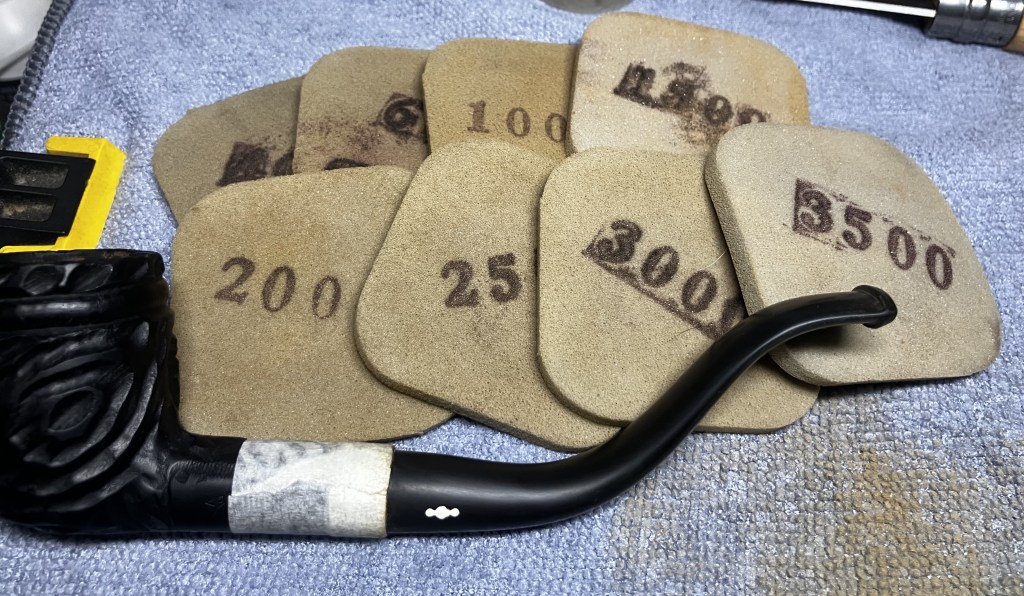
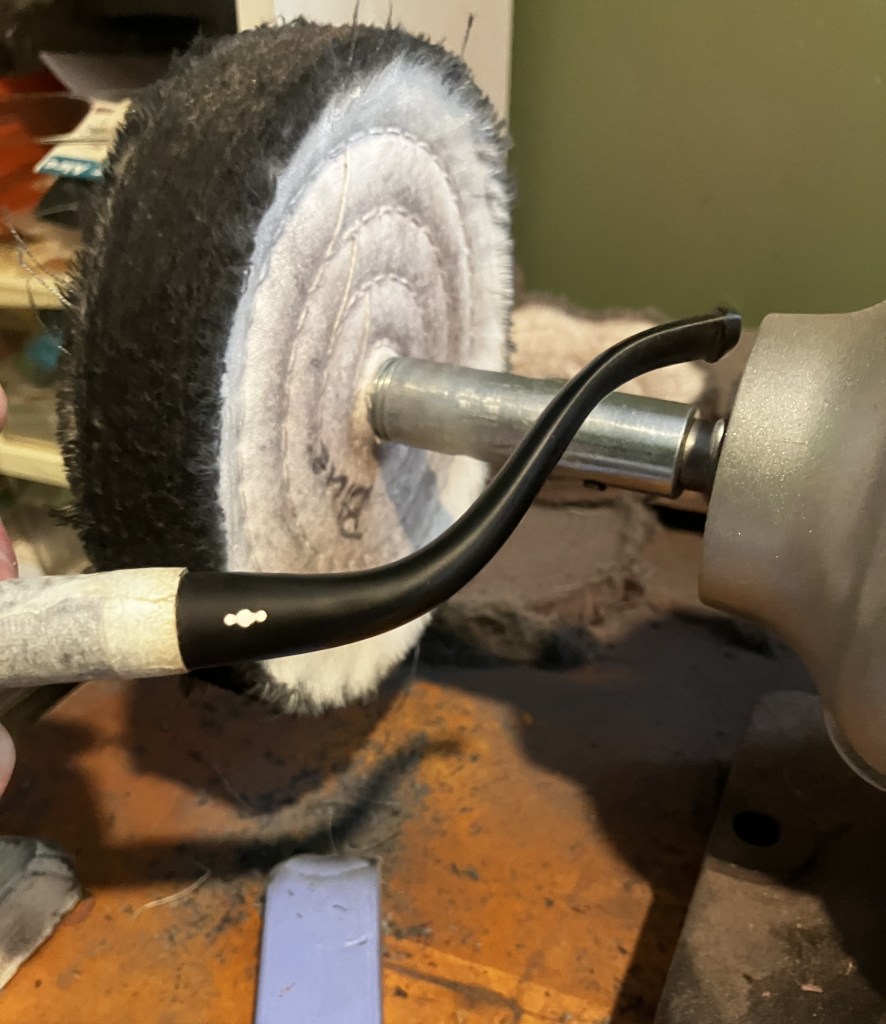
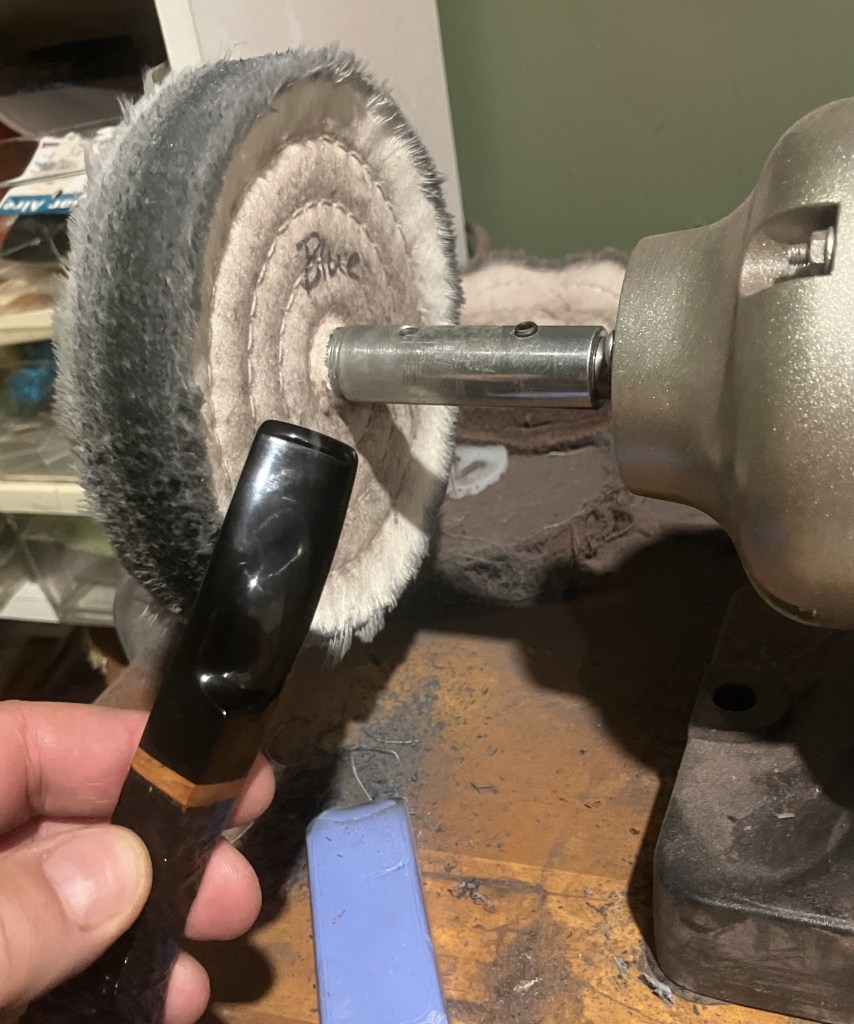
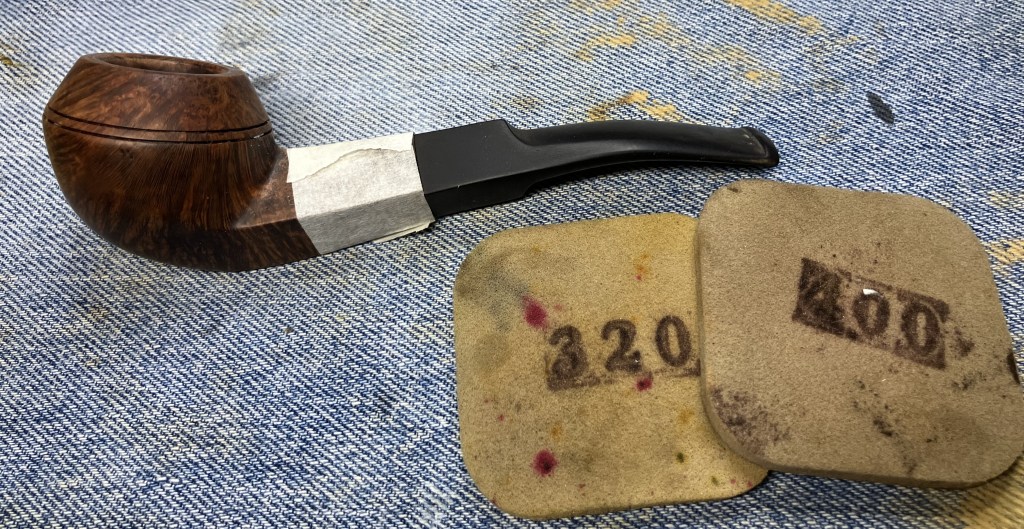
I did not think that sanding or micro-meshing was necessary to address this and that buffing with Blue Diamond compound would take care of the marks.
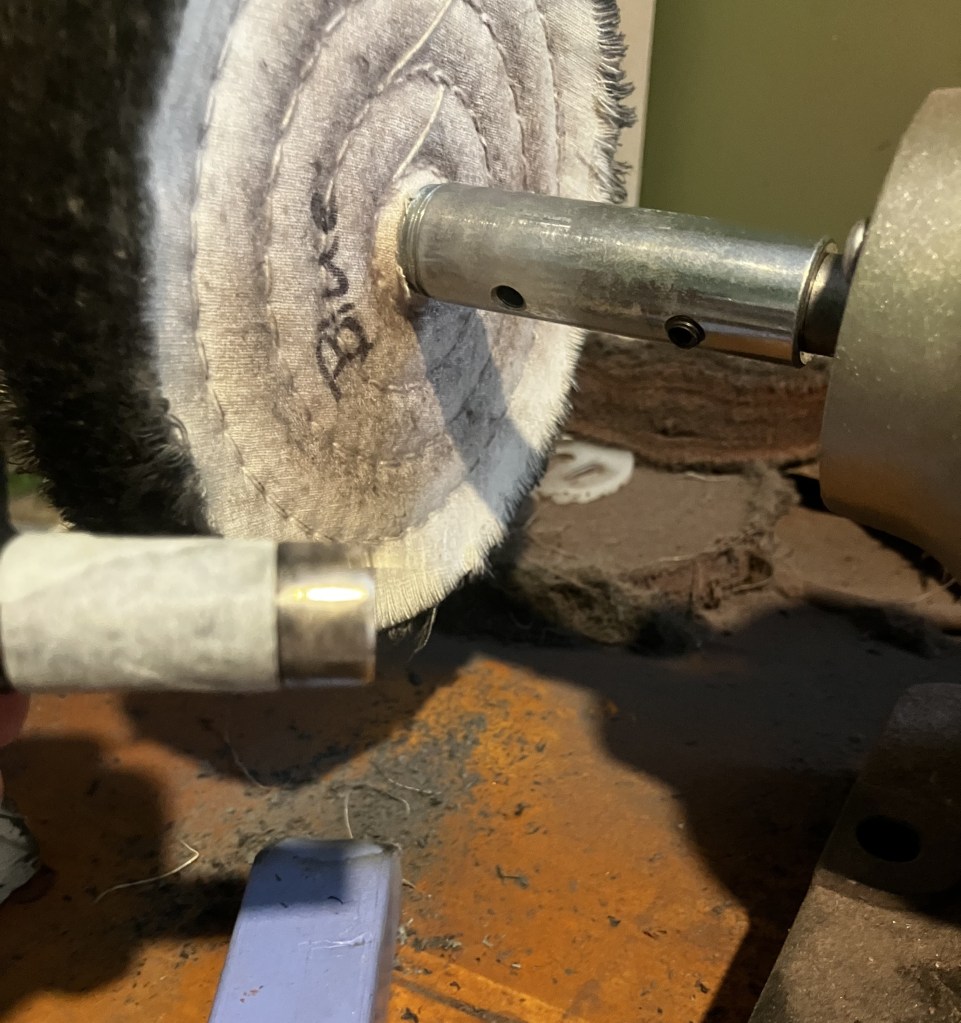
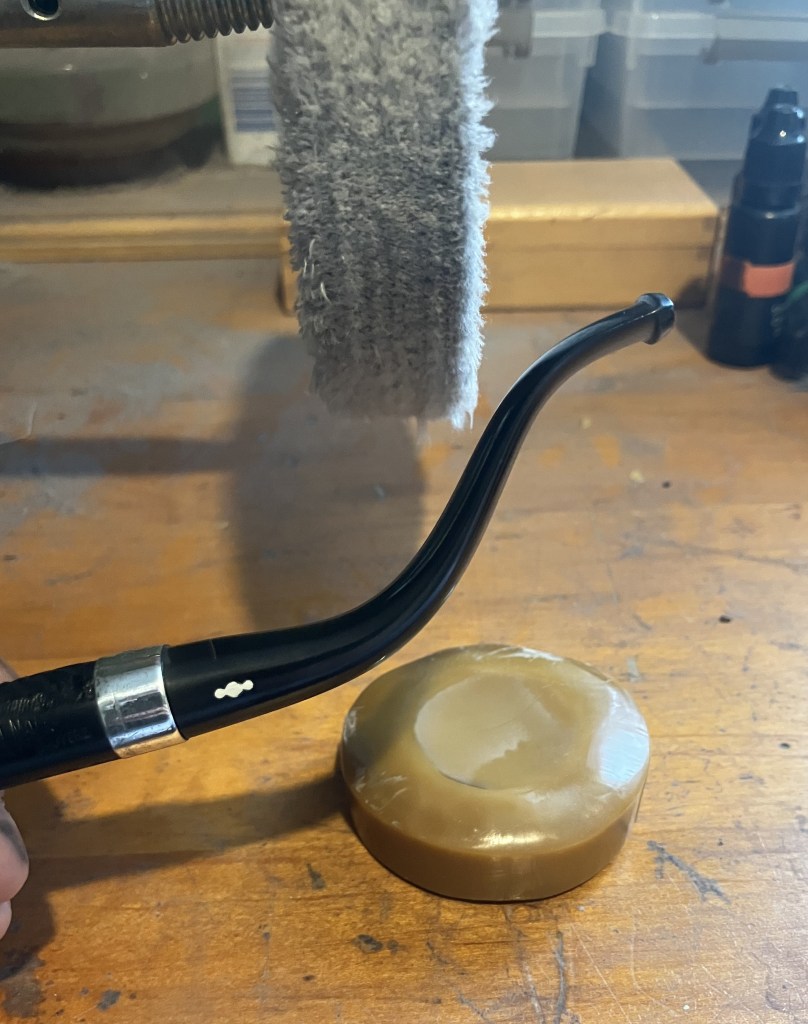
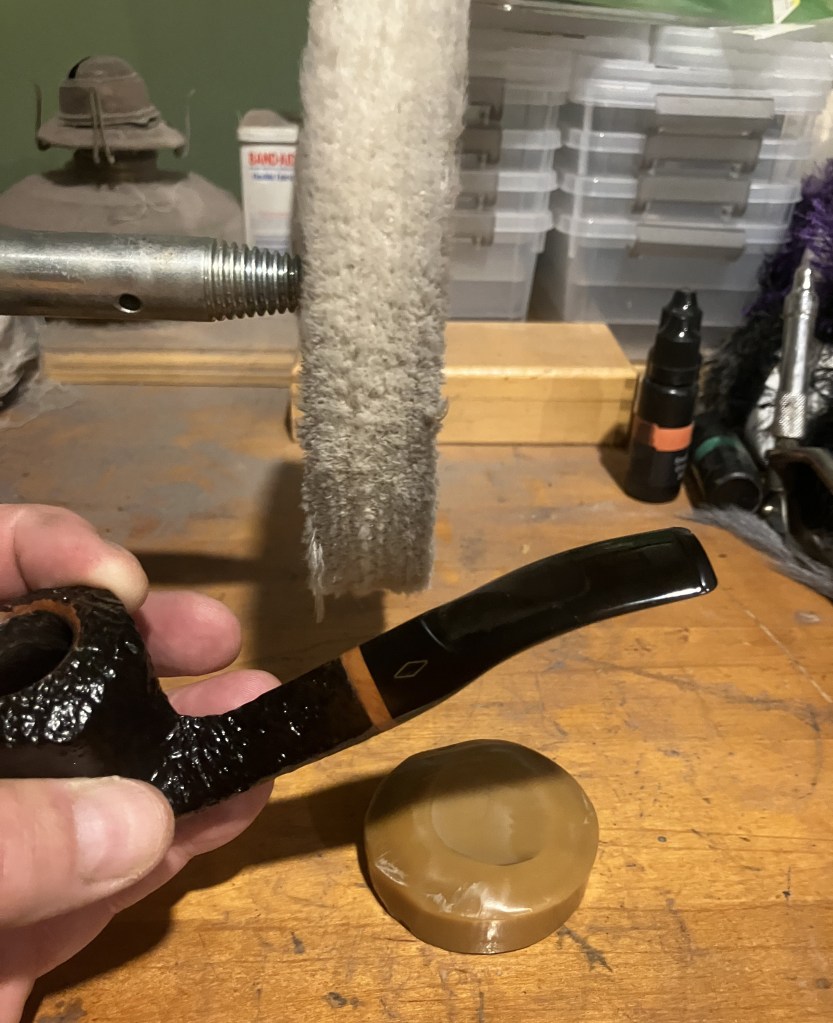
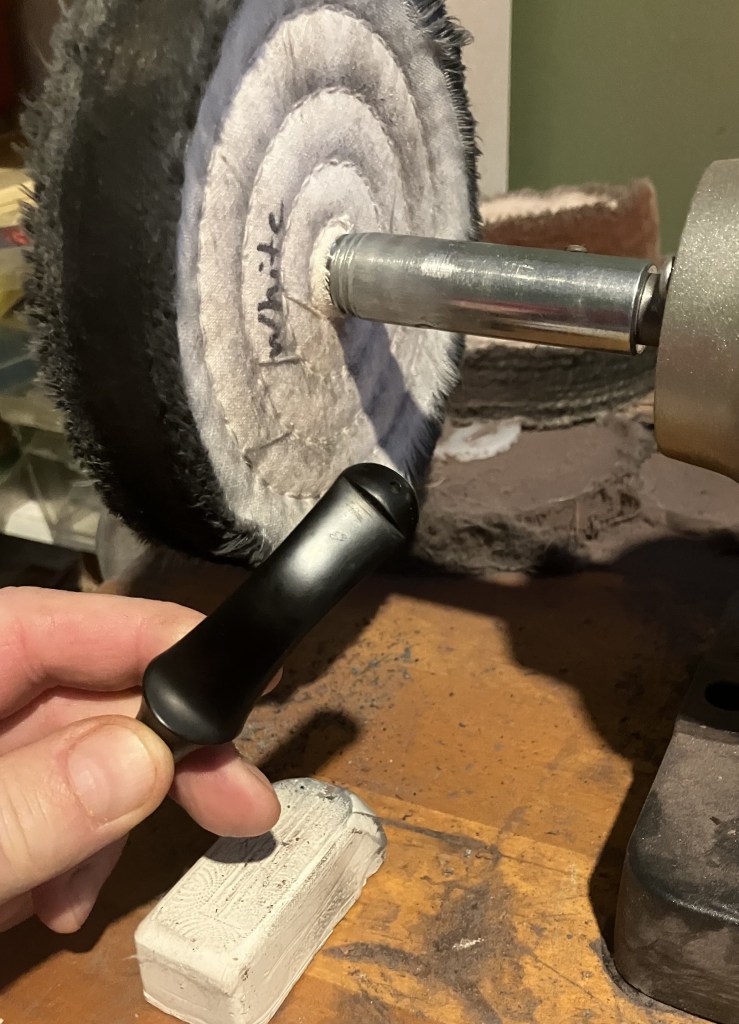
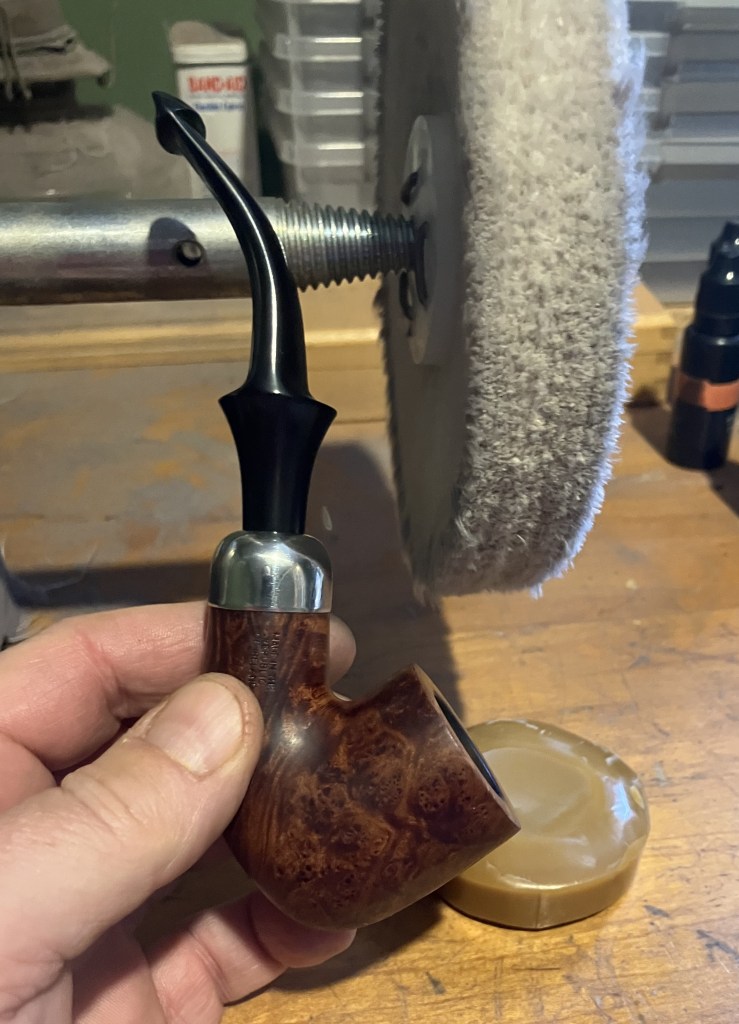
A couple of coats of carnauba wax at the buffer and the stem looked like new.
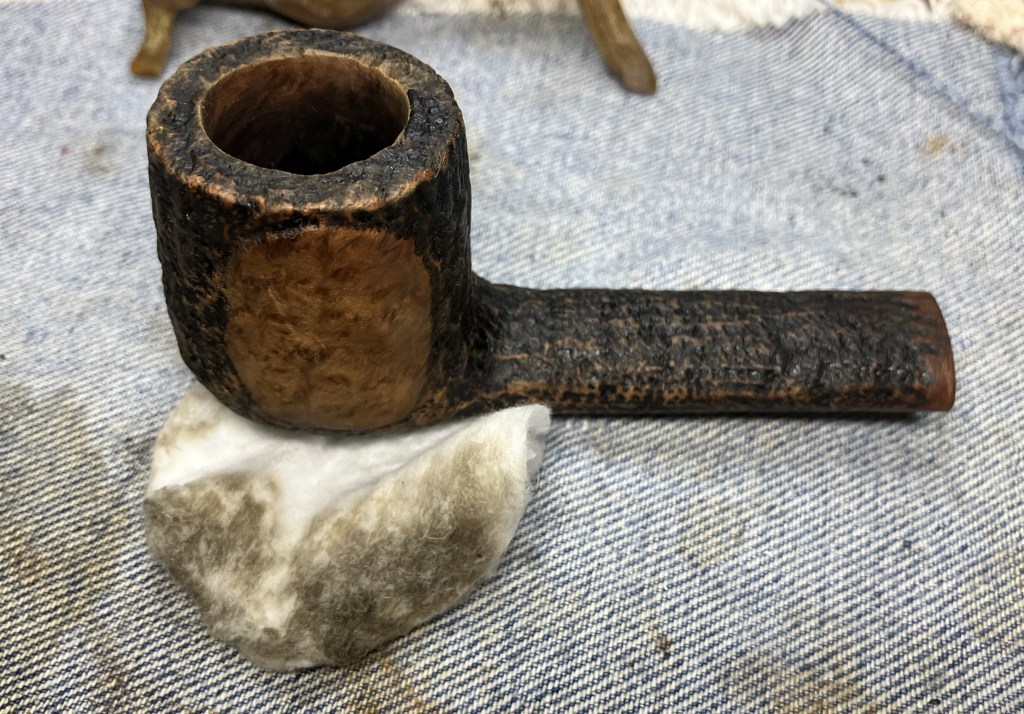
That’s it. That is all I did. I didn’t even bother taking a full set of after photos since the pipe didn’t look enough different to warrant taking them. I can say that it is a fine smoker and will be used and enjoyed for many years to come (hopefully).
The dimensions of the Brebbia Sebbiata 880 are:
Length: 5.78 in./ 146.81 mm.
Weight: 2.06 oz./ 58.40 g. (with band)
Bowl Height: 2.03 in./ 51.56 mm.
Chamber Depth: 1.64 in./ 41.66 mm.
Chamber Diameter: 0.75 in./ 19.05 mm.
Outside Diameter: 1.60 in./ 40.64 mm. (each facet was slightly different)
I do hope that you have found something here useful to your own pipe care, maintenance or restorations. If you like this sort of thing, please click the like and subscribe buttons. Thank you for reading the ramblings of an old pipe lover.
Loading…
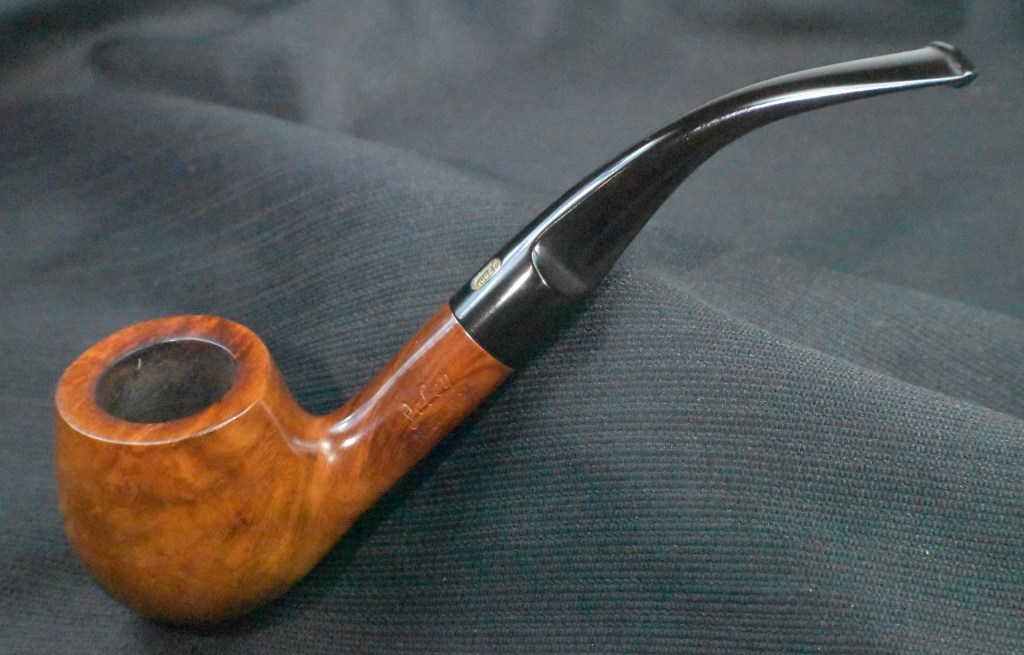
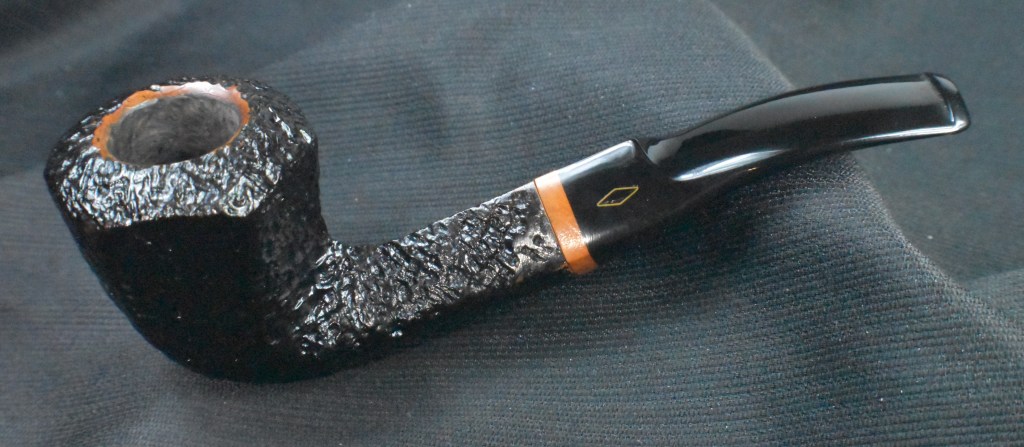
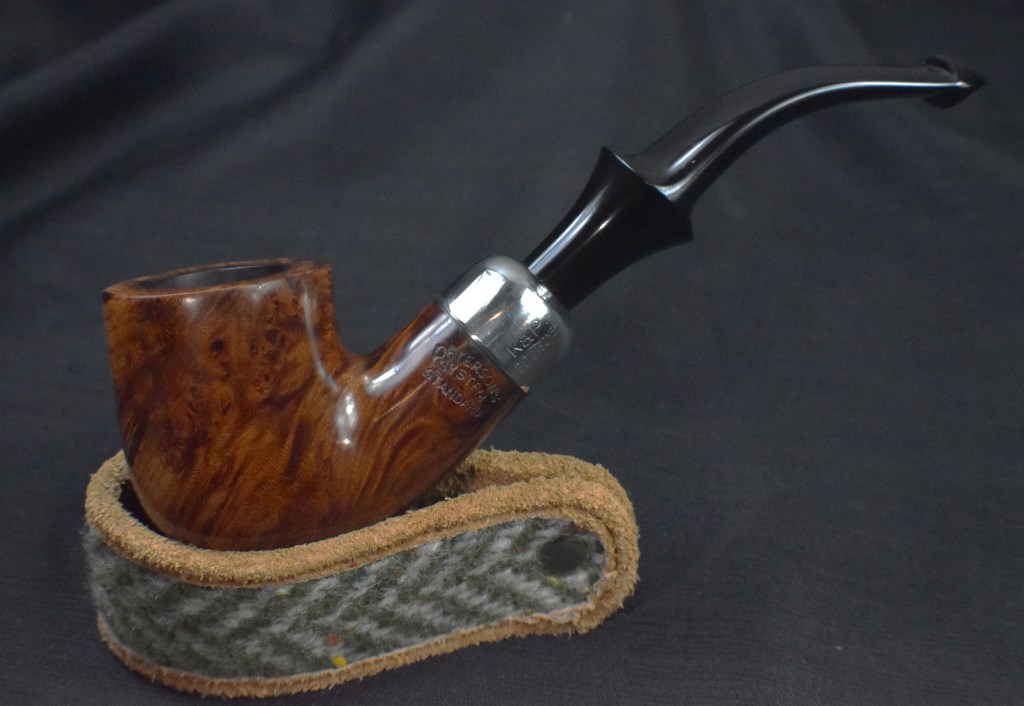
Below are some photos of the finished Brebbia Sabbiata 880:
I have probably said this before, I love Peterson pipes and fishing. Now in fishing, catch and release is where fish are pursued,caught and then released. Hmm, I guess that didn’t need explanation. Anyway, a similar process can be done with pipes. A given specimen can be pursued, obtained, restored then collected or sold to a new owner. This restoration is even better than that, I got to restore a Peterson Ebony 302 for someone else. I didn’t have to pursue, obtain or look for a buyer. I’ve probably said this before too, “I’m lazy”.
Tom reached out to me to restore a well loved pipe of his. He apparently had been impressed with my restorations while abusing himself by reading my blog. He sent me some photos and I agreed to restore the pipe – it’s a Peterson, of course I’d restore it.
He packed up the pipe and sent it to the wilds of southeast Nebraska. Below are some photos taken prior to working on the Ebony.
Well loved, well used and well cared for, were terms that came to mind. The ebony finish was nearly pristine. I didn’t want to do anything to it other than cleaning and waxing except for the rim – that would take a bit of work. There was a light cake in the tobacco chamber and the reservoir showed signs of frequent use. The nickel collar was tarnished and should buff nicely. The stem was suffering from oxidation and looked to be where the majority of time would be spent. Overall this was going to be a fun project.
Background
I had to count how many Peterson pipes I had blogged about. I ran out of fingers and toes but used the dog’s feet to assist in the task, then I got sidetracked, darn ADHD. Let’s just say between 30-40. Adding to that all the pipes restored prior to blogging would likely put the number at closer to 100. Have I mentioned that I like Peterson pipes?
Back to the background. Peterson pipes or Kapp and Peterson, if you prefer, is the oldest operational pipe manufacturer in the world. Summarizing the history of Peterson would require a large book and perhaps a blog. Good thing Mark Irwin has provided both of these: The Peterson Pipe: The Story of Kapp and Peterson, written by Mark Irwin and Gary Malmberg, and petersonpipenotes.org (PPN). For a less lengthy summary Peterson – Pipedia provides a nice article.
For this pipe in particular I refer to Mark’s blog post on Ebony finished Peterson pipes: 367. A History of Peterson’s Ebony Finish, With Help from Sykes Wilford and Adam Davidson – Peterson Pipe Notes. As Mark discusses in the post, the ebony finish is difficult to perfect. This is the main reason I was glad to see that Tom’s 302 was in such great shape. It relieved me of having to try to reestablish a beautiful ebony finish myself. The 303 was added to Peterson’s line-up in 1978. Here is a description of the 303 from PPN:
“302 Extra-Large Apple. 1978-Present.
Length: 5.75 in. / 146.05 mm. Weight: 2.30 oz. / 65.20 g. Bowl Height: 1.72 in. / 43.69 mm. Chamber Depth: 1.39 in. / 35.31 mm. Chamber Diameter: 0.80 in. / 20.32 mm. Outside Diameter: 1.74 in. / 44.20 mm.
The 302 and its smaller, less jowly sibling the 303, first appeared in the 1978 Peterson-Glass catalog and were issued simultaneously as the De Luxe Systems XL2S (later 2S) and 3S, the Classic Range 02 / XL02 and 03, and in the Dunmore System as the 70 and 73. Peterson describes the 302 shape as “an extra-large apple” in the 1986 catalog and the 303 as a “medium apple.” If you look at this bowls closely, whether in new or vintage pipes, you’ll notice there are actually two shapes, one wider at the back and bottom of the shank and the other more rounded. This stems, I suspect, from outsourcing to two different bowl sources, as the difference is too great to be merely a sanding problem. In any event, I like and smoke both. The fat-bottom seems to have been the model for the Lestrade Sherlock Holmes, XL23. For both the 302 and 303, it’s worth seeking out the early-issue mouthpiece versions (pre-1990), some being quite short and some longer, but all possessing the wide saddle and the Comfort P-Lip.” (146. A Guide to System Shapes, 1896 – 2019, Part 1 (The 300 Shape Group) – Peterson Pipe Notes). To narrow down this 303’s historyI again refer to Mark Irwin’s PPN with two quotes
1) “From 1979 until now many Pete lines have been given the ebony treatment” and
I suppose I could just ask Tom, when he got this pipe, eh? That is what I did and here is his reply: “Yessir I got this last year from an estate sale in the heights in Little Rock. The fella that owned it was a huge part and mentor of many pipe smokers @ The Pipe & Tobacco Shop in Little Rock. I had no idea that all the pipes I bought at his estate sale were his. It’s a huge honor to have some of his pipes but my memory of his name I just can’t remember. He was around 90 when he passed.” (personal communicationTom Gilliam, AKA: AR Piper). Tom then said he would reach out to the owner of the shop.
The 302 made the 20 foot journey from the photo table to the workbench.
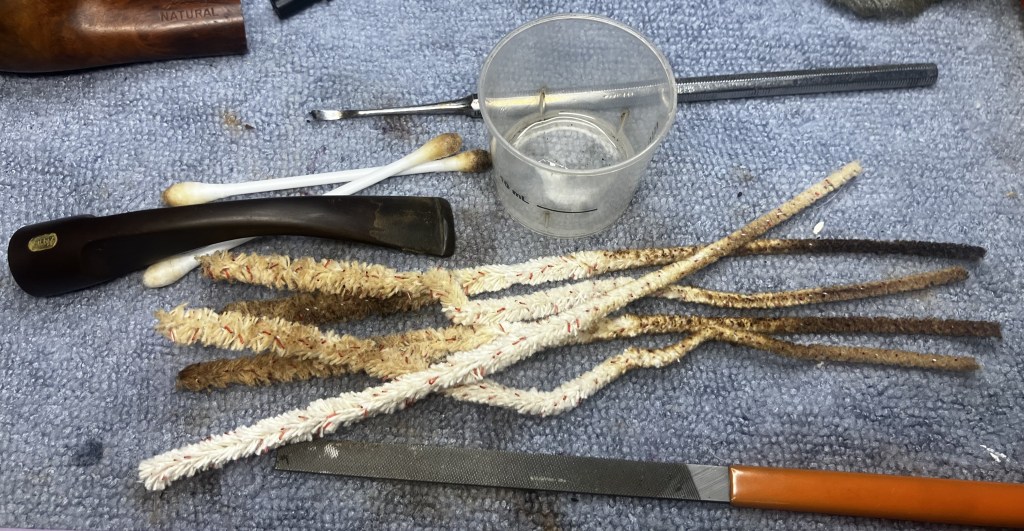
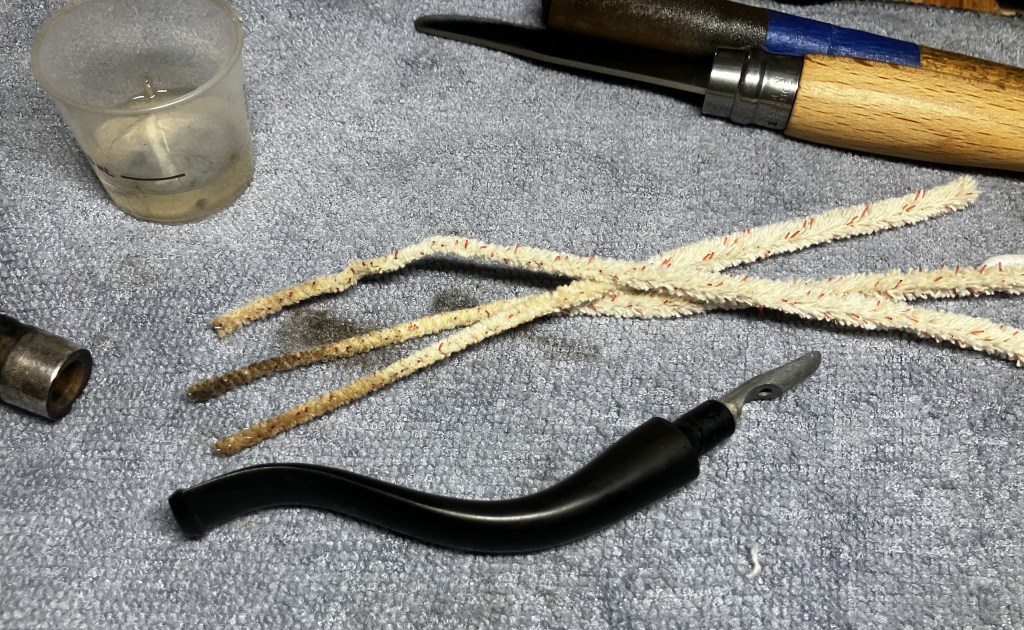
I began with the stem, cleaning it with 99% ethyl alcohol, cotton swabs and bristle pipe cleaners.
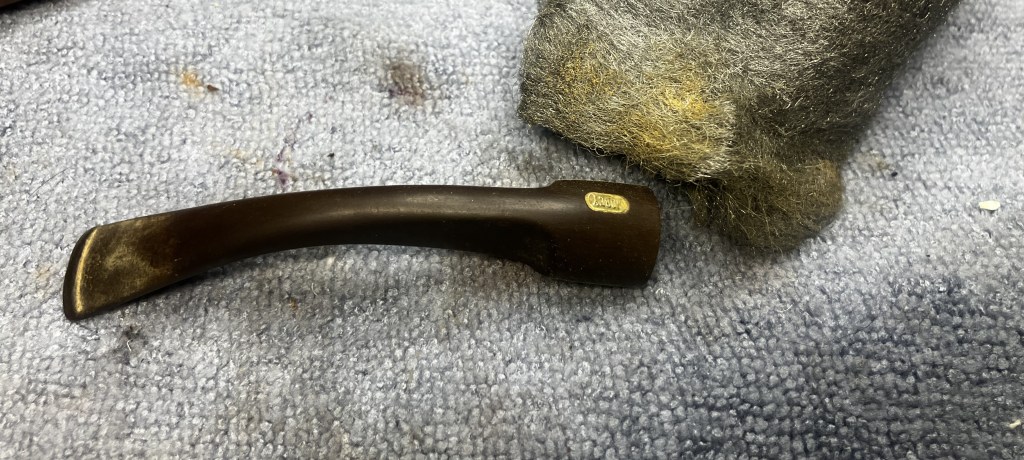
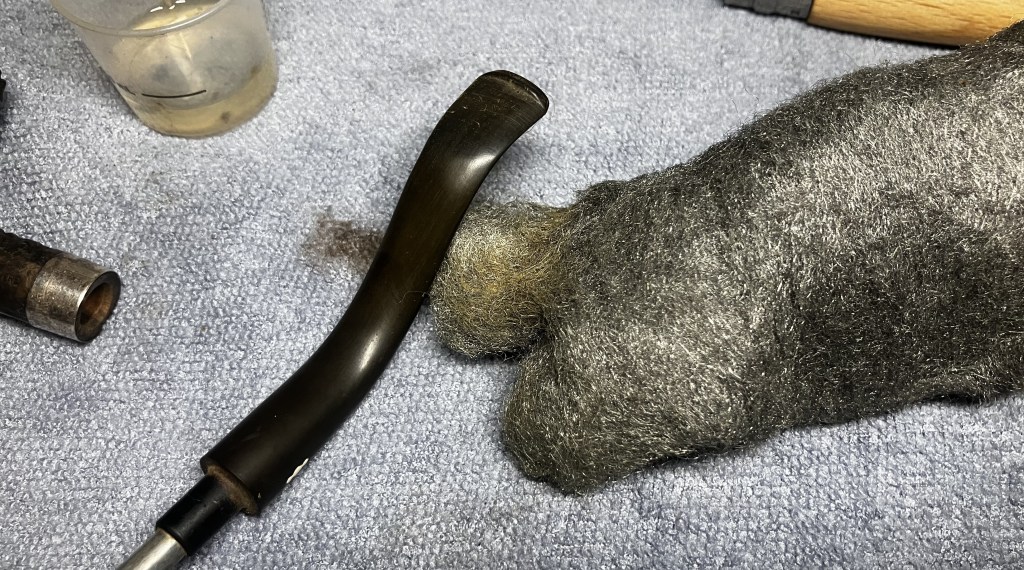
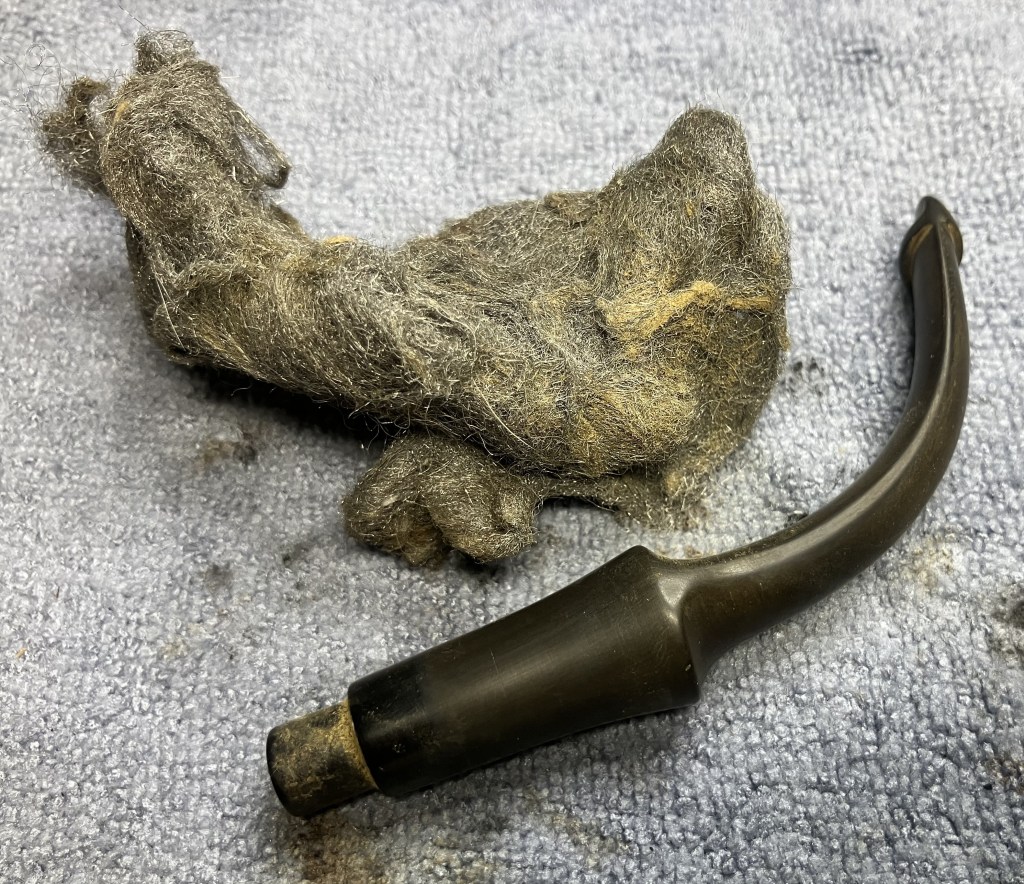
The surface of the stem was rubbed with 0000 steel wool to remove some of the surface oxidation.
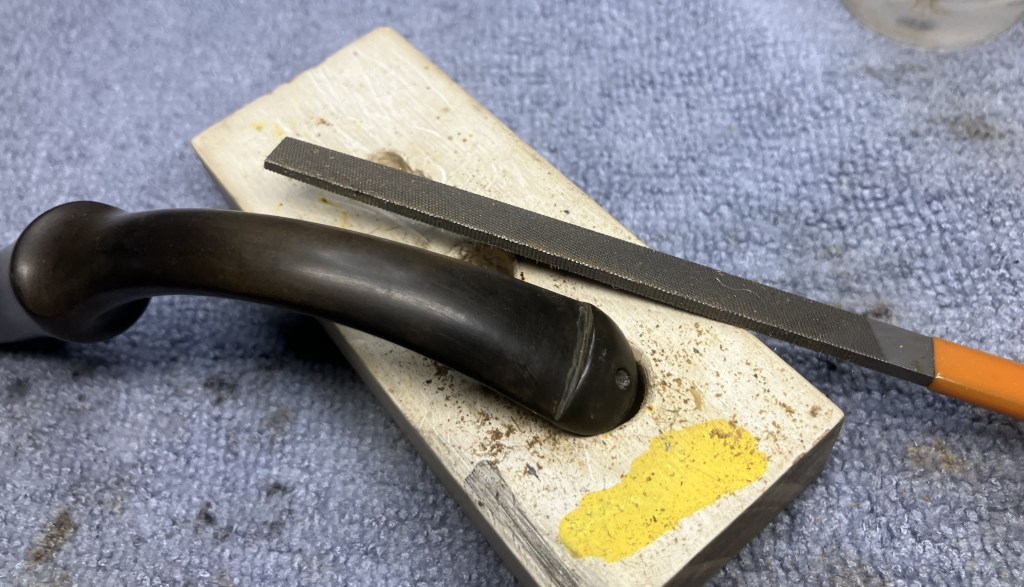
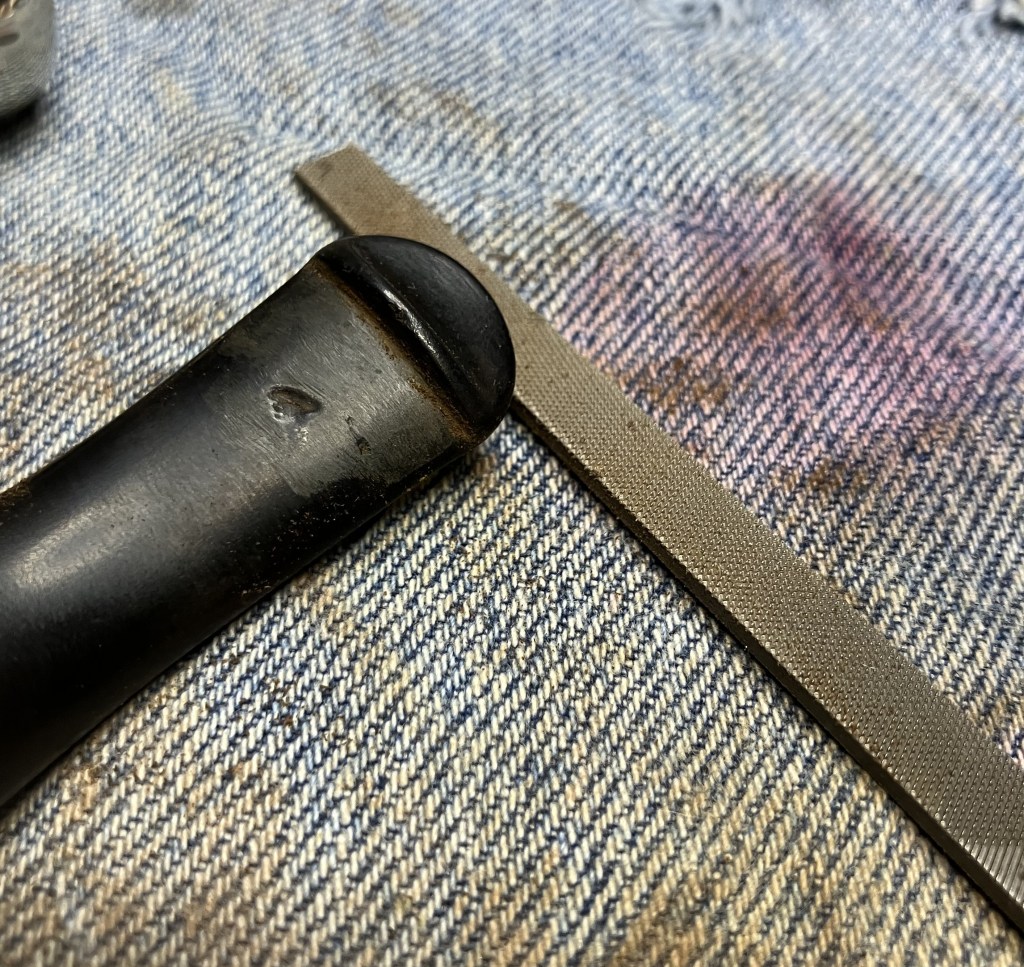
I used a small flat file to sharpen the edges of the button.
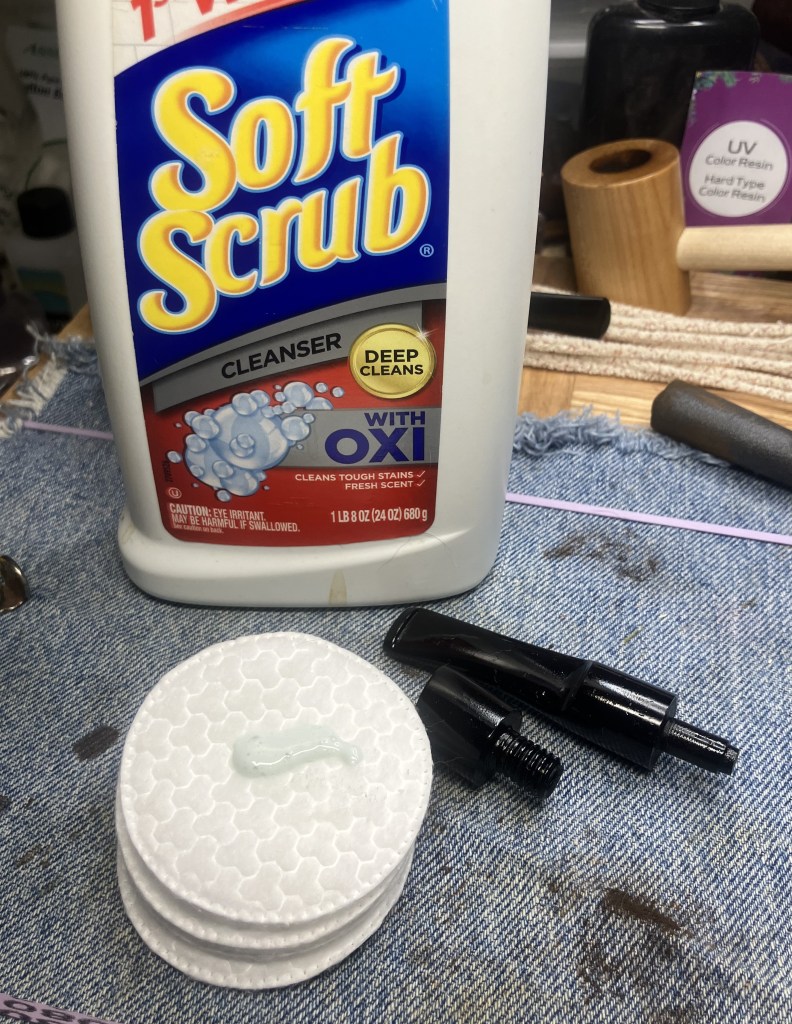
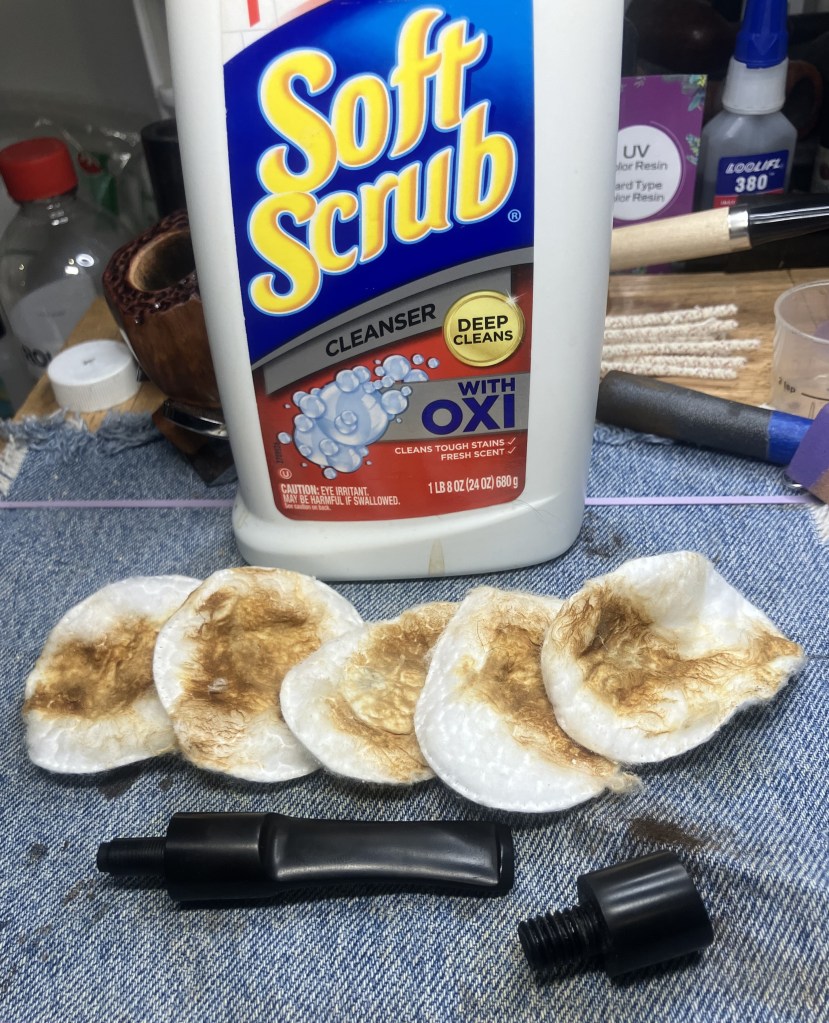
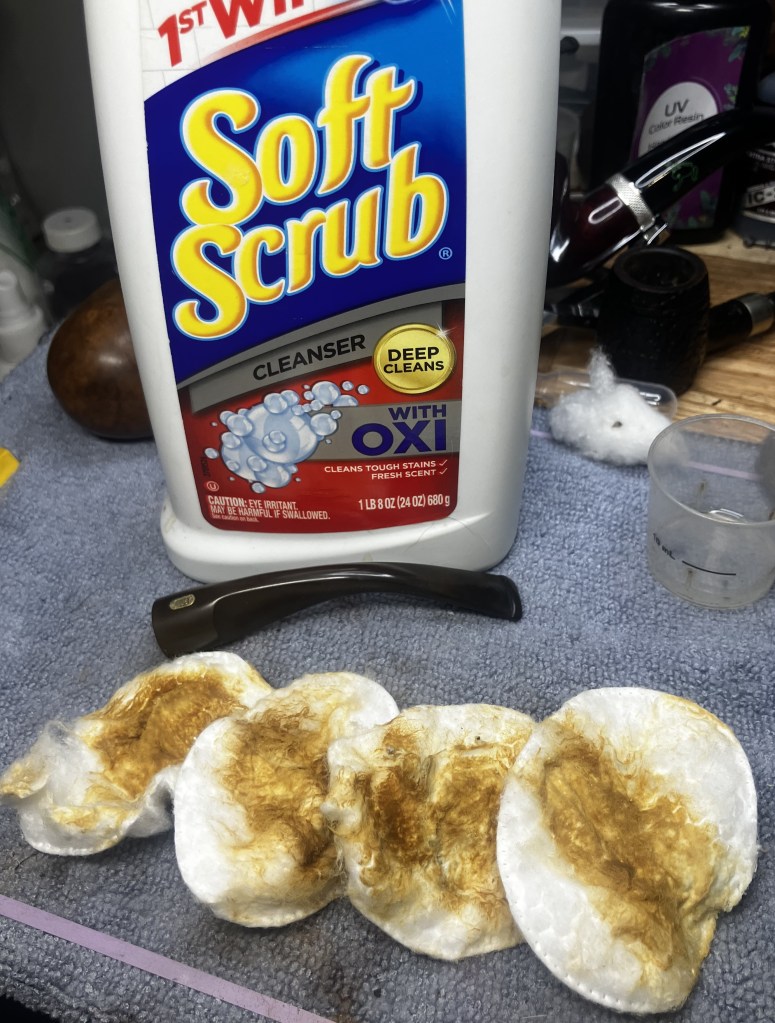
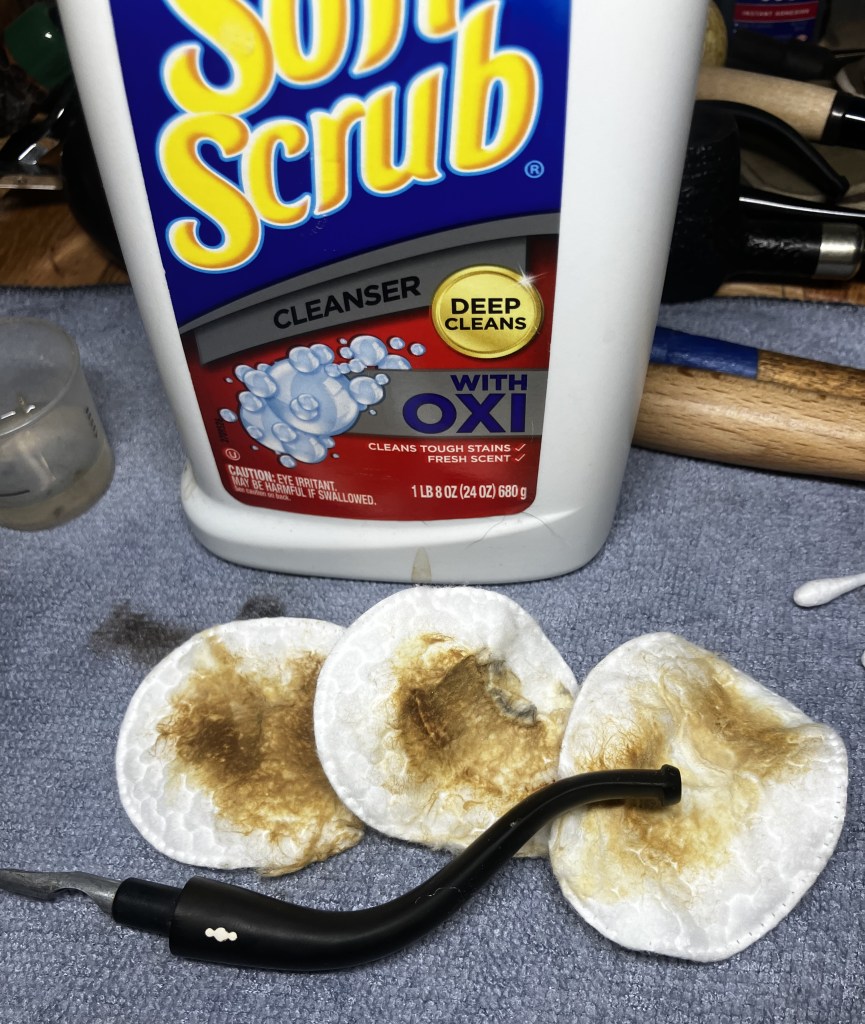
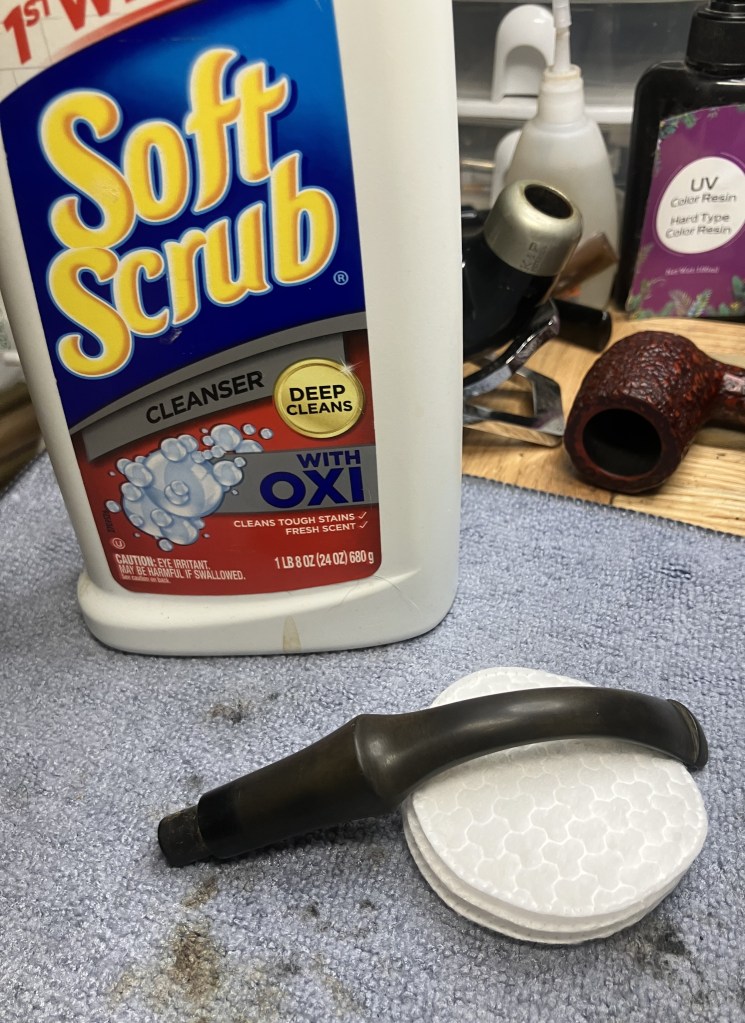
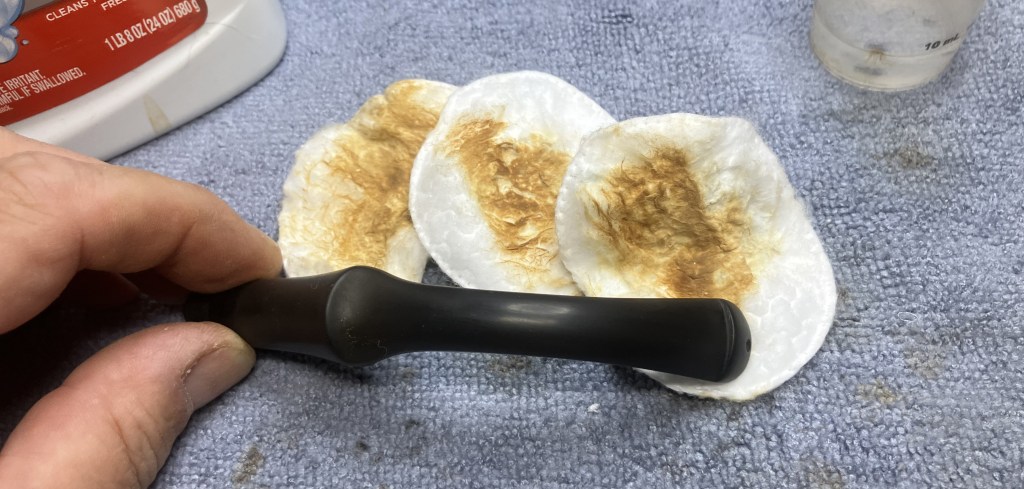
Next, the stem was scrubbed with Soft Scrub cleanser on make-up pads.
This removed more of the surface oxidation.
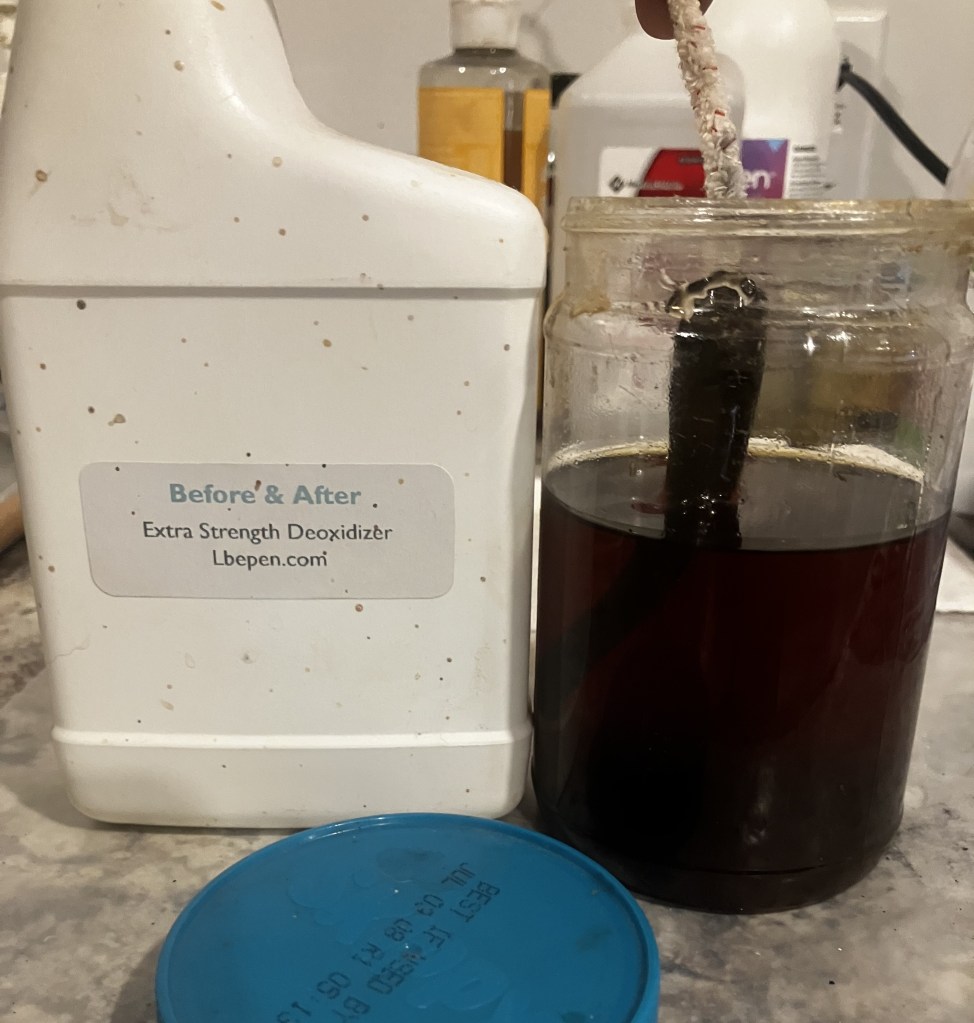
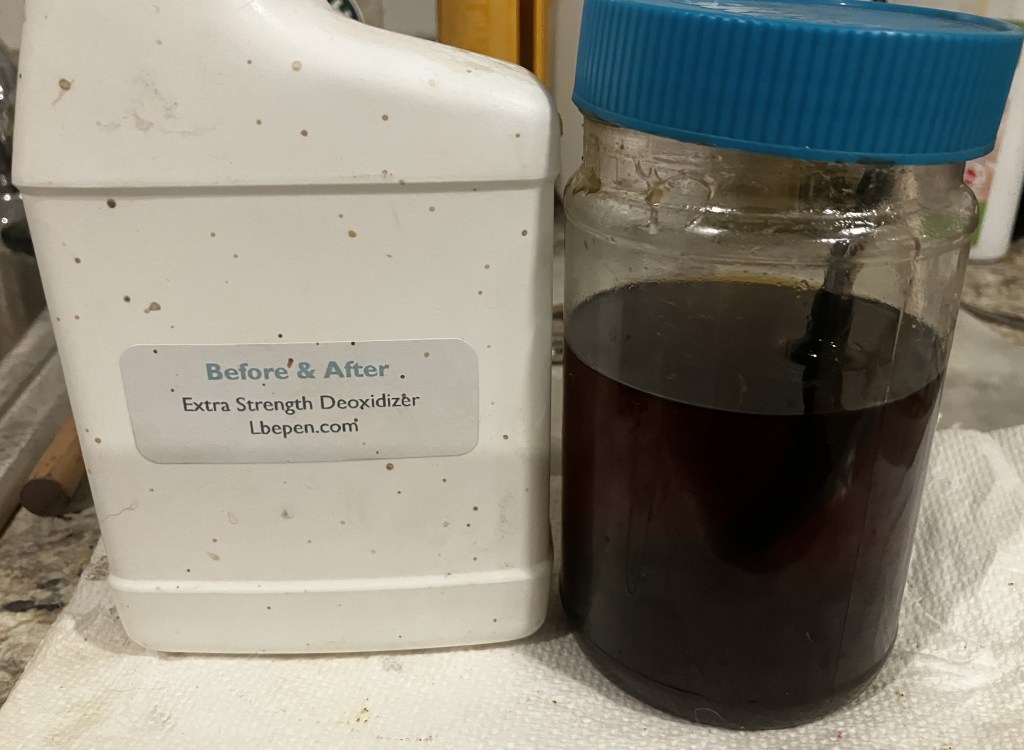
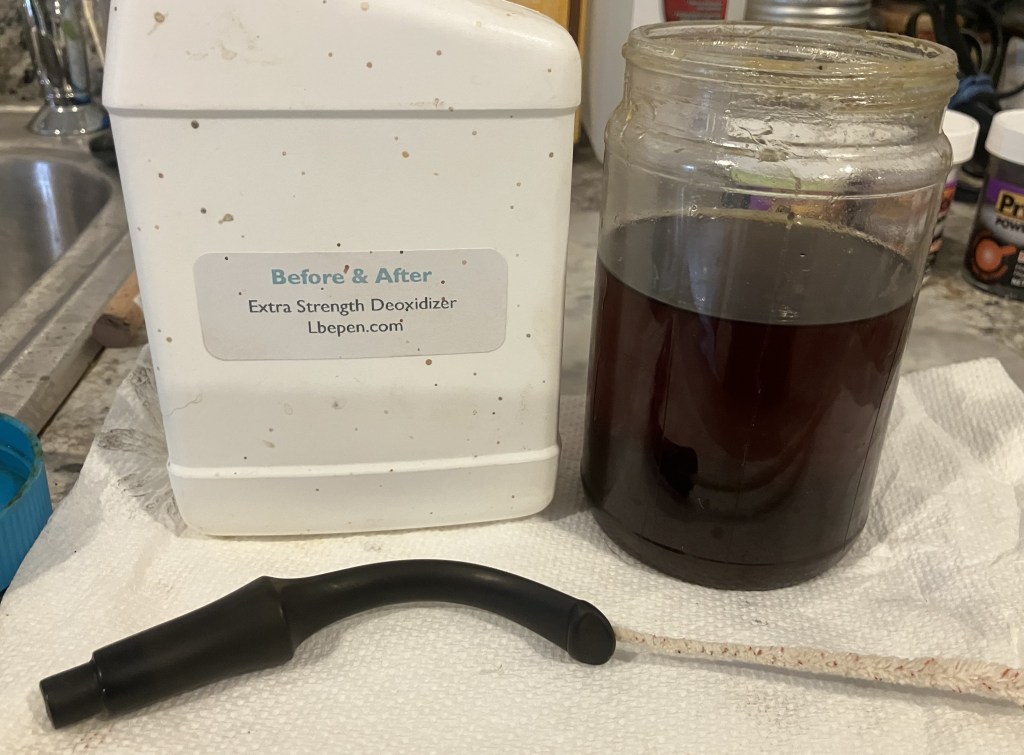
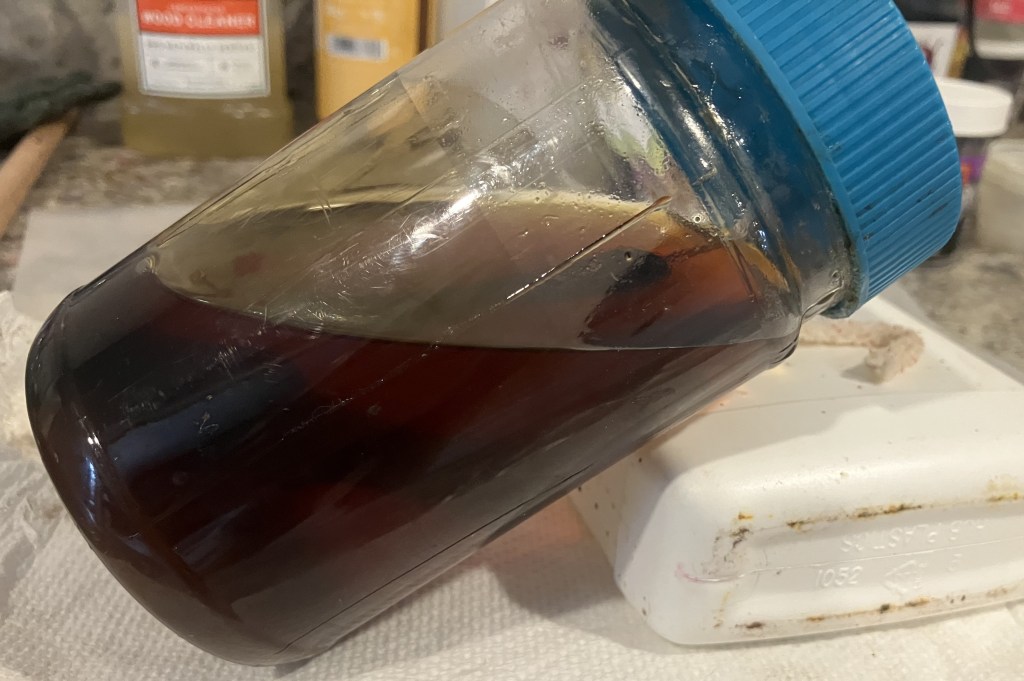
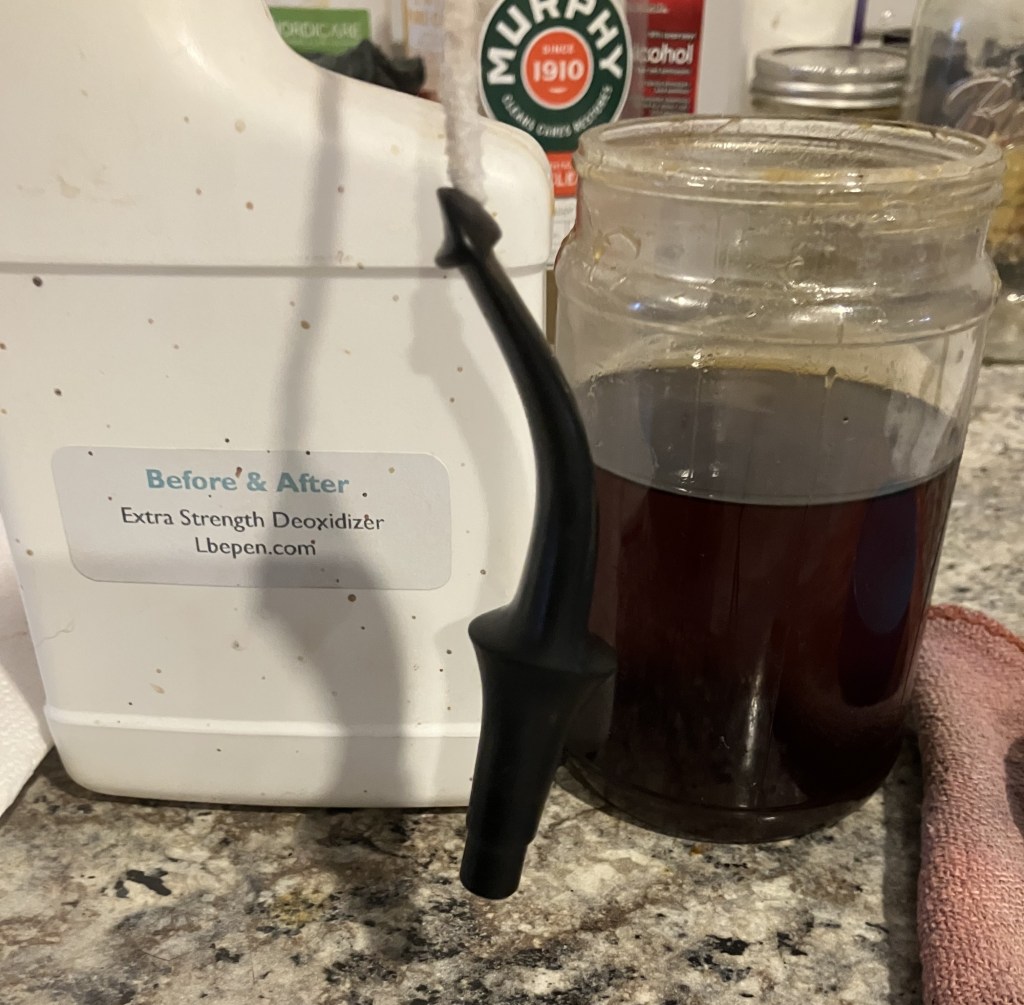
A pipe cleaner was inserted into the airway and the stem was suspended in Before and After Extra Strength Deoxidizer (deox).
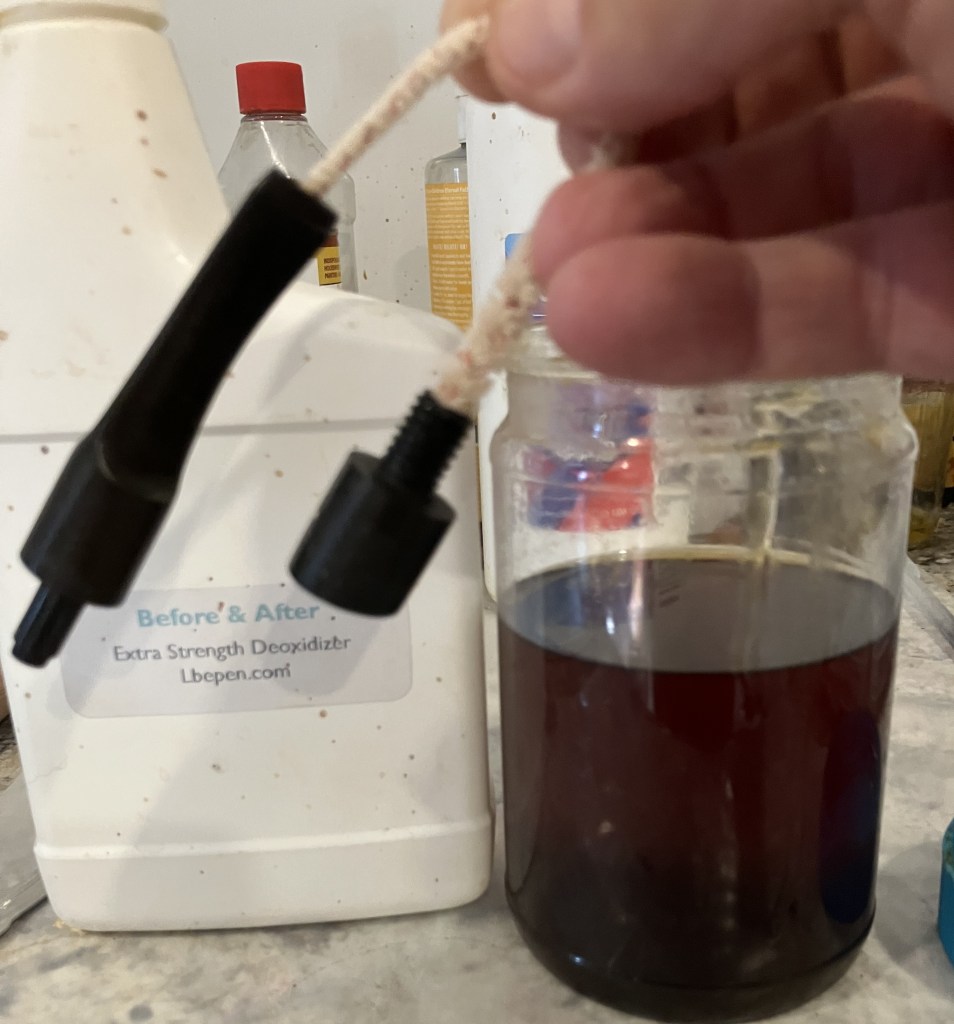
This stem was a bit longer than the depth of the deoxidizer so I propped the jar at an angle to fully submerge the stem.
I turned my attention to the stummel and the light layer of cake within.
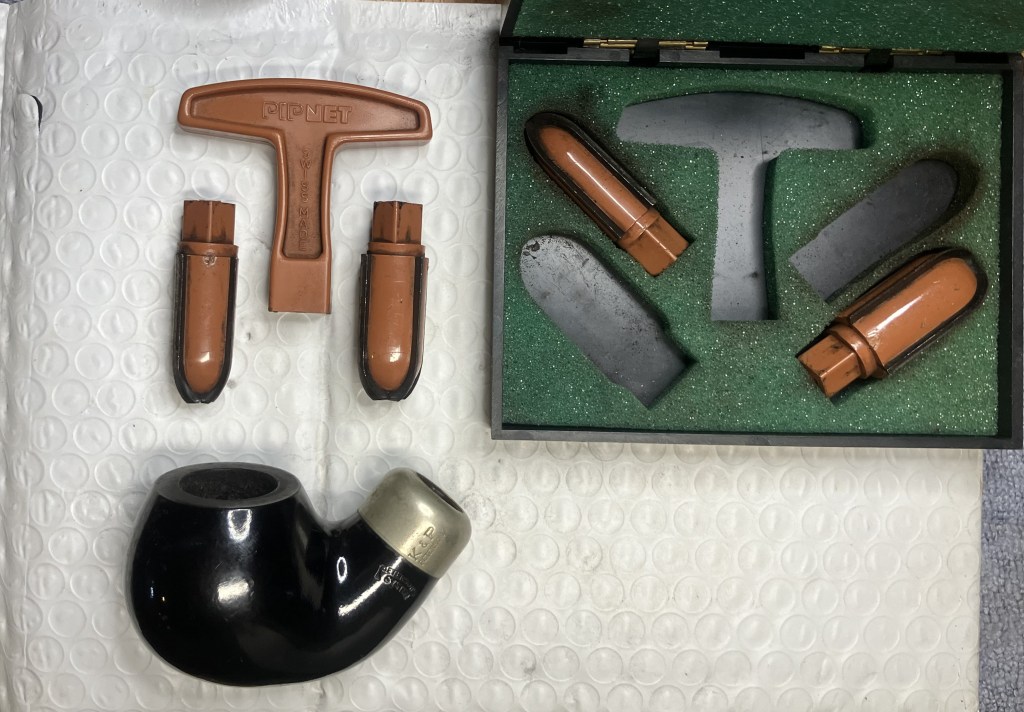
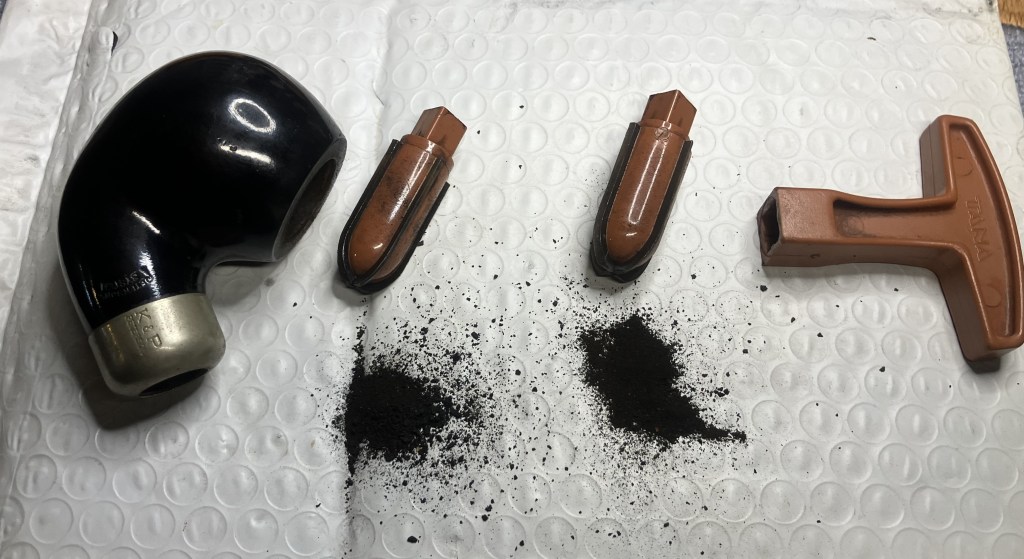
The number 2 and 3 blades of the PipNet worked very nicely.
There was a small amount of clean-up that had to be done with a Smokingpipes Low Country reamer.
Looking down the tobacco chamber, I couldn’t see any signs of damage due to excessive heat.
Sanding the tobacco chamber with 220 sandpaper wrapped around a wood dowel then with 300 grit paper and my finger. Exposing the bare briar within the chamber confirmed the excellent condition of the tobacco chamber.
It was at this point I started cleaning out the shank and reservoir. This took a rather large number of alcohol dipped cotton swabs and bristle pipe cleaners. I also used a dental scraper and a nylon shank brush, also dipped in alcohol. I apparently failed to photograph any of this process. I could have sworn I took photos but there was nothing on the phone. Feel free to use your imagination of a pile of soiled cotton swabs.
To the sink! The stummel was taken to the sink for a scrub with undiluted Murphy Oil Soap and a nylon brush. The soap was rinsed with warm water and the stummel dried with a cotton hand towel.
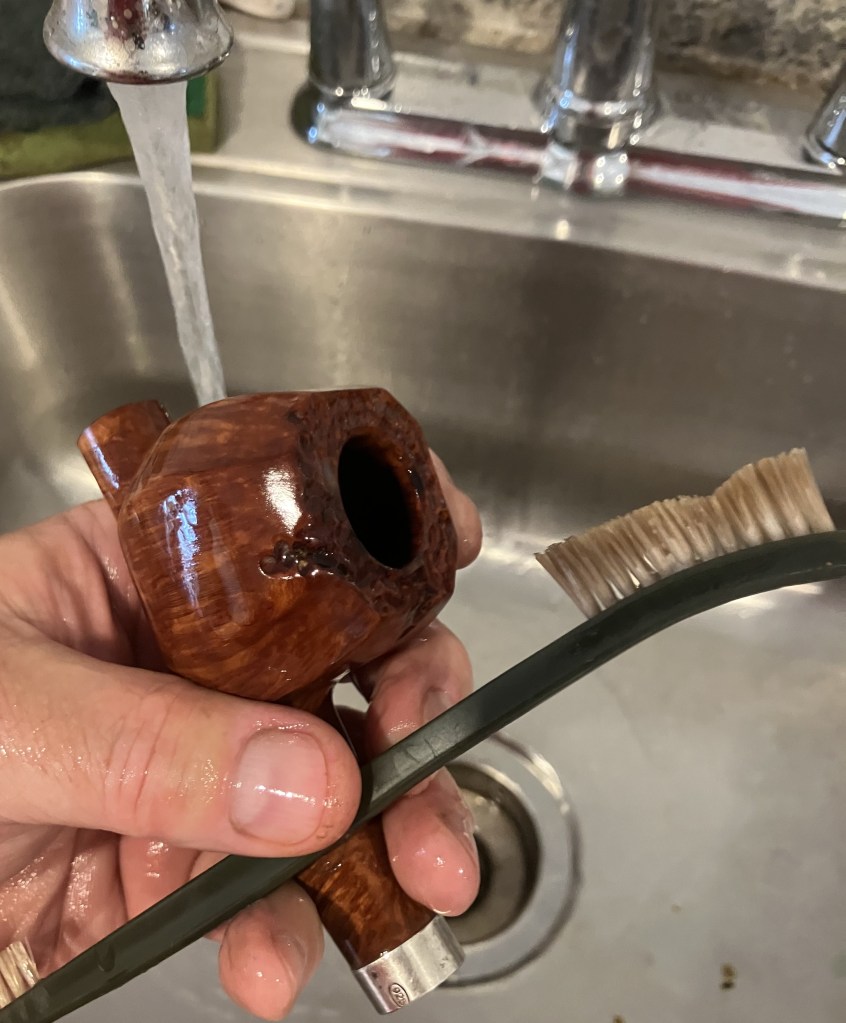
The stummel looked great except for the tarnished collar.
I was hoping that the scrub would remove the light lava deposits from the rim. Wrong. Normally I would scrape the rim with a sharp knife blade but I did not want to risk marring the ebony finish.
A more conservative approach was used – alcohol dipped cotton swabs.
The cotton swab scrubbing was slow and still there remained either some lava or slightly charred edges.
I needed time to think about how to deal with the rim so I figured I would do an alcohol cotton treatment. This would also help in loosening the remaining tar deposits within the airway, reservoir and shank. The bowl and airways were packed with cotton.
Since this was a larger chambered pipe, I figured about 12-15 ml of 99% ethyl alcohol would be needed. This would be added using a disposable pipette.
I was close, it took about 11 ml of alcohol to saturate the cotton.
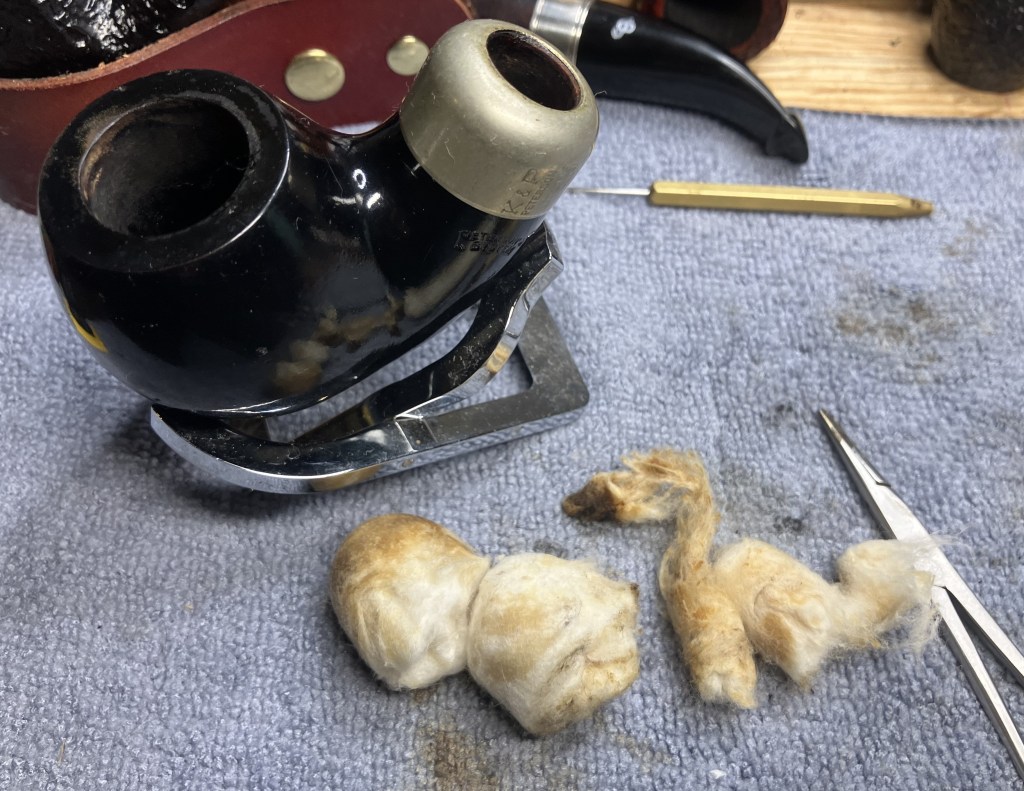
8 hours later I returned to the pipe. The alcohol had dissolved the residues in and on the briar. As the alcohol evaporates these dissolved bits are moved to the cotton.
The cotton was removed.
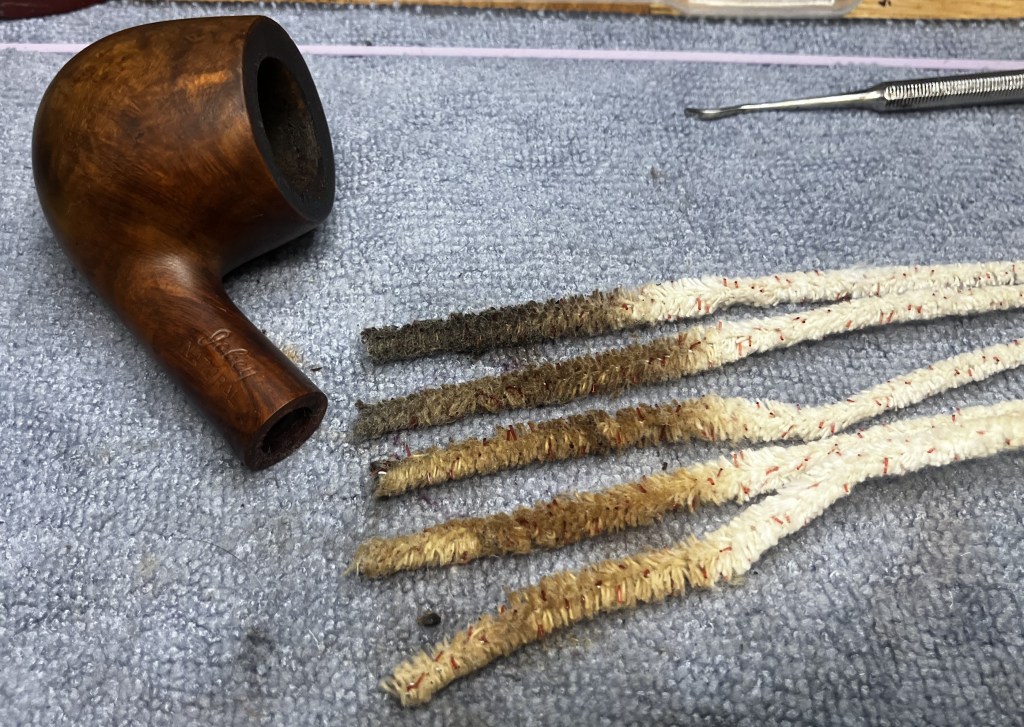
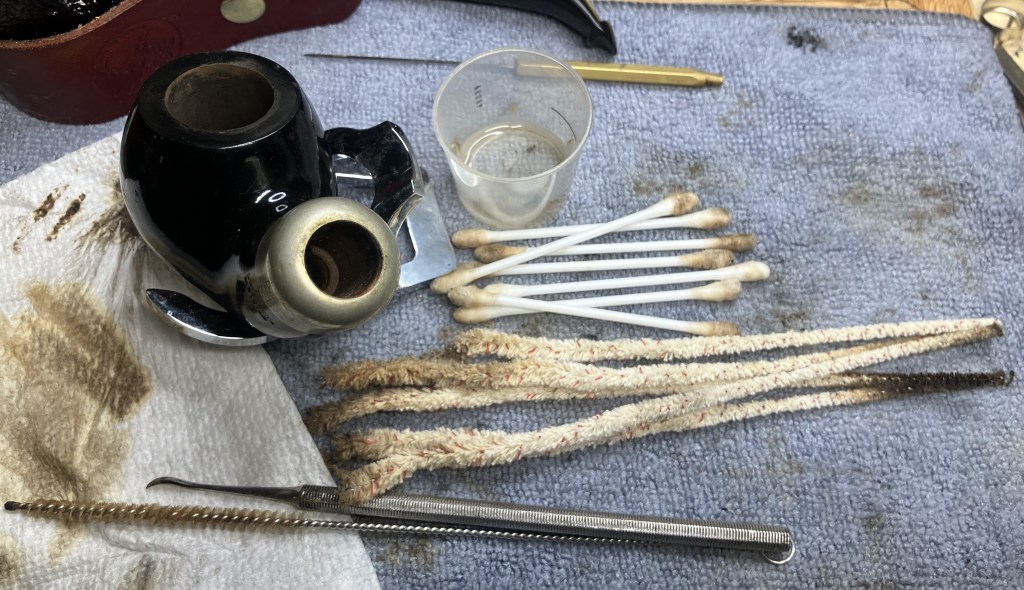
Another round of airway cleaning commenced. The heavily stained pipe cleaners are from the draft hole between the tobacco chamber and the airway of the shank. I had apparently forgotten to clean this during the early cleaning of the shank. This was probably due to me being very busy forgetting to take photographs.
Anyway, the shank and reservoir were now clean.
The stem was removed from the deox, having spent over 8 hours submerged. I used the patented Drip-O-Matic 3000 to allow some of the excess deox solution to drip back into the jar.
While the Drip-O-Matic 3000 was doing its job, I turned my attention back to that troublesome rim. With closer examination (squinting) I concluded that a good deal of the rim’s imperfections was still lava, not charring. I utilized a very high-tech technique to remove this stubborn material – saliva, a paper towel and a lot of rubbing. Well, that’s high tech here in the wilds of southeast Nebraska.
There was still one area that was charring on the rim. It looked like the previous owner held the pipe with his left hand and lit the pipe with his right hand from the 1:00-2:00 position.
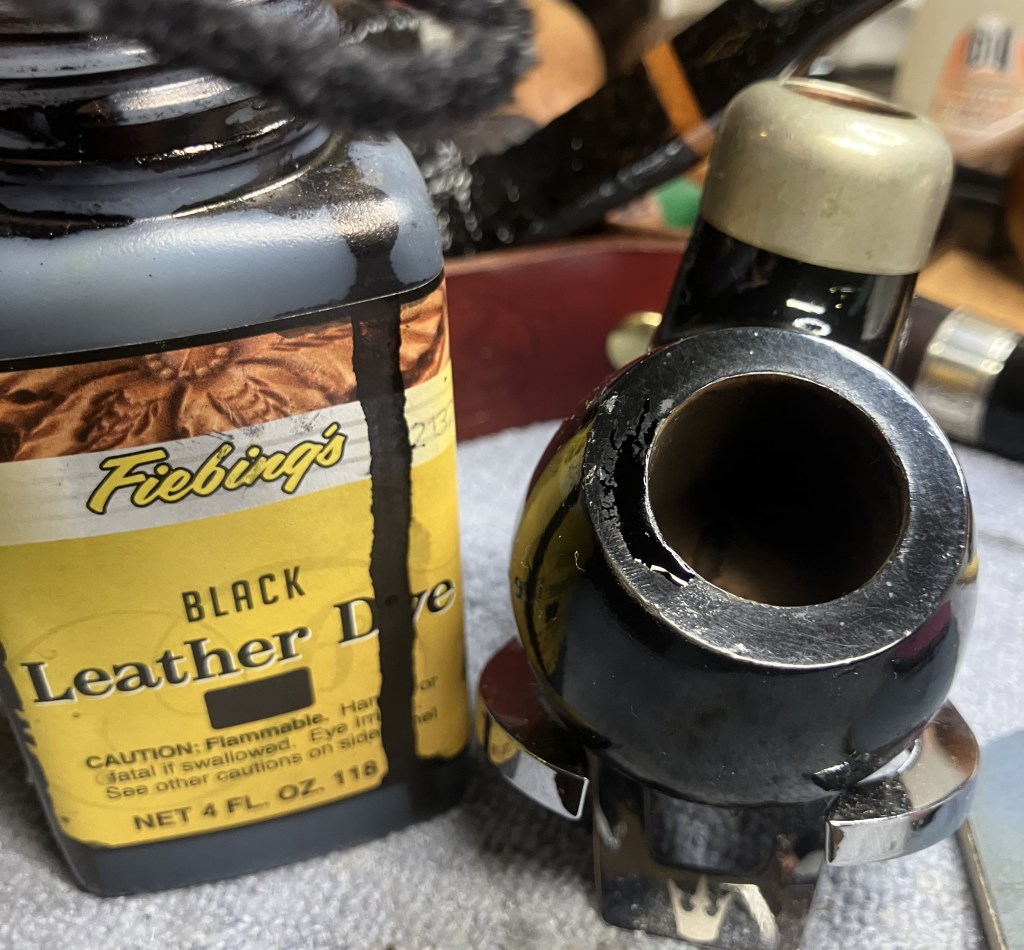
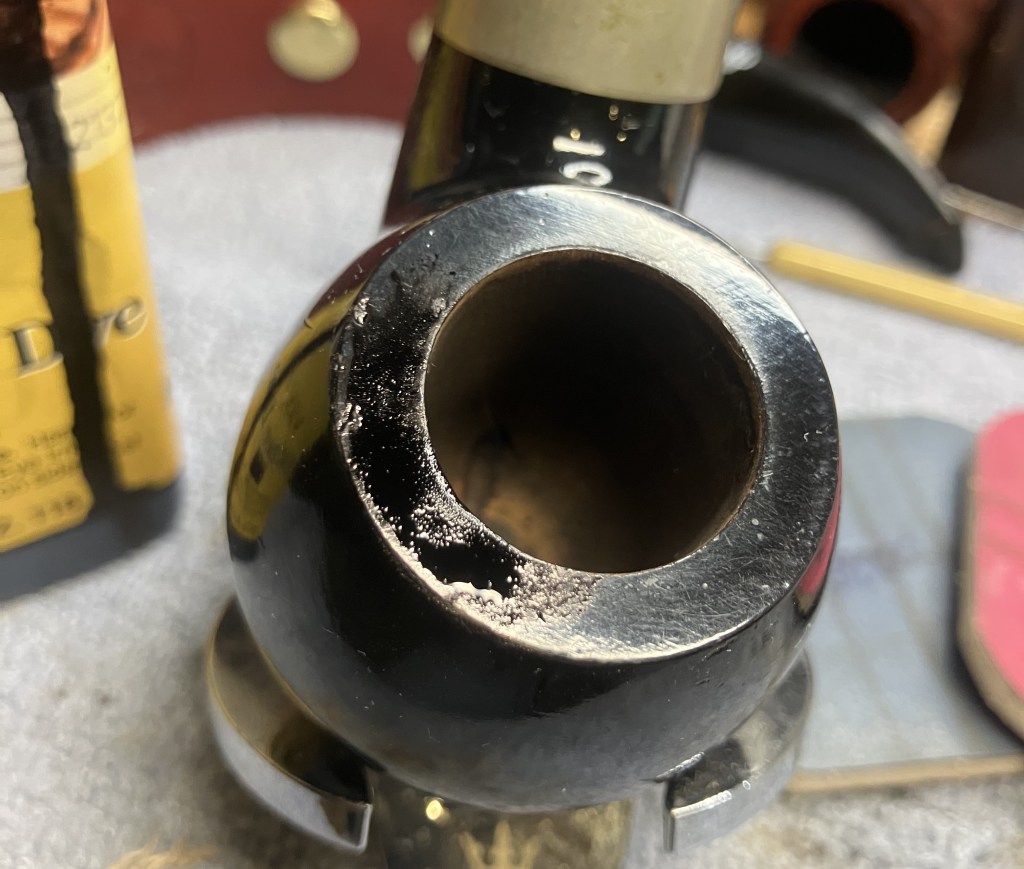
I thought maybe I could reapply a coating or two of Fiebing’s Black Leather Dye and this would miraculously erase the damage.
Hmm, maybe more than one of two applications…
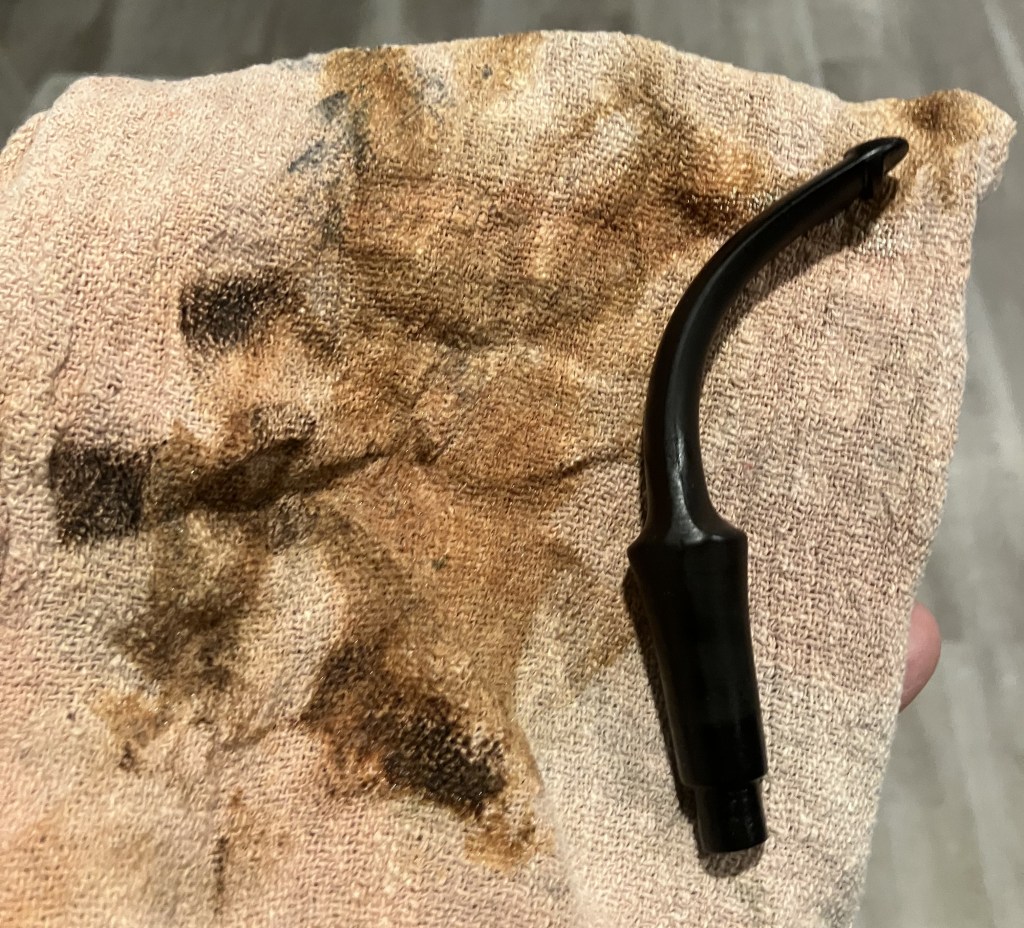
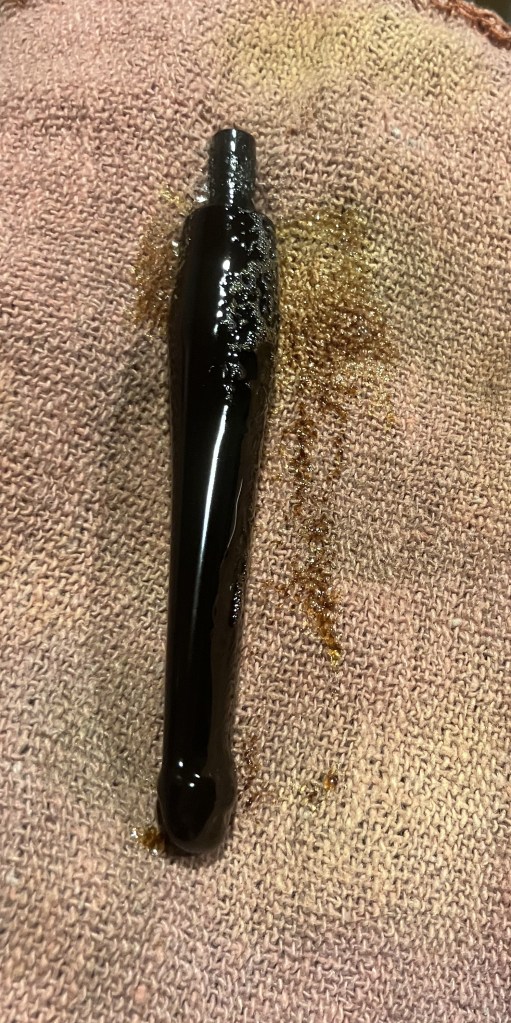
While the Fiebing’s was drying, I returned to the stem. A coarse shop rag was used to vigorously rub the stem. This removes the oxidized vulcanite that the deox solution has softened and does a lovely job of staining a clean coarse shop rag.
With the shop rag thoroughly defiled and the stem looking much better, it was time to start sanding the stem to return it to factory fresh.
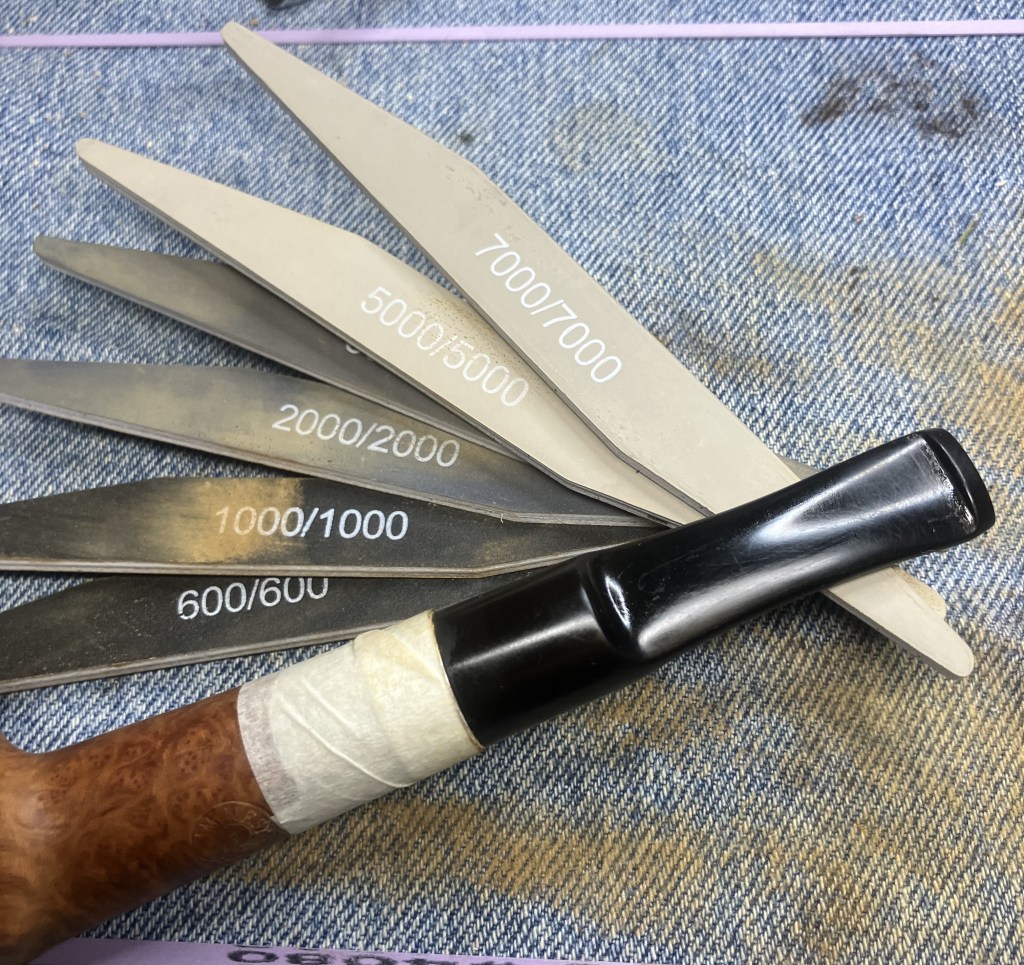
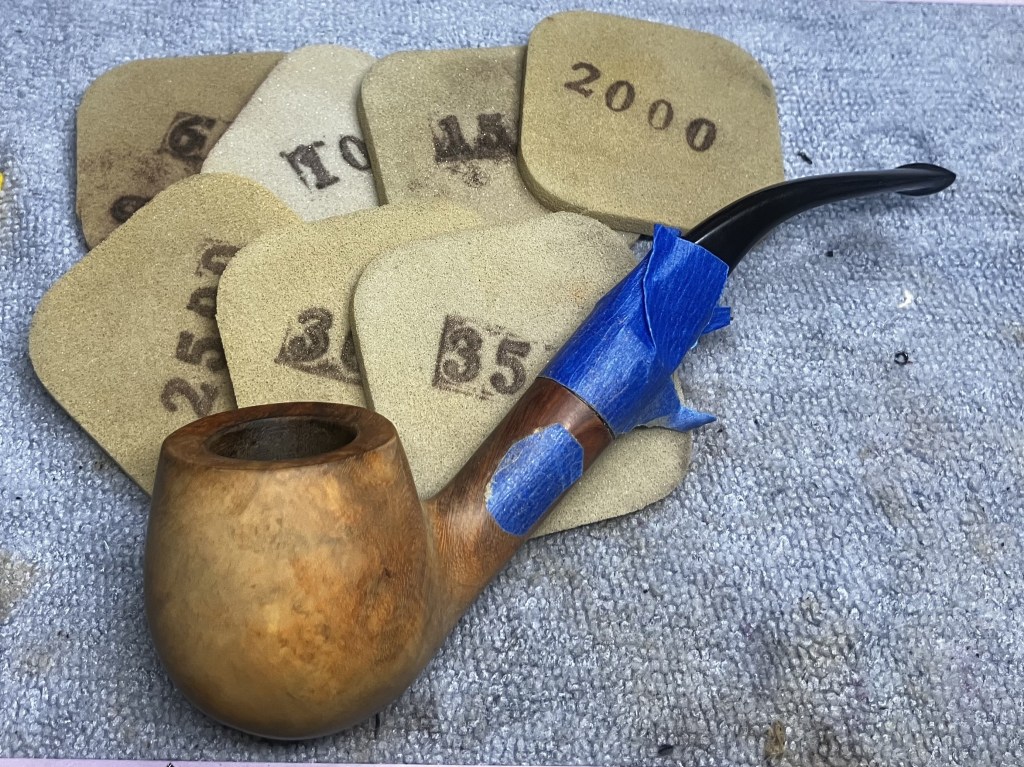
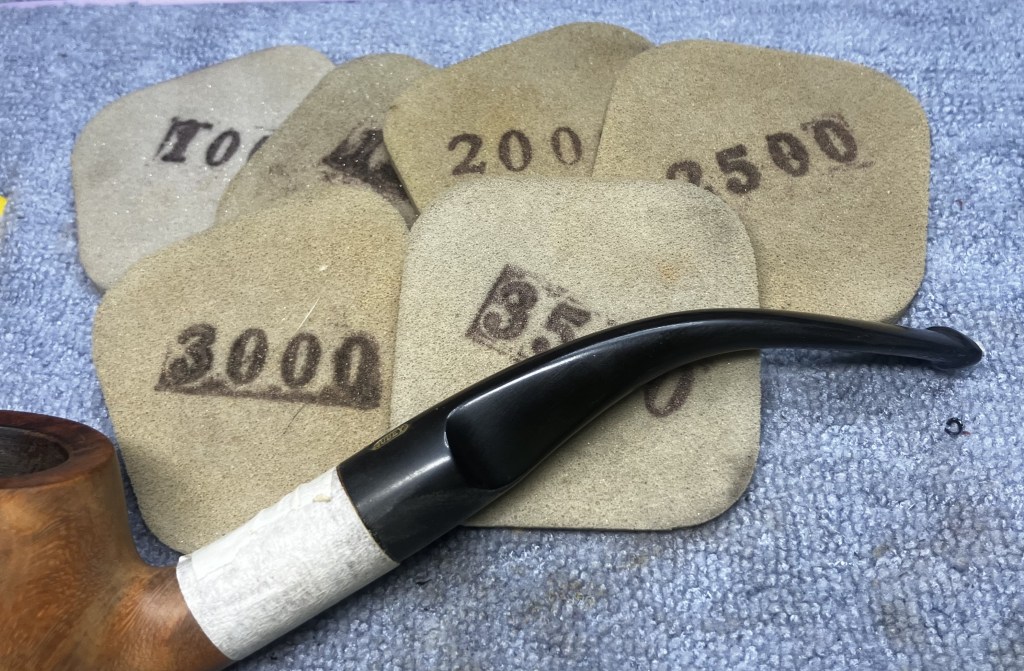
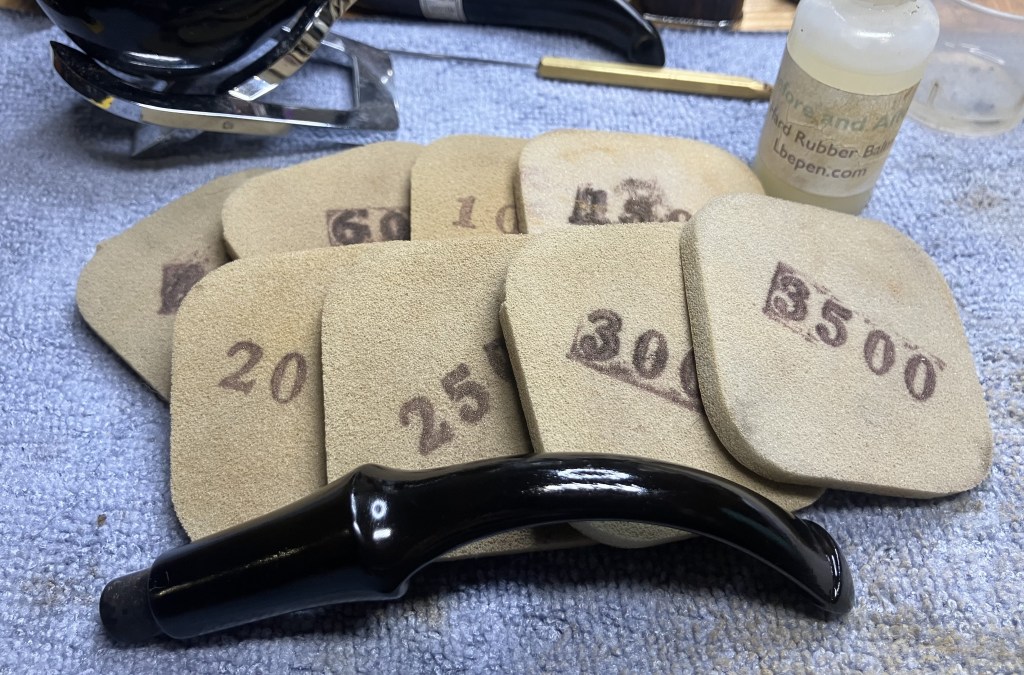
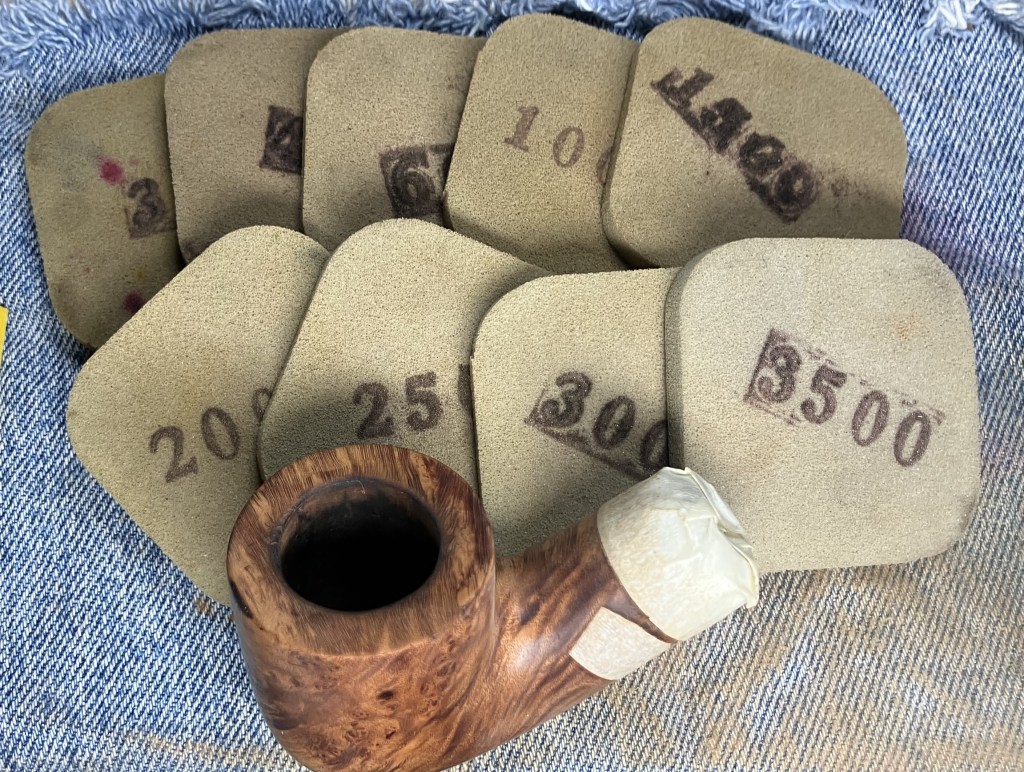
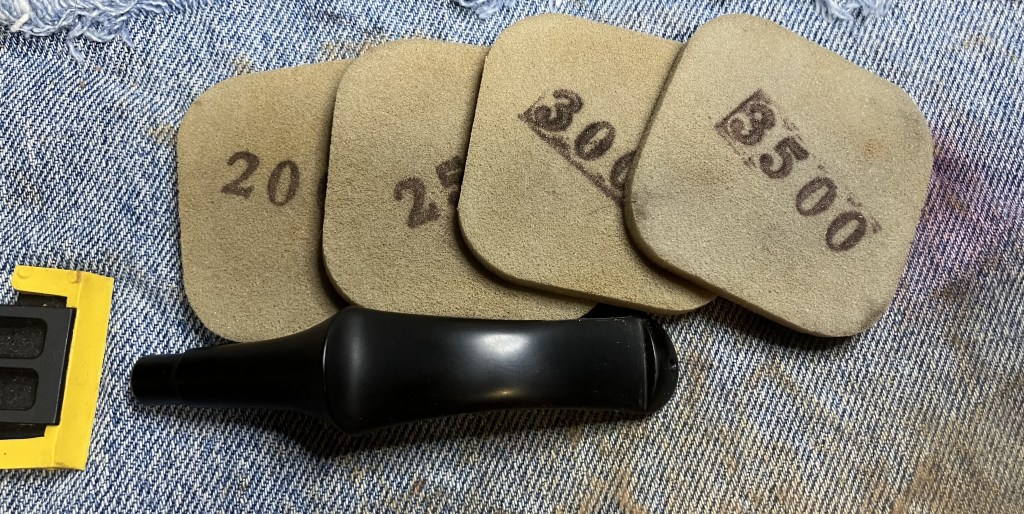
A series of sanding sponges in grits from 400-3500 were used. Between each sponge the stem was rubbed with a drop of Before and After Hard Rubber Balm and wiped with a paper towel. This wiping removed sanding debris from the stem. Once finished I coated the stem with the balm and allowed it to sit.
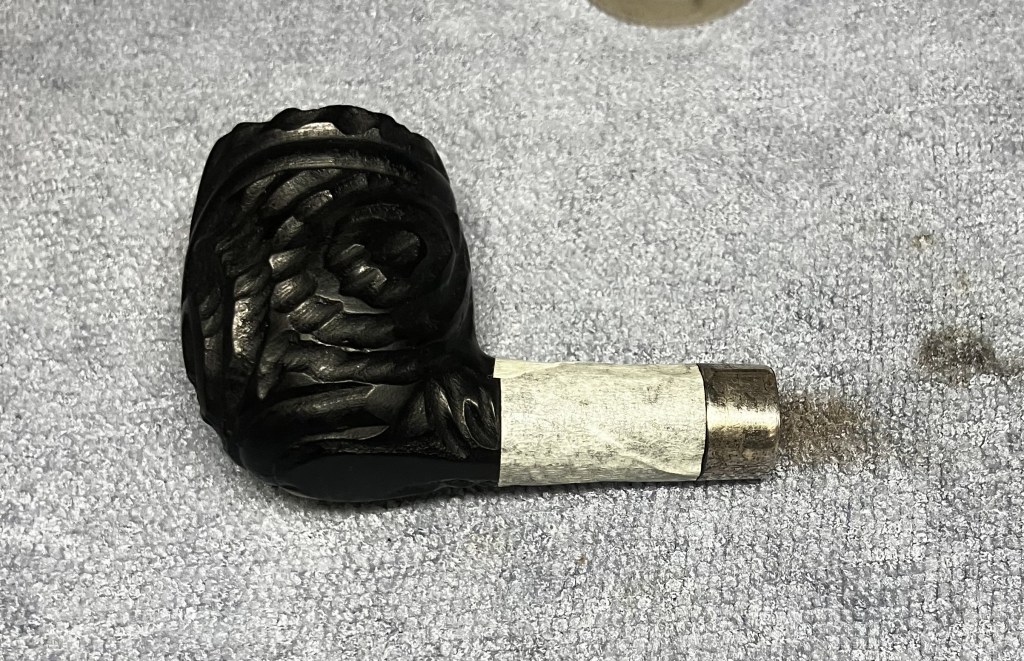
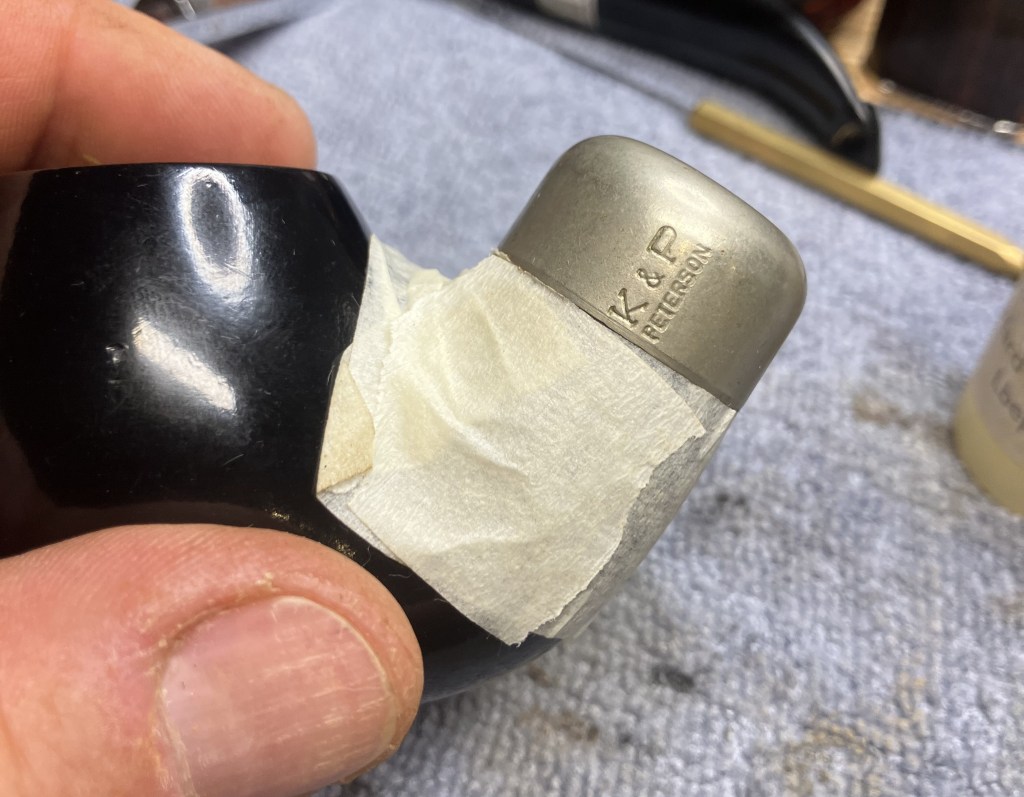
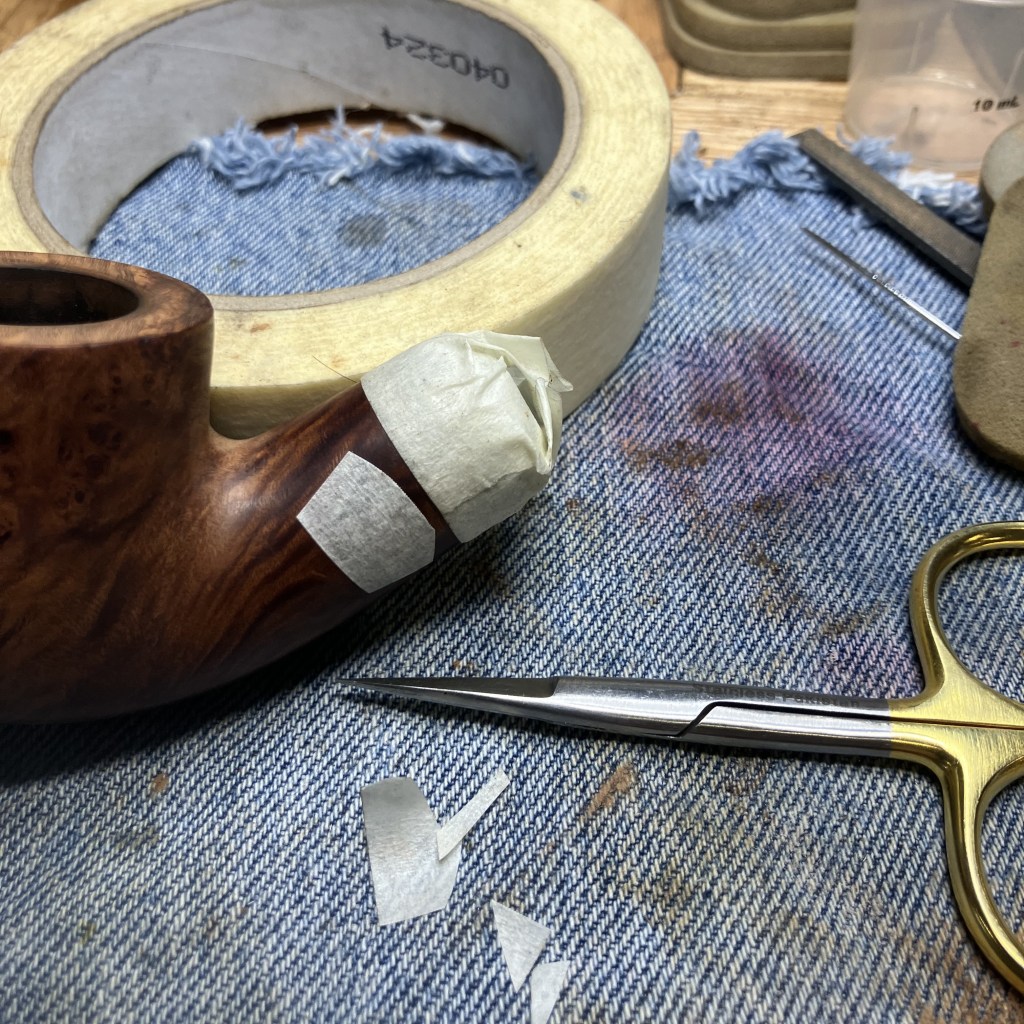
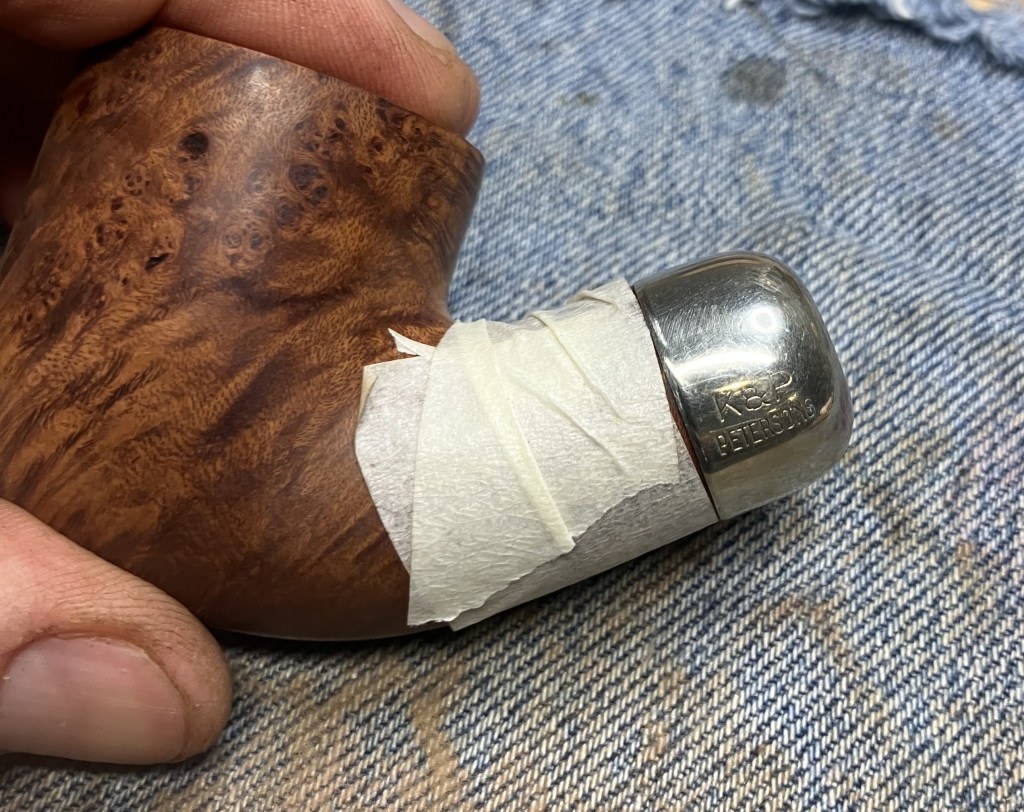
Time to make that tarnished collar shine. I wrapped the shank with masking tape to protect it from buffing.
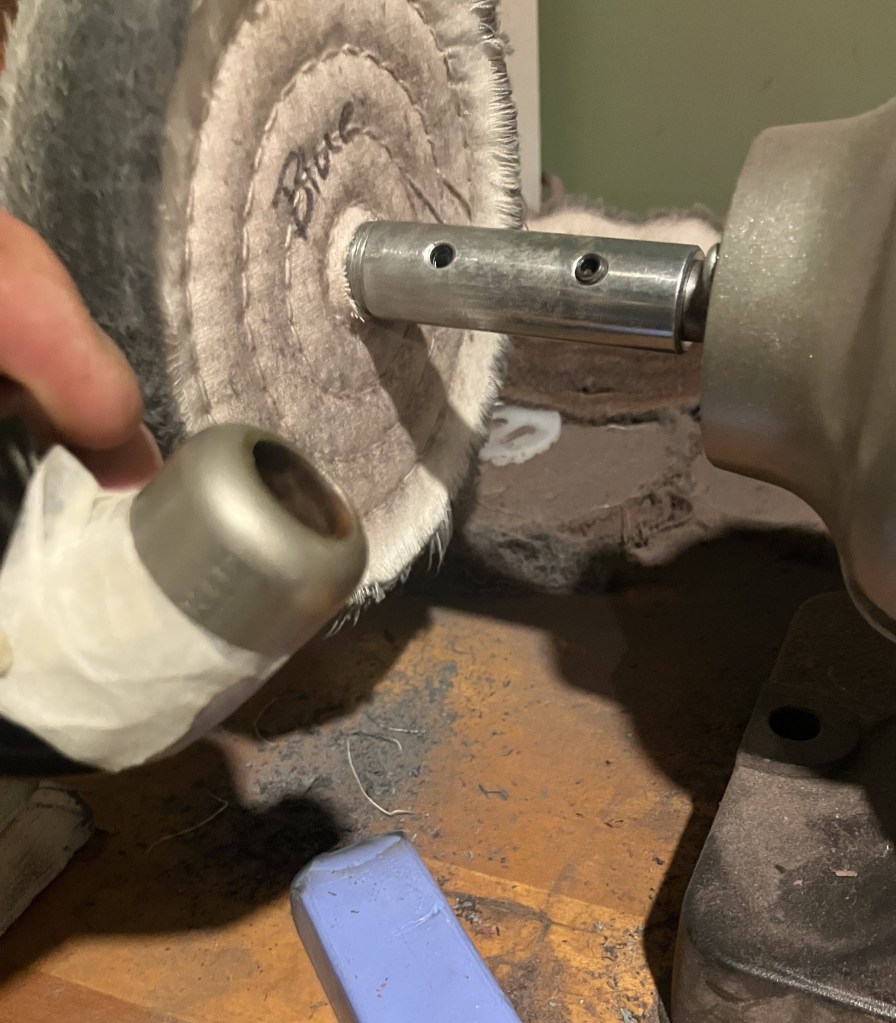
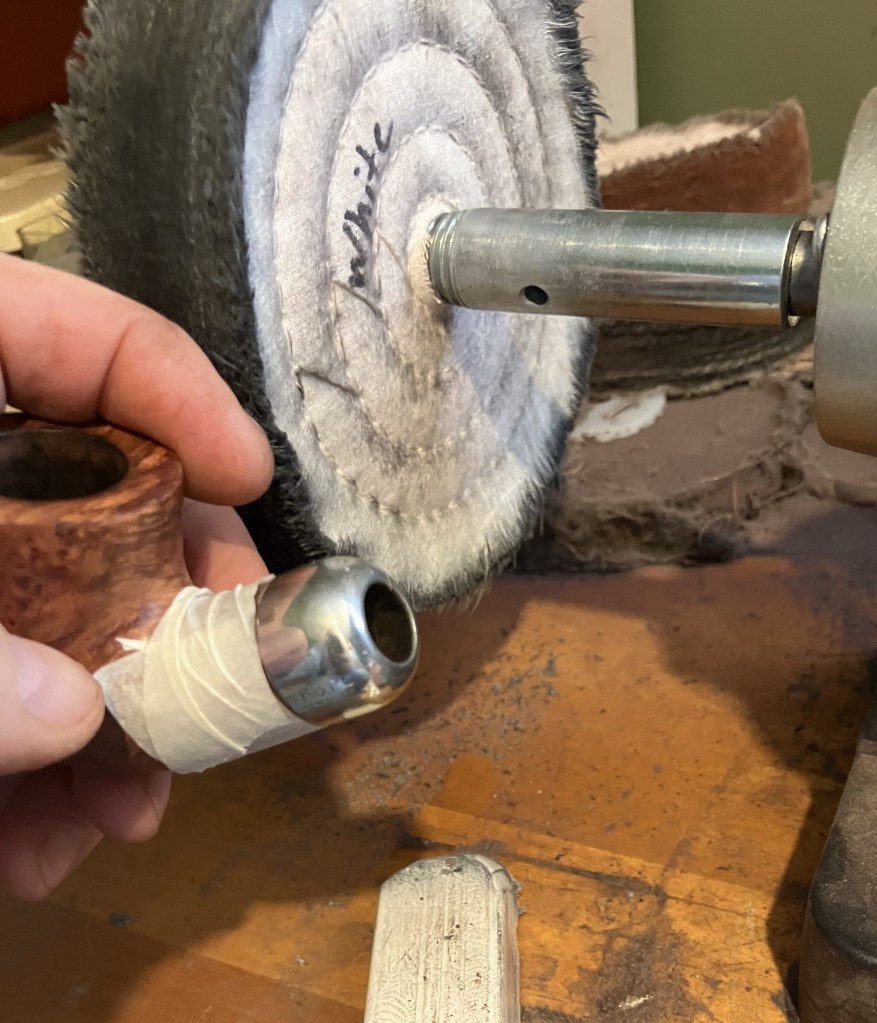
The nickel was polished with Blue Diamond at the buffer.
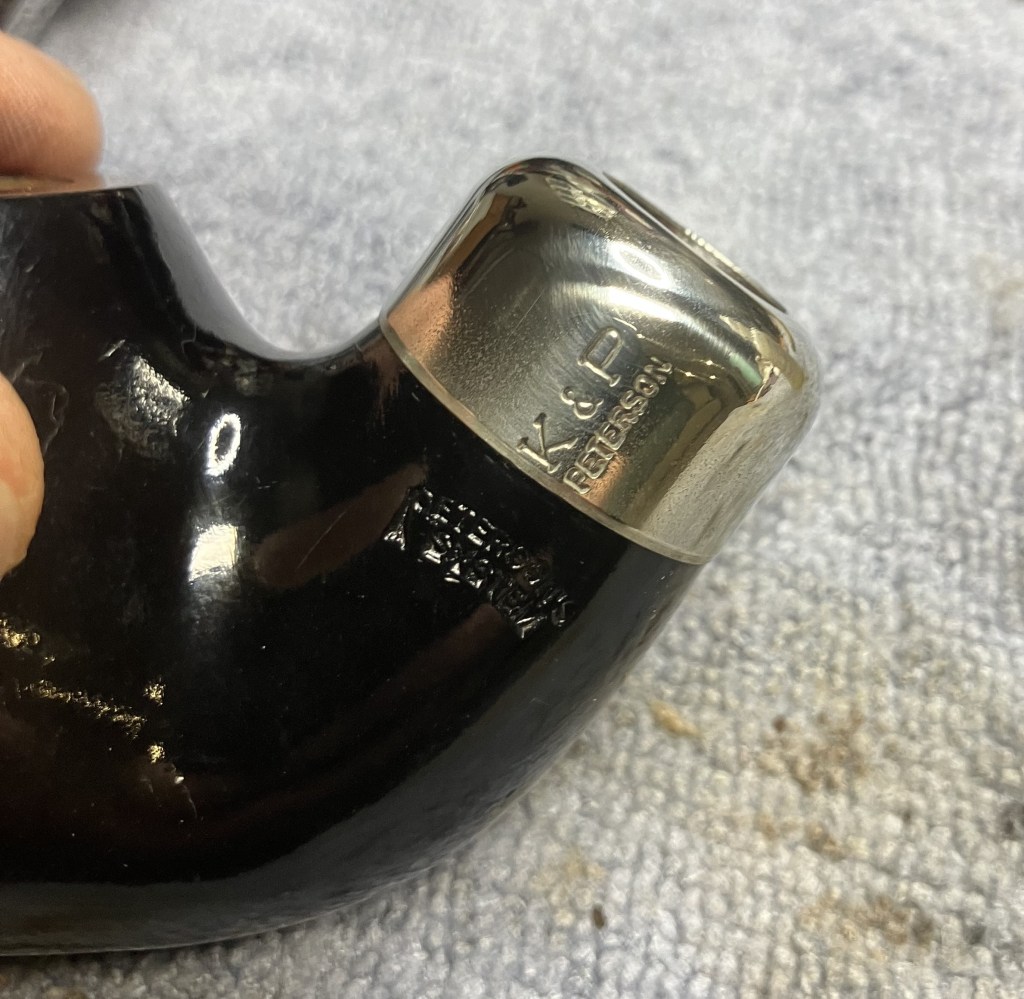
The results were a great improvement.
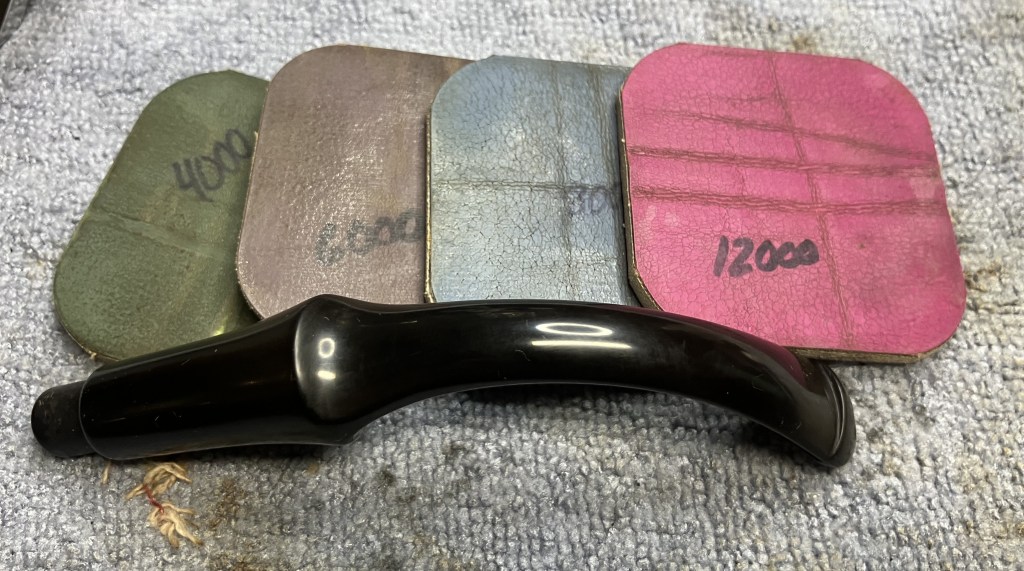
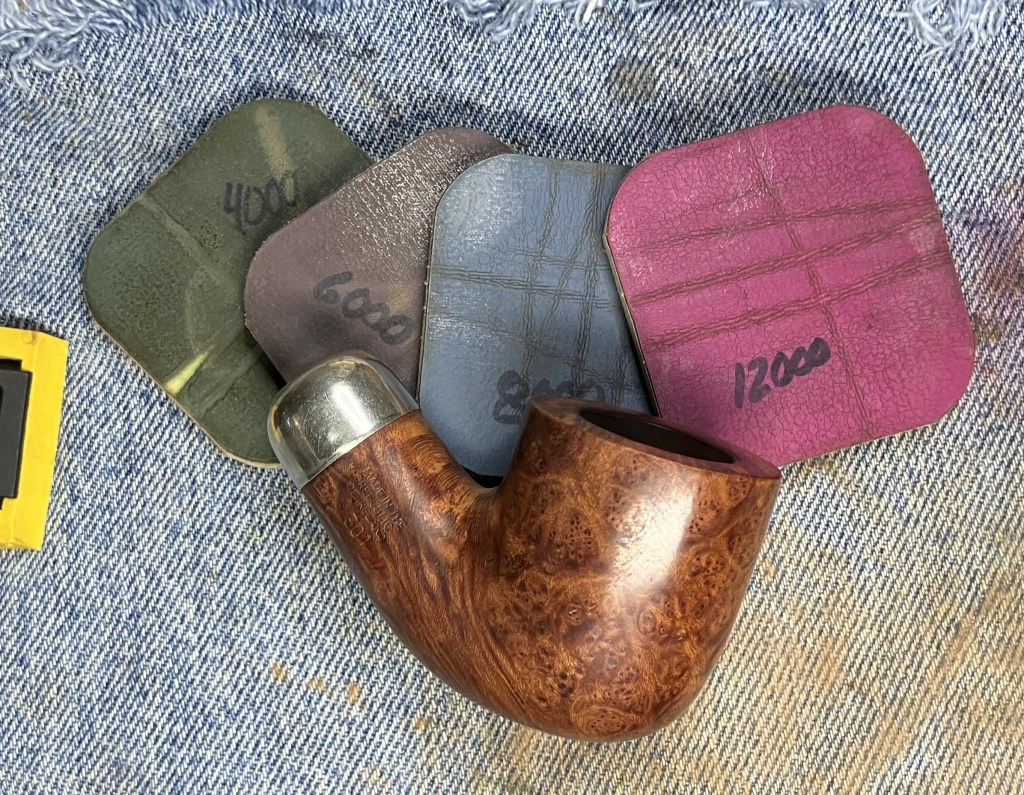
Back to the stem. I used 4000-12000 micro-mesh pads to work the stem, again with the Before and After balm and wiping between pads.
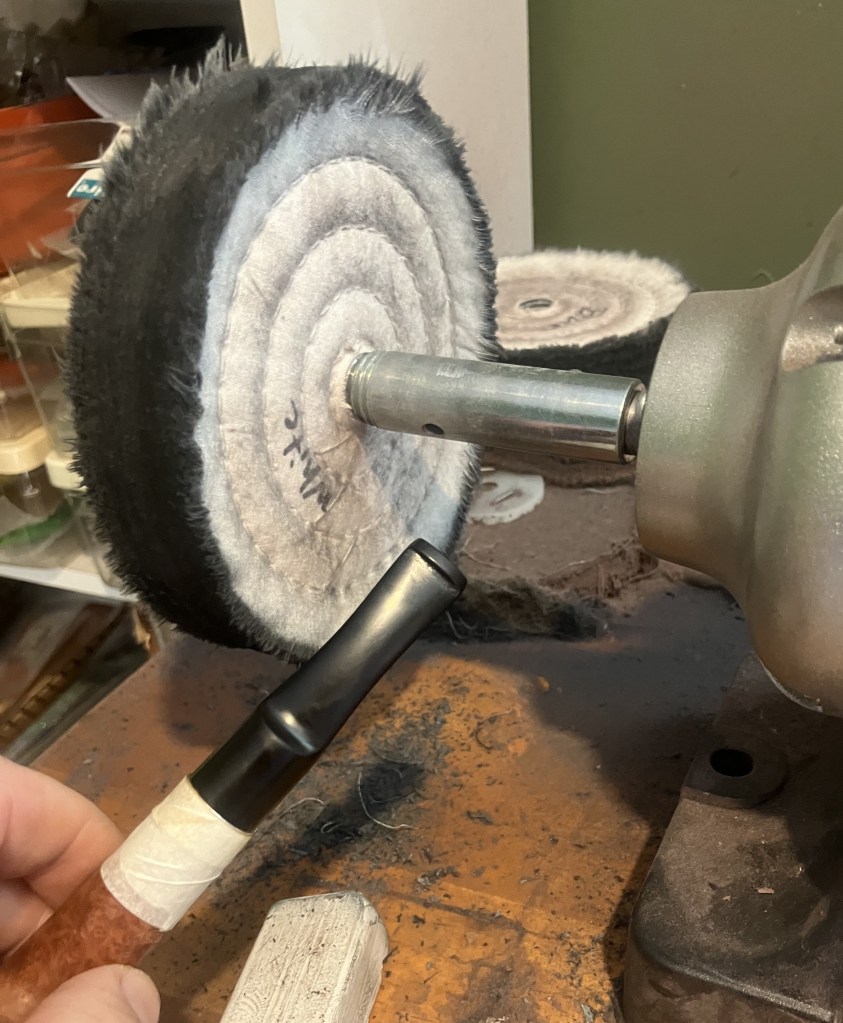
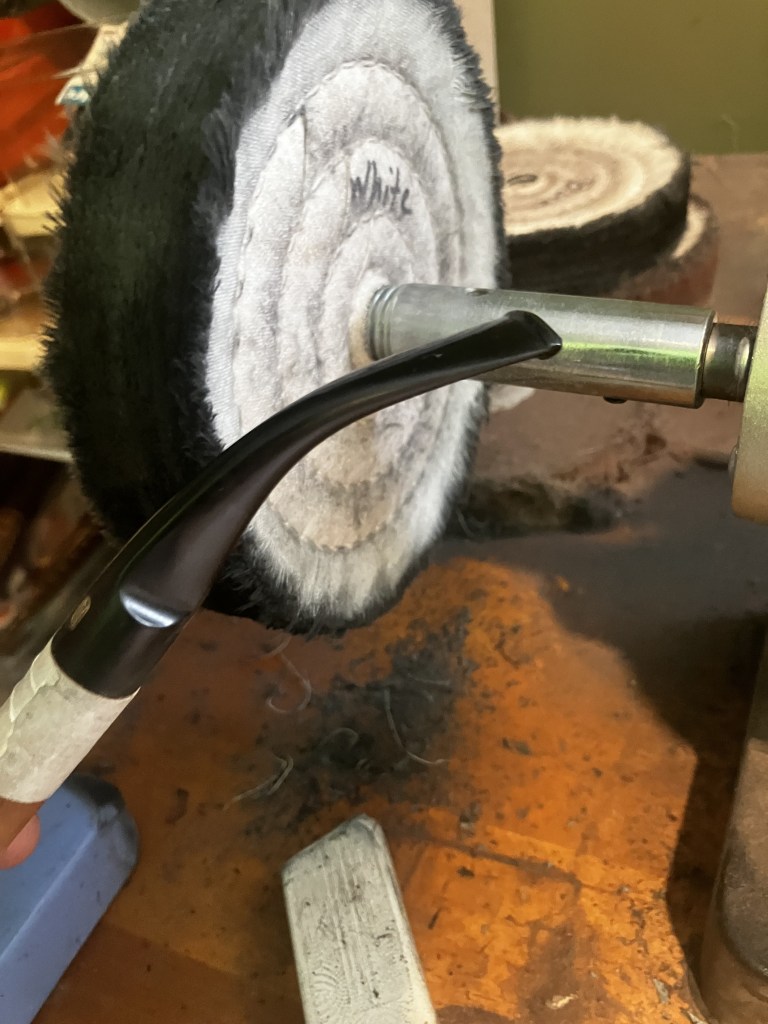
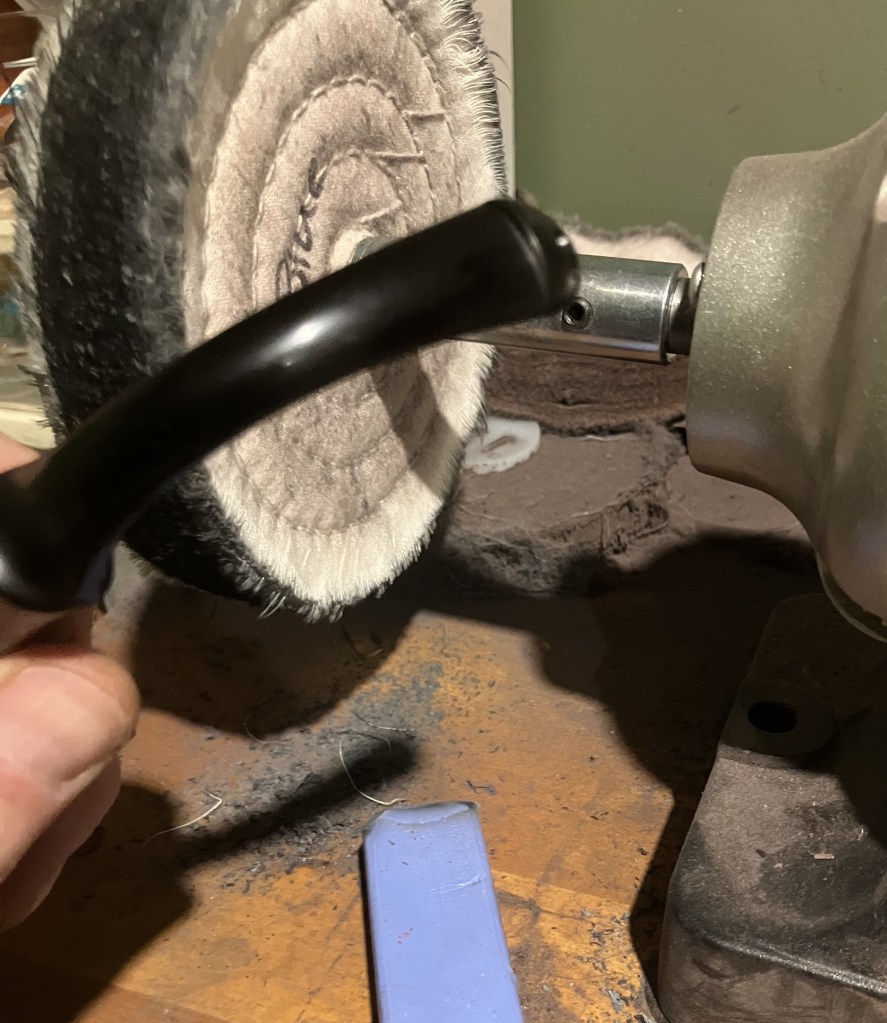
The stem was then buffed with Blue Diamond at the buffer.
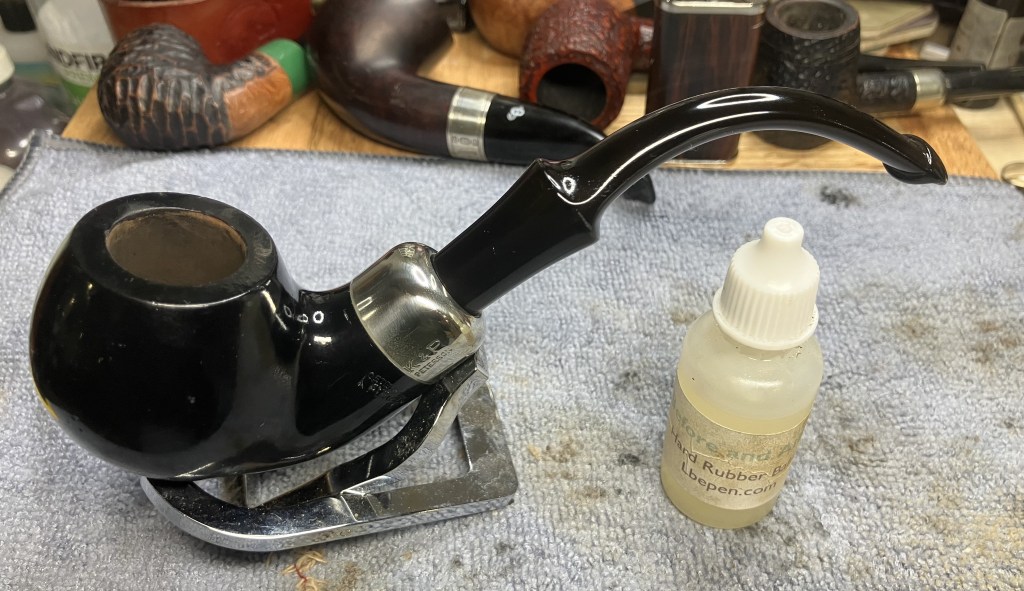
A final coating of Before and After Hard Rubber Balm was given to the stem and it was reunited with the stummel.
The black Fiebing’s Leather Dye worked well at making the stubborn spot on the rim black but it was still noticeable. I thought that maybe a coati or two of Danish oil would help conceal the blemish.
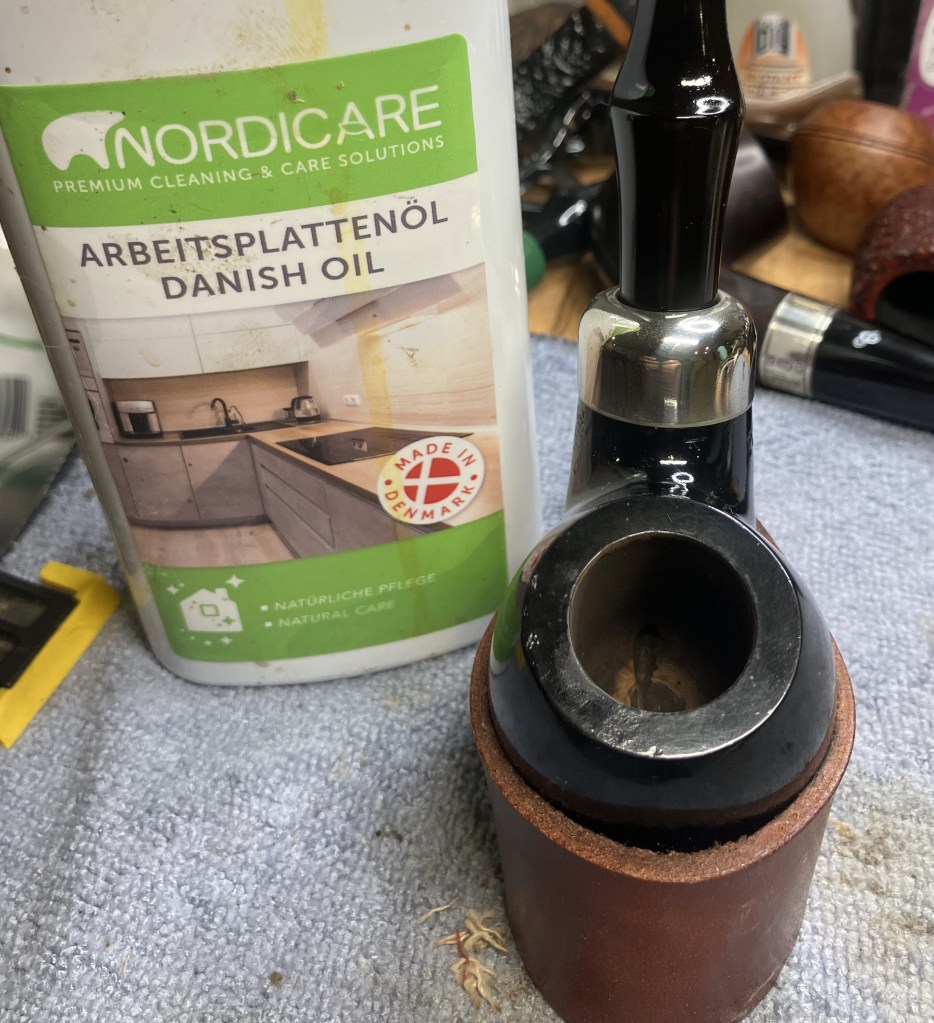
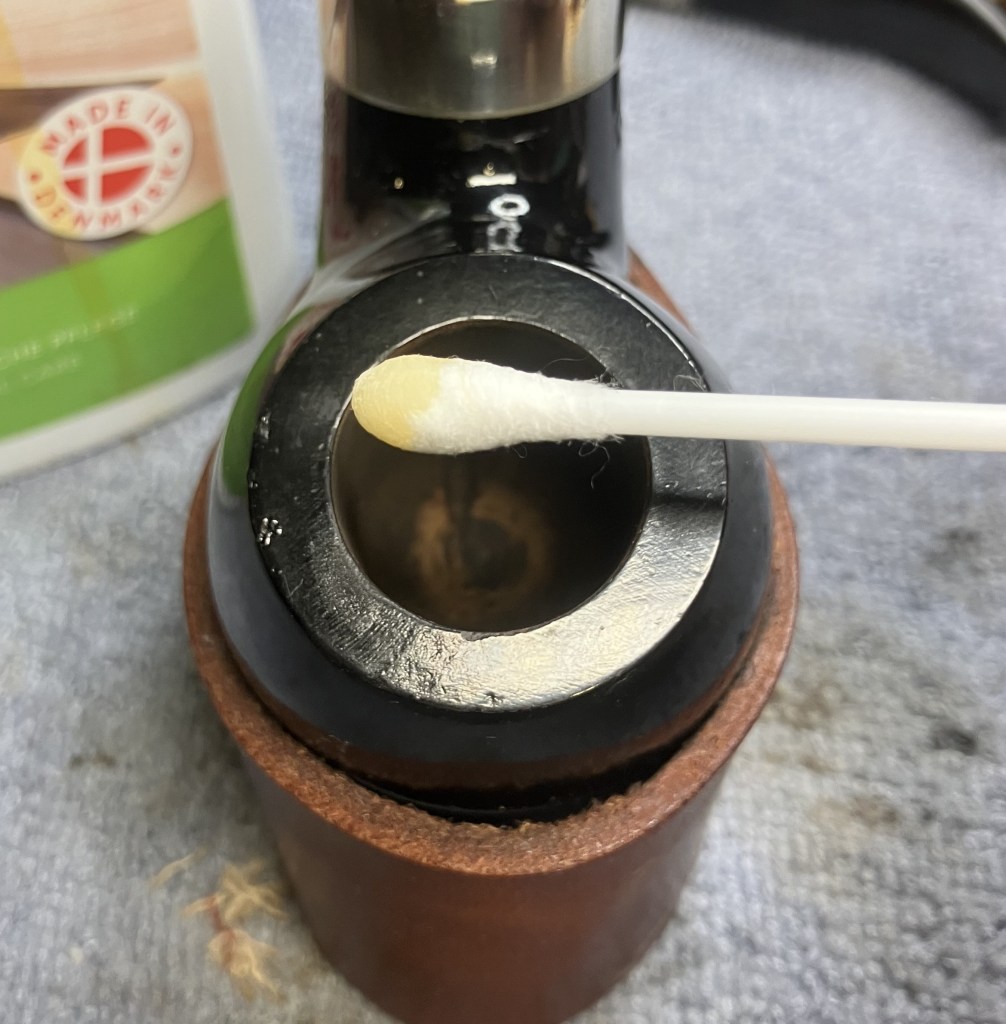
This was applied to the rim with a cotton swab.
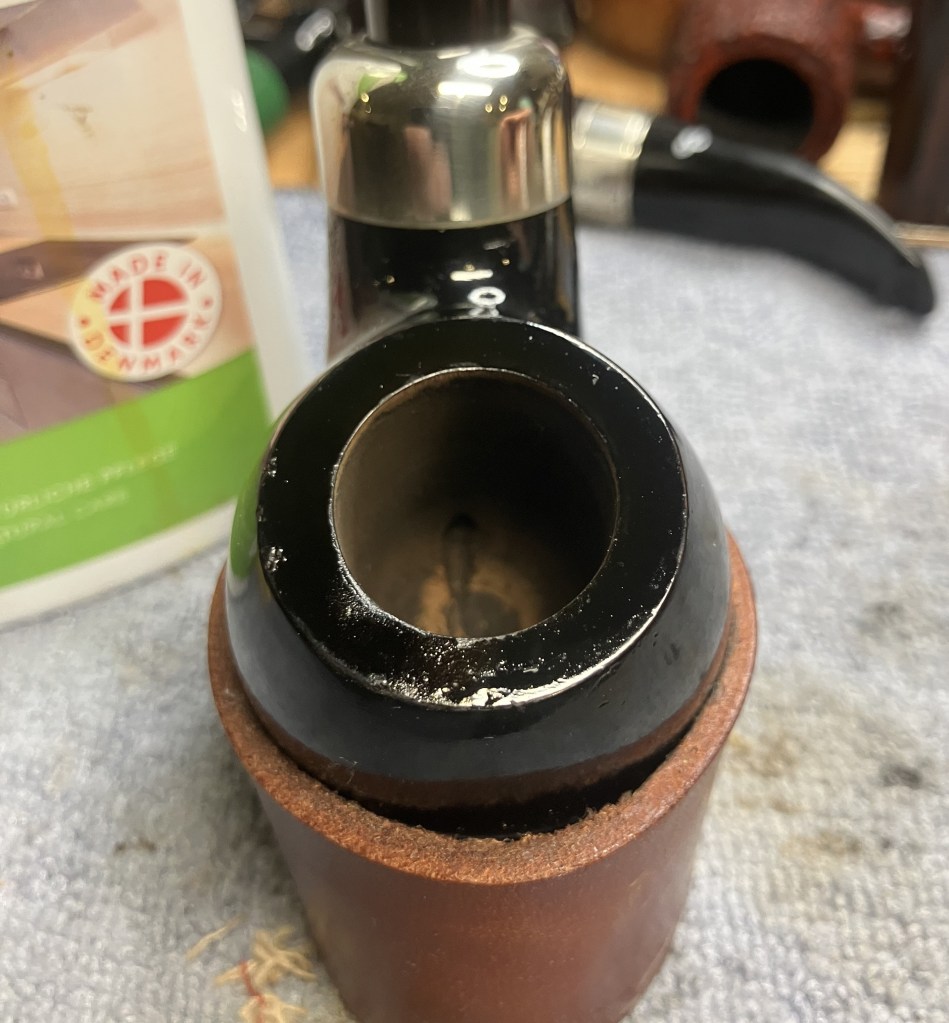
The whole rim was coated to help blend the spot.
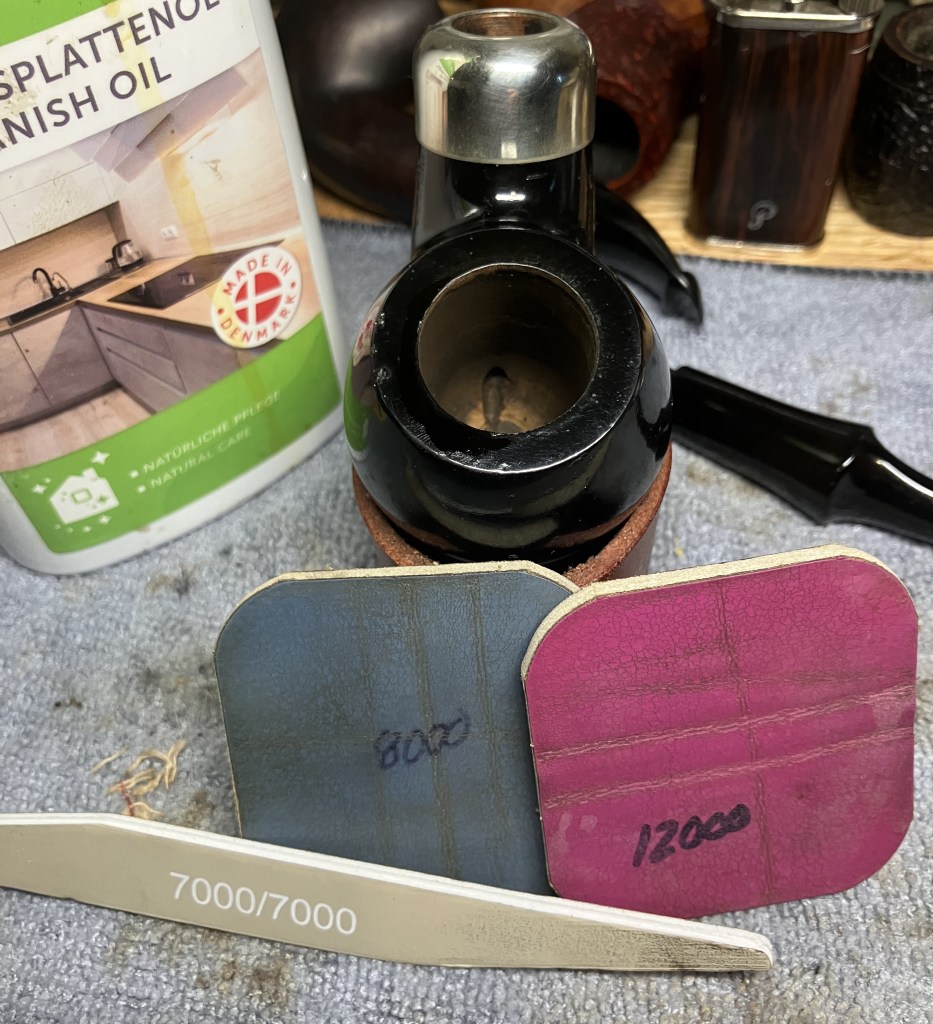
Then several more mini applications to the spot, itself. After the oil dried I worked the spot with 7000, 8000 and 12000 grit micro-mesh.
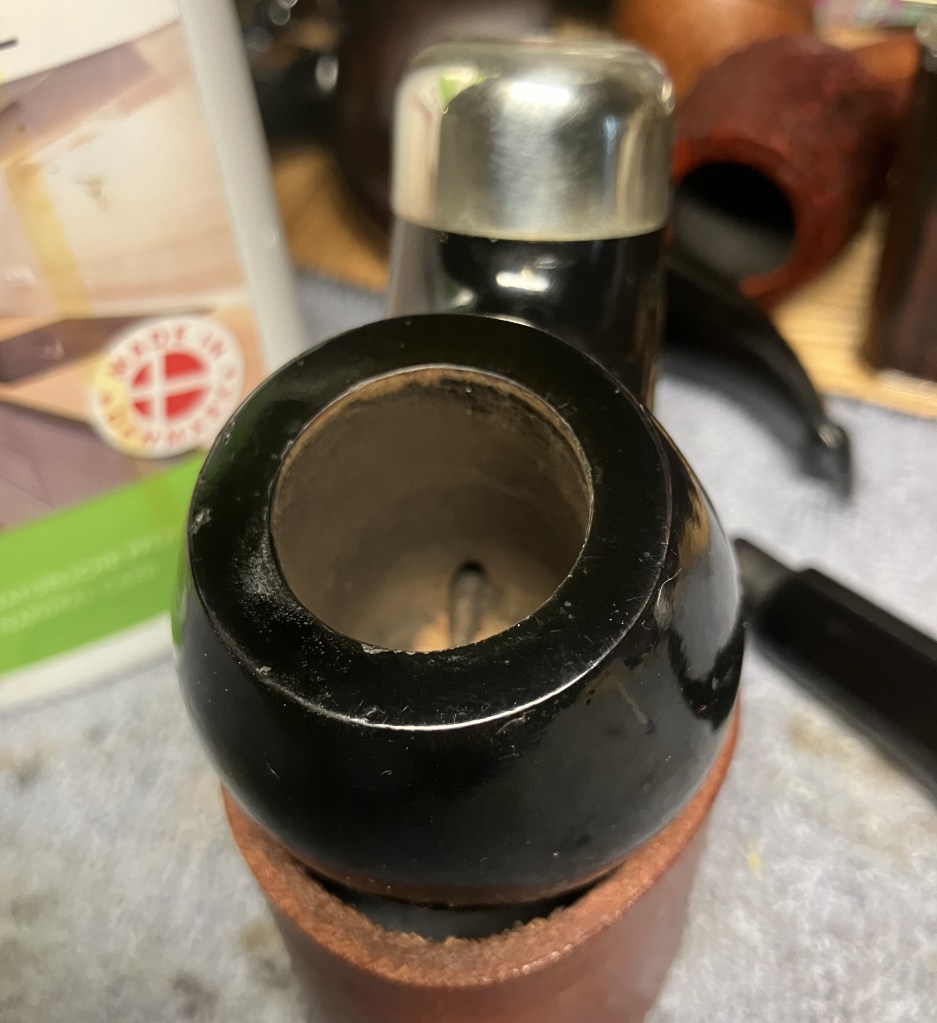
The stubborn little spot remained noticeable. I finally surrendered to failure. I thought maybe, just maybe, that the carnauba waxing would finally smooth the blemish, but didn’t hold much faith in that.
Several coats of carnauba wax were applied to both the stem and stummel.
The final step was a hand buffing with a microfiber polishing cloth which really brought out the shine.
What a chubby cheeked beauty. This Peterson System Standard 302 Ebony restored wonderfully. The glossy black finish was well maintained by the previous owner and needed little work. The slightly charred spot on the rim was fixed with a touch of black dye,Danish oil, polishing and disappeared with the waxing. The oxidation of the stem was removed and revealed the lovely black high gloss vulcanite. This glossy black matches the stummel and is accentuated by the polished nickel collar. Overall, I think the pipe looks nearly as great as it probably did exiting the Peterson factory in Dublin. I am sure that Tom, will enjoy many years of relaxing contemplation with this pipe. The dimensions of the Peterson System Standard 302 Ebony areas follows:
Length: 6.09 in./ 154.69 mm.
Weight: 2.58 oz./ 73.14 g.
Bowl Height: 1.88 in./ 47.75 mm.
Chamber Depth: 1.40 in./ 35.56 mm.
Chamber Diameter: 0.80 in./ 20.32 mm.
Outside Diameter: 1.79 in./ 45.47 mm.
I do hope that you have found something here useful to your own pipe care, maintenance or restorations. If you like this sort of thing, please click the like and subscribe buttons. Thank you for reading the ramblings of an old pipe lover.
Loading…
Below are some photos of the finished Peterson System Standard 302 Ebony.
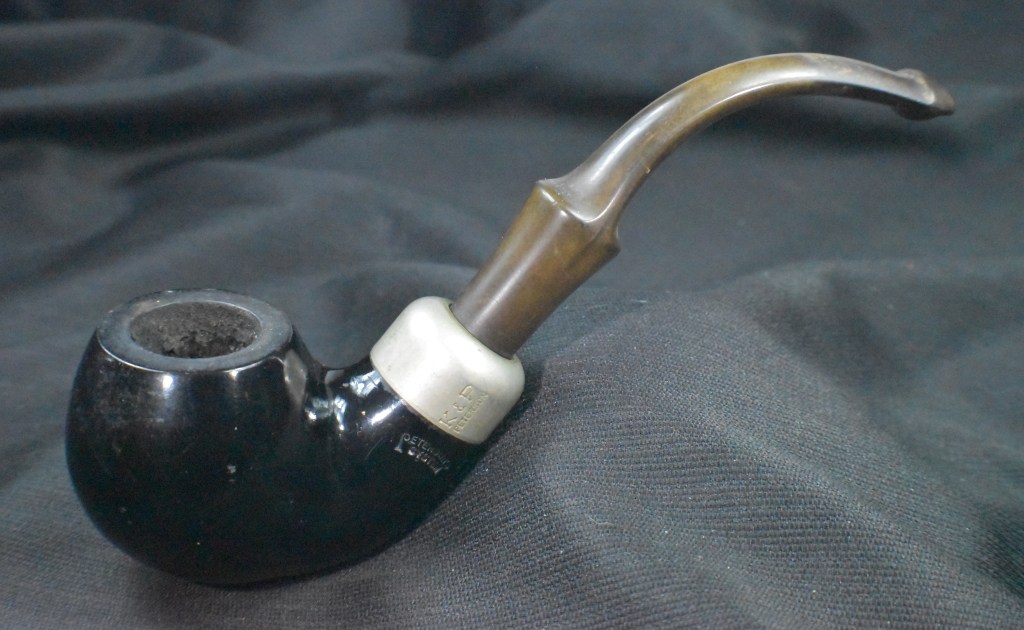
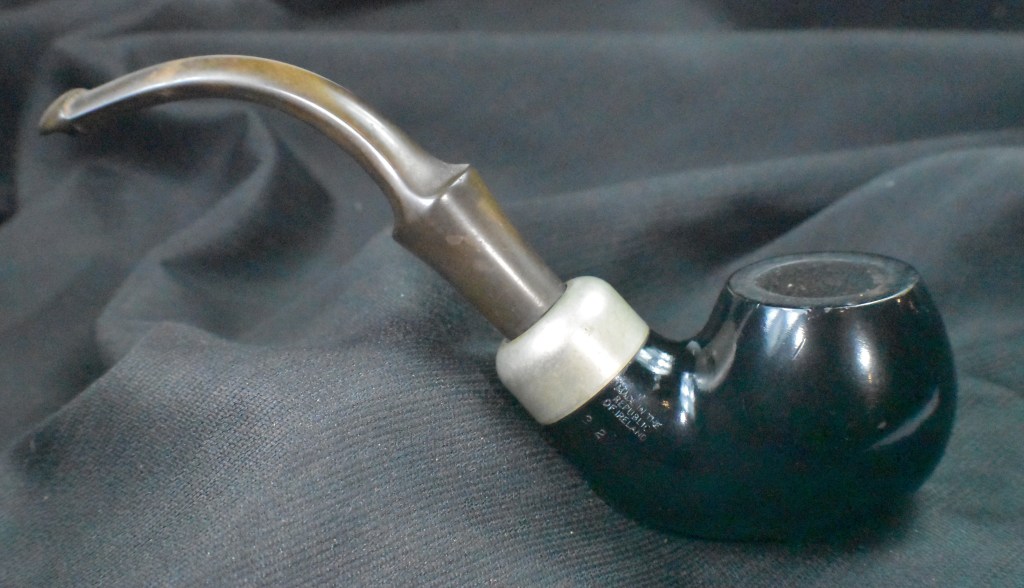
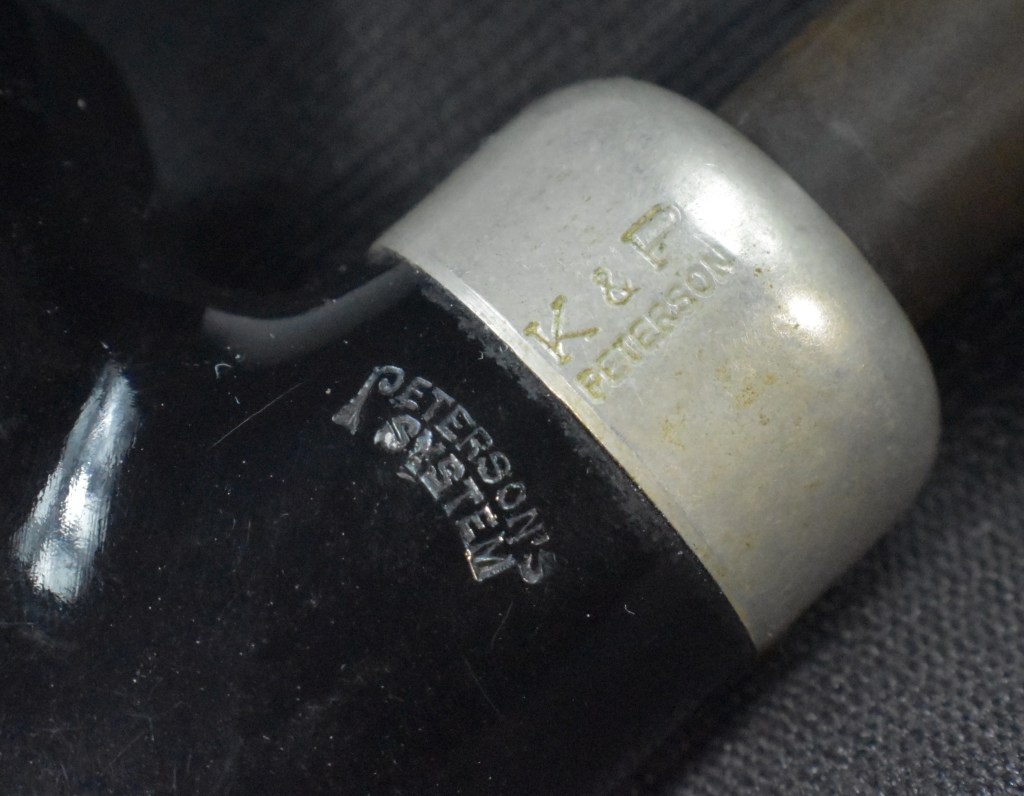
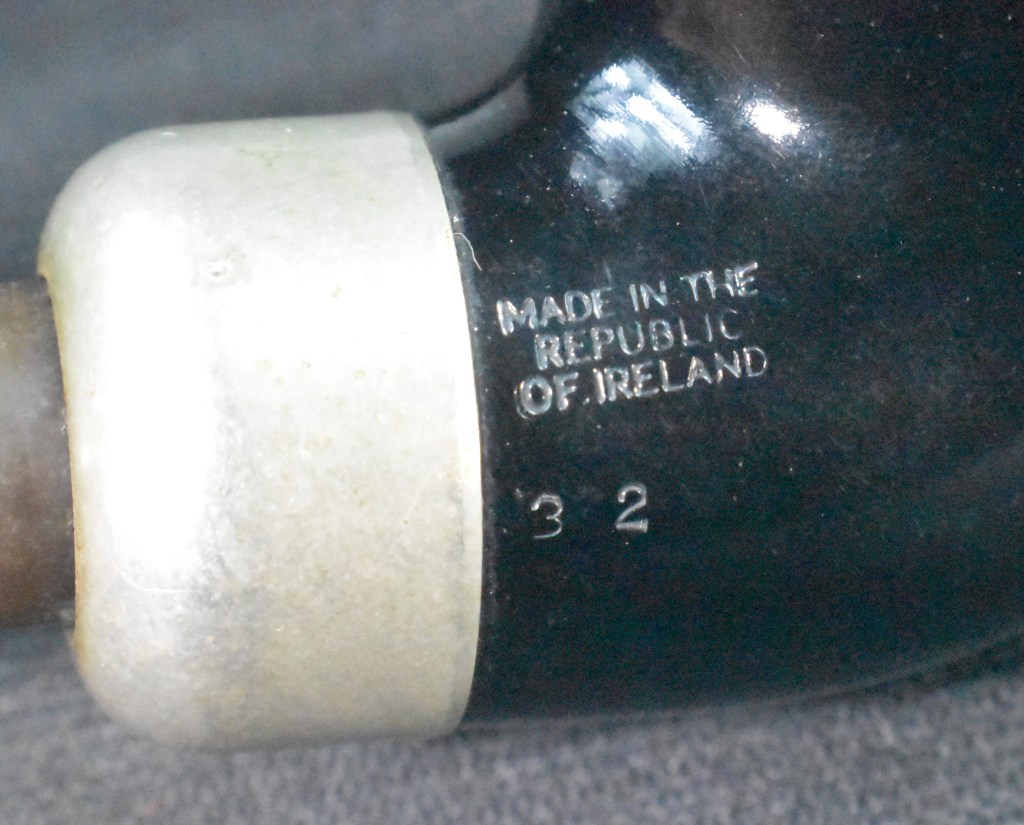
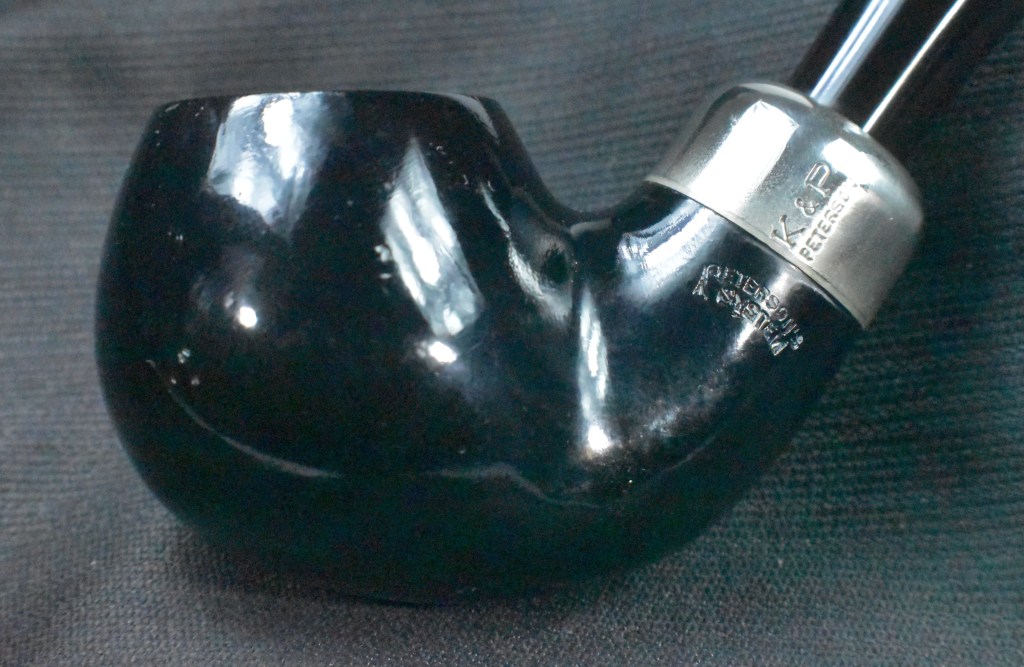
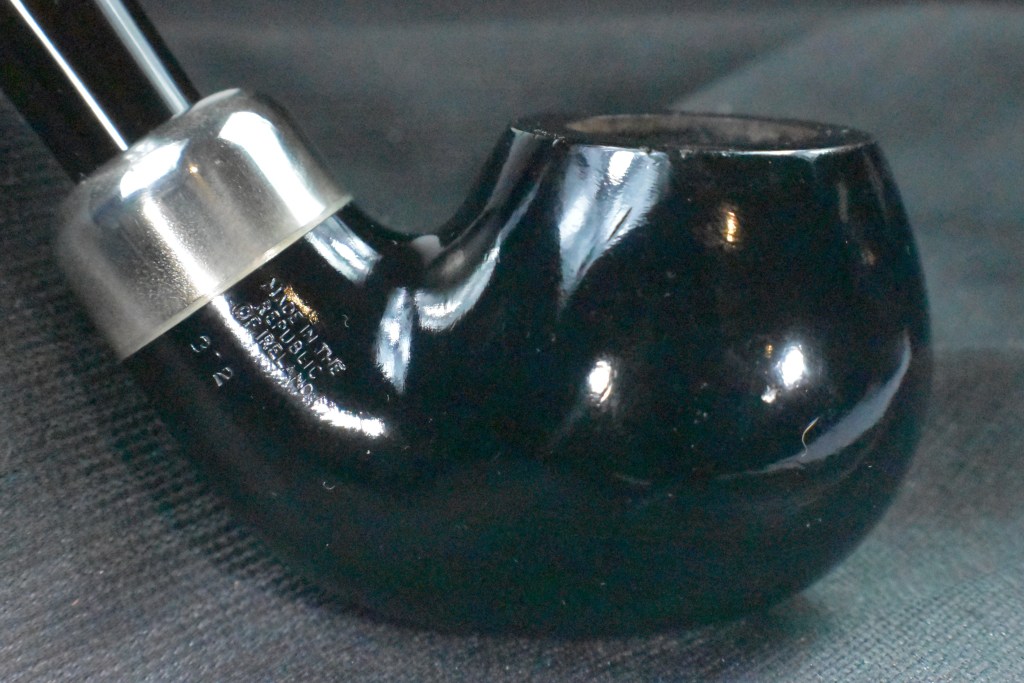
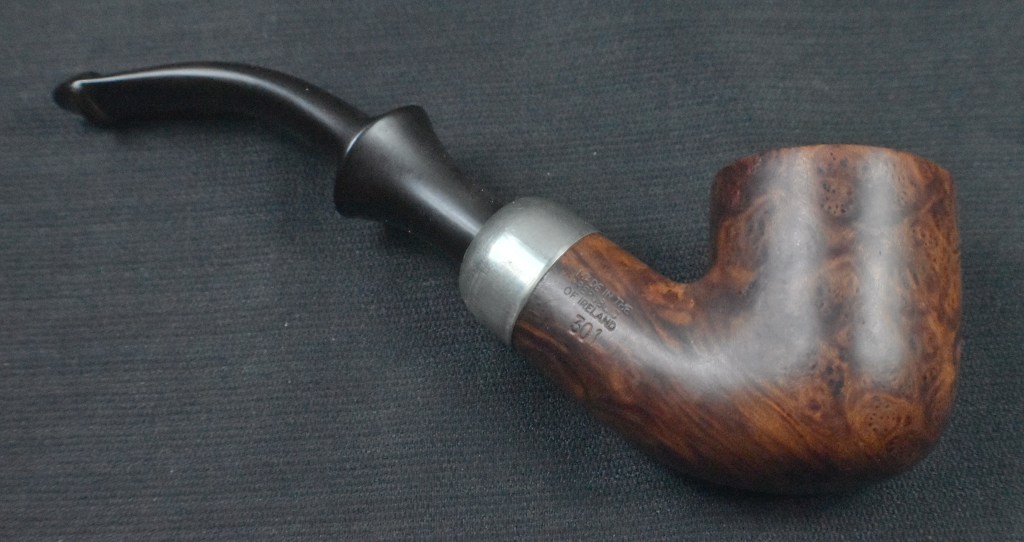
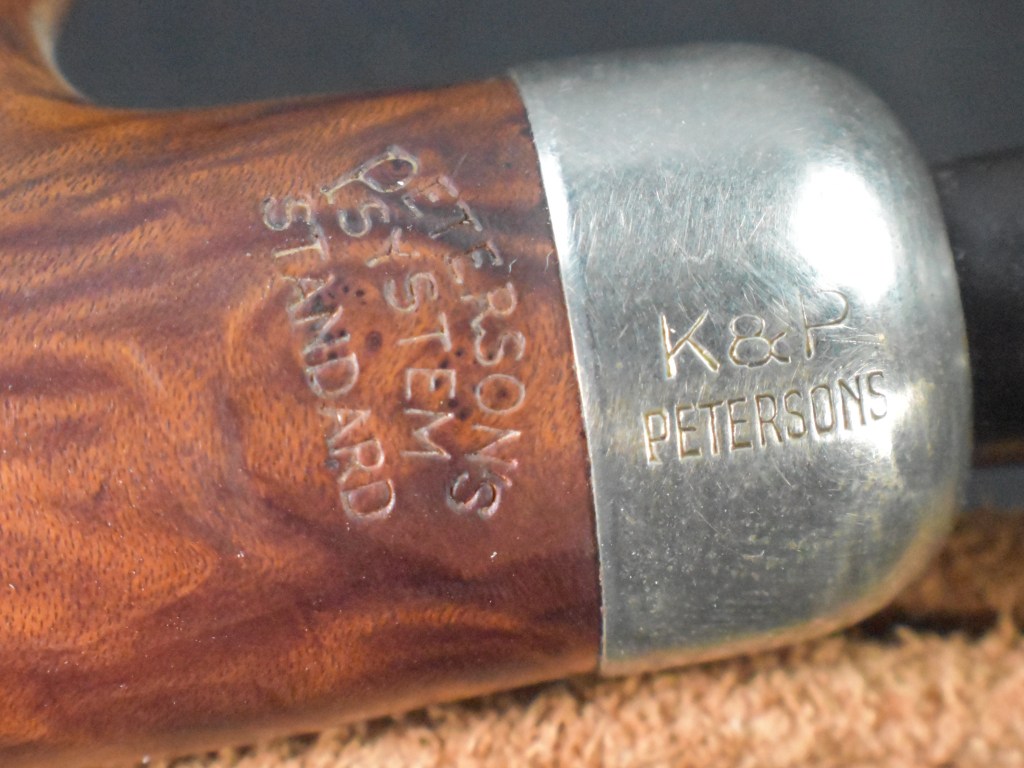
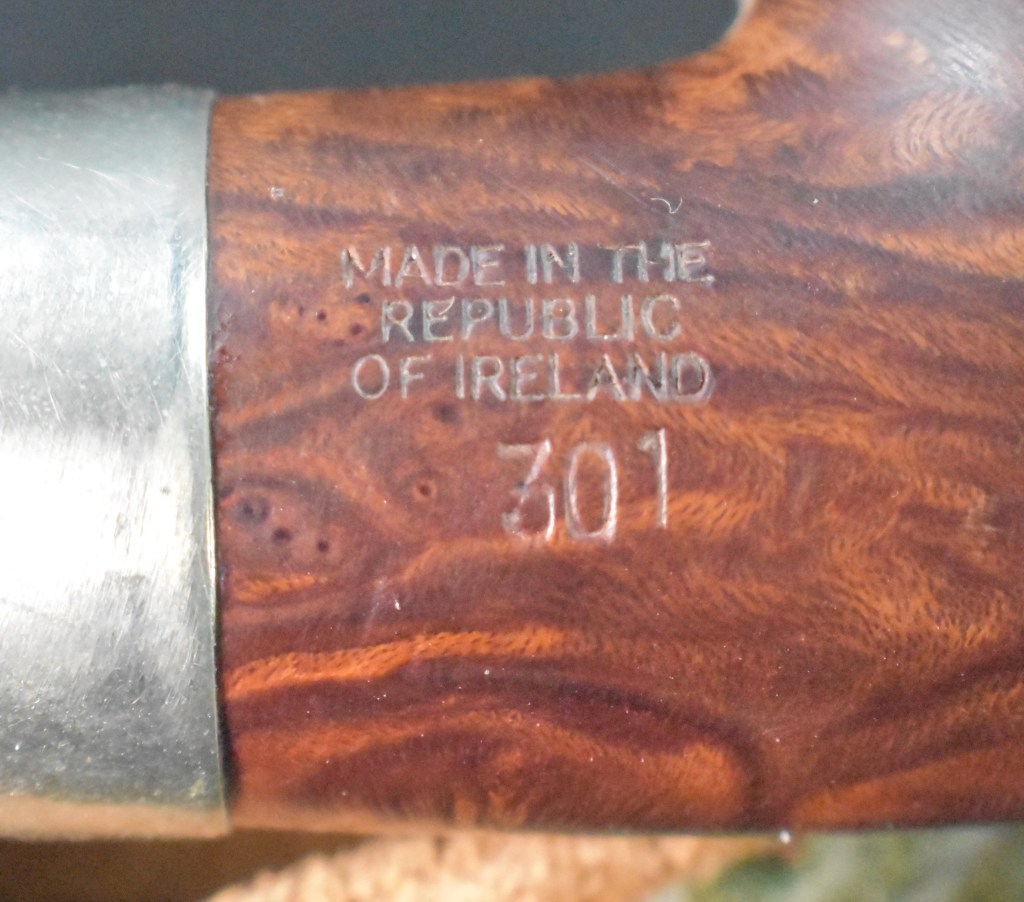
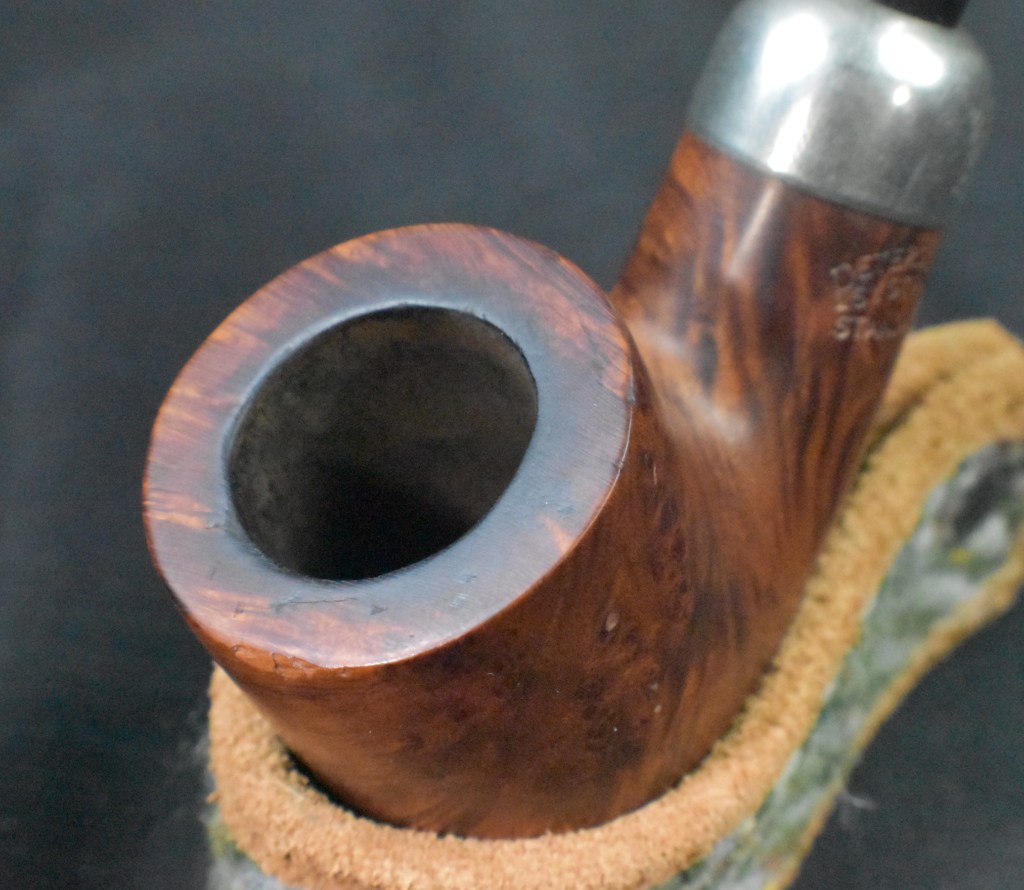
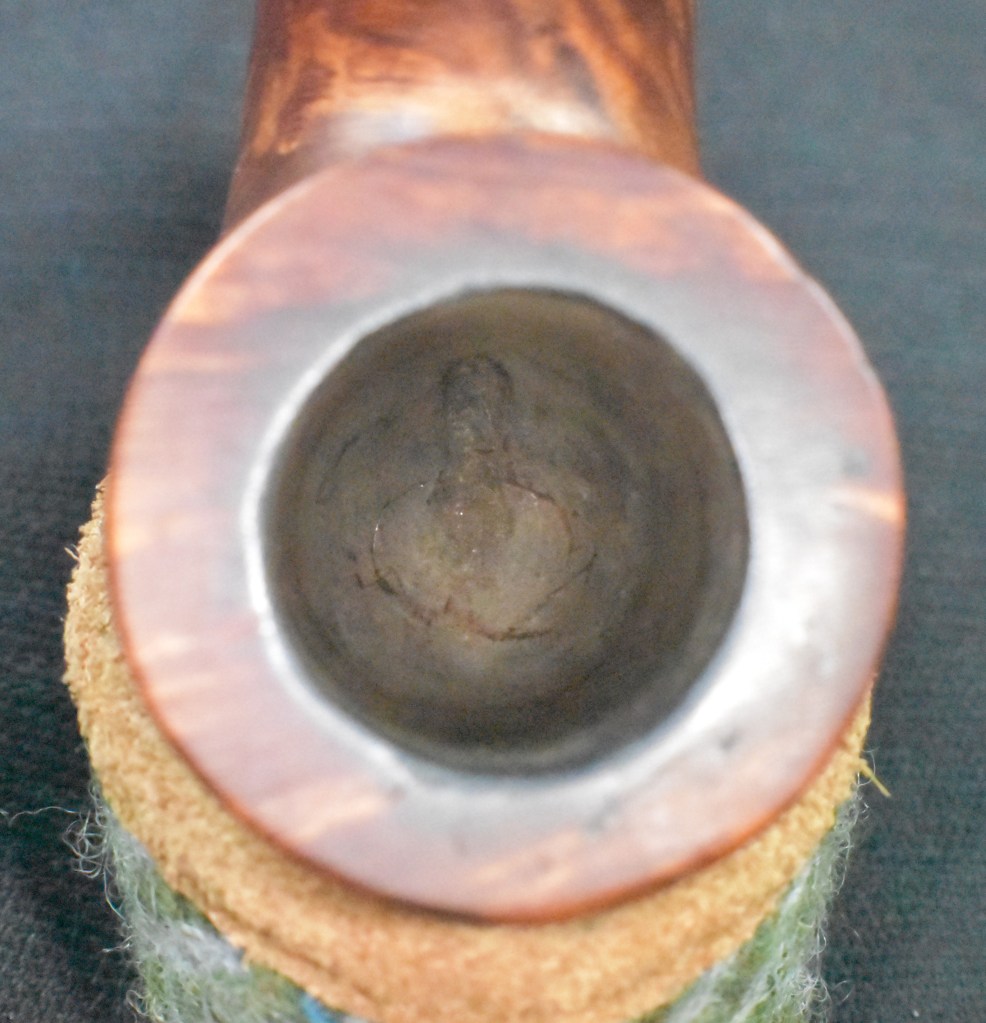
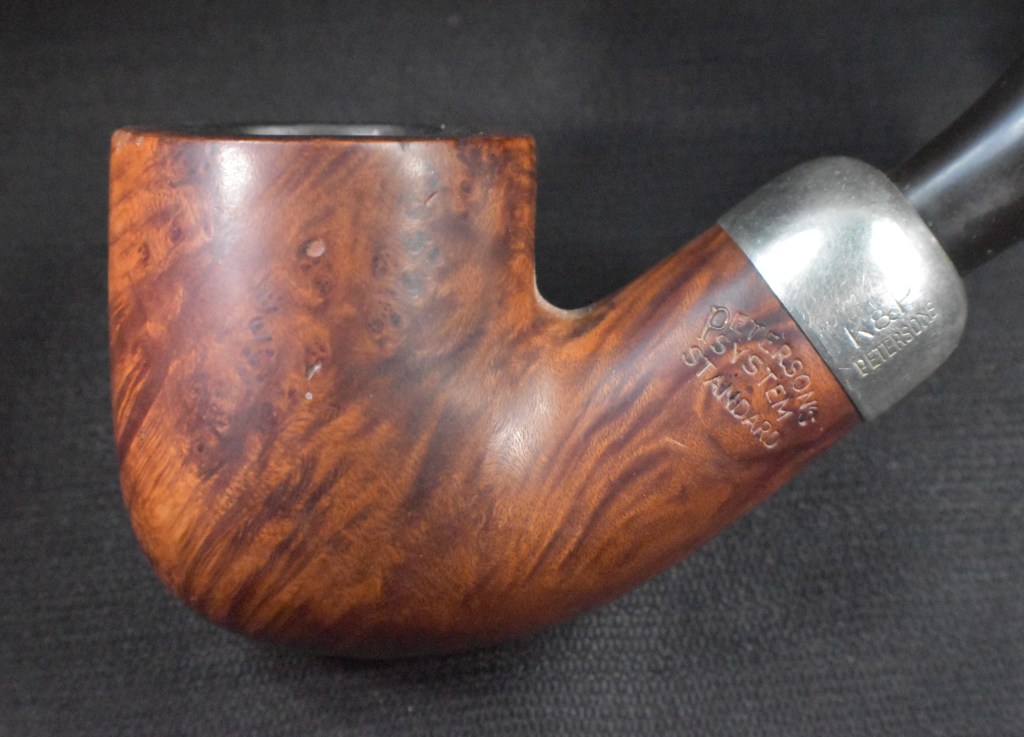
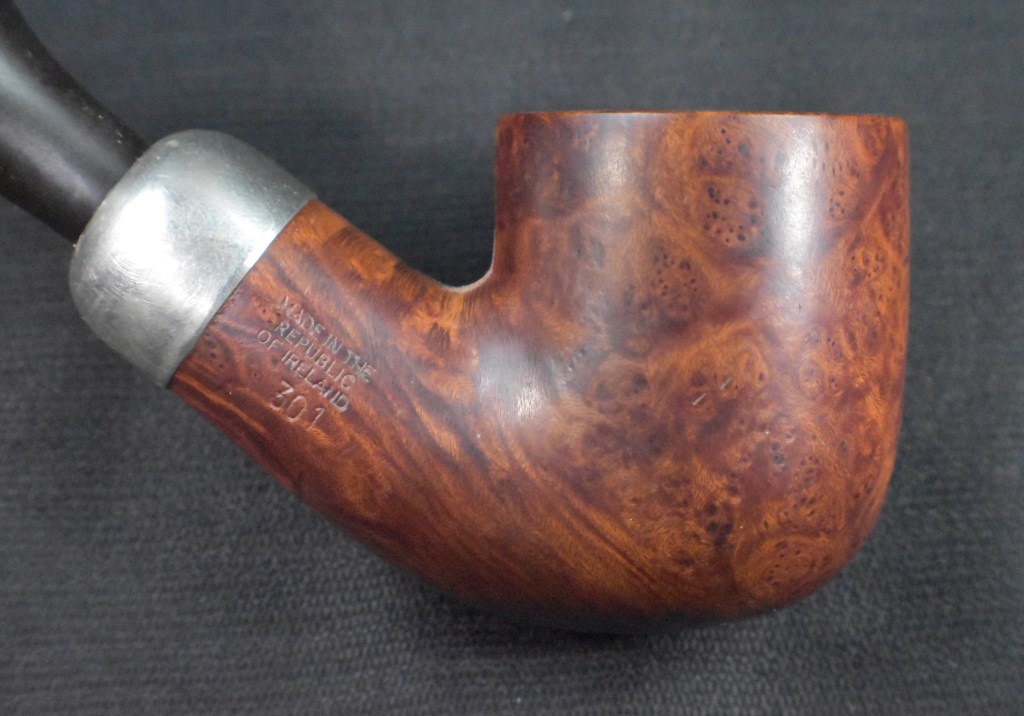
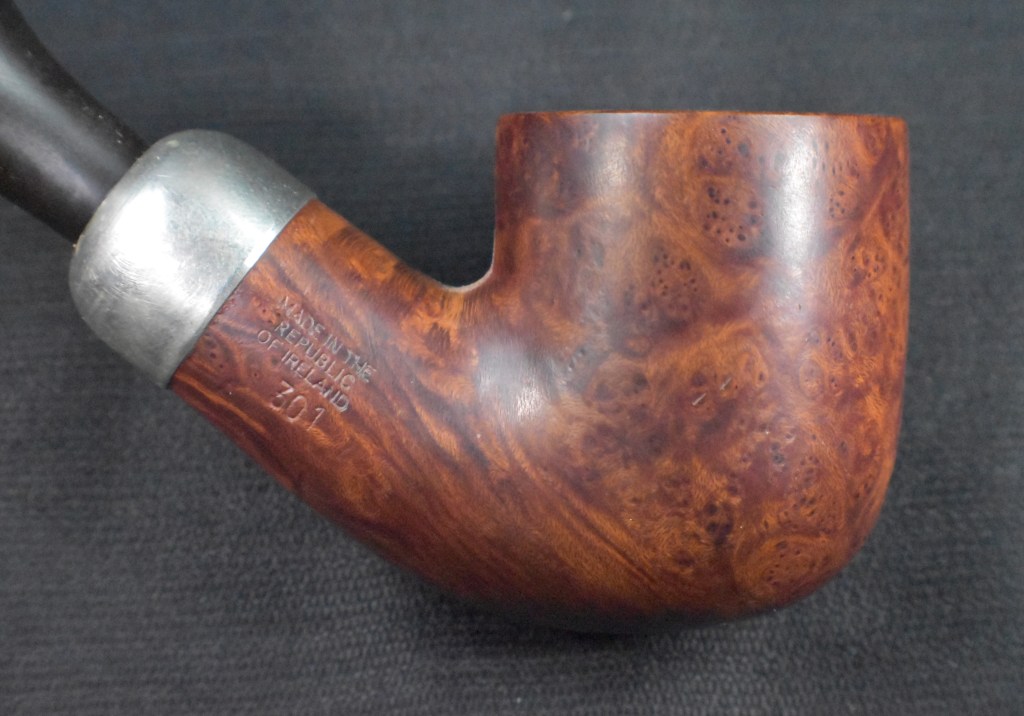
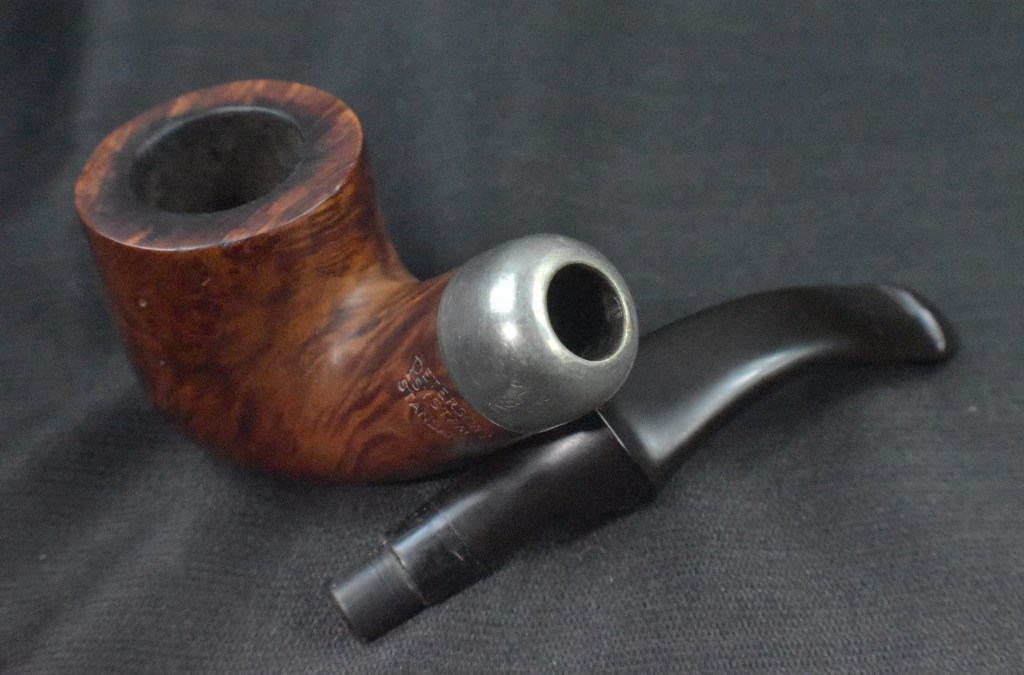
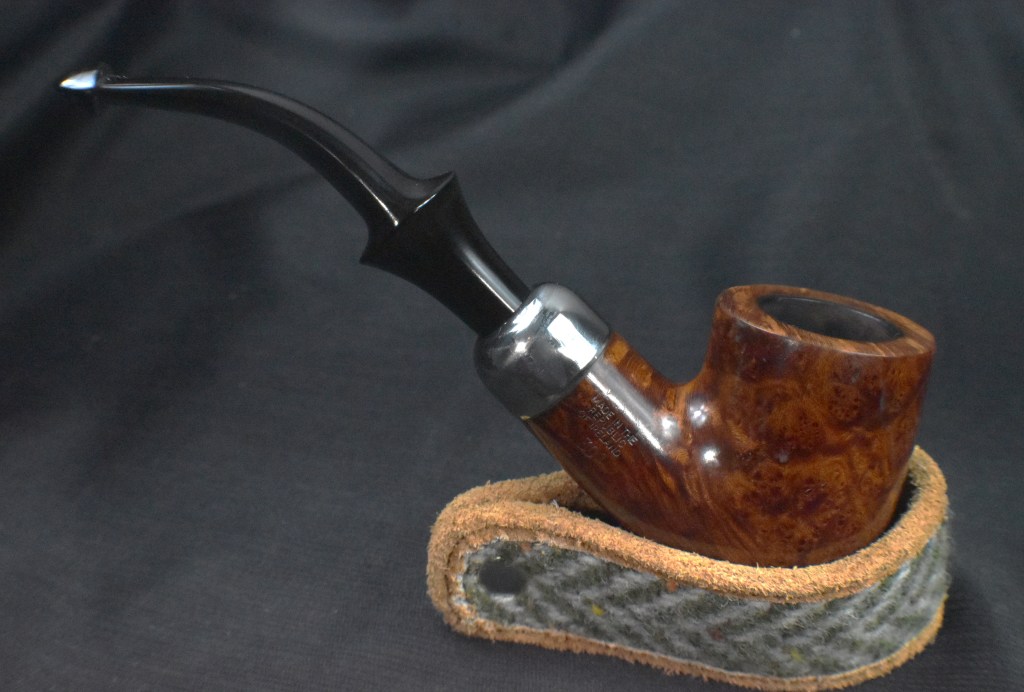
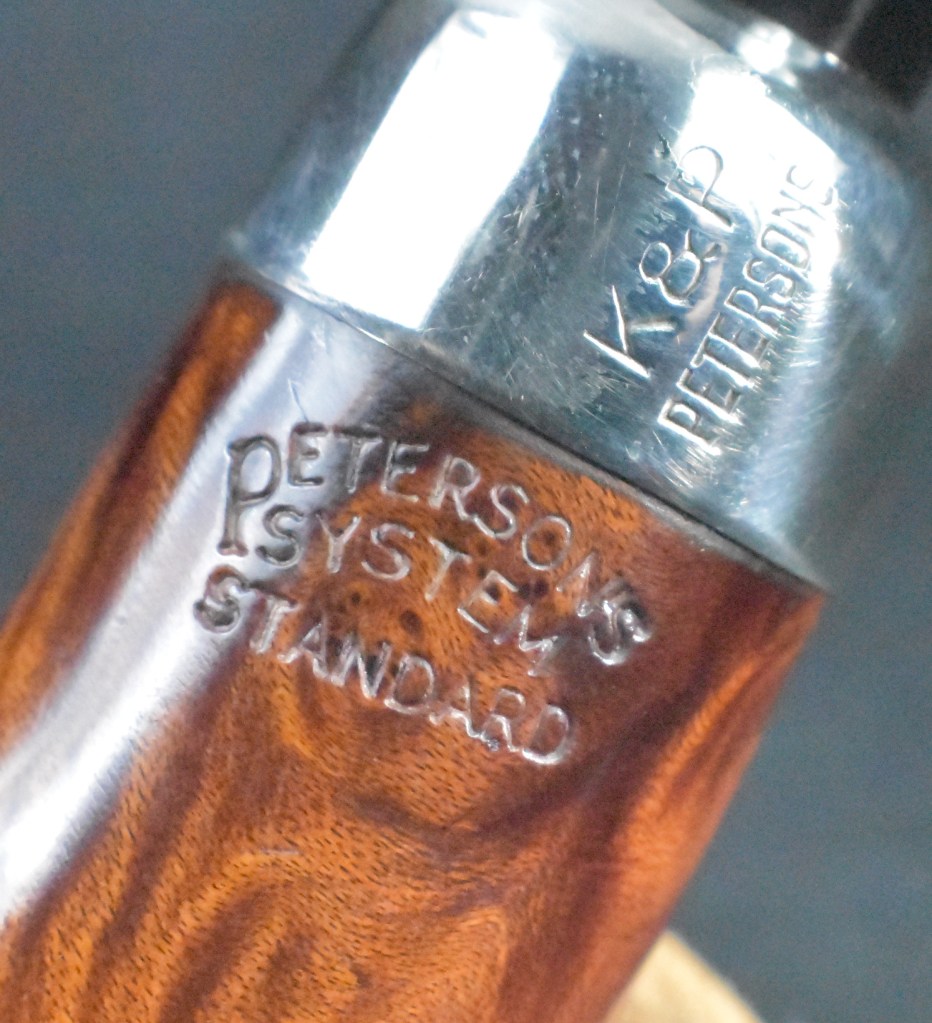
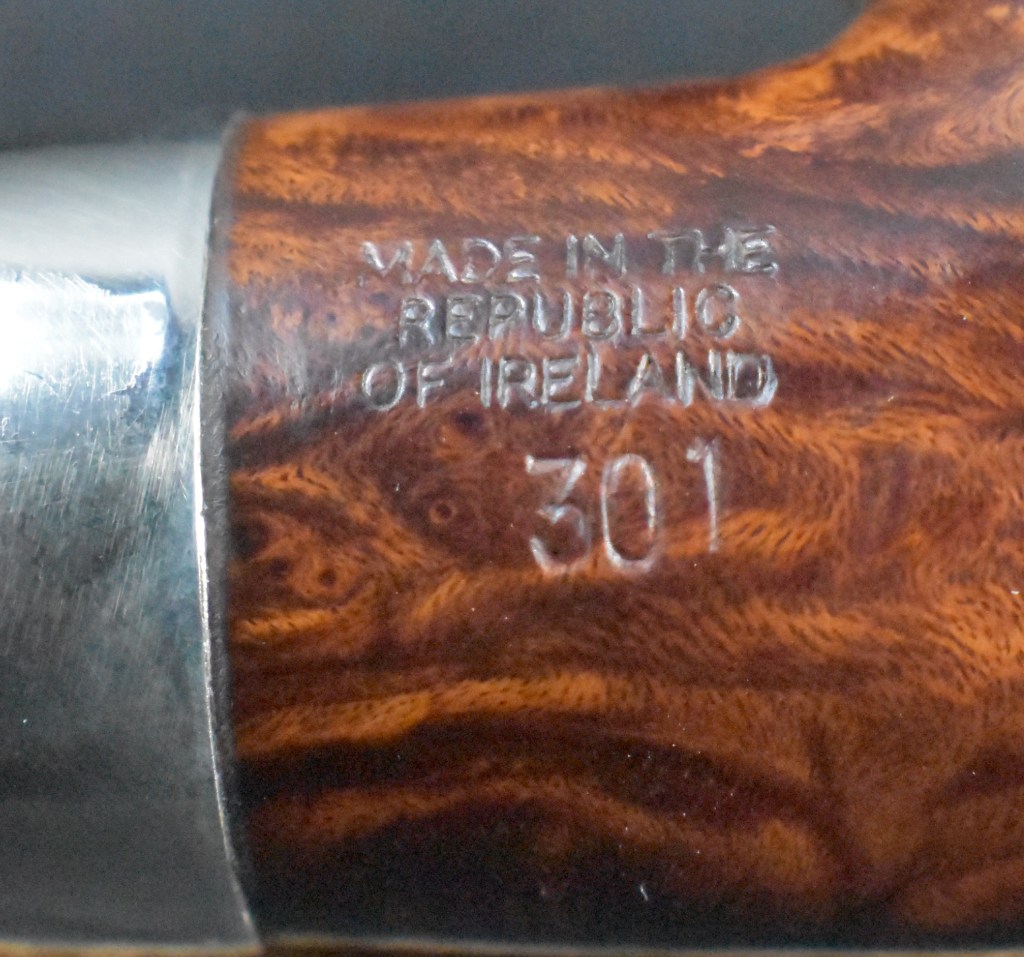
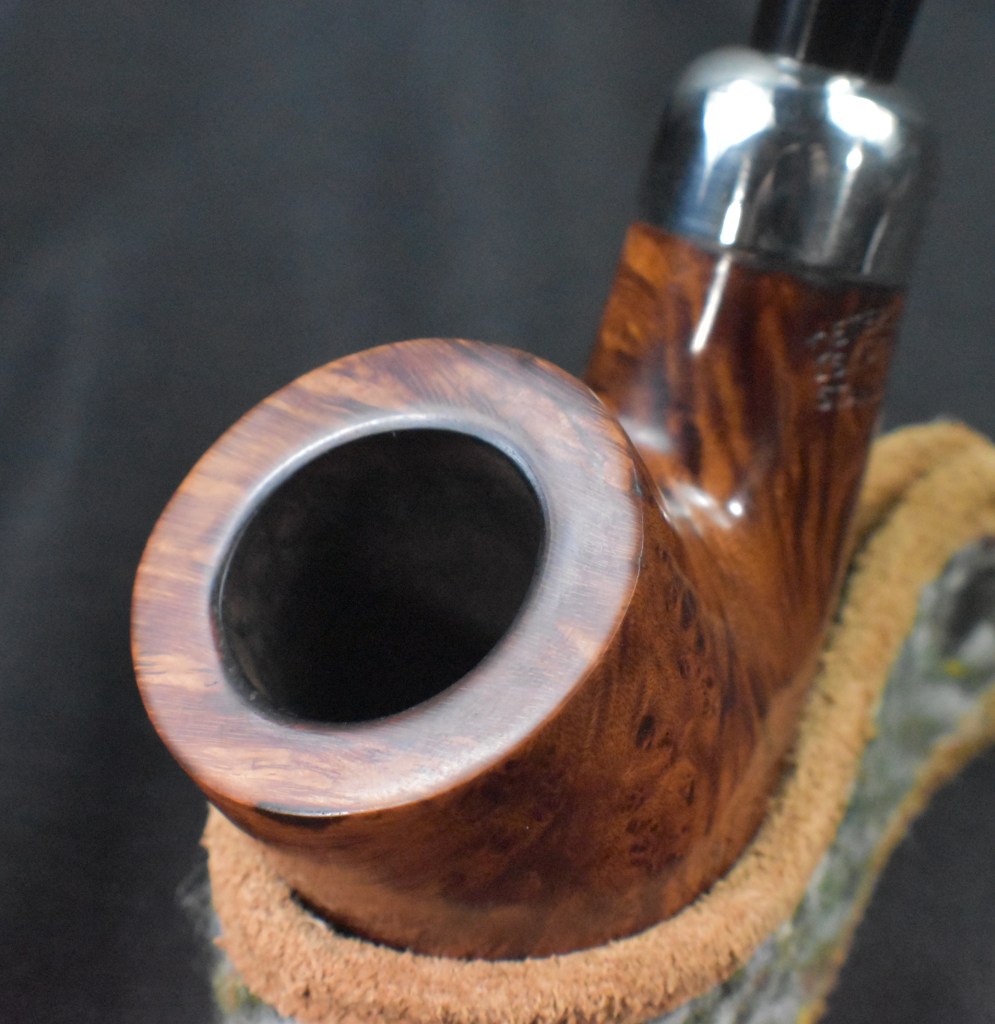
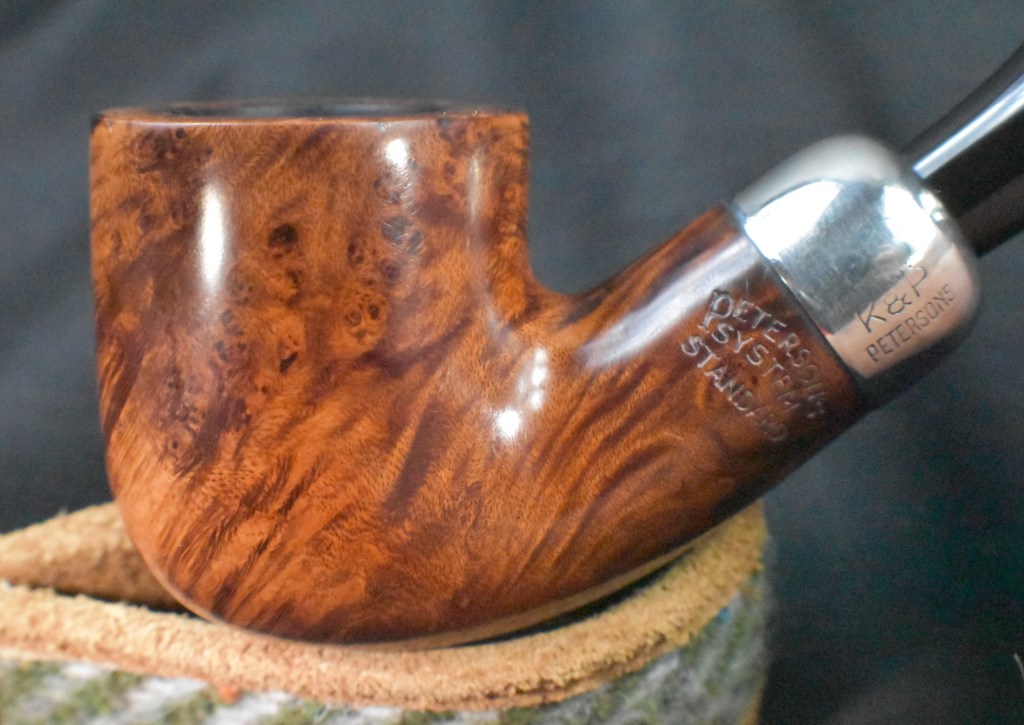
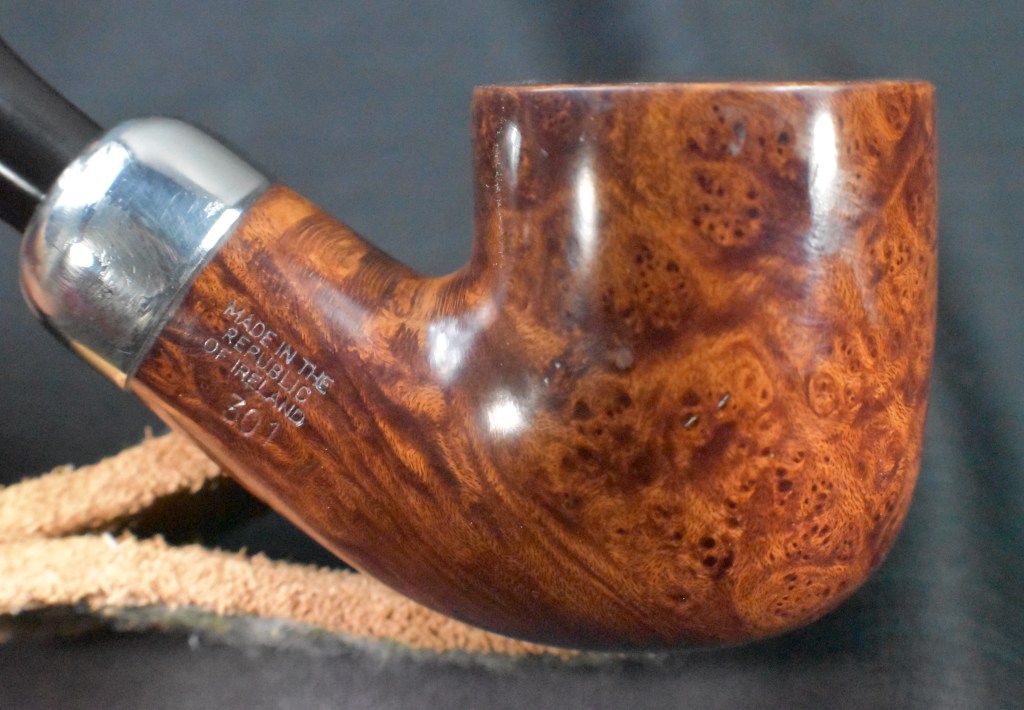
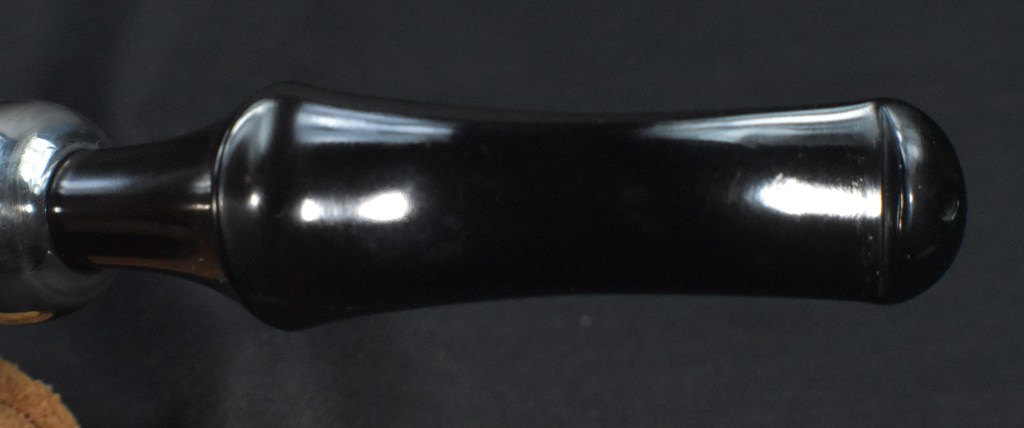
It seems strange to me that of all the Peterson pipes that I own, I have shown few restorations of them. This is because I was not documenting or blogging about them when they were restored. The blog has only been a lifestyle since October of 2023 and these pipes were acquired and restored long before that. This 301 is a re-restore. “Huh?”, you say. Well It was a pipe that I purchased on the estate market cleaned up and used for several years. Now someone has expressed an interest in acquiring their own 301 and asked if I had one available. Since pipes were made for smoking and this lovely Pete does not get very frequently used, I decided it would be better off with a companion who would use it. Where it came from originally is a question I cannot answer. Likely an eBay auction though. When it was purchased, also unknown, but probably early 2020s. The pipe was stamped PETERSON’S Over SYSTEM over STANDARD on the left shank and MADE IN THE over REPUBLIC over OF IRELAND over 301 on the right shank. The stampings are all crisp and clear. There was no signature P on the stem which I felt as if it was missing something without it also lacking was the faux hallmarks on the nickel ferrule. It was only stamped with K&P over PETERSONS. Below are some photos I took of the pipe before beginning this restoration.
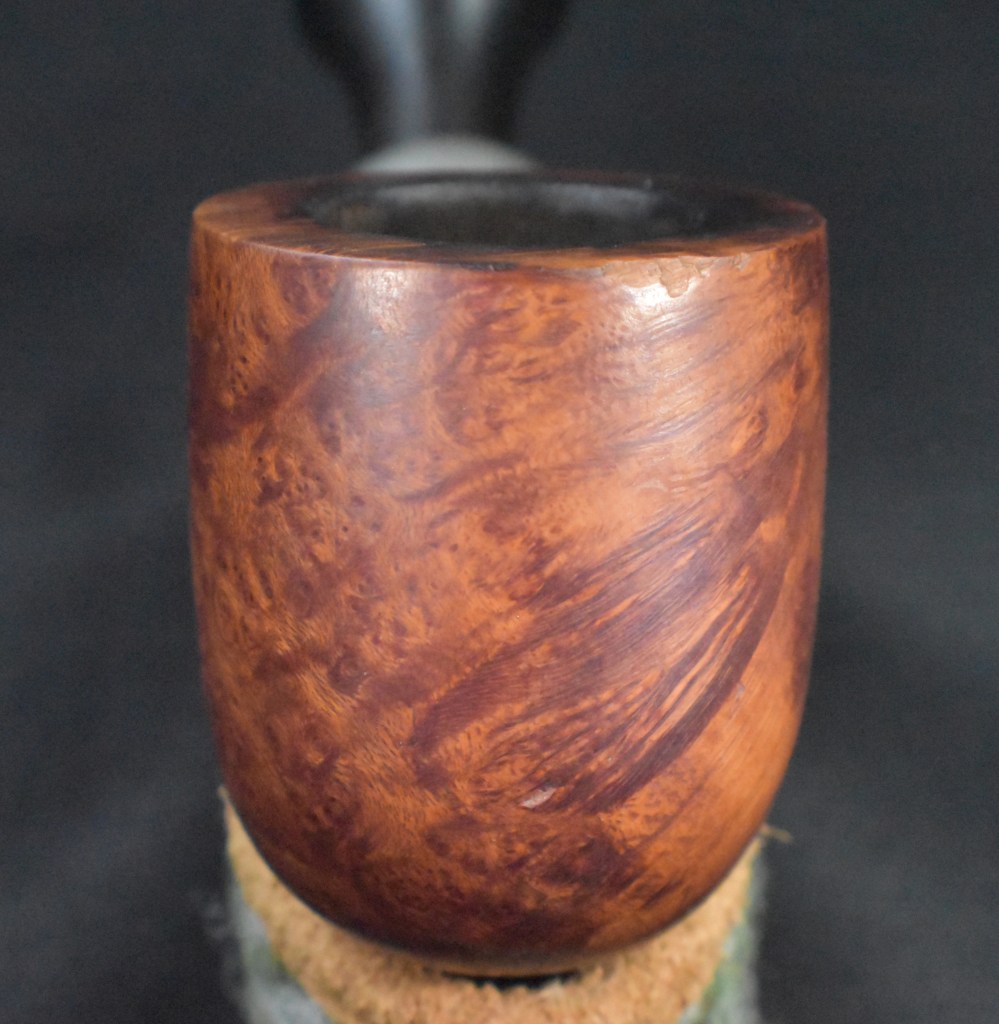
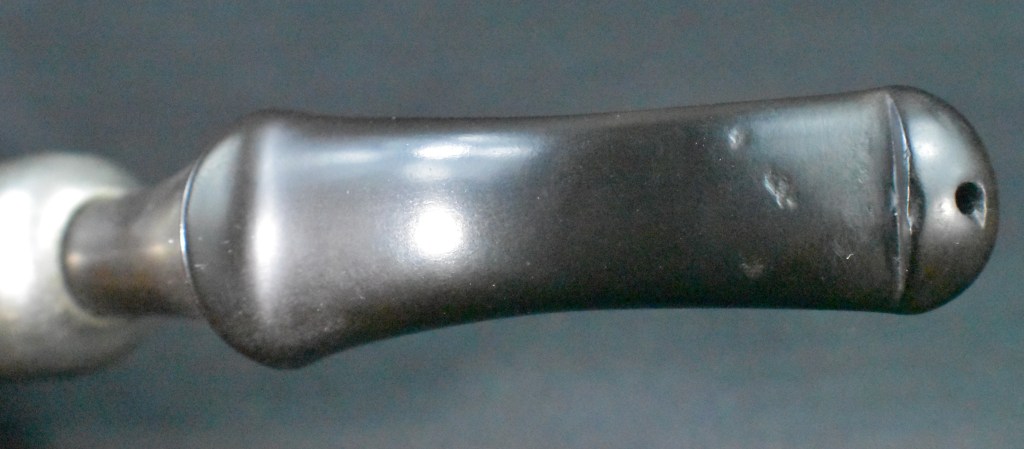
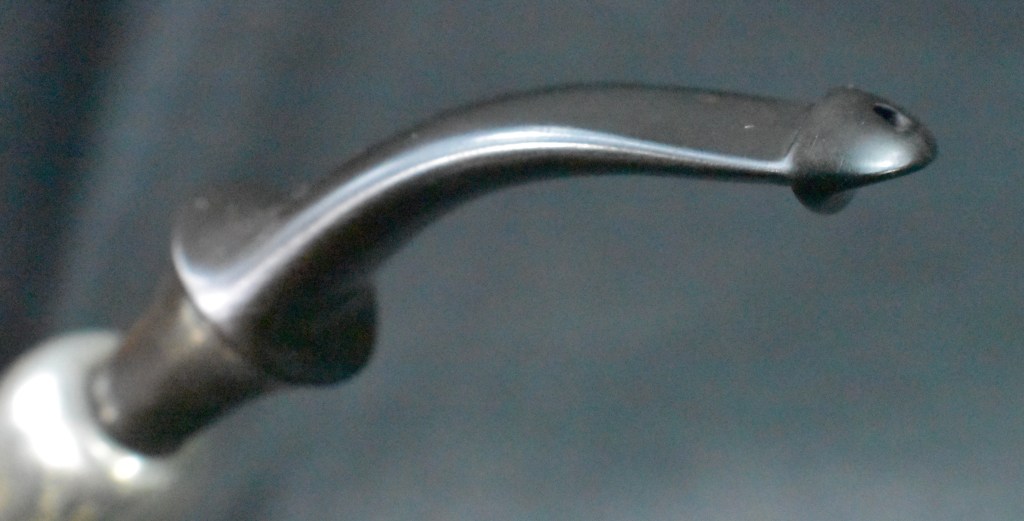
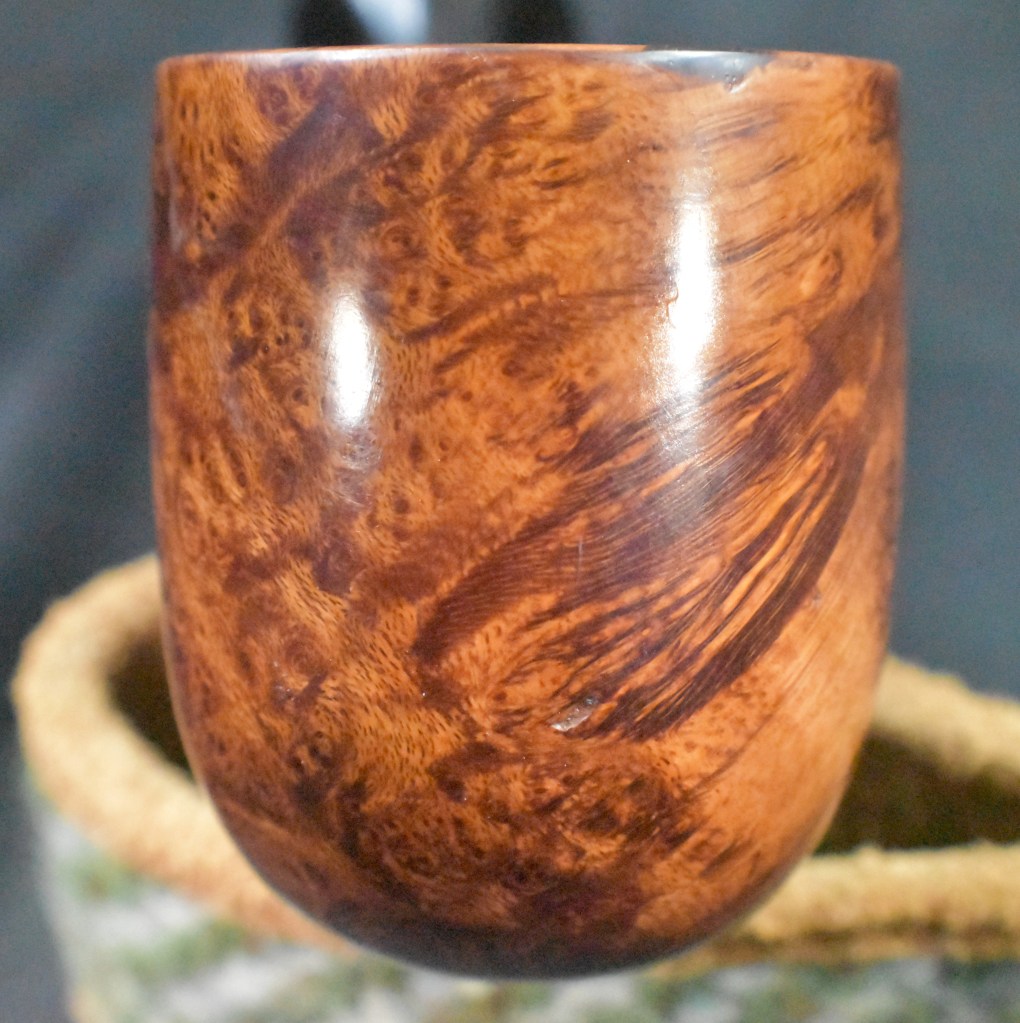
The pipe was in good shape overall. There were some tooth dents on the stem and slight oxidation. I apparently did not restore the stem, other than removing the oxidation, from when I first got the pipe. The tobacco chamber had been reamed, again probably from my cleaning. There were a few spots where the old fills were failing and a spot on the front of the outside rime where the pipe had been knocked. In general a “light” restoration was required.
Background
If you have read my previous blogs, thank you, and you are probably aware that I am a fan of Peterson pipes. Like many Peterson fan boys, or Pete Geeks as some call us, I could go on ad nauseum about Peterson pipes, their history and the remarkable innovations that made Peterson pipes the legend that they are. I will refrain from doing this again and give you a few sources of information which will allow you to read about the history of the company. For a great history Mark Irwin and Gary Marlburg’s book is a must read for a Pete Geek.
The last source is Peterson Pipe Notes. Mark Irwin has blogged about many particular Peterson lines, features and histories over the years. I can wholeheartedly recommend his blog and free subscription at
https://petersonpipenotes.org/ His posts are searchable for specific items of interest and will open an entire hoard of rabbit holes for you to delve into. Yes, you will get emails but only for things like the weekly blog post and occasional Peterson pipe drops (like the Peterson Pipe Notes Pipe of the Year) or offers for cool Pete Geek merchandise.
The Restoration
The 301 made its way to the workbench for a second time. Well, not the current workbench, this workbench is only a couple years old but you know what I mean.
I started with a light rubdown of the stem with 0000 steel wool.
That was followed with a cleaning of the inside of the stem with 99% ethyl alcohol, pipe cleaners and cotton swabs.
The shank was cleaned in similar fashion. Whew, I would have been embarrassed if this pipe was dirtier than that.
The tobacco chamber was sanded with 320 sandpaper wrapped around a wood dowel and by 320 on my finger. There was no sign of any heat damage to the chamber.
The rim did have a very light lava residue and a few dings.
The stem was suspended in Before and After Extra Strength Deoxidizer (deox) by inserting a pipe cleaner into the button and hanging it in the solution. I figured that 6-8 hours would be plenty of time for this stem.
The stummel was scrubbed with undiluted Murphy Oil Soap and a nylon brush. The soap was rinsed with warm water and the stummel dried with a cotton hand towel.
The scrub did soften the fill material as well as removed the dirt and most of the wax on the briar.
A wipe with 99% ethyl alcohol removed any remaining wax and a bit of the original stain as can be seen on the cotton make-up pad.
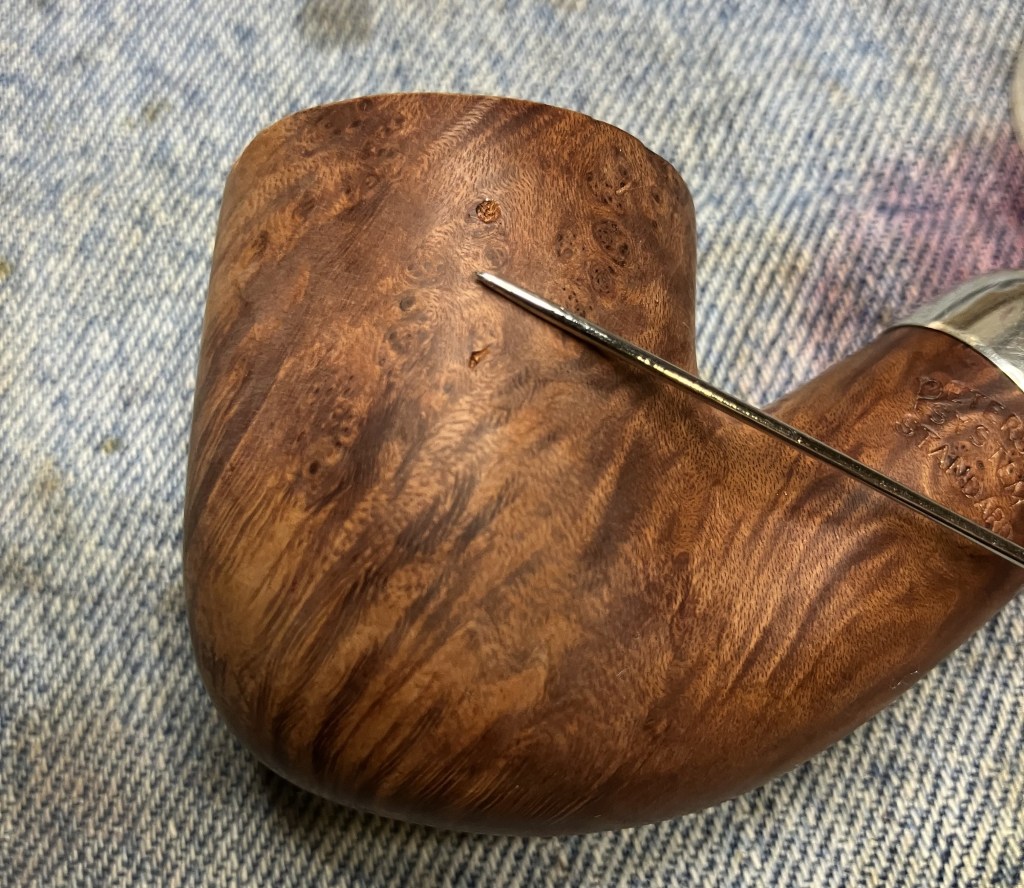
The old fill material was picked out using a fly tying bodkin.
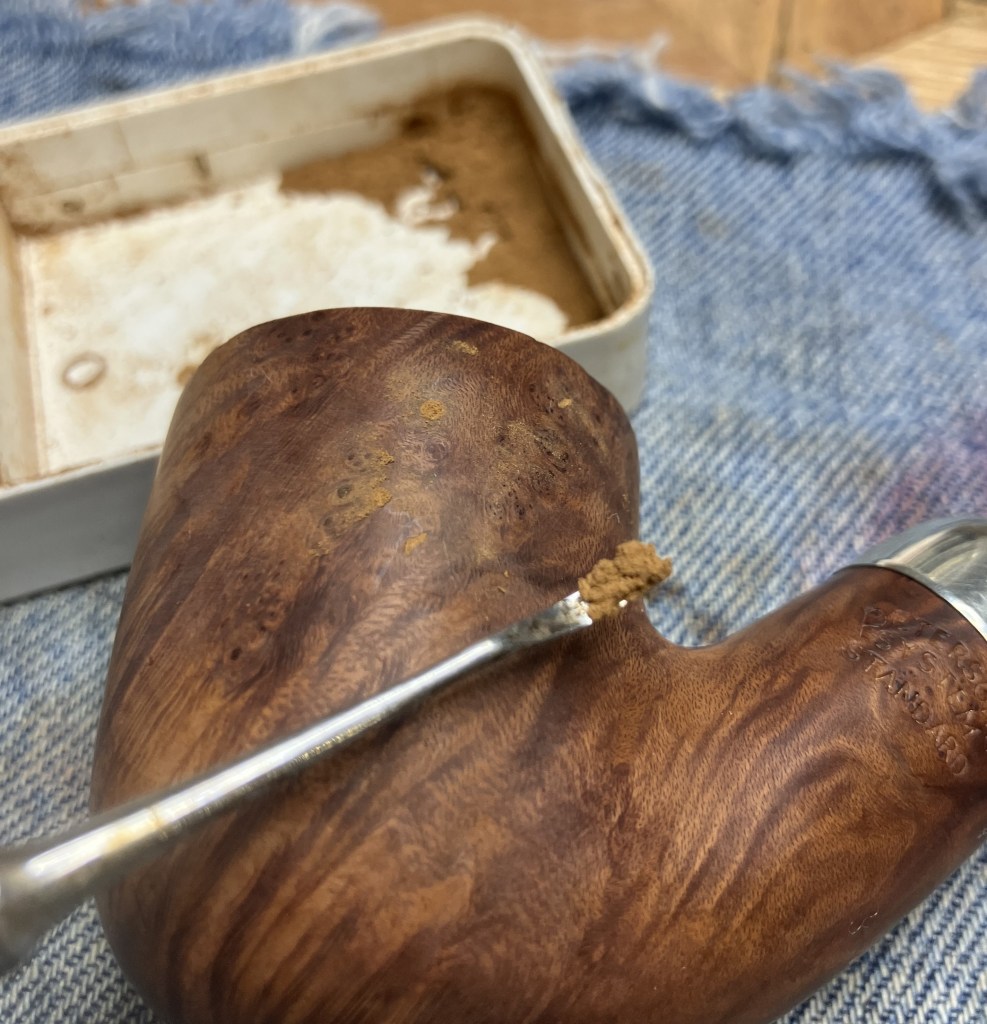
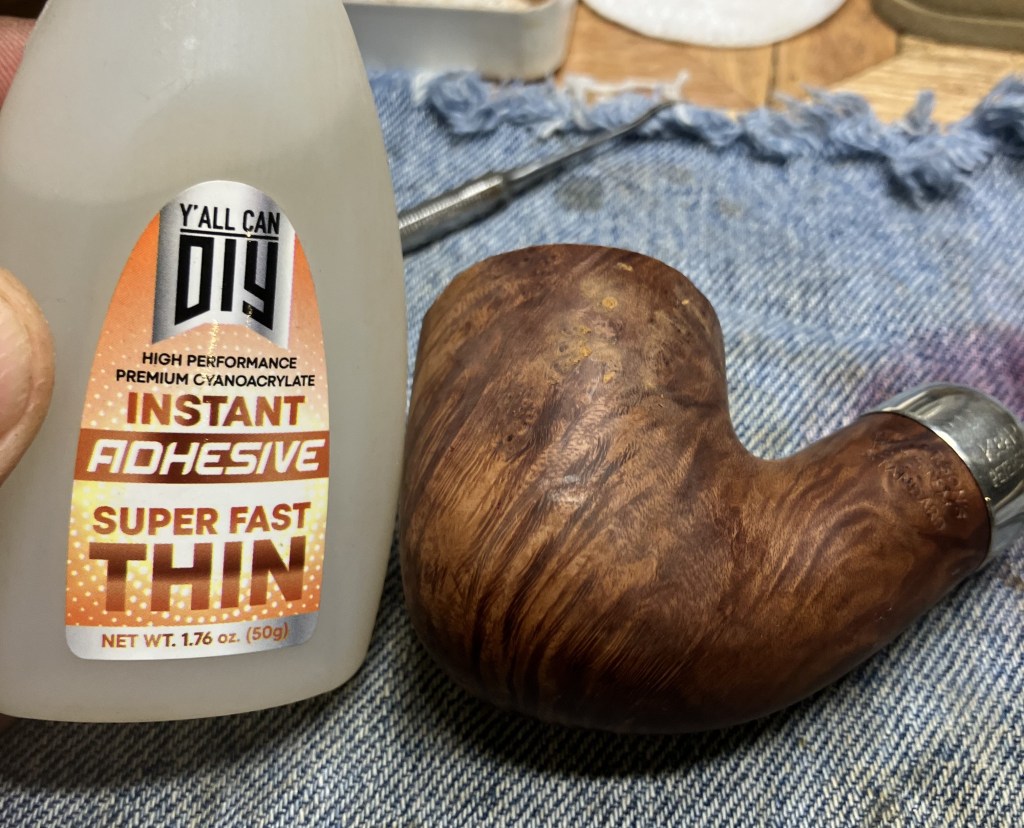
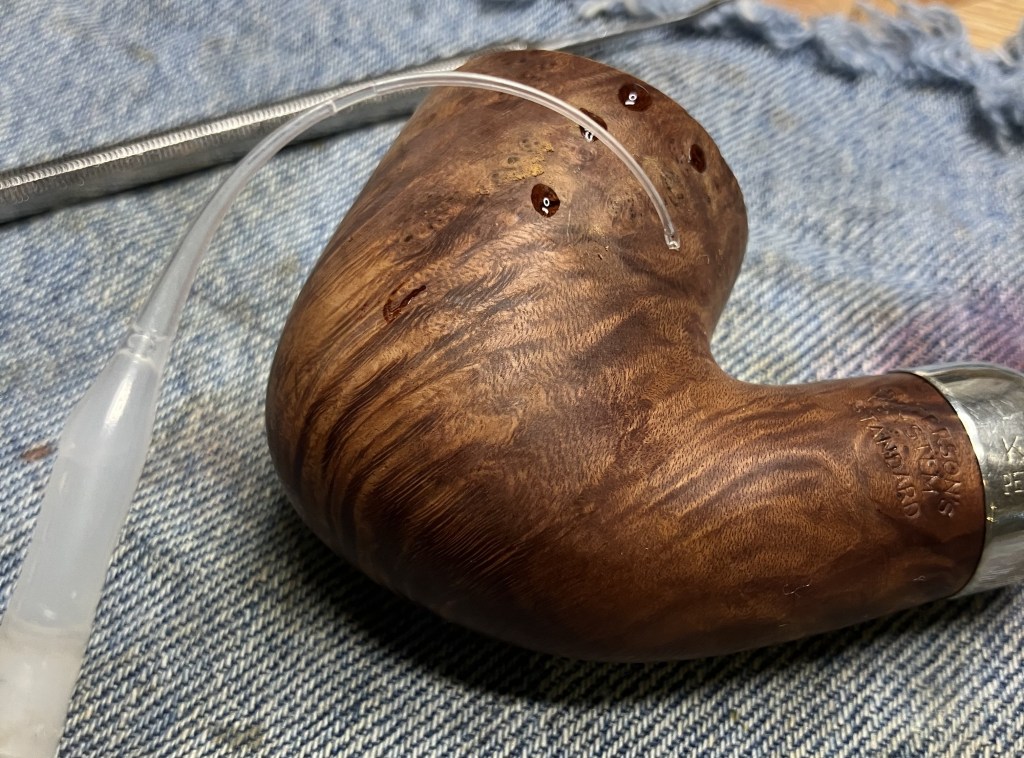
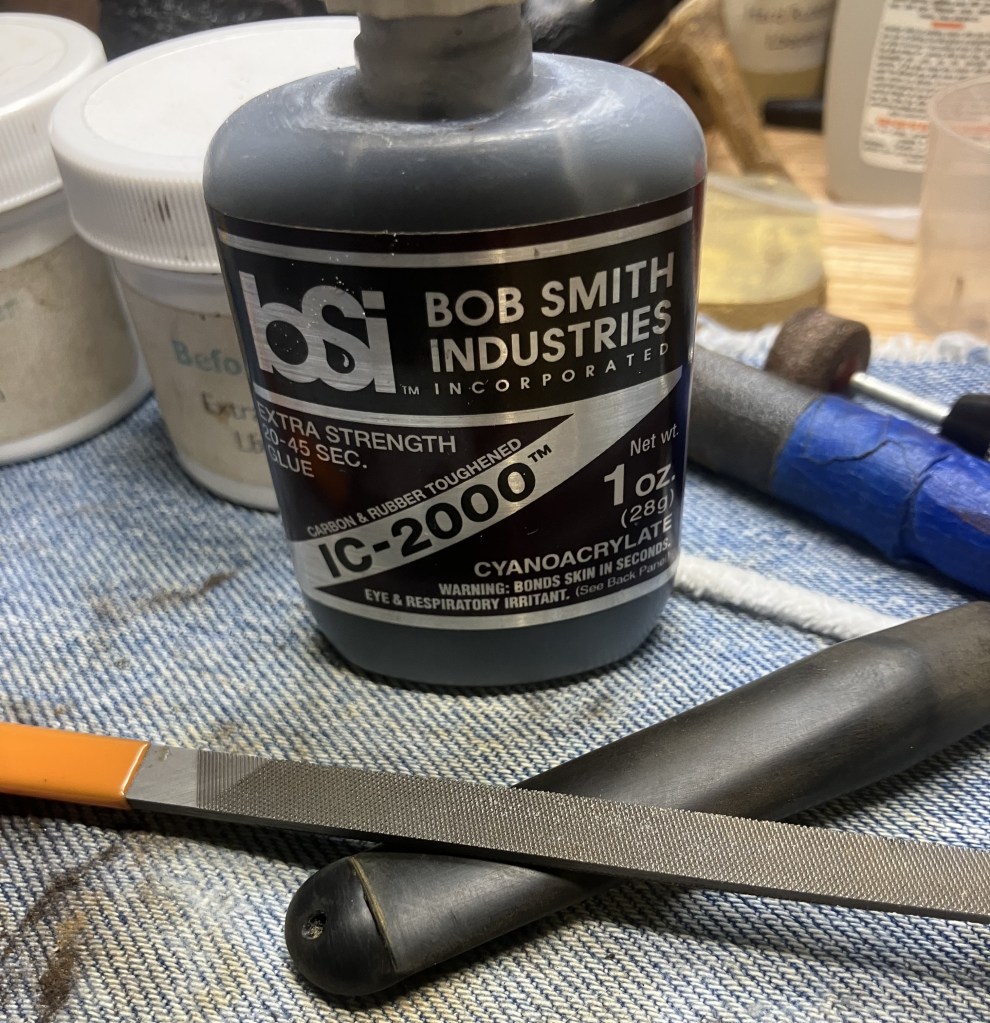
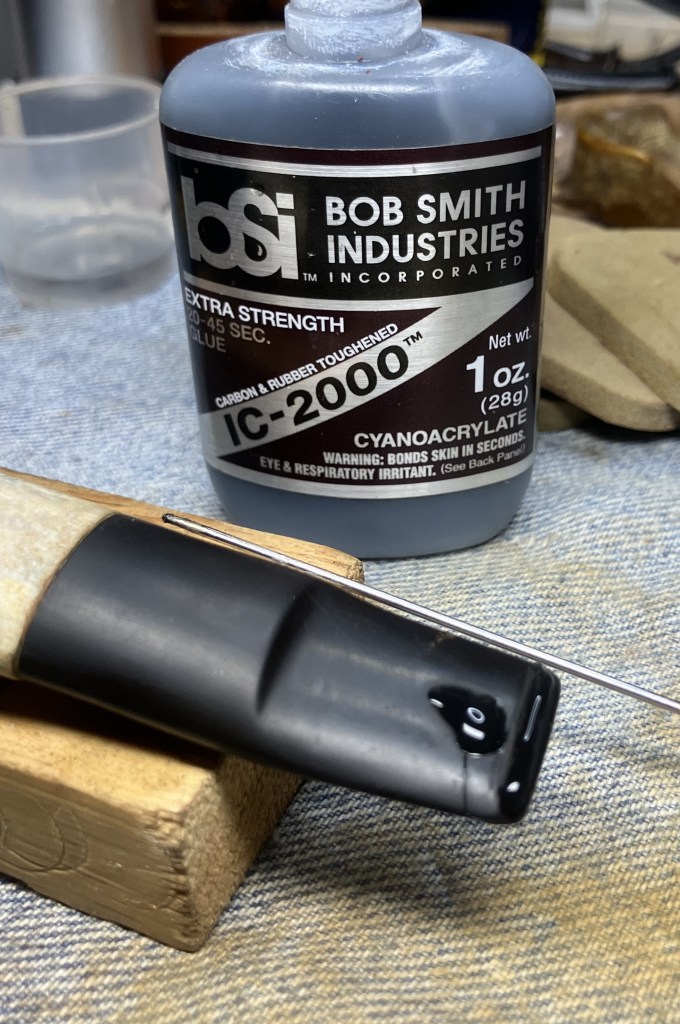
The new fill would be made of Briar dust pressed into the pits then topped with thin cyanoacrylate (CA, super glue). Below is a photo of a dental scraper which makes a fine little scoop for the briar dust and has a flat underside used to press the dust into pits.
Thin CA works best for this type of fill.
The disposable fine tip applicators are a godsend for delivering tiny drops of CA to the new fills.
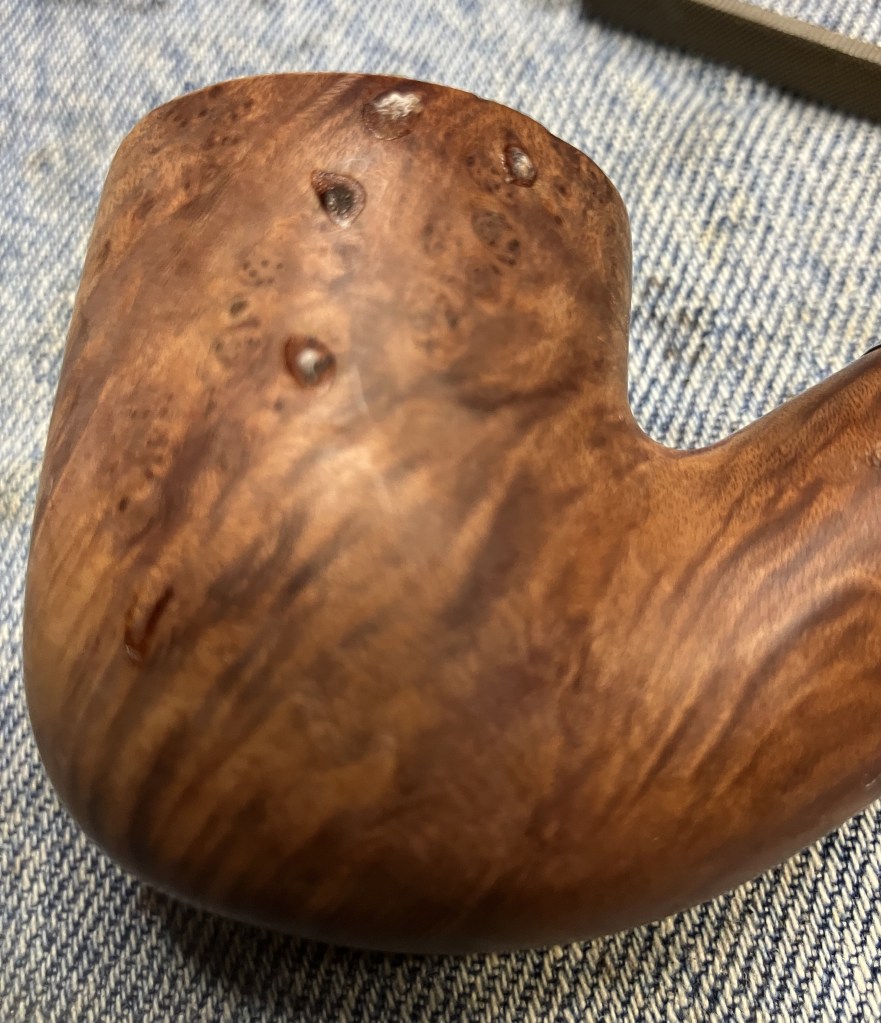
I allowed the CA to cure on its own rather than applying a spritz of a drying accelerator. 20 minutes later the drops looked like little scabs.
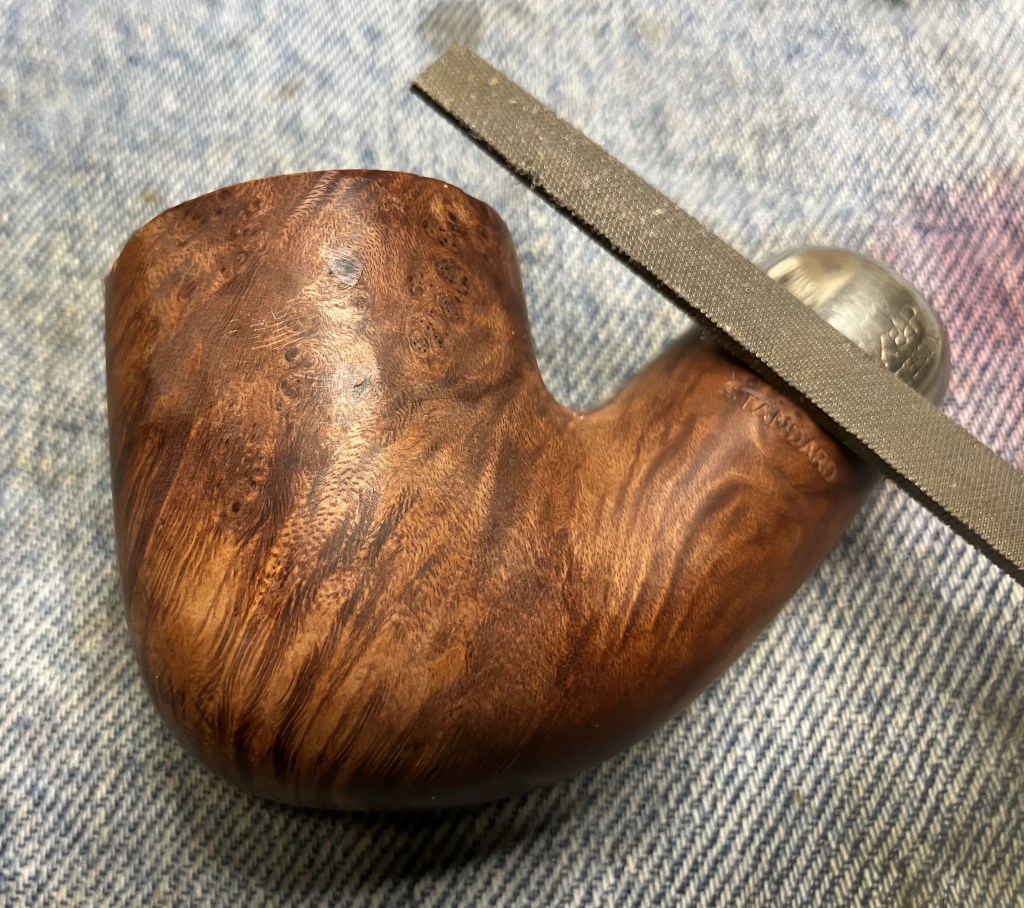
These were filed with a small flat file.
After filing the new fills were sanded with a 600 grit sanding sponge. If any holes or voids were visible then a second application of briar dust and CA were used.
The damage to the front of the rim needed a similar repair.
Here, I applied the CA to the damaged area first, then pressed the rim into the container of briar dust. This pressed the dust into the wet CA. Fling the new fill material and repeating with additional CA and briar dust to build up the damaged area.
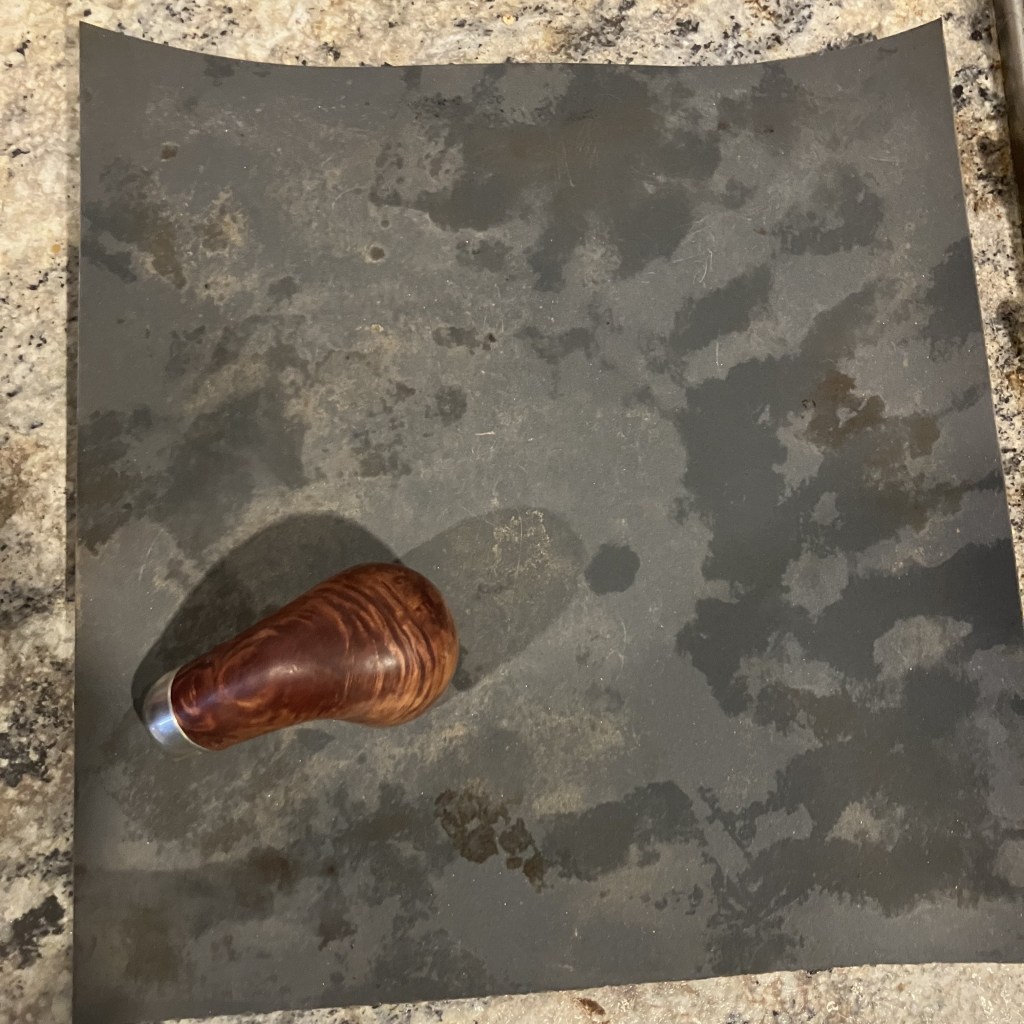
With the rim fill needing to be flattened to match the rim, I decided to lightly top the rim. This was done with 400 grit sandpaper laid flat on a countertop. A figure eight pattern was used while sanding. Bah, the sandpaper was getting full of dust.
I cleaned the sandpaper at the sink and repeated the light stopping of the rim.
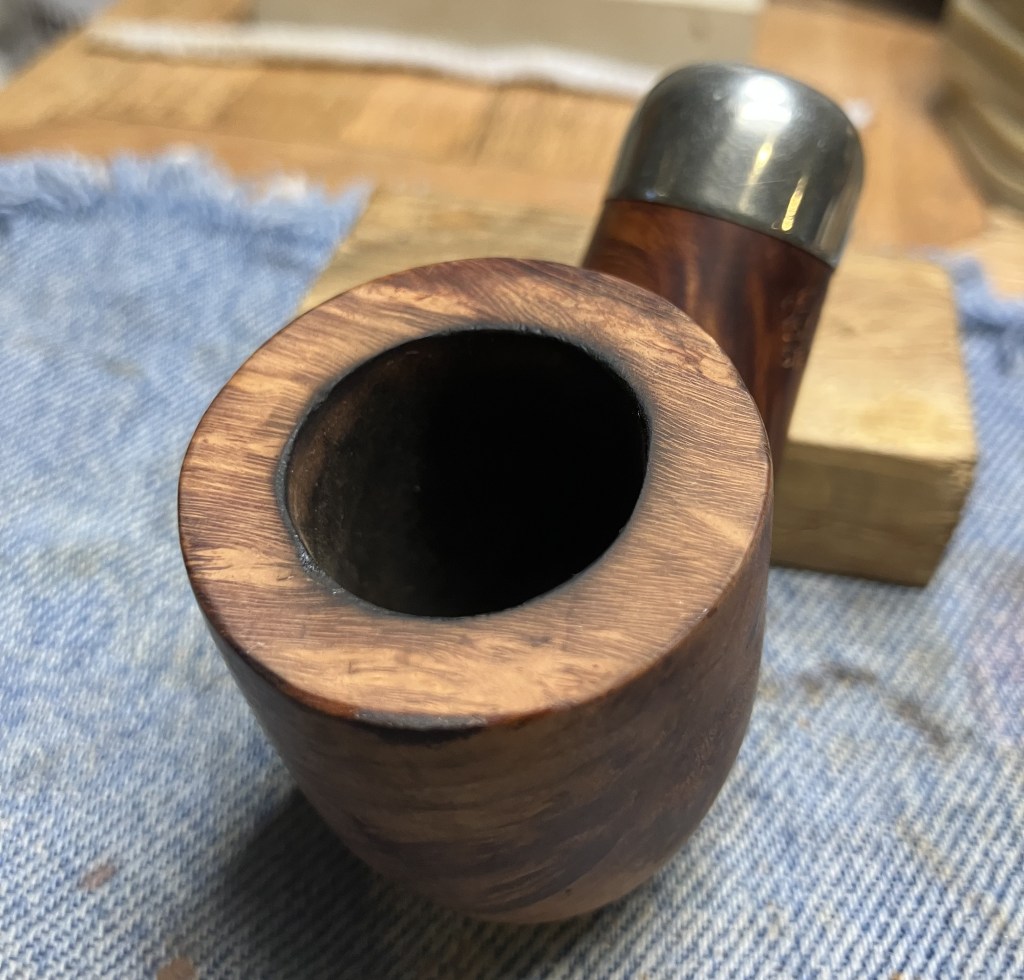
The rim looked much better but now the inner rim showed light charring from lighting the tobacco.
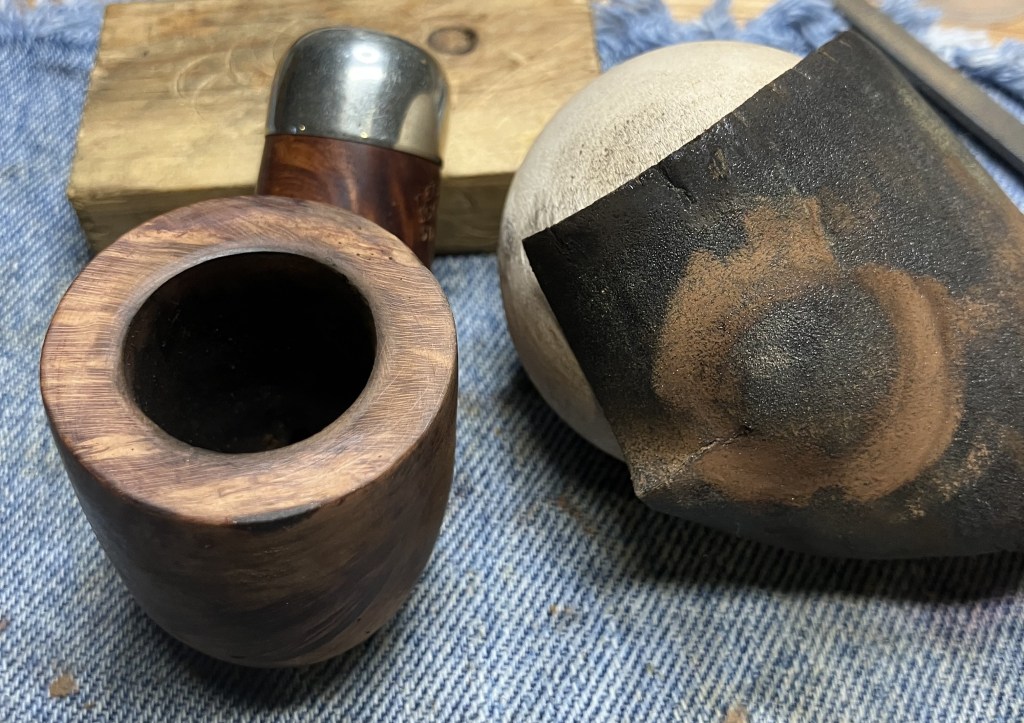
A 2 inch wooden sphere was used with a piece of 320 sandpaper to uniformly sand the inner rim. This does add a slight bevel to the rim which was not a feature of the original pipe.
The ferrule and stamps were masked to protect them from sanding.
Both the left and right sides.
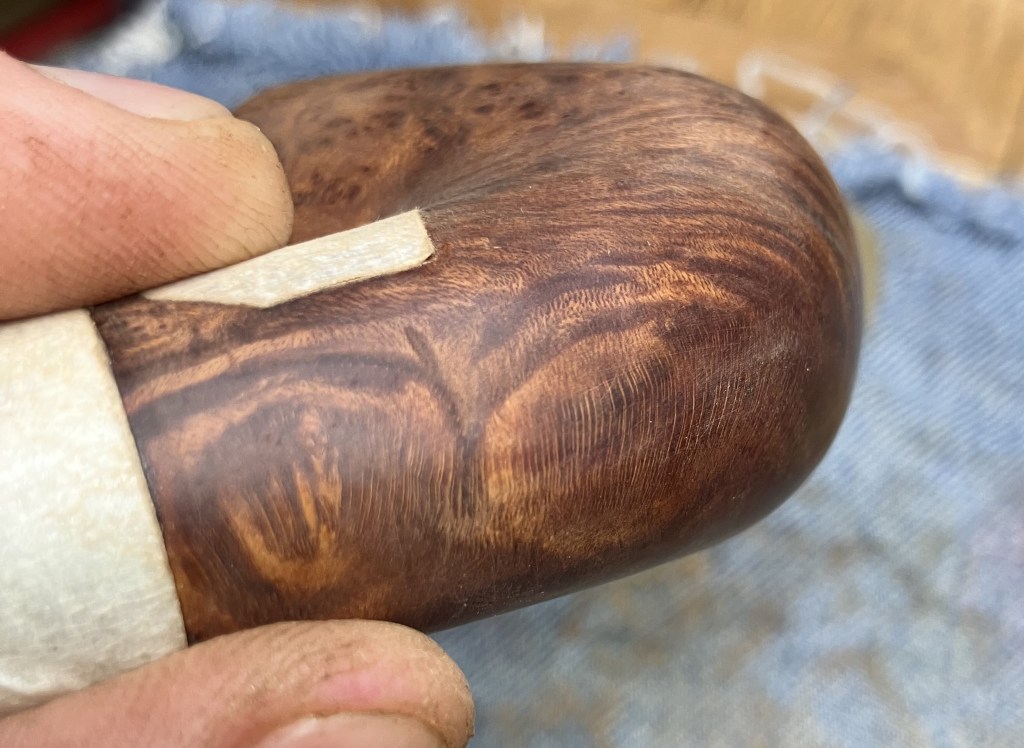
After the first little bit of sanding I discovered a small dent that I hadn’t noticed. It lined up with the wood grain concealing it.
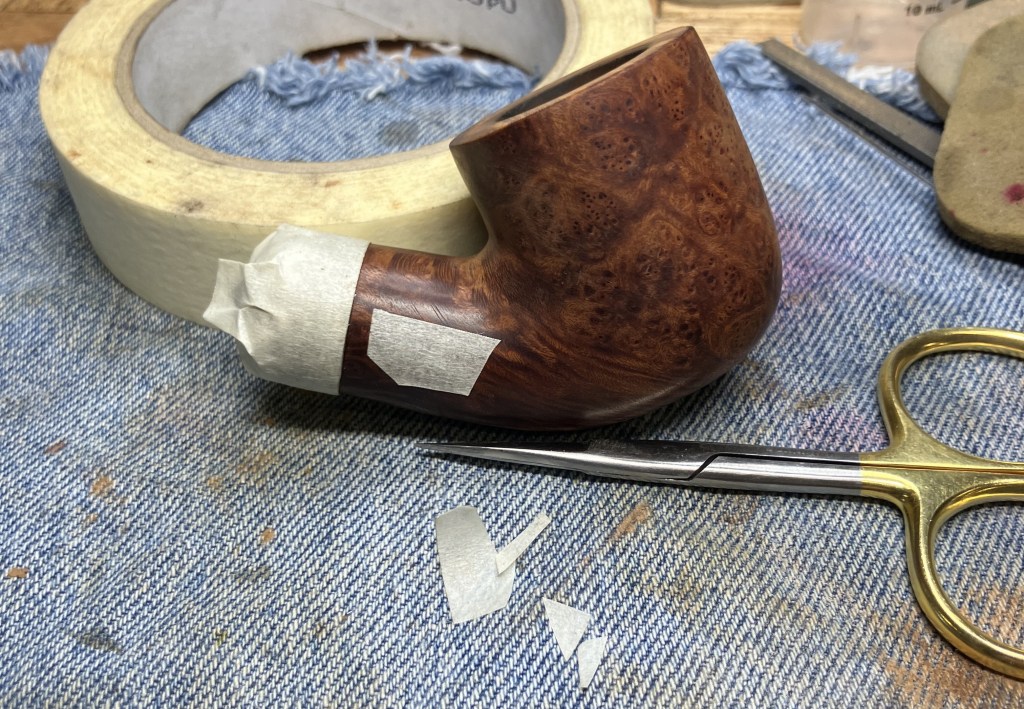
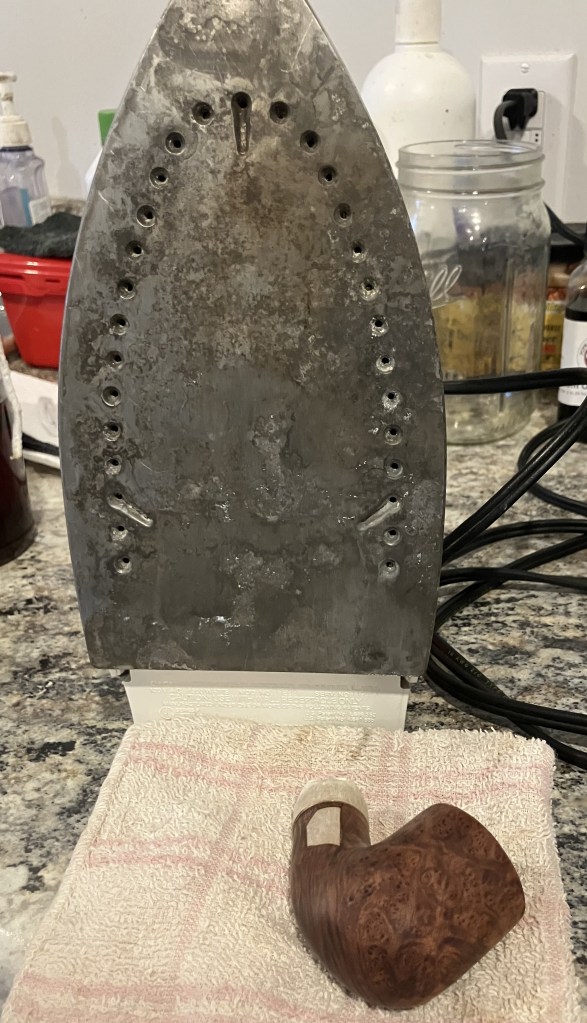
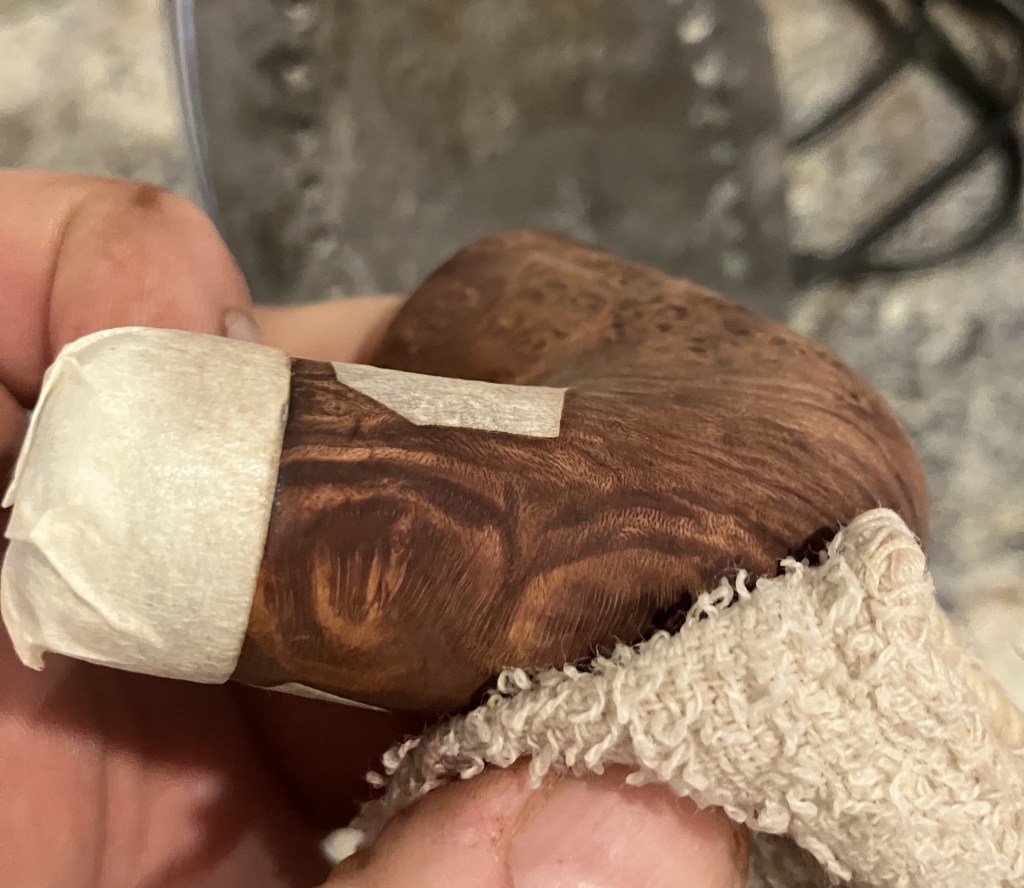
It bothered me so much that I got out the iron and a wet cloth. This steaming will usually raise dents very well.
It did and the dent was no longer assailing my limited sensibilities.
The sanding resumed with a series of sanding sponges from 320-3500 grit. Between each sponge the stummel was wiped with an alcohol wetted make-up pad to remove sanding debris.
The sanding sponges gave way for the micro-mesh pads. I went with 4000-12000 with wipings between each pad as with the sanding sponges.
The shank was masked off to protect the newly sanded shank from the buffing wheel.
The ferrule was buffed with white buffing compound and the dedicated wheel.
The results were quite nice.
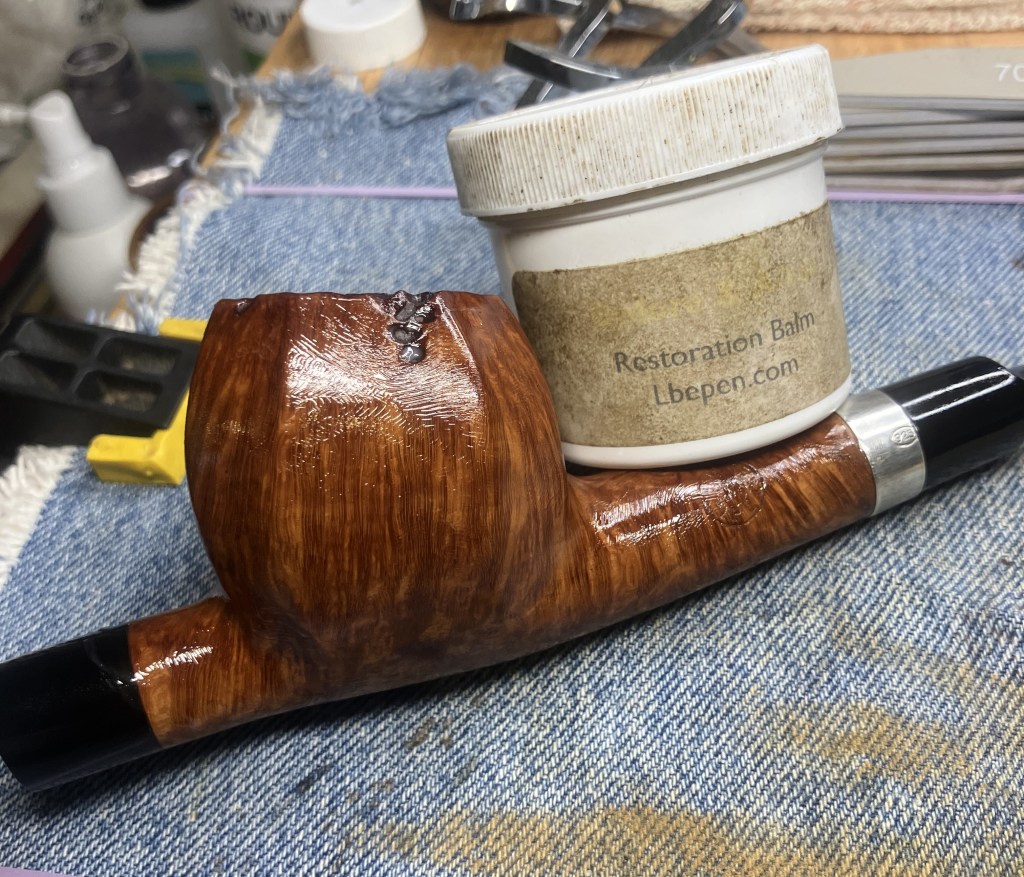
Before and After Restoration Balm was the next step. A nice thick coating over the briar was allowed to sit for 30 minutes.
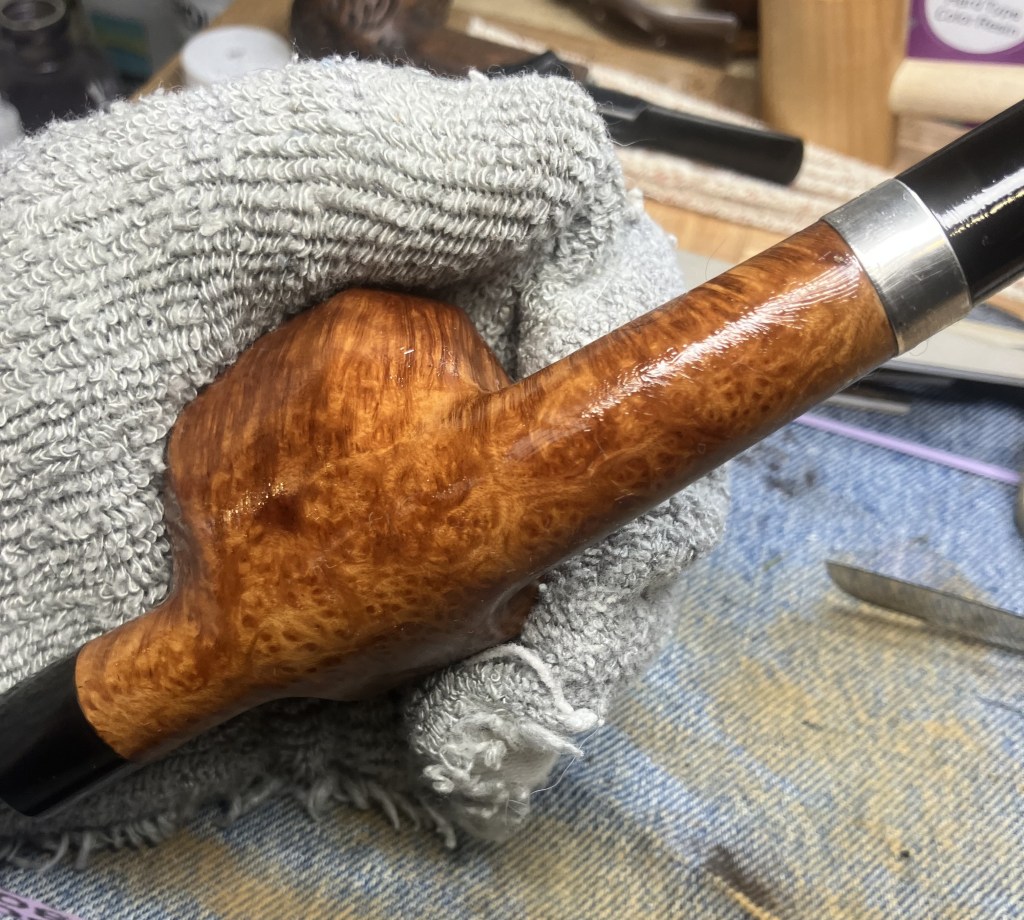
An inside out athletic sock was used to wipe away the remaining balm and hand polish the stummel.
It was time to remove the stem from its deox bath. It had been in the solution for over 8 hours. The Drip-O-Matic 3000 was rebuilt and allowed excess deox solution to drip back into the container for a few minutes.
A coarse shop rag was used to wipe away the remaining solution as well as to buff away the softened oxidized vulcanite. The residue can be seen in the photo below.
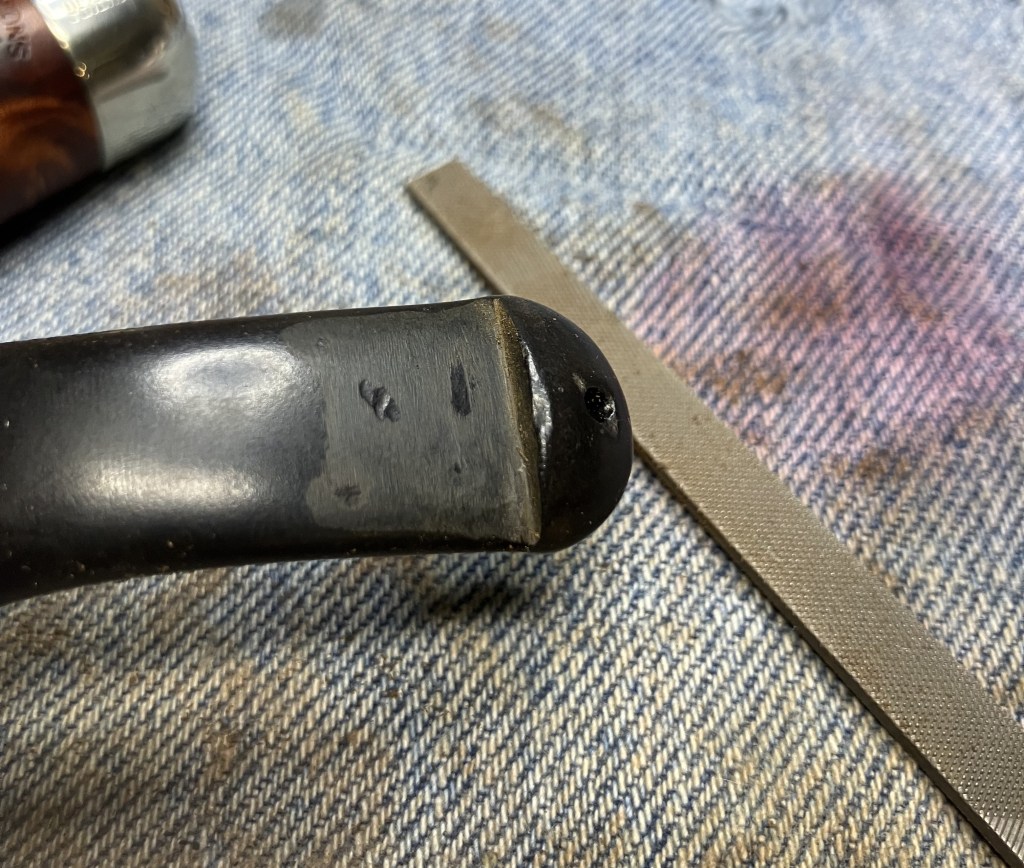
The bite zone of the stem was filed with a small flat file to reestablish the button’s edges and reduce the dents from Chompy, the previous owner.
Filing was done on both the bottom and top bite zones. Darn that Chompy.
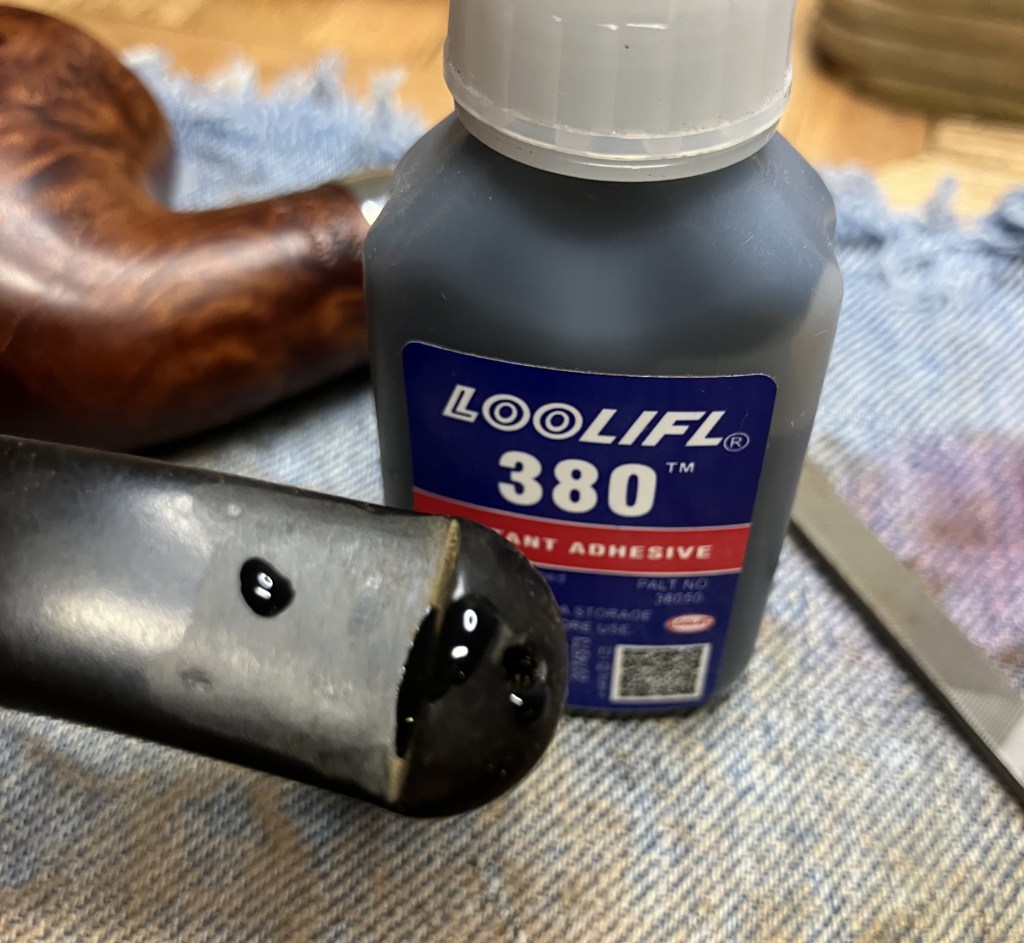
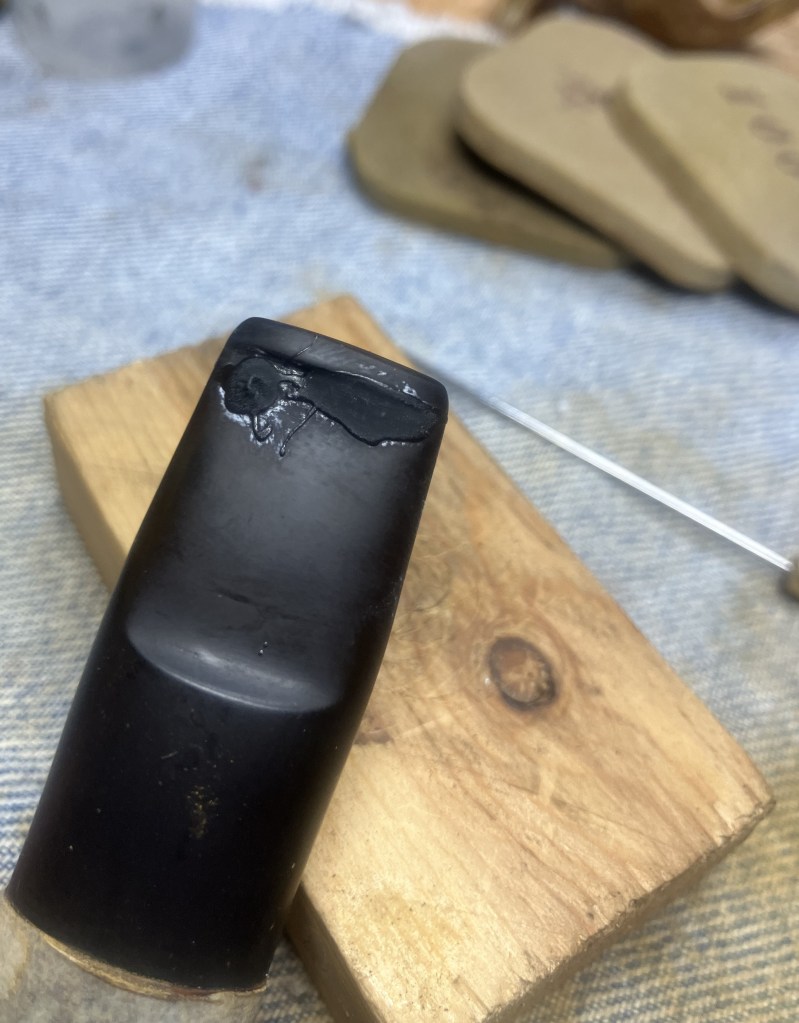
Some of the dents required the use of a black CA to fill the depressions.
I did use a CA drying accelerator for curing these fills. They were then filed and sanded smooth. Some required additional applications of CA.
Below you can see the larger dent still had a tiny spot that required a second drop of black CA.
The stem got a similar sanding regimen, the series of sanding sponges 320-1500. Wiping between sponges was mineral oil and paper towels rather than alcohol and make-up pads.
It was getting late so I gave the stem a liberal coating of Mark Hoover’s Before and After Hard Rubber Balm and went to bed. I doubt that letting the vulcanite soak in this product does anything but it made me feel good about myself and I slept well.
The next morning I wiped the Hard Rubber Balm from the stem and continued sanding with 2000-3500 grits sanding sponges.
I opted to polish the stem with white buffing compound rather than going to the micro-mesh pads. I have been trying to work on my buffing skills.
With the stummel finished and the stem buffed to a beautiful gloss, I coated both with several layers of carnauba wax at the buffer.
The final step was a hand buffing with a microfiber polishing cloth which raised the level of shine to a stunning point.
Another Peterson System Standard 301 that looks as good or better than when it left the factory in Dublin. Peterson is known to sand to 400 grit before polishing. This pipe has a finish that is sanded and polished finer than that. The “Comfort Lip” stem cleaned-up and polished beautifully. The original stain or dye on this briar was maintained and enhanced during the restoration. The nickel ferrule also polished-up very well. This shank strengthening feature is a lovely transition from the smooth finished briar to the glossy black vulcanite. The dimensions of the Peterson System Standard 301 are:
Length: 5.74 in./ 145.80 mm.
Weight: 1.69 oz./ 47.91 g. (with band)
Bowl Height: 1.80 in./ 45.72 mm.
Chamber Depth: 1.51 in./ 38.35 mm.
Chamber Diameter: 0.81 in./ 20.57 mm.
Outside Diameter: 1.44 in./ 36.58 mm.
I do hope that you have found something here useful to your own pipe care, maintenance or restorations. If you like this sort of thing, please click the like and subscribe buttons. Thank you for reading the ramblings of an old pipe lover.
Loading…
Below are some photos of the finished Peterson System Standard 301.
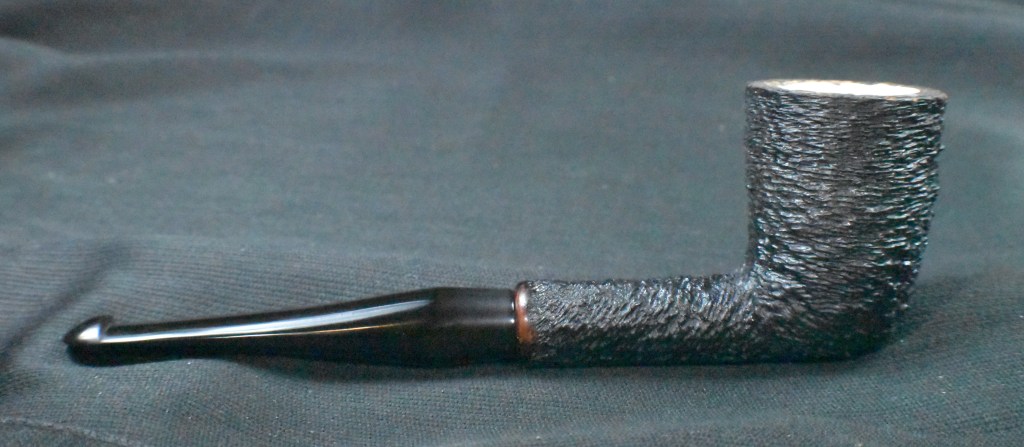
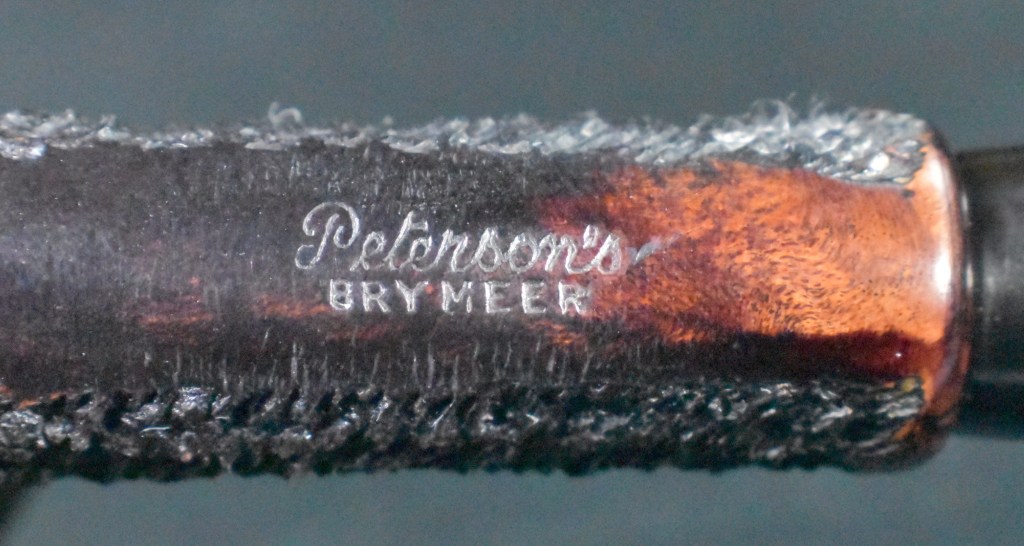
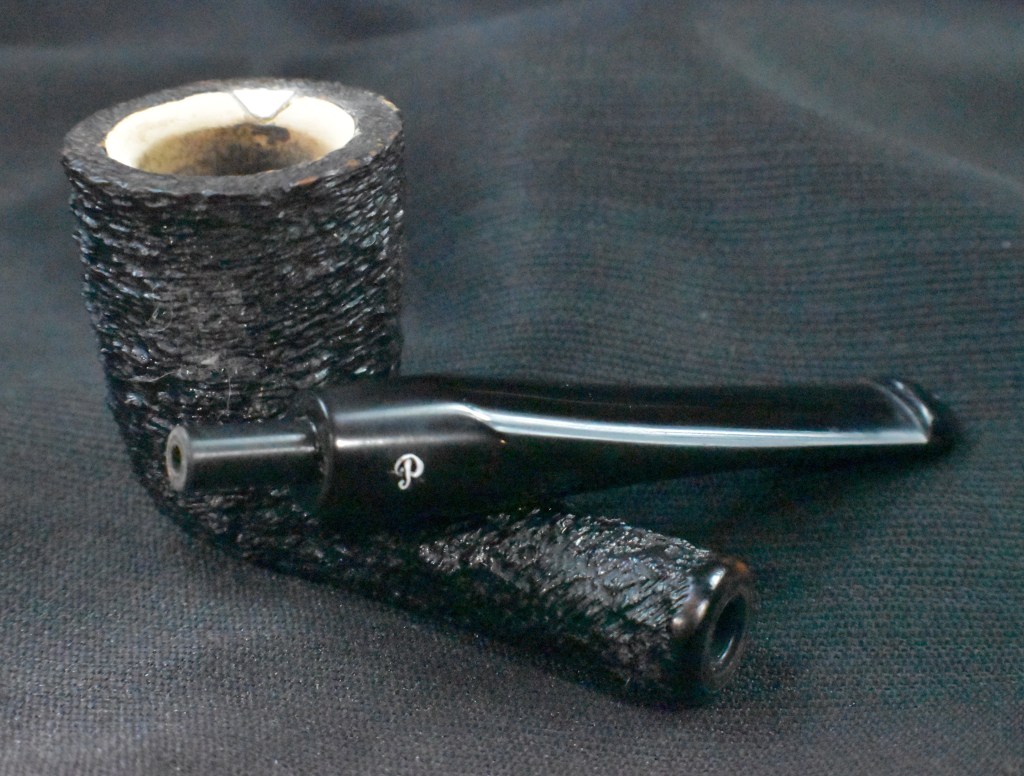
If you have read a few of my blogs you know I have a thing for Peterson pipes. Oh yeah, the name NebraskaPeteGeek may also provide a clue. Anyway, I have returned to Peterson restoration. This particular pipe was a line unfamiliar to me, Brymeer. I found it strange that there were only 3 others bidding on this pipe and when I won it for less than $20 I was even more surprised. Given, it was in rough and dirty shape. After a journey from Lowell, Indiana to the wilds of southeast Nebraska the pipe arrived. Below are some photos taken before I began work on the pipe.
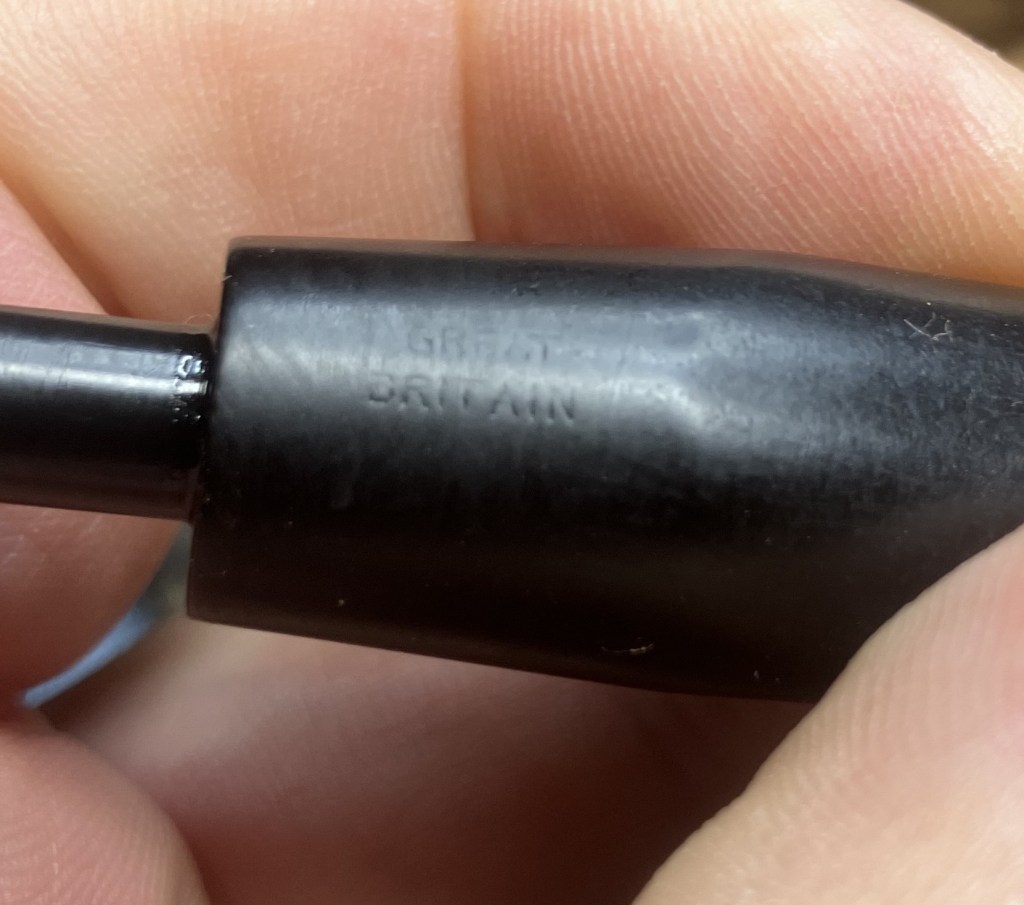
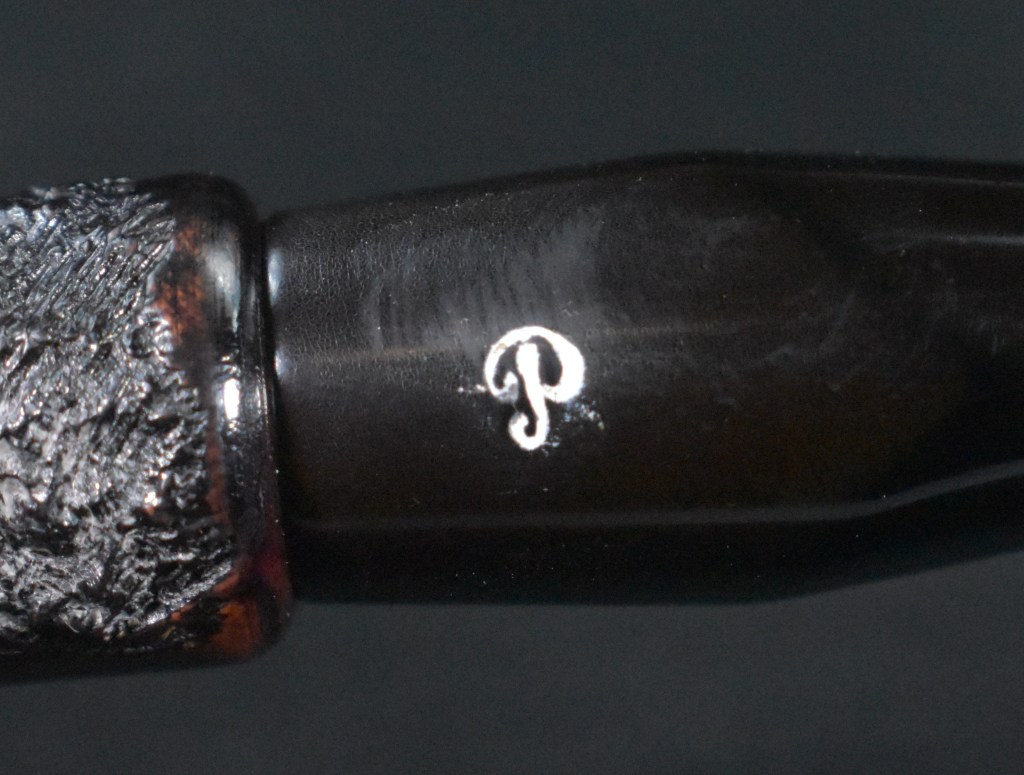
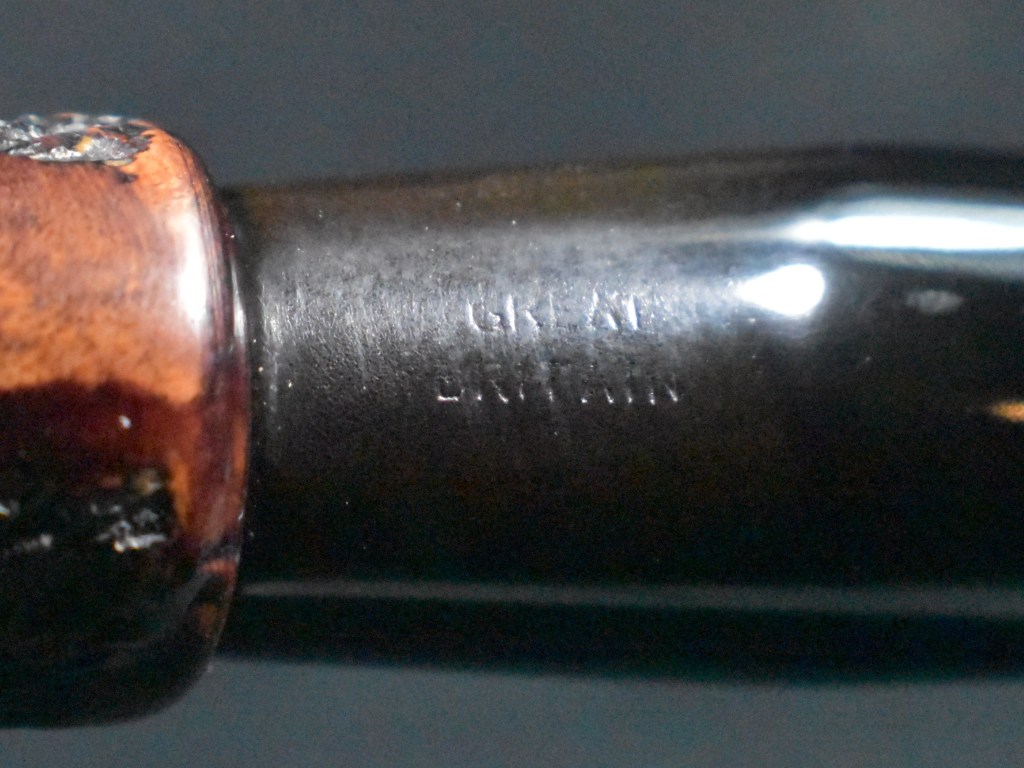
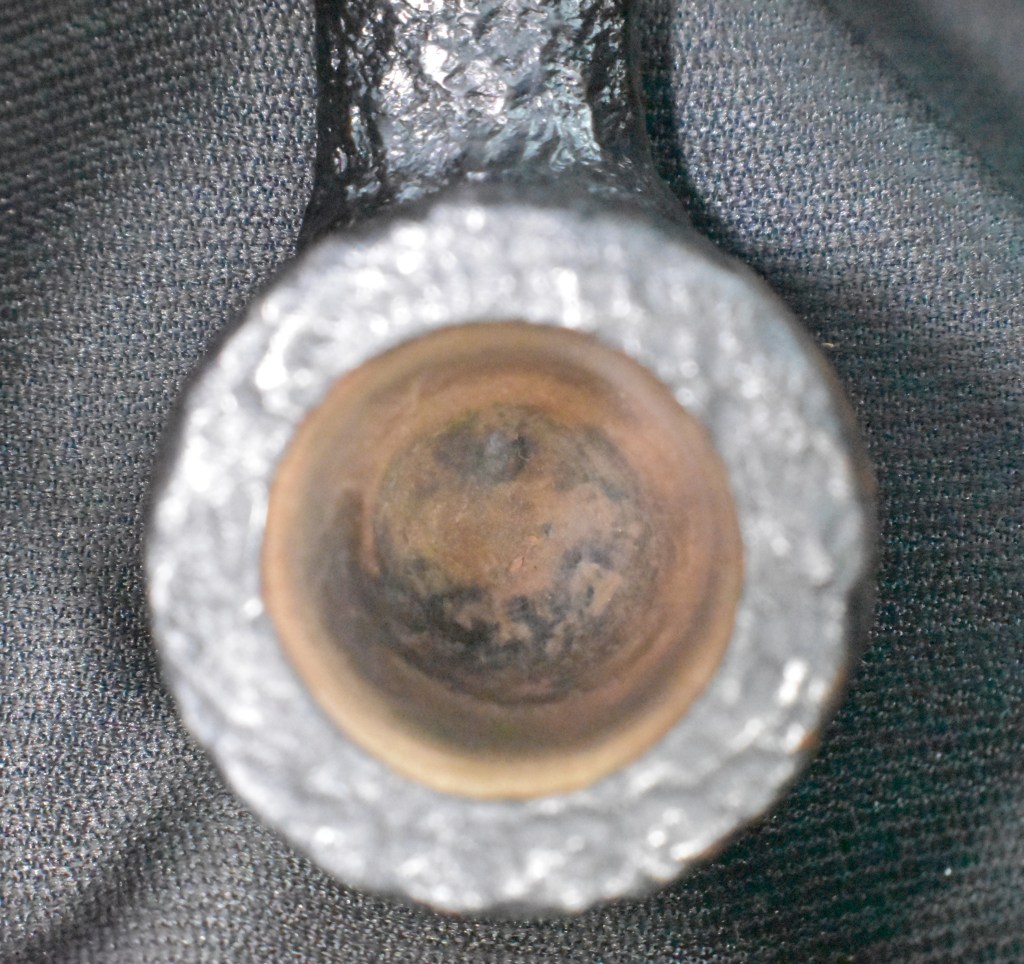
Hmm, where to start with this one? The stem was severely oxidized with a couple of deeper tooth dents. I feared losing the GREAT BRITAIN COM stamp with oxidation removal.The stummel was quite dirty but looked good otherwise. The rim was a mess with chips in the meerschaum liner. The tobacco chamber was carbon caked, who knows what lies under that? I do like a challenge.
Background
I have said it before and likely will again, “For a great history Mark Irwin and Gary Marlburg’s book is a must read for a Pete Geek.
Another amazing site full of Peterson information is, Peterson Pipe Notes. I can wholeheartedly recommend the free at
https://petersonpipenotes.org/ Yes, you will get emails but only for things like the weekly blog post and occasional Peterson pipe drops (like the Peterson Pipe Notes Pipe of the Year) or offers for cool Pete Geek merchandise.
According to the Big Book, also known as The Peterson Pipe,
“Brymeer (1971-75) Offered only in Iwan Ries catalogs, meerschaum-lined black sandblast briar and P-lip of fishtail mouthpiece. Produced by Peterson-Manxman factory” (The Peterson Pipe Irwin, Mark and Malmberg, Gary. The Peterson Pipe; The Story of Kapp and Peterson. 2018, Briar Books Press, Canada. First edition, second printing. p. 308)
“What is this Peterson-Manxman Factory?”, you ask. Pipedia.org to the rescue.
“Laxey Pipes Ltd. resided in a historical 19th century four-storey Man stone building at The Quay, Old Laxey, Isle of Man, which thankfully has been preserved.
The company specialised in the production of meerschaum pipes using the Meerschaum mined by the Tanganyika Meerschaum Corporation in the Amboseli basin in Tanganyika (since 1964 part of the United Republic of Tanzania).
Please note: you may often find names like “Manx Pipes Ltd.”, “Man Pipe Co.” and others more, but there is no indication of another Isle of Man pipe producer other than Laxey Pipe Ltd. at any time!
Laxey Pipes Ltd. marketed own brands like “Manxpipe”, “Manxman”, “Manxland” e.c. Names like “John Bull”, “White Knight” (unwaxed), “Domino” (black, or lined) indicated some shapes / colours of Laxey’s own series. The stems either showed the astronomical sign for “male” or “man” (circle + arrow), or the crest of the Isle of Man, the 3-legged X in a circle. Manxpipes and Laxey’s other brands were available through pipe retailers in general, but also were sold (mainly) to tourists through their own shop in Laxey.
Furthermore Laxey Pipes Ltd. manufactured the meer bowls for Peterson, Barling, Nørding and others from the later 1960’s until 2001. Man Pipe e.g. was a brand distibuted by Comoy’s. The bowls usually showed no nomenclature indicating the orderer. “Genuine Block Meerschaum” was engraved frequently. Often, just the stems were different, while bowls were the same.
Supply of meerschaum from East Africa run out (Kenya / Tanzania exhausted, Somalia inaccessible), and thus the last Laxey meers were supplied to trade in May, 2001. Laxey Pipes Ltd. tried to survive continuing with briar pipes – mainly in the Danish style -, but to no success. It closed down business in July, 2002.” (Laxey Pipes Ltd. – Pipedia)
There we have it, this pipe was made between 1971-1975 in the Peterson-Manxman factory on the Isle of Man. That is a darn definitive piece of provenance if ever there was one.
The Restoration
The slightly battered dirty girl made her way to the workbench and a clean denim piece.
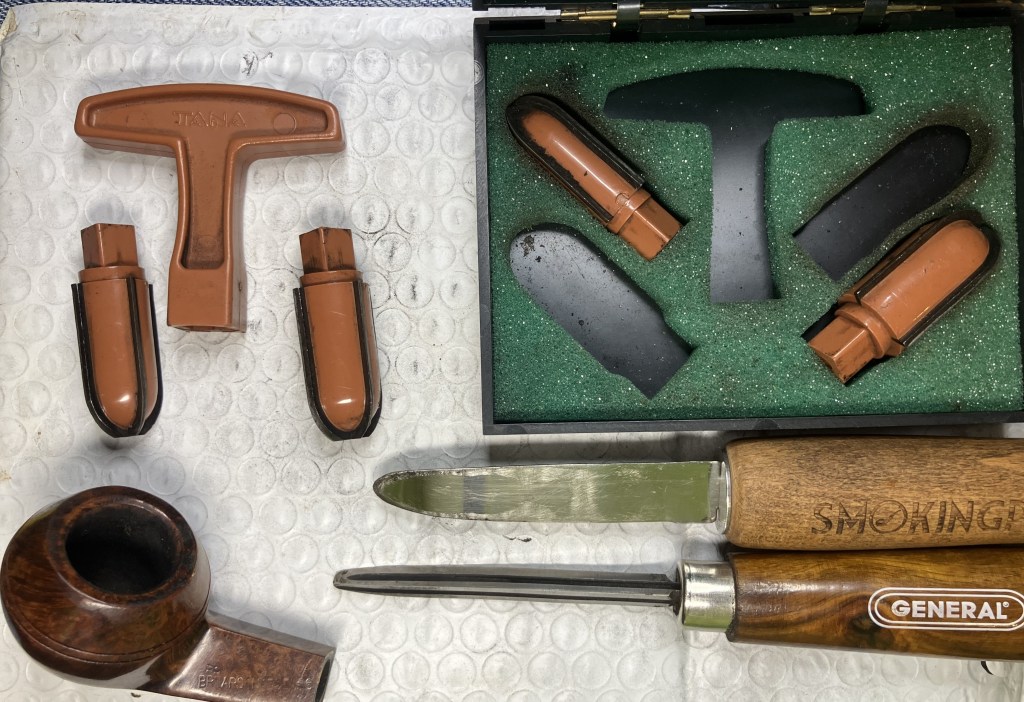
The first order of business was to clear the accumulated cake from the tobacco chamber. This proved to be a much more difficult job that I imagined. I did not use a reamer like the Kleen-Reem or the PipNet due to the threat of cracking the meerschaum liner with additional torque, instead the Smokingpipe Low Country reamer and the very sharp pocket knife were deployed.
Let me assure you that both diamonds and cake on meerschaum have a similar hardness. The scraping continued.
Eventually I moved to the wood dowel wrapped in 320 grit sandpaper.
Next, came the cleaning of the stem. This was done with 99% ethyl alcohol and bristle pipe cleaners.
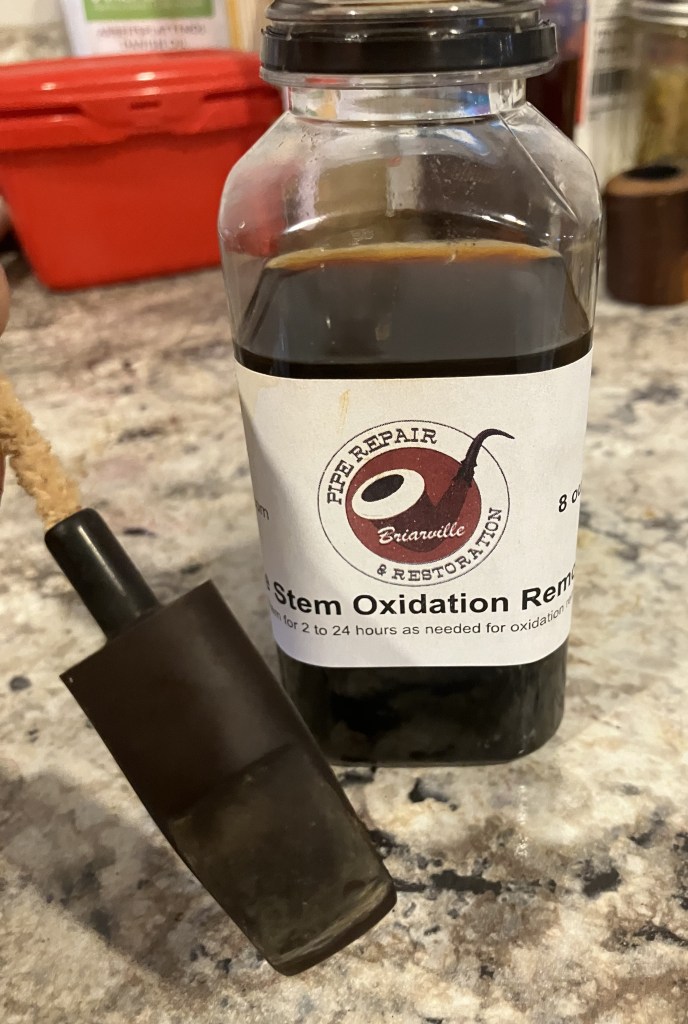
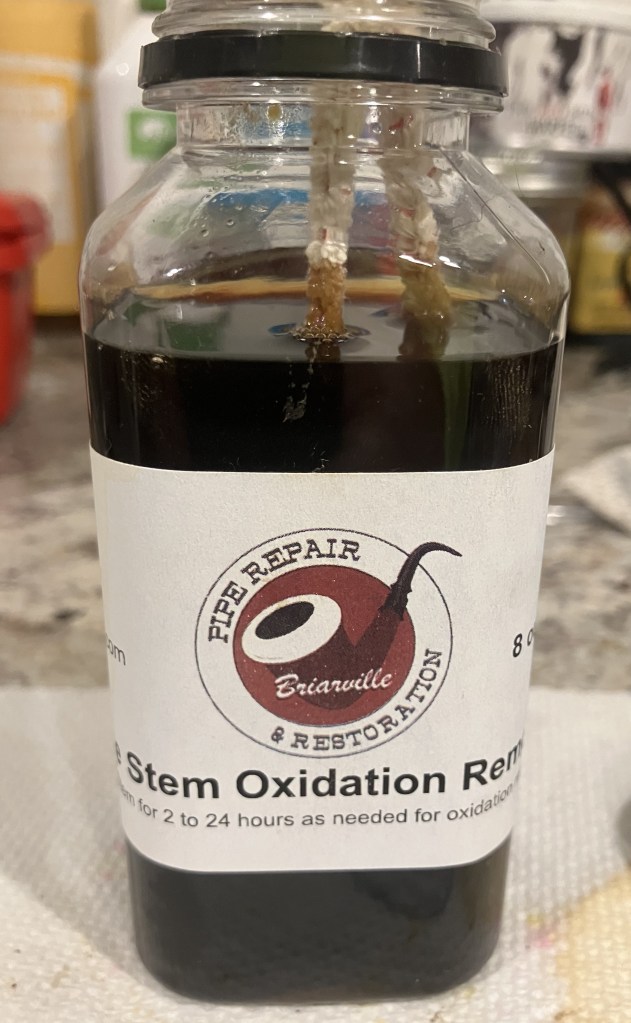
The stem was then hung, suspended, in Before and After Extra Strength Deoxidizer. I had not used this wonderful product for a few months because the fine folks at Briarville had sent me a complimentary bottle of their Pipe Ste Oxidation Remover. That bottle had finally started giving less and less desired results after about 9 months and approximately 30 pipe stems. Mark Hoover’s Before and After product seems to last longer, doing more pipes, and though a bit more difficult to remove the solution after deoxidizing, I think it works slightly better overall. Since this stem was quite oxidized, I figured 24 hours in the solution would be adequate.
With the stem out of the picture for a day, I switched to the stummel. It was scrubbed with undiluted Murphy Oil Soap and a nylon brush over the sink. The soap was rinsed with warm water and the stummel dried with a cotton hand towel.
The stummel looked much better once cleaned.
I wiped the stummel with a cotton ball wetted with 99% ethyl alcohol and it only removed a slight bit of dirt and no dye.
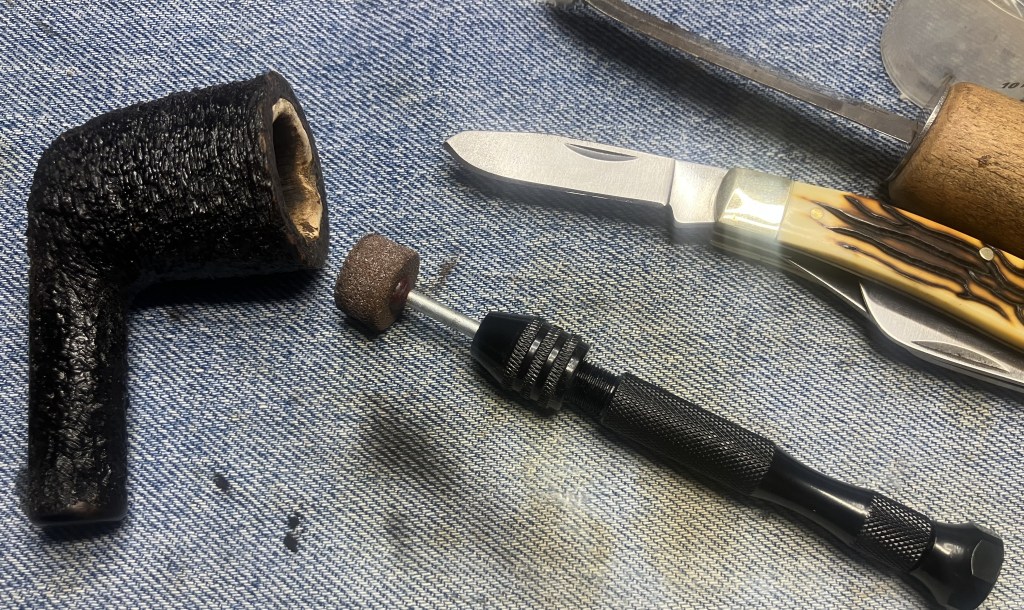
Still unimpressed with my removal of the cake from the tobacco chamber, I returned to scraping it with the General triangular scraper, the pocket knife and a rotary tool grinder mounted to a hand drill. This combination helped free the caked carbon from the bowl better but still not to my satisfaction. I feared marring the meerschaum with more aggressive methods.
The next evening, I removed the stem from the Before and After Extra Strength Deoxidizer and let it drip excess solution back into the jar.
After drip drying the stem was vigorously rubbed with a coarse shop rag to remove some of the oxidized vulcanite.
The shop rag shows the removed oxidized rubber.
Another of my fears with this pipe was the obliteration of the stem stamps from the deoxidation. I was glad to see that the stamps remained legible, though faint.
The tooth dents above the button were addressed with rubberized cyanoacrylate (CA, super glue). These were filed smooth and sanded.
The stem was then sanded with 320-600 grit sanding sponges. The ste log and Country of manufacture (COM) stamps were masked with masking tape to protect them during the sanding.
The stem was then worked with a series of sanding sponges. Between each sponge the stem was rubbed with mineral oil and wiped with a clean dry paper towel to remove sanding debris.
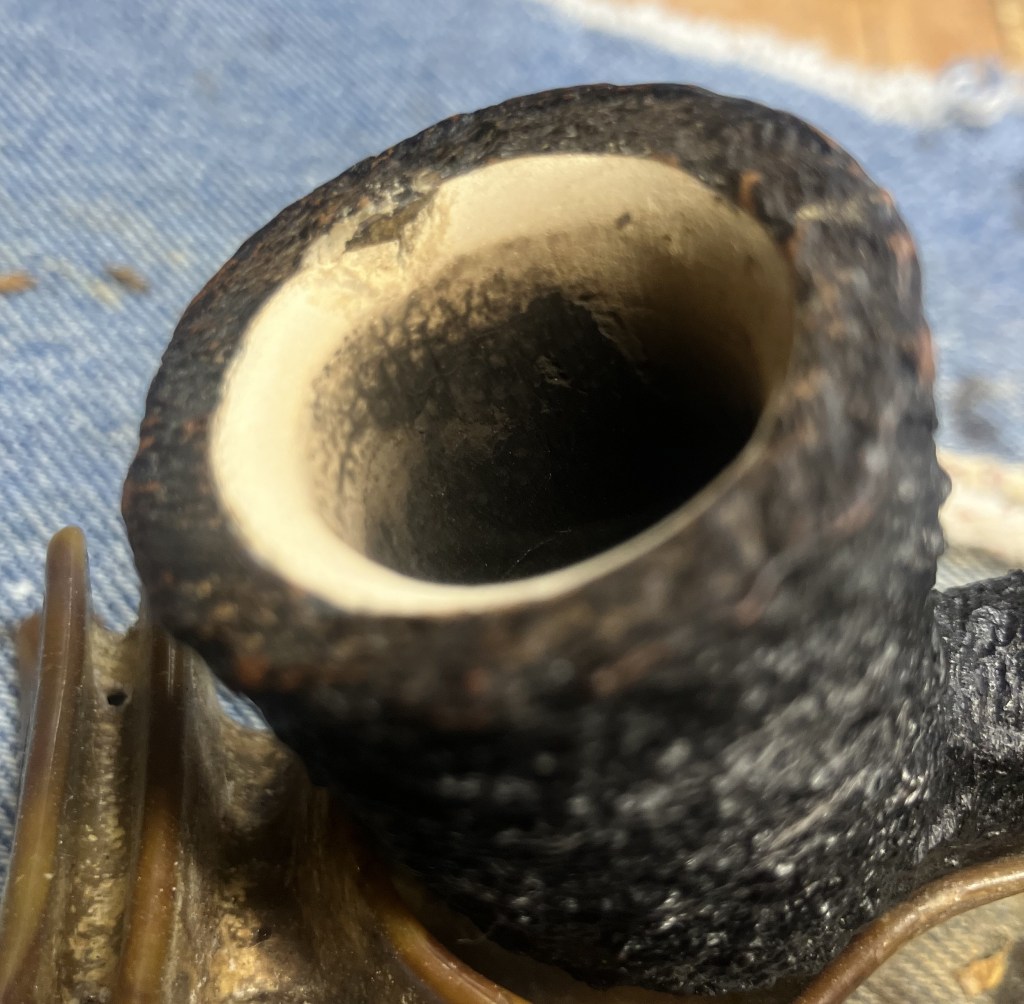
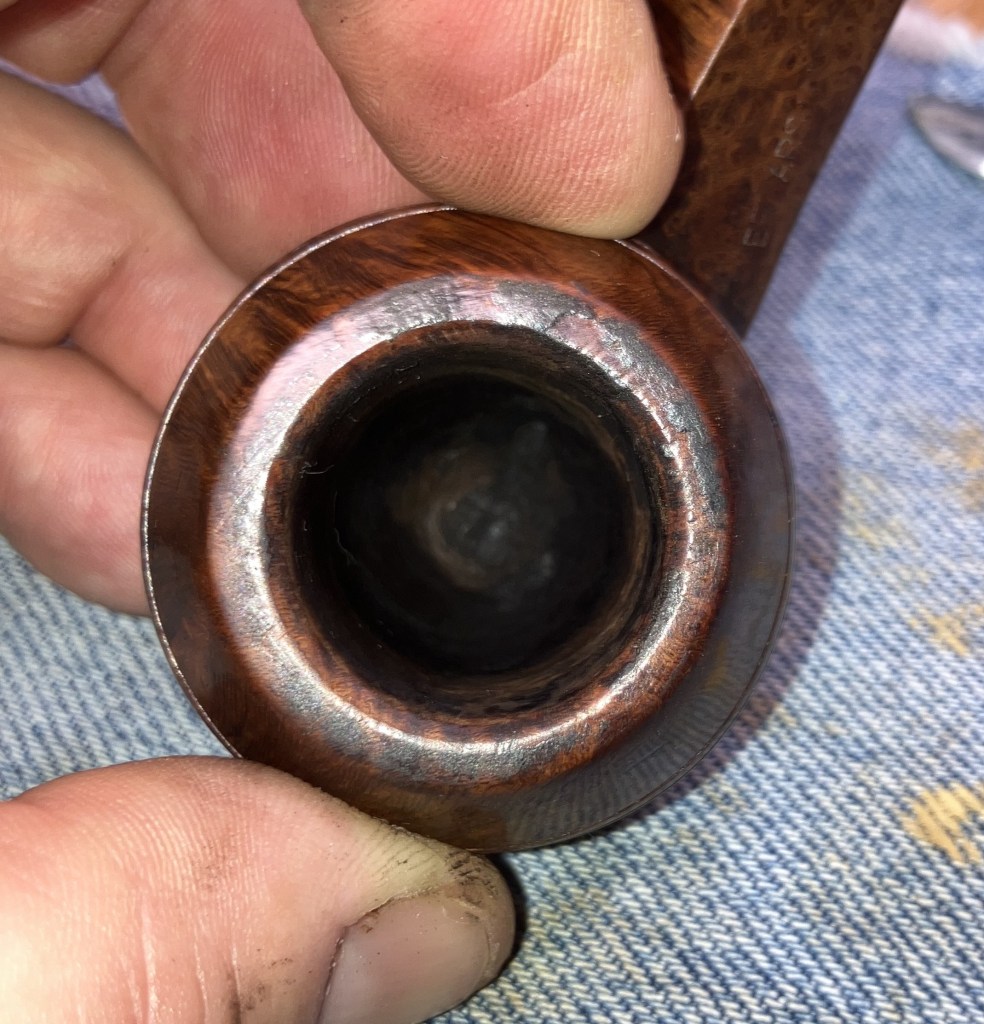
The chip on the rim of the meerschaum bowl liner had me thinking of ways to repair it. The area was rough enough and the meerschaum porous, so I thought that I could use the old technique of egg white and meerschaum dust to fill the chipped area.
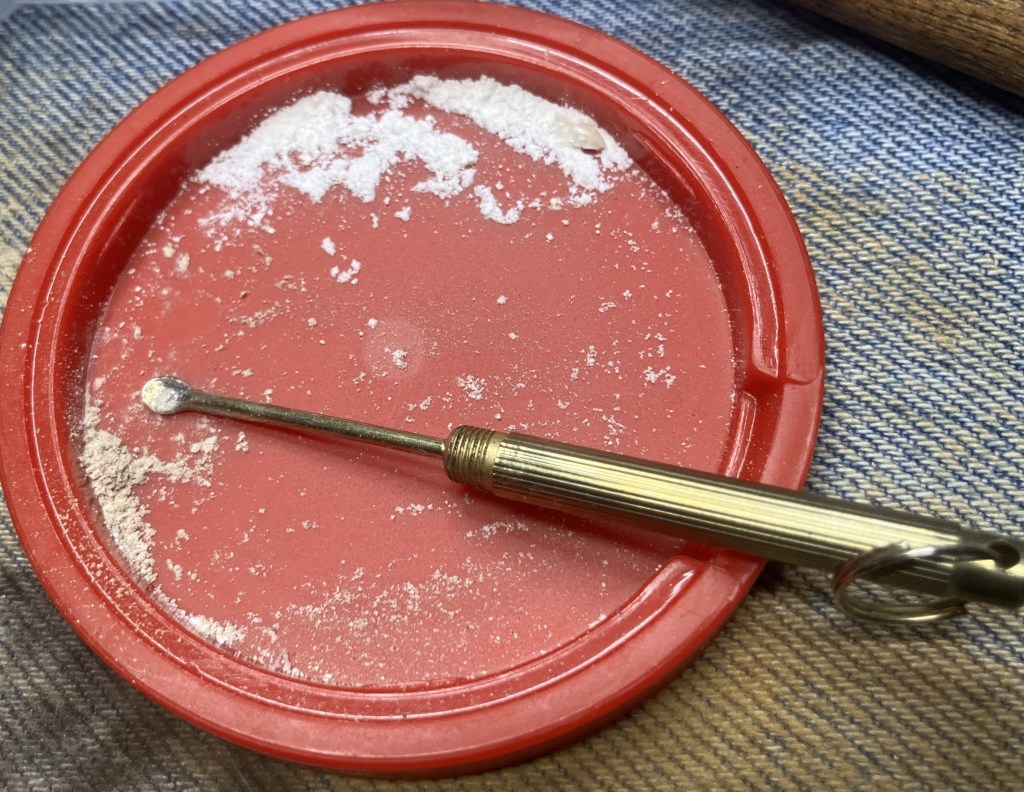
I made a paste with the egg white and meerschaum dust and applied it with a snuff spoon.
The chip looked better and I thought it would lighten as it dried. It did lighten then fell out. I repeated the attempt with the same results. I could not get the eggwhite-meerschaum dust paste to adhere to the existing meerschaum. Strike one and two.
With my brain engaged with chip solutions, I turned to a more repetitive task while I thought. I micro-meshed the stem with 4000-12000 micro-mesh pads. Between each pad I rubbed the stem with Obsidian Oil and wiped it with a dry paper towel. I then repainted the Stem logo with a white acrylic modeling paint.
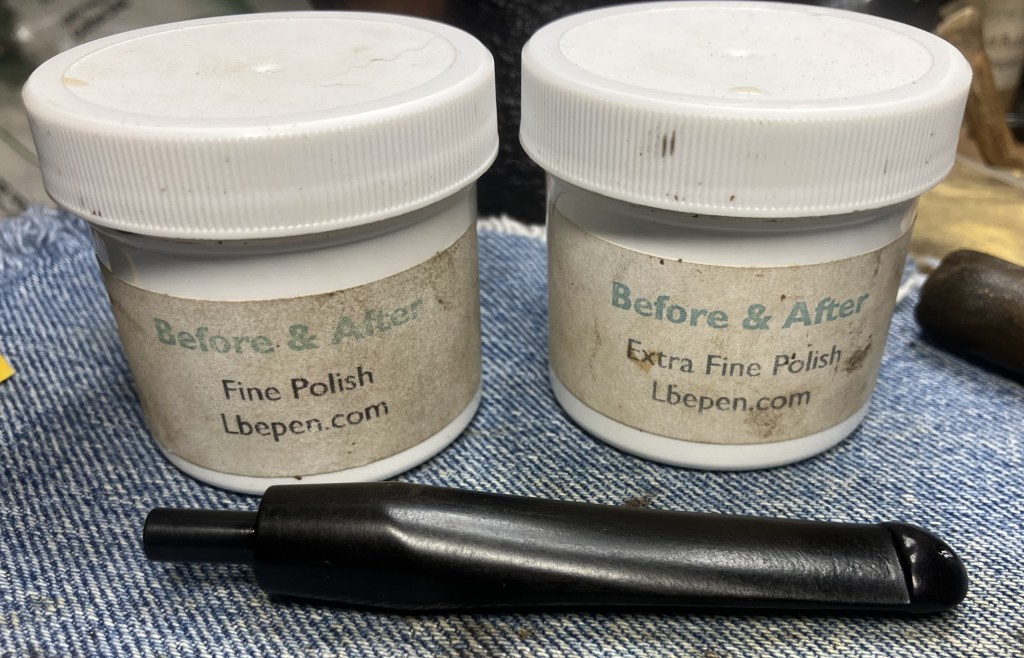
I used the Before and After Fine Polish then the Extra Fine Polish on a soft cotton cloth and hand buffed each.
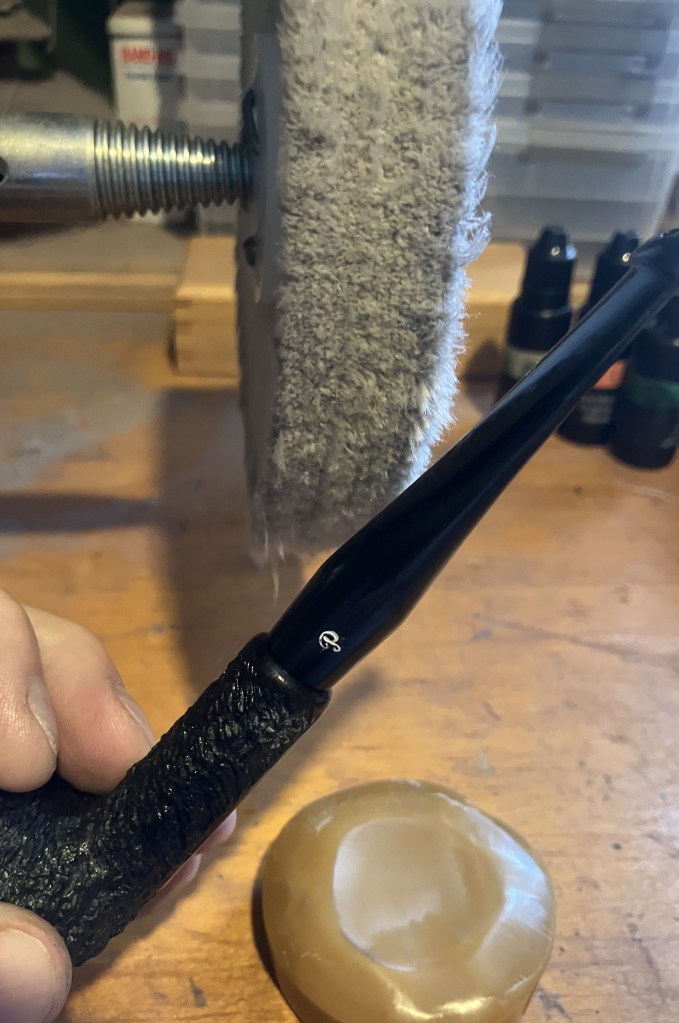
The stem was then buffed with carnauba wax on the buffer.
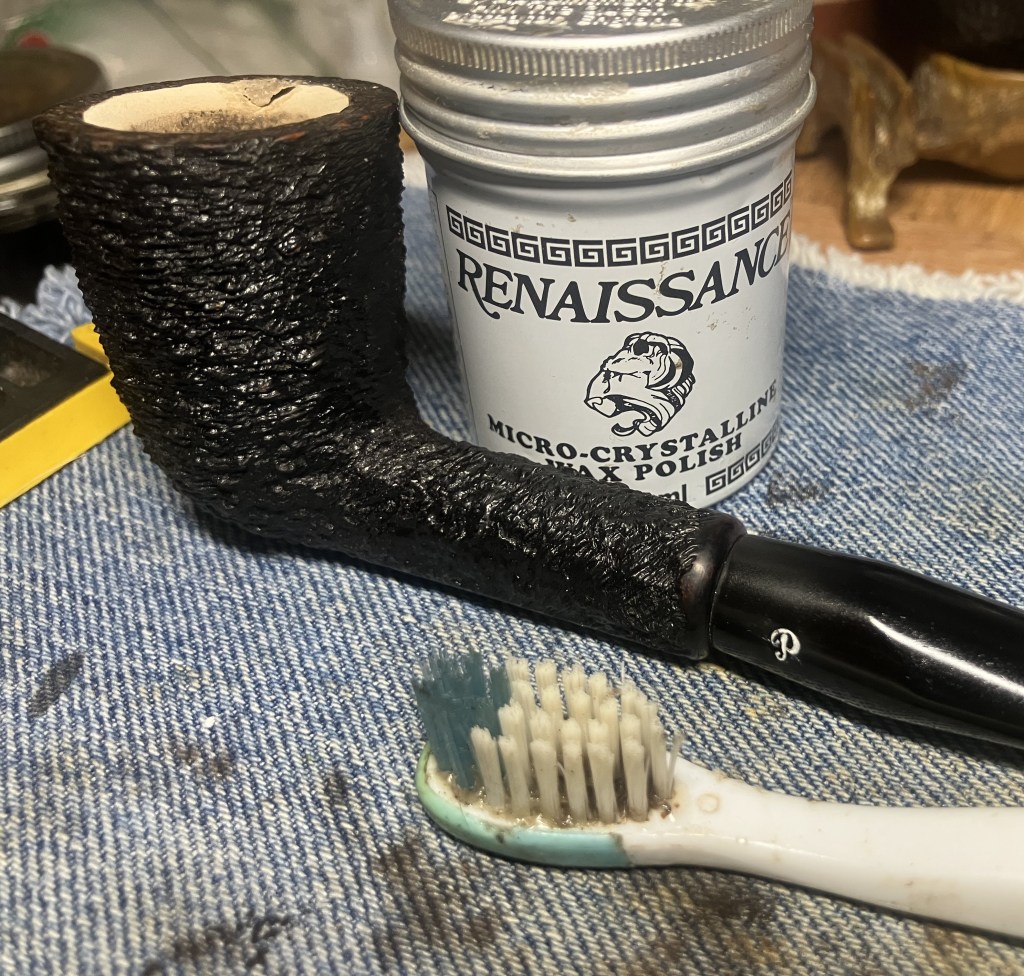
The stummel received a coating of Renaissance Micro-Crystalline Wax applied with a baby toothbrush.
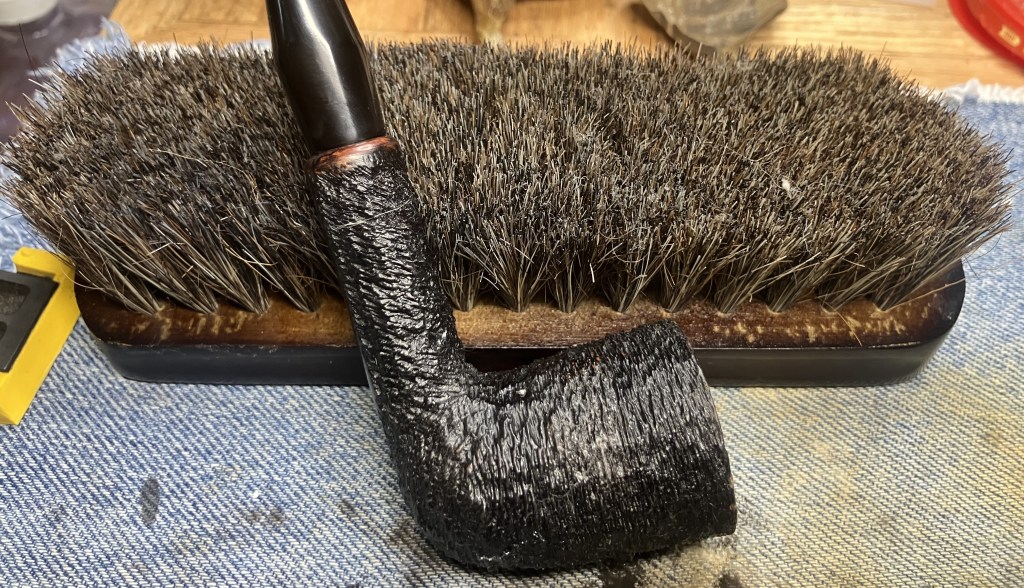
In the above photo you can see the repaired chip loosening in preparation to fall out. The stummel was then worked with a shoeshine brush to polish the Renaissance Wax.
I was at two strikes for chip repair. My thought process was working out other potential solutions I had two other ideas for repairing the chip:
Cut a and shape a replacement chip from stock meerschaum and gluing it in place with clear JB Weld. This product was preferred due to its ability to withstand high temperatures.
Mixing some clear JB Weld epoxy and meerschaum dust. Then applying the epoxy-meerschaum to the chip, allow it to cure then sand to blend.
Both ideas relied on the ability of the epoxy to adhere to the meerschaum and I hoped the heating and cooling or expansion and contraction of the materials would be compatible.
I opted to try the chip replacement with a new meerschaum chip, first.
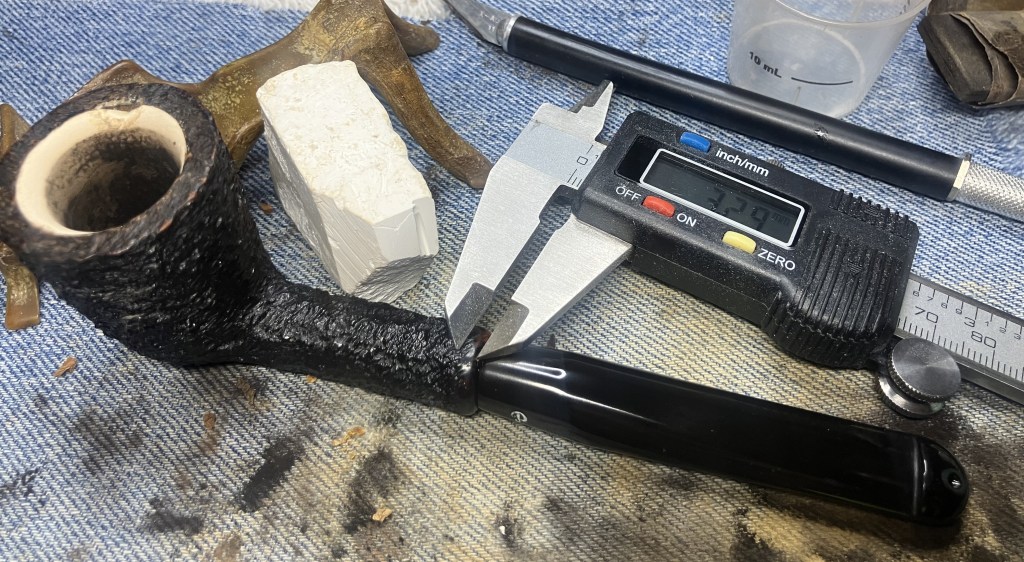
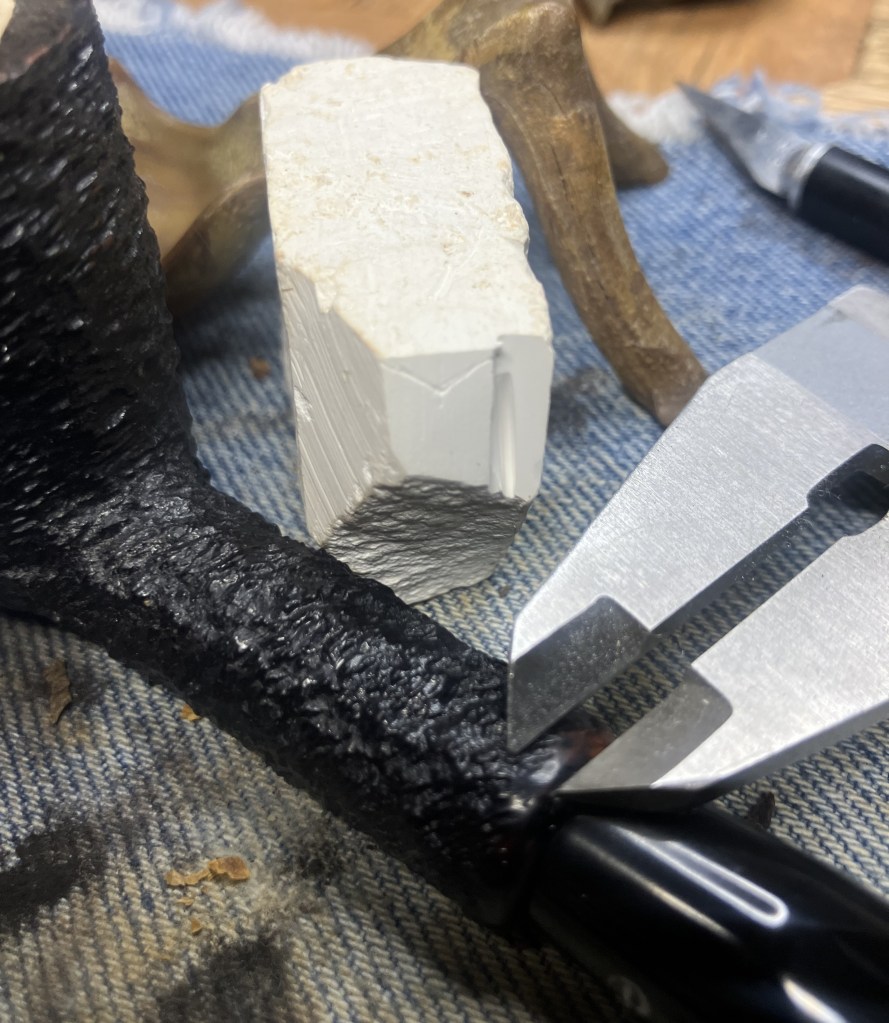
The first part of this idea required a fairly accurately measured replacement piece of meerschaum. My father, a Geography and Industrial Technology (shop) teacher by original training, frequently said, “Measure twice and cut once.” Cautious measurements were taken and transferred to the piece of block meerschaum. The only meerschaum I had was of Turkish origin and not the more off-white African version as with the bowl liner.
Below you can see a better view of the proposed chip replacement.
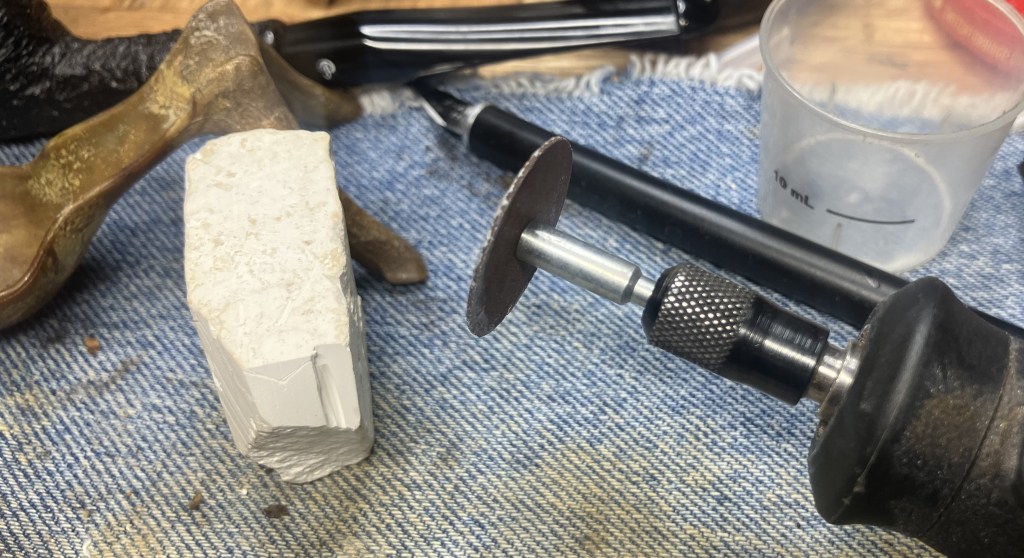
To cut this delicate material, I used a Dremel rotary tool with a thin cut-off bit.
Below is a photo of the replacement chip.
With some fine tuning of the replacement chip’s edges a good fit was eventually found.
As previously mentioned JB Weld clear epoxy was the adhesive of choice. Equal parts were measured and mixed according to packaging directions.
The epoxy was applied to both surfaces and the replacement chip fitted to the gap. I thought that I could come back to trim the excess epoxy after it had set-up for about an hour. It would still be soft enough to cut away from the meerschaum with an Exacto knife.
After the epoxy had set up for about 6 hours I applied a piece of masking tape and cut out for the replacement chip. This allowed me to remove the excess material using an emery board without marring the rim.
The emery board made short work of the soft meerschaum.
Additional sanding was done using a wood sphere wrapped in 320 sandpaper and a piece of 400 sandpaper by hand.
Below is a view of the replacement chip immediately before final sanding with the 400 sandpaper.
Since I had already waxed the stem and stummel , all that remained was a hand polish with a microfiber polishing cloth and a stop at the photo table.
I think this Peterson Brymeer Dublin turned out quite well compared to how she looked originally. The briar’s sandblast cleaned-up very nicely. With the dark original stain of the stummel there is a lovely contrast to the slightly off-white meerschaum lining. The stem deoxidized remarkably well. I was able to retain both the COM and the P logo on the stem. The fresh vulcanite looks great with the black of the briar. The chipped rim repair turned out about as well as I could have hoped. Yes, it is noticeable but with a few smokes, I think the meerschaum will color and conceal the repair almost completely. The tobacco chamber cake was very resistant to removal. I guess there is a reason that diamonds are so tough. This carbon was nearly diamond-like in its resistance to removal, but in the end most of it was cleared. The dimensions of the Peterson Byrmeer Dublin are as follows:
Length: 6.06 in./ 153.92 mm.
Weight: 1.22 oz./ 34.59 g.
Bowl Height: 1.89 in./ 48.01 mm.
Chamber Depth: 1.55 in./ 39.37 mm.
Chamber Diameter: 0.71 in./ 18.03 mm.
Outside Diameter: 1.38 in./ 35.05 mm.
I do hope that you have found something here useful to your own pipe care, maintenance or restorations. If you like this sort of thing, please click the like and subscribe buttons. Thank you for reading the ramblings of an old pipe lover.
Loading…
Below are some photos of the finished Peterson Byrmeer Dublin.
The sheer number of pipe shapes and brands of tobacco pipes can be overwhelming. This does allow users and collectors to specialize and find something that suits their own personal fancy. All of these options can be daunting. As an example I put together a list of my top 3 favorite pipe shapes. This list had no fewer than 6 shapes. Yeah, math and choosing were never my strong suit. Then there are the pipe companies. Many pipe aficionados dedicate their collection to a single maker. I find that I can’t even do that. While organizing a pipe rack, my official Peterson shelf has several Marxman and one commissioned pipe in it. Proving once again that I like what I like and care little for convention. That brings us to the subject of today’s blog. I am fascinated by the pipe oddities. Whether they be the crazy innovations of inventors, promotional pipes or the Brick and Mortar (B&M) pipe shop stamped pipes made by renowned pipe manufacturers. I have restored pipes Stamped with; TROPICAL PAINTS (A Tropical Paints Cleveland Pot Restoration – NebraskaPeteGeek), DUPONT EXPOSIVES (A du Pont Explosives Promotional Pipe Restoration – NebraskaPeteGeek), BRIARS ‘N’ Blends (A Briars ‘N’ Blends (Comoy’s 409) ¼ Bent Bulldog Restoration – NebraskaPeteGeek) and TELFORD’S (A Telford’s Canadian Restoration – NebraskaPeteGeek). Researching these pipes is a journey into our hobby’s past and to a time when pipe smoking was far more popular than today.
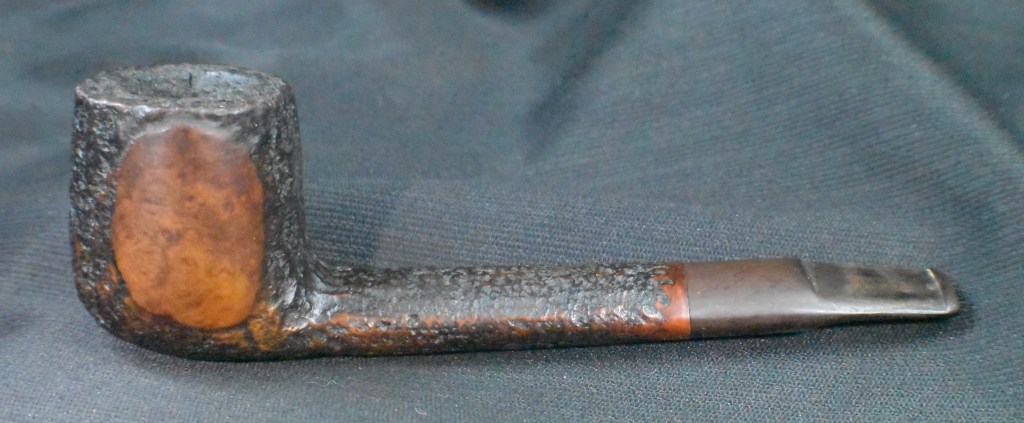
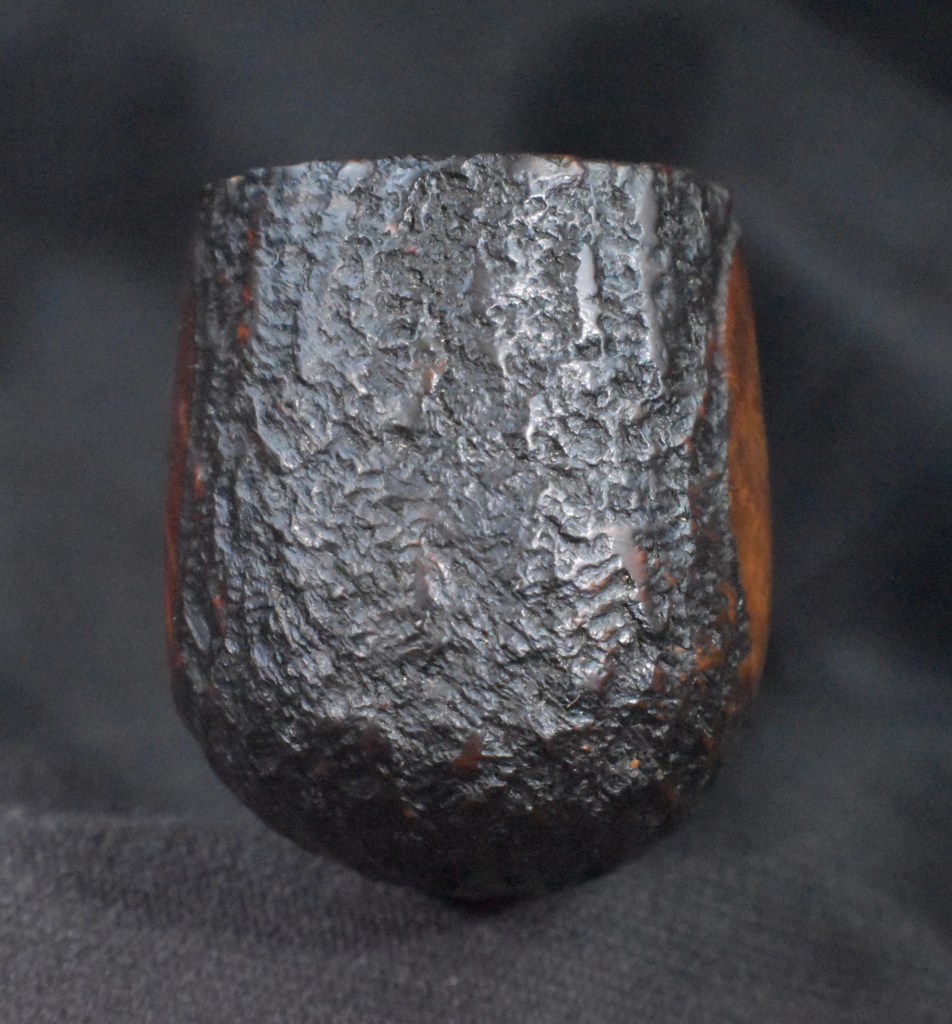
This Gus’ Own Lumberman is a perfect example of that history. It was part of an estate lot which arrived here in August of 2024 from Hardin , Kentucky. I’d heard of Gus’ Smoke Shop in Los Angeles but had personal ties to the locale. The only stamping on the pipe was GUS’ OWN. No county of Manufacture (COM), which can indicate that the pipe was made in the US, but this is not always the case. Below are some photos I took of the pipe prior to working on it.
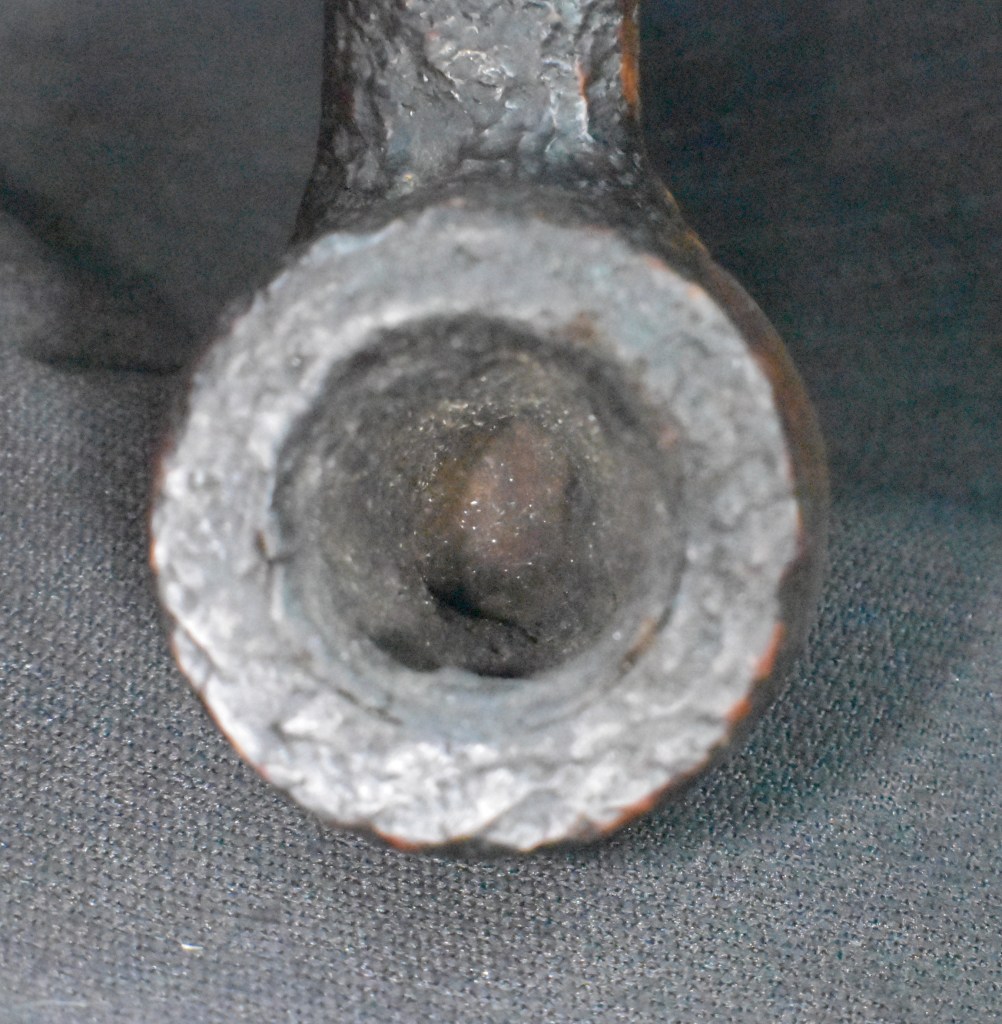
Judging by the tooth chatter on the stem and the thick cake in the tobacco chamber, this was a well loved and frequently used pipe. It also meant that it would require more time to clean it up. The stem showed signs of oxidation but the mortise to tenon joint was secure. The finish was worn, a further proof of a well used pipe. Overall it looked to be a fairly straightforward restoration. Another thing I have noticed is that heavily used pipes are frequently excellent smokers. Once they are cleaned up, I should add.
Background
I had heard mention of Gus’ Smoke Shop as one of the large pipe and tobacconist brick and mortar shops in Los Angeles, California. The search for Gus’ turned up a hit on the forum, PipesMagazine.com. The forum thread started with a member asking if anyone remembered the shop. Below is a very interesting entry from a member named huntertrw dated July 16, 2023:
“I correspond occasionally with Richard Carleton Hacker, and this is what he was kind enough to share today concerning Gus’:
“Gus’s started out as Boyd’s Pipe Shop in 1927, back when Ventura Blvd. was still largely a dirt road and horses vied with automobiles. In addition to pipes and cigars, Boyd raised and sold chickens and candy and a few other sundry unrelated items.
“Boyd sold the shop to Gus Pfender in 1937, who renamed it Gus’. Note the unusual apostrophe placement.
“Sometime before 1975 Pfender sold the pipe shop to an Englishman named Norman Fudge. Fudge wisely kept the Gus’ name – otherwise folks might have mistaken it for a candy store!
“I first began going to Gus’ in the late 70’s and remember seeing the original gas stove in the back room and the brass cash register that was sill in use. I also remember seeing the occasional chicken feather poking out from the floorboards, and Norm telling me how they got there. Although he had a reputation for being cantankerous, I got along with Norm, especially when he learned I wrote about pipes and had a collection of Sherlock Holmes memorabilia (which may have appealed to his British heritage).
“I met Jimmy and Paula Hurwitz when they came to the store and Jimmy was deciding on whether or not to buy it, as Norm was getting on in years and frankly, was tired of dealing with the public.
“Jimmy asked my opinion and I thought it was a good deal, especially since store ownership included the property on what now was now a main San Fernando Valley thoroughfare.
“Jimmy bought the store in 1985 and I continued to be a regular customer and even put the photo I took of the store in at least one of my books.
“I lived in the same area, as did a number of pipe smoking movie celebrities. with whom I became friends. William Conrad gave me one of his beloved Charatans (which I still have) and David Rose, the musician and I shared both pipe and train hobbies.
“An interesting side-note: David had an unusual triangular pipe rack he had purchased in London. I tried to buy it but he wouldn’t sell. When he died in 1990 Jimmy bought it and resold it to me – at I’m sure more than David would have wanted for it. It still have it.
“To his credit, Jimmy kept the old stove in the back room, remodeled the store to include a walk-in cigar humidor, and still occasionally cranked up the old brass cash register, although a newer electronic gadget saw much more use.
“Gus’ was the quintessential neighborhood pipe shop and might have still been there today if Jimmy hadn’t run afoul of some sort of California law and subsequently was imprisoned for a short while and, of course, lost the store.
“When he got out of stir he tried selling pipes out of the back of the corner liquor store, but of course, it wasn’t the same. That venture only lasted a short while and he sold socks at Nordstrom’s but eventually died of cancer some time back.
“Gus’ was next door to the Mistral’s restaurant and sat vacant for many years (it was always sad to walk by its shuttered facade) until Mistral’s purchase it, used it for the occasional private party, and now plans to open it as an extension of the main restaurant. But those plans were put on hold due to the pandemic.
SHERMAN OAKS — Here at Jim Hurwitz’s shop, as at hundreds of others like it, the redemption of the American male quite possibly is underway.
Before joining in the praising, however, you’ll have to put health considerations aside for a time, for Hurwitz’s place is a tobacco shop.
In the last year or two, sales of pipes and pipe tobaccos at his Gus’ Smoke Shop on Ventura Boulevard have begun ticking upward. Tobacconists in other parts of the country also report the trend, for the first time this generation.
This can mean only good things for the XY-chromosome contingent, not to mention those of the XX variety who must truck with them.
Unlike the case with cigarettes and cigars, no one keeps national aggregate figures on pipe sales, but “pipe sales have been increasing,” affirms Bill Fader, the Baltimore-based executive director of the Retail Tobacco Dealers of America, “especially in the case of the better, more expensive pipes, the ones that go for $100, $150, $300 and up, because they’re almost works of art.”
Along with the years-old cigar mania, this is more good news for Gus’ Smoke Shop, which has weathered many another trend, both up and down, in its seven decades.
Gus’, Hurwitz claims, was the first business to open on Ventura Boulevard and is the oldest tobacconist in Los Angeles. Founded in 1927 as Boyd’s, a store that sold candy and live chickens as well as tobacco, the business occupies its original premises.
The eponymous Gus Fender bought the store in the 1940s and sold it a couple of decades later to Norm Fudge. Hurwitz, a dedicated customer, bought it from Fudge in 1985. “I always thought Norm Fudge was Gus,” says Hurwitz, a heavyset man of 46 given to baggy jeans and untucked jerseys. “I guess whoever is behind the counter is Gus–and now I am Gus.”
Gus’ contains two walk-in humidors for cigars and specialty cigarettes, but the dense, moist aromas of more than 30 hand-blended pipe tobaccos in large, glass jars dominate the wood-paneled store. Sweet Virginia, spicy perique, sultry Latakia–these and other leaves vie for a visitor’s olfactories. Many of the mixtures are assembled according to recipes handed down from Gus to Gus to Gus.
More than 600 pipes are arrayed on various shelves and in a glass display case. These range in price from $30 to $3,500, the latter for a massive 1960s-vintage, gold-trimmed example from famed manufacturer GBD. Many of the great names in pipes are represented–Peterson of Ireland, Stokkebye of Denmark, GBD and Ashton of England, Savinelli and Ser Jacopo of Italy.
Although some meerschaums–cool-smoking, delicate pipes of white clay–are displayed, the majority are of briar, which comes from the roots of heath trees that grow in Mediterranean locales. Mediterranean briar, properly cured and dried, is prized for its hardness and the eye appeal of its grain.
Increasingly, people buy pipes simply as objects of beauty, Hurwitz says. Some buyers don’t even smoke. The thriving business Gus’ does repairing and reconditioning vintage pipes further indicates the new collectible cachet of pipes.
The increase in pipe sales, however, is not just another manifestation of affluent American thing-gathering. A small but significant percentage of those caught up in the cigar mania, which brought on inflated prices and supply shortages, have begun to smoke pipes, Hurwitz reports. Virtually all pipe smokers are male.
Wherein lies the potential for redemption.
“Cigarette smoking is an addictive, nervous smoking, and cigar smoking has the connotation of aggressive display and success,” Hurwitz offers. “Pipe smoking is more philosophical, i.e., associated with the professor type, much more laid-back. With even a very good, expensive cigar, you light it, burn it and it’s gone. But a pipe you can use for years. Pipe smoking is about the art of smoking. Everything else is about consumption.”
Hurwitz and his salesmen give new pipe smokers a short course in the fine points of the art: How to choose a style of pipe. How to load and light it. How to keep it from going out. How to break in a pipe and how to care for it.
Clearly, when a man commits to a pipe, he is committing to an altered form of being that values deliberateness, skill, patience and sitting more or less still for a while (it being hard to do much of anything else, especially anything exertive, when smoking a pipe).
Pipe smoking also is a turning away from massed-produced sameness. It feeds a man’s appetite for his own individuality, since the types and characteristics of pipes and of the tobaccos that can be stuffed in them are practically innumerable.
“If you take the band off a cigar, you many times don’t know what brand you’re smoking,” says Fader of the tobacco retailers. “A corona cigar is a corona cigar. A robusto is a robusto. Not so with pipes. They’re dramatically varied in appearance and style.”
In short, these new pipe smokers, like pond frogs who sense change in the environment before other species, may be the first to tune into an emerging male zeitgeist.
Maybe the American male who’s held psychological sway over society the last decade and a half–the compulsive, hard-driving, fire-breathing guy on the make–is about to retire from sheer exhaustion.
His successor looks like he might turn out to be a more reflective chap. A guy who won’t be quite so hard on the tire treads. One who doesn’t even have to inhale to appreciate existence.” (Pipe Dreams – Los Angeles Times)
Well that was all good information but who made this pipe for Gus’? Fine question, that. Unfortunately I had very little to go on. I initially thought it looked like a Stanwell pipe. You know, that whole, “looks like a duck” train of thought. I asked my best source for Stanwell questions, Sascha Mertens, if he thought it might be a Stanwell. His reply was, “I don’t think it’s a Stanwell because of the stem. This is quite an unusual bite.” (personal communication). Strike one.
I knew I had seen a stem very similar to that recently. I looked back through this year’s restorations and there it was – the Marseille Volcano (A Marseille Oval Shank Volcano Restoration – NebraskaPeteGeek). Below is a photo I took while working on the stem.
Very similar, eh?
Well the Marseille Volcano was another near bust for background information. All I can speculate about this pipe is that the stem looks similar to French-made pipes. As for the year of production, that too is all speculation. Based on the styling, I would say 1970s.
The Restoration
After the “before” photos our patient made its way to the workbench and a somewhat clean denim piece.
I started with the reaming. PipNet with #2 and #3 blades, the General triangular scraper and the Smokingpipes Low Country reamer.
Yeah there was quite a thick cake with this pipe.
Even the clean-up produced a pile.
The tobacco chamber was sanded with 220 sandpaper with a finger and 320 wrapped around a wood dowel.
The bare briar sanded chamber showed no signs of any heat damage. Apparently that layer of cake did its job protecting the briar.
I was dreading this next part and was very surprised when the shank was pretty clean. Normally a pipe with that much cake would have a filthy airway, this one was not too bad. I used the Cleen-Reem shank drill and it passed easily. A shank brush dipped in 99% ethyl alcohol also returned only slight stains on the paper towels.
Further cleaning with bristle pip cleaners also did not indicate a terrible airway. I was very glad to know the previous owner kept a relatively clean pipe.
I couldn’t accept the cleanliness of the shank and thought it certainly must have been a fluke. I therefore decided to give the pipe a cotton-alcohol soak. The tobacco chamber and shank were stuffed with cotton and I prepared 10 ml of 99% ethyl.
The alcohol was pipetted into the shank and bowl with a disposable pipette until the cotton was saturated. This would sit for several hours as the alcohol evaporated.
I turned my attention to the stem. More dirty than the shank but not terrible. Bristle pipe cleaners with more alcohol did the trick. Some of the tooth chatter was removed by filing the area with a small flat file.
There was one large toothmark that defiled removal with a file.
The stem went onto the Briarville Pipe Stem Oxidation Remover (deox).
The next day I removed the cotton from the bowl and shank. The shank cotton was far more discolored than that of the bowl.
The shank was cleaned again with bristle pipe cleaners and alcohol to remove any tar that remained.
The rim showed some lava or accumulated smoking residue in the rustication.
I took the stummel to the sink for a scrub with undiluted Murphy Oil Soap and a nylon brush.
I then worked the rim with a brass brush to get rid of the stubborn lava on the rim. The soap was rinsed with warm water and the stummel dried with a cotton hand towel.
Back at the workbench the stummel was wiped with a make-up pad dipped in 99% ethyl alcohol. Some of the black dye came off. This was expected.
The newly cleaned rim showed no signs of charring. Yay!
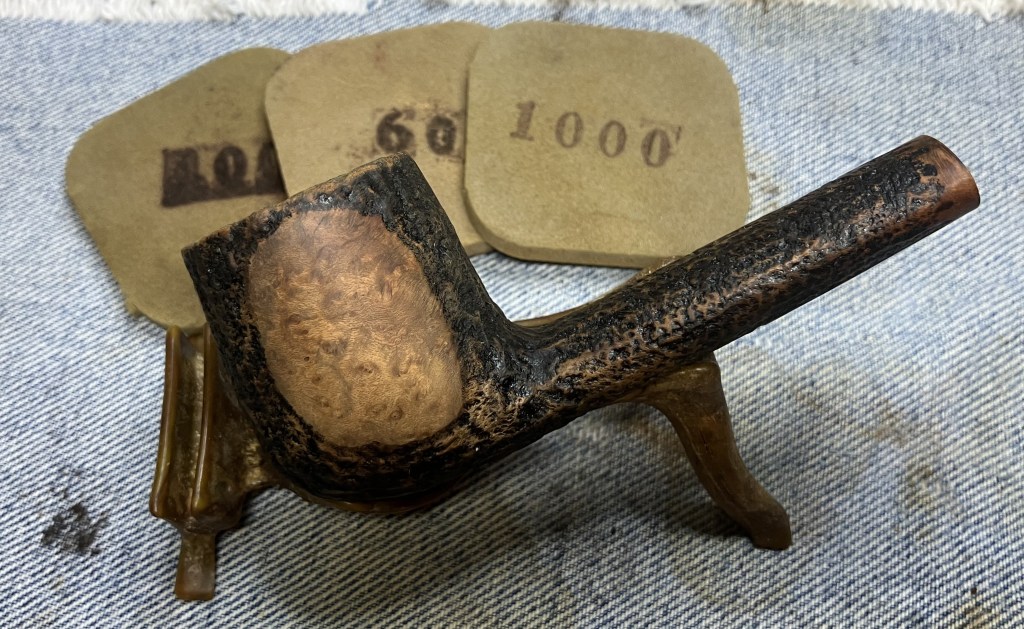
The side panels had beautiful grain but the rusticated area was rather worn. I thought about leaving the pipe in this condition then though, “no, you should restore it to how it looked, factory fresh”.
I sanded the side panels with 400-1000 grit sanding pads.
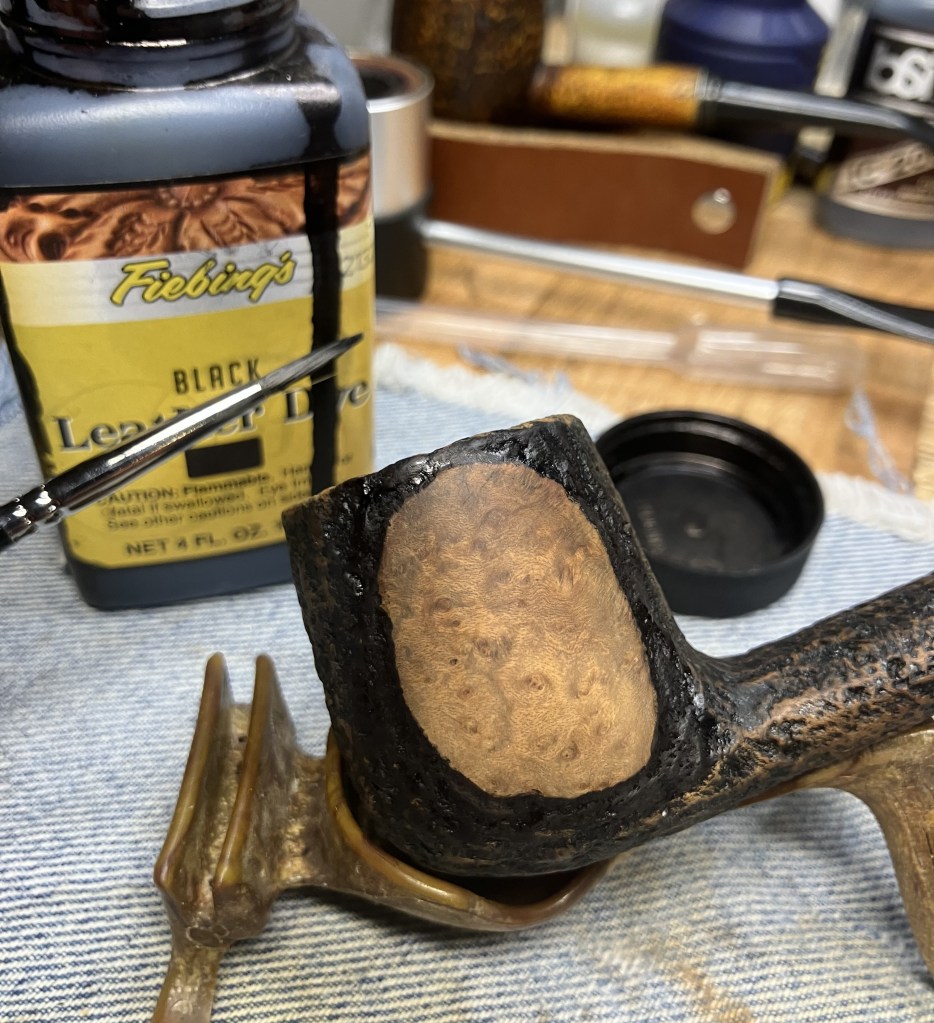
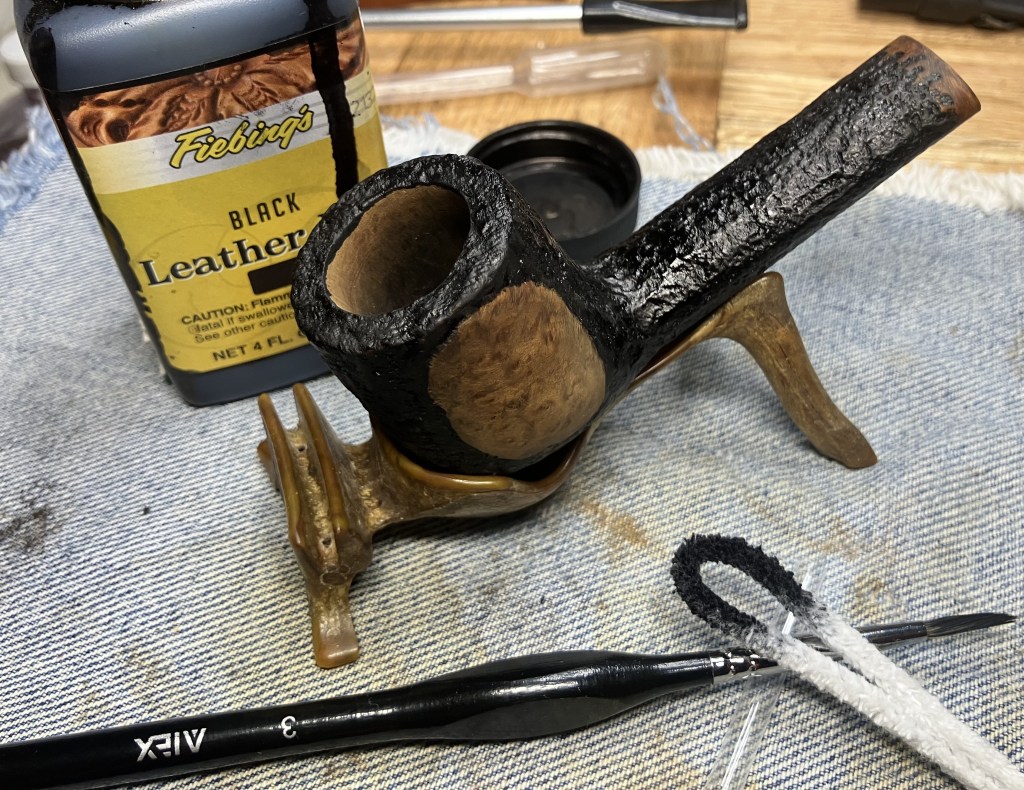
Using black Fiebing’s Leather Dye and a paintbrush, I carefully reapplied the black dye to the black portions of the stummel.
This was a slow and careful process.
The remaining areas were re-dyed with a folded pipe cleaner and the black dye.
As the dye was drying I went to retrieve the stem for deox. The last two stems I have used the Briarville deox on have emerged with a tan crust. I am now wondering if I need to replace this solution. It has been used on many stems since last April, when the kind folks at Briarville sent it to me to try. I vigorously rubbed the stem with a coarse shop rag to remove the crust and any softened vulcanite.
I took the stem to the workbench and started scrubbing it with Soft Scrub cleanser on make-up pads. This produced pads well covered with oxidized vulcanite and the stem started to look better.
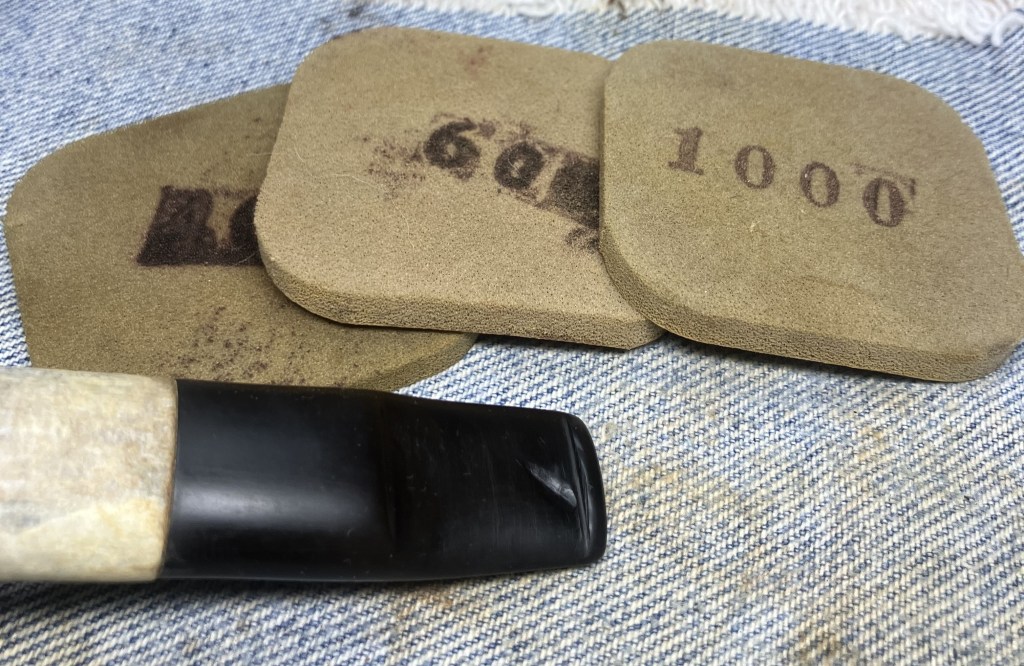
The stem was sanded with 400-1000 grit sanding sponges. You can see the two dents on the top side of the stem in the photo below.
And the one large dent on the button side of the stem.
All of these dents had very smooth edges. These smooth edges led me to fear that normal fills with cyanoacrylate (CA, super glue) would risk the fills chipping and coming loose. To remedy this, I thought that deepening the dent with a 2 mm drill bit would provide far better surface area for the CA to adhere to.
I drilled a series of holes into the dented surface of the stem.
I used a “Rubber Toughened” black CA for the fill. The CA was applied using the tip of a fly tying bodkin. I also applied a line of the CA to the edge of the button.
The same was done for the top side of the stem.
The CA was allowed to dry or set on its own for an hour. The below two photos who the resulting cured CA.
The CA was then filed smooth with a small flat file the the stem was worked with a series of sanding sponged from 400-3500 grit. Between each sponge I rubbed the stem with mineral oil and wiped it with a paper towel. After the final sponge I applied a coat of Obsidian Oil to the stem.
The stem was then taken to the buffer where I buffed it with white compound on a dedicated white compound wheel.
The masking tape was removed and I cleaned the pipe of any buffing compound. I returned to the buffer to apply several coats of carnauba wax to the pipe.
The final step was a hand buffing of the pipe with a microfiber polishing cloth.
I would love for this pipe to go to someone who has fond memories of Gus’ Smoke Shop. It is a lovely old pipe and it should provide years of service. The black dye turned out very nicely and is a lovely contrast to the smooth side panels. The grain present on the sides is also very pretty. The stem turned out well but I do admit that some browning of oxidation can still be seen in very bright light. In normal room light it remains undetectable. The stem fills are nearly unnoticeable without a very close examination.
The dimensions of this Gus’ Own Lumberman are:
Length: 5.74 in./ 145.80 mm.
Weight: 1.54 oz./ 43.66 g.
Bowl Height: 1.79 in./ 45.47 mm.
Chamber Depth: 1.61 in./ 40.89 mm.
Chamber Diameter: 0.80 in./ 20.32 mm.
Outside Diameter: 1.54 in./ 39.12 mm.
I do hope that you have found something here useful to your own pipe care, maintenance or restorations. If you like this sort of thing, please click the like and subscribe buttons. Thank you for reading the ramblings of an old pipe lover.
Loading…
Below are some photos of the finished Gus’ Own Lumberman.
I really like Brick and Mortar (B&M) pipe shops and the thought of major pipe manufactures stamping individual shop’s name on a pipe for their store is a walk into the past for me. I cannot imagine that pipe smoking has become so popular again as to allow pipe shops to place an order for a large number of pipes with the name of the shop stamped on them. Ah, the good old days. When I saw this pipe listed on eBay in June of
2025, I thought it looked interesting. I bid and won. I knew that Briars and Blends was not a pipe maker but the shape looked very familiar. It was a ¼ bent bulldog with classic English lines and an eye-catching grain. Upon arrival the pipe looked as though it had been pretty well cared for or cleaned. The seller made no claim to have cleaned nor restored the pipe, which is usually better for me. The stampings were kind of a confusing double stamp but BRIARS ‘N’ BLENDS could be made out on the left shank. I did use a hand lens in sunlight. On the right shank was the words MADE IN over LONDON as a circle, over ENGLAND. Offset toward the bowl was 409. Below are some photos of the pipe prior to any work.
This looked like it would be a nice relaxing restoration. The stem was in need of the majority of the work. It was heavily oxidized, chewed on and had calcium deposits. The stumble looked great save for the faint double stampings.
Background
Last summer I worked on a Telford’s Canadian pipe (linked if you are interested). Telford’s is a pipe and tobacco B&M outside of San Francisco, CA. I talked to the owner on the phone and “He said that this pipe would have been for the 1970-1980s. During this time Comoy’s would offer lots, usually a gross, of their “seconds”. These were pipes that had imperfect blasts or fills which made them ineligible for sale as “Comoy’s” pipes. Mr. Telford explained that Comoys made a stamp for Telford’s and stamped the pipes for the shop (personal communication with Brian Telford 7-30-2024).” (A Telford’s Canadian Restoration – Google Docs). The “this pipe” referred to by Brian Telford was the Telford’s Canadian.
I thought that the Briar ‘N’ Blends pipe looked like a Comoy’s bulldog. It was just a feeling and though I have been quoted as saying, “feelings are irrelevant” by a daughter who is now okay, thanks to years of therapy, they can on occasion be useful. I used pipedia.org’s Comoy’s Shape Number Chart for the below screen shots:
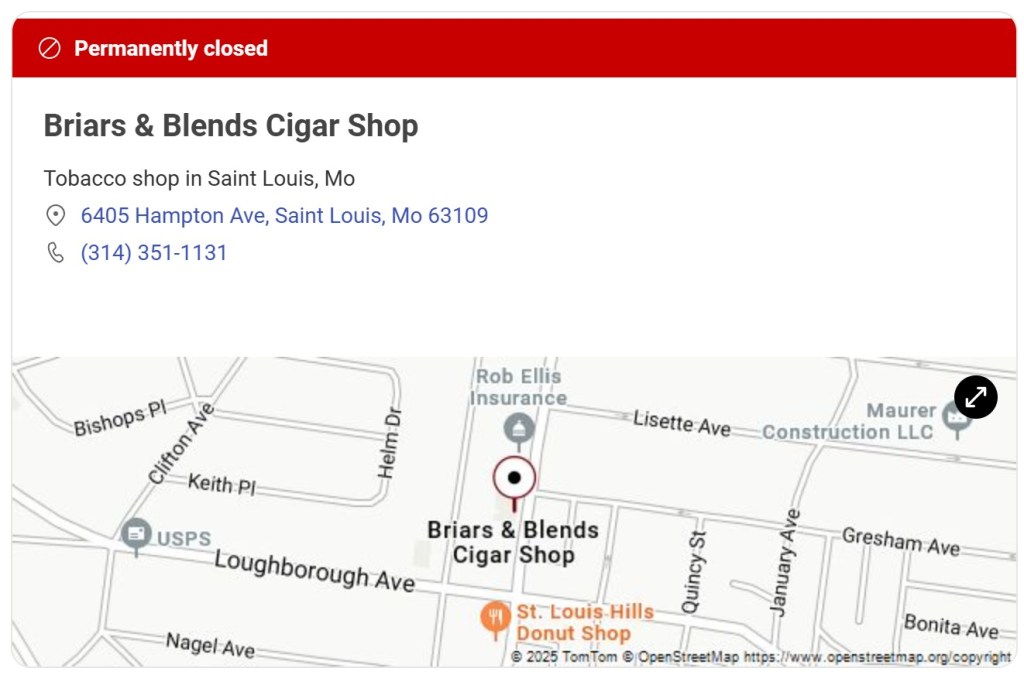
Next I wanted to find out anything I could about Briars ‘N’ Blends tobacconist. The only “hit” that I felt (oh no, another feeling) good about was one for Briars and Blends Cigar Shop of St. Louis, Missouri.
“Briars & Blends Cigar Shop LTD was founded in 1990. At this location, Briars & Blends Cigar Shop LTD employs approximately 3 people. This business is working in the following industry: Tobacco stores. Annual sales for Briars & Blends Cigar Shop LTD are around 807,000.
The “Permanently Closed” was saddening (ahh, another feeling). The date fell later than the 1970s-1980s referred to by Brian Telford as when his shop arranged to have Comoy’s stamp pipes for his shop, but it was fairly close. The 1990 were the boom years of the most recent cigar movement.
So, what does this tell us about the Briars’N’Blends bulldog? It is probably a Comoy’s 409 shape from the 1990s, made in London, England and was about to get a restoration.
The Restoration
I was really impressed by the grain of this pipe and was eager to get it restored.
The first task was to submerge this stem into the Briarville Pipe Stem Oxidation Remover. Before I could do that though I wanted to clean the airway and lightly sand the outermost oxidation from the stem. The airway was surprisingly clean. The calcium deposits were scraped with a sharp pocket knife and the stem sanded with a 320 grit sanding sponge.
I placed a pipe cleaner in the tenon for ease of removal from the Briarville solution (deox) after an overnight bath.
The ream team was collected. This pipe’s bowl was wider and would require the #2 and #3 PipNet blades.
There was not very much cake accumulated in the tobacco chamber and it was quickly removed.
Below is a photo of the reamed chamber.
The chamber was sanded with 320 sandpaper wrapped around a wood dowel. The bare briar showed no signs of any damage from use.
The rim had light deposits of smoking residue or lava and showed no signs of charring.
The lava was moistened with saliva and allowed to soften for a couple of minutes. The rim was then lightly scraped with a sharp blade of a pocket knife.
The shank was cleaned using 99% ethyl alcohol cotton swabs and bristle pipe cleaners. It was also quite clean. The first cotton swab below, blackened, was due to debris dislodged from the reaming and did not indicate a grimy airway.
The stummel was taken to the sink and scrubbed with a nylon brush and undiluted Murphy Oil Soap. The soap was rinsed with warm water and the stummel dried with a cotton hand towel.
Below is a photo of the stummel after being scrubbed. I thought that there may have been a clear coating on the briar, but it must have just been a layer of wax.
I wiped the stummel with a make-up pad wetted with 99% ethyl alcohol. Only a slight color came off the briar, probably some of the stain used in the manufacture of the pipe.
The next day, I removed the stem from deox. I vigorously rubbed it with a coarse shop rage. This rubbing helps to remove oxidized vulcanite and is left on the rag.
I ran a pipe cleaner through the airway to rid the stem of any deox solution. As it dried, there remained a stubborn layer of oxidized material on the stem. I wonder if it is time to replace my Briarville solution or, if this stem was just that badly oxidized.
To remove the oxidation I used Soft Scrub cleanser on make-up pads. The stem was energetically scrubbed with these pads and produced a good deal of oxidized vulcanite.
And more oxidized vulcanite.
Finger cramping from scrubbing, I switched to some sanding of the stem. I wanted to keep the joint where the stem met the shank crisp so I sanded the stem intact. I wrapped the shank with masking tape to protect the briar.
The freshly sanded stem was coated with mineral oil to keep further oxygen away. It was looking much better.
To deal with the bite marks I painted the dents with the flame of a lighter. The heating and expanding of the rubber can sometimes reduce the dent. It had little effect. Rather than filling these dents with cyanoacrylate, I decided to file the whole area flat and smooth. The stem material was thick enough and the dents were not severe.
In the below photo you can still see the slight indentations from the tooth dents but it was very minimal. The stem was sanded with a series of sanding sponges from 320-1500 grit. Between each sponge the stem was rubbed with mineral oil and wiped with a paper towel.
The sanding continued from 2000-3500 grit with the same oiling and wiping.
The stummel did not really need much sanding. There were no fills and only one little dent or pit which was so close to the shape number that I thought the risk of obscuring the stamping was worse than the pit. The stummel was sanded with a series of sanding sponges from 600-3500. I am not sure why the 3500 sanding sponge didn’t make the photograph, shy perhaps. The stummel was wiped with an alcohol wetted make-up pad between sponges to remove sanding debris. I should add that I did not sand the shank where there were any stampings. Only the bowl and lower shank was sanded.
The stummel was then coated with Before and After Restoration balm while the stem was coated with Before and After Restoration Balm while the stem was coated with Before and After Hard Rubber Balm. These products remained on the pipe for about two hours as I had to go fishing for my evening attempt at catching catfish.
Upon my return, the Restoration Balm and the Hard Rubber Balm were hand buffed and wiped away with an inside out athletic sock.
The pipe was taken to the buffer for several coats of carnauba wax. After waxing I ran the flytying bodkin around the beading grooves to remove accumulated carnauba wax.
The final job was to hand buff the entire pipe with a microfiber polishing cloth.
I think that this Briars ‘N’ Blends Bulldog is a gorgeous pipe. The shape is great to look at and it has a wonderful feel in hand. The briar grain is truly beautiful with the tiger-stripe shank and flame grain bowl. The walnut color is darker but still is contrasted well. The glossy black vulcanite polished-up better than I thought it would and the 1/4 bend curves of the stem give the pipe a smooth flowing appearance. This pipe will serve a new owner for many years to come and shows why Comoy’s has a look all its own.
The dimensions of this Blends’N’Briars Bulldog are:
Length: 5.51 in./ 139.95 mm.
Weight: 1.38 oz./ 39.12 g.
Bowl Height: 1.60 in./ 40.64 mm.
Chamber Depth: 1.31 in./ 33.27 mm.
Chamber Diameter: 0.76 in./ 19.30 mm.
Outside Diameter: 1.61 in./ 40.89 mm.
I do hope that you have found something here useful to your own pipe care, maintenance or restorations. If you like this sort of thing, please click the like and subscribe buttons. Thank you for reading the ramblings of an old pipe lover.
Loading…
Below are some photos of the finished Blends’N’Briars Bulldog.
I like big pipes. No, it’s not the first line from a Sir Mix-a-lot parody. I can’t say I like to smoke them but I love the way they feel in my hand. The word substantial comes to mind. I also like the general hand warming powers they emit – it is winter. Anyway, this pipe has all of those characteristics. Well, maybe not the emitting heat one. I haven’t smoked this pipe but I’m sure it would excel at it. I am not sure sure when this bountiful beauty arrived due to my less than good record keeping but it has been patiently waiting in the queue for some time. The pipe is stamped with a winged crown over BARONET over BRUYERE. Offset to the right is 906EX over ITALY. Below are some photographs of the pipe as it appeared prior to receiving any work.
For comparison purposes I photographed her with a Peterson of more standard size.
The Baronet was in need of a good deal of attention. The outer surfaces had the expected dirt and grime associated with a well used pipe. The tobacco chamber needed to be reamed and inspected for any heat damage. The airway is nearly always expected to be yuck filled. The stem on this pipe seemed to be the most in need of attention. Previous experience with Savinelli pipes lead me to expect the oxidation removal from this stem would be troublesome along with some reconstruction of the button.
Background
Baronet is not a brand nor line which I had heard of. The stampings did look very familiar though. I first went to pipephil.eu, there I found Baronet without any trouble.
The stampings on the Baronet in hand looked remarkably similar to the top two photos from pipephil.eu. I could not make out any stamping on the stem but that could just be to the state of heavy oxidation on the rubber. The crown of both photos lacked the wings which I thought were quite apparent on this Baronet.
Next I searched for “Baronet” on pipedia.org. There I also found a result immediately though not what I was expecting.
“The following pipe, marked Baronet with *** underneath, perhaps a grading system, was made in Denmark. Baronet is also a Savinelli Sub-brand, as well as a GBD brand. This one being made in Denmark, is apparently a different brand altogether.”
Example and details, courtesy Doug Valitchka
(Baronet – Pipedia). The same name, similar shape, similar rustication but from a country of manufacture which was not supported by stamp evidence. Again the reference to Savinelli existed, so that is where I went next. The link from the above entry led me to the following.
Savinelli made sub-brands, seconds & order productions
(Savinelli – Pipedia). The above list continues for quite a few more names. A total of 114, I counted. Baronet is number 5 on the list. Savinelli is a prolific producer of pipes, I’d say. This is wonderful if you are in need of a Savinelli pipe as the number of options is truly amazing and can fit nearly any style or budget. From a research perspective it is not so wonderful. Finding detailed information on an individual name is daunting.
I tried my luck at searching via Google for “Savinelli Baronet”. I thought, “this will never work” and was quickly proven wrong. The first result was the following:
(https://www.smokingpipes.com/smokingpipesblog/single.cfm/post/our-favorite-savinelli-shapes). Perhaps the pipe was so big that the inclusion on the chart would have made it aesthetically unpleasing to the eye. Okay, I completely made that up. What was certain was that this was a pipe made by Savinelli, It was darn big and received the EX suffix due to that and that it was probably made in the 1970-80s based solely on the amount of oxidation on the stem.
The Restoration
The Baronet made her way to the workbench. I wondered about the word, “Baronet”, isn’t Baroness the correct feminine. I had to search for that. According to AI Google: “”Baron” and “baroness” are the correct terms, with “baroness” being the female equivalent of “baron”; “baronet” is a separate, lower ranking title in the British nobility system, where a baronet is addressed as “Sir” and a female baronet as “Dame”.” I learned something new.
The ream team was gathered and given a rousing, morale lifting speech.
The PipNet with it’s #2 blades lead the assault against the cake.
The #3 blades followed and served the cake a rounding defeat. The tobacco chamber was sanded to bare briar and proved most unphotogenic (kind of like photographing a black hole) but it showed no signs of heat damage.
Next came the cleaning of the stem.
The outside of the stem was far worse than the airway. A few 95% ethanol dipped bristle pipe cleaners and the interior was clean.
The exterior of the stem was lightly sanded with a 320 grit sanding sponge to remove the worst of the surface oxidation and the tooth dents were lightly filed.
A pipe cleaner was slipped into the tenn to act as a hanger and the stem was introduced to the Before and After Extra Strength Deoxidizer. It spent 6 hours in the solution.
The next task was dealing with the airway of the shank. The Kleen-Reem shank drill helped clear out a good deal of the tar but many cotton swabs, bristle pipe cleaners, and alcohol/nylon shank brush scrubs were required to exorcize the tar demons from the shank.
The lava flows on the rim were a concern. Lava on a rusticated rim can be problematic to remove without altering the rim. I thought maybe it could be removed during the stummel scrub.
The scrub was carried out at the sink with undiluted Murphy Oil Soap and a nylon scrub brush.
I spent extra time working the rim with the scrub brush.
The soap was rinsed with warm water and the stummel dried with a cotton hand towel. I was not pleased with the resulting scrub. The rim, especially, was still fouled with lava. I decided on a second scrub but with a brash brush. This removed more grime.
Back at the workbench the rim looked better but still not great.
The stummel was definitely clean but now showed serious signs of wear with missing finish.
I decided to file the rim and work towards a generally smooth finish but with spots with rustication.
I like what I saw.
The inner rim was beveled using a 2 inch round plumbing cap wrapped with 220 sandpaper. The outer rim was filed to a matching bevel.
The rim and bevels were sanded with a series of sanding sponges. I really liked the look of the smooth rim with a few spots of rustication.
Now to restore that black dye to the stummel while preserving the non-rusticated areas. I opted to use a product intended for use in the painting of miniatures for gaming – Vallejo Liquid Mask. The Liquid Mask applies as a thick liquid and dries clear. It is a rubber-like product which can be rolled or peeled off without damaging the covered surface.
I applied it to the rim, stamp area and shank end and allowed it to dry.
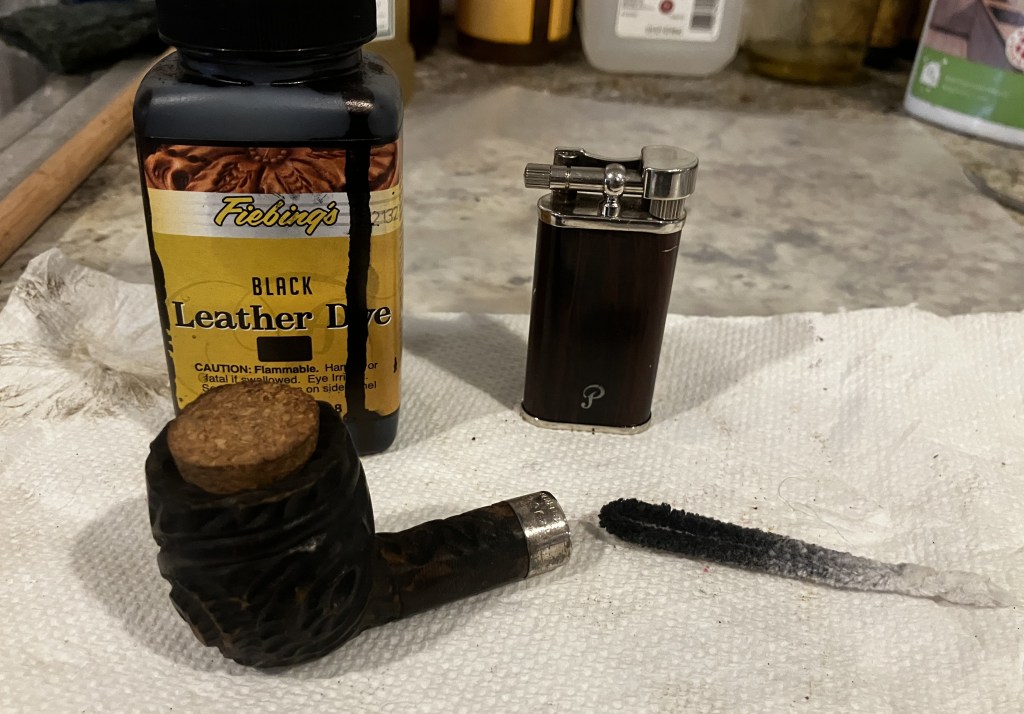
The stummel was taken to the kitchenette and an area was prepped for dying. This required a paper towel covered surface, Fiebing’s black Leather Dye and folded pipe cleaner applicator and a lighter. Oh, and a cork for the tobacco chamber opening which stops dye from entering the chamber and provides a handle.
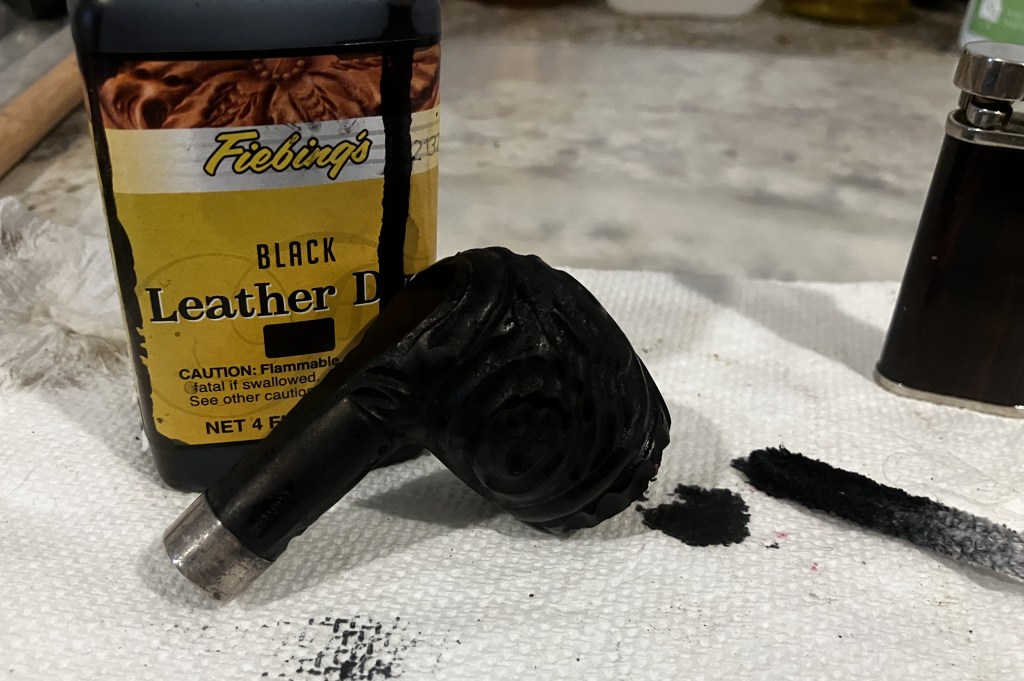
The dye was applied and flamed with the lighter. This flaming fixes the dye to the briar and burns off the alcohol solvent of the dye.
A second coating was applied and flamed.
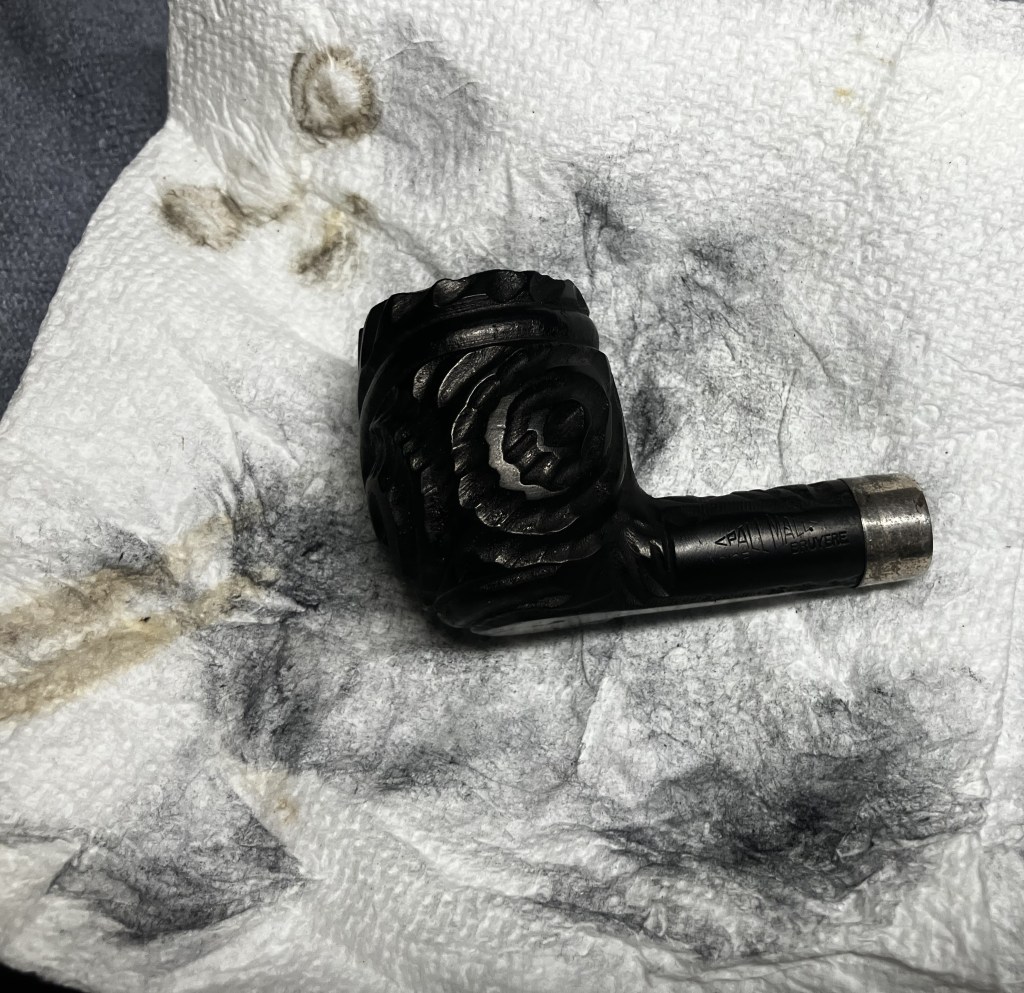
The result was a nice fresh black finish. This was allowed to dry for an hour.
The mask was rolled from the surface. It did a finance job of keeping the black dye from affecting the underlying briar, as seen in the photos below.
While the dye was drying, I removed the stem from the Deoxidizer and allowed excess solution to drip back into the jar.
The remaining solution was absorbed by a coarse shop rag during a vigorous rubbing of the stem. This removed some of the newly loosened deoxidized rubber.
The stem was looking better but I could still see areas of brown.
The stem was worked with make-up pads drizzled with Soft Scrub cleanser. This stem had a great deal of oxidation and it seemed to have worked its way deep into the vulcanite.
Below is a poorly focused shot of the tooth chatter that remained after filing and sanding the area..
I was still unhappy with the oxidation removal after sanding the stem. Back into the Before and After Deoxidizer for another hour. The drip dry and rubbing with the coarse shop rag followed. After round two there was still some slight browning. I hoped that the subsequent sanding and micro-meshing would remove this.
The tooth chatter area on both the top and the bottom of the stem were given a coating of black cyanoacrylate (CA, super glue). This was spritzed with a CA drying accelerator.
I must have been getting tired of working on this stem as I failed to take many photos. The cured CA was filed then sanded smooth. The stem was then sanded with a series of sanding sponges from grit 400–3500. Between each sponge the stem was rubbed with mineral oil and wiped with a dry paper towel.
The sanding was followed by a series of micro-mesh pads 4000-12000. Between each pad the stem was rubbed with Obsidian Oil and wiped with a paper towel.
There still remained areas of light browning from oxidation. I had chatted with Mark Hoover, the creator of the Before and After products, about how he uses the Before and After Extra Strength Deoxidizer. He said that he usually gives the stem a 4 hour soak followed by a buffing with a recycled t-shirt where he rubs hard. This was then followed by Before and After Fine Polish hand rubbed with t-shirt material. I figured I would give that a try. Many applications and a great deal of rubbing did indeed reduce the browning significantly.
The stummel was waxed using Renaissance Micro-Crystalline Wax applied with a baby toothbrush. The waz was allowed to dry for a few minutes and was taken to the buffer and buffed with a clean flannel wheel.
The stem received several coats of carnauba wax. The entire pipe was then hand buffed with a microfiber polishing cloth.
I am impressed by several parts of this pipe. It is a very large specimen with great hand feel and very ample bowl size. I love the shape with its massive yet graceful look. The black rustication works nicely with the areas of smooth lighter colored briar. I am also impressed by what a pain if the arse it was to get the stem looking acceptable. I can’t say that I am happy with the deoxidizing of the stem but I am calling it quits. In normal room lighting the stem looks great. Bright lighting however, allows the areas of brown oxidation to shine through. I was defeated by this stem and called it done. The dimensions of the Baronet 906EX are:
Length: 6.14 in./ 155.96 mm.
Weight: 2,43 oz./ 68.89 g.
Bowl Height: 2.67 in./ 67.82 mm.
Chamber Depth: 2.17 in./ 55.12 mm.
Chamber Diameter: 0.81 in./ 20.57 mm.
Outside Diameter: 1.62 in./ 40.89 mm.
I do hope That you have found someThing here useful to your own pipe care,
or restorations. If you like this sort of thing, please click the like and subscribe buttons. Thank you for reading the ramblings of an old pipe lover.
Loading…
Below are some photos of the completed Baronet 906EX pipe.
A few years ago when I started the hobby of pipe restoration I picked up a Linkman’s Dr Grabow 9733A with an estate pipe auction. It was in decent shape, if memory serves. For whatever reason I loved the shape and the feel of that pipe in my hand. It was a bit heavy for a clincher and it did have a stinger. Those are two qualities that I now pretty much avoid. Below is a recent photo of that old Linkman.
Well, the other day while looking through eBay auctions I came across a sister, as Sascha Mertens (A German friend and pipe restorer of great skill and graciousness) calls them. There up for auction was a Linkman’s Dr Grabow 9733. I can’t say if she was the older or younger sister but, I was as smitten with her as I was her sister. Fortunately for me, there do not seem to be many folks interested in collecting these curvaceous darlings. I did have to wait out the auction and with a winning bid south of $25 I had successfully started the adoption process. A few days later the pipe arrived from Wernersville, Pennsylvania to the wilds of southeast Nebraska. Upon opening the package I was graced by the following new member of my pipe family. Her stamps read: LINKMAN’S over Dr. Grabow on the left shank, 9733 De Luxe over BRUYERE on the right. The top is stamped with a gold shield and the bottom with PAT. NO. over 1896800. The stem also had a white “propeller” logo.
The pipe had some scars, dents and peeling finish and hygiene issues yet structurally she was solid with precise fitting mortise and tenon and was in wonderful shape for a 90ish year old pipe. I was looking forward to spending some quality time with this old piece of briar. There was a substantial queue in front of her to reach the work bench and she did have to wait her turn. Okay, I pulled some strings and got her past a bunch of others. Don’t tell them that though…
Background on Linkman’s Dr Grabow pipes
This story goes back to 1898. No, this is not another of my Peterson pipe reflections but it does begin about the same time that Charles Peterson was changing the pipe smoking world with his wonderful patents. In one of my very first blogs I wrote about the restoration of an MLC pipe. “The stamp that I could not make out on my pipe was the MLC. This stands for Mary Linkman & Company. This is the same company formed by Louis B. Linkman, the originator of Dr. Grabow pipes. In 1898 Linkman and August Fisher started a small business making pipes. The business grew and, “in 1907 M. Linkman & Company was incorporated with Louis B. Linkman as president, August Fisher, vice-president…” (https://pipedia.org/wiki/M._Linkman_%26_Co.). If you would like to see a very early blog about the MLC Hell Maria here is that link.
So, two youngsters started up a pipe making company at the turn of the last century. It doesn’t end there, friends. I wrote the following in a blog about another Linkman’s pipe: “ “BACK IN 1898, two ambitious young men reached the momentous decision to go into business for themselves. They were Louis B. Linkman and August Fisher. From the time they were in knee pants they had worked for a pipe jobber in the mid-west.” (https://pipedia.org/wiki/M._Linkman_%26_Co.). These two young entrepreneurs were joined by a third, “Anton Burger, who had also been employed by a pipe jobber in the mid-west, approached them and was taken in as a partner. M. Linkman & Company proceeded as a partnership; the business developed rapidly through the untiring efforts of these men in producing quality pipes and rendering good service to their customers.” (https://pipedia.org/wiki/M._Linkman_%26_Co.). The company eventually
came to be known as Dr Grabow.”
According to Tobaccopipes.com “The birth of the Dr Grabow smoking pipe is simple enough. It started off when Dr Grabow himself and his acquaintance Dr Linkman regularly visited the local pharmacist at Brown’s Drug Store in Lincoln Park Chicago. Dr Linkman was on the lookout for a doctor’s name to Christian an innovative line of pipes in order to mellow out the smoking apparel’s smoggy image. He asked Dr Grabow to allow him to use his name to which he agreed and the name has stuck since then. Linkman continued to manufacture his Dr Grabow pipes until 1953.
The earliest of these exclusive pipes were stamped both with Linkman’s and Dr Grabow. They included a propeller emblem that was white in color at the top of the mouthpiece. Linkman’s pipes are also stamped with their own four digit code. This code indicates their model and shape. For example, the PRE – 1944 model names included the “Special”, “Supreme” and “Deluxe” versions of Dr Grabow’s pipes.
In 1944 the white propeller emblem was replaced with a white spade, a move that heralded the introduction of Linkman’s new Dr Grabow pipes. All of the newer entries included most of the earlier favorites as well as “TRU-GRAIN” and “SELECT”. Later models of Dr Grabow pipes were described as Imported Briar.” (https://www.tobaccopipes.com/dr-grabow-history/)
Below I show documentation/definition of the stamps on the Linkman’s 9733.
De Luxe stamp – This excerpt from pipephil.eu shows a tremendous amount of information in a small blurb. Which indicates a slightly bent Dublin shape rather than the bent bulldog of the 9733.
DE LUXE begins with 92, 97, 98 – Two Dots, Circle or Shield on shank sometimes. Series 92 = Very dark reddish wine, solid looking finish, yet undefined, possibly from 1938 or slightly later era. Series 97 = Natural Variegated Grain Finish, c1937. Series 98 = yet undefined, Dark Brown appearance? Series 99 = Dark Walnut Finish, c1937.
This pipe has the “97” and “Shield”. The second two numbers of the 9733 refer to the shape of the pipe. The 97 with the “Natural variegated Grain Finish” looks like a good fit for a description of this pipe.
Below is another Linkman’s line, the Courtleigh. It has a different first 2 numbers, “88” followed by the “33”. The 33 here is obviously the same shape as the De Luxe 9733
PAT. NO. 1896800
“1932, April 13th, Linkman applies for his spoon/tool/nicotine-saliva trap stinger, Patent #1896800.” and
“1933, February 7th, Linkman (62 years old) receives patent #1896800 for threaded stem”
The term “Bruyere” is French for heather or what we call briar. The terms Bruyere and “Italian briar” were used prior to the Second World War by numerous pipe makers. During the War there was an interruption to the supply of briar from the Mediterranean. This led to manufacturers attempting to use various alternatives. There have been documented 9733 and 9733A pipes stamped with “WEST COAST BRIAR”.
Example: “I did finally get a 9733 stamped West Coast Briar, but it’s a real mess — someone (not me) severely distorted the stem with pliers in an attempt to remove it. This damaged the propeller logo on the stem and sort of actually TWISTED the stem a bit, but it’s the only WCB I have, so it has to do until a better example comes along.
Mine has WEST COAST BRIAR in block letters on the right side along with the number, a script “Dr. Grabow” over a block letter DE LUXE on the left and the SHIELD emblem on the top of the shank. The usual patent number for the cleaner is on the bottom of the bowl.””
This most likely would have been Manzanita. After the War many manufacturers used the term “Imported Briar” indicating that the wood used was indeed briar.
From the above stamps I can say with a good level of certainty that this pipe was made between 1933-early 1940s at the Chicago Dr. Grabow factory.
The Restoration
As usual the Linkman’s got a clean denim piece for work surface protection. I must have been in a hurry to work on this pipe because I wasted no time in seeing how dirty the shank was. Yes, it was pretty dirty. I used 95% ethyl alcohol on cotton swabs to soften the smoking residues in the airway.
A dental scraper was then used to scrape as much tar from the airway as possible. The more I can get out via scraping the less I have to scrub.
After several minutes of airway scraping and scrubbing I decided that maybe I should do this restoration the way I do most others. Normally I start with the reaming, move to the stummel scrubbing then work on the shank’s airway. I have no idea why I broke from this routine, maybe just excited by this pipe. I returned to doing things “by the booK” and assembled the reaming tools.
The PipNet with the #2 blades did the majority of the reaming. The SmokingPipes scraper and the General were used to finish us the reaming.
The 220 sandpaper wrapped around the wood dowel was used to sand the chamber to briar. The chamber showed no signs of any damage from excessive heat or any other mistreatment. I further sanded the tobacco chamber with 320 sandpaper wrapped around a Sharpie marker. The rim of the pipe remained dirty with a light lava deposit.
The rim was wetted with saliva and gently scraped with a sharp pocket knife.
The stummel was then taken to the sink where it was scrubbed with undiluted Murphy Oil Soap and a medium stiff toothbrush. The soap was rinsed with warm water. At this point I thought that I would try scrubbing the shank airway with a shank brush and Dawn dish soap. The airway was thoroughly rinsed with warm water and scrubbed with the shank brush during the rinsing. Upon returning the stummel to the workbench this is how it looked.
I wetted a make-up pad with 95% ethyl alcohol and gave the stummel a wipe. The remaining clear coat seemed susceptible to alcohol. It must have been a light shellac.
After a second make-up pad with alcohol the shiny spots of the stummel were gone.
I looked over the clean surface of the stummel and saw one pit where the fill had loosened with the scrubbing. I picked the remaining old filler from the pit. This would get filled with cyanoacrylate (CA, super glue) and briar dust later.
I returned to the cleaning of the airway. I was hoping that the use of the water, soap and rinsing had softened the tar and yuck (Yuck – a highly technical term for hardened smoking residue) in the airway. I poured 3-4 ml of 05% ethyl alcohol into the chamber and allowed it to flow into the shank. I scrubbed with this alcohol and a shank brush to loosen and dissolve the yuck. I then poured the remaining alcohol into a medicine cup. The color was not bad. Apparently my out of sequence scrubbing had served a purpose after all.
I continued to scrub and clean with alcohol dipped cotton swabs until the airway was clean.
Once satisfied with the cleaning of the airway I turned to the filling of pits on the stummel. I only found the one pit which I had already picked free of old fill.
This one pit was filled with a dab of brown CA applied with a fly tying bodkin. I then quickly pressed briar dust into the wet CA. The CA set-up almost immediately with the briar dust and the subsequent fill was sanded smooth.
I did find some dents that I did not want to fill with CA and briar dust on the top of the shank and the front of the bowl. To address these I thought that I would try to raise the dents using steam. I heated the clothes iron on high, selected a soft cotton cloth and a pipette with tap water.
I wrapped the dented area with the cloth, applied several drops of water and pressed the iron to the wetted cloth. The dents on both the shank and the bowl front were raised beautifully. I love it when things work like they are supposed to.
Next was the sanding of the stummel. I first wanted to protect the stamps from any damage by taping over them with painters tape.
Doh, forgot to tape that logo stamp. I did tape it, then sanded the stummel with a sequence of sanding sponges from 400-3500 grit. Between each sponge I would wipe the stummel with a make-up pad wetted with alcohol to remove dust. This alcohol wiping is hard on smaller taping making me have to retape that logo more than once.
After the sanding the stummel was worked with micro-mesh pads 4000-6000. Again between each pad I wiped with an alcohol wetted make-up pad.
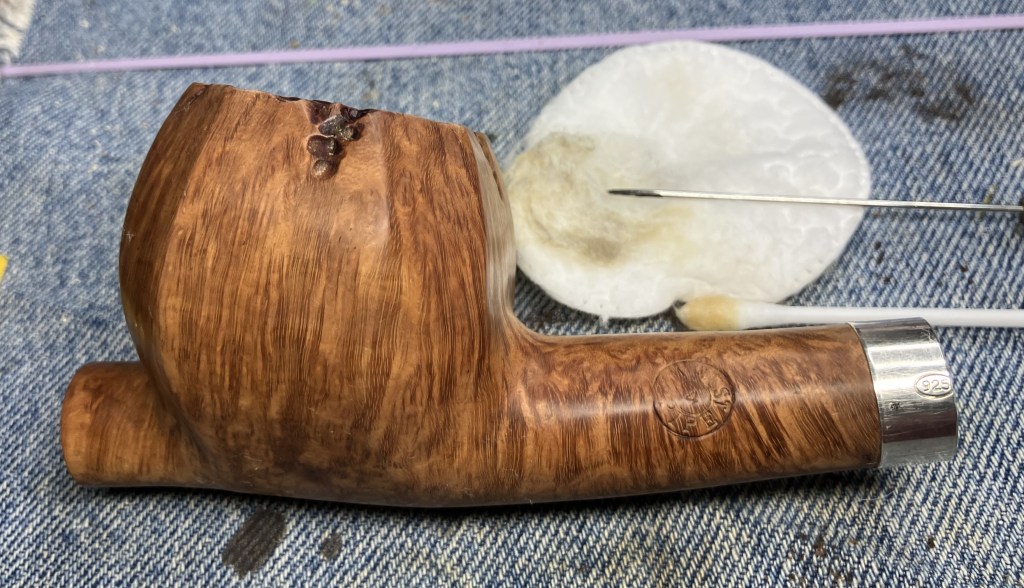
At this point I repainted the logo with Gold Leaf Rub’nBuff.
This is a relatively new product for me. Steve Laug mentioned that I try it in one of our chatting sessions and this was the perfect place for it. I tried to apply it with a cotton swab and made a bit of a mess. I think future applications will be done with a detail paint brush. Anyway, I cleaned up the edges with an alcohol dipped cotton swab and continued micro-meshing with the 800 and 12000 micro-mesh pads.
The stummel was then coated with Before and After Restoration Balm and allowed to sit while I worked on the stem.
I cleaned the aluminum stinger with 95% ethyl alcohol, a magic eraser and pipe cleaners. It looked much better.
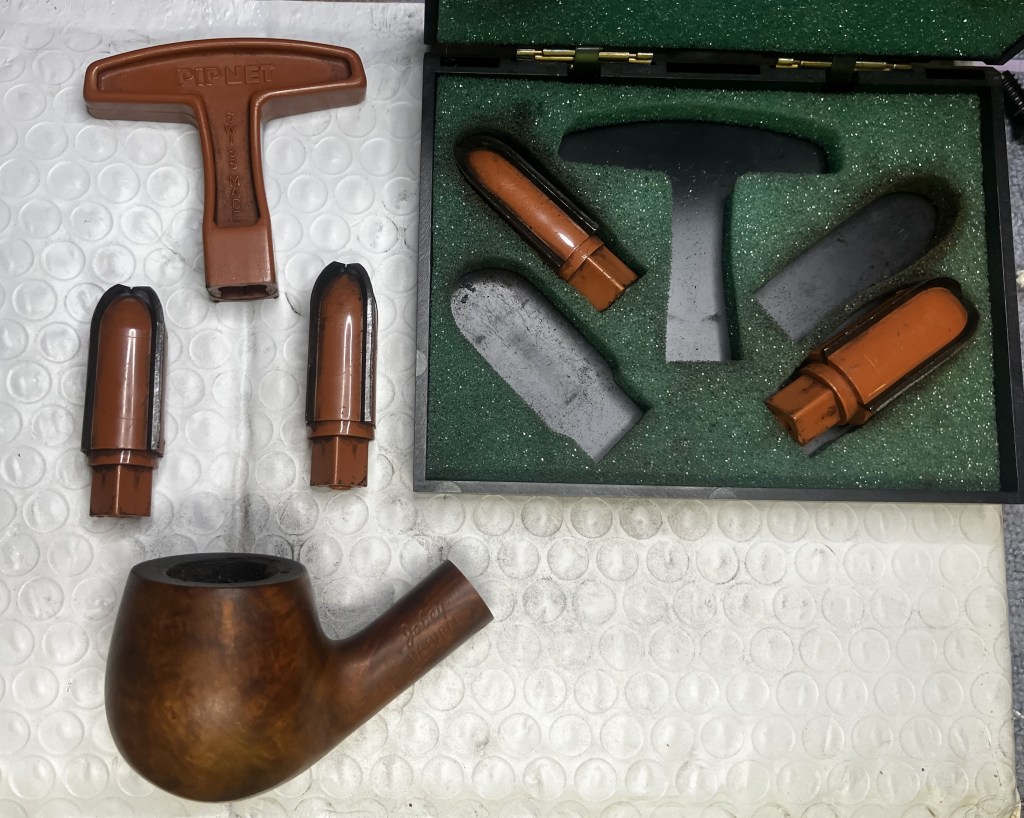
This stem was not typical vulcanite. I could feel the material get slippery with the 95% ethyl alcohol. As the alcohol evaporated it would solidify again. This is more typical of phenolic plastics like Bakelite. Not wanting to dissolve the stem in alcohol I used SoftScrub on make-up pads to clean away the oxidized material. The airway of the stem was cleaned with soap and water with bristle pipe cleaners. Below you can see the make-up pads become less discolored with oxidized material. The stem was then oiled with mineral oil.
I couldn’t wait any longer to see how the stummel was going to look. I wiped the remaining Restoration Balm from it with an inside out athletic sock. Beautiful is the word that came to mind.
I wanted a better handle for holding the stem while sanding it. The stummel seemed to be the easiest holder. I taped over the finished briar.
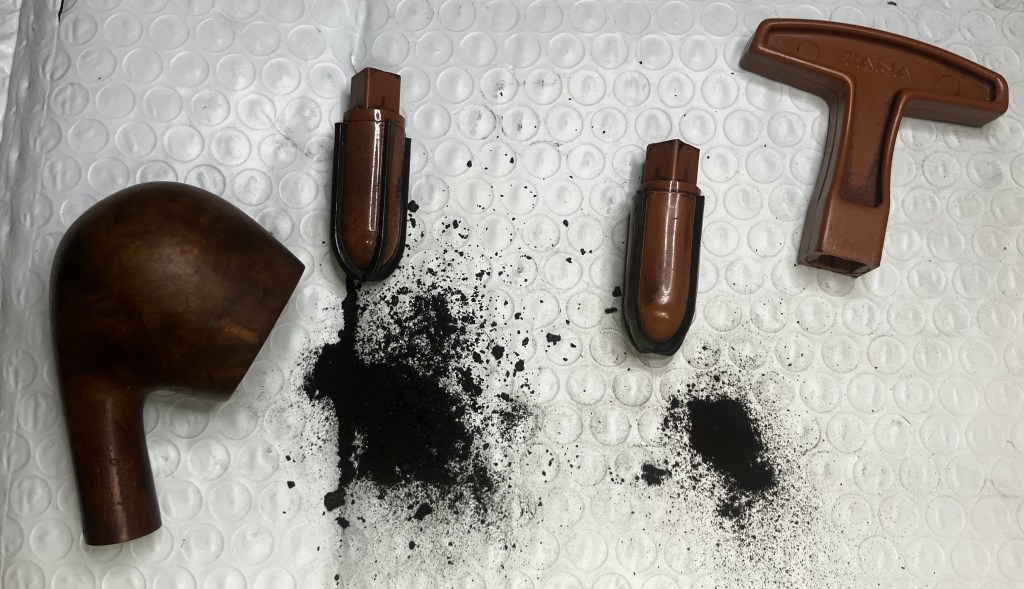
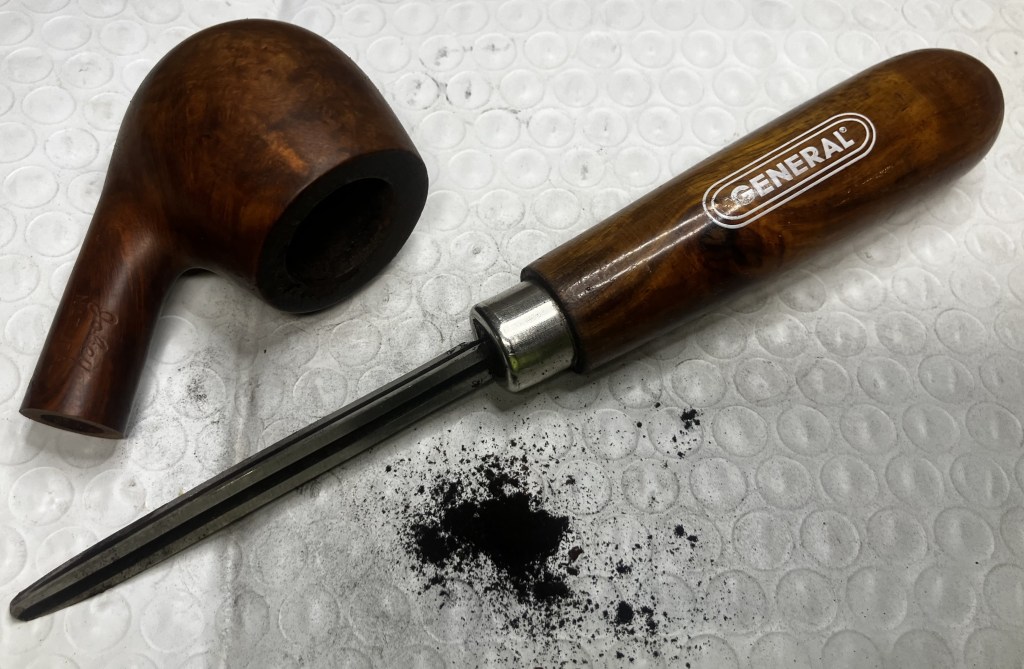
The stem was then sanded with a series of sanding sponges from 400-3500. Between sponges I would apply a bit of mineral oil with my finger and rubbed it over the stem. I would then wipe away the oil and dust from sanding.
I micro-meshed the stem with the 4000-12000 pads. Between each pad I applied a drop of Obsidian Oil to the stem, rubbed it on and wiped with a clean paper towel.
The stem was then polished using Before and After Fine Polish applied by finger and hand buffed using a soft cotton cloth.
After the Fine Polish Before and After Extra Fine Polish was applied and hand buffed.
The pipe was then taken to the buffer for several coats of carnauba wax.
This shape is an absolute favorite of mine. I love the way it hangs from my mouth and feels in my hand. The pipe turned out beautifully. I was very pleased at the way the dents lifted without a trace and the fact that the single pit was a simple fix and nearly unnoticeable was a huge plus. The stem polished up well and accentuates the briar grain wonderfully. I like the lack of the aluminum ring at the junction of the stem and stummel more than her sister. The final photo shows both side by side. Let me know if you agree. I am not sure if I prefer the beading around the bowl over the lack of beading. On Some bull dogs I think the beading is necessary, this one, I am okay without it. Perhaps it is because of the thickness of the shank that makes the beading seem a bit unnecessary. The dimensions of the Linkman’s Dr Grabow De Luxe 9733 are:
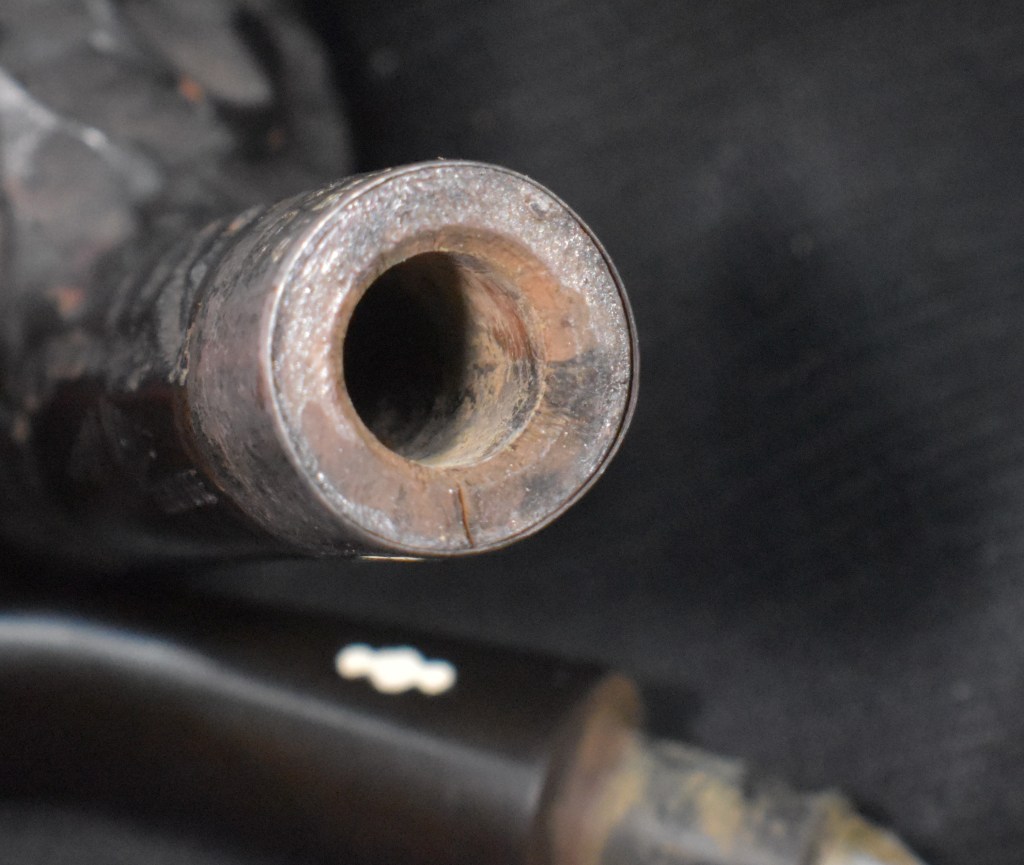
Length: 5.32 in./ 135.13 mm.
Weight: 1.58 oz./ 47.30 g.
Bowl Height: 1.65 in./ 41.91 mm.
Chamber Depth: 1.25 in./ 31.75 mm.
Chamber Diameter: 0.69 in./ 17.53 mm.
Outside Diameter: 1.56 in./ 39.62 mm.
I do hope that you have found something here useful to your own pipe care, maintenance or restorations. If you like this sort of thing, please click the like and subscribe buttons. Thank you for reading the ramblings of an old pipe lover.
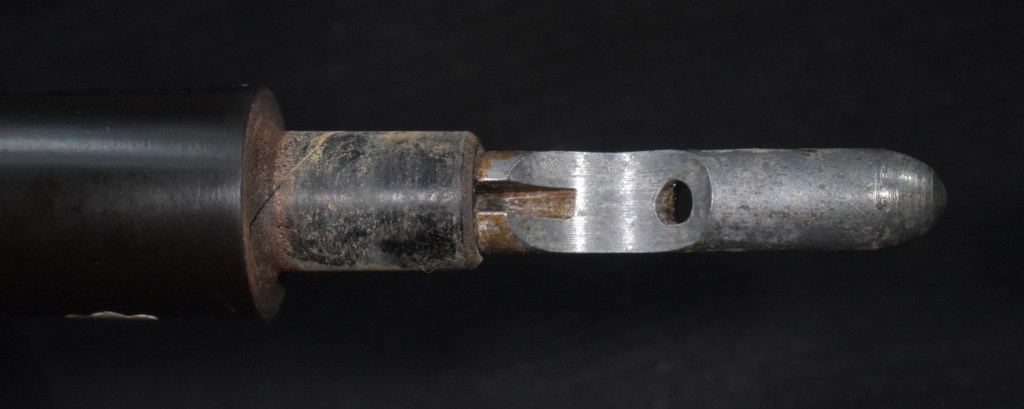
Below are some photos of the finished Linkman’s Dr Grabow De Luxe 9733.
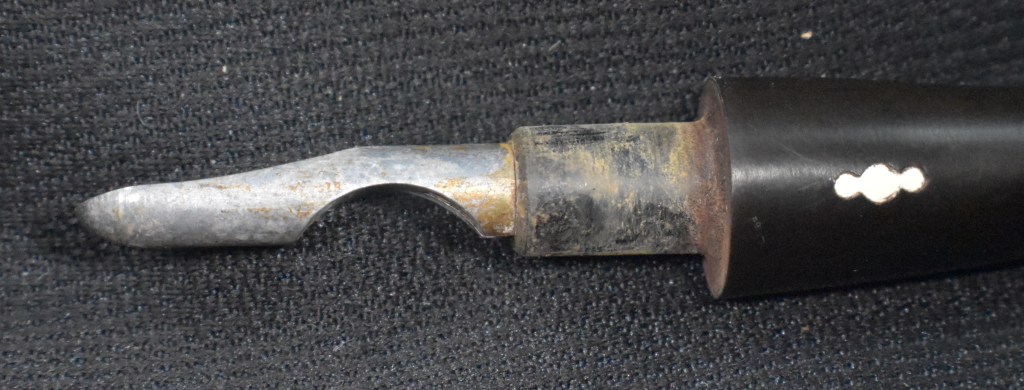
I received this pipe as part of an estate lot. I liked the shape, a healthy sized billiard, and the unfinished briar with grass-like carvings. I thought about what to do with it for several weeks as it was patiently waiting for its turn upon the workbench. Finally it hit me – Realtree-style camouflage. I didn’t have any green Fiebing’s Leather Dye so that ordering of that piece bumped the project back down the list a couple of spots. Finally the green dye arrived and it was time to see if I could make my vision a reality, a Realtree-like (I’m pretty sure that if I add “-like” I can’t be sued by the Realtree folks) reality.
The pipe was free of any markings or stamps on the stummel. There were a couple of marks on the tenon of the stem. I am getting ahead of myself. Let me show you what the pipe looked like prior to working on it.
The pipe had been smoked but very heavily. There was some minimal cake in the tobacco chamber and lava on the rim. The singer appeared as if it had been cut off and it remained firmly attached initially. A pliers was used to loosen and remove it. The stem had some tooth chatter and was oxidized. The stamps on the stem appeared to read ADE over IN ITALY. I assumed the top line should have read MADE. Overall a straight forward restoration of a good quality piece of briar.
Background of the pipe
Due to the lack of any stampings on the stummel and only the MADE over IN ITALY, I was not able to deduce much about the provenance of the pipe. A search of logos on pipephil.eu did not turn up any similar stamings on stems. I like to imagine the history of the pipe as a training piece used by an apprentice pipe carver. The young carver had mastered the traditional English billiard shape and had impressed his Master Carver with the stummel. The Master then asked him to practice stamping a stem. Upon doing so revealed that he needed more practice. Then the Master carver assigned him the task of carving the briar which he did with some success. The master congratulated him on his efforts but was unwilling to allow the shop name to be stamped on the pipe as the young apprentice failed to leave a flat surface for such a stamp. The young apprentice then received a quick smack to the back of his head and heard a few choice remarks about his inexperience and lack of functional brain cells in his native Italian. It’s my imagination and I’m sticking with it!
The restoration
As usual I started with a clean piece of denim on the workbench.
Thi show was substantial and required both the PipNet #2 and #3 blades. Given, there wasn’t much for them to scrape out but, they nevertheless gave it their all. The chamber was sanded with 220 sandpaper wrapped around a wood dowel. There was no damage in the tobacco chamber and I could actually see the lathe marks from the original turning of the stummel.
Next came the airway cleaning of the shank. This was accomplished using folded over bristle pipe cleaners dipped in 99% isopropyl alcohol/
After the shank was cleaned the stummel was scrubbed with Murphy’s Oil Soap and a medium stiff toothbrush. The soap was rinsed with warm after and the stummel dried with a cotton dish towel. I returned to the workbench and wiped the stummel with a cotton ball dipped in 95% ethyl alcohol to remove anything that the scrubbing failed to.
Next came the cleaning and deoxidation of the stem. I initially sanded it with a 320 sanding sponge to remove the outer layer of hard oxidation and some of the tooth chatter.
The stem was then placed in a tub of water and Oxiclean. I have no idea what the concentration of the solution was as it was one that I had mixed months ago and failed to write the amounts upon the lid.
With the stem soaking in Oxiclean, I turned my attention to the stummel. I had recently received the green Fiebing’s Leather Dye and was looking forward to trying it out. The dying gear was gathered and the work area prepped with a couple layers of paper towels.
I was as surprised as you are about remembering to wear nitrile gloves.
I was actually quick enough to catch a bit of blue flame with this shot. I applied two coats of green and flamed each.
The second coat flamed a bit longer than the first and allowed a better flame photo.
Below is how the green dyed stummel looked after being wiped off with a paper towel.
I returned the stummel to the workbench and wiped it off with a couple of alcohol soaked cotton balls/make-up pads.
And a couple more. In hindsight, I wish I would have kept wiping until I couldn’t remove any green dye. I then started sanding the high area with 320 and 400 grit sanding sponges.
The sanding revealed the underlying undyed briar while allowing the low spots to remain green.
The stem, having spent a couple of hours in the Oxiclean solution, was removed and rinsed with water. I used Soft Scrub on cotton balls to remove the oxidized vulcanite from the stem. Once finished scrubbing I oiled the stem with mineral oil.
The interior of the stem cleaned up quickly with bristle pipe cleaners dipped in 99% isopropyl alcohol. I did not bother cleaning the stinger as I did not figure I would include it as part of the finished pipe.
The stem was sanded using a series of sanding sponges from 600-3500. Between each sponge I would dip the tip of my finger into the mineral oil and rub this over the stem. The excess oil was then wiped away with a dry paper towel.
The process was repeated with micro-mesh pads 4000-12000. The only difference being that I used Obsidian Oil rather than mineral oil between pads.
I lightly sanded the stummel with 1000-3500 sanding sponges. I wiped the stummel with a make-up pad dipped in alcohol between sponges. I micro-meshed the stummel with the 4000-12000 micromech pads wiping with the alcohol dipped make-up pad between micro-mesh pads. When finished I applied a coating of Before and After Restoration balm to the exterior of the stummel and brushed it into the carvings with a baby toothbrush.
20 minutes later I wiped the excess balm from the stummel with the inside of an athletic sock. Twe terry cloth of the sock enabled me to clean the balm from the grooves and polish them quite nicely. The pipe was then taken to the buffer and given several coats of carnauba wax.
The pipe turned out quite well. The green dye is a definite green color. I did not achieve the exact effect that I wanted but that is more due to the nature of the carvings. As I was finishing the pipe I couldn’t help but think this was a great Easter themed pipe. With Easter right around the corner I thought it would make a great gift for my son-in-law who loves straight pipes and I was sure that he would appreciate this billiard. I gave it to him on Easter and he was quite pleased. I have yet to hear how it smoked, though I have little doubt that it was a winner. I do hope that you have found something here useful to your own pipe care, maintenance or restorations. If you like this sort of thing, please click the like and subscribe buttons. Thank you for reading the ramblings of an old pipe lover.
Below are some photos of the finished Realtree-like Italian Billiard.
Happy Easter, Sebastian. Enjoy the new pipe. Love, Dad.