Photographed and written by
John M. Young
A return to working on a Peterson pipe. I haven’t done a Pete restoration since April, 2026 and it feels good to be back with one of my favorite makers. I had never worked on a Peterson poker or tankard as the shape is called by our Dublin friends. This pipe came as part of a pair of Petersons I won in an eBay auction. I remember back in 2022, when I started restoring pipes more seriously, that I never wanted to spend more than $45 on an estate Peterson. Over the past 18 months inflation has really messed with this notion. I see pipes starting at that price and going for far more than I would have ever thought possible. I guess this is just a good time to be a seller and not so much for buyers but the market is what it is. The original listing showed this pipe with its sibling, a 406 prince.
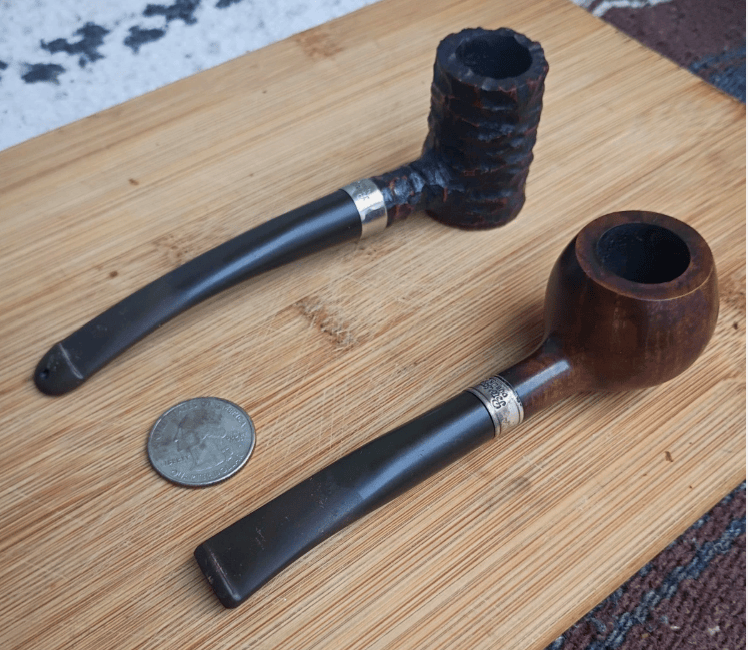
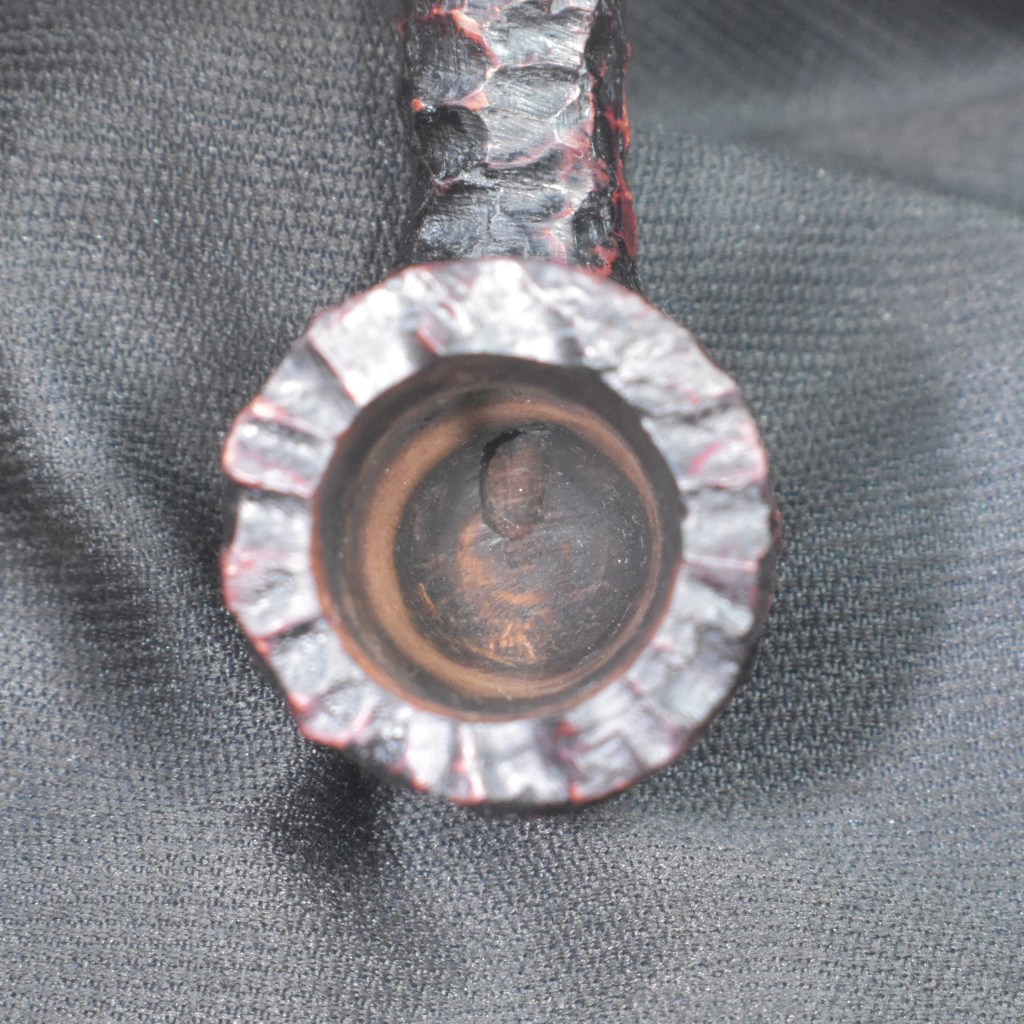
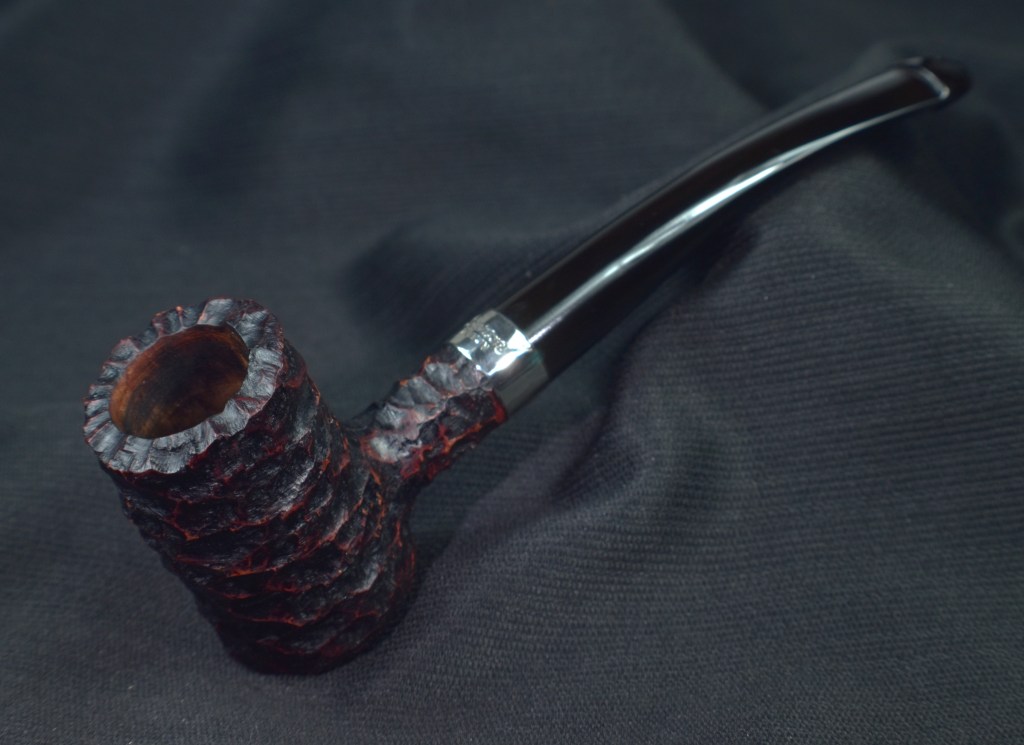
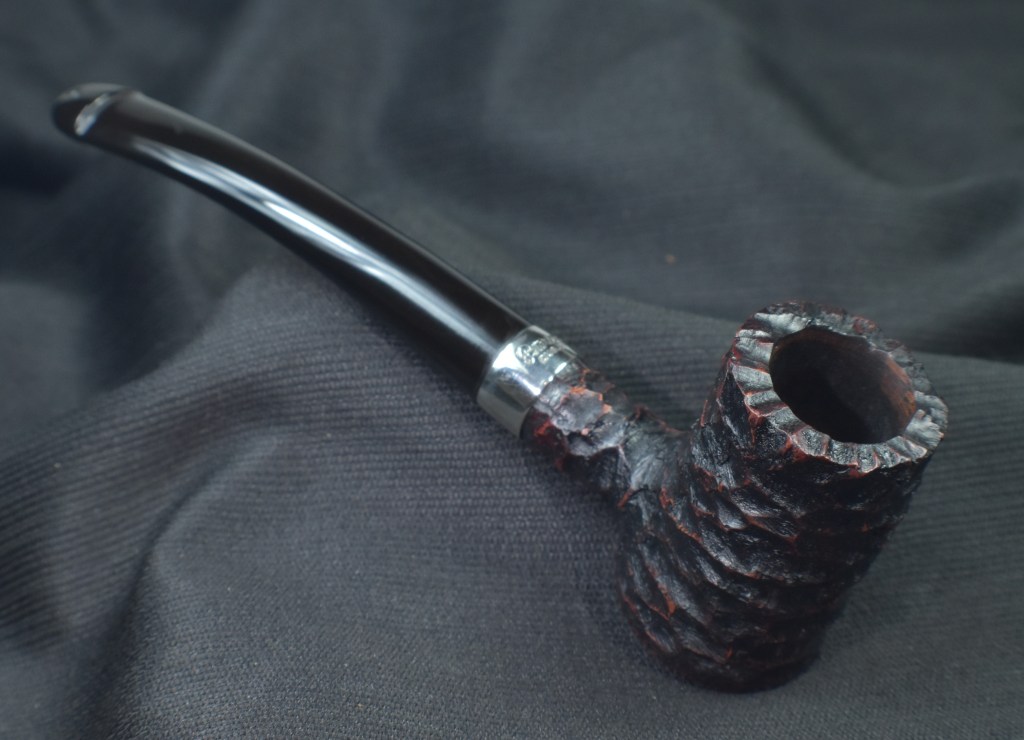
I have restored several 406’s and find that shape lovely but I wanted to do something different. The two pipes made a journey from Oxford, Mississippi to the wilds of southeast Nebraska without trouble. Upon arrival the photos below show the condition of the Peterson Tankard.
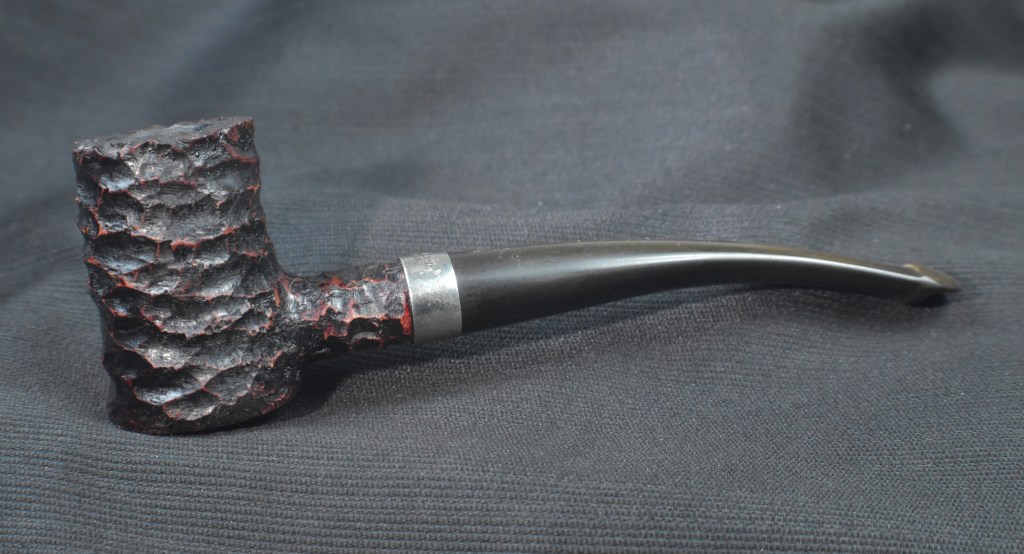
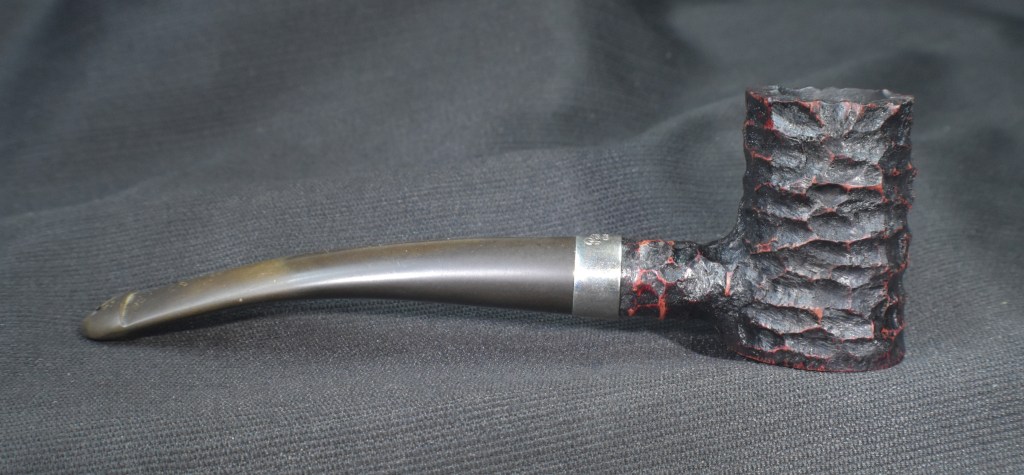
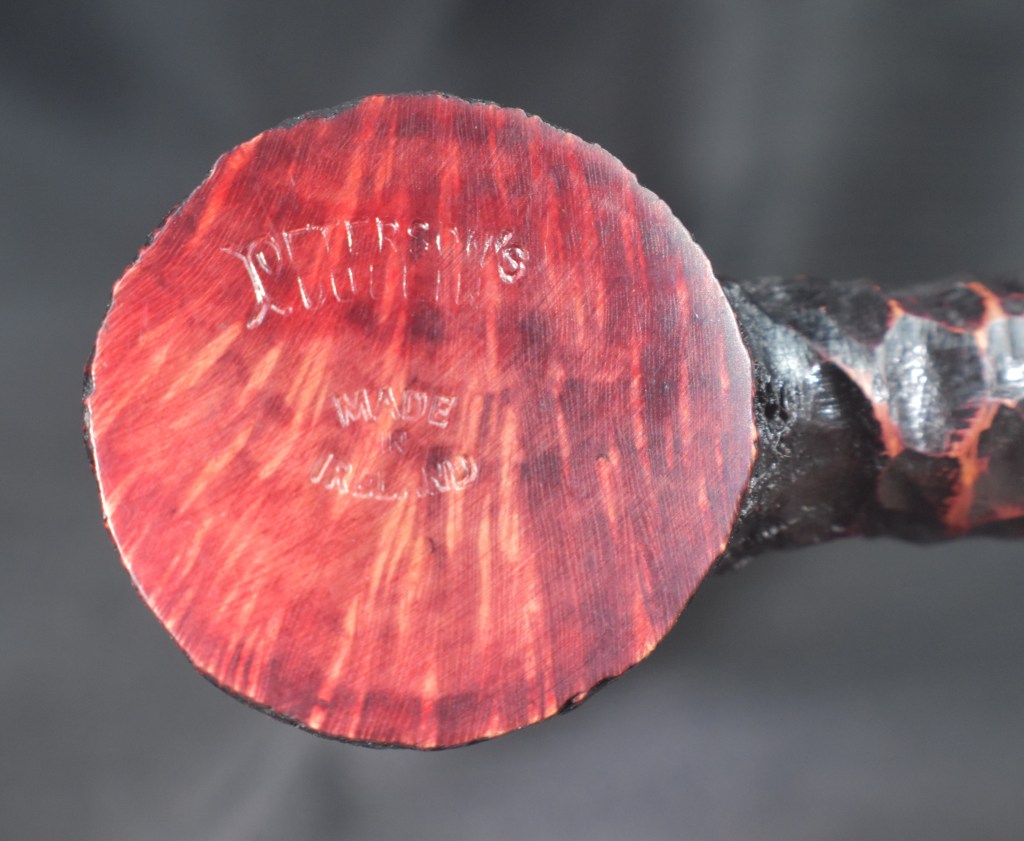
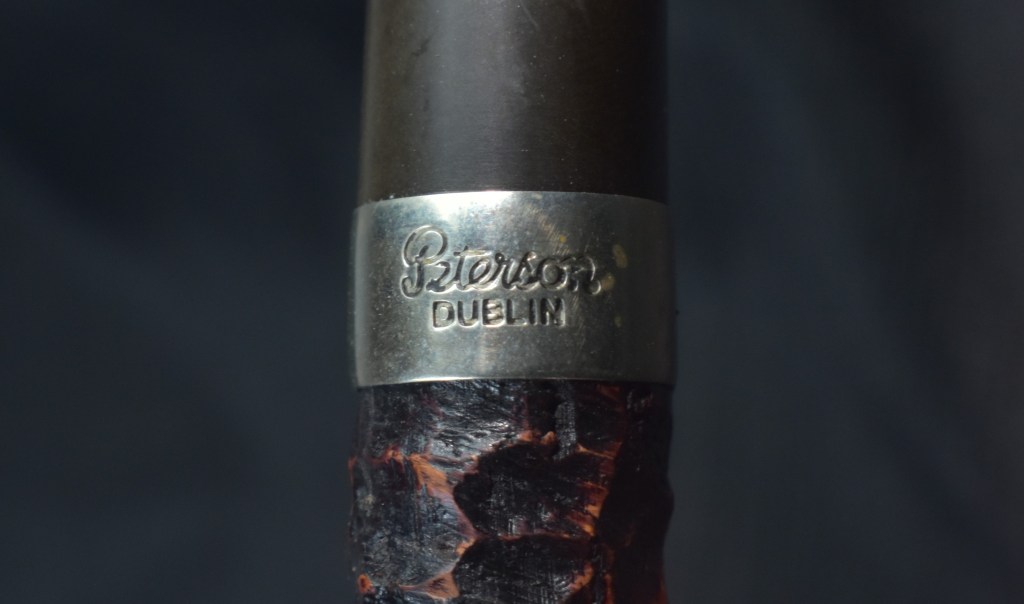
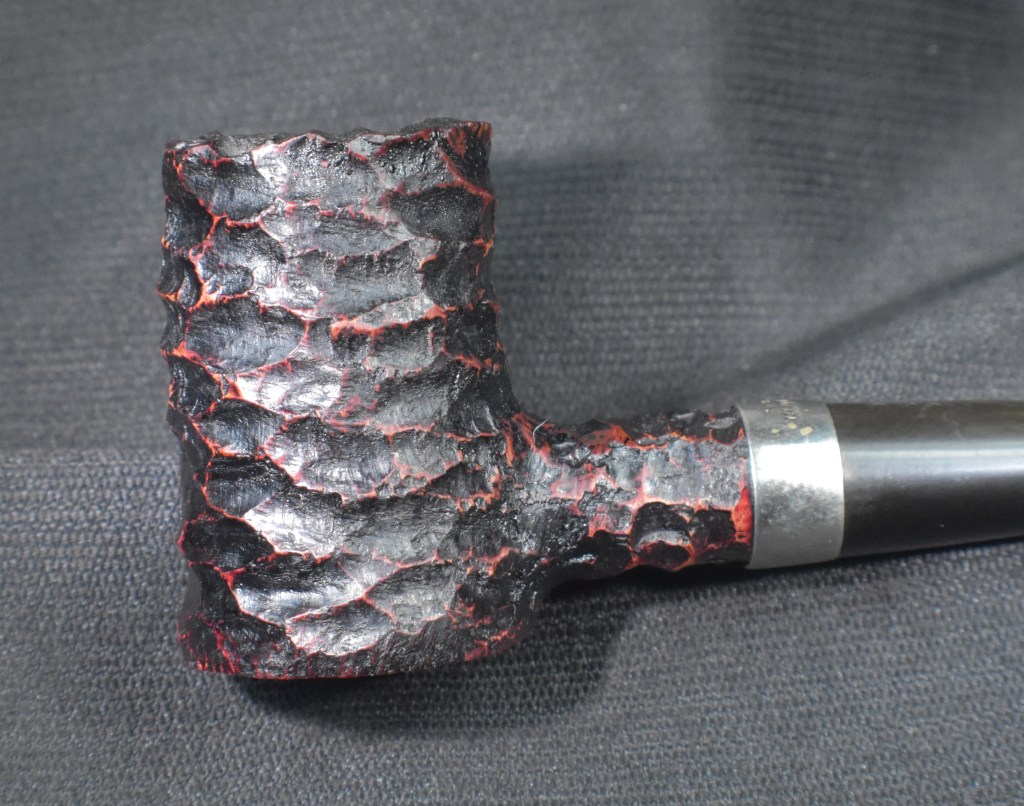
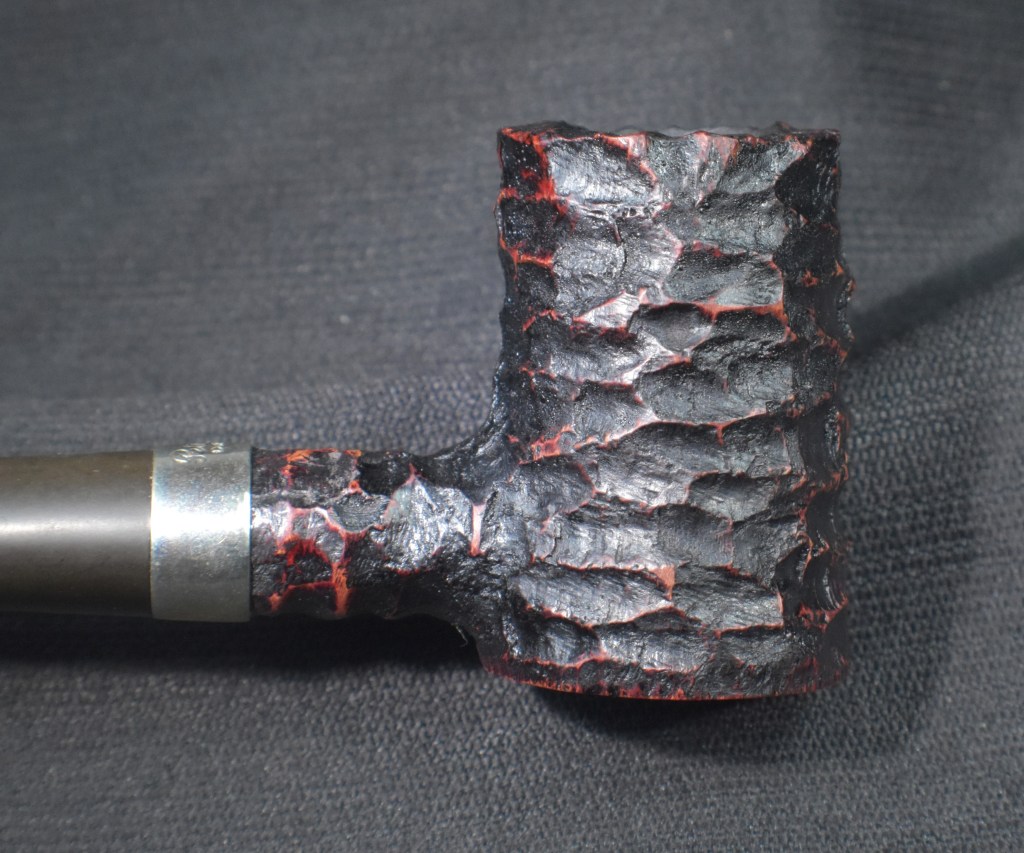
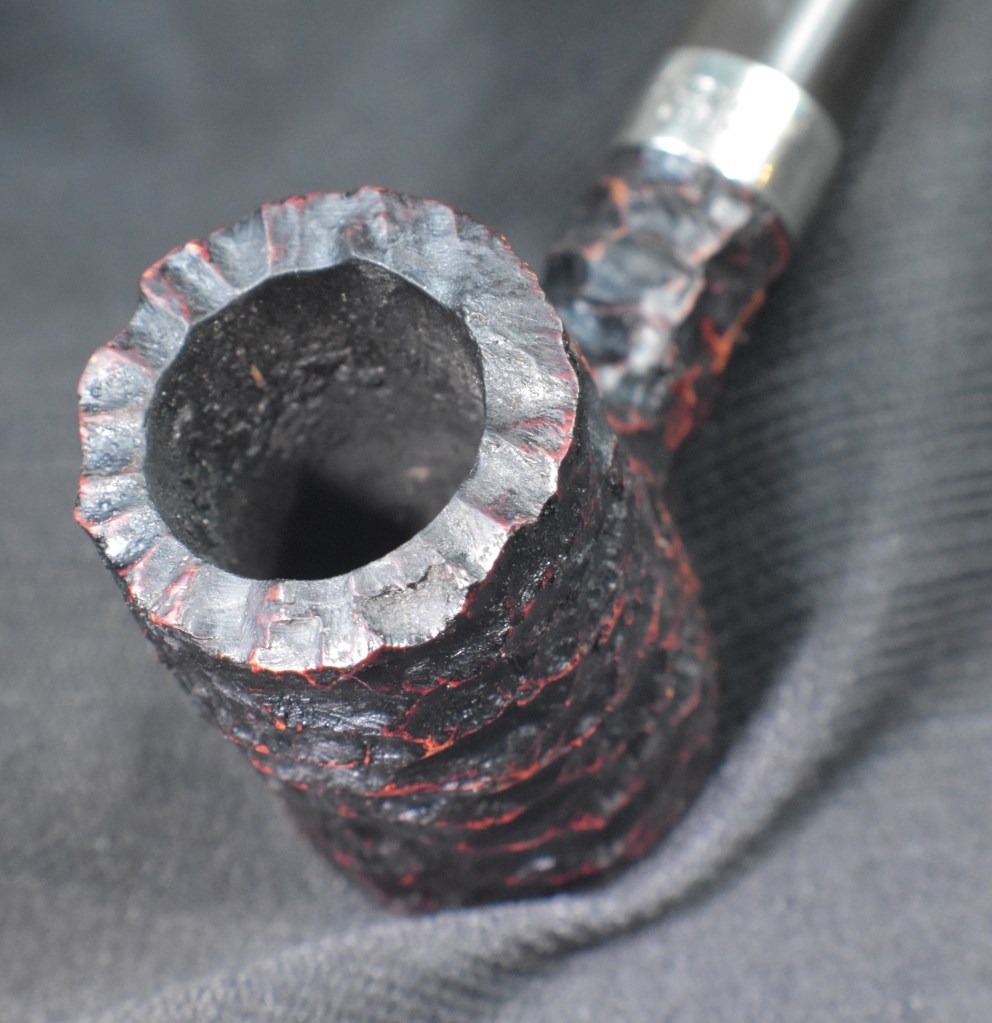
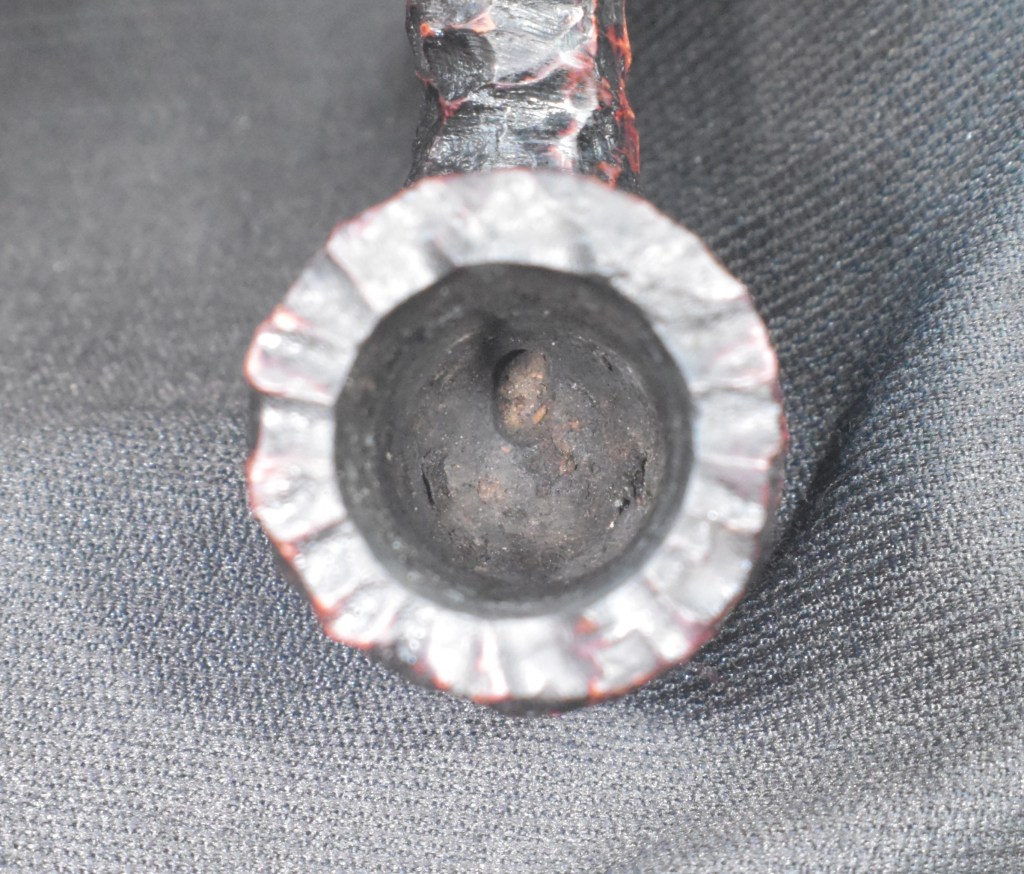
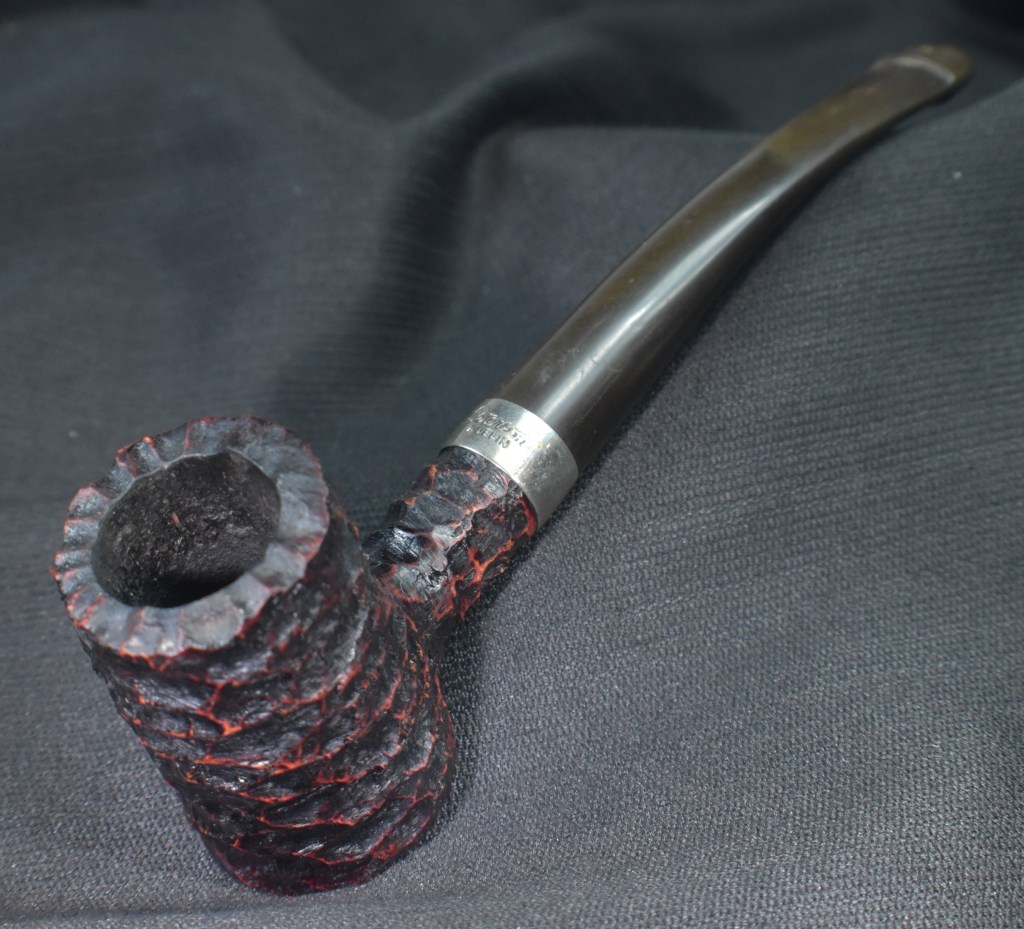
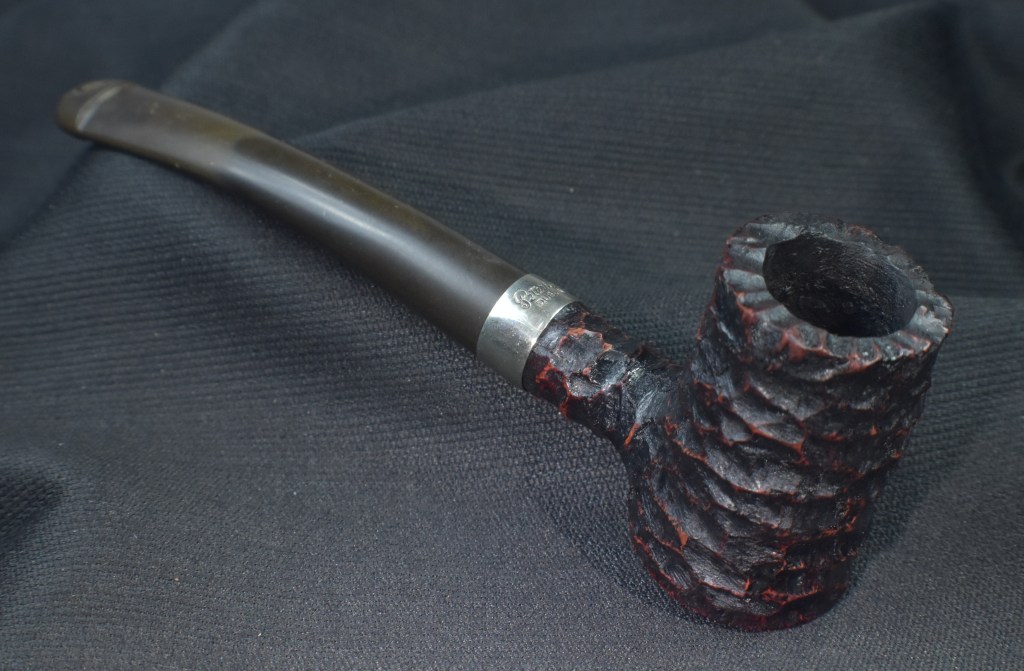
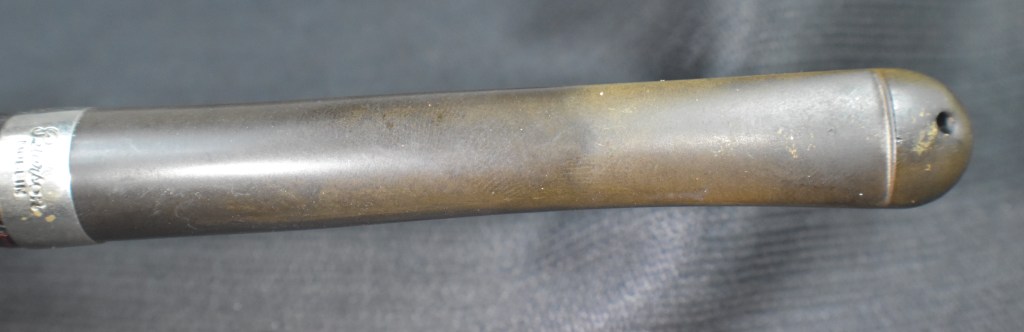
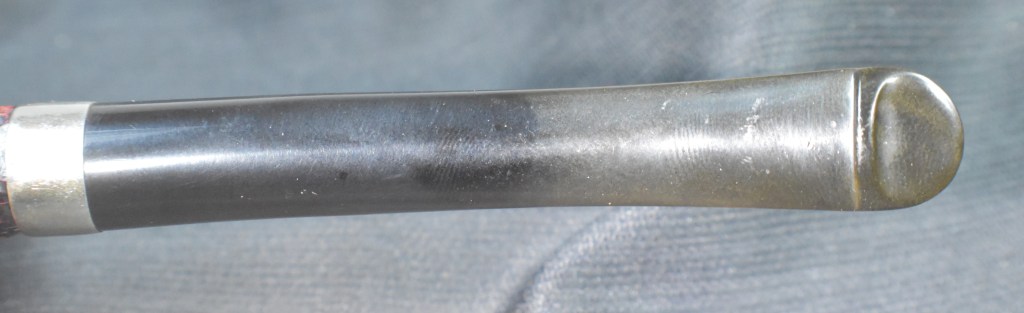
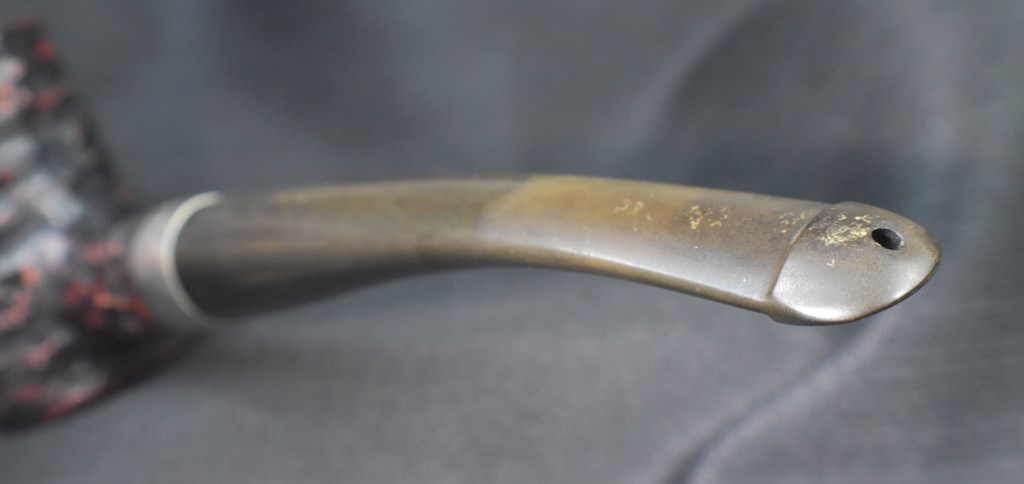
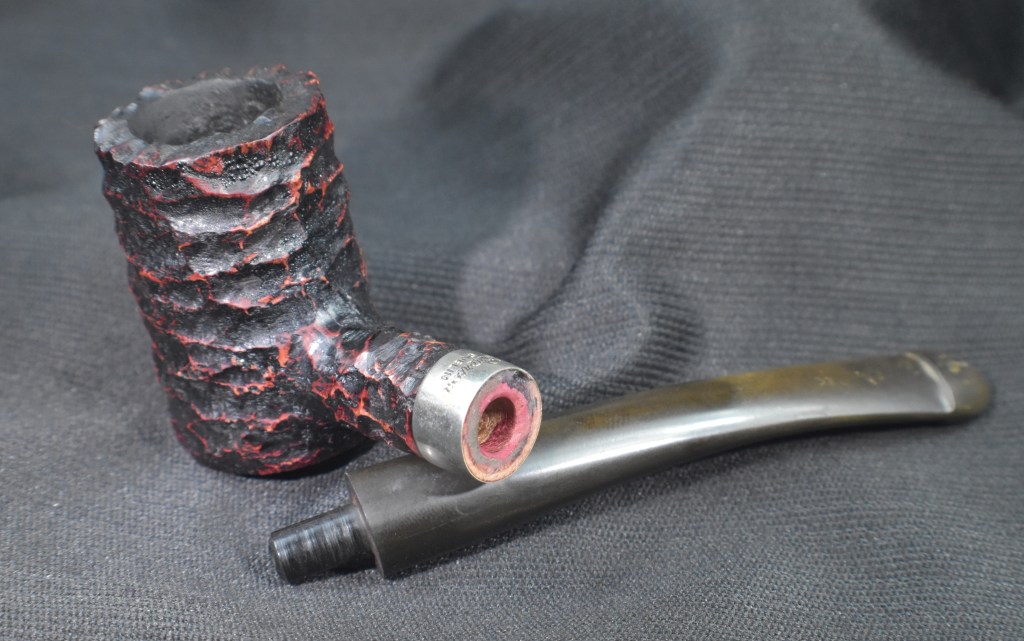
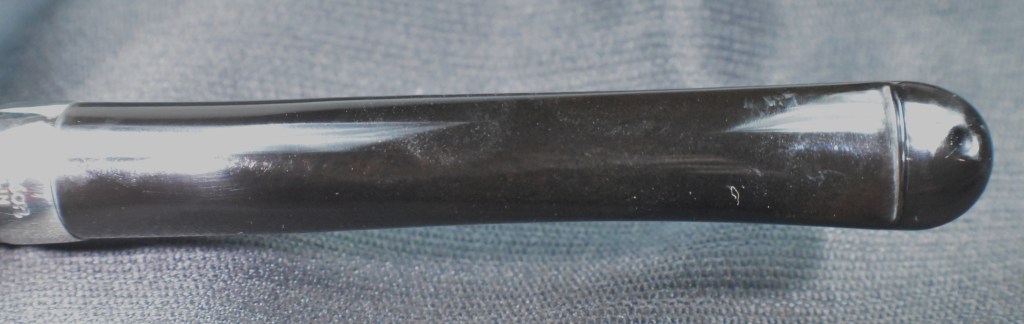
In general this was a nice estate pipe with some signs of use but no abuse. There was oxidation on the stem, as would be expected but little else of concern. This looked to be a nice relaxing restoration.
Background
Having blogged about the restorations of 29 Peterson pipes, I feel fairly confident that I have covered the history of Peterson quite well. That does sound patronizing to new readers though and I do not want to sound like that. Besides it also sounds like I’m diminishing the oldest continuous production pipe maker that the world has ever known. Now, because I am a proud Gen-X slacker, I will quote an earlier blog where I restored a Peterson System Standard 301:
“If you have read my previous blogs, thank you, and you are probably aware that I am a fan of Peterson pipes. Like many Peterson fan boys, or Pete Geeks as some call us, I could go on ad nauseum about Peterson pipes, their history and the remarkable innovations that made Peterson pipes the legend that they are. I will refrain from doing this again and give you a few sources of information which will allow you to read about the history of the company. For a great history Mark Irwin and Gary Marlburg’s book is a must read for a Pete Geek.

(Available at https://www.smokingpipes.com/accessories/books/moreinfo.cfm?product_id=471478) Given the price is a bit high but worth every penny for a Peterson aficionado.
The next site is pipedia.org’s History of Peterson by Jim Lilley (Peterson – Pipedia)
Lastly the pipephil.eu site for all things logo: Peterson: historical pipes — Pipes: Logos & Markings (pipephil.eu) They also have a few other links to things like the Peterson timeline and P-lip information. The last source is Peterson Pipe Notes. Mark Irwin has blogged about many particular Peterson lines, features and histories over the years. I can wholeheartedly recommend his blog and free subscription at I can wholeheartedly recommend his blog and free subscription at

His posts are searchable for specific items of interest and will open an entire hoard of rabbit holes for you to delve into. Yes, you will get emails but only for things like the weekly blog post and occasional Peterson pipe drops (like the Peterson Pipe Notes Pipe of the Year) or offers for cool Pete Geek merchandise.” (A Peterson System Standard 301Restoration – NebraskaPeteGeek)
As for the history of the tankard shape, I will quote from Irwin and Malmberg’s The Peterson Pipe: “One collection not seen in the 1947 shape chart but making its first appearance the 1945 catalog is the line of Specialty shapes that have been Peterson favorites for nearly 70 years: the tankard and barrel, calabash and belgique, and the churchwarden. Harry Kapp probably had the last two in mind when he talked about “women’s pipes” to the Dublin Chamber of Commerce in December 1954, inasmuch as Mario Lubinski, Peterson’s distributor in Italy, still markets them in this way. Smokers in the United States have traditionally valued all of the Specialty shapes as flake-tobacco pipes.” (p. 136). Later in the book it states, “Tankard (1945-) P-lip or fishtail mouthpiece; smooth or rustic finish, sandblast offered in ‘70” (p. 313). I am assuming that the smooth or rustic finish was normal since 1945 with the sandblast coming out after 1970. Yes, I know the hazards of assuming. This pipe’s rustication carvings strike me as those cut more recently, since the late 20-teens. After the dreaded pineapple rustications circa 2015-16. For a full discussion of Peterson Rustications I refer youtube Mark Irwin’s blog, Peterson Pipe Notes; 267 (267. Peterson Rustication, Part 1: the Éire through Dublin Eras – Peterson Pipe Notes) and 269 (269. Peterson Rustication, Part 2: Wojciech Blaszczak and the Laudisi Era (2018- ) – Peterson Pipe Notes). In these posts you can see how Peterson’s rustications have changed over the years.
The Restoration
On to the restoration. After the “before” photos the pipe made the 20 foot journey to the workbench. Long time readers may notice that the frequently used denim was replaced with a new material. The reason is that the old denim was getting quite stained and a newly cut up pair of worn-out cargo shorts provided some new workbench protective material – waste not, want not.
I began with the stem. The below photos show the minimal tooth chatter on both top and bottom.
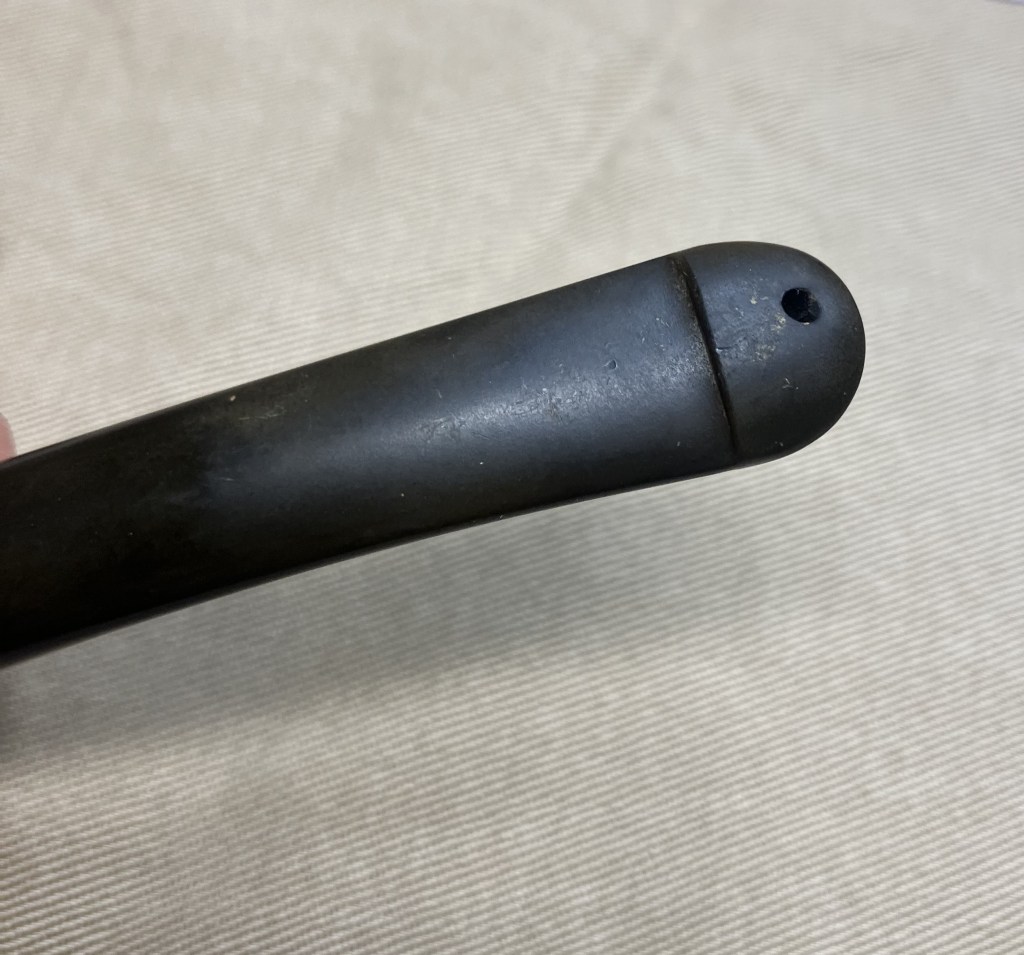
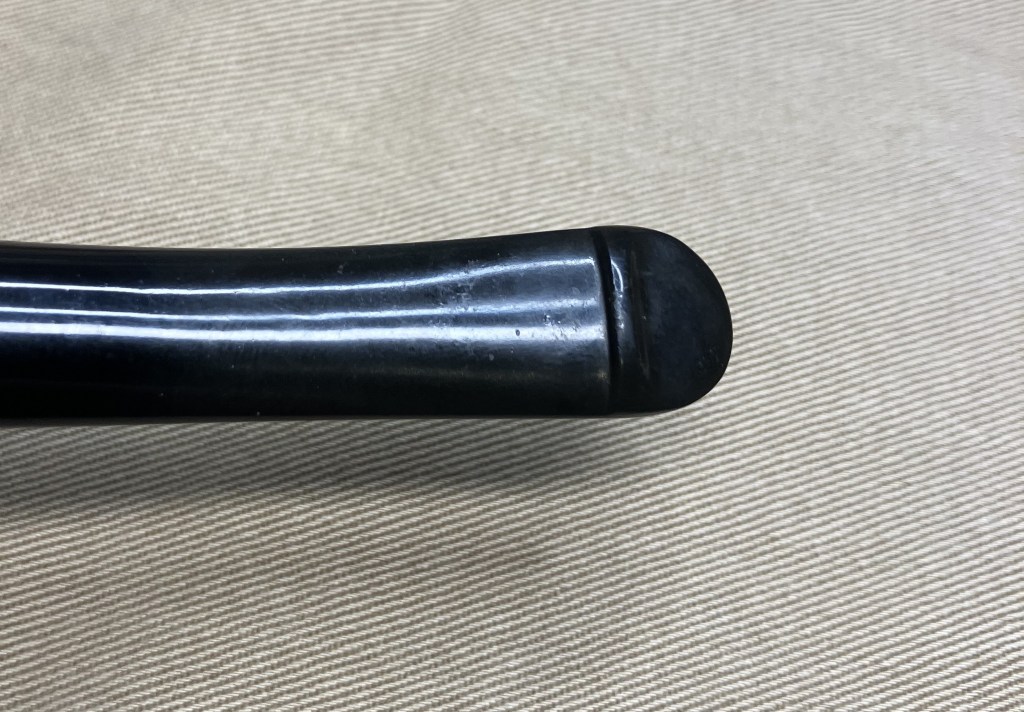
I did not think that filing was necessary so the stem was given a light rubbing with 0000 steel wool.
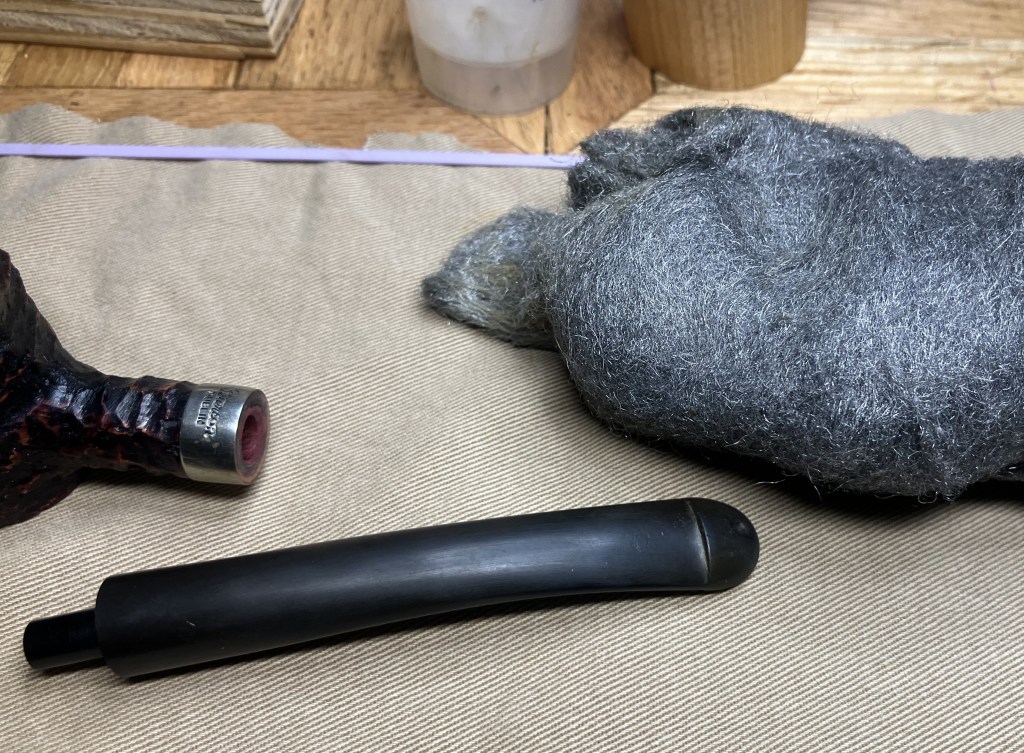
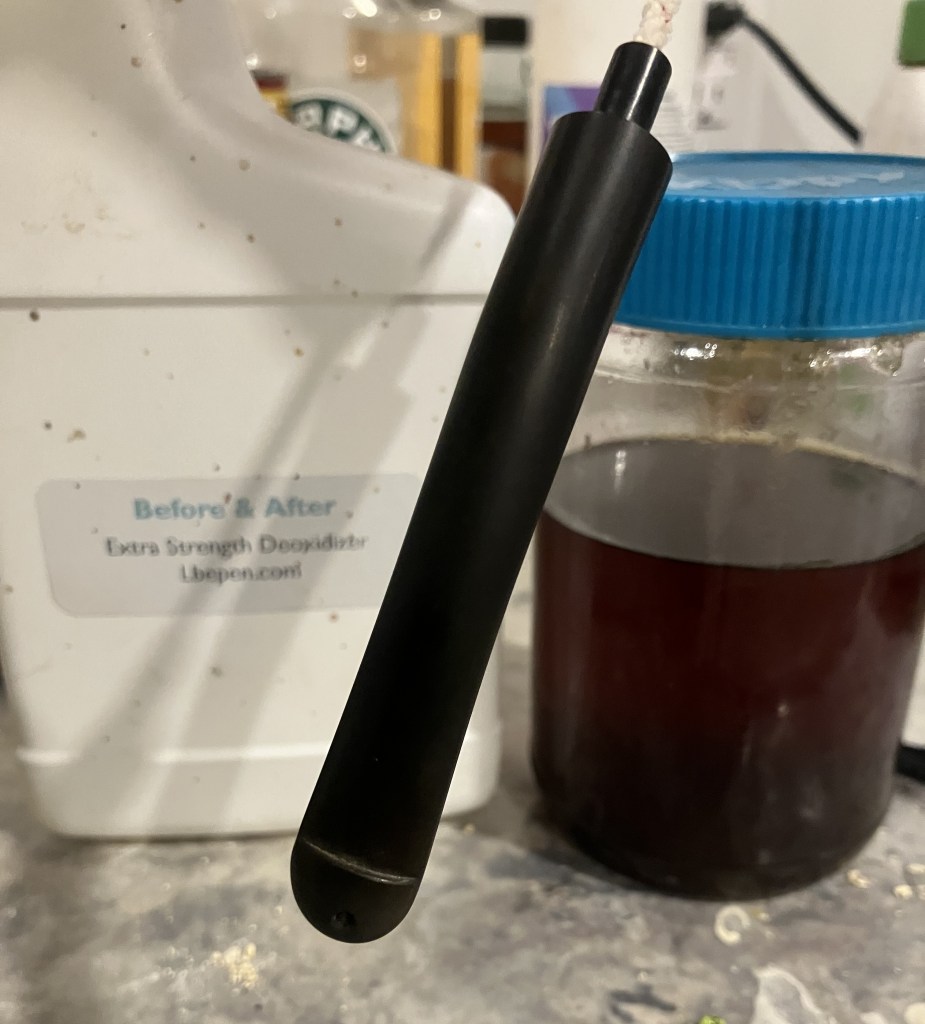
From there I inserted a pipe cleaner to act as a hanger and suspended the stem into Before and After Extra Strength Deoxidizer (deox). A stem in this condition would normally only require a couple of hours in the deox.
I turned my attention to the stummel. I thought that the #1 and #2 blades of the PipNet reamer would both be needed.
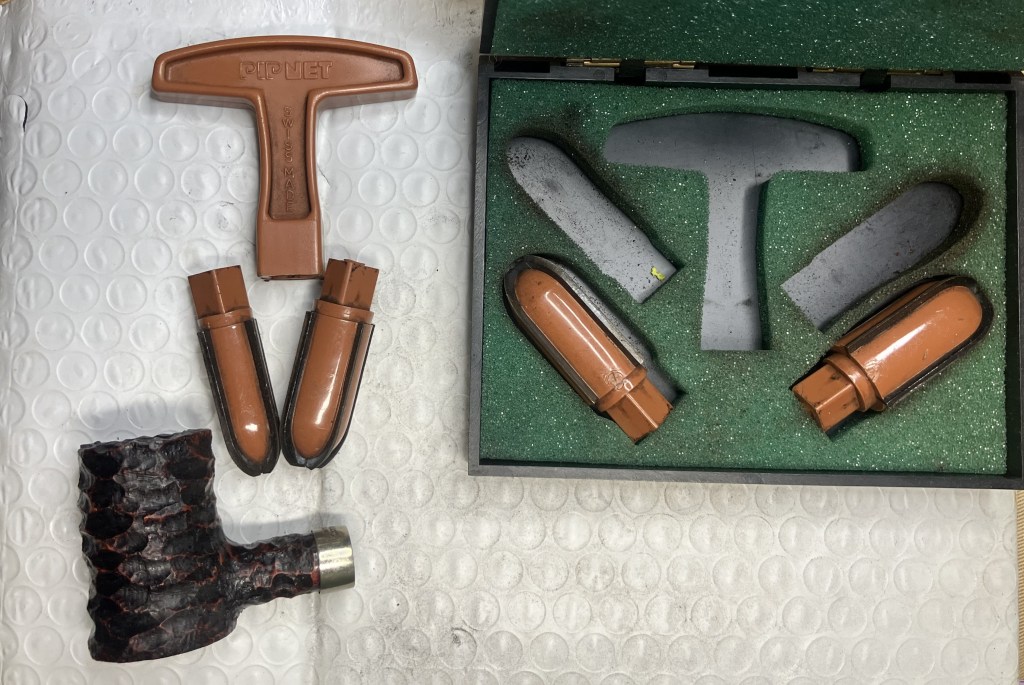
I was wrong. Only the #1 blade fit into the tobacco chamber of this delicate darling.
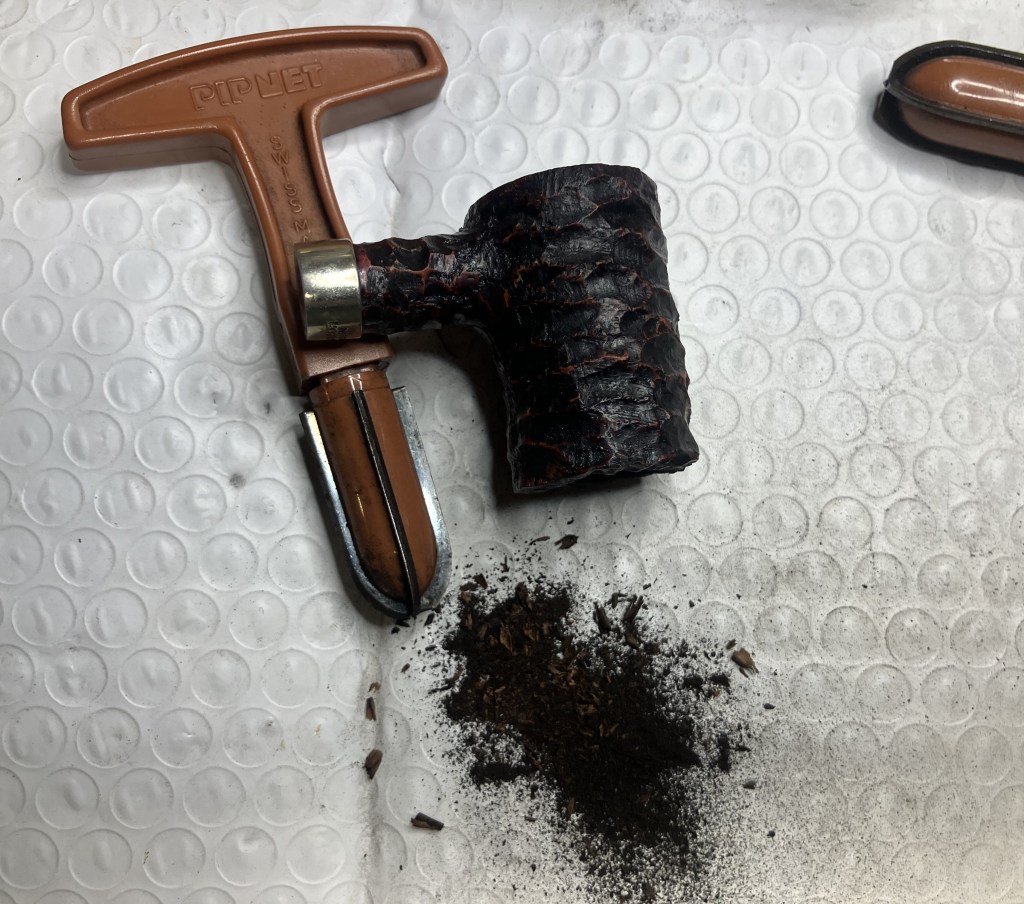
I did use the Opinel Children’s knife to do a little more scraping of the chamber. This blade comes with a blunted tip and is an excellent tool for chamber scraping. They can be found on Amazon for less than $20 (Amazon.com: OPINEL My First Knife No. 07, Children’s Folding Pocket Knife (Natural) | Rounded Tip for Safety, Easy to Use and Maintain, Lightweight, Colorful Bright Handles, Learning Montessori Tool : Sports & Outdoors).
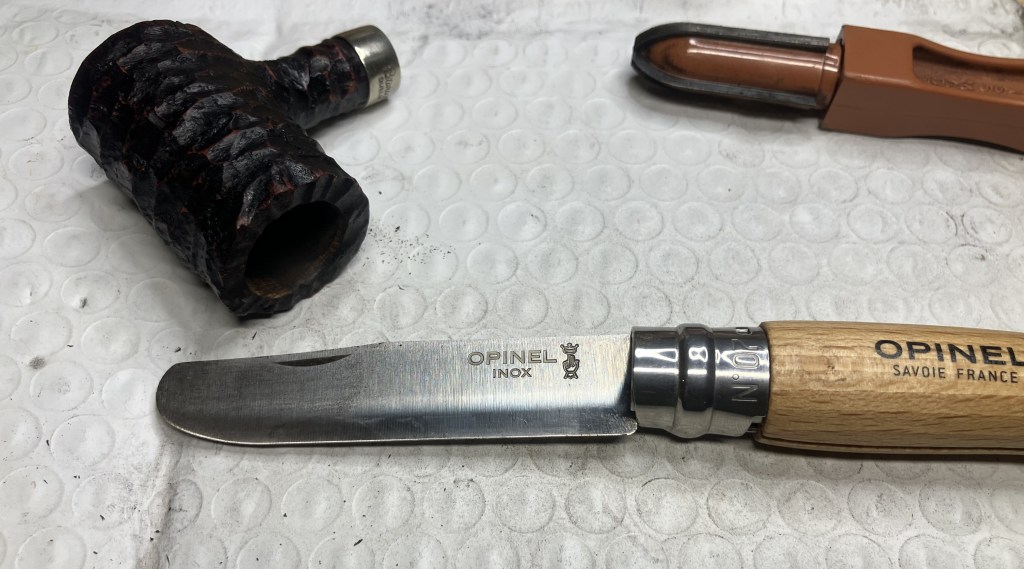
The tobacco chamber was then sanded with sandpaper wrapped around a wood dowel. The below two photos show a chamber with no damage from excessive heat.
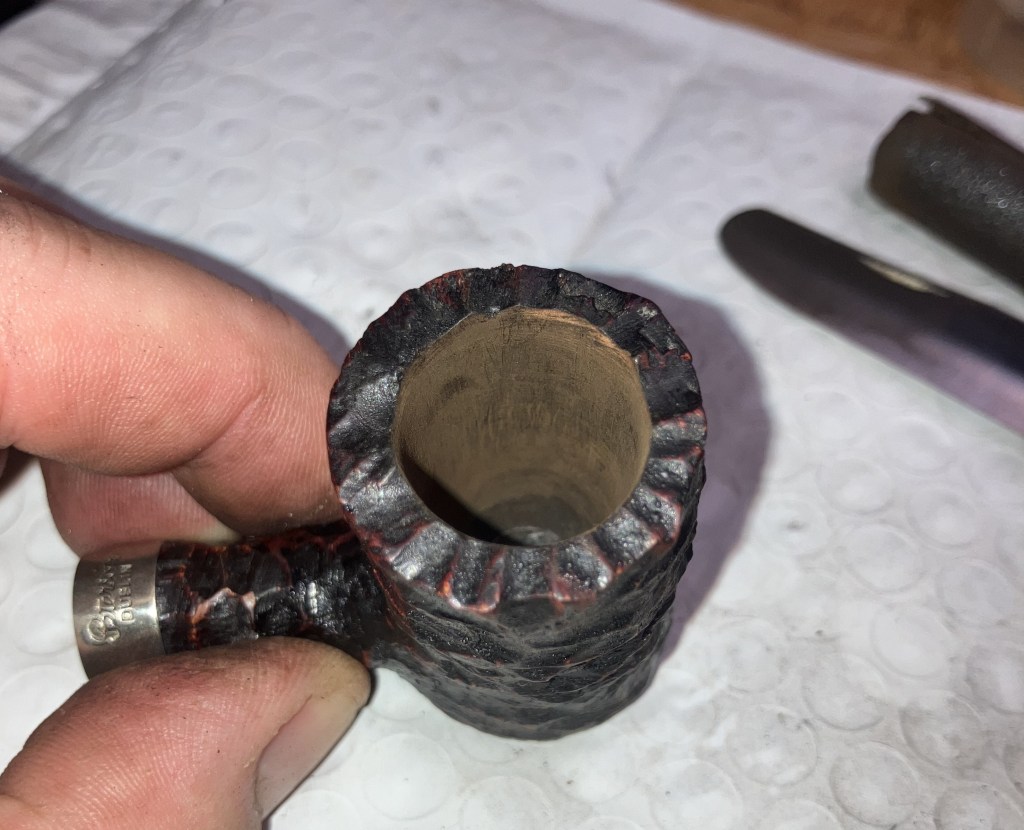
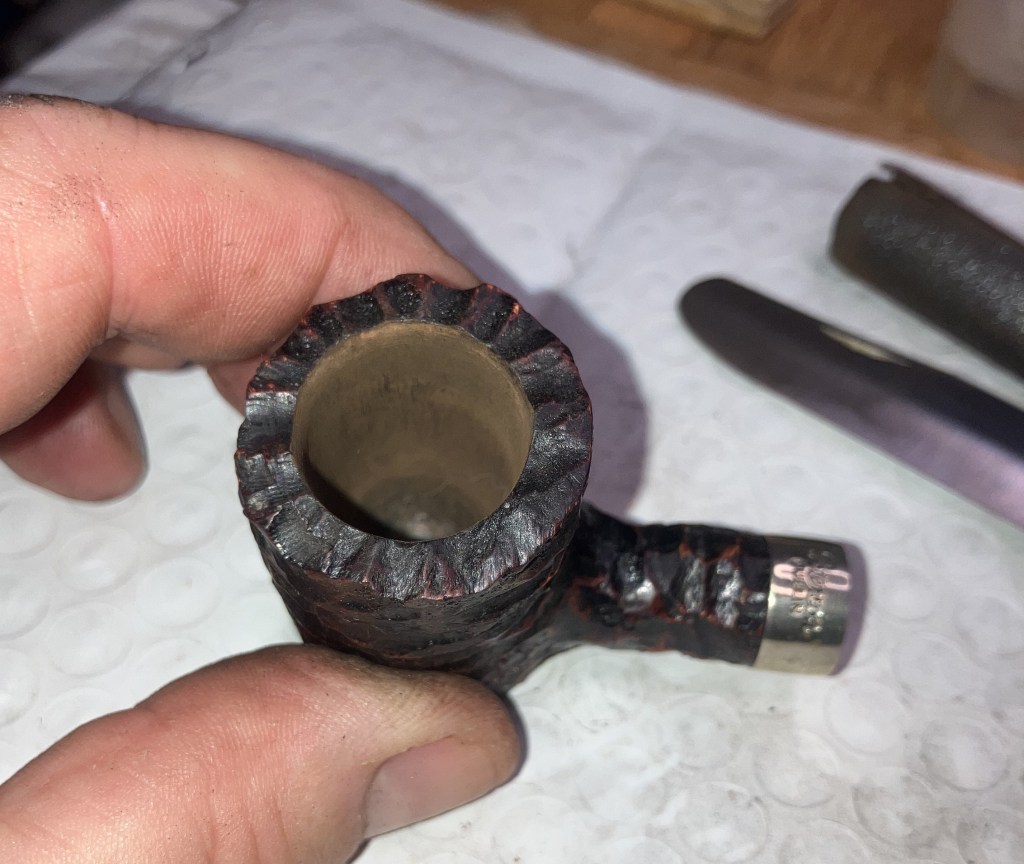
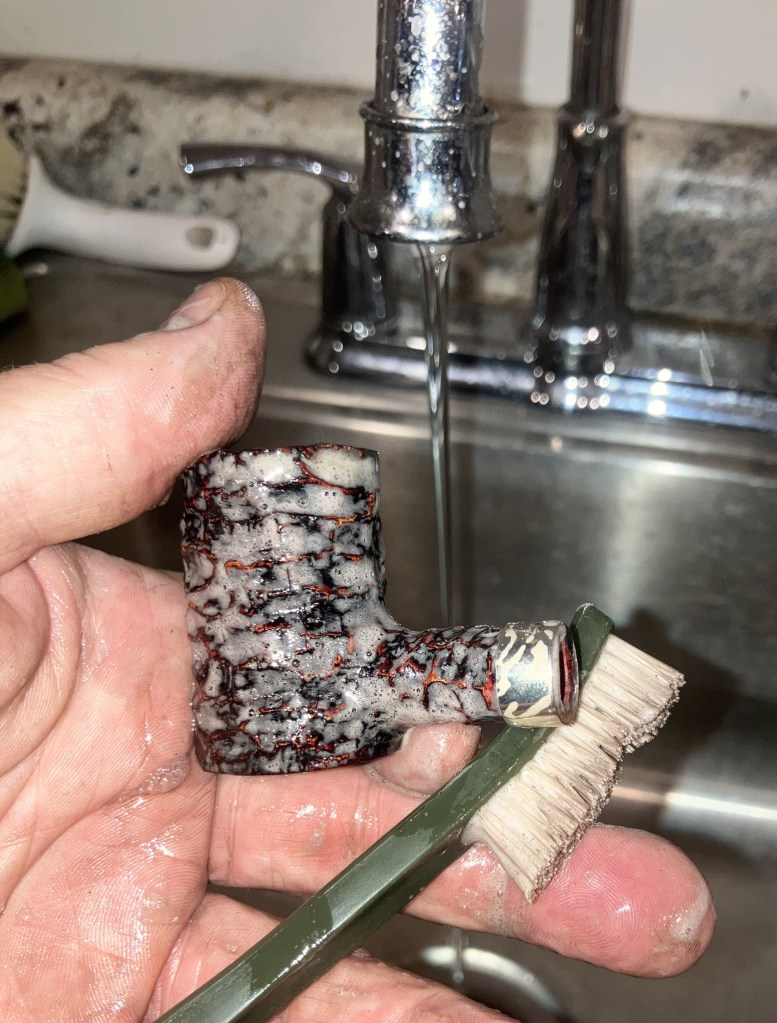
To the sink! The stummel was taken to the sink where it was scrubbed with undiluted Murphy Oil Soap and a nylon brush. The soap was rinsed with warm water and dried with a cotton hand towel. Sorry about the flash, I forgot it was still on after the down chamber sanding photos.
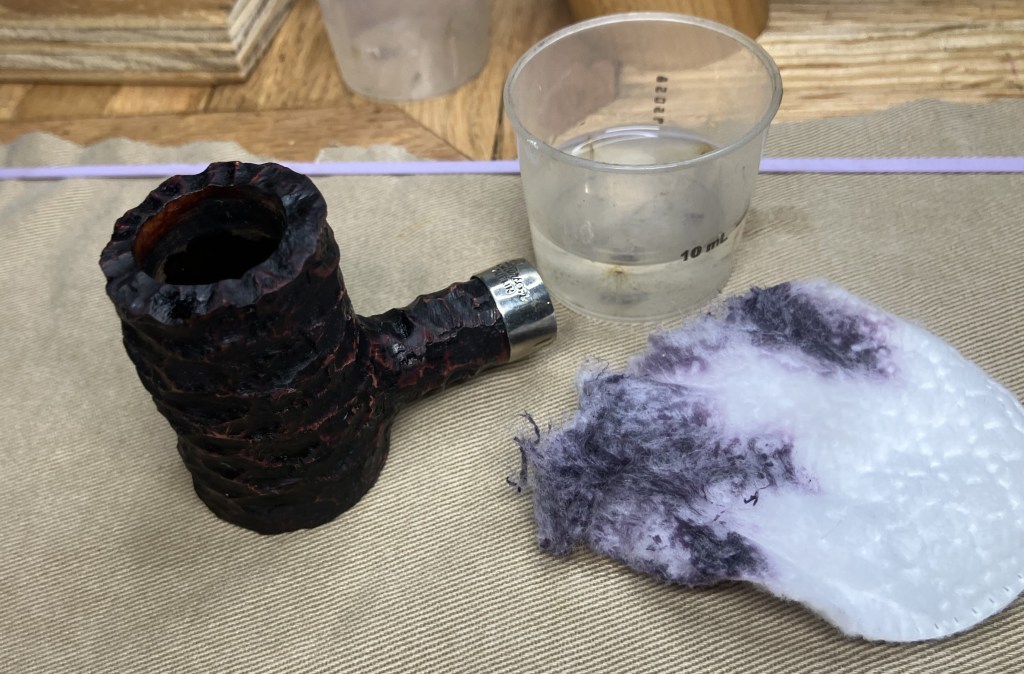
Back at the workbench, I wiped the stummel with a cotton make-up pad dipped in 99% ethyl alcohol. I was surprised by the dark purple stain that appeared to be used by Peterson. I would have assumed it was a black base with a red over coat.
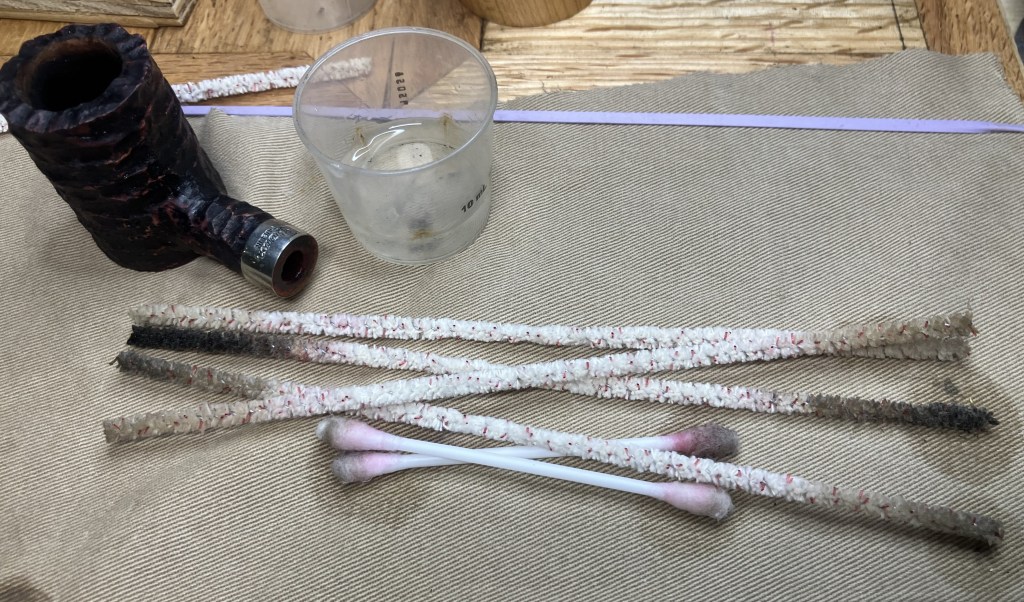
Shank cleaning was next. This was done with bristle pipe cleaners, cotton swabs and 99% ethyl alcohol.
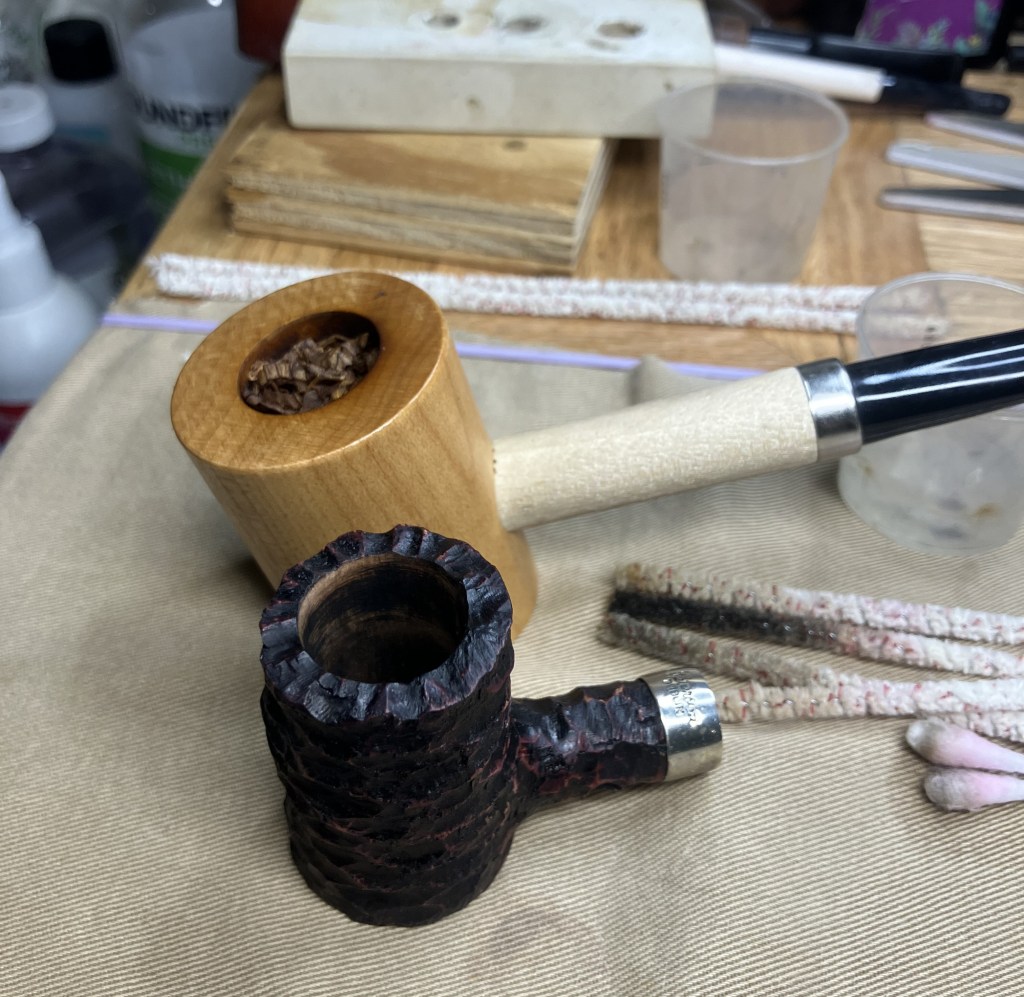
It was time for a poker of my own, quite literally. I made this poker from a Missouri Meerschaum pipe making kit. I no longer see it offered on their website, sorry (Missouri Meerschaum Company – CornCobPipe.com).
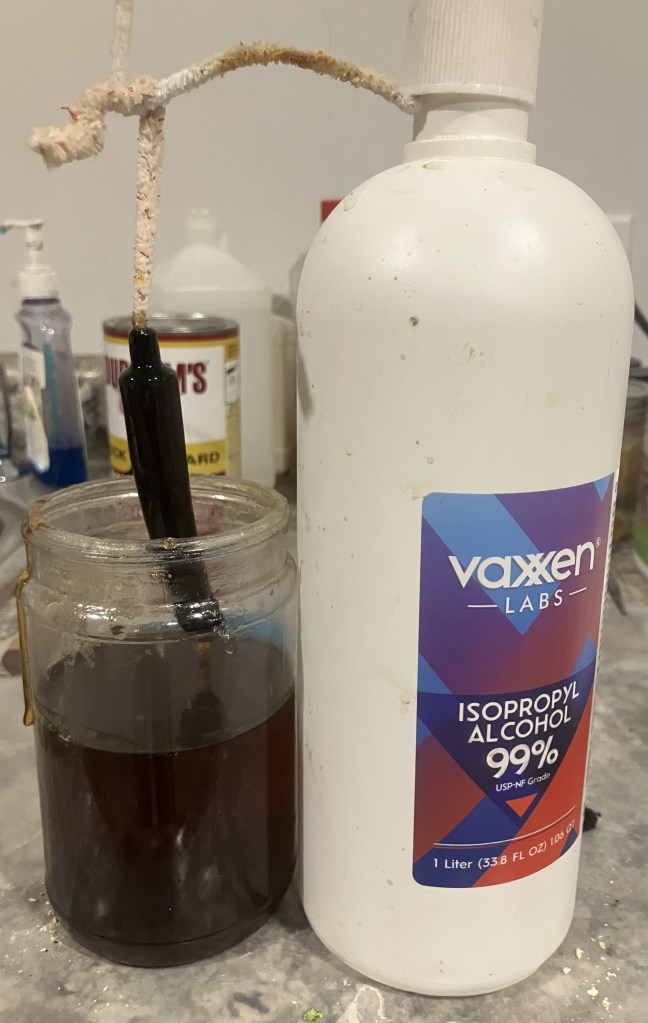
The next day, I removed the stem from deox and used the Drip-O-Matic 3000 (patent pending) to allow the stem to return excess deox solution back into the jar.
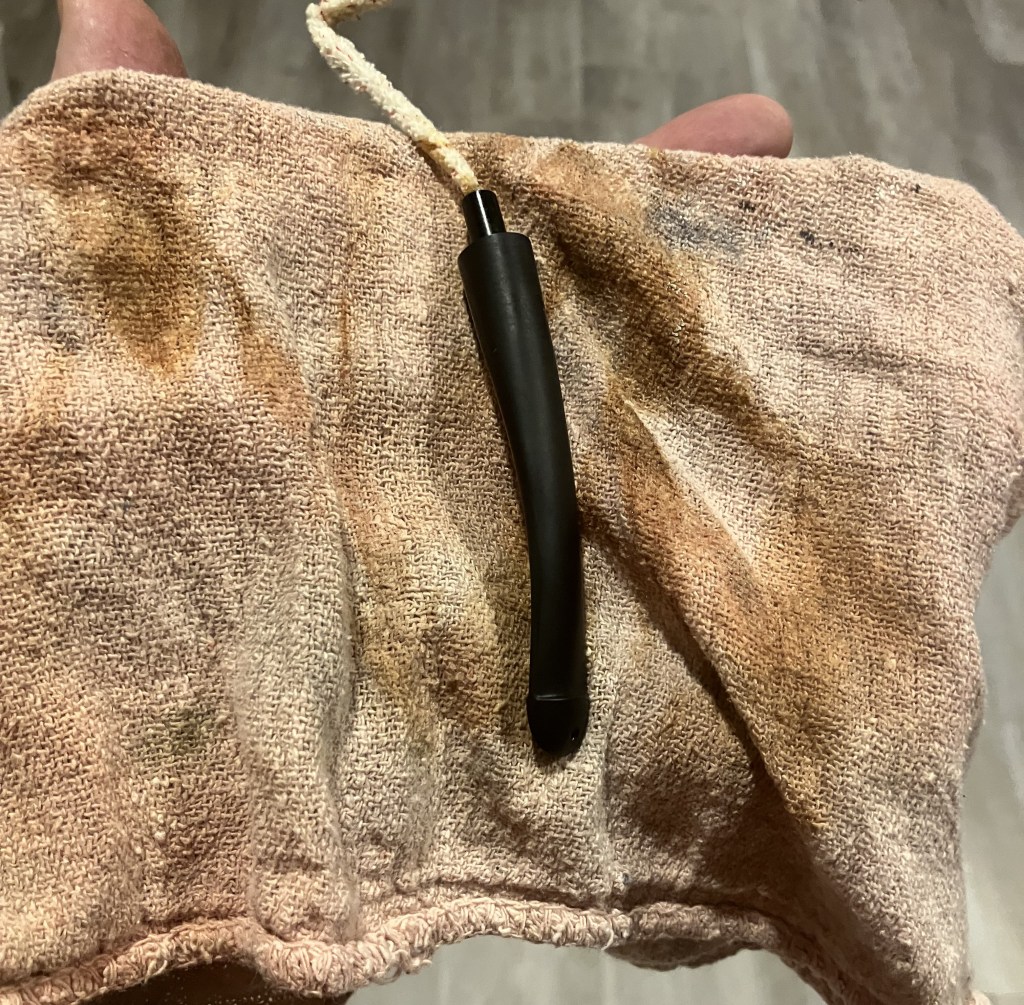
Using a coarse shop rag, I vigorously rubbed the residual deox solution from the stem. This also removed some of the oxidized vulcanite as can be seen on the rag.
I reattached the stem to the stummel and wrapped the shank with masking tape to protect it from sanding. I like to keep the stem and stummel together when sanding to avoid the rounding of the edges of each part.
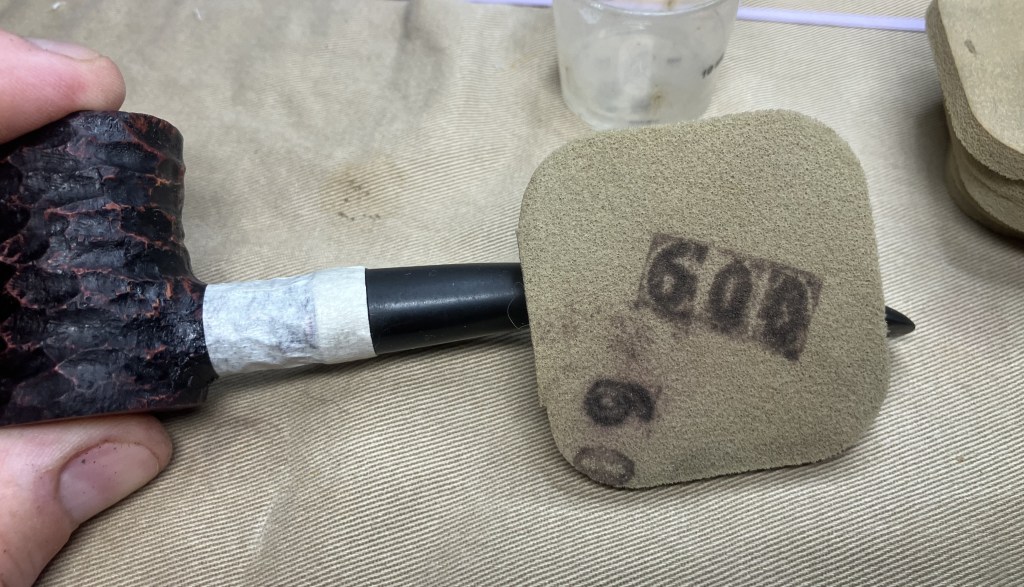
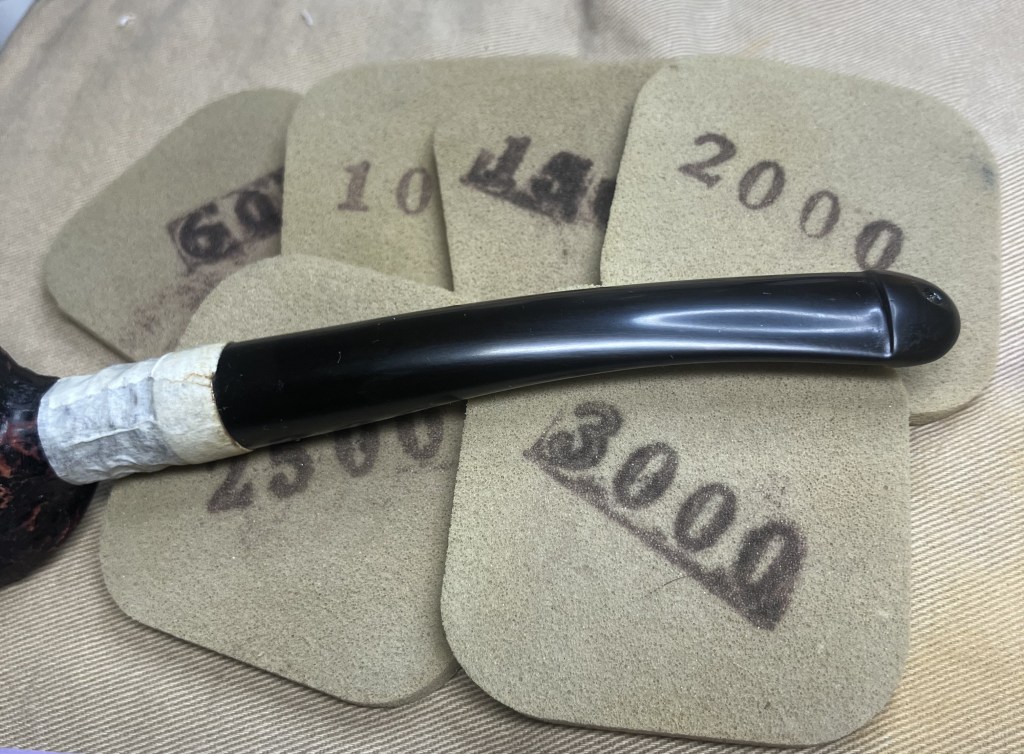
The stem was sanded with a series of sanding sponges in grits from 600-3000. Between each sponge I rubbed the stem with mineral oil and wiped it with a dry paper towel.
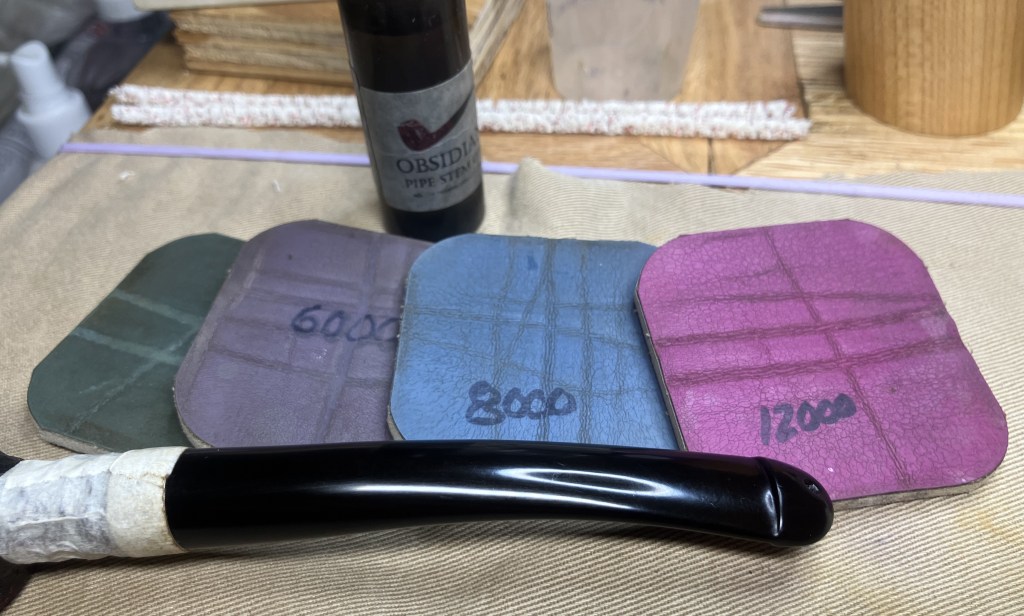
I then used micro-mesh pads in grits from 4000-12000. Between each pad the stem was rubbed with Obsidian Oil and wiped with a paper towel.
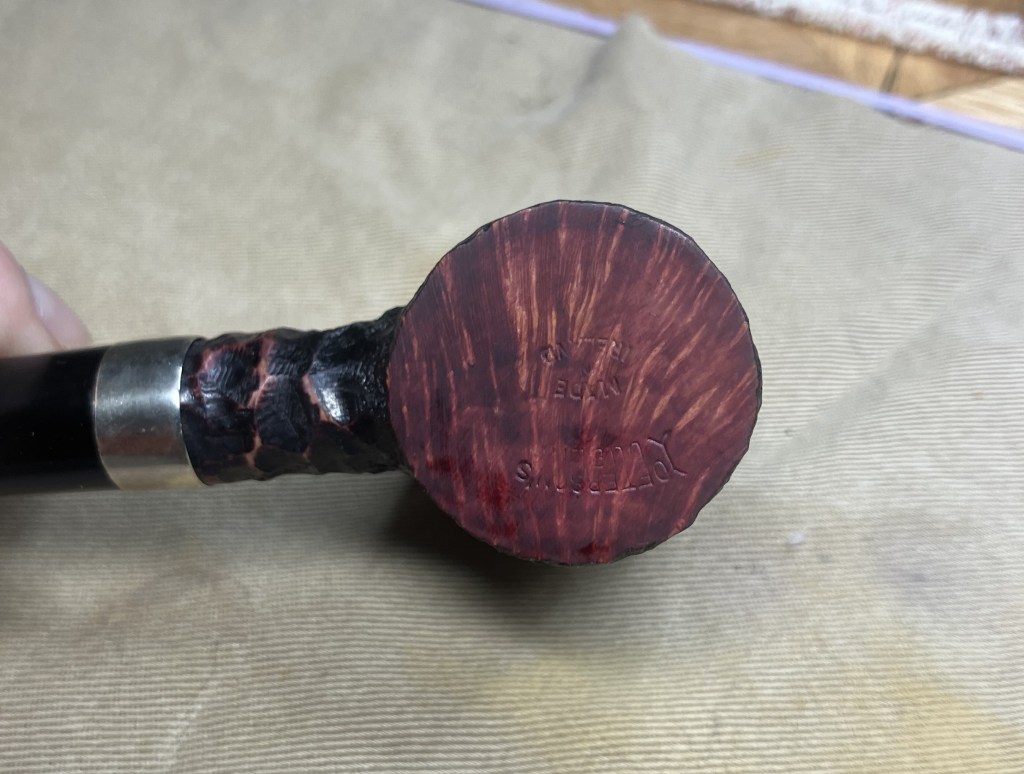
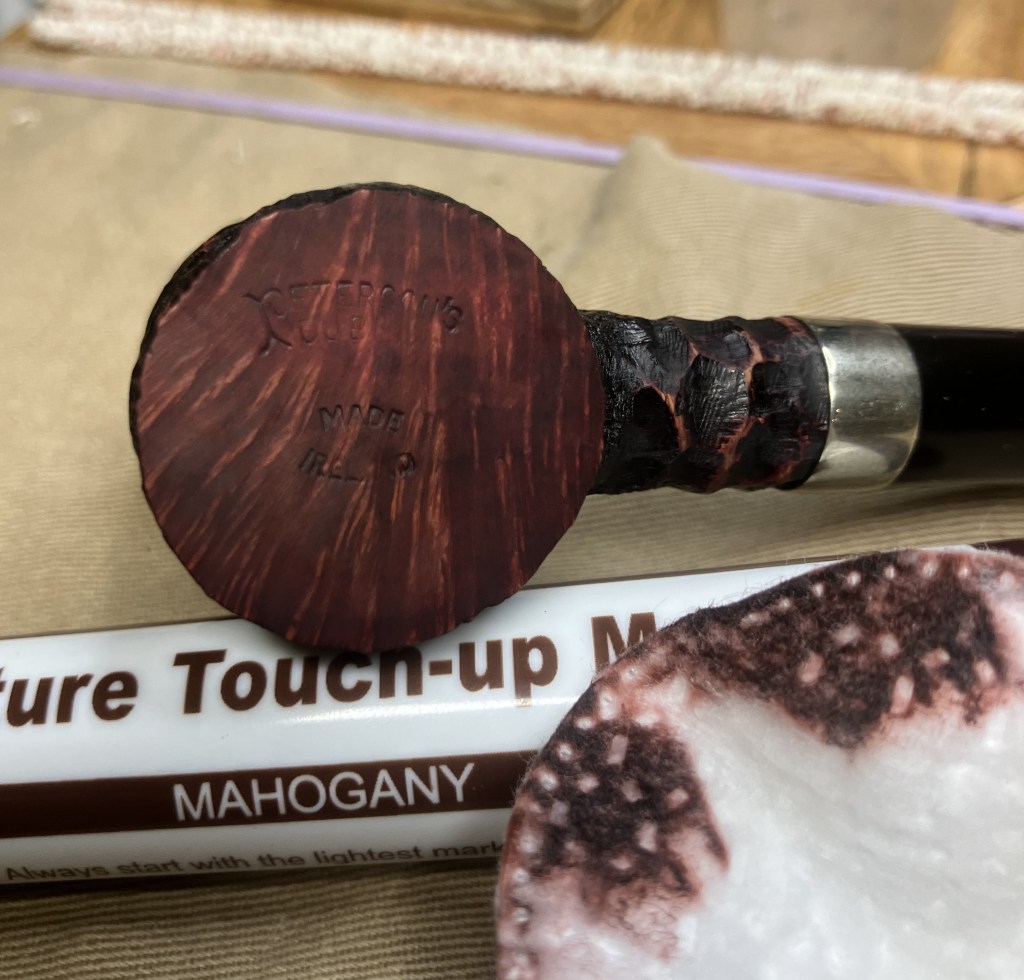
I was not happy with the appearance of the pipe’s bottom. I thought it looked ½ stained.
To remedy this I restrained it using a Mahogany Furniture Touch-up Marker.
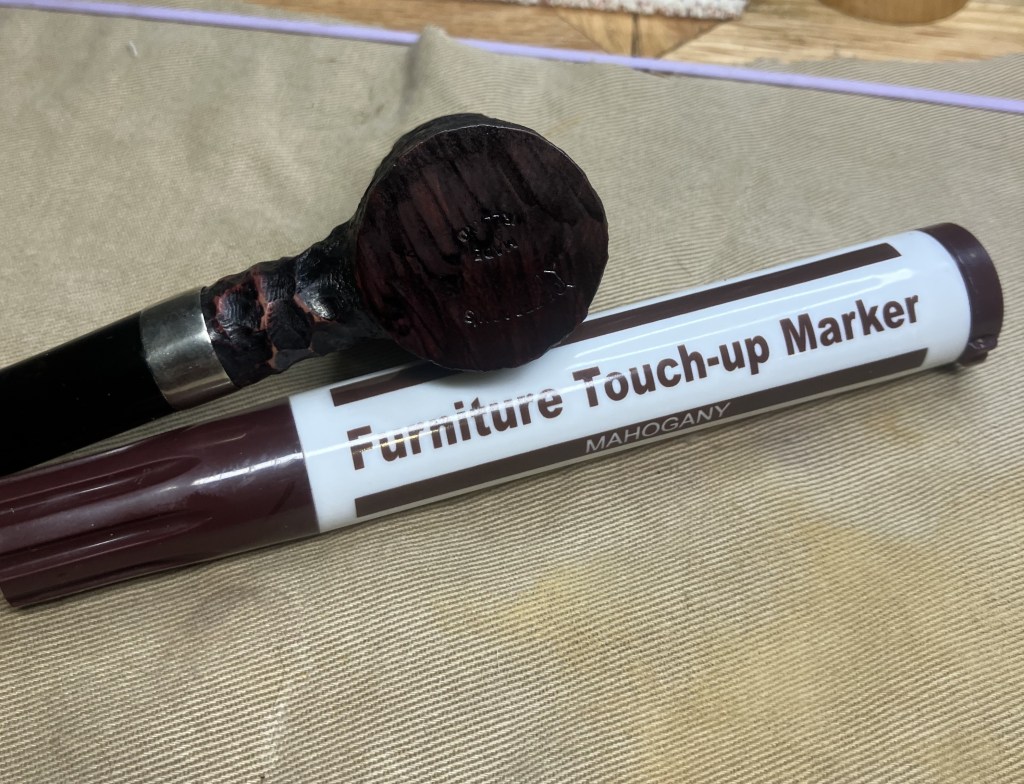
The stain was allowed to dry then was wiped with a make-up pad wetted with ethyl alcohol. That evened out the color of the bottom nicely.
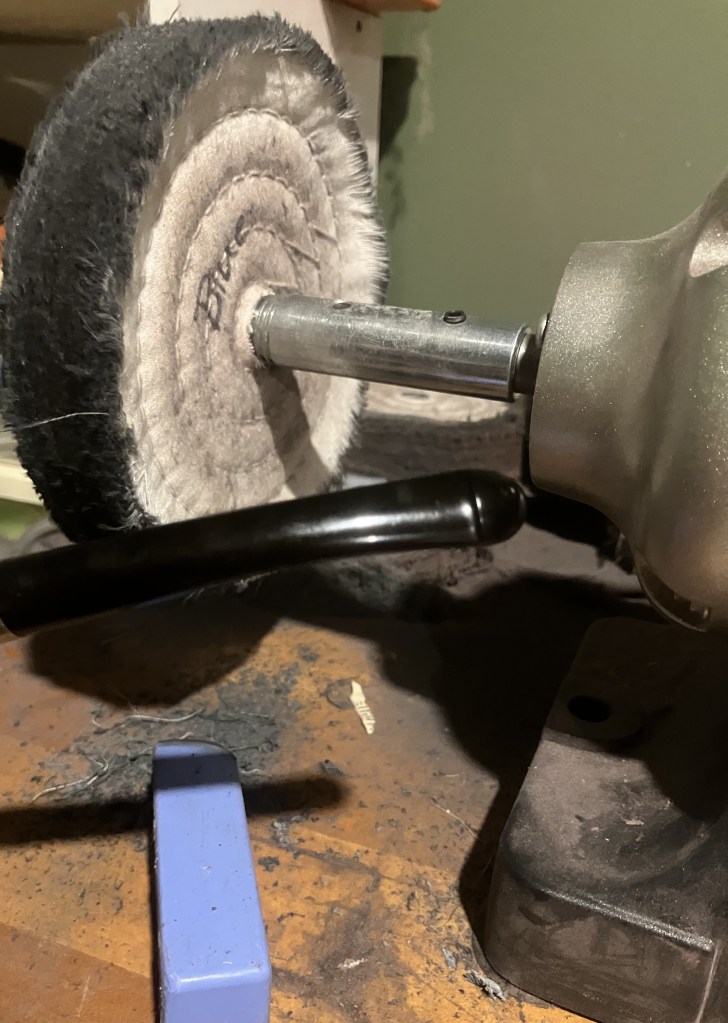
The stem was then polished with blue diamond buffing compound.
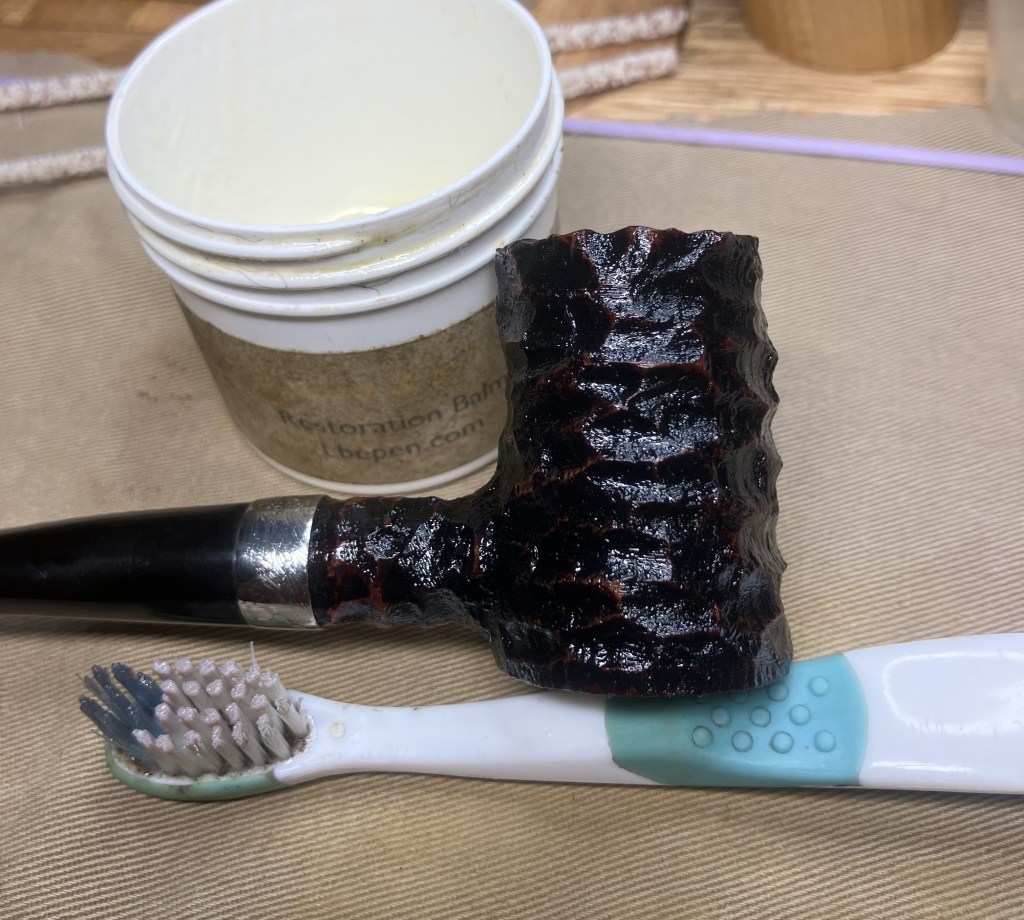
The stummel was given a thick coat of Before and After Restoration Balm via a baby tooth brush. This was allowed to sit for about an hour.
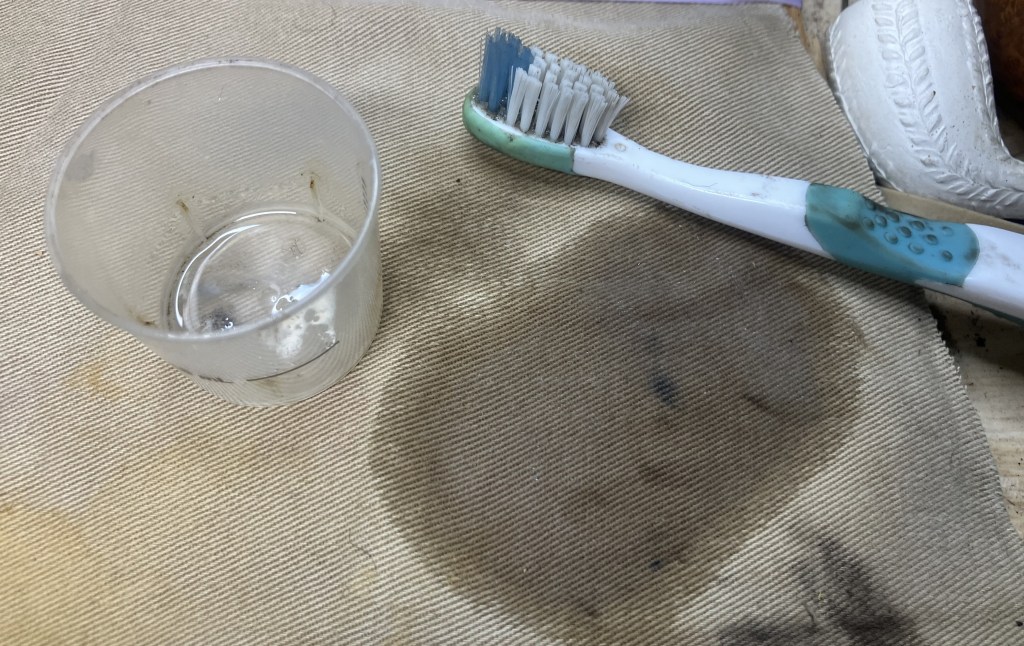
I cleaned the Restoration Balm from the tooth brush with alcohol on the fabric previously known as cargo shorts.
An hour later I wiped away excess Restoration Balm with an inside out athletic sock.
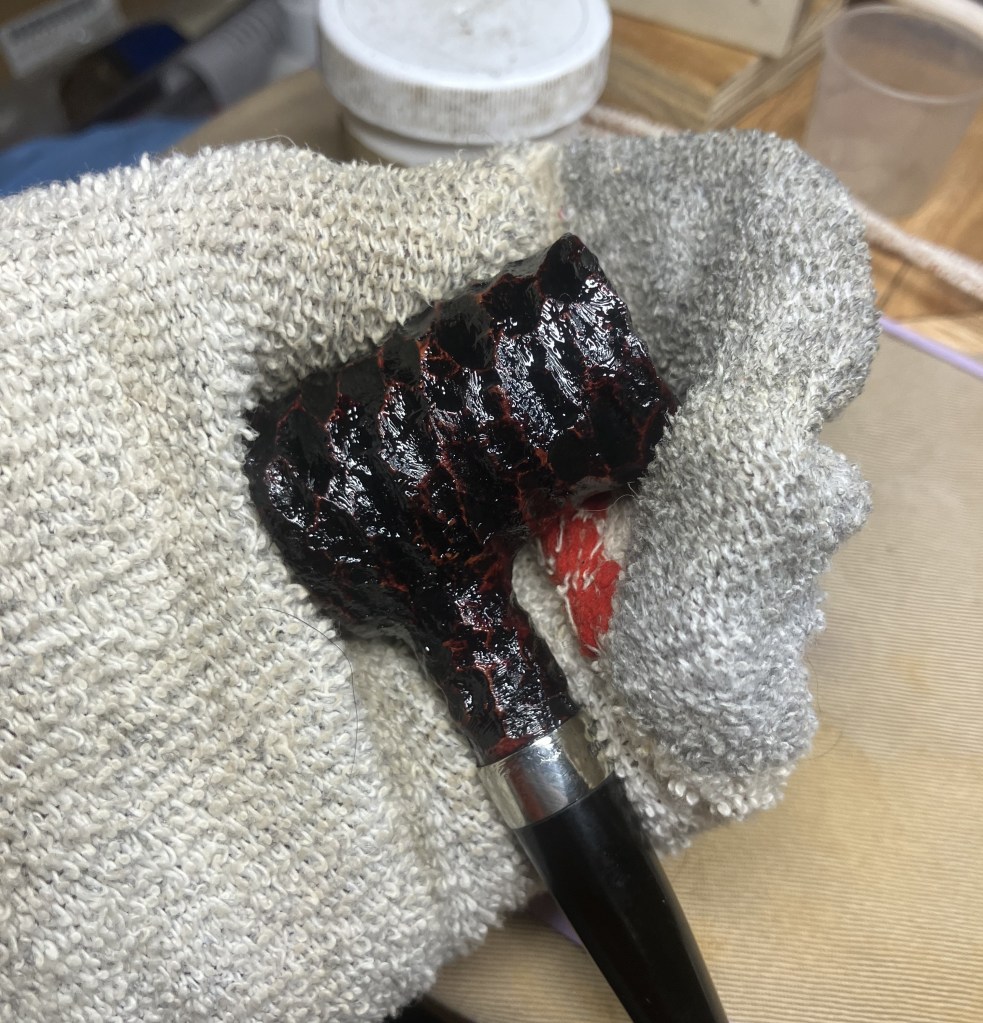
To wax the Stummel I chose to use Renaissance Micro-Crystalline Wax. I like this wax for heavily rusticated surfaces where carnauba would build up too thickly. The wax was applied with the freshly cleaned baby tooth brush.
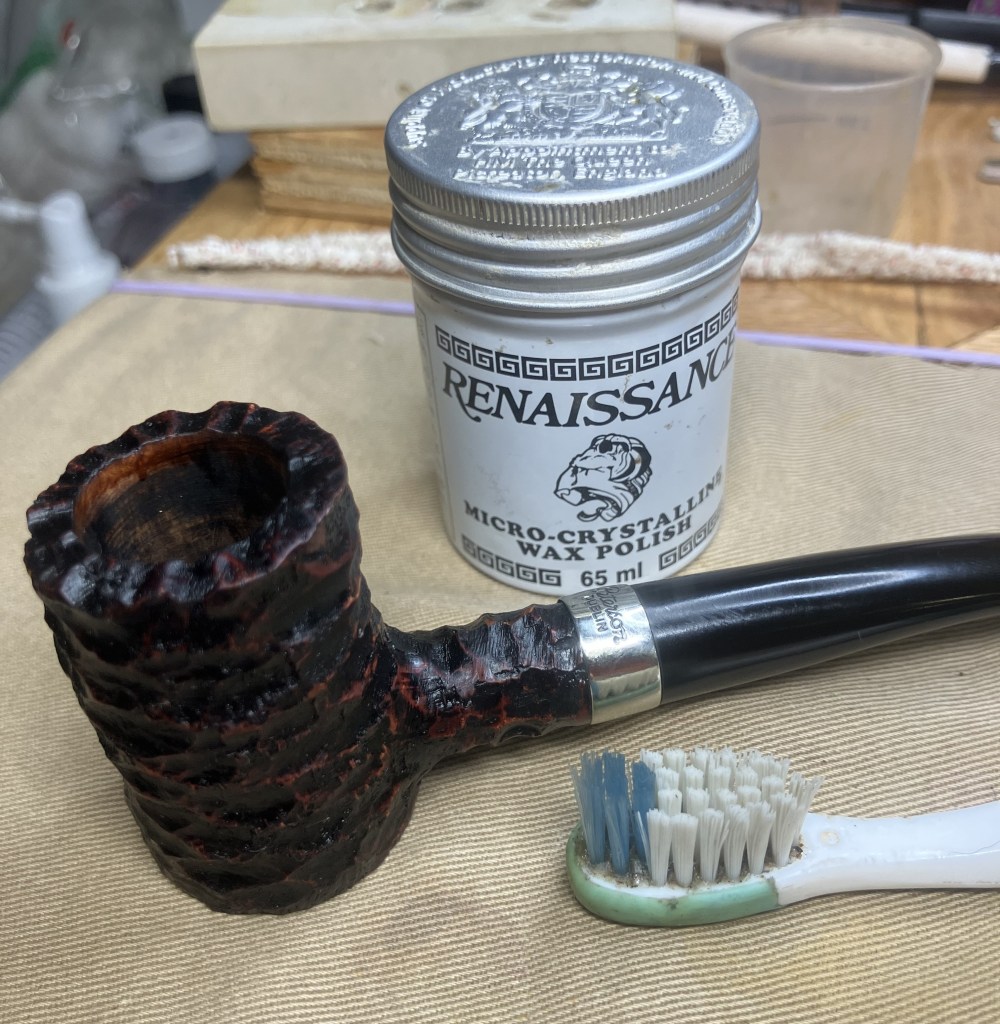
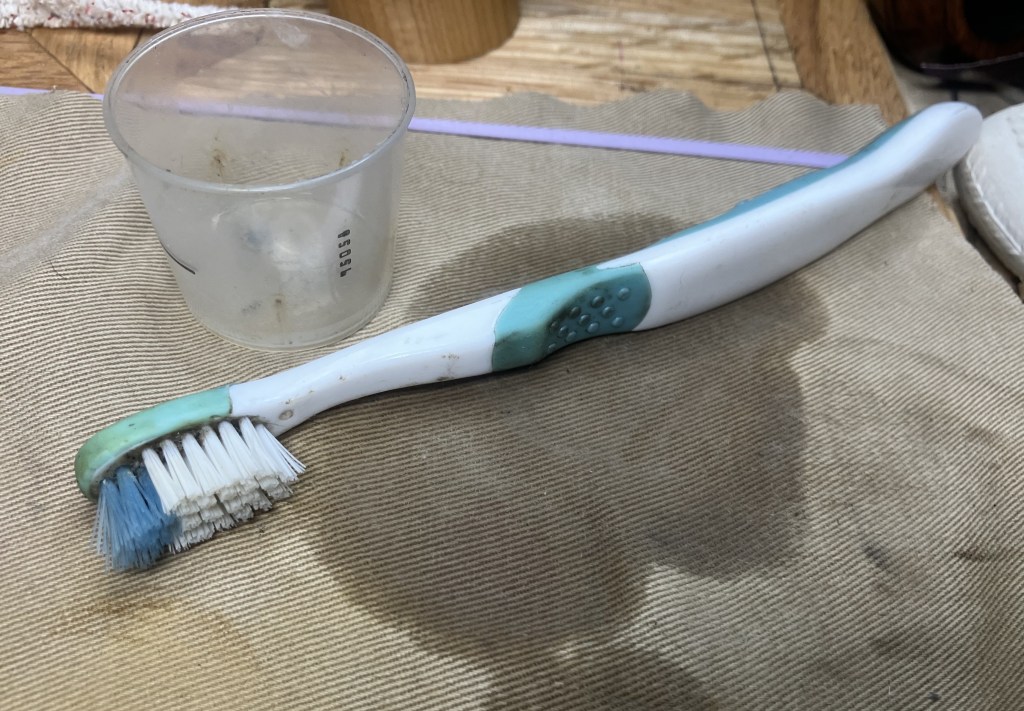
Once again the tooth brush was cleaned with alcohol and the workbench protector.
The Renaissance was allowed to dry for a couple of minutes then buffed with a shoe-shine brush.
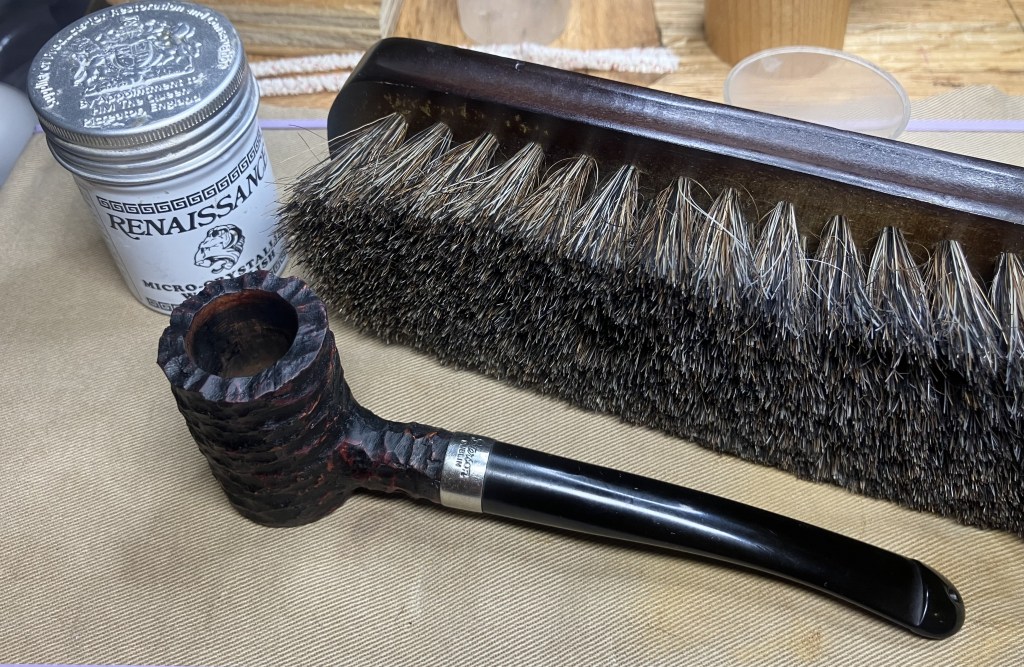
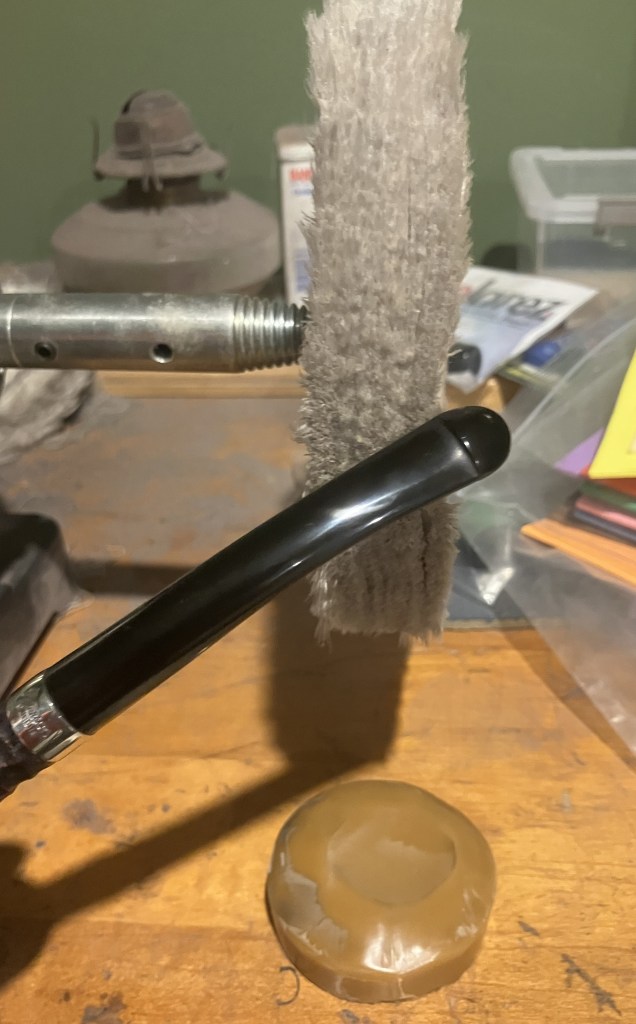
The stem, nickel band and pipe bottom were buffed and waxed with carnauba wax.
The final step was a hand buffing with a microfiber polishing cloth which raised the level of shine.
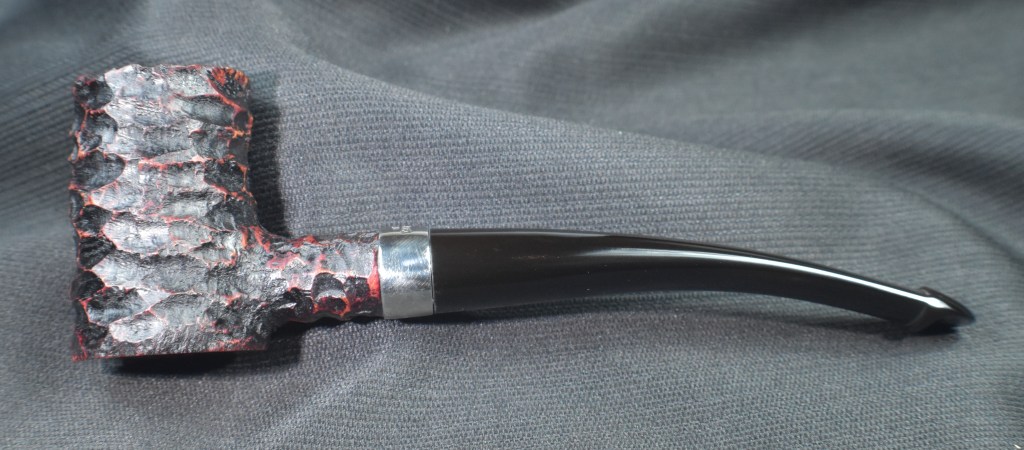
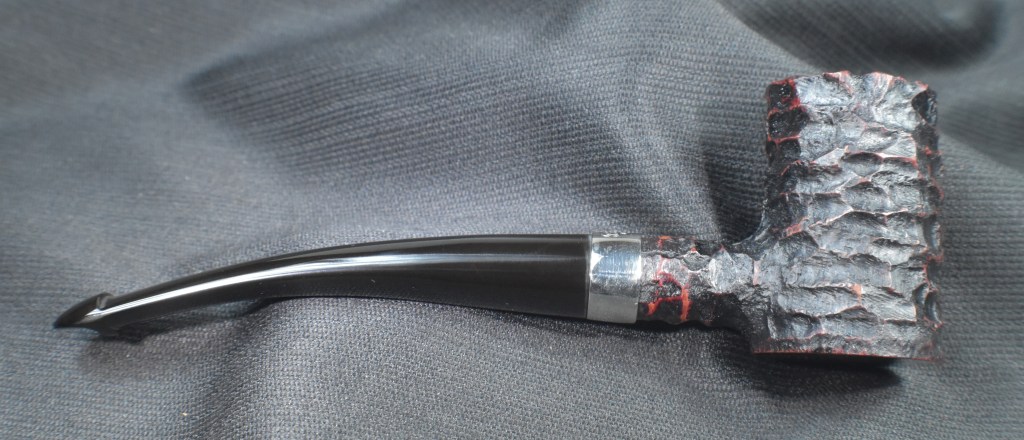
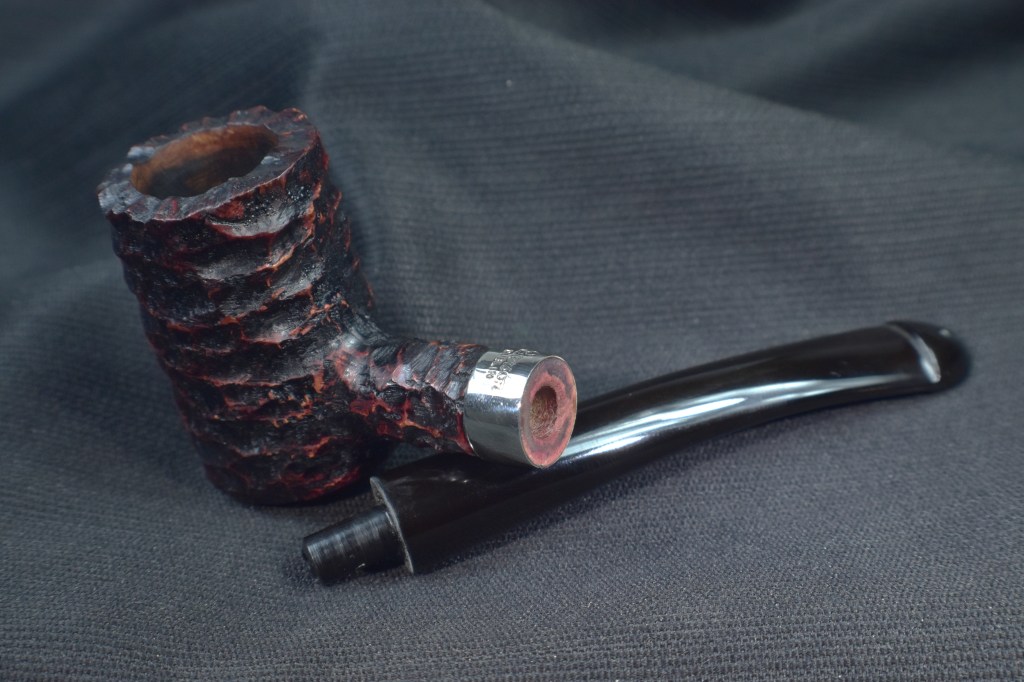
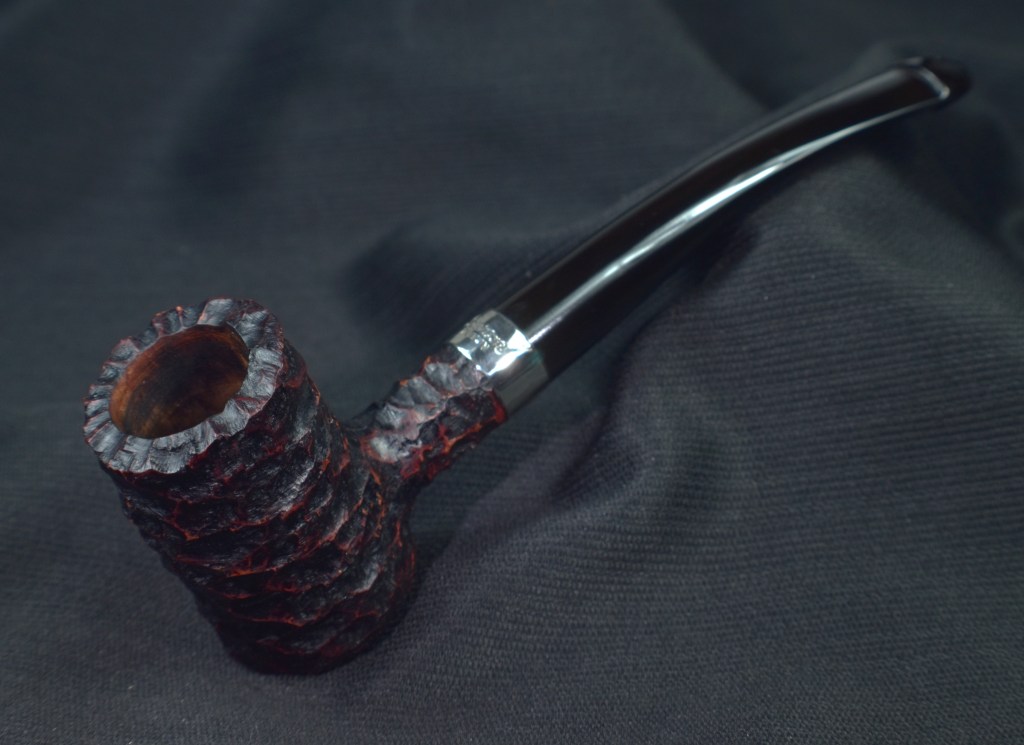
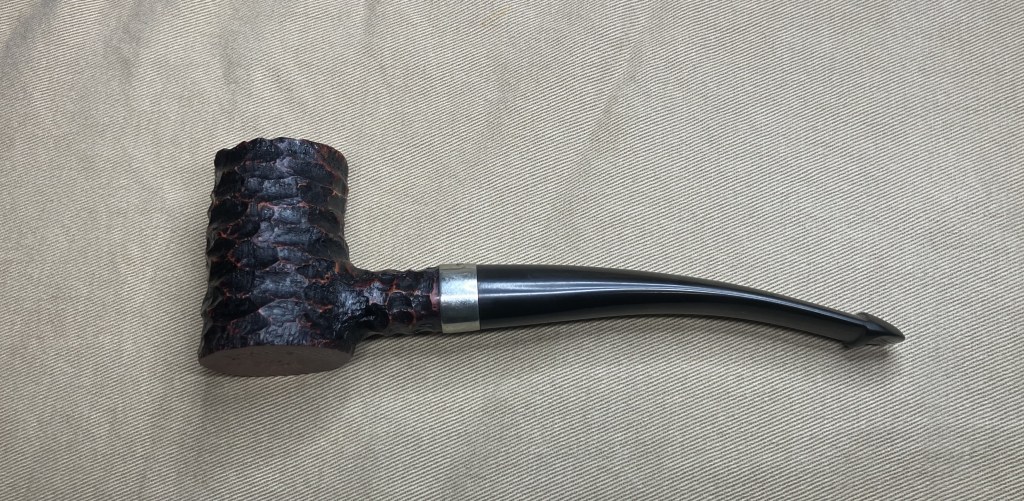
A new Peterson shape, the Tankard, has been removed from my list of pipes that I have yet to restore.This rusticated rascal is a wonderful example of the Peterson Tankard. This pipe’s vulcanite looks nearly pristine after the restoration and the glossy black accents the polished nickel and compliments the rustic briar. The tall narrow chamber will certainly be excellent for smoking Virginia flake tobaccos. The dimensions of the Peterson Tankard are:
Length: 5.66 in./ 143.76 mm.
Weight: 1.02 oz./ 28.92 g.
Bowl Height: 1.73 in./ 43.94 mm.
Chamber Depth: 1.40 in./ 35.56 mm.
Chamber Diameter: 0.65 in./ 16.51 mm.
Outside Diameter: 1.15 in./ 29.21 mm.
I do hope that you have found something here useful to your own pipe care, maintenance or restorations. If you like this sort of thing, please click the like and subscribe buttons. Thank you for reading the ramblings of an old pipe lover.
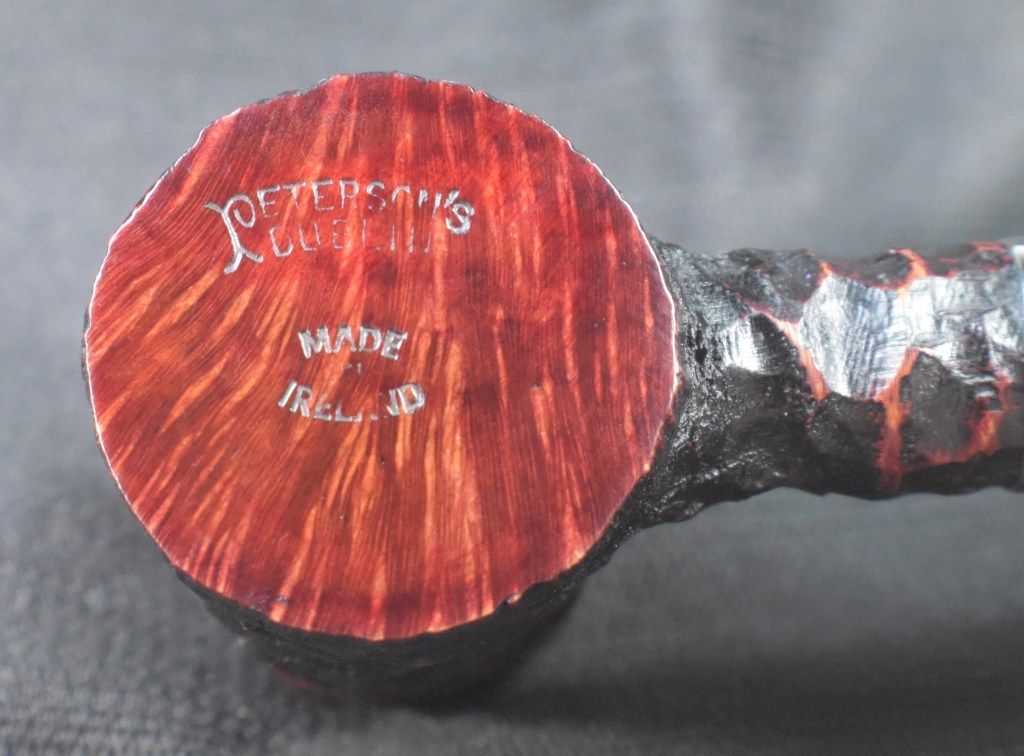
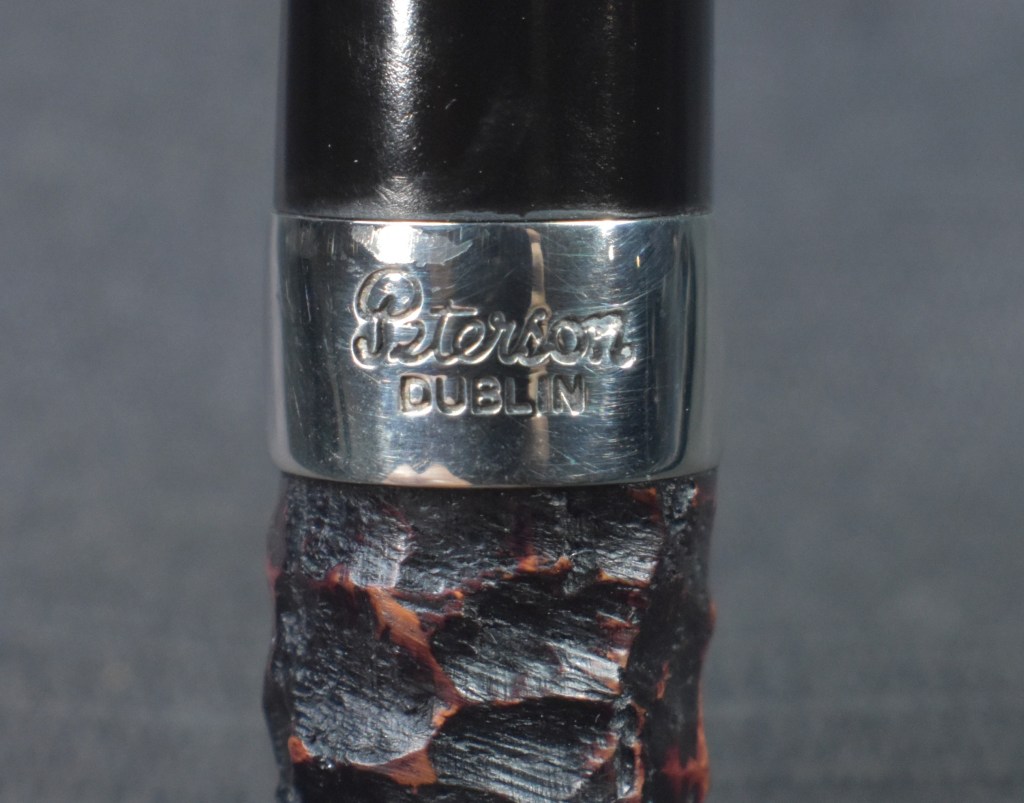
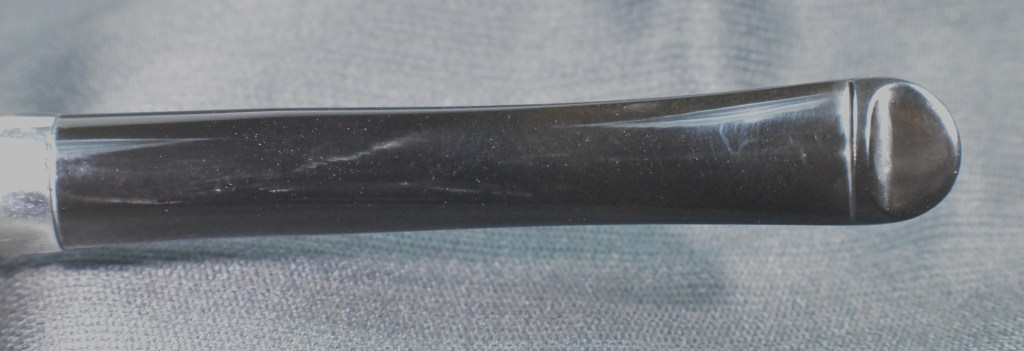
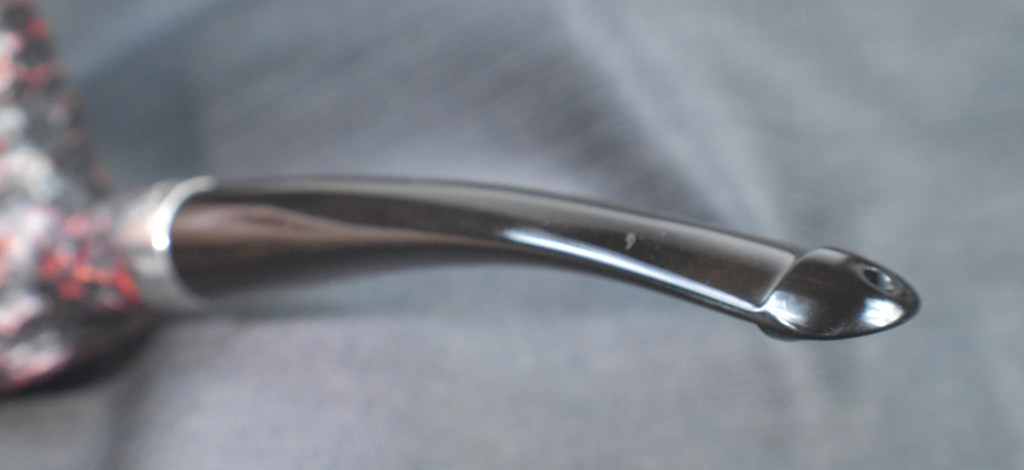
Below are some photos of the finished Peterson Tankard.