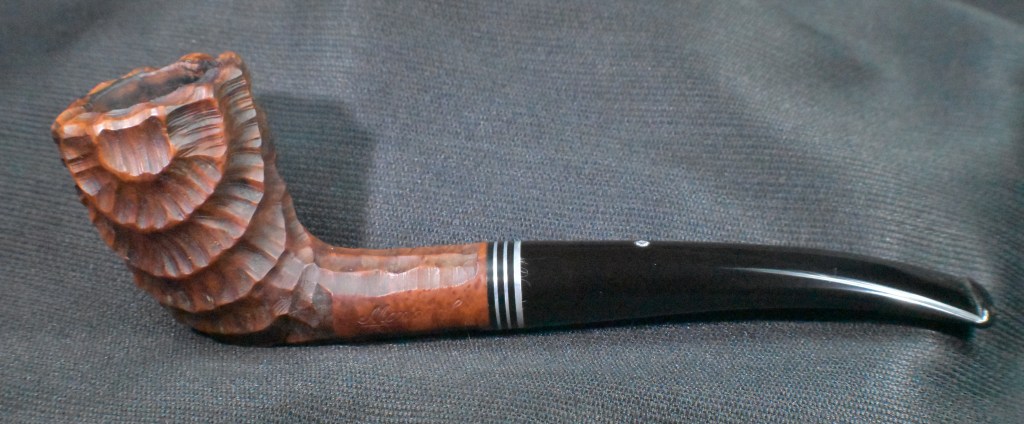
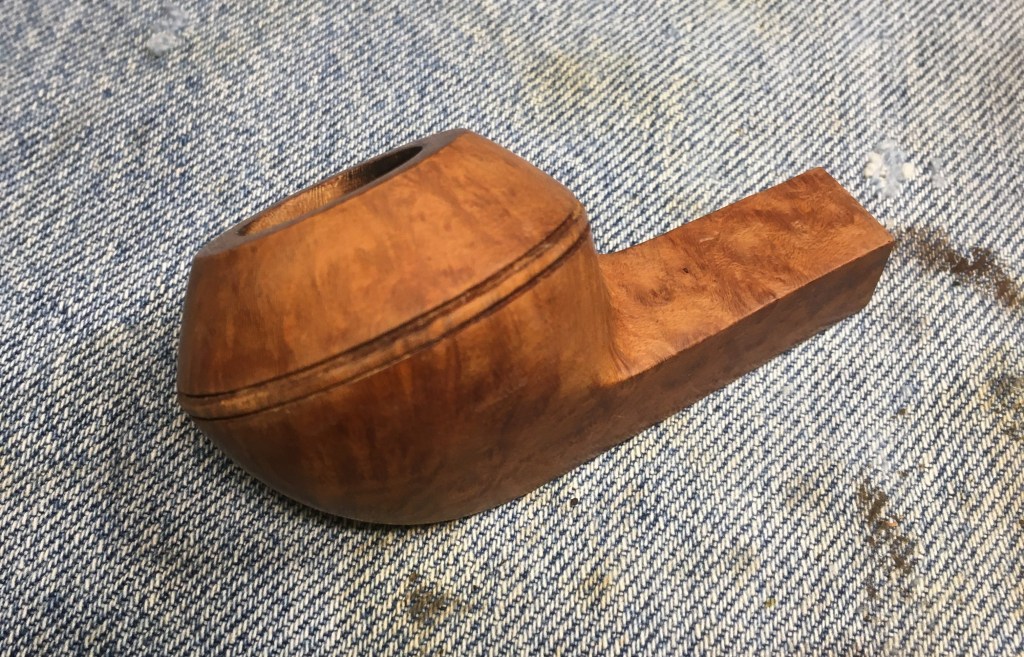
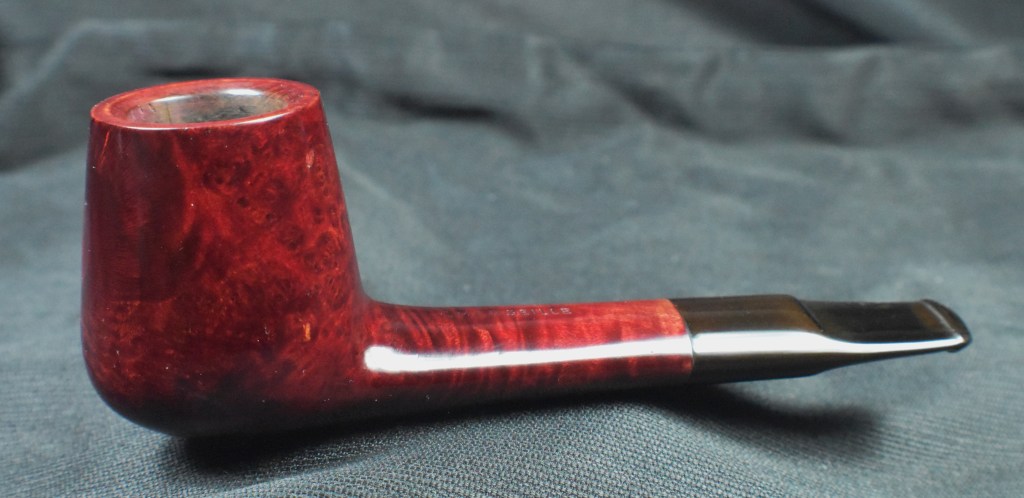
This brings me to the bad news, the bad news is that it is a Comoy’s. I suppose I should explain, Comoy’s is really a collaboration between the Chapuis and Comoy’s families and centered in two locations, the Saint-Claude region in France and London, England. There are many names involved over a 150 year period. The various people are related and moved between countries over the years. This is why I said, “The bad news”. It is because I find this all confusing.
In a nutshell Henri Comoy was from the Sainte-Claude region. As many folks did, he followed his father as a wood turner. He ends up married and living in London, making pipes from briar. His wife’s sister provides the connection to the Chapuis name. His wife’s sister, Fanny Beausire was married to Charles Pierre Chapuis, a Swiss watchmaker. They had seven children, three of which are important to this story; Charles Chapuis dies leaving the children partially orphaned, Emile (21 years old when Charles dies), Louis (19) and Charles (15). Louis and Charles are adopted by their Aunt Anna, Henri Comoy’s wife, and moved to London. Here they are taught the Comoy family business of pipe making alongside Henri and Anna’s two biological children, Paul and Adrien Comoy. The four boys, Louis Chapuis, Charles Chapuis, Paul Comoy and Adrien Comoy are treated equally regarding inheritance within the business.
This leads to the start of the start of the company. “H. Comoy & Co. Ltd was established in 1914. It was a partnership between Henri, his sons Adrien and Paul and his nephews Louis and Charles.” (Comoy’s – Pipedia) By 1921 the company expands to the United States. Now the adopted brothers remain in contact with the older Emile. He is in the pipe business as well selling pipes wholesale in Paris, according to the pipedia.org article. In the early 1922 Emile, Louis and Charles started another company, Chapuis-Comoy, in Saint-Claude. This company serves the French market for briar pipes. I know, this nutshell is becoming larger and larger. Old man Henri Comoy died in 1924 and within 5 years H. Comoy & Co. Ltd became part of Cardogan Investments Ltd. In 1928 the two pairs of brothers created Chacom in Saint-Claude. Now Chacom can have the French and European market while Comoy’s deals with England and the US. Here is where things get weird, both companies use the same shape charts thus all the overlap in Comoy’s and Chacom shapes.
As pipedia explains, “In 1929, H. Comoy Co. Ltd became part of Cadogan Investments Ltd, created by the Oppenheimer Group, which at that time already owned a number of very important and well-known brands such as Maréchal & Ruchon (GBD), Civic & Co Ltd, BBB de Frankau, Sina, Verguet Frères, Orlik and Loewe.” (Comoy’s – Pipedia). Comoys are apparently allowed to manage their own business affairs and continue with business as usual. Of course there is an “UNTIL” coming. Comoys was left alone until the 1980s when Cardogan took over and quality went downhill.
Chacom had their ups and downs as well, with mergers with La Bruyere in 1932. Then the war, the recovery, the reassertion or market share, the regaining of their own name Chacon from Le Bruyere and eventual integration with Ropp. For the much longer version please see some of the following links:
Hopefully this all kind of explains why CARLYLE from the pipephil.eu photos is an English maker while the pipe is sporting a country of manufacture (COM) stamp clearly saying FRANCE. I told you it was confusing…
The Restoration
After all that background it’s good to get back to the easy stuff, for me anyway – the restoring. The Carlyle began the procedure with a clean denim piece on the workbench.
The airway of the stem was cleaned with bristle pipe cleaners and 95% ethyl alcohol.
The stem was then lightly sanded with a 500 grit sanding sponge and a pipe cleaner was inserted into the tenon to act as a hanger for suspending the stem in Before and After Extra Strength Deoxidizer solution (hereafter called deox).
The stem was immersed in deox for two hours.
The reaming tools were gathered.
The PipNet and the #1 blade was only used to clear the bottom of the tobacco chamber as this chamber was quite conically bored. The #2 blade did most of the work reaming the chamber. The Smoingpipes Low Country Reamer and the General triangular scraper were used for some light clean-up work. The chamber was then sanded with 220 sandpaper wrapped around a wood dowel.
The tobacco chamber showed no signs of heat damage or charring.
Another view of the chamber, below.
Scrubbing with undiluted Murphy Oil Soap and a nylon brush came next. The soap was rinsed with warm water and the stummel dried with a cotton hand towel.
Returning to the workbench the stummel was wiped with 95% ethyl alcohol on a couple of make-up pads. This removed some of the finish and stain.
I then wiped the stummel with acetone on new make-up pads. This removed more of the clear coat finish and more stain.
With the clear coat removed, I started picking the old fill material from the largest of the three fills. Additional acetone was used to soften the old fill material for picking with a fly tying bodkin.
There was one other large fill at the front of the bowl. This too was picked out.
The airway of the shank was cleaned using a dental scraper, bristle pipe cleaners and cotton swabs along with a healthy dose of 95% ethyl alcohol.
The stummel was then lightly sanded to reveal any additional areas where old fills may have been hiding.
The depth of the front fill was minimal and was filled with brown cyanoacrylate (CA, super glue).
The two pits on the right side were deeper. These were filled with brown CA applied into the pit with a fly tying bodkin.
Briar dust was then scooped with a dental scraper and a small pile placed on top of the wet CA. The back of the dental scraper was used to press the dust into the CA filled depression.
The briar dust cured almost immediately with the briar dust. The resulting fill was then filed with a small flat file.
The front fill received a second coat of brown CA. and was filed after it had cured.
The new fills had slightly lighter areas around them from the filing. I wanted to blend the color to match the existing stain.
I first used a Cherry Furniture Touch-up Marker and allowed the stain to dry. The area was lightly wiped with a make-up pad moistened with 95% ethyl alcohol.
The color was close but not close enough. I used the Mahogany marker over the area, allowed it to dry and re-wiped with the alcohol. I was happy with the results of the second stain.
The stamp was taped with painters tape for protection from the sanding.
After two hours, the stem was allowed out of deox. The drip-dry-o-matic (patent pending) was deployed to allow excess solution to join it’s jarred brethren.
I used a coarse shop rag to vigorously rub the remaining deox solution from the stem. This removes some of the oxidized vulcanite from the surface.
Back at the workbench I used Soft Scrub cleanser on make-up pads. This removed a great deal of the oxidized vulcanite.
And, some more.
The COM stamp and the “maybe” logo were taped with painters tape to protect them from sanding.
Ready for sanding.
The stem and stummel were sanded intact to avoid the rounding of the edges of each part. A series of sanding sponges from 400-3500 grit. Between each sponge I wiped the stummel with a make-up pad moistened with alcohol. The stem was rubbed with mineral oil and wiped with a paper towel.
The painters tape was removed and wiped with alcohol to remove any adhesive remaining. The pipe was worked with micro-mesh pads from 4000-12000. Again, between each pad I wiped the stummel and stem between each pad as with the sanding sponges except in place of mineral oil I used Obsidian Oil.
The stummel received a coating of Before and After Restoration Balm. The balm was allowed to stay on the stummel for 15 minutes.
The remaining Restoration Balm was wiped from the stummel using an inside out athletic sock.
The pipe was then taken to the buffer where the pipe was given several coats of carnauba wax.
The final step was a hand buffing with a microfiber polishing cloth.
I am developing a new appreciation for the oval shank. It is a feature that provides a more robust feel in the hand while retaining a more elegant contour in profile. I am sure the extra briar also provides additional strength for those who are a bit more hard on pipes. This oval shank Carlyle Dublin restored in beautiful fashion. The briar grain grain is lovely and the factory staining was preserved. The stem lost the oxidation without losing the FRANCE stamp though I would have liked to see the factory fresh top stem logo but that appears to have been lost years ago to wear and buffing. Overall I am very pleased at how well this pipe turned out. The dimensions of the Carlyle Oval Shank Dublin are:
Length: 5.43 in./ 99.57 mm.
Weight: 1.20 oz./ 18.71 g.
Bowl Height: 1.84 in./ 38.10 mm.
Chamber Depth: 1.57 in./ 27.69 mm.
Chamber Diameter: 0.74 in./ 16.00 mm.
Outside Diameter: 1.35 in./ 28.45 mm.
I do hope that you have found something here useful to your own pipe care, maintenance or restorations. If you like this sort of thing, please click the like and subscribe buttons. Thank you for reading the ramblings of an old pipe lover.
Loading…
Below are some photos of the finished Carlyle Oval Shank Dublin.
You could call this little pipe a Custom-Bilt knock off. This pipe is stamped SHORT over SNORTER on the left shank. It has that very Custom-Bilt look to it but it is diminutive. It reminds me of Dr. Evil and Mini-Me from the Austin Powers movies.
The term “short snorter” according to Google Is less comic,
“Origin: The tradition began before World War II, with bush pilots in Alaska signing bills as a sign of good luck and a way to remember their travels.
Meaning and Purpose:
“Snort” was slang for a shot of liquor, and “short” meant a smaller amount, so a “short snorter” was a way to remember a small drink or a flight”.
This pipe would certainly be that, a short smoke allowed by a small pipe. Below are some photos taken before I did anything but remove the stinger.
The pipe looks to be in good condition. There were still tobacco remnants in the tobacco chamber. The cake and the lava on the rim suggested the pipe had seen use. The stinger was quite stuck in the stem before I took the above photos. I had to soak the tenon for about 30 minutes and did quite a bit of wiggling of the stinger as I held it between the fold in a piece of leather and pliers. There were a couple of spots which needed to be filled and of course the usual cleaning.
Background
I really have no idea who made this pipe. Searches for “Short Snorter” yielded nothing on both pipedia.org and pipephil.eu. The big Custom-Bilt book, “Individual as a Thumbprint” The Custon-Bilt Pipe Story by William E. Unger also makes no mention of the Short Snorter though it does discuss a marketing scheme where a person could pick up a miniature pipe and a gift certificate for a person. The person could then keep the miniature pipe and exchange the certificate for the pipe that they wanted from the retailer.
I searched Short Snorter in the blog posts of Steve Laug (it’s a rare day when I restore a pipe brand that Steve has not worked with) there I came across a restoration by Dal Stanton, “Short Snorter Imported Briar” (https://rebornpipes.com/tag/short-snorter-pipe/). Dal’s search for information on the Short Snorter was more productive but not by much,
“In the little I found on the internet about the Short Snorter, it is described as a nose burner or as a pocket pipe, but most often with other shapes than the horn. Steve looked up the Short Snorter in the book, Who Made That Pipe, and it indicates that it was made by Weber or Wally Frank. With that information, I looked at old Wally Frank catalogues, but did not see the Short Snorter. I suppose the name is apropos, but I think a lady pipe smoker would give this pipe a look see.” (https://rebornpipes.com/tag/short-snorter-pipe/)
In conclusion the Short Snorter appears to have been made by Weber of Wally Frank after World War Two. I say after WWII because of the IMPORTED BRIAR stamping which was something added to reassure customers that briar was once again used in the pipe.
The Restoration
The restoration began with the stinger taking a dip in a medicine cup of 95% ethyl alcohol and the pipe proper, getting a cleaned piece of denim.
Ithen wiped a bristle pipe cleaner with toothpaste and clamped one end in the vice. I pushed the other end through the stem and buffed the airway with the toothpaste enriched pipe cleaner.
The tooth chatter was filed with a small flat file to remove the dents.
I turned my attention to the stummel. The dental scraper got quite a workout here removing the crunchy caked tar and smoking residues. Alcohol dipped pipe cleaners and cotton swabs were also used.
The reaming was surprisingly productive for such a small pipe.
Once reamed, the interior of the tobacco chamber looked good and showed no signs of heat damage.
Next came the scrubbing of the stummel’s exterior. This was done with undiluted Murphy Oil Soap and a nylon brush. The soap was rinsed with warm water and the stummel dried with a cotton hand towel.
Back at the workbench the stummel was wiped with a make-up pad dipped in 95% ethyl alcohol.
I used the make-up pad to scrub a little bit more on the rim to get rid of the remaining lava.
There were two areas which I thought needed to be filled. One small sand pit where the shank met the bowl. The pit was small and I thought that it would fill with brown cyanoacrylate (CA, super glue).
The other area was on the rin and right side. This area required CA and briar dust to fill the gap on the rim and CA alone on the side.
I allowed the CA to cure and filed the shank fill with a half-round file.
The rim and right side needed to be retextured to match the existing rustication or carvings. I did this with a rotary tool and a small carving bit.
Below you can see where the fills look like a crack. This was only superficial and did not penetrate through the side wall of the bowl.
The re-rusticated carvings looked good as I attempted to match the contours of the original carving.
The rim recarvings were nearly unnoticeable.
The shank was taped with masking tape to protect it from the stem sanding. I wanted the stem and stummel intact for the sanding to avoid any rounding of the joint between the two.
A series of sanding sponges from 40-3500 were used in sequence. Between each sponge I rubbed mineral oil onto the stem and wiped it with a dry paper towel to remove sanding debris.
The stem was then worked with micro-mesh pads 4000-12000 grit. Between each of these pads I applied a small drop of Mark Hoover’s new Hard Rubber Balm, rubbed this onto the stem and wiped the stem with a paper towel.
The stummel then received a coating of Before and After Restoration Balm and was set aside to what I thought would be 15-20 minutes. It turned out to be the next morning.
The next morning I hand buffed the remaining Restoration Balm from the stummel with an inside out athletic sock.
The pipe was then taken to the buffer where it received several coats of carnauba wax on the stem and smooth surfaces of the stummel.
The final step was a hand buffing with a microfiber polishing cloth.
This little pipe was a fun project. I am enjoying practicing with the Dremel tool and improving my carving techniques. The blending of repairs to original rustications is a challenge which I find very enjoyable. This demure darling turned out very nicely. I have a Custom-Bilt with a near identical shape and seeing them side by side is quite amusing. The fills and re-carvings turned out beautifully and are only noticeable under serious scrutiny. The stem polished up very well with the glossy black complimenting the rustic carved rich brown of the stummel. The dimensions of the Short Snorter are:
Length: 3.92 in./ 99.57 mm.
Weight: 0.66 oz./ 18.71 g.
Bowl Height: 1.50 in./ 38.10 mm.
Chamber Depth: 1.09 in./ 27.69 mm.
Chamber Diameter: 0.63 in./ 16.00 mm.
Outside Diameter: 1.12 in./ 28.45 mm.
I do hope that you have found something here useful to your own pipe care, maintenance or restorations. If you like this sort of thing, please click the like and subscribe buttons. Thank you for reading the ramblings of an old pipe lover.
Loading…
Below are some photos of the finished Short Snorter.
I have said it before and I’ll say it again, “I blame Sascha Mertens for my Denicotea fascination.” Sascha is a pipeman from Germany and has become one of the few people that I communicate with on a near daily basis. When I asked him what shape this Denicotea is, he replied “Quaterbendzublin danish Style!
This thing is absolutely danish! Reminds me of an old Stanwell….” Hmm, “Quarterbendzublin”. That looks more like some Mayan word than anything I was familiar with but, I completely see what he was saying. I think I’ll just use the “072” though.
The previous owner was apparently not aware that they were not supposed to have a cake build-up in a meerschaum lined pipe or that wiping off the rim after a smoke is a possibility. Thus started the list of things to address with this restoration. There was one ugly fill on the left side of the shank that would have to be removed. The oxidation of the vulcanite would have to go. I was not sure how well the rim would clean-up, nor exactly what to do with the meerschaum part of the rim. Oh well, it will all get sorted out.
Background
Fortunately, for me, I have done a few Denicotea restorations. This makes the writing of this section easy. I can just recycle research from previous blogs. Yeah, I’m a Generation X slacker.
“Pipedia.org has a short article on Denicotea. I will include it here in its entirety:
“Willy Heineberg founded the company Denicotea in 1932 and began manufacturing and selling smoking accessories such as filters, filter inserts, cigarette holders and pipes.[1] The company headquarters was initially in Cologne, but was relocated to Bergisch Gladbach after the Second World War.[2]
Denicotea is actually the name of a silica gel filter, cigarette holders and care products for pipes and cigarette holders.
I still find it a bit confusing as Denicotea seems to be a company[3] and a brand as well which is operated by COMPOSING-STUDIO GmbH[4].
Brands
Adsorba
Adsorba is a fantasy series of pipes produced by Luigi Crugnola for the German market.
Aldo Morelli
Aldo Morelli is a fictional name. The brand Aldo Morelli has been registered for Denicotea on February 26th, 1992.[5]
Stefan Petzuch points out this brand appears to have similarities to the Mauro Cateni pipe brand, in particular they are both fictional Italian brands by German companies, and both have the “HAND CUT” imprint on the stem as seen bellow. This may connect the Aldo Morelli brand to Gebr. Heinemann KG in Hamburg, who had registered the Mauro Cateni brand. Or perhaps there is a connection between Denicotea and Gebr. Heinemann KG, or perhaps these pipe brands simply used “Hand Cut” stems from the same source.” (Denicotea – Pipedia)
Interesting and weird are the two qualifiers that come to mind in reading that. The four makers mentioned in the article; Luigi Crgnola, Cesare Barontini, Gig and Molina are all Italian pipe manufacturers. Where does the MADE IN ENGLAND stamp on the example on pipephil.eu or the stamp on the pipe I purchased come in, I cannot say. I can say that I am not the first person to have little success researching the origins of Denicotea pipes. Dal Stanton, who is far more diligent in his background research than I, had a French made Denicotea. He traced its origins to the St. Claude area but not to a specific maker. Dal’s blog was posted on Steve Laug’s rebornpipes.com site. Here is the link to Dal Stanton’s blog post: https://rebornpipes.com/2016/09/29/nice-find-in-plovdiv-bulgaria-denicotea-deluxe-curling-bruyere-extra/”
Now for this Denicotea 072 or as my German accomplice calls it, a “Quaterbendzublin danish Style!”, the world may never know where, when or by whom this pipe was made. I wonder if the added mystique adds to the smoking pleasure?
The Restoration
Dang, that’s a good looking pipe. Even all dirty and sitting on a cleaned piece of denim at the workbench.
I started by lightly sanding the surface oxidation from the stem. I’m not sure what to call the mortise attachment piece of vulcanite that is glued to the shank. Maybe stem one, the below and stem 2 the attached?
The stem was skewered with a pipe cleaner to act as a hanger in the Before and After Extra Strength Deoxidizer (deox) and suspended in the solution.
Since this is a meerschaum lined pipe I relied on the Smoingpipes Low Country Reamer and the General triangular scraper for the reaming this very conical tobacco chamber.
Oh how I wish that someone had explained to the previous owner that meers could be washed out with warm water after a smoke and that cake is not a good nor necessary thing. Oh well, the scraping continued.
After the scraping and a bit of work with a 410 gauge brass bore brush, I used cotton swabs dipped in alcohol to clean the remaining cake from the meerschaum.
The lava on the rim was softened with saliva and scraped with a sharp pocket knife.
I cleaned the airway of the shank with several bristle pipe cleaners dipped in 95% ethyl alcohol. Cotton swabs also dipped were used to clean out the mortise.
The stummel was taken to the sink where it was scrubbed with undiluted Murphy Oil Soap and a nylon brush. The soap was rinsed with warm water and the stumel was dried with a cotton hand towel.
Back at the workbench the stummel was wiped with an alcohol wetted make-up pad. Once the alcohol had evaporated I wrapped the briar shank with masking tape to protect it from the sanding of the vulcanite part of the shank.
I wanted to preserve the logo as much as possible so a piece of Scotch tape was cut and placed over the logo. This proved tricky to sand as I didn’t want to round the edges where the vulcanite would meet the stem. I decided to give the rim top a beeswax coating to protect it from future lava and make the meerschaum more resistant to wear. I heated a small glass jar of beeswax in a pan of water on the stove top. This allows the liquid beeswax to remain liquid longer as the hot water allows the wax to cool more slowly.
The tobacco chamber was plugged with a cork. I picked up an assortment of different sized corks from Amazon and that has been much easier whenever I need to plug a chamber.
The meerschaum was heated with a heat gun then painted with liquid beeswax.
The beeswax cooled quickly and was then heated again with the heat gun. The cork remained in place. As the beeswax was remelted excess dripped off the stummel and was caught by a strategically placed tin.
The cork was removed and the rim was wiped with a clean dry paper towel.
Below is a photo of the newly rewaxed rim back at the workbench. Please ignore the photobombing S. Johnson pipe in the background.
The stem had been soaking in deox for a little over two hours. I removed it and let it drip excess solution back into the jar.
The stem was then vigorously rubbed on a coarse shop rag to rid it of remaining deox solution and some of the oxidized vulcanite.
Next the deox within the stem was cleaned out. Apparently I didn’t clean the stem prior to the deox dip. Darn old people…
The stem, both parts, were sanded with a series of sanding sponges from 320-3500 grit. Between each sponge I used Mark Hooovers new product, Hard Rubber Balm (HRB) rubbed on with my fingers and wiped off with a clean dry paper towel. Mark sent me a sample of the HRB and asked me to try it and give my impressions. So here they are, the HRB is thicker or more viscous than mineral oil. As such it tends to fold the sanding sponges more than mineral oil. A more careful wiping of the HRB from the stem with a paper towel lessens this. The fouled sponges are easily cleaned with a little bit of alcohol rubbed on with a finger tip then wiping them off on the denim surface protecting cloth. The HRB excels as a coating of stems after they have been restored. Since it is a heavier or thicker oil it should evaporate more slowly from the vulcanite. I really like how HRB works for preserving stems. How well it lasts over time is still undiscovered as I have only been using it for a couple of weeks but it looks like it is a solid competitor of Obsidian Oil and should actually last longer based on it’s properties.
The stems were then worked with micro-mesh pads in grits from 4000-12000. Again the HRB was rubbed on and wiped off between pads.
The stem was then taken to the buffer where I buffed it with white buffing compound on the dedicated white wheel.
The buffing compound was wiped from the stem and I cleaned the logo area with alcohol. I used a white acrylic modeling paint to repaint the depressions of the logo stamp.
The entire pipe was returned to the buffer where it was given several coats of carnauba wax.
The final step was a hand buffing of the pipe with a microfiber polishing cloth.
I think this Denicotea Quaterbendzublin Danish Style!, hmm, I just can’t do that. I think this Denicotea 072 turned out beautifully. The visual appeal is very much to my liking. The light weight along with the bend make it a very comfortable pipe to clench and the longer stem keeps the smoke out of my eyes. Though not uncomfortable in hand the pipe does not fit into my hand as well as many others. The rustications add character and seem perfect for the shape with the briar grain on the right side matching the lines of the rim. The stem polished up very well with its high gloss black accentuating the rustic mahogany of the briar. The dimensions of the Denicotea 072 are follows:
Length: 5.06 in./ 128.52 mm.
Weight: 1.42 oz./ 40.26 g.
Bowl Height 2.00 in./ 50.80 mm.
Chamber Depth: 1.60 in./ 40.64 mm.
Chamber Diameter: 0.67 in./ 17.02 mm.
Outside Diameter: 1.68 in./ 42.67 mm.
I do hope that you have found something here useful to your own pipe care, maintenance or restorations. If you like this sort of thing, please click the like and subscribe buttons. Thank you for reading the ramblings of an old pipe lover. This one is going in the personal collection.
Loading…
Below are some photos of the finished Denicotea 072.
I love it when an attractive pipe comes across the bench that is stamped with a rather obscure maker. In this case S. Johnson and SFJ on the stem as well. Pride in workmanship and putting one’s name on a pipe is something that I find interesting. I’d never heard of S. Johnson and I have to say that this pipe was not the focus of purchasing the estate lot which it was featured in. The entire lot looked interesting and I couldn’t believe that I was the only bidder. Below is the original eBay listing photo.
The lot came to me from Ipswich, Massecheutets (dang, I can’t believe I spelled that right the first time) in mid-January of 2025. I guess not everyone gets excited about oxidized broken pipes with one missing a stem. The S. Johnson pipe had a broken acrylic stem and a reverse tenon. The stampings on the pipe were: S. JOHNSON over XXQ offset 8 on the left shank, HANDMADE over U S A on the right shank and SFJ stamped on the stem with a gold paint filling the impressed stamping. Below are some photos of the S. Johnson pipe prior to work. I was trying a white background for the initial photography of this restoration. I am unsure but generally not liking the white. Please feel free to comment.
The issues with this pipe seemed to increase upon close examination. The obvious ones were the chipped mortise and tooth marks on the stem. The plug on the bowl would require some serious investigation regarding the condition of the tobacco chamber but it looked as if it were professionally done. The reason why it was done is the thing which worried me. The exterior of the stummel looked great. I guess I need to focus on the positives and be glad I don’t have to worry about oxidized vulcanite.
Background
I was glad to see that there was information on S. Johnson on both of my “go to” pipe researching sites. I first found him mentioned on pipephil.eu. There I discovered the S. stood for Steve. Below is the pipephil.eu information.
Research stop number two was pipedia.org. Here I found a short entry and have included it in its entirety:
“Steven Johnson made his first pipe at the age of 9, as a friend had accidently dropped his pipe in a stream while fishing. This is according to an article in the Boca Raton News on May 16, 1982. It says further that by the age of 20 he had become a master pipe maker. He worked as the manager of the E. Wilke pipe shop, since 1977 was located in a large department store called John Wanamakers in Philadelphia. For his own pipes he’s reported to have produced 3 pipes a day, 6 days a week. His pipes are rare to find and are marked S. JOHNSON.
Richard Esserman, in an article entitled “Pipe Travels”, wrote of meeting Steve Johnson in 1978 at Wanamaker’s. At the time Johnson made pipes for Wilke’s in a small room right in the middle of the department store. The two became friends, and Esserman comments on one pipe going to the Wilke shop in New York City with an asking price of $500.00, a substantial sum in those days for any pipe.
In “Trial By Fire”, an article in Pipes and Tobaccos magazine by William Serad and Tad Gage, Mr. Serad speaks of Steve Johnson working as the manager of the satellite store in Philadelphia in the early 1970’s, and again offers great compliments to Mr. Johnson’s work.
Mr. Johnson is believed to have moved on from the Philadelphia Wilke’s shop to working for Zino Davidoff.
Markings: No. 1 BROAD STREET, (J.W), MADE IN ENGLAND (round stamping) made in the 1930’s-40’s timeframe reportedly by Comoy’s for the tobacco shop in the John Wanamaker department store in Philadelphia, located at No. 1 BROAD STREET. It’s stamped with the (J.W) logo and the early 1930’s-40’s circular MADE IN ENGLAND country of manufacture stamping. Here’s some info on the stamping from Trademark history: J.W. On Tuesday, April 18, 1933, a U.S. federal trademark registration was filed for NO. 1 BROAD STREET by JOHN WANAMAKER PHILADELPHIA, PHILADELPHIA. The USPTO has given the NO. 1 BROAD STREET trademark serial number of 71336921. Made for them by Comoy’s. The NO. 1 BROAD STREET trademark is filed in the category of Rubber Products . The description provided to the USPTO for NO. 1 BROAD STREET is SMOKING TOBACCO.” (Steven Johnson – Pipedia)
The last paragraph there was pretty much discussing the building that the pipe shops were in. I did not include the images as this blog is already a long one. So, Steven Johnson must have been a pipe making progeny and he got to live the dream of making pipes and working in pipe shops throughout the 1970s. If any of you would like to make this S. Johnson yours for $500, PLEASE say something in the comments. In all seriousness I’ll sell it for far less than $500.
The Restoration
The first step was to poorly focus on the S Johnson while it sat on a cleaned denim piece.
Next came the evaluation of stem banding material. I checked available spent cartridges for the correct size, thinking that one might look cool and the more traditional brass tubing. The diameter needed was .50 inches which coincided nicely with a 300 Winchester Short Magnum that I picked up somewhere.
The rifle case was tarnished but would polish up nicely. The question was, how to bore out the interior to fit the stem. Hmm, good thing I don’t have a lathe (said with extra sarcasm). I do know a great machinist though. I will call him Christian, because that is his name. I have employed the use of Christian’s unique skill set on other restorations here and here, if you are interested. More on Christian in a bit.
The stem had a large chip removed due to a previous break. My thought was to add a “band” to the stem, thus concealing the chipped portion and also filling it with epoxy within the band.
While considering the stem repairs I proceeded on to reaming the tobacco chamber. The tools needed were the PipNet, Smokingpipes Low Country Reamer and the General triangular scraper.
The pipNet with the #2 and #3 blades worked well for the deep chamber but (dramatic pause)
there was a good deal of extra scraping that required the General.
Eventually the chamber looked pretty well reamed. There was charring damage observed within the tobacco chamber. It was not severe but it was an issue which would require attention.
Next, the lava on the rim was addressed.
This was softened with saliva and scraped with a sharp pocket knife.
The stummel was taken to the sink for a scrubbing with undiluted Murphy Oil Soap and a nylon brush. The soap was rinsed with warm water and the stummel dried with a cotton hand towel.
Back at the workbench the stummel was wiped with 95% ethyl alcohol on a make-up pad.
The shank was cleaned out using numerous bristle pipe cleaners dipped in the ethyl alcohol and a nylon shank brush.
I had reached out to Christian to ask when he would be available to assist with this project. The date was February 4. The project was put on hold until February 25 when I could make it to Christian’s new machine shop. Once there I showed him what my thoughts were regarding the band. He immediately thought that the cartridge would make a cooler looking band than the brass tubing or, maybe he relished the greater challenge of the cartridge.
The cartridge was measured and cut using a lathe. The edge was then slightly beveled.
I neglected to photograph the next steps, I know, loser move. I will try to explain them. A boring bar was used on the lathe to bore out the interior of the cartridge giving it an equal inside diameter with a flat bottom. This bottom would be the resting place for the end of the acrylic stem. The outside diameter of the tenon was measured and an appropriate drill bit was selected. The primer pocket was enlarged to .25 inch. The brass was then polished on Christian’s buffer.
Back at home I assembled the stem and fit it to the stemmel. Everything looked like it was coming together nicely.
Below are a couple of photos of the parts at this juncture.
I needed to build up epoxy to replace the chip on the stem. I found a surrogate stem which fit the mortise of the real stem nicely. This was greased with petroleum jelly to avoid the epoxy from sticking.
The surrogate was inserted into the stem. This would prevent the epoxy from getting in the hole meant for the tenon insert. The two part epoxy was mixed and added to the chipped area. I had to continuously rotate the stem for about 15 minutes while the epoxy was setting up.
Once the epoxy had set I removed the surrogate.
It would take the epoxy a full 24 hours to completely harden but the chip had been filled. While the epoxy was still soft I used an exacto knife to trim the edge flush with the original edge.
I could work on the tooth chatter while the epoxy was curing. I cleaned the top and bottom of the bite zone with acetone.
Once cleaned, I used Thin clean cyanoacrylate (CA, super glue) to build up the tooth dents.
This was repeated on the opposite side of the stem.
The CA was allowed to cure then was filed with a small flat file and smoothed with a 400 grit sanding sponge.
Additional applications of This CA were used until the depressions were completely filled.
The airway of the stem was then cleaned using pipe cleaners dipped in 95% ethyl alcohol.
With the epoxy on the stem needing time to completely harden, I returned to working on the stummel. The rim had some charring that I wanted to remove. This was done by lightly topping the pipe.
A piece of 220 sandpaper was laid flat on the counter and the rim sanded using a figure 8 motion. I rotated the stummel in my hand and repeated the sanding a few times.
The topped rim looked much improved.
The next day I couldn’t help but think I was mistaken about the reverse tenon of this stem. I gripped the tenon insert with a jaw-taped pliers and gave it a twist. The tenon insert came out. I felt kind of dumb for not realizing that the tenon of this pipe was completely normal and that the tenon insert was not reverse but that the broken stem had merely released the gluck holding the tenon insert in the stem. DOH!
I used the two drill bits in the above photo to clear and clean the hole in the stem. The brass was roughened up with a piece of 80 grit emery cloth to allow epoxy to better adhere.
The tenon insert was test fitted to the stem. The airway looked very nice and clear.
The tenon insert was roughened up with the emery cloth again to allow better contact with epoxy.
The brass was thoroughly cleaned with acetone. The epoxy was mixed and applied to the tenon insert and to the brass.
The tenon insert was seated into place.
A pipe cleaner was run through the airway from the button out through the tenon insert to clear any epoxy which may have intruded.
The excess epoxy was removed using a cotton swab then was wiped clean with a soft cotton cloth wetted with acetone.
Next came the sanding of the briar. The stamps were both masked with painters tape for their protection.
The tape was cut in slightly irregular shapes to better conceal the lack of sanding immediately around the stamps.
The inner rim was beveled by sanding it with a small wood ball wrapped in 220 sandpaper to mask the slight rim charing.
The exterior of the stummel was sanded with a series of sanding sponges from grits 400-3500. Between each sponge the stummel was wiped with a make-up pad moistened with ethyl alcohol.
The stummel was then worked with micro-mesh pads from 4000-12000 grit. Between each pad the stummel was wiped with an alcohol wetted make-up pad.
The stummel received a coating of Before and After Restoration Balm and was set aside for 15 minutes to allow the balm to work its magic.
The excess balm was wiped away with an inside out athletic sock.
The brass and stem were buffed using white compound on the buffer.
I wanted to revitalize the gold which the stem logo had. I used Run’nBuff Gold Leaf for this. The metallic wax was applied with a fly tying bodkin and buffed with a soft cloth.
The surrounding area was then cleaned of any gold using a cotton swab dipped in acetone.
The pipe then received several coats of carnauba wax with the buffer.
To address the charring of the tobacco chamber, I decided to give the pipe a bowl coating. I applied a light coating of 100% pure maple syrup to the interior with my finger tip. I ran a pipe cleaner up to the inner edge of the chamber via the mortise. This would act as a plug to keep the charcoal dust out of the airway.
A capsule of activated charcoal powder was then dumped into the chamber and placed a piece of painters tape over the rim.
The stummel was shaken for over a minute. The shaking was interrupted by me tapping the stummel on the denim covered workbench from several different sides. The goal was to evenly disperse the carbon powder. The tape was removed and the excess charcoal was dumped in the trash. I then blew air through the shank and avoided the black cloud of dust.
The final step was to hand buff the pipe with a microfiber polishing cloth.
This was a long restoration with several interesting twists. The whole misidentification of the reverse tenon made me feel foolish. I am not sure why the bowl was plugged. The interior of the tobacco chamber showed some light charing but did not show signs of excessive scraping. The plug looks very professionally done with a minimal footprint. The finish on the pipe with the checkering is interesting and something I think of with rifle stocks and not pipes. It does make the 300 Winchester Short Magnum brass more appropriate though.The color of the acrylic stem blends in well with the brass. Overall it turned out as a very large beautiful billiard which will hopefully give someone many more years of enjoyment. The dimensions of the S. Johnson 8 are follows:
Length: 8.76 in./ 222.50 mm.
Weight: 2.27 oz./ 64.36 g.
Bowl Height: 2.74 in./ 69.60 mm. (bowl only) 1.70 in. / 43.18mm (with tube)
Chamber Depth: 2.58 in./ 65.53 mm.
Chamber Diameter: 0.84 in./ 21.34 mm.
Outside Diameter: 1.47 in./ 37.39 mm.
I do hope that you have found something here useful to your own pipe care, maintenance or restorations. If you like this sort of thing, please click the like and subscribe buttons. Thank you for reading the ramblings of an old pipe lover. Oh, I almost forgot. I do not like the white background. Perhaps it’s my lighting but, I find the black better for me and my photography.
Loading…
Below are some photos of the finished S. Johnson 8.
I think my fascination with metal pipes began with Falcons. I always thought they looked cool. As a kid, I remember the next door neighbor, Joe Chase, always smoking a pipe while working on his yard and they were frequently Falcons or Vikings (my memory isn’t too specific). Later in life I tried the Falcon and appreciated the convenience of bowl swapping and easy cleaning. Even later, I started dabbling with restorations and researching the history of various pipes and their makers. This led me to http://www.smokingmetal.co.uk/ when it was run by Tony Pringle. Tony proved to be very helpful in response to my questions via email. Doug Bisbe has taken the reins of the smokingmetal site, with Tony’s retirement from the arena, and is incredibly knowledgeable and helpful in providing information about metal pipes. As for this alluring aluminum darling, it came to me as part of a “grab bag” I asked Steve Laug to assemble for me consisting of metal pipes. I wanted to try improving my skills and techniques working on metal. Steve and his brother, Jeff, enabled this with a fun bunch of metal artifacts, this unmarked specimen included. When the unmarked pipe arrived it was photographed and appeared as below.
Background
How the heck do you research an unmarked metal pipe? Well, fortunately there is a site for that. Unfortunately, it does require you to do a lot of clicking and comparing. The site is http://www.smokingmetal.co.uk/index.html. That is where I started. Now, I admit to having spent a good deal of time here on previous occasions so, I could narrow down the list of things to click. They also have a header with categories to help you find or narrow things down.
I was searching for a metal pipe with a screw through the bowl. So I began clicking on pipes which met those criteria. This led me to the following:
“unknown – MST – 20” Now, you may think the MST is short for Mystery but no. Metal Stem Through is far more likely. The text for this page is as follows as are the three images:
“Plastic bit, bowl that appears to be Bryson, certainly compatible. No markings
Two seen with DANCO boxes, needs further checking though
The above images match the pipe in hand exactly except for the texturing on the bowl. Okay, I had a match. The important part for me in terms of restoration was that I could see how the pipe would be assembled and disassembled. The stem was press fit, the end cap was threaded, the bowl was one piece with the screw and base attached to the wood bowl. This entry also contained a bit about Bryson.
I returned to the A_Z contest index and found the Bryson entry. There, the site listed the Following (highlighting added by me),
“Made by the Briarwood Corporation, Palo Alto, California, the BRYSON has number D120275 under the Bryson name on the pipe stem.
There is a crosshead screw to attach the briar bowl to the stem. The end cap attaches to the mouthpiece by means of a rod through the length of the pipe, in which the air hole is close to the mouth piece.
The stem is of polished duraluminum and hexagonal in cross section
The bowls are unusual in that they are not briar turned on a lathe, but briar wood, ground to a powder and compressed under very high pressure (no glue, heat or plastics are used, just pressure. It is claimed this produces a perfect bowl of aged briar every time with increased porosity. The varnished finish on the smooth bowl however is often very badly crazed. Two bowls, one smoth and one rusticated, were supplied with the new pipe. The bowl retaining screw is ‘locked’ onto the bowl by a gasket and metal collar, enabling rapid replacement of the bowls without the need of a screwdriver
The corn cob bowl, in centre image,is another version, not sure if this was manfactured by Bryson, or a home workshop job
The set here shown was available for $3.50 new, but in what year ? Adverts seen from 1946 magazine
The lower photograph was of a possible derivative on ebay in 2003, although US patent D122042 seems to be this pipe, invented by Max Bressler, Chicago Ill 1940
There are also other derivatives without the Bryson name stamped in the metal and variations on the shape and grooving of the stem
That with Pat Pend under the Bryson name has no grooves forward of the bowl and the front end cap is a larger thread than the other models, including my version with no name 30 April 1940 US patent # D120,275 Inventor Charles Rothman, Cleveland Heights, Ohio, assignor Briarwood Corp, also of Cleveland Ohio at that time”
Well, that explains what I saw completely and adds credence to the provenance of this pipe. Later in the restoration you will see photos of the bowl and can easily make out the particle board looking texture to the bowl due to its composition of pressed briar dust. I believe this pipe to be made by Bryson or an affiliate during World War Two. The style and composition of the briar bowl are in-line with the above description.
The Restoration
The restoration began as with most others, a clean denim piece to protect the work surface. At this point I would like to quote the smokingmetal.co.eu site with a warning regarding working on old metal pipes.
“A word of warning If you are thinking of buying online, be very very careful. Best policy with ‘metals’ is to see an image of the dismantled pipe. Buying otherwise unless desperate for an example can too often result in you ending up with a pipe that may be damaged when you try to dismantle and clean it. Mind you, you may learn how to repair them, but parts are of course getting rarer than hens teeth” (http://www.smokingmetal.co.uk/news.php)
It was at this point that I started to dismantle the Unknown Metal pipe. The stem came loose fairly easily but that is where my progress stopped. I needed to know how this pipe was assembled before I tried to disassemble it. I went upstairs to the computer and started looking through the long list of metal pipe with screw through bowls. I looked through 64 individual pipes before I found the match. The photos showed that the end cap was threaded and that the screw in the bowl was part of the bowl and not just a screw holding the bowl to the aluminum tube.
With that knowledge my plan of attack was fine tuned. I would first ream and clean out the tobacco chamber. This would allow me better access to the screw at the bottom of the chamber. The reaming kit was gathered.
The bowl was rather large in diameter and it accommodate the largest, #4 blade for the PipNet. This pipe had been smoked fairly heavily based upon the amount of cake removed.
It was at this point I realized that something was very different about the “briar” of this bowl. I had not read about the Bryson pressed briar dust bowl at this point. I stopped researching when I found the matching pipe and determined how to disassemble it. The material reminded me of a Medico made Brylon pipe.
Undeterred, I started cleaning out the screw head slots. I scraped with a dental scraper and moistened the screw with 95% ethyl alcohol.
I retrieved my gunsmithing screwdriver bit set. I knew that I wanted a better quality screwdriver as I could tell this screw had been forced and looked slightly damaged.
I chose a flat tipped Phillips head bit of appropriate size. I thought this would allow a better grip on the screw and not force the bit upwards with increased pressure.
I soaked the screw with ethyl alcohol from the bowl as well as around the base of the bowl. With slow even pressure the screw relented. And the entire bowl was removed. The bottom of the bowl was quite corroded and this oxidation was the likely cause for the screw being so tightly stuck.
Below is the corroded base of the bowl with only a light brushing with a brass brush.
Below is the base after a thorough brushing with a brass brush and scrubbing with ethanol soaked cotton swabs.
It was time to visit the sink for the scrubbing. The bowl was scrubbed with undiluted Murphy Oil Soap and a nylon brush. The Soap was rinsed with warm water and dried with a cotton hand towel.
The aluminum tube (tube from here on out) was scrubbed with a Scotchbrite pad and Castile liquid soap on the outside and with a nylon shank brush inside. The tube was rinsed with warm water and dried with a cotton hand towel.
Back at the workbench, the hope was that the soap, water and heat from the scrubbing would soften and get the endcap to loosen slightly. It didn’t. I used a thick piece of leather to protect the end cap from the jaws of the channel lock pliers.
The stem was cleaned out with bristles pipe cleaners and 95% ethyl alcohol.
I took the tube to the buffer to buff and polish the aluminum. While there I spent a little time on the plastic stem and inner tube.
Upon returning to the workbench the bowl had completely dried and I got a good look at the briar. Again, I emphasize that I had not researched the pipe beyond the initial “Unknown – MST – 20” (http://www.smokingmetal.co.uk/pipe.php?page=212) page. I could immediately tell that this was not typical briar. I ran upstairs for some further research.
This is when I came across the research material concerning the Brylon pressed briar bowl materia. Everything clicked in my mind. I knew that from here out I would be very judicious with any kind of solvents. I was unsure how or if they would react with the pressed briar of the bowl. Everything had seemed okay with the soap and scrubbing and with using the ethanol attempting to loosen the screw but I would be more cautious going forward.
Again returning to the workbench, the tube polished up beautifully and the stem looked far better but I was not completely happy with it.
Before I could re-dye the bowl I wanted to repair the two cracks at the bottom of the bowl. I figured that brown cyanoacrylate (CA, super glue) would be the best course of action. The next two photos show crack one and crack 2 on opposite sides of the bowl.
I planned to use the brown CA applied with a fly tying bodkin and work the CA down into the crack.
Below you can see the CA filled crack.
The CA was allowed to cure and was then filed with a small flat file.
On the opposite side the curvature of the cracked area required sanding.
Next came a light topping of the bowl with a piece of sandpaper laid flat on a counter.
The topped bowl was looking better, still slightly out of round. I guessed that to be “normal” for pressed briar bowls.
The bowl would get a single application of Fiebing’s Leather Dye in black. A cork was used to plug the tobacco chamber and act as a handle. The dye would be applied with a folded pipe cleaner and flamed to set the dye and vaporize the alcohol solvents.
Below is the resulting black dyed bowl. The dye applied very similarly to normal briar.
Back at the workbench the bowl was wiped with a slightly ethanol wetted make-up pad then was sanded lightly with a 400 grit sanding sponge. You can see that the sanding revealed the brown of the briar on the ridges of the rustication.
The bowl was then given a coating of Before and After Restoration Balm and set aside for 20 minutes.
The excess Restoration Balm was wiped away with an inside out athletic sock.
I used a dremel rotary tool and a wool polishing bit to lightly polish the bowl screw. I did not want to use any buffing compound in fear of not being able to get it out of the tobacco chamber.
To address my “not happy” with the stem, I used a small flat file to lightly resurface the button and the area immediately below the button on the top and bottom of the stem. This was then sanded with sponges 320-1000.
The stem was then returned to the buffer and buffed with white compound.
This produced a level of finish that I was happy with.
To make it even better, I hand buffed the stem with Before and After Fine followed by the Extra Fine Polish on a soft cotton cloth.
The stem returned to the buffer for several coats of carnauba wax. The ridge tops of the bowl were also waxed with carnauba but I was careful not to apply pressure and to keep the wax out of the rustications.
The final step was a hand buffing with a microfiber polishing cloth.
This was a fun and interesting restoration. Next time I work on a metal pipe of unknown origin, I will definitely do my background research before starting rather than during, twice… This little pipe is adorable. I think the whole thing is pretty amazing, the history, the workmanship, the material used, all made for a fascinating project. I have no idea if it smokes well. I can’t imagine that it would not be, with the wide chamber excellent for English and aromatic blends. I can easily envision the ridges of the aluminum tube being very efficient at radiating heat from the smoke. This would make a very handy little working pipe for the fishing tackle box, garage or for a lawn mowing pipe. It’s small size and light weight are great for an active smoker. The dimensions of the Unknown Aluminum Pipe are as follows:
Length: 5.06 in./ 128.52 mm.
Weight: 1.27 oz./ 36.00 g.
Bowl Height: 1.17 in./ 29.72 mm. (bowl only) 1.70 in. / 43.18mm (with tube)
Chamber Depth: 0.82 in./ 20.83 mm.
Chamber Diameter: 0.85 in./ 21.59 mm.
Outside Diameter: 1.49 in./ 37.85 mm.
I do hope that you have found something here useful to your own pipe care, maintenance or restorations. If you like this sort of thing, please click the like and subscribe buttons. Thank you for reading the ramblings of an old pipe lover.
Loading…
Below are some photos of the finished Unknown Aluminum Pipe.
As a child of the 1970s I grew up with the series The Six Million Dollar Man. For those who never heard of this, it was a TV series where an astronaut crashes his ship and is badly damaged. He is rebuilt using “bionic” parts allowing him superhuman abilities. During the title sequence a narrator explains, “”We can rebuild him. We have the technology. We can make him better than he was. Better . . . stronger . . . faster.” For some reason this line kept going through my head during this restoration. Given the “faster” doesn’t work but the other two, most definitely. The pipe was one of 13 pipes won in an eBay auction from Germany. I was hoping to acquire some lesser known makers or lines of pipes to the US market.
The shape of this pipe is a tough one for me, it is a dainty pipe with a curved bowl. Is it a bent tulip, a chimney, a billiard? Heck, I don’t know, I’ll just use the 8497 stamped on the shank to identify the shape. As for the other stamps there was “Spitfire” in a flowing cursive script and GENUINE over BRIAR as a circle on the underside of the shank. Below is a screenshot of this pipe from the original eBay listing. It shows a repaired stem from a break, a chipped shank end and a good deal of excess glue, perhaps a failed clenching experience while mowing the lawn.
Below are some photos of the Spitfire before work had begun. Well, that is not entirely true. The break was held together by the glue until I tried to remove the stem. The stem was quite stuck. Unaware of my incredible strength, the glue broke while I tried to free the stem. Umm, there may have been a slight exaggeration there about my strength. The stem remained stuck within the shank piece as seen in the photos below.
Ok, you can see there are some issues here that will have to be addressed; the stem stuck in the broken shank and the broken shank being the greatest. The lesser issues include general dirtiness, stem oxidation, excess glue removal, tobacco chamber reaming and other typical restoration stuff. This is going to be a fun project.
Background
The first place that I searched was pipephil.eu for the name “Spitfire”. There I found the following:
(Sn-Ss — Pipes: Logos & Markings). Here you can see the same script style in the “Spitfire” stamping. The GENUINE BRIAR stamp is not represented but the four digit shape number is present. There is also a slight difference in the logo coloration of the bottom image from pipephil.eu. The bullseye shown is more indicative of the colors used by the British Spitfire fighter aircraft in World War Two.
I assume that the blue coloration of the logo in this Spitfire had merely faded over the years.
The next search site was pipedia.org. There “Spitfire” resulted in:
(Italian Pipe Brands & Makers R – S – Pipedia). The Lorenzo link took me to a nice bit on the history of the predecessors of and the formation of Lorenzo Pipes in 1969. Also, there was the following quote specific to the Spitfire line:
“A somewhat more bargain series was given its own brand name: Spitfire. Spitfires displayed 1:1 transferred Lorenzo models (mainly for 9mm filter) as well as smaller, more classically shaped pipes. These were also extremely popular.” (Lorenzo – Pipedia). The store takes a more tragic turn in 1983,
“In 1983 Lorenzo Tagliabue came to bitter grief: his little daughter, the only child, died of cancer. He lost all interest in the business and retired still in 1983, leaving no heirs who wished to continue the business. Lorenzo Pipes was licensed for and continued for a shorter period by Comoy’s of London (Cadogan / Oppenheimer Group). Then Lorenzo Pipes almost disappeared and Lorenzo Tagliabue passed away in 1987.
But this wasn’t the end. In 1988 Riccardo Aliverti and his wife Gabriella purchased all rights to the Lorenzo trademark from the Tagliabue family and production of the renown Lorenzo Pipes resumed.
The Aliverti family is involved in pipemaking since Romolo Aliverti, the father of the current owners, joined the Lana Brothers in 1920. He later reached the rank of technical director. No wonder that his son Riccardo showed an interest in pipe making. Riccardo began learning the pipemaking trade in 1954 at the age of fourteen under his father’s watchful eyes and succeeded him as technical director upon his father’s retirement in 1973.
Today the third generation of the Aliverti family is working for the company. Massimo Aliverti, Riccardo’s son, has been with the company as sales director since 1991. He works closely with his father and knows all phases of production. Massimo has established a broad customer base for Lorenzo around the world.
As far as the informations are reliable, Lorenzo’s better lines (One Star, Two Star, Three Star, Moscato, Spumante and the Grand Canadian) are made in Italy while the cheaper ones (New Era – Riesling, New Era – Poggio, Angera, Angera Satinato, Cadry, Churchwarden, Filtro, Arena, Cadore, Sport PS and Garden) are made in Albania by Tomori to benefit from the rich deposit of briar in Albania.
The website of Lorenzo’s American distributor SMS Pipes gives a good impression of today’s Lorenzo Pipes. SMS also offers a wide range of Meers.” (Lorenzo – Pipedia).
I think that it is safe to say that this pipe was made in Italy by Lorenzo most likely between the early 1970s-1983.
The Restoration
Breaking a pipe is seldom fun and breaking one while removing a stem is less fun than that. I suppose I could take some consolation in the fact that it had already been broken and the attempted repair was what had actually broken. Regardless, the pipe made it to the workbench. I immediately dropped the shank piece and tenon end into a small medicine cup with 95% ethyl alcohol. Apologies for not photographing that step. The alcohol worked quickly in freeing the stem from the broken piece of shank. The below photo has the broken piece of shank pressed in place though not glued, for the photograph.
I began with reaming the tobacco chamber. I thought the PipNet and the #1 blade would be narrow enough for this petit chamber. It was for the first 1- 1.5 cm then the chamber tapered.
I used a Tsuge reaming tool for this narrow chamber. This was followed up with the General triangular scraper.
I remember picking up the Tsuge tool after my first PipNet set lost the #1 blade to breakage. The chamber was then sanded with 220 and 320 sandpaper wrapped around a wood dowel and a Sharpie marker, respectively. There was no damage from heat or charring in the chamber but there were a couple of places where the chamber had experienced small dings, likely from previous clumsy reaming/scraping.
The shank was cleaned with cotton swabs and bristle pipe cleaners dipped in 95% ethyl alcohol.
The stummel was then taken to the sink for a scrubbing with undiluted Murphy Oil Soap and both a nylon brush and a brass wire brush. The soap was rinsed with warm water and the stummel dried with a cotton hand towel.
Back at the workbench the stummel was wiped with 95% ethyl alcohol on a make-up pad. This removed some stain from the briar.
The plan to repair the shank was this:
Glue a ¼ inch or 6.5 mm brass tube into the mortise well past the break.
Glue the broken shank end into place.
Fill the seams with cyanoacrylate (CA, super glue) and briar dust.
Recarve the rustication and redye the shank.
The mortise of the Spitfire was drilled at ¼ inch or 6.5 mm. I needed to deepen the mortise to implement my fix. I used a Brad Point Drill Bits 1/4-Inch Hex Shank Stubby Drill Bit in a screwdriver handle to extend the mortise approximately 1.4 inch (6.5 mm) past the furthest edge of the break.
The brass tube was slid into position to test the fit. So far, so good.
The pieces of briar refused to align precisely. Bah! Hmm, there was a layer of glue from the previous fix on the briar which kept the broken pieces from aligning correctly.
I began soaking the broken edges with acetone to soften the old glue.
While the glue was soft I worked it with a nylon brush. This helped peel the edges of the glue from the briar. The acetone would evaporate quickly so I had to soften and scrub quickly. Eventually the glue was removed.
The brass tubing was cut to length using a tubing or pipe cutter.
The brass tube was scratched up with 80 grit emery paper to increase the surface area for the glue to adhere to. The tube was pressed into place without the broken shank piece and Thin CA was allowed to seep into the joint. The broken shank piece was slid over the brass tube and situated correctly. Additional Thin CA was applied to these seams. The two pieces of briar were then clamped and allowed to cure.
As the CA was curing I began cutting the tenon to fit into the brass tube. This required the use of the VermontFreehand Adjustable Tenon Turning Tool. I made several cutts adjusting the cutter very slightly (approximately 1/8th turn of the adjustment screw). I feared taking too much material off and shattering the thin tenon. Once the tenon was close to the right size I began filing the new tenon and smoothing it with 400 grit sandpaper.
When the CA that set, I used a countersink bit to hand bevel the inner edge of the mortise.
The stem was pressed into place and the fit was not too bad. I had to file the top of the stem to fit the shank. This was done by wrapping the shank with a layer of masking tape and filing the stem with a small flat file. The lower edge of the joint would have to wait until I had the chip filled before I could fit it to the stem.
Since the seam where the two shank pieces joined was adjacent to the stamps care had to be taken to keep from damaging the stamp. I applied brown CA with the tip of a fly tying bodkin to the seam. Briar dust was then pressed into the wet CA. The briar dust caused the CA to cure almost immediately. The excess dust was brushed off with a brass brush. This was repeated to fill the seam in very small increments.
The same process was used on the carved surface seams.
To fill the chipped shank end, I applied a bead of brown CA to the area that I wanted filled. This wet CA was then pressed into the box of briar dust. The excess dust was brushed off with a nylon brush and another thin layer of CA was applied. This wet CA was again pressed into the briar dust. Once the chip in the shank end was filled with CA and briar dust the end was filed with a small flat file. The final fill was topped with a coating of Thin CA to seal the layers of brown CA and briar dust.
At this point I was getting impatient to get a look at the finished pipe. I opted to try buffing the stem’s oxidation into submission. In hindsight, this was a mistake. I describe it here so that you can avoid being as dumb as me.
I wrapped the shank with masking tape to protect it from the buffing.
Using a rouge compound I buffed the stem until I thought I’d removed the oxidation.
The problem was, the stem looked shiny but shiny brown. I wanted shiny black. I wetted a few make-up pads with Soft Scrub cleanser and scrubbed the stem. They removed a great deal of oxidation.
“Okay, I’ll quit being in a hurry and do it right,” I said to myself. I suspended the stem into the Before and After Extra Strength Deoxidizer (I refer to this as deox). It was allowed to soak overnight.
The next day I removed the stem and allowed it to drip excess solution back into the jar.
I like to scrub the remaining deox from the stem with vigorous use of a coarse shop rag.
The coarse texture of the rag absorbs the solution and removes more of the oxidized rubber as can be seen below.
The stem was certainly looking more black this time. There remained brown areas especially on the top side of the stem. I sanded the stem with a series of sanding sponges from 400-1000 grit. The zone immediately (1 cm) below the button was filed using the small flat file and further sanded. Once sanded I returned to the buffer and buffed the stem with white compound.
Pleased with the stem, I turned my attention to recarving the rustications on top of the fills. I used the Dremel rotary tool and a sharp carving bit.
I tried to keep the lines pretty much the same but to carve through the fill material. I very much wanted to eliminate any shiny CA spots.
The newly carved textures looked good but their color was off when compared to the rest of the shank.
I used a Mahogany Furniture Touch-up Marker to re-stain the briar to match the existing color.
Not bad.
Not bad, at all.
The stummel was given a coat of Before and After Restoration Balm, applied with a baby toothbrush and allowed to sit for 20 minutes.
20 Minutes later the Restoration Balm was hand buffed from the stummel using an inside out athletic sock.
The baby toothbrush was cleaned using 95% ethyl alcohol. Renaissance Micro-Crystalline Wax was applied to the stummel using the baby toothbrush. I applied two coats of wax allowing 10 minutes between coats.
The stummel was taken to the buffer where it was buffed using a clean flannel wheel. While there I applied several coats of carnauba wax to the stem and the stampings on the underside of the shank.
To address those two rough spots from previous reaming/scraping inside the tobacco chamber, I opted to use a maple syrup and charcoal bowl coating. I applied a very thin coating of syrup to the chamber using a cotton swab.
I then used a capsule of Activated Charcoal dumped into the chamber. Oh, note the pipe cleaner in the shank. This keeps the charcoal from getting into the airway. I covered the rim with a piece of masking tape and vigorously shook the stummel for several seconds to distribute the charcoal powder evenly onto the wet syrup.
After removing the tape, dumping the excess charcoal and giving the stem a good blow, don’t draw in, you’ll get a mouthful of charcoal. The final step was a hand buffing done with a microfiber polishing cloth.
This was a long and troublesome restoration. Little things like; not having the ¼ inch brass tubing and waiting for it to arrive, the old glue removal, fitting the brass reinforcement tube, cutting the tenon, and being dumb and skipping steps, made the whole process last for many days. In the end, I think the pipe turned out well. Yeah, like the pipedia.org article says, “A somewhat more bargain series”, it is a cheaper pipe. I enjoy the challenge of returning a pipe like this to working condition. The re-carvings turned out very nicely as did the re-staining. I think you would be hard pressed to notice the break repair if you could not see the seam on the smooth stamp surface. The stem also did polish up fairly well. The brass reinforcement will certainly add strength to the pipe and should keep it from having another break. It is still a dainty little pipe which would probably be a great addition to someone who loves Virginia flake tobacco in a tall narrow bowl. The dimensions of the Lorenzo Spitfire Bent Billiard 849 are as follows:
Length: 5.37 in./ 136.40 mm.
Weight: 0.87 oz./ 24.66 g.
Bowl Height: 2.02 in./ 51.31 mm.
Chamber Depth: 1.75 in./ 44.45 mm.
Chamber Diameter: 0.61 in./ 15.49 mm.
Outside Diameter: 1.24 in./ 31.50 mm.
I do hope that you have found something here useful to your own pipe care, maintenance or restorations. If you like this sort of thing, please click the like and subscribe buttons. Thank you for reading the ramblings of an old pipe lover.
Loading…
Below are some photos of the finished Lorenzo Spitfire Bent Billiard 8497.
I had heard of and smoked a good amount of Mac Baren tobacco. A Mac Baren pipe though, was new to me. This pipe was part of an estate lot which I won from Eschweiler, Germany. The lot consisted of 13 pipes and what I was hoping for was pipes that were a bit more uncommon here in the United States. A Mac Baren certainly met that criterion. The pipe was stamped MAC BAREN over EXTRA with the “”MA” and the “E” being quite faint. To the right was a slightly smaller stamp MADE IN over DENMARK and a 02. There was also a logo on the stem which I could make out what appeared to be two animals flanking something adorned with a crown. Unfortunately the logo was worn, faint or both. The below photos were taken prior to having done any work on the pipe.
Background
This was an interesting “Background” section because I was initially befuddled (far from unusual). The traditional “go to” site, pipedia.org, had no information on Mac Baren pipes. The source for logos, pipephi.eu did have a similar entry for Mac Baren though.
I was able to screenshot a good image of the Mac Baren logo though. Hmm, I think I’ll have to try the gold leaf on that logo when it is time to freshen it.
(Pagina non trovata | Mac Baren Tobacco Company). Apparently the purchase of Mac Baren by Scandia Tobacco Group had also ended the support of their website. All was not lost though, there was a second link leading to Georg Jensen. This link was followed to the following entry at pipedia.org:
“The Georg Jensen pipe factory was founded by Per Georg Jensen and his wife in 1954, in Kopenhagen, Denmark. Since the 80s the company is under the management of his daughter Lis, and his son with the same name, Per Georg Jensen. The company manufactured around 2,000 factory pipes per year. Among the top of the line pipes are hand carved special editions and free hands.
Top of the Line models of Georg Jensen have vulcanite or ebonite stems, factory pipes usually have acrylic stems.
Factory pipes (in increasing quality) were marked:
Danish Sand Achat / Amber Red Flame / Red Skin Sunrise / Orange extra / Starline Contrast / Bicolour / Harmon Excellent / Masterpiece
Pipes were commonly marked (in increasing quality) with: MODEL + MODEL NUMBER + “Made in Denmark”, GJ stamp in red on the stem. MODEL NUMBER + “Georg Jensen” in italic or fancy font.
Extremely rare and collectible freehands were marked with:
“Straight Grain”, and a number that discerns the grading from 1 (lowest) to 13 (highest).
Special edition pipes were marked with: MODEL + MODEL NUMBER + “Handmade in Denmark” + GJ stamp in white on the stem.
The factory closed down in 2001 when Per Georg Jensen (jr) became “Tobacco Professor” for MacBaren Tobacco house.
You might also enjoy listening to Brian Levine’s interview with Georg on the Pipes Magazine Radio Show
No direct link was given herebut inferences or assumptions could be made. The only problem with those is the old saying, “when you assume you make an ass of you and me”. Not having trouble being called an ass but wanting to provide readers with as correct of information as I can, I turned to my European expert, Sascha Mertens. Sascha was hit with a message via Facebook and asked what he knew about Mac Baren pipes. I included a few phone photos as well. Below is the response from Sascha:
“I sent the Pictures of the MB pipe to Danny. Maybe he can tell a bit more about the pipe itself but it seems they were only produced for Switzerland.” (Mertens, Sascha. Personal communication).
Sascha also sent me two photos of letters describing the negotiations of making the Mac Barens pipes. I attempted to enhance the photos of the documents for clarity they are seen below:
Armed with the above information I feel secure in dating the Mac Baren Extra 02 as a pipe made by George Jensen in the mid 1970s for the Swiss market. The dates from the above documents would place the production after June 28, 1973.
Now, I often ask myself, “how did this pipe get to me?” Well remember back in the introduction when I said this Mac Baren was part of a German estate lot? Here is a photo of the eBay listing with the Mac Baren circled:
Apparently that is how old pipes move across international borders. Some old retired pipe restorer wants something a little bit different so he wins an auction from Germany and Boom, foreign pipes magically appear far from their homes.
The Restoration
The Mac Baren made it to the workbench and a freshly laundered denim piece.
I started working on the stem. I removed the old filter and wondered how much filtering a tiny little filter like that could do. Obviously something because it was stained with residue. The stem was cleaned out with bristle pipe cleaners dipped in 95% ethyl alcohol.
Another pipe cleaner was inserted into the tenon to act as a hanger for suspending the stem in Before and After Extra Strength Deoxidizer (referred to as deox). I planned on leaving it in the solution for 6 hours.
The reaming tools were gathered. The PipNet and #1 blade seemed to be the best fit for the reaming of the tobacco chamber.
I quickly realized that the conical boring of the chamber was better matched with the shape of the Kleen-Reen reaming tool and the Smokingpipes Low Country Reamer. The small amount of cake was scraped free by these trusty three.
The interior of the chamber was sanded with 220 sandpaper wrapped around a wood dowel.
The stummel was taken to the sink for a scrubbing with undiluted Murphy Oil Soap and a nylon brush. This was repeated a second time with additional Murphy’s and a brass wire brush. The soap was rinsed with warm water and the stummel dried with a cotton hand towel.
Back at the workbench the stummel looked much better without the years of accumulated grime.
The airway of the shank was cleaned out using alcohol dipped cotton swabs and more bristle pipe cleaners.
The stummel was given a coating of Before and After Restoration Balm and allowed to sit for a couple of hours.
After 6 hours the stem was removed from deox and allowed to drip the excess solution back into the jar.
Below is the still wet with deox stem ready for a vigorous rubbing with a coarse shop rag.
I like the coarse shop rag for removing the remaining solution and for rubbing off some of the oxidized rubber that the solution loosens from the stem.
Back at the workbench, the stem looked far better but some pitting was now obvious from the removed oxidation.
Make-up pads drizzled with Soft Scrub cleanser were used to scrub the stem and remove more of the oxidation.
The stem was then reattached to the stummel and masked to protect the shank during buffing. Attaching the stem to the stummel keeps the joint from being rounded during the buffing or sanding process. After the buffing the stem looked much better but there were still areas of brown oxidation showing. Especially near the button.
I used a small flat file to file the area below the button for about 1-1.5 cm. This was then sanded with a series of sanding sponges 320-1000 grit. After sanding I returned to the buffer.
The filing and sanding was buffed with white compound on the dedicated white buffing wheel. Below you can see the results.
I used Rub’nBuff Gold Leaf Wax Metal Finish in an attempt to restore the stem logo. The logo had been faint originally and the deox and buffing had not helped matter. Though I had been very careful around the logo with both. The wax was applied using a fly tying bodkin and worked into the stamped logo. Like the name of the product says, I rubbed and buffed using a gentle hand and a soft cloth.
The stem was then hand buffed with Before and After Fine Polish on a soft cloth.
After the Fine Polish I did the same with Before and After Extra Fine Polish.
The stummel received a coat of Renaissance Micro-Crystalline Wax via baby toothbrush. This was allowed to air dry for 10 minutes and was hand buffed with a soft cloth. I repeated the application with a second coat and 10 minute dry time. The second coat was lightly buffed at the buffer with a clean flannel wheel.
The stem received several coats of carnauba wax while at the buffer. The final step was a hand buffing done with a microfiber polishing cloth.
The dimensions of the Mac Baren Extra 02 areas follows:
Length: 5.16 in./ 131.06 mm.
Weight: 1.24 oz./ 35.15 g.
Bowl Height: 1.55 in./ 39.37 mm.
Chamber Depth: 1.24 in./ 31.50 mm.
Chamber Diameter: 0.67 in./ 17.02 mm.
Outside Diameter: 1.55 in./ 39.37 mm.
I do hope that you have found something here useful to your own pipe care, maintenance or restorations. If you like this sort of thing, please click the like and subscribe buttons. Thank you for reading the ramblings of an old pipe lover.
Loading…
Below are some photos of the finished Mac Baren Extra 02.
I cannot say that I have had a lot of experience with Bari pipes. I can say that they have a look all their own and this one adds a Danish flare to what I’d call a bent billiard shape. I am sure there is a pretty pipe under the years of accumulated dust and grime and the stem most likely is not supposed to be that unique two tone pea green on top. This Bari came all the way from Eschweiler, Germany with an estate lot. I was hoping for some pipesthat were a bit less common to the States and was not disappointed. The Bari had a stamped and painted BARI on the stem but I couldn’t be certain of the paint color. On the underside of the shank there was a smooth area stamped with BARI over DE LUXE next to that is MADE IN over DENMARK and offset to the right a 710 (assumed to be a shape number). Below are some photos of the Bari prior to work.
Hmm, I do not think that this two tone stem is part of the original design. The oxidation of the stem appears to be the greatest area in need of restoration with the rest of the pipe just needing a good cleaning and a bit of refinishing.
Background
Not being well versed in the history of Bari pipes, I turned first to pipedia.
“Bari Piber was founded by Viggo Nielsen in Kolding around the turn of 1950/51. Viggo’s sons Kai Nielsen and Jørgen Nielsen both grew into their father’s business from a very young age and worked there till 1975.
Bari had very successfully adapted the new Danish Design that had been started mainly by Stanwell for it’s own models. When Viggo Nielsen sold Bari in 1978 to Joh. Wilh. von Eicken GmbH in Hamburg Bari counted 33 employees.
From 1978 to 1993 Åge Bogelund and Helmer Thomsen headed Bari’s pipeproduction. Thomson bought the company in 1993 re-naming it to Bari Piber Helmer Thomsen. The workshop moved to more convenient buildings in Vejen. Bogelund, who created very respectable freehands of his own during the time at Bari got lost somehow after 1993.
Bari’s basic conception fundamentally stayed the same for decades: series pipes pre-worked by machines and carefully finished by hand. Thus no spectacular highgrades but solid, reliable every day’s companions.
The most famous series are the smooth “Classic Diamond” and the blasted “Wiking”.” (Bari – Pipedia)
The entry in pipedia.org looked like a pretty good Google translate entry with some non-standard English wordsmithing. It did give me an idea as to the age of the pipe though.
Next I searched pipephil.eu for Bari logos. Here I screen captured the below image:
The Bari made it onto a freshly laundered piece of denim on the workbench. Upon removing the stem I saw a brand new 3mm filter emerging from the stem. “Huh, never tried one of those”, I thought.
I began this project with the stem since that was the part which seemed to be in the greatest need of attention. It was cleaned out with bristle pipe cleaners dipped in 95% ethyl alcohol. The surface was lightly sanded with 400 grit sandpaper and a pipe cleaner was inserted into the tenon to act as a hanger.
The stem was suspended in Before and After Extra Strength Deoxidizer overnight. I refer to this as deox, kind of like detox for alcoholics or drug users (it makes me smile).
Before I gave the stummel a scrub I wanted to see if there was some kind of a clear coat finish applied. I thought the smooth underside of the shank looked too glossy for no finish. I wiped the stummel with 95% ethyl alcohol on a make-up pad. The pad immediately picked up stain. Yay, no finish to remove just a very nicely sanded and stained piece of briar.
The stummel was taken to the sink for its scrubbing. This was done with undiluted Murphy Oil Soap and a nylon brush. The soap was rinsed with warm water and the stummel dried with a cotton hand towel.
Back at the workbench I wiped the stummel with alcohol wetted make-up pads. I was amazed at how much stain came off.
The team was gathered.
The #1 and #2 blades of the PipNet did most of the work but the Kleen-Reem was used to ream the bottom of the tobacco chamber as it was bored with a more tapered bit than the PipNet blades.
The final scraping was done with the General triangular scraper. I had ground the sharpened factory tip off the General and it was perfect for getting the bottom of the chambers done.
The interior of the chamber was sanded with 220 sandpaper wrapped around a wood dowel. The chamber showed no evidence of any heat damage or charring.
The next day, I removed the stem from deox and allowed the excess solution to drip back into the jar.
I laid the stem onto a coarse shop rag. I like the coarse rag for vigorously rubbing the stem after deox to remove the remaining solution and some of the oxidized rubber that was loosened by the deox.
Below you can see a good deal of removed oxidized material on the rag.
Back at the workbench the stem looked much better, well more black, though the surface now showed light pitting from the removal of the oxidized vulcanite.
I used make-up pads drizzled with Soft Scrub cleanser to rub the stem surface. This removed more of the oxidized rubber.
I tried hand buffing the stem with Before and After Fine Polish. In a conversation I had with the inventor of the Before and After products, Mark Hoover, he mentioned that this was his preferred technique.
The Fine Polish did improve the condition of the stem but I think I am too impatient for Mark’s technique. I masked off the logo, mounted the stem to the shank and masked off the shank. I was going to use the buffer and see if I could get rid of the remaining oxidation.
At the buffer I used the dedicated rouge wheel and compound.
The buffing worked wonders but there remained brown areas which I was not happy with. The worst was immediately below the button. I tried sanding with 320 and 400 grit sanding sponges.
The brown persisted. I then brought out the big gun – a small flat file. The area below the button was filed on both top and bottom.
This was then resanded with the 320 and 400 sanding sponges then rebuffed. Finally I was happy with the appearance of the stem.
The shank was cleaned with 95% ethyl alcohol, cotton swabs and bristle pipe cleaners.
Once the deoxidation process was completed I could see that the BARI logo was a gold looking paint. I decided to use Rub’nBuff Gold Leaf on it.
The Run’nBuff was applied with a fly tying bodkin and worked into the impressions.
The slightly dried gold leaf was then rubbed and buffed by hand. A little bit of the metallic gold was still present but I knew that the imminent Fine and Extra Fine Polish would remove that.
The stem was then hand buffed with Before and After Fine Polish on a soft cotton cloth.
The stem received a similar hand polishing with Before and After Extra Fine Polish.
I opted to use Renaissance Micro-Crystalline Wax rather than carnauba since some of the rustications from the sandblast were deep enough that I thought the carnauba would just accumulate too much in the pores. The Renaissance was applied with a baby toothbrush, allowed to dry for 10 minutes then buffed with a clean buffing wheel on the buffer. While at the buffer I applied several coats of carnauba wax to the stem and the smooth surface on the underside of the shank.
The final step was a hand buffing with a microfiber polishing cloth.
This Bari De Luxe 710 turned out beautifully. The stem, which I had my doubts about, restored very nicely and now has a glorious high gloss black finish returned to it. The sandblast of the briar is just lovely and delicate, fitting perfectly to the delicate curves of the stem and shank. Normally I like a slightly more robust pipe but the dimensions of this Bari fit well in hand and clenching it is easy and comfortable. The texture also feels very good. What more can you ask for from a pipe that looks as good as it feels? The dimensions of the Bari De Luxe 710 are:
Length: 5.75 in./ 146.05 mm.
Weight: 1.35 oz./ 38.27 g.
Bowl Height: 1.88 in./ 47.75 mm.
Chamber Depth: 1.58 in./ 40.13 mm.
Chamber Diameter: 0.72 in./ 13.17 mm.
Outside Diameter: 1.39 in./ 35.31 mm.
I do hope that you have found something here useful to your own pipe care, maintenance or restorations. If you like this sort of thing, please click the like and subscribe buttons. Thank you for reading the ramblings of an old pipe lover.
Loading…
Below are some photos of the finished Bari De Luxe 710.
I worked on several meerschaum pipes last summer. I wanted to improve my skill set by branching out from briar pipe. They were fun and produced some fine smoking pipes. You may be familiar with the saying, “use it or lose it”. I felt the need to work with meerschaum again. I am more than certain that what I know about the mineral would hardly fill a tobacco chamber so when I saw this lovely carved meer I had to bid. Winning it for under $17 was a bonus I hadn’t planned for. The pipe headed south from Cokato, Minnesota to the tropics of southeast Nebraska where the current temperature is 14° F (-10 c). I am sure it’s warmer here than in Cokato as they are about 350 miles north. The pipe was free of any markings or stamps. The style and early stages of coloring indicate that this is a Turkish made meerschaum pipe. The photos below show the pipe as it appeared before any work.
The pipe was in very good condition. It had been smoked but not a great deal. There was a light cake built up in the tobacco chamber and there were telltale signs of smoking residue and tar in the stem. There was a small crack along the back side of the bowl but this did not appear to be anything more than superficial. The pipe had begun to color something that I hoped to work on developing. The beeswax coating on the pipe was in good condition and there did not appear to be any “dry” looking spots to the meerschaum.
Background
I have pretty much told you all that I know about this pipe and I admit that a good deal of that is hypothetical. I think this is a Turkish made meerschaum pipe made from Turkish meerschaum. That sounds like there may be a woodchuck chucking nearby. Turkish meerschaum is known to be the best quality meerschaum and Turkish craftsmen have honed their skills well. According to Google’s Artificial Intelligence (AI)I when posed with the question “where is the highest quality meerschaum mined?”, “The highest quality meerschaum is mined in the region around Eskisehir, Turkey. This is considered the only place in the world where the purest and best quality meerschaum blocks are found, primarily in the Sarisu mines located within Eskisehir.” The below map was screenshot with a search asking for “sarisu meerschaum mines eskisehir turkey”. Thank you AI. I am trying to be nice and polite to the AI as I hope it will remember those who were kind to it when it unleashes the Terminators.
As usual I began with a cleanish piece of denim on the workbench.
The reaming tools were just scrapers and sandpaper on a stick as I did not want to cause any additional torsion to the reaming process with a reading tool.
The Scraping did a good job of removing the cake deposits.
Below is a photo of the tobacco chamber after being sanded. No interior damage was observed.
The ri had some lava which was removed with 95% ethyl alcohol on cotton swabs.
The stem was gunked up much worse than I originally thought. This required a good deal of scraping with the dental pick and numerous alcohol dipped cotton swabs.
A shank brush with alcohol was also used with numerous bristle pipe cleaners.
To improve the polish of the airway and remove the traces of dark tar I used a churchwarden pipe cleaner and some whitening toothpaste. The toothpaste was applied to the pipe cleaner.
One end was clamped into a tabletop vice. The stem was then threaded onto the pipe cleaner. The stem was moved up and down the length of the pipe cleaner allowing the toothpaste to scrub the airway.
The stummel was then taken to the sink for a scrub with warm water, no soap, and a nylon scrub brush. The stummel was dried with a cotton hand towel.
Back and the workbench the airway of the stummel was cleaned using a number of bristle pipe cleaners dipped in 95% ethyl alcohol. At one point I thought that the airway was too constricted so I used a 532 inch drill bit, by hand, through the nylon tenon and into the meerschaum. I blew out the meerschaum dust and continued cleaning.
When the airway was finally clean I bega heating the beeswax in a small glass jelly jar. I placed the jar into water in a pan. This allowed the beeswax to melt in the jar using the hot water to melt it. This serves a couple of purposes; one, the hot water keeps the wax hot longer than hot wax alone and two, it keeps the wax from vaporizing. Vaporizing wax over a propane stove burner sounds like a bad idea to me.
Below is what I call the beeswaxing kit: A heat gun, an aluminum catch tin to collect dripping beeswax, the always needed paper towels and the pipe.
The stummel was heated with the heat gun prior to brushing on the liquid beeswax. Once hot, I started applying the beeswax starting at the shankend. The stummel was constantly moved around heating it from all sides. Excess melted wax accumulated in the catch tin.
Once I finished applying the beeswax I continued to move the stummel around in the hot air stream until it quit dripping. I put on a glove to protect my hand and wiped the surface of the pipe with a paper towel. The pipe was returned to the workbench and allowed to cool.
The stem on this pipe looked good so no sanding was done. I did give it a light buffing with white buffing compound with the white flannel wheel. The stem also received several coats of carnauba wax from the buffer. The stummel did not receive any carnauba due it having just gotten a nes coat of beeswax. The entire pipe was hand buffed with a microfiber polishing cloth to rain the shine.
Well there it is another learning experience of working with meerschaum and completing a lovely Carved Meerschaum Apple. I am still learning camera settings and photo editing for the white background. Feel free to comment on background preferences. As for the pipe, I think it turned out nicely. I can report that it is a fine smoking pipe. I am generally not a fan of carved pipes but the grapes, leaves and vines gave this piece a feel of the Mediterranean and seemed quite fitting. Besides, I am a sucker for a nice apple shape. The pipe looks very good with the new beeswax and it did seem to draw out more color. The pipe feels great in hand and is my perfect size chamber. The crack in the meerschaum does not appear to be an issue so I did nothing with it. If it fails in the future then I will have gained even more knowledge about meerschaums. The dimensions of the Carved Meerschaum Apple areas follows:
Length: 6.22 in./ 158.00 mm.
Weight: 1.44 oz./ 40.80 g.
Bowl Height: 1.88 in./ 47.75 mm.
Chamber Depth: 1.65 in./ 41.91 mm.
Chamber Diameter: 0.78 in./ 19.81 mm.
Outside Diameter: 1.60 in./ 40.64 mm.
I do hope that you have found something here useful to your own pipe care, maintenance or restorations. If you like this sort of thing, please click the like and subscribe buttons. Thank you for reading the ramblings of an old pipe lover.
Loading…
Below are some photos of the finished Carved Meerschaum Apple.
I have always thought that rooting for the underdog was an American characteristic. This is probably a very flawed thought as I am an American and the vast majority of my life experiences are with other Americans. Given, I taught English as a Second Language (ESL) science in a large urban school and had students from many different countries. The fact remains that most of my life was spent with American culture and Americans. Well, it turns out that psychologists have studied this rooting for the underdog and actually have theories for it. One article I read, Decision Affect Theory: Emotional Reactions to the Outcomes of Risky Options, by Barbara A. Mellers, Alan Schwartz, Katty Ho and Ilana Ritov found that;
“Emotional responses also depend on probabilities and unobtained outcomes. Unexpected outcomes have greater emotional impact than expected outcomes” (https://www.jstor.org/stable/40063228). So what does all this nonsense have to do with a pipe? The subject of this restoration is a terribly beaten up Peterson Donegal Rocky which I thought to be barely salvageable. In other words, this poor Pete was a major underdog. Below are some photos of the Donegal Rocky prior to work done:
I think you can see what I mean by an underdog. This pipe was a mess. The rim was severely charred and had extensive lava deposits on the remaining rim. There also appeared to be lava on the mortise. The rustications were filled with dirt and grime. The tobacco chamber still had tobacco in its cake constricted chamber. The stem was oxidized, calcium deposited and chewed on. The stem also wouldn’t correctly seat. All of these factors made me consider just depositing the old pipe in the trash then I thought why not root for the underdog and see what I could do with what I had.
Background
In a previous restoration blog I used the following: “As much as I love the history of the Kapp and Peterson company and Peterson pipes, I will not get into that other than give you resources to read the history for yourself. I will delve into the Dunmore, or Dunmoor line of pipes at greater depth.
For a great history Mark Irwin and Gary Marlburg’s book is a must read for a Pete Geek.
Now to the stuff regarding this pipe: A Peterson Dunmore. I refer to Mark Irwin again here and his blog, Peterson Pipe Notes. I can wholeheartedly recommend the free at
https://petersonpipenotes.org/ Yes, you will get emails but only for things like the weekly blog post and occasional Peterson pipe drops (like the Peterson Pipe Notes Pipe of the Year) or offers for cool Pete Geek merchandise.
I recently acquired for study an amazing NOS (new/old stock) Donegal Rocky 01s with its box, sleeve and brochure. Hallmarked with a Celtic lower-case n for 1979, it’s a first-year release of this marvelous ‘short dutch’ bowl shape and convenient reason to take a look back at the long history of Peterson’s iconic “Donegal Rocky” line.
The “Donegal Rocky” (in quotation marks), released in 1945 or so, was Kapp & Peterson’s first rusticated line. Not that K&P hadn’t rusticated pipes previously, they just that they hadn’t devoted an entire line to rustication. And they were apparently proud of it, because they gave it a sterling mount along with a black finish and white-stamped P on the mouthpiece.
It was part of K&P’s “Product Line,” what I call gateway pipes and others might call an entry-level pipe, as you can see in this shape chart from the 1945 catalog. Like the Shamrock (European version) and “K,” it was originally a fishtail line.
For nearly thirty years, from 1947 until 1975, the line continued uninterrupted, black rusticated finish with fishtail mouthpiece and sterling band.
from the 1976 Associated Imports Point-of-Sale Brochure
Then in 1976, just a year out from their Centennial celebration, Peterson (in an expansive mood) pushed the Donegal up a notch, giving the line a P-Lip. The 1976 engraving doesn’t show it, but you can just glimpse a new, deeper rustication in the (still black) 1978 Associated Imports chart:
This rustication was done by a carver in Dublin, Paddy Larrigan told me this past June in Sallynoggin. The artisan did all of Peterson’s fantastic rustications from the period: the classic “Pebble Rustics,” the early Sherlock Holmes rustics, the Bond Street of Oxford Premier Systems, and the sterling-band P-Lip Donegals.
And that’s where this 1979 01s comes in handy, because we can see with much greater clarity the rustication as well as the details of a “Donegal Rocky” at its pinnacle of engineering and finish:
It’s worth remarking concerning the removable stinger. This spike-ended aluminum tube is easily removed, leaving the P-Lip mouthpiece strictly a graduated-bore regulation affair.
If I were more dedicated, I’d smoke this pipe a few dozen times with and without the stinger and give you a report on what purpose it serves. I wonder if the craftsmen at the factory installed the stinger to approximate the effect of the older bone tenon extensions routinely attached to Classic Range Dublin & London, Classic and Premier lines? With or without the stinger, the pipe smoker should enjoy the benefits of the “Sub-System,” which I talk about at length in The Peterson Pipe. As it is, I’ll leave that to someone else, and happily report their findings.*
Here’s the COM stamp, showing Peterson’s love of quotation marks (seen also in the “SPORTS” line) as well as a closer look at the stain and rustication technique:
Sometime between 1978 and 1980 the sterling band was dropped to a nickel band and the P-Lip abandoned in favor of the Donegal’s traditional fishtail, all of which may (or may not) indicate a lessening in the quality of the rustication.
Seen above from the 1981 Mark Twain brochure, the sterling band resurfaced, this time with the line’s first change in stain color to what some of us have in our rotations or remember: the contrast brown over black (seen in the dutch 339 hallmarked for ’81 below). The catalogs indicate some fluctuation from sterling to nickel bands on through the Late Republic era (1969-90) into the Dublin era (1991-2018), with the sterling being used (as happens so often with Peterson lines) in conjunction with a P-Lip in the 1997 catalog, but also in that year available with a nickel band and fishtail.
The dublin 120 seen above is from ’94, and as you can see, while the rustication technique is nearly identical to that of the ’81 dutch billiard, the stain color has changed for a third time to burgundy-over-black, which seems to have been the standard during most of the early Dublin era.
Sometime near the beginning of this century the Donegal was down-graded again to its original “Product” or gateway status by a nickel band and fishtail mouthpiece as seen in this B7, and while the stain remains the same, it looks less craggy:
Things would grow steadily worse in the following years, however, as the gawdawful pineapple rustication took hold, so that by around 2010 the Donegal was reduced to the etchings seen on this B39:
With the return of in-house rustication earlier this year, things are looking up for the Donegal, at least just a little, as you can see in this current 80s:
The finish and the rustication are, so nearly as I can tell, identical with that used on current rusticated SH pipes, so that’s something, right? I don’t think I’d call it a Rocky anymore, but at least it still has a vulcanite mouthpiece, a plus.
As for the future of the line—or the name—I couldn’t hazard any guesses. In the ideal Peterson of my imagination, the line would assume the craggiest crags, sharp textures and brilliant obsidian finish of the last batch of Rosslare Rusticated pipes, along with—of course—a vulcanite P-Lip. In the meantime, just to have it around, as one of the bedrock Peterson lines for almost 75 years, will do.
Thanks go out to Mark again. Now, as for this Donegal Rock; the rustication and the color fit the late 1990s-2010, pre-”gawdawful pineapple” phase. The quote describing it best is “Sometime near the beginning of this century the Donegal was down-graded again to its original “Product” or gateway status by a nickel band and fishtail mouthpiece as seen in this B7, and while the stain remains the same, it looks less craggy:” This included the burgundy-over-black dye, the nickel band and the fishtail mouthpiece. The rustication is difficult to describe due to the worn nature of the pipe but it is definitely of a hand carved nature and not that of machine made look. Overall, I guesstimate this pipe to be from the 1990s-early 2000s. This makes it a more recent pipe but one that has seen a great amount of use and abuse.
The Restoration
Vivid mental images of how this pipe might turn out filled my head as I placed it on the clean denim piece.
I began with an initial sanding of the stem to remove the surface oxidation. TO maintain the crisp edges of the stem I wanted to keep it attached so the shank was wrapped in masking tape, protecting it from the sanding.
Once sanded, I removed the stem and examined the tenon. The below photo doesn’t do the layer of grime justice. The tenon was encrusted with smoking residue and tar.
I used a sharp pocket knife to scrape the end of the tenon and started cleaning it with a 95% ethyl alcohol dipped bristle pipe cleaner.
Several additional alcohol dipped pipe cleaners and a good deal of nylon brush scrubbing the stem airway was clean.
A pipe cleaner was inserted into the tenon to act as a hanger suspending the stem in Before and After Extra Strength Deoxidizer (lovingly referred to as deox).
The edge of the mortise was as crusty as the tenon had been. I have seen thick lava deposits on a rim but not on a rim this bad before. I softened the crust with saliva and let it soak for a couple of minutes and scraped the surface with a sharp pocket knife.
I gathered the reaming kit; PipNet, Smokingpipes Low Country Reamer and General triangular scraper.
I initially thought that one the #2 and #3 blades of the PipNet would be needed. Wrong. The #4 blade was also put to work.
After the #4 blade there was still scraping to be done with the General.
The tobacco chamber was sanded with 220 sandpaper to bare briar. There was some slight charring of the interior of the chamber. This was not severe and I thought that a bowl coating would suffice to protect the briar.
Next came the shank cleaning. I began with scraping the walls of the mortise with a dental scraper. The scrapings were thick and filled with cotton fluff from pipe cleaners. Well, I assumed that was the source of the cotton even though this pipe looked like it had never seen a cleaning nor a pipe cleaner.
The stummel was taken to the sink for a scrub with undiluted Murphy Oil Soap and a nylon scrub brush. The amount of grime scrubbed from the stummel was impressive. The soap was rinsed with warm water and the stumel dried with a cotton hand towel.
Looking at the freshly scrubbed and dried stummel I could see quite a bit of grime remaining on the mortise, within the rustications and on the rim. Another scrubbing was done with undiluted Murphy’s and a brass brush. The rinsing and drying were done as before.
Back at the workbench the stummel was wiped with a make-up pad dipped in 95% ethyl alcohol. The alcohol lifted a red dye from the briar.
The scrubbing revealed the damage to the rim much more clearly.
Possible remedies came to mind. Plan A – was to cut a wedge of briar from another pipe. I had one of nearly equal chamber diameter.
This idea would glue the edge onto the existing rim, fill the seams with cyanoacrylate and briar dust, shape the wedge to match the lines of the 999 shape, carve the new briar to match the pattern of the existing briar then dye the stummel. This plan would produce a finished product that was a true restoration. The plan was also drought with issues. My greatest concern was with the gluing of new briar to the old briar. I thought that I could pin this briar patch in place to make it more secure. This plan sounded like it would take many hours of tedious work, though fun.
Plan B – cut the rim on both sides to match. This would give the stummel a forward canted look. The new rim would require re-texturing. This plan also completely changes the original shape of the pipe and would make this a salvage rather than a restoration. This plan would only take a fraction of the time of the previous plan as well.
I went with Plan B. If this worked it would produce a fine working pipe, one that would be perfect for knocking around while changing the oil in the truck, fishing or doing yard work and I’m lazy.
I used a Dremel with an abrasive sided cutoff wheel to cut the non-charred side of the stummel.
I tried to match both sides and used the abrasive side of the wheel to flatten the rim.
This did accentuate the out-of-round tobacco chamber. I then started cleaning the shank with numerous cotton swabs dipped in ethyl alcohol and more scraping with the dental scraper.
The draft hole was scrubbed with a nylon brush and numerous bristle pipe cleaners.
The tars of the airway were persistent and I thought maybe an alcohol cotton treatment would better soften and remove them. The tobacco chamber and shank were stuffed with cotton and 95% ethyl alcohol was added with a pipette until the cotton was saturated.
Below is a photo of the saturated cotton. This was allowed to evaporate overnight. As the alcohol evaporated it would hopefully dissolve some of the tar and deposit it into the cotton thus removing it from the walls of the airway.
The stem sat in deox for 4 hours. I removed the stem and allowed it to drip some of the excess solution back into the jar.
Below you can see the stem on a coarse cotton shop rag.
The shop rag was used to vigorously rub the remaining solution from the stem. This rubbing removed the solution and a good deal of oxidized vulcanite.
I then scrubbed the stem with several cotton make-up pads sprinkled with Soft Scrub cleanser. The below photo shows a general progression of reduced oxidized rubber removal. The stem looked much better. I had talked to Doug Bisbee of dk Metal Pipes (https://www.dkmetalpipes.com/dkmetalpipe) earlier in the week. Doug does amazing work restoring Kirsten pipes. We discussed how he restores the vulcanite stems using only a buffer rather than the sanding and micro-meshing that I had always used. I thought this would be a good time to attempt a similar technique with my existing equipment. Doug uses Airway buffing wheels rather than the felt wheels I have. I have not invested in these wheels yet but am considering trying them out. An issue is that I would need to get a new ¾-1 horsepower variable speed buffer as well as the wheels to properly use them.
Using what I already have I worked the stem with my buffer and the red abrasive.
I followed this with the white compound on the dedicated white wheel and produced a nice finish on the stem.
The next morning I returned to the stummel. The cotton was stained with smoking residue removed from the briar.
The cotton was removed and I continued cleaning the airway/mortise with alcohol dipped cotton swabs. This process started out similarly to the day before but quickly improved dramatically. The discoloration of the cotton swabs below show that the remaining tars were much more easily removed after the alcohol and cotton treatment.
The bristle pipe cleaners in the draft hole showed a similar result.
I used a couple different carving bits in the Dremel rotary tool to get the texture to match the Donegal Rocky rustication.
It was time to try matching the Peterson dye. I thought that I would start with a black undercoat topped with a dark red. Fiebing’s Leather Dye was the product of choice. Folded pipe cleaners acted as my applicators while a wine cork wrapped in several coats of masking tape provided a plug to keep the dye from the tobacco chamber and a handle.
The black Fiebing’s was applied and flamed with a lighter.
The black was wiped with a paper towel and allowed to dry for about 10 minutes. It was then taken to the buffer and buffed from the highspots.
The remaining buffing compound was wiped from the stummel using an alcohol wetted make-up pad. Below is a photo of the black dyed , buffed and wiped stummel.
Next, the stummel was dyed with the dark red Fiebing’s.
This was flamed and allowed to dry for an hour.
The pipe was starting to look more finished.
I wrapped the shank with masking tape to protect it during the nickel band polishing. The band was polished at the buffer with white compound.
The stem looked good but I wanted it to really look good. I hand buffed it with Before and After Fine Polish on a soft cotton rag.
The Fine Polish was followed by the Before and After Extra Fine Polish buffed by hand with the same but a clean spot with the same soft cotton cloth.
For the bowl coating I used maple syrup applied with my fingertip to the interior of the bowl. Before starting a thick pipe cleaner was inserted into the draft hole to keep the syrup and carbon out of the hole. Once the syrup was applied I opened a capsule of carbon powder and dumped it into the bowl. The bowl was covered with a 2 inch wide piece of painters tape and shaken vigorously for several seconds to distribute the carbon powder.
The tape was removed and the remaining powder dumped. Below is a photo of the new bowl coating.
The bowl coating would take a couple days to dry completely. The rustications of this pipe were worn fairly smooth with use. This allowed me to use the buffer to apply several coats of carnauba wax to the stummel and to the stem. The final step was to hand buff the pipe with a microfiber polishing cloth.
This is not my first Peterson Donegal Rocky restoration but it was the first time I attempted a white background for the before and after photos. I am still learning camera settings and photo editing for the white. Feel free to comment on background preferences. As for the pipe, I think it turned out about as well as it could have. I like the craggy appearance and feel of the pipe and the rim re-rustication. The 999 shape is a favorite of mine. The burgundy and black contrast stain does come close to matching the original dye and I think it still works . I was quite happy with the oxidation removal from the stem and the black vulcanite polished up nicely. The nickel band looks bright and well polished. I am sure this will be a great smoking pipe but will have to wait a couple of days for the coat coating to thoroughly dry. The dimensions of the Peterson Donegal Rocky 999 areas follows:
Length: 5.66 in./ 143.76 mm.
Weight: 1.58 oz./ 44.79 g.
Bowl Height: 1.42 in./ 36.07 mm.
Chamber Depth: 1.17 in./ 29.72 mm.
Chamber Diameter: 0.90 in./ 22.86 mm.
Outside Diameter: 1.65 in./ 41.91 mm.
I do hope that you have found something here useful to your own pipe care, maintenance or restorations. If you like this sort of thing, please click the like and subscribe buttons. Thank you for reading the ramblings of an old pipe lover.
Loading…
Below are some photos of the finished Peterson Donegal Rocky 999.