Expecting perfection from a new corn cob pipe is kind of like expecting a perfect first date. Sure it can happen but more often than not the pipe will have flaws typical of cobs like a first date will undoubtedly have awkward, “damn, I should never have said that” moments. I recently bought three brand new Missouri Meerschaum Riverboat Gamblers with very pale complections, brass collars and white stems.
My thought was to dye the stummels black and make some very sharp looking custom cobs. Well the thought worked out well for two of the three pipes. The third pipe had a stem that was cracked at the base of the tenon. This crack led to a break while trying to remove the stem. This is not something that I have had occur with a new pipe but I wasn’t too upset by it thinking that this was an excuse to purchase a Forever Stem from Vermont Freehand for the pipe.
A drywall screw was used to pull the broken tenon from the shank.
“To the Internet!” was the battle cry. I chose and ordered a replacement stem from the great options from Vermont Freehand. The shipping was quick and I soon had a replacement stem. I still wanted to dye the cob and stem black as I was very happy with how the other two Riverboat Gamblers turned out.
I wanted to maintain the Missouri Meerschaum logo sticker so I covered it with Vallejo Liquid Mask. This is a quick drying latex that is used to keep paint from areas where it is not wanted. Once dried it can be easily peeled off.
The cob and stem were sanded with 320 and 400 grit sanding sponges. I do not like to go finer than that before dying briar due to my thoughts that finer sanding does not allow the dye to penetrate as well into the wood. I was not concerned with masking the band at the end of the shank since the brass collar would completely cover it.
Once the sanding was completed I prepared the dye gear. This included a cork to plug the tobacco chamber and act as a handle, a lighter for flaming the wet dye, a bend pipe cleaner as an applicator, a paper towel surface cover and the Fiebing’s Leather Dye in black. I also had a heat gun to heat the cob before applying the dye.
The cob was briefly heated then painted with the black Fiebing’s Leather Dye. The first coating was applied and quickly absorbed into the cob and stem. I tried to flame the stummel but there was just nothing to burn.
I applied a second coating of Fiebing’s this time the flaming attempt did work but very briefly. The pipe was taken to a vise where I clamped it and allowed it to dry overnight.
The next day I applied a third coating of black dye and set the pipe to dry for two hours. Once completely dry I wiped/rubbed the cob and stem with a paper towel to remove any of the dye that might come off on a person’s hands while handling it. I then proceeded to apply a coating of Danish Oil to the cob and stem. I used a fluffy pipe cleaner to apply the Danish Oil.
I allowed the Danish oil to dry for about an hour and applied a second coat. This one was allowed to dry for another hour.
I peeled the Liquid Mask latex from the logo sticker.
The mask did exactly what it was supposed to do and kept the dye from coloring the sticker.
The last steps included giving the pipe a couple of coats of carnauba wax with the buffer followed by a hand buffing with a microfiber cloth.
I do hope that you have found something here useful to your own pipe care, maintenance, restorations or customizations.If you are interested the two Riverboat Gamblers from the earlier customizations are available. Feel free to message me in the comments if you would like one of them. If you like this sort of thing, please click the like and subscribe buttons. Thank you for reading the ramblings of an old pipe lover.
Loading…
Below are some photos of the finished RIverboat Gambler 2.
How it looks after one bowl of Prince Albert. The light interior of the tobacco chamber is now properly colored, as well.
“That is a cool shape” is what I said to myself when I came across this darling Danish damsel languishing on eBay. The two photos in the listing were not great, which may have been why there had been little interest in the pipe. I’ll include one below.
I made an offer to the seller and it was accepted. Several days later the Royal Guard made the trip from Shenandoah, Virginia to the wilds of southeast Nebraska. The stamping on the pipe read “Royal Guard” (in a fancy script) over MADE IN DENMARK on the left shank and 522 on the right shank. The stem stamping was clear and had an RG overlapping. Below are some photos of the pipe prior to any work done.
The Royal Guard looked like it was in very good shape. The only issues were the lava flows on the rim and the oxidation of the stem. This looked to be a very relaxing restoration. I was excited to continue the testing of the new products too: Before and After Hard Rubber Balm and Briarville’s Stem oxidation Remover.
Background
Stanwell was hardly an unknown brand to me but I had not spent a lot of time working on Stanwell pipes. The last one I had worked on and blogged about was back in June of 2024. Here is that link if you’d care to read it. The funny part was that the restored Stanwell from that post was very similar in shape to this pipe. Below are before photos of both pipes. Apparently my taste in pipe shapes has not changed much in a year.
The first place I researched Royal Guard was pipephil.eu. Here I found a match for the stamping s and the RG stem logo. The Royal Guard was said to be a “Stanwell seconds”.
The next leg in the search was to pipedia.org under “Stanwell”. “During WWII, Danish pipe smokers could no longer buy the English made briar pipes they preferred to smoke. In 1942, because of the unavailability of English pipes and raw briar, Poul Nielsen began making pipes from beech wood for Danish customers. At the time, Poul was managing a company called Kyringe, which made various wood products. At the end of the war, briar became available again, so Nielsen began importing his own briar and started making briar pipes to compete with the English manufacturers. It must be remembered that in 1948, England was the single great center for pipe making. Therefore, Nielsen changed the name of his pipes to “Stanwell”, which sounded much more like a proper English name than “Nielsen”. He also created the horse drawn carriage logo for its English connotations. He later changed his own last name from Nielsen to Stanwell, a testament to his devotion to the pipes he made. Stanwell’s relationships with Danish pipe makers goes back to Sixten Ivarsson, who is considered the originator of modern Danish pipe making. Ivarsson was commissioned to design Stanwell shapes. In 1969, the factory was moved a town called Borup, just outside of Copenhagen to be closer to Ivarsson.” (Stanwell – Pipedia)
According to the entry the main part of the information was from a smokingpipes.com article on Stanwell. So, I went to the original document: (Stanwell Shapes and Origins | Smokingpipes.com). I will include this information in its entirety below:
“Alongside classic English and French pipemakers, Stanwell holds a significant place in pipe history. Due to the briar shortages of WWII, and the chaos that overwhelmed both France and Britain — as well as Italy from where a large quantity of briar was sourced — Danish pipe smokers couldn’t obtain pipes from England, despite preferring such pieces. To fill this void of quality smoking instruments in Denmark, Poul Nielsen began making pipes out of beechwood under the name Kyringe in 1942.
When the war ended and briar resumed availability, Nielsen transitioned into making briar pipes, joining the market now resurrected with popular English brands. These marques dominated the preferences of pipe smokers, England considered the Mecca of pipemaking, so in 1948, Poul changed his brand name to Stanwell — a more English-sounding name to cater to popular pipe smoking inclinations. He even changed his own surname to Stanwell, cementing his commitment to his pipe making venture and his devotion to crafting quality pipes.
Stanwell became the first main exporter of Danish pipes, introducing the world to new pipe designs and adding diversity. Unlike most other brands, though, Stanwell fostered relationships with individual Danish artisans — most notably Sixten Ivarsson. Ivarsson revolutionized the pipe making process in the 1960s with his paradigm-shifting “shape first, drill second” approach, allowing carvers greater freedom and creativity when crafting new designs.
Recognizing this potential for collaboration, Stanwell commissioned Sixten to design a number of shapes for the Danish marque. This relationship, then, extended to other artisans in Denmark: Jess Chonowitsch, Anne Julie, Tom Eltang, and the S. Bang workshop, which at the time consisted of Svend Bang, Per Hansen, and Ulf Noltensmeier.
Stanwell’s extensive portfolio, then, features a number of artisan-designed shapes, offering the individuality and aesthetic appeal of artisan pipes but with the greater production ability of a state-of-the-art factory. Such a combination is rarely seen from large-scale pipe makers, setting Stanwell apart and lending it a distinguished place among the globe-spanning breadth of pipe making.
Many of these artisan-designed shapes can be found in our Danish Estates category, and below are listed some of the most popular and iconic pieces, divided by their progenitors:
Sixten Ivarsson
11 – Bent Pot
17 – Billiard
21 – Potato Sack
30 – Acorn
35 – Peewit
62/63/64 – Bent Dublins
70 – Volcano
86 – Bent Pot
Anne Julie
11 – Bent Bulldog
35 – Bent Egg Freehand
Tom Eltang
126 – Horn (plateau rim, 125 smooth rim)
131 – Apple
190 – Billiard
191 – Bent Rhodesian
199 – Billiard
Sixtus 208 – Billiard
Sixtus 209 – Apple
Sixtus 210 – Pot
Sixtus 211 – Bent Dublin
Sixtus 212 – Bent Billiard
Sixtus 213 – Horn/Zulu
227 – Bent Dublin
228 – Dublin
232 – Bent Billiard (sits)
Featherweight 243 – Bent Dublin/Acorn
Featherweight 245 – Poker
Jess Chonowitsch
140 – Bent Dublin
141 – Billiard/Brandy
142 – Bent Dublin
145 – Horn
146 – Horn/Dublin
148 – Canadian
162 – Calabash
217 – Horn
S. Bang
178 – Billiard
179 – Bent Apple” (Stanwell Shapes and Origins | Smokingpipes.com) I did take some creative license to format the original images to better fit the page but the information was not changed in any way.
In looking at the images from various Stanwell carvers I could not find a match for the Royal Guard pipe. The number 522 also could not be found on any Stanwell literature. The closest thing I could find was the following:
If you assume that the 5 of the 522 is there to indicate the Royal Guard then the 22 would be the shape number. There is no reference to a shape 52 in any Stanwell catalogs so, this seems like a reasonable assertion. The shape number 22, is mentioned in the above quote/screenshot in two versions. The “Straight billiard with an oval shank and tapered stem” obviously does not pertain to this pipe but the “Bent apple-horn hybrid with a half-saddle stem” could be used to describe this pipe.
(Stanwell Shape Numbers and Designers – Pipedia) A further look at who originally designed the Stanwell shapes lists Sixten Ivsrsen as the creator of shape 22. As for the date of production, who knows. If I had to guess I would say, 1970s but that would be just a guess.
The Restoration
Even just sitting on a denim piece at the workbench I think this is a great shape.
As I said before, I was excited to try out the new Briarville Pipe Stem Oxidation Remover. So much so, that I completely forgot to clean the stem airway before inserting a pipe cleaner to act as a handle and placing it in the solution.
I left the stem in the solution for 12 hours.
Reaming the tobacco chamber was the next task. The ream team was gathered, below.
The PipNet with the #3 blade did the heavy lifting here with the General triangular scraper finishing up the job.
The chamber was sanded with 220 sandpaper to bare briar. No heat damage was observed in the chamber. The rim certainly needed a good cleaning to remove the lava, though.
The lava was moistened with saliva and allowed to sit for a couple of minutes before being scraped with a sharp pocket knife.
The scraping revealed no serious charring of the rim’s briar.
Next, the stummel was taken to the sink for a scrubbing with undiluted Murphy Oil Soap and a nylon brush. The soap was rinsed with warm water and the stummel dried with a cotton hand towel.
Back at the workbench the stummel was wiped with 95% ethyl alcohol on a make-up pad. This removed some color from the stummel.
There was some shine remaining on the stummel so I repeated the wiping with acetone on make-up pads.
This pipe had been used for smoking cherry blends and there was a definite cherry ghost haunting the briar. I opted to do a cotton alcohol treatment to exorcize the ghost while I waited to see the results of the Briarville solution.
I added alcohol to the cotton which was stuffed into the tobacco chamber and airway with a disposable pipette.
Alcohol was added until both ends were saturated.
The next day revealed the scene below. The bowl was quite unstained while the shank was heavily discolored.
The cotton was removed.
Well, it isn’t bright and pretty yellow anymore. The Briarville solution was dramatically darker than the previous day.
The stem was moved to a coarse shop rag.
A vigorous rubbing with the rag removed some of the softened oxidation from the stem and left it on the rag.
The stamping on the stem looked good. There is always a fear of the oxidation remover removing the logo though, this stamp was nice and deep and hard not been buffed or worn into oblivion like some I’ve seen.
Overall I was quite impressed with the Briarville Pipe Stem Oxidation Remover. It seemed to have worked well and was less messy than the Before and After Extra Strength Deoxidizer that I have been using for many years.
I applied a drizzle of Soft Scrub cleanser to several make-up pads and scrubbed the stem with these. There was a lot of oxidized vulcanite removed in the process.
The last step in the oxidation was a coating of Before and After Hard Rubber Balm. This is another product sent to me by Mark Hoover, creator of the Before and After Products. I really like this blam for maintaining vulcanite stems after they have been restored. I think the more viscous balm is a better preservative than the Obsidian Oil.
With the residues within the shank softened by the alcohol-cotton treatment I started cleaning out the shank with alcohol dipped cotton swabs and a dental scraper.
The mortise had been drilled with a Forstner or other flat bottomed bit making a very regular mortise. This also created a great place for tars and residues to accumulate.
With the airway cleaned I was ready to start sanding the stem. To protect the shank and stem log0, masking tape was used to cover them. I wanted the stem and stummel together during the sanding to avoid round their edges creating an unsightly gap.
I tried flame painting the tooth dents out the button of the stem. This can sometimes reduce the dents.
The one thing that always reduces dents is filing the area. It also reestablishes a nice button.
The filing was done on both the bottom and top of the stem.
The stem was then sanded with a series of sanding sponges from 320-3500 grit. Between each sponge I rubbed the stem with mineral oil and wiped it off with a paper towel.
The smooth part of the stummel was sanded with the same series of sanding sponges. Here I wiped the stummel with a make-up pad moistened with alcohol between sponges.
The original logo appeared to have been painted with a white paint. I thought that a silver would look more “Royal”, befitting the name Royal Guard.
I applied silver leaf Rub’nBuff with a fly tying bodkin, working it into the logo stampings.
The Rub’nBuff was buffed by rubbing it on the denim work surface. This left a little bit of silver remaining on the area around the logo. I figured that this would be removed by the micro-mesh pads.
The stem and smother area of the stummel were micro-meshed with pads 400-12000. The stummel was wiped with an alcohol dampened make-up pad between micro-mesh pads while the stem was rubbed with Obsidian Oil between pads.
The stem was then polished with Before and After Fine followed by Extra Fine Polished. Both were applied by my finger and hand buffed with a soft cotton cloth.
The pipe was then taken to the buffer for several coats of carnauba wax. Since the sandblast was not very deep or pronounced I thought that it would be safe to use carnauba wax if applied carefully and worked with the blast direction.
The final step was a hand buffing with a microfiber polishing cloth further deepening the shine.
I think this Royal Guard 522 turned out very well. This rim and stem were the two areas I was worried about, both turned out exceptionally well. The high gloss black vulcanite really accentuates and contrasts the sandblast of the stummel. The smooth portions of the stummel and shan are also a nice contrast in textures and amplify the sweeping curves of this shape. There was a lingering cherry taste when Drawing air through the pipe. Fortunately for me I planned on keeping this pipe and adding it to my personal collection and I don’t mind the ever so slight cherry. Heck, I might just use it for those blends. The dimensions of the Royal Guard 522 are:
Length: 5.69 in./ 144.53 mm.
Weight: 1.82 oz./ 51.60 g.
Bowl Height: 1.81 in./ 45.97 mm.
Chamber Depth: 1.55 in./ 39.37 mm.
Chamber Diameter: 0.80 in./ 20.32 mm.
Outside Diameter: 1.66 in./ 42.16 mm.
I do hope that you have found something here useful to your own pipe care, maintenance or restorations. If you like this sort of thing, please click the like and subscribe buttons. Thank you for reading the ramblings of an old pipe lover.
Loading…
Below are some photos of the finished Royal Guard 522.
My love affair with Marxman pipes sometimes gets the best of me or worst of me. This pipe started out as just a typical listing on eBay for two pipes. The E. Wilke is the one that caught my eye and the Marxman was a deal sweetener.
I made an offer that was accepted. The seller messaged me saying that he broke the Marxman while putting the stem back on and that he was going to substitute a Dr Grabow pipe. I replied by saying that I bought the two pipes from the listing and did not want a Dr Grabow. We messaged back and forth, him saying the pipe was thrown away, me saying I’ll still take it but I wanted a discount of the original price. He eventually sent me the broken Marxman, though without the chipped piece from the shank and the Wilke. Below are some photos of the Marxman prior to work being done.
The glaring repair was the large chip from the shank. I thought the best way to fix this would be to cut a piece of briar from a donor pipe and carve it to fit. The whole piece would then be covered with a band. The replacement briar would provide the strength and fill the void. Other than that this looked like a typical restoration.
Background
I have restored numerous Marxman pipes and blogged about several. I will not go into great detail fawning over the amazing Robert Marx and his marketing genius. I will include a link to one blog where I detailed the history of the; company, myth, legend and the man that was Robert Marx. If you’d like a nice brief history, pipedia.org has a nice Marxman primer HERE.
The Restoration
The poor broken Marxman made its way to the workbench and a clean denim piece.
The first task was to find a donor pipe that was close in size. I found an old Bruyere Guarente with nearly the same diameter. I felt a little bit sad for the poor donor then looked upon the large number of fills in the old French billiard and thought that would live on in this Marxman.
I measured the approximate chip dimensions and marked them on the donor.
The ream team was gathered and included the PipNet, Smokingpipes Low Country Reamer and the General triangular scraper.
The PipNet #1 blades were used for most of the work. The #2 blades were just a bit too large for the tobacco chamber so the other two reamers were used to finish the scraping.
The tobacco chamber was then sanded with 220 sandpaper wrapped around a wood dowel. No heat damage was observed in the chamber.
Airway cleaning was next. The initial alcohol soaked cotton swabs and pipe cleaners came back black with smoking residue. The best part about the chipped shank was that I could get a little bit deeper into the shank with the dental scraper. The scraping produced a great deal of tar and yuck.
The cleaning continued with more alcohol, cotton swabs and bristle pipe cleaners. There was also more scraping and scrubbing with a nylon shank brush.
The stem was cleaned with 95% ethyl alcohol and bristle pipe cleaners. The tooth dents were filed with a small flat file.
The filing also addressed the reshaping of the button.
A couple of weeks ago Richard Messineo (BRIARVILLE TOBACCO PIPE REPAIR & RESTORATION) asked for my address. He said that he’d like to send me some of Briarville’s Stem Oxidation Remover to try. Apparently he had read the blog and still thought that Briarville should be associated with this blog. Weird, eh? Heck, I don’t even know if I want to be associated with some of the ramblings found here… Anyway, the Briarville Stem Oxidation Remover (Briarville deox) arrived and I was anxious to give it a try. The label said to leave the stem in the solution for between 2-24 hours. The solution was a lovely bright yellow and was far more liquid than the Before and After Extra Strength Deoxidizer (deox) that I have been using for the past several years. The Briarville deox also has a much less offensive aroma than my old deox. The stem received a pipe cleaner to act as a hanger to suspend the stem in the solution.
As I was cleaning the shank and stem I was thinking about the best way to cut the donor shank and remove the patch. I opted to use the Dremel rotary tool with a cutoff bit.
The large diameter would create a larger cut on the donor but the thin nature of the cutoff bit was a plus.
The cutting went without issue and provided me with a pretty good match to the chipped portion of the Marxamn. Some minor shaping was done to improve the fit with the flat surface of the cutoff bit.
Below you can see a rough fitting of the patch.
Here is the opposite side.
The stummel was taken to the sink for a scrubbing with undiluted Murphy Oil Soap and a nylon brush. The soap was rinsed with warm water and the stummel dried with a cotton hand towel.
I looked over at the Briarville deox. The stem had been in the solution for about an hour. I noticed there was a brown swirl at the bottom of the jar. Cool, it works.
Back at the workbench, the stummel looked better. The scrubbing revealed a couple of old fills that were quite soft, one on the left of the bowl and another on the right at the junction of the shank and bowl. I picked the old fill out of the pits with a fly tying bodkin.
I wiped the surface of the stummel with a make-up pad dipped in 95% ethyl alcohol.
Below is the pit picked of the old fill.
And the second pit.
The pits were filled with brown cyanoacrylate (CA, super glue) applied with a fly tying bodkin.
I then pressed briar dust into the pit. The new fill was then filed smooth and sanded with a 400 grit sanding sponge.
And the second fill.
The next day I returned to the stem. It had spent about 12 hours in the Briarville deox.
The stem was removed and placed on a coarse shop rag.
I vigorously rubbed the stem with the shop rag. Some oxidized vulcanite was removed by the rag.
Back at the workbench I examined the stem and compared the results between the two solutions. There was a light brown residue on the stem. The residue was also present in the stamping of the stem logo.
I wanted to treat the stem like I would if I were using the Before and After product so I scrubbed the stem with Soft Scrub on a make-up pad. The Soft Scrub removed more oxidized vulcanite. The light brown residue was removed with this scrubbing.
After the scrubbing I applied Before and After Hard Rubber Balm.
I gathered the stuff that I needed for the gluing of the patch into the chipped area. I wanted to use epoxy due to the more forgiving nature and longer setting time.
I wanted to glue the patch in place with the assistance of the tenon to keep this aligned. To keep the epoxy from adhering to the tenon, I applied a coating of petroleum jelly to the tenon.
Below, you can see the well greased tenon.
The epoxy was placed on all of the surfaces and clamped. The next three photos show various views of the clamp. This epoxy is said to set-up in 15 minutes. I let it sit for 30 before removing the clamp and stem.
While the epoxy was setting-up I measured the width of the brass band. I thought that a band that completely covered the patch looked too large for the size of this pipe. I chose to make the band a bit smaller and looked more appropriate.
After 30 minutes the clamp and stem were removed. The patch looked good. I thought that it provided good contact with the existing shank and the tenon. The band would provide the reinforcement strengthening the whole shank end.
I began filing the patch making the patch fit the contours of the shank.
There were small seams which I filled with brown CA and briar dust, as with a normal fill.
The above fills were smoothed with a file and sanding sponges. In preparations for the sanding, the shank stamps were taped on both the left and right sides.
The stummel was sanded with a series of sanding sponges from 320-3500. Between each sponge the briar was wiped with a make-up sponge moistened with alcohol.
The stummel was then worked with micro-mesh pads 4000-12000. Again, between each pad the stummel was wiped with a make-up pad wetted with alcohol.
To keep the joint from being rounded by sanding I wanted to sand it attached to the shank. I was not worried about rounding the shank end since it would be under the band but I still did not want to remove briar from the shank so, I wrapped it in masking tape.
The stem logo was taped over with masking tape for its protection. The stem was sanded with a series of sanding sponges from 320-3500 grit. Between sponges the stem was rubbed with mineral oil and wiped with a paper towel to remove sanding debris.
The stem was worked with micro-mesh pads from 4000-12000. Between pads I rubbed the stem with Obsidian Oil and wiped it with a paper towel.
The brass band was temporarily fitted. I could see that the filing and sanding of the shank end had made it lighter color than the rest of the shank. I thought that I could match the color better with a Furniture Touch-up marker. Oak was the color of choice.
Below you can see the stained shank end.
To glue the band in place I used brown CA applied to the shank and pressed the band in place against the workbench.
I thought the stem logo would look good in a color that accentuated the brass band so gold leaf Rub’nBuff was used. I first cleaned the logo stamping with alcohol on a cotton swab.
The Rub’nBuff was applied with a fly tying bodkin and worked into the stamping.
The Rub’nBuff was buffed off holding the stem and rubbing it on the denim work surface.
The stem was then re-oiled with Obsidian Oil.
The stummel received a coating of Before and After Restoration Balm and was allowed to sit for 20 minutes.
After the Restoration Balm worked its magic the excess balm was wiped with an inside out athletic sock.
The pipe was taken to the buffer to polish the brass band with white buffing compound.
After the metal polishing the pipe was wiped thoroughly and waxed with several coats of carnauba wax with the buffer.
The final step was a hand buffing with a microfiber polishing cloth further deepening the shine.
I think this Marxman turned out very well. I am still having internal debates as to the band width. I think it looks great with this band but I wonder if a band that concealed the whole scar would have been okay. The repair is solid and the stem fit is very good. I have no worries about the repair failing. The band looks like it is original and adds a flourish which improves the look of the pipe. The Briarville Stem Deoxidizer was a very nice product to work with. I cannot say at this point whether I prefer it or not over the Before and After Extra Strength Deoxidizer. More testing will be done on future restorations. I can say that it works well and is less messy to use. The stem looks great with no signs of oxidation but it was not a heavily oxidized stem to begin with. These dimensions of the Marxman lovat are:
Length: 5.20 in./ 132.08 mm.
Weight: 0.74 oz./ 20.98 g.
Bowl Height: 1.56 in./ 39.62 mm.
Chamber Depth: 1.37 in./ 34.80 mm.
Chamber Diameter: 0.67 in./ 17.02 mm.
Outside Diameter: 1.20 in./ 30.48 mm.
I do hope that you have found something here useful to your own pipe care, maintenance or restorations. If you like this sort of thing, please click the like and subscribe buttons. Thank you for reading the ramblings of an old pipe lover.
Loading…
Below are some photos of the finished Marxman lovat.
I am stepping a bit away from a restoration with this blog. These are brand new Missouri Meerschaums that I saw on sale from The Pipe Nook a while back. I was not terribly impressed with the color scheme but I thought that they would look lovely if dyed with black. The gold (brass) collar and the white stem looked amazing in my vivid mental image. Well, I ordered three of them and completely forgot about them until the day they arrived. Below are a couple of photos of the pipes upon arrival.
Background
The three pipes in my vivid mental image reminded me of the Three Amigos movie. Perhaps due to the color scheme of because I found both to be funny.
Corn cob pipes by their very nature make me think of down home utilitarian goodness. Nebraska, my home state, is known as the home of the University of Nebraska Lincoln (UNL) Cornhuskers. Immediately to our southeast is the state of Missouri, home of the Missouri Meerschaum Pipe Company. According to pipedia.org,
“Washington, Missouri has long been known as the “Corn Cob Pipe Capital of the World.” It was the Missouri Meerschaum Company, still the world’s oldest and largest manufacturer of the cool, sweet-smelling corn cob pipes, that began the tradition for which Washington became famous.
In 1869 Henry Tibbe, a Dutch immigrant woodworker, first began production of the corn cob pipe. Legend has it that a local farmer whittled a pipe out of corn cob and liked it so much he asked Henry Tibbe to try turning some on his lathe. The farmer was well-pleased with his pipes so Henry made a few more and put them for sale in his shop. They proved to be such a fast selling item that soon Tibbe spent more time making pipes for his customers than working with wood. Soon Tibbe went into full time production of corn cob pipes. In 1907, the H. Tibbe & Son Co. became the Missouri Meerschaum Company
The word Meerschaum is taken from a German word that means “sea foam”. It is a Turkish clay used in high grade pipes. Tibbe likened his light, porous pipes and their cool smoke to that of the more expensive meerschaum pipes and coined the name “Missouri Meerschaum” for his pipes. Tibbe and a chemist friend devised an innovative system of applying a plaster-based substance to the outside of the corn cob bowls. In 1878, Tibbe patented this process.
A nationwide distribution system was established for the sale of his pipes. Other pipe firms also developed; by 1925 there were as many as a dozen corn cob pipe companies in Franklin County, most of them in Washington. Today, Missouri Meerschaum stands alone as the first and only surviving piece of the living history. These gentle pipes are smoked and loved all over the world as well as being used as souvenirs, often imprinted with the name of the city, business or event.” (Missouri Meerschaum – Pipedia)
These three lovelies are brand new products of Missouri Meerschaum.
The Customization
The three amigos made their way to the workbench and nestled in with a clean denim piece.
I thought the natural rim of these pipes would look interesting if I kept it in it’s natural state. TO do this I planned on applying a coating of Vallejo Liquid Mask to the rim. This product is a liquid latex which dries quickly and will seal off the surface. It is used by model painters to keep paint off surfaces where paint is unwanted. Once dry it can be easily peeled off. I planned on pouring a small amount onto a try and dipping the rim into the Liquid Mask.
Well, the plan came to a quick detour. The liquid was thicker than I remembered it being so a fly tying bodkin was used to stir it and apply a layer to the rim.
As the mask dries it loses the pastel color and becomes more clear.
Below you can see the mask clearing. I sanded the stummel and shank with a 320 sanding sponge and followed that with a 400 grit sponge. The bare wood/cob was wiped with a make-up pad moistened with alcohol to remove sanding debris.
The dye of choice was Fiebing’s Leather Dye in black. I wanted to heat the surfaces to be dyed with a heat gun prior to the dyeing to help the dye penetrate.
The dye was applied with a folded pipe cleaner. I applied two coats and tried to flame the wet dye but most of the alcohol had evaporated. Instead I used the heat gun to apply heat to the stummel.
A third coat of dye was applied. This time it did flame but not much so the heat gun was used again.
Back at the workbench the stummel was allowed to dry for over an hour.
I was happy with how the cob and wood had taken the dye.
I peeled the Liquid Mask from the rim.
The mask worked brilliantly but I Was not sure if I liked the natural rim or not.
Tha base and the logo looked okay.
For pipe number two, I sanded as with number 1.
This time I applied the Vallejo Liquid Mask to the logo on the bottom of the pipe.
Below is the dye kit used for the second pipe.
Number two was dyed black.
A second coat of black on number two.
A third coat of black on number 2.
Both pipe 1 and 2 were set aside for an hour to completely dry. As I looked at the two side by side, I decided that I did not like the natural rim. I used a cotton swab to carefully apply Fiebing’s Leather Dye to the rim of pipe number 1.
I liked that better. Some dye made it past the cork plug and into the tobacco chamber with both pipes. I do not think this will be noticeable when smoked or if it is I’m sure it will be very temporary.
As the first two were dying st started on the third pipe. As I was twisting the stem loseI noticed it was cracking. As I continued it broke completely leaving the broken tenon in the mortise.
I used a drywall screw to remove the broken tenon piece. Hmm, not happy but this will be an excuse to buy a Forever Stem from Vermont Freehand. I think one of the light bone sems would look amazing. Stay tuned for that blog.
The natural and the black backgrounds for the logos both looked good to me so, I left it weil enough.
The next day I applied a coating of Nordicare Danish Oil to the black dyed surfaces. This was allowed to dry for an hour.
A second coating was added and allowed to dry for several hours.
I wrapped the shanks of both pipes with masking tape to protect them while I buffed the collars.
White buffing compound was used on the dedicated white wheel. This did put some smudges on the white stems but wiped clean with a cotton cloth.
The pipes were then lightly waxed using carnauba wax on the buffer.
The final step was a hand buffing with a microfiber polishing cloth.
I think these two corn cob pipes turned out very nicely. They match the vivid mental image I formed in my imagination when I first saw them. The whole process went pretty much as planned. I think the slightly matte finish goes with the whole cob character as does the slightly rough finish of the shank. The white stems are a beautiful contrast to the black dyed stummels and those polished brass collars add a touch of class few expect from a corn cob pipe. These pipes are ready for a classy night at the opera or at least Grand Ole Opry.
These dimensions of these two Missouri Meerschaums should be very similar, being lazy, I only measured one:
Length: 6.30 in./ 160.02 mm.
Weight: 1.31 oz./ 37.13 g.
Bowl Height: 1.80 in./ 45.72 mm.
Chamber Depth: 1.67 in./ 42.42 mm.
Chamber Diameter: 0.69 in./ 17.53 mm.
Outside Diameter: 1.48 in./ 37.59mm.
I do hope that you have found something here useful to your own pipe care, maintenance or restorations. If you like this sort of thing, please click the like and subscribe buttons. Thank you for reading the ramblings of an old pipe lover.
Loading…
Below are some photos of the finished Missouri Meerschaum Riverboat Gamblers.
I don’t understand how the red in pipes is so difficult to capture in photographs. The oxidation is easy to capture and this stem had plenty of that. The rim was coated in a layer of lava indicating a fair amount of use but the tobacco chamber was pretty clean. Perhaps the previous owner liked to keep the cake to a minimum but was not concerned about rim maintenance. I did not like the look of the clear coat on the pipe and hoped that would be easily removed. Overall this looked like a straightforward restoration.
Background
I can barely say anything about this pipe. Pipedia.org has nothing on Marseille. Pipephil.eu has the following:
Which, in all honesty, is the same as nothing. The pipe has no country of manufacture (COM) stamp but, if I were a betting man, I’d bet on France. Marseille makes me think of Marsielle Marso but I kind of dislike bringing that up due to the dislike of mimes in general by AMericans. At least in my experience mimes are not appreciated.
Smokingpipes.com has two old estate pipe listings. One by Butz-Choquin
Both Butz-Choquin and Chacom are French pipe makers although the lack of any maker’s stamps or COM on the Marseille at hand opens any conclusion I make to pure speculation.
The Restoration
This is the second pipe of the double restoration. The first was the E. Wilke Squashed Apple. If you missed that restoration there is the link. I said in that one that I do not normally like to work on more than one pipe at a time. Anyway, here is the Masrielle situated on a clean denim piece.
I lightly sanded the stem with a 400 grit sanding sponge. I was careful to avoid the stem logo.
Next the tooth marks were filed smooth with a small flat file.
The stemairway was cleaned with 95%ethyl alcohol and pipe cleaners. The button was a little bit constricted so I used a Vermont Freehand Slot Funneling Tool to clean up the slightly off-center drilling. I also used a piece of emery board (fingernail file) to sand the airway at the button.
The stems of both project pipes were suspended in Before and After Extra Strength Deoxidizer (deox). The stems were left in the solution for four hours.
I returned to the stummel and cleaned out the airway within the shank. 95% ethyl alcohol with cotton swabs and a nylon shank brush were the tools of choice here.
Next came the ream team: The PipNet with #2 blades, the Smokingpipes Low Country Reamer and the General triangular scraper with the tip ground off, round were called up for duty.
They all served valiantly with the PipNet doing the lion’s share of the work.
Once sanded Chuck marks within the tobacco chamber could be observed. This told me that the pipe, though used, had not experienced a lot of use.
The stummel made her way to the sink for a scrubbing with undiluted Murphy Oil Soap and a nylon brush. The soap was rinsed with warm water and the stummel dried with a cotton hand towel.
The scrubbing did not remove the lava from the rim as well as I had hoped. Back at the workbench a wipe with ethyl alcohol on a make-up pad barely touched the clear coat and the lava.
The rim required a bit of scraping with a sharp knife. Saliva was applied to soften the deposits on the rim prior to and during the scraping.
It was looking better.
The problem with a good scraping was what it uncovered. The absence of the lava highlighted some dings on the rim. Topping would be my solution to this.
I wondered if wiping the stummel with acetone on a make-up pad would be sufficient to dissolve away the clear coat.
The acetone was working but oh, so slowly.
Light sanding helped etch the coating but it was still a slow process.
I decided to give the stummel a 30 minute bath in acetone.
After 30 minutes the stummel was removed and wiped with another make-up pad.
The shininess of the clear coat was gone and with it most of the red stain.
The four hour deox bath ended and both stems were set up to drip excess deon solution back into the jar.
The Marseille stem was vigorously rubbed with a coarse shop rag to remove both the remaining deox solution and some of the oxidized vulcanite.
The stem was scrubbed with Soft Scrub cleanser on a few make-up pads to remove more of the stubborn oxidized vulcanite.
Both stems were oiled with mineral oil and set aside overnight.
I returned my attention to the stummel. I wanted to try to return it to the reddish brown. I assembled the materials needed to dye the stummel; Dark Red Fiebing’s Leather Dye, a lighter , a wine bottle cork and a pipe cleaner. The cork was to be both a plug, keeping dye out of the tobacco chamber and a handle. The lighter, for flaming the wet dye, allowing the alcohol solvent to burn off and set the dye to the briar and the pipe cleaner as an applicator.
Below is the freshly dyed stummel in red.
The stummel was allowed to air dry another 30 minutes at the workbench.
A second dying was done with mahogany Fiebing’s Leather dye and the same process as with the red dye.
Below is the freshly dyed stummel with mahogany over the red dye.
This too was allowed to dry for 30 minutes before lightly wiping the stummel with a make-up pad wetted with 95% ethyl alcohol.
The stamps were taped with painters tape to protect them during the sanding to come.
The stem and stummel were reconnected and sanded together. A series of sanding sponges in grits of 600-3500 were used. Between each sponge the stummel was wiped with an alcohol dampened make-up pad to remove sanding debris. The stem was rubbed with a light coating of mineral oil and wiped with a paper towel between sanding sponges. You can see in the photo below where I wiped the sponges off on the denim. It not only protects the workbench surface but is a great place to wipe sanding sponges.
The stummel was then worked with micro-mesh pads 4000-12000. The wiping of the stummel with a make-up pad was repeated as was the oiling and wiping of the stem.
The pipe was taken to the buffer for several coats of carnauba wax. The final step was a hand buffing with a microfiber polishing cloth.
I said it before and I say it again, I am developing an appreciation for the oval shank. It is a feature that provides a more robust feel in the hand while retaining a more elegant contour in profile. I am sure the extra briar also provides additional strength for those who are a bit more hard on pipes. The oval shanked volcano of this Marseille restored beautifully. The dye turned out lovely and the factory staining was fairly well mimicked. The stem oxidation was problematic with the loss of the logo disappointing. I admit that I am not finished with this restoration. I am waiting for another brand of stem deoxidizer which a supplier has sent me to try. I want to try it on this stem and report the findings when I have used the product. Stay tuned for updates. Overall I am very pleased at how well this pipe turned out. The dimensions of the Marseille Oval Shank Volcano are:
Length: 5.05 in./ 128.27 mm.
Weight: 1.47 oz./ 41.67 g.
Bowl Height: 1.84 in./ 46.74 mm.
Chamber Depth: 1.47 in./ 37.34 mm.
Chamber Diameter: 0.76 in./ 19.30 mm.
Outside Diameter: 1.56 in./ 39.62 mm.
I do hope that you have found something here useful to your own pipe care, maintenance or restorations. If you like this sort of thing, please click the like and subscribe buttons. Thank you for reading the ramblings of an old pipe lover.
Loading…
Below are some photos of the finished Marseille Oval Shank Volcano.
I will probably catch grief for calling this a squat apple and be corrected by some saying it is a tomato or an author but to my eye, it looks like an apple and to be specific an Cortland Apple sans the anthocyanins and their red. Sorry, my previous life as a chemistry teacher emerged and demanded recognition. This plump little darling caught my eye along with its long shanked Marxman coconspirator. The eBay listing only had two photos, the below is a screenshot of one of them:
Those adorable chubby cheeks demanded that I buy the pair. There was a little bit of drama but I’ll leave that to the blog about the Marxman but after a few days wait, the E. Wilke and Marxman both arrived.
Below are some photos of the pipe prior to working on it.
Yeah, it had some issues but that shape, that amazingly round bowled shape. I was smitten. The stem looked like a Weber that had been left out in the sun. The pipe had obviously been smoked and showed the signs of moderate use, as shown by the charring and lava on the rim. There was also that strange dark streak of the right shank and that truly dreadful fissure on the bottom of the shank but those chubby cheeks could not be denied. I would reclaim this dilapidated doll and make her mine.
Background
E. Wilke stamped on the shank of this pipe refers to Edwin Wilke. According to pipedia.org,
“Edwin Wilke founded Wilke Tobacco in 1872. As the story goes, according to a 1937 New York World-Telegram article, he had no sons, and so he taught his two daughters, Anna and Louisa Wilke, how to make pipes and blend tobacco, and by his death in 1930 they were well versed in both trades, and adamant about only using quality briar. In 1950, when they were the focus of an article in the Sarasota Herald-Tribune, they were the only women pipe makers in the United States, and had sold pipes to Herbert Hoover, Lord Halifax, John Steinbeck and others. The sisters also blended pipe tobacco and repaired pipes. They did not, however, smoke pipes.
Wilke prided itself on “unpainted pipes”, and promised that only Macedonian briar was used, without paint, varnish, plug, or putty of any kind. As of 1950, some of their pipes were selling for up to $100.00, or just under $1,000.00 dollars today. By the release of a 1970 New York Magazine highlight of the shop, that claim had risen to $500.00, or over $3,000.00 today.
The Wilke Pipe Shop was located for decades at 400 Madison Avenue and 48th, in New York City, and in the 1970s opened a satellite store in the famed Wanamaker’s department store in Philadelphia, selling Wilke pipes made by Steven Johnson. In 1983, the brand was purchased by pipe maker Elliott Nachwalter and his wife, Carole Burns. They continued to operate the Madison Avenue store until the early 1990’s, at which point the couple moved to Vermont and Pipeworks & Wilke was born as a mail-order business.
Carole Burns[1] continued blending tobacco in Montpelier, Vermont till July 2017. Now John Brandt looks to continue blending Wilke’s traditional blends and bringing back some of the older blends from the early days to keep the 145 year old brand alive and growing.[2]“ (Wilke – Pipedia)
Now, this pipe did seem to fit a couple of the characteristics from the pipes.org article; it was unvarnished and it did not seem to have any putty filling imperfections in the briar. I cannot speak to the “Macedonian briar” as there is no stamp indicating the origin of the briar. I still think that the stem of this pipe reminds me of Weber made pipes from the same era. In researching further I found an old Google Groups discussion of E. Wile pipes from 2002. Here the user “” started a thread with the following,
“Can anyone give me a brief history about this manufacturer or brand? I
am curious about… if this was a NY company that made pipes, still in
The interesting part came from another user named “LDaneman”. LDaneman, states the following”
“As a former employee and pipemaker for Edwin Wilke Company, I can give you a
little history. The little shop on Madison Avenue was purchased by a Stanley Becker, a jewish NY lawyer. Some pipes were left over from Wilke’s hey-day, . . . I forget the name of the Italian pipemaker who did extra-large art deco shapes.
Through the 80’s the old (80+) tobacconist still blended up on the 4th Floor and I have fond memories of ‘time-traveling’ with him. The 524 blend was better than Dunhill, and the 400 was pretty good as well. The key was an unflavored golden Cavendish and a dark fine cut Cavendish in the 524.
I started a new pipemaking workshop in Philadelphia for Wilke’s concession shop in John Wanamaker’s department store. Our pipes made national news and we shipped tobaccos to European customers. My pipes sold from $65 to $1000 but our main pipemaker was Stephen Johnson. Last I heard Steve worked for Zino Davidoff.
Steve made some sweet smoking pipes and I smoke a few of my own make with the Wilke stamp, but still own a couple by Steve as well.
I was fired under dubious circumstances. The management of Wanamakers hated me since I successfully marketed Eltron razors when they failed, pens, and really hit the roof when I began blending a men’s fragrance.
Wilke in Philly folded less than a year after my departure into the perfume business and the New York shop was sold soon after that. I heard Wilke finally vanished after the buyer was hit with unpaid employee taxes and was bankrupted, but that is just a rumor to me, . . . I don’t know if that is true or not.
Most the Wilke pipes are not especially good, mass-manufactured by a factory whose name escapes me. Unless made by the old Italian fellow (an indented tenon is usually an indication of his make) or by Steve Johnson, . . . well just forget it.
Now, I have no reason to doubt anything that LDanman writes. The pipeda.org information indicates that the location of the Wanamaker’s in Philadelphia occurred in the 1970s and that LDaneman “Set up a new pipe making shop” on Wanamakers mezzanine. This too would likely be during the 1970s. His knowledge of the company is interesting but his jumping around in time, frustrating. The part about the Weber made pipes was particularly interesting as I thought the stem of this pipe looked like a Weber made stem.
The Weber connection is further supported by information again from pipedia.org,
“The firm grew to be one of the giants of the American pipe industry focusing itself in the middle price and quality zone. Trademark: “Weber” in an oval. Beside that Weber – especially in the years after 1950 – was a most important supplier for private label pipes that went to an immense number of pipe shops. Alone in New York, exactly the same pipes were found at Wilke’s, Barclay Rex, Trinity East, Joe Strano’s Northampton Tobacconist in Ridgewood, Queens, Don-Lou in Bensonhurst, Brooklyn… Nearly all pipes for Wilke were unstained and many models, for example the “Wilke Danish Bent”, could hardly deny originating of Weber.” (Weber Pipe Co. – Pipedia)
So, the question remains, “who made this pipe and when?” I honestly do not know. I feel pretty sure of my original thought that this was a Weber made pipe, likely from the 1970 or later. Produced for the E. Wilke company.
The Restoration
As usual the pipe made its way to the workbench and a clean denim piece. I actually undertook the restoration of two pipes during this project. That is not something I really like to do but my schedule has been filled with essential time sucking activities. Okay, I’ve been doing a bit of fishing and have not been at the workbench as much as I should.
The stem required some work before I could put it into the Before and After Extra Strength Deoxidizer solution (deox). This will be called pre-deox and involved; some scraping of calcium/oxidation, filing tooth dents and light sanding with a 400 grit sanding sponge.
The stem was also cleaning out internally with bristle pipe cleaners dipped in 95% ethyl alcohol.
The stem had trouble passing a pipe cleaner through the button so I did work on opening the airway a little bit. I used a tapered piece of an emery board to sand the interior of the airway.
The resulting airway was much better.
The stems of the two project pipes, the E. Wilke and another oval stemmed piece were suspended in deox with pipe cleaners as hangers. They each spent about four hours in the solution.
During this time I continued work on the E. Wilke stummel. The shank was cleaned out using a dental scraper, nylon shank brush, cotton swabs and pipe cleaners with 95% ethyl alcohol.
Once the shank was clean I turned to the tobacco chamber. The PiNet #1 and #2 blades along with the General triangular scraper and the Smokingpipes Low Country Reamer were used.
The below photo shows the results of each tool.
After reaming the chamber was sanded with 220 sandpaper wrapped around a wood dowel. The tobacco chamber showed no signs of charring or heat damage.
Next, the stummel went to the sink where it was scrubbed with undiluted Murphy Oil Soap and a nylon scrub brush. The soap was rinsed with warm water and the stummel dried with a cotton hand towel.
The scrubbing revealed an unsightly charred rim and a dark stain I thought was accumulated grime.
A second scrubbing of the stummel was done with no effect on the supposed grime.
Back at the workbench I got a good look at the two areas of concern. The charred rim would require topping and then some.
The rest of the stummel looked pretty good.
An alcohol wipe confirmed that there was no finish on the stummel.
I took the stummel to the counter where I laid a piece of 320 sandpaper flat on the counter.
Using a figure 8 motion I topped the rim removing the charred wood.
The results of the topping are shown in the photo below.
The charred area below the rim was lightly filed and I attempted to blend the filing to minimize the noticeability of the filing.
The dark streak on the lower right shank was some strange stain on the briar.
I have had good results using a saturated oxalic acid solution to bleach stains from wood and thought it might be useful for both the rim and the shank.
The oxalic acid was applied to the darkened areas with a cotton swab and allowed to sit for 20 minutes.
After the initial 20 minutes I applied more oxalic acid to the entire stummel. This was allowed to sit for another 30 minutes.
After the stummel was scrubbed a third time using Murphy Oil Soap and a copious amount of rinsing the stummel was dried using the cotton hand towel. Once dry the results of the oxalic acid were observed. The stummel looked better but not as good as I had hoped.
The darkened areas had been lightened but they remained darker than the surrounding briar.
I started repairing the blemish on the bottom of the shank. I know E. Wilke was proud of their “no putty” but that pit was unacceptable to me.
I applied brown cyanoacrylate (CA, super glue) to the pit with a fly tying bodkin.
A dental scraper was used as a spoon to scoop a small amount of briar dust and place it on the wet CA.
The back of the dental scraper was used to press the briar dust into the wet CA in the pit.
Additional brown CA was applied to the pit after the dust had been brushed off.
A second application of brown CA was applied once the first had cured.
After the second application had cured and set up, I filed the fill using a small flat file to remove the new fill material and smooth the surface.
The new fill was then sanded with a 400 grit sanding sponge.
I sanded the entire stummel with a 400 sanding sponge followed by a sanding with a 600 sponge. I was looking for additional spots which might require CA filling. I found none.
I figured the best way to conceal the darker areas caused by the charring or staining was to give the stummel a contrast dye. I thought a black undercoat of dye might be the perfect camouflage. I covered the stamp with painters tape hoping this would prevent the dye from dying the stamp area. It didn’t.
The stems were removed from deox and allowed to drip excess solution back into the jar.
The E. Wilke stem was vigorously rubbed with a coarse shop rag to remove both remaining solution and oxidized vulcanite.
The stem was then scrubbed with Soft Scrub cleanser applied to make-up pads. This removed more oxidized vulcanite.
Below you can see the E. Wilke and the other restoration victim. Both stems had been oiled with mineral oil after their Soft Scrub ordeals.
The dye kit was gathered. It consisted of Fiebing’s Black Leather Dye, a cork to keep dye from the tobacco chamber, a lighter and a pipe cleaner as an applicator.
The Fiebing’s Dye was applied and flamed, burning away the alcohol solvent of the dye and fixing it to the briar.
The stummel was then rinsed with 99% isopropyl alcohol and wiped with a paper towel.
Back at the workbench the results of the black dye can be seen. The dye penetrated the softer grained briar more than the harder grain. A light sanding removed the outermost layer of briar revealing lighter and darker areas due to penetration depth.
Below is a photo of the sanded stummel.
The stem and stummel were then sanded with a series of sanding sponges from 400-3500 grit. The stummel was wiped with an alcohol dampened make-up pad between each sponge while the stem was rubbed with mineral oil and wiped with a paper towel between sanding sponges.
The stem and stummel were then worked with micro-mesh pads from 4000-12000. Again stummel wiping with an alcohol make-up pad between micro-mesh pads was done. Between pads the stem was runned with Obsidian Oil and wiped with a paper towel.
The pipe was then taken to the buffer where it received several coats of carnauba wax.
The final step was a hand buffing with a microfiber polishing cloth.
Overall, I am very pleased at how well this E. Wilke pipe turned out. Though it is likely not an example of the highest quality E. Wilke pipe of the company’s heyday, still is a lovely little piece. The contrast stain did a good job of concealing the blemishes that the pipe accumulated over the years of use. The stem polished up nicely and the glossy black accentuated the light and dark grain from the contrast dye. The thick walls and the cheekiness that they provide are even more pronounced with the finished pipe than they were when it arrived and I think it is far more attractive now. The dimensions of the Carlyle Oval Shank Dublin are:
Length: 5.00 in./ 127.00 mm.
Weight: 1.08 oz./ 30.62 g.
Bowl Height: 1.42 in./ 36.07 mm.
Chamber Depth: 1.06 in./ 26.92 mm.
Chamber Diameter: 0.72 in./ 18.29 mm.
Outside Diameter: 1.58 in./ 40.13 mm.
I do hope that you have found something here useful to your own pipe care, maintenance or restorations. If you like this sort of thing, please click the like and subscribe buttons. Thank you for reading the ramblings of an old pipe lover.
Loading…
Below are some photos of the finished E Wilke Squat Apple.
This brings me to the bad news, the bad news is that it is a Comoy’s. I suppose I should explain, Comoy’s is really a collaboration between the Chapuis and Comoy’s families and centered in two locations, the Saint-Claude region in France and London, England. There are many names involved over a 150 year period. The various people are related and moved between countries over the years. This is why I said, “The bad news”. It is because I find this all confusing.
In a nutshell Henri Comoy was from the Sainte-Claude region. As many folks did, he followed his father as a wood turner. He ends up married and living in London, making pipes from briar. His wife’s sister provides the connection to the Chapuis name. His wife’s sister, Fanny Beausire was married to Charles Pierre Chapuis, a Swiss watchmaker. They had seven children, three of which are important to this story; Charles Chapuis dies leaving the children partially orphaned, Emile (21 years old when Charles dies), Louis (19) and Charles (15). Louis and Charles are adopted by their Aunt Anna, Henri Comoy’s wife, and moved to London. Here they are taught the Comoy family business of pipe making alongside Henri and Anna’s two biological children, Paul and Adrien Comoy. The four boys, Louis Chapuis, Charles Chapuis, Paul Comoy and Adrien Comoy are treated equally regarding inheritance within the business.
This leads to the start of the start of the company. “H. Comoy & Co. Ltd was established in 1914. It was a partnership between Henri, his sons Adrien and Paul and his nephews Louis and Charles.” (Comoy’s – Pipedia) By 1921 the company expands to the United States. Now the adopted brothers remain in contact with the older Emile. He is in the pipe business as well selling pipes wholesale in Paris, according to the pipedia.org article. In the early 1922 Emile, Louis and Charles started another company, Chapuis-Comoy, in Saint-Claude. This company serves the French market for briar pipes. I know, this nutshell is becoming larger and larger. Old man Henri Comoy died in 1924 and within 5 years H. Comoy & Co. Ltd became part of Cardogan Investments Ltd. In 1928 the two pairs of brothers created Chacom in Saint-Claude. Now Chacom can have the French and European market while Comoy’s deals with England and the US. Here is where things get weird, both companies use the same shape charts thus all the overlap in Comoy’s and Chacom shapes.
As pipedia explains, “In 1929, H. Comoy Co. Ltd became part of Cadogan Investments Ltd, created by the Oppenheimer Group, which at that time already owned a number of very important and well-known brands such as Maréchal & Ruchon (GBD), Civic & Co Ltd, BBB de Frankau, Sina, Verguet Frères, Orlik and Loewe.” (Comoy’s – Pipedia). Comoys are apparently allowed to manage their own business affairs and continue with business as usual. Of course there is an “UNTIL” coming. Comoys was left alone until the 1980s when Cardogan took over and quality went downhill.
Chacom had their ups and downs as well, with mergers with La Bruyere in 1932. Then the war, the recovery, the reassertion or market share, the regaining of their own name Chacon from Le Bruyere and eventual integration with Ropp. For the much longer version please see some of the following links:
Hopefully this all kind of explains why CARLYLE from the pipephil.eu photos is an English maker while the pipe is sporting a country of manufacture (COM) stamp clearly saying FRANCE. I told you it was confusing…
The Restoration
After all that background it’s good to get back to the easy stuff, for me anyway – the restoring. The Carlyle began the procedure with a clean denim piece on the workbench.
The airway of the stem was cleaned with bristle pipe cleaners and 95% ethyl alcohol.
The stem was then lightly sanded with a 500 grit sanding sponge and a pipe cleaner was inserted into the tenon to act as a hanger for suspending the stem in Before and After Extra Strength Deoxidizer solution (hereafter called deox).
The stem was immersed in deox for two hours.
The reaming tools were gathered.
The PipNet and the #1 blade was only used to clear the bottom of the tobacco chamber as this chamber was quite conically bored. The #2 blade did most of the work reaming the chamber. The Smoingpipes Low Country Reamer and the General triangular scraper were used for some light clean-up work. The chamber was then sanded with 220 sandpaper wrapped around a wood dowel.
The tobacco chamber showed no signs of heat damage or charring.
Another view of the chamber, below.
Scrubbing with undiluted Murphy Oil Soap and a nylon brush came next. The soap was rinsed with warm water and the stummel dried with a cotton hand towel.
Returning to the workbench the stummel was wiped with 95% ethyl alcohol on a couple of make-up pads. This removed some of the finish and stain.
I then wiped the stummel with acetone on new make-up pads. This removed more of the clear coat finish and more stain.
With the clear coat removed, I started picking the old fill material from the largest of the three fills. Additional acetone was used to soften the old fill material for picking with a fly tying bodkin.
There was one other large fill at the front of the bowl. This too was picked out.
The airway of the shank was cleaned using a dental scraper, bristle pipe cleaners and cotton swabs along with a healthy dose of 95% ethyl alcohol.
The stummel was then lightly sanded to reveal any additional areas where old fills may have been hiding.
The depth of the front fill was minimal and was filled with brown cyanoacrylate (CA, super glue).
The two pits on the right side were deeper. These were filled with brown CA applied into the pit with a fly tying bodkin.
Briar dust was then scooped with a dental scraper and a small pile placed on top of the wet CA. The back of the dental scraper was used to press the dust into the CA filled depression.
The briar dust cured almost immediately with the briar dust. The resulting fill was then filed with a small flat file.
The front fill received a second coat of brown CA. and was filed after it had cured.
The new fills had slightly lighter areas around them from the filing. I wanted to blend the color to match the existing stain.
I first used a Cherry Furniture Touch-up Marker and allowed the stain to dry. The area was lightly wiped with a make-up pad moistened with 95% ethyl alcohol.
The color was close but not close enough. I used the Mahogany marker over the area, allowed it to dry and re-wiped with the alcohol. I was happy with the results of the second stain.
The stamp was taped with painters tape for protection from the sanding.
After two hours, the stem was allowed out of deox. The drip-dry-o-matic (patent pending) was deployed to allow excess solution to join it’s jarred brethren.
I used a coarse shop rag to vigorously rub the remaining deox solution from the stem. This removes some of the oxidized vulcanite from the surface.
Back at the workbench I used Soft Scrub cleanser on make-up pads. This removed a great deal of the oxidized vulcanite.
And, some more.
The COM stamp and the “maybe” logo were taped with painters tape to protect them from sanding.
Ready for sanding.
The stem and stummel were sanded intact to avoid the rounding of the edges of each part. A series of sanding sponges from 400-3500 grit. Between each sponge I wiped the stummel with a make-up pad moistened with alcohol. The stem was rubbed with mineral oil and wiped with a paper towel.
The painters tape was removed and wiped with alcohol to remove any adhesive remaining. The pipe was worked with micro-mesh pads from 4000-12000. Again, between each pad I wiped the stummel and stem between each pad as with the sanding sponges except in place of mineral oil I used Obsidian Oil.
The stummel received a coating of Before and After Restoration Balm. The balm was allowed to stay on the stummel for 15 minutes.
The remaining Restoration Balm was wiped from the stummel using an inside out athletic sock.
The pipe was then taken to the buffer where the pipe was given several coats of carnauba wax.
The final step was a hand buffing with a microfiber polishing cloth.
I am developing a new appreciation for the oval shank. It is a feature that provides a more robust feel in the hand while retaining a more elegant contour in profile. I am sure the extra briar also provides additional strength for those who are a bit more hard on pipes. This oval shank Carlyle Dublin restored in beautiful fashion. The briar grain grain is lovely and the factory staining was preserved. The stem lost the oxidation without losing the FRANCE stamp though I would have liked to see the factory fresh top stem logo but that appears to have been lost years ago to wear and buffing. Overall I am very pleased at how well this pipe turned out. The dimensions of the Carlyle Oval Shank Dublin are:
Length: 5.43 in./ 99.57 mm.
Weight: 1.20 oz./ 18.71 g.
Bowl Height: 1.84 in./ 38.10 mm.
Chamber Depth: 1.57 in./ 27.69 mm.
Chamber Diameter: 0.74 in./ 16.00 mm.
Outside Diameter: 1.35 in./ 28.45 mm.
I do hope that you have found something here useful to your own pipe care, maintenance or restorations. If you like this sort of thing, please click the like and subscribe buttons. Thank you for reading the ramblings of an old pipe lover.
Loading…
Below are some photos of the finished Carlyle Oval Shank Dublin.
You could call this little pipe a Custom-Bilt knock off. This pipe is stamped SHORT over SNORTER on the left shank. It has that very Custom-Bilt look to it but it is diminutive. It reminds me of Dr. Evil and Mini-Me from the Austin Powers movies.
The term “short snorter” according to Google Is less comic,
“Origin: The tradition began before World War II, with bush pilots in Alaska signing bills as a sign of good luck and a way to remember their travels.
Meaning and Purpose:
“Snort” was slang for a shot of liquor, and “short” meant a smaller amount, so a “short snorter” was a way to remember a small drink or a flight”.
This pipe would certainly be that, a short smoke allowed by a small pipe. Below are some photos taken before I did anything but remove the stinger.
The pipe looks to be in good condition. There were still tobacco remnants in the tobacco chamber. The cake and the lava on the rim suggested the pipe had seen use. The stinger was quite stuck in the stem before I took the above photos. I had to soak the tenon for about 30 minutes and did quite a bit of wiggling of the stinger as I held it between the fold in a piece of leather and pliers. There were a couple of spots which needed to be filled and of course the usual cleaning.
Background
I really have no idea who made this pipe. Searches for “Short Snorter” yielded nothing on both pipedia.org and pipephil.eu. The big Custom-Bilt book, “Individual as a Thumbprint” The Custon-Bilt Pipe Story by William E. Unger also makes no mention of the Short Snorter though it does discuss a marketing scheme where a person could pick up a miniature pipe and a gift certificate for a person. The person could then keep the miniature pipe and exchange the certificate for the pipe that they wanted from the retailer.
I searched Short Snorter in the blog posts of Steve Laug (it’s a rare day when I restore a pipe brand that Steve has not worked with) there I came across a restoration by Dal Stanton, “Short Snorter Imported Briar” (https://rebornpipes.com/tag/short-snorter-pipe/). Dal’s search for information on the Short Snorter was more productive but not by much,
“In the little I found on the internet about the Short Snorter, it is described as a nose burner or as a pocket pipe, but most often with other shapes than the horn. Steve looked up the Short Snorter in the book, Who Made That Pipe, and it indicates that it was made by Weber or Wally Frank. With that information, I looked at old Wally Frank catalogues, but did not see the Short Snorter. I suppose the name is apropos, but I think a lady pipe smoker would give this pipe a look see.” (https://rebornpipes.com/tag/short-snorter-pipe/)
In conclusion the Short Snorter appears to have been made by Weber of Wally Frank after World War Two. I say after WWII because of the IMPORTED BRIAR stamping which was something added to reassure customers that briar was once again used in the pipe.
The Restoration
The restoration began with the stinger taking a dip in a medicine cup of 95% ethyl alcohol and the pipe proper, getting a cleaned piece of denim.
Ithen wiped a bristle pipe cleaner with toothpaste and clamped one end in the vice. I pushed the other end through the stem and buffed the airway with the toothpaste enriched pipe cleaner.
The tooth chatter was filed with a small flat file to remove the dents.
I turned my attention to the stummel. The dental scraper got quite a workout here removing the crunchy caked tar and smoking residues. Alcohol dipped pipe cleaners and cotton swabs were also used.
The reaming was surprisingly productive for such a small pipe.
Once reamed, the interior of the tobacco chamber looked good and showed no signs of heat damage.
Next came the scrubbing of the stummel’s exterior. This was done with undiluted Murphy Oil Soap and a nylon brush. The soap was rinsed with warm water and the stummel dried with a cotton hand towel.
Back at the workbench the stummel was wiped with a make-up pad dipped in 95% ethyl alcohol.
I used the make-up pad to scrub a little bit more on the rim to get rid of the remaining lava.
There were two areas which I thought needed to be filled. One small sand pit where the shank met the bowl. The pit was small and I thought that it would fill with brown cyanoacrylate (CA, super glue).
The other area was on the rin and right side. This area required CA and briar dust to fill the gap on the rim and CA alone on the side.
I allowed the CA to cure and filed the shank fill with a half-round file.
The rim and right side needed to be retextured to match the existing rustication or carvings. I did this with a rotary tool and a small carving bit.
Below you can see where the fills look like a crack. This was only superficial and did not penetrate through the side wall of the bowl.
The re-rusticated carvings looked good as I attempted to match the contours of the original carving.
The rim recarvings were nearly unnoticeable.
The shank was taped with masking tape to protect it from the stem sanding. I wanted the stem and stummel intact for the sanding to avoid any rounding of the joint between the two.
A series of sanding sponges from 40-3500 were used in sequence. Between each sponge I rubbed mineral oil onto the stem and wiped it with a dry paper towel to remove sanding debris.
The stem was then worked with micro-mesh pads 4000-12000 grit. Between each of these pads I applied a small drop of Mark Hoover’s new Hard Rubber Balm, rubbed this onto the stem and wiped the stem with a paper towel.
The stummel then received a coating of Before and After Restoration Balm and was set aside to what I thought would be 15-20 minutes. It turned out to be the next morning.
The next morning I hand buffed the remaining Restoration Balm from the stummel with an inside out athletic sock.
The pipe was then taken to the buffer where it received several coats of carnauba wax on the stem and smooth surfaces of the stummel.
The final step was a hand buffing with a microfiber polishing cloth.
This little pipe was a fun project. I am enjoying practicing with the Dremel tool and improving my carving techniques. The blending of repairs to original rustications is a challenge which I find very enjoyable. This demure darling turned out very nicely. I have a Custom-Bilt with a near identical shape and seeing them side by side is quite amusing. The fills and re-carvings turned out beautifully and are only noticeable under serious scrutiny. The stem polished up very well with the glossy black complimenting the rustic carved rich brown of the stummel. The dimensions of the Short Snorter are:
Length: 3.92 in./ 99.57 mm.
Weight: 0.66 oz./ 18.71 g.
Bowl Height: 1.50 in./ 38.10 mm.
Chamber Depth: 1.09 in./ 27.69 mm.
Chamber Diameter: 0.63 in./ 16.00 mm.
Outside Diameter: 1.12 in./ 28.45 mm.
I do hope that you have found something here useful to your own pipe care, maintenance or restorations. If you like this sort of thing, please click the like and subscribe buttons. Thank you for reading the ramblings of an old pipe lover.
Loading…
Below are some photos of the finished Short Snorter.
I have said it before and I’ll say it again, “I blame Sascha Mertens for my Denicotea fascination.” Sascha is a pipeman from Germany and has become one of the few people that I communicate with on a near daily basis. When I asked him what shape this Denicotea is, he replied “Quaterbendzublin danish Style!
This thing is absolutely danish! Reminds me of an old Stanwell….” Hmm, “Quarterbendzublin”. That looks more like some Mayan word than anything I was familiar with but, I completely see what he was saying. I think I’ll just use the “072” though.
The previous owner was apparently not aware that they were not supposed to have a cake build-up in a meerschaum lined pipe or that wiping off the rim after a smoke is a possibility. Thus started the list of things to address with this restoration. There was one ugly fill on the left side of the shank that would have to be removed. The oxidation of the vulcanite would have to go. I was not sure how well the rim would clean-up, nor exactly what to do with the meerschaum part of the rim. Oh well, it will all get sorted out.
Background
Fortunately, for me, I have done a few Denicotea restorations. This makes the writing of this section easy. I can just recycle research from previous blogs. Yeah, I’m a Generation X slacker.
“Pipedia.org has a short article on Denicotea. I will include it here in its entirety:
“Willy Heineberg founded the company Denicotea in 1932 and began manufacturing and selling smoking accessories such as filters, filter inserts, cigarette holders and pipes.[1] The company headquarters was initially in Cologne, but was relocated to Bergisch Gladbach after the Second World War.[2]
Denicotea is actually the name of a silica gel filter, cigarette holders and care products for pipes and cigarette holders.
I still find it a bit confusing as Denicotea seems to be a company[3] and a brand as well which is operated by COMPOSING-STUDIO GmbH[4].
Brands
Adsorba
Adsorba is a fantasy series of pipes produced by Luigi Crugnola for the German market.
Aldo Morelli
Aldo Morelli is a fictional name. The brand Aldo Morelli has been registered for Denicotea on February 26th, 1992.[5]
Stefan Petzuch points out this brand appears to have similarities to the Mauro Cateni pipe brand, in particular they are both fictional Italian brands by German companies, and both have the “HAND CUT” imprint on the stem as seen bellow. This may connect the Aldo Morelli brand to Gebr. Heinemann KG in Hamburg, who had registered the Mauro Cateni brand. Or perhaps there is a connection between Denicotea and Gebr. Heinemann KG, or perhaps these pipe brands simply used “Hand Cut” stems from the same source.” (Denicotea – Pipedia)
Interesting and weird are the two qualifiers that come to mind in reading that. The four makers mentioned in the article; Luigi Crgnola, Cesare Barontini, Gig and Molina are all Italian pipe manufacturers. Where does the MADE IN ENGLAND stamp on the example on pipephil.eu or the stamp on the pipe I purchased come in, I cannot say. I can say that I am not the first person to have little success researching the origins of Denicotea pipes. Dal Stanton, who is far more diligent in his background research than I, had a French made Denicotea. He traced its origins to the St. Claude area but not to a specific maker. Dal’s blog was posted on Steve Laug’s rebornpipes.com site. Here is the link to Dal Stanton’s blog post: https://rebornpipes.com/2016/09/29/nice-find-in-plovdiv-bulgaria-denicotea-deluxe-curling-bruyere-extra/”
Now for this Denicotea 072 or as my German accomplice calls it, a “Quaterbendzublin danish Style!”, the world may never know where, when or by whom this pipe was made. I wonder if the added mystique adds to the smoking pleasure?
The Restoration
Dang, that’s a good looking pipe. Even all dirty and sitting on a cleaned piece of denim at the workbench.
I started by lightly sanding the surface oxidation from the stem. I’m not sure what to call the mortise attachment piece of vulcanite that is glued to the shank. Maybe stem one, the below and stem 2 the attached?
The stem was skewered with a pipe cleaner to act as a hanger in the Before and After Extra Strength Deoxidizer (deox) and suspended in the solution.
Since this is a meerschaum lined pipe I relied on the Smoingpipes Low Country Reamer and the General triangular scraper for the reaming this very conical tobacco chamber.
Oh how I wish that someone had explained to the previous owner that meers could be washed out with warm water after a smoke and that cake is not a good nor necessary thing. Oh well, the scraping continued.
After the scraping and a bit of work with a 410 gauge brass bore brush, I used cotton swabs dipped in alcohol to clean the remaining cake from the meerschaum.
The lava on the rim was softened with saliva and scraped with a sharp pocket knife.
I cleaned the airway of the shank with several bristle pipe cleaners dipped in 95% ethyl alcohol. Cotton swabs also dipped were used to clean out the mortise.
The stummel was taken to the sink where it was scrubbed with undiluted Murphy Oil Soap and a nylon brush. The soap was rinsed with warm water and the stumel was dried with a cotton hand towel.
Back at the workbench the stummel was wiped with an alcohol wetted make-up pad. Once the alcohol had evaporated I wrapped the briar shank with masking tape to protect it from the sanding of the vulcanite part of the shank.
I wanted to preserve the logo as much as possible so a piece of Scotch tape was cut and placed over the logo. This proved tricky to sand as I didn’t want to round the edges where the vulcanite would meet the stem. I decided to give the rim top a beeswax coating to protect it from future lava and make the meerschaum more resistant to wear. I heated a small glass jar of beeswax in a pan of water on the stove top. This allows the liquid beeswax to remain liquid longer as the hot water allows the wax to cool more slowly.
The tobacco chamber was plugged with a cork. I picked up an assortment of different sized corks from Amazon and that has been much easier whenever I need to plug a chamber.
The meerschaum was heated with a heat gun then painted with liquid beeswax.
The beeswax cooled quickly and was then heated again with the heat gun. The cork remained in place. As the beeswax was remelted excess dripped off the stummel and was caught by a strategically placed tin.
The cork was removed and the rim was wiped with a clean dry paper towel.
Below is a photo of the newly rewaxed rim back at the workbench. Please ignore the photobombing S. Johnson pipe in the background.
The stem had been soaking in deox for a little over two hours. I removed it and let it drip excess solution back into the jar.
The stem was then vigorously rubbed on a coarse shop rag to rid it of remaining deox solution and some of the oxidized vulcanite.
Next the deox within the stem was cleaned out. Apparently I didn’t clean the stem prior to the deox dip. Darn old people…
The stem, both parts, were sanded with a series of sanding sponges from 320-3500 grit. Between each sponge I used Mark Hooovers new product, Hard Rubber Balm (HRB) rubbed on with my fingers and wiped off with a clean dry paper towel. Mark sent me a sample of the HRB and asked me to try it and give my impressions. So here they are, the HRB is thicker or more viscous than mineral oil. As such it tends to fold the sanding sponges more than mineral oil. A more careful wiping of the HRB from the stem with a paper towel lessens this. The fouled sponges are easily cleaned with a little bit of alcohol rubbed on with a finger tip then wiping them off on the denim surface protecting cloth. The HRB excels as a coating of stems after they have been restored. Since it is a heavier or thicker oil it should evaporate more slowly from the vulcanite. I really like how HRB works for preserving stems. How well it lasts over time is still undiscovered as I have only been using it for a couple of weeks but it looks like it is a solid competitor of Obsidian Oil and should actually last longer based on it’s properties.
The stems were then worked with micro-mesh pads in grits from 4000-12000. Again the HRB was rubbed on and wiped off between pads.
The stem was then taken to the buffer where I buffed it with white buffing compound on the dedicated white wheel.
The buffing compound was wiped from the stem and I cleaned the logo area with alcohol. I used a white acrylic modeling paint to repaint the depressions of the logo stamp.
The entire pipe was returned to the buffer where it was given several coats of carnauba wax.
The final step was a hand buffing of the pipe with a microfiber polishing cloth.
I think this Denicotea Quaterbendzublin Danish Style!, hmm, I just can’t do that. I think this Denicotea 072 turned out beautifully. The visual appeal is very much to my liking. The light weight along with the bend make it a very comfortable pipe to clench and the longer stem keeps the smoke out of my eyes. Though not uncomfortable in hand the pipe does not fit into my hand as well as many others. The rustications add character and seem perfect for the shape with the briar grain on the right side matching the lines of the rim. The stem polished up very well with its high gloss black accentuating the rustic mahogany of the briar. The dimensions of the Denicotea 072 are follows:
Length: 5.06 in./ 128.52 mm.
Weight: 1.42 oz./ 40.26 g.
Bowl Height 2.00 in./ 50.80 mm.
Chamber Depth: 1.60 in./ 40.64 mm.
Chamber Diameter: 0.67 in./ 17.02 mm.
Outside Diameter: 1.68 in./ 42.67 mm.
I do hope that you have found something here useful to your own pipe care, maintenance or restorations. If you like this sort of thing, please click the like and subscribe buttons. Thank you for reading the ramblings of an old pipe lover. This one is going in the personal collection.
Loading…
Below are some photos of the finished Denicotea 072.
I love it when an attractive pipe comes across the bench that is stamped with a rather obscure maker. In this case S. Johnson and SFJ on the stem as well. Pride in workmanship and putting one’s name on a pipe is something that I find interesting. I’d never heard of S. Johnson and I have to say that this pipe was not the focus of purchasing the estate lot which it was featured in. The entire lot looked interesting and I couldn’t believe that I was the only bidder. Below is the original eBay listing photo.
The lot came to me from Ipswich, Massecheutets (dang, I can’t believe I spelled that right the first time) in mid-January of 2025. I guess not everyone gets excited about oxidized broken pipes with one missing a stem. The S. Johnson pipe had a broken acrylic stem and a reverse tenon. The stampings on the pipe were: S. JOHNSON over XXQ offset 8 on the left shank, HANDMADE over U S A on the right shank and SFJ stamped on the stem with a gold paint filling the impressed stamping. Below are some photos of the S. Johnson pipe prior to work. I was trying a white background for the initial photography of this restoration. I am unsure but generally not liking the white. Please feel free to comment.
The issues with this pipe seemed to increase upon close examination. The obvious ones were the chipped mortise and tooth marks on the stem. The plug on the bowl would require some serious investigation regarding the condition of the tobacco chamber but it looked as if it were professionally done. The reason why it was done is the thing which worried me. The exterior of the stummel looked great. I guess I need to focus on the positives and be glad I don’t have to worry about oxidized vulcanite.
Background
I was glad to see that there was information on S. Johnson on both of my “go to” pipe researching sites. I first found him mentioned on pipephil.eu. There I discovered the S. stood for Steve. Below is the pipephil.eu information.
Research stop number two was pipedia.org. Here I found a short entry and have included it in its entirety:
“Steven Johnson made his first pipe at the age of 9, as a friend had accidently dropped his pipe in a stream while fishing. This is according to an article in the Boca Raton News on May 16, 1982. It says further that by the age of 20 he had become a master pipe maker. He worked as the manager of the E. Wilke pipe shop, since 1977 was located in a large department store called John Wanamakers in Philadelphia. For his own pipes he’s reported to have produced 3 pipes a day, 6 days a week. His pipes are rare to find and are marked S. JOHNSON.
Richard Esserman, in an article entitled “Pipe Travels”, wrote of meeting Steve Johnson in 1978 at Wanamaker’s. At the time Johnson made pipes for Wilke’s in a small room right in the middle of the department store. The two became friends, and Esserman comments on one pipe going to the Wilke shop in New York City with an asking price of $500.00, a substantial sum in those days for any pipe.
In “Trial By Fire”, an article in Pipes and Tobaccos magazine by William Serad and Tad Gage, Mr. Serad speaks of Steve Johnson working as the manager of the satellite store in Philadelphia in the early 1970’s, and again offers great compliments to Mr. Johnson’s work.
Mr. Johnson is believed to have moved on from the Philadelphia Wilke’s shop to working for Zino Davidoff.
Markings: No. 1 BROAD STREET, (J.W), MADE IN ENGLAND (round stamping) made in the 1930’s-40’s timeframe reportedly by Comoy’s for the tobacco shop in the John Wanamaker department store in Philadelphia, located at No. 1 BROAD STREET. It’s stamped with the (J.W) logo and the early 1930’s-40’s circular MADE IN ENGLAND country of manufacture stamping. Here’s some info on the stamping from Trademark history: J.W. On Tuesday, April 18, 1933, a U.S. federal trademark registration was filed for NO. 1 BROAD STREET by JOHN WANAMAKER PHILADELPHIA, PHILADELPHIA. The USPTO has given the NO. 1 BROAD STREET trademark serial number of 71336921. Made for them by Comoy’s. The NO. 1 BROAD STREET trademark is filed in the category of Rubber Products . The description provided to the USPTO for NO. 1 BROAD STREET is SMOKING TOBACCO.” (Steven Johnson – Pipedia)
The last paragraph there was pretty much discussing the building that the pipe shops were in. I did not include the images as this blog is already a long one. So, Steven Johnson must have been a pipe making progeny and he got to live the dream of making pipes and working in pipe shops throughout the 1970s. If any of you would like to make this S. Johnson yours for $500, PLEASE say something in the comments. In all seriousness I’ll sell it for far less than $500.
The Restoration
The first step was to poorly focus on the S Johnson while it sat on a cleaned denim piece.
Next came the evaluation of stem banding material. I checked available spent cartridges for the correct size, thinking that one might look cool and the more traditional brass tubing. The diameter needed was .50 inches which coincided nicely with a 300 Winchester Short Magnum that I picked up somewhere.
The rifle case was tarnished but would polish up nicely. The question was, how to bore out the interior to fit the stem. Hmm, good thing I don’t have a lathe (said with extra sarcasm). I do know a great machinist though. I will call him Christian, because that is his name. I have employed the use of Christian’s unique skill set on other restorations here and here, if you are interested. More on Christian in a bit.
The stem had a large chip removed due to a previous break. My thought was to add a “band” to the stem, thus concealing the chipped portion and also filling it with epoxy within the band.
While considering the stem repairs I proceeded on to reaming the tobacco chamber. The tools needed were the PipNet, Smokingpipes Low Country Reamer and the General triangular scraper.
The pipNet with the #2 and #3 blades worked well for the deep chamber but (dramatic pause)
there was a good deal of extra scraping that required the General.
Eventually the chamber looked pretty well reamed. There was charring damage observed within the tobacco chamber. It was not severe but it was an issue which would require attention.
Next, the lava on the rim was addressed.
This was softened with saliva and scraped with a sharp pocket knife.
The stummel was taken to the sink for a scrubbing with undiluted Murphy Oil Soap and a nylon brush. The soap was rinsed with warm water and the stummel dried with a cotton hand towel.
Back at the workbench the stummel was wiped with 95% ethyl alcohol on a make-up pad.
The shank was cleaned out using numerous bristle pipe cleaners dipped in the ethyl alcohol and a nylon shank brush.
I had reached out to Christian to ask when he would be available to assist with this project. The date was February 4. The project was put on hold until February 25 when I could make it to Christian’s new machine shop. Once there I showed him what my thoughts were regarding the band. He immediately thought that the cartridge would make a cooler looking band than the brass tubing or, maybe he relished the greater challenge of the cartridge.
The cartridge was measured and cut using a lathe. The edge was then slightly beveled.
I neglected to photograph the next steps, I know, loser move. I will try to explain them. A boring bar was used on the lathe to bore out the interior of the cartridge giving it an equal inside diameter with a flat bottom. This bottom would be the resting place for the end of the acrylic stem. The outside diameter of the tenon was measured and an appropriate drill bit was selected. The primer pocket was enlarged to .25 inch. The brass was then polished on Christian’s buffer.
Back at home I assembled the stem and fit it to the stemmel. Everything looked like it was coming together nicely.
Below are a couple of photos of the parts at this juncture.
I needed to build up epoxy to replace the chip on the stem. I found a surrogate stem which fit the mortise of the real stem nicely. This was greased with petroleum jelly to avoid the epoxy from sticking.
The surrogate was inserted into the stem. This would prevent the epoxy from getting in the hole meant for the tenon insert. The two part epoxy was mixed and added to the chipped area. I had to continuously rotate the stem for about 15 minutes while the epoxy was setting up.
Once the epoxy had set I removed the surrogate.
It would take the epoxy a full 24 hours to completely harden but the chip had been filled. While the epoxy was still soft I used an exacto knife to trim the edge flush with the original edge.
I could work on the tooth chatter while the epoxy was curing. I cleaned the top and bottom of the bite zone with acetone.
Once cleaned, I used Thin clean cyanoacrylate (CA, super glue) to build up the tooth dents.
This was repeated on the opposite side of the stem.
The CA was allowed to cure then was filed with a small flat file and smoothed with a 400 grit sanding sponge.
Additional applications of This CA were used until the depressions were completely filled.
The airway of the stem was then cleaned using pipe cleaners dipped in 95% ethyl alcohol.
With the epoxy on the stem needing time to completely harden, I returned to working on the stummel. The rim had some charring that I wanted to remove. This was done by lightly topping the pipe.
A piece of 220 sandpaper was laid flat on the counter and the rim sanded using a figure 8 motion. I rotated the stummel in my hand and repeated the sanding a few times.
The topped rim looked much improved.
The next day I couldn’t help but think I was mistaken about the reverse tenon of this stem. I gripped the tenon insert with a jaw-taped pliers and gave it a twist. The tenon insert came out. I felt kind of dumb for not realizing that the tenon of this pipe was completely normal and that the tenon insert was not reverse but that the broken stem had merely released the gluck holding the tenon insert in the stem. DOH!
I used the two drill bits in the above photo to clear and clean the hole in the stem. The brass was roughened up with a piece of 80 grit emery cloth to allow epoxy to better adhere.
The tenon insert was test fitted to the stem. The airway looked very nice and clear.
The tenon insert was roughened up with the emery cloth again to allow better contact with epoxy.
The brass was thoroughly cleaned with acetone. The epoxy was mixed and applied to the tenon insert and to the brass.
The tenon insert was seated into place.
A pipe cleaner was run through the airway from the button out through the tenon insert to clear any epoxy which may have intruded.
The excess epoxy was removed using a cotton swab then was wiped clean with a soft cotton cloth wetted with acetone.
Next came the sanding of the briar. The stamps were both masked with painters tape for their protection.
The tape was cut in slightly irregular shapes to better conceal the lack of sanding immediately around the stamps.
The inner rim was beveled by sanding it with a small wood ball wrapped in 220 sandpaper to mask the slight rim charing.
The exterior of the stummel was sanded with a series of sanding sponges from grits 400-3500. Between each sponge the stummel was wiped with a make-up pad moistened with ethyl alcohol.
The stummel was then worked with micro-mesh pads from 4000-12000 grit. Between each pad the stummel was wiped with an alcohol wetted make-up pad.
The stummel received a coating of Before and After Restoration Balm and was set aside for 15 minutes to allow the balm to work its magic.
The excess balm was wiped away with an inside out athletic sock.
The brass and stem were buffed using white compound on the buffer.
I wanted to revitalize the gold which the stem logo had. I used Run’nBuff Gold Leaf for this. The metallic wax was applied with a fly tying bodkin and buffed with a soft cloth.
The surrounding area was then cleaned of any gold using a cotton swab dipped in acetone.
The pipe then received several coats of carnauba wax with the buffer.
To address the charring of the tobacco chamber, I decided to give the pipe a bowl coating. I applied a light coating of 100% pure maple syrup to the interior with my finger tip. I ran a pipe cleaner up to the inner edge of the chamber via the mortise. This would act as a plug to keep the charcoal dust out of the airway.
A capsule of activated charcoal powder was then dumped into the chamber and placed a piece of painters tape over the rim.
The stummel was shaken for over a minute. The shaking was interrupted by me tapping the stummel on the denim covered workbench from several different sides. The goal was to evenly disperse the carbon powder. The tape was removed and the excess charcoal was dumped in the trash. I then blew air through the shank and avoided the black cloud of dust.
The final step was to hand buff the pipe with a microfiber polishing cloth.
This was a long restoration with several interesting twists. The whole misidentification of the reverse tenon made me feel foolish. I am not sure why the bowl was plugged. The interior of the tobacco chamber showed some light charing but did not show signs of excessive scraping. The plug looks very professionally done with a minimal footprint. The finish on the pipe with the checkering is interesting and something I think of with rifle stocks and not pipes. It does make the 300 Winchester Short Magnum brass more appropriate though.The color of the acrylic stem blends in well with the brass. Overall it turned out as a very large beautiful billiard which will hopefully give someone many more years of enjoyment. The dimensions of the S. Johnson 8 are follows:
Length: 8.76 in./ 222.50 mm.
Weight: 2.27 oz./ 64.36 g.
Bowl Height: 2.74 in./ 69.60 mm. (bowl only) 1.70 in. / 43.18mm (with tube)
Chamber Depth: 2.58 in./ 65.53 mm.
Chamber Diameter: 0.84 in./ 21.34 mm.
Outside Diameter: 1.47 in./ 37.39 mm.
I do hope that you have found something here useful to your own pipe care, maintenance or restorations. If you like this sort of thing, please click the like and subscribe buttons. Thank you for reading the ramblings of an old pipe lover. Oh, I almost forgot. I do not like the white background. Perhaps it’s my lighting but, I find the black better for me and my photography.
Loading…
Below are some photos of the finished S. Johnson 8.


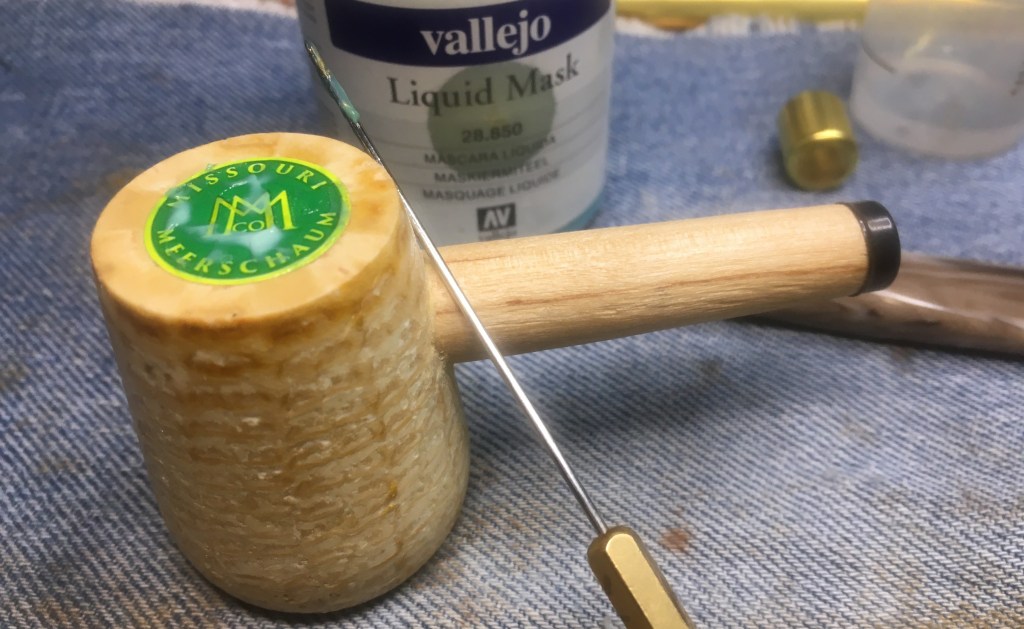


 (
(


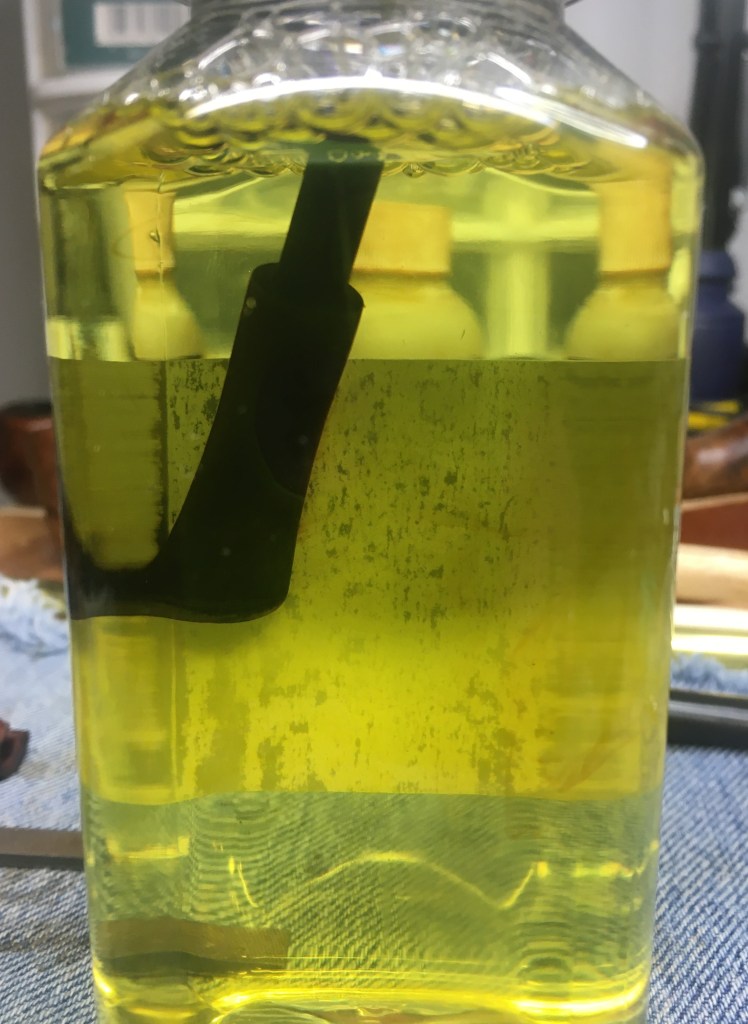


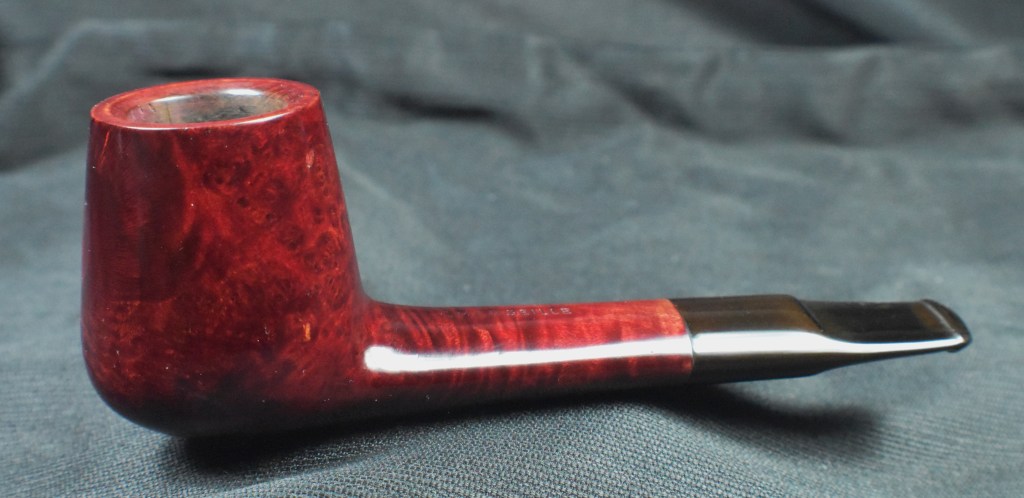


 Which, in all honesty, is the same as nothing. The pipe has no country of manufacture (COM) stamp but, if I were a betting man, I’d bet on France. Marseille makes me think of Marsielle Marso but I kind of dislike bringing that up due to the dislike of mimes in general by AMericans. At least in my experience mimes are not appreciated.


 .
.


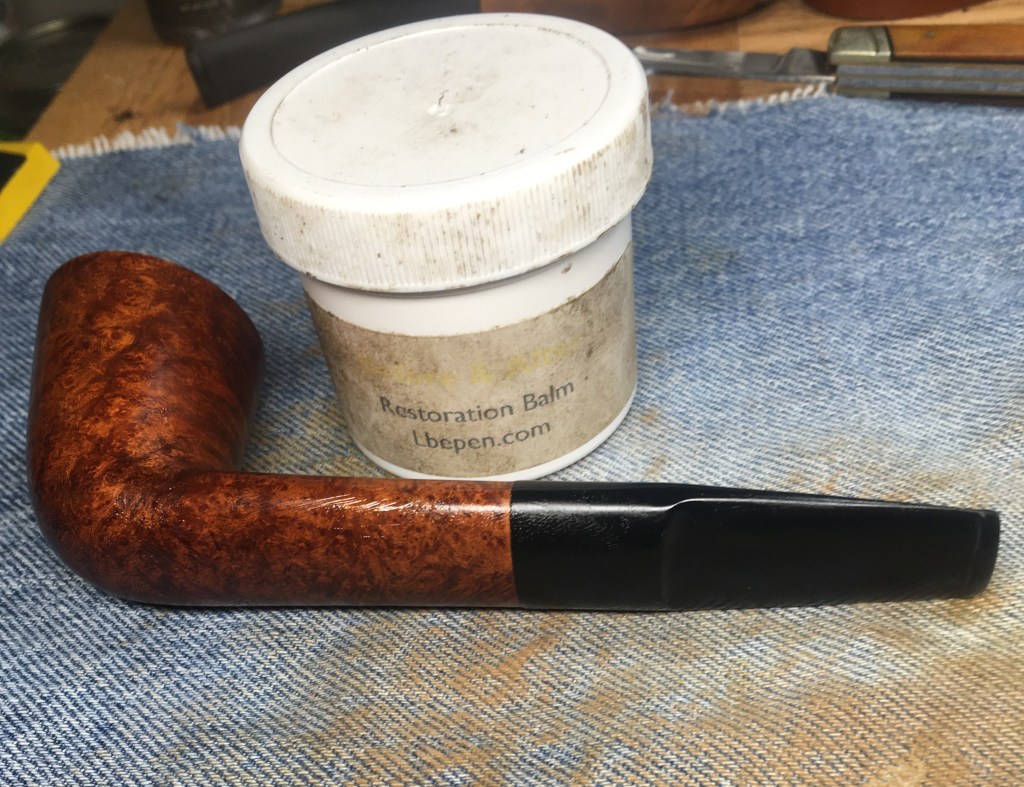


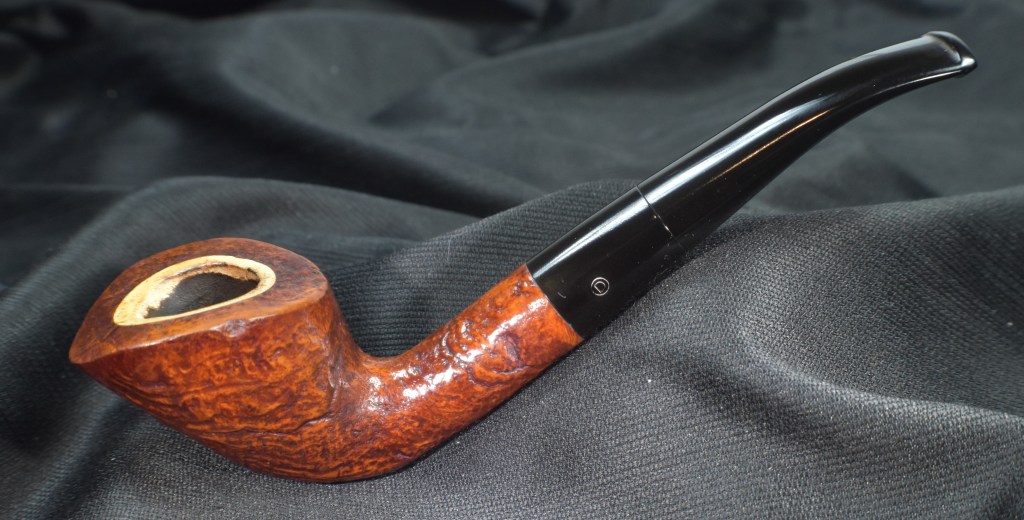


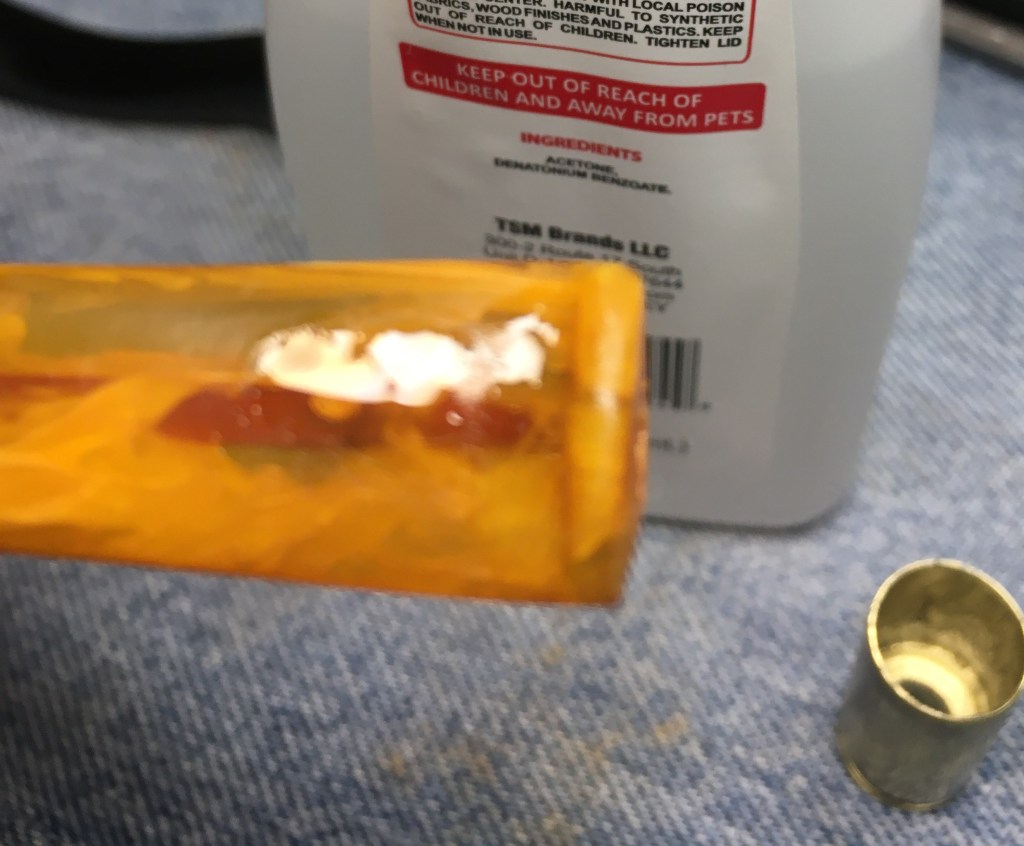


 NebraskaPeteGeek