Written and photographed by John M. Young

I am not sure why I am drawn to metal pipes. I love the all-briar classics as well as the artisanal briar and exotic material pipes that are being produced by true artists. There is just something nostalgic about the old Falcons, Vikings, Kaywoodie Filters and this Yello-Bole that draws me in. Perhaps it is a childhood memory of the next door neighbor, Mr. Chase as he smoked his metal pipe smelling oh so good as he worked on his yard.
Over the summer of 2023 I came across this Yello-Bole. The Ebay listing showed a dull gray pipe with a nearly black bole. The starting bid was under $10. How could I refuse?

Screen snip of photo taken from Ebay listing
The Yello-Bole Aristocrat Airograte can be seen here in an advertisement from 1966.

File:Yello Bole AirOGrate 1966.jpg – Pipedia
Pipedia also states the following about Yello-Bole’s metal pipes:
“The Yello Bole Aristocrat Airograte: An Aluminum and wood pipe with a twist. This pipe doesn’t have a bowl per say, but more a briar cylinder that screws into the base of the body. At the bottom of the bowl is a metal grate, thus allowing air to be pulled through all the tobacco and reducing any chance of clogging. The lower bowl catches all moisture and tar reducing bite. These pipes can be had in a silver/chrome finish as well as a soft gold finish. The stem of these pipes has cooling fins up each side, and can be found in a straight or bent form.”
- Two Examples and details, courtesy Chris Rigol


I was the only bidder on this auction. Perhaps this should have told me something. The anticipation for the arrival of my prize was short and upon arrival I initially thought that this would be a quick and easy addition to my collection. Sure, it was oxidized and dirty but estate pipes usually are. Below are some photos of how the pipe appeared when it arrived.


Nothing too bad, right? Sure, the aluminum had oxidation, a bit of “lava” on the rim and the need for light reaming, no problem. The nylon mouthpiece looked good. As I began closer examination of the pipe my thoughts of “quick and easy” started to dissolve. Upon disassembly I said, “Wow, this bowl is really stuck to the aluminum.” The bowl had enough shellac to drown an entire Erica Arborea plant and what is that build-up in the bowl?


The gunk in the bottom of the bowl was just unsmoked tobacco. That came out easily. The aluminum reservoir was thickly coated in a dried smoke condensate of tar. The screen was dirty with tobacco and a good deal of tar. I assumed that the tar was also throughout the shank and stem as well. This looks like a job for some 99% ethyl alcohol. I first tried a bit of alcohol on a paper towel inside the reservoir. This did little other than making the paper towel dirty.

I decided that the shank/stem and aluminum screen needed to soak in the alcohol bath for an hour or so..

While the alcohol softened and started to dissolve the tars I began working on the wooden bowl. The bowl had a little bit of lava on the rim and a light cake build-up inside the tobacco chamber. I used the PipNet reamer and the Smokingpipes knife to clean out the tobacco chamber.

I then took the bowl over to the sink and used Murphy’s Oil Soap and a medium stiffness toothbrush to remove the dirt and grime from the bowl as well as the lava from the rim. After a rinse of warm water the bowl came back to the bench. I tried to remove the “shellac” from the bowl with a cotton boll soaked in alcohol. What I assumed was a thick coating of shellac turned out to be some other type of clear coating as this should have readily dissolved with alcohol had it been shellac. If alcohol doesn’t work then try acetone. Bingo, the clear coat was not clear at all but, red. After numerous acetone soaked cotton bolls I could see wood.


This also revealed the fills that the finish had concealed.


I decided to leave them for the time being and see what they looked like after the Restoration Balm did it’s magic.
After the aluminum shank had soaked for about an hour I removed it from the alcohol bath. The tars had softened and dissolved quite well. I began cleaning the reservoir with cotton bolls and cotton swabs soaked in clean alcohol to further rid the aluminum of it’s tar. This worked quite well. The screen was a different matter. Upon removing it from the alcohol bath and scrubbing it with alcohol soaked cotton bolls it still remained yellow with several screen holes filled with tar. I used the toothbrush and Dawn dish soap to scrub the screen. This worked on getting rid of the last of the tars and yellow color but many holes remained filled. I returned to the bench and used a fly tying bodkin to clear out the remaining “clogs”. After needling the screen clean I rinsed it with clean alcohol.
The draught of the pipe was remarkably clean. Perhaps the alcohol bath had worked better there or the previous owner was not averse to running a pipe cleaner through the stem. Either way the draught was cleaned out with bristle pipe cleaners soaked with alcohol.
The nylon mouthpiece was in quite good shape which was nice as nylon is not very easy to return to a pristine condition. All that was done there was to clean it well with the toothbrush Dawn dish soap and alcohol.
I worked some Before & After Restoration Balm (Lbepen.com) into the wood bowl with my finger tip. I allowed this to sit for 30 minutes. While waiting for the Restoration balm to do its work I took the aluminum to the buffer. I used white diamond buffing compound to clean away the oxidation from tha aluminum. All of the corners were tedious to work through but eventually a nice bright polish was seen on the aluminum again. After the restoration Balm had done what it does, I buffed the excess off with a cotton towel and was glad to see that the wood had some of it’s luster returned.
Here are some photos of the finished Yello-Bole Aristocrat Airograte:


As you can see the old girl has returned to some semblance of her factory fresh glory. I now understand where the term “Airograte” comes from. The screen, or grate, allows for the airflow. As this is a pipe that I planned to keep for my personal collection and use I did not spend time trying to make the nylon stem new again. Overall I am very pleased by how she turned out. Thank you for reading the ramblings of an old pipe lover.


 The following two photos show the hole after the pipe was cleaned and reamed.


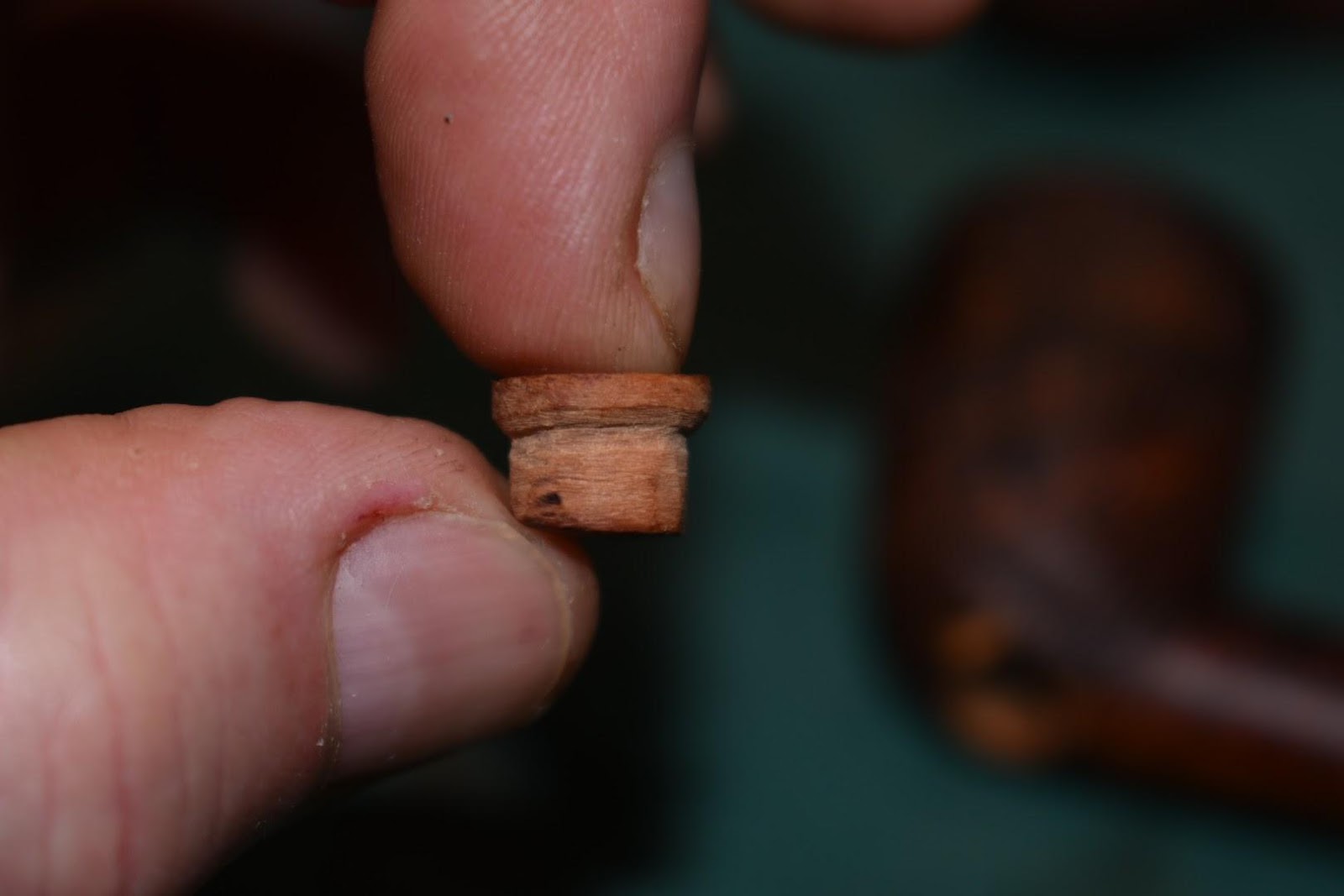

 It turned out that the plug was not quite thick enough to completely fill the hole on the bottom of the pipe. This led me to do some creative fill work.


 NebraskaPeteGeek
