
Photographed and written by
John M. Young
The other day a friend was showing me the wonders of ChatGPT and how I could use it to write these blogs. NEVER! I do not think that any artificial intelligence will ever understand the feeling of satisfaction of restoring something as simple and inconsequential yet personally important as a tobacco pipe. I fully intended this restoration to be a short and simple project. I’ve restored many Marxman pipes so the research could be recycled and referred to and the pipe was in great shape. Until it became like the “stinky car” episode from Seinfeld. I’ll let you read about that later.


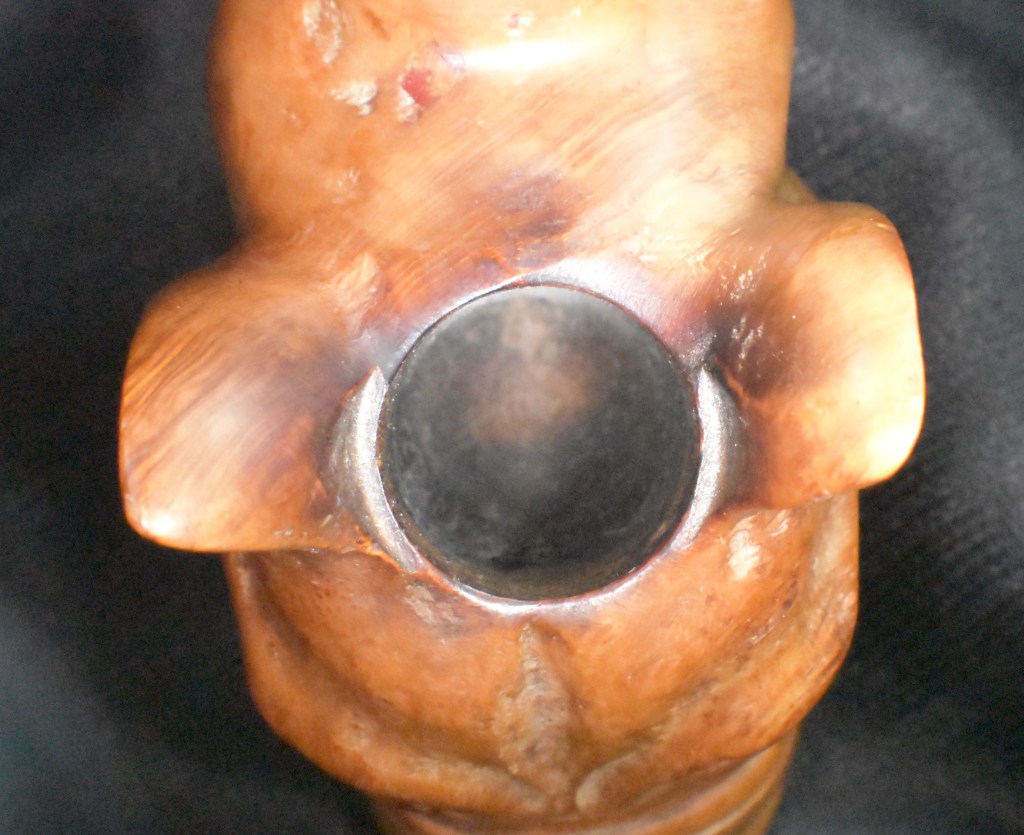
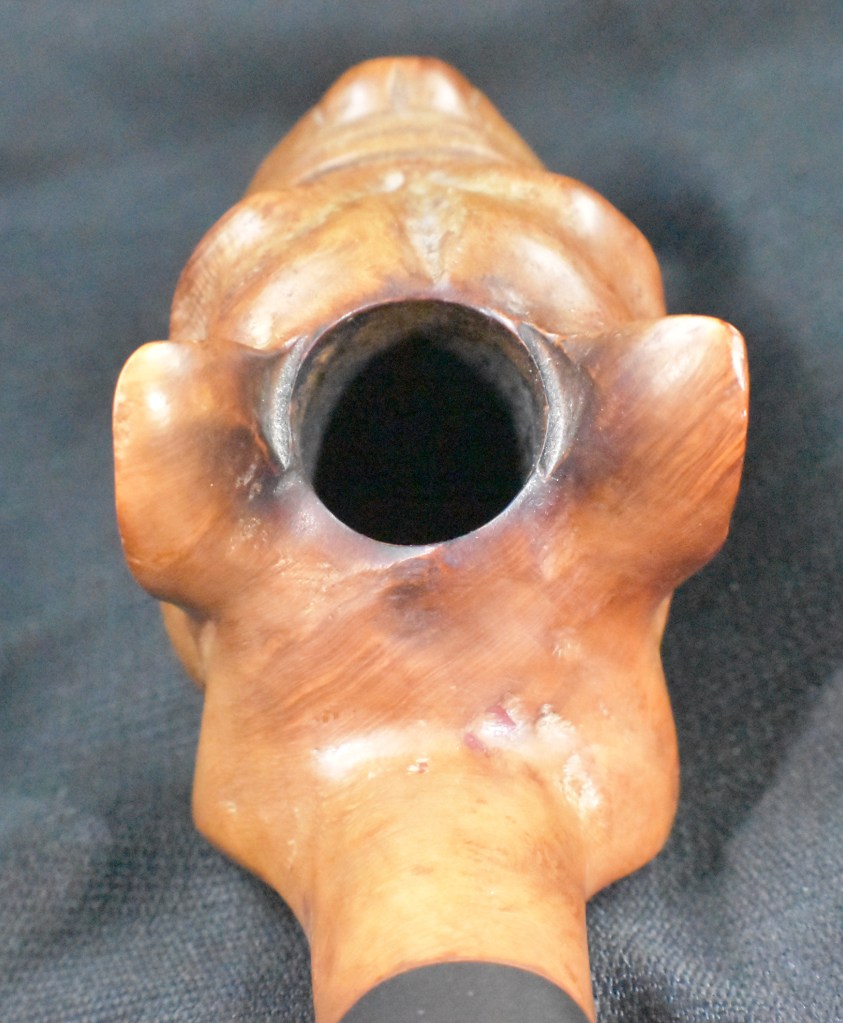
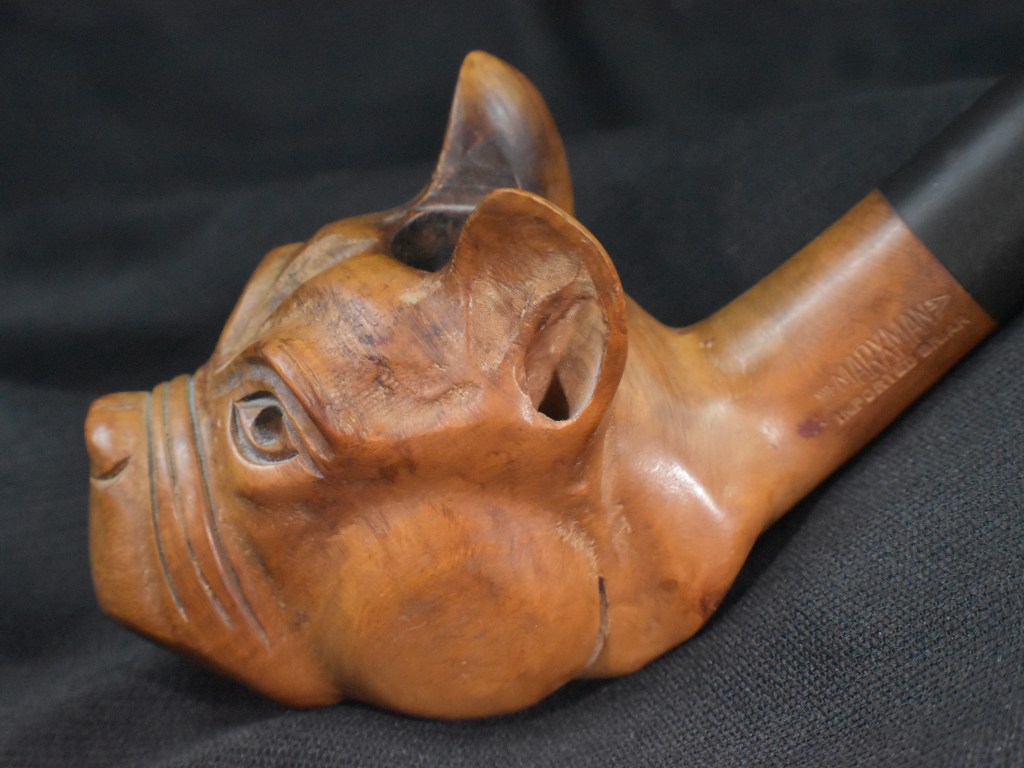


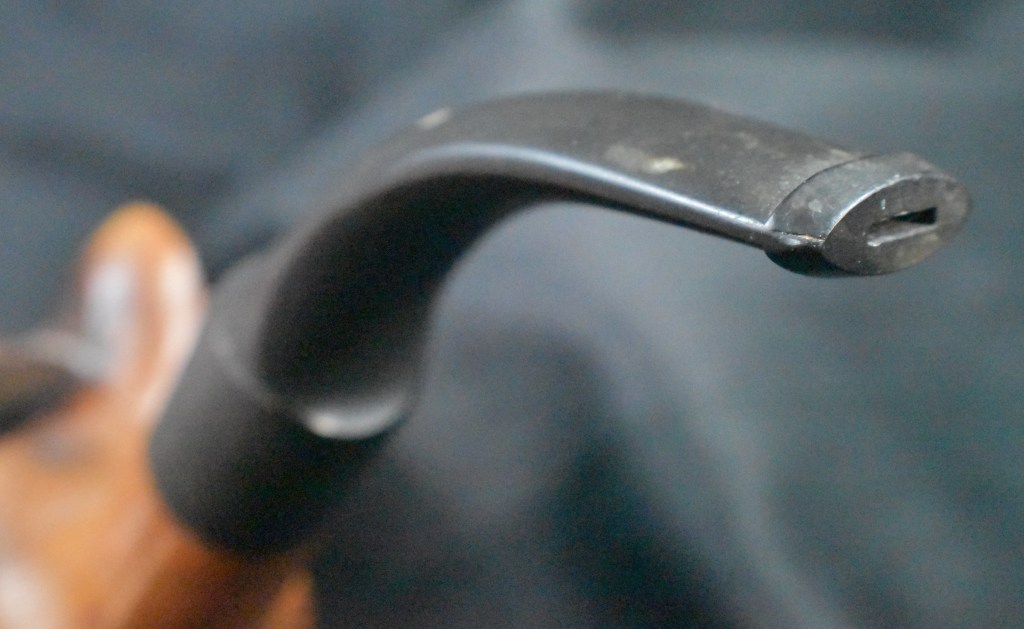

And you’re a good dog. Oh sorry, I forgot who my audience was. The Marxman was in pretty good shape and had not appeared to be heavily used. Judging by the lack of tooth chatter on the stem and the relatively clean stinger and bowl it looked as though it had not been smoked more than a dozen times. There was some oxidation on the stem and a fill in the dog’s right ear that I did not like the look of but overall this looked like a straight forward restoration. This pipe was very large, I feel like I should mention that.

Background
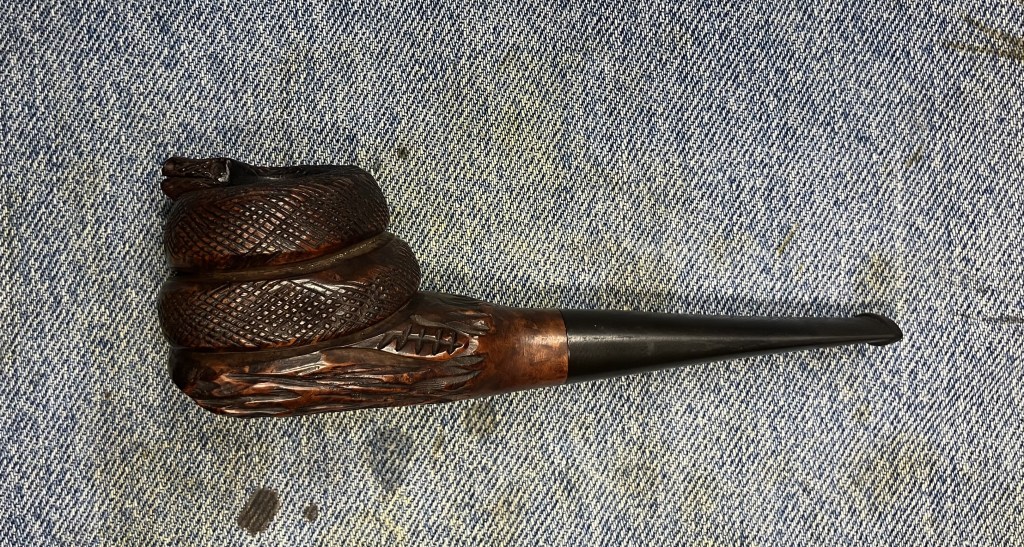
Due to a level of laziness that impresses even myself, I will use the following from the restoration on a Marxman Rattlesnake figural pipe that I finished recently:
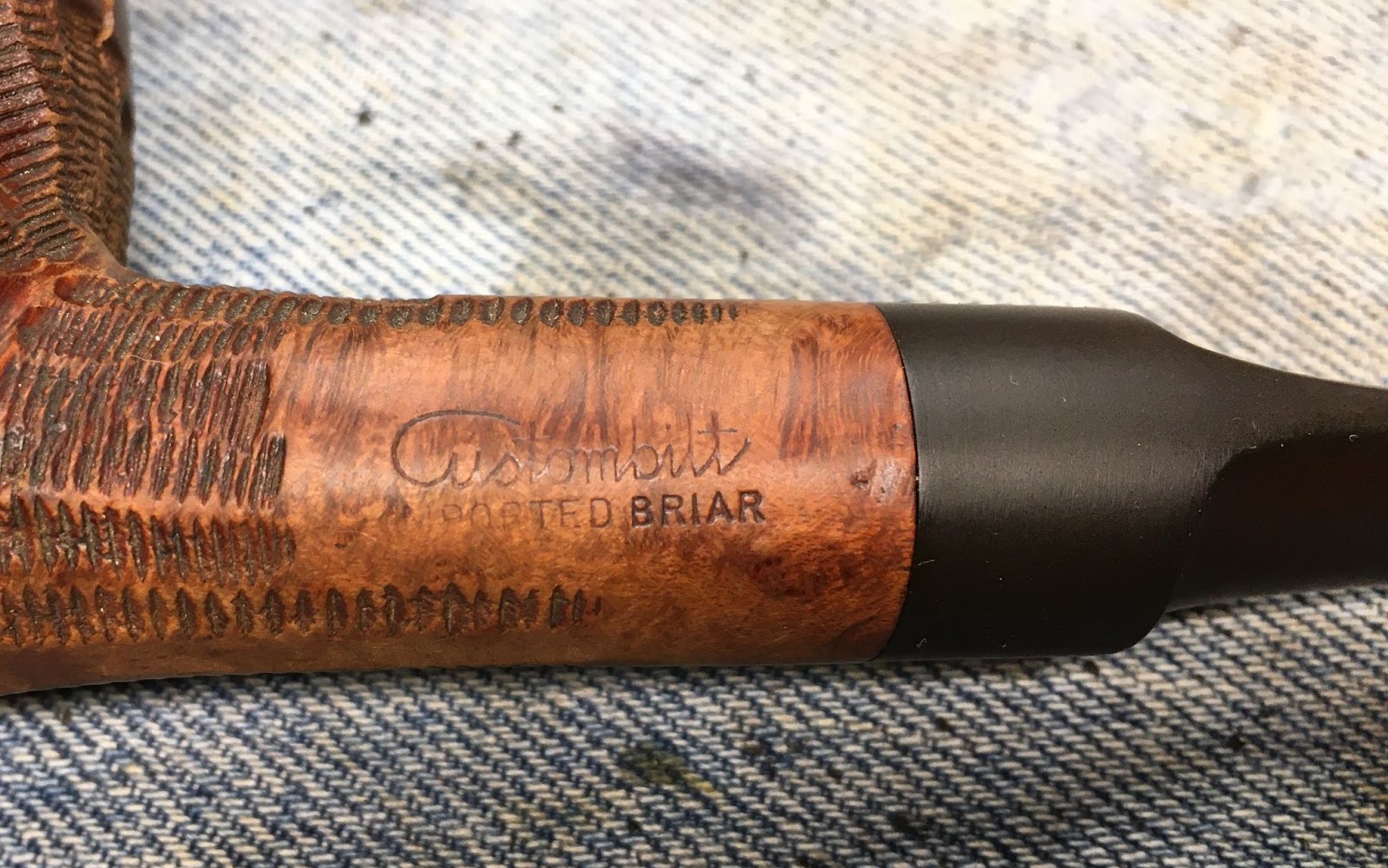
“I have done a lot of Marxman restorations. Next to Peterson pipes I am sure Marxman pipes come close as to numbers. I have also written about the history of Robert Marx and how he formed and built up the company during World War Two, not an easy task considering the main material of his production was nearly inaccessible during the war years. If you would like more information I think I did an acceptable job on Marxman history in the following blog: A Marxman Dublin Gold Band Restoration – NebraskaPeteGeek. Yeah it’s still written by me, but it’s pretty good for a change.
As for Marxman figurals I have done a camel and a monk/friar.” (A Marxman Rattlesnake Figural Pipe Restoration – NebraskaPeteGeek).
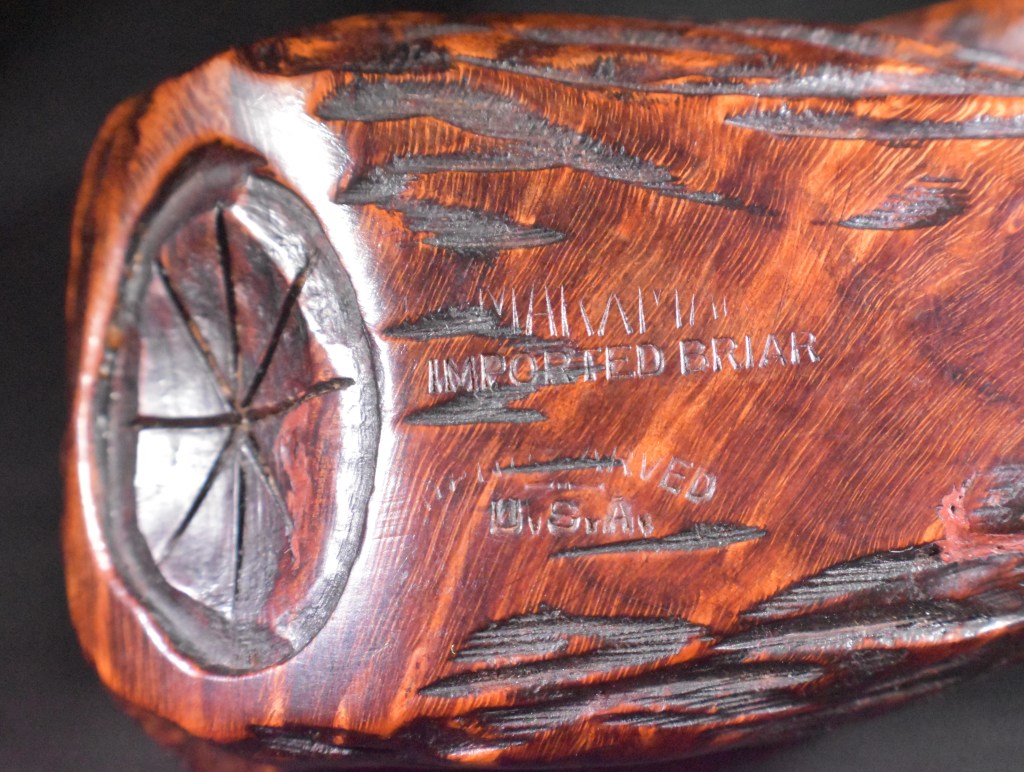
This pipe shows a carving skill that I think surpasses the carvings of the previous Marxman figural pipe that I have done. Though the camel pipe is also of high quality. The briar used must have been a very substantial piece of wood for the time. I would place this pipe also within the late 1940s-1953 time frame. All of the Marxman pipes from this period were carved in New York City.
The Restoration
After the “before” photos the pipe was taken to the workbench where it got to sit on the Barely used denim piece. I say barely used since the last restoration (I linked it if you are curious) was so darn clean I had little chance to dirty the denim.
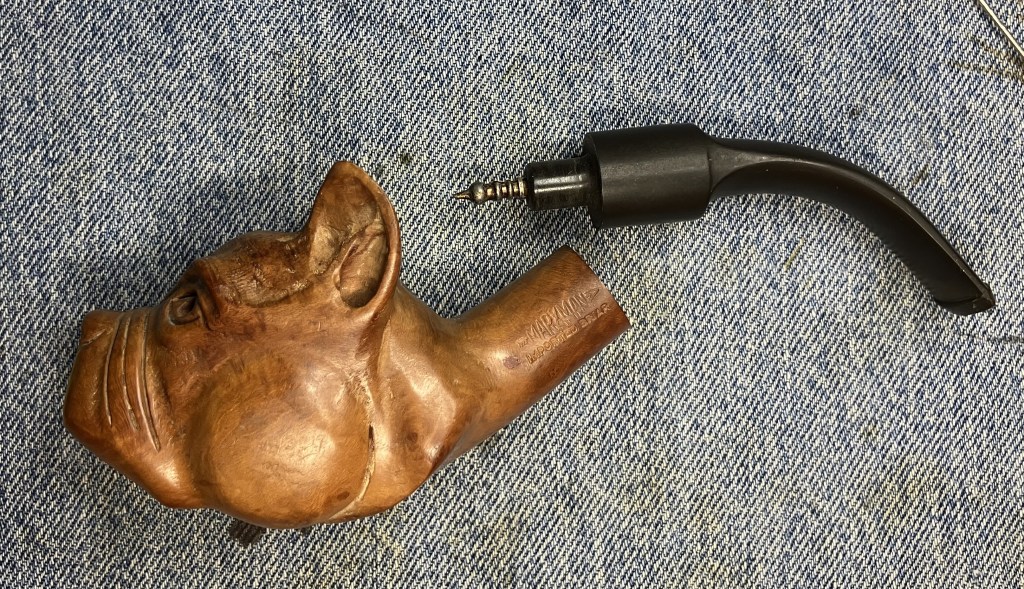
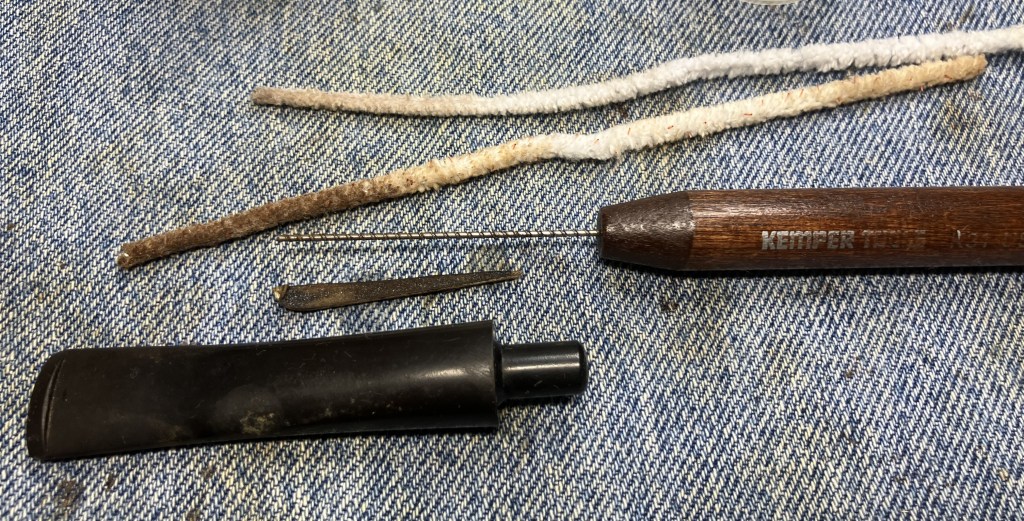
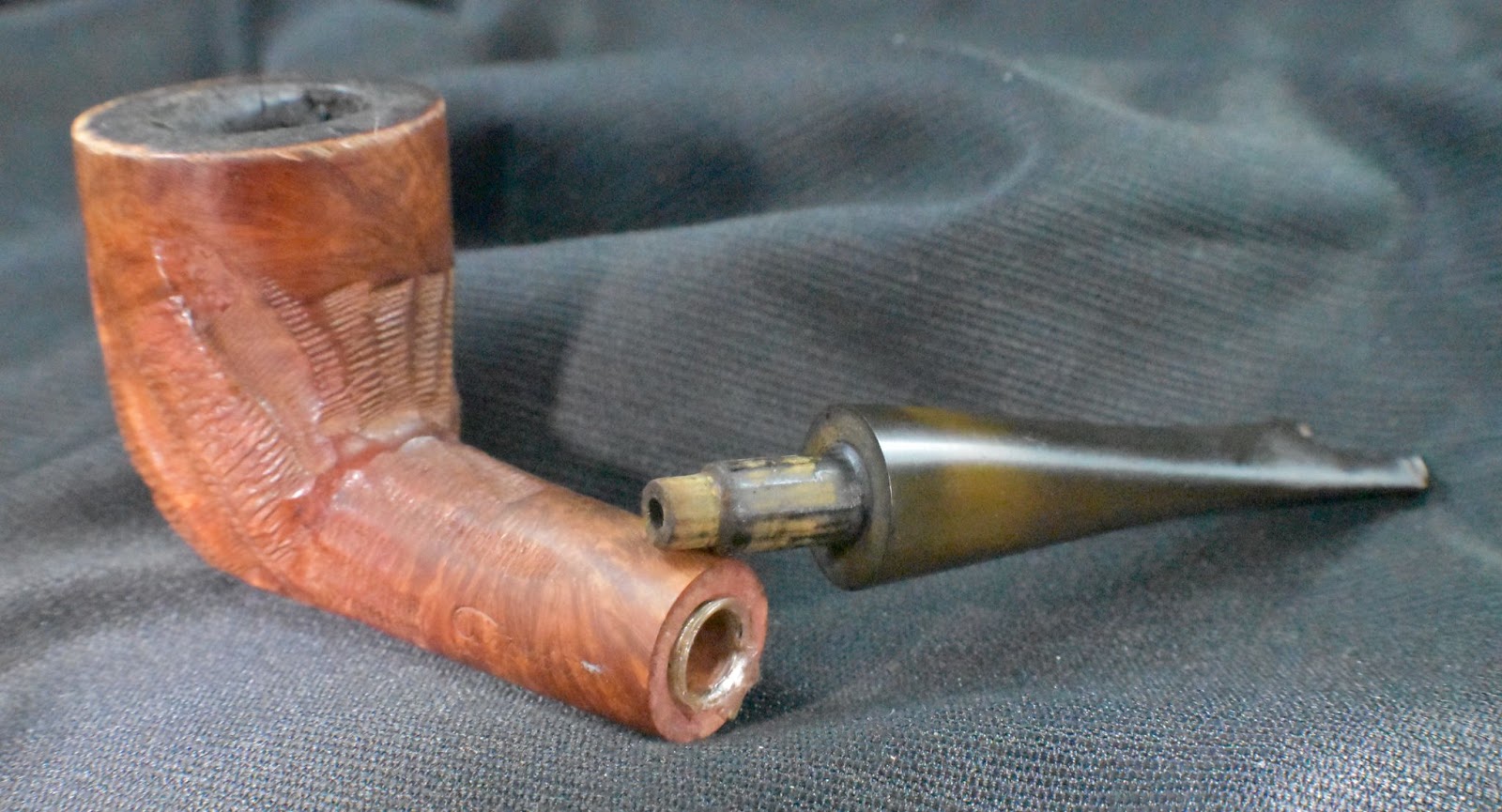
I was able to pull the stinger from the stem with little effort.

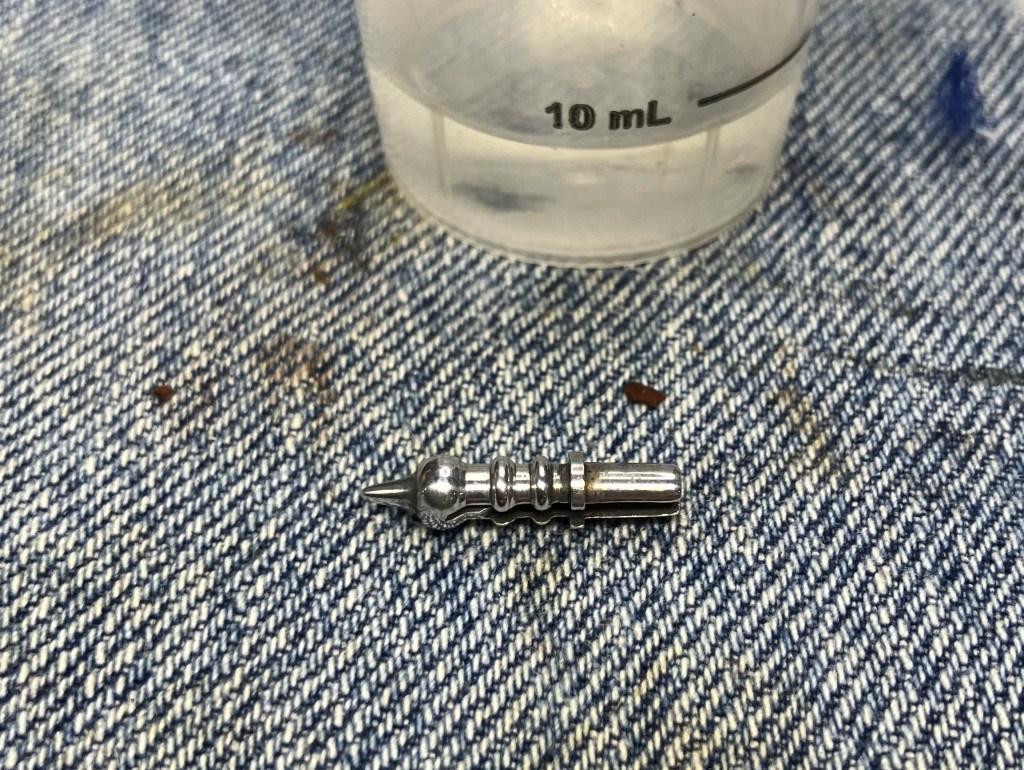
I place the stinger into a medicine cup with 10ml of 99% ethyl alcohol to start it’s cleaning.

While the stinger soaked I cleaned the airway of the stem with alcohol and bristle pipe cleaners.

A look down the mortise showed little smoking residue.

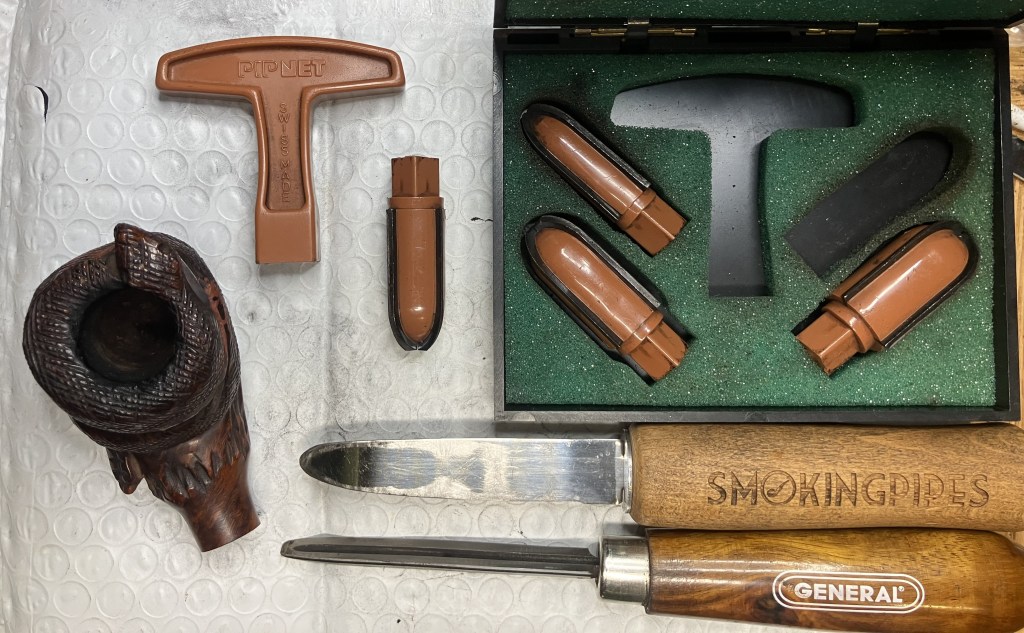
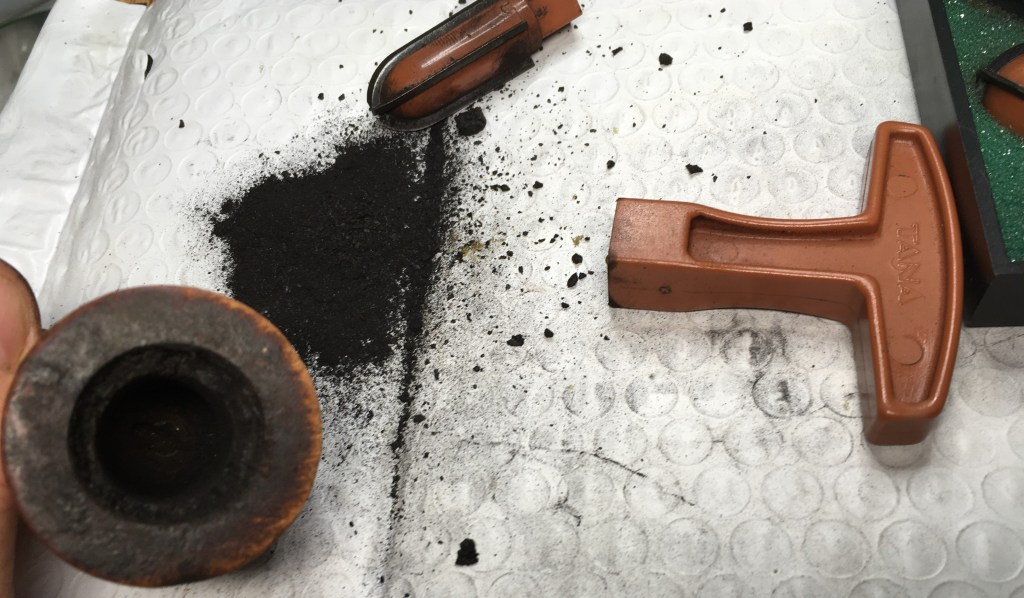
The ream team was gathered and included the PipNet and the General triangular scraper.
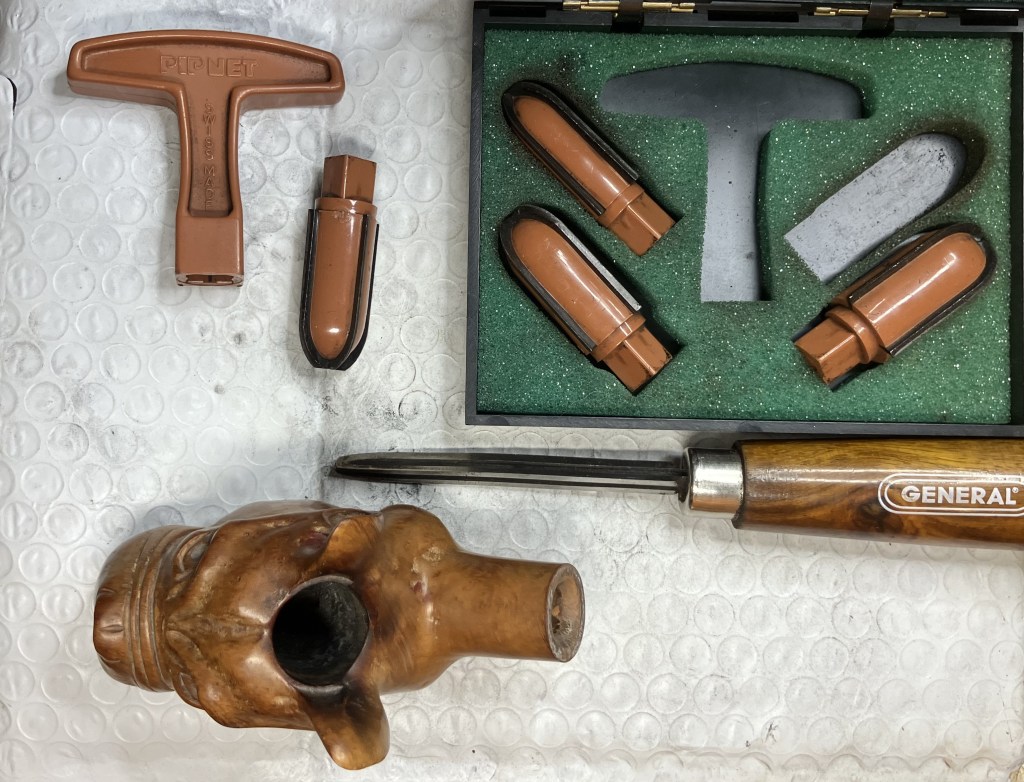
There was a surprising amount of cake removed with the PipNet and the #2 blades.
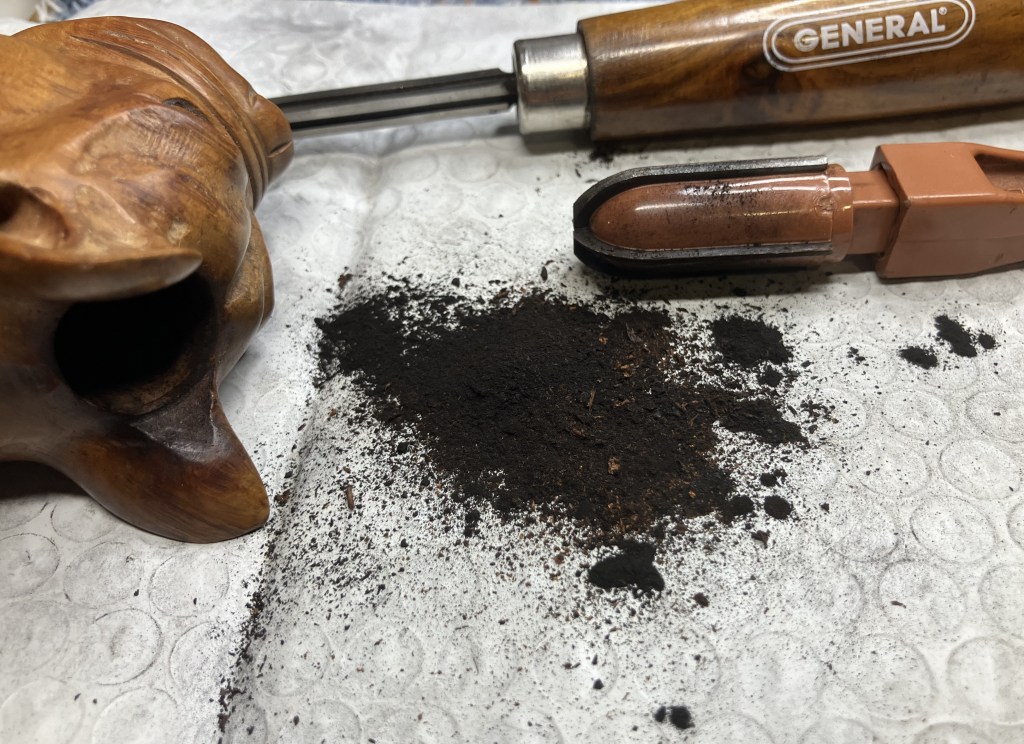
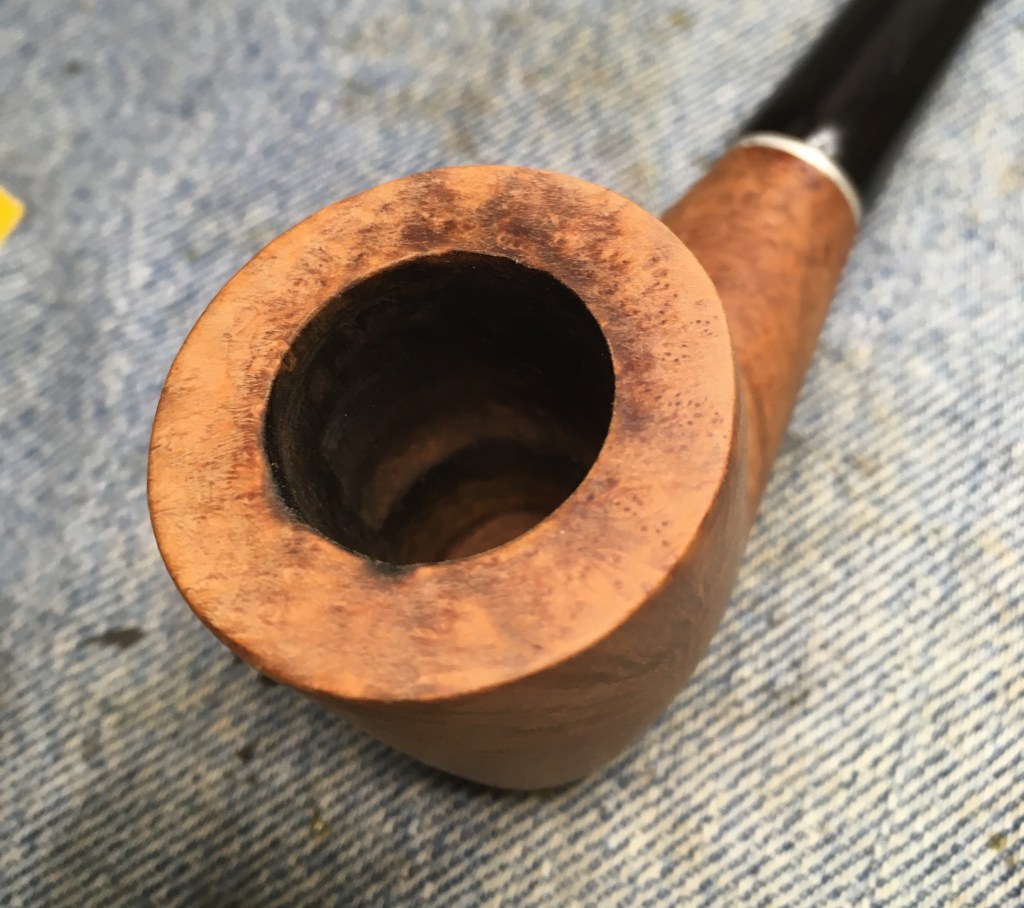
The reamed tobacco chamber looked better but would need sanding to check for any damage to the chamber walls.

Sure enough, sanding did show some light heat fissures. These would be addressed with a bowl coating.

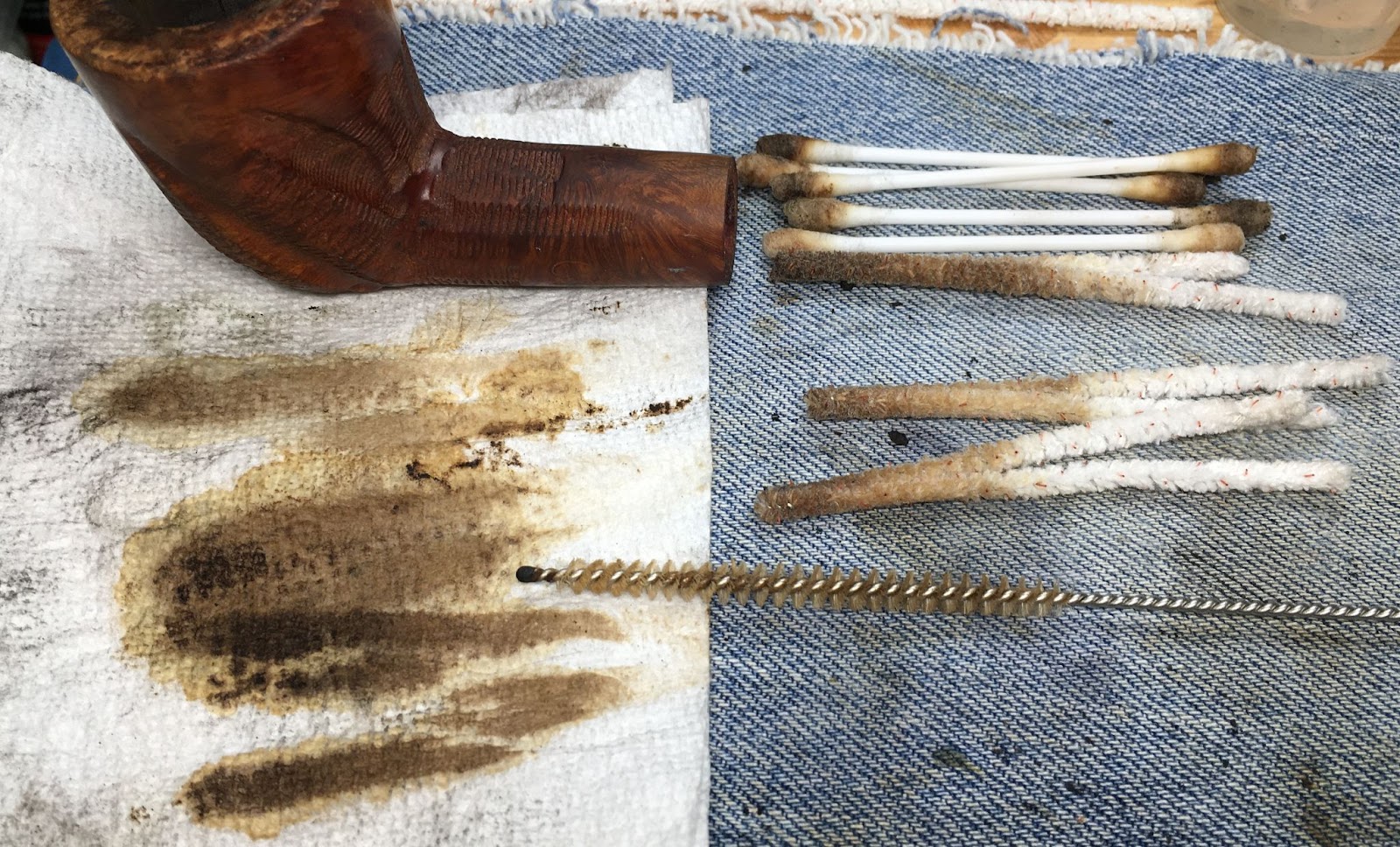
The shank cleaning was done with cotton swabs and bristle pipe cleaners dipped in 95% ethyl alcohol.

The stem was lightly sanded in preparation for a soaking in Briarville Pipe Stem Oxidation Remover, also known as deox.

A pipe cleaner was inserted into the tenon to act as a handle for retrieving the stem after a 6 hour soak.

The stummel was scrubbed with Murphy Oil Soap and a nylon brush. The soap was rinsed with warm water and the stummel dried with a cotton hand towel.

Back at the workbench the stummel was wiped with 95% ethyl alcohol on a make-up pad. The briar looked bare of any finish except for a few places in the depressions of the carvings.
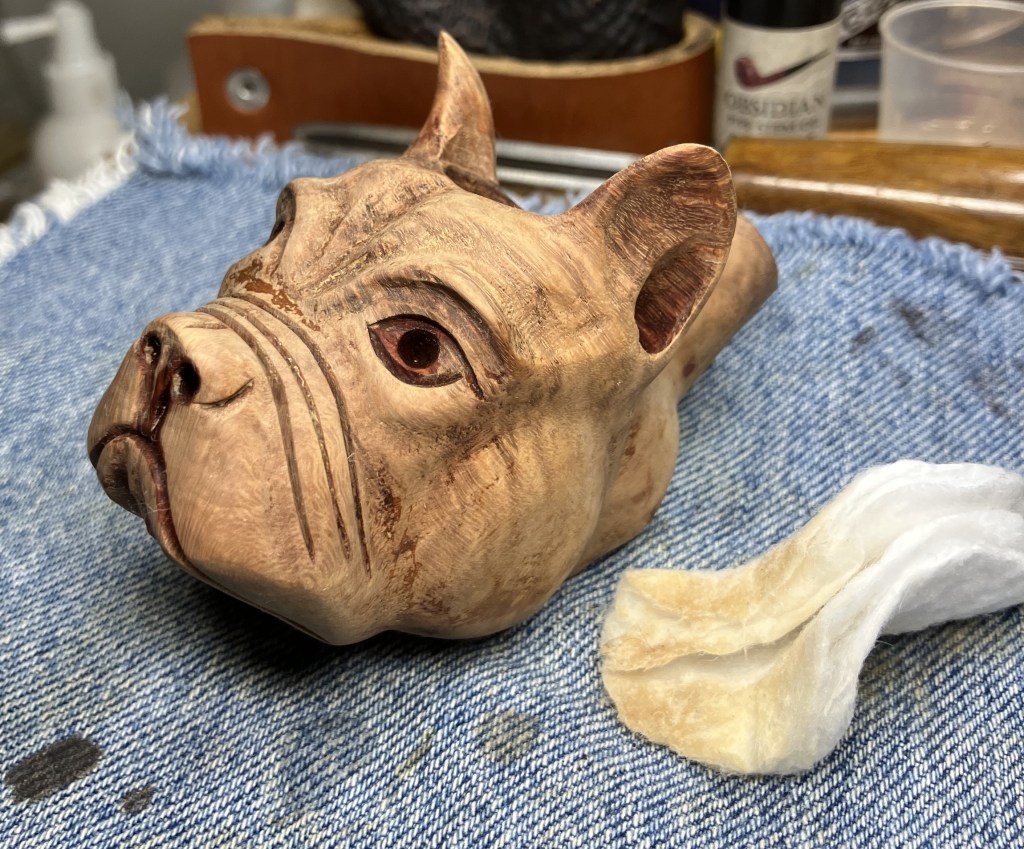
In the photo below, you can see a pit and a small patch of a clear coat or lacquer.

The left ear of the bulldog must have also had a pit which was filled with the dreaded pink goo used as a filler. I was thinking of methods to smooth out that lump of goo.

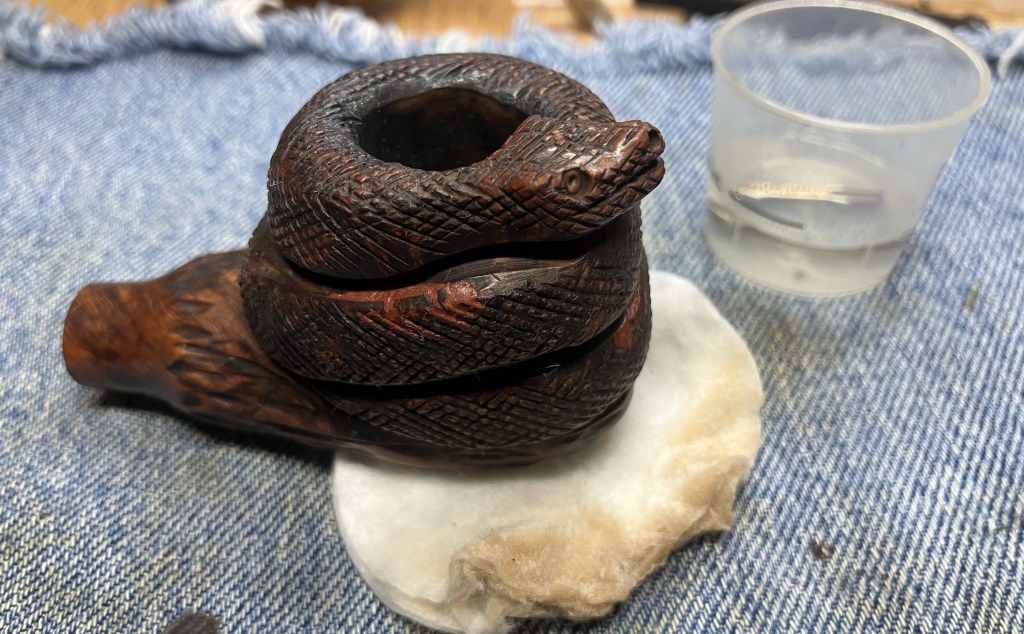
This pipe had an aroma which I refer to as “granny purse”. It is that smell that my grandmother’s purse had, kind of like something which had been repeatedly exposed to perfume where the perfume smell lingers long after it should. I thought that it was due to the previous owner smoking a Lakeland blend containing geranium oil. I figured that an alcohol and cotton treatment would rid the pipe of the floral ghost and allow me some time to think of ways to fix that ear. The tobacco chamber and shank were packed with cotton.

95% ethyl alcohol was added to the cotton with a disposable pipette until the cotton was saturated.
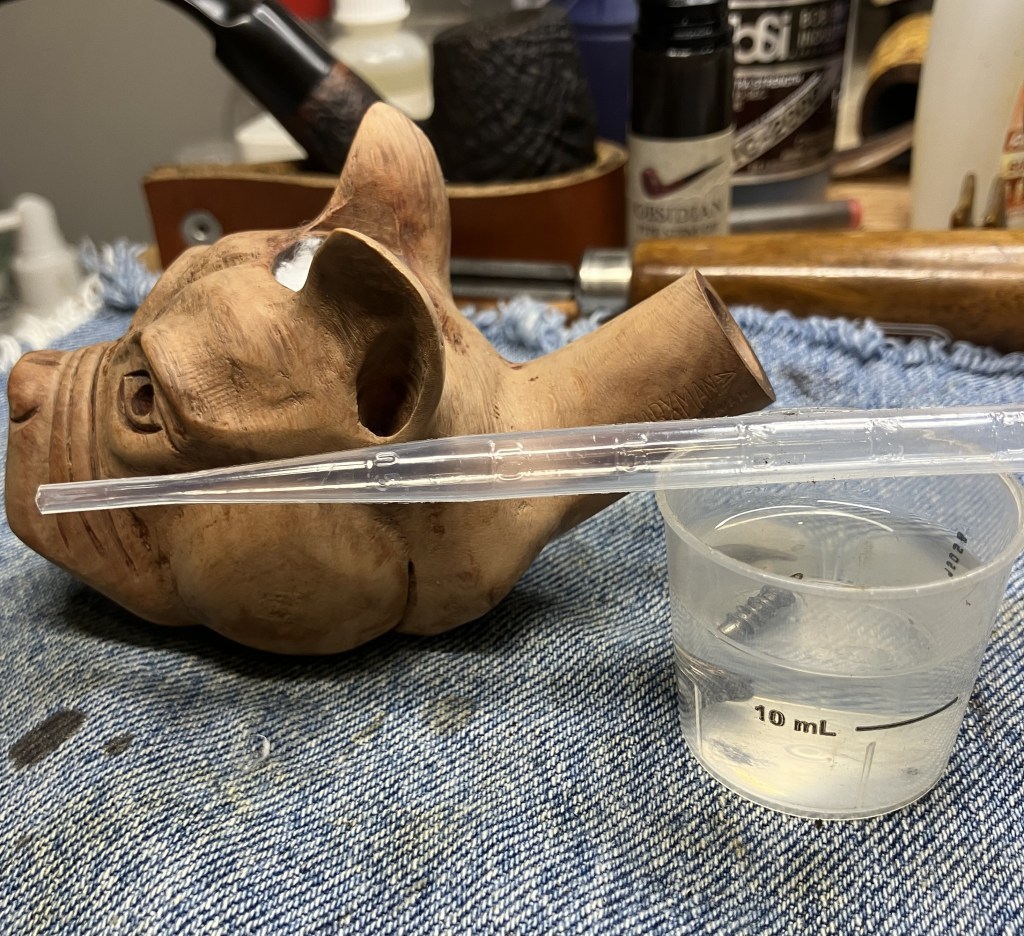
The alcohol cotton treatment would take an overnight wait so I turned to cleaning the stinger.

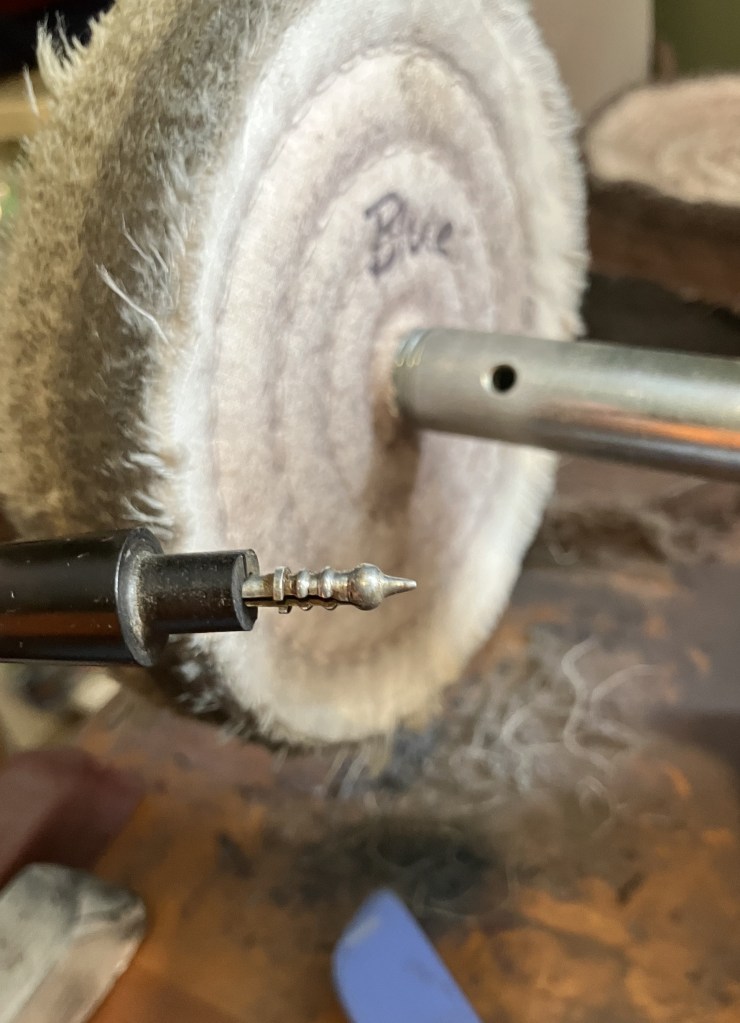
Since the pipe’s stem was still soaking in deox, I found an extra stem which fit the stinger. This stem would provide me with a handle for buffing/polishing the stinger on the buffer.
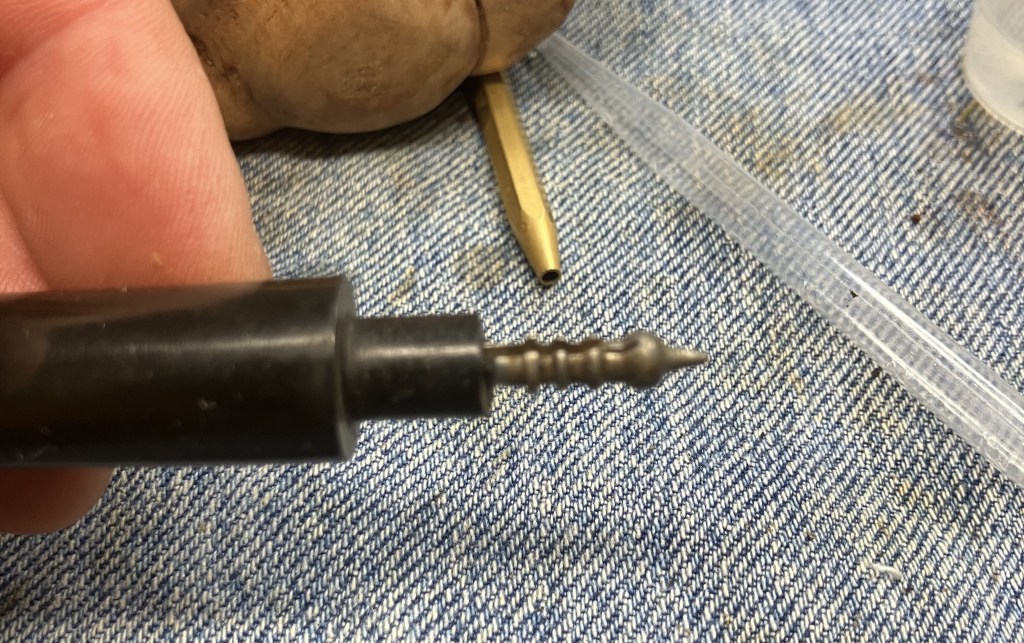
The stinger was buffed using a blue compound and looked much better.
After the buffing and the removal of any remaining blue compound the stinger looked great.
Below is a photo of the saturated cotton as I headed to bed.

The next day the majority of the alcohol had evaporated. This evaporation allows the alcohol to dissolve smoking residues and draw them into the cotton where they are deposited.
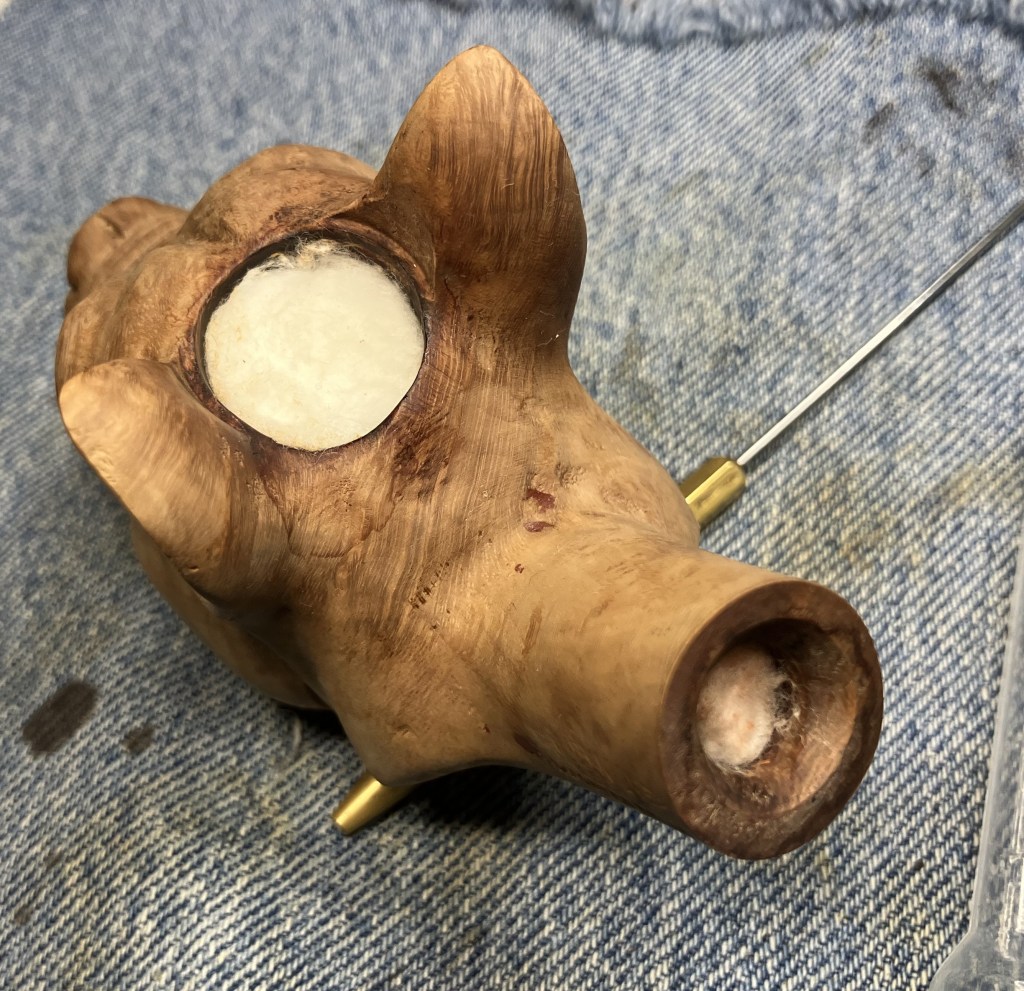
I removed the cotton. The cotton in the shank had a strange pick color. The briar did not stain the make-up pad with alcohol pink as it would if a red dye had been used to stain the briar. What is this? I wondered.

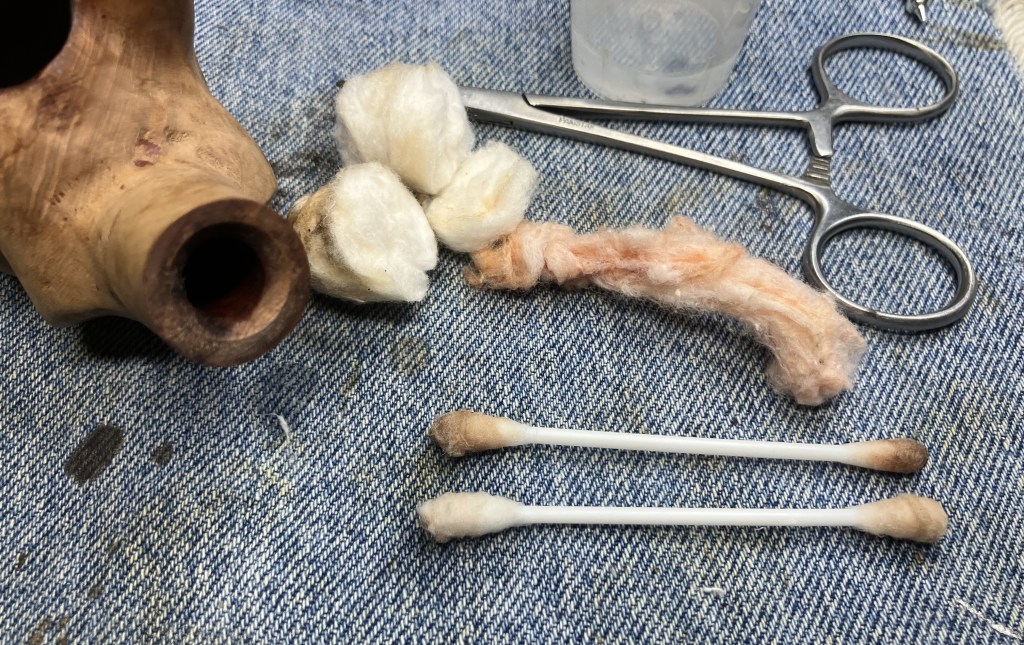
I used a couple of cotton swabs to re-clean the shank.
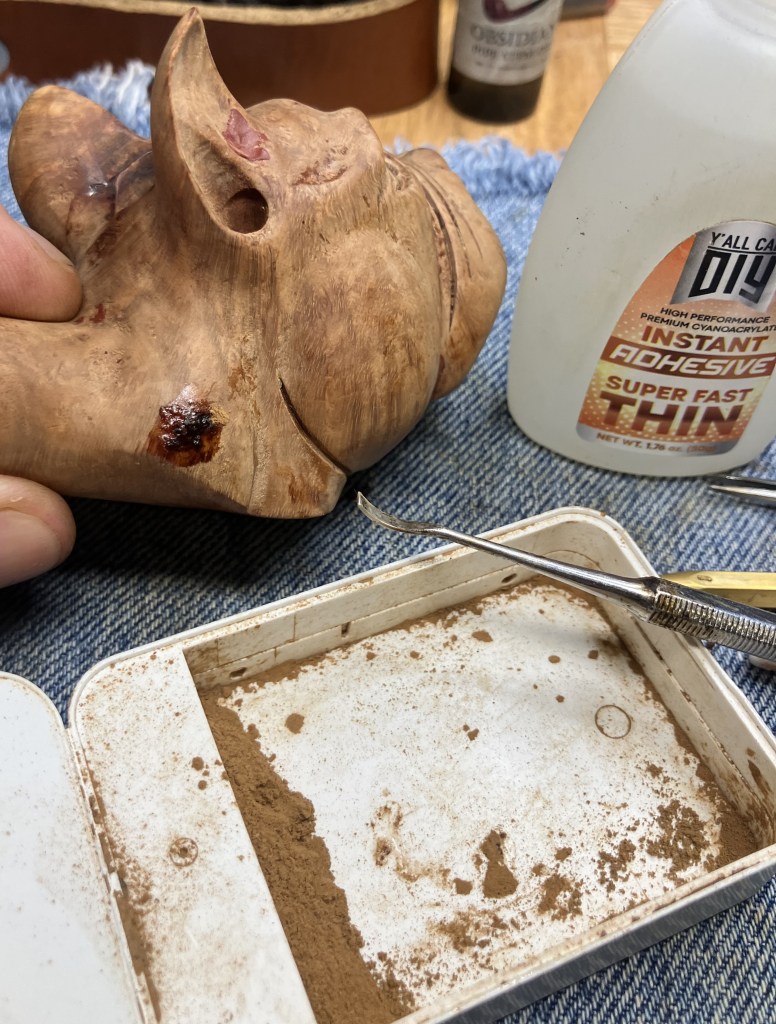
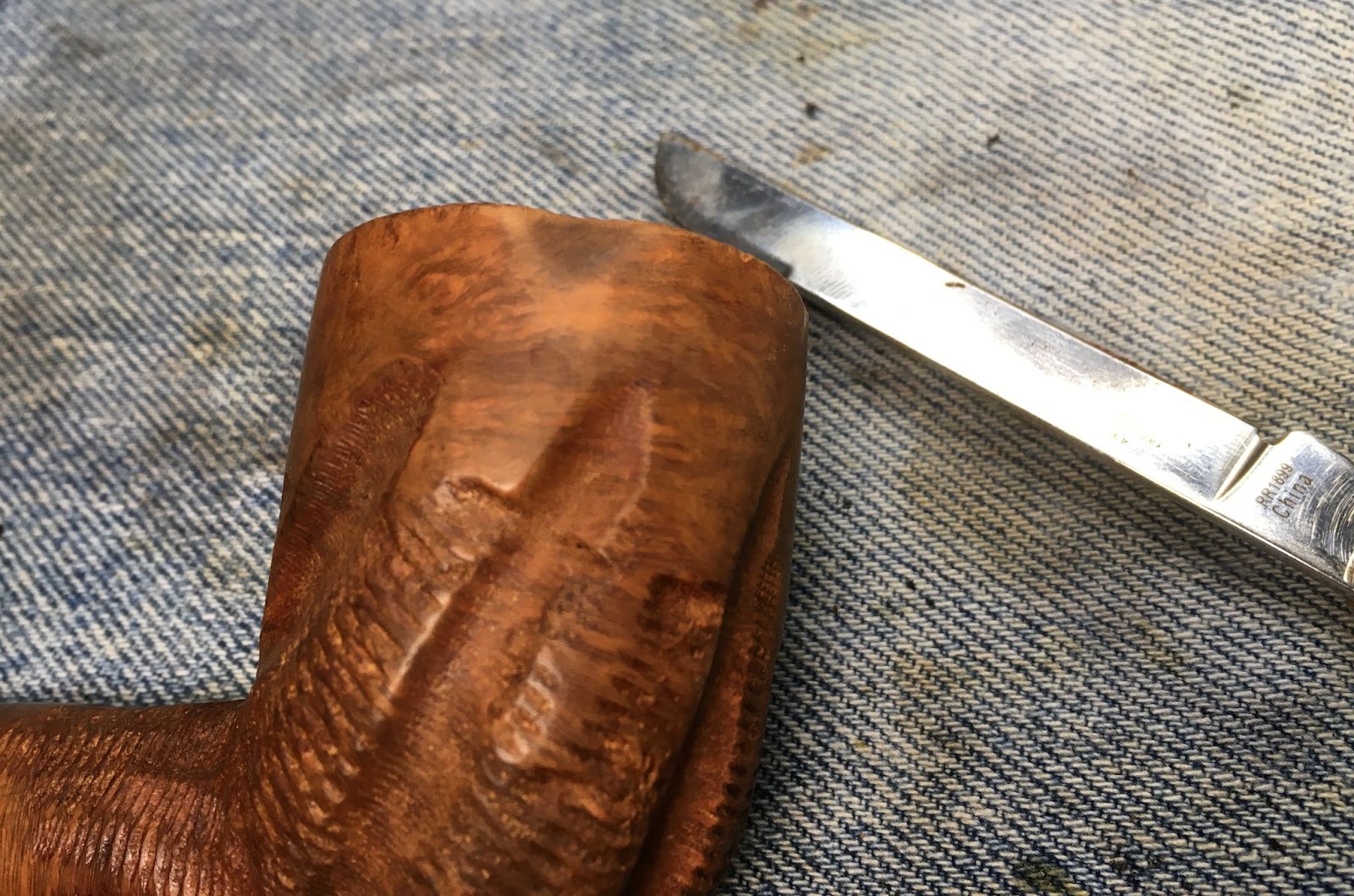
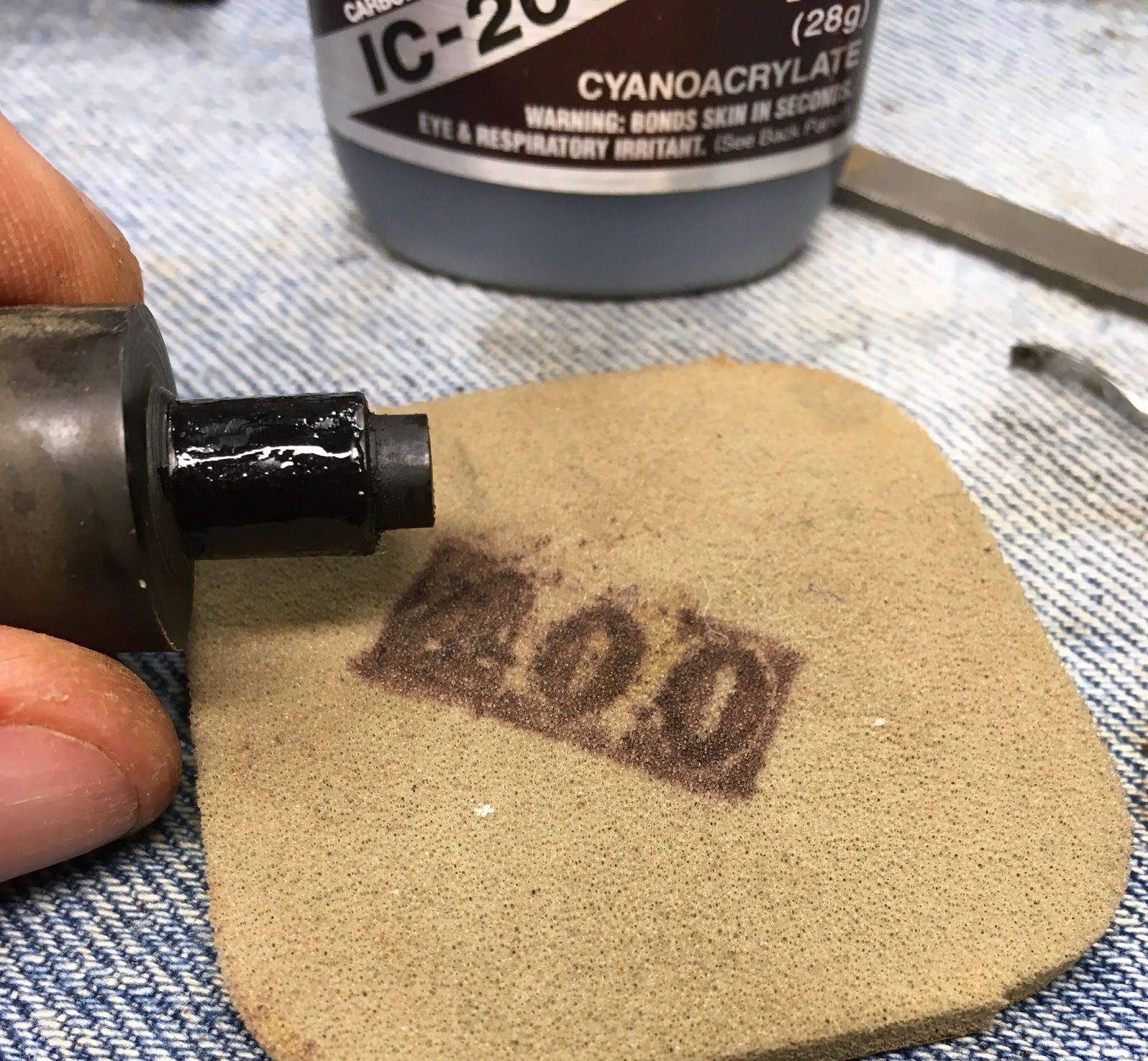
To address the pit, I used briar dust and thin cyanoacrylate (CA, super glue). The pit received a tiny drop of CA which then had briar dust pressed into it. The briar dust then received another drop of CA.
The fill was then filed with a small flat file and smoothed with a 400 grit sanding sponge.

My thinking of ways to fix the pink-goo-ear-fill was to re-carve it using a Dremel rotary tool. The first bit I used was the pointy bit, below.

The second bit used was more rounded to allow for a smoother finish.
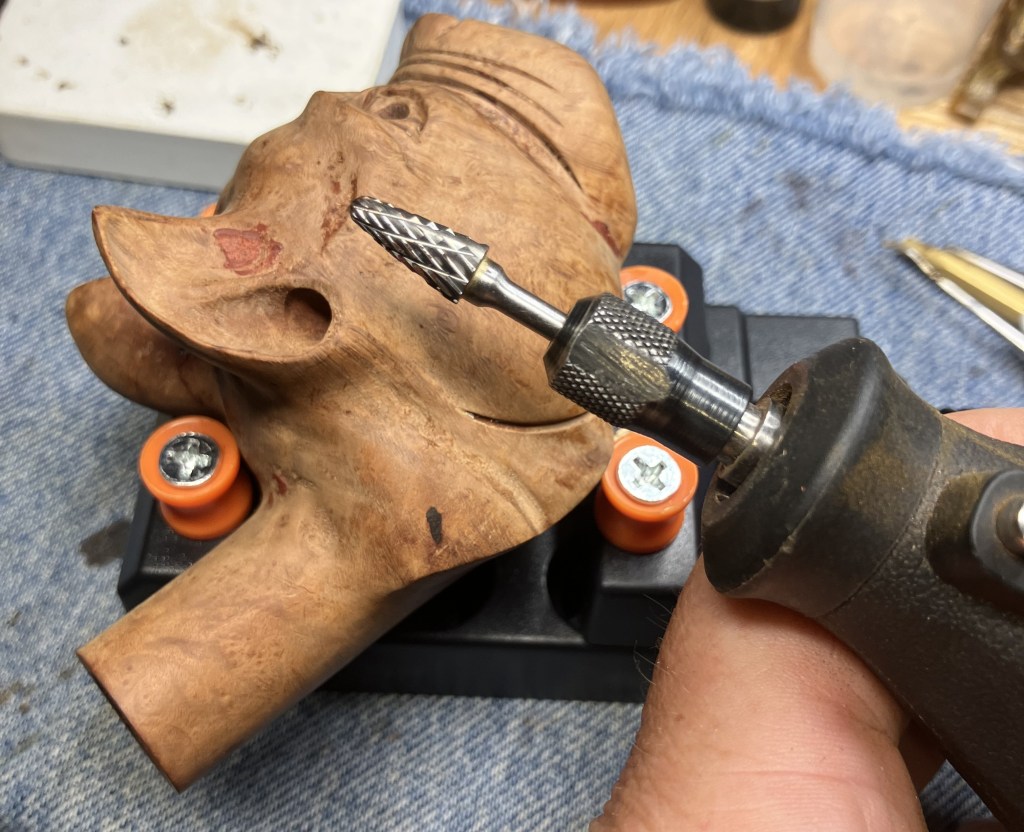
Below is a photo of the re-carved ear. I could only see a tiny pit which I did not think required all that pink-goo.

The stummel was sanded with 400 then 600 grit sanding sponges. I did not want to over-sand and remove any detail of the carving.


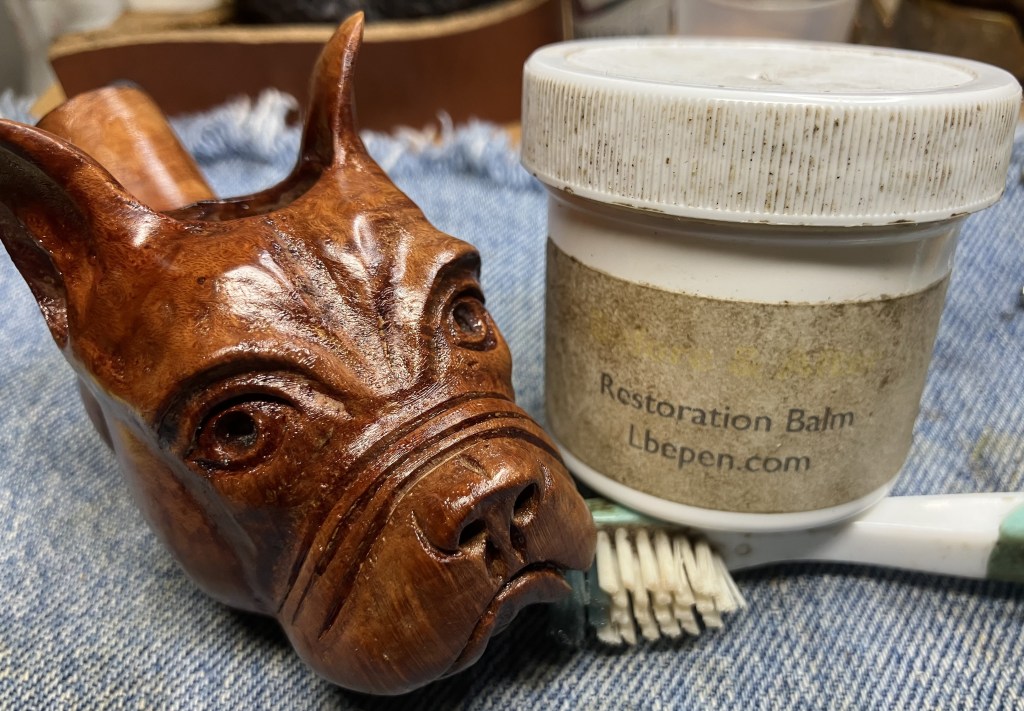
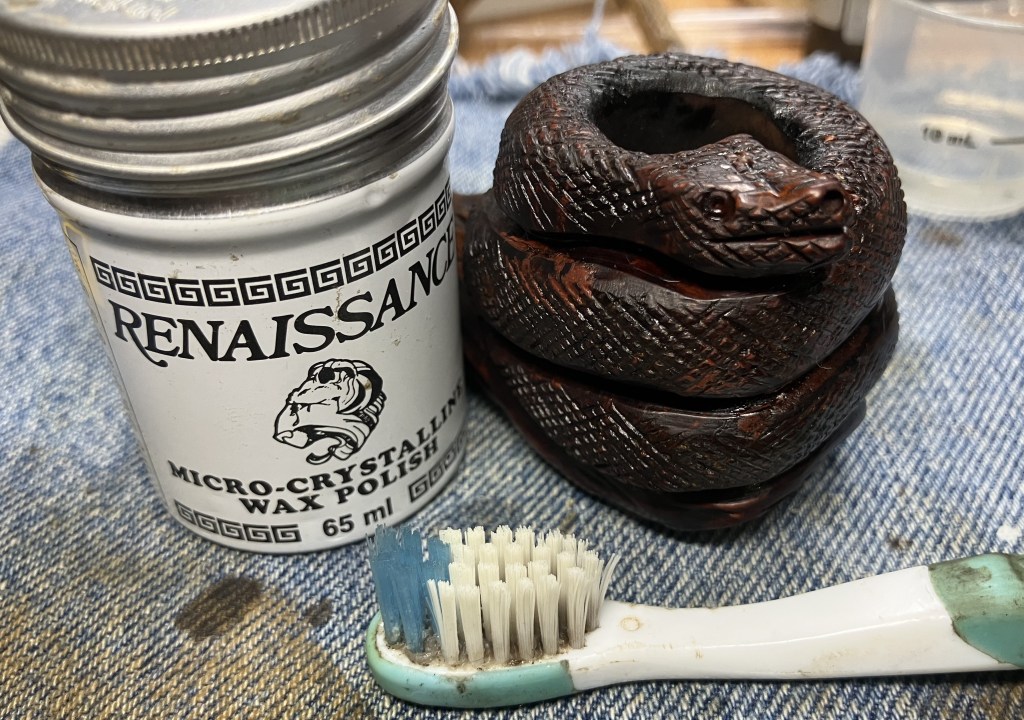
The stummel was then coated in Before and After Restoration Balm, applied with a baby toothbrush, and allowed to sit for 30 minutes.
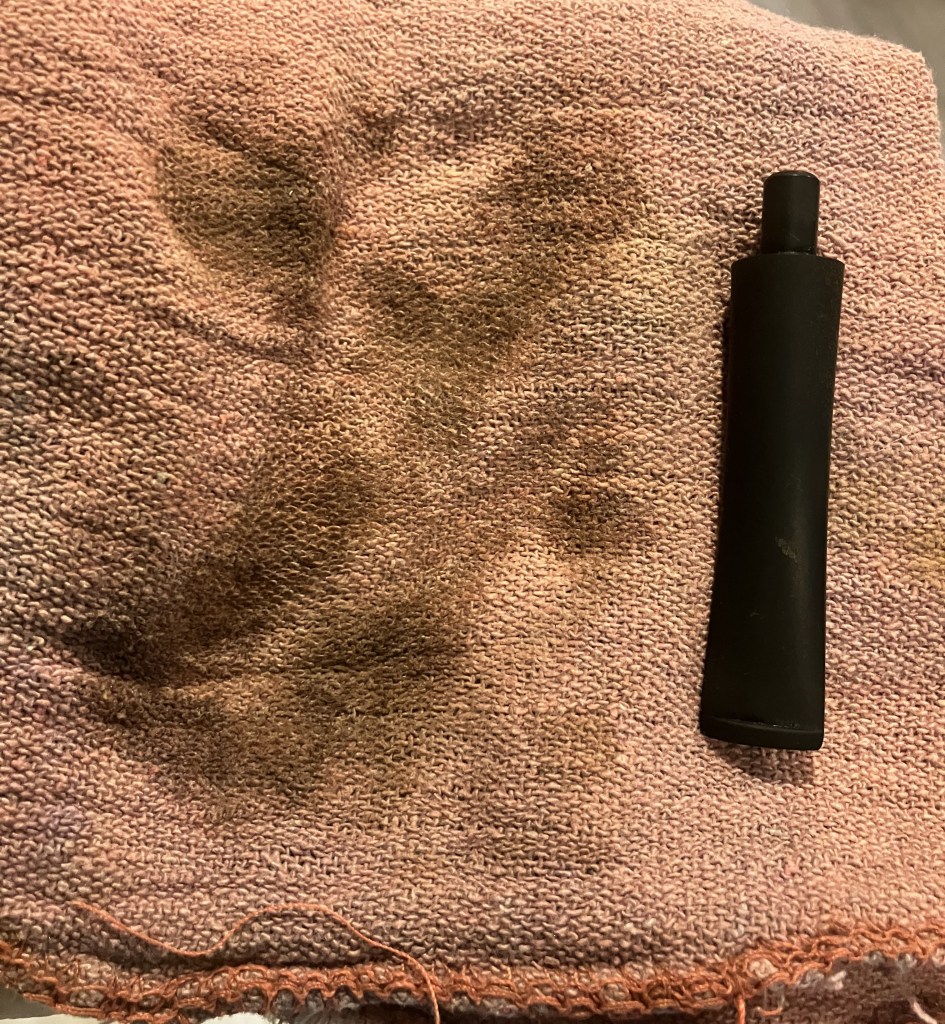
The stem was removed from deox. What was supposed to be a six hour soak turned into an 18 hour soak. The stem was vigorously rubbed with a coarse shop rag. This allows for the absorption of excess solution and removes some oxidized rubber.

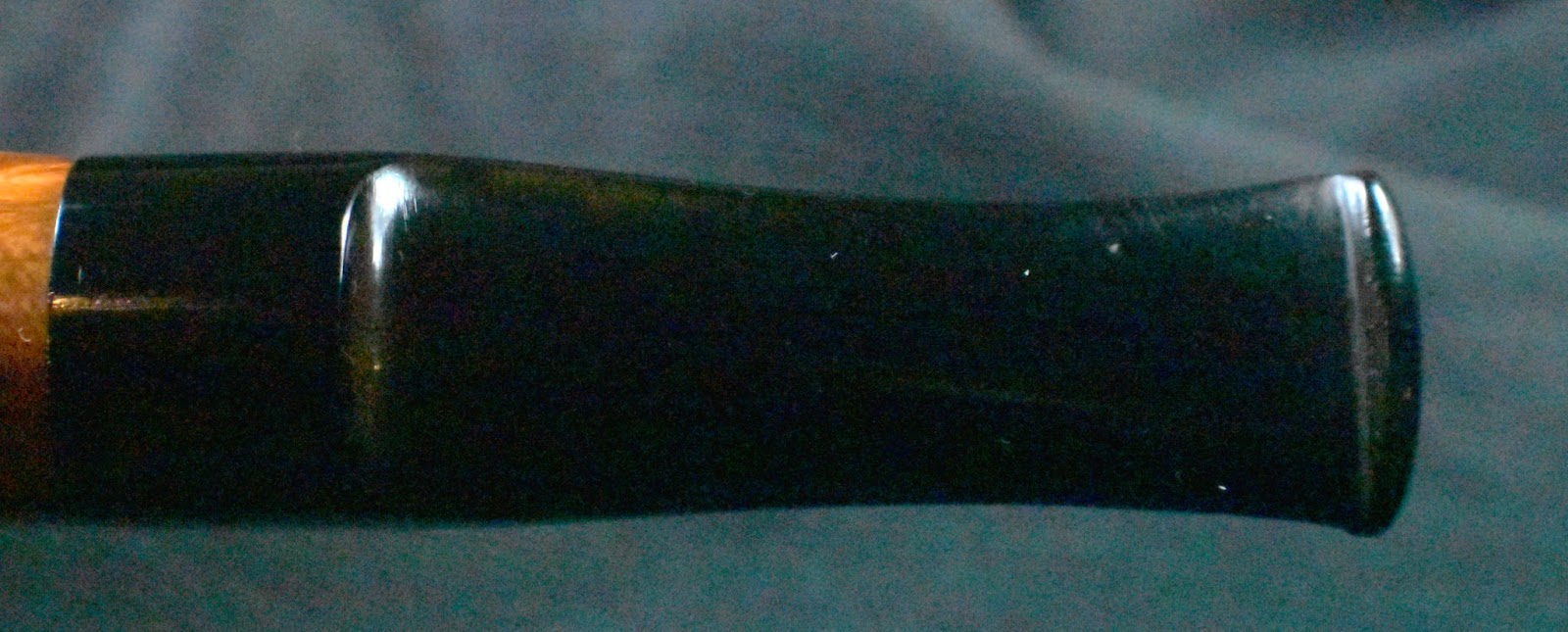
The stem appeared to be pitted from the deox removing oxidized rubber.

I applied a coating of Mark Hoover’s Before and After Hard Rubber Balm. I thought that this might help condition the vulcanite, this was allowed to rest for 6 hours.
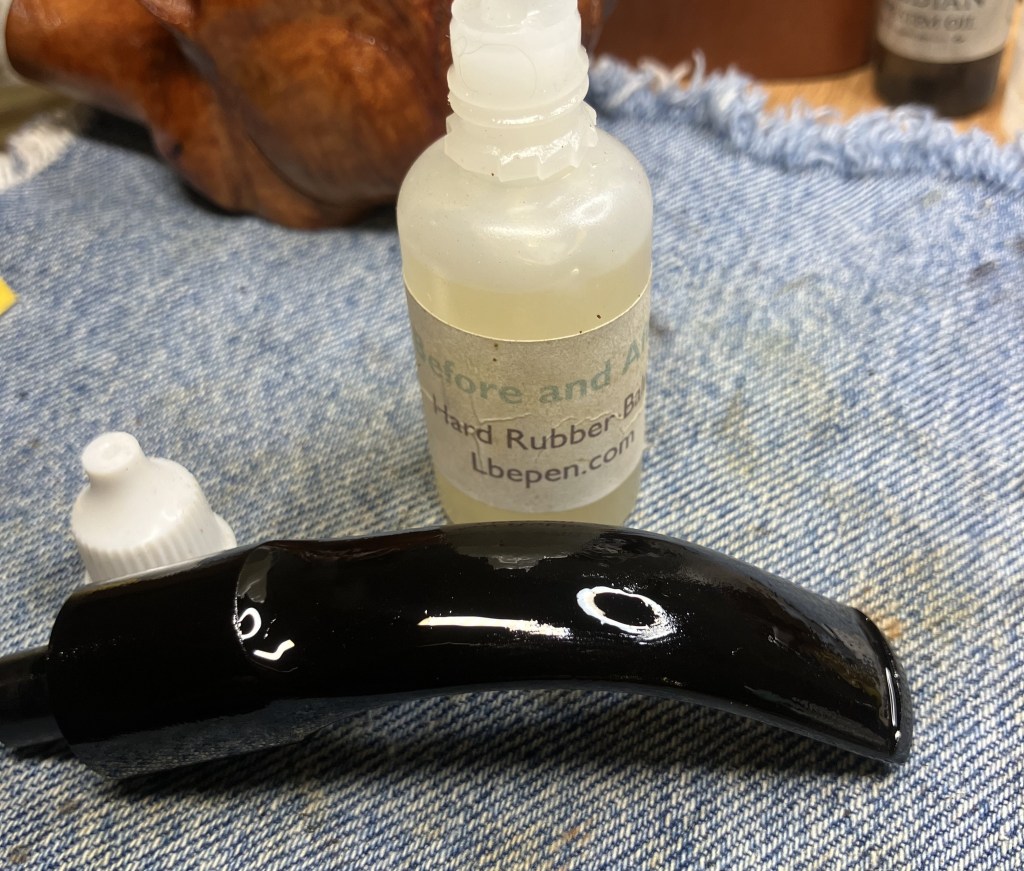
The Restoration Balm was wiped from the stummel using an inside out athletic sock.

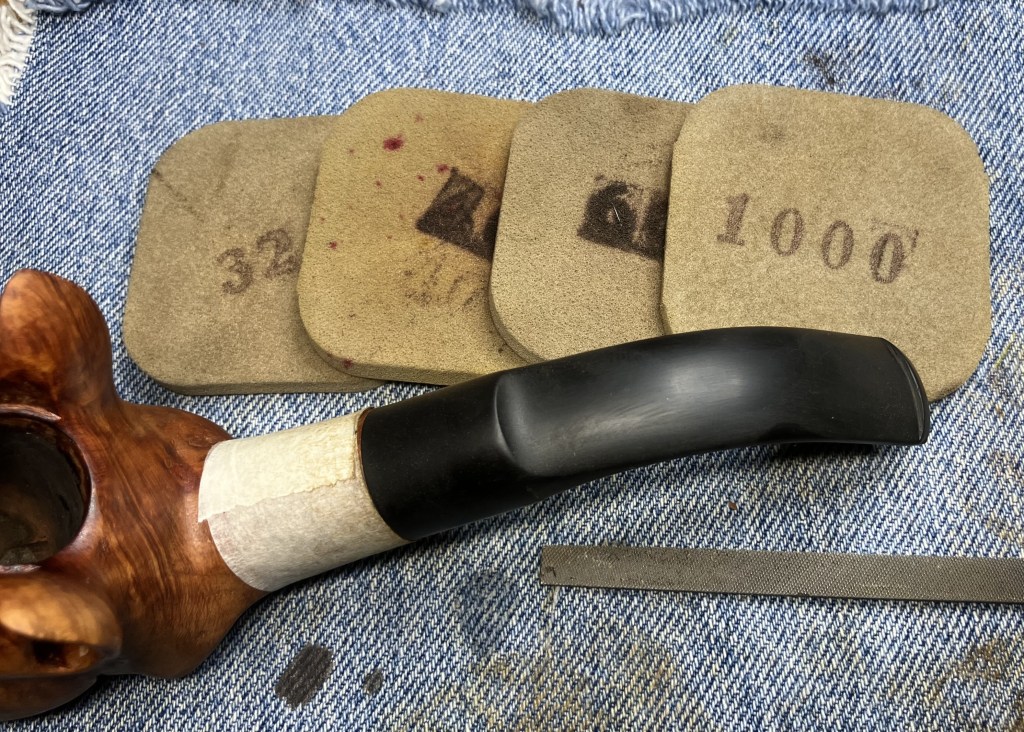
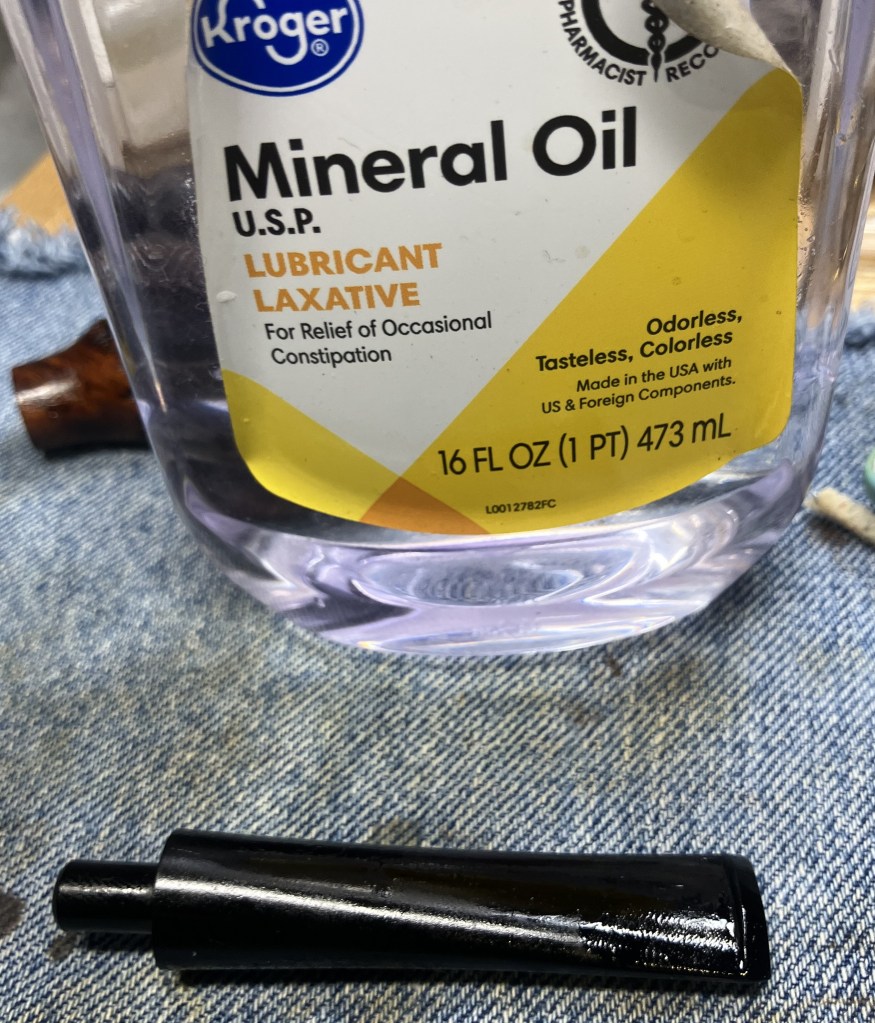
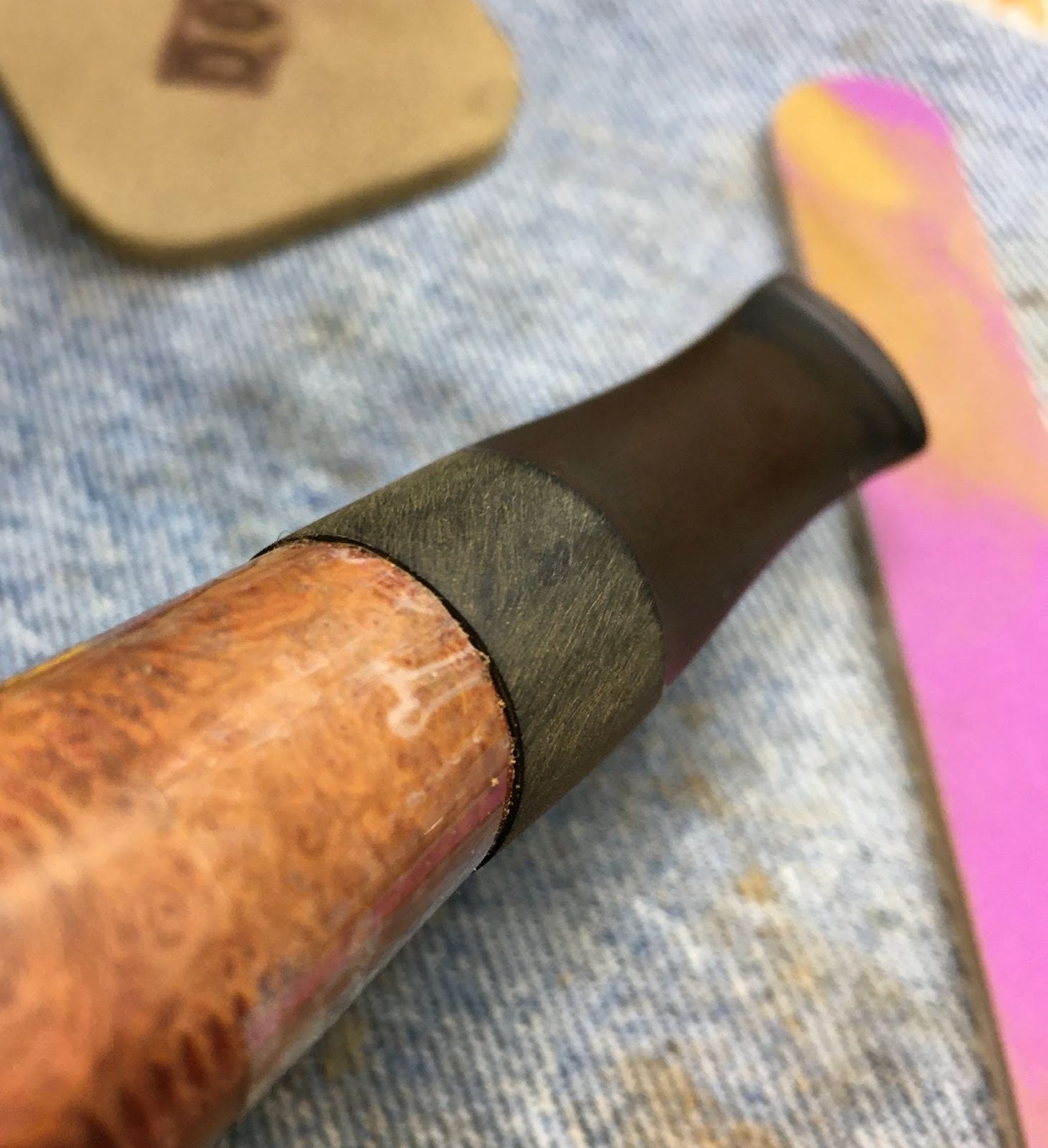
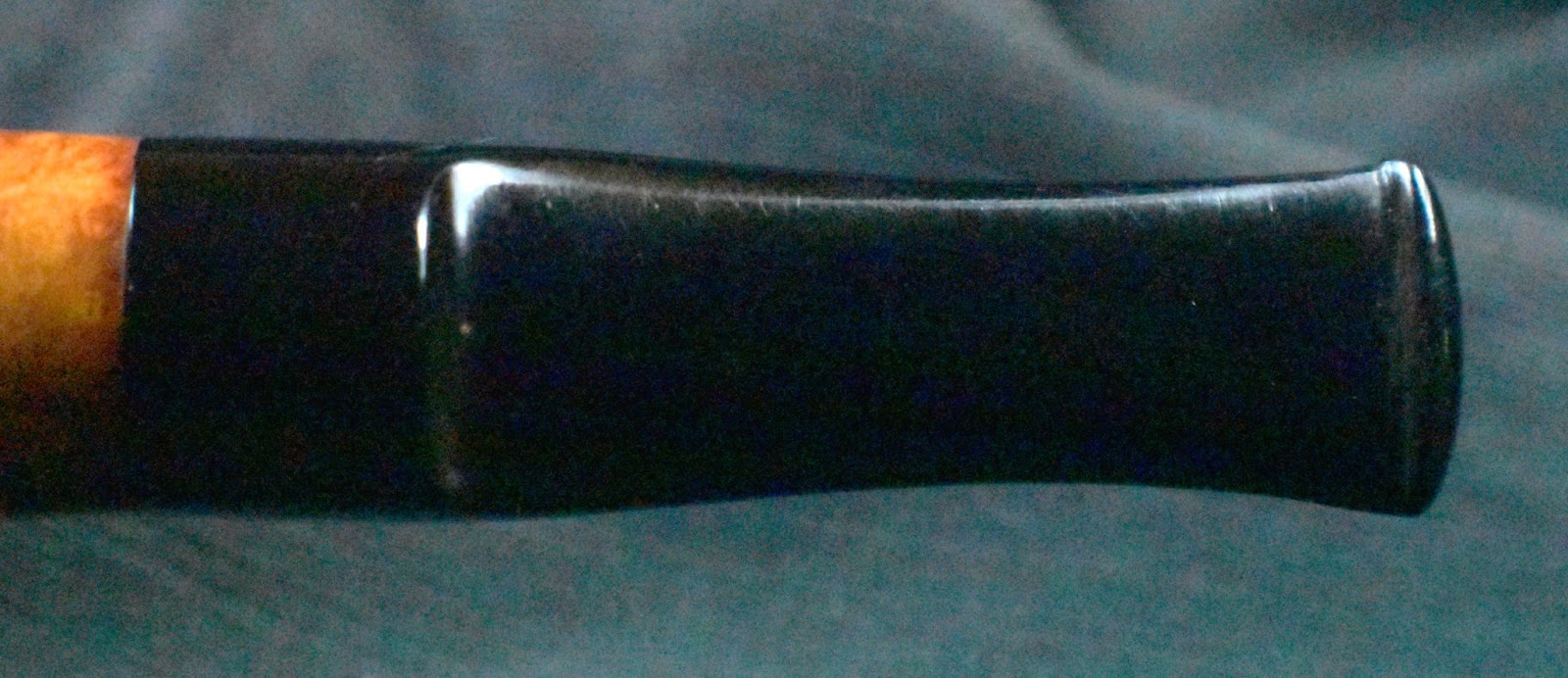
When I returned to the stem, I wiped the remaining Hard Rubber Balm off with a dry paper towel. The shank of the pipe was wrapped in masking tape to protect the shank from the sanding. I then started sanding the stem with a series of sanding sponges from 320-1000 grit. Between each sponge I rubbed the stem with mineral oil and wiped it with a dry paper towel.
There was still a lingering granny purse smell to this pipe. I thought another alcohol cotton treatment might remedy that.

The cotton was removed the next day and it was still pulling some of that pink color from the airway of the shank. Was this the source of the granny purse aroma?

The tape was removed and cleaned with alcohol to rid the shank of any residual adhesive. I then worked a bit of the Before and After Restoration Balm into the briar there and around the rim. After that sat for 10 minutes I again wiped it with the athletic sock and took the pipe to the buffer for a few coats of carnauba wax.

The final step was a hand buffing with a microfiber polishing cloth.
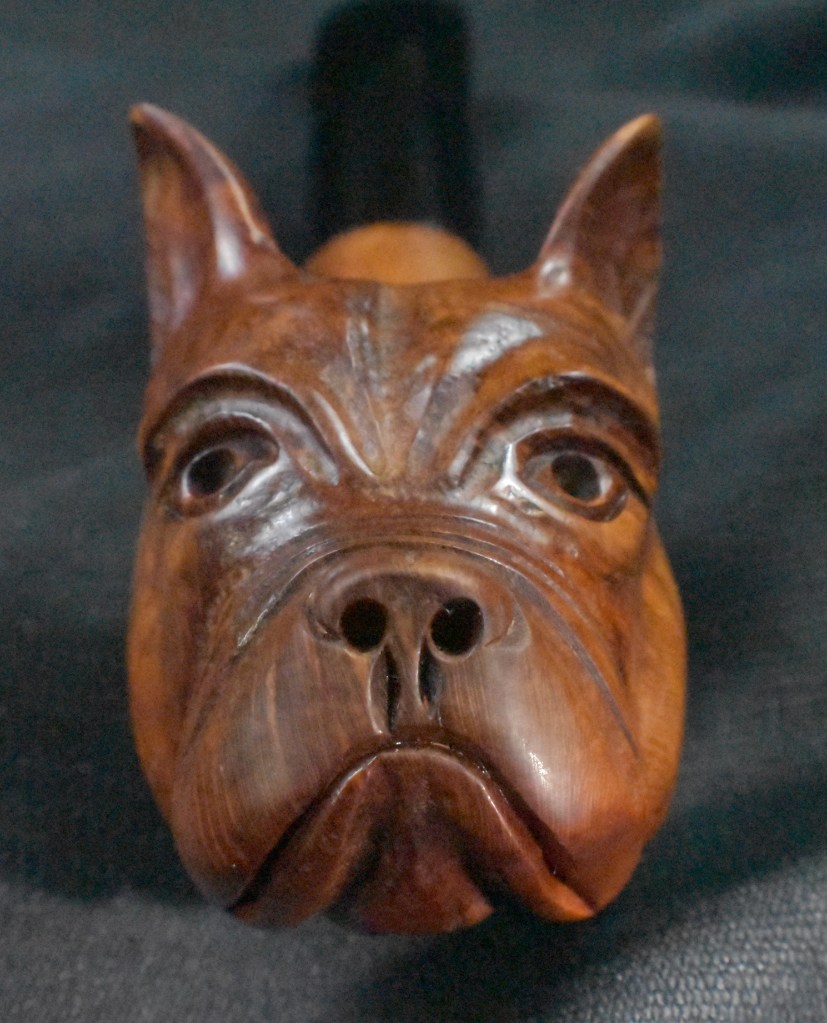
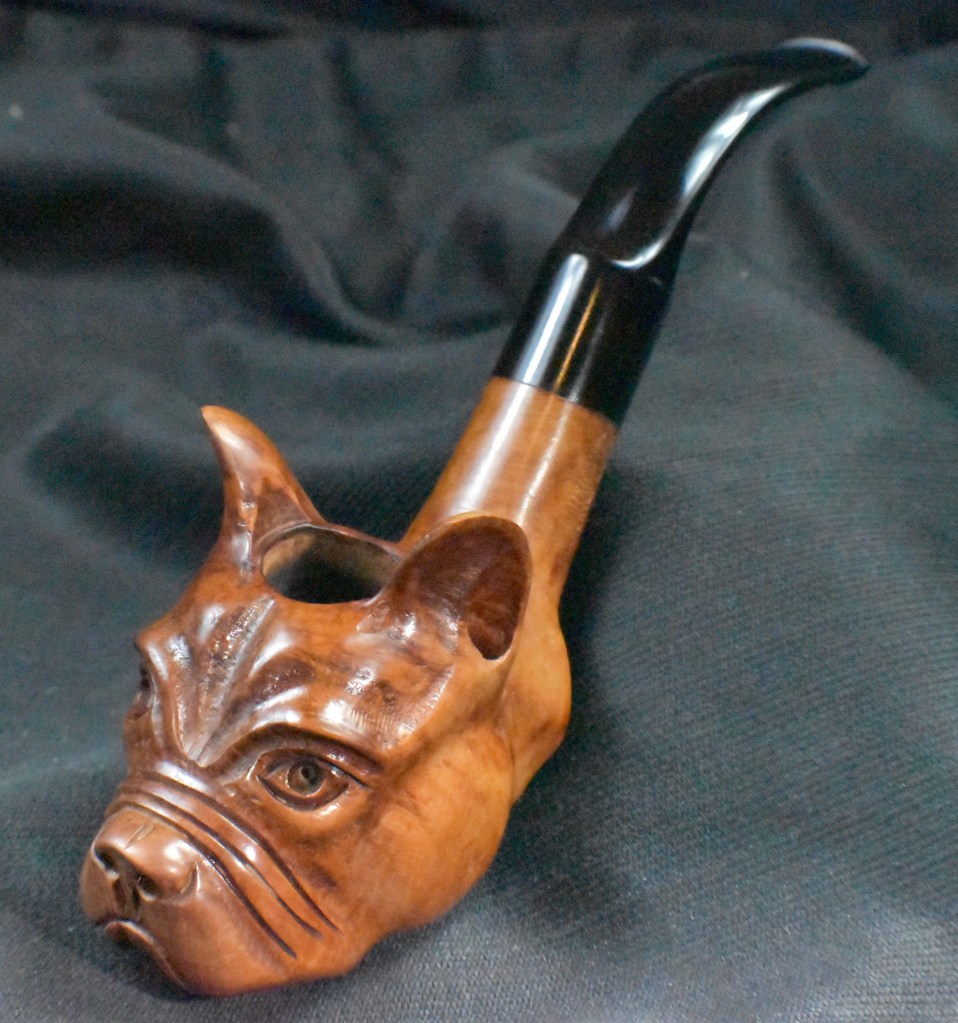
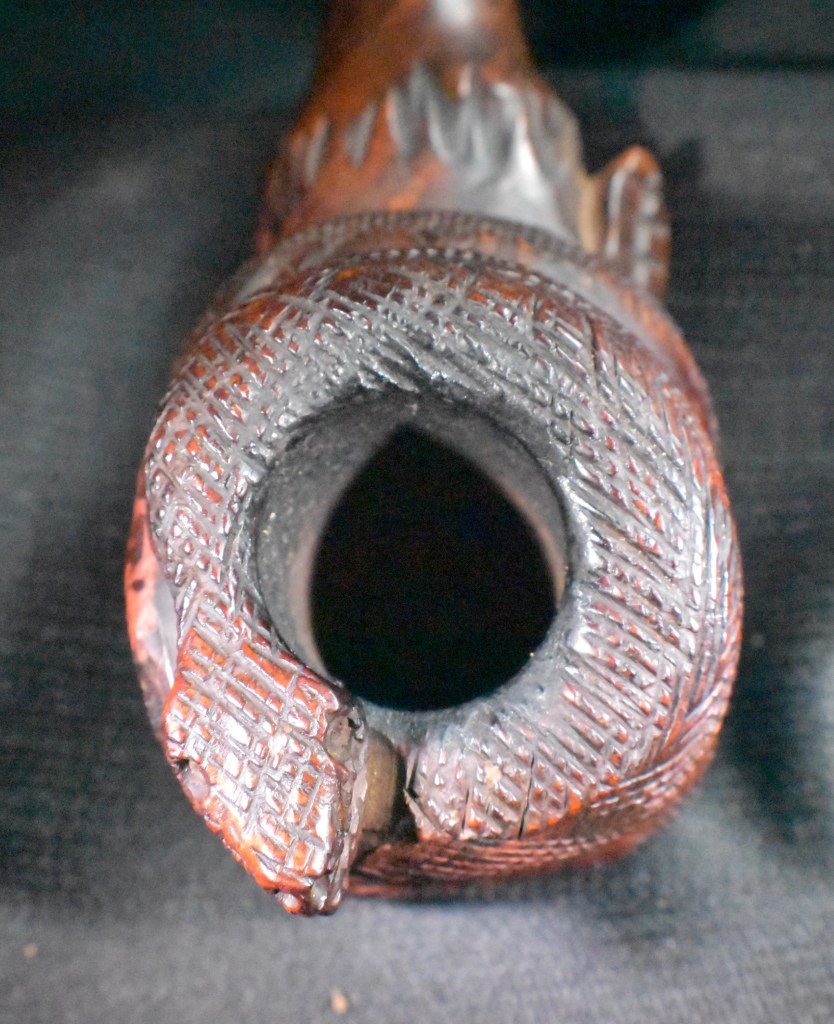
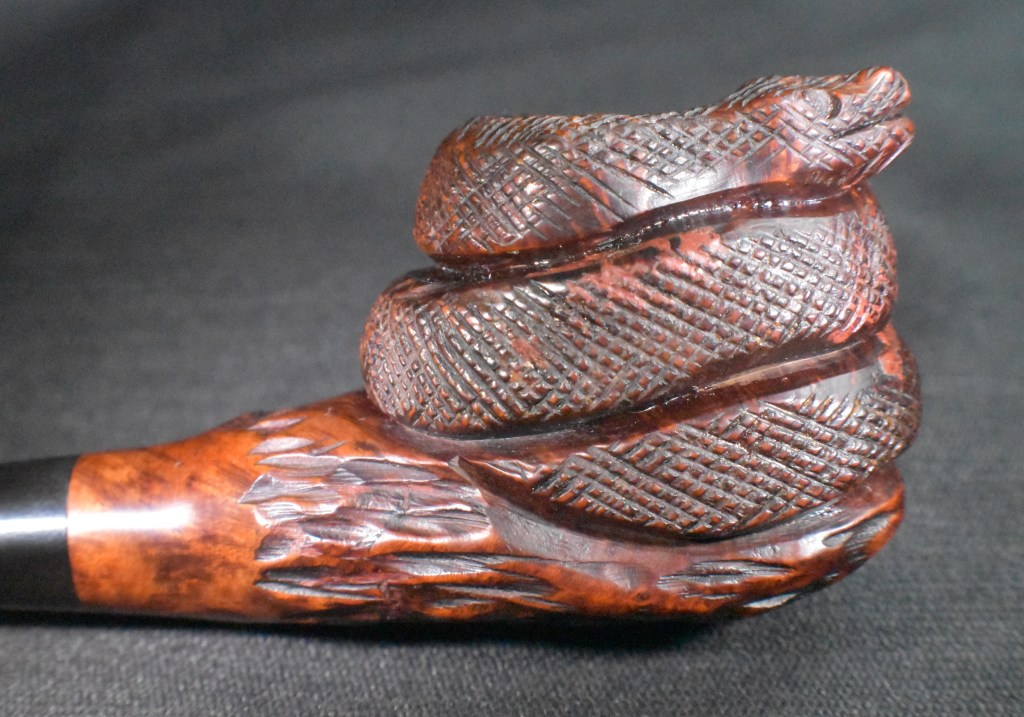
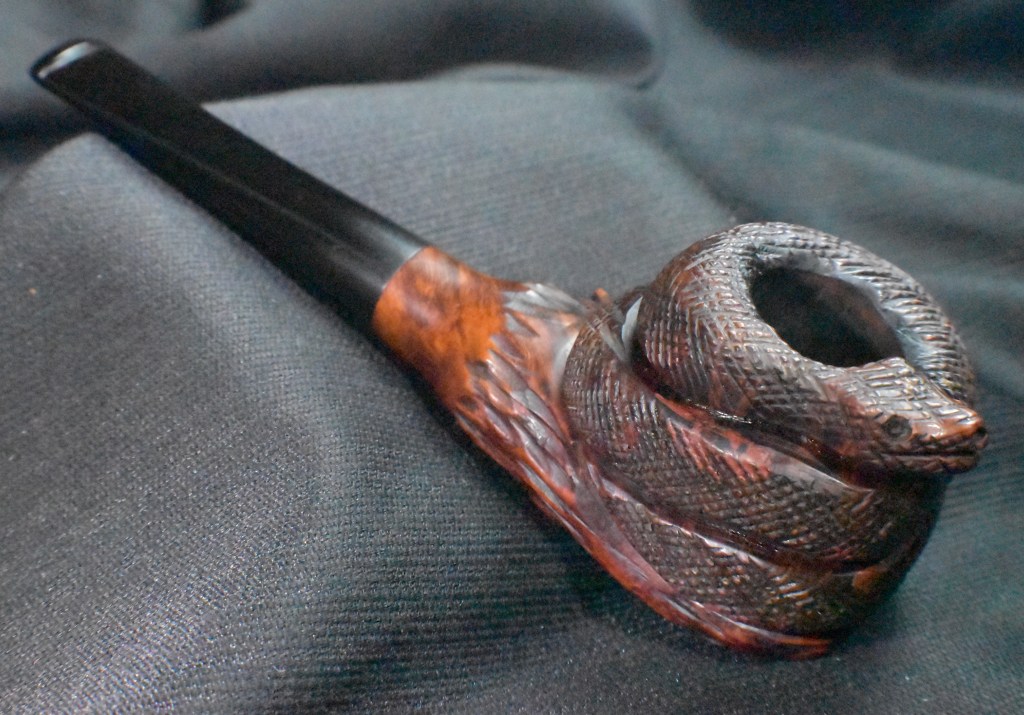
This Marxman Figural Bulldog is a true beauty. It is a handful of a pipe and weighs in at over 3 ounces (88.45 g). The amazing thing is that it clenches very well and does not feel nearly that heavy. The expressive eyes of the carving are an indication of the skill of the carver and the quality of the carving. The fill and the recarving of the ear that I did, were small touches which I think added to the pipe. The briar itself must have been huge for this time period, just based on the size of the block, I am thinking this pipe was made after World War Two. The dimensions of the Marman Figural Bulldog pipe are:
Length: 7 in./178 mm.
Weight: 3.12 oz./ 88.45 g.
Bowl Height: 2.00 in./ 50.80 mm.
Chamber Depth: 1.44 in./ 36.58 mm.
Chamber Diameter: 0.72 in./ 18.29 mm.
Outside Diameter: 1.77 in./ 44.96 mm. (from cheek to cheek)
Oh, I almost forgot. Did the second alcohol cotton treatment exorcise the “granny purse” ghost? Mostly. There still remains a very slight hint of the geranium oil. I think that it should disappear with a couple of bowls of pipe tobacco.
I do hope that you have found something here useful to your own pipe care, maintenance or restorations. If you like this sort of thing, please click the like and subscribe buttons. Thank you for reading the ramblings of an old pipe lover.
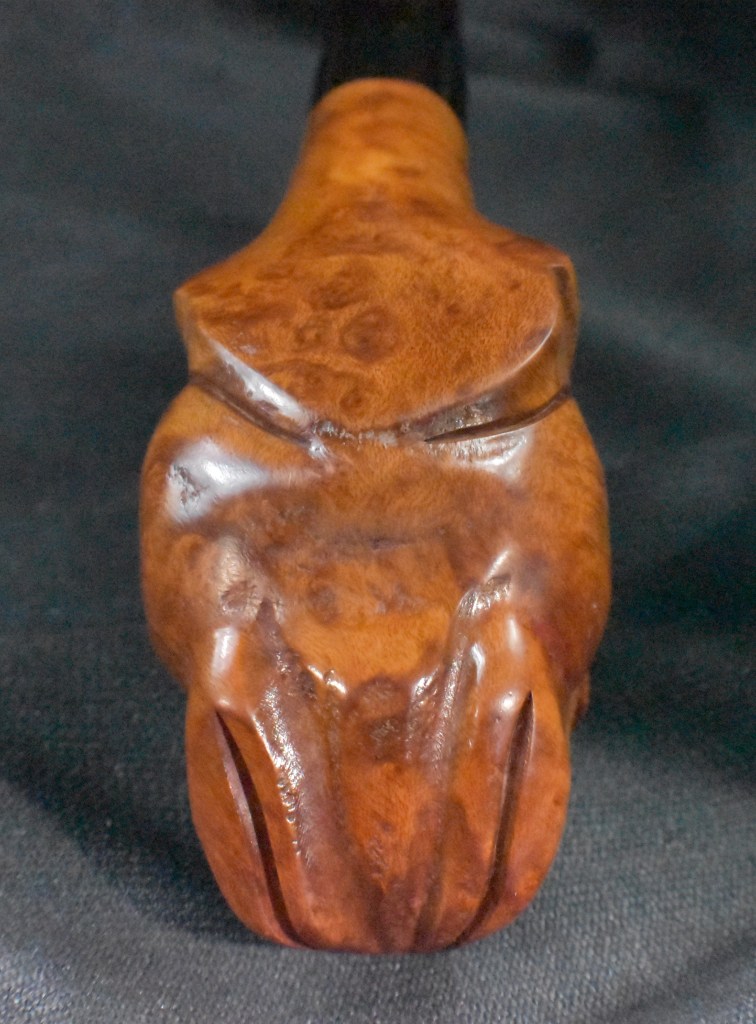
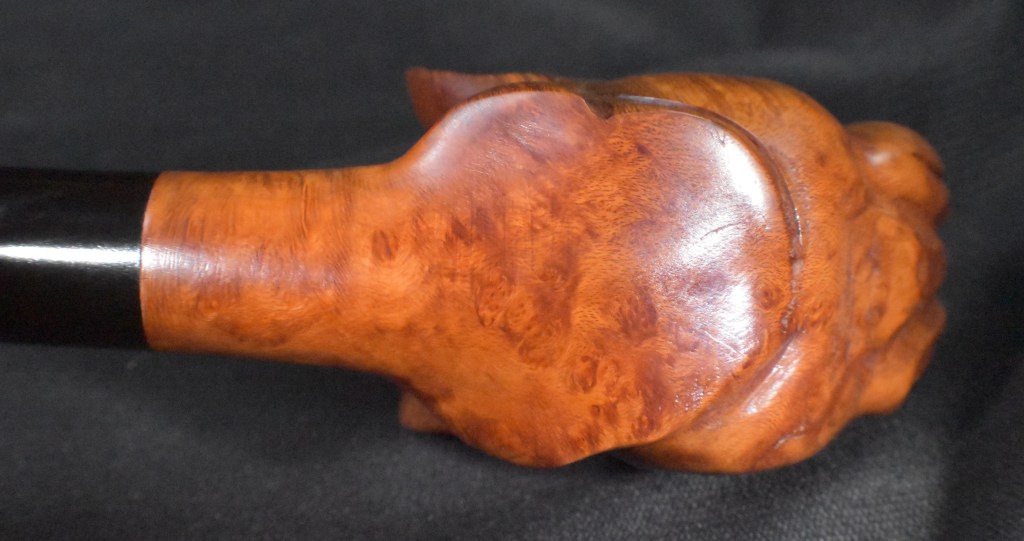
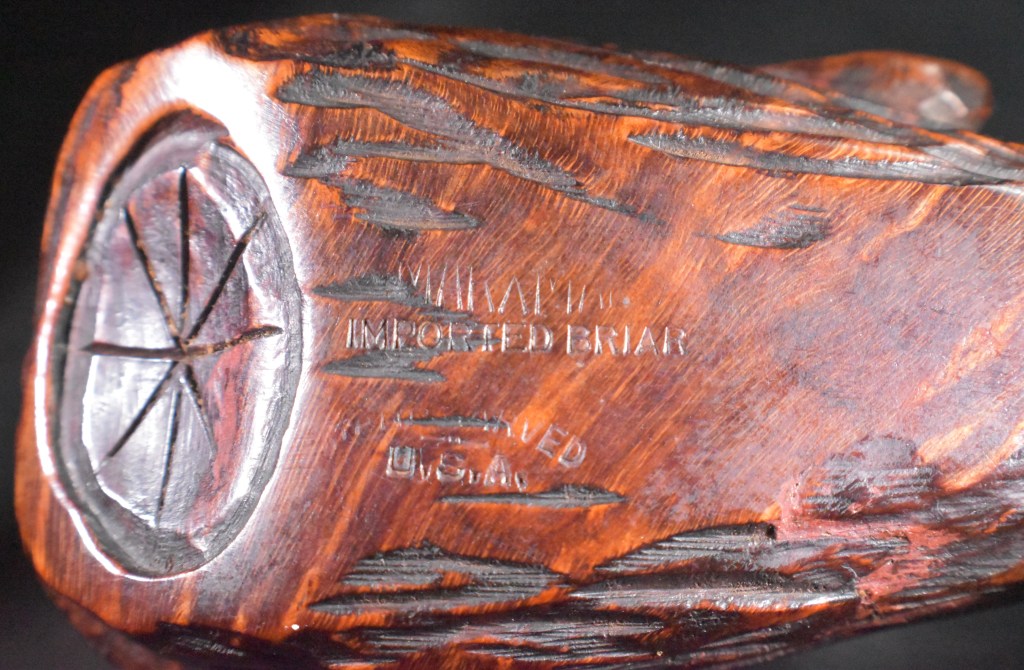
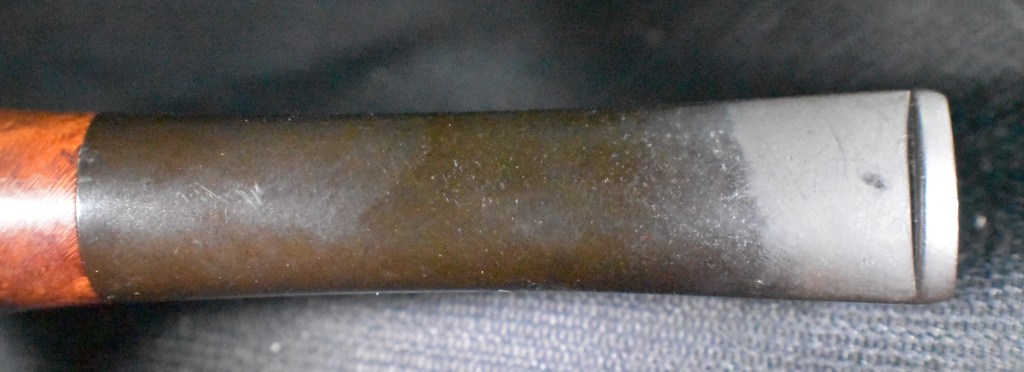
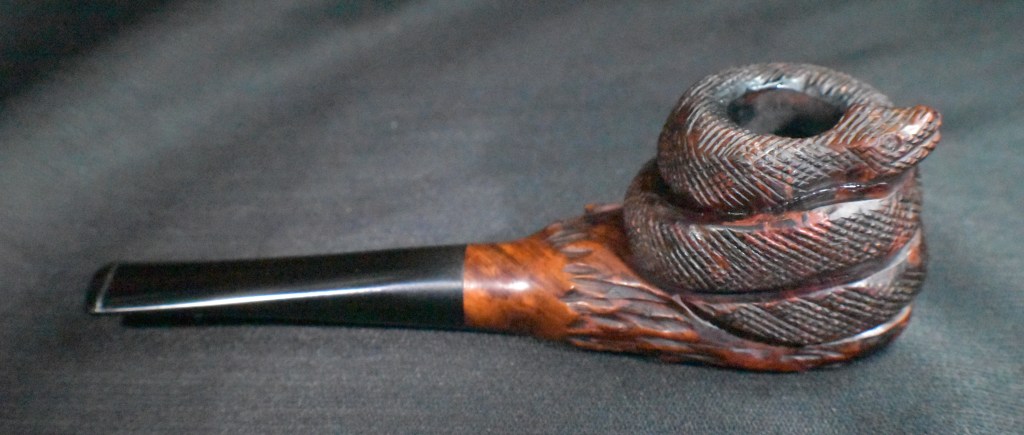
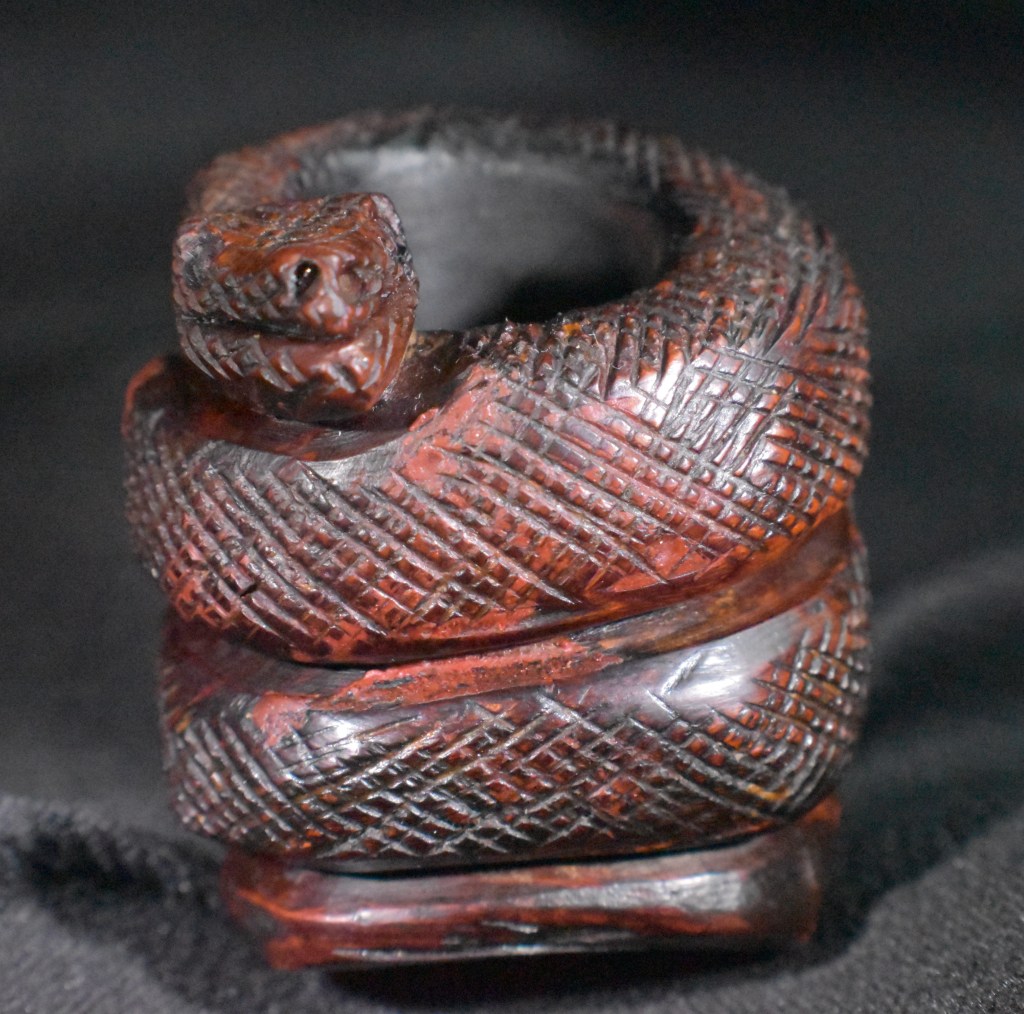
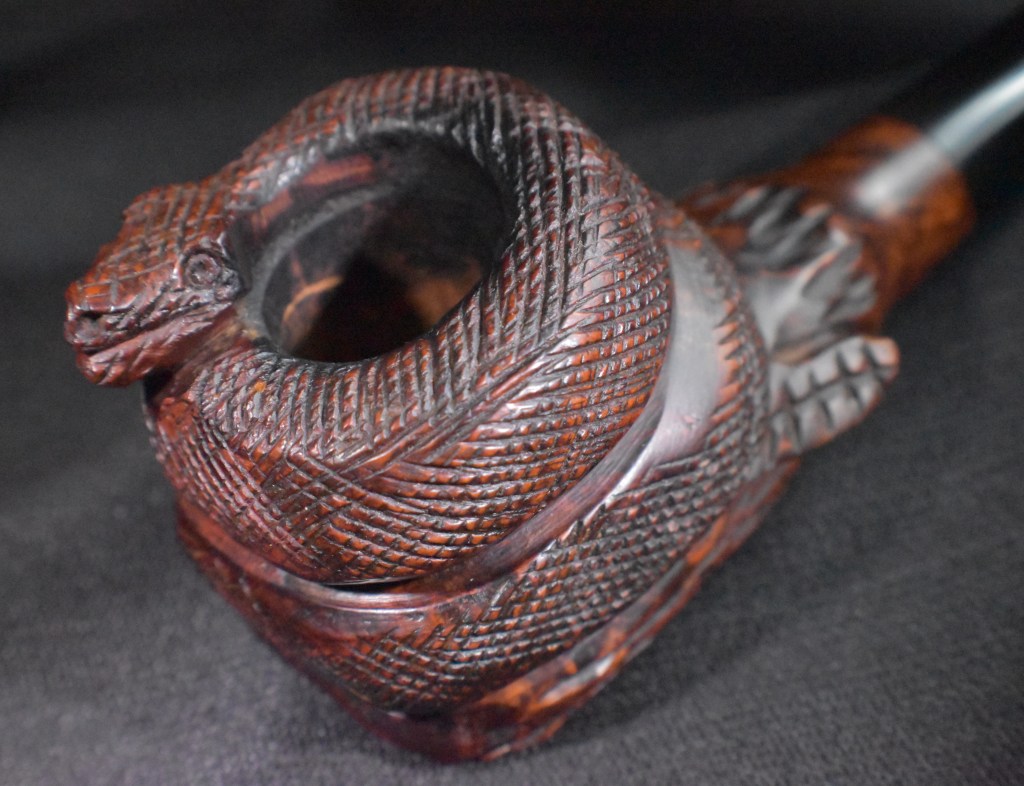
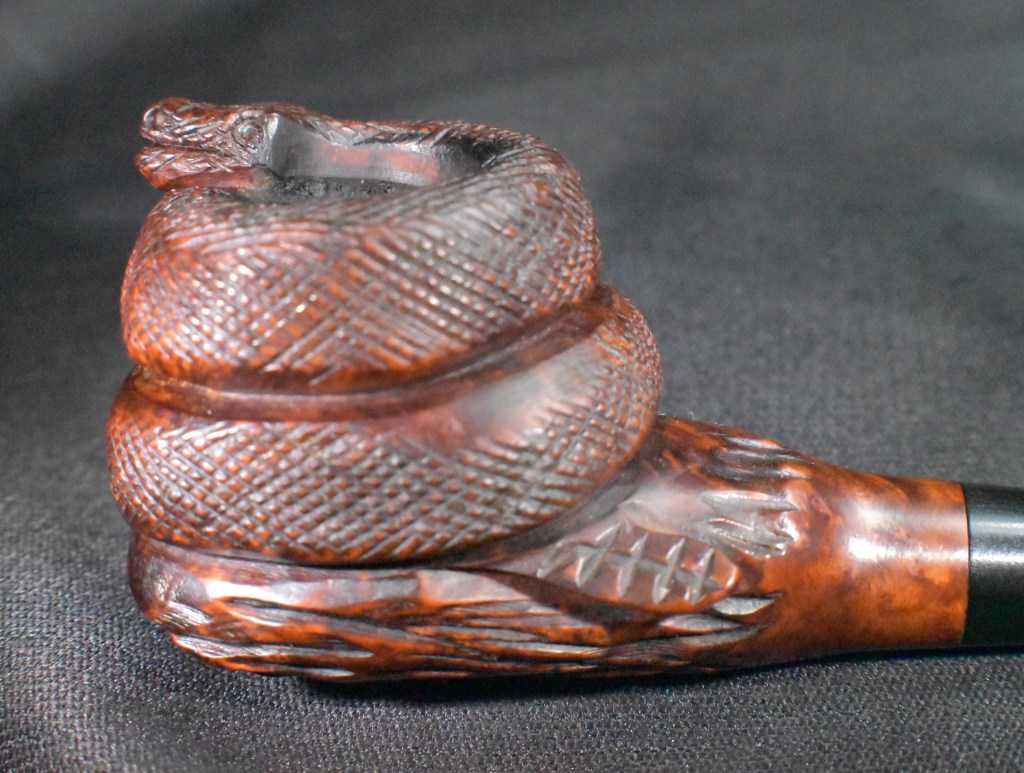
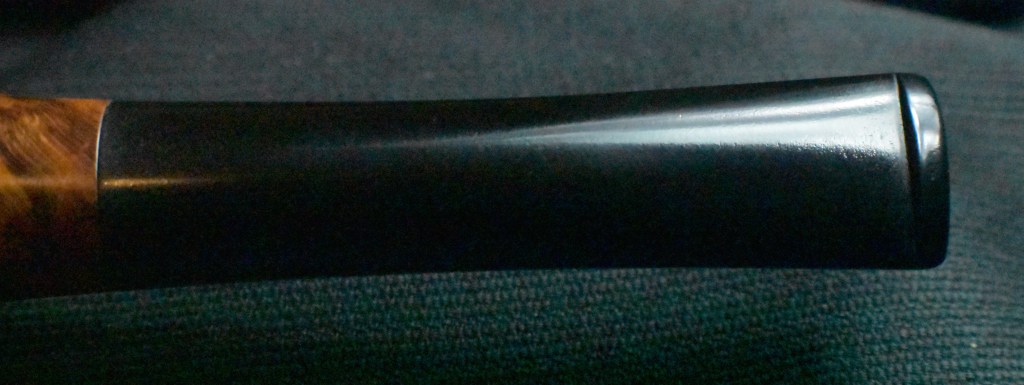
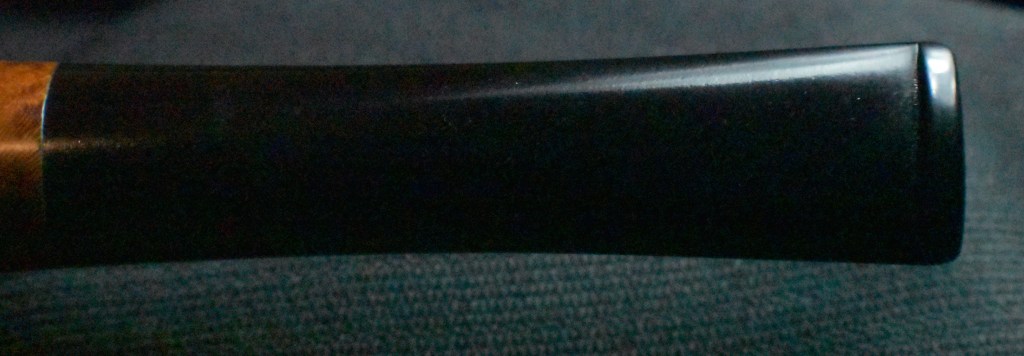
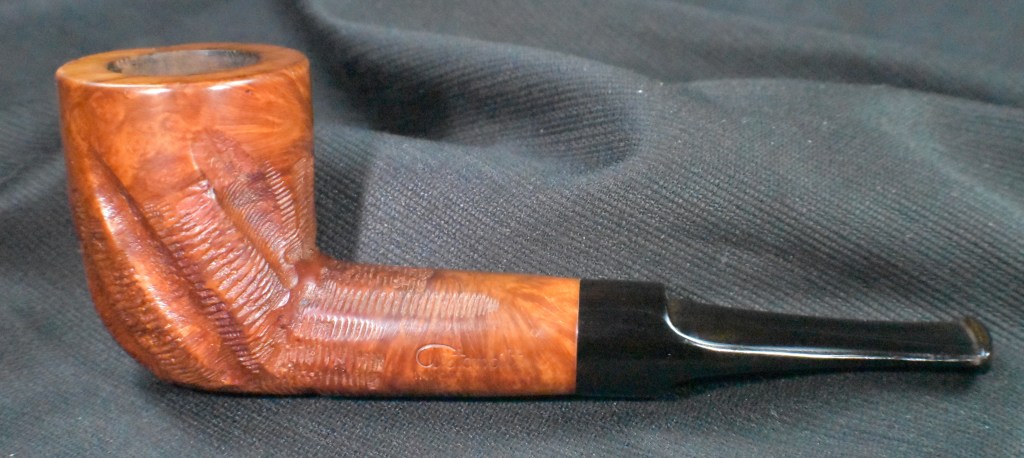
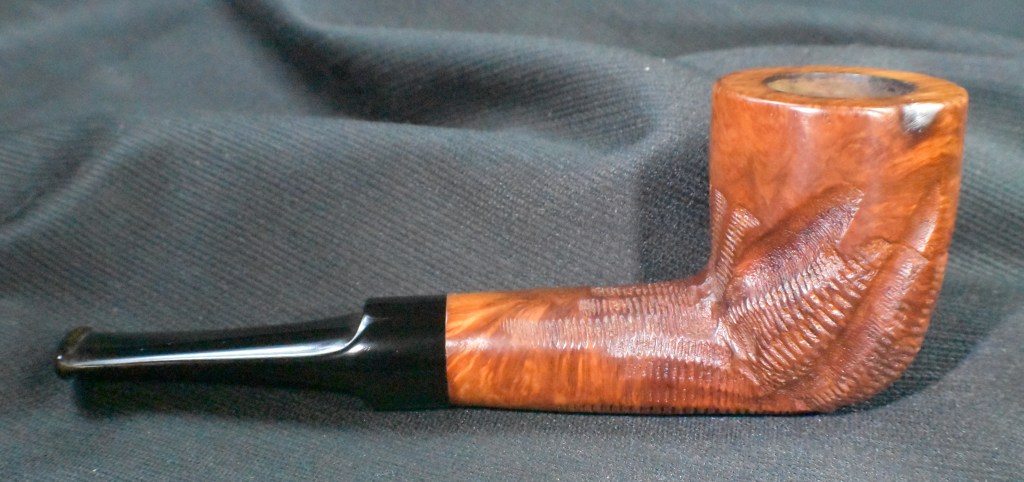
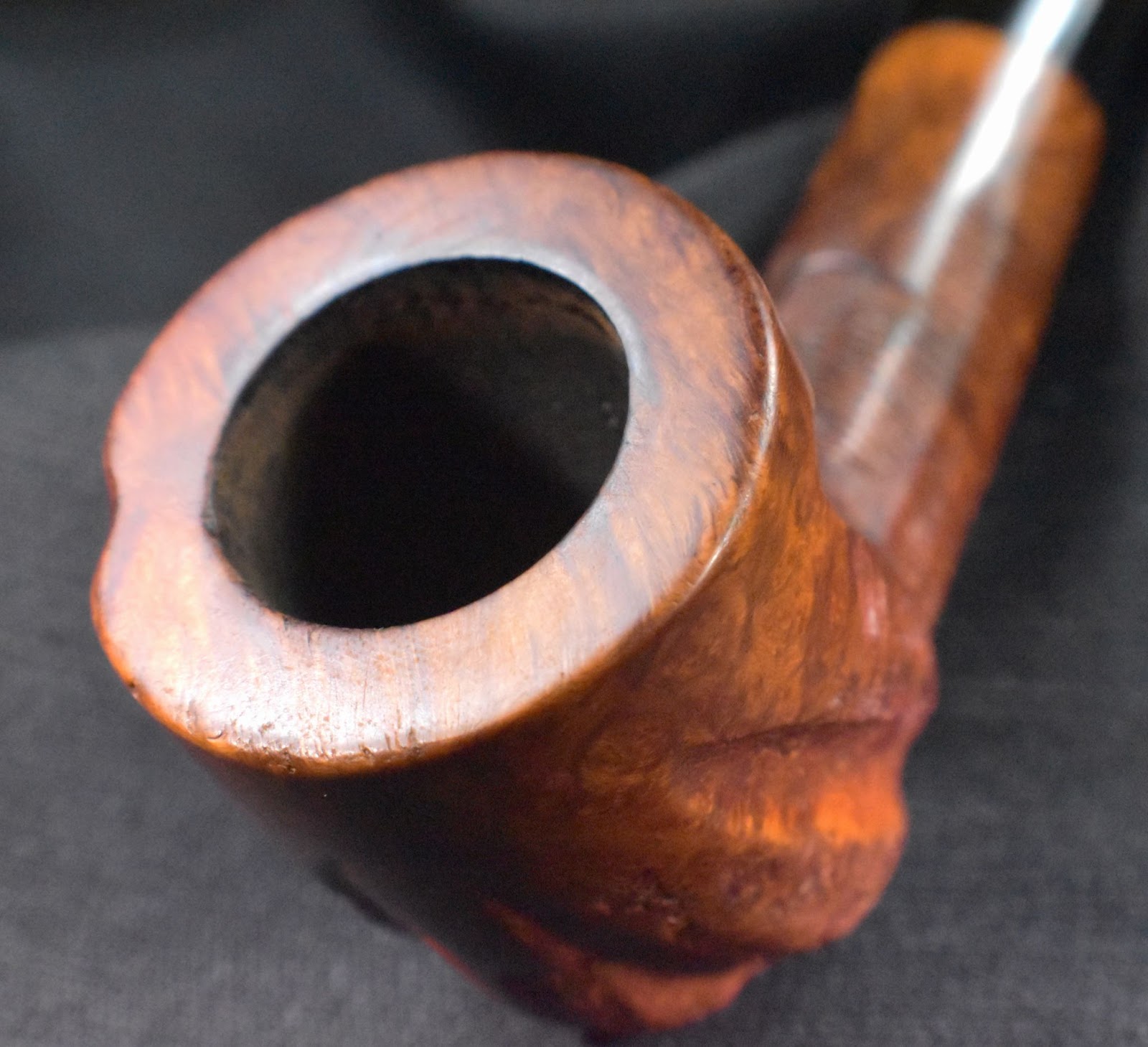
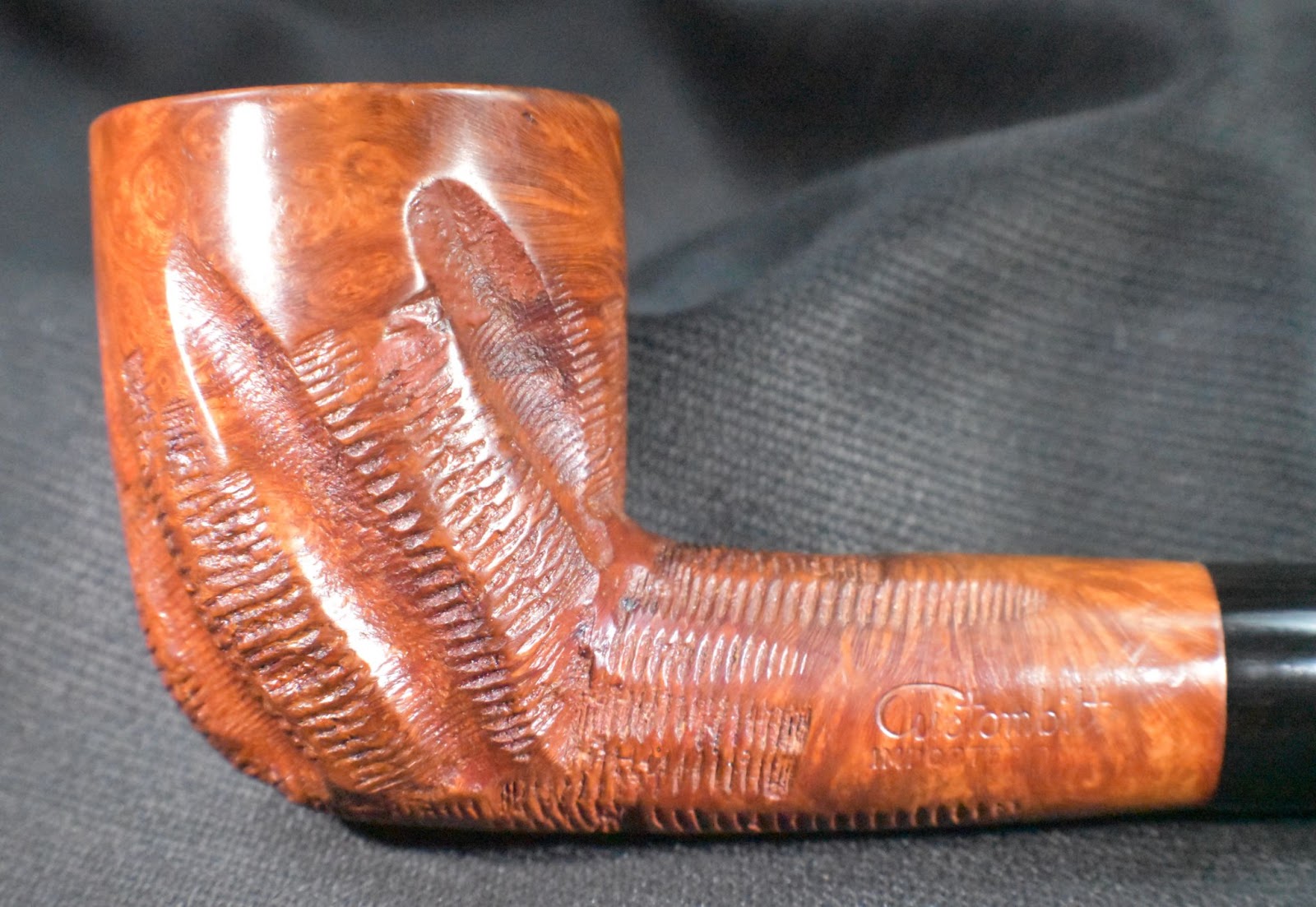
Below are some photos of the finished Marman Figural Bulldog.











































 (
(


 I took all of the aluminum parts to the buffer and polished the metal using white buffing compound on the flannel wheel dedicated to buffing this the white compound. I neglected to photograph any of this process partly out of the embarrassment caused by the oxymoronic black colored white compound wheel and partially/mostly because I forgot to. At this stage in a restoration I find it very helpful to go fishing during the half hour before and after sunset. This vital break allowed the CA the curing time it needed and me a break from sitting on my lazy butt.


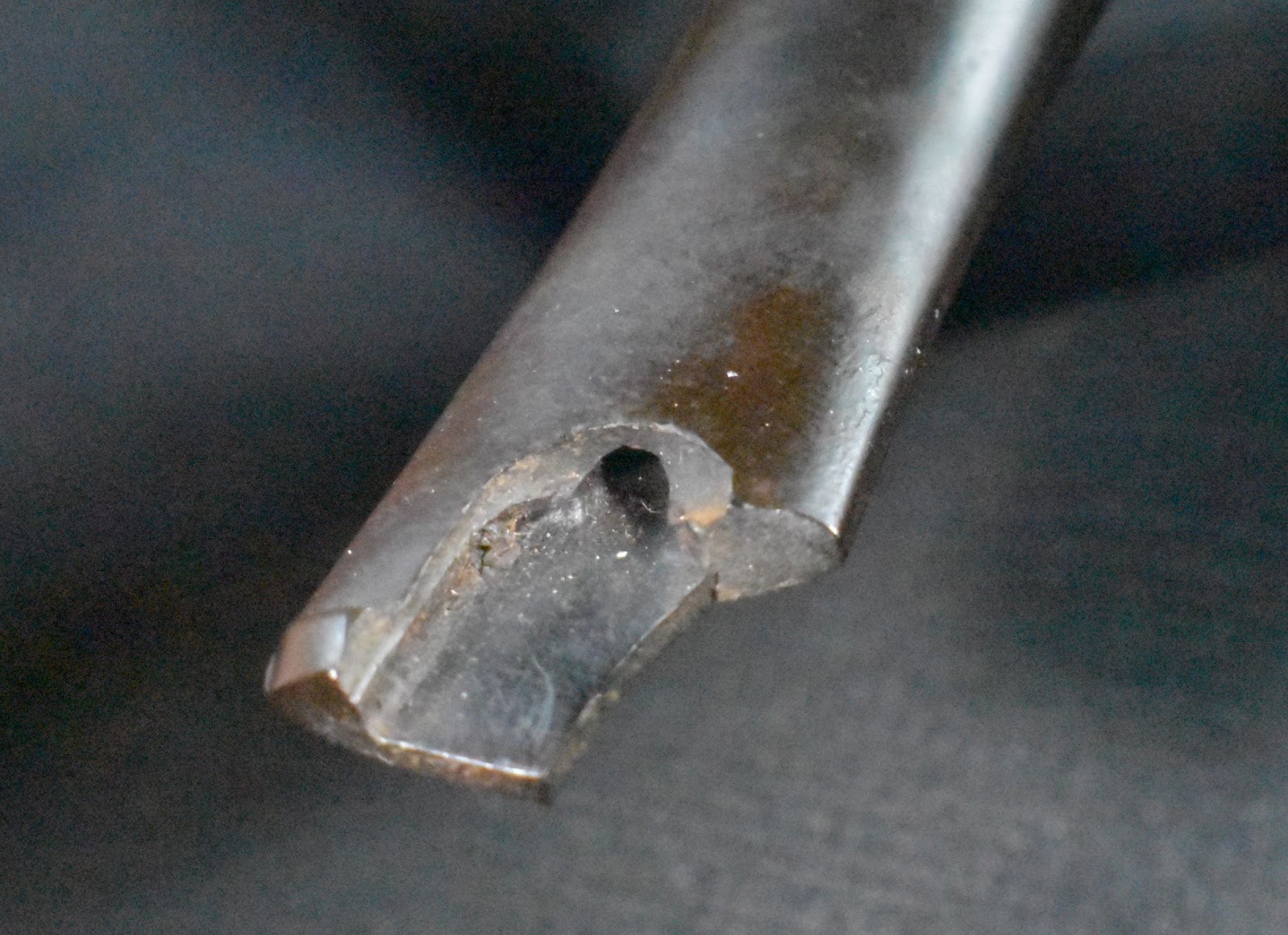
 I reattached the stem and tried the draw. Yikes! There was barely any airflow. I pulled the stem and tried it. The stem was clear. I looked into the mortise.































 NebraskaPeteGeek
