Wally Frank is a most enigmatic (AKA: crazy cool) figure in the history of pipes. A world traveler in search of briar, pipes, pipe making artists and craftsmen, a businessman, a marketer, all fascinating. This print ad illustrates what I mean. Here we see Castello pipes advertised with the Weber Guide to Pipes and Smoking and Wally Frank Natural Unvarnished pipes all on one page.
“Why is that so interesting?”, you ask. Frank “discovered” Carlo Scotti, founder of Castello and imported his pipes to America. Weber, one of the largest pipe manufacturers in America and Weber’s book telling you everything about how to smoke a pipe. Weber was also a major producer of Wally Frank pipes. And his own Wally Frank brand. All on one lovely Wally Frank ad page. Sounds like an empire builder to me.
One of the best stories of Wally Frank’s career is the “discovery” of Carlo Scotti. I quote from Hacker’s The Ultimate Pipe Book:
“In 1952 Wally Frank, the famous East Coast tobacconist, was on a buying trip in Italy and came across Scotti’s pipes. He liked them and wanted to import them into the U.S. Unfortunately, there was a problem:Scotti’s “white line” trademark looked almost identical to the trademark Frank was using for his “White Bar” line of pipes. The solution was obvious. Scottie would simply change his logo. The two men sat down in the warm Italian sun and came up with the idea of drilling a hole in the “near side” of the stem, interesting a small piece of crumpled silver foil, and sealing it over with clear Lucite. A legend was born and even today some collectors insist that every Catello pipe has a diamond in it… or at worst, a rhinestone. But perhaps it is best to leave both the clear Lucite and the image intact, for the superb craftsmanship and the smokability of the Castello is really what constitutes the true value of a pipe.” (pp. 255-256)
Hacker, Richard Carleton. The Ultimate Pipe Book. Autumngold Pub., 1984.
The date on the form is difficult to make out but, I think it is 1947. $1 in January of 1947 is equivalent to $13.91 in January of 2023 (https://www.bls.gov/data/inflation_calculator.htm). Who wouldn’t jump at the chance to get a new pipe every month for $14 dollars today?
The first paragraph about Wally Frank from Pipedia pretty much sums up Frank’s contributions to our hobby:
Wally Frank, Ltd. was one of America’s oldest and most respected names in pipes and tobaccos, beginning in the early 1930’s. Wally Frank operated a chain of tobacco stores in New York City (the flagship store was in Lexington Avenue) and had a vast catalog business for pipes and pipe tobaccos. Their numerous private-label pipes were made by many makers, including Charatan, Sasieni, Weber, and many others. Wally Frank, Ltd. also owned the Pioneer brand of meerschaum pipes, made from both Turkish and African meerschaum. In addition to importing pipes, he had many pipes made in his own name and also employed pipemakers like Peter Stokkebye, Svend Bang, and Ed Burak (who later became the owner of Connoisseur). As a result, each Wally Frank pipe must be individually evaluated on its own merit.
That brings me to the subject of this blog post. A unsmoked Briar Wind-cap Wally Frank Horn pipe. I have little idea as to when this pipe was produced. I gather from forum posts that the pipe of the month club died away in the early 1960’s yet, no one had any verifiable sources for that. I’d like to think that this pipe was a pipe of the month yet I also have no verification. I can say it is a unique looking pipe and my descriptions will be “individually evaluated on its own merit.”
I don’t remember exactly how or when this pipe came to me. It was most likely part of an estate lot which bid on and won via an ebay auction. I tried looking back through my “purchase history”. Unfortunately, the photos after about a year do not seem to be archived. Here are the photos of the dusty and dirty horn:
The pipe, though dusty, looked as though it had never been fired. The stem was oxidized and had no evidence of any contact with teeth. “This isn’t going to be a restoration”, I thought to myself, just a cleaning.
That is where I started. Cleaning. I took the horn to the sink and used undiluted Murphy’s Wood Cleaner on a medium stiff bristle toothbrush. The Murphy’s lather changed to a slight gray color as it removed the dirt and dust. The Murphy’s was rinsed with warm water and the stummel was dried with a cotton dish towel. I then wiped the surface with a cotton make-up removal pad moistened in 95% ethyl alcohol. I hoped that this would loosen and remove any dirt remaining as well as tell me more about the finish on the briar.
The pad became pink with the red dye that was used to stain the briar. The dirty spots on the pad are from me using it on the threads of the wind cap. The removal of stain with the pad indicated there was little finish to worry about.
The stem did not appear to have enough oxidation to warrant a bath in the Deoxidation Solution. I used Soft Scrub on a make-up removal pad and vigorously rubbed the stem.
After the scrubbing the stem was oiled with Obsidian Oil. I took both parts of the pipe to the bright light to assess the best course of action and for some photos.
In this photo you can still see the lathe chuck marks inside the tobacco chamber.
The stummel had one spot with an obvious fill. This fill was not a good color (too pink) match to the briar so it had to go. The stem looked like it had tiny pock marks all over the surface. I did know it was just from age, oxidation, poor quality vulcanite or a combination of those.
First thing I addressed was removing the old fill material. It was fairly soft and canme out with little effort. I used the dental pick and fly tying bodkin for most of the removal and scrubbed the hole with a brass wire brush.
With the old fill removed I started working on the stem. I reassembled the pipe and wrapped the shank with scotch tape to avoid scratching the briar with the sandpaper or micro-mesh pads. I worked the stem’s surfacewith 400 wet day sandpaper wrapped around a small foam block. I then used the 1500 micro-mesh pad dry. After the pad I wiped the stem with a dry make-up pad and applied a drop of Obsidian Oil with my fingers. I wiped the excess and used a wetted 1500 micro-mesh pad. After this pad I wiped, oiled and wiped the stem again. I then proceeded to the 1800 micro-mesh pad also wetted with water and then the 2400 pad dry. In between pads I continued to wipe, oil and wipe excess.
I then prepared to work of the fill. I used Brown cyanoacrylate (CA, super glue) and briar dust for the new fill material. I dipped the bodkin into the CA and got a small drop. I placed the drop into the hole, took a pinch of briar dust and pushed it into the glue wetted hole. I used the flat side of the dental broad dental pick to force the dust into the hole. It set-up nearly immediately.
I then used a flat needle file to remove the material new fill until it was smooth to the surface. I very light touch with 200 sandpaper revealed that I still had a couple of low spots in the new fill. I repeated the CA and briar dust. At this point I removed the scotch tape and cut two pieces of painters tape to cover the stampings. I figured that any sanding and micro-meshing from here out could be done to both the stem and the stummel.
The new fill was then filed and sanded to smooth. The sanding would be blended with the sanding and micro-meshing.
I did not need to use the 1500 nor 1800 micro-mesh pads on the stummel. I used the remaining series, 2400-12000 on the stem and stummel. Between pads I would wipe the briar with a make-up pad moistened with 99% isopropyl alcohol and the stem with a drop of Obsidian Oil on my fingers wiped with a dry make-up pad. When finished with the micro-mesh pad I applied a liberal coating of Before and After Restoration Balm to the briar and a coating of Obsidian Oil to the stem.
I let the balm and oil do their magic to the pipe for about an hour. After the hour had passed I wiped the entire pipe with an inside-out athletic sock to remove the remaining balm and oil. The pipe was looking very reshreshed. The last step was to take it to the buffer for several coats of carnauba wax.
This was a fun restoration of an unusual old pipe. I have no idea how the horn shape smokes. My fear would be that the top inside of the tobacco chamber would get too hot and be prone to the risk of heat damage. Or perhaps this shape is meant to be used while reclining in a hammock enjoying a pipe on a warm summer day. That is a delightful image. If you enjoyed this kind of thing please, click the like and subscribe. I thank you for reading the ramblings of an old pipe lover.
Below are photos of the finished Briar Wind-cap Wally Frank Horn:
I know what you are thinking: “Wow! That pipe is gorgeous. I’m going to sell all my Savinellis and get a truckload of Greenwichs.” What, no one is thinking that? Oh yea of little faith, give it time. It may turn out pretty well.
I didn’t start out looking for a Greenwich pipe. Heck, I don’t think I’d ever even heard much about them. I was searching out a pipe with a trashed mouthpiece. Yes, I said that. The truth is that rather than practicing a new material/technique on an extra stem, I wanted to try it under fire with a real world example. Sure I could just take a crosscut saw to an extra stem but then I’d miss out on searching Ebay for a reprehensible miscreant pipe, bidding against the throng of others wanting the same hidden gem and waiting for 18 months for the arrival of said pipe from the far reaches of Bhutan. There I go again with my exaggerations, I never was “under fire”. “What is this new material?”, you ask. You are just going to have to wait for the big reveal.
The above Greenwich House pipe was indeed from an Ebay auction. I really did search out a pipe with a damaged stem. Here is the original listing of the darling:
Yes, I am quite the “Big Spender”, I did have to wait for the pipe to arrive from Alaska and there really were three other people who bid on the Greenwich. So, you see my exaggerations were not that great. When she did arrive her condition was what I had expected and hoped for. I’ll let the photos speak for themselves.
Okay, so now you have it, what are you going to do with it?
I am going to make her beautiful and return her to smoking glory.
What do you even know about her history? She could be some vagrant who will prison shank you while you sleep.
When researching this Greenwich House pipe I had very little to work with. There were only two words visible: “GREENWICH HOUSE”. That is where I started. The site, https://pipes.collectionhero.com/gallery.php?search=greenwich produced images of “Greenwich” pipes that had come up recently. The Thoor-Kleen brand seemed to have the greatest frequency of photos. The other Greenwich pipes appeared more random and diverse in their shapes. Nothing matched the pipe I had in hand.
Since Thoro-Kleens are metal pipes I went to http://www.smokingmetal.co.uk/. In the past I have found that the smokingmetal.co.uk website has very good information about all things pertaining to metal tobacco pipes. I thought they would certainly have more information about Greenwich. I was incorrect. There was more information about the Thor-Kleen pipe but nothing about the parent company. Here is th text on the page in its entirety:
GREENWICH HOUSE THORO KLEEN
Department : METAL OUTER BOWL
This family of pipes have been seen as Knowles Air Lite (believed to be Canadian version), Roybrooke, Comet, Original Gridiron. Seemingly sold in sets that comprised a normal briar bowl as well as the metal outer with a briar insert. The body of the pipe can be hexagonal, square ( Thoro Kleen only seen this shape) or circular in cross section. Regardless of variant all parts are interchangeable. The unmarked version tends to be regarded as the COMET, all the others being stamped with a name. See others on this site under their name
I returned to the restoringpipes.com website. Steve Laug was able to find more information on his pipe because he had much more information via stamps to work with. This old girl only had a stamp that read “GREENWICH HOUSE”. Now if we assume that it is indeed the same company that either produced or imported both Mr. Laug’s pipe and the Greenwich House I had, then we could say that “The pipes were sold by the Greenwich House Corporation, located in 1947 at 939-M 8th Avenue, N.Y. 19, N.Y…” (https://pipedia.org/wiki/Thoro-Kleen)
Also interesting from Mr. Laug’s research was that his pipe had stamping of the model – “ANTIQUE” as well as “Imported BRIAR”. He found that the Antiques were made from Algerian briar. (Laug, rebornpipes.com). I say interesting because my pipe looks very much like both the Marxman and Custom-bilt (or CustomBilt) pipes made at approximately the same time, 1947-1957. Both the Marxman and the CustomBilts were made from Algerian Briar. This briar is known to be relatively soft with less desirable grain, thus the heavily carved pipe shapes and textures. I think it is pretty safe to assume that since the Antique line of Greenwich was Algerian briar and this pipe has very similar characteristics to the Antique as well as the two other makes of pipes which were known to be Algerian briar we can say that this pipe is very likely to be made from Algerian briar in the decade after World War II.
That information satisfied my curiosity and made me want to get to the restoration. As usual I started with reaming the tobacco chamber. It was heavily caked. The PipNet reamer is the go-to tool for this job followed up with the SmokingPipes Low Country Reamer. I started with the Pipnet’s second size blade. It Made short work of the cake that it could reach. I switched out the 2nd for the 3rd as this was a wide bowl. The 3rd blade worked very well and scraped to the bottom of the bowl. The bowl was now wider than the 2nd and 3rd but the 4th was too large. This meant the Low Country would get some action. I reamed the interior edges of the bowl further with the Low Country Reamer and finished with 220 sandpaper wrapped around a wooden dowel along with sandpaper on my finger. The inside of the tobacco chamber looked very good. I guess that is what the layer of cake is for – to protect the briar.
Next was the old Murphy Wood Cleaner and a toothbrush routine. For this I took the stummel to the sink.
I use a medium stiff toothbrush with undiluted Murphy’s to scrub the exterior of the stummel. This stummel was great. The diameter was enough so that I could push my thumb into the bowl and keep the Murphy’s out while scrubbing. The photo show the lather change to a brown color as it
removes the years of accumulated dirt and whatever else it can. I rinsed the Murphy’s from the stummel with warm water. Since this stummel had so many carving grooves and smaller lines I applied the Murphy’s a second time and it sudsed up discolored again. Not as dark as the first time but colored just the same after a second rinse I dried the stummel with a cotton dish towel.
I returned to the workbench with the fresh scrubbed stummel and saw that my scrubbing had cleaned the grime away but this revealed a layer of finish that I did not want on the briar. The following photos show what I had.
To see what kind of finish I had to deal with I thought about finishes of the late 1940s. I hoped it was shellac, mainly because I am lazy.
Shellac: A solution of melted lac, a resinous excretion of the Lac insect (Coccus or Carteria lacca) dissolved in alcohol used as a sealant, adhesive, or insulating varnish. (sciencedirect.com)
Since shellac is dissolved in alcohol, that means it dissolves in alcohol. I don’t mind working with alcohol. I moistened a make-up removal pad in 95% ethyl alcohol and started rubbing the stummel. Yay! The pad started to turn a yellowish brown. That means that the finish was most likely shellac and it would be easy to remove. Shellac also will dissolve in acetone. I did that too for the photos below (left is ethyl alcohol, right is acetone).
I continued to rub the surface and found that the grooves and depressions held more finish than I was able to remove with the pad. That meant that I needed to give the stummel a soaking. Fortunately I keep canning jars with ethyl alcohol (EtOH) and acetone for this very purpose. Into the ethyl alcohol (ethanol/EtOH) bath it went.
Sidenote: The acetone bath looks cloudy because the last restoration I did had a very large area that was filled with some filler that only seemed susceptible to acetone. Check out the Waldorf Restoration if you want to see that mess.
Shellac does not take very long to dissolve, especially when it has already been softened by the wet pads. I figured that I wouldn’t need to leave it there for more than 30 minutes. That was plenty of time to get started on the stem.
I looked at the stem. I remember reading Steve Laug’s “Nightmare” blog about his Greenwich House Antique pipe. His
“Nightmare” began with the removing the stinger from his pipe. I tentatively prepared for the worst. I retrieved my stinger extracting tool, and did the “please don’t break dance”. A firm grip, little twist right, little twist left, wiggle, wiggle. Oh that was the motion I was using with the tape wrapped pliers, NOT the dance. I guess I should have made that more clear. The stinger in this pipe was wonderfully well behaved. Filthy and coated with yuck but well behaved. I placed it into a medicine cup with more ethanol to loosen up the yuck..
Next I used 0000 steel wool on the stem. I vigorously rubbed, trying to get the worst of the oxidation off the stem or at least get it mad so that it would come out and fight the deoxidizing solution.
I placed a pipe cleaner into the button of the stem to suspend the stem in the Deoxidizing Solution. This sem was heavily oxidized so, I figured it would have to be in the solution for two hours or overnight. I would check on it in an hour. A motto that I am rather fond of is: “Expect the worst, that way you are never disappointed.” The stem went into the deox bath.
Let’s go see how the stummel is doing. I returned to the EtOH jar and removed the lid. The alcohol is pretty dark from all the finishes that it has removed. I suppose it is about time for it to start a fire in the burn pit but it
was still working. After the EtOH bath I again rubbed the surface of the stummel with a moistened make-up pad and very little color came off – victory.
Now normally I would have to sand and then micro-mesh the stummel at this point. I didn’t want to do either of those things with this briar. It didn’t need that. The rugged look is what this old girl is all about. Well rugged except for those dings on the rim. Those have
got to go. I used two small wooden spheres wrapped in a small piece of 220 wet/dry sandpaper. The spheres only remove briar from the contact with the inside of the rim. This gives a nice even beveled appearance to the rim. I used two to make sure I got all of the deep dings with the smaller sphere and smoothed out the bevel with the larger sphere. I was mostly pleased with the ding removal.
At this point I slathered the stummel with Before and After Restoration Balm with my finger and thumb. Then I used a soft bristle baby toothbrush to work the balm into all of the nooks and crannies of the briar. I set the stummel aside and went to find something to do for a half hour. Oh yeah, I have laundry to attend to.
I returned after some chores and found that I’d left the stem soaking in the deox bath for about an hour and a half. If it looks like it needs more time, we’ll give it more time. I removed the stem and allowed most of the solution to drip off. I then placed it on a coarse shop rag and started to rub the solution from the pipe. The solution is viscous stuff that will absorb into the rag. The surface of the vulcanite seemed sticky. The vigorous rubbing removes the sticky surface and buffs it to a nice clean vulcanite. I ran two pipe cleaners through the airway to rid the internals of the solution. When I was finished I was surprised to see that most of the oxidation had been removed. I went to the workbench and applied a layer of mineral oil to the stem. I also dipped a pipe cleaner into the mineral oil and ran the oiled cleaner through the airway. This coating of oil should keep the vulcanite from further oxidizing.
I put the stem back on the stummel and took one photo with the still slathered balm and oiled stem.
I then wiped off the excess balm and took some photos to show the progress.
What is that? When did those become visible? I’ll be darned. There is another stamp, saying “IMPORTED BRIAR” just like on Steve Laug’s Greenwich. That is what his pipe said as well, although a slightly different stamp. Further evidence that this pipe is from the same location and time as his Greenwich.
At this point the stem had not received any sanding or micro-meshing. It also needs to have the stem and button rebuilt. That is the real reason I wanted this pipe. I saw the Ebay photos of a pipe with a chewed through mouthpiece. I wanted to try using black ultra violet (UV) resin to rebuild a mouthpiece (Big Reveal – as mentioned in paragraph 2). Thus the bidding, winning and restoring of this pipe.
You are insane. Why didn’t you just take a crosscut saw to an extra stem? You have bags of them. Then you could try your UV resin fixing that.
Yes, I could have. If I did it that way I would never have had the opportunity to meet this lovely old girl. Besides this gave me a reason to use the UV resin.
You’re an idiot.
An idiot with a purpose! I say.
If their arguing bothers any of you readers, let me know in the comments and I will try to shut them both up.
The real problem with the black UV resin is having to wait for it to arrive. I ordered the resin back on November 12. It is now November 27. I have this restoration write-up and the conclusion to the Pipe by Lee 3 star that I also want to use the resin on. I do hope that the readers are more patient than I am.
While waiting for the resin to arrive I decided to get as much done to the stem as I possibly could. The stem still had areas of brown peeking through. Stubborn patches that I tried treating with Soft Scrub on a make-up removal pad. The pad turned golden brown with rubbing. I continued with several pads and reapplications of Soft Scrub. I thought I was making progress until I returned the stem to the bright light of the workbench and could see that stubborn brown in places. I began thinking that perhaps another dunk in the Deoxidizing Solution would be the best course of action. I needed a break from trying to remove the oxidation from the stem.
I needed to develop a plan for the rebuilding of the button. Previously when rebuilding a stem I have used black cyanoacrylate (CA or super glue). I would fashion a dam out of a piece of thin plastic like a lid. I would then apply a thin coating of petroleum jelly to the plastic and insert the plastic into the stem. Sometimes I would have to shim the plastic dam with another piece of thin plastic. Once in place I would place a drop or two of the CA onto the dam, allow it to spread out and contact the vulcanite then I would spritz the wet CA with an accelerant to make it harden in seconds. I would repeat this until the CA was thick enough to begin shaping using files and sandpaper. My idea was to use the same process with the black UV resin. My hope is that the resin will be a little bit softer than the CA. The CA is much harder than the surrounding vulcanite and it does not have a pleasant feel to the teeth. I also do not like the seam where the CA meets the vulcanite. This seam, in my experience, will allow the buildup of oxidized vulcanite and will start to appear brown after a couple of years.
I have high hopes for the black UV resin even though I have not read anything about it being used for stem repair. I have used the clear UV resin in fly tying to make the heads of minnow imitation streamers. It works
wonderfully. It is tough and durable. In reading about the the product is also considered nontoxic and used frequently in jewelry making and for children’s toys. Here are a few streamers I have tied using clear UV resin. I also tried a stem repair on an old Peterson 312 where years of pipe cleaners had worn through the vulcanite from the inside in a stem. The clear UV resin sealed the hole but left a “window” through which you could see a pipe cleaner.
The below photos show the dam I made from a plastic lid for the Greenwich
House pipe. I used an Exacto knife and kitchen shears to fashion the plastic lid. As you can see in the photos each dam needs to be cut to fit the stem that you are working on. I have made generic dams but they usually cause me to do more filing and sanding than for a custom made dam for each specific pipe. I then tested the lid to see if the clear UV resin would adhere to the surface of the lid by applying a drop to the lid, curing it with the UV flashlight then applying pressure to the side to see if it moved.
I was very happy to find that the resin did not stick to the plastic lid. You can see from the photos that the cured drop moved on the surface of the lid freely and then moved to the pipe nail. This would eliminate the step of applying petroleum jelly to the plastic. I was feeling even more excited about using the black UV resin if only it would get here.
The stem was returned to the workbench and introduced to the sandpaper. I started with 400 wet/dry sandpaper to smooth the rough patches and to remove any remaining oxidation. Every time I thought I had gotten rid of the oxidation, I would apply a drop of Obsidian Oil and wipe – there would still be a touch of brown. Augh – the joys of old vulcanite. My thought was to get it as good as possible then when the black UV resin arrived I could paint a light coat over the button-ward third of the stem thus sealing the vulcanite and stopping oxygen from getting to the vulcanite. This would then be blended by sanding and micro-meshing to form a continuous flowing finish. Well, that was the imagined outcome, anyway.
The Black UV resin finally arrived (November 28). I tested it and found it wanting in regards to what I need it to do. If you would like to see what I did to test the Black UV resin please see the A Restoration of a Pipe by Lee Restoration. I was disappointed but I was not beaten. I had my old clear UV resin (and a new idea) and if that failed I had the fall back tried and true black CA.
The old clear UV resin has the problem of being clear. Before I discovered black CA glue, I used to mix carbon powder into the clear CA and build up layers of CA to fill dents or rebuild a button. I thought I might be able to do the same thing with the UV resin. I needed to test the carbon powder and clear UV resin. To do this I took an extra vulcanite stem and drilled a hole in it right behind the button.
Next I mixed carbon powder into the Thick Clear UV resin. I put the plastic dam cut earlier into the airway and applied a thin layer of the mixed UV resin into the hole. I then cured it with the UV flashlight.
It seemed to be working. The airway remained clear and the hole had been sealed eliminating the need for the dam in further applications. I continued with another this layer of the UV and carbon mixture. I curing this second layer as with the first.
After curing the second application I filed the high spots (light areas on the above photo). I then repeated the process with a third layer.
From the photo above, you can see that I filed the surface of the third layer. I repeated the process with a fourth layer.
The above layer had been filed smooth then sanded with 220 sandpaper. I was now sure that the UV resin mixed with carbon powder would work to fill the chewed-through area of the Greenwich stem. Test successful!
I inserted the dam and proceeded with the first layer on the Greenwich stem.
Apologies for the lighting. The workbench is not set up to be a very good photo studio. The UV resin and carbon were working. I had to use thin layers as the carbon powder absorbs the UV light from the flashlight and does not allow the light to pass as deeply into the resin as when it is clear. Slow and steady. Another layer.
This layering of the resin continued for several additional layers.
Eventually I got to the point where I was needing to build up the rise of the button. I continued building up the area, curing the resin, filing the result and applying additional layers.
The best part about the UV resin is that it is much easier to work then the black CA. I could file and sand it in less than ¼ of the time it would have taken me to do the same thing with CA. Now, how well the UV resin will hold up to extend clinching and cleanings is another question altogether. I have high hopes for this method of repair.
I worked through the sanding and micro-meshing of the stem. These shorter thick stems are easier to polish than the long bent stems of say a Peterson. The 200 and 400 sandpapers were used first (wetted) followed by the 1500 (wet) and 1800(wet) micro-mesh pads. In between each pad I would apply a light coat of Obsidian Oil and wipe it with a paper towel. I then worked through the set of micro-mesh pads (dry) from 2400-12000 with the Obsidian Oil between each pad. Once finished with those I used white diamond buffing compound on the buffing wheel to polish the entire stem. After the white diamond buffing, I rubbed any remaining compound off with a shop cloth and gave the stem a couple of coats of carnauba wax on the buffer.
The stem was then reunited with the stummel. Seeing them together nearly finished warmed my old heart. I returned them both to the buffer for their final coat of carnauba wax. After the wax I rubbed the whole pipe with a microfiber polishing cloth. It helped deepen the shine of the vulcanite but did little for the briar. The old girl then posed for some photos.
Overall, I am very pleased with this restoration. The disappointment of the black UV resin has mostly passed. I am now wondering about how the repair, using the UV resin and carbon powder will hold up to use. Another question I have been pondering is about the quality of the UV resin. The fly tying resin used in this restoration has proven to be insusceptible to alcohol while the new black UV resin was not. Perhaps I need to do some more product searching and testing. If you have had experience using UV resins or would like to know how this repair holds up please feel free to use the comments section. Thank you for reading the ramblings of an old pipe lover.
Welcome back. I was impatiently waiting to see what I’d do to fix that stemageddon from the first part of this restoration too. If this is your first time here to the blog, I am referring to “A Restoration of a Pipe by Lee”. In that blog I was adding the finishing touches to a stem by giving it more bend when the stem broke. I prefer not to use the words “when I broke the stem”. A bit too accusatory, eh? Anyway, after a great deal of pondering, a couple of conversations with Steve Laug and Donald Cole and a wee bit of rocking in a corner while sucking my thumb, I came up with a potential fix to the broken stem.
During my pondering sessions, I thought about; pinning the stem by drilling two small holes in each half and using something like copper wires in the holes or, using a small screw screwed into one broken half then cutting the head off the screw and screwing in the other half onto the screw or, using a tube to bridge the pieces, I also considered magic. I remembered a granddaughter telling me how to make pizza: You take some donuts, put them in a bowl, add some water, mix and – ta-dah – pizza. All of those had their merits but lining up the stem pieces seemed to me to be the issue. Except for the magic. The two broken pieces could be held together with a minimal seam. I needed to make sure this minimal seam was maintained by whatever method I chose for fusing them together.
Donald Cole showed me photos of a stem repair he did with a break that occurred at the tenon. He used a stainless steel “sleeve”. Here are some photos he provided (thank you Don).
I thought this sounded like it may be the easiest way to maintain the alignment of the pieces thus minimizing the scar that the fusion would undoubtedly leave behind. It would also allow for additional surface area for the glue to hold to. After researching stainless steel tubing, AKA shopping on Amazon, I found they had 3 mm inside diameter stainless steel tubing with an outside diameter of approximately 4 mm. That sounded like the best solution.
New plan. No rocking rocking in a corner nor thumbsucking needed.
Cut a piece of tubing .4 inches or 1 cm. Chamfer the inside and outside edges.
Drill out the existing 3mm airway to 4mm for approximately .2 inches or 5 mm.
Glue the inserted tubing in place with J. B. Weld
Glue the two broken pieces back together with black cyanoacrylate glue.
Ta-dah
The plan seemed simple enough although the implementation turned out quite a bit more complex. Little issues came up throughout the deployment.
Step #1. I figured that I would just use a pipe cutter to cut the stainless steel tubing. Problem: 4 mm tubing is too small to be held by my hands, it would
just spin. When I tried to hold it with pliers it would spin in the jaws also. Not wanting to crush the tubing I ended up using the Dremel tool and a cut-off disk. I then used the pliers to hold the tube while I deburred the inside of both ends with the dremel and a deburring bit. After that I used
the Demel and the grinding bit to give the outside edges just a bit of chamfer. Alright! Step one complete. .348’ish inches or 8.84’ish mm.
Step #2 “Drill out the existing 3mm airway to 4mm for approximately .2 inches or 5 mm.”
Again, this sounds simple, right? With a drill press and multi-axis clamp, it perhaps would have been. I have neither of those very cool devices. I decided to make a jig or clamp for my drill. I used a 44 inch long 2×6 board and a come-along strap. Why a 44 inches long 2×6? Umm, because that’s what was in the garage and I figured that would add stability. Next I figured where I wanted the come-along ratchet to be located, wrapped the nylon strap around the drill, stapled the nylon strap to the 2×6 and – ta-dah – instant sideways drill push? Definitely not a drill press.
This lathe-wannabe device required my hand to be the chuck and only a 2 jawed chuck at that. I needed something that I could slide and help me hold the broken pieces as I drilled out the airway to 4 mm. I tried various things that I had around. ¾ inch plywood too short, 2×4 too tall, 2 ceramic tiles stacked too short, 3 ceramic tiles too tall, etc… Then I tried a plastic snus container – ta-dah – just right.
Next I had to measure exactly the depth of the new drilling. I did this by dividing the length of the tube by two. .348 2 = .174 inch or 8.84 2 = 4.42 mm. Using the caliper I marked the drill bit with a Sharpie marker. I then wrapped a piece of tape around the bit at this mark.
This was starting to look like it was going to work. I did not want to have the first time that I used this high tech piece of engineering to be with the only broken stem that I had. In the unlikely event something were to go wrong with an untested piece of equipment with an equally untested operator, I thought maybe, I should try this with something other than the ONLY stem I have. I found an extra stem that was close to the same size and broke it. Well actually, I tried and couldn’t so I clamped it in a vice and broke it with a pair of pliers.
Side note – Now if you are thinking, “Hey, he is doing product placement for Craftsman!”. I assure you that I am not. However, if you are with the fine people of Craftsman Tools, please have your people get in touch with me.
Now with a test subject “broken” stem I tried to expand the airway with the drill and a 4 mm drill bit. I set the drill to is fasted revolutions per minute (rpm). “Why the fasted?”, you ask. Because the drill has a button that you can use to lock it in that position/speed. I then started pushing the broken bit forward. It went very smoothly for the first 1 mm then the bit caught and jerked the piece in my hand and broke the broken piece even further. I noticed two things:
1) My high-tech snus-can-hand-rest deployment system was not sliding freely.
2) High rpm may not be the best choice. Just because there is a button locking the trigger in place doesn’t make it the best speed to use.
I returned to the 2×6 drill base and decided that a wrapping of wax paper would make the can slide smoothly. This was taped in place using 2 inch painters tape. Next, I practiced using my right hand on the trigger of the drill while moving the stem piece with my left. Good thing there are two pieces when you break a test stem in half.
I began the test drilling again with the thicker of the two test stem pieces. The wax paper worked exactly like I had hoped. The slow turning of the drill bit allowed me greater control. When the drill bit started to bite and the piece started moving too much I could quickly stop. Twist the piece off the bit and readjust my speed. I was very glad that I had tried drilling the airway with a sample before I moved on with the real thing. Here are a couple photos of the test fitting after the test drilling:
The actual drilling went very smoothly using the above process. I used the 4 mm bit and slowly increased the airway diameter in each stem piece. A test fit of the stainless steel tube (tube, from now on) was good, a little tight, and the seam along the break was very close. Not as good as with no tube. This was due to the drill bit not being precisely centered into the previous airways. I decided that instead of drilling the airway at 4 mm, I would increase it one drill bit size. The next largest bit that I have is 11/64 or .172 inch or 4.37 mm. I placed that bit in the chuck, marked the drill bit with marker and taped it to mark the depth. This drilling also went very smoothly. Now when test fitting the tube I had more wiggle room to align the two pieces together. I figured that the extra space would also allow for a bit more epoxy when it came time for gluing.
Wow, I just realized that was only the end of step #2. Good thing Steps #3 and #4 go together.
Steps #3 & #4
That brings me to a couple more “pre-glue” tasks. During an email exchange with Steve Laug concerning this stem. He recommended bending the stem before gluing it back together. In my life I have learned that there are two main ways to acquire knowledge; one is to do it yourself and learn from doing (mistakes) and two is to listen to others who have done what you are attempting before. Also in my experience one of these methods is free and doesn’t hurt (physically or economically) while the other costs in many ways. I took Steve’s advice and tried to bend the short, 2 inch, piece of stem. I knew it would not be the bend that I had really wanted for this pipe but it would be far more comfortable than it presently was.
I used the heat gun to heat the stem piece moving it constantly a few inches in front of the heat gun nozzle. Since this piece was so short, I used a needle-nose pliers with painters tape wrapped around each of the jaws. When the piece flexed freely I bent it as much as I felt comfortable with and called it good. Apologies for not photographing the bent nub. The other task was to roughen up the tube with a bit of 220 sandpaper. I hoped that this would increase the surface area and give the epoxy a better surface to adhere to.
It was time to get to gluing. I assembled all the necessary gear; acetone, black cyanoacrylate (CA), cotton swabs, J.B. Weld, mixing tray, pipe cleaner, stem pieces, tube. The plan not quite simple but, close:
Clean the break surfaces with cotton swab and acetone.
Mix epoxy.
Apply epoxy to the drilled holes.
Insert tube and push together leaving a small gap for the CA.
Apply CA one drop to each side in the gap.
Align seam press and hold tight for 30 seconds.
Dampen pipe cleaner with acetone and run through airway to wipe away any epoxy that may have gotten in airway.
It went pretty much as planned. There were of course a couple of hitches. There was a bit of epoxy on the break surfaces after the tube was inserted. I used the swab and acetone to wipe these clean again. The other was that I ran several acetone dampened (just slightly damp) pipe cleaners through the airway. I set the stem aside to allow the glues ample curing time. I swore not to touch it until morning. Well, not touch it again after photographing it.
In the morning it seemed to have set very nicely. I took the stem down to the workbench and started sanding the seam. CA is harder than vulcanite and required the sandpaper to be wrapped around something. I use small wood block or even an emery board, like for finger nails. I also used emery boards of various grits. I worked the seam with 220 sandpaper initially then moved to 400. After the 400 O used an emery board to smooth and blend the surface. Notice that I did not use the entire set of micro-mesh pads.
Final touches to this Pipe by Lee. The three stars logo on the stem needed to be restored. This required acrylic gold paint applied with a very fine detail brush. The excess was scraped off with an edge of an Exacto knife blade. The
surface was then micro-meshed. This allowed only the paint inside of the stars to remain. The surface of the stars and the area around, about 2 mm one each side was then painted with thin clear ultra violet (UV) resin. The resin was set by shining the light from a UV flashlight.
Now here is the real reason this blog has taken so long to be finished. By the way, thank you for your patience. I wanted to try something new. The new thing is black ultra violet (UV) resin. I have tried using UV resin with a Peterson 312 stem. The previous lover of the Peterson ran countless pipe cleaners through the stem. Which is normally a good thing however, the pipe cleaners’ sharp edges had cut into the inside top of the airway and had thinned the vulcanite so much that a hole had developed. When I received the pipe I was able to fill the hole using carbon powder mixed with cyanoacrylate (superglue or CA). After the initial hole was sealed I built up an elongated ridge of CA which was sanded to blend in rather nicely. This patch had lasted for a couple of years. The other day a new elongated hole opened up towards the shank, in line with the previous hole. I decided to try using UV resin to seal the hole and build up a new ridge. It worked. I was able to blend the UV resin quite nicely again with the existing vulcanite. The problem was that the UV resin that I used was clear. When the stem was in normal light everything looked normal but when a pipe cleaner was inserted
the white of the pipe cleaner showed through the clear UV resin like a window. This made me laugh and reminded me of the windows that veterinarians placed in cows’ stomachs. I then ordered black UV resin on November 14 as a way to cover the repair seam on the 3 star Pipe by Lee. Today is November 21. According to the tracking the Black UV resin has made it through customs but not yet to my house.
It finally arrived! November 28 and it finally ended the journey it began on November 14. I assembled all of the gear for the big event. I thought I’d better test the new stuff before I go using it though.
Test 1) Does it stick to the plastic? No. The drops separate pretty well from the plastic lid. Success
Test 2) Is it black? No, more like a clear smoke. Failure
Test 3) Will it adhere to vulcanite? Initial test looks good. Success?
Test 4) Is it sandable? Yes. Success, though it is much softer than the vulcanite. This softness makes seams with vulcanite problematic.
Test 5) Can it be exposed to alcohol? No. It began peeling from the surface of the vulcanite immediately. Failure
Verdict – Not approved for pipe restoration.
Greatly disappointed is a good way to describe my feelings towards the Black UV resin. I had very high expectations. I did still have my old clear fly tying
UV resin. It had been tested with the same procedures as above and I had given it my “Approved for pipe restoration” stamp.
The area around the seam where the two pieces were glued was then “painted” with the Thin Original-Clear UV resin. Once painted the stem was rotated by holding the aluminum stinger. Rotating it continuously between my fingers allows the UV resin, which is very thin, to flow. This rotating it keeps it evenly distributed. The UV resin is set by UV light from the flashlight.
I then sanded the resin using 400 wet dry sandpaper wrapped around a small foam block. The block gave the sandpaper the rigidity needed to sand the high spots of the cured resin. Once smooth I used the micro-mesh pads. 1500 and 1800 wet used moistened with water. Between each pad I applied Obsidian Oil with my fingers and wiped it with a paper towel. I then proceeded to use the entire set of micro-mesh pads in order of increasing grit. Between each pad I again applied and wiped the Obsidian Oil.
After the micro-mesh pads the stem was polished with Fine then Extra Fine Polish. These were applied to the stem with my finger then buffed with a clean cotton cloth. I then reattached the stem to the stummel and took the pipe to the buffer for several coats of carnauba wax. I polished the entire pipe with a microfiber cloth to further deepen the shine.
This was only the second time I have tried to use the UV resin as part of a stem restoration. I have used UV resin for years in tying flies for fishing. It is used to build heads on certain patterns and used to cover over areas where extra protection is desired like over the tops of plastic eyes on a fly.
The resin has proven very hard and resistant to scratching. I thought that this would make it a desirable product to add to the pipe restoration. I have not yet seen anyone use it in the restoration of pipes. How well it holds up to the wear and tear on a vulcanite pipe stem has yet to be determined. Feel free to ask me in the comments section how the product does over time.
This restoration began with me thinking, “this should be an easy restore” and it was until the stem break. Overall, I am pleased with the restoration of this pipe. I am not happy with the bend of the stem but that is going to have to be acceptable. I hope that you have found my mistakes and the remedy for them helpful and/or entertaining. I thank you for reading the ramblings of an old pipe lover. And, ta-dah, the finished Pipe by Lee 3 three star bent billiard photos:
Waldorf you say. Isn’t that the brand that everyone has heard of? That great artisanal craftsman from way up in the mountains of the Danish Low Lands? Umm no, not that guy. Okay, I confess that my stock box of pipes to restore has dwindled as of late. I was focusing on specific brands and shapes and not picking up estate lots over the past couple of months. I still completely love descending down to my basement work area to diligently ignore my daily chores while restoring just about any old pipe. I also confess that I am not yet independently wealthy, something that is a bit difficult to obtain on a public school teacher’s salary and now pension. Regardless, the muse directed me to this abandoned and ignored little pipe. I have no recollection of when I got it nor from where. I am assuming it was part of an estate lot or perhaps a pipe in a grab bag from Steve Laug’s partner in restoration Kenneth. I did purchase a mystery bag from Kenneth once, great fun, that. They are occasionally available at https://rebornpipes.com/rebornpipes-store/pipe-restoration-grab-bags-tools/# If you want to give this restoration thing a go.
Here was what I pulled from the box.
Nice deep blast.
That’s odd. What kind of cheap briar did these poor Italians have to work with?
Some oxidation on the stem and a few tooth marks.
A little lava but no sign of charring.
Hey, I recognize that upside down triangle. That is the WIlliam Demuth and Company logo. A quick search on W-Wd — Pipes: Logos & Markings (pipephil.eu) confirmed my observation.
The Waldorf brand pipes appear to have been just a stamp that WDC would stamp on low end imported pipes from Italy and France. Here is another Waldorf stamp from a different pipe.
A little bit about WDC. William Demuth and Company was founded by William in 1862. According to Pipedia.org:
“(Wilhelm C. Demuth, 1835-1911), a native of Germany, entered the United States at the age of 16 as a penniless immigrant. After a series of odd jobs he found work as a clerk in the import business of a tobacco tradesman in New York City. In 1862 William established his own company. The William Demuth Company specialized in pipes, smoker’s requisites, cigar-store figures, canes and other carved objects.” (https://pipedia.org/wiki/William_Demuth_Company)
“The company went through a period of changeovers. David A. Schulte (Schulte Cigar Stores) purchased the company in 1927. As of 1929, Demuth and S.M. [Samuel Morris] Frank were two of the five companies that controlled the domestic briar pipe industry. In 1937, Frank became Demuth’s president by purchasing the factory in Queens—to combine Frank (Kaywoodie pipes) and Demuth pipe production—and Demuth became a subsidiary company. The Company officially disappeared in 1972, but Frank continued to produce Wellington pipes from the Demuth factory until 1976; in the 1980s, the Wellington was revived for a brief time.” (https://pipedia.org/wiki/A_Demuth%E2%80%94Dunhill_Connection%3F)
As for the little darling that this blog is about, I can safely say that she has been sandblasted. When did pipe makers start blasting? There is some contention around that. It can be be stated without much argument that Dunhill was the first to utilize and market the technique Again Pipedia.org states the following:
So, that brings in the dates 1920s -1972. Narrowing it down further would be conjecture. I can imagine that it would take several years for the industrial equipment and the capital to acquire it would reach smaller pipe makers throughout the pipe production area of southern France and Italy. Then you have the war years to contend with. With those factors in mind I think it would be safe to assume that this little Waldorf was likely made between 1950 and 1972.
Whatever became of the pipe manufacturing factory that WDC and S.M. Frank had built? Well there are still remnants of their past glory.
“In early 1937, the City of New York notified S.M. Frank & Co. of their intent to take by eminent domain, part of the land on which the companies pipe factory was located. This was being done to widen two of the adjacent streets. As a result of this, Frank entered into negotiations to purchase the Wm. Demuth Co.’s pipe factory in the Richmond Hill section of Queens. It was agreed upon that Demuth would become a subsidiary of S.M. Frank and all pipe production of the two companies would be moved to DeMuth factory. New Corporate offices were located at 133 Fifth Avenue, NYC.
Demuth pipes continued to be made at the Richmond Hill plant till December 31. 1972. Then the Wm. Demuth Company met its official end as a subsidiary company by liquidation.” (https://pipedia.org/wiki/William_Demuth_Company)
“Initially located downtown on Pearl St. and on Broadway near Duane St., S. M. Frank & Co. moved uptown to 17th St. in 1904, then to this building with entrances on both 21st St. and Broadway in 1912, where they remained for about 10 years. The sign, then, dates from this period, possibly as early as 1912 and no later than 1922.” (https://www.14to42.net/21street.html)
“The factory building in Queens became apartments, some of which have a magnificent view of Forest Park. The complex was converted into apartments in 1987, and is called the Park Lane South Condominiums.”
Imagine the owners of one of those condominiums surprise when asked:. “Do realize that you live in the same place where most of the tobacco pipes made in the 1920s-30s were produced?” I’m sure their reaction would be a “so?” I’d like to think some people would say, “cool”.
To the restoration. As you can see from the photos the Waldorf was not in bad shape. It did have a weird looking patch of briar on the left side from the
stummel to the heel. It also had what looked like a thick coat of lacquer applied over the entire stummel. I removed the stem and set it aside. I began working on the tobacco chamber. I grabbed the PipNet reaming tool only to
find that the chamber was too large for the second size reaming blade and too small for the third size. This meant that the Scotte tool was the tool for this job.
The Scotte kind of worked. This bowl was slightly larger than the Scotte tool as well. I was able to use the Scotte by pushing it to one side of the bowl as I rotated the stummel. The remaining
cake had to be scraped with the SmokingPipes Low Country Knife. After the reaming I sanded the interior with 220 sandpaper wrapped around a wooden dowel.
Next stop on the restoration express was the sink for the Murphy Wood Cleaner and a toothbrush routine. The Murphy’s is used undiluted and the
toothbrush is a medium stiff bristle brush. The Murphy’s is rinsed with Warm water. While I was at the sink I put a little bit of Dawn dish soap on a nylon shank brush and worked it through the airway. I figured that since the tobacco chamber was not very badly caked that the shank might also be lightly coated with tar. The brush foamed up white then it quickly changed to brown. I worked the brush in and out and then spun in to have the bristles working in both directions. This was then rinsed with warm water and repeated. The third time the foam did not change color to the “chocolate milk” color so I assumed I was making progress. The final dish soap was again rinsed with warm water. The whole stummel was dried with a cotton dish towel with the tobacco chamber dried with a paper towel.
I returned to the workbench and poured about 3 ml of 99% isopropyl alcohol into the tobacco chamber. I let the alcohol slosh around in the chamber and move into the shank. I plugged the mortise end with a finger to keep the alcohol inside the stummel. I do this to allow the alcohol to pull some of the water out of the briar. 99% isopropyl or the 95% ethyl are very hydrophilic solutions. That means the water will readily leave the wood and dissolve into the alcohol. I think this speeds up the drying process significantly. I finished cleaning the airway and shank with alcohol soaked cotton swabs and pipe cleaners until they came out clean.
This brings us to the stem. The tooth marks were small and not too deep so I tried to lift them by “painting” them with the flame from a disposable lighter. It helped but they might still require light filing and sanding.
I rubbed the entire stem with 0000 Steel wool to remove the surface oxidation and some of the rough area. Next I pushed a pipe cleaner into the stem from the tenon. This would be the hook from which I would hang the stem into the jar of Before and After Deoxidizing Solution.
I figured that I would leave the stem in the solution for an hour.
While the stem was in deox (like detox for people) I returned my attention to the stummel. I wanted to see what solvent would have the best effect at removing the layer of varnish that still covered the stummel. The 99% Isopropyl didn’t seem to do much to it so, I went for the acetone. I moistened a make-up removal pad with acetone and was very surprised at what came off of the stummel. I was like I was wiping off a layer of dark mud. The acetone would evaporate quickly from the pad, as acetone does but, while moist it removed something from the stummel. It was crazy. Where is this stuff coming from?
I thought “I’ve never seen this before.” I figured I’d just let the whole thing soak in acetone. I have canning jars with ethyl alcohol and acetone (EtOH
organic chemistry abbreviation for ethyl). I was still thinking that this was the lacquer finish. I thought, “Maybe back when this pipe was made they mixed the dye in the lacquer and killed two birds with one stone or spray.” I let the pipe soak and occupied myself with some of the chores I had been neglecting. After about 30 minutes I returned and pulled the stummel from the acetone jar. I put on a nitrile glove on my left hand. And started rubbing with the an acetone moistened make-up pad. “What the heck?” is all I could think. It was like the stummel was dissolving in my hand. I gave up on the pad and grabbed the brass wire brush (AKA 20 gauge shotgun bore brush), dipped it in the acetone and started scrubbing. “What is happening?” I
wondered. I was holding the stummel in my nitrile gloved hand with a paper towel to catch the liquid and solids that were coming off the stummel. The phot left shows the paper towel.
I let the whole mess evaporate and started to look closely at the stummel. Large areas that previously had no ring grain from sandblasting now had ring grain. “That can’t all be a fill?” I pondered. “Oh yes it can and it is!” I replied. I think the acetone fumes were making me loopy. I had to break up two altercations that were happening with the voices in my head.
I took the dental pick to the fill. Again, remember the photo with the circle?
The whole area was a fill. And it was not just a little surface fill of a mm or two deep. Oh no, it was at least 6 mm at the deepest. The filler that was used had either been mixed with the lacquer or the lacquer had penetrated into the putty, all the way down to the briar. It was only soft when wet with acetone. Once the acetone evaporated it returned to hard putty/fill. I soaked the stummel again for 15 minutes. After removing it from the acetone I went quickly with the brass brush trying to maximize my time before the putty hardened back up. The next three photos I called “Scrub 1” as I was labeling them.
You can still see places where the lighter pink colored fill is still present in some of the depressions. I repeated this another two times. The later times I also used the dental pick to loosen larger area, I would get pieces off that
were 2-3 mm in size. I did not know how to proceed. These were uncharted waters, for me. I took the stummel to the sink, thinking,
“Maybe some Murphy’s and a toothbrush would help”. I started arguing with myself again,
“What are you doing, dummy?”
“I’m trying to use soap.”
“Yeah, did it do anything different THIS TIME? You already did that, dummy.” I blame the acetone fumes.
I went back to the workbench and tried ethyl alcohol instead of isopropyl. That seemed to work about as well as the acetone. Good thing I did not have any methyl alcohol. I probably would have forgotten the glove and absorbed just enough to blind one eye.
There were many dippings on the brass brush in acetone and scrubbings. There were many pickings with the dental pick. There were probably more arguments with myself. In the end. I called these next two photos “Scrub 2” when labeling them:
Oh no, the stem is still in deox! It had been in there for over two hours. In my acetone crazed state I had completely forgotten about it. I went to retrieve the stem from the solution. I was still there. It had not completely dissolved. Whew.
I lifted the stem by it’s hook and let it drip off most of the solution. I placed the wet stem on the coarse shop rag used for deoxidation solution removal. I then rubbed vigorously until the stem no longer had any solution on it. I then place two pipe cleaners through the stem moving them side to side and the button to get all the solution from the button.
The stem looked good but I could still see a few places that had the tinge of brown rather than the black of non-oxidized vulcanite. I took two make-up removal pads and dosed one with a dollop of Soft Scrub. I rubbed the stem in a non friendly fashion trying to scrub off the remaining oxidation. After the Soft Scrub scrub, I coated the whole stem with mineral oil. I also ran a mineral oil wetted pipe cleaner through the airway.
The stem was at a place where I could leave it and get back to the stummel. I had soaked and scrubbed, soaked and picked, soaked and scrubbed some more all for a pipe that I would never sell to someone.
I had visions of what had happened in that little pipe workshop in Italy. The father was showing his son how to use the new sandblaster. He explained about the pressure, nozzles, and blast medium. He diligently went over all of the safety equipment and features.
“Stop, wait a minute. Next you are going to tell them he discussed the material safety data sheet. There were no MSDS in 1950.”
“Stop arguing with me, this is my vision.”
“Yeah, your stupid vision.”
Hmm, I wonder if acetone poisoning causes permanent brain damage.
“You already got brain damage, dummy.”
And the son, being the fine young man that he was, paid apt attention to it all. His father said, “Son, your mother needs an expensive operation that we can only afford if we sell all of the pipes.” “Yes, Pappa” replied the son.
“Hey why did everybodys’ mom need expensive surgeries in 1950?”
“I don’t know, but they did.”
“OK, go on with your story then.”
There was Sonny, blasting away with the new equipment, feeling like a responsible real young man. When Ophilia walked by the large front shop window or, should I say sauntered by the front window. Sonny’s eyes couldn’t help but follow that seductive swaying form. In that moment of distraction, the blast had cut too deep for the accepted norms of those times. Father shrieked in terror and fell to his knees. “Oh my wife, I cannot go on raising this boy without you” he wailed. The son grabbed the filler putty and screamed “No Pappa, I can fix it. See, Mamma, will get the operation and live.”
Good story, eh?
“Yeah, you got the brain damage.”
I decided to lightly top the rim of the pipe. I did this using a piece of 400 wet/dry sandpaper on the counter top. I moved the stummel in a circular path rotating my grip on the stummel to evenly distribute the force of the sanding. After that I thought about filling the numerous sand pits. Then I thought “The last thing this pipe will ever need is more fills. Leave it.” So I did.
I started thinking about what shade of brown to use. I thought of a nice dark brown Fiebing’s Leather Dye as a base color with maybe a light brown for the high areas after I sanded away the dark brown from the high spots. It sounded good. I assembled the staining gear. Nitrile gloves, a lighter, a folded
pipe cleaner for an applicator, the dye and my make-shift duct tape wrapped fishing bobber to plug the tobacco chamber and act as a handle. All of this was placed on an upside down plastic container to protect my counter top from spills.
The Process of staining a stummel is pretty straightforward:
Place a wine cork (or bobber in my case) into the tobacco chamber to keep the dye from getting in there and to act as a handle.
Fold a pipe cleaner in half as the dye applicator.
Put on nitrile gloves. (Trust me on this one)
Dip the folded part of the applicator into the dye and apply liberally to the stummel.
After all the exterior of the stummel is wet with dye, Strike a flame with the lighter or a lit candle and light the wet dye on fire.
Avoid running around with the blue flaming stummel trying to show someone how cool it looks.
Repeat steps 1-6 as desired.
Well, at least that is what I did. Here are some photos:
I neglected to get a photo of the flames as I was busy running around looking for someone to show how cool it looks. I set the stummel aside to let the dye do what it does to the briar for about an hour.
After the dye had dried and set, I dampened a make-up pad with 99% isopropyl alcohol to wipe away any dye then was still on the surface of the stummel. I did not want any dye to pass from the stummel to a person’s hands while they were handling the pipe. The pad came back very well stained with excess dye, so I repeated it with another pad.
Here are some photos of the stained stummel:
I tried to lightly sand the high spots and expose unstained wood underneath. This met with complete failure. The high areas seemed to have absorbed the dye deeply into the wood. I scrapped the idea of highlighting with another color and called this shade of brown “perfect”. I vigorously rubbed the entire stummel with a clean dish towel to make sure that no dye remained. I then used my fingers to apply a relatively thick coat of Before and After Restoration Balm to the stummel. I used a soft bristle toothbrush to work the balm into all of the low spots. I let the balm do it’s magic on the stained briar for 20-30 minutes. After this time I used an inside out athletic sock to buff away the extra balm. Below are the photos of the stummel at this point.
I took two additional photos of the stummel in the sunlight.
The last task was to rid the stem of the tooth chatter and micro-mesh and polish it. All of my diligent photography fell short of documenting this stage of the restoration. “Hey, claim the brain damage made you do it. Or, not do it.” The mineral oil was wiped off the stem. I had already painted the tooth chatter with a lighterearlier. I did not think that the remaining tooth chatter was deep enough to require rebuilding the stem or filling of the dents with cyanoacrylate. I used an emery board to remove material around the dents
on both sided of the stem. I moved the board in a circular motion rather than in straight lines. After reshaping the area around the dents I used a finer grit emery board to start removing the scratches from the coarser grit again using small circles. I then turned to the 220 sanding pad and sanded the area. The button also needed to be slightly reshaped to define it’s edges. I used the emery board here as well followed by sanding with the 22 sanding pad.
Happy with the dent removal and button redefining, I moved on to the micro-mesh pads. I started with the 1500 and 1800 pads wet. In between
each pad I would apply a drop of Obsidian oil, rub it around with my fingers and wipe it with a clean make-up pad. I used the pads in order from the 2400-
12000 dry. Again repeat the the Obsidian Oil rub between each micro-mesh pad. I took the stem to the buffer and buffed it with white diamond buffing compound. Normally I use the Before and After Fine followed by the Extra Fine polish. I wanted to see if there was a noticeable difference between the two methods. I could not determine a difference. After buffing I used a cloth to wipe any buffing compound from the stem. I reattached the stem and gave the entire pipe a couple of coats of carnauba wax with the buffer.
This was a fun and surprising restoration. I had never come across fills of this magnitude and extent. I In the end I have a pipe that I will probably give to someone who has a real love for the deep sandblast finishes. Thank you for reading the ramblings of this old pipe lover. If you like this content please hit the “like” and or “subscribe” buttons. You will be alerted when a new post is published and be the first to read another ramble.
The first time I ever publicly wrote anything about pipe restoration was in a forum at SmokingPipes.com back on October 21 2022. I guess I was feeling pretty proud of myself and wanted to brag a little. I titled the post “You did what to a what with a what?” The following is that post in its entirety:
It was bound to happen: I finally got a Ropp cherry wood branch with an auction and no, that was not the pipe in the lot I wanted. Anyway, the old Cherry was kind of cute. I felt obliged to give her a little bit of love. A little bowl reaming followed by the old Murphy’s oil soap with a toothbrush routine and the obligatory removal of the electrician tape in front of the mouthpiece revealed a – dramatic pause – a cracked shank. Who saw that one coming? Hmm, how much obligation do I really have for this old girl? I mean, we just met…
Well, lets see how bad the crack is. Hmm, half an inch. Internet search for a ring shows that the Vermont Freehand boys are going to be in Las Vegas for a few days and this old Cherry needs a doctor “stat”. What else could I use? Hey, what is that old .357 cartridge doing in my pipe cleaning tool box? The caliper says that .375 would require a whole bunch of file work and sanding to make a ring. Hmm, last time I checked a .44 Mag case is wider than a .357. Wheels turning, let’s visit the reloading bench. Sure enough, a .44 is bigger than a .375 and would only require a little bit of filing and sanding. Hmm, now all I need is a son-in-law who is a plumber with a pipe cutter. Oh yeah, he’ll be home at 4:30. Snippity snap I have a .44 cal, I mean a brass ring for the patient. Doctor, I think she is going to pull through.
I hope you had as much fun reading as I did restoring this old Cherry. And for the record, she smokes pretty well.
From south east NE,
John
I am guessing that you can relate if you have purchased an estate lot or two. You get that pipe with tape around the shank right there at the mortise. You think to yourself, “I bet the previous owner just liked tape.” Yup, da Nile is a river in Africa. Then you carefully peel the tape off, certain that if you go slowly the crack will have healed over time, you continue, slowly, slowly.
Visions of Brad Pitt pop into your head. You continue undaunted, a little more. Then there it is in all of its eldritch horror. – a shank crack. You are sure that the crack is so large the previous owner probably fell into it and may still be trapped down there.
Okay, maybe I have a tendency to over exaggerate – the Nile is mainly in Egypt. But, the rest is exactly how I felt the first time I discovered a shank crack. Learning to deal with them allows our darlings to live again regaining some of their smokey glory. After having glued and clamped one successfully. I thought, “this isn’t so bad”. That first glue job is still together after well over 2 years.
Then you find another crack and try to fashion a band and that works out pretty well too. You try a few more and sure enough, shank cracks are just another little thing that we have to deal with. I still recommend checking to make sure the previous owner isn’t trapped in there before you glue and clamp it up.
That brings us to the pipe of the day, a lovely old KB&B churchwarden (?) with a metallic tape shank. Not just scotch tape for this girl, no sir. Real duct
tape. And under that tape, you guessed it – a shank crack. I failed to take a picture of just the crack so you get to see what I did to the end of the crack.
Sorry if that kind of ruined the surprise. I am getting ahead of myself. Let me start with the photos of the pipe when she arrived:
She’s a long one, coming in at just under 12 inches (30ish cm)an she had all of the things that you expect from an old pipe: Dirt and grime, a caked bowl, lava on the rim, an oxidized stem, dents and dings, dirty internals and a cracked shank. Now the title of this blog contains a question mark because the stummel is not stamped with the KB&B clover nor with KB&B anywhere. The only stamping on the stummel is the “CHURCHWARDEN”. There is no country of manufacture (COM) nor any shape number. So, “why are you calling her a KB&B?”, you rightfully ask. Because the logo on the stem matches the logo for Kaufman Bros. & Bondy from their pre Kaywoodie days.
It is also true that there were two KB&B seconds brands which also used this logo. The first is Dorset. Here you can see the same logo but in light blue.
Both the Dorset and the Hamilton are stamped with the KB&B cloverleaf. It does bother me that there are no other stampings on this churchwarden to verify this claim. According to the KB&B page at Piedia,
KB&B had used the cloverleaf logo for many years prior to the origination of Kaywoodie and Yello-Bole.
This could have been an old stem that was slapped onto some no name stummel at any point in the previous century. I am not claiming that this is a true Pre-WWI or WWII KB&B and listing it up for auction. This is a pipe that I enjoyed working on and continue to enjoy smoking. As for the history of the piece, It may be lost to the mists of time.
To the restoration. I apologize in advance for the lack of step by step photos. This was another of my earlier restorations before I started proper documentation.
The first thing that I did was to remove the tape. I think I covered that ordeal pretty well earlier. The crack was approximately one half an inch (1.25 cm) long. Normally I will ream the tobacco chamber first but, I wanted to see to this crack. The tape must have been applied shortly after the shank had cracked and the owner applied a good amount of force when taping the shank back together. They had obviously enjoyed smoking this pipe and tried to the best of their ability to fix her up and get her back into the game. There was very little debris in the crack.
I started cleaning out the airway with cotton swabs dipped in 99% isopropyl alcohol. They were pretty dirty. I then poured about 3 ml of the alcohol into the bowl and held the pipe at an angle that would not dump the alcohol all over the workbench. I retrieved a small nylon shank brush. With the alcohol pooled up in the shank, I started scrubbing with the brush. You could feel the alcohol doing its job as the brush became more and more easy to move back and forth. I dumped the alcohol into a medicine cup knowing the color would be dark, it was. I poured another 3 ml of alcohol in and repeated the airway scrub. This time the alcohol came out more brown than black. I repeated the process again and the alcohol was more golden. Progress. After the third alcohol shank scrub I then was able to use the cotton swabs to finish cleaning out the airway. I figured that all of this alcohol would also be cleaning out and rinsing the crack as I was cleaning the airway. I used a longer bristle brush to work alcohol into the crack and clean it out as well as I could. I used the fine dental pick to see if there was anything else that could be removed. The crack appeared clean.
I started on the tobacco chamber next. I used the PipNet reamer. All the alcohol had softened up the cake nicely and the reaming went without any
issues. I gave everything a final scrape with the SmokingPipes Low Country Reamer. The final step was to use 220 sandpaper wrapped around a wooden dowel to return the chamber to bare briar and inspect for any damage. The interior of the chamber looked good and showed no signs of damage.
I then took the stummel to the sink for its bath. The bath is a serious scrub with undiluted Murphy Wood Cleaner and a medium stiff toothbrush. This
will usually remove the years worth of dirt and accumulated grime. Again the lava on the rim had also been softened by all the alcohol from earlier and it too scrubbed off nicely. The rim did look like it was in need of a topping as the years of use had given it a charred taper rather than a nice sharp edge. After the Murphy’s scrub the stummel was rinsed with warm water and dried with a cotton dish towel.
The stummel returned to the workbench looking clean and finish free. I started to rub down the stummel with cotton make-up removal pads soaked in 99% isopropyl alcohol. There did not appear to be any finish remaining on the briar. I wanted the wood to be completely dry before addressing the crack so, I set it aside and turned my attention to the long churchwarden stem.
Typically I would rub the length of a stem with 0000 steel wool and give it a soak for an hour or so in the Before and After Deoxidizing Solution. This stem was far to long to fit in the jar. Which meant that it would have to be done with Soft Scrub and cotton pads. The thought that made my finger start cramping in anticipation. I decided to make an OxyClean solution in a large ZipLock bag and soak the stem in the solution in an attempt at softening up the oxidized vulcanite. I put about a heaping tablespoon of OxyClean in about ¾ cup of warm water. Yes, I know, exact measurements are helpful. I figured that I’d let it soak for an hour then see how it was progressing.
The OxyClean soak did work at softening the oxidation. I set to work with the make-up removal pads and the Soft Scrub. Many pads later and a couple breaks, not of the stem but breaks for my hands, the stem was looking much better. I oiled the stem thoroughly with mineral oil and mentally prepared myself for the stem airway. Knowing how grimy the shank was I had kind of
been putting off the stem airway cleaning. I did hope that the OxyClean solution would have been like the scrubbing bubbles on the old commercials.
I got a medicine cup filled with about 5 ml of alcohol, a pipette for dropping more alcohol on the length of the pipe cleaner and a new bag of churchwarden bristle pipe cleaners. Long pipe cleaners work well if they do not get a bend in them. This means the you are pushing less than one centimeter at a time into the stem. It was a long and tedious process with many bent stems and additional drops of alcohol but I finally got one pipe cleaner through. I remembered seeing a
video somewhere about clamping the end of a pipe cleaner in a vice while holding the other end of the clamped cleaner and moving the stem up and down along the pipe cleaner. If I recall correctly the guy in the video was talking about polishing the airway. I did this with the churchwarden stem. I added additional alcohol to the top and slid the stem up and down on the clamped pipe cleaner. Several pipe cleaners later the airway was clean. The next job was to micromesh the stem. I started with the 1500 followed by the 1800 micro-mesh pads. These were both wetted with a couple of drops of water. After the 1500 I wiped the stem with Obsidian Oil before proceeding to the 1800. After the 1800 micro-mesh the Obsidian Oil was used again. The remaining pads were used in increasing numbers with Obsidian Oil applied between each pad.
The following day, after the stummel had dried overnight it was time to address that crack. To keep the crack from spreading I used the smallest drill bit I had and my Dremel rotary tool. I drilled a small hole at the end of the crack. This crack was wide enough that I thought J.B. Weld would be a better glue to use that cyanoacrylate (super glue). I then mixed the two part epoxy on a small plastic tray with a toothpick. I then worked the epoxy into the crack flexing it open and closed to allow the glue to penetrate the entire crack. Once i was satisfied with the coverage I used a small clamp to squeeze the sides together. To make sure there was no epoxy on the inside of the airway I used a couple of cotton swabs slightly moistened with acetone to wipe the excess glue from the airway. This was set aside to allow the epoxy to cure.
My next task was to cut a brass band. I thought that brass would look slightly better that the aluminum tape band that the pipe had on arrival. You my have noticed from the earlier photo of a few of my band projects they are made from spent cartridge brass. That was the source of my brass bands
prior to me actually buying several different diameters of brass tubing. In the case of this KB&B (?) I used a 44 Remingth Magnum spent cartridge (pun intended) as the donor. A pipe cutter was used to cut a piece that would cover the crack. The cutter is nice as it gives the brass a little bend to the cut end and softens the edge.
I allowed the epoxy to cure overnight before removing the clamp. The instructions say that the glue sets-up after 15 minutes but I wanted to make sure the the stress of the wood would not spread the still soft glue and widen the crack. The next day I removed the clamp and took a look at the glue seam.
It looked good. I sanded the excess glue on the outside of the stummel then sanded the area that would be under the band for a better fit. The band went on without glue as it was a very tight fit. I used a scrap wood block to press the band the final millimeters and t make it flush with the shank.
With the band seated all that remained was the final micro-meshing of the stummel. This process nearly the same as with the micro-meshing of the stem.. The difference was that rather than using Obsidian Oil between the micro-mesh pads I wipe the stummel with a make-up pad moistened with
99% isopropyl alcohol. After the 12000 micro-mesh pad and alcohol wipe I gave the stummel a liberal coating of Before and After Restoration Balm. The balm was allowed to sit for 30 minutes.
After the wait time I rubbed the remaining Restoration Balm off with an inside-out athletic sock. I did not have a buffer at the time of this restoration. I did have Renaissance Microcrystalline Wax. The wax was applied and allied to dry to 10 minutes. The wax was then hand buffed with a buffing pad. This was repeated two additional times.
I have enjoyed smoking the this old pipe many times. I certainly understand why the Germans call churchwardens “lesepfeife”, which means reading pipe. They do make wonderful reading companions. Other benefits include not getting smoke into your eyes when reading, not having to reach all the way to your face for a pipe and looking wizardly. No, not like Gandalf. In the J.R.R. Tolkien’s Middle-earth books Gandalf did not use a long stemmed pipe. He had a small clay pipe that he tucked into his robe. We can thank Peter Jackson for the image of Gandalf with a long stem pipe. I don’t think I will ever be certain as to the pedigree of this churchwarden. KB&B or not? I don’t think it matters one bit to the pipe nor the tobacco and guess not me either. Thank you for reading the rambling of this old pipe lover. If you have any insights to the origin of this churchwarden please feel free to leave a comment. If you like this sort of thing please click the “like” and or “subscribe” buttons.
Below are photos of the finished KB&B (?) Churchwarden.
The quest for a cooler smoke may lie at the heart of mans’ needs. Needs such as water, food, shelter, a mate, love, companionship, are there too. Okay, maybe not the “heart” but, at least the appendix or the spleen of mans’ needs. This quest has led to many unique inventions. One of these is Tracy Mincer’s Doodler. Tracy Mincer was the originator of the Custom-bilt pipes in 1934. Interestingly, the same year that Robert Marxman began the Marxman pipes company. The history of Tracy Mincer’s contributions to the estate pipes which we have available today can still be seen. I have a saved search on Ebay that alerts me everytime a Custom-built or Custombilt (the hyphen was used until 1946) pipes are added to Ebay. Today, thus far, four new listings have come up.
There is what sounds like a remarkable book about the Custombilt company by William Unger, Jr., Ph.D. titled,THE CUSTOM-BILT PIPE STORY. Pipedia has information at the bottom of their “Custom-Bilt” page that states the following:
“Available from the author (order from). 263 pages, plastic spiral bound, 87 illustrations: pipe photographs and reproductions of rare ads and catalogs. Chapter One: The Companies; Chapter Two: The People; Chapter Three: The Pipes; A carefully researched history of these increasingly collectible pipes, from their beginning, with Tracy Mincer in 1929, to their last manufacture in 1998. A guide to the names and distinguishing features of the many different variations. Reviews by Richard Esserman, and Tony Soderman.” (https://pipedia.org/wiki/Custom-Bilt)
The “order form” link takes you to http://naspc.org/books.htm which unfortunately is not currently functioning. However the site does say. “This page is currently blank – we are working on bringing content here, so stay tuned in the future.” (http://naspc.org/books.htm) So, I will continue to check the site in hopes of a functioning webpage. The reviews by the above gentlemen, Esserman and Soderman, are also quite interesting and make me wish I could obtain a copy of the book.
As for the history of the Doodler, Pipedia states that:
“After his loss of the Custom-Bilt name in 1953, Tracy Mincer‘s next production pipe was The Doodler. The pipe was turned for Mincer by the National Briar Pipe Co. beginning in the early 1950’s, and that company eventually purchased the pipe design in approximately 1960. After that time Mincer’s former partner Claude Stewart began making a line of pipes called the Holeysmoke which were largely identical to the Doodler pipes, and National Briar continued to produce the Doodler. The pipe’s design centers around a series of vertically drilled holes in a ring around the combustion chamber, meant to provide airflow and a cooler smoke.” (The Doodler – Pipedia)
In reading the Mincer page at pipedia, parts of this passage funny,
“in the early 1950’s, Tracy Mincer developed severe financial problems that caused him to stop making the Custombilt, and he lost the name. In 1952, Mincer began a new pipe, The Doodler, that due to the holes in the bowl had to made primarily in a billiard type shape in three sizes. In the early 1950s, National Briar was turning the bowls for Mincer. Based upon the documentation, it appears that Mincer made the pipe until the mid 1960s, when National Briar Pipe Co., Inc. began making and selling the Doodler.
Not to make fun of the deceased but rather the writer of the piece. Death in 1964 certainly would cause one to stop making pipes in the mid 1960s. Even after his death the Tracy Mincer name was still used to market and sell pipes.
“Claude Stuart purchased the Tracy Mincer Pipe Company and began making pipes using the Tracy Mincer stamp. Stuart finished nearly all the pipes produced, mostly carved and textured bowls and the occasional straight grain. Claude made the Tracy Mincer Pipe Company a moderate success. Stuart became ill and in 1990 The Tracey Mincer Pipe Company went out of business. Currently, Jim Tedesco owns the Tracy Mincer name.”(https://pipedia.org/wiki/Mincer)
The stamping on my Doodler was the same as those pictured on the Pipehil.eu site:
This brings me to the conclusion that the pipe I have is a Doodler, profound, eh?. I cannot be sure as to when it was made since the years of manufacture were from 1953 -1960s. Mincer’s death in 1964 did not apparently end the production of Tracy Mincer’s pipes. I like to think that the pipe I own was an earlier version due to the carved gouges at the bottom of the stummel or heel. These are more reminiscent of the Tracy Mincer Custombilt pipes and may be a carry over from his experiences there. This of course is all just conjecture.
How did I come to own this particular Doodler? I won it on an Ebay auction. The pipe had piqued my interest and I had been watching auctions for a
couple of weeks. Finally I won the pictured auction. I know, big spender, right? Well, I am a big believer in the saying, “better luck than good, anyday.” The pipe arrived and I was quite pleased to see that the lighting in Ebay the photos were not very good and the pipe appeared far nicer than the photos.
This appeared to be a nice easy restoration. Actually, more of a clean-up. A clean-up with a stem restoration. I started with reaming out the tobacco chamber. There was minimal cake build up to remove. Sorry for the lack of photos – this whole process went so quickly I kind of forgot to document the it. After the minimal reaming I sanded the interior of the bowl with 220 sandpaper wrapped around a wooden dowel.
There was some charring or lava around the rim. I figured I would start with the Murphy Wood Cleaner and see what that revealed. The Murphys was applied to a medium stiff toothbrush undiluted. This was used to scrub the entire exterior, without the stem. As usual I was amazed at how much grime a pipe that looked so clean actually has. The deposits on the rim were just lava and came off easily with the scrubbing. I rinsed the stummel with warm water and dried it with a cotton towel. I returned to the workbench. The amount of rinsing was minimal and the bowl was spacious enough that I dried the stummel more thoroughly with paper towels. Getting into all of the spaces between the rings was tedious but easy to accomplish.
I did notice that the vertical holes drilled from the rim through the rings was not done with extreme care. Most of the holes were rough with slightly chipped edges. I figured a little bit of round needle filing would smooth them up a little bit making the final appearance more finished. I don’t think it made as much of a difference as I thought it would. Here are the before (left) and after (right) photos of the rim:
I then began the task of cleaning out the shank. The shank like the rest of the pipe was quite clean. I used cotton swabs soaked in 99% ethyl alcohol. The first couple came out as you would expect. The tars that had accumulated were quickly removed and the whole stummel had no old tobacco smoke aroma.
I turned my attention to the stem. The stem had obviously spent a good deal of time in someone’s mouth. There was teeth chatter, calcium deposits and an oxidation pattern suggesting frequent use. There were no deep dents
indicative of long periods of rough physical work while clinching a pipe between the teeth. I started imagining the owner of this Doodler sitting after dinner reading his paper while watching Leave It to Beaver, The Donna Reed Show, and The Adventures of Ozzie and Harriet. Before going off to bed he would tap the bowl on a cork knob in his ashtray then run a pipe cleaner or two through the stem. He would then carefully place his smoking buddy on a pipe rack and head to bed.
I used 0000 steel wool to rub away the calcium deposits and remove some of the worst oxidation. I then took the stem to the Deoxidizer solution. I ran a pipe cleaner into the stem from the tenon and left 3 inches to hang the stem from the edge of the jar. I figured that I would hang the stem in the solution for an hour or so.
Sidenote: I think that I have been remiss in explaining the source of the Deoxidizing solution. I use Before and After Extra Strength Deoxidizer from https://www.lbepen.com/shop-5. They have remarkable products mainly for the restoration of fountain pens. I am also a big fan of their Before and After Restoration Balm (for the briar), Before and After Fine and Extra Fine Polish (for stems).
While the stem was in the Deoxidizing solution I returned to the stummel. You may have noticed a slight crack on the top of the shank.
I worried that this might be a more significant issue and the stummel got all cleaned-up. I moistened a make-up removal pad with 99% ethyl alcohol and began to give the stummel a good alcohol scrub. The only thing that came off the stummel was a little bit of what appeared to be stain. It was very light and its absence did not seem to change the color of the briar. There was no finish to be observed. Bless you Mr. Mincer for not using a lacquer. The crack that looked so ominous when it was dirty, now appeared to be completely superficial. There were a couple of dents along the top of the shank. I decided not to fill these as I thought they went with the rough carved heel of the pipe and I really do not like to do fills.
I started the sanding/micro-mesh process with 400 wet/dry sandpaper wet with a few drops of water being very cautious near the stampings. After the light sanding I wiped the stummel with a make-up pad moistened with the 99% ethyl alcohol. I continued to use the 1500 and 1800 micro-mesh pad also wet with the alcohol wipe between micro-mesh pads. The 2200-12000 micro-mesh pads followed again with an alcohol wipe between each pad. When finished I gave the stummel a coating of Before and After Restoration Balm with my finger and thumb. I then switched to a baby toothbrush with Restoration Balm to work the balm into all the holes, rings and carvings. The stummel was then set aside to allow the balm to do its thing.
After about an hour I returned to the stem. I lifted it from the Deoxidizing solution and allowed it to drip most of the excess back into the jar. Nitrile gloves are recommended when handling the Deoxidizing solution. I then use a more coarse cotton shop rag to wipe the solution from the stem. It starts out feeling kind of tacky but as you rub the rag absorbs the solution and buffs away the oxidized vulcanite. I rub quite vigorously until the stem feels smooth and dry in the rag. After the outside of the stem was rid of the solution I used two absorbent pipe cleaners to run through the airway of the stem. Immediately after the deoxidizing solution is removed I dip my finger into mineral oil and give the stem a complete coating of oil. I then dip a pipe cleaner in the oil and run it through the airway.
The stem was ready for sanding, micro-mesh pads and polishing. The stem had no deep tooth chatter or bite marks. I was able to lightly sand with 400 wet sandpaper to remove the chatter quickly. The stem was then wiped with a layer of Obsidian Oil from my fingers and wiped off with a clean make-up pad. I then started the micro-mesh pads 1500 (wet) and 1800 (wet). Between each pad I reapplied a light coat of Obsidian Oil and wiped it off with a make-up pad. Those were followed with the remaining sequence of micro-mesh pads 2400-12000 with the same oiling and wiping between pads.
Overall I was very pleased to have been able to restore a piece of pipe
smoking history to its glory. It really is a strangely beautiful pipe. I don’t recall where but, I do remember reading that the whole Doodler rings and holes thing doesn’t really work. I have yet to try the old girl out. She has a place with a few other oddities of history up on the mantle. Thank you for reading the ramblings of an old pipe lover. If you like this restoration stuff please click the like and subscribe buttons.
Pretty sneaky, eh? Starting a post with a photo of an unfinished pipe slathered in Restoration Balm. Well, maybe I am just trying to hook you then reel you in through the steps of the restoration then for the grand finale “WOW” you with a beautiful restored pipe. I guess you will just have to see what happens. As you can tell from the title or see from the above photo this restoration is dealing with a medium bent billiard shaped Pipe by Lee. I have had the privilege of restoring two of Lee’s pipes previously. A large bent billiard and a rhodesian both of the two star variety. Here are the two
previous subjects. Both are quality briar but not without fills. They are very nice pipes to smoke and I can highly recommend the Pipe by Lee brand if you are looking for a good quality piece of briar for a reasonable price.
Steve Laug wrote a guide back in 2017 about a beautiful, well, I’ll just show you the title and link; “A Pipe by Lee Limited Edition 2 Star Rhodesian worth restoring?” (https://rebornpipes.com/2017/10/06/a-pipe-by-lee-limited-edition-2-star-rhodesian-worth-restoring/?). It is an excellent piece of work with a great deal of time spent on researching the brand: Pipe by Lee. If you are interested in the history of the company it is all well laid out for you in Steve’s article. Myself, I am a proud member of Generation X (AKA Slacker) and will gladly refer you to his article. It is a fascinating read and really addresses the quality of the briar in comparison to the leading pipe makers of the 1940s-1960s. It shows that Lee’s pipes were in the same ballpark as Kaywoodies and even Dunhills of comparable price. Like I said, a very interesting read.
Now, this three star darling that you see above came to me from very close to my home, geographically speaking. I originally saw the Ebay auction for her and sent the seller an offer. I assumed that was what the “make an offer” button was for. This original offer was sent off in August. The offer went unanswered. The auction timed out and ended with no one wanting to adopt the three star of the show. She was relisted. I waited “watching” the auction. When the end day was approaching, I made another offer as I assumed that is what the “make an offer” button was for. This offer also went unanswered. The auction timed out again and again, she was relisted. This pattern continued until I got a message in November from Ebay saying that I only had one offer remaining for this item. I winced. I made another offer as I assumed that is what the “make an offer” button was for and waited for the traditional un-answer. This time the offer was accepted. A few days later the no longer unadoptable Pipe by Lee had a home. Remember I said geographically close? It came from a seller in Omaha NE, less and an hour drive north of me.
Upon her arrival I took some photos documenting my victory. Here they are:
The sun was shining in through the south windows making the light a little harsh but I was excited to finally make her acquaintance. The stem needed to be bent with a more appropriate curve, there were a couple of scratches, a weird stain on the front of the bowl and some lava on the rim but the wood grain looked good and the stem wasn‘t terrible. “This is going to be an easy restore”, I thought.
One of the things that I was really interested in examining was the quality difference in the briar between a 2 star and a three star Pipe by Lee. In the history of the brand there were pipes rated from one to five stars. I had never seen anything higher than a three, “how would they compare?” I wondered. Another thing that I noticed is that the stars were different. Both of my 2 star pipes had five pointed brass stars embedded into the tops of
their vulcanite stems. This pipe had what looked like a hot foil pressing of stars onto the side of the stem. That kind of struck me
as a “lower quality” move by Lee. “Well vulcanite is vulcanite, right? What difference could that possibly make to the pipe?”, I thought. The two star bent billiard had the same “not enough” bend when she arrived and a little bit of heat gun and gentle pressure fixed her right up.
The first step was to get the pipe cleaned up so I could see if there were any larger issues at play. I first used the PipNet reaming tool and Smokingpipes reaming knife to remove the cake from the tobacco chamber. The chamber was quite clean and actually had a bit of tobacco and what looked like pocket lint. Following the reaming, I used a wooden dowel wrapped with 220 sandpaper to sand the interior of the chamber. After the sandpaper I wiped the chamber with a cotton make-up removal pad dampened with 99% ethyl alcohol. This showed me that there was no damage to the briar of the tobacco chamber.
The rim was moistened with a bit of saliva and scaped with the edge of a sharp knife. The knife blade is straight, not curved, and is held perpendicular to the rim. Very little pressure is applied so you can see that only the lava is removed. The edge is wiped on a paper towel frequently to remove the lava from the surface. The below photo shows a scraped rim with only a couple of spots of lava remaining. This will be removed during the next phase of scrubbing.
Next the stummel needed to go to the sink for a scrub using Murphy Wood Cleaner and a medium stiffness toothbrush. The Murphy’s is used undiluted and a dollop is poured directly onto the stummel. I then brushed vigorously herding the Murphy’s at first then just scrubbing as the cleaner gets distributed over the surface of the pipe. It is amazing how much dirt and grime are removed from a stummel that appears clean. After the scrub I rinse with warm water. I decided to run a nylon shank shank brush with a little bit of Dawn Dish Soap through the shank. As expected the Dawn foamed up and the foam quickly changed from a white to a foamy chocolate milk color. By now my water was more hot than warm and I rinsed the shank with hot water. This better removes the soap. I applied a bit more Dawn and repeated the shank scrubbing followed by another rinse. I rinsed the brush off separately and used it while rinsing the shank until I was confident that the soap was all rinsed away. Many people shy away from using dish soap for internal pipe cleaning fearing that some soap residue may cling to the surface and affect the flavor of the pipe. I contend that if properly rinsed the internals should be like the surfaces of our plates and flatware, free of soap and any taste associated with it. The stummel exterior was dried thoroughly with a cotton dish towel while the tobacco chamber was dried with a paper towel. I twisted the paper towel and inserted it into the shank to dry it and to see if the paper twist was discolored by smoking residue. I did discolor, indicating that it would need a bit of additional cleaning.
The stummel was returned to the workbench where I poured 5 ml of 99% ethyl alcohol into the chamber while plugging the mortis end of the shank with my finger. I sloshed the alcohol around and allowed it to fill the shank. I allowed the alcohol to slosh around inside the pipe for about a minute. The purpose of the alcohol bath is twofold; 1) If there is remaining residue in the shank the alcohol further softens it and 2) the alcohol, being very hydrophilic, will draw the water from the briar into solution with the alcohol. The alcohol was poured into a medicine cup. The exterior of the stummel next received a wipe down with a clean make-up removal pad dipped in the alcohol. This allowed me to see if there was any finish remaining or lava as the alcohol evaporated. I saw no remaining finish nor lava. I then proceeded to use cotton swabs dipped in fresh alcohol to remove any residues inside the shank. This pipe was fairly clean to start with and the dish soap worked well so, I only had to use 4-5 cotton swabs. Below are photos of the stummel after the scrub and alcohol wipe. I did reinsert the stem for these photos.
Next, I turned my attention to the stem. I rubbed the entire surface of the stem with 0000 steel wool. I planned to give the stem a dip into the Deoxidizing solution and the steel wool rub allows the removal of the outermost oxidized vulcanite prepping it so the solution can work its magic. I placed a pipe cleaner into the tenon end of the stem, dipped the stem into the solution and bent the remaining pipe cleaner over the edge of the Deoxidizing Solution jar; the lid was then placed back on the jar. I figured that since this stem was not too oxidized I would only leave it in the solution for 30 minutes to an hour. Noting the time, I returned to the stummel.
I examined the stummel for scratches and dings that I might be able to fill or repair. There was one scratch/dent on the left side of the stummel that I thought looked especially deep. I thought that I would try to raise this with a bit of steam. I retrieved my old pencil soldering iron and plugged it in, to heat. I then used a piece of denim cloth (old blue jeans rag) and soaked one corner with tap water. When the soldering iron was hot I held the damped cloth to the surface of the stummel and applied the soldering iron to the damp cloth. It steamed quite nicely and I was prepared for great things. I moved the soldering iron over the area for approximately 10 seconds. Upon removing the cloth I saw that I had completely missed the dent. So much for great expectations. Okay, try that again. This time I was much more diligent in properly locating the dent and applying the heat. Checking the location twice, I was on it, this time. I again moved the soldering iron over the dented area for 10 seconds. I couldn’t see much of a difference. I repeated the steaming another 3 times, same results – not much improvement.
I thought, “If I fill that with briar dust and cyanoacrylate (super glue) it is going to be smooth but a dark mark will be there instead of a scratch”. I decided to leave it for now and see how it looked after the sanding. The sanding went smoothly, I started with 400 grit sandpaper dampened with water. I was very careful to avoid the stampings, After sanding I wiped the stummel off with an alcohol dampened make-up pad. Next came the 1500 micro-mesh pad, also moistened with water, followed by another alcohol wipe. This was followed by the 1800 micro-mesh, again dampened and another alcohol wipe. I think you are starting to see a pattern. I continued up through the micro-mesh pads, dry after the 1800, up to the 12000 micro-mesh pad.
Here is how she was looking at this time:
I decided against filling the flaws. One, because I don’t like fills and two for my own pipe, I’ll know the flaws are there whether they are filled or not. Also I thought they added a bit of character to the pipe, showing her history, and umm – Slacker.
Returning to the stem. Having soaked in the Deoxidizing solution for close to an hour I figured the stem was ready to be beautiful. I removed the stem from the solution and allowed it to dip the excess solution back into the jar. Nitrile gloves are recommended when handling the solution. After the drip I placed the stem onto a coarse shop rag. Using the rag I vigorously rubbed the solution from the sem. It starts out feeling sticky but as it is buffed with the rag, the rag removes the oxidized layer and begins polishing the surface. The interior of the shank also needed to have the solution removed. For this I used a couple of absorbent pipe cleaners run through the stem. I try to work quickly and thoroughly because I want to get a layer of mineral oil onto the fresh vulcanite to keep it from oxidizing anew. The mineral oil is rubbed onto the stem with my fingers while a mineral oil dipped pipe cleaner is run through the draft hole. The photos below show the top and bottom views, respectively, of the stem at this time.
It was at this point I decided to use a little bit of Soft Scrub with Oxy on a make-up pad to se if there was still any oxidation remaining of the stem. While rubbing with the Soft Scrub I noticed something peculiar: The material on the pads had an off color. The color was more of a greenish black. Normally oxidized vulcanite has a golden brown color. I took photos because it struck me as odd.
In this first photo you can see normal oxidation from a vulcanite stem when rubbed with Soft Scrub.
In this photo you see the odd colored oxidation that was removed from the stem of the 3 star stem.
Here they are side by side. There was definitely something different about the vulcanite used in the 3 star stem.
The only areas that needed sanding more than just with the micro-mesh pads were the areas immediately around the button. I used a Bic lighter flame to “paint” over the stem. This is done by continuously moving the flame over the surface of the stem. Kind of like painting it. The heat from the lighter can raise dents in the vulcanite. It helped but did not eliminate the need for sanding. I Started with 400 wet/dry sandpaper for the stem top. While on the bottom I started with a small flat needle file. I gently removed material from the high areas around the dent. Once smoothed then I lightly sanded with 220 wet/dry sandpaper moistened with water. This was followed by 400 wet/dry sandpaper also moistened. Here, I applied a light coat of Obsidian Oil allowed it to penetrate for about one minute and wiped it with a paper towel.
Next was the systematic process of micro-meshing the stem. I again started with the 1500 and 1800 pads used with water and wiped between with fresh Obsidian Oil. After the initial two pads I move through the 2400-12000 micro-mesh pads with Obsidian Oil wipes between each pad. At the end of this succession I use Lbepen Fine Polish and Extra Fine Polish on cotton rags to vigorously polish the stem. Here is how the stem looked after the sanding and polishing:
The end is nigh. The application of the Restoration Balm to the stummel breathes life into the wood grain. I used my finger tip to apply an even coating of the balm to the stummel and allow it to sit for 20 minutes to overnight depending on how late it has gotten.
This brings us to where we began with the first photo. After the Restoration Balm was rubbed from the stummel I wanted to add a bit more of a bend to the stem. I wanted it to match the bend that I had done with the large bent billiard 2 star Pipe by Lee.
Pipe by Lee 2 start bent billiard before bend
Pipe by Lee two star bent billiard after bend
Normally when bending a stem I used a heat gun to heat the stem. I continually move the stem back and forth in the heat while rotating it in my fingers. Every few seconds a bit of pressure is applied to see if the stem is warmed and is flexible enough to bend. If not more heat is added. Once the stem bends easily I used a jar as a guide for the curve. When I am happy with the bend I cool the stem in flowing cold water from the faucet.
With the 3 star stem I proceeded to follow the above process. The heating went as planned as did the bend over the jar. I Figured I would just hold the stem on the jar for a few seconds extra to allow the stem to cool and set the bend before I moved it into the cold water stream. That is when I heard and felt a pop. Hmm, I guess this one is not going to match the 2 star bent billiard.
I took this as a sign that I needed a reminder about humility. In the past few days I had been honored to have been mentioned in both Steve Laug’s Rebornpipes and in Mark Irwin’s Peterson Pipe Notes. Thank you universe for the reminder.
Now, as a retired science teacher I am thinking about causes for this break:
Heavy handedness has to be the number one reason. I have bent many stems. My early attempts were bent and then re-bent to fix mistakes from the first bend. I had never experienced a break. Also, of potential note, when the break occurred I was not applying additional pressure – I was maintaining pressure.
I do have multiple sclerosis and have numbness in my fingers (24-7, as they say). This could have contributed to the above #1.
The 3 star stem was made of a different kind of vulcanite (lower quality?)
The 3 star stem had a flaw that allowed it to break with heating, cooling and pressure.
In the end, I do not think it really matters as to the cause. The important part is how will the break be remedied. This is also not the end. I am thinking about ways to rejoin the above broken stem and I plan on posting about that restoration in the future. Until then, I thank you for reading the ramblings of an old pipe lover, even if this episode has a less than happy ending.
PS: If you have any ideas or suggestions please feel free to leave them in the comments. I will gladly give you credit for them in the upcoming restoration of the restoration.
I remember when I first started down my pipe restoration path. I’d picked up an estate lot figuring that would be the best way to practice and hone my skills. Within the lot there was a dark dirty poorly grained small billiard pipe. The stamping said “MARXMAN”. It was quite nondescript. I immediately had an aversion to the name, as many of my generation might, Carl Marx was no hero of mine. I started researching Marxman pipes to find out more about this company which I hadn’t heard of. As I read, I became fascinated. Yes, many of the Marxman pipes were filled with fills, others so ugly that they were kind of cute, and there were the carved pipes of people (effigies that today would probably get you in trouble for being racist), animals and famous celebrities as well as the traditional pipe shapes. Indeed something for everyone.
The history of Robert (Bob) Marxman was also intriguing. To start a company at 29 years old and turn it into a successful business is impressive but to do that when the world is at war and the supply of your main material, briar, is cut off due to the war is even more impressive. Then to see the marketing; innovative, clever, good advertising all creating success. I saw parallels in Marxman’s business to things we do in restoration – like making the best with what you have. I also discovered that there is no book about the history of Marxman. There are great books that can be used to research Falcon pipes or Peterson pipes and web sites for Dr. Grabow and Custom-bilt pipes but alas, little to go on for Marxman. All we have for certain are the dates of a beginning in 1934 and a merger with Mastercraft in 1953. I guess that makes dating then easy. (https://pipedia.org/wiki/Marxman)
I have restored a number of Marxman pipes and find them fun and relatively inexpensive to practice with. At the same time some are my favorite pipes to smoke. The spigot and the chunky lovat, to the left, are great smoking pipes. The lovat is one that I would surely be ridiculed for if I tried entering her in a beauty contest.
This brings us to the Marxman Regular Apple, the topic of this restoration and the photo at the top of the page. This little darling arrived as many Marxmans do – well used. That is a polite way of saying beat-up and filthy. She had a cake so thick that only a tiny bowl of tobacco could be smoked. How she avoided a cracked bowl is amazing. This cake was equally as thick as the briar walls of the tobacco chamber.
The bright lights used in these original photographs actually make her look better than the normal room lighting. I could see very little grain of any kind.
Then there was the condition of her stem – all I could think of was that a teenager with a channel-lock had heard there was a $20 bill in the shank and he was going to be the first to retrieve it.
Of course the internals were in a condition that is expected of a pipe in this state.
Other than those issues this should be fun, although fun to a restorer may not be universally accepted.
Normally I start with a thorough cleaning of the exterior of the stummel. This time I started with the reaming of the tobacco chamber. I was actually afraid that it might just burst like a balloon cracking into several pieces. Okay, slight exaggeration, there. I began with the PipNet and the Smoking pipes knife. I soon realized that I did not want to put that much pressure on the handle of my PipNet.
I got out the Tsuge reaming blade and the Scotte adjustable reamer. I started opening up the chamber one step at a time and finished with the PipNet. The aftermath of the reaming was a pile of carbon cake that if properly sequestered will aid with global carbon control. The chamber was finally sanded with 220 sandpaper on a wooden dowel. The chamber looked good with no signs of any damage from excessive heat.
With the chamber reamed I turned my attention to reaming out the shank and draft hole. I used the draft hole reamer from the Scotte tool to clear the airway. It felt rather “greasy”. I took this to mean that there was still a thick residue of tar and yuck in the shank. I tried scraping the airway with a dental pick without much success.
To the sink. I took the stummel to the sink to scrub the externals with Murphy Wood Cleaner and a medium stiff toothbrush. Given, my hands still had carbon on them from the reaming but, wow. The dirt and grime that came off the stummel with the soap was impressive. It was still impressive with the second application of Murphy’s. By the third time I removed the years of accumulated grime. Now for the shank. I started that with the nylon bore brush with Dawn dish soap. The lather produced was dark brown. This was rinsed with hot water. The bore brushing with additional Dawn and rinsing continued several cycles. Finally the lather was not brown. I was sure that the entire stummel would need to be dried overnight with all of that exposure to water.
I returned the stummel to the workbench and proceeded to wipe it down with a make-up pad soaked in 99% ethyl alcohol. The pad removed little else from the stummel, just picking up a very slight brown tint, probably a bit of dye from the wood. I poured a couple milliliters of alcohol into the chamber and sloshed it about and allowed it to fill the draft hole with my finger plugging the mortise end. The alcohol will draw much of the water out of the wood as it is very hydrophilic. I poured the remaining alcohol into a medicine cup and used a paper towel to dry the remaining alcohol from the bowl. I then used a small round needle file to feel for tar in the shank. The needle file came back with tar embedded in the teeth. Hmm, lets try a little technique I came up with – wrapping/rolling a piece of paper towel around the needle file, dip the tip in alcohol and scrub the shank. It works and it allows you to put more pressure on than you can with a cotton swab. The tip end will absorb the tars and can be unwrapped, flipped over, rerolled for a clean side. After doing this repeatedly I finally made progress cleaning the draft hole.
Here is what the Marxman Regular Apple looked like after the scrubbing:
You can really see that there is some wood grain and some big dings and chips to the rim. To the topping table. This is actually just a new piece of 220 sandpaper laid flat on the counter. I sanded in a circular pattern until I had removed most of the dings. I rotated the stummel in my hand several times to keep the pressure even across the entire rim. There was still the chip. For that I sanded until the remaining chip could be removed by beveling the inside edge of the chamber using a wooden ball wrapped in a small piece of sandpaper. After the 220 sandpaper I repeat the process with 400 sandpaper.
The left photo is topped only while the lower photo is topped and beveled.
The sanding of the stummel was done starting with 400 wet dry sandpaper. I was careful of the stampings as to not remove any material from them. After the sandpaper the stummel was
wiped off with an alcohol soaked make-up pad. I then began using the micro-mesh pads. The most coarse pad I have is 1500. This pad was used with a couple drops of water on the pad. Between pads the stummel was wiped off with the alcohol dampened make-up pad. After the 1500 came the 1800, also with a bit of water. I continued up through the micro-mesh pads to 4000, wiping between each with the alcohol.
Once the stummel had been sanded and micro-meshed I gave it a coating of Restoration Balm and allowed it to marinade in the balm while I addressed the stem. I did not soak the stem in the Deoxidizing solution since I knew that it was going to be sanded extensively in order to remove the numerous dents and teeth marks from what appeared to be pliers. The cleaning of the stem began with the removal of the stinger. Stingers or “metal filters” are
kind of a misnomer as they hardly filter the smoke. They most likely allow a surface onto which water can condense out of the smoke and maybe some smoking particles will absorb into this water but, filter? They are usually press-fit into the stem. This one was quite stuck. I tried to soften the dried residue with alcohol and used a brass brush to clean it off. Eventually I wrapped the stinger in a piece of denim and pulled it out with a pair of pliers. I then dropped the stinger into a medicine cup with alcohol to soften the dried residue. Knowing how dirty the shank had been and not wanting to use hot water on the stem and risk discoloring it. I decided to use a technique with long churchwarden bristle pipe cleaners, a pipette with alcohol and a vice. You clamp one end of the pipe cleaner in the vice, thread the stem onto the
pipe cleaner, lightly moisten the pipe cleaner with alcohol (not dripping wet, just moist) then holding the free end of the pipe cleaner tight you vigorously move the stem along the full length of the long pipe cleaner. This can be repeated as many times as needed. After an alcohol soak the stinger cleaned easily and was re-inserted into the now cleaned stem.
I had to be careful not to sand the tenon end of the stem as I did not want to change the shape or size of the stem to make fitting with the shank unsightly. I used 180 sandpaper to roughly sand the problem areas. This rough sanding was smoothed and blended by lighter sanding with 220 followed by 400 sandpaper. This was a slow process and I was sure that the results would leave a stem that had waves along the surface where I had to remove so much material in order to erase the dents. Eventually I got to the point where I was happy with the look of the stem. I then proceeded to use the finer and finer grade micro-mesh pads. The stem was wiped down with Obsidian Oil between each of the different micro-mesh pads. When finished I could still see some of the dings from the abuse but overall I was pleased with the look of the finish.
With the stem in acceptable condition and the stummel well marinated, it was time to reassemble the renovated darling. I wiped the remaining Restoration Balm off the pipe and gave it a good rub with the inside of a cotton athletic sock. It always amazes me at how well the Restoration Balm breathes life back into a piece of dry briar. Truly amazing stuff. The pipe needed a few coats of carnauba wax applied via the buffer. After the buffer waxing I hand buffed the entire pipe with a microfiber polishing cloth to add that little extra shine.
If I were a professional restorer I would have been more inclined to strive for perfection. The only problem there is how perfect can a well used 80 year old pipe get? This one will most likely be either used by me as a work-in-the-yard/fishing pipe or it will be gifted to someone and I was quite pleased at the improvement. Either way it has returned to the task that it was originally made for: To be used to smoke tobacco and look darn good doing it. I hope that you can use some of the techniques that you see here in your own work, were slightly entertained or both. Thank you for reading the ramblings of an old pipe lover.
PS: Here are those books/websites I referred to earlier:
This was what may have been my first restoration. It contains mistakes, early photographs and is written from a less than stellar memory. With those qualifiers or disqualifiers, I will continue. Upon retirement from 32 years of teaching secondary science, I concluded that I needed more activities to fill
my increased free time. By the way, if you ever wondered what it looks like to turn-in one’s paperwork after 32 years of teaching here is a photo. I had smoked a pipe on and off since 1991. None of the earliest pipes remain as they were given away or lost to the ephemera of time.
As part of my learning how to restore pipes I went to the internet. I do not recall many of my original searches but I do vividly recall reading Steve Laug’s blog posts from https://rebornpipes.com/ and thought that he was a master of restoring old pipes and communicating the steps of these restorations. I voraciously consumed his blog posts. I have never been a big youtube watcher and found that the written blog format better suited my learning style. Not that there are not great restoration videos out there. There are and I have learned a great deal from the likes of Bare Pipe. It has been said that imitation is the greatest form of flattery. In looking up that quote it is important to use the whole sentence rather than just the first 7 words. Oscar Wilde’s full quote reads: “Imitation is the greatest form of flattery that mediocrity can pay to greatness”. I model my own restoration guides on the works of Steve Laug. I accept my mediocrity and I hope that readers will find mediocrity useful in their own restorations.
From reading Steve’s posts I noticed that many of his old pipe finds came from antiques shops. There are a couple of shops in a town close to home, so I thought I’d give that a try. I was walking down Main Street in Plattsmouth Nebraska and came across one of the antiques shops. I went in and was wandering about kind of expecting to find the Holy Grail, an original copy of the Declaration of Independence or a vintage Dunhill. Sadly I found none of those. I did ask the proprietor if there were any “old pipes” in the shop. Behind the counter she pulled down two quart sized Mason jars with some assorted pipes. Nothing really caught my eye except this one weirdly shaped filthy pipe.
The lighting in the shop was not conducive to details nor my old eyes and I asked if I could take the pipe to the south facing window to get a better look. I had never seen a pipe like this and wondered “how did they drill this thing?” Then I gave the top a twist and my question was answered. The shop keeper had no information about the pipe nor did she know how much to charge. A quick phone call to her son set the price firmly at $20. I was pretty sure that it was robbery but I was fascinated and decided to help out a local small business in their fleecing of a local inhabitant.
I got the little darling home and began examining and photographing the pipe. As a note, this is prior to me having a work bench dedicated to pipes. My fly tying bench was kind enough to donate space for the restoration. Below are some of the early photos.
Okay, my photos back then were not that great then again, neither was the pipe. It was dark, dirty and just gross. In examining the pipe and its parts I was quite impressed with the delicate woodwork and the metalwork that had gone into this pipe. The threads were cut from the briar in both the inner-bowl and the outer. The aluminum bottom of the inner bowl and the aluminum sleeve in the stem all amazed me. At this time I didn’t actually know there was an aluminum bottom to the inner bowl. Below are several photos of the parts.
I had to find out more about this old pipe’s history. Again turning to the internet I found a pipe that looked exactly like the pipe I was holding. The site was http://www.smokingmetal.co.uk/pipe.php?page=520. Since that time I have been in email contact with the proprietor of the Smoking Metal website, Tony Pringle. In our last email he said the following:
“I have little with pipes for some years now, but like to keep the site going. Will sort my own out one of these days. Advancing nyears means I am currently tking steps to pass on the website to an American colleague as an insurance..so much work went into it and it seems to be used regularly still” (personal email).
I do hope that Mr. Pringle continues to do well and can find a benefactor to continue the website. The Smoking Metal site showed its Hell Maria with very clear stamps on both the left and right of the shank. Mine was not quite as clear but obviously the same pipe.
The stamp that I could not make out on my pipe was the MLC. This stands for Mary Linkman & Company. This is the same company formed by Louis B. Linkman, the originator of Dr. Grabow pipes. In 1898 Linkman and August Fisher started a small business making pipes. The business grew and, “in 1907 M. Linkman & Company was incorporated with Louis B. Linkman as president, August Fisher, vice-president…” (https://pipedia.org/wiki/M._Linkman_%26_Co.). The M. Linkman & Company was a name used throughout the 1920-30s. I remember finding a copy of a print ad from 1924, online. It showed a drawn image of the Hell Maria but I cannot find it again.
This clearly places the dirty and scarred Hell Maria from a shop in Plattsmouth NE to origins in the 1920s. I was really beginning to wonder if I had bitten off more than I could chew with a pipe that old. Then I looked at it and thought, “ I can’t make it any worse”.
Using Steve Laug’s restoration guides as my guide I started where he usually did, with a cleaning of the pipe exterior. I used undiluted Murphy Wood Cleaner (I remember the product being called “oil soap”)
and a medium stiff toothbrush to rid the pipe of the layers of dirt and grime. To my amazement it worked. The soap and scrubbing converted my uniformly brown pipe into some very pretty wood. It also uncovered fills and cigarette burns from time in an ashtray. The scrubbing removed the lava deposits on the rim as well. This actually took several applications of the oil soap. I also remember the grime having a reddish color in it. I assumed that that was from the dye or stain used to stain the briar. After the Murphy scrub the pipe was dried and returned to the fly tying, um restoring bench. I wiped down the exterior of the pipe with cotton balls soaked in 99% isopropyl alcohol. When wiping the briar with the cotton balls They turned bright red with dye. I remembered thinking that I did not want a red dyed pipe. I wanted a pipe that was more of an orange-brown. I also remember that it took a long time for the orange Fiebing’s Leather Dye to arrive. Here are a few photos of what the pipe looked like at this stage.
After the exterior of the pipe was cleaned I turned to the interior. The only
pipe reamer that I had at this time was a Scotte steel expandable reaming tool. This reamer was fine for smaller tobacco chambers. The Hell Maria was .25 inch larger than the reamer at its widest setting. This meant that I had to use a sharp knife and a delicate touch. I also used a dowel rod wrapped in 220 sandpaper. The chamber got cleaned out and I discovered the aluminum bottom on top of the briar in the bottom of the chamber.
These two photos kind of show what I had. I never felt comfortable enough with the knife to really scrape the thin inner bowl with much force so I did not remove the aluminum bottom. I did try to polish the aluminum with a 0000 steel wool pad held with forceps. I used bristle pipe cleaners soaked in alcohol to clean out the 3 draft holes in the bottom of the inner bowl.
The strange thing about a pipe like this is the number of surfaces that you have to clean. Normally once you have cleaned the exterior and tobacco chamber you are pretty much finished. Not with this one. I realized that I had another outer and inner to scrub. Back to the sink. I again used the Murphy Oil Soap and toothbrush to scrub the inside of the exterior and the exterior of the tobacco chamber. At the bottom of the outer chamber, which is actually more like the inside of a calabash inner chamber, there was what appeared to be a cardboard-like disk. I assumed that this disk was there to absorb condensed water from the smoke. I kept it noting that any soap or water would likely disintegrate it. Anyway, more scrubbing followed by wiping with alcohol soaked cotton balls. The outside of the tobacco chamber actually did not look like wood at all. It was black and had a very plastic-like feel. I wondered if the makers had actually made the inner tobacco chamber as a cup of bakelite or some other 1920’s plastic and glued it to the briar rim with its threads. Out of curiosity I started sanding the bottom of the tobacco chamber/cup. It was infused with black smoking residue that had soaked into the briar. Once sanded through you could see the whole piece was indeed a single machined piece of briar. Amazing.
The shank was a nice straight tube with an opening at either end. This proved quite easy to clean. Given it had been smoked a great deal so there were a lot of cotton swabs soaked in alcohol and soaked bristle pipe cleaners but it eventually came clean.
In the early days of my restoration hobby, pursuit, life-style(?) I had not yet purchased any deoxidizing solution. In the early days I used a Rubbermaid tub with a solution of Oxy-Clean and water to soften the oxidation, then a liberal dose of elbow grease, Soft-Scrub and cotton balls. The stem was in remarkably good condition making me think that it was a material other than vulcanized rubber. Below are photos of the top and bottom of the stem.
I cannot remember how I cleaned the stem nor if I did actually use the Oxy water bath or not. I also did not take any photos of this stage of the restoration. I can say that I did use the micro-mesh pads on the stem as all of the tooth chatter was removed from the stem. The process would have been to use 400 wet/dry sandpaper to remove the dents. Then to start with the 1500 micro-mesh pad moistened with a drop of water. I most likely wiped the stem with Obsidian oil and repeated with the next micro-mesh pad, 1800 (also moistened with water). This would have been followed with the remaining pads in order of increasing fineness up to the 120000. I did not have the Lbepen’s Fine and Extra-Fine Polish nor did I have a buffer in those early days. I would have been content with the final finish of the 12000 micro-mesh pad.
I do recall that I used Fiebing’s Leather Dye to stain the stummel. The original color must have been a dark red stain and I wanted it to be more of an antique orange-brown. Looking back at my order history on Amazon I saw that I placed the order for the orange dye on September 15 and that it was not delivered until October 23. As mentioned earlier, I did remember having to wait to finish this pipe, apparently about 5 weeks. To stain with wood with the Fiebing’s Dye first the stummel would have been sanded and micro-meshed as with the stem. With the exception of wiping between pads with an alcohol dampened cotton ball rather than Obsidian Oil. I purposefully left a few of the scars on this old pipe. There were cigarette burns along the shank,left side, and the front of the stummel at the base and a noticeable fill where the shank meets the vertical on the stummel. I did not want to greatly alter the shape of the pipe with excessive sanding so these scars would be worn as signs of previous victorious battles.
The first step in staining is to prepare your work surface as the stain is near impossible to remove and is also near impossible to not drip. I used cellophane food wrap to wrap a nylon cutting board. This would be my working surface. Nitrile gloves would be worn to keep me from matching the stummel. I also got a disposable Bic lighter and several pipe cleaners. I needed a way to hold the stummel and keep the dye from getting into the tobacco chamber. Most people use a wine bottle cork to achieve this. I don’t drink, so I had to find another material. I do quite a bit of fishing though, so I found a cork shaped styrofoam bobber and gave it a layer of duct tape. A pipe cleaner folded in half was used as the applicator for the dye.
With my equipment ready I proceeded to apply a coat of Fiebing’s Light Brown Leather Dye to the stummel. It soaked into the wood and evaporated very quickly. All of the articles I’d read and videos I’d watched said to “flame” the still wet stummel thus baking in the dye as the alcohol in the dye burned off. There was nothing to burn off with my first application. The second application allowed more of the liquid dye to remain and it was burned off as I had read/seen. I have to admit it was pretty fun to see the first time. After three applications and two successful burns I was satisfied with the staining. I rubbed the surface with a paper towel and noticed a great deal of stain came off on the towel. I then took the stummel to the bench where I moistened a cotton ball with alcohol and gave the stummel a rub. More of the dye came off staining the cotton ball bright yellow brown. This removed some of the stain but enough had penetrated the briar and had indeed stained the wood a light brown color. I waited for what seemed like months for the orange stain to arrive. When it did arrive I repeated the work surface preparation and gathering of equipment. I then applied the orange dye to the stummel. Nervously I flamed the pipe. Upon wiping the stummel with an alcohol dampened cotton ball I saw the orange-brown I had hoped for. The alcohol rub had blended the two dyes very nicely.
As stated earlier, I did not have a buffer so waxing the pipe was done with Johnson’s Paste Wax. A coating of wax was applied and allowed to dry then was buffed off with a shoe-shine buffing brush. This was repeated three additional times. The final buffing was done with the inside of a cotton athletic sock.
Those were all of the photos that I had taken back then. I have taken a few more recently and include them below. I’d like to think that my restoration techniques, materials and tools used today are much better than they were when I started. I have to add that I waited over two years before I finally smoked this old girl. She actually smokes quite well. Thank you for joining me and I hope that you have enjoyed reading the ramblings of an old pipe lover.
I am not sure why I am drawn to metal pipes. I love the all-briar classics as well as the artisanal briar and exotic material pipes that are being produced by true artists. There is just something nostalgic about the old Falcons, Vikings, Kaywoodie Filters and this Yello-Bole that draws me in. Perhaps it is a childhood memory of the next door neighbor, Mr. Chase as he smoked his metal pipe smelling oh so good as he worked on his yard.
Over the summer of 2023 I came across this Yello-Bole. The Ebay listing showed a dull gray pipe with a nearly black bole. The starting bid was under $10. How could I refuse?
Screen snip of photo taken from Ebay listing
The Yello-Bole Aristocrat Airograte can be seen here in an advertisement from 1966.
Pipedia also states the following about Yello-Bole’s metal pipes:
“The Yello Bole Aristocrat Airograte: An Aluminum and wood pipe with a twist. This pipe doesn’t have a bowl per say, but more a briar cylinder that screws into the base of the body. At the bottom of the bowl is a metal grate, thus allowing air to be pulled through all the tobacco and reducing any chance of clogging. The lower bowl catches all moisture and tar reducing bite. These pipes can be had in a silver/chrome finish as well as a soft gold finish. The stem of these pipes has cooling fins up each side, and can be found in a straight or bent form.”
I was the only bidder on this auction. Perhaps this should have told me something. The anticipation for the arrival of my prize was short and upon arrival I initially thought that this would be a quick and easy addition to my collection. Sure, it was oxidized and dirty but estate pipes usually are. Below are some photos of how the pipe appeared when it arrived.
Nothing too bad, right? Sure, the aluminum had oxidation, a bit of “lava” on the rim and the need for light reaming, no problem. The nylon mouthpiece looked good. As I began closer examination of the pipe my thoughts of “quick and easy” started to dissolve. Upon disassembly I said, “Wow, this bowl is really stuck to the aluminum.” The bowl had enough shellac to drown an entire Erica Arborea plant and what is that build-up in the bowl?
The gunk in the bottom of the bowl was just unsmoked tobacco. That came out easily. The aluminum reservoir was thickly coated in a dried smoke condensate of tar. The screen was dirty with tobacco and a good deal of tar. I assumed that the tar was also throughout the shank and stem as well. This looks like a job for some 99% ethyl alcohol. I first tried a bit of alcohol on a paper towel inside the reservoir. This did little other than making the paper towel dirty.
I decided that the shank/stem and aluminum screen needed to soak in the alcohol bath for an hour or so..
While the alcohol softened and started to dissolve the tars I began working on the wooden bowl. The bowl had a little bit of lava on the rim and a light cake build-up inside the tobacco chamber. I used the PipNet reamer and the Smokingpipes knife to clean out the tobacco chamber.
I then took the bowl over to the sink and used Murphy’s Oil Soap and a medium stiffness toothbrush to remove the dirt and grime from the bowl as well as the lava from the rim. After a rinse of warm water the bowl came back to the bench. I tried to remove the “shellac” from the bowl with a cotton boll soaked in alcohol. What I assumed was a thick coating of shellac turned out to be some other type of clear coating as this should have readily dissolved with alcohol had it been shellac. If alcohol doesn’t work then try acetone. Bingo, the clear coat was not clear at all but, red. After numerous acetone soaked cotton bolls I could see wood.
This also revealed the fills that the finish had concealed.
I decided to leave them for the time being and see what they looked like after the Restoration Balm did it’s magic.
After the aluminum shank had soaked for about an hour I removed it from the alcohol bath. The tars had softened and dissolved quite well. I began cleaning the reservoir with cotton bolls and cotton swabs soaked in clean alcohol to further rid the aluminum of it’s tar. This worked quite well. The screen was a different matter. Upon removing it from the alcohol bath and scrubbing it with alcohol soaked cotton bolls it still remained yellow with several screen holes filled with tar. I used the toothbrush and Dawn dish soap to scrub the screen. This worked on getting rid of the last of the tars and yellow color but many holes remained filled. I returned to the bench and used a fly tying bodkin to clear out the remaining “clogs”. After needling the screen clean I rinsed it with clean alcohol.
The draught of the pipe was remarkably clean. Perhaps the alcohol bath had worked better there or the previous owner was not averse to running a pipe cleaner through the stem. Either way the draught was cleaned out with bristle pipe cleaners soaked with alcohol.
The nylon mouthpiece was in quite good shape which was nice as nylon is not very easy to return to a pristine condition. All that was done there was to clean it well with the toothbrush Dawn dish soap and alcohol.
I worked some Before & After Restoration Balm (Lbepen.com) into the wood bowl with my finger tip. I allowed this to sit for 30 minutes. While waiting for the Restoration balm to do its work I took the aluminum to the buffer. I used white diamond buffing compound to clean away the oxidation from tha aluminum. All of the corners were tedious to work through but eventually a nice bright polish was seen on the aluminum again. After the restoration Balm had done what it does, I buffed the excess off with a cotton towel and was glad to see that the wood had some of it’s luster returned.
Here are some photos of the finished Yello-Bole Aristocrat Airograte:
As you can see the old girl has returned to some semblance of her factory fresh glory. I now understand where the term “Airograte” comes from. The screen, or grate, allows for the airflow. As this is a pipe that I planned to keep for my personal collection and use I did not spend time trying to make the nylon stem new again. Overall I am very pleased by how she turned out. Thank you for reading the ramblings of an old pipe lover.
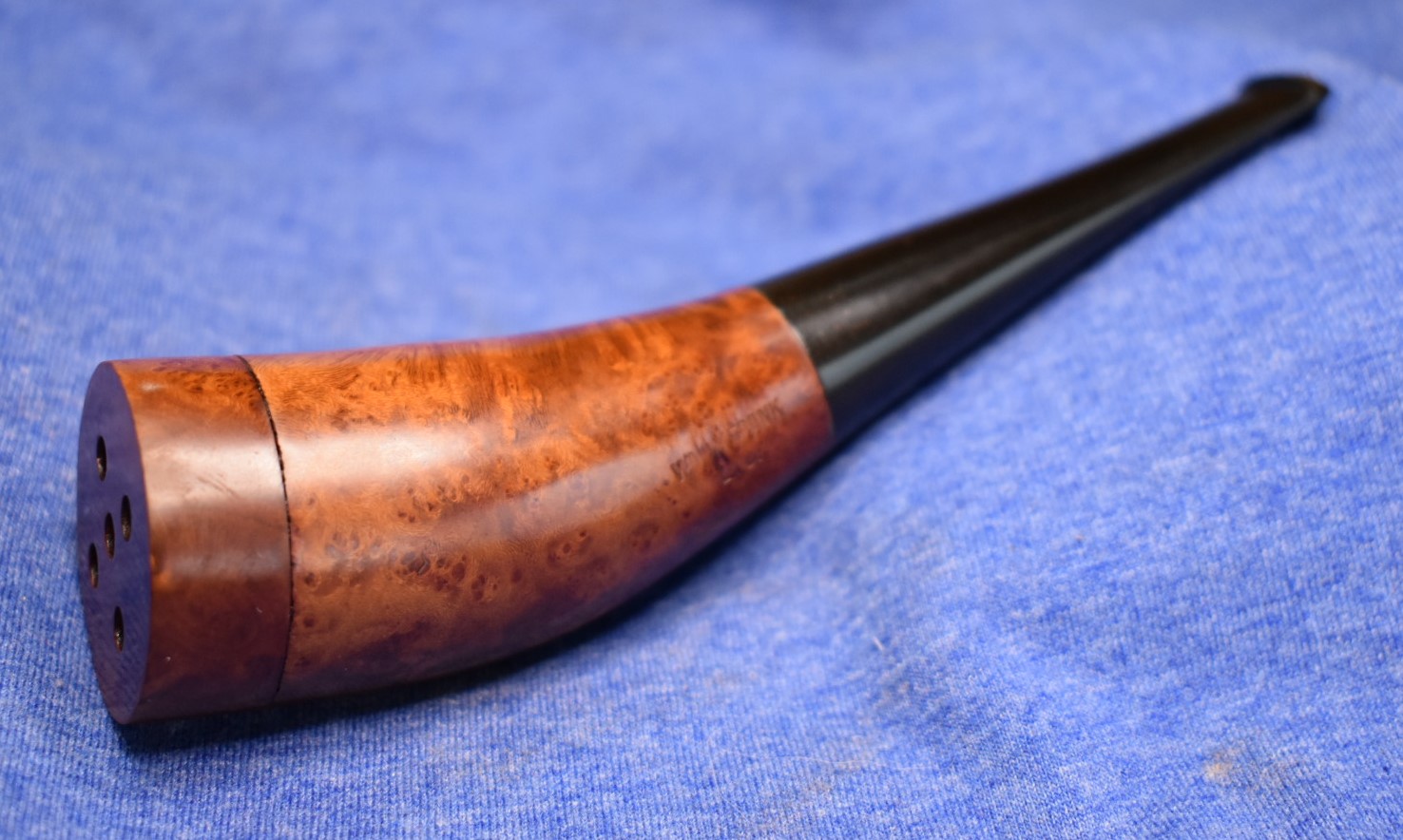
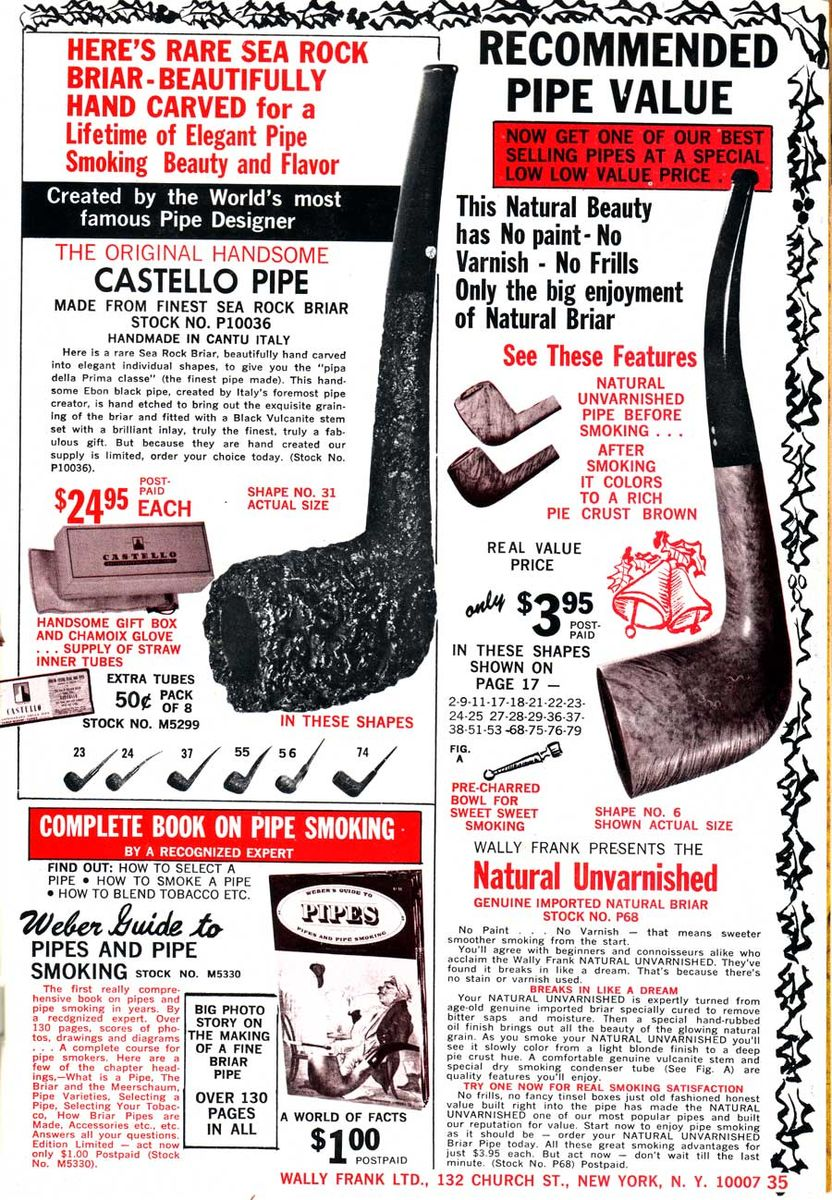

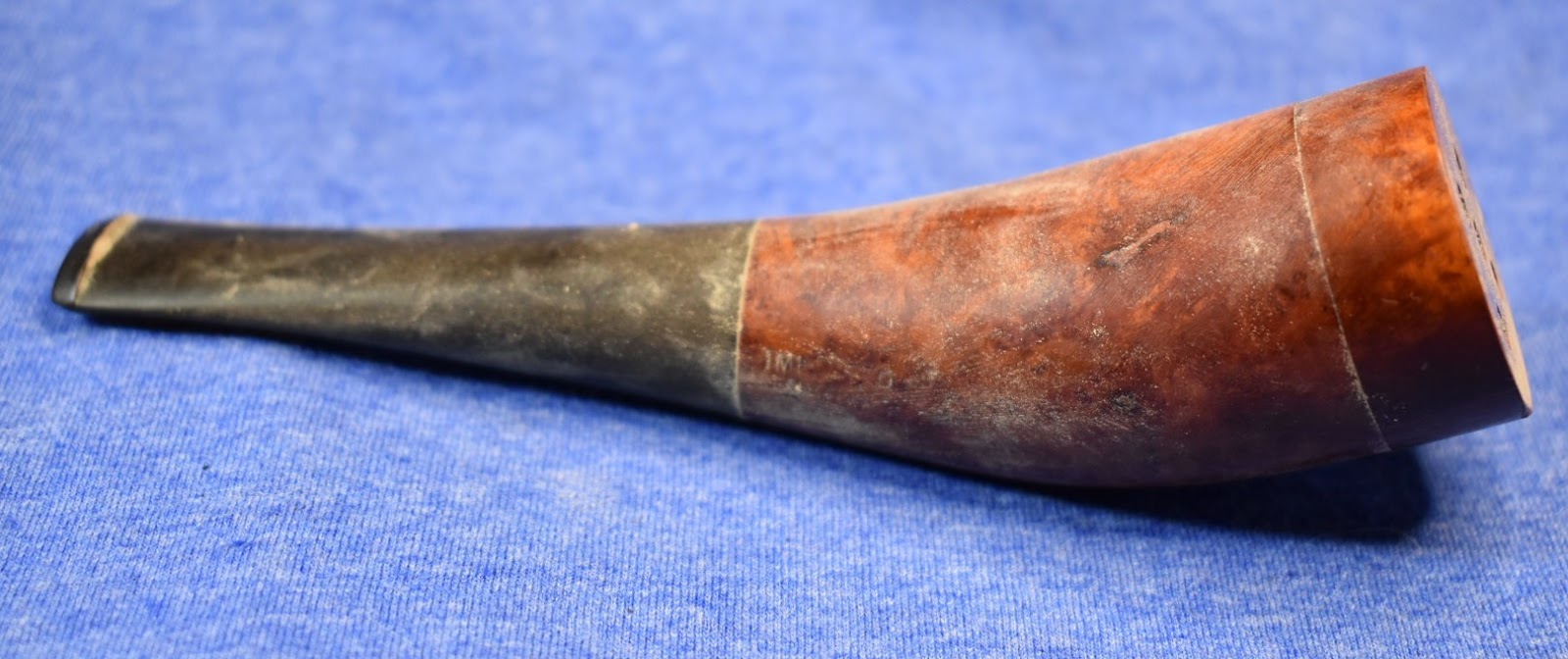


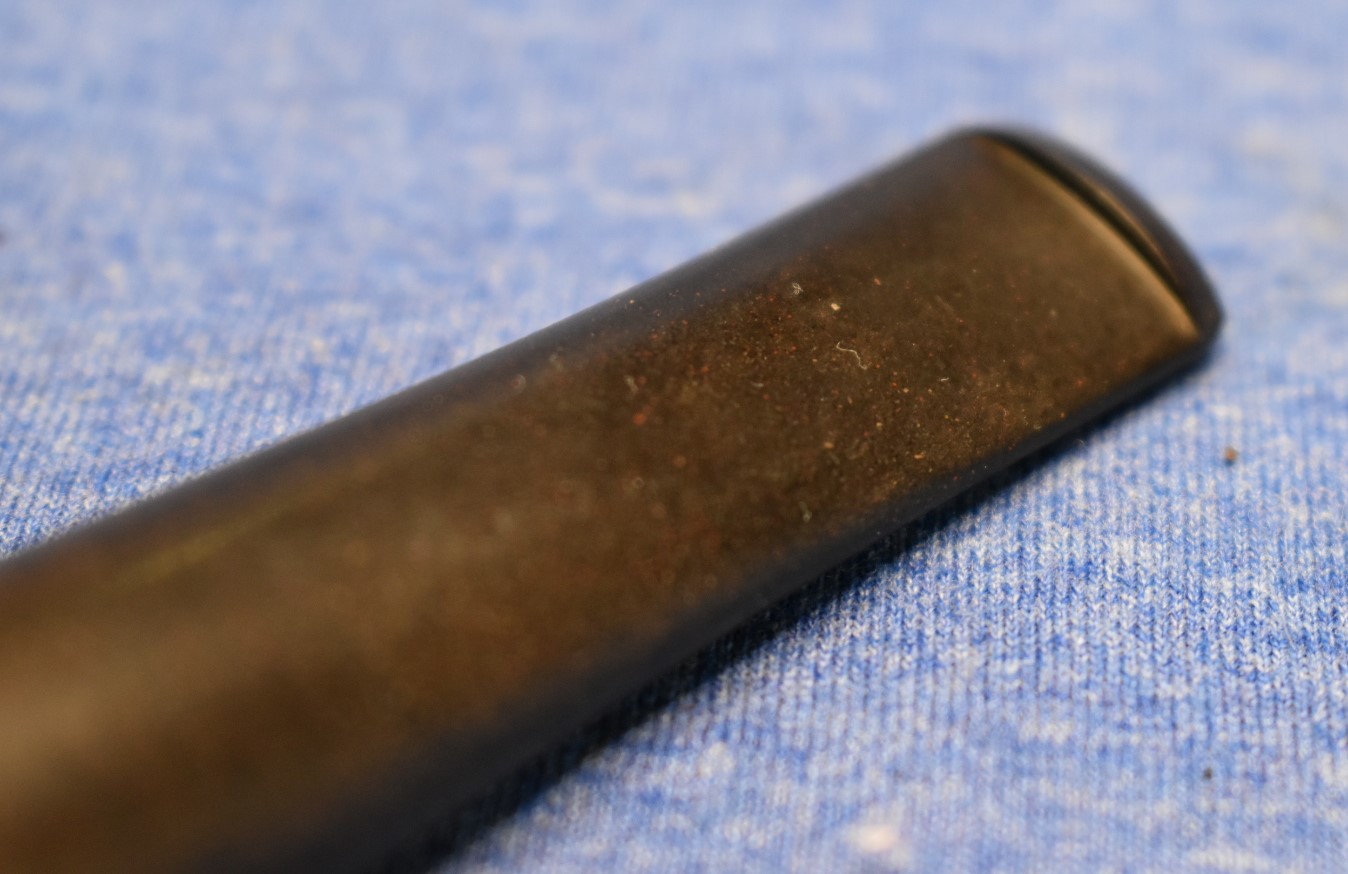

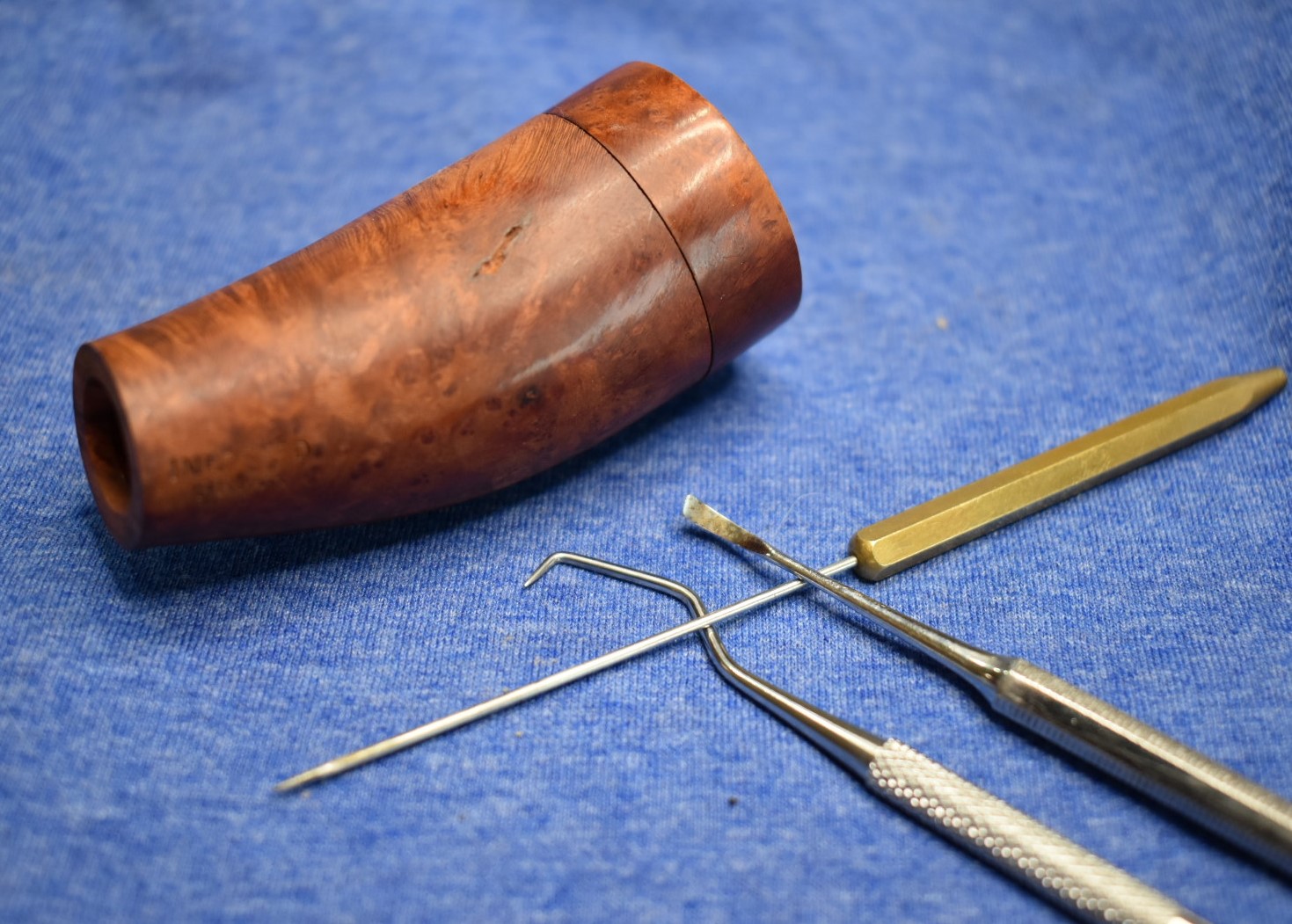


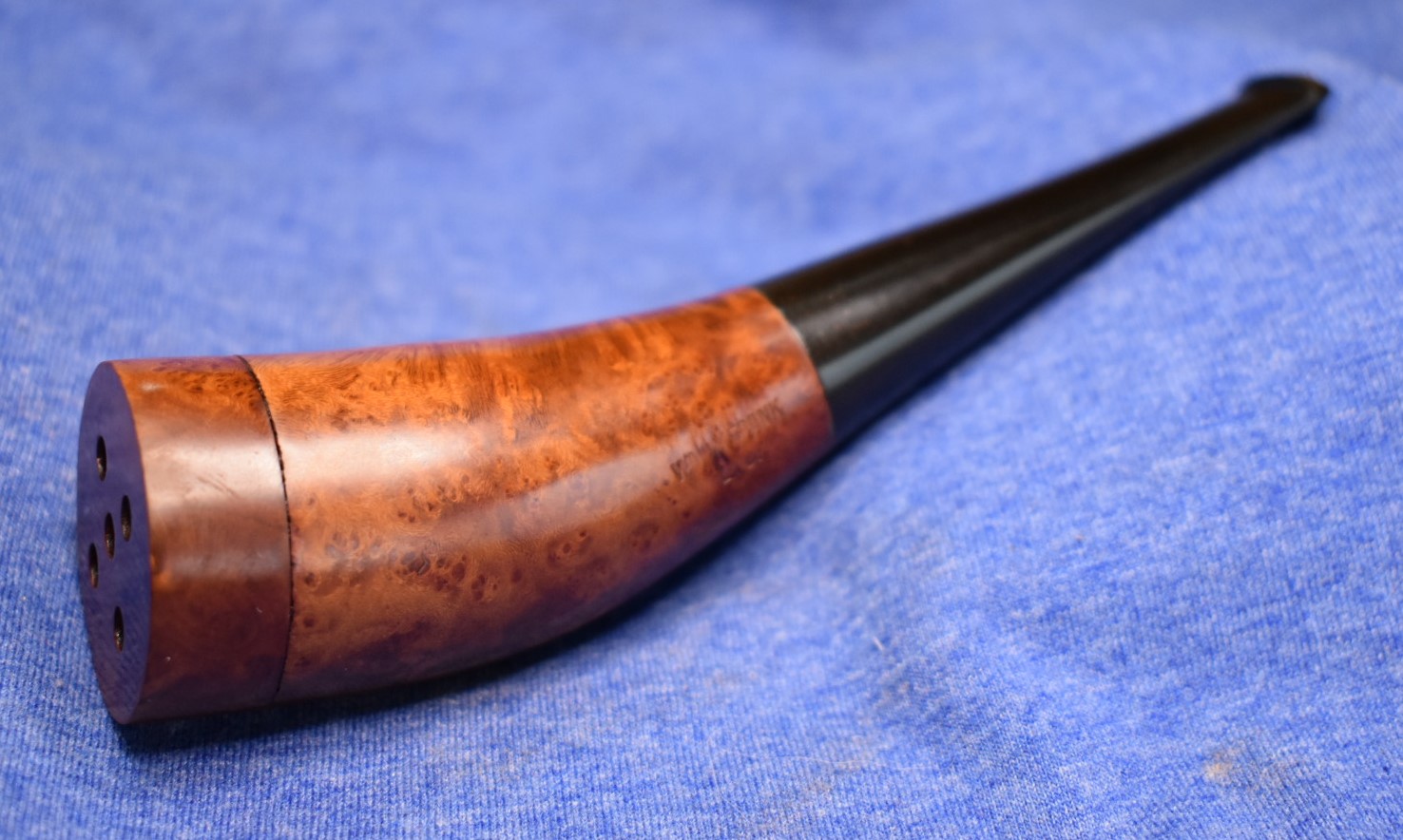
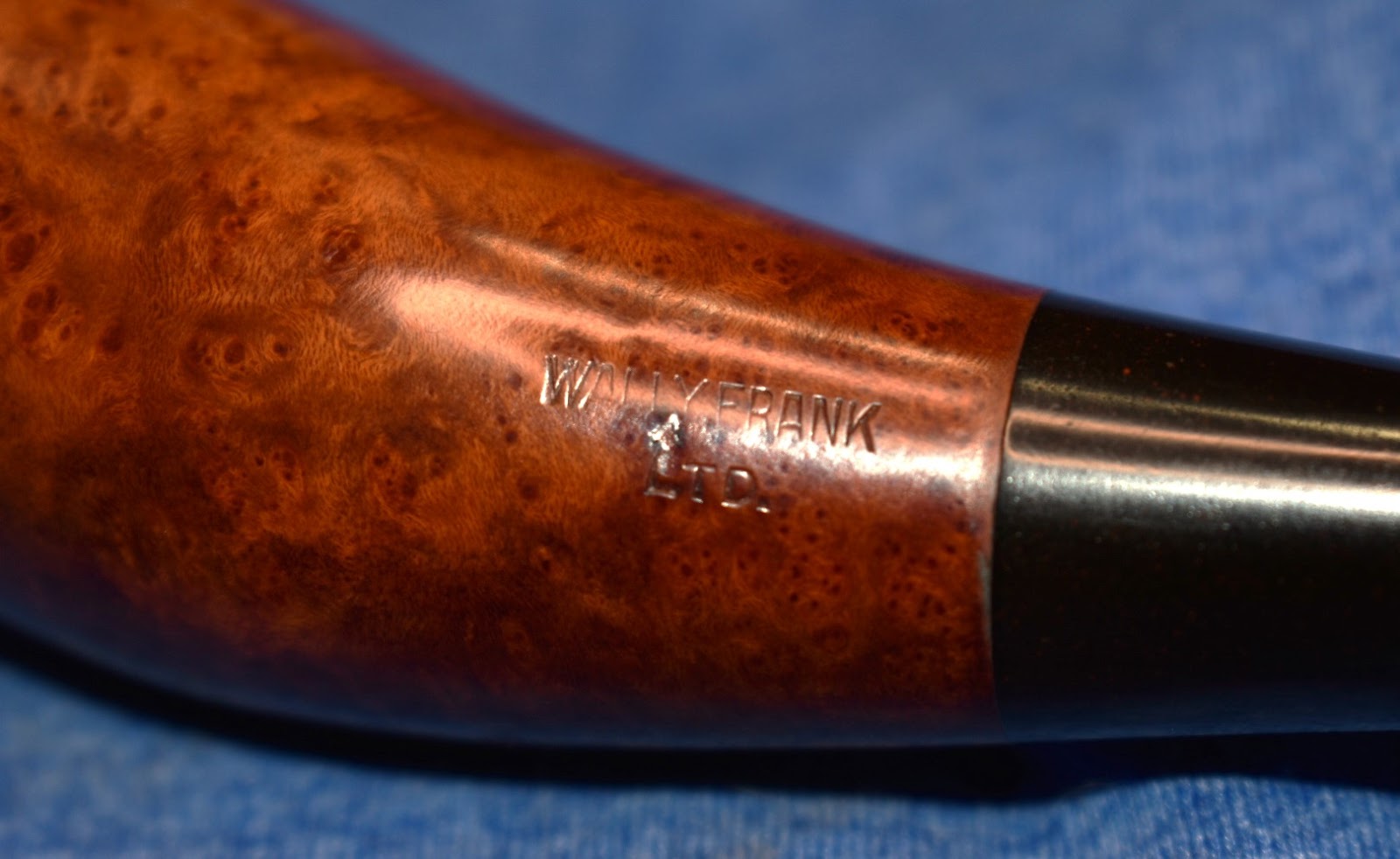

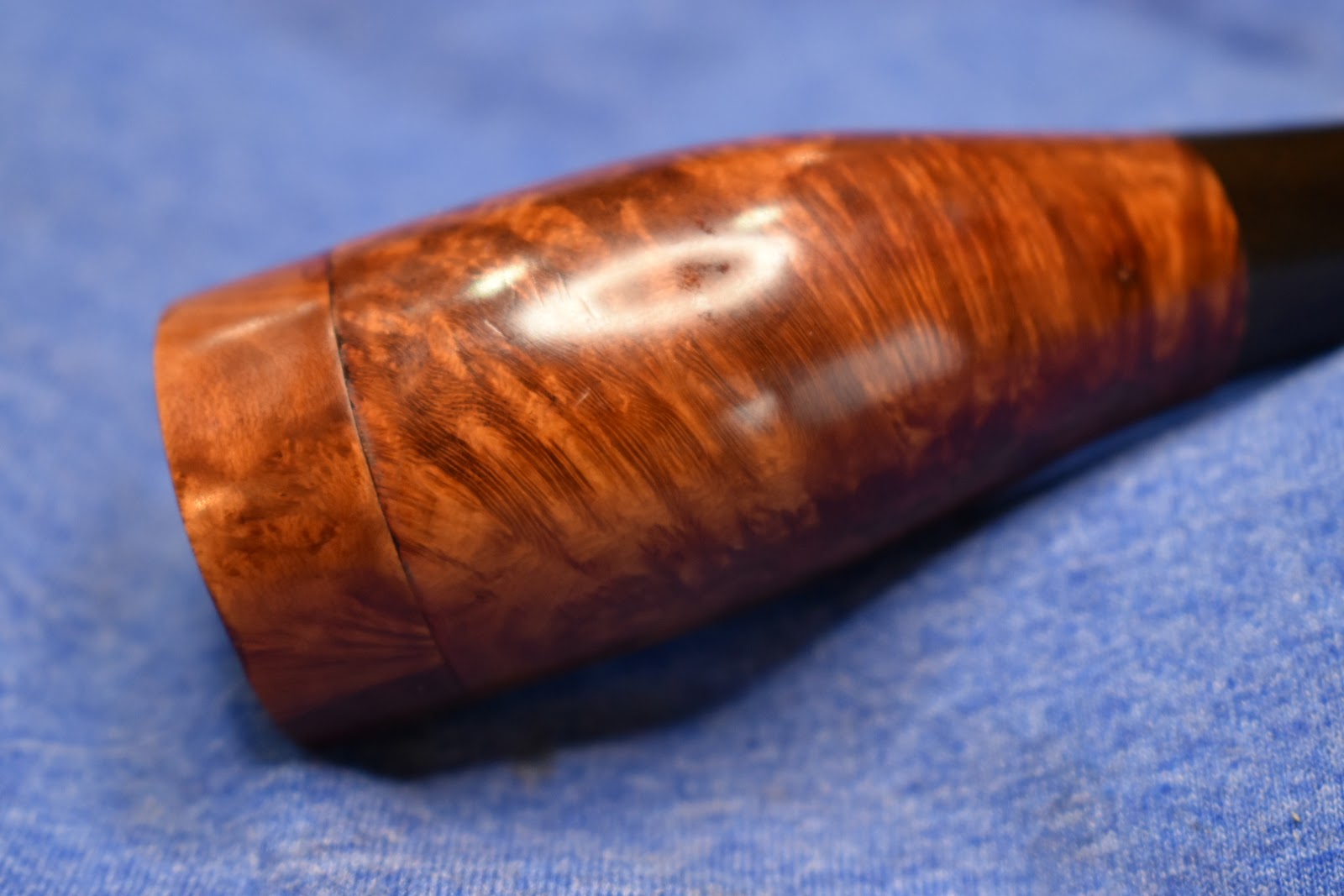


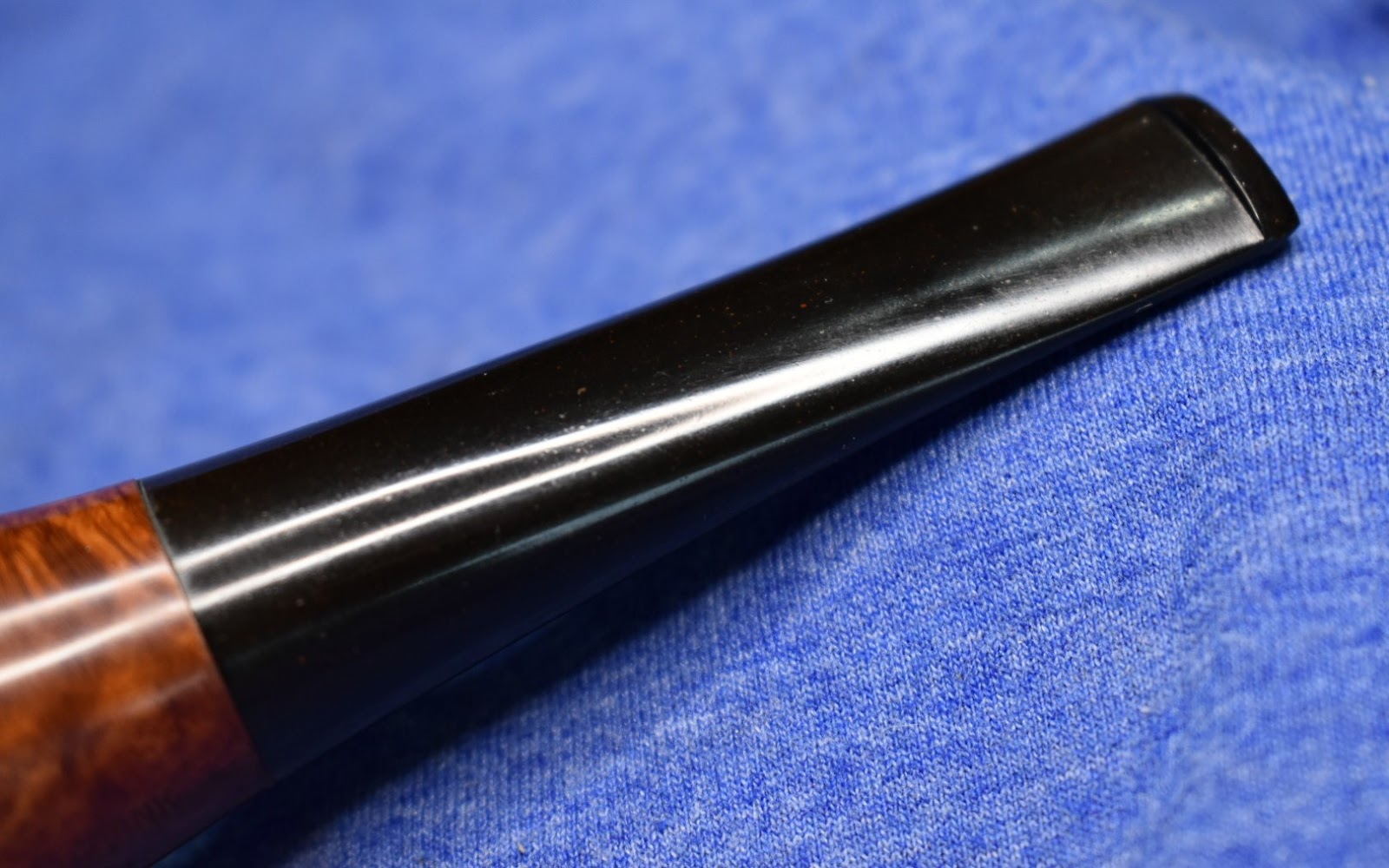

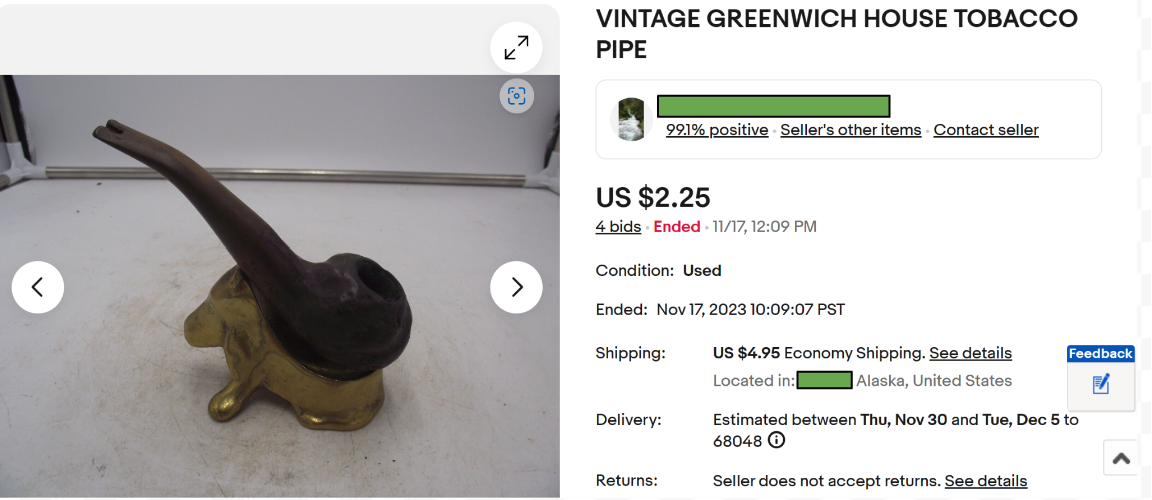


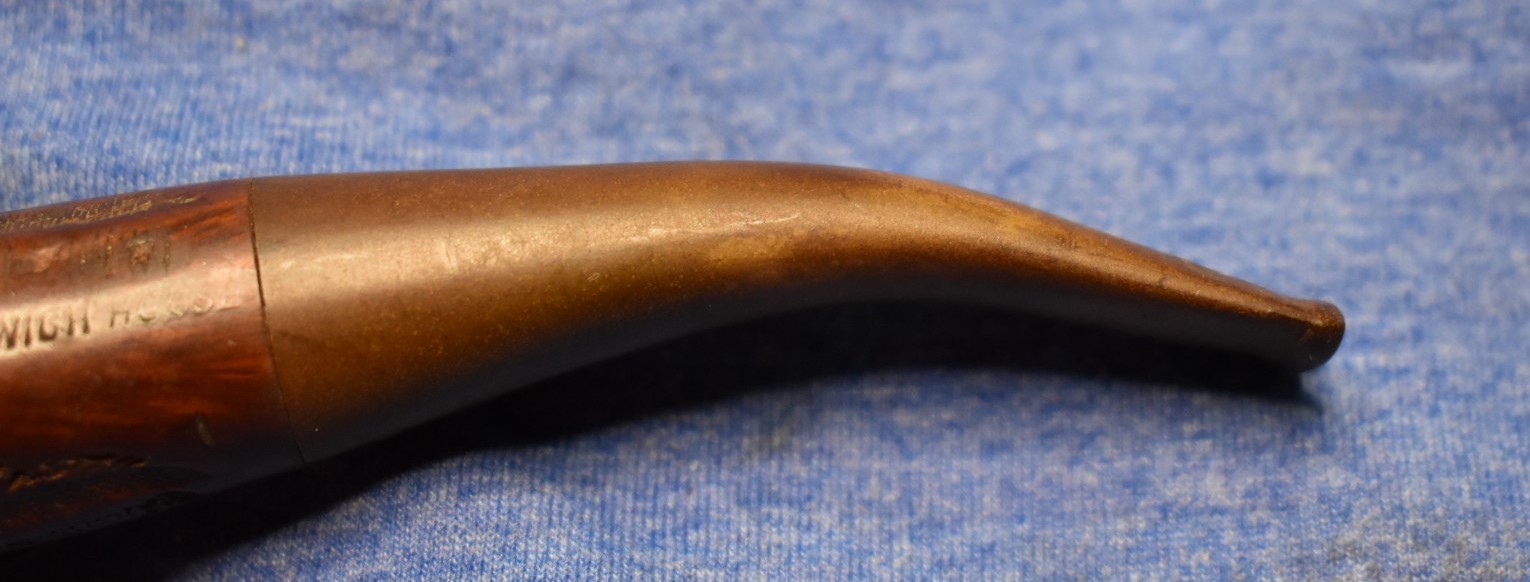


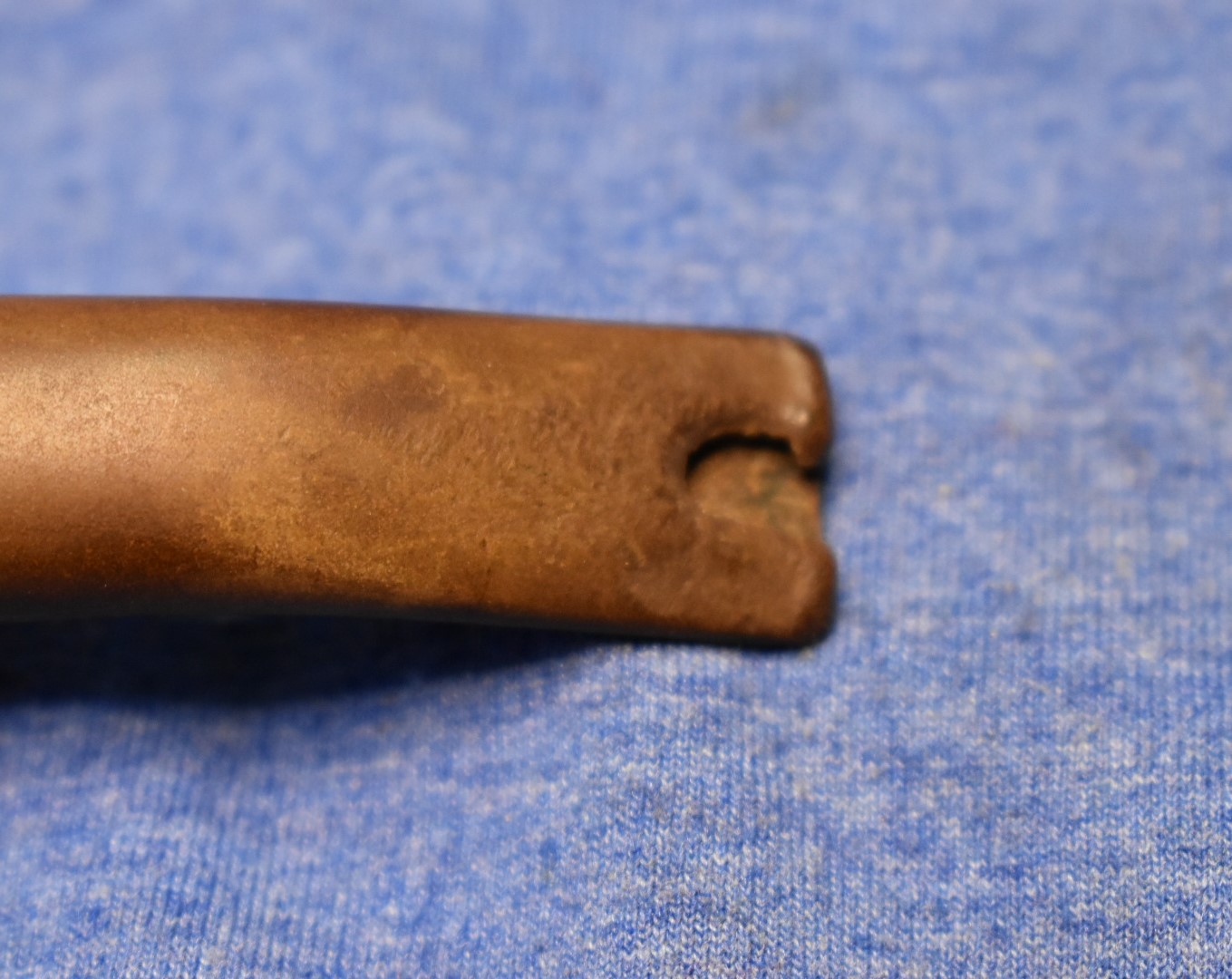


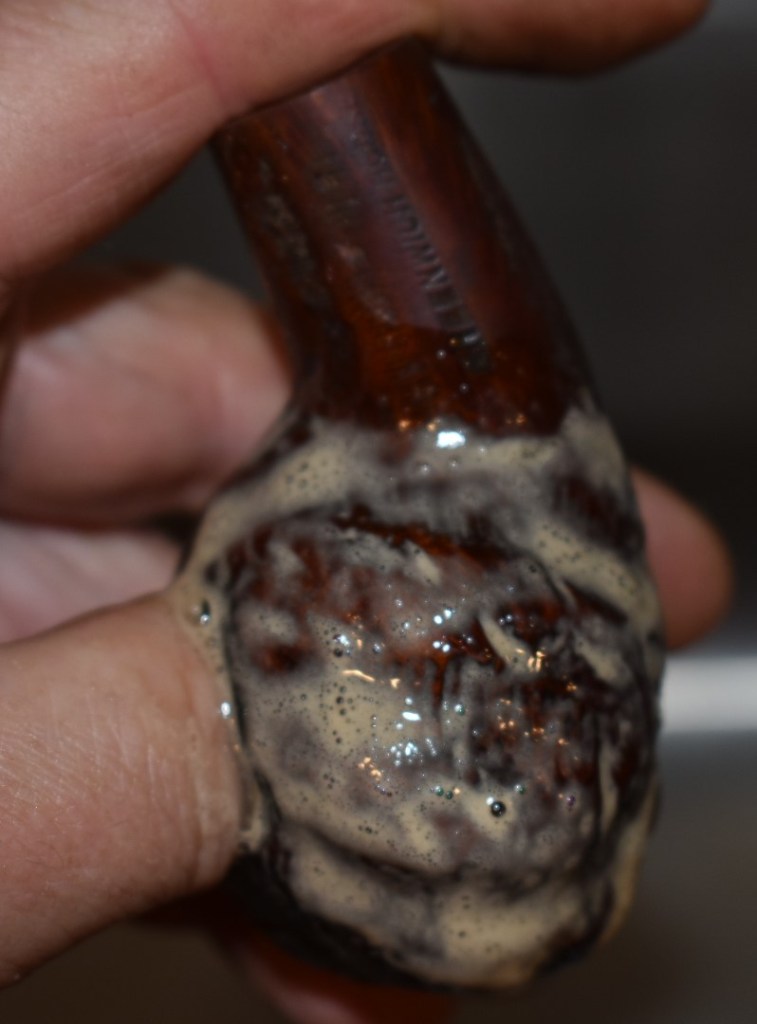
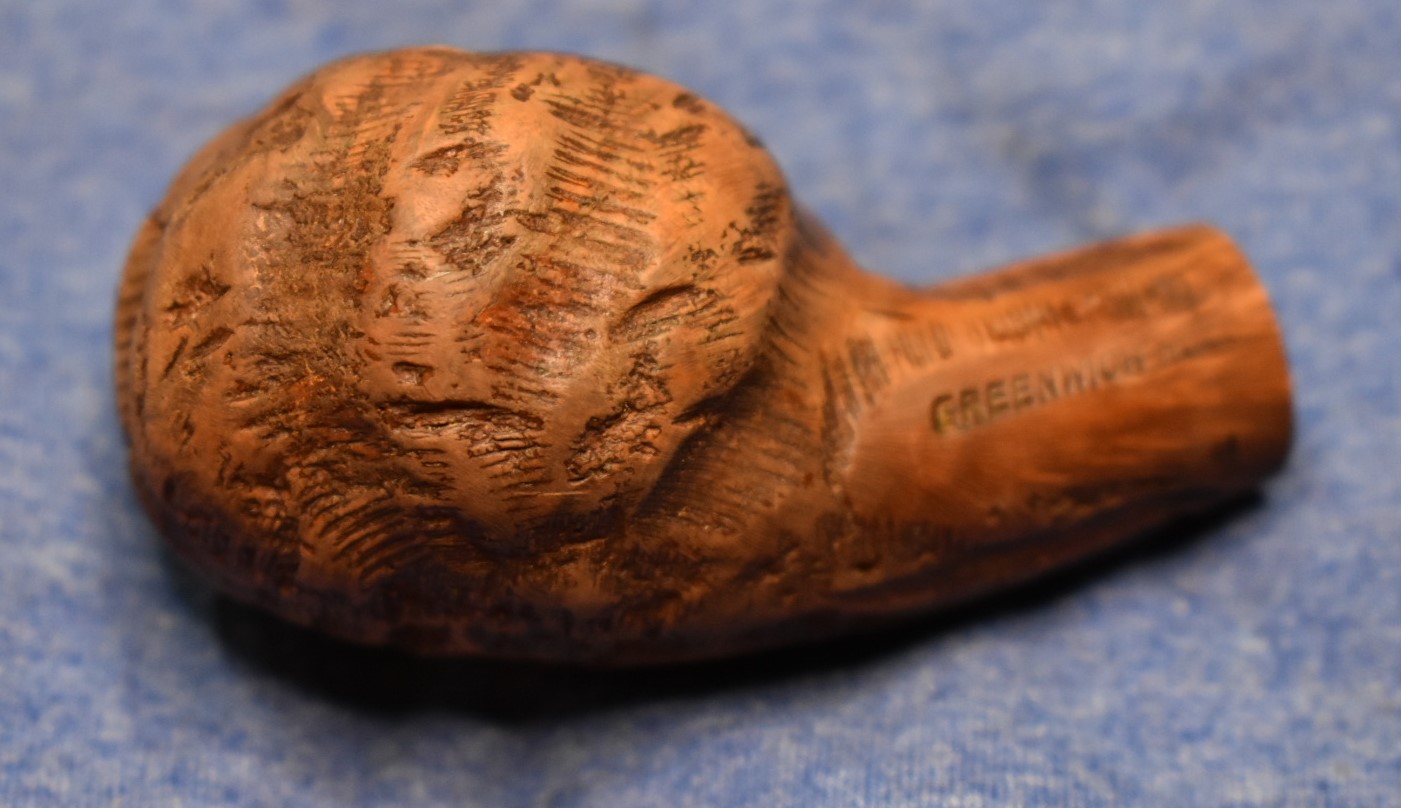


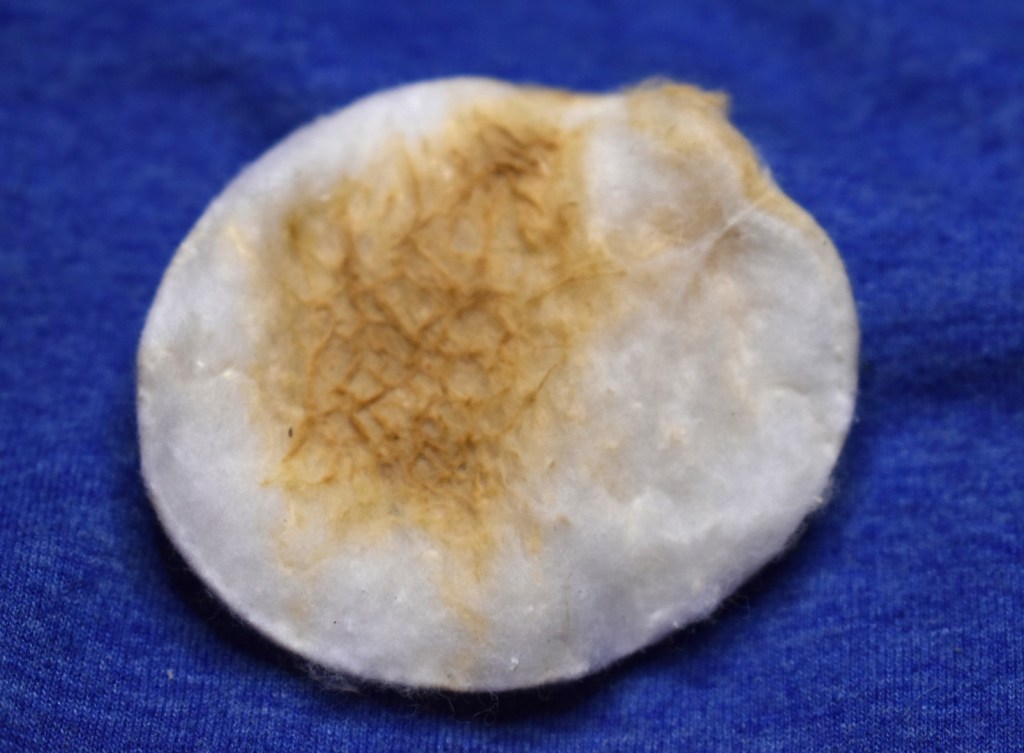
 needed to give the stummel a soaking. Fortunately I keep canning jars with ethyl alcohol (EtOH) and acetone for this very purpose. Into the ethyl alcohol (ethanol/EtOH) bath it went.

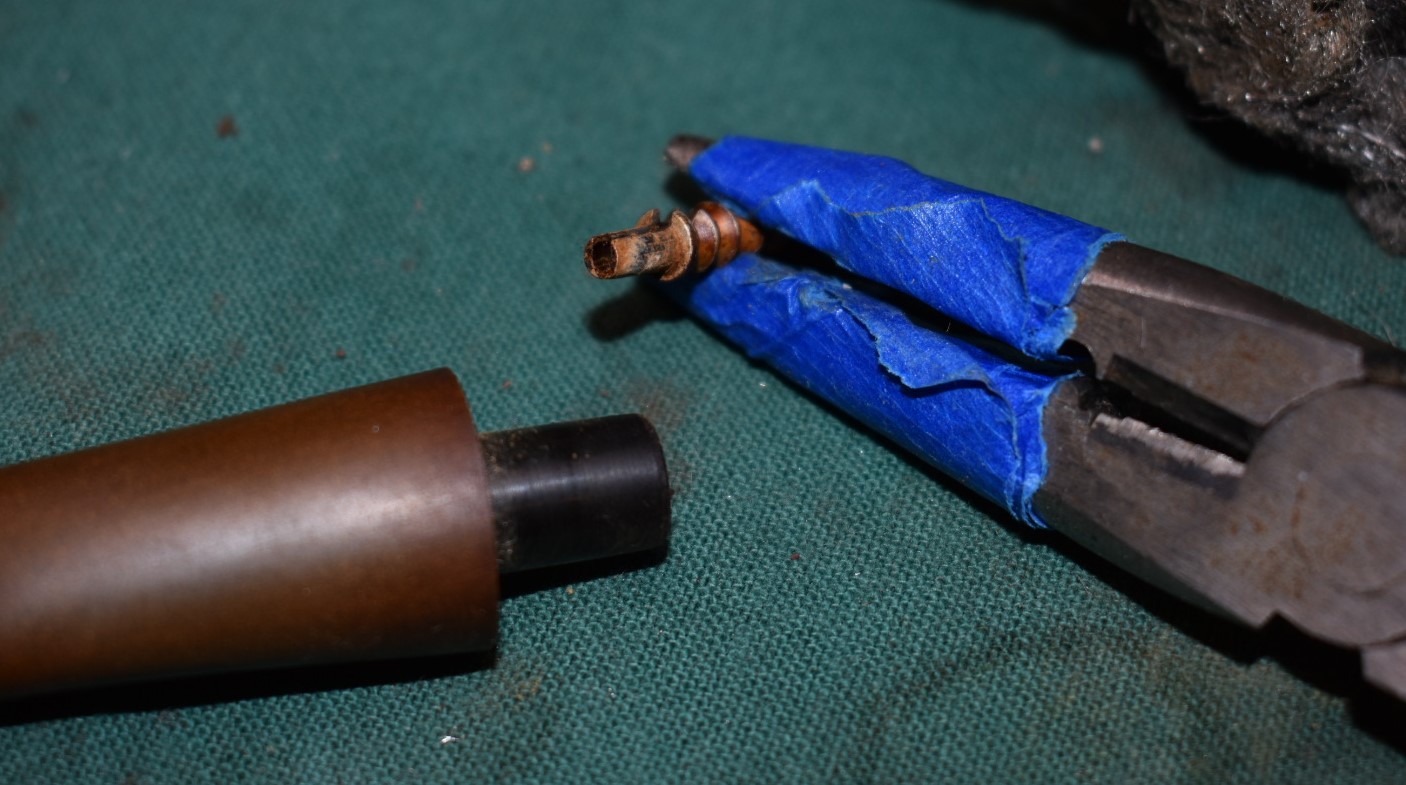
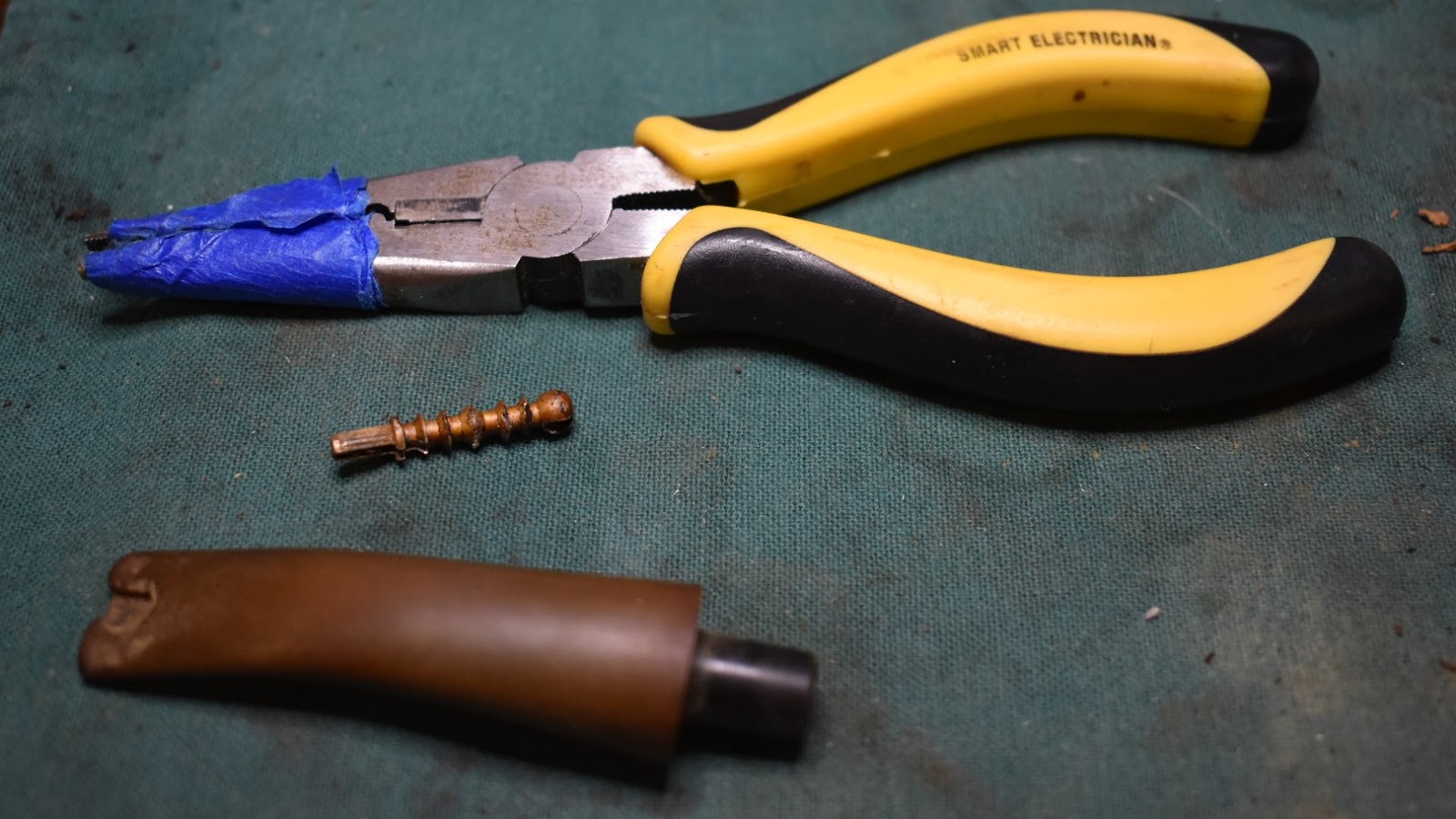
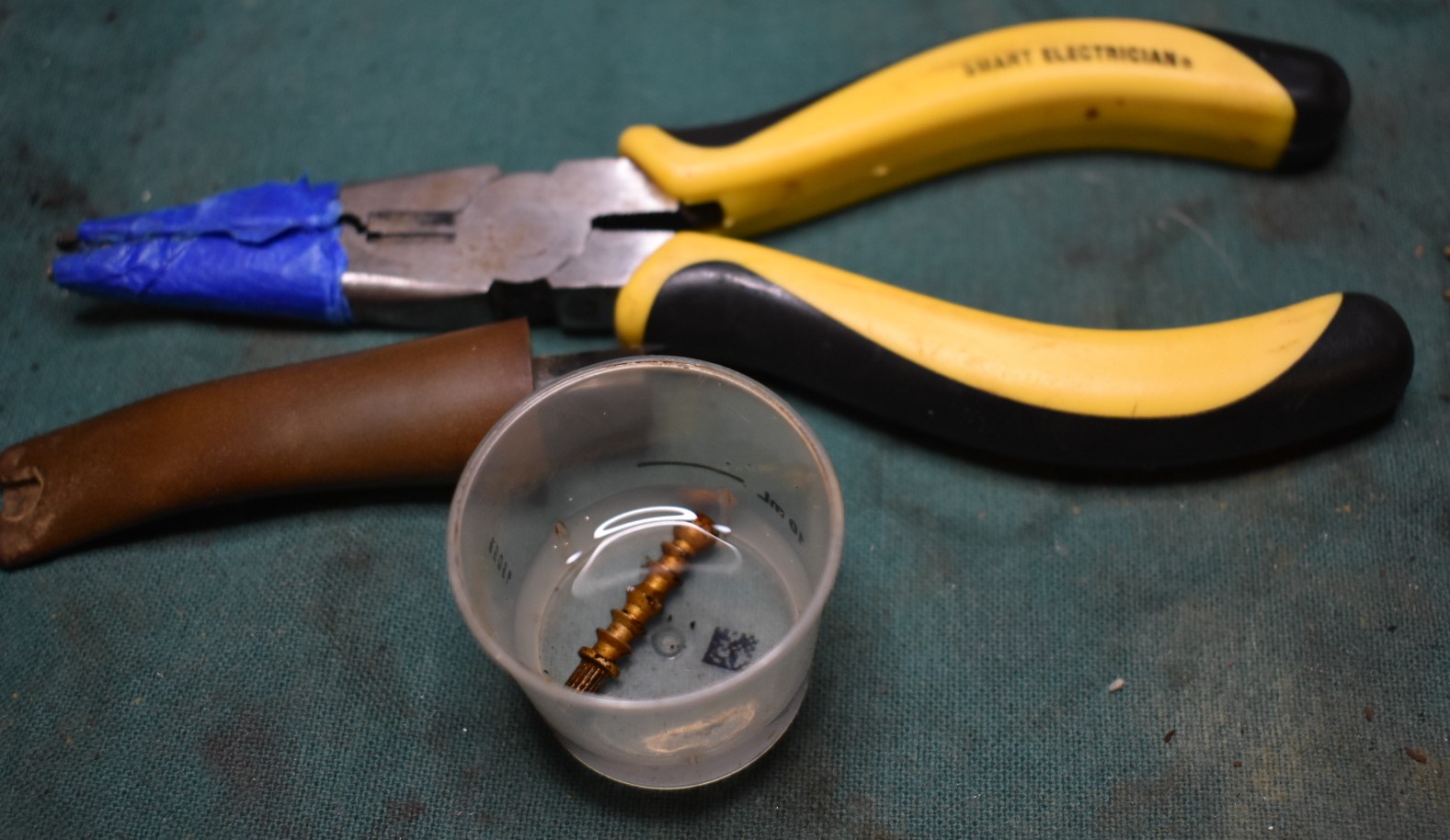


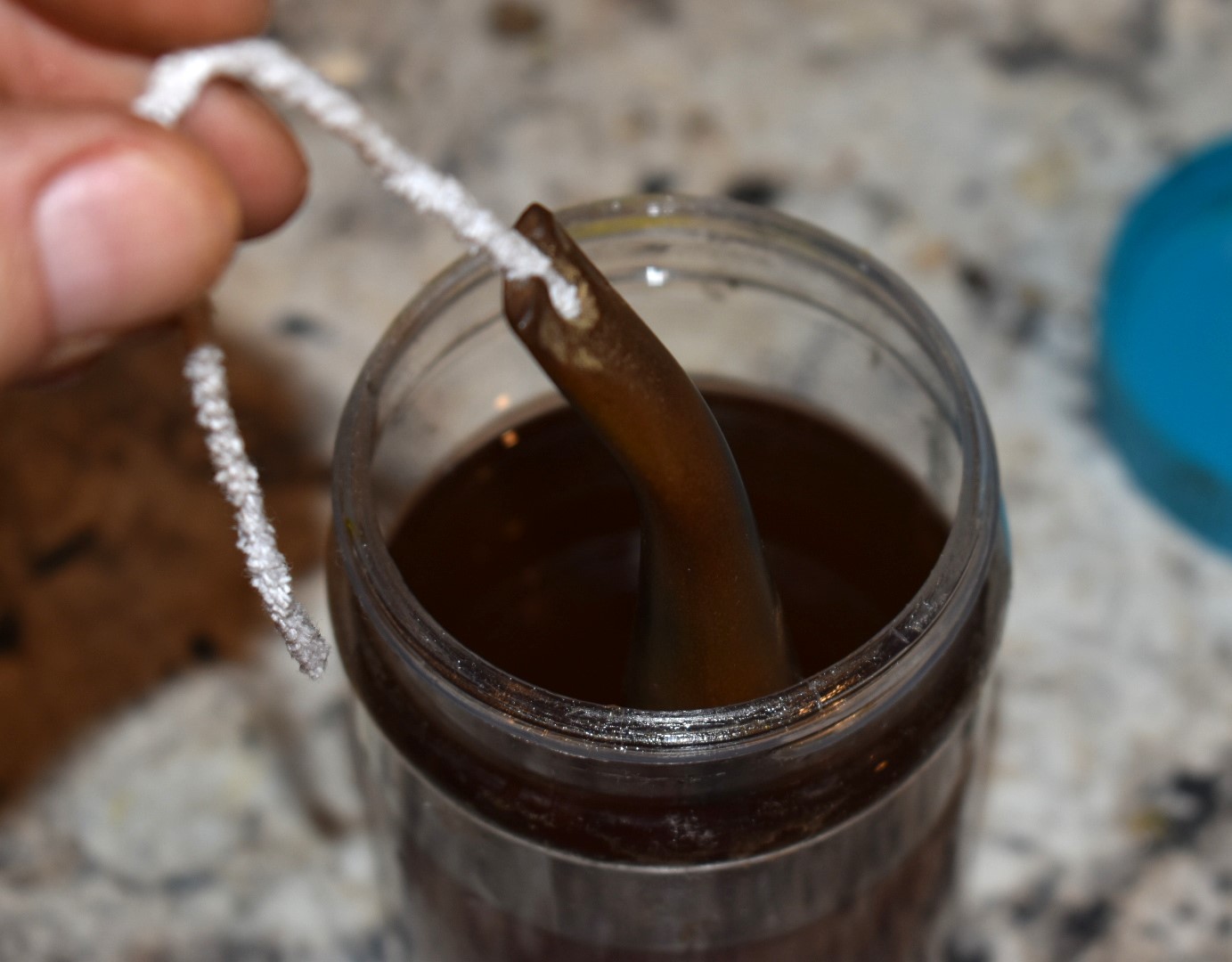

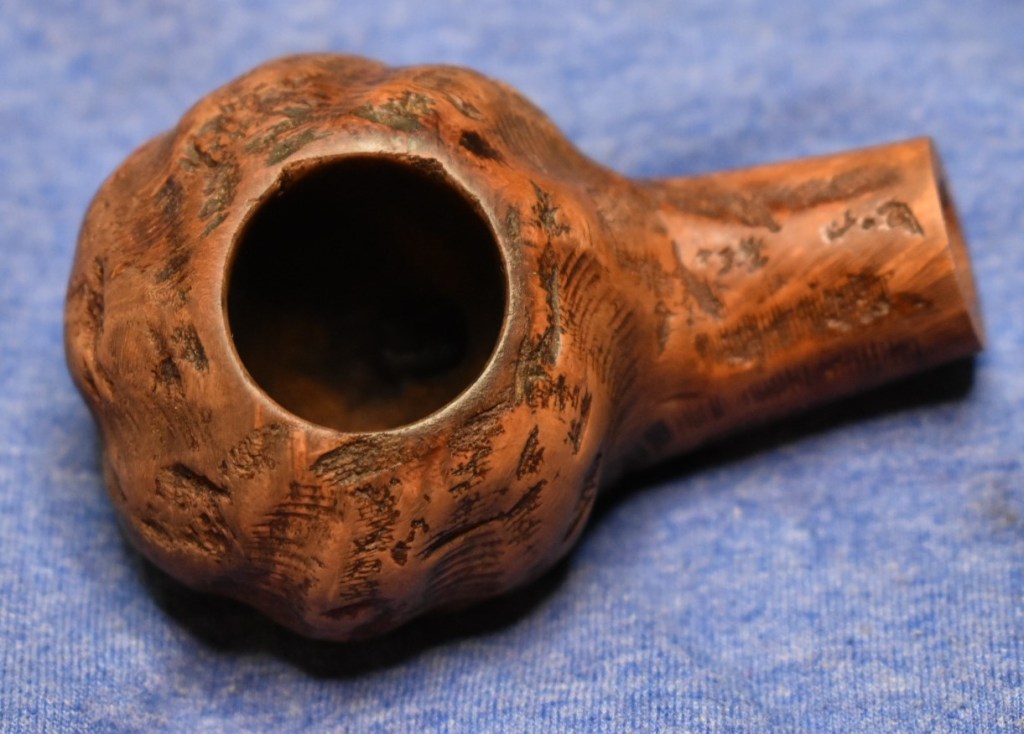


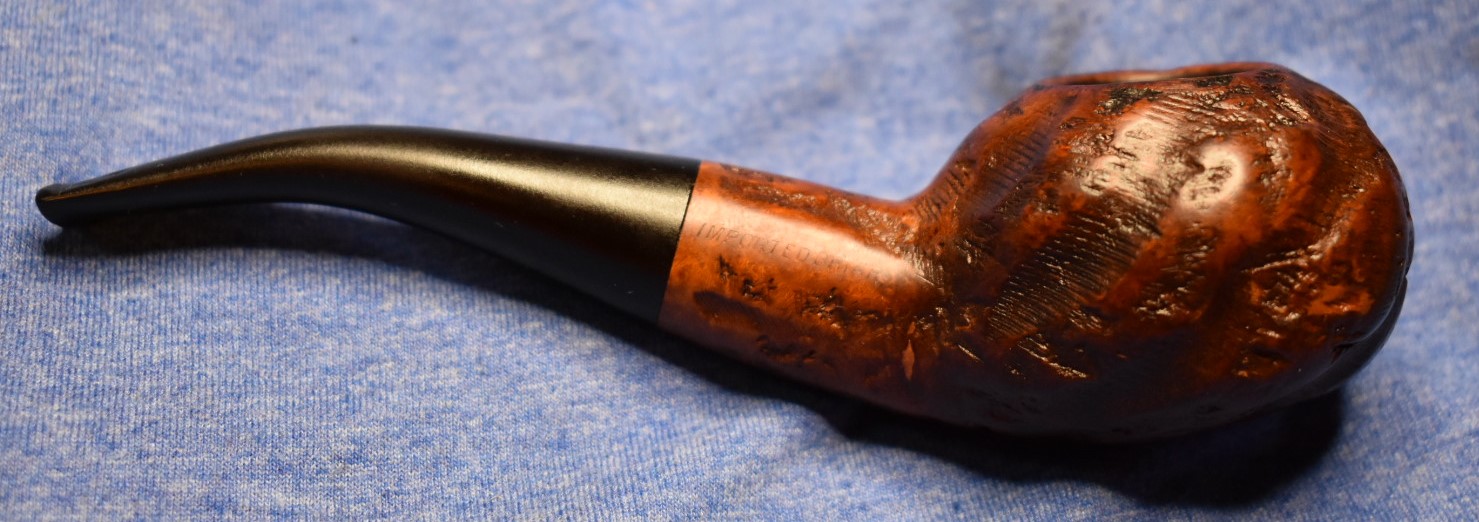
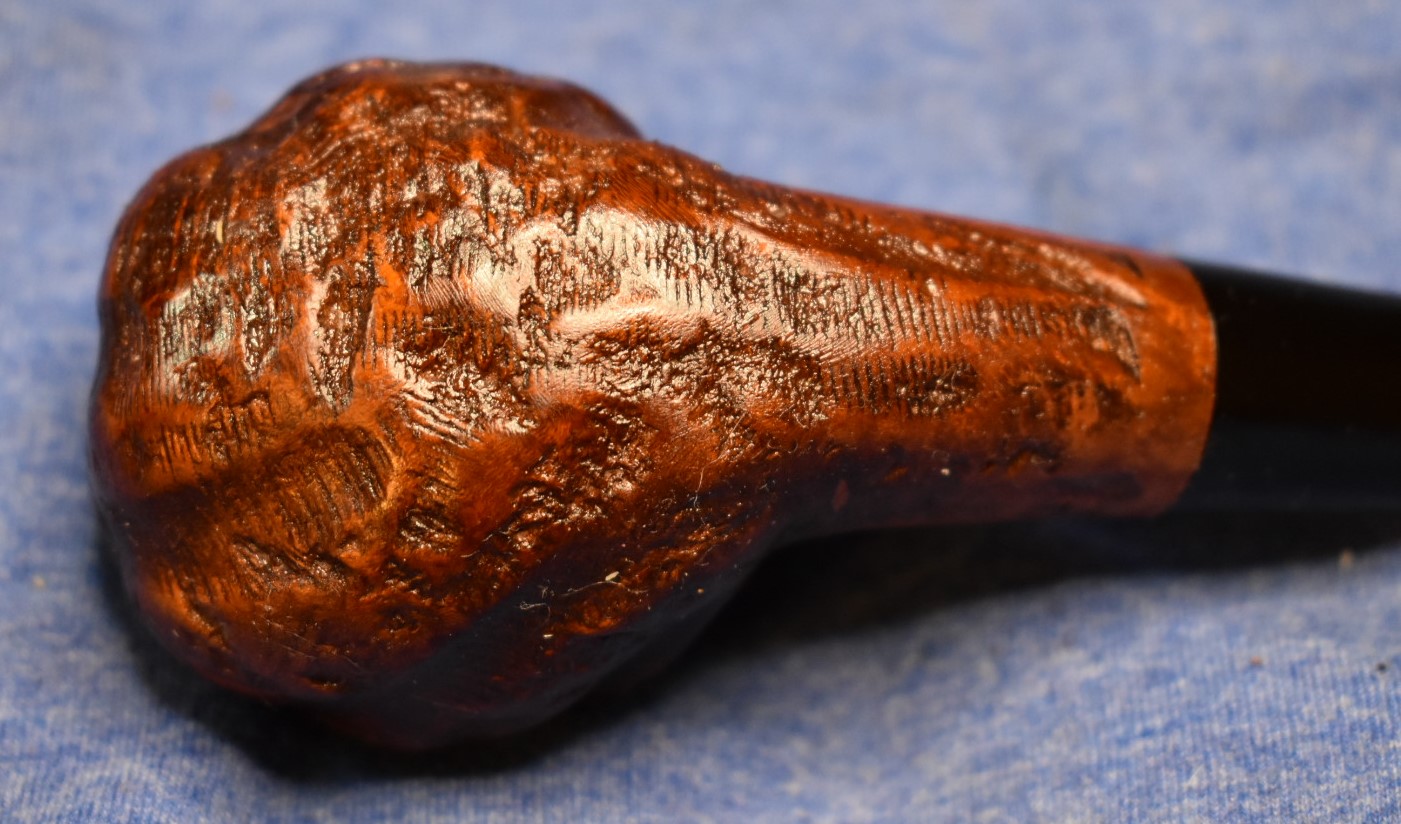


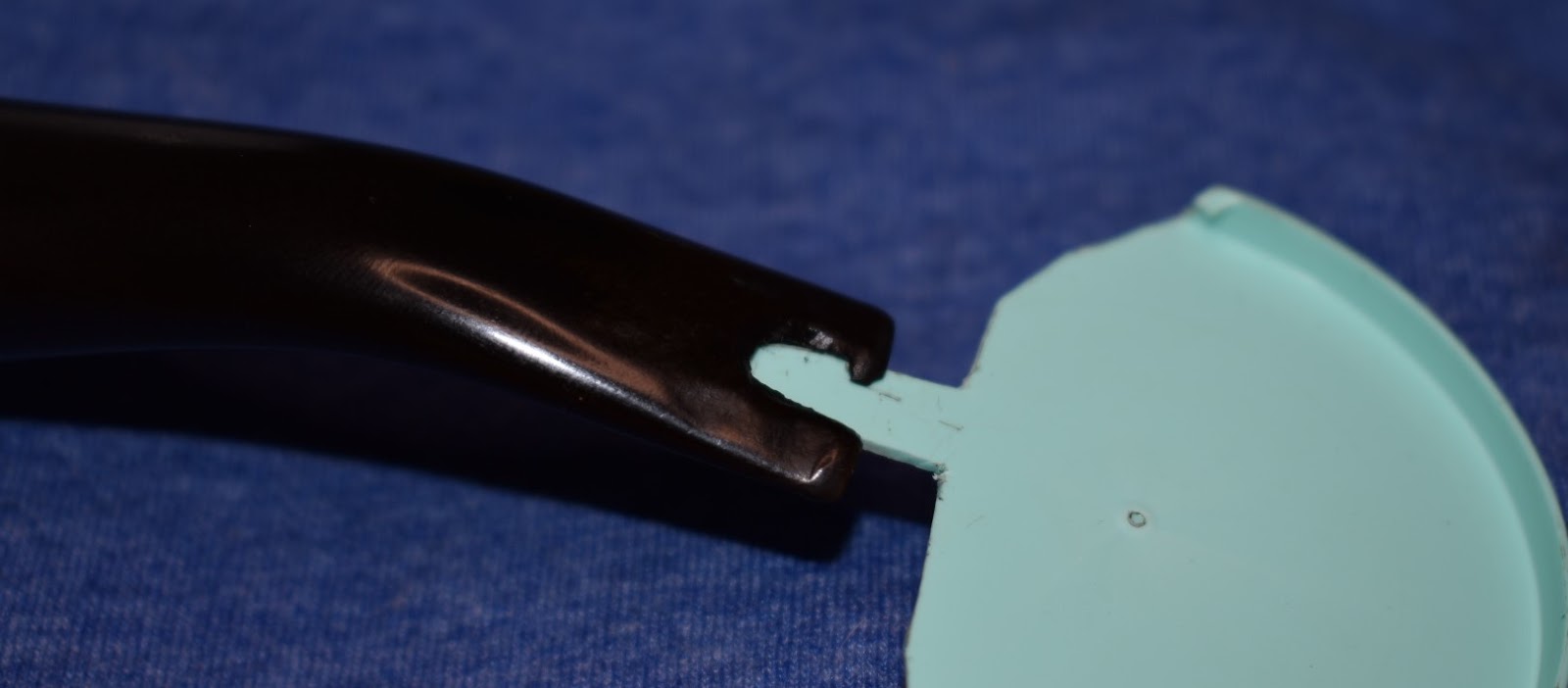

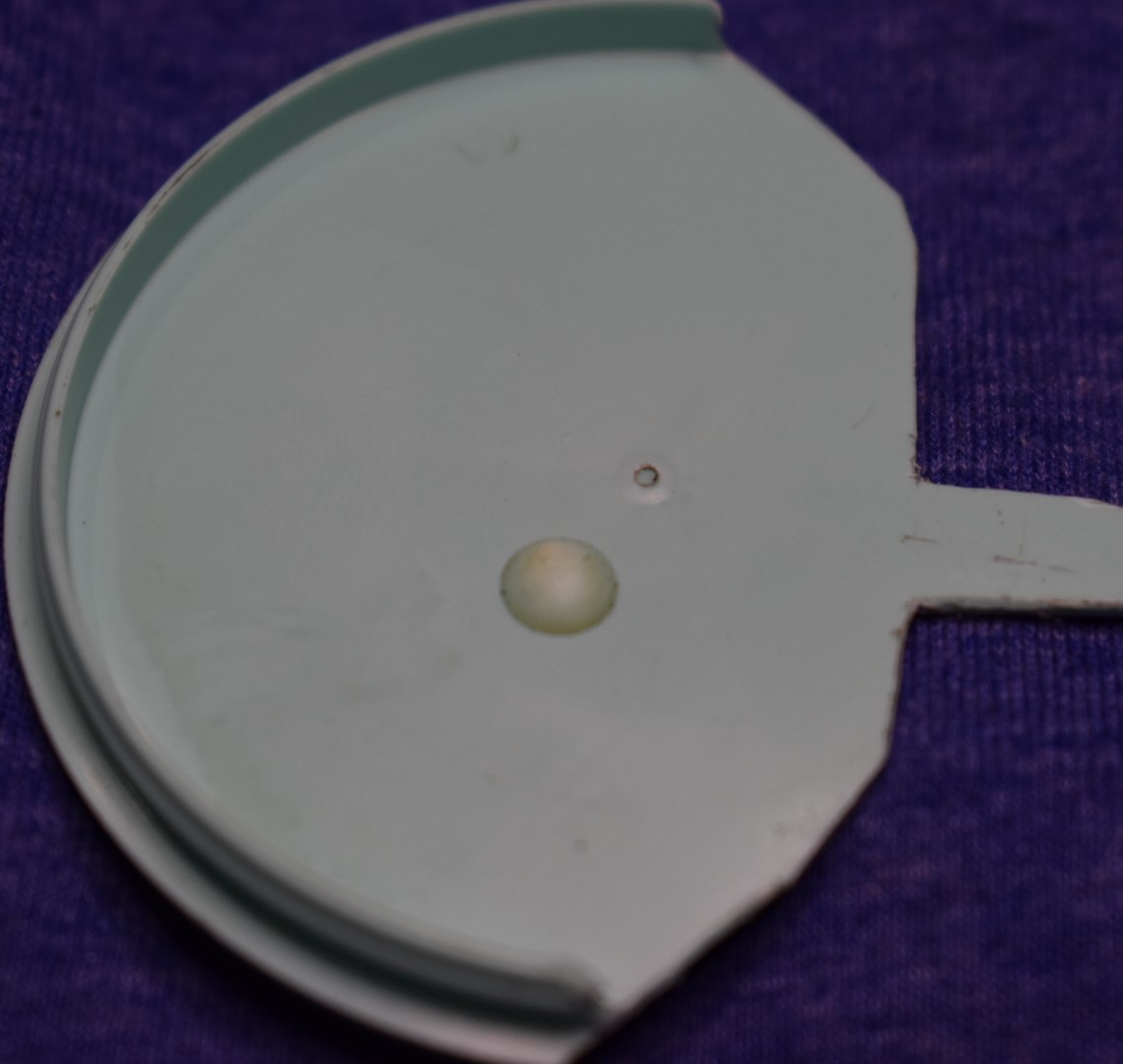
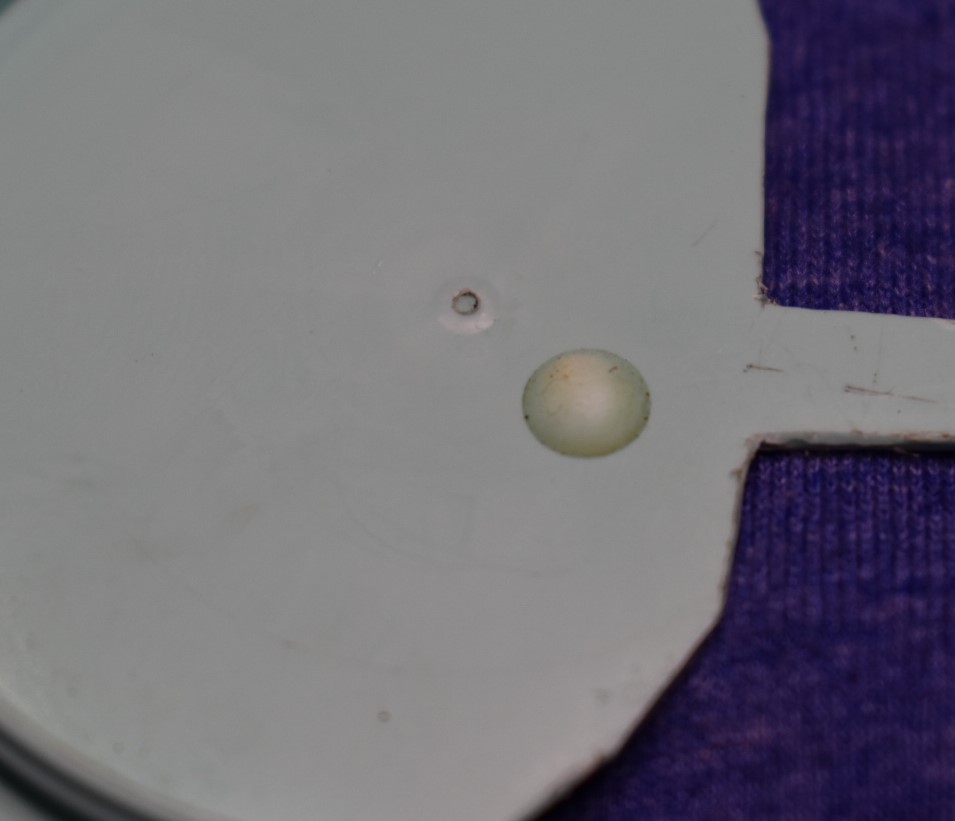


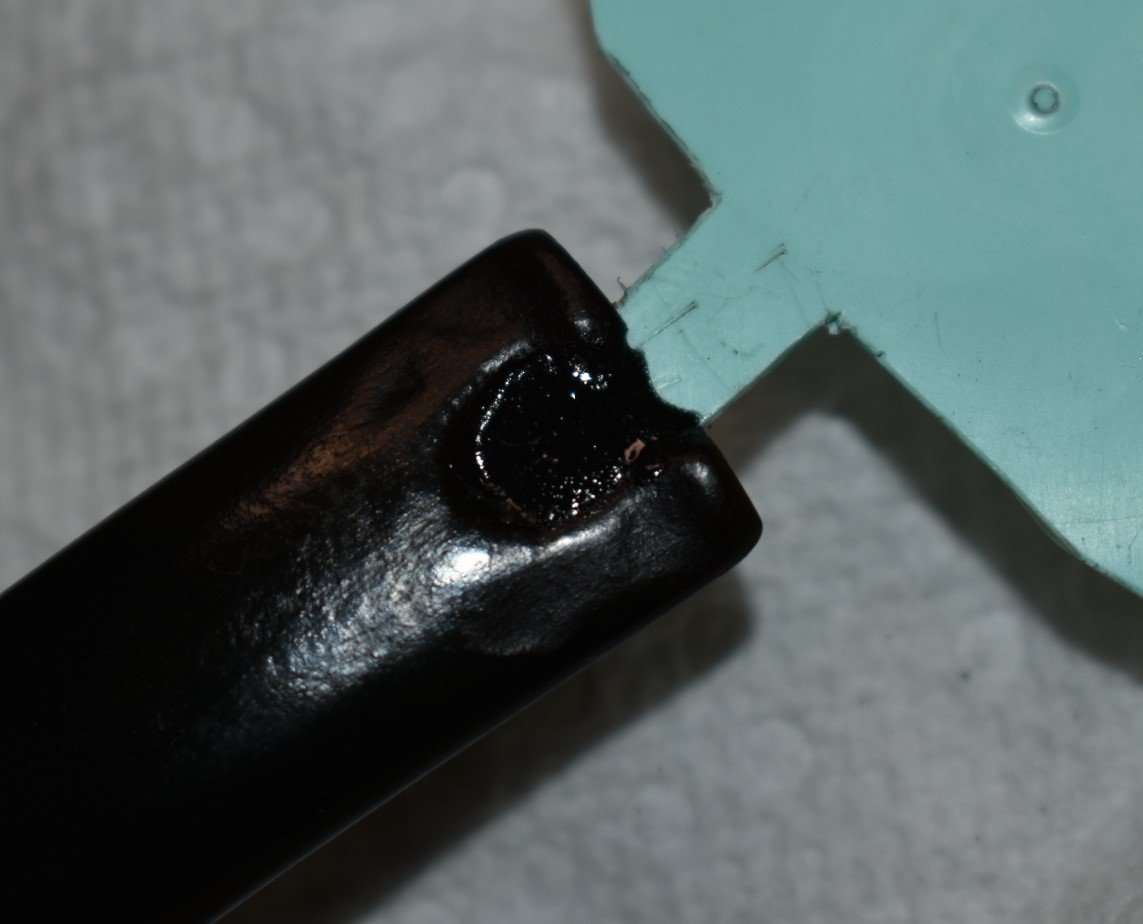
 Eventually I got to the point where I was needing to build up the rise of the button. I continued building up the area, curing the resin, filing the result and applying additional layers.


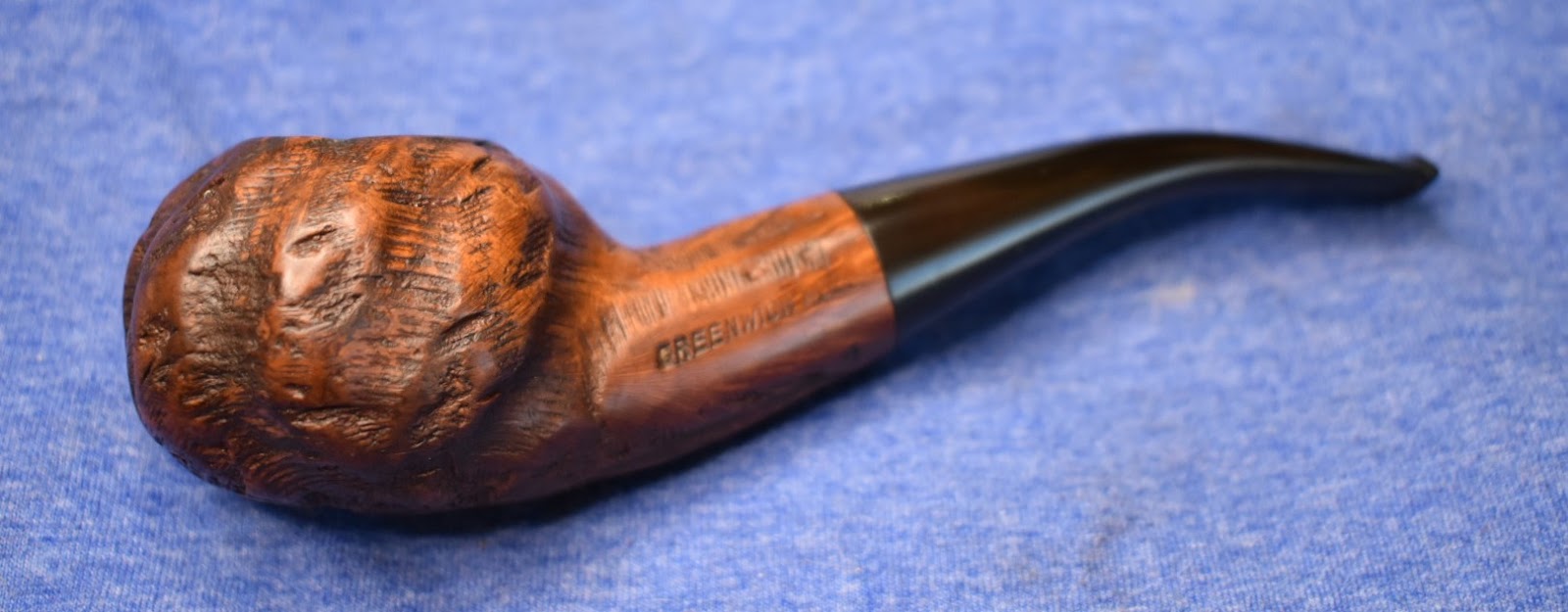
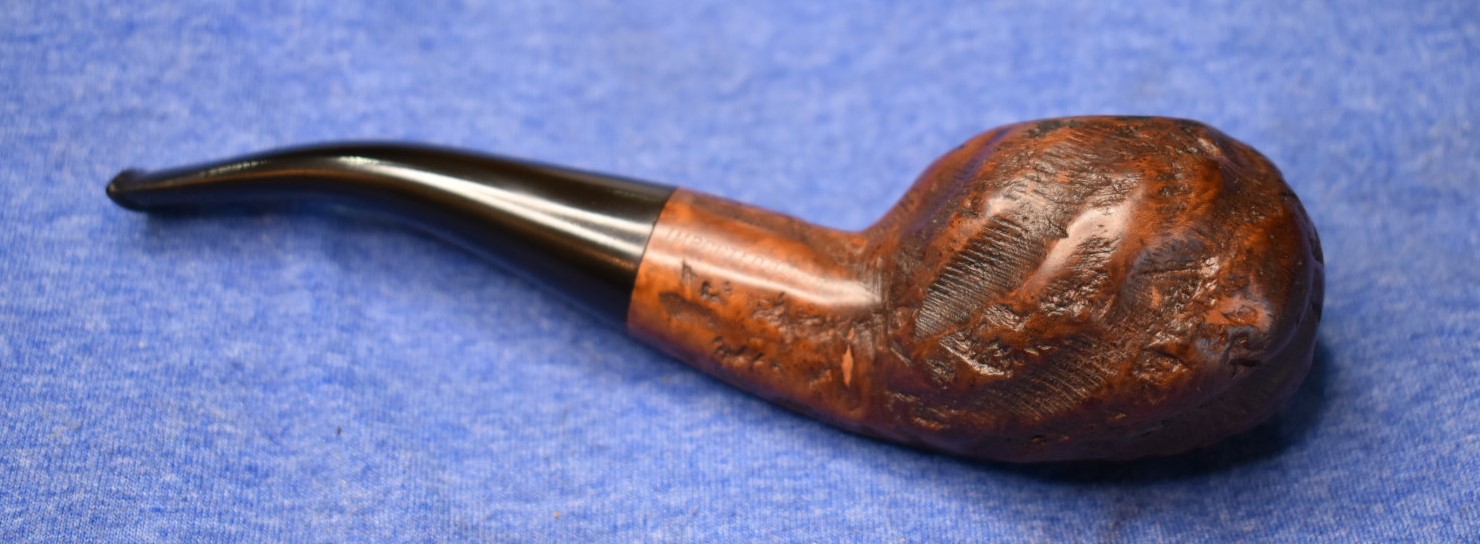
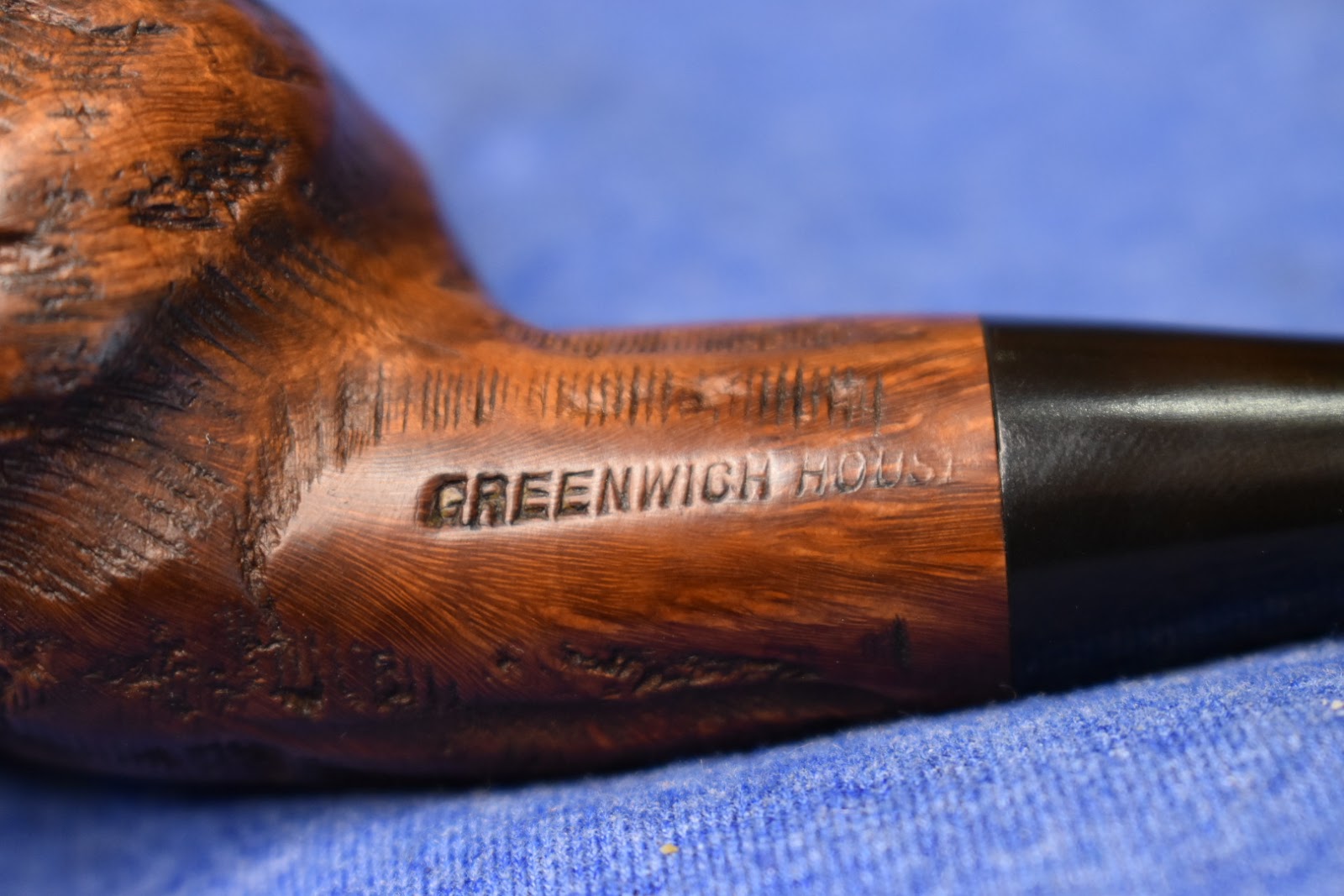


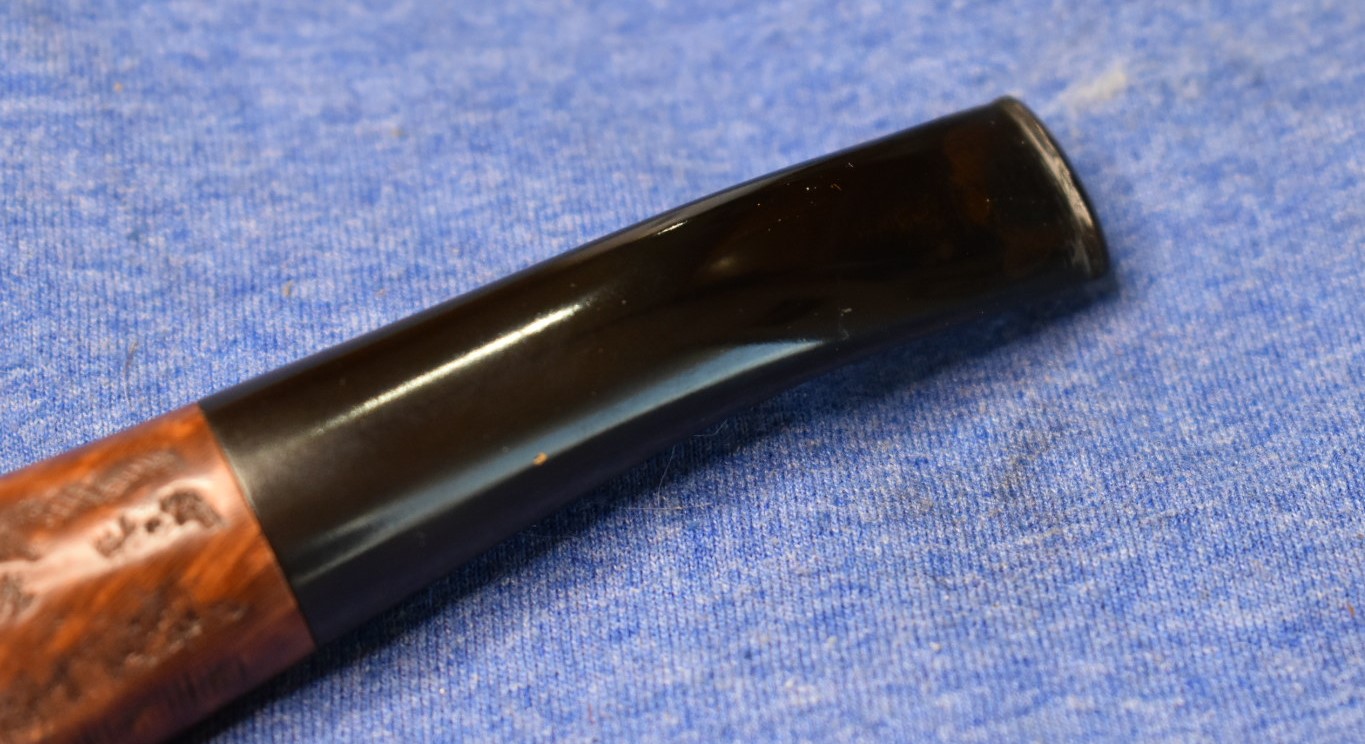
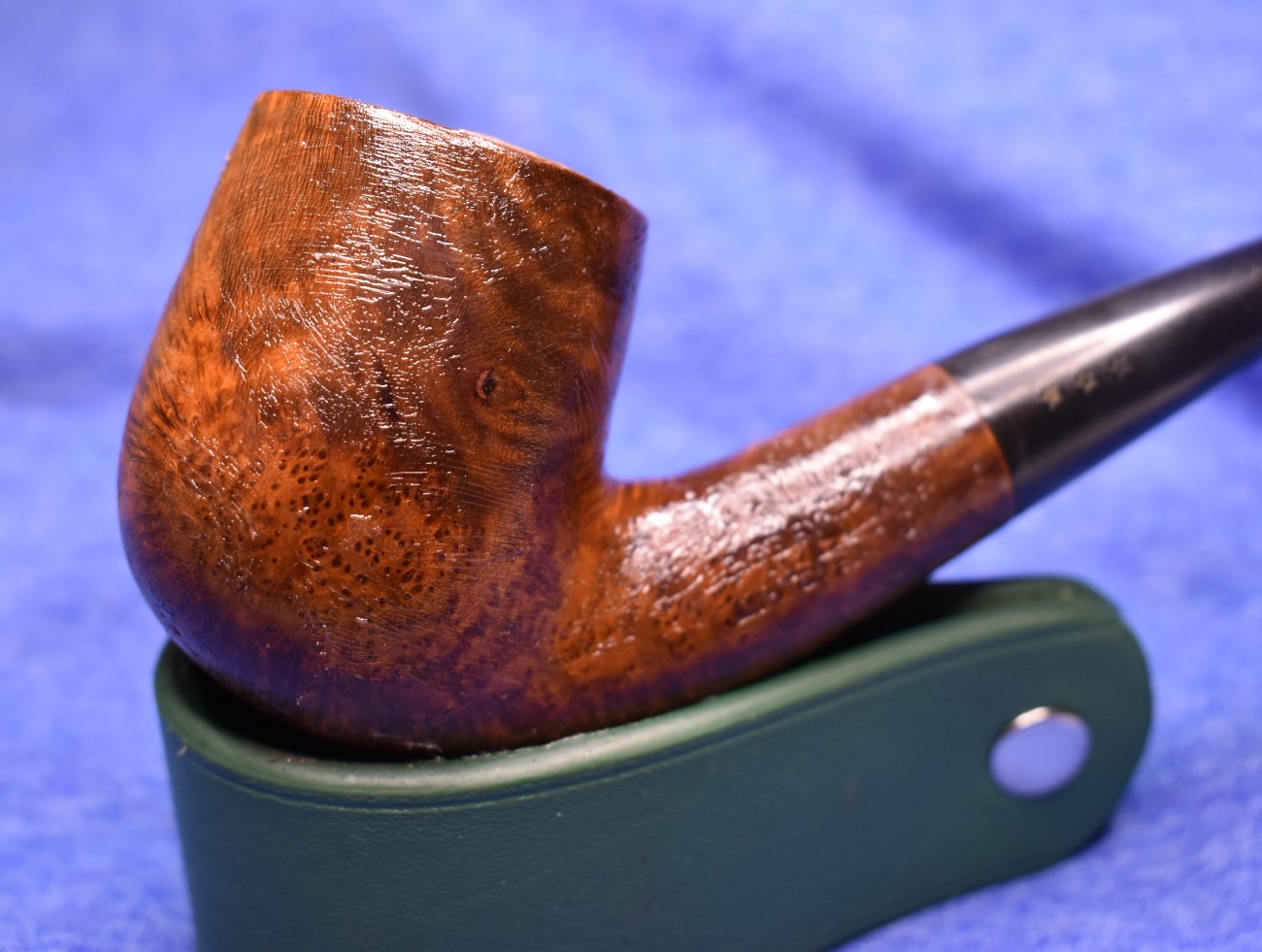
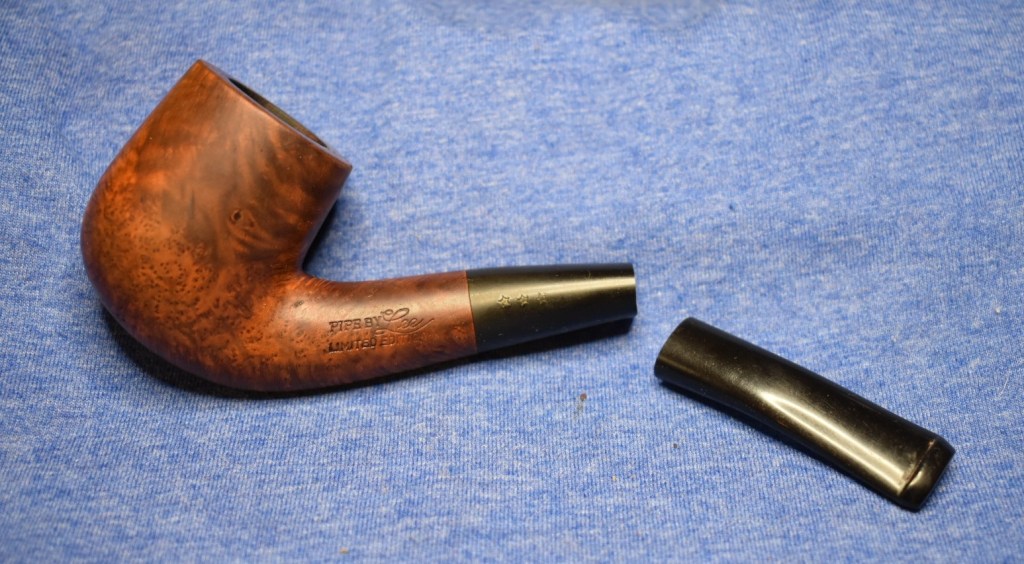


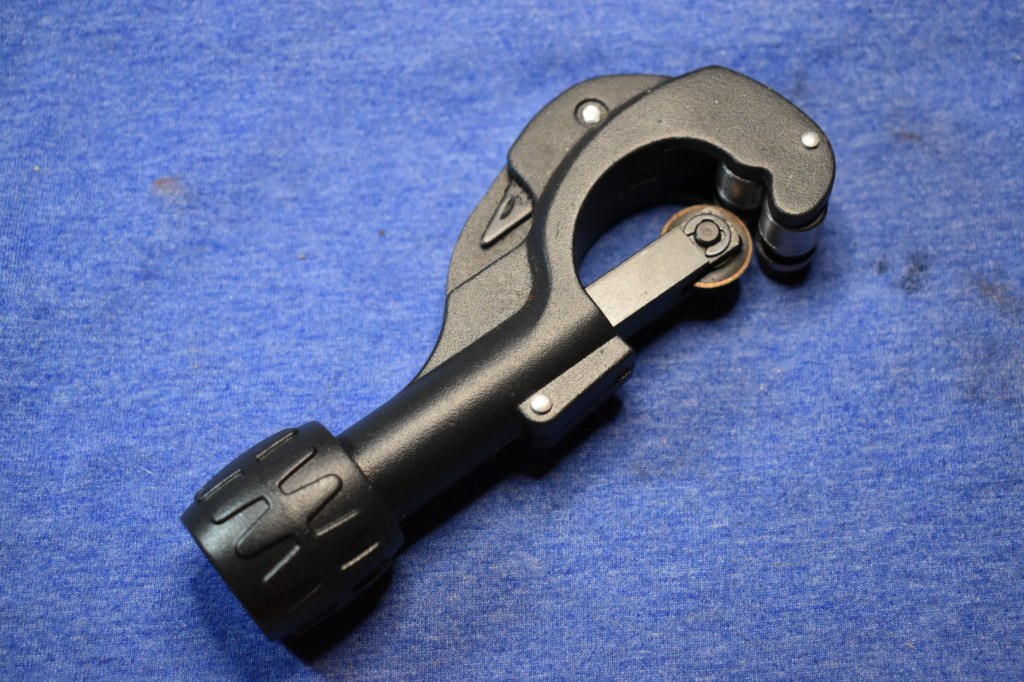
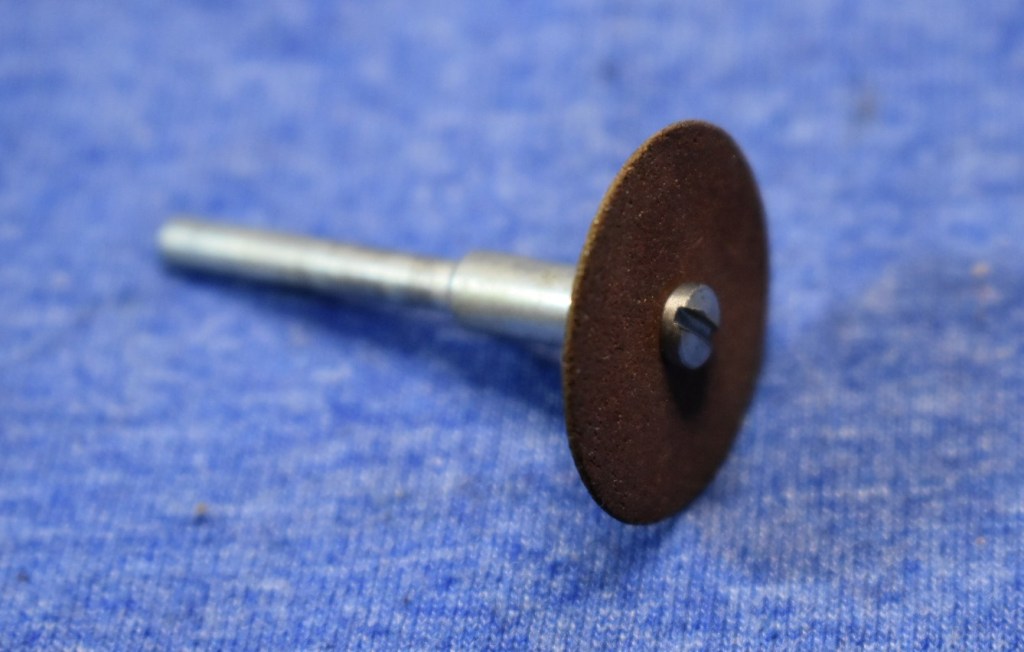
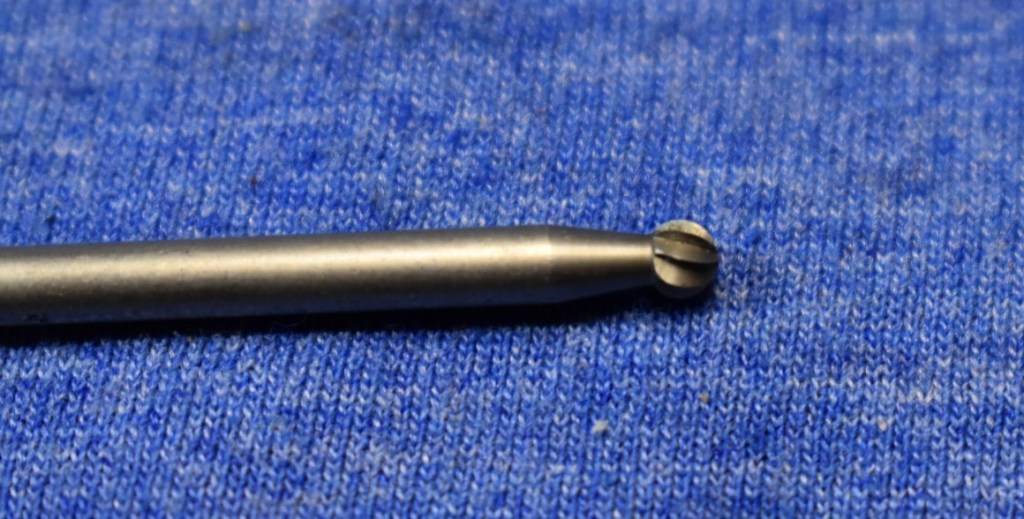
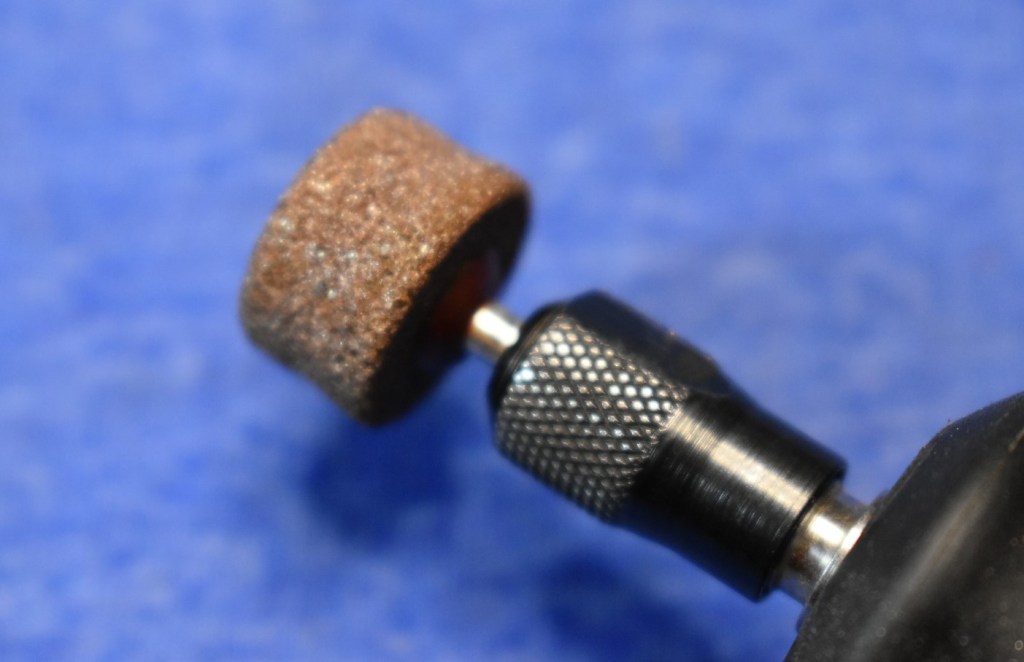



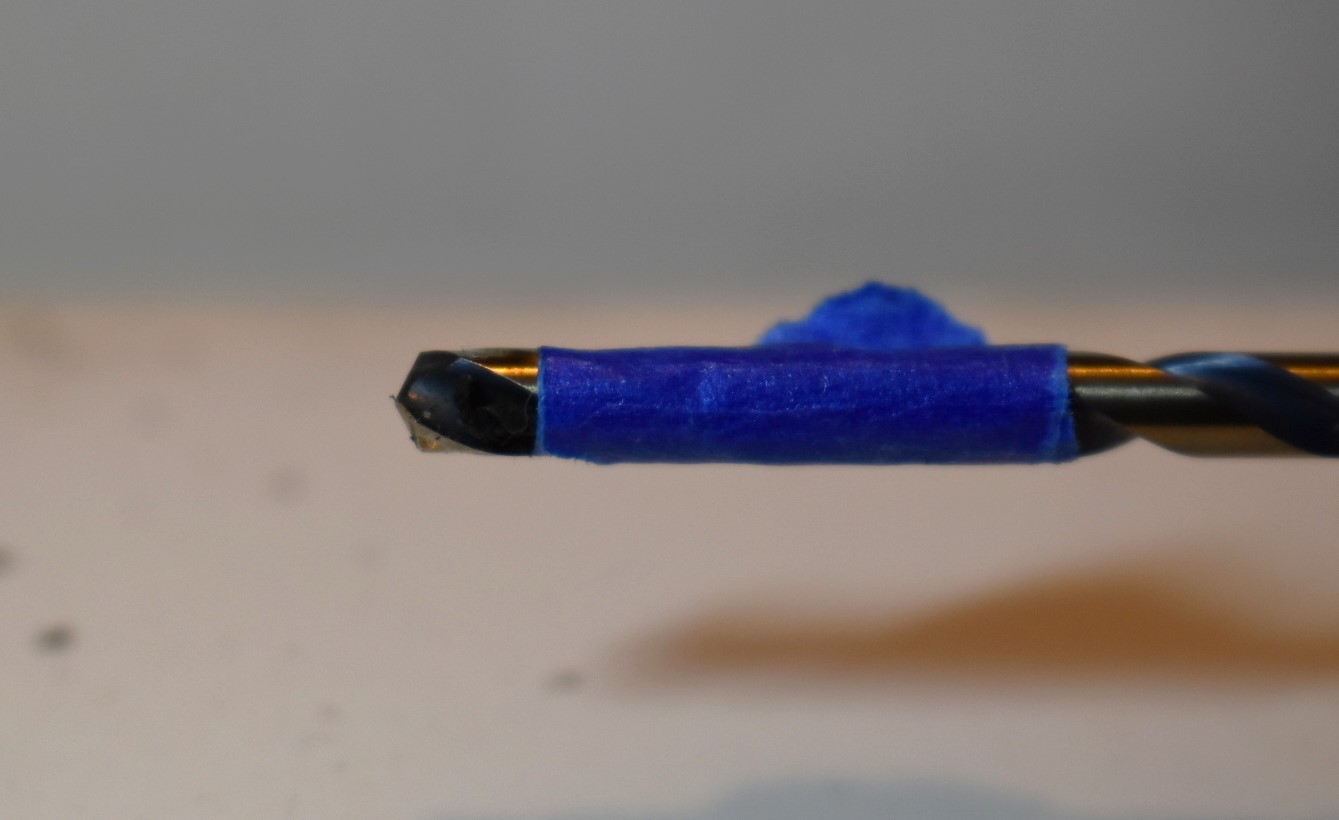


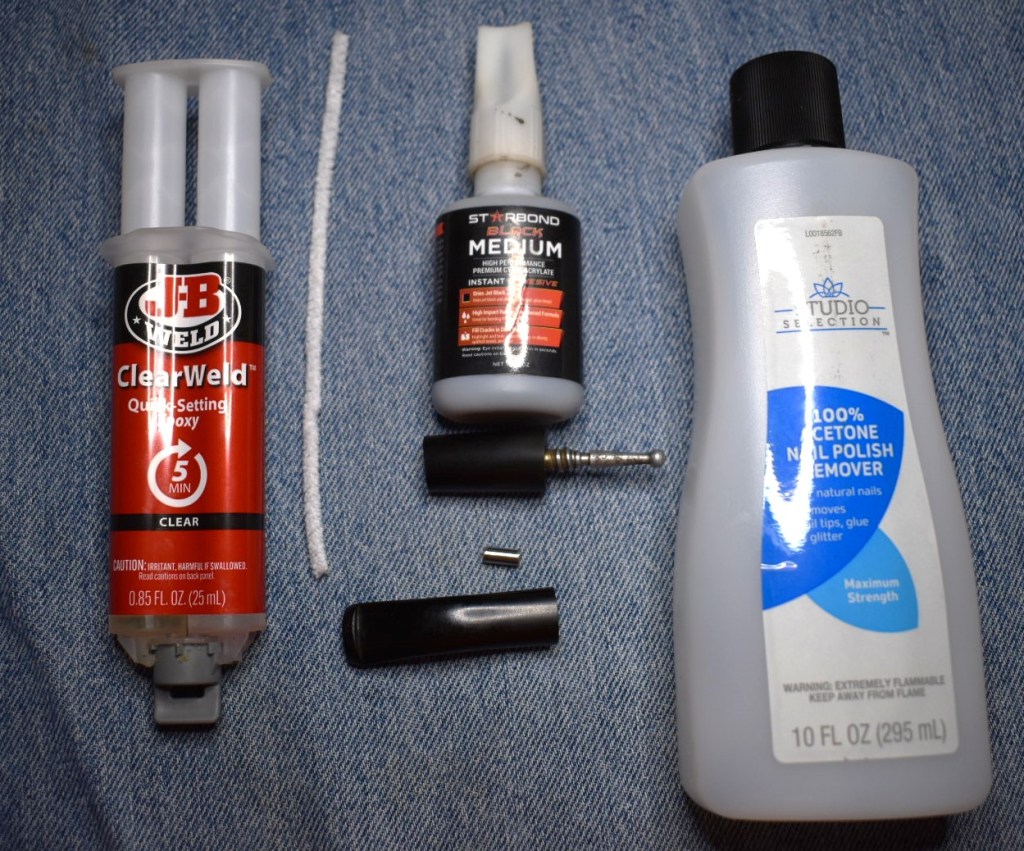


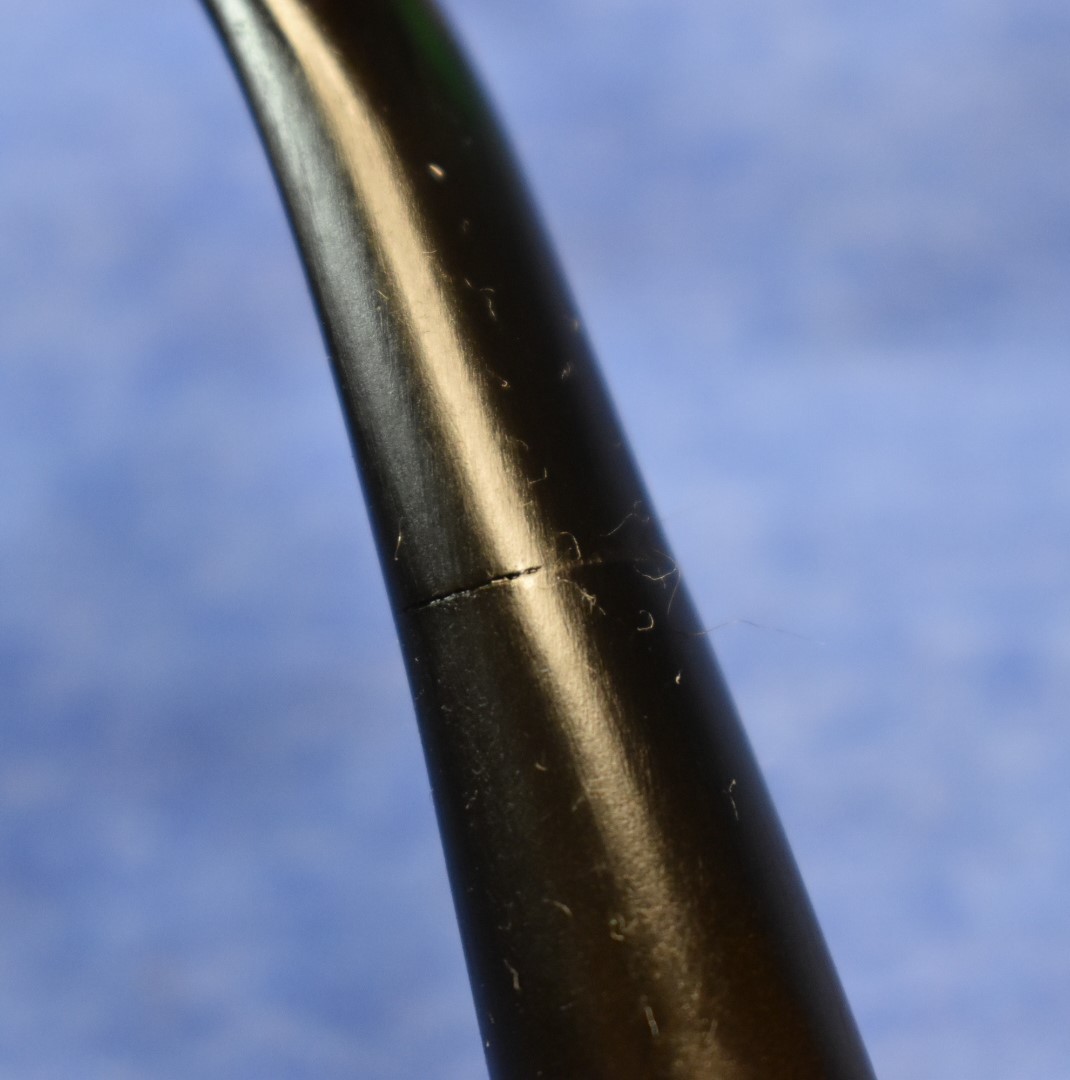


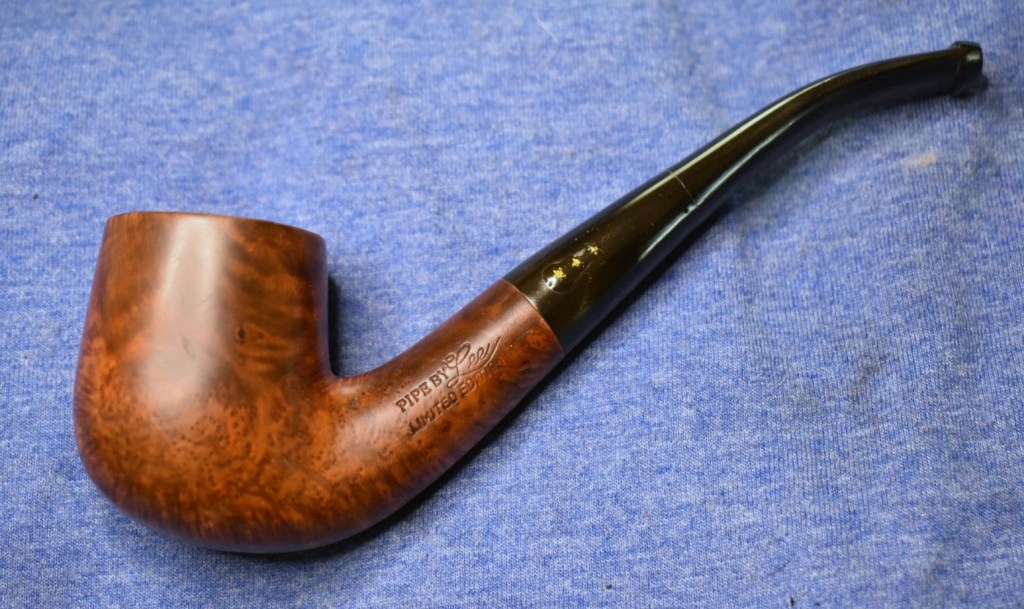
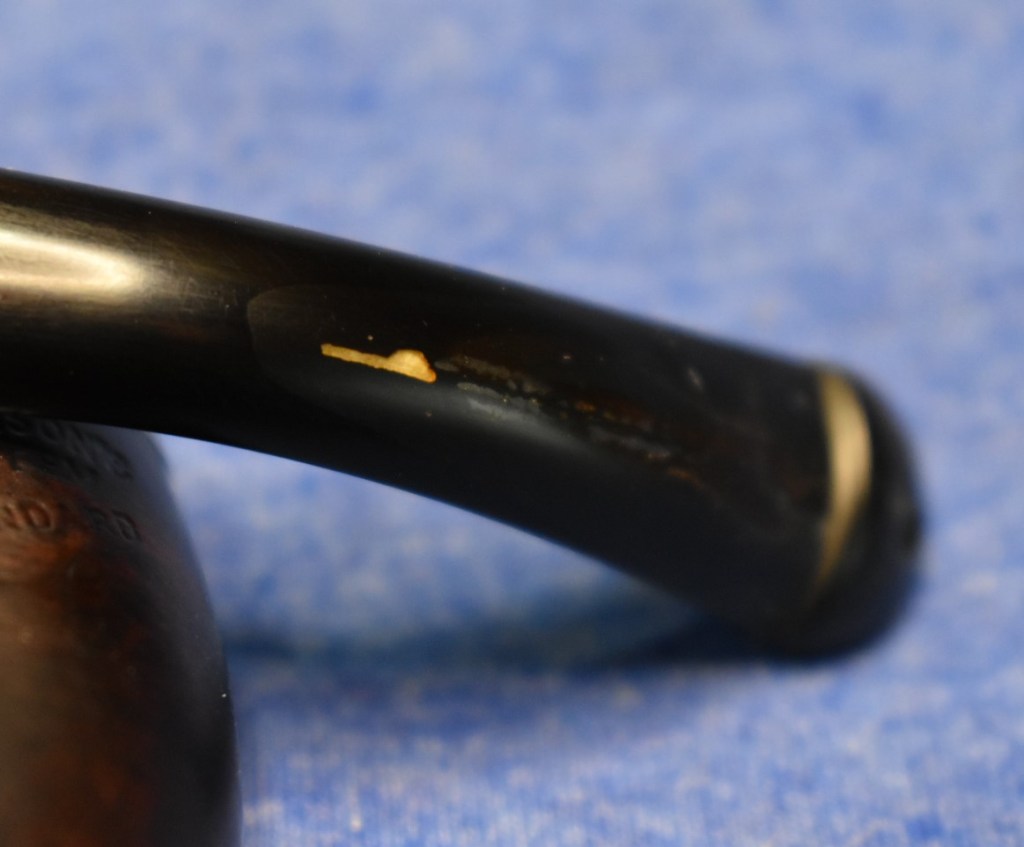

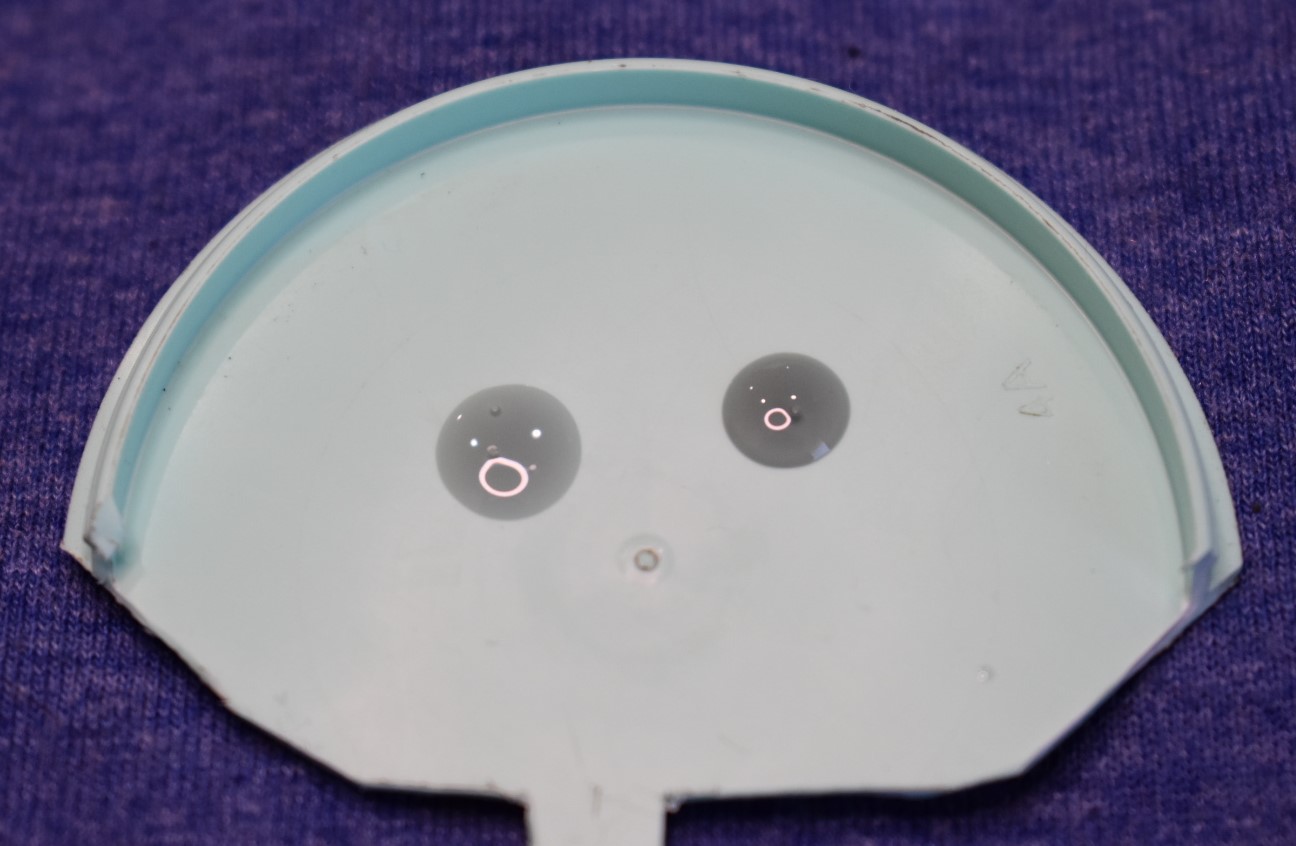
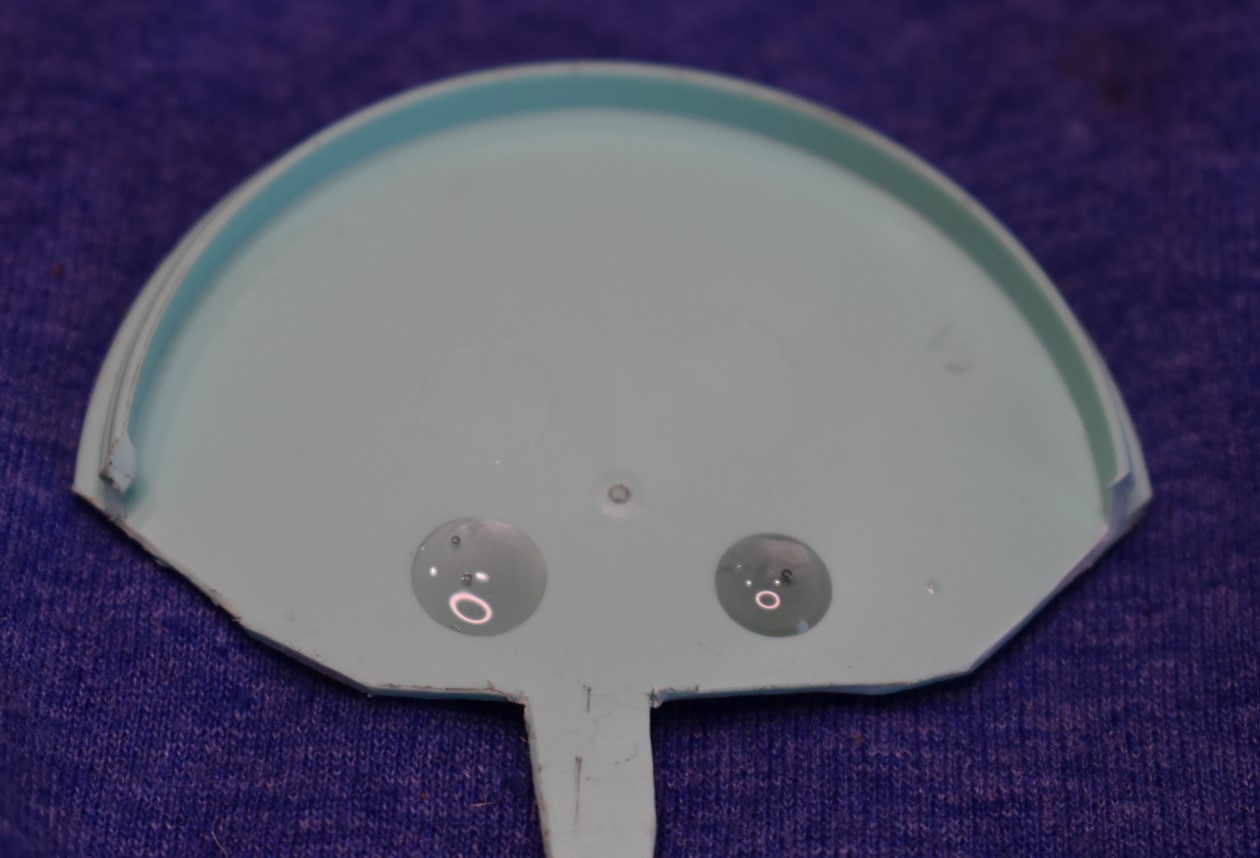
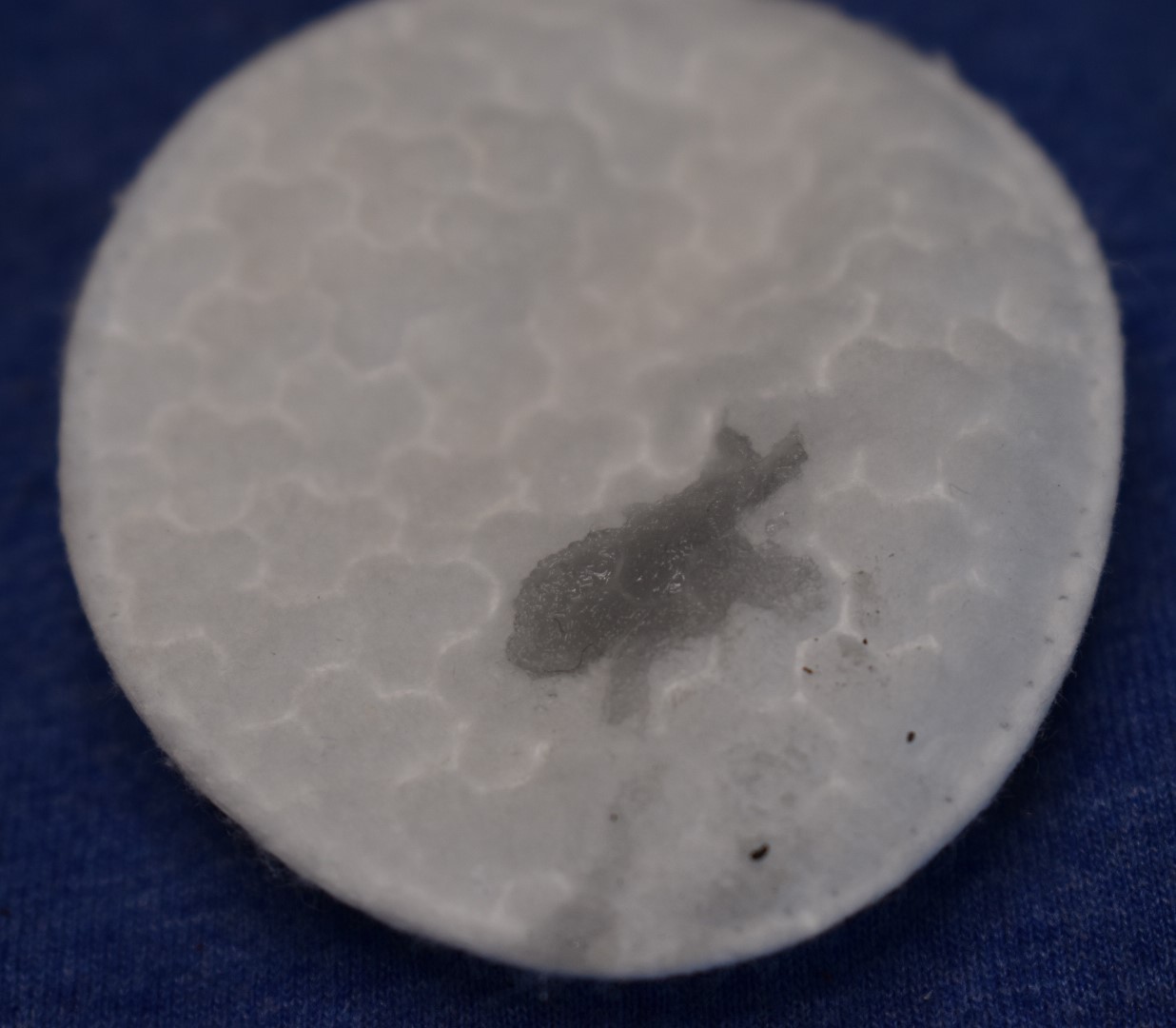
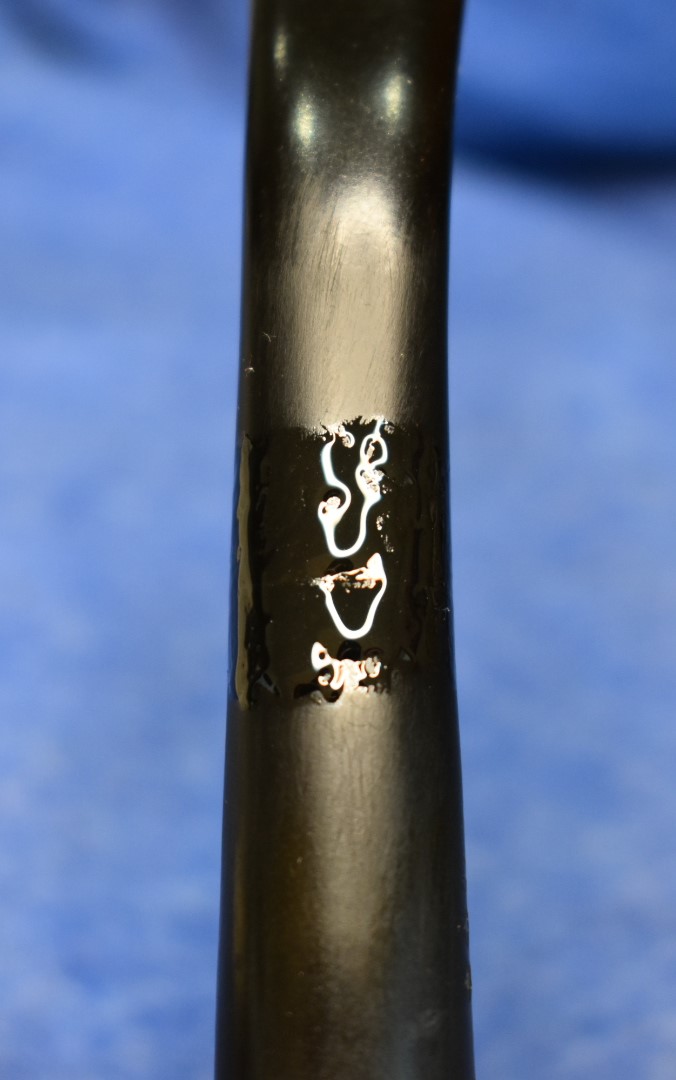
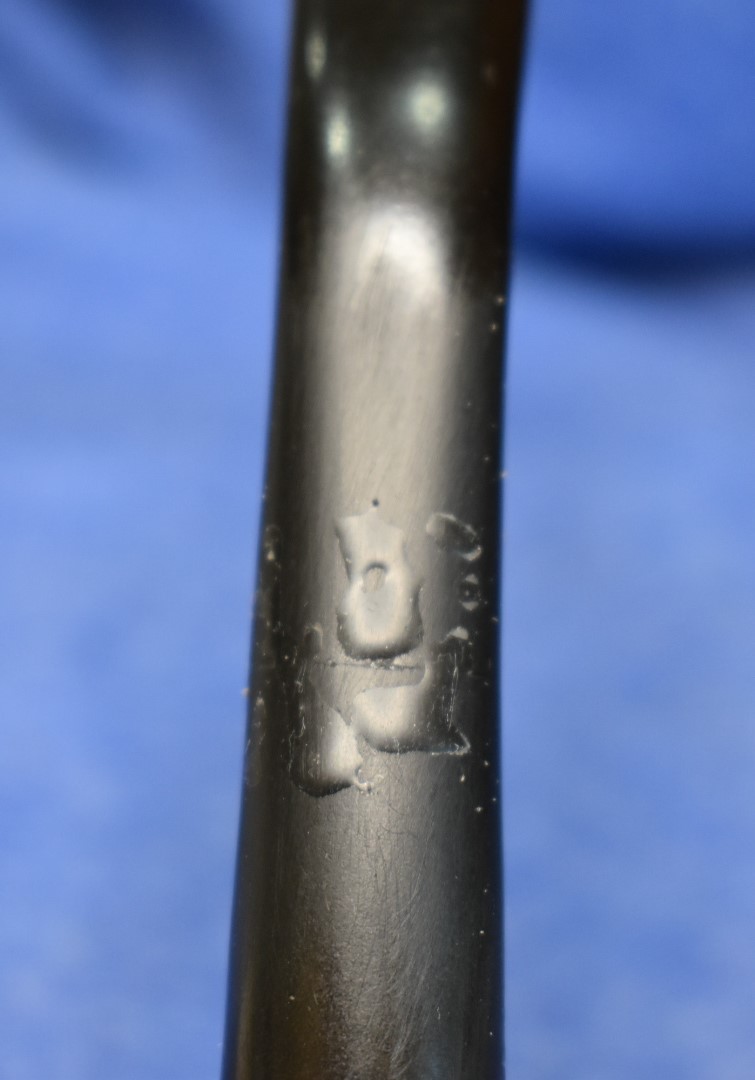
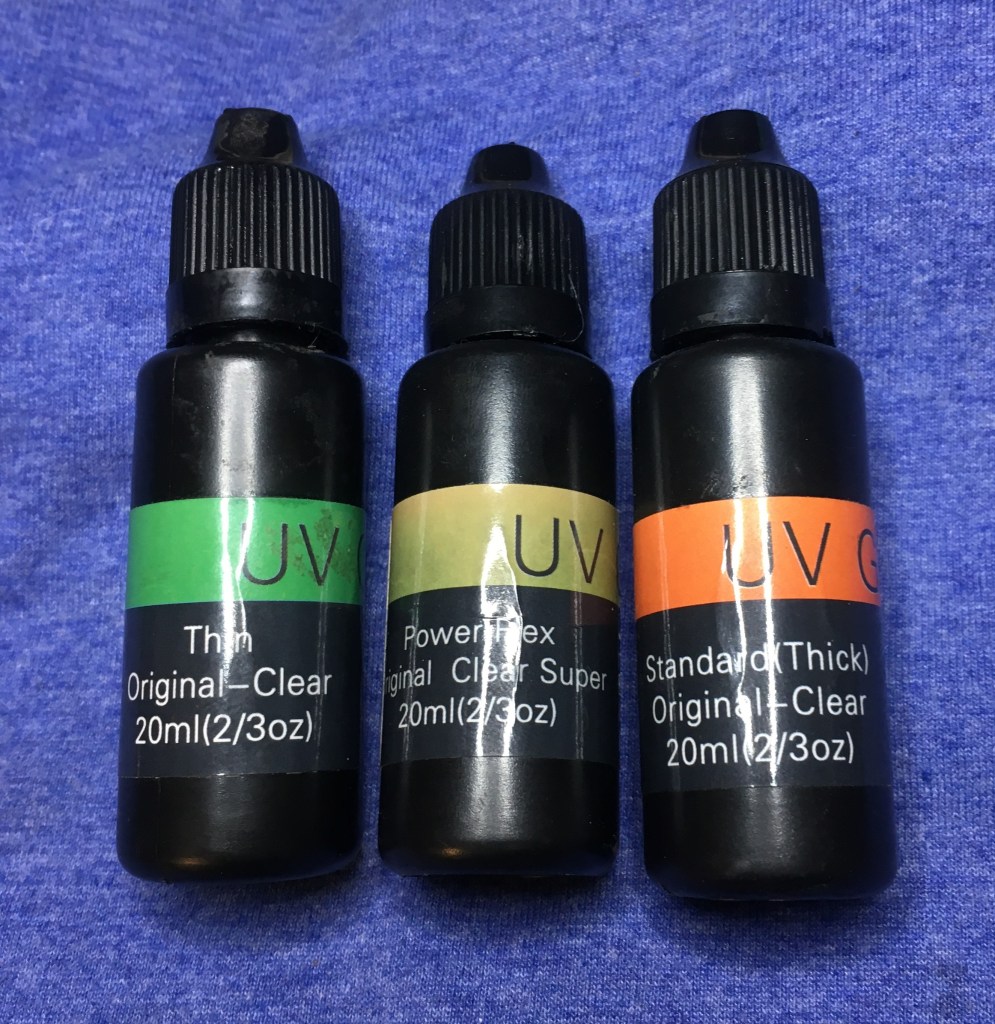
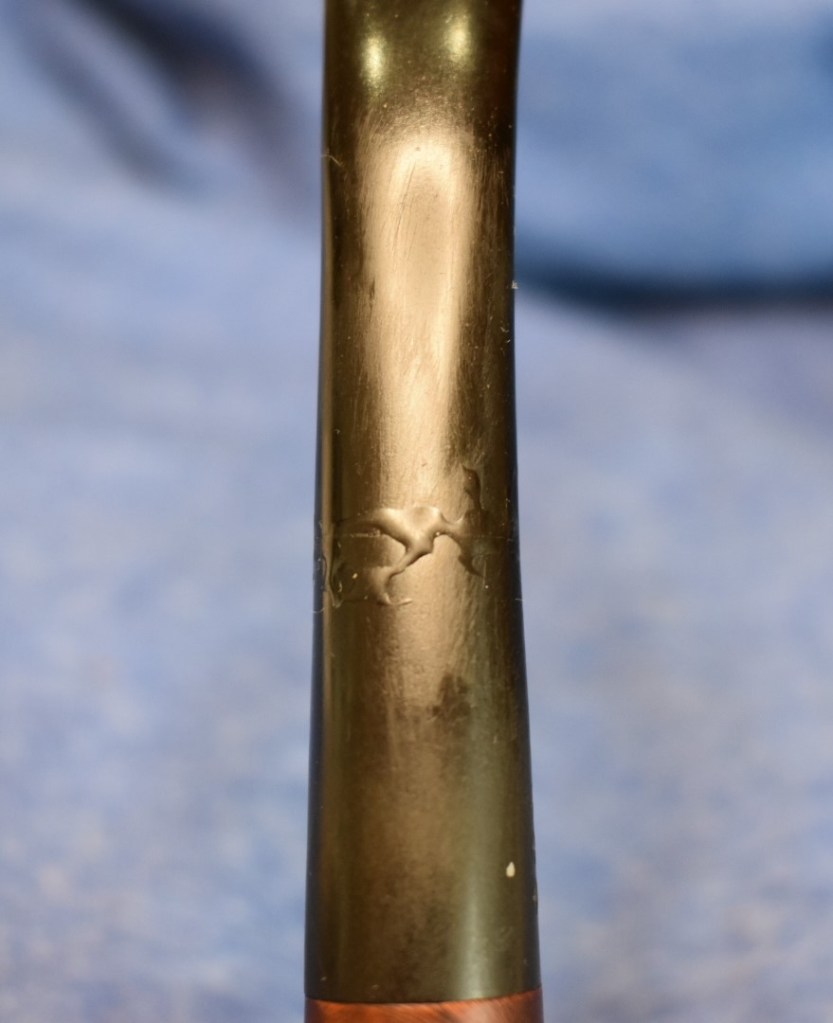
 The resin has proven very hard and resistant to scratching. I thought that this would make it a desirable product to add to the pipe restoration. I have not yet seen anyone use it in the restoration of pipes. How well it holds up to the wear and tear on a vulcanite pipe stem has yet to be determined. Feel free to ask me in the comments section how the product does over time.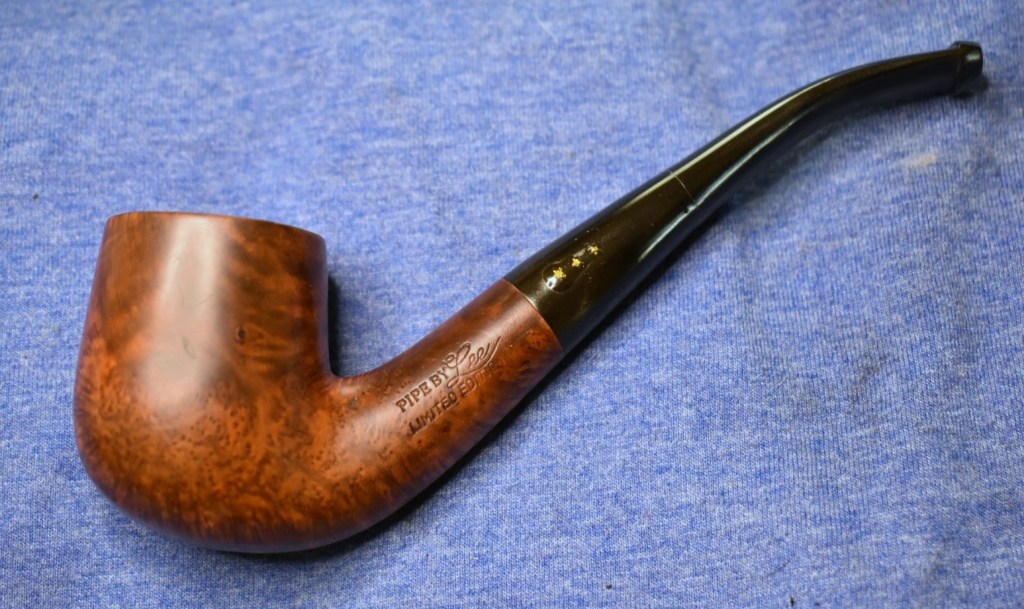
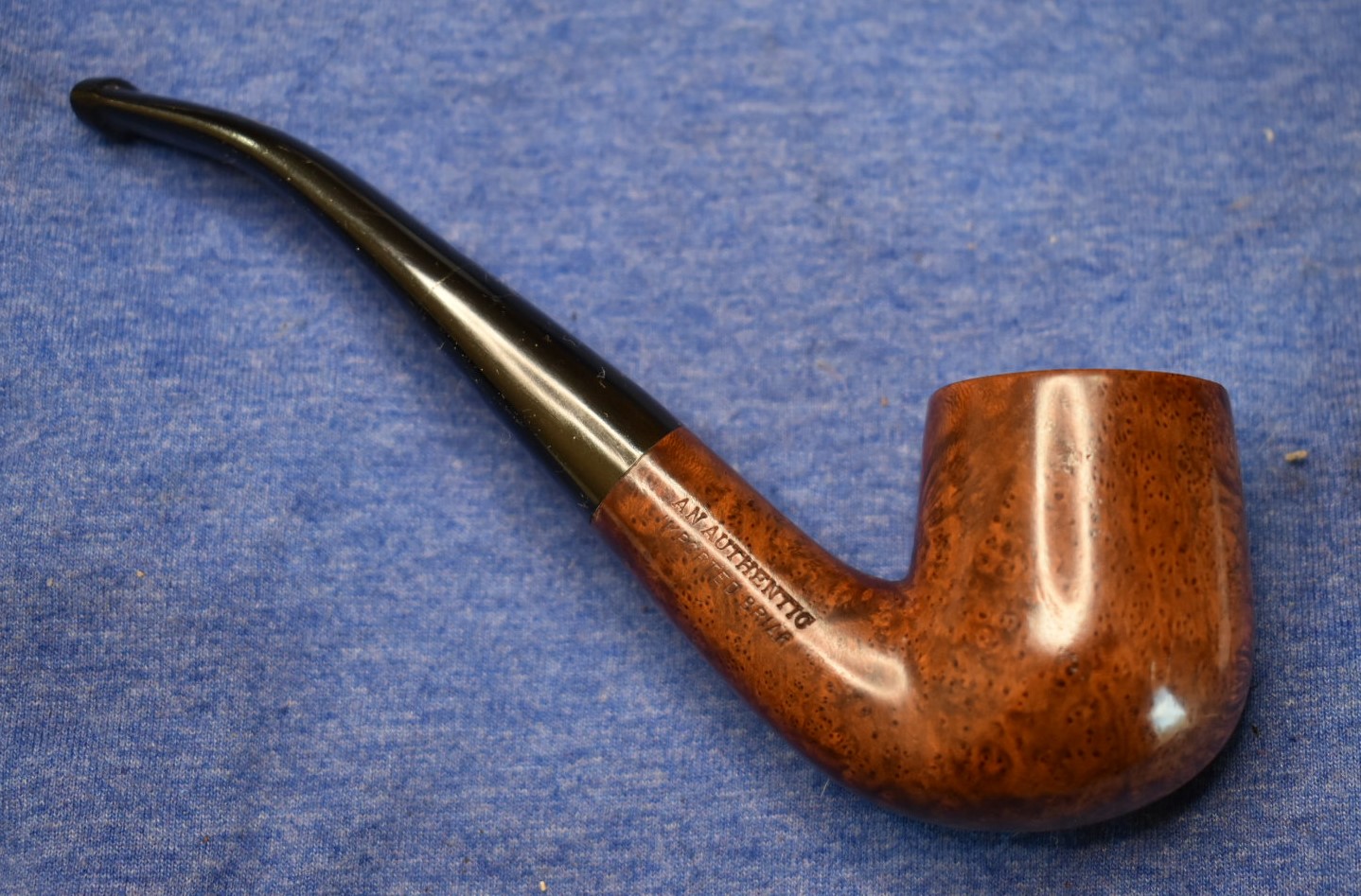

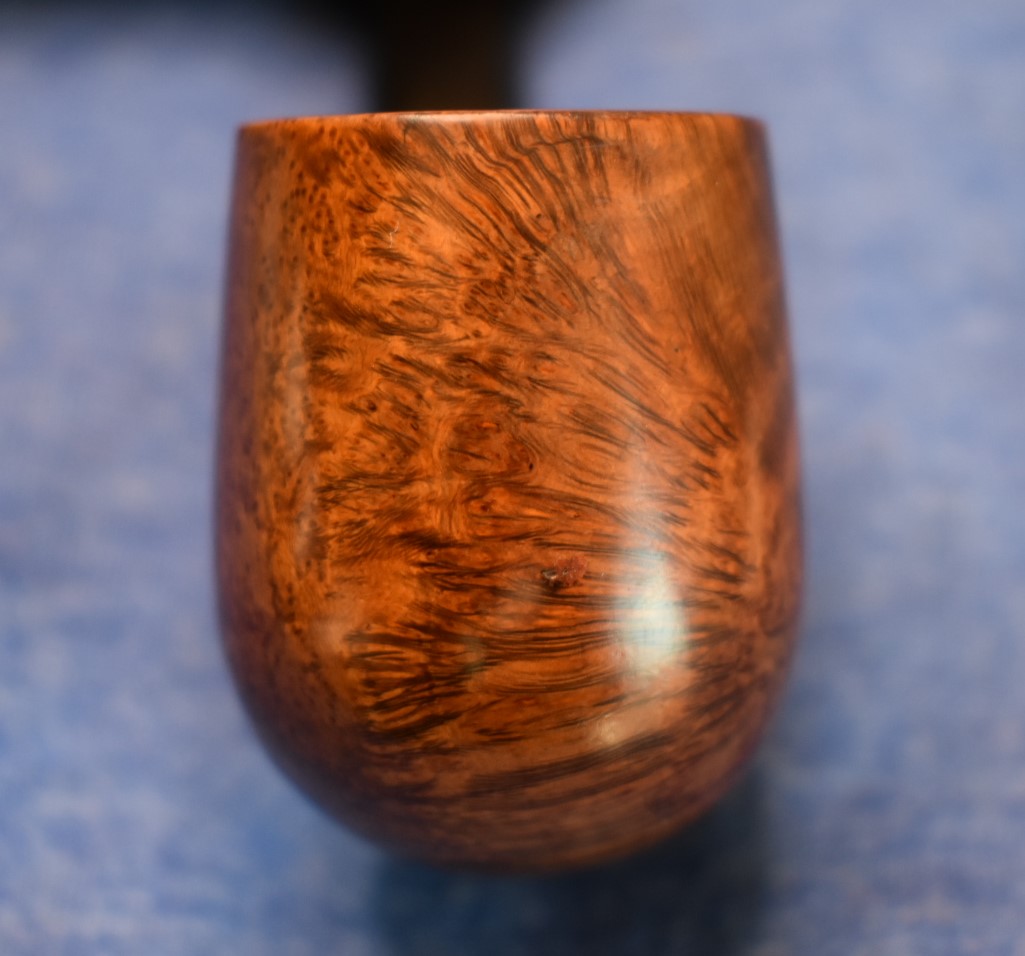

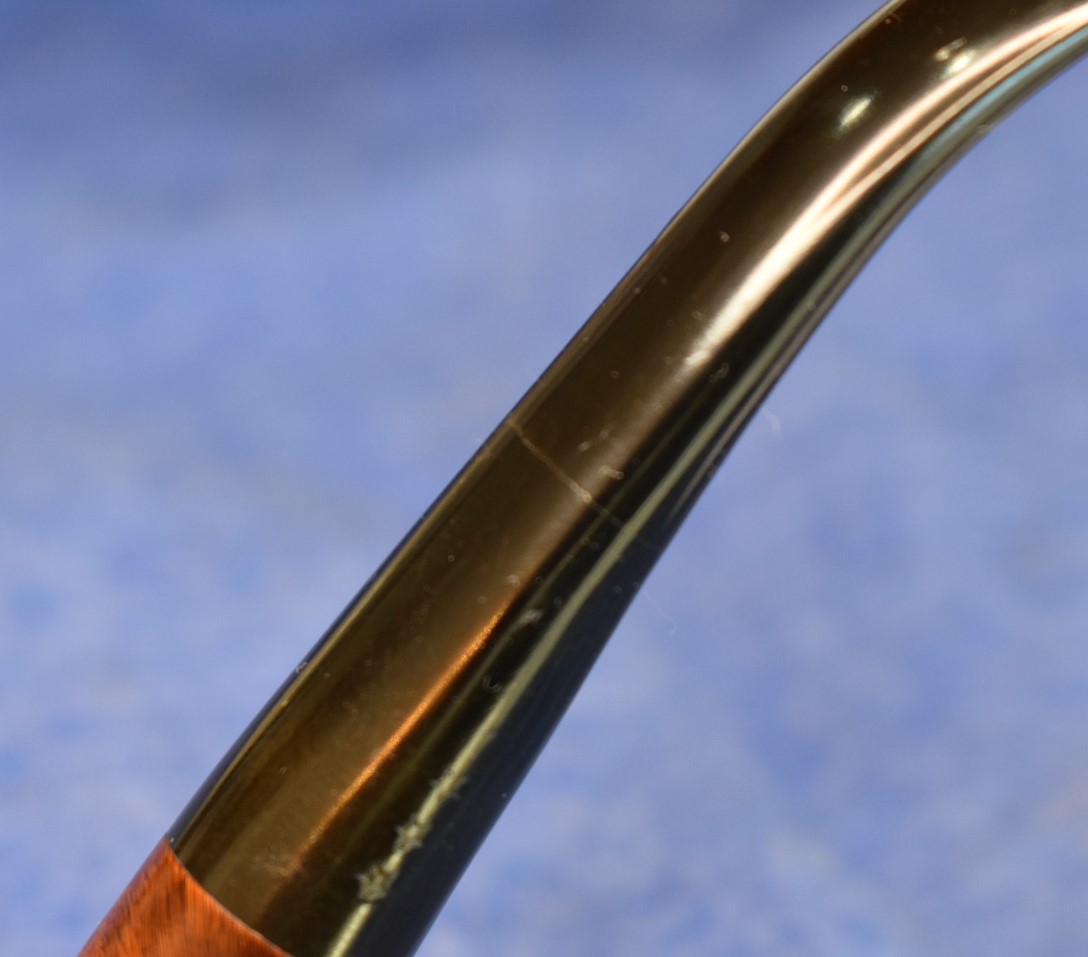
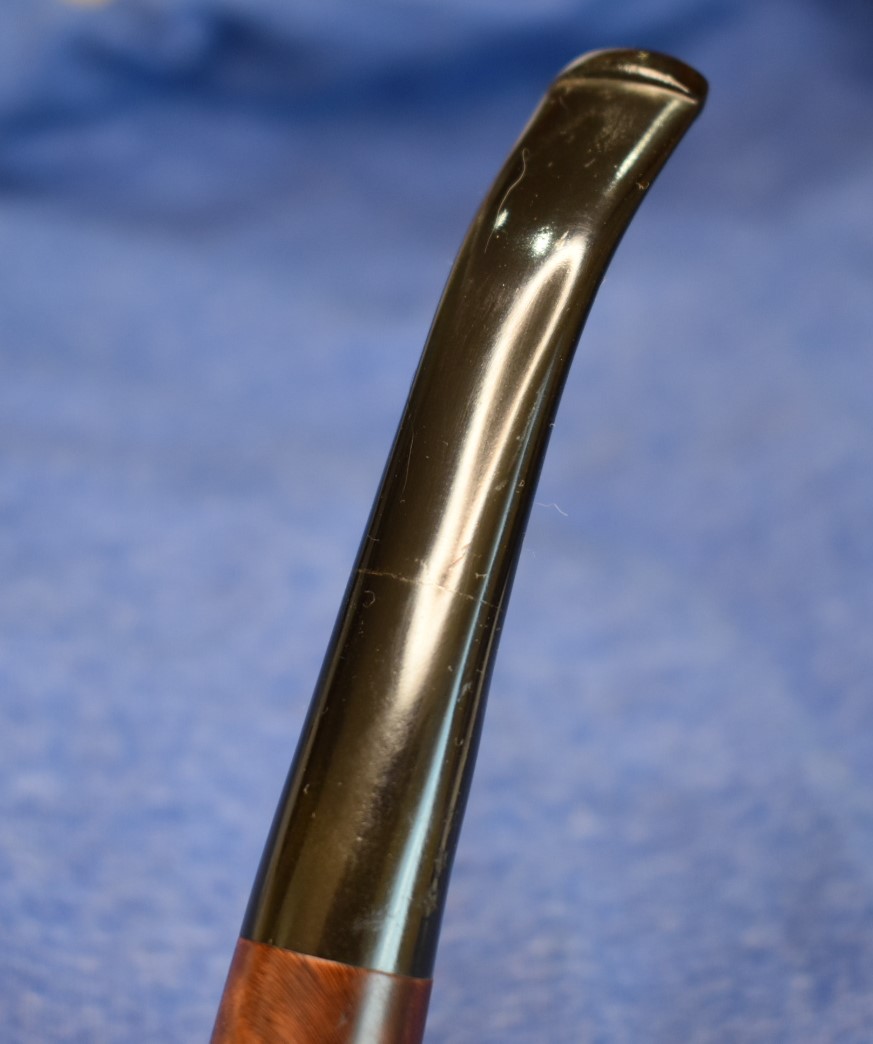


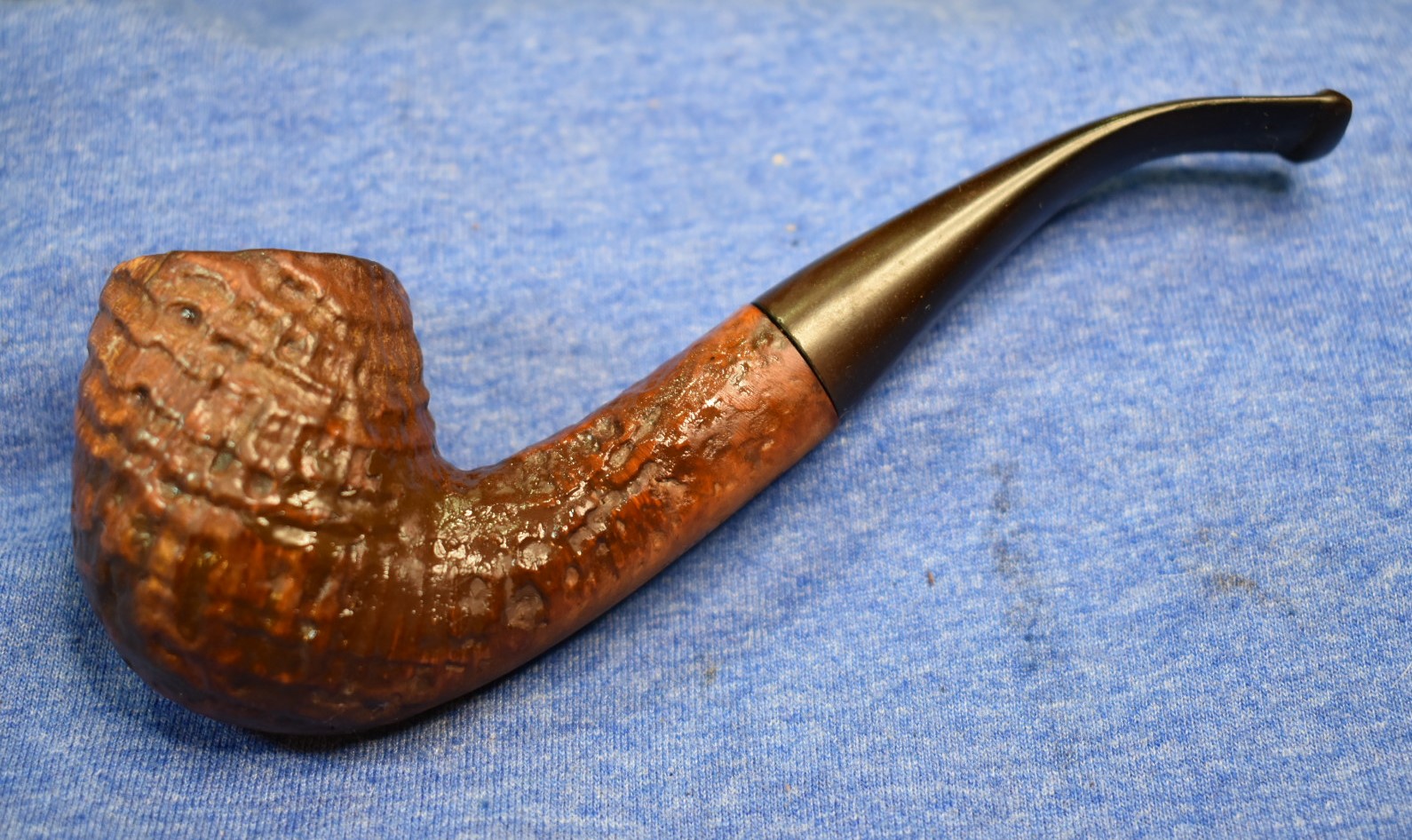
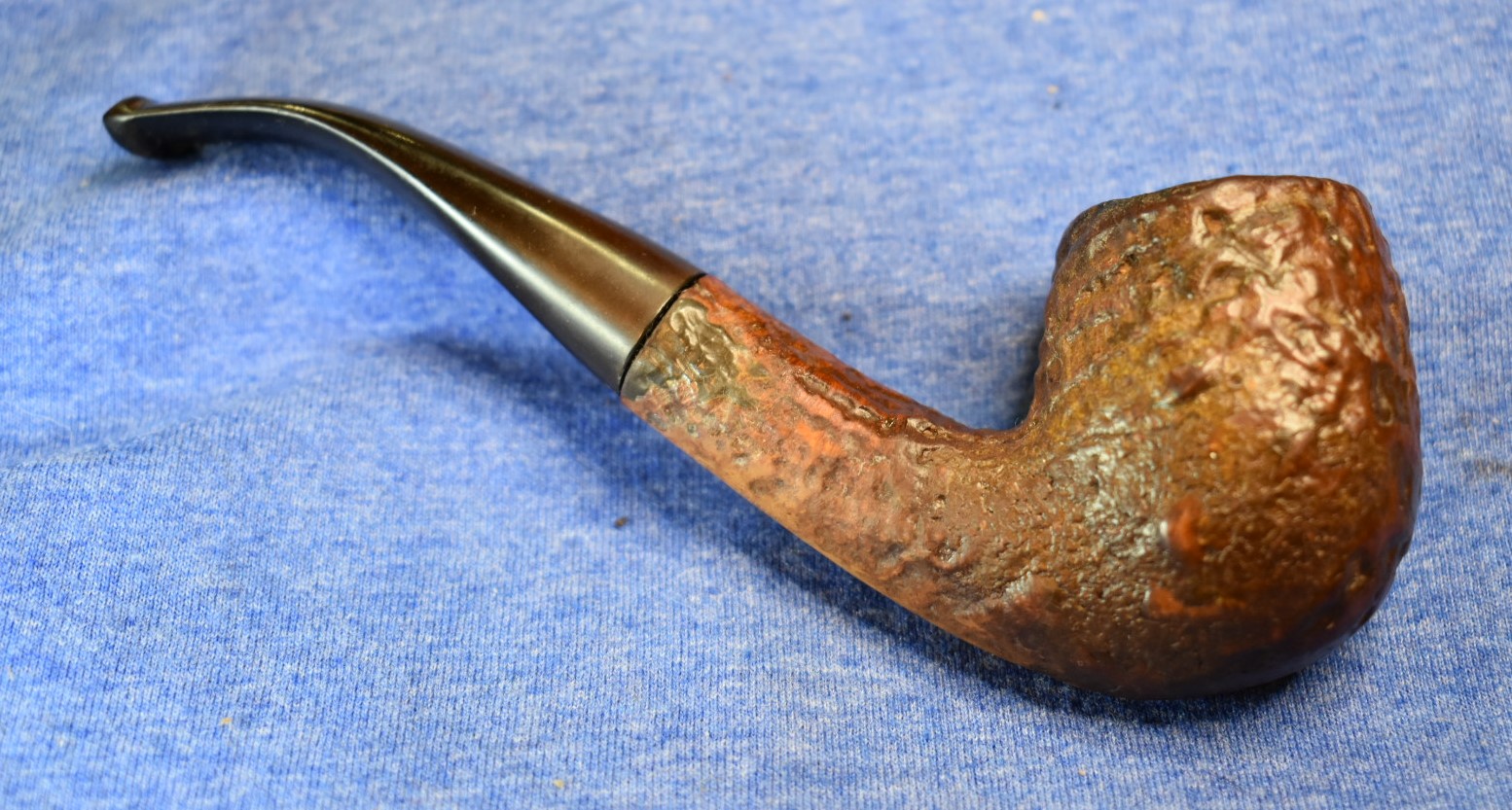

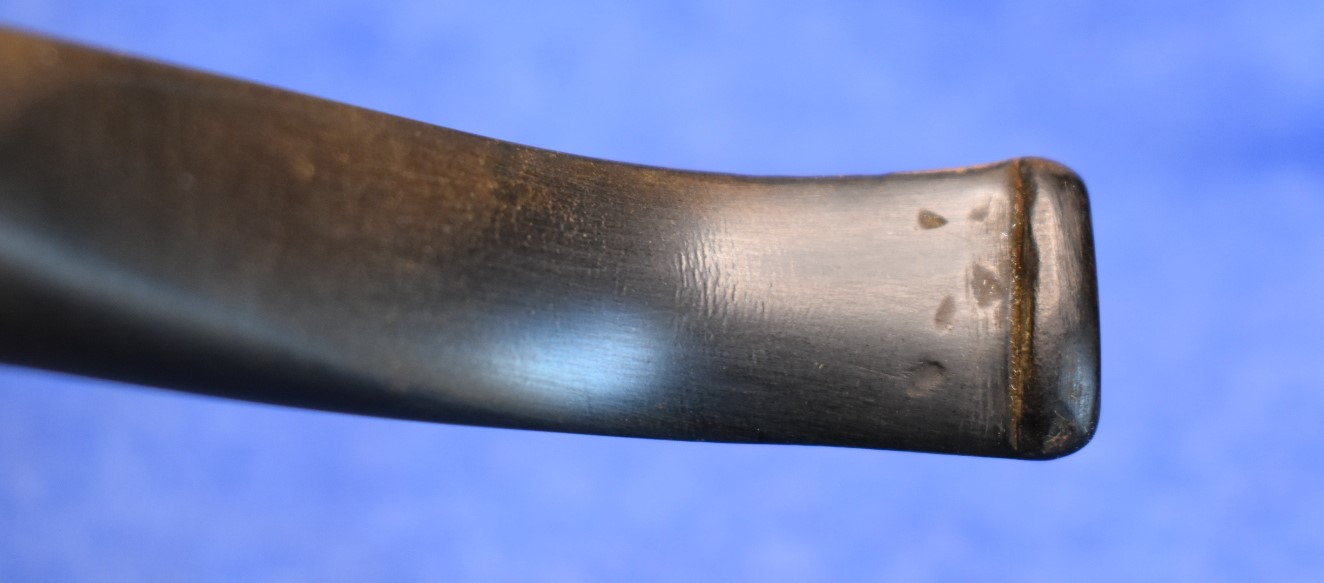
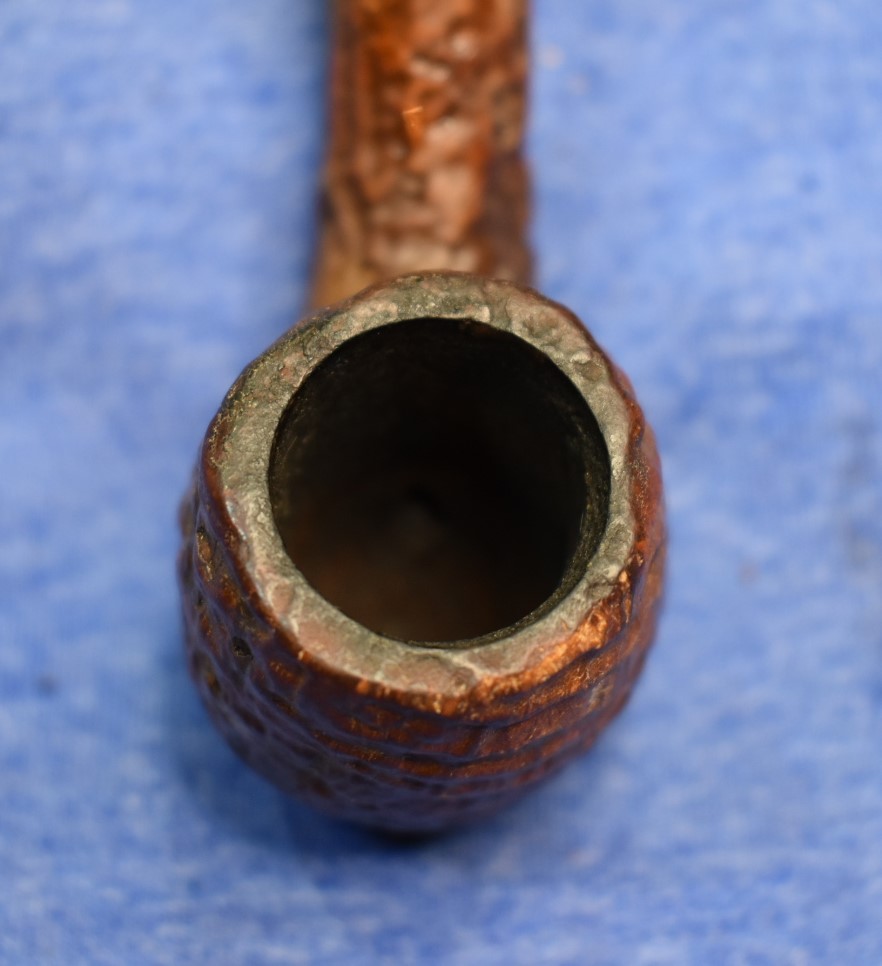


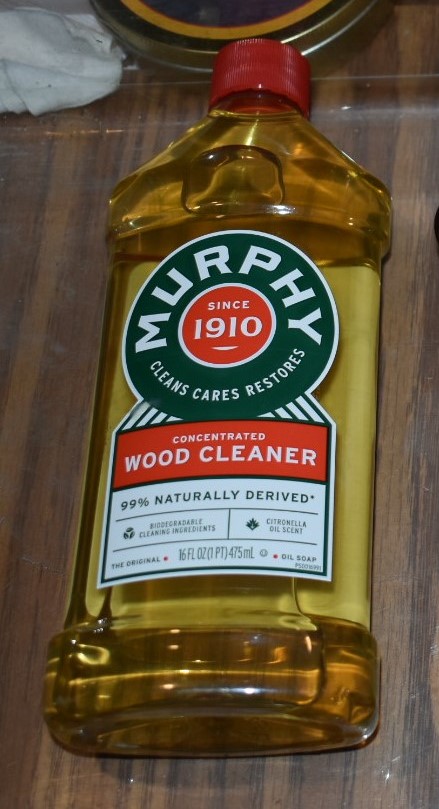


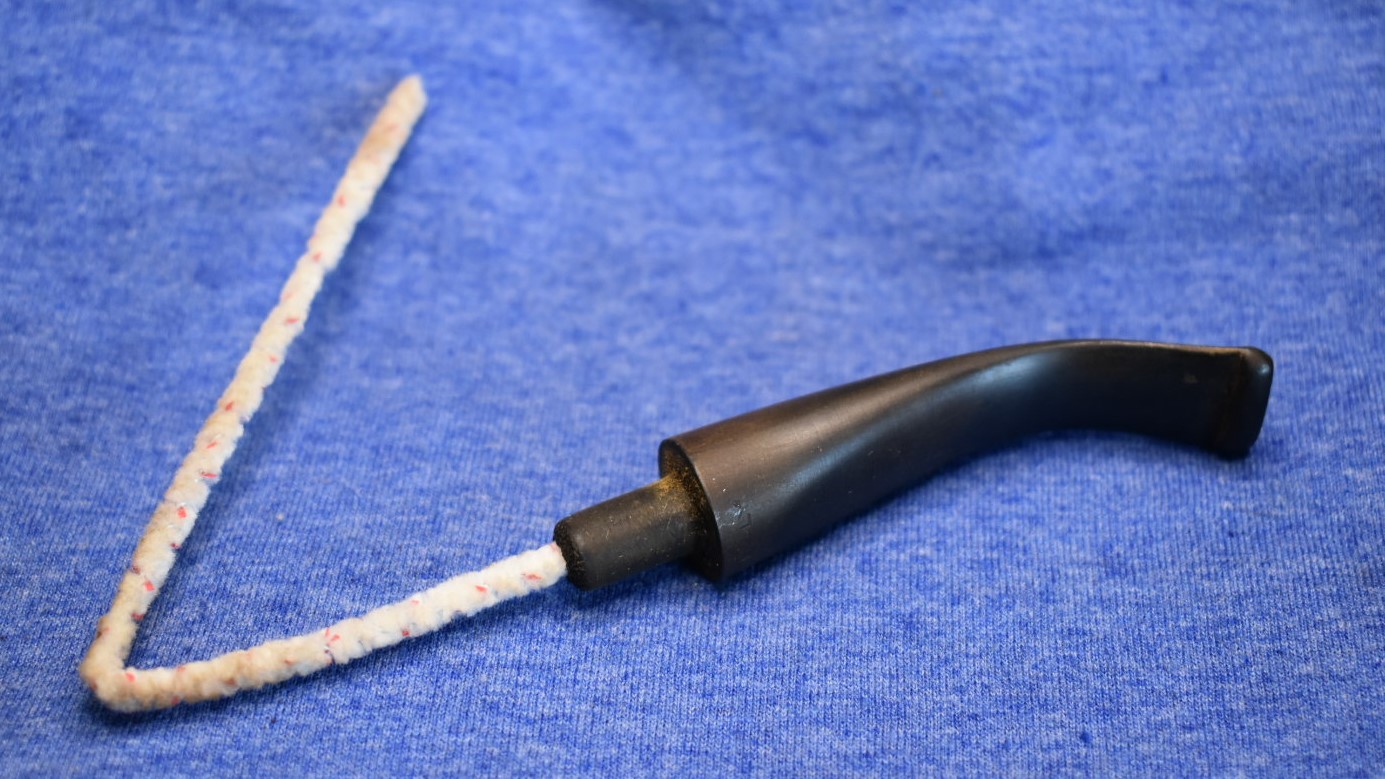

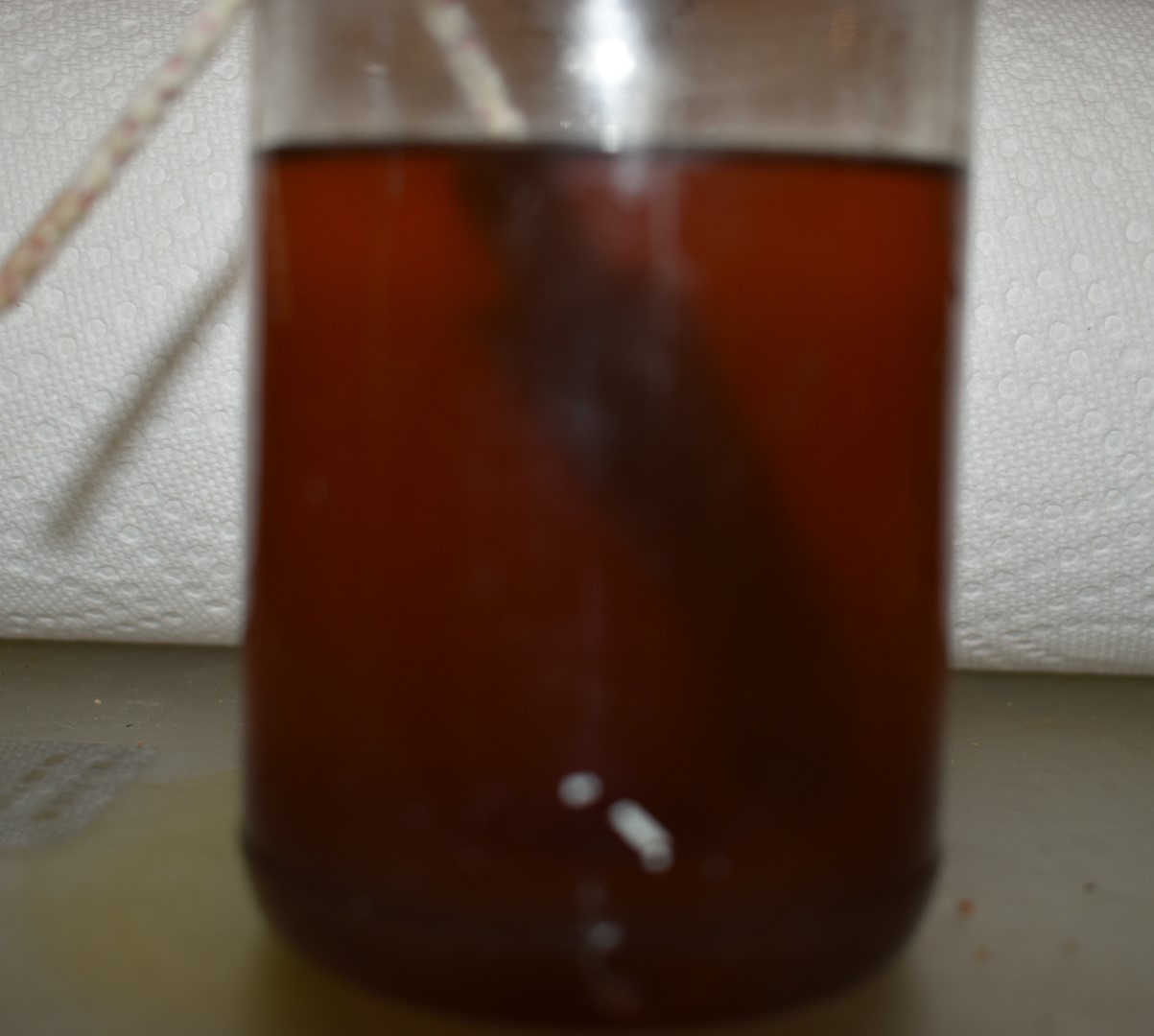
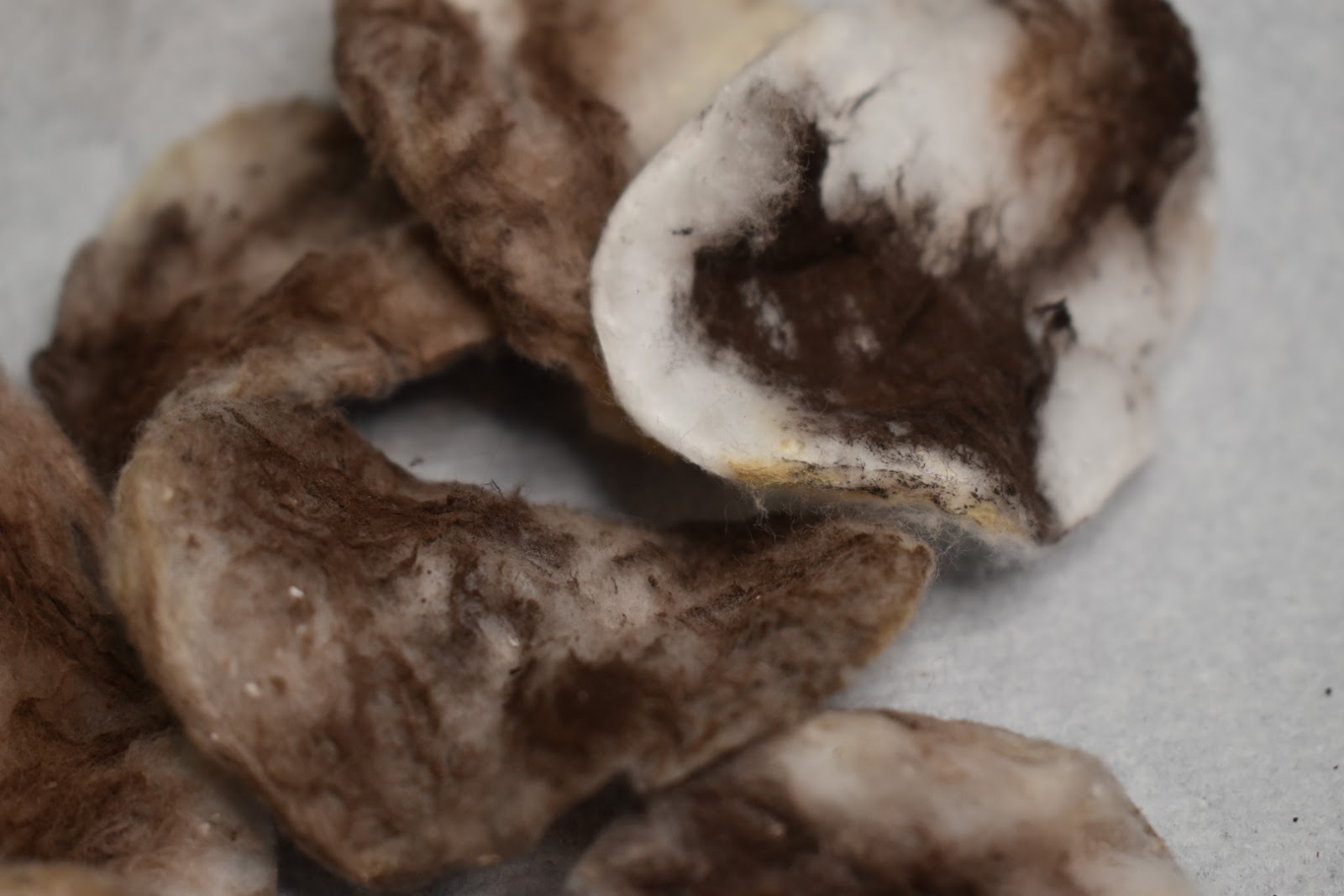


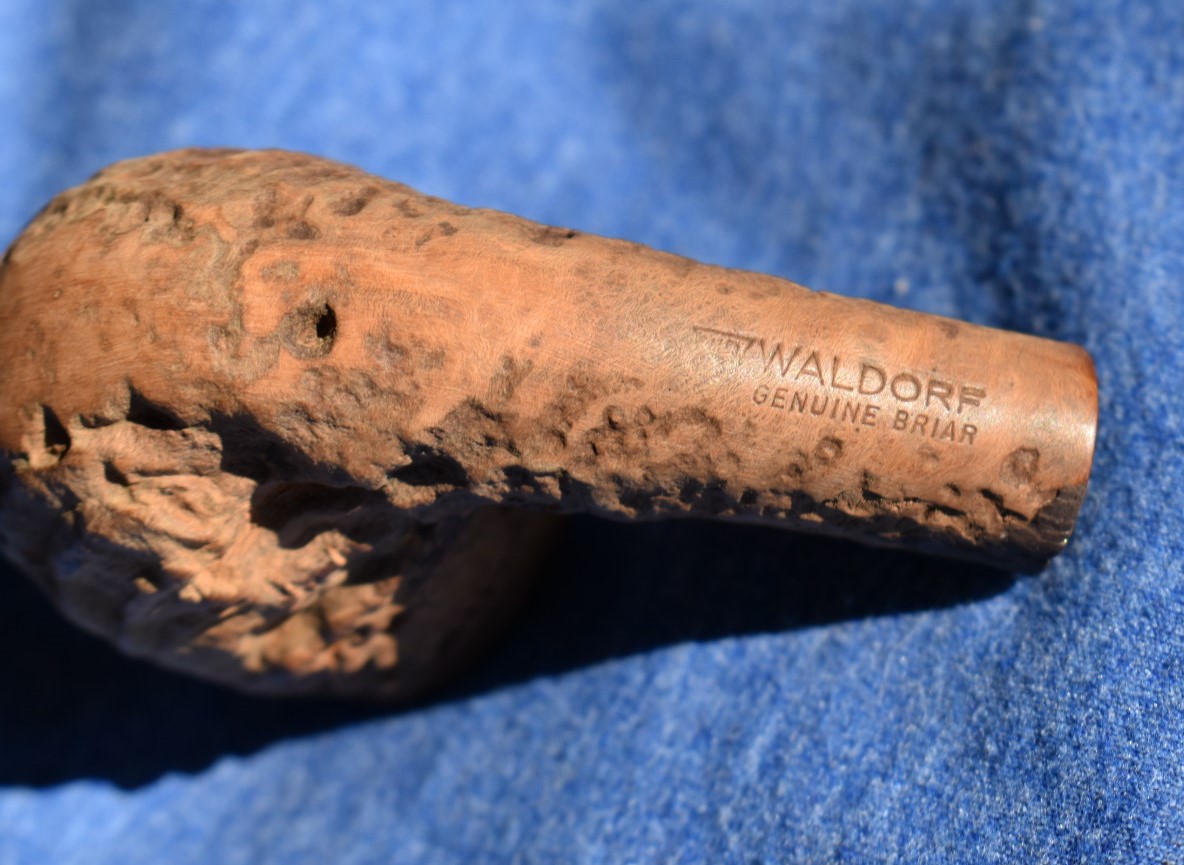



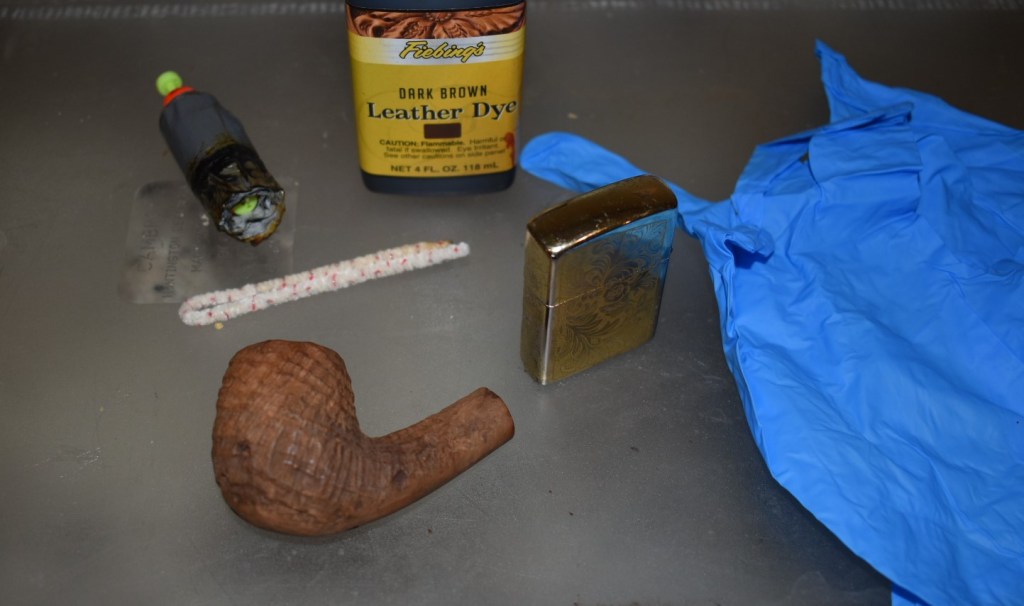

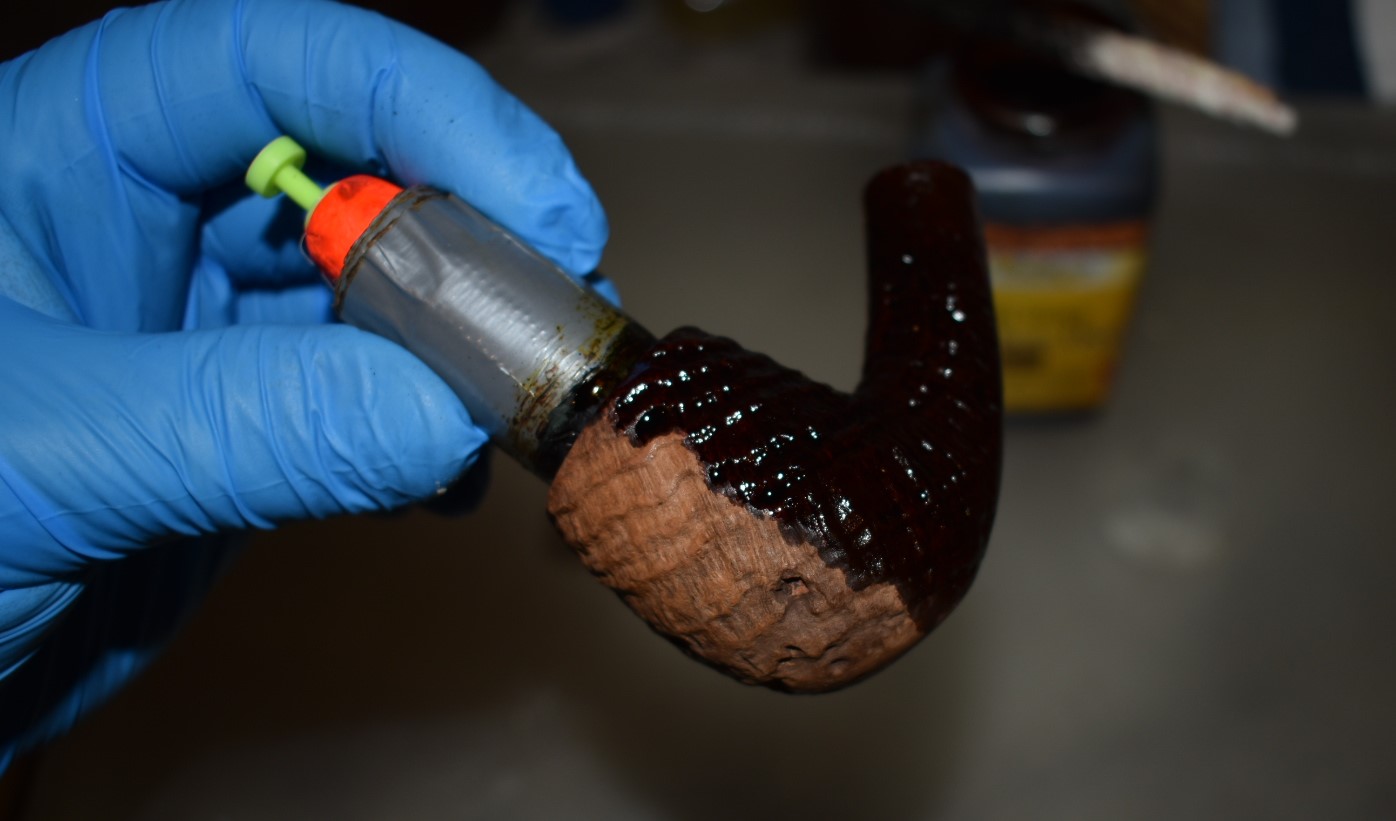


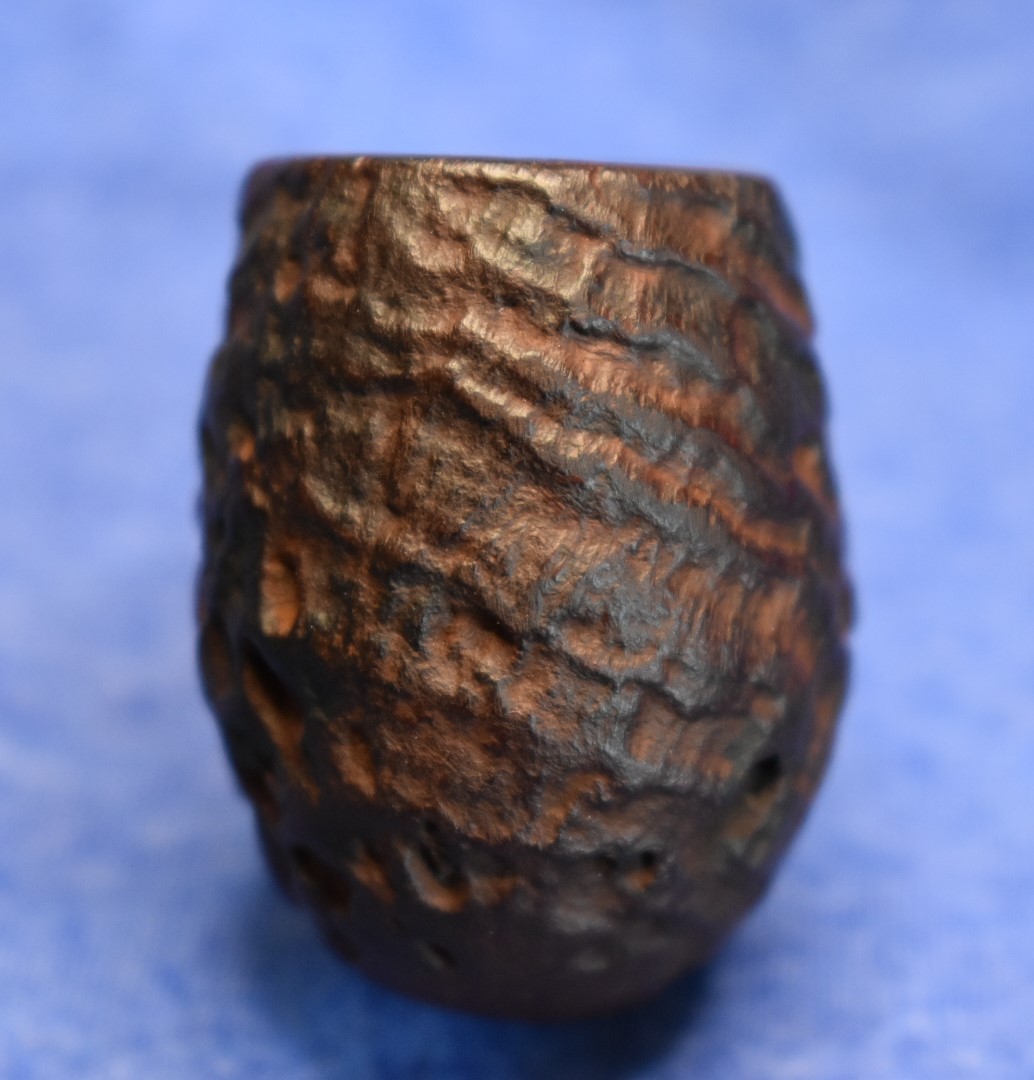

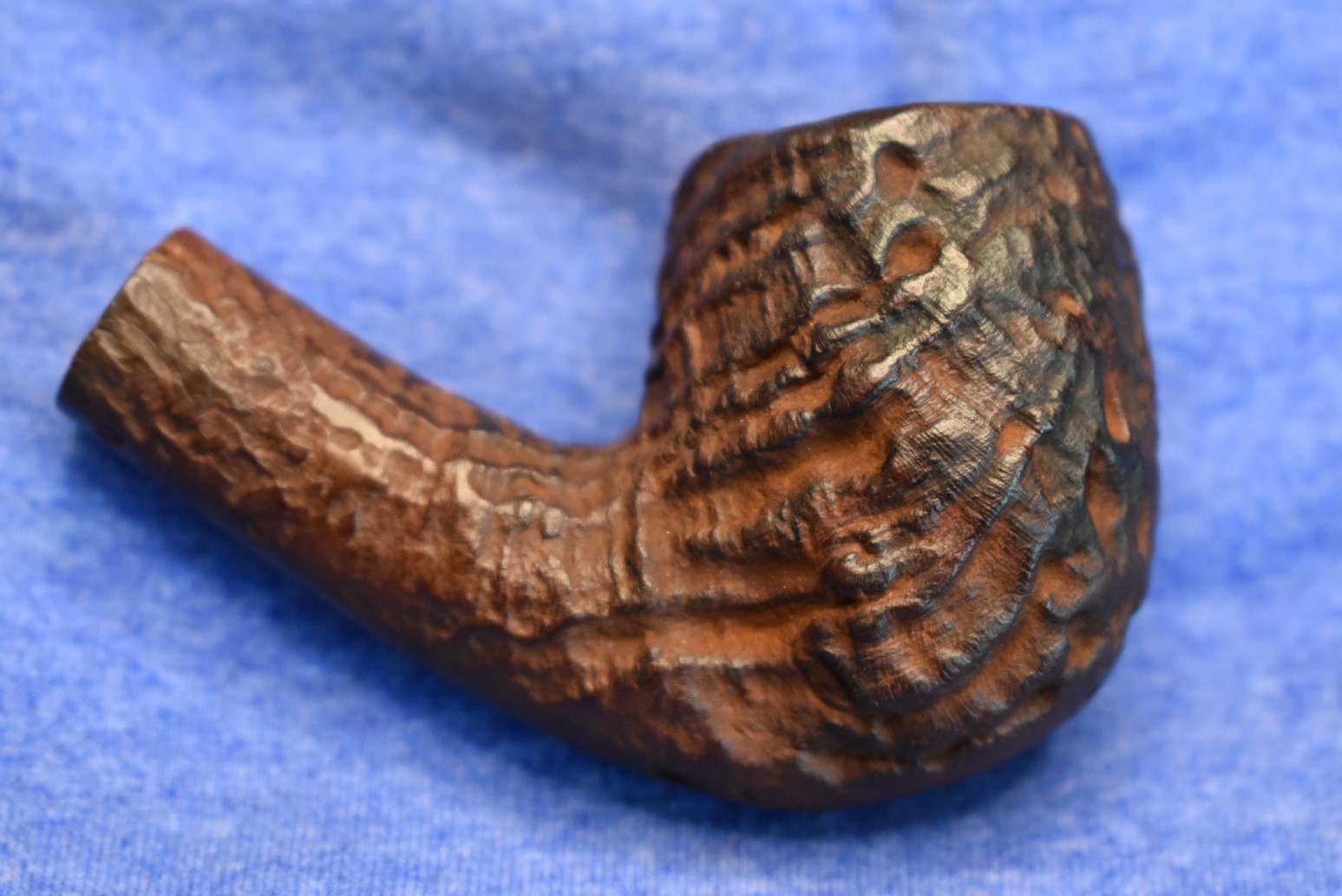


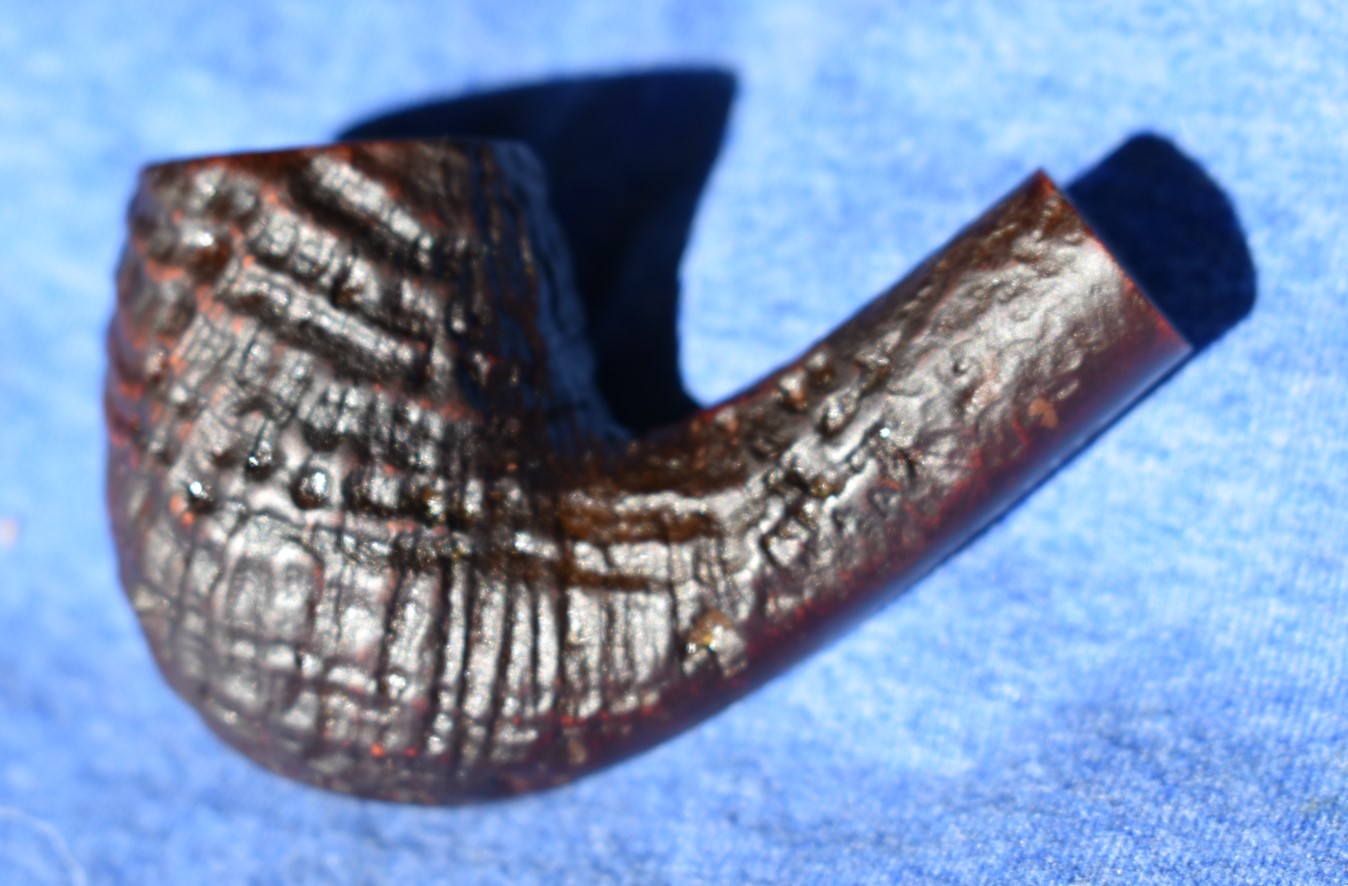
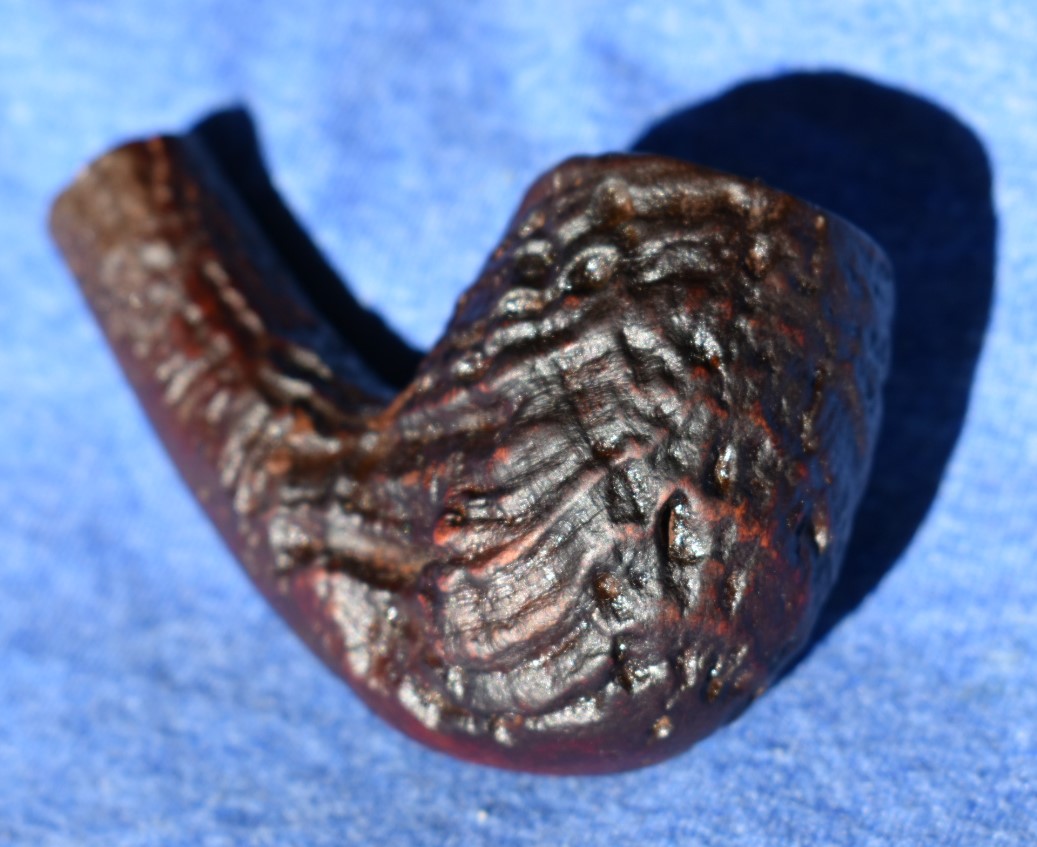


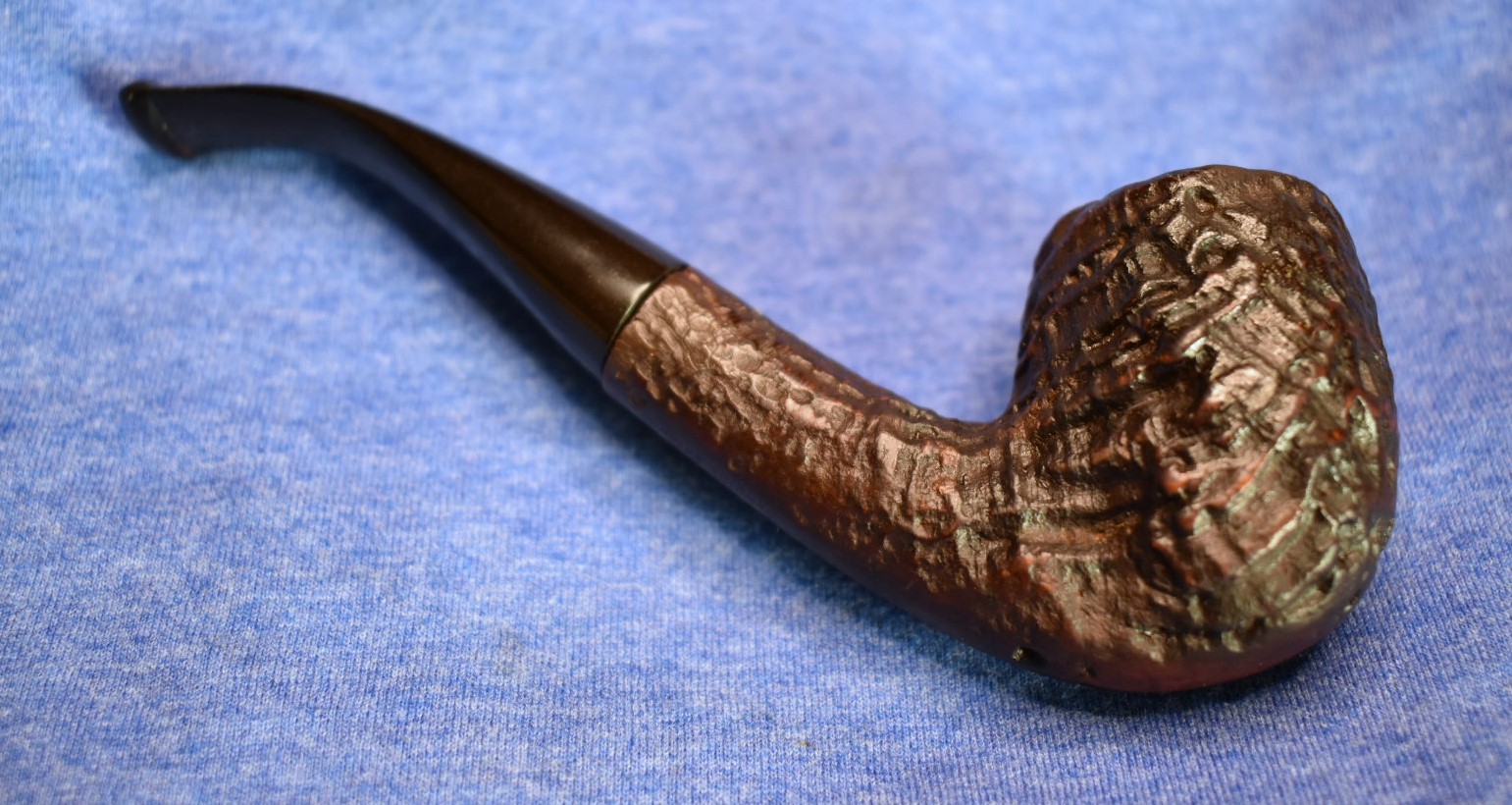


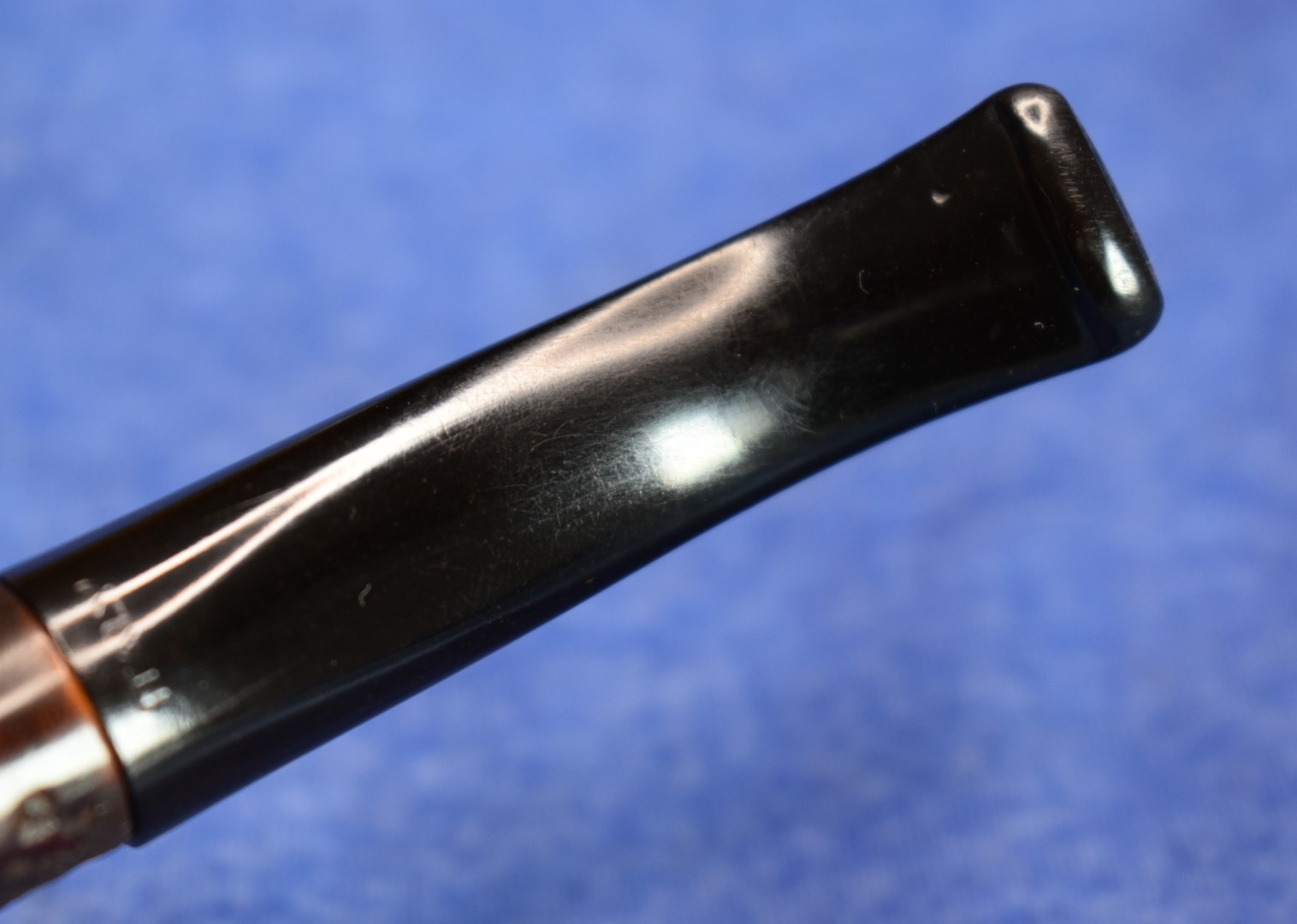
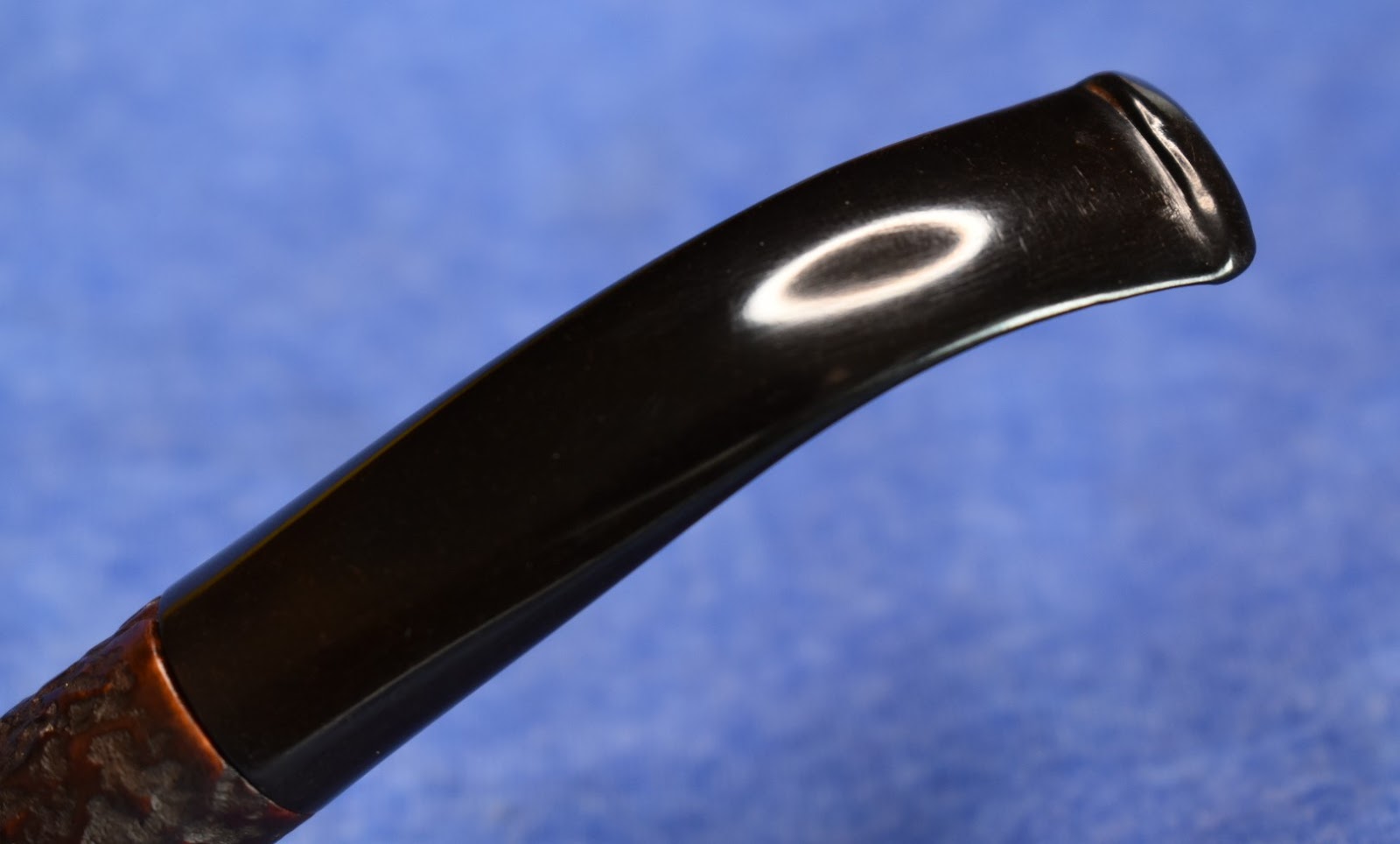



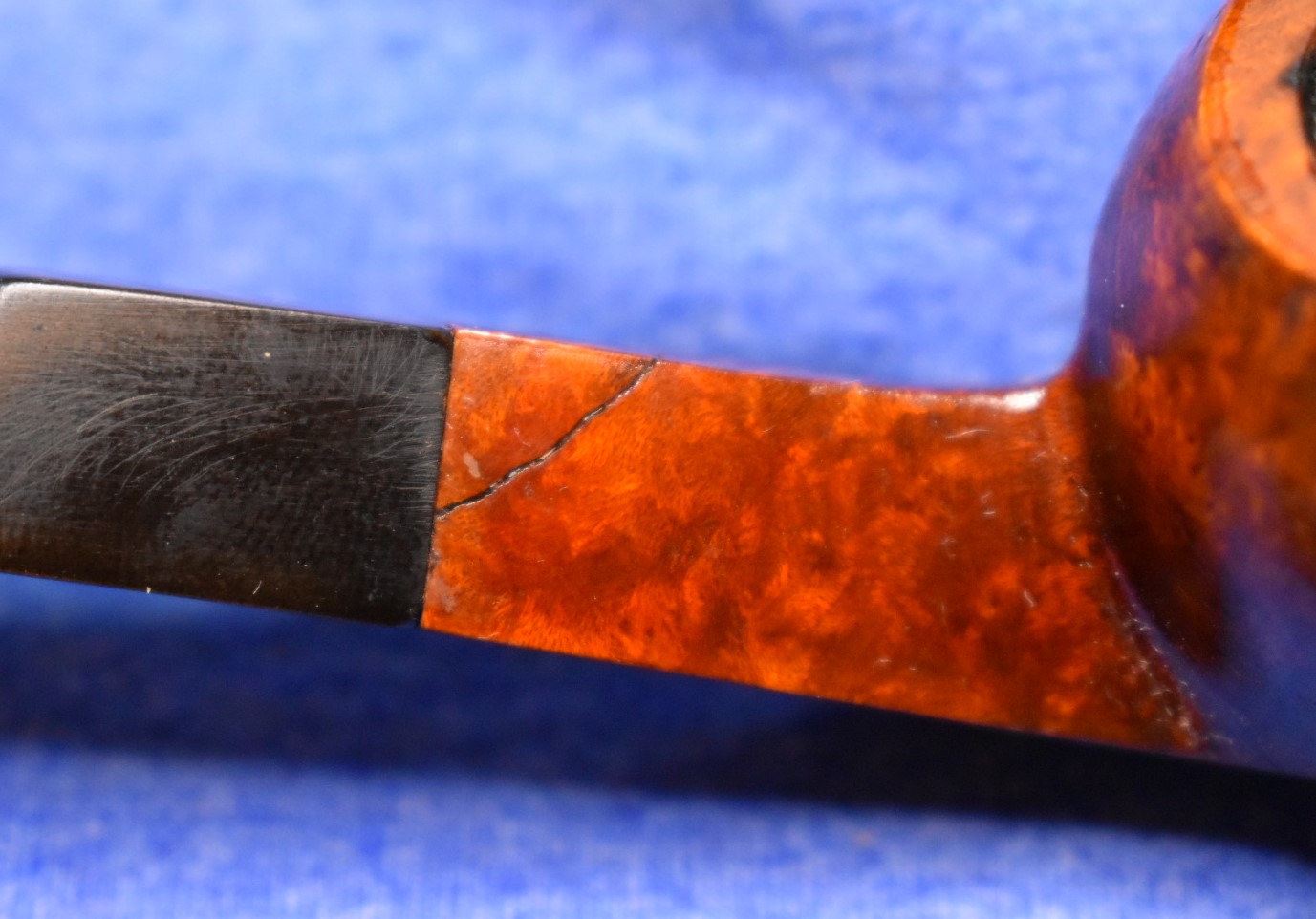


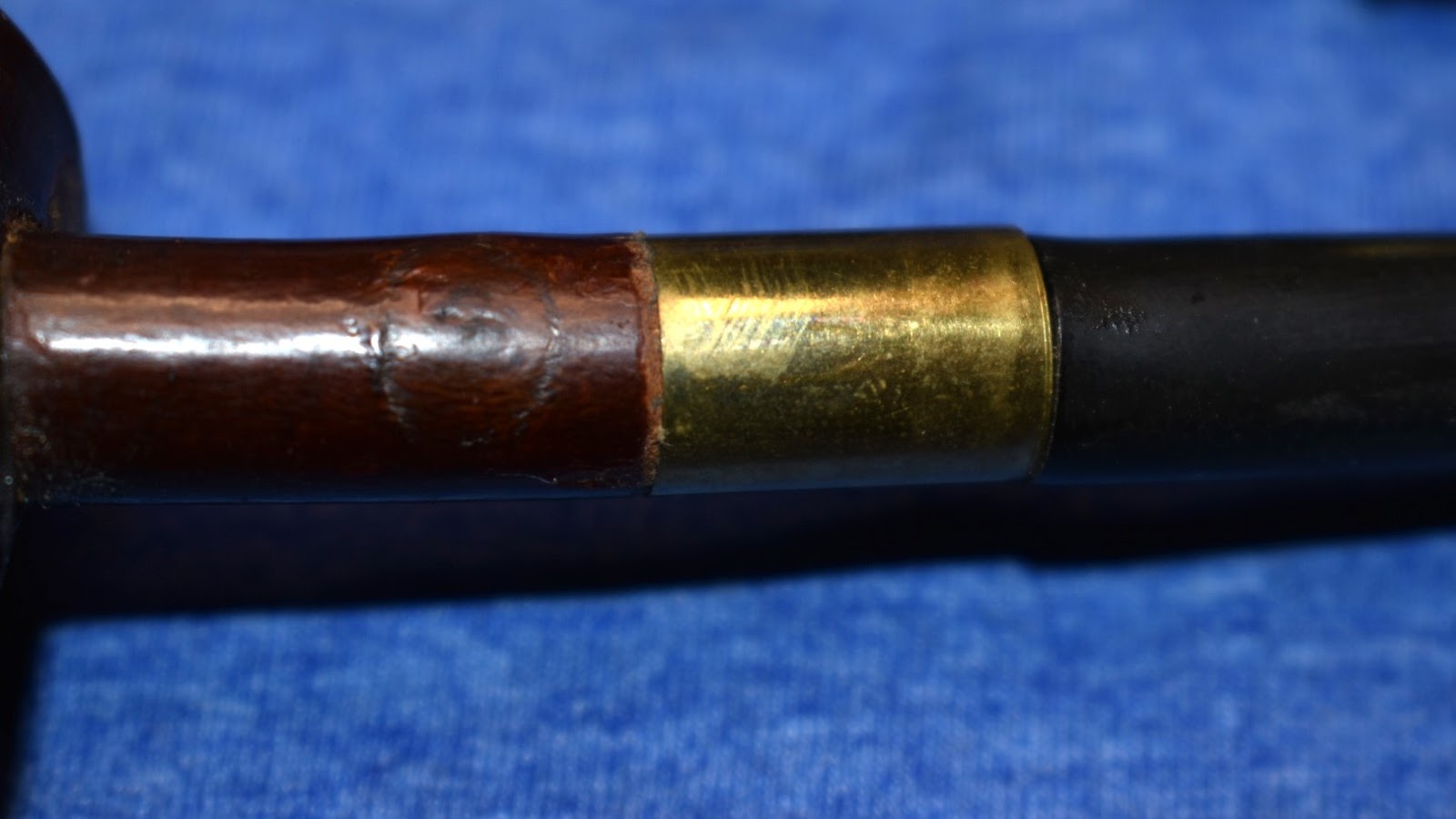


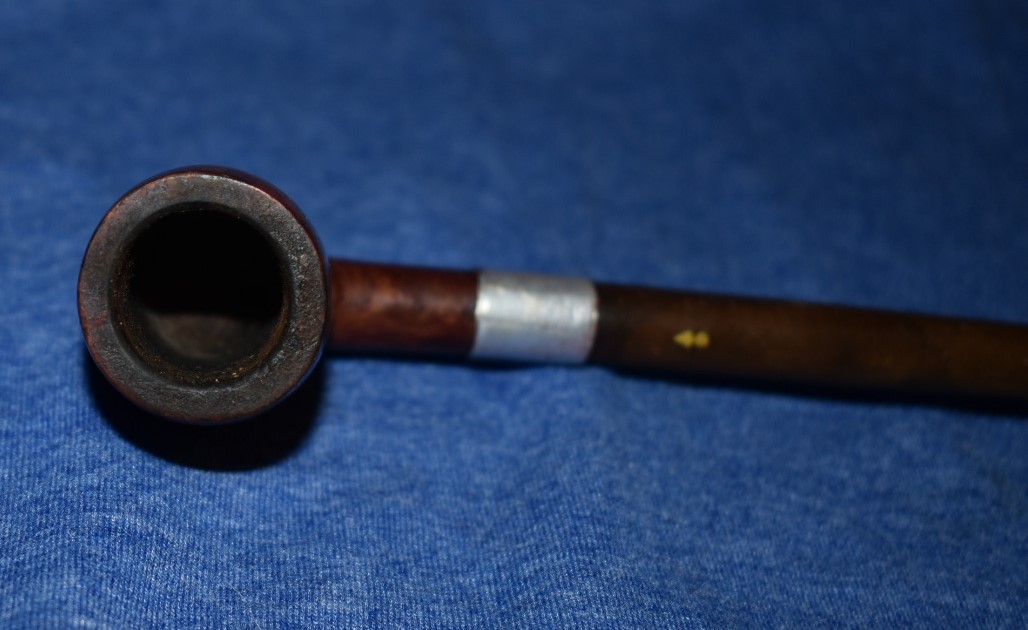


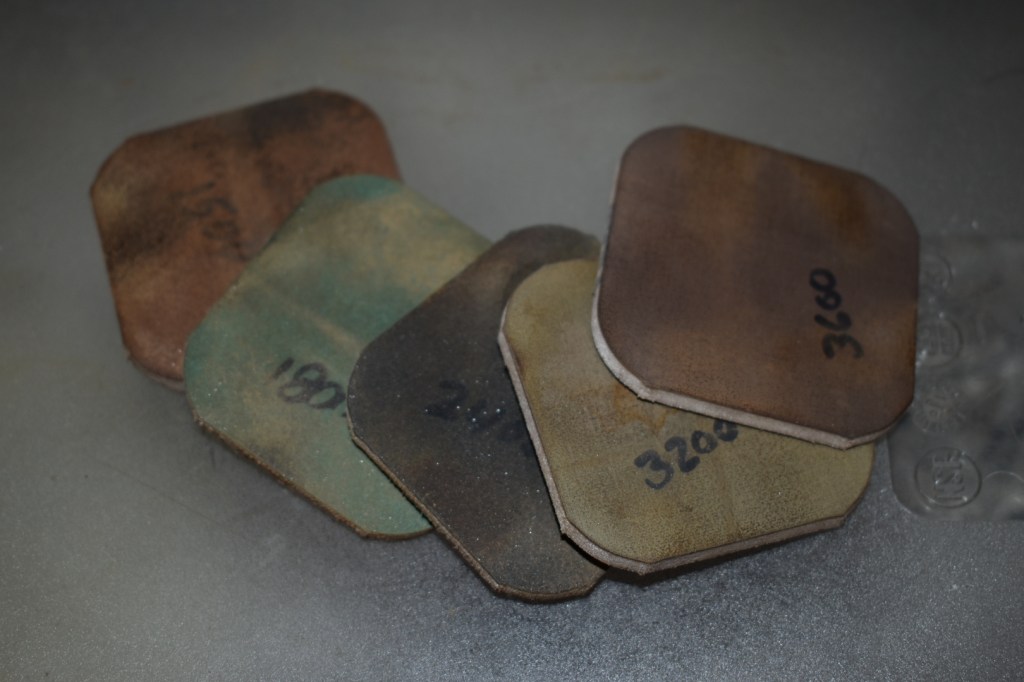
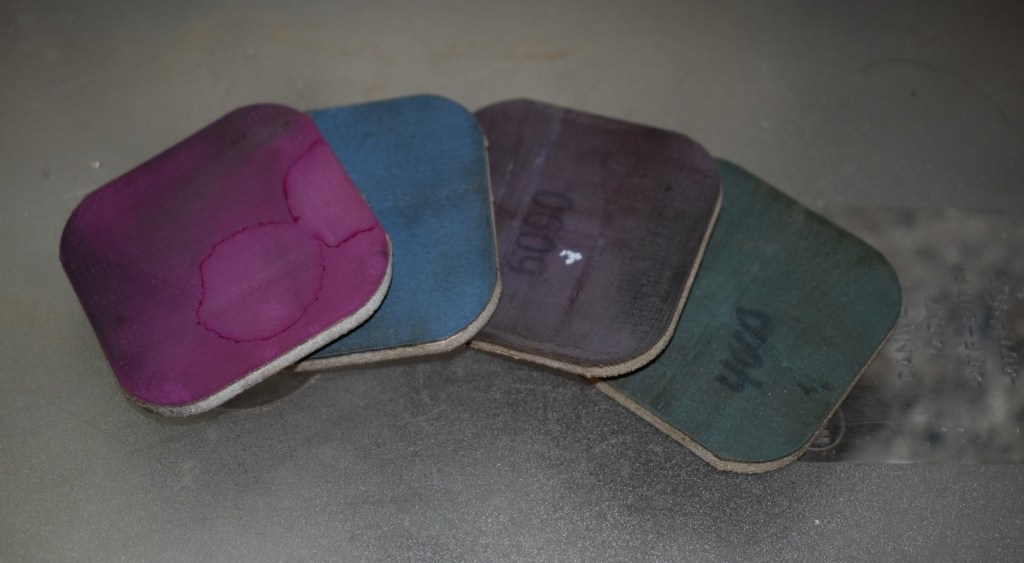


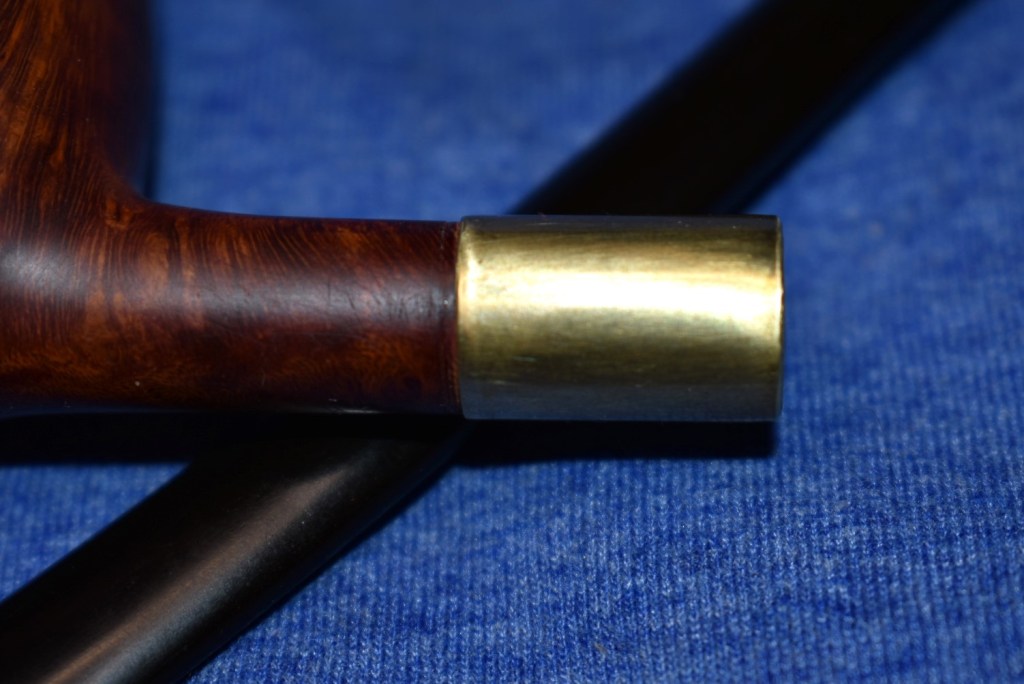
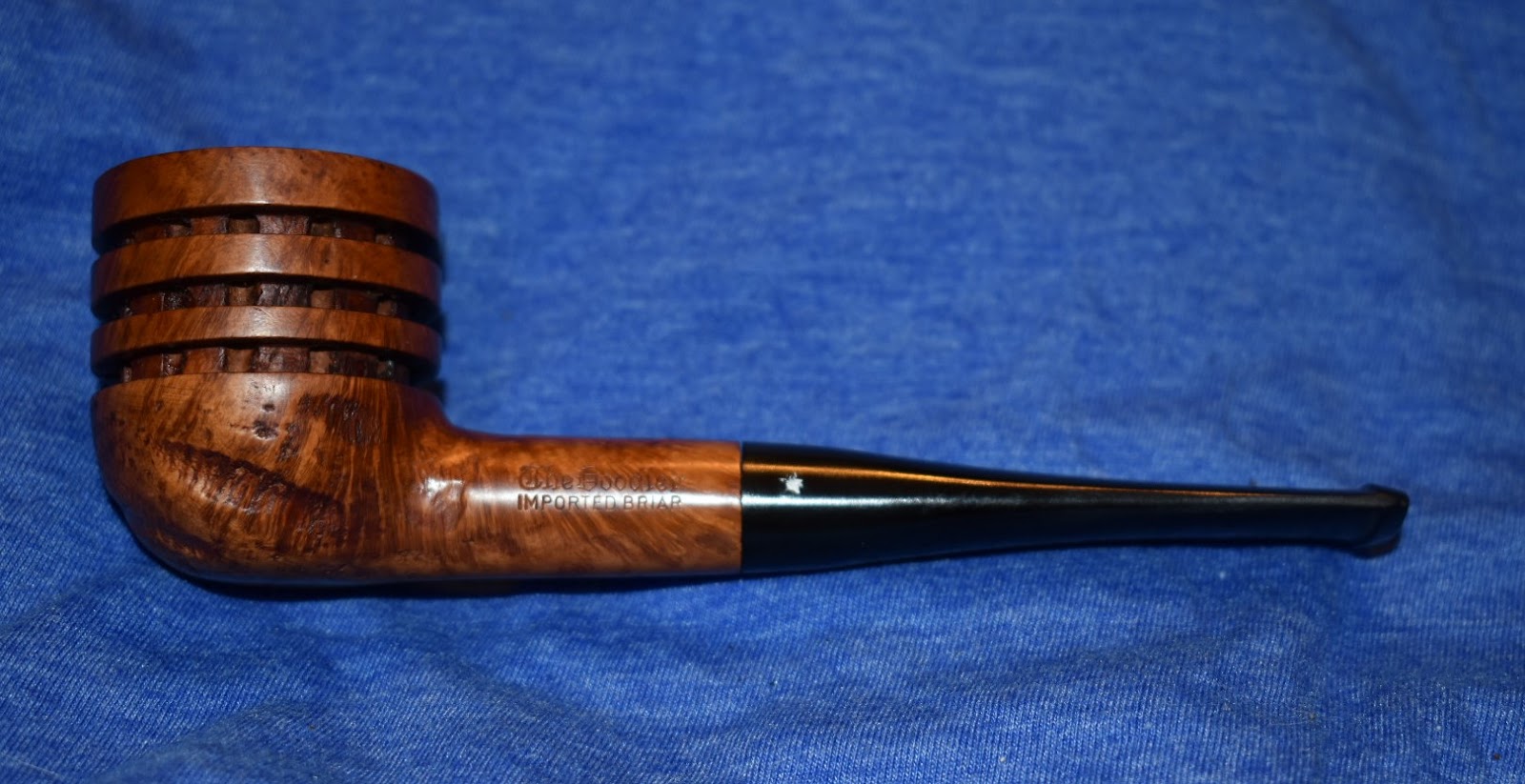


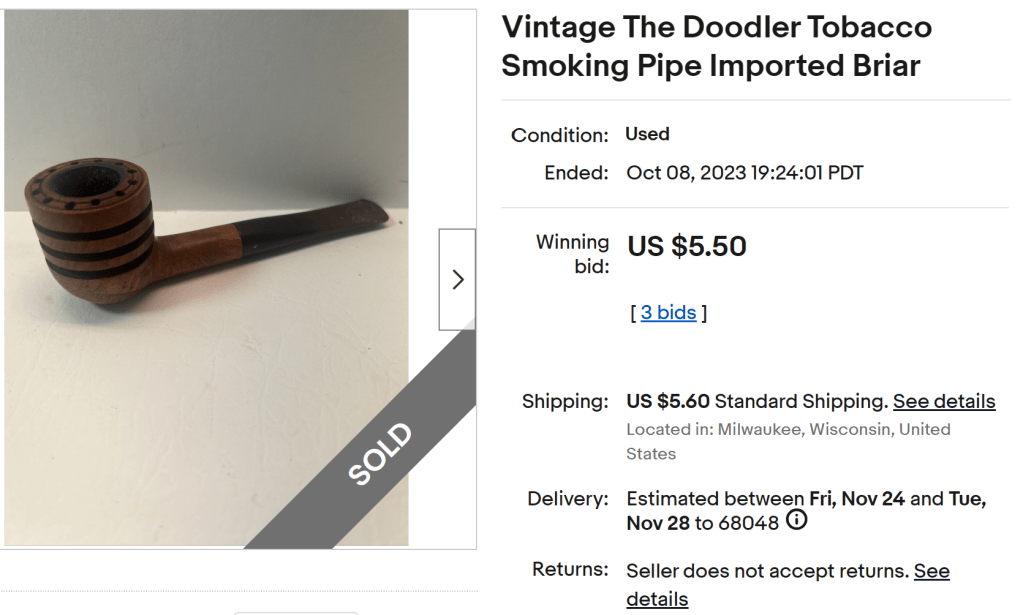


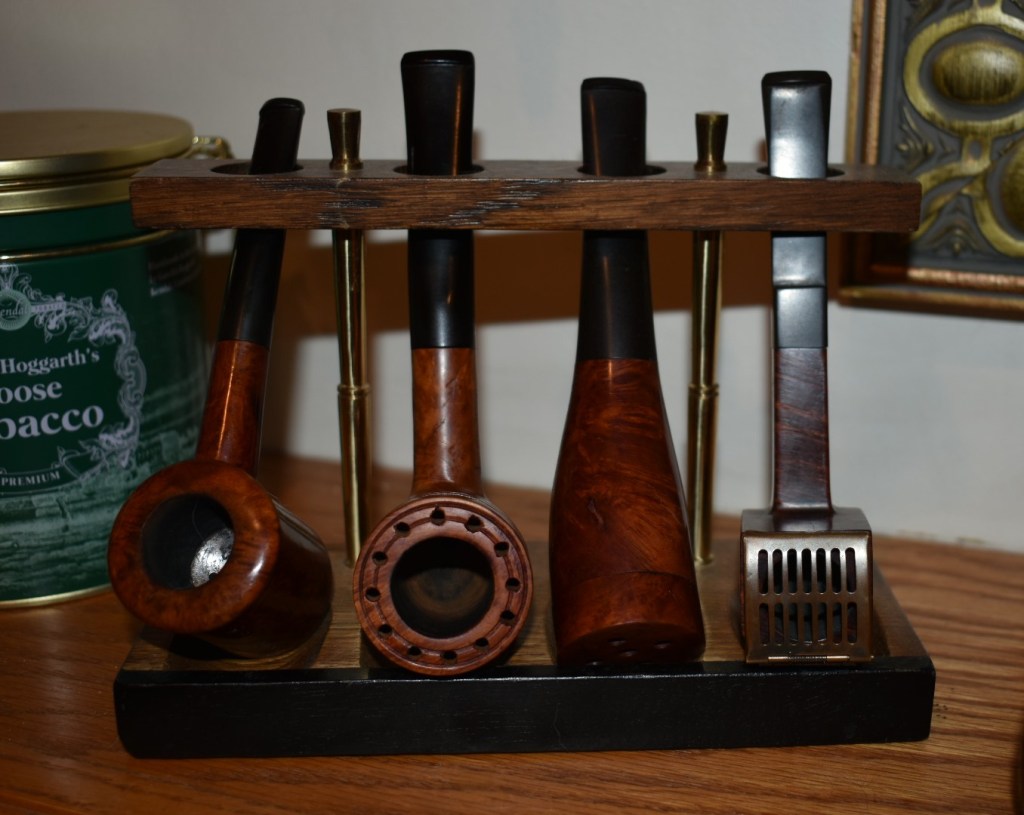


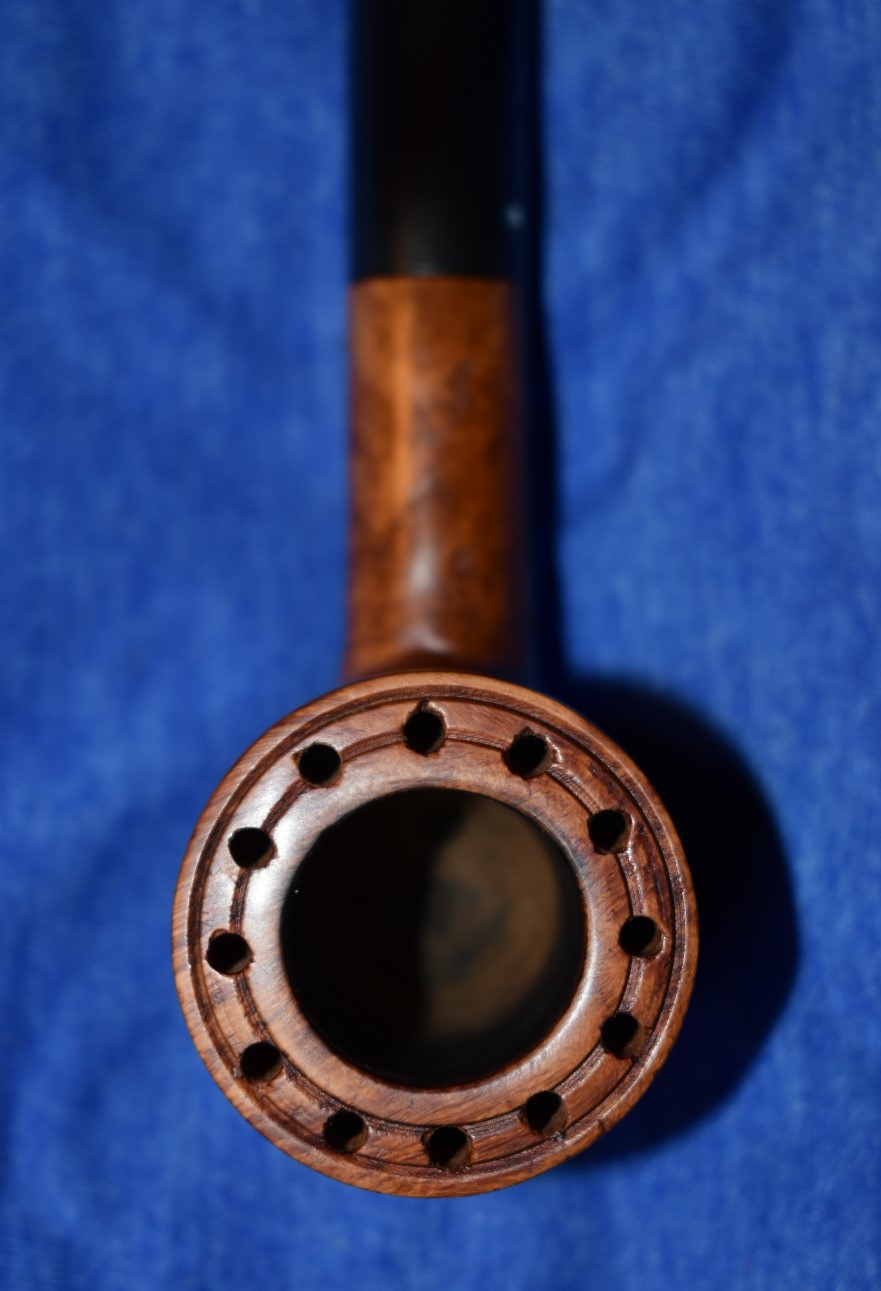

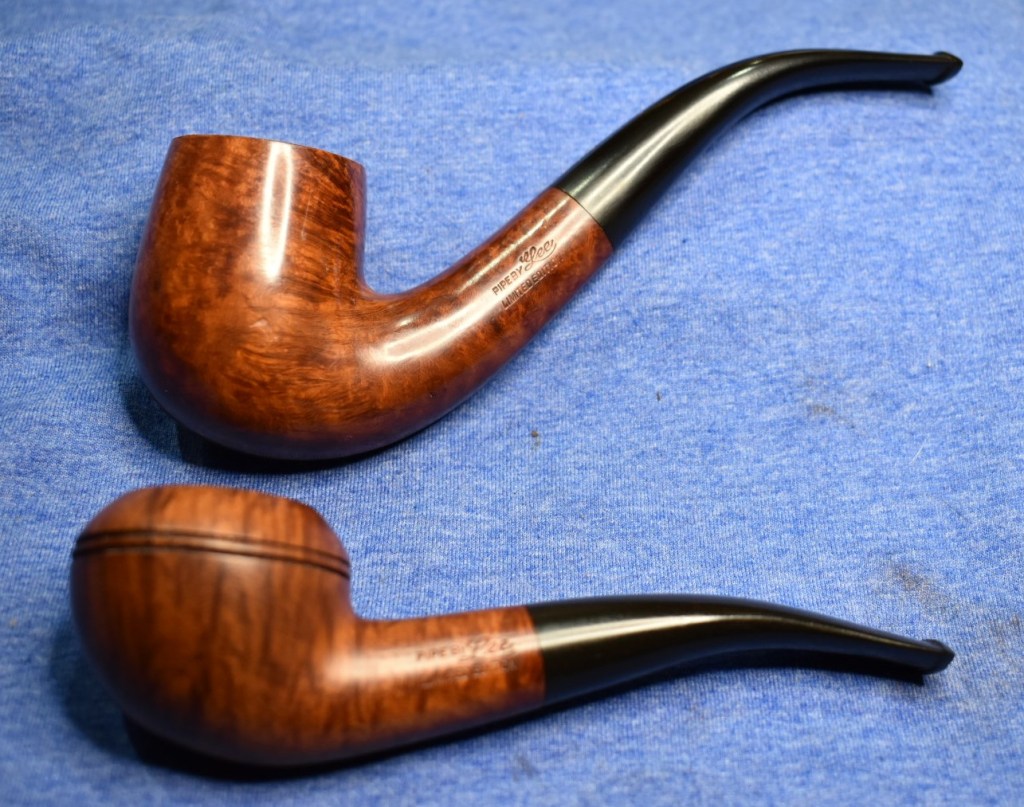
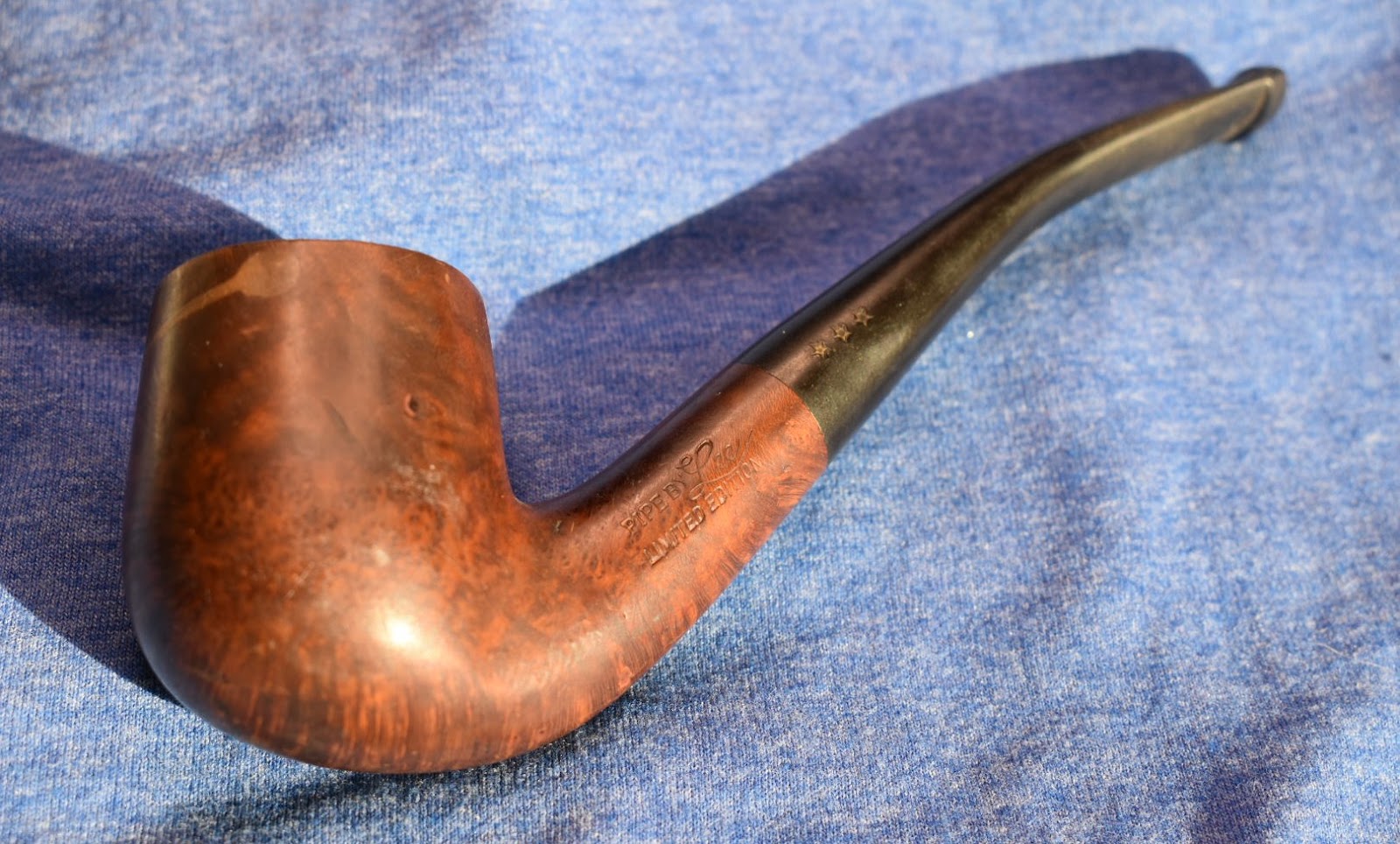


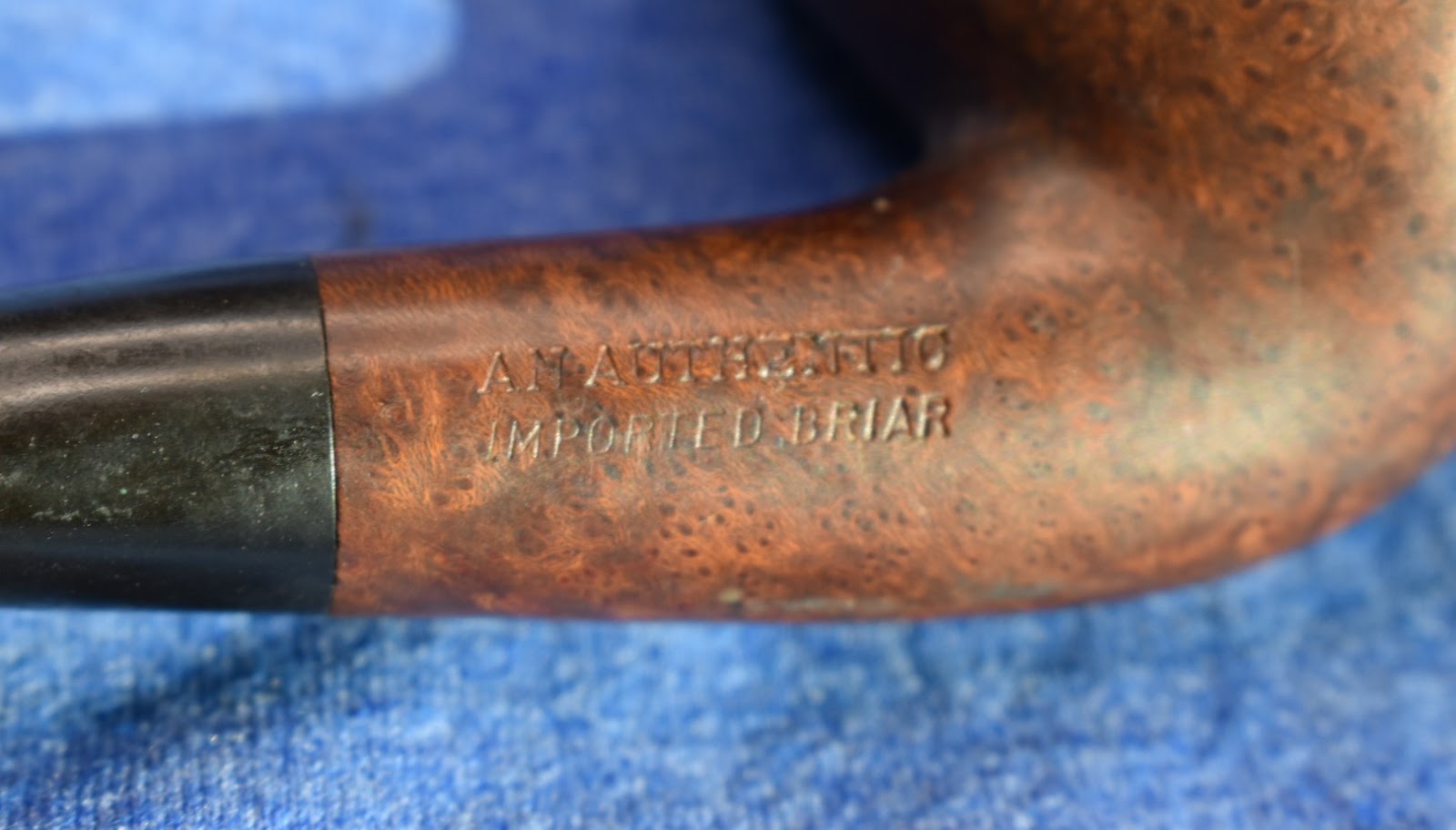


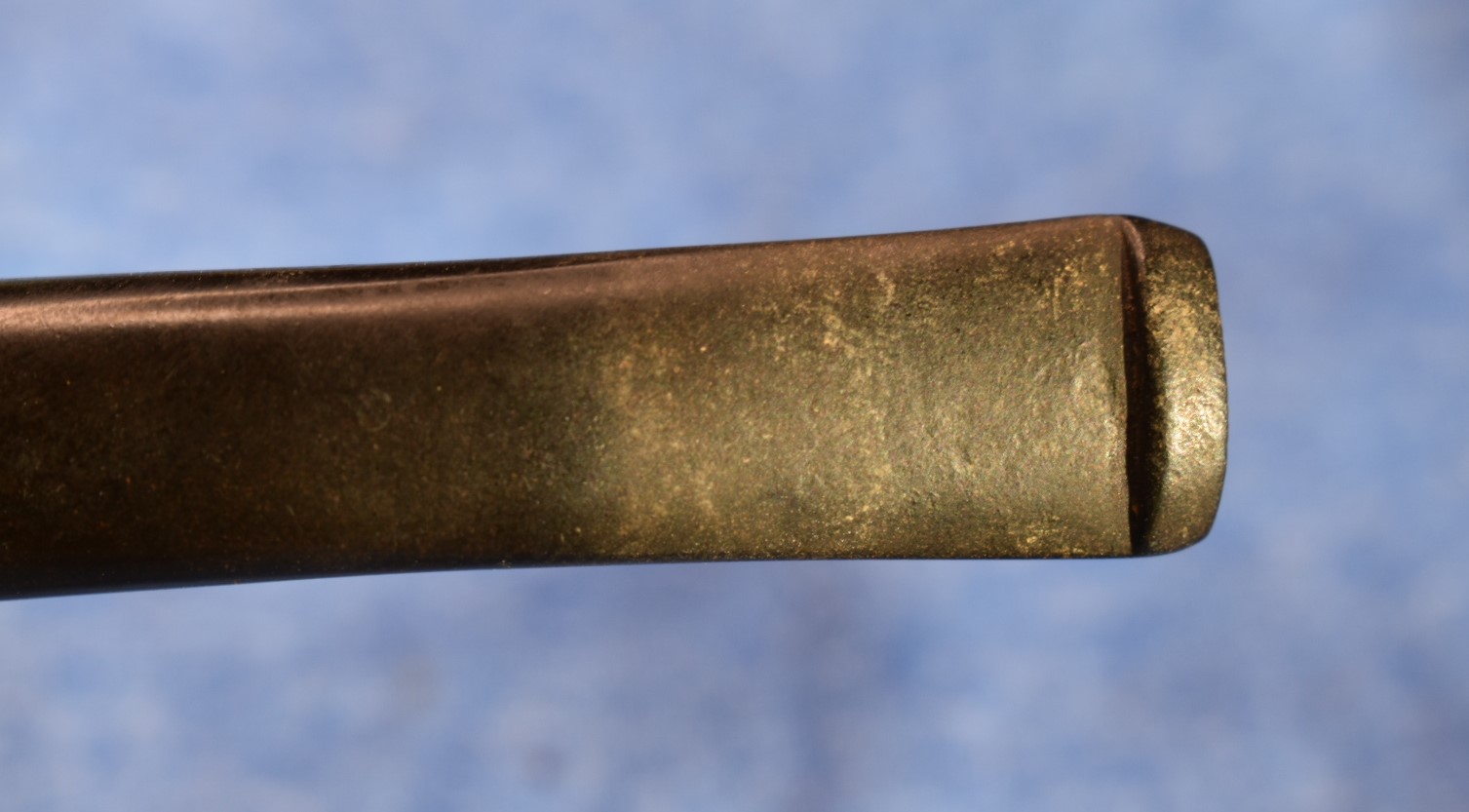

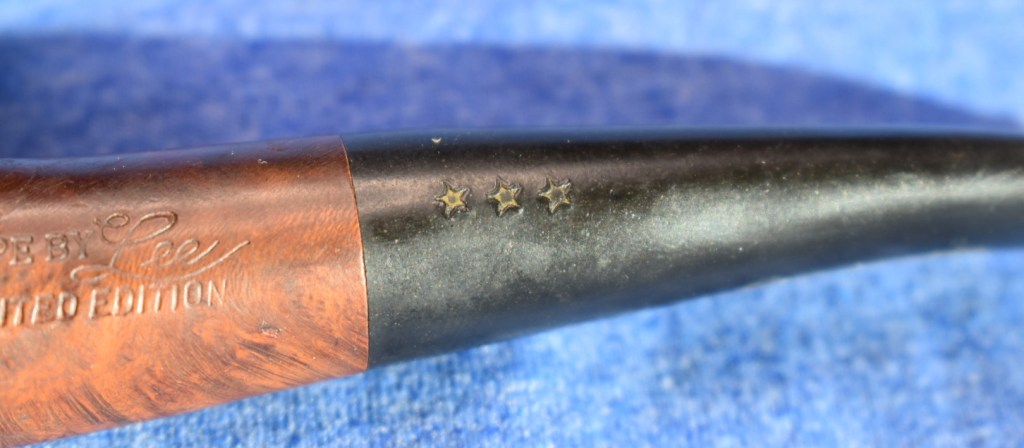


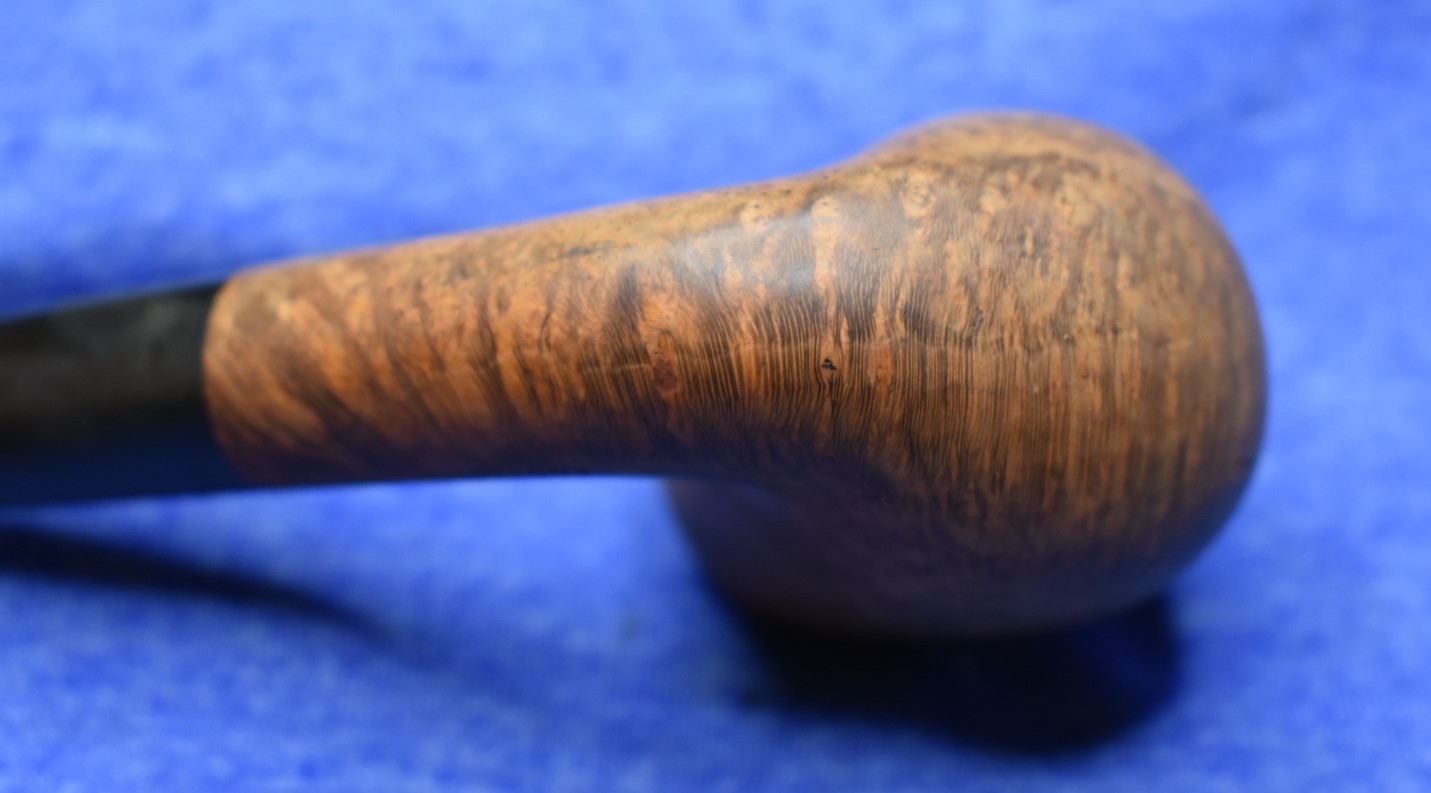


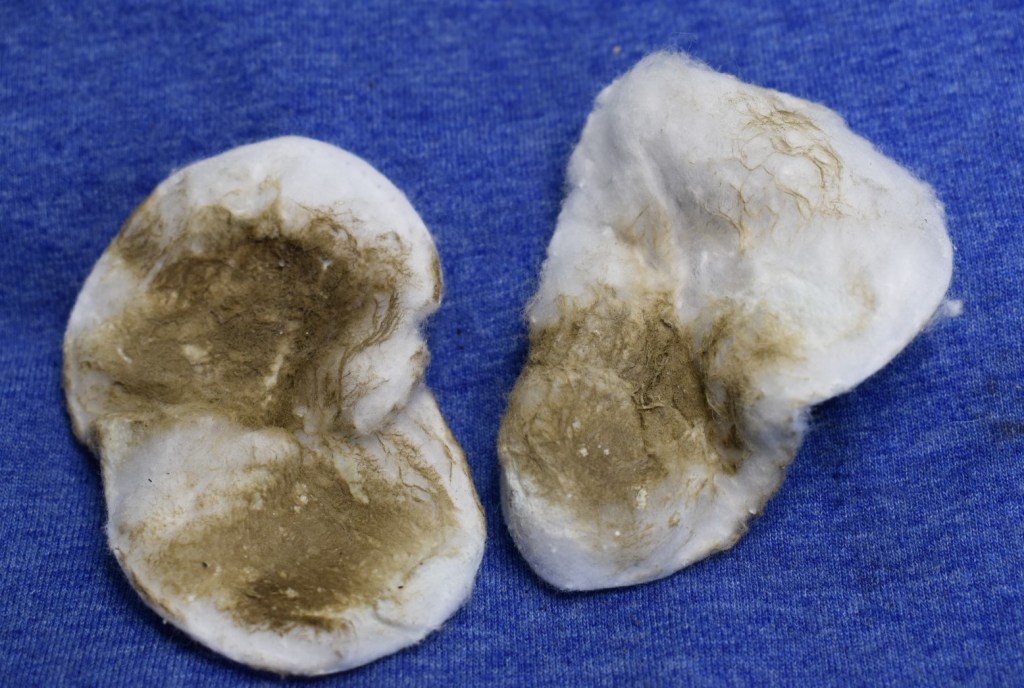
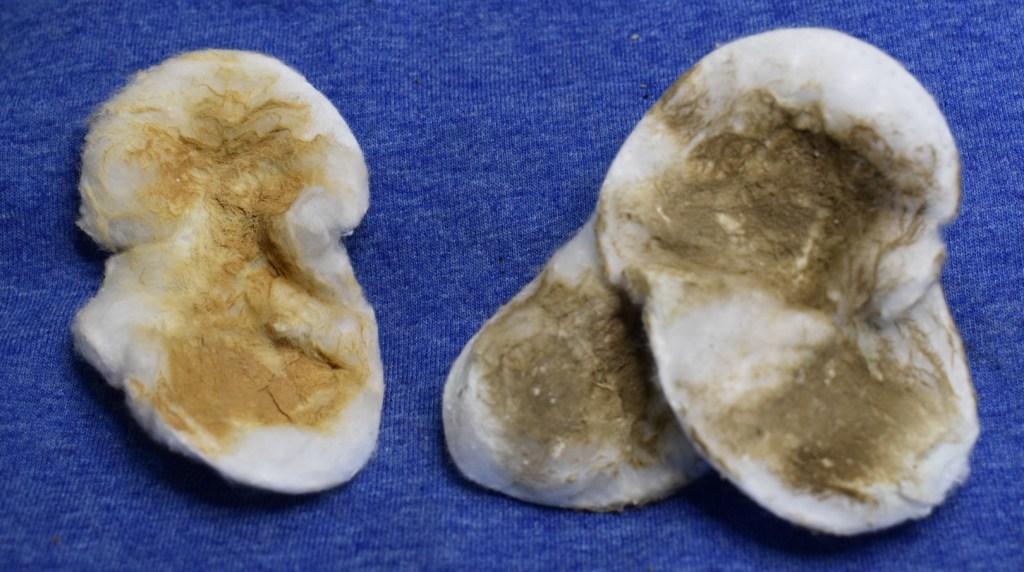

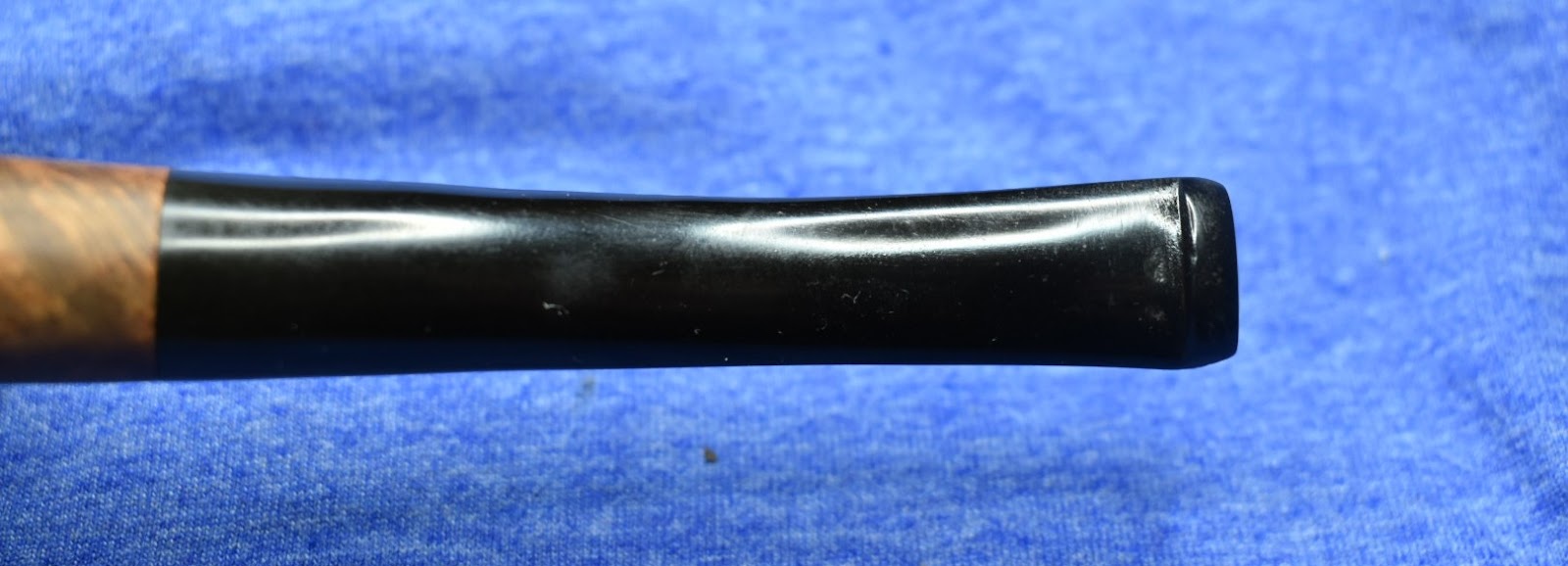

 Pipe by Lee 2 start bent billiard before bend
 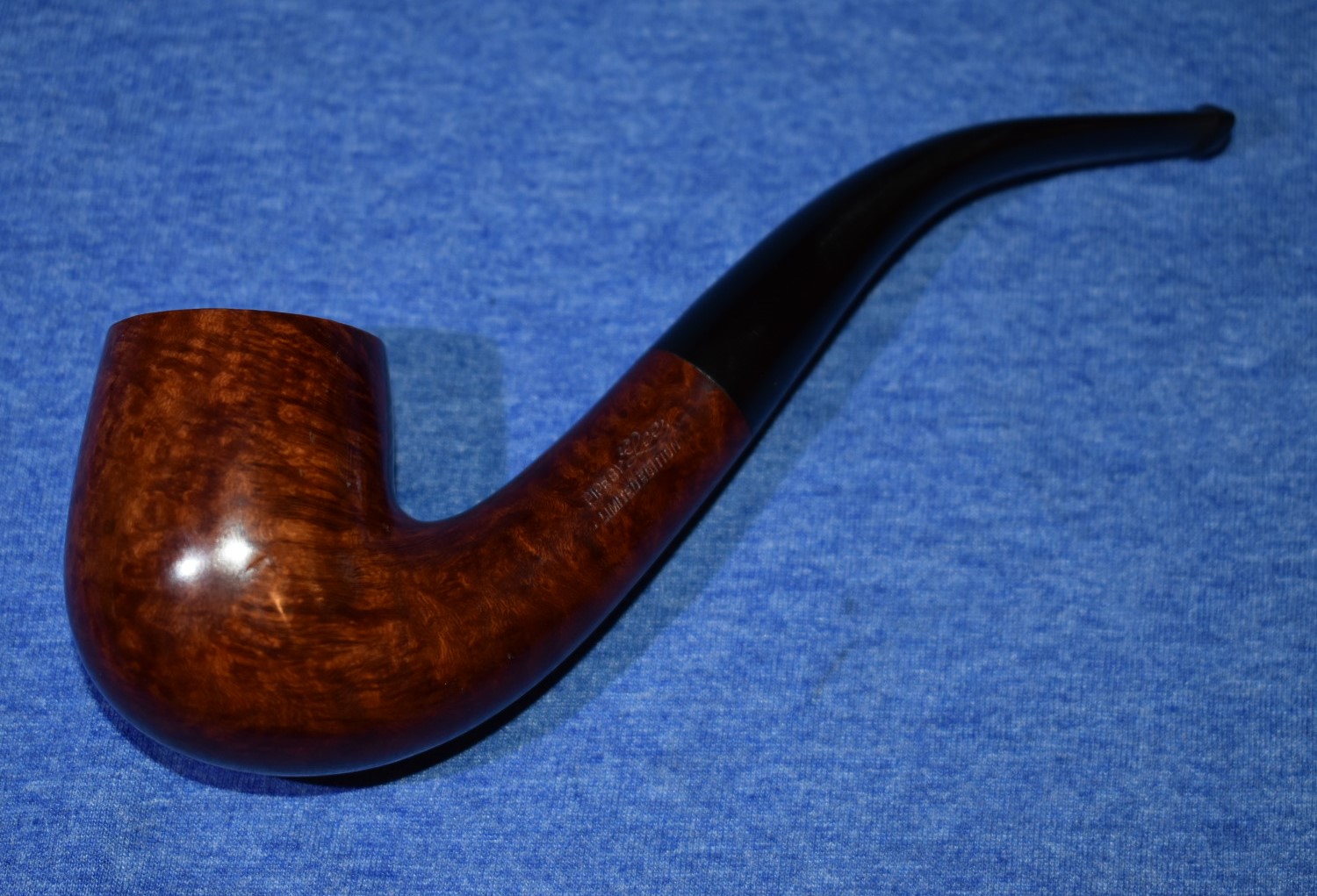 Pipe by Lee two star bent billiard after bend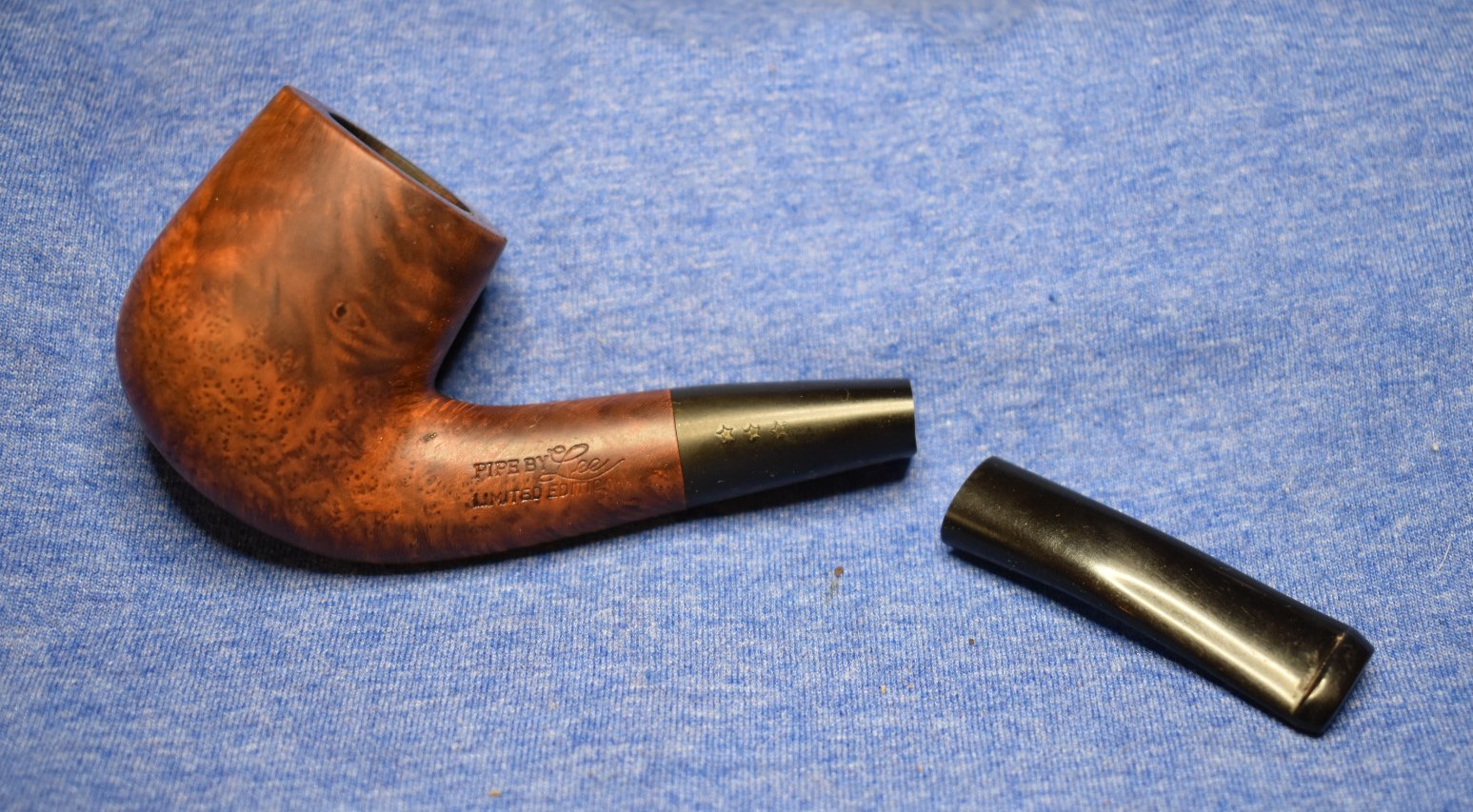
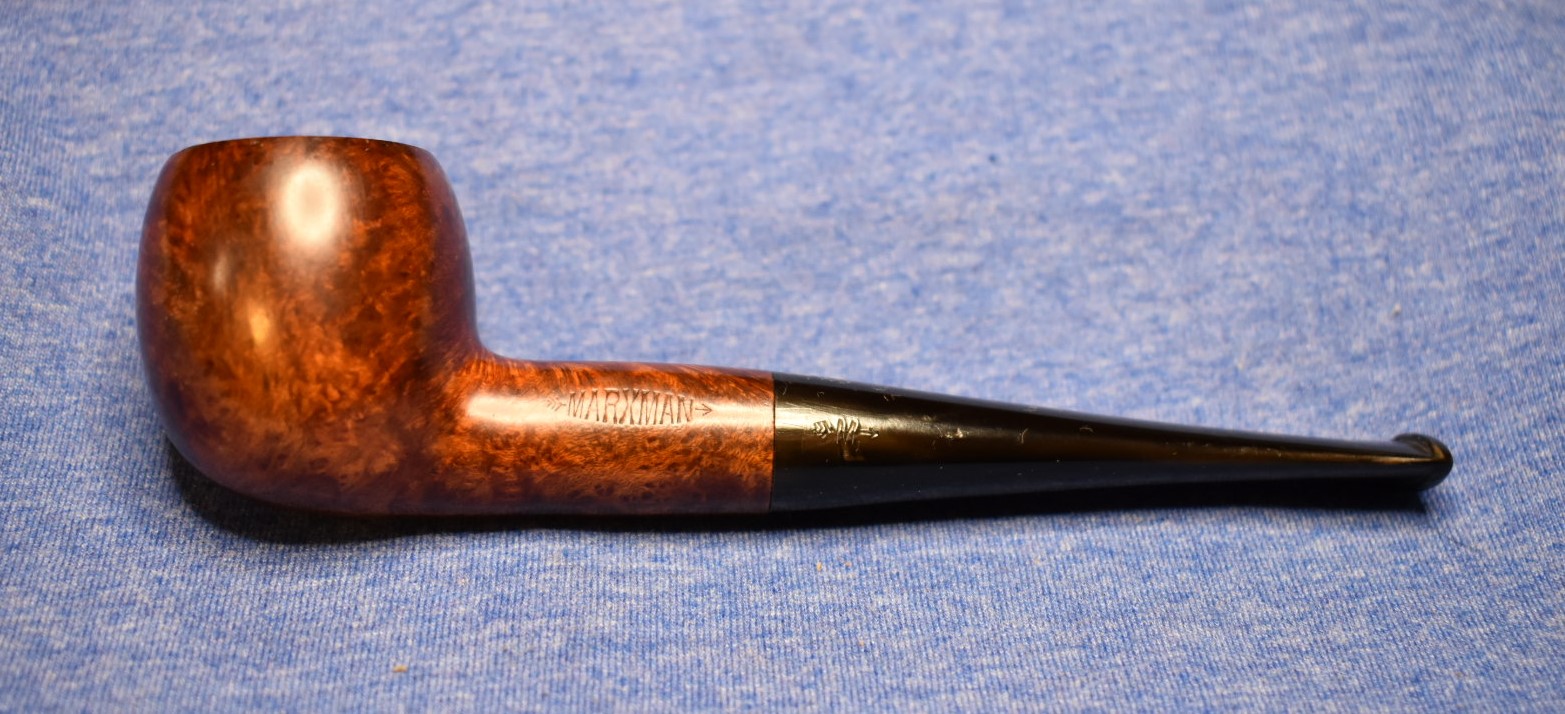
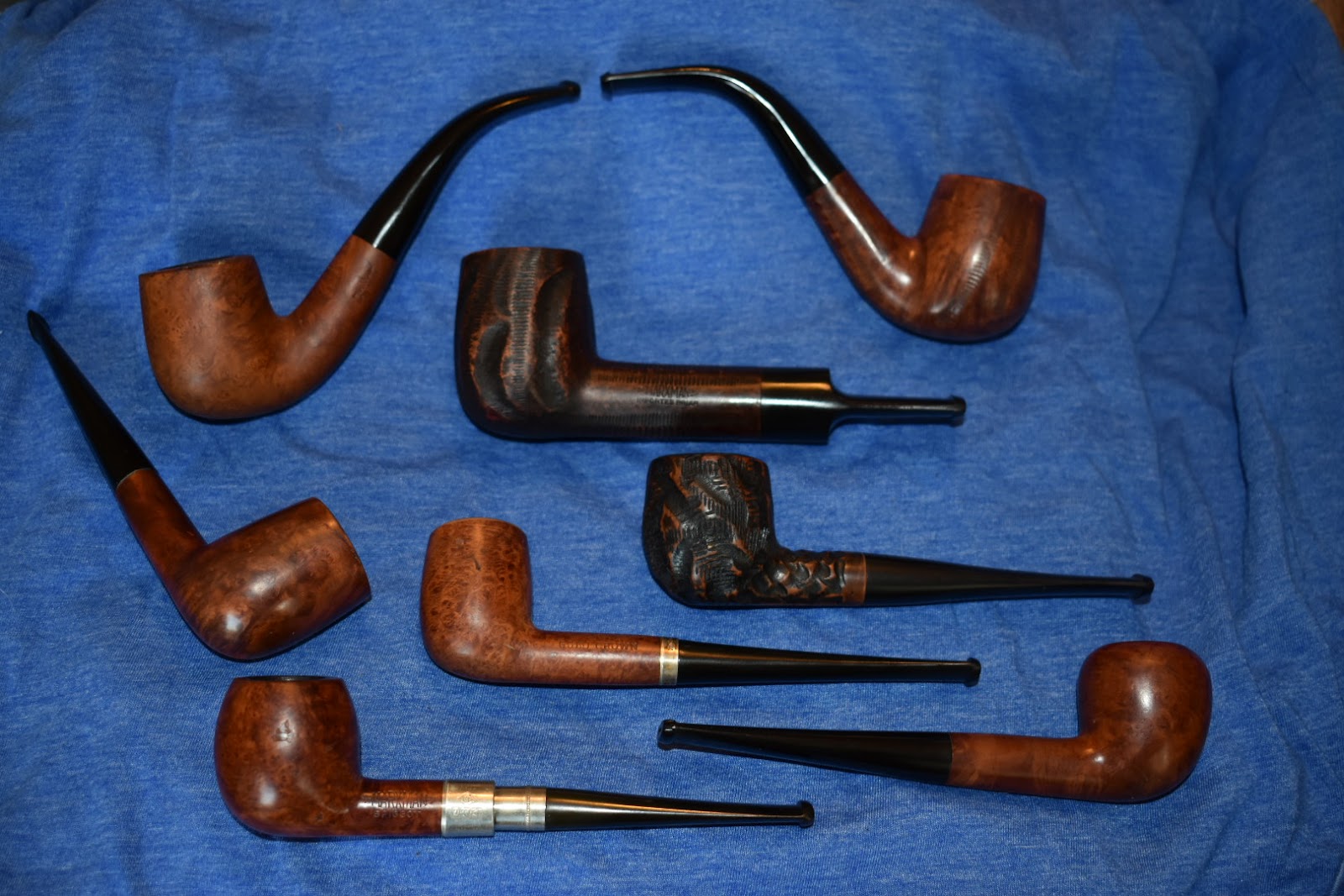


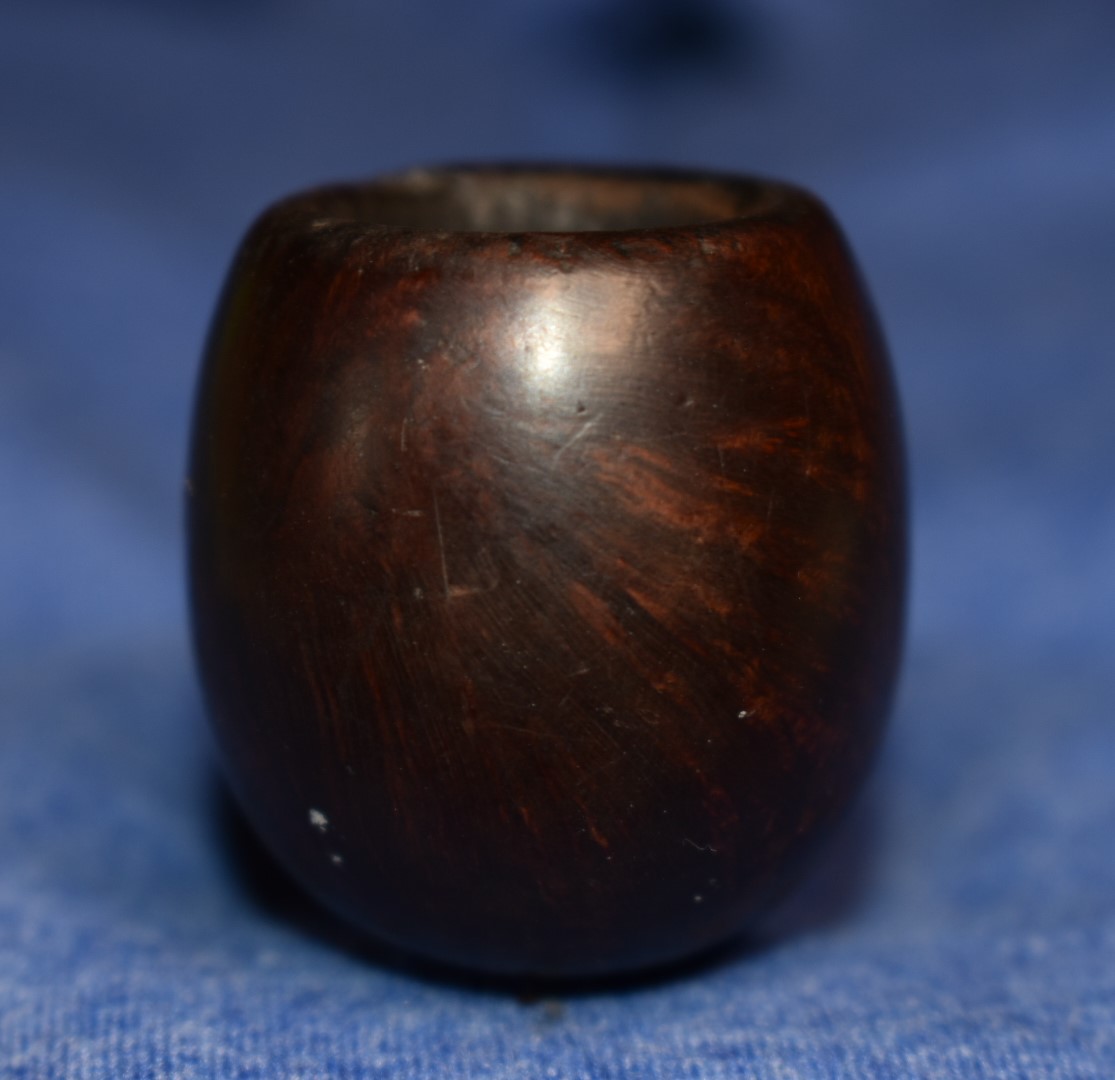


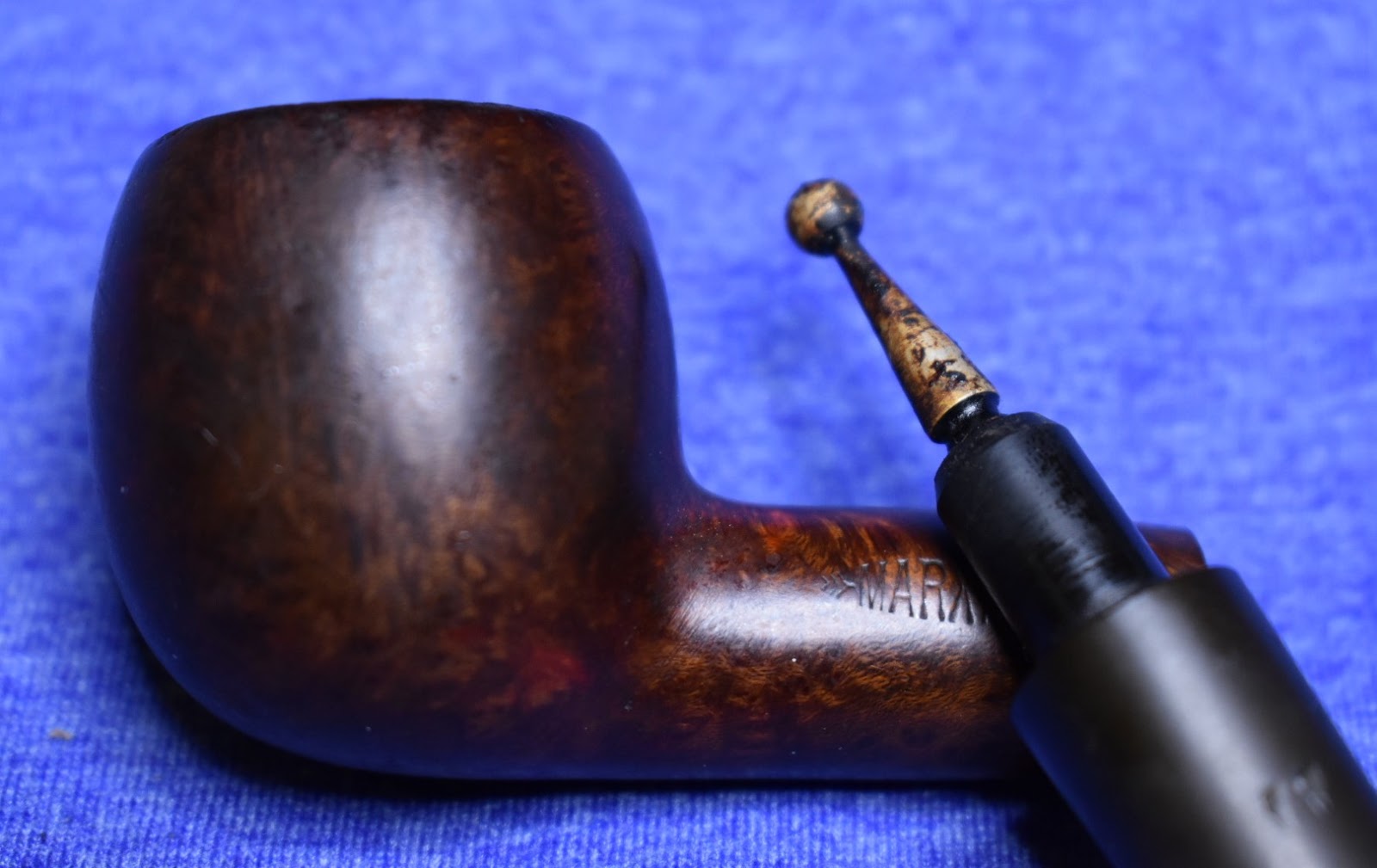

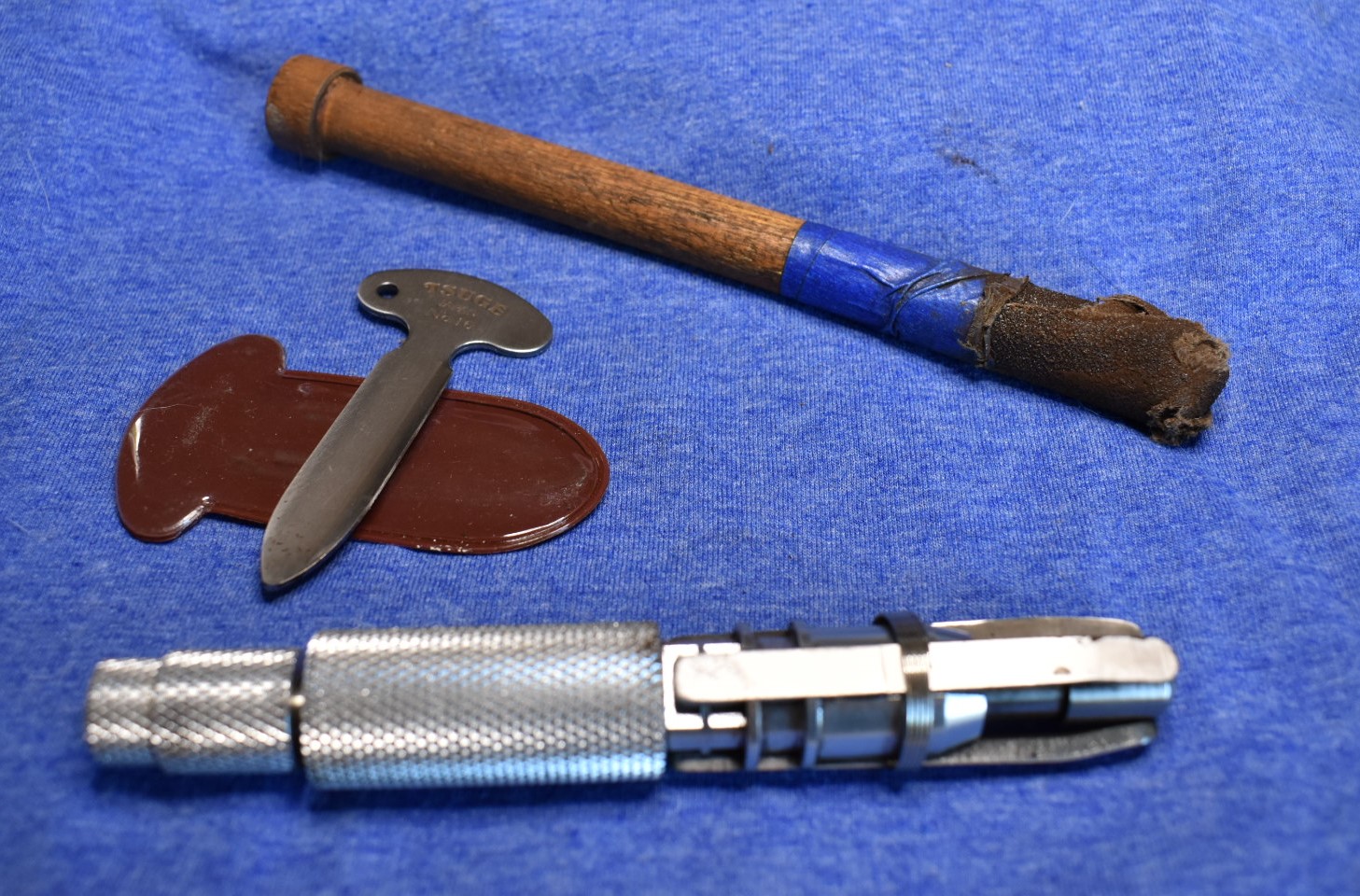


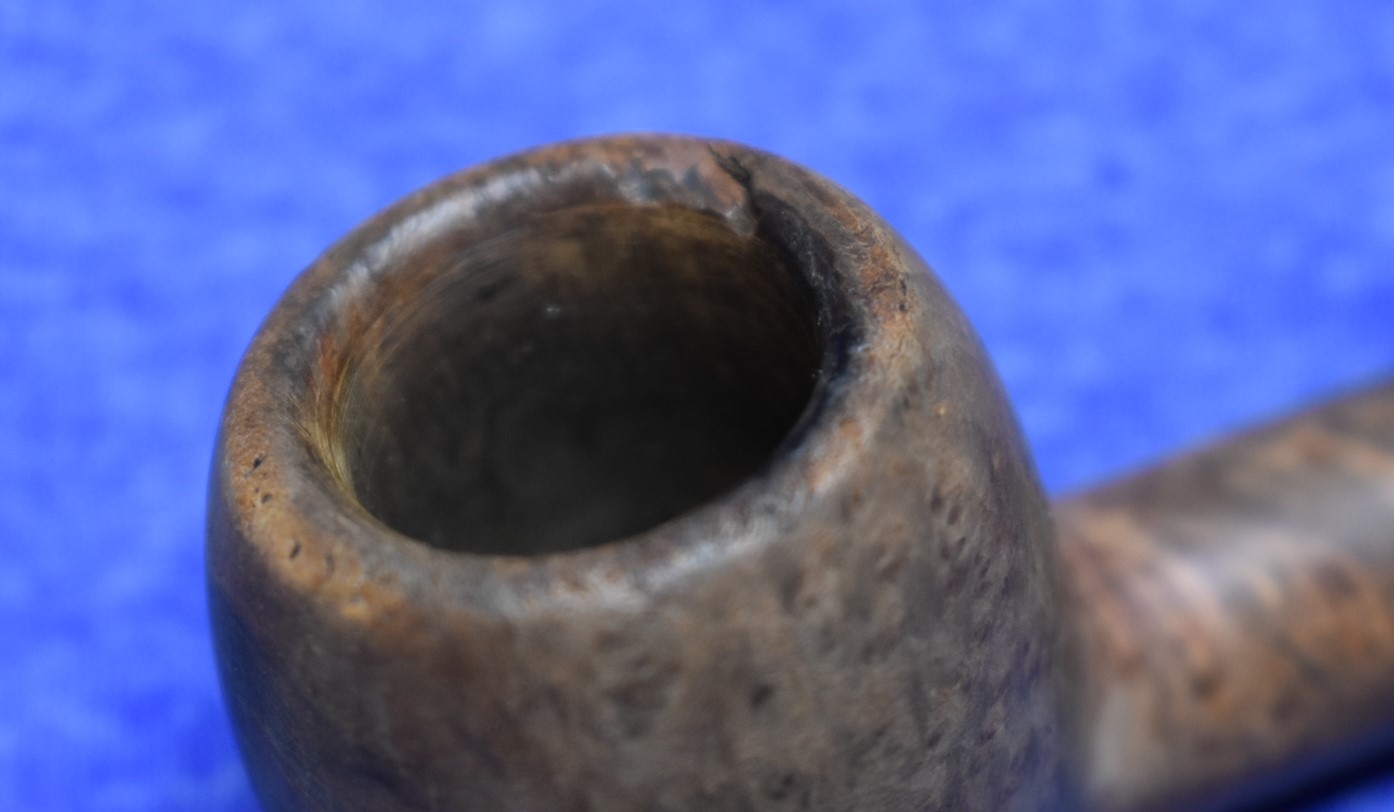





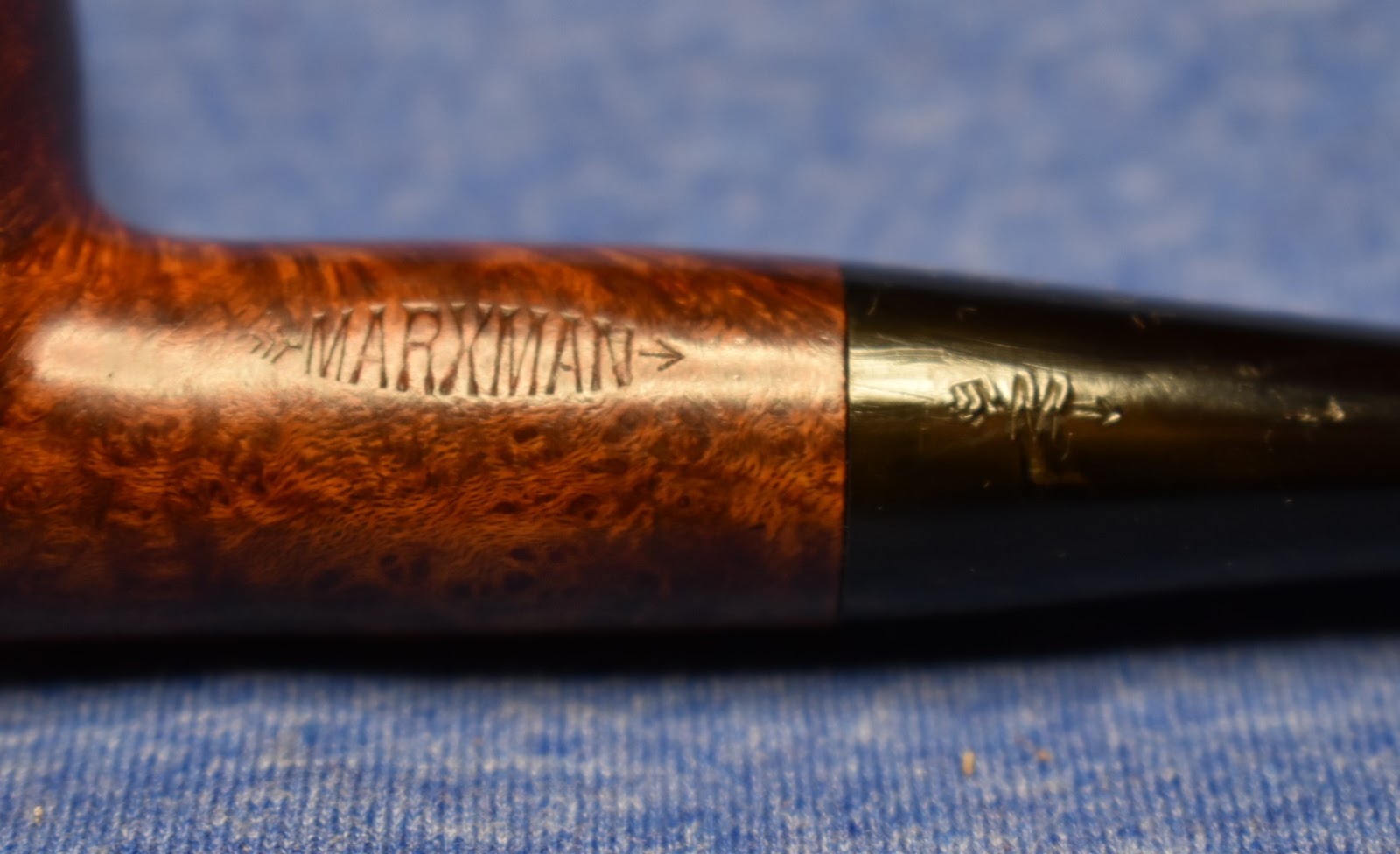


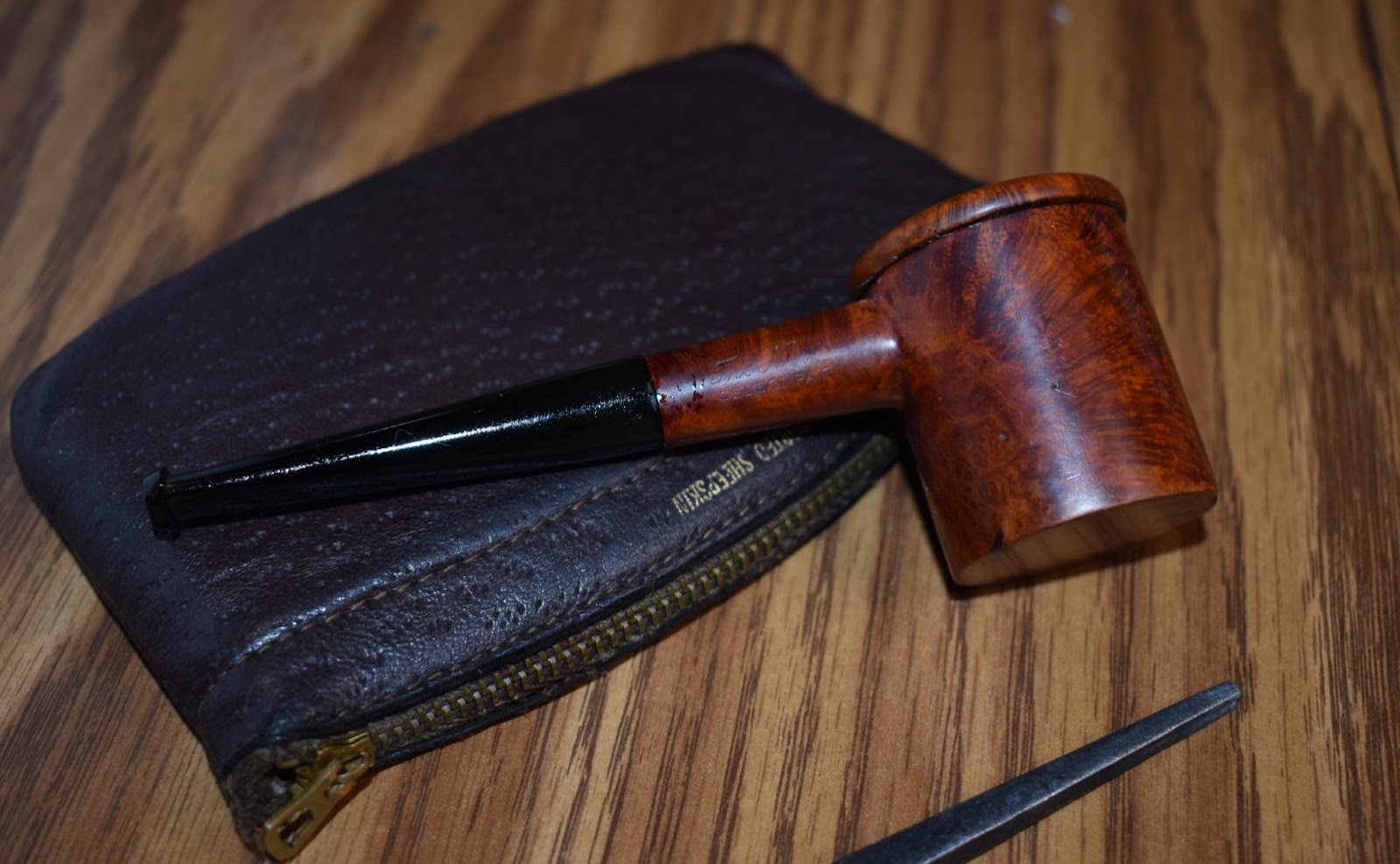


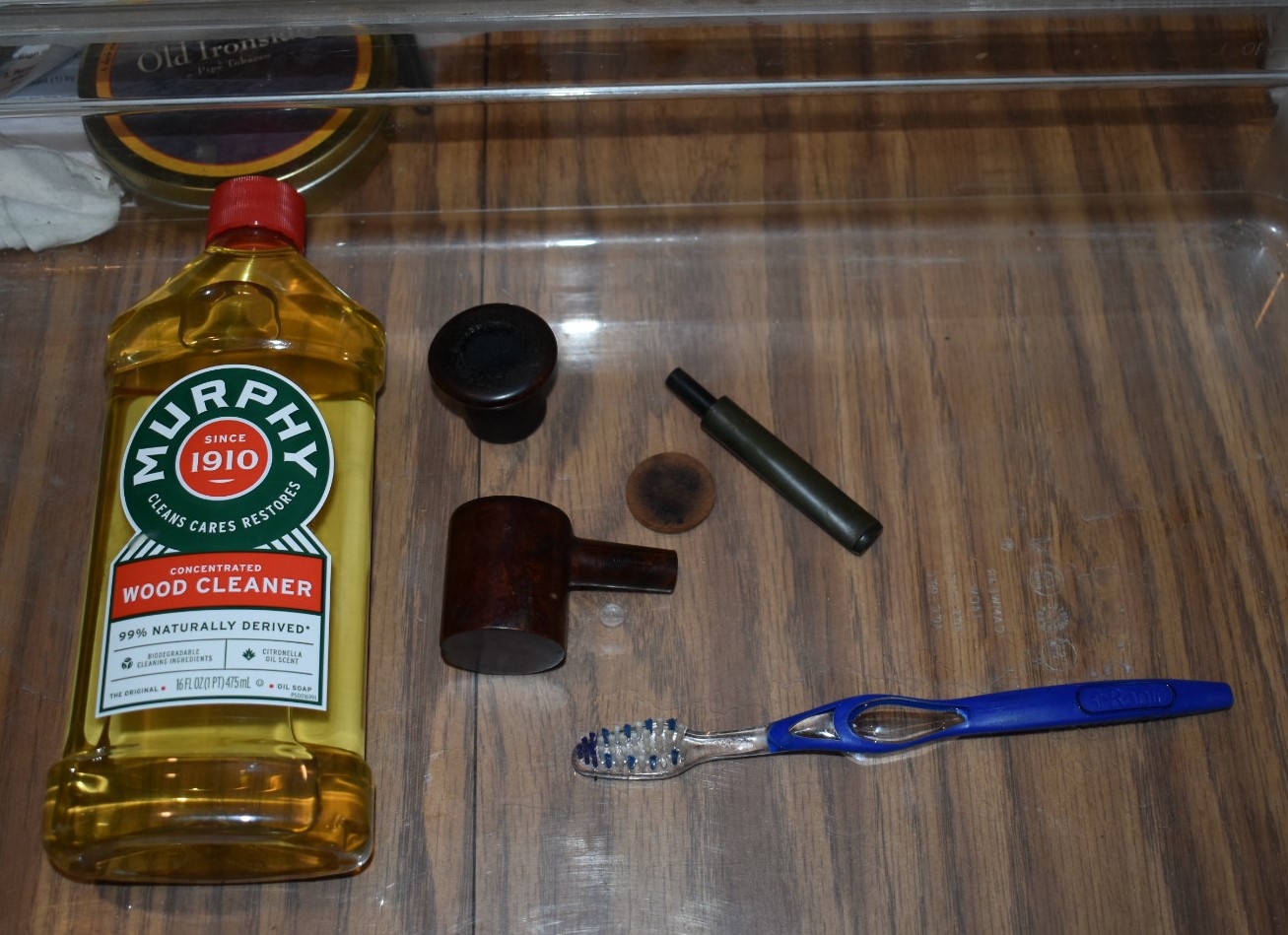
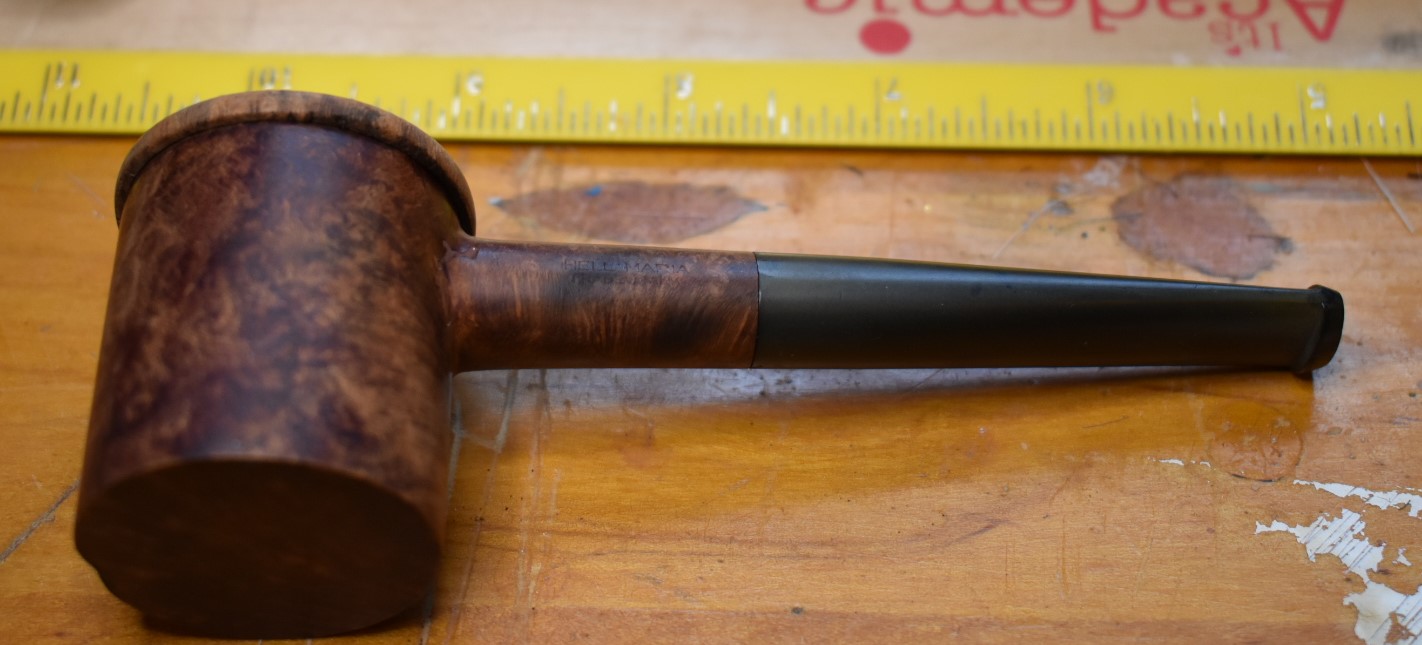

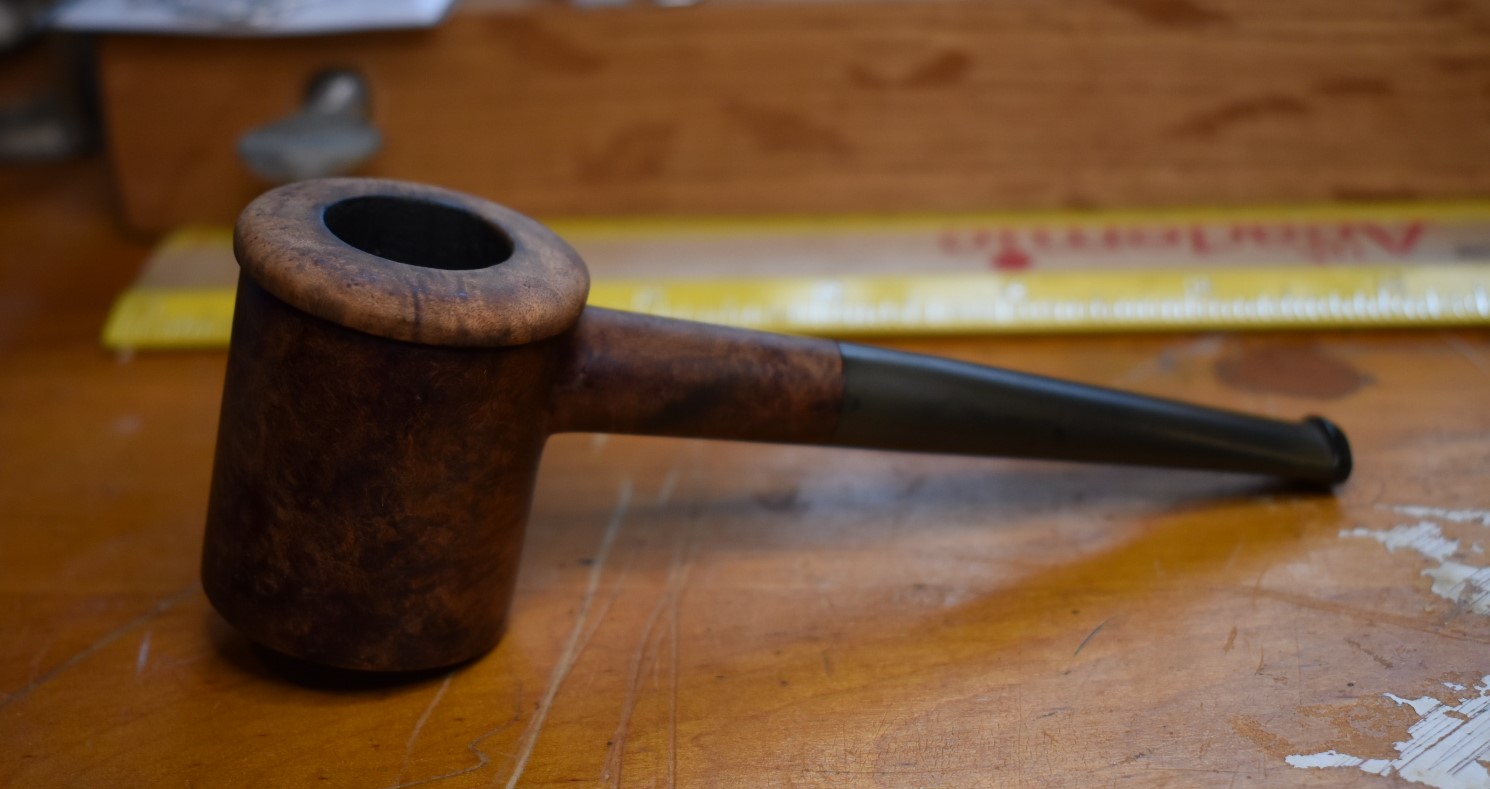
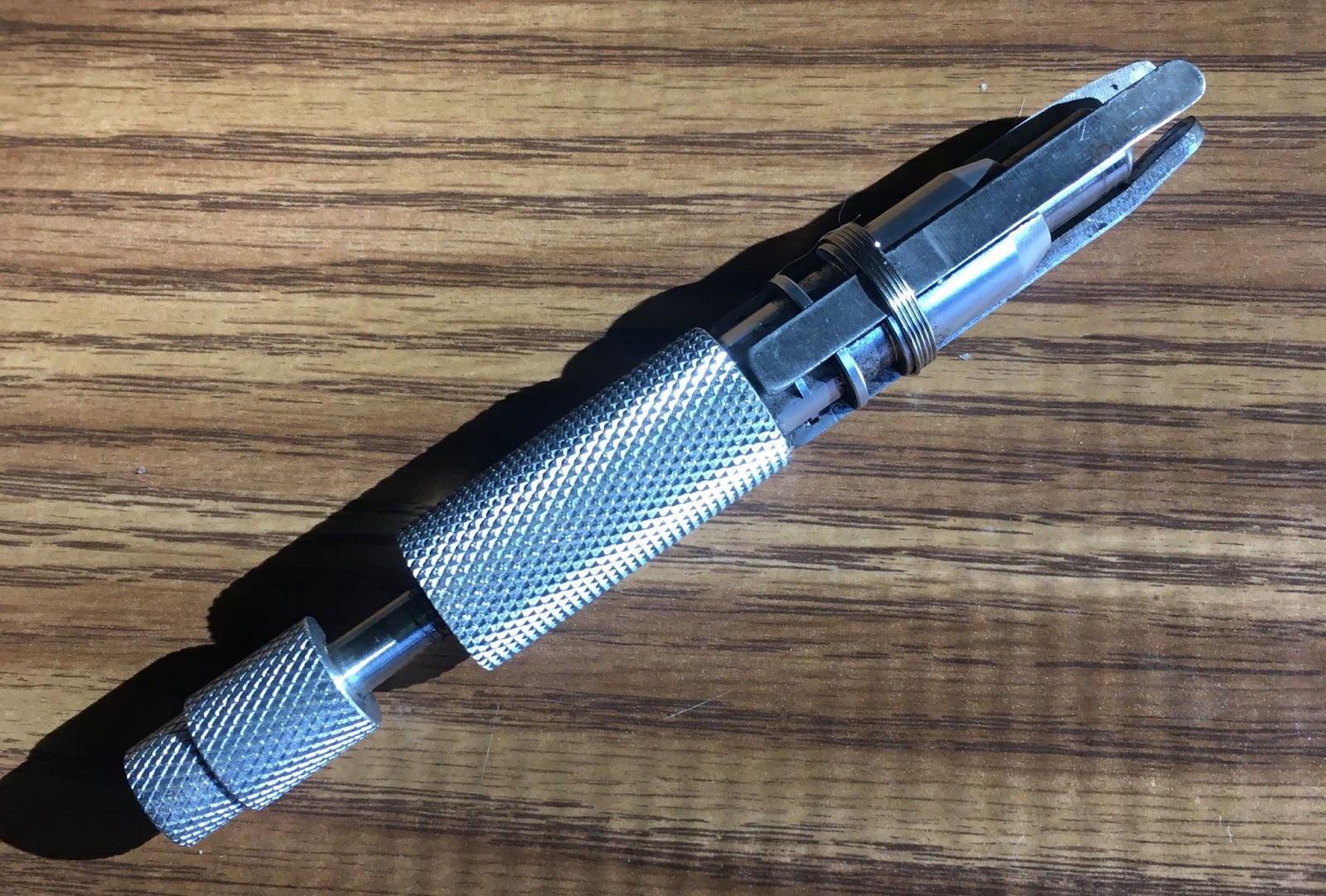


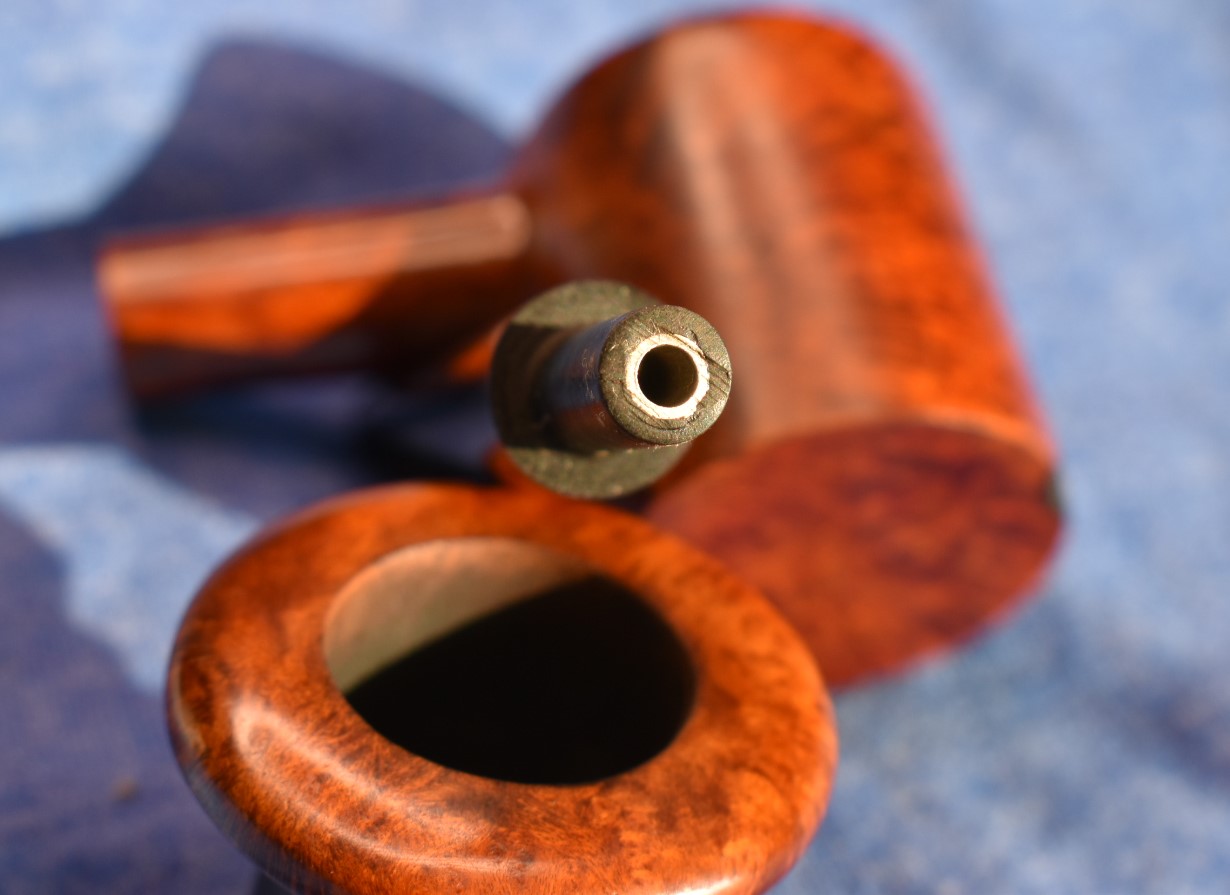


 NebraskaPeteGeek

