Written and photographed by John M. Young

Waldorf you say. Isn’t that the brand that everyone has heard of? That great artisanal craftsman from way up in the mountains of the Danish Low Lands? Umm no, not that guy. Okay, I confess that my stock box of pipes to restore has dwindled as of late. I was focusing on specific brands and shapes and not picking up estate lots over the past couple of months. I still completely love descending down to my basement work area to diligently ignore my daily chores while restoring just about any old pipe. I also confess that I am not yet independently wealthy, something that is a bit difficult to obtain on a public school teacher’s salary and now pension. Regardless, the muse directed me to this abandoned and ignored little pipe. I have no recollection of when I got it nor from where. I am assuming it was part of an estate lot or perhaps a pipe in a grab bag from Steve Laug’s partner in restoration Kenneth. I did purchase a mystery bag from Kenneth once, great fun, that. They are occasionally available at https://rebornpipes.com/rebornpipes-store/pipe-restoration-grab-bags-tools/# If you want to give this restoration thing a go.
Here was what I pulled from the box.
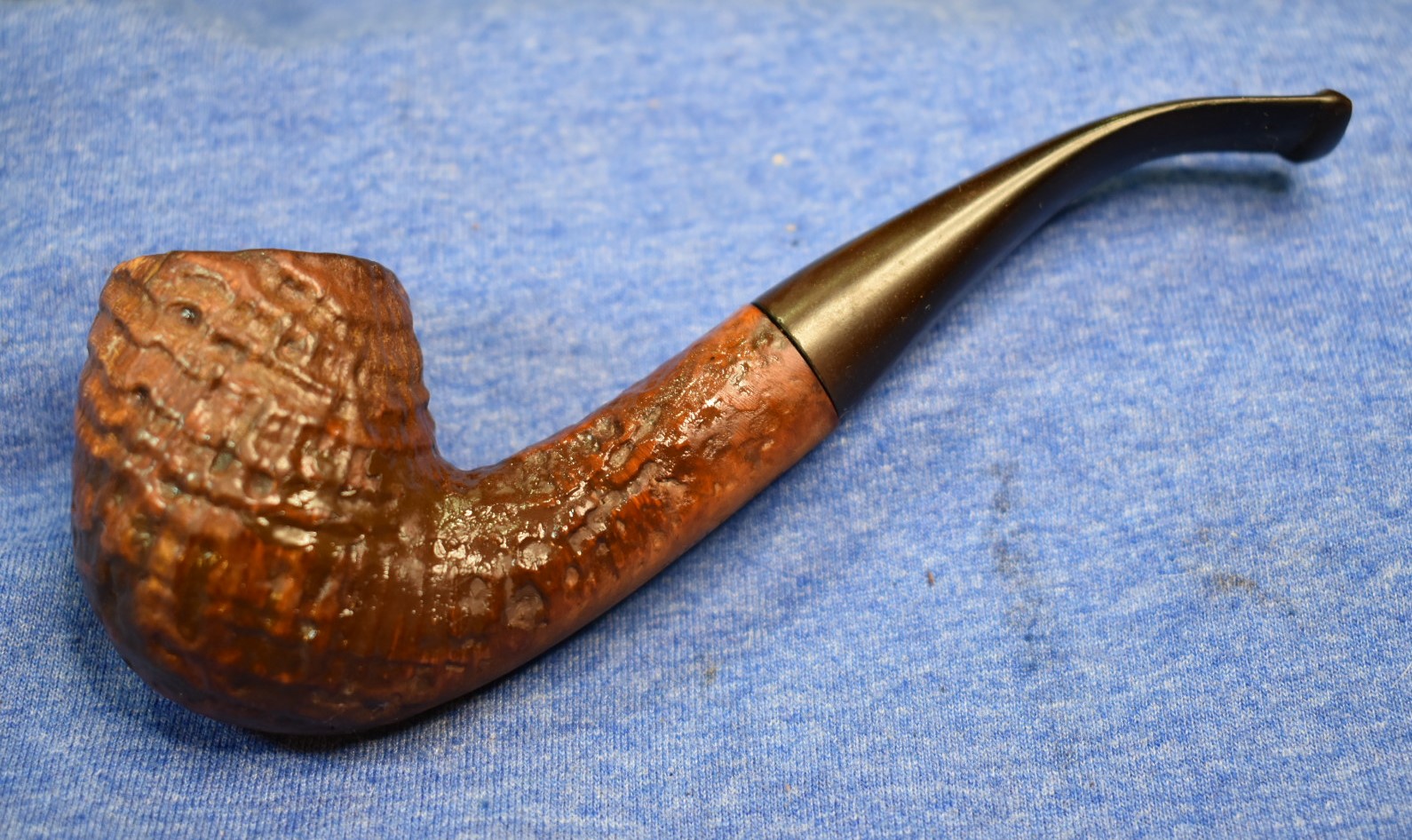
Nice deep blast.
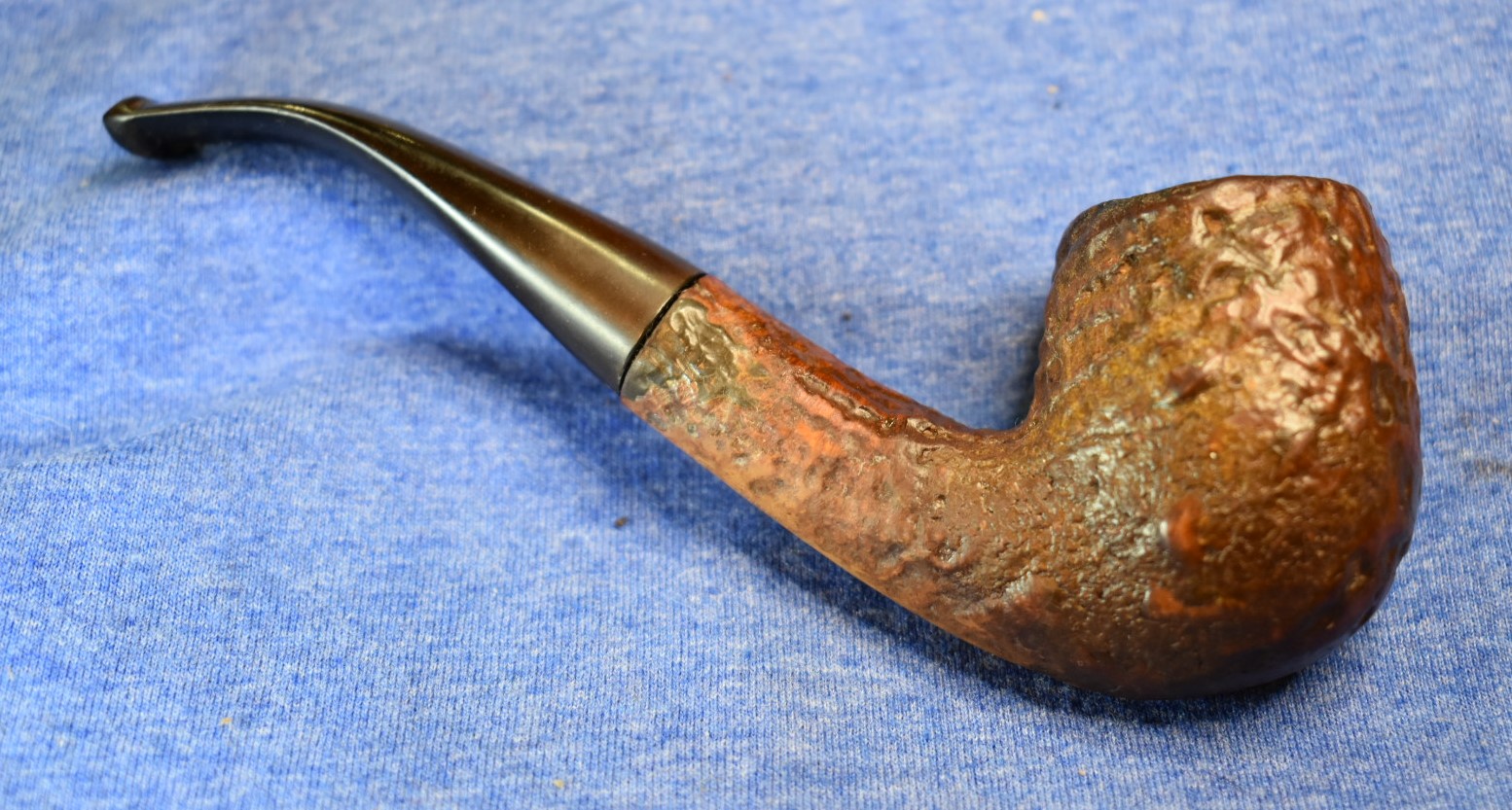
That’s odd. What kind of cheap briar did these poor Italians have to work with?

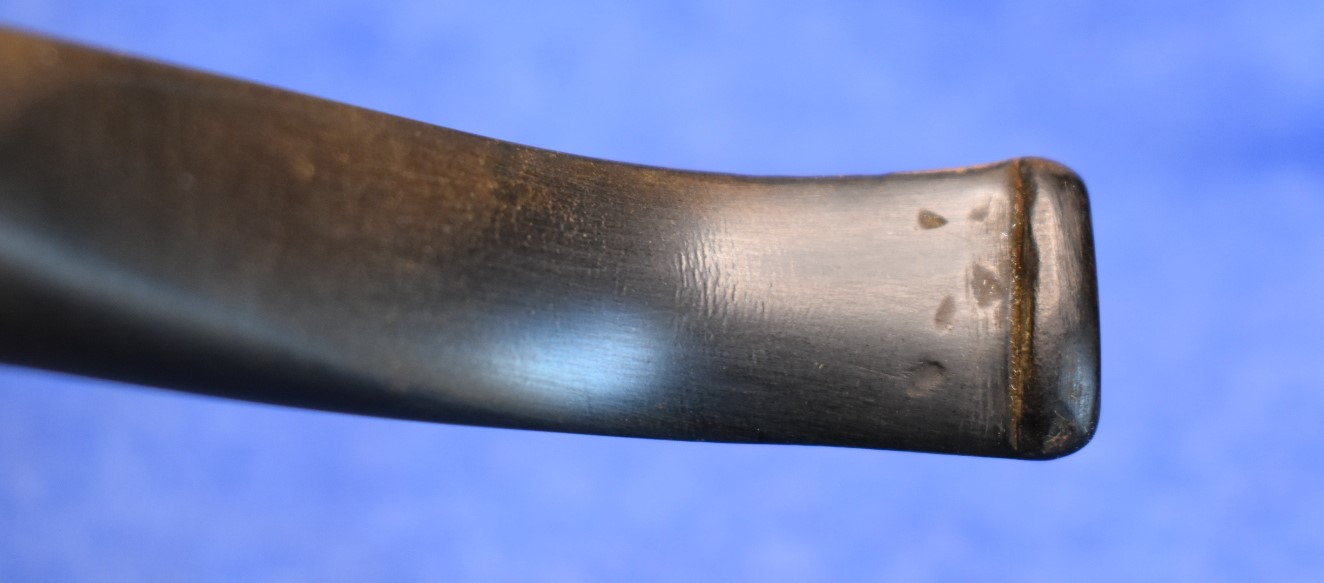
Some oxidation on the stem and a few tooth marks.
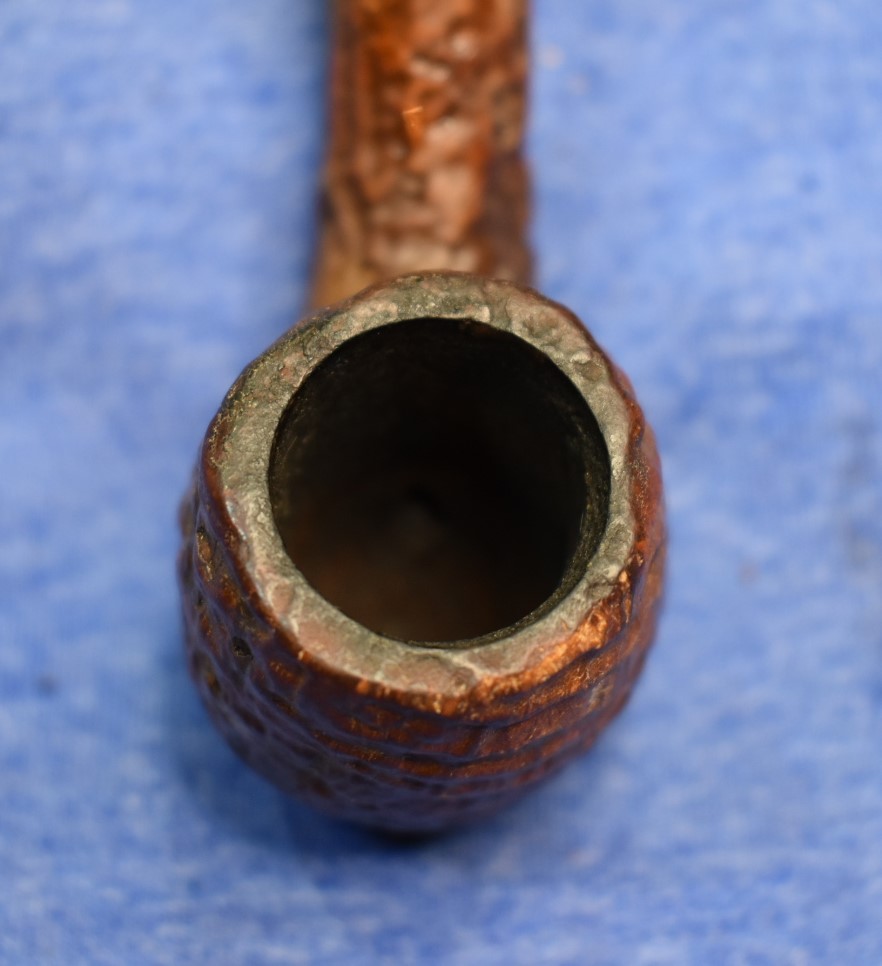
A little lava but no sign of charring.

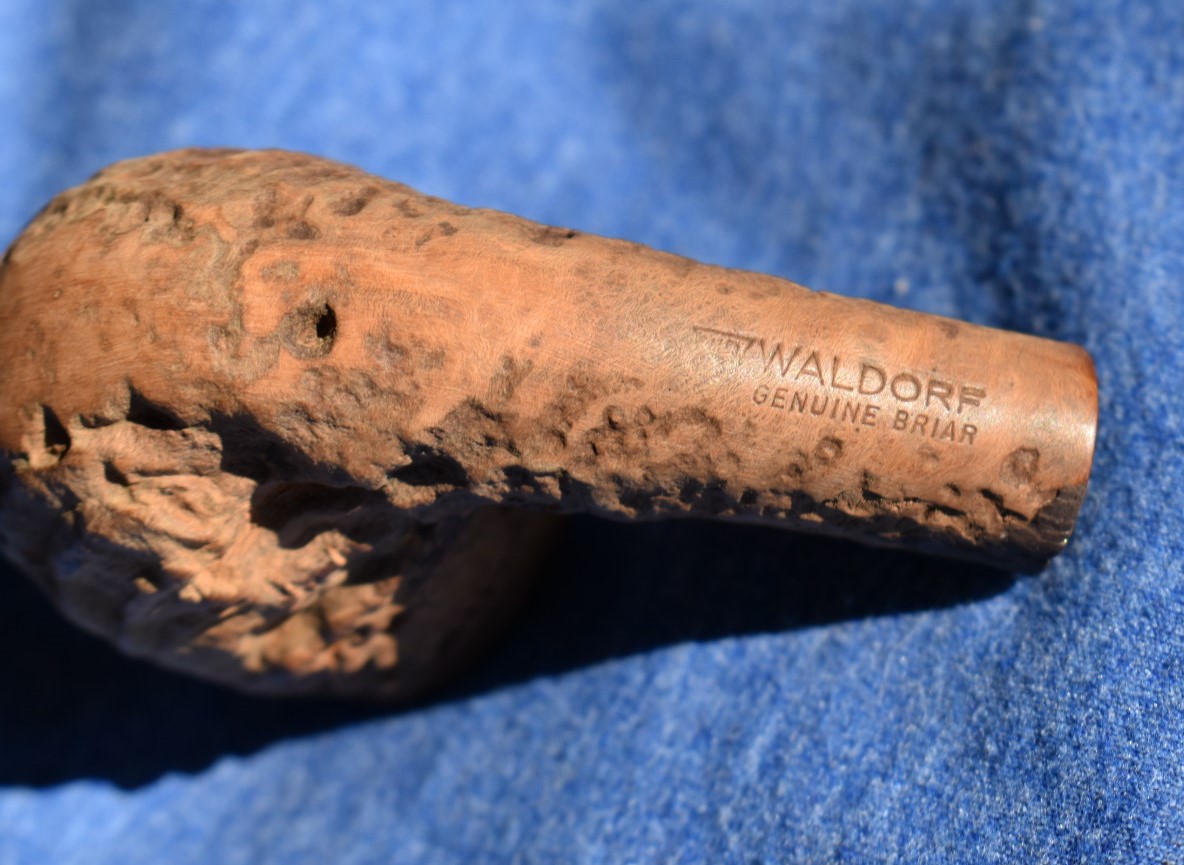
Hey, I recognize that upside down triangle. That is the WIlliam Demuth and Company logo. A quick search on W-Wd — Pipes: Logos & Markings (pipephil.eu) confirmed my observation.

(W-Wd — Pipes: Logos & Markings (pipephil.eu))
The Waldorf brand pipes appear to have been just a stamp that WDC would stamp on low end imported pipes from Italy and France. Here is another Waldorf stamp from a different pipe.

(W-Wd — Pipes: Logos & Markings (pipephil.eu))
A little bit about WDC. William Demuth and Company was founded by William in 1862. According to Pipedia.org:
“(Wilhelm C. Demuth, 1835-1911), a native of Germany, entered the United States at the age of 16 as a penniless immigrant. After a series of odd jobs he found work as a clerk in the import business of a tobacco tradesman in New York City. In 1862 William established his own company. The William Demuth Company specialized in pipes, smoker’s requisites, cigar-store figures, canes and other carved objects.” (https://pipedia.org/wiki/William_Demuth_Company)
“In time, several trade journals called the company “the largest tobacco pipe manufacturers in the world,” and Demuth was identified as “the richest pipe merchant on the East Coast.” (https://pipedia.org/wiki/A_Demuth%E2%80%94Dunhill_Connection%3F)
“The company went through a period of changeovers. David A. Schulte (Schulte Cigar Stores) purchased the company in 1927. As of 1929, Demuth and S.M. [Samuel Morris] Frank were two of the five companies that controlled the domestic briar pipe industry. In 1937, Frank became Demuth’s president by purchasing the factory in Queens—to combine Frank (Kaywoodie pipes) and Demuth pipe production—and Demuth became a subsidiary company. The Company officially disappeared in 1972, but Frank continued to produce Wellington pipes from the Demuth factory until 1976; in the 1980s, the Wellington was revived for a brief time.” (https://pipedia.org/wiki/A_Demuth%E2%80%94Dunhill_Connection%3F)
As for the little darling that this blog is about, I can safely say that she has been sandblasted. When did pipe makers start blasting? There is some contention around that. It can be be stated without much argument that Dunhill was the first to utilize and market the technique Again Pipedia.org states the following:
“Dunhill did not fully develop the sandblasting techniques until the mid-1920s.” (https://pipedia.org/wiki/The_History_of_Dunhill%27s_Shell#:~:text=The%20blasting%20technique%20was%20invented,apply%20the%20concept%20in%20pipes.)
So, that brings in the dates 1920s -1972. Narrowing it down further would be conjecture. I can imagine that it would take several years for the industrial equipment and the capital to acquire it would reach smaller pipe makers throughout the pipe production area of southern France and Italy. Then you have the war years to contend with. With those factors in mind I think it would be safe to assume that this little Waldorf was likely made between 1950 and 1972.
Whatever became of the pipe manufacturing factory that WDC and S.M. Frank had built? Well there are still remnants of their past glory.
“In early 1937, the City of New York notified S.M. Frank & Co. of their intent to take by eminent domain, part of the land on which the companies pipe factory was located. This was being done to widen two of the adjacent streets. As a result of this, Frank entered into negotiations to purchase the Wm. Demuth Co.’s pipe factory in the Richmond Hill section of Queens. It was agreed upon that Demuth would become a subsidiary of S.M. Frank and all pipe production of the two companies would be moved to DeMuth factory. New Corporate offices were located at 133 Fifth Avenue, NYC.
Demuth pipes continued to be made at the Richmond Hill plant till December 31. 1972. Then the Wm. Demuth Company met its official end as a subsidiary company by liquidation.” (https://pipedia.org/wiki/William_Demuth_Company)

“Initially located downtown on Pearl St. and on Broadway near Duane St., S. M. Frank & Co. moved uptown to 17th St. in 1904, then to this building with entrances on both 21st St. and Broadway in 1912, where they remained for about 10 years. The sign, then, dates from this period, possibly as early as 1912 and no later than 1922.” (https://www.14to42.net/21street.html)
“The factory building in Queens became apartments, some of which have a magnificent view of Forest Park. The complex was converted into apartments in 1987, and is called the Park Lane South Condominiums.”
Queenswalk: William Demuth/S.M. Frank & Co. Factory in Richmond Hill (https://www.brownstoner.com/history/queenswalk-william-demuths-m-frank-co-factory-in-richmond-hill/)
Imagine the owners of one of those condominiums surprise when asked:. “Do realize that you live in the same place where most of the tobacco pipes made in the 1920s-30s were produced?” I’m sure their reaction would be a “so?” I’d like to think some people would say, “cool”.
To the restoration. As you can see from the photos the Waldorf was not in bad shape. It did have a weird looking patch of briar on the left side from the

stummel to the heel. It also had what looked like a thick coat of lacquer applied over the entire stummel. I removed the stem and set it aside. I began working on the tobacco chamber. I grabbed the PipNet reaming tool only to

find that the chamber was too large for the second size reaming blade and too small for the third size. This meant that the Scotte tool was the tool for this job.

The Scotte kind of worked. This bowl was slightly larger than the Scotte tool as well. I was able to use the Scotte by pushing it to one side of the bowl as I rotated the stummel. The remaining
cake had to be scraped with the SmokingPipes Low Country Knife. After the reaming I sanded the interior with 220 sandpaper wrapped around a wooden dowel.

Next stop on the restoration express was the sink for the Murphy Wood Cleaner and a toothbrush routine. The Murphy’s is used undiluted and the
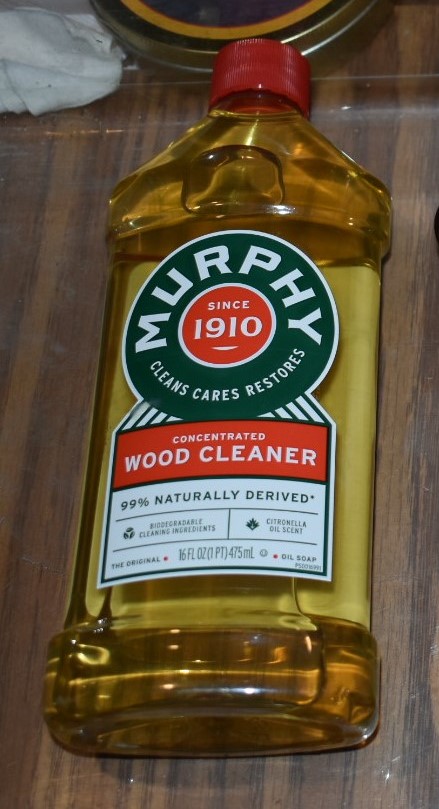
toothbrush is a medium stiff bristle brush. The Murphy’s is rinsed with Warm water. While I was at the sink I put a little bit of Dawn dish soap on a nylon shank brush and worked it through the airway. I figured that since the tobacco chamber was not very badly caked that the shank might also be lightly coated with tar. The brush foamed up white then it quickly changed to brown. I worked the brush in and out and then spun in to have the bristles working in both directions. This was then rinsed with warm water and repeated. The third time the foam did not change color to the “chocolate milk” color so I assumed I was making progress. The final dish soap was again rinsed with warm water. The whole stummel was dried with a cotton dish towel with the tobacco chamber dried with a paper towel.
I returned to the workbench and poured about 3 ml of 99% isopropyl alcohol into the tobacco chamber. I let the alcohol slosh around in the chamber and move into the shank. I plugged the mortise end with a finger to keep the alcohol inside the stummel. I do this to allow the alcohol to pull some of the water out of the briar. 99% isopropyl or the 95% ethyl are very hydrophilic solutions. That means the water will readily leave the wood and dissolve into the alcohol. I think this speeds up the drying process significantly. I finished cleaning the airway and shank with alcohol soaked cotton swabs and pipe cleaners until they came out clean.
This brings us to the stem. The tooth marks were small and not too deep so I tried to lift them by “painting” them with the flame from a disposable lighter. It helped but they might still require light filing and sanding.


I rubbed the entire stem with 0000 Steel wool to remove the surface oxidation and some of the rough area. Next I pushed a pipe cleaner into the stem from the tenon. This would be the hook from which I would hang the stem into the jar of Before and After Deoxidizing Solution.
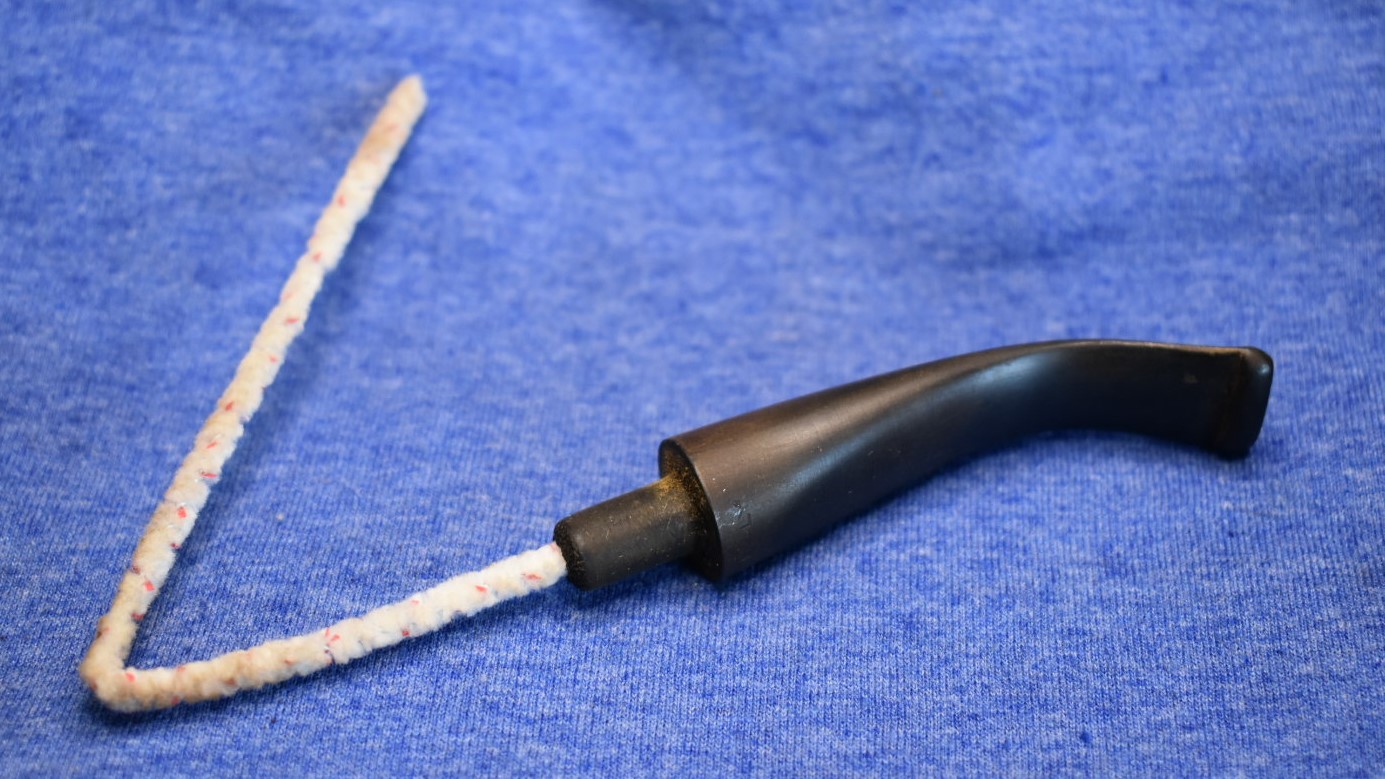

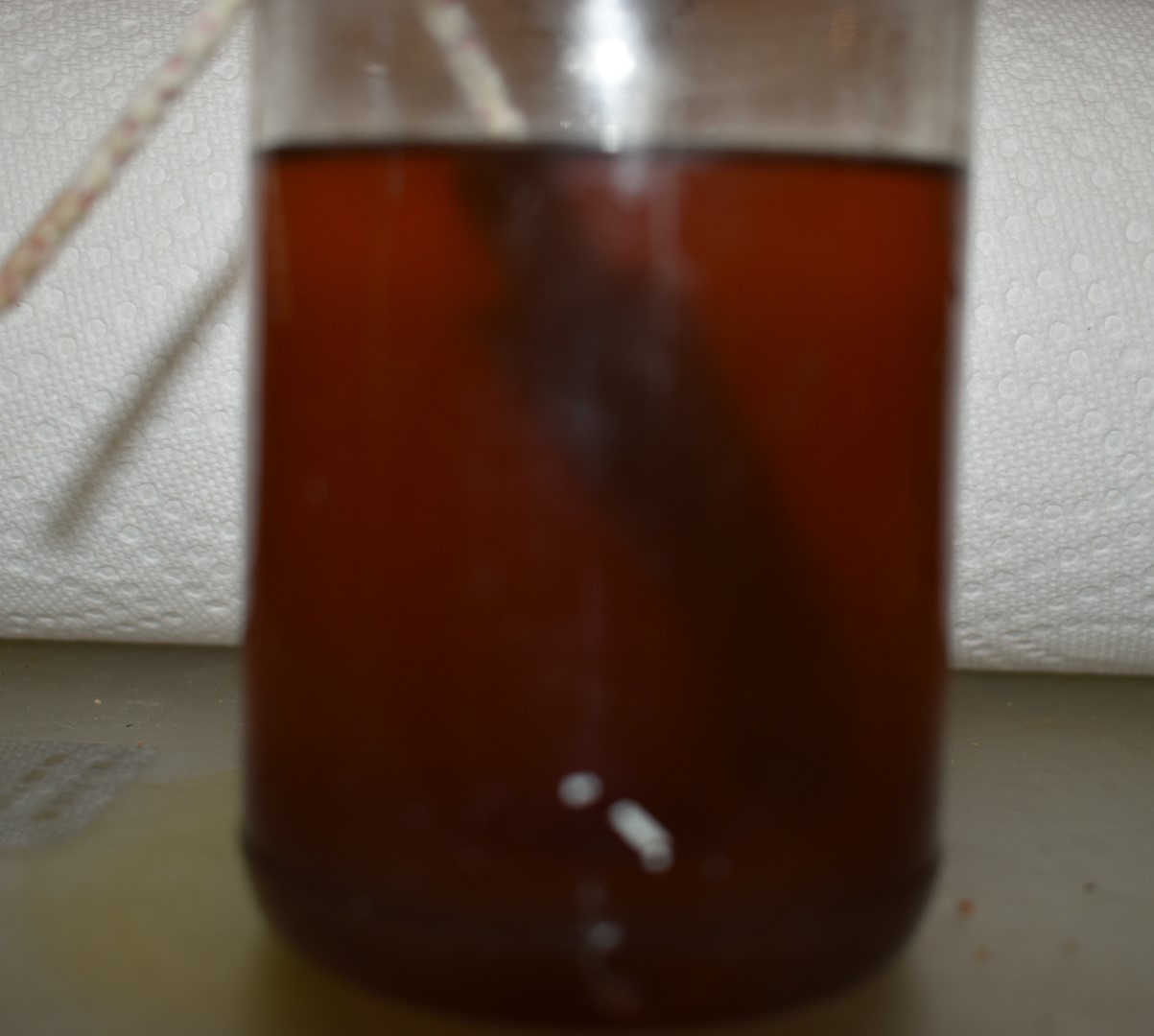
I figured that I would leave the stem in the solution for an hour.
While the stem was in deox (like detox for people) I returned my attention to the stummel. I wanted to see what solvent would have the best effect at removing the layer of varnish that still covered the stummel. The 99% Isopropyl didn’t seem to do much to it so, I went for the acetone. I moistened a make-up removal pad with acetone and was very surprised at what came off of the stummel. I was like I was wiping off a layer of dark mud. The acetone would evaporate quickly from the pad, as acetone does but, while moist it removed something from the stummel. It was crazy. Where is this stuff coming from?
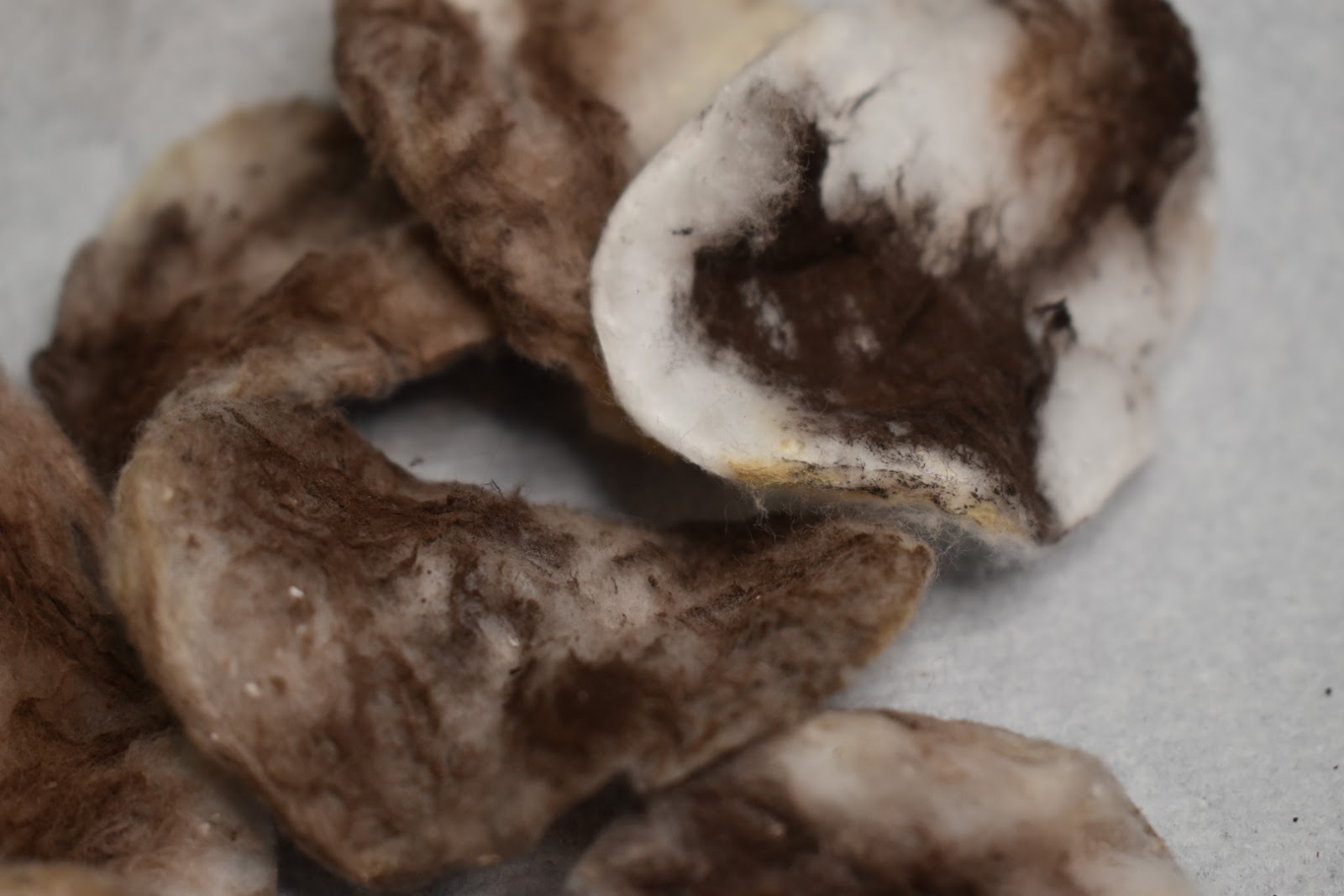
I thought “I’ve never seen this before.” I figured I’d just let the whole thing soak in acetone. I have canning jars with ethyl alcohol and acetone (EtOH

organic chemistry abbreviation for ethyl). I was still thinking that this was the lacquer finish. I thought, “Maybe back when this pipe was made they mixed the dye in the lacquer and killed two birds with one stone or spray.” I let the pipe soak and occupied myself with some of the chores I had been neglecting. After about 30 minutes I returned and pulled the stummel from the acetone jar. I put on a nitrile glove on my left hand. And started rubbing with the an acetone moistened make-up pad. “What the heck?” is all I could think. It was like the stummel was dissolving in my hand. I gave up on the pad and grabbed the brass wire brush (AKA 20 gauge shotgun bore brush), dipped it in the acetone and started scrubbing. “What is happening?” I

wondered. I was holding the stummel in my nitrile gloved hand with a paper towel to catch the liquid and solids that were coming off the stummel. The phot left shows the paper towel.
I let the whole mess evaporate and started to look closely at the stummel. Large areas that previously had no ring grain from sandblasting now had ring grain. “That can’t all be a fill?” I pondered. “Oh yes it can and it is!” I replied. I think the acetone fumes were making me loopy. I had to break up two altercations that were happening with the voices in my head.
I took the dental pick to the fill. Again, remember the photo with the circle?

The whole area was a fill. And it was not just a little surface fill of a mm or two deep. Oh no, it was at least 6 mm at the deepest. The filler that was used had either been mixed with the lacquer or the lacquer had penetrated into the putty, all the way down to the briar. It was only soft when wet with acetone. Once the acetone evaporated it returned to hard putty/fill. I soaked the stummel again for 15 minutes. After removing it from the acetone I went quickly with the brass brush trying to maximize my time before the putty hardened back up. The next three photos I called “Scrub 1” as I was labeling them.


You can still see places where the lighter pink colored fill is still present in some of the depressions. I repeated this another two times. The later times I also used the dental pick to loosen larger area, I would get pieces off that

were 2-3 mm in size. I did not know how to proceed. These were uncharted waters, for me. I took the stummel to the sink, thinking,
“Maybe some Murphy’s and a toothbrush would help”. I started arguing with myself again,
“What are you doing, dummy?”
“I’m trying to use soap.”
“Yeah, did it do anything different THIS TIME? You already did that, dummy.” I blame the acetone fumes.
I went back to the workbench and tried ethyl alcohol instead of isopropyl. That seemed to work about as well as the acetone. Good thing I did not have any methyl alcohol. I probably would have forgotten the glove and absorbed just enough to blind one eye.
There were many dippings on the brass brush in acetone and scrubbings. There were many pickings with the dental pick. There were probably more arguments with myself. In the end. I called these next two photos “Scrub 2” when labeling them:


Oh no, the stem is still in deox! It had been in there for over two hours. In my acetone crazed state I had completely forgotten about it. I went to retrieve the stem from the solution. I was still there. It had not completely dissolved. Whew.
I lifted the stem by it’s hook and let it drip off most of the solution. I placed the wet stem on the coarse shop rag used for deoxidation solution removal. I then rubbed vigorously until the stem no longer had any solution on it. I then place two pipe cleaners through the stem moving them side to side and the button to get all the solution from the button.
The stem looked good but I could still see a few places that had the tinge of brown rather than the black of non-oxidized vulcanite. I took two make-up removal pads and dosed one with a dollop of Soft Scrub. I rubbed the stem in a non friendly fashion trying to scrub off the remaining oxidation. After the Soft Scrub scrub, I coated the whole stem with mineral oil. I also ran a mineral oil wetted pipe cleaner through the airway.

The stem was at a place where I could leave it and get back to the stummel. I had soaked and scrubbed, soaked and picked, soaked and scrubbed some more all for a pipe that I would never sell to someone.
I had visions of what had happened in that little pipe workshop in Italy. The father was showing his son how to use the new sandblaster. He explained about the pressure, nozzles, and blast medium. He diligently went over all of the safety equipment and features.
“Stop, wait a minute. Next you are going to tell them he discussed the material safety data sheet. There were no MSDS in 1950.”
“Stop arguing with me, this is my vision.”
“Yeah, your stupid vision.”
Hmm, I wonder if acetone poisoning causes permanent brain damage.
“You already got brain damage, dummy.”
And the son, being the fine young man that he was, paid apt attention to it all. His father said, “Son, your mother needs an expensive operation that we can only afford if we sell all of the pipes.” “Yes, Pappa” replied the son.
“Hey why did everybodys’ mom need expensive surgeries in 1950?”
“I don’t know, but they did.”
“OK, go on with your story then.”
There was Sonny, blasting away with the new equipment, feeling like a responsible real young man. When Ophilia walked by the large front shop window or, should I say sauntered by the front window. Sonny’s eyes couldn’t help but follow that seductive swaying form. In that moment of distraction, the blast had cut too deep for the accepted norms of those times. Father shrieked in terror and fell to his knees. “Oh my wife, I cannot go on raising this boy without you” he wailed. The son grabbed the filler putty and screamed “No Pappa, I can fix it. See, Mamma, will get the operation and live.”
Good story, eh?
“Yeah, you got the brain damage.”
I decided to lightly top the rim of the pipe. I did this using a piece of 400 wet/dry sandpaper on the counter top. I moved the stummel in a circular path rotating my grip on the stummel to evenly distribute the force of the sanding. After that I thought about filling the numerous sand pits. Then I thought “The last thing this pipe will ever need is more fills. Leave it.” So I did.
I started thinking about what shade of brown to use. I thought of a nice dark brown Fiebing’s Leather Dye as a base color with maybe a light brown for the high areas after I sanded away the dark brown from the high spots. It sounded good. I assembled the staining gear. Nitrile gloves, a lighter, a folded
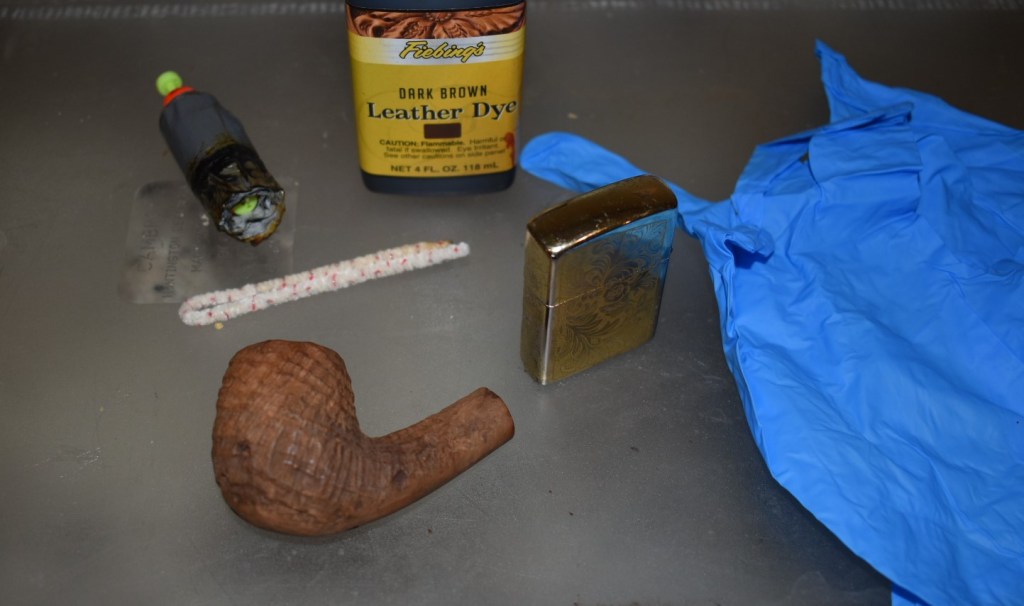
pipe cleaner for an applicator, the dye and my make-shift duct tape wrapped fishing bobber to plug the tobacco chamber and act as a handle. All of this was placed on an upside down plastic container to protect my counter top from spills.
The Process of staining a stummel is pretty straightforward:
- Place a wine cork (or bobber in my case) into the tobacco chamber to keep the dye from getting in there and to act as a handle.
- Fold a pipe cleaner in half as the dye applicator.
- Put on nitrile gloves. (Trust me on this one)
- Dip the folded part of the applicator into the dye and apply liberally to the stummel.
- After all the exterior of the stummel is wet with dye, Strike a flame with the lighter or a lit candle and light the wet dye on fire.
- Avoid running around with the blue flaming stummel trying to show someone how cool it looks.
- Repeat steps 1-6 as desired.
Well, at least that is what I did. Here are some photos:

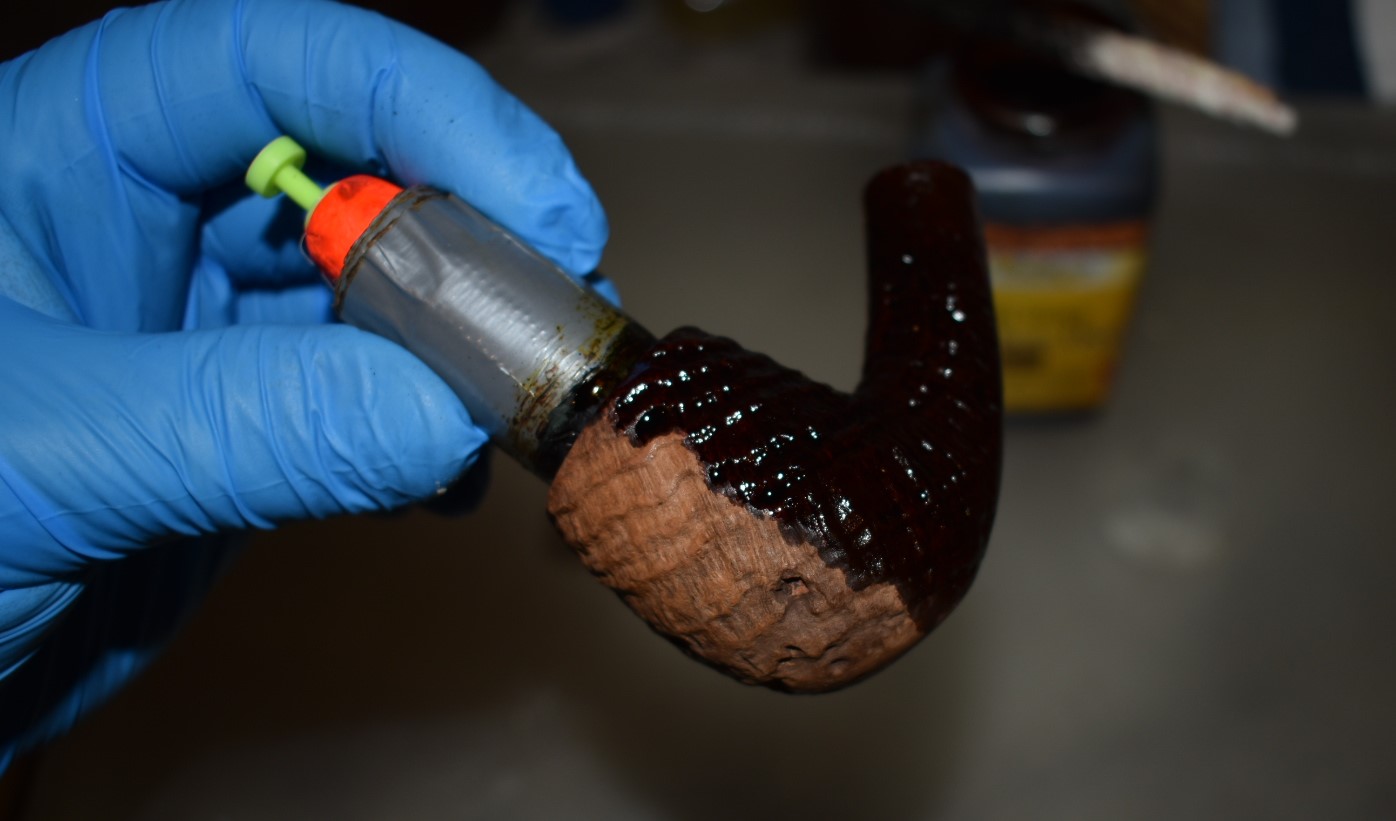

I neglected to get a photo of the flames as I was busy running around looking for someone to show how cool it looks. I set the stummel aside to let the dye do what it does to the briar for about an hour.
After the dye had dried and set, I dampened a make-up pad with 99% isopropyl alcohol to wipe away any dye then was still on the surface of the stummel. I did not want any dye to pass from the stummel to a person’s hands while they were handling the pipe. The pad came back very well stained with excess dye, so I repeated it with another pad.

Here are some photos of the stained stummel:


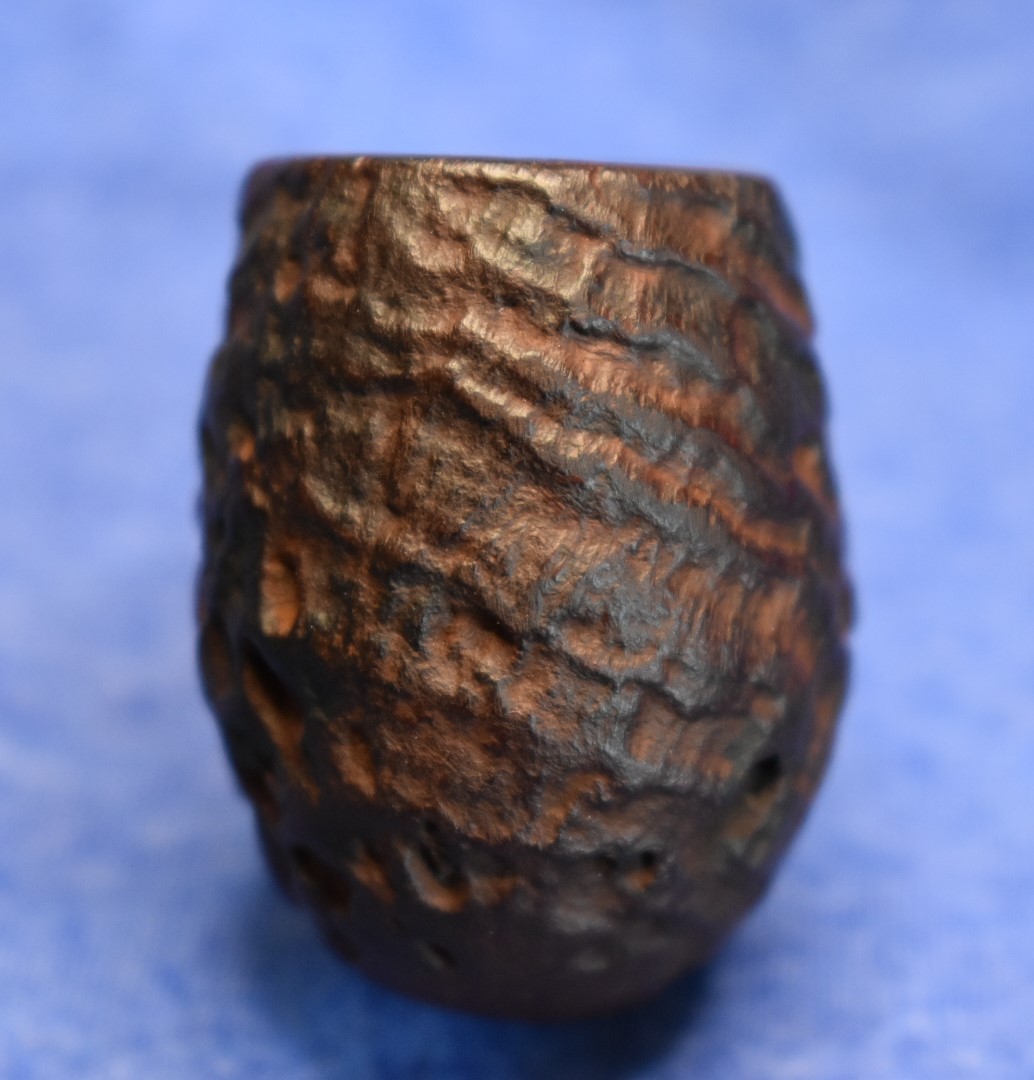

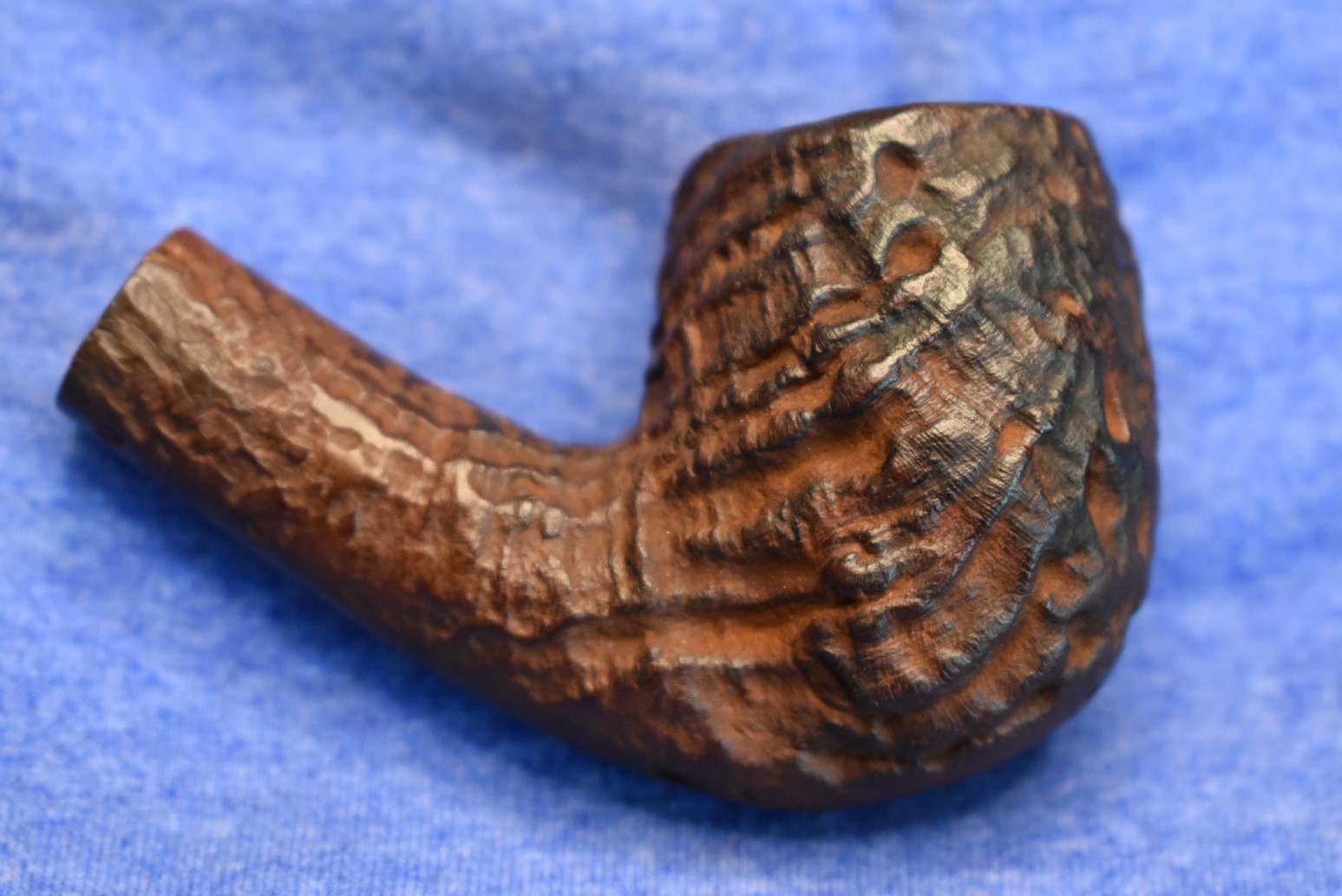
I tried to lightly sand the high spots and expose unstained wood underneath. This met with complete failure. The high areas seemed to have absorbed the dye deeply into the wood. I scrapped the idea of highlighting with another color and called this shade of brown “perfect”. I vigorously rubbed the entire stummel with a clean dish towel to make sure that no dye remained. I then used my fingers to apply a relatively thick coat of Before and After Restoration Balm to the stummel. I used a soft bristle toothbrush to work the balm into all of the low spots. I let the balm do it’s magic on the stained briar for 20-30 minutes. After this time I used an inside out athletic sock to buff away the extra balm. Below are the photos of the stummel at this point.


I took two additional photos of the stummel in the sunlight.
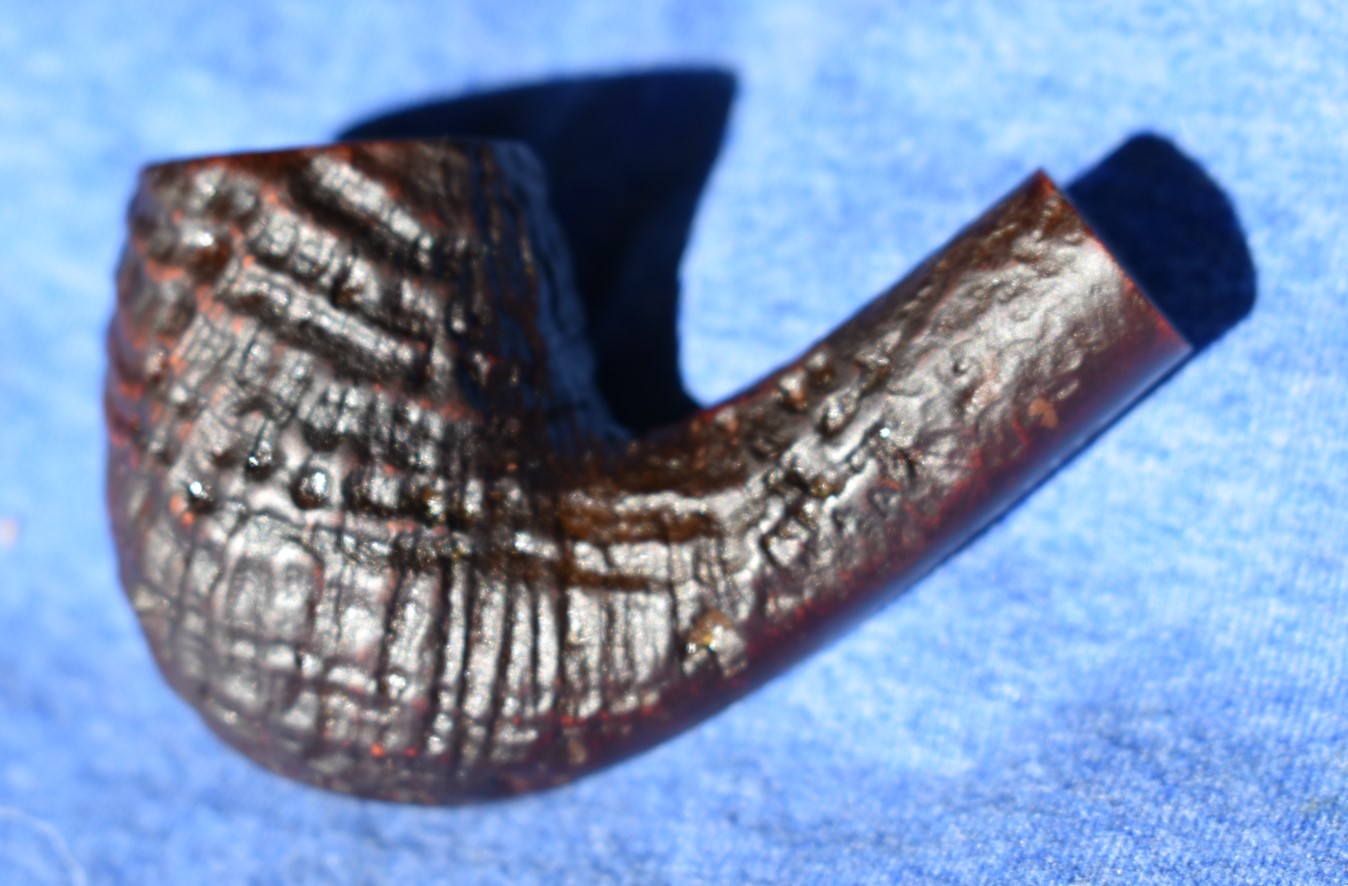
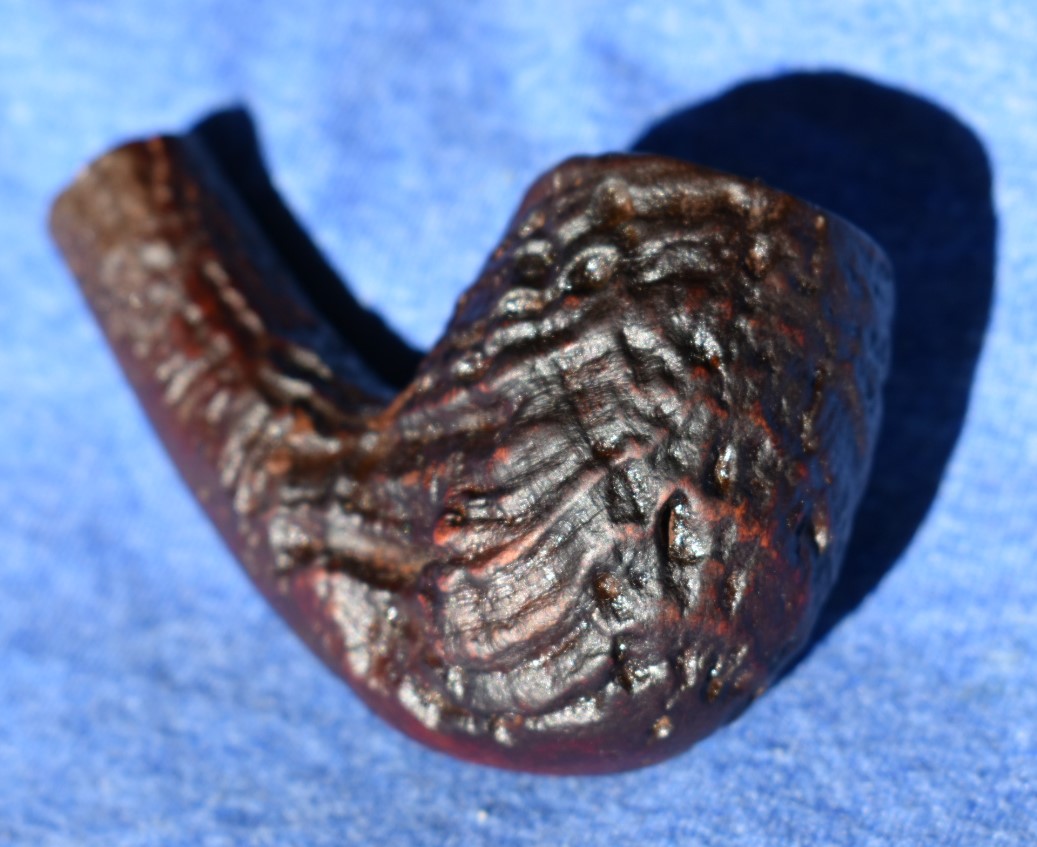
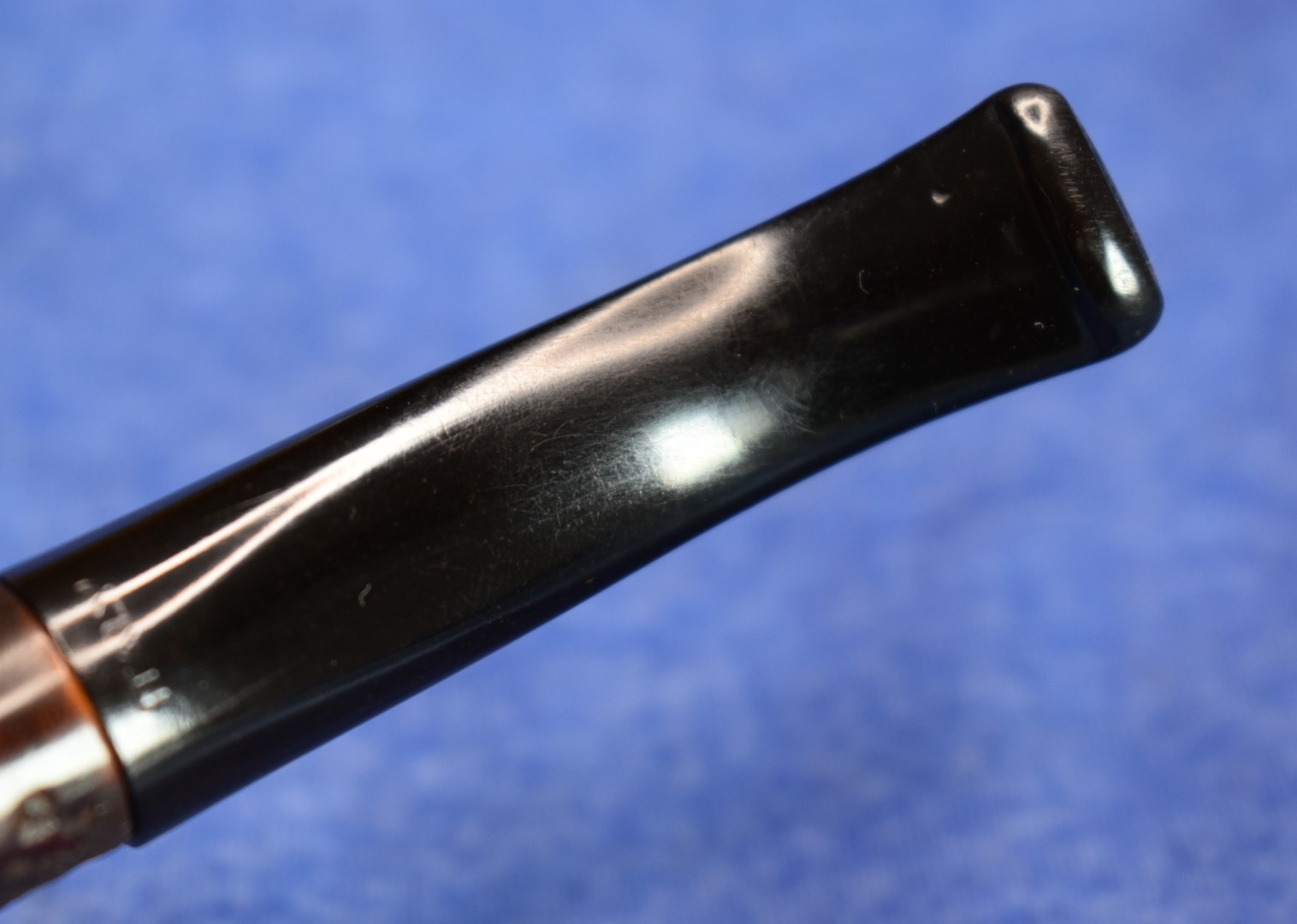
The last task was to rid the stem of the tooth chatter and micro-mesh and polish it. All of my diligent photography fell short of documenting this stage of the restoration. “Hey, claim the brain damage made you do it. Or, not do it.” The mineral oil was wiped off the stem. I had already painted the tooth chatter with a lighter earlier. I did not think that the remaining tooth chatter was deep enough to require rebuilding the stem or filling of the dents with cyanoacrylate. I used an emery board to remove material around the dents

on both sided of the stem. I moved the board in a circular motion rather than in straight lines. After reshaping the area around the dents I used a finer grit emery board to start removing the scratches from the coarser grit again using small circles. I then turned to the 220 sanding pad and sanded the area. The button also needed to be slightly reshaped to define it’s edges. I used the emery board here as well followed by sanding with the 22 sanding pad.
Happy with the dent removal and button redefining, I moved on to the micro-mesh pads. I started with the 1500 and 1800 pads wet. In between


each pad I would apply a drop of Obsidian oil, rub it around with my fingers and wipe it with a clean make-up pad. I used the pads in order from the 2400-

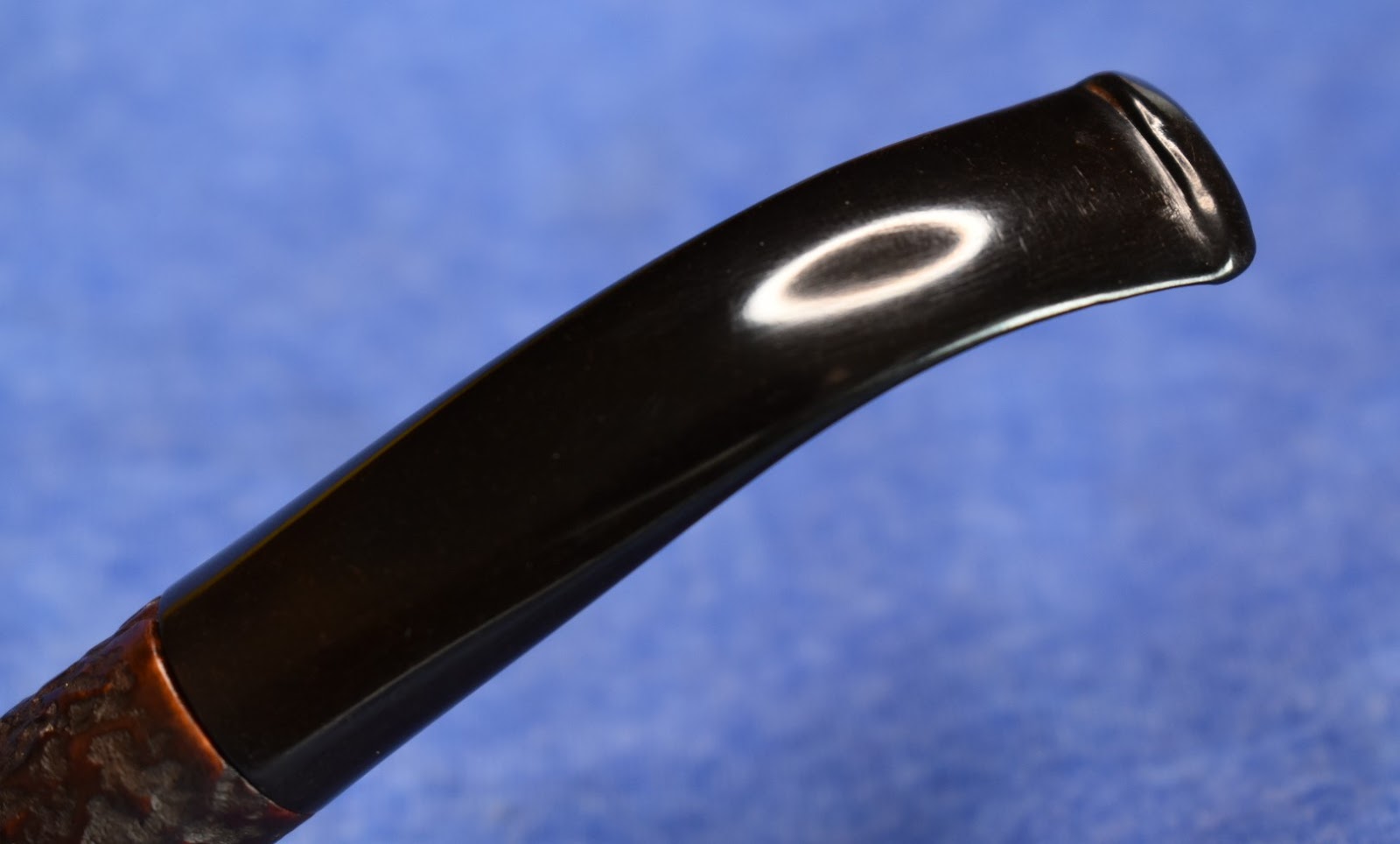
12000 dry. Again repeat the the Obsidian Oil rub between each micro-mesh pad. I took the stem to the buffer and buffed it with white diamond buffing compound. Normally I use the Before and After Fine followed by the Extra Fine polish. I wanted to see if there was a noticeable difference between the two methods. I could not determine a difference. After buffing I used a cloth to wipe any buffing compound from the stem. I reattached the stem and gave the entire pipe a couple of coats of carnauba wax with the buffer.
This was a fun and surprising restoration. I had never come across fills of this magnitude and extent. I In the end I have a pipe that I will probably give to someone who has a real love for the deep sandblast finishes. Thank you for reading the ramblings of this old pipe lover. If you like this content please hit the “like” and or “subscribe” buttons. You will be alerted when a new post is published and be the first to read another ramble.
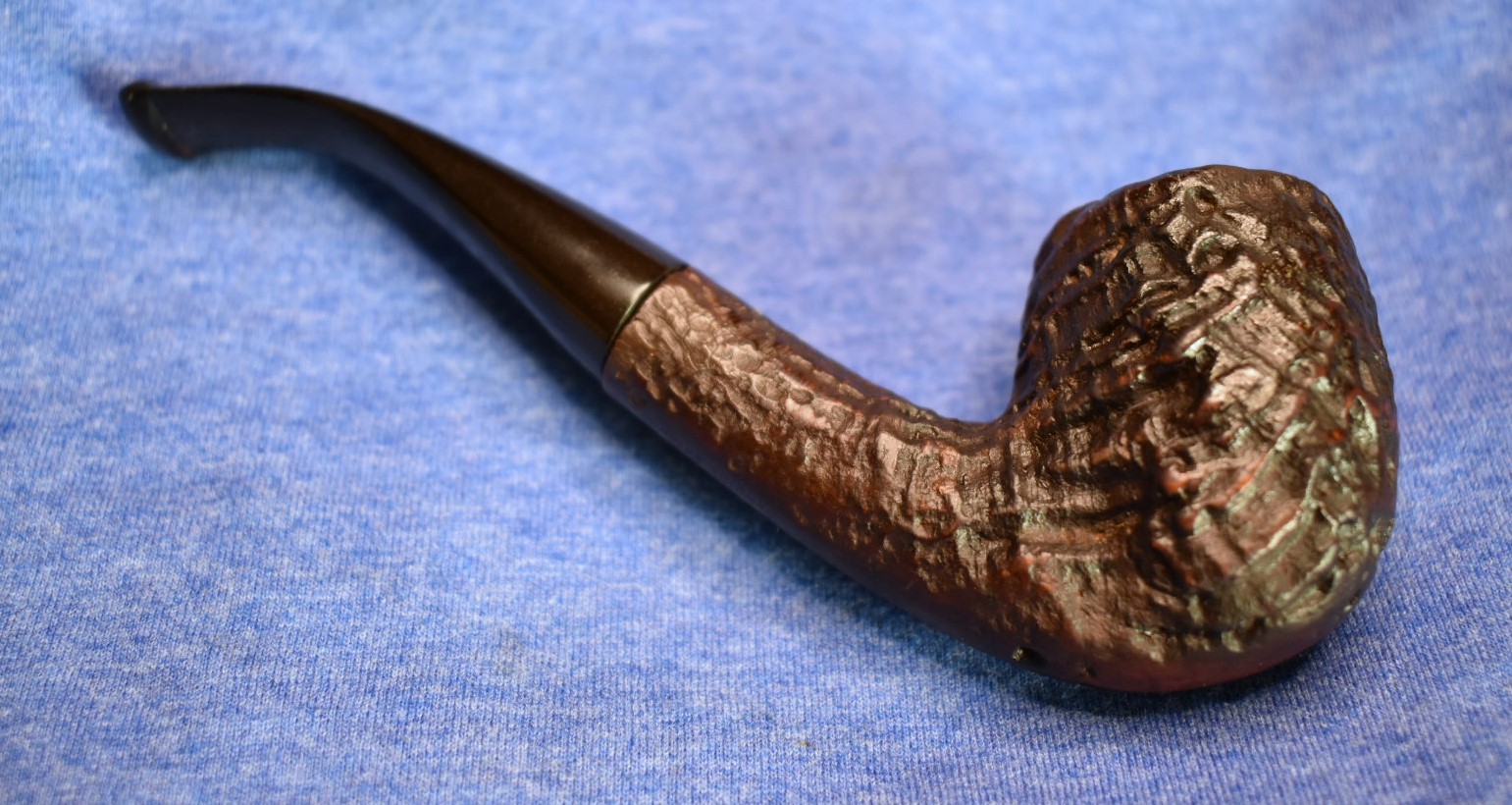
Below are the photos of the finished Waldorf.



 NebraskaPeteGeek