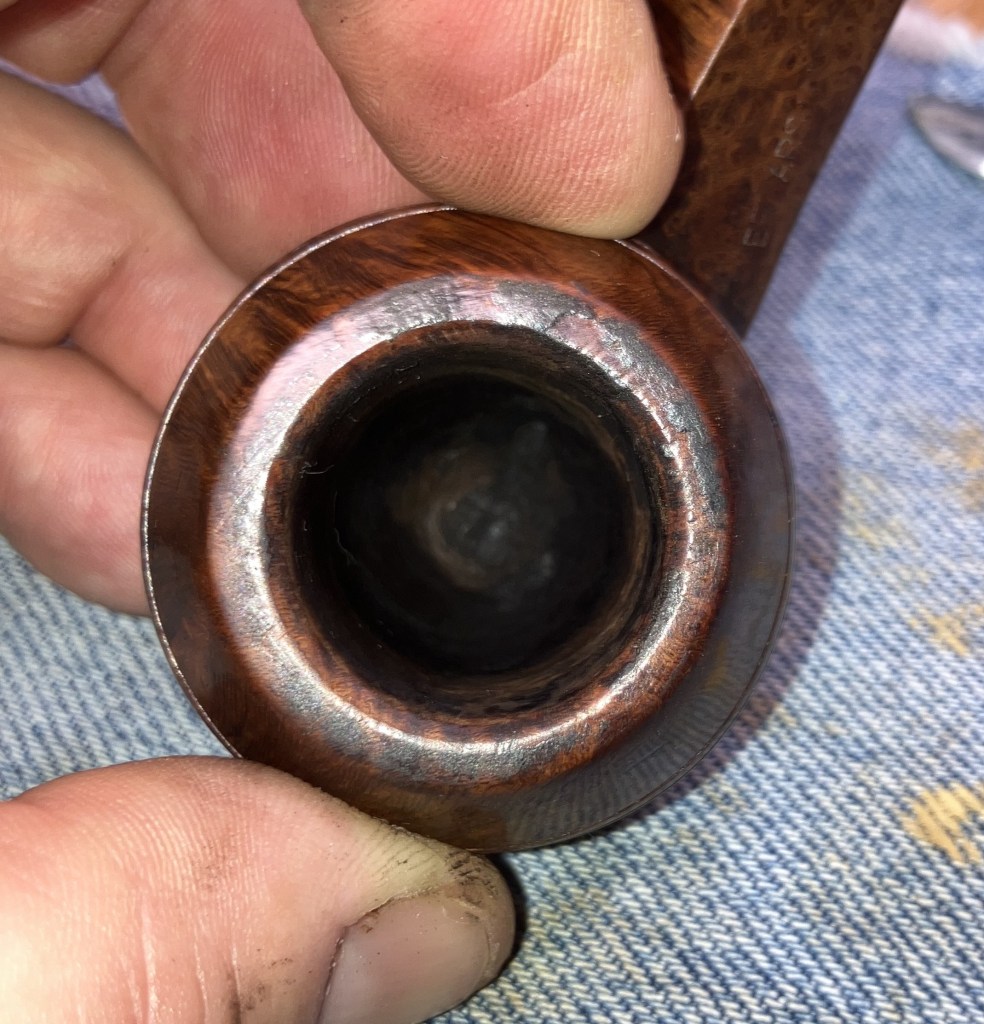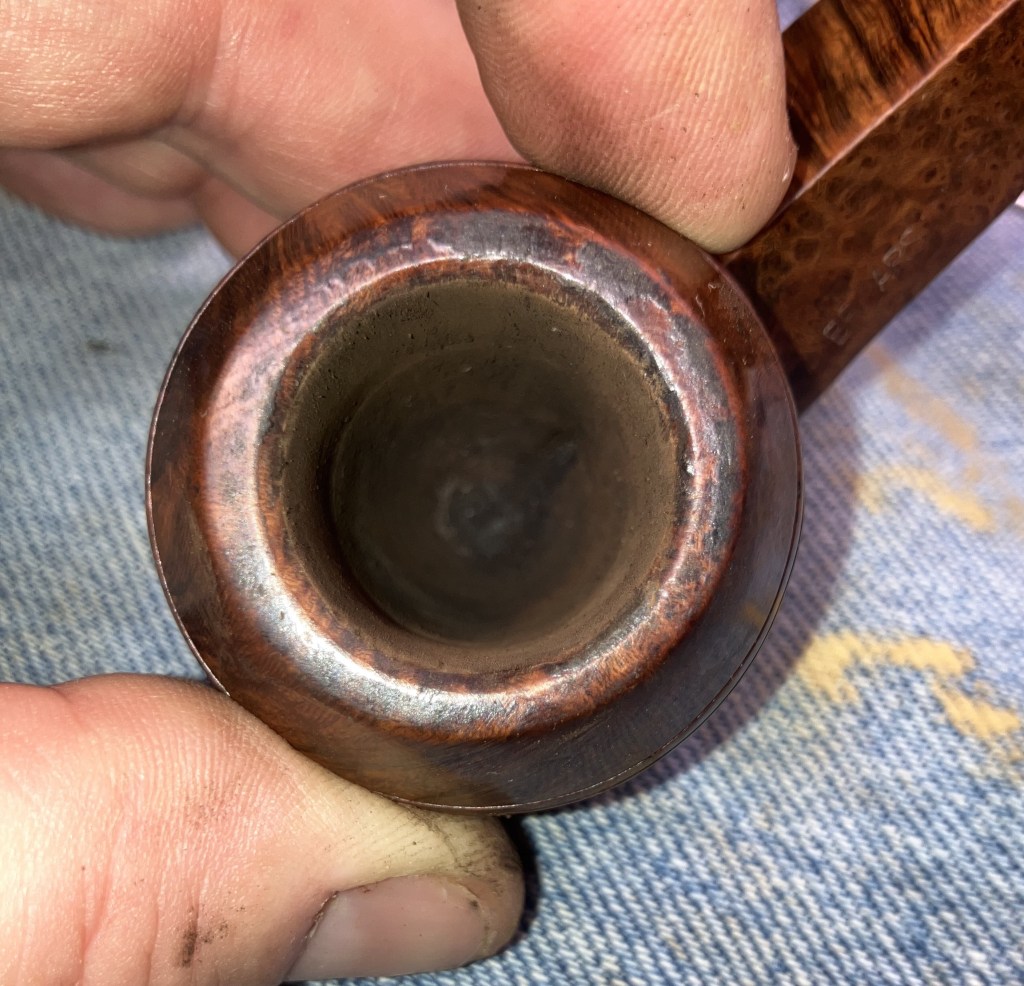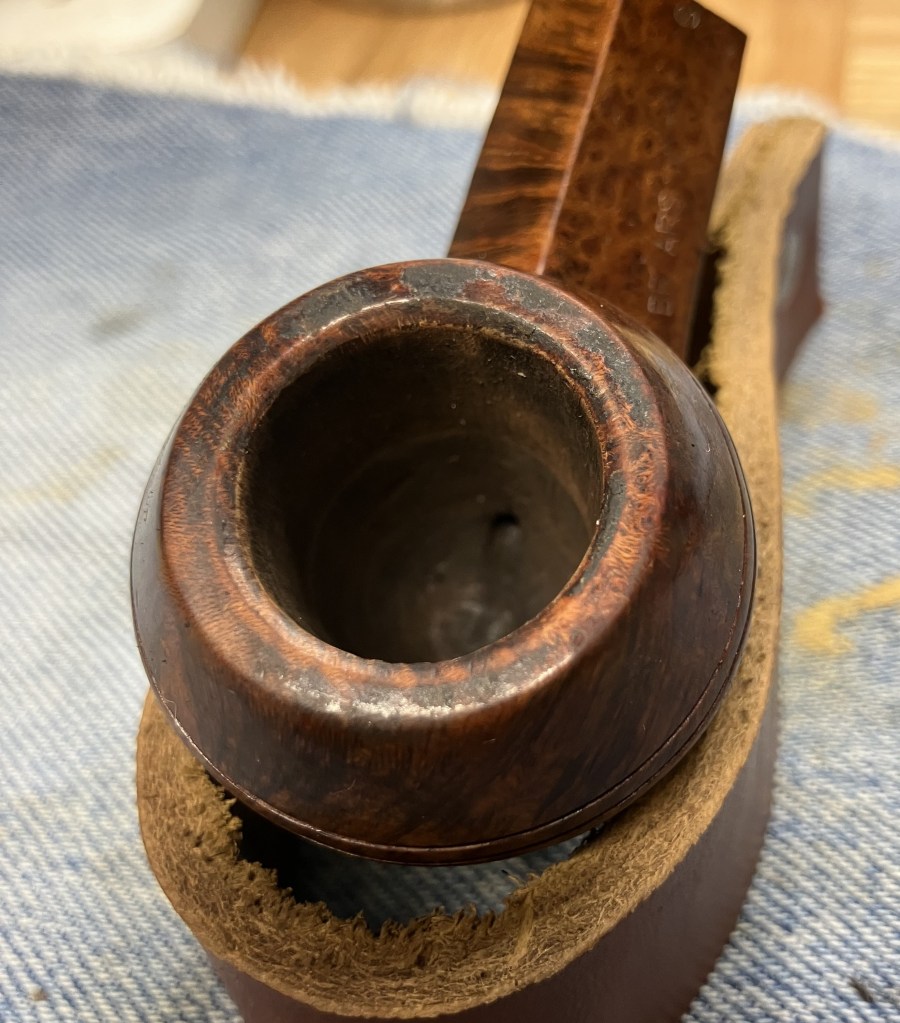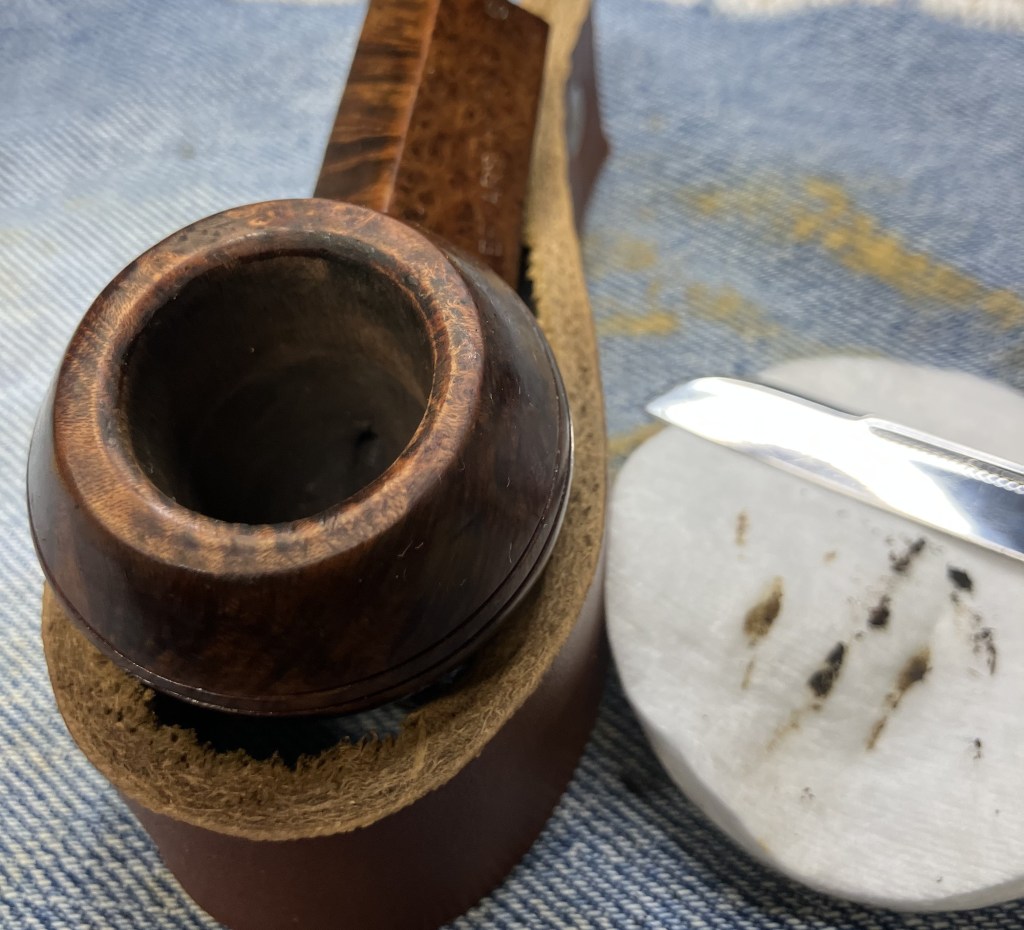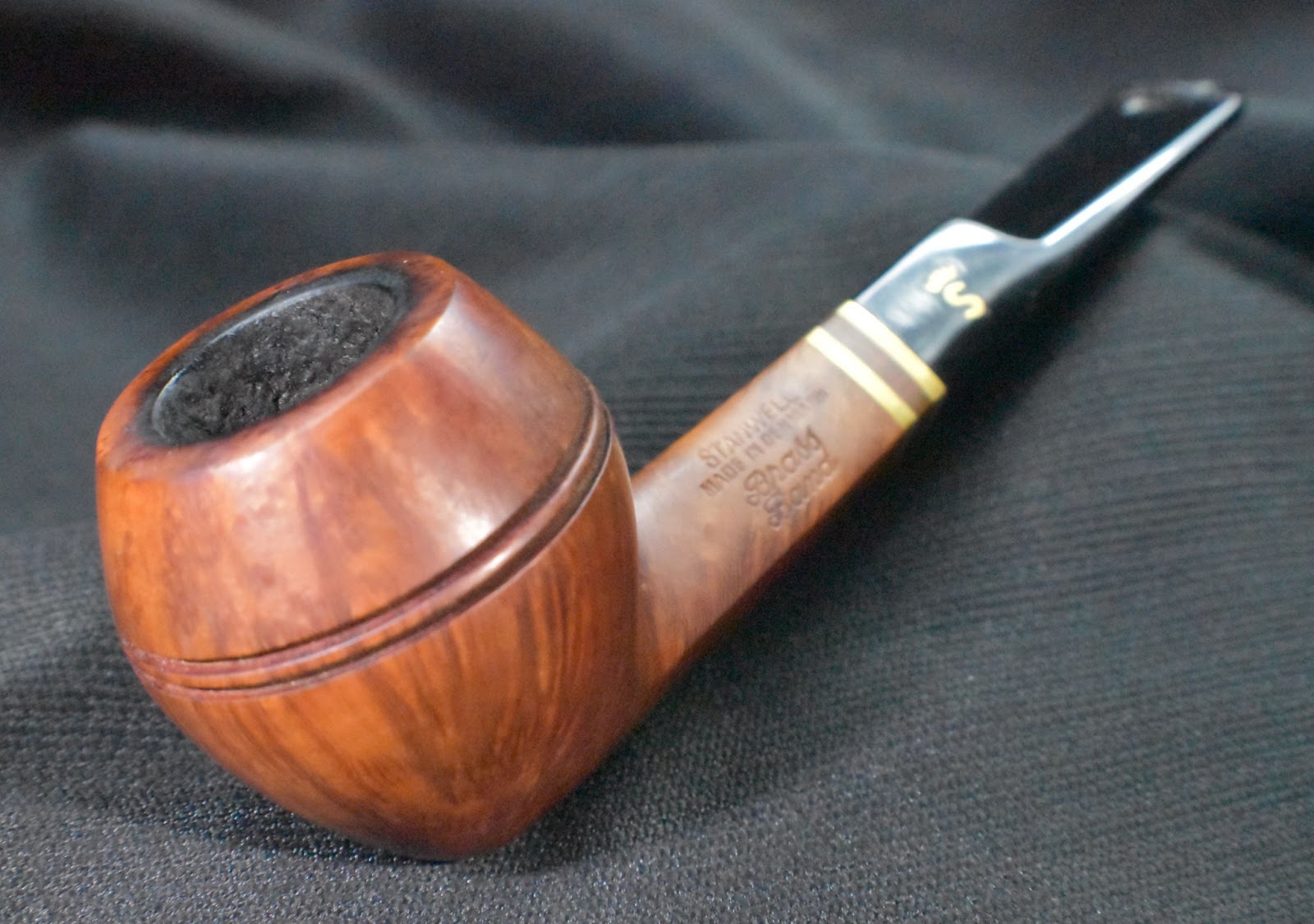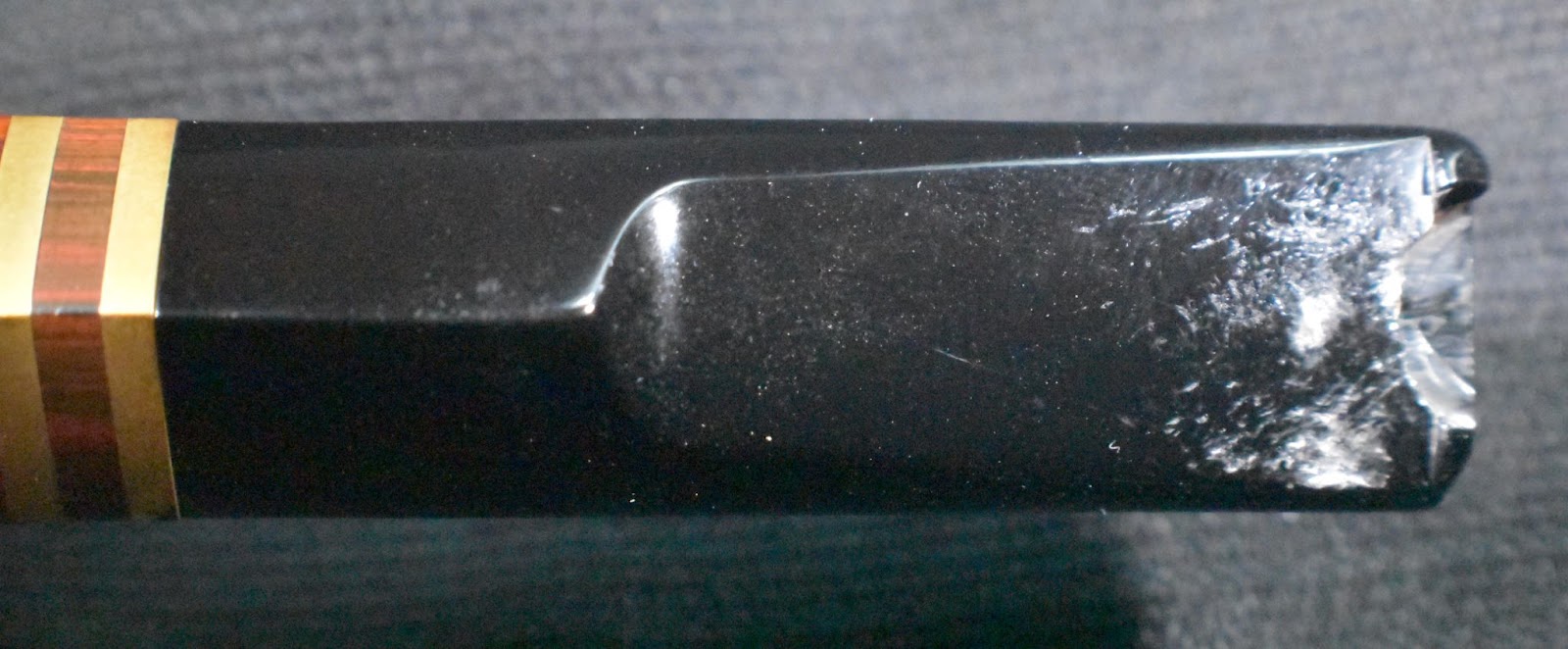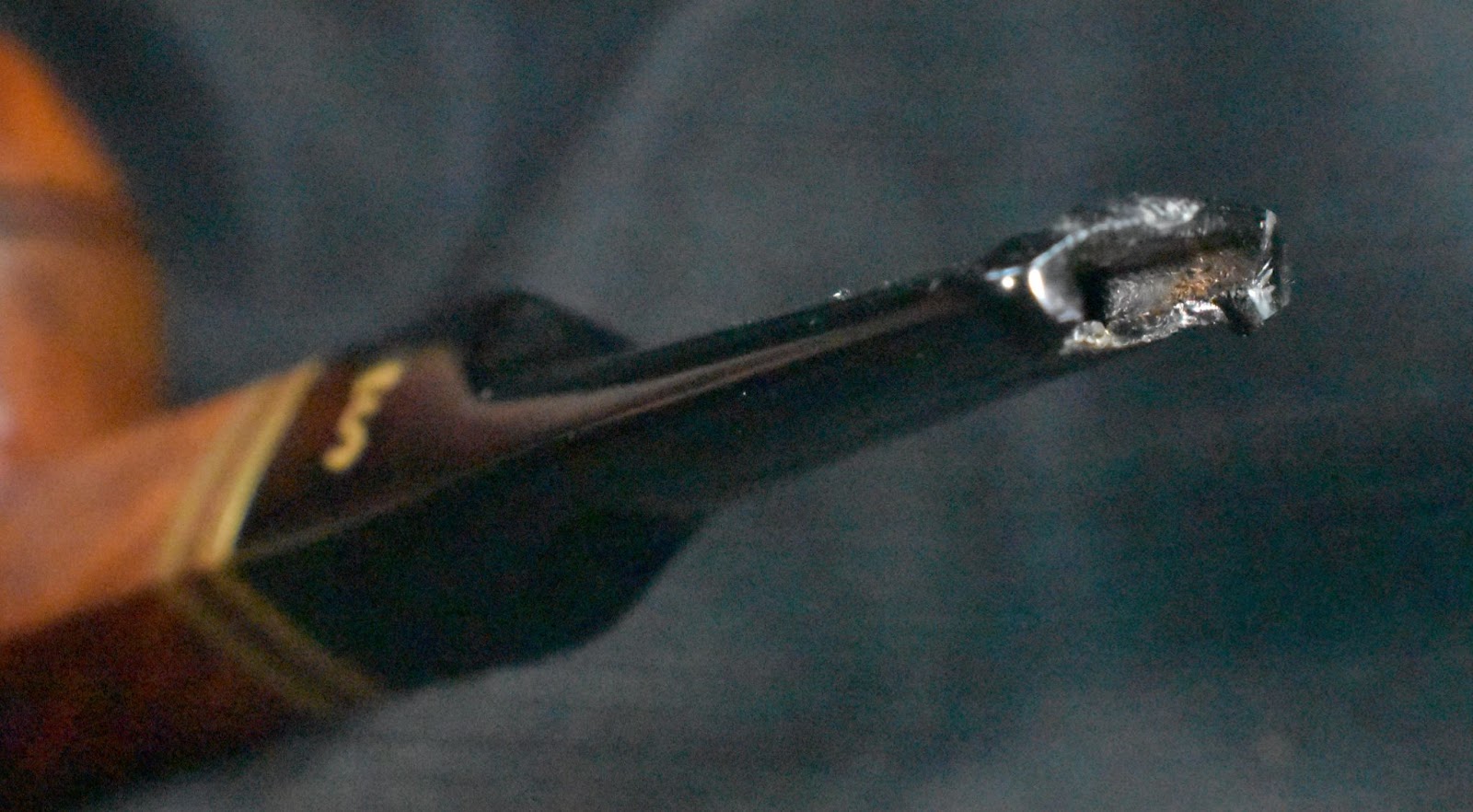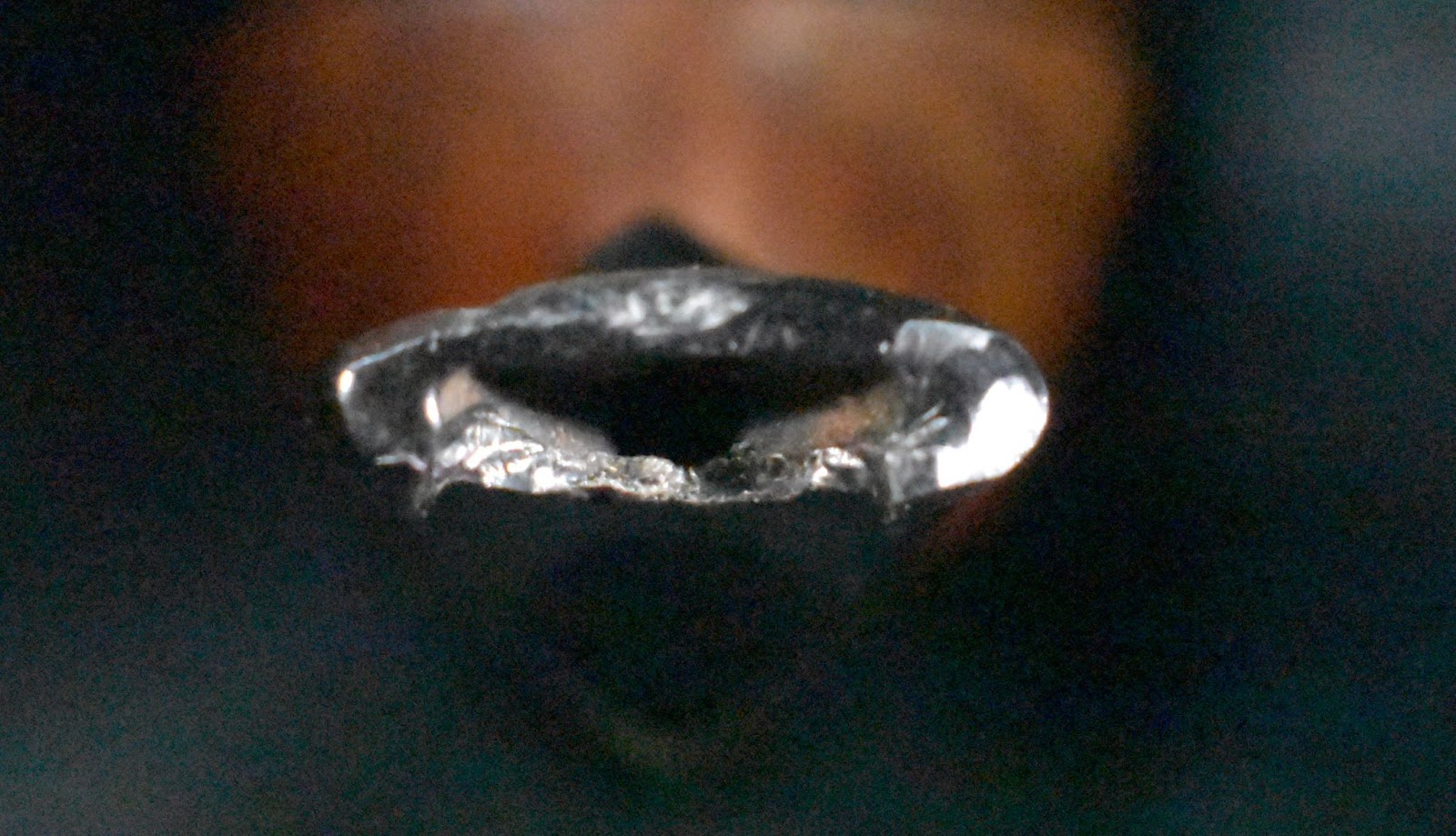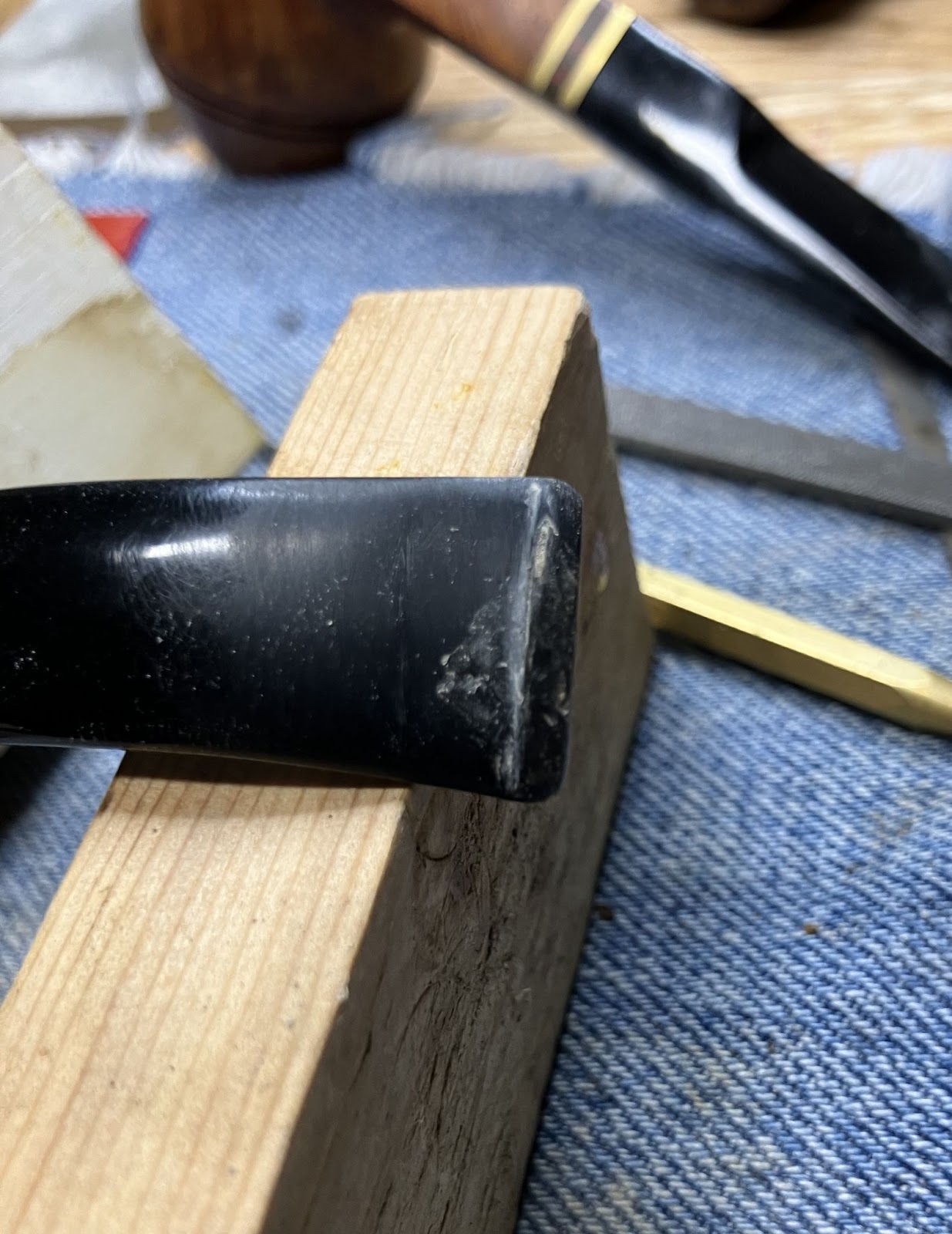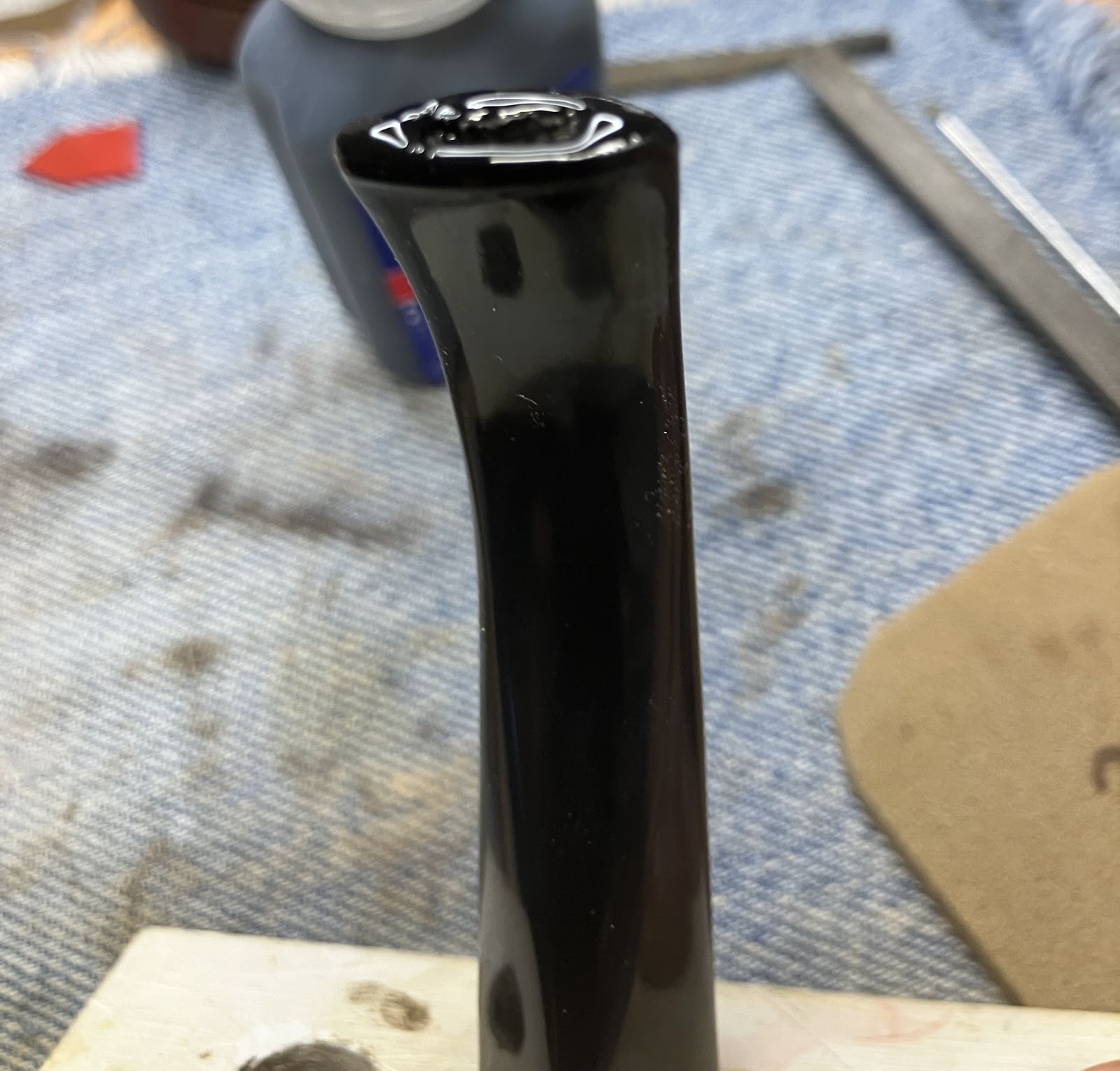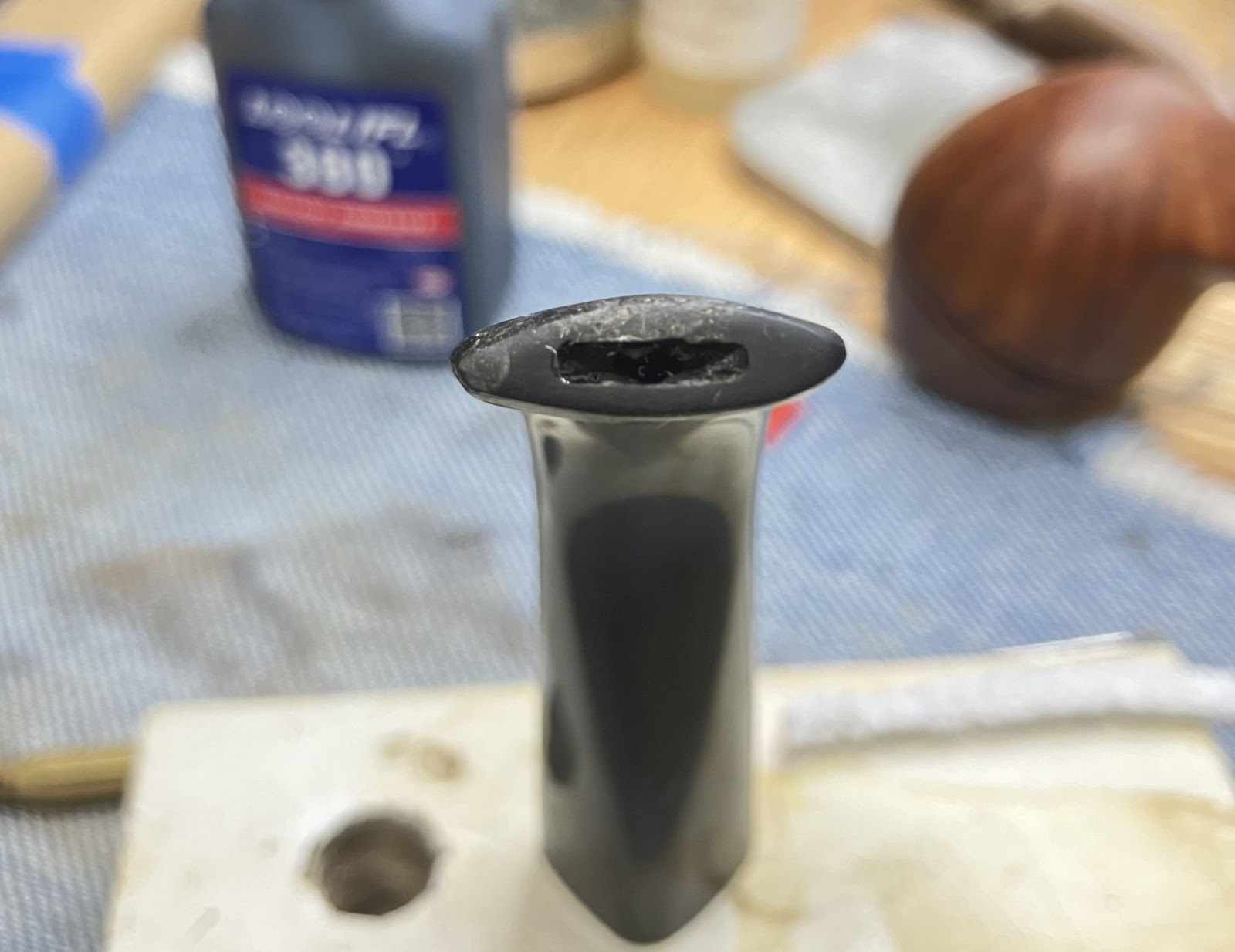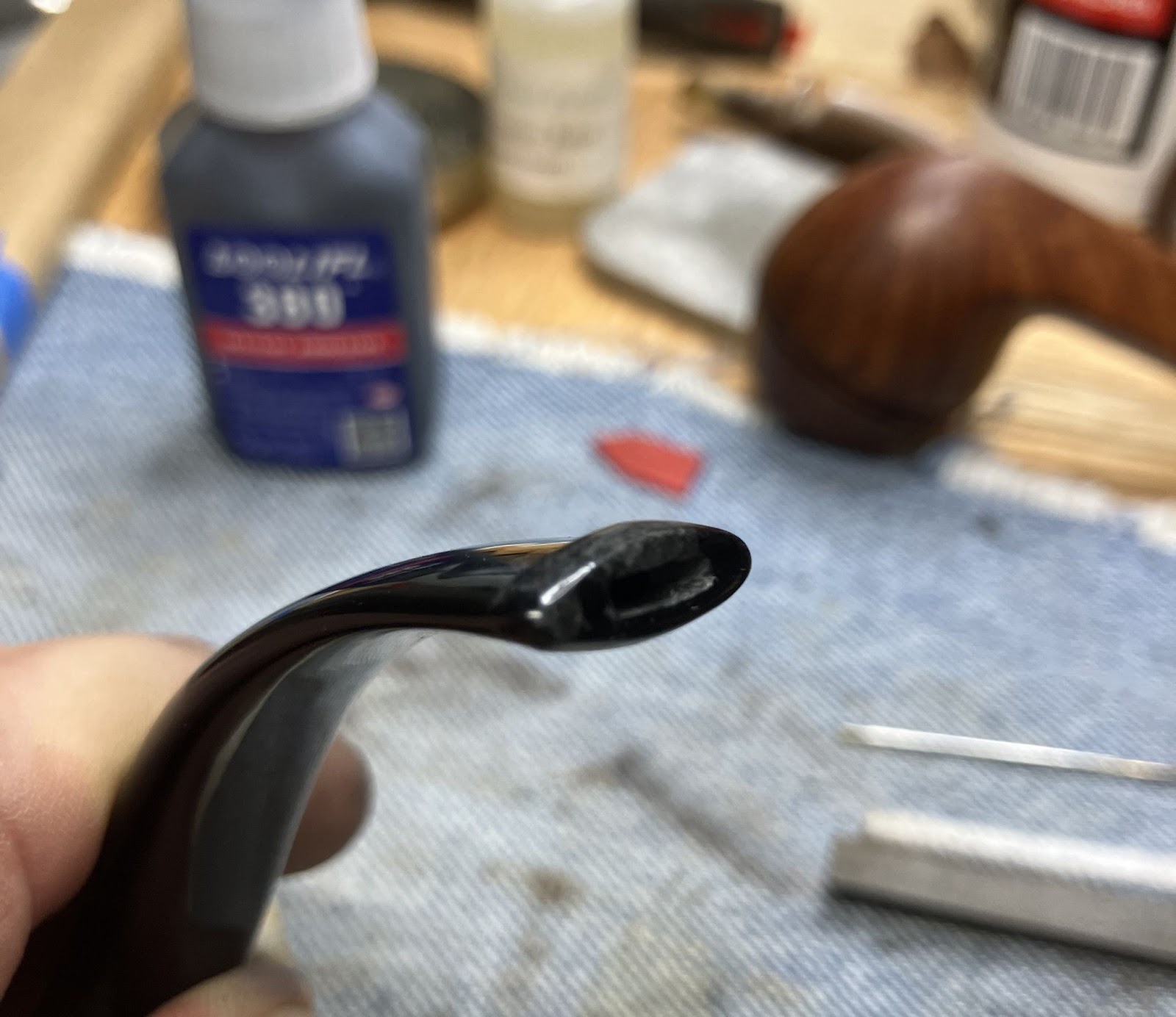
In February of 2024 I joined the Facebook (FB) group Real American Pipe Smokers. I found my first post in that group, below:
I have found in this group a unique group of about 1,600 folks that are open to others and even accept pipe smokers who like Captain Black Grape. Yeah, I know, crazy right. Oh, by the way, I have a jar of Captain Black Grape and a dedicated MM cob for that aromatic delight. The members are everything someone like me is looking for in a FB group, a bunch of friendly, funny, knowledgeable, giving individuals who put up with my nonsense.
Anyway, I have been part of a cabal within the group who has been giving away some of the pipes I have restored and various other items like tobacco, tampers, rare bourbon samples, etc… I was recently asked if I would be interested in restoring three pipes, donated by another member, which we could in turn give away to group members. I said, “Sure”. So the next three restorations will be those pipes. Here is a photo taken of the three:
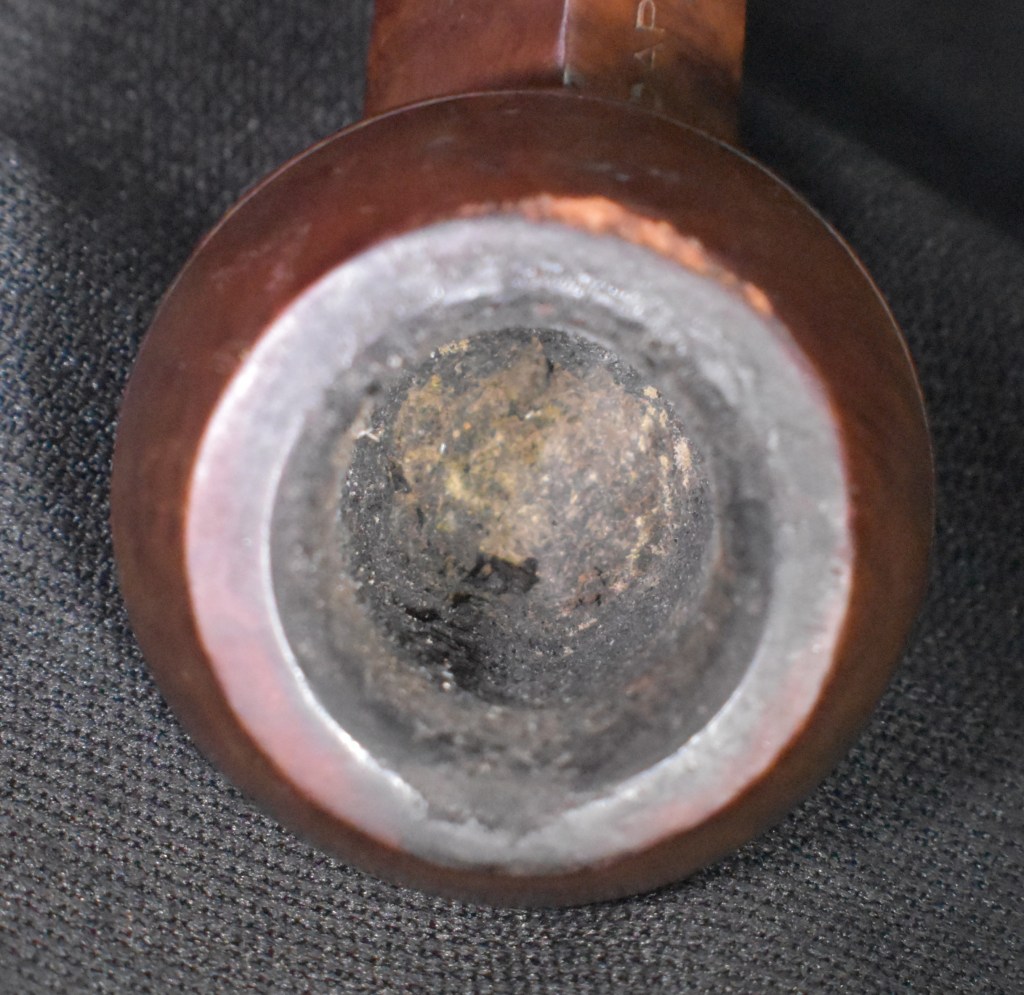
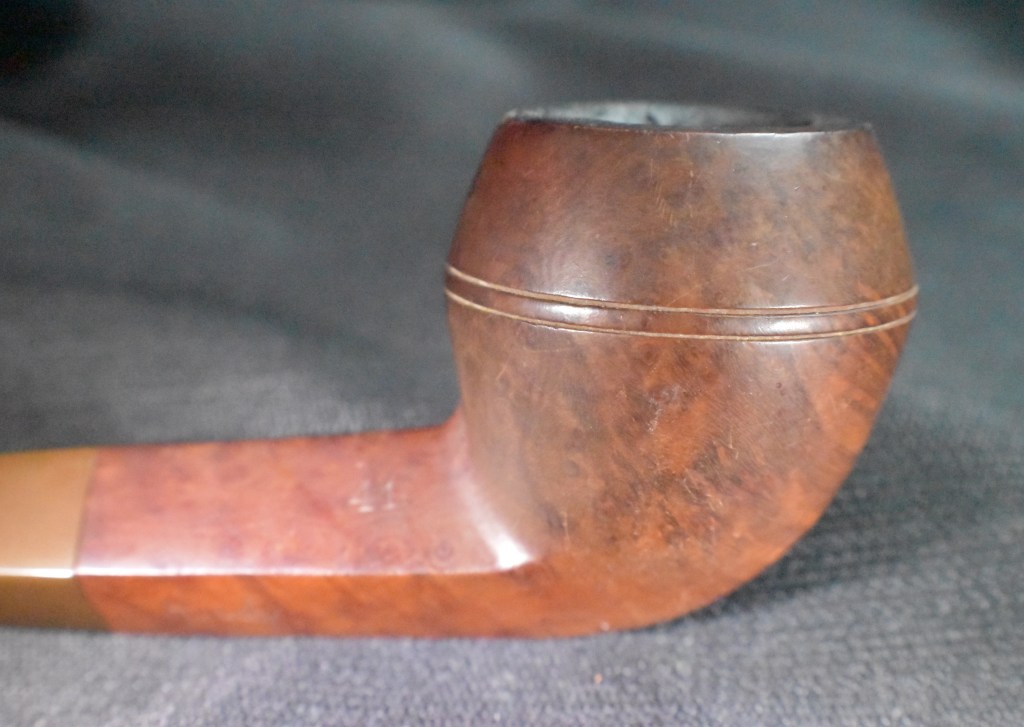
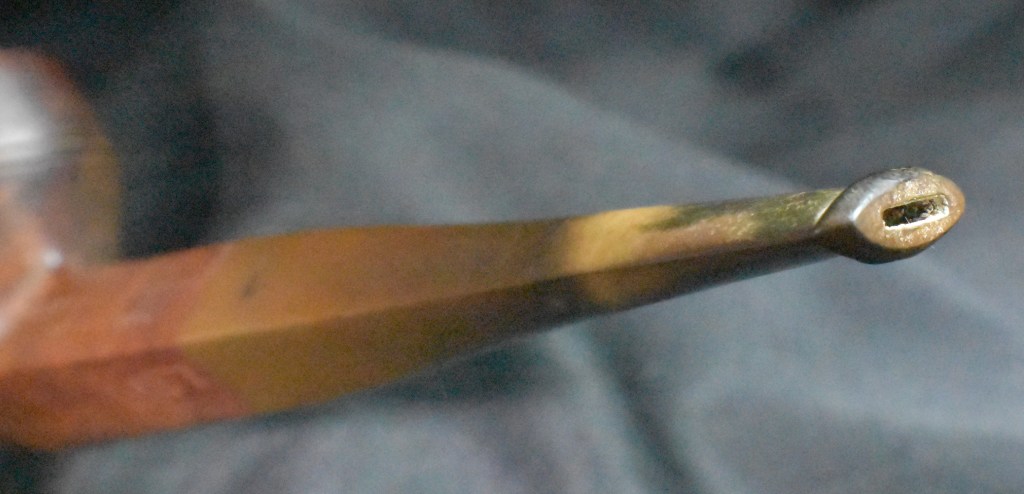
The first pipe I decided to work on was the porcelain apple, thus the title and subject of this posting. Below are some photos of the pipe before I did anything with it.
This restoration looked to be more of a cleaning and stem polishing than a true restoration. Some work would have to be done to improve the fit of the cork tenon. Other than that there was not a lot that the pipe needed.
Background
There really isn’t much I can say about this pipe without a whole bunch of imaginative conjecture. This pipe has no identifying stamps or marks. If I had to venture a guess, I’d say this pipe was made in Europe post WWII to 1980. I have included some links for those interested in porcelain in general and a couple more specific to pipes below.
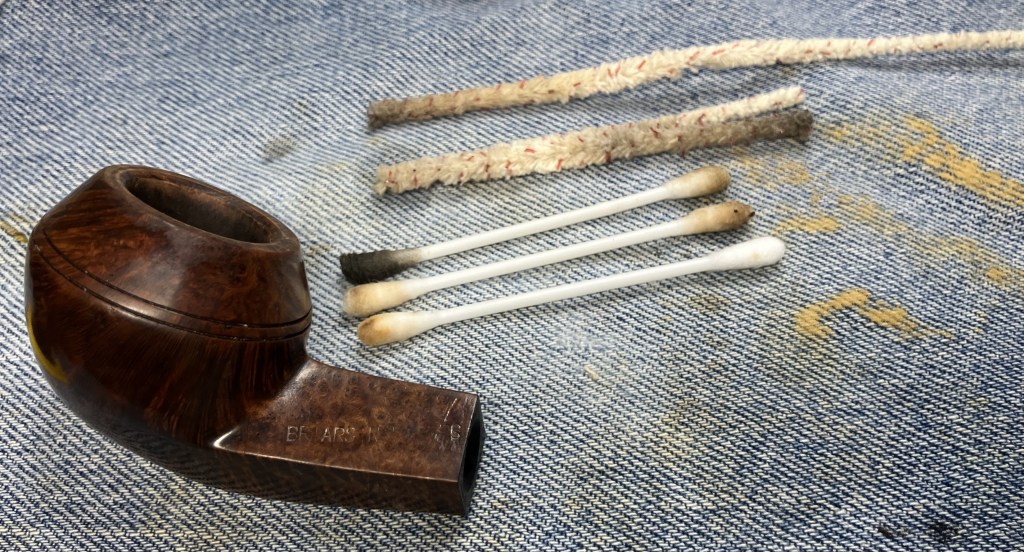
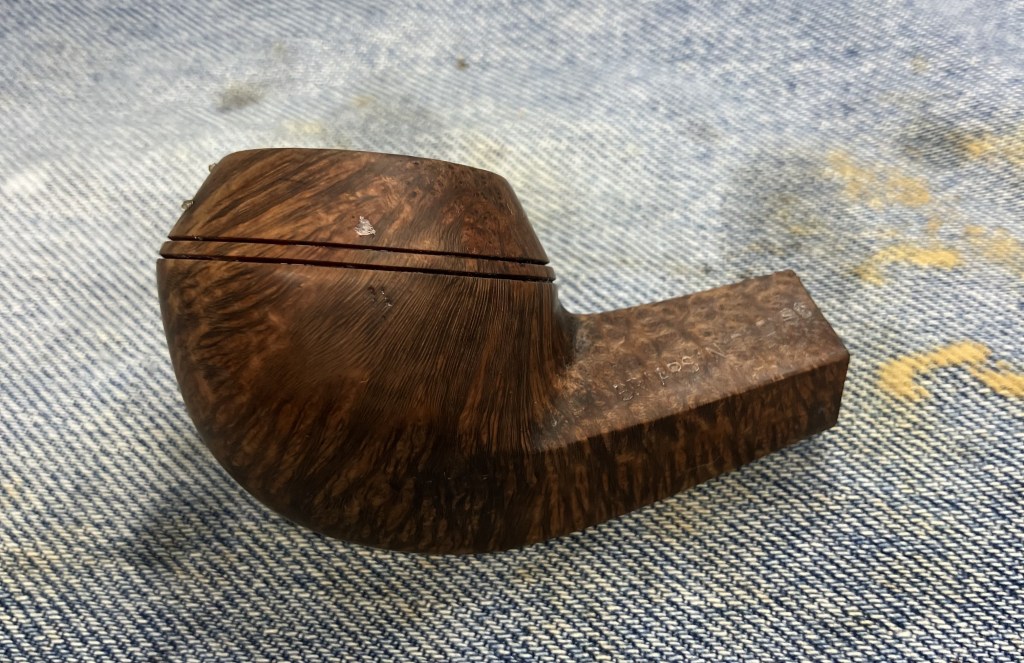
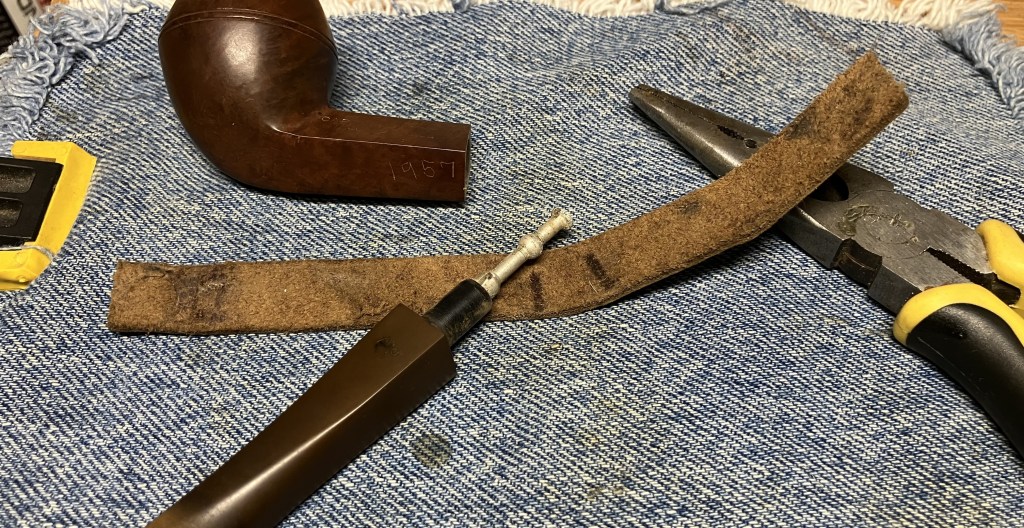
The pipe began on the workbench with a cleaned denim piece.
An Exacto knife kit was broken out for a little bit of cork trimming.
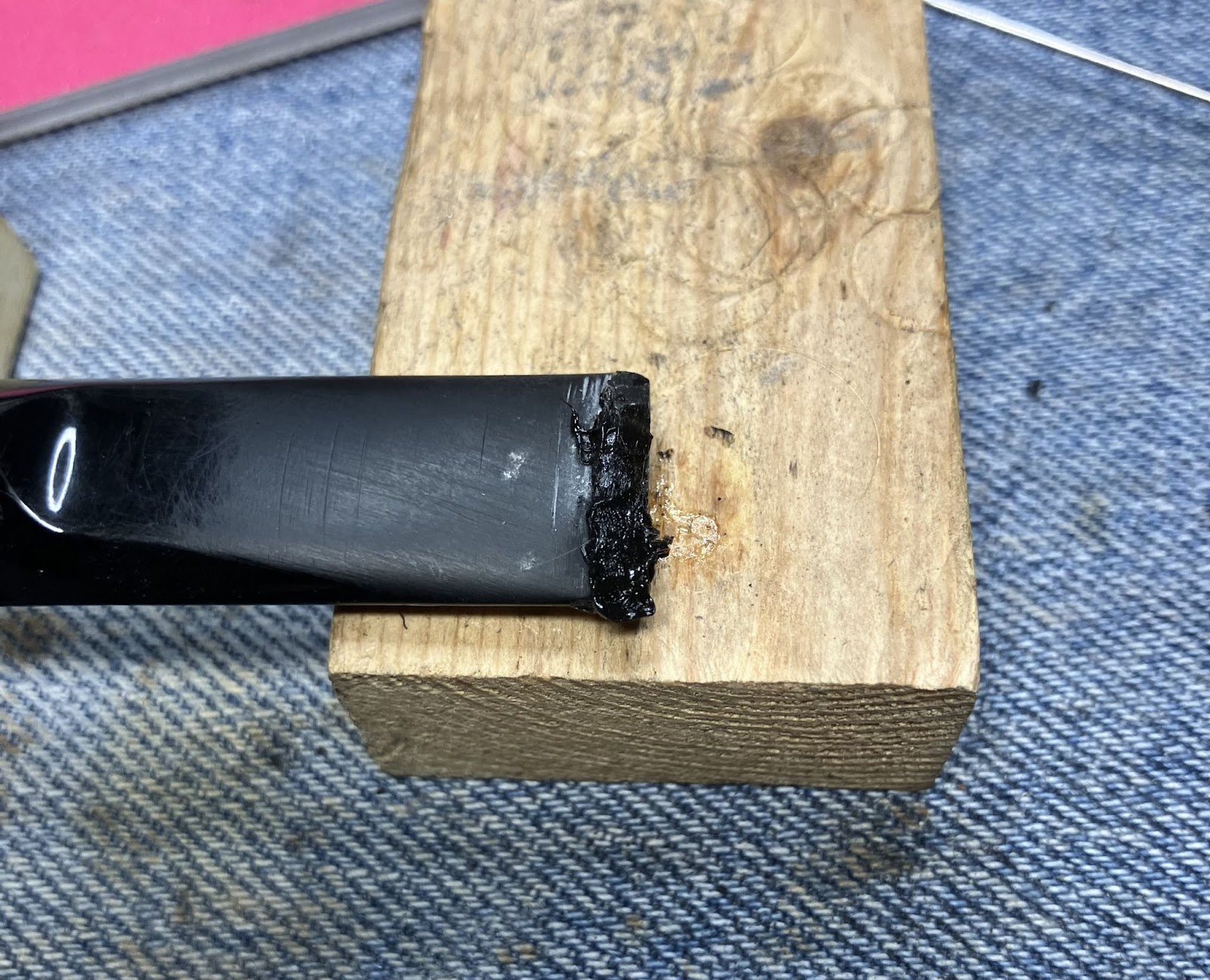
The cork tenon had a rough and unsightly end. This would need to be trimmed and sanded.
The cork proved to be very dry and brittle leading me to think that it was probably at least 50 years old.
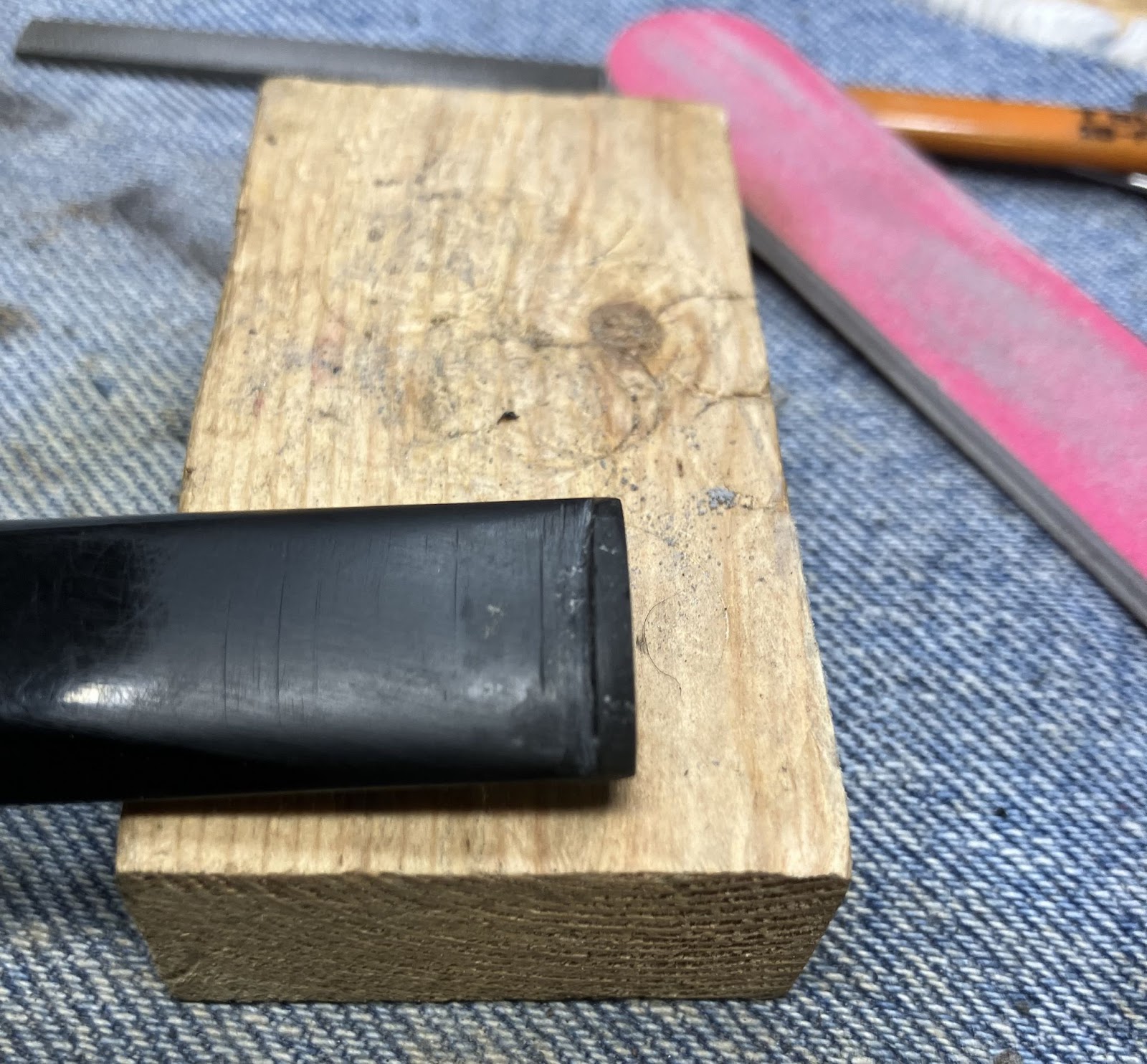
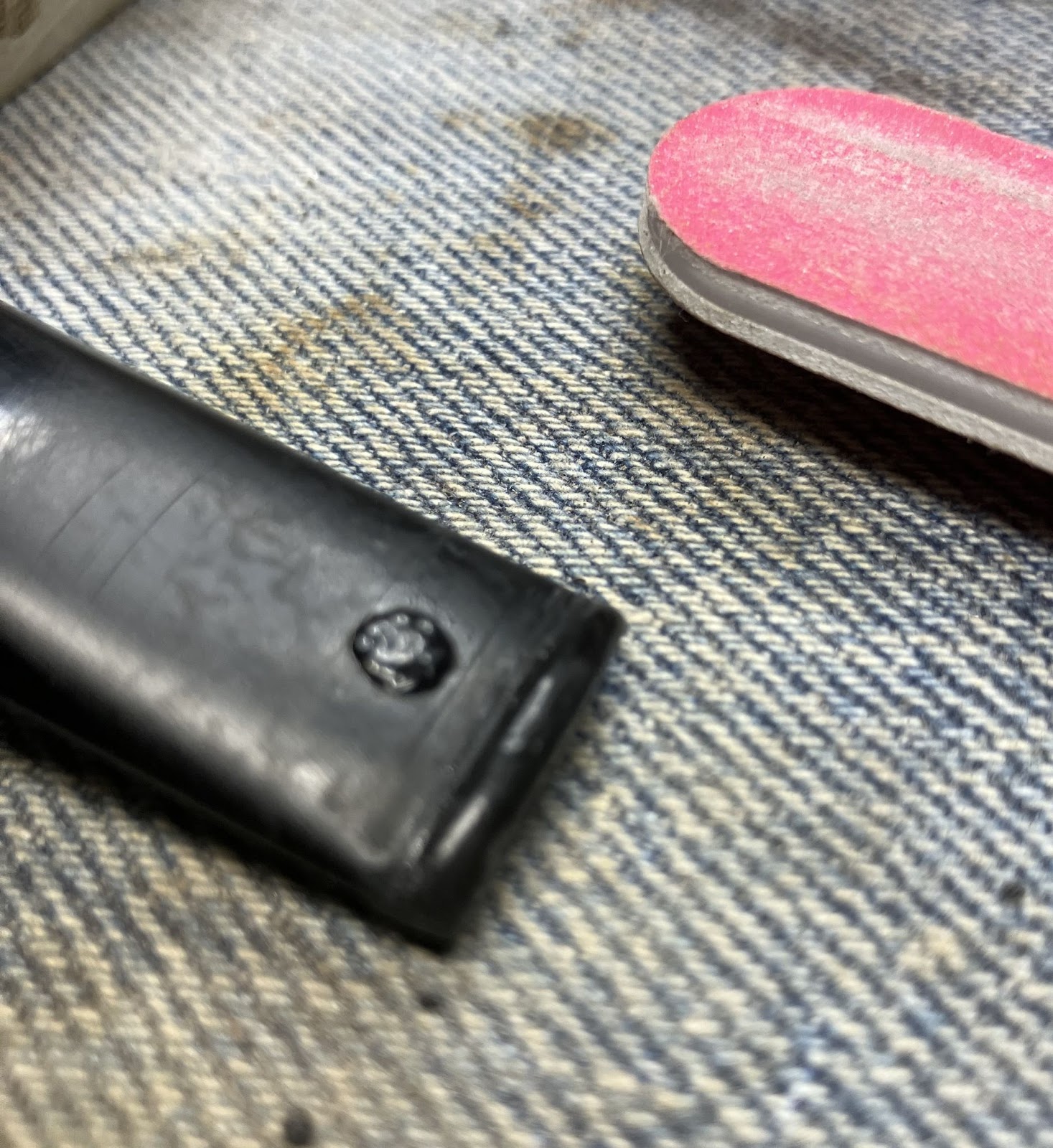
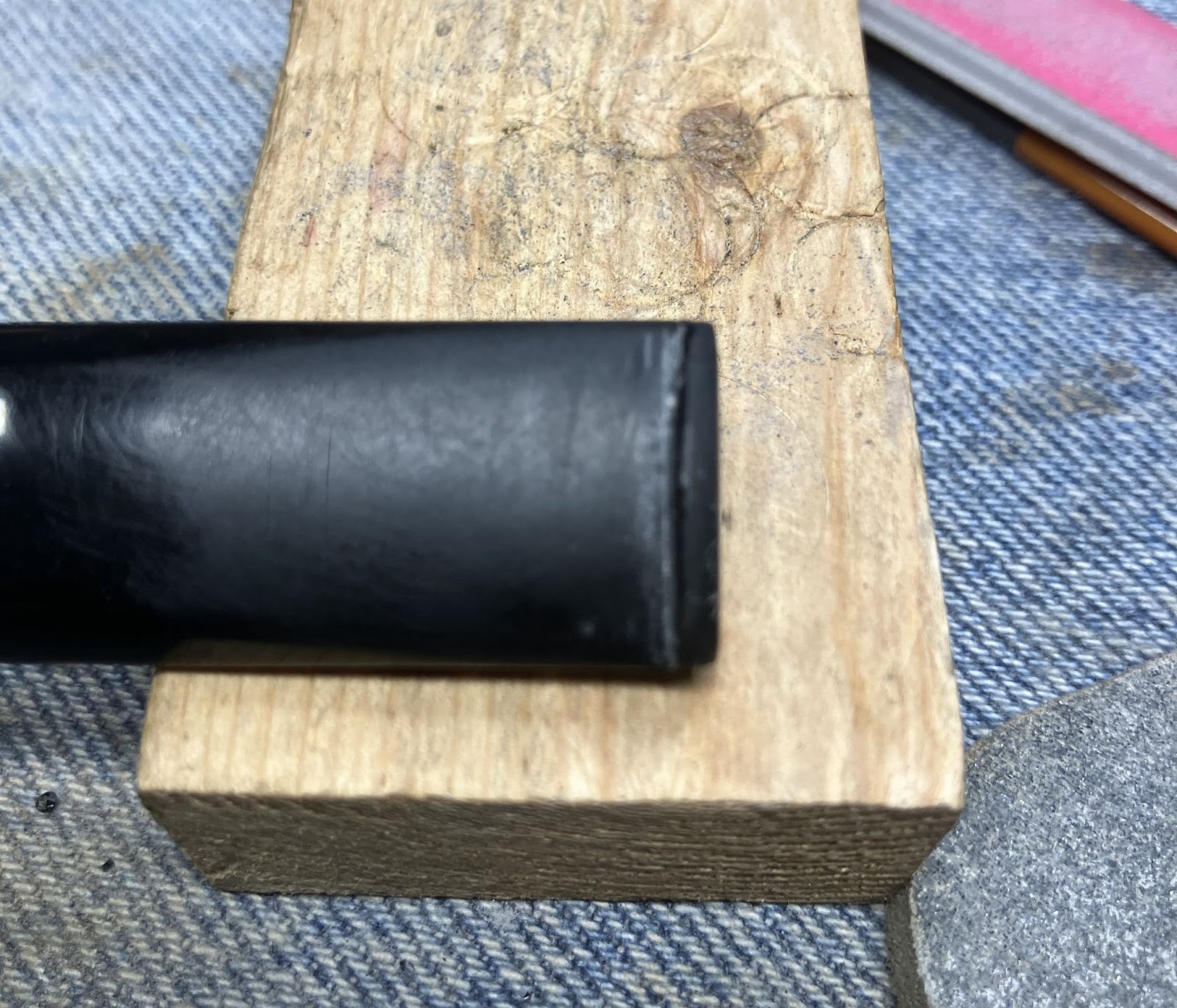
With the cork trimmed and sanded, I cleaned out the stem using bristle pipe cleaners and 99% ethyl alcohol. I had been using 95% ethyl and recently switched to this product.
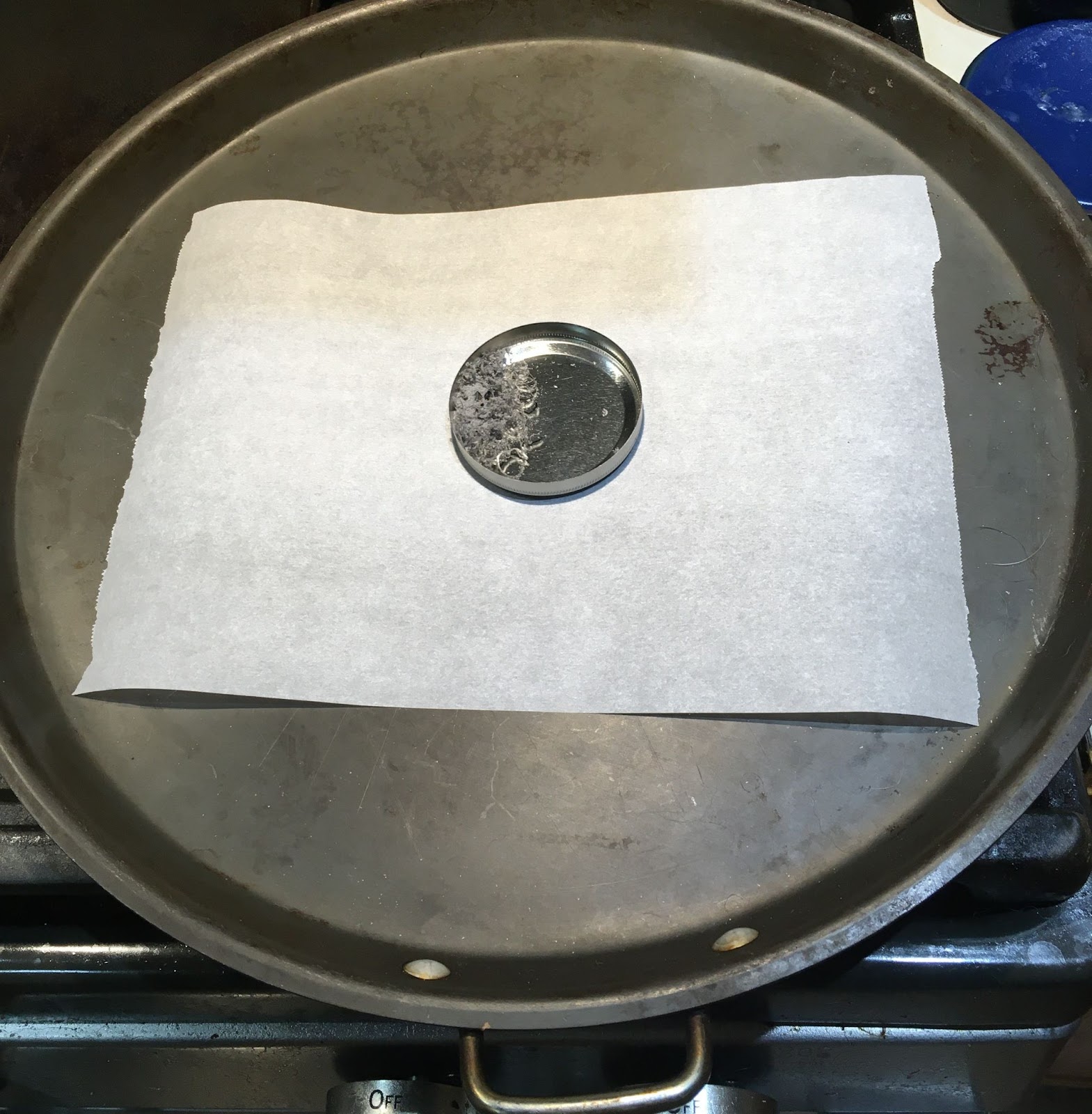
To address the dryness of the cork I got out the trusty old tea kettle and started some water on the stove.
The cork was steamed for about 5 minutes. This is precisely the amount of time it takes for the kettle’s whistle to become so annoying that you have to stop or become patient at Homicidal Acres Home for the Mentally Unstable.
I then rubbed some petroleum jelly onto the cork to hopefully preserve the now swollen cork. This did greatly improve the fit of the stem to the stummel.
Next came the reaming of the tobacco chamber. Porcelain is a hard material but in my mind, it is also brittle. I’ve never broken a porcelain pipe during cleaning but I have only worked with one other so my experience was rather limited. I chose to treat it more like a meerschaum pipe and only used the Smokingpipes Low Country reaming knife to scrape the chamber.
A small amount of cake had been deposited within the chamber.
Alcohol dipped cotton swabs removed the smaller particles and more soluble cake remnants.
I used 3200 sandpaper wrapped around a wood dowel and a piece of sandpaper wetted with alcohol to sand the interior of the tobacco chamber.
And some more sanding. The carbon cake seemed to be well on its way to becoming diamond.
I eventually called it quits on the sanding and thought that perhaps a cotton stuffing and alcohol soak treatment might soften the remaining cake and remove any residual “old tobacco” aroma.
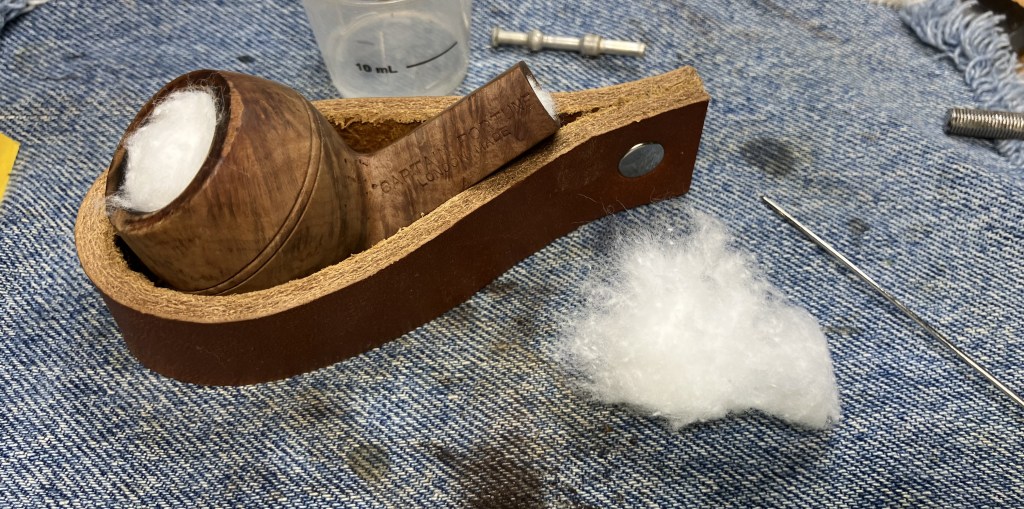
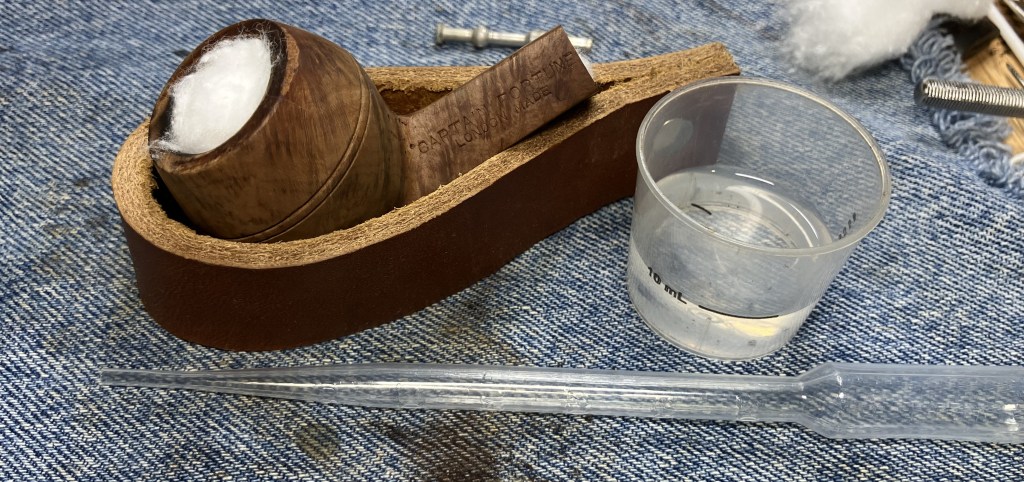
The tobacco chamber and shank were stuffed with cotton and then saturated with the 99% ethyl alcohol.
The unglazed porcelain of the shank began to discolor from the alcohol. I did not think this would be permanent with the evaporation of the alcohol.
I compared my other example of a porcelain pipe to this pipe. I was struck by the color difference. My bent pipe has been smoked numerous times and it has taken on a very nice creamed coffee color. It was originally a bright white as well. The apple had obviously been smoked but had not experienced the same coloring.
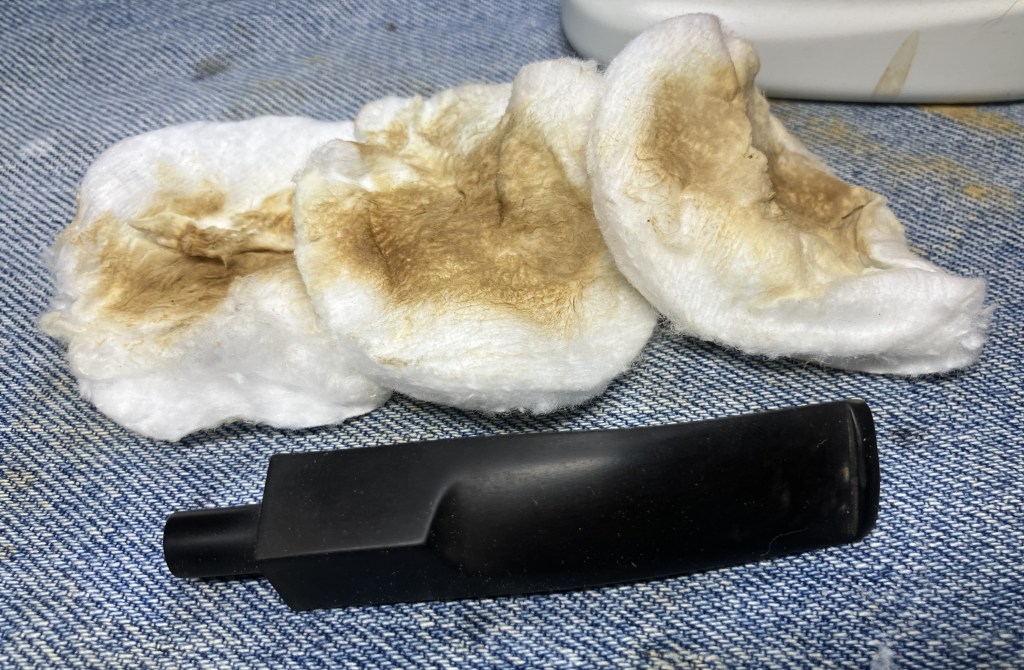
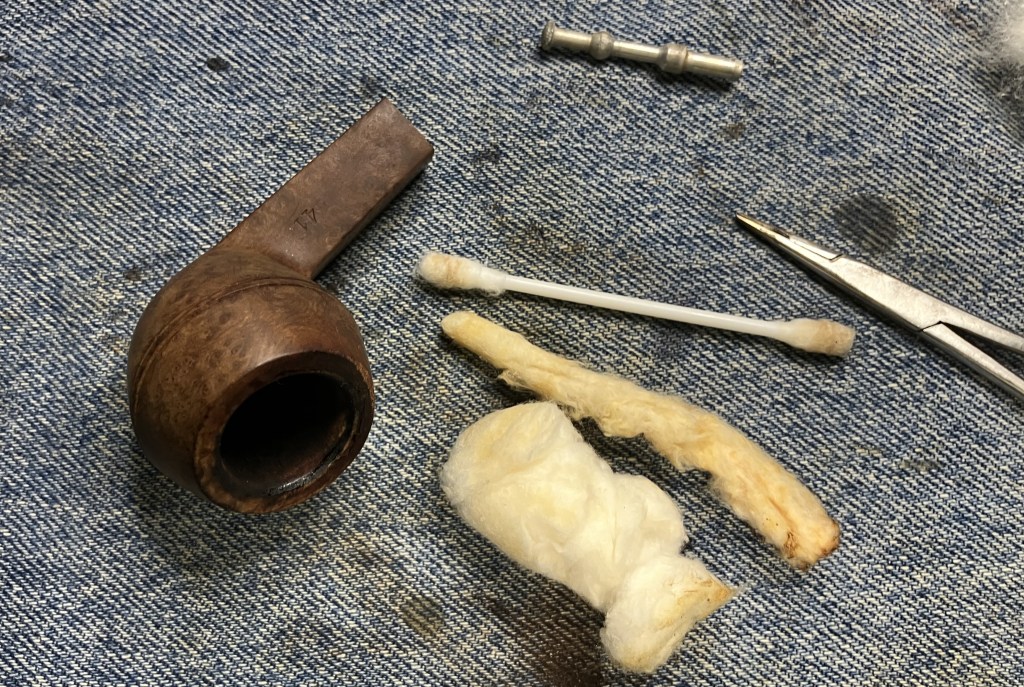
After allowing the alcohol to work its magic overnight, I removed the now dry cotton. As you can see in the photo below very little smoking residue was absorbed by the cotton. The discoloration on the shank had also disappeared.
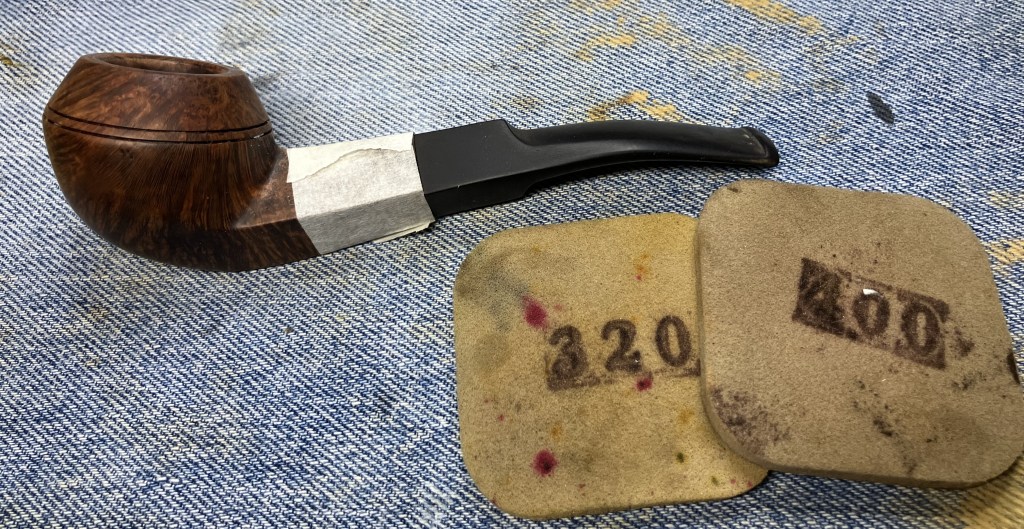
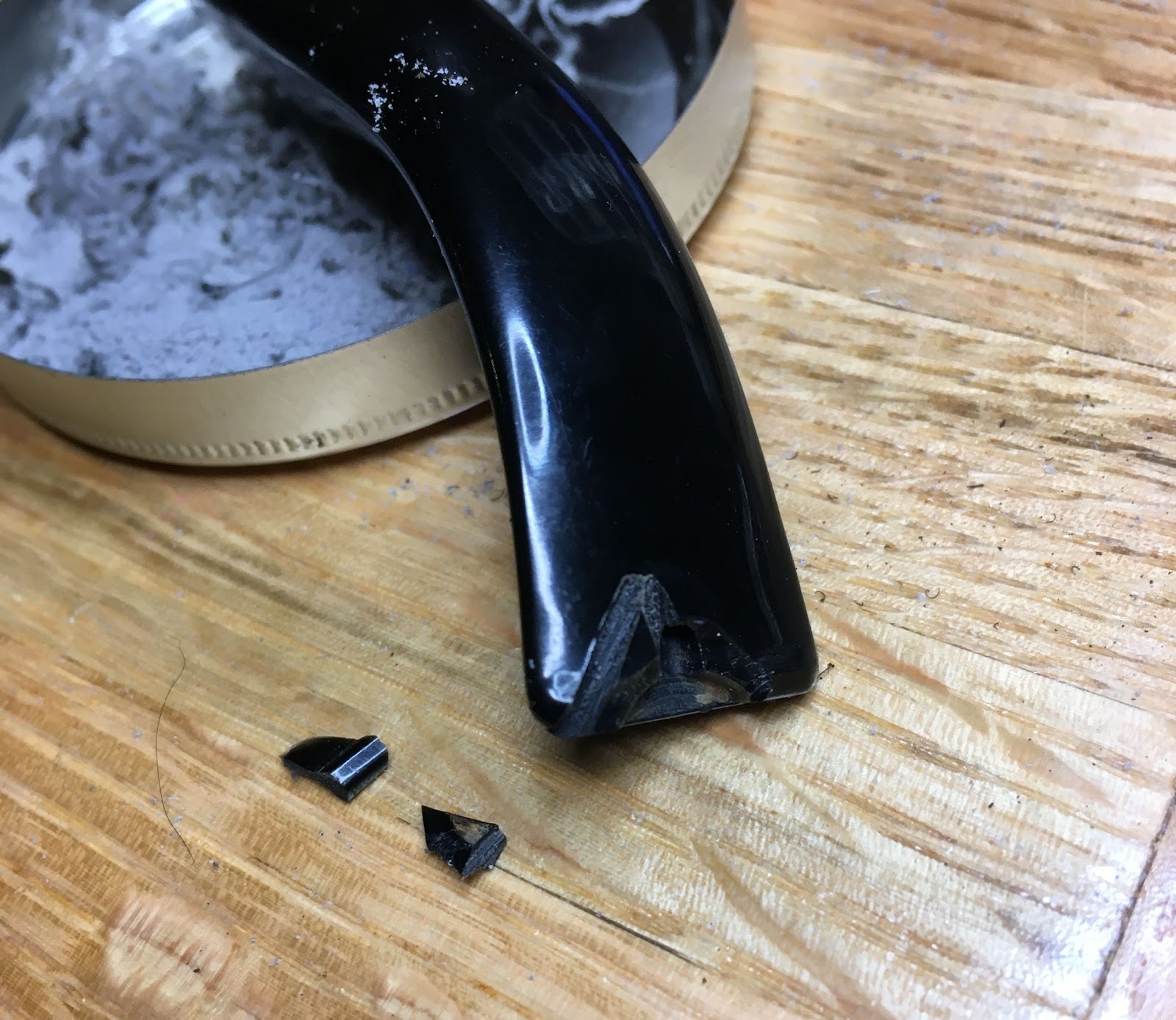
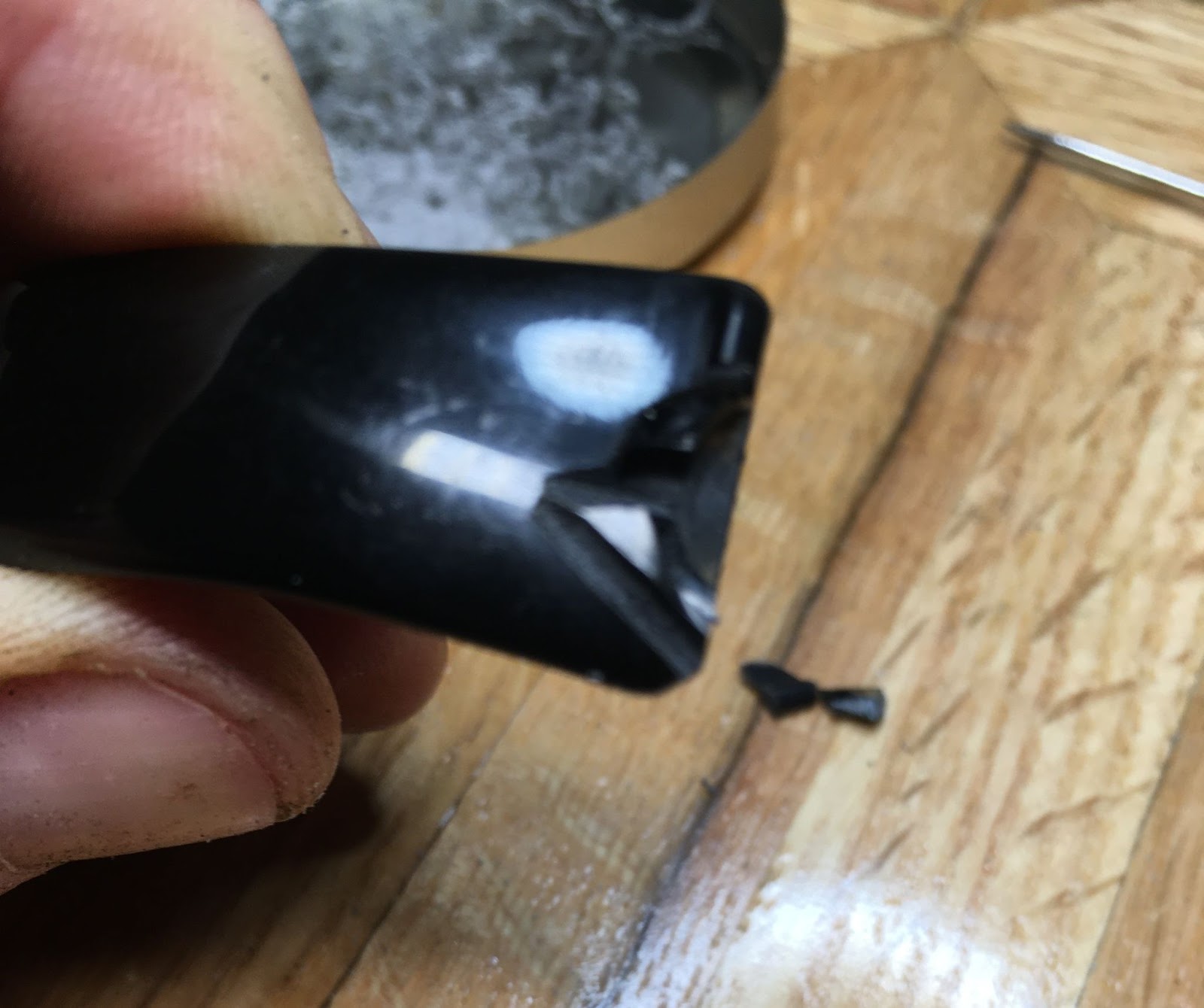
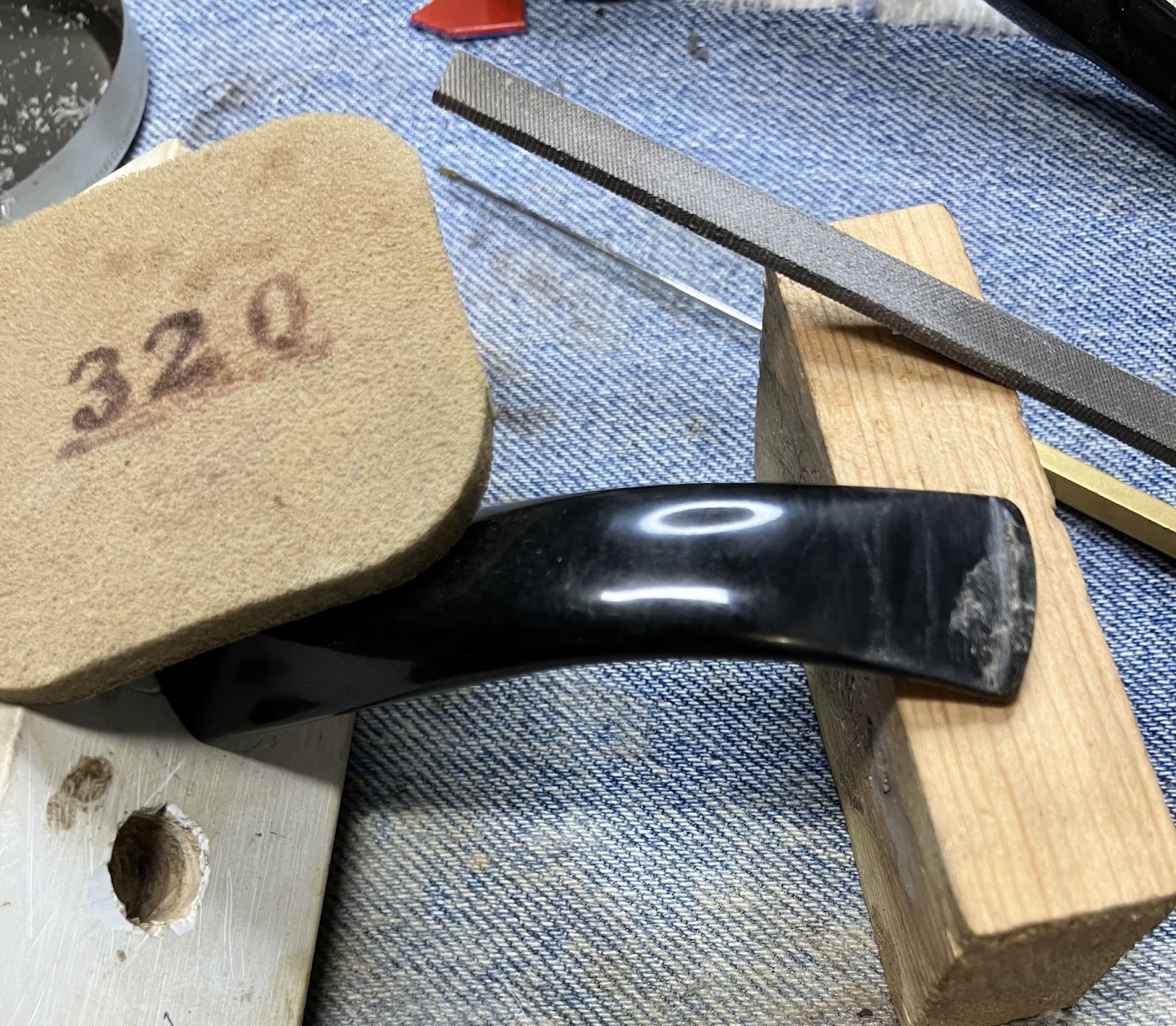
I turned my attention to the stem. I filed the tooth chatter with a small flat file and lightly sanded the bite zone with a 320 grit sanding sponge.
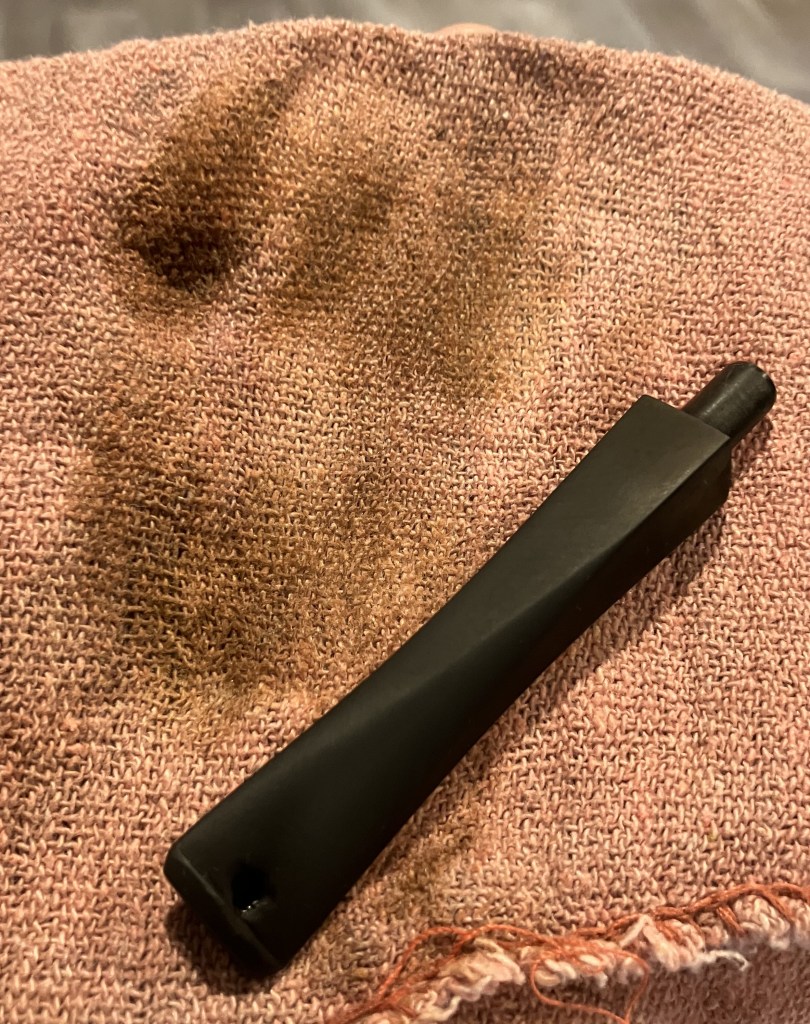
The stem was then worked with sanding sponges from 320-3500 grits. Between each sponge I rubbed the stem with mineral oil and wiped it with a paper towel.
The stem was then worked with micro-mesh pads in grits of 4000-12000. Between these pads I rubbed the stem with Obsidian Oil and wiped with a paper towel.
I rubbed a coating of Before and After Hard Rubber Balm onto the stem and let it sit overnight.
The next day the pipe was taken to the buffer where I applied several coats of carnauba wax to the stem and stummel. The final step was to hand buff the pipe with a microfiber polishing cloth.
I think the porcelain pipe is a unique piece of our hobby and history. I only have a single example of my own and I have mixed feelings about it. I do like how mine has colored over time, taking on a creamed coffee color. I do worry about the fragility of the porcelain and my tendency to drop things. This porcelain apple is a wonderful shape and size. The exterior is a brilliant glossy white. The tobacco chamber interior has discolored and I suppose that I could have been more aggressive with the restoration but I did not want to damage the porcelain. My inexperience with this material kept me from “tough love” during the chamber restoration. The expansion of the cork tenon worked well and the stem polished up very nicely. The black and white of the piece is truly eye-catching. The double holes at the bottom of the tobacco chamber provide an exceptionally smooth draw and I am sure that this pipe will treat its new owner with years of contemplative relaxation. The dimensions of the Porcelain apple are:
Length: 5.78 in./ 146.81 mm.
Weight: 1.45 oz./ 41.11 g.
Bowl Height: 1.64 in./ 41.66 mm.
Chamber Depth: 1.17 in./ 29.72 mm.
Chamber Diameter: 0.77 in./ 19.56 mm.
Outside Diameter: 1.62 in./ 41.15 mm.
I do hope that you have found something here useful to your own pipe care, maintenance or restorations. If you like this sort of thing, please click the like and subscribe buttons. Thank you for reading the ramblings of an old pipe lover.
Loading…
Below are some photos of the finished Porcelain apple.
I suppose some people dream about finding an original unsmoked CUstom-bilt pipe in an antique shop with a price of $5 hung delicately from a tag on a string. That sounds to me more like a nightmare. Well, the $5 would be okay, I guess but finding a Custombilt that didn’t need to have hours of work done sounds terrible. They are fun pipes to work on and I am a restorer. Sure, I am self-proclaimed lazy and like to work on an easy restoration on occasion but still, it is a restoration. Bringing an abused greatly loved pipe back to life so that it can be greatly loved some more is what I look forward to. And today’s restoration was just that. This Custombilt had been smoked quite heavily in its day. A three tier wedding cake had nothing on the cake in this pipe’s bowl. This pipe came as part of a trio, 2 Custobilts and a third “look-alike” back in March. This pipe wears a Custombilt, all one word no hyphen, over IMPORTED BRIAR stamped on the left shank. No other stamps were found. Below are some photos taken prior to work being done on the pipe.
Now, you may think this looks like a nightmare. For me, the stuff dreams are made of. The pipe would need a replacement stem. Remember when I said this was part of a trio? The other Custombilt in the trio was a stem donor. I am still not sure if that pipe can be saved but it certainly can donate its saddle stem for this recipient. The bowl would definitely need a good reaming. Here is to not finding any charring in that well used tobacco chamber. The rim was quite lava encrusted, probably concealing a charred rim. Some people call me a pessimist, I call myself a realistic optimist – always expecting the worst thus avoiding the horror of disappointment.
Background
Back on January 2, 2025 I did a blog on a Custom-Bilt pipe. Below you will find the “Background” information from that restoration. Being a proud Generation X slacker type, I will include it here rather than try to come up with something original.
“The standard starting point for researching a pipe typically includes pipedia.org. The query of Tracy Mincer, originator of Custom-Bilt, will take you to this brief entry:
“Tracy Mincer started the original Custom-Bilt pipe company in 1934. In 1946, the name was changed to Custombilt after Mincer began an association with Eugene J. Rich, Inc. There were some big changes in advertising and distribution. The slogan “AS INDIVIDUAL AS A THUMBPRINT” began at this time as well.
In the early 1950’s, Tracy Mincer developed severe financial problems that caused him to stop making the Custombilt, and he lost the name. n 1952, Mincer began a new pipe, The Doodler, that due to the holes in the bowl had to made primarily in a billiard type shape in three sizes. In the early 1950s, National Briar was turning the bowls for Mincer. Based upon the documentation, it appears that Mincer made the pipe until the mid 1960s, when National Briar Pipe Co., Inc. began making and selling the Doodler.
Mincer died in 1964. Based upon the information provided, Mincer seemed to always have money, production, distribution and other problems. Mincer was probably a terrific craftsman but a very poor businessman and administrator. To me, Mincer sounds like your typical small business entrepreneur who always knew what was right and if you disagreed¼problems. Mincer always seemed to be on the brink of going out of business, not meeting payroll and so on.
Claude Stuart purchased the Tracy Mincer Pipe Company and began making pipes using the Tracy Mincer stamp. Stuart finished nearly all the pipes produced, mostly carved and textured bowls and the occasional straight grain. Claude made the Tracy Mincer Pipe Company a moderate success. Stuart became ill and in 1990 The Tracey Mincer Pipe Company went out of business. Currently, Jim Tedesco owns the Tracy Mincer name.
These interesting examples bellow are pipes made with the Tracy Mincer stamp. If you any additional information about these pipes, or can otherwise add to the history of this interesting pipe man, please add it here, or send it to sethile.pipes@gmail.com, and we can add it for you.” (Mincer – Pipedia).
There is a book written by William E. Unger, Jr.,Ph.D titled “As Individual As A Thumbprint”: The Custom-Bilt Pipe Story. This book appears to be self published by Dr. Unger at The Graphic Touch, of Columbus, Ohio. Printed in 2001 and bound with a black plastic spiral, the book states that the entire contents are “All rights reserved…without permission in writing from the author”. Dr. Unger passed away January 1, 2013 (obituary: https://www.legacy.com/us/obituaries/dispatch/name/william-unger-obituary?id=12197453) and the book is no longer in print. This unfortunately means that I will not be including any quotes from the book. We’ll see how I get around that, I guess. I got lucky and purchased a copy from eBay for under $30 (with shipping) earlier this year, after watching several copies sell for what I considered astronomical prices. The book is a remarkable piece of work and is the definitive history of the Custom-Bilt pipe. The research that Dr. Unger put into getting the story correct is amazing. Fortunately there were several past employees, friends and relatives associated with Tracy Miller and the company that were able to give interviews and explanations to the inner workings of the company.
In regards to the stamps on the pipe in hand, I will speak to what I have found in Unger’s book, without quoting any of it. The first thing that needs clarification is the Custom-Bilt vs. Custombilt name. I’ll paraphrase William Unger here, the first stamps used by Tracy Mincer were “Custom-Bilt”. These were used from 1938-1946 definitively and less definitively prior to 1938. You could, perhaps, find reference to this in the book on page 91. There, I think that should give me legitimacy and keep any lawyers at bay. Next we examine the IMPORTED BRIAR stamp on the bottom of the pipe. Unger states that he has inspected a large number of Custom-bilt pipes and that about ½ of them do not have this stamp. He declares that he is at a loss to explain either their absence or presence This lack of explanation might be seen towards the bottom of page 114. The final stamp on this Custom-Bilt is the geometric circle stamped on the shank. Certainly these stamps have some utilitarian meaning. Nope. Unger declares that he is not able to explain any system where shapes such as circles, triangles, stars, rectangles, half moons or even trapezoids have any systematic meaning. This may or may not be seen on the top of page 114.
Pipephil.eu does allow quotations with proper referencing and shows nice examples of the above-mentioned geometric stamps.
Regarding this pipe, I looked at the stamp diagrams from Unger’s book and matched this pipe with stamps from the Wally Frank years. This would date this pipe to 1974-1987 and most likely put production at the Weber factory in New Jersey.
The Restoration
The pipe made the 20 foot trip from the photos table to the bench and received a cleaned piece of denim.
I reexamined the cellophane tape spacer in the mortise.
I had no plans of attempting to salvage that mouthpiece and that tape had to go. I removed it with gentle pressure and forceps.
The old adhesive gave way and the tape was removed in a single piece.
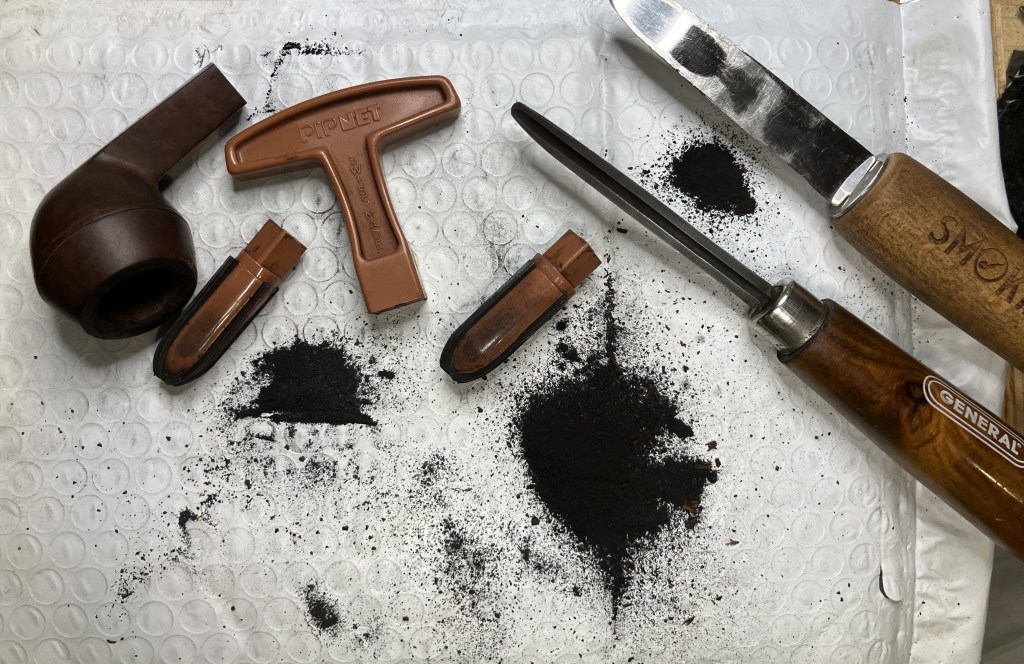
The reaming tools were gathered. I planned on using the PipNet blades in sequential order from smallest to largest with each one removing a layer of the overabundant cake.
The first blades did a fine job. It was here that I decided that I wanted to know how much cake was actually present.
I started pouring the removed cake into an empty snus container for weighing at the end of the reaming.
The 2nd blade also did a fine job.
With the results deposited into the plastic cup.
Of course the 3rd blade came next and performed valiantly.
I was accumulating quite the pile of cake.
Finally the fourth blade, the poor fourth and often unused blade that infrequently is not needed, got his chance to shine.
There it was the collection of all four PipNet blade’s work.
I took it up to the electronic balance and was surprised to see 0.22 ounces or 6.24 grams of cake. Dang near a quarter ounce. I wondered, “how much tobacco did that take?”
Back to work. The tobacco chamber was sanded with 32 sandpaper wrapped around a wood dowel. The chamber looked good but…
On both the left and right sides of the interior front of the chamber there were signs of “spider web” cracks from excessive heat.
The spider webbing was light and superficial. That thick layer of cake had protected the briar quite well. I did think that a good bowl coating would be in order at the end of this restoration.
Next came the scraping of the rim. The lava was moistened with saliva and allowed to sit for a few moments while I put away all the reaming tools. I then used a sharp pocket knife to carefully scrape the lava from the rim. There was one large char area at the 8:00 position on the outside edge of the rim. This was likely due to a lighter.
The shank cleaning was next and after the condition of the tobacco chamber, I had visions of using boxes of cotton swabs and liters of alcohol. I used a couple of alcohol dipped cotton swabs to moisten the residues in the airway and ran the Kleen-Reem shank drill through the airway. It brought out a good deal of crusty yuck. Additional scraping was done with a dental scraper.
I then used a nylon shank brush dipped in alcohol. You can see from the photo below that this started out very dirty. Folded bristle pipe cleaners along with more cotton swabs and a good dose of ethyl alcohol helped clear the filth Within a few scrubbings the airway was cleaned.
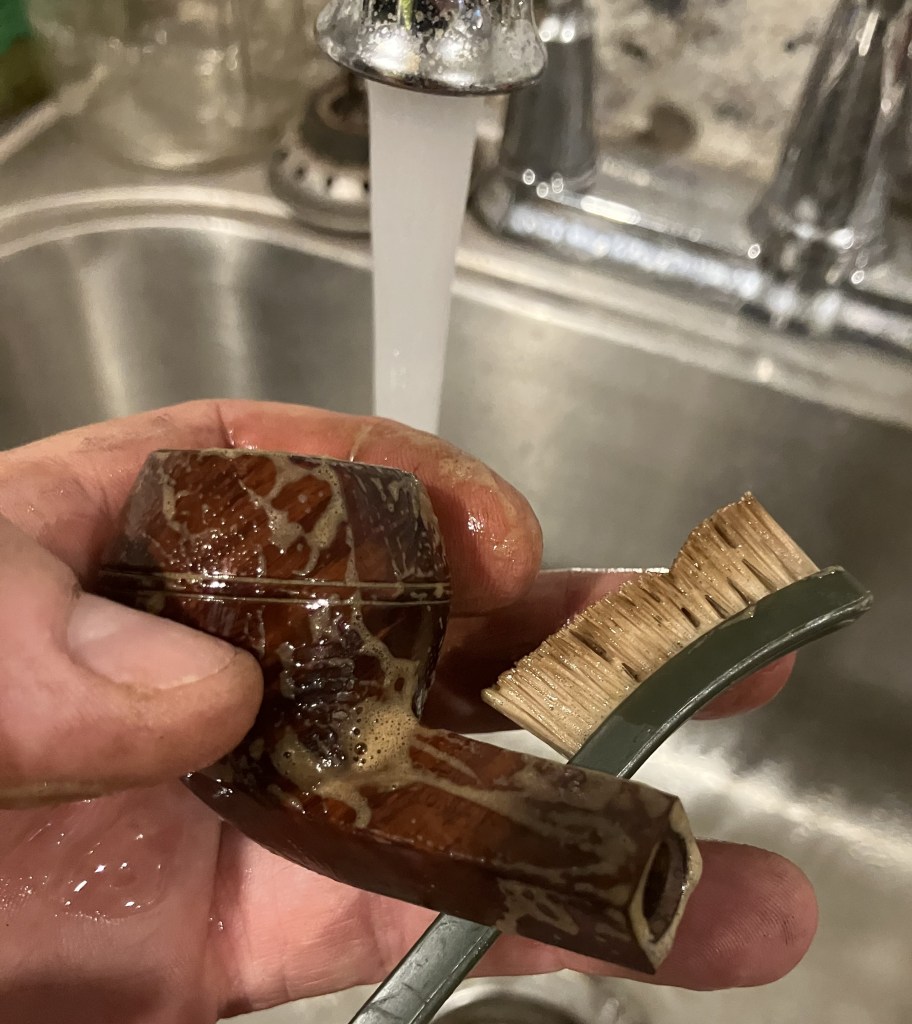
The stummel was then taken to the sink for a scrub with undiluted Murphy Oil Soap and a nylon brush. The soap was rinsed with warm water and dried with a cotton hand towel.
Back at the workbench the stummel was wiped with a cotton ball wetted with 95% ethyl alcohol.
The rim looked much better than it did but would require a light topping with 320 then 400 grits sandpaper.
The charred spot on the outer rim was scraped with a sharp pocket knife then sanded with a 400 grit sanding sponge.
The rim was topped with 320 and 400 grit sandpaper laid flat on a countertop.
It was time to find a donor. Fortunately this CustomBilt arrived with another. This other had a saddle stem and a crack through the bowl on both the front and back. I have tried to reduce and compress these cracks to no avail. I have pretty much set the cracked CustomBilt aside and think about potential fixes now and again. The stem from the cracked pipe seemed like a near perfect fit to the Custom Bilt at hand.
I realized that the original stem was a taper and this replacement was a saddle stem but they were both CustomBilts of the same era.
The fit of the donor stem was slightly larger than the shank of the original pipe.
Since I know of no way to increase the diameter of a shank, I do know how to reduce the diameter of a vulcanite stem.
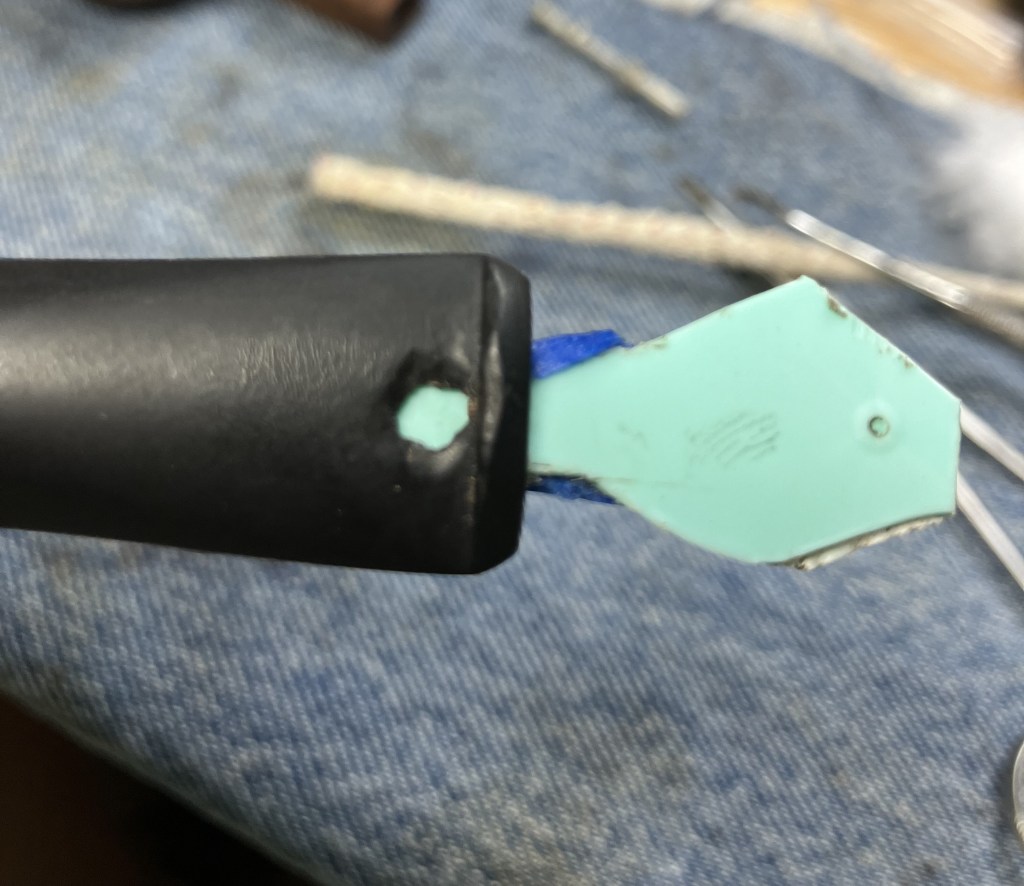
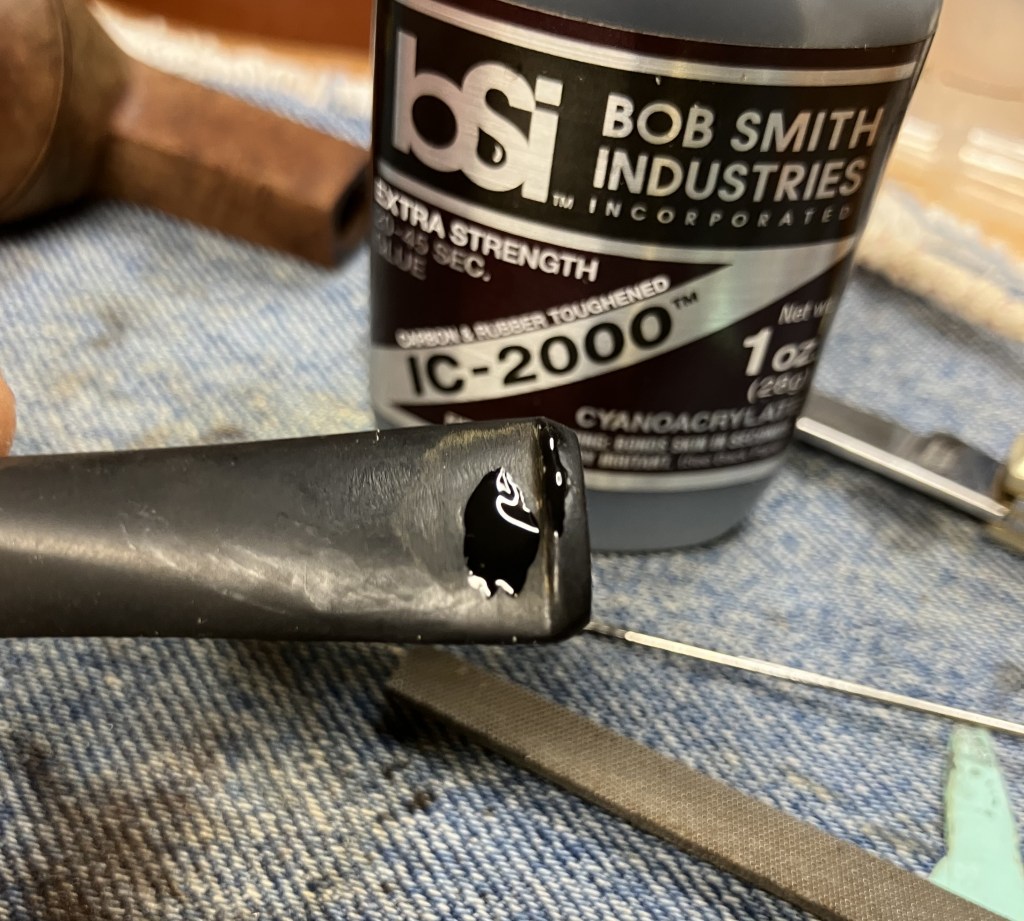
First things first. I had to snug up the tenon so that it was a nice solid fit to the mortise. I decided to do this by thickening the tenon with black cyanoacrylate (CA, super glue). A thin bead of black CA was added to the tenon
I used a curved dental scraper to evenly spread the CA over the tenon.
The wet CA was spritzed with a CA drying accelerator then sanded with a 400 grit sanding sponge. The new fit was very good.
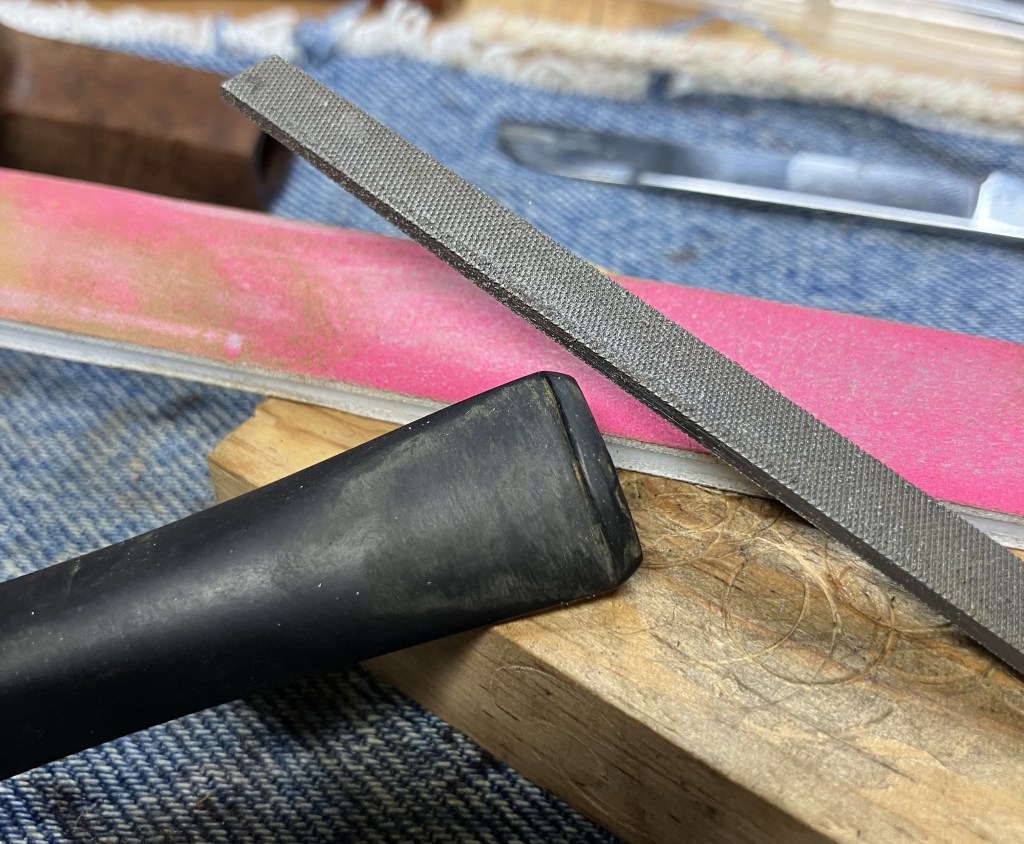
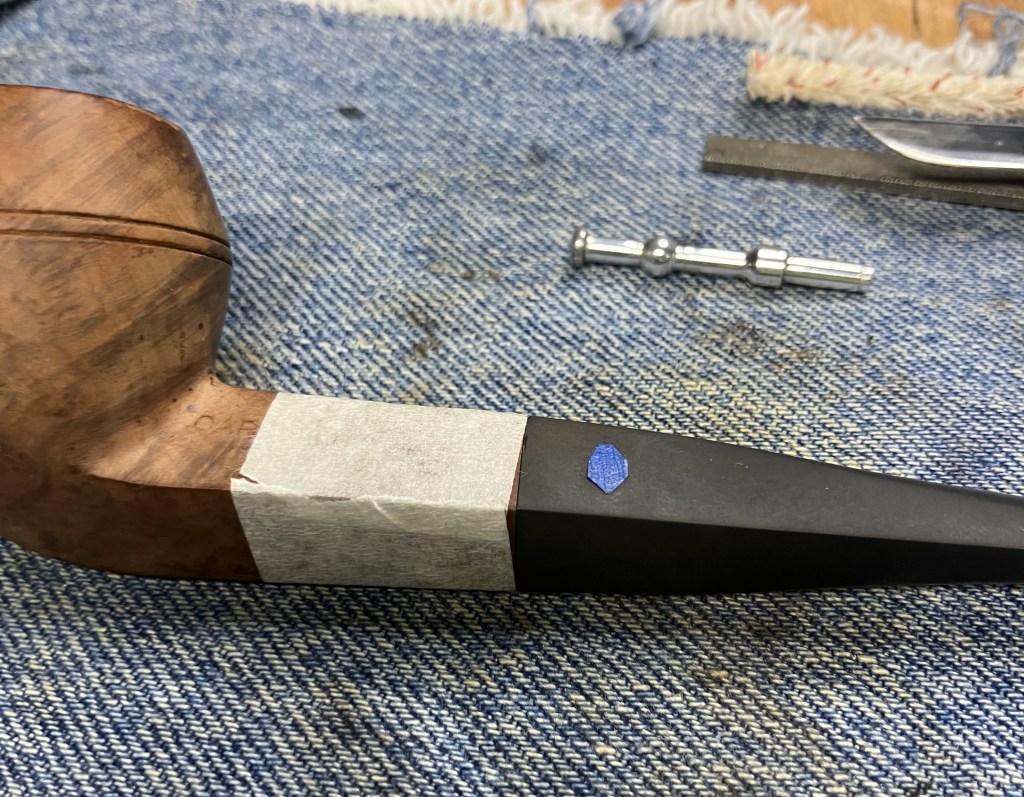
With the stem securely attached to the stummel I could start the shaping of the stem. I wrapped the shank in masking tape to protect it from the activities with the file. The tape had to be replaced several times to keep the shank covered.
Eventually I stopped filing and started smoothing the stem with emery boards for finger nail filing.
To make the seam even better fit, I use Scotch tape as it is even thinner than the masking tape.
Eventually I removed the tape altogether and sanded the shank and the stem in unison. This worked because there was no rustications or stampings on the end of the shank. I had little fear of blending the briar from the old finish to the new. The stummel and stem were worked with a series of sanding sponges from 320-3500 grits. Between each sponge the stummel was wiped with a cotton ball moistened with alcohol. The stem was rubbed with mineral oil and wiped with a paper towel between sponges.
The stummel was given a coating of Before and After Restoration Balm applied with a soft bristle toothbrush and allowed to sit for 20 minutes
The excess balm was wiped from the stummel using an inside out athletic sock.
The shank and stem were buffed using white buffing compound on the buffer. Next, several coats of carnauba wax were applied to the pipe. The final step was another hand buff with the microfiber polishing cloth then a return to the photography table for the finished pipe photo shoot.
I realize that I changed the appearance of this pipe quite a bit by replacing a taper stem with a saddle stem but I feel that since they were both original CustomBilt stems it was more acceptable.The notch on the rim doesn’t detract from the appearance and almost looks like it is supposed to be there. The rustications cleaned up very nicely and look great with the freshly sanded smooth portions. The replacement stem also polished up very well and it looks good with the stummel. I think this restoration was a great success and will allow some new owner to make and have many memories of their own with this wonderful old pipe. The dimensions of the now saddle stem CustonBilt are:
Length: 5.65 in./ 143.51 mm.
Weight: 1.79 oz./ 50.75 g.
Bowl Height: 2.09 in./ 53.09 mm.
Chamber Depth: 1.71 in./ 39.88 mm.
Chamber Diameter: 0.88 in./ 22.35 mm.
Outside Diameter: 1.56 in./ 39.62 mm.
I do hope that you have found something here useful to your own pipe care, maintenance or restorations. If you like this sort of thing, please click the like and subscribe buttons. Thank you for reading the ramblings of an old pipe lover.
This pipe screamed at me when I first saw it on eBay. I have no idea why. I am not a huge fan of billiards but there was just something about the extended shank that said, “Hey you, check this out.” Everything about the pipe said that it was a WWII era pipe. The rustication, the non-briar look about the shank grain and the use of so much aluminum. I had neer heard of “Woodsman” as a maker or line of pipes. More on that in the “Background” section. This pipe demanded that I work on it. I’d have to ship it in from Canada and I doubted that I’d ever even break even if it sold. Still, it beckoned. Well, long story short, I bought it and waited for the arrival of another pipe to entertain me. Upon arrival the pipe looked as described; dirty, used and with faint stamps. The stamps read, Woodsman, in script on the left and GENUINE over BRIAR in a circle on the right shank. The below photos show the Woodsman before any work was done.
The pipe would need a reaming and an assessment of the condition of the tobacco chamber. There appeared to be a crack in the bow; on the right side of the bowl but it did not appear that the crack went all the way to the rim. The stamps were faint but still legible so extra care would have to be taken to preserve these. The stem had some light tooth chatter and minimal oxidation. The aluminum would need some buffing for scratch removal and polishing. A thorough cleaning and general refinishing were also on the menu. Overall it looked like a general restoration of a 75 year old used pipe.
Background
The research of the name, “Woodsman” produced nothing on either pipedia.org or pipephil.eu. A Google search did produce a result on Worthpoint.com and is shown below:
“
WOODSMAN D&P GENUINE BRIAR SMOKING PIPE From the research I gathered this pipe (D&P “Woodsman”) was probably made just after WW2. It has a genuine briar bowl and a Mt. Laurel shank. D&P made pipes mostly from Mt. Laurel from about 1942 until just after WW2. NEEDLESS TO SAY THIS IS AN EXTREMELY HARD TO FIND UNSMOKED PIPETOTAL LENGTH APPROXIMATELY 6″ LENGTH OF MOUTH PIECE IS ABOUT 1-1/2″ HAS A 7/8″ INSIDE ALUMINUM INSERT BETWEEN THE MOUTH PIECE AND THE PIPE STEM SPORTS A NICE SILVER BAND WEIGHS 1 OUNCE EXCELLANT CONDITION LIKE NEW NEVER SMOKED – VERY, VERY NICE” (Vintage smoking Pipe WOODSMAN D & P GENUINE BRIAR NEVER SMOKED | #1903579341)
I was not sure where the author of the above got the D&P but it does seem likely. The “D&P” comes from David and Paul Lavietes originators of Sparta Pipeworks, predecessor of Sparta Industries. I’ll let the pipedia.org site explain that history, below:
“Sparta Industries is based in Sparta, NC. It was created in the 1940s by David and Paul Lavietes, and originally called D&P Pipeworks. It began production in 1943 and at the end of the 1950s. From 1943-1946 D&P made the Spartan Pipe from locally sourced rhododendron a.k.a. “mountain laurel”. These pipes were very utilitarian and blocky, the bits were made of maple and featured a military mount. Pipes made from rhododendron had to be boiled in a boric acid solution to keep them burning when smoked. Both Rhododendron wood and Boric acid are known to be toxic to humans, though there is no evidence that there were any issues with the Spartan pipes. While some Spartan pipes were sold on the domestic market they were mainly produced to be sent to the war effort in Europe and were often included in C-Rations. Once the European briar shortage ended and shipments to the US began again D&P shifted production to traditional pipes made from real briar. Dr. Grabow took it over, at the end of the 1970s Sparta became one of the biggest pipe makers in the USA, and the Dr. Grabow brand was the number one in sales in the country. Today it makes various brands, producing over a million pipes a year, perhaps the largest amount from just one factory.
The Woodsman pipe in hand, has what appears to be an extended shank of non-briar wood. I say this because the grain of the shank looks unlike briar. I’ve restored several pipes made from both Mission Briar and Mountain Laurel. Both of these woods have grains without the birdseye grain. I will link a post by Dave Tabler writing for Appalacianhistory.net for a fascinating read about the use of Mountain laurel and the pipes made from it in North Carolina – This is not a pipe… – Appalachian History –.
As a bonus feature I’ll link to an article on the curing of wood used for pipe making – Curing – Pipedia. Yeah, you can continue down that rabbit hope if you like. And if that were not enough I’ll throw in another restoration I did of a Trapwell pipe made of the “World’s Best Briar” that ain’t briar at all: A Trapwell Large Apple Restoration – NebraskaPeteGeek.
The Restoration
Things started well with the typical denim piece.
The ream-team was assembled.
This pipe needed the #2 and #3 PipNet blades. The Smokingpipes Low Country reamer and the General triangular scraper also got to see some action due to the concave nature of wear and charring.
The below photo is very misleading. The reamed tobacco chamber was not a cylindrical drilling any longer.
The below photo shows the tobacco chamber sanded. The charred areas were sanded to remove as much of the charred briar as I was able. I was not sure how to proceed with repairing the chamber and needed some pondering time.
Shank cleaning usually is a good activity for me to do pondering. This one started out by running the Kleen-Reem tool’s shank drill through the airway.
Below you can see the tip of the drill in the button of the chamber.
Next came the cotton swab dipped in alcohol to soften the remaining smoking residue. Then the scraping with a dental scraper. This produced a great deal of yuck. I tried scrubbing with folded bristle pipe cleaner dipped in alcohol and a shank brush. More yuck. Then moved to a .25 caliber brass bore brush mounted to a wood dowel. The Airway was filled with alcohol during the brushing and drained on the paper towel. Did I mention the amount of yuck removed?
At this point I thought maybe some hot water would help. So I took the stummel to the sink for the undiluted Murphy Oil Soap scrub with a nylon brush.
The stummel remained full of grime so the scrub was repeated with Murphy’s and a brass brush. The soap was rinsed with warm water and the stummel dried with a cotton hand towel.
Dang! Look at that crack. Well, does it go all the way through the chamber?
Oh man. The water really made the spider webbing show up too. What have I got myself into?
I then wiped the stummel with a cotton ball dipped in 95% ethyl alcohol. This colored the cotton some but not terribly.
I poured some alcohol into the tobacco chamber to see if the crack was all the way through the bowl. Alcohol leaked right through the side.
I was not leaking through just one point but the length of the crack.
What about the other side?, I asked. Yep, that one too was leaking alcohol through the bowl. Not as bad but still not a positive development.
Hmm, more to ponder. Needing additional pondering time, I turned to cleaning up the stem. I soaked the aluminum tube extension in alcohol to soften the residue.
The shank was very dirty so I thought packing the tobacco chamber and airway with cotton then saturating the cotton with 95% ethyl alcohol might help dissolve some of that.
The above 10 ml of alcohol were added to the cotton stuffed chamber and shank.
Some of the alcohol was seeping through the crack on the right side of the bowl. This leaking alcohol was undoubtedly carrying tars and other smoking residues to the outside of the bowl. That would require more cleaning.
A lesser amount of alcohol was seeping through the left side. This just added to the pondering.
Maybe stem cleaning would help the pondering process. The stem was also pretty filthy. Numerous bristle pipe cleaners all dipped in alcohol were used before the stem was cleaned.
I was still pondering tobacco chamber fixes. Hmm, maybe ridding the stem of the tooth chatter would help the pondering. The bite zone was filed with a small flat file.
On one side there remained three dents which would require filling with black cyanoacrylate (CA, super glue).
I applied a layer of black CA to the dents. This was allowed to cure or dry.
The cured black CA was then filed with a small flat file and sanded with a 600 grit sanding sponge.
Maybe the pondering organ would come up with a great solution in the morning. I let the alcohol do what it does in the tobacco chamber and shank overnight. The next morning I removed the now dry cotton. The cotton in the bowl was daily clean but the shank cotton was full of yuck.
I started the shank airway cleaning process again. Many cotton swabs dipped in alcohol and a good deal of scraping later the airway was more clean.
Still, the shank was dirty. I thought, “maybe another cotton alcohol soak would work.” I repacked the shank and chamber with clean cotton then added another 10 ml of 95% ethyl alcohol and let it sit overnight.
Another day later, I returned to the pipe and removed the cotton. I considered this a great success. The cotton was stained but it had removed nearly all of the smoking tars. Subsequent cotton swabs came back much cleaner. Victory!
All my pondering came up with the following plan for the cracked and leaking tobacco chamber: Water Glass, also known as sodium silicate (Na2SiO3). The idea would be to
Coat the interior of the tobacco chamber with a layer of Na2SiO3 allow it to dry or harden
Sand the chamber smooth.
Repeat until the tobacco chamber is smooth and a uniform cylinder.
This sounded very reasonable and like a good solution.
Below is a photo of the warnings from the bottle label.
I applied the Na2SiO3 using a folded pipe cleaner. I vigorously rub the pipe cleaner to remove any loose fibers. The Na2SiO3 is thicker than water, more like a syrup, in consistency.
The Na2SiO3 dried quite quickly and was hard within 30 minutes.
I then used brown CA applied with a fly tying bodkin to carefully fill the crack along the outside of the bowl on the right side.
I used a brass brush to add texture to the CA after it had dried. I had to apply a second coat to fill the void at the outer rim.
I sanded the interior of the tobacco chamber using a ¾ inch wood dowel wrapped in 220 sandpaper. Below is a photo of the first sanding of the first application.
A second application of Na2SiO3 was done, followed by a second sanding. This was followed by a third application and sanding. The ¾ inch dowel wrapped with sandpaper allowed me to re-establish an even cylindrical shape to the tobacco chamber.
With the tobacco chamber situation resolved I wondered if oxalic acid would lighten the color of the wood. I didn’t call the wood briar because I do not think it is briar.
The oxalic acid was worked into the stummel with a cotton swab. Below you can see the discoloration on the cotton.
When working the oxalic acid into the bowl the wood lightened almost immediately on the front and the back of the bowl.
The sides remained darker. I was not sure if this was due to smoking residues seeping through the cracks from previous use, the cotton-alcohol treatments or a combination of the two.
Below is the oxalic acid treated front of the bowl.
Below is the oxalic acid treated rim.
I let the oxalic acid sit for 30 minutes then scrubbed the stummel with copious water and a nylon scrub brush.
Once dry the stummel did indeed appear lighter in color. I call this a success.
The brown CA filled crack appeared worse for wear after the oxalic acid. I touched up the light area of the crack with a Furniture touch-up marker.
The stampings were covered with masking tape for their protection.
I then reattached the stem and took the pipe to the buffer for a buffing with rouge compound. Once buffed the tape was removed and the wood wiped with an alcohol dipped make-up pad to remove and rouge residuals. The wood was coated with Before and After Restoration Balm and set aside for 20 minutes.
An inside out athletic sock was used to remove any remaining Restoration Balm.
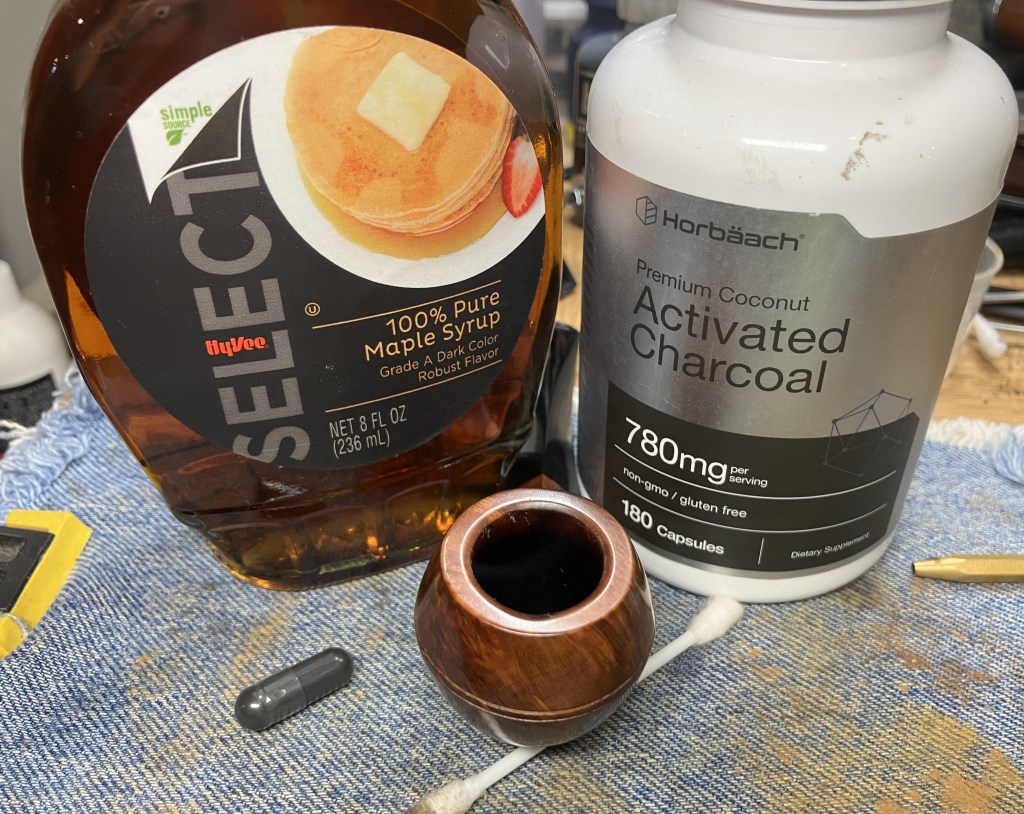
To finish the restoration of the tobacco chamber I decided to use a bowl coating. 100% maple syrup and charcoal powder were chosen as the bowl coating. The chamber was coated with a light layer of syrup using a cotton swab.
To keep the charcoal powder out of the airway a pipe cleaner was inserted into the airway. A capsule of charcoal powder was poured into the chamber. The rim was covered with a piece of painters tape. The stummel was then shaken for a couple of minutes. I also tilted and tapped the bowl with the rubber coated handle of a file to make sure the powder was evenly distributed on the entire bowl surface.
The tape was removed and the excess powder was dumped. I reinserted the stem and gave a couple of hard puffs of air through the stem to clear remaining carbon powder. The finished bowl coating is shown in the photo below.
The pipe was taken to the buffer where several coats of carnauba wax were applied to the pipe. The final step was another hand buff with the microfiber polishing cloth then a return to the photography table for the finished pipe photo shoot.
This restoration ended up being much more extensive than I originally thought. The tobacco chamber was in far worse shape and the cracks in the bowl were more severe than I expected. This is probably not a pipe that I would sell to anyone who has not read and understands all of the procedures done to it. I do think that steps taken to restore this pipe will provide many years of use to an otherwise worn-out old pipe. I have not taken it out for a test-smoke yet but I do plan to soon. The pipe remains a very unique historical example of the ingenuity of pipe makers during the drought of briar caused by World War 2. It really is a lovely pipe with great billiard lines. The stem polished very nicely and is a pretty contrast to the aluminum bands. The extended shank is, I believe and attempt to use non-briar in the manufacture of the pipe. I cannot determine if the bowl is actually briar or not and the rustication doesn’t allow a solid identification by the wood’s grain. The dimensions of the are:
Length: 6.02 in./ 141.22 mm.
Weight: 1.02 oz./ 49.33 g.
Bowl Height: 1.69 in./ 45.47 mm.
Chamber Depth: 1.60 in./ 39.88 mm.
Chamber Diameter: 0.80 in./ 21.34 mm.
Outside Diameter: 1.28 in./ 36.57 mm.
I do hope that you have found something here useful to your own pipe care, maintenance or restorations. If you like this sort of thing, please click the like and subscribe buttons. Thank you for reading the ramblings of an old pipe lover.
Loading…
Below are some photos of the finished Woodsman Billiard.
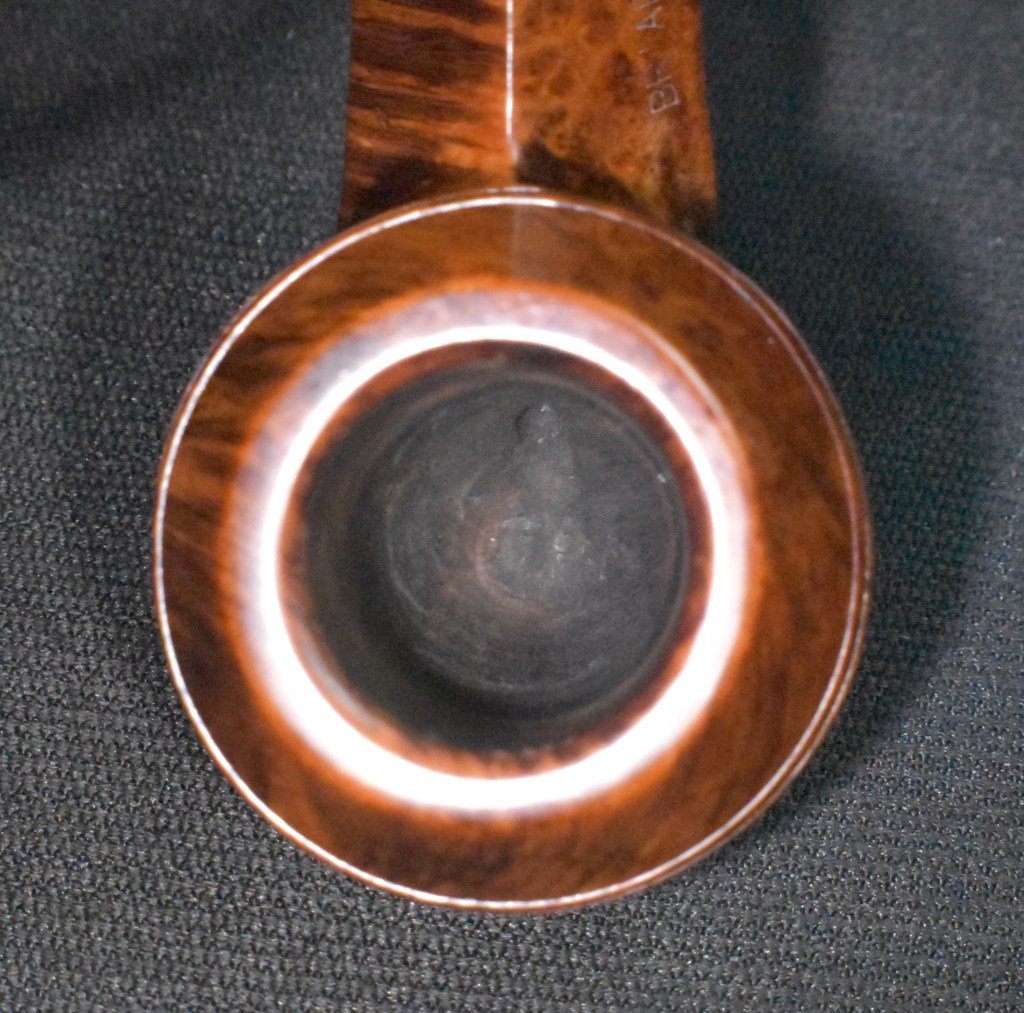
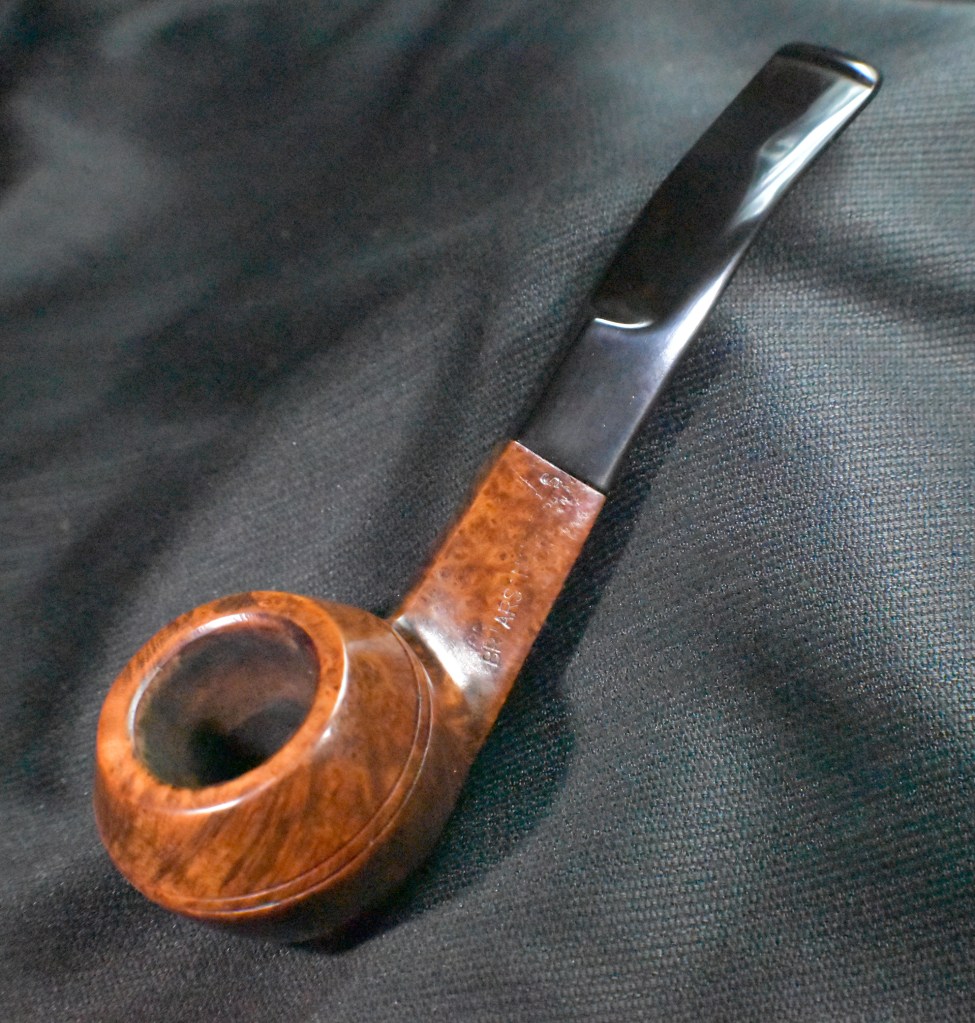
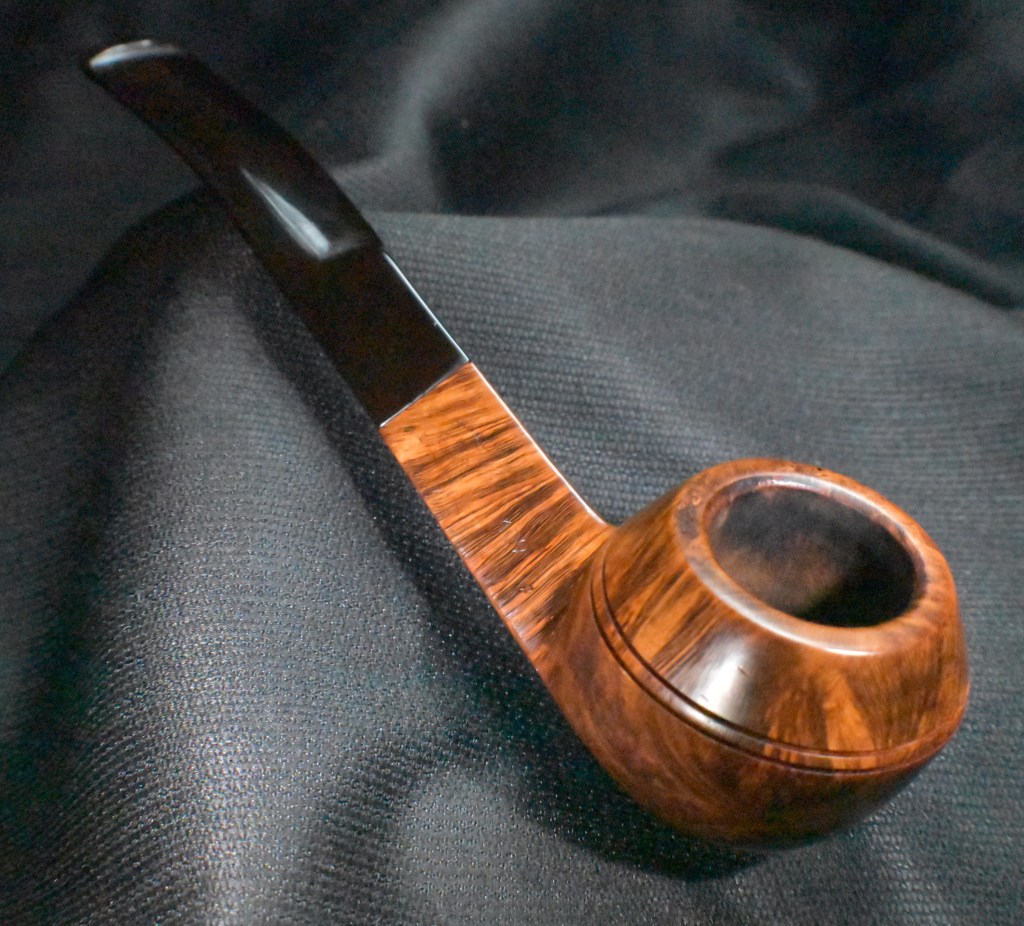
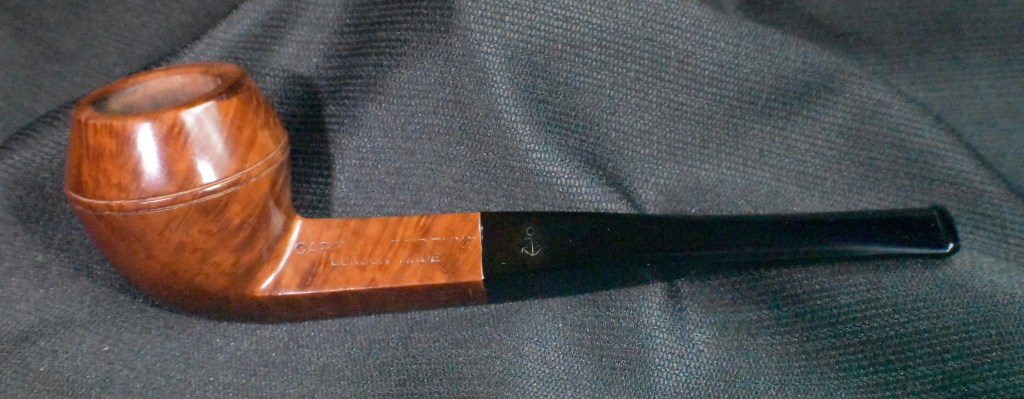
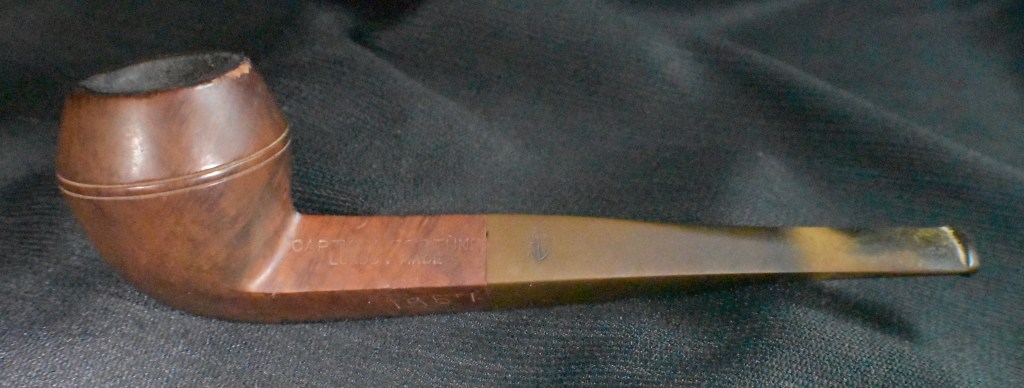
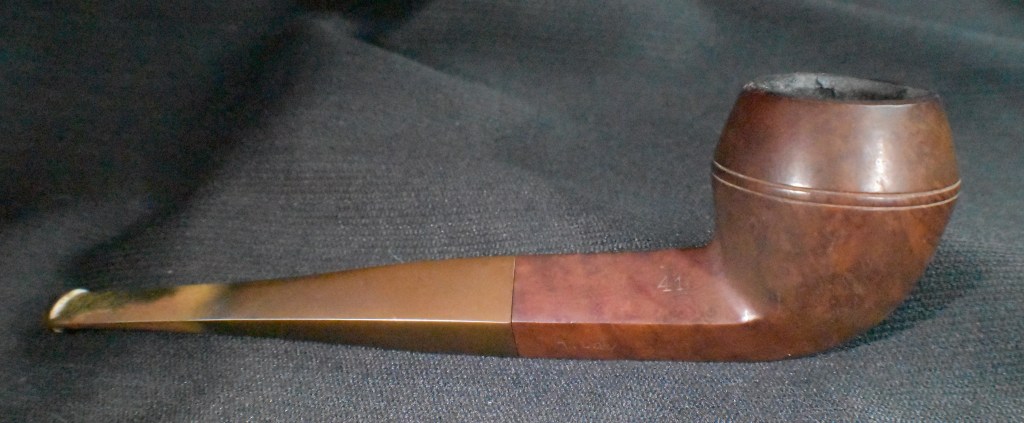
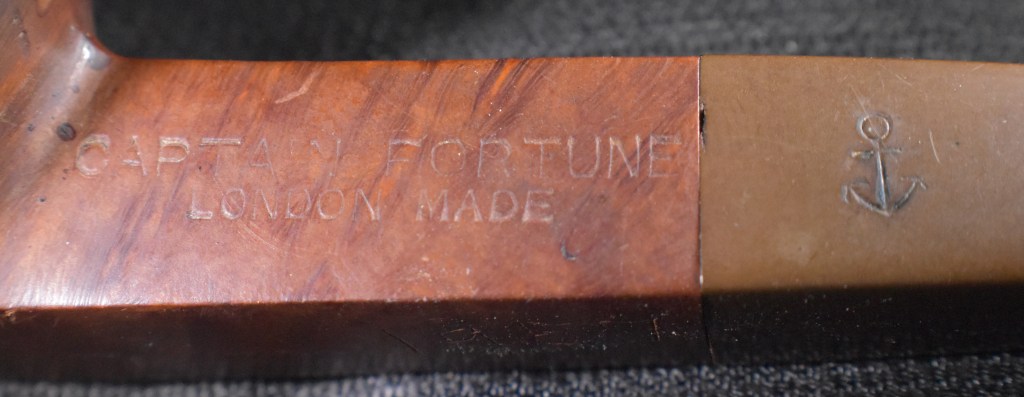
I cannot say how many times I had picked up this London Briar apple and appreciated its dimensions and contours. Yet, time and again I set it aside to work on another pipe. The apple shape is a favorite of mine and this pipe has nearly perfect “apple” archetypal lines. Perhaps it fell to the wayside because of its more generic heritage and my snobbish attitude. Then I think back to my list of favorite brands and lines: Peterson, Marxman, Dr Grabow, Yello-Bole. Hmm, that pretty much rules out the snobbery, eh?
This pipe came as part of an estate lot. One of those purchases where it was along for the ride and not the object of my desire of the lot. Below are some photographs I took of the pipe before work was started.
Overall, the pipe was in very good condition. The acrylic stem was pretty much impervious to oxidation, saving me a good deal of work. Another positive was that the stem had not been the victim of chewing. It did have a dark streak from smoking residue though. The stummel had been given a clear coat finish which I do not like and will typically remove. There did not appear to be any significant fill which would require attention. The tobacco chamber was also quite clean and the rim looked nearly pristine. This had all the earmarks of a nice relaxing restoration.
Background
I cannot say that there is a lot of information out there on this pipe. Searches on both pipephil.eu and pipedia.org came up with nothing. Fortunately there is the great Steve Laug who has restored a very similar pipe and chronicled it very well. Here is the link to Steve’s restoration blog:
“I had not seen the stamping London Briars before so I did some hunting on the web for the brand and found that the brand was made by/for Gauntleys of Nottingham. They sold new for £31.95 Here is the link to their site: https://cigars.gauntleys.com/uk/offer/gauntleys-london-briar-pipes
I quote directly from the site: Gauntleys London Briar Pipes – Our London Briar pipes have become very popular since we introduced them just a few months ago. Each is made from selected second briar blocks from one of the country’s largest and most respected pipe makers.
If the briar was flawless these pipes would sell for over £250. These are from briar with small flaws in the grain or needing small amounts of filler so are great value. The briar is some of the finest in the world and can be up to 80 years old.
Each pipe is hand made in a range of classic English shapes and comes in a number of finishes from Smooth Brown to Black (Shell Briar) Sandblasted.
If you are looking for a first pipe or something to use around the house or garden the Gauntleys London Briars are very affordable and smoke like an entry level premium briar. Each pipe comes boxed with a silk bag.” (Didn’t Break a Sweat Cleaning this London Briar Brandy | rebornpipes).
The Restoration
The restoration of this great apple shaped piece began with a cleanish denim piece on the workbench.
The pipe’s tobacco chamber looked pretty clean but I kept getting whiffs that it may have been used for the smoking of non-tobacco. I have had experiences with marijauna smoking residue and it is never easy nor pleasant to deal with. This pipe had a slight aroma of the wacky weed yet there were tobacco fragments in the chamber. If it had been used for non-tobacco it was infrequent. I gathered the “ream team”, which included the PipNet, Smokingpipes Low Country reamer and General triangular scraper.
The number 2 blades of the PipNet made short work of the tobacco chamber with the Low Country reamer used for the bottom part of the chamber.
Below is a photo of the reamed chamber.
The draft hole was constricted so I used the Kleen-Reem draft hole drill to clear it.
Below is a photo of the drill in the airway.
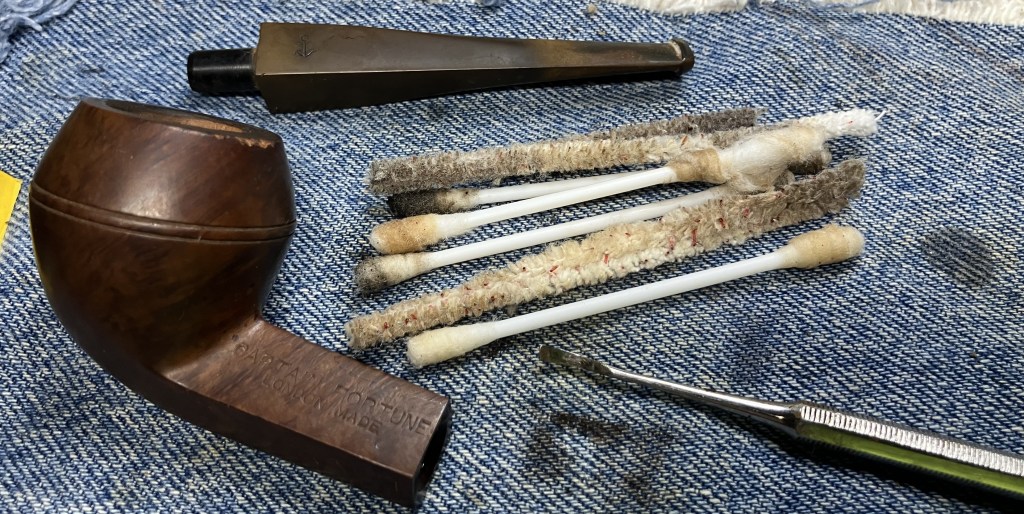
The airway was cleaned with several bristle pipe cleaners, cotton swabs, both dipped in 95% ethyl alcohol, and some scraping with a dental scraper.
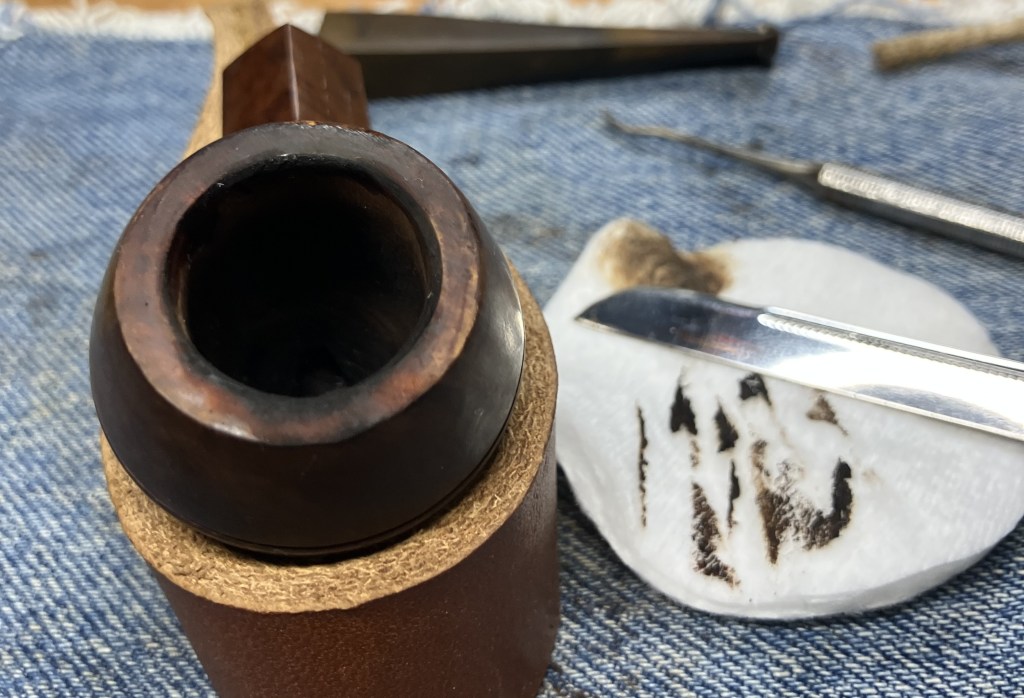
This stummel had a clear coat finish that I wanted to remove. I tried ethyl alcohol on a make-up pad and that didn’t touch the finish. I then tried acetone on a make-up pad. This too had little effect. I decided that a bath in acetone for 30 minutes would loosen or dissolve the finish.
While waiting for the acetone to do what it does, I started cleaning the stem. This was done with bristle pipe cleaners and 95% ethyl alcohol. The before photos show a distinctive dark stained airway. Once cleaned out the stem showed no signs of the dark streak.
After 30 minutes in the acetone I wiped the stummel with a make-up pad and some color and finish did come off but not enough for my liking, so I went back into the acetone for another 30 minutes.
After another 30 minutes the clear coat was relinquishing its hold on the briar. A light sanding while the finish was still soft removed it from the bowl. The finish remained on the shank.
The below photos indicate that further sanding and acetone wipes were needed.
Eventually the clear coat was removed. Below, you can see that the stem was reattached to preserve the joint where the stem meets the shank as well as the painters tape protecting the stamps.
WIth the finish removed I sanded the stem and stummel with a series of sanding sponges in grits from 320-3500. Between each sponge I wiped the pipe with a make-up pad wetted with ethyl alcohol.
After the sanding sponges I worked the pipe with micro-mesh pads 4000-12000, again wiping the pipe as above.
I gave the stummel a coating of Before and After Restoration Balm and allowed it to sit for 20 minutes.
The Restoration Balm was wiped from the stummel using an inside out athletic sock.
The pipe was then taken to the buffer where the stem was buffed with white buffing compound before the entire pipe was given several coats of carnauba wax. The final step was a hand buffing of the pipe with a microfiber polishing cloth raising the shine to the levels which can be seen below in the “finished” pipe photos.
There is something about the apple shape that just fits for me. Perhaps it is because I share a well rounded shape. This apple caught my eye as a wonderful example of the shape and turned out beautifully. The acrylic stem cleaned up nicely and demanded attention with its bright pearlescent yellow. The briar grain, though not unattractive, is rather muted. I wonder if I should have tried to accent the grain more with a contrast dye. Still the cross grains at the front and rear of the bowl are pretty. The best part of the pipe is the hand feel, this apple just fits in the hand with the perfect plumpness. The dimensions of the London Briar Apple are:
Length: 5.74 in./ 145.80 mm.
Weight: 1.52 oz./ 43.09 g.
Bowl Height: 1.66 in./ 42.16 mm.
Chamber Depth: 1.49 in./ 37.85 mm.
Chamber Diameter: 0.74 in./ 18.80 mm.
Outside Diameter: 1.55 in./ 39.37 mm.
I do hope that you have found something here useful to your own pipe care, maintenance or restorations. If you like this sort of thing, please click the like and subscribe buttons. Thank you for reading the ramblings of an old pipe lover.
Loading…
Below are some photos of the finished London Briar Apple.
It seems like I haven’t worked on a Peterson pipe for a while but, that’s not true. I did that Captain Pete commission just a couple of weeks ago. Oh well, I’ll use my newly created meme anyway:
This restoration is on a Peterson I have never worked with a Kapp-Royal bent pot 01. This beauty was spotted on eBay back in April of 2025. I remember when I wouldn’t pay more than $45 dollars for a Peterson pipe. Then Inflatron (the inflation monster) attacked like Godzilla. Sadly this Irish lass was a bit more than the $45 but all things considered it was still reasonable. The stampings are all clear and read as follows: Peterson’s over “KAPP-ROYAL” on the left shank, with MADE IN THE over REPUBLIC over IRELAND, offset 01, on the right shank. Below are some photograph taken prior to work on the pipe.
The Kapp-Royal was in very good condition. The stem had light oxidation and no tooth chater, to speak of. The briar looked very nice with fine birdseye’s on both flanks. The gap where the stem met the stummel was an annoyance which would have to be addressed. Other than a few minor fills and some sanding/polish this beauty would be ready for a new owner in no time.
Background
For the first three pieces of Peterson history I turned to the official Peterson website. Here, I chose quotes from the general history of Peterson, the “Classic” shape range, and the 01 shape in particular:
As the oldest continuously operating briar pipe factory in the world, we at Peterson have a certain tradition to uphold, a legacy of craftsmanship dating back over 150 years. Whether you’re browsing for your very first pipe or are a seasoned collector in search of a rare gem, know that every pipe in our catalogue carries with it that same preservation of tradition. A Peterson pipe isn’t just a utilitarian tool; it’s a piece of history you can carry with you in your travels, a faithful companion to accompany you through all that life offers. (Peterson.ie: Pipes)
One of our most popular shapes, our signature take on the bent Pot enhances the inherently muscular design with a broad, squat bowl and extra-sturdy proportions through the shank and transition, as well as an elegant quarter bend. (Peterson Pipes: Army Filter Heritage (01) Fishtail (9mm))
Since our inception, we’ve offered a range of specific tiers suited to our customers’ tastes and price requirements. Our Classic range represents non-System pipes crafted for the Everyman, unique and timeless designs that capture our House Style and quality craftsmanship at a price any smoker can enjoy. Rather than relegating production to one or two lines, we offer a variety of styles, shapes, and finishes among these entry-level series, including traditional navy mounts (flush-fitting stems), P-Lip mouthpieces, and army mounts. (Peterson.ie: Classic Pipes)
Next I looked into the big The Peterson Pipe book (Irwin, Mark and Malmberg, Gary (2018). The Peterson Pipe The Story of Kapp & Peterson, First edition, second printing 2021. Briar Books Press, Canada.) for a more specific account of the Kapp-Royal line.
“Kapp-Royal (1969. 1976-79, c. 1988, 2004-) First appearance as a line introduced 1969. In 1976-79 Iwan Ries catalog offering identical with non-System Dunmore line. Second appearance the late eighties as a high-grade Italian-market line with briar band inset into mouthpiece. From c. 2004, Italian line available in the US as high grade, orange finish, sterling band, amber-colored acrylic fish-tail stem or sometimes vulcanite, embedded aluminum P.” (Irwin and Malmberg p. 306)
According to the above description by Irwin and Malmberg, this pipe is likely a Kapp-Royal from the “c. 1988” period and made in the Dublin factory.
The Restoration
The Kapp-Royal made its way to the workbench after the “Before” photo shoot. Here it received a cleaned denim piece and a more thorough examination.
Below you can see that gap I was referring to earlier. I couldn’t see an obstruction to a tight fit but there certainly was one.
The original fills had failed and would need fixing. Fortunately they were a distance away from the stamps.
Another old fill was located on the heel.
The reservoir, well not really a reservoir since this is a Classic 01 and not a System pipe, was surprisingly dirty. That could definitely be the culprit for the ill fitting stem.
The tobacco chamber looked very clean. I could even make out the chuck marks from the Peterson factory. How could a chamber this clean have a shank that is fouled so badly?
Below is another shot of the chamber prior to work done. It had obviously received some scraping by the marks at the bottom of the chamber yet the rim looked pristine.
I figured there was no reason to ream this tobacco chamber so proceeded directly to sanding it. I could see no damage to the chamber other than the scraping marks at the bottom of the chember.
The shank cleaning was far more difficult. Here I used the following techniques: Nylon shank brush scrubbing with alcohol present, Folded bristle pipe cleaners dipped in alcohol, cotton swabs dipped in alcohol and dental scraper scraping.
The stem was, like the tobacco chamber, surprisingly clean requiring only a couple bristle pipe cleaners wetted with alcohol. The stem did not need to be treated with either Before and After Extra Strength Deoxidizer or Briarville Pipe Stem Oxidation Remover. I thought sanding/polishing would suffice. I did apply a coating of mineral oil to the stem though.
The stummel made its way to the sink for a scrub with undiluted Murphy Oil Soap and a nylon brush. The soap was rinsed with warm water and dried with a cotton hand towel.
Back at the workbench the stummel was wiped with a make-up pad wetted with 95% ethyl alcohol. Very little color came off indicating that the stummel was clean.
The disturbingly dirty shank bothered me so, I decided to give it an overnight cotton-alcohol treatment. The bowl was stuffed with cotton balls while the airway was stuffed with more cotton.
The cotton was saturated with 95% ethyl alcohol until no additional alcohol could be absorbed with a disposable pipette.
The next day the cotton was removed.
The logo area was de-oiled with alcohol on a cotton swab. Yeah, I tried to mask it without de-oiling at first – unsuccess!
The stamps and logo were masked with painters tape to protect them from the upcoming sanding.
The fills were redone using a dab of brown cyanoacrylate (CA, super glue) applied with a fly tying bodkin. Briar dust was then pressed onto and into the wet CA. A quick dab of additional CA was applied to the top of the new fill.
The new fills were filed with a small flat file and smoothed with a 400 grit sanding sponge.
The pipe was then worked with a series of sanding sponges from 400-3500 grits. The stummel was wiped with a make-up pad wetted with alcohol between each sponge. The stem was rubbed with mineral oil and wiped with a paper towel between each sponge.
I then worked the pipe with 4000-12000 grit micro-mesh pads. Between each pad I repeated the above wiping except Obsidian Oil was used in place of mineral oil.
The pipe was then buffed with white buffing compound at the buffer.
The remaining buffing compound was removed with hand buffing and a rag then wiped with a make-up pad wetted with alcohol. The stummel then received a coat of Before and After Restoration Balm and was allowed to sit for 15 minutes.
The excess Restoration Balm was wiped from the stummel with an inside out athletic sock.
The stem logo was again cleaned with alcohol and a cotton swab.
To re-do the gold logo, I used Gold Leaf Rub’nBuff applied with a fly tying bodkin.
The excess gold leaf was wiped away with a paper towel.
The stem was then polished with Before and After Fine Polish followed by their Extra Fine Polish. Both were applied and hand buffed using a soft cotton cloth.
The pipe then received several coats of carnauba wax at the buffer.
The final step was another hand buff with the microfiber polishing cloth then off to the final photo shoot.
I don’t think I’ll ever tire of working on Peterson pipes. This pipe started out not needing much but in the end it is absolutely beautiful. The bird’s eyes on both sides are gorgeous. The vulcanite stem polished very nicely and with that briar band looks amazing. I have nothing against the 01 shape, it is just not my favorite but this pipe could change my mind on that. The hand feel and balance while clenching is very comfortable. The dimensions of the Peterson Kapp-Royal 01 Bent Pot are:
Length: 5.56 in./ 141.22 mm.
Weight: 1.74 oz./ 49.33 g.
Bowl Height: 1.79 in./ 45.47 mm.
Chamber Depth: 1.57 in./ 39.88 mm.
Chamber Diameter: 0.84 in./ 21.34 mm.
Outside Diameter: 1.44 in./ 36.57 mm.
I do hope that you have found something here useful to your own pipe care, maintenance or restorations. If you like this sort of thing, please click the like and subscribe buttons. Thank you for reading the ramblings of an old pipe lover.
Loading…
Below are some photos of the finished Peterson Kapp-Royal 01 Bent Pot.
I am not sure why but it happens with some frequency, I’ll look at an estate lot and one pipe just jumps out at me as being more attractive than the rest. This singularly attractive pipe turns out to be an EA Carey Magic Inch. Now, I am far from an expert on design or aesthetics but I do know what I like. The strangest part is that I have only ever kept one EA Carey pipe as a companion and that one was “restored” many years ago. I say “restored” because I don’t really remember anything of the restoration other than recognizing the repaired fills. I got the pipe out and smoked it as research for the writing
(above image is the only EA Carey pipe that I’ve kept for use)
of this blog. It performed well though I am still not sure what to think of the Magic Inch system. The pipe had a new papyrus filter and after the smoke the filter appeared nearly as it did before the smoke. The pipe had a very nice draw and the vent along the stem did cool the smoke. I tried covering the vents with my finger and thumb, rather than covering the rim to increase the ember, this worked well. I was just using the vents as more of a carburetor.
Over the years I have accumulated a few EA Carey pipes and they sat in a cardboard box. I guess it was time for one to hit the workbench. The EA Carey that I selected can be seen in the photos below prior to any work done. This pipe is an Italian product as indicated by the stamp of the bottom of the pipe. The stampings read, EA CAREY over MAGIC INCH over PAT. No 3267941 with an ITALY offset to the right.
This pipe appeared to have been smoke but not heavily. There was a light cake built up in the tobacco chamber and a light lava deposit on the rim. The mouthpiece had some teeth chatter indicating that it had been clenched but not mauled. The finish was worn either from handling or from being pushed around in a drawer. The plastic stem was not subject to oxidation. This looked to be a relatively easy restore.
Background
The history search began with pipephil.eu. Here I found a matching set of stamps but a different country of manufacture (COM). This indicated to me that EA Carey was importing pipes to their specifications.
Next I went to pipedia.org for their general history. The entry here suggested it was written by EA Carey advertising folks though no source was mentioned.
“Magic Inch” System has been a Carey’s tradition for over 50 years, with over 1,000,000 sold. The “Magic Inch” is an air chamber inserted between the imported briar bowl and the vented mouthpiece which allows cool outside air to enter and mix with the warm tobacco smoke inside the “Magic Inch” chamber. Tobacco tars, oils and moisture, are squeezed out of the smoke. The residue drops to the bottom of the chamber and is absorbed by the Papyrate sleeve. From its rich tradition and thousands of satisfied customers, this pipe is sure to be your smoking favorite for life.
Carey Magic Inch pipes can be readily identified by a boxed letter C on the stem, along with a distinctive series of three vent slits and the Carey Magic Inch name stamped into the side of the bowl.
Finally I turned to the EA Carey official website. I guess I should have started with looking at the “horse’s mouth” rather than using second party information. Since Ea Carey is still in business and selling their signature tobacco blends, pipes and various sundries their website, EA Carey’s Online Smoke Shop | Best Pipe Tobacco | Briar Pipes is kept relatively current with weekly specials. For a great article on the history of EA Carey
“The “Magic Inch” System has been a Carey’s tradition for over 50 years. Hundreds of thousands of these smoking pipes have been sold, beginning with the very first billiard shape back in 1948. Based on the original “Magic Inch” System, the improved modern design provides the coolest and driest smoke ever found in a pipe.
1. Improved Ventilator Action 2. Papyrate
3. The “Magic Inch” 4. The Carey Mouthpiece
Improved Ventilator
Each Carey “Magic Inch” system begins with a scientifically metered amount of air into each puff of smoke. The Carey “Magic Inch” System, with the new Papyrate, controls air better and more accurately…for improved drawing and smokeability!!
Papyrate
The all new Papyrate…the heart of the “Magic Inch” System, features new and improved 2-ply construction. You get improved rigidity for ease of fit and removal. You get extra absorbency for dryer smoking and longer lasting quality between Papyrate changes…made especially for your new Carey pipe.
The “Magic Inch”
The “Magic Inch”, unmistakably superior for 38 years, now achieves a new and better level of performance. The outer shell of the Papyrate filters and meters air with 50 micron precision. The “Magic Inch” unique “moisture ports” dissipates moisture, tar, and nicotine into the 2-ply Papyrate, protecting the smoker from unwanted materials. And finally, the unique Carey “Magic Inch” evaporation chamber releases moisture through evaporation during resting periods between smokes. Not a filter, not a standard “push bit”…the unique “Magic Inch”…producing an all new level of smoking quality.
The Carey Mouthpiece
Now you can enjoy new mouthpiece construction for added comfort and durability. Made of Zytel 101, this new mouthpiece has depth of color, outstanding durability, and a bit thickness of only .380 inches. The result is added comfort, outstanding durability and a color that never tarnishes and never needs to be polished.”
Okay, I stand corrected. The papyrate is not a filter and my expectation of it absorbing moisture or tars from the smoke was explained in the above quote from EA Carey. A second bowl of EA Carey Gold blend was smoked the next day. This time I checked the Papyrate more frequently. It did appear to be absorbing moisture. As I thought about it, it made sense, the cooler incoming air from the vents would mix with the smoke. This would cause moisture to condense out of the smoke and form along the nylon Magic inch. The ports along the Magic Inch would allow the moisture to flow through and be absorbed by the Papyrate. Definitely not a filter. In my two smoking sessions, I did not note any real discoloration of the papyrate as would be expected from a filtering of the smoke.
As for the dates of the pipe in hand, I have little idea. Other than it being stamped with the patent number. Assuming that the stamping was a marketing strategy and that patents are valid for 20 years from the filing date, I can assume the pipe dates from 1948-1968. I would not expect the company to continue stamping the patent number after the expiration of the patent though I could be very wrong about that..
The Restoration
The EA Carey billiard made its way to the workbench and a laundered denim piece.
The ample bowl of the billiard demand the #3 PipNet blades.
Reaming was completed with the PipNet, Smoking pipes Low Country reamer and General triangular scraper.
The tobacco chamber was sanded with 320 sandpaper wrapped around a wood dowel and with 320 sandpaper by hand. The sanded chamber showed no signs of heat damage or charring.
The rim showed only minimal lava in the rustications.
This was cleaned by moistening the rim with saliva and scrubbing with a brass brush.
The rim was wiped with a paper towel and looked a little better.
I took the stummel to the sink for a scrubbing with undiluted Murphy Oil Soap and a nylon brush. The soap was rinsed with warm water and dried with a cotton hand towel.
The plastic stem was also scrubbed with soap and a shank brush and rinsed with warm water.
Returning to the workbench I wiped the stummel with a make-up pad dipped in 95% ethyl alcohol. I was surprised to see a dark purple color on the cotton. The black stain must have actually been a dark purple. There remained some very shiny spots of finish on the briar.
Also more observable were old fills of pits in the briar. Below is one pit on the front of the stummel.
And a second large pit on the left side.
Below you can easily see the shine I was referring to above. There was some kind of clear coat on this pipe.
Below another look at the remaining shine where the shank meets the bowl.
I needed to think about shine removal so I started cleaning the shank, figuring that I could think while doing a repetitive task. The Magic Inch system made shank cleaning more difficult since I could not use any scraper to access the airway. I placed a few milliliters of alcohol in the tobacco chamber and allowed it to flow into the shank but not through. Using the alcohol, I scrubbed the airway with a nylon shank brush. The alcohol was poured into an empty medicine cup. This was repeated a few times. I also ran folded bristle pipe cleaners through the airway. These were also dipped in 95% ethyl alcohol.
With the shank cleaned and the ponder still in process, I decided to try removing the clear coat with acetone. I tested the susceptibility to the finish with a cotton swab dipped in acetone. It did remove some of the finish but that clear coat was tough. It also looked like the clear coat itself was dyed purple.
More acetone, this time on a make-up pad did remove more purple but the only way to ensure the total removal was with an acetone bath. I opted against this in fear of the effects of the acetone on the nylon Magic Inch and the acrylic shank extension. I also worried about the acetone affecting the glue holding all of those components in place.
I chose to use a 400 grit sanding sponge to sand the high spots of the rustication. This would allow the briar to peek through in those places at least. It also took a bit of the shine away from the shiny spots.
Next came the restoration of the stem. I have found that this type of plastic can be filed and sanded but that only with very fine abrasives. Coarse grits or files cut deeply into the softer plastic and are a pain to remedy. My small flat file was fine enough to not create an issue. In sticking with this “finer is better” mentality, I opted against sanding sponges altogether. Micro-mesh pads were used andonly from 1800-12000.
I thought that I would have to accept the old fills because I could see no way for me to retexture and match the existing texture. I worked Before and After Restoration Balm into the rustications with a baby toothbrush. The balm was allowed to sit for 15 minutes.
The remaining excess balm was removed using an inside out athletic sock and hand buffing.
The rustications were shallos so I thought that carnauba wax would be acceptable to use as a preservative. I did take my time and buff in the direction of the rustication. The stem was also waxed with carnauba on the buffer.
The final step was another hand buff with the microfiber polishing cloth.
The EA Carey Billiard has very traditional shaping. Traditional in the sense that it is well thought out and very pleasing to the eye and hand. The thickness of the bowl at the rim is 0.27 inches (6.86 mm) and at the swell of the bowl it increases to 0.48 inches (12.19 mm). This gradual thickening of the briar is a nice way to keep the pipe feeling cooler throughout the smoke. As I would expect the thicker briar to absorb additional heat during the smoking of a bowl of tobacco. The rustication allows for a nice grip and good hand feel though it looks rather like a factory mass produced texture. The stem did polish up nicely and looks good. The feel of this plastic is good, softer and more flexible than vulcanite. Overall this is a very nice pipe that will serve its next owner many years of service. The dimensions of the EA Carey Billiard are:
Length: 6.10 in./ 154.94 mm.
Weight: 1.41 oz./ 39.97 g.
Bowl Height: 1.85 in./ 46.99 mm.
Chamber Depth: 1.65 in./ 41.91 mm.
Chamber Diameter: 0.80 in./ 20.32 mm.
Outside Diameter: 1.46 in./ 37.08 mm.
I do hope that you have found something here useful to your own pipe care, maintenance or restorations. If you like this sort of thing, please click the like and subscribe buttons. Thank you for reading the ramblings of an old pipe lover.
Loading…
Below are some photos of the finished EA Carey Billiard.
I’ve probably used this line before and will likely use it again, “An apple a day keeps the doctor away.” Yeah, I know those pesky docs are not likely referring to the wonderful apple shape of a pipe but I am. This lovely apple is a French made Earl of Essex. I have no idea when it arrived nor where it came from though it has been waiting for some attention for well over six months. I was looking for a restoration where I could just relax and kind of let my mind wander and hands work on muscle memory. This pipe looked like the perfect project. The pipe had EARL OF ESSEX stamped clearly on the left shank with ALGERIAN BRIAR over FRANCE on the right shank. The lower part of FRANCE was faint due to a slightly misplaced stamp, so I thought. The band read 12K over GOLDPLATE. Finally the stem had a circle logo pressed into the rubber. This circle appeared to have a light yellow or white (stained with age) paint in the depression of the stamp. Below are some photographs taken prior to working on the pipe.
Even through the dirt and grime I could make out a lovely contrast stain. The pipe looked like it had not been used too heavily, indicated by the lack of cake in the tobacco chamber and general cleanliness of the stinger. The stem was not oxidized and showed no signs of teeth marks. There were several old fills that were either failing or were never done very well. The 12K gold plate was worn on the edges yet I thought it might buff out nicely.
Background
I would love to tell you that there was a wonderful amount of information about this pipe maker and date of production. Alas, all I could find is a couple of pictures from pipephil.eu.
The stamping of the top pipe from pipephil.eu was a definite match to the stamping on the pipe in hand. The part that bothered me was the stem logo. Both of the images above had crowns on their stem logos. The top photo is even described as having “12K Goldplate” on the band. Now I could imagine a heavily used pipe needing to have a stem replaced and the new stem could have a circle logo on it rather than a crown. This is certainly a possibility. This pipe had not been heavily used. The term barely used would be more appropriate. I highly doubt this is a replacement stem. As for the age of this pipe, I cannot be certain but a couple of world events can be used for guessing the production years.
During World War 2 the briar from Algeria was not available nor was the aluminum.
The Algerian civil war waged from 1954-1962. During that time briar harvest and exports were non-existent.
This would indicate that the pipe was either produced pre-WWII or sometime after the French Algerian war.
The Restoration
The Earl of Essex made it to the workbench and a denim piece after the photo shoot.
The ream team was gathered.
PipNet with #2 size blades did the majority of the work with the Smokingpipes Low Country reamer doing some clean-up.
I sanded the tobacco chamber with 320 sandpaper wrapped around a wood dowel and with my ring finger. The chamber looked great with no signs of any damage from heat.
The rim had some light lava deposits.
I moistened the lava with saliva and scraped the rim with a sharp pocket knife. The rim was then wiped with a make-up pad dipped in alcohol.
The shank cleaning was uneventful and reinforced my belief that this pipe had not seen a great deal of use. The airway was cleaned using cotton swabs and folded bristle pipe cleaners both dripped in 95% ethyl alcohol.
The stem cleaning was equally easy. The first pipe cleaner was stained with residue but subsequent cleaners eliminated the tars quickly.
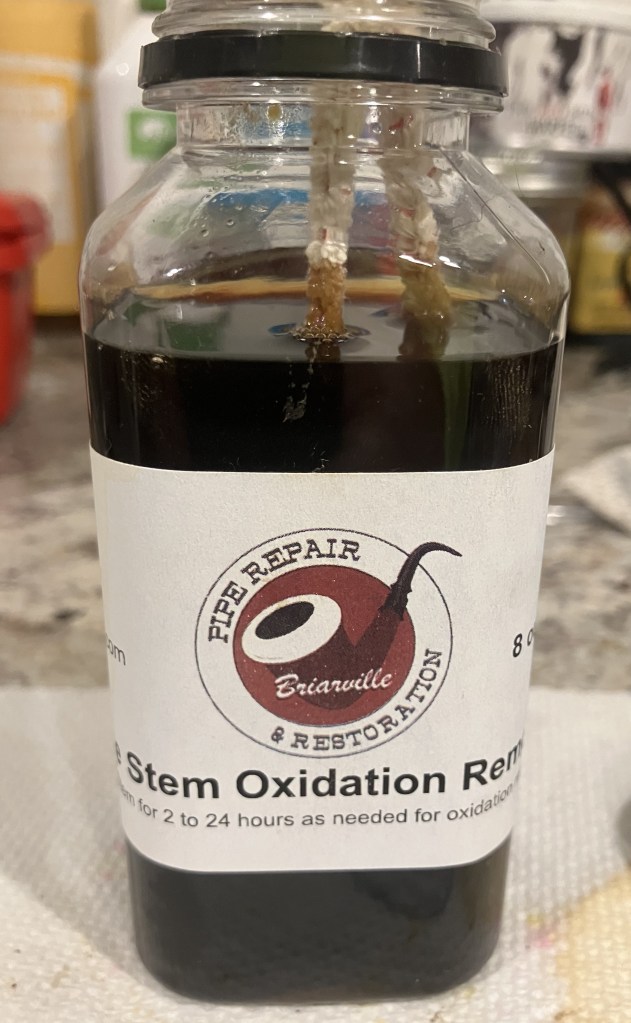
The stem was lightly sanded with a 400 grit sanding sponge to remove any wax and surface oxidation before the stem was submerged in Briarville Pipe Stem Oxidation Remover.
I hung the stem in the solution using a pipe cleaner inserted into the stinger. It didn’t want the aluminum stinger in the solution. The stem remained in the bath for about 4 hours.
While the stem was soaking, I turned back to the stummel and gave it a scrub with undiluted Murphy Oil Soap and a nylon brush. The soap was rinsed with warm water and the stummel dried with a cotton hand towel.
The stummel still felt like it had wax remaining on the surface. I used a couple of make-up pads dipped in 95% ethyl alcohol to wipe the surface. This worked at removing the was and some of the black stain.
All the scrubbing made the old fills soft and easy to pick free from the briar.
There were several larger and smaller fills that would need cyanoacrylate (CA, super glue) and briar dust.
My brown CA is starting to get a bit thick. This is good and bad. Good because it stays where you place it bad because it leaves little strings of CA, like melted mozzarella. Anyway, the brown CA was placed into the pits with a fly tying bodkin. A small scoop of briar dust was then placed on the dab CA. Pressing the briar dust into the wet CA fills the pit.
This method does have a tendency to leave a CA-briar dust crust on the pressing finger. No really, it’s CA and briar dust and not that I’ve been picking snuff boogers…
The above fill method had to be repeated in a couple of the larger pits. Eventually a dab of either brown CA or thin CA was used as a top coat for the fills.
Once filled a small flat file was used to smooth the new fill then they were sanded with a 400 grit sanding sponge.
With the fill finished, I wanted to see what I could do with the gold plated band. I first tried Cape Cod Metal Polishing Cloths. I like this product for how well it works on silver and the smell is absolutely amazing.
It helped but the gold plate on the edges were worn through the thin layer of gold. I think the underlying metal was copper. Yeah, it was still pretty but lacked the luster of the gold.
The stamps and band were taped over with painters tape for their protection.
Better safe than sorry, eh?
The stummel was sanded with a series of sanding sponges from 400-2500 grit. Between each sponge the stummel was wiped with a make-up pad moistened with alcohol to remove sanding debris.
The stummel was then worked with micro-mesh pads 4000-12000 with wipings between pads as with the sponges.
I then gave the stummel a coating of Before and After Restoration Balm. This magic elixir was allowed to work its magic for 20 minutes before being wiped off.
For the wiping off of excess balm I used an inside out athletic sock.
Once the stem had soaked for the allotted time it was removed and vigorously rubbed with a coarse shop rag. Quite a bit of oxidized rubber came off onto the rag.
The logo stamp remained well defined. Apologies for the poor focus.
This stem did appear very grainy with tiny pores on the surface.
I cleaned the logo stamp with alcohol on a cotton swab and covered it with a painters tape mask.
Then covered the band with painters tape as well.
I sanded the stem with a series of sanding sponges from 320-1500 oiling the stem with mineral oil and wiping it between sponges. This tends to clog the sanding surface of the sponges quickly.
Pleased with the results from the first several sponges, I continued with the finer grits to 3500. Again oiling and wiping the stem between sponges.
I removed the mask from the logo and micro-meshed the stem with 4000-12000 micro-mesh pads. Between these pads I oiled the stem with Obsidian Oil and wiped it with a paper towel.
For the final stem polishing I used a blue buffing compound to polish the stem.
I was not sure of the original color of the paint in the logo but thought that a gold would accentuate the gold band. I opted to use Gold Leaf Rub’nBuff. This product settles into stamped surfaces nicely and provides a great gold color.
The wax was applied to the indentations with a fly tying bodkin and hand buffed with a soft cotton cloth.
The last bit of polishing was done with the buffer applying carnauba wax.
The final step was another hand buff with the microfiber polishing cloth.
This very pretty apple is now ready for a new owner. I think the pipe looks very good. The contrast stain from the factory was preserved. The gold band now looks better but the oxidation or worn-off gold plating could not be improved any more. The stem restored exceptionally well and really accentuates the contrast stain of the briar. Overall I was very pleased with the restoration. The dimensions of the Earl of Essex Apple are:
Length: 5.89 in./ 149.61 mm.
Weight: 1.57 oz./ 44.51 g.
Bowl Height: 1.79 in./ 45.47 mm.
Chamber Depth: 1.45 in./ 36.83 mm.
Chamber Diameter: 0.73 in./ 18.54 mm.
Outside Diameter: 1.51 in./ 38.35 mm.
I do hope that you have found something here useful to your own pipe care, maintenance or restorations. If you like this sort of thing, please click the like and subscribe buttons. Thank you for reading the ramblings of an old pipe lover.
Loading…
Below are some photos of the finished Earl of Essex Apple.
I always feel humbled when someone reaches out to me to restore an old pipe. I should say I’m humbled and nervous. It is an honor to be asked but there is always the nagging feeling or insecurity of damaging someone’s favorite pipe or worse a family heirloom. Today’s restoration emphasizes that very well. The pipe was made by Peterson, I think everyone knows my feelings toward Peterson pipes. If not, the handle Nebraska Pete Geek may give you a clue. This example was a Captain Pete, an all time favorite line. The owner reached out to me via email and lives only about 25 miles away. Crazy small world, eh? The Owner, let’s call him William to protect his identity (or less dramatic, privacy) had subjected himself to reading one of my restoration blogs. The poor guy survived the ordeal and still wanted me to take a look at this pipe. Descriptions and photos were sent and I gave an estimate of what I thought I could do for the old Captain Pete. A few weeks later the pip arrived in the mail. Below are some photos I took before starting work on the pipe.
The old Captain had seen some years in the service of a pipe smoker. The most obvious issues were the pits where the old fills had failed. The stem showed signs of oxidation and a bit of chomping. Structurally the pipe was solid and in good shape the restoration would be more aesthetic. William had said that he would like the stamping preserved as much as possible. This would be a challenge due to the faint stamps, in general and specifically for the fills on the left shank amidst the stamps.
Background
I blogged about a Captain Pete back on December 31, 2023. You can see that restoration HERE, if you are interested. That was about the second month of my blogging. Anyway, I wrote the following:
“Peterson pipes have a long and storied history which is rich and fascinating. I highly recommend the book The Peterson Pipe, by authors Mark Irwin and Gary Malmberg as well as a reading of pipedia.com’s Peterson pages. According to Mark Irwin and Gary Malmberg, the Captain Pete:
“This line’s name was derived from the nickname of Charles Peterson, known affectionately as “Captain Peterson.” The first issue, c. 1940-62, was in a smooth finish produced for Rogers Imports with a white stamped P inside C, or a circled P on the mouthpiece. CAPTAIN over PETE on shank, and a MADE IN IRELAND in a circle. English made versions show CAPTAIN over PETE on shank or “CAPTAIN PETERSON” and A PETERSON PRODUCT over MADE IN ENGLAND or LONDON MADE over ENGLAND. The second issue (1998-), features an XL bowl with Sherlock Holmes shapes and compact stems, in rustic or combination of smooth and rustic, with a nickel band between two narrow brass bands.” (Irwin and Malmberg p.295)”
(A Peterson Captain Pete Restoration – NebraskaPeteGeek) I apparently was not concerned with notating Irwin and Malmberg’s work correctly so I will make amends and do that here, (Irwin, Mark and Malmberg, Gary (2018). The Peterson Pipe The Story of Kapp & Peterson, First edition, second printing 2021. Briar Books Press, Canada.).
This Captain Pete was certainly a first issue dating from 1940-62 made in Ireland.
The Restoration
As usual after the initial photo shoot the pipe made it to the workbench and a clean piece of denim.
The first thing I did was to use a fly tying bodkin too scratch the old wax from the beading around the bowl.
Next the ream team was assembled. There didn’t appear to be a tremendous cake build up but the pipe had obviously been smoked.
The #2 blades of the PipNet did the majority of the reaming with both the Smokingpipes Low Country reamer and the General triangular scraper used for clean-up.
The shank was dirty but considering the amount of cake present I thought the previous owner had used pipe cleaners on a daily regular basis. The dental scraper was used to scrape the airway and did not produce as much tar as I was expecting.
Overall the shank cleaned out well with only alcohol dipped cotton swabs.
The stem also cleaned up fairly quickly with bristle pipe cleaners dipped in 95% ethyl alcohol.
After a light sanding of the stem with a 320 grit sanding sponge I tried to paint the tooth dents with a flame from a lighter. This helped raise the vulcanite a little bit.
The stem was then placed in a bath of Briarville’s Pipe Stem Oxidation Remover and let sit overnight.
I continued working on the stummel. Below is a photo of the rim with a light lava coating in places.
I moistened the rim with saliva to soften the lava. The rim was then scraped with a sharp pocket knife.
I used a round polyvinyl chloride (PVC) end cap wrapped in 320 sandpaper to re-establish a good bevel on the inner rim.
The stummel was then scrubbed with undiluted Murphy Oil Soap and a nylon brush. The soap was rinsed with warm water and the stummel dried with a cotton hand towel.
BAck at the workbench, the stummel was looking clean.
I gave the surface a wipe with a make-up pad dipped in 95% ethyl alcohol . Little color came off the pipe indicating that there was no wax or finish remaining on the stummel. The alcohol also helped soften the old fills allowing me to remove as much of the fill material as possible. With the stem in the oxidation remover and the stummel drying, I called it quits for the night.
The next day I removed the stem from the Briarville solution and wiped it with a coarse shop rag. This absorbed the excess solution and removed some of the oxidized vulcanite.
There remained some brown oxidation on the surface. I could not make out the stem logo that had been stamped 60+ years ago but could see the circle and imagined the P within.
The below photo shows two of the most exasperating details of this restoration: How to preserve the remaining stamps while bringing the stamped material back to life. I needed some serious thinking for this one.
I tried spot cleaning the remnant stem logo with Briarville Pipe Stem Oxidation Remover on a cotton swab. I was not impressed with the results.
Maybe if I do it some more… Still not impressed.
OK, more thinking time while I worked on repairing old fills. This was done by placing a small dab of brown cyanoacrylate (CA, super glue) into the pits using a fly tying bodkin.
More CA in pits.
A small scoop of briar dust was then pressed into the wet CA. This causes the CA to cure nearly immediately.
The rough top of the new fills were filed off with a small flat file. The fills then got another dab of brown CA to top-off the new fills. This was allowed to cure over about an hour.
The cured CA/briar dust fills were then filed smooth with a small flat or ½ round file
When finished I realized that I wasn’t finished and that I’d missed two fills. DOH! Repeating the above process except this time I ran a paper business card through the lower bead groove to remove excess CA before pressing the briar dust in and scraping the groove with a fly tying bodkin before the CA briar dust could cure.
The spot treatment of the logo area with Briarville Pipe Stem Oxidation Remover was less satisfactory than I hoped. Perhaps my solution is losing potency due to the number of stems that I have bathed in the juice? I turned to a tried and true method of removing the oxidation, SOFT Scrub on a make-up pad.
The stem was rubbed with a heavy coat of mineral oil and allowed to sit for a few minutes before I wiped the excess off with a paper towel.
Next would be the sanding. To protect those faint stamps I covered them with painters tape. The pipe was then sanded with a series of sanding sponges from grits 320-3500. Between each sponge the stummel was wiped with a make-up pad wetted with 95% ethyl alcohol. The stem was rubbed with mineral oil then wiped with a paper towel.
After the sanding sponges I worked the pipe with micro-mesh pads 4000-12000. The wiping between pads was repeated as with the sanding sponges but between pads I used Obsidian Oil rather than mineral oil.
The stummel was given a liberal coating of Before and After Restoration Balm and allowed to sit for 30 minutes.
An inside out athletic sock was used to hand buff away the remaining balm.
The pipe was then taken to the buffer for several coats of carnauba wax.
After the waxing I used a fly tying bodkin to clear the beading grooves of excess wax.
The pipe was hand buffed with a microfiber polishing cloth to raise the shine.
I gave this old Pete a bowl coating not because the tobacco chamber had any damage but because the owner had requested it and it gave me a little more time with the old Captain Pete. I used 100% maple syrup and activated charcoal powder.
The airway was plugged with a cotton swab. Another cotton swab was used to paint the chamber with a light coating of syrup. The capsule was dumped into the chamber and sealed off with painters tape over the rim. The stummel was then shaken vigorously for over a minute to evenly distribute the charcoal powder.
The tape was removed and the powder dumped.
The final step was another hand buff with the microfiber polishing cloth then off to the final photo shoot.
It is always fun to work on a Peterson pipe and working on someone else’s Peterson is like catch and release fishing. Although in all honesty, my days of collecting Peterson pipes are pretty much over. I am releasing more than I am catching today. This old pipe was a fun challenge. Yeah, I couldn’t restore it to how it looked when it came out of the factory in Dublin. The stampings and logos were just too worn and those two pits by the stamps were just taunting me to obliterate the Stamps. In the end I am happy with how the pipe turned out. The overall finish is superior to how it would have looked coming out of the factory. I do not want to be critical of Peterson but they typically only sand a pipe to 400 grit. I am pretty certain that the owner will be as happy with the pipe as I am. The dimensions of the Peterson Captain Pete bulldog are:
Length: 5.70 in./ 43.18 mm.
Weight: 1.21 oz./ 34.30 g.
Bowl Height: 1.80 in./ 45.72 mm.
Chamber Depth: 1.50 in./ 38.10 mm.
Chamber Diameter: 0.72 in./ 18.29 mm.
Outside Diameter: 1.51 in./ 38.35 mm.
I do hope that you have found something here useful to your own pipe care, maintenance or restorations. If you like this sort of thing, please click the like and subscribe buttons. Thank you for reading the ramblings of an old pipe lover.
Loading…
Below are some photos of the finished Peterson Captain Pete 155 bulldog.
I did a search earlier asking. “How much should I spend on a tobacco pipe?” The result surprised me:
“The average pipe smoker will spend $50 on their first pipe and $200 on their last. You can get a great starter pipe for under $50, and you’ll have it for life. I’m going to assume that you are new to the hobby of smoking pipes and would like to know about the cost involved.” (https://medium.com/@dh651541/how-much-does-a-tobacco-pipe-cost-637c32d32378)
Heck, I’ll set you up with a nice restored pipe for $50. Take a look at the previous restorations, most are still here and have not been smoked once restored. Feel free to email me scimansays1787@gmail.com. “What’s the point of that shameless self promotion?”, you ask. The answer is, today’s restoration of a Cavalier Bent Bulldog. This lovely pipe was certainly not made to be some great investment or someone’s “last pipe”. It was made to be smoked by a pipe smoker for a reasonable chunk of change. The vast majority of pipes made are from factories producing thousands of pipes per year. These old workhorse pipes shouldn’t be considered inferior junk as they were made to be used. Kind of like Craftsman tools. Sure they are not of the same quality as Snap-On but the average Joe probably doesn’t need nor has the money to buy professional grade quality tools. My Craftsman socket set that I received as a graduation gift from high school (1984, if you are wondering) was used to change the oil in the truck this morning. These tools will get the job at hand finished and will likely last for years with proper care.
The Cavalier came part of an estate lot back around the first of the year 2025. The lot was from Eschweiler, Germany and consisted of 13 pipes which I hoped had pipes that were a bit more uncommon here in the United States. The Cavalier had been languishing in the queue and had gotten cut in front of on several occasions. The stampings on the left shank are “CAVALIER” with an oddly placed close quote over GENUINE BRIAR. Below are some photographs of the pipe prior to any work done.
Hmm, I wonder if I paid the duty on that bit of tobacco remaining in the bowl? The Germans can be sticklers for rules, I hear. This pipe did not look like it required a great deal of work. A thorough cleaning, certainly and a good polishing of the stem.
Background
Searches for CAVALIER on both pipephi.eu and pipedia.org proved to be unsuccessful. This obviously is not a Dunhill product nor is a cavalier shaped pipe, which is what those sources respectively referred to. Typically pipes stamped with GENUINE BRIAR were from post World War II. The lack of a country of manufacture (COM) would also typically indicate a US made pipe. I realize these are both very subjective descriptions especially considering that the pipe was purchased from Germany. The only thing that struck me as odd was the aluminum tenon. I Have seen tenons like this before on French made pipes and in all cases they were fitted into cork lined mortises. Below is an example of a restoration I did of a similar looking mortise and tenon:
The tenon of the Cavalier is a very nice fit into the briar not cork.
With nothing to go on All I can say without conjecture is that this is a pipe made from genuine briar. I am not even sure what the stem material is made of. In the restoration it did not produce the typical brown debris of sanded vulcanite. The sanding produced a very black dust. The stem material feels harder than vulcanite between the teeth but sands as if it is much softer than vulcanite. Weird, I know. The stem is also apparently drilled to accommodate a 3 mm filter. This too is more indicative of pipes made for the European market.
The Restoration
After the photo shoot the Cavalier made its way to the workbench and a laundered denim piece. I removed the used filter from the stem and wondered about the effectiveness of such a filter.
The ream team was collected and prepped for use.
Well, barely put to use. This Cavalier didn’t seem to have been smoked too much or the previous owner had kept the cake to a minimum perhaps by leaving tobacco in the bowl unsmoked?
The reamed bowl looked pretty good some sanding would still be required.
The shank cleaning went well. The tars and smoking residues were softened with 95% ethyl alcohol. These were then scraped using a dental scraper. Between scrapings I used cotton swabs and/or a nylon shank brush to scrub the airway.
The tobacco chamber was sanded with 320 sand paper wrapped around a wood dowel. The chamber was sanded to bare briar and showed no signs of any damage from heat or charring.
As clean as the tobacco chamber had looked the rim told a slightly different story. The lava deposits were quite thick indicating that the pipe had been smoked more than the chamber cake may have implied.
I softened the lava with saliva and began scraping with a sharp pocket knife.
The rim cleaned up nicely with the scraping.
I took the stummel to the sink for a scrub with undiluted Murphy Oil Soap and a nylon brush. The rustications of the carvings had trapped an impressive amount of dirt and grime.
After the nylon brush I repeated the scrubbing with more Murphy’s and a brass brush. The soap was rinsed with warm water and the stummel dried with a cotton hand towel.
Back at the workbench the stummel looked better in some ways and worse in others. It was clean but now I could clearly see the dreaded clear coat and the light spots that were areas where fill or putty had been applied to fills, pits or flaws in the briar.
Quite a few light spots indicating that these carvings were an elaborate flaw concealment.
To address the dreaded clear coat I decided to give the stummel a bath in acetone for about one half hour.
I started working on the stem while the stummel was in the acetone. I had difficulty passing a pipe cleaner through the slot. The slot was constricted with smoking residue, was my first thought.
I used bristle pipe cleaners dipped in 95% ethyl alcohol and a slot tool from Vermont Freehand.
Cleaning the stem went better from the tenon end and was done with bristle pipe cleaners dipped in alcohol. The stem material did not seem adversely affected by alcohol like a phenolic aldehyde (Bakelite).
The slot was poorly cut at a slight angle and slightly off center. To fix this I decided to expand the slot with a Dremel rotary tool and the below bit.
The below photo shows a closeup of the slot before being expanded.
After the slot was expanded the slot was made longer and straightened. The interior would need to be shaped more into a Y with a small diamond file.
The Y was cut with a file, slot tool and smoothed with sandpaper.
The stummel was then removed from the acetone and wiped with a paper towel.
The clear coat was thicker or tougher than I thought. The finish now took on a “crinkle” look as the acetone evaporated.
Rather than just letting it soak for another half hour I started scrubbing the stummel with a nylon brush dipped in acetone. I put a nitrile glove on my hand for holding the stummel.
The acetone scrub worked to remove the clear coat. I probably should have done another half hour acetone soak but impatience got the better of me. In the photos below you can still see the remaining clearcoat in the deeper rustications. My other fear was that extended time in the acetone would dissolve the old fill material. I made the mistake of picking one fill from the front of the stummel. Below it was the topmost horizontal fill. After I picked the material out I realized that there would be very little chance that I could match the old rustication/carving pattern thus creating a bunch of new fill that stood out in unattractive fashion.
The old fills now stood out even more as light spots all over the stummel. I would have to ponder on how to repair these.
Another photo of the light spots.
I turned my attention to the stem for some “pondering” time and a nice repetitive sanding. I masked the shank with painters tape to keep the briar from being sanded. The stem material, as previously mentioned, did not behave like traditional vulcanite. It was not oxidized like vulcanite and the sanding produced a very black dust. Apparently my pondering got in the way of my documentation of the sanding with me failing to photograph the entire process. Apologies. The stem was sanded with a sequence of sanding sponges from 320-3500 grit. Between sponges the stem was rubbed with mineral oil and wiped with a paper towel. The stem material did take nicely to the mineral oil.
After the sanding sponges I buffed the stem rather than using a sequence of micro-mesh pads. The stem material buffed well and took on a lovely glossy black finish.
I wanted to get a better look at how the briar would look when finished so I could envision a remedy to the light spots so I decided to apply Before and After Restoration Balm. The balm was applied by finger and brushed into the carvings using a baby toothbrush.
20 minutes of pondering time later, the excess Restoration Balm was removed with a vigorous hand buffing with an inside out athletic sock.
The solution that I came up with would be a three step process. Step 1 would be restaining the light spots with a Furniture touch-up marker. Mahogany best matched the color.
Step 2 – after the re-staining, the old fills would have brown cyanoacrylate applied. This would soak into the old fill material and strengthen the old fill (so my pondering concluded).
Step 3 – Give the stummel a coat of Danish Oil thus encasing the newly restrained and hardened fills with another layer of protection and blending the residual clearcoat in the rustications with the new finish. The Danish oil was applied with a folded pipe cleaner.
Another pipe cleaner was inserted into the button and acted as a hanger allowing the oil to dry.
I left the pipe to dry overnight. The next day I applied Renaissance Micro-Crystalline Wax to the stummel with a toothbrush and hand buffed it with a soft cloth. This product was chosen over carnauba wax as it would not cake up the rustications and lead to future accumulation of general ickiness.
The stem was given several coats of carnauba wax with the buffer as was the flat stamped surface. The final step was to hand buff the pipe with a microfiber polishing cloth.
This attractive little bulldog turned out very nicely. Given there wasn’t a tremendous amount of work that it needed. The cleaning of the internals, the strengthening of the fills and the slight adjustments to the button certainly improved the pipe. The carvings have a great deal of character and provide for a nice feel in the hand. The stem polished up beautifully even though I do not really know what the material is. Overall this is just a very nice little pipe that will provide years of enjoyment to the next owner. The dimensions of the Cavalier Bent Bulldog are:
Length: 4.70 in./ 119.38 mm.
Weight: 1.04 oz./ 29.48 g.
Bowl Height: 1.44 in./ 36.58 mm.
Chamber Depth: 0.95 in./ 24.13 mm.
Chamber Diameter: 0.69 in./ 17.53 mm.
Outside Diameter: 1.46 in./ 37.08 mm.
I do hope that you have found something here useful to your own pipe care, maintenance or restorations. If you like this sort of thing, please click the like and subscribe buttons. Thank you for reading the ramblings of an old pipe lover.
Loading…
Below are some photos of the finished Cavalier Bent Bulldog.
Tom Howard, Tracy Mincer and Wally Frank are all names that I think of when I imagine the archetypal pipe makers of the World War II era. Yeah, I know Wally was an importer of pipes but darn it, it’s my imagination. I envision an older guy dressed in a flannel shirt under a worn leather apron, duck cotton pants, Red Wing leather boots and a liberal dusting of wood shavings sprinkled from head to toe. The workshop is equally dusty and briar shaving covered with electric light emanating from bare incandescent light bulbs swinging above each tool station. OSHA be damned! I suppose this is a romanticized image yet, it remains how I imagine the pipes of those days were made. Tom Howard pipes have always struck me as a bit chunky and unrefined, in a good way. Like a toy made by the loving hands of a grandfather for a grandchild. Grandpa’s lack of formal training, precision tooling and general lack of formal designing create a very usable toy that will most likely be used and abused. These are the jobs of both the grandpa and the grandchild. They are not making/enjoying art, they are making/enjoying life.
This Tom Howard pipe had been made to be used and used it was. I would consider it used to the point of abuse.
The original listing of this pipe was spotted on eBay and looked far better than the actual pipe. After the purchase the pipe made its way from Cedar City, Utah to the wilds of southeast Nebraska.
Upon arrival the pipe looked good overall the grime concealing most of the flaws quite well. Below are some photographs taken before any work was done.
Upon closer examination and with the bright photography lights I was able to see that this pipe had been used more than the advertised “Lightly”. The tobacco chamber was well caked and there was a significant lava deposit on the rim. There was a thin crack on the backside of the bowl which appeared to go completely through. The stem was heavily oxidized on one side but did not look as though it had been clenched or chewed. Another day in pipe restoration paradise.
Background
I have to say that I was unfamiliar with any of Tom Howard’s work outside of pipemaking. I began with a search for his pipes on pipephil.eu. Here there was a short entry:
THe next stop was pipedia.org. At that site there was more information but not a great deal. According to pipedia.org,
“Tom Howard was a popular comedian and personality in the 1940s/50s, known for vaudeville stage and radio work. But he also was a skilled pipe maker. In a Popular Mechanic article from 1947 he is written up as the “Hobbyist of the Month, Tom Howard.” He made pipes in his workshop outside his home in Red Bank, NJ. starting about 1939, and looks like into the late 1940’s or later. He purchased briar blocks by the bag as well as stem blanks, and in his well equipped shop he hand crafted his pipes, in about three hours on average. He was a true craftsman, also specializing in intricate model boats, trains and brass cannons, all built to scale.” (Howard – Pipedia)
There were also several photos of Tom Howard working in his shop. I found these interesting and includ ethem below.
This pipe was likely made between 1939-1950 in the shop of Tom Howard in New Jersey. I had done a restoration of a Greenwich pipe back in November of 2023 that restoration can be seen HERE. Little information was available other than Greenwich House Corporation of New York City produced or imported Algerian briar pipes and produced and sold a metal pipe, Thoro-Kleen.
The Restoration
The restoration began uneventfully with a cleaned piece of denim on the workbench.
I wanted to get the stem in the Briarville Pipe Stem Oxidation Remover quickly so as to speed along this project. The internals of the stem was cleaned with bristle pipe cleaners and 95% ethyl alcohol. The outside was lightly sanded with a 320 grit sanding sponge.
I quickly tapered the tenon with a countersink bit.
A pipe cleaner was inserted into the stem to act as a handle for easy removal from the solution in a few hours.
I then turned to the reaming of the tobacco chamber. The “ream team” was gathered.
The PipNet with the #3 blades started the process and quickly revealed that the tobacco chamber was quite severely charred. The Smokingpipes Low Country reaming knife was used to clean out as much of the charred and damaged briar as possible. The chamber was then sanded with 320 sandpaper wrapped around a wood dowel.
The photo below shows the sanded tobacco chamber. The walls don’t look bad but they were damaged from charring and were far from straight boring. They were actually curved out.
The bowl appeared like the advertisement below – concave walls. This was not something that I wanted to have when finished. As I continued I was contemplating remedies for this bow-bowled condition.
The airway of the shank was far dirtier than the stem had been. I started the cleaning with alcohol dipped cotton swabs and a dental scraper.
More scraping, cotton swabs, a nylon shank brush and even a brass bore brush were used.
Eventually the airway’s tar deposits were vanquished.
The stummel was taken to the sink for a scrubbing with undiluted Murphy Oil Soap and a nylon brush. The soap was rinsed with warm water and the stummel dried with a cotton hand towel.
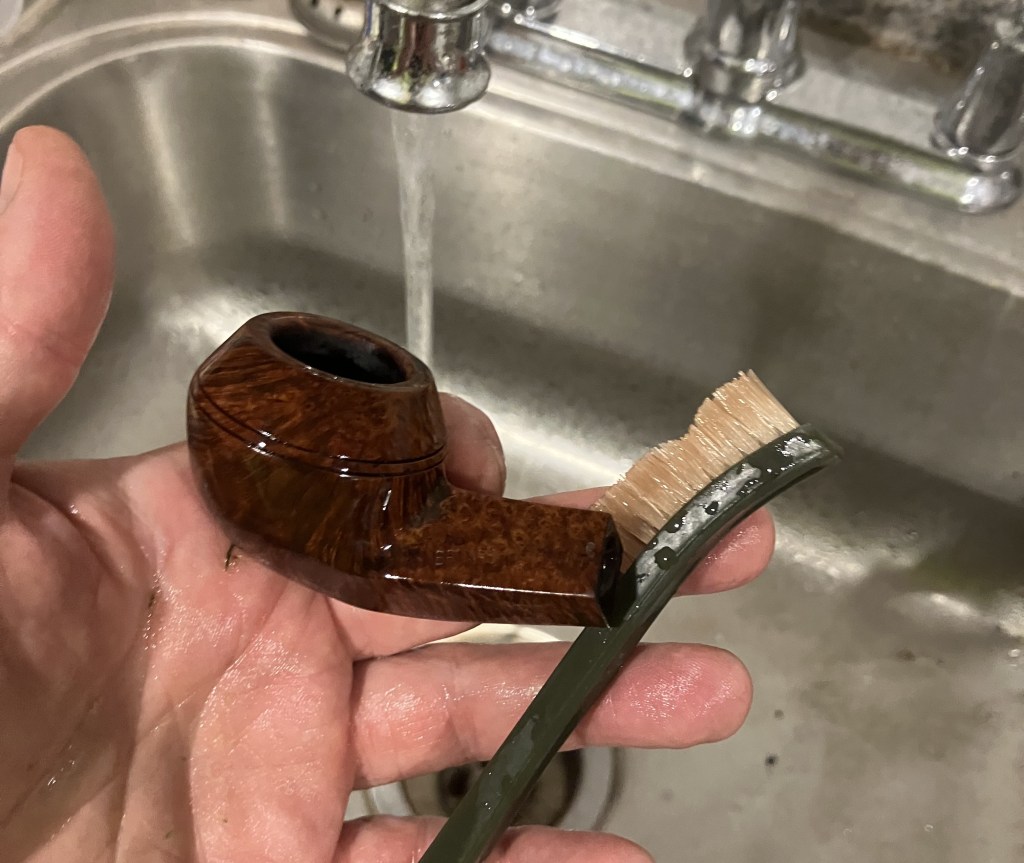
The scrubbing had softened the old fills. They were picked from the briar using a fly tying bodkin.
There were more pits scattered around the stummel.
I was ready for the crack repair. The crack itself was small and was quite tight even though it ran a good deal of the bowl’s length. I used a 2 mm drill bit with the depth taped off with masking tape.
Three holes were drilled at different angles through the crack in the briar on each side. Brass pins were cut from a length of 2 mm brass rod.
The below photo shows the pins partially inserted and their angles.
I forced some JB Weld into the drilled hole using a fly tying bodkin. The brass pins were roughed up with sandpaper then pressed into their respective holes. I used a thin CA to penetrate the crack.
The remaining epoxy was spread into the tobacco chamber using a nitrile gloved finger. The stummel was set aside and allowed to cure/dry for 2 hours. During this time I removed the stem from deox and vigorously rubbed the remaining solution from the vulcanite.
I reattached the stem to the stummel while it was still curing. The stem like the oxidation had not been removed but this was just surface oxidation that would be removed with sanding.
After the curing/drying time, I used brown CA and briar dust to refill the excavated pits.
The stem was then sanded with a series of sanding sponges from grits 320-3500. Between each sponge I wiped the stummel with a make-up pad wetted with alcohol. Below you can see that the shank was wrapped with masking tape to keep the joint where the two pieces meet from being rounded.
The stummel was sanded with grits 320-600. The sanding avoided the stamped areas. I did not sand finer than the 600 because this was in preparation of giving the stummel a contrast dye. I don’t think the dye absorbs as well into the briar if the surface has been sanded with very fine sandpaper.
The dye kit consisted of black Fiebing’s Leather Dye, a lighter, a cork and a folded pipe cleaner as an applicator.
The dye was applied with the pipe cleaner and flamed with the lighter. This burns off the solvent portion of the dye and allows it to better stain the briar. The cork acted as a plug keeping the dye from the inside of the tobacco chamber. The stummel was then wiped with a paper towel.
I did not care about giving the dye drying time as I was only interested in the dye penetrating the softer grained briar. I took the stummel to the buffer where I buffed the black dye outer layer of briar from the stummel using the rouge compound and rouge wheel.
The resulting color is shown in the photo below. The stummel was then lightly sanded with a series of sanding sponges from 1000-3500. Between each sponge the surface was wiped with an alcohol wetted make-up pad.
The stummel was then given a coating of Before and After Restoration Balm and allowed to sit for 20 minutes.
An inside out athletic sock was used to wipe away any remaining balm.
The epoxy in the tobacco chamber had cured for about 3 hours. It still remained slightly soft. I used the PipNet with the #3 blade to remove the epoxy from the high points of the chamber. There was still a rather significant curve to the inside walls. A second batch of epoxy was mixed. I planned on using the pocket knife below as a trowel to apply the epoxy to the tobacco chamber. This epoxy sets-up in about 15 minutes so I allied the freshly mixed epoxy to sit for about 5 minutes before applying.
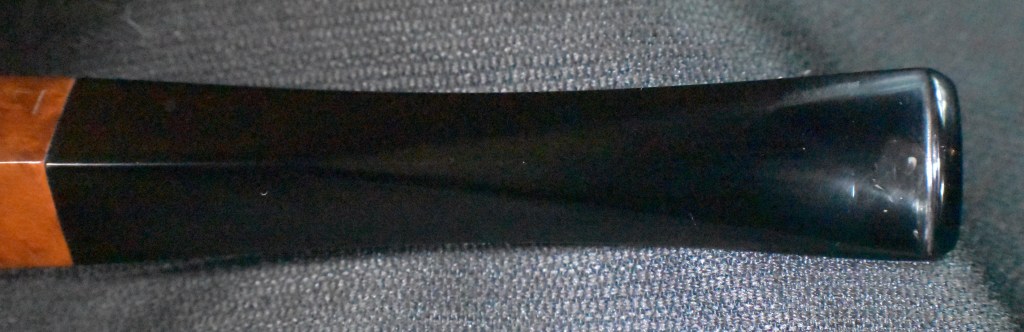
This application better filled the remaining low areas. I used a single finger from a nitrile glove to spread the epoxy into the low spots.
Below you can see the interior at this time. The epoxy was again set aside for a couple of hours to cure.
After the curing time, I again used the PipNet and #3 blades to remove the high spots and reform a cylindrical tobacco chamber. The results were far better with only a couple of areas that remained depressed. These were again filled with fresh epoxy and allowed to cure. I failed to take any photos, apologies. Once the final epoxy had cured for a couple of hours the PipNet was used again. This time the tobacco chamber had been restored to a nice cylindrical cavity. I had to wait overnight to allow the epoxy to fully harden enough for sanding. The next day the tobacco shamber was sanded with 320 sandpaper. I wanted a good bowl coating to cover the epoxy and chose to use 100% maple syrup and carbon powder for the coating. A cotton swab was used to apply an even coating of syrup to the tobacco chamber. A pipe cleaner was inserted into the airway to prevent syrup and carbon powder from entering.
A capsule of carbon powder was poured into the chamber/
The rim was covered with a piece of masking tape.
The stummel was then shaken, rotated, shaken, rotated, shaken, etc… After a few minutes of this the tape was removed and the remaining powder dumped. The resulting bowl coating would take a couple of days to dry.
The final step was a hand buffing with a microfiber polishing cloth further improving the shine.
Tom Howard made a sturdy pipe and this one withstood the abuse of hard use and time and came through it still smoking. I am very pleased with how well this old pipe turned out even though it took days longer than I had intended. The briar grain is quite pretty and the contrast dye brought the grain forward. The sturdy shank compliments the round bowl nicely. Pinning the cracked bowl with 3, 2 mm brass pins winn undoubtedly hold the crack together and not allow it to be an issue in the future. The old vulcanite polished up beautifully and the high gloss finish accentuates the black dye contrasts in a cohesive fashion. I am sure this old pipe will be a sturdy smoking companion for many years to come.The dimensions of the Tom Howard Billiard are:
Length: 5.72 in./ 145.29 mm.
Weight: 1.59 oz./ 45.08 g.
Bowl Height: 1.97 in./ 50.04 mm.
Chamber Depth: 1.52 in./ 38.61 mm.
Chamber Diameter: 0.80 in./ 20.32 mm.
Outside Diameter: 1.55 in./ 39.37 mm.
I do hope that you have found something here useful to your own pipe care, maintenance or restorations. If you like this sort of thing, please click the like and subscribe buttons. Thank you for reading the ramblings of an old pipe lover.
Loading…
Below are some photos of the finished Tom Howard Billiard.