
Photographed and written by
John M. Young
Orlik pipes have never really been an acquisition nor restoration target of mine. I’m not sure if that is due to the intimidating wig wearing judge on their advertisements or the fact that they don’t show up in estate lots as commonly. I’m going to go with the intimidating judge and my disregard for authority figures. Yeah right, you know it’s because they were a higher quality pipe that didn’t show up in the cheapo estate lots. This wonderfully shaped bent, what I’d call an apple, is robust yet graceful. It wasn’t the target of the lot but it did grab my attention and move forward in the queue solely based on its good looks. The pipe is stamped ORLIK CAPITAN ofer MADE IN ENGLAND on the left with the only stamp on the right being a B9. I assumed this to be a shape number. Below are some photos of the Orlik Captain before work started.


The most obvious issue was the amount of oxidation on the stem. The rest of the pipe looked to be in great shape.
Background
Being generally unfamiliar with Orlik pipes is a curable affliction. I have only restored a couple of Orliks and this one shares little in common with the others. I turned first to pipedia.org. The entry had a very brief history of the brand which I include here,
“In 1899, a pipe manufacturer was founded in London, Bond Street, by Louis Orlik. L. Orlik Ltd. started to produce high quality pipes for a relatively low price but high service and soon became quite popular. By 1907 they used the name L & A Orlik, which apparently added Louis’s brother, Alfred to the company name. In the first quarter of 1900 they also established in Birmingham. This can be verified by silver hallmarks. In 1980 the company was acquired by Cadogan. Like many of London’s other pipe manufacturers they moved to a new built factory in Southend-on-Sea. As all current brands in the Cadogan group, Orlik was being produced in those factories.
Orlik used the slogan “Smoked by all shrewd judges” “(who are also loved by his hard judge)” with a portrait of a judge wearing a wig. The picture is still used in Denmark for manufacturing of Orlik cigarettes.” (Orlik – Pipedia)
Here, I also found a link to an old catalog, date undetermined, with a shape 9 matching the stamp on the pipe in hand.


(Orlik – Pipedia). Next I wanted to know what the B of the B9 Large Chubby Bent could stand for. There was a section which states the following:
Models & Grades: Pre-Cadogan era
- Virgin (Series Letter:Without letters)
- Old Bond Street (Series Letter:A)
- Old Bond Street Sandblast (Series Letter:AX)
- Supreme (Series Letter:T)
- Supreme Sandblast (Series Letter:TX)
- Meerschaum Lined(Series Letter:M)
- Corona (Series Letter:C)
- Old Root (Series Letter:R)
- De Luxe (Series Letter:L)
- De Luxe Sandblast (Series Letter:LX)
- Double Bore (Series Letter:W)
- Prince Regent (Series Letter:P)
- Major Black (Series Letter:MB)
- Captain Black (Series Letter:B)
- Captain Black Sandblast (Series Letter:BX)
- Clubman (Series Letter:6793)
- Clubman Sandblast (Series Letter:6793X)
- Black Prince (Series Letter:6791)
- Black Sandblast (Series Letter:6791X)
- 3/4 oz De-Luxe (Series Letter:1990)
- 3/4 oz (Series Letter:1986)
- 3/4 oz Sandblast (Series Letter:1986X)
(Orlik – Pipedia the bold and blue was added by me). The only problem with this discovery was that it refers to Captain Black and the pipe is only stamped with CAPTAIN. I did give some insight to the B. It also indicated a pipe that was made prior to the 1980 purchase by Cadogan.
I went to pipephil.eu seeking clarification of the CAPTAIN vs. Captain Black. Iere I was rewarded with greater confusion. The fonts from the below screenshot all look like the Orlik in hand. The stem of this pipe does not have the iconic brass circle though. Perhaps it is indeed a replacement stem.

(Op-Oz — Pipes: Logos & Markings)
The Captain Black stampings look vastly different than the block sans serif font stamped on this pipe.

(Can-Car — Pipes : Logos & Markings). The script like stamps from the photos are more a match for the Captain Black font used by the tobacco maker.

I returned to the pipedia.org entry to look for clarification. Michael Lankton authored an entry titled DATING ORLIK PIPES (Talk:Orlik – Pipedia). In this piece he discusses the pre-Cardogan, desirable, and the Cadogan “These are not the pipes you’re looking for, move along.” (Talk:Orlik – Pipedia). He states that the pre-Cadogan pipes are stamped as follows,
“The Orlik series proper will be stamped in all caps in a sans serif font on the port side of the shank one of two ways
ORLIK SERIES_NAME
MADE IN ENGLAND
or
ORLIK SERIES_NAME
LONDON MADE” (Talk:Orlik – Pipedia)
He goes on to state:
“The following series are probably of little interest to Orlik collectors but I am including them for the sake of completion. In any event, if you picked up one of these pipes it would probably share the superior smoking qualities of their better lines, with obvious trade offs in the interest of producing a lower priced pipe.
We pick up where we left off above, again in descending order of quality with the series code in parentheses:
- Prince Regent(P)
- Major Black(MB)
- Captain Black(B)(BX)
- Clubman(6793)(6793X)
- Black Prince(6791)(6791X)
- 3/4 oz De-Luxe(1990)
3/4 oz(1986)(1986X)” (Talk:Orlik – Pipedia).
So, what do I make of all this? Well, I think this is an Orlik pipe made in England. Thank you Captain Obvious. Seriously, the stamps are indicative of a pre-Cadogan pipe but there is no mention of a CAPTAIN line without the “Black”. The pipe does have the “B” from the Captain Black line. Together this leaves me confused. The good news is that I can carry out a restoration while in a state of confusion. Perhaps a reader can add an explanation in the comments.
The restoration
The Captain settled onto the workbench with a clean denim piece.

I began with reaming or, I should say with gathering the reaming tools. The PipNet, Smoking pipes Low Country rReamer, General triangular scraper (with the tip ground round) and a wood dowel wrapped with 320 sandpaper.

The tobacco chamber had a light layer of cake and a little lava flowing onto the rim.

The PipNet made short work of the cake. With the other scrapers playing clean-up.

The interior of the chamber showed no signs of damage after being sanded. The rim on the other hand needed some light scraping.

Another photo of the chamber with more light.

The rim scraping was done with a sharp pocket knife and a bit of saliva.

The stummel was taken to the sink for a scrub with undiluted Murphy Oil Soap and a nylon scrub brush.

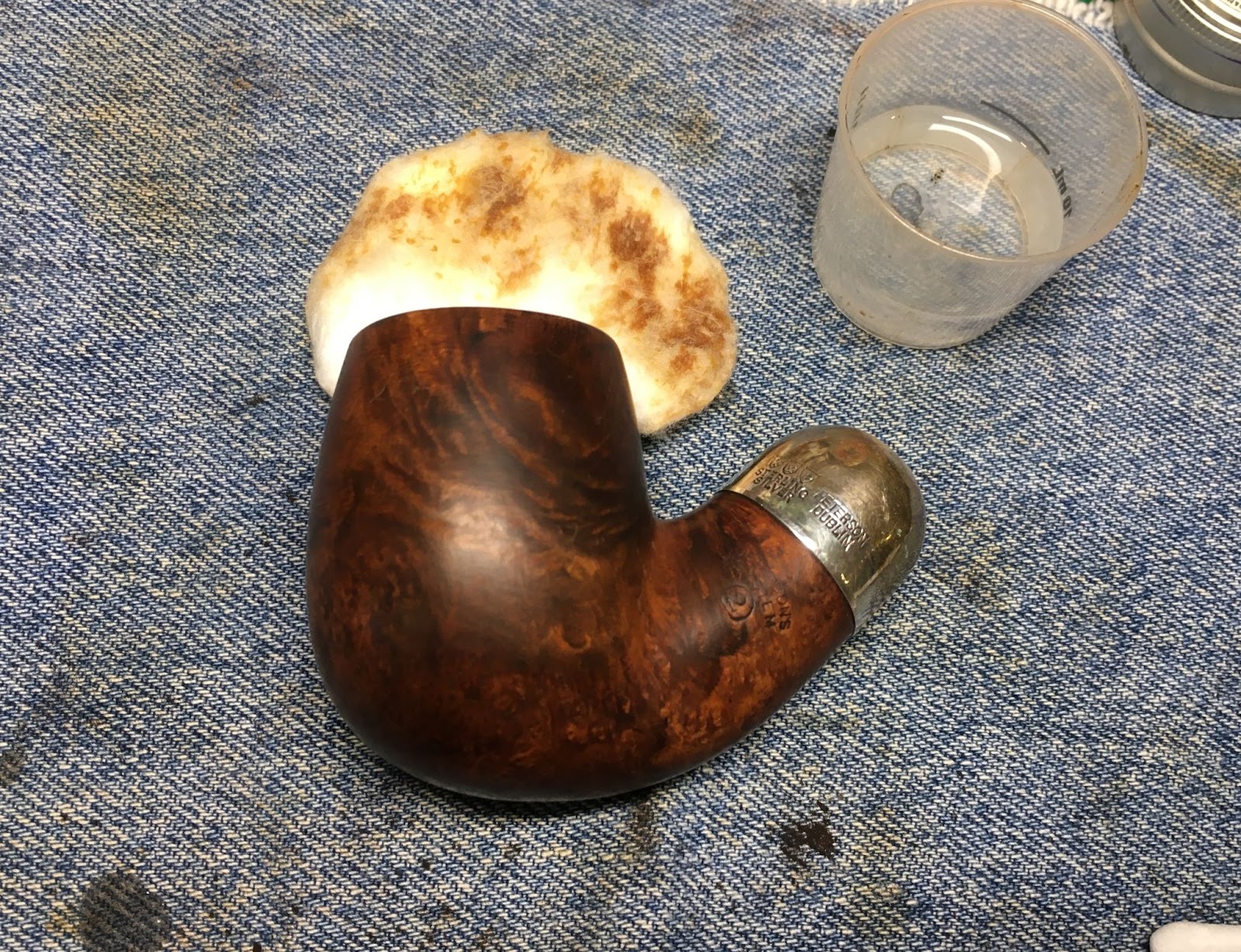
The soap was rinsed with warm water and the stummel dried with a cotton hand towel. Back at the workbench the stummel showed no signs of clear coat.

A quick wipe with 95% ethyl alcohol removed no stain indicating that this was a virgin finished pipe. The stain on the make-up pad was mainly from smoking residue around the mortise.

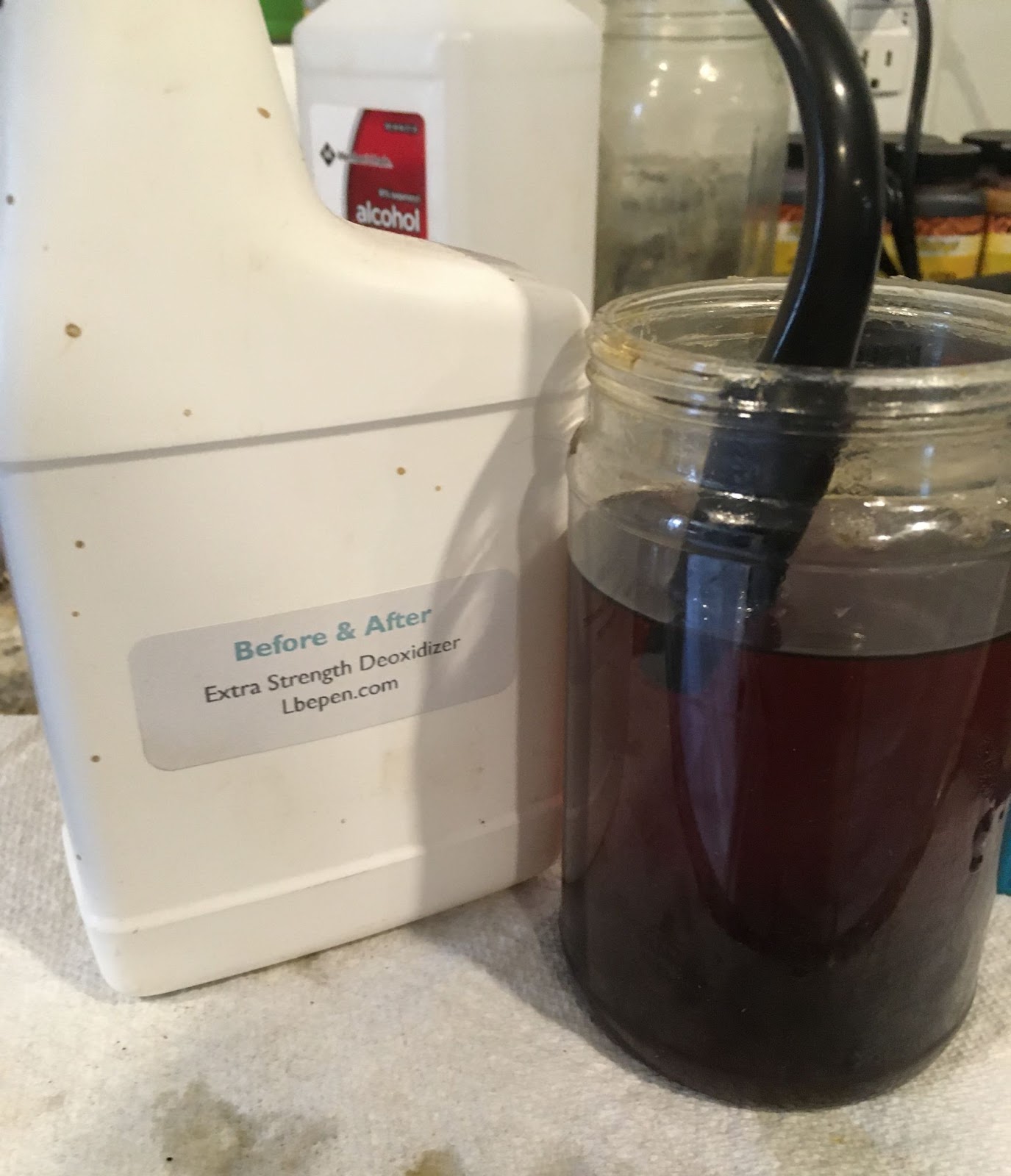
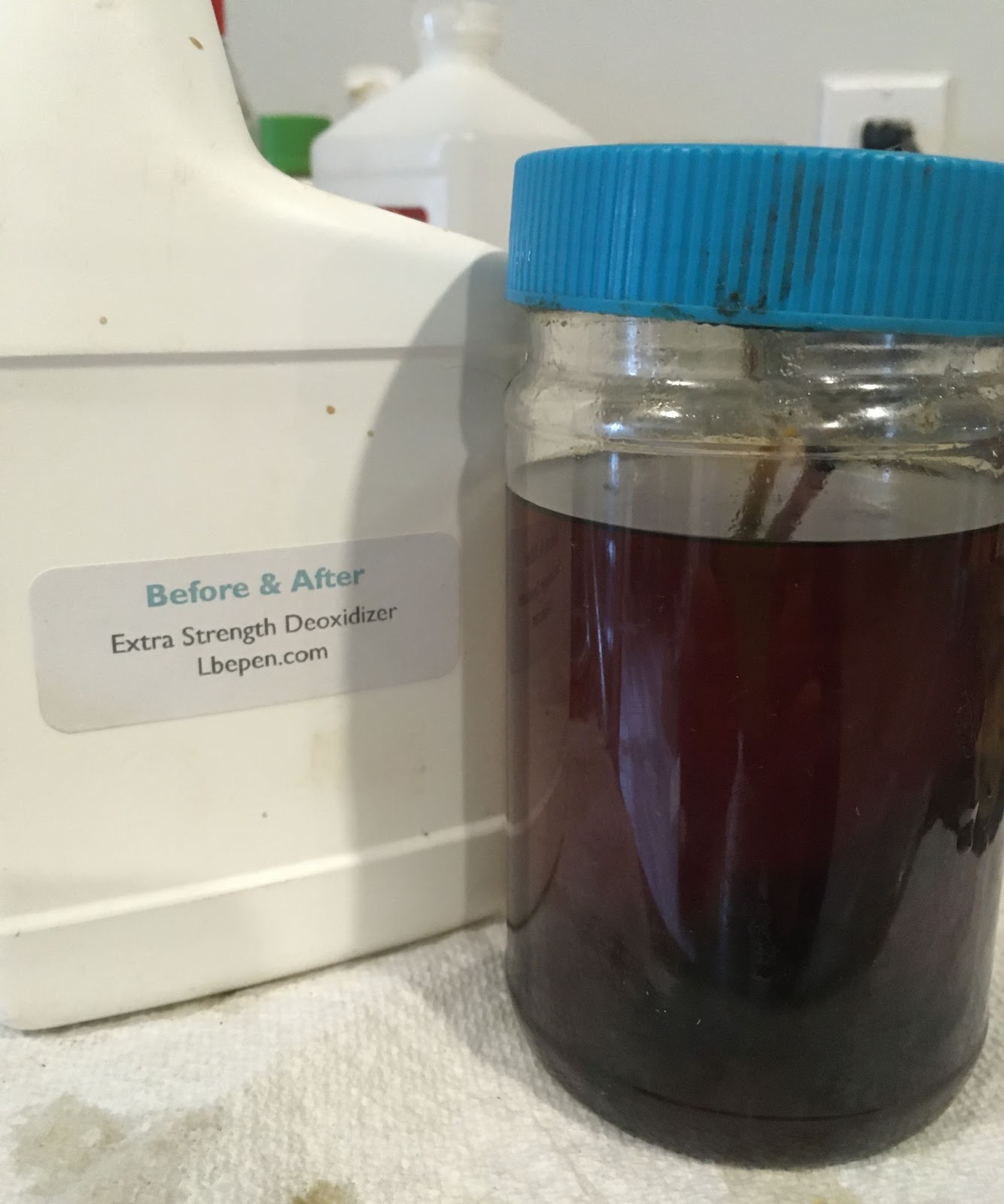
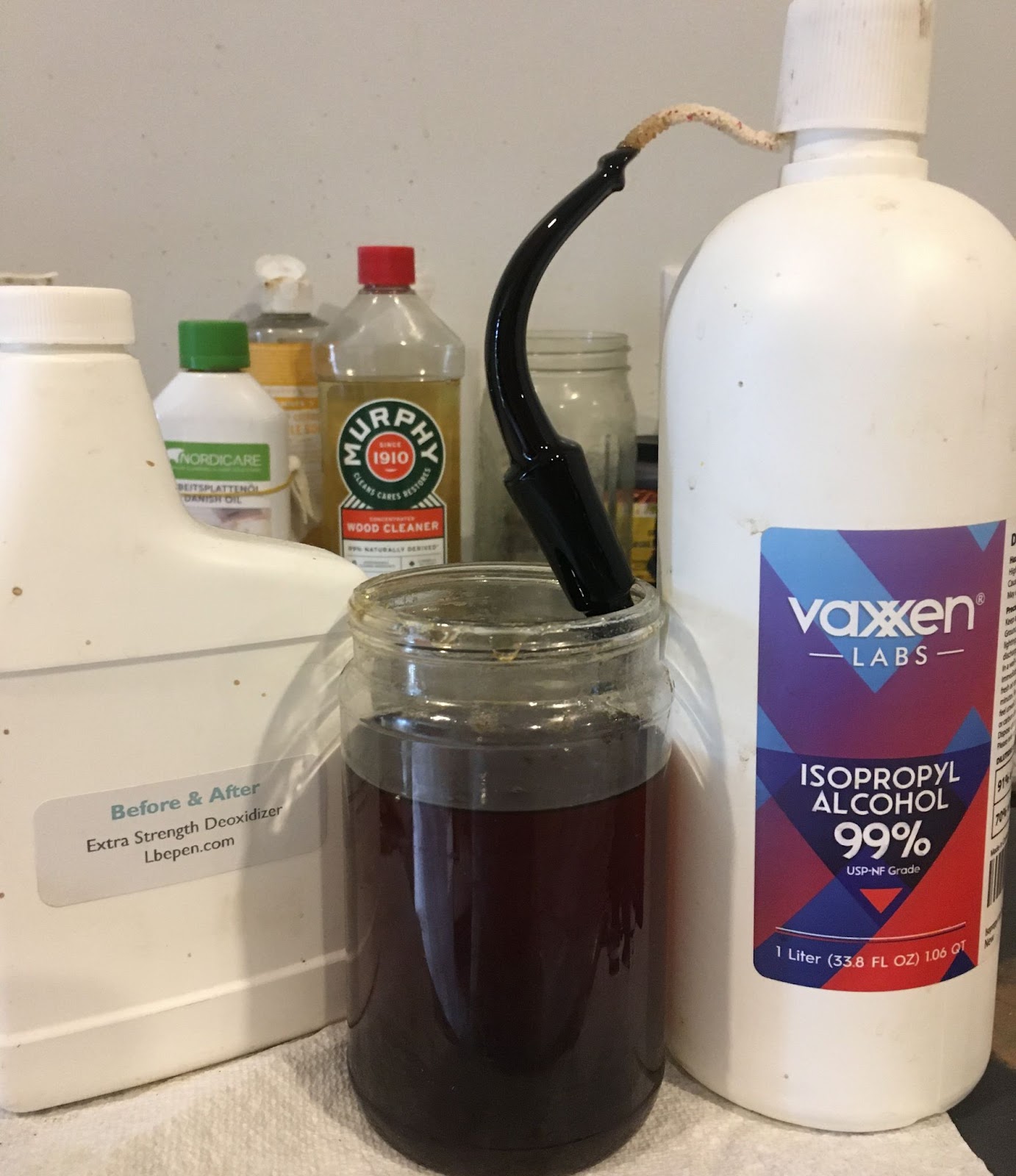
The stem was rubbed with 0000 steel wool to remove the outer hardened oxidation. A pipe cleaner was inserted into the stem to act as a hanger for the stem’s bath in Before and After Extra Strength Deoxidizer.

The stem went into the deoxidizer where it remained overnight.

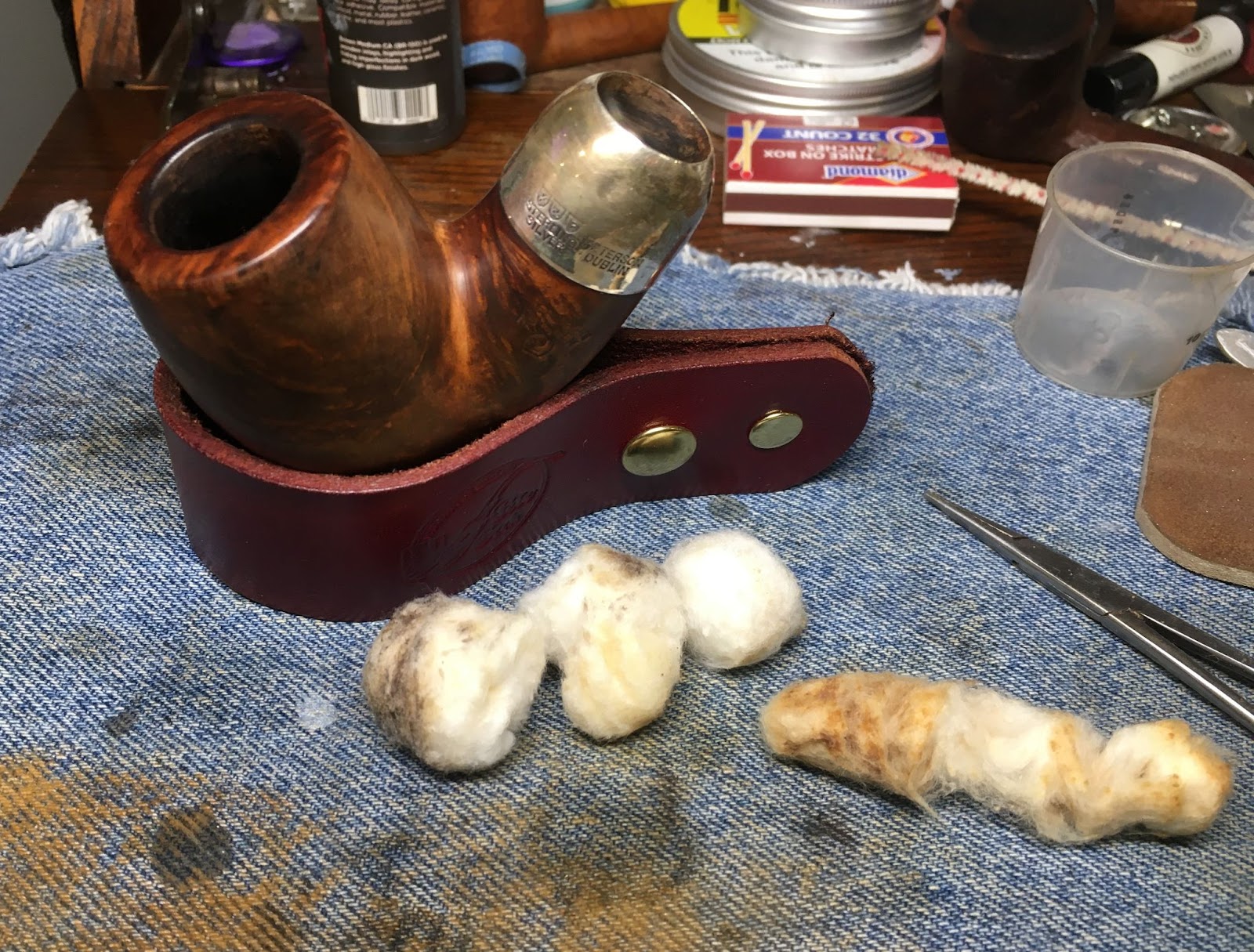
The stummel had a few small dents. These were too deep to be removed by sanding without altering the shape of the pipe. I tried raising the dents with a hot iron and wet cloth.

The below 2 photos are pathetic attempts to show what I was seeing. There was an area that looked like it was from a drop onto concrete and two scratches.

Using your imagination and pretending that my photography is adequate is appreciated. The steaming did help raise the dents.

The next day the stem was removed from the deoxidizer and allowed to drip excess solution back into the jar for a few minutes.

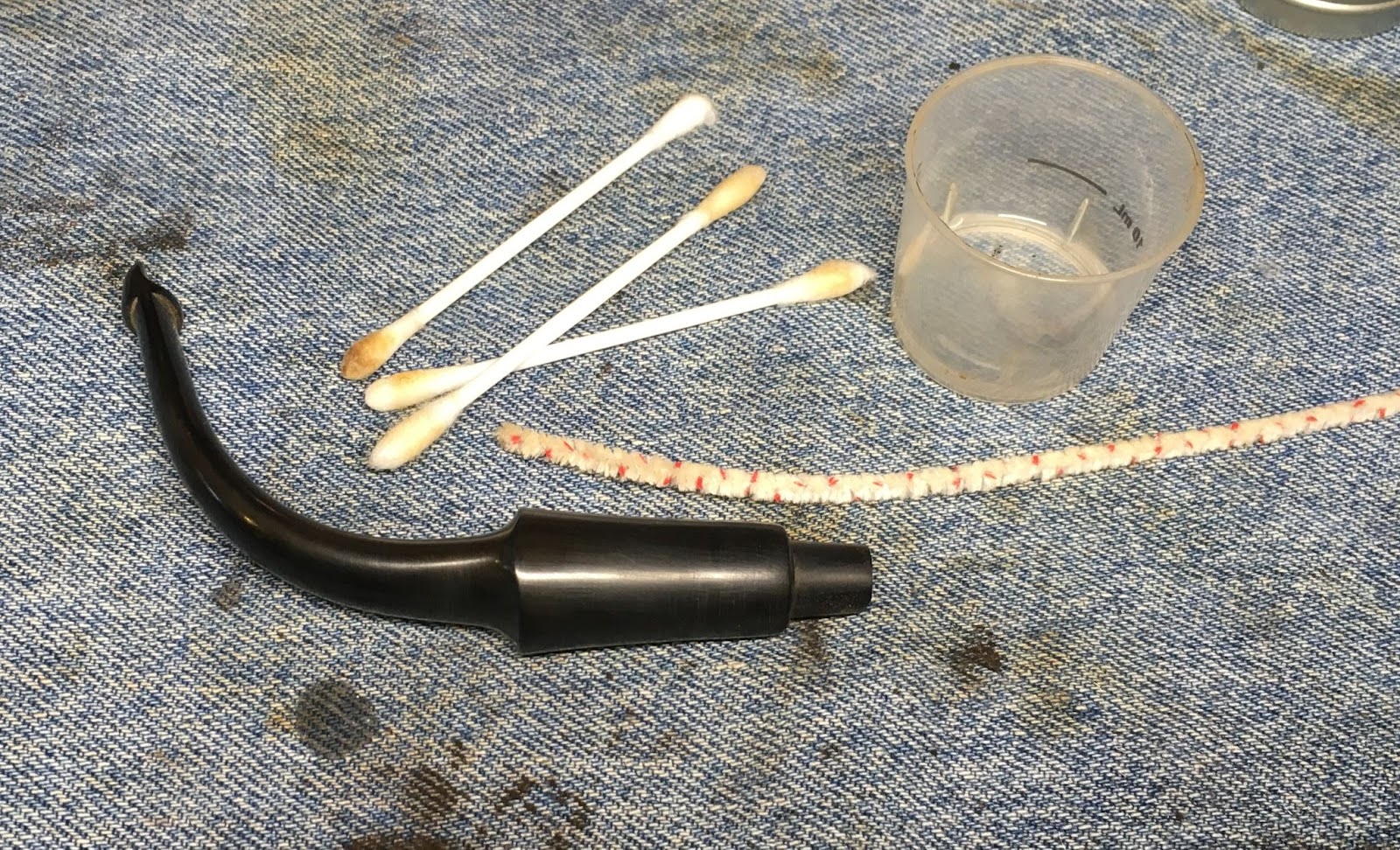
I used a coarse shop rag to absorb the remaining solution and rub away some of the loosened oxidation.

Below you can see the oxidized rubber that was removed.

Back at the workbench the pipe was starting to look better but brown was very evident.

I used several make-up pads drizzled with Soft Scrub cleanser to remove more of the oxidized vulcanite. The shank was taped with masking tape for protection while the stummel gave me a handle for easier holding.

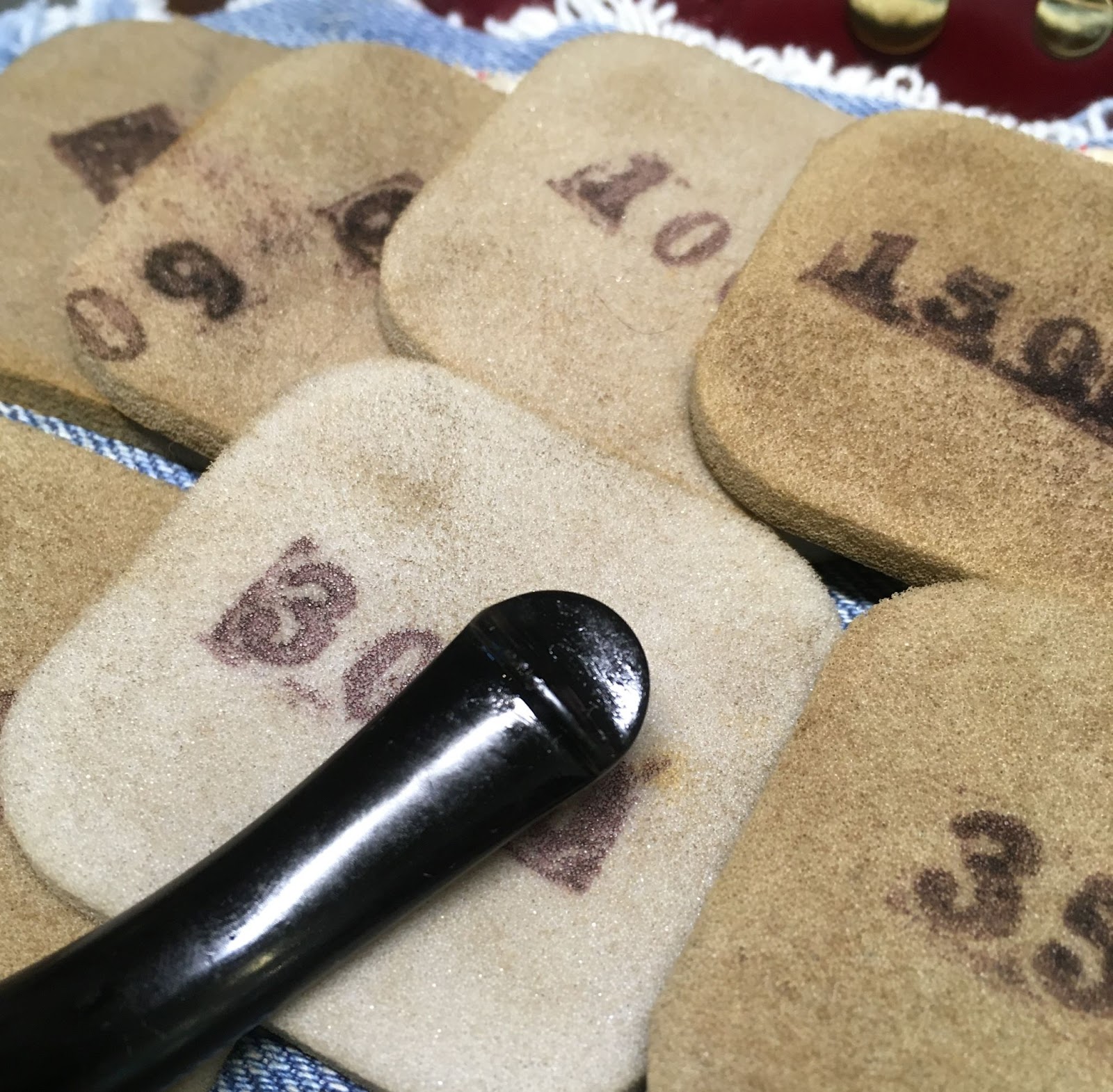
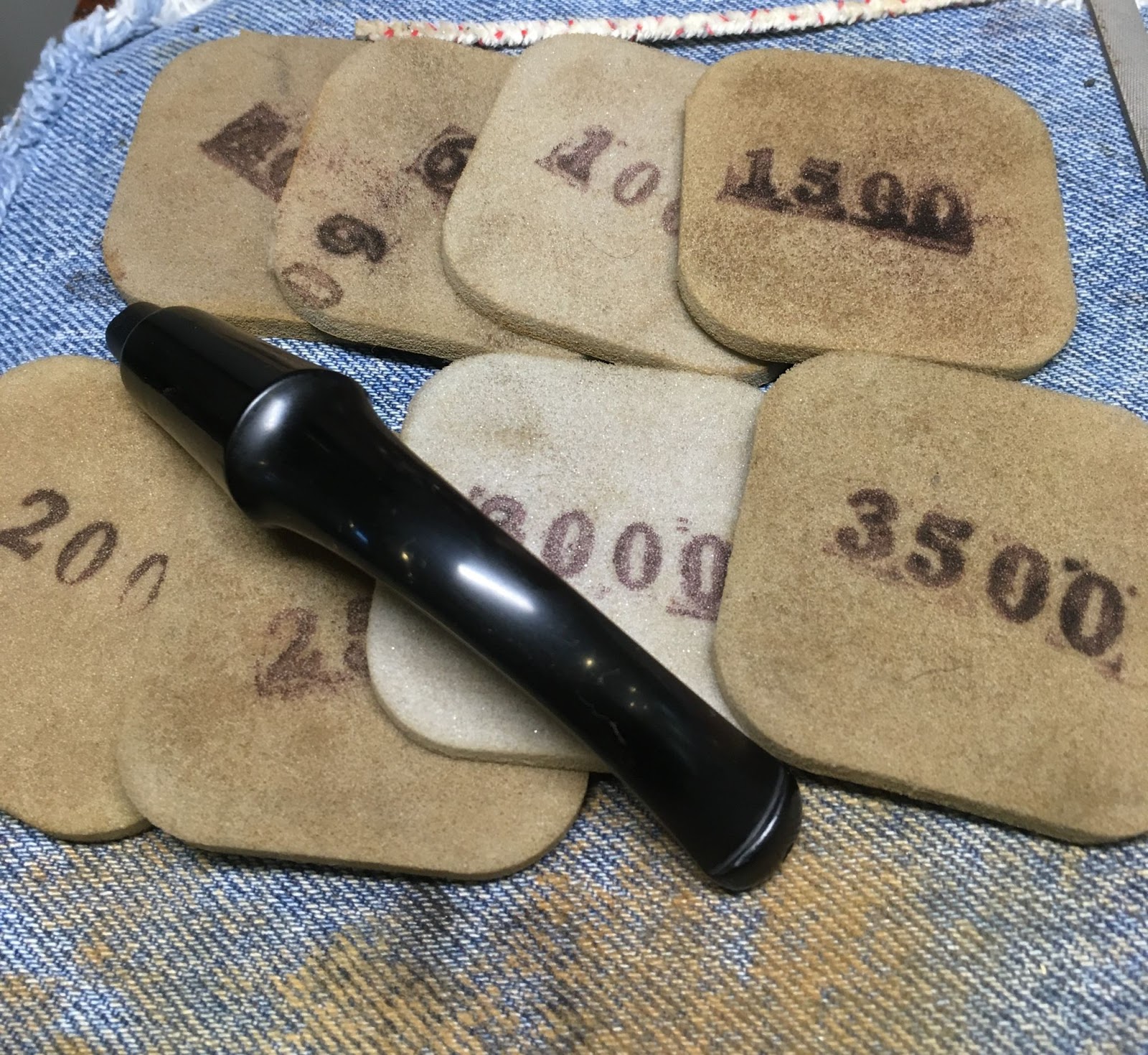
I then covered the stamps with painters tape for thor protection during sanding. The pipe was sanded with a series of sanding sponges. Between each sponge I wiped the stummel with an alcohol wetted make-up pad to remove sanding debris. The stem was rubbed with mineral oil and wiped with a dry paper towel.

Micro-meshing followed the sanding. The 4000-12000 micro-mesh pads were used with stummel and stem wiping as above except the stem received Obsidian Oil in place of mineral oil between each pad.

The pipe was then given a coating of Before and After Restoration Balm. This was allowed to sit for 20 minutes.

20 minutes later the balm was wiped from the pipe using an inside out athletic sock.

BAH! The stem still was showing brown under bright light. That oxidation had penetrated deeply into the vulcanite.


The solution? More time in deox was all I could think. I won’t bore you with the details of this second application of the previous protocols of deox, coarse rag wiping, Soft Scrubbing, micro-meshing and a trip to the buffer. I will show you the resulting stem top and bottom photos:


The pipe was taken to the buffer where it received several coats of carnauba wax. The final step was a hand buffing with a microfiber polishing cloth.
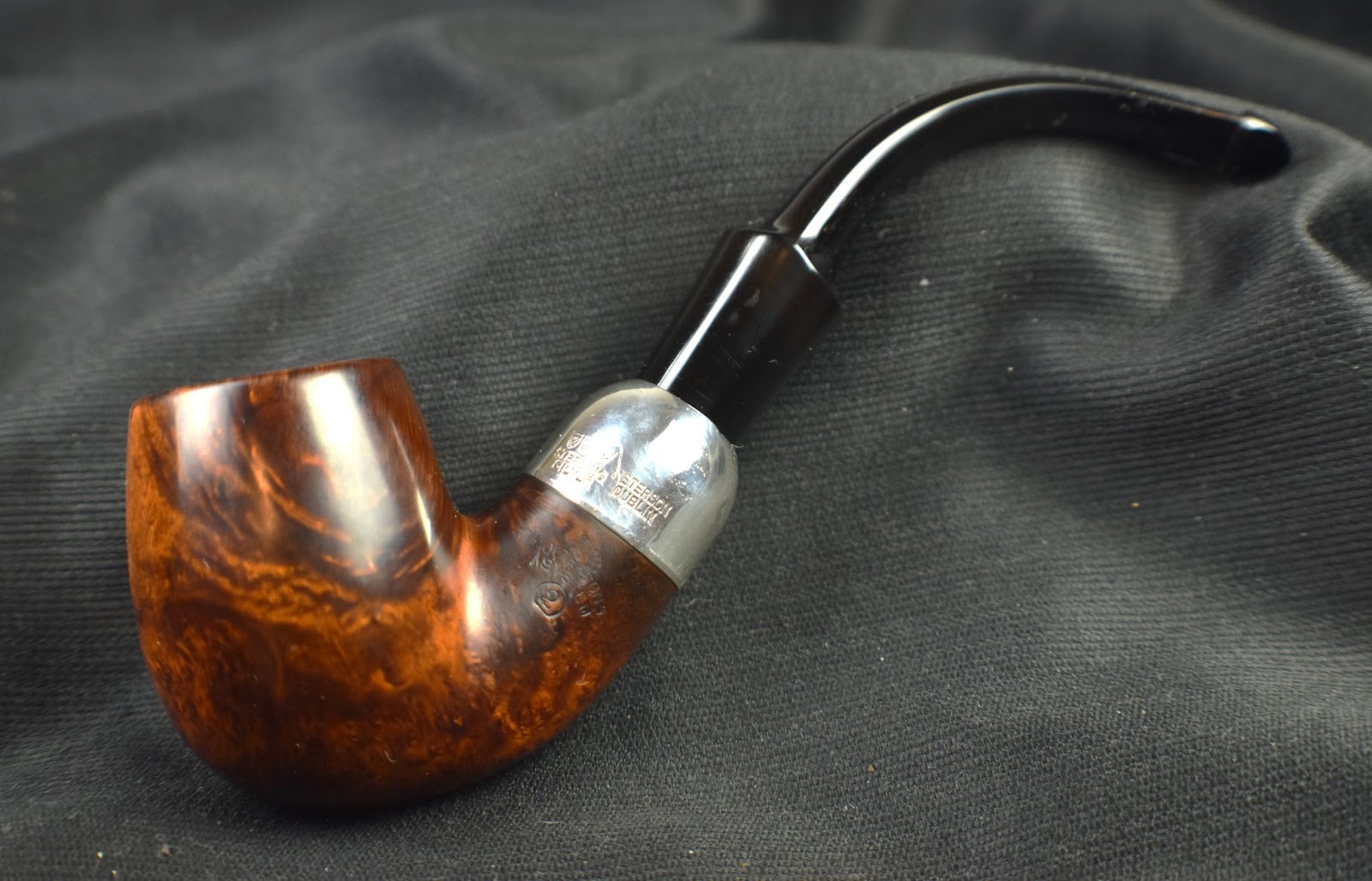
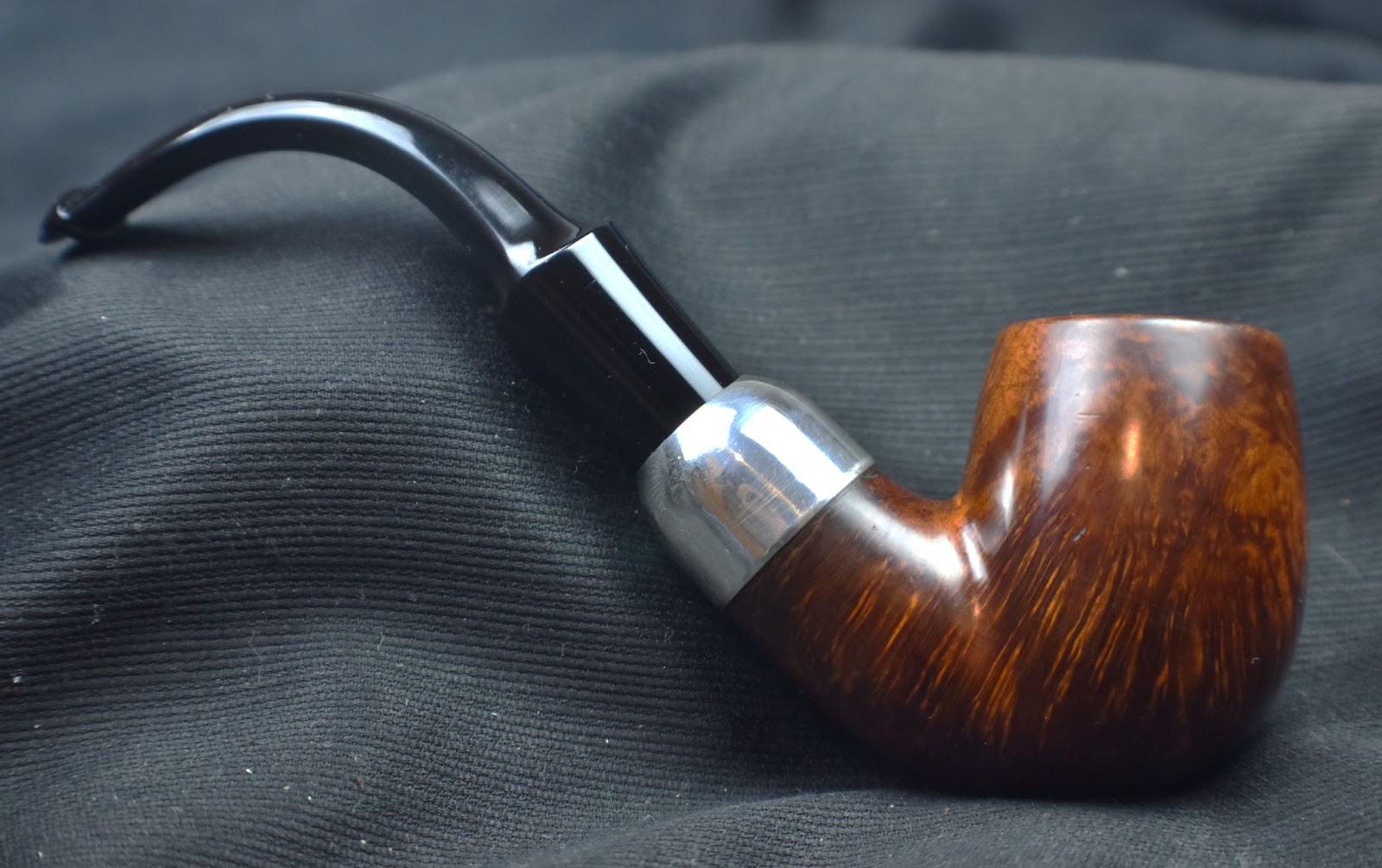
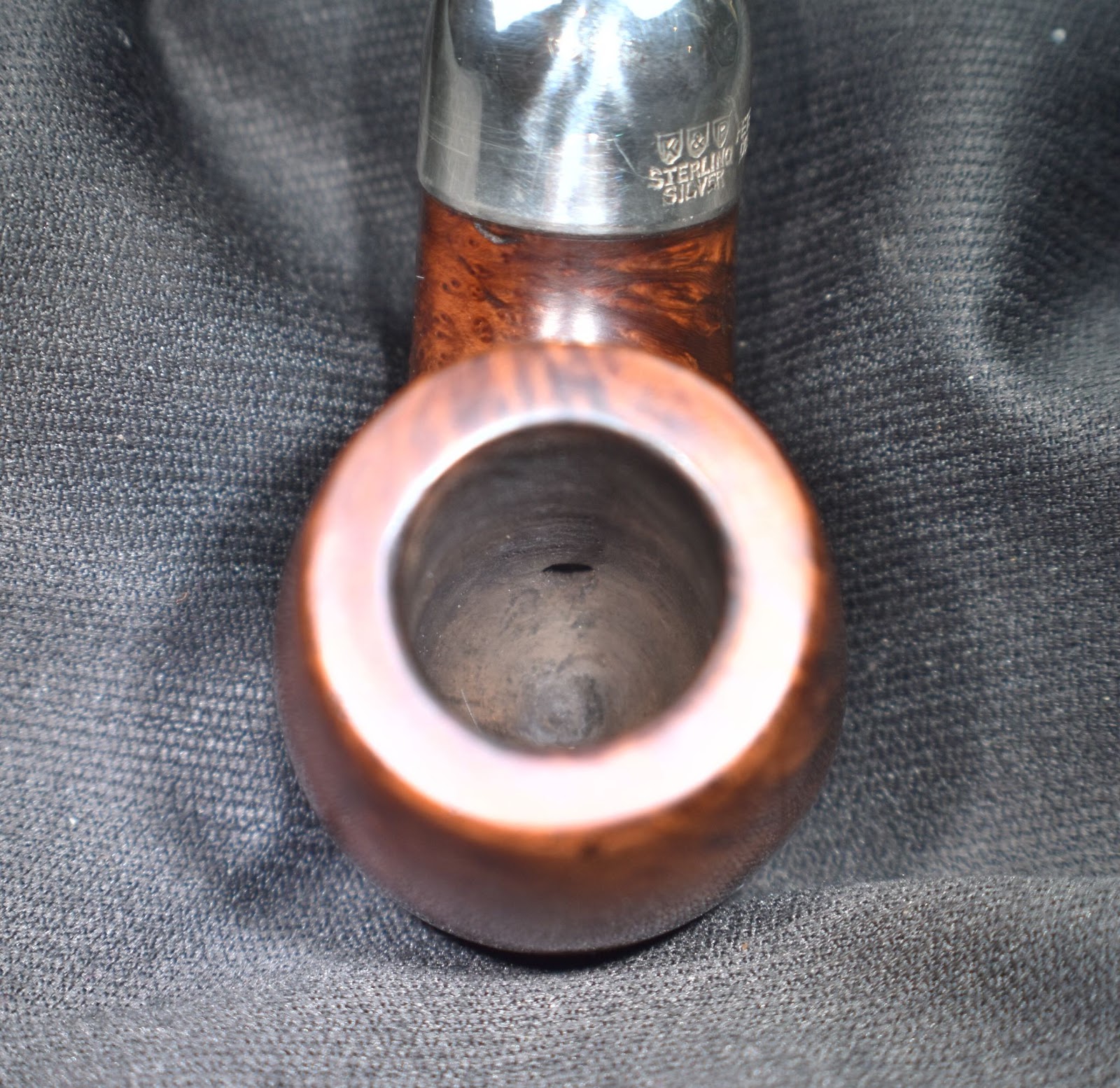
The Orlik Captain B9 is a true beauty. I decline to call it by the official Orlik name, “Large Chubby Bent” as I think that just sounds mean. I was finally happy with how the rim repair went. The oxalic acid treatment allowed me to remove nearly all signs of the charring without severely changing the shape of this wonderful old pipe. The briar grain of a Peterson De Luxe is on full display with this pipe. Beautiful bird’s eyes on both sides and lovely cross grain on the front and back. Though the cross grain is not quite centered it remains attractive. The stem was not severely oxidized leading me to believe this pipe was stored in a drawer and out of the light for a long time. The vulcanite polished up very well and the gloss black accentuates the briar grain. The dimensions of the Orlik Captain B9 are:
- Length: 5.35 in./ 135.89 mm.
- Weight: 1.76 oz./ 49.90 g.
- Bowl Height: 1.72 in./ 43.69 mm.
- Chamber Depth: 1.34 in./ 34.04 mm.
- Chamber Diameter: 0.70 in./ 17.78 mm.
- Outside Diameter: 1.68 in./ 42.67 mm.
I do hope that you have found something here useful to your own pipe care, maintenance or restorations. If you like this sort of thing, please click the like and subscribe buttons. Thank you for reading the ramblings of an old pipe lover.
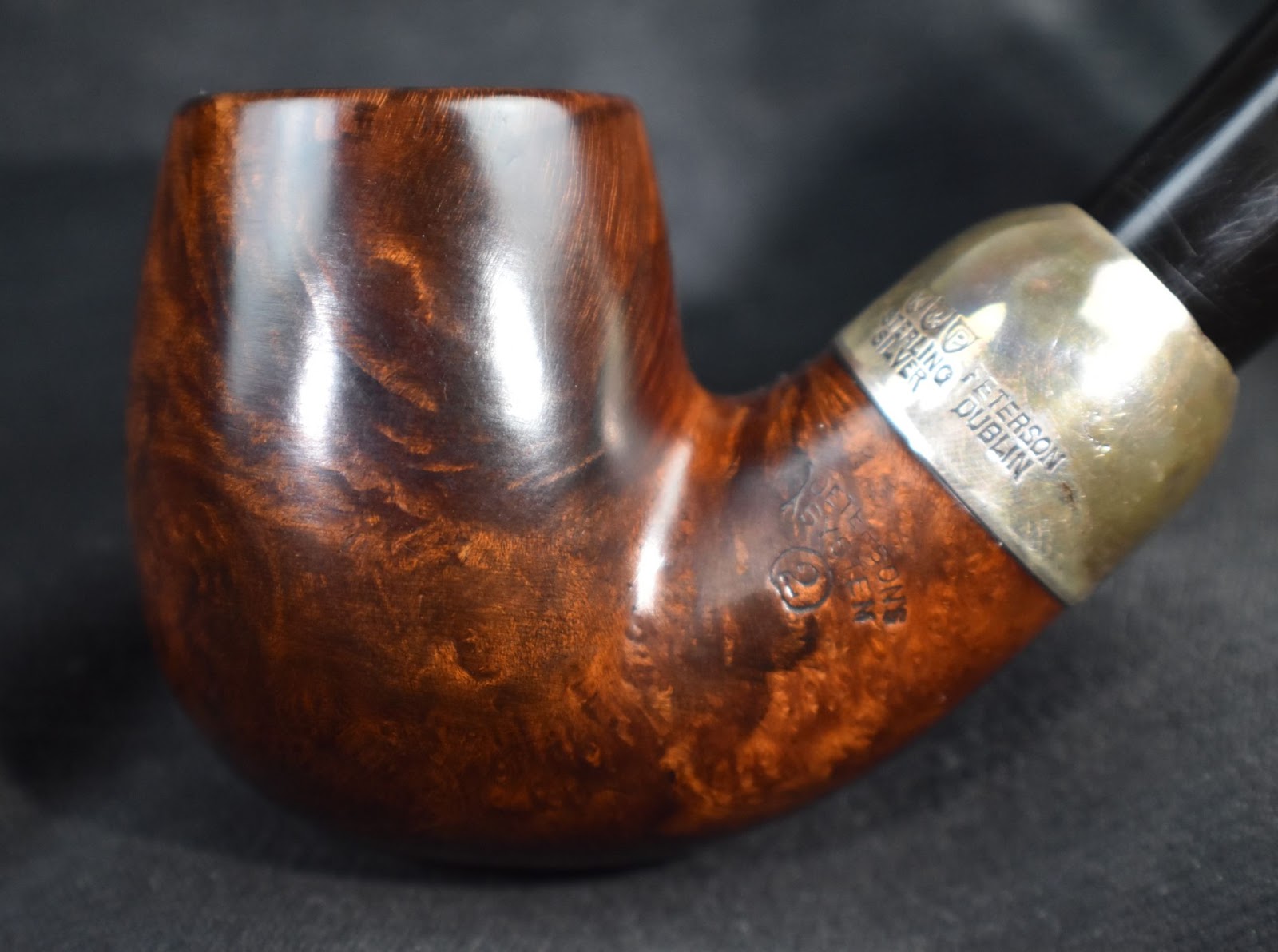
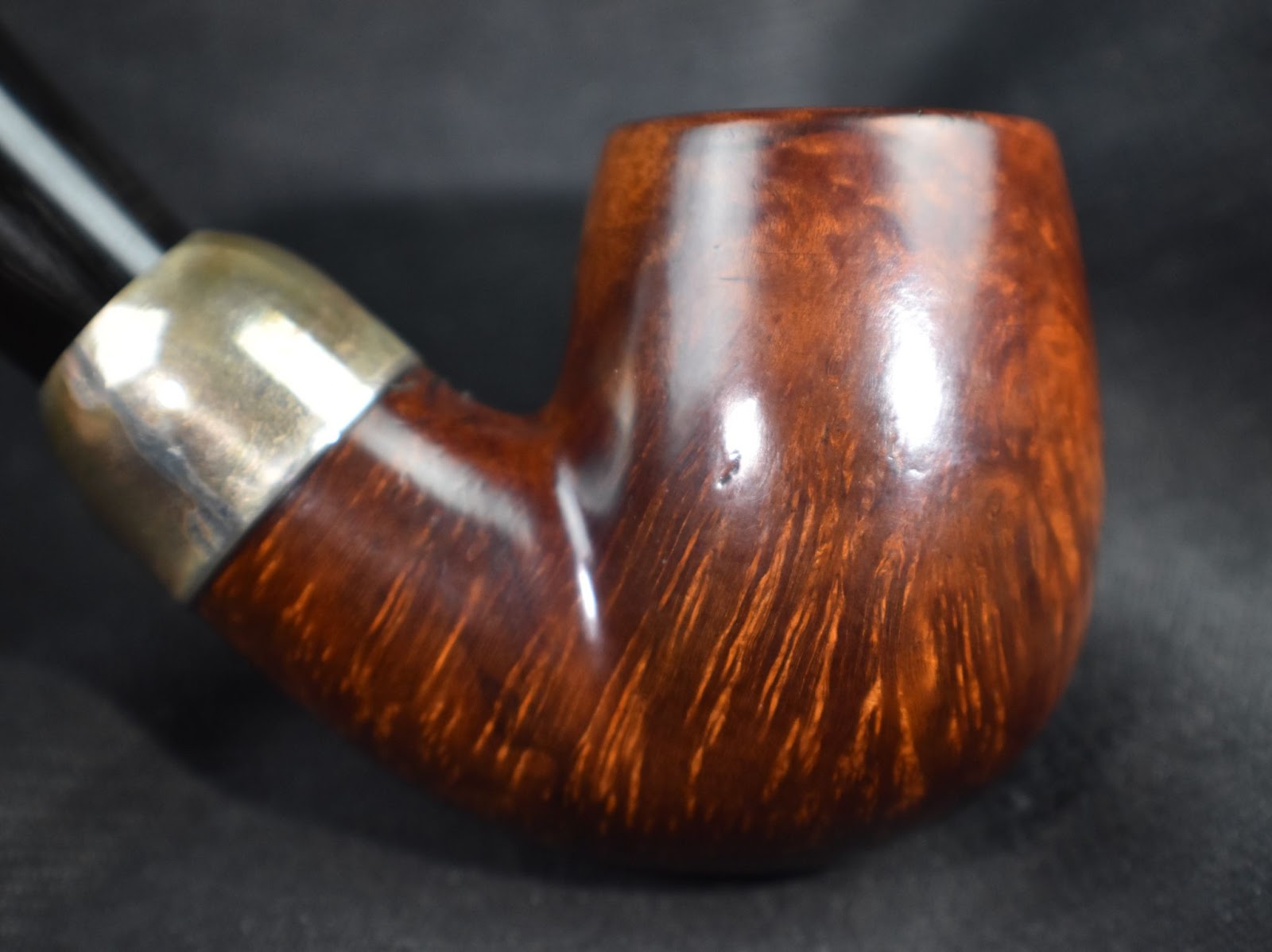
Below are some photos of the completed Orlik Captain B9.






















 This all leads me to say with some certainty that this Jima was made in France in the 1970s.


 (
(






 NebraskaPeteGeek