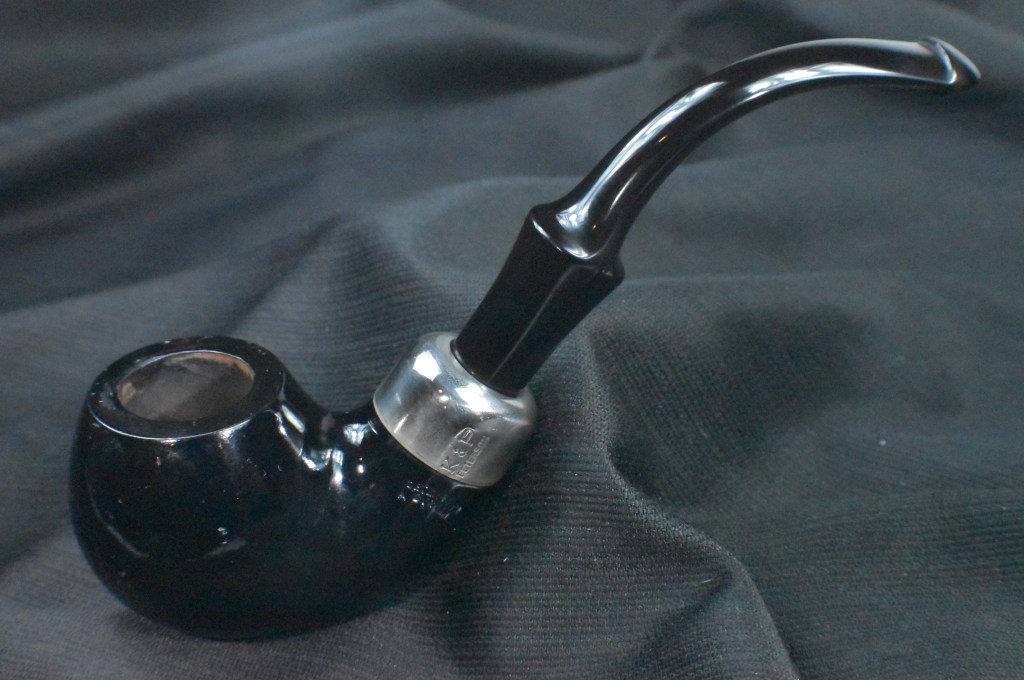
Photographed and written by
John M. Young
I have probably said this before, I love Peterson pipes and fishing. Now in fishing, catch and release is where fish are pursued,caught and then released. Hmm, I guess that didn’t need explanation. Anyway, a similar process can be done with pipes. A given specimen can be pursued, obtained, restored then collected or sold to a new owner. This restoration is even better than that, I got to restore a Peterson Ebony 302 for someone else. I didn’t have to pursue, obtain or look for a buyer. I’ve probably said this before too, “I’m lazy”.
Tom reached out to me to restore a well loved pipe of his. He apparently had been impressed with my restorations while abusing himself by reading my blog. He sent me some photos and I agreed to restore the pipe – it’s a Peterson, of course I’d restore it.
He packed up the pipe and sent it to the wilds of southeast Nebraska. Below are some photos taken prior to working on the Ebony.
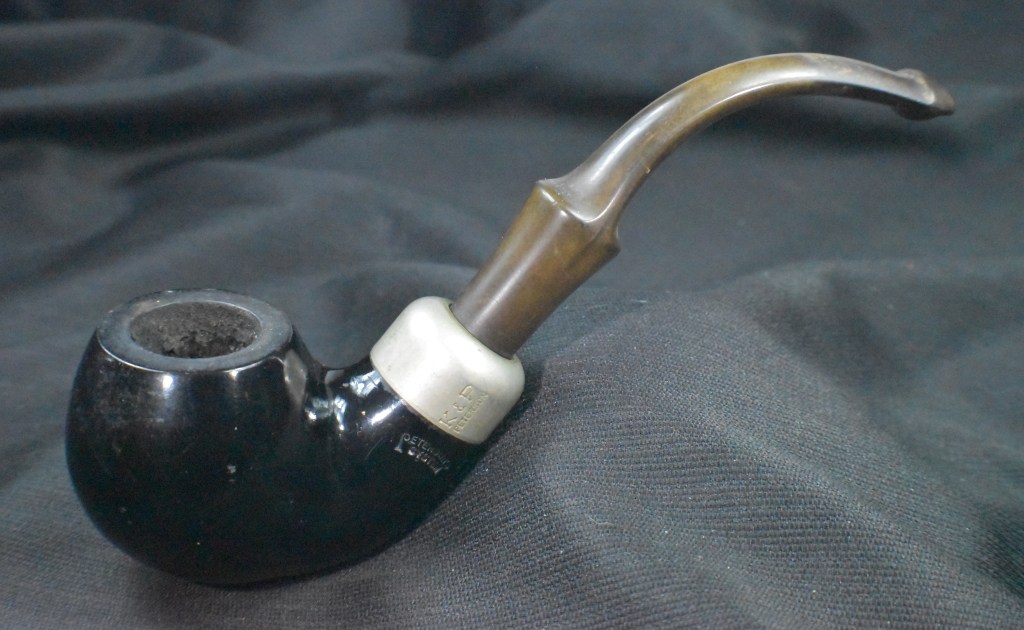
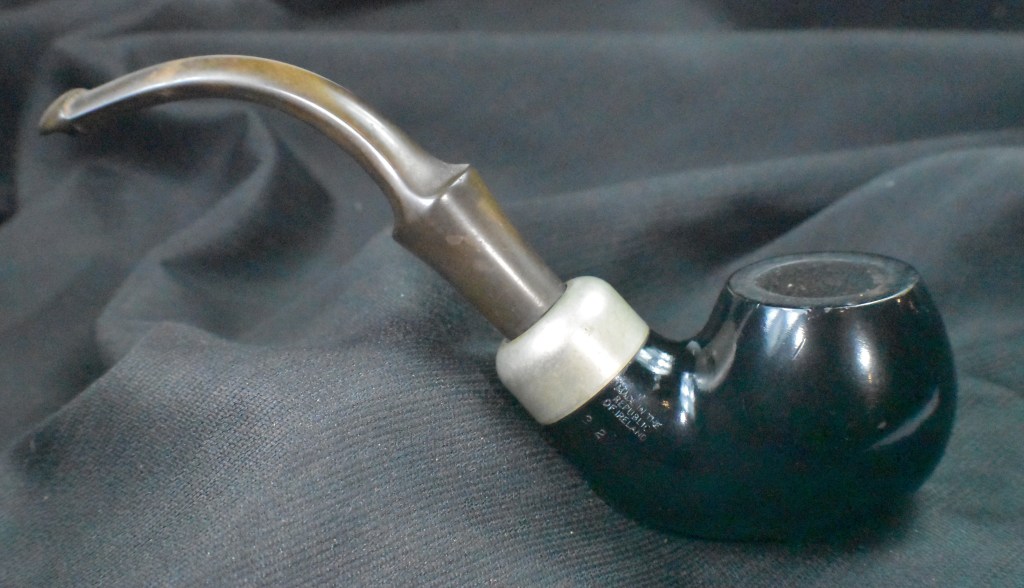
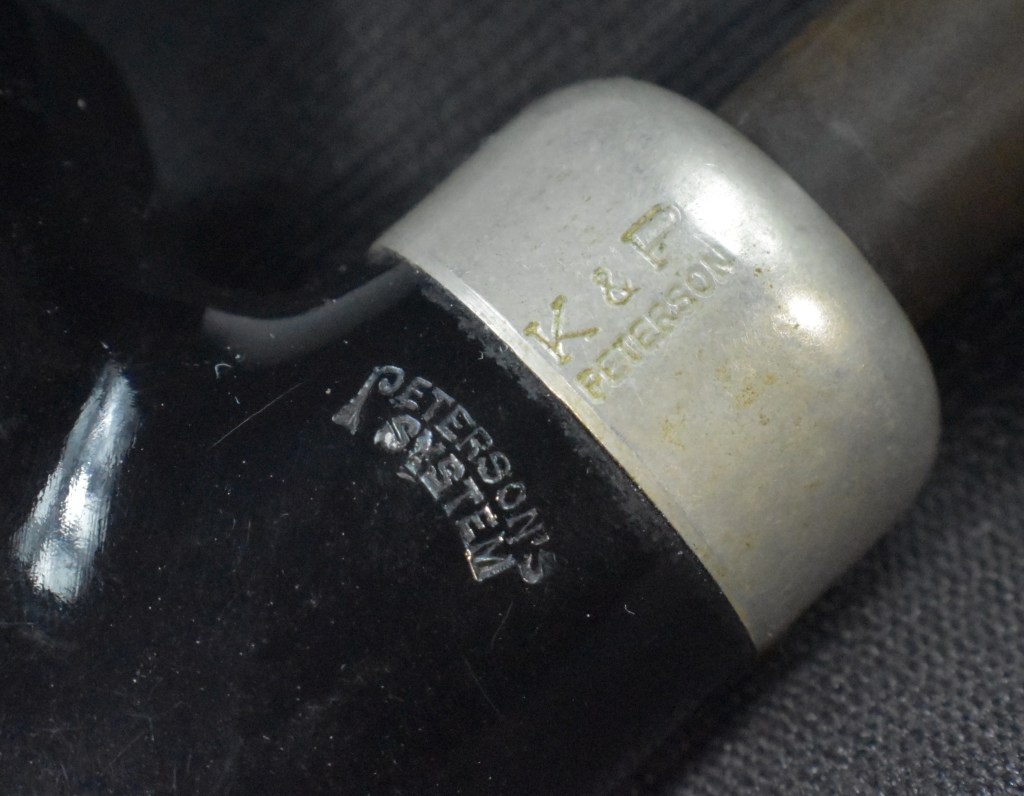
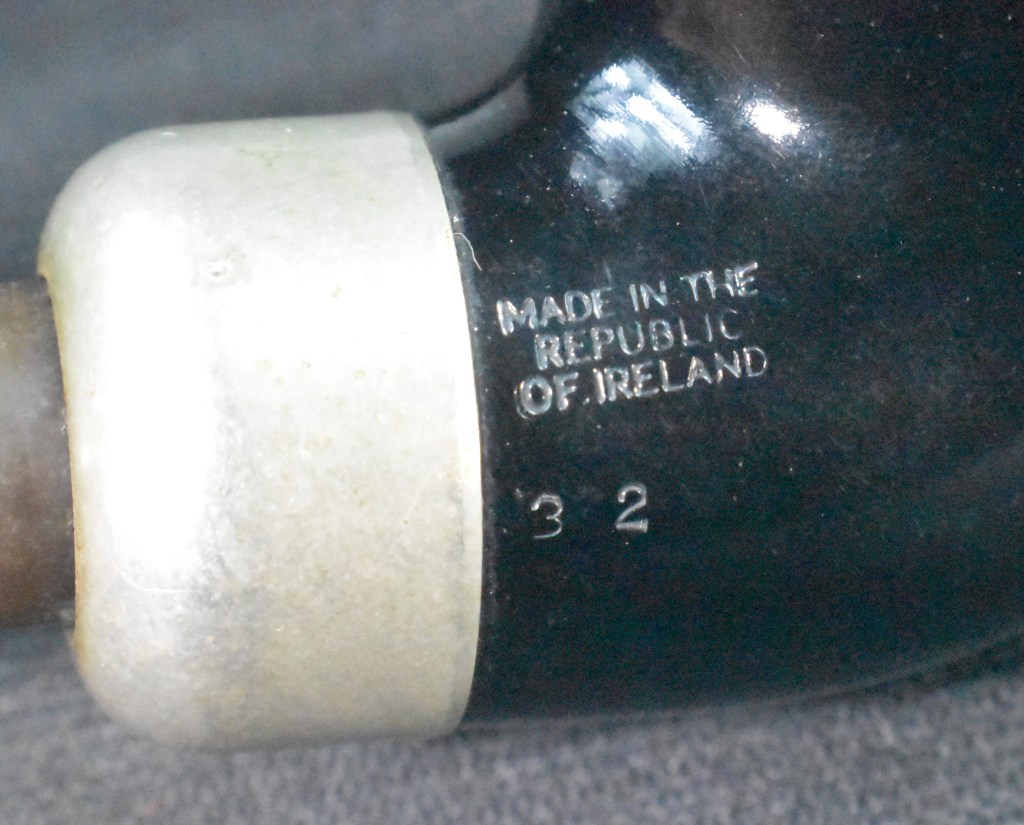
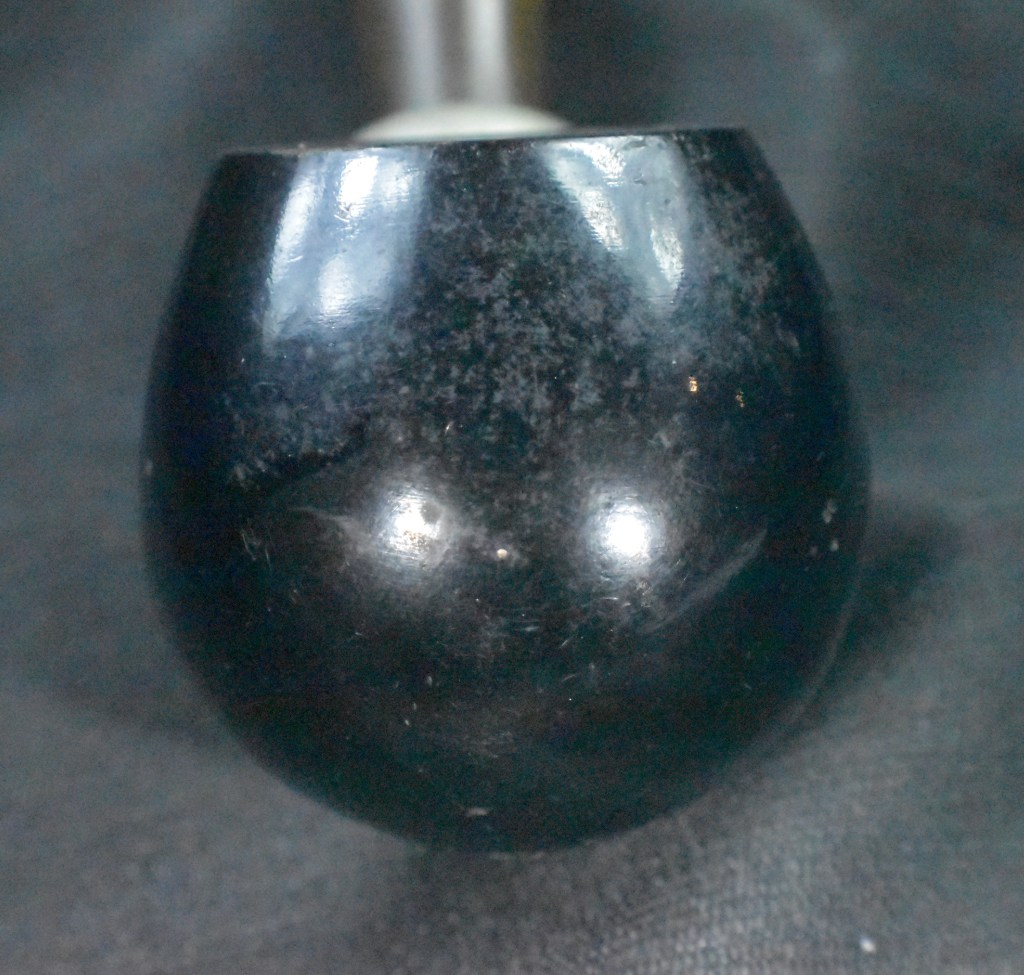
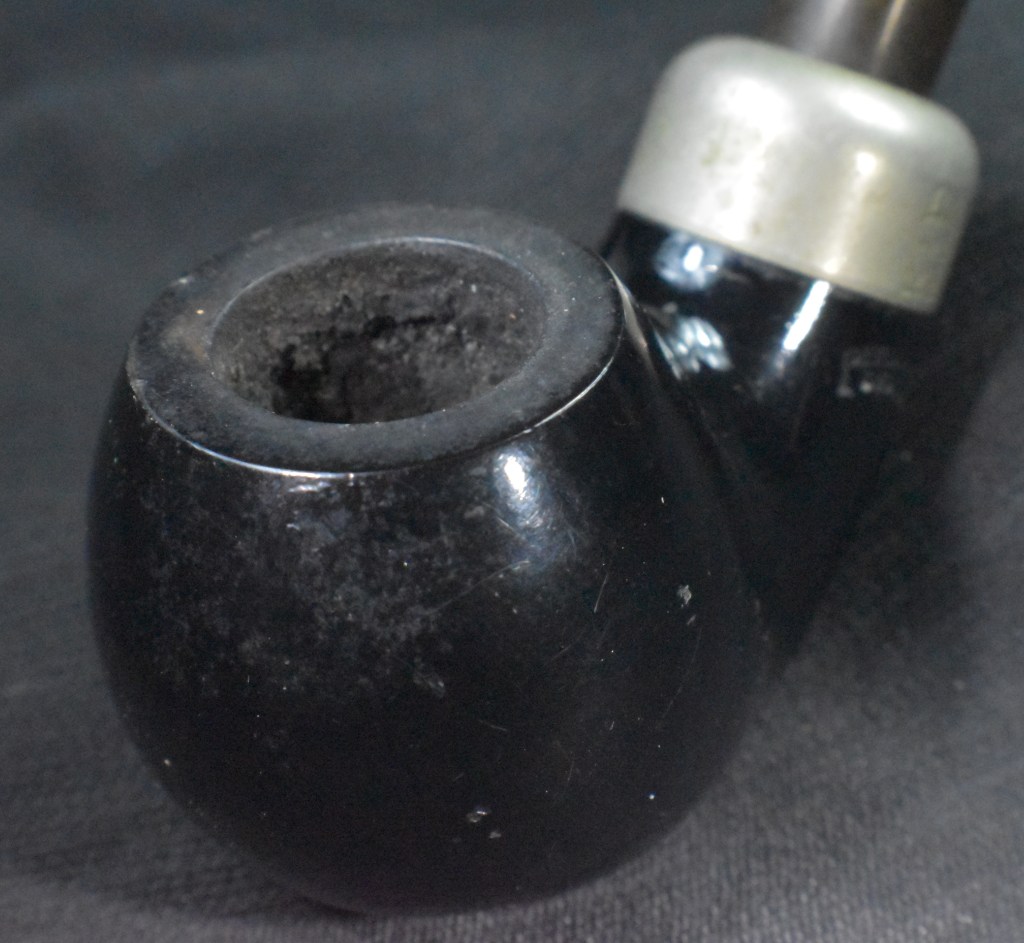
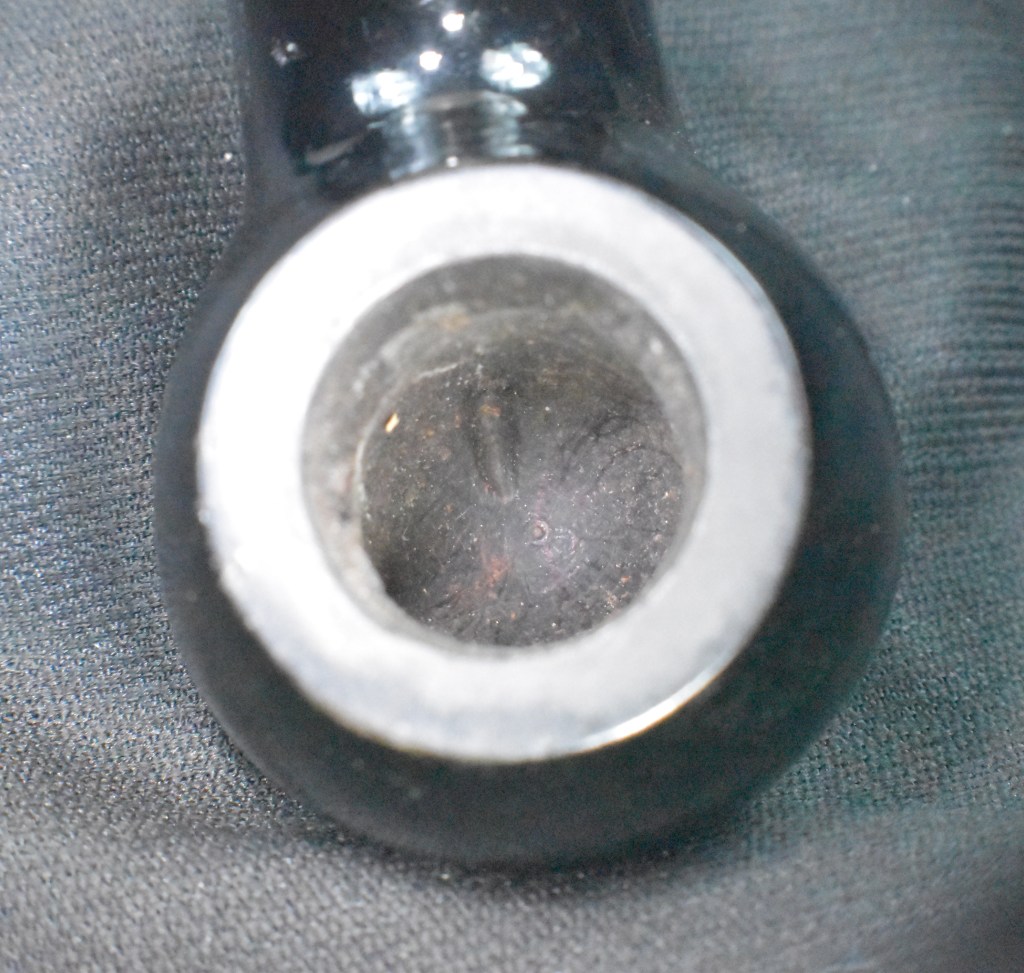
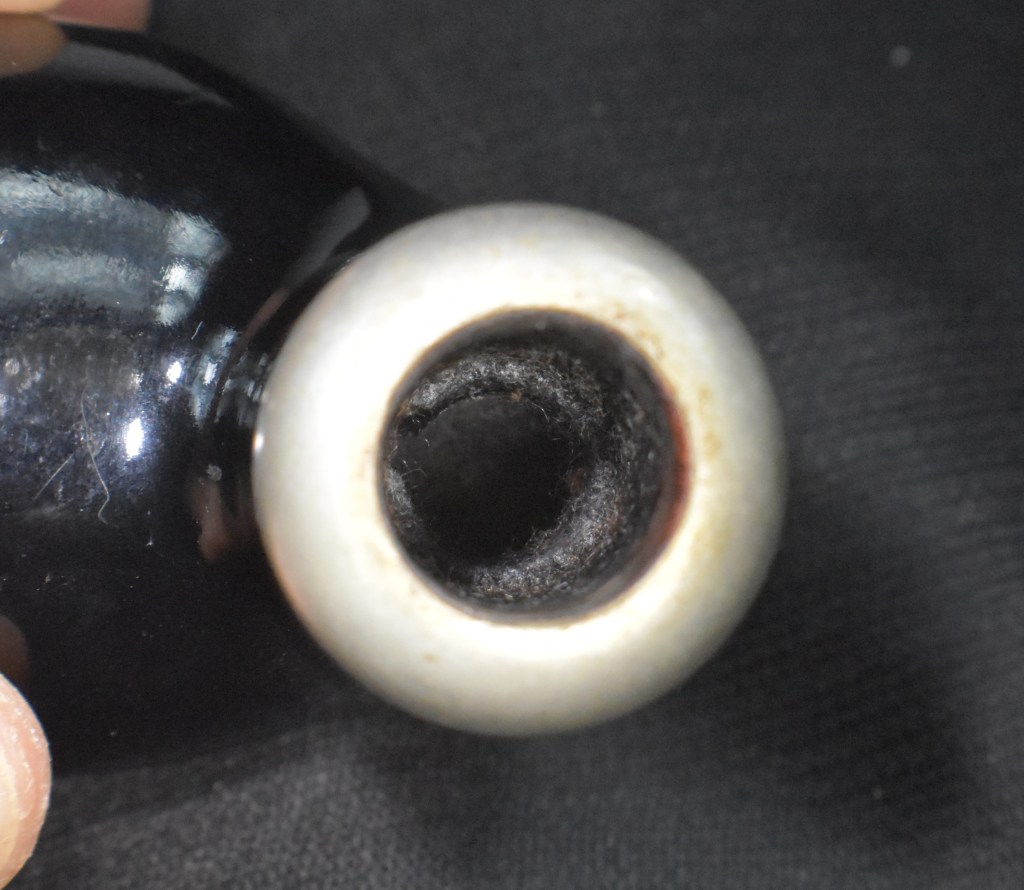
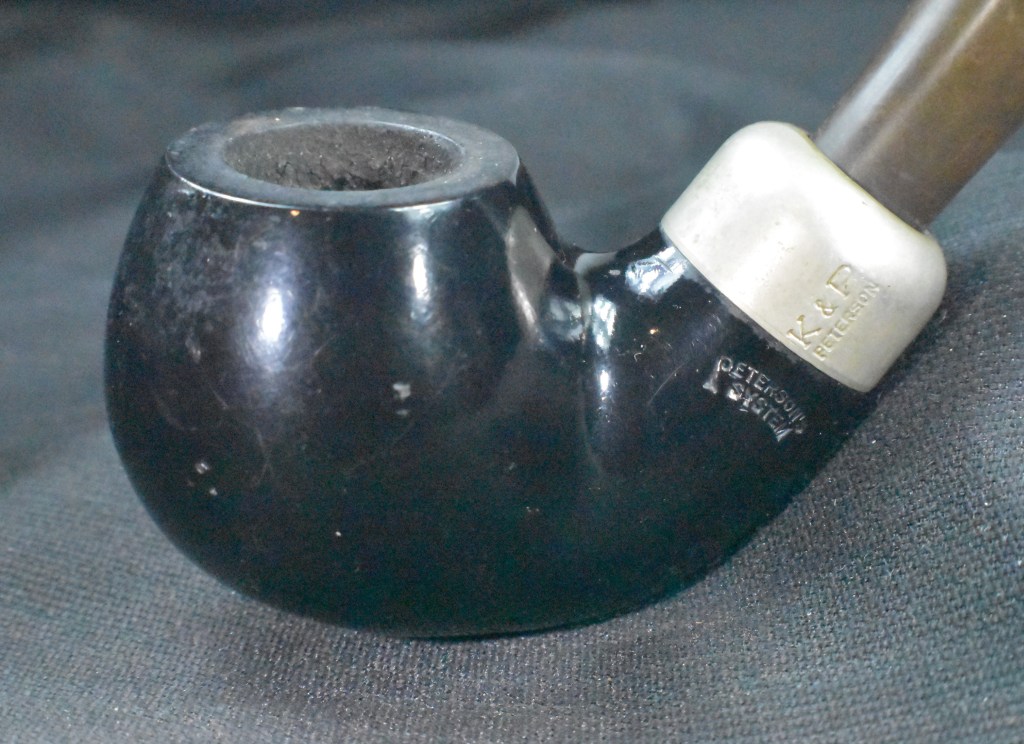
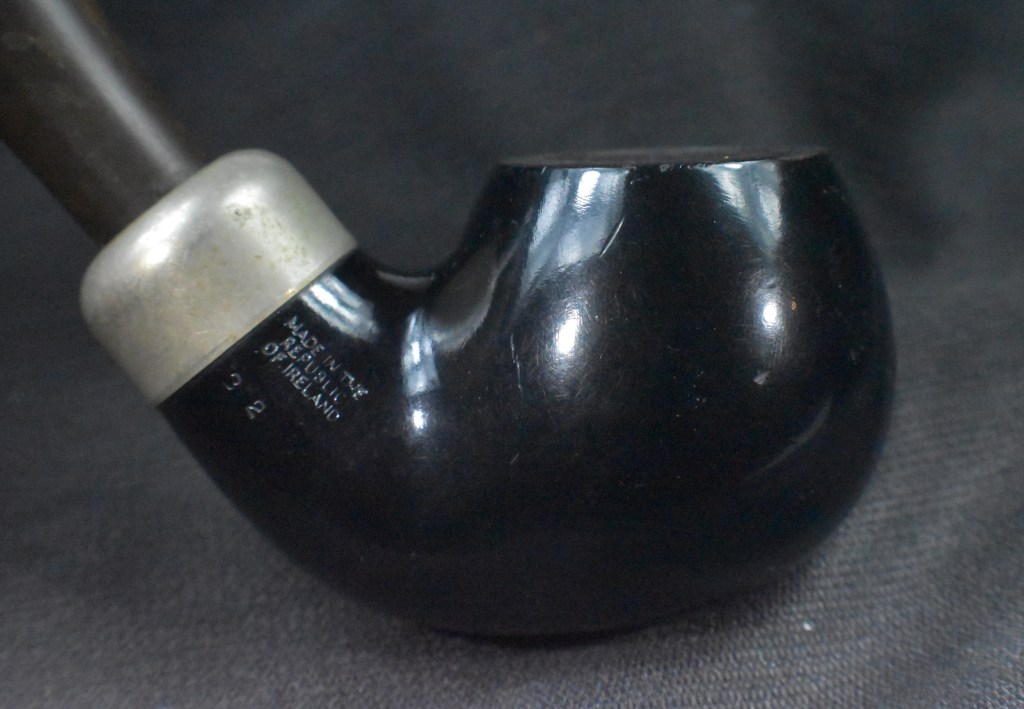
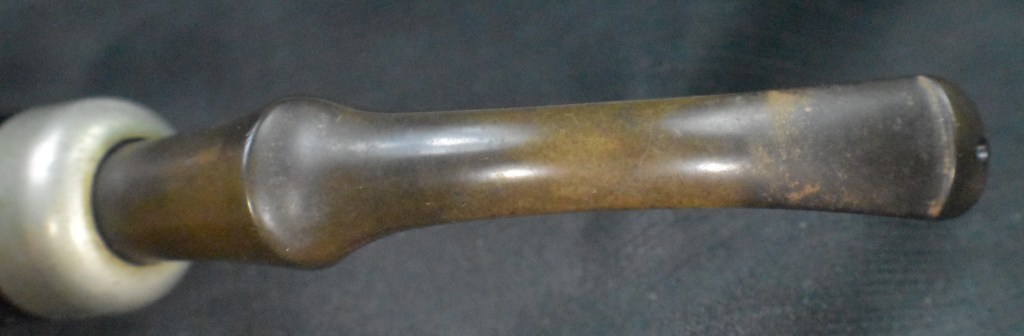
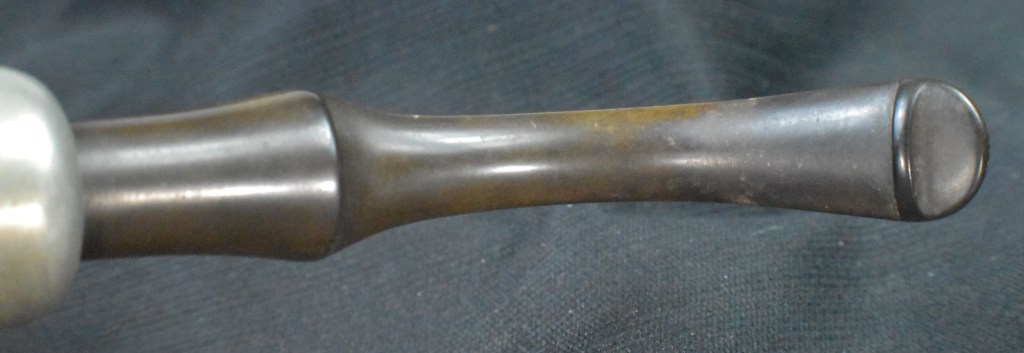
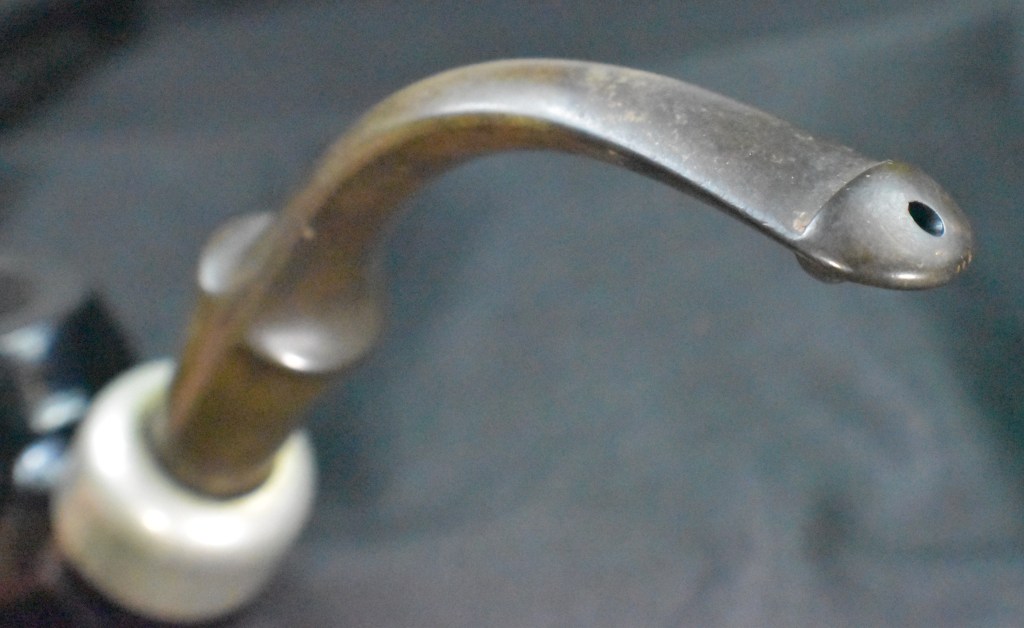
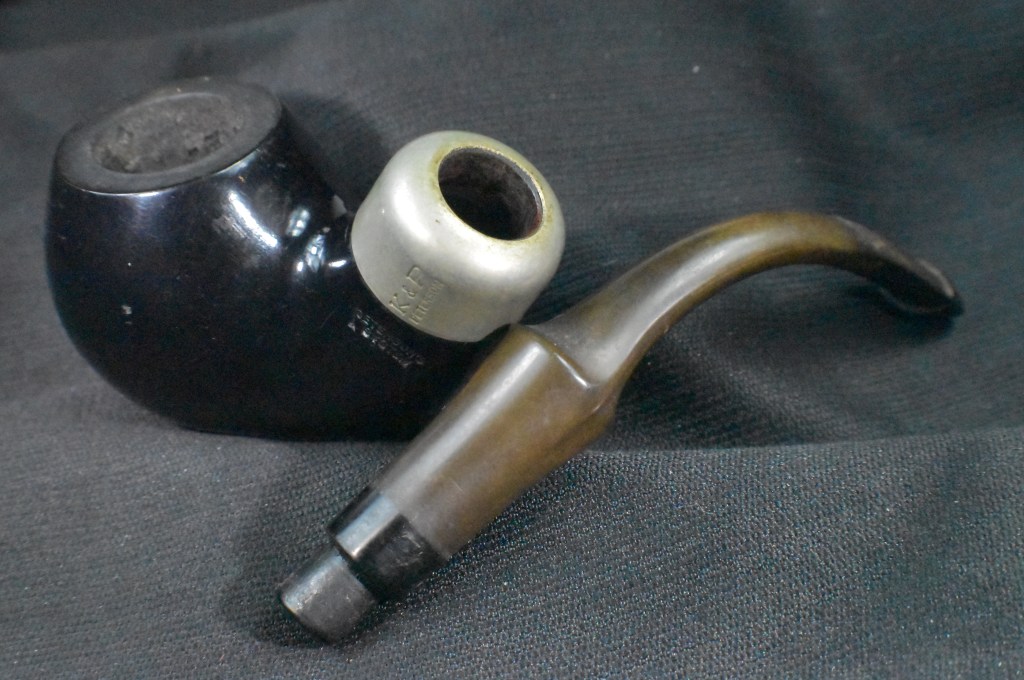
Well loved, well used and well cared for, were terms that came to mind. The ebony finish was nearly pristine. I didn’t want to do anything to it other than cleaning and waxing except for the rim – that would take a bit of work. There was a light cake in the tobacco chamber and the reservoir showed signs of frequent use. The nickel collar was tarnished and should buff nicely. The stem was suffering from oxidation and looked to be where the majority of time would be spent. Overall this was going to be a fun project.
Background
I had to count how many Peterson pipes I had blogged about. I ran out of fingers and toes but used the dog’s feet to assist in the task, then I got sidetracked, darn ADHD. Let’s just say between 30-40. Adding to that all the pipes restored prior to blogging would likely put the number at closer to 100. Have I mentioned that I like Peterson pipes?
Back to the background. Peterson pipes or Kapp and Peterson, if you prefer, is the oldest operational pipe manufacturer in the world. Summarizing the history of Peterson would require a large book and perhaps a blog. Good thing Mark Irwin has provided both of these: The Peterson Pipe: The Story of Kapp and Peterson, written by Mark Irwin and Gary Malmberg, and petersonpipenotes.org (PPN). For a less lengthy summary Peterson – Pipedia provides a nice article.
For this pipe in particular I refer to Mark’s blog post on Ebony finished Peterson pipes: 367. A History of Peterson’s Ebony Finish, With Help from Sykes Wilford and Adam Davidson – Peterson Pipe Notes. As Mark discusses in the post, the ebony finish is difficult to perfect. This is the main reason I was glad to see that Tom’s 302 was in such great shape. It relieved me of having to try to reestablish a beautiful ebony finish myself. The 303 was added to Peterson’s line-up in 1978. Here is a description of the 303 from PPN:
“302 Extra-Large Apple. 1978-Present.
Length: 5.75 in. / 146.05 mm.
Weight: 2.30 oz. / 65.20 g.
Bowl Height: 1.72 in. / 43.69 mm.
Chamber Depth: 1.39 in. / 35.31 mm.
Chamber Diameter: 0.80 in. / 20.32 mm.
Outside Diameter: 1.74 in. / 44.20 mm.
The 302 and its smaller, less jowly sibling the 303, first appeared in the 1978 Peterson-Glass catalog and were issued simultaneously as the De Luxe Systems XL2S (later 2S) and 3S, the Classic Range 02 / XL02 and 03, and in the Dunmore System as the 70 and 73. Peterson describes the 302 shape as “an extra-large apple” in the 1986 catalog and the 303 as a “medium apple.” If you look at this bowls closely, whether in new or vintage pipes, you’ll notice there are actually two shapes, one wider at the back and bottom of the shank and the other more rounded. This stems, I suspect, from outsourcing to two different bowl sources, as the difference is too great to be merely a sanding problem. In any event, I like and smoke both. The fat-bottom seems to have been the model for the Lestrade Sherlock Holmes, XL23. For both the 302 and 303, it’s worth seeking out the early-issue mouthpiece versions (pre-1990), some being quite short and some longer, but all possessing the wide saddle and the Comfort P-Lip.” (146. A Guide to System Shapes, 1896 – 2019, Part 1 (The 300 Shape Group) – Peterson Pipe Notes). To narrow down this 303’s historyI again refer to Mark Irwin’s PPN with two quotes
1) “From 1979 until now many Pete lines have been given the ebony treatment” and
2) “I remembered when K&P had last done a big release of ebony Standard Systems around 2010 or so” (367. A History of Peterson’s Ebony Finish, With Help from Sykes Wilford and Adam Davidson – Peterson Pipe Notes). I realize this isn’t as effective as silver hallmarks but it does provide some dates; 1979-2010.
I suppose I could just ask Tom, when he got this pipe, eh? That is what I did and here is his reply: “Yessir I got this last year from an estate sale in the heights in Little Rock. The fella that owned it was a huge part and mentor of many pipe smokers @ The Pipe & Tobacco Shop in Little Rock. I had no idea that all the pipes I bought at his estate sale were his. It’s a huge honor to have some of his pipes but my memory of his name I just can’t remember. He was around 90 when he passed.” (personal communicationTom Gilliam, AKA: AR Piper). Tom then said he would reach out to the owner of the shop.
If you really want to torture yourself you can also read one of my earliest attempts at blogging where I use a vinegar iron solution to ebonize a Pete, featured on another of Mark’s PPN: https://petersonpipenotes.org/370-ebony-finish-of-a-peterson-estate-pipe-using-vinegar-iron-solution/
The Restoration
The 302 made the 20 foot journey from the photo table to the workbench.
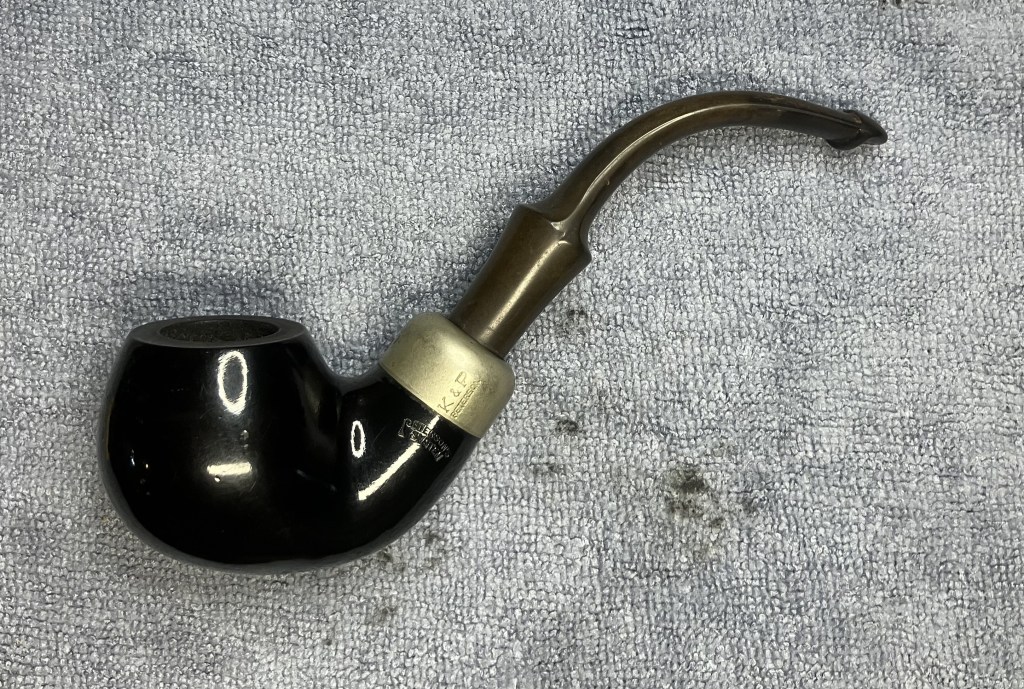
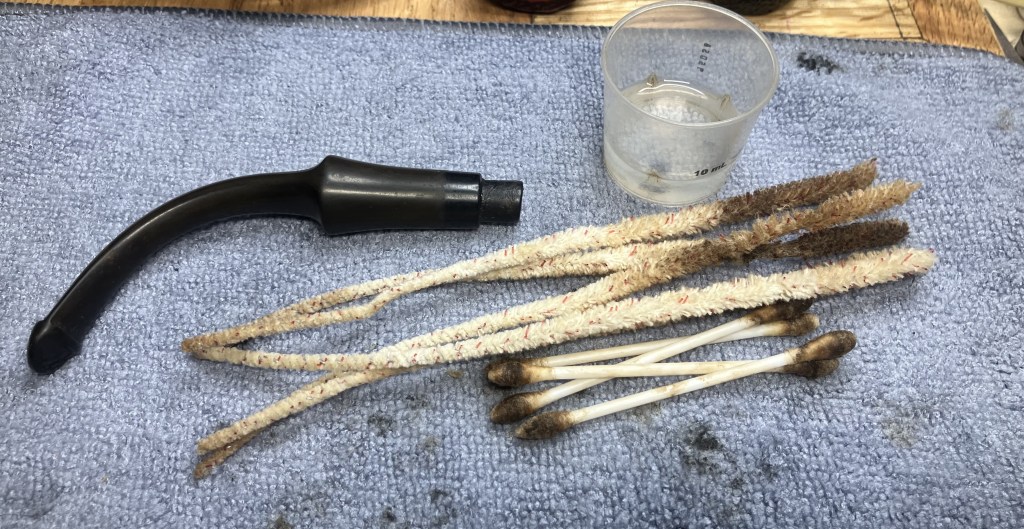
I began with the stem, cleaning it with 99% ethyl alcohol, cotton swabs and bristle pipe cleaners.
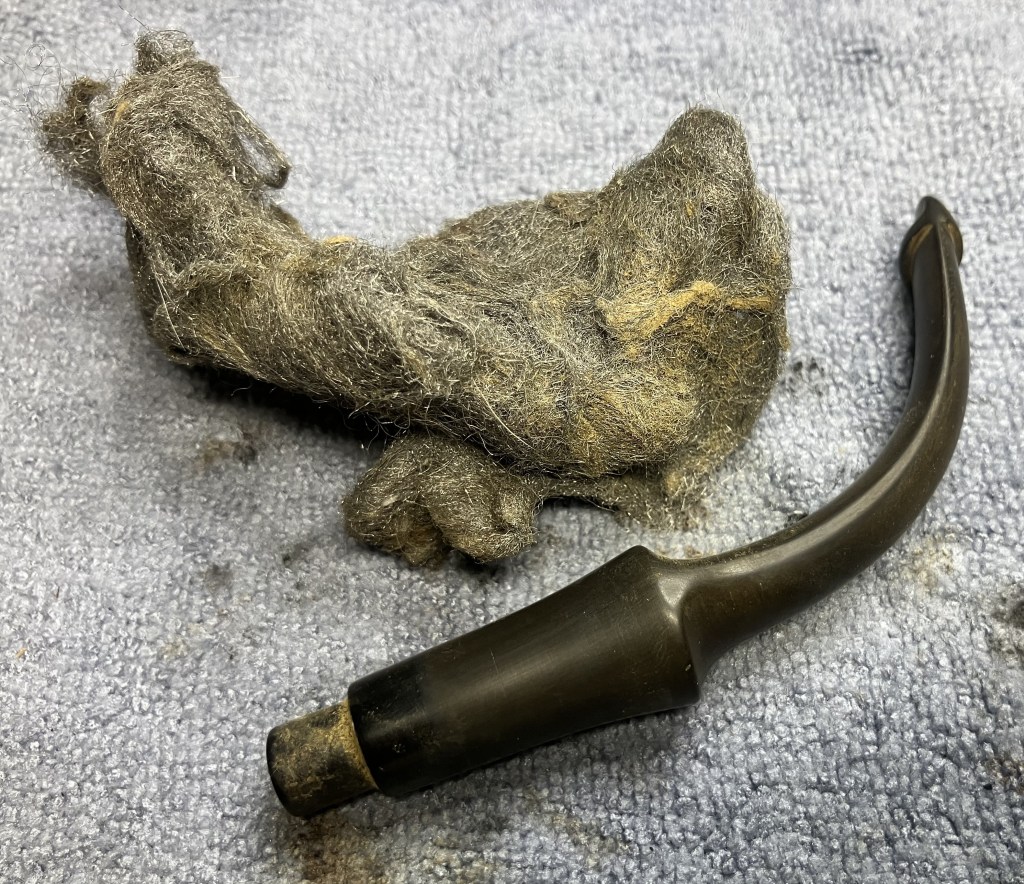
The surface of the stem was rubbed with 0000 steel wool to remove some of the surface oxidation.
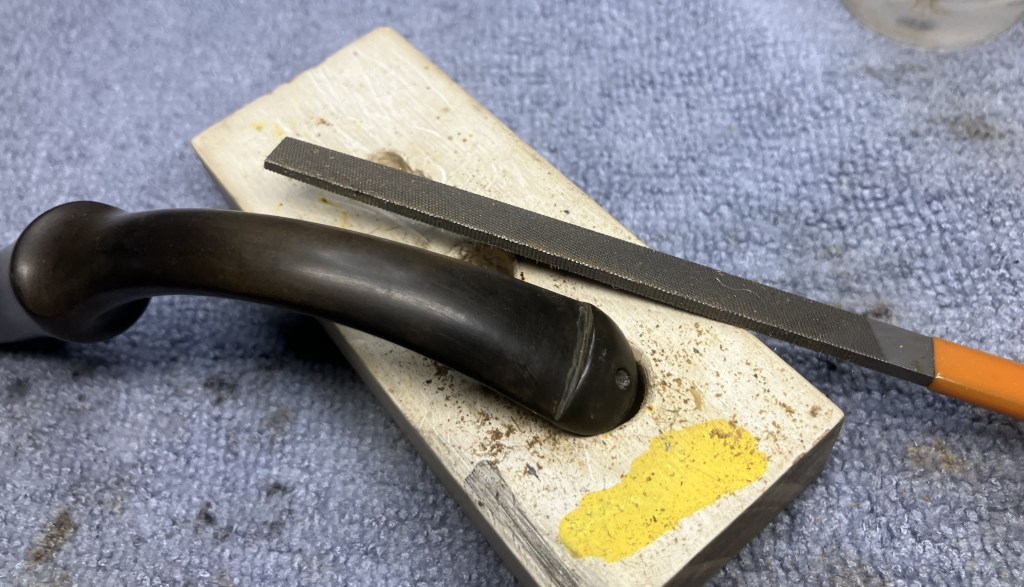
I used a small flat file to sharpen the edges of the button.
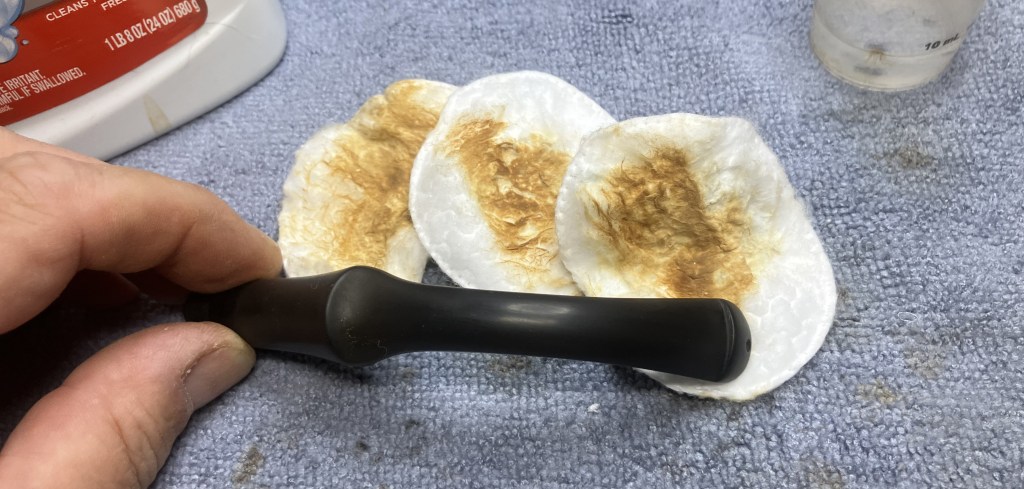
Next, the stem was scrubbed with Soft Scrub cleanser on make-up pads.
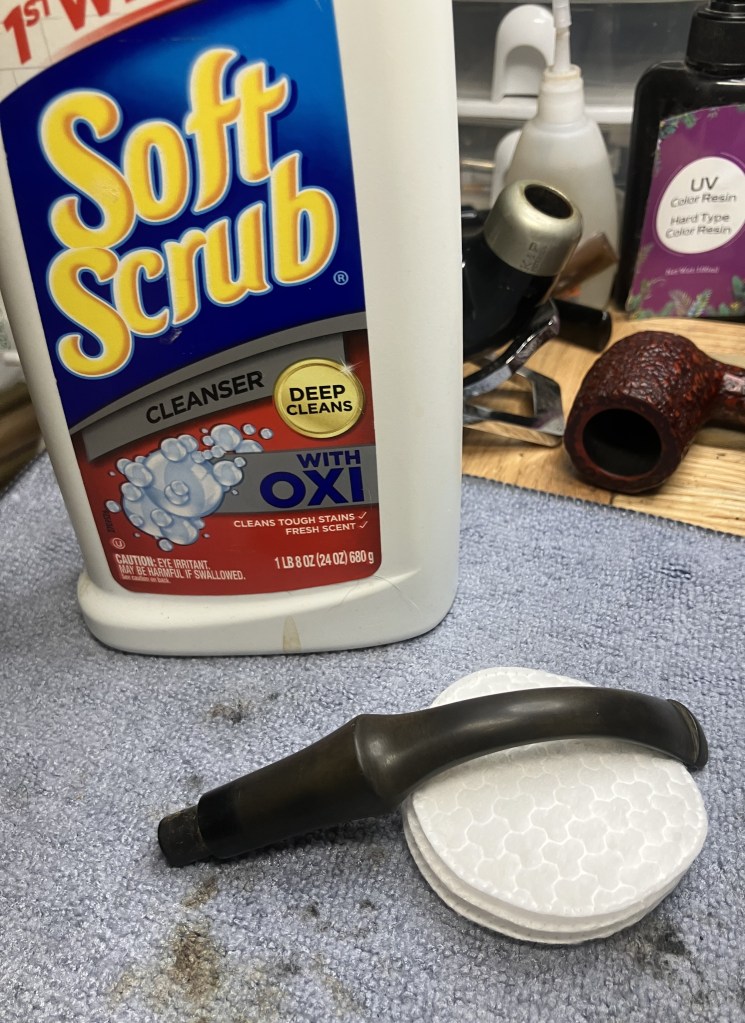
This removed more of the surface oxidation.
A pipe cleaner was inserted into the airway and the stem was suspended in Before and After Extra Strength Deoxidizer (deox).
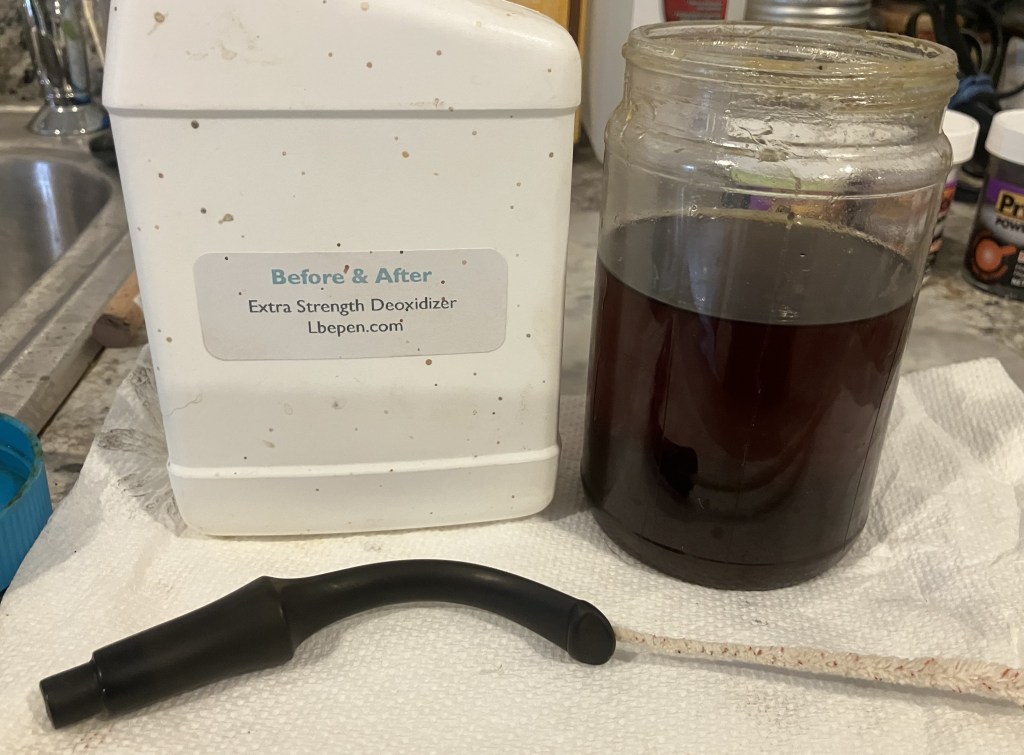
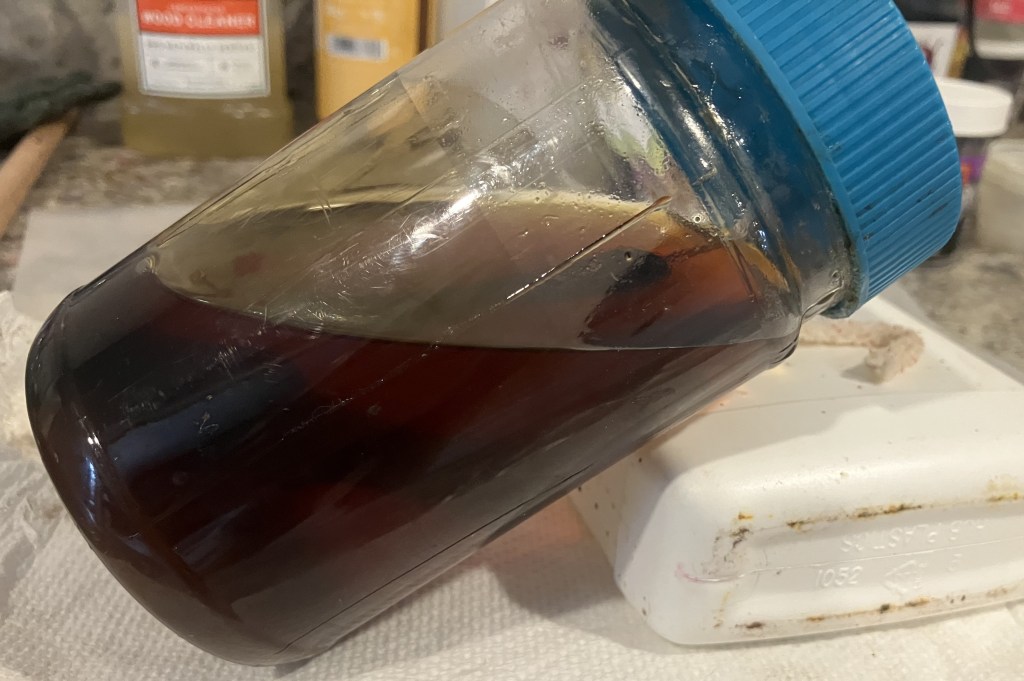
This stem was a bit longer than the depth of the deoxidizer so I propped the jar at an angle to fully submerge the stem.
I turned my attention to the stummel and the light layer of cake within.
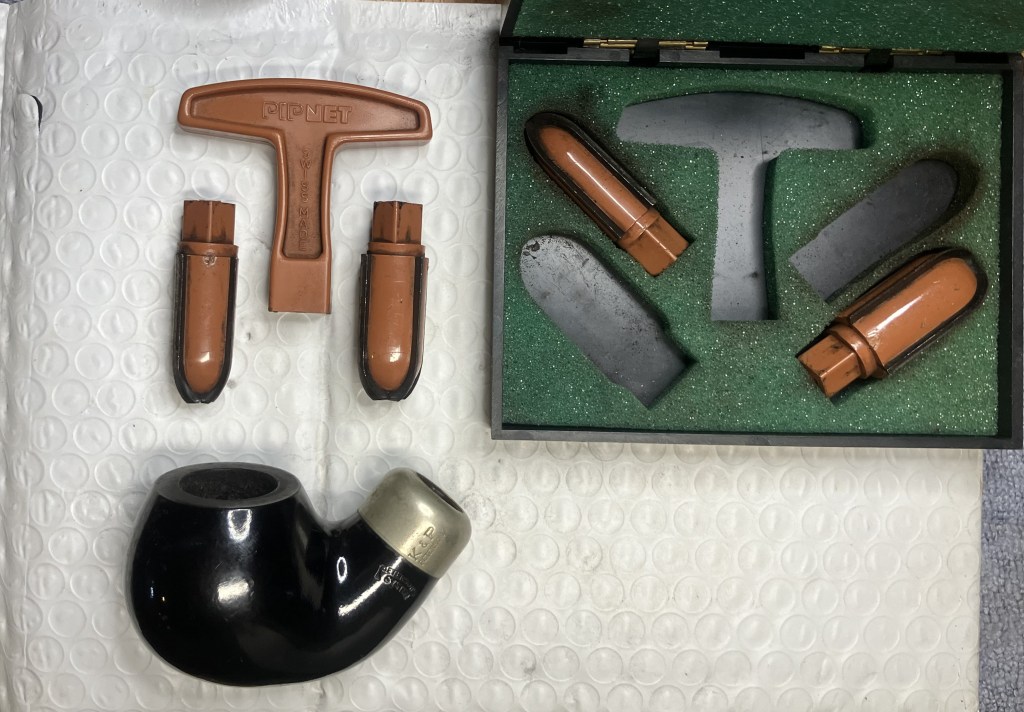
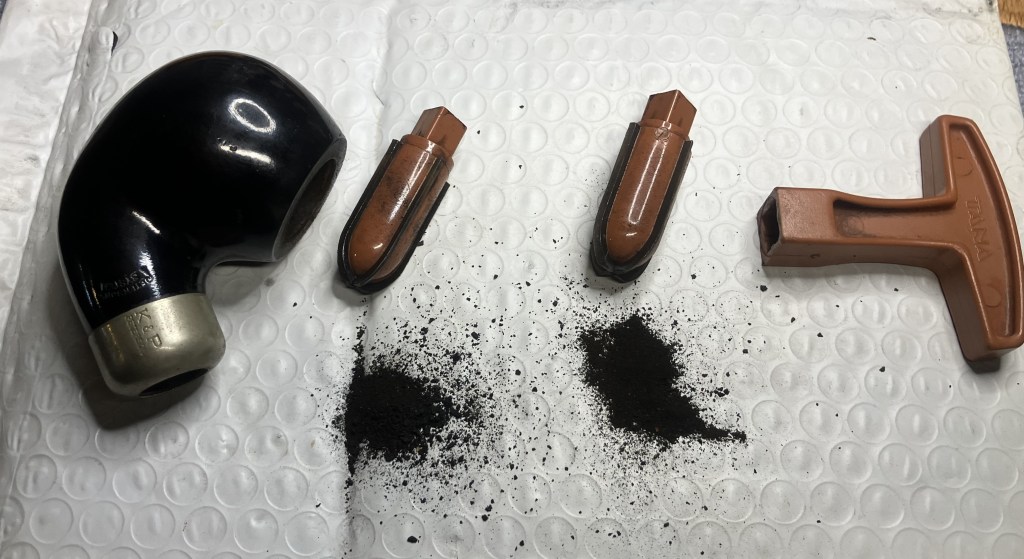
The number 2 and 3 blades of the PipNet worked very nicely.
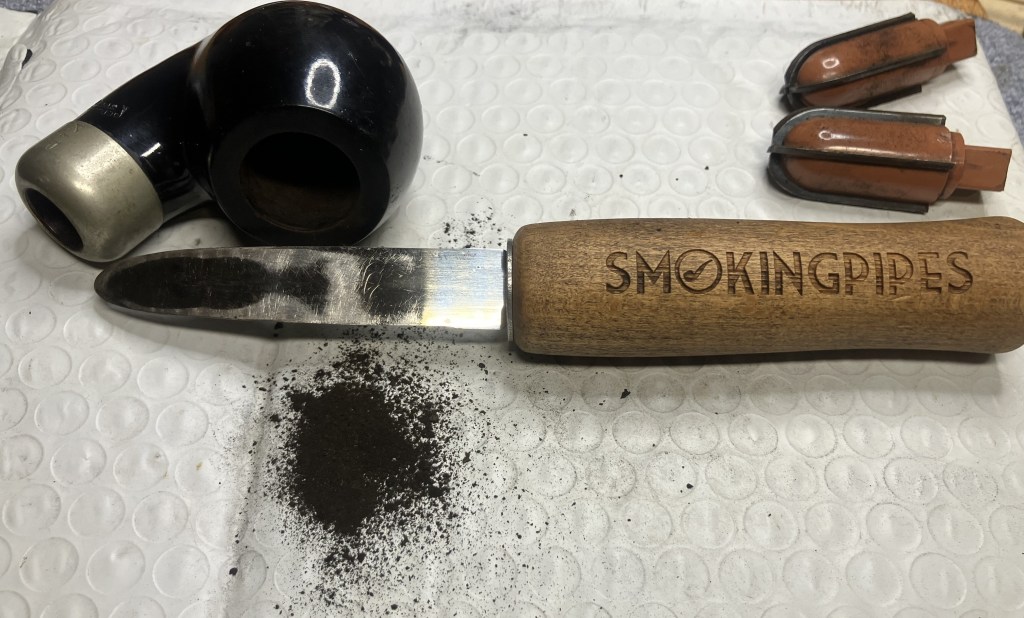
There was a small amount of clean-up that had to be done with a Smokingpipes Low Country reamer.
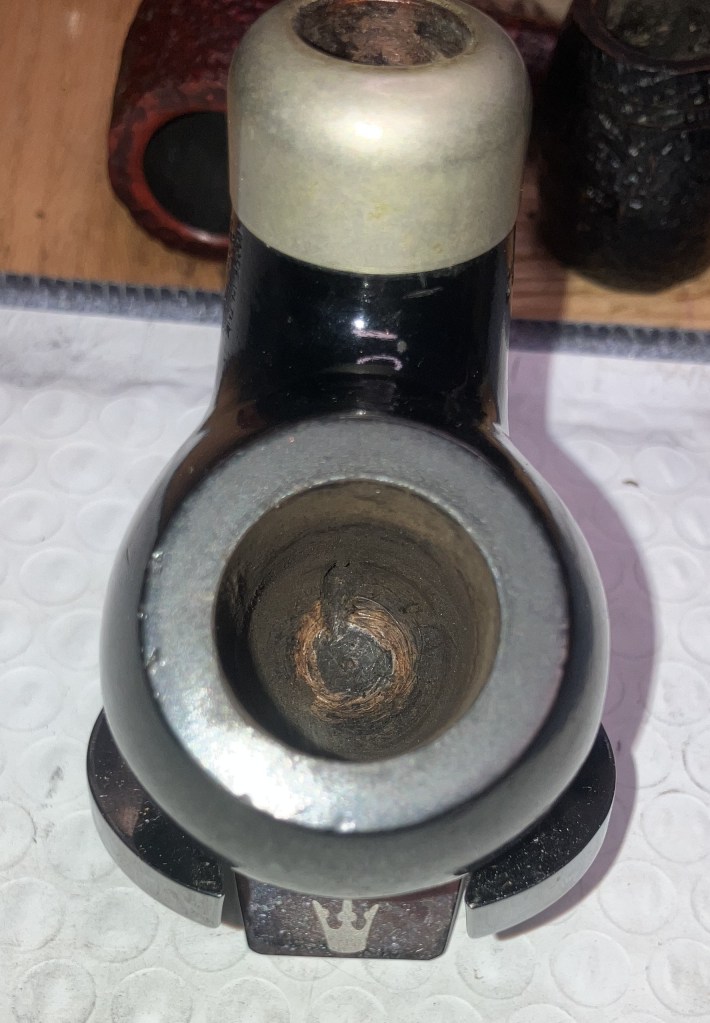
Looking down the tobacco chamber, I couldn’t see any signs of damage due to excessive heat.
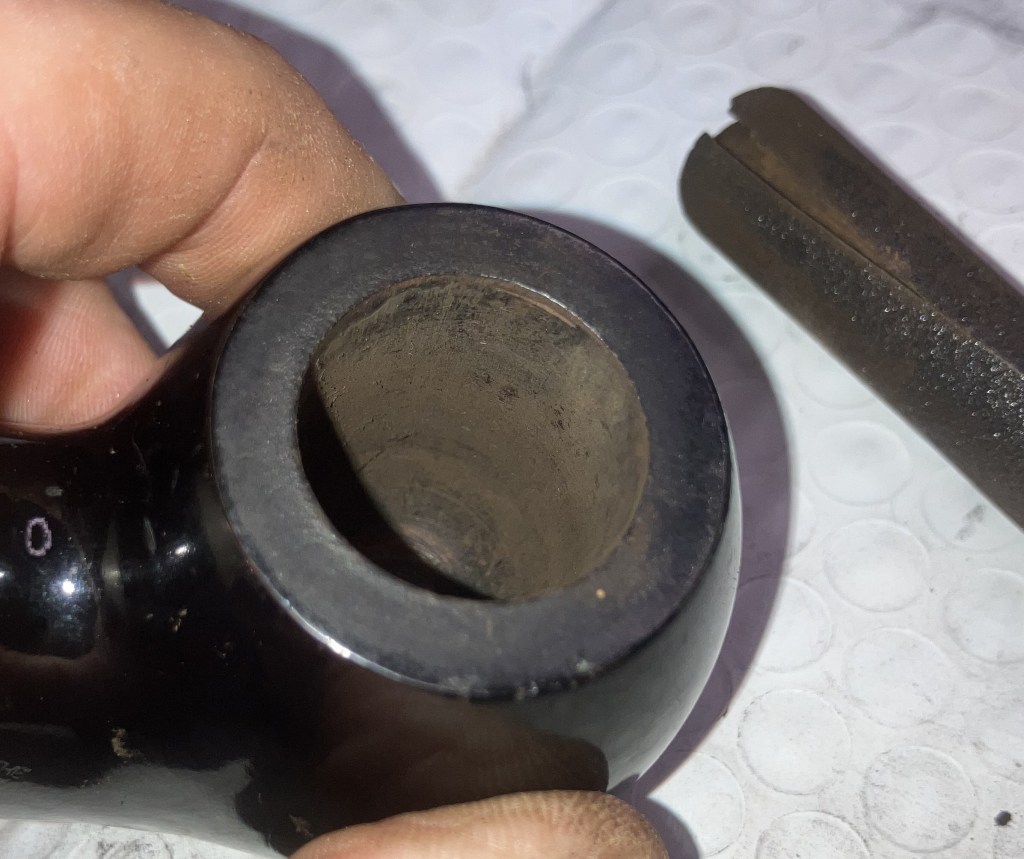
Sanding the tobacco chamber with 220 sandpaper wrapped around a wood dowel then with 300 grit paper and my finger. Exposing the bare briar within the chamber confirmed the excellent condition of the tobacco chamber.
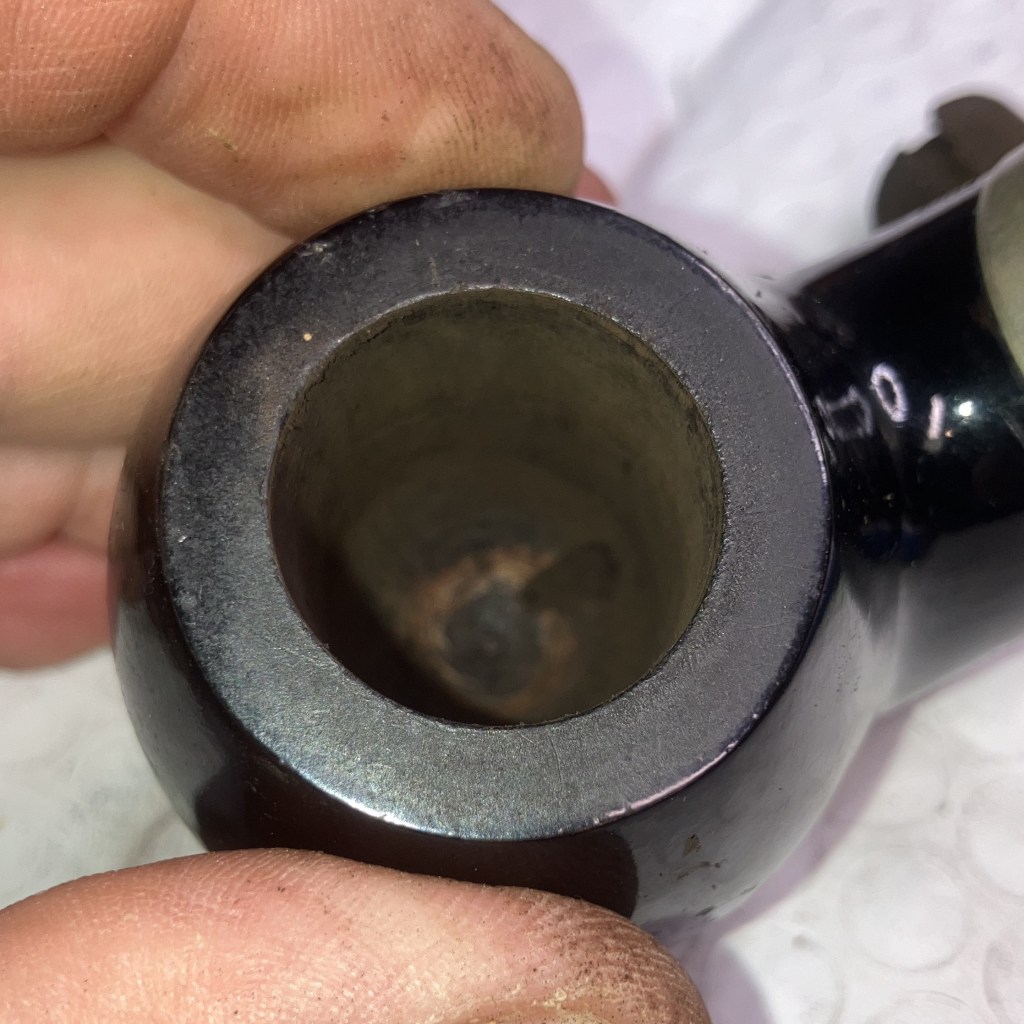
It was at this point I started cleaning out the shank and reservoir. This took a rather large number of alcohol dipped cotton swabs and bristle pipe cleaners. I also used a dental scraper and a nylon shank brush, also dipped in alcohol. I apparently failed to photograph any of this process. I could have sworn I took photos but there was nothing on the phone. Feel free to use your imagination of a pile of soiled cotton swabs.
To the sink! The stummel was taken to the sink for a scrub with undiluted Murphy Oil Soap and a nylon brush. The soap was rinsed with warm water and the stummel dried with a cotton hand towel.
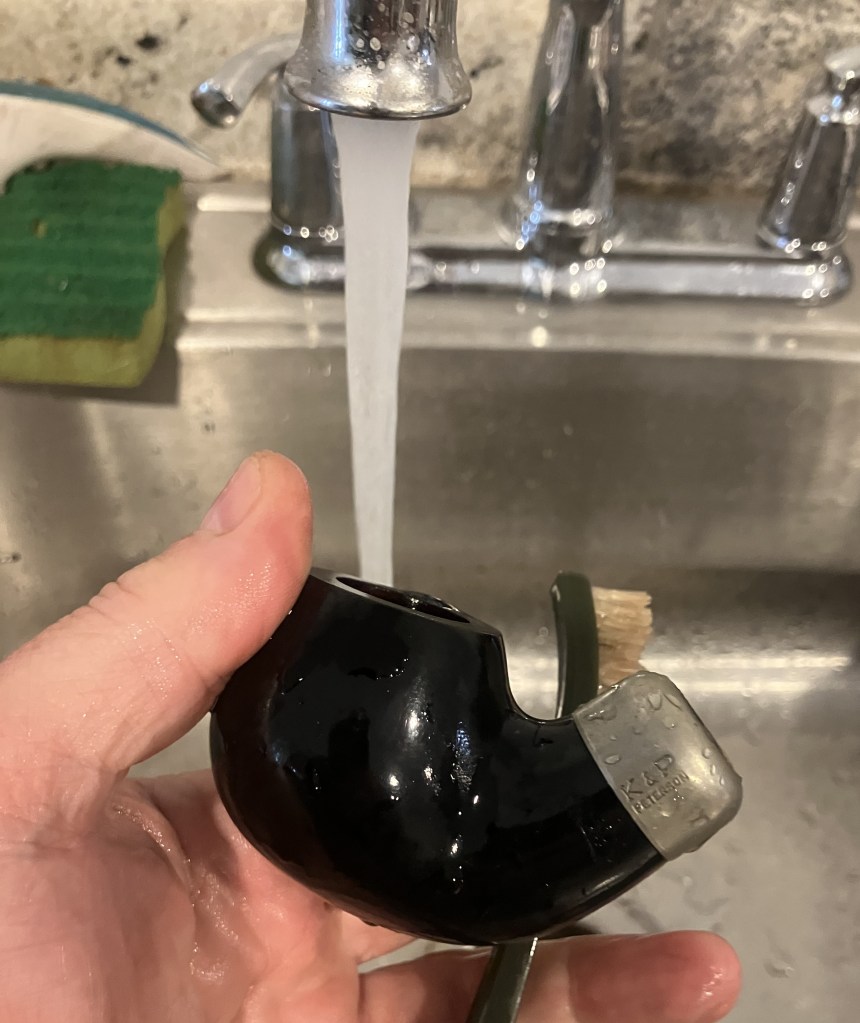
The stummel looked great except for the tarnished collar.
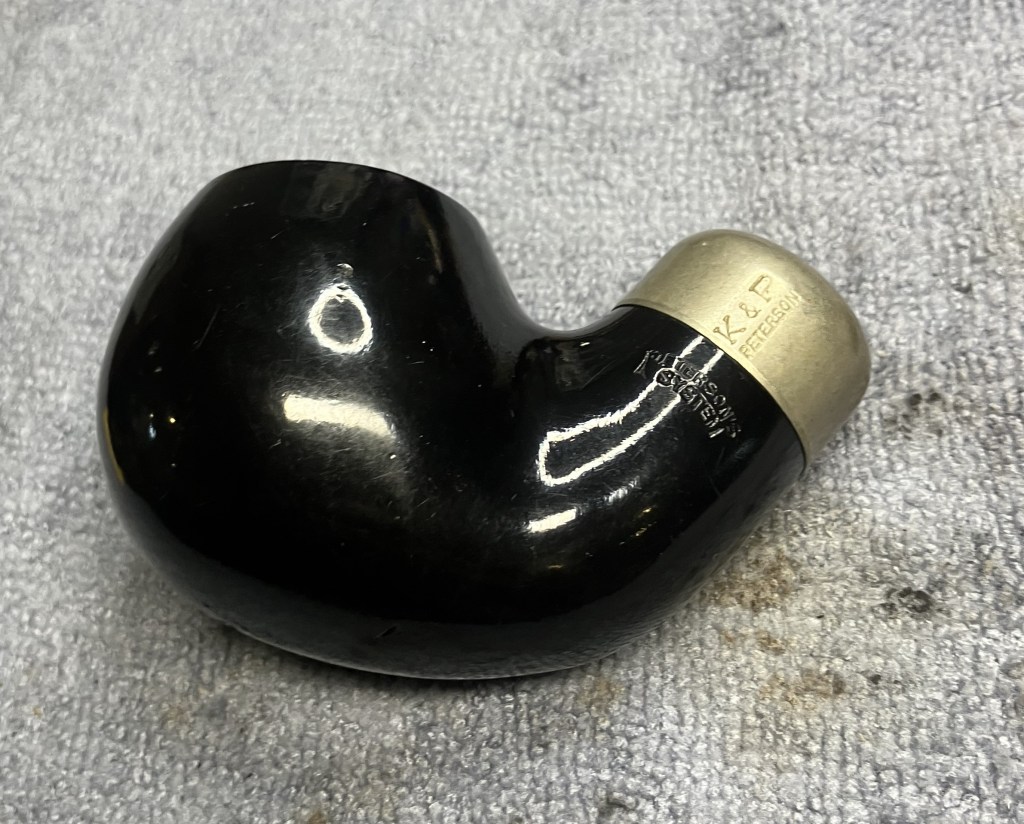
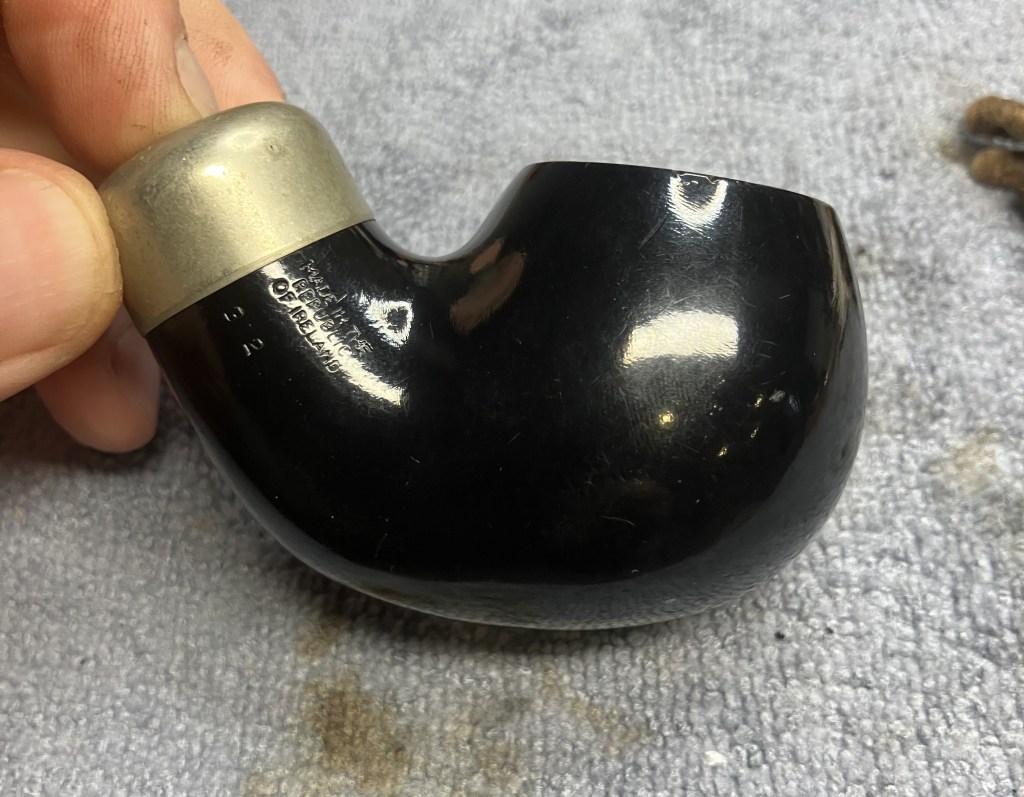
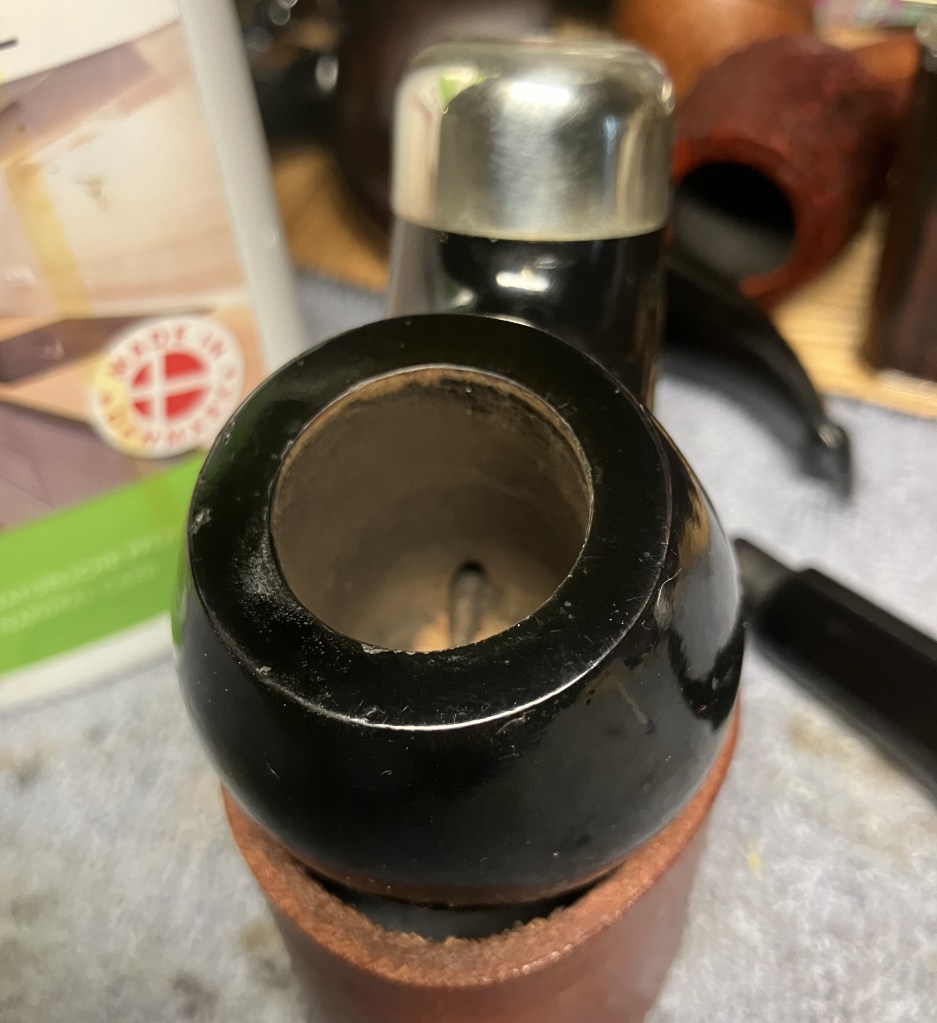
I was hoping that the scrub would remove the light lava deposits from the rim. Wrong. Normally I would scrape the rim with a sharp knife blade but I did not want to risk marring the ebony finish.
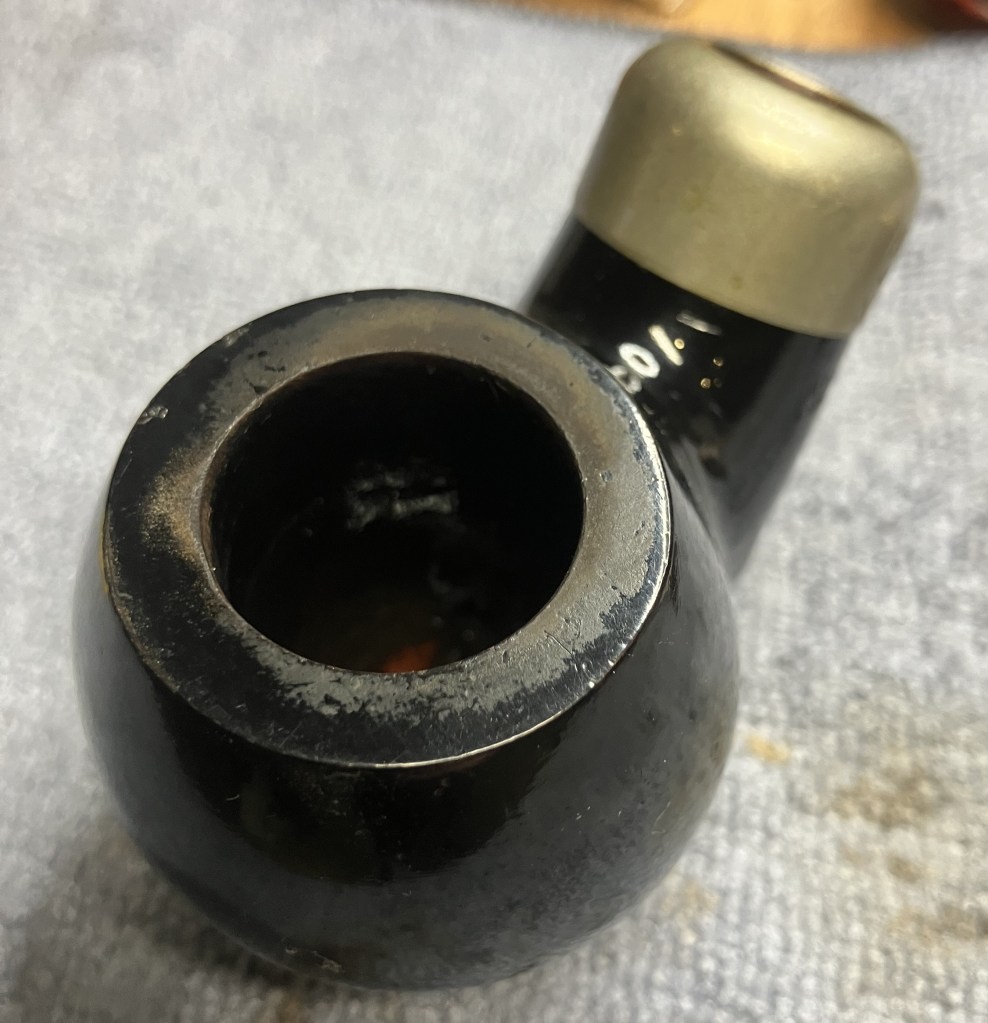
A more conservative approach was used – alcohol dipped cotton swabs.
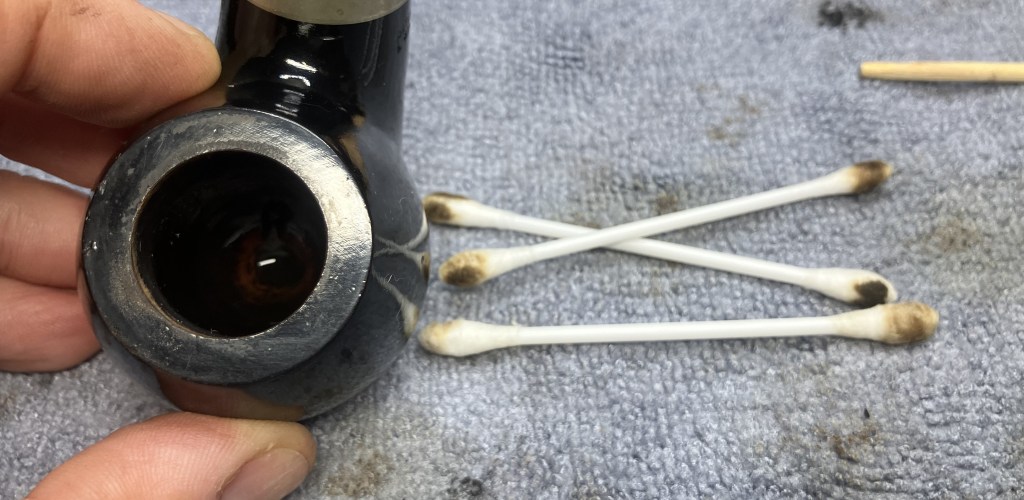
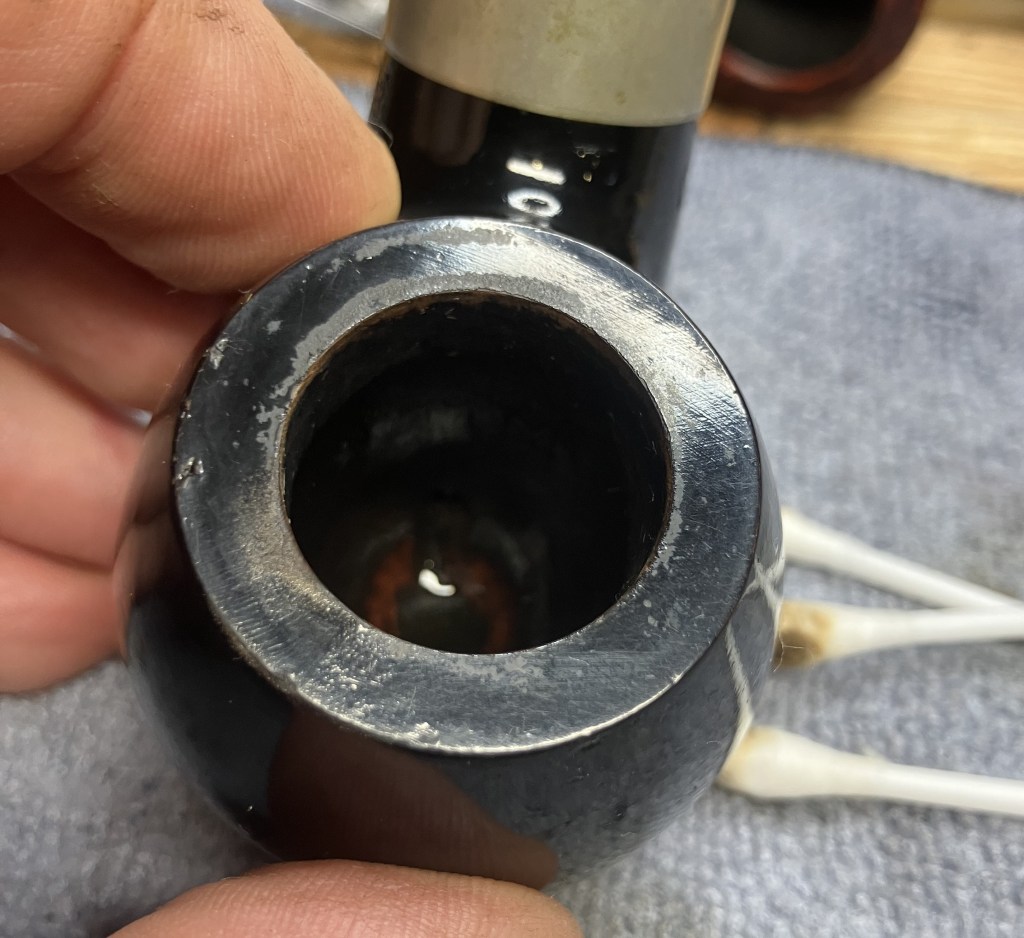
The cotton swab scrubbing was slow and still there remained either some lava or slightly charred edges.
I needed time to think about how to deal with the rim so I figured I would do an alcohol cotton treatment. This would also help in loosening the remaining tar deposits within the airway, reservoir and shank. The bowl and airways were packed with cotton.
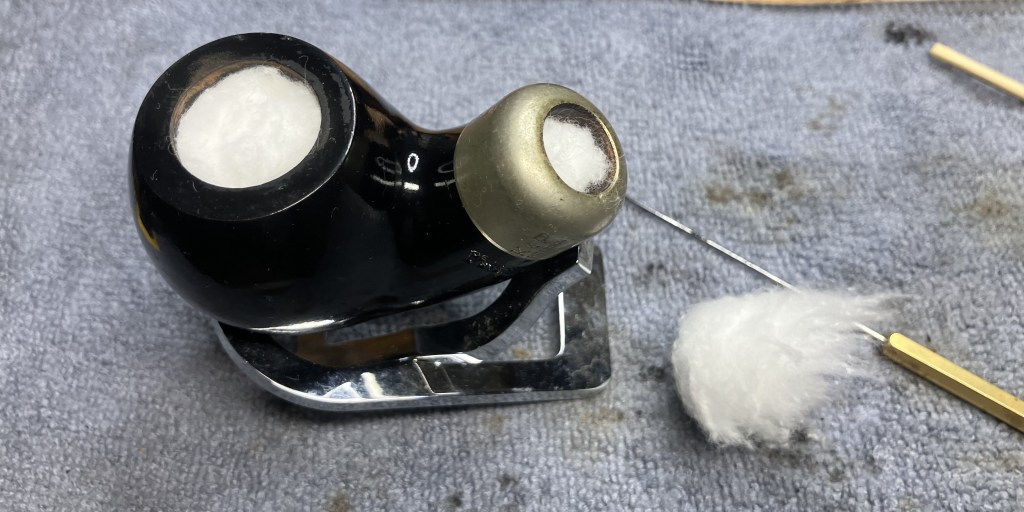
Since this was a larger chambered pipe, I figured about 12-15 ml of 99% ethyl alcohol would be needed. This would be added using a disposable pipette.
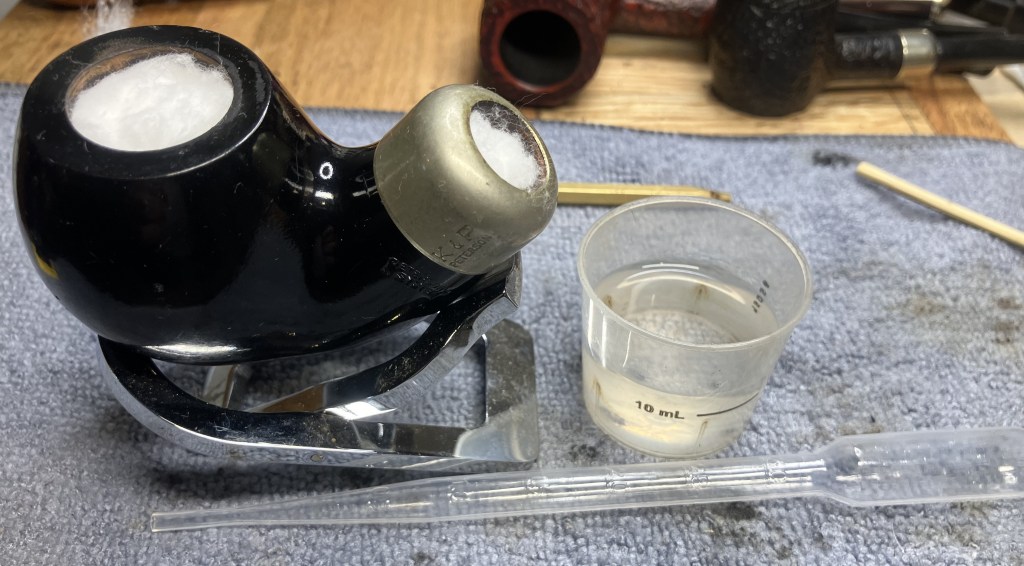
I was close, it took about 11 ml of alcohol to saturate the cotton.
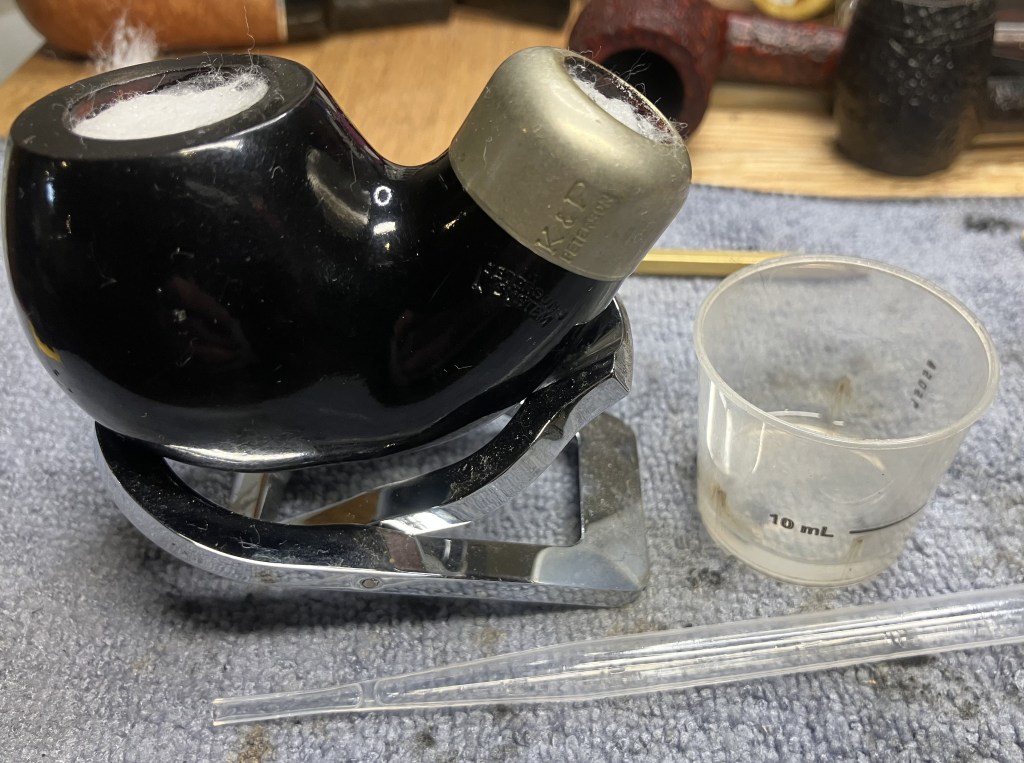
8 hours later I returned to the pipe. The alcohol had dissolved the residues in and on the briar. As the alcohol evaporates these dissolved bits are moved to the cotton.
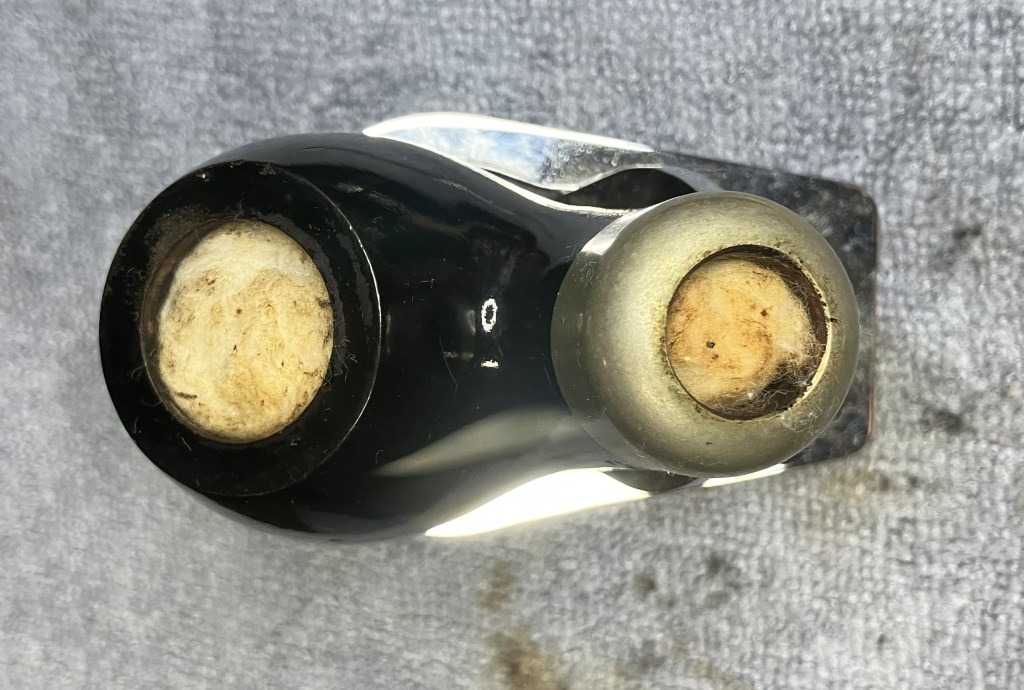
The cotton was removed.
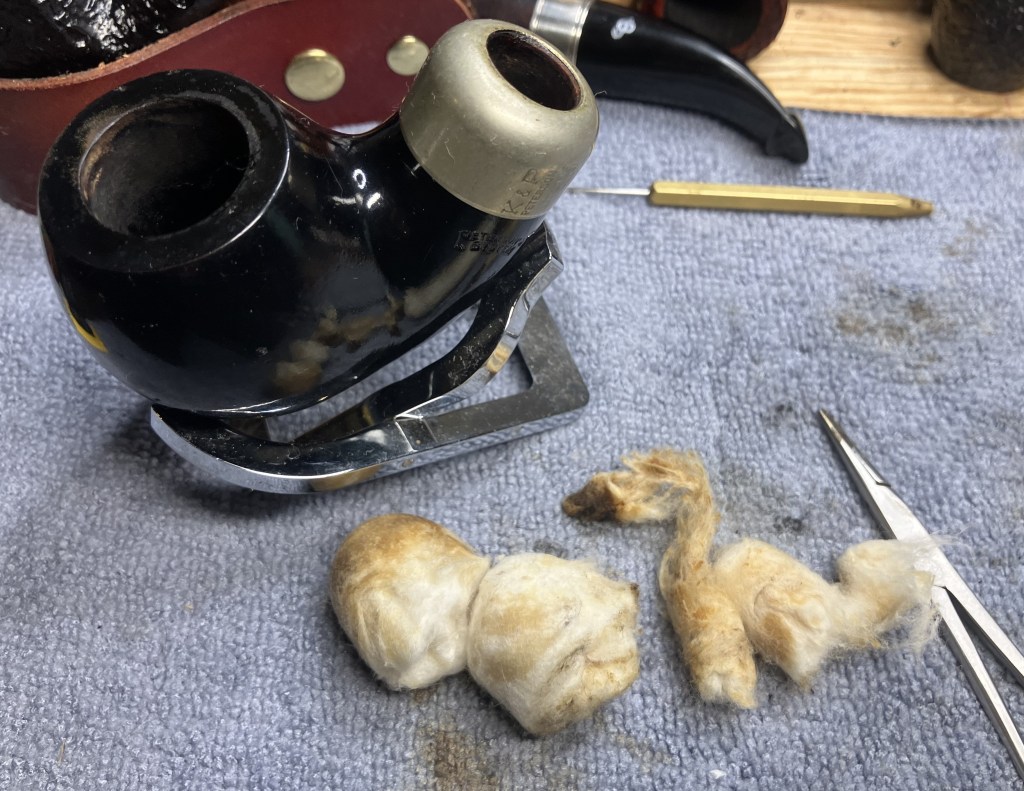
Another round of airway cleaning commenced. The heavily stained pipe cleaners are from the draft hole between the tobacco chamber and the airway of the shank. I had apparently forgotten to clean this during the early cleaning of the shank. This was probably due to me being very busy forgetting to take photographs.
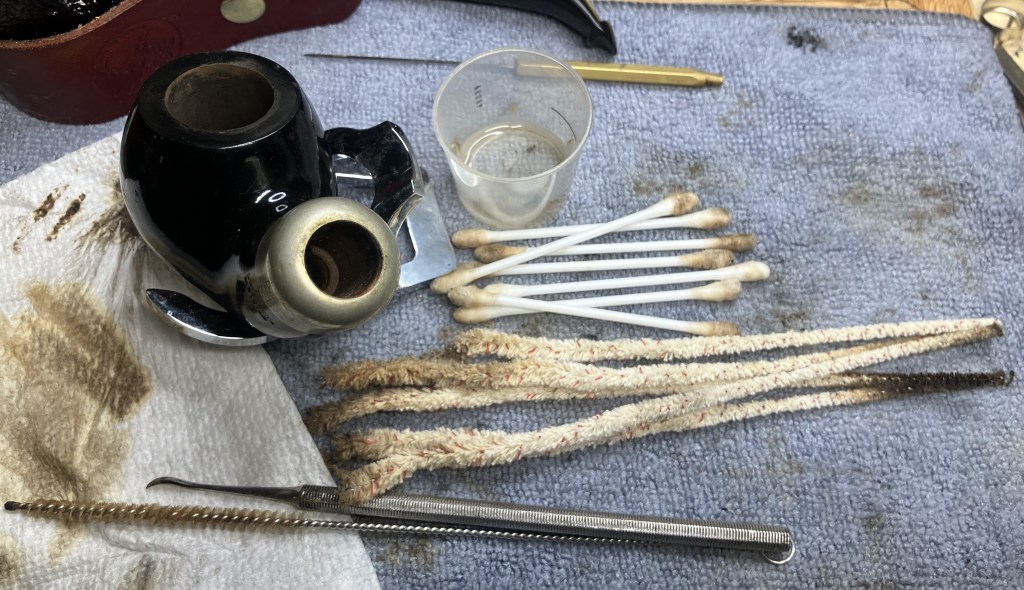
Anyway, the shank and reservoir were now clean.
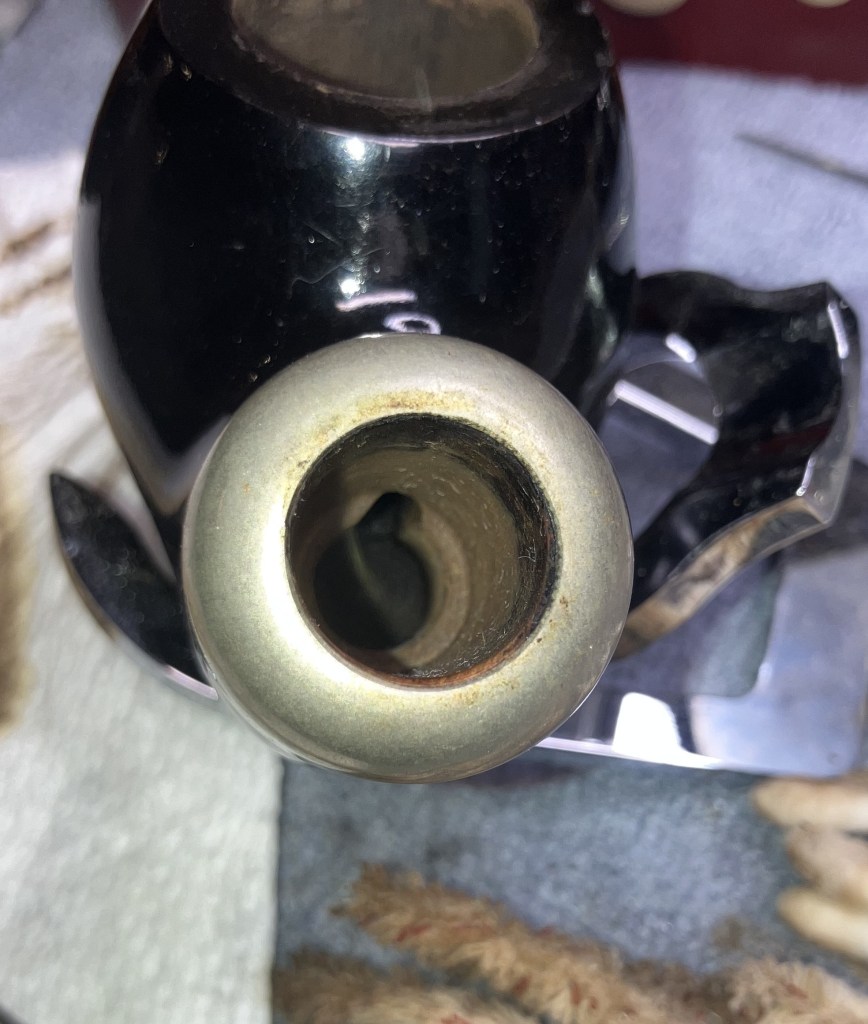
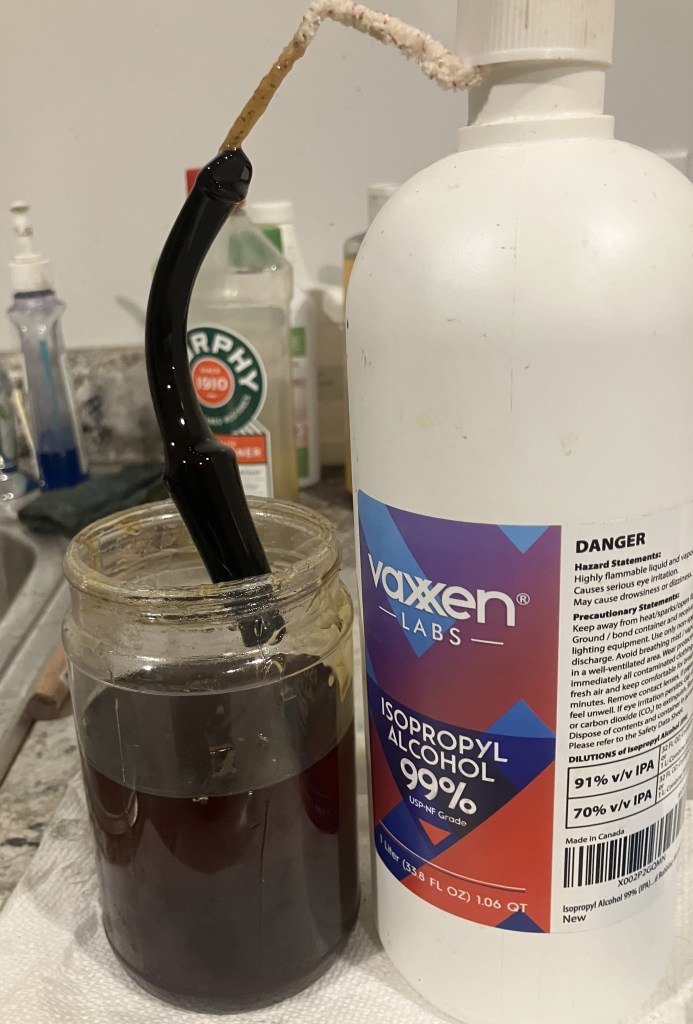
The stem was removed from the deox, having spent over 8 hours submerged. I used the patented Drip-O-Matic 3000 to allow some of the excess deox solution to drip back into the jar.
While the Drip-O-Matic 3000 was doing its job, I turned my attention back to that troublesome rim. With closer examination (squinting) I concluded that a good deal of the rim’s imperfections was still lava, not charring. I utilized a very high-tech technique to remove this stubborn material – saliva, a paper towel and a lot of rubbing. Well, that’s high tech here in the wilds of southeast Nebraska.
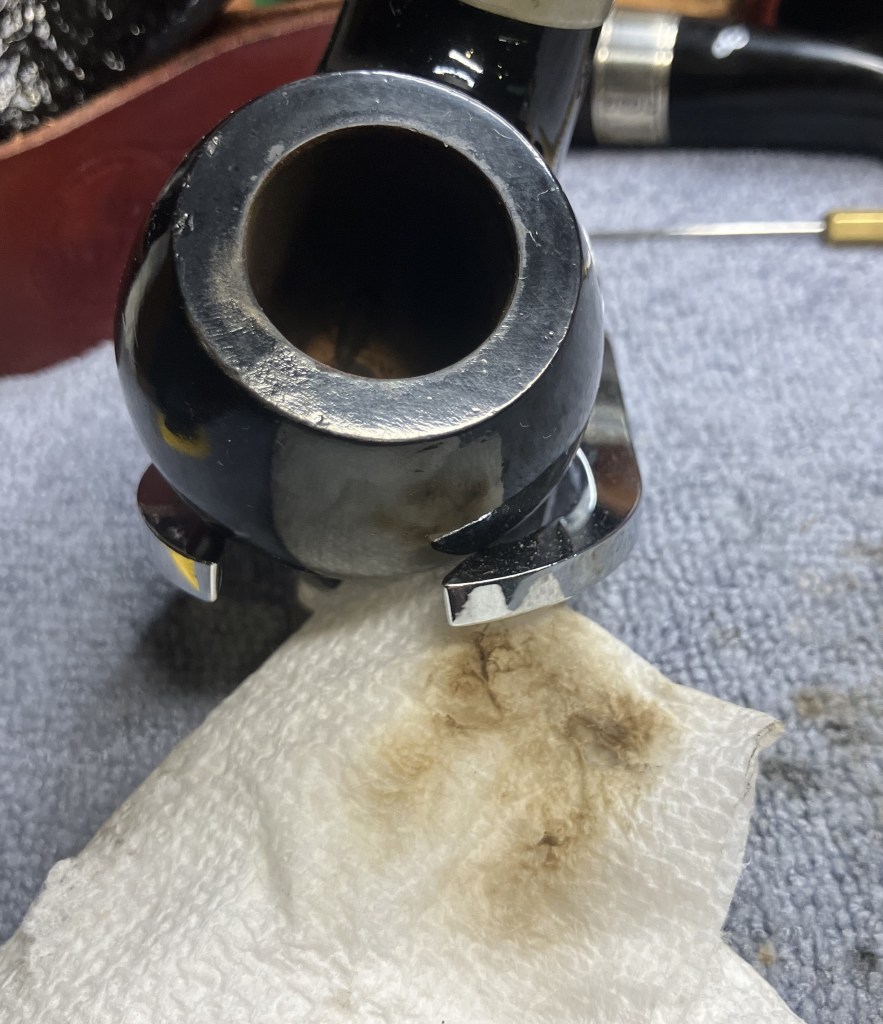
There was still one area that was charring on the rim. It looked like the previous owner held the pipe with his left hand and lit the pipe with his right hand from the 1:00-2:00 position.
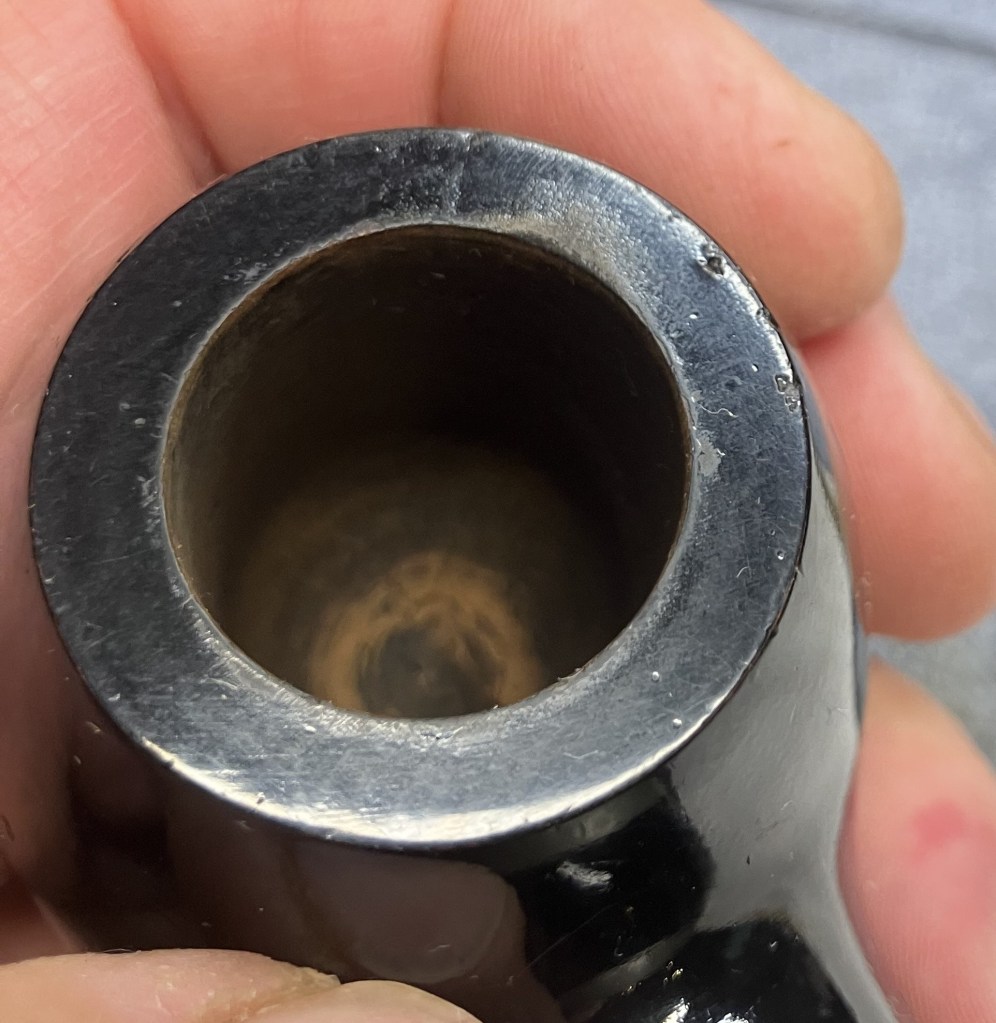
I thought maybe I could reapply a coating or two of Fiebing’s Black Leather Dye and this would miraculously erase the damage.
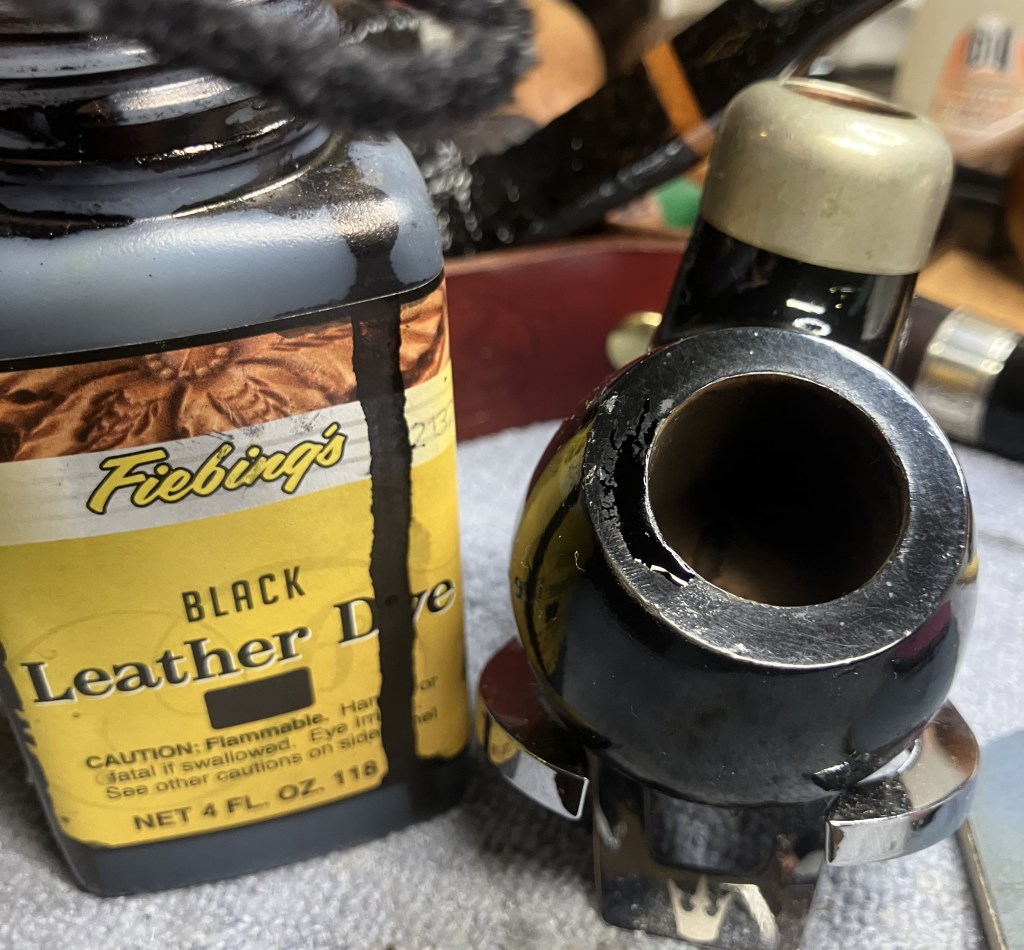
Hmm, maybe more than one of two applications…
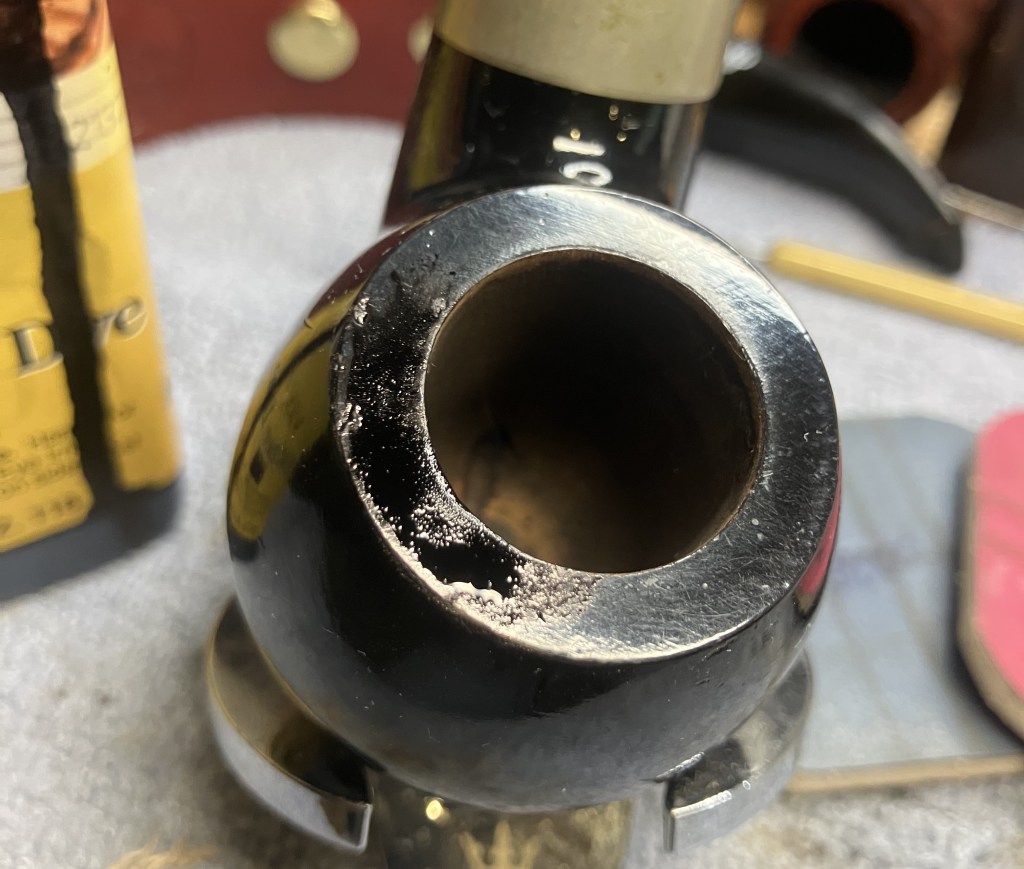
While the Fiebing’s was drying, I returned to the stem. A coarse shop rag was used to vigorously rub the stem. This removes the oxidized vulcanite that the deox solution has softened and does a lovely job of staining a clean coarse shop rag.
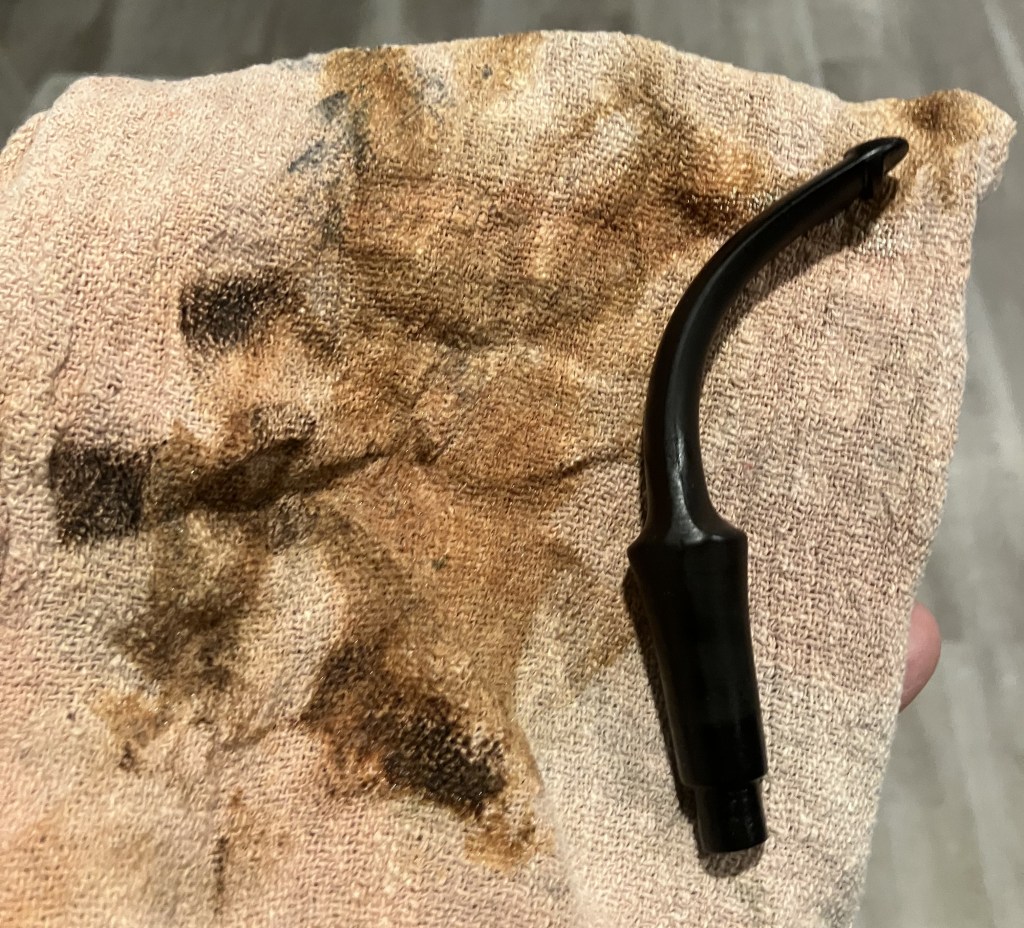
With the shop rag thoroughly defiled and the stem looking much better, it was time to start sanding the stem to return it to factory fresh.
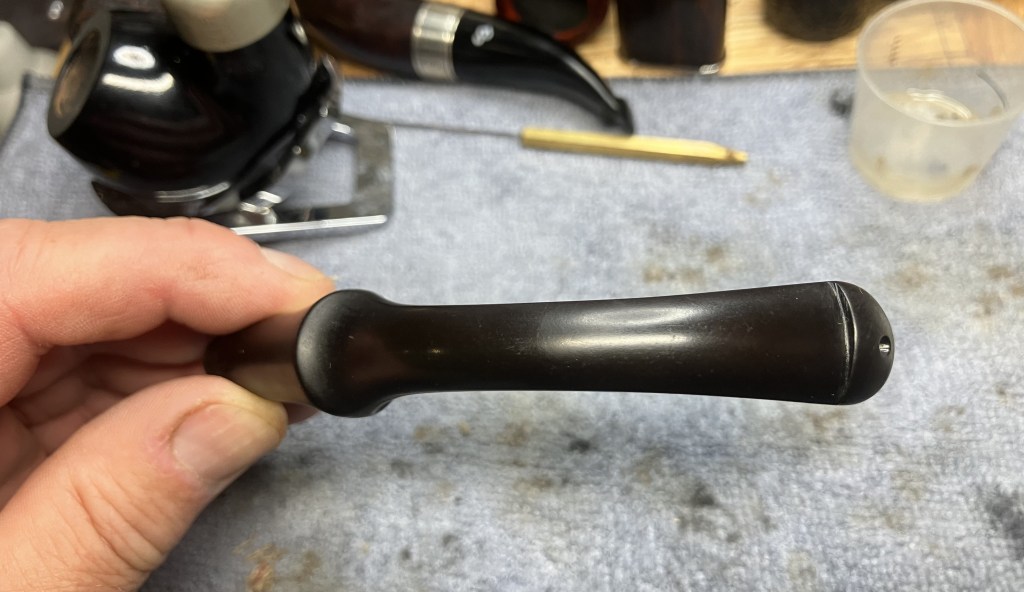
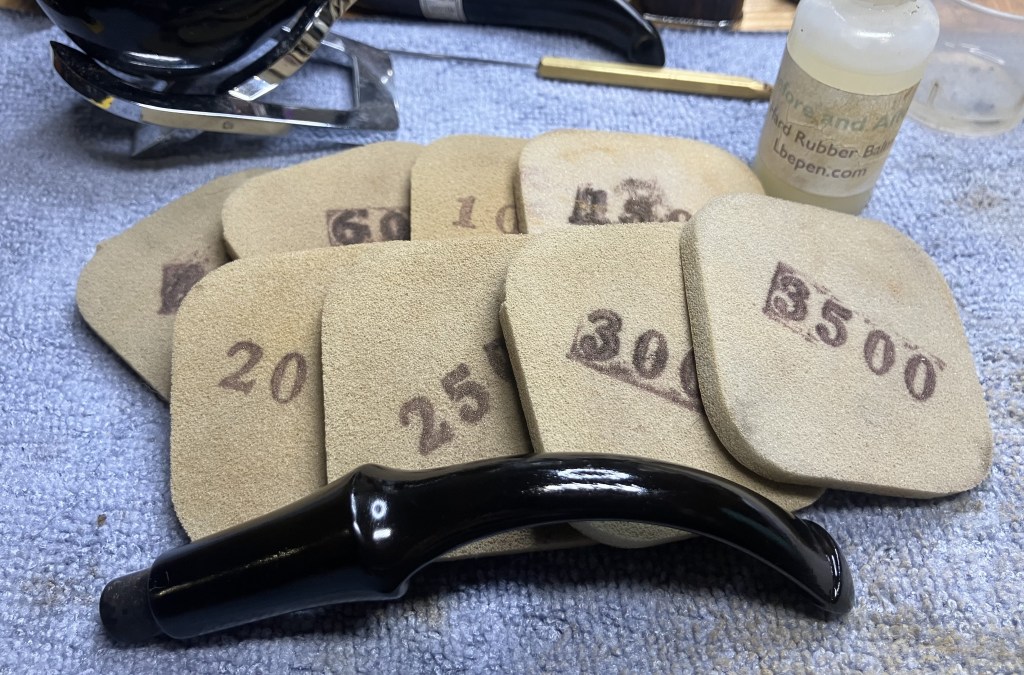
A series of sanding sponges in grits from 400-3500 were used. Between each sponge the stem was rubbed with a drop of Before and After Hard Rubber Balm and wiped with a paper towel. This wiping removed sanding debris from the stem. Once finished I coated the stem with the balm and allowed it to sit.
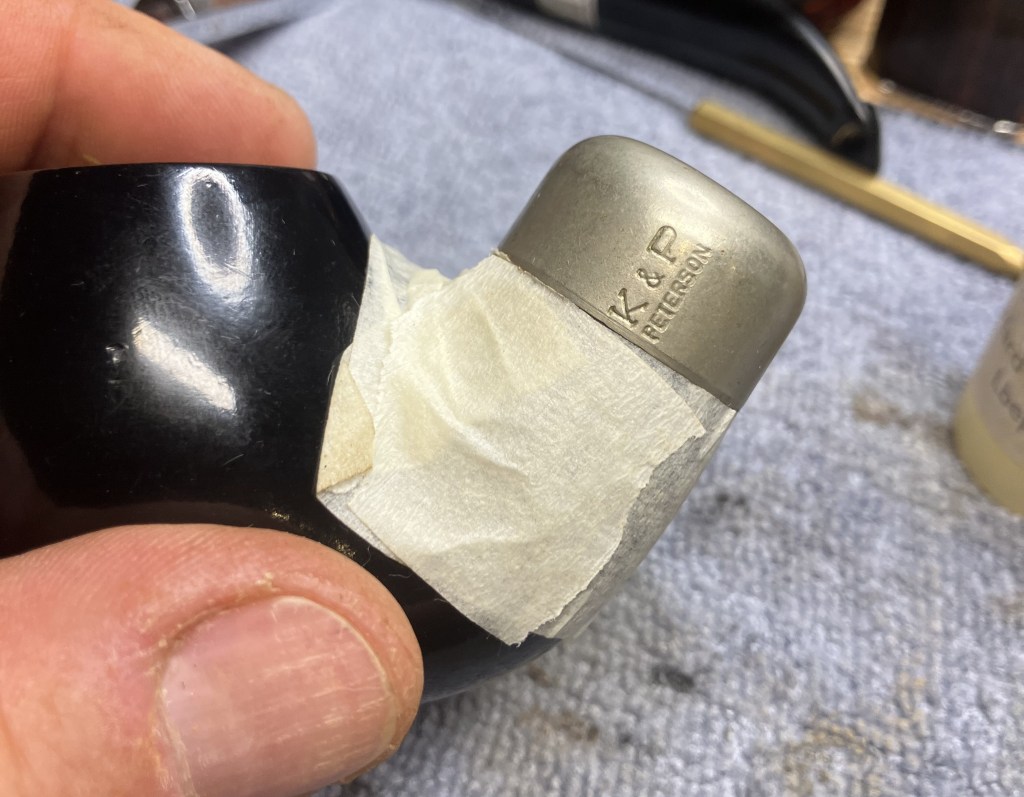
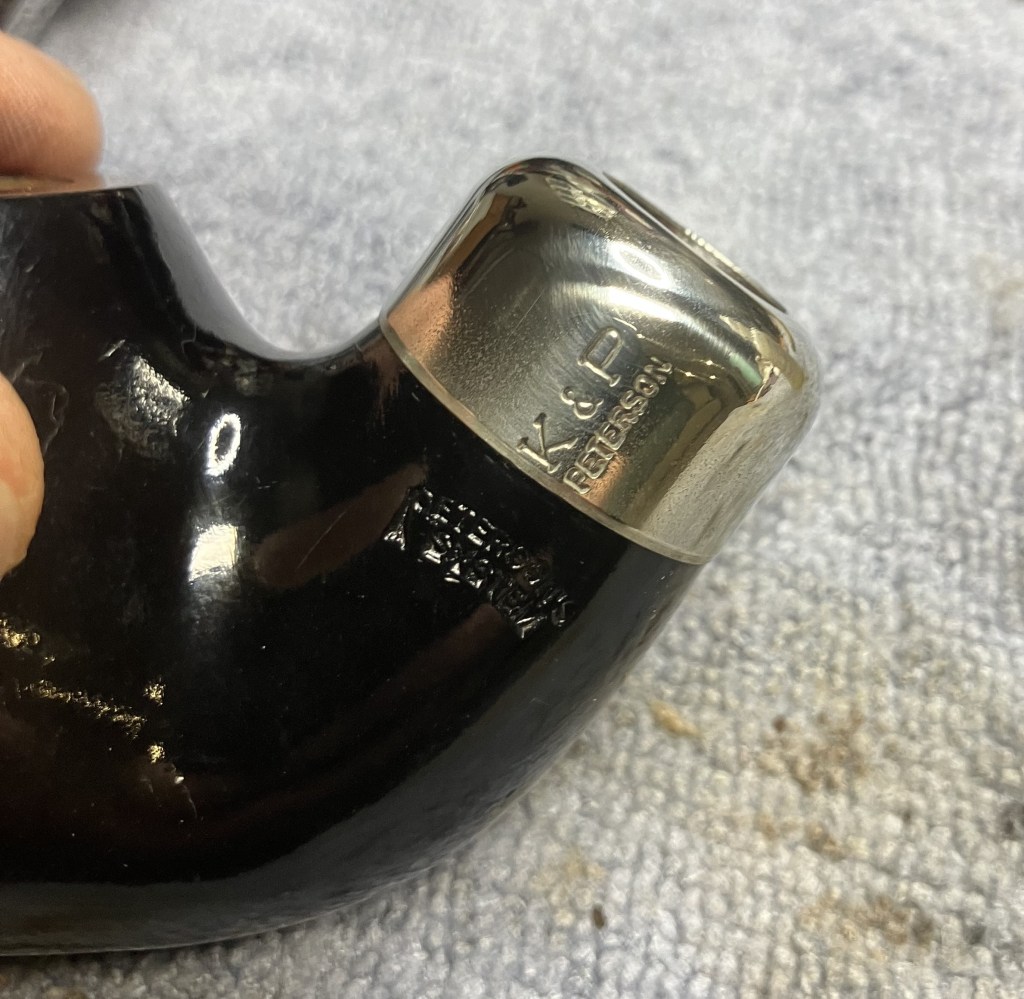
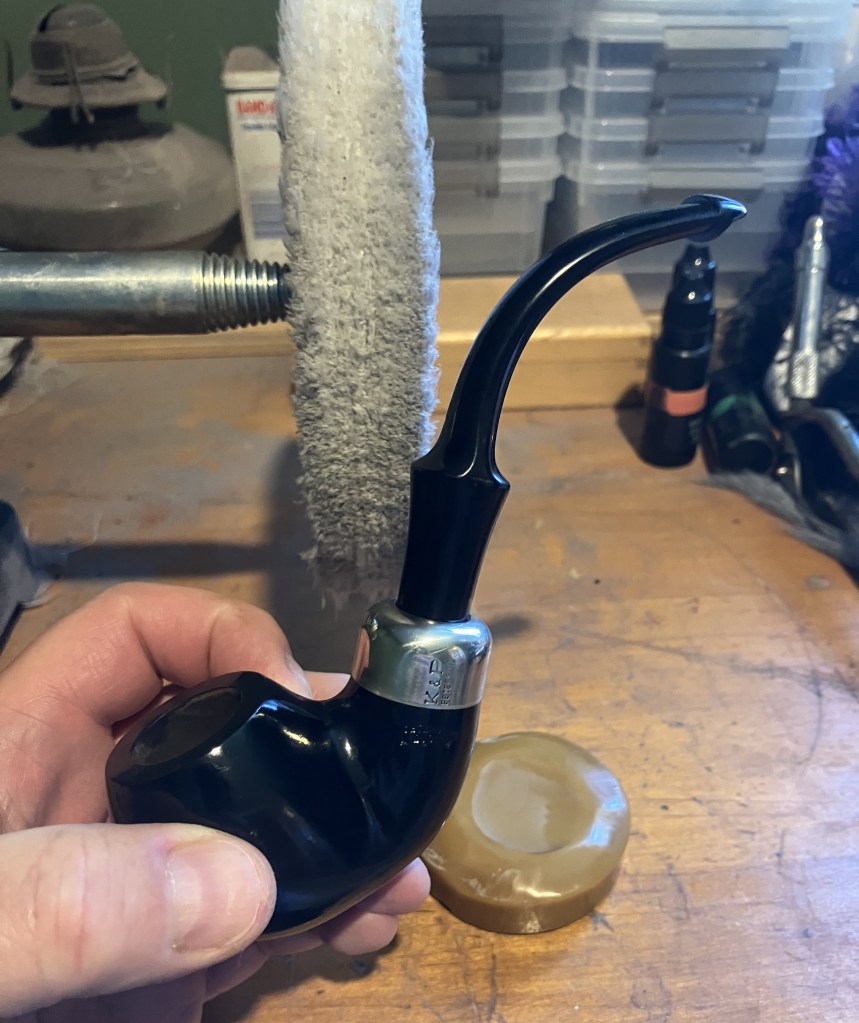
Time to make that tarnished collar shine. I wrapped the shank with masking tape to protect it from buffing.
The nickel was polished with Blue Diamond at the buffer.
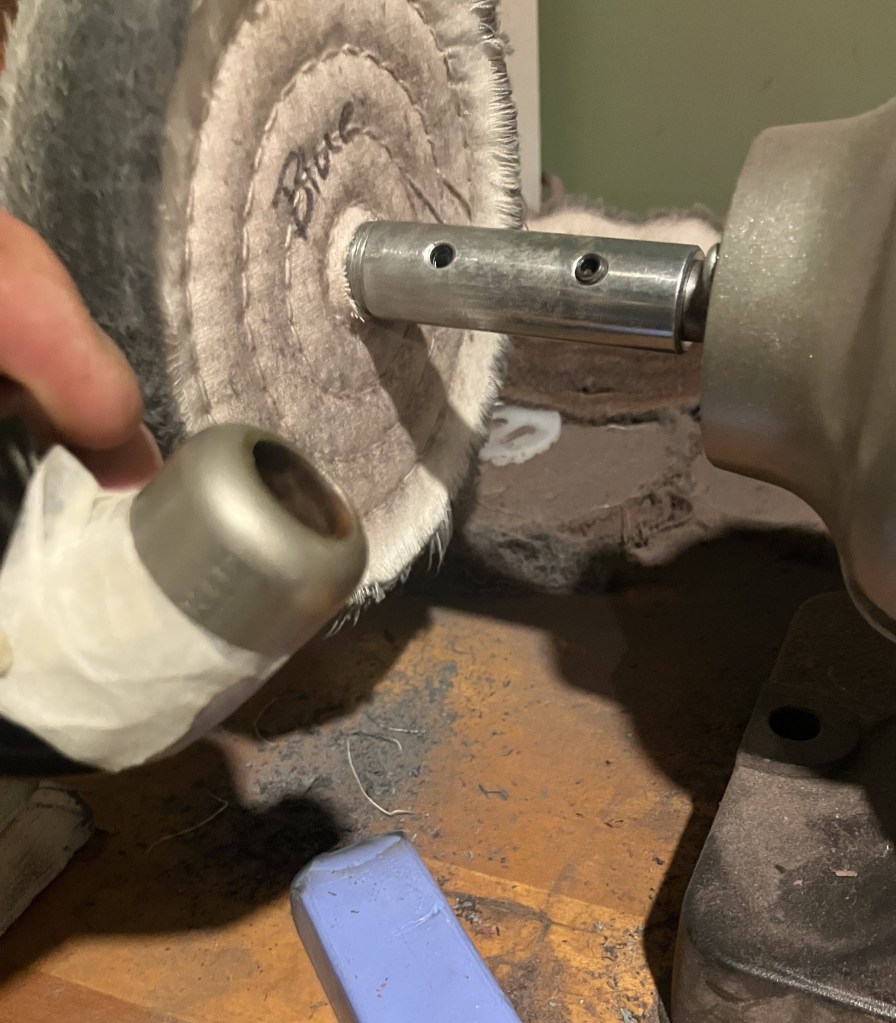
The results were a great improvement.
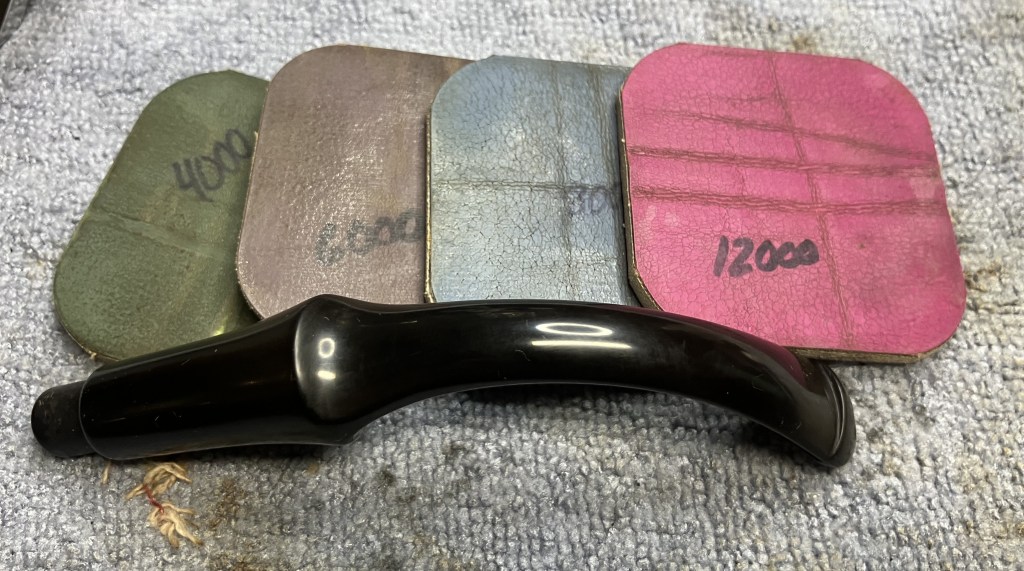
Back to the stem. I used 4000-12000 micro-mesh pads to work the stem, again with the Before and After balm and wiping between pads.
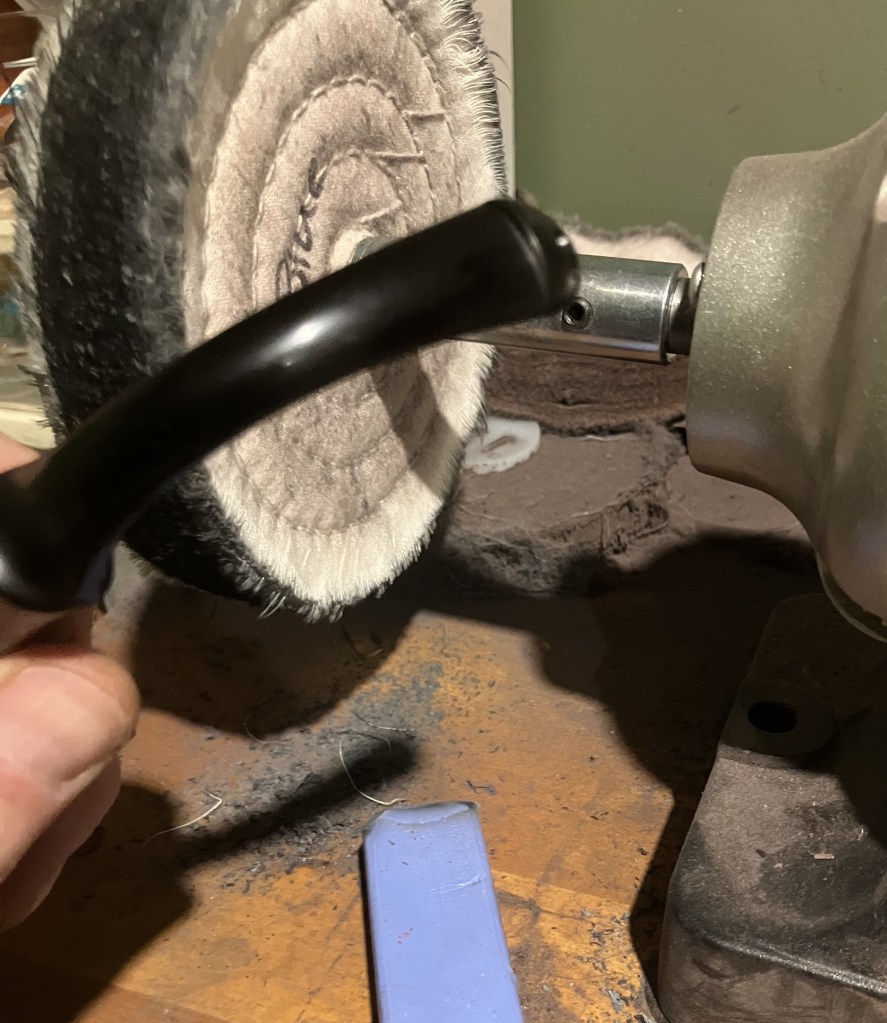
The stem was then buffed with Blue Diamond at the buffer.
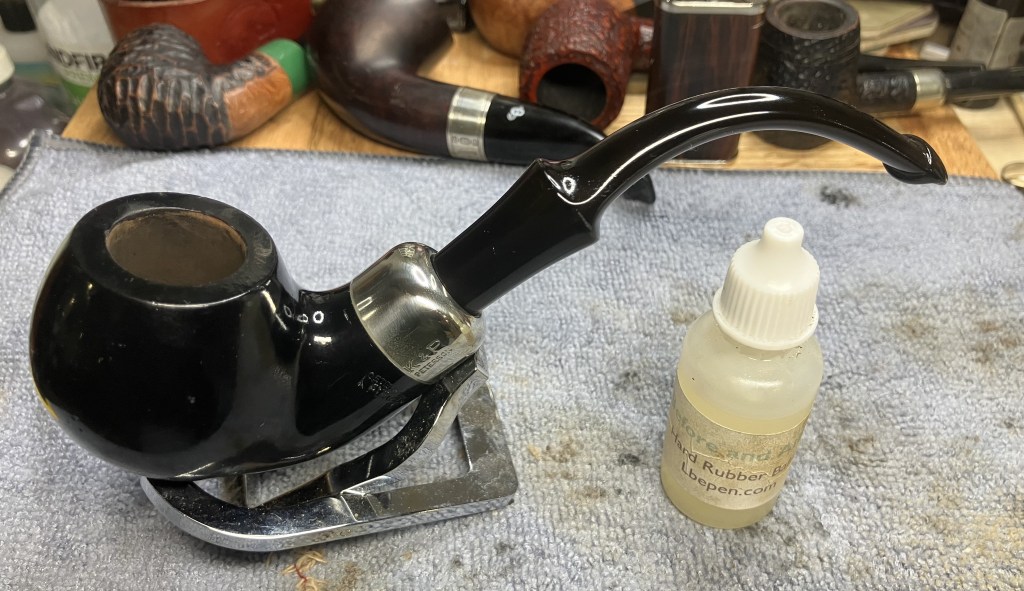
A final coating of Before and After Hard Rubber Balm was given to the stem and it was reunited with the stummel.
The black Fiebing’s Leather Dye worked well at making the stubborn spot on the rim black but it was still noticeable. I thought that maybe a coati or two of Danish oil would help conceal the blemish.
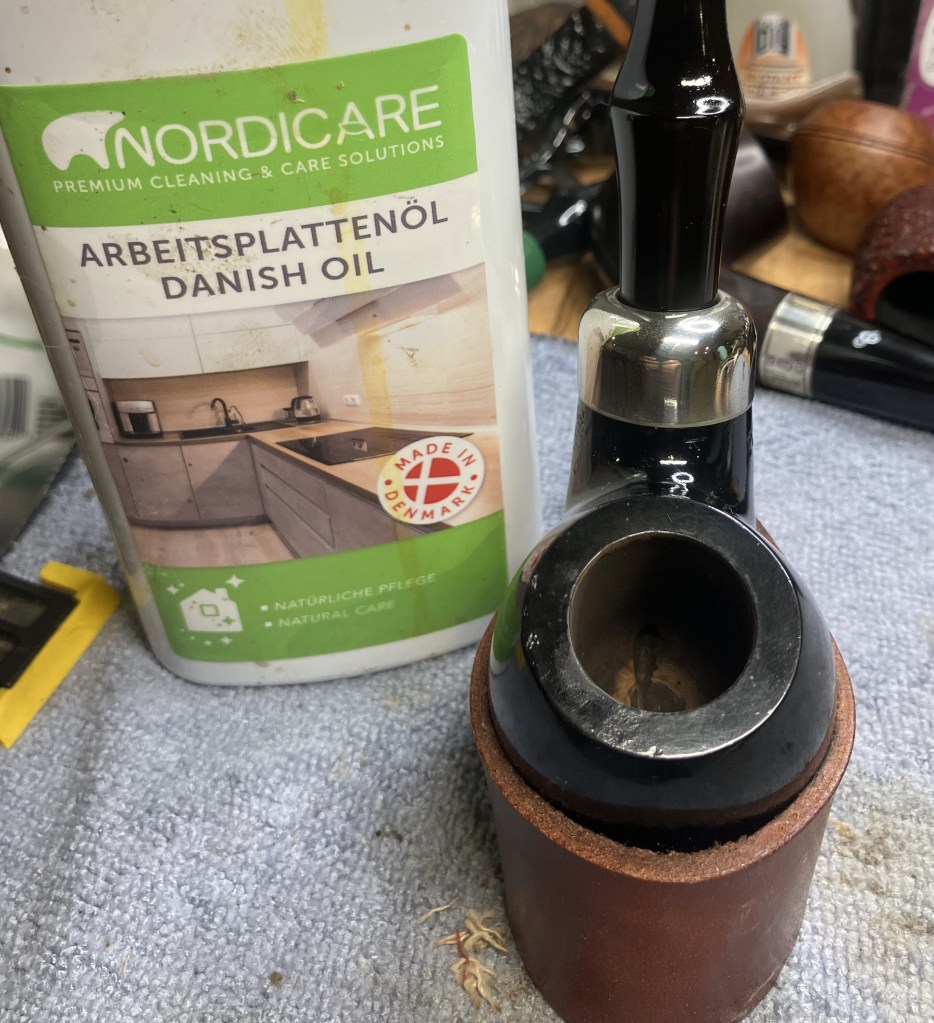
This was applied to the rim with a cotton swab.
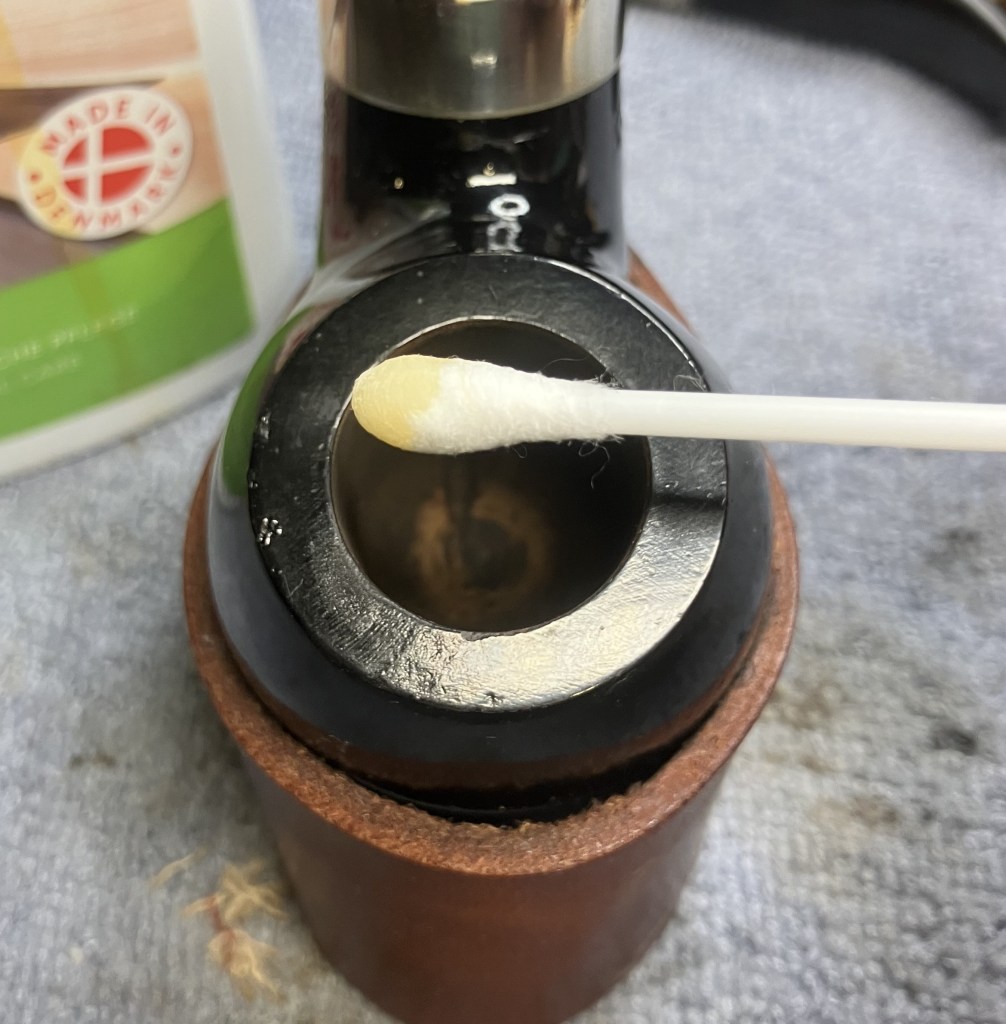
The whole rim was coated to help blend the spot.
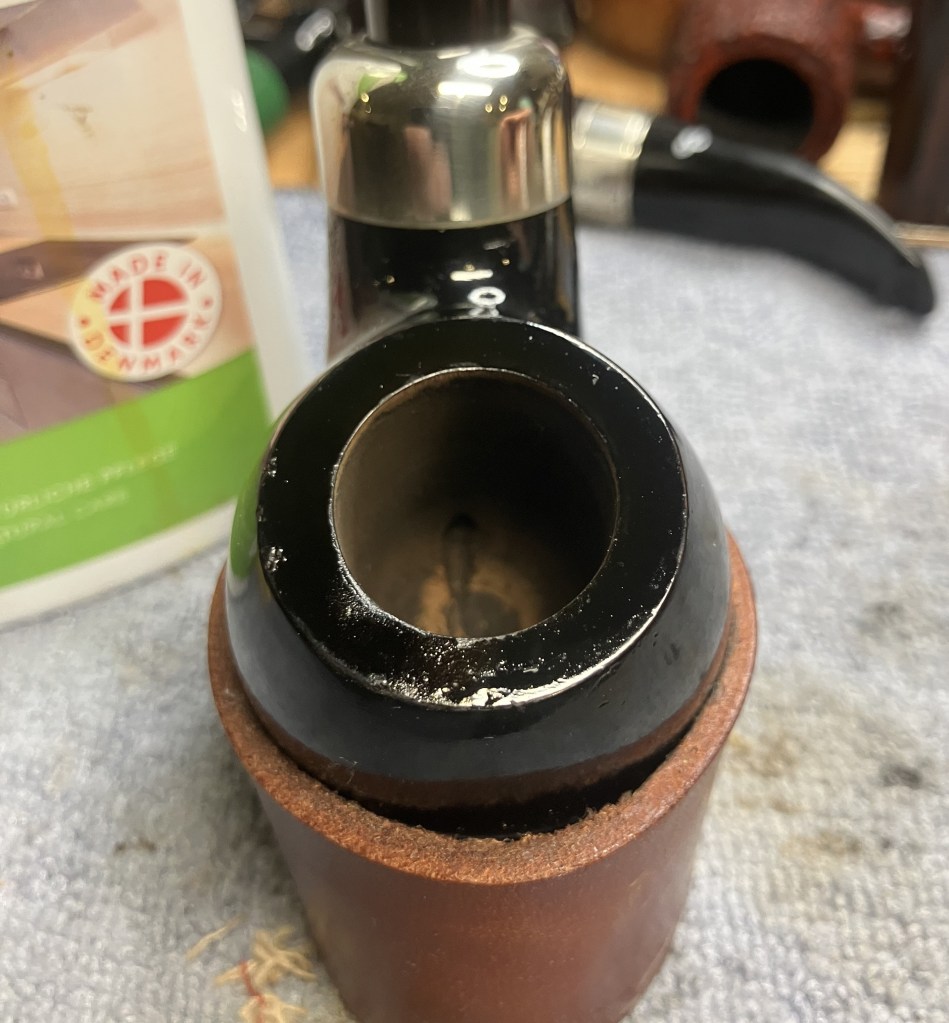
Then several more mini applications to the spot, itself. After the oil dried I worked the spot with 7000, 8000 and 12000 grit micro-mesh.
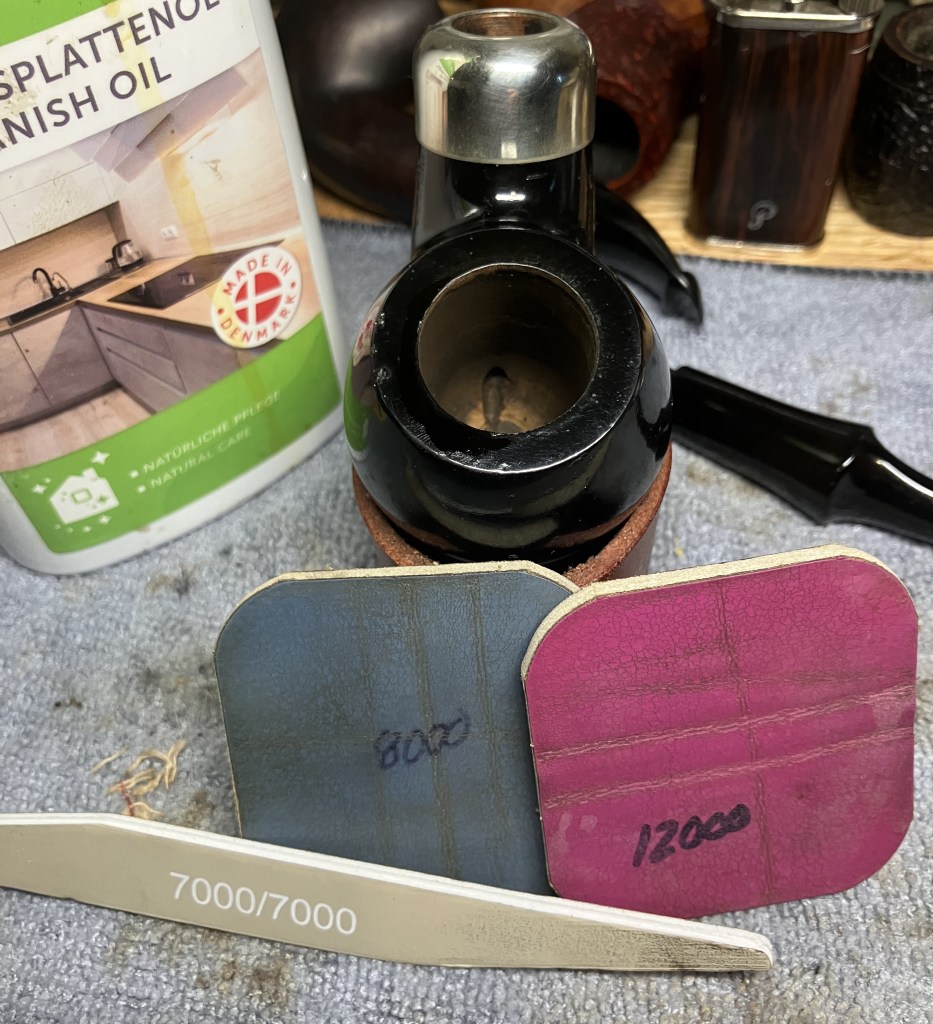
The stubborn little spot remained noticeable. I finally surrendered to failure. I thought maybe, just maybe, that the carnauba waxing would finally smooth the blemish, but didn’t hold much faith in that.
Several coats of carnauba wax were applied to both the stem and stummel.
The final step was a hand buffing with a microfiber polishing cloth which really brought out the shine.
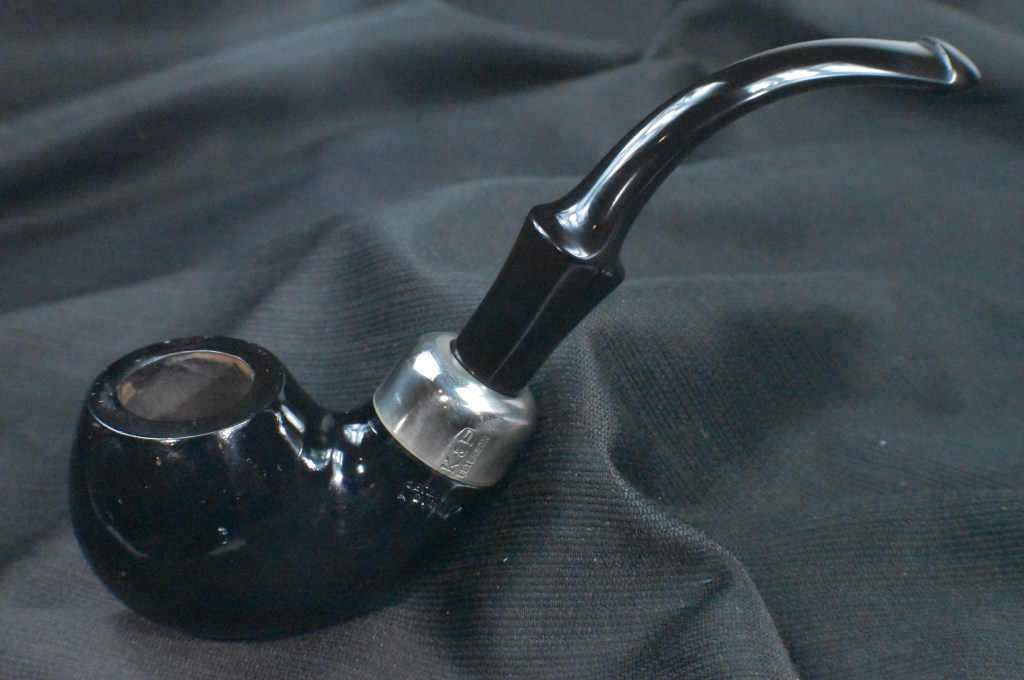
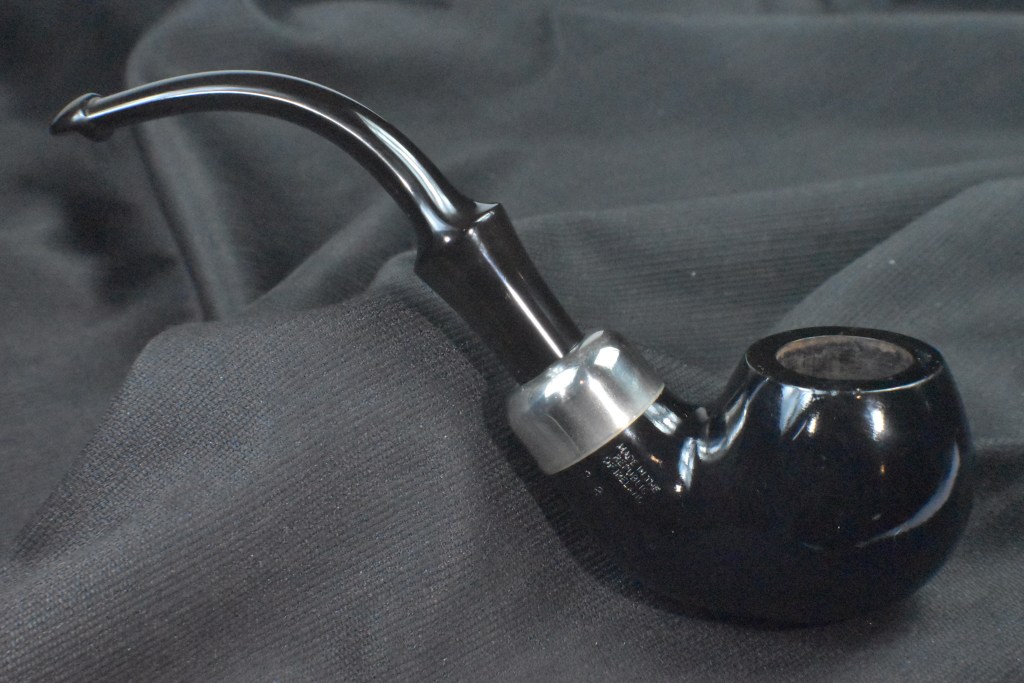
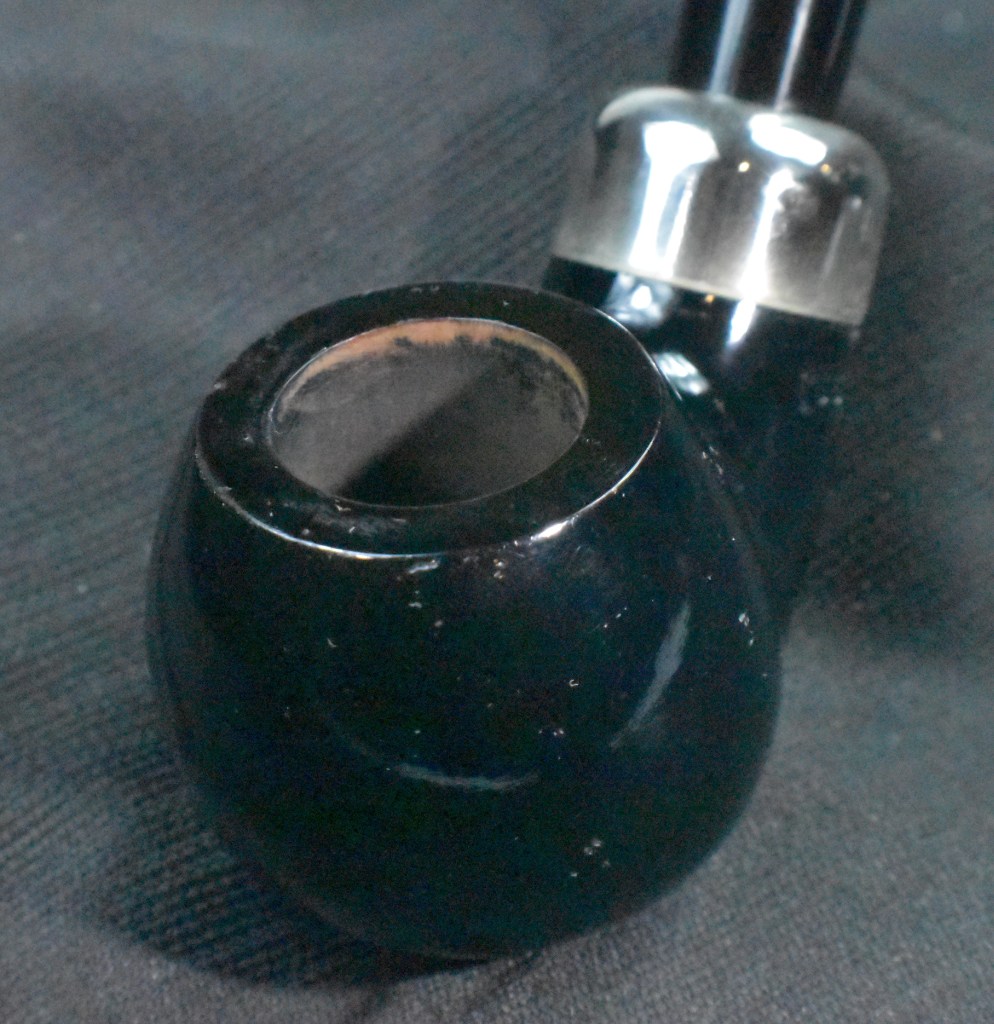
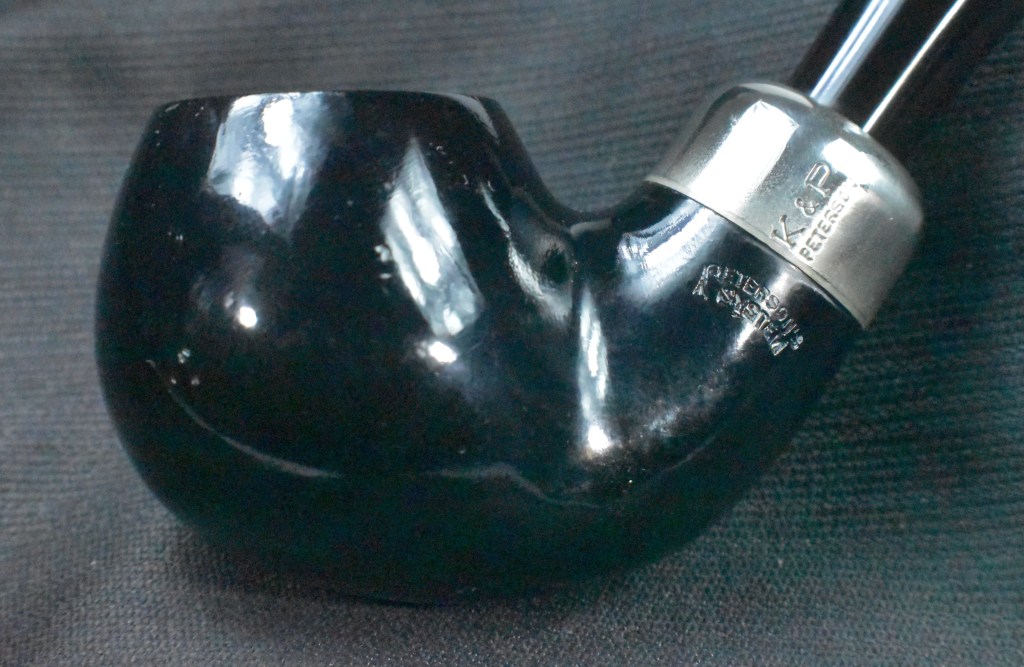
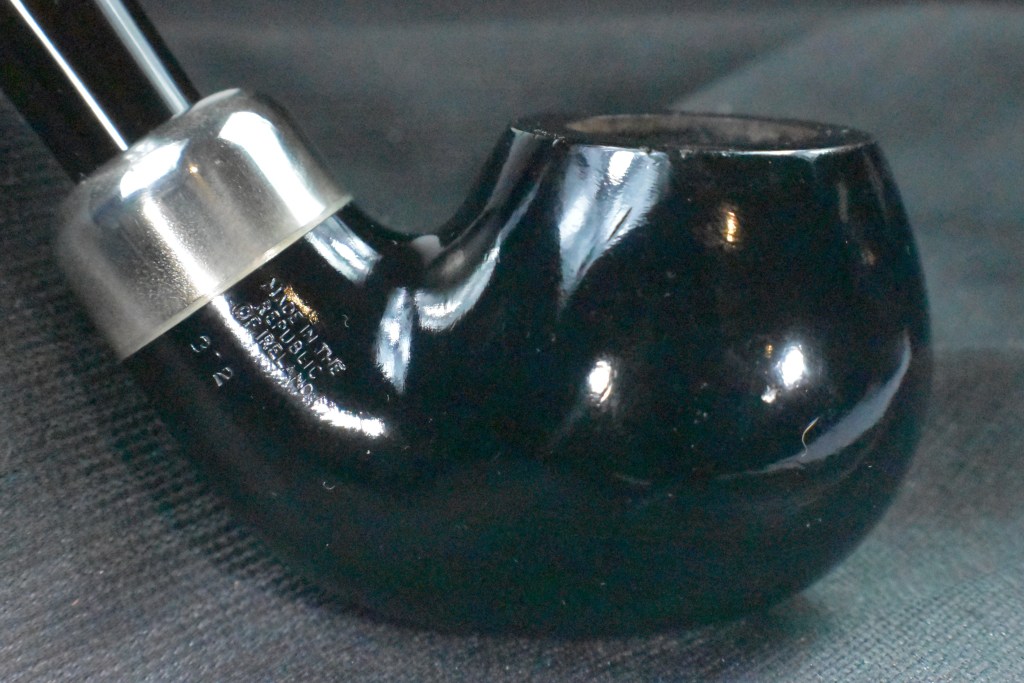
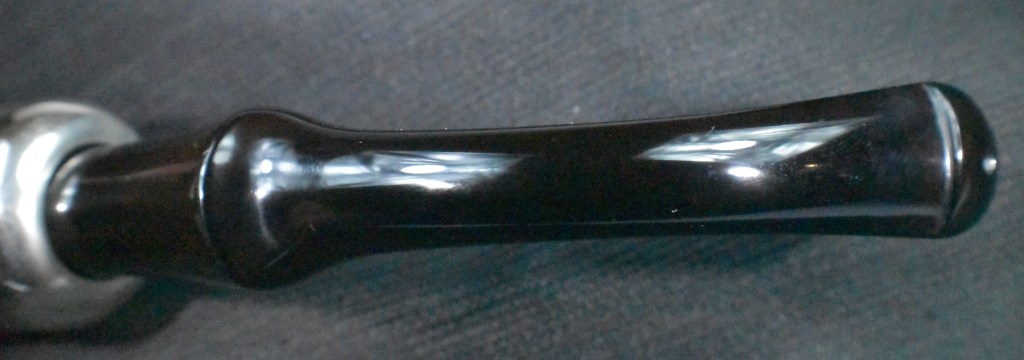
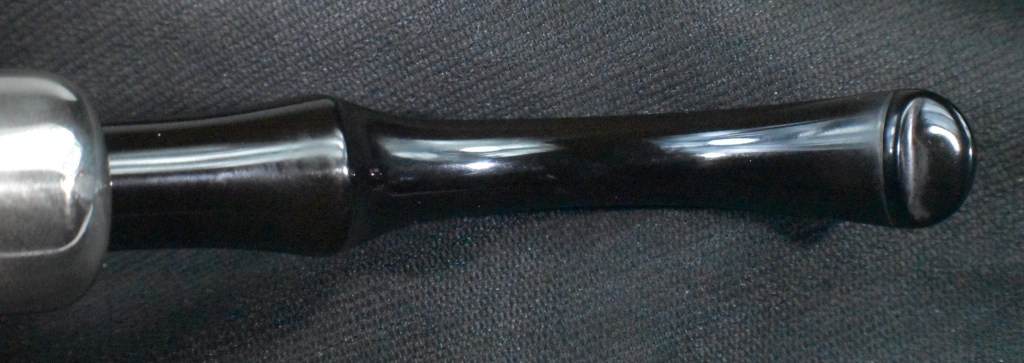
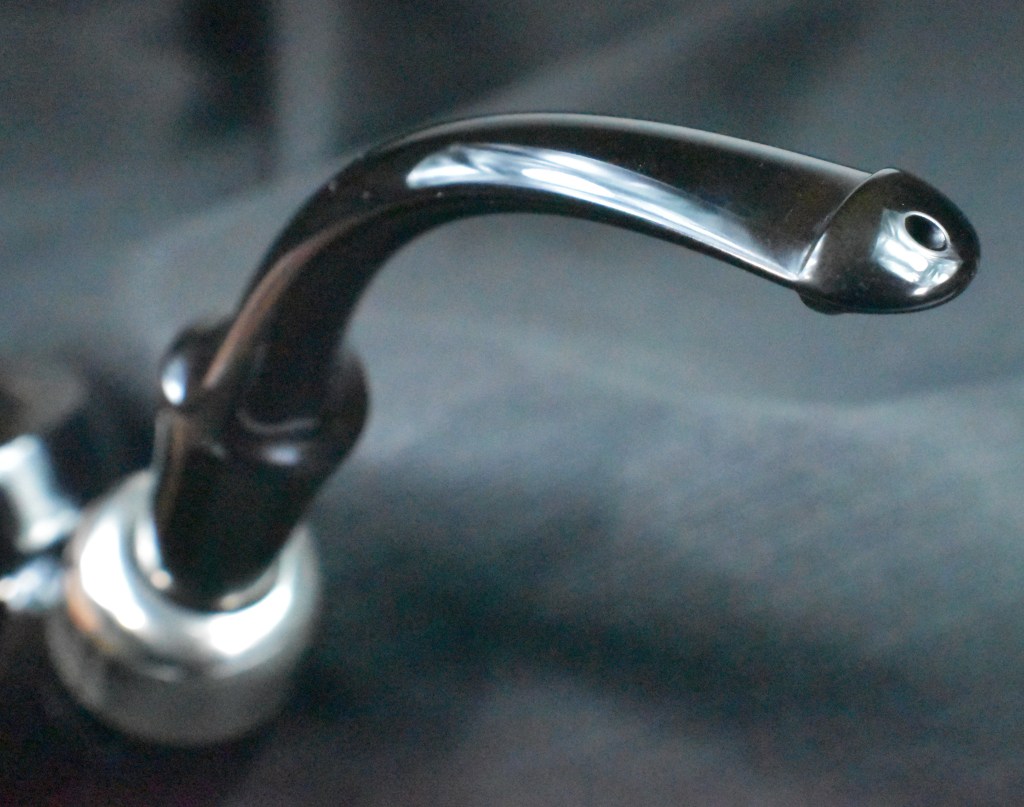
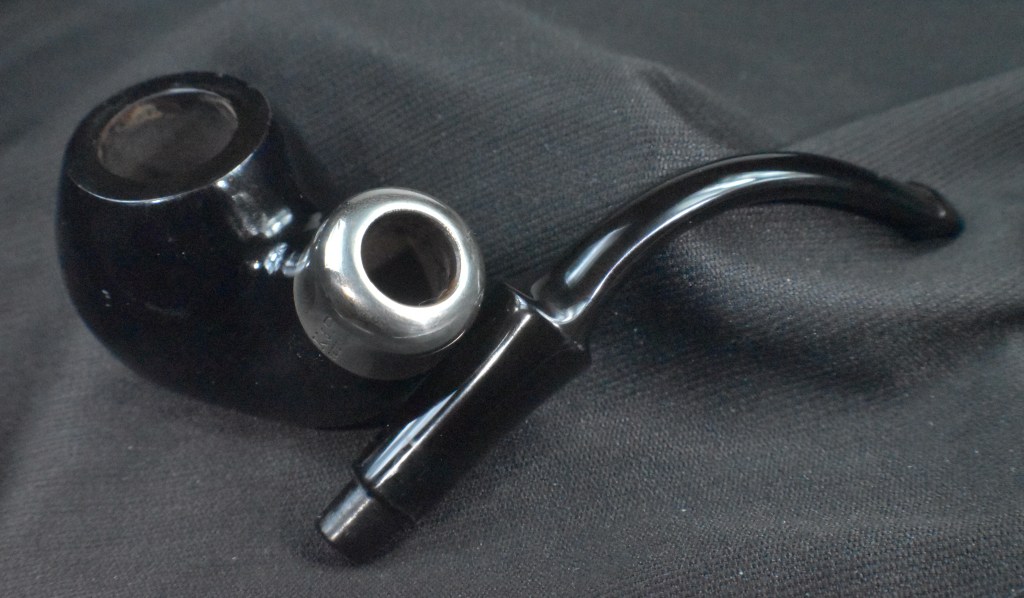
What a chubby cheeked beauty. This Peterson System Standard 302 Ebony restored wonderfully. The glossy black finish was well maintained by the previous owner and needed little work. The slightly charred spot on the rim was fixed with a touch of black dye,Danish oil, polishing and disappeared with the waxing. The oxidation of the stem was removed and revealed the lovely black high gloss vulcanite. This glossy black matches the stummel and is accentuated by the polished nickel collar. Overall, I think the pipe looks nearly as great as it probably did exiting the Peterson factory in Dublin. I am sure that Tom, will enjoy many years of relaxing contemplation with this pipe. The dimensions of the Peterson System Standard 302 Ebony areas follows:
Length: 6.09 in./ 154.69 mm.
Weight: 2.58 oz./ 73.14 g.
Bowl Height: 1.88 in./ 47.75 mm.
Chamber Depth: 1.40 in./ 35.56 mm.
Chamber Diameter: 0.80 in./ 20.32 mm.
Outside Diameter: 1.79 in./ 45.47 mm.
I do hope that you have found something here useful to your own pipe care, maintenance or restorations. If you like this sort of thing, please click the like and subscribe buttons. Thank you for reading the ramblings of an old pipe lover.
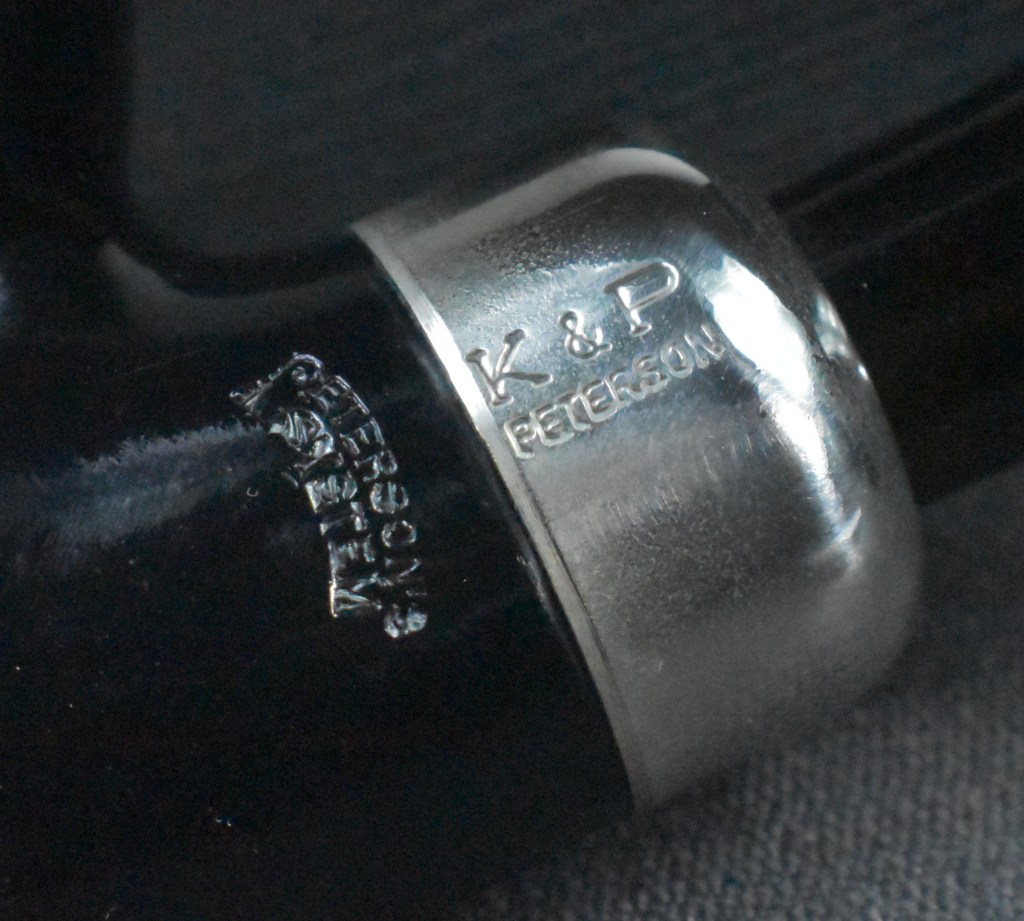
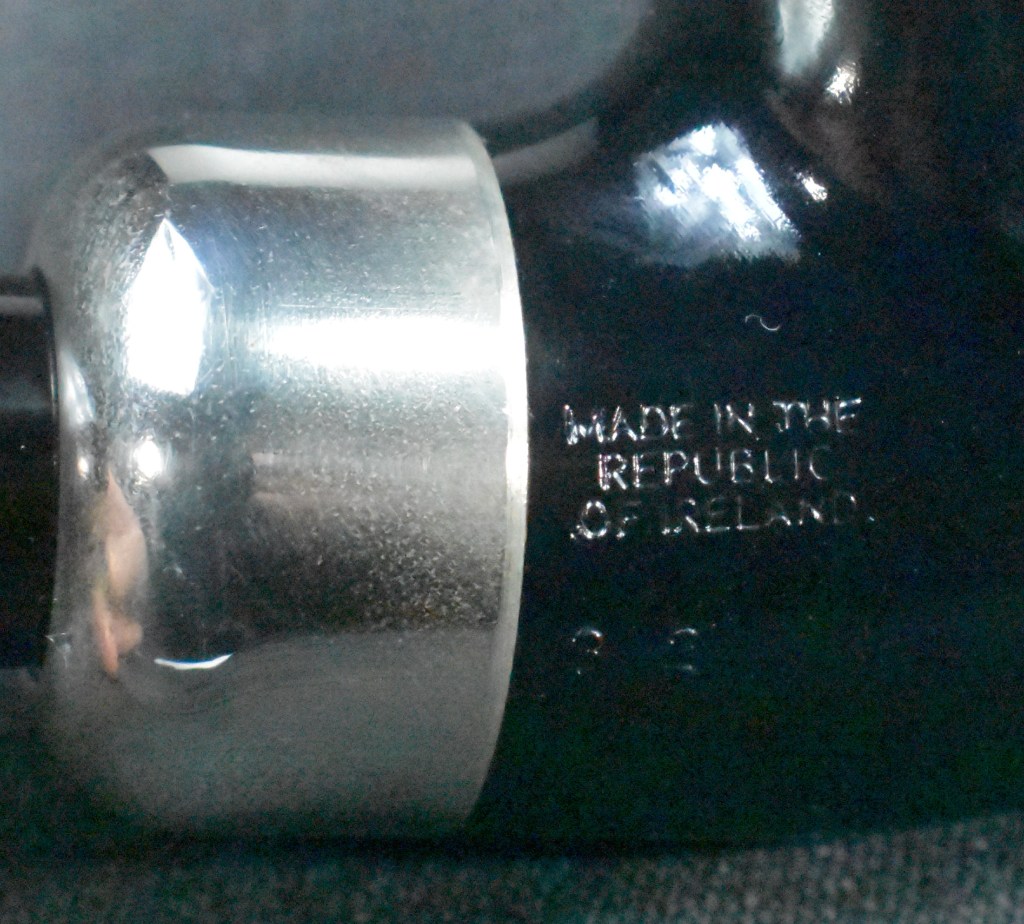
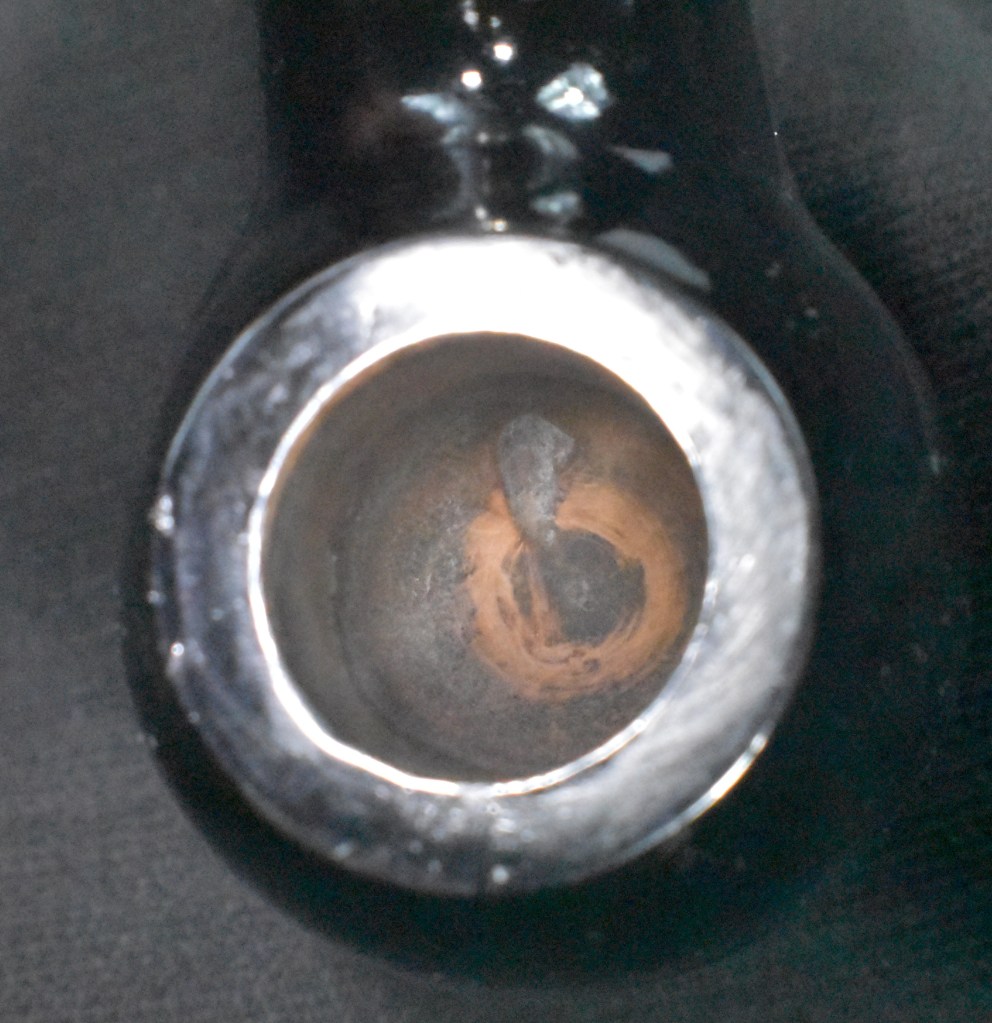
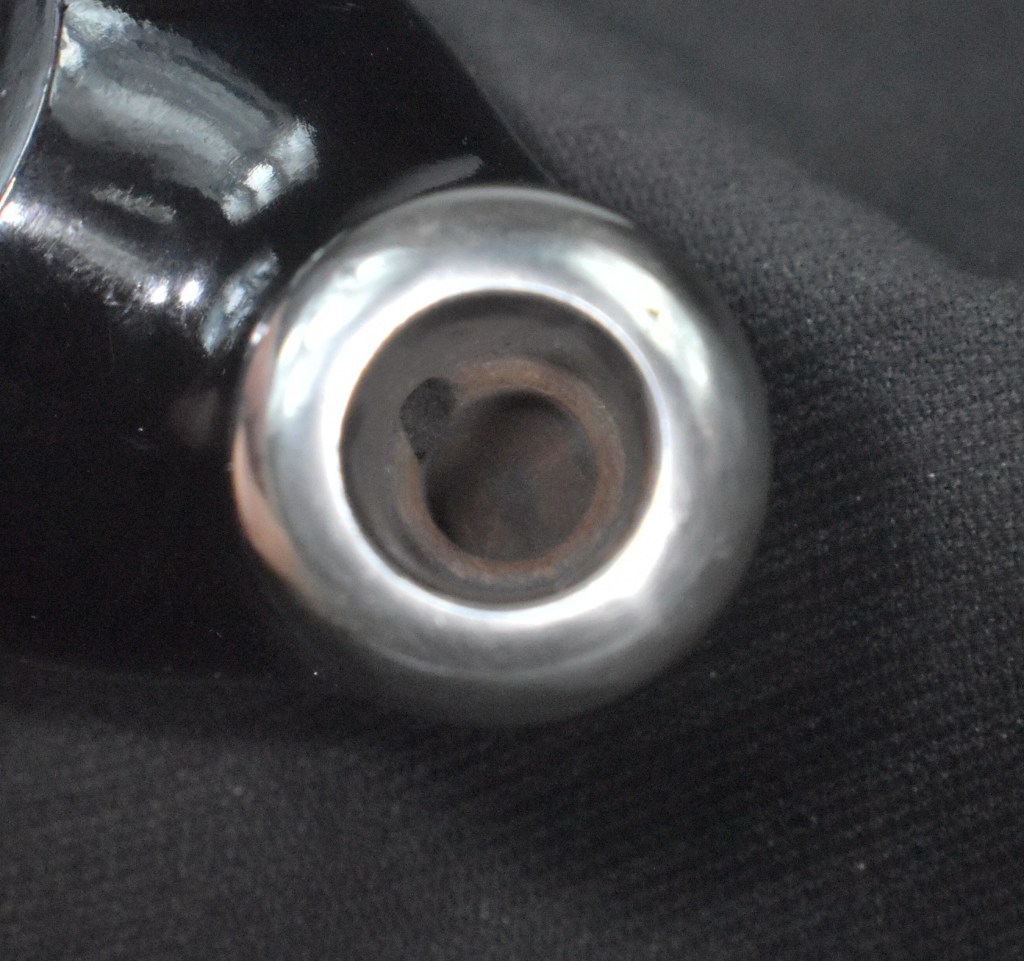
Below are some photos of the finished Peterson System Standard 302 Ebony.
 NebraskaPeteGeek