
Photographed and written by
John M. Young
The quest to improve my skills of restoring meerschaum pipes continued with this Medico Gold Crest meerschaum apple. Medico is one of those American classic brands which many people look at like they do codger blends – those were cheap drugstore pipes for grandads. Well, maybe grandpa was right. I can’t imagine that they sold millions of pipes merely because they were cheap. I’ve restored a good number of Medico pipes though mostly prior to my blogging. Over the last year I can only think of three: A Frank Dublin, Medico Jet Stream and a Medico Guardsman. That is only three of the 139 blogs (thus far published) so they are not what I’d consider a target species. This one called out to me, perhaps it was the apple shape or the Austrian made meerschaum or that adorable gold band. Whatever the reason, The auction was won and the pipe was mine. The initial examination of the pipe revealed that the only marking proclaiming its origin was the Crest enclosed M on the stem and the stamping on the band: MEDICO over 1/20 14K G.F. over MADE IN AUSTRIA. Below are some photos of the pipe as it appeared upon arrival.


The Medico was used, though not abused. There were some scratches on the meerschaum and some bite marks on the stem. The bowl looked pretty good even with the lava flowing over the rim. I thought that this looked like a nice relaxing restoration.
Background
According to TobaccoPipes.com,
“When you trace the Medico tobacco pipes history, you have to trace it back to the origins of the company that created it. The company that originated the Medico brand is the S.M Frank & Co. This company dates back to the year 1900. In that year, a man named Sam Frank began selling pipes and related tobacco products. Eventually, the company began making its own line of pipes. With the help of an experienced pipe manufacturer, Ferdinand Feuerbach, the company produced the popular Royal DeMuth and Hesson Guard Milano tobacco pipes. The company continued to grow well into the early part of the 1930s.

So, where did Medico pipes come into the picture?
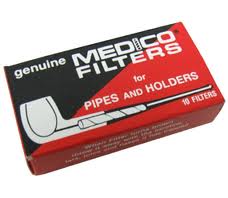
By the early 1930s, there were some concerns about the tars and nicotine found in tobacco smoke. In order to mellow out the flavor of hot tobacco smoke as well as to capture the tars and nicotine, the S.M. Frank & Co. introduced the Medico pipe filter. This is an absorbent paper filter that many people still use to this day. In order to accommodate the new filter, the company developed an accompanying brand of pipes known as Medico. That line of pipes continues in production today.
The company ended up buying some of their main competition in 1955. That year the Kaywoodie brands came under the S.M. Frank Company. The Medico brand continued production through this transition without many changes. The next big change for the brand came in the late 1960s. In 1966, the company developed a synthetic material that combined the traditional briar wood with resins. It is known as Brylon. At that time, all Medico pipes were made from imported briar wood. In order to keep production costs down, the company began offering some lines with Brylon. Today, that is still true.
Today, the Medico brand of pipes is still a top selling one for the S.M Frank & Co. This line of pipes comes in thirteen different finishes with five made of briar wood and the rest from Brylon. All come with the push bit with a filter inside. The filter is easily changed out when the smoker desires. In the briar wood finishes, this line includes the Silver Crest, Premier, Bold Rebel, Kensington, and Windsor. In the Brylon, the line includes the Lancer, Apollo, Standard, Varsity, Conqueror, Medalist, Cavalier, and V.E.Q. As far as price, the briar wood pipes tend to be higher in cost that the Brylon ones.” (Medico Pipes History | TobaccoPipes.com)
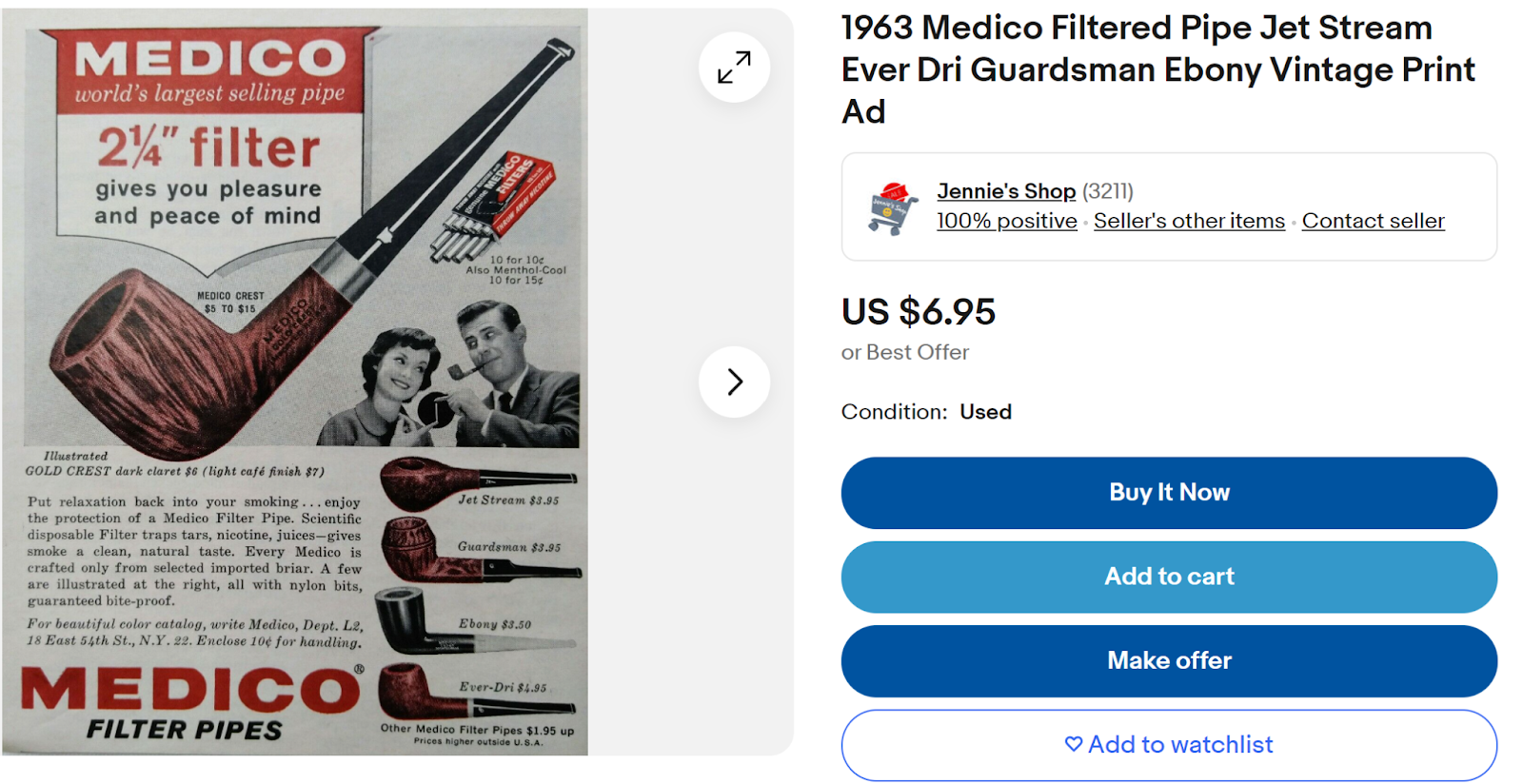
I was unable to precisely identify the years in which the Gold Crest line was made. I did find a couple of print advertisements from 1958 and 1966, at least that is what the eBay sellers were claiming. The first ad is from 1958 and shows a Gold Crest with a list price of $5. The ad says “NEW! See the 1958 series of MEDICO Crest”. This could be read as meaning that the Crest line changed from year to year or that 1958 was the first year of the line.

(1958 Medico Pipes Ad Filter Pipes Crest | eBay)
The second ad looks quite “1966” but it doesn’t mention the Gold Crest pipe. Neither advertisement had the M within the crest as with the Medico Gold Crest in hand.

(1966 Medico Gold Crest Pipe Art Illustration Photo Vintage Magazine Print Ad | eBay)
Looking at just those two advertisements I would feel comfortable saying that this pipe is from around 1960.
The Restoration
As usual the restoration began with a clean denim piece. Now, I have received slight criticism for the apparent boring appearance of the work surface covers. Perhaps I will look into alternative fabric choices. Maybe Sascha Mertens would prefer something in a paisley?

Due to the more fragile nature of meerschaum, the PipNet reamer remains in its case allowing the Smokingpipes Low Country reamer and the General triangular scraper (with the tip ground round) to take center stage. The wood dowel wrapped in 220 sandpaper also was used after the scraping.

The bowl was not terribly caked and was cleaned out quickly.

The bowl was free of any gouging from previous reamings. The grate at the bottom of the bowl can readily be seen in the photo below. In the Medico Guardsman restoration I discovered how to remove the grate. This pipe was slightly different in design and I was not able to remove the grate for cleaning.

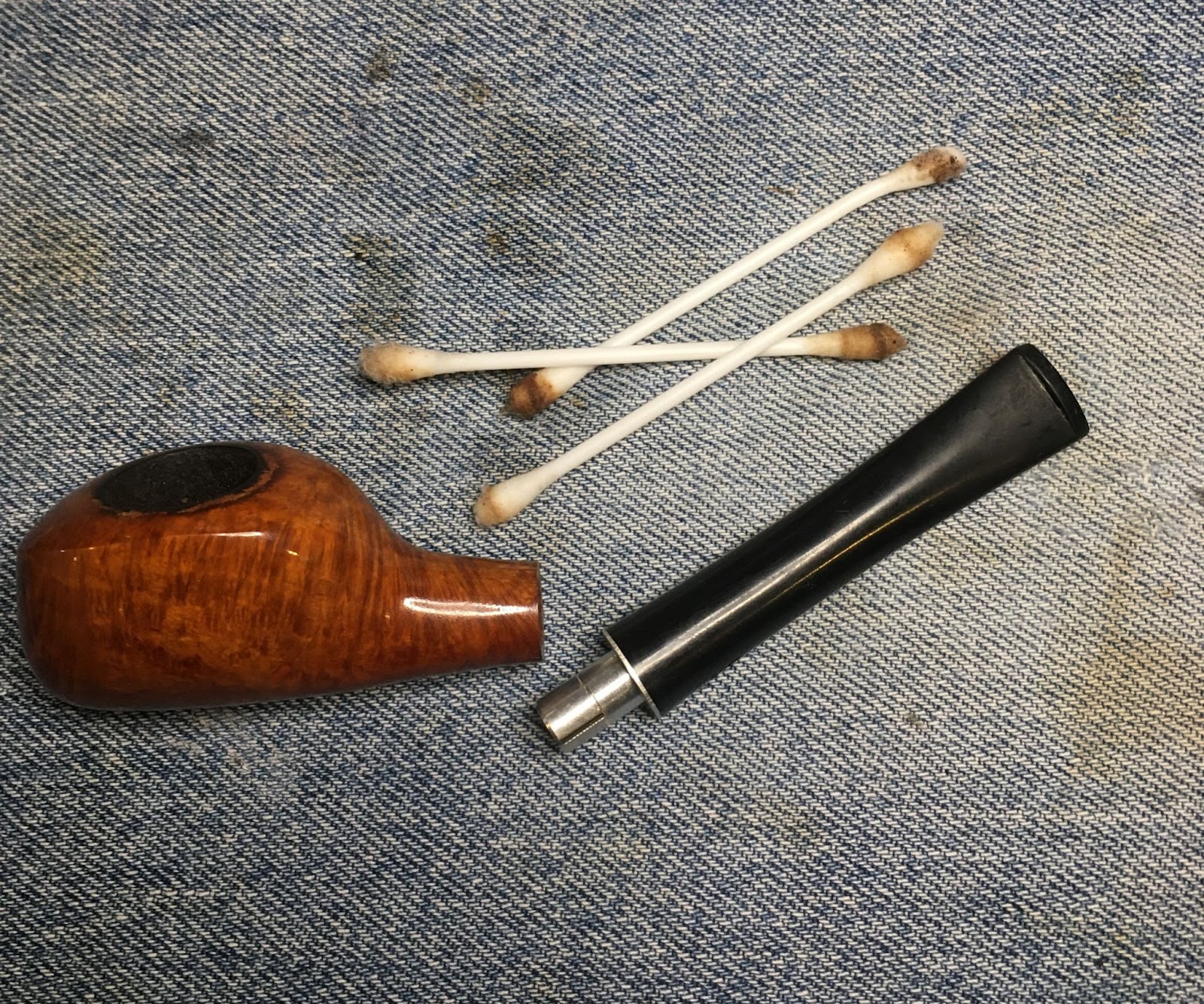
The next step was to clean the airway of the shank. 95% ethyl alcohol, cotton swabs, bristle pipe cleaners, a nylon shank brush, and a small rat tail file with a paper towel wrapped around it.

After the airway cleaning I turned my attention to the rim. One of the great benefits of meerschaum is the immunity of the mineral to charring.

The rim was moistened with saliva and carefully scraped with a sharp pocket knife.

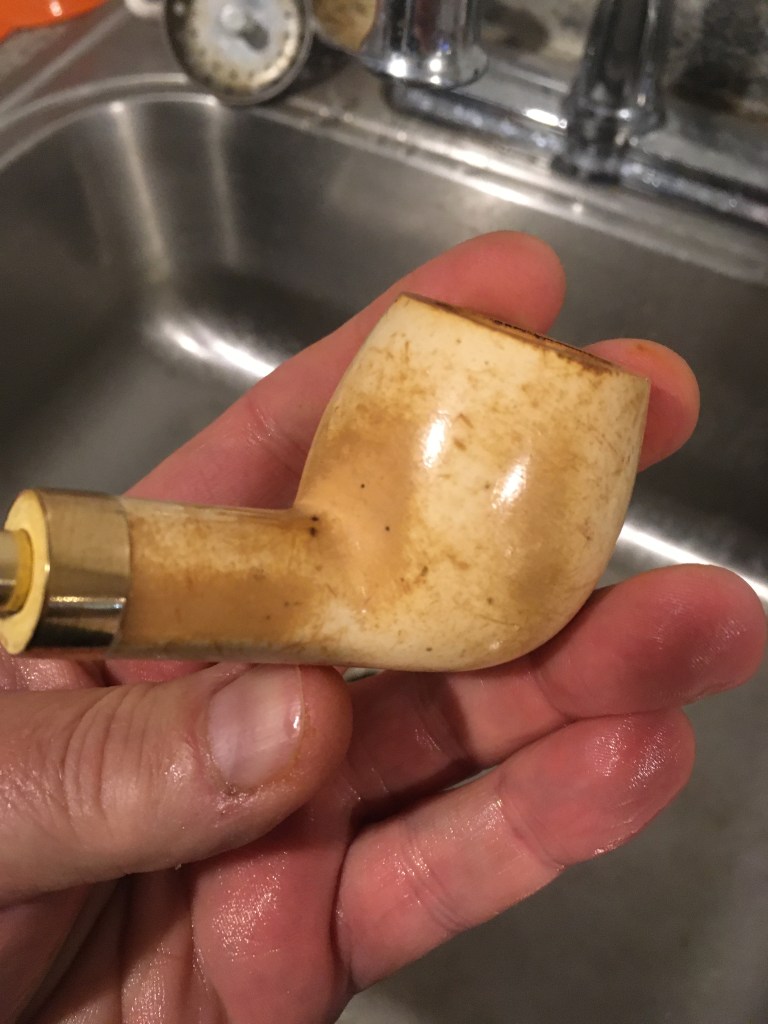
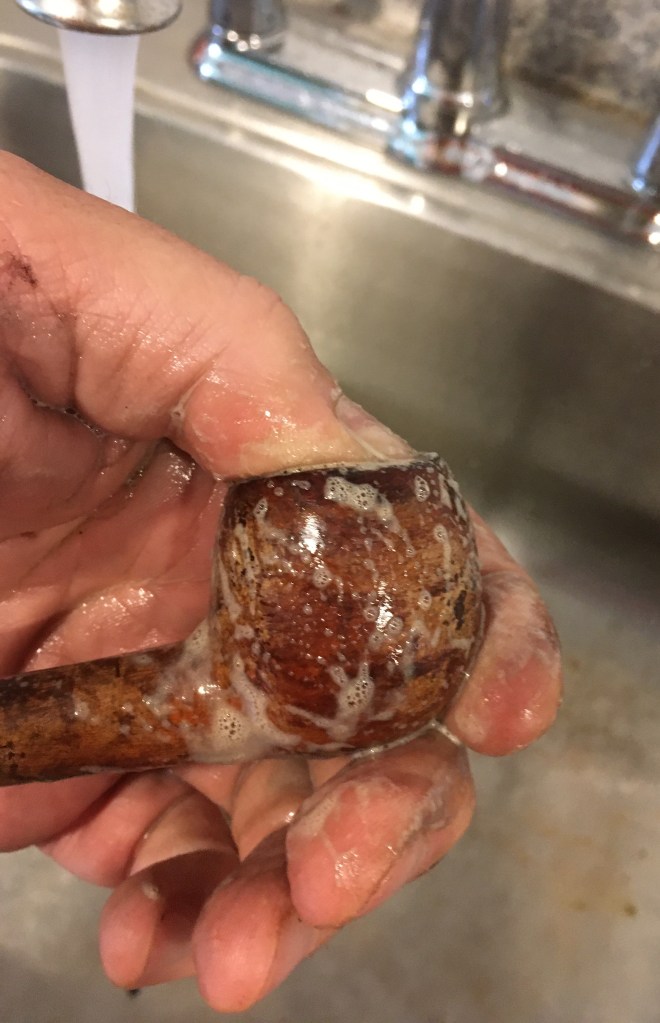
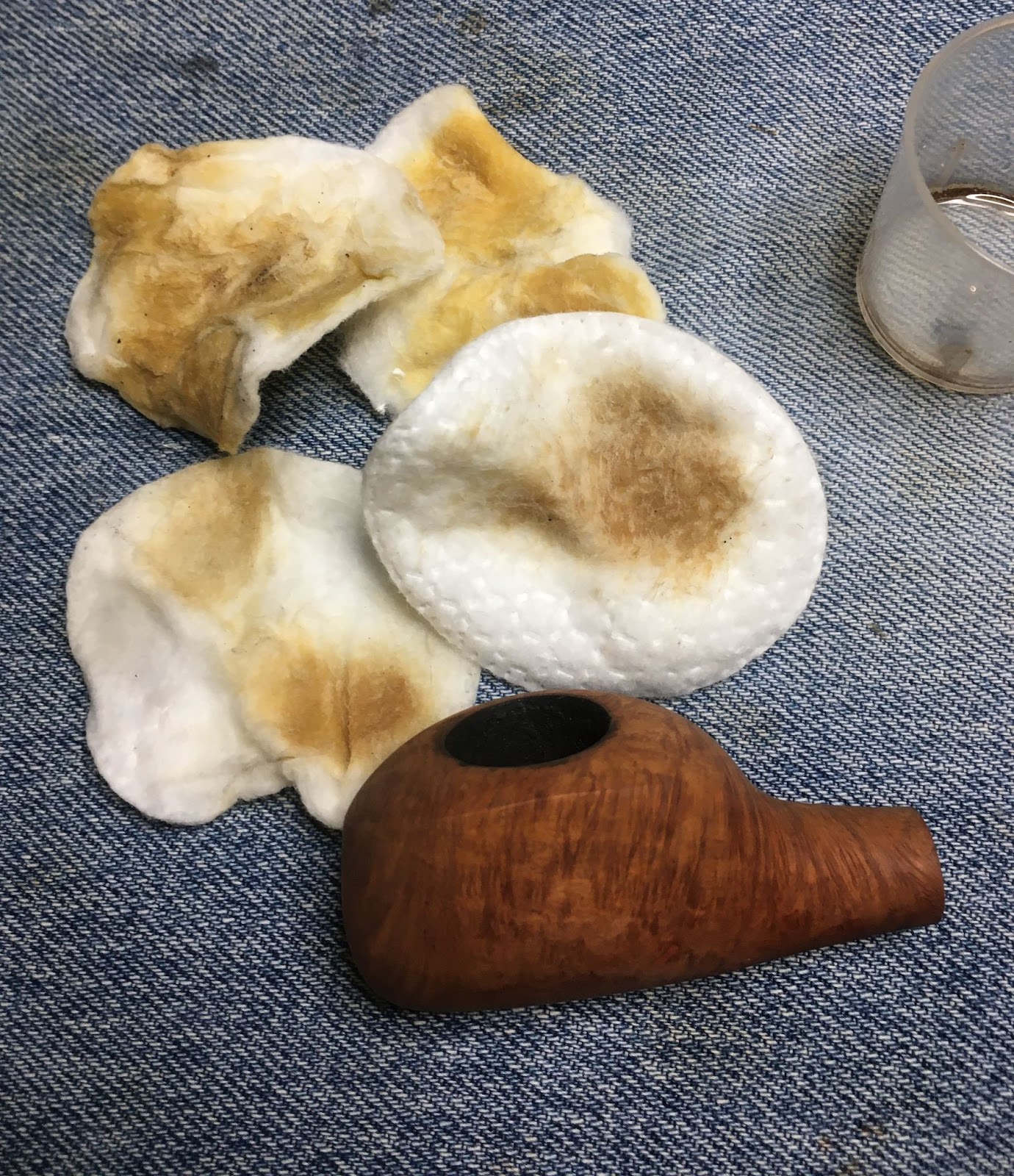
The stummel was taken to the sink for a scrub. This scrub was done with warm tap water and a nylon scrub brush. The stummel darkened with the scrubbing. I assumed this would be a temporary condition that drying would eliminate.

The darkening seemed to be associated with areas which received greater wear. I assumed that this was due to the wearing away of the beeswax coating.


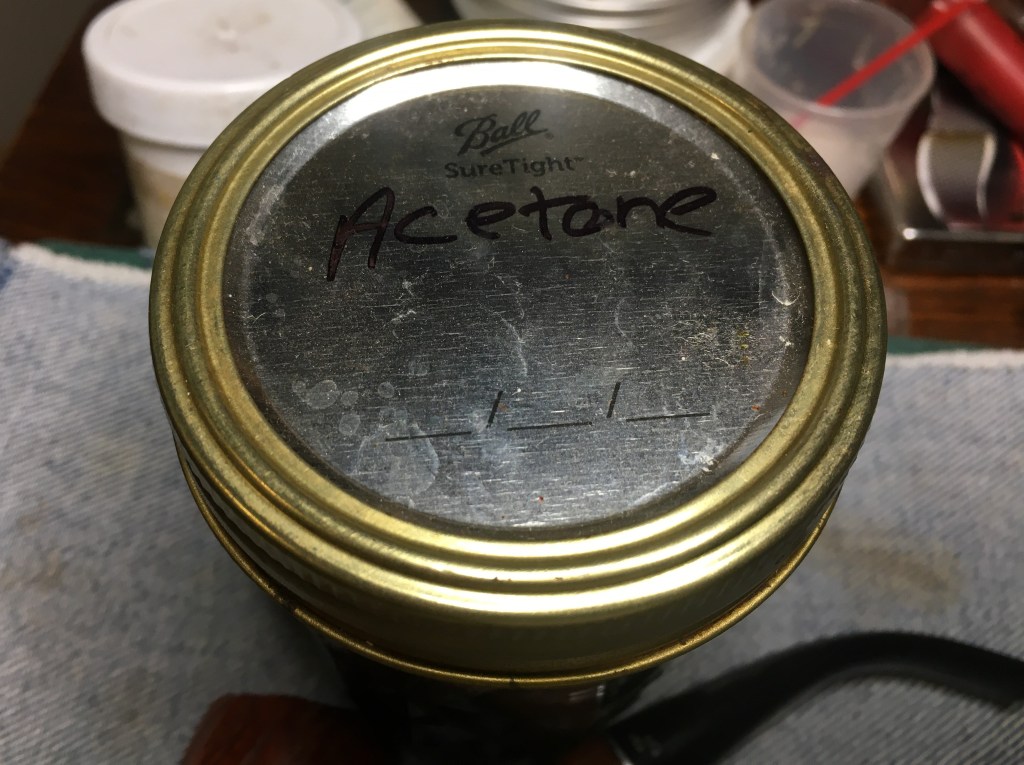
The next phase of the restoration was to micro-mesh the meerschaum. I wanted to make sure that the micro-mesh pads were clear and would not be transferring any vulcanite dust to the slight grooves and scratches in the meerschaum. To do this I washed the pads with a small amount of Dawn dish soap and a nylon scrub brush. Each pad was scrubbed, rinsed and dried.

The cleaned pads looked much better than they looked before.

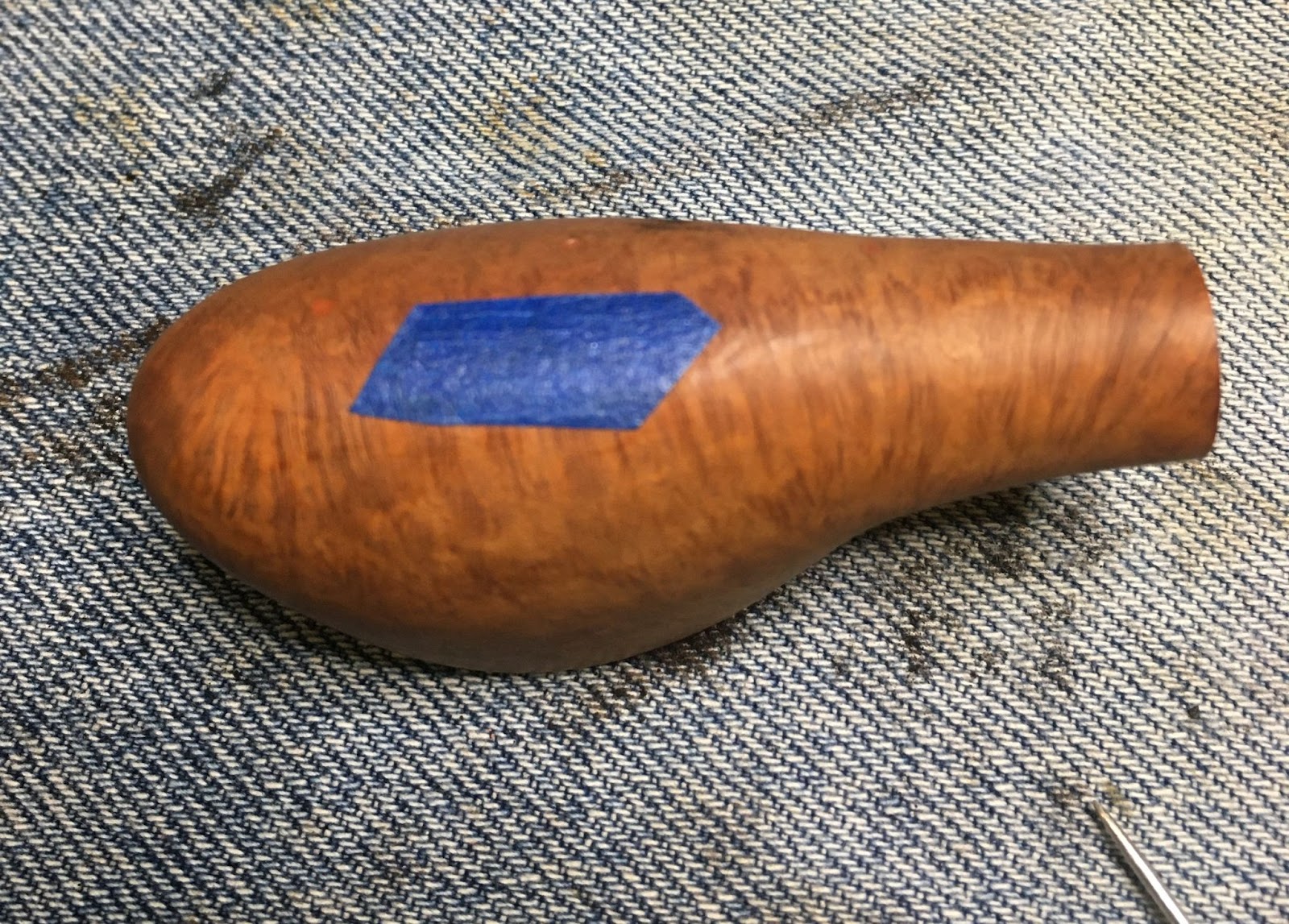
I wrapped the gold band with painters tape to protect it from the micro-meshing of the stummel.

The stummel was worked with each pad in succession. Between each pad I wiped the stummel with a make-up pad moistened with 95% ethyl alcohol. I did not try to completely remove all of the scratches as I thought they added a bit of character to the pipe.

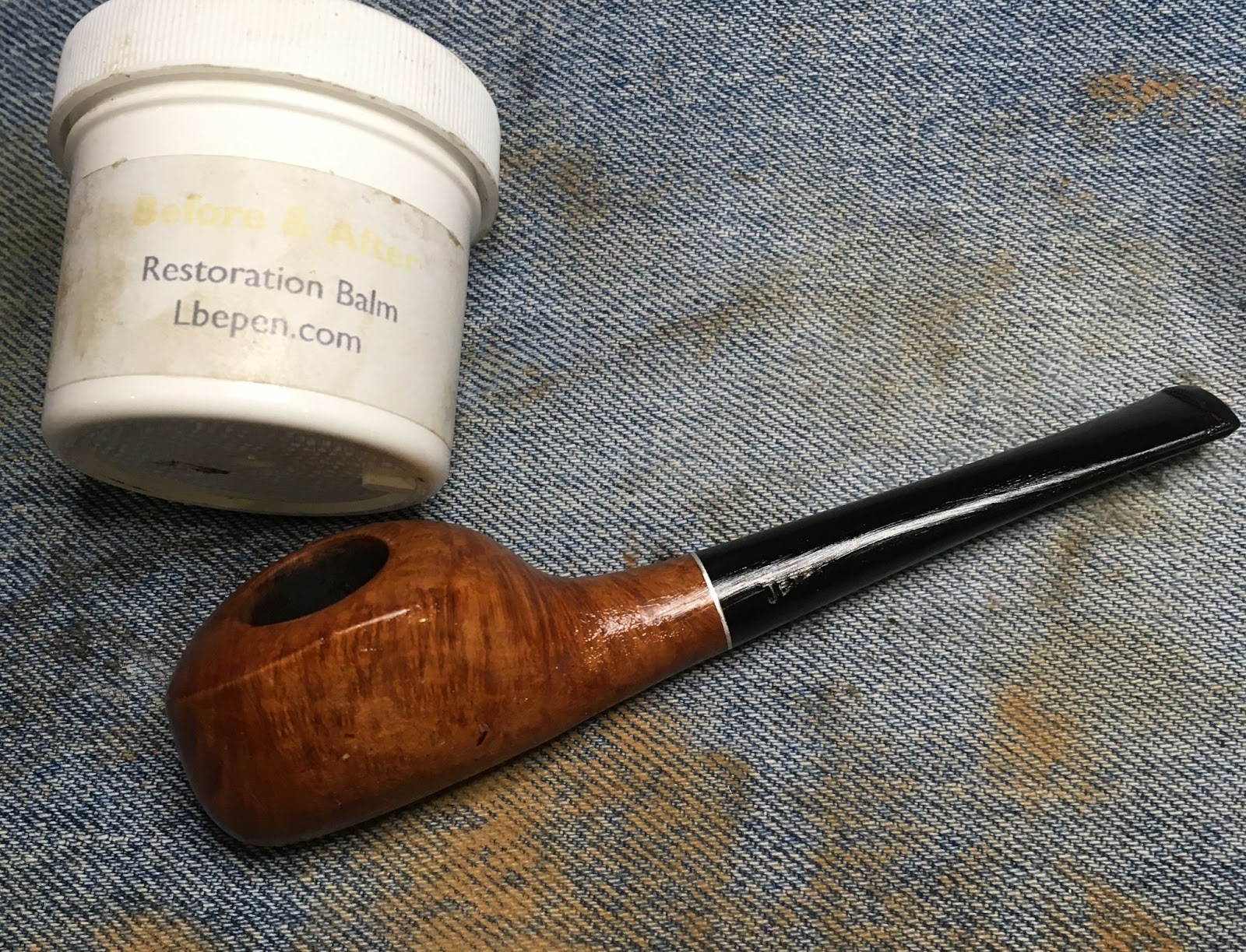
The next step was to apply a fresh coat of beeswax. I like to use a pan of water to heat a jar filled with beeswax. The hot water melts and allows the wax to remain molten for longer periods of time as well as not getting the wax too hot. Achieving the vaporization point of wax is not a great idea when heating with the open flame from natural gas. I plugged the bowl with a wine bottle cork wrapped with several layers of masking tape.

While the wax was melting I heated the meerschaum with a heat gun. This allows the molten beeswax to better penetrate the pores of the meerschaum.

Once the max was melted and the stummel heated, I held the stummel by the cork and painted the wax onto the meerschaum. Even with all of the heating the wax cools and builds up quickly. I rotated the coated stummel under the heat from the heat gun. Any wax that was not absorbed by the meerschaum was caught in a tin, which can be seen in the above photo. The below photo shows the newly waxed stummel cooling back on the workbench.

As the stummel was cooling, I began work on cleaning the stem. Again, 95% ethyl alcohol, cotton swabs and bristle pipe cleaners were used for this.

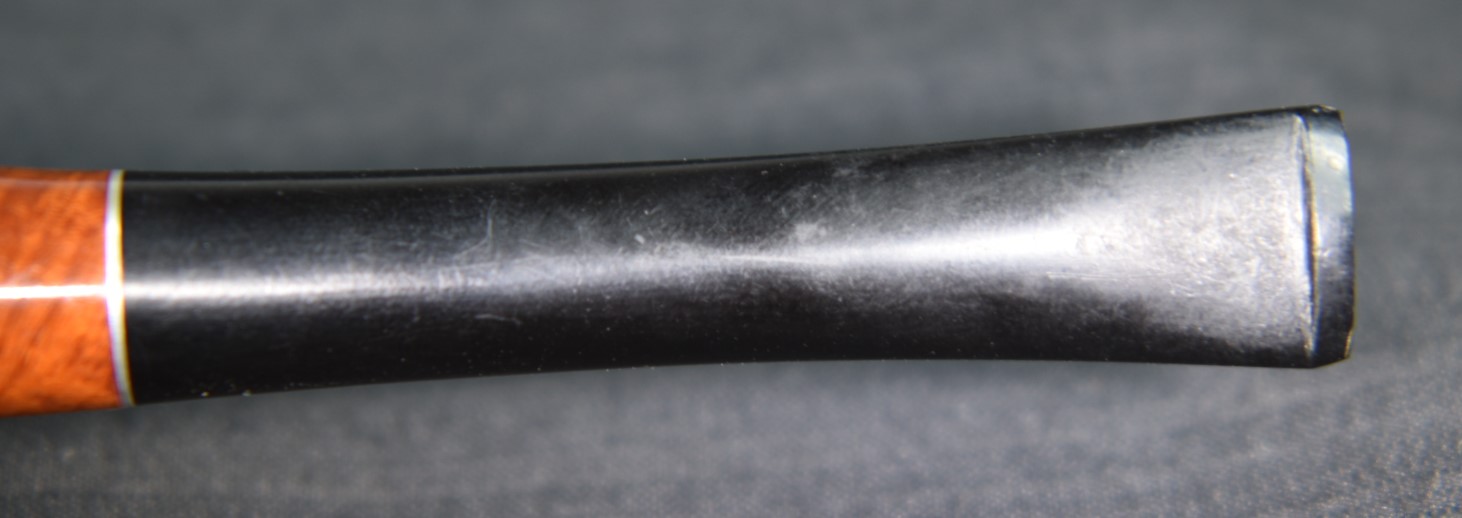
The stem of this pipe was made of nylon. Nylon is harder than the plastic of a Missouri Meerschaum pipe stem but softer than a traditional vulcanite. It is also more resilient to abrasion from sanding and filing. This makes smoothing out imperfections on a nylon stem a bit more difficult and time consuming than vulcanite. I filed the tooth chatter smooth using a small flat file.

Some of the marks in the nylon just refused to be removed. I continued on with the sanding telling myself that perfection is not needed for a pipe I planned on keeping and using for myself. The stem was sanded with a series of sanding sponges from 320-3500 grit. Between each sponge the stem was wiped with a paper towel lightly moistened with alcohol.

The gold band was taped over with masking tape and the stem log taped over with Scotch tape to protect them from the buffer and tripoli buffing compound. I took the pipe to the buffer and buffed the stem.

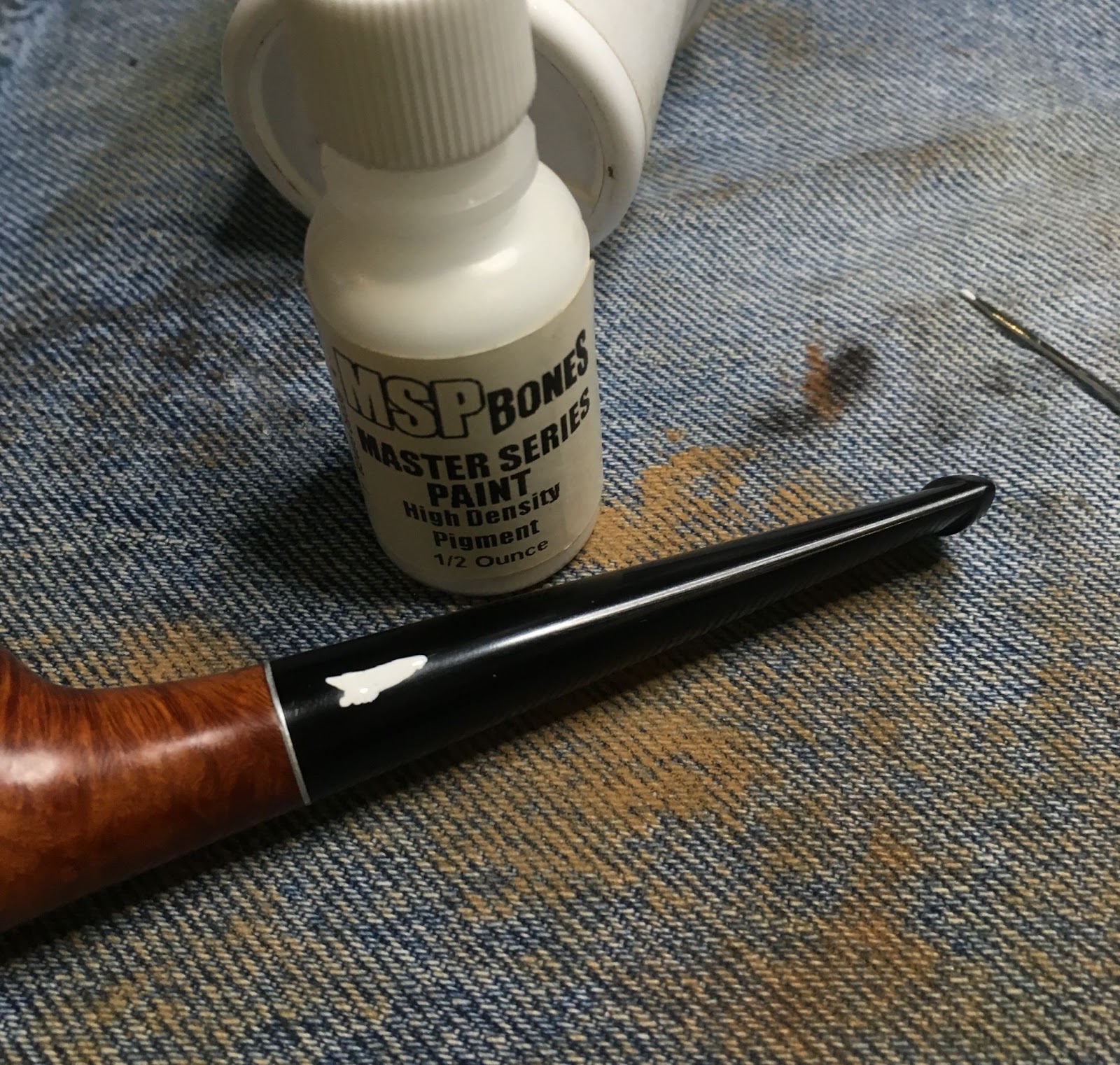
The Scotch tape was removed to repaint the stem logo gold. I used a modeling acrylic paint applied with a wooden skewer.

The gold paint was allowed to mostly dry then I scraped away the paint from outside the stamp.

Below is the mostly cleaned newly repaired logo. The tripoli compound can still be seen on the masking tape.

The gold band was cleared of masking tape and the band polished with a Cape Cod Polishing cloth.

The pipe was then returned to the buffer for several final coats of carnauba wax to the band and the stem. The stummel was not waxed with carnauba as it just had fresh beeswax.

The final step was hand buffing with a microfiber polishing cloth.
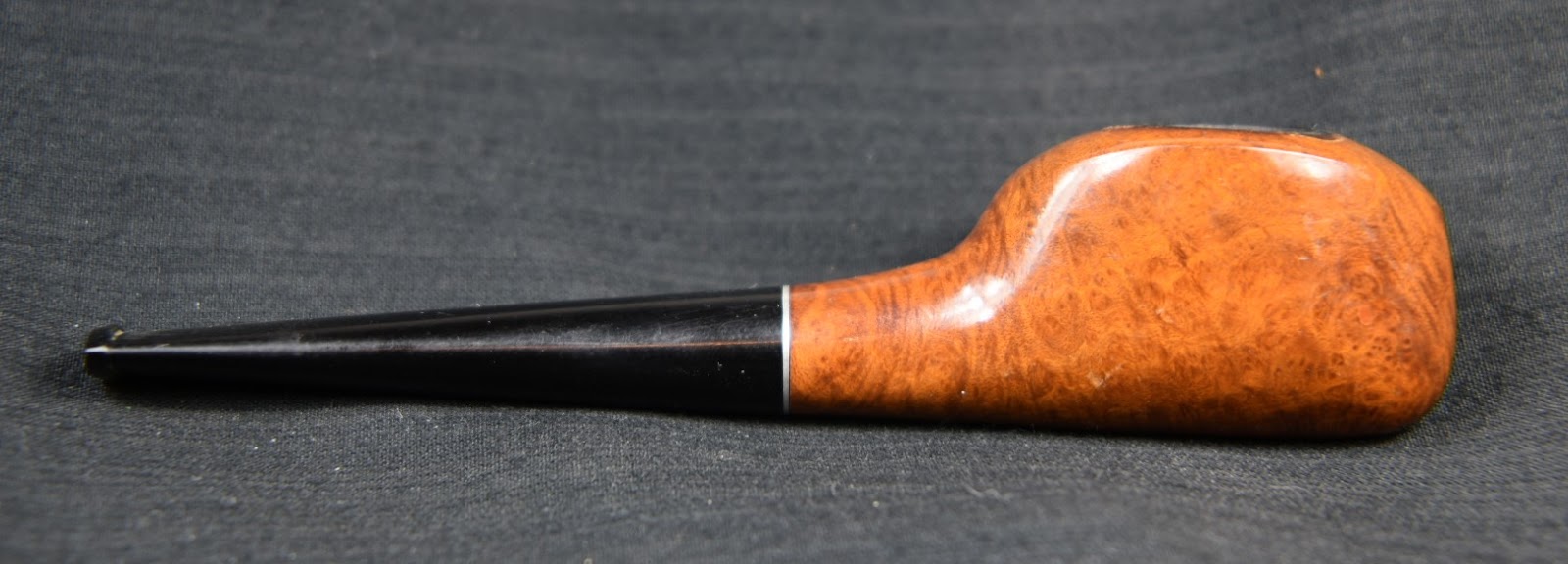
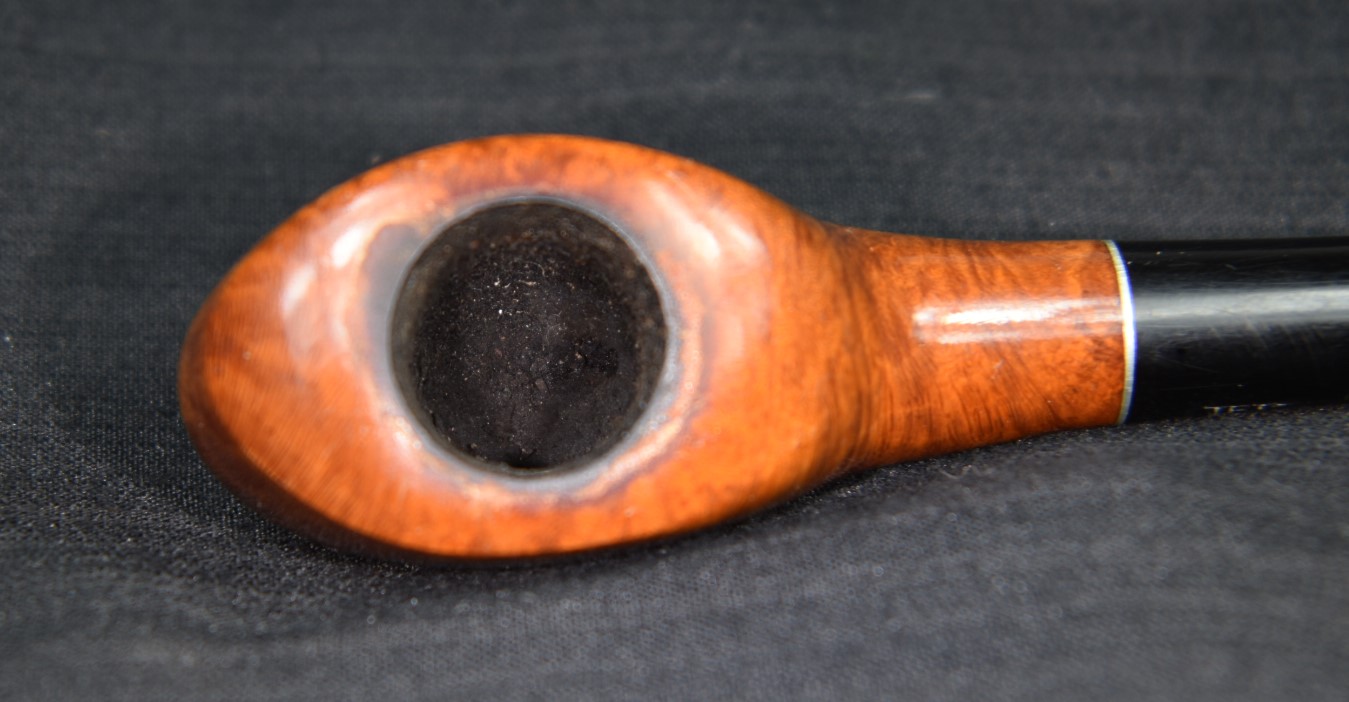
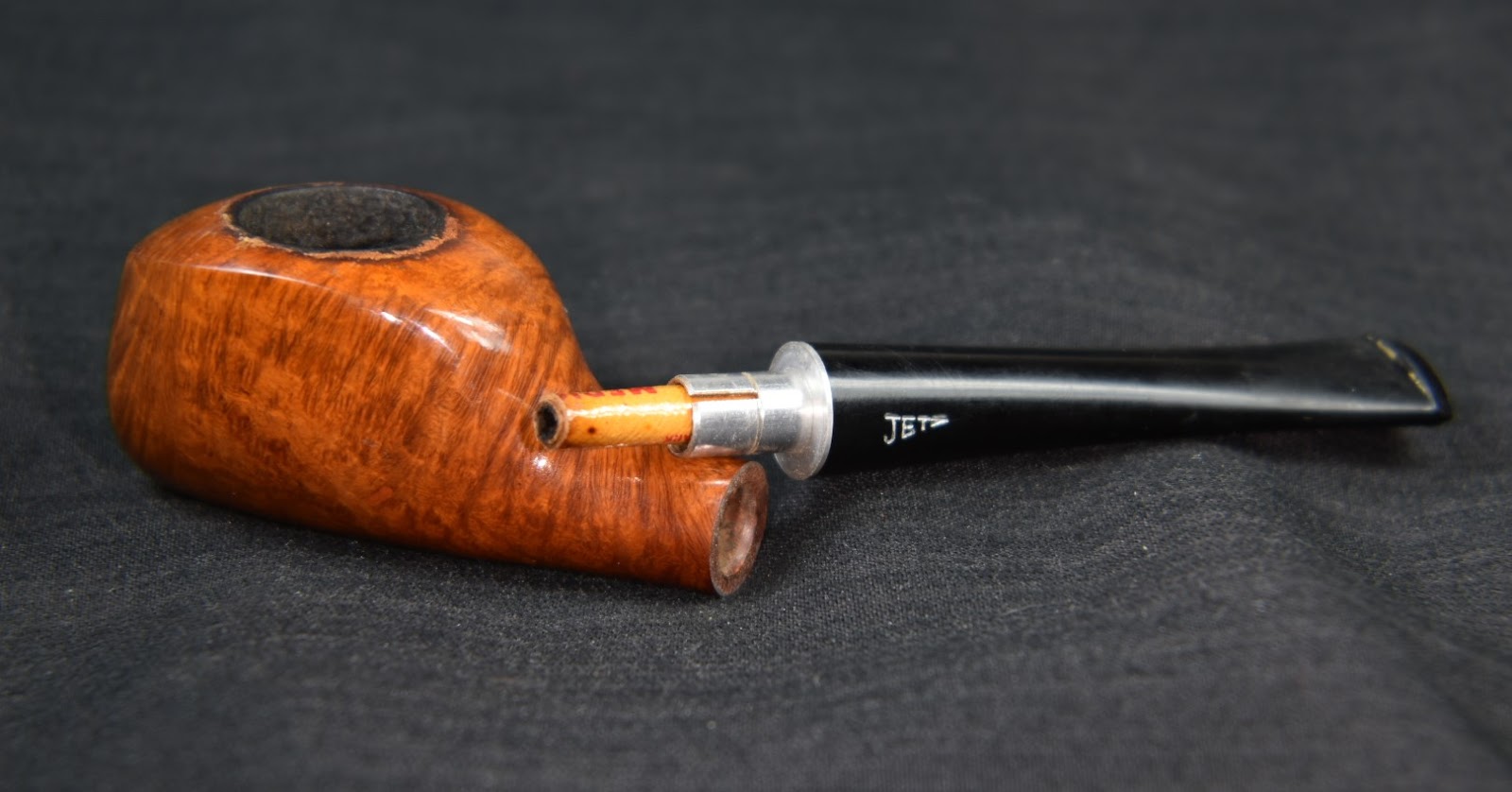
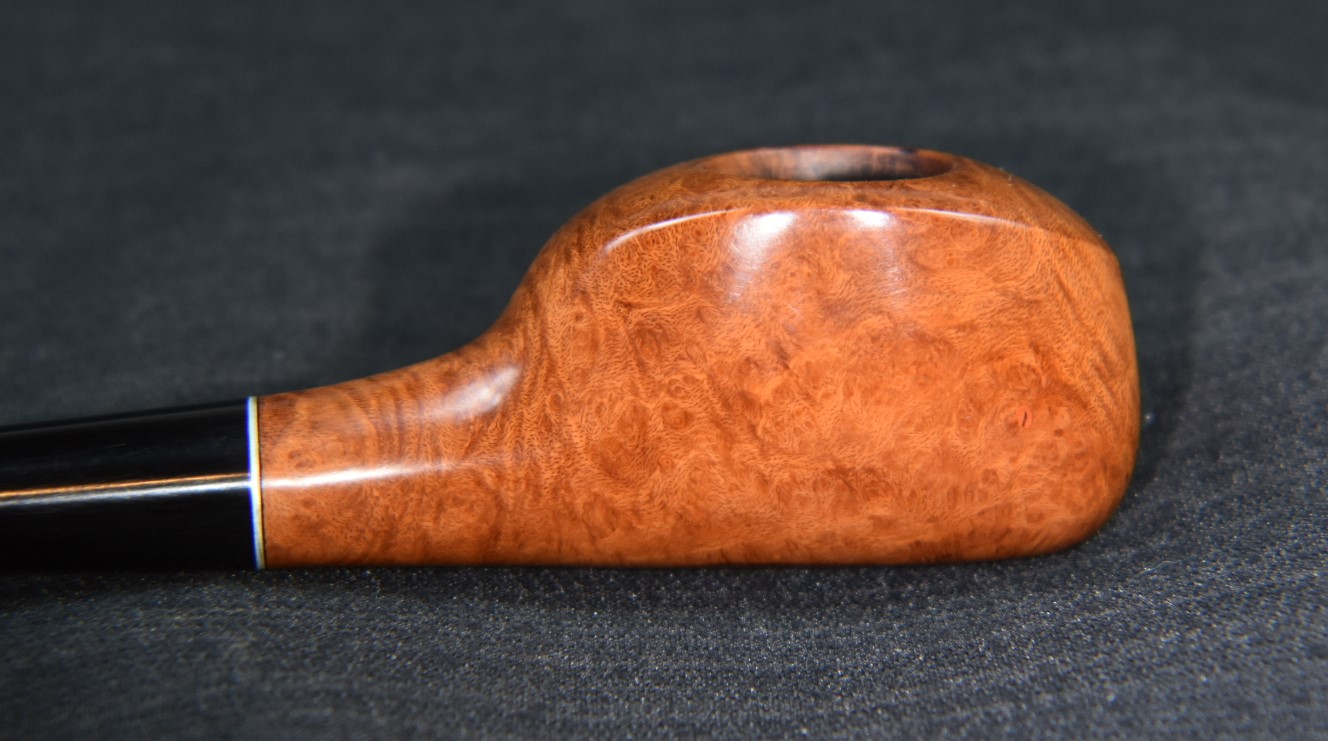
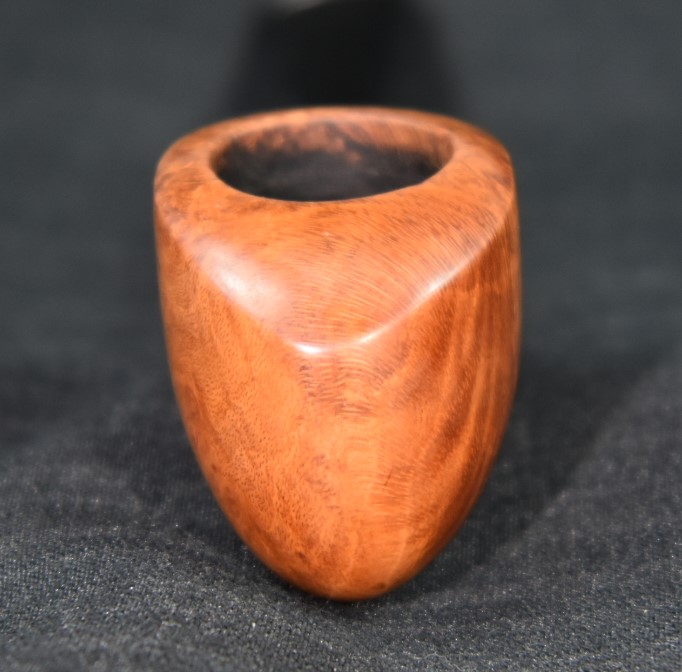
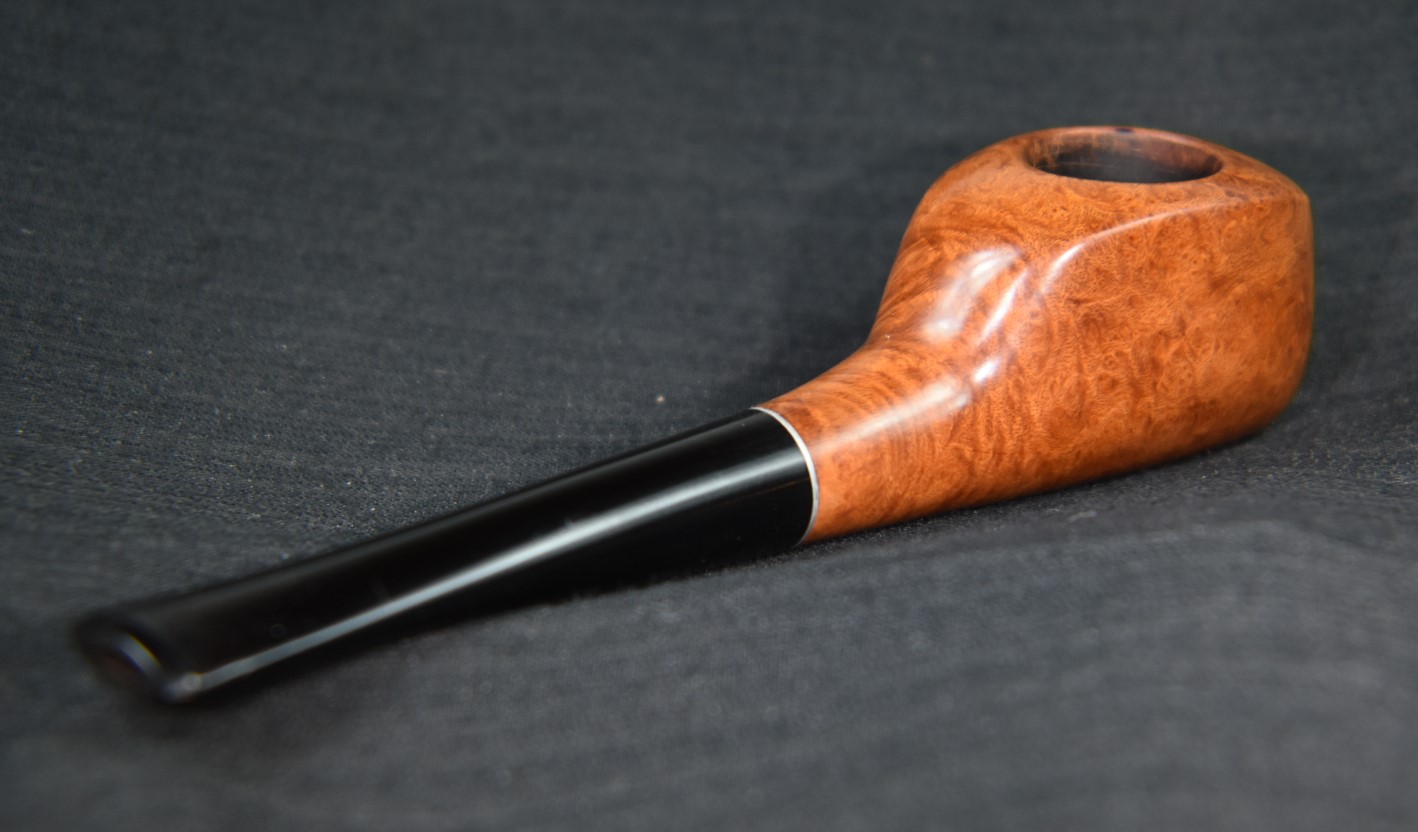
I think this Medico Gold Crest meerschaum apple turned out beautifully. I love the apple shape and think the scratches and scars add to the character of the pipe. The beeswax brought out a slightly more buttery look to the meerschaum which is accentuated by the glossy black of the nylon stem. Though not perfect the stem is far far smoother than it was originally. The pipe will surely bring enjoyment for another 60 years. Probably not for me but I hope that it will be passed down to the next generation of grandpas who can appreciate the pipe’s heritage and utility. The dimensions of this Medico Gold Crest meerschaum apple are:
- Length: 5.90 in./ 149.86 mm.
- Weight: 1.65 oz./ 46.78 g.
- Bowl Height: 1.78 in./ 45.21 mm.
- Chamber Depth: 1.30 in./ 33.02 mm.
- Chamber Diameter: 0.82 in./ 20.83 mm.
- Outside Diameter: 1.59 in./ 40.39 mm.
I do hope that you have found something here useful to your own pipe care, maintenance or restorations. If you like this sort of thing, please click the like and subscribe buttons. Thank you for reading the ramblings of an old pipe lover.
Below are some photos of the finished Medico Gold Crest meerschaum apple.


 (
(







 (
(























 NebraskaPeteGeek