Photographed and written by
John M. Young
I blame or give credit, depending on your view, to Steve Laug of rebornpipes.com for my fascination with Malaga pipes. I remember reading his blogs about the history of the brand and the maker and thought it to be an American success story. Maybe not the empire building story of a Wally Frank but nevertheless a story worthy of a pipeman’s attention. Perhaps fascination is too strong of a word as I have only restored two Malaga pipes so far. Interest, may be a better descriptor. This lovely bulldog came to my attention via a saved search for Malaga pipes on eBay. Those pesky email alerts can be handy on occasion.
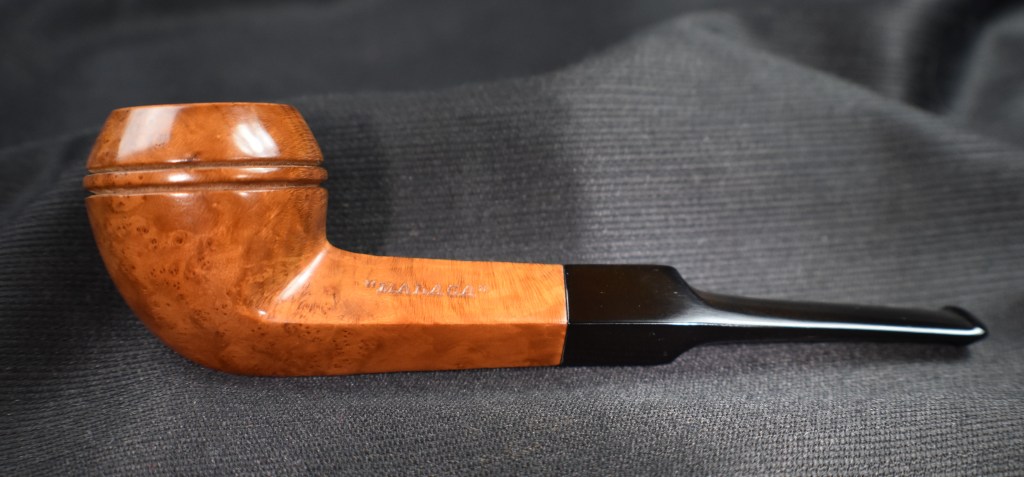
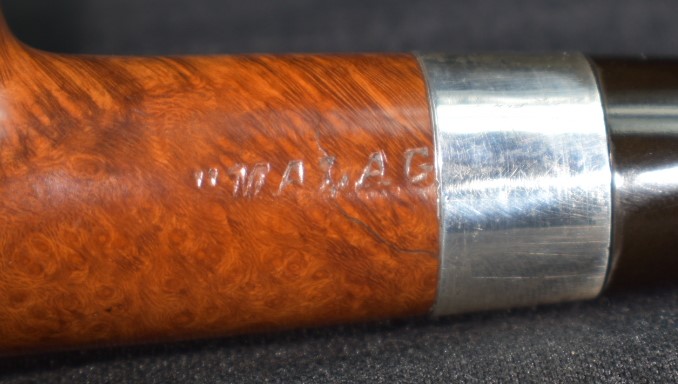
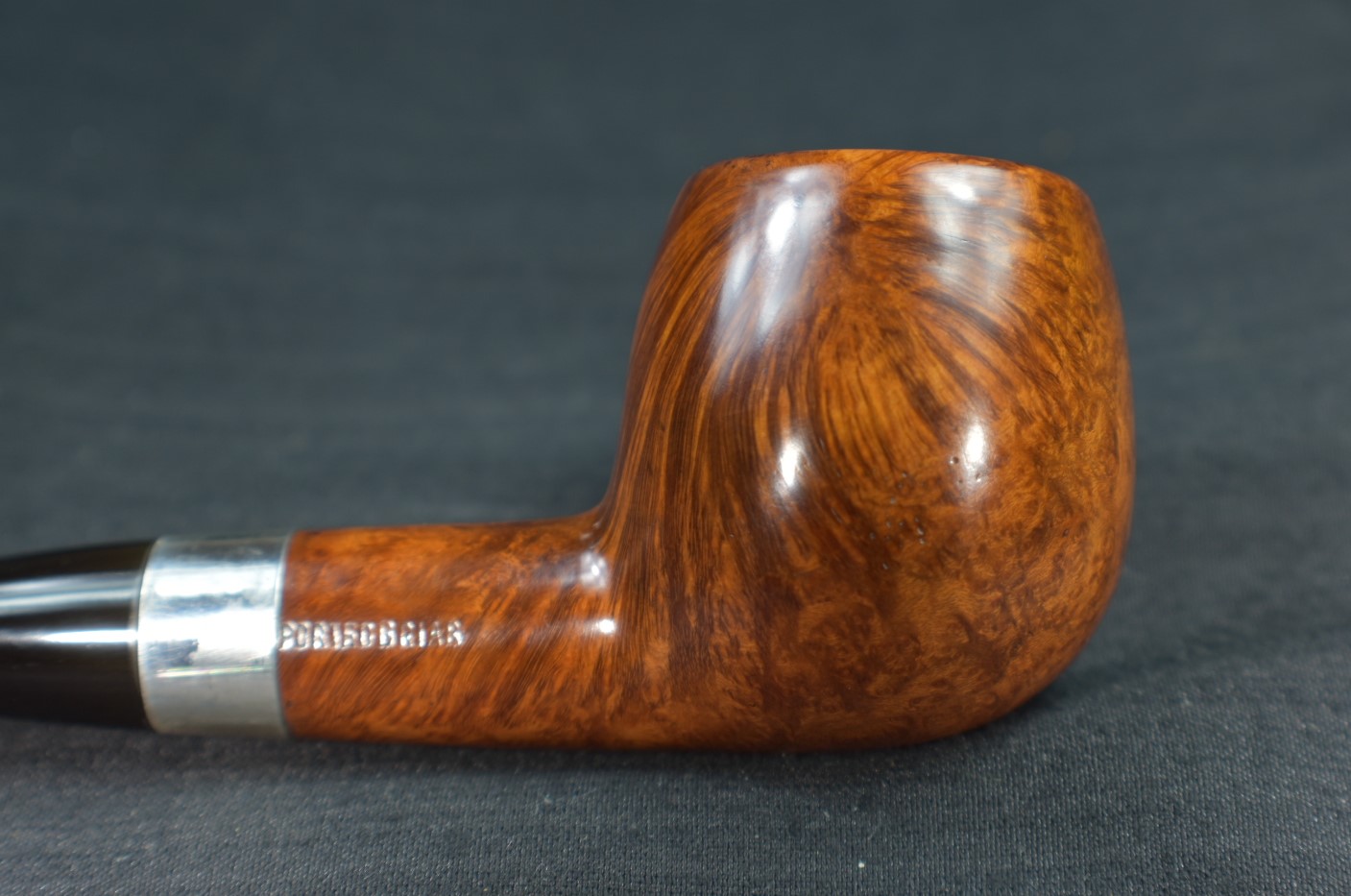
The Malaga Bulldog came to southeast Nebraska via Davenport, Iowa. A journey of a mere 325 miles (523 km). The pipe was stamped “MALAGA ” on the top left shank and IMPORTED BRIAR on the adjacent topright. No other stampings were observed. Below are some photos of the pipe upon arrival.


Though not Unfired, the pipe was nearly in a “new – old stock” condition. There was very slight charing around the inside rim or perhaps a light lava deposit. The stem had oxidation and light tooth chatter. The briar was free of flaws, pits or fills. There was virtually no cake accumulated within the tobacco chamber. This looked like more of a clean-up than a restoration.
Background
In a previous blog of a Malaga Apple , I wrote the following:
“Piedia.org has a nice history of Malaga pipes. I will include the text here in its entirety:
“The Malaga Pipe Company was founded circa 1939 by George Khoubesser, (b.1892 d.1971), and located in Royal Oak, Michigan at 1406 East Eleven Mile road. The second generation owner’s name was Emmanuel Khoubesser (b. 1942 d. 1981), who everyone knew him as “Manny”. He was a big jovial man that was easy to converse with, always had a smile and a good joke to tell his very loyal customers. He had the ability to befriend anyone within minutes. The small store was packed with curious customers every Saturday morning looking for the latest design made earlier in the week. He also carried a full line of custom mixed tobaccos that you could sample and an array tobaccos in tins.
I was first introduced to him in 1969. I remember him taking me in the back to show me each step involved in pipe making. He was very serious about the quality of the product he sold and would never sell a flawed pipe, even if it was very minor. My step father purchased several of his pipes and really enjoyed them. He once said he’s never found a better pipe (his words).
Manny passed away in 1981 and his wife and oldest children took over the business. Malaga closed in 1999 after 60 years in business. The building still exists on Eleven mile, looking almost like it did back then, but now houses the Michigan Toy Soldier Company. I would think the pipes Manny produced are now more valuable than ever. If you happen across one of these pipes, you’ll know a little bit more about it’s rich history. Enjoy!”
(Malaga Pipe Company – Pipedia)
If your taste for the history of Malag pipes has yet to be satiated I will refer you to Steve Laug’s blog regarding the history of the brand (George Khoubesser and Malaga Pipes | rebornpipes). Steve also received a treasure trove of ephemera from the estate of one of his reader’s fathers (Malaga Pipes Catalogue of Pipes and Tobaccos | rebornpipes). Wonderful information and valuable insights from people who are far more industrious than I with providing you with background information.” (https://wordpress.com/post/scimansays1787.com/5958)
The Restoration
The Malaga received a laundered denim piece to protect the work surface. I would say clean but, the denim was a bit stained from previous restores.

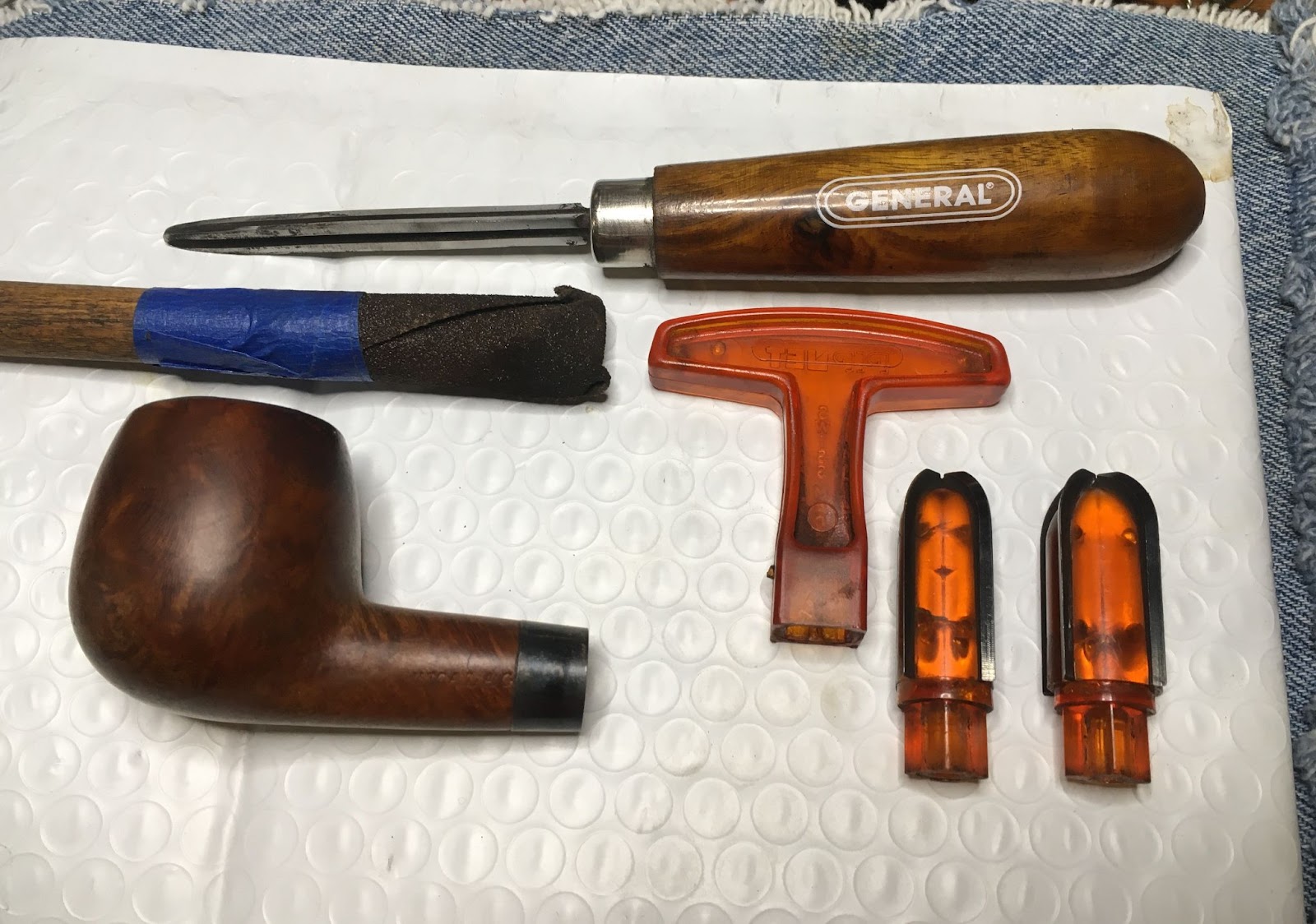
The reaming gear was gathered.

Then put to work. Well work might be an exaggeration. Put to use, is a better term. The PipNet with the #2 blades did remove some cake from the tobacco chamber, mainly from the bottom of the bowl.

The PipNet’s #3 blades did fit better in the chamber and removed significantly more cake. The scrapers were also used to clear any remaining tobacco residuals then the chamber was sanded with 220 sandpaper wrapped around a wood dowel. The chamber showed no signs of any damage.

Next was a trip to the sink for a scrubbing with undiluted Murphy Oil Soap and a medium stiff toothbrush. The soap was rinsed with warm water and the stummel dried with a cotton hand towel.

Back at the workbench the stummel looked very good. No signs of any finish or wax remained.

The rim had cleaned up nicely as well.

The stummel was wiped off with a make-up pad dipped in 95% ethyl alcohol. The pad showed nearly no color change indicating that the stummel was bare briar inside the chamber and out.

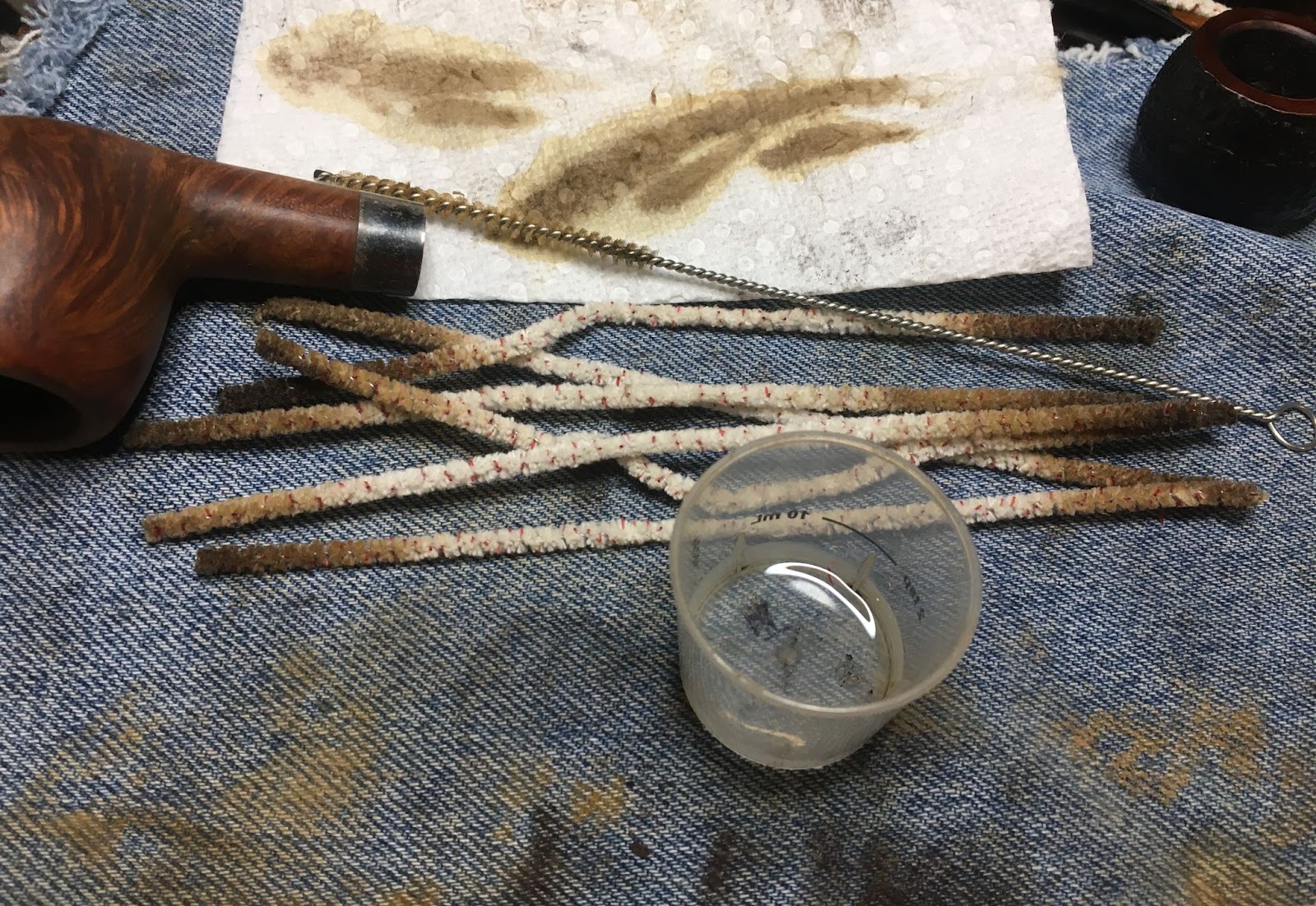
The airway of the shank did have some yuck. Yuck is a very technical term used by pipe restorers to describe the accumulation of tar and smoking residue. Typically yak is dark brown or black in color with an aroma of general yuckiness. This yuckiness can approach vomit inducing levels of perfume sprayed composting flowers in the case of a pipe used for Lakeland blends. Frequently this disgusting perfumy smell is called “Granny purse”. Fortunately there was no Granny purse present with this lovely old Malaga. The airway was scrubbed with a nylon shank brush with 3-4 ml of 95% ethyl alcohol. The alcohol was then poured into a medicine cup.

Repeated alcohol/nylon shank brush scrubbings were followed by cotton swabs and folded bristle pipe cleaners, both dipped in ethyl alcohol. How a pipe that was used relatively little had this much yuck is a bit of a mystery.

The airway of the stem was also cleaned with bristle pipe cleaners and ethyl alcohol and had yuck levels that were more acceptable.

The exterior of the stem was scrubbed with SoftScrub on make-pads to remove the light oxidation. The stem was then coated with mineral oil.

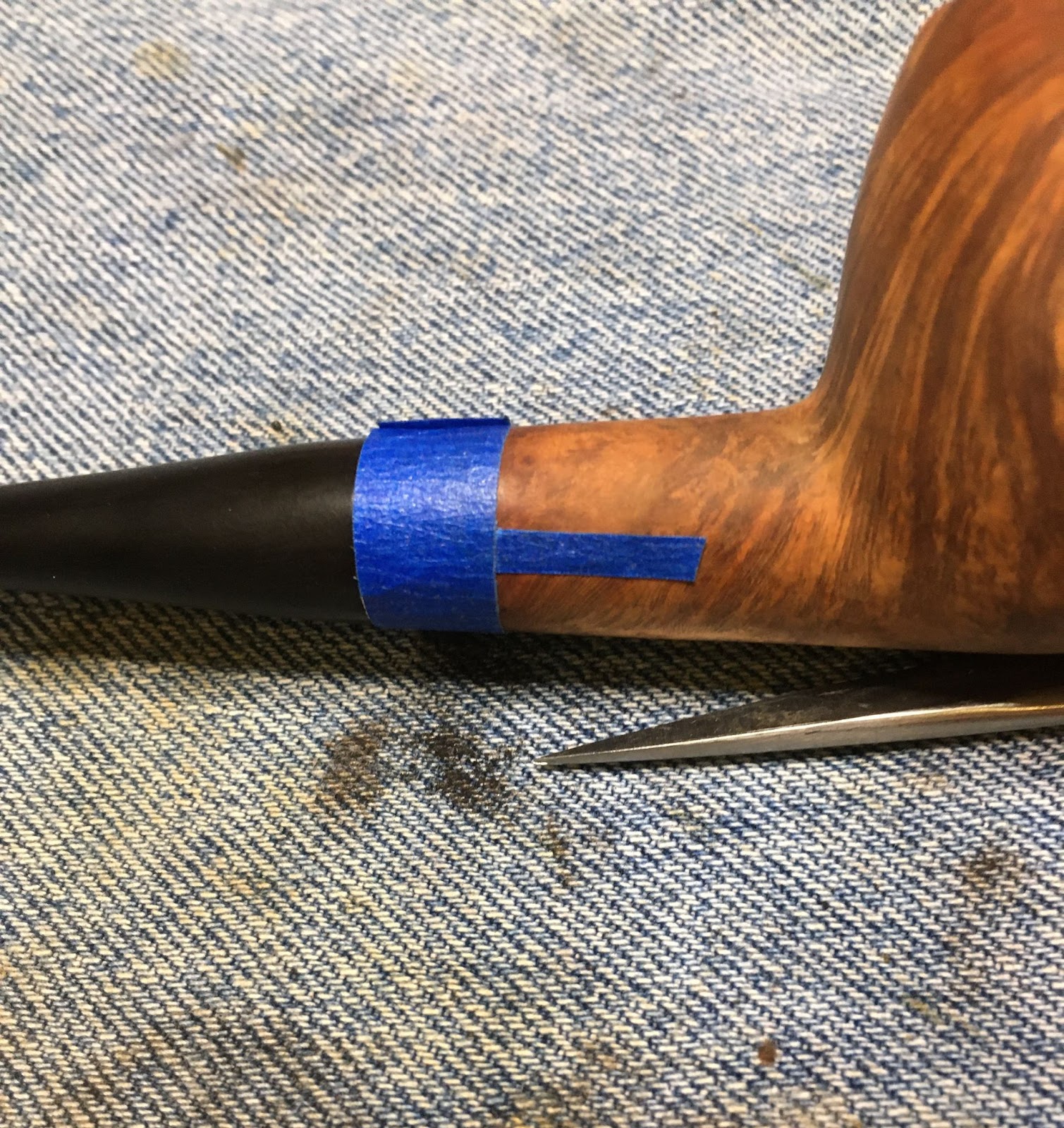
The stummel was prepared for sanding with a couple slivers of painters tape to cover the stamps.

Sanding was done with a series of sanding sponges with grits of 400-3500. The Stem and stummel were connected and sanded together. Thus avoiding any rounding of their edges. Between each sanding sponge I wiped the stummel with a make-up pad wetted with alcohol while the stem received a dab of mineral oil rubbed on by fingertip and wiped away with a dry paper towel.

The pipe was then worked with micro-mesh pads from 4000-12000 grit. Again the stummel was wiped with a make-up pad wetted with alcohol the stem now received a small drop of Obsidian Oil rubbed in and wiped with a paper towel between pads.

The stummel was coated with Before and After Restoration Balm and allowed to sit for 30 minutes while the balm did whatever magic that the balm does.

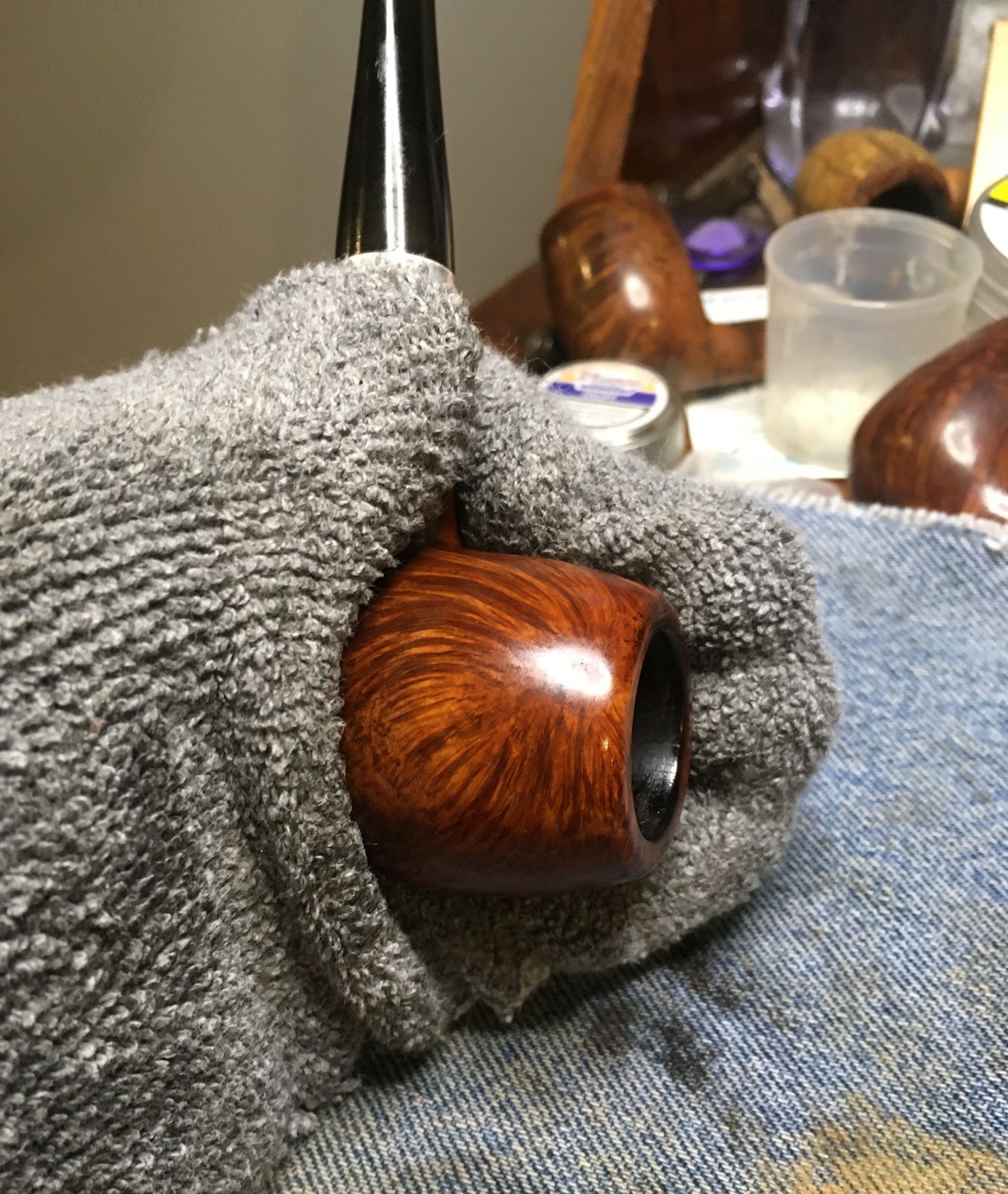
30 minutes later the Restoration Balm was wiped away with an inside out athletic sock revealing that the magic had occurred. I often wish that I could capture the puff of glitter and the mini-rainbow that accompanies the magic but alas, I keep missing that part.

The stem was hand polished with Before and After Fine Polish and a soft cotton cloth.

The Fine Polish was followed by Before and After Extra Fine Polish hand worked with the same soft cloth.

The pipe was then taken to the buffer where it was given several coats of carnauba wax. After waxing the pipe was hand buffed with a nanofiber polishing cloth which raised the shine a bit more.
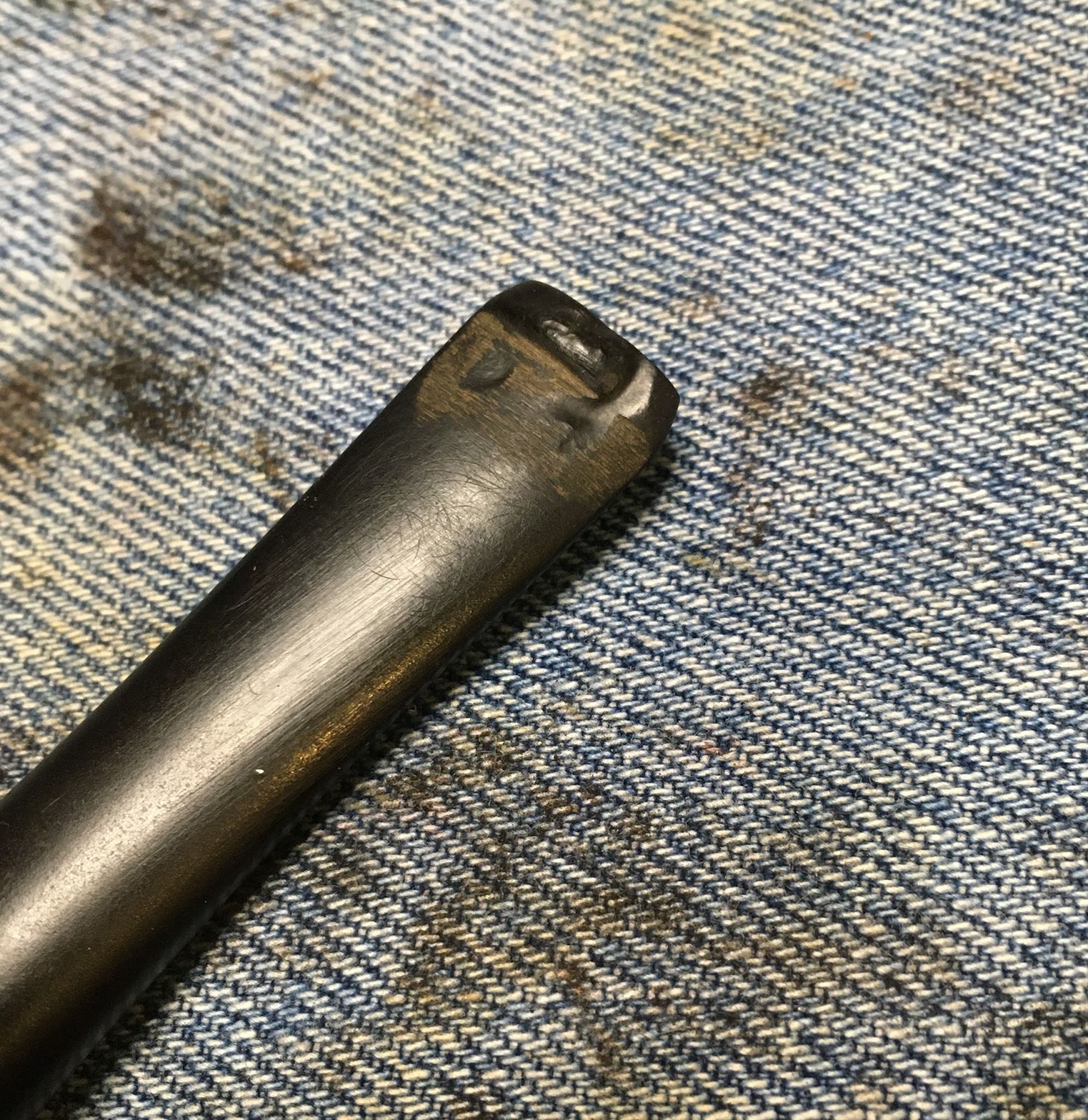
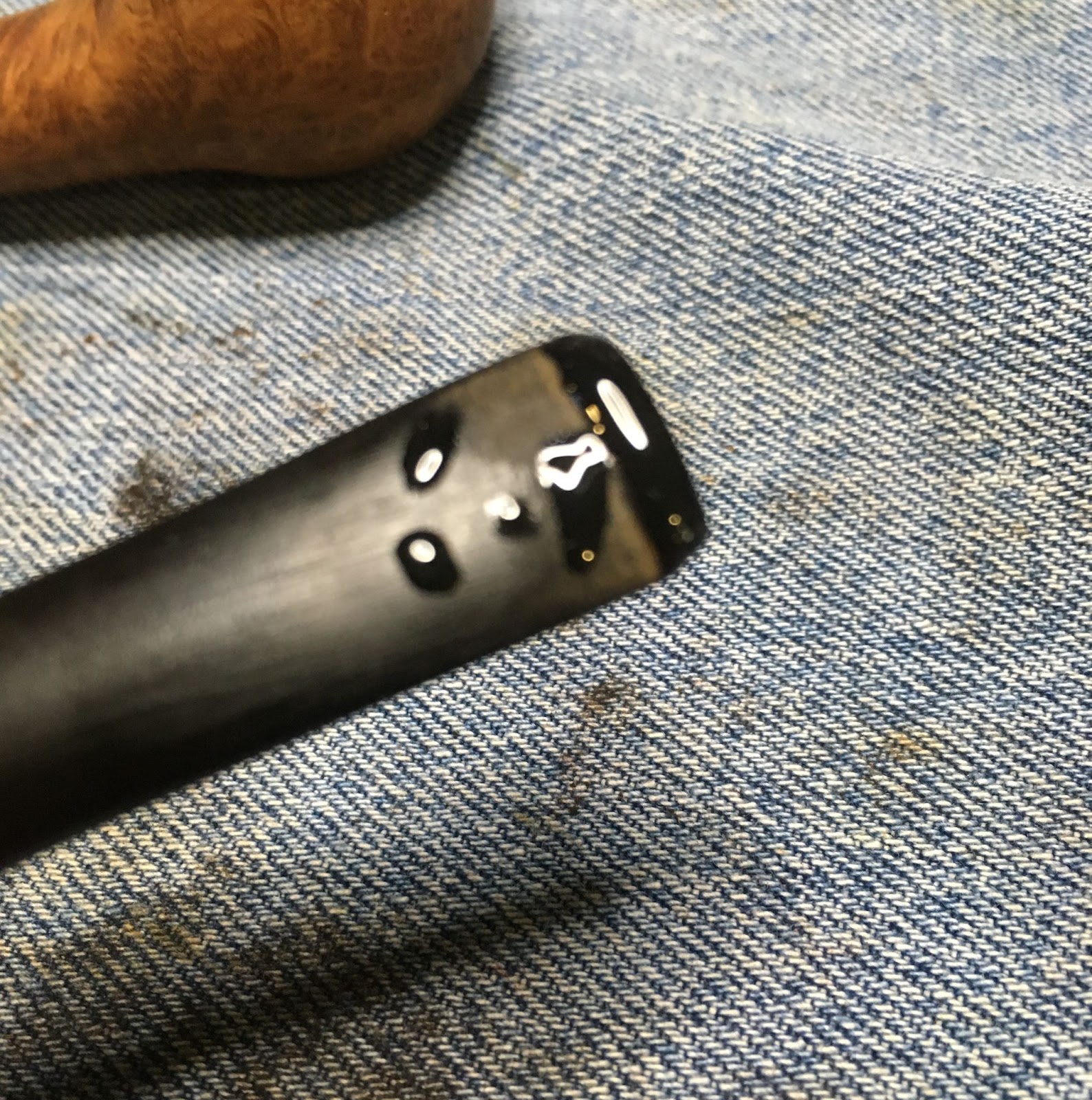
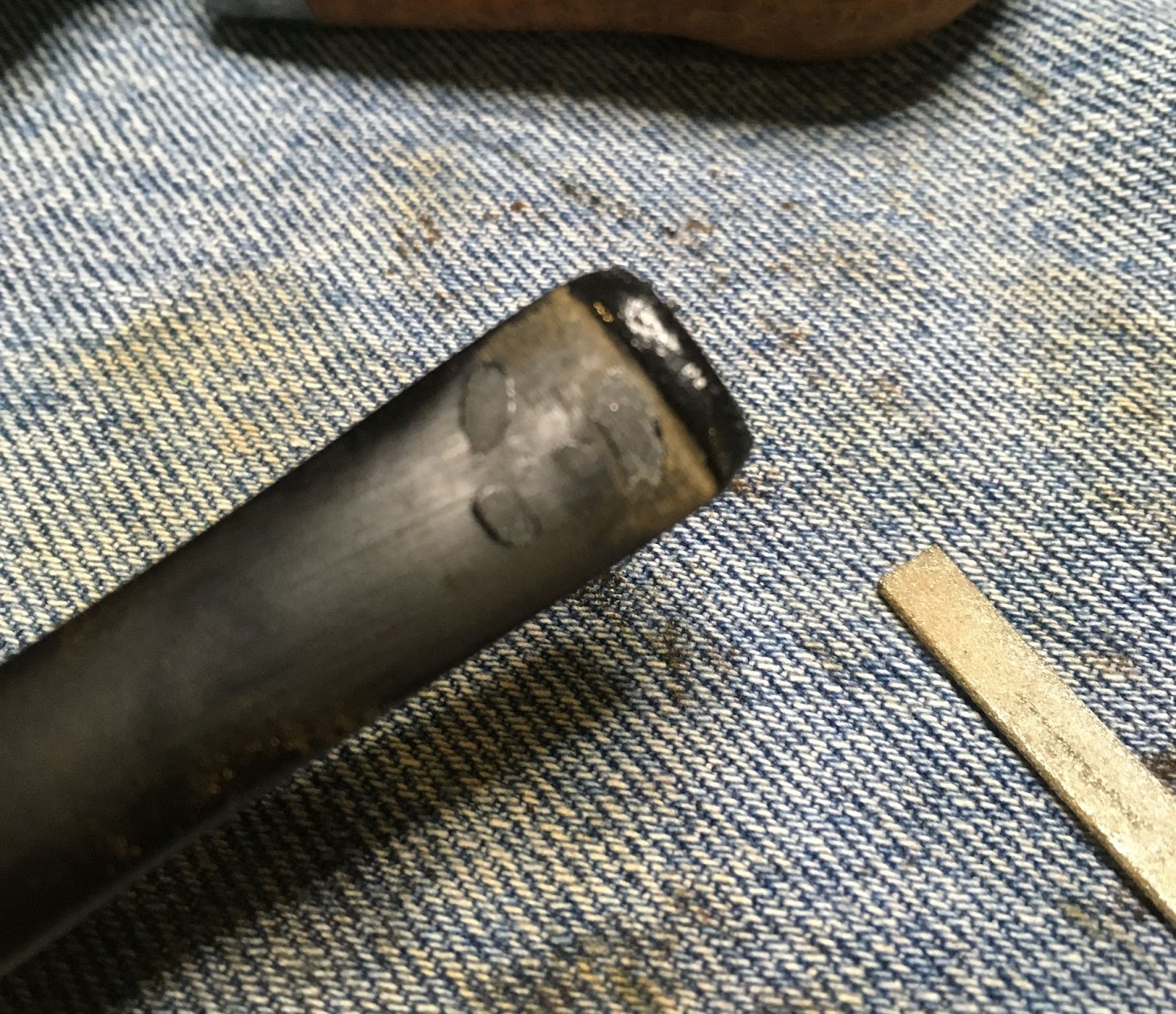
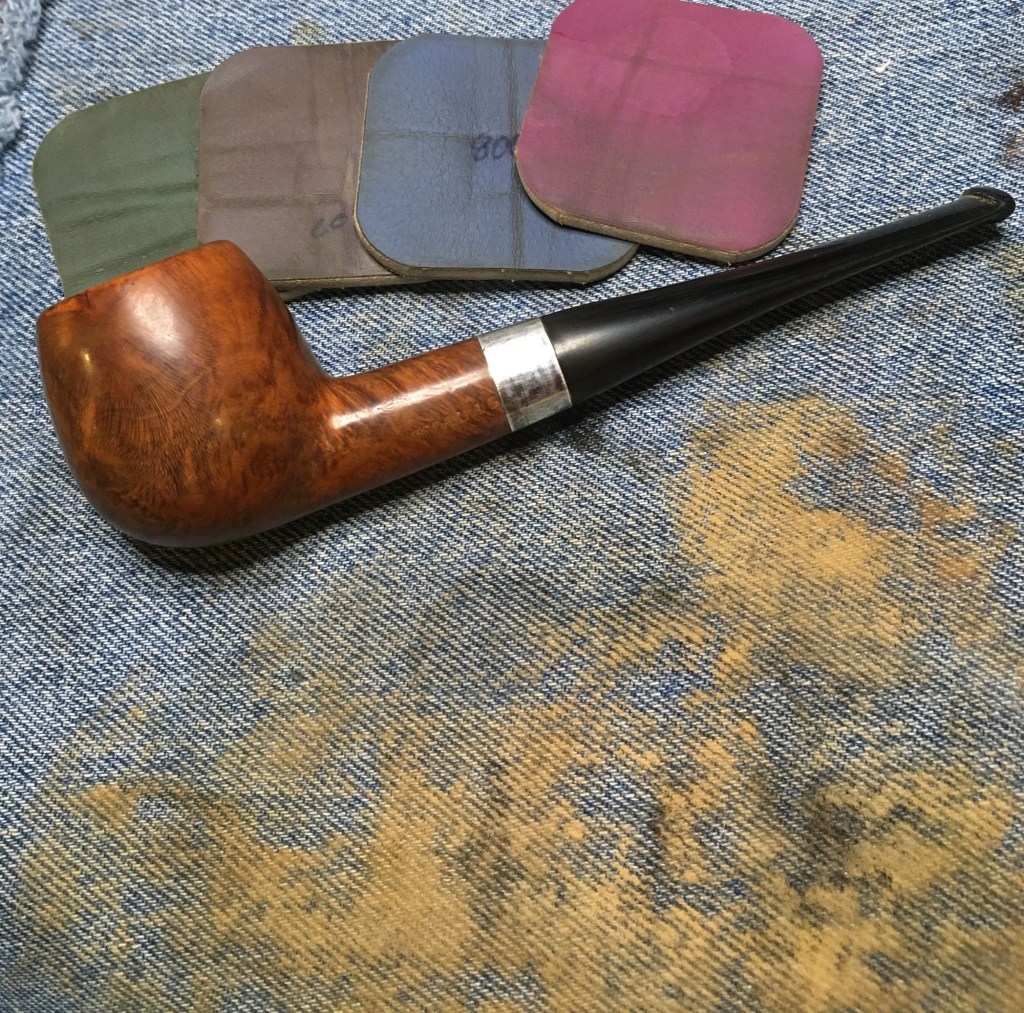
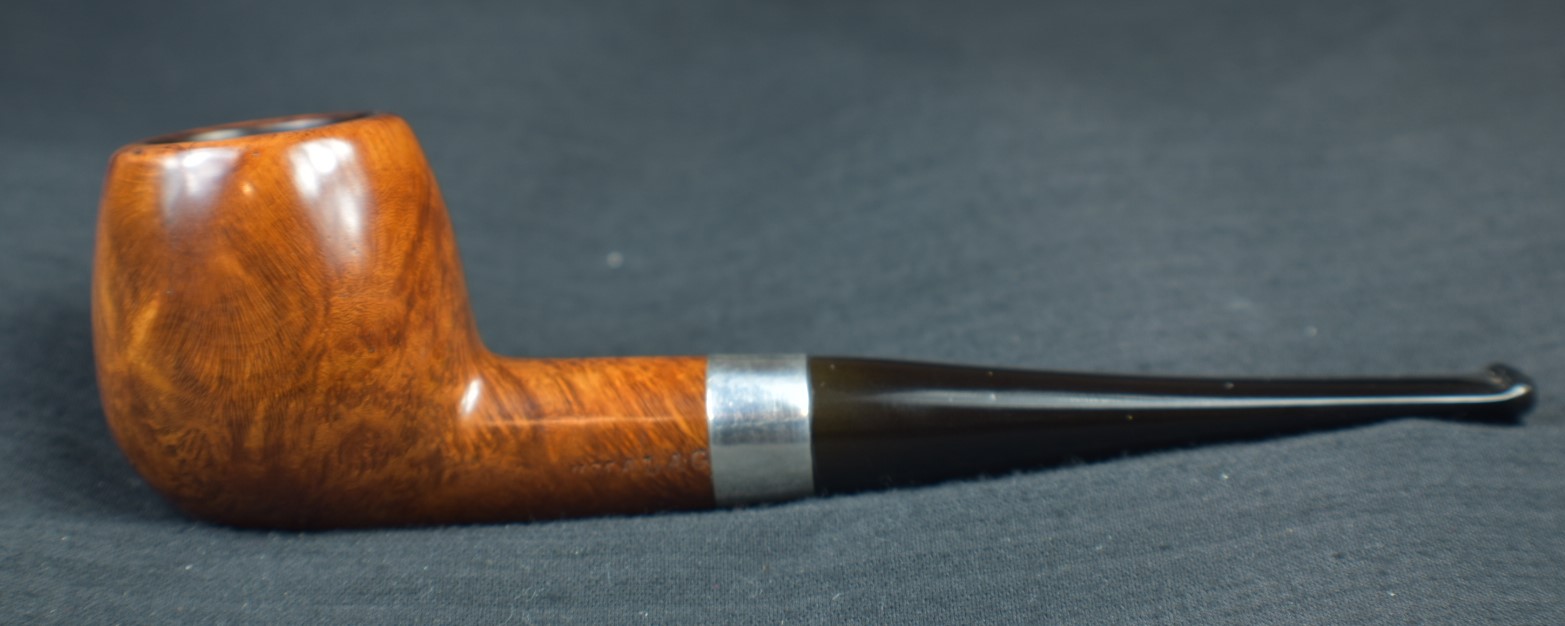
This Beautiful Malaga Bulldog turned out well, beautifully. This is now the second Malaga pipe that I have restored. I am very impressed with the briar which Manny Khoubesser selected for his pipes. It was exceptional, not a fill or flaw to be seen. The vulcanite polished up well. The previous owner of the pipe must have buffed the stem and stummel separately causing the very slight rounding of the edges where the two parts meet. The pipe is very light weight and feels wonderful in my hand. It was truly a shame that Mr. Khoubesser left us so young, his pipes are a testament to his character and I hope to discover and restore more of them in the future. The dimensions of this beauty are:
Length: 5.71 in./ 145.03 mm.
Weight: 0.98 oz./ 27.90 g.
Bowl Height: 1.70 in./ 43.18 mm.
Chamber Depth: 1.50 in./ 38.10 mm.
Chamber Diameter: 0.81 in./ 20.57 mm.
Outside Diameter: 1.49 in./ 37.85 mm.
I do hope that you have found something here useful to your own pipe care, maintenance or restorations. If you like this sort of thing, please click the like and subscribe buttons. Thank you for reading the ramblings of an old pipe lover.
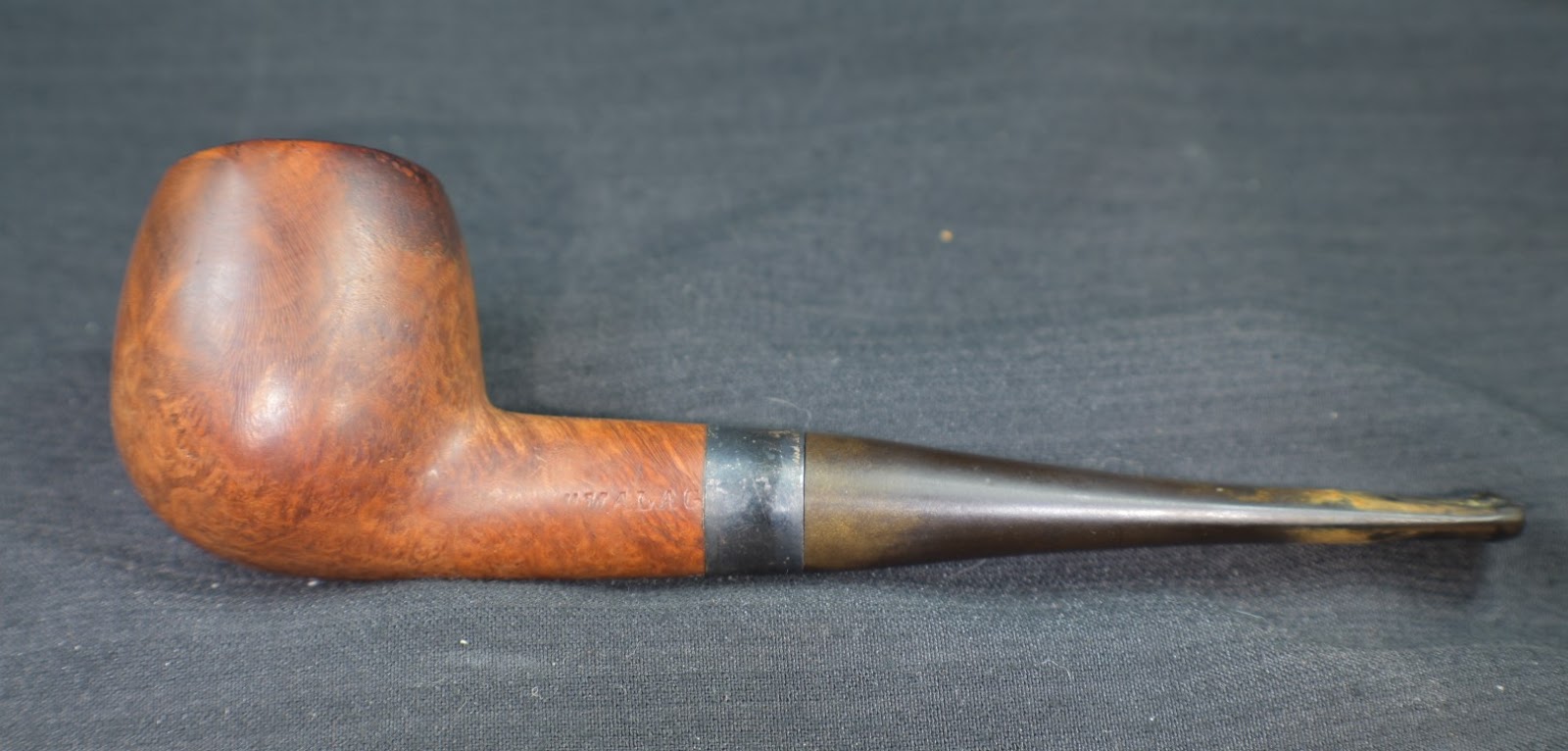
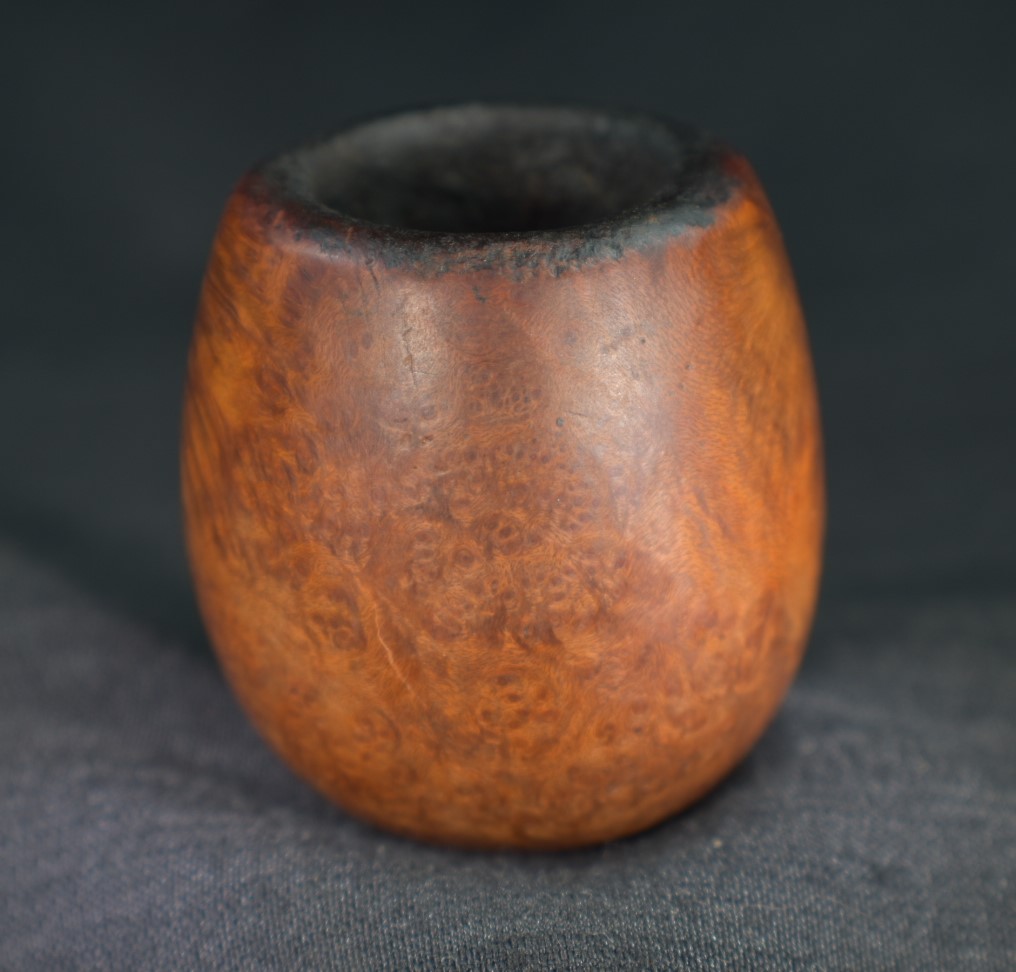
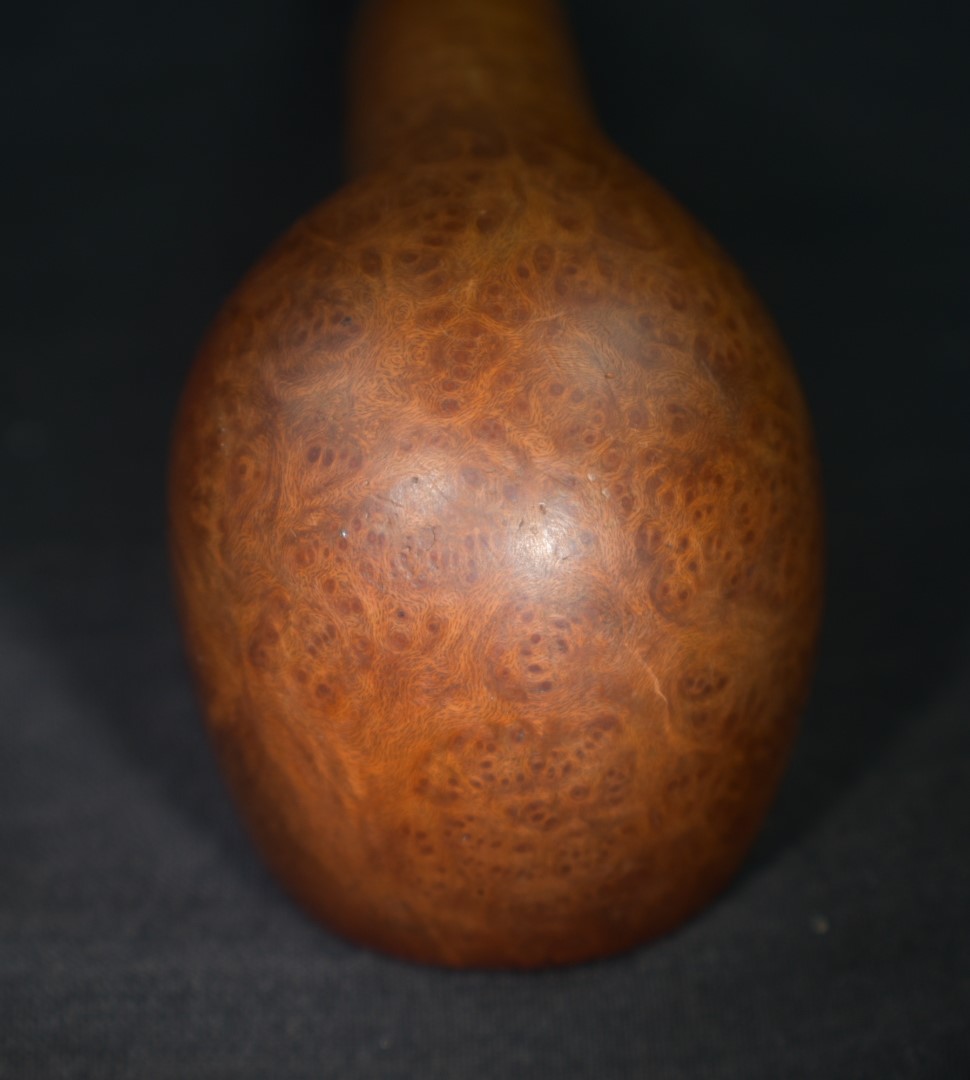
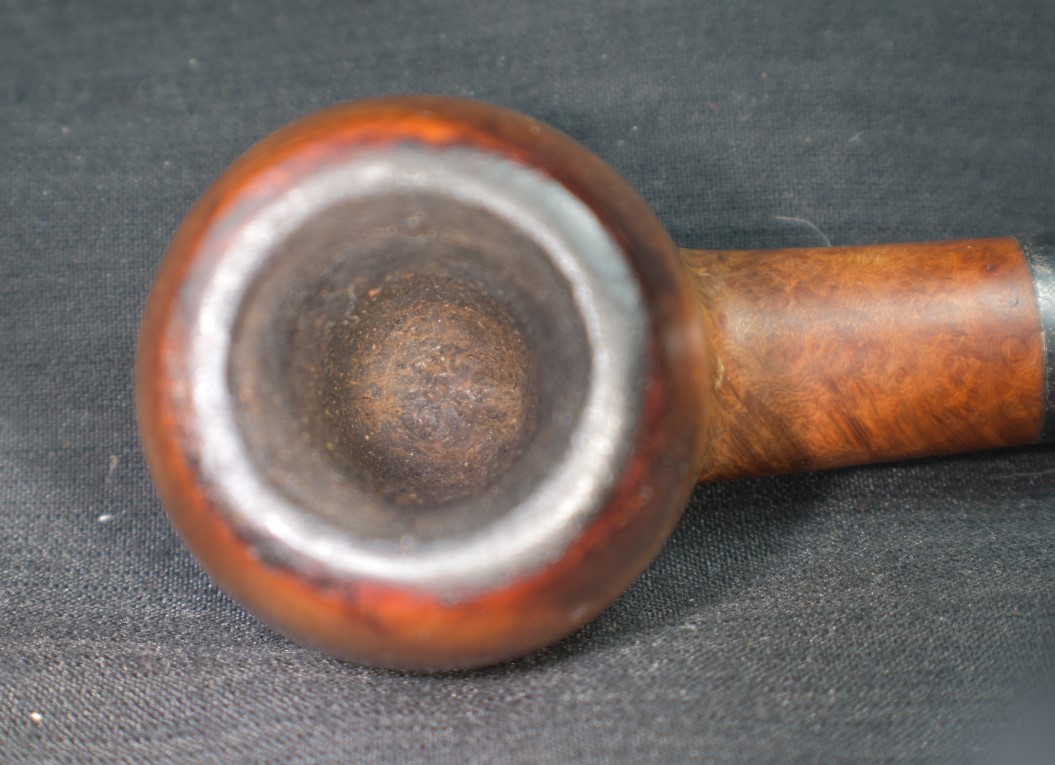
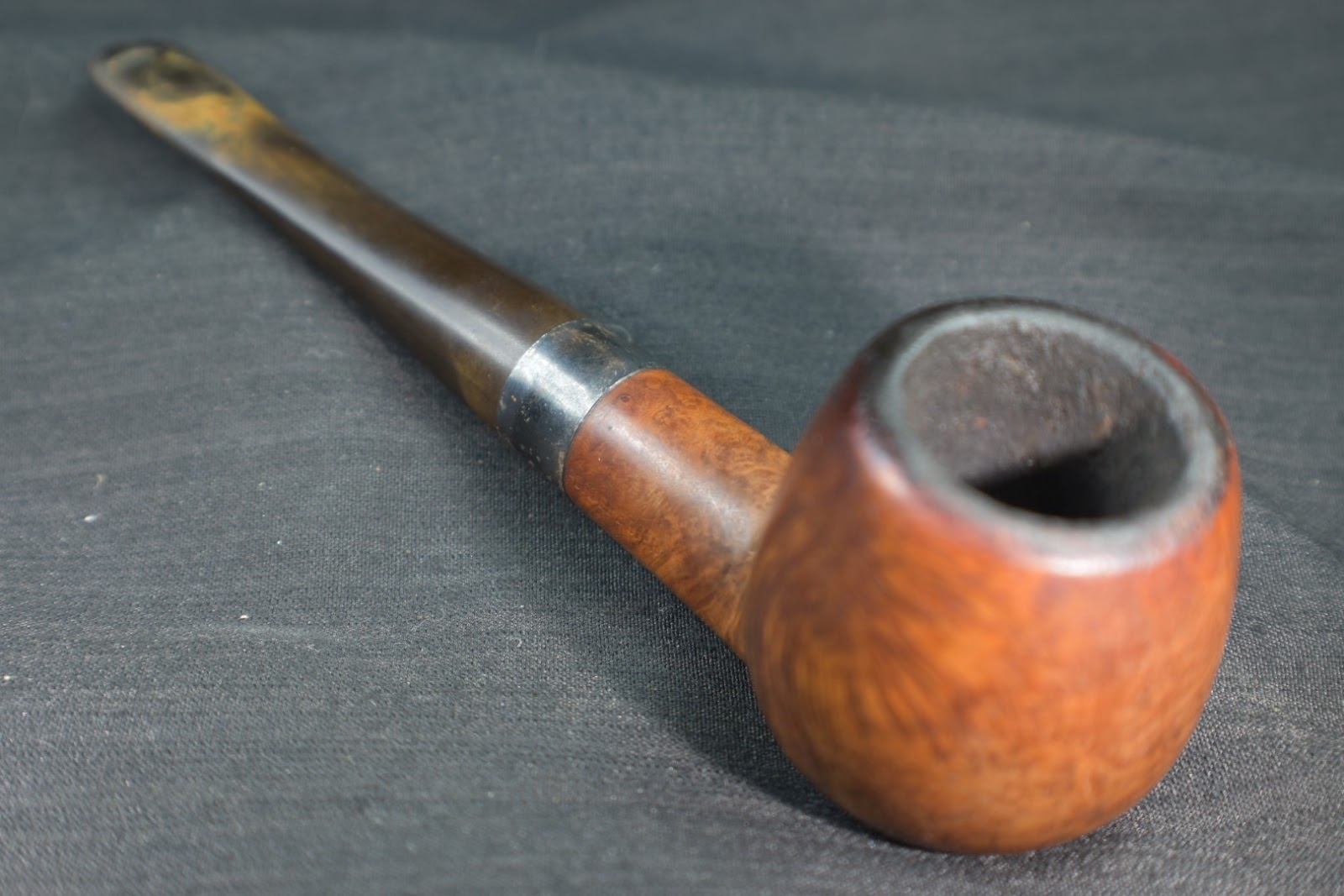
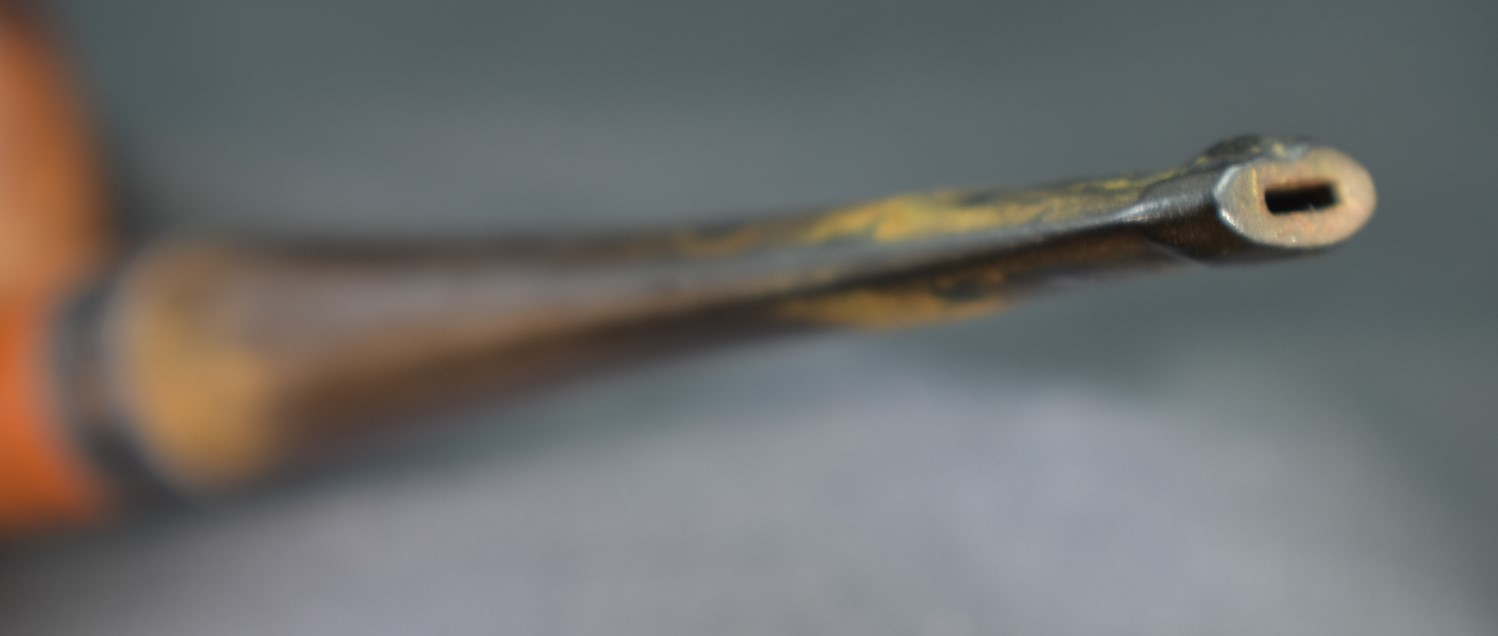
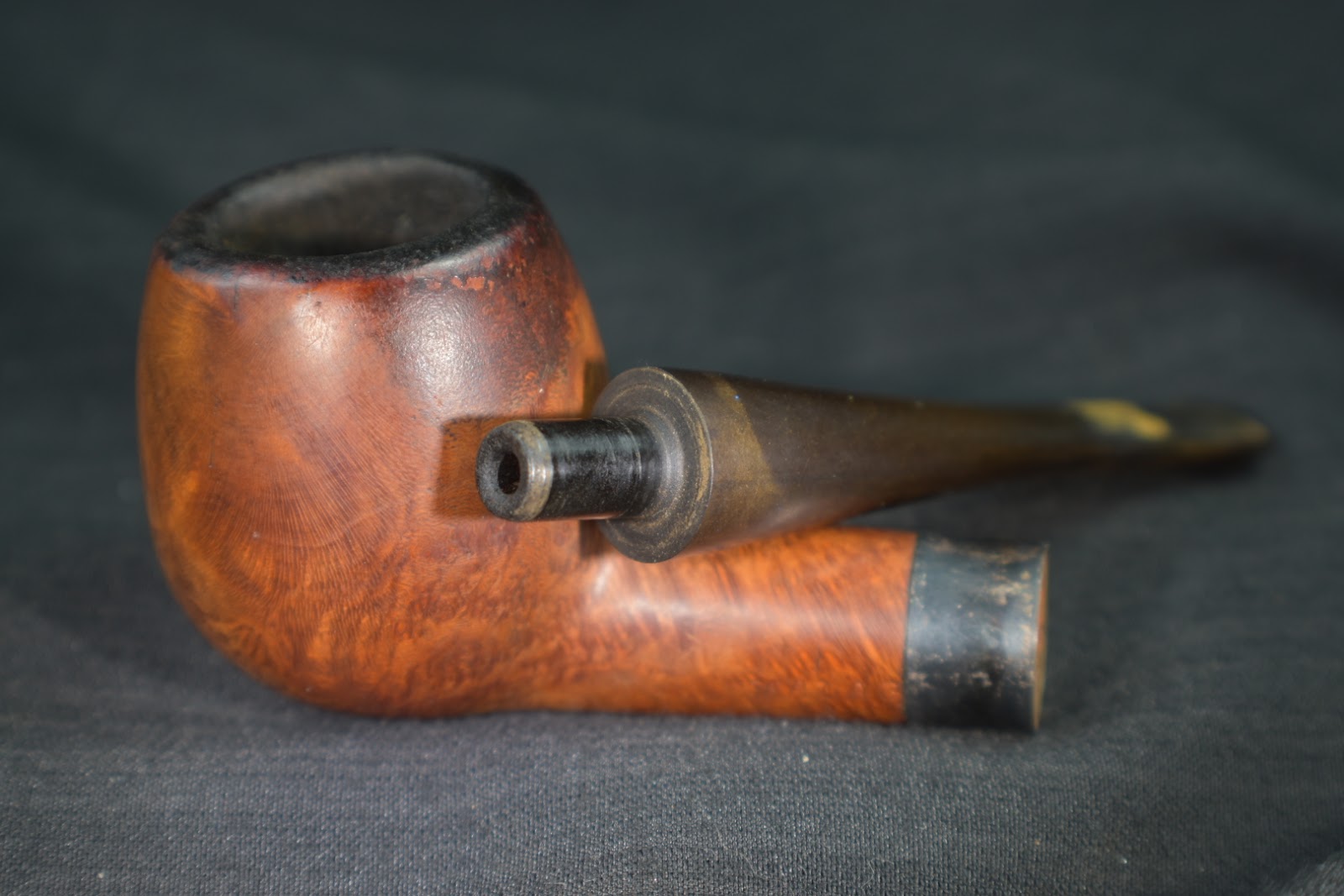
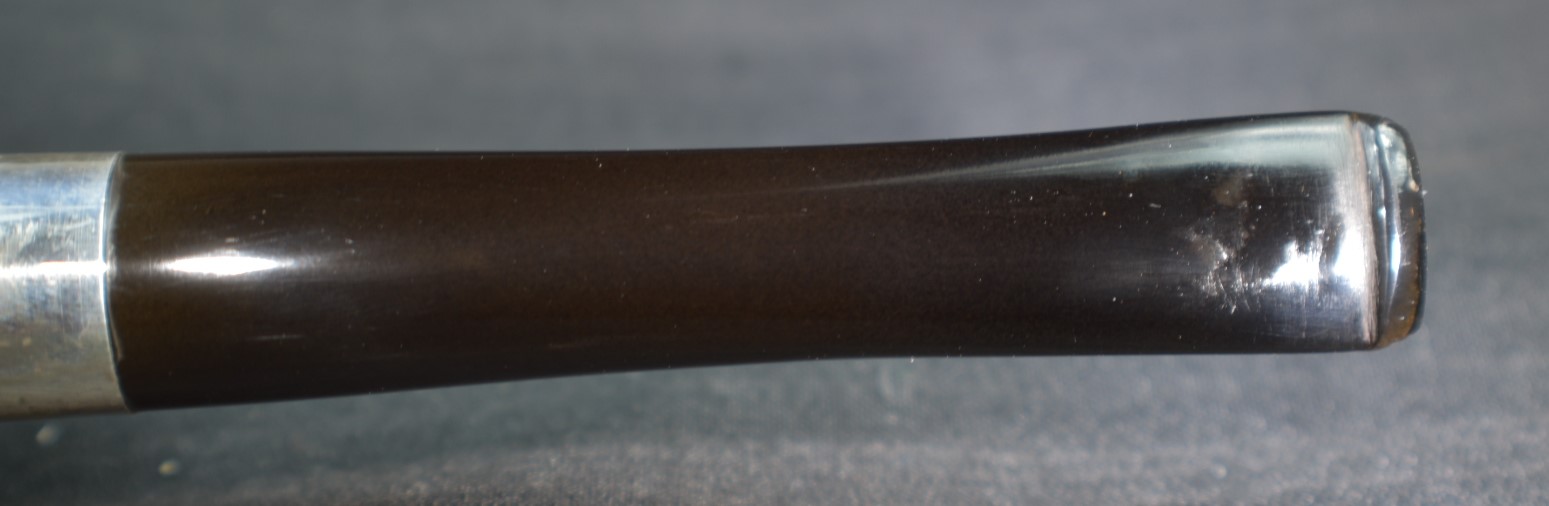
Below are some photos of the finished Malaga Bulldog.






























 NebraskaPeteGeek