The Jima pipe is one of those things that when you see one you just want to have one. They look so cool and 1960 futuristic. I am pretty sure if Captain James T. Kirk smoked a pipe on Star Trek. It would have been a Jima. Even the advertisements had a Bohr model-esque image:
(Jima – Pipedia). But like all things mainly fashioned in one’s imagination reality enters the picture. I recently succumbed to the Juima bug. Searching through the eBay auctions I found what looked to be a good example and a reasonable price, $25, and I decided that I had to have it. The wait for it to arrive from Hudson, Florida was tolerable with me imagining shooting space aliens while puffing happily with my restored Jima between my teeth.
When the Jima arrived, I have to say I was impressed with the look of the pipe and the condition which it was in. It looked as though it had only been smoked a few times. The feel of the pipe was much different than I had imagined. It felt like the whole thing was made of plastic. I had a chat with Steve Laug recently about Jima and his quote struck me as very insightful and funny. He said, “I have done a few Jimas and they always feel like kids bubble pipes” (Laug,Steve, personal communication) That is exactly what this Jima felt like, a toy pipe. I tried disassembling it, thinking that the bowl should unscrew. It didn’t. Or maybe the mouthpiece slip off, nope. I finally visited smokingmetal.co.uk and discovered the following:
“A plated metal frame holding the mouthpiece, an internal metal filter and the outer bowl of various colours of plastic. The bowl appears to be a ceramic material, which I have not managed to remove.
To access the filter, the barrel ( various patterns) of the inner stem is unscrewed on some models, or simply slid back on others
Mouthpiece of plastic and stamped JIMA on top and �Brevete France & Etranger� �Modele Depose Made in France�
Also available as GARLAND with the Brevet France etc stampings
Since acquiring the Garland which has all text in English, realise the bowl is not intended to be removed by the users. However it seems politric to leave it here lest other try to remove their ceramic bowl Overall Length: 144 m/m” (http://www.smokingmetal.co.uk/pipe.php?page=159).
Now I know this introduction has bled over into the “Background” portion of this blog but, I am trying to show the sequence of events as they occurred. I’ll get back on track. Here are some photos of the Jima and it’s condition upon arrival.
This is another of those restorations which really isn’t much of a restoration. Sure, the stem needs a bit of chatter removal and the parts need cleaning but, that is really about all there was to it.
Background
The Alexandria Library of pipes, also known as pipedia.org, has the following to say about Jima:
“An innovative system pipe, the “Jima” (for export also known under the name “Garland” and to a lesser extent in the Netherlands) was a pipe with a silver-plated or gold-plated steel metal frame, connecting a plastic mouthpiece to a plastic outer shell that housed the pipe bowl. This plastic pipe came in a few different colors, black and ivory being the most popular and later various mottled pastel shades showing depressing sales. While the housing was made of hard plastic, the bowl proper was made of a pressed white clay which has been mistaken for meerschaum or sepiolite. The bowl was made detachable by using a screw in fitting which could be loosened or tightened using an Allen key. The fittings on both the bowl and evaporator (stinger) used a plastic compression gasket to keep tar and moisture from seeping out and air from leaking in.
The “Jima” was equipped with an innovative filter design previously unemployed which made it an unforgettable part of the system pipe revolution that began in 1880 with the increasing popularity of new, moist aromatic tobaccos. In the “Jima” was found a filter which was made of spiral wound (sometimes double wound) “electrostatic” metal wire dubbed the “filtres serpentins helicoidaux”. It was said that the electrostatic properties of this filter caused the tars and residues to cling more readily to the filter medium. It is more likely that the extreme turbulence produced by this system caused particles of tar to fall and moisture to condensate as the smoke cooled rapidly. In this instance the evaporator worked to great effect relative to the amount of tar and moisture which accumulated in the stem.
To access the filter, the stem (plastic and in other iterations metal) can be unscrewed, by use of a spring system, or simply slid back, tilted downward and finally pulled off. In nearly every instance the words “Breveté France & Etranger” or “Modèle Deposé Made in France” can be found on the underside of the mouthpiece near the stem.
French brand created in the 1960s by Mayeux, which had a very modern look. This modern look was emphasized by the manufacturer in the promotion material. The slogan speaks of “la pipe de l’an 2000” or “The pipe of the year 2000” . The factory was sold to Chapel Frés, which became part of the Berrod-Regad group in 1987. The Jima pipe is no longer made.”(Jima – Pipedia)(I added the italics)
The above entry also contains numerous photos of Jima pipes in various colors. The one photo that makes me sad is the photo of the “filtres serpentins helicoidaux” or metal filter. This pipe did not come with the original filter. The other thing which I wished that this pipe had is the screw allowing for the disassembly of the bowl from the pipe. That too is not something common to this Jima.
The third site that I checked for background on Jima was pipephil.eu. Here there is a single entry with three links. The left top two links are to other pipe makers associated
with Jima. The “More infos here” link takes you to the smokingmetal.co.uk site for Jima. The final link, “The Chapel Freres & Cie factory” delivers you to a page which shows the building housing the factory. This building now is quite literally housing.
This all leads me to say with some certainty that this Jima was made in France in the 1970s.
The Restoration
The Jima started out with a clean denim piece, like usual.
Since most of the required work on this pipe appeared to be on the stem, that is where I began. I used a wood block to raise the stem slightly to allow a more curved action when filing. I lightly filed the tooth chatter with a small flat file.
The filed surface was then sanded with a 320 grit sanding sponge. You can see on the photo below that the stem stamps were covered with painters tape for protection.
The sanding was done to both the top and bottom sides.
The stem was then sanded with a series of sanding sponges from 320-3500 grits.
The stem was polished with micro-mesh pads 4000-12000.
I failed to photograph the buffing of the plastic stummel with the buffer and white diamond compound. You are not really missing much as there wasn’t much to do.
The Jima’s shank, for lack of a better word, was removed by sliding it towards the mouthpiece then tilting it downward and sliding it off. This tube was cleaned with cotton swabs dipped in 95% ethyl alcohol.
The two short airways were cleaned with bristle pipe cleaners again dipped in ethyl alcohol.
The bowl was cleaned out with cotton swabs and, you guessed it – ethyl alcohol.
The pipe was reassembled and taken to the buffer for a couple of coats of carnauba wax then a hand buffing with a microfiber polishing cloth.
The best part about this restoration is that I can mark it off the list of pipes to restore. I can’t say that I was terribly impressed with the Jima. I mean yeah, they look very cool but the plastic-like feel just did not appeal to me. It is also true that I never smoked the pipe. It may completely redeem itself with a bowl of tobacco. The amber plastic is very pretty and the gold accents it remarkably. The amber looking stem brings the whole pipe together in a very attractive way and I still admit that I love the aesthetics of the pipe. The design and engineering also are of great quality, The o-rings seal beautifully even with their age and the finish of the pipe is good. I do not like the slight gap around the gold rim and the amber plastic of the stummel but I am sure that is there to allow expansion and contraction of the two plastics and the ceramic bowl. I just can’t get over how it feels in my hand. Perhaps this makes me tactile-ist. A new word I am claiming in reference to being snobbish and elitist regarding the feeling of things. The dimensions of this Jima are:
Length: 5.68 in./ 144.27 mm.
Weight: 1.35 oz./ 38.30 g.
Bowl Height: 1.61 in./ 40.89 mm.
Chamber Depth: 1.31 in./ 33.27 mm.
Chamber Diameter: 0.70 in./ 17.78 mm.
Outside Diameter: 1.48 in./ 37.59 mm.
I do hope that you have found something here useful to your own pipe care, maintenance or restorations. If you like this sort of thing, please click the like and subscribe buttons. Thank you for reading the ramblings of an old pipe lover.
This may just be the longest restoration yet. Trust me when I say this project has been ongoing since August 15 and today is September 10. For context a normal restoration takes me 2-4 hours not including drying or soaking time. Let me start in the beginning which normally is where stories begin. This pipe was purchased on August 6. I knew it had issues, which you will see shortly, and would allow me to practice several techniques that I wanted to become better at. The pipe was listed on eBay as a “Buy now” for $20 or best offer. I offered the seller $16 and they accepted. In a few minutes you will think I am losing my cognitive faculties or that I probably never had that large of a faculty to start with.
The pipe was sent from Hudson, New York to the wilds of southeast Nebrask and arrived after 6 days, August 12. Upon opening the package I was a bit surprised at the severity of the issues which I had willingly adopted. I’ll let the photos speak for themselves. Here is the pipe prior to any work done.
Remember, I said it had issues. I can hear folks saying, “What kind of masochistic idiot are you?” and probably some comments about wanting to sell me fine swamp land in Louisiana or perhaps a bridge in Brooklyn. I wanted to practice the cracked bowl pinning technique by Charles Lemon (you can see that here), repairing cracked shanks and I am continuously working on different ways to repair chewed up mouthpieces (this time with black epoxy resin). So, now you see I thought I could do all of those things with one pipe. There was madness to my madness. No wait, that’s supposed to be, there was a method to my madness.
Background
Over the past almost a year, I have restored 7 Marxman pipes. This will be the 8th. And you say, “I thought you went by the name Nebraska Pete Geek?” Well, I just counted and I have done 12 Petersons so, the name is well founded. I do love an old Marxman pipe though. The amazing history of Robert Marx was summarized by me in an earlier blog which I will include again here:
On January 11, 2024 I blogged about a Marxman Gold banded Dublin (linked if you are interested) and wrote the following about Robert Marxman and Marxman pipes:
“My recent fascination with the post-World War Two (WWII, to properly use an acronym) led me to further appreciation of the Marketing genius of Robert Marx, the founder of Marxman Pipes Inc. Allow me to illustrate:
Those are the back covers of Pipe Lovers Magazine for each month of 1946. That represents a substantial investment in building and maintaining one’s brand name.
Here is a quick review of Marxman pipes from pipedia.org:
“Marxman (Marxman Pipe Company) was created by Robert (Bob) L. Marx in 1934, when he was 29, and after he had worked for the William Demuth Company. His pipes were not outstanding because of the quality of their wood (probably Algerian), but Bob started making unique sculpted pieces, which brought the brand fame in the World of Hollywood cinema. Actors like Zachery Scott, Dennis Morgan, Jack Carson, Alan Hale, Joel McRae, and Ronald Reagan were some of the faces that appeared on the bowls.
Bob knew how to innovate and took full advantage of marketing and press advertising in order to sell the brand–one of his slogans being “Relax with a Marxman”.
In a recent forum post on Pipesmagazine.com, contributor jguss posted the following from the February 2, 1935 issue of the UnitedStatesTobaccoJournal:
A remarkable article showing the business acumen as well as a photo of the man himself. Thank you, jguss.
This is one of my favorite quotes about Rober Marx:
“Ted also said: Several years before UST bought Mastercraft, M/C had aquired Marxman Pipes. A wonderful kind man, Bob Marx was still working as a salesman in NYC, and I was fortunate to make a few sales calls with him. You all remember Charles Atlas? Bob Marx was about 76 and had just been awarded the (I think) Atlas Award for being the finest speciman of manhood over 70 years old in NYC, or maybe the state.
M/C had some inventory of Marxman stuff, but not a lot. I know very little about Marxman. Did they make, import, or both?” (Mastercraft – Pipedia)
The “Ted”, who is being quoted above, was the nickname of Tom Douglas. Here is an announcement of Mr. Douglas’ passing from Pipesmagazine forum November 26, 2018:
“Tom Douglas passed away at 71 years of age, this past Saturday, in Florida. It seems he had an infection in his stomach, but I don’t know much more than that, regarding what actually contributed to his death. He did have a history of heart and other health complications. I just spoke very briefly with his wife Joyce; you can imagine how she’s doing.
The impact Tom had on the pipe community is huge…beginning with an immense library of pipe knowledge through the pages of the Dr. Grabow Collectors Forum….his 25 years of service at the Grabow / Sparta pipe factory (where he retired in 1991)….his executive leadership over Mastercraft distribution for many years…”
So, at 76 years old Robert Marx was still involved in the business that he must have loved. This would have been around 1980.”
Then last winter, Mark Irwin, of Peterson Pipe Notes and author of The Peterson Pipe book, sent me a c. 1945 Marxman Brochure. I photographed the pages of the brochure and included them below.
One of the easiest things to date is a Marxman pipe. The company was formed in 1939 and sold in 1953 to MasterCraft. Though the Marxman name continued after 1953 the pipes were made in France or Italy and stamped as such with Country of Manufacture (COM) stamps. This means that a non COM stamped Marxman pipe was made in New York City between 1939-1953.
This pipe is undoubtedly a Marxman Jumbo as seen on page six of the above brochure. As a “C” size this pipe would have commanded a price of $10 in 1945. According to the Consumer Price Index inflation calculator that would equate to $173.78 today (July 1945 to July 2024). (https://data.bls.gov/cgi-bin/cpicalc.pl?cost1=10&year1=194507&year2=202407)
The Restoration
Oh no, the poor battered beauty can’t even get an unstained denim piece to rest upon. The bright side is that it will look significantly worse shortly.
I started with the reaming of the tobacco chamber using a PipNet with the size 3 and 4 blades. The #4 rarely gets to come out and play.
Typical of Marxman pipe the reaming was very easy with the cake coming easily off the briar. The chamber was sanded with 320 sandpaper wrapped around a wood dowel and taken to bare wood. No heat damage was observed.
The shank was a dirty mess. For as easily as the tobacco chamber gave up it’s accumulated cake the airway clung to it’s smoking residues tenaciously. Several scrubs with 95% ethyl alcohol and a shank brush followed by alcohol dipped cotton swabs were used. I was getting frustrated and my thoughts turned to the next steps.
It was during the repetitions of scrubbing that my mind started to process ways to repair the cracked shank. The first thought was merely a brass band. I did this with a Marxman Mel-O and that restoration turned out very well as the below photo illustrates:
My thoughts shifted to considering an internal band. I had seen a video on how to make a pipe with a military mount by J. Alan of jalanpipes.com a few years ago. Here is that video. In the video he used a piece of brass and filed teeth into the brass tube. He then used the tube to cut a circular slot or hole just outside of the mortise on the shank. A piece of brass tube was inserted into this circular slot and the shank had a reinforcement that could take significant abuse. I filed that away in the back of my mind. For whatever reason the thought of a brass reinforcing band inside the shank of this pipe seemed like a good idea. The shank was thick and could easily accommodate a band and what the heck, it was already cracked. How badly could I screw this pipe up? In hindsight, I should have watched the video again or researched this technique more but I was in “problem solving” mode.
I looked through the stock of brass tubing that I had and found a piece which looked to be the perfect diameter. It was 5/8th inch outside diameter tubing. Next I started filing teeth on the edge of the tube. I couldn’t remember how many teeth were used in the video and couldn’t be bothered to rewatch it. As you may have guessed by my complete lack of video that I really do not like videos. I think it comes from being a teacher for 32 years. Rather than read, research and learn things like I did as a student, all students ever wanted to do was “watch a video”. This is fine and dandy for seeing how to replace the gas cap door on a 2004 Ford F150 (yeah, I just did that) but there isn’t a video on the life of Robert Marx. Videos are a great tool for some things but they are not the sole source of learning. Anyway, I filed some teeth.
They looked like they would cut briar. They also looked like they would have to be brought out of the hole and have the saw dust blown off of them frequently. I was in uncharted territory and expected some learning by trial and error.
In my imagination the brass tube/cutter would be clamped into a chuck of some type and spun at some speed, probably slow and lowered or slid into the shank which would be clamped somehow. Yeah, there was a lot of “some” in my thought process at this time. I do not have a drill press nor a lathe. The thought of using hand tools for this operation seemed ridiculous. I then contacted my son-in-law’s brother who is a machinist extraordinaire. The date was August 15, 2024. He replied the next day and was worried about brass being able to cut the briar. I then realized that he spent his days cutting far tougher material like steel, stainless steel, titanium and cobalt-chromium alloys. Yeah, he works in a prosthetics lab. He had the experience, tools and know-how needed to help with this endeavor. More on this later.
I had a rim to clean up and a stummel to scrub and a whole bunch of clean cotton swabs which were demanding to be filthy..
So that is what I did. The stummel was taken to the sink and scrubbed with Murphy Oil Soap, undiluted , and a nylon scrub brush. The years of dirt and the lava came off quickly. The soap was rinsed with warm water and the stummel dried with a cotton hand towel.
Back at the bench things were looking good both in the reality of the drying stummel and in the realm of my imagination of how the shank repair would proceed.
I certainly was back in reality, with a really dirty shank.
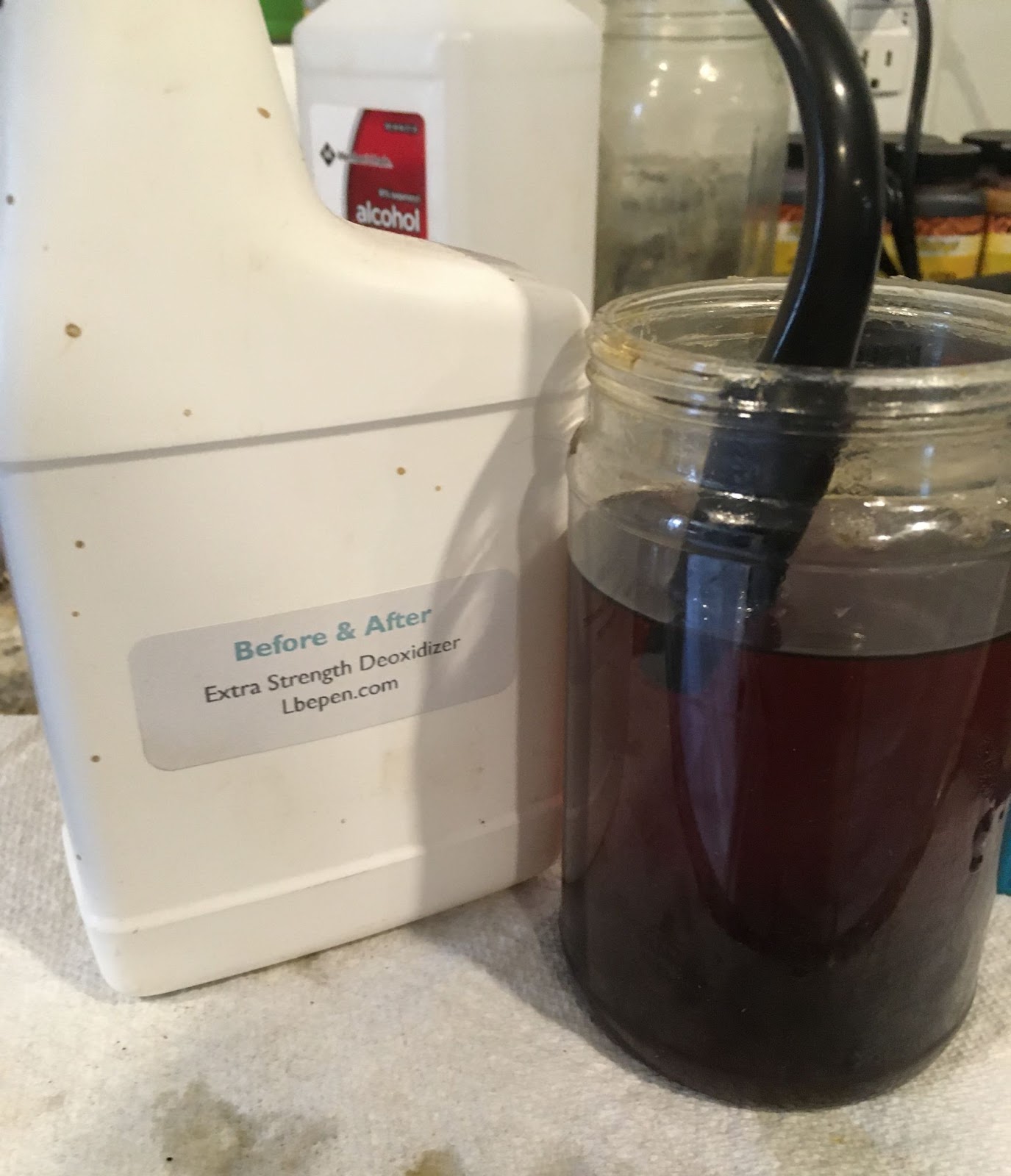
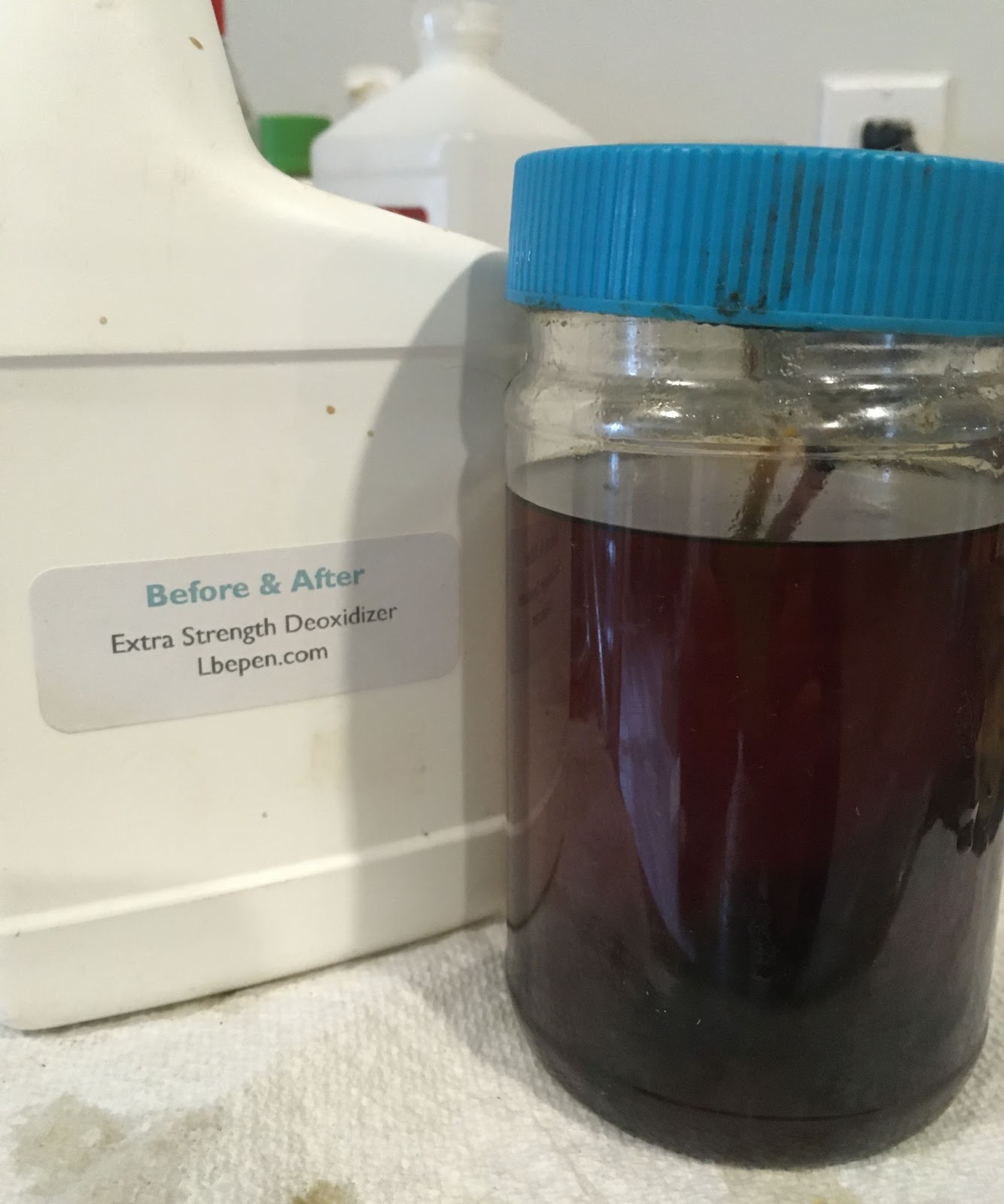
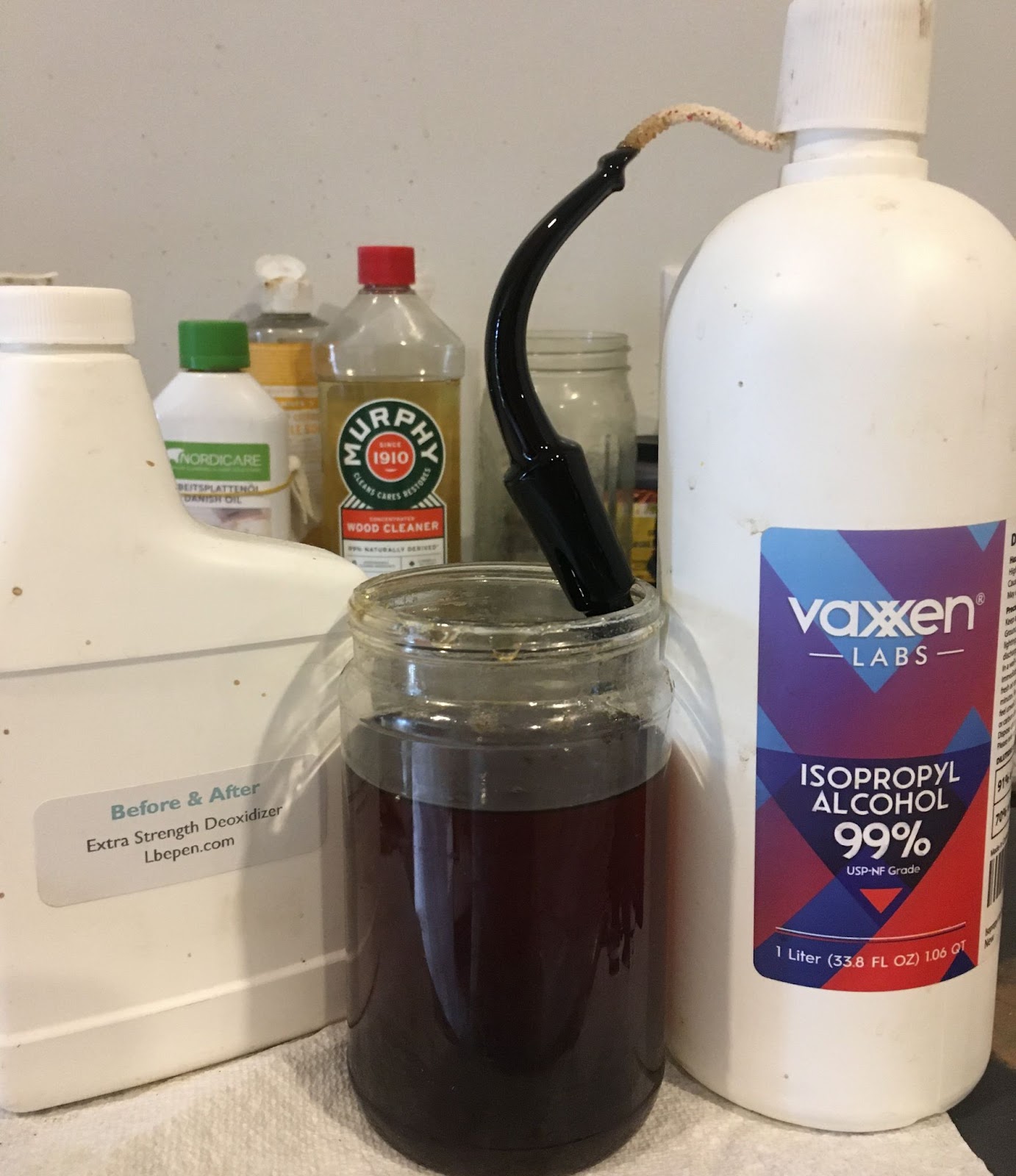
That brought me to the next new idea I wanted to try. In one of the Facebook groups that I am in, someone mentioned using two part epoxy to repair and reconstruct buttons. I wish I could remember what group or who the person was who had sown this seed in my brain. I thought that I needed to try it out and this stem was a perfect subject. The stem was cleaned using 95% ethyl alcohol and bristle pipe cleaners then lightly sanded to remove some of the surface oxidation and allow the Before and After Extra Strength Deoxidizer access to the vulcanite.
A pipe cleaner was inserted into the remaining button, to act as a hanger suspending the stem in the deoxidizer, and it was lowered into the deox ( my term for the liquid).
According to the time stamp on the photos the stem was in deox for 7.5 hours.
That gave me plenty of time to soil another stack of cotton swabs in an attempt to exorcize the tar demons from the airwair. Finally, I was victorious and the airway was clean.
The seemingly unending airway scrub did allow me time to ponder the next step and the next technique that I wanted practice with. That is the repair of a cracked bowl using strategically placed brass pins. I first saw this technique in a post by Charles Lemon of Dads Pipes. Charles is a real restorer, unlike me, and actually does this for a living bringing back family heirlooms and working magic with his impressive skills. You can find Charles’ pinning tutorial blog here. I had used pins to repair a cracked shank as a first time practice ordeal and again with a cracked bowl, both blogs are linked if you care to make fun of my attempts. This cracked bowl was more of a cosmetic crack in the briar. It did not extend through the wall of the tobacco chamber and looked more like it was from an improperly cured piece of briar rather than a case of excessive cake. Either way, I was going to repair it with brass pins. I first filled the crack with brown cyanoacrylate (CA, super glue) pushed into the crack with a fly tying bodkin. The CA was allowed to cure in it’s own time and was not accelerated by a CA drying accelerator.
Once cured the surface of the CA was roughened up a little bit to better blend it with the carving on the stummel. I used a round rat tail file and a diamond needle rat tail file for the roughening.
My jumping around from task to task with this restoration shows my desire to plan and think through each of the multi-step procedures used with each technique. I use the time stamps from the photos to sequence the restoration process that I present to you. I apologize if this makes it hard to follow while reading. This is the way it all happened though
I wanted to give the CA adequate time to cure so I busied myself with the repair/rebuilding of the stem. Someday I’ll get a drill press or a lathe and that cool tenon turning tool and I’ll just make stems rather than try to reconstruct them. There’s that imagination again. Anyway, the stem was removed from deox and wiped with a coarse shop rag. This more abrasive material is great for absorbing the excess deoxidizer and abrading away some of the oxidized vulcanite.
Aug. 15 (I’m using the dates here to show the curing times of the epoxy.)
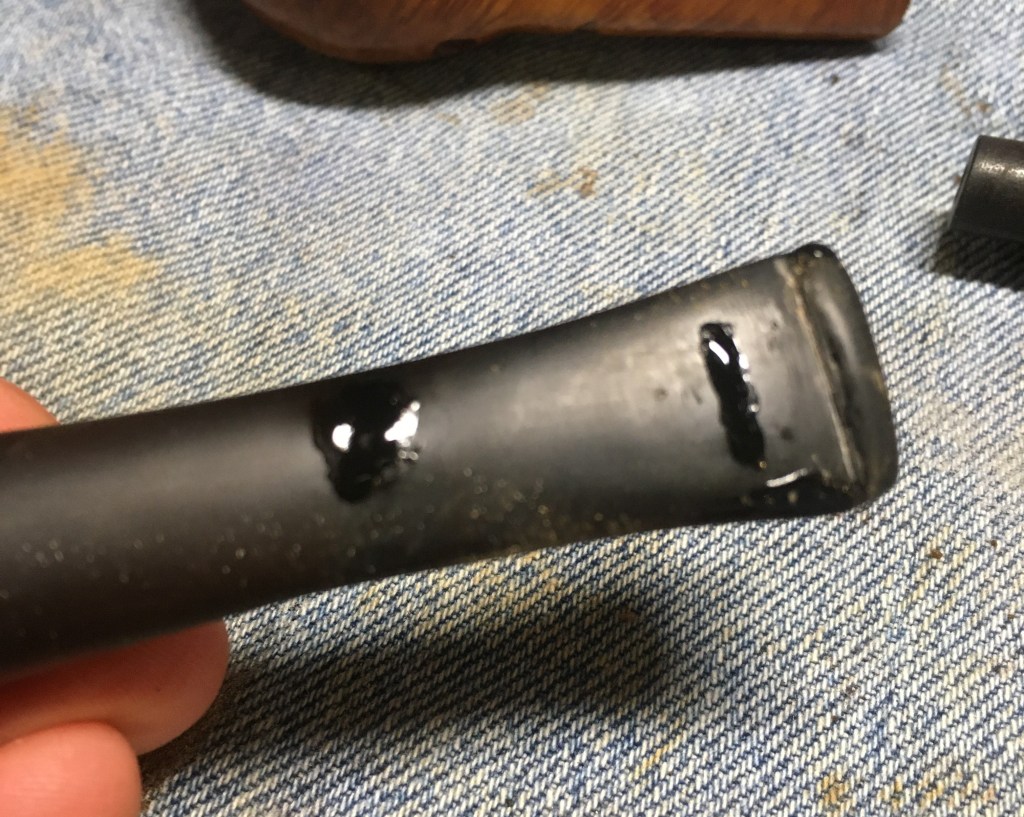
To rebuild the button, I first cut a dam from a plastic lid. This dam was coated with petroleum jelly and inserted into the airway in an attempt to keep the epoxy for sealing it off. I mixed the two part J. B. Weld black epoxy as per product instructions.
I used a piece of Scotch tape around the bottom of the stem to aid in keeping the epoxy on the top then applied the epoxy to the fill area with a fly tying bodkin. The stem was set aside for 24 hours to cure.
Aug. 16
The next day, I checked on the epoxy to see how well it was working as a fill material.
The dam was removed easily and appeared to have work at keeping the epoxy from the airway.
I took the stem to the photography bench for some better than the phone photos.
The surface was roughed up with a 320 grit sanding sponge to give the next application of J.B. Weld something to bond to and the dam was reinserted.
Another batch of epoxy was mixed then applied to the area to build up the missing material for a proper button. This application was again set aside for 24 hours.
Aug. 17
This was nowhere near as quick as using a black cyanoacrylate (CA, super glue) to fill an area but I was still curious as to its effectiveness. I filed the 2nd application and reformed the button.
The epoxy filed and sanded more easily than CA would have. I was sure that it would cure to a harder consistency in a couple of days.
Aug. 18, 8:30am
A third application of J.B. Weld was applied to the stem. This time to a larger area. I wanted a wider area to use for blending the original stem to the new patch. This application also was spread on the top and bottom of the stem.
A pipe cleaner was inserted to act as a hanger and the stem was hung to cure.
Aug. 18, 9:50pm
13 hours later, I checked on the curing of the epoxy. The surface was rough rather than smooth, as it had been with the previous two applications. I did like the way tha material built up though.
Aug. 19, 1:00pm
Another 15 hours later and I returned to the cured epoxy on the stem. The rough texture remained and the epoxy felt more tacky than the previous iterations. The new material pulled away from the second application as I was filing it. Bah, that won’t do. I peeled the 3rd application off the stem. I was not sure if it was a bad mix or what had happened. One thing that I was certain about was that I preferred to use black CA for rebuilding buttons.
All this time between sessions with the pipe did allow me to thoroughly plan how I wanted the pinning to go. I drilled 3 holes with a 2mm drill bit. Each hole was drilled at a different angle and each transected the crack. The below photo shows each hole with a piece of 2mm brass rod. I had gotten better with my drilling and none of the holes had emerged all the way through the stummel.
The hole depths were measured with their respective rods. Each rod was cut slightly shorter than the depth of the hole.
I applied a small drop of brown CA to a hole and quickly pushed the corresponding rod into it to a point below the briar surface. The below photo shows all three rods pressed into place. You can still see the brass peeking from the holes.
The holes were then filled with another application of brown CA and topped with a small scoop of briar dust. The dust was pressing into the wet CA. The fill was then sanded smooth on the rim and slightly smoothed in the carved areas. This project took an intermission while I waited to schedule a visit to the machine shop of my fellow conspirator.
Sept. 9
A date had been set for the machine shop visit. This was a clandestine operation after hours. In preparation for the event, I needed to glue the shank crack with CA. I used a thin clear CA to penetrate the crack as deeply as possible. This was applied with the ever popular fly tying bodkin and quickly clamped.
The clamping provided no visual compression of the crack but it made me feel like I accomplished something. I then applied a thin line of brown CA to the crack to fill it with the fly tying bodkin.
Sept. 10
Now to protect my fellow conspirator’s identity, since we were infiltrating his shop after hours and without the knowledge of his overlord, I will refer to him as Christian. A fitting name and perhaps title. I explained what I thought we could do and how I imagined it happening. Christian immediately understood and dashed my imagined process with a healthy dose of reality. He said that this was a job for the milling machine. The first order of the new reality based procedure was to shorten my brass cutter to fit into a collar which could be mounted into the chuck of the milling machine.
Next we needed to clamp the stummel into position in a way that limited movement without marring the briar. This was done with a couple of scraps of a clear soft plastic between the vise jaws and the stummel.
The cutter was aligned with the shank.
Turtle speed was selected on the milling machine.
And the cutting was begun, very slowly, maybe 0.5 mm then I’d blow the dust away with the compressor.
This continued and was looking very promising. I hadn’t really thought about how deep to make the slot. It was determined that 5 mm would probably be sufficient.
The depth gauge was set to the 5 mm goal and the cutting proceeded.
Once achieved, the slot looked as good as I had imagined.
The next task was to cut a 4.7 mm wide brass band from the same tube the cutter was made with. This would ensure a perfect fit. We moved to the lathe to square up the end of the brass tube.
The lathe was set to cut a precise 4.7 mm wide band. We thought that this would allow me to press the band into the slot so that it would be flush with the face of the mortise and would require no sanding of the brass band. The no sanding was important for a proper fit with the stem to maintain the shank to stem joint.
The band cutting proceeded successfully on the second attempt after Christian had sharpened the cutter. The first attempt met with a hot mess. Literally, the dull cutter made an out of round band that was very hot.
The band seemed to fit beautifully. It was not pressed in fully as there was no way to extract it once it was in there. Also, my crack glue-job seemed to be holding without the reinforcing band.
After many thank-yous, a Mission Impossible like extraction from the machine shop and a drive back home the Marxman was back to the home workbench.
I thought about which glue to use, CA or epoxy for gluing in the band. I settled on epoxy due to my fear of not being able to move fast enough for the CA and having the CA set-up before I had the band fully pressed into place.
I applied a bead of epoxy to the slot.
Surprisingly, I remembered to roughen the inside and outside of the brass band with a sanding sponge.
The band was then pressed into position.
The excess epoxy was cleaned up with a cotton swab dipped in acetone and… (dramatic pause). OH CARP! There was about 0.2-0.5 mm of brass band sticking up above the surface of the mortise. What had gone wrong? I texted Christian, if that is his real name, and explained what I was seeing. We had both noticed that my brass cutter was significantly more dull when we finished cutting, back at the shop. He thought that the dulled teeth would have given a false 5 mm depth to the cut. I agreed and thought that maybe the epoxy would have added another fraction of a mm. In hindsight, the band would have been better cut at 4.5 mm to ensure greater clearance.
I used a small flat file to remove as much of the brass as I felt comfortable removing. I had to go very slowly and with great care to avoid filing any briar. I then took the stummel to the topping board there. I very slowly sanded the brass to flush with the briar. I failed to photograph any of this, apologies. I did photograph the resulting fit though.
Below is a photo of the internal brass band in all of it’s glory.
Now to finish this stem. I thought I could go over the patch on the bottom of the stem with black CA and that it would make the difference in the vulcanite and the black epoxy disappear. Once again the imagination was working beautifully and all of the imagined repairs were equally as beautiful.
I painted the bottom of the stem with the black CA.
The CA was then spritzed with a CA drying accelerator. The subsequent area was filed and sanded to blend the vulcanite with the patch. You’ll have to wait or jump to the end to see how reality dealt with my imagined results. This is mainly because I failed to photograph it. Umm, I mean, that I want to build anticipation. Yean, that’s the ticket.
To rebuild the button proper, I Scotch taped the stem right against the button This kept me from having to re sand the blended stem patch. It also allowed me to file and sand the button without scratching up the already smoothed stem. I applied layers of black CA to the button, spitzed with the drying accelerator and while the CA was still soft, I made a straight cut through the still pliable CA giving the button a more defined seam where it met the stem.
The above was done for both the top and bottom. Both sides were filed then sanded to a proper shape.
Here you can see the progress from the side.
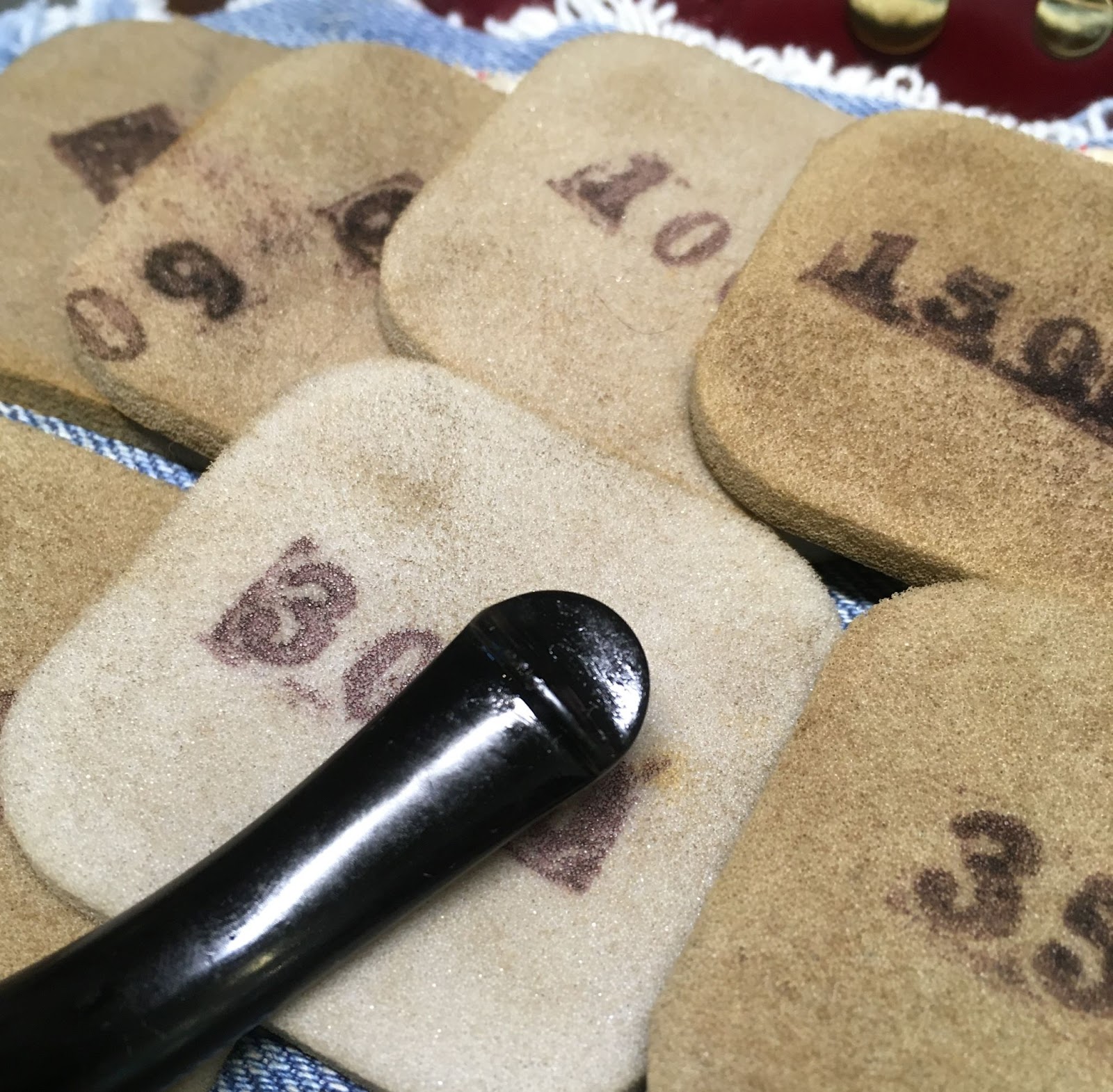
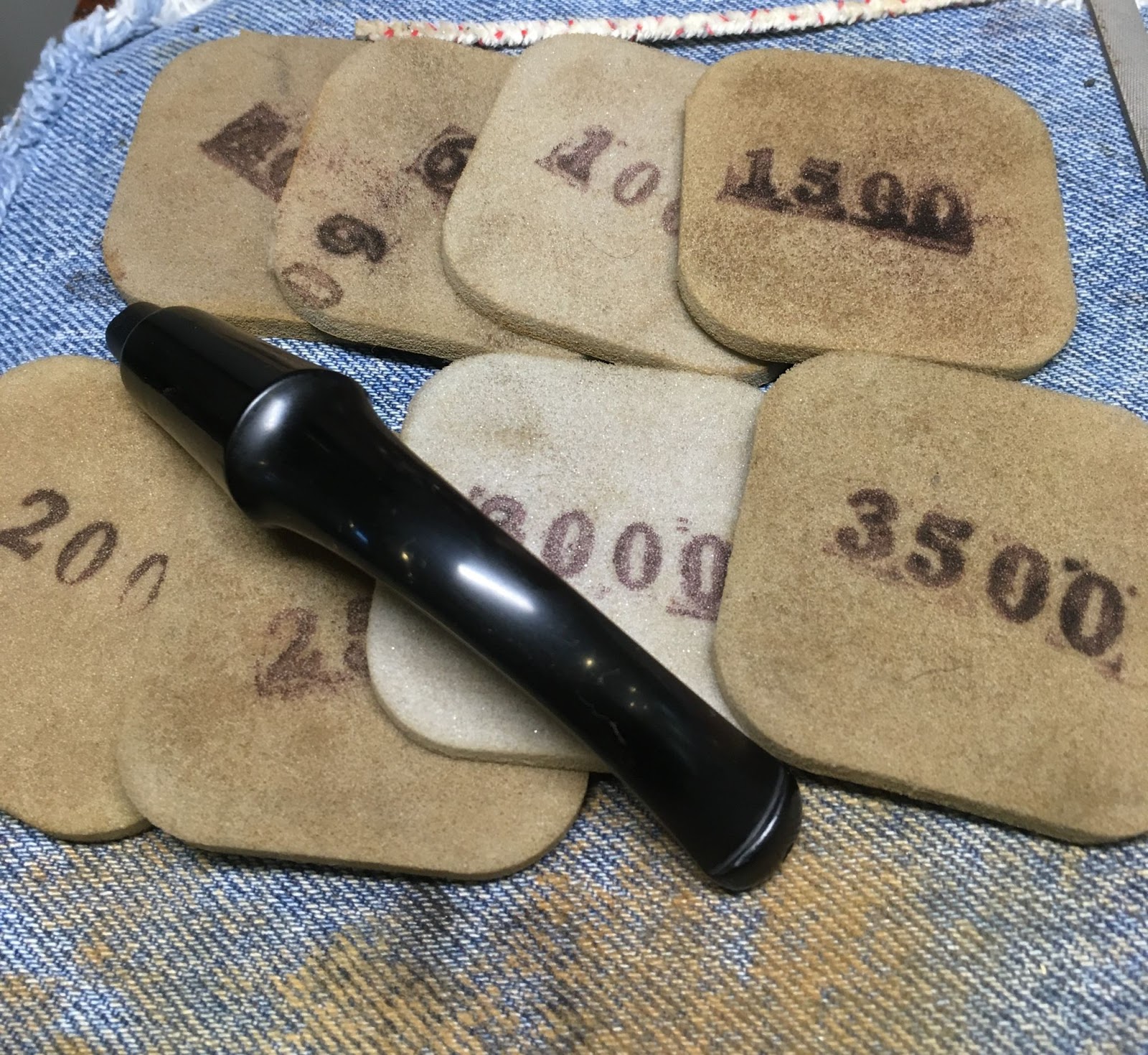
Eventually the stem was sanded with a series of sanding sponges from 400-3500 grit. Between the sponges the stem was rubbed with mineral oil and wiped with a dry paper towel.
I was apparently getting tired and failed to photograph the micro-meshing of the stem. The next step was to coat the stummel with Before and After Restoration Balm and let it sit for 30 minutes.
After 30 minutes the Restoration Balm was wiped off with an inside out athletic sock.
It was at this point that I decided to try another novel technique on this pipe. I had not worked with a shellac finish on a pipe in a long time, perhaps even before I started blogging back in October of 2023. I slid the stem out about ¼ inch or ½ cm to provide a handle but not get any shellac on it. I used a disposable foam brush to apply a very thin coat of shellac to the stummel. The briar absorbed the shellac quickly and it dried as the alcohol solvent evaporated. Now for the weird part – I slightly wetted a paper towel with 99% isopropyl alcohol and wiped the stummel with the paper towel. This smoothed the shellac remaining on the surface of the panels. I only applied the single coat of shellac as I don’t really like the look of a clear coat on pipes. This wasn’t really a clear coat, more of a sanding sealer and a layer of protection of the carved surfaces from dirt and hand oils. I let the stummel dry for about 15 minutes then took it to the buffer for a polish with white diamond compound. The entire pipe was then wiped with a clean dry cotton cloth to remove any remaining buffing compound. The stem and stummel then received several coats of carnauba wax with the buffer. A quick hand buffing with a microfiber polishing cloth and she was finally finished.
I would like to thank you for making it this far into this dissertation. It is actually longer than many Masters Degree dissertations that I’ve read. Perhaps I’ll be awarded an honorary masters from some pipe restoration university. That’s a thing, isn’t it? A special thanks goes out to the machinist Christian, who may or may not actually go by that name. I had now successfully turned the $16 pipe into a $25 pipe, which equated to about $0.50/hour. Good thing I’m retired or the U.S. The Department of Labor would be filing suit for unfair pay. In all honesty, this pipe provided me with some new challenges and did exactly what I wanted it to do, allowed me to practice doing what I love to do – learn new and hone existing techniques. The pipe turned out amazingly well. This one will be joining my personal collection. The dimensions of this Marxman Jumbo C are:
Length: 6.01 in./ 152.65 mm.
Bowl Height: 1.73 in./ 43.94 mm.
Weight: 2.13 oz./ 60.60g.
Chamber Depth: 1.32 in./ 33.53 mm.
Chamber Diameter: 0.91 in./ 23.11 mm.
Outside Diameter: 1.76 in./ 44.70 mm.
I do hope that you have found something here useful to your own pipe care, maintenance or restorations. If you like this sort of thing, please click the like and subscribe buttons. Thank you for reading the ramblings of an old pipe lover.
Loading…
Below are some photos of the finished Marxman Jumbo C.
Proof positive that I have turned away from restoring pipes from the 1940s. Okay restoration may be too strong of a word for this entry. I can’t be certain that this pipe ever saw a flame. It is a lovely example of the craftsmanship that Dr Grabow is capable of. This beauty was part of an estate lot from Norman Park, Georgia, USA via an eBay auction. The pipe was not stamped with The name Dr Grabo yet it wears the Dr Grabow logo on the stem. The only stamp is COLLECTOR over 2002. Below are some photos of the Collector 2002 as it looked upon arrival.
I’m not sure if that is the original filter. It came that way though.
I always find it funny to find an unsmoked or seldom smoked pipe that has tooth dents or chatter.
Background
Dr Grabow has a long and well documented history, in general. This line, unfortunately, is not part of that “general”. In an earlier blog of mine, I briefly detailed this history. I will include that summary here:
“In one of my very first blogs I wrote about the restoration of an MLC pipe. “The stamp that I could not make out on my pipe was the MLC. This stands for Mary Linkman & Company. This is the same company formed by Louis B. Linkman, the originator of Dr. Grabow pipes. In 1898 Linkman and August Fisher started a small business making pipes. The business grew and, “in 1907 M. Linkman & Company was incorporated with Louis B. Linkman as president, August Fisher, vice-president…” (https://pipedia.org/wiki/M._Linkman_%26_Co.). If you would like to see a very early blog about the MLC Hell Maria here is that link.
So, two youngsters started up a pipe making company at the turn of the last century. It doesn’t end there, friends. I wrote the following in a blog about another Linkman’s pipe: “ “BACK IN 1898, two ambitious young men reached the momentous decision to go into business for themselves. They were Louis B. Linkman and August Fisher. From the time they were in knee pants they had worked for a pipe jobber in the mid-west.” (https://pipedia.org/wiki/M._Linkman_%26_Co.). These two young entrepreneurs were joined by a third, “Anton Burger, who had also been employed by a pipe jobber in the mid-west, approached them and was taken in as a partner. M. Linkman & Company proceeded as a partnership; the business developed rapidly through the untiring efforts of these men in producing quality pipes and rendering good service to their customers.” (https://pipedia.org/wiki/M._Linkman_%26_Co.). The company eventually
came to be known as Dr Grabow.”
According to Tobaccopipes.com “The birth of the Dr Grabow smoking pipe is simple enough. It started off when Dr Grabow himself and his acquaintance Dr Linkman regularly visited the local pharmacist at Brown’s Drug Store in Lincoln Park Chicago. Dr Linkman was on the lookout for a doctor’s name to Christian an innovative line of pipes in order to mellow out the smoking apparel’s smoggy image. He asked Dr Grabow to allow him to use his name to which he agreed and the name has stuck since then. Linkman continued to manufacture his Dr Grabow pipes until 1953.
The earliest of these exclusive pipes were stamped both with Linkman’s and Dr Grabow. They included a propeller emblem that was white in color at the top of the mouthpiece. Linkman’s pipes are also stamped with their own four digit code. This code indicates their model and shape. For example, the PRE – 1944 model names included the “Special”, “Supreme” and “Deluxe” versions of Dr Grabow’s pipes.
I have frequently said things like, “I ain’t too bright but…” or “I may have been born at night but, it wasn’t last night” regarding my own intelligence. With that in mind, I can pretty assuredly surmise that this pipe is from Dr Grabow’s Sparta, North Carolina factory and was made in 2002.
The Restoration
Okay, not a real restoration, more like a refreshment. Although that makes me think it needs a cocktail umbrella or something sticking out of the bowl though.
I did ream out the bowl as it was rough with what I assume was a lumpy bowl coating.
Below you can see a couple of the lumps I was referring to. The tobacco chamber was sanded smooth with 220 sandpaper wrapped around a wood dowel.
I cleaned the airway of the shank with cotton swabs and folded bristle pipe cleaners dipped in 95% ethyl alcohol.
The stummel was scrubbed with undiluted Murphy Oil Soap and a nylon scrub brush to remove 22 years of dust. The soap was rinsed with warm water and dried with a cotton hand towel.
Before polishing the brass band I first taped the stem with painters tape. This was to keep the metal polish from the plastic of the stem. I always enjoyed polishing the brass on my JROTC uniform back in high school. Though this Cape Cod Metal Polish smells far better than the Brasso of 40 years ago. The brass band polished up very nicely.
The stem was cleaned out using cotton swabs & bristle pipe cleaners with 95% ethyl alcohol.
I’m not sure how an unsmoked pipe can get teeth marks but they do. I used a small flat file to smooth the area behind the button on both top and bottom. The filed surface was then sanded with a 400 grit sanding sponge.
The stem was sanded with a series of sanding sponges from 600-3500 grit. I was a bit nervous about achieving a factory like finish on this plastic stem but continued and hoped for the best.
The stem was micro-meshed with 4000-12000 pads. Between each pad I applied a small drop of Obsidian Oil. The stem was looking great, no need for my earlier worries.
I removed the painters tape and used Before and After Fine polish hand buffed with a soft cotton cloth. I buffed both the brass band and the plastic of the stem.
Before and After Extra Fine Polish followed the Fine Polish.
The pipe was then taken to the buffer for several coats of carnauba wax from the buffer. The rustications on this pipe were not very deep so I figured that buffing carnauba would be OK and it appeared like I was correct. The final step prior to photographing the finished pipe was a hand buffing with a microfiber polishing cloth.
I have to admit that I am not the biggest fan of Dr Grabow pipes. I mean, I love the Westbrooks and the old Linkmans that I have. I find that the Dr Grabow filters are a bit too constricting for my taste. The factory finishes that come with many Dr Grabow pipes are high gloss clear coats which is something that I do not prefer and many of the carved or rusticated versions look cartoon-like. However, this Collector 2002 is a beautiful pipe. I still do not like the draw with a filter inserted but without the filter it is wide open and very nice. The finish is a nice light sandblast which shows off the briar grain beautifully. The stain is a bit dark for me but it works well with the brass band. The stem is polished exceptionally well and has a gorgeous high gloss. Overall this is a darn good looking and feeling pipe which Dr Grabow should be proud of. The dimensions of this Dr Grabow Collector 2002 Billiard are:
Length: 5.92 in./ 150.39 mm.
Weight: 1.43 oz./ 40.80 g.
Bowl Height: 1.76 in./ 44.70 mm.
Chamber Depth: 1.39 in./ 35.31 mm.
Chamber Diameter: 0.75 in./ 19.05 mm.
Outside Diameter: 1.35 in./ 34.29 mm.
I do hope that you have found something here useful to your own pipe care, maintenance or restorations. If you like this sort of thing, please click the like and subscribe buttons. Thank you for reading the ramblings of an old pipe lover.
Loading…
Below are some photos of the finished Dr Grabow Collector 2002 Billiard.
Just when I think I have moved on from my fascination with World War Two pipes I get drawn back in. Though this old pipe is more of a reminiscence of my youth and the semi annual visits to Sears for new school clothes. The candy counter was within the first 20 yards of the entrance and I could usually count on a white paper sack with a dollar’s worth of Swedish fish to help tide me through the horrendous task of trying on new clothes. I do not recall seeing pipes under the glass counter. I do recall that this was the only way I had ever seen Swedish fish though. Why the mention of Sears in this introduction? Well, I guess you will just have to read the “Background” for the answer to that question.
This lovely old Yorkshire Natural appears to live up to it’s name – natural. There seems to be little stain and no finish coating. The stamps on the left shank read; Yorkshire (script style lettering) arched (concave up) over NATURAL over ALGERIAN BRIAR arched (concave down).
This was looking like a straightforward restoration. Yes there were a lot of fills that I wanted to redo but other than that the pipe was in great condition. The stem was not badly oxidized and the bowl was not heavily caked.
Background
OK, you have waited long enough. Here is the reason for my back to school clothes /Swedish fish stroll down memory lane. According to pipedia.org, “Yorkshire Pipes was a brand sold exclusively through Sears Roebuck Catalogs, as seen in this 1941-42 catalog page. They were made in France of Algerian Briar, and some of the model names were: Bond Street, Royal, Aristocrat, Natural and Straight Grain. They were not stained nor finished with laquer, and had a natural honey color.”
For a second source confirmation of the heritage of the Yorkshire Natural in hand, I turned to pipephil.eu. Here I found the below images. Again it is confirmed that Sears & Roebuck sold the Yorkshire brand of pipes but here they mention that the pipes were made by Gasparini.
This creates a bit of confusion in my old damaged brain. The pipedia.org entry states a French manufacturer and the pipephil.eu entry states Gasparini. Last time I checked, Gasparini was and is an Italian maker. In examining the stamps the Yorkshire Natural that I have has stamps identical to the image from pipedia.org on the far right. So, I’ll say that this old girl is a French made apple from the 1940’s-1950’s. I know, not very specific with either part of the provenance. That might be the reason this blog is free – lazy Gen-X slacker of an author…
This next part is a little thought that I had and found entertaining. The location of the Sears of my youth was Omaha (yeah, that’s where I grew up). Sears was at a mall called Crossroads Mall. It was opened in 1960. The below photo shows the Sears entrance in 1961 with a crowd of people waiting to get in. I actually remember sitting there like that once.
The second photo below, is an image of Sears from 2019 taken from the same side of the building.
(https://omaha.com/photos-crossroads-mall-through-the-years/collection_086b8140-a744-5e25-a662-8e2aaba4858b.html#40). The entire mall lasted a mere 59 years, three generations of people. Now I find the fact that the entire mall was built, utilized and destroyed in about ½ the time that this single little pipe from the same company has been around, amazing. Businesses and buildings come and go but the pursuit of a relaxing smoke and the contemplation that it brings is a human pursuit which has survived for centuries. Enough of me blathering on let’s get to the restoration.
The Restoration
Here is our star taking up position on a clean piece of denim on the workbench.
The reaming crew was gathered; PipNet with #2 and #3 blades, Smokingpipes Low Country reaming knife, General triangular scraper (with the tip ground off) and 220 sandpaper wrapped around a wood dowel all atop a plastic coated shipping envelope.
The PipNet with the #2 blades did the lion’s share of the work, again. The #3 blades were too tight of a fit so the Kleen Reem pipe tool was used. It actually was a touch too small when fully extended but I pressed sideways with it around the bowl. The scrapers were used to finish the scraping.
The reamed bowl showed no signs of any damage from excessive heat. The chamber was sanded with 220 sandpaper on the wood dowel and 320 sandpaper with my finger.
The shank was far dirtier than I figured it would be. The initial wetting of the airway with 95% ethyl alcohol on cotton swabs produced a heavily blackened cotton. I then poured 3-4 ml of the alcohol into the bowl and scrubbed with a nylon shank brush. I then poured the alcohol into a medicine cup. This airwar would require a lot of scraping with the dental pick to clear as much of the accumulated tar as possible before further scrubbing.
Several scrapings later, the scrubbing with the nylon shank brush and the cotton swabs started to work their way through the accumulated smoking residue and eventually the airway was cleaned.
The stem proved much easier to clean than the shank. Apparently the previous steward was not averse to using a pipe cleaner on occasion. The airway was cleaned with bristle pipe cleaners dipped in 95% ethyl alcohol.
I then took the stummel to the sink for a scrubbing with undiluted Murphy Oil Soap and a nylon scrub brush. The soap was rinsed with warm water and dried with a cotton hand towel.
Back at the workbench the stummel was wiped with a make-up pad dipped in 95% ethyl alcohol. Very little color came off the briar indicating that surface was bare wood. Most of the color on the pad below was from the rim.
I began picking the old fill from the pits on the surface of the stummel. I counted 14 as I went along. The fills were generally solid and required a bit of force with the fly tying bodkin to get them out. ?Why take them out, then?”, you ask. Because I didn’t like the color.
To refill all 14 of the newly excavated pits, I used brown cyanoacrylate (CA, super glue) and briar dust. I dipped the fly tying bodkin into the CA then applied a small amount to the pit and worked it into the hole. I then used the dental scraper to scoop up a tiny scoop of briar dust and piled that onto the wet CA. The dust was then pressed into the pit with the heel of the scraper. Excess dust was brushed off with a brass brush. I only did about 2-4 holes at a time to avoid the CA curing before I had pressed the briar dust into the pit.
With all 14 pits refilled, I used a small flat file to file the CA/briar dust bump off. Then sanded the area with a 400 grit sanding sponge. After all of the pits had received one application and were sanded, I reapplied CA and additional briar dust. The process was repeated until the pits were smooth and flush with the surrounding briar. The stummel was then sanded with a 600 grit sanding sponge and wiped with a make-up pad dipped in ethyl alcohol.
I lightly topped the rim using 320 and 400 sandpaper laid flat on the countertop.
The stummel was stamped NATURAL. I wanted to keep this color finish true to the stamping. My first reaction to a stummel with this number of pits would normally be to give it a contrast dye of black. That would certainly conceal many of the fills but would also violate my sensibilities of maintaining the natural color of the stummel. To lighten the aged briar I decided to treat the wood with an application of oxalic acid. This “bleaches” the surface of the briar and can significantly lighten stained briar. If you are interested in a more heavily stained project see the W.O. Larsen restoration. The oxalic acid was applied with a cotton swab. I wetted the entire exterior 2-3 times and let it sit for 30 minutes before rinsing with copious amounts of was while scrubbing with a toothbrush.
Once dried the stummel looked a bit lighter and more vibrant than it did prior to the oxalic acid.
The stummel then had painters tape placed over the stamp and was sanded with a series of sanding sponges 1000-3500. Between each sponge I wiped the stummel with an alcohol dampened make-up pad.
The stummel was then micro-meshed with 4000-12000 pads. Between the pads I wiped the stummel with make-up pads wetted with ethyl alcohol.
The stummel was then given a coating of Before and After Restoration Balm and allowed to sit for 30 minutes.
After 30 minutes the Restoration Balm was wiped from the stummel using an inside out cotton athletic sock. The grain looked wonderful.
Unfortunately the stem did not look as wonderful. I used a small flat file to smooth the bite zone of the stem. The tooth dents were too deep to file them away without significantly thinning the stem. Filling the depressions with black CA was the chosen repair. I applied a coating of black CA from the button back 1 cm on the top and bottom of the stem. Both sides were then spritzed with a CA drying accelerator. I then shaped the button and smoothed the stem with the flat file. I then started smoothing and blending the patch with 320-600 grit sanding sponges. Between the sanding I rubbed mineral oil onto the stem with my fingertip and wiped away the excess with a dry paper towel.
The shank was taped with painters tape to protect it from the stem sanding. I needed them together to keep from rounding the joint where the stem meets the shank and to provide a handle for the stem.
The stem was sanded with a series of sanding sponges from 600-3500. Between sponges I rubbed the stem with mineral oil and wiped the excess with a dry paper towel.
I then polished the stem with micro-mesh pads 4000-12000. Between each pad I rubbed the stem with Obsidian Oil and wiped the excess with a paper towel.
At this stage I looked at the stem under the bright lights at the photography station. There was still a faint brown visible. I reapplied the painters tape to the shank and took the stem to the buffer. There I buffed the stem with white diamond buffing compound. After wiping the stem with a make-up pad moistened with ethyl alcohol I returned to the bright lights and the brown was gone. I returned to the bench and used Before and After Fine Polish of a soft cotton cloth.
The Before and After Extra Fine Polished was used after the Fine Polish with the same cotton cloth.
The pipe was returned to the buffer where I applied several coats of carnauba wax to both the stem and stummel. The final step was hand buffing the pipe with a microfiber polishing cloth to raise the shine before the final photography session.
I am very pleased with how this Yorkshire Natural Apple turned out. The grain of the briar is beautiful. Yes all the fill detract from the finish but it was an everyman’s mail order pipe from Sears and Roebuck. The stem polished up well and provides a sharp contrast with the light natural briar. Both stem and stummel sport a high gloss finish that complements the other. The shape of the robust apple bowl feels great which is good because the length and mass of the pipe are a bit much for a comfortable clencher. Perhaps one of those rubber cushions would help.. The dimensions of this Yorkshire Natural Apple are:
Length: 5.61 in./ 142.94 mm.
Weight: 1.48 oz./ 42.10 g.
Bowl Height: 1.78 in./ 45.21 mm.
Chamber Depth: 1.32 in./ 33.53 mm.
Chamber Diameter: 0.80 in./ 20.32 mm.
Outside Diameter: 1.59 in./ 40.39 mm.
I do hope that you have found something here useful to your own pipe care, maintenance or restorations. If you like this sort of thing, please click the like and subscribe buttons. Thank you for reading the ramblings of an old pipe lover.
Loading…
Below are some photos of the finished Yorkshire Natural Apple.
I am only speaking for myself here as your results may vary but, I have found that alcohol consumption fails to make my decisions or their results better. I think that may have been the case with this lovely little Larsen as well. When I first got the pipe I was quite pleased with its appearance. Closer examination soon revealed a layer of Scotch tape around the tenon. “Hmm, that is not normal”, I thought. I then carefully removed and examined the tape and tenon. I immediately thought that a previous steward had broken or cracked the tenon but all was well there. Another “Hmm”. The shank was then examined. All I could think is; “What?”, “Why?” and “Huh?” Yeah, I ran out of “W” words. The mortise appeared to have two extra attempted drill holes widening the mortise significantly thus requiring the thickening of the tenon with the Scotch tape. I envisioned a scene where the previous owner just finished off a 750 ml bottle of some 40% ethyl alcohol and the movie The Driller Killer and decided to turn this Larsen into a Peterson System pipe. See the first sentence of this blog.
Regardless of the origin story of this Larsen and how it came to be, the pipe was certainly worthy of some restorative care. The pipe was stamped 85 over WØ LARSEN over MADE IN DENMARK perpendicular to the axis of the shank. Below are some photos of the Larsen when it arrived here.
The glaring repair to the mortise, shank and airway was the major task. The pipe otherwise looked to be in very good condition. There was some staining around the shank/stem joint probably from tars and condensation leaking around a bad mortise tenon fit. The acrylic stem had minimal wear.
Background
The first section of the quote below is from pipedia.org and is credited to “FinePies.Com.
“W.Ø. Larsen was one of the most famous tobacco shops in Copenhagen, with a beautiful store located on Copenhagen’s famous “Walking Street.” During the flowering of the Danish pipe in the 1960’s, they first began retailing pipes by such carvers as Sixten Ivarsson, Sven Knudsen, Poul Rasmussen, and Brakner.
Urged on by his store manager Svend Bang (S. Bang), the owner, Ole Larsen, decided to begin making pipes in the basement of the shop. He first hired Sven Knudsen as the pipe maker, who soon passed the job to his protégé Hans “Former” Nielsen. Larsen’s fortunes rose along with the rest of the Danish pipe business, and Former was soon managing a group of carvers in the old Larsen cigar factory. Among these were Teddy Knudsen, Tonni Nielsen, Jess Chonowitsch, Peter Hedegaard and others, who were responsible for the Select and Straight Grain series before they branched out on their own. After Former left to start Bentley pipes in Switzerland, his duties were taken over by Soren Refbjerg Rasmussen, while the Straight Grains were made by Teddy’s student Benni Jorgenson. As Ole’s health began to fail, the reins were taken over by his son Nils. Nils became convinced that the way for Larsen to prosper was by entering the low-end market, and acquired the Georg Jensen pipe factory to make an array of less expensive pipes. This turned out to be a fatal error, and Larsen was recently sold to Stanwell, who continue to produce so-called “Larsen” pipes in their huge factory. Thus ended an important part of Danish pipe history. Courtesy, FinePipes.com”(W.Ø. Larsen – Pipedia)
The next section also from pipedia.org
“From The History of Danish Pipes, by Jakob Groth
The workshop of W.Ø.Larsen
W.Ø.Larsen is Denmark’s oldest and probably most famous pipes and tobacco store, placed in the center of Copenhagen on the main pedestrian street, Stroget. If you visit Copenhagen and do a “pipe crawl” this store is a must. In the beginning of the 1960’s the store began to sell Danish hand-made pipes, especially those of Poul Rasmussen. This went very well and Poul Rasmussen could not keep up with the demand. W.Ø.Larsen, with their dynamic business manager Svend Bang (who later started his own pipe business), decided to establish their own workshop in rooms next to the store.
The first manager of the pipe workshop was Sven Knudsen, but he soon left to make pipes under his own name. The next manager was Hans Nielsen, also known as “Former” (named after the late British actor George Formby, whom he was said to resemble. Coincidentally, in Danish, “Former” means “shapes”). Under the management of Former the workshop grew and W.Ø.Larsen pipes became a prominent name abroad. Among the prominent pipemakers educated here were Else Larsen (Denmark’s first female pipemaker),Poul Ilsted, Ph. Vigen, Teddy Knudsen, Tonni Nielsen, and Peter Hedegaard.
Typical for the W.Ø.Larsen School were semi-classic shapes, meaning classic shapes, but with slight differences, often bring a little more full or round. The pipes often had lower center of gravity. A typical billard would have a bowl shaped more like a pear and the connection between the bowl and the shank would be clearly distinguished. Yellow and orange were colors more widely used for the finishes.”(W.Ø. Larsen – Pipedia)
Trying to get a date on this Larsen I turned to pipephil.eu. Here under W.Ø.Larsen I found the following images:
The uppermost image shows an identical stem logo to the pipe in hand. It unfortunately does not indicate the age or year of production. I returned to the pipedia.org site to look through the available Larsen catalogs. There are 3 catalogs on the site: A 1960-61, 1961-62 and a 1963. There was no mention of a shape 85 in any of the catalogs and the stem logo on my Larsen was not observed in any of the catalogs. One thing I found interesting is that the shape number 85 is completely absent.
(wo1.pdf (danishpipemakers.com))(red circle added by me). Now this is just me and my conjecturing brain, I think this Larsen is probably a Stanwell made Larsen. My reasoning is twofold: The Crown with LARSEN looks very modern and factory made
The 85 shape is a Stanwell shape. According to pipedia.org’s Stanwell shape number guide:
Numerous sources said that W.O. Larsen was “recently” acquired by Stanwell. I only found one source that defined “recently” – A Facebook entry by Pipes Pens and Much More, “Danish company W. O. Larsen started making pipes during 1950s and it was run by Ole W. O. Larsen (1920-2002), who created the Larsen Handmades. Ole, a reputable designer, was a member of the Academie Internationale de la Pipe and founded, in 1977, the company’s Tobacco Museum which, like the brand shop, closed in 2005. The brand became an associate of Georg Jensen in 1999, with the company having been run, since 1993, by Niels Larsen, the fifth generation of the family in business, until it was bought by Stanwell in 2003.” (https://www.facebook.com/pipespensandmore/posts/danish-company-w-o-larsen-started-making-pipes-during-1950s-and-it-was-run-by-ol/178742246947159/).
During the writing of this blog I sent fellow pipe restorer from Germany, Sascha Mertens a photo of this W.Ø.Larsen pipe. He did a bit of digging and came across a great article in a German blog by Ralf Dings. Mr. Dings, with his much more close to home knowledge discussed the demise of Larsen. The below is from his blog, W.Ö.LARSEN – EINE DÄNISCHE TABAKDYNASTIE and used with permission of the author.
“Niels W.Ö. was still young, but he used what he had learned to ensure that the Larsen name continued to do good business and maintain a brilliant reputation. His idea was to take over the GEORG JENSEN pipe factory to gain a foothold in the now popular segment of inexpensive pipes and thereby broaden Larsen’s range. Unfortunately, this plan turned out to be a fatal mistake, costing Niels W.Ö. so much money that he had to give up and sell to Stanwell. In 1997, what Wilhelm Öckenholt Larsen founded in 1864 came to an end.
That would put this pipe’s date of manufacture after 1997 and before 2006, when the shape was discontinued by Stanwell. As for current production of W.O. Larsen pipes by Stanwell all I could find was the following: “Annually, W.O. Larsen features a Pipe Of The Year, designed and manufactured by Stanwell. These are distinctly Danish styles that are truly spectacular.” (https://www.pipesandcigars.com/category/shop-by-brand/wo-larsen/)
The Restoration
This restoration began like others, with a cleaned denim piece as a work surface.
The reaming tools included the PipNet with number 3 blades, Smokingpipes Low Country reading knife, General triangular scraper with tip ground off and a wood dowel wrapped with sandpaper.
The minimal cake was quickly removed with the PipNet.
I lightly scraped with the other scrapers and sanding returned the bowl to fresh briar. There was no indication of any damage to the tobacco chamber
The airway of the shank was next cleaned with cotton swabs dipped in 95% ethyl alcohol.
My plan was to fill the damaged airway with black J.B. Weld epoxy. To keep the epoxy from entering where I did not want it I planned to coat the contact surface of the tenon, a pipe cleaner (for the draft hole) and the end of a cotton swab. The cotton swab tip was to plug the “drilled reservoir” which a previous owner had drilled. I figured that the misguided bloke’s work should not be completely in vain. I will include another photo of the drill grooves I was planning on filling with epoxy, below. There was enough of the correct mortise remaining so, my thought was to fill the two drill paths to the right with epoxy, seat the greased tenon, clamp it to keep the tenon pressed to the left and let the epoxy cure. Hopefully the petroleum jelly would prevent the epoxy from adhering to the tenon. Once cured I could re-drill and smooth the airway.
I failed to photo the application of the epoxy as I was worried about it becoming too tacky. Below is the stem clamped in place.
A couple of hours later I removed the clamp and pulled the stem free. The Vaseline did what I hoped it would do, preventing the epoxy from adhering to the tenon. The airway remained clear of epoxy thanks to the Vaseline coated pipe cleaner and the cotton swab tip kept the epoxy from entering the reservoir. Success on everything so far. I allowed the epoxy to cure for a full two days.
I used a micrometer to measure the diameter of the tenon and discovered that a 5/16 in drill would allow a good fit of the tenon. I stepped the bit down to ¼ for the first re-drilling attempt. Then increased the bit size to the 5/16.
The re-drilling seemed successful and the tenon felt appropriately tight. Below you can see the epoxy patch. I was not happy with the seem around the patch but thought that black cyanoacrylate (CA, super glue) could be used to fill the slight gap to the patch.
The stummel was taken to the sink for a scrub with undiluted Murphy Oil Soap and a nylon scrub brush. The soap was rinsed with warm water and the stummel dried with a cotton hand towel.
Returning to the workbench I wiped the stummel with 95% ethyl alcohol on a make-up pad. A little bit of black stain came off onto the pad.
The scrubbing did little to remove the tar stains around the end of the shank.
I have successfully used oxalic acid to bleach briar previously. I thought that the technique might work here.
I applied the oxalic acid solution with a cotton swab to the unstained shank and set it aside to see if it would lighten the tar stains..
In the meantime I cleaned the pipe stem using 95% ethyl alcohol and bristle pipe cleaners.
A few minutes later I saw a marked lightening of the stained areas. Not completely removed but far better than they were.
I taped off the stem with painters tape to protect it during sanding of the shank and taped over the stamps to preserve them as well.
The shank was sanded with 1000-3500 grit sanding sponges.
At this point I used the black CA to fill the gap between the epoxy patch and the briar shank. I worked fairly well and was lightly sanded using the topping board and 400 sandpaper. There remained a very slight seem or gap. I filled this with clear Thin CA applied with a fly tying bodkin and lightly sanded with a 1000 grit sanding sponge. To reestablish the counterbore of the portise I used a small wood sphere wrapped in 320 sandpaper followed by 400 sandpaper. This was done because I was too lazy to go upstairs and into the garage for a countersink bit.
The end of the shank was touch-up stained black with a Furniture Touch-up Stain marker.
The stem and stummel were reunited and micr0-meshed with the 4000-12000 pads. This polished up the brass accent nicely.
The stem then received a hand buffing with Before and After Fine Polish on a soft cotton cloth.
The Fine Polish was followed by the Before and After Extra Fine Polish with the same cloth.
I worked some Renaissance Micro-Crystalline Wax Polish into the sandblasted surface of the stummel with a baby toothbrush and hand buffed it with a microfiber polishing cloth.
The pipe was then taken to the buffer where the stem and shank end received several coats of carnauba wax with the buffer.
This restoration was a project that required a bit of improvisation. I had never read of another restorer rebuilding a mortise using epoxy. I am sure it has been done as I doubt I am a very original thinker. The results seem to have worked. I have not smoked this pipe and admit that the remedy has not been tested under fire, pun intended. Overall I am quite happy with how this pipe turned out. It is a lovely shape with a great finish. I am looking forward to smoking it and testing out the repair. If you would like to know how the repair holds up feel free to ask in the comments.
The dimensions of this W.Ø. Larsen 85 Bent Billiard are:
Length: 5.71 in./ 145.03 mm.
Weight: 2.03 oz./ 57.70g.
Bowl Height: 2.09 in./ 53.09 mm.
Chamber Depth: 1.60 in./ 40.64 mm.
Chamber Diameter: 0.77 in./ 19.56 mm.
Outside Diameter: 1.62 in./ 41.15 mm.
I do hope that you have found something here useful to your own pipe care, maintenance or restorations. If you like this sort of thing, please click the like and subscribe buttons. Thank you for reading the ramblings of an old pipe lover.
Below are some photos of the finished W.Ø. Larsen 85 Bent Billiard.
I didn’t call this a restoration because the pipe was unfired when it arrived. Unfired and yet the shank was cracked. Perhaps that is why it had remained unfired. The world may never know. As much as I love a good mystery, I love a good banding project more so, that is what I did.
I am not going to do my usual before and after photo spread with this one since the befores would look so much like the afters it would waste vital electrons. I will however still do the “Background”. One other thing I think I need to clarify: You can purchase bands made specifically for pipe repairs from Vermont Freehand here are their home and bands links (https://vermontfreehand.com/) and (https://vermontfreehand.com/bands-caps-rings/). They have individual bands and assortments ranging from 10mm-25mm in 0.5mm increments. If your time is worth money then this is probably a far better solution than what I am doing with this blog. I like to fashion repairs with what I have available. I am a firearms shooter and reloader, this makes a wide range of brass cylinders, in the form of spent cartridges, available to me. My son-in-law is a plumber thus I have a variety of copper to use. His brother is a machinist thus making an entire machine shop available with a darn good machinist. These may or may not be things available to most people.
Background
Raskassa is a name without much information. Pipedia.org will tell you the following: “There were no results matching the query.” Not terribly helpful. Pipephil.eu has a bit more on “Raskassa” but not much.
I find the above quote interesting. Otto Sevic has an entry in pipedia.org which contains the following in its entirety: “Mars pipe: According to Wilczak & Colwell in their book titled “Who Made That Pipe?” Mars was manufactured by Otto Sevic in the United States, and dates to 1930. This makes sense if the patent date stamped thereon is July 6, 1926. The side of the pipe is marked: “MARS, PAT. 7.6.26” indicating the design was patented on July 6, 1926. The patent was apparently for a filtering system built into the base of the bowl. The pipe has a chamber built on the bottom of the bowl which is accessed through a black Bakelite cap. Inside is an aluminum chamber to catch moisture coming from the bowl. From the bowl bottom is a tube extending into the chamber and ending there a little above the cap. The cap appears to have an absorbent material like cotton or paper to absorb the moisture. And then through the shank is another aluminum tube which is ported into the shank and the stem is mounted with a normal tenon mount.”
Example and details, courtesy Doug Valitchka
(https://pipedia.org/wiki/Mars). This pipe does not strike me as a pipe produced before the Second World War. The other sentence indicates the pipe pictured on pipephil.eu site is made of Mountain Laurel. That wood was only utilized during the war years and proved to be less than ideal for pipes and was phased out fairly rapidly after the war. The rustication and staining of this pipe make the determination of the wood difficult to impossible.
Another mention of “Raskassa” is made by Steve Laug of repornpipes.com with his restorations of several Malaga Ras Kassa or Malaga Raskassa pipes. Both spellings are used. In a previous blog of a Malaga Apple , I wrote the following:
“Piedia.org has a nice history of Malaga pipes. I will include the text here in its entirety:
“The Malaga Pipe Company was founded circa 1939 by George Khoubesser, (b.1892 d.1971), and located in Royal Oak, Michigan at 1406 East Eleven Mile road. The second generation owner’s name was Emmanuel Khoubesser (b. 1942 d. 1981), who everyone knew him as “Manny”. He was a big jovial man that was easy to converse with, always had a smile and a good joke to tell his very loyal customers. He had the ability to befriend anyone within minutes. The small store was packed with curious customers every Saturday morning looking for the latest design made earlier in the week. He also carried a full line of custom mixed tobaccos that you could sample and an array tobaccos in tins.
I was first introduced to him in 1969. I remember him taking me in the back to show me each step involved in pipe making. He was very serious about the quality of the product he sold and would never sell a flawed pipe, even if it was very minor. My step father purchased several of his pipes and really enjoyed them. He once said he’s never found a better pipe (his words).
Manny passed away in 1981 and his wife and oldest children took over the business. Malaga closed in 1999 after 60 years in business. The building still exists on Eleven mile, looking almost like it did back then, but now houses the Michigan Toy Soldier Company. I would think the pipes Manny produced are now more valuable than ever. If you happen across one of these pipes, you’ll know a little bit more about it’s rich history. Enjoy!”
Now, this pipe does not bear the MALAGA stamping nor is it of a quality associated with Malaga pipes, much less the highest quality produced by that maker. So the question remains, “Who made this pipe?” Malaga stamps are of a block style print
I did not have any nickel plated brass of an appropriate diameter to use for a band. I did have a length of stainless steel that would suffice. I had never thought to make a band of stainless steel so that idea in itself was interesting. I measured the thickness of the band and got out the pipe cutter. The cutting of pipe is pretty much the same no matter the stock to cut. The stainless was far harder than brass or copper but the same procedure.
Slipping the band over the tenon and inserting the stem partially let me imagine or visualize a completed pipe. Not bad but I couldn’t help but wonder what a copper band would look like instead. So, I cut one of those too.
Oh, I liked the copper much better.
The next step was to file the end of the shank to fit the new band. This is a long meticulous and rather tedious process. I wanted the band to be very tight, compressing the cracked shank and providing a good fit of the tenon in the mortise. I was not too worried about a perfect finish of the band to the non-filed shank. The rusticated stained shank could easily blend and conceal any poor-fitting with a little bit of black epoxy from the gluing of the band to the shank.
The proper fit was finally achieved and the band was glued and tapped into place on the shank. The glue used was J.B. Weld black epoxy. Extra epoxy was used as a fill around the gaps between the band and the unfiled shank. The next day the epoxy had cured and was hard enough to file. I wrapped the stem with painters tape to protect it from filing.
The overflow of black epoxy was filed flush with the shank and stem.
The joint was lightly sanded with a 400 grit sanding sponge and touched-up with a black Touch-up marker.
The stem tape was removed and the shank was taped to protect it from the sanding and polishing of the band. The band was sanded with the 2000-3500 sanding sponges then with the 4000-12000 micromesh pads.
For a wax I went with Renaissance Micro-Crystalline Wax applied with a baby toothbrush.
The wax was then hand buffed with a shoe shine brush.
Then the stummel was hand polished with a soft cotton terry cloth.
The stem was buffed with white diamond compound on the buffer then waxed with several coats of carnauba wax.
This banding project turned out very nicely. In the final photo you cannot make out the crack at all. The pipe has a unique rustication pattern which feels great in my hand. The black stain with the copper band gives it an elegant appearance in contrast to the rustic nature of the pipe. The stem needed little work and polished up well. Overall this is a lovely pipe that is amazingly light and should make for a grand smoker.
The dimensions of this Raskassa Pot with a beautiful copper band are:
Length: 5.61 in./ 142.49 mm.
Weight: 0.99 oz./ 28.00g.
Bowl Height: 1.66 in./ 42.16 mm.
Chamber Depth: 1.45 in./ 36.83 mm.
Chamber Diameter: 0.85 in./ 21.59 mm.
Outside Diameter: 1.45 in./ 36.83 mm.
I do hope that you have found something here useful to your own pipe care, maintenance or restorations. If you like this sort of thing, please click the like and subscribe buttons. Thank you for reading the ramblings of an old pipe lover.
Below are some photos of the finished Raskasss Pot.
Yep, it’s another Peterson. What do you expect from a guy that is also known as NebraksaPeteGeek? This pipe only had to cross the Missouri River to get here. The seller was from just east of Council Bluffs Iowa. I didn’t notice until the tracking said I could expect the pipe to arrive in two days. That’s when I looked at the seller’s location. I felt kind of dumb. Well maybe, dumber. I could have picked the pipe up on the way to visit my sister, east of Council Bluffs and finagle a free dinner out of the trip. Oh well, postal workers need posts just like dogs need head pats and I need more pipes to restore. Everybody is a winner.
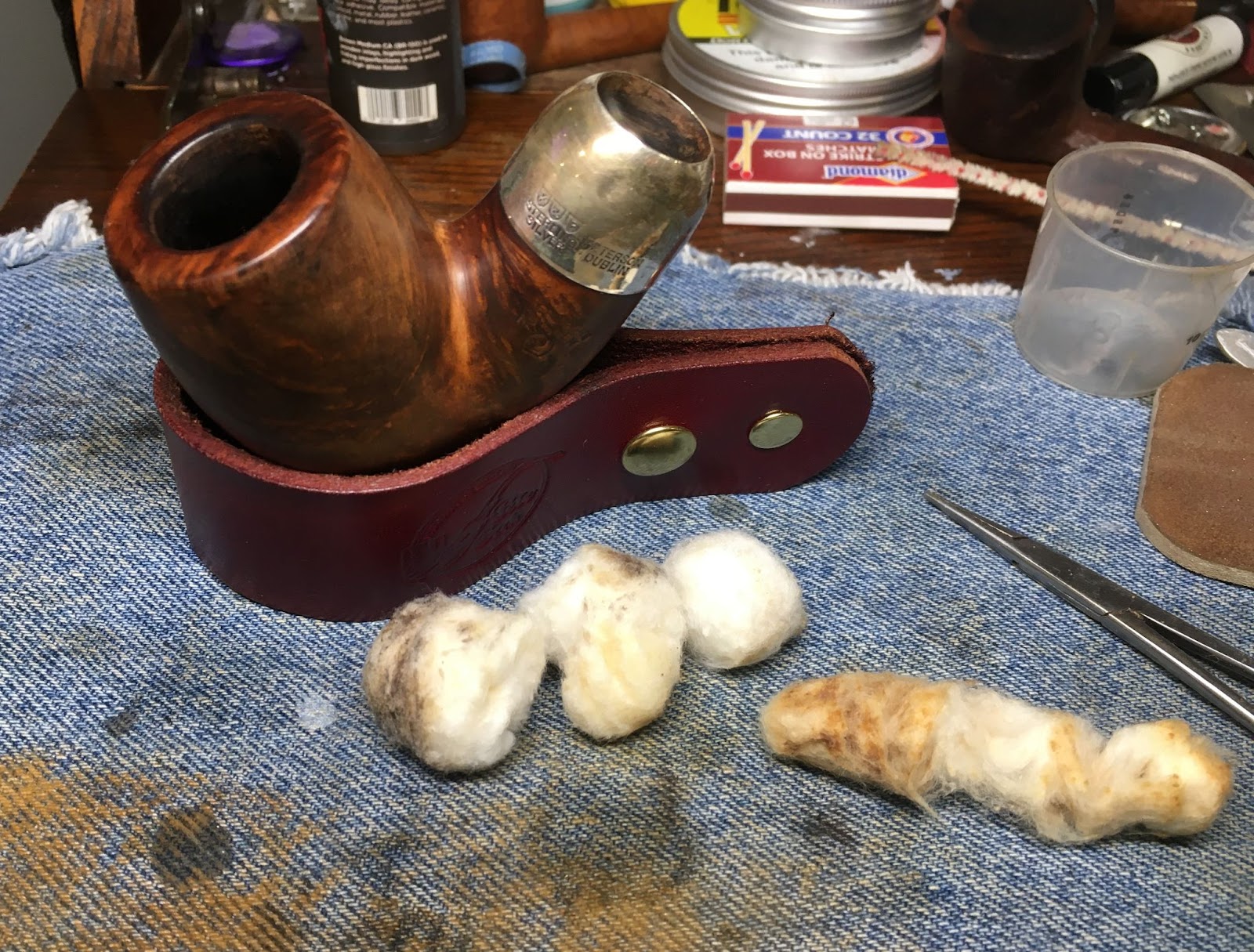
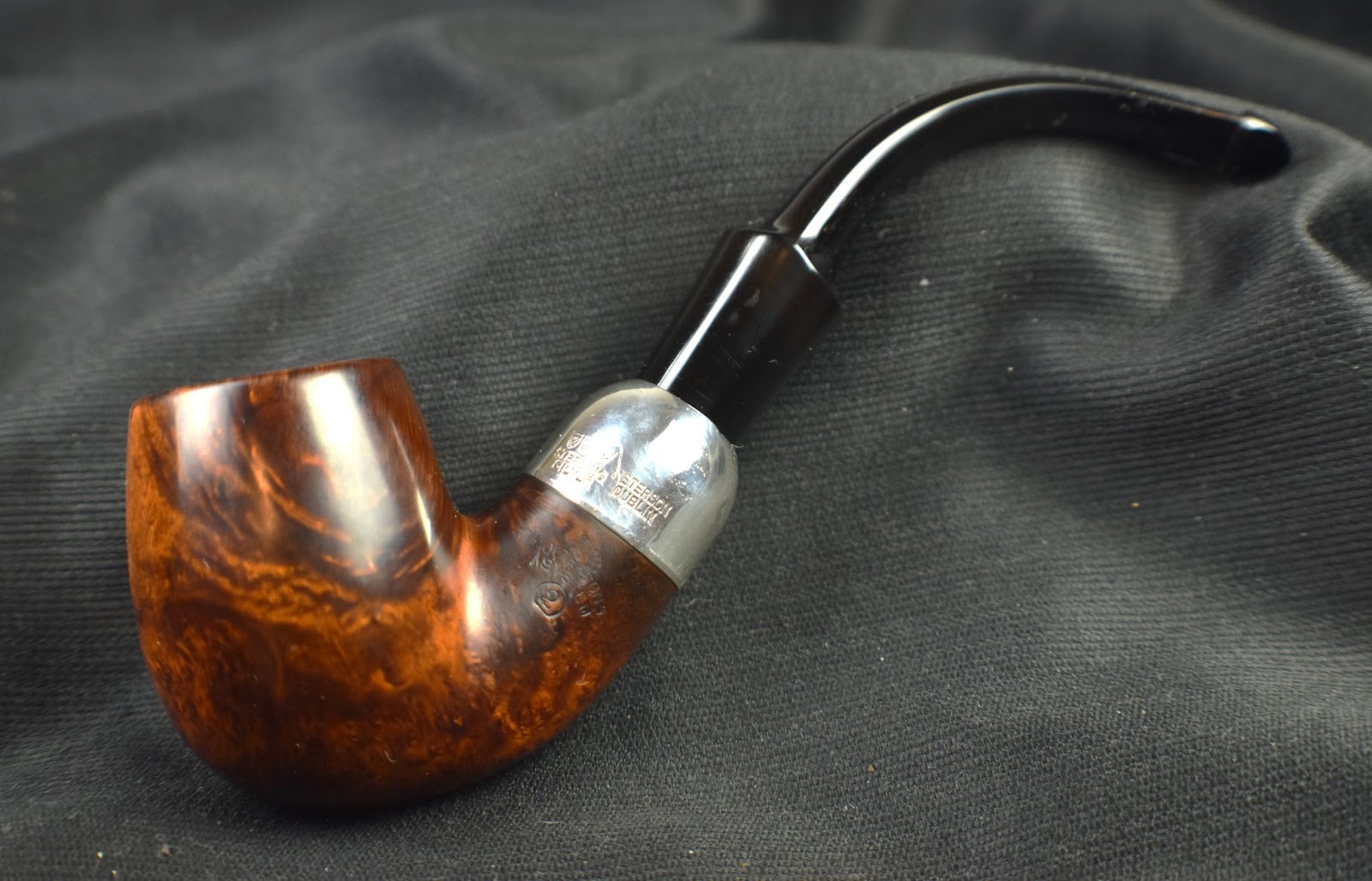
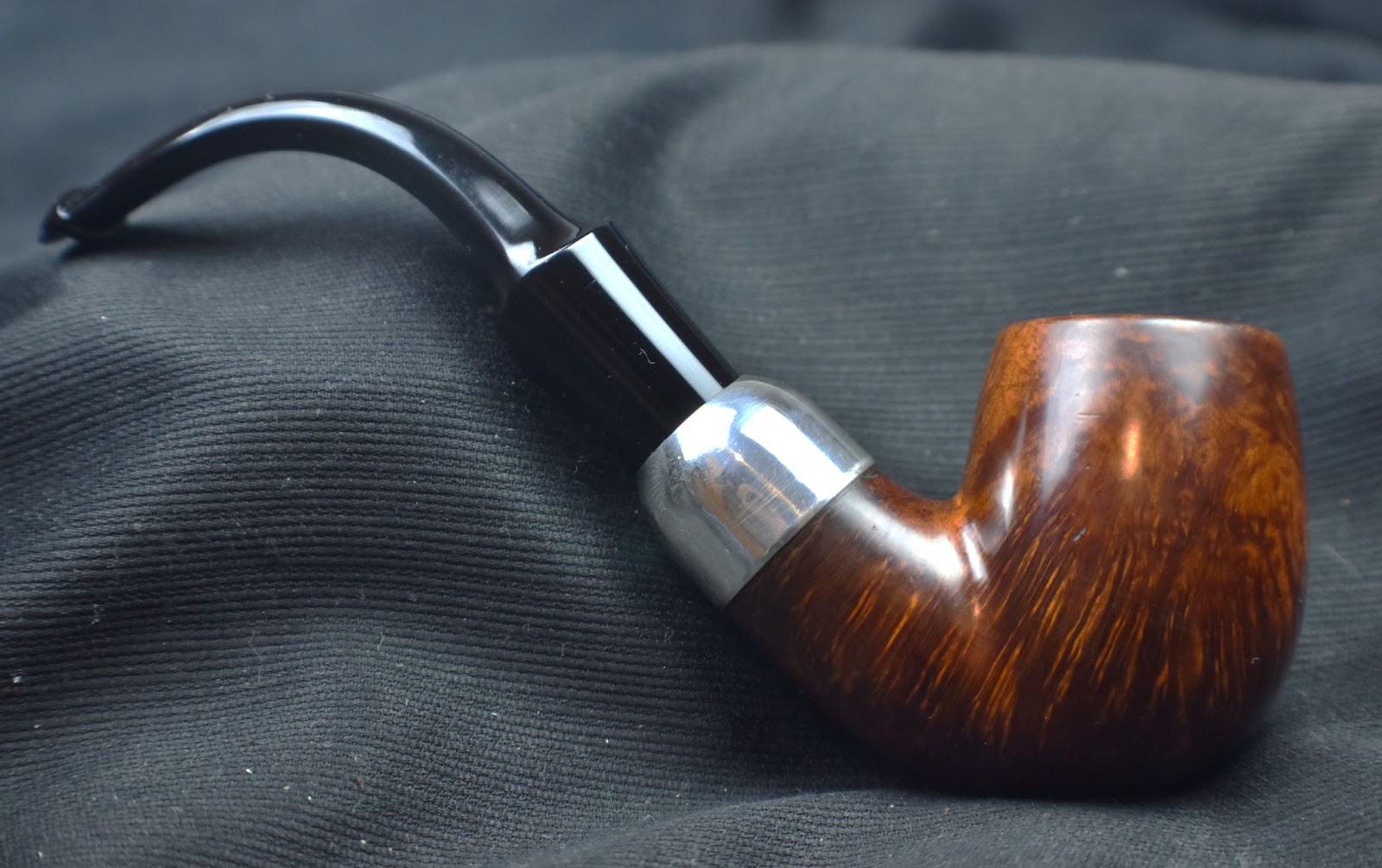
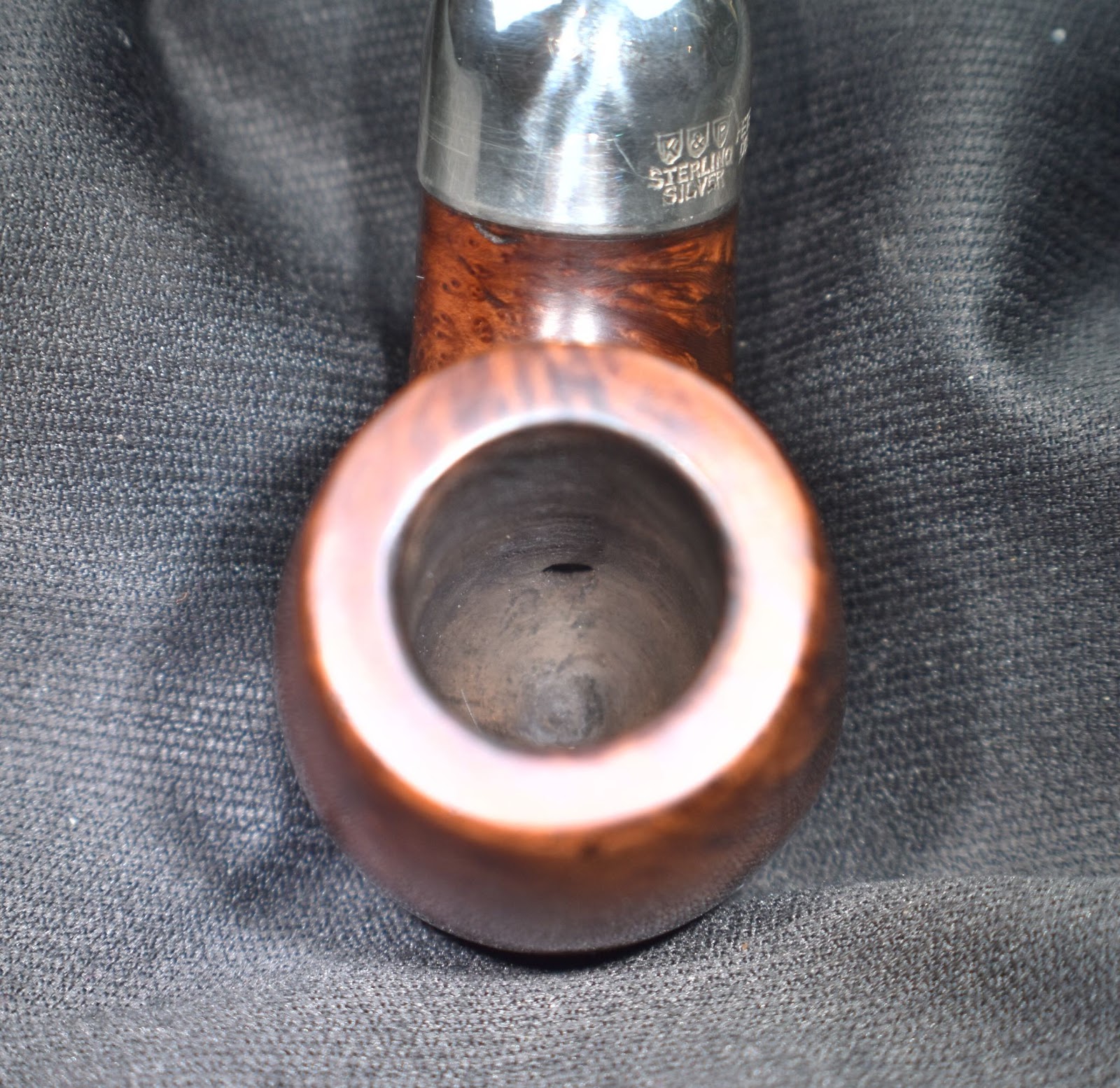
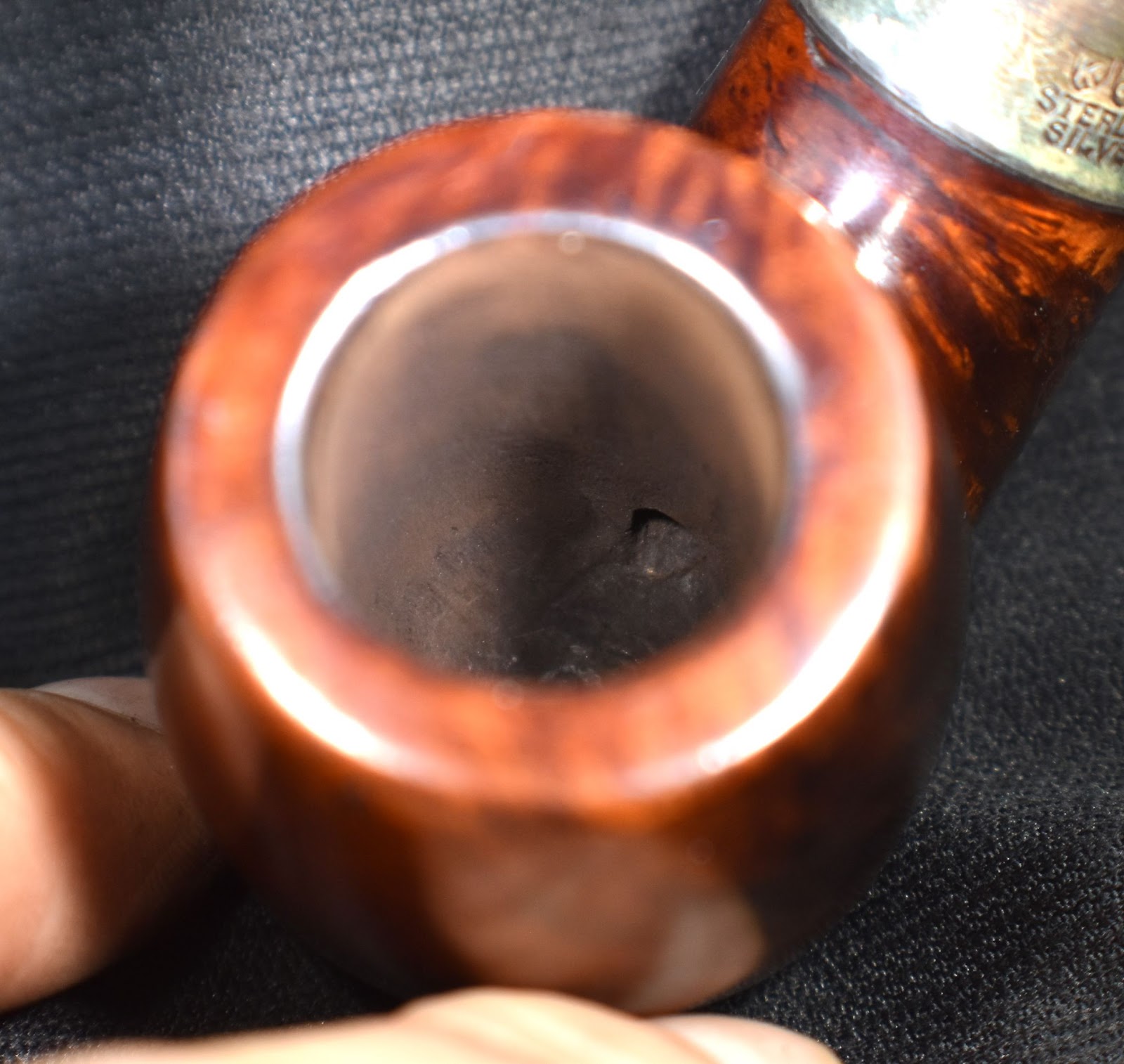
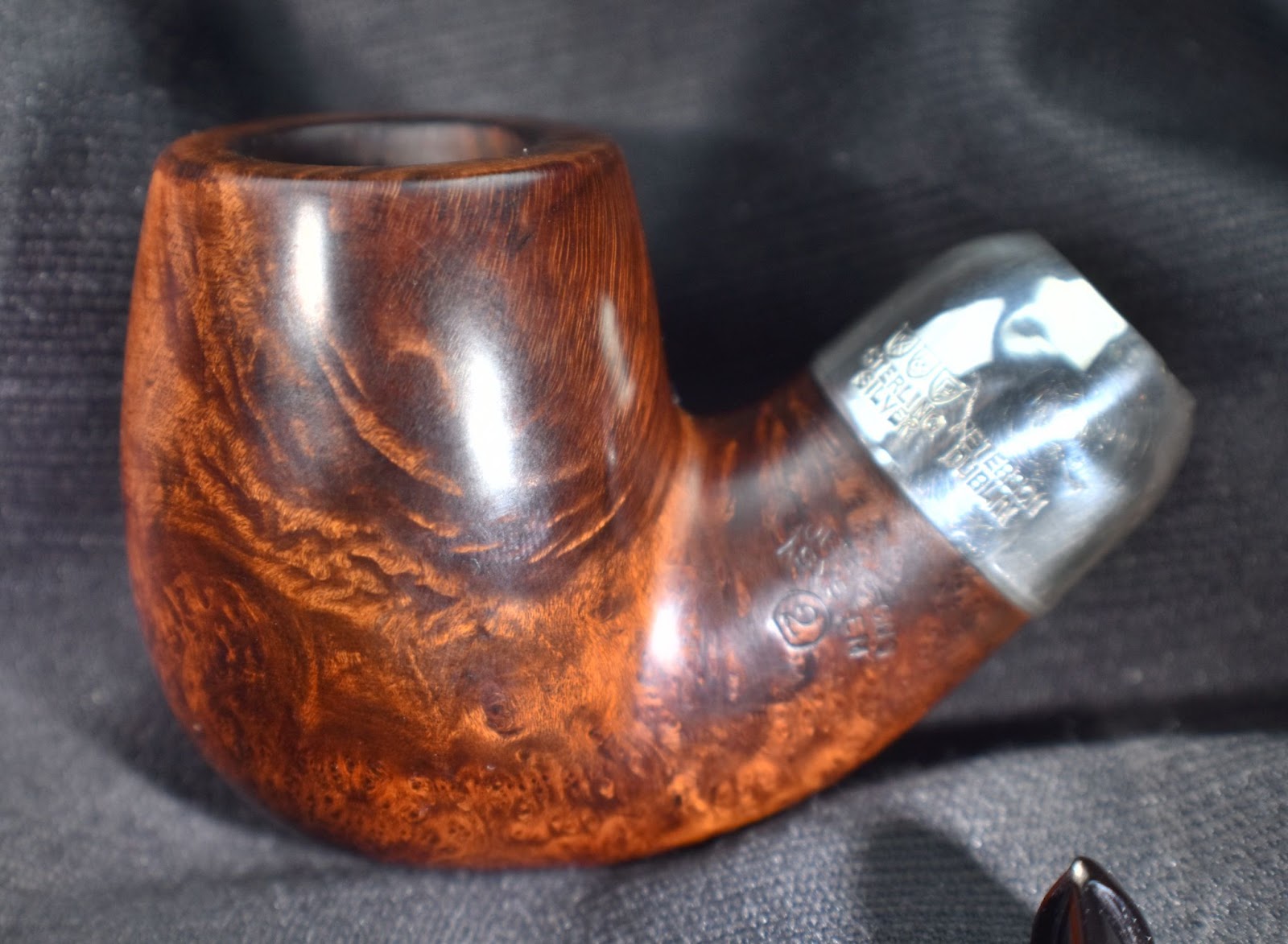
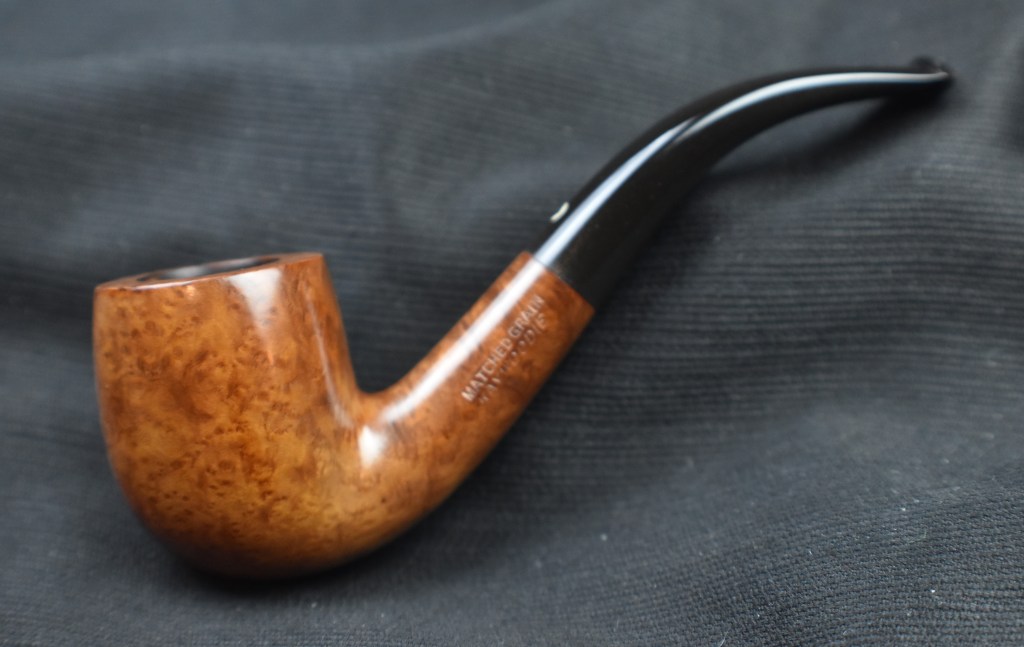
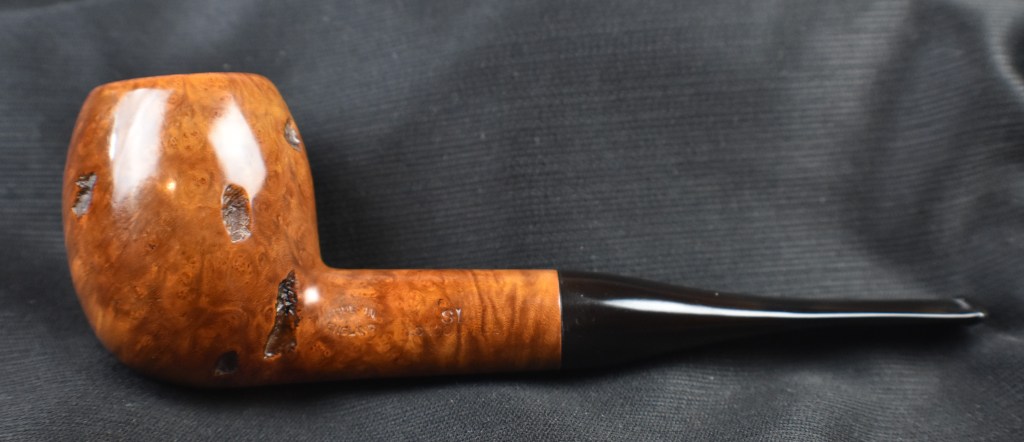
The 306 was actually a shape which I did not own. The final 300 shape of the series void is no longer a void. The best part is that the pipe is a sitter and doesn’t really require a slot in a pipe rack. It can just sit in the cabinet next to the rack and look majestic and self-sufficient. This 306 bore the following stamps all immediately below the nickel collar on the left shank: Peterson (arched in the traditional script) over OF DUBLIN (also arched) over SYSTEM over STANDARD 306. The nickel ferrule dome was stamped with the expected K&P over PETERSON. Since this is a standard there were no hallmarks. Below are some photos of the 306 prior to it being worked on.
The briar was in great shape. A little bit of cake in the bowl and a smidge of lava overflowed onto the rim. The stem had seen some chomping and wore the scars. Looking at the indentations it appeared the chomper clenched on his right. Either way, those would need repairs. The whole restoration looked like it would be a relaxing endeavor.
Background
If you have been following this blog for a length of time you know I have done a few Peterson restorations in the past. If you are new here, welcome and I’ve done a few Peterson restorations in the past. I’m not going to go on and on about the history of the oldest continually operating pipe manufacturer in the world and arguably the best. I will however lead you to The Peterson Pipe book. Mark Irwin and Gary Marlburg’s book is a must read for a Pete Geek.
As a summary of the 306,, I am quoting the Peterson.ie site below. I figured that since this pipe is currently in production why not let the makers speak for themselves.
“About the Shape
Combining the sturdy stability of a Poker with convenient jaw-hanging balance, our flat-bottomed Oom Paul is a versatile design, able to sit stably on a desk or be easily clenched in the teeth. Its bold, muscular proportions resonate with our iconic House Style.”
“About the Series
Our flagship line, the System Standard stamp first appeared in 1945, but the entry-level design has been a staple in our catalogues since Charles Peterson secured his final patent in 1898. Designed to provide a cooler, drier smoke, each pipe features a deep reservoir within the shank to collect excess moisture; a graduated bore mouthpiece that funnels the smoke and allows moisture to collect within the reservoir; a sturdy nickel military mount, which allows the pipe to be broken down and cleaned without damage or warping; and our patented P-Lip bit, which draws the smoke upward, thus reducing tongue bite. While the P-Lip bit is the traditional choice, we also offer System Standard pipes with fishtail stems. Available here in the traditional walnut stain of the Smooth finish.”
“About the Range
In 1890, after 15 years of handling and repairing pipes while working for the Kapps, Charles Peterson secured a patent in his own name, titled “A certain new and useful improvement in Tobacco-Pipes,” which introduced a unique system comprised of a higher draft hole and a moisture reservoir bored into the shank and transition of a briar pipe. Over the next eight years, Charles continued to refine his System, applying for and securing patents for a graduated bore mouthpiece (1891), and a unique button design known today as the P-Lip (1894-1898). Designed to wick moisture away from the smoke, reduce tongue bite, and increase the longevity of the pipe, Peterson’s complete System patent sparked a tradition of innovation, one we continue to uphold to this day. The System Pipe is the invisible source behind our unique House Style: our pipes’ muscular shanks and transitions, tubular profile, and generous bends. Our overall shaping style has a distinctly antique form because it has remained largely unchanged for over 120 years.
In our System range, you’ll find a variety of shapes in myriad finishes, each featuring Charles Peterson’s groundbreaking improvements in the realm of tobacco pipes. Whether you’re looking for your first pipe or to enhance a robust collection, here you’ll find numerous options to suit any taste, all backed by our legacy of craftsmanship.”
Now, I would never think to tell Peterson how to do their business nor how to engage in marketing but the above blurb “About The Shape” is lacking a certain bit which I find necessary. According to Irwin and Marlberg, “System shapes 304/20FB De Luxe and 306/11FB created by Paddy Larrigan and introduced in 1992” (Irwin, Mark and Malmberg, Gary (2018). The Peterson Pipe The Story of Kapp & Peterson, First edition, second printing 2021. Briar Books Press, Canada. p215). Paddy Larrigan was a third generation Peterson factory worker who was also responsible for the Dunmore line of pipes. His footprint in the history of Peterson should be glossed over. For more information on the Peterson Dunmore line check out my last Dunmore blog: https://wordpress.com/post/scimansays1787.com/6410. That means that this pipe’s origin story could have begun as early as 1992. The Standard line of pipes are difficult to date as they do not have any defining characteristics like hallmarks of silver mounted pipes. I did check the current stampings to see if they offered any notable changes and they appear the same today as this pipe’s stamps.
In typical “me” fashion I began with a laundered denim piece. I cannot use the term clean as the stains from previous restorations are taking a toll on that term.
The reaming crew was called forth.
The PipNet with the #2 blades did most of the work clearing the cake from the tobacco chamber. Further scraping was done with both the Smokingpipes Low Country reaming knife and the General triangular scraper. The interior of the chamber was then sanded with 220 sandpaper wrapped around a wood dowel.
The interior of the tobacco chamber had some charring and heat damage. This was scraped and sanded as smooth as possible without drastically changing the interior shape. The damage was not severe nor very deep. I thought the best remediation would be a bowl coating and the end of the restoration.
The stem was next on the schedule. I place it into a fresh solution of Oxiclean and water. And allowed it to soak for 2 hours.
I returned attention to the stummel and took it to the sink for a scrubbing with undiluted Murphy Oil Soap and a nylon scrub brush. The soap was rinsed with warm water and the stummel was dried with a cotton hand towel.
Back at the workbench the stummel looked more clean but there remained some areas with more “shine” than others. I wiped the stummel with a make-up pad dipped in 95% ethyl alcohol. This worked at removing the shine and left the stummel looking more like flat unfinished briar.
The stamps were covered with painters tape to protect them from the upcoming sanding.
The shank and reservoir were then cleaned out with many cotton swabs, folded bristle pipe cleaners, a shank british and scrapings with a dental scraper. The Peterson System does work very well but when neglected it is far from an easy thing to clean.
The stummel was then sanded with a series of sanding sponges with grits of 320-3500. Between each sponge the stummel was wiped with a make-up pad wetted with 95% ethyl alcohol.
The stem was removed from the Oxiclean solution and scrubbed with a couple of Soft Scrub cleanser treated make-up pads. A good deal of oxidized material came off but not as much as I was expecting.
The airway was cleaned with cotton swabs and bristle pipe cleaners dipped in ethyl alcohol. I could still see brown oxidized vulcanite on the stem and decided to give it a dip in the Before and After Extra Strength Deoxidizer. I inserted a pipe cleaner into the P-lip to act as a hanger in the Deoxidizer.
Below, the stem entered the Deoxidizer and was left overnight.
The following morning I removed the stem and allowed it to drip excess solution back into the jar.
The stummel had been sanded. Now it was time for the micro-mesh pads. I micro-meshed the stummel with the 4000-12000 pads. Again between each pad I wiped the stummel with a make-up moistened with ethyl alcohol.
The stummel then received a coating of Before and After Restoration Balm and was allowed to sit for as long as it took for the stem repair, sanding and micro-meshing.
Back to the drip dried stem. I used a coarse shop rag to wipe/scrub the remaining Deoxidizer from the stem. The air way had 2 pipe cleaners run through it to remove the solution.
At last the stem was looking brilliantly black. A bit pitted but the pits were black too.
I again used Soft Scrub cleanser on make-up pads on the stem. Much less oxidized rubber came off. The inside of the tenon and airway were again cleaned making sure that any remaining Deoxidizer was removed.
I sanded the Chomped areas with a 600 grit sanding sponge to ensure fresh vulcanite to work with. By “work with”, I mean to fill with black cyanoacrylate (CA, super glue). Below you can see the button top and bottom areas to repair.
The CA I was using has carbon and rubber in the formula making the fills more vulcanite-like. In other words, rubberizing the CA rather than the more hard and brittle black CA I used last winter. Small dabs of CA were placed onto the indentations.
The wet CA was then spritzed with a CA drying accelerator. This cures the CA in seconds as the accelerator evaporates.
The cured CA was then filed level with the surrounding vulcanite. The dark spots in the photo below indicate areas where additional CA needs to accumulate. I use several small applications rather than one large one.
The same for the bottom side of the stem.
Eventually with additional applications and filings the stem was sanded smooth.
With the fills completed the whole stem was sanded with the series of sanding sponges 400-3500. Between each sponge I applied a fingertip of mineral oil to the stem, rubbed it in and wiped the stem with a dry paper towel.
After the sanding the stem was micro-meshed with the 4000-12000 pads. Between each pad I applied a small drop of Obsidian Oil to the stem, rubbed it in and wiped with a paper towel.
The stem was polished using Before and After Fine Polish rubbed with a soft cotton cloth.
The Fine Polish was followed by the Before and After Extra Fine Polish with the same cloth.
The stummel was wiped of the Restoration Balm with an inside out athletic sock.
The pipe was then taken to the buffer for several coats of carnauba wax. This is where my forgetfulness comes to light. I photographed the “finished” pipe at this time. Upon completing the photo shoot, I realized that I still needed to coat the bowl. Darn old people… I was out of pure maple syrup but I did have a jar of German organic honey, a gift from a Europe traveling niece. I lightly coated the inside of the bowl with honey. I then plugged the draft hole with a pipe cleaner. I used half a capsule of carbon powder poured into the bowl, covered the rim with my hand and shook the stummel for several seconds. I ended up with a very nice circle of carbon powder on the thick part of my thumb and a well coated tobacco chamber. That is the last photo in the “finished” section below.
That is it, the relaxing restoration of a Peterson System Standard 306. I am very pleased with how well this Pete looks. At least on the outside. As with any damaged interior I will have to smoke it and monitor it closely. I can say that the inaugural smoke was with a lightly packed Five Brothers shag cut Burley. I didn’t want to scrape any of the coating off so a very soft cut tobacco was used. Everything went as planned, the honey baked in nicely with the carbon powder and it appears to be on its way to a solid carbon coating. Back to the restoration. The vulcanite was rid of the oxidation and it looks great. The briar with its bird’s eyes on the left and flame grain on the right are beautiful. I am sure this pipe will continue to be used many times while contemplating my next restoration. The dimensions of this Peterson System Standard 306 are:
Length: 6.63 in./ 168.28 mm.
Weight: 2.08 oz./ 59.20 g.
Bowl Height: 1.91 in./ 48.51 mm.
Chamber Depth: 1.61 in./ 40.89 mm.
Chamber Diameter: 0.77 in./ 19.56 mm.
Outside Diameter: 1.46 in./ 37.08 mm.
I do hope that you have found something here useful to your own pipe care, maintenance or restorations. If you like this sort of thing, please click the like and subscribe buttons. Thank you for reading the ramblings of an old pipe lover.
Below are some photos of the finished Peterson System Standard 306.
Back in the 1990s I worked with a fellow teacher and Nebraska Air Guard F4 pilot who often said, “Better lucky than good, any day.” That phrase has stuck with me over the years and applies to so very many daily occurrences. The acquisition of this pipe for instance. It was part of a lot of 12 pipes. The other 12 were nothing to be too excited about; Yello-Boles, Dr Grabows, a split seam leather Longchamp, etc… and what appeared to be a Peterson Meerschaum hiding in the background ashamed at it’s lot in life. The photos of the lot were as usual, less than perfect yet, I knew what I thought I was seeing. I was sure that someone else would see the same thing and the lot would sell quickly. It didn’t. The auction closed with no sale and was relisted. I cannot remember how many times this relisting occurred. I finally couldn’t take the thought of a Peterson meerschaum going unloved and messaged the seller with an offer. The auction was not set as a “Make Best Offer” but I figured it was worth a shot. The seller messaged me back saying that he reduced the price to my offer. Well, that was easy.
Needless to say, after a few days of waiting the package arrived here in the wilds of southeast Nebraska. The anticipation was palpable as I tore through the packaging. I eventually unwrapped a P-lip stem with the unmistakable P stamped clearly. I knew it! Next the stummel emerged from it’s protective tissue paper. The seller knew how to package and ship pipes and not just for dramatic effect. The stem and stummel were reunited and I saw my latest prize. As typical, the only stamp was the Peterson stem logo but the shape was unmistakable a 120 Dublin. Below are some photos of the pipe prior to doing any work on it.
Background
Earlier this year I restored a Peterson meerschaum 406 Prince. I will use a good deal of the “Background” from that blog here again:
I included a few links concerning the history of Peterson pipes. I will include those here also. “For a great history Mark Irwin and Gary Marlburg’s book is a must read for a Pete Geek.
For the history of Peterson Meerschaums I will mainly be citing Irwin and Marlberg’s The Peterson Pipe book. Peterson has a long history of meerschaum pipe making dating back to the 1870s (Irwin, 2018 p. 15). At the time when Charles Peterson began working for the Kapp brothers in Dublin, meerschaum was the old traditional material while briar was a new innovation destined to become more popular in the next century. It was with briar that Charles Peterson created his original patents for the reservoir in 1890 and for the graduated-bore mouthpiece with what we call the “Patent-Lip” (P-Lip) today, in 1894. 1893 was the year that Charles Peterson and Henry Kapp bought out the shares of Christian Kapp of the Family business, which the brothers had run together. “Christian was evidently not happy with this arrangement and disliked Dublin. He trained to become a doctor, and on 12 June 1893 he sold his share of the business to his brother and Charles Peterson” (Irwin, 2018 p. 48). The Kapp & Peterson company was born and the Peterson System has continued for over 130 years.
Now obviously the lovely Peterson meerschaum pipe in hand is not something made at the turn of the century. According to Irwin and Malmberg, “ In 1968, Peterson returned to making block-meerschaum pipes after forty years. They had made block meerschaums in all Patent Systems and many Classic Range shapes from 1896 until about 1929. The scarcity and rising cost of amber, fragility of meerschaum and popularity of briar all contributed to the end of meerschaum production.” (Irwin, 2018 p. 158). The authors go on to state that, “These Republic-era meerschaums were first made in partnership with Manxman Pipes, Ltd., on the Isle of Man, a company Peterson bought outright in the early 1970’s (Irwin, 2018 p. 158).
I am not quite sure how the purchase of Manxman pipes worked. Manxman was an apparent subsidiary of Laxey Pipes Ltd. According to pipedia.org:
“Laxey Pipes Ltd. resided in a historical 19th century four-storey Man stone building at The Quay, Old Laxey, Isle of Man, which thankfully has been preserved.
The company specialised in the production of meerschaum pipes using the Meerschaum mined by the Tanganyika Meerschaum Corporation in the Amboseli basin in Tanganyika (since 1964 part of the United Republic of Tanzania).
Please note: you may often find names like “Manx Pipes Ltd.”, “Man Pipe Co.” and others more, but there is no indication of another Isle of Man pipe producer other than Laxey Pipe Ltd. at any time!
Laxey Pipes Ltd. marketed own brands like “Manxpipe”, “Manxman”, “Manxland” e.c. Names like “John Bull”, “White Knight” (unwaxed), “Domino” (black, or lined) indicated some shapes / colours of Laxey’s own series. The stems either showed the astronomical sign for “male” or “man” (circle + arrow), or the crest of the Isle of Man, the 3-legged X in a circle. Manxpipes and Laxey’s other brands were available through pipe retailers in general, but also were sold (mainly) to tourists through their own shop in Laxey.
Furthermore Laxey Pipes Ltd. manufactured the meer bowls for Peterson, Barling, Nørding and others from the later 1960’s until 2001. Man Pipe e.g. was a brand distibuted by Comoy’s. The bowls usually showed no nomenclature indicating the orderer. “Genuine Block Meerschaum” was engraved frequently. Often, just the stems were different, while bowls were the same.
Supply of meerschaum from East Africa run out (Kenya / Tanzania exhausted, Somalia inaccessible), and thus the last Laxey meers were supplied to trade in May, 2001. Laxey Pipes Ltd. tried to survive continuing with briar pipes – mainly in the Danish style -, but to no success. It closed down business in July, 2002.”
As for the age of this 120 Dublin, the first documented 120 shape I found in The Peterson Pipe book was on the 1947 shape chart (Irwin, 2018 pp. 156-157). During the Free State Era ( 1922-1937 the Dublin looking shape had an R413 number. The Patent Pipes from 1890-1921 had a Dublin-esque shape named the “Kaffir” and did not have shape numbers (Irwin, 2018 p. 122, 124).
In the “A New Leaf” meerschaum brochure from 1968 there appear photos of the Peterson meerschaums offered (Irwin, 2018 p. 105). The 120 shape is represented however the stem/shank joint is very flush and smooth with a continuous taper. This 120 has a rounded shank end at the stem shank joint. The 1975 catalog photos show meerschaum pipes with stem/shank joints like this pipe (Irwin, 2018 p. 164, 166). This leads me to believe that this Peterson Meerschaum was made in the mid1970s-early 1980s.
The Restoration
Like I usually do, I began with a clean denim piece to work on.
My old Oxiclean solution was getting discolored and was not smelling very good so a new solution was made. 1 ½ tablespoons of Oxiclean powder in about 500 ml of tap water.
The stem of the Peterson was placed in the solution for a soak in the oxy.
Reaming with a reaming tool like the PipNet is not recommended for meerschaum due to it’s brittle nature and the torque generated with a tool like the PipNet would probably not be a good thing. Instead I used the Smokingpipes Low Country reaming knife and the General triangular scraper. The tip of the General had been ground from the original sharp point to a more rounded tip with a grinding wheel. A wood dowel wrapped in 220 sandpaper joined in.
The scraping did not produce a great deal of removed cake but it did clear the tobacco chamber.
When cleaning the rim I noticed what appeared to be filled cracks. I saw no evidence that these cracks joined together and actually represented a large piece of the pipe that had been broken off and later repaired. Though looking at the outer stummel surface the finish is smoothed (without rustication) between the two cracks. The area between the crack also looked thinner than the rest of the stummel. I think this was evidence of a repair by a previous owner or an attempt by the factory to salvage a flawed stummel. Either way the stummel looked and felt structurally sound.
Scraping the tobacco chamber was difficult as the cake was very hard and held firmly to the walls of the chamber. Sanding was slow and exposed fresh meerschaum at the rim of the chamber.
After the chamber was sanded I scrubbed the stummel with warm water and a medium toothbrush. The traditional Murphy Oil Soap was not used, only warm water. The water and toothbrush did appear to remove some of the accumulated grime making the stummel look a bit more clean than previously.
To unify the staining of the pipe’s rim, I used furniture touch-up stain markers.
I started with black around the rim.
I then used the mahogany immediately below the black. Sorry about the blurriness of the photo.
After the stain had dried a few minutes I used a make-up pad wetted with 95% ethyl alcohol to blend the two lines of stain together. Below you can see the results of my blending.
The stem was removed from the oxi bath after 2 hours and was wiped vigorously with a dry cotton make-up pad. A good deal of oxidized vulcanite was removed.
I cleaned the shank airway with folded over bristle pipe cleaners, a nylon shank brush and cotton swabs dipped in 95% ethyl alcohol.
The stem was then scrubbed with Soft Scrub cleanser applied to make-up pads. After scrubbing I applied a layer of mineral oil to the stem.
The airway of the stem was cleaned with bristle pipe cleaners dipped in 95% ethyl alcohol.
The pipe sat neglected for a whole day due to the incredibly busy schedule of a retired slacker, I mean teacher. When I returned to work on the stem I wiped the excess mineral oil and lightly sanded with the 320 sanding sponge.
There were a few deep dents in the stem that would require filling with black cyanoacrylate (CA, super glue). Small drops of CA were placed onto each of the dents.
The CA was then spritzed with a CA drying accelerator. This allows the CA to cure almost instantly.
The cured CA was then lightly filed with a small flat file. This removes the top of the CA fill, getting it smooth with the surrounding vulcanite.
The new fill was then sanded with 320 and 400 grit sanding sponges. The logo was covered with a piece of painters tape to protect the logo from further sanding. The stem was then sanded with a series of sanding sponges from 600-3500. Between each sponge the stem was rubbed with a dab of mineral oil by fingertip and wiped with a dry paper towel.
The flaws on the surface of the rim were filled with a different black CA. The product I use for the stem is “rubberized”. I wanted a hader CA fill for the rim so I used a non-rubberized black CA. I placed a drop of the black CA on the bottom of an upside down medicine cup. I dabbed a fly tying bodkin into the drop to get some CA onto the bodkin then applied it to the flaws. This allowed me to have precise placement of the CA limiting the sanding of excess CA fill.
I allowed the CA to cure on its own without any accelerator. This was a slow process with a good deal of waiting between applications. Once cured, I very lightly sanded the rim with a 400 and 600 sanding sponge to remove the excess CA.
Several applications and sandings later I was pleased with the result. You can see that the sanding was very light leaving most of the previously dyed rim black or, mostly so.
The rim was then re-dyed with the black stain touch-up marker. And allowed to dry.
The finished rim has imperfections which I purposely left. I thought that a pristine smooth finish would look out of place with the rustication of the stummel.
Next I cleaned the logo of any Obsidian Oil with a cotton swab dipped in 95% ethyl alcohol.
Using white acrylic model paint and a fine detail paint brush I applied white paint to the logo. This acrylic paint is water based and dries quickly.
The 4000 grit micro-mesh dam was used to remove the excess white paint.
I worked the stem with micro-mesh pads 4000-12000. Between each pad I applied a small drop of Obsidian Oil, rubbed it onto the stem and wiped with a dry paper towel.
Before and After Fine Polish was used with a soft cotton cloth on the stem to increase the level of polish.
The Fine Polish was followed with Before and After Extra Fine Polish applied and hand buffed with the same soft cotton cloth.
To finish the stummel I needed to prepare for a beeswax coating. I gathered the heat gun, canning jar with beeswax & brush, a catch tin for wax drips and a shallow pan with water. The pan and water help to heat/melt the wax and keep it melted while I work.
The canning jar with beeswax was placed into the water in the pad and the stove lit. The boiling water will melt the wax.
WHile I was waiting for the wax to liquify, I waxed the Peterson stem at the buffer with carnauba wax.
The hot water bath melted the wax. I heated the stummel with the heat gut. I have to admit I was a bit worried about heating the mortise and tenon too much.
With the stummel hot and the beeswax melted I started painting the liquid wax onto the stummel. I painted the top 1.3 and the entirety of the shank. As I painted the accumulating wax was cooling making a lumpy looking mess.
The heat gun was again turned on and the stummel was rotated in all directions in the flow of hot air. The wax remelted and flowed over the surface of the stummel. I herded the wax around with the paint brush to make sure that everything was getting it’s fair share of melted wax. The excess wax drips were accumulating in the catch tin.
With every part of the stummel well coated with hot liquid wax I used a paper towel to absorb the remaining excess wax from the stummel.
The pipe was hot to the touch so I laced it onto the workbench to cool.
There you have it, the restoration of a Peterson Meerschaum 120 Dublin. This old girl turned out pretty well. I still wonder what happened to the Dublin Darling from the Isle of Man regarding the cracks in the bowl. I believe that the whole rear of the bowl was chipped out at some time and repaired with a pretty darn good glue job. The crack seems can kind of be made out in the photo below of the back/shank side of the pipe. Whatever happened she should continue being a grand little pipe for many years. The fresh beeswax looks good and the stem polished up very well. The dimensions of this 120 Dublin are:
Length: 6.00 in./ 152.40 mm.
Weight: 1.28 oz./ 36.50 g.
Bowl Height: 1.71 in./ 43.43 mm.
Chamber Depth: 1.47 in./ 37.34 mm.
Chamber Diameter: 0.74 in./ 18.80 mm.
Outside Diameter: 1.33 in./ 33.53 mm.
I do hope that you have found something here useful to your own pipe care, maintenance or restorations. If you like this sort of thing, please click the like and subscribe buttons. Thank you for reading the ramblings of an old pipe lover.
Below are some photos of the finished Peterson Meerschaum 120 Dublin.
SilverKing a name that everyone has heard of and associates with … Umm, what? Haven’t heard of em, eh? Well neither had I but it is still a darn fine looking piece of briar. And it’s made in France, maybe. Okay, I am reaching for some enthusiasm . This lovely old billiard was one of six pipes that I won from ebay back in June of this year from Hollywood, Florida. The target of my desire was the Peterson meerschaum (2nd from the right) which was hiding amongst these pipes as seen in the photo below. I have restored all but one of the lot. As a matter of fact, the Barclay Rex was sold right after the restoration blog was published. I will add links to the restorations of the others for those who might be interested: Canted Dublin, Barclay Rex, Telford’s Canadian, Peterson meerschaum. The finished pipes look far better than their below photo.
Back to the subject at hand, this lovely Silverking billiard. The pipe was stamped with SILVERKING over SYNCHROMATIC on the left shank and ALGERIAN BRIAR over FRANCE on the right shank. The stem has a crown stamped logo and the silver band is stamped EP within a diamond and three Hallmarks (middle and stem-ward worn to illegible). Below are photos of the Silverking billiard prior to working on it.
This looked to be a straightforward restoration with no glaring difficulties. There were a few deep fills to be made to the briar, a slightly overclocked stem and the missing stinger but other than that a nice relaxing afternoon in the basement avoiding the heat of mid-summer.
Background
I would love to be able to tell a good story about the trials and tribulations of the Silverking pipe factory but alas, there is scant information concerning this maker. If you have any additional information, please feel free to leave it or links in the comments. All I could find is the following from pipephil.eu:
(Si-Siq — Pipes: Logos & Markings (pipephil.eu)). Referring to the “?” at the top right of the screenshot below, I am not sure why there is a question about the country of manufacture (COM) of this pipe as it is clearly stamped MADE IN FRANCE or in the case of my Silverking FRANCE. “Made in France” is also stated in the text above.
I looked at the “Otherline from this factory” links and they are included here:
Not much to work with. A quick search on pipdedia.org resulted in the following quote,
“This is probably not a brand but rather the name of a line of an unknown french factory.
Other line from this factory: Big Ben Reputation , Gold King”(Silverking – Pipedia).
It looked like pipedia.org got their information from pipephil.eu as well.
Now we can assume a bit of information about the date of production. Algeria had been a source of briar from the mid to late 1800s and into the early 1900s. During the years of World War Two briar production was severely limited. After the war briar production returned. Algeria was a French colony and like many colonies during the mid 20th Century, experienced a wave of anticolonialism. The French attempted to squelt this anticolonialism leading to the Algerian war of independence from 1954-1962. During this time Briar production from Algeria was greatly reduced. According to the Wikipedia.com article fatalities of the conflict were, “between 400,000 and 1,500,000 Algerians,[40][24][22] 25,600 French soldiers,[15]: 538 and 6,000 Europeans.” (https://en.wikipedia.org/wiki/Algerian_War).
Well that about sums up all I know about this old pipe. It was made in France of Algerian Briar. Most likely between the second world war and 1954.
The Restoration
As typical this restoration began with a relatively clean denim piece as a work surface.
The reaming tools were gathered and included the Scotte Stainless Steel reamer rather than the traditional PiNet reamer due to the narrow tobacco chamber and the fact that my PiNet #1 blade suffered a catastrophic failure. The Scotte did a fine job and only required a small amount of scraping with the Smokingpipes Low Country Reaming knife and the General triangular scraper.
After the reaming the chamber was sanded with 320 sandpaper wrapped around a wood dowel. No heat damage was observed in the chamber.
The shank cleaning was done with 95% ethyl alcohol, a nylon shank brush, bristle pipe cleaners and cotton swabs.
After the shank was cleaned I turned my attention to the stem. Here the ethyl alcohol and bristle pipe cleaners were used to clean the airway of the stem.
The rim of this old French billiard had definite lava accumulations. This was softened with saliva and scraped with a sharp pocket knife.
The scraped rim looked better but would require a good scrubbing.
Seque to the scrubbing. The stummel was taken to the sink for a scrubbing with undiluted Murphy Oil Soap and a medium toothbrush. The soap was rinsed with warm water and the stummel was dried with a cotton dish towel.
Back at the workbench the stummel appeared to have most of the finish removed during the scrubbing. The briar looked dull and flat except in a few areas where some finish remained.
An 95% ethyl alcohol wetted make-up pad was used to scrub the stummel. A good deal of color came off the stummel. This indicated that wax, finish and stain were being removed.
A second alcohol wipe yielded more color.
To make sure no coatings remained a wipe with a make-up pad with acetone was used. This time only a little bit of stain was present on the pad.
All of the scrubbing and wiping allowed me to see the pits and damage to the stummel. These would require a fill of brown cyanoacrylate (CA, super glue) and briar dust.
The gouges received a small drop of CA applied with a fly tying bodkin. While the CA was still wet I scooped a small amount of briar dust with a dental scraper and placed the dust on the wet CA. This was then pressed into the wet CA in the depressions..
The briar dust causes the CA to cure almost instantly so once the dust is placed, pressing had to occur immediately. The excess dust was brushed off with a brass brush.
The new fill was filed with a flat diamond needle file to remove and smooth the fill then was sanded with a 400 grit sanding sponge.
In deeper fills this process was repeated until the fill was complete. The completed fills appear much darker than the surrounding briar. The light spots seen below are slight depressions with dry briar dust from sanding in them. A final coat of clear thin CA was applied to the dry spots and they were sanded with a dusty 400 grit sanding sponge. The dust was incorporated into the slight depression with the clear thin CA to fill the last of the low spots.
The above procedure was used to fill pits of the shank.
And the heel of the stummel.
To conceal the fills and to add contrast to the briar grain, I decided to contrast dye this stummel. Black Fiebing’s Leather Dye was chosen for this. The duct tape wrapped fishing bobber acts as a plug to keep dye out of the tobacco chamber and as a handle. The folded pipe cleaner is the applicator for the dye while the lighter provides a flame when burning off the alcohol solvent of the dye fixing it to the briar. Notice that I used painters tape to cover the stamps. This is done to keep the dye from penetrating the briar on the stamp. Were that area to become darkly dyed, extra sanding/buffing would have reduced the stamps.
Below is the black dyed stummel, still wet with Fiebing’s Leather Dye.
I wiped off the remaining damp dye with a paper towel. This also removed my painters tape stamp protectors. Here you can see that the stamped area received less dye thus reducing the amount of sanding/buffing that the stamp will be exposed to.
The blackened stummel was taken to the buffer where rouge buffing compound was used to buff away the router black dyed briar. The results looked good but I wanted the stummel to be lighter overall in color.
To further lighten the briar I lightly sanded the stummel with 320 and 400 grit sanding sponges. This removed more of the black dyed briar. When I was happy with the shade, I sanded the stummel with a series of sanding sponges 600-3500 grits and wiped the stummel with an alcohol dampened make-up pad between each sponge..
I turned my attention to the stem. The slightly over-clocked stem could have been adjusted a couple of different ways; by heating the aluminum threads until the rubber softened and then turning the aluminum slightly or to add a bead of black cyanoacrylate to the end of the stem. I chose the later as the overclocking was so slight. Here I sanded the stem from about its middle to the button with 320 and 400 grit sanding sponges.
I then used Soft Scrub cleanser on make-up pads to scrub the entire stem. The pads became very dark with oxidized stem material. I was uncertain as to the material used with this stem. Normally oxidized vulcanite yields a brown color on the make-up pad. This was nearly black. I coated the stem with mineral oil and allowed it to sit for 30 minutes. After the sitting, the stem looked black with no signs of a brown oxidized stem.
The stem was then sanded with a sequence of sanding sponges from 600-3500 grit. I did cover the stem logo with a small piece of painters tape to protect it from the sanding. Between each sponge I rubbed mineral oil onto the stem with my fingertip and wiped the stem with a paper towel.
After the sanding sponges the stem was polished with 4000-12000 micro-mesh pads. Between each pad I applied a drop of Obsidian Oil to the stem, rubbed it in with a fingertip and wiped the stem with a paper towel.
After micro-meshing the stem, I cleaned the logo area with a cotton swab dipped in alcohol to remove any oil.
I then used Silver Leaf Rub’nBuff on the logo. The silver was worked into the stamped logo, allowed to dry for a couple minutes and buffed with a paper towel to remove the excess. I know, the pipephil.eu information said that the Silverking used white on the logo but I thought that silver would look a touch more classy.
The stummel was micro-meshed in a similar fashion except without the Obsidian oil. Here I wiped the stummel with an alcohol dampened make-up pad between pads.
The stummel was given a coat of Before and After Restoration Balm and allowed to sit for 20 minutes. I failed to photo this step. After 20 minutes the Restoration Balm was wiped off with an inside out athletic sock. I failed to photo that as well. The final step was to take the pipe to the buffer for several coats of carnauba wax.
This pipe turned out very well. I really like how the contrast staining brought out the differences in the grain. It made the bird’s eyes stand out much better than I hoped it would. The stem polished up well. I still do not know exactly what the stem material is but it looks good and didn’t turn my lips black when I sampled the draw of the pipe. I do wish the stinger was intact though the draw is very nice without it. I am sure this will be a nice smoking pipe for someone who loves a long billiards. With it’s relatively tall and narrow tobacco chamber I expect it would make a fine Virginia or Virginia Perique blend pipe. The dimensions of this French beauty are:
Length: 6.34 in./ 161.04 mm.
Weight: 1.38 oz./ 39.30 g.
Bowl Height: 1.83 in./ 46.48 mm.
Chamber Depth: 1.53 in./ 38.86 mm.
Chamber Diameter: 0.69 in./ 17.53 mm.
Outside Diameter: 1.46 in./ 37.08 mm.
I do hope that you have found something here useful to your own pipe care, maintenance or restorations. If you like this sort of thing, please click the like and subscribe buttons. Thank you for reading the ramblings of an old pipe lover.
Below are some photos of the finished Silverking Synchromatic billiard.
This is something that you don’t see everyday: An original unfired early 1900s Frank Dublin pipe with a nickel plated band, horn stem and threaded bone reverse tenon. This pipe was part of an eclectic estate lot which contained a couple of old pipes in unsmoked condition. This was the first of that lot I have tackled. The stamps on this pipe read, Frank (in a cursive script) over ITALIAN BRIAR. There is no shape number. The band is stamped with three five pointed stars over 3 faux hallmarks (an anchor, a star and a walking figure with a bird-like head) over NICKEL PLATED. Judging by the horn stem with an orific style button and the bone tenon, I am guessing this pipe was made prior to 1920.
Below are some photos of the Frank Dublin prior to it receiving any work:
Okay, this is more of a clean-up than a full restoration since the pipe has never been smoked. And, yes, keeping to the original aesthetic is usually paramount to a restoration but, I am pretty sure that there is briar grain under that stain that needs to see the light of day. The finish will be removed. The stem sanded and polished and the whole thing made beautiful. All without having to clear the yuck from a shank – YAY!
Background
The name Frank refers to Sam Frank Sr. who started building a pipe empire in 1900. I will let the article for pipdia.org explain this, “In the year 1900 Sam Frank Sr. started his own business, selling pipes and other tobacco items. His original office was located at 20 W. 17th Street, NYC. He was also closely associated with the sales staff of Wm. DeMuth & Co., selling their line of pipes. It was at this time that Mr. Frank first met Ferdinand Feuerbach and formed what would be a lifelong friendship. Mr. Feuerbach started working for the DeMuth company in 1897 and by 1903 had become the production manager. In 1919, when Mr. Frank needed an experienced pipe man to run his pipe factory, located at 168 Southern Blvd., in the Bronx, he persuaded his old friend Ferdinand to join him. Mr. Feuerbach is credited with developing DeMuth’s popular Royal DeMuth and Hesson Guard Milano pipelines. In 1922, when S. M. Frank purchased the Manhattan Briar Pipe Co. the company incorporated. In 1933, the paper Medico filter was introduced along with the Medico brand line of pipes. The Medico filter is the “original” and most absorbent paper filter on the market that is recognized by pipe smokers world-wide. Filtered pipe smoking, a debatable issue among pipe smokers, reduces tars and nicotine in the smoke stream to make a “safer” smoke.” (S. M. Frank & Co. – Pipedia) (italics are mine)
As for the year that this ppe was produced, I found an article on S.M. Frank which states, “The earliest recorded location of the S. M. Frank pipe factory was 292 Ave. B in Manhattan in 1903. This was their factory until the late 1910s, when they moved to 168 Southern Blvd. in the Bronx.” (https://www.14to42.net/21street.html) The above quote from pipedia.org mentions that Frank, “In 1919, when Mr. Frank needed an experienced pipe man to run his pipe factory” (S. M. Frank & Co. – Pipedia). These two pieces of information indicate that the Frank pipe factory was established in 1903 and produced pipes through 1919 and beyond. Judging by the orific style stem of this pipe, I am assuming that it was made in the Frank factory located in the Bronx of New York City. Steve Laug, of rebornpipes.com, discusses the orific button in depth (https://rebornpipes.com/2013/05/17/whatever-happened-to-the-orific-button/). In this post he notes that pipes with orific buttons in his collection date from 1850s-1912. Personally I do not think that I have ever seen an orific button on any pipe from later than 1920. This reinforces my claim that this Frank Dublin was made prior to 1920. More specifically between 1903 and 1919.
The Restoration
As typical with my restorations, I began with a clean denim piece. No tar stains from this old girl. There would be a bit of black sanding dust though.
The annoying sticker and its old adhesive would have to go.
The sticker was scraped free and the stubborn adhesive removed with 95% ethyl alcohol on a cotton swab.
The stummel was taken to the sink for a scrubbing with Murphy Oil Soap and a medium toothbrush. The Murphy’s removed the century worth of dirt and grime and was rinsed with warm water. The stummel was dried with a cotton dish towel and returned to the workbench.
The stummel looked much better and I could see briar grain peeking through the layers of stain.
I first tried 95% ethyl alcohol on a make-up pad to free the briar.
Next, I tried acetone on a make-up pad.. The chemical solvents made advances on removing the finish and more grain was apparent.
I resorted to physical rather than chemical removal and was rewarded with a lovely contrast stained piece of briar. The stummel was sanded with a 320 grit sanding sponge, removing the outer layer of black stained wood.
Another wipe with acetone on a make-up pad removed yet more stain.
The rim was lightly topped with 400 grit sandpaper laid flat on a countertop. I did not have to sand away dents of ding, just the stained briar.
Next I started sanding the stem. I first wrapped the nickel plated band with painters tape to protect it from the sanding. I then used a series of sanding sponges from 600-3500 grits. Between each sponge I wiped the stem with a make-up pad wetted with alcohol. The stem was looking very good after the sanding.
The stummel sanding revealed an old fill at the front of the stummel. The old fill material was picked out with a fly tying bodkin. The new fill was made with brown cyanoacrylate (CA, super glue) and briar dust.
I placed a drop of brown CA into the depression then scooped up a small mound of briar dust with a dental scraper. The briar dust was placed onto the wet CA and pressed into the pit. The CA cures very quickly with the dust and allows sanding within seconds. The new fill was brushed off with a brass brush to remove the excess briar dust then the new fill was sanded with a 400 grit sanding sponge. This was a large fill and it required repeated applications of CA and briar dust.
The stamps on the shank were covered with painters tape and the band was retaped for their protection. The stummel was then sanded with the series of sanding sponges from 600-3500. Between each sponge I wiped the stummel with a make-up pad wetted with alcohol.
The protective tape was removed and the stem and stummel were micro-meshed with pads 4000-12000. Again, between each pad I wiped the stummel with a make-up pad wetted with alcohol.
The entire pipe was given a coat of Before and After Restoration Balm. The balm was allowed to soak into the stem and stummel for 20 minutes.
The Restoration Balm was wiped off with an inside out athletic sock, revealing the beautiful old briar.
To raise the shine on the stem I hand polished it using Before and After Fine Polish on a soft cotton cloth.
The Fine Polish was followed by Before and After Extra Fine Polish, again hand polished with a soft cloth.
The Frank Dublin was then taken to the buffer for several coats of carnauba wax.
This was a nice relaxing restoration which turned out wonderfully. The previous stain did a fine job of staining the briar and when sanded allowed a beautiful contrast stain. The horn stem has aged very well and was fortunately never attacked by beetles. I have to admit that the feel of a horn stem is not bad on the teeth. I think a non-orific button would make it even more comfortable. The coloring of the horn is a feature that I appreciate the most. I am sure that this pipe will find its way to its next steward who may take it into the next century.
The dimensions of this unfired darling are:
Length: 5.68 in./ 144.27 mm.
Weight: 1.13 oz./ 32.20 g.
Bowl Height: 1.85 in./ 46.99 mm.
Chamber Depth: 1.48 in./ 37.59 mm.
Chamber Diameter: 0.76 in./ 19.30 mm.
Outside Diameter: 1.30 in./ 33.02 mm.
I do hope that you have found something here useful to your own pipe care, maintenance or restorations. If you like this sort of thing, please click the like and subscribe buttons. Thank you for reading the ramblings of an old pipe lover.
Below are some photos of the finished Frank Dublin.