This is something that you don’t see everyday: An original unfired early 1900s Frank Dublin pipe with a nickel plated band, horn stem and threaded bone reverse tenon. This pipe was part of an eclectic estate lot which contained a couple of old pipes in unsmoked condition. This was the first of that lot I have tackled. The stamps on this pipe read, Frank (in a cursive script) over ITALIAN BRIAR. There is no shape number. The band is stamped with three five pointed stars over 3 faux hallmarks (an anchor, a star and a walking figure with a bird-like head) over NICKEL PLATED. Judging by the horn stem with an orific style button and the bone tenon, I am guessing this pipe was made prior to 1920.
Below are some photos of the Frank Dublin prior to it receiving any work:
Okay, this is more of a clean-up than a full restoration since the pipe has never been smoked. And, yes, keeping to the original aesthetic is usually paramount to a restoration but, I am pretty sure that there is briar grain under that stain that needs to see the light of day. The finish will be removed. The stem sanded and polished and the whole thing made beautiful. All without having to clear the yuck from a shank – YAY!
Background
The name Frank refers to Sam Frank Sr. who started building a pipe empire in 1900. I will let the article for pipdia.org explain this, “In the year 1900 Sam Frank Sr. started his own business, selling pipes and other tobacco items. His original office was located at 20 W. 17th Street, NYC. He was also closely associated with the sales staff of Wm. DeMuth & Co., selling their line of pipes. It was at this time that Mr. Frank first met Ferdinand Feuerbach and formed what would be a lifelong friendship. Mr. Feuerbach started working for the DeMuth company in 1897 and by 1903 had become the production manager. In 1919, when Mr. Frank needed an experienced pipe man to run his pipe factory, located at 168 Southern Blvd., in the Bronx, he persuaded his old friend Ferdinand to join him. Mr. Feuerbach is credited with developing DeMuth’s popular Royal DeMuth and Hesson Guard Milano pipelines. In 1922, when S. M. Frank purchased the Manhattan Briar Pipe Co. the company incorporated. In 1933, the paper Medico filter was introduced along with the Medico brand line of pipes. The Medico filter is the “original” and most absorbent paper filter on the market that is recognized by pipe smokers world-wide. Filtered pipe smoking, a debatable issue among pipe smokers, reduces tars and nicotine in the smoke stream to make a “safer” smoke.” (S. M. Frank & Co. – Pipedia) (italics are mine)
As for the year that this ppe was produced, I found an article on S.M. Frank which states, “The earliest recorded location of the S. M. Frank pipe factory was 292 Ave. B in Manhattan in 1903. This was their factory until the late 1910s, when they moved to 168 Southern Blvd. in the Bronx.” (https://www.14to42.net/21street.html) The above quote from pipedia.org mentions that Frank, “In 1919, when Mr. Frank needed an experienced pipe man to run his pipe factory” (S. M. Frank & Co. – Pipedia). These two pieces of information indicate that the Frank pipe factory was established in 1903 and produced pipes through 1919 and beyond. Judging by the orific style stem of this pipe, I am assuming that it was made in the Frank factory located in the Bronx of New York City. Steve Laug, of rebornpipes.com, discusses the orific button in depth (https://rebornpipes.com/2013/05/17/whatever-happened-to-the-orific-button/). In this post he notes that pipes with orific buttons in his collection date from 1850s-1912. Personally I do not think that I have ever seen an orific button on any pipe from later than 1920. This reinforces my claim that this Frank Dublin was made prior to 1920. More specifically between 1903 and 1919.
The Restoration
As typical with my restorations, I began with a clean denim piece. No tar stains from this old girl. There would be a bit of black sanding dust though.
The annoying sticker and its old adhesive would have to go.
The sticker was scraped free and the stubborn adhesive removed with 95% ethyl alcohol on a cotton swab.
The stummel was taken to the sink for a scrubbing with Murphy Oil Soap and a medium toothbrush. The Murphy’s removed the century worth of dirt and grime and was rinsed with warm water. The stummel was dried with a cotton dish towel and returned to the workbench.
The stummel looked much better and I could see briar grain peeking through the layers of stain.
I first tried 95% ethyl alcohol on a make-up pad to free the briar.
Next, I tried acetone on a make-up pad.. The chemical solvents made advances on removing the finish and more grain was apparent.
I resorted to physical rather than chemical removal and was rewarded with a lovely contrast stained piece of briar. The stummel was sanded with a 320 grit sanding sponge, removing the outer layer of black stained wood.
Another wipe with acetone on a make-up pad removed yet more stain.
The rim was lightly topped with 400 grit sandpaper laid flat on a countertop. I did not have to sand away dents of ding, just the stained briar.
Next I started sanding the stem. I first wrapped the nickel plated band with painters tape to protect it from the sanding. I then used a series of sanding sponges from 600-3500 grits. Between each sponge I wiped the stem with a make-up pad wetted with alcohol. The stem was looking very good after the sanding.
The stummel sanding revealed an old fill at the front of the stummel. The old fill material was picked out with a fly tying bodkin. The new fill was made with brown cyanoacrylate (CA, super glue) and briar dust.
I placed a drop of brown CA into the depression then scooped up a small mound of briar dust with a dental scraper. The briar dust was placed onto the wet CA and pressed into the pit. The CA cures very quickly with the dust and allows sanding within seconds. The new fill was brushed off with a brass brush to remove the excess briar dust then the new fill was sanded with a 400 grit sanding sponge. This was a large fill and it required repeated applications of CA and briar dust.
The stamps on the shank were covered with painters tape and the band was retaped for their protection. The stummel was then sanded with the series of sanding sponges from 600-3500. Between each sponge I wiped the stummel with a make-up pad wetted with alcohol.
The protective tape was removed and the stem and stummel were micro-meshed with pads 4000-12000. Again, between each pad I wiped the stummel with a make-up pad wetted with alcohol.
The entire pipe was given a coat of Before and After Restoration Balm. The balm was allowed to soak into the stem and stummel for 20 minutes.
The Restoration Balm was wiped off with an inside out athletic sock, revealing the beautiful old briar.
To raise the shine on the stem I hand polished it using Before and After Fine Polish on a soft cotton cloth.
The Fine Polish was followed by Before and After Extra Fine Polish, again hand polished with a soft cloth.
The Frank Dublin was then taken to the buffer for several coats of carnauba wax.
This was a nice relaxing restoration which turned out wonderfully. The previous stain did a fine job of staining the briar and when sanded allowed a beautiful contrast stain. The horn stem has aged very well and was fortunately never attacked by beetles. I have to admit that the feel of a horn stem is not bad on the teeth. I think a non-orific button would make it even more comfortable. The coloring of the horn is a feature that I appreciate the most. I am sure that this pipe will find its way to its next steward who may take it into the next century.
The dimensions of this unfired darling are:
Length: 5.68 in./ 144.27 mm.
Weight: 1.13 oz./ 32.20 g.
Bowl Height: 1.85 in./ 46.99 mm.
Chamber Depth: 1.48 in./ 37.59 mm.
Chamber Diameter: 0.76 in./ 19.30 mm.
Outside Diameter: 1.30 in./ 33.02 mm.
I do hope that you have found something here useful to your own pipe care, maintenance or restorations. If you like this sort of thing, please click the like and subscribe buttons. Thank you for reading the ramblings of an old pipe lover.
Below are some photos of the finished Frank Dublin.
Decisions, decisions. That is what I was thinking before selecting this Telford’s Canadian for the next restoration. The SilverKing and the no-name billiard were looking for love but it all went to the Telford’s.
I have a few restoration blogs finished and scheduled for publication on Tuesday and Thursday mornings. I figured that I could try my hand at a restoration that might require some extra time and I didn’t want to feel rushed with a self-imposed deadline. This Telford’s has a cracked bowl and will be my second attempt at using the Charles Lemon pinning technique (I linked it so you can read the original).
I had never heard of Telford’s as a pipe maker and assumed it to be a tobacco shop which had stamped it’s name on a pipe made by a London based pipe maker. Why London? Well, the stamps on the bottom of the shank read TELFORD”S in the center on the end of the shank by the stem there was a 296, I assumed was a shape number. There was a circular MADE over IN over LONDON with the “IN” inside the circle and the “MADE and LONDON forming the circle and an E stamped on the end of the shank. Below are some photos of the Telford’s as it appeared prior to work being done.
Oh yeah, some serious work would be required to get this old girl back into the game. Obviously there was the cracked bowl to repair. There were some big fills to be made on the left heel area and the right shank. The stem was severely oxidized with some deep tooth imprints and a layer of calcium. The bowl itself was caked with carbon and the subsequent lava flow onto the rim.
Background
Normally the first place I go when researching a brand is to pipedia.org. The search for “Telford’s” met with “no results matching the query”. Strike one. The second place I usually visit is pipphil.eu. Here the “Telford’s” search led me to the following:
One question remained, who made this pipe? I started with Comoy’s due to the fact that I had seen a couple of mentions of Comoy’s pipes on Telford’s website. Comoy’s shape chart from pipedia.org verified that the 296 shape was indeed a Canadian.
(https://pipedia.org/wiki/Comoy%27s_Shape_Number_Chart). That was enough proof for me. Using the Telford’s shop website as a timeline source the pipe was made from the early 1980s-present. The pipe did appear to have been heavily used with worn sandblast and heavy oxidation so I assumed it was used heavily during the 1980s and 1990s. That call to Telford’s might provide a more narrow date.
I was able to contact Brian Telford at his shop and he was quite gracious with his time. He said that this pipe would have been for the 1970-1980s. During this time Comoy’s would offer lots, usually a gross, of their “seconds”. These were pipes that had imperfect blasts or fills which made them ineligible for sale as “Comoy’s” pipes. Mr. Telford explained that Comoys made a stamp for Telford’s and stamped the pipes for the shop (personal communication with Brian Telford 7-30-2024).
This narrowed down the maker and date of production of this Telford’s 296 Canadian made by Comoy’s of London. Now it was time to return this old girl to service.
The Restoration
The restoration began with a light buffing of the stem with 0000 steel wool to remove the calcium and outermost oxidation.
A pipe cleaner was inserted into the tenon end of the stem as a hanger and the pipe was placed into Before and After Extra Strength Deoxidizer. And allowed to soak overnight.
The reaming tools were assembled and put to work.
The PipNet with its #2 blades did most of the reaming. The #3 blades were too large and the tobacco chamber needed a good deal of scraping after the PipNet.
Below you can see a much better photo of the cracked bowl from inside the chamber.
The chamber did show signs of light spider webbing all around the interior of the chamber.
The stummel was taken to the sink for a scrubbing with undiluted Murphy Oil Soap and a medium toothbrush. A second scrubbing of Murphy’s was done with a stiffer nylon scrub brush to better remove the accumulated grime. The stummel was rinsed of soap with warm water and dried with a cotton hand towel.
Back at the workbench the stummel looked much cleaner and the crack could be examined in greater detail.
Other areas in need of repair were also made more apparent, the two deeper pits on the right shank and (shown below).
And the two depressions immediately above the left heel.
The rim also still had lava issues and would require a light topping. There were a couple of smaller surface cracks which appeared to be only superficial in nature.
I wiped the surface of the stummel with a make-up pad dipped in 95% ethyl alcohol. The made came back with more grime. My scrubbing was not as good as I thought it was.
I then proceeded to scrub the stummel with the toothbrush and 95% ethyl alcohol and wipe it with a clean make-up pad. More accumulated grime came off.
A repeat of the above scrubbing cleaned off additional grime.
And a third alcohol toothbrush scrub.
All told, the stummel was scrubbed 3 times with alcohol and toothbrush after the double Murphy Oil Soap scrub. I was pretty sure the previous owner was a car mechanic who smoked the pipe while working on car engines with dirty oily hands during the day and labored in a coal mine at night. Now the coal mine scenario might be a stretch as coal dust and smoking would probably create a bit of mischief but I’m sure you see my reasoning.
The shank cleaning was next. Cleaning here included pouring 3-4 ml of 95% ethyl alcohol into the tobacco chamber and scrubbing with a nylon shank brush. After the scrubbing the alcohol was poured into a medicine cup. The airway was then scrubbed with bristle pipe cleaners dipped in ethyl alcohol. Alcohol dipped cotton swabs were also used to clean out the mortise area. This process was repeated numerous times. I was making progress albeit slowly. I decided to give the airway a cotton alcohol overnight soak to dissolve and loosen the remaining tar deposits. The tobacco chamber and shank were stuffed with cotton and 95% ethyl alcohol was added to the cotton via a disposable pipette until the alcohol pooled on top of the cotton. The pipe was angled allowing the shank end and rim to be approximately level and saturated with alcohol.
The next morning the cotton showed that it had absorbed old smoking residue as the alcohol evaporated.
The cotton, now fairly dry, was removed and with it a good deal of the tar.
Further cleaning of the airway went much faster and soon revealed clean pipe cleaners.
The stem was removed from the Before and After Extra Strength Deoxidizer and allowed to dip excess solution back into the jar.
The remaining residual solution was wiped with a coarse shop rag.
The stem looked much better.
Several make-up pads drizzled with SoftScrub were used to scrub the remaining oxidized rubber from the stem surface.
I then went to work repairing and rebuilding the tooth damaged stem using sanding sponges to prepare the damaged areas.
The dents were painted with the flame of a lighter in an attempt at raising the dent a little bit. This met with little success. Filling the dents with black cyanoacrylate (CA, super glue) was required. The dents received a light fill of the black CA.
This was then spritzed with a CA drying accelerator. This allows the CA to cure within seconds.
The cured CA was then filed with a flat diamond needle file to smooth the CA.
The remaining depressions appear shiny as they had not been touched by the file.
An additional fill of black CA was applied and spritzed with a drying accelerator.
The second application once cured was then filed and smoothed with a 320 followed by a 400 grit sanding sponge.
Additional small applications of CA, filing and sanding were done.
Eventually the stem looked far more acceptable.
The stem airway was cleaned out using bristle pipe cleaners dipped in 95% ethyl alcohol.
It was time to start planning the crack repair. A little about this technique: Charles Lemon of dadspipes.com wrote a wonderful restoration blog about his technique for repairing cracked bowls (https://dadspipes.com/2016/03/08/a-crack-pinning-tutorial/). I had tried this pinning with a cracked diamond stem on a blog a while back (https://wordpress.com/post/scimansays1787.com/5886). Now I realize that I tried to use it on a stem not a bowl but I was more interested in practicing using the technique and to see if it would work with a stem. Besides, I did not have a pipe with a cracked bowl at that time. Anyway, It worked and I learned several things from my hands-on practice. Feel free to check out my blog and comment on all my mistakes, I own-up to all of them. Below you can see the steps of Charles’ pinning technique as they were intended.
I first marked the two entrance points where I wanted to drill two 2mm holes to place the 2mm brass rods. The brass rods reinforce the cracked area and are glued in place.
I used a rat-tail needle file to make depressions for the drill bit.
The plan was to drill the holes at two different angles to prevent the crack from being able to widen.
Below is a photo attempting to show the two angles without a big dumb thumb in the way.
The stummel was clamped into an adjustable vise allowing the best angle for me to comfortably drill while seeing the path of the drill bit.
I accidentally went too far with the top hole and exited the stummel. I had marked the drill bit with a sharpie marker but either I was not paying enough attention or the path of the boring was shorter than anticipated. The bottom drilling went as planned and did not exit on the far side of the entrance. Note that you can see the top brass pin through the crack.
Another view of the pinning angles.
And another view.
I used a wire cutter to cut the brass rod to length. I wanted the rods short enough that there would be no brass visible when they were placed into the holes. This was something I learned from my first attempt. The brass rods were roughed up with 320 sandpaper to allow the glue additional surface area to bond to.
I mixed J-B Weld 2 part epoxy as per the instructions on a plastic lid.
Once thoroughly mixed the epoxy was dabbled into the hole with a longer piece of brass rod and worked into the crack itself.The sanded rod pieces were pressed into place and pushed deeply into their respective hole with a longer piece of brass rod. Epoxy pushed out through the miss-drilled exit hole. This made me happy to know that the glue had indeed made it deep into the holes.
The excess epoxy was removed using a dry cotton swab. The area on each side of the crack was cleaned of epoxy with a cotton swab dipped in acetone. The interior of the tobacco chamber was wiped of excess epoxy with a small wooden popsicle stick. A clamp was used to compress the sides of the stummel and the stummel was set aside to dry/cure for 24 hours.
The next day, Iremoved the clamp and everything looked like it had gone according to plan.
It was now time to work on filling the holes, crack and other flaws in the briar. I used brown CA and briar dust for the fills.
Careful placement of CA with a fly tying bodkin was needed for this as the blast patterns would not allow for sanding. I then used a dental scraper to scoop up a small pile of briar dust and placed it onto the wet CA and used the back side of the scraper to press the briar dust into the CA. The extra briar dust was then brushed off with a brass brush and the fill was filed with a rounded or rat-tail diamond needle file. I tried to file to match the grain pattern of the blast.
The depression of the crack on the rim was filled in similar fashion to the above. Here I was able to sand the fill smooth with a topping board, AKA a piece of 320 sandpaper laid flat on a counter.
The shank depressions were also filled with CA and had briar dust pressed into them. The new fill was filed and in an attempt to leave some texture to match the existing blast pattern.
The heel fill proved to be quite large. This area had most of the blast pattern worn away by I assumed, use. I used a Dremel rotary tool to retexture the surrounding area.
Once all the fills were completed, I wanted to blend and conceal the fills. I chose Dark Brown Fiebing’s Leather Dye for this. The needed dye kit was gathered.
Below is the pipe after having been dyed and flamed with the lighter.
I then took the pipe to the buffer and used rouge buffing compound to buff away the outermost layer of dark brown dyed briar. Returning to the workbench I wiped the stummel with a couple of make-up pads dipped in 95% ethyl alcohol.
The pipe was given a coating of Before and After Restoration Balm and allowed to sit for 15 minutes absorbing the balm and letting it work its magic.
The pipe was then taken to the buffer for several coats of carnauba wax. Normally I don’t like to use carnauba wax and the buffer for rusticated or sandblasted pipes but the blast of this old pipe had been worn quite smooth by handling and I thought that it would turn-out ok.
Upon seeing the stem of the Telford’s Canadian under the bright light of the photography station I was unhappy with the way it turned out. Given, it was far better than it was upon arrival.
Back to the workbench. I taped the shank of the pipe and redid the entire sanding sequence. This is probably never going to be a pipe put up for sale so I wasn’t sure why I was doing this. I guess my obsessive-compulsive disorder (OCD), which should be CDO so that the letters are in alphabetical/proper order, got the best of me. After the sanding sponges I micro-meshed the stem and failed to photograph that.
The stem was rewaxed and returned to the photo station. It was better but… I was done, this time.
If the goals of this restoration were to successfully repair a cracked bowl using brass pins and to find the provenance of the pipe, I was successful. Regarding the worn nature of the blast, the oxidation of a stem or the heavily and hotly smoked tobacco chamber, there was only so much restoration could do. Still the pipe turned out fairly well.The crack repair and the subsequent blending of the repair looks good. The fills and their retexturing also turned out well. The rebuilding of the stem is nice and comfortable. Its appearance is not what I would call good. I cannot figure out how brown oxidation is still showing. I layered at least three coats of black CA over that sanded vulcanite and the result remains brown in appearance. Well at least in normal room lighting it looks good. The final let down is the fact that the MADE IN LONDON, 296 and the E were lost during the restoration. These were all on the faint side to begin with and seemed to have been stamped onto the finish of the pipe rather than onto bare briar. Their loss still bothers me. The dimensions of this beat-up beauty are:
Length: 5.80 in./ 147.32 mm.
Weight: 1.12 oz./ 31.30 g.
Bowl Height: 1.70 in./ 48.01 mm.
Chamber Depth: 1.73 in./ 43.94 mm.
Chamber Diameter: 0.83 in./ 21.08 mm.
Outside Diameter: 1.35 in./ 34.29 mm.
I do hope that you have found something here useful to your own pipe care, maintenance or restorations. If you like this sort of thing, please click the like and subscribe buttons. Thank you for reading the ramblings of an old pipe lover.
Below are some photos of the finished Made in London Telford’s Canadian 296.
I had to take one photo of how the stem appears at a slight distance. It looks good.
Just when you thought I had moved on from my fascination with pipes from the 1940s I throw another one at you. I had been watching the auctions for a Ken after reading about them in the 1946-1948 Pipe Lovers Magazines for several months. The difficulty was in finding one that had an intact condenser apparatus and was in the price range I found acceptable. Complicated and delicate are two words that come to mind for the contraption within the stem.
Well, as you can see I found one that fit both of my criterion. This pipe was originally purchased on June 8 of 2024. When the box arrived my excitement was quickly dashed due to the wrong pipe was sent by the seller. eBay messages were exchanged and the incorrect pipe was returned to the seller. At this point I thought my search would have to start all over. Fortunately the recipient of the Ken pipe returned his incorrect shipment quickly. The seller was able to repost the Ken and I was able to purchase it again. I felt a little bad for the seller as he had to pay for the return shipping but was glad he made it right with us buyers. The correct pipe eventually arrived and waited in the queue for it’s spot on the workbench. Here is what the Ken looked like upon arrival.
Background
I’ll start with what drew me to want to restore a Ken in the first place, a full page ad from Pipe Lovers magazine January 1946:
I especially loved the “Smokers’ Guild of America”, rather than the company name. There is a union that I could support.
Here is a larger version of the Ken schematic diagram from Popular Mechanics 1946:
“KEN Brand Pipes are made by Prim Associates of America out of Chicago, Ill. The design is unique and somewhat complex and has a patent by Otto Turinsky.[1] This patent was applied for in Dec. 1939 and granted in May 1941, Pat No 2,242,805. An ad in Popular Mechanics from 1946 shows the pipe costing $3.50 and shows Six Key features of the Ken Pipe along with a Money Back Guarantee! Stem is Lucite and the interior chamber contains various technical features to remove tar, moisture, burnt tongue and remove impurities.” (KEN – Pipedia)
I searched through Google patents, advanced search and found the original patent from Otto Turinsky:
(1498380862798272946-02242805 (storage.googleapis.com)). Perhaps Otto Turinsky was either very attorney averse or so innovatively clever as to make a device that rivals could not or would not try to copy thus freeing himself from all the trouble brought about by patent infringement litigation.
With only the smallest bit of conjecture I can safely say that the Ken in hand is a pipe made in Chicago, Illinois between the dates of December 30 1939, when the patent was applied for, and May 20 1941, when the patent application was granted. That was a tough time to start production of a new line of pipes as World War Two would have nearly eliminated the supply of briar from the Mediterranean.
The Restoration
I broke from usual and began cleaning without a clean denim piece for a work surface. I guess I was just excited to work on this pipe after waiting so many months to finally have one. The stem of the Ken had a scar from a battle with a cigarette, probably from a seedy bar down by the river.
The interior of the stem was truly tar and yuck infested. That should look like yellow acrylic rather than a black painted ceiling.
The patent diagram refers to the rounded cylinder as the “cup”. The cup was a black caked mess and needed into an alcohol bath, stat. Yeah, borrowing terms from hospital emergency room lingo makes me feel cool.
The stem was not accepting of the 95% ethyl alcohol so cleaning had to be done with something else. I used Castille soap diluted with water to soften the old smoking deposits within the stem.
The contraption’s tar was softening with the alcohol. I took it to the sink where I could scrub it with additional alcohol without making a mess of the workbench.
The aluminum was scrubbed with a nylon brush dipped in alcohol. The tar was relinquishing its grip on the old aluminum.
I eventually could see that the cup was just slid onto an aluminum tube coming out of the shank. I carefully slid the cup off and allowed it to soak further. In the 95% ethyl alcohol.
Every few minutes I removed the cup and tried cleaning inside the cup and the exterior. As you can see the alcohol was darkening from the soaking and scrubbing.
The aluminum cup was delicate feeling. I did not want to exert very much pressure on it or it’s flanges. I used pipe cleaners and cotton swabs with about ½ of their cotton removed to scrub the inside of the cum.
The inside of the cup was finally cleaned.
The exterior remained difficul to clean and was stained. This surface required a bit more of an abrasive cleaning. I lightly scrubbed it with 0000 steel wool dipped in the alcohol.
After soakin the stem’s interior was scraped with a dental scraper and scrubbed with various scrubbing tools; bristle pipe cleaners, small tube brushes, cotton swabs, a fy tying bodkin, etc… Actually almost anything I could fit into the stem was used to try to separate the tar from the plastic.
After the interior was looking better I used an emory board to flatten the cigarette burn. I then applied a thin coating of clear Thin Cyanoacrylate (CA, super glue) to the depression in the center of the cigarette scar. I was afrain to speed the drying of the CA as the CA drying accelerator that I use reacts less than favorably to acrylic. I allowed the CA to dry at it’s own pace and smoothed the new material. I had to reapply several times to get the depression filled.
The stummel was prepped for reaming and the tools were gathered. The tobacco chamber war a bit too narrow for the PipNet #2 blade and the #1 blade remained broken. Apparently it will not heal itself and return to work.
The reaming was done mainly with the Scotte Stainless Steel Reamer Tool, scraping with both the General Triangular scraper the the Smokingpipes Low Country Knife was also done. The chamber was sanded with 220 sandpaper wrapped around a wood dowel. The chamber was taken to bare brian and no damage from heat was observed.
The stummel was then taken to the sink. There it was scrubbed with undiluted Murphy Oil Soap and a medium toothbrush. The soap was rinsed with warm water and the stummel dried with a cotton dish towel.
Returning to the workbench the stummels was wiped with 95% ethyl alcohol on a make-up pad. Some color came off on the pad indicating that there had remained wax and/or finish remaining on the briar.
The rim was moistened with saliva and scraped with a sharp pocket knife.
I decided to give this stem an alcohol/cotton treatment as it still smelled of old tobacco residue and tar. Cotton was stuffed into the bowl and shank. Alcohol was added by a disposable pipette, approximately 10 ml. The alcohol was allowed to sit overnight to work on removing the remaining residue.
The next day the cotton in the chamber appeared as the photo below shows.
Finally the stem and stummel looked fairly clean.
The stamps were covered with painters tape to protect them during sanding.
The sanding of the stem used sanding sponges 1000-3500. The stem was wiped off with a make-up pad moistened with water between each sponge.
The sanding of the stummel was done with the same sanding sponges only from 600-3500. Between each sponge the stummel was wiped off with a make-up pad moistened with 95% ethyl alcohol.
Th stem and stummel were worked with 4000-12000 micro-mesh pads. The stummel wiped with the alcohol wetted pad while the stem was wiped with a water wetted make-up pad.
The stummel then received a coating of Before and After Restoration Balm and was allowed to sit for 30 minutes.
After 30 minutes the excess Restoration Balm was hand buffed to remove the excess using an inside out athletic sock.
The pipe was then taken to the buffer fr several coats of carnauba wax.
I Though the pipe was finished yet there were still two things which bothered me slightly. Number one was the “KEN” stamp on the top of the stem. It needed something. I decided to repaint the stamp with silver Rub’nBuff.
The second thing that I found bothersome was that the stem had a slight looseness that I didn’t like. I thought that it would probably go away after the first smoke but what if I didn’t smoke this pipe? I decided to give the stem a touch of beeswax upon the tenon of the shank. This stem is actually a reverse mortise/tenon with the mortise being the stem and the tenon is the shank.
Molten beeswax was applied with a small paintbrush and allowed to cool.
The wax was then cut away using the Low Country Knife. The tenon was then rubbed with a cotton cloth to smooth and wipe away additional excess.
Here is the stem with new paint and a tight fitting stem. There, I was finally happy with it.
Well, I can mark off another 1940 pipe from the list of pipes that I wanted to restore. In all seriousness this Ken Billiard turned out better than I expected it to. The yellow stem had me worried. I’ve seen photos of red, blue and black stems. I think a red or blue would be easier to restore as the transparency of the stem would be less noticeable and the black would be easy mode. This one looks pretty good with the yellow accenting the yellow tones in the briar quite nicely. The nickel band looks good with the silver Rub’nBuff. The internals cleaned up well and I learned about how this aluminum contraption is designed and how it’s supposed to work. That was something that had really intrigued me about these pipes. I have very mixed feelings about smoking this old pipe. I want to know how the whole thing works but I’m not looking forward to cleaning it all out again. Oh, you know I’ll smoke it. The dimensions of the Ken PAT. APLD. SE areas follows:
Length: 5.72 in./ 145.29 mm.
Weight: 1.05 oz./ 30.00 g.
Bowl Height: 1.66 in./ 42.16 mm.
Chamber Depth: 1.34in./ 34.04 mm.
Chamber Diameter: 0.74 in./ 18.80 mm.
Outside Diameter: 1.30 in./ 33.02 mm.
I do hope that you have found something here useful to your own pipe care, maintenance or restorations. If you like this sort of thing, please click the like and subscribe buttons. Thank you for reading the ramblings of an old pipe lover.
Below are some photos of the finished Ken Pat. Apld. 1350 SE.
My Peterson Pipe Acquisition Disorder (PPAD) has come out of remittance and I have experienced an attack. Then again it was fully expected. I can’t run around with a name like NebraskaPeteGeek and not have full blown PPAD at least semiannually. The lovely 606 in the photo above did not arrive like that. It was spotted at an auction on eBay a couple of weeks ago. I couldn’t believe my eyes at first. A Peterson Dunmore with a shape other than the 300 System shape was very interesting. I’ll get more into that in the “Background” below.
This pipe has Peterson’s over “DUNMORE” on the left, the Peterson P on the stem and MADE IN THE over REPUBLIC over OF IRELAND and 606 on the right. There is also a beaded edge at the shank end, a characteristic of the Dunmore line. When the pipe arrived it appeared in the photos below.
Background
As much as I love the history of the Kapp and Peterson company and Peterson pipes, I will not get into that other than give you resources to read the history for yourself. I will delve into the Dunmore, or Dunmoor line of pipes at greater depth.
For a great history Mark Irwin and Gary Marlburg’s book is a must read for a Pete Geek.
Now to the stuff regarding this pipe: A Peterson Dunmore. I refer to Mark Irwin again here and his blog, Peterson Pipe Notes. I can wholeheartedly recommend the free at
I will include the text here in it’s entirety but recommend the link for the photos. This is used with permission of the author (thank you Mark).
“226. Documenting the Dunmore System and Classic Lines
Milos “Mike” Bera at PipesPens&More.com on eBay recently wrote me to say that he’d run across two examples of a Peterson Dunmore Classic line he’d never seen before—a higher-grade line with a briar-in-brass sandwich band. As I thought they were not only gorgeous but undocumented, the time seemed right to take a look back at the history of the Dunmore System and Classic lines.
I’ve been a fan of the Dunmore lines since I first saw them through the case back in the late 1980s and had to have one, a fat-bottom 72 (the 302 equivalent). Like everyone else, I thought there was some kind of mistake—“Where’s the nickel mount?” I remember asking. But the Dunmore System set out to be something a little different, yet within the classic Kapp & Peterson house style.
The line originated in collaboration with Iwan Reis in 1971. How it came about is anyone’s guess at this point. Chuck Levi, the man who more than any other was responsible for bringing the great Danish artisan pipes to the US, was working with the creative minds at K&P to bring something new to the IRC catalog, and this was one of about a dozen K&P lines that debuted as exclusives in the Iwan Reis catalogs of that era.
The concept was to modernize the System pipe by removing what was perceived as the old-fashioned nickel mount. And old-fashioned it was—if you look at pipe catalogs from the 1940s on through most of the rest of the 20th century, nickel ferrules and even bands were almost non-existent. K&P was virtually the only hold out, using sterling bands on the Sterling Silver Classic line and on the Premier & De Luxe Systems. A bead was then carved around the stummel at the mortise end. As you can see from the IRC detail, sometimes the contrast stain made the beads stand out, and sometimes not.
But there were two more ingredients to the original Dunmore aesthetic which can be seen the photo below. Paddy Larrigan, K&P’s master-craftsman, was always striving to push the envelope in pipe engineering, and one of the things he dearly loved was a pipe that would sit, so he shaved off the bottom of the shank to allow the Dunmore System to sit on its shank and button, which gives it its uniqueness in the catalog. The downside of this is that I am not convinced that all the Dunmore reservoirs, being slightly smaller than the traditional System, are quite as effective.
The third distinguishing mark of the original Dunmore lines is the stem. Both the System and Classic versions utilized the wide-shoulder “Comfort Lip,” with a painted gold P on the stem. This doubtless helps the System sit as well as giving it a more muscular visual balance, strength being a long-standing concept in the design language of the company. While it gives the illusion of being an army “push” mount, of course it isn’t, but is a traditional tenon-mortise or “navy mount” as the old hands at K&P used to call it.
The 1971 IRC catalog description reads, “dunmoor briar IRC ’71 modern system without sterling band, natural $12.00.” This intentional misspelling of “Dunmore” would persist through subsequent IRC catalogs, the copy-writer evidently under the spell of e.e. cummings and favoring an English flavor to his pipes. The name, like almost all K&P line names, is taken from the Irish landscape, in this case the town in County Galway famous for Dunmore Castle.
The 1975 Orange Catalog shows the initial Dunmore System release was in only seven shapes:
This was later expanded to include both the original bent dublin shape 5 (75) and XL5 (XL75) and the replacement calabash shape 5 and XL5. The remaining “new” System shapes were also added to the Dunmore lineup, the 01 becoming the Dunmore 73, the 02 the 70 and the 03 the 76. The fact that the 304 and 306 “setters” introduced in 1984 never entered the Dunmore System lineup adds the probability that the line had been discontinued by then.
The smooth Dunmore System features a light brown natural finish, sometimes occurring with broad flames, as can be seen in these photos of an unsmoked 77 System:
The rusticated version of the Dunmore System seems to have been finished in at least two techniques or versions. Neither is as deep as the Pebble Rustic finish but they still feel very therapeutic under thumb and finger.
Even when we were beginning our research on the Peterson book (due out in reprint later this year), most Pete fans had no idea there was also a Dunmore Classics line featuring the same beading at the mortise and wide Comfort Lip mouthpiece. Documentary proof was found in the rare 1978-79 Peterson-Glass catalog:
The Dunmore System and Classic Lines from the 1978-79 Peterson-Glass Catalog
I don’t know whether the Dunmore Classics was a short-lived line or whether it was primarily available in Europe, but it almost never appears on the estate market here in the US. As you can see from the catalog and the 406 pictured above, the same aesthetic was followed for the Classic line—light brown, nearly natural, higher-quality smooth bowl (or dark rustic) and faux army mount with gold-painted P, wide saddle and P-Lip stem. Only the Dunmore System, as far as I have been able to document, had the flattened stummel allowing it to set.
I have always hoped to run across an unsmoked rustic Dunmore System with the dark contrast stains seen in the Peterson-Glass catalog. I wonder if this finish actually went into production, because the ones I’ve seen all look more-or-less like the XL75 shown above.
The original Dunmore lines seemed to have been dropped at about the time the company went through its worst redundancy in 1984, as there are no more traces of it in the company’s ephemera from 1983 on. I remember the proprietor of my B&M, Cavalier Pipe & Tobacco in Barracks Road Shopping Center in Charlottesville, telling me when I bought my shape 73 Dunmore that the line was out of production, so I’d better get it if I wanted it (don’t you miss high-pressure salesmen?)—and that would have been 1986 or ’87.
The second iteration of the Dunmore Classics line is that recently discovered by Mike at PipesPens&More on eBay. I would tentatively date it to c. 1995, well after K&P had gotten on its feet again and was doing some new and fascinating things. It seems to belong with three other briar adornment lines from the same period: Paddy Larrigan’s Briar in a Circle Systems and the Galway and Kapp-Royal higher-grade lines with their wonderful inset briar rings.
Mike’s Dunmore Classics line is certainly on a par, from the two examples he’s found, with the Galway and Kapp Royal briars and maybe better, although probably not as fine as the Briar in a Circle Systems. Take a closer look at this 80S, which Mike sold within 24 hours of posting it on eBay:
The last Dunmore Classics line made a brief appearance in the Dublin era’s second decade, somewhere in the 2000s, probably around 2005 or so. Jim Lilley’s old blog site made a reference to them, and I remember seeing them for sale at internet shops.
I know it appeared well before I got interested in writing the Peterson book, because I don’t have any internet images of it in my files. These photos of the B5 and B11 give a good idea of what the line was like, although it appears to have begun in a higher range and then slipped to a lower.
Updated Identification Guide
Dunmore (1971–c. 1984; c. 1995; 2006–2010) Appeared in 1971 as Iwan Reis & Co. exclusive line “Dunmoor,” Premier-grade unmounted System in smooth natural or rustic dark chocolate contrast in all shapes, with beading at the shank, faux wide-saddle P-Lip with gold paint P. Documented in Associated Imports catalog from 1973. Classic Range line from 1978 with same faux army mount and finishes. Second scarce Classic Range line, c. 1990, higher-grade smooth bowl with brass sandwich and briar band, P-Lip. A third Classic Range line, 2006–2010, mid-grade, featured standard and some B shapes, with beading around bowl instead of shank-face, for European market.
With that information at hand I can date this Peterson Dunmore with a good deal of certainty. The 606 shape is of the “Classic Range line” thus from 1978-1984. A mere 6 year window.
The Restoration
There is a clean denim piece for a work surface so, it must be time to start another project.
The stem was the part of this that needed the most attention and it went into the OxyClean solution first.
The reaming tools were gathered. The PipNet with its #2 and #3 blades for this nice wide chamber would see some action.
The reaming started easy with the PipNet and the #2 blades. The the #3 blades were a tight fit and required some scraping with both scrapers to allow it access to the tobacco chamber. Eventually the chamber was reamed and sanded with 220 sandpaper wrapped around a wood dowel. I finish sanded with 320 sandpaper and my finger. The chamber looked great with no signs of any damage.
The chamber may look good but the rim was lava encrusted.
Saliva and a sharp knife were used to scrape the rim.
The stummel then made its way to the sink for a scrub with undiluted Murphy Oil Soap and a medium bristle toothbrush. The soap was rinsed with warm water and the stummel dried with a cotton hand towel.
Returning to the workbench the stummel looked much better.
A quick wipe with a make-up pad dipped in 95% ethyl alcohol to make sure there was no remaining wax or finish remaining was done. This produced some color on the pad but I think it was just dirty old wax and maybe a bit of stain.
I did see a few pits that would require filling with cyanoacrylate (CA, super glue) and briar dust.
I turned my attention to cleaning out the airway within the shank. I used a couple of alcohol soaked cotton swabs to soften the old smoking residues in the airway. I then poured 3-4 ml of 95% ethyl alcohol into the bowl and allowed it to flow into but not through the shank. I used a nylon shank brush to scrub the airway with the alcohol. The alcohol was poured into a medicine cup to assess the dirtiness of the airway. Not bad but still quite a bit of cleaning and repealed alcohol scrubs. Oh yeah, folded bristle pipe cleaners were also used to scrub with. Numerous more cotton swabs, folded pipe cleaners and a few ml of ethyl alcohol later the shank was clean.
The stem came out of the Oxy bath and was vigorously wiped with a dry make-up pad. The pad was heavily stained with oxidized rubber.
Several more make-up pads with SoftScrub were used to try to remove the stubborn oxidation. Adjectives other than “stubborn” may have been uttered during this process.
I oiled the stem and left it for 24 hours. The next day I returned and used SoftScrub again to remove the oil. Well, more than oil came off.
Back into the Oxy bath went the stem. It was there for another hour.
I turned my attention to filling the pits. A small drop of brown CA was applied to the pit and a small scoop of briar dust was then placed onto the wet CA and pressed into the pit. The excess briar dust was brushed off with a bristle pipe cleaner. This was repeated for each of the fills. The CA and briar dust set-up very quickly and were filed with a flat needle file then sanded with a 400 grit sanding sponge.
The stummel was then sanded with a series of sanding sponges from 600-3500 grit, in sequence. Between each sponge the stummel was wiped with an alcohol moistened make-up pad.
The stummel was then worked with a series of micro-mesh pads 4000-12000 grit. Between each pad the stummel was wiped with a make-up pad dipped in alcohol.
The stummel then was coated with Before and After Restoration Balm and allowed to sit for 30 minutes.
The stem was retrieved from the Oxy bath for the second time. And wiped with a dry make-up pad. This time much less oxidized rubber came off of the stem.
The stem was sanded with a series of sanding sponges from 600-3500. Between sponges I would rub a small drop of mineral oil onto the stem and wipe it with a paper towel. This was followed by the micro-mesh pads 4000-12000. Between the pads I applied a drop of Obsidian Oil to the stem, rubbed it onto the surface and wiped with a paper towel. I failed to photograph any of the stem sanding and micro-meshing, sorry if you were looking forward to that.
The stummel was wiped clean of any remaining Restoration Balm with an inside out athletic sock.
I debated showing this next step as it was a mistake. Since I am rather adept at making mistakes I thought I’d show you what not to do. I thought the Peterson P logo on the stem should be repainted in white. I cleaned the surface with a cotton swab and 95% ethyl alcohol and gave it a coating of white acrylic model paint.
While the paint was still slightly pliable I scraped the high spots of the logo with a plastic card and wiped away any paint from around the logo.
I then proceeded to wax the pipe with the buffer and carnauba wax and do the “finished” photographs. It wasn’t until I was refreshing my memory and writing the background section that I came across the “P-Lip with gold paint P” from Mark Irwin’s Peterson Pipe Notes dunmore description. Well the white P just wouldn’t do. Back to the workbench, I recleaned the white acrylic paint from the logo using the ethyl alcohol and a cotton swab.
I then made an applicator for the gold Rub’nBuff from the plastic tube of a cotton swab. I cut one end from the tube, heated the plastic with a lighter and flattened the hot plastic with a knife blade.
I used scissors to cut the flattened plastic into a micro-spatula type device.
The gold Rub’nBuff was applied with the plastic tool. The excess gold was wiped onto the denim. I let the gold Rub’nBuff dry for a minute of two and used the tool to scrape away the excess gold from around the logo. The area was then hand buffed with a soft cotton cloth.
There, that’s more like it and correct. Living and learning. I hope my mistakes help you to avoid making some of your own.
The pipe went back to the buffer for a touch-up re-waxing with carnauba. Then back to taking the real finished photos.
Overall this Peterson Dunmore 606 Pot turned out pretty well. I have to admit to not being happy with the finish of the stem. The oxidation was deep into the vulcanite. Even after the Oxy baths, SoftScrub and sanding it can still be seen. Given under normal light conditions the stem looks fine, bright light makes the oxidation stand out. I did not want to use the Before and After Deoxidizing solution for fear of losing the logo. That may be the only way to address the issue short of sanding the entire stem and losing the logo to that. This will be a personal pipe for the time being. Unless someone really wants it and makes me an offer I can’t refuse. The briar of the 606 is lovely, showing off Peterson’s Premier-grade and I was able to keep the original stain without altering it. Of the areas that I filled I think only one was a flaw in the briar and the others were dings from use. The very nature of the Dunmore non-System shape is a rarity and a pretty rarity at that. The dimensions of the Peterson Dunmore 606 Pot are:
Length: 6.21 in./ 157.73 mm.
Weight: 1.44 oz./ 41.00 g.
Bowl Height: 1.65 in./ 41.91 mm.
Chamber Depth: 1.36 in./ 34.54 mm.
Chamber Diameter: 0.82 in./ 20.83 mm.
Outside Diameter: 1.58 in./ 40.13 mm.
I do hope that you have found something here useful to your own pipe care, maintenance or restorations. If you like this sort of thing, please click the like and subscribe buttons. Thank you for reading the ramblings of an old pipe lover.
Below are some photos of the finished Peterson Dunmore 606 Pot.
Oops, there is a finished photo showing the white logo. Darn lazy, I say.
There’s another white logo. Why do you keep reading stuff by this guy?
I have restored a few Wally Frank pipes and find them ever-interesting. I suppose they are interesting because there is no archetypal Wally Frank pipe, this is opinion and meant to be taken as such. What I mean is that Wally Frank was an effective businessman and followed the trends and style changes like a master marketer. He seemed to always be searching for a “new” pipe that people would want to buy rather than focus on developing classic pipes which people would return to purchase as “classics”. I’ll stop talking about Wally Frank for a few minutes and just focus on the pipe at hand.
This Wally Frank came from an eBay auction that I just couldn’t ignore. Well, not for the price anyway. It is a carved or rusticated billiard in the fashion of the Custombilts from the 1940s-1950s. The little darling arrived in the middle of May and got bumped up in the restoration queue due to her good looks and to be completely honest, I was looking forward to a stress free restoration. Here is what she looked like upon arrival.
Stress free; some oxidation on the stem, a few decades of grime, minimal sanding, serious reaming and airway cleaning aside, this looks like relaxation therapy to me.
Wally Frank Background
Okay, back to my editorializing about Wally. The huge variety, nearly schizophrenic in nature, of Wally Frank style pipes may be due to his constantly trying to keep his offerings fresh in a competitive pipe market. Frank’s pipes were not what I would consider high end pipes. He was likely going after customers with less disposable income and mimicking a variety of popular styles . He was known to venture throughout Europe searching for less known carvers and small shops where he could purchase quality at lower prices. Wally Frank’s unique pipe offerings may make more sense when you consider the Wally Frank “Pipe of the Month Club”, an early subscription pipe offer. He apparently wanted to keep the customers satisfied with new and unique offerings. Here is the order form from http://www.pipephil.eu/logos/en/logo-w1.html
The date on the form is difficult to make out but, I think it is 1947. $1 in January of 1947 is equivalent to $14.58 in April of 2024 (https://www.bls.gov/data/inflation_calculator.htm). Who wouldn’t jump at the chance to get a new pipe every month for $15 dollars today?
The first paragraph about Wally Frank from Pipedia pretty much sums up Frank’s contributions to our hobby:
Wally Frank, Ltd. was one of America’s oldest and most respected names in pipes and tobaccos, beginning in the early 1930’s. Wally Frank operated a chain of tobacco stores in New York City (the flagship store was in Lexington Avenue) and had a vast catalog business for pipes and pipe tobaccos. Their numerous private-label pipes were made by many makers, includingCharatan,Sasieni,Weber, and many others. Wally Frank, Ltd. also owned thePioneer brand of meerschaum pipes, made from both Turkish and African meerschaum. In addition to importing pipes, he had many pipes made in his own name and also employed pipemakers likePeter Stokkebye,Svend Bang, andEd Burak (who later became the owner ofConnoisseur). As a result, each Wally Frank pipe must be individually evaluated on its own merit. (Wally Frank – Pipedia) Mr. Frank did this for many years, Wordcat.org is a library of print material available via interlibrary loans. They have several Wally Frank catalogs available from 1930-1958 (au:Wally Frank, Ltd. – Search Results (worldcat.org)).
Due to the large number of sources of Wally Frank pipes there is no Wally Frank shape chart to use as with Dunhill, Peterson, Kaywooodie and other manufacturers. I looked through the several Wally Frank pipes that I have kept for personal use and I could find only one with a shape number stamped on the pipe. And that is a Custombilt pipe from the Wally Frank Era of ownership. So, in a sense not really a Wally Frank pipe. The
Above photos are from a restoration I did in February 2024, here is the link for those interested: Custombilt Original 699.
The Restoration
Typical of my restorations I began with a cleanish denim piece on the workbench. Clean is a relative term and my denim pieces are losing family members quickly and few clean relatives remain.
I pulled the stinger from the stem and placed it into a plastic medicine cup with 95% ethyl alcohol.
The reaming tools were assembled.
The only tool that would fit into the tobacco chamber was the General triangular scraper. The scraper did well and eventually opened up a hole in the cake.
Once the hole was large enough the Scotte Stainless Steel reamer could enter the fight. The lava on the rim was so thick that I couldn’t tell where the cake ended and the briar began.
A large pile of cake scrapings had appeared on the plastic envelope, AKA reaming surface. The rim was still lava encrusted. I had to scrape the rim to assess the tobacco chamber reaming.
I was able to see the rim with the lava scraped away and able to get the PipNet into the reaming action.
I was curious about how much cake had been removed. I weighed a larger medicine cup of the electronic scale – 2.1 g (empty).
I brushed all of the reamed cake into the cup and re-weighed it – 5.4 g. I am pretty sure 3.3 grams is what the average kindergartener weighs in at.
On to the scrubbing. The stummel went to the sink where it was scrubbed with undiluted Murphy Oil Soap and a medium bristle toothbrush. A second soap application was used with a stiffer nylon scrub brush due to the years worth of grime and the rusticated surface of the stummel
After the scrubbing the stummel was rinsed with warm water and dried with a cotton hand towel. I returned to the workbench and scrubbed the stummel further with a nylon brush dipped in ethyl alcohol. I had to dip the brush numerous times. I was removing clear finish, which I assumed was shellac and stain from the stummel. The use of shellac made me think that this pipe may have been older than I had thought.
Since my fingers were already covered in alcohol and finish I figured a bit more alcohol would be good. I scrubbed the stinger and freed it from its tar coating. The alcohol and a .30 caliber brass bore brush were used since the regular brass brush was over by the sink and I’m lazy.
The stummel was wiped several times with make-up pads dipped in ethyl alcohol to remove any traces of finish and traitorous stain from the stummel.
With the stummel exterior cleaned I decided to let it dry for a few minutes and get the stem ready for a soak in an OxyClean solution. The stem was lightly sanded using a 320 grit sanding sponge.
Then it went into the solution. I cannot remember what concentration this solution was mixed at but it is less than a saturated solution.
I began cleaning the airway by softening the residues with alcohol wetted cotton swabs then scraped with a dental scraper. A nylon shank brush was used with alcohol poured into the bowl and through the shank. That is the brown liquid in the cup below. Alternating cycles of scraping, scrubbing, swabbing – repeat – were done until the airway was clean.
Finally a doubled over bristle pipe cleaner dipped in alcohol emerged from the airway non-brown.
The rim had seen some hard nocks, literally. Below is a photo with sunlight. This would require a light topping.
I topped the rim with 220 sandpaper (on the right) and 400 sandpaper (left) using small circle motion. I would rotate the stummel in my hand 90 degrees after 4 circles and repeat. This is done to keep even pressure on the entire rim surface.
Below is the rin in sunlight after topping with the 400 grit sandpaper.
I lightly sanded the highspots of the stummel with a 600 grit sanding sponge. I did not want to reduce the rustication but I did want to sand through the stain a little bit to add highlights to the briar.
The rim was sanded using a sequence of sanding sponges 600-3500. In between each sponge the rim was wiped with an alcohol dampened make-up pad.
The rim was then micro-meshed with pads 4000-12000, in sequence. In between each pad the rim was again wiped with an alcohol dampened make-up pad.
The stummel was coated with a thin layer of Before and After Restoration Balm and allowed to sit while I continued working on the stem.
The stem emerged from the OxyClean and was scrubbed with SoftScrub on make-up pads. Below you can see how the pads show a lightening with less oxidation removed from left to right
The interior of the stem was cleaned using bristle pipe cleaners and 95% ethyl alcohol. The stem was then coated with mineral oil and allowed to sit for several minutes.
Returning to the stummel – it was wiped of the Restoration Balm using an inside out athletic sock. The briar looked very nice and rejuvenated.
The stem was then worked with the sequence of sanding sponges from 600-3500. Between each sponge I would wipe a light layer of mineral oil onto the stem and wipe it with a paper towel.
The stem was then micro-meshed with the 4000-12000 pads. In between pads I rubbed in Obsidian Oil with my finger and wiped with a paper towel.
I failed to photograph it but the final polishing of the stem was done with Before and After Fine and Extra Fine Polishes. Each was hand buffed using a soft cotton cloth. Yeah, product placement, bring on the sponsors.
The final steps were to apply several coats of carnauba wax to the shank and stem with the buffer. I very lightly applied carnauba wax to the ridges with the buffer as well.
I think this old Wally Frank Rusticated Billiard turned out very well. I love the color of the original stain and think the rustication is perfect without me doing anything to it. I appreciate the rugged yet classic lines of this shape. The aluminum ring, though far from high class, does add a nice contrast to the glossy black vulcanite and the mahogany stummel. The draw of the pipe is a bit constricted by the stinger for my preference but they are removable and when removed it is quite nice. The dimensions of the Wally Frank Rusticated Billiard are:
Length: 6.09 in./ 154.69 mm.
Weight: 1.24 oz./ 35.3 g.
Bowl Height: 1.77 in./ 44.96 mm.
Chamber Depth: 1.30 in./ 33.02 mm.
Chamber Diameter: 0.77 in./ 19.56 mm.
Outside Diameter: 1.41 in./ 35.81 mm.
I do hope that you have found something here useful to your own pipe care, maintenance or restorations. If you like this sort of thing, please click the like and subscribe buttons. Thank you for reading the ramblings of an old pipe lover.
Below are some photos of the finished Wally Frank Rusticated Billiard.
Okay, sometimes I am attracted to a pipe on pure whimsey. This time it was the name: Bonnie Briar. A term that has gone out of mainstream use and belies one’s Scott heritage “bonnie” or “bonny”. Used as an adjective to describe something as lovely. If you prefer a more formal definition here is Oxford’s “1.b. 1580– Of an object: attractive; beautiful or handsome; esp. (of a place) characterized by attractive landscape or architecture; scenic, pretty (used esp. as a conventional epithet in Bonnie Scotland).” (https://www.oed.com/dictionary/bonny_adj?tl=true)
Now you may say, “If the briar is so bonnie, why’d they carve all them gouges in it?” A fine question, indeed. Perhaps they were trying out another Scottish stereotype of being frugal with one’s money? Ah dinnae ken the reason but I liked the name and the graceful curves and had to adopt the wee bonnie lass.
Below are some photos of the Bonnie Briar prior to working on it.
As you saw it was a little used pipe and was in great shape. It did have a cursed clear coat which had to be exorcised with extreme prejudice (that may be a bit dramatic). Overall this looked to be a straight forward restoration.
Background on Bonnie Briar
When I saw the stem I immediately assumed it was an S.M. Frank co. pipe, namely Medico product. Alsa, my prejudice led me astray. According to pipedia.org,
“Bonnie Brier is a trademark of Finsbury Products, Inc. of Elmsford, NY.. The trademark was registered in November of 1976, and expired in August of 1997. The pipes are signed “Bonnie Briar” in script with the name of the model line underneath and “Imported Briar” below. There are several model lines with different makers marks on the stem or shank: Matterhorn (a crown), Standard, Highlands (script “H”), Interlude (stylized “JB” in an oval) and Willow Ridge (script “W R”).” (Italics are mine)
After reading the above I asked, “who the heck is Finsbury?” Having never heard of them I continued along the trail. Pipedia provided little information here but they did provide a clue with the Oppenheimer Pipe lead.
I checked Finsbury on pipephil.eu and found the following:
Again, not much additional information. I then searched “Bonnie Briar” on pipephil and came up with logos matching the “makers marks” mentioned in the pipedia.org excerpt.
The strange thing with the above set of logos is that pipephil.eu has the country of manufacture (COM) as England yet Finsbury has a definitive U.S. address of Elmsford, NY. Perhaps the Oppenheimer ownership of Finsbury swayed their COM perspective. Below are names of brands under the Oppenheimer umbrella.
The Oppenheimer Group was a British holding company, which through the Cadogan company had various pipe brands. It was founded in 1860 by Charles Oppenheimer, along with brothers Adolphe and David, and Charles’s brother-in-law, Louis Adler. They established connections with GBD in 1870. With business interests in Saint-Claude, Oppenheimer bought the Marechal Ruchon & Cie. factory, which from then on had two directors in London (Adolphe Oppenheimer and James Adler, son of Louis Adler), and two in Paris (August Marécel and Ferdinand Ruchon). In 1906, the group built a large factory in Saint-Claude, under the direction of Lucien Verguet, which led to the merger of Sina & Cie. and C.J. Verguet Freres. In 1920, the London factory took over A. Frankau, which produced BBB. Between the wars, Oppenheimer assumed the management of Ropp and used countless pipe factories around the world. In the 1970s, with the creation of Cadogan France, which had the GBD, Chacom, and Ropp brands, the last two being sold later, it separated from its English partner.
(From Pipes, Artisans and Trademarks, by José Manuel Lopes) (Italics are mine)
This clarifies the provenance of our little Bonnie Briar and establishes it as a pipe made in Elmsford, N.Y. between 1976-1997. I am still slightly confused by the Medico style mortise and tenon though I cannot find any link between S.M. Frank and Finsbury, Bonnie Briar or Oppenheimer. Not a real oldie but still a goodie.
The Restoration
As usual I began with a cleanish denim piece for a work surface.
I tried to remove the clear coat with 95% ethyl alcohol on a make-up pad and met with no success. The next attempt was with acetone on a make-up pad. That did work. Since the pipe was heavily carved a simple wiping of the surface would not be effective or efficient so the acetone jar would have to come into play. This is not my preferred method as it can cause the briar to swell and has a tendency to reduce stamps making them less defined. It does however remove lacquer quite well.
Timing is the hard part with acetone. In a perfect world a stummel would be placed in the acetone bath and removed every 30 minutes to see how well the removal of finish is proceeding. In my world, I typically either have something come up or forget to remove the stummel and end up leaving it in the acetone for a longer period of time. Once removed I like to use a brass or nylon brush dipped in acetone to scrub the stummel while it is still wet. I couldn’t find whether my brass or nylon brushes so the steel brush was used very lightly. Thye did show up later, amazingly right where I had left them.
The stummel was then wiped with acetone wetted make-up pads to remove any remaining residue.
To evaporate the acetone that had soaked into the briar I placed the stummel outside in the partial sun for about 30 minutes.
Below is what it looked like after drying.
The reaming went quickly as the little cake present was thoroughly softened by the acetone bath.
The cleaning of the airway within the shank was more difficult than expected. I think the Black that is shown on the pipe cleaners and cotton swabs was more of a bowl coating that was sprayed into the bowl/shank. I did not see how this pipe had ever been smoked enough to make the airway that dirty. The stem airway was nearly clean from the start and I didn’t even think to photograph it.
I lightly sanded the stummel with 400 then 600 grit sanding sponges. I wanted the carvings dyed darker than the ridges of the stummel so I decided to dye it with Fiebing’s Dark Brown Leather Dye. I then planned to sand the ridges to remove most of the dark brown leaving a more contrasted surface to the stummel.
Here you can see the dying process.
Once everything had been coated a couple of times the disposable lighter was used to flame the dye. This burns off the alcohol solvent of the dye and sets the dye into the briar.
The surface was then wiped with make-up pads wetted with 95% ethyl alcohol removing excess dye from the stummel. Then sanded with a 400 grit sanding sponge to unveil the lighter briar of the ridges while leaving the troughs darker..
The stummel was then worked over with sanding sponges 1000-3500 (I failed to photo document this) and 4000-12000 micro-mesh pads. Between each sponge or pad I wiped the surface with a slightly alcohol dampened make-up pad to remove sanded material and dust.
I wasn’t quite pleased with the color of the stummel so I thought a light with diluted Fiebing’s Orange Leather Dye would make the color a bit brighter. I mixed equal parts of the orange dye with 95% ethyl alcohol.
This dilution was applied to the stummel with a cotton swab. The stummel was again flamed with the lighter and allowed to dry for a few minutes.
I then used a clean flannel wheel on the buffer with one white diamond compound to buff the stummel. This removed a little bit of the orange. While there I also butted the stem.
Below you can see the orange washed stummel after buffing.
In the sunlight the color really showed.
The stummel was given another alcohol wipe with a clean make-up pad then it received a liberal coating of Before and After Restoration Balm.
While the balm was doing whatever magic that it does, I turned to repainting the logo and poorly photographing the repainting. First the logo area was cleaned with a cotton swab dipped in alcohol.
Next I used a white acrylic modeling paint working into the stamping of the logo. This paint dries within a few minutes.
I then used a stiff plastic card to scrape the paint from the area around the logo. And buff the remaining paint off with a cotton rag.
The Restoration Balm was wiped from the stummel having done its magic.
The stem was slightly loose when inserted into the shank. This was remedied by pushing a needle nose pliers into the tenon spreading the two halves slightly more apart.
Bonnie Briar was then returned to the buffer and after a quick wheel swap was given several coats of carnauba wax.
I think this little pipe turned out quite nicely. I did lose a small amount of definition with the stamping due to the finish removal but that is a small price to pay for the exorcism of that demon coating. The color turned out to be a near perfect match to the original with better depth and slightly more contrast. I do think that the draft hole drilling is a little too high in the bottom of the tobacco chamber. That is something far outside my control without building up the bottom of the chamber with either pipe mud or J.B. Weld. I could be wrong and should probably shut-up and test before commenting on it. The draw is quite smooth and easy with or without a Medico filter. I am sure this will be a fine smoking little pipe. The dimensions of this Bonnie Briar standard are:
Length: 5.36 in./ 136.14 mm.
Weight: 1.09 oz./ 30.90 g.
Bowl Height: 1.51 in./ 38.35 mm.
Chamber Depth: 1.24 in./ 31.50 mm.
Chamber Diameter: 0.72 in./ 18.29 mm.
Outside Diameter: 1.30 in./ 33.02 mm.
I do hope that you have found something here useful to your own pipe care, maintenance or restorations. If you like this sort of thing, please click the like and subscribe buttons. Thank you for reading the ramblings of an old pipe lover.
Below are some photos of the finished Bonnie Briar standard.
The question “Why do I do this?” comes to mind with this Nameless pipe. I had written the title and previous sentence before I discovered what this pipe was. With some help and a phone call from Steve Laug this pipe’s Identity has been discerned and a Medico Guardsman. This pipe had been used frequently. The owner must have gained some enjoyment out of it or they would have surely just smoked another pipe. Perhaps it was their only pipe. There was no distinctive aroma other than old tobacco so the blend of choice was probably a common blend like Kentucky Club or Half and Half. The finish on the pipe had long ago faded, cracked and peeled. I couldn’t really see any distinguishing grain. The stem had pretty significant dents from clenching, further proof that this pipe had been someone’s long term companion. It also appeared to have a reverse tenon (more on this later).
Back to the initial question, “Why do I do this?” I could wax philosophically and throw together some word salad of jiberish or I could just say, “because I enjoy it.” Perhaps in the same way that the previous owner enjoyed this pipe. I find peace in working with my hands in a relaxing stress free fashion. There is no timeline, no customer to please upon finishing this pipe, no expectation of having it turn out flawlessly, just me in the cool quiet of my basement with a couple of dogs lounging on the couch and an old pipe. The motions of cleaning, sanding, refinishing are repetitive and require little thought. This is my hobby and I do it because I like to. The product of the hobby may be sold or given away. It doesn’t really matter, either way someone will get a new-to-them pipe that they can enjoy in their future.
Back to the pipe. I kind of have to write this thoughtfully breaking it into two sections:
I had it pretty much finished and ready to write-up when I started chatting with Steve Laug.
Back to the workbench with it in an attempt to fix what we had decided was previous “repair”.
I guess I’ll start with the pipe as it appeared upon arrival.
The word “rough” comes to mind. My dad would have called it “rode hard and put away wet”. Anyway you look at it this one definitely needed some work or a trash can. I went with the first option. With a cursory inspection I immediately thought this pipe to be a Medico due to the tenon with the space for Medico or Dr Grabow filters. I could not make out any definitive stampings though. Usually Medico stamps are good. Even now, knowing what the pipe is, I could not clearly make-out the stamp.
The G on the stem was also worn and didn’t register in my mind. I thought that maybe if I removed the finish the stamp would be more clear. I started a mental list of tasks for this restoration; reaming and cleaning the tobacco chamber, cleaning the airways of the shank and stem, stripping off the old finish and maybe dying the stummel, repairing the bite marks and tooth chatter, sanding, micro-meshing and polishing. It all sounded daily typical.
Now is the time I would normally discuss the background of the pipe. With this pipe I was unsure of it’s name and provenance. I’ll revisit this later.
The Restoration
This restore began like most others with a clean denim on the work surface.
The reaming tools were assembled.
The reaming progressed as normally except that darn grate was in the way.
Eventually the chamber was cleaned. A dental scraper was used to scrape around the aluminum grate.
The rim had some minor lava deposits which required a bit of scraping with a sharp pocket knife.
Below is the scraped rim.
To the sink. Here the stummel was scrubbed with a medium bristle toothbrush and undiluted Murphy Oil Soap. The soap was rinsed with warm water and the stummel was dried with a cotton hand towel.
I returned to the workbench and assessed the stummel. There were remnants of a clear coat finish on the briar, this had to go. Still no clear stamps.
I first tried 95% alcohol on a make-up pad to remove the finish. This did little.
Next I tried acetone on a make-up sponge. This worked well in dissolving the lacquer and removing some stain.
Below you can see the right side of the stummel prior to a wiping with acetone on a make-up pad.
Here is the same side after wiping with the acetone.
Several acetone dipped pads later the finish was removed and the briar was accessible.
The briar was in good shape and showed little signs of old fills or damage. There was an ashtray scar where a cigarette probably charred the briar on the front of the stummel. The stummel was sanded with 400 grit sanding sponges to see if there was damage that I had overlooked. The stummel was then wiped with a make-up pad wetted with 95% ethyl alcohol.
Below you can see the cigarette burn.
I then started scrubbing the airway of the shank. Bristle pipe cleaners, cotton swabs, a .33 caliber brass bore brush and a nylon bore brush were all used with copious amounts of 95% ethyl alcohol. The airway was eventually cleaned but the end of the shank under the grate was difficult to access and continued to return tools stained with tar.
To help conceal the ashtray scar and bring out the briar grain I decided that I would attempt a contrast stain.dye with black Fiebing’s Leather Dye.
The black dye was applied with a folded pipe cleaner and flamed with a disposable lighter.
I returned to the workbench to sand away the outer surface of black stained briar. I hoped that this would leave the softer grained briar which had absorbed more of the black dye. I allowed the black dye to dry for a while and turned my attention to cleaning out the airway of the stem. Again bristle pipe cleaners, cotton swabs, a shank brush and ethyl alcohol were used.
Once the stem was cleaned I returned to sanding the outer surface of the stummel with both a 320 and 400 grit sanding sponge. The stummel was wiped with make-up pads dipped in 95% ethyl alcohol. Below is how the stummel looked after sanding. The dye had defined the grain nicely.
I thought the stummel needed a bit more color so I decided to give it a wash in a diluted red Fiebing’s Leather Dye. I diluted the red dye with about 50% ethyl alcohol and applied it with a cotton swab.
I thought that this combination of dyes looked about right, I also knew that quite a bit of the red would end up being removed by sanding and micro-meshing but it should retain a light reddish hue.
The stummel was then sanded using the sequence of sanding sponges from 600-3500 grit. I very lightly wiped the stummel between pads with a very lightly alcohol dampened make-up pad. I did not want to remove too much of the red dye.
At this point I switched gears and started working on the stem.
Okay, here is where it gets a little weird. I had sent Steve Laug a private message on Facebook asking if his memory about the aluminum grate in the bowl was any better than mine. He replied, “I have seen it in pipes here but also don’t remember the brand . It is a stinger apparatus if I remember right. With the carb it is like a barbecue grate” he then said, “Let me do some digging”. I continued working on another pipe.
He messaged me a few minutes later saying, “Looks like a Medico Guardsman”. He included a link. Below are some photos from the link.
That served as a very definitive identification to me. I still wondered about the slightly different grate in the bowl on my pipe. Perhaps the previous owner lost a couple of holes? I’d heard of losing a button. Why not a buttonhole?
Anyway, the G on the stem also looked like the worn G on the pipe in hand.
I think we are now ready for, dramatic pause, “The Background section. Yay.
Background of Medico
Pipephil.eu has the following photo of Medico Guardsman logos:
A quick search of Medico of pipedia.org supplies the following.
“When you trace the Medico tobacco pipes history, you have to trace it back to the origins of the company that created it. The company that originated the Medico brand is the S.M. Frank & Co. This company dates back to the year 1900. In that year, a man named Sam Frank began selling pipes and related tobacco products. Eventually, the company began making its own line of pipes. With the help of an experienced pipe manufacturer, Ferdinand Feuerbach, the company produced the popular Royal DeMuth and Hesson Guard Milano tobacco pipes. The company continued to grow well into the early part of the 1930s.
By the early 1930s, there were some concerns about the tars and nicotine found in tobacco smoke. In order to mellow out the flavor of hot tobacco smoke as well as to capture the tars and nicotine, the S.M. Frank & Co. introduced the Medico pipe filter. This is an absorbent paper filter that many people still use to this day. In order to accommodate the new filter, the company developed an accompanying brand of pipes known as Medico. That line of pipes continues in production today.
“The company ended up buying some of their main competition in 1955. That year the Kaywoodie brands came under the S.M. Frank Company. The Medico brand continued production through this transition without many changes. The next big change for the brand came in the late 1960s. In 1966, the company developed a synthetic material that combined the traditional briar wood with resins. It is known as Brylon. At that time, all Medico pipes were made from imported briar wood. In order to keep production costs down, the company began offering some lines with Brylon. Today, that is still true.
Today, the Medico brand of pipes is still a top selling one for the S.M Frank & Co. This line of pipes comes in thirteen different finishes with five made of briar wood and the rest from Brylon. All come with the push bit with a filter inside. The filter is easily changed out when the smoker desires. In the briar wood finishes, this line includes the Silver Crest, Premier, Bold Rebel, Kensington, and Windsor. In the Brylon, the line includes the Lancer, Apollo, Standard, Varsity, Conqueror, Medalist, Cavalier, and V.F.Q. As far as price, the briar wood pipes tend to be higher in cost that the Brylon ones. Courtesy TobaccoPipes.com”
The chatting in Facebook was becoming annoying for both Steve and I so a phone call was made and we were able to discuss this pipe. Steve agreed with me in never having seen a Medico pipe with a reverse tenon. He had seen a tenon where a previous owner had removed the aluminum from the stem and glued it into the shank thus making the pipe into a reverse tenon. He thought that this is what may have occurred with this pipe as well. I decided that the pipe needed to be restored to it’s original configuration. This meant that I too would free the reversed tenon from the shank and glue it where it belonged, in the stem. Both Steve and I agreed that the stem’s mortise appeared to have been roughened with sandpaper to allow the adhesive to better hold the aluminum. So I set out to right perceived wrongs.
Our discussion also included using heat to soften the glue holding the aluminum in the shank, where we have lived in the US and Canada, our previous and current jobs, and turtles. Yes, you read that correctly, turtles. And no, there was no mention of using heat to remove a turtle from it’s shell.
Anyway, back to the restoration part two. A new plan was formulating in my mind:
Heat the aluminum to free it from the glue holding the “reversed tenon” in the shank.
Reclean the shank.
Glue the aluminum into the stem, where it belonged.
Polish and wax for the final time.
That sounded like a good plan.
The aluminum was heated with a disposable lighter for a count of 20. I then used a very high tech aluminum tenon extraction device to apply force to the aluminum. Oh, I suppose you are wondering exactly what a “very high tech aluminum tenon extraction device” is. Well you take a smaller size channel lock and wrap the jaws with painters tape, tadah! Your very own very high tech aluminum tenon extraction device. Let’s just call it a VHTATED or pliers from here on out. The heating and pliers seemed to have no effect on the tenon. It probably needed more heat so, another 20 count of flame was applied. At this point I will warn you to keep your fingers away from the little metal carburetor. I have heard that they become very hot when exposed to a couple of 20 counts. Yeah, I burned myself on that. Twice. Maybe three times but who’s counting? Still nothing was moving. Perhaps a change in the direction of applied force was needed. Instead of a twisting motion with the pliers on the tenon maybe a straight line pull would be better. I used a knife blade to press down between the shank end and the aluminum tenon. I figured that the ring was all part of the tenon and it would pull the tenon free. The knife blade slid the aluminum out away from the shank. Victory, I thought!
Then I realized that the aluminum was just a spacer ring. I removed it.
Hmm, change of strategy. Using a disposable pipette I drew up a little bit of acetone in the pipette and applied it around the aluminum/briar contact. It seeped in quickly. I figured that the acetone would certainly help dissolve the heated glue and help free the aluminum. Nope.
Okay, if a little acetone didn’t work more certainly would. I dunked the stummel into my jar of acetone and let it soak for 2 hours. Below you can see the liberated spacer ring lying below the stummel.
Two hours later I removed the stummel and dried it of acetone. The acetone did not appear to have removed my dye. This was welcomed as a small victory. I again tried to wiggle the tenon while gripping in with the pliers and rotating the stummel. It moved. Maybe only a mm but it moved. I wiggled it some more. I could get it to rotate 1-2 mm. Okay, if a two hour soak was good and longer soak might completely free the aluminum from the shank. Back into the acetone jar went the stummel. I went fishing.
The next morning I retrieved the stummel from the jar. I fully expected the rotation to be free and for the aluminum to slide free. Nope. I started thinking that if the aluminum carburetor had gotten hot enough to cause me pain then it had to be in contact with the aluminum of the tenon. What if they were all in contact with each other? That would mean that the grate was not a separate piece, which is what I had assumed. I rotated the tenon back and forth with it’s 1-2 mm rotation and sure enough, the grate was moving 1-2 mm also. They were the same piece of metal. Moving the stummel around I could see light coming through the hole in the carburetor through a hole in the grate. What if I could push the carburetor out with a punch from the top? I got the fly tying bodkin. It was small enough to go through the grate holes but large enough not to pass through the carburetor. I placed the tip through the hole and into the carburetor. Then tapped it with the pliers. At first nothing happened. I tapped harder and the carburetor started to emerge. I grabbed it with a needle nose pliers and removed it. I then gripped the aluminum tenon and sure enough, it rotated and was pulled free.
The case of the Medico reverse tenon was solved. The hole in the aluminum tube, visible in the photo above, was the hole that the carburetor fit into. It had locked the whole aluminum grate-tenon-tube in place. Below is a photo of the carburetor and the aluminum tube.
Here is the tube with the carburetor hole facing up.
Here is the tube with the grate holes facing up.
The end of the tube was plugged completely with tar and yuck.
The tar plug was removed and the whole piece thoroughly cleaned.
With the removal of the grate the tobacco chamber could now be properly cleaned as well.
With all that finished it was time to see if the pipe could be reassembled. The pieces were all gathered.
The aluminum tube was reinserted and tapped into place.
The holes aligned and the carburetor was reinserted and tapped into place.
The spacer was the most difficult piece to reattach. Once it was nearly in place a thin bead of brown CA was applied to the shank using the fly tying bodkin. The spacer was then pressed into position. This was the only glue used during reassembly.
The stummel then received a coating of Before and After Restoration Balm ti try to rejuvenate the briar after the extended time in the acetone.
Even after the restoration balm tha acetone had done some bad things to the briar. IT was dull and no longer smooth. I resanded the stummel with the sanding sponges from the 1000-3500 sponges. Then micro-meshed again with the 4000-12000 micro-mesh pads. I did not bother to photograph this as you have seen it all before and this blog is getting entirely too long. The Before and After Restoration Balm was applied again and allowed to sit for 30 minutes. It was then wiped away with an inside out athletic sock. The pipe was again waxed with several coats of carnauba wax with the buffer.
This restoration proved to take far longer than what I thought it should have. Although to be honest it kind of was two restorations in one. I have to say that I think it turned out pretty nicely. I also have to admit to having learned a great deal from the process. A big thanks to Steve Laug and his extensive experience. I am actually quite impressed with the Medico Guardsman pipe and am considering picking up a couple more to see if this was a common structure in all of them. The dimensions of this Medico Guardsman Apple are:
Length: 5.46 in./ 138.68 mm.
Weight: 1.11 oz./ 31.70 g.
Bowl Height: 1.54 in./ 39.12 mm.
Chamber Depth: 1.06 in./ 26.92 mm.
Chamber Diameter: 0.73 in./ 18.54 mm.
Outside Diameter: 1.44 in./ 36.58 mm.
I do hope that you have found something here useful to your own pipe care, maintenance or restorations. If you like this sort of thing, please click the like and subscribe buttons. Thank you for reading the ramblings of an old pipe lover.
Below are some photos of the finished Medico Guardsman Apple.
Well, my Peterson Pipe Acquisition Disorder (PPAD) has once again come out of remission. I didn’t think that self medicating and meditation via fishing would keep it at bay for very long and I was correct. Go me! How could I say no to this little darling when it appeared with a buy now price less than ½ that of a new spigot. As soon as I got the notification I looked and clicked the “hello PPAD button”.
The pipe shipped quickly after an excruciating 3 day long posting time by the seller. I know, they were building anticipation, right? Don’t they realize the importance of immediate gratification to a poor soul suffering a terrible PPAD episode? Within a week the Peterson Spigot made it from North Hollywood, California to the wilds of southeast Nebraska. Below are some photos of the pipe as it appeared prior to any work.
Yeah, it has the potential to be a real looker and another yeah, it has a green tint towards the bottom. I’ve never experienced a Peterson with a clear coat quite like this. It will have to go. There is a lava outcrop on the rim flowing over the edges. The tobacco chamber needs a good reaming and inspection. The shank and stem look disgusting, um, I mean well used. But that grain is gorgeous.
Peterson Background
For a complete history of the Peterson Pipe I cannot even begin to do justice to the subject. Mark Irwin and the late Gary Malmberg have done a wonderful job with this in their book, image and purchase link below.
For the history of this pipe I will start here with a quote from smokingpipes.com describing the 86 Spigot pipe:
“Peterson: Green Spigot (87) Fishtail Tobacco Pipe
Product Number: 002-029-114391
Peterson’s “87” is a straight Apple in classic Peterson style, with a bit of extra heft to its shank relative to the bowl and a tapered stem that keeps things balanced throughout. It’s still a robust, hearty smoker, that has no problem upholding the marque’s characteristically bold style and features a bowl that is capacious enough to thoroughly enjoy your favorite tobacco, yet small enough so that it doesn’t require a major time commitment.
Along with their signature shaping style, Peterson of Dublin is renowned for their silverwork. The journey of becoming a Peterson silversmith requires years of training and personal mentorship from the factory’s senior craftsmen, and the superlative results testify to such a demanding, lengthy process — each worker having engineered his own mandrel to the extent that every metal accoutrement made is imprinted with the subtle, personal style of the one who machined it. Peterson’s Spigot line was created in 1977, after discovering an old Peterson catalog from 1906 that pictured pipes with spigot mounts, and the series is among the best at showcasing the Irish marque’s signature silver treatment, fitting sterling silver around both the shank end and stem base in a spigot-mount arrangement. The construction provides further reinforcement and durability and highlights even more sterling silver than would be used for a standard military mount. Presented here in the Green finish, the flashy, regal metal is paired to Peterson’s signature emerald stain for a unique, distinctly Irish take on the dress pipe aesthetic.
Pipedia.org discussed the spigots in general. “Gold & Silver Spigots: The Peterson Spigot is characterised by a gold or sterling silver covering on the tapered end of the mouthpiece which complements the sterling silver band of the pipe. The Spigot style evolved from the practice of soldiers in earlier centuries who repaired broken pipes by sliding a used cartridge case over the shank and reinserting the mouthpiece. In this unique spigot finished pipe, Peterson craftsmanship perfect the union of finest quality briar and precious metals. The silver or gold is spun to shape and then fitted to the pipe.
These are amongst the most attractive and collectable pipes in the Peterson range of pipe issues. They just ooze quality. Prices start at around $200 and rise to $800 for the Gold versions.” (https://pipedia.org/wiki/Peterson)
The image to the left is a screen clip of the PPN-Hallmark-Chart. While the photo below is the hallmark of this pipe.
This dates the 87 Spigot in the Year of Our Lord 2012.
The Restoration
As usual the work surface received a cleanish denim piece.
I started with a make-up pad dipped in acetone to see if the finish was susceptible to acetone. I hoped so. I was not. The acetone did remove the lava from the rime nicely as can be seen on the pad below.
As I was considering options for removing the clear coat I began working on reaming the tobacco chamber. The tools were assembled; PipNet with #2 blades, General triangular scraper, 320 sandpaper wrapped wood dowel and the 320 sandpaper wrapped Sharpie marker.
The reaming and sanding of the chamber went well and revealed a tobacco chamber with no damage.
Still pondering the finish removal, I started cleaning the airway of the shank. Scraping with a dental scraper, numerous cotton swabs, bristle pipe cleaners and a good amount of 95% ethyl alcohol later the airway was clean.
Still thinking about finish removal, I started cleaning the stem. Again the ethyl alcohol and bristle pipe cleaners came to use.
The acrylic stem needed minimal exterior work. I sanded it with 1000-3500 sanding sponges then polished it with micro-mesh pads 4000-12000.
During the above cleaning I decided to try physical removal of the finish over chemical removal. Great care would have to be taken around the stamps but how hard could this finish really be, right? I started sanding the finish on one side of the stummel. Good Lord the stuff was hard. Impervious, adamantine, diamond coated, were terms that came to mind. I changed my mind after about 20 minutes of sanding and barely making a dent in the finish. This was a job for modern chemistry.
A couple of years ago I purchased a very cool used pipe rack for my son-in-law. It needed to be stripped and refinished. During my college days I spent one summer stripping and refinishing school gym floors. We used methylene chlorine and it would eat its way through polyurethane finish in minutes. It was also highly toxic and probably an environmental menace. I wondered what products had been developed more recently for stripping finishes. I settled on a non-toxic product called Max Strip Paint and Varnish Stripper.
It worked quite well on the pipe rack and seemed to live up to the non-toxic reputation. The pipe rack also turned out amazingly well and was a great Christmas present. I reread the toxicity information and decided that it should be okay for use with pipes.
Application of stripper 1. It seemed much thinner than I remembered it. Hmm, perhaps reading the directions is a good idea.
Oh yeah, shake the container well. That made it much thicker, like I remembered. The stummel was coated with a thick coating of the stripper and set bowl down in a disposable plastic dish.
After 12 hours I wiped the stripper from the stummel using paper towels and rinsed it under a stream of water while scrubbing with a Scotch Brite pad. The side where I had sanded the finish looked better than the rest of the stummel but none of it looked stripped. I took it out into the sunlight for a better look and photos. The scratches that can be seen were from the Scotch Brite pad.
The shiny areas of remaining finish were evident.
The stripper did manage to eat it’s way through the disposable plastic dish.
Read those instructions again. OK, it says to “scrape” the stripper and old finish from the surface. I also used glass this time as a tray to catch the excess stripper.
Application 2.
After 2 hours I scraped the stripper with a sharp kitchen paring knife. This worked much better.
You can see the stripes where my scraping wasn’t well aligned. I tried sanding with a 320 sanding sponge. The stummel still had a layer of the clear coat that the sandpaper would barely touch. The dust came off as a white powder or as a pastel green powder indicative of finish, not the reddish brown of briar.
After the scraping the stummel was again rinsed with copious running water and further Scotch Brite scrubbing.
Application 3. Freshly sharpened knife and dental scraper at the ready. I allowed the stripper to do it’s thing for an hour then scraped the stripper from the stummel. Again I rinsed with water and scrubbed with the Scotch Brite pad.
The stummel looked better but still not free of the clear coat of stain. I decided to try an acetone wipe to see what would happen. To my surprise the make-up pad wetted with acetone came away with a good deal of green. It was as if the stripper had softened the finish and it was now susceptible to acetone. Yay!
I got out the acetone jar and submerged the stummel into the solvent.
The stummel was allowed to soak in the acetone for one hour. I then removed it with nitrile gloved hands. The green was gone along with the finish. I won!
Another make-up pad wetted with clean acetone and very little color came off the stummel.
I lightly sanded the stummel with the 320 sanding sponge. There were still some areas where the sandpaper would not “cut” as with briar but these quickly sanded away. The below two photos are again outside in sunlight.
The beautiful brain was still there but all of the previous dye/stain had been removed. This required a rebuilding of dye to emphasize the grain I’d seen before. I made a difficult decision to not use green. I knew this would violate the “restore” part of restoration but this was going to be a personal use pipe rather than a resale so keeping it original was not as high on the list of priorities. I also feared the fading of the new green requiring another refinishing.
The lack of finish also made several pits very noticeable. These were filled with brown cyanoacrylate (CA, super glue) and briar dust. The old fill material was picked from the stummel using a fly tying bodkin. A small drop of brown CA was then applied to the pits and briar dust was pressed into the wet CA. The new fills were filed with a flat needle file and smoothed with a 320 sandpaper sponge. Where needed a second application of CA was used and sanded allowing the sanding to provide the briar dust.
Additional sanding of the stummel required that the stamps be protected with a layer of painters tape.
The stummel was then sanded with the 400 sanding sponge. The stummel was nor ready to have the briar grain reemphasized. I used a black Fiebing’s Leather dye as a base for contrast dying.
The black dye was applied with a folded pipe cleaner and flamed with a disposable lighter to burn off the alcohol and set the dye to the briar.
I then rinsed the stummel with 70% isopropyl alcohol over the sink to remove some excess dye.
Back at the workbench the stummel was wiped with several make-up pads wetted with 95% ethyl alcohol to remove the black dye from the surface.
Next came the sanding of the stummel to remove the outer layer of dyed briar. The sanding continued from the 400-3500 sanding sponges. Between each sponge the stummel was wiped with a make-up pad wetted with ethyl alcohol.
To restore a bit of the original color to the stummel I used a “wash” of 95% ethyl alcohol with orange Fiebing’s Leather dye mixed at about 3:1 (3 parts alcohol to one part orange).
The stummel was then micro-meshed using the 4000-12000 pads. Between each pad the stummel was wiped with a make-up pad lightly wetted with ethyl alcohol.
The stummel was then coated with Before and After Restoration Balm and allowed to sit for 30 minutes.
30 minutes later the excess Restoration Balm was wiped away using an inside out athletic sock. There’s that grain I had been waiting to see.
The pipe was then taken to the puffer to receive several coats of carnauba wax applied with the buffer.
I am pretty happy with the restoration of this Peterson 87 Spigot. It is a shape that I love and I only have one other spigot. The spigot system is very handy as well as classy looking. This one was certainly challenging to remove the dreaded clear coat. I lament the loss in clarity of the stamps but that is the price paid to be rid of the clear coat. The contrast dying came out well as did the color of the finished Spigot. The minor dents in the silverwork were not repairable by me but it does save me the trouble of having to dent them myself, I guess. I am becoming more and more a fan of acrylic stems. Their ease of maintenance is nice and I really don’t find their hardness to be an issue. The dimensions of this 87 Spigot are:
Length: 6.09 in./ 154.69 mm.
Weight: 1.47 oz./ 41.8 g.
Bowl Height: 1.77 in./ 44.96 mm.
Chamber Depth: 1.42 in./ 36.07 mm.
Chamber Diameter: 0.73 in./ 18.54 mm.
Outside Diameter: 1.47 in./ 37.34 mm.
I do hope that you have found something here useful to your own pipe care, maintenance or restorations. If you like this sort of thing, please click the like and subscribe buttons. Thank you for reading the ramblings of an old pipe lover.
Below are some photos of the finished Peterson 87 Spigot
Yeah, the stampings did take a beating from all the stripper, dying and sanding.
In the past I have written about how I think Yello-Bole pipes are considered the Cinderella of the KB&B line. Kind of like the homely, overworked but trustworthy step-sister from the Disney adaptations. When that ugly clearcoat is removed there is frequently beautiful grain underneath also like the Cinderella story, when the heroine gets all gussied-up she is a beautiful young woman. I guess that makes me the Fairy Godmother or Godfather in this restoration. Now if I could just get some magical forest critters to do the work for me…
I go through phases. For a while I was hunting for estate pipe lots, then I started targeting individual specimens of interest then back to lots. Currently I am in specific targeting mode again. This one was a targeted acquisition from eBay. It made the journey from Fleming Island Florida to the wilds of southeast Nebraska and looked to be in very good condition after the travels. Here are some photos of the Chesterfield before any work had been done.
Bah, they even lacquered the aluminum collar. Stupid clear coat.
Judging by the faded stummel and the heavily oxidized stem this pipe had been stored or displayed out in the light. It had not been used heavily as evidenced by the lack of smoking residue in the reservoir and the still visible yellow bowl coating. The stem also showed minimal tooth chatter. There was still plenty to do to make this old girl into the Belle of the Ball.
Yello-Bole Background
A couple of reasons I was bidding on this pipe were that I had never resotored a Chesterfield and the “Honey Cured Briar” stamp. This is a bit more of a rarity than the usual “Cured with Real Honey”. According to pipedia.org, “Pipes from 1933-1936 they were stamped “Honey Cured Briar” (https://pipedia.org/wiki/Yello-Bole). That provides pretty finite dates for this old pipe.
Back in March I blogged about a Yello-Bole billiard. In this blog I wrote about the history of the company and will include that here. Yello-Bole was started as a processor of briar that did not meet the quality standards for Kaywoodie pipes. I’ll allow pipedia.org to tell the story as a more reputable source than my failing memory.
“In 1932 Kaufmann Bros. & Bondy (KB&B), est. 1851, expanded their programm consisting of KB&B pipes, Reiss-Premier and Kaywoodie as the mainstay brand by introducing the Yello-Bole line. Yello- Bole was designed as an outlet for lower grade briar not used in Kaywoodie production.
At that time KB&B produced their brands in Union City and in West New York, both New Jersey. Deviating from that, Yello-Boles were manufactured by The New England Briar Pipe Company in Penacook, New Hampshire to use this KB&B subsidiary to capacity.1966 Add
As briar was hardly had during World War II, the KB&B Company embarked on a project of domestically grown briar wood, called Mission Briar or manzanita early in 1941. The Pacific Briarwood Company, a subsidiary founded for this purpose, began harvesting the burls growing on the slopes of the Santa Cruz Mountains of California. Though this wood is botanically the same as briar form the Mediterranean countries, the smoking characteristics were not quite as good and the project was abandoned after the war.
Was it for that reason? Advertising from the 1940’s pictures the Yello-Bole “Honey Girl”, who gently urges the pipe smoker to smoke the pipe with “a little honey in every bowl.” In fact, honey was an ingredient of the material used to coat the inside of the bowl. It was said to provide a faster, sweeter break-in of the pipe.
In 1952, 101 years after the Kaufmann brothers had opened a small pipe shop in the Bowery section of New York City, Kaufmann Bros. & Bondy Company with all subsidiaries was purchased by an unknown company strange to pipe industry. (At least, the new owner was economical because the KB&B managers had to leave their luxurious bureaus on 630 Fifth Avenue, New York – the Rockefeller Center – for new rooms in the factory on 6400 Broadway, West New York.) This interlude ended after only 3 years in March of 1955, when S. M. Frank & Co. bought Kaufmann Bros. & Bondy, The Kaywoodie Company, Reiss-Premier Corp., The New England Briar Pipe Co. and – of course – Yello-Bole.
From the time of S.M. Frank’s purchase in 1955 until 1972 Yello-Bole was run as a separate company, as division of the parent. Through this period, Yello-Bole, same as Kaywoodie, had it’s own officers, sales force and maintained the production facilities in West New York. These 17 years were probably the most glorious years in Yello-Bole’s history.” (https://pipedia.org/wiki/Yello-Bole).
“Tips for Dating Yello-Bole Pipes
KBB stamped in the clover leaf indicates it was made in 1955 or earlier as they stopped this stamping after being acquired by S.M. Frank.
Pipes from 1933-1936 they were stamped “Honey Cured Briar”
Post 1936 pipes were stamped “Cured with Real Honey”
Pipe stems stamped with the propeller logo were made in the 1930’s or 1940’s – no propellers were used after the 1940’s.
Yello Bole used a 4 digit code stamped on the pipe in the 1930’s.
Pipes with the Yello-Bole circle stamped on the shank it were made in the 1930’s, this stopped after 1939.
Pipes stamped BRUYERE rather than BRIAR it was made in the 1930’s.”
Using the above guidelines this pipe represents the 1st and 2nd bullet points:
KBB stamped in the clover leaf
“Honey Cured Briar”
The Restoration
With the usual clean denim piece placed, I began with the stem on this restoration. I knew it was going to require a bit of time in the Before and After Deoxidizing solution or, deox, as I like to call it. I cleaned the airway with bristle pipe cleaners dipped in 95% ethyl alcohol. The exterior was rubbed with 0000 steel wool in an attempt to remove the oldest of the oxidation.
The stem then received a pipe cleaner to act as a hanger and handle for lowering it into the deox. I left the stem soaking for 2-2.5 hours.
During the deox time I turned my attention to the stummel. I began with reaming the tobacco chamber with the PiNet and #2 blades. The original yellow bowl coating was still slightly pliable and made reaming difficult. That and the more conical drilling is why the Scotte Stainless Steel Reaming tool was also used to ream the bottom of the chamber. The Generar triangular scraper had no difficulty scraping it away. The chamber was then sanded using 220 sandpaper wrapped around a wood dowel followed by 320 sandpaper wrapped around a Sharpie marker.
No damage from heat was expected nor discovered.
The stummel was then taken to the sink for a scrub. The scrub was done with a medium stiff toothbrush and undiluted Murphy Oil Soap. The soap was rinsed with warm water and the stummel dried with a cotton hand towel.
Back at the workbench the stummel was wiped with numerous make-up pads soaked in acetone. This removed the clear coat and a good deal of the excess red stain from the briar. I used a nylon scrub brush dipped in acetone to free the stampings of the clear coat covering them.
The removal of the clear coat revealed 3 old fills which had softened from the acetone. The old material was picked from the pits and they were refilled using brown cyanoacrylate (CA, super glue) and briar dust.
The new fills were smoothed with a flat needle file, topped with a small drop of brown CA then sanded with a 400 grit sanding sponge.
The stummel received painters tape over the stamps to protect them from sanding or polishing in the case of the aluminum collar.
The collar was taken to the buffer where it was polished with red buffing compound followed by buffing with white compound.
The stummel was sanded with a sequence of sanding sponges from 600-3500 grits. Between each sponge the stummel was wiped with an alcohol wetted make-up pad.
After sanding the stummel, I worked with the 4000-12000 micro-mesh pads. Between each pad the stummel was wiped with an alcohol moistened make-up pad.
The stummel then had a coat of Before and After Restoration Balm applied and was allowed to sit for about 30 minutes.
It was time to work on the stem. I retrieved it from deox and allowed the solution to drip from the stem.
And drip.
And drip.
Finally I used a coarse shop rag to wipe away the remaining excess deox solution. I like the shop rag as it is rough textured and it makes me think it is helping abrade away oxidized rubber while wiping.
Stimm quite a bit of brown.
Many make-up pads with Soft Scrub later the stem was looking better. I took it to the buffer and buffed it with red followed by white buffing compounds to remove more of the stubborn oxidation.
The stummel was wiped clean of the Restoration Balm with an inside out athletic sock. The sock had many white hairs from the local White German Shepherd. I am not sure if this is a necessary part of the restoration but it seems inevitable in this house.
Tha stem was looking far better after the buffing however I worked it over with the 4000-12000 micro-mesh pads anyway. Between each pad I wiped the stem with a drop of Obsidian Oil.
The last step was to apply several coats of carnauba wax with the buffer.
I am very pleased with the restoration of this Yello-Bole Chesterfield and can attest to it being a very good smoking pipe. The time honored and proven Peterson system works well with or without the name “Peterson” stamped on the pipe. The removal of the clear coat allowed the briars grain to be seen and appreciated. The stem still shows some signs of the heavy oxidation but cleaned-up quite well. The drilling of the stem is excellent and would make Charles Peterson proud to be imitated so well. I know Peterson litigated patent infringers early on but am unaware of any litigation against KB&B. Although patent law in the US allows 20 years of protection from the time the original patent is filed. That would have made KB&B free to imitate after 1911.
The dimensions of this Chesterfield are:
Length: 5.31 in./ 134.87 mm.
Weight: 0.96 oz./ 27.4 g.
Bowl Height: 1.71 in./ 43.43 mm.
Chamber Depth: 1.47 in./ 37.37 mm.
Chamber Diameter: 0.66 in./ 16.76 mm.
Outside Diameter: 1.19 in./ 30.23 mm.
I do hope that you have found something here useful to your own pipe care, maintenance or restorations. If you like this sort of thing, please click the like and subscribe buttons. Thank you for reading the ramblings of an old pipe lover.
Below are some photos of the finished Yello-Bole Chesterfield.
Why do I keep doing this to myself? Here we have another wonderfully shaped pipe made with; quality briar, decent grain pattern that is well constructed and has a very pretty and unique stem. “So, what is the problem?”, you ask. I can find next to nothing on the maker of this delightful darling.
Let me show you some photos taken of the Gold Medal Lovat before any work was done to it.
The first places searched were pipedia.org and pipephil.eu. Neither of these sites had anything on the Gold Medal. Next was a Google search, it turned-up a reference to a very similar pipe. The stampings appear to be very similar to the pipe I have in hand, though the stem is quite different. I realize that the stem on the Gold Medal that I have could be a replacement but, I would prefer to think it original.
I can safely say that whoever made the Gold Medal Lovat, made more than one of them. I remembered seeing a Peterson pipe stamped with Gold Block. In researching that memory, I came across Mark Irwin’s Peterson Pipe Notes blog post about the Gold Block Petersons. I will link the blog here, https://petersonpipenotes.org/tag/gold-block/, for those who are interested. In a nutshell, Gold Block was a pipe tobacco. “To qualify for the 1987 offer, one had to send them £9.95 and proof of purchase for three tins of their Gold Block tobacco.” (https://petersonpipenotes.org/tag/gold-block/). The same thing that American tobacco companies were doing with the coupon pipes like; Broadcaster, Van Roy, Silver MacDuff, Bruce Peters, Dr Grabow Westbrook, etc… At the end of this blog, if it ever does end, I will add links to other coupon pipes which I have restored.
Perhaps this Gold Medal Lovat was a promotional pipe affiliated with a tobacco brand. I started searching Gold Medal as a pipe tobacco rather than a pipe. Again a paltry amount of information but a couple of images did come up.
“By 1870 the tobacco-manufacturing companies owned by Alexander Cameron, William Cameron, and their younger brother, George Cameron, were among the largest in Richmond and Petersburg, and by continuing to expand their business throughout the remainder of the century, they made it one of the largest such enterprises operated by Americans at that time. They sold tobacco around much of the world through agents in Australia, China, India, Japan, South Africa, Europe, and North America. Although each company operated independently, they all worked together buying, manufacturing, and selling all forms of tobacco products, including cigarettes, cigars, plug tobacco, and smoking tobacco. In 1886 William Cameron retired, leaving the management of the far-flung business in the hands of Alexander Cameron and George Cameron, who purchased another Richmond firm within two years to create A. and G. Cameron and Sizer, later known as Cameron and Cameron.
By early in the 1890s the Camerons’ factories in Richmond and Petersburg alone employed hundreds of workers and could produce as much as four million pounds of tobacco each year. Alexander Cameron and his partners began to face increasing competition from the American Tobacco Company, created in 1890, which continually undercut the prices of independent manufacturers. Cameron attempted to compete but ultimately decided to retire from the business, and by 1904 he had sold the Cameron factories to the new British-American Tobacco Company.” (https://www.lva.virginia.gov/public/dvb/bio.asp?b=Cameron_Alexander)
British-American Tobacco (BAT) is one of the world’s largest tobacco companies today. Their business is mainly selling cigarettes all over the world to people who want them and being sued all over the world by countries who want to share in the profits of BAT by doing none of the work. The sale of the Cameron tobacco business to BAT was done far earlier than this pipe. To me, it has the look of a much more recent vintage than a turn of the century specimen.
Well jumping down that rabbit hole, though entertaining and educational, delivered little information on the Gold Medal Lovat. How about turning to the stem and see where that may lead. The stem is some strange rubber that is soluble in 95% ethyl alcohol. More on that later. It has no stamps but does have a single brass dot on the upper surface. I searched through pipephil.eu for similar stems. I looked back at the stampings. SYNCHRO was an obvious clue. The Synchro-Stem was a Kaywoodie patent from 1932.
The aluminum mortise and tenon are similar to a Kaywoodie synchro-Stem but the Gold Medal has twice as long a set of threads as a Kaywoodie. Another difference is the draft hole in the aluminum tenon extension. Kaywoodie draft holes are at an angle which makes cleaning with a pipe cleaner easier. The Gold Medal stem has a draft hole which is drilled perpendicular to the airway. I am sure this is easier to manufacture but makes cleaning more difficult. More on this later.
On the opposite side of the shank from the SYNCHRO stamp is a country of manufacture (COM) ITALY. The only Italian made Kaywoodies were very recent pipes, “The S.M. Frank Co. now owns the Kaywoodie name, but no longer makes pipes. However, Italian made “drugstore” grade Kaywoodies are still being marketed in this country. These Italian-made Kaywoodies have a “whiteoutline” cloverleaf logo.” (Collector’s Guide to Kaywoodie Pipes – Pipedia). Bah, another dead end.
Let’s see what can be found from the CENTURY OLD stamp. A search of CENTURY OLD leads to the following: “It’s possible this pipe was made by Lorenzo, who marked some of their pipes as Century Old Briar, although the script here is different. This pipe has a similar rustication to the Lloyds Canadian example seen below” (Century Old – Pipedia).
Comparing the above from pipedia.org to the Gold Medal the font is more italic above and block lettered below.
According to pipedia.org Lorenzo has a line of pipes called Lloyds. “Lloyd’s was strictly a Lorenzo second.”(Lorenzo – Pipedia)
Lloyds Examples and details, courtesy Doug Valitchka
As you can see the stamping here reads CENTURY OLD over BRIAR ITALY. Again far different than the Gold Medal but the Italy connection is present and if you are familiar with Lorenzo pipes there was a good deal of orange stained briar produced by Lorenzo. Orange is the color of the Gold Medal stem. Yeah, I am reaching for a link…
How about that nifty brass dot? Single brass dots are a bit more rare and may provide some insight. Savinelli’s Punto Oro line uses a single brass dot but let’s be honest,
Savinelli would never stoop so low as to have an aluminum mortise and tenon. I could not find any other Italian makers who had used a single brass dot as a stem logo. The last thing I thought about was the four pointed star on the stem of the worthpoint.com Gold Medal. Guess what, there is one maker who uses a four point star – Five Stars.
Again, not helpful as Five Stars is a French pipe maker. A whole lot of nothing when it comes to the provenance of this Gold Medal Lovat. I am really wanting to go back to restoring Yello-Boles and their well documented histories.
The Restoration
As usual I began with a clean denim work surface.
This restoration began with the stem. It is an amazing stem. It has the tooth feel of vulcanite but it softens with 95% ethyl alcohol like some plastics. The stem with alcohol on my finger felt slick initially then became sticky. Upon the alcohol evaporating the stem returned to its normal feel. I took this to mean that cleaning it with alcohol was not the best option. I ran a few pipe cleaners dipped in alcohol through the stem before making this discovery. Afterwards, I used Castile Soap and hot water to scrub the airway of the stem.
The next step was the reaming of the tobacco chamber. The cake built up in the chamber was very hard and resisted the PipNet with the #2 blades. I used the General scraper to scrape the majority of the cake and finished with the PipNet. The chamber was then sanded with 220 sandpaper wrapped around a wooden dowel. This was followed by sanding with 320 sandpaper wrapped around a Sharpie marker.
Below is a photo of the chamber after sanding and wiped with an alcohol wetted make-up pad. No evidence of heat damage was observed in the chamber.
The rim had lava deposits as seen in the below photo.
These were removed by wetting the rim with saliva and scraping the rim using a sharp pocket knife.
Next came the cleaning of the airway inside the shank. I poured 4-5 ml of 95% ethyl alcohol into the tobacco chamber and allowed the alcohol to flow into the shank. I then used a nylon shank brush to scrub the airway with the alcohol. The alcohol was then poured from the airway into a medicine cup. I also used cotton swab and folded bristle pipe cleaners in the scrubbing. The aluminum mortise did not allow for effective scraping of the airway with a dental scraper thus making the scrubbing process longer and more difficult. I repeated the alcohol/nylon brush scrub followed by the pipe cleaners/cotton swabs numerous times.
Eventually I was tired of the airway scrubbing and needed to give my cramping hands a break. I took the stummel to the sink for a scrub of the exterior. This was done with a medium stiff toothbrush and undiluted Murphy Oil Soap. The soap was rinsed with warm water and then dried with a cotton hand towel. While I was at the sink I scrubbed the airway with a nylon brush and some Dawn dish soap. This did remove some tar from the airway , based on the color of the lather.
Back at the workbench I continued with the airway scrubbing. The color of the alcohol was getting lighter and the cotton swabs less discolored from the tar residue. You can also see from the below photo that a good deal of the pipe’s finish was removed by the Murphy’s Oil Soap scrub.
Eventually the stummel was rid of the tar in the airway. A light sanding and wipings with 95% ethyl alcohol removed the remaining finish and revealed the spots that required either old fill removal or spots to fill. Old fill material was picked out using a fly tying bodkin. The depressions received a small drop of brown cyanoacrylate (CA, super glue) applied with the bodkin then a pinch of briar dust was pressed into the wet CA. The below photos show the CA/briar dust fills.
The excess briar dust was brushed away and then topped with another small dab of brown CA. They were then filed using a flat needle file and smoothed with a 400 grit sanding sponge. Below you can see photos of the dark appearing sanded fills.
The stamps were taped with painters tape to protect them from the sanding that was to come. The pipe was sanded with a sequence of sanding sponges from 600-3500 grits. Between each sponge the stummel was wiped with an alcohol wetted make-up pad. Due to the small size and close quarters of this stem, I chose to use the buffer with red buffing compound rather than sanding.
After the sanding the stem and stummel were worked with the 4000-12000 micro-mesh pads. Between each pad the stummel was wiped with an alcohol moistened make-up pad. The stem received a small drop of Obsidian Oil rubbed in by fingertip and wiped with a paper towel.
The pipe was then liberally coated with Before and After Restoration Balm and allowed to sit for 30 minutes. After 30 minutes the excess Restoration Balm was wiped away using an inside out athletic sock.
A quick trip to the buffer for several coats of carnauba wax finished this Lovat up quite nicely.
Overall I think this Gold Medal First Prize Lovat restored very well. In hindsight, I think it would have looked very interesting with a contrast stain of black and maybe a top coat of orange to match with the stem colors. The existing stain looks good with the stem but I just wonder how a contrast stained stummel would look. The dimensions of the lovat are as follows::
Length: 5.33 in./ 135.38 mm.
Weight: 1.11 oz./ 31.50 g.
Bowl Height: 1.72 in./ 43.69 mm.
Chamber Depth: 1.49 in./ 37.85 mm.
Chamber Diameter: 0.76 in./ 19.30 mm.
Outside Diameter: 1.34 in./ 34.04 mm.
I do hope that you have found something here useful to your own pipe care, maintenance or restorations. If you like this sort of thing, please click the like and subscribe buttons. Thank you for reading the ramblings of an old pipe lover.
Below are some photos of the finished Gold Medal First Prize Lovat
As promised some coupon pipe restorations (yeah, I may have a problem):


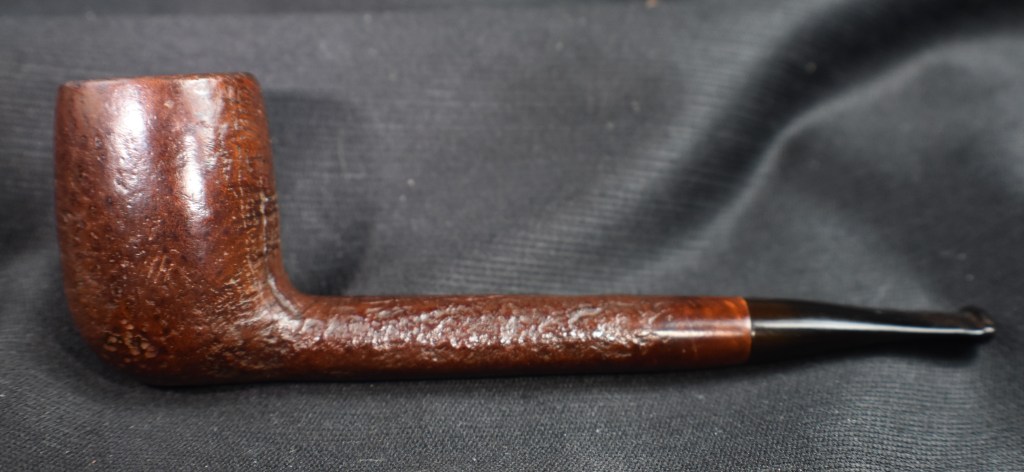
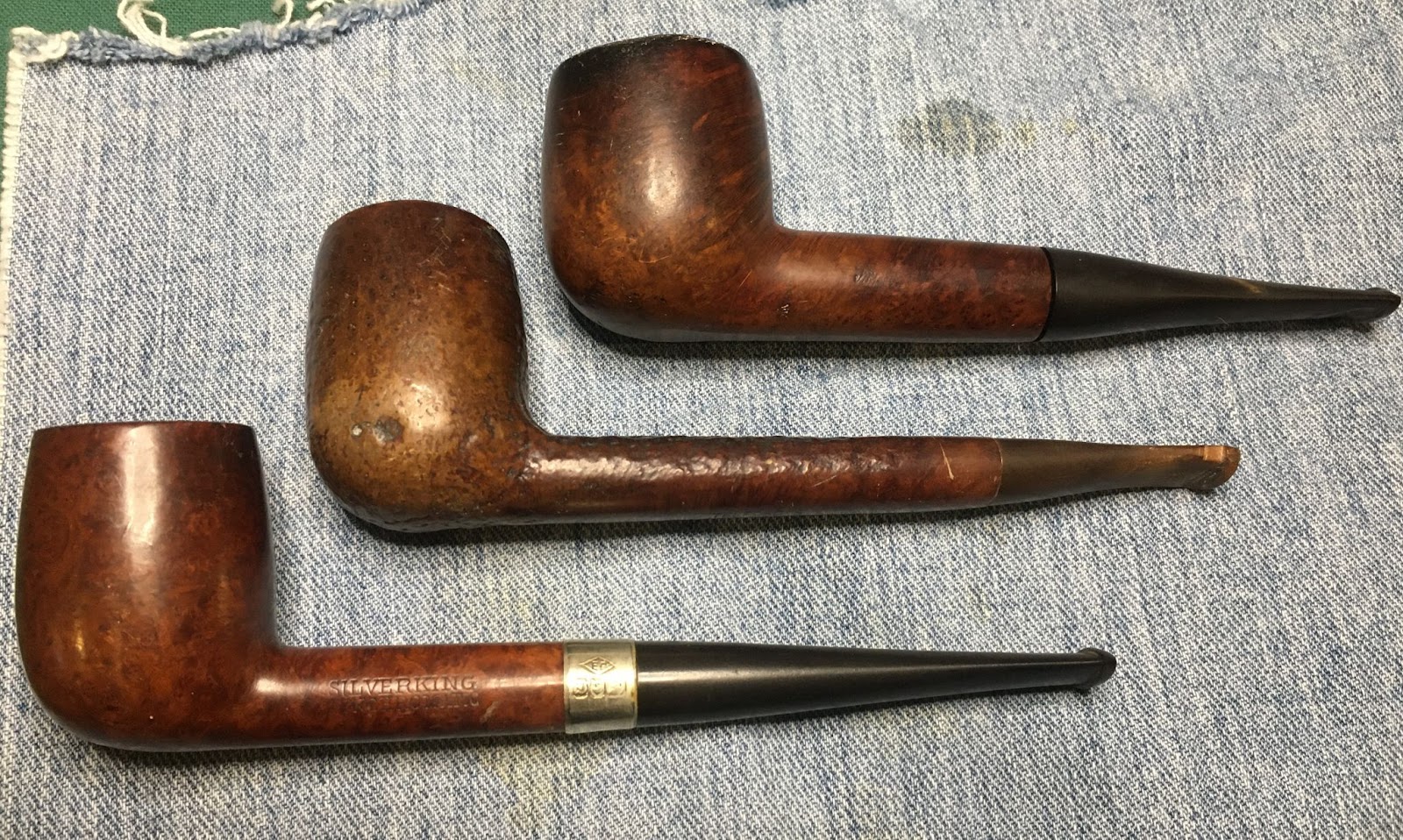
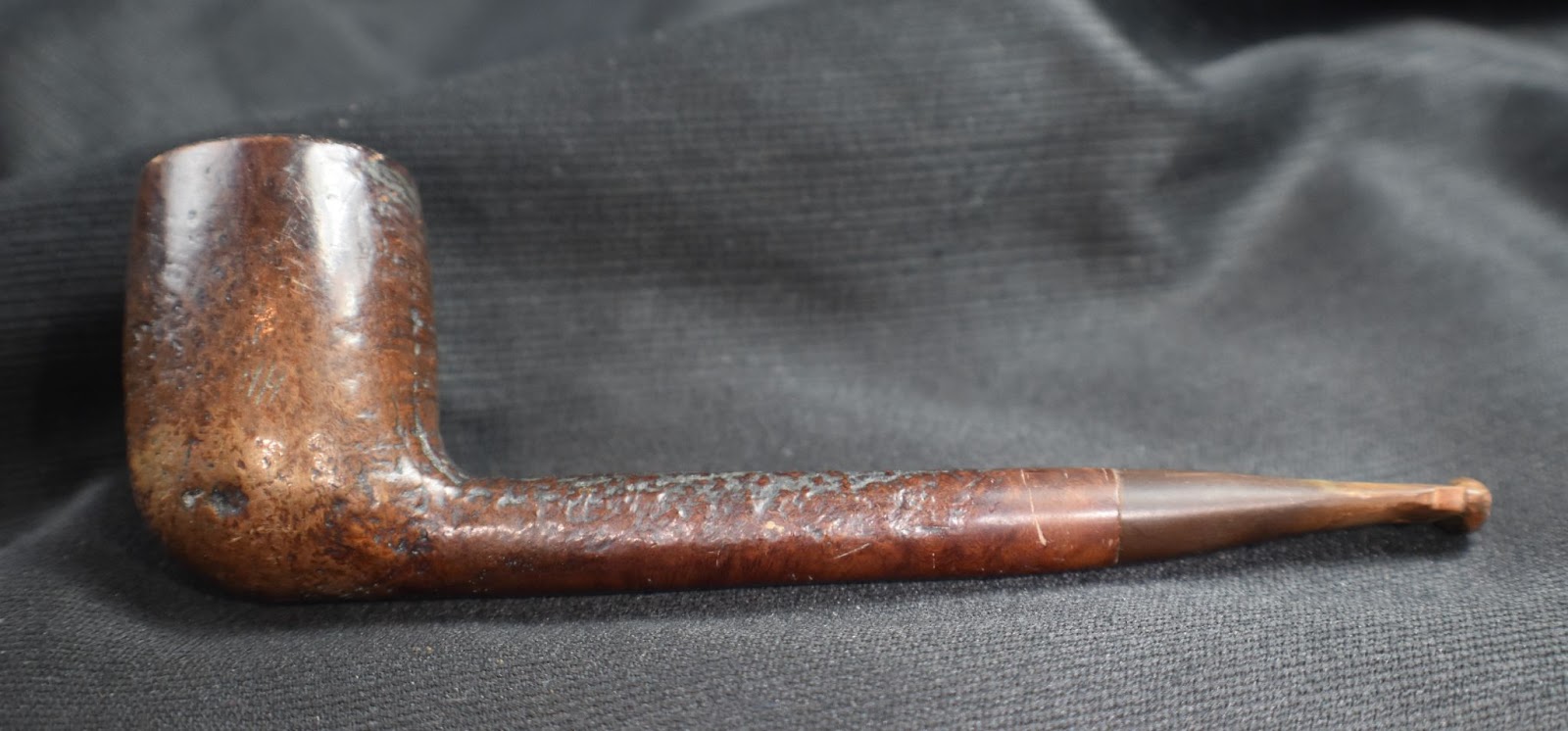
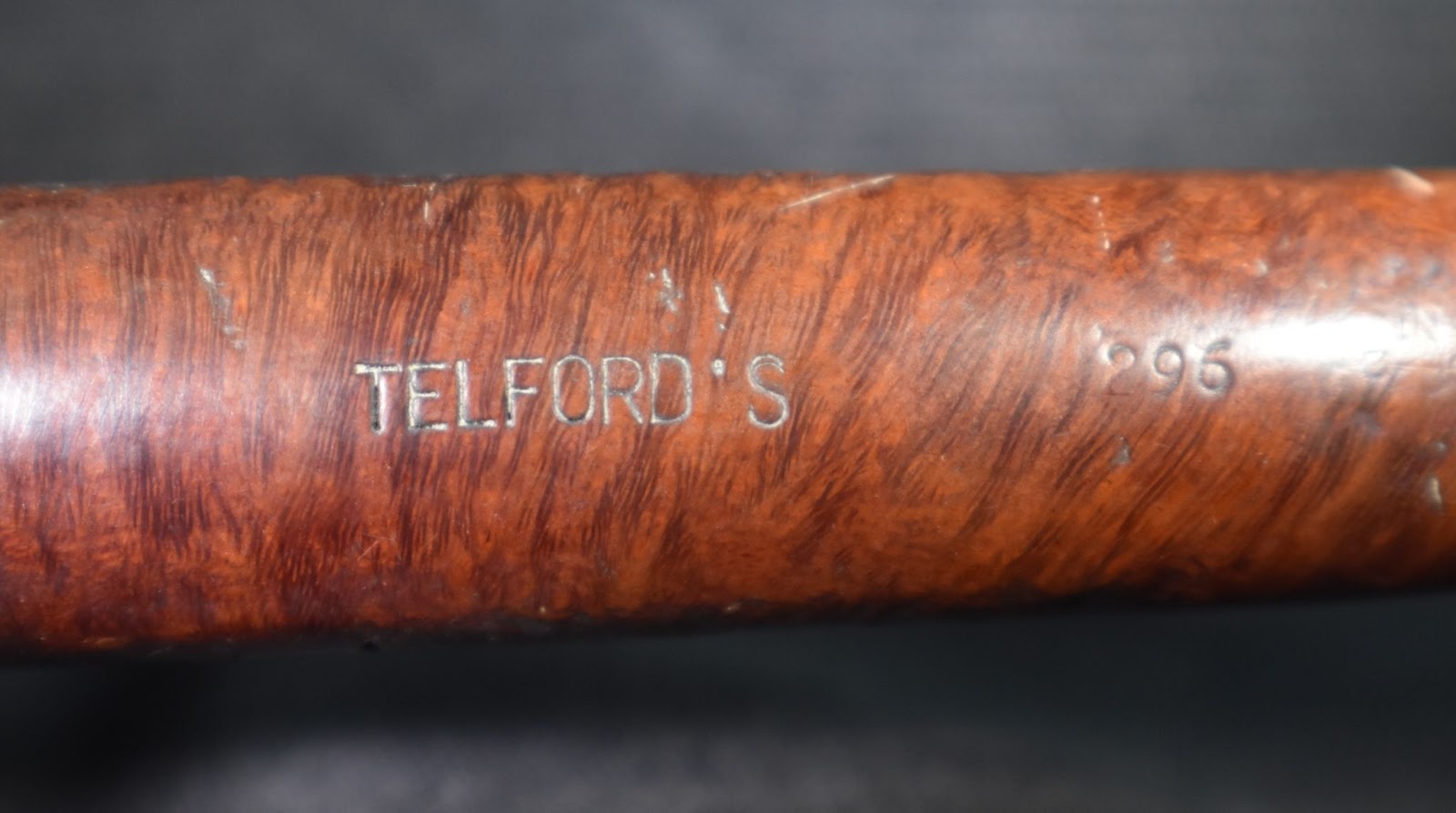
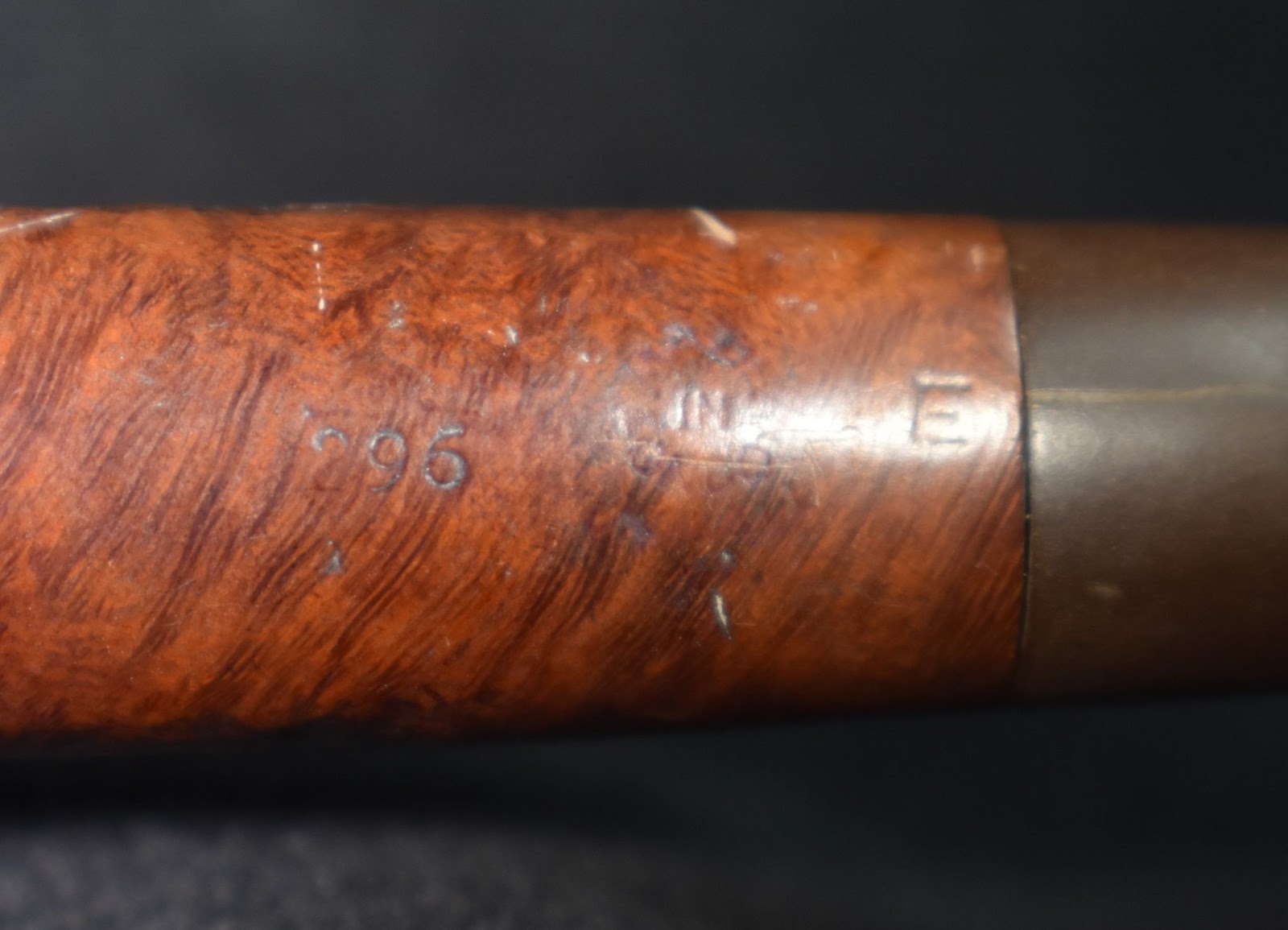


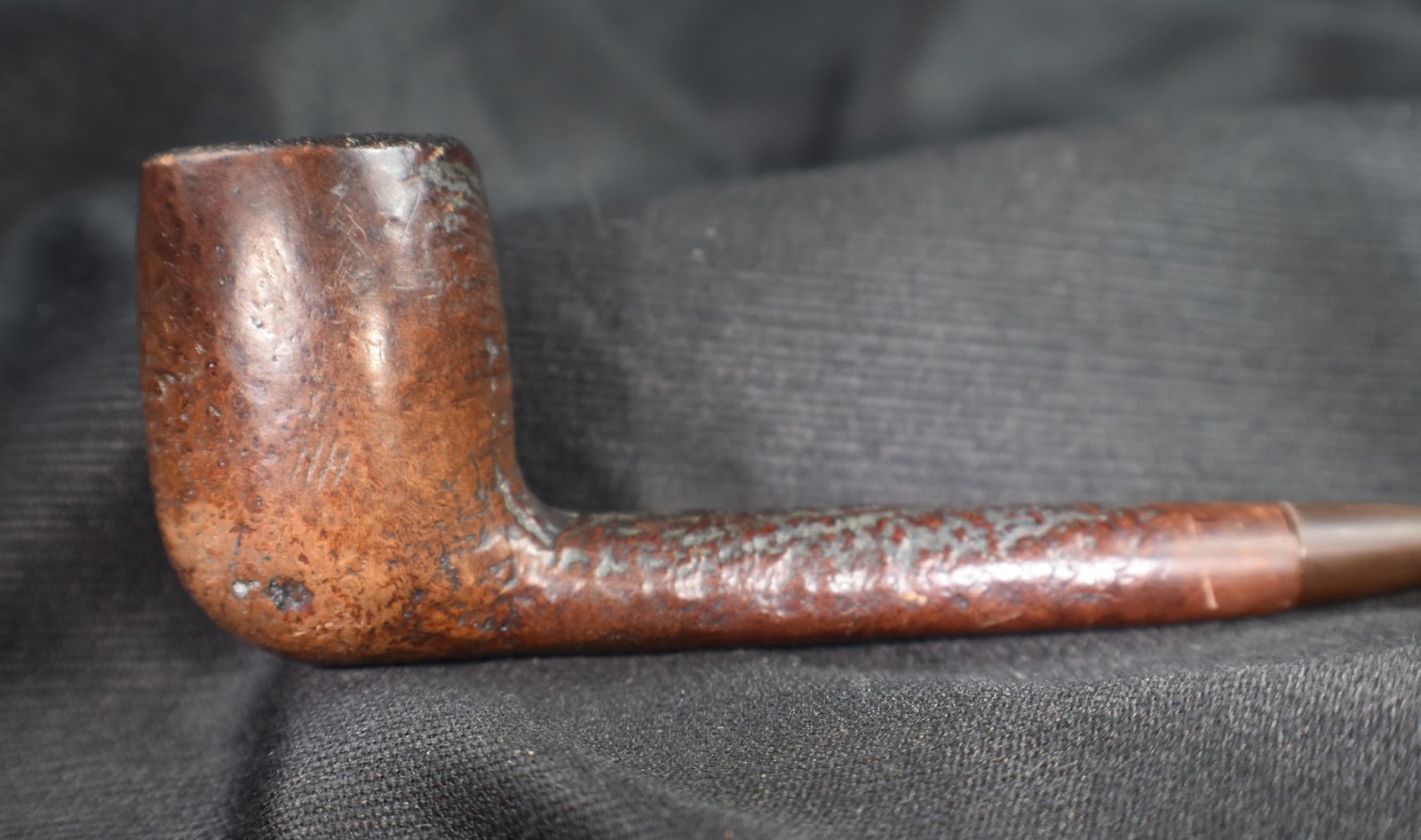


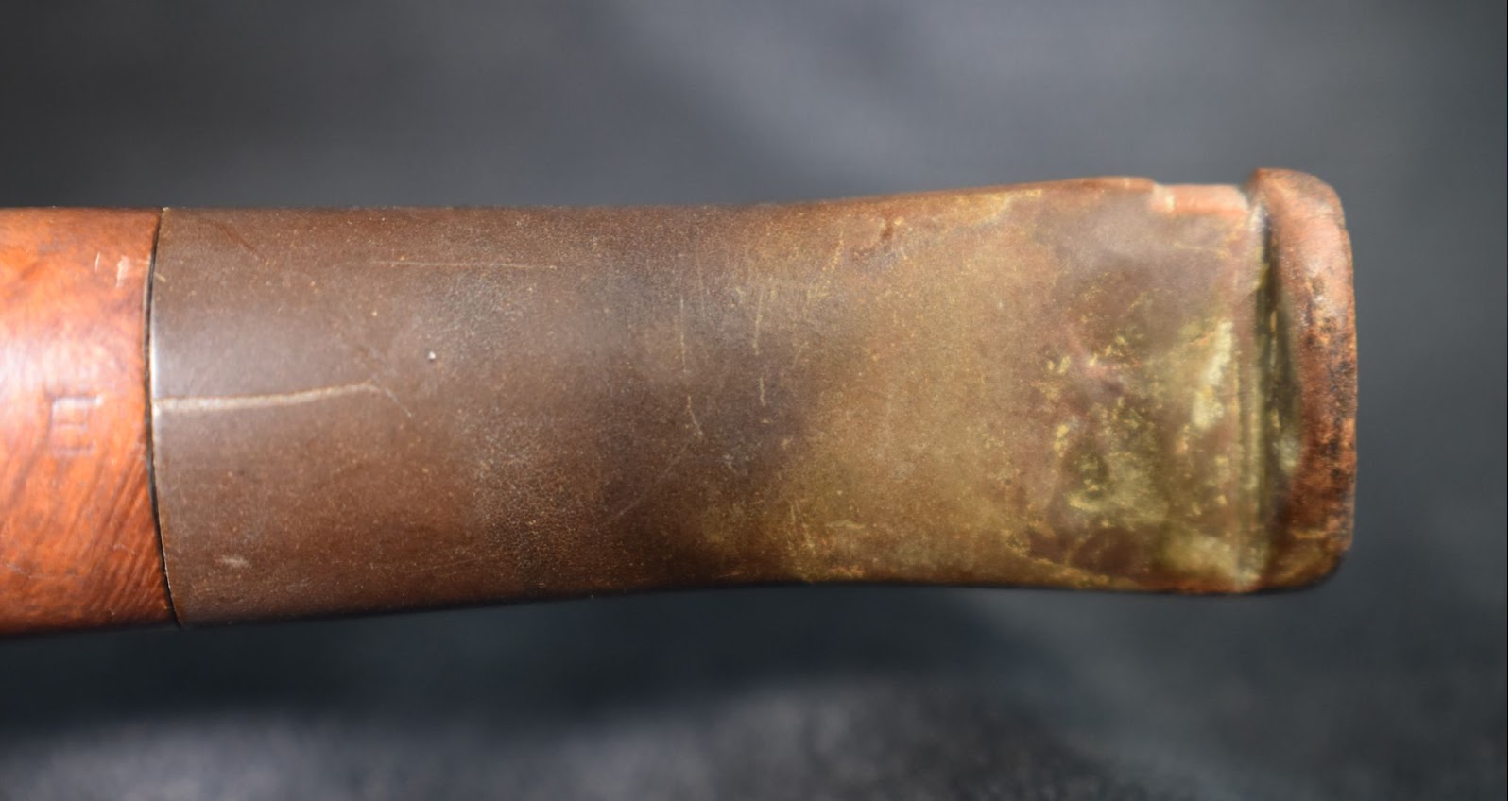





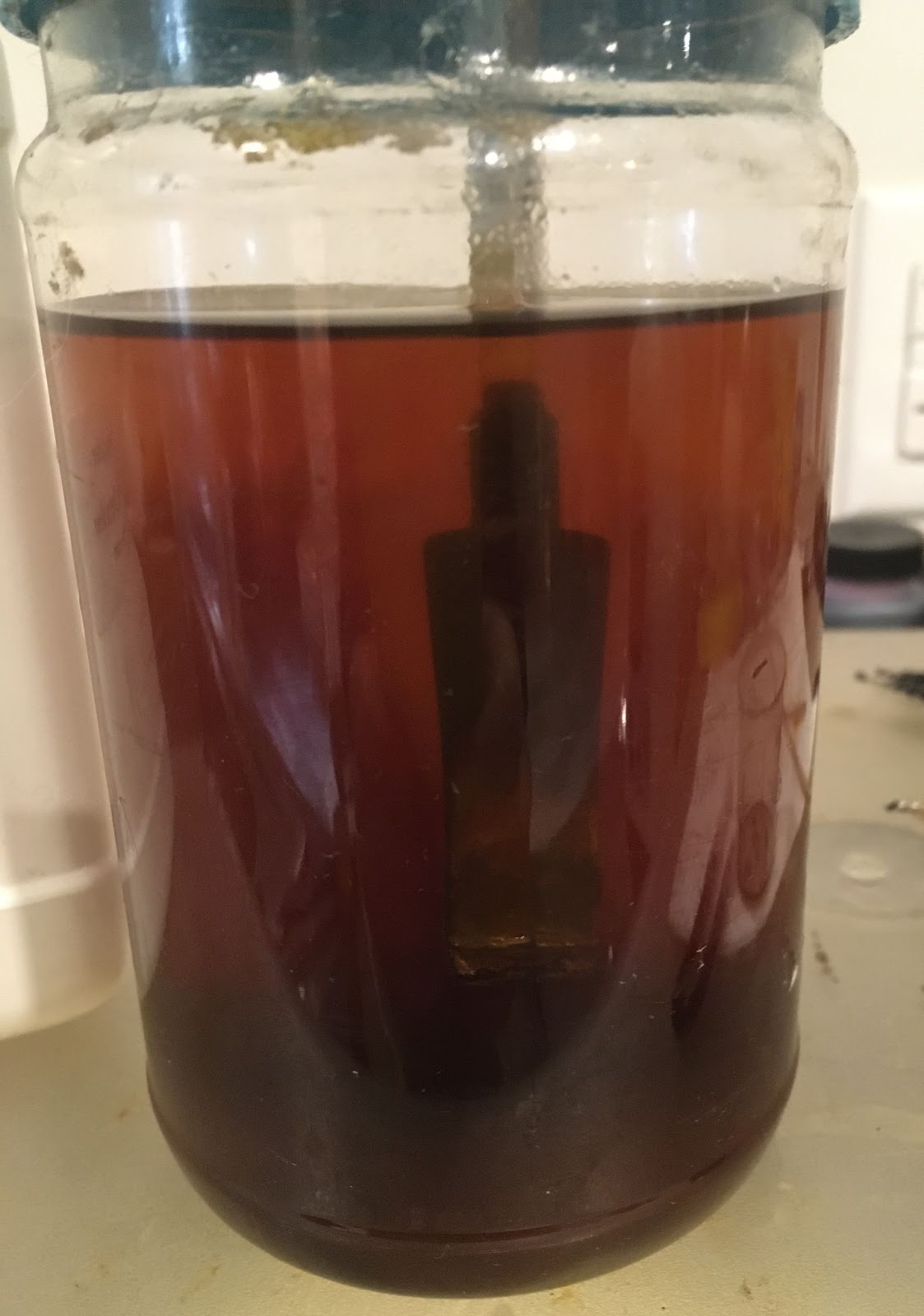
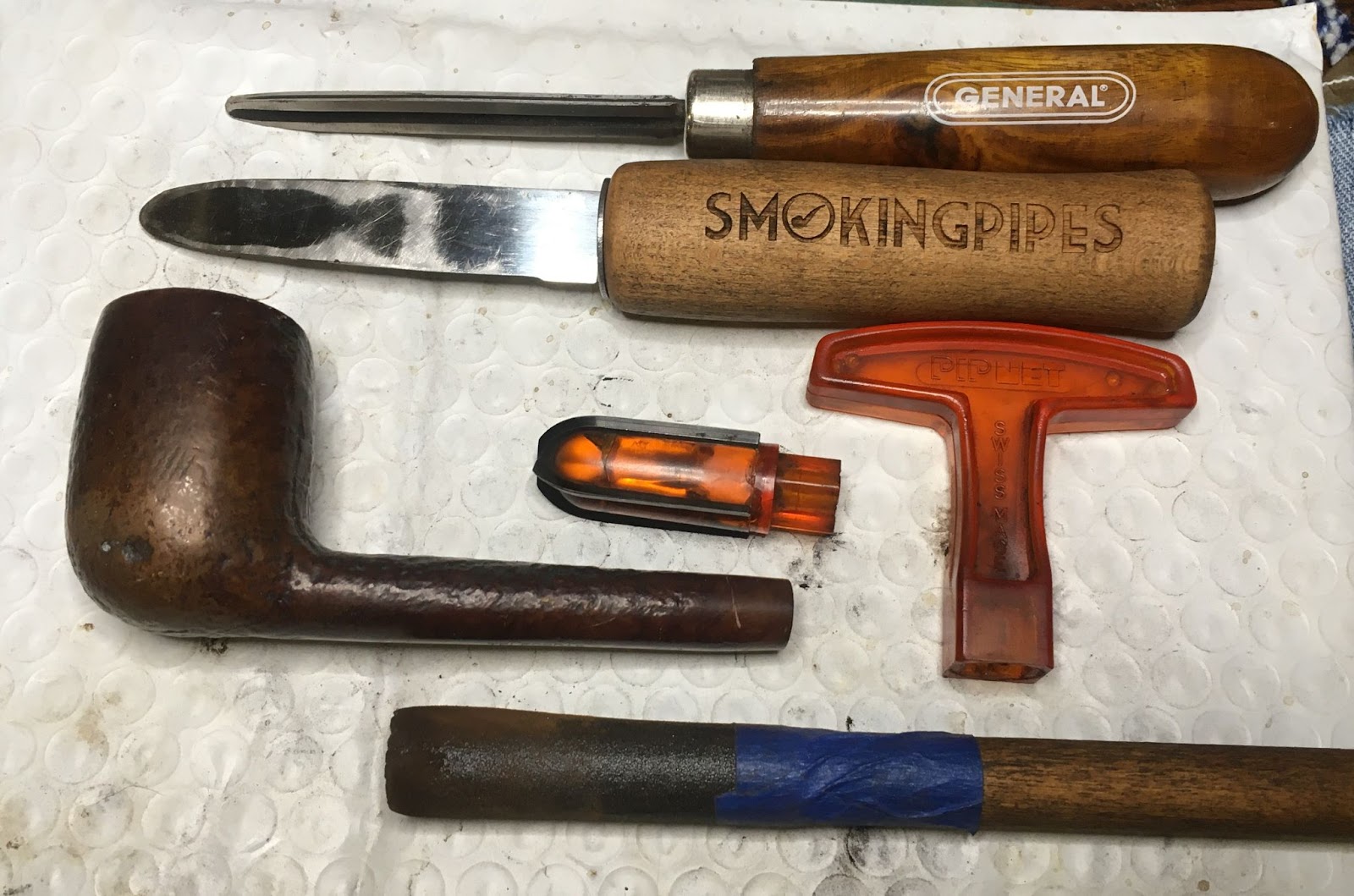


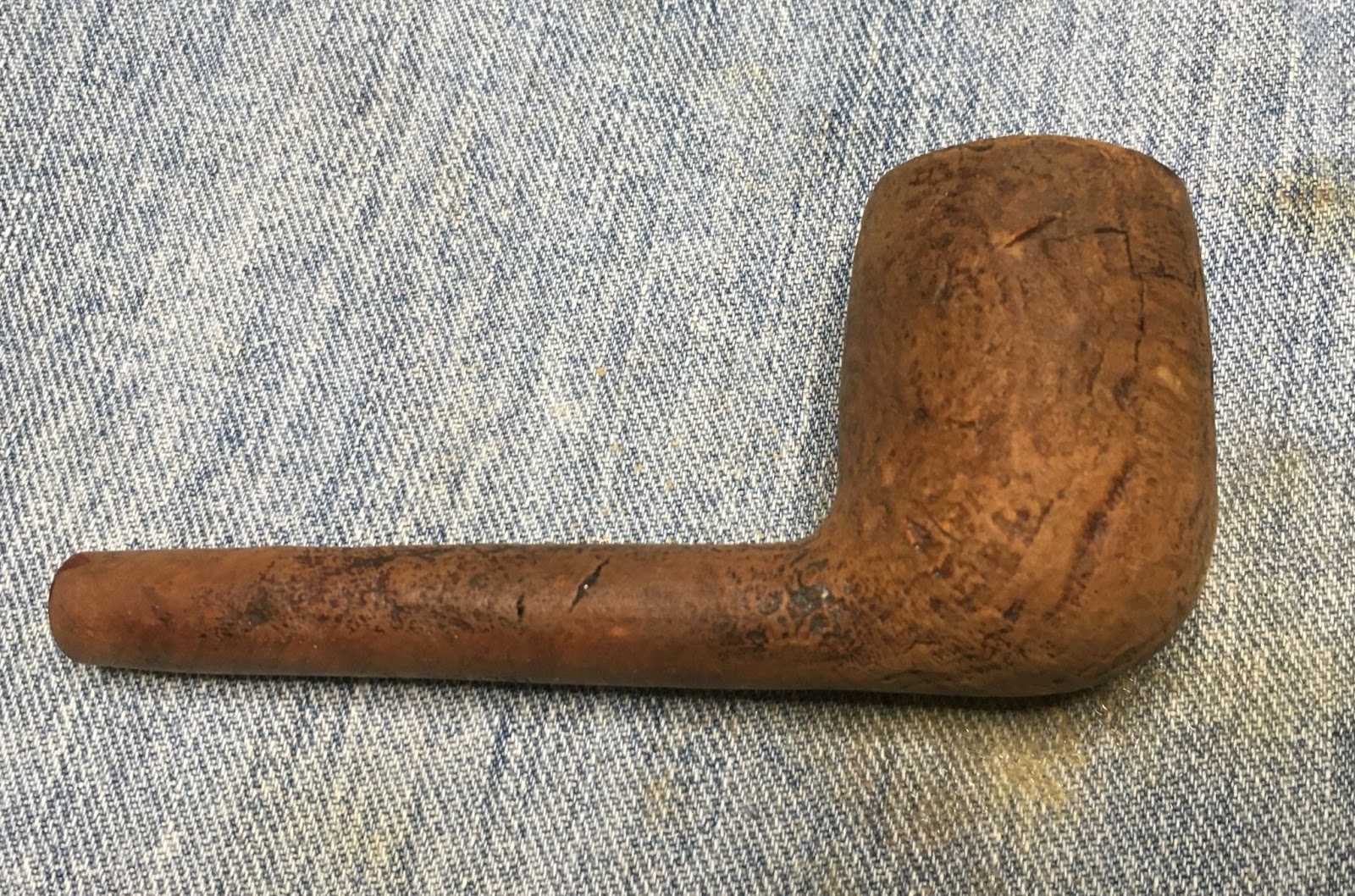


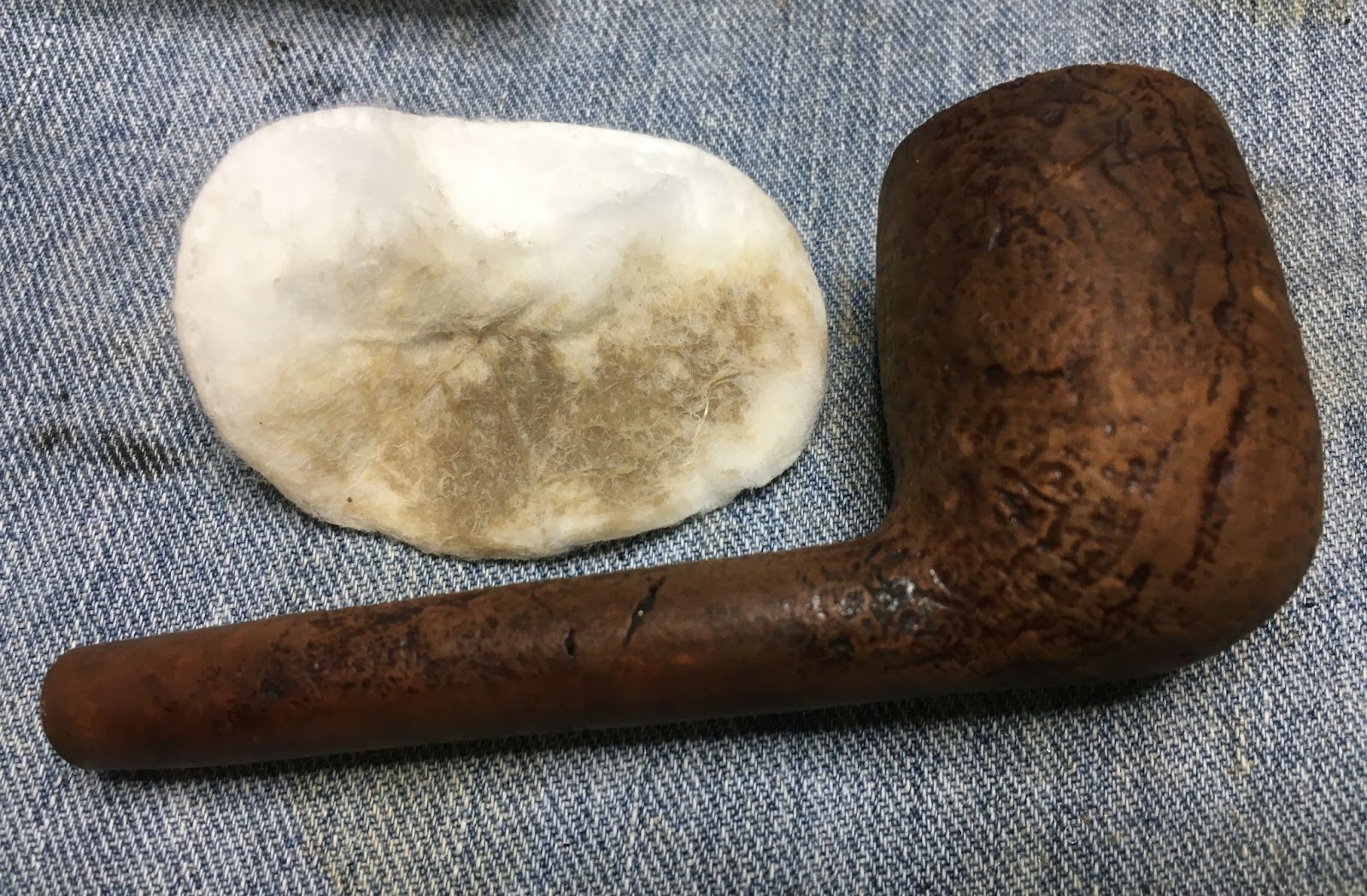


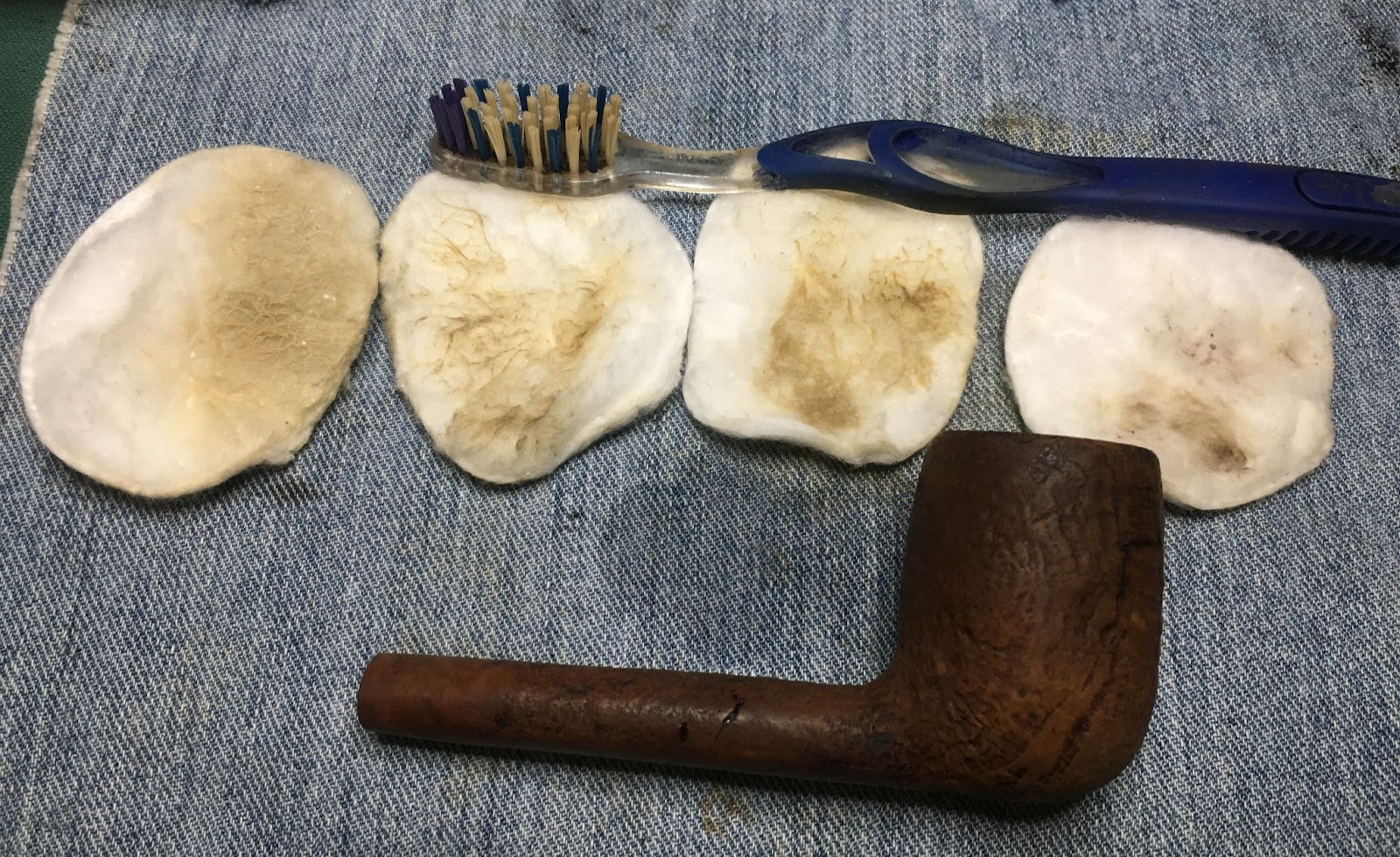


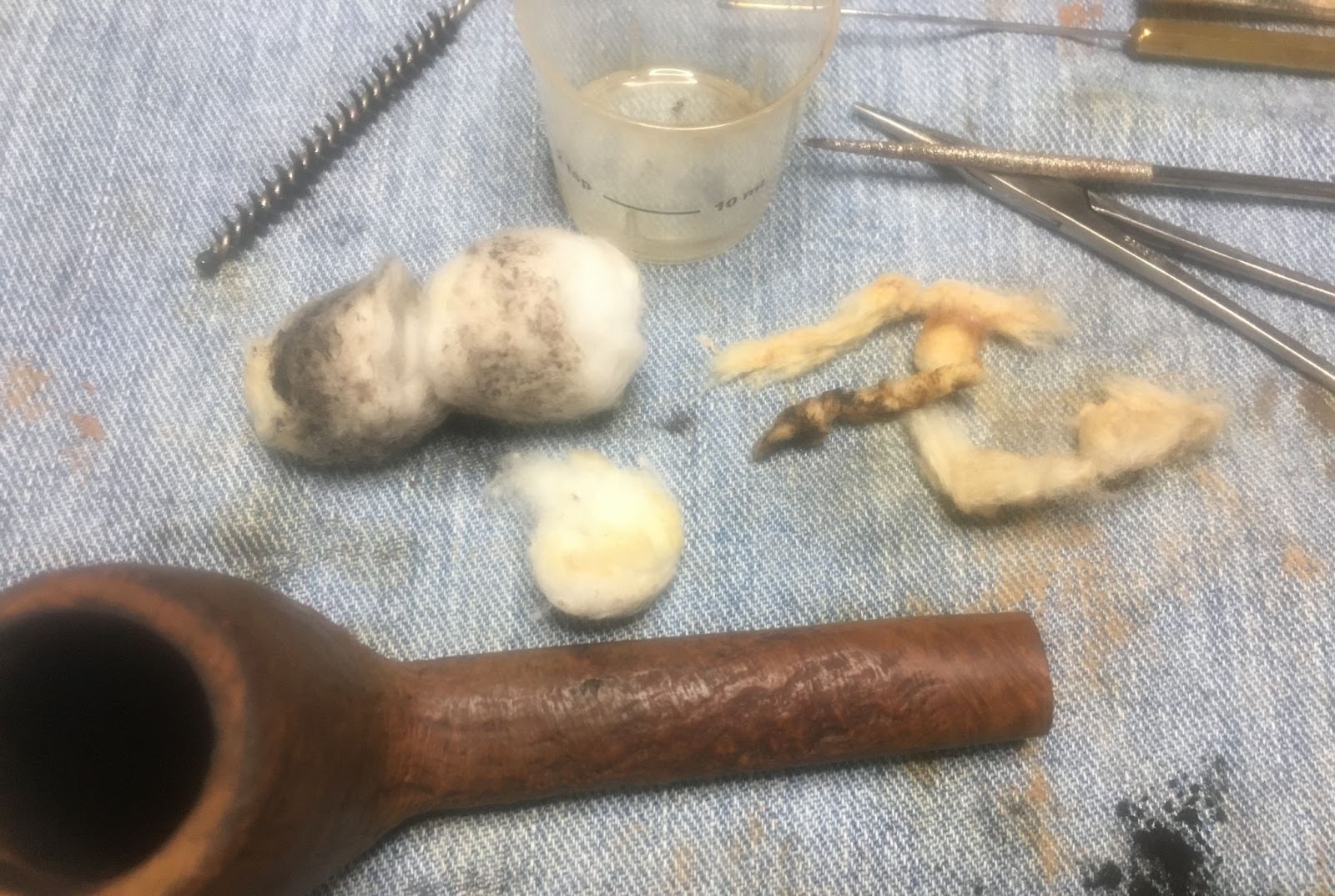
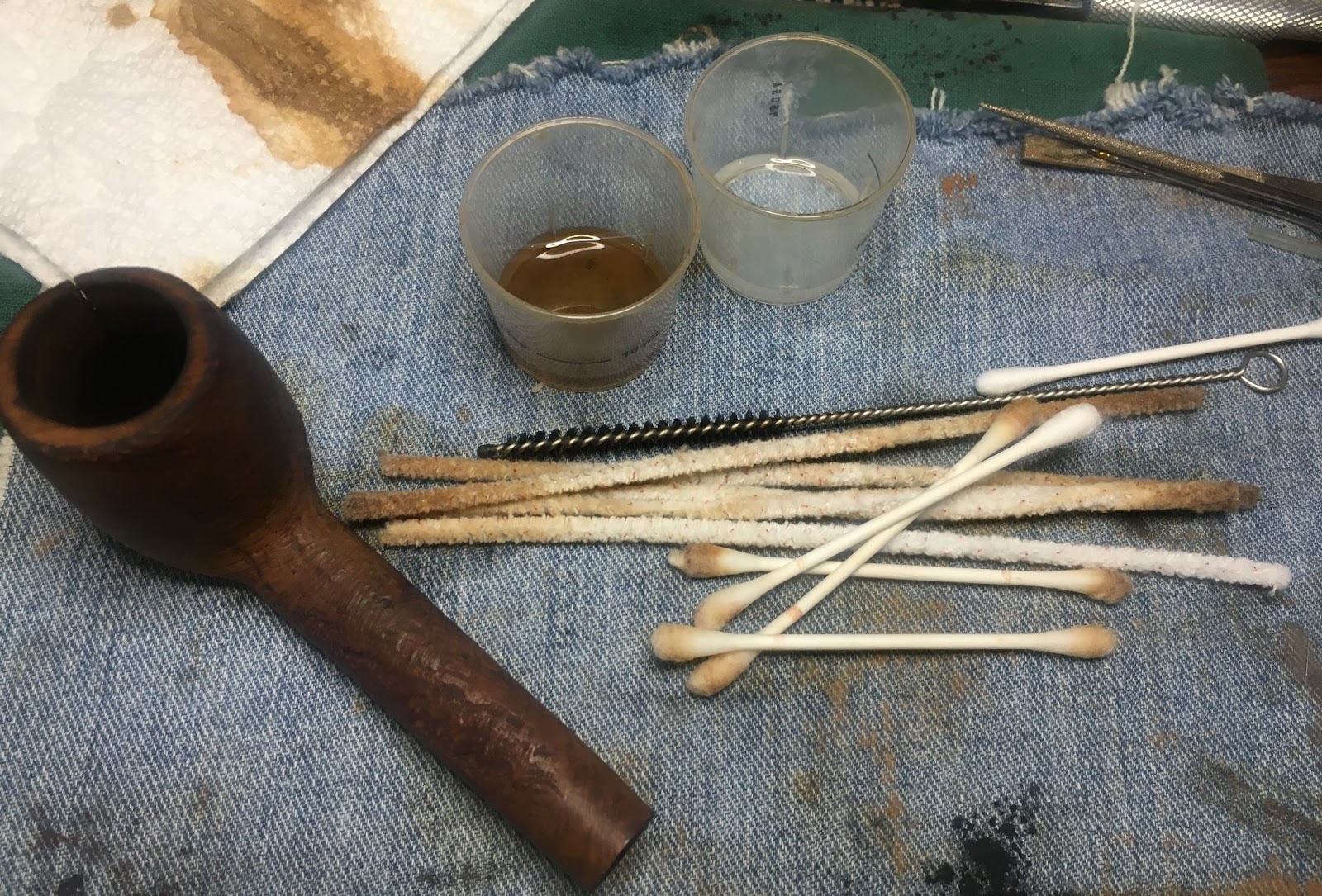


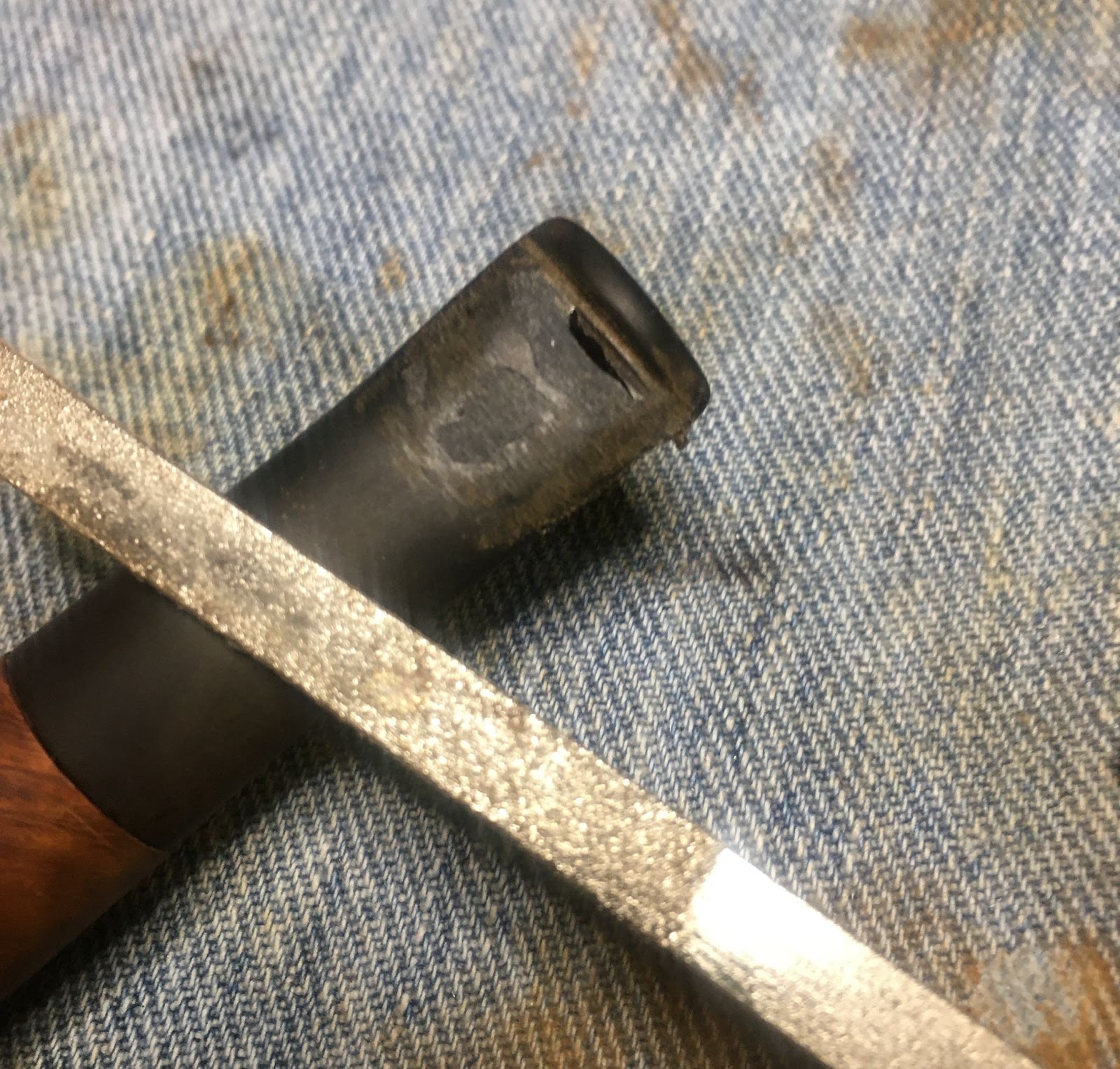

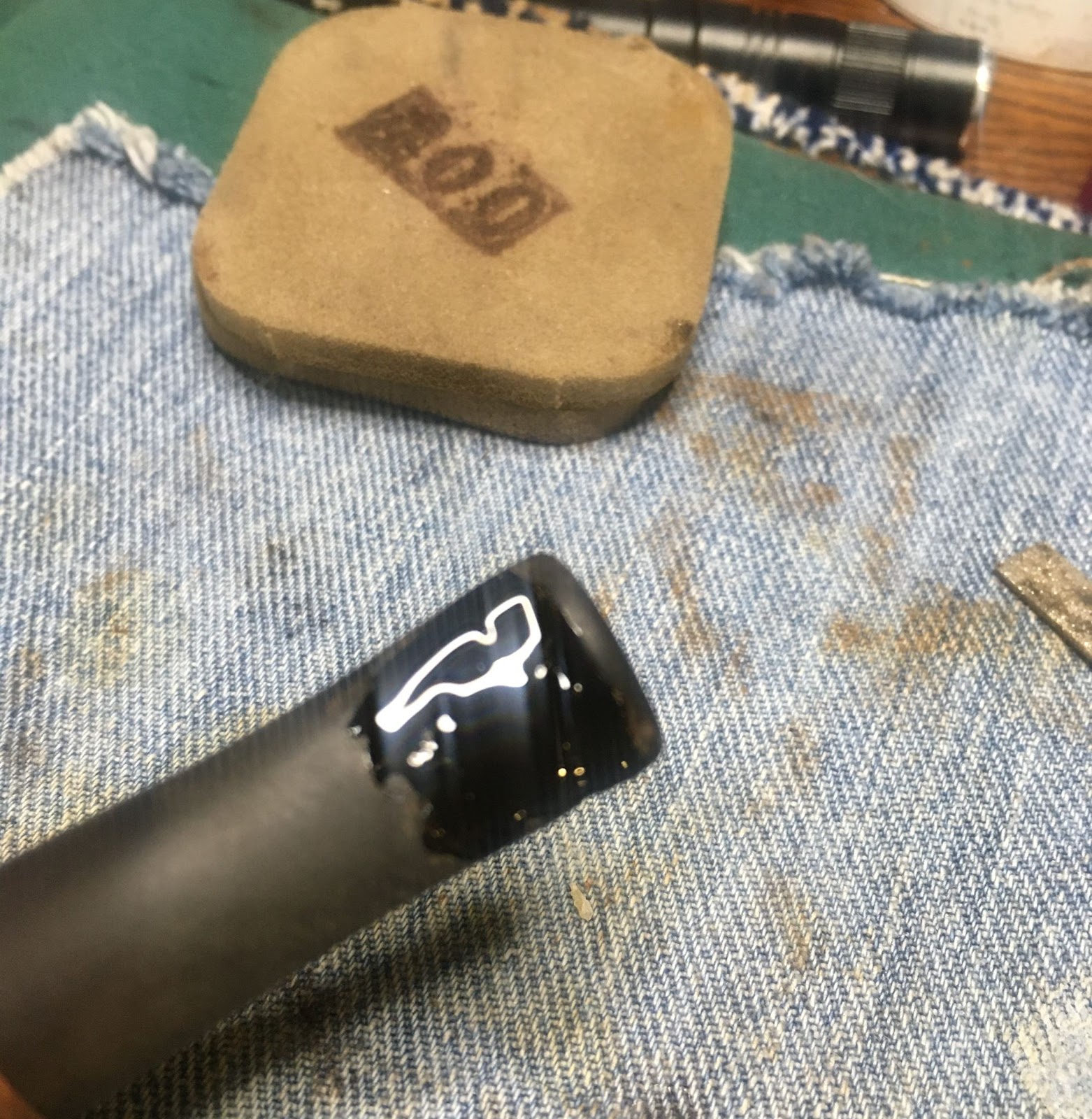


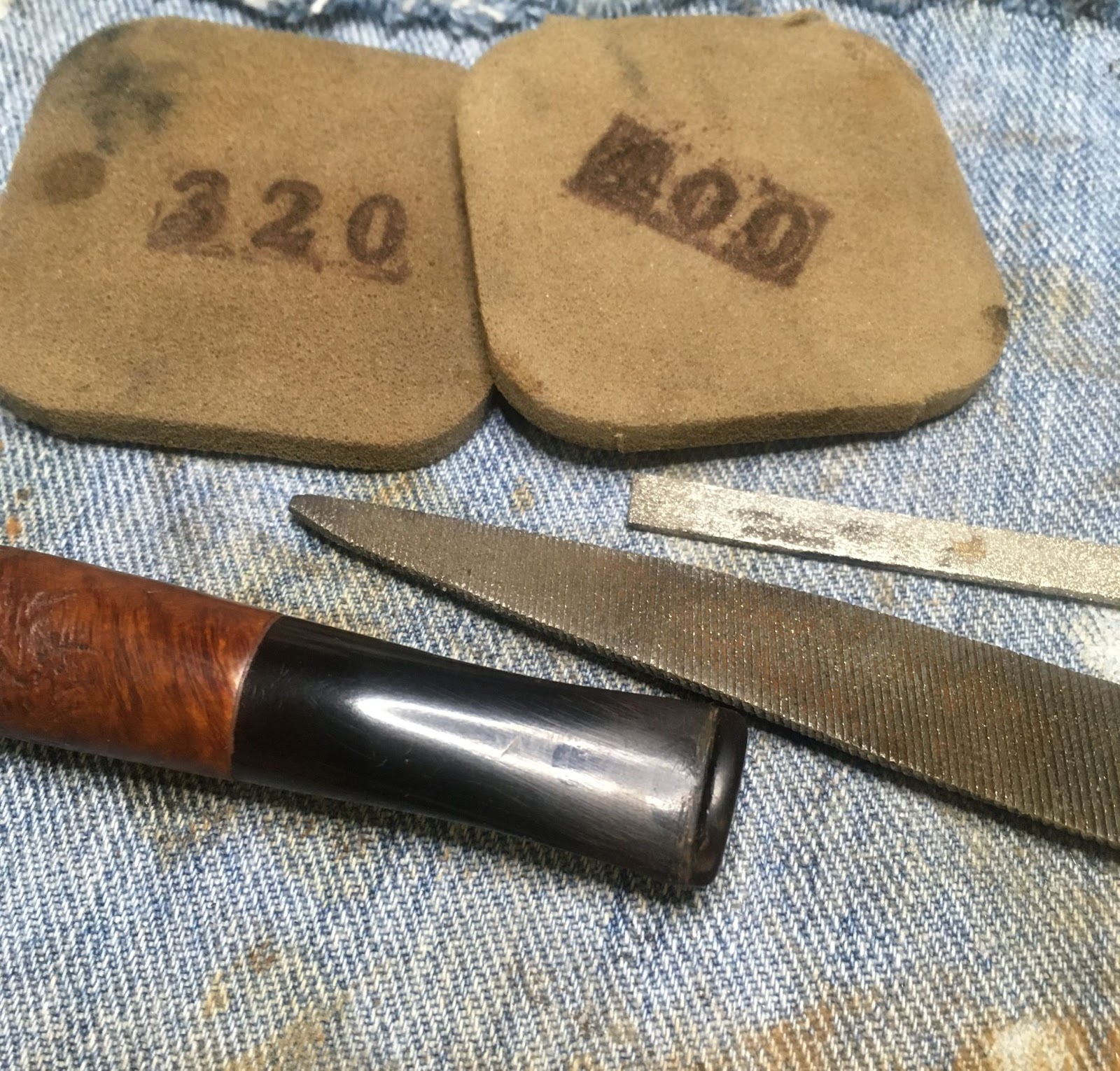

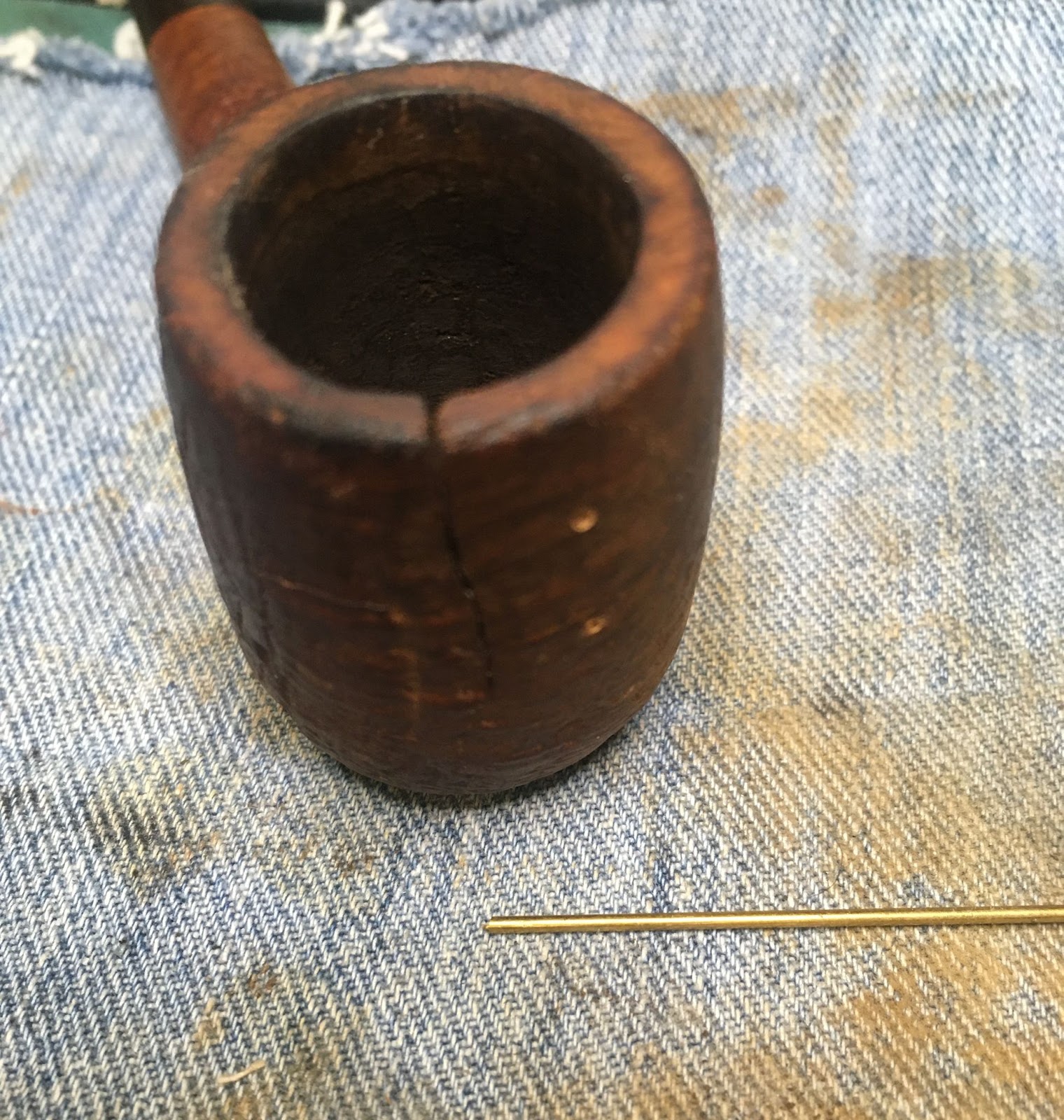


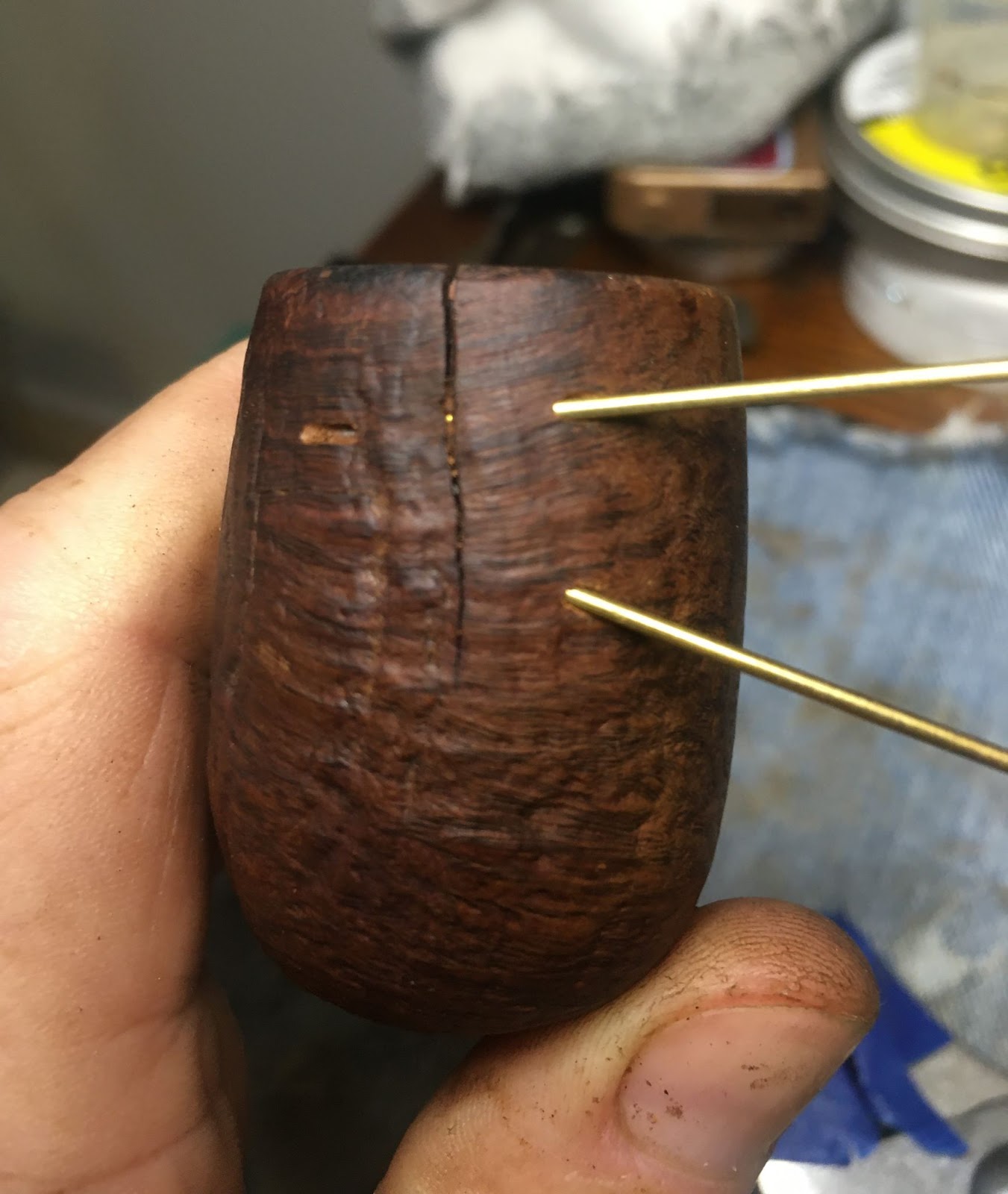

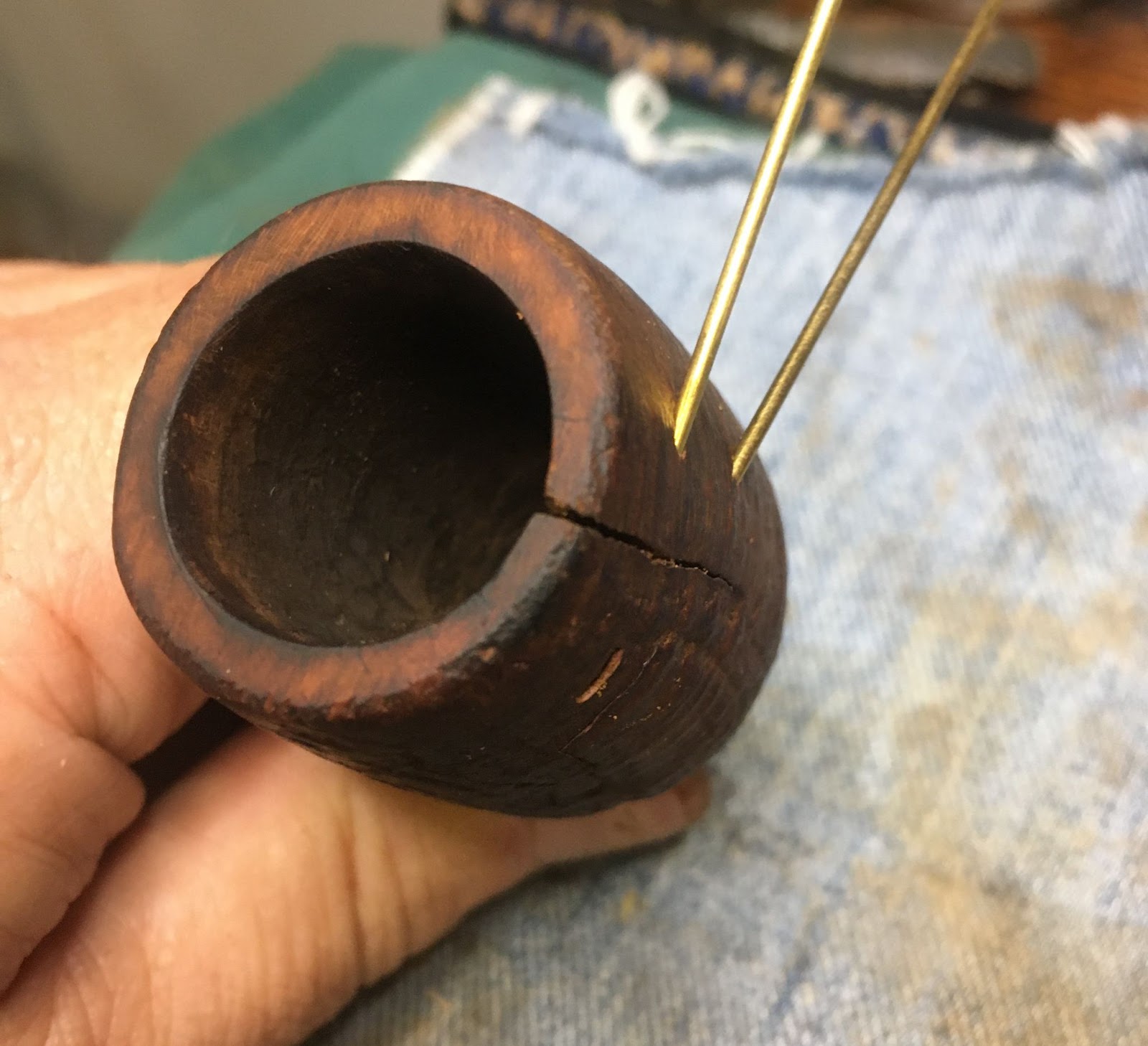


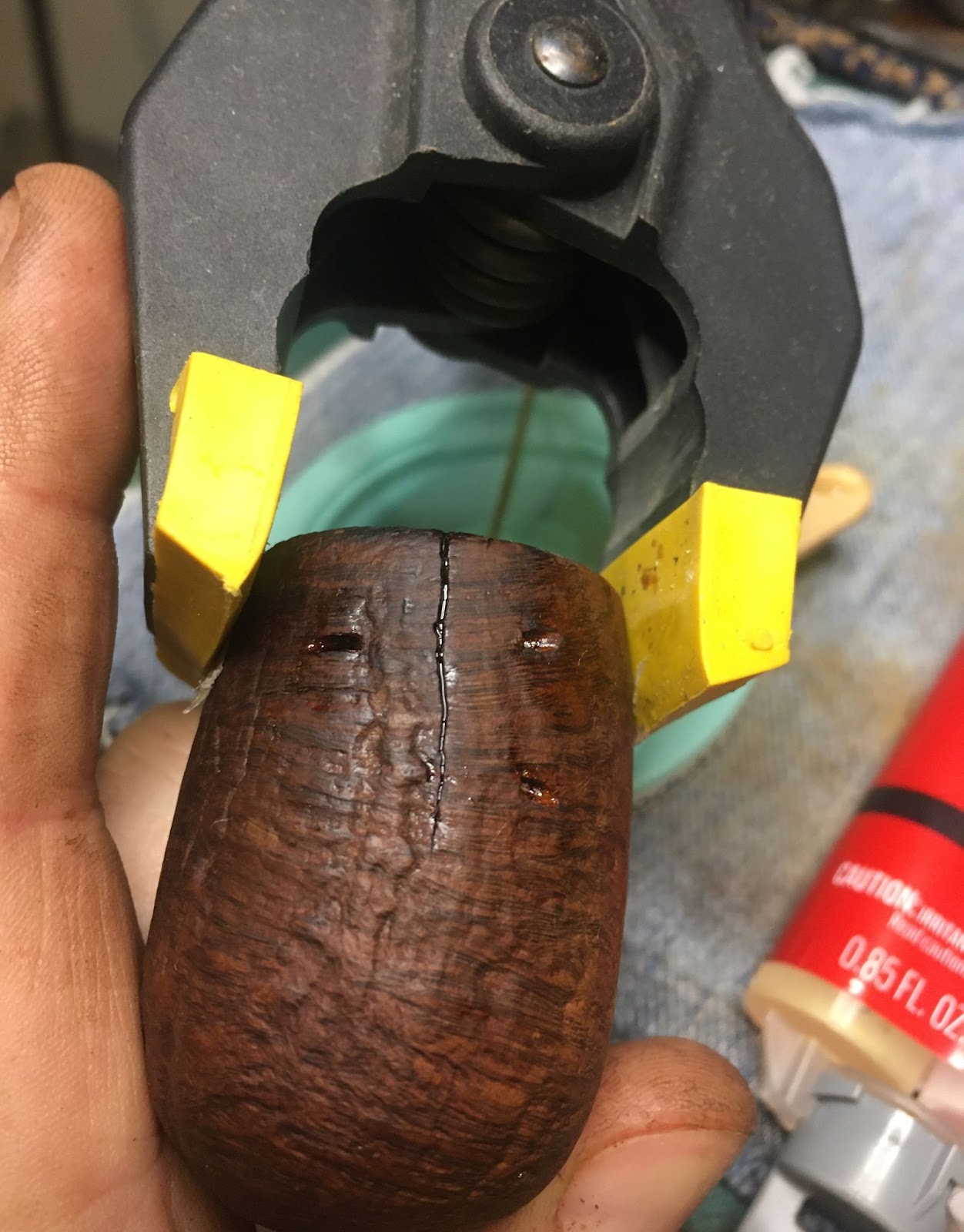


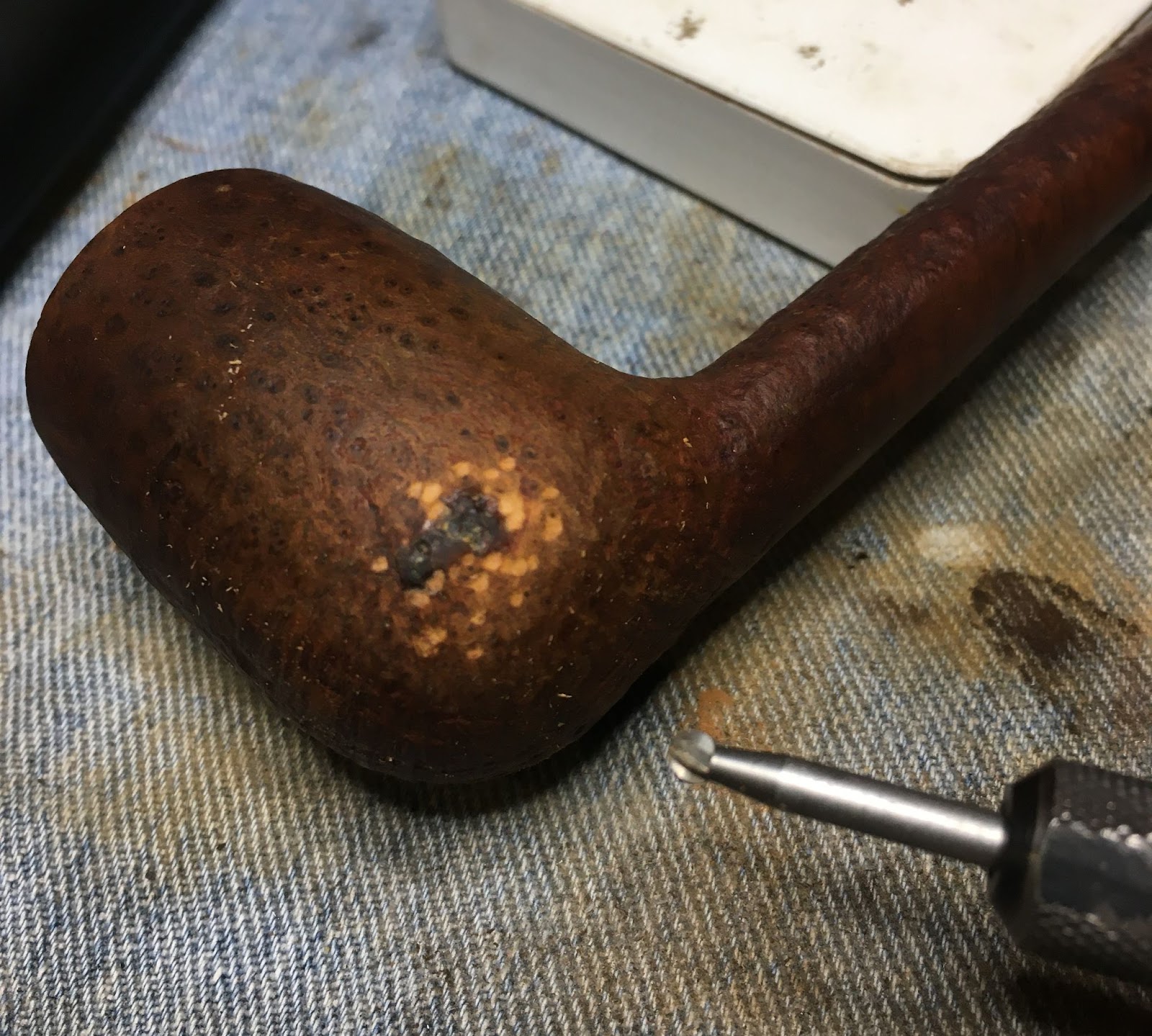


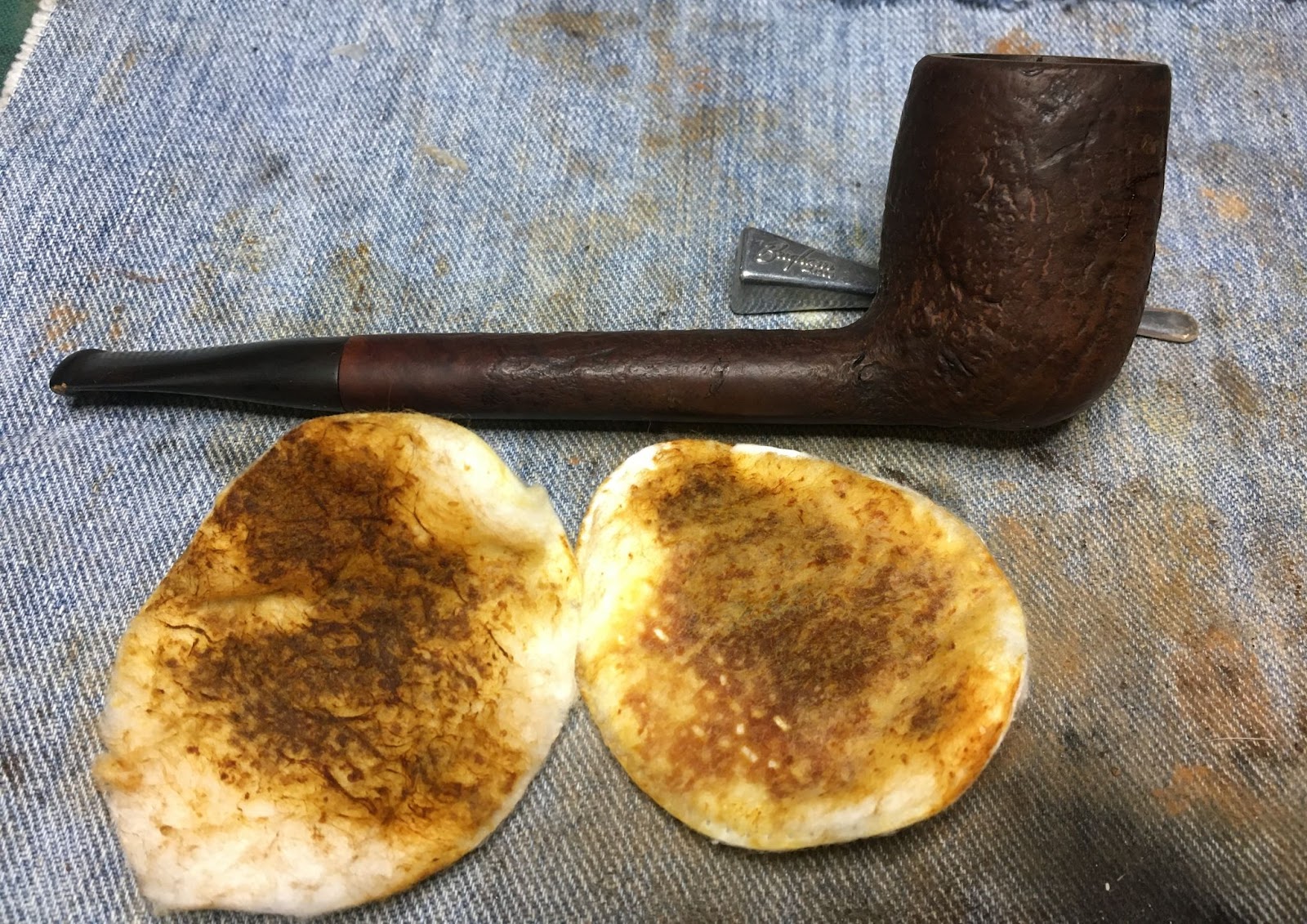


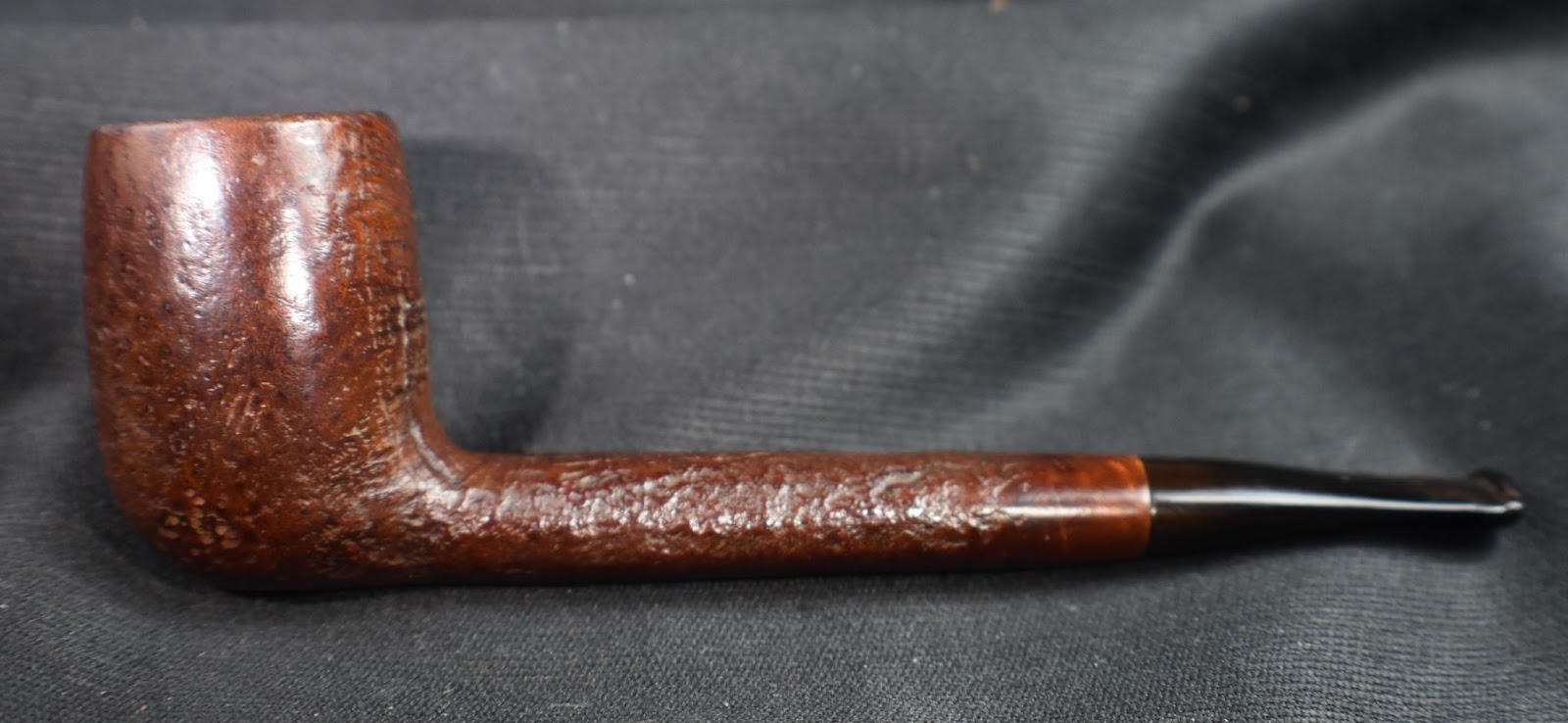
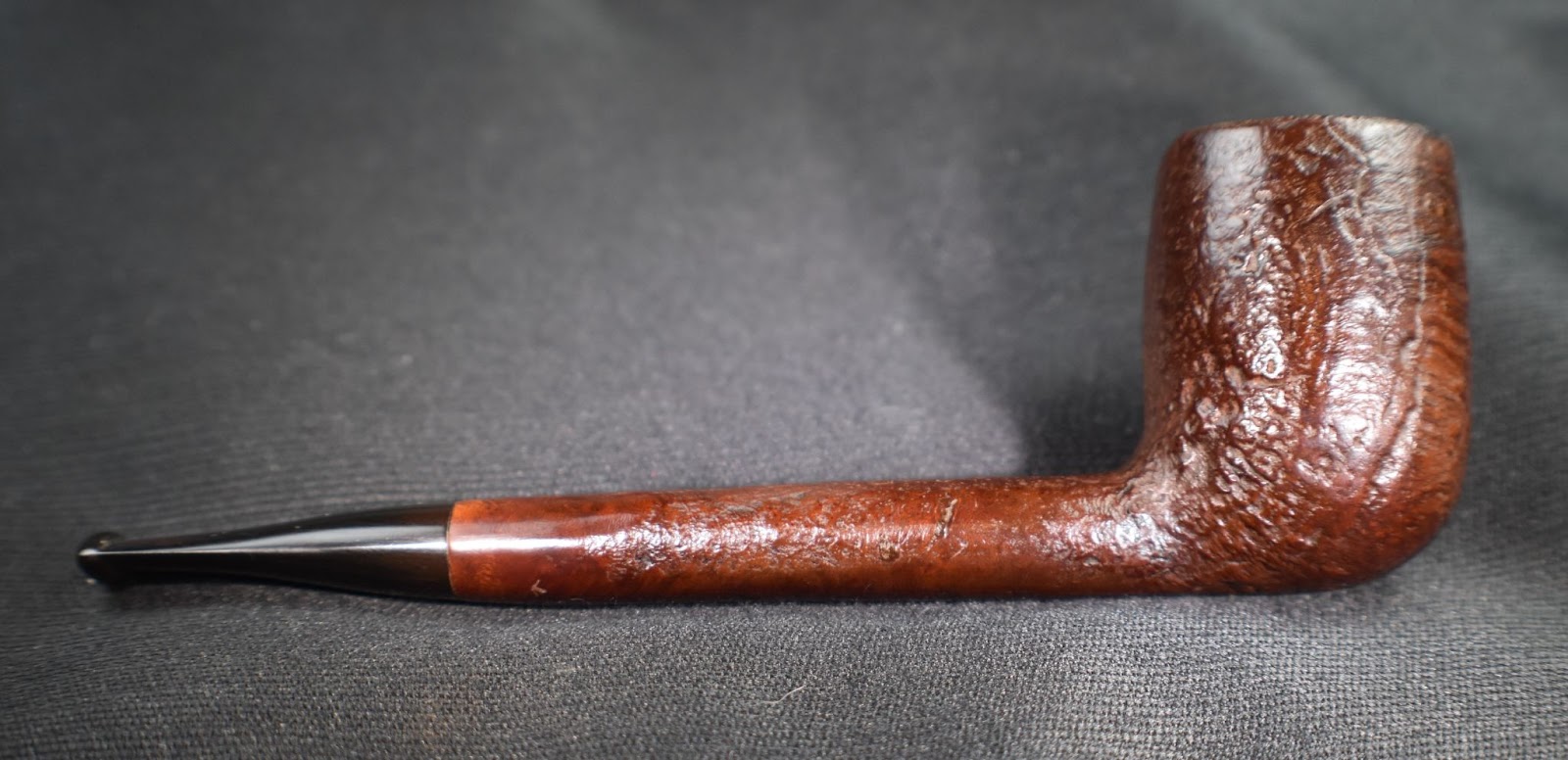
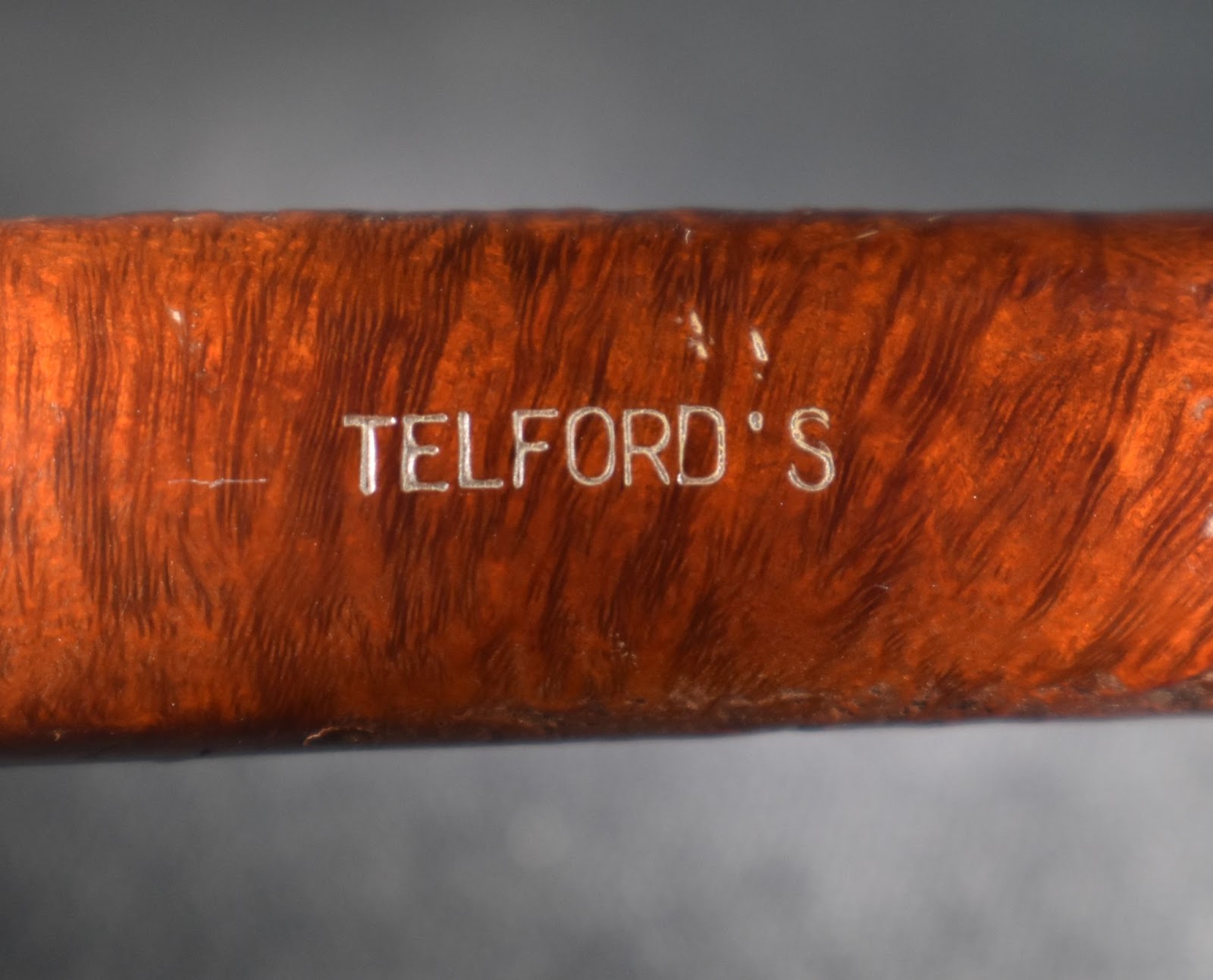
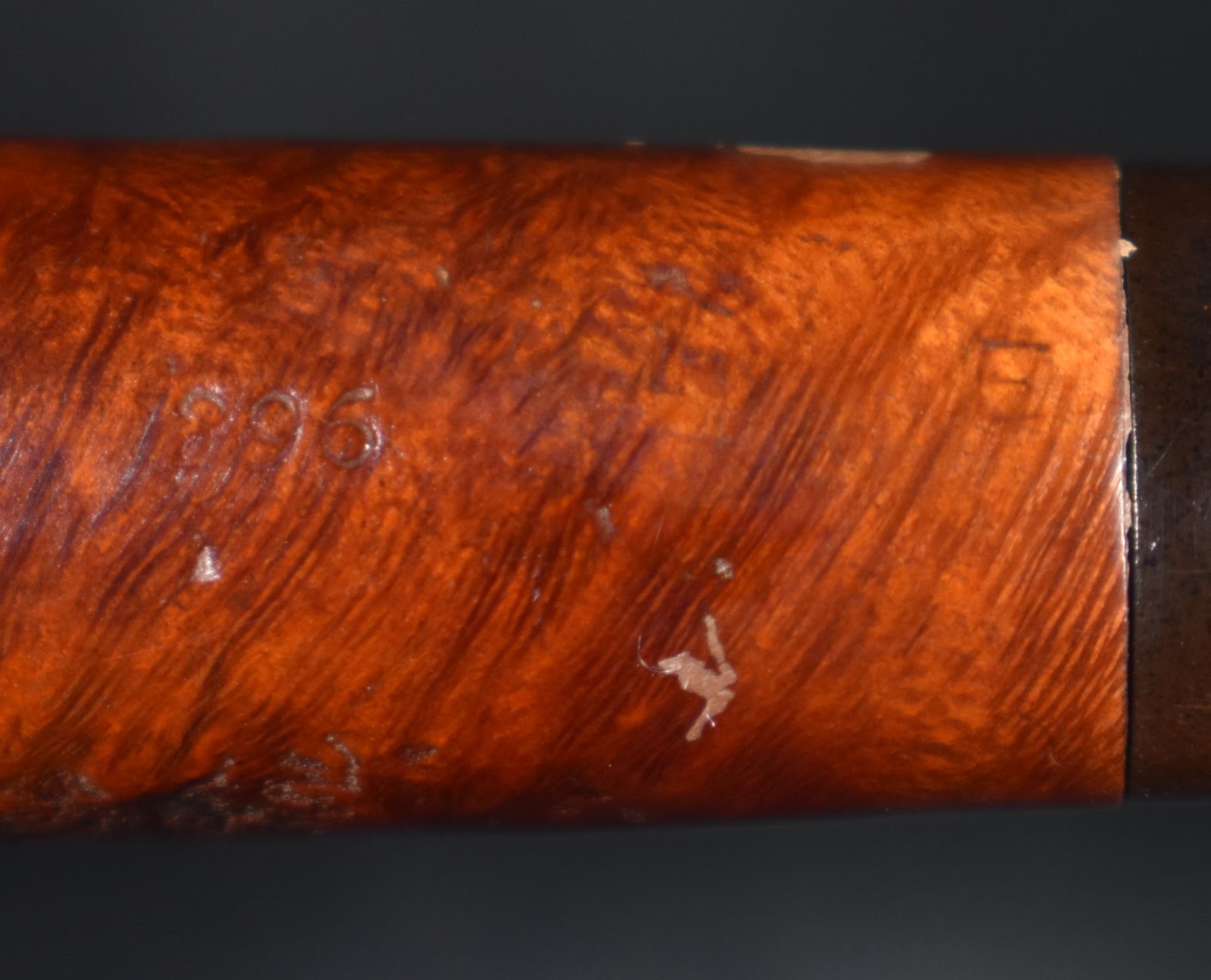
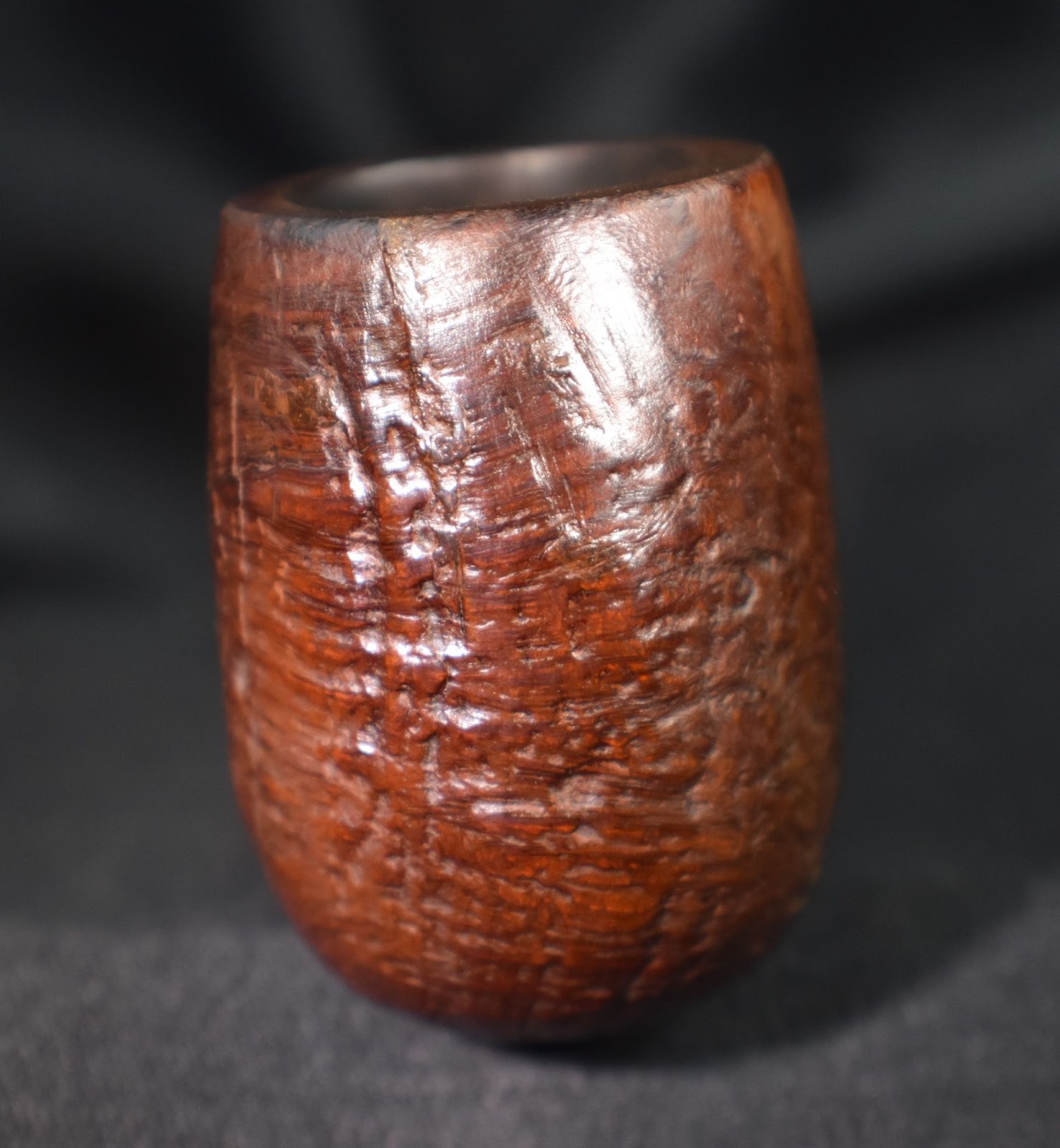


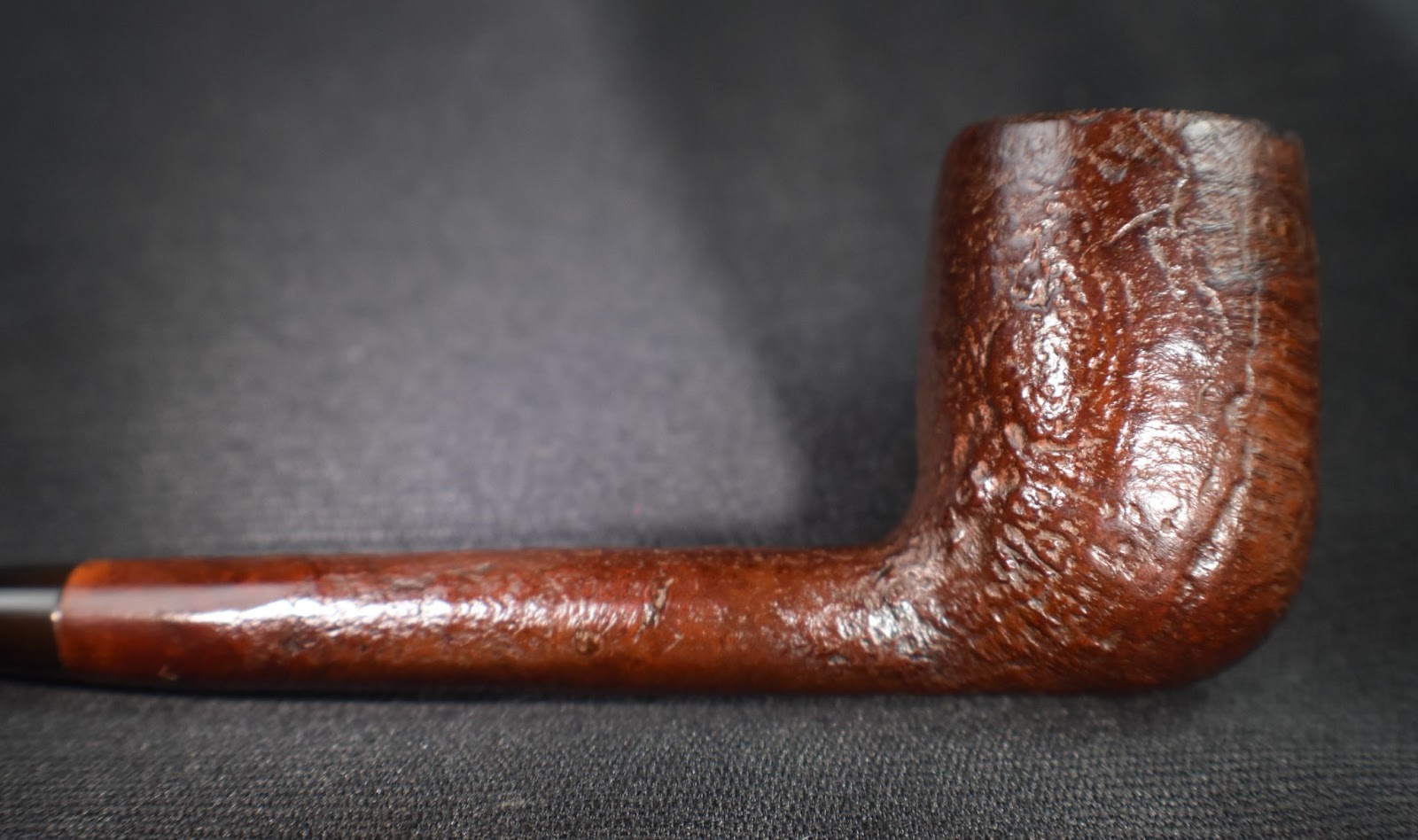

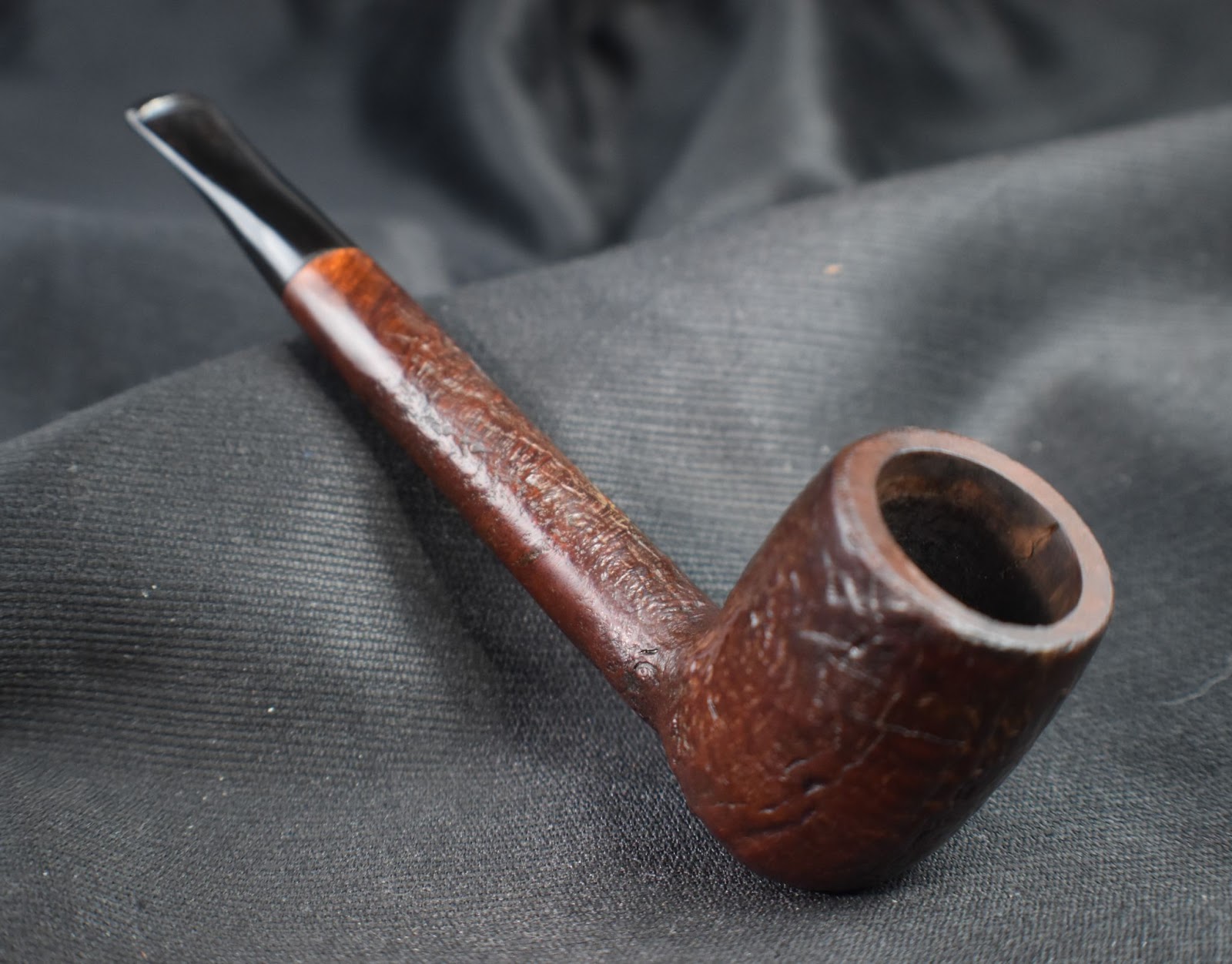

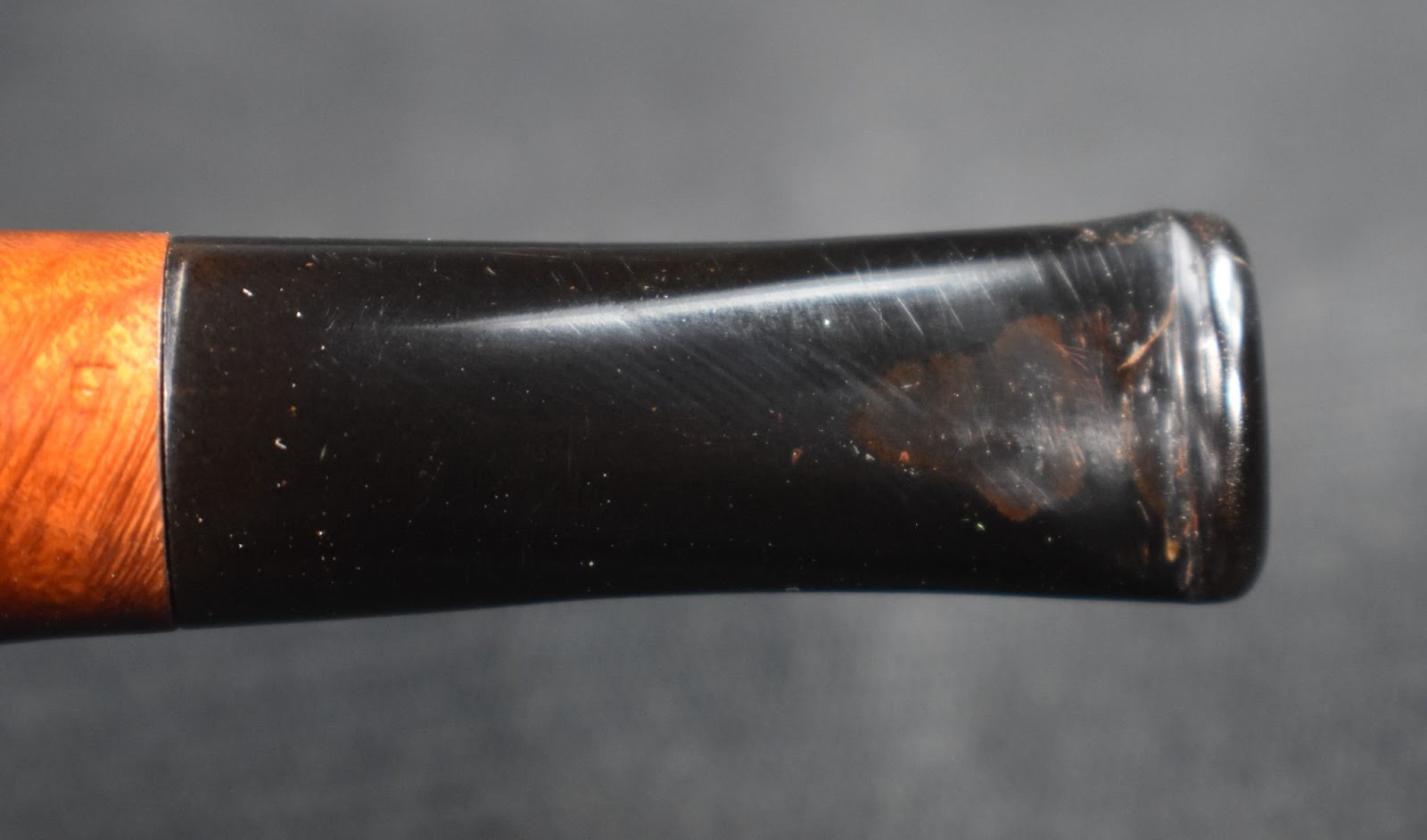
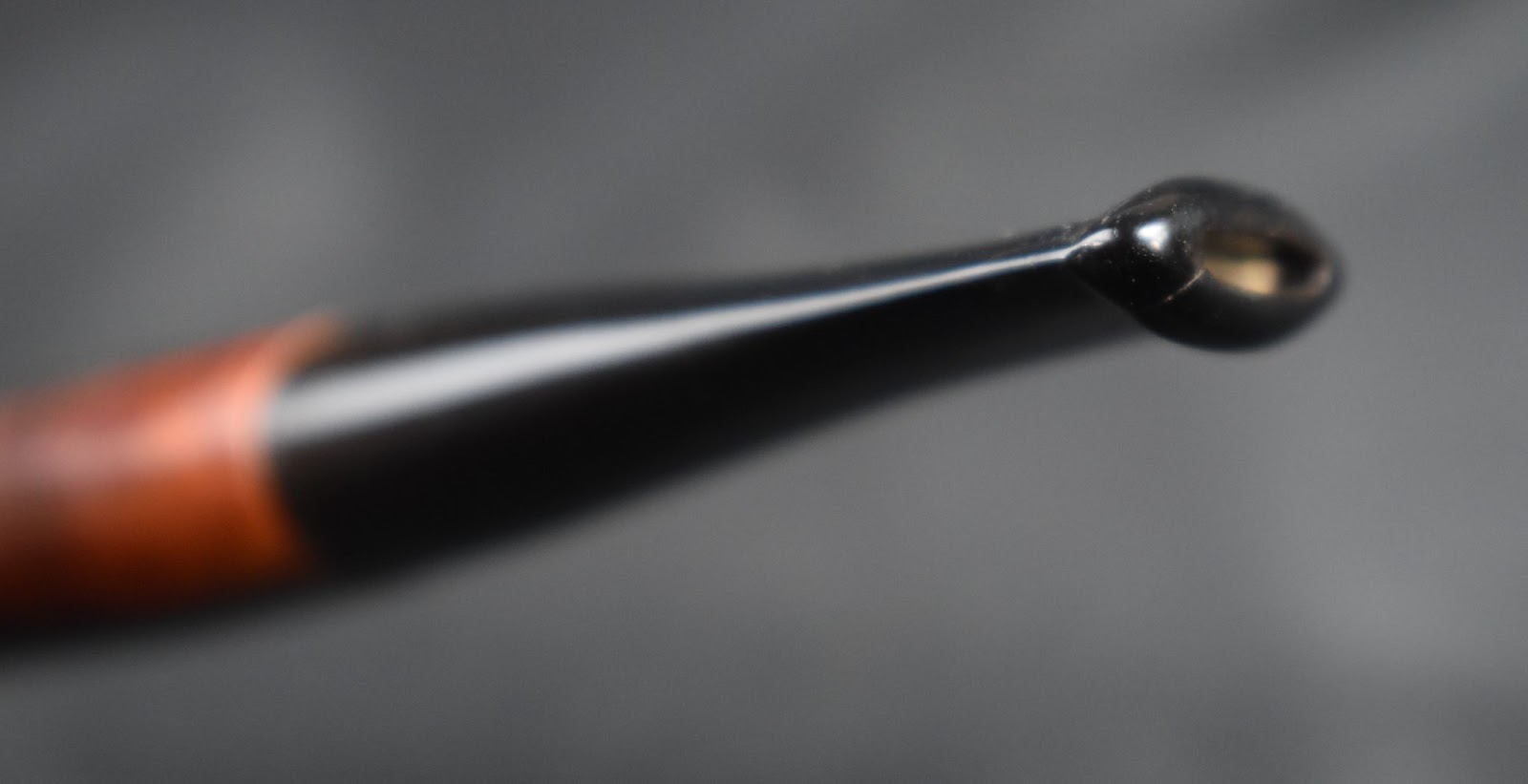


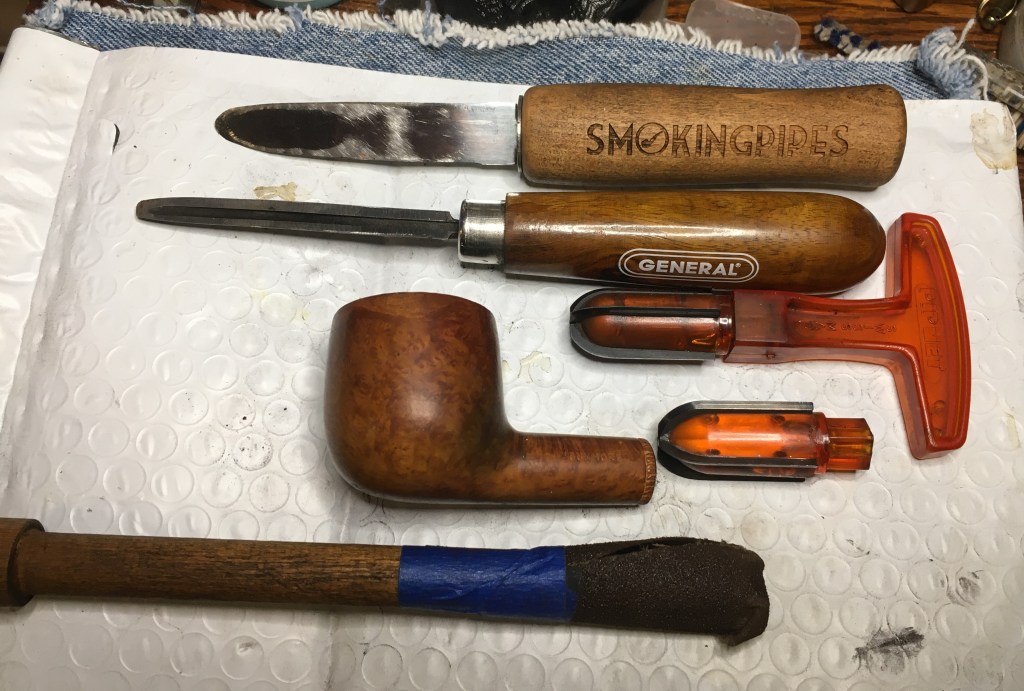


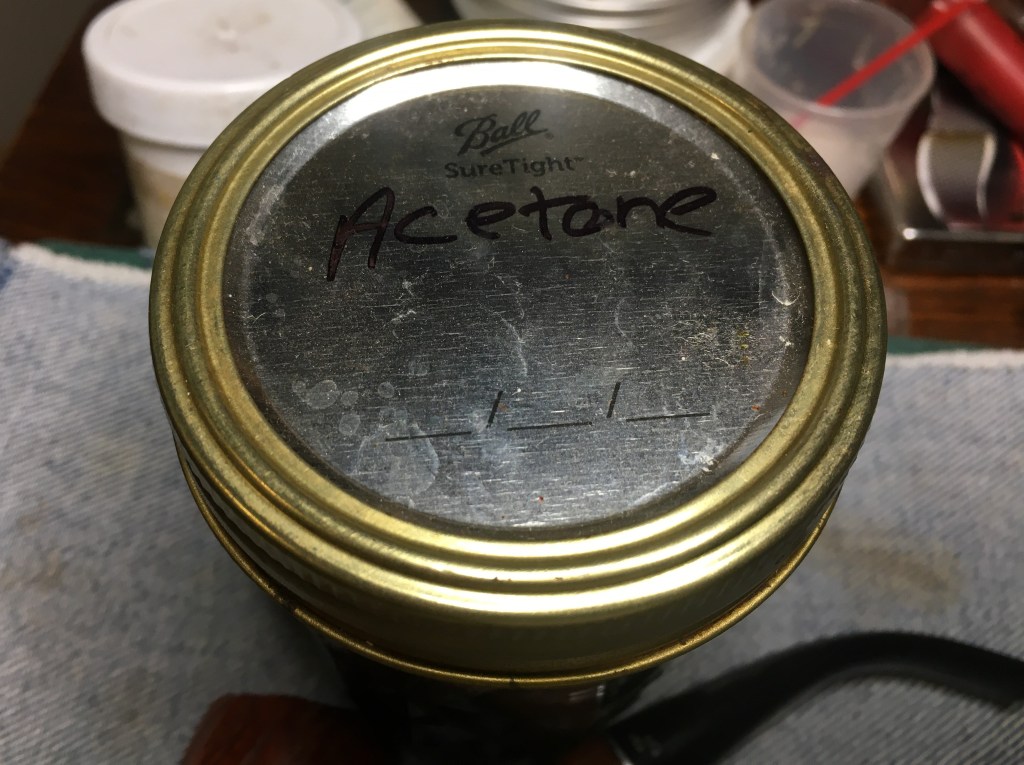


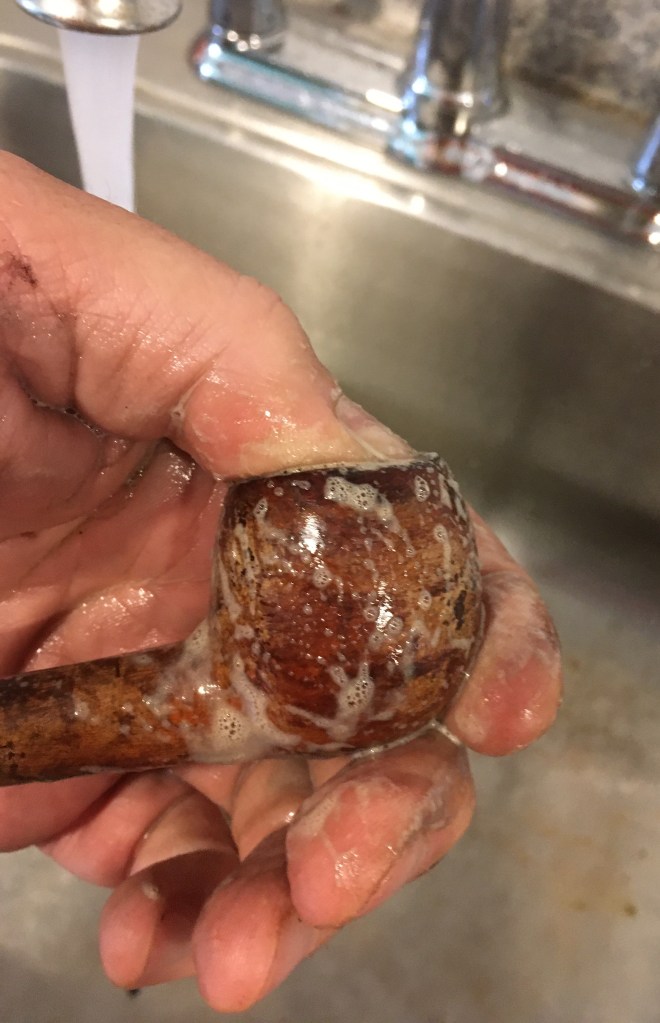


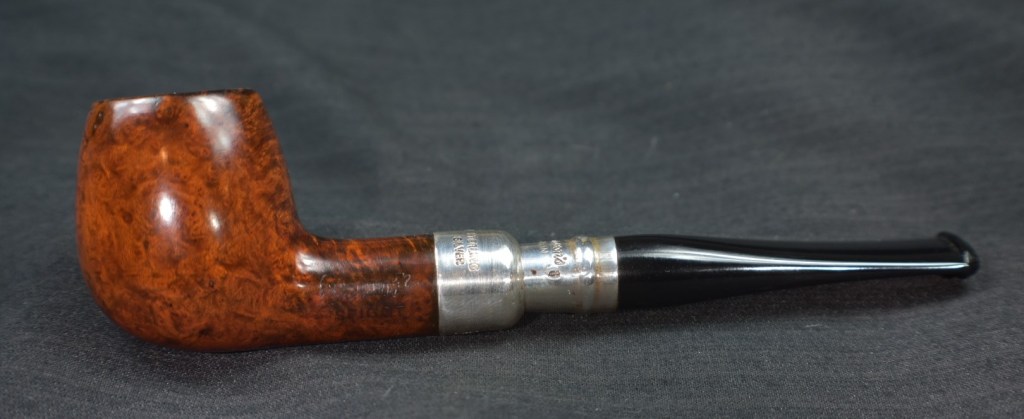






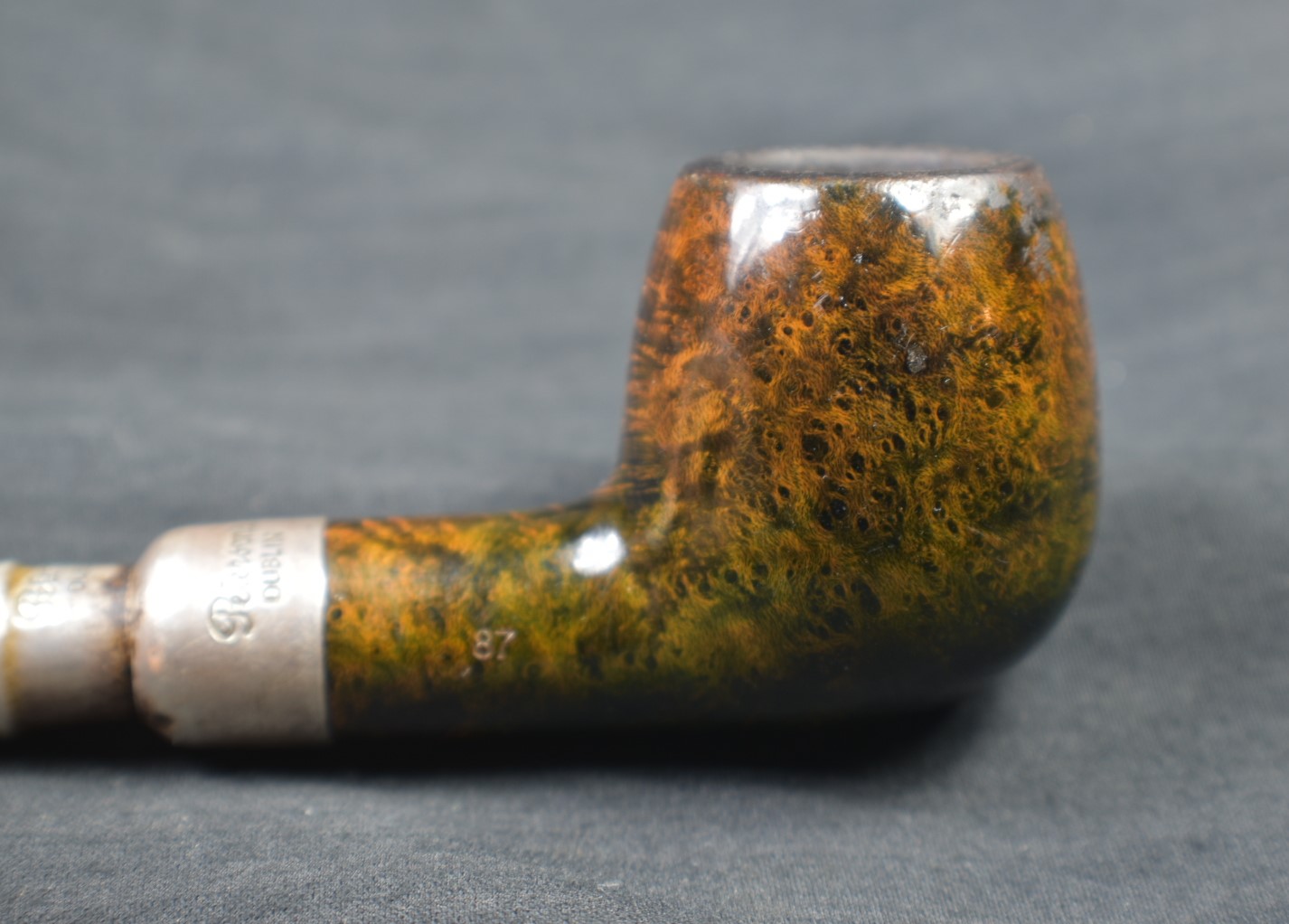
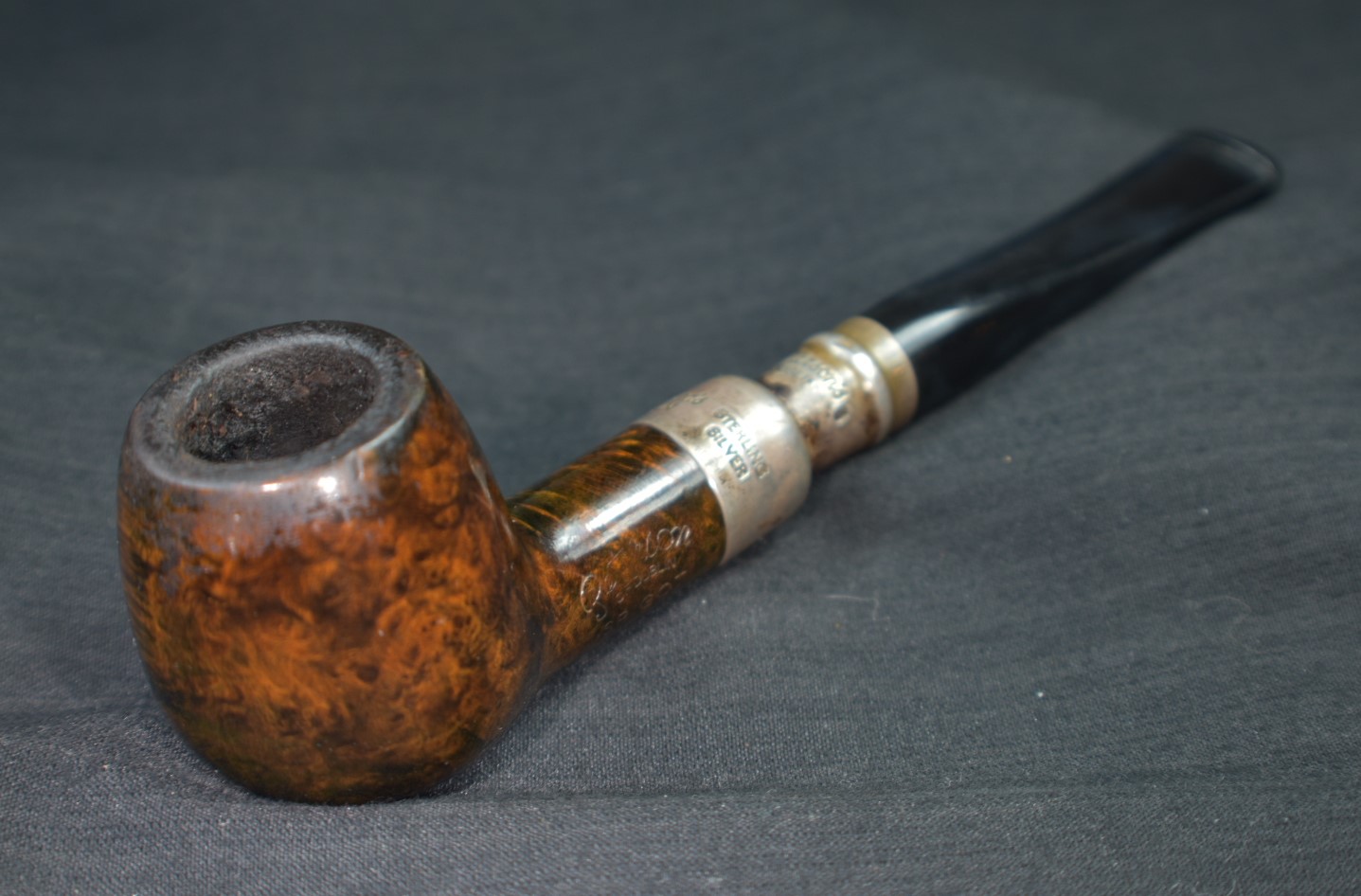

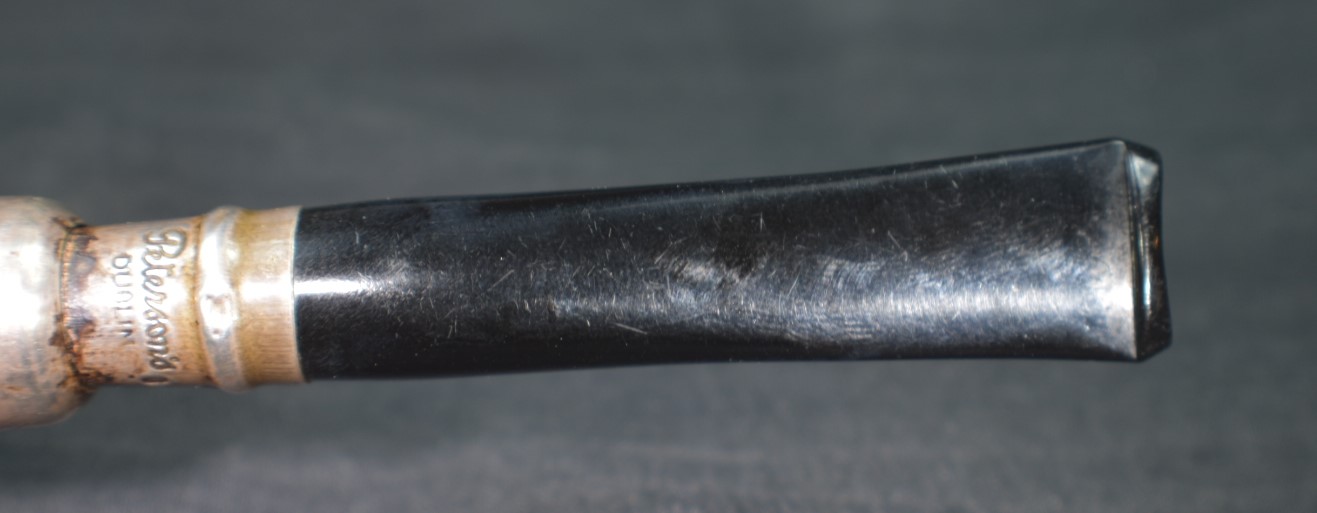

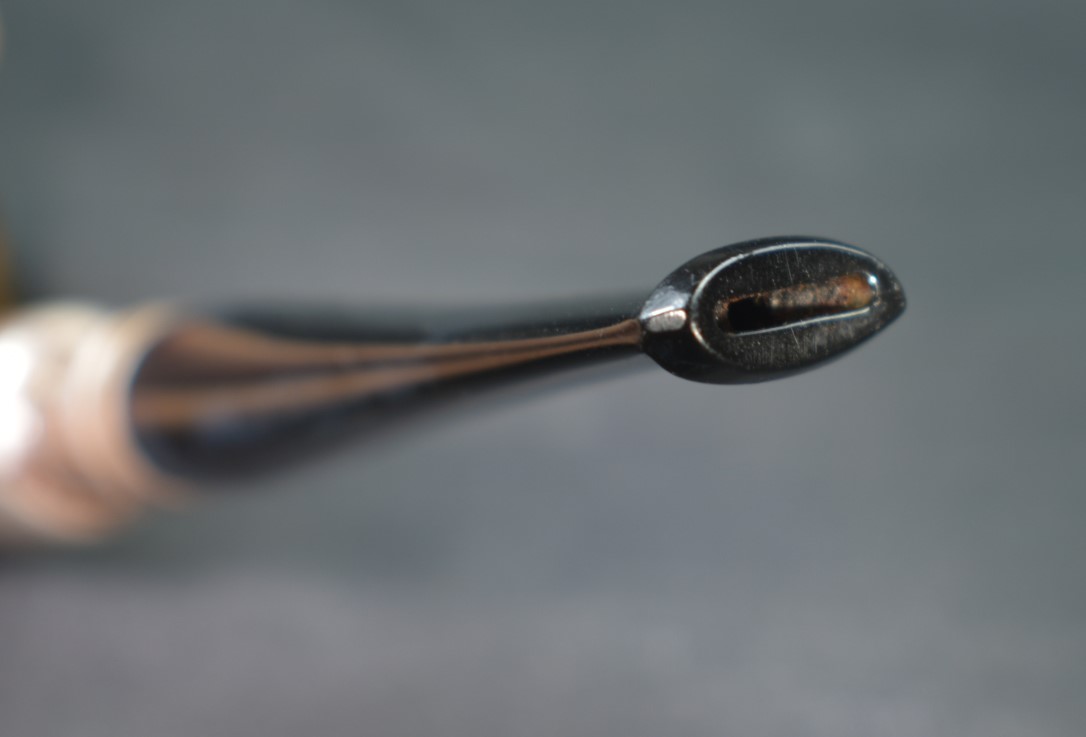


 The image to the left is a screen clip of the PPN-Hallmark-Chart. While the photo below is the hallmark of this pipe.


 (
(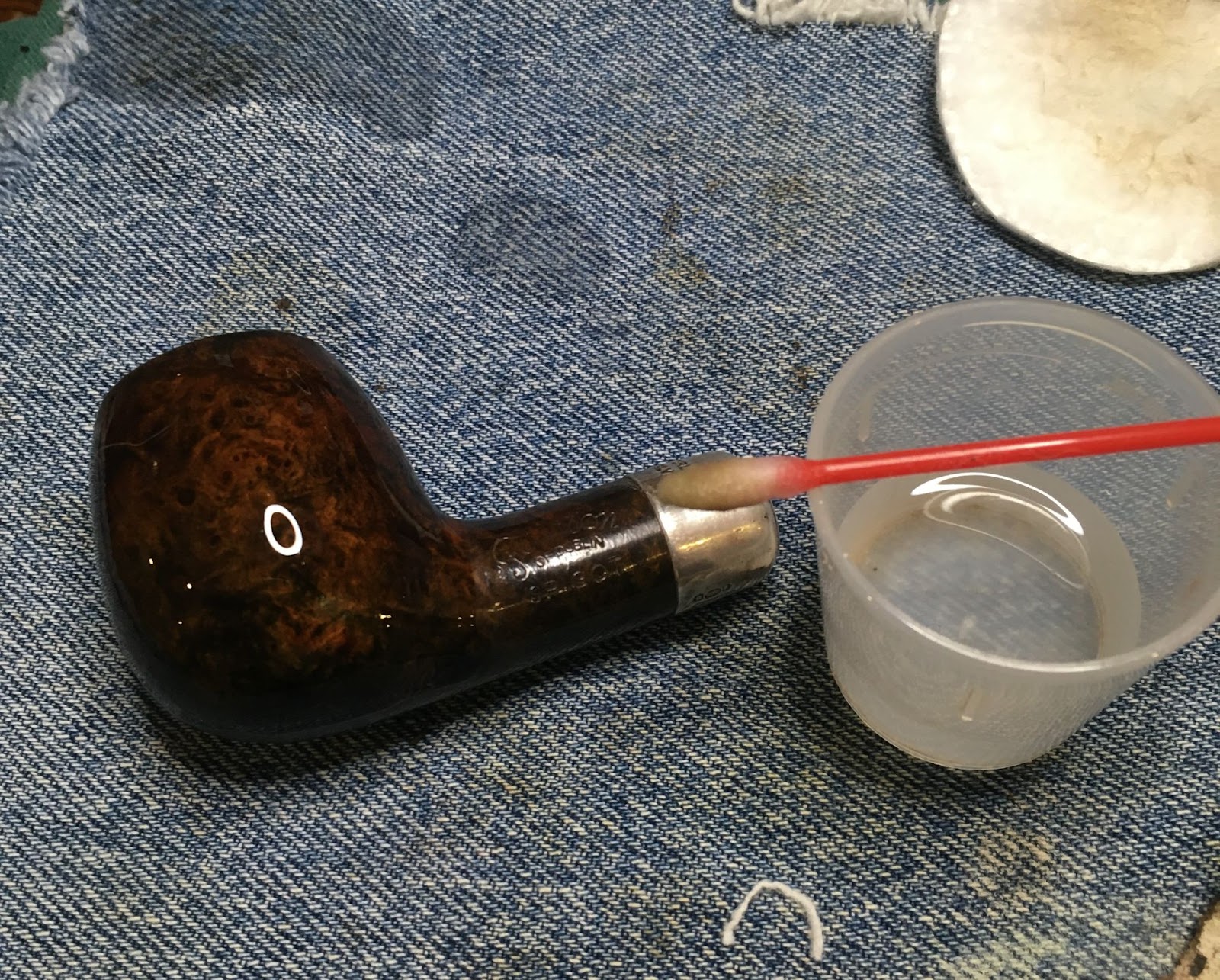


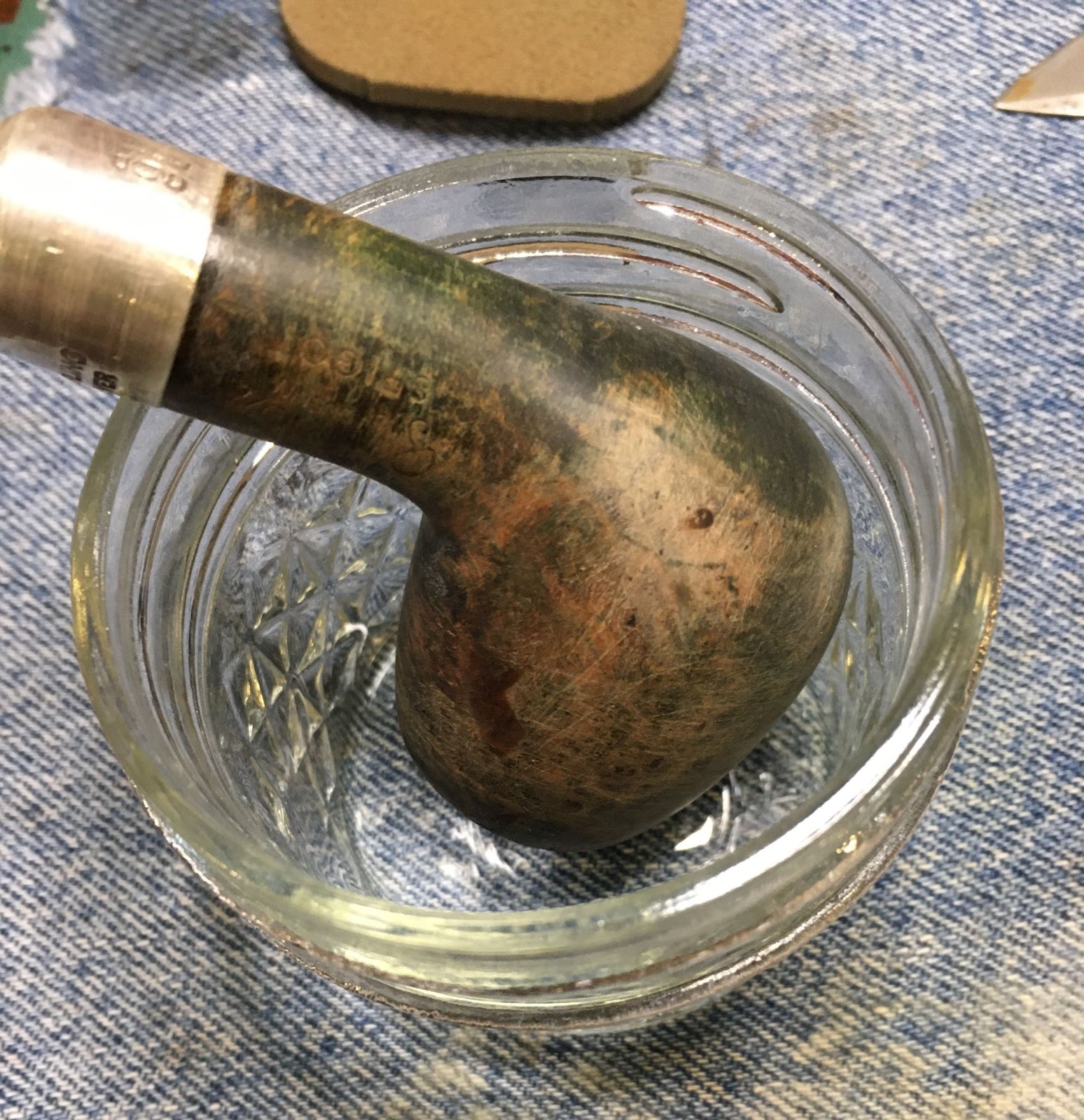


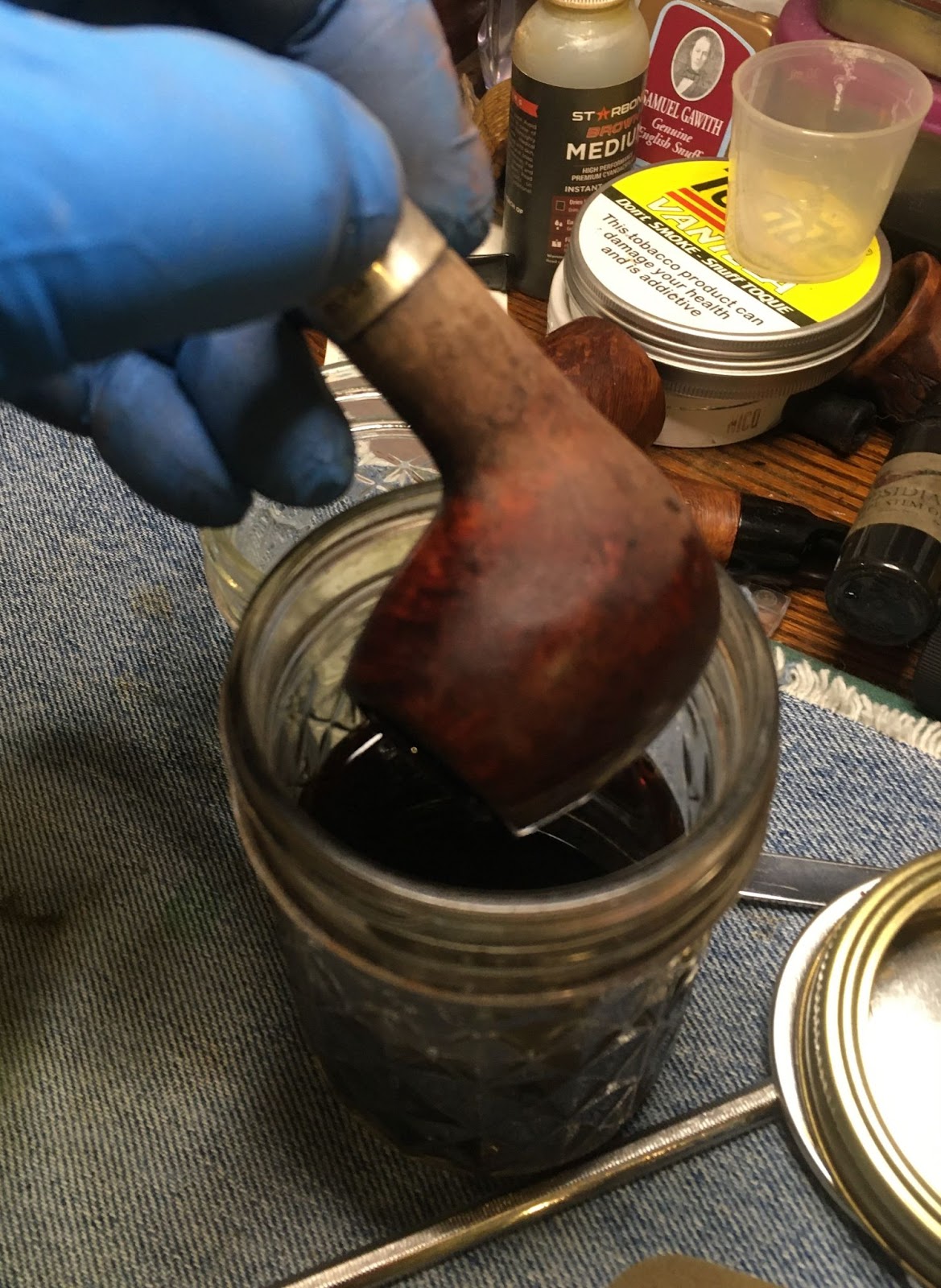
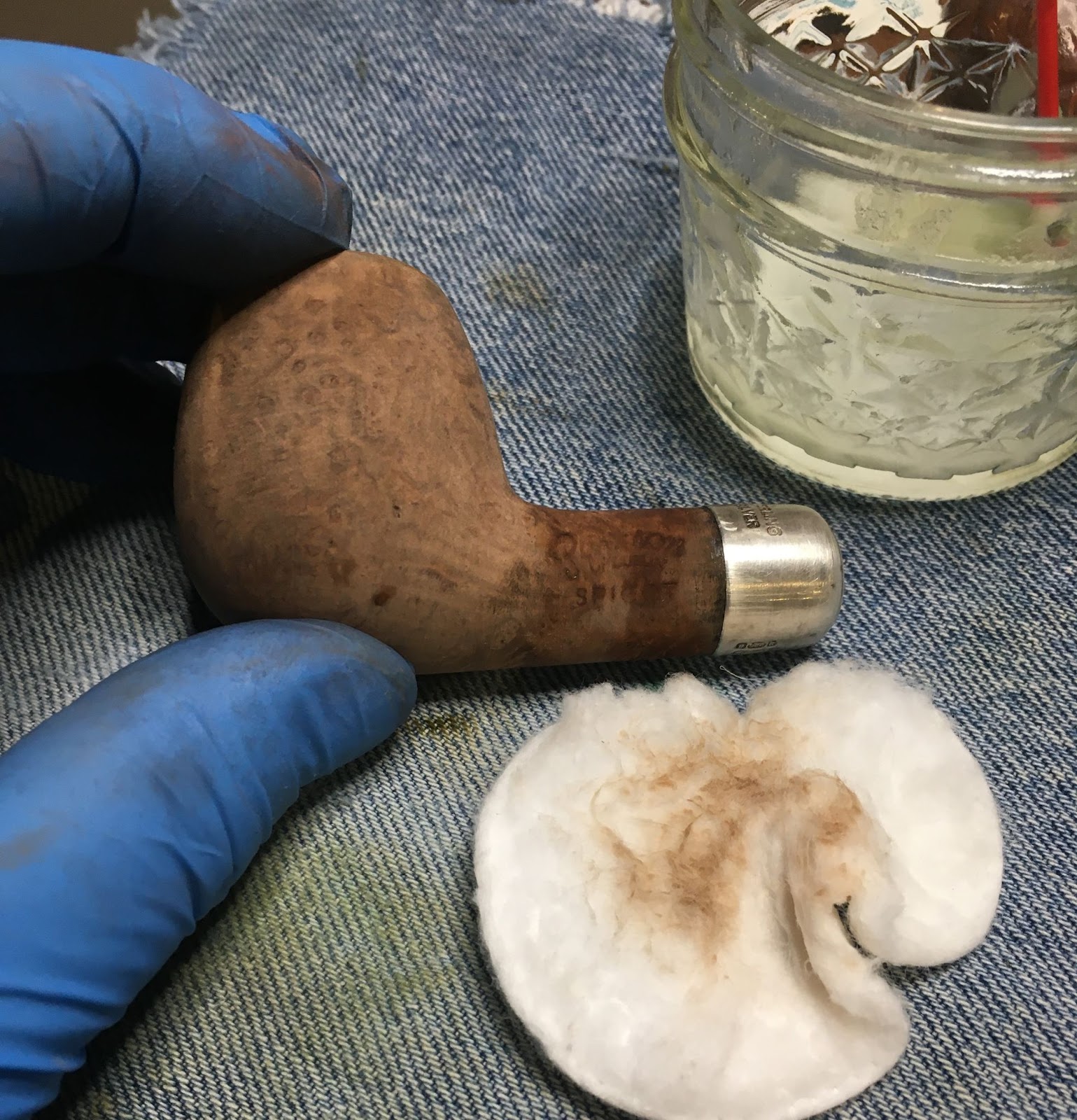

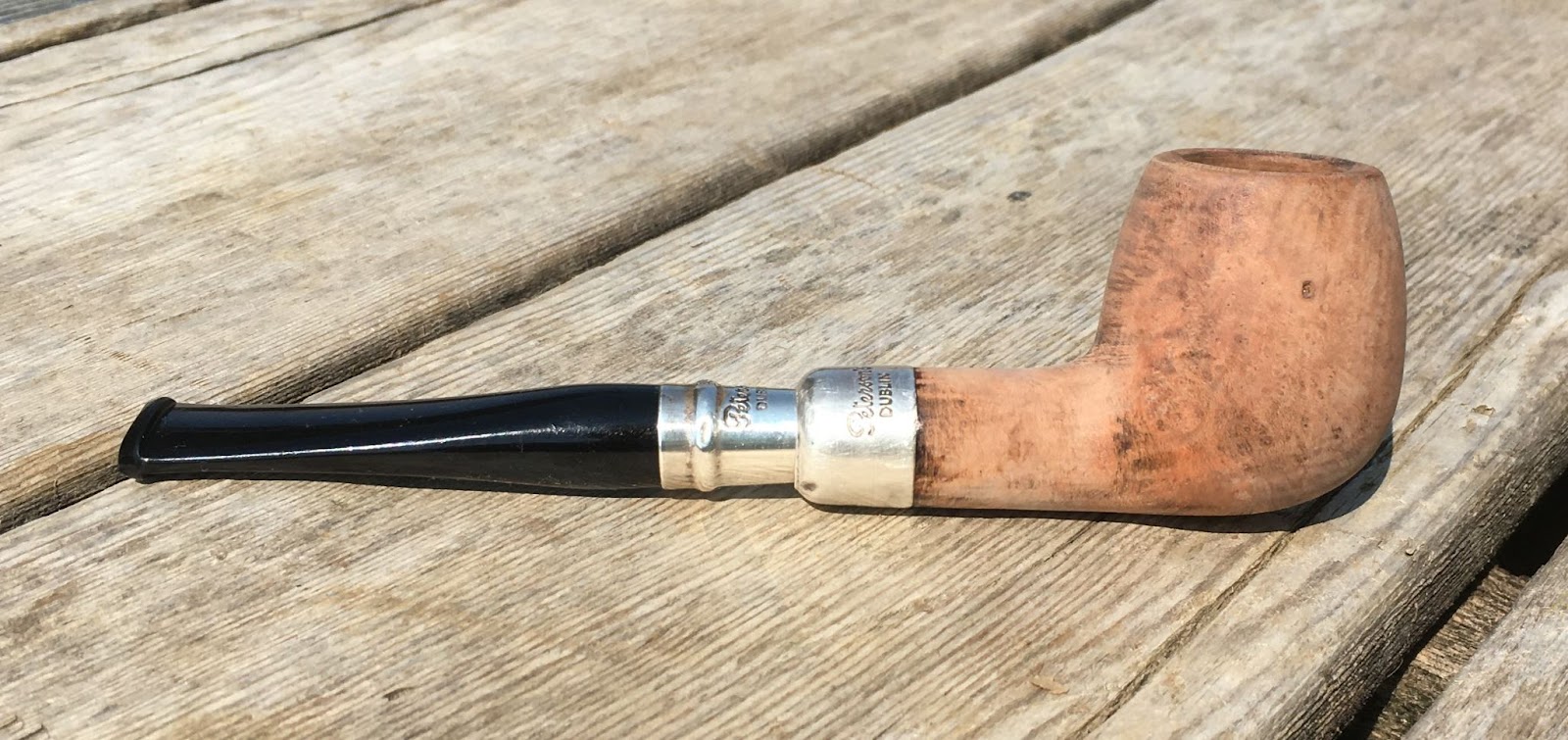


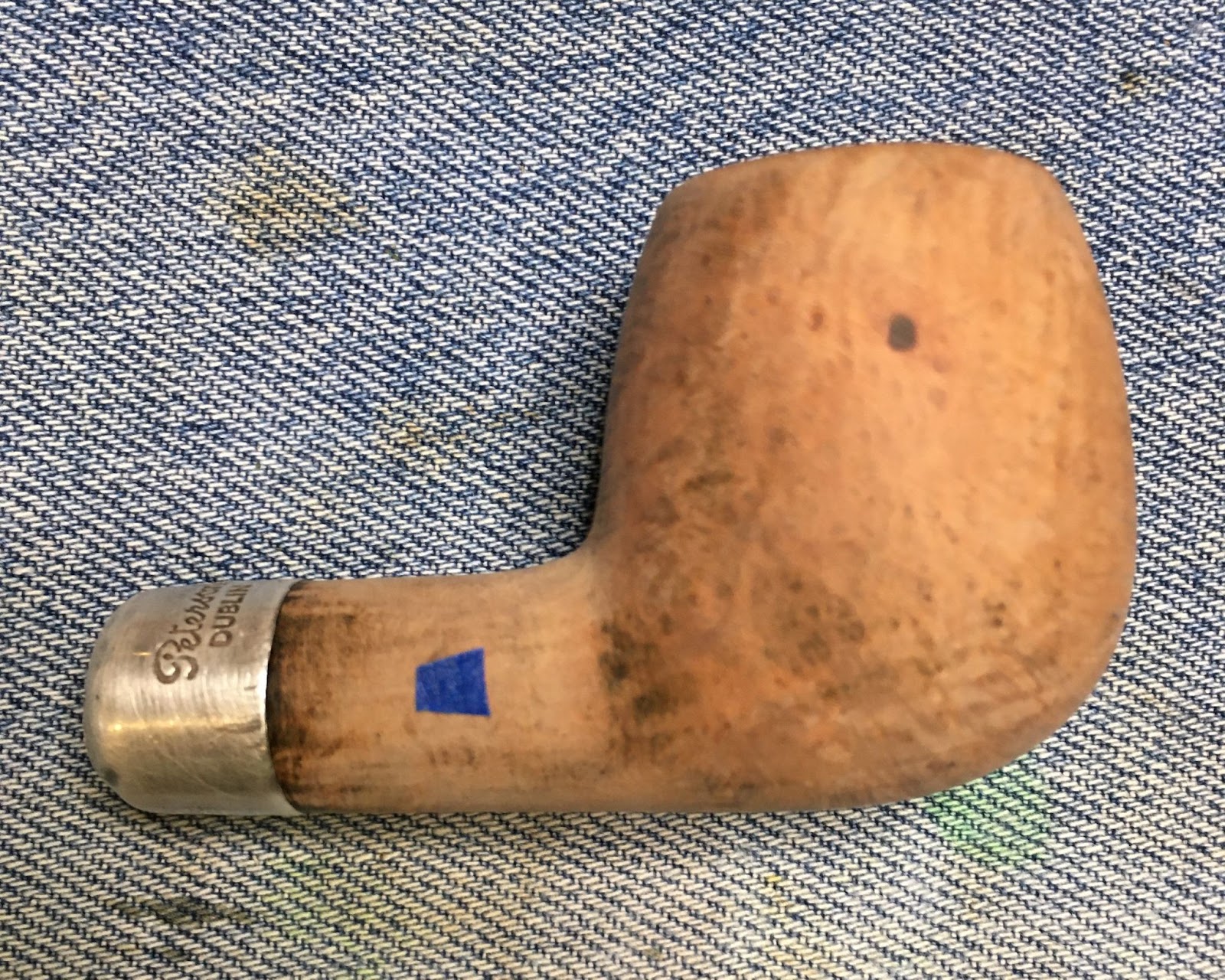

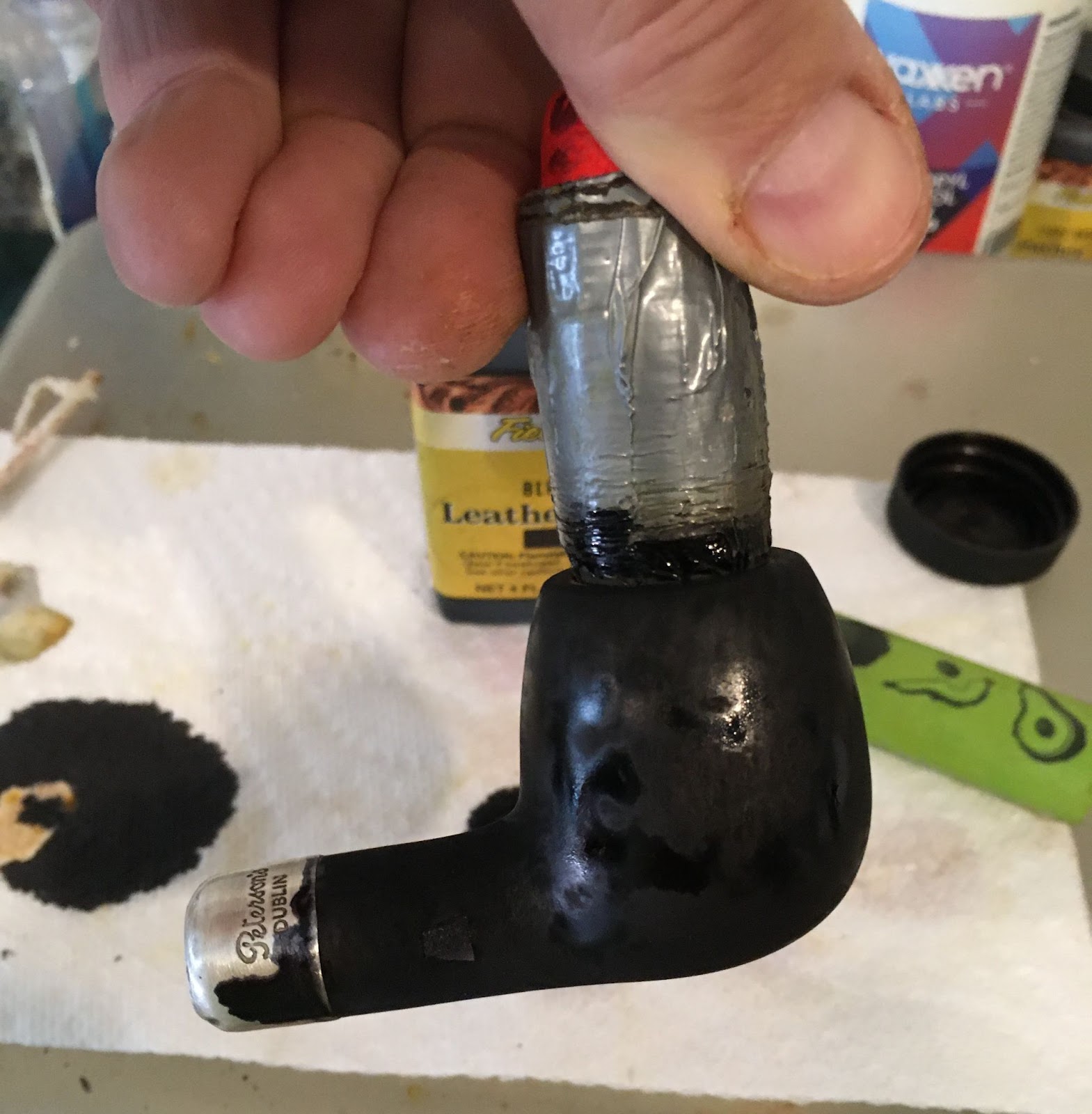


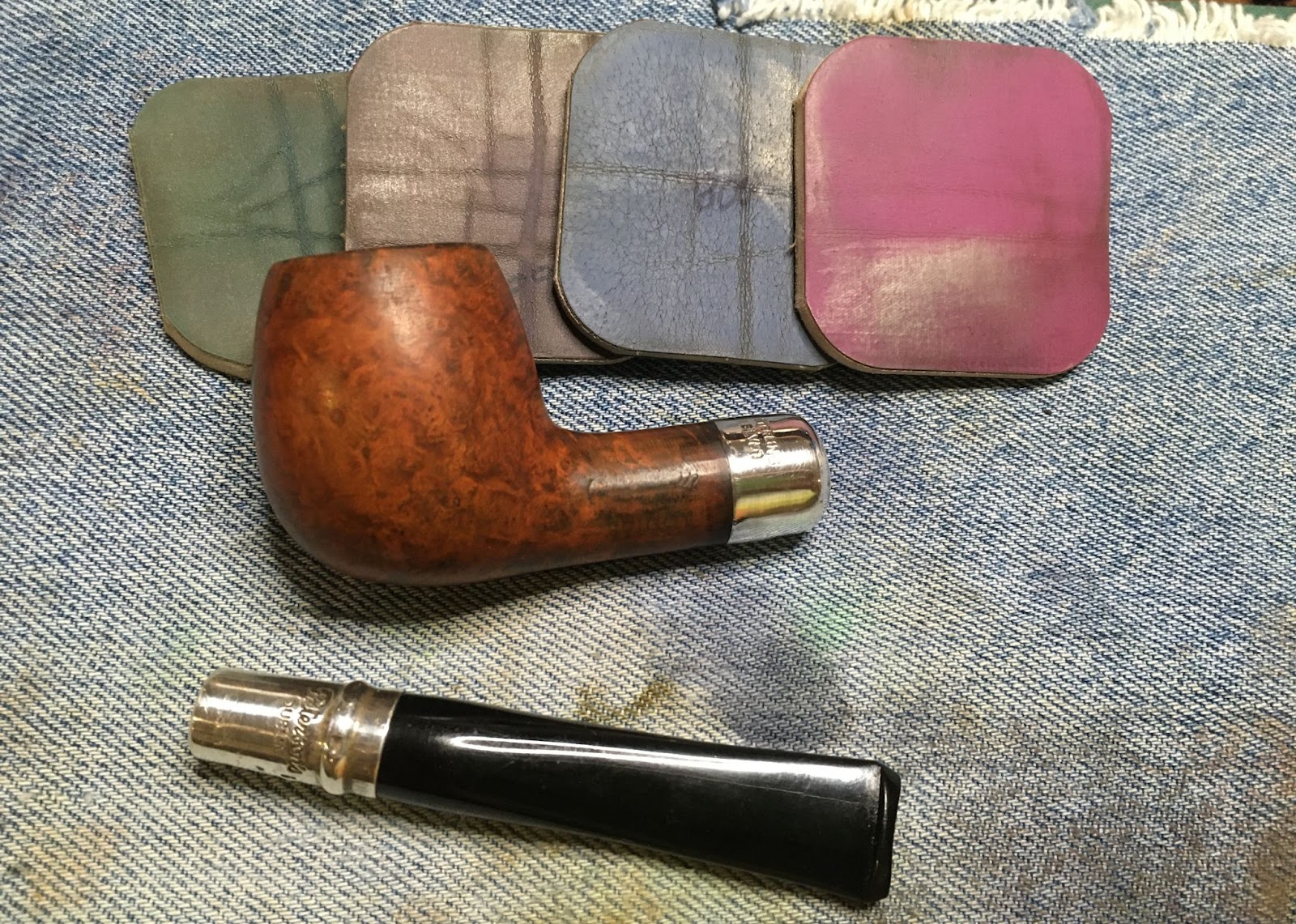
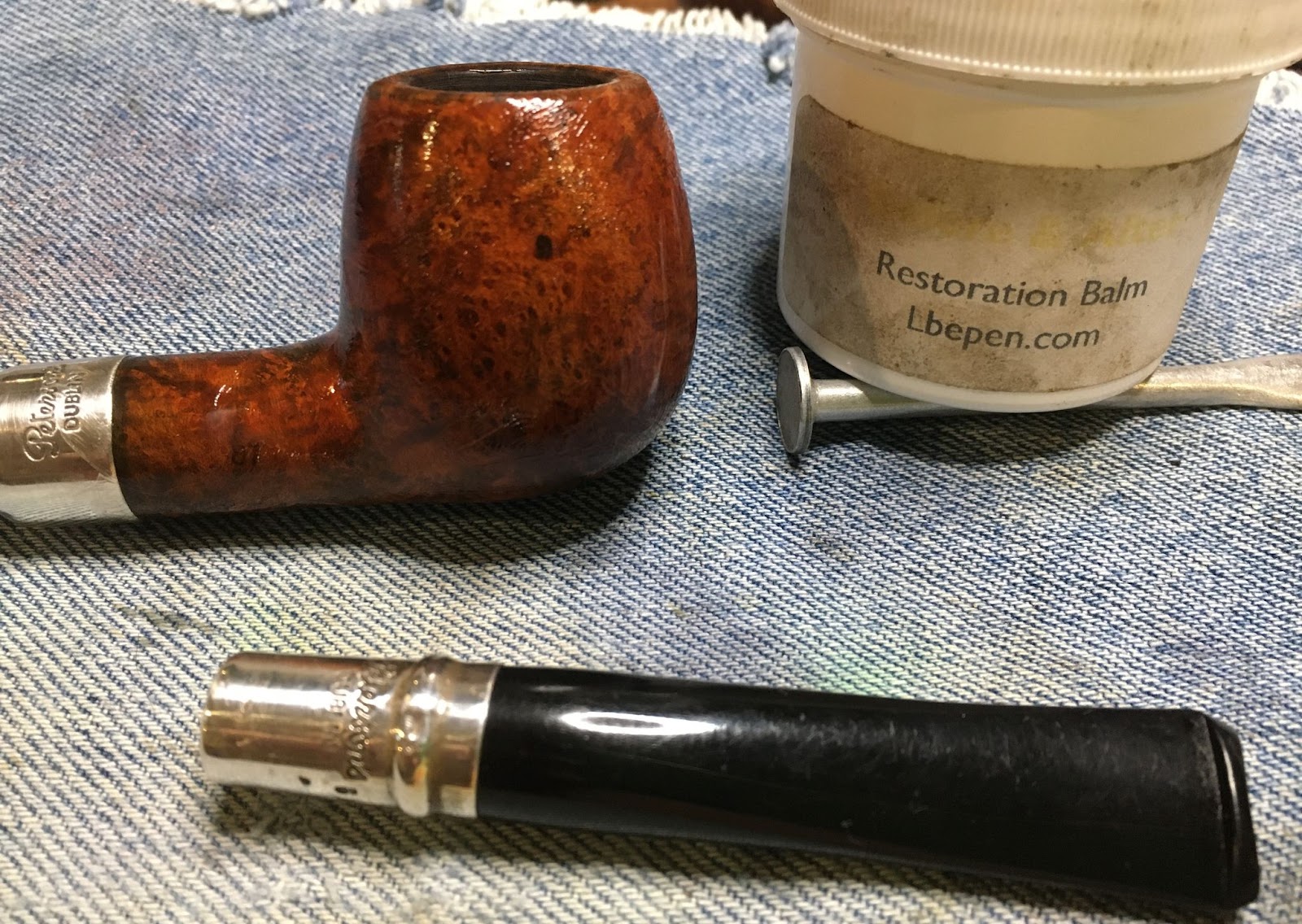


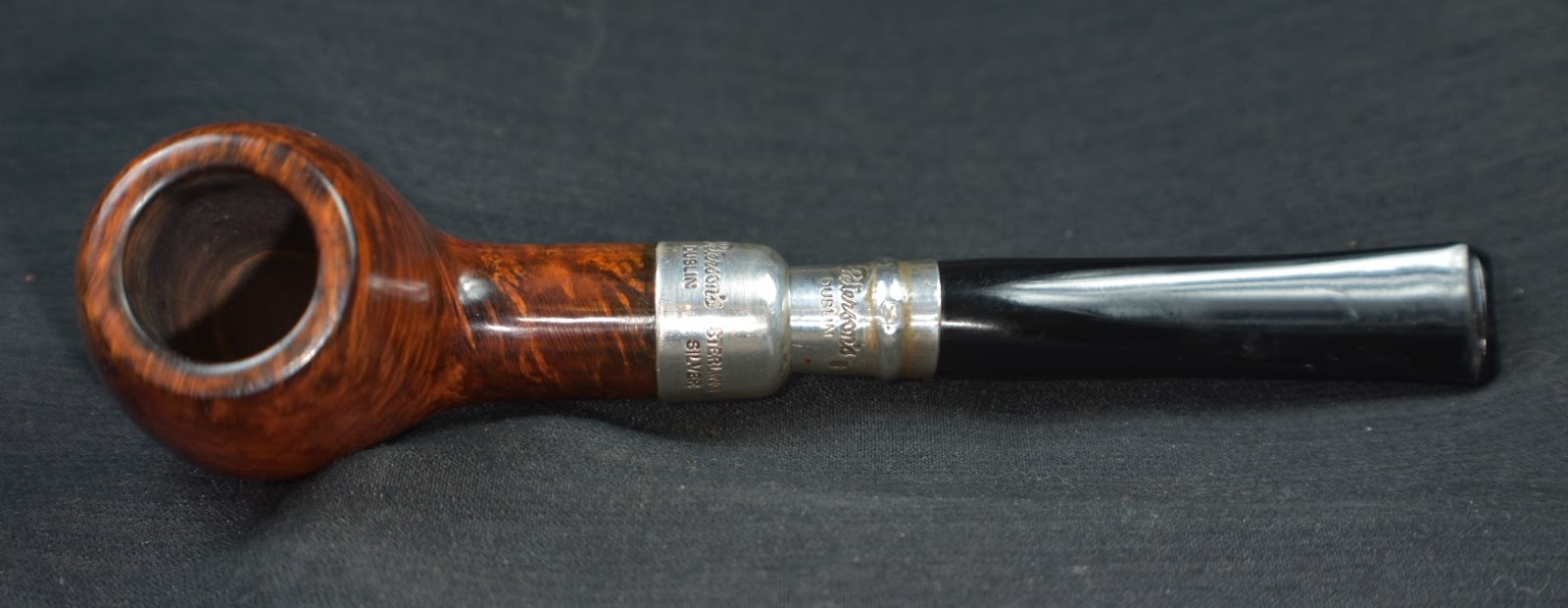


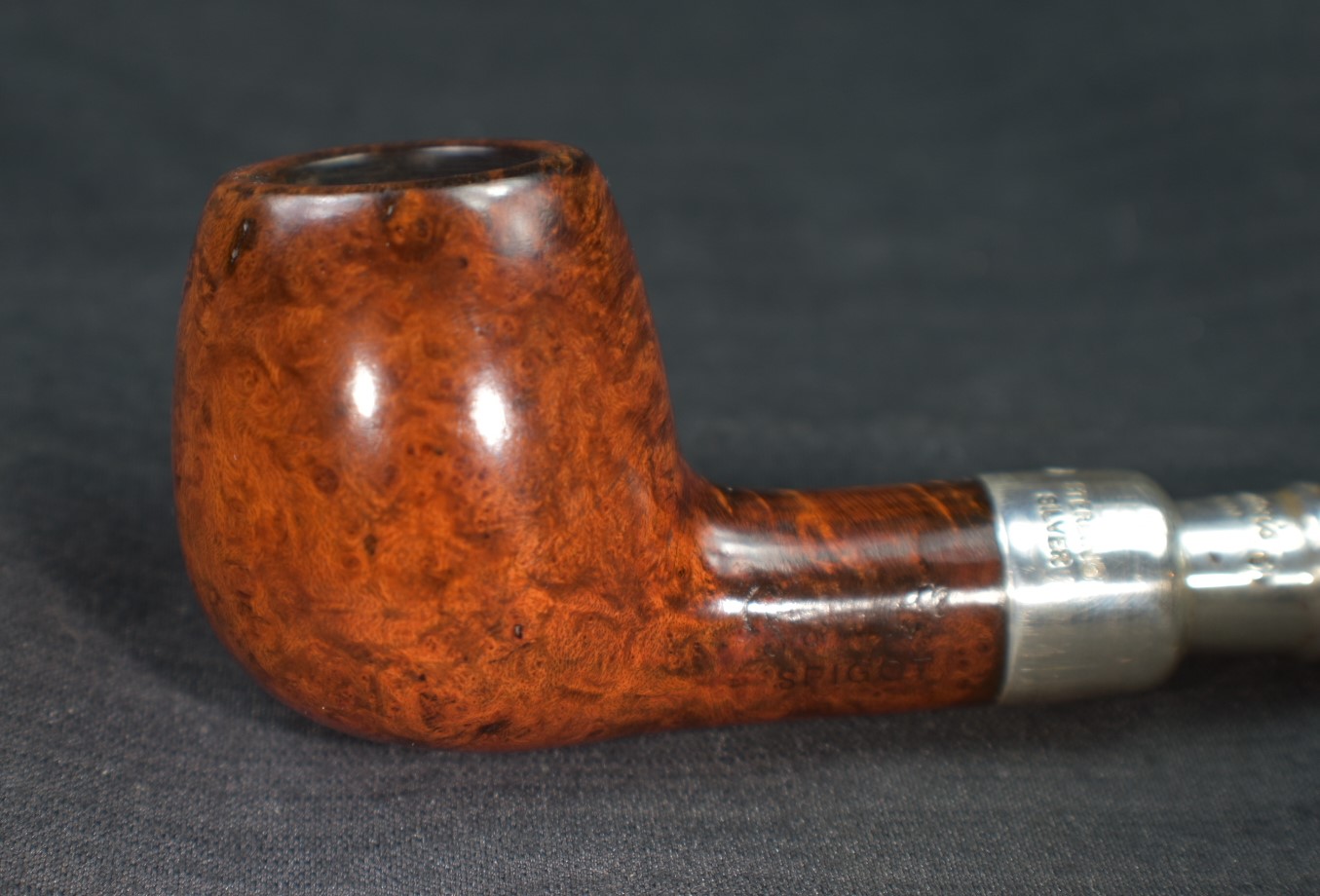
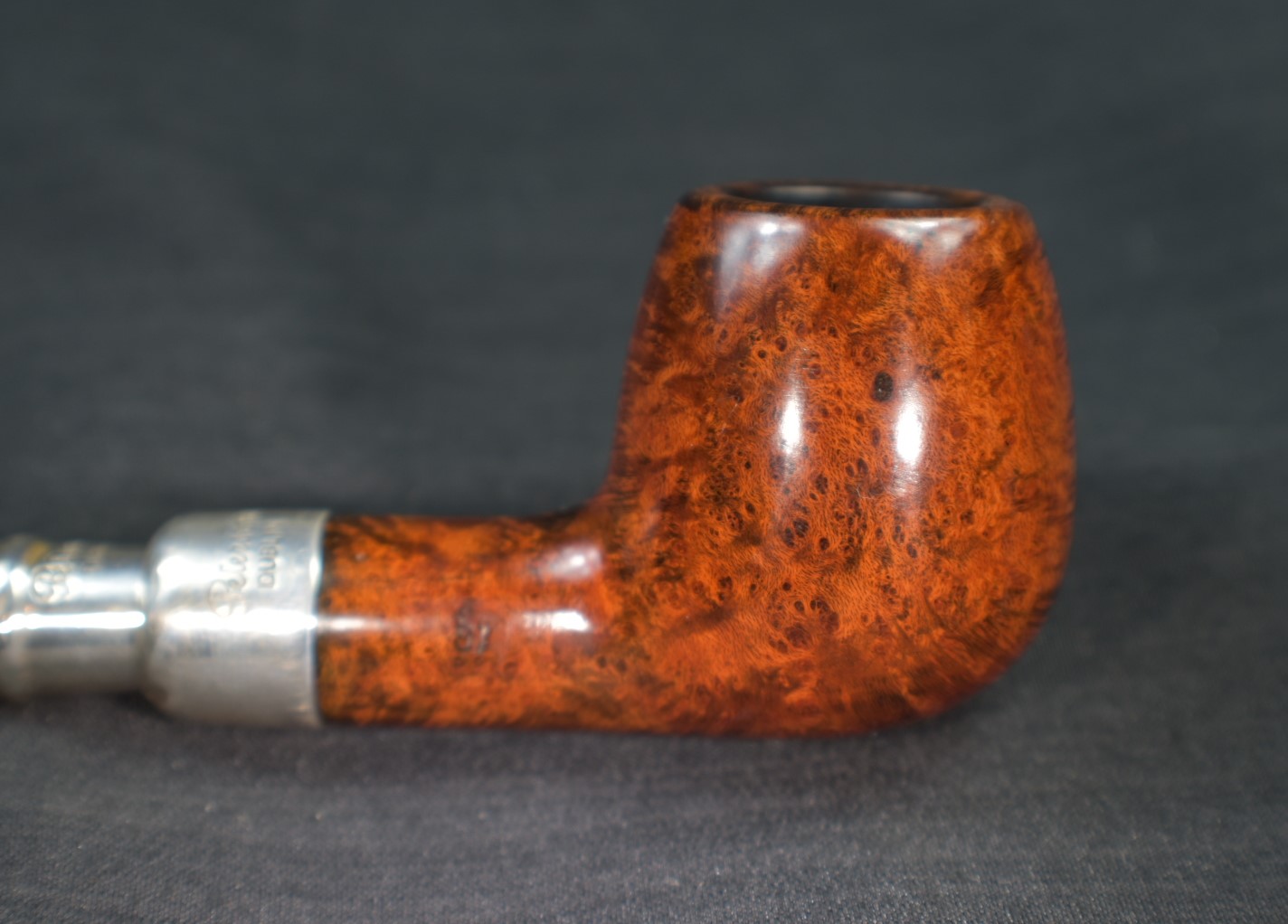
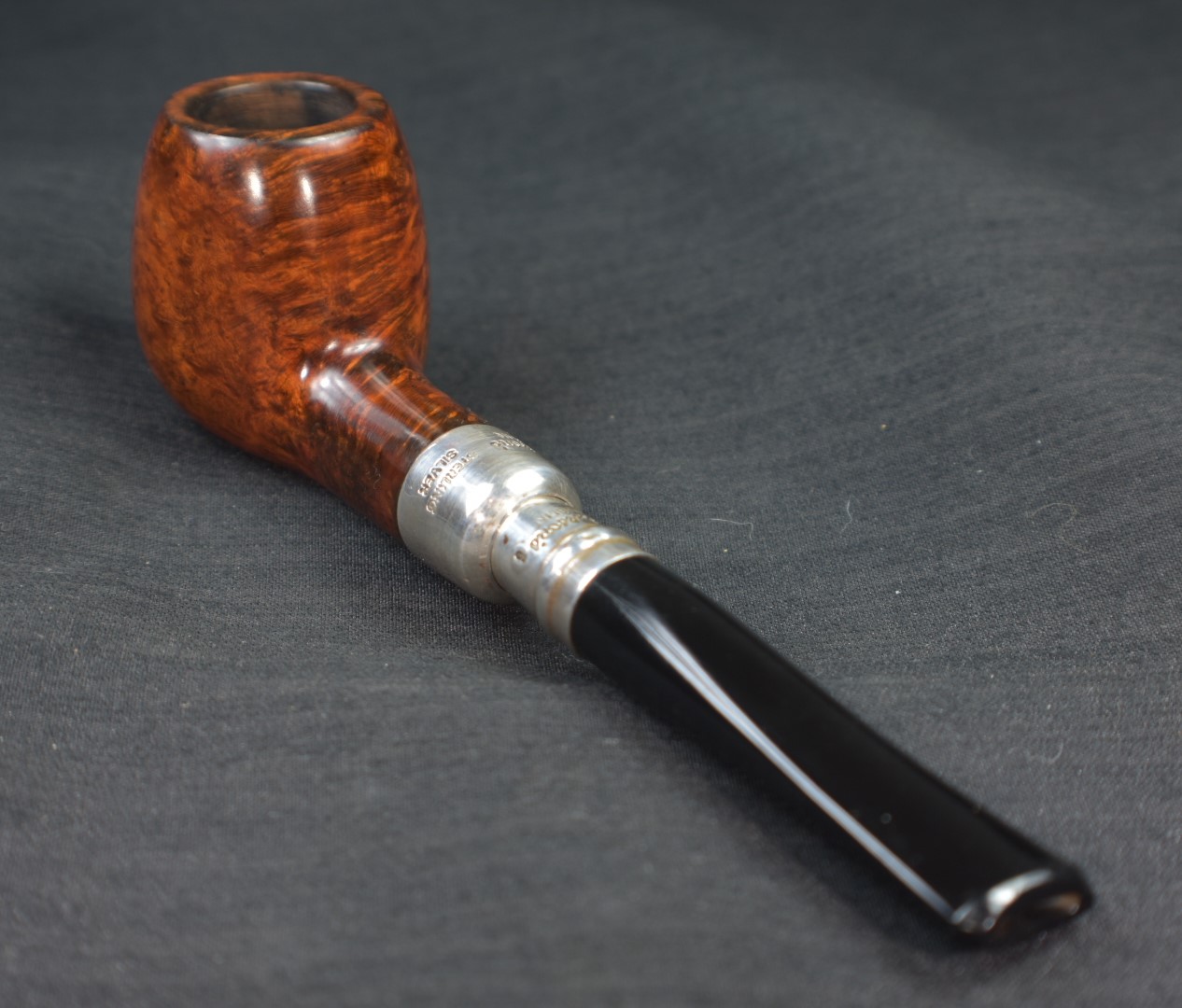


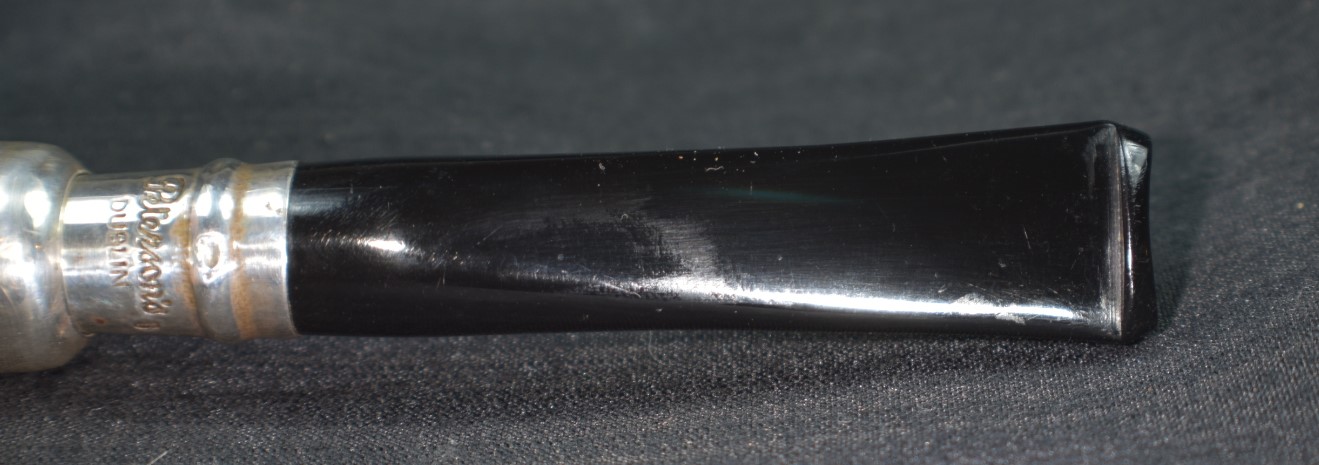


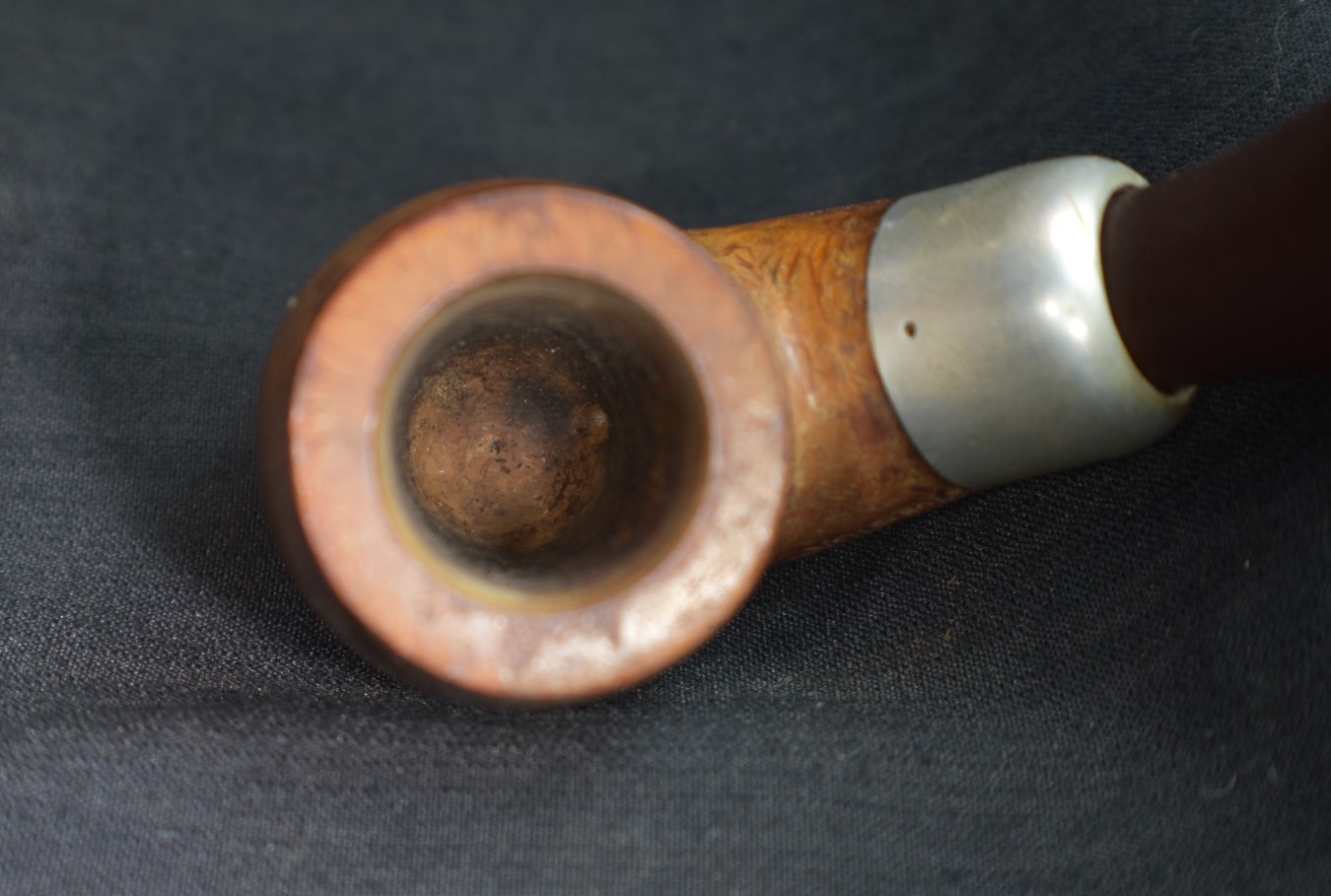

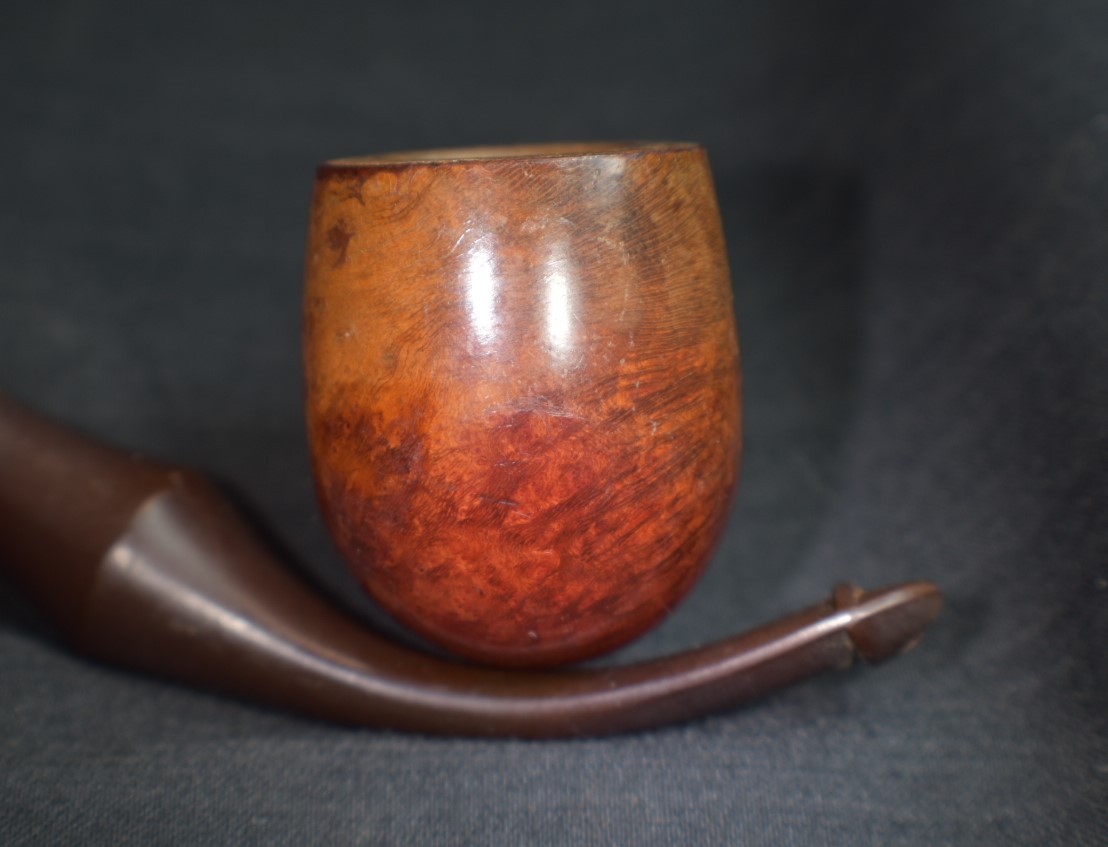

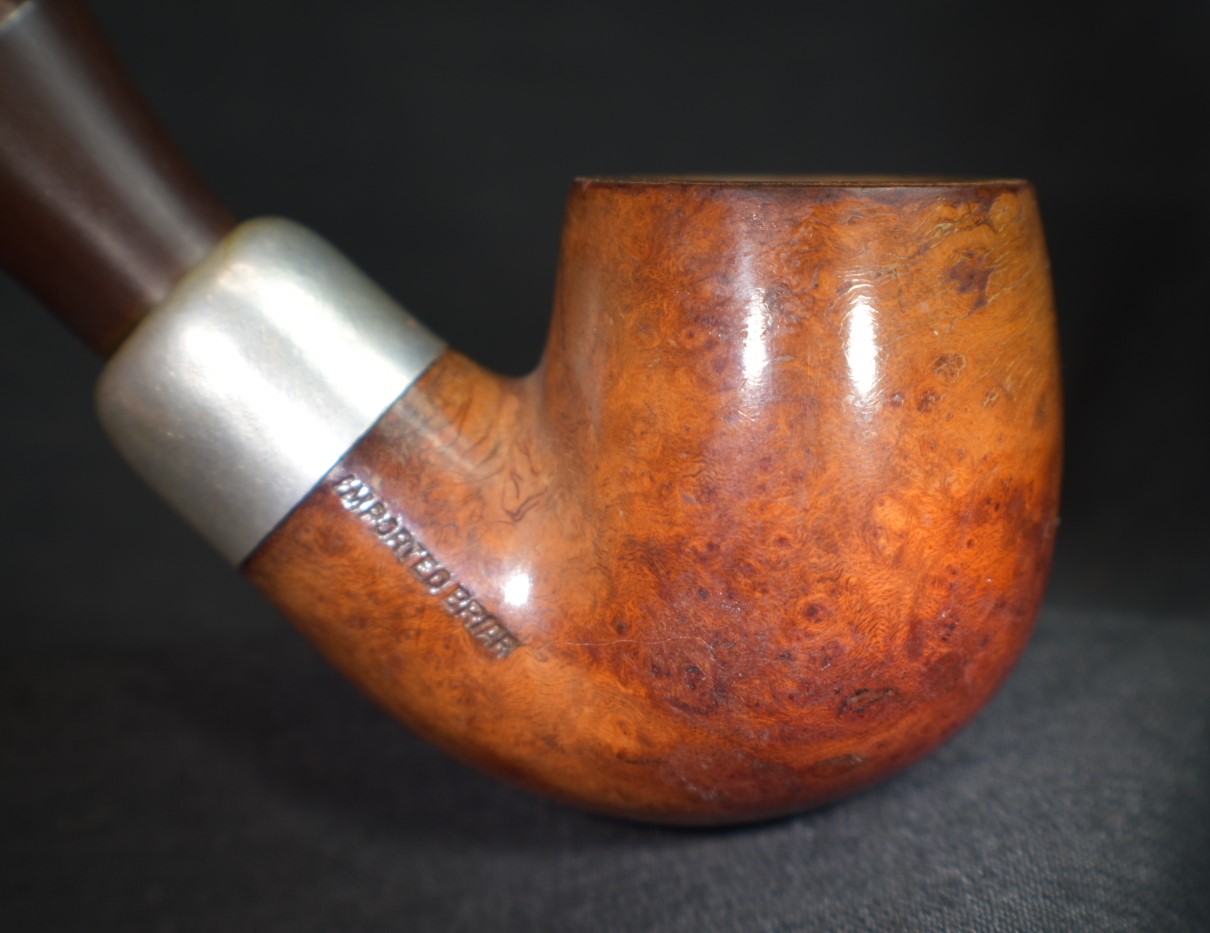


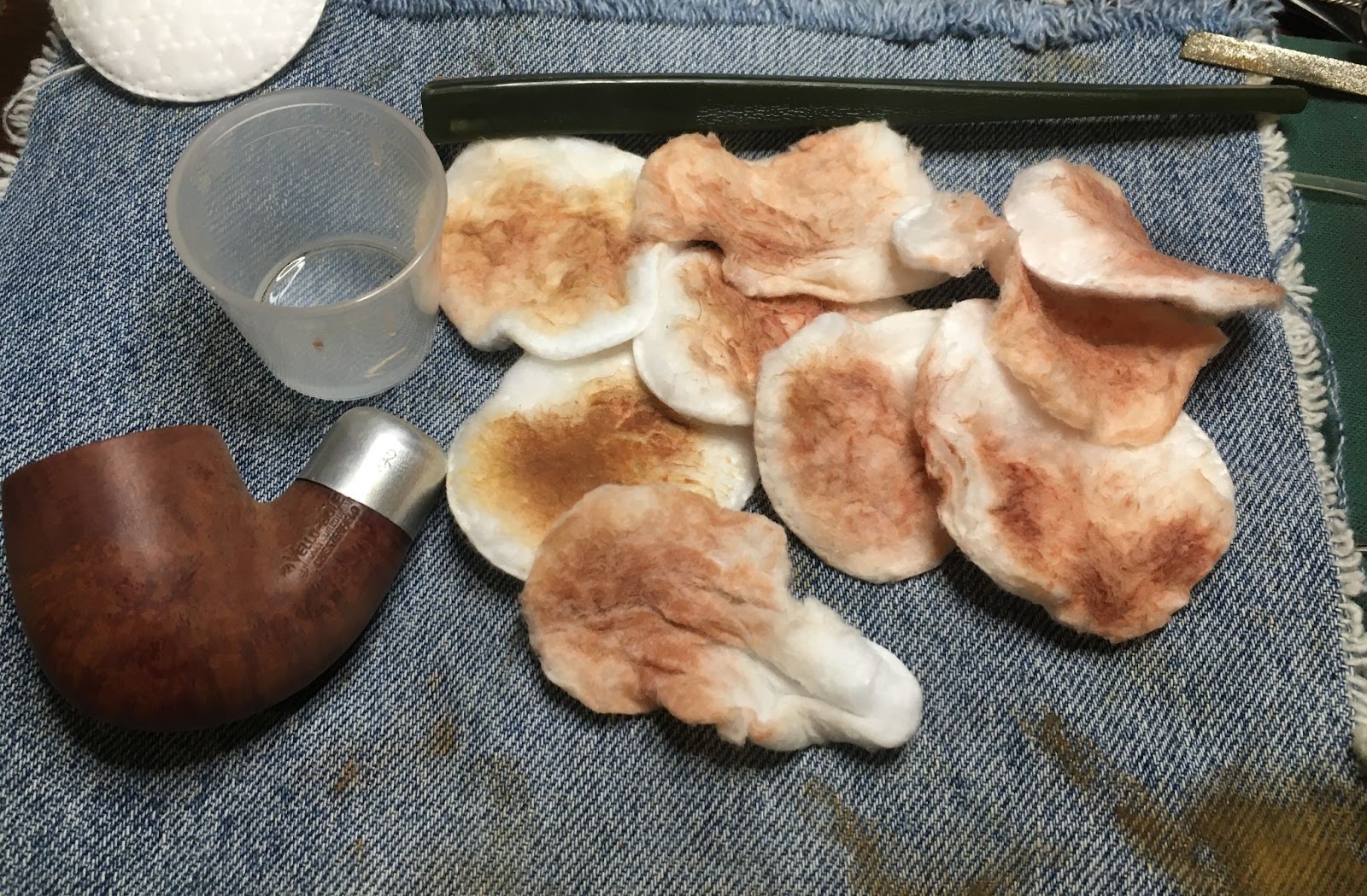
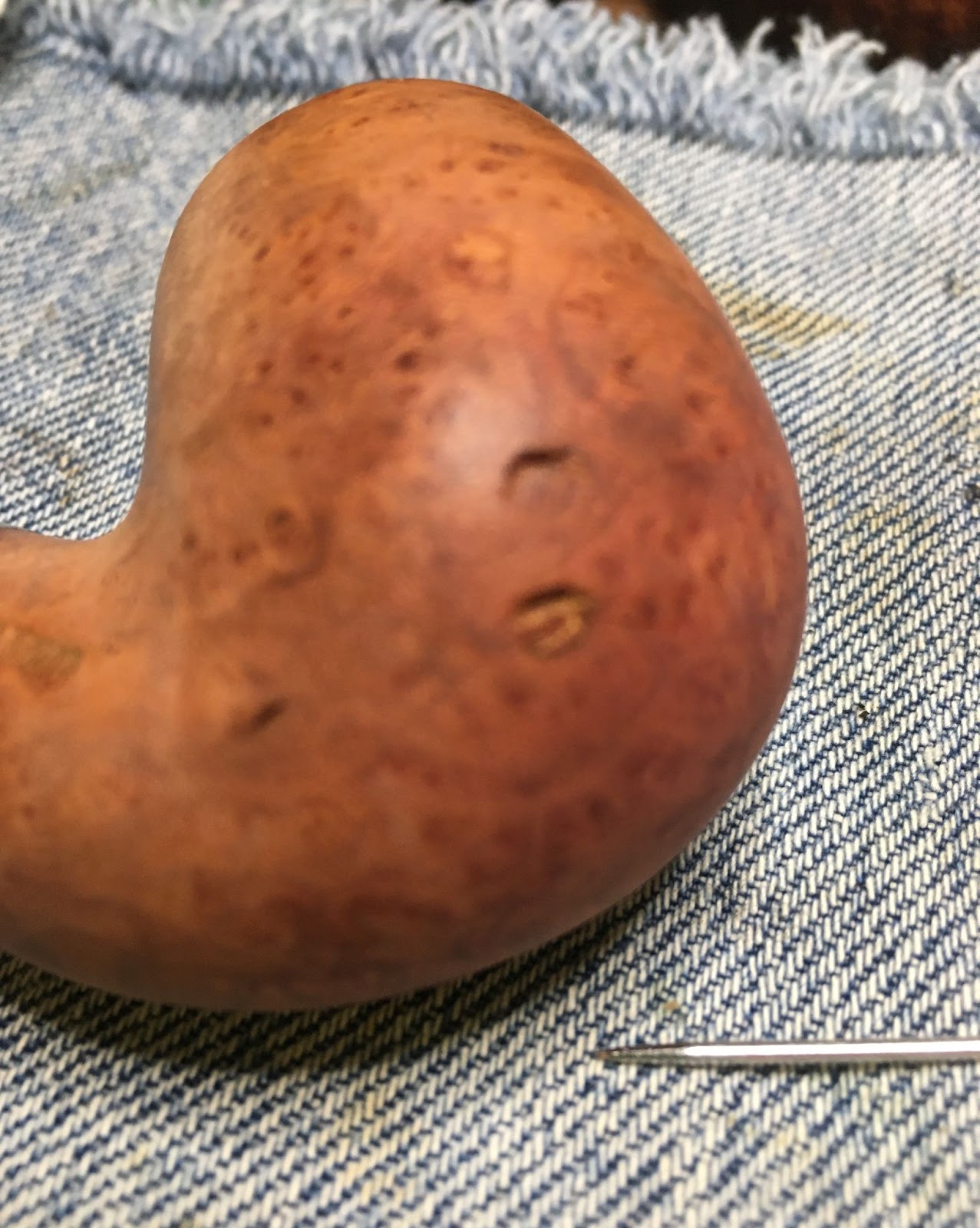
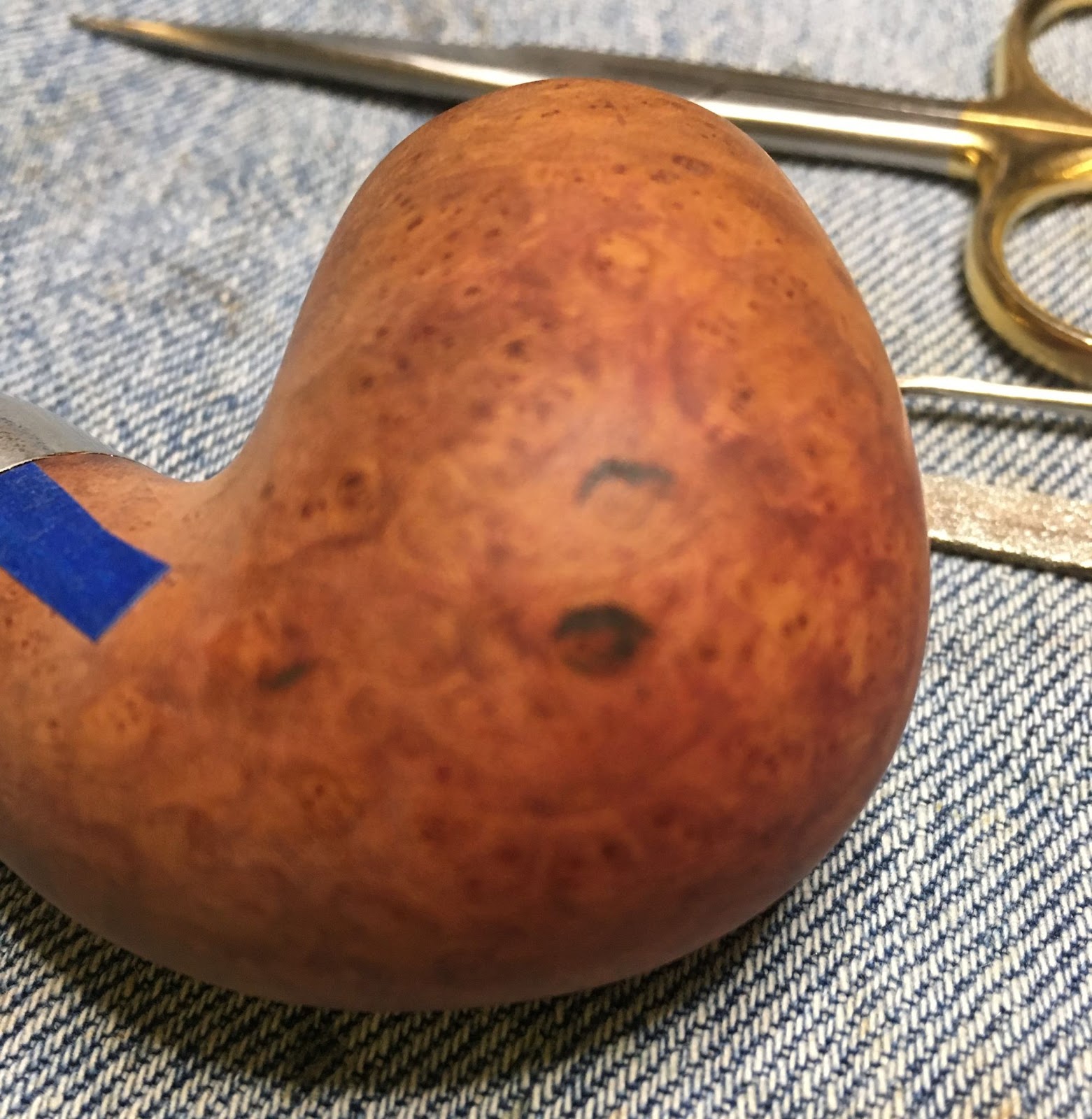

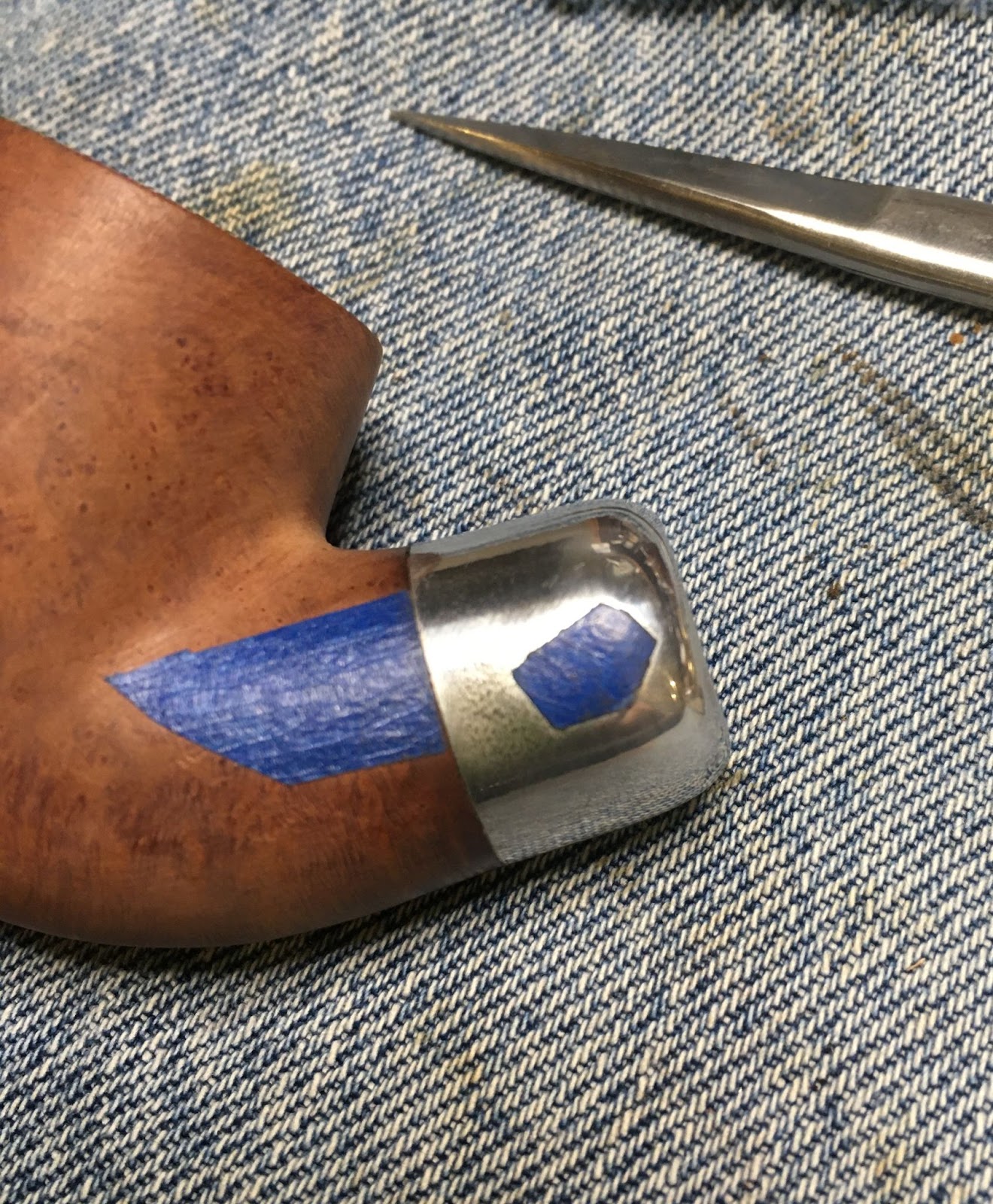
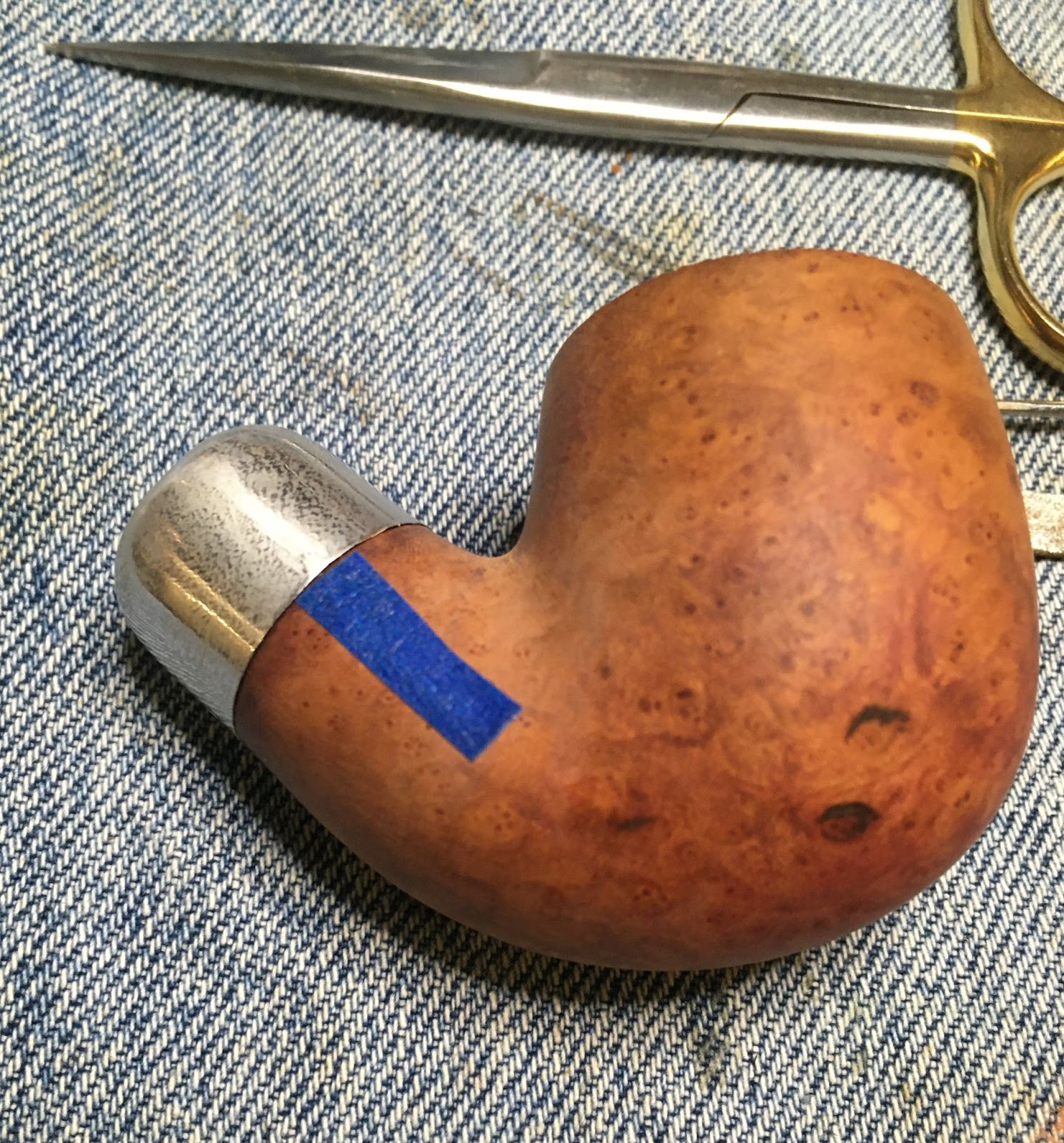
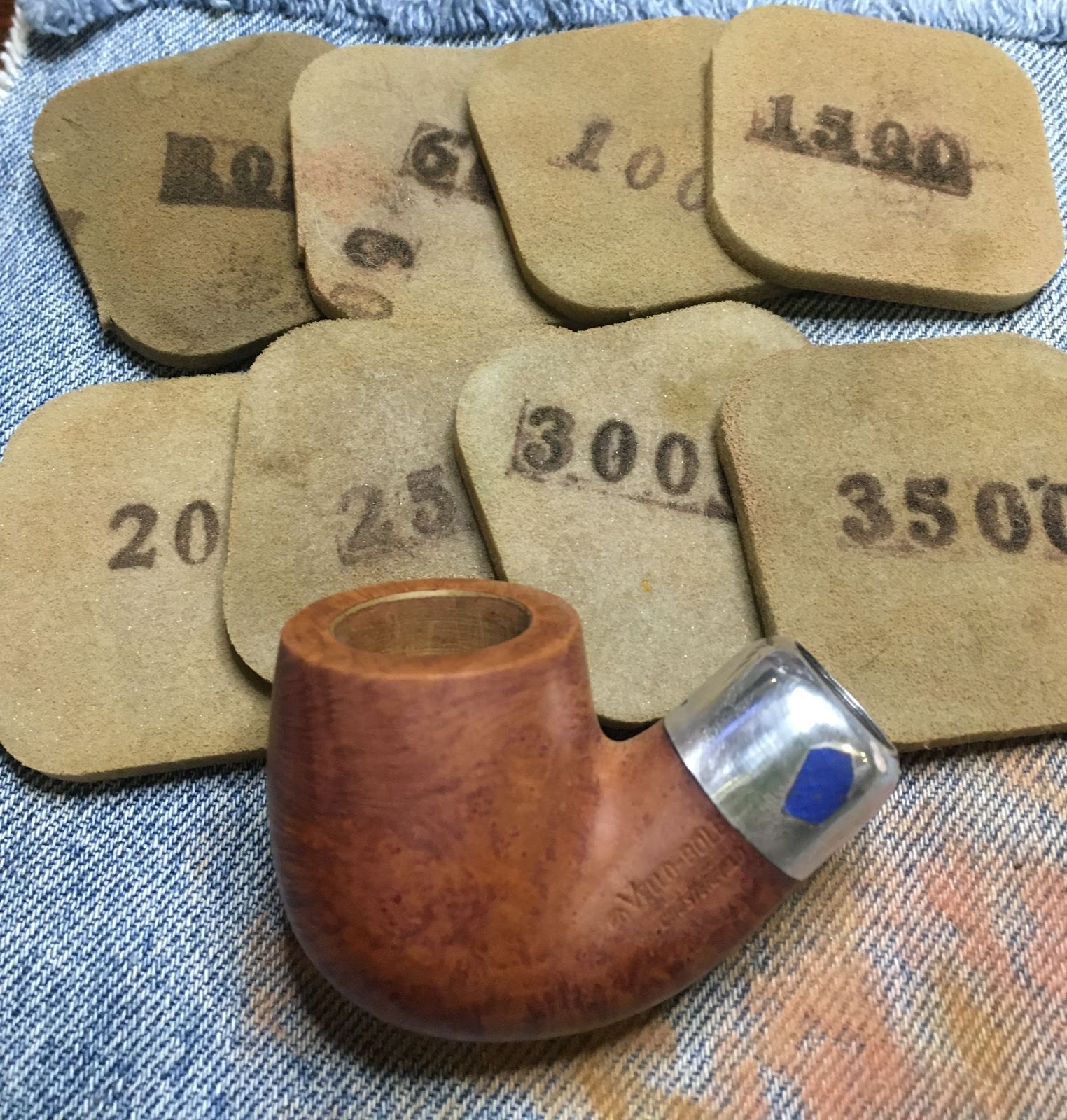


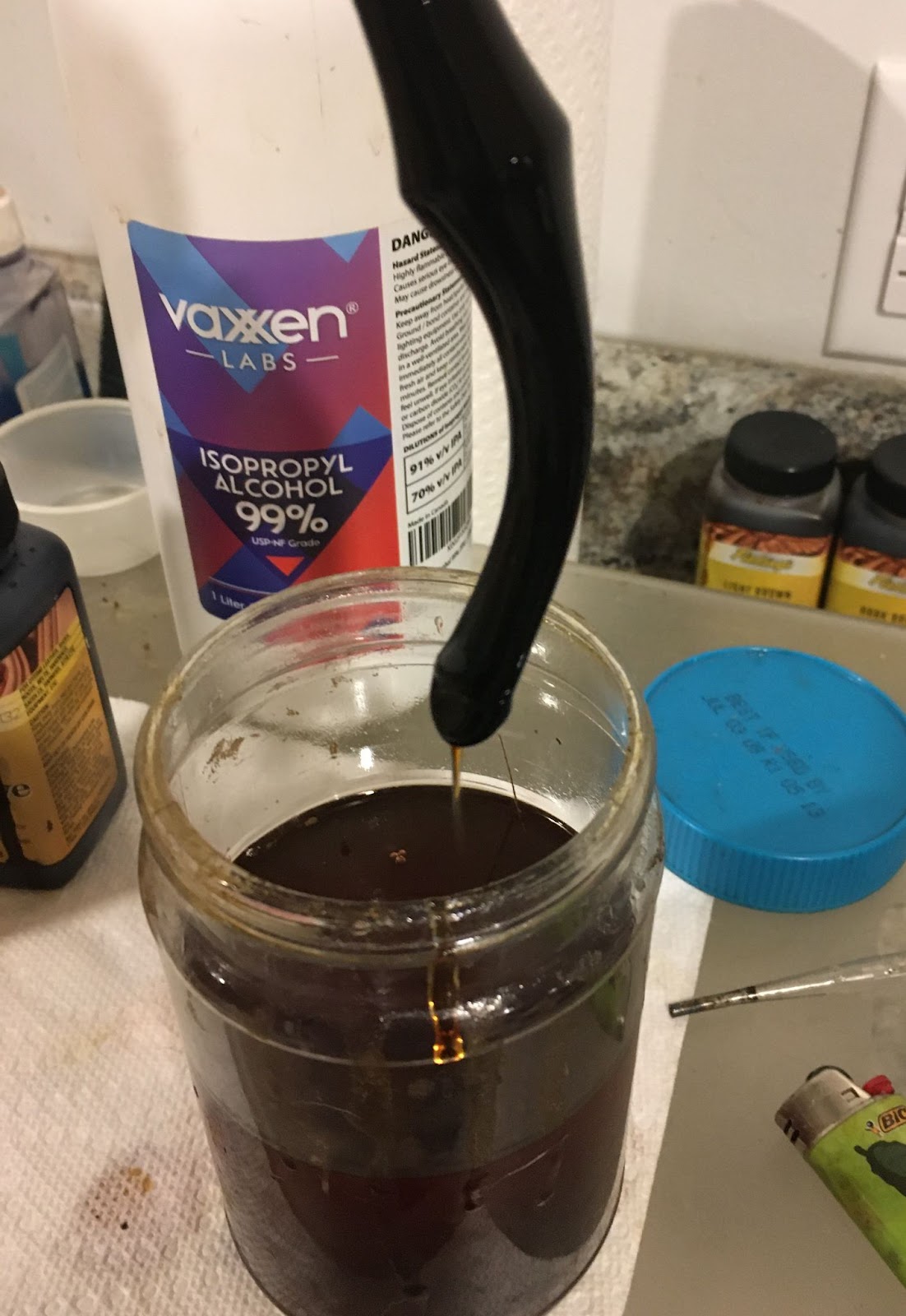

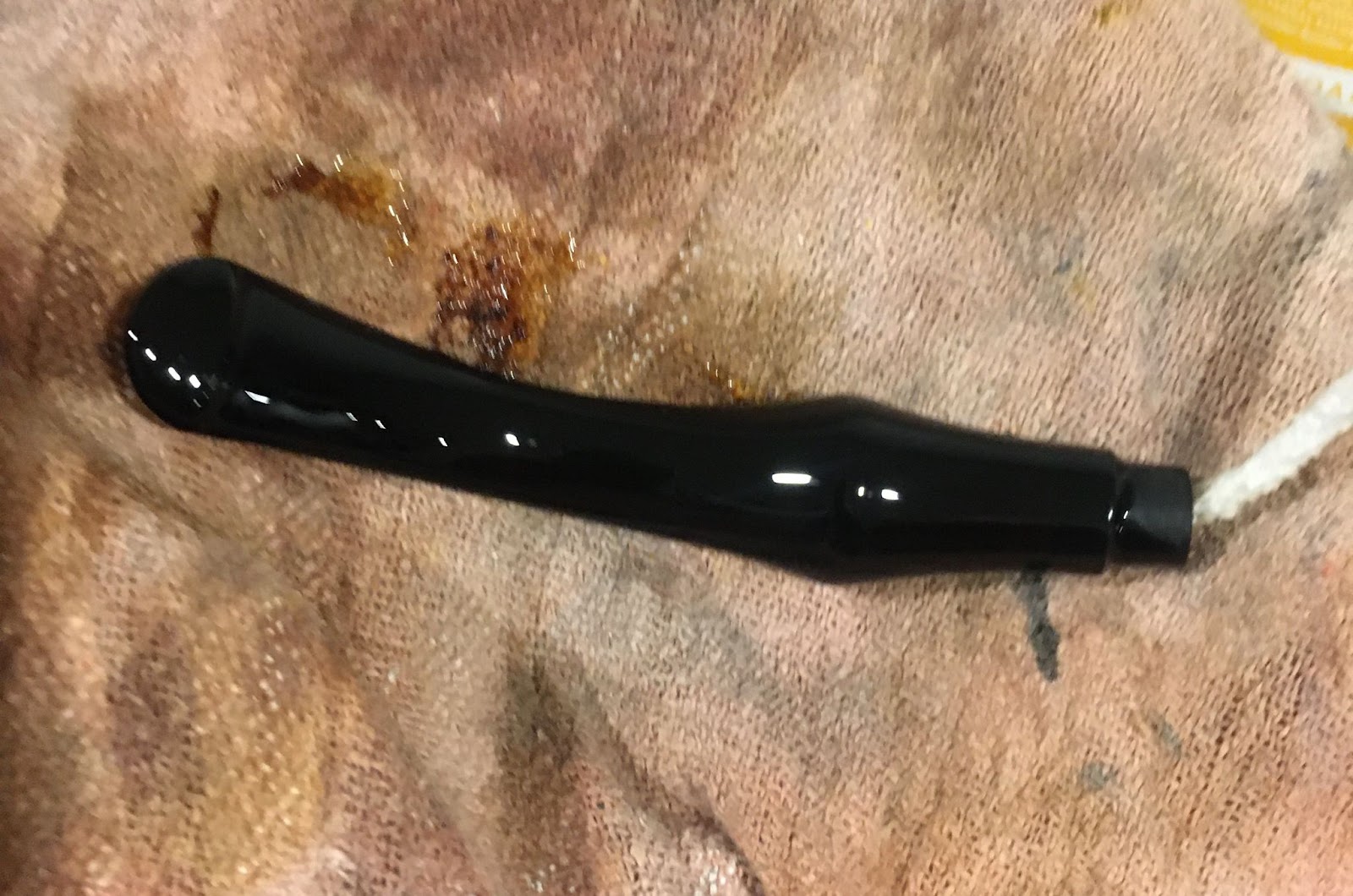
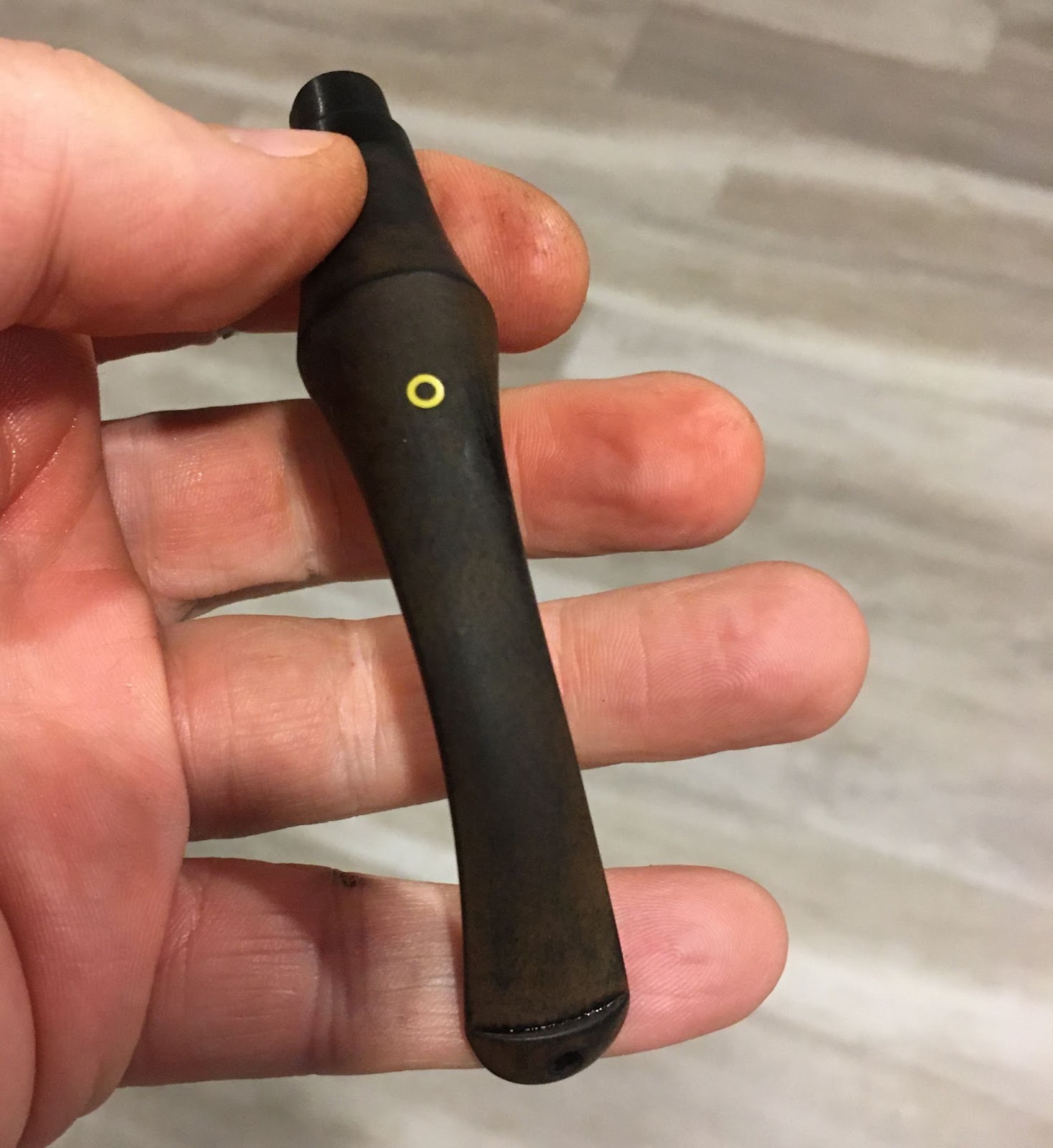

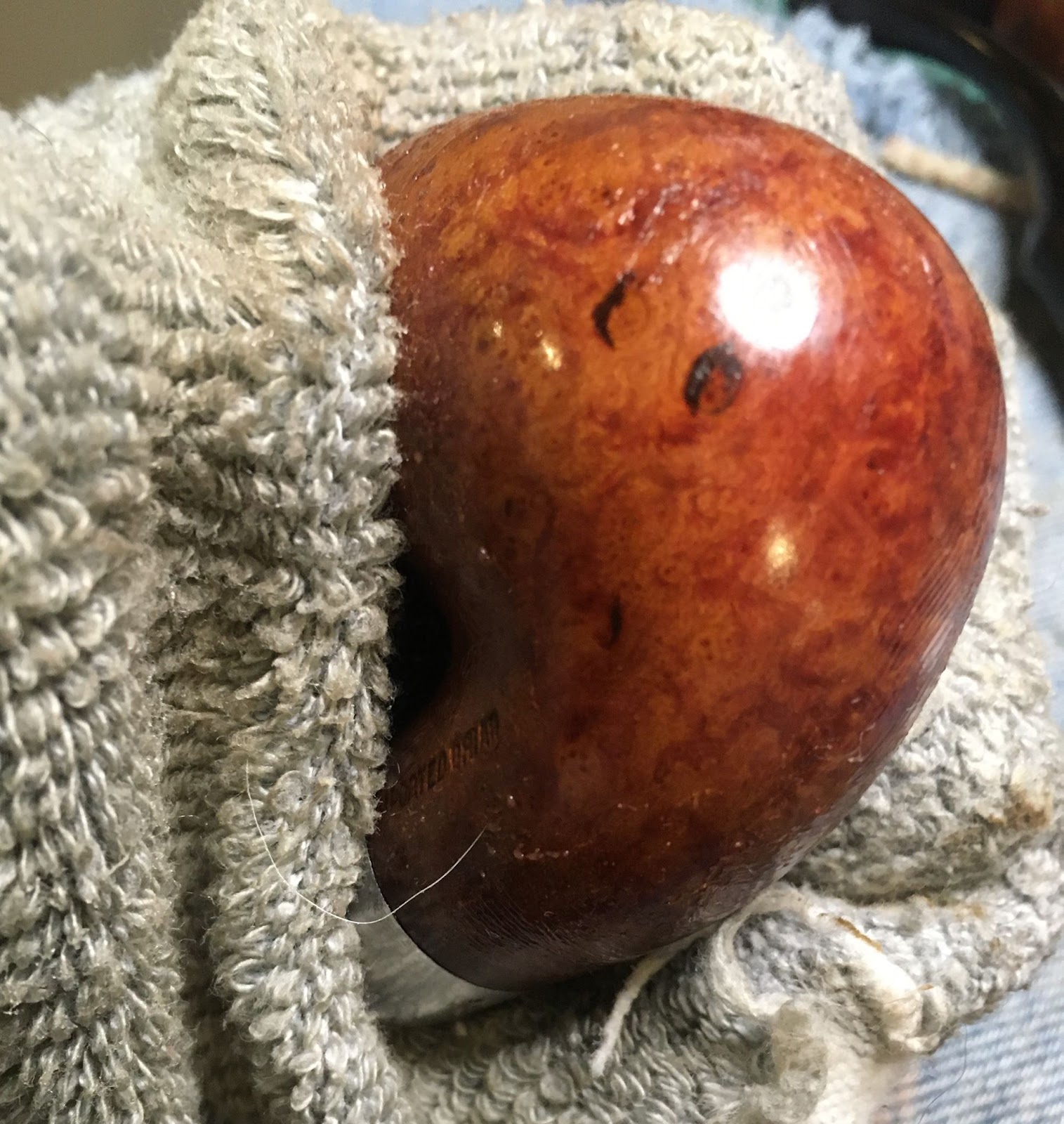
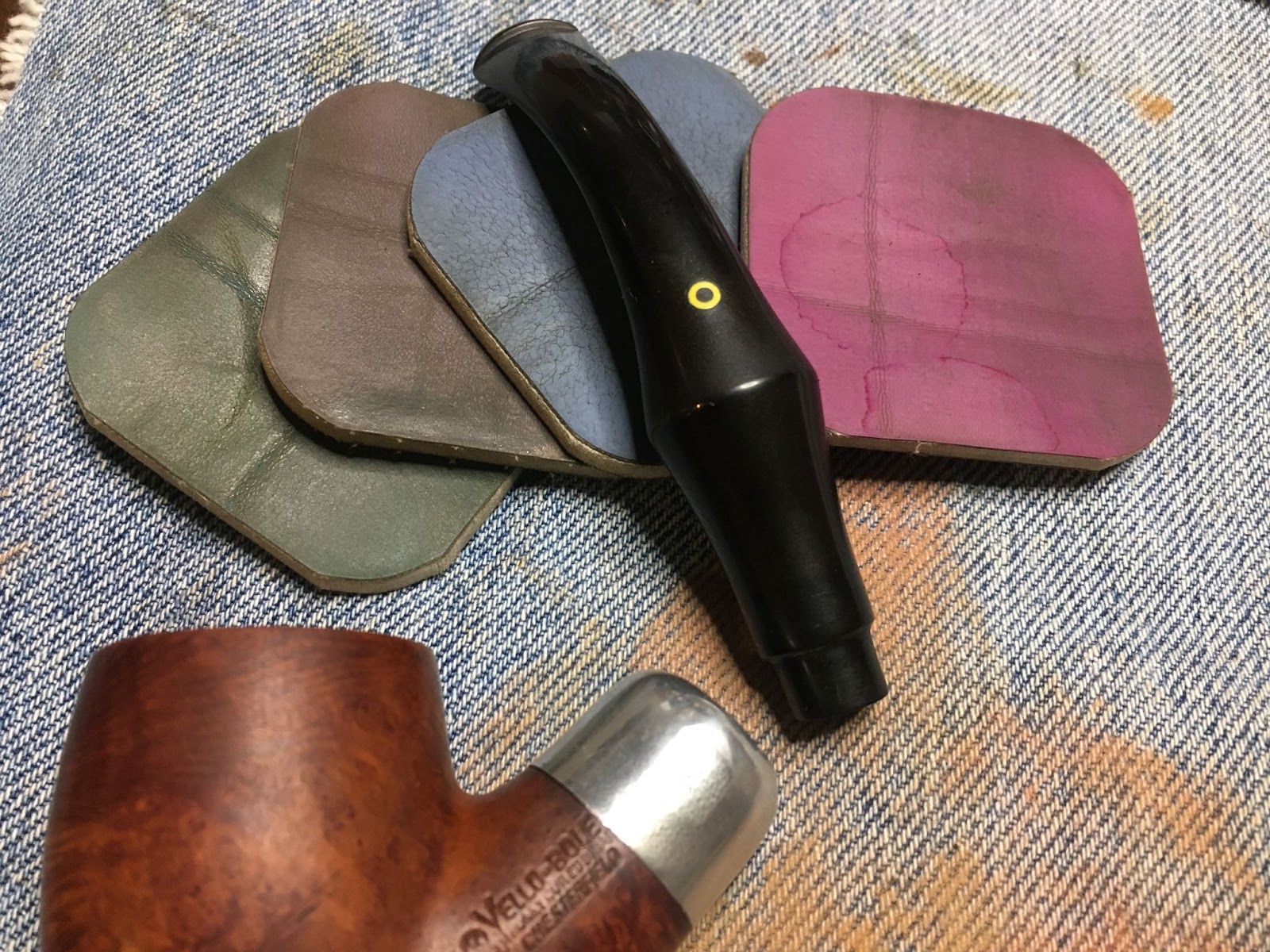


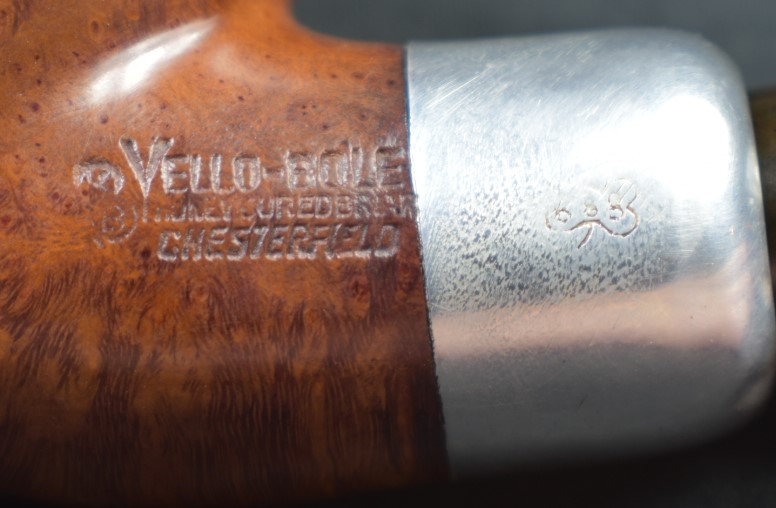
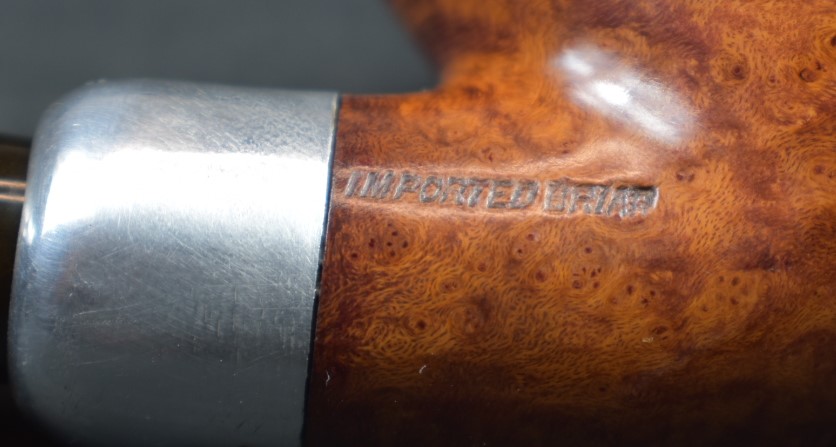




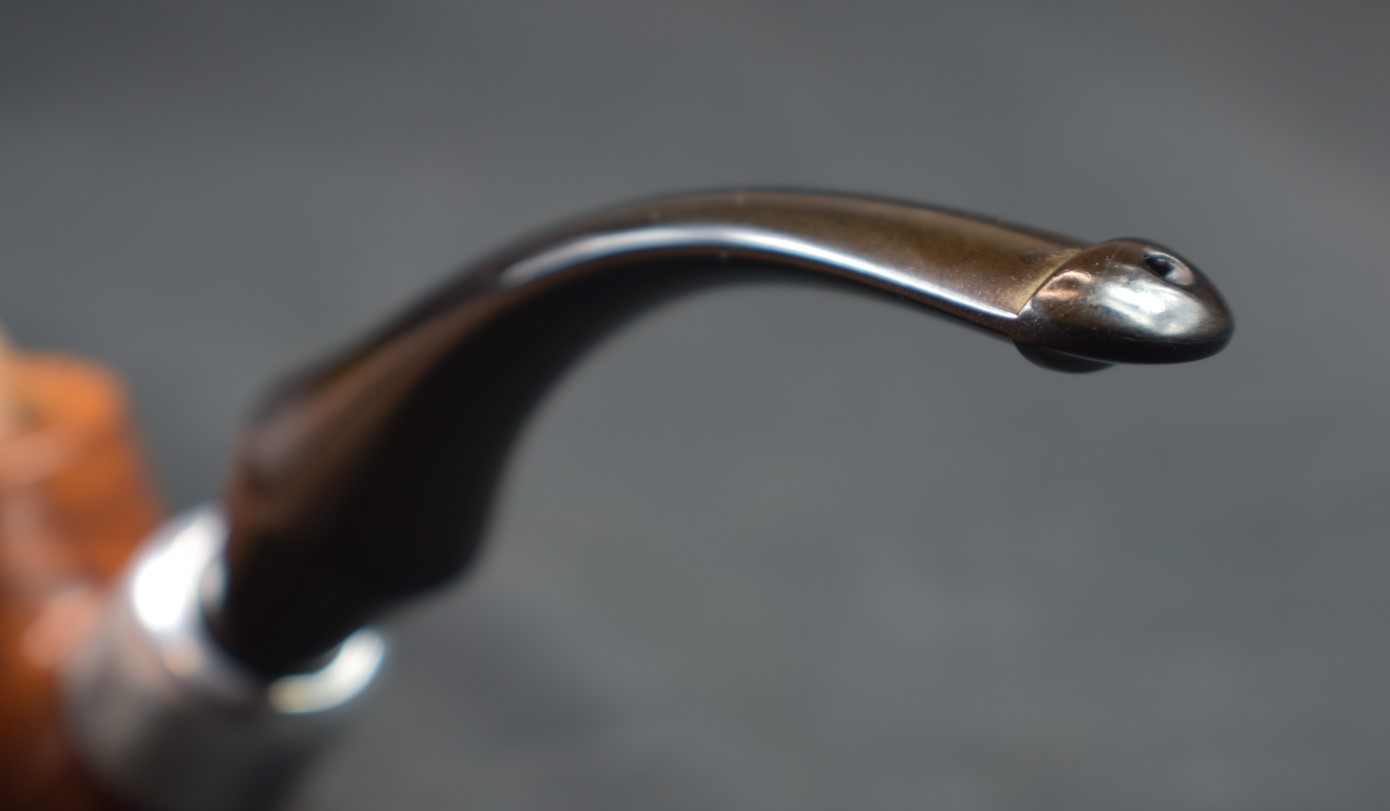

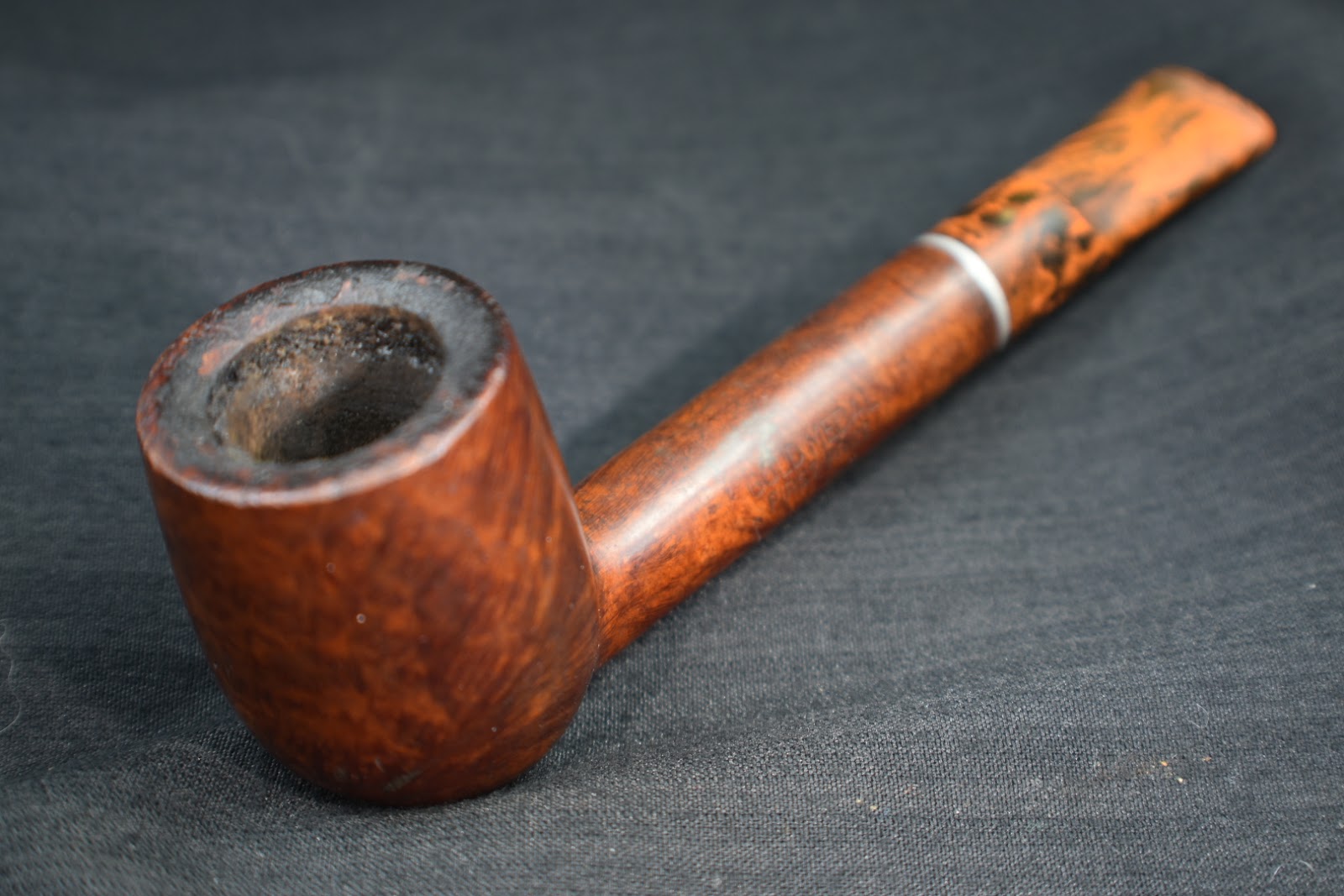

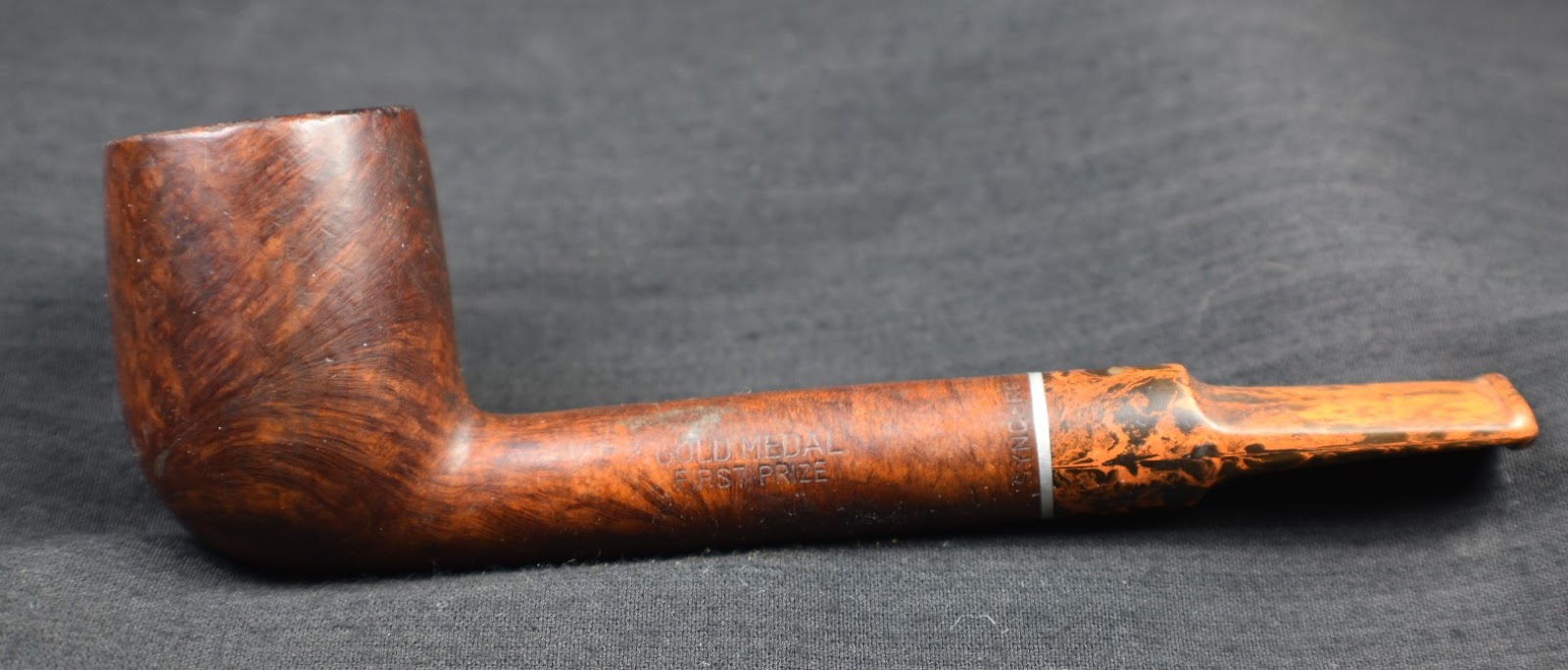


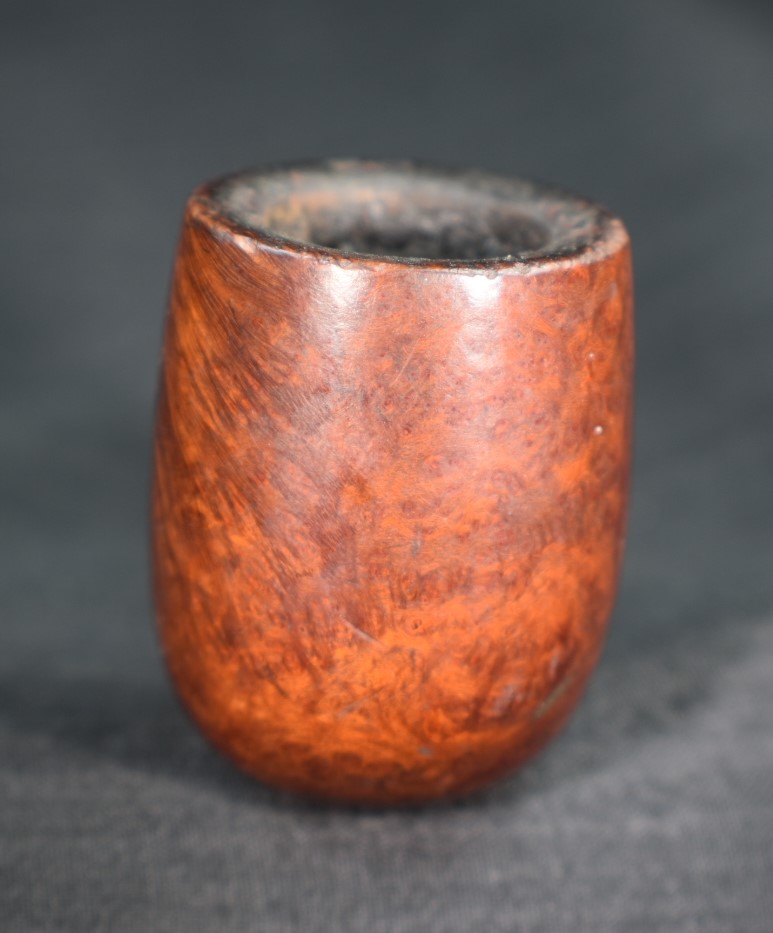

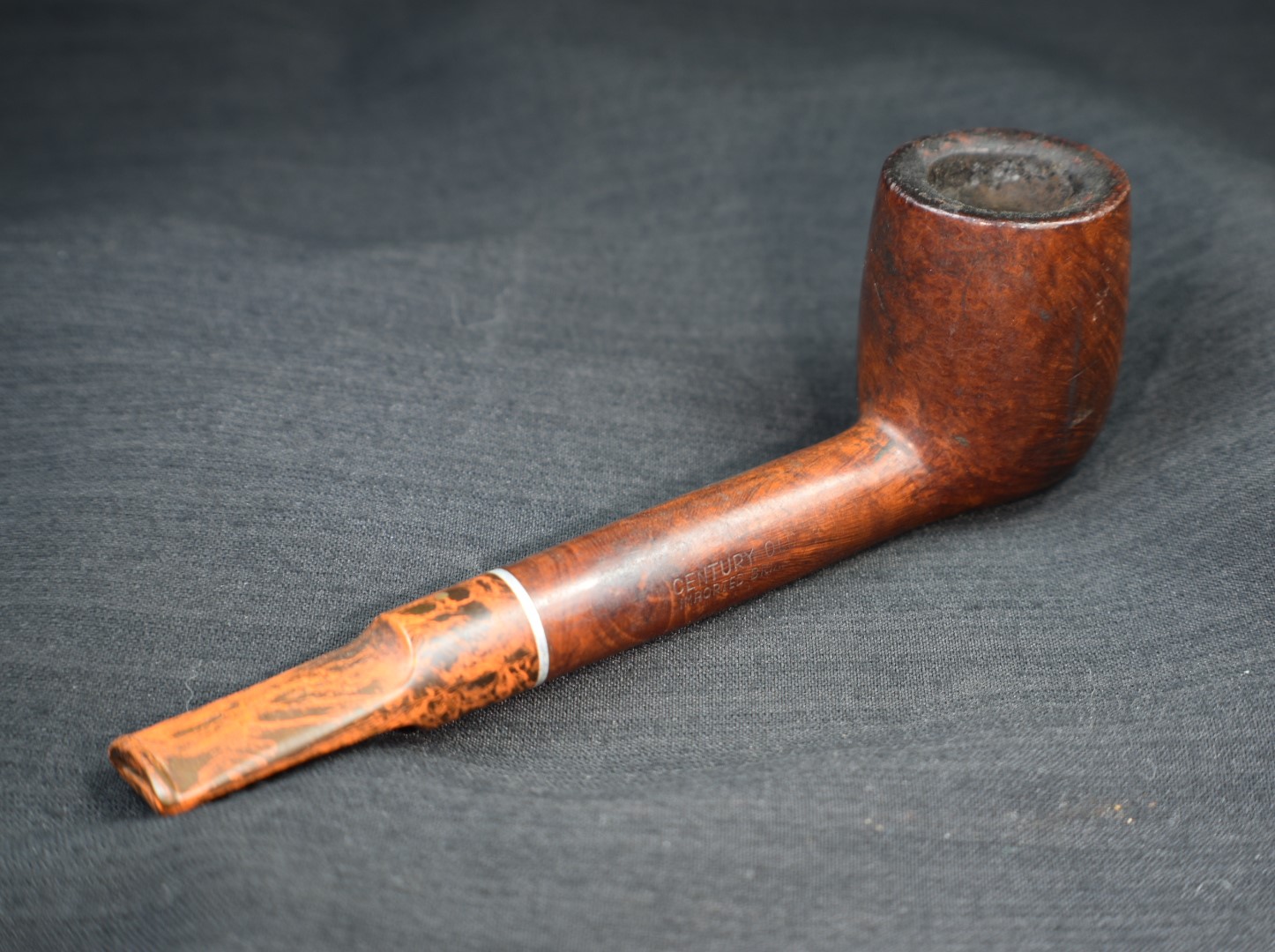

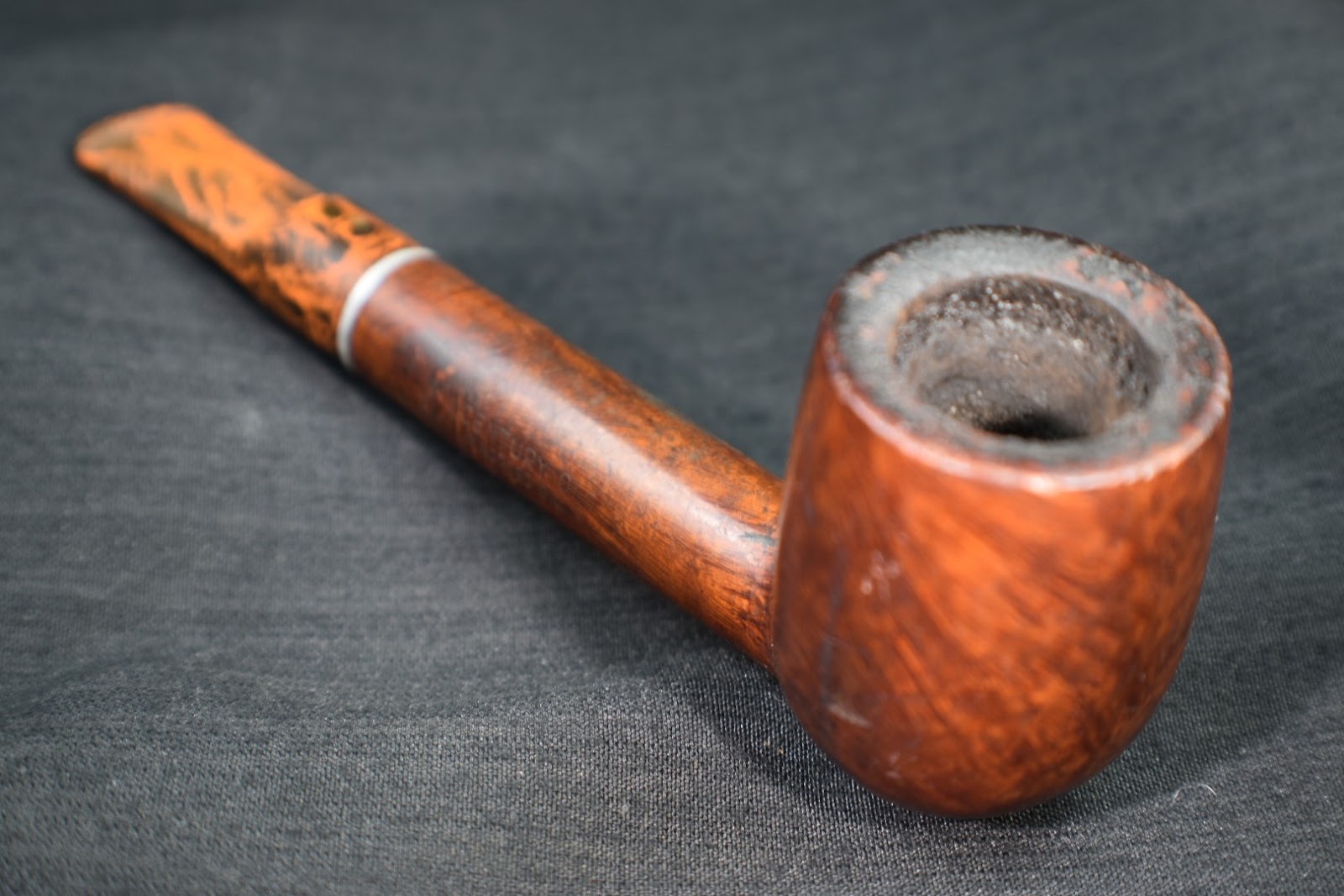


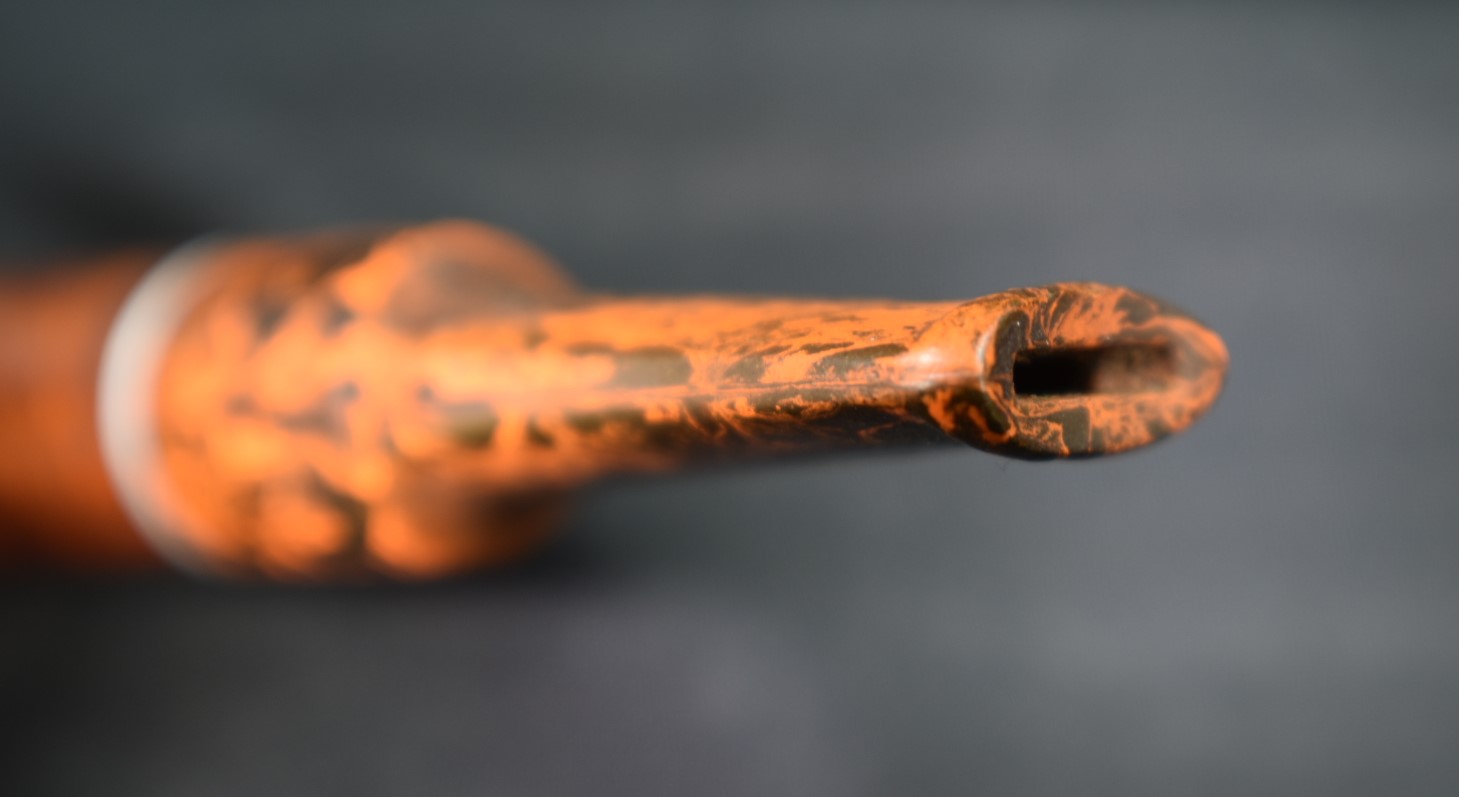
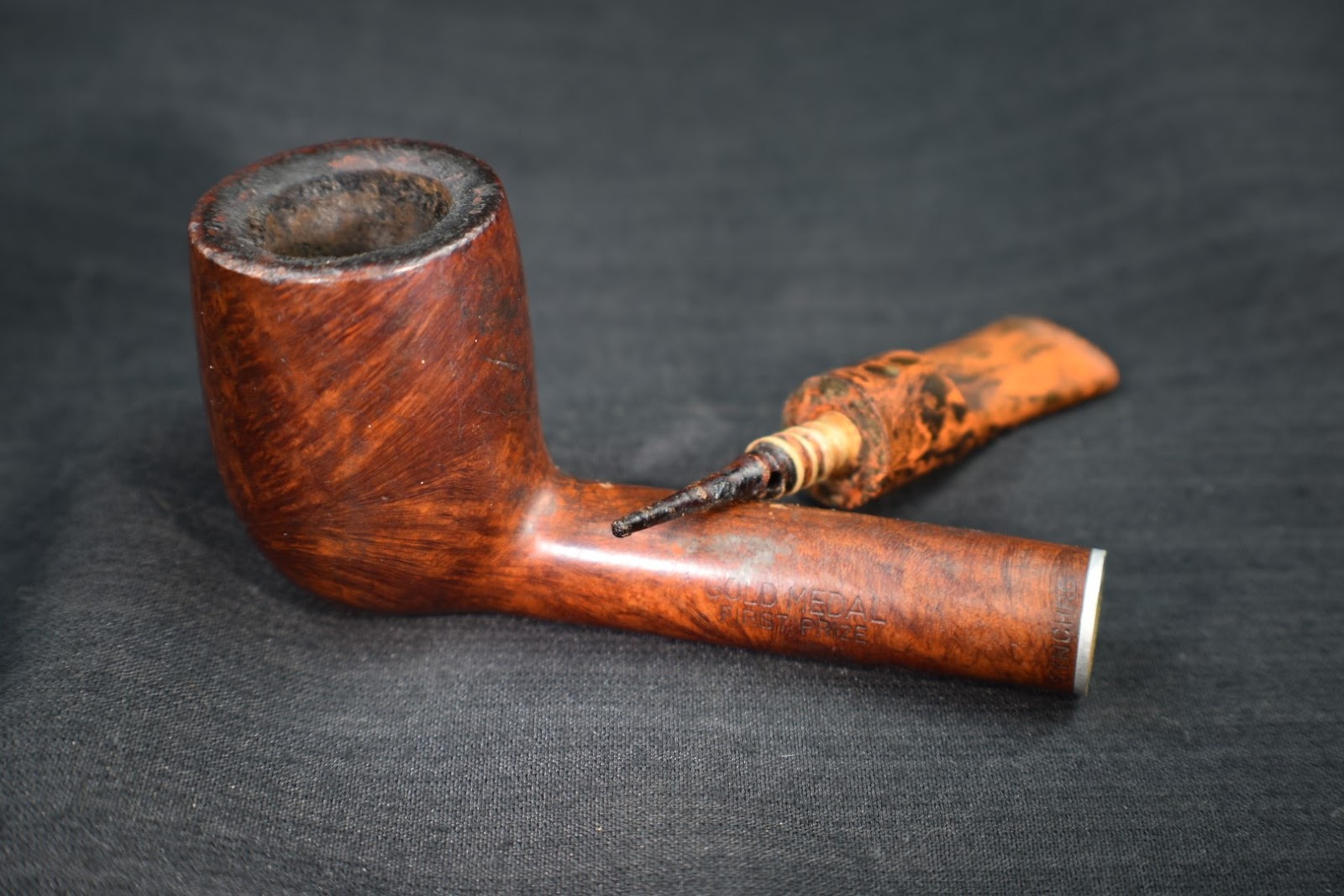



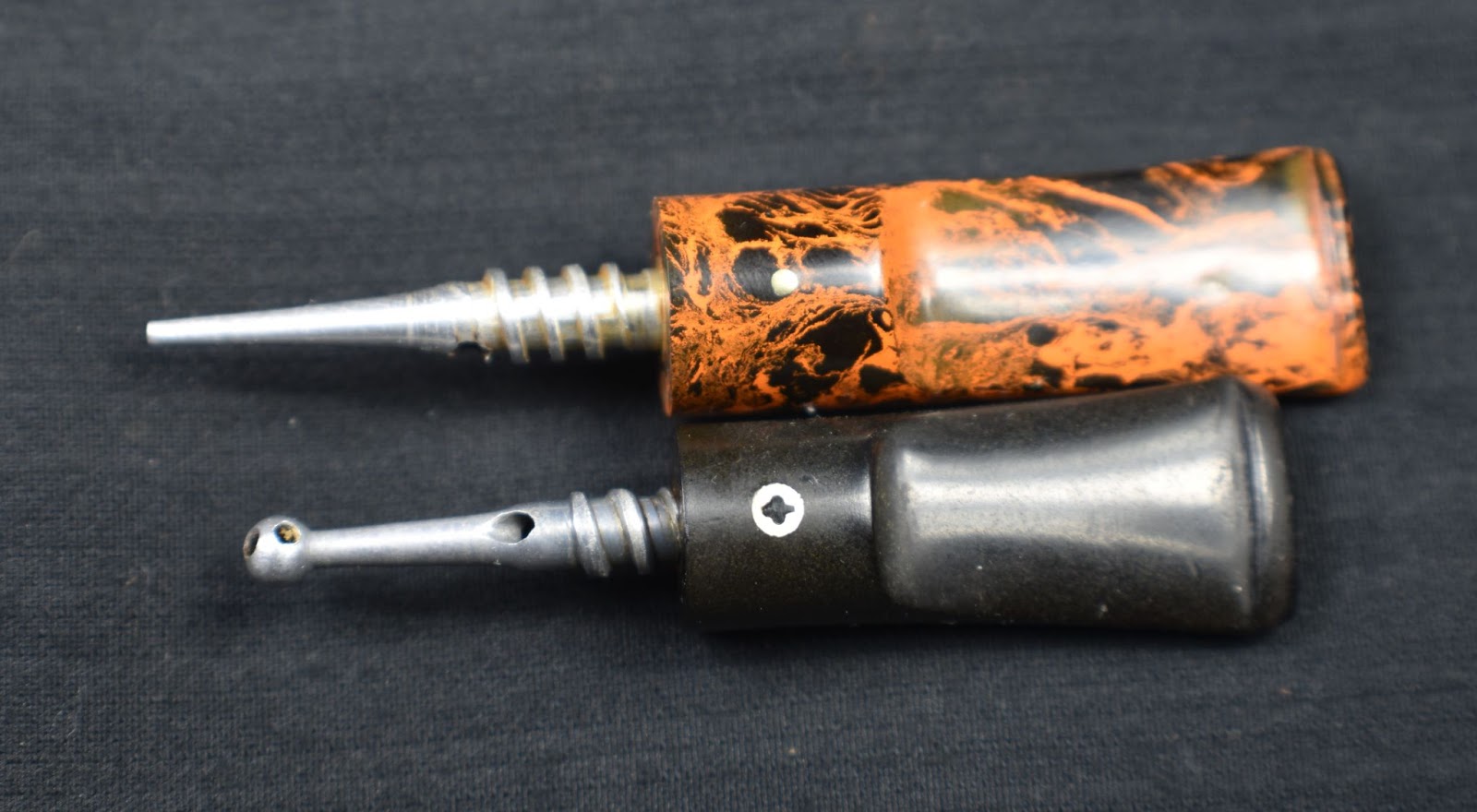
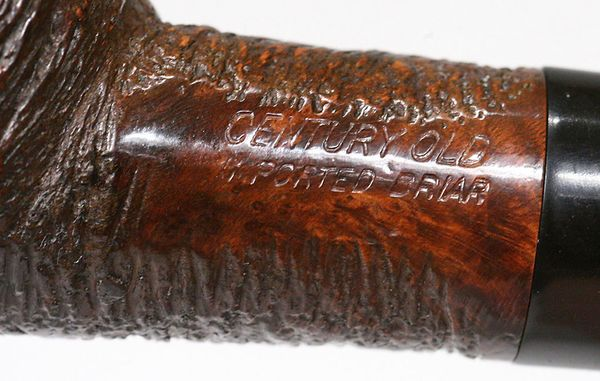
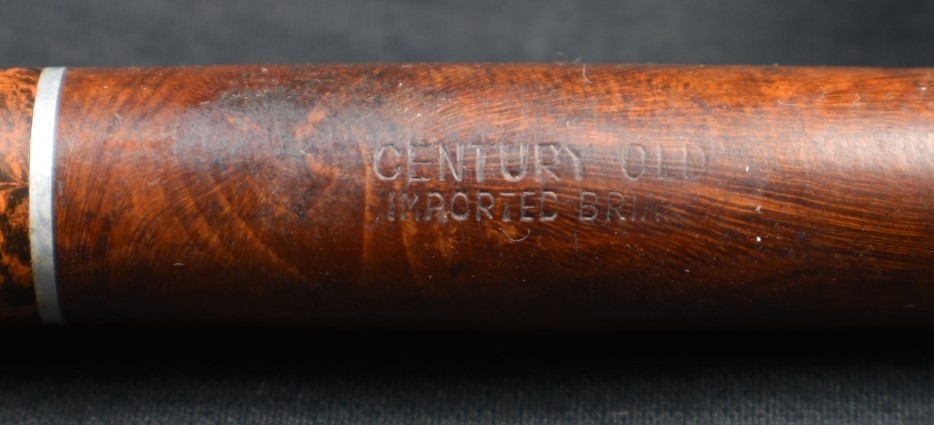
 ”
”



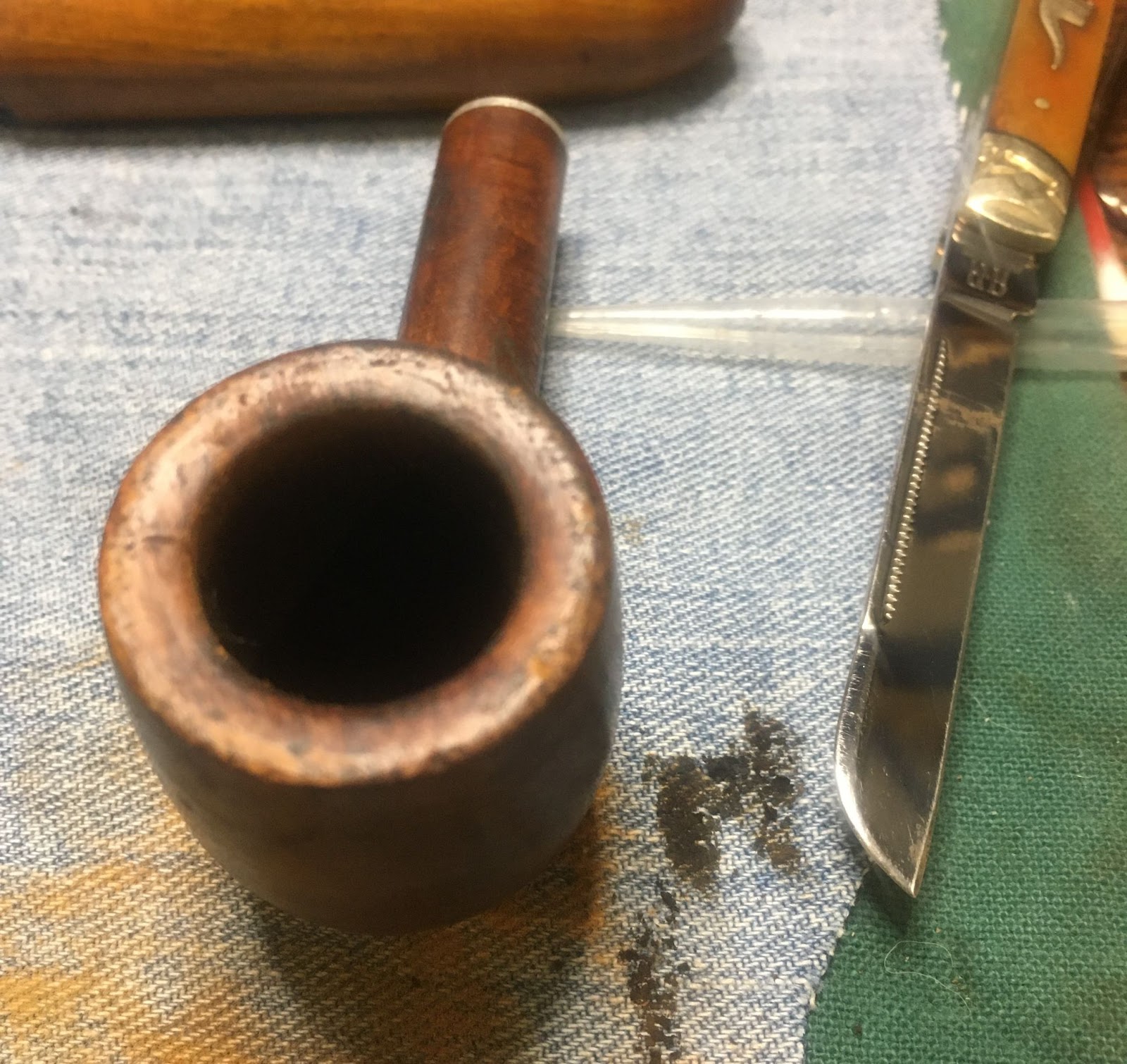


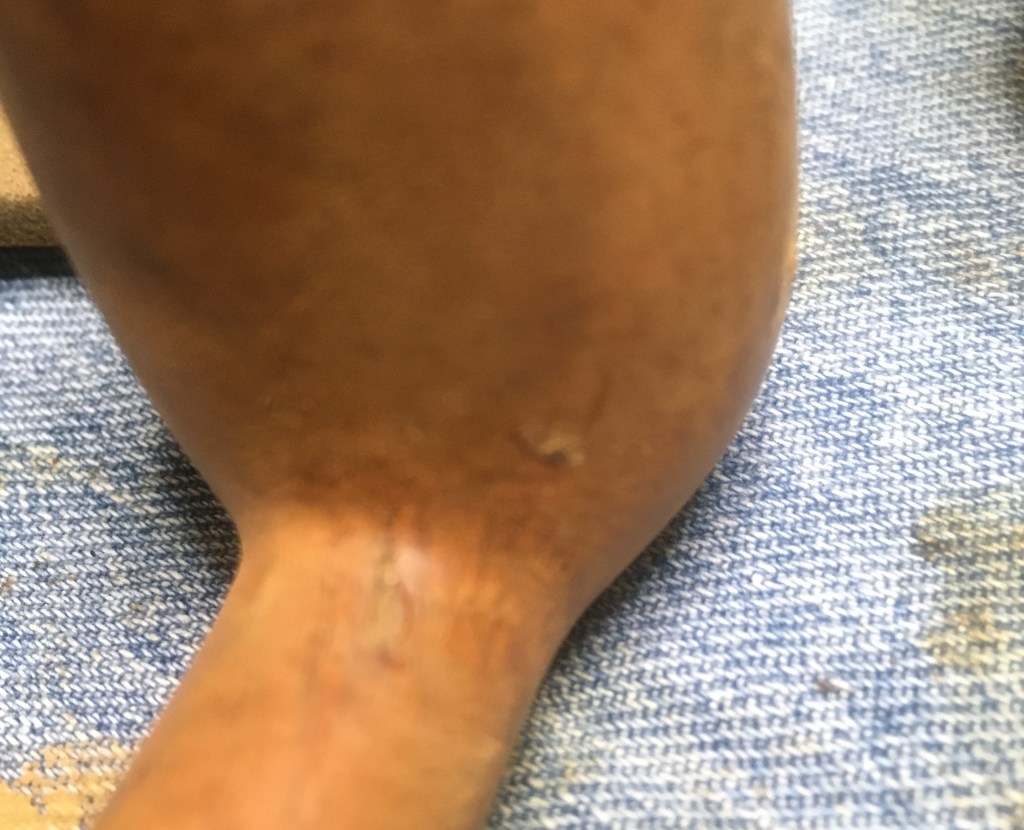


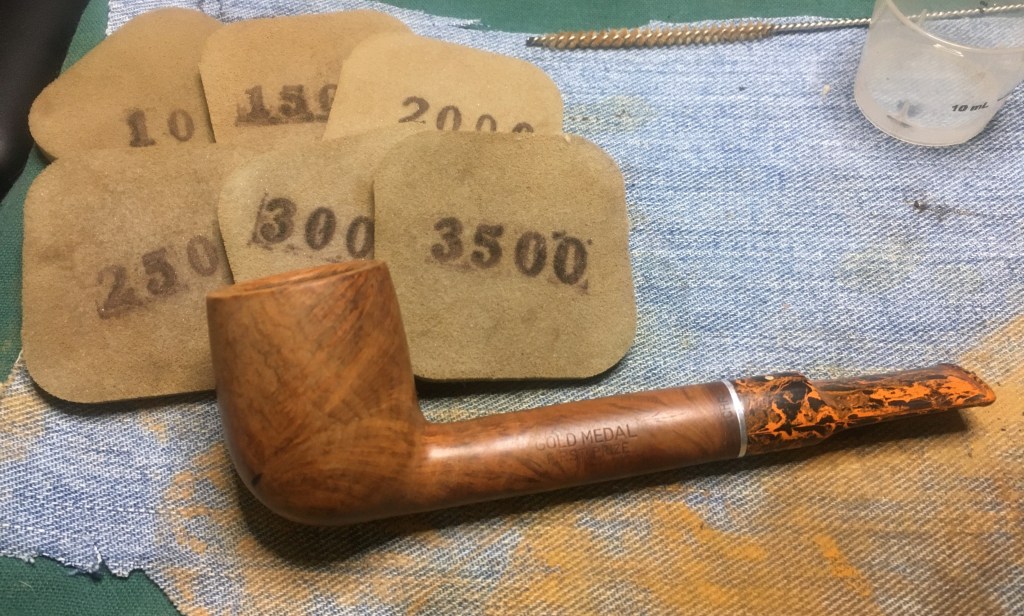
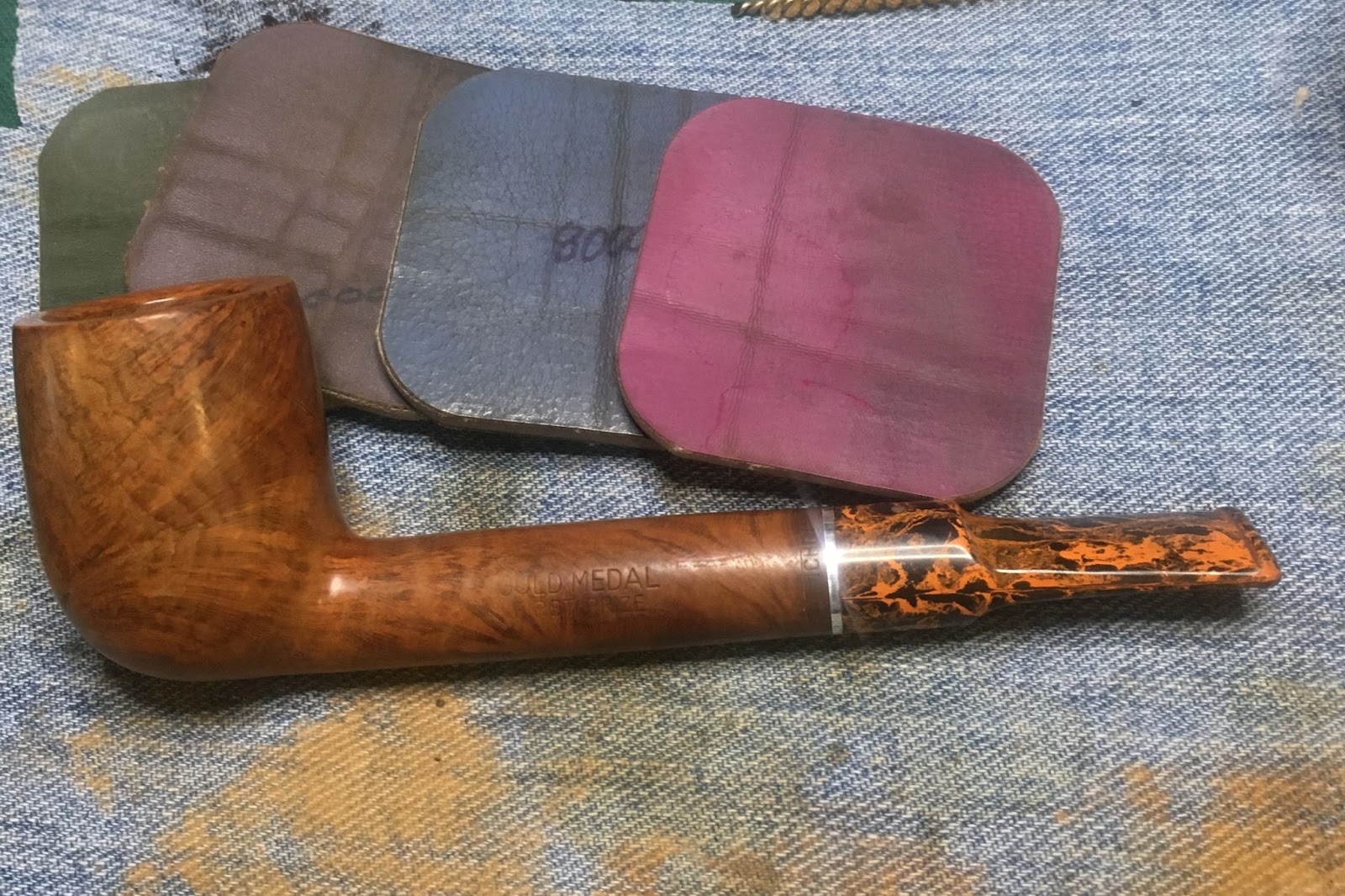


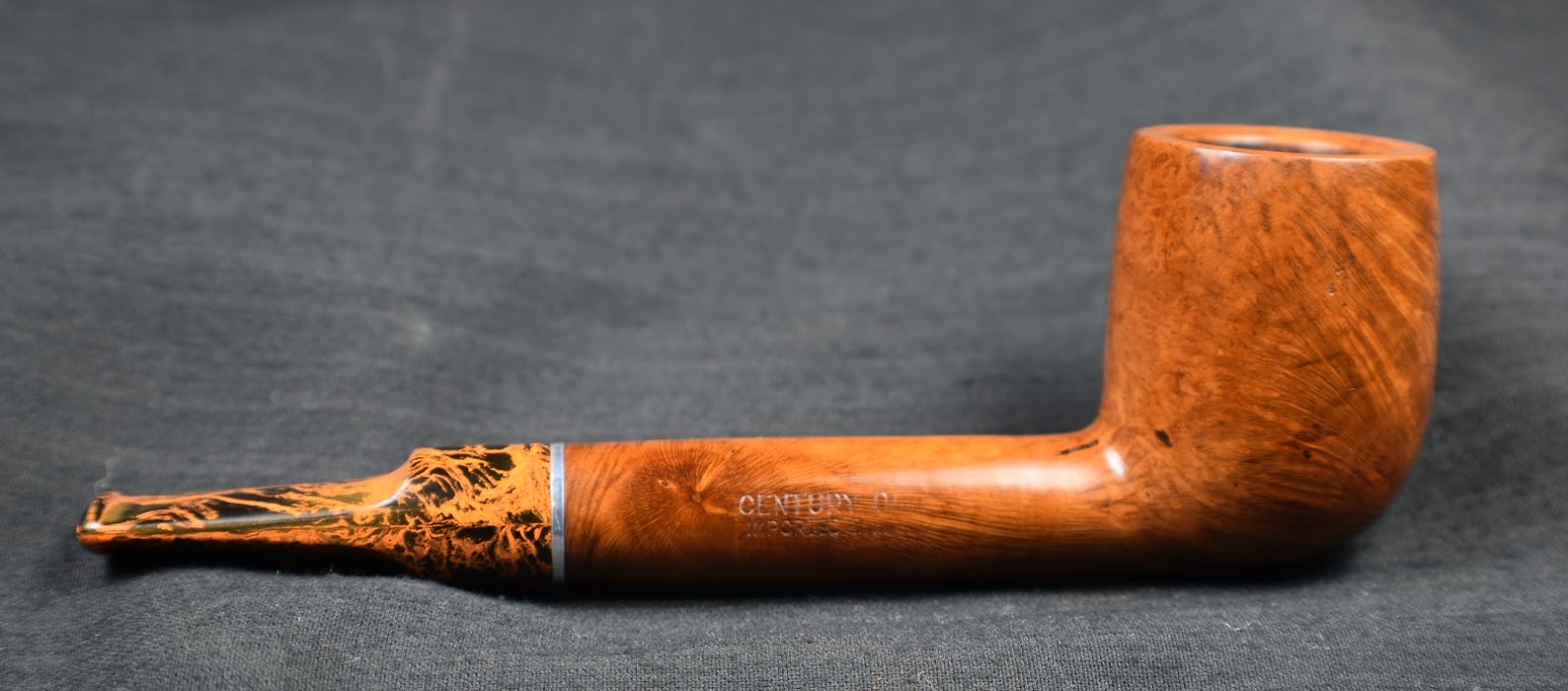

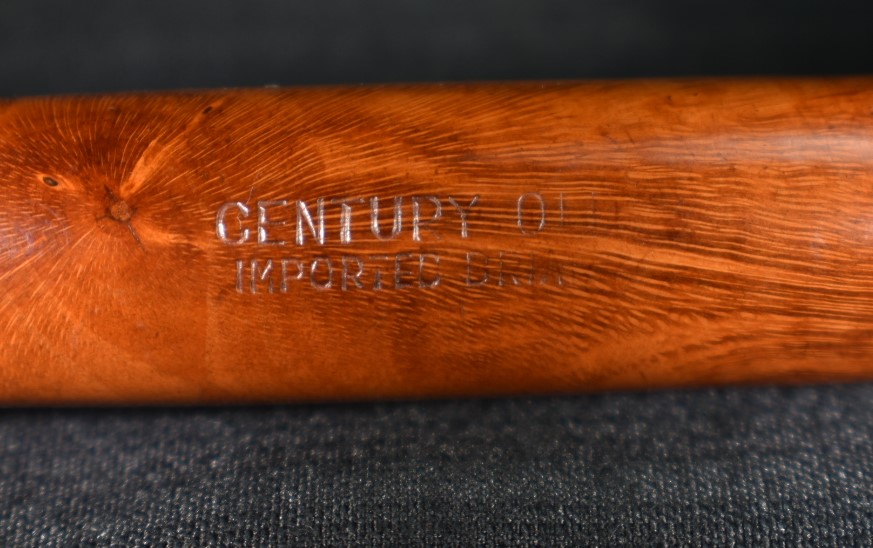

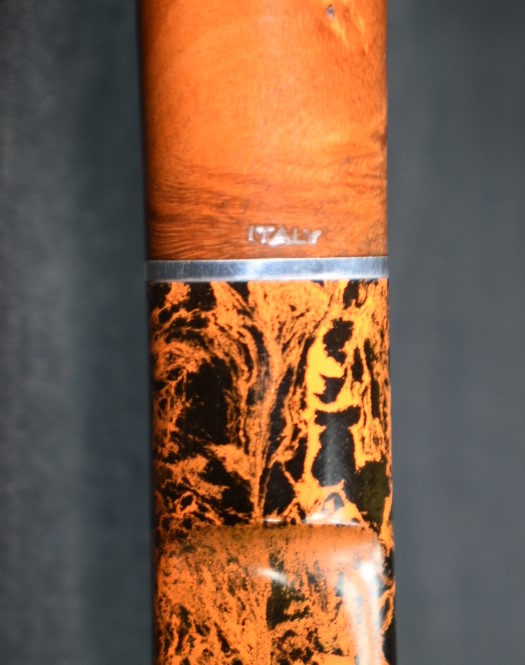
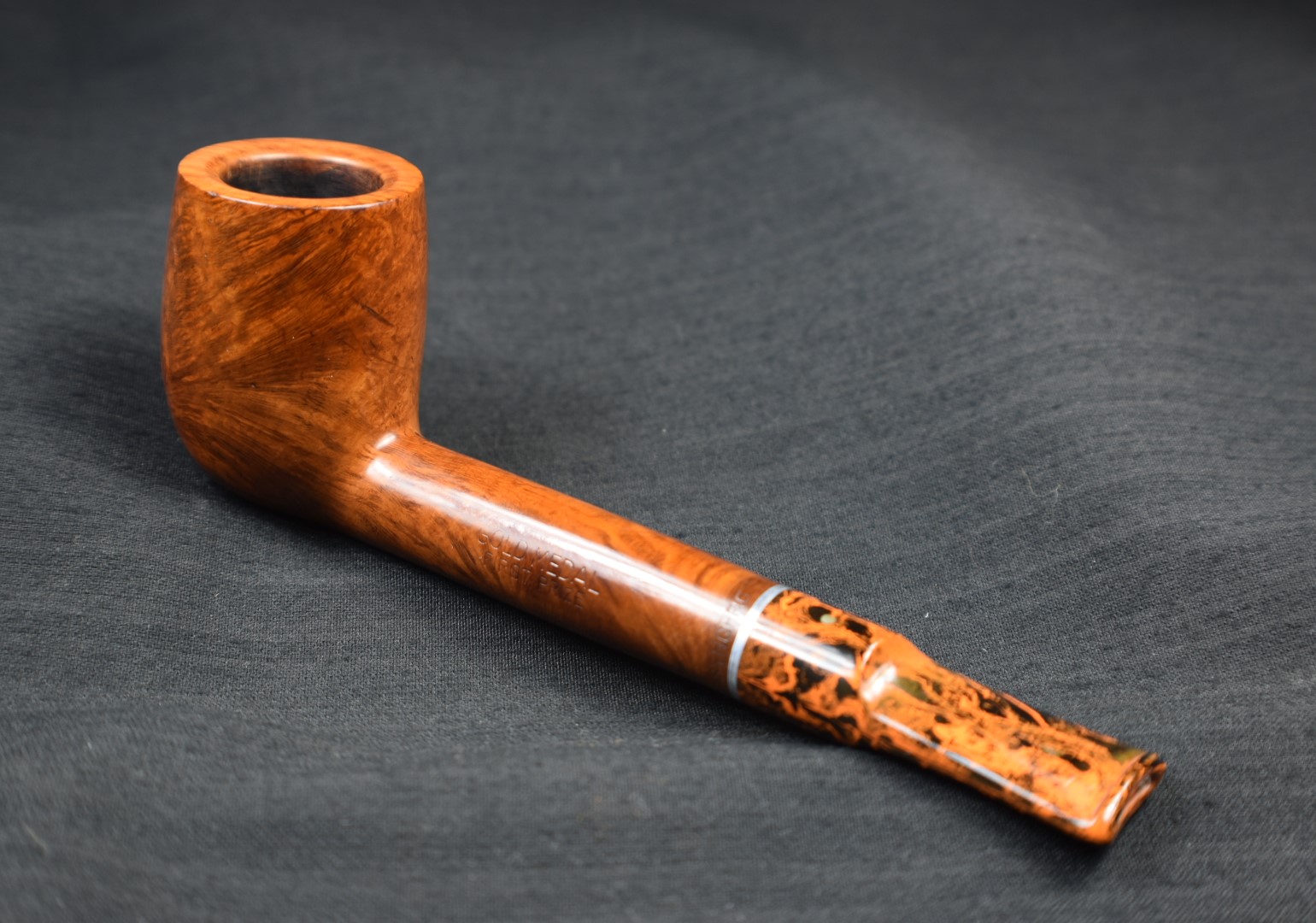

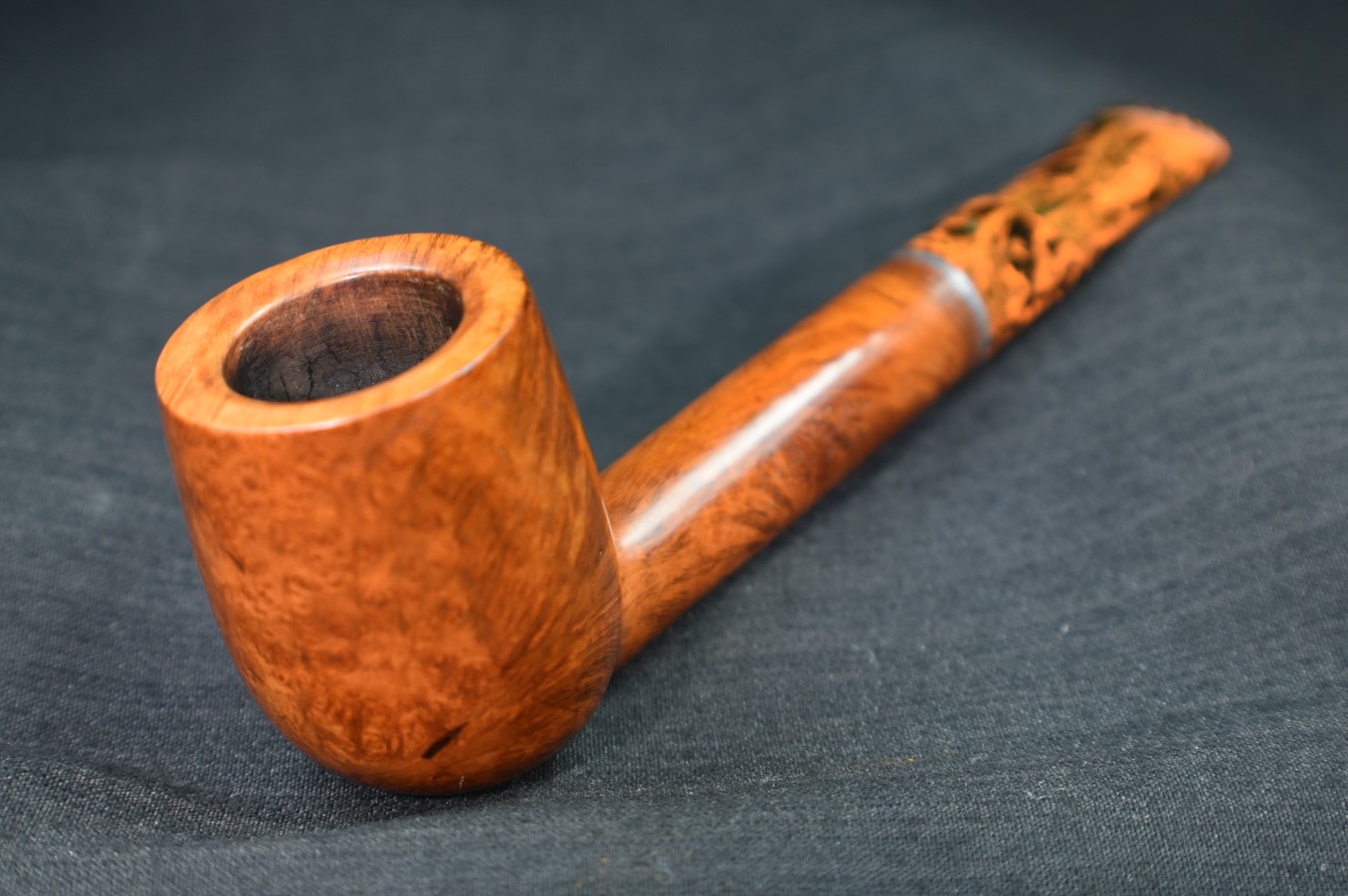

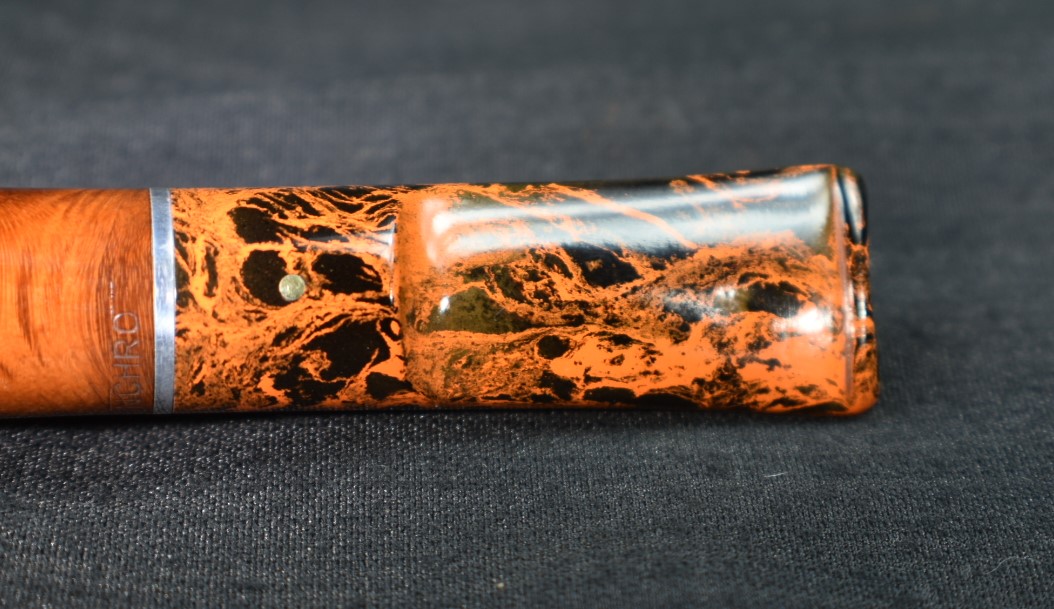


 NebraskaPeteGeek
