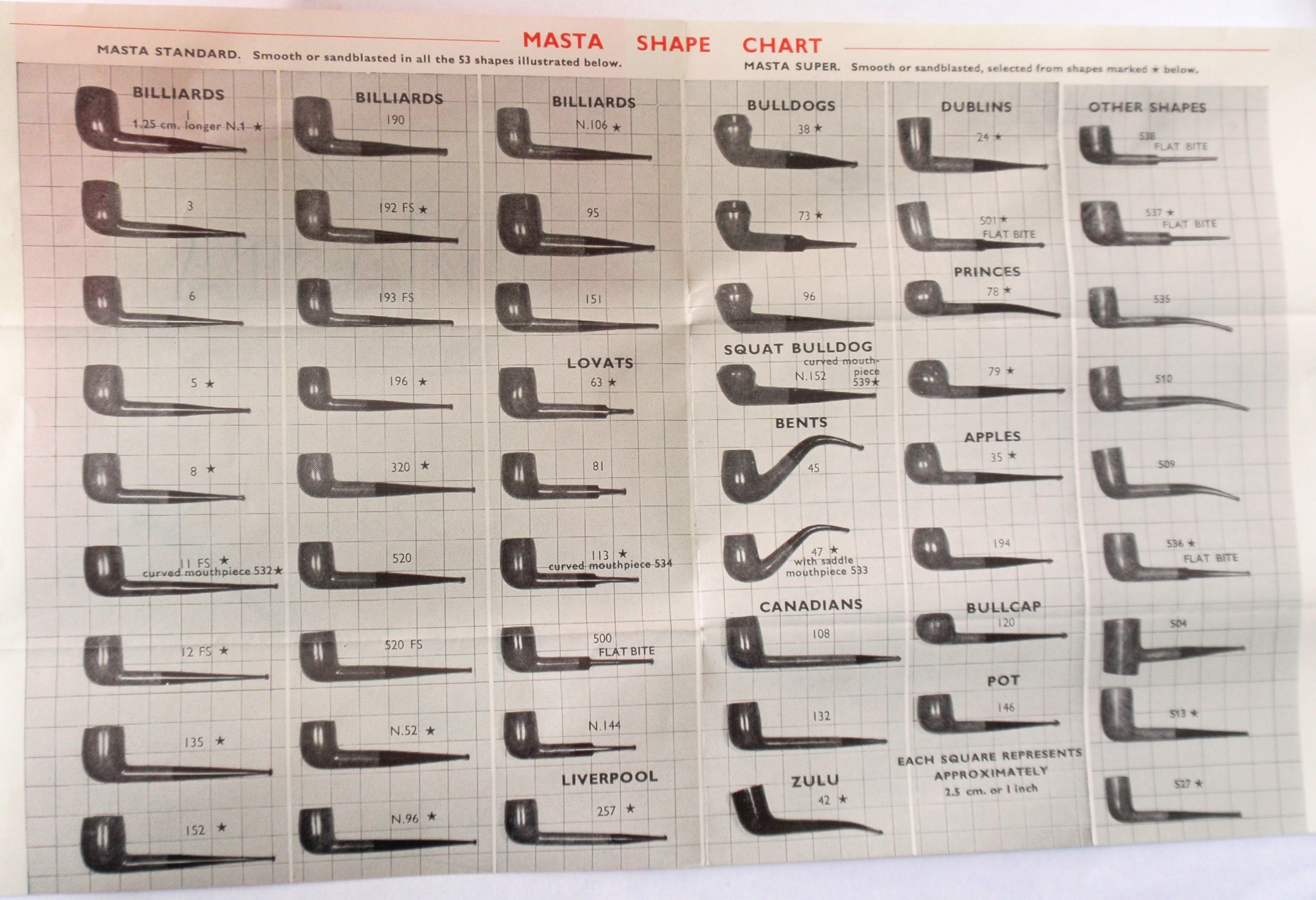
For the pipe connoisseurs out there the name Dunhill evokes strong feelings, rightfully so, of quality and workmanship. I have yet to have the honor of restoring or smoking a Dunhill pipe so I feel inadequate to describe them. I can say that there are a few brands owned by Dunhill which I have had the pleasure of restoring: These include Hardcastle, Parker and now Masta. Yes, I know this does not make a Masta a Dunhill any more than a Mazda car was a Ford due to Ford’s ownership of a large amount of Mazda’s shares. The fact remains that so far, this is as close as I have gotten to an actual Dunhill. This Masta was purchased via eBay from a seller in Vilnius, Lithuania and thus took considerably longer to ship than a typical State side transport. I think it was worth the wait. The pipe arrived and was photographed as it appeared after the unboxing. It is stamped MASTA over PATENT over STANDARD with 45F left of the stamping on the left shank of the pipe. On the right shank is MADE IN LONDON over ENGLAND.
The pipe appeared to have been cleaned though not restored . This made for what looked like an easy relaxing restoration. The tobacco chamber was mostly clean. The Stem had some oxidation and a single bite mark on the bottom of the button. There were no serious dents or scars on the briar.
Background
As said earlier, I’d not be a good pipe snob, never having laid hands on a Dunhill. When asked what my favorite pipe is, I’ve been known to reply, “The one between my teeth.” When asked about my favorite tobacco, the reply is similarly “The one in my pipe.” I have found that I prefer some pipes, tobaccos and people over others. Generally, the rule is that I favor those which agree with me. Aesthetically this Masta agrees with me. Historically, I find the lack of information about Masta disagreeable. Pipephil.eu has a few photos of stamping which verify this pipe is indeed a Masta but little else.
Turning to pipedia.org, I found a short blurb followed by a longer blurb. The first is included below:
“Masta was a brand founded around 1900. When Parker Hardcastle Limited was formed in 1967, they also incorporated the Masta Patent Pipe Company. From this point this was a Dunhill / Parker / Hardcastle offshoot, primarily for the scandinavian market. The brand no longer appears to exist. Masta was at the end rarely the equal of a Parker.” (Masta – Pipedia)
Wow, so between 1900 and 1967 Masta apparently did nothing. They were then taken over by Dunhill, along with Parker and Hardcastle, where they produced sub-Parker quality pipes for some “scandanavian”s who couldn’t even afford to capitalize Scandinavia. Hmm, not too impressive thus far.
The second blurb appeared to have been taken from another source and was footnoted in the “References” at the bottom of the pipedia.org page. Wanting the original source so, I followed the link to the below quote:
“Produced in London by Masta ( Dunhill ). Masta Patent Pipes Company was founded around 1900 to London. The firm suffered numerous adversities (the factory was destroyed by a bombardment in 1941, during the second world war). the mark Masta was acquired in 1946 by Parker Pipes Co. (Dunhill) and the production continued in the establishment Parker-Hardcastle, next to St. Andrews Road. What the pipes Masta (how Hardcastle and Parker ) can be considered “second lines” of Dunhill (or exemplary not perfect, with defects that cannot be signed from the mother house) is common and very diffused opinion. To this opinion I habitually conform me. It is necessary to specify however that this hypothesis is controversial and it has never been confirmed. The only certainty seems to be that Parker , Hardcastle and Masta belong to Dunhill and the pipes they are produced in the establishment Parker-Hardcastle . Parker and Masta have in common usually forms and numbers of shape.” (Masta (Dunhill) Patent Standard – Very nice English briar pipe – No Reserve | #292597597)
Well, that was better than the first blurb even with the apparent use of Google translate to convert it to English. There were discrepancies among the dates, 1946 and 1967 for the purchasing of Masta by Parker and or Dunhill. This still was a more objective version of Masta history.
I still had trouble with the whole notion of a company as illustrious as Dunhill having to wage economic warfare on companies producing far lower quality products. I couldn’t imagine many Dunhill aficionados ever hearing the announcement, “Attention K-mart shoppers…” during their pipe shopping excursions.
It was in a blog on Steve Laug’s Rebornpipe.com that I came across Robert M. Boughton’s blog “Identifying, Categorizing and Refurbishing a Masta Diplomat” (Identifying, Categorizing and Refurbishing a Masta Diplomat | rebornpipes). Robert did a wonderful job explaining the history of Mast in a reasonable way which I found enthralling. I highly recommend that blog as a read if you are interested in the history of the Masta Patent Pipe Company. With that I felt like I now had a functional knowledge of the brand and turned to the restoration.
The Restoration
As usual I began with a clean denim piece to protect the work surface.
The team was assembled; the PipNet with #2 blades, Smokingpipes Low Country Reamer, General triangular scraper (with the tip ground round) and 220 sandpaper wrapped around a wood dowel (AKA a 20 gauge shotgun magazine plug).
The PipNet was used predominantly for the reaming with the other two scrapers just to clean off stubborn spots.
The completed reaming showed slight damage to the rim.
Once reamed the chamber was sanded with the 220 sandpaper. No damage from heat was observed .
The stummel was taken to the sink for a scrub with a nylon scrub brush and undiluted Murphy Oil Soap. The soap was rinsed with warm water and the stummel dried with a cotton hand towel.
Back at the workbench the stummel was wiped with a make-up pad dipped in 95% ethyl alcohol. Very little color, existing finish, came off. The grain patterns could be seen much better at this time and looked very nice. I was very tempted to contrast stain the stummel here but thought that that would not hold true to the nature of this pipe.
The shank airway was filthy and full of accumulated tar. After numerous alcohol dipped cotton swabs, I decided to try a cottom/alcohol soaking to remove the tars. The tobacco chamber and shank were stuffed with cotton and 95% ethyl alcohol was added to the cotton filled passages with a disposable pipette to the point of saturation. The alcohol was allowed to work on dissolving the tars overnight.
The next day the cotton had absorbed much of the tars liberated from the briar by the alcohol as it evaporated.
The cotton was removed and the cleaning resumed and went at a much faster rate.
The surface of the stem was scrubbed with Soft Scrub cleanser on a make-up pad.
This produced very little discoloration on the pad indicating that the stem was not heavily oxidized.
The button needed a little bit of reconstructive work. I used cheap transparent tape to cover the button proper and confine the black cyanoacrylate (CA, super glue) to the stem where I wanted to fill the dent. I prefer the cheap tape as the more expensive 3M brand Scotch tape softens and dissolves with exposure to CA drying accelerator.
Black CA was applied to the area to be filled with a wide zone for blending.
The black CA was spritzed with a CA drying accelerator and filed smooth.
The taping was reversed – covering the new patch and leaving the area to be filled uncovered.
The black CA was applied to the dented spot on the button, building up the area. This was then spritzed with a CA drying accelerator. The tape was removed and the fill filed smooth and the button reshaped.
The newly repaired button was sanded smooth and inspected to see if additional CA would be required.
The stummel was very clean and free of any flaws except for one small pit. This was filled with brown CA and allowed to sure on its own. The stamps had been taped with painters tape to preserve them during the upcoming sanding.
The stem and stummel were sanded with a series of sanding sponges from 600-3500 grit. Between each sponge the stummel was wiped with a make-up pad wetted with alcohol. The stem was rubbed with mineral oil and wiped with a paper towel between sanding sponges.
After the final wipe downs from sanding the pipe was worked with micro-mesh pads from 4000-12000 grit. Between sponges the stummel was again wiped with the alcohol wetted make-up pads while the stem now received a rubbing with Obsidian Oil and a wipe with a paper towel.
The pipe was given a coat of Before and After Restoration Balm and allowed to sit for 30 minutes.
With the balm doing the magic that it does for 30 minutes the remaining mysterious elixir was wiped from the pipe with an inside out athletic sock.
The final steps were to take the pipe to the buffer for several coats of carnauba wax and a final hand buffing with a microfiber polishing cloth.
I have to say that I think this Masta Patent Standard 45F is a beautiful specimen. The graceful curves are well proportioned and elegant. It appears to be a well crafted pipe with only one noticeable pit in the briar. If this is what a Dunhill “second” looks like, I am going to be very impressed if I ever get to work on a Dunhill. I retained the natural finish of the briar and it is quite lovely with attractive bird’s eyes and a nice flame grain on the front. The stem polished up well and the high gloss black is a pretty contrast to the natural briar. I am sure that this pipe will be a grand smoker and bring someone many years of enjoyment.
The dimensions of this Masta 45F Patent Standard Bent Billiard are:
Length: 5.63 in./ 143.11 mm.
Weight: 1.49 oz./ 42.40 g.
Bowl Height: 1.79 in./ 45.47 mm.
Chamber Depth: 1.60 in./ 40.64 mm.
Chamber Diameter: 0.70 in./ 17.78 mm.
Outside Diameter: 1.42 in./ 36.07 mm.
I do hope that you have found something here useful to your own pipe care, maintenance or restorations. If you like this sort of thing, please click the like and subscribe buttons. Thank you for reading the ramblings of an old pipe lover.
Loading…
Below are some photos of the finished Masta Patent Standard 45F.
There it is, the apex of the Marxman line. Well in this case what is left of the apex. All that remains of this Four Hundred is the stummel. The 14 karat gold band and original stem have been lost to the ravages of time. The briar lives on clinging to her past glory. I am going to do my best to restore this former queen to her proud majesty.
Over the past three years I have only seen 3 Marxman Four Hundreds come to auction. There was one on Etsy a couple of years ago and I still kick myself for not buying it. This one and another on eBay listing for north of $200, if I recall correctly.
This pipe wears the stamp “The Four Hundred” in an Old English script on the bottom of the pipe, also on the bottom is “E152”. On the left shank is stamped MARXMAN within the arrow above IMPORTED BRIAR. As previously mentioned the gold band and original stem are missing. The replacement stem is stamped FRANCE around the tenon end. Below are some photos of the Marxman Four Hundred before I had done any work to the pipe.
The pipe was quite dirty with years of grime on the stummel. The rim had a significant lava deposit. There was a slight superficial crack running along the front of the briar. The tobacco chamber had a substantial cake build up present and of course the ill fitting replacement stem would have to be worked on. My Four Hundred was in need of a good deal of work.
Background
According to pipedia.org: “The Four Hundred was Marxman’s best series, characterized by very large pipes. Similarly famous was the Marxman Heirloom Pipes series, with around 80 pieces produced by well-known North American sculptors, such as Jo Davidson, Cecil Howard, Charles Kopp, and RD Lewis, contracted by Bob in 1947. Today these pipes are genuine collector’s items. The series included animal and human figures, selling at extremely high prices for the time.” (https://pipedia.org/wiki/Marxman)
I have restored and blogged about several Marxman pipes over the past year. I will include a few of them here if you are interested in more of the history of the brand.
This restoration began on September 29, 2024. It is now October 29, 2024. Thank goodness for time stamps on photos. I remember the process and with the correct sequence of photos describe the restoration in detail. As usual the pipe got a clean denim piece as a work surface.
Next, the ream team was assembled. This tobacco chamber was large enough to require the large, size #4 PipNet blades along with the General triangular scraper, the Smokingpipes Low Country Reaming Knife.
I started with the PipNet and the #2 blades.
Progressing through the blades, #3 was next up.
The #4 blade was the last of the progression.
The chamber was reamed but still required sanding. This was done with 220 sandpaper wrapped around a wood dowel. You can also see from the photo below the extent of the lava on the rim.
The chamber was looking far better and showed no damage from excessive heat from smoking. This surprised me, in a good way.
The mountainous pile of cake is not done justice by the below photo.
To provide a better representation of the cake it was placed into an empty snus can.
The snus can was then dumped in preparation of it’s next task – to hold some undiluted Murphy Oil Soap.
Tha stummel was placed rim down in contact with the Murphy’s to soften the lava while preserving the rim from an accidental heavy handed scraping.
After about 30 minutes I checked the condition of the lava. It had softened dramatically and was scraped away with a very light scraping with a sharp pocket knife.
The stummel was then taken to the sink for a scrubbing with undiluted Murphy Oil Soap and a nylon scrub brush. The soap was rinsed with warm water and the stummel dried with a cotton hand towel.
Back at the workbench the stummel was beginning to show the previous glory which it had been robbed of.
The rim, now cleaned of most of the lava, did not have any damage from doddle knocking. I had feared what was under the lava. Relief.
I used the shank boring drill from the Kleen-Reem tool to drill out the airway of the shank.
The shank was quite filthy and drilling it out helped remove a good deal of the accumulated tar.
The shank cleaning proceeded with drilling, scraping with a dental scraper and many alcohol dipped pipe cleaners.
The cotton swab brigade also came around with 95% ethyl alcohol to further clear out the shank.
The stem was filed to a much better fit. This took considerable time and removed the FRANCE stamping completely.
The airway of the stem was surprisingly clean. Apparently the previous owner was aware of pipe cleaners and stems at least or, the old stem was just thrown out due to being as filthy as the shank.
The stem was lightly buffed with 0000 steel wool in preparation of the Before and After Extra Strength Deoxidizer bath.
Below you can see the stem entering the Before and After Extra Strength Deoxidizer bath.
The stem was allowed to soak in the deoxidizer solution for four hours.
Once removed from the solution I allowed it to drip excess solution back into the jar for several minutes using the patented Drip-O-Matic. Available at fine retailers near you.
The stem was then rubbed with a coarse shop rag to remove the remaining solution and to abrade more of the surface oxidation which the solution had loosened.
The stem was returned to the workbench for a scrubbing with make-up pads and Soft Scrub cleanser.
At this point I paused the restoration of the Marxman for several days. I needed to find a replacement gold band. The original was a 14 karat gold band not plated, filed nor rolled but true 14K gold. With the current price of gold and over $2700/ounce I opted against this option. I reached out and called Tim West at J. H. Lowe & Co (https://jhlowe.com/). Tim is always very helpful with products and advice for restorations. He did not have anything in the 16 mm diameter that I needed. He did suggest Vermont Freehand (https://vermontfreehand.com/). Steve Norse at Vermont Freehand was very helpful and through a series of emails I was steered to their gold plated 16 mm band. Now we come to another problem with restoring pipes in October – The Las Vega Pipe Show. The entire Vermont crew was apparently in attendance at the Las Vegas show and the order had to wait until they returned back to work. Also during this break in working on the Marxman, I restored several other pipes. In the process I neglected to photograph the sanding and polishing of the Marxman stem and stummel. I normally do not like to work on more than one pipe at a time for this very reason. I am very easily distracted, undiagnosed Attention-deficit/hyperactivity disorder (ADHD) can play havoc with my ability to remain on task if allowed. And this break not only allowed it but promoted it. Long story short, The band arrived from The Vermont boys and work resumed.
The below photo shows that the original band was about 4 mm thick and the new band 7 mm. I thought about cutting the new band down but thought I should try it on first.
I immediately liked the way the wider band looked. The reshaped stem was a pretty good match of the original saddle stem. I admit to assuming the original stem was a saddle as many of the photos of other Four Hundreds appear with saddle stems. I have a couple of tapered stems of proper size, maybe someday I’ll be good enough at cutting a tenon to try making one for this pipe.
The gold band was affixed using white all purpose glue. Vermont and I had equally accurate measurements for this band making for a fit which was snug enough that I did not have to heat the band and force a fit.
The pipe was given a coating of Before and After Restoration Balm. The Balm was applied with a baby toothbrush to work the stuff and it’s magic into the carvings. It was allowed to sit for 30 minutes.
The brush was cleaned with dips into 95% ethyl alcohol and rubbing the bristles on the denim a couple of times.
After 30 minutes, the Restoration Bal was wiped from the pipe with an inside out athletic sock.
The pipe was taken to the buffer for several coats of carnauba wax. The rustications were wide and shallow enough that I felt comfortable using carnauba wax on them. It took considerably longer working the wheel edge into the carvings but the result looked great.
The final step was to hand buff the pipe with a microfiber polishing cloth to further raise the shine.
The dimensions of this Marxman Four Hundred are:
Length: 7.36 in./ 186.94 mm.
Weight: 2.48 oz./ 70.30g.
Bowl Height: 2.21 in./ 56.13 mm.
Chamber Depth: 1.77 in./ 44.96 mm.
Chamber Diameter: 0.82 in./ 20,82 mm.
Outside Diameter: 1.80 in./ 446.37 mm.
I do hope that you have found something here useful to your own pipe care, maintenance or restorations. If you like this sort of thing, please click the like and subscribe buttons. Thank you for reading the ramblings of an old pipe lover.
Loading…
Below are some photos of the finished Marxman Four Hundred.
“Another Kiko Caveman?”, you ask. I reply. “YES!” These pipes are so interesting, not just to look at but to hold. The feel in the hand is remarkable. The first thing that strikes me is how lightweight they are especially for a hunk of rock. Second, is the sheer idea of the age of the mineral itself. One source dates this Amboseli sepiolite (meerschaum) to the Late Pleistocene to Holocene age so, approximately 12,000-10,000 years ago (https://www.sciencedirect.com/science/article/abs/pii/S007045710870027X). This is interesting since several pipes advertise “century old” briar. How many can claim to be 100 centuries old? Anyway, this Kiko came from an eBay auction and has a much less interesting acquisition story than the first Kiko Caveman. Meerschaum is a hydrophilic mineral, meaning water loving. A few weeks ago I was chatting with Sascha Mertens, a pipeman from Germany, he was explaining how to tell a block meer from a pressed meerschaum. You need only to place your tongue on the meerschaum. It will stick to a block meerschaum and not with a pressed. This reminded me of testing minerals as a geologist. The same thing would occur with anhydrous hydrophilic minerals. Well, my tongue stuck most uncomfortably to the Kiko. It was in need of a fresh coat of beeswax.
The stem is the only part of the pipe that is stamped with any identifiers. Here we can see the elephant logo on the left side of the shank and TANGANYIKA on the bottom surface.
The Meerschaum was in good shape and the tobacco chamber was mostly clean, no cake to speak of. It looked like this restoration would be mostly stem work and of course a fresh beeswaxing.
Background
I did a restoration of another Kiko Caveman a couple of weeks ago. I will include a link here to that restoration. I will also use the background of the previous restoration here as both pipes are similar.
The first step that I took in researching this pipe was to look up the logo at pipephil.eu. There I found the following:
Turning to pipedi.org for some history of Kiko led to the following entry:
“Kiko, meaning “pipe” in Swahili-Kiswahili to English translation, is probably the best known of the various brands listed below. In East Africa Meerschaum is found in Tanganyika, once known as German East Africa, and since 1964 part of the United Republic of Tanzania. The main deposit comes from the Amboseli basin surrounding the Lake Amboseli. Tanganyika Meerschaum is normally stained in shades of brown, black and yellow, and is considered to be inferior to Meerschaum from Turkey. Eventhough, the raw material is mined by the Tanganyika Meerschaum Corporation and to a large extent used for pipemaking. Uncounted pipemakers throughout the world were supplied with Amboseli Meerschaum, preferentially used for Meerschaum lined briars or leather-clad pipes. In Tanganyika the Kilimanjaro Pipe Company Ltd.” (Kiko – Pipedia)
And, more specifically the Caveman line of Kiko pipes.
“Caveman Fashioned from a piece of natural meerschaum.Every pipe is unique and – is in fact a geological specimen over a million years old.Attractively boxed.” (Kiko – Pipedia)
A second entry at pipedia.org discusses the Tanganyika Meerschaum Corporation in greater detail.
“From Pipes, Artisans and Trademarks, by José Manuel Lopes
Tanganyika Meerschaum Corporation is a company that formed in 1955 by Kenyan businessmen from Nairobi after the discovery of a meerschaum mine relatively close to the surface on Kilimanjaro. The meerschaum is tougher, less porous, and cheaper than the Turkish variety. Another mine was soon discovered in Sinya, in the famous Amboseli Game Park.
To give more depth to the meerschaum story here is a quick lesson in geography.
Lake Amboseli is a rainy season body of water along the shared border of Kenya and Tanzania, northwest of Mount Kilimanjaro. The straight white line on the image below is that border. Sinya refers to the Sinya Mine (https://www.mindat.org/loc-266724.html).
Zooming in on the south western shore of the temporary Lake Amboseli you can actually make out the excavations of the old mining activities. On the below image from google maps; pits, tailing piles, roads etc… can be discerned.
It appears that little to no mining is done at the site today. Several sources say that the meerschaum deposit were close to the surface, not very large and were played out
With all of that information in mind and assuming that the TANGANYIKA stamp on the stem is referring to the country of manufacture (COM) this pipe was made not after 1962.
The Restoration
After getting a clean denim piece this pipe needed to have the stem freed from the tenon. It was firmly attached firmly, as if someone appeared to have glued the stem in place.
I wrapped the stem with several wraps of masking tape to protect the stem from the channellock pliers. A twist and turn later the stem was freed.
The tenon appeared to be aluminum as it was not attracted to a magnet and glued in place in the meerschaum. When inserted completely the stem was loose but if backed out about 2 mm it was a perfect fit. I decided that a cork washer would be the easiest fix for this situation.
The photo below shows the light cake deposits in the bowl were removed with 220 sandpaper wrapped around a wood dowel.
The stem was cleaned with bristle pipe cleaners dipped in 95% ethyl alcohol. The stem was then placed into a jar with Before and After Extra Strength Deoxidizer. The jar needed to be propped at an angle due to the length of the stem.
The stummel was cleaned with warm tap water and a nylon scrub brush.
Fresh beeswax was melted in a small glass canning jar placed in a pan of boiling water. The surrounding water keeps the wax molten for longer enabling me to have more time with the molten wax.
The heat gun was set up in proximity.
I did not have a cork of suitable size to plug the tobacco chamber so through the power of adaptation I discovered a 20 gauge shotgun shell was the perfect diameter. The shotgun shell was my plug and handle for the heating of the meerschaum with the heat gun.
The molten beeswax was brushed onto the stummel and the meerschaum was heated with the heat gun. The aluminum lid acted as a wax drop catch pan. Several coats of beeswax were brushed onto the meerschaum.
Below you can see the meerschaum was set aside to cool.
After four hours the stem was removed from the Before and After Extra Strength Deoxidizer and it was allowed to drip excess solution back into the jar.
The stem was hand rubbed/buffed with a coarse shop rag to absorb the remaining solution and abrade the softened oxidized vulcanite.
The below photo is blurry but does show the oxidized rubber left behind on the rag.
The stem was rubbed with mineral oil to prevent new oxidation.
My masking tape protective layer was not quite adequate to protect the stem during the freeing from the stummel. Doh! That would need to be repaired with an application of black cyanoacrylate (CA, super glue). Well, now you know that I make mistakes. A lot of them… The stem stamping and logo were covered with painters tape to protect them during the sanding.
The dent was filled with black CA and allowed to dry/cure on its own.
Once cured the repair was filed with a small flat file. The stem was then sanded with a series of sanding sponges from 600-3500 grit. Between sponges the stem was rubbed with mineral oil and wiped with a paper towel.
The elephant logo area was cleaned with a cotton swab and ethyl alcohol to remove sanding debris and mineral oil in preparation of a new paint job. White acrylic modeling paint was used.
The paint was applied using a bamboo skewer.
When dried the paint outside of the depressed logo was removed during the micro-meshing. This was done with 4000-12000 micro-mesh pads. Between each pad the stem was rubbed with Obsidian Oil and wiped with a paper towel.
The stem was taken to the buffer where it was polished with Blue Diamond compound . The stem then received several coats of carnauba wax. The stummel, having just received fresh beeswax, did not have any carnauba wax applied.
I am very pleased with how well this Kiko Caveman turned out. I could not find any information concerning the shapes that the makers tried to carve for. This pipe was very different in regards to the tobacco chamber drilling than the previously restored Kiko Caveman. This pipe has a narrow 16.26 mm bore while the other Kiko has an 18.29 mm bore. I tried the narrow bore with Carolina Red Flake virginia blend and it smoked very nicely. The stem of this pipe polished nicely and the glossy black vulcanite accents the lighter meerschaum well. The long stem does not make for a very comfortable clenching pipe but the “hand feel” makes up for that. Besides, the flat bottom of this pipe provides a perfect and stable sitting base. The dimensions of the Kiko Caveman Chimney are:
Length: 6.85 in./ 173.99 mm.
Weight: 1.92 oz./ 54.43 g.
Bowl Height: 3.02 in./ 76.71 mm.
Chamber Depth: 1.69 in./ 42.93 mm.
Chamber Diameter: 0.64 in./ 16.26 mm.
Outside Diameter: 1.92 in./ 39.88 mm. In line with the stem
1.47 in./ 37.34 mm. Perpendicular to the stem
I do hope that you have found something here useful to your own pipe care, maintenance or restorations. If you like this sort of thing, please click the like and subscribe buttons. Thank you for reading the ramblings of an old pipe lover.
Loading…
Below are some photos of the finished Kiko Caveman Chimney.
DENICOTEA arched over DELUXE on the left shank with HOCKEY over BRUYERE EXTRA on the right. 741L on the underside of the shank next to the stem.
Background
In a previous blog I wrote about the history about what little I found about Denicotea, I will link that post here, and include the information below:
“Pipedia.org has a short article on Denicotea. I will include it here in its entirety:
“Willy Heineberg founded the company Denicotea in 1932 and began manufacturing and selling smoking accessories such as filters, filter inserts, cigarette holders and pipes.[1] The company headquarters was initially in Cologne, but was relocated to Bergisch Gladbach after the Second World War.[2]
Denicotea is actually the name of a silica gel filter, cigarette holders and care products for pipes and cigarette holders.
I still find it a bit confusing as Denicotea seems to be a company[3] and a brand as well which is operated by COMPOSING-STUDIO GmbH[4].
Brands
Adsorba
Adsorba is a fantasy series of pipes produced by Luigi Crugnola for the German market.
Aldo Morelli
Aldo Morelli is a fictional name. The brand Aldo Morelli has been registered for Denicotea on February 26th, 1992.[5]
Stefan Petzuch points out this brand appears to have similarities to the Mauro Cateni pipe brand, in particular they are both fictional Italian brands by German companies, and both have the “HAND CUT” imprint on the stem as seen bellow. This may connect the Aldo Morelli brand to Gebr. Heinemann KG in Hamburg, who had registered the Mauro Cateni brand. Or perhaps there is a connection between Denicotea and Gebr. Heinemann KG, or perhaps these pipe brands simply used “Hand Cut” stems from the same source.” (Denicotea – Pipedia)
Interesting and weird are the two qualifiers that come to mind in reading that. The four makers mentioned in the article; Luigi Crgnola, Cesare Barontini, Gig and Molina are all Italian pipe manufacturers. Where does the MADE IN ENGLAND stamp on the example on pipephil.eu or the stamp on the pipe I purchased come in, I cannot say. I can say that I am not the first person to have little success researching the origins of Denicotea pipes. Dal Stanton, who is far more diligent in his background research than I, had a French made Denicotea. He traced its origins to the St. Claude area but not to a specific maker. Dal’s blog was posted on Steve Laug’s rebornpipes.com site. Here is the link to Dal Stanton’s blog post: https://rebornpipes.com/2016/09/29/nice-find-in-plovdiv-bulgaria-denicotea-deluxe-curling-bruyere-extra/”
This Denicotea has neither the Country of Manufacture (COM) stamps of England nor France. It does have a shape number 147L which I could find no corresponding match with brands associated with Denicotea. This pipe’s heritage appears to remain a mystery.
The Restoration
The restoration began with the reaming of the tobacco chamber. There was little cake to remove indicating that the pipe had not been used heavily. This premise was later shattered. The chamber was rather narrow making me use the Kleen-Reem, General triangular scraper and the smokingpipes Low Country reaming knife to clear the cake.
The below photo illustrates the very small amount of cake present. The bowl was sanded with 220 sandpaper wrapped around a wood dowel and no evidence of heat damage was observed on the bare briar.
The rim had no lava deposits again indicating that the pipe had not been smoked too heavily.
The stummel was taken to the sink and scrubbed with undiluted Murphy Oil Soap and a nylon scrub brush.
Next came the cleaning of the shank. This is where I realized that this pipe had indeed been smoked a good deal. For all the maintenance that the bowl had received the shank had been severely neglected. It was very full of tar and smoking residue, also known as yuck. Now, to cut the previous owner some slack, the shank was not easy to clean as the airway appeared to be bored at 9.5 mm. The plastic tenon was inserted into this bore and left with a step. There was another step at the bowl end of the airway where the drilling draft hole went from a normal small hole to the 9.5 mm. These two steps had accumulated a great deal of yuck and could not be reached with dental scrapers to help clear the yuck. Numerous cotton swabs dipped in 95% ethyl alcohol were used along with a nylon shank brush. I seemed to make little progress as the cotton swabs continued to emerge heavily stained with yuck. I then decided to try stuffing the tobacco chamber and the shank with cotton, filling them with 95% ethyl alcohol and allowing them to sit overnight.
The stem was not much better than the shank. I plugged the button end with my finger and poured some ethyl alcohol into the airway. Here I scrubbed with a nylon shank brush.
The alcohol was allowed to drain into the sink. It was full of yuck.
The stem was designed for use with 9 mm filters and judging by the accumulated yuck, they had not been used as I don’t think a filter could have been inserted with all of the residue in the stem.
I alternated between using Castile soap and 95% ethyl alcohol hoping that one of the two would help reduce the yuck.
It was about here that I noticed the fine scratched immediately above the button.
The scratches were present on both the top and bottom sides of the stem.
The stem was returned to the workbench where I continued cleaning the stem with more traditional methods. Bristle pipe cleaners and cotton swabs dipped in alcohol were used. I also wrapped small 5 cm square pieces of paper towel around a rat tail file and scrubbed the airway with these dipped in alcohol. Eventually I was victorious and the stem cleaned.
To address the scratches I sanded the button end of the stem with 400, 600 and 1000 grit sanding sponges. I used a small circular pattern while sanding. This eliminated the scratches.
While the stummel was still soaking with the cotton and alcohol I picked the old fill from the briar. There were two big fills on the left.
One large fill and one smaller fill on the right.
And two larger fills on the rim which were picked free of old fill material.
The whole stem was sanded with a series of sanding sponges from 400-3500 grits. Between each sponge I rubbed the stem with mineral oil and wiped it with a paper towel.
This is where day one ended. The pipe was to sit overnight allowing the alcohol to soften and dissolve the yuck in the airway.
The next day I returned to find the cotton, as expected, quite stained with removed yuck.
The cotton was removed and I tried cleaning the airway with cotton swabs and the 5 mm paper towel pieces wrapped around the rattail file.
The cotton alcohol had worked but not to the extent I had hoped for. Many more cotton swabs and scrubbings with alcohol yielded nothing but more stained swabs.
This prompted me to repack the bowl and shank with cotton and repeat the overnight soaking.
Since the cotton helb the alcohol in contact with the walls of the airway and was not dripping alcohol I went ahead with the filling of the pits. For this I used brown cyanoacrylate (CA, super glue) and briar dust. I applied the CA into the pit and then pressed some briar dust into the wet CA. These cured almost immediately. The subsequent fill was filed with a small flat file and smoothed with a 400 grit sanding sponge. The three photos below show the first application of CA/briar dust.
The filling process was repeated for each of the fills.
Where needed the brown CA was added a third time without briar dust and allowed to cure. The pipe was again allowed to sit overnight enabling the alcohol to further dissolve and remove the yuck.
The next day, I revisited the pipe.
The cotton was again stained with removed yuck. I removed the cotton.
The staining was far less than the previous attempt. I started cleaning with alcohol dipped cotton swabs. At first I thought that no progress had been made then suddenly the swabs began to come out with less staining. I had finally removed the yuck.
The stamps were covered with painters tape to protect them during the sanding. The stummel and stem junction was sanded with sanding sponges 400-3500. Between each sponge the stummel was wiped with a make-up pad moistened with 95% ethyl alcohol.
The pipe was then worked with micro-mesh pads from 4000-12000. The stummel was again wiped with a make-up pad dipped in alcohol. The stem was rubbed with Obsidian Oil and wiped with a paper towel between micro-mesh pads.
The pipe was taken to the buffer where I buffed the entire pipe with Blue DIamond on a clean wheel. After the buffing compound was thoroughly wiped off the pipe received several coats of carnauba wax. The final step was a hand buffing with a microfiber polishing cloth.
This pipe is a perfect example of how my prejudice led me to inaccurate conclusions. Yeah, the tobacco chamber looked clean and there was no lava on the rim, both indicating a little used pipe, only to discover a heavily tarred mess of an airway. Overall I am pleased with the finished restoration. The briar grain is nice, the new fills are a bit too noticeable. In hindsight, I am thinking that a contrast dye of black would have concealed them and accentuated the briar grain. That might be another project for this winter when I am hunkered down avoiding the cold and snow. The stem polished up very nicely. The long sleek glossy black vulcanite is a great contrast with the briar. I do really like this shape, though it doesn’t quite fit a cutty nor a zulu. I guess that’s why it is called a Hockey. The dimensions of the Denicotea Deluxe Hockey are:
Length: 6.66 in./ 169.16 mm.
Weight: 1.18 oz./ 33.70 g.
Bowl Height: 1.77 in./ 44.96 mm.
Chamber Depth: 1.42 in./ 36.07 mm.
Chamber Diameter: 0.67 in./ 17.02 mm.
Outside Diameter: 1.30 in./ 33.02 mm.
I do hope that you have found something here useful to your own pipe care, maintenance or restorations. If you like this sort of thing, please click the like and subscribe buttons. Thank you for reading the ramblings of an old pipe lover.
Loading…
Below are some photos of the finished Denicotea Deluxe Hockey.
It seems fitting to post this pipe today, October 31, 2024, for a few reasons. The first of which is the name, Nebraska Pete Geek. Secondly an Irish Seconds sounds like the pipe is being given a second chance which is exactly what restoring does for these old darlings. Third, today is the one year anniversary of this blog. I really didn’t think that I’d be able to successfully do this for an entire year. As of this writing, 3133 visitors have viewed my blogs 5138 times. I taught secondary school science for 32 years and a rough calculation had me at 3600 students over those years. I have achieved nearly that many viewers in a single year. All I can say is thank you all. Your support, comments, and encouragement have been wonderful. I know, “shut up and get on with the restoration.”
This pipe came to me as part of an estate lot back in early July. This pipe wears the stamp IRISH SECONDS on the left and MADE IN THE over REPUBLIC over OF IRELAND on the right. There is no shape number but the shape corresponds to the Peterson Classic Shape XL90 which is the same shape as the 307 Extra Large Billiard. Below are some photographs of the pipe as it appeared prior to any work.
The Irish Seconds looked like a very straightforward restoration. Reaming, cleaning some scratch mitigation and deoxidizing the stem. The rather blocky button would have to be made more comfortable, I know this is not restoring it to factory new condition but whoever gets this pipe will be quite grateful.
Background
I’ve said it before and here it is again: “If you have been following this blog for a length of time you know I have done a few Peterson restorations in the past. If you are new here, welcome and I’ve done a few Peterson restorations in the past. I’m not going to go on and on about the history of the oldest continually operating pipe manufacturer in the world and arguably the best. I will however lead you to The Peterson Pipe book. Mark Irwin and Gary Marlburg’s book is a must read for a Pete Geek.
“If you’ve ever been to any kind of “outlet” store, you’re already more or less familiar with what seconds are. Products that — due to some minor cosmetic flaw — just don’t pass a manufacturer’s quality control process. When these cosmetic flaws don’t affect the function or durability, they generally get sold at a deep discount. Not ideal for the manufacturer, but it’s great news for you, the customer.
And that’s exactly what we have here — pipes produced right here in Ireland, fully functional, eminently smokeable, and heavily discounted due to some superficial blemish. Irish Seconds are graded from 1 to 3, with 1 being the highest quality, and 3 being the deepest discount. If you’re in the market for a shop pipe, just getting into pipes, or are generally more budget minded, these are hard to go past.
(https://www.smokingpipes.eu/pipes/new/irish-seconds/) I have to admit that I am happy not to be geographically closer to Dublin. The reasons for my happiness are that I would most likely be considered furniture at the Nassua Street shop and would convert the entirety of my daughter’s inheritance to Petersons and Irish Seconds. Though neither of these things are terrible, both would become annoying by those involved.
In listening to my own advice I quote from Irwin’s big Peterson Pipe book: “See Seconds” (p. 304). Just kidding, it really does say that though. The real information is as follows:
“Seconds Peterson seconds are pipes of all shapes with briar flaws deemed unacceptable for ordinary models and sold at reduced prices, sometimes unstained, fit with fishtail or round button mouthpieces. Since the early 1990s they have only been available in Ireland. Occasionally they are described in Peterson catalogs under different names, and documented specimens have various stampings. In roughly chronological order these include:
Stamped arched KAPP & over straight PETERSON”S over arched DUMMIES An early specimen preserved at the Peterson museum with this stamp has a round-button mouthpiece.
IRISH FREE STATE stamp (1922-37) COM stamp with no brand or model name. Documented with or without nickel bands.
System Reject (1968-) Noted first in the Price List for January 1968 as being available in all six system shapes. Also found in the ‘80 Peterson-Glass Price List.
Erica System Reject (1987-98)Noted in two US distributor catalogs. Fishtail mouthpiece, unstamped nickel band, with COM of MADE IN THE over REP. IRELAND or with no COM.
Irish Seconds (1982-98) Classic Range shapes stamped with no brand name , fishtail mouthpiece, in unstained, black rustic or dark brown finishes, no band. (Irwin, Mark and Malmberg, Gary (2018). The Peterson Pipe The Story of Kapp & Peterson, First edition, second printing 2021. Briar Books Press, Canada. p312).
The last line of the Irwin quote above describes this pipe nicely. It is indeed not stamped with a brand, unstained, it is of the Classic Range and matches the dimensions of an XL90 (used from 1980-) and has no band. With this information I can safely say that this pipe is a Peterson product produced between 1982-98 and though deemed unworthy of the Peterson name, it remains a fine briar pipe.
The Restoration
The chubby darling got a clean denim piece to sit on.
The stem was heavily oxidized. I lightly sanded it with a 320 sanding sponge in preparation of the Before and After Extra Strength Deoxidizer (deox) bath.
I inserted a pipe cleaner into the button to act as a hanger, suspending the stem in the deox.
I figured at least 4 hours in deox would be required.
I gathered the reaming gear: The PipNet with #2 blades, the General triangular scraper, Smokingpipes Low Country reaming knife and wood dowel wrapped with 220 sandpaper.
The reaming went smoothly as the cake was not terribly thick. The top of the bowl had some scratches that appeared to be from a previous owner scraping the bowl with a pocket knife. Also the lave on the rim was not bad and did not appear to be hiding any charring of the rim.
The interior of the bowl did not have any heat damage.
The shank was cleaned by scraping with a dental scraper and with cotton swabs dipped in 95% ethyl alcohol.
Folded bristle pipe cleaners, also dipped in alcohol, were also used to clean the airway.
After 4 hours the stem was removed from the deox and allowed to drip excess solution back into the jar.
The stem was vigorously rubbed with a coarse shop rag to remove the remaining deox solution and abbrade additional oxidized vulcanite.
Below you can see the oxidized rubber removed by the rubbing.
The stem was then scrubbed with several make-up pads drizzled with Soft Scrub cleanser.
The button was reshaped to make it far more comfortable for a smoker. A couple of flat files were used for the reshaping.
The worst of the stummel dents were at the bottom front of the stummel. It looked like it had been dropped on concrete.
The other dents and dings were less severe but were on both sides.
I decided to try raising the dents with steam. I set an iron to high and moistened a washcloth with tap water. Below you can see the set up and the protective tape on the stamps in anticipation of the sanding that would follow.
The steam did raise the dents but they would still require filling with cyanoacrylate (CA, super glue).
Below is a close up of the dents after a couple of steaming episodes.
The area was covered with brown CA applied with a fly tying bodkin and allowed to cure/dry without the use of a CA drying accelerator.
Once dry, the area was filed smooth and sanded with a 400 grit sanding sponge.
The pipe was sanded with a series of sanding sponges from 400-3500 grit. The pipe was sanded intact to avoid the rounding of the shank/stem joint. Between each sponge the stummel was wiped with a make-up pad moistened with ethyl alcohol. The stem was rubbed with mineral oil and wiped with a paper towel between sponges.
The pipe was then worked with micro-mesh pads 4000-12000. The wiping after each pad was as above except that the mineral oil was replaced with Obsidian Oil for the stem.
The pipe was given a coating of Before and After Restoration Balm and allowed to sit for 20 minutes.
20 minutes later the balm had done it’s magic and the excess balm was wiped from the pie using an inside out athletic sock.
The pipe was taken to the buffer where it received several coats of carnauba wax applied by the buffer. The final step was a hand buffing with a microfiber polishing cloth to raise the shine.
I think this Peterson Irish Seconds turned out very nicely. The reservoir is drilled out in typical Peterson System fashion and though the stem lacks a tenon extension and the P-lip, I am sure that this will be a fine smoking pipe. The briar grain is pretty with the cross-grain at the front and rear. The bird’s eyes are small and very numerous. I can’t help but wonder how the pipe would look with a contrast dye accentuating the briar grain. That would violate the description of the Irish Second though. The stem polished up very nicely revealing the glossy black vulcanite under all that oxidation. The dimensions of the Peterson Irish Seconds are:
Length: 5.18 in./ 131.57 mm.
Weight: 1.96 oz./ 54.88 g.
Bowl Height: 1.91 in./ 48.51 mm.
Chamber Depth: 1.46 in./ 37.08 mm.
Chamber Diameter: 0.79 in./ 20.07 mm.
Outside Diameter: 1.57 in./ 39.88 mm.
I do hope that you have found something here useful to your own pipe care, maintenance or restorations. If you like this sort of thing, please click the like and subscribe buttons. Thank you for reading the ramblings of an old pipe lover.
Loading…
Below are some photos of the finished Peterson Irish Seconds.
I remember an old advertisement for Camel cigarettes where the main actor walks a mile for a Camel cigarette. That commercial was made about thirty years after this pipe while the advertisement campaign by Camel was actually started in 1920. (https://tobacco-img.stanford.edu/wp-content/uploads/2020/03/06212512/camel_creativehistory.pdf) I still associate camels with tobacco. If you have followed my blog for any time you have seen me restore several Marxman pipes. I admit to being a Marxman fanboy. Having read about and seen images of Robert Marx’s figural pipes I knew I wanted to have one in hand. That is where this camel enters the story. I saw the photo from the eBay listing:
Background
As I said earlier, I have restored several Marxman pipes this year. I will link a couple which I think did a fair job at documenting the company history: Marxman Jumbo and Marxman Mel~O for those who are interested in reading about this amazing company.
Back to the pipe in hand, The eBay listing photo was not a great photo and the others were no better.
I could tell, kind of, that this was a similar camel from the 1950 Marxman catalog.
Image above is from pipedia.org circa 1950s catalog. Now, I know that the above image is not stellar quality but I think the camel in hand looks to be of better quality than the quality of the carved pipe in the catalog image. There seems to be a great difference in the carving quality of some of the Marxman carved figural pipes which I have seen photos of. I can’t help but wonder if the figurals from the early 1940s were of a higher quality than those of the 1950s. Allow me to show a couple of screen captures from Etsy and eBay of recent auctions to make this point.
The first two images below appear to be rather good quality carvings and I realize that image quality plays a major role in assessing the apparent quality of a piece.
While the next two images show carvings of a lower quality or lesser detail:
All of the pipes are listed as “Marxman” but stampings of the shank can only be verified on the Ubangy Male and the parrot pipes.
MasterCraft purchased Marxman in 1953 and started importing pipes from France and Italy. These foreign made Marxman pipes do not have the “magic” of the Marxmans made in New York. I cannot quantify the magic and I do have a French made Marxman spigot that is a truly wonderful smoking pipe but there is just something missing from the Marxmans after the sale to Mastercraft.
The Restoration
The Camel got itself a nice soft piece of denim to rest upon.
The first stem was the reaming of the tobacco chamber.
The very deep tobacco chamber. The Kleen-Reem was used for this due to its reach. The chamber was also scraped with the Smokingpipes Low Country reaming knife and sanded with 220 sandpaper wrapped around a wood dowel.
The stummel was then taken to the sink for a scrub with undiluted Murphy Oil Soap and a nylon scrub brush. The soap was rinsed with warm water and the stummel dried with a cotton hand towel.
Back at the workbench the briar was looking better without the years of accumulated dirt and grime. Fortunately it did not smell like a wet camel.
There was still some lava present in the carvings on the rim. I cleaned this with 95% ethyl alcohol and a brass brush.
I failed to photograph the cleaning of the shank. I guess I was so excited to be working on a Marxman figural that I lost myself in the task.
I did regain my composure while cleaning the stem. This was done with 95% ethyl alcohol and bristle pipe cleaners. You can see from the pipe cleaners, in the photo below, that the stem was in need of a cleaning. I assure you that the shank was also quite dirty and required many scrubbings with a nylon shank brush, alcohol dipped cotton swabs and folded pipe cleaners.
The stem exterior was in far better shape than the interior. It had slight tooth chatter but no deep dents.
I filed the tooth chatter with a small flat file on both the top and bottom of the stem.
I wrapped the shank in painters tape to protect it during the sanding. Oh, below you can see how the lava cleaned up from the rim too. Sorry for not photographing that cleaning.
The stem was sanded with a series of sanding sponges from 400-3500 grit. Between each sponge I rubbed the stem with mineral oil and wiped it with a paper towel.
The stem was then worked with micro-mesh pads from 4000-12000. Between each pad the stem was rubbed with Obsidian Oil and wiped with a paper towel.
The stummel had a coating of Before and After Restoration Balm rubbed into the carvings by a baby toothbrush.
The Restoration Balm was allowed to work it’s magic for 20 minutes. It was then vigorously hand buffed with an inside out athletic sock to remove the excess balm.
I cleaned the baby toothbrush by dipping it into 95% ethyl alcohol and rubbing the brush on the denim piece. This was repeated several times to remove all of the Restoration Balm on the brush bristles. I then used the baby toothbrush to apply Renaissance Micro-Crystalline Wax to the stummel. I buffed the stummel with a shoeshine brush then with a fluffy microfiber polishing cloth.
The pipe was taken to the buffer where I applied several coats of carnauba wax to the stem and to the smooth heel where the briar was stamped. I did not apply carnauba to the carved surfaces of the stummel. The stem was hand buffed with the microfiber polishing cloth to further raise the level of shine.
There you have it, the 1940s Marxman Camel restoration. Although I am sure my oldest granddaughter will declare this is a llama not a camel. She has a thing for llamas and rearranging the pipes in my pipe racks. I am very pleased with how this restoration turned out. I’d always wanted to lay hands on a Marxman figural and this one was a beauty. The briar looks great, cleaned and conditioned. The stem polished-up wonderfully and together they are quite stunning. Filling the entire cavernous bowl would provide lengthy smoke. I am thinking at least a couple of hours. Certainly enough time to walk a mile.
The dimensions of this Marxman Jumbo C are:
Length: 6.08 in./ 154.65 mm.
Weight: 2.67 oz./ 75.60g.
Bowl Height: 3.5 in./ 80.00 mm.
Chamber Depth: 2.24 in./ 57.00 mm.
Chamber Diameter: 0.79 in./ 20.07 mm.
Outside Diameter: 1.57 in./ 39.88 mm.
I do hope that you have found something here useful to your own pipe care, maintenance or restorations. If you like this sort of thing, please click the like and subscribe buttons. Thank you for reading the ramblings of an old pipe lover.
Loading…
Below are some photos of the finished Marxman Camel.
It must be my four years of physical geography/geology undergraduate training that drew me to this pipe. It looks like a rock sample on a stick but I fell in love with it at first sight, scars and all. I remember seeing various examples with various natural rock-like shapes online but this one called to me. The funny part of this story is that I had just seen Steve Laug post in a Facebook group about a great antique store that he came across. I commented something about how the local antique stores in town really needed to “up their game” regarding old tobacco pipes and whined about how the local shops might have a Willard that looks as if it was last cleaned by placing it in a garbage disposal. Yeah, I was a bit jealous. The next day I made my way into town to pay taxes on the house and truck. While there I swung into one of the antique shops and asked if they had any old pipes. Out came the box. Low and behold, there was this Kiko. I was amazed, there were also two Willards that had last been cleaned not with a garbage disposal but with a technique involving chains and a gravel road – not sure how that one works. I don’t think the proprietor of the shop had any idea about the value of the Kiko. His mother was working the counter that day and we had a very nice conversation about meerschaum and how it really was a rock. I left her enlightened and with some cash as I returned home with a Kiko and new stickers on my license plates. When I got home I was able to examine the pipe more thoroughly and in a less excited state. There were no carvings or stamps on the stummel. The stem had the Kiko Elephant near the shank on the left and along the bottom was stamped TANGANYIKA. Below are some photos of the Kiko as it appeared prior to any work.
I’m not sure what the scars on the lower end of both sides were from. I can’t figure why you’d need to squeeze a meerschaum stummel with a channel lock pliers but that is what it looks like happened. The stem was oxidized suggesting that it was indeed vulcanite and had accompanied a previous owner on many a clenching expedition. This was going to be an interesting restoration. The first question: Do I re-carve the damaged spots and make the re-carvings blend with the original or, Do I patch the holes? Either pursuit was a novel idea for me. Research was required.
Background
The first step that I took in researching this pipe was to look up the logo at pipephil.eu. There I found the following:
Turning to pipedi.org for some history of Kiko led to the following entry:
“Kiko, meaning “pipe” in Swahili-Kiswahili to English translation, is probably the best known of the various brands listed below. In East Africa Meerschaum is found in Tanganyika, once known as German East Africa, and since 1964 part of the United Republic of Tanzania. The main deposit comes from the Amboseli basin surrounding the Lake Amboseli. Tanganyika Meerschaum is normally stained in shades of brown, black and yellow, and is considered to be inferior to Meerschaum from Turkey. Eventhough, the raw material is mined by the Tanganyika Meerschaum Corporation and to a large extent used for pipemaking. Uncounted pipemakers throughout the world were supplied with Amboseli Meerschaum, preferentially used for Meerschaum lined briars or leather-clad pipes. In Tanganyika the Kilimanjaro Pipe Company Ltd.” (Kiko – Pipedia)
And, more specifically the Caveman line of Kiko pipes.
“Caveman Fashioned from a piece of natural meerschaum.Every pipe is unique and – is in fact a geological specimen over a million years old.Attractively boxed.” (Kiko – Pipedia)
A second entry at pipedia.org discusses the Tanganyika Meerschaum Corporation in greater detail.
“From Pipes, Artisans and Trademarks, by José Manuel Lopes
Tanganyika Meerschaum Corporation is a company that formed in 1955 by Kenyan businessmen from Nairobi after the discovery of a meerschaum mine relatively close to the surface on Kilimanjaro. The meerschaum is tougher, less porous, and cheaper than the Turkish variety. Another mine was soon discovered in Sinya, in the famous Amboseli Game Park.
To give more depth to the meerschaum story here is a quick lesson in geography.
Lake Amboseli is a rainy season body of water along the shared border of Kenya and Tanzania, northwest of Mount Kilimanjaro. The straight white line on the image below is that border. Sinya refers to the Sinya Mine (https://www.mindat.org/loc-266724.html).
Zooming in on the south western shore of the temporary Lake Amboseli you can actually make out the excavations of the old mining activities. On the below image from google maps; pits, tailing piles, roads etc… can be discerned.
It appears that little to no mining is done at the site today. Several sources say that the meerschaum deposit were close to the surface, not very large and were played out
With all of that information in mind and assuming that the TANGANYIKA stamp on the stem is referring to the country of manufacture (COM) this pipe was made not after 1962.
The Restoration
As I said earlier, I had some research to do regarding how to patch meerschaum. Oh yeah, I decided to patch the damaged area rather than try my hand at carving the meerschaum. The first site I visited was that of Troy W. of Baccypipes (https://baccypipes.wordpress.com/author/troynov1965/). He had a unique “Old Time Meer Lining Repair Method On a Kaywoodie Shellcraft #5651” post describing the use of finely ground chalk and egg white. This patch was described for repairing a meerschaum bowl lining but I figured that it could be used for meerschaum in general. Here is the link to that blog post. A second blog post that I read was by Dal Stanton, published at rebornpipes.com, describing another meerschaum lining repair. That post can be found here. I frequently message Dal about various pipe related issues or the weather in Colorado. I asked him how the repair on the pipe he had done was holding up with use. His restoration was done as a commission for Paresh Deshpande. Paresh has also done restorations at rebornpipes.com (Here is an example by Paresh). Dal messaged Paresh and in very short order replied to me,
“I have heard of no failures! The concoction is pretty sturdy and a great way to salvage Meers.
Dal
I’ll ask Paresh for a report.
Dal
From Paresh:
Hey Dal,
The repairs have held up perfectly well and the pipe is still providing me hours of great smoke. Do say Hi to John for me.” (Dal Santon, personal communication)
That provided the confidence boost that I needed. Egg whites and powdered chalk, who would have thought that would be the solution (pun intended – though it is actually more of a mixture than a solution) to this restoration?
On the next trip into town I stopped by a local dollar store and purchased chalk. The trip was actually for groceries so eggs were already on the list. Returning home I set to work following Troy W.’s procedure. Troy used the handle of a screw driver, apparently he didn’t own a mortar and pestle either. I started with a breaker bar rather than a screwdriver.
The breaker bar worked well but the end was rather small in diameter. I looked in the garage for a larger caliber tool.
A small sledge hammer head with a broken handle seemed like the perfect choice. I don’t recommend that you break off the handle of your small sledge in order to reproduce this procedure. I’m sure the handle would not provide a significant source of error.
The hammer was washed and dried and put to work.
A point of reinforcement here, Troy mentions to finely grind the chalk and when you have it ground then grind it some more. I concur and can state that I did not follow this advice as well as I should have. You really want the chalk to be powdered. Not mostly powdered with some small pieces, like mine was. I am sure that a mortar and pestle is the proper tool for this endeavor and were I still an active science teacher I would have borrowed one from the lab. Drats, foiled again by life choices.
The chalk was mixed with egg white. I added chalk until I had a mixture that was like “soft peaks” when whipping cream. The damaged spots appeared to have plenty of rough surface to enable the mixture to adhere to. I did wipe the surrounding smooth surface with alcohol to remove any surface wax that might not allow the mixture to stick.
The mixture was applied and allowed to dry for 4 hours. I also wanted to test a spot of the mixture to see how I could stain it in order to blend the patch with the existing meerschaum. I placed a small blob on a scrap of cardboard and set it aside to dry. I put the unused mixture in an airtight container and refrigerated it.
Once dry the patch felt “chalky”. I don’t know what I was expecting, perhaps more “dried eggy”. The numerous air bubbles had also left pours that I was not happy with. You can see the bubble very distinctly on the dried test blob.
Hmm, I think I needed more chalk in my mixture to make it less liquid and more like putty. I added more chalk. I lightly sanded the dried patch in preparation for a second application.
This 2nd application was applied to both sides simultaneously. The mix was thick enough that It would not drip, had no air bubbles and I could work it more like a putty. “Living and learning” might become my new life motto.
I let this application dry for about 30 minutes then tried to add some texture to it in an attempt to match the existing texture.
Time to test this blob. I thought that I would cover ½ the blob with beeswax to see how the wax colored the patch then try painting the other half with a green tea I was drinking to see how that changed the color.
The first part of the plan worked as planned. ½ the blob was painted with hot beeswax.
The plan went bad when I used the heat gun to melt the beeswax and allow the excess to drip off. It did drip down but the force of the hot air also pushed the remelted wax up onto the unwaxed portion of the ½. Oh well, my plans frequently have difficulties with reality.
There was a slight yellowing of the patch with the application of the beeswax. This was good but not quite the color change I wanted. The texture also changed significantly. The blob was no longer chalky, it was much more like the meerschaum. I think the term in meerschaumy.
I smoothed the mostly dried patch with 400 wet/dry sandpaper and tried the green tea stain. The tea immediately resoftened the patch. Hmm, – note to self, dry time seems important. The tea did seem to color the patch successfully. I set the stummel aside to completely dry and harden, overnight, in this case.
The next day, I began melting the beeswax. I have decided that I really need one of those electric candle maker wax heating pots. Until I do get one I will continue with this system I devised: An aluminum pan with water, a small canning jar with beeswax and a stove top. I like the hot water bath because I can’t overheat the wax getting it to its flashpoint and once the wax is melted I can turn off the flame and the hot water will keep the wax liquid for several minutes.
I heated the stummel with the heat gun preparing it for the wax that I would be painting it with. I painted the entire stummel with melted beeswax. I was amazed at how much wax the meerschaum absorbed. Nearly none of the was applied dripped into the catch tin.
I started working on the stem. The tooth chatter was filed and the stem sanded to remove the hardened oxidized surface.
The stem was then placed into Before and After Extra Strength Deoxidizer (deox). Due to the long stem the jar had to be sealed and placed at an angle to allow the stem to be fully submerged.
Several hours later the stem was removed and allowed to drip excess solution back into the jar.
I used a coarse shop rag to wipe and hand buff the remaining solution from the stem.
The coarse material of the rag both absorbs the solution and acts as an abrasive to remove the newly softened oxidation. The dark residue can be readily seen in the photo below.
The stem was then scrubbed with Soft Scrub cleanser on make-up pads.
At this point I used painters tape to mask the logo and stamp then sanded the stem with sanding sponges in grits of 400-3500. Between sponges I rubbed the stem with mineral oil and wiped it with a clean dry paper towel. I failed to photograph this so I guess you will just have to believe me.
Before moving on to micro-meshing the stem I wanted to repaint the logo and try to paint the TANGANYIKA stamp.
The letters were faint and proved to to take well to the painting. I didn’t see any evidence that they ever had been painted so this was not a great loss. The elephant had been slightly degraded with the removal of the oxidation but remained accepting of the paint. The stem was then polished with micro-mesh pads 4000-12000. Between each pad the stem was rubbed with Obsidian Oil and wiped with a paper towel.
The stem was taken to the buffer for a final buff with Blue Diamond compound. The stem then received several coats of carnauba wax. The stummel was not waxed with carnauba since it had just received fresh beeswax.
This was a fun restoration. It did not turn out as well as I had hoped. The patched spots on the damaged meerschaum are actually quite an eyesore but I learned many things about working with meerschaum. This pipe is not one that will be offered for sale unless someone really wants it.The meerschaum remains a rugged thing of beauty to me even with the blemishes. The stem cleaned and polished nicely and provides a strangely satisfying contrast to the stummel. I was glad that the logo and stamps were preserved. I am also looking forward to another Kiko restoration, hopefully one without the deep scars that this pipe had. The dimensions of this Kiko Caveman are:
Length: 6.83 in./ 173.50 mm.
Weight: 1.34 oz./ 37.40 g.
Bowl Height: 2.33 in./ 59.18 mm.
Chamber Depth: 1.61 in./ 40.89 mm.
Chamber Diameter: 0.72 in./ 18.29 mm.
Outside Diameter: 2.00 in./ 50.68 mm.in line with shank
1.64 in. / 40.18 mm. Perpendicular to shank
I do hope that you have found something here useful to your own pipe care, maintenance or restorations. If you like this sort of thing, please click the like and subscribe buttons. Thank you for reading the ramblings of an old pipe lover.
Loading…
Below are some photos of the finished Kiko Caveman.
Troy W.’s
Chalk and egg white meerschaum bowl lining repair.
Being asked to restore a family heirloom is a flattering and frightening request. Flattered because the owner of the piece thinks highly of your ability to restore the item yet frightening because ethos is a one of a kind item that carries significant personal meaning. In this case personal and historical family meaning as well.
Background
Earlier this month I was contacted via email by a gentleman who had seen a link to my blog on Mark Irwin’s Peterson Pipe Notes. Below is an excerpt from an early email:
“I’m wondering if you do restoration work for others as well as for yourself?
I have an old Peterson System pipe that had belonged to my father’s Uncle, Richard McNamara. He would have bought the pipe while stationed in Northern Ireland as a technician with Lockheed Aircraft. He died unexpectedly in 1943 while still in Northern Ireland.
I intend to pass the pipe along to my nephew. I had sent it to Peterson’s for their assessment to date it and to clean it up a bit. I received a nice note from Glen Whelan, who set the pipe in the 1930’s/1940’s.
So, if you do restorations of this sort, I be happy to have you restore this pipe.”
I asked if it was possible to see some photos of the pipe in question to assess what I would recommend for the restoration. The following five photos were sent by the owner.
The pipe looked to be in very good condition. I replied,
“That is a beauty. I am assuming the Peterson boys told you that the pipe was probably from 1937-1945ish. That would be my guess anyway. Here is what I see that you may want to have restored:
The stem – Looks great. There are some very small scratches around the ferrule. Micro-meshing and a white diamond buff should make it like new.
The Cap – I saw a couple of small dents. The cap can be removed and the dents pressed/tapped out. Then polished and reglued into the original position.
The Stummel – The dings from contact with a rough surface can be 1) filled with cyanoacrylate and briar dust. This will smooth them but will also make for dark spots where each dent is. Or, 2) The dents can be steamed to see if the briar can rebound back. This may lessen the dent but probably not remove it.
The Internals – a general cleaning and yuck removal. “Yuck” is a highly technical restoration term referring to smoking residue. When in abundance, it can be called “yucky”.”
The owner replied,
“Thanks, it is a nice pipe with a special heritage.
All I got from Peterson’s was that it was from the 1930/40’s. But from further investigation I have learned that the 1937-1945 span is correct. Now, I’m assuming that my Uncle bought the pipe new as he was in Northern Ireland from about 1939 to 1943. I have photos of his travels to Dublin, so I’ll further my assumption that he bought it from Peterson’s.
Anyway, i agree with your suggestions about the stem and cap. I saw some crud around the button and the dents on the cap. As for the Stummel, I think I’d just as soon leave the dents as they are. After all, as far as I am aware, only my uncle Richard and I have used the pipe in it’s 80ish years, so, in my mind, it adds a touch of being authentic with continuity. The internals will need a cleaning. I don’t have the pipe in front of me now, it’s packed away in my pipe bin in our RV basement. I’ll pull it out in a day or two and check the bowl etc., but I don’t think it’s too bad.”
We agreed on the work to be done and arranged for shipping. A few days later the pipe arrived and was photographed prior to any work.
Though there was no sign of a shape number stamp, I think this is a 307 shape.
“The 307 is an original Patent bent billiard-shape, shown in the 1896 catalog as shape 9. It has retained its original shape number in the De Luxe version, but was issued in the 1937 catalog as the 307 (2nd quality) / 357 (3rd quality). Since then, it has also appeared as the 9S and 9B (De Luxe), Dunmore System 78 (1978-1983), and the Classic Range 9BC (1940s-1950s) / XL90 (1980s-Present). The 9B dating from the 1940s-1960s (the De Luxe System with a tapered rather than saddle bit) is rarely seen on the estate market. There have been changes in the shape since the 1960s, all toward less “cheeking,” making earlier versions, when available, preferable to those wishing to get back to the first, classic iteration of the shape.” (https://petersonpipenotes.org/146-a-guide-to-system-shapes-1896-2019-part-1-the-300-shape-group/). The 1937 issue of the SYSTEM 2 coincides precisely with the provenance of the pipe.
When I first received the pipe I thought that something had gone wrong like the wrong pipe was shipped. There were no dents on the left side of the stummel. Adding further to my confusion, which is pretty easy to do by the way, was the stem. A Peterson System 2 should have a bone tenon extension or “chimney”, as the Peterson factory folks call them. This tenon was smooth, without threads, and looked to be about 9mm. A closer examination of the pipe and comparison to the photos indicated that it was the same pipe pipe from the initial photos based on briar grain patterns. I could make out well done fills where the dents were supposed to be and there were slight bumps in a newly acquired finish. The finish looked like a lacquer and stain combo which had been sprayed on or maybe a lacquer sprayed onto a still damp stain. It also looked like the stem had received some of the lacquer then had been buffed with carnauba wax.
I emailed the owner with my questions. While awaiting a response I began working on the pipe.
The Restoration
As usual the pipe was taken to the workbench where it was placed on a relatively clean denim piece.
Next the tobacco chamber was reamed using the PipNet and #2 blades. The General triangular scraper and Smokingpipes Low Country Reamers also saw limited action. The chamber was then sanded with 220 sandpaper wrapped around a wood dowel. The sanding resulted in seeing the condition of the briar within the chamber which showed no signs of any damage from excessive heating or charring.
The stummel was then taken to the sink for a scrubbing with Murphy Oil Soap with a nylon scrub brush. The soap was rinsed with warm water and the stummel dried with a cotton hand towel.
Back at the workbench the stummel was wiped with a make-up pad dipped in 95% ethyl alcohol. This removed a good deal of color. Apparently the pipe had received a clear coat of some kind and a recent dye or stain. I could not believe that this was the original stain from the 1930’s or early 1940.
The stem was cleaned out with bristle pipe cleaners and ethyl alcohol and showed that the pipe was being well cared for and cleaned after use.
Oxidation, however, does not care how well a pipe is cared for and attacks at every chance it gets. This stem showed signs of oxidation though not very severe. I decided to remove the oxidation with Before and After Extra Strength Deoxidizer. The stem had a pipe cleaner inserted into the mouthpiece to act as a hanger and entered the deoxidizer solution.
During the reaming, I noticed an off smell from the removed cake. It was not a foul smell, just a slightly sour hint. I decided to give the stummel an alcohol treatment to remove any traces of old smoking and tobacco residue. I packed the tobacco chamber and shank with cotton and filled the respective volumes with 95% ethyl alcohol. The stummel was propped up to allow the alcohol levels to remain level while filled.
The below photo is after two hours of the alcohol treatment. The shank was discoloring far more than the tobacco chamber.
During this waiting time I was able to check emails. Yeah I know, a phone can be used to check emails but I’m old and stubborn. Phones are for calling, texting and photos. Typing is done on a computer. Anyway, the owner had gotten back to me regarding my questions about the condition of the pipe. He had said that he had sent the pipe to Peterson in Dublin.
“Perhaps the boys at Peterson’s did more than I realized. Good on them.”
“I just checked the box in which the pipe was returned from Peterson’s and the extra stem they sent does not match the curvature of the stem in my pictures. So, the stem you have is likely the original.
As for the 9mm part, perhaps that allowed for a bone extension rather a filter, but it’s just a guess.”
The timeline was making sense to my old brain now:
1) Original photos were taken.
2) The pipe was sent to Peterson’s in Dublin. While there the stummel fills were done and a new finish was applied.
3)The pipe was sent to me.
The tenon still was giving me confusion. There were no threads for a bone extension. I knew that Peterson did have a line of Filter pipes which were described in the 1947 catalog but this pipe pre-dated that by several years. I emailed the owner that I’d like to reachout to Mark Irwin for his thoughts. The owner agreed.
Below is the correspondence between me and Mark Irwin:
Subject: Hate to bother you
Hi Mark,
You know those four words in the subject line are going to be followed by “but…” right?
I got a commission to restore an old Pete for a gentleman whose granduncle picked it up while stationed in northern Ireland around 1940, just prior to his unexpected passing in 1943. I figured the pipe was from 1937-1945. My question is why in the world does it have what appears to be a 9mm (though it is smaller than 9mm) filter type stem? There are no threads for a bone tenon. Any idea or just rack it up to “it’s probably a replacement stem”.
“Hey John,
My best guess is that this pipe was drilled for a “Good Health” K&P 6mm filter. You can see a photo of the filter box in the identification guide at the back of the big Pete book, as these still sometimes appear on eBay. Try measuring it with your micrometer and seeing if you think a 6mm would fit!” (Mark Irwin, personal email)
Another potential piece of the puzzle – The stem appeared to have been drilled for one of the early GOOD HEALTH stems. Since it was already a Peterson System 2, today’s equivalent of a “Deluxe”, it was also not stamped as a GOOD HEALTH though it did receive a GOOD HEALTH stem. I notified the owner and he was pleased with the new information.
Time to get back to work. After 3 hours the stem was removed from deox. That is my term for the Before and After Extra Strength Deoxidizing solution. Kind of a play on the idea of detoxification or detox used for drug and alcohol abuse patients in rehab. The stem was hung by its pipe cleaner on a tall bottle and allowed to drip excess solution back into the jar.
After dripping, I hand buffed the stem with a coarse shop rag. The coarse material both absorbs the excess solution and helps abbrade some of the oxidized rubber from the stem.
The next step was to scrub the stem with Soft Scrub applied to make-up pads. This mild abrasive cleanser further removes oxidized surface material from the stem.
After the Soft Scrub scrub, that’s just fun to say, the stem was worked with a series of sanding sponges from 400-3500 grits. Between each sponge I rubbed the stem with mineral oils and wiped it with a clean dry paper towel.
The sanding was followed by micro-meshing with pads 4000-12000. Between each of the pads the stem was rubbed with Obsidian Oil and wiped with a paper towel.
At this point the stummel was still having the yuck removed the the ethyl alcohol as it slowly evaporated pulling the yuck from the briar and depositing it in the cotton. That continued overnight. In the morning I removed the cotton. It had done a fine job at removing any trace of smell from the tobacco chamber, reservoir and shank.
The stummel was then worked with micro-mesh pads from 2400-12000. The 2400 pad removed the finish which can be seen wiped onto the denim and on the two alcohol dampened make-up pads in the photo below. Between each pad the stummel was wiped with a make-up pad for removing debris from the micro-meshing.
After the micro-meshing the stummel received a coat of Before and After Restoration Balm and was allowed to sit for 20 minutes.
After 20 minutes the balm was wiped from the stummel using an inside out athletic sock.
The briar of the shank was covered with painters tape to protect the wood and the silver ferrule was lightly polished with the micro-mesh pads. After the peds I polished the silver with Before and After Fine and Extra Fine Polish. I failed to photograph the earlier steps of this process but did capture the final step.
The stem and stummel were taken to the buffer where they were buffed with Blue Diamond Polishing compound on a flannel wheel. Reunited with the stummel, both then received several coats of carnauba wax. The pipe was finally hand buffed with a microfiber polishing cloth to further raise the shine.
I can’t say what my favorite part of this restoration was. The pipe was a beautiful example of Irish craftsmanship by Peterson. The family history and the story of the great uncle were the things that I always wish I could know about these old pipes. The mysterious details of the pipe stem and the path that the pipe took, both geographically and through time, to get to me were a fun exploration. The happiness and gratitude of the owner upon receiving the restored piped was also fulfilling. Being honored and trusted to work on a family heirloom is daunting but exciting. All of these were part of this restoration and all of them were unique and unforgettable. The pipe turned out beautifully. I don’t mean to speak disparagingly about the clean-up that the Peterson crew did. Their fills were impressive but a custom hand polishing and finish is something that a manufacturing shop cannot take the time to do. I failed to mention in the above blog that I could not remove the silver ferrule. I tried seeping both ethyl alcohol and acetone into the glue to loosen it. I tried heating with a heat gun and even speaking softly and gently but I could not get the silver to budge. In the end I emailed the owner and admitted failure. He was understanding and we both agreed that the dents added to the history of the pipe.
I do hope that you have found something here useful to your own pipe care, maintenance or restorations. If you like this sort of thing, please click the like and subscribe buttons. Thank you for reading the ramblings of an old pipe lover.
Below are some photos of the finished Peterson System 2.
Oh to have both of the pipes in this matched pair. I don’t mean to complain as this was part of an estate lot where I was targeting a single pipe. The target was a Peterson meerschaum Dublin 120. This pipe was just an innocent bystander caught up in the crazed Peterson Pipe Acquisition Disorder (PPAD) that wreaks havoc on my life occasionally. If you are curious regarding the meerschaum pipe here is the link to that restoration. Below is a screenshot from the original eBay listing back on August 4 of 2024. There was a second Kaywoodie but a White Briar is no Matched Grain.
The lot came from Rockmart, Georgia and did have several interesting pipes. Below are some photos of the Matched Grain prior to working on it.
“Free tobacco with the purchase of one chomped on Kaywoodie.” I don’t think that advertising campaign will catch on.
The stummel needed almost nothing except the general lava cleaning, reaming and cleaning, the stem on the other hand… You may have noticed that the stem immediately behind the button had been filed. I did that before I took the above photos. I was thinking about how to reinforce the button for its reconstruction. So in full transparency, there was a little bit of work done to the pipe prior to the above photos.
Background
I am using pipedia.org’s Collector’s Guide to Kaywoodie Pipes to tell the history of the company and the Matched Grain lines as they are far better at it than this lazy writer. “According to Hacker (1), the firm of Kaufmann Bros. & Bondy (KB&B) began producing the Kaywoodie (2) Pipe in 1915. Hacker notes that:
“The company was originally started in 1851 in New York by two brothers named Kaufmann, who sold meerschaums and clays that a third :brother sent them from Vienna. Business thrived and in 1854 the Kaufmanns took in a partner named Bondy. … The three partners retired :in 1898, but their relatives continued on with the firm, which had begun to manufacture their own briar pipes under the KB&B trademark. :In 1915 the Kaywoodie brand was created as a marketing umbrella for a new briar pipe which the KB&B company introduced. …”‘
The “marketing umbrella” mentioned by Hacker included lower grade Kaywoodies that were later marketed under the “Yello-Bole” name. (According to a 1948 Yello-Bole catalog, “Yello-Boles have been on the market since 1933. About 25 millions of these pipes have been sold”). Hacker concludes his history of Kaywoodie Pipes by noting that:
“The KB&B briar pipe brand existed from 1900 until just after World War I (with some overlapping with the Kaywoodie from 1915 — 1917), :and collectors refer to the KB&B as a Kaywoodie transition pipe. During the early years of the 20th century a number of filter systems :were designed by the KB&B firm and incorporated into their Kaywoodie Pipes under the names of Synchro-Stem and Kaywoodie Drinkless3 :filters. During the late 1920’s and throughout the 30’s the Kaywoodie became a highly respected pipe in spite of its filter system (which :was popular among many smokers of the era) primarily due to the fine quality of the straight grain and the flame grain models. :Unfortunately, the hard-to-get-briar years of World War II marked the decline of the Kaywoodie Pipe, a plummet from which it has never :recovered as far as collectors are concerned….”
The pre-Kaywoodie KB&B pipes were marked on the shank with a cloverleaf around KB&B. Some early Kaywoodies had this same marking on the shank, but the practice was dropped some time prior to 1936. Yello-Boles also had KBB in the leaf on the shanks, but did not have the ampersand found on Kaywoodies.
Early (pre-1936) Kaywoodies had an “elongated” white cloverleaf on the bit, a large fitment, and four-digit shape numbers. The 1936 catalog shows a larger, “fuller” leaf, but lists two-digit shape numbers. Sometime between 1936 and 1947, the better pipes were marked on the bits with a black cloverleaf in a white circle. The white cloverleaf continued on the lesser pipes. However, this was not a consistent convention, as pipes of the same grade could have either type of leaf.
The S.M. Frank Co. now owns the Kaywoodie name, but no longer makes pipes. However, Italian made “drugstore” grade Kaywoodies are still being marketed in this country. These Italian-made Kaywoodies have a “whiteoutline” cloverleaf logo.
Pipedia Editor’s Note: Thankfully, Kaywoodies are again being made in the U.S. ”
The Kaywoodie shape 10 has remained very consistent in catalogs since if first appeared in the 1936 catalog as appears from the Collector’s Guide yo Kaywoodie Pipes:
The below Kaywoodie Lines and their dates are clipped from the Guide and are a compilation:
“THE 1947 KAYWOODIE LINE OF PIPES
The Matched Grain first appears in the 1947 catalog. According to the Collector’s Guide or Kaywoodie Pipes: “In addition to these individual pipes, the 1947 catalog shows two- and seven-pipe matched grain sets(5).
Two-Pipe Matched Grain Setb: $25.00
Seven-Pipe Matched Grain Setc: $125.00”
“THE 1955 KAYWOODIE LINE OF PIPES
The line-up of pipes in the 1955 catalog (Table 3) was more extensive than in previous years. The catalog presented an expanded line of meerschaum pipes and introduced a 4-pipe set of Matched Grain Pipes, as well as several pipes with “special features”.”
Matched Grain Set (4-Pipes): $50.00
Matched Grain Set (7-Pipes): $125.00”
“THE 1968-69 KAYWOODIE LINE OF PIPES
In addition to the two-, five-, and seven-pipe Matched Grain pipe sets listed in Table 4, the 1968-69 catalog introduced the Presentation Pipe. The catalog states that in “Every 8 or 10 thousand briar blocks, we come across a single piece that is as near to perfection as briar can get. This rare find is set aside and turned over to a master pipe craftsman. He lovingly sees this precious briar through each step, until it takes shape as one of the rarest pipes in the century.” The Presentation Pipe was packaged in a walnut grain, velvet lined, leather case. (See Section 3.5 for description of other Kaywoodie Presentation Pipes).”
Matched Grain Sets:
2 Pipesa: $75.00
5 Pipes: $175.00
7 Pipesa: $250.00”
“Presentation Collection. “The most illustrious collection of pipes ever assembled – the Kaywoodie Presentation Collection. It presents a set of 28 Kaywoodie Matched Grain Pipes . . . pipes as perfectly, flawlessly, magnificently matched as a string of rare Oriental pearls. Over 500,000 blocks of pristine briar must be sorted to find just one such matched collection; hence no more than 12 sets can be produced in any one year. Hand fashioned from tapered bit to burnished bowl, every pipe in this Collection becomes a prized possession. A Carved Headbriar [see note concerning “carved heads” in the discussion of Heirloom pipes, Section 3.4], a Calabash and a Meerschaum complete this Collection of 31 pipes. This precious ensemble is housed in a custom-designed walnut cabinet of distinguished elegance. It contains a tobacco humidor and a handy compartment for pipe smoking utensils. A brass plate, engraved with the recipient’s name, personalizes the presentation” (Price: $2500). The Presentation Collection did not appear in the 1955 catalog, but was apparently introduced shortly thereafter. A “brief” article in the September 17, 1956 issue of Newsweek supports this contention. The article, entitled “Pipe Dream”, contains a photo of the Presentation Collection, which is described as the “costliest pipe set ever marketed in the U.S.” (Lowndes notes that a small (undated) WWII era catalog showed the Presentation Collection in a smaller cabinet with legs that sold for $1000.)”
From all of the above we can be assured that this pipe was indeed part of a set. Most likely it was one of a pair of pipes made between 1947 and 1969. Its companion piece or pieces are lost to time thus reducing the value and importance but not the beauty of the selected briar and the craftsmanship that went into this pipe.
The Restoration
In the beginning there was clean denim. Kind of a Genesis vibe to the resurrection of this lovely pipe.
I started with the stem. It was lightly sanded with a 600 grit sanding sponge to remove the hardened oxidation and surface grime.
Next, the stem had a pipe cleaner inserted into the tenon to act as a hanger and it was submerged into the jar of Before and After Extra Strength Deoxidizer. Here it sat for 4 hours.
The stummel was exorcized of the remnant tobacco.
The ream team was gathered and included the PiNet, Smokingpipes Low Country reaming knife, General triangular scraper and wood dowel wrapped in 220 sandpaper.
The reaming was quickly completed and the bowl sanded to bare briar. This revealed no damage to the interior of the tobacco chamber.
The rim was moistened with saliva and gently scraped with a sharp pocket knife.
The scraped rim looked mostly free of any charring.
I tried a scrub with 95% ethyl alcohol on a make-up pad to assess the finish on the briar. The pad turned a yellow brown indicating that the finish was susceptible to ethyl alcohol.
I took the stummel to the sink for a scrub with undiluted Murphy Oil Soap and a nylon scrub brush. The soap lather turned a yellow brown color with scrubbing. This was rinsed with warm water and the stummel dried with a cotton dish towel.
Back at the workbench the stummel was wiped with a make-up pad with 95% ethyl alcohol and more of the finish was removed. The result was a finish-free stummel with lovely grain.
Next came the shank cleaning. This was done with folded bristle pipe cleaners and cotton swabs both dipped in the ethyl alcohol.
I lightly topped the rim to remove the dottle knocking scars and the light charring on the rim. 220 and 400 grit sandpaper were used.
Below you can see the rim after the topping.
I was anxious to see the briar grain and applied a coat of Before and After Restoration Balm before I sanded or micro-meshed the briar. I know patience is a virtue but I couldn’t wait.
The stem was removed from the Deoxidizer solution after four hours. It was allowed to drip a good deal of the excess solution back into the jar.
My normal coarse shop rags were both in the laundry so an old bathroom face towel was used to buff away the remaining Deoxidizer solution. I’ll see if the oxidized vulcanite is effective at staining white cotton face towels. The stem on the other hand was looking much better.
The stem was cleaned with bristle pipe cleaners and 95% ethyl alcohol.
Make-up pads with Soft Scrub cleanser were used to further remove any remaining surface oxidation.
The below photo shows a clean black stem with quite a bit of pitting from the deoxidizing of the vulcanite. The stem had been oiled with mineral oil to prevent further oxidation.
For the moment you’ve all been waiting for: “How the heck is that stem going to be salvaged?” My imagined plan was to file immediately behind the button and glue two brass pins across the gap. These pins would provide a scaffold for the building up of cyanoacrylate (CA, super glue) and black JB Weld Epoxy. The pins would be completely encased in CA and Epoxy and not be seen while providing rigidity for any future chomping. The thickened rebuilt zone would be the “new button” The old button end would be filed off, shortening the stem by a couple of millimeters. This plan worked brilliantly in my damaged brain but how would it fare in reality? I wasn’t sure but I knew that I’d have a heck of a hard time finding a perfect replacement stem so, this seemed like the best remedy.
Two brass pins were measured and cut to span the gap. The first pin was glued into place using black CA. I allowed the CA to cure on its own and did not use a CA drying accelerator.
I wanted to work on the stem, one side at a time and be able to access the airway to sand and smooth the airway if needed. I made a dam from a piece of plastic lid and thickened the plastic with several layers of Scotch tape. This would be inserted into the airway to prevent the CA and Epoxy from entering where I did not want it.
With the dam inserted I was ready to start layering reinforcements of black CA.
The black CA was applied using a fly tying bodkin. Unfortunately the black CA was slightly transparent. This is why I thought that I would also have to use the JB Weld epoxy. Imagine the brass pin inside the new button and the old button, that you see below, as being filed off.
Below the CA was allowed to cure and the dam removed. Everything was going according to the plan.
After the CA had cured I cut an emery board nail file to fit into the airway. I used this to smooth the interior of the airway. Below is an early photo of the smoothing. You can see that the brass pin is completely encased in CA.
The process was then repeated for the opposite side with the placement of the second pin.
Black CA was used to fill around and encapsulate the brass pin.
To build up material around the new button I used black JB Weld with the addition of very finely ground carbon powder. I wanted to make sure that the epoxy was not even slightly transparent. I emptied a capsule of carbon into the mortar and used the pestle to grind it into a very fine powder.
The two part epoxy was mixed and a small amount of ground carbon powder was added. To keep the epoxy from fouling the airway another plastic dam was used. This time I coated the surface of the dam with Vaseline petroleum jelly to keep the epoxy from adhering to the dam.
The JB Weld label says the product sets up in 15 minutes. I think they meant to say 15 hours. It does set up to the point that it stops flowing in 15 minutes but I usually give the epoxy at least 24 hours before I try to file or sand it.
The next day, I mixed a second batch of epoxy as with the first batch. This was applied to the bottom side of the stem. I propped up the pipe as shown in the photo below.
The below photo shows how the first application of the epoxy looked after 24 hours.
Here is the second application cured for 24 hours.
This photo shows the two applications in profile.
The button was filed to reshape it. Below is the top view of the reshaping.
The bottom view of the reshaping.
Profile of the reshaping.
I taped the shank off to protect it, with masking tape, then sanded the stem with a series of sanding sponges in grits 320-3500. Between each sponge I rubbed the stem with mineral oil and wiped it with a paper towel.
The stem was then micro-meshed with 4000-12000 pads. Between each pad I rubbed the stem with Obsidian Oil and wiped it with a paper towel.
The stummel was worked with micro-mesh pads 3200-12000. Between each pad I wiped the stummel with a make=up pad dipped in 95% ethyl alcohol.
The pipe was taken to the buffer for several coats of carnauba wax. The final step was to hand buff the Matched Grain with a microfiber polishing cloth.
This beautiful Matched Grain Kaywoodie will unfortunately and most likely never again see it’s mate. It’s beauty will have to be appreciated on it’s merits alone. I think the pipe turned out very nicely. The briar is exceptional with outstanding grain and free of any pits or flaws. The stem reconstruction actually went as I imagined it would. That comes as a welcome shock to me. More times than not my imagined plans are dealt a rude awakening by reality. The dimensions of this Matched Grain 10 Bent Billiard are:
Length: 4.90 in./ 124.46 mm.
Weight: 1.28 oz./ 36.30g.
Bowl Height: 1.72 in./ 43.69 mm.
Chamber Depth: 1.47 in./ 37.39 mm.
Chamber Diameter: 0.72 in./ 18.03 mm.
Outside Diameter: 1.39 in./ 35.31 mm.
I do hope that you have found something here useful to your own pipe care, maintenance or restorations. If you like this sort of thing, please click the like and subscribe buttons. Thank you for reading the ramblings of an old pipe lover.
Loading…
Below are some photos of the finished Matched Grain 10 Bent Billiard.
This may just be the longest restoration yet. Trust me when I say this project has been ongoing since August 15 and today is September 10. For context a normal restoration takes me 2-4 hours not including drying or soaking time. Let me start in the beginning which normally is where stories begin. This pipe was purchased on August 6. I knew it had issues, which you will see shortly, and would allow me to practice several techniques that I wanted to become better at. The pipe was listed on eBay as a “Buy now” for $20 or best offer. I offered the seller $16 and they accepted. In a few minutes you will think I am losing my cognitive faculties or that I probably never had that large of a faculty to start with.
The pipe was sent from Hudson, New York to the wilds of southeast Nebrask and arrived after 6 days, August 12. Upon opening the package I was a bit surprised at the severity of the issues which I had willingly adopted. I’ll let the photos speak for themselves. Here is the pipe prior to any work done.
Remember, I said it had issues. I can hear folks saying, “What kind of masochistic idiot are you?” and probably some comments about wanting to sell me fine swamp land in Louisiana or perhaps a bridge in Brooklyn. I wanted to practice the cracked bowl pinning technique by Charles Lemon (you can see that here), repairing cracked shanks and I am continuously working on different ways to repair chewed up mouthpieces (this time with black epoxy resin). So, now you see I thought I could do all of those things with one pipe. There was madness to my madness. No wait, that’s supposed to be, there was a method to my madness.
Background
Over the past almost a year, I have restored 7 Marxman pipes. This will be the 8th. And you say, “I thought you went by the name Nebraska Pete Geek?” Well, I just counted and I have done 12 Petersons so, the name is well founded. I do love an old Marxman pipe though. The amazing history of Robert Marx was summarized by me in an earlier blog which I will include again here:
On January 11, 2024 I blogged about a Marxman Gold banded Dublin (linked if you are interested) and wrote the following about Robert Marxman and Marxman pipes:
“My recent fascination with the post-World War Two (WWII, to properly use an acronym) led me to further appreciation of the Marketing genius of Robert Marx, the founder of Marxman Pipes Inc. Allow me to illustrate:
Those are the back covers of Pipe Lovers Magazine for each month of 1946. That represents a substantial investment in building and maintaining one’s brand name.
Here is a quick review of Marxman pipes from pipedia.org:
“Marxman (Marxman Pipe Company) was created by Robert (Bob) L. Marx in 1934, when he was 29, and after he had worked for the William Demuth Company. His pipes were not outstanding because of the quality of their wood (probably Algerian), but Bob started making unique sculpted pieces, which brought the brand fame in the World of Hollywood cinema. Actors like Zachery Scott, Dennis Morgan, Jack Carson, Alan Hale, Joel McRae, and Ronald Reagan were some of the faces that appeared on the bowls.
Bob knew how to innovate and took full advantage of marketing and press advertising in order to sell the brand–one of his slogans being “Relax with a Marxman”.
In a recent forum post on Pipesmagazine.com, contributor jguss posted the following from the February 2, 1935 issue of the UnitedStatesTobaccoJournal:
A remarkable article showing the business acumen as well as a photo of the man himself. Thank you, jguss.
This is one of my favorite quotes about Rober Marx:
“Ted also said: Several years before UST bought Mastercraft, M/C had aquired Marxman Pipes. A wonderful kind man, Bob Marx was still working as a salesman in NYC, and I was fortunate to make a few sales calls with him. You all remember Charles Atlas? Bob Marx was about 76 and had just been awarded the (I think) Atlas Award for being the finest speciman of manhood over 70 years old in NYC, or maybe the state.
M/C had some inventory of Marxman stuff, but not a lot. I know very little about Marxman. Did they make, import, or both?” (Mastercraft – Pipedia)
The “Ted”, who is being quoted above, was the nickname of Tom Douglas. Here is an announcement of Mr. Douglas’ passing from Pipesmagazine forum November 26, 2018:
“Tom Douglas passed away at 71 years of age, this past Saturday, in Florida. It seems he had an infection in his stomach, but I don’t know much more than that, regarding what actually contributed to his death. He did have a history of heart and other health complications. I just spoke very briefly with his wife Joyce; you can imagine how she’s doing.
The impact Tom had on the pipe community is huge…beginning with an immense library of pipe knowledge through the pages of the Dr. Grabow Collectors Forum….his 25 years of service at the Grabow / Sparta pipe factory (where he retired in 1991)….his executive leadership over Mastercraft distribution for many years…”
So, at 76 years old Robert Marx was still involved in the business that he must have loved. This would have been around 1980.”
Then last winter, Mark Irwin, of Peterson Pipe Notes and author of The Peterson Pipe book, sent me a c. 1945 Marxman Brochure. I photographed the pages of the brochure and included them below.
One of the easiest things to date is a Marxman pipe. The company was formed in 1939 and sold in 1953 to MasterCraft. Though the Marxman name continued after 1953 the pipes were made in France or Italy and stamped as such with Country of Manufacture (COM) stamps. This means that a non COM stamped Marxman pipe was made in New York City between 1939-1953.
This pipe is undoubtedly a Marxman Jumbo as seen on page six of the above brochure. As a “C” size this pipe would have commanded a price of $10 in 1945. According to the Consumer Price Index inflation calculator that would equate to $173.78 today (July 1945 to July 2024). (https://data.bls.gov/cgi-bin/cpicalc.pl?cost1=10&year1=194507&year2=202407)
The Restoration
Oh no, the poor battered beauty can’t even get an unstained denim piece to rest upon. The bright side is that it will look significantly worse shortly.
I started with the reaming of the tobacco chamber using a PipNet with the size 3 and 4 blades. The #4 rarely gets to come out and play.
Typical of Marxman pipe the reaming was very easy with the cake coming easily off the briar. The chamber was sanded with 320 sandpaper wrapped around a wood dowel and taken to bare wood. No heat damage was observed.
The shank was a dirty mess. For as easily as the tobacco chamber gave up it’s accumulated cake the airway clung to it’s smoking residues tenaciously. Several scrubs with 95% ethyl alcohol and a shank brush followed by alcohol dipped cotton swabs were used. I was getting frustrated and my thoughts turned to the next steps.
It was during the repetitions of scrubbing that my mind started to process ways to repair the cracked shank. The first thought was merely a brass band. I did this with a Marxman Mel-O and that restoration turned out very well as the below photo illustrates:
My thoughts shifted to considering an internal band. I had seen a video on how to make a pipe with a military mount by J. Alan of jalanpipes.com a few years ago. Here is that video. In the video he used a piece of brass and filed teeth into the brass tube. He then used the tube to cut a circular slot or hole just outside of the mortise on the shank. A piece of brass tube was inserted into this circular slot and the shank had a reinforcement that could take significant abuse. I filed that away in the back of my mind. For whatever reason the thought of a brass reinforcing band inside the shank of this pipe seemed like a good idea. The shank was thick and could easily accommodate a band and what the heck, it was already cracked. How badly could I screw this pipe up? In hindsight, I should have watched the video again or researched this technique more but I was in “problem solving” mode.
I looked through the stock of brass tubing that I had and found a piece which looked to be the perfect diameter. It was 5/8th inch outside diameter tubing. Next I started filing teeth on the edge of the tube. I couldn’t remember how many teeth were used in the video and couldn’t be bothered to rewatch it. As you may have guessed by my complete lack of video that I really do not like videos. I think it comes from being a teacher for 32 years. Rather than read, research and learn things like I did as a student, all students ever wanted to do was “watch a video”. This is fine and dandy for seeing how to replace the gas cap door on a 2004 Ford F150 (yeah, I just did that) but there isn’t a video on the life of Robert Marx. Videos are a great tool for some things but they are not the sole source of learning. Anyway, I filed some teeth.
They looked like they would cut briar. They also looked like they would have to be brought out of the hole and have the saw dust blown off of them frequently. I was in uncharted territory and expected some learning by trial and error.
In my imagination the brass tube/cutter would be clamped into a chuck of some type and spun at some speed, probably slow and lowered or slid into the shank which would be clamped somehow. Yeah, there was a lot of “some” in my thought process at this time. I do not have a drill press nor a lathe. The thought of using hand tools for this operation seemed ridiculous. I then contacted my son-in-law’s brother who is a machinist extraordinaire. The date was August 15, 2024. He replied the next day and was worried about brass being able to cut the briar. I then realized that he spent his days cutting far tougher material like steel, stainless steel, titanium and cobalt-chromium alloys. Yeah, he works in a prosthetics lab. He had the experience, tools and know-how needed to help with this endeavor. More on this later.
I had a rim to clean up and a stummel to scrub and a whole bunch of clean cotton swabs which were demanding to be filthy..
So that is what I did. The stummel was taken to the sink and scrubbed with Murphy Oil Soap, undiluted , and a nylon scrub brush. The years of dirt and the lava came off quickly. The soap was rinsed with warm water and the stummel dried with a cotton hand towel.
Back at the bench things were looking good both in the reality of the drying stummel and in the realm of my imagination of how the shank repair would proceed.
I certainly was back in reality, with a really dirty shank.
That brought me to the next new idea I wanted to try. In one of the Facebook groups that I am in, someone mentioned using two part epoxy to repair and reconstruct buttons. I wish I could remember what group or who the person was who had sown this seed in my brain. I thought that I needed to try it out and this stem was a perfect subject. The stem was cleaned using 95% ethyl alcohol and bristle pipe cleaners then lightly sanded to remove some of the surface oxidation and allow the Before and After Extra Strength Deoxidizer access to the vulcanite.
A pipe cleaner was inserted into the remaining button, to act as a hanger suspending the stem in the deoxidizer, and it was lowered into the deox ( my term for the liquid).
According to the time stamp on the photos the stem was in deox for 7.5 hours.
That gave me plenty of time to soil another stack of cotton swabs in an attempt to exorcize the tar demons from the airwair. Finally, I was victorious and the airway was clean.
The seemingly unending airway scrub did allow me time to ponder the next step and the next technique that I wanted practice with. That is the repair of a cracked bowl using strategically placed brass pins. I first saw this technique in a post by Charles Lemon of Dads Pipes. Charles is a real restorer, unlike me, and actually does this for a living bringing back family heirlooms and working magic with his impressive skills. You can find Charles’ pinning tutorial blog here. I had used pins to repair a cracked shank as a first time practice ordeal and again with a cracked bowl, both blogs are linked if you care to make fun of my attempts. This cracked bowl was more of a cosmetic crack in the briar. It did not extend through the wall of the tobacco chamber and looked more like it was from an improperly cured piece of briar rather than a case of excessive cake. Either way, I was going to repair it with brass pins. I first filled the crack with brown cyanoacrylate (CA, super glue) pushed into the crack with a fly tying bodkin. The CA was allowed to cure in it’s own time and was not accelerated by a CA drying accelerator.
Once cured the surface of the CA was roughened up a little bit to better blend it with the carving on the stummel. I used a round rat tail file and a diamond needle rat tail file for the roughening.
My jumping around from task to task with this restoration shows my desire to plan and think through each of the multi-step procedures used with each technique. I use the time stamps from the photos to sequence the restoration process that I present to you. I apologize if this makes it hard to follow while reading. This is the way it all happened though
I wanted to give the CA adequate time to cure so I busied myself with the repair/rebuilding of the stem. Someday I’ll get a drill press or a lathe and that cool tenon turning tool and I’ll just make stems rather than try to reconstruct them. There’s that imagination again. Anyway, the stem was removed from deox and wiped with a coarse shop rag. This more abrasive material is great for absorbing the excess deoxidizer and abrading away some of the oxidized vulcanite.
Aug. 15 (I’m using the dates here to show the curing times of the epoxy.)
To rebuild the button, I first cut a dam from a plastic lid. This dam was coated with petroleum jelly and inserted into the airway in an attempt to keep the epoxy for sealing it off. I mixed the two part J. B. Weld black epoxy as per product instructions.
I used a piece of Scotch tape around the bottom of the stem to aid in keeping the epoxy on the top then applied the epoxy to the fill area with a fly tying bodkin. The stem was set aside for 24 hours to cure.
Aug. 16
The next day, I checked on the epoxy to see how well it was working as a fill material.
The dam was removed easily and appeared to have work at keeping the epoxy from the airway.
I took the stem to the photography bench for some better than the phone photos.
The surface was roughed up with a 320 grit sanding sponge to give the next application of J.B. Weld something to bond to and the dam was reinserted.
Another batch of epoxy was mixed then applied to the area to build up the missing material for a proper button. This application was again set aside for 24 hours.
Aug. 17
This was nowhere near as quick as using a black cyanoacrylate (CA, super glue) to fill an area but I was still curious as to its effectiveness. I filed the 2nd application and reformed the button.
The epoxy filed and sanded more easily than CA would have. I was sure that it would cure to a harder consistency in a couple of days.
Aug. 18, 8:30am
A third application of J.B. Weld was applied to the stem. This time to a larger area. I wanted a wider area to use for blending the original stem to the new patch. This application also was spread on the top and bottom of the stem.
A pipe cleaner was inserted to act as a hanger and the stem was hung to cure.
Aug. 18, 9:50pm
13 hours later, I checked on the curing of the epoxy. The surface was rough rather than smooth, as it had been with the previous two applications. I did like the way tha material built up though.
Aug. 19, 1:00pm
Another 15 hours later and I returned to the cured epoxy on the stem. The rough texture remained and the epoxy felt more tacky than the previous iterations. The new material pulled away from the second application as I was filing it. Bah, that won’t do. I peeled the 3rd application off the stem. I was not sure if it was a bad mix or what had happened. One thing that I was certain about was that I preferred to use black CA for rebuilding buttons.
All this time between sessions with the pipe did allow me to thoroughly plan how I wanted the pinning to go. I drilled 3 holes with a 2mm drill bit. Each hole was drilled at a different angle and each transected the crack. The below photo shows each hole with a piece of 2mm brass rod. I had gotten better with my drilling and none of the holes had emerged all the way through the stummel.
The hole depths were measured with their respective rods. Each rod was cut slightly shorter than the depth of the hole.
I applied a small drop of brown CA to a hole and quickly pushed the corresponding rod into it to a point below the briar surface. The below photo shows all three rods pressed into place. You can still see the brass peeking from the holes.
The holes were then filled with another application of brown CA and topped with a small scoop of briar dust. The dust was pressing into the wet CA. The fill was then sanded smooth on the rim and slightly smoothed in the carved areas. This project took an intermission while I waited to schedule a visit to the machine shop of my fellow conspirator.
Sept. 9
A date had been set for the machine shop visit. This was a clandestine operation after hours. In preparation for the event, I needed to glue the shank crack with CA. I used a thin clear CA to penetrate the crack as deeply as possible. This was applied with the ever popular fly tying bodkin and quickly clamped.
The clamping provided no visual compression of the crack but it made me feel like I accomplished something. I then applied a thin line of brown CA to the crack to fill it with the fly tying bodkin.
Sept. 10
Now to protect my fellow conspirator’s identity, since we were infiltrating his shop after hours and without the knowledge of his overlord, I will refer to him as Christian. A fitting name and perhaps title. I explained what I thought we could do and how I imagined it happening. Christian immediately understood and dashed my imagined process with a healthy dose of reality. He said that this was a job for the milling machine. The first order of the new reality based procedure was to shorten my brass cutter to fit into a collar which could be mounted into the chuck of the milling machine.
Next we needed to clamp the stummel into position in a way that limited movement without marring the briar. This was done with a couple of scraps of a clear soft plastic between the vise jaws and the stummel.
The cutter was aligned with the shank.
Turtle speed was selected on the milling machine.
And the cutting was begun, very slowly, maybe 0.5 mm then I’d blow the dust away with the compressor.
This continued and was looking very promising. I hadn’t really thought about how deep to make the slot. It was determined that 5 mm would probably be sufficient.
The depth gauge was set to the 5 mm goal and the cutting proceeded.
Once achieved, the slot looked as good as I had imagined.
The next task was to cut a 4.7 mm wide brass band from the same tube the cutter was made with. This would ensure a perfect fit. We moved to the lathe to square up the end of the brass tube.
The lathe was set to cut a precise 4.7 mm wide band. We thought that this would allow me to press the band into the slot so that it would be flush with the face of the mortise and would require no sanding of the brass band. The no sanding was important for a proper fit with the stem to maintain the shank to stem joint.
The band cutting proceeded successfully on the second attempt after Christian had sharpened the cutter. The first attempt met with a hot mess. Literally, the dull cutter made an out of round band that was very hot.
The band seemed to fit beautifully. It was not pressed in fully as there was no way to extract it once it was in there. Also, my crack glue-job seemed to be holding without the reinforcing band.
After many thank-yous, a Mission Impossible like extraction from the machine shop and a drive back home the Marxman was back to the home workbench.
I thought about which glue to use, CA or epoxy for gluing in the band. I settled on epoxy due to my fear of not being able to move fast enough for the CA and having the CA set-up before I had the band fully pressed into place.
I applied a bead of epoxy to the slot.
Surprisingly, I remembered to roughen the inside and outside of the brass band with a sanding sponge.
The band was then pressed into position.
The excess epoxy was cleaned up with a cotton swab dipped in acetone and… (dramatic pause). OH CARP! There was about 0.2-0.5 mm of brass band sticking up above the surface of the mortise. What had gone wrong? I texted Christian, if that is his real name, and explained what I was seeing. We had both noticed that my brass cutter was significantly more dull when we finished cutting, back at the shop. He thought that the dulled teeth would have given a false 5 mm depth to the cut. I agreed and thought that maybe the epoxy would have added another fraction of a mm. In hindsight, the band would have been better cut at 4.5 mm to ensure greater clearance.
I used a small flat file to remove as much of the brass as I felt comfortable removing. I had to go very slowly and with great care to avoid filing any briar. I then took the stummel to the topping board there. I very slowly sanded the brass to flush with the briar. I failed to photograph any of this, apologies. I did photograph the resulting fit though.
Below is a photo of the internal brass band in all of it’s glory.
Now to finish this stem. I thought I could go over the patch on the bottom of the stem with black CA and that it would make the difference in the vulcanite and the black epoxy disappear. Once again the imagination was working beautifully and all of the imagined repairs were equally as beautiful.
I painted the bottom of the stem with the black CA.
The CA was then spritzed with a CA drying accelerator. The subsequent area was filed and sanded to blend the vulcanite with the patch. You’ll have to wait or jump to the end to see how reality dealt with my imagined results. This is mainly because I failed to photograph it. Umm, I mean, that I want to build anticipation. Yean, that’s the ticket.
To rebuild the button proper, I Scotch taped the stem right against the button This kept me from having to re sand the blended stem patch. It also allowed me to file and sand the button without scratching up the already smoothed stem. I applied layers of black CA to the button, spitzed with the drying accelerator and while the CA was still soft, I made a straight cut through the still pliable CA giving the button a more defined seam where it met the stem.
The above was done for both the top and bottom. Both sides were filed then sanded to a proper shape.
Here you can see the progress from the side.
Eventually the stem was sanded with a series of sanding sponges from 400-3500 grit. Between the sponges the stem was rubbed with mineral oil and wiped with a dry paper towel.
I was apparently getting tired and failed to photograph the micro-meshing of the stem. The next step was to coat the stummel with Before and After Restoration Balm and let it sit for 30 minutes.
After 30 minutes the Restoration Balm was wiped off with an inside out athletic sock.
It was at this point that I decided to try another novel technique on this pipe. I had not worked with a shellac finish on a pipe in a long time, perhaps even before I started blogging back in October of 2023. I slid the stem out about ¼ inch or ½ cm to provide a handle but not get any shellac on it. I used a disposable foam brush to apply a very thin coat of shellac to the stummel. The briar absorbed the shellac quickly and it dried as the alcohol solvent evaporated. Now for the weird part – I slightly wetted a paper towel with 99% isopropyl alcohol and wiped the stummel with the paper towel. This smoothed the shellac remaining on the surface of the panels. I only applied the single coat of shellac as I don’t really like the look of a clear coat on pipes. This wasn’t really a clear coat, more of a sanding sealer and a layer of protection of the carved surfaces from dirt and hand oils. I let the stummel dry for about 15 minutes then took it to the buffer for a polish with white diamond compound. The entire pipe was then wiped with a clean dry cotton cloth to remove any remaining buffing compound. The stem and stummel then received several coats of carnauba wax with the buffer. A quick hand buffing with a microfiber polishing cloth and she was finally finished.
I would like to thank you for making it this far into this dissertation. It is actually longer than many Masters Degree dissertations that I’ve read. Perhaps I’ll be awarded an honorary masters from some pipe restoration university. That’s a thing, isn’t it? A special thanks goes out to the machinist Christian, who may or may not actually go by that name. I had now successfully turned the $16 pipe into a $25 pipe, which equated to about $0.50/hour. Good thing I’m retired or the U.S. The Department of Labor would be filing suit for unfair pay. In all honesty, this pipe provided me with some new challenges and did exactly what I wanted it to do, allowed me to practice doing what I love to do – learn new and hone existing techniques. The pipe turned out amazingly well. This one will be joining my personal collection. The dimensions of this Marxman Jumbo C are:
Length: 6.01 in./ 152.65 mm.
Bowl Height: 1.73 in./ 43.94 mm.
Weight: 2.13 oz./ 60.60g.
Chamber Depth: 1.32 in./ 33.53 mm.
Chamber Diameter: 0.91 in./ 23.11 mm.
Outside Diameter: 1.76 in./ 44.70 mm.
I do hope that you have found something here useful to your own pipe care, maintenance or restorations. If you like this sort of thing, please click the like and subscribe buttons. Thank you for reading the ramblings of an old pipe lover.
Loading…
Below are some photos of the finished Marxman Jumbo C.


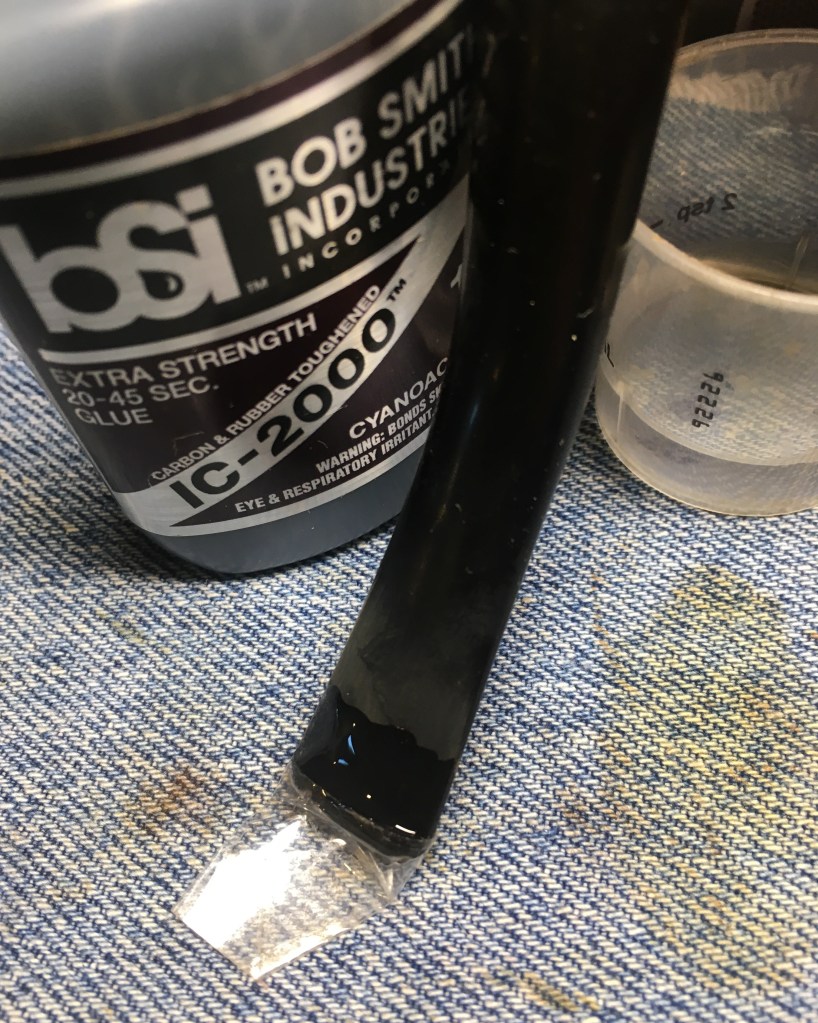


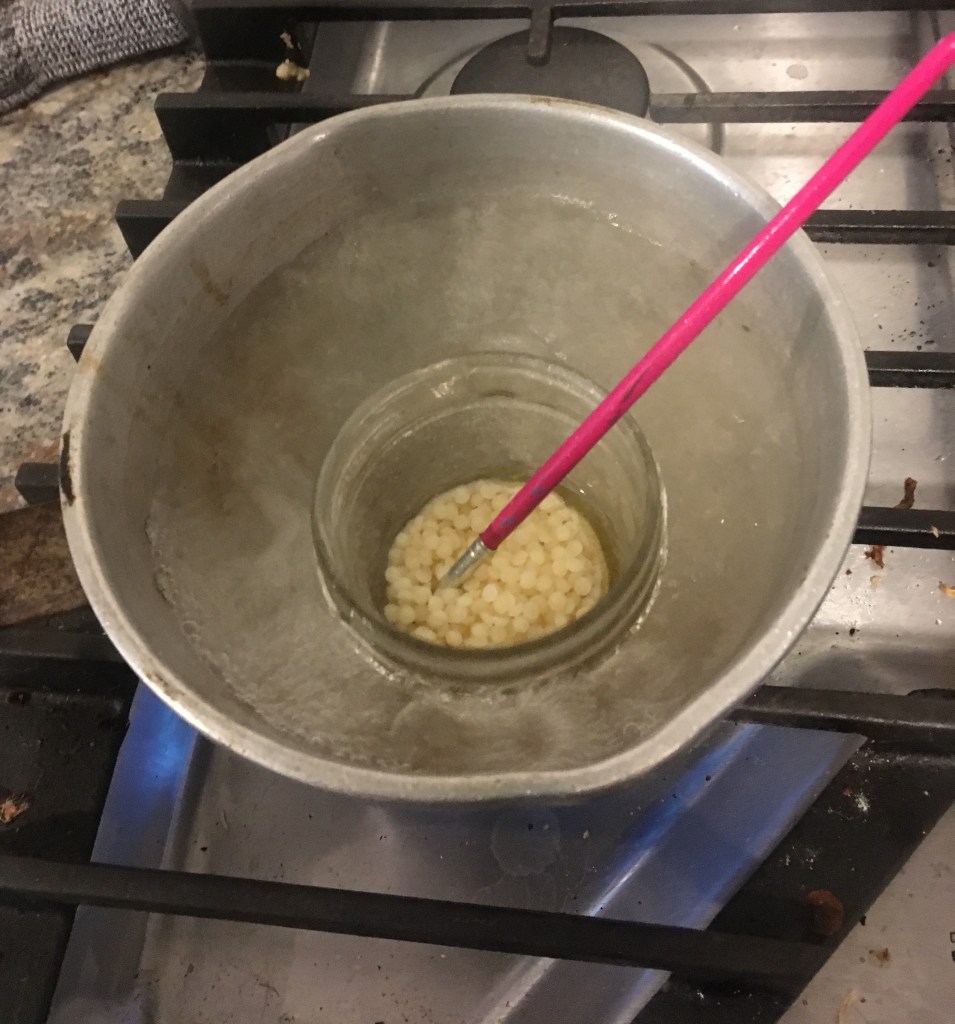


 were no better.


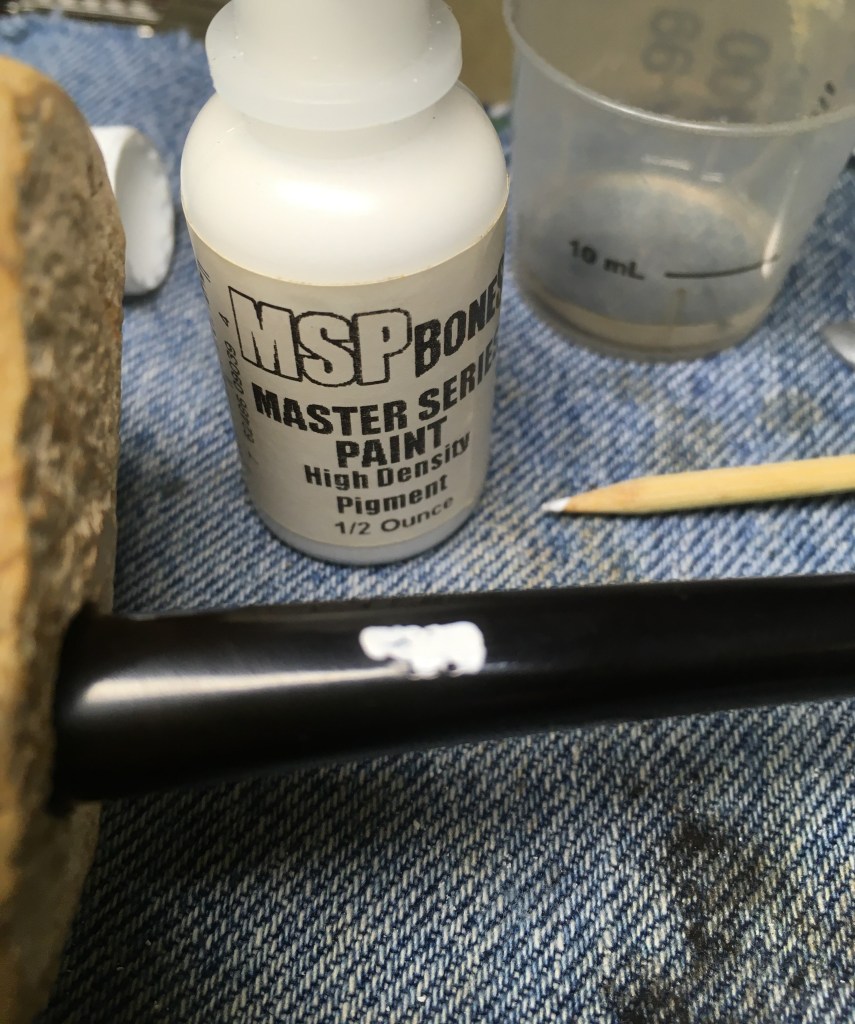


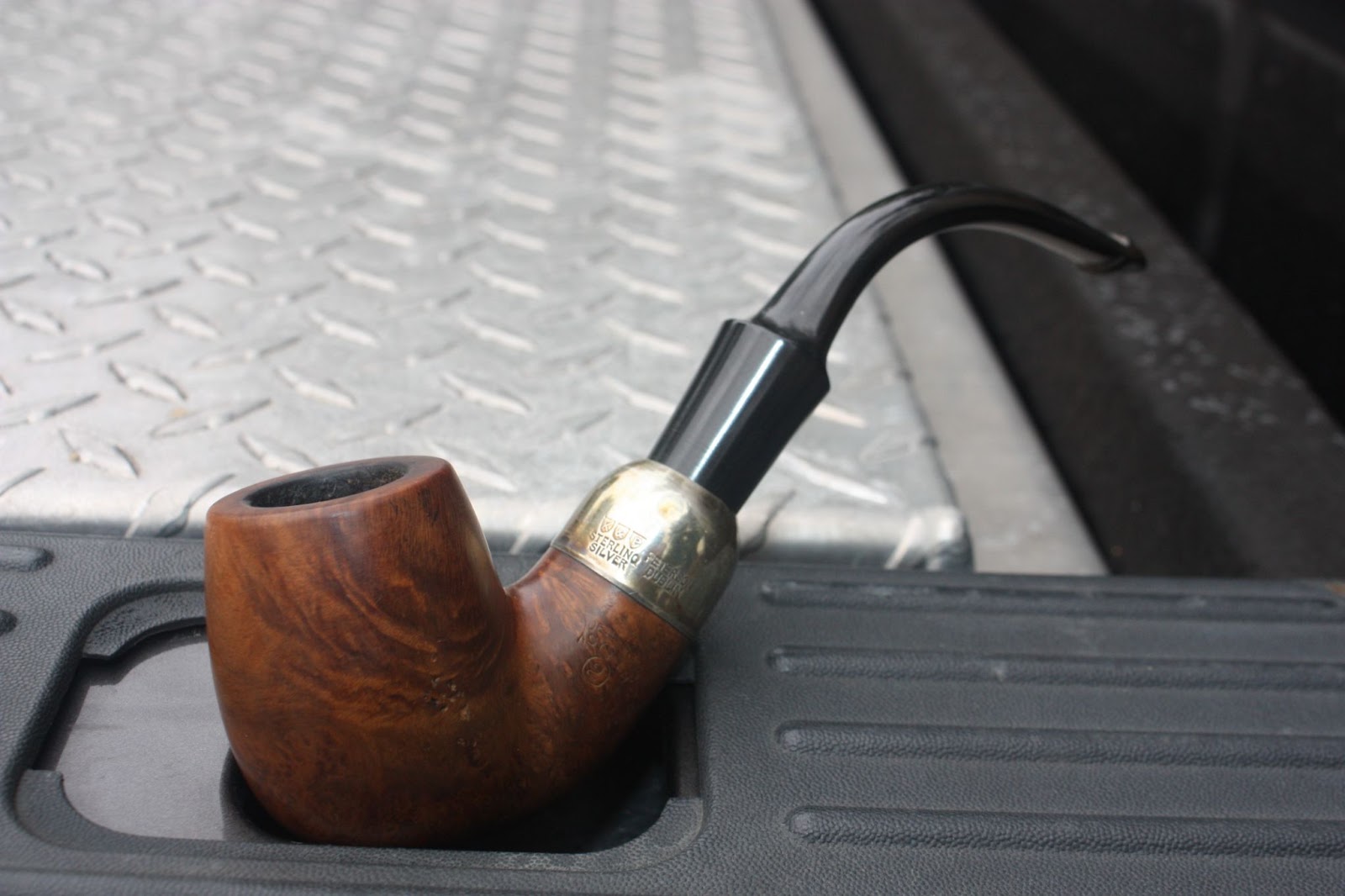


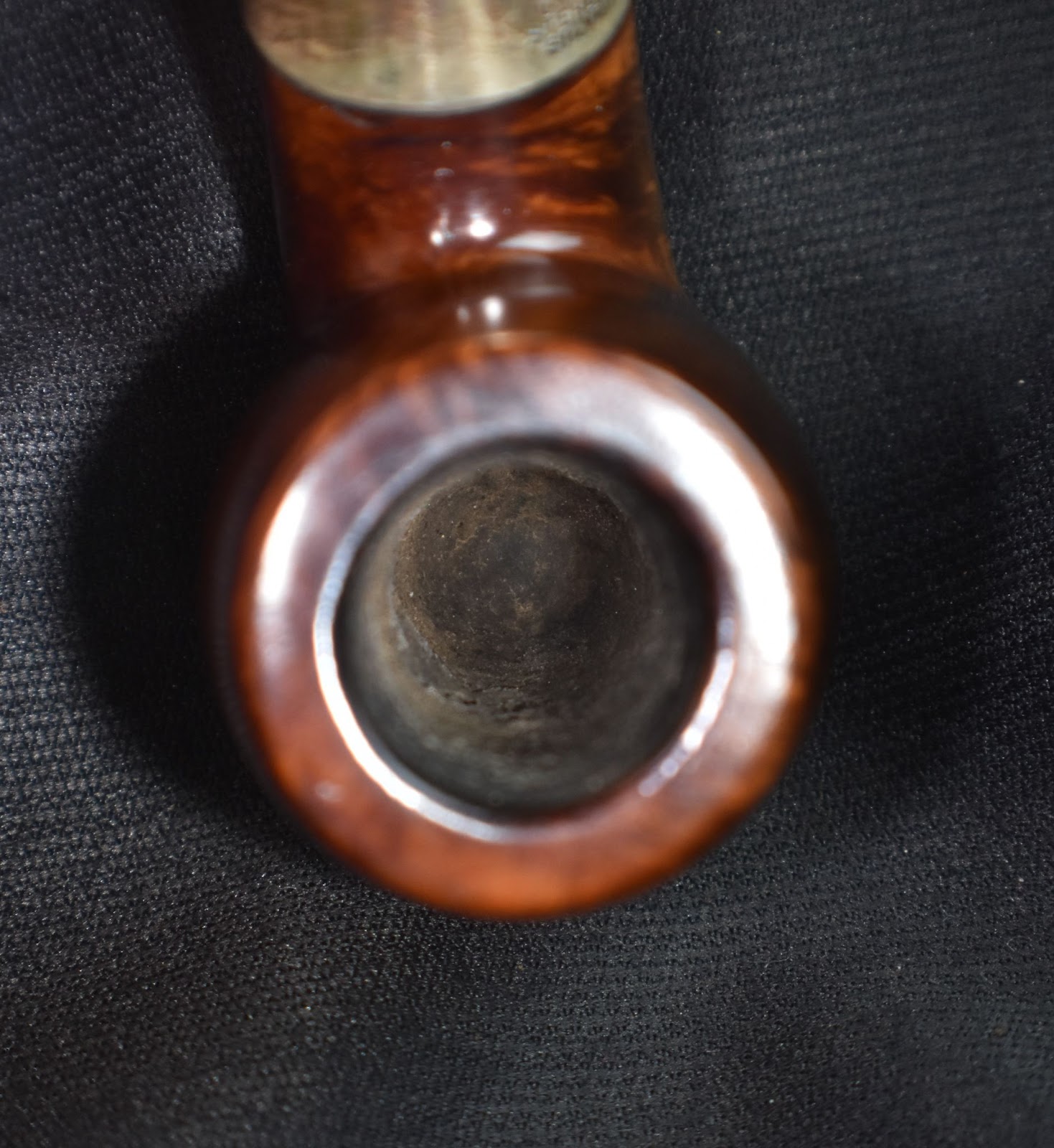

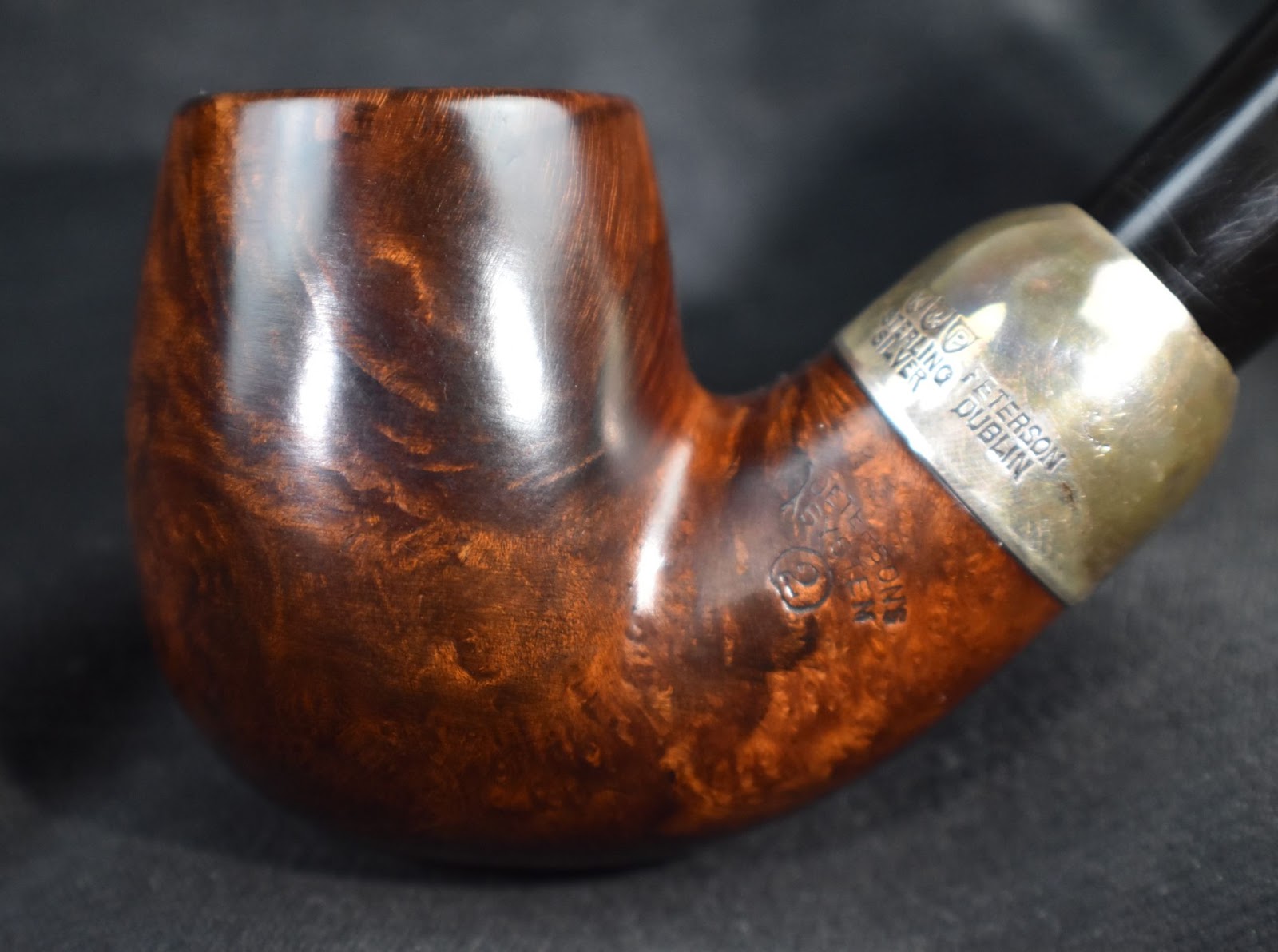
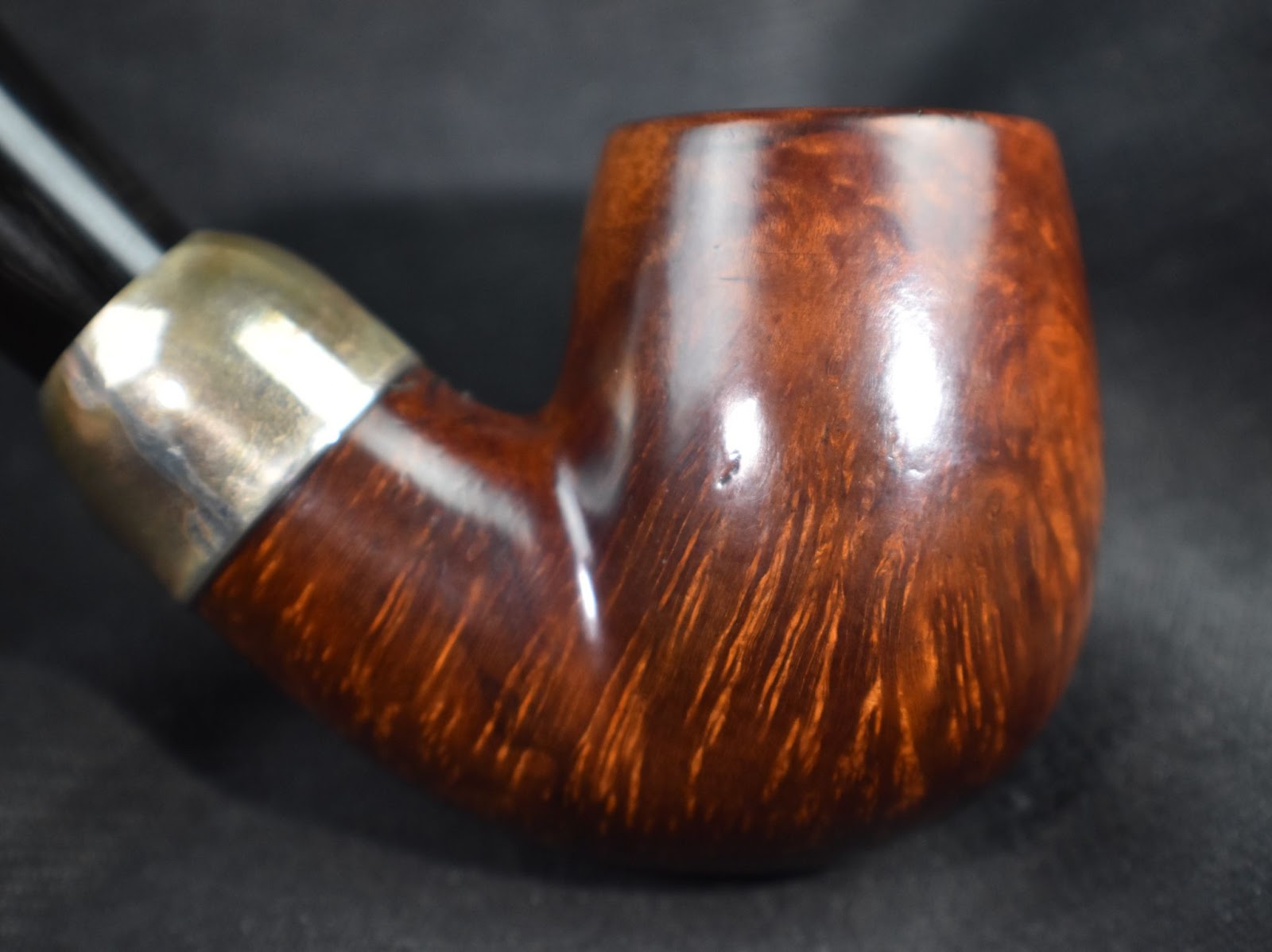


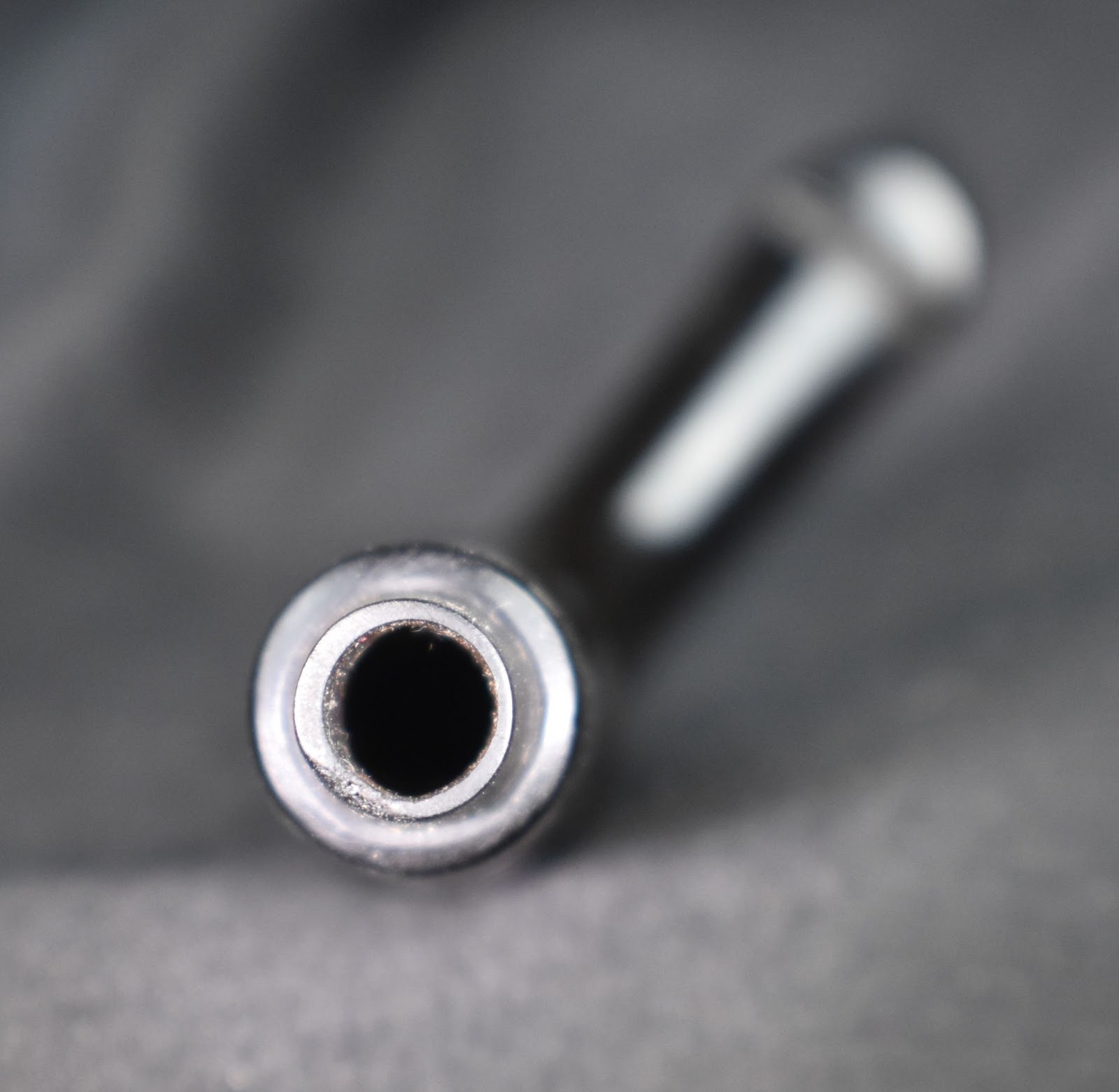


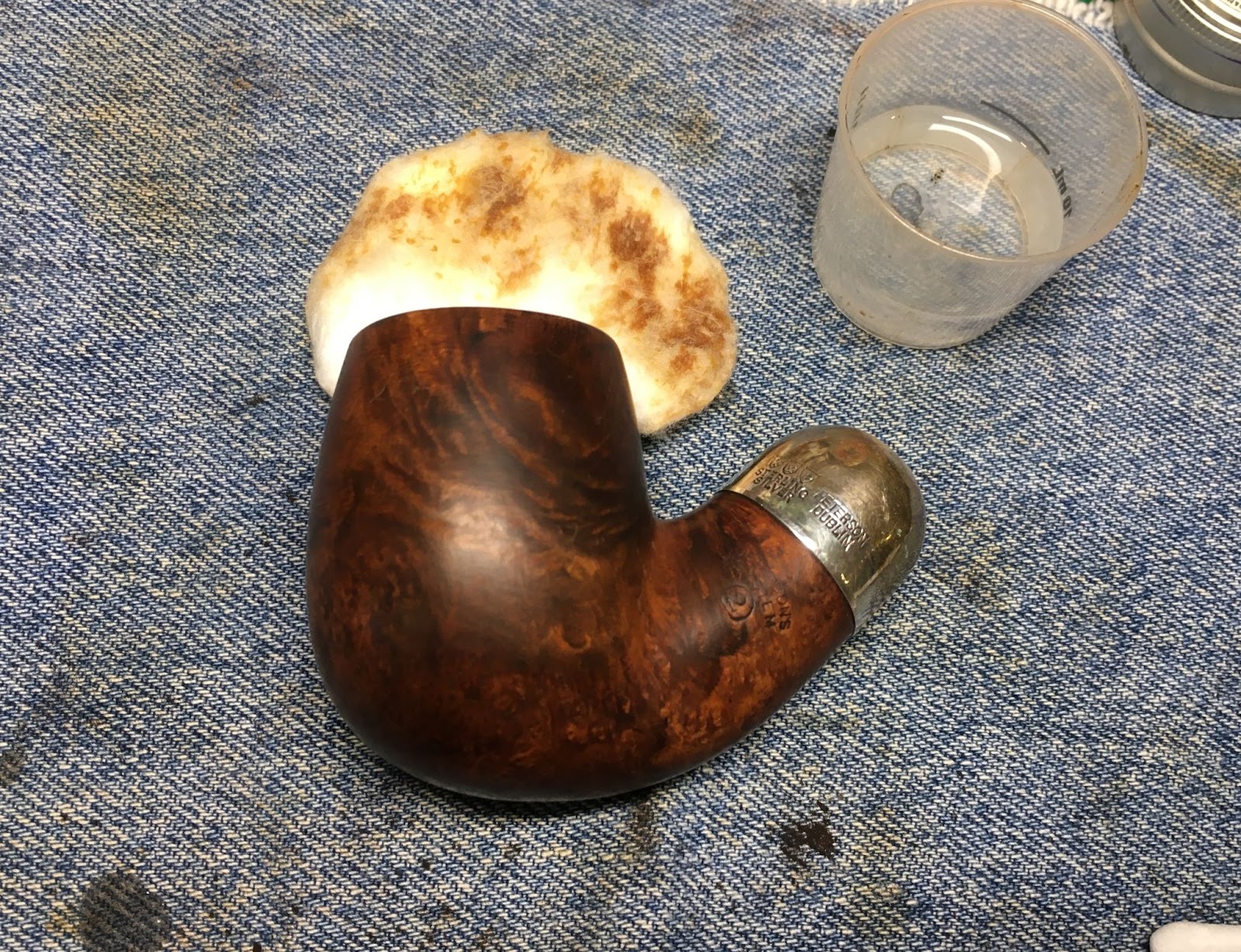
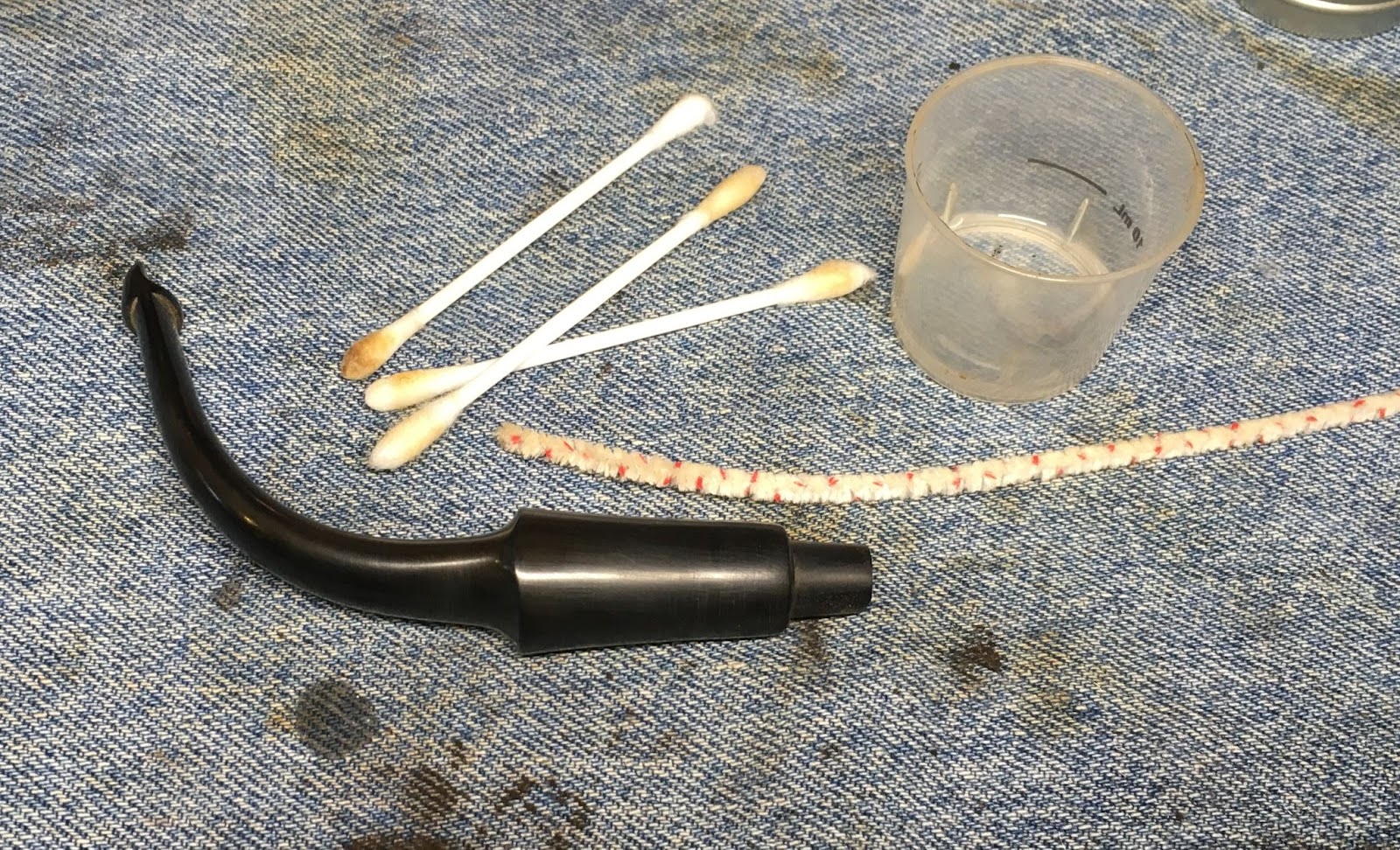
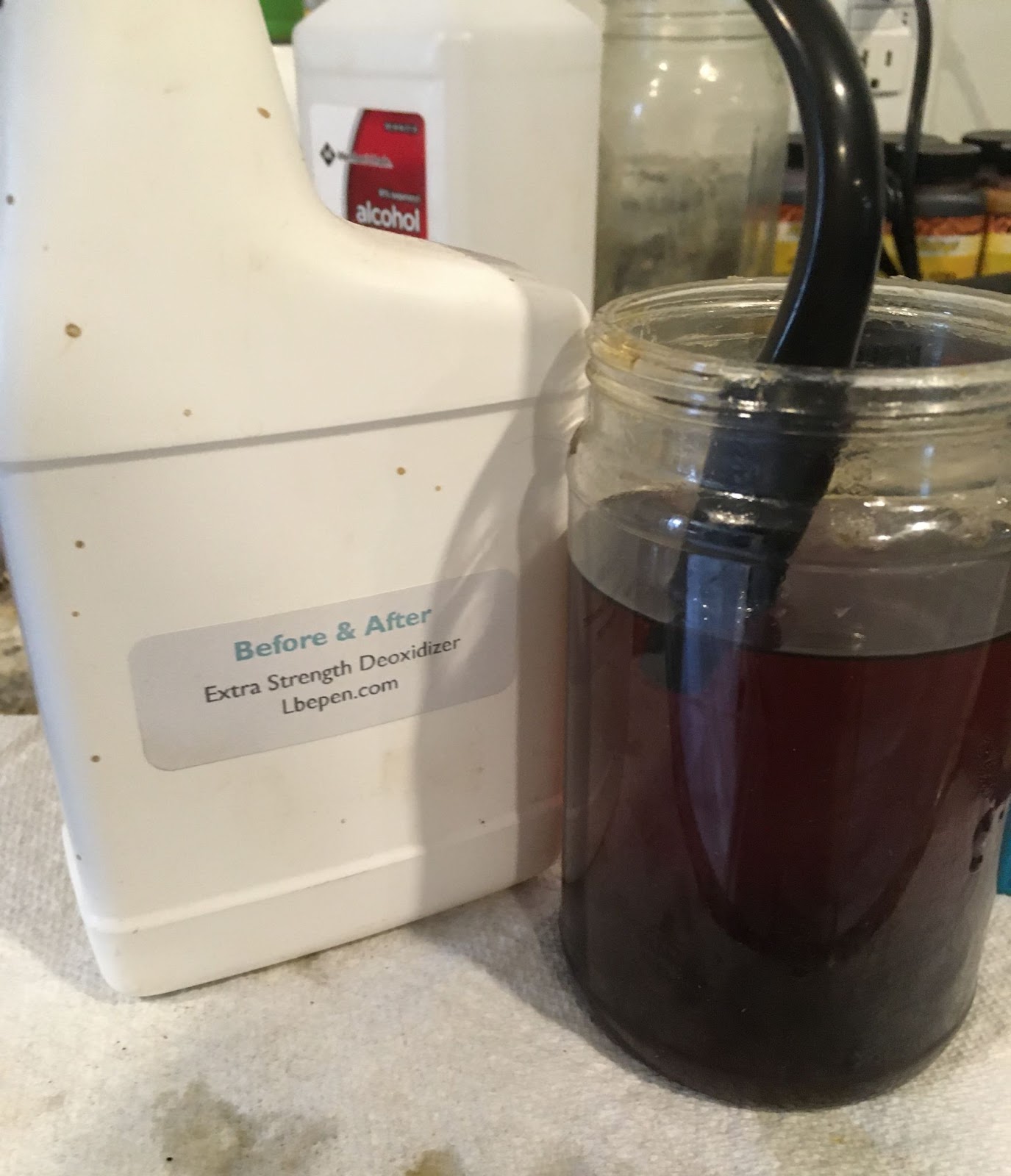
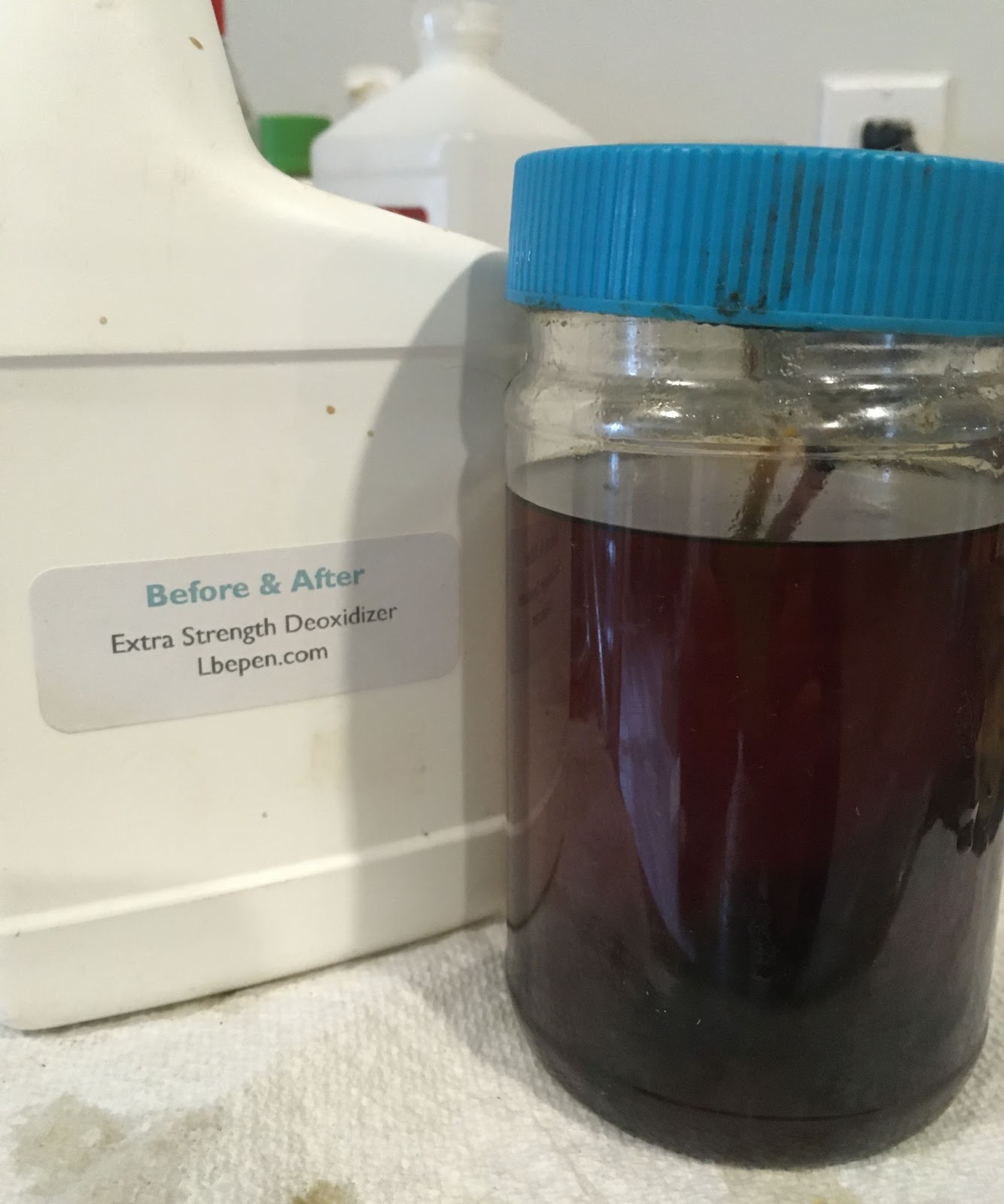


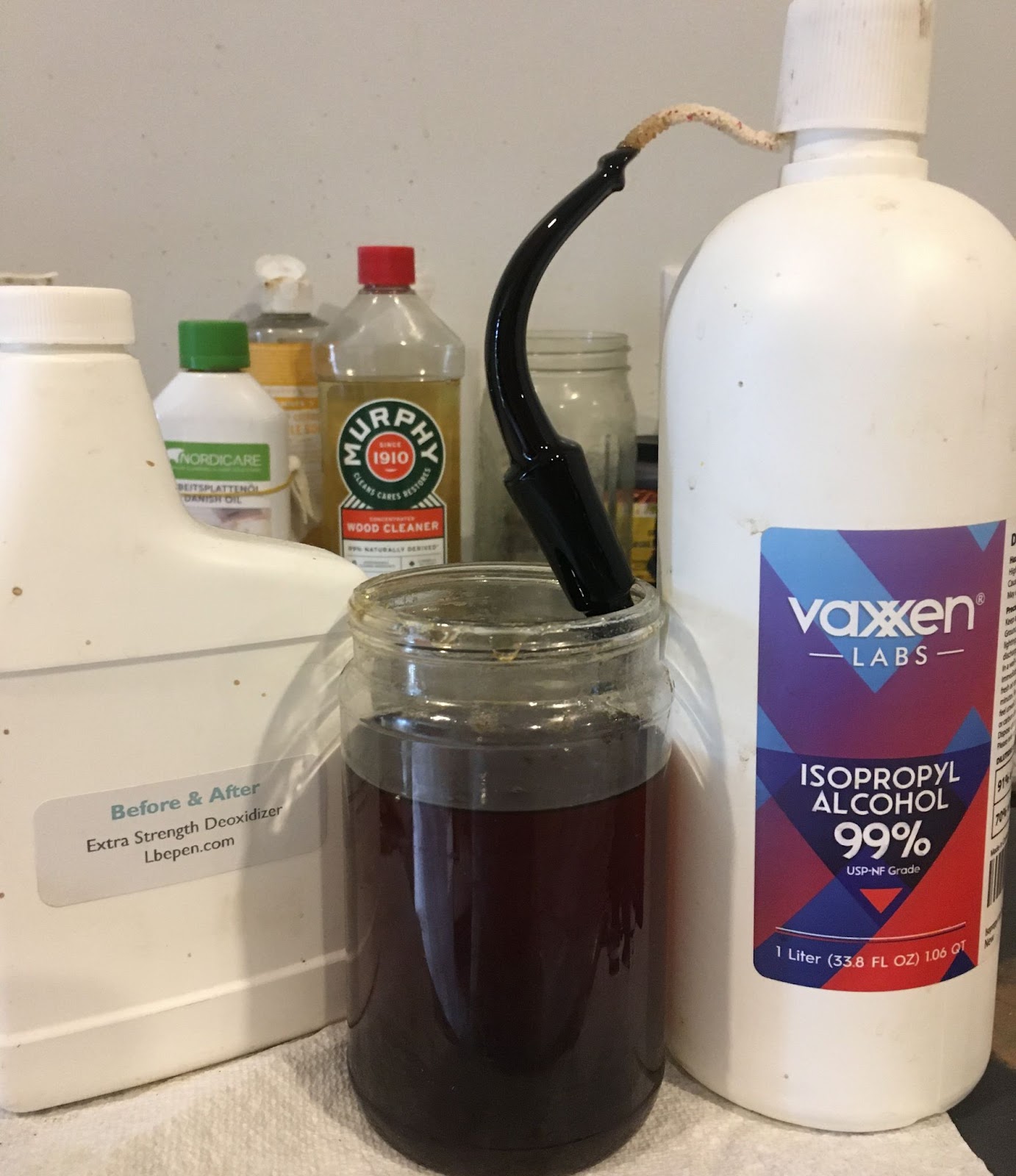


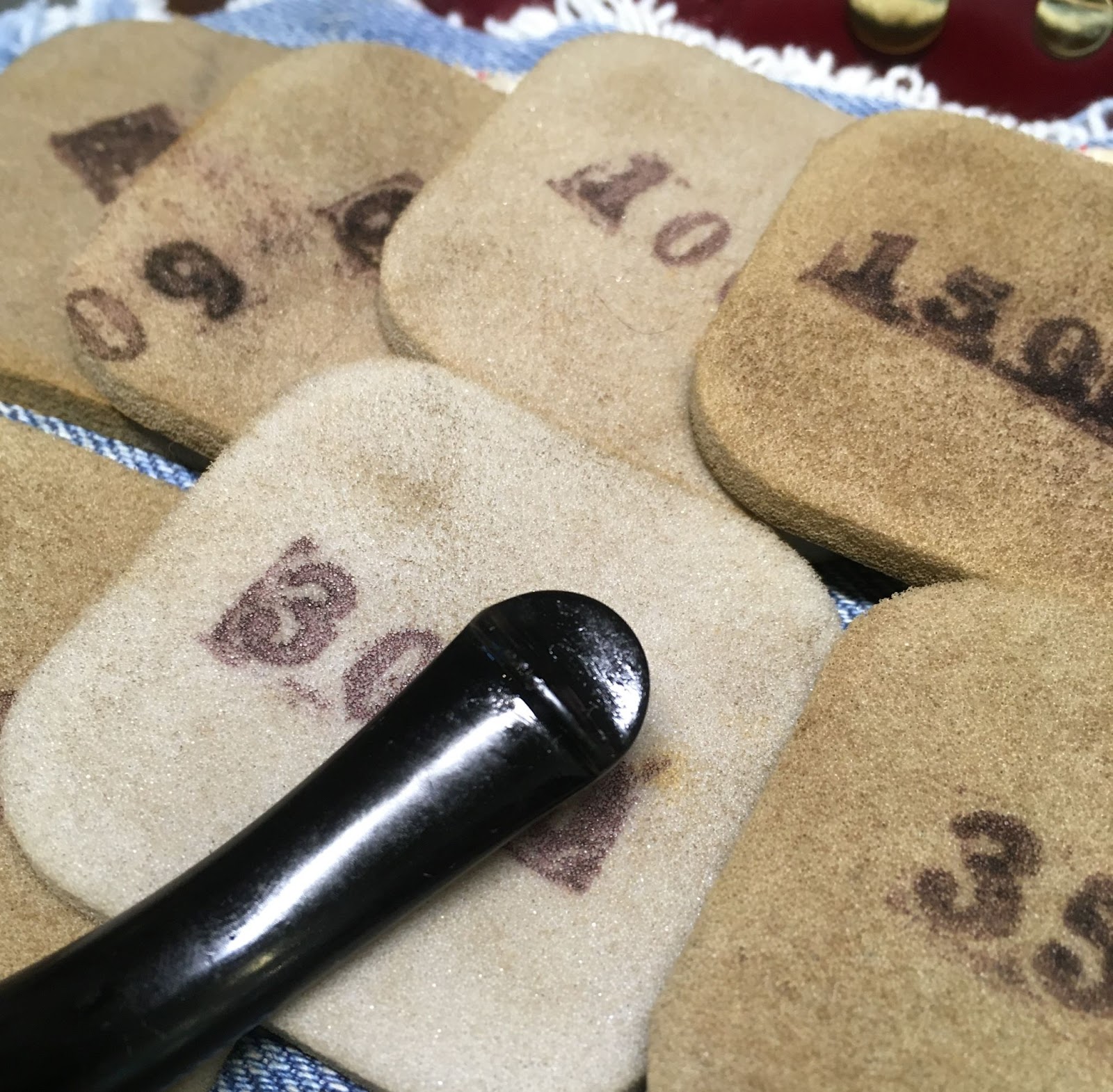

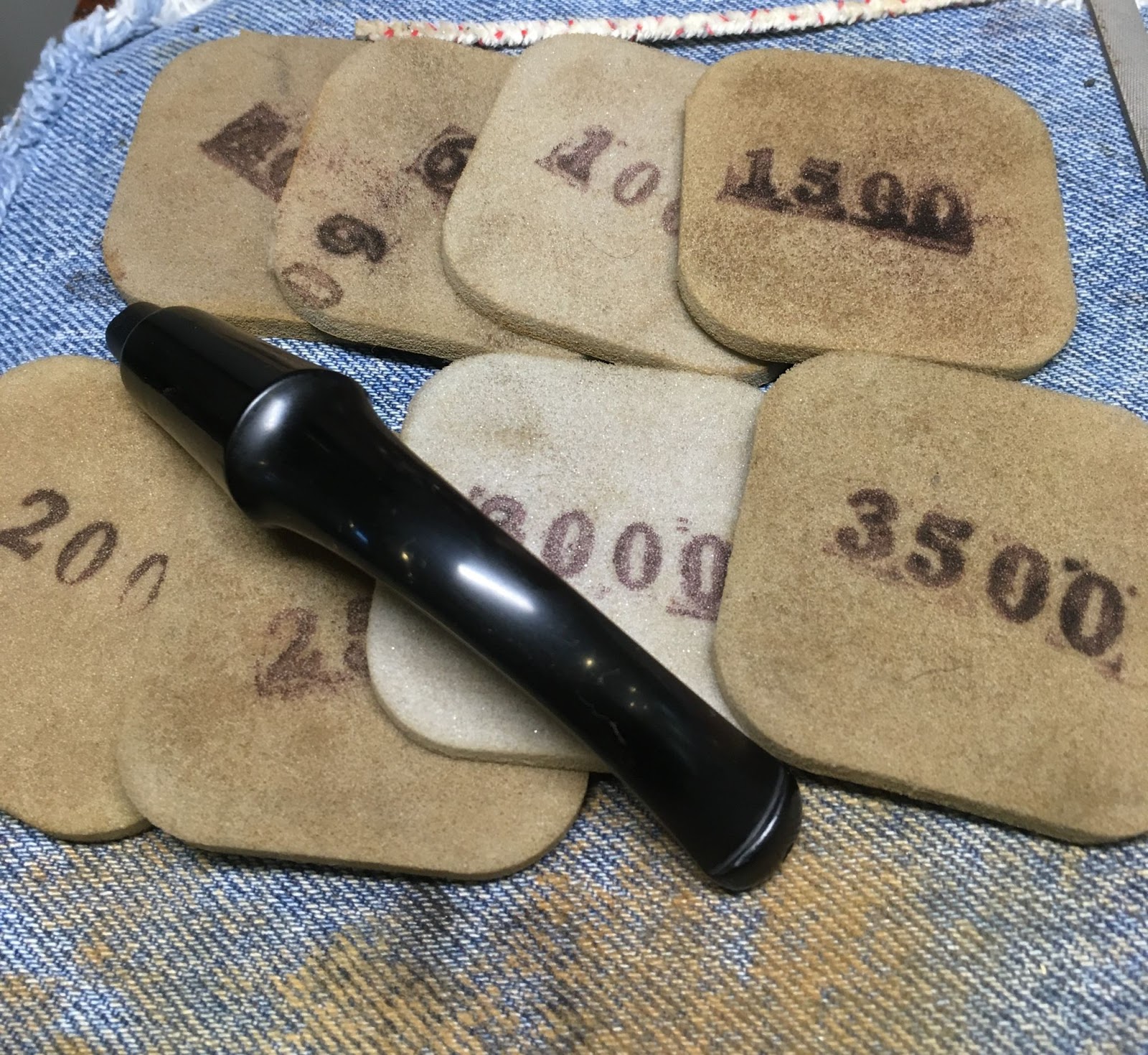

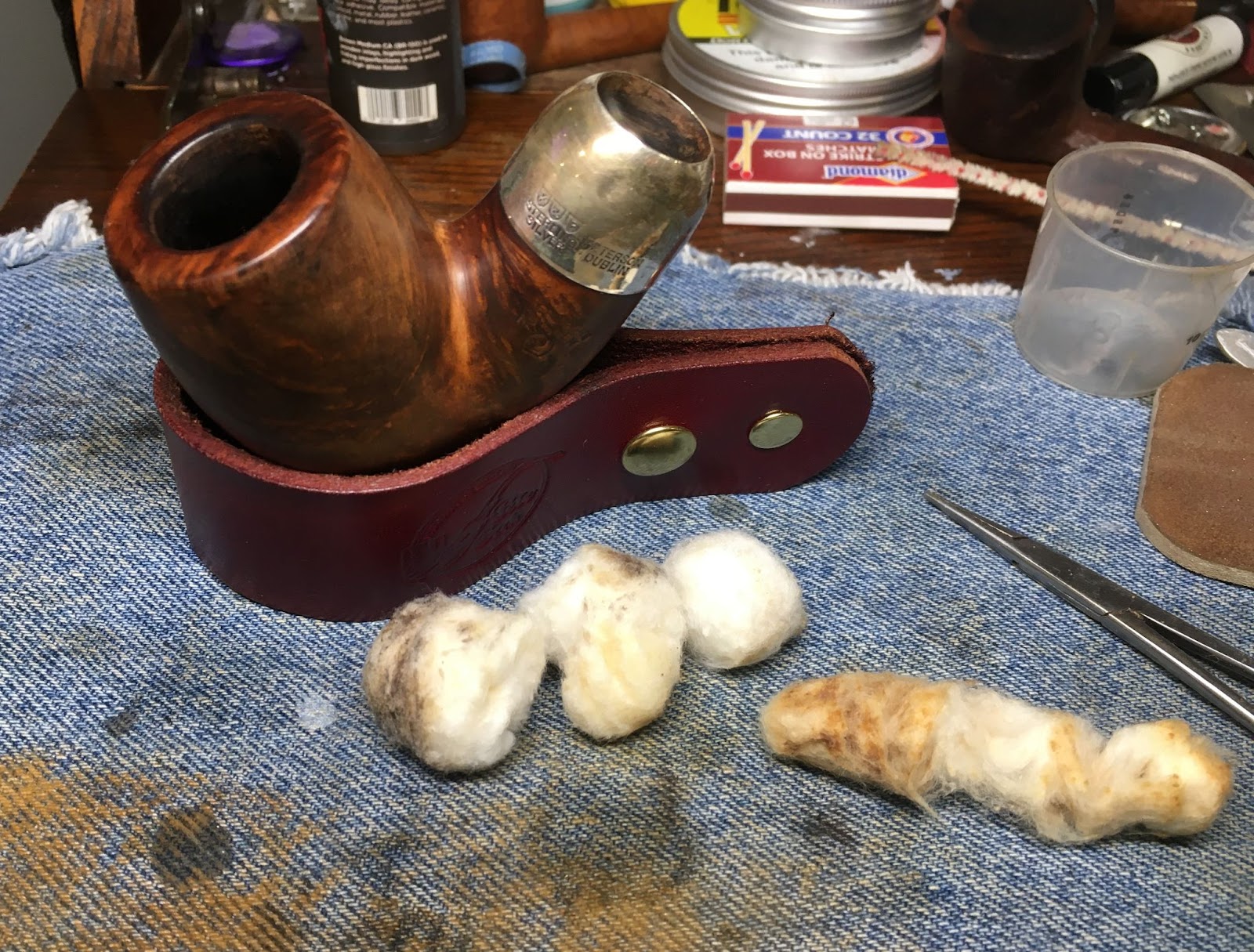


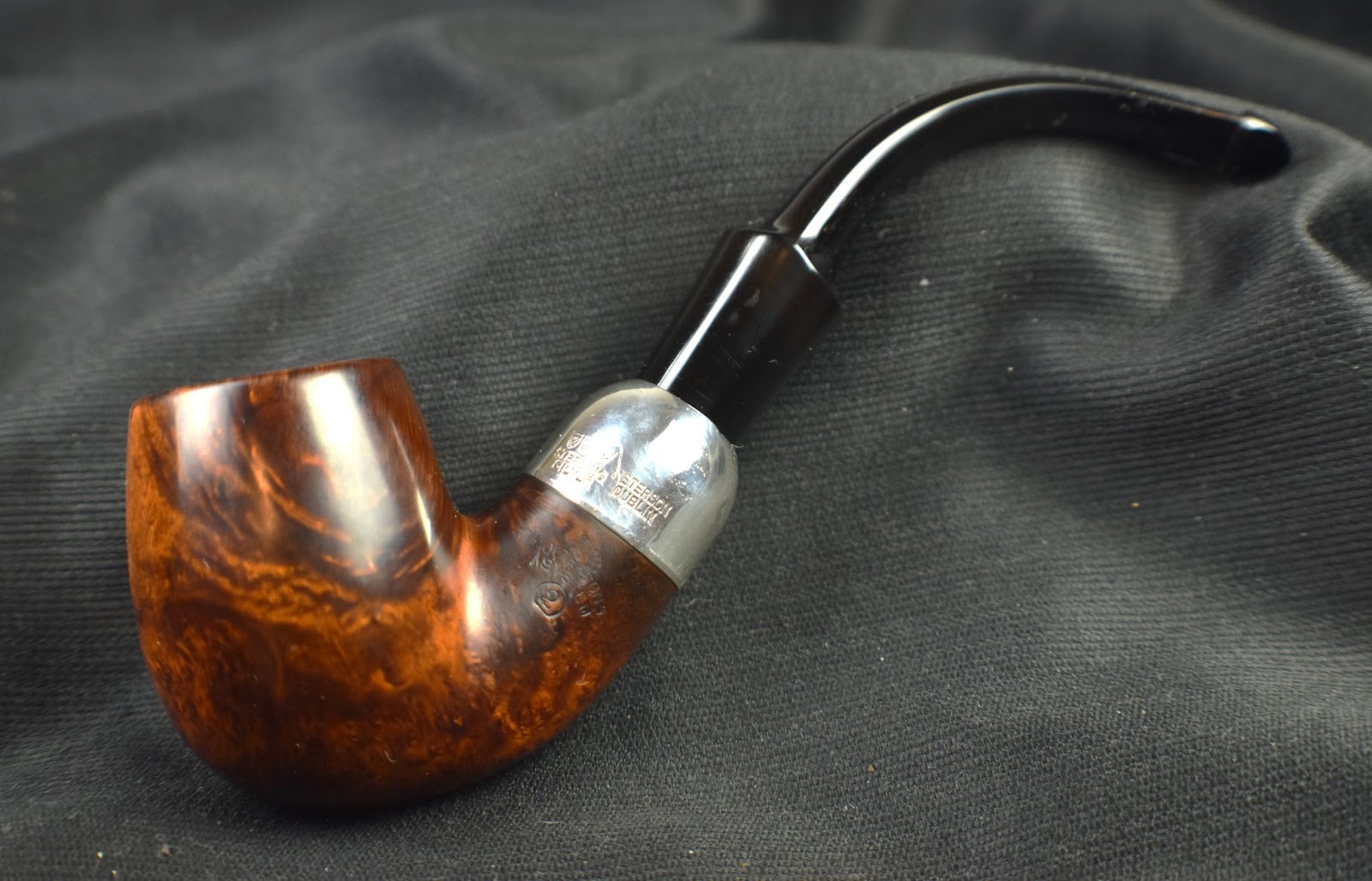
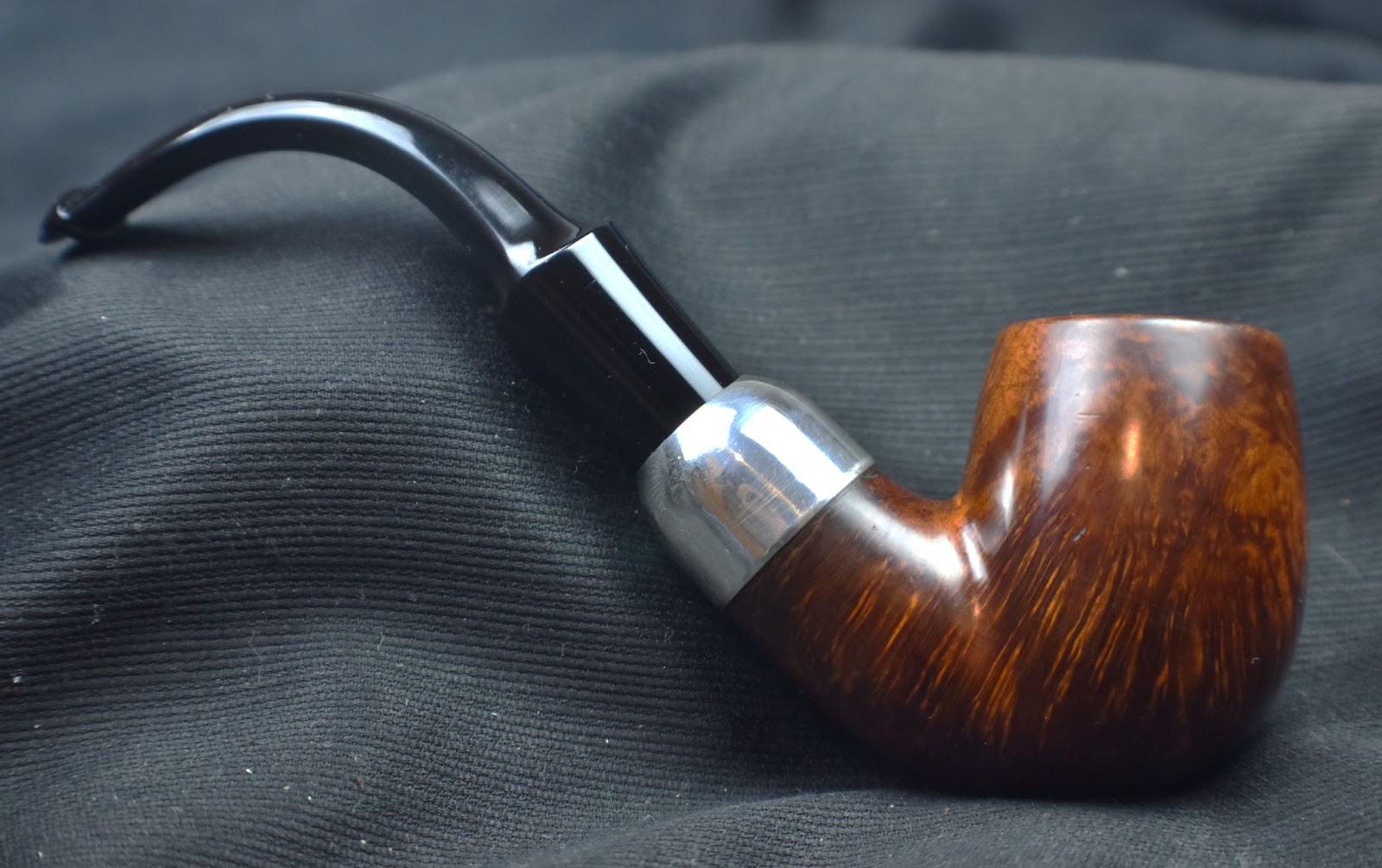


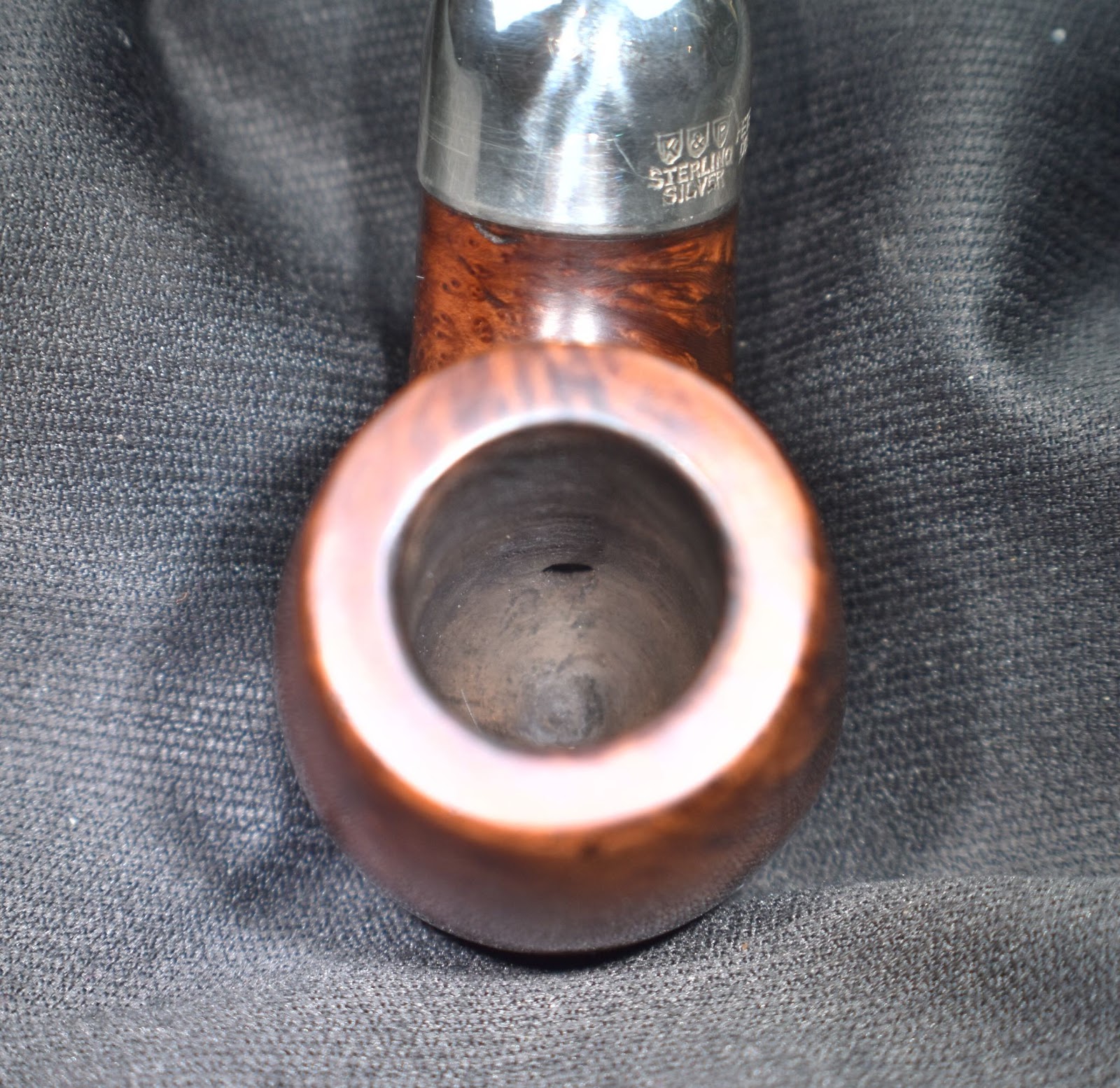
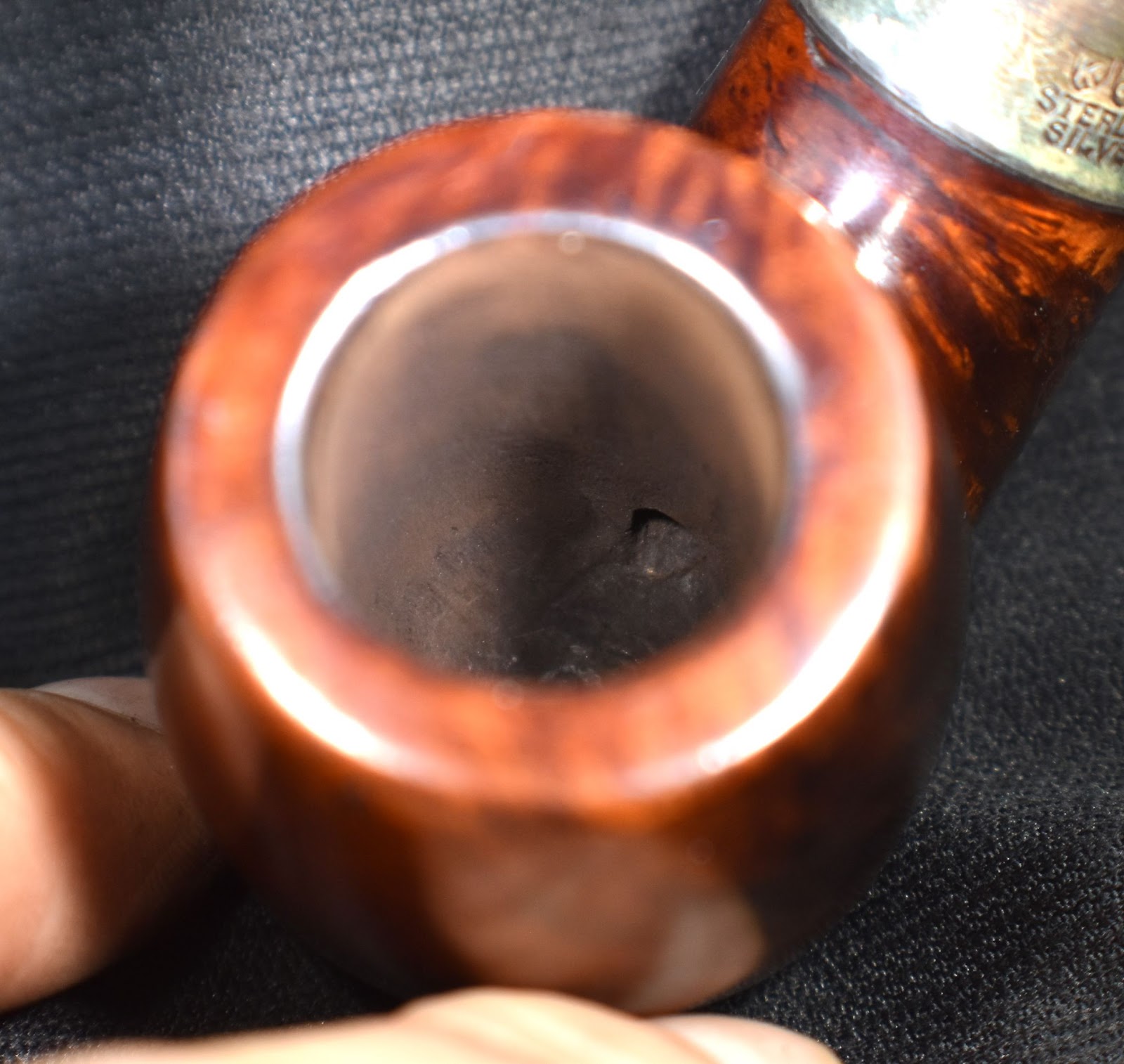

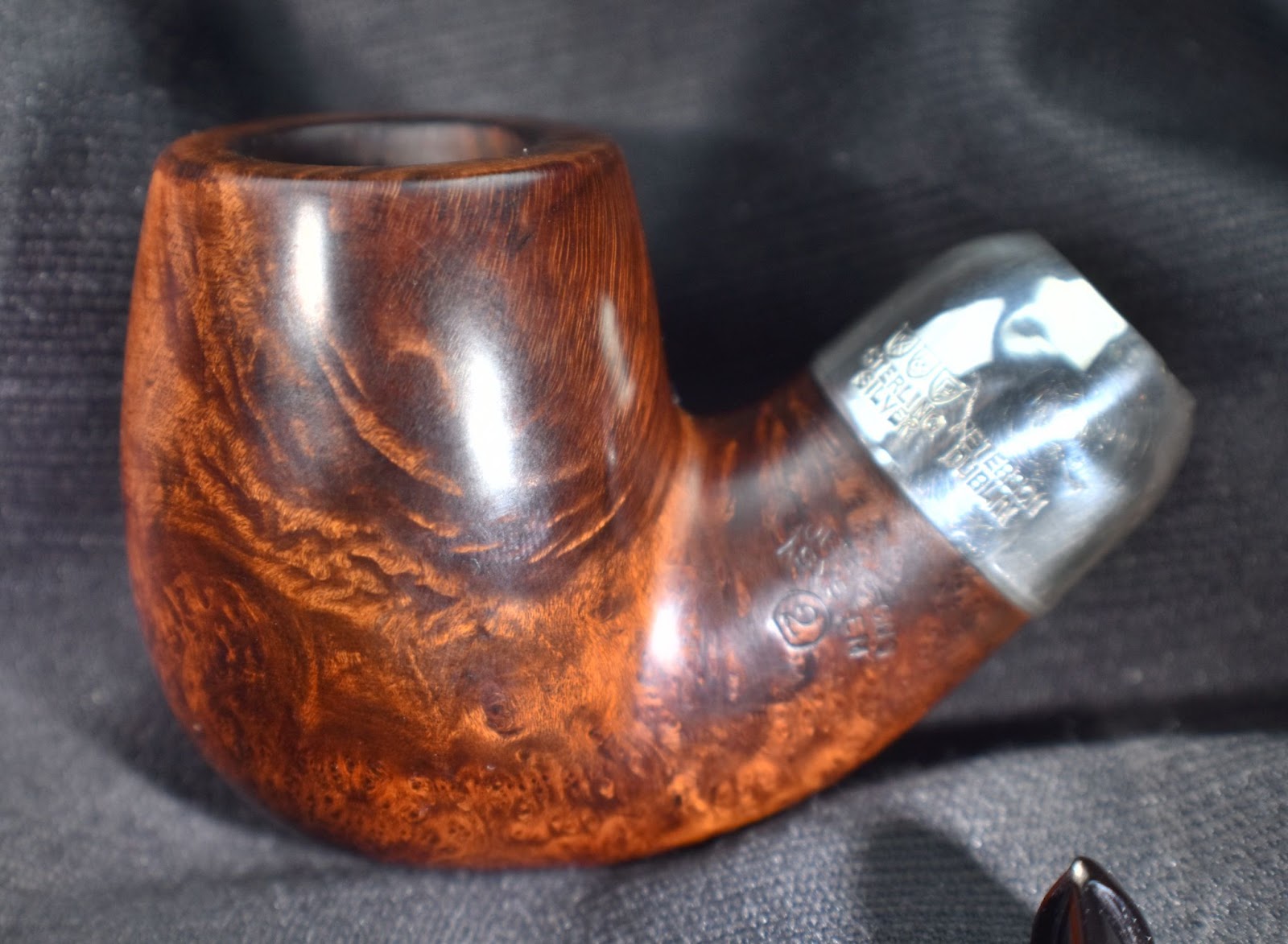


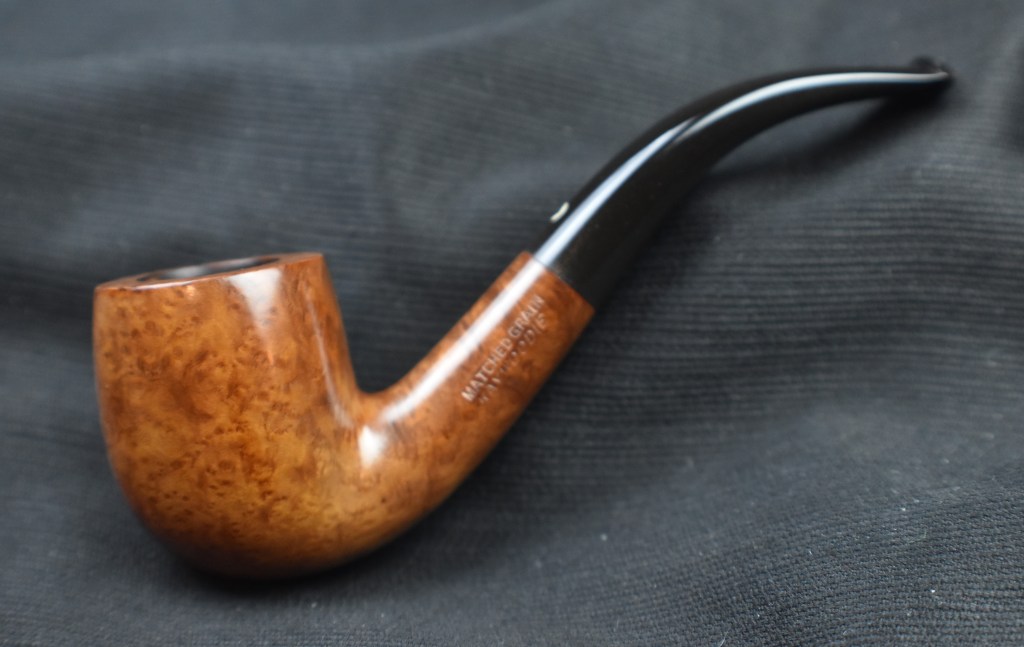


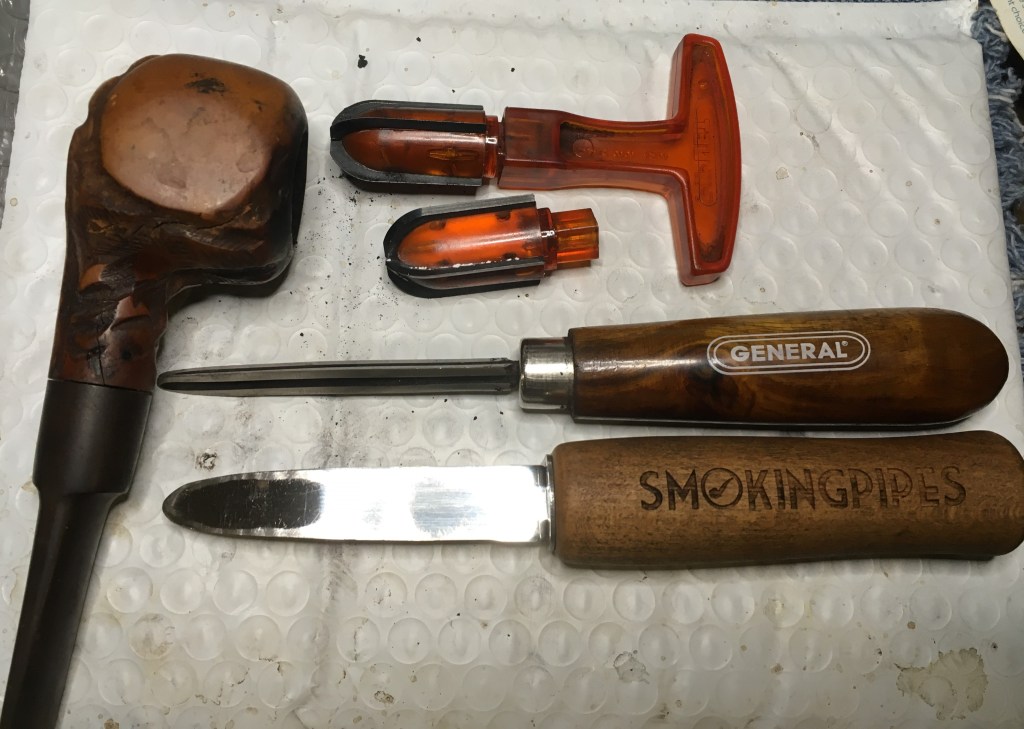


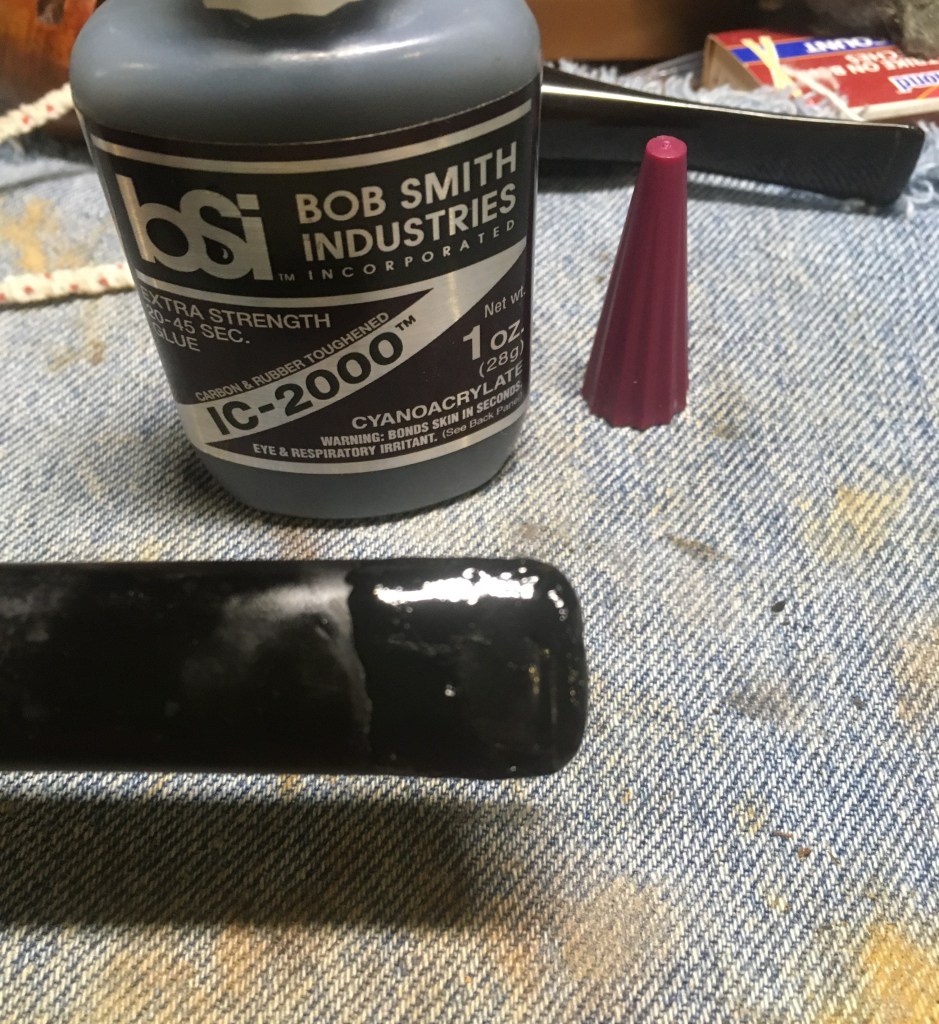


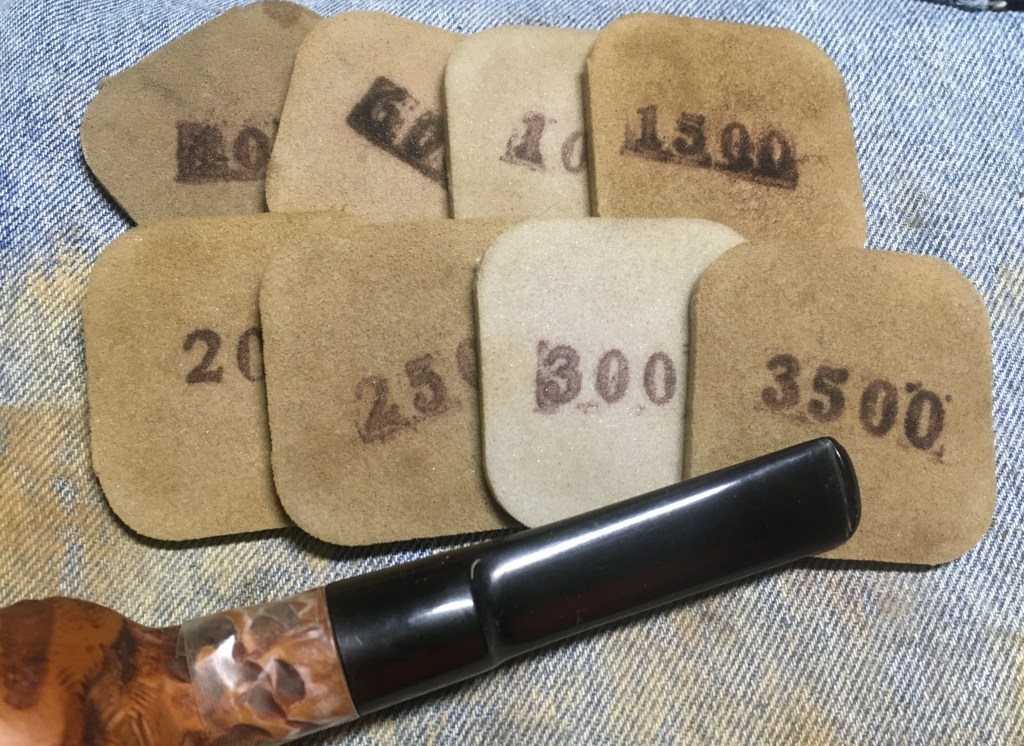


 NebraskaPeteGeek