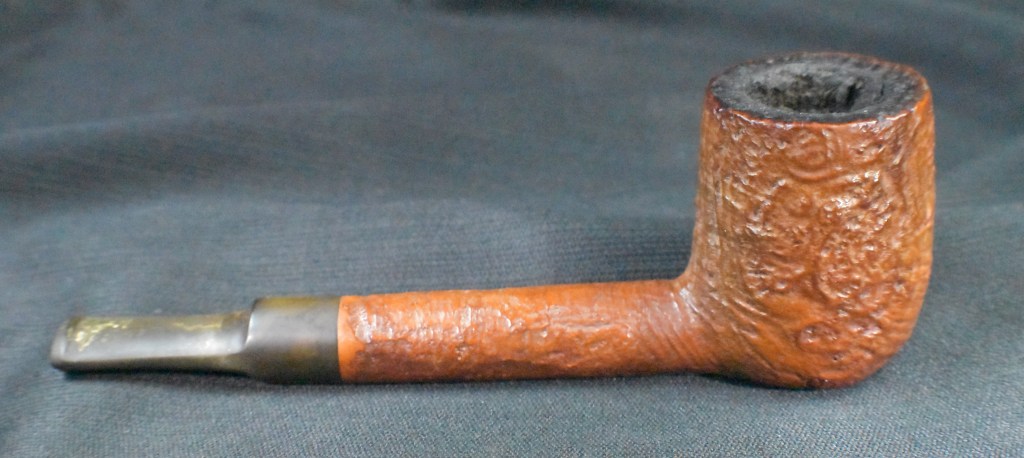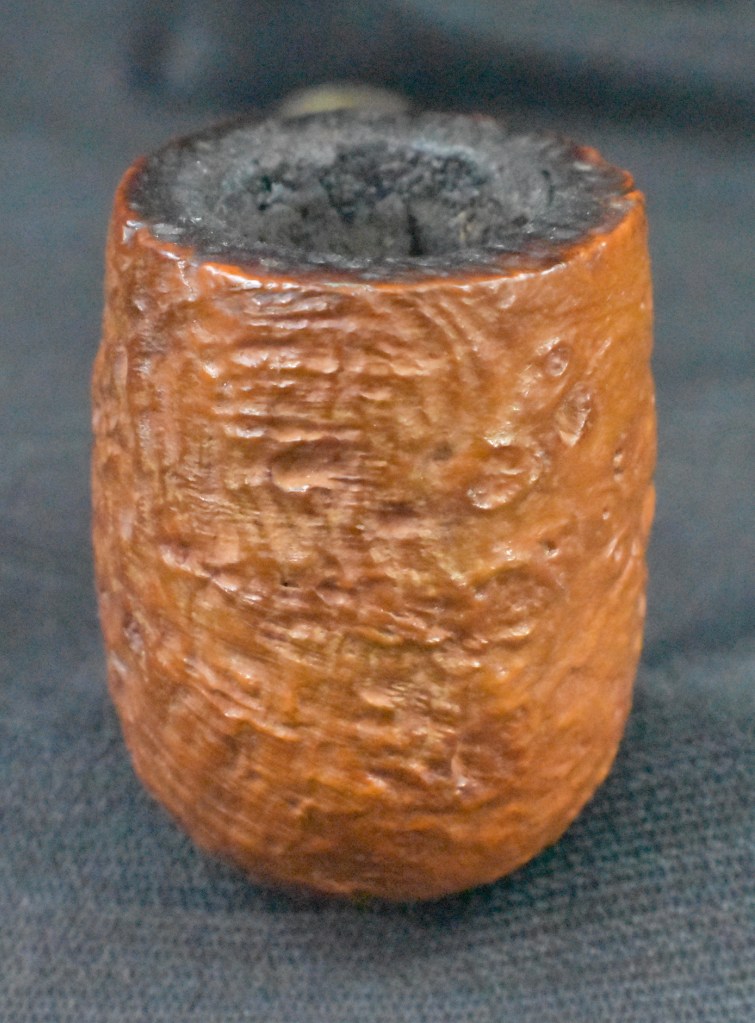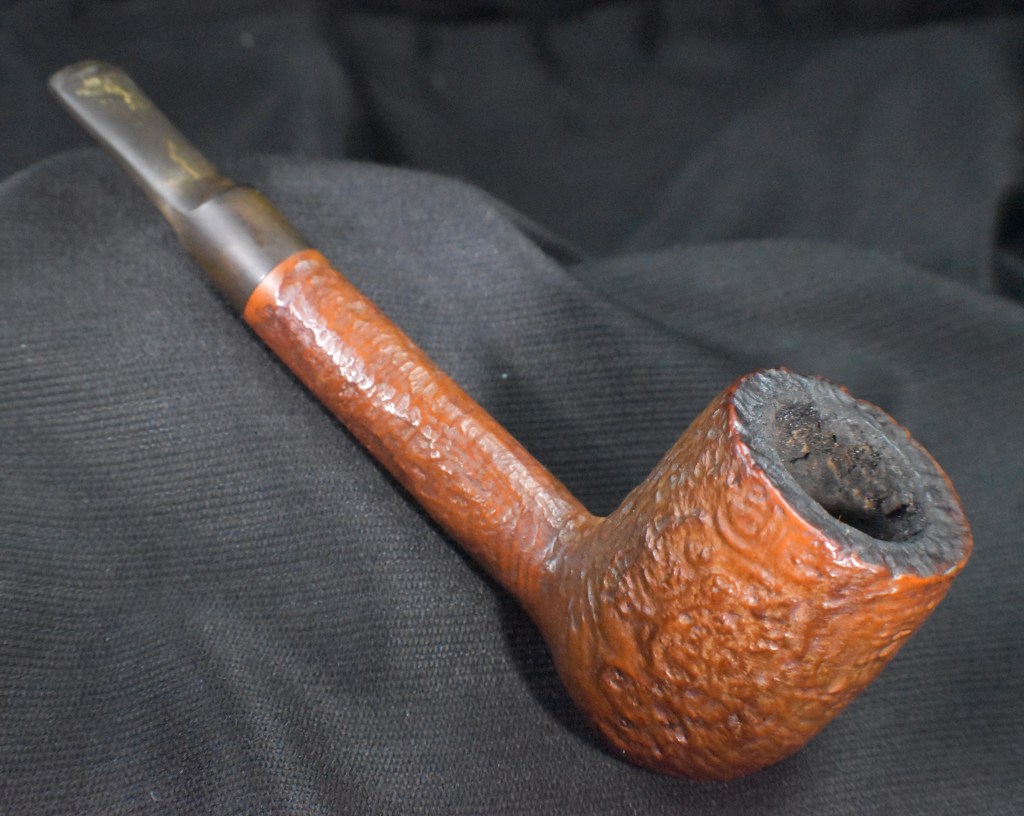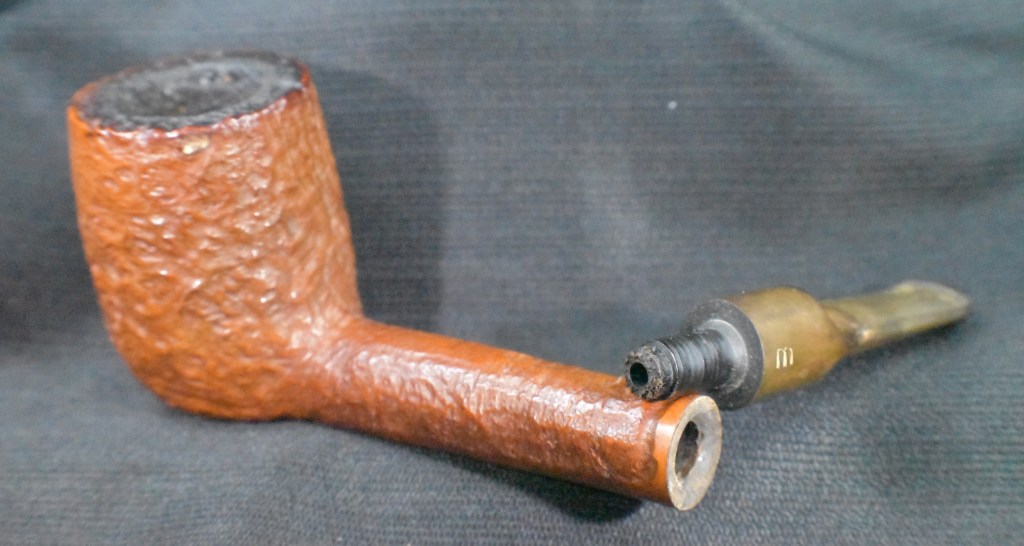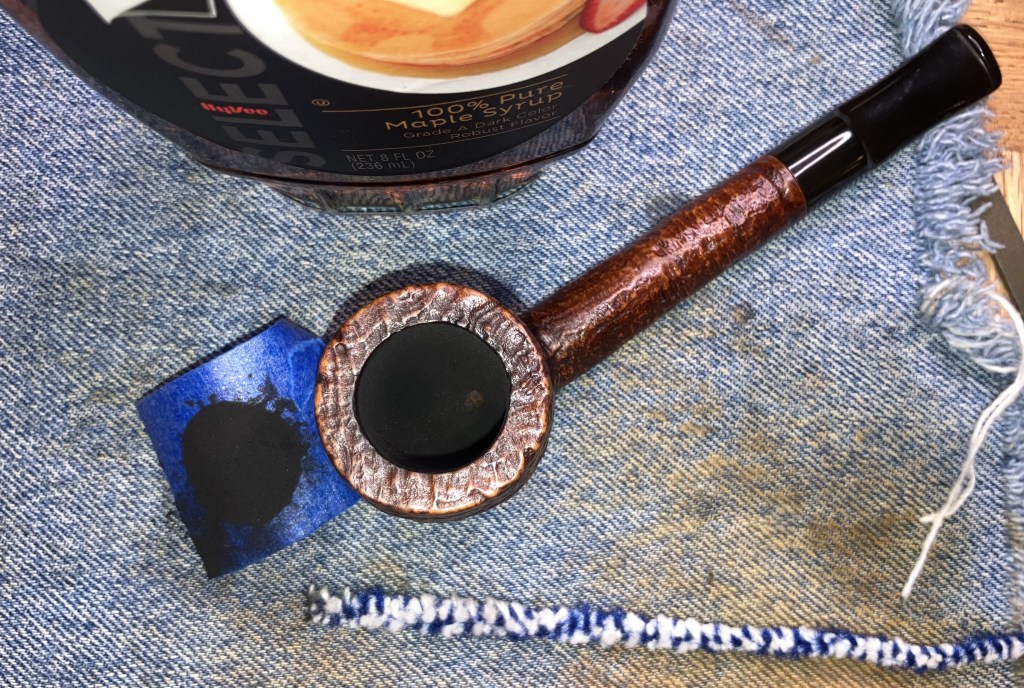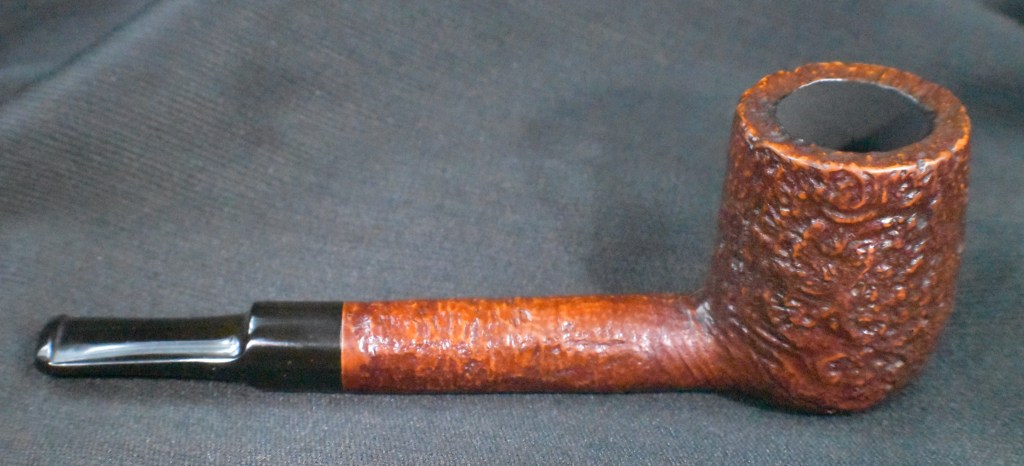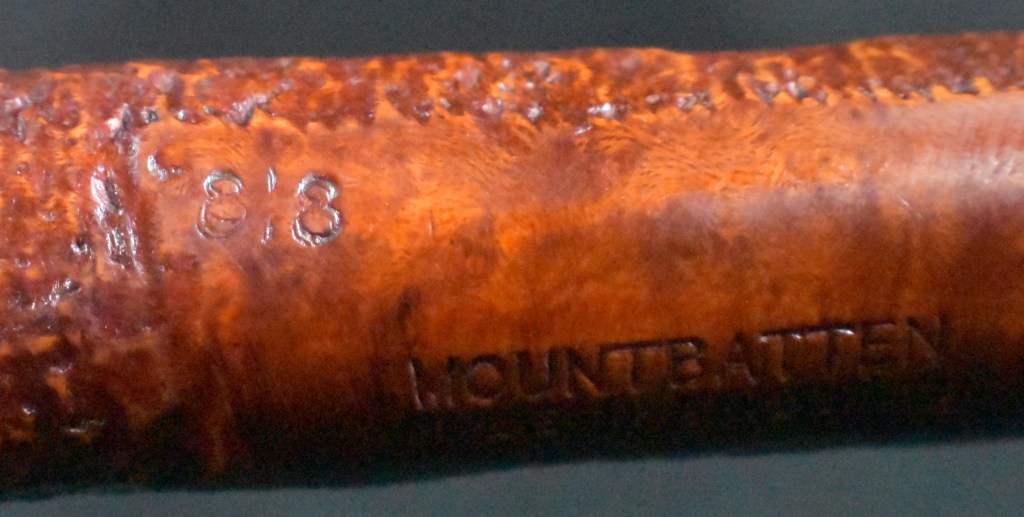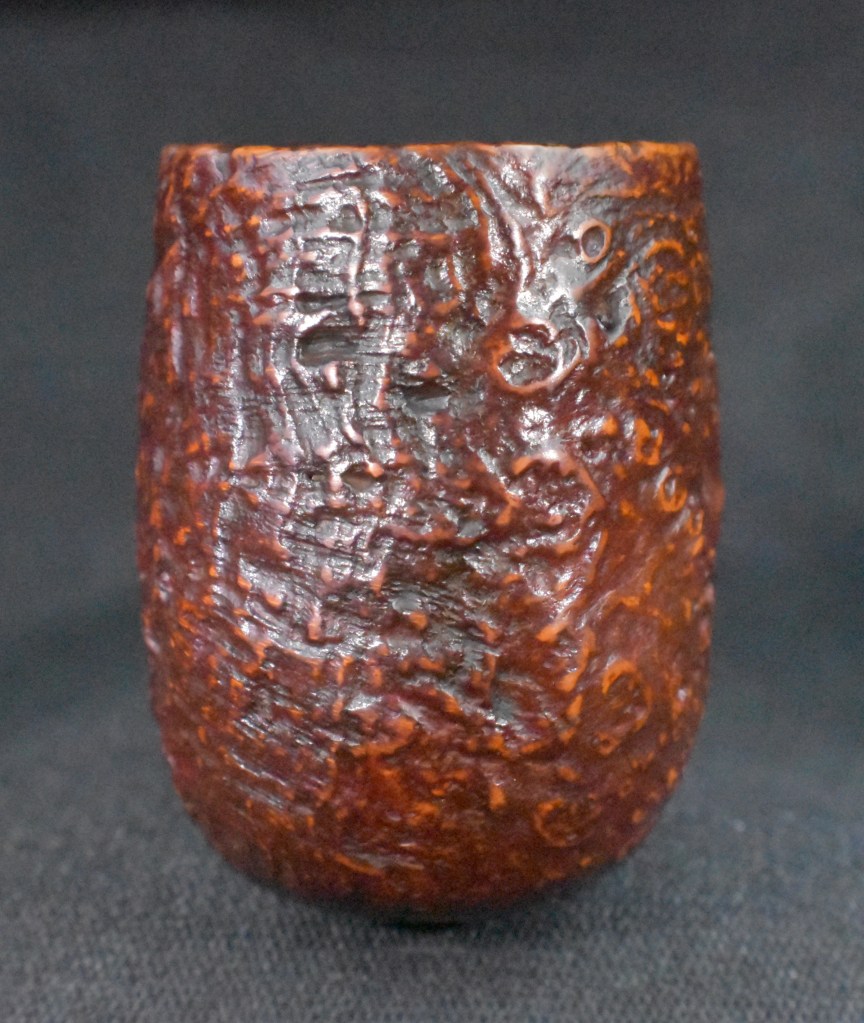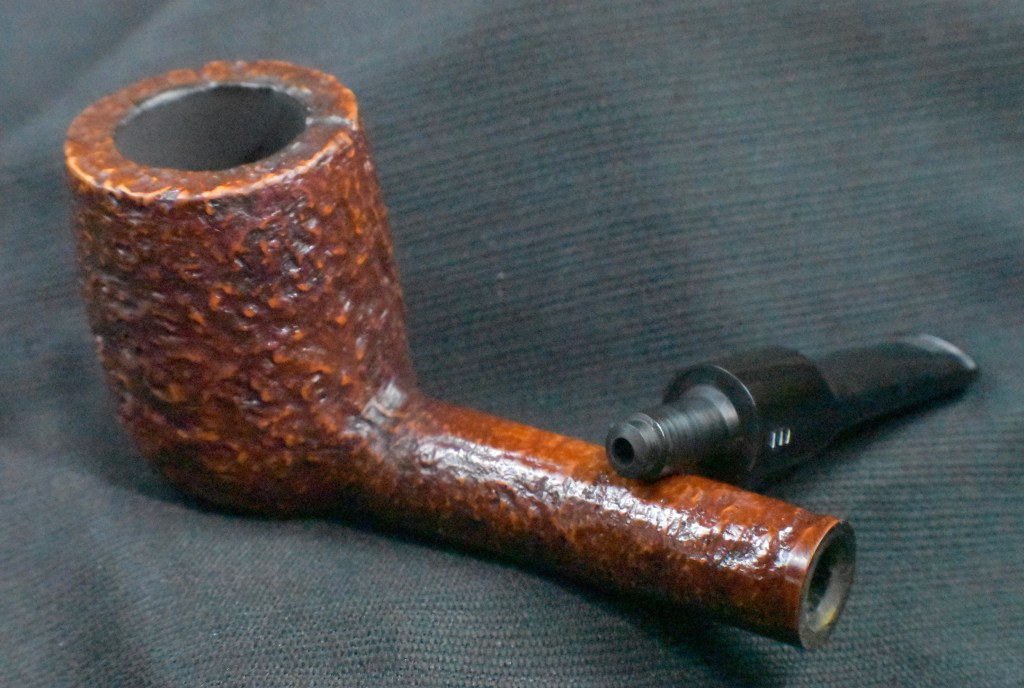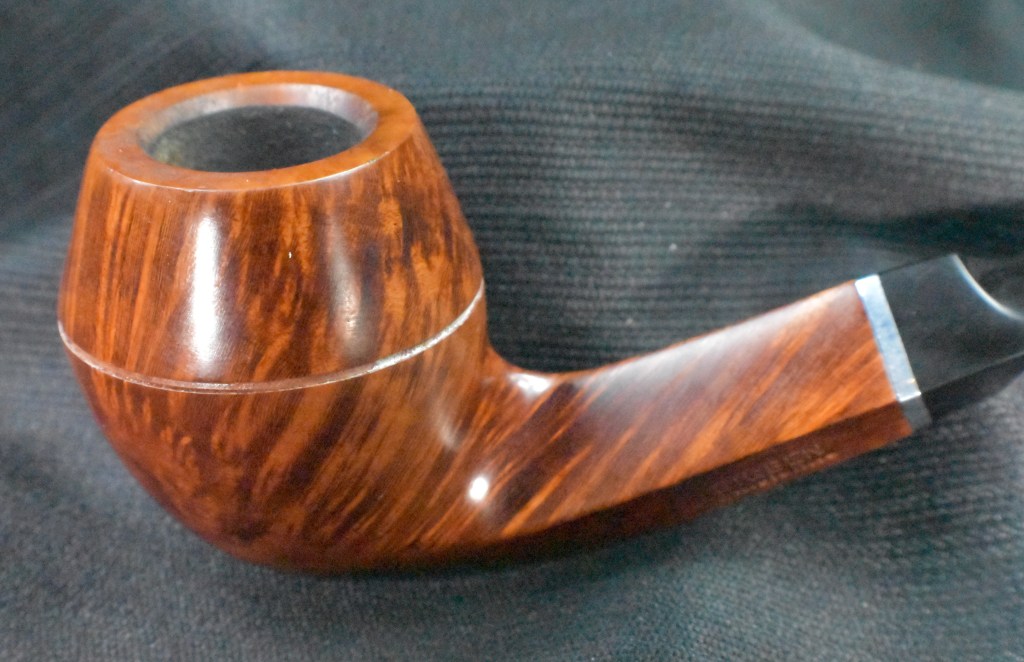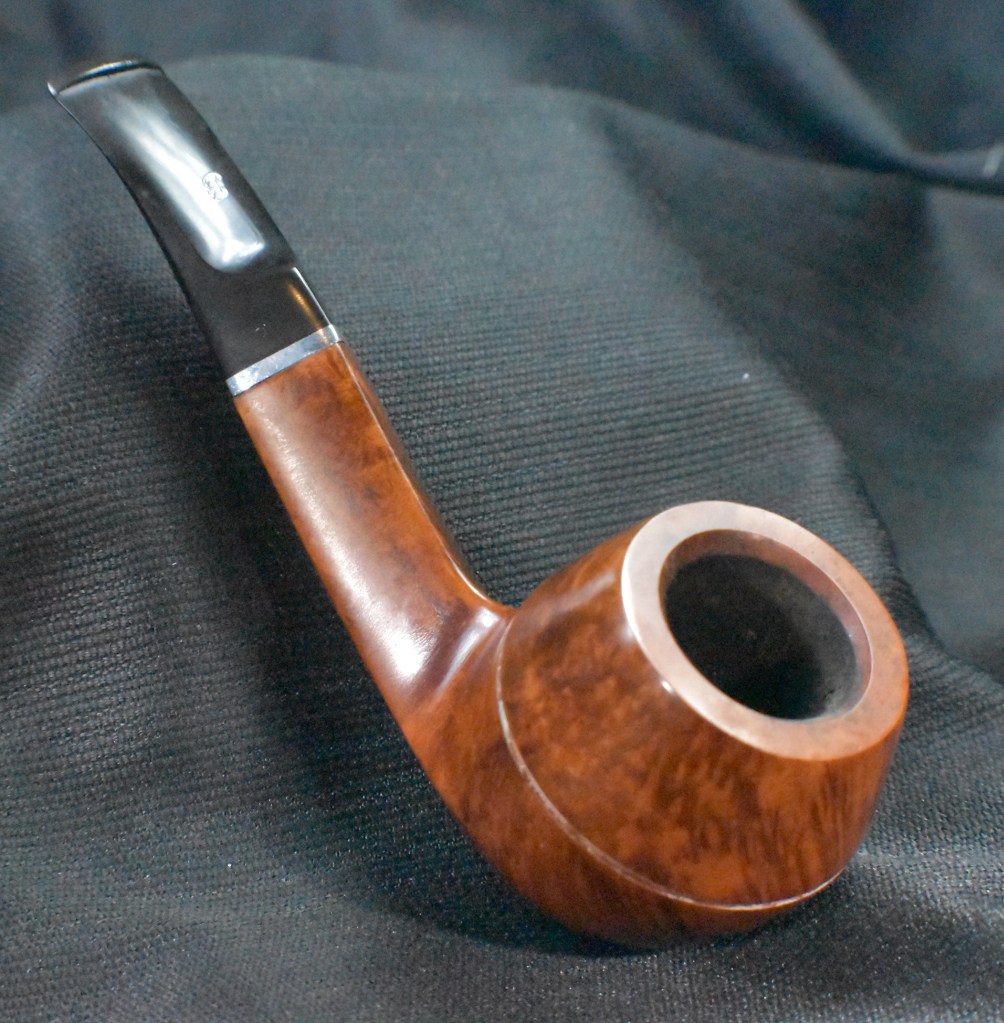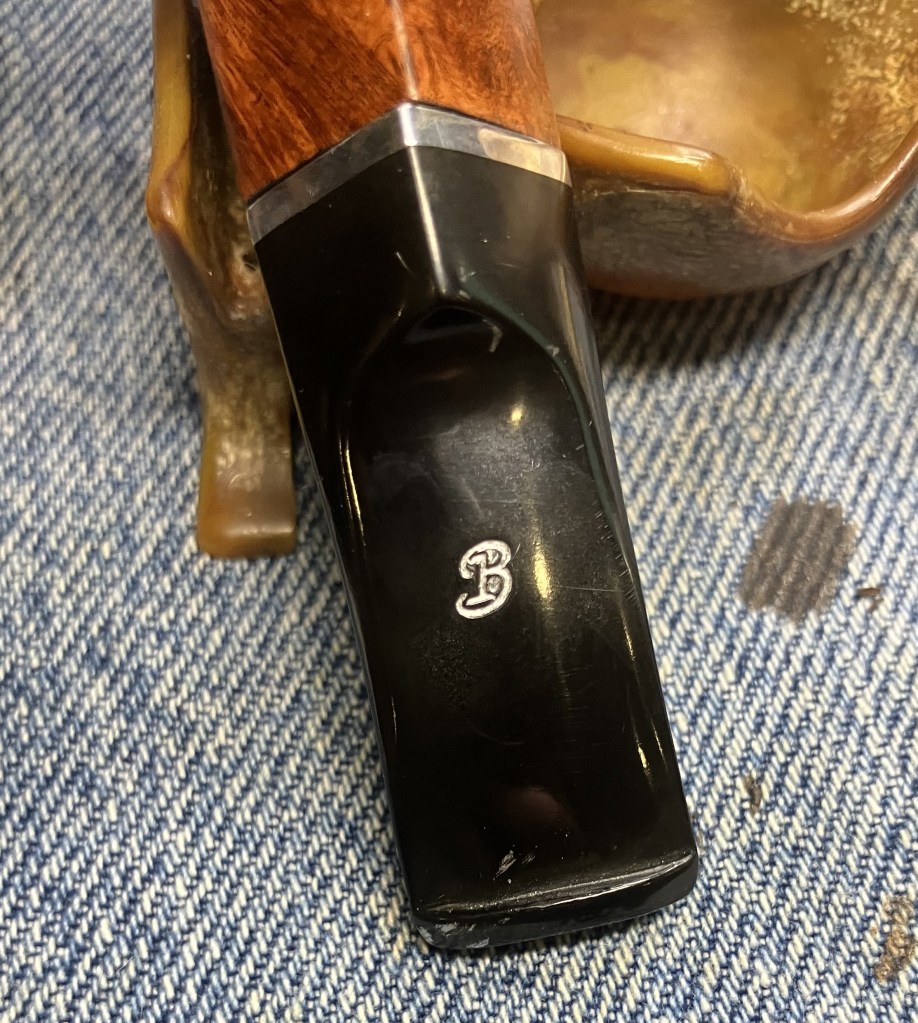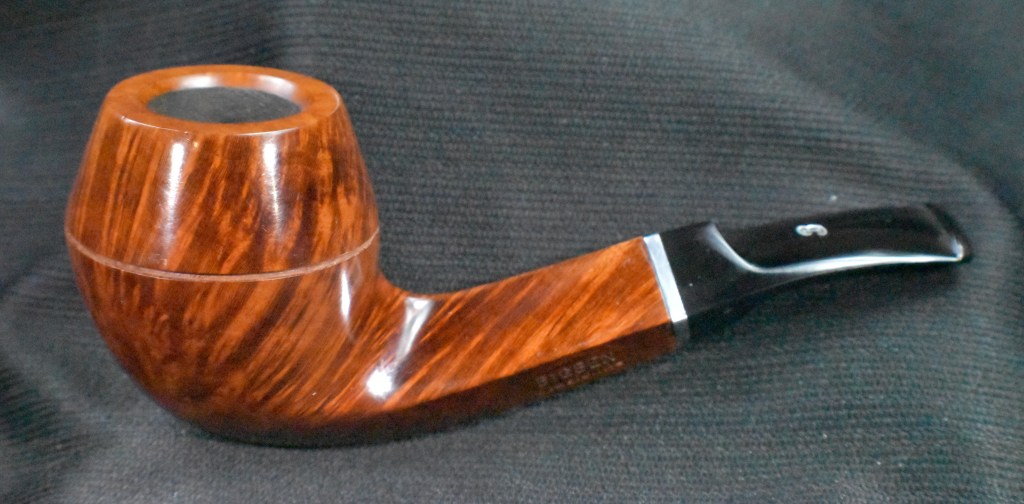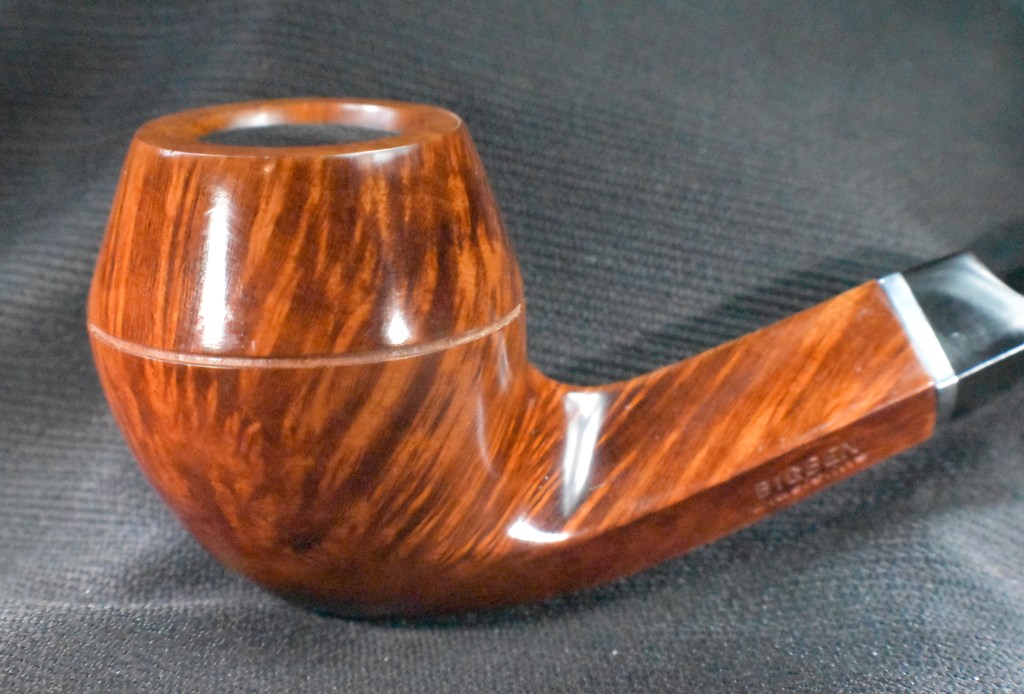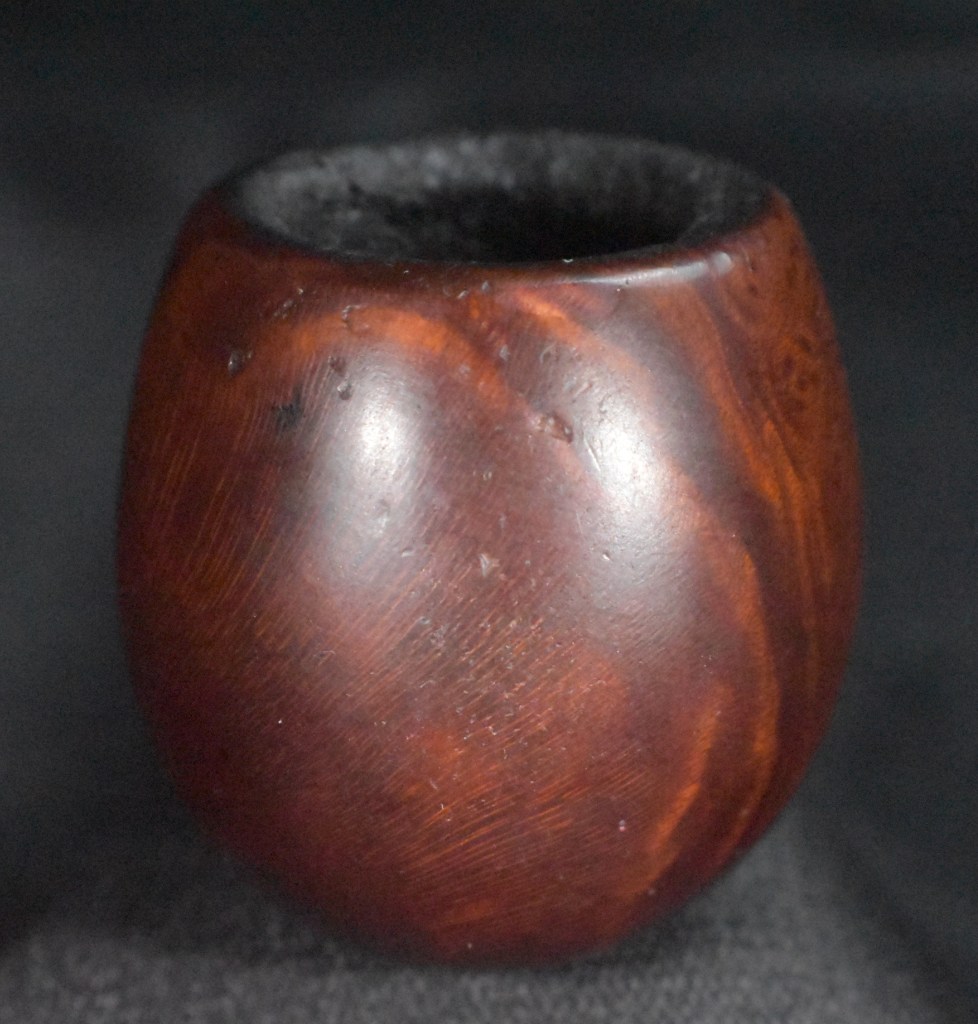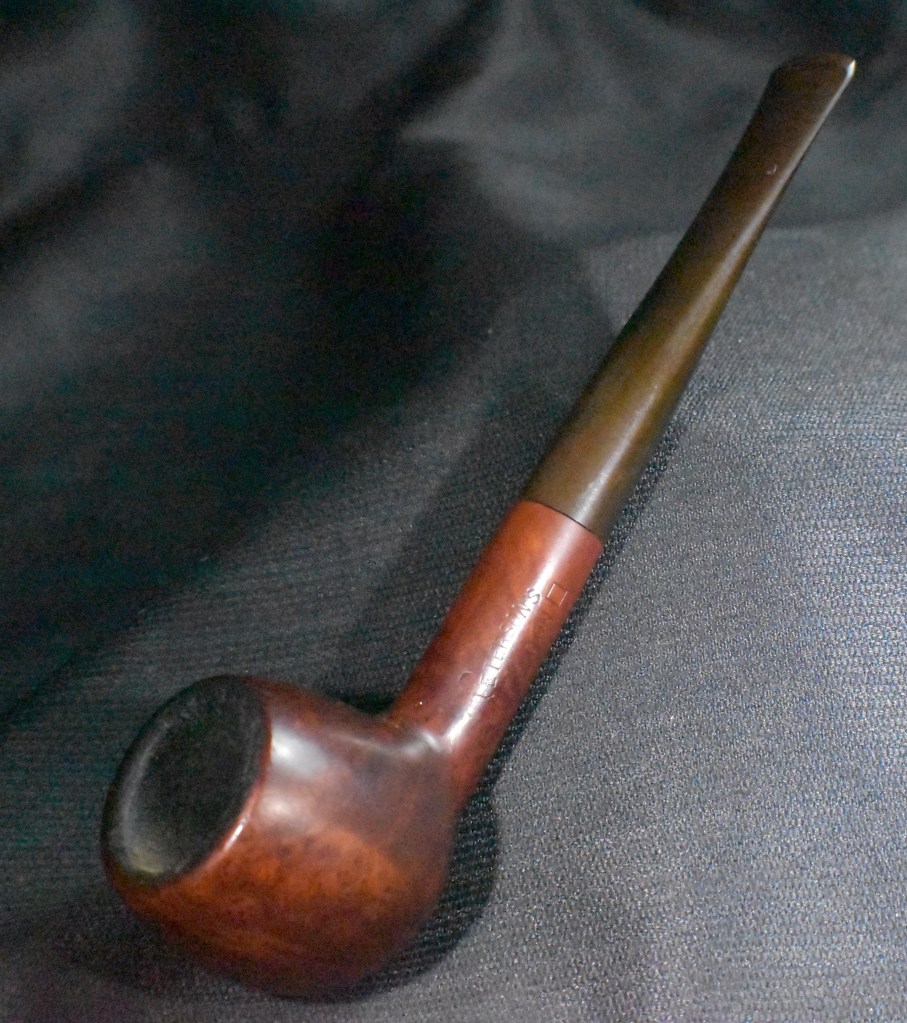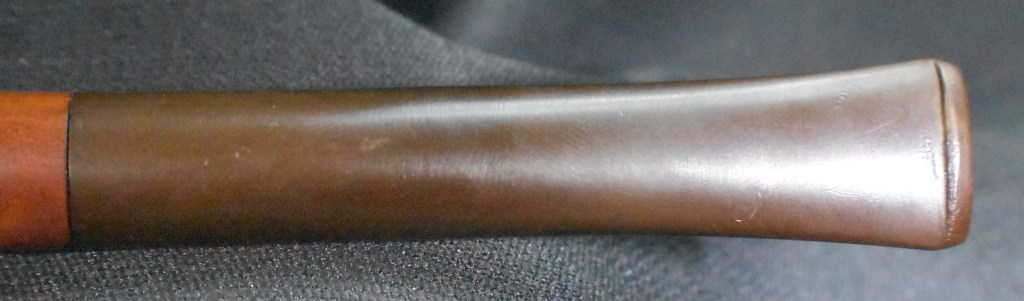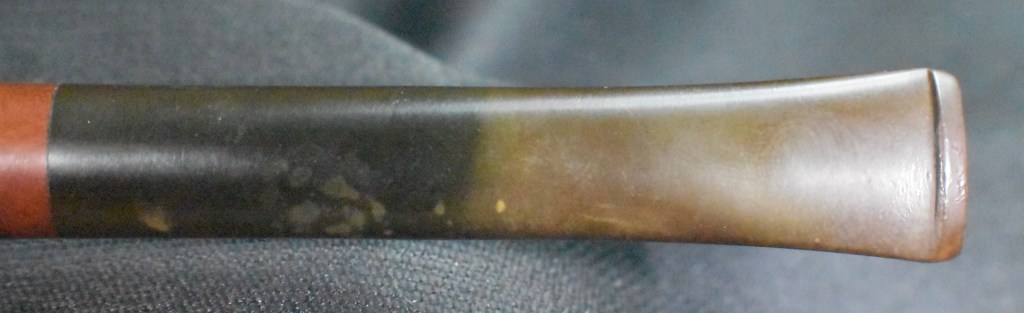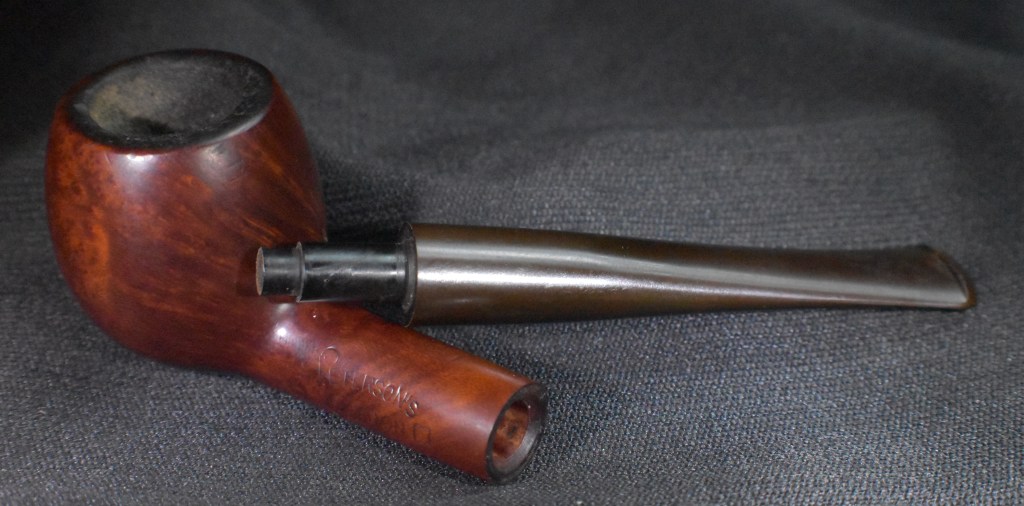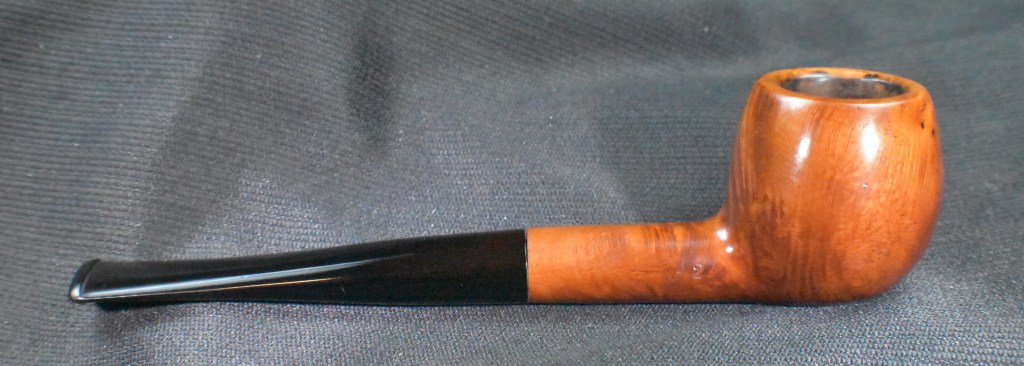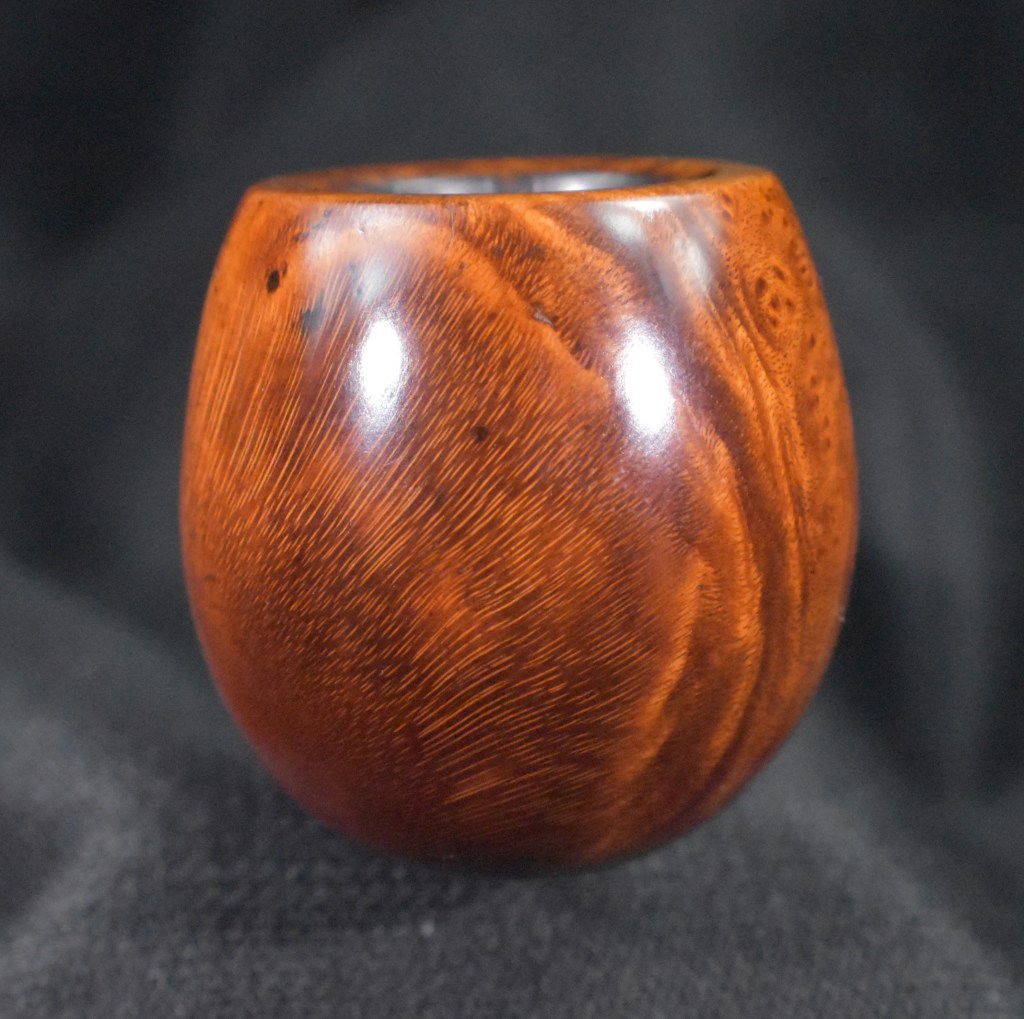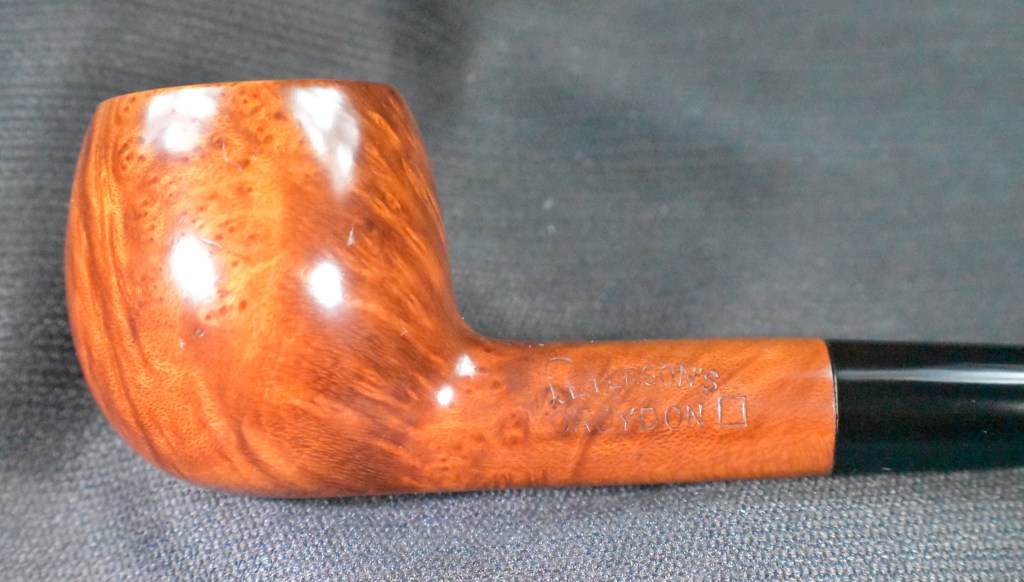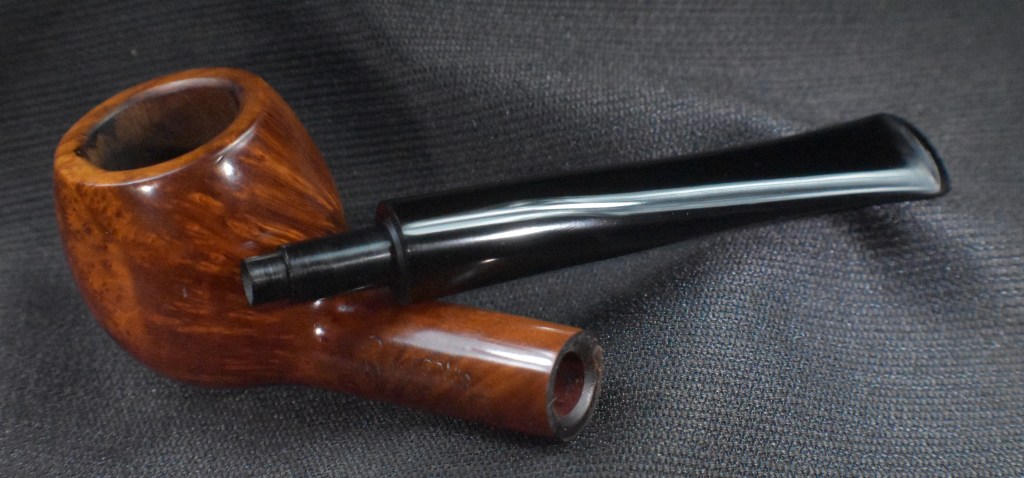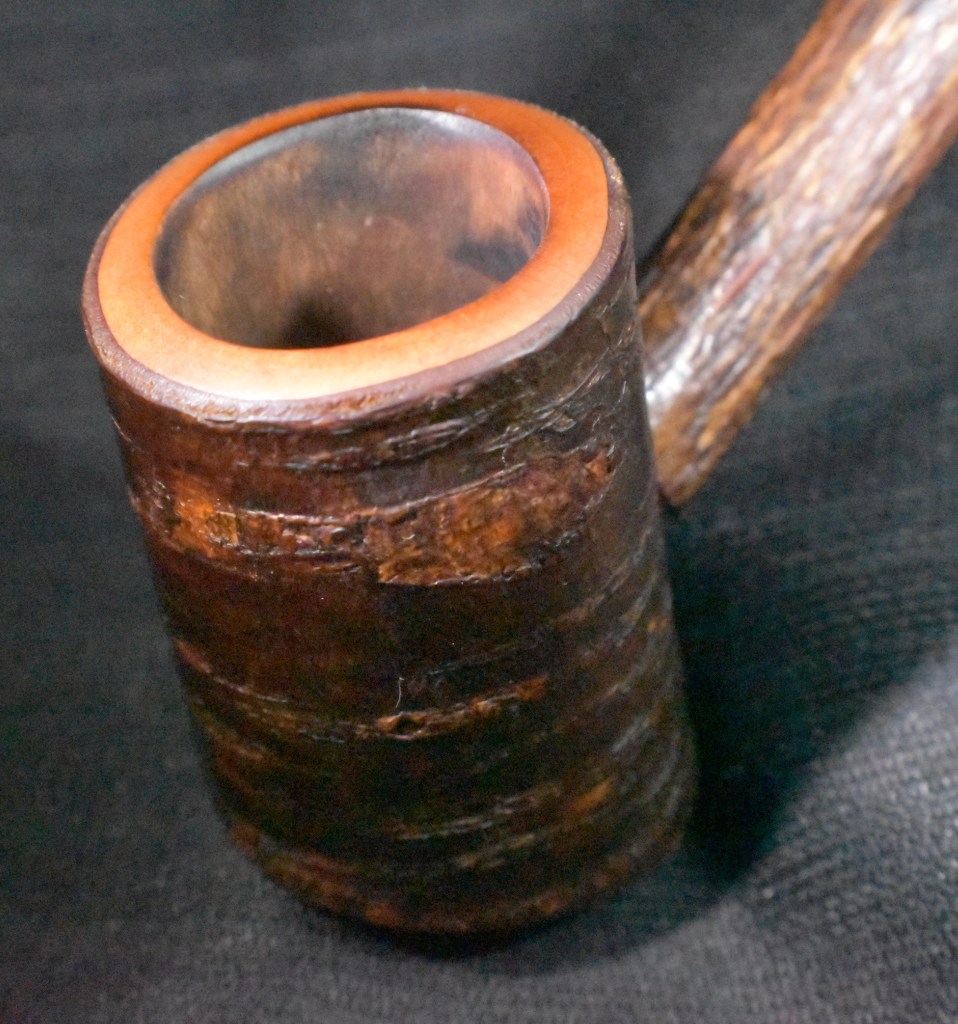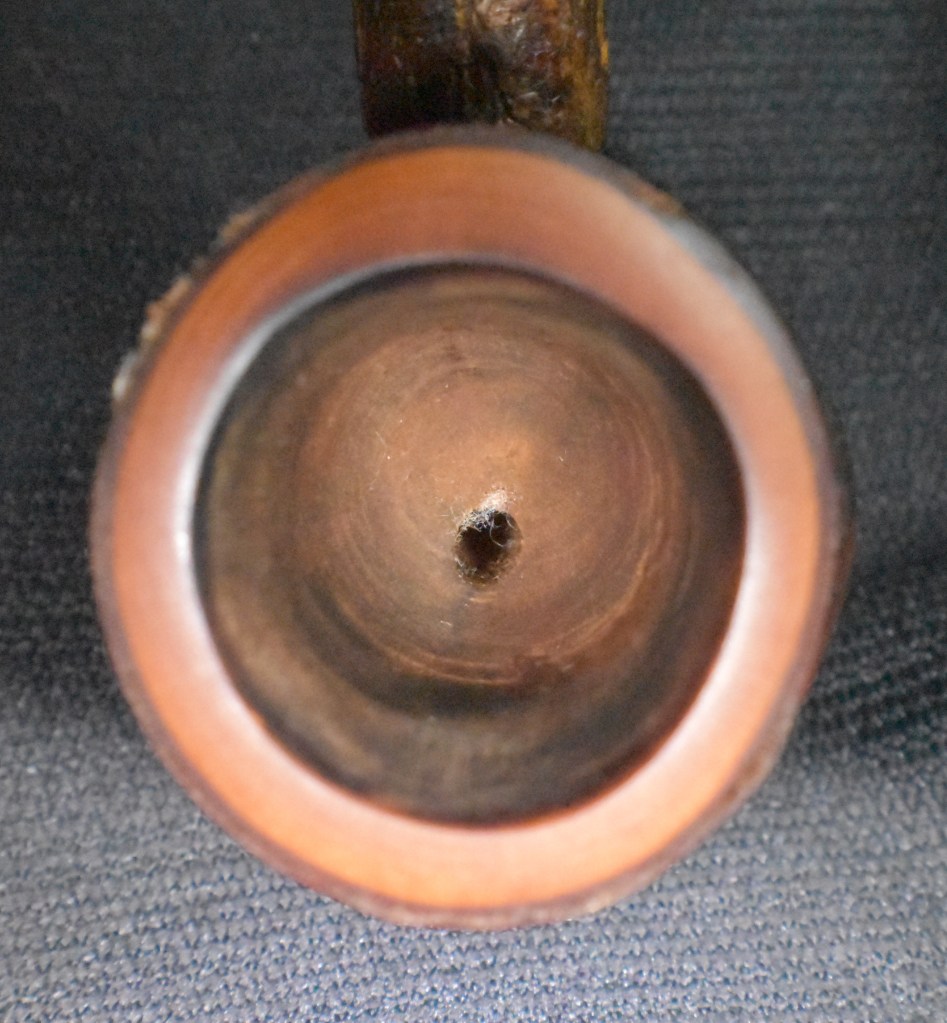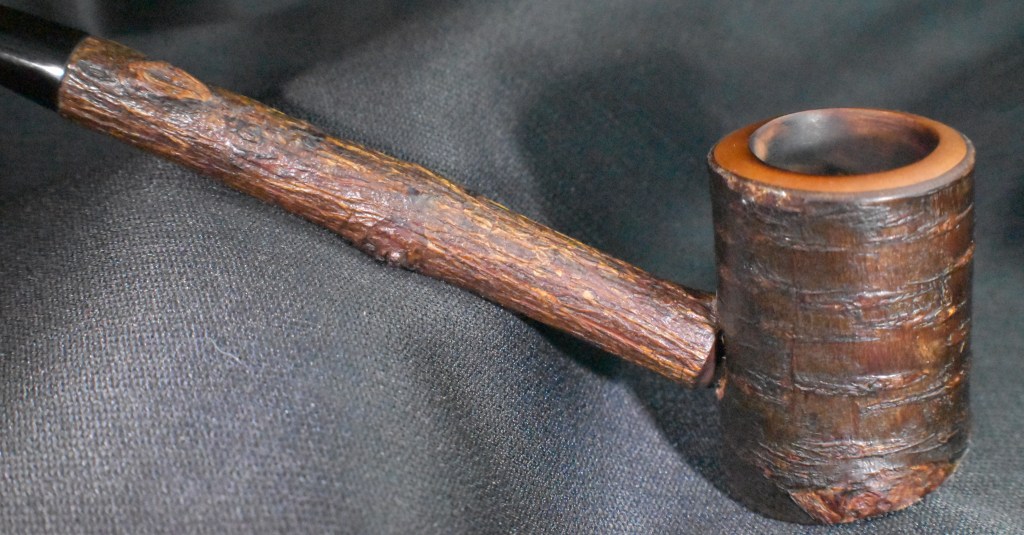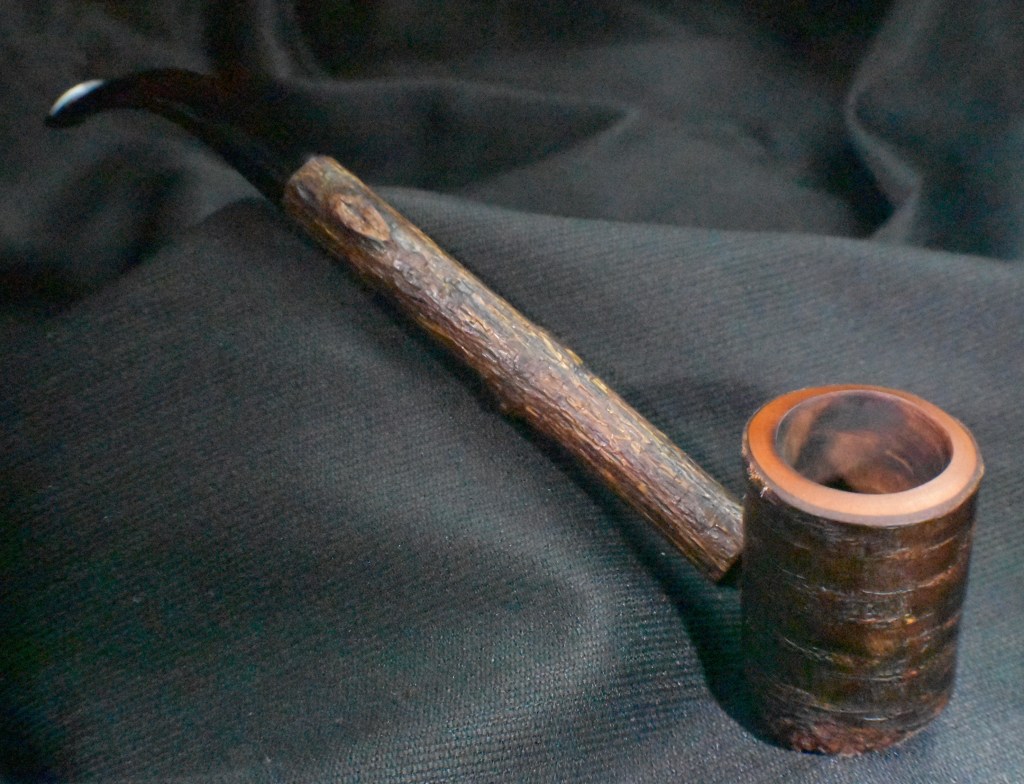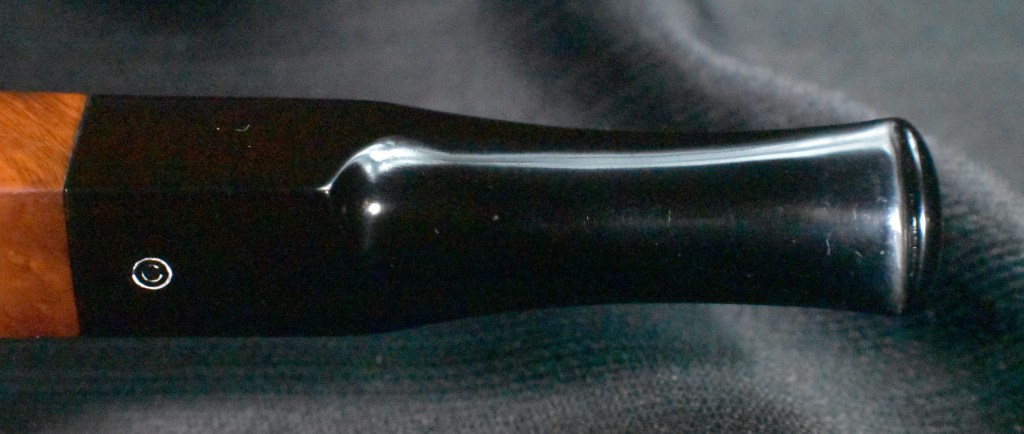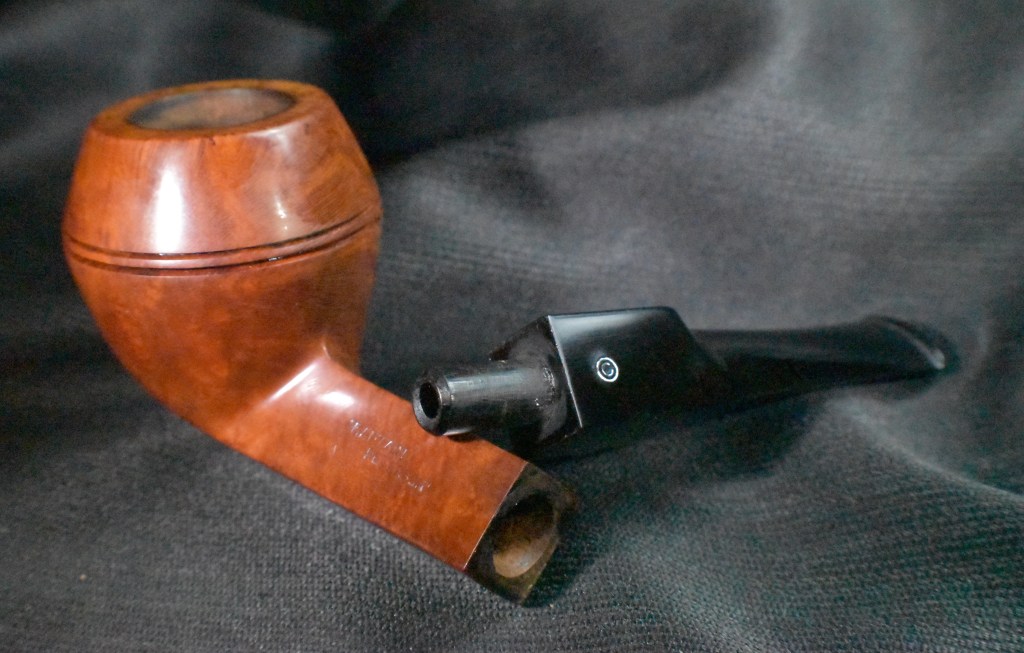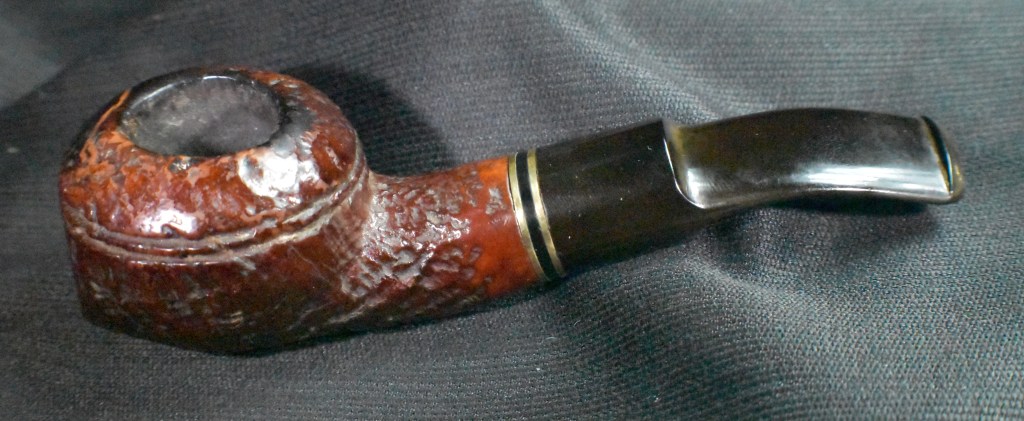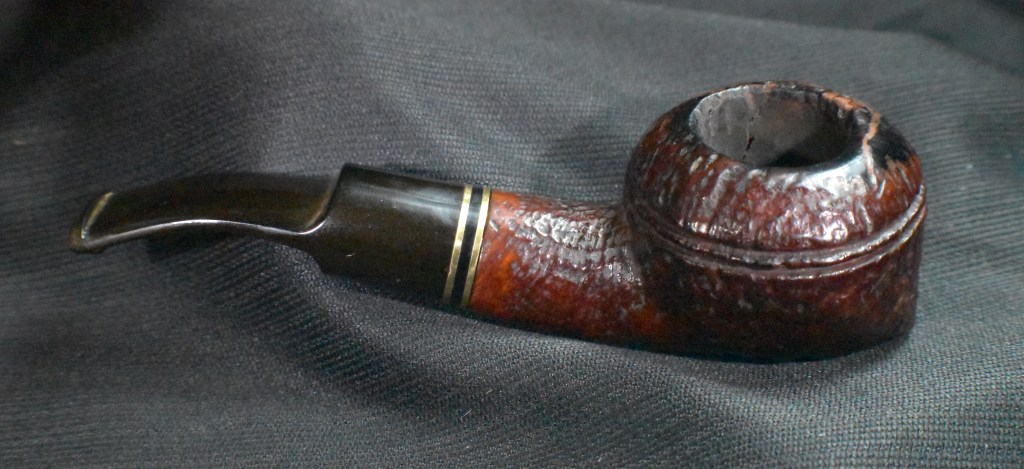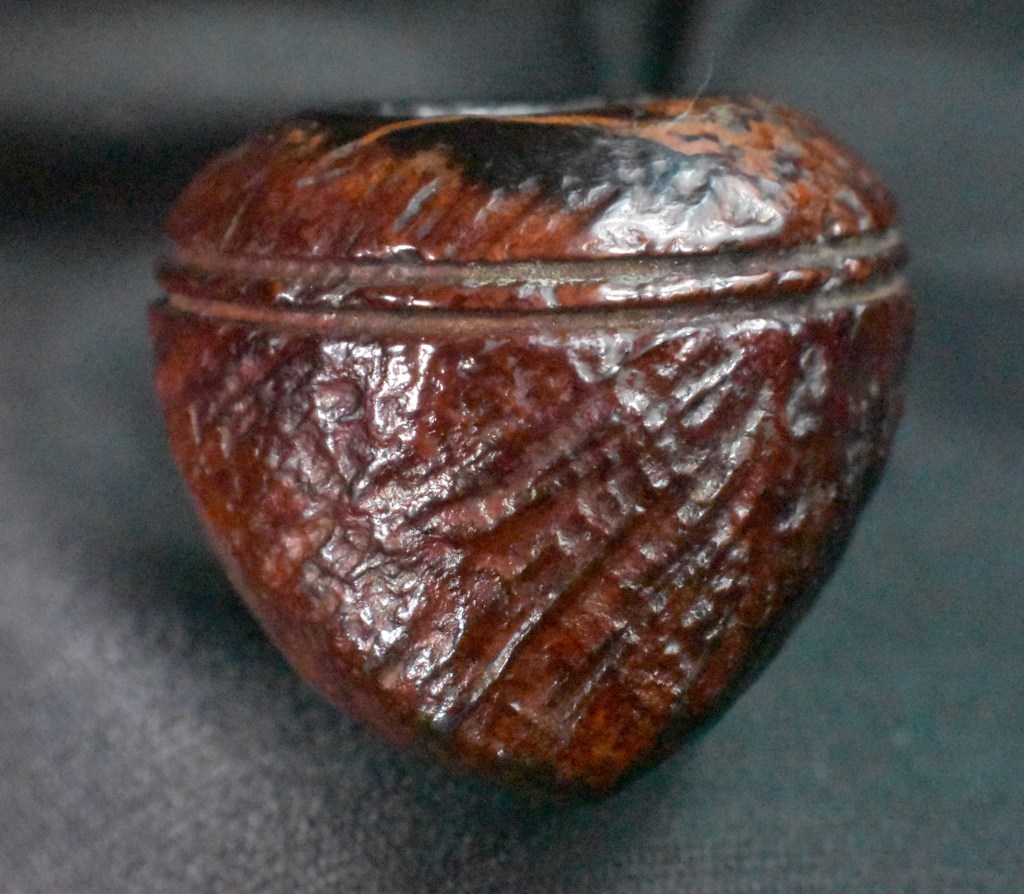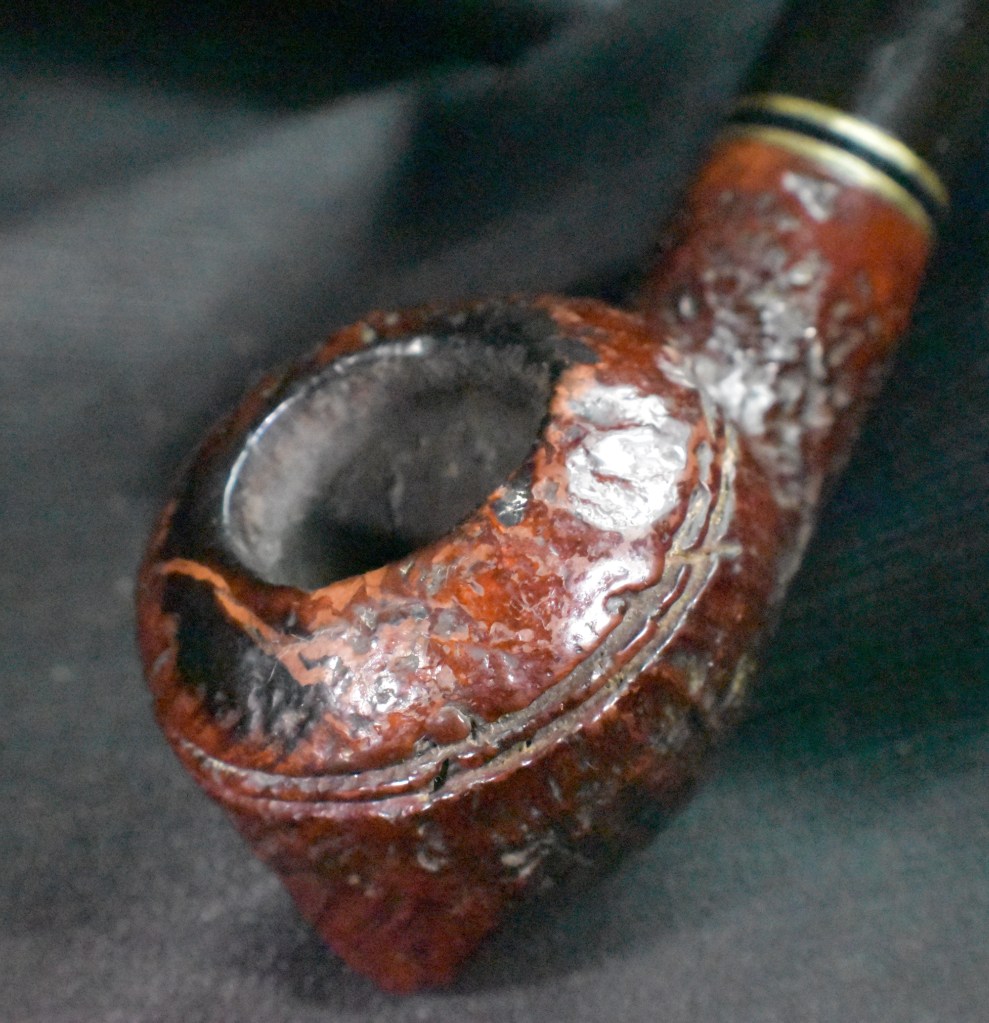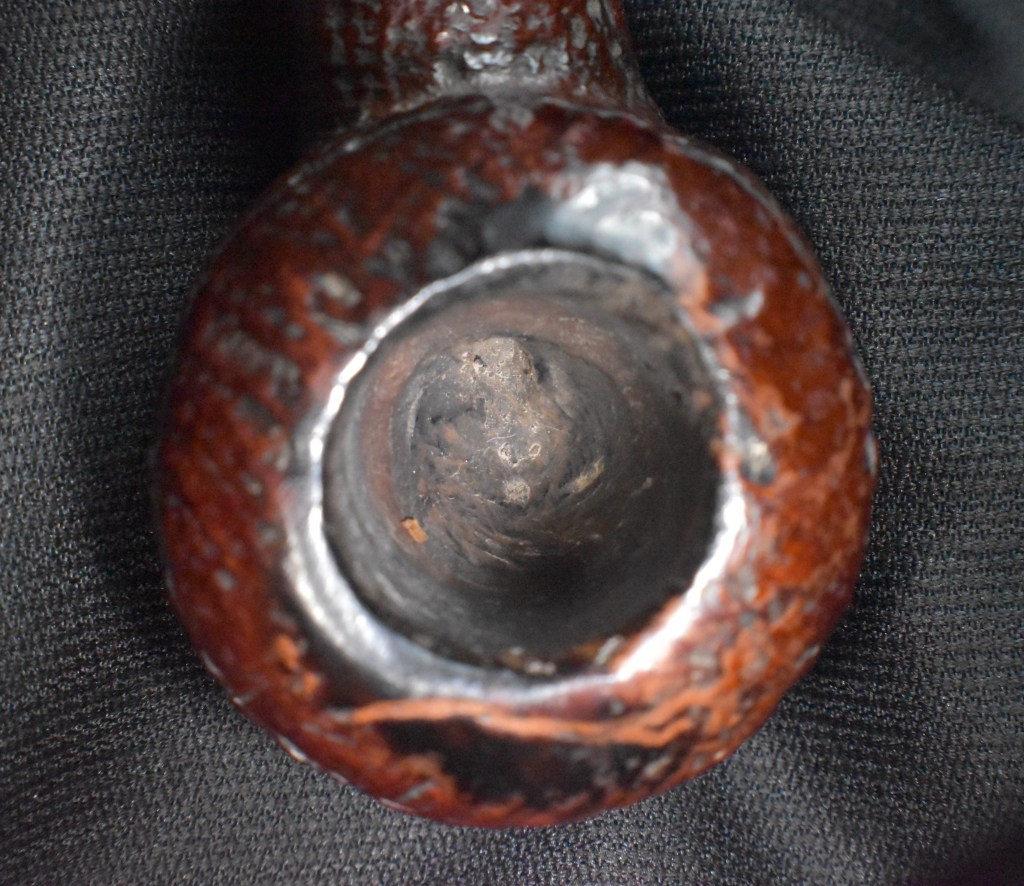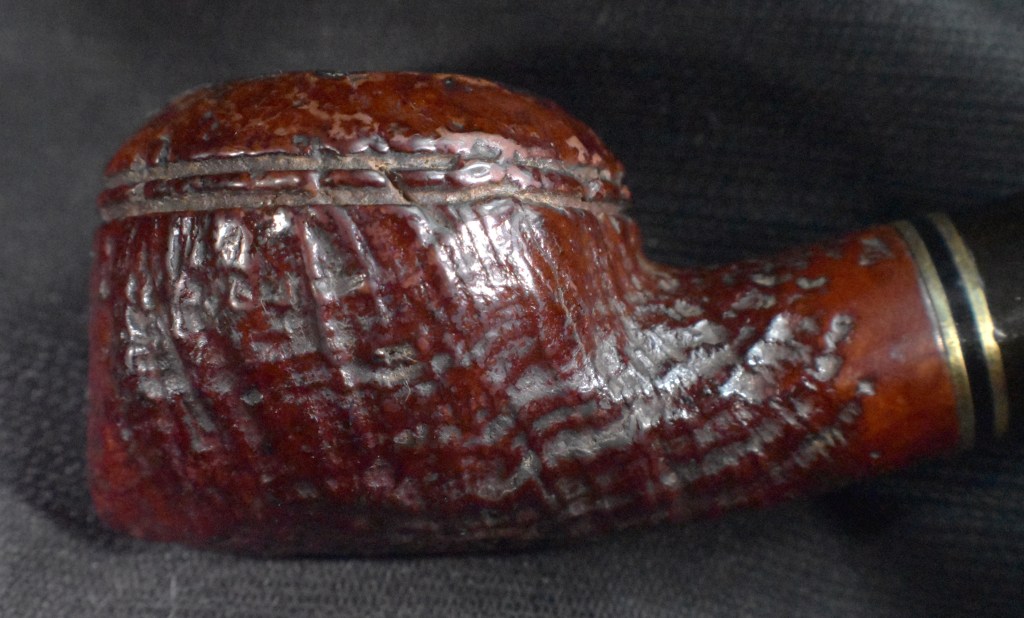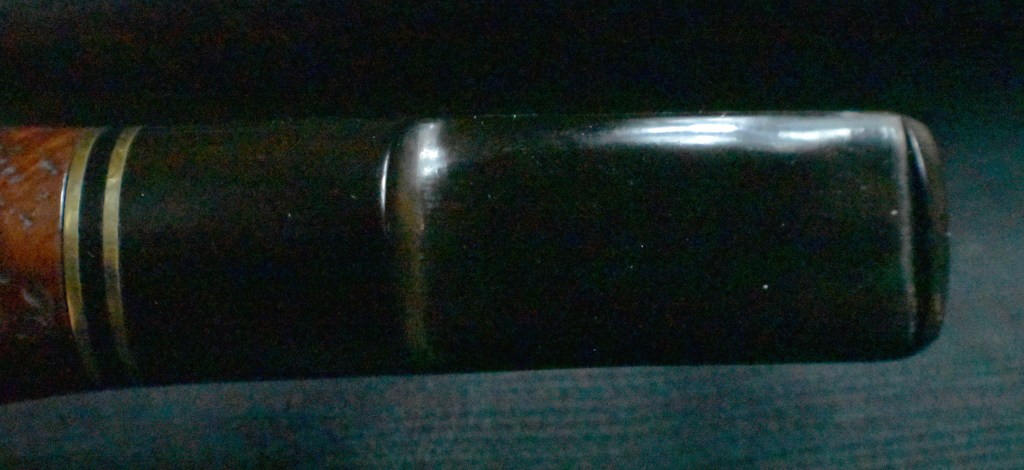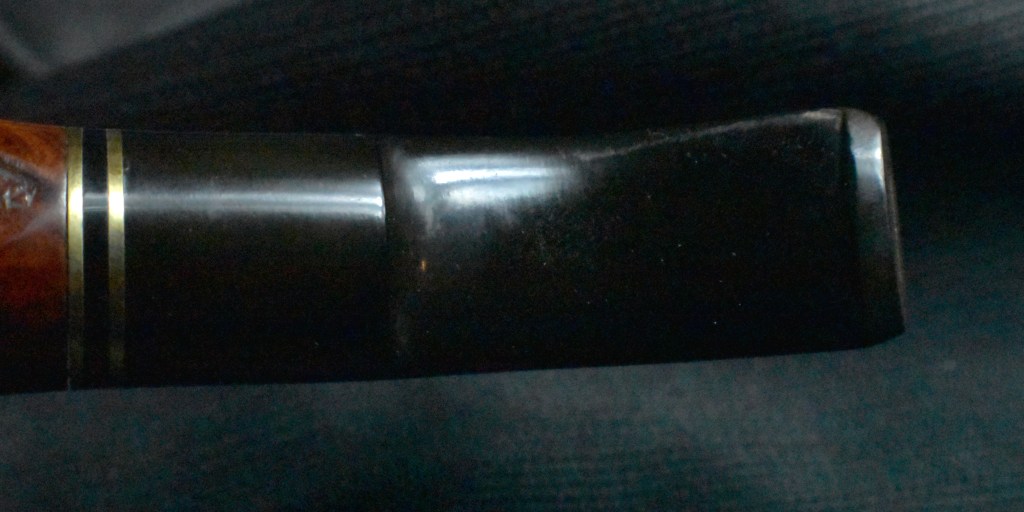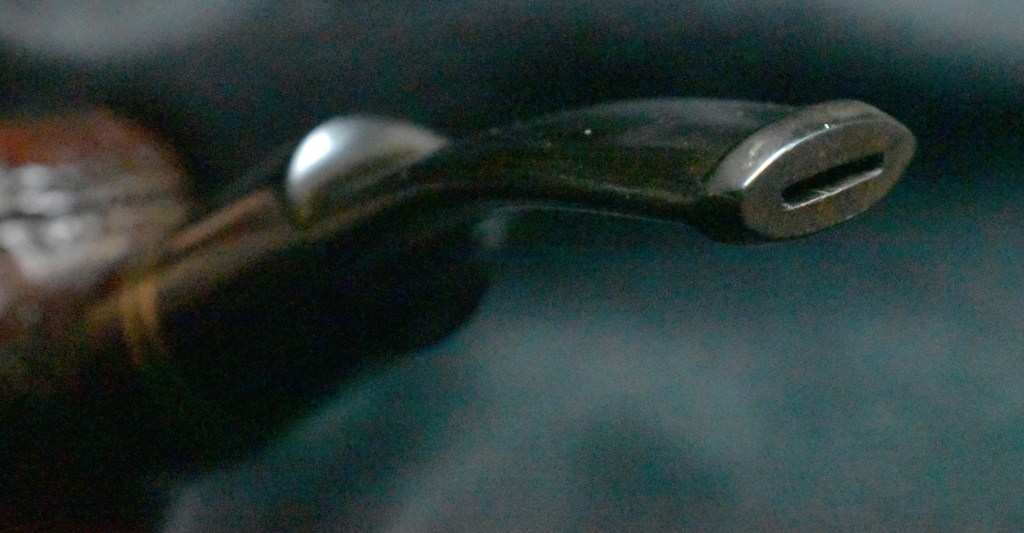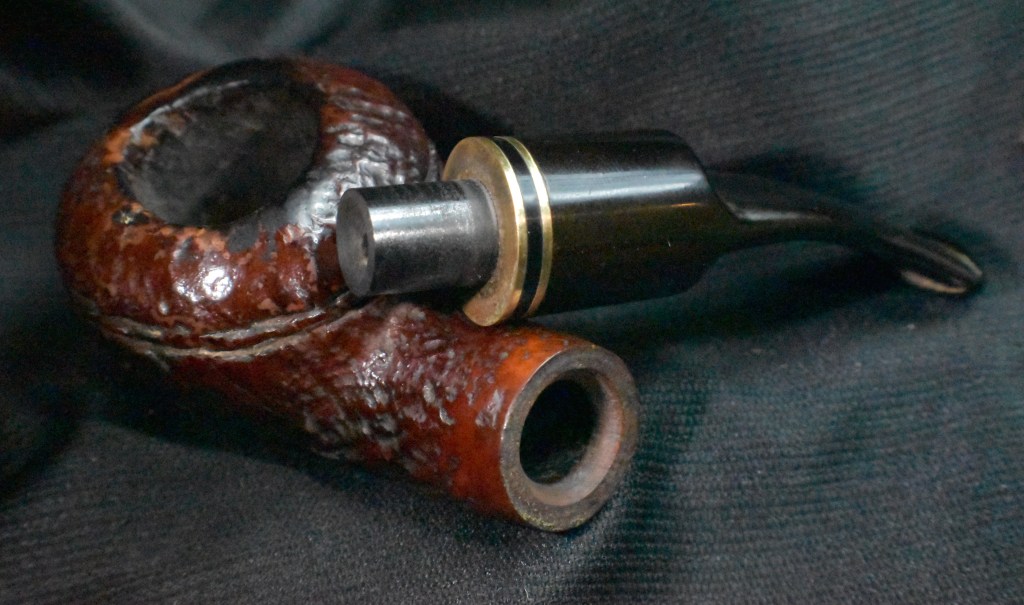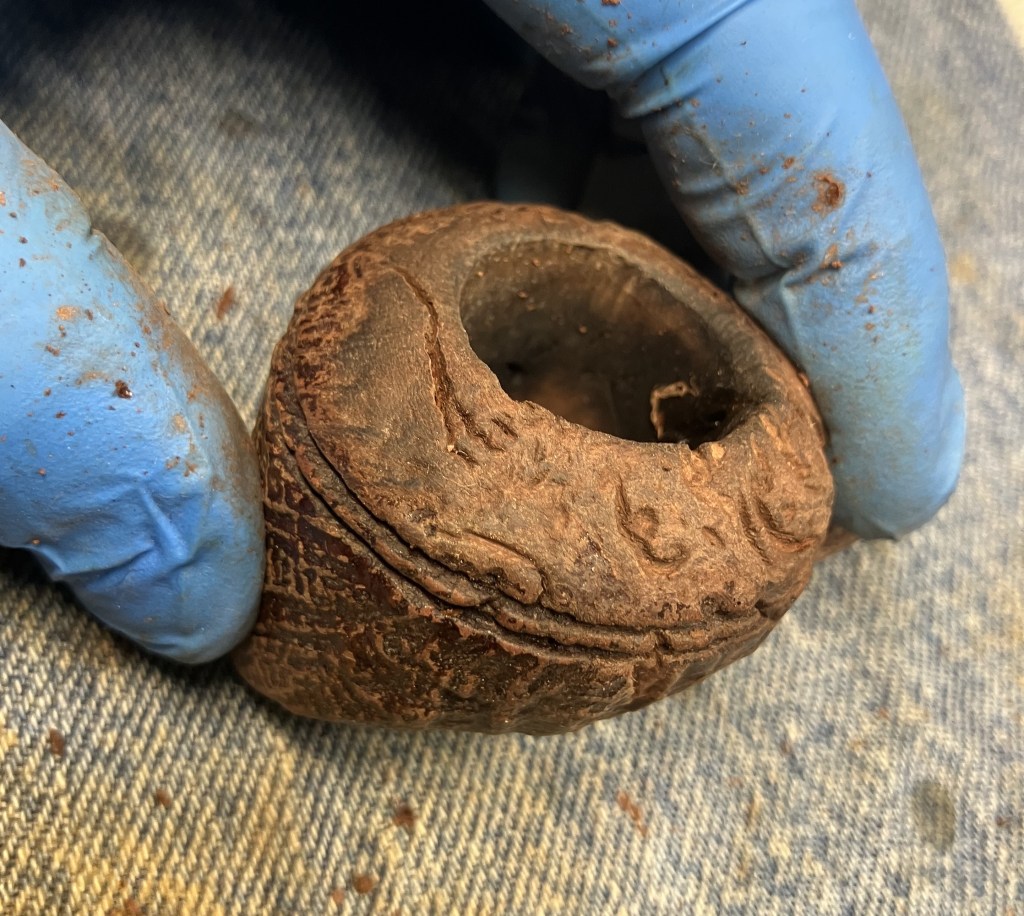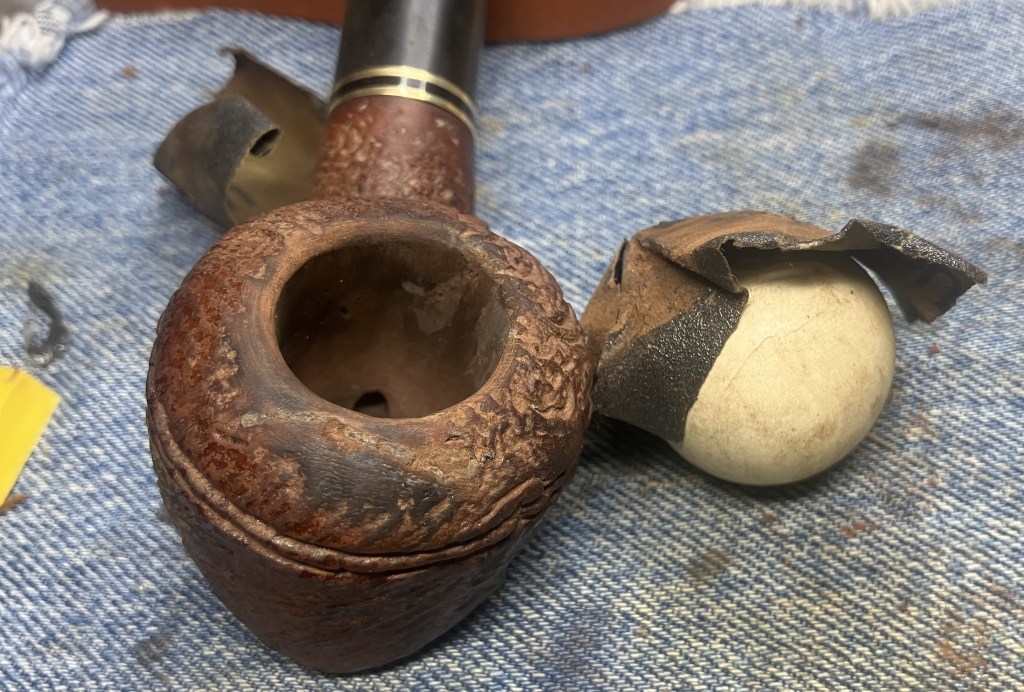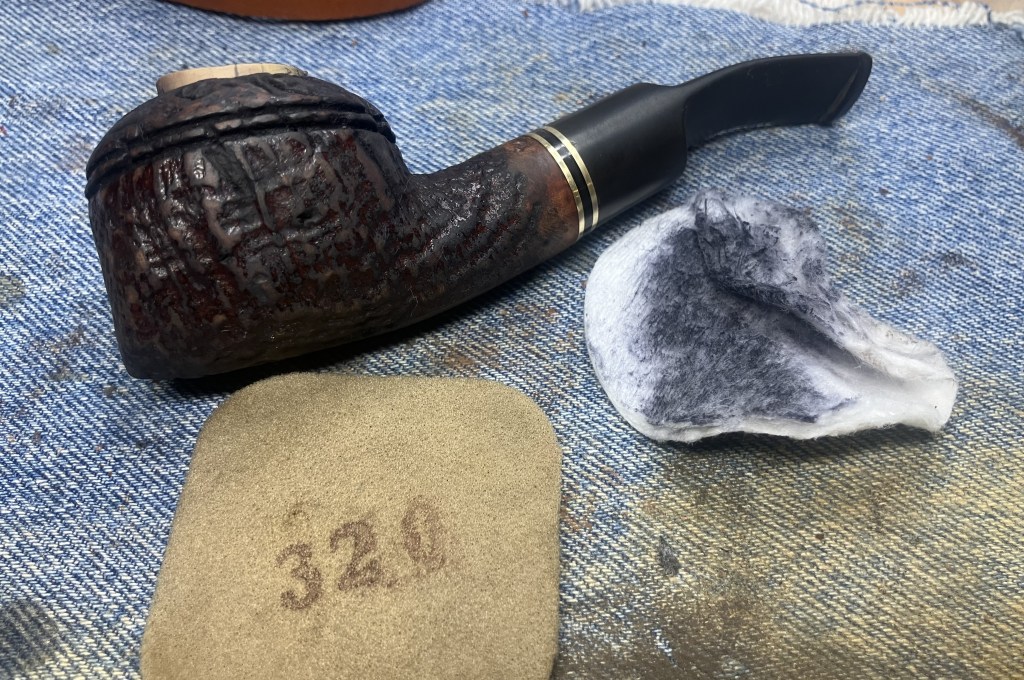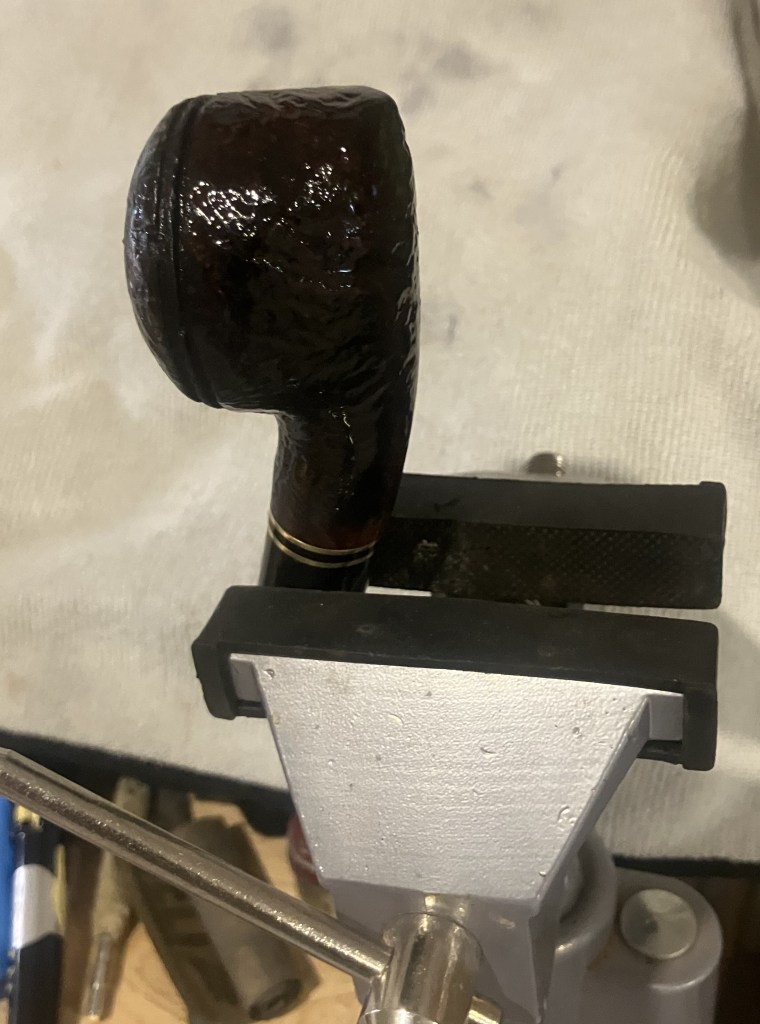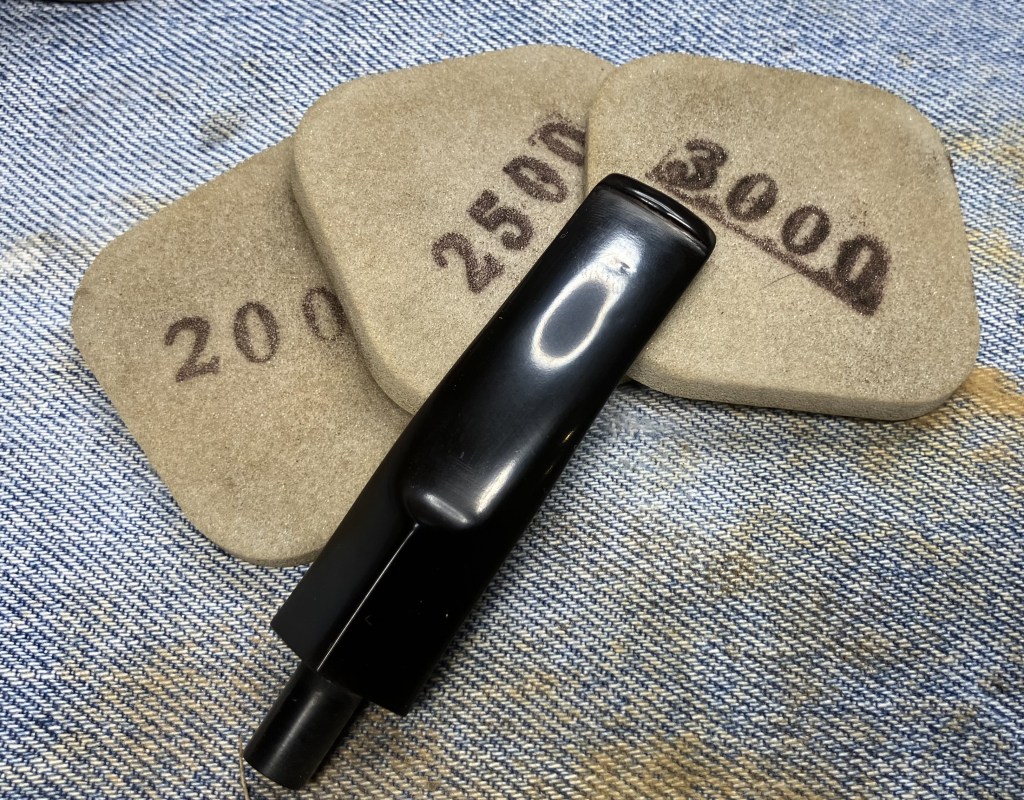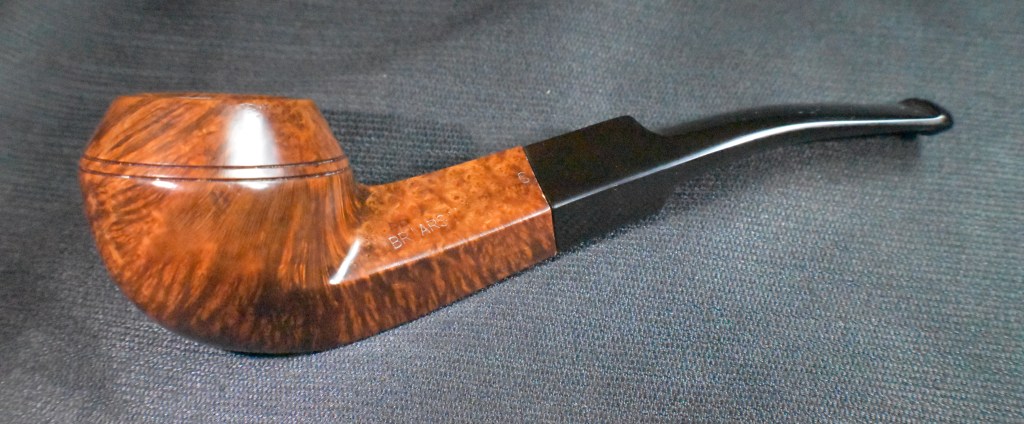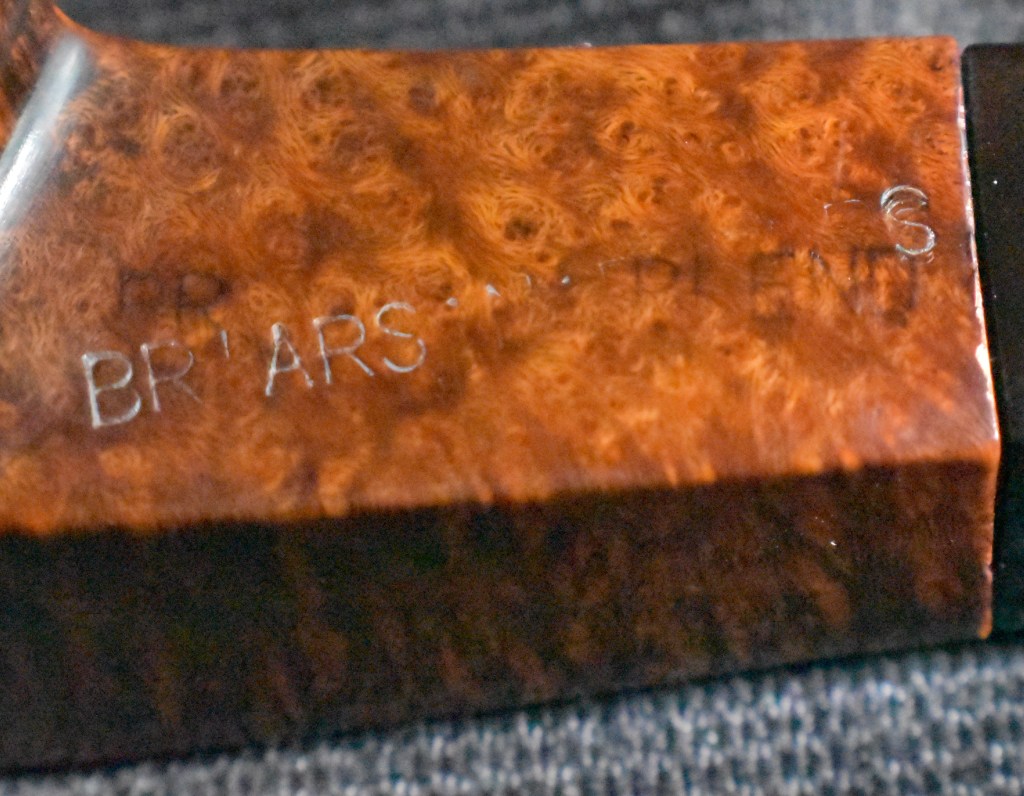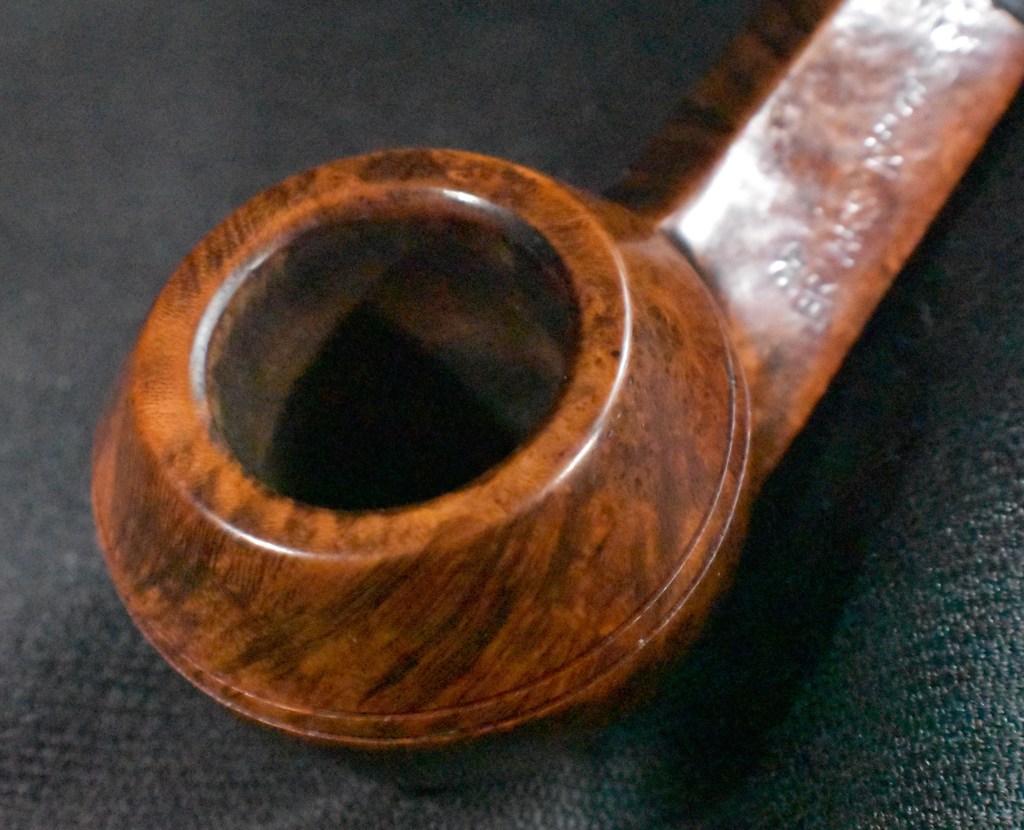
Have you ever wondered how to use the terms Dutch, Holland or the Netherlands? Well, this pipe may help. The pipe was made in Holland, two of twelve provinces of the country known as the Netherlands. Yeah, there are two Hollands, a north and a south. The makers of the pipe were Dutch, referring to the culture and language of the region. Okay, I have shown off my undergraduate geography major for four years quite enough for one day.
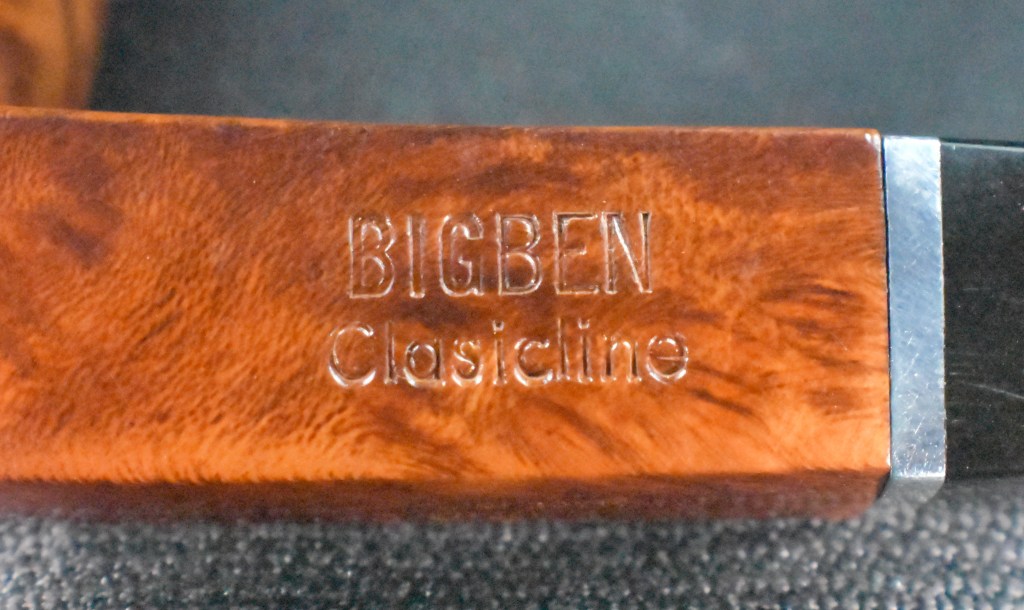
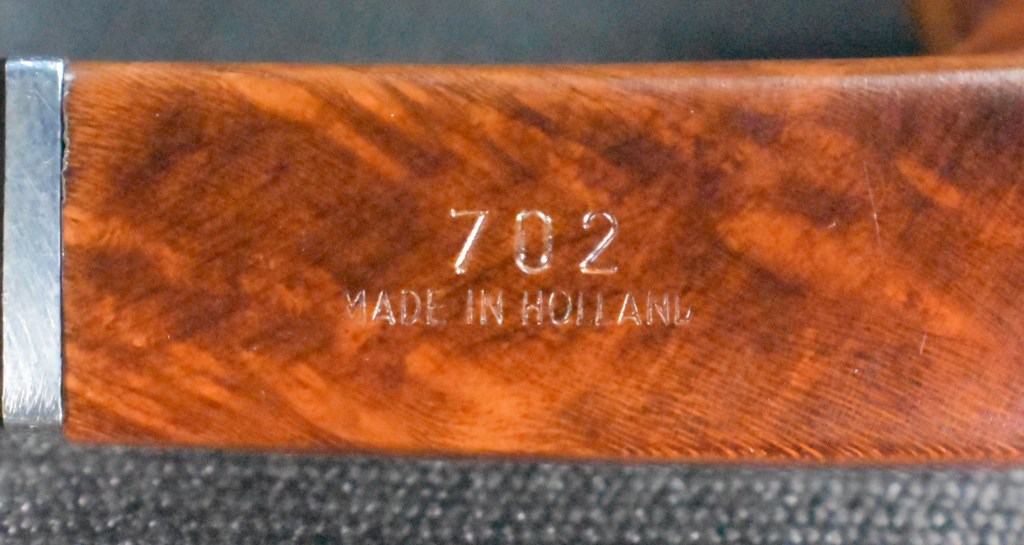
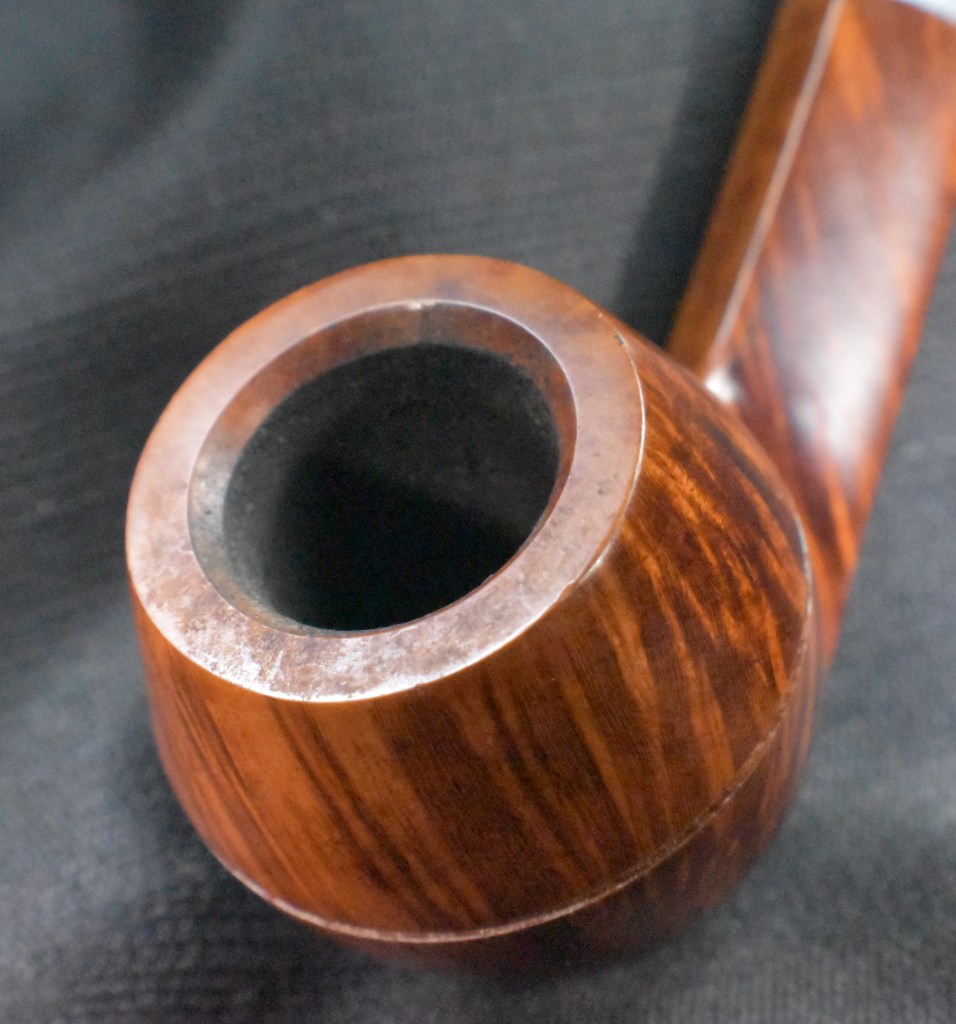
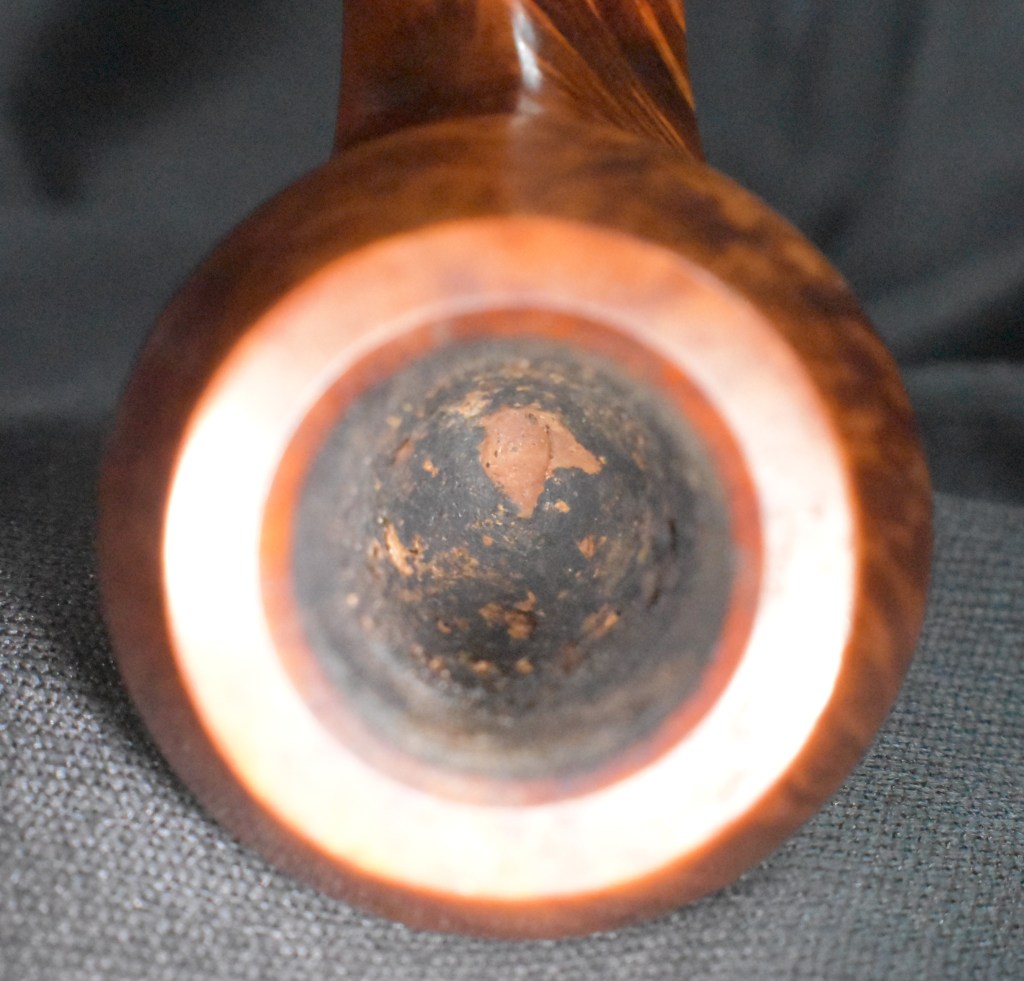
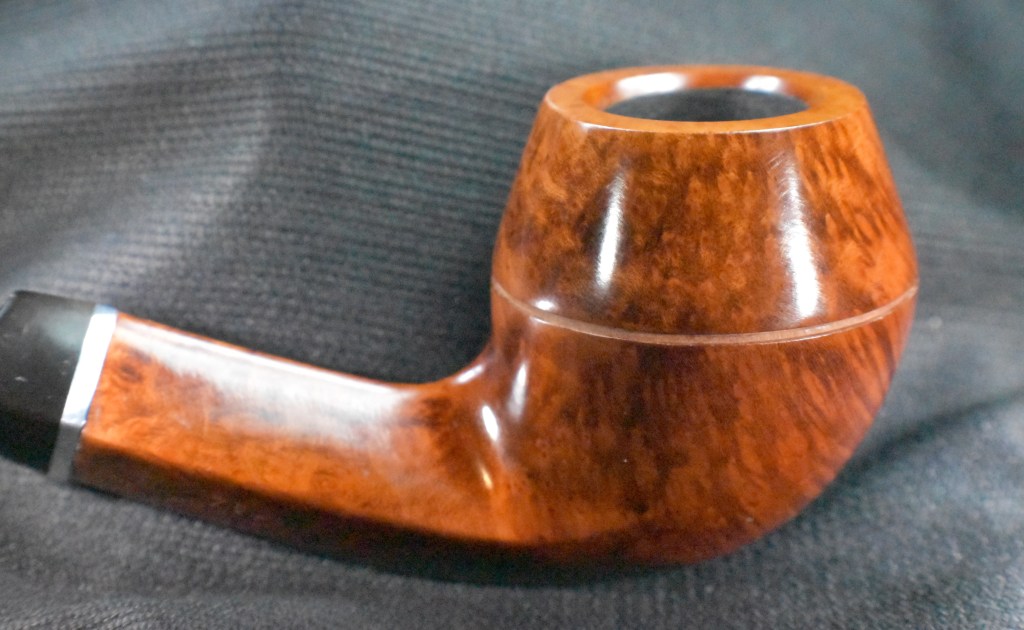
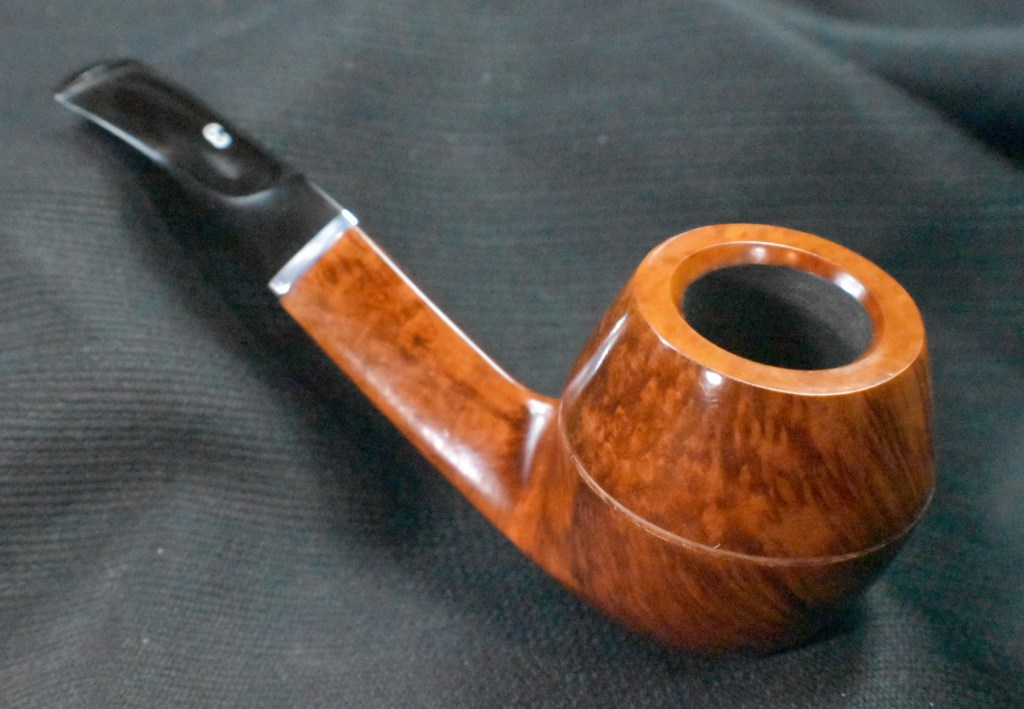
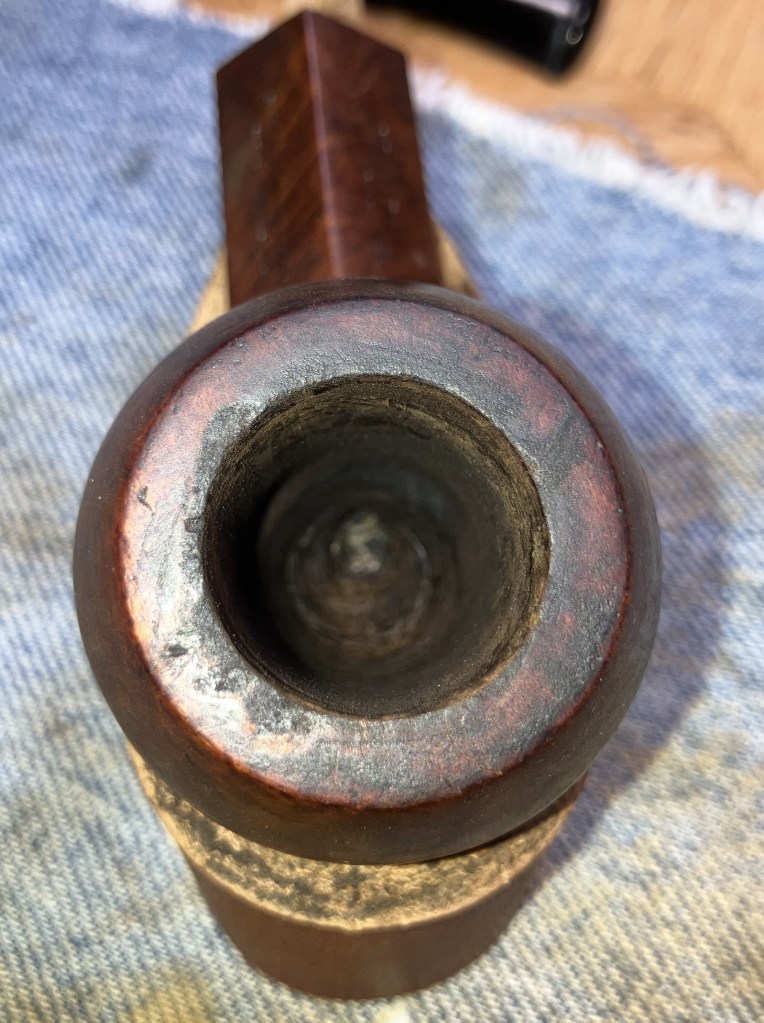
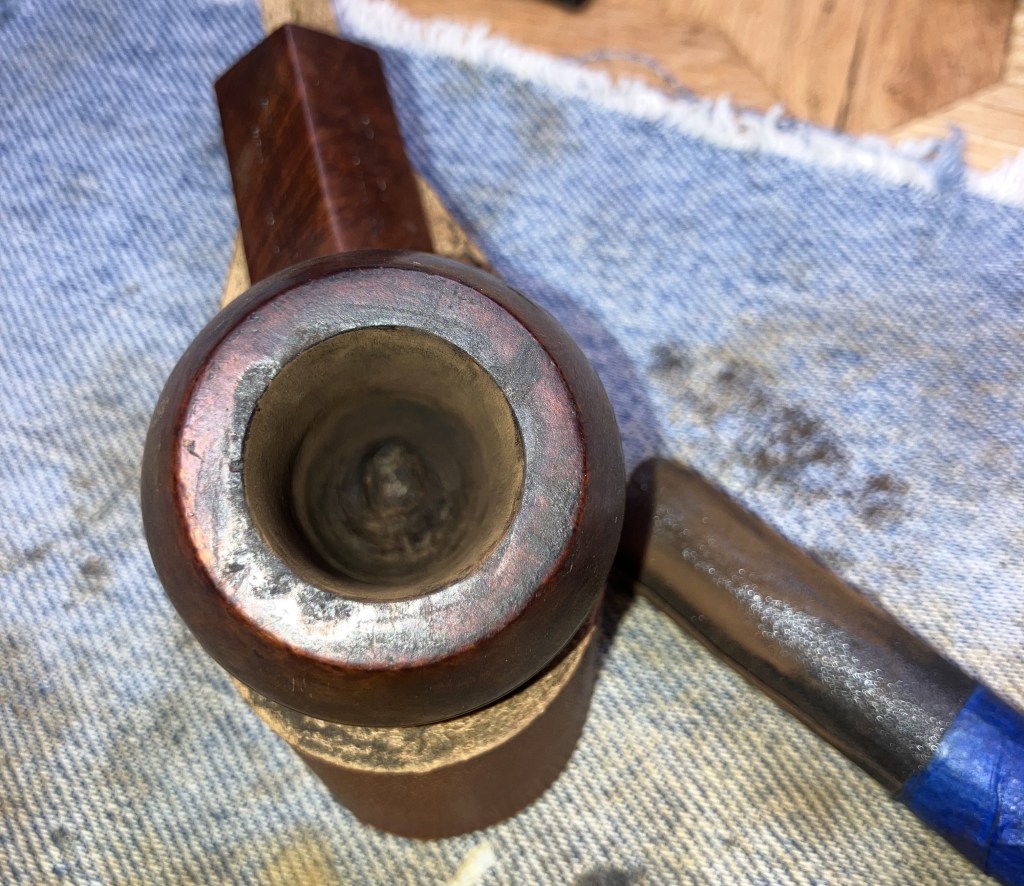
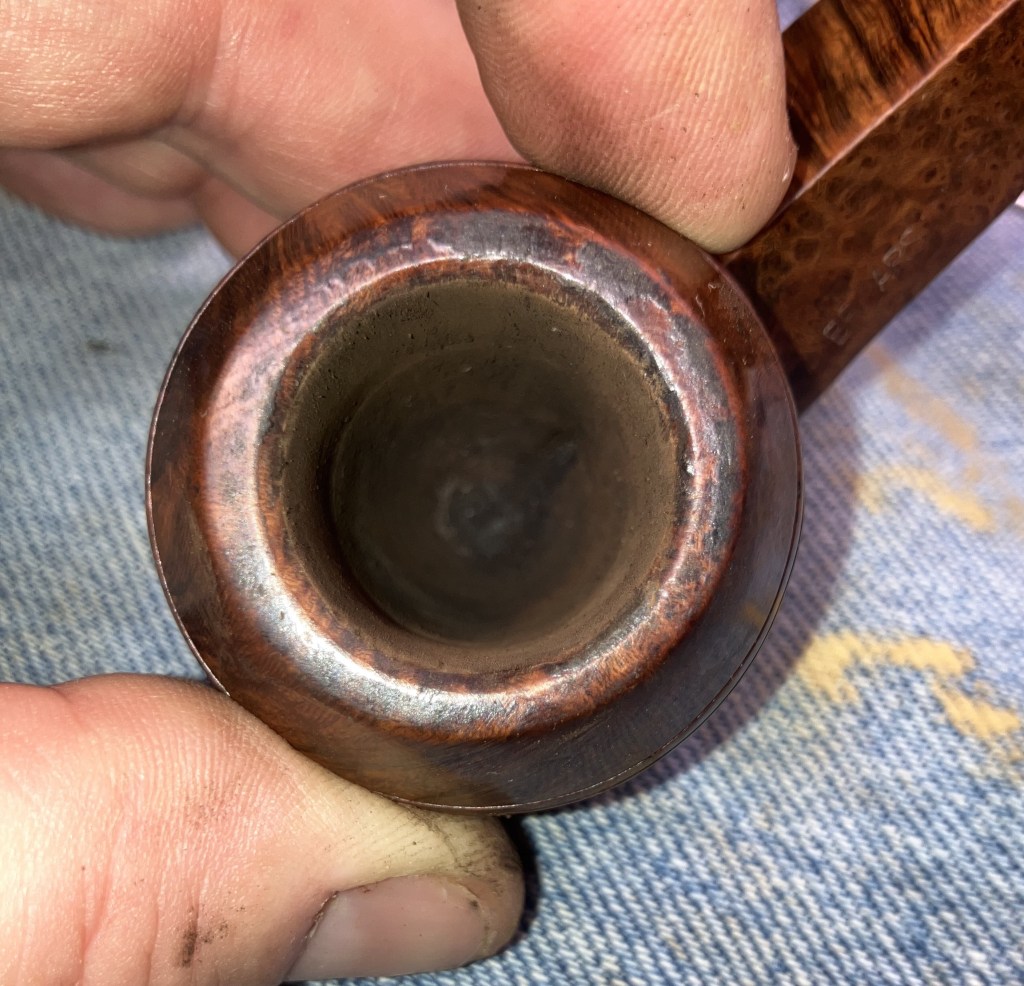
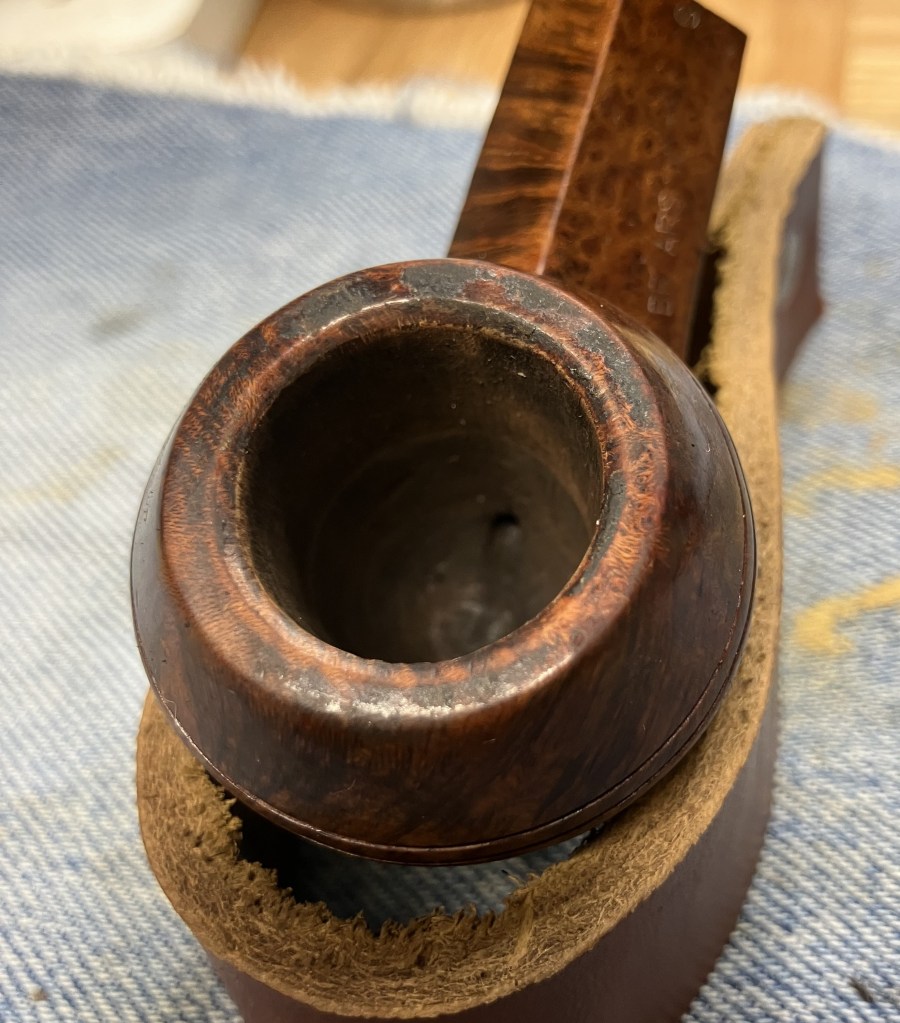
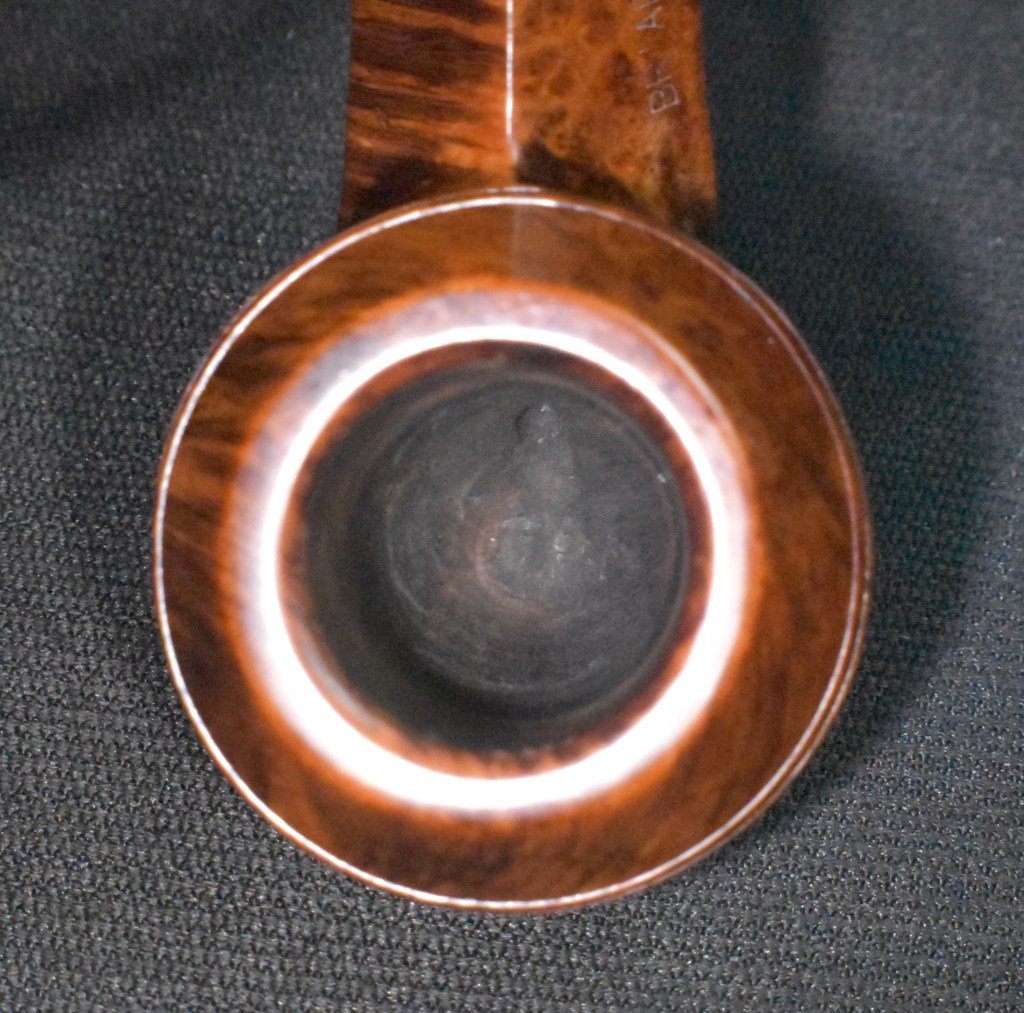
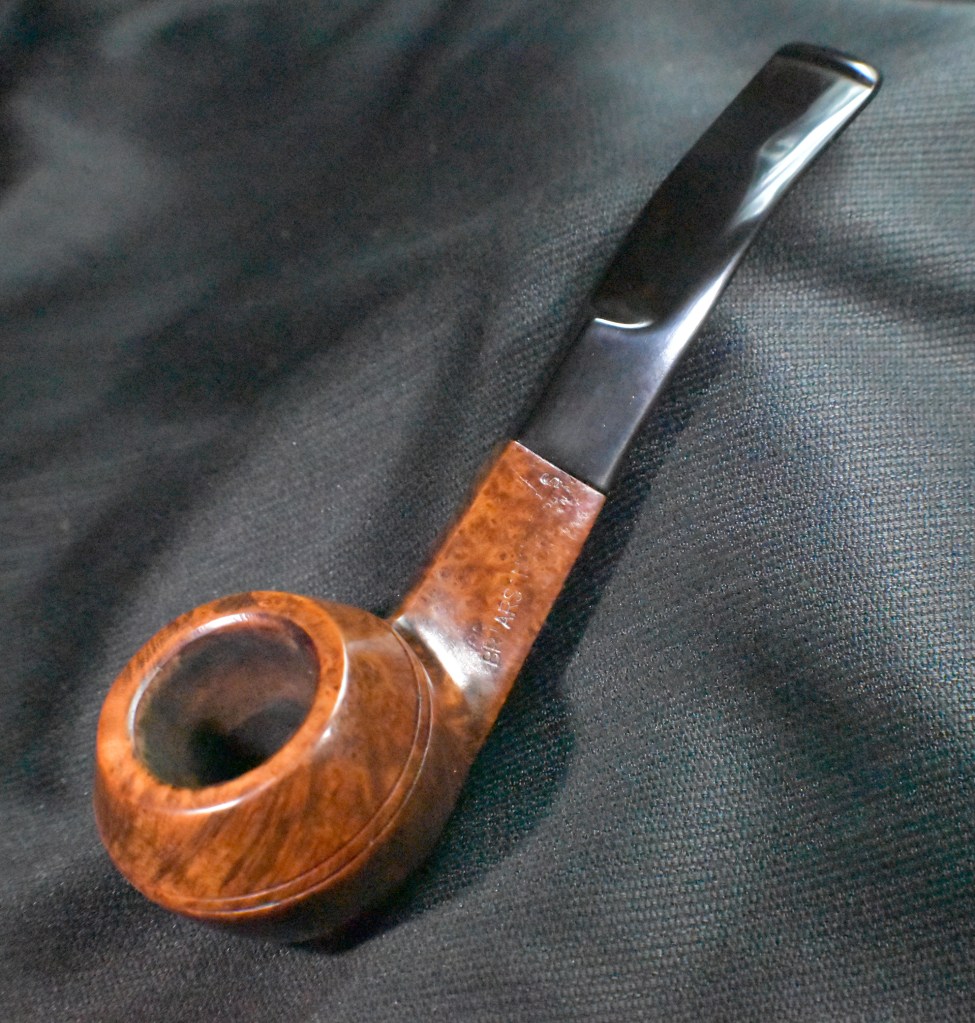
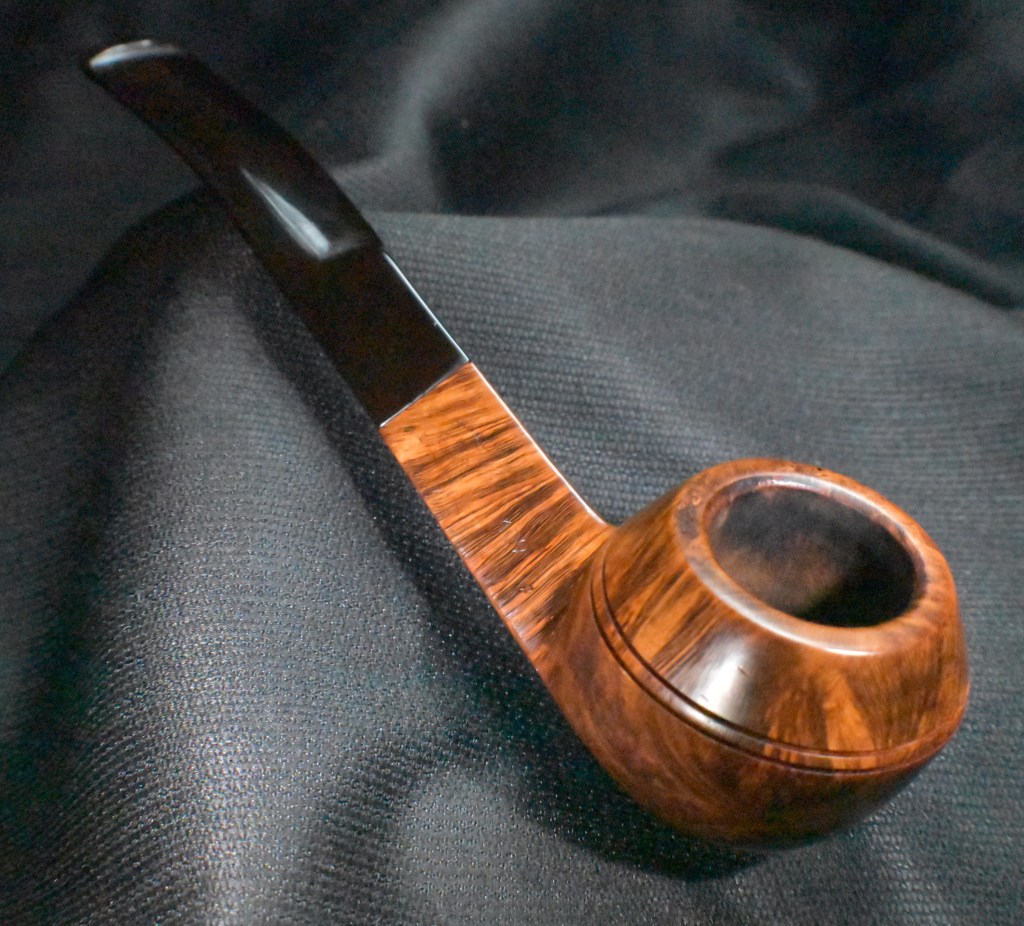
This pipe caught my eye on eBay recently. I was taken by both the shape and the price. I immediately sent Sascha Mertens a private message via Facebook, asking if it was a good deal. He replied quickly, as usual, saying that it was indeed a good deal for a relatively rare and desirable shape. He had me at “good deal”. I can’t say I place too much emphasis on popular things, I know what I like. While we are talking about Sascha, he keeps me laughing with his complaints of purchasing pipes that are very clean. Yeah, he complains when a pipe is too clean and does not provide him with the opportunity or challenge of cleaning them up himself. This pipe is a wonderful example of that. I think it had only been smoked once. I now completely understand Sascha’s disappointment. Below are some photos of the Big Ben 702 before I did any work, if you can call it that, on it.
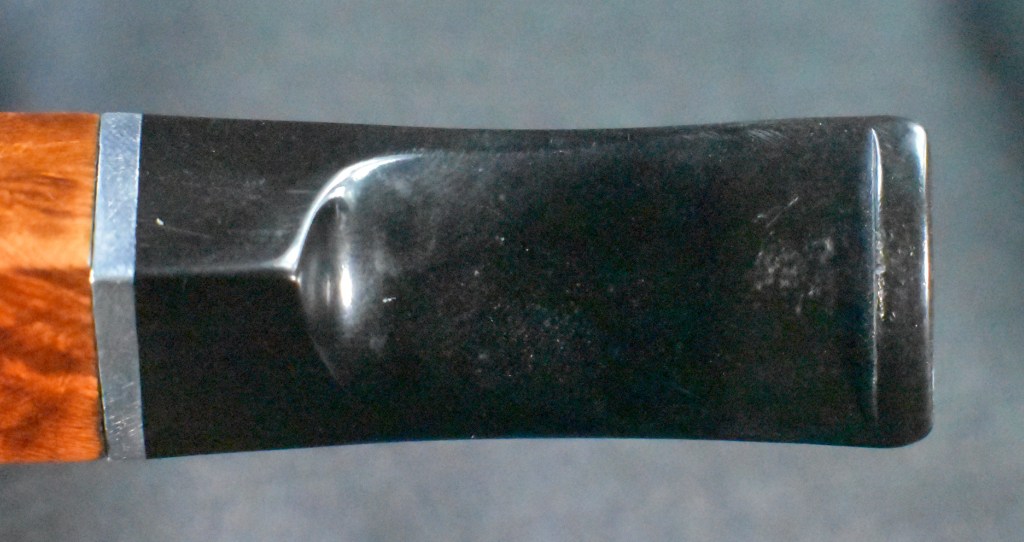
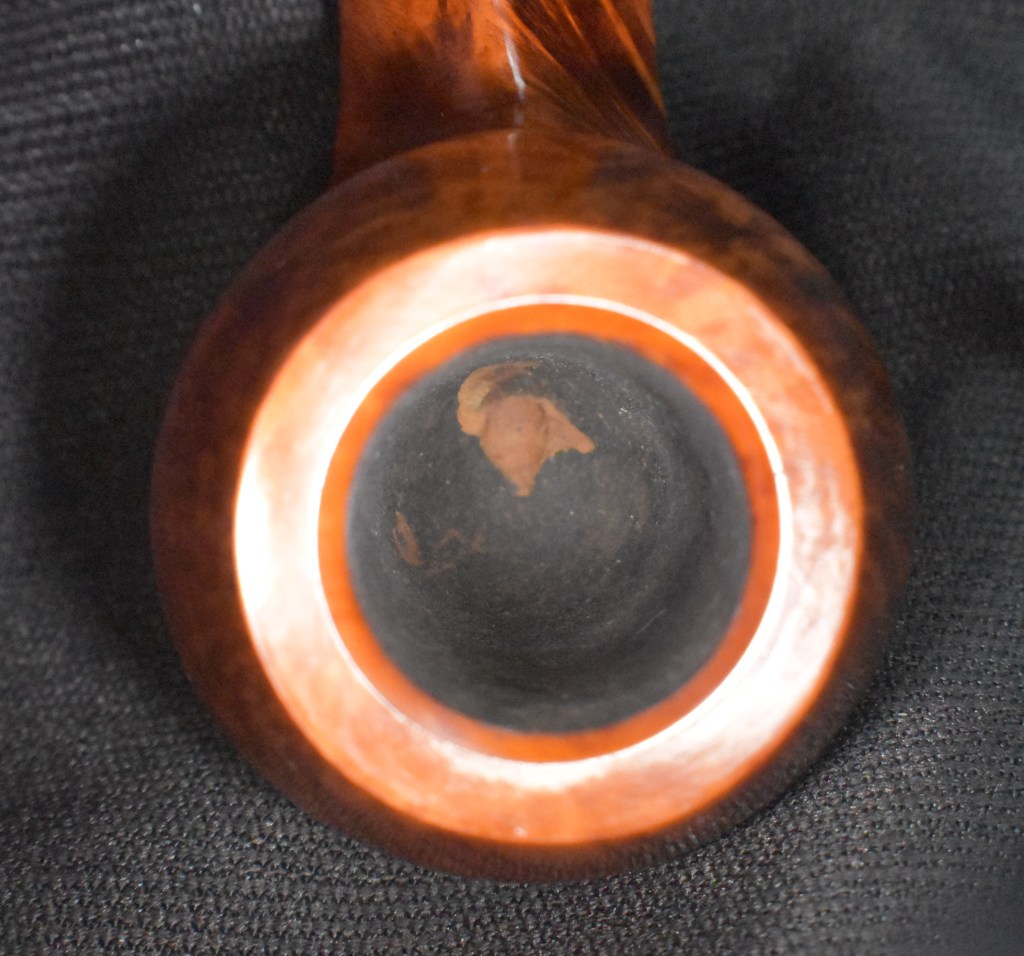
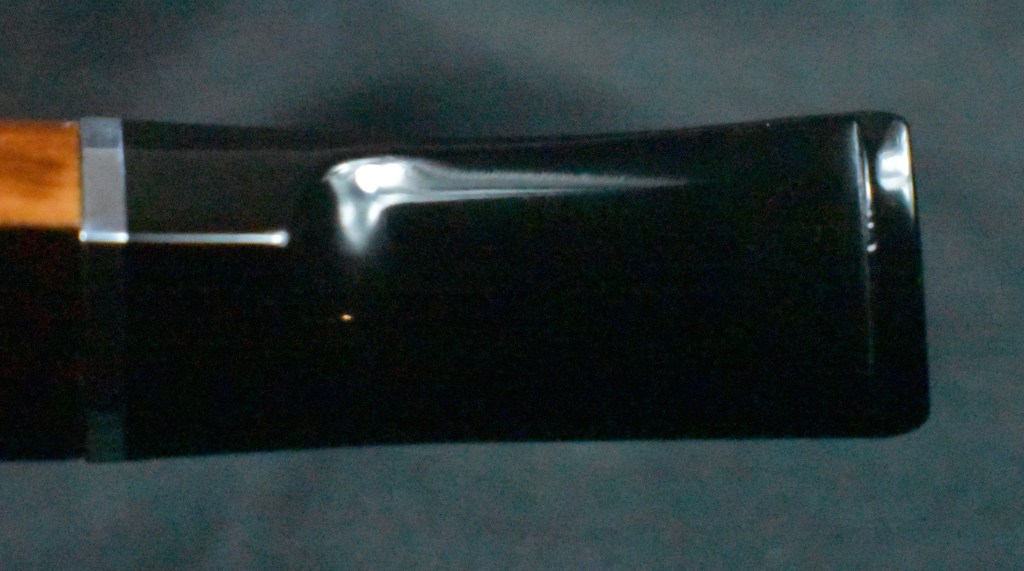
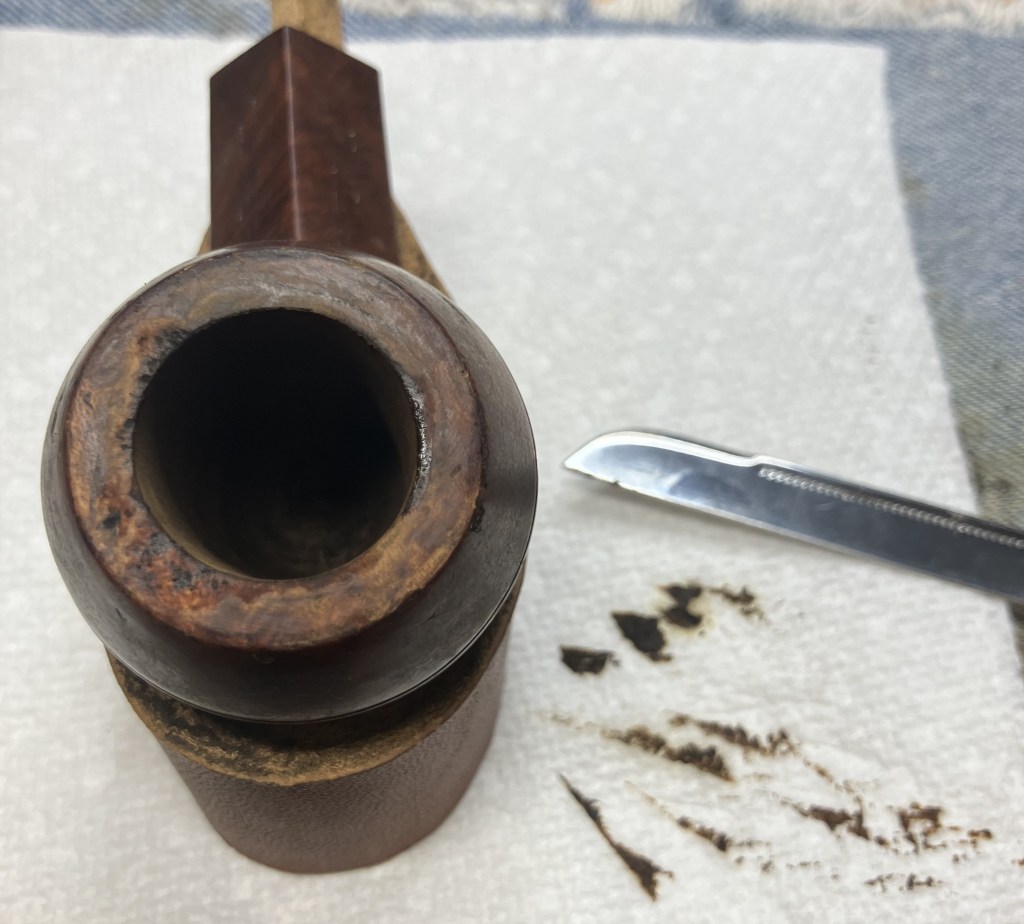
The pipe was nearly brand new. There was some unsmoked tobacco remnants in the bowl and a very minimal residue on the rim. I cannot even call it lava. The stem was slightly oxidized due to age with maybe a few light tooth marks. The only other thing to complain about was a slight wax build-up in the beading. This was going to be an “easy button” restoration.
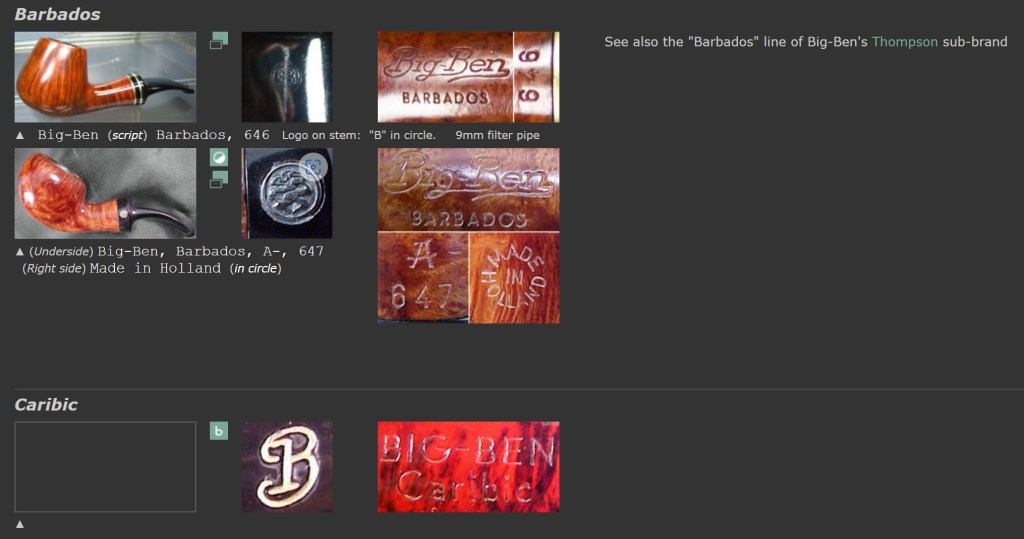
The next search was on pipedia.org. Here too, the entry was lacking specificity for the Classic Line. Well actually it was lacking pretty much everything stating only, “The brand name Big Ben was originally owned by a small trade company in Amsterdam which was already well established in several countries selling pipes among other goods. The firm was bought by Elbert Gubbels & Zonen B.V. – see Gubbels – who were in search for a suitable brand name to further expansion on international markets.
I did follow the link from pipedia.org to the Gubbbels’ website: Want to buy a Big Ben pipe? The best tobacco pipes since 1870 – bigben. This site was a nice shopping and informational site. I found the most impressive thing was that they opened the workshop up to the public every Friday from 10:00am-4:00pm. Here in the US, that would likely meet with stern warnings from Occupational Safety and Health Administration (OSHA).
“Our store is open every Friday! We cordially invite you to take a look at our production workshop. In our store you will find a wide range of Big Ben pipes in all shapes and colors. If your ideal pipe is not listed, we may be able to manufacture a pipe especially for you! Light maintenance of your beloved old pipe can usually be done on site.
Making a pipe requires craftsmanship, a lot of fingerspitzengefühl and experience in working with the unpredictable and capricious material: the root of the Erica Arborea, better known as briar wood. Formed by the rocky bottom of the Mediterranean region, this noble and beautifully textured wood contributes its 50 to 80 years of growth to the value of the pipe. We are proud to be able to tell you the whole story – from carrot to tobacco pipe!
We are open every Friday from 10:00 am to 4:00 pm. On all other days you can visit us by appointment.
There was also a very nice history of the company and a look into their future. It is quite detailed so I will not include it here but this link will take you there if you are interested in a very interesting history.
The Restoration
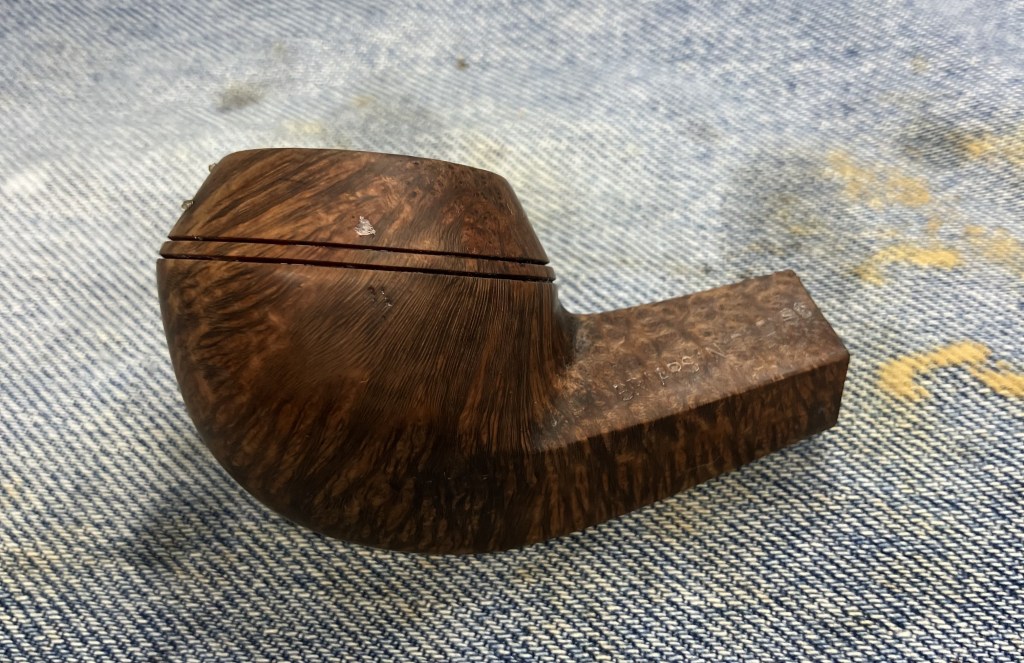
The restoration began with a clean denim piece which I felt certain would remain clean upon finishing.
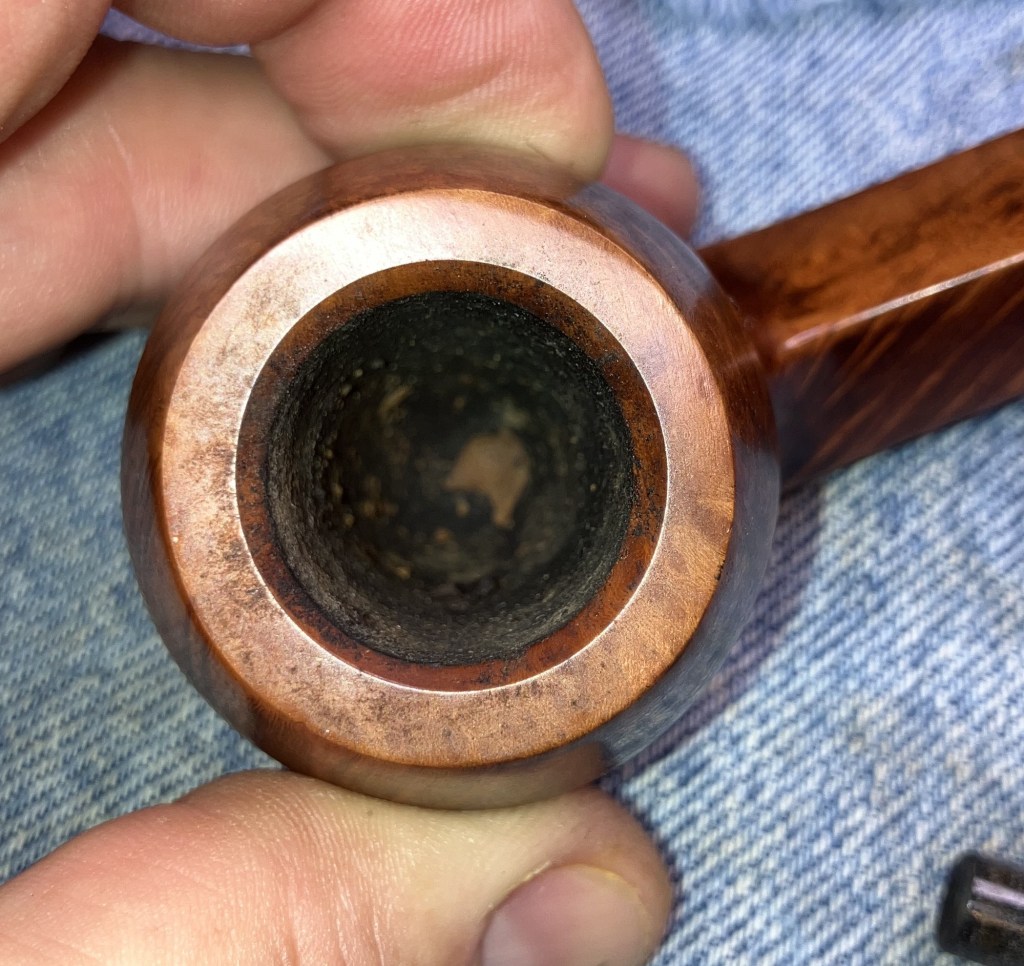
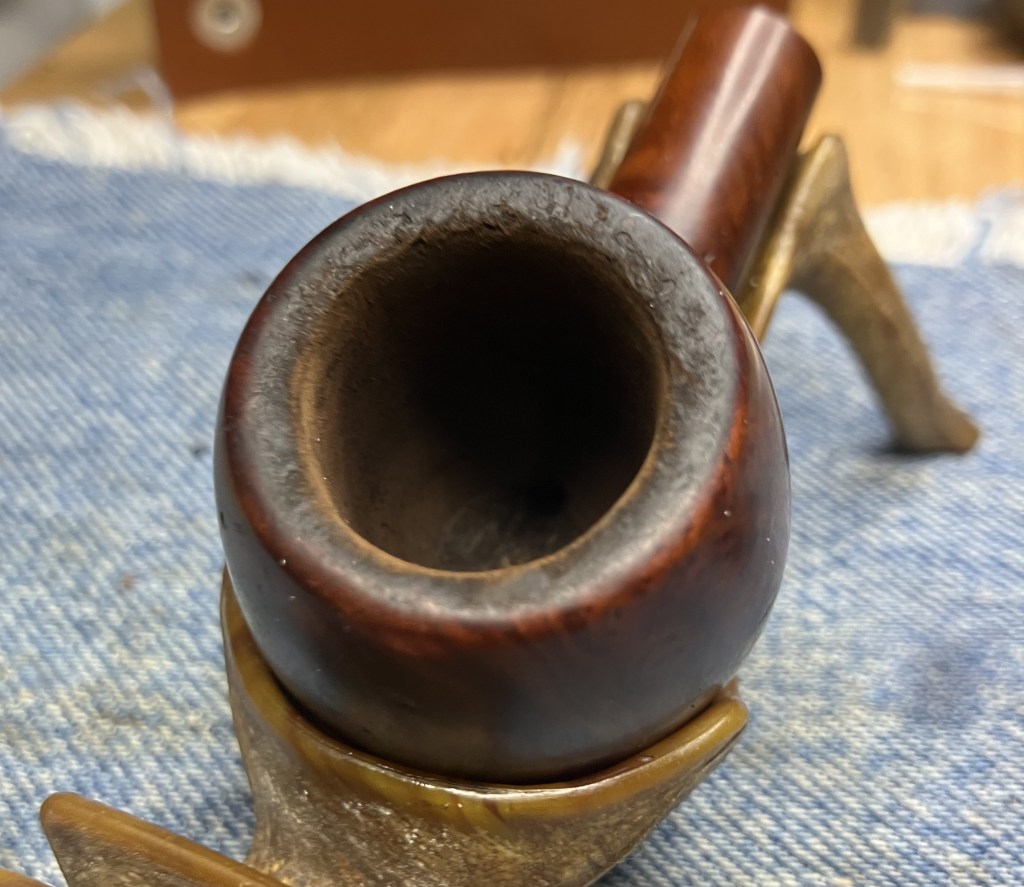
I lexamined the tobacco chamber more closely under the bright lights of the workbench. Only smoked once or twice, was my conclusion.
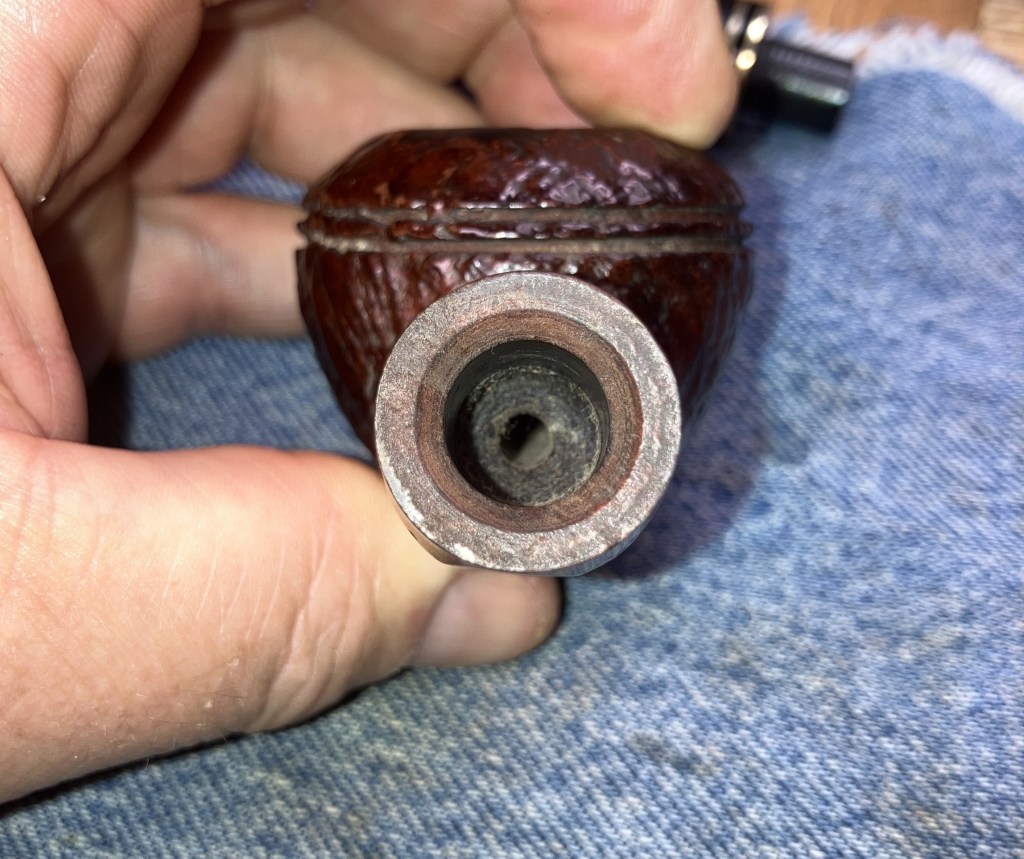
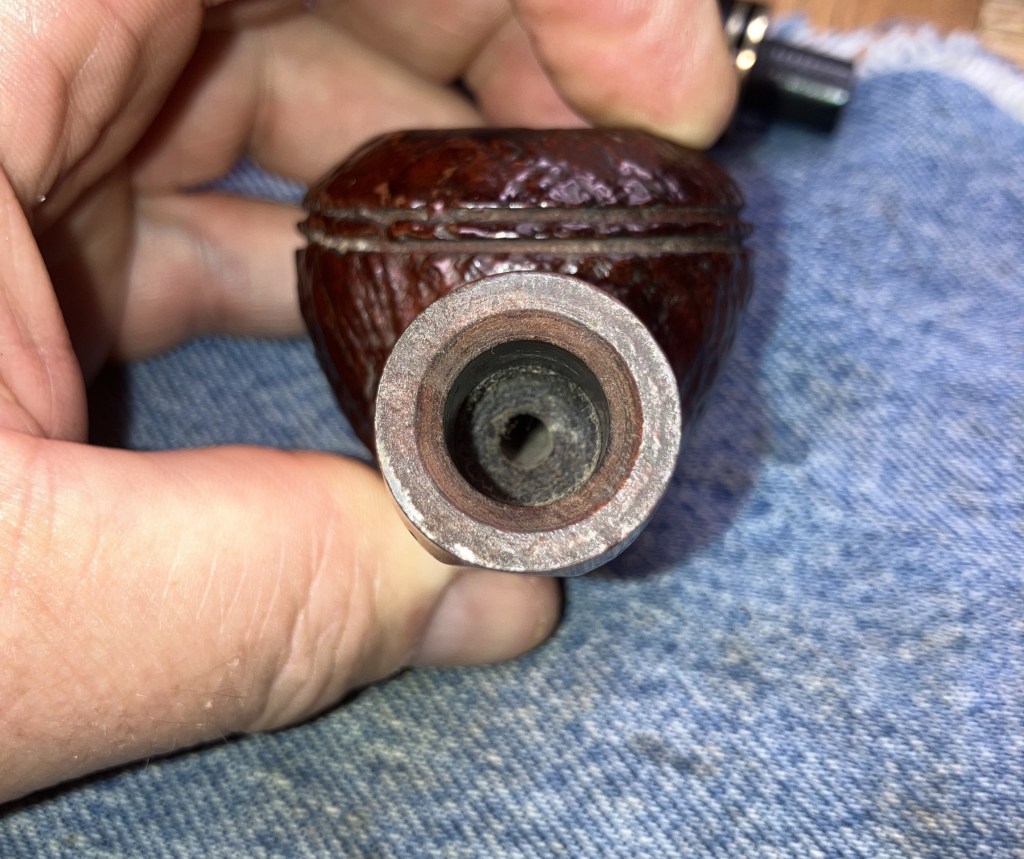
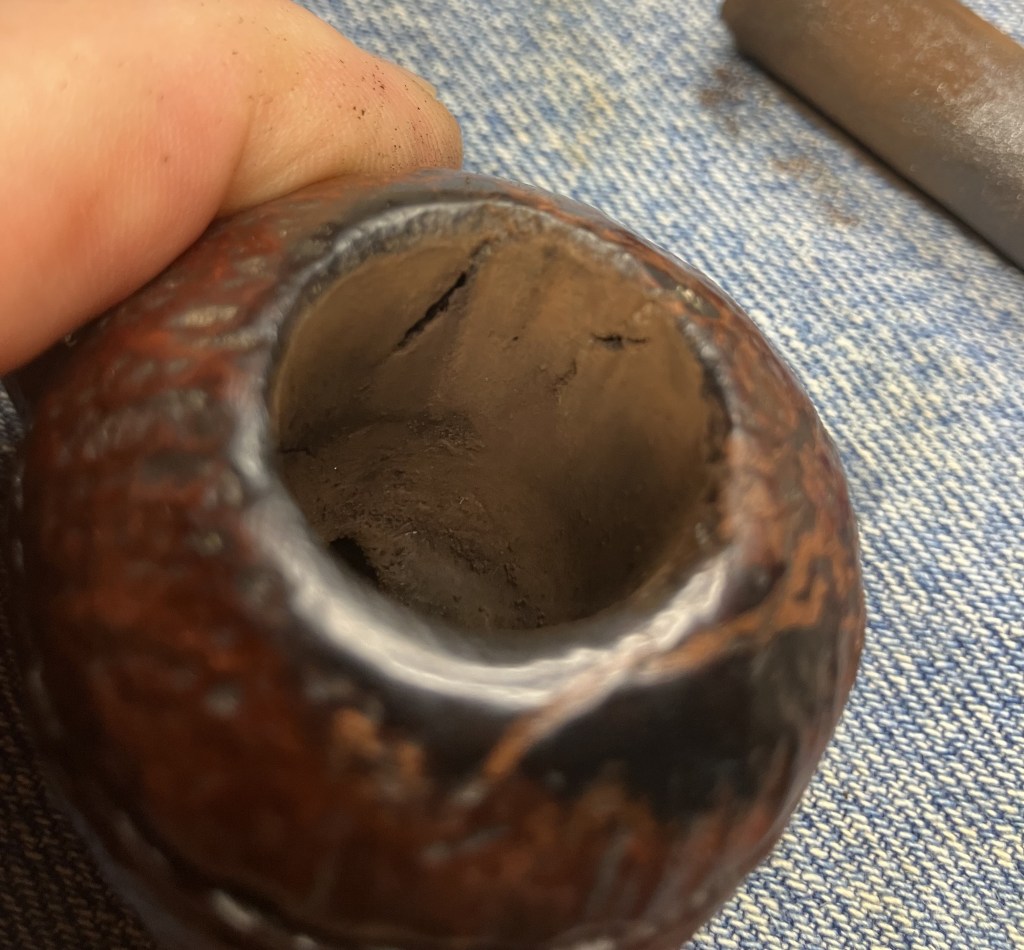
The look down the mortise reaffirmed my thinking.
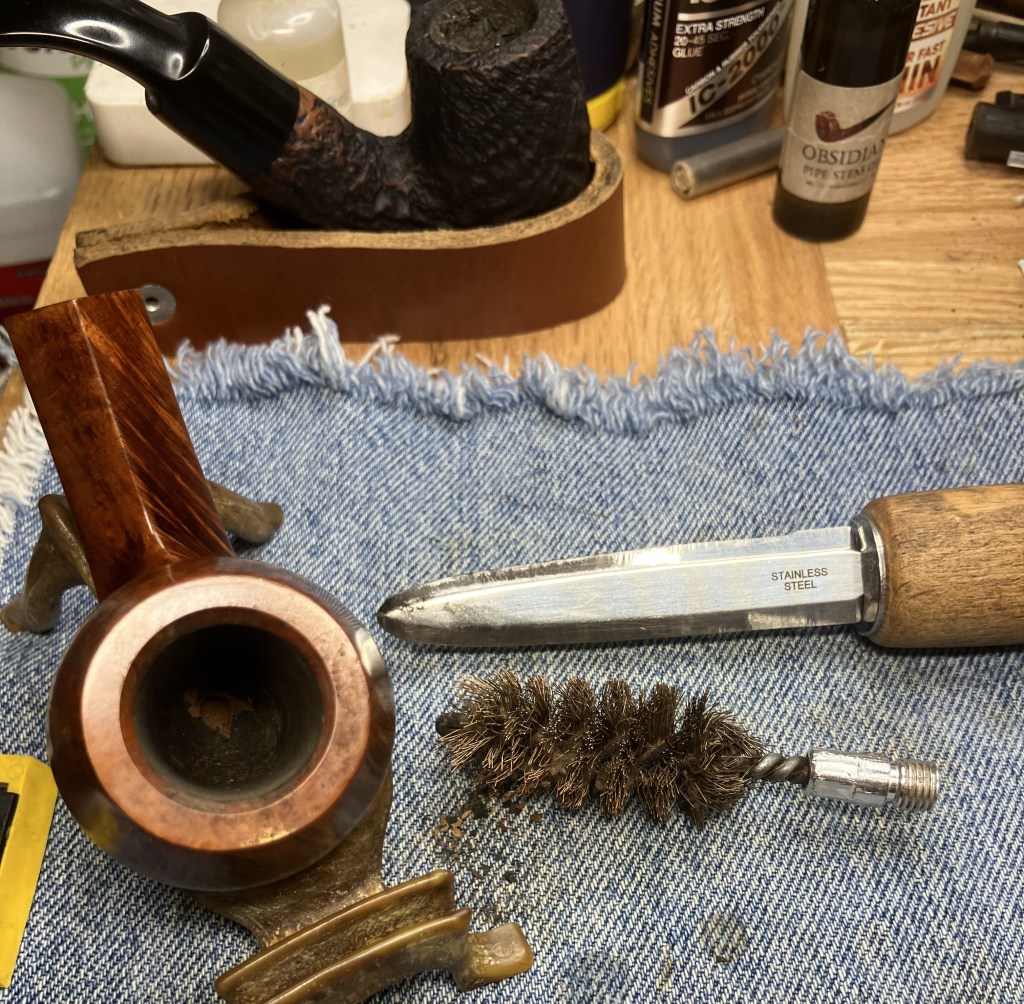
The reaming of this tobacco chamber only required a brass bore brush, from a 20 guage shotgun and a light scrape from the Smokingpipes Low Country reamer.
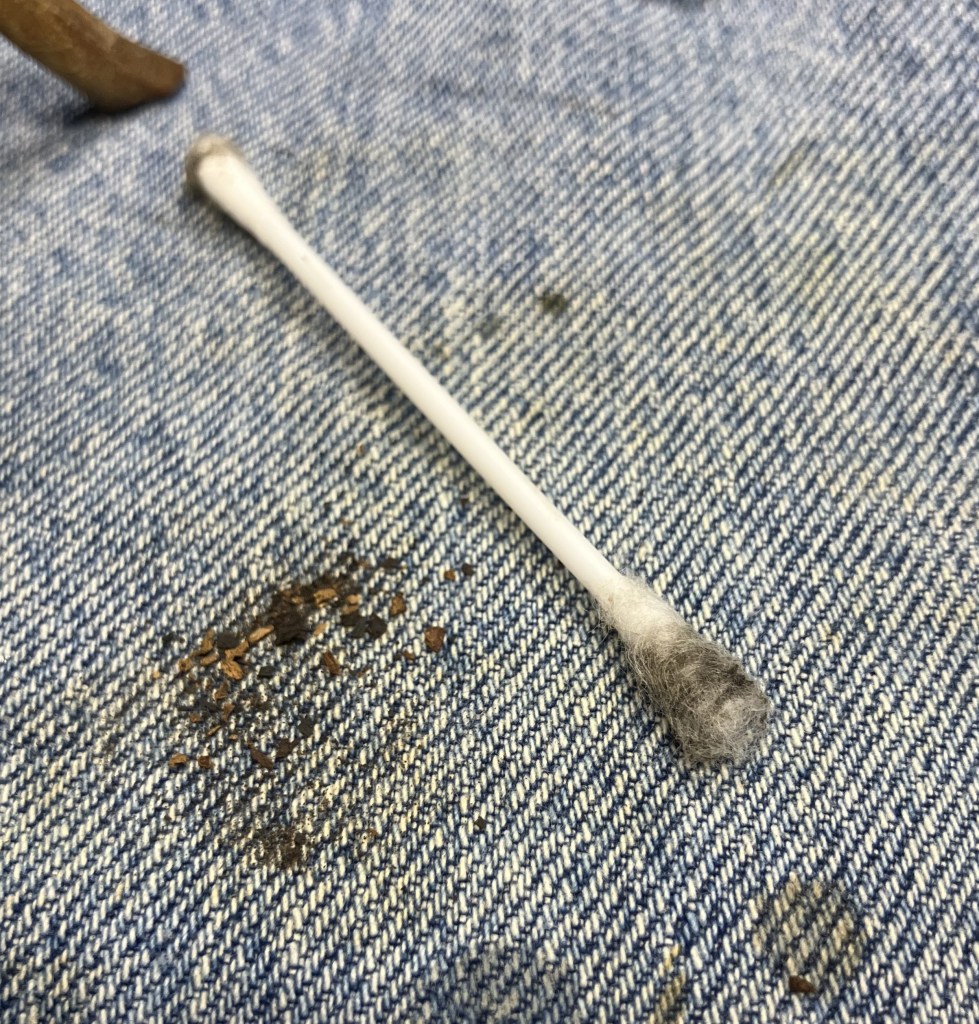
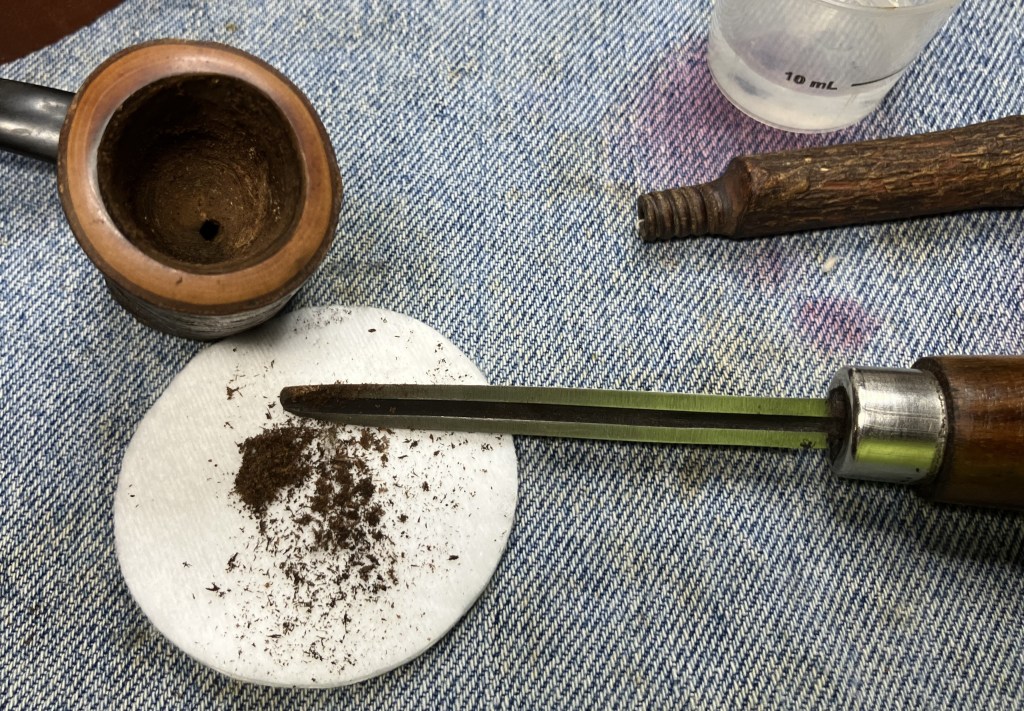
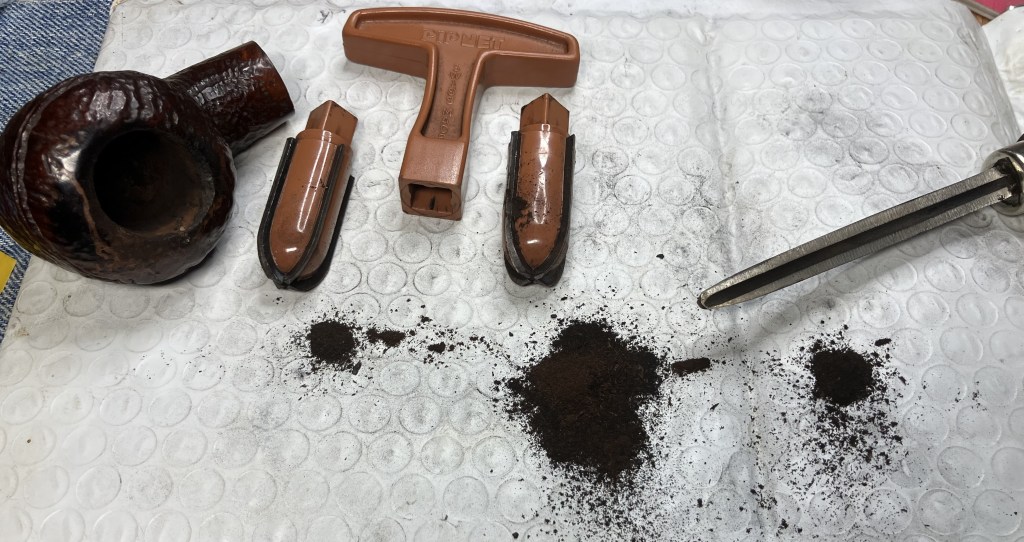
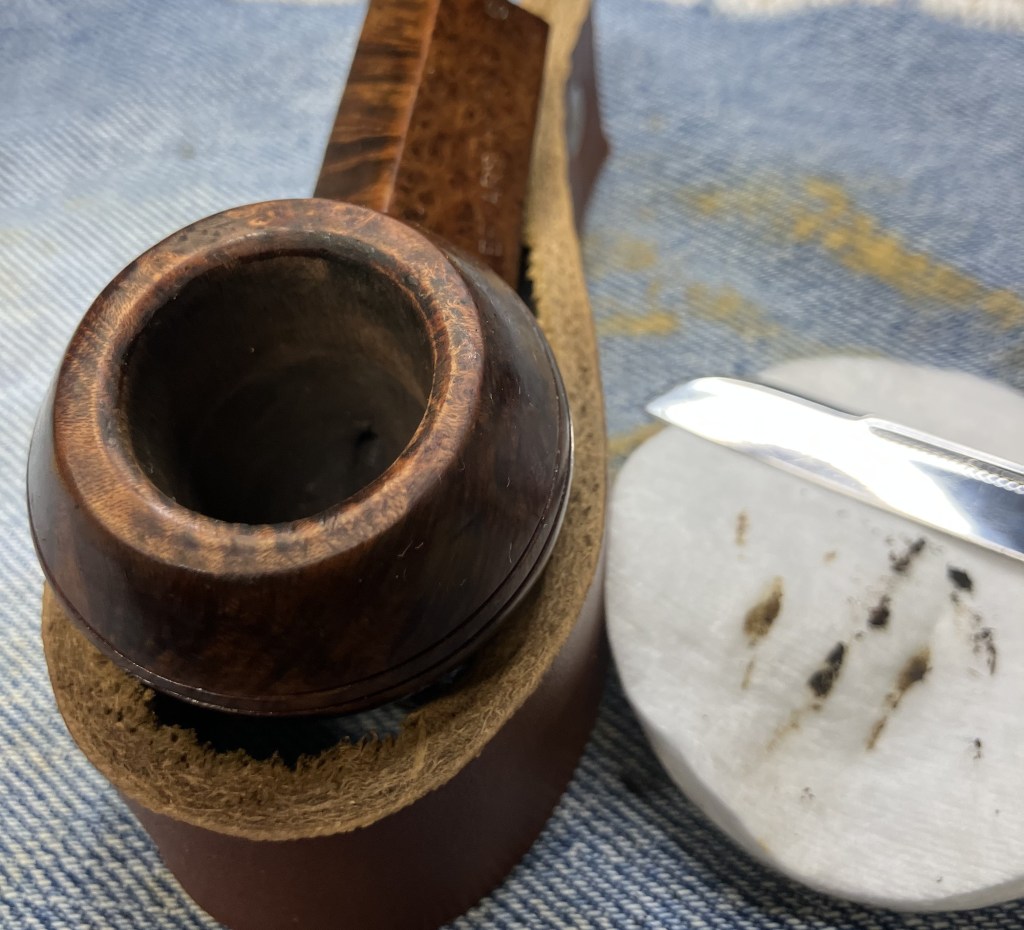
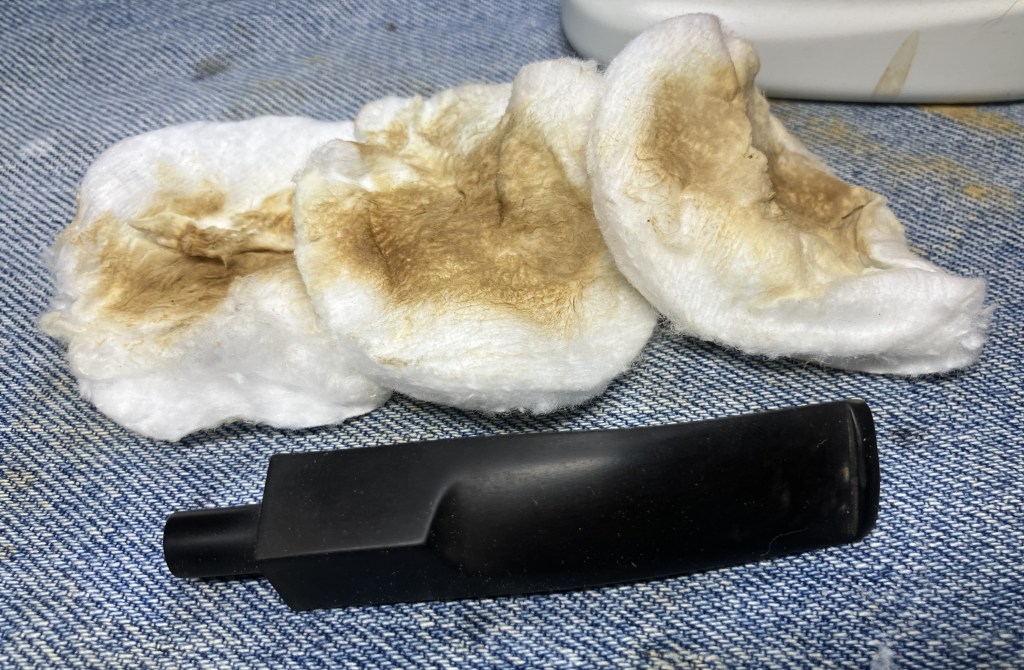
I swabbed out the chamber with an alcohol dipped cotton swab. Below you can see that the reaming only produced a tiny bit of carbon and a few flakes of tobacco.
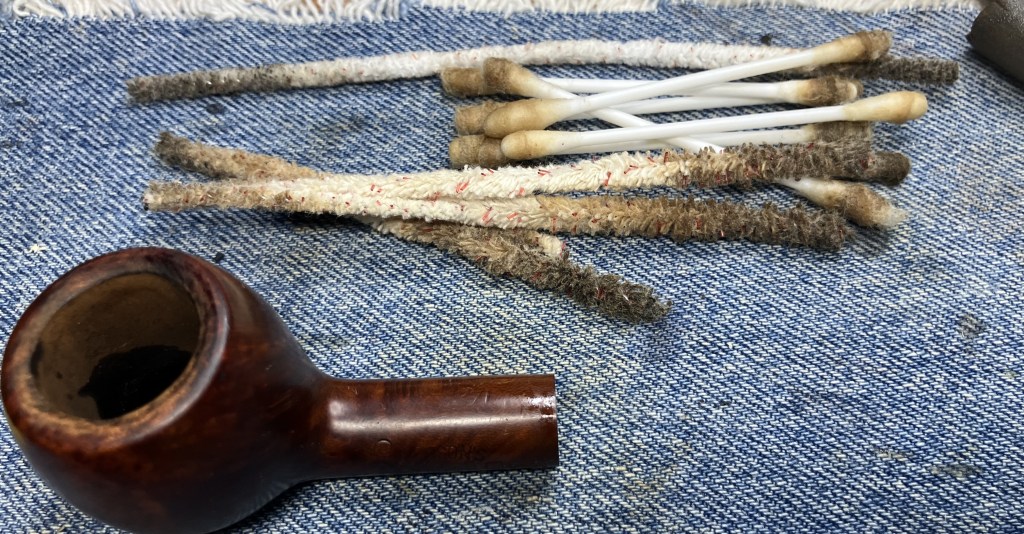
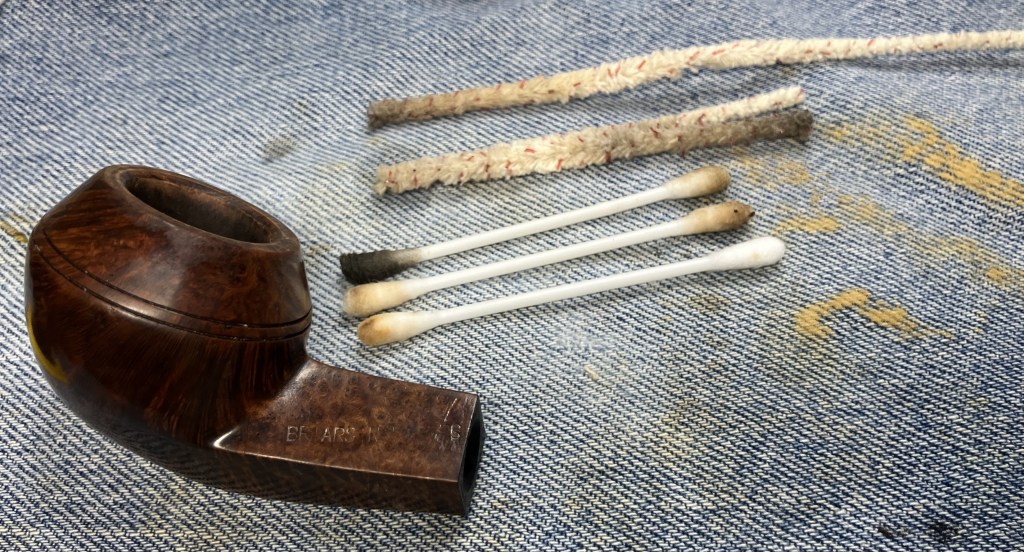
The shank was cleaned out using 99% ethyl alcohol on cotton swabs. These too, came back with little grime.
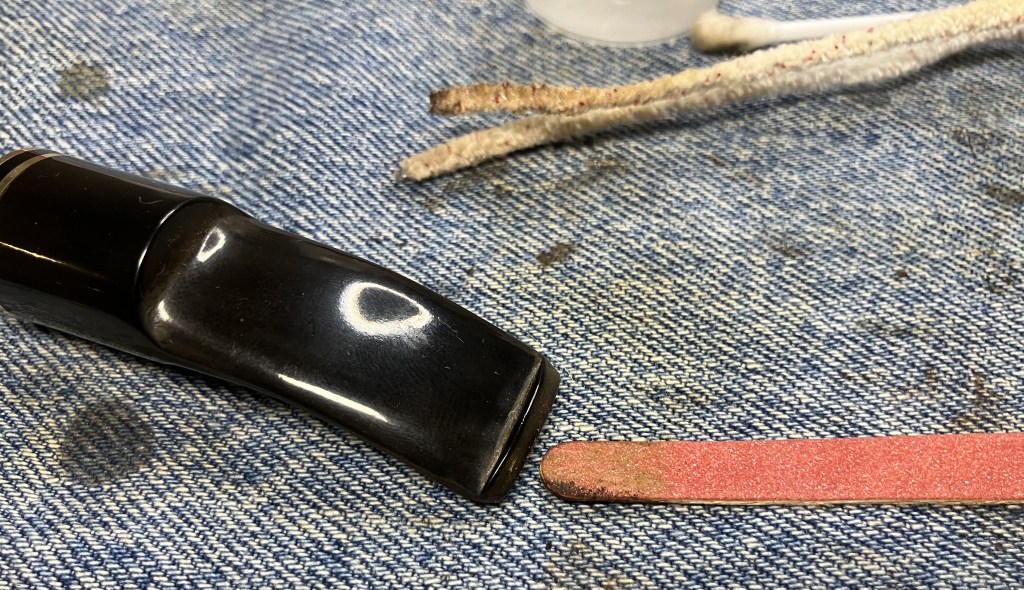
The stem was cleaned with alcohol and a bristle pipe cleaner.
I used a dental scraper to clear the majority of the wax that was built-up in the bead around the bowl.
The light residue on the rim was removed with saliva and a cotton make-up pad.
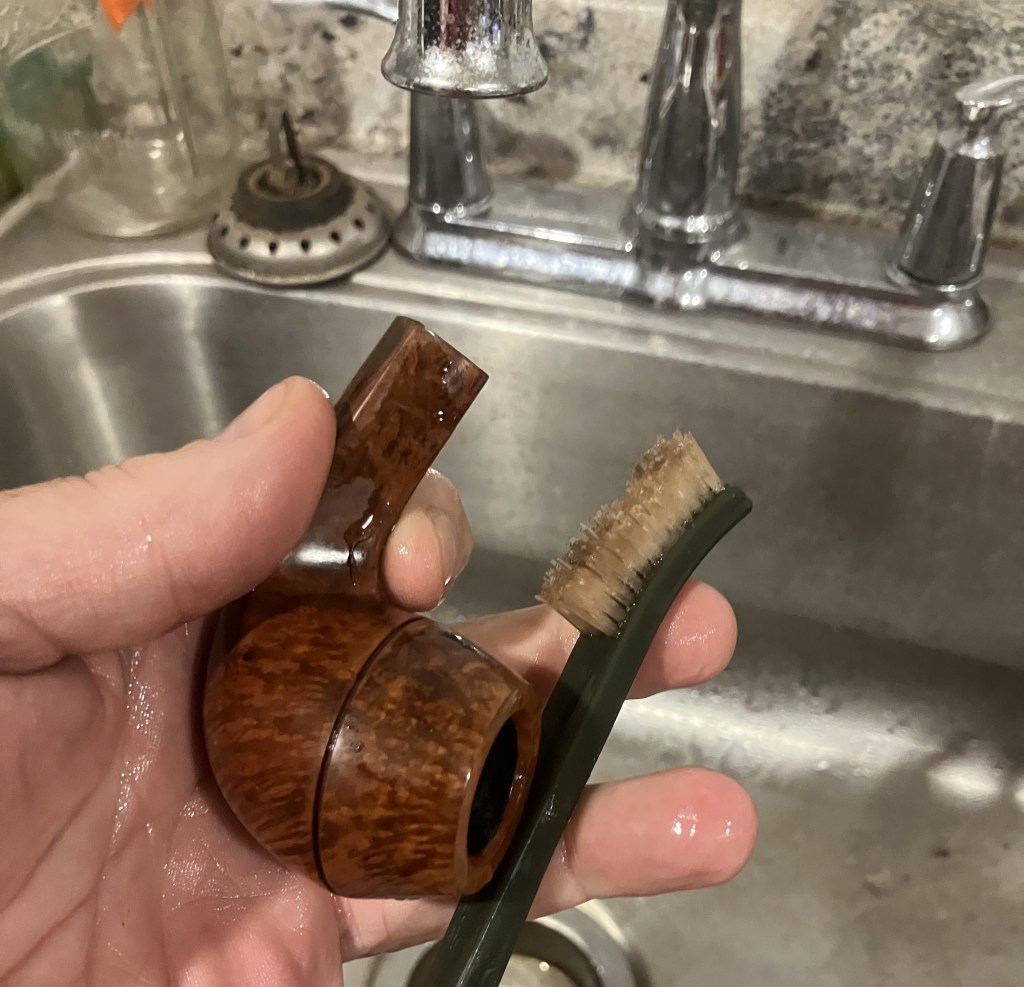
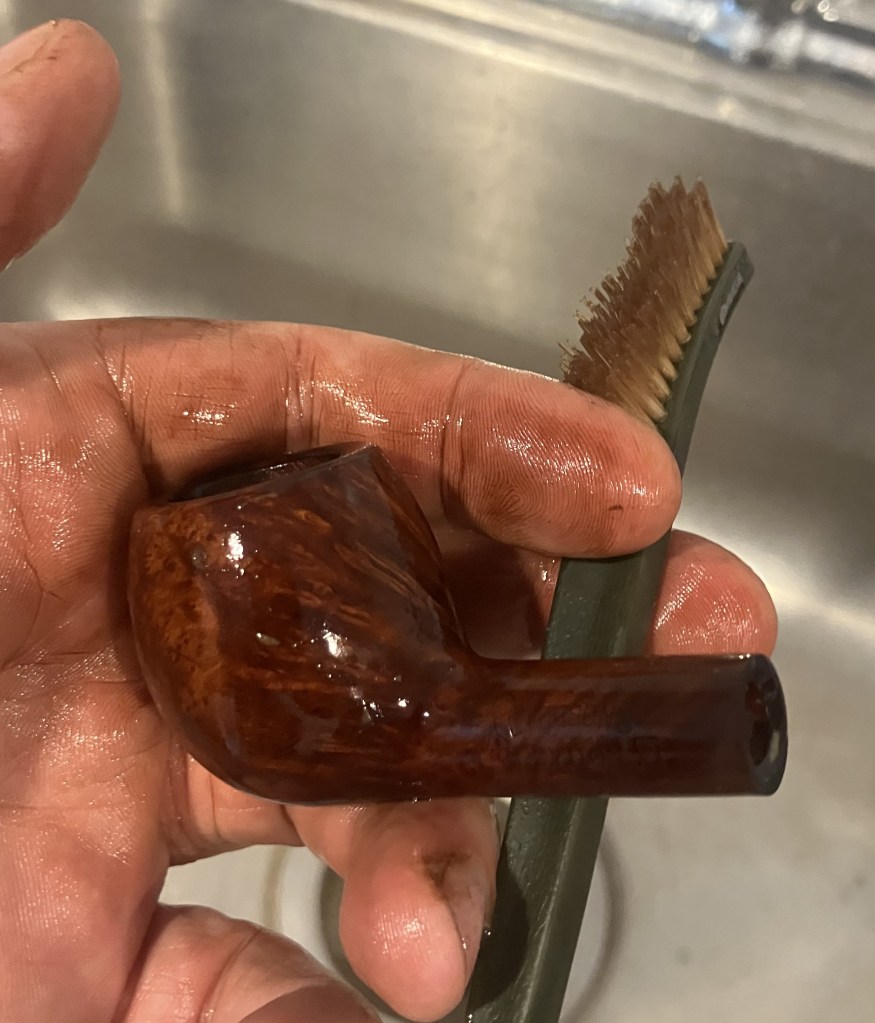
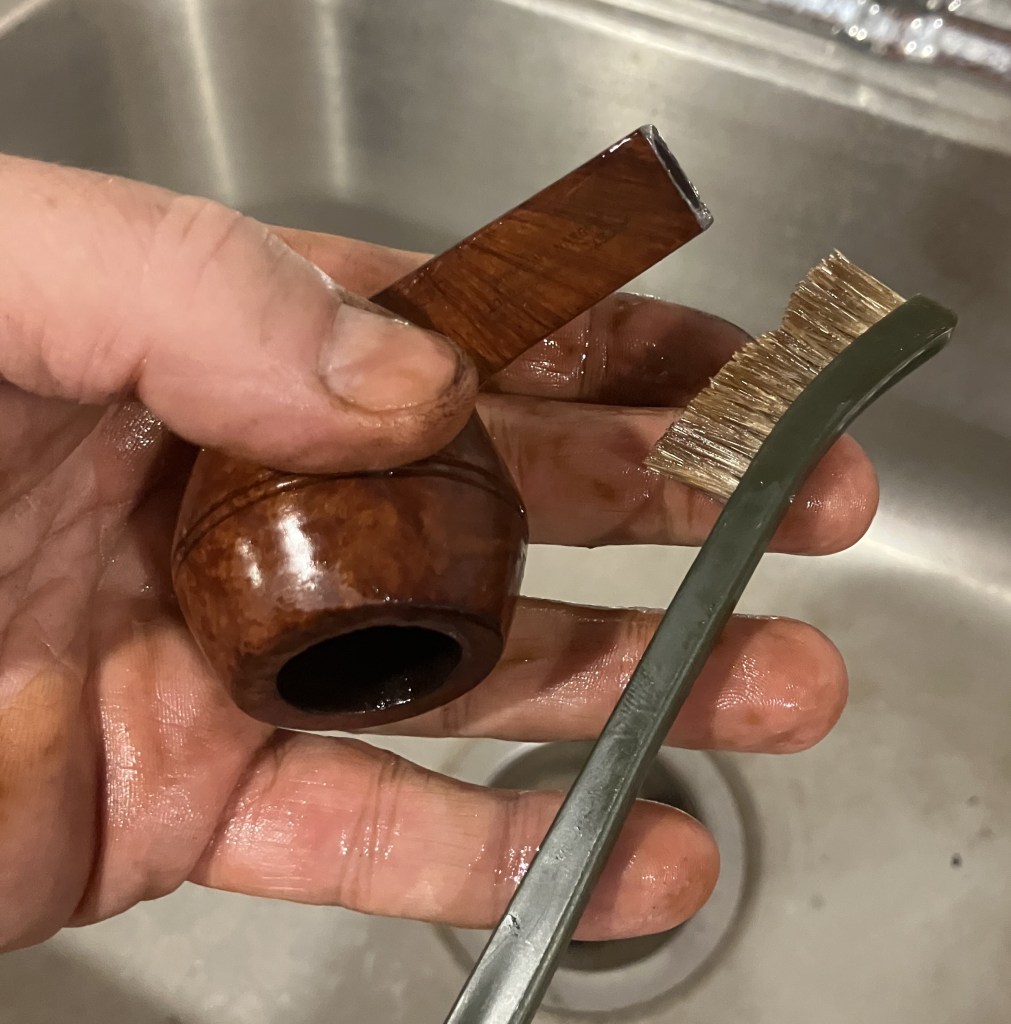
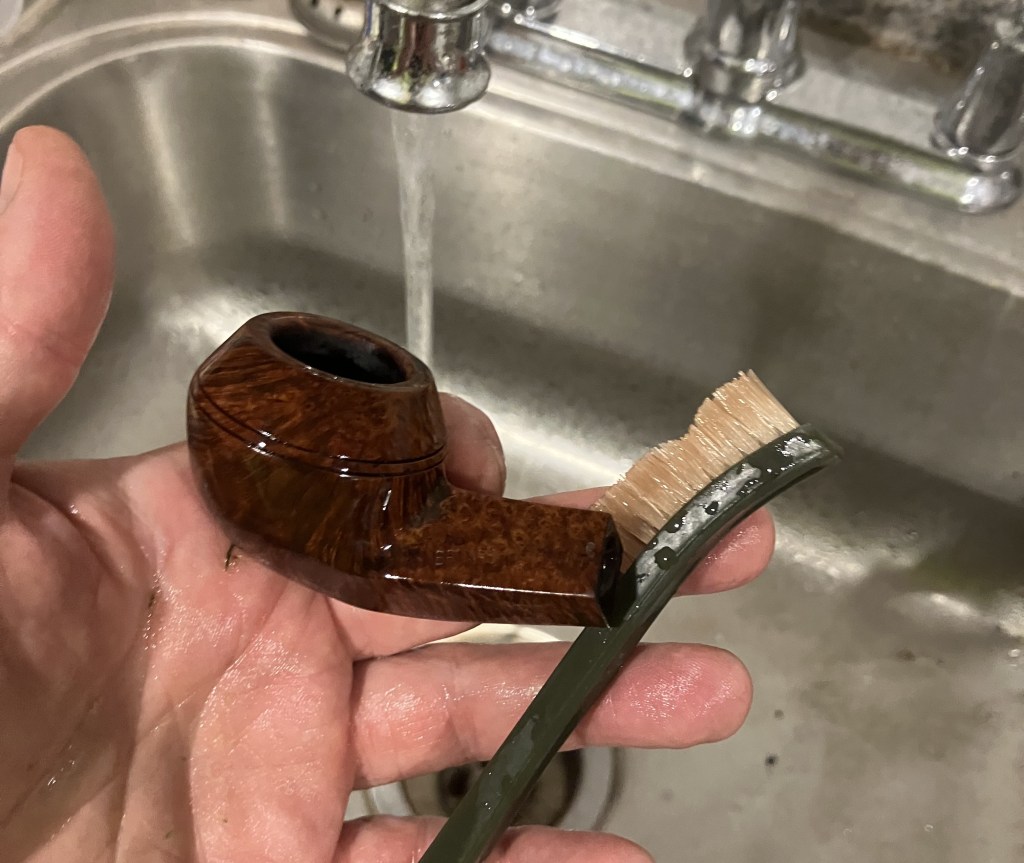
I took the stummel to the sink for what was probably an unnecessary scrubbing with undiluted Murphy Oil Soap and a nylon brush. Some habits are hard to break. The soap was rinsed with warm water and the stummel dried with a cotton hand towel.
Back at the workbench, the stem had a slight residue, likely from the airway cleaning.
I rubbed the stem with alcohol on a make-up pad and did get some oxidized vulcanite from the surface.
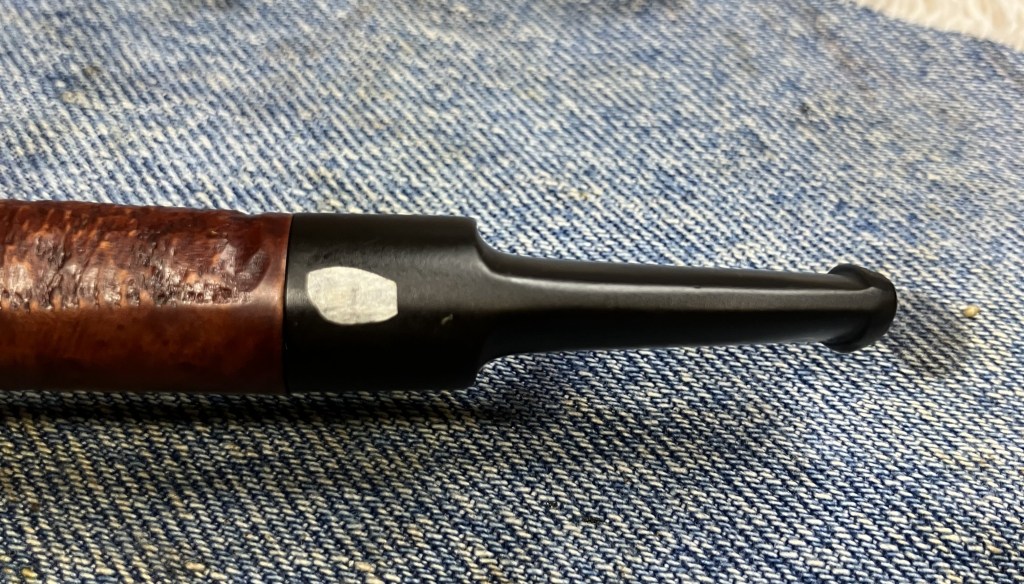
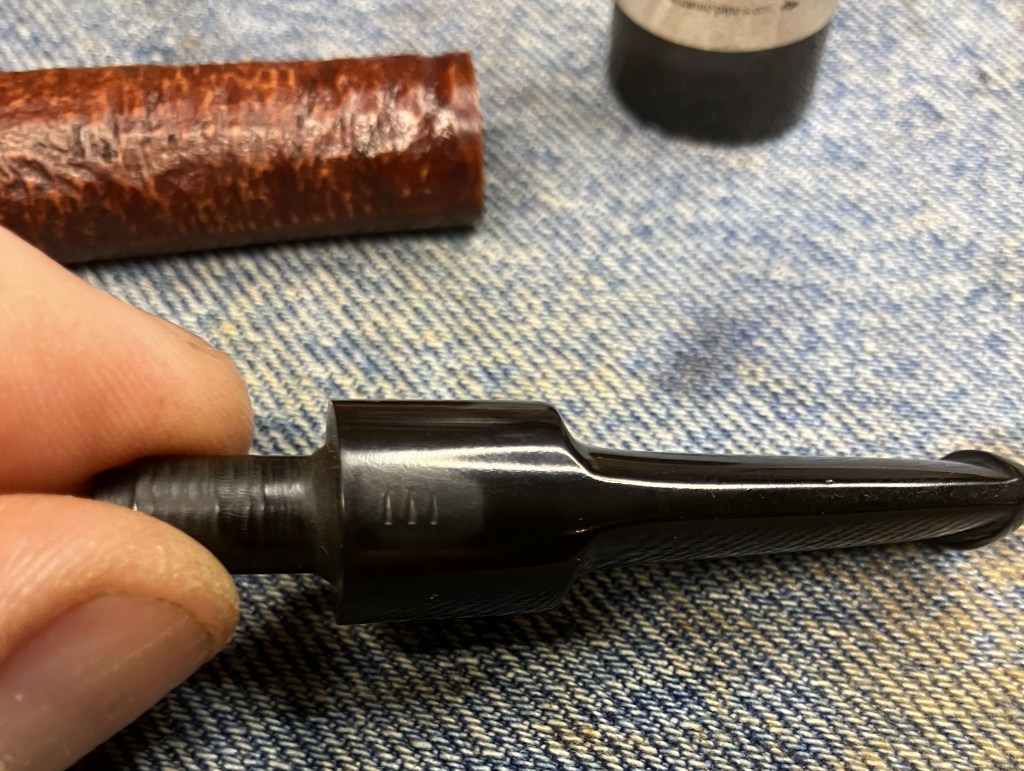
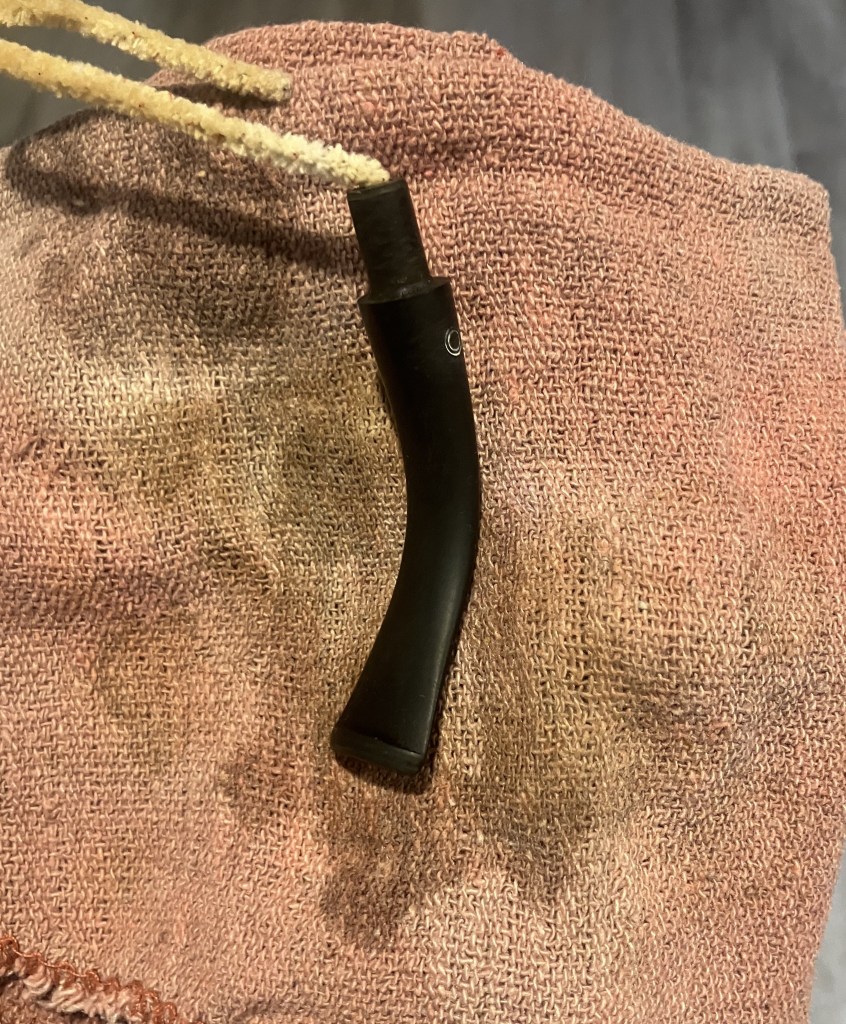
The stem was taken to the buffer where it was buffed with a blue buffing compound. This removed any additional oxidation along with the slight tooth chatter. It also dulled the bright silver of the stem logo.
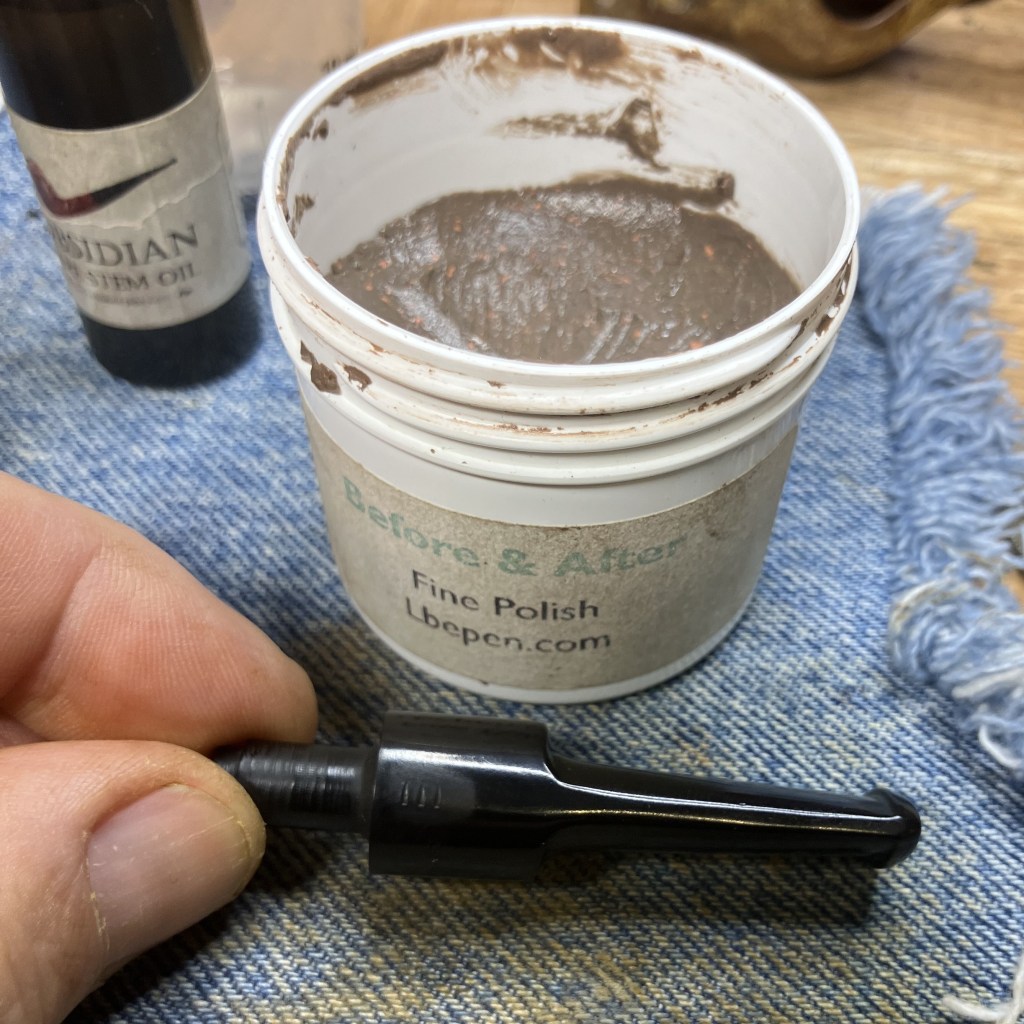
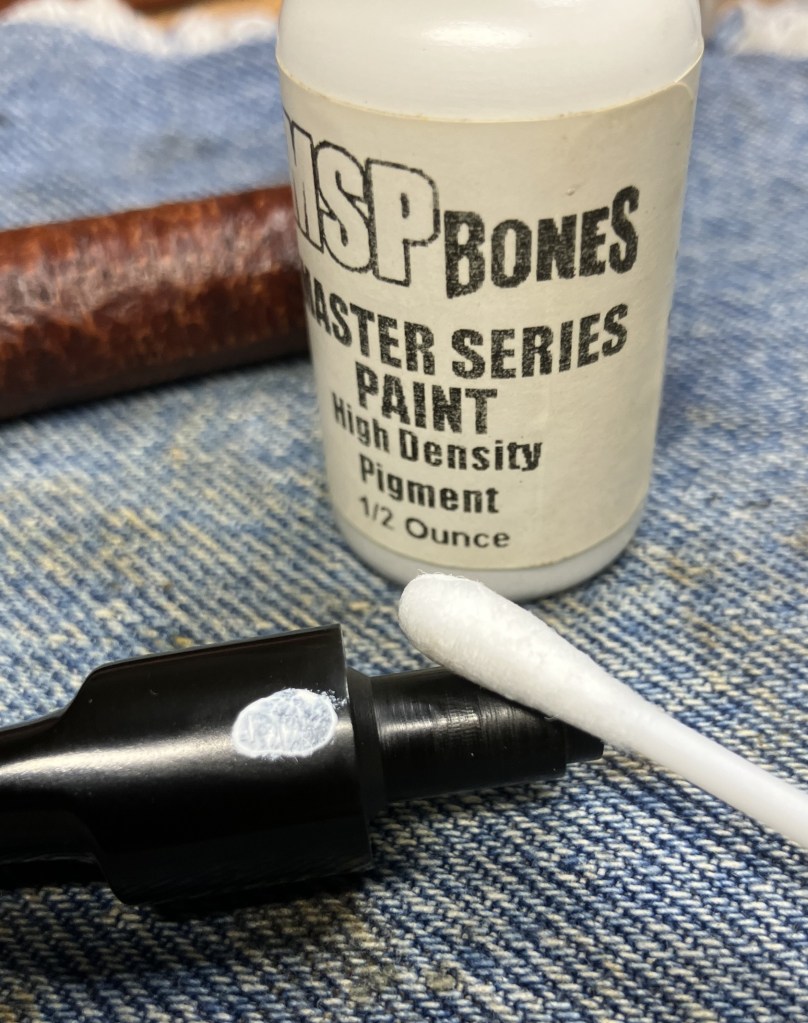
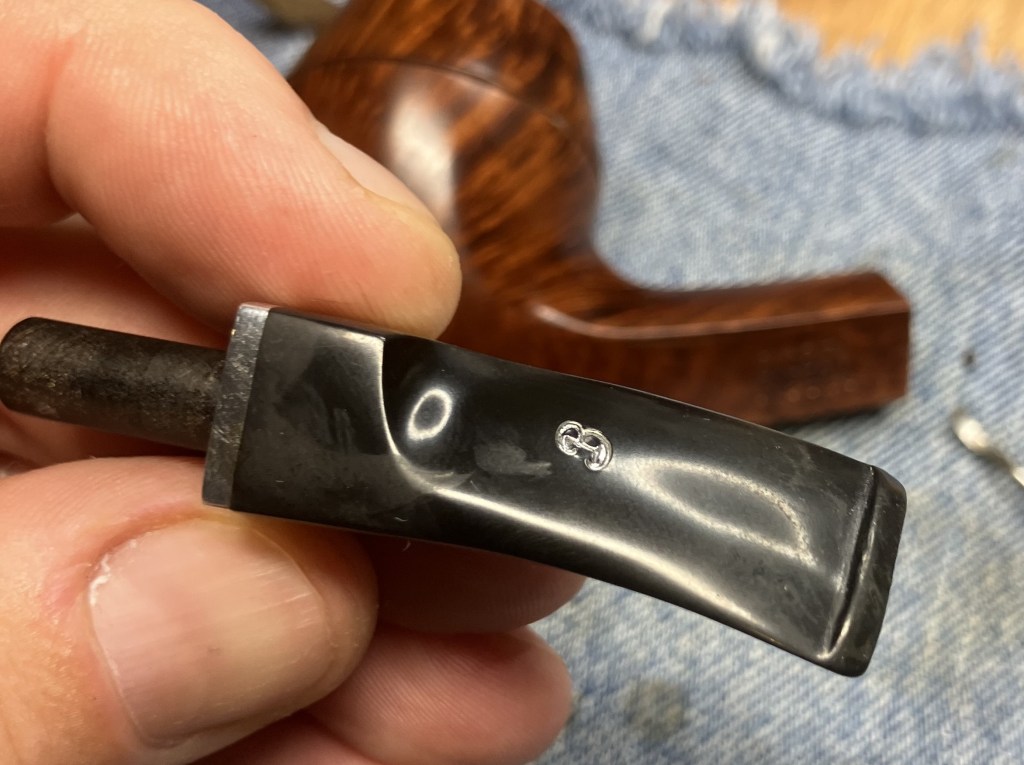
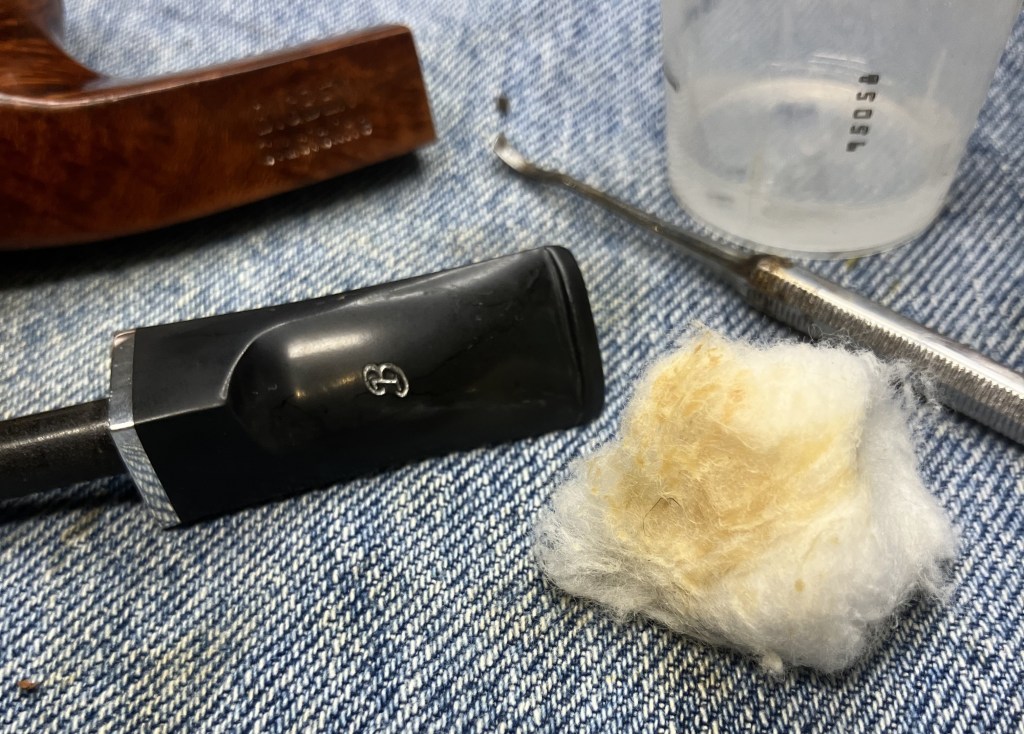
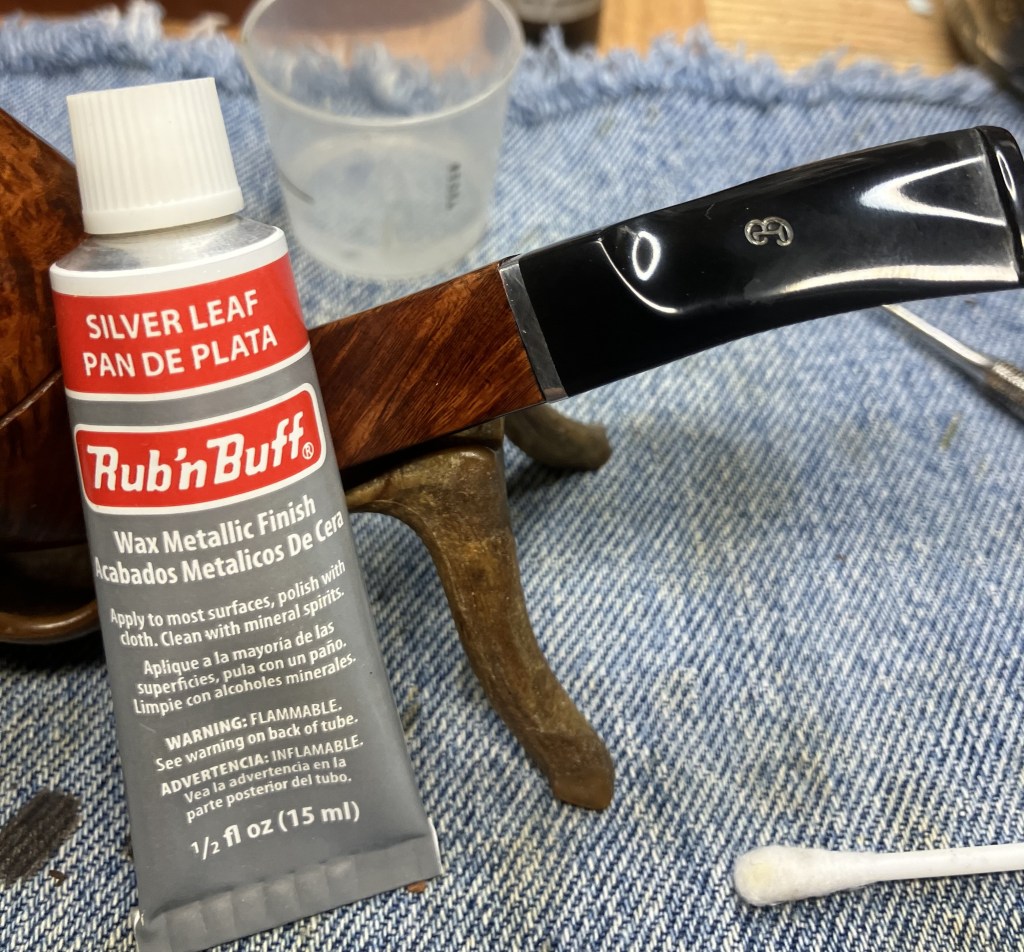
To replace the silver, I used Silver Leaf Rub’nBuff. Before applying the fresh silver, I cleaned the logo with a cotton swab dipped in alcohol.
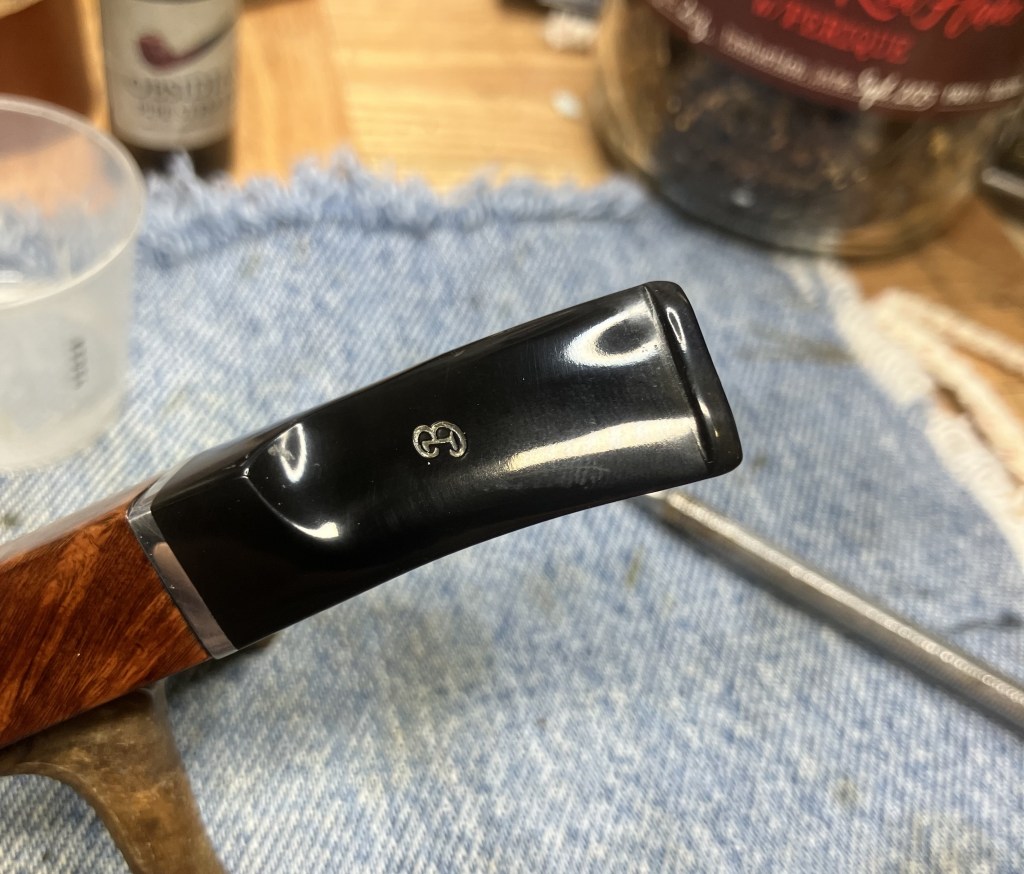
The silver leaf was applied and hand-buffed with a soft cotton cloth.
The resulting fresh silver was back to its original bright finish.
The pipe was given several coats of carnauba wax with the buffer.
The final step was another hand buff with the microfiber polishing cloth.
This beautiful Big Ben Classic Line 702 did not need very much work. I love the shape and the balance of this pipe. It fits my hand well and clenches like a dream. The contrast dye was well done at the factory and really accentuates the briar. THe bright nickel accent on the stem goes very nicely with the silver stem logo. This is just a classy comfortable pipe that I am glad to add to my personal collection. The dimensions of the Big Ben Classic Line 702 are:
Length: 4.74 in./ 120.40 mm.
Weight: 1.48 oz./ 41.96 g.
Bowl Height: 1.97 in./ 50.04 mm.
Chamber Depth: 1.57 in./ 39.88 mm.
Chamber Diameter: 0.68 in./ 17.27 mm.
Outside Diameter: 1.63 in./ 41.40 mm.
I do hope that you have found something here useful to your own pipe care, maintenance or restorations. If you like this sort of thing, please click the like and subscribe buttons. Thank you for reading the ramblings of an old pipe lover.
Loading…
Below are some photos of the finished Big Ben Classic Line 702.
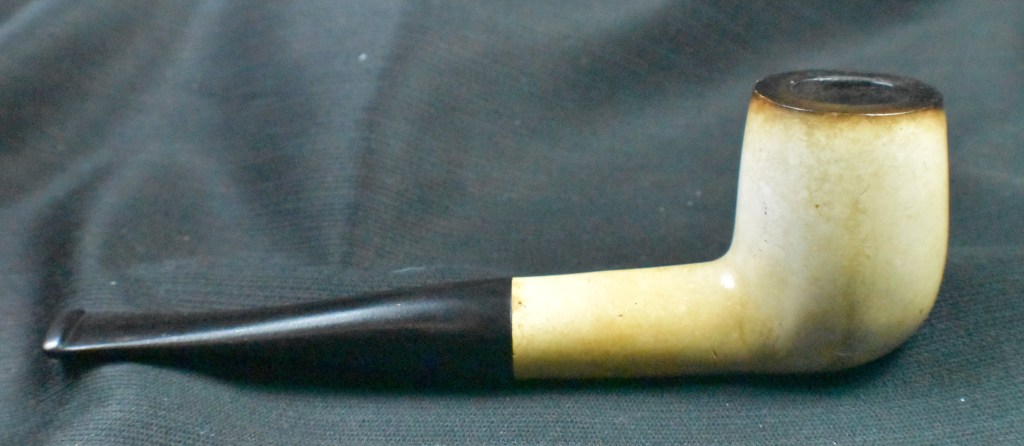
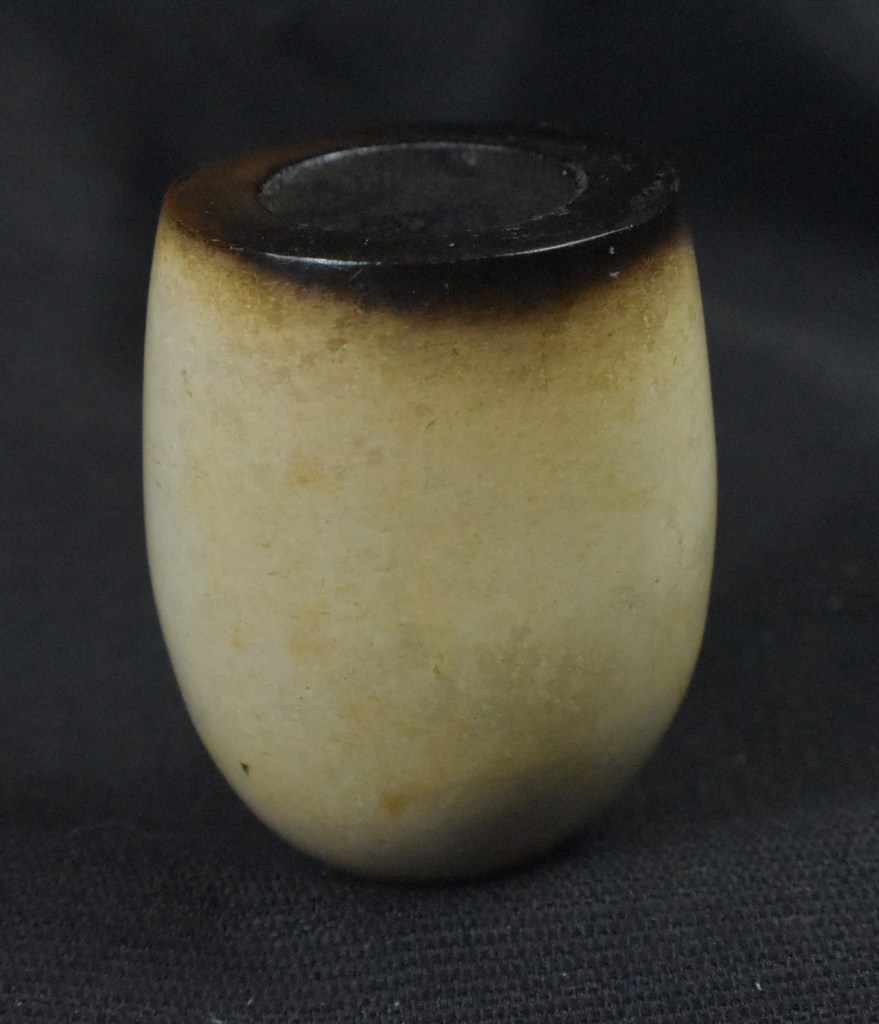
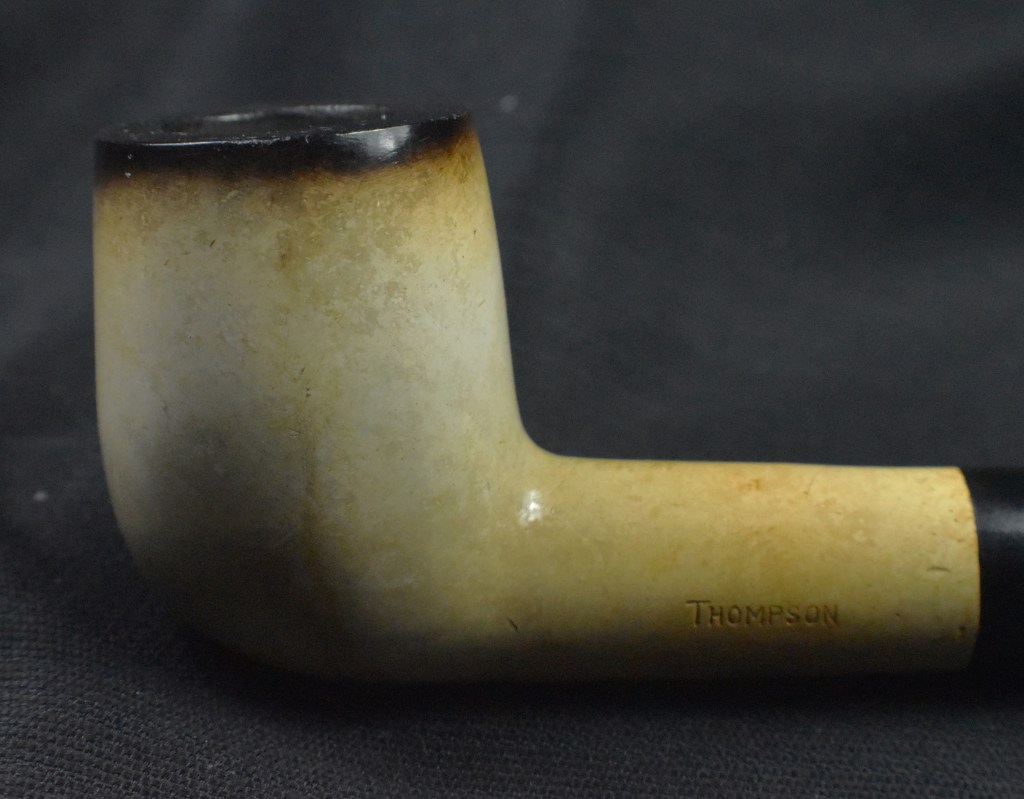
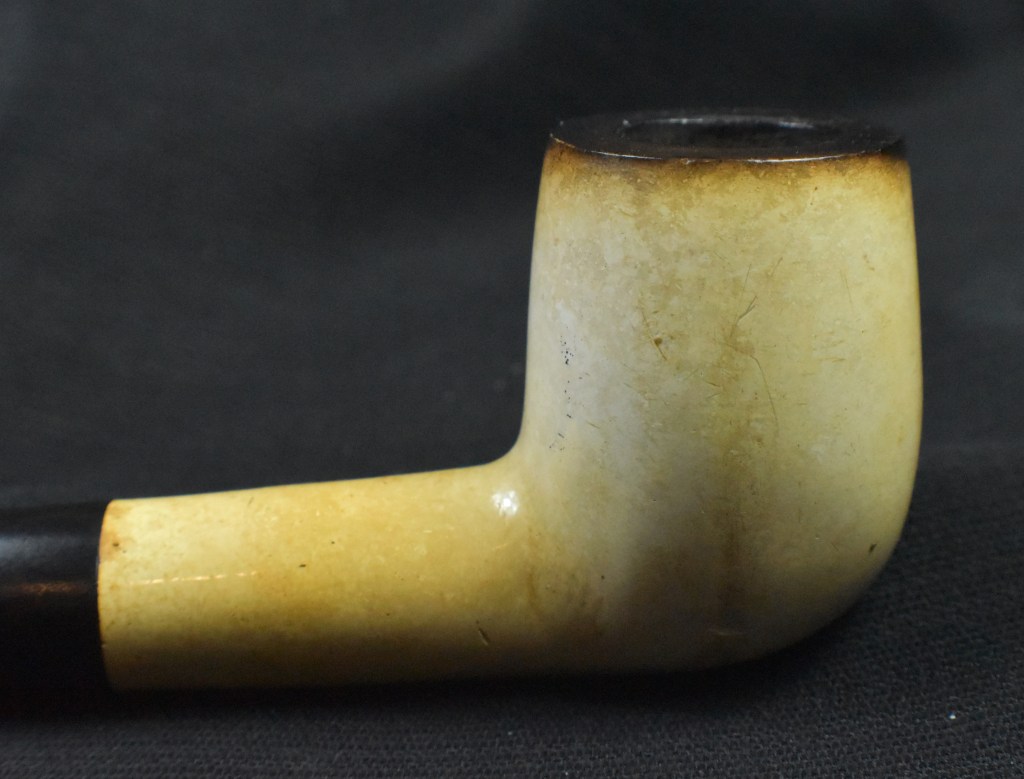
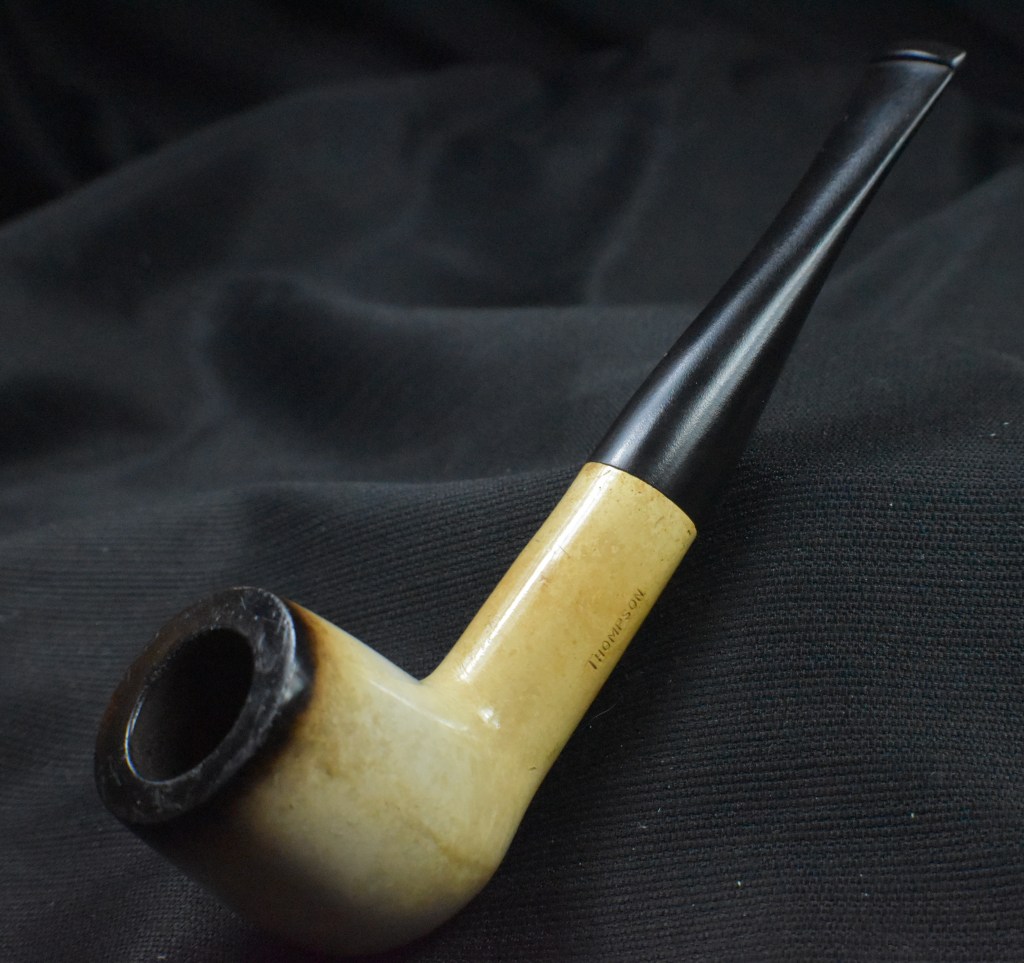
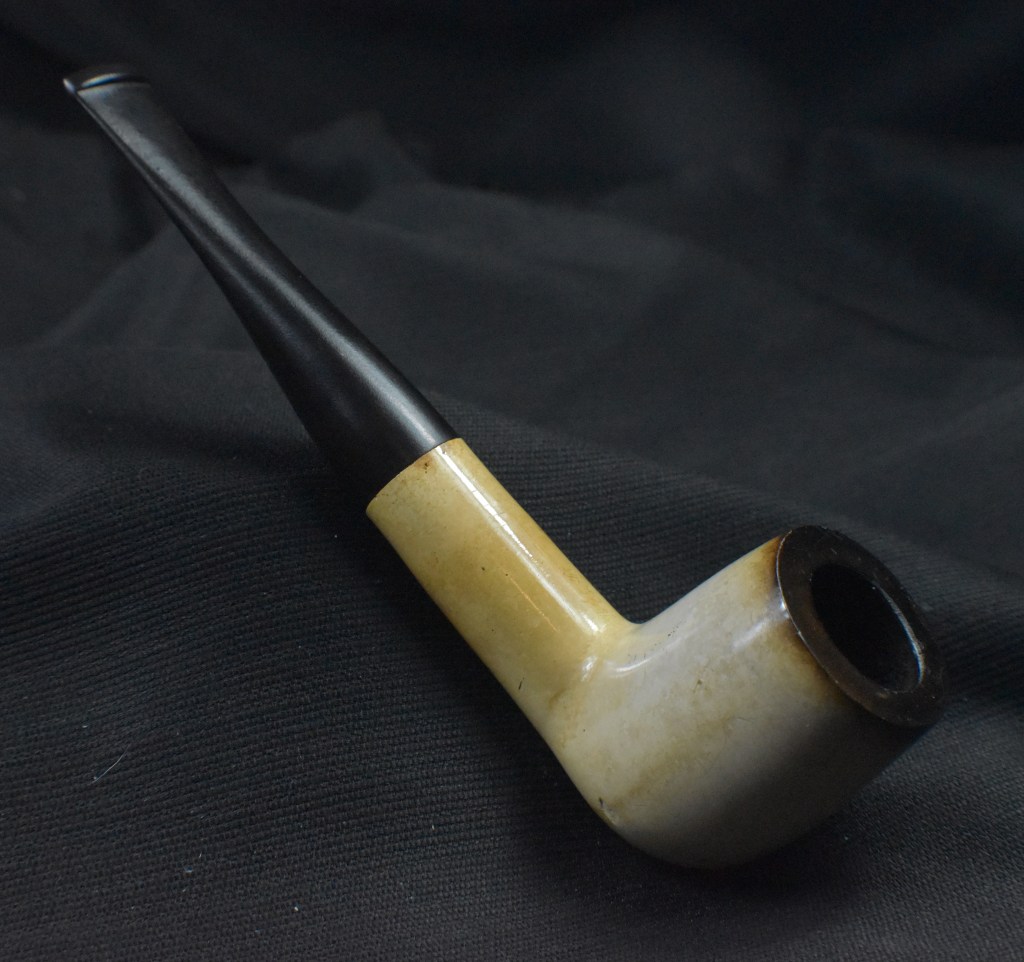
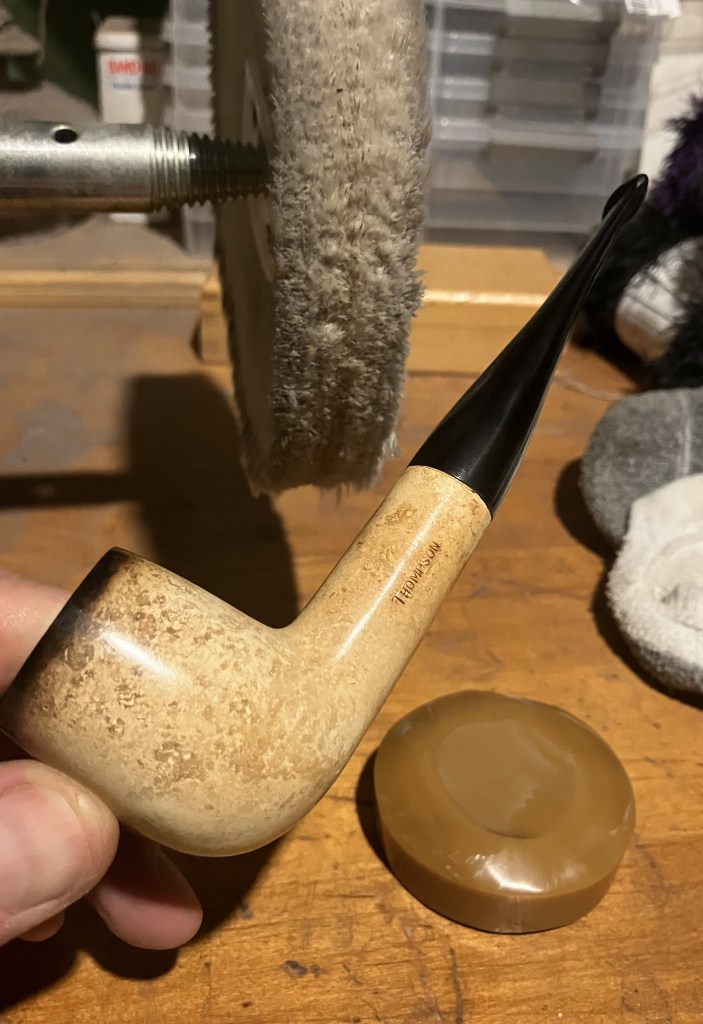
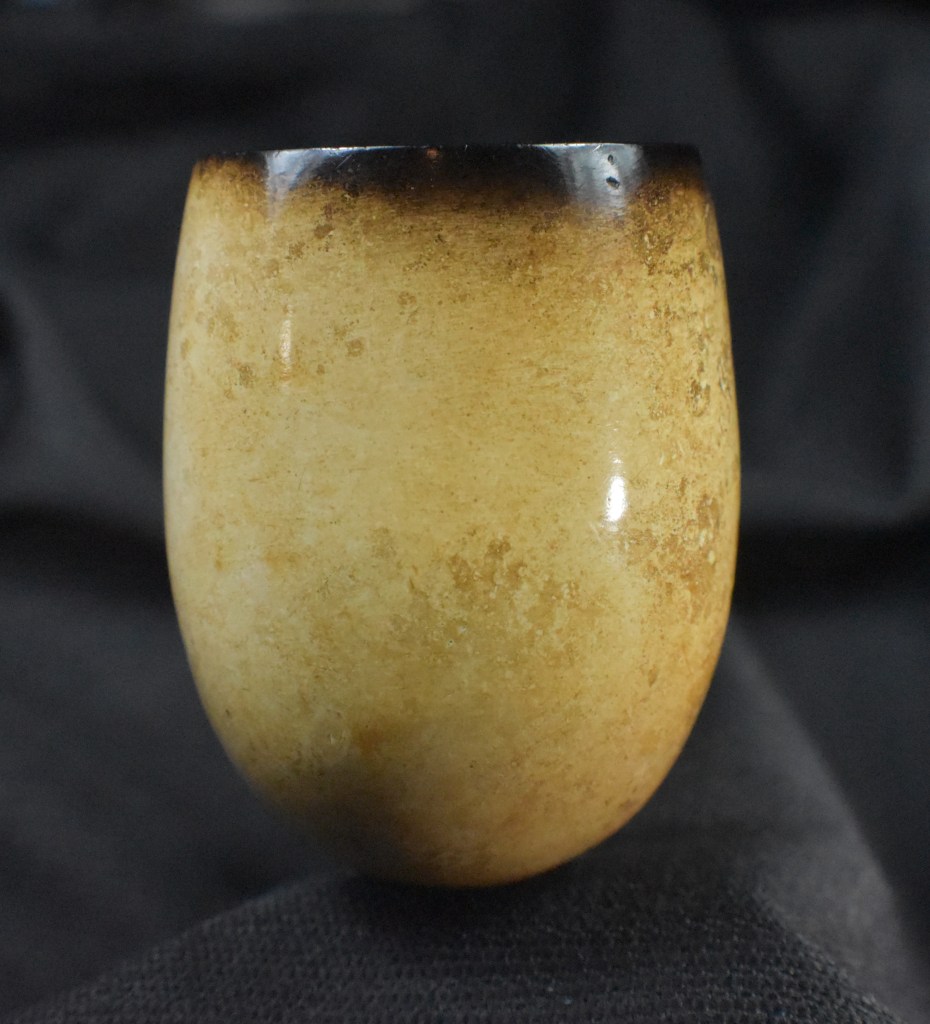
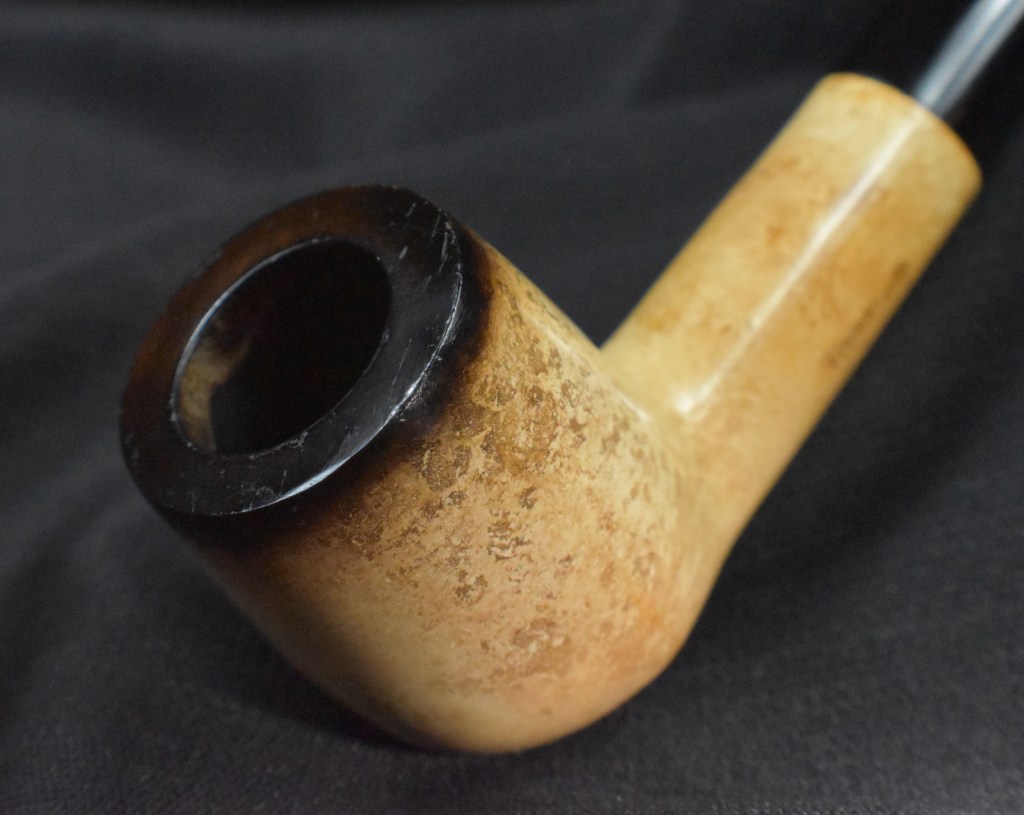
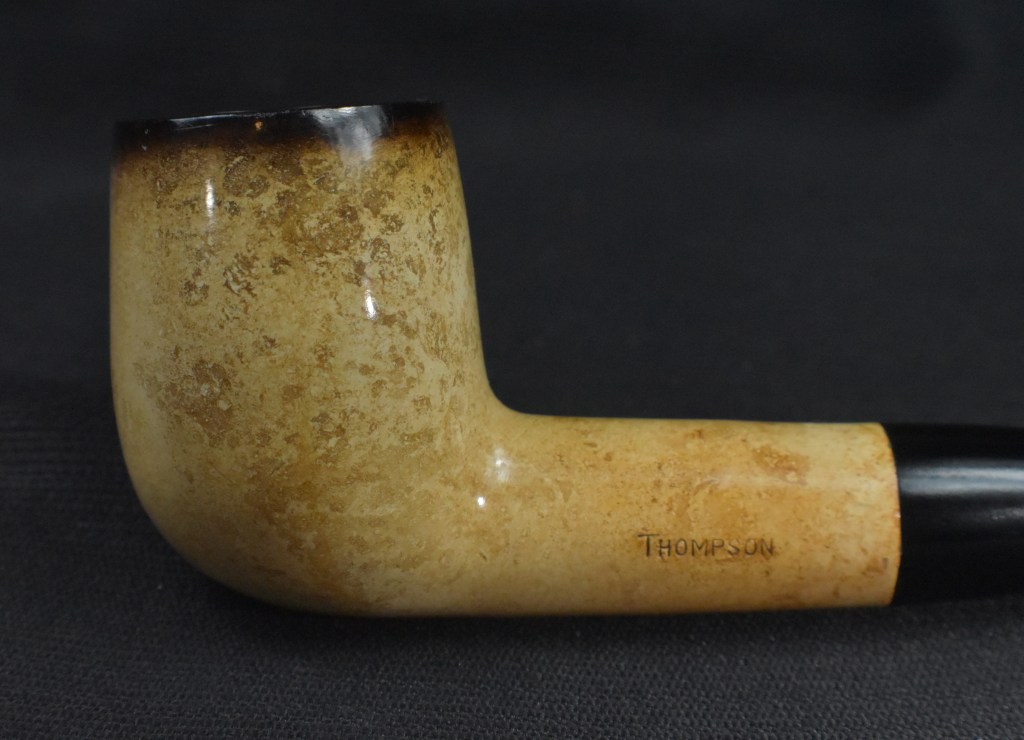
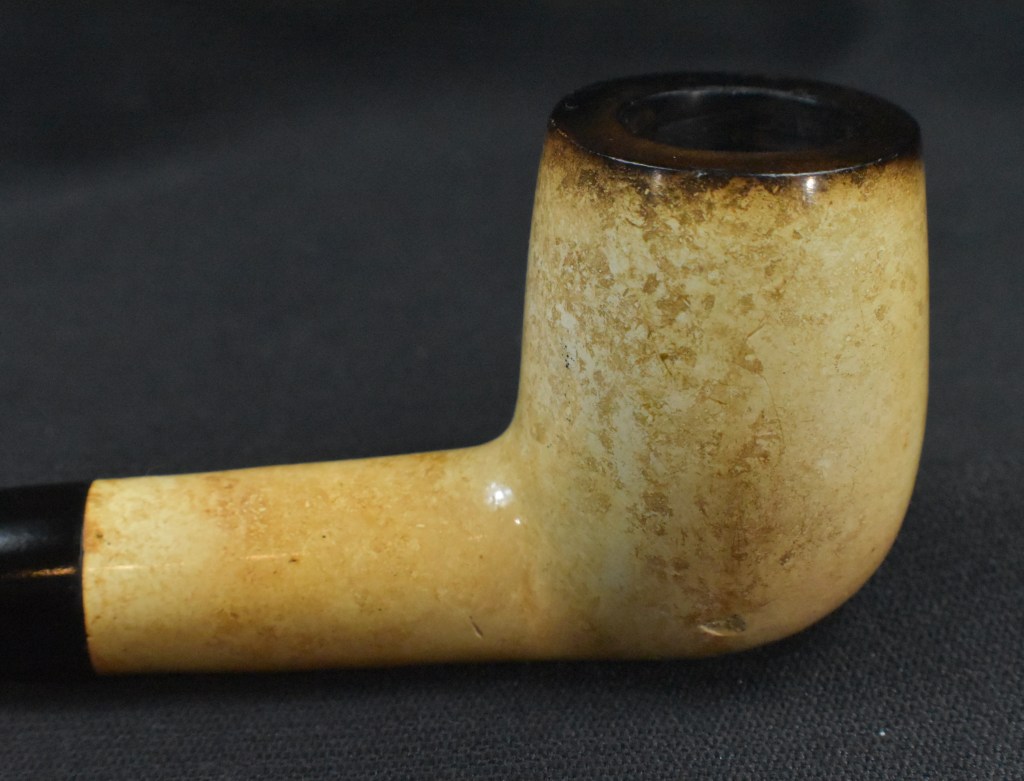
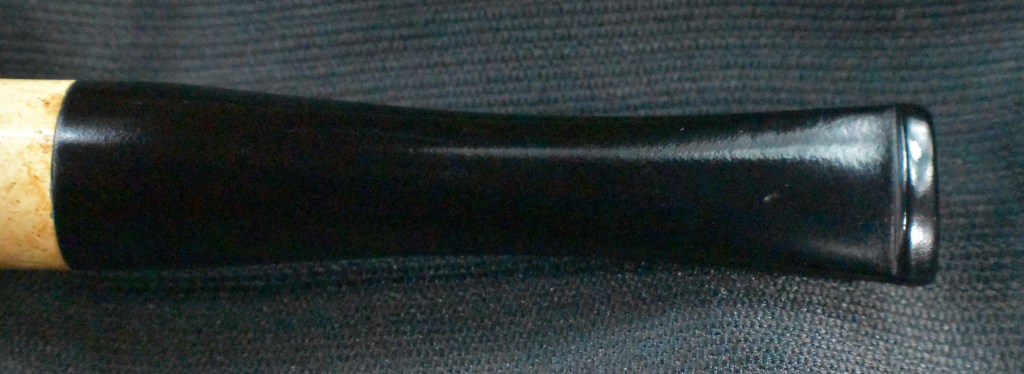
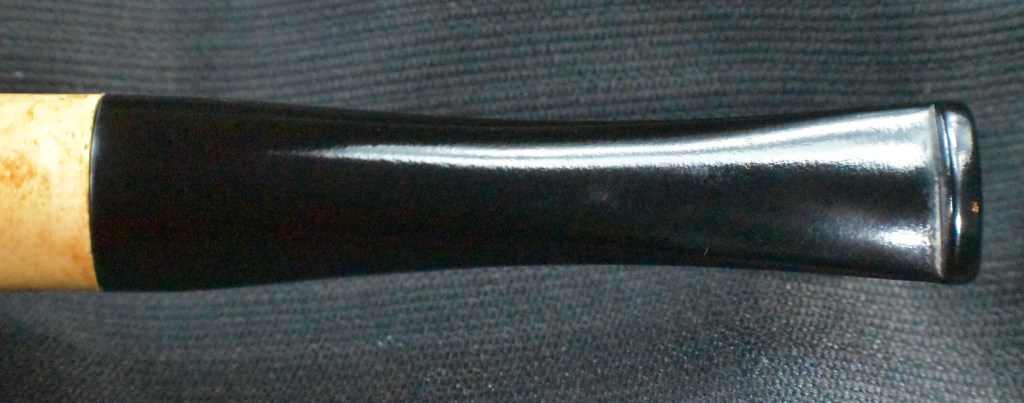
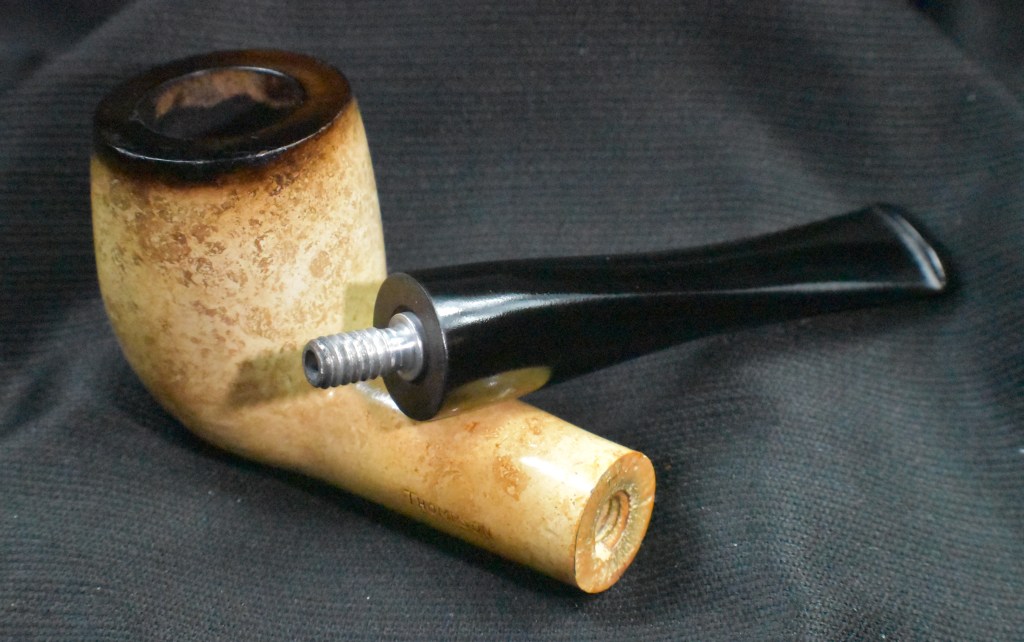
I have thought, “a billiard is a billiard”. I’ll admit that it is not my favorite shape for a pipe. Sure it is a classic and probably the most popular of pipe shapes, with its cylindrical bowl perpendicular to a round shank. Symmetrically, the shank and bowl are proportional, giving the pipe a look of balanced elegance. This Thompson billiard has all of those characteristics though its shank is more stout or substantial than a typical billiard. This trait reminded me of a Peterson pipe, renowned for their more substantial shanks. Perhaps that is what drew me to this particular pipe. That and the fact that I was able to get a high quality British-made block meerschaum pipe for quite a reasonable bid. Below are some photos taken of the pipe prior to any work done.
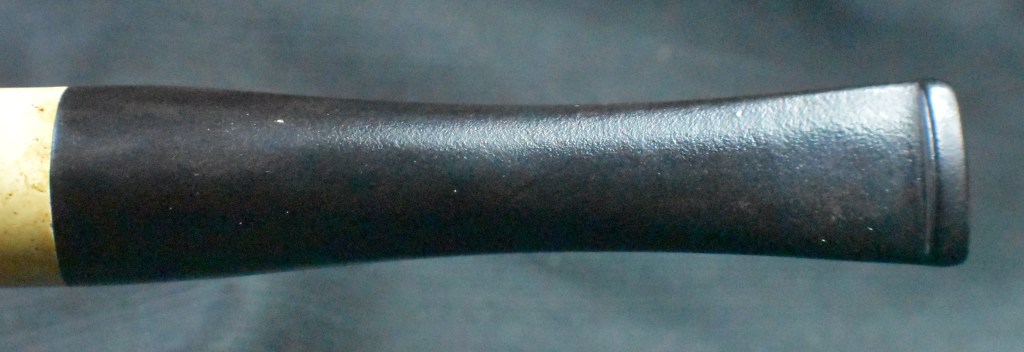
The pipe was in great shape, sure there were a couple of chips on the stummel but that added character to the pipe. The bowl had a light cake built up which would have to be carefully reamed but the rim looked pristine. The stem appeared slightly pitted. I do not know if that was the intended look or if that was a product of aging. Either way it would be sanded and polished. The shank end appeared to be very clean and the stem had no tooth chatter. This looked like an easy restoration.
“My research on the origins of the Thompson Block Meerschaum name can be summarized like this: It was made with African Meerschaum from the Tanganyika Meerschaum Corporation (Tanganyika Meerschaum Corporation – Pipedia) and produced by Laxey Pipe Ltd. on the Isle of Man. This conclusion was deduced from comments made about Thompson from various pipe forum threads. Here is one example from Pipesmagazine.com (2012) among several that I found that demonstrates what I have found generally:
@tschiraldi – Thanks! It’s my understanding that the Thompson Meerschaum pipes were made by the Manx Meerschaum Company on the Isle of Mann (Great Britain). Back story is that my 3x Great Grandfather was Sir Hall Caine who was a famous author known as the Manx Man and lived on the Isle of Mann. I thought it would be cool to own a pipe made by the Manx Meerschaum Company which was made on the Isle of Mann. Just thought it was interesting.
“It’s my understanding…” is the key idea. I found several comments with the assumption that Thompson Block Meerschaum pipes were produced by ‘Manx’ or ‘Laxey’ – the same producer. When doing the research on James’ first commission, I discovered that the Laxey Co. produced the Peterson’s Meerschaum. Here is the Pipedia information on Laxey Pipes Ltd.:
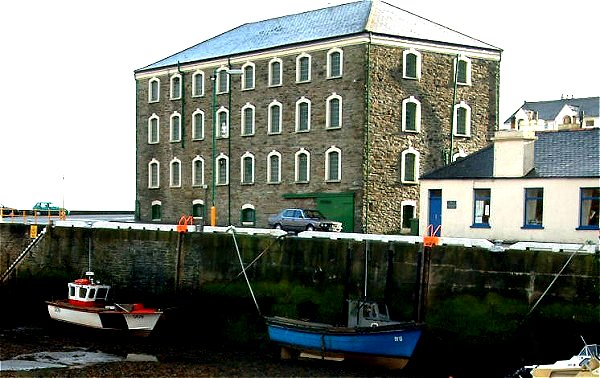
Laxey Pipes Ltd. resided in a historical 19th century four-storey Man stone building at The Quay, Old Laxey, Isle of Man, which thankfully has been preserved.
The company specialized in the production of meerschaum pipes using the Meerschaum mined by the Tanganyika Meerschaum Corporation in the Amboseli basin in Tanganyika (since 1964 part of the United Republic of Tanzania).
Please note: you may often find names like “Manx Pipes Ltd.”, “Man Pipe Co.” and others more, but there is no indication of another Isle of Man pipe producer other than Laxey Pipe Ltd. at any time!
Laxey Pipes Ltd. marketed their own brands like “Manxpipe”, “Manxman”, “Manxland” e.c. Names like “John Bull”, “White Knight” (unwaxed), “Domino” (black, or lined) indicated some shapes / colours of Laxey’s own series. The stems either showed the astronomical sign for “male” or “man” (circle + arrow), or the crest of the Isle of Man, the 3-legged X in a circle. Manxpipes and Laxey’s other brands were available through pipe retailers in general, but also were sold (mainly) to tourists through their own shop in Laxey.
Furthermore Laxey Pipes Ltd. manufactured the meer bowls for Peterson, Barling, Nørding and others from the later 1960’s until 2001. Man Pipe e.g. was a brand distributed by Comoy’s. The bowls usually showed no nomenclature indicating the orderer. “Genuine Block Meerschaum” was engraved frequently. Often, just the stems were different, while bowls were the same.
Supply of meerschaum from East Africa ran out (Kenya / Tanzania exhausted, Somalia inaccessible), and thus the last Laxey meers were supplied to trade in May, 2001. Laxey Pipes Ltd. tried to survive continuing with briar pipes – mainly in the Danish style -, but to no success. It closed down business in July 2002.
In this article from Pipedia, there is no direct mention of Thompson Block Meerschaum however, it was left open that there were other brands produced from the 1960s until 2001 beyond those mentioned – Peterson, Barling, and Nording.
I tend to agree with the sentiments of the Thompson Block Meerschaum pipes being produced by Laxey. Why? First, with the COM being ‘GT. Britain’ leaves few options (if any) of a Meer block being produced other than on the Isle of Man. Secondly, the Thompson on the worktable resembles other products of Laxey with the smokestack coloring and the usual stamping: “Genuine Block Meerschaum”. Here are examples of Laxey pipes including our Thompson.” (Diving into the Provenance of a Thompson Genuine Block Meerschaum GT. Britain Brandy – The Pipe Steward)
Thank you Dal for doing a bang-up job on the research for the Thompson Genuine Block Meerschaum pipes.
The Restoration
As usual the pipe received a cleaned denim piece for protecting it and the workbench.
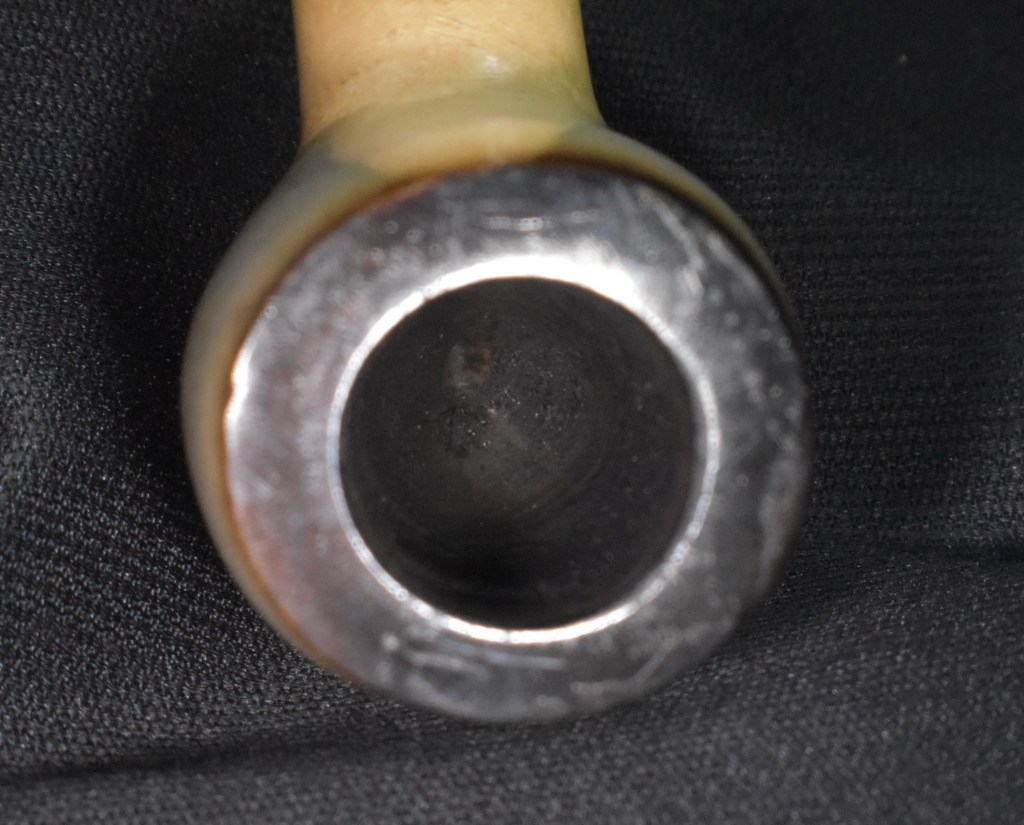
The threads cut into the meerschaum were far from smooth but they looked remarkably clean. I figured after a thorough cleaning I would use a light coating of petroleum jelly to ease the threading of the tenon.
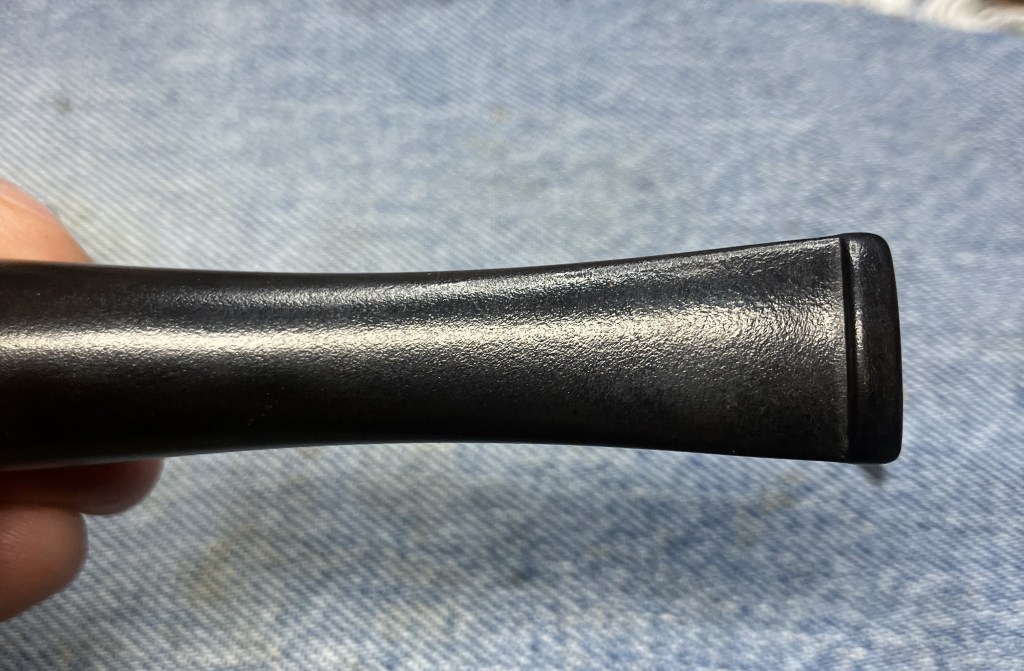
Below you can see the finish of the stem. It almost had a sandblast-like fishing, not unattractive but I thought a gloss would look more elegant.
The reaming was done with only the Smokingpipes Low Country reamer and the General triangular scraper.
The tobacco chamber was sanded with 320 sandpaper wrapped around a wood dowel.
The stummel was scrubbed with Murphy Oil Soap and a nylon brush. The soap was rinsed with warm water and dried with a cotton hand towel. It was set in a pipe stand and allowed to dry for an hour after the scrub.
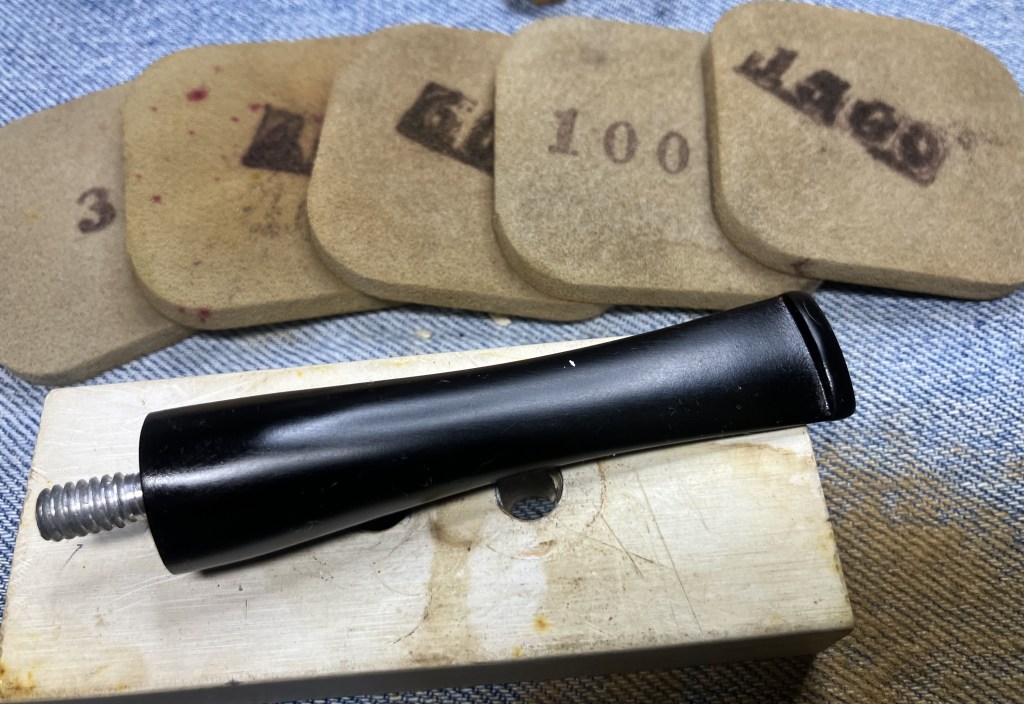
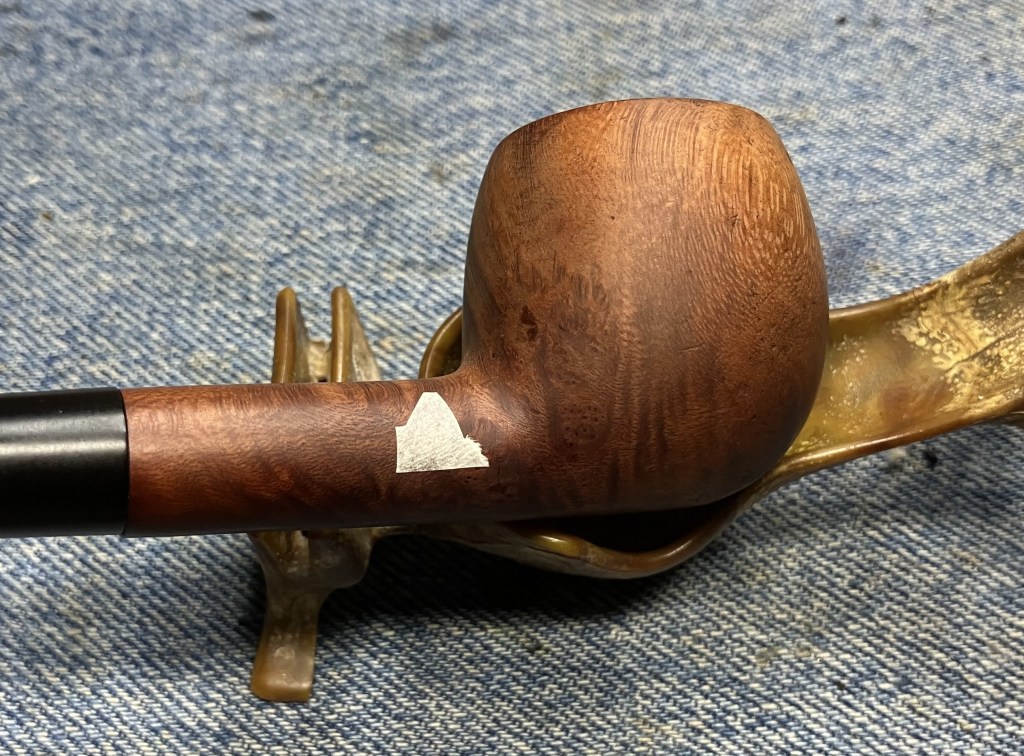
I did not want to round the edges of the stem nor did I was to handle the stummel until it had been given a fresh beeswax coating so I used a wood block with a hole drilled for sanding.
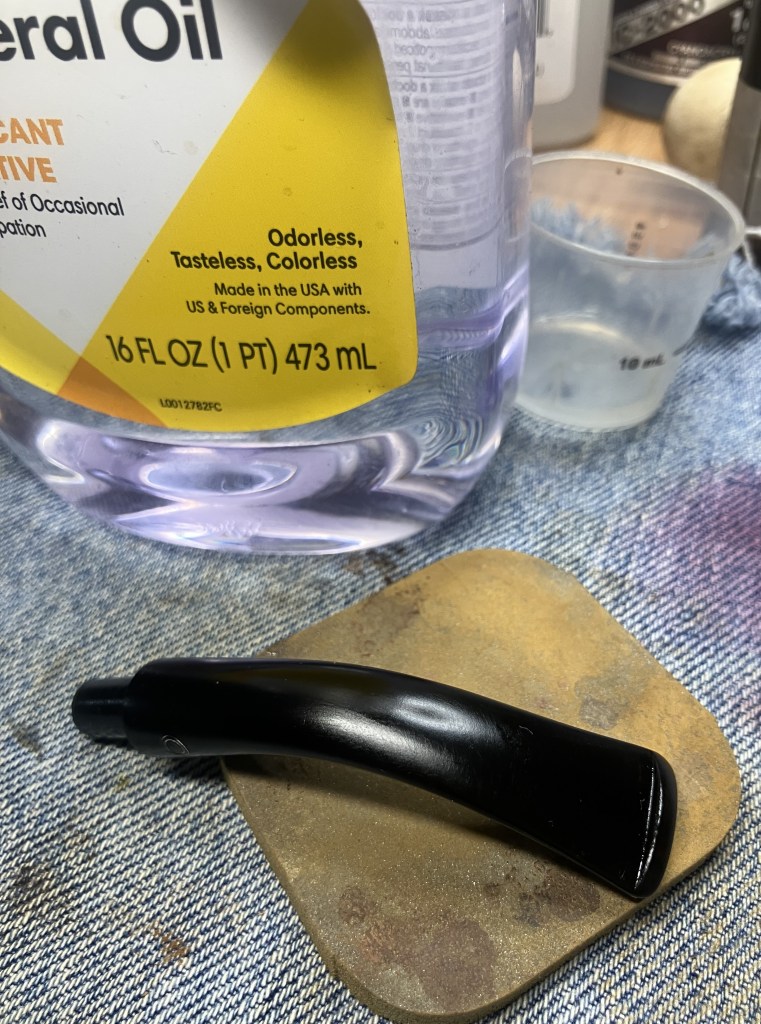
The stem was sanded with a series of sanding sponges from 320-1500 grits. Between sponges the stem was rubbed with mineral oil and wiped with a paper towel.
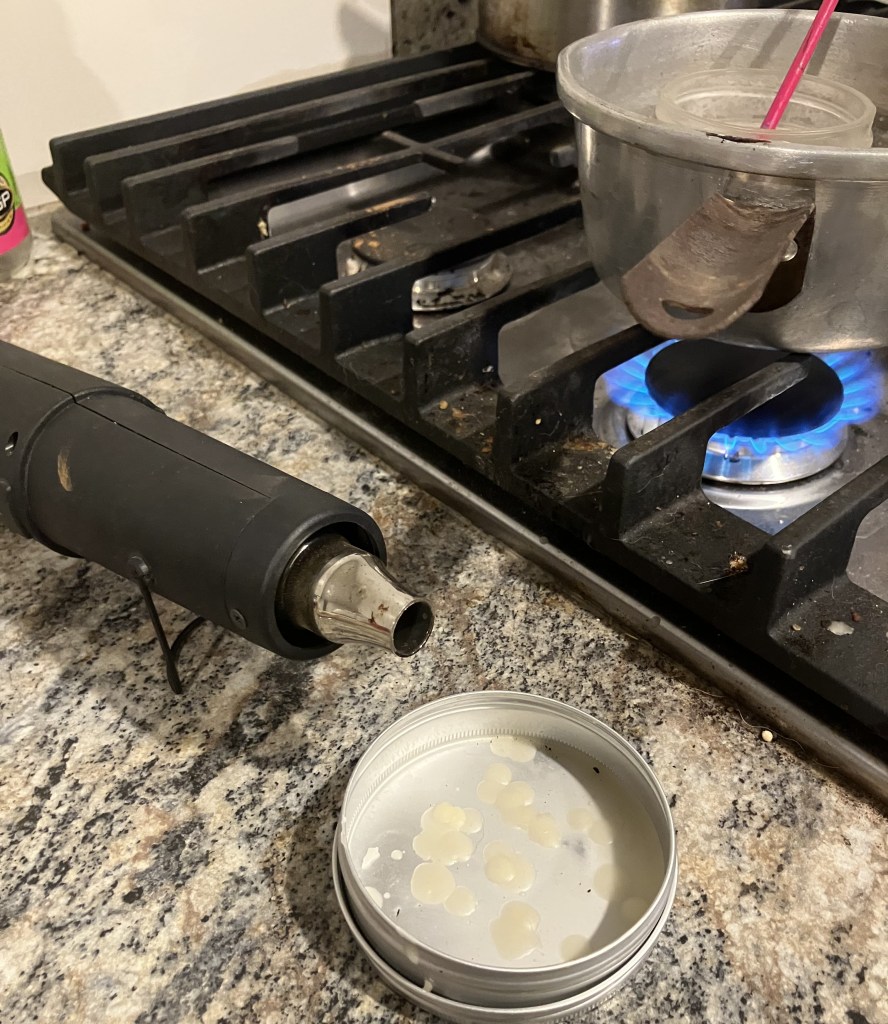
After an hour I started prepping the beeswax. I use a water bath on the stovetop to heat the beeswax. The hot water keeps the wax liquified for a longer period of time and I don’t have to worry about overheating the wax as it never gets above 212F or 100 c.
The stummel was heated using a heat gun. The metal tin in the photo below is used to catch wax that drips from the stummel as it is applied with a small paintbrush.
The tobacco chamber was plugged using a cork and the shank plugged with the stem. The hot beeswax was applied with several coats and the stummel rotated around the heat gun constantly. Upon finishing, I wiped the stummel with a clean dry paper towel. The stummel was then allowed to cool over about 15 minutes.
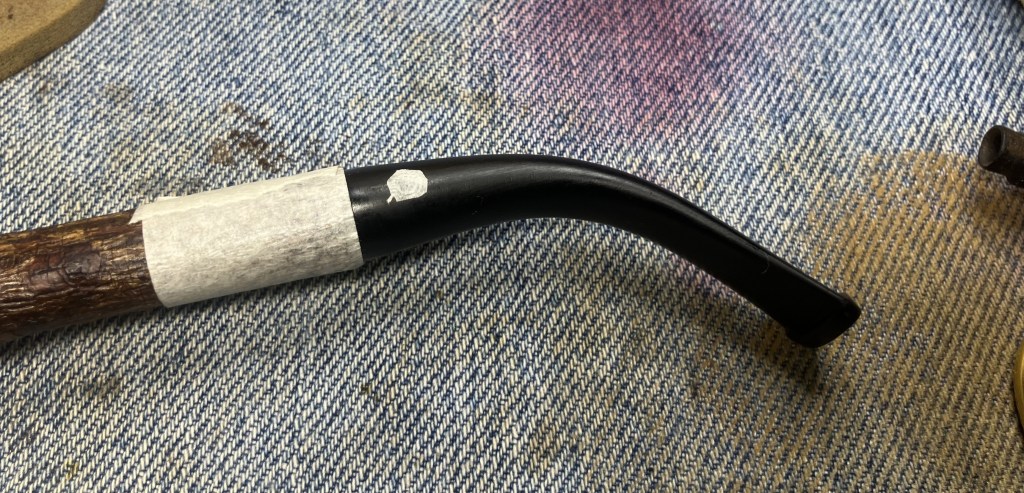
Once cooled, I wrapped the shank in masking tape to protect it from sanding. I continued with the series of sanding sponges from 2000-3500 grits with oiling and wiping as above.
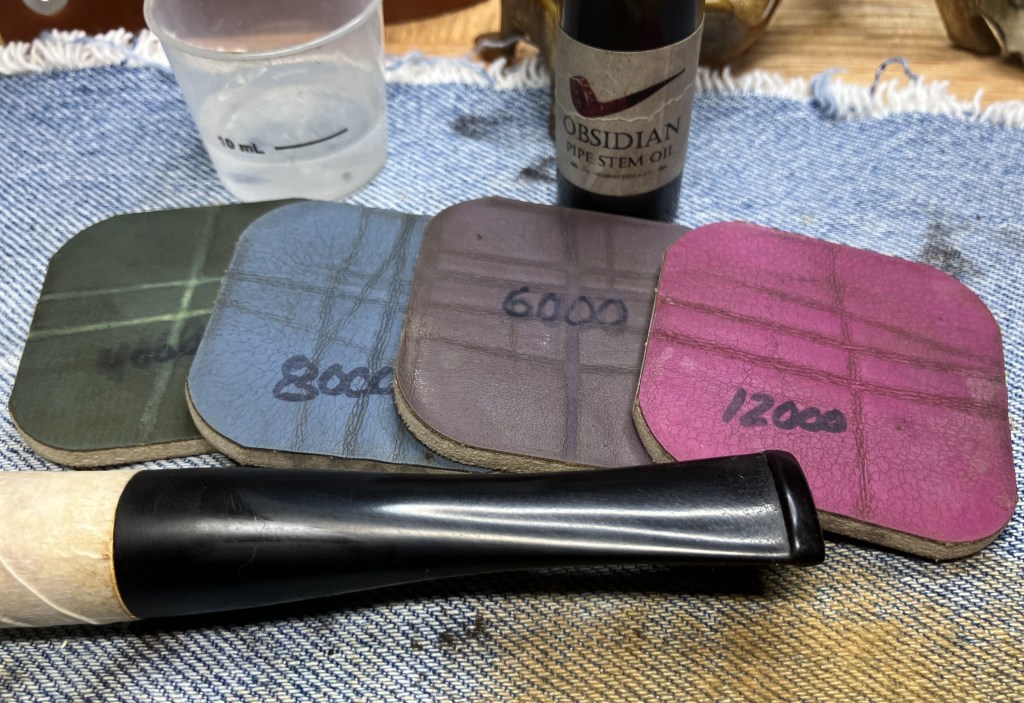
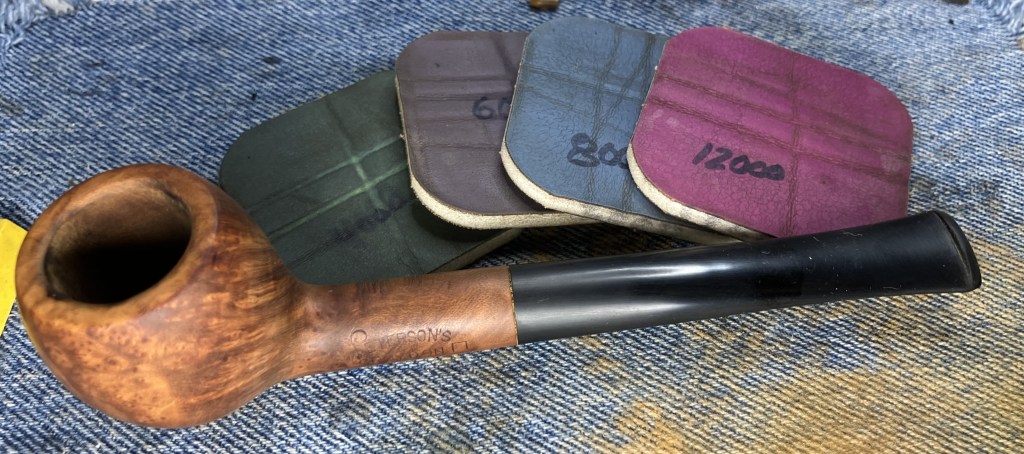
The stem was then micro-meshed with pads 4000-12000. I rubbed the stem with Obsidian Oil between pads and wiped with a paper towel.
The stem was then buffed with a blue buffing compound.
After the remaining buffing compound had been wiped from the pipe and the tape removed the pipe received several coats of carnauba wax on the stem and a light buffing of the stummel.
The final step was another hand buff with the microfiber polishing cloth.
This lovely Thompson Block Meerschaum Billiard is a fine example of Tanganyika African meerschaum. The mineral does not have the same fine grain and brilliant white of the Turkish meerschaum but it does have a character all its own, almost like a rustic version of the Turkish mineral. The fumed rim gives way to a buttery cream color which will change with use and form a truly individual pipe. The stem started out with a more rough texture. This was sanded and finished to a high gloss black which stands out against the light meerschaum. The dimensions of the Thompson Block Meerschaum Billiard are:
Length: 6.00 in./ 152.40 mm.
Weight: 1.72 oz./ 48.76 g.
Bowl Height: 1.90 in./ 48.26 mm.
Chamber Depth: 1.54 in./ 39.12 mm.
Chamber Diameter: 0.74 in./ 18.80 mm.
Outside Diameter: 1.44 in./ 36.58 mm.
I do hope that you have found something here useful to your own pipe care, maintenance or restorations. If you like this sort of thing, please click the like and subscribe buttons. Thank you for reading the ramblings of an old pipe lover.
Loading…
Below are some photos of the finished Thompson Block Meerschaum Billiard.
I remember reading my first Sherlock Holmes in middle school, The Hound of the Baskervilles by Sir Arthur Conan Doyle. I loved the idea of a mystery, even though I knew about the great detective, the solution to the mystery was all new to me. I feel that way about this pipe, a Peterson Croydon Square 42. I had above average knowledge of Peterson pipes but had not heard of the Croydon Square line. Where would this mystery lead me?
The pipe was another single target eBay acquisition. I paid more than I really wanted to but it was a specimen that I had not seen before and I wanted to work on it. After a quick trip from LaGrange, Georgia to the wilds of southeast Nebraska, I had my prize. The photos below show the pipe prior to any work.
The Croydon Square looked like a well loved and used pipe. The restoration looked straight forward; cleaning, reaming, sanding of the stummel, deoxidation of the stem with sanding and polish. There did not appear to be any glaring issues with this old pipe, just use and time.
Background
Being unfamiliar with London, I’d not heard of Croydon nor of Croydon Square. I am familiar with Peterson pipes though, yet Croydon was an unfamiliar line of Petersons to me. I first wanted some information about the geography.
With my curiosity settled on that account, I turned my gerbil-like attention to the pipe. I cannot give Kapp and Peterson the credit they are due. In the most comprehensive guide to the history of Peterson Mark Irwin and Gary Malmberg wrote a wonderful book The Peterson Pipe (Irwin, Mark and Malmberg, Gary. The Peterson Pipe; The Story of Kapp and Peterson. 2018, Briar Books Press, Canada. First edition, second printing.). According to Irwin and Malmberg, the legacy of Peterson as “the world’s oldest continuously operating briar pipe maker” (Irwin, p. 3). This is a treasure trove of information for those interested in Peterson pipes. It is currently “sold out” from The Peterson Pipe Book (Softcover) | Smokingpipes.com.
“I’m also happy to report that a few revisions of the book are now in order. That didn’t take long, did it? So get out your pencil, it’s time to annotate your copy: (1) The Croydon Square origin date is given as 1949 in the book, as we only had an RDTA Almanac an unhallmarked specimen to go by. But now—surprise!—it’s clear that the line was being made as early as ’39. (The similarity between the name of Croydon Square and Trafalgar Square also has me wondering if the latter didn’t replace the former at some point.) (2) We can also pencil in ’39 as the earliest documented date (so far) for the Captain Pete. (3) The ad copy in the catalog also suggests that, at this date, the line was made exclusively at the London factory. (4) And if that’s not enough, at the beginning of the “N” section in the Information Guide, you can write, “An N prefacing two-digit shape numbers of English-made pipes refers to a natural finish.”” (136. Filling the Gap: The 1939 Rogers Import Peterson Catalog & Download – Peterson Pipe Notes)
In the above quote from Mark Irwin, the “RDTA” refers to “Retail Tobacco Dealers of America. The forerunner of the current Premium Cigar Association with a few name changes in between.” (Mark Irwin, personal communication. September 22, 2025). Don’t worry, I had no idea what it meant either. I emailed Mark and got a quick reply. The PPN blog also had the following page from a 1939 Roger’s catalog:
AHA, specific historical information about the Croydon Square pipe was at hand. This put the pipe’s provenance from at least 1939 to ? and also the shape 42. Although this information led to more questions. There is no mention or illustration of fishtail stems, only P-lips. The pipe in hand had been smoked quite a bit leading me to the thought that the stem of this pipe may be a replacement.
In The Peterson Pipe, where the London production of pipes is discussed at length, was another interesting piece of information. Here, Irwin and Malmberg say, “Apparently, the London factory did not order a MADE IN ENGLAND die until after the war. Any Peterson stamped with an English COM must be no older than the later 1940s” (Irwin, p.150). If it is assumed that this pipe was not stamped due to there not being a stamp available then it would date from 1939-late 1940s. If it was merely not stamped with a COM then it is assumed to be made during the years of pipe production at the London factory 1936-1962. I prefer to think that it is due to the former. This is actually a selfish desire to have the dates of production to be a more definitive late 1930s-late 1940s. I know, too much conjecture…
The Restoration
The restoration began with a clean denim piece protecting both the work surface and the pipe.
I began with the stem. This was cleaned with bristle pipe cleaners and 99% ethyl alcohol.
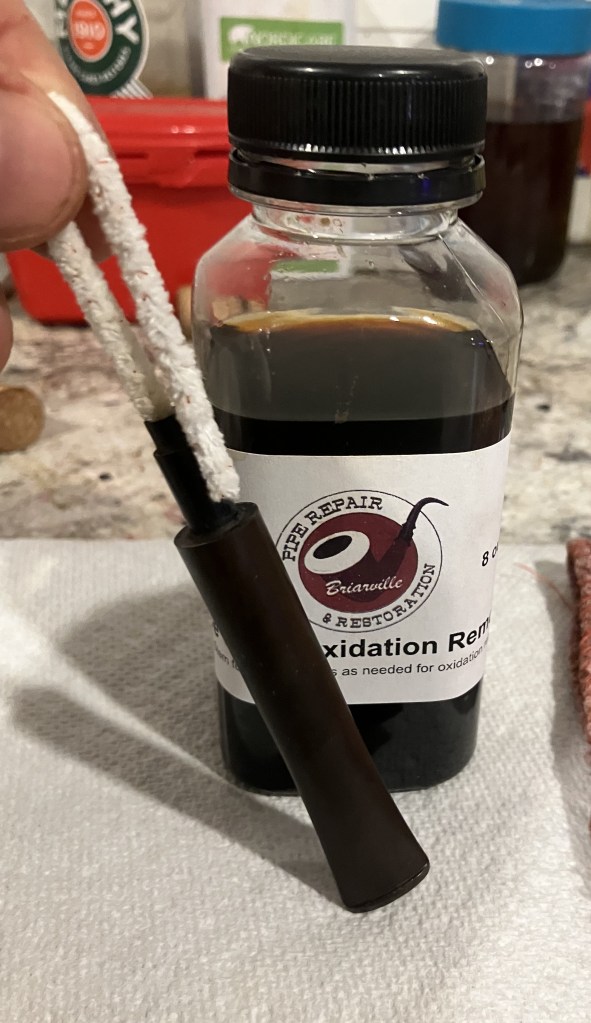
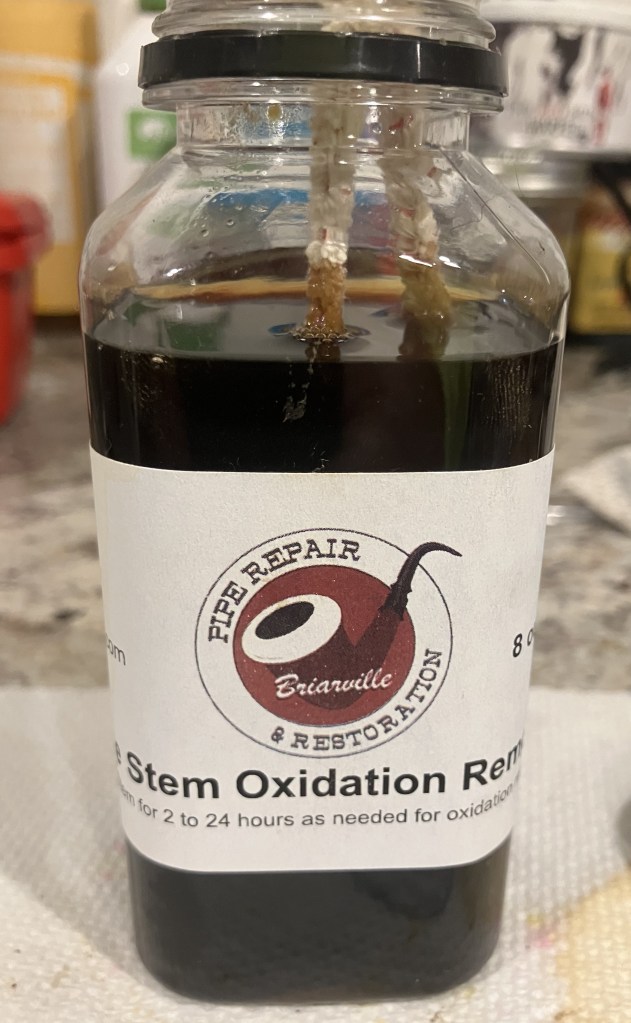
The stem was then submerged in Briarville’s Pipe Stem Oxidation Remover (deox). It bathed for 18 hours.
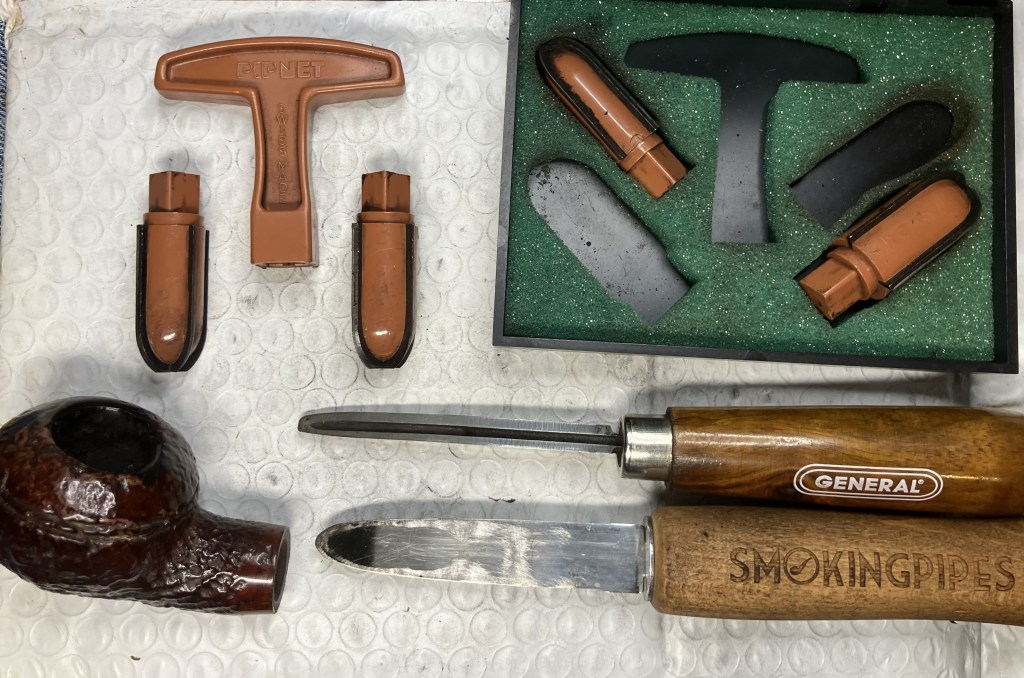
In the meantime, I worked on the stummel. The ream team was gathered.
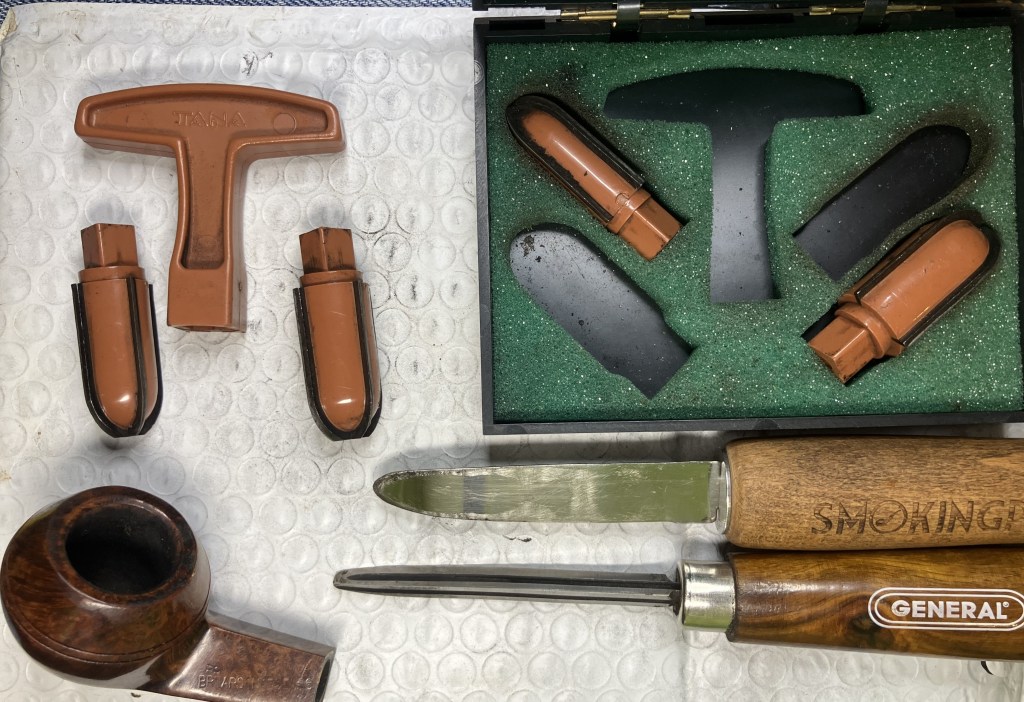
The PipNet #1 and #2 blades were both put to use. The General triangular scarper was also used to do some cleanup of the tobacco chamber and the rim.
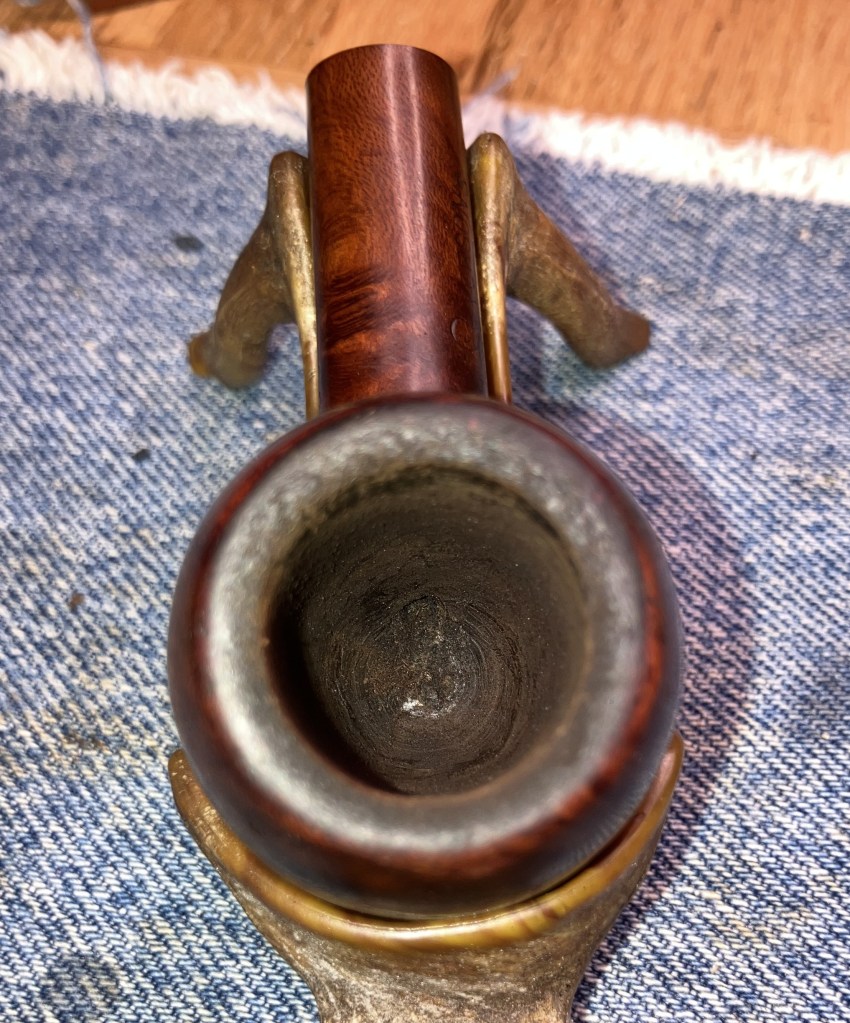
Below is a photo of the tobacco chamber after the reaming.
The chamber was then sanded with 320 sandpaper wrapped around a wood dowel. No damage to the chamber was observed.
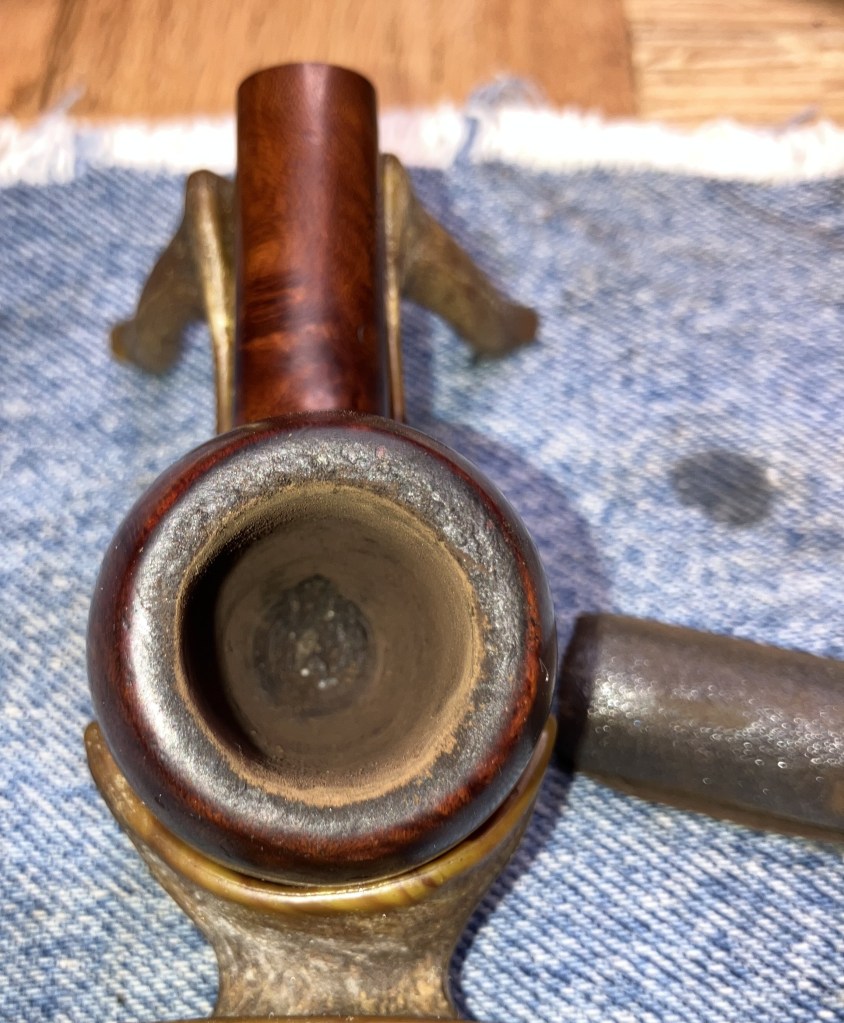
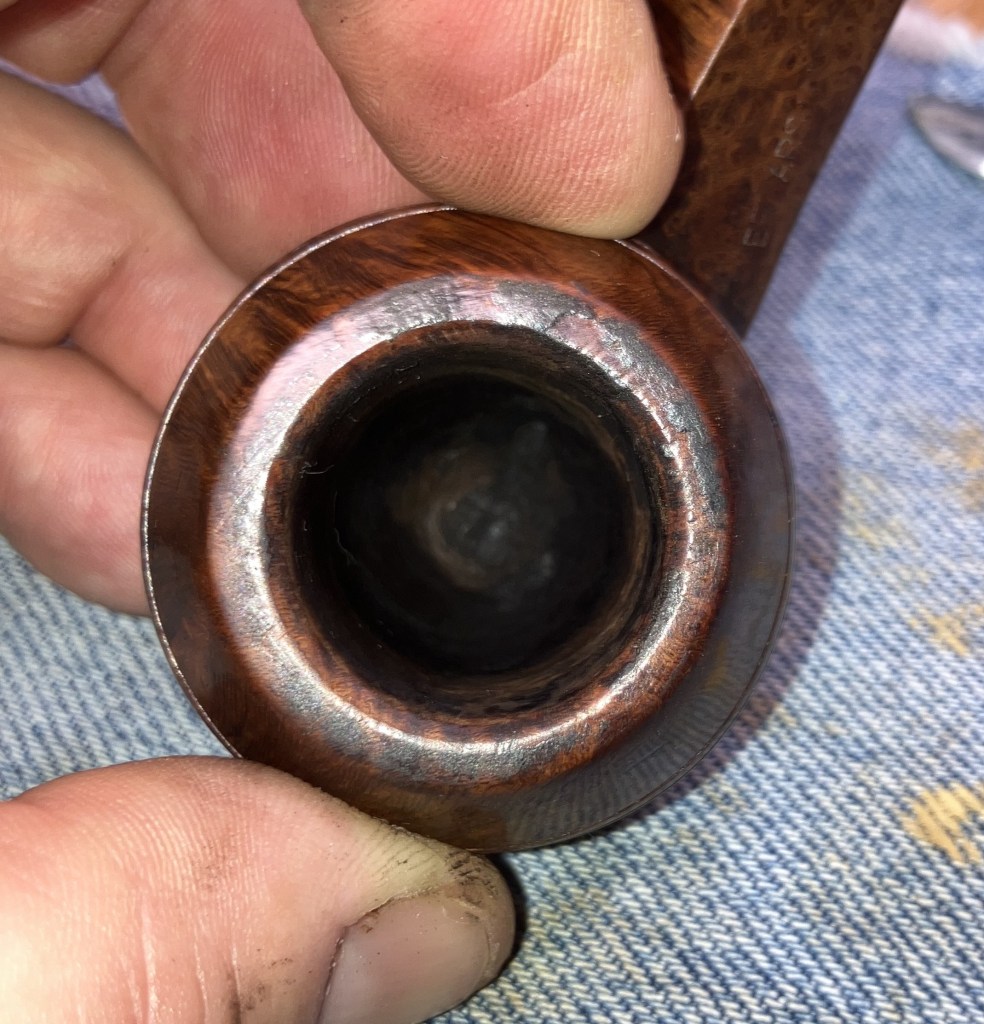
The rim however was encased in a layer of lava.
The lava was softened with saliva and scraped with the blade of a sharp pocket knife.
Next came the shank airway cleaning. Again the 99% ethyl alcohol and bristle pipe cleaners were used. There was also a good deal of scraping with a dental scraper and use of a nylon shank brush.
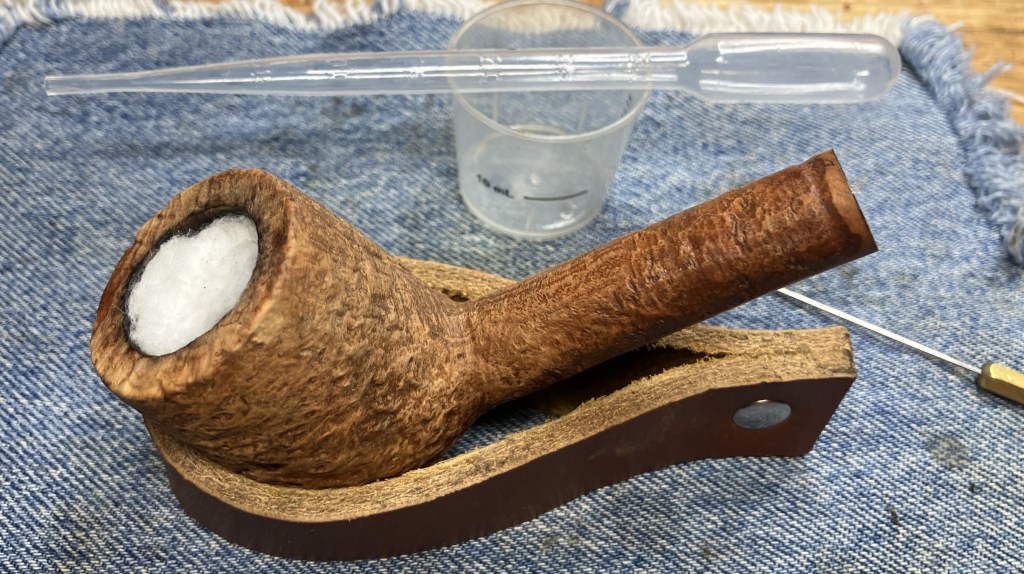
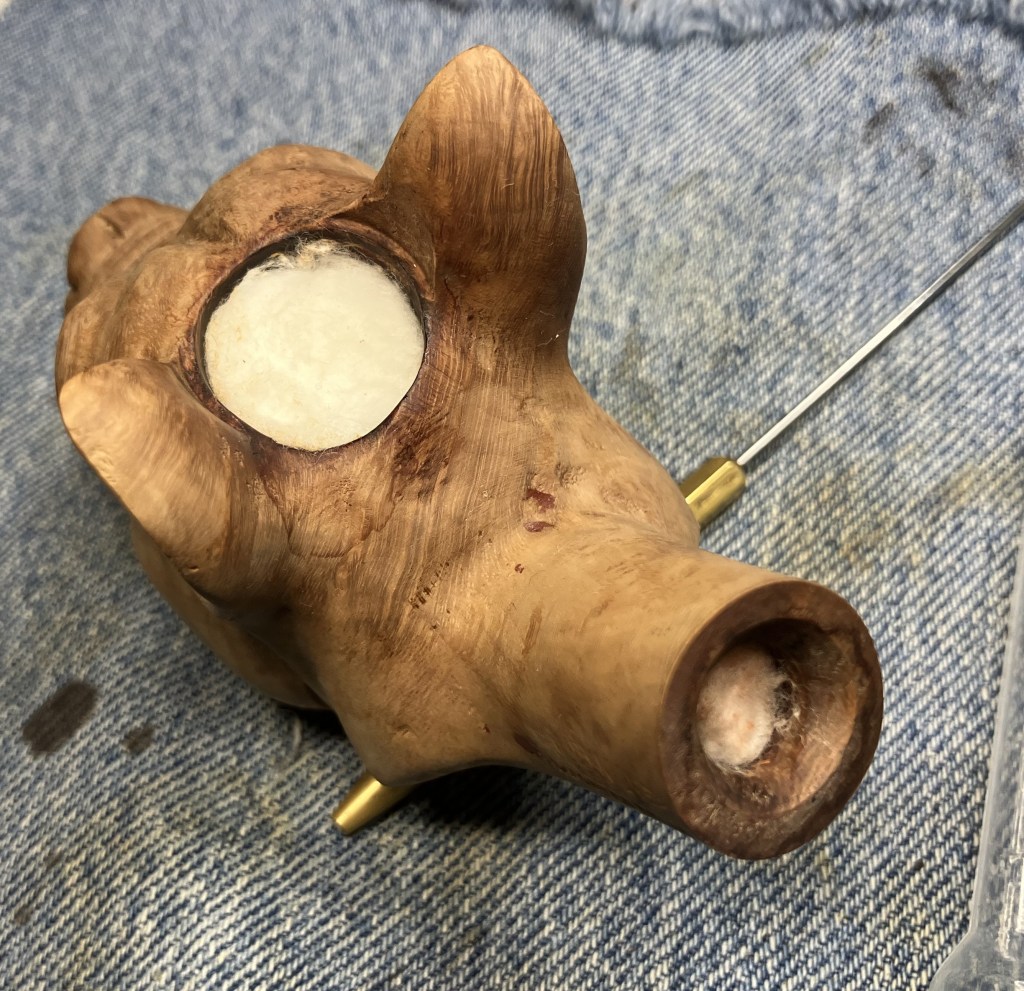
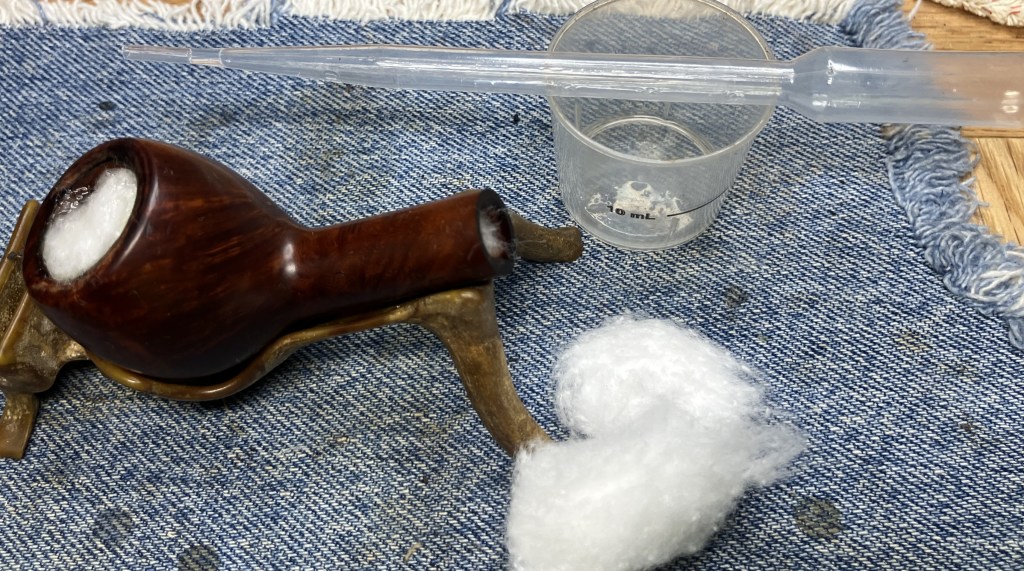
I was not completely happy with my efforts to rid the airway of the residue of tar and general yuck. I thought an alcohol and cotton treatment would do the airway some good. The tobacco chamber and the airway were stuffed with cotton.
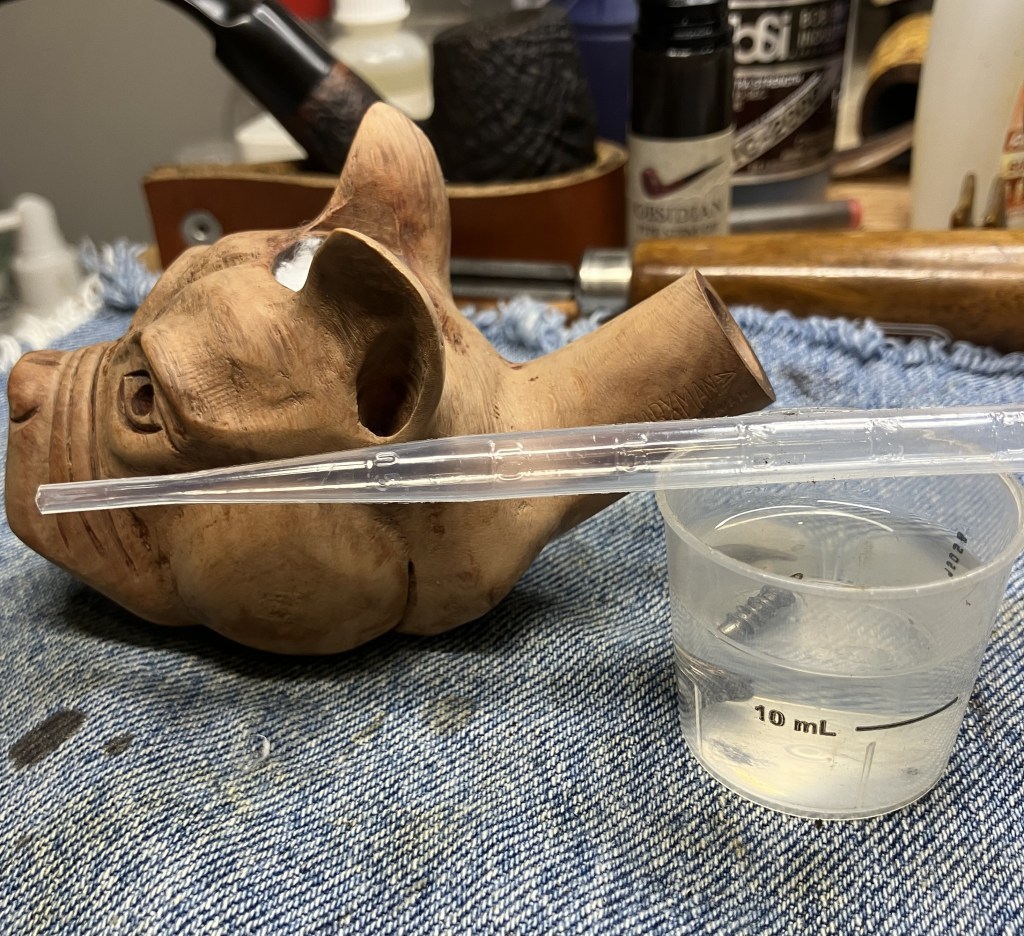
99% ethyl alcohol was applied via a disposable pipette to the cotton until it was saturated. This took about 10 ml of alcohol.
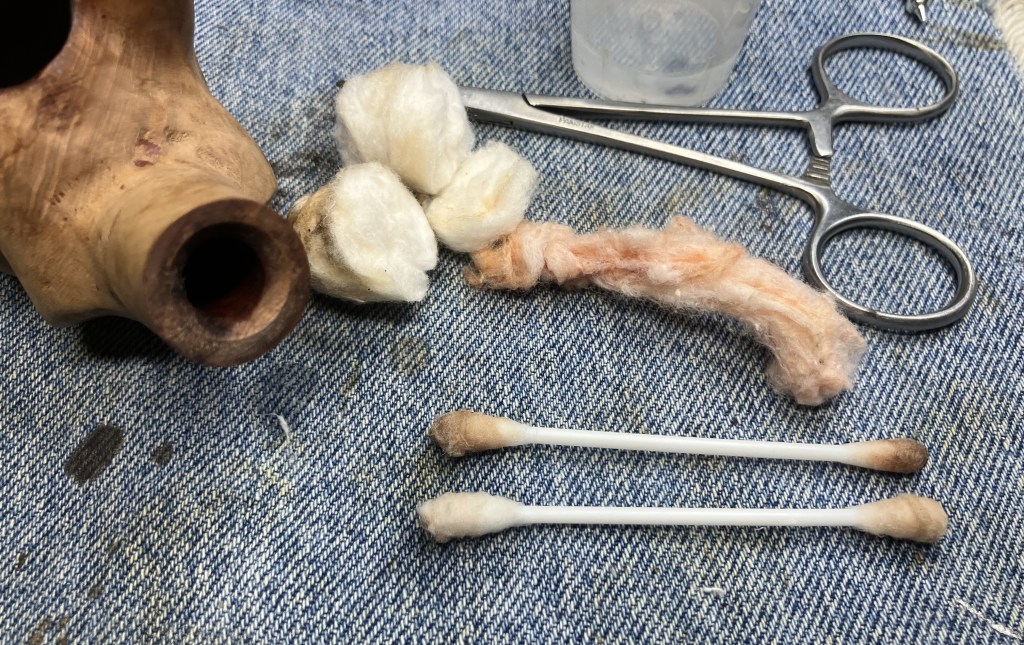
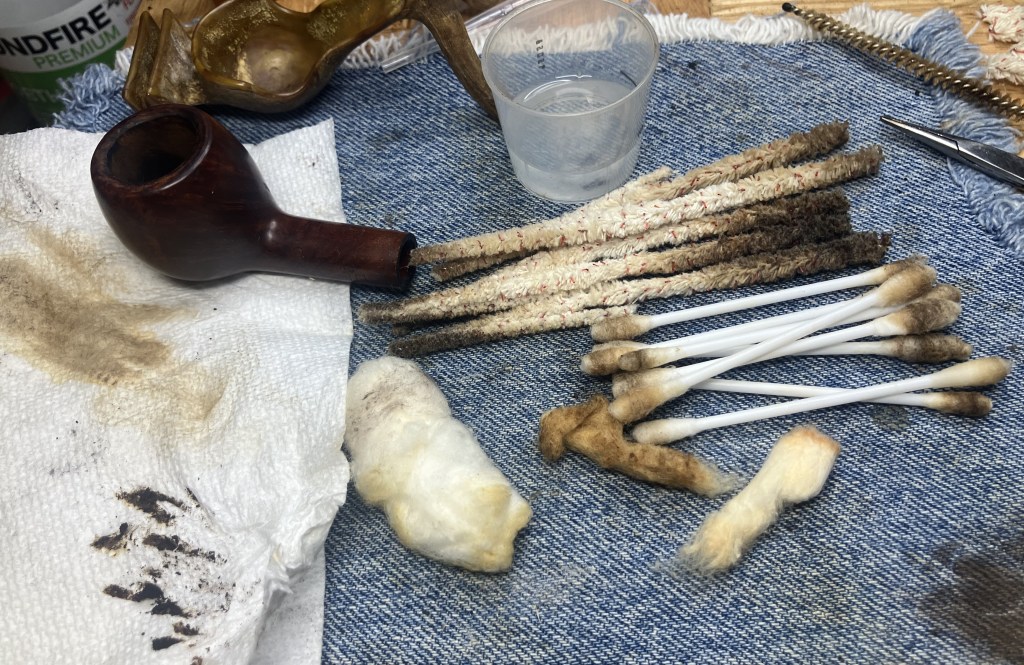
The alcohol was allowed to evaporate overnight. This allowed the alcohol to dissolve the tars and transfer them to the cotton as the alcohol evaporated. The next day the cotton was stained, telling me the process worked.
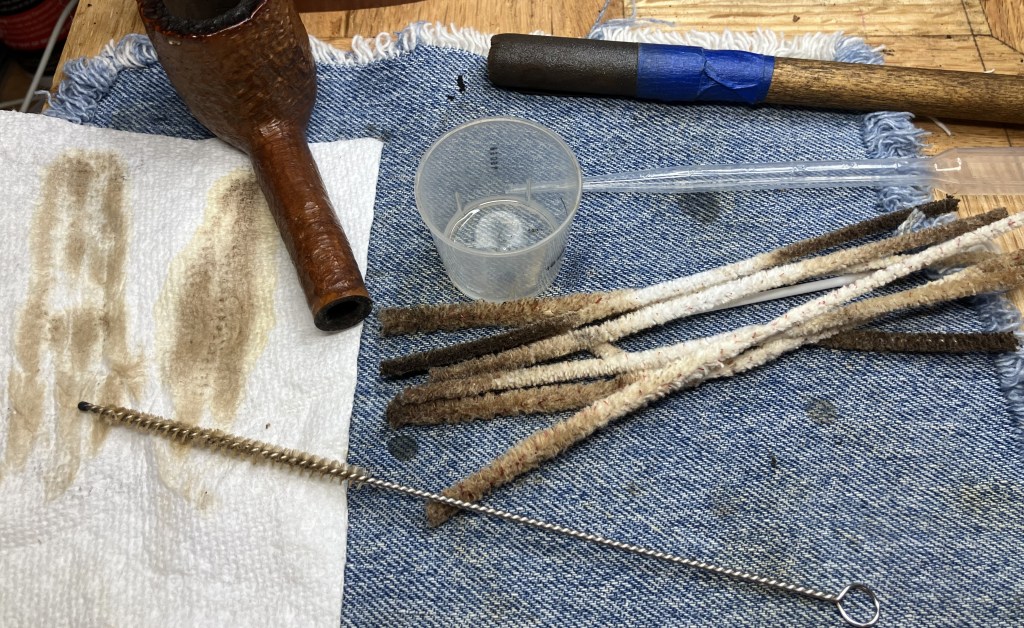
The cotton was removed and the airway was cleaned again. The below photo shows the 2nd cleaning and the tars that were removed after the overnight cotton alcohol treatment.
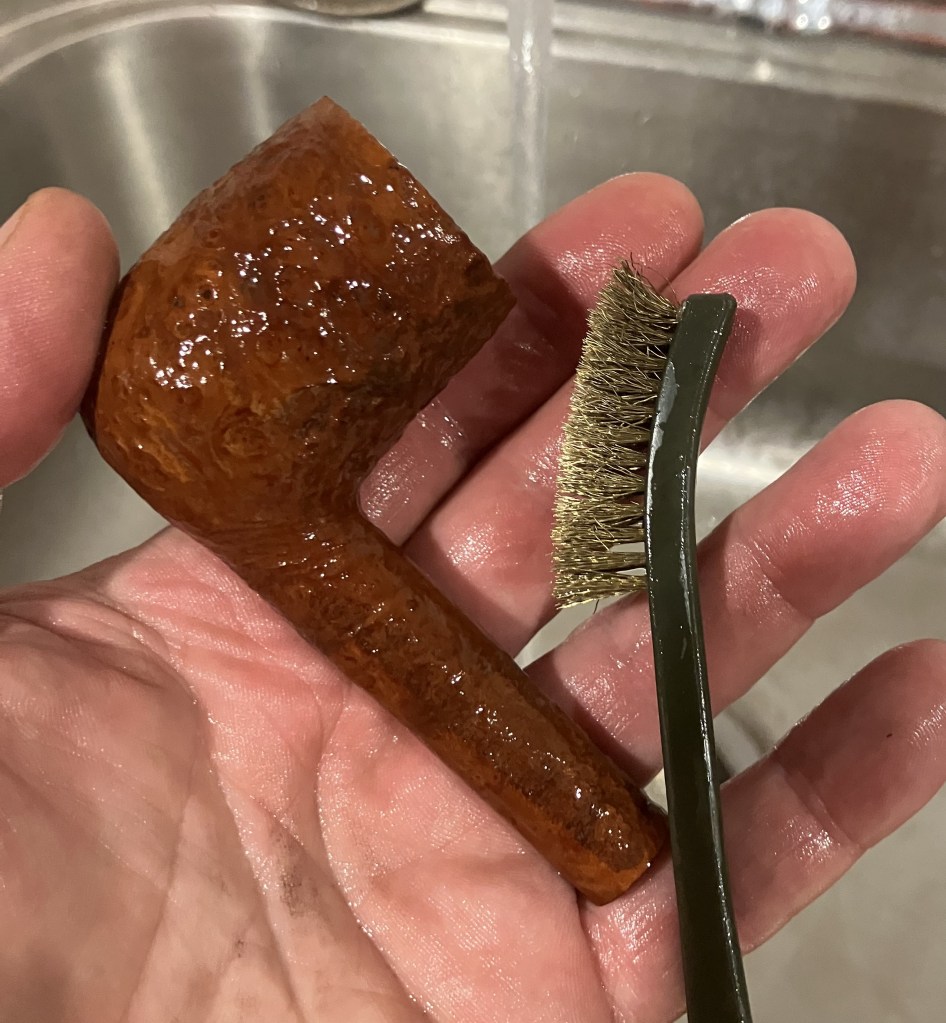
The stummel was then taken to the sink for a scrubbing with a nylon brush and undiluted Murphy Oil Soap. The soap was rinsed with warm water and the stummel dried with a cotton hand towel.
Returning to the workbench, the stummel was wiped with a make-up pad dipped in ethyl alcohol.
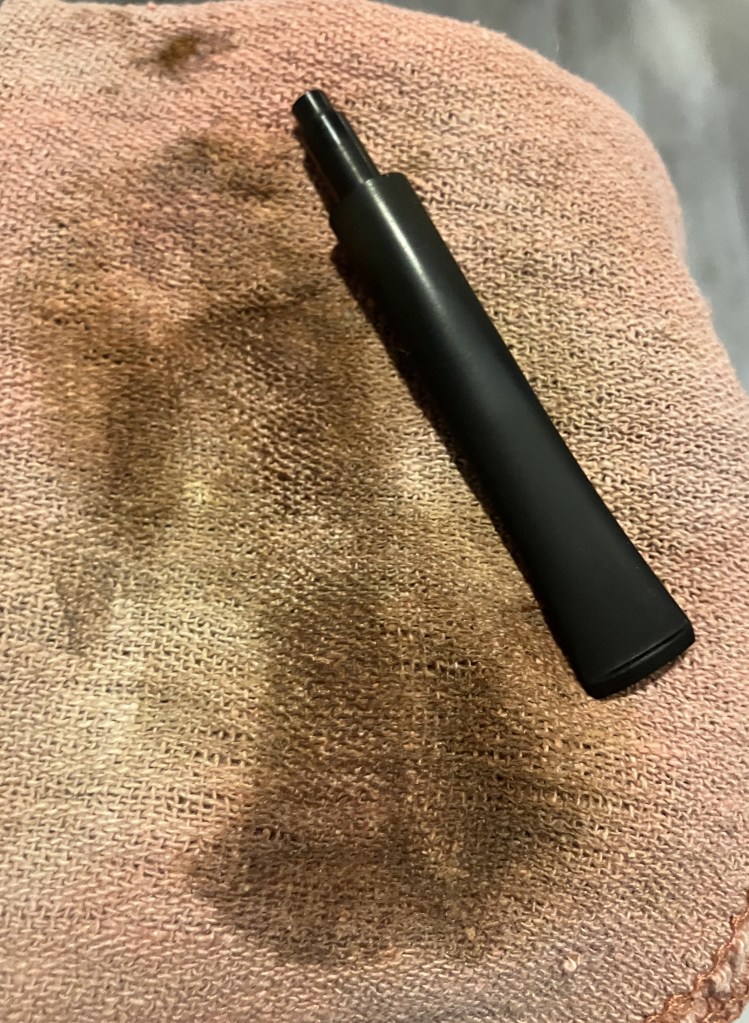
The stem was removed from deox and rubbed with a coarse shop rag. This removed a good deal of the oxidized rubber from the stem.
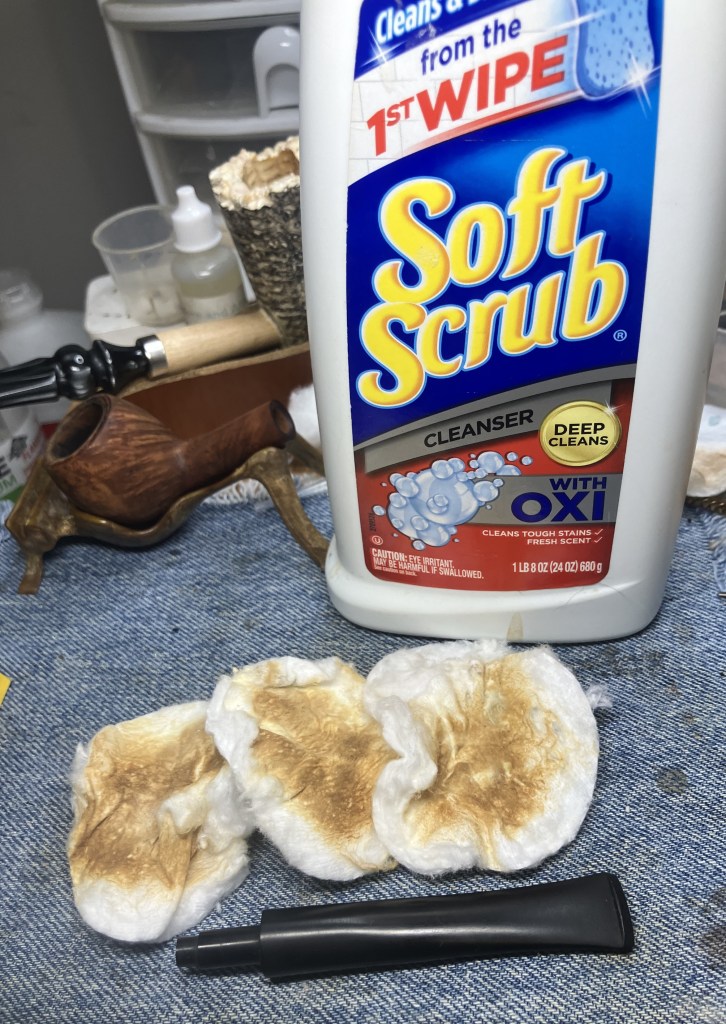
The stem was then worked with Soft Scrub cleanser on make-up pads to remove more of the oxidation.
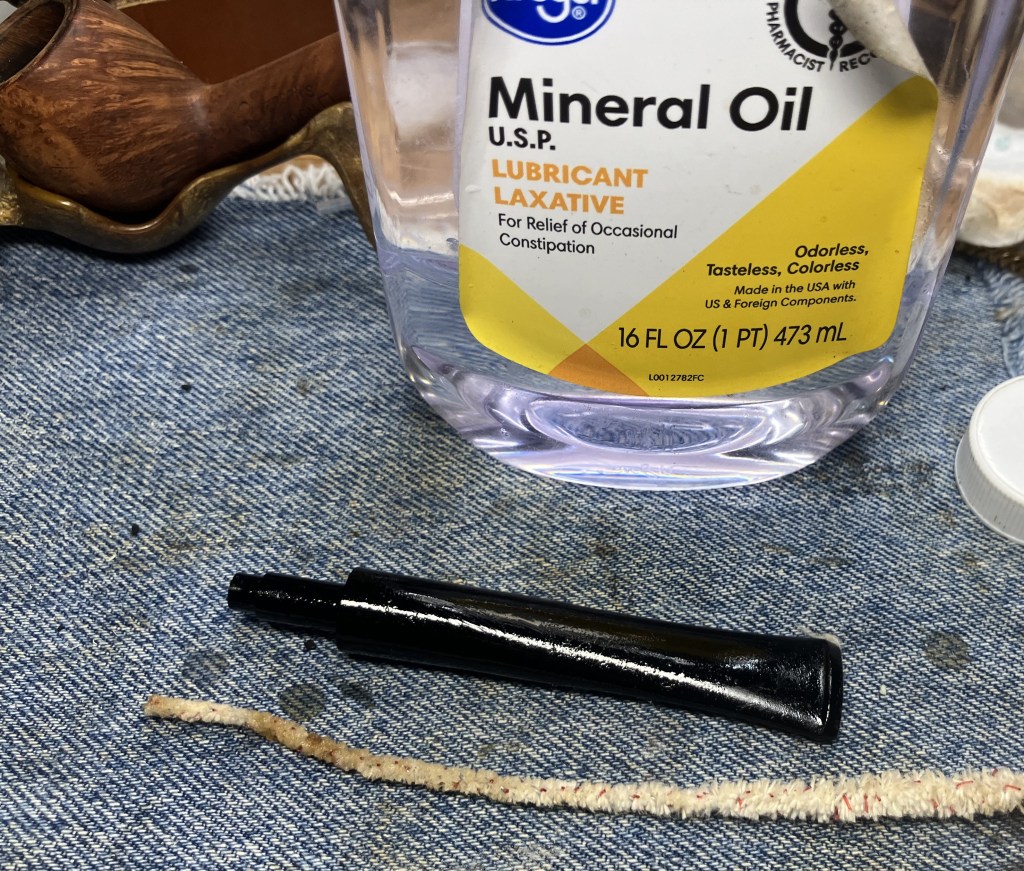
I then oiled the stem with a liberal coating of mineral oil and let the stem sit for several hours. Oh yeah, I also ran a pipe cleaner through the stem and oiled the interior as well.
The rim looked far better but still rather rough. I thought that a light topping was in order.
The topping was done with 320 sandpaper laid on a flat counter top followed by a piece of 400 sandpaper. This revealed two additional areas of concern. A deeper dent or ding in the inner rim (about 5:00) and a hairline crack (at about 7:00).
I used a wood sphere wrapped in sandpaper to reestablish the inner rim bevel and smooth the rim.
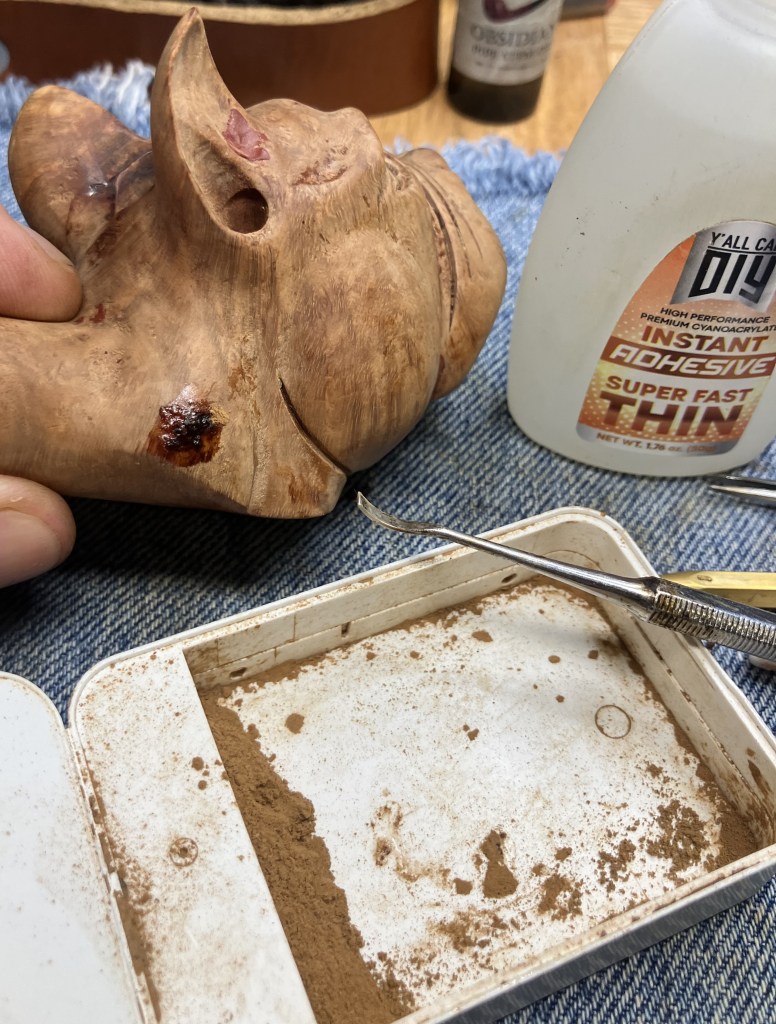
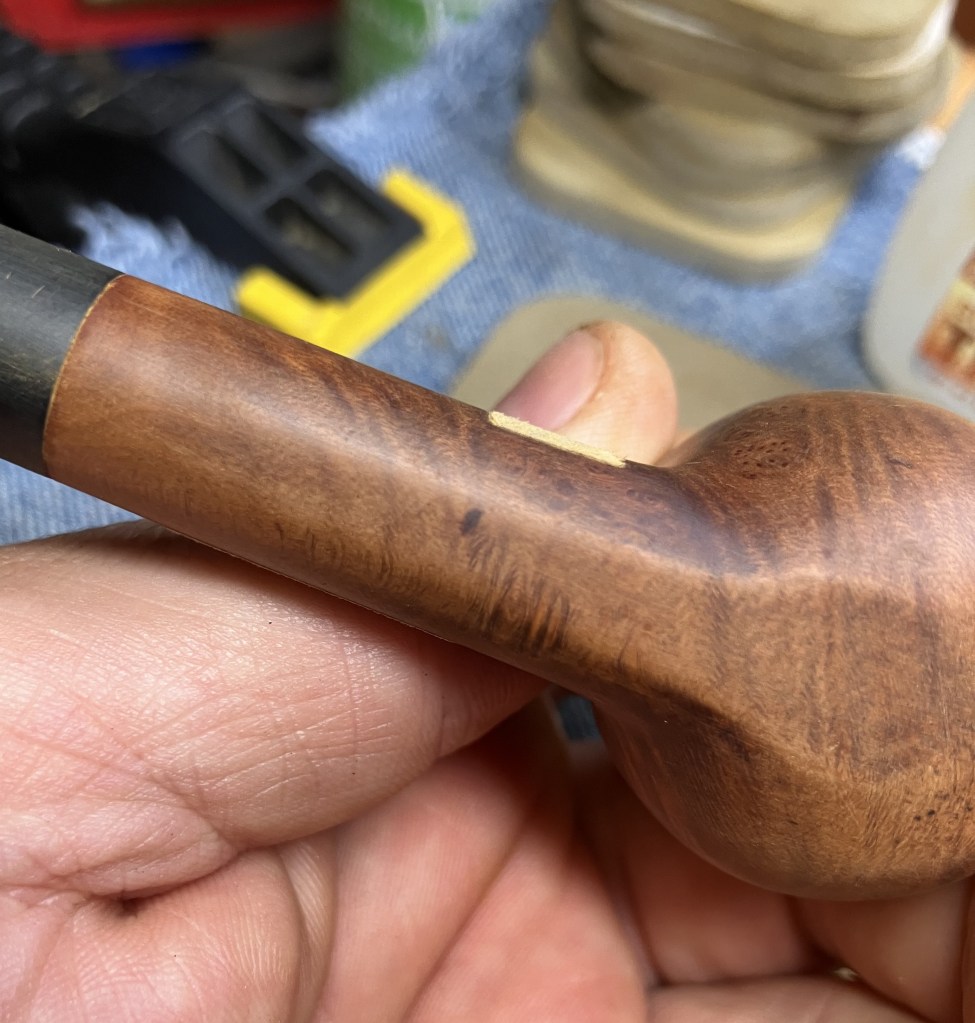
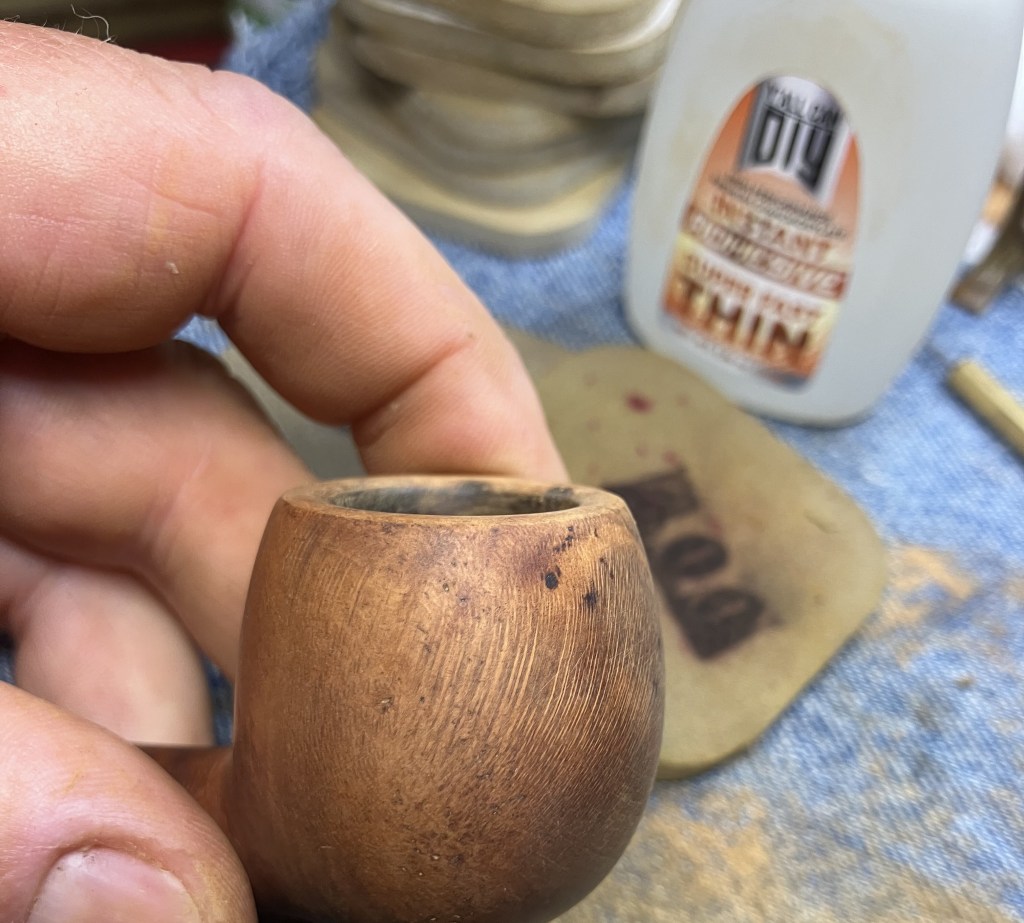
I deemed the crack to be superficial and not structurally important. It was given a dab of Thin cyanoacrylate (CAl super glue) to seal it and was topped a second time with the 400 sandpaper. The ding was filled by packing it with briar dust and then applying a small drop of CA. This was repeated a second time. The wooden sphere and sandpaper was used to smooth the fill and the rim was topped again with the 400 sandpaper.
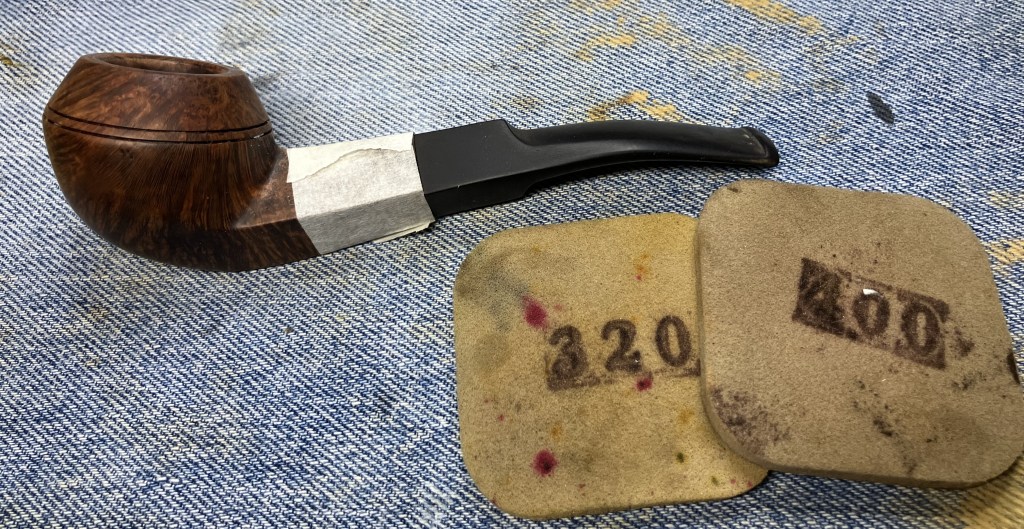
The stamps were taped off with masking tape to protect them from sanding.
I prefer asymmetrical pieces of tape because they leave a less noticeable mark on the briar where sanding was not done.
The first two sanding sponges used were the 320 and 400 grit. Sanding with these two showed me where several dents and pits were. All of these blemishes were small so they were filled by placing a tiny drop of Thin CA on the spot and sanding it with a very dirty sanding sponge. By dirty, I mean a sponge that has a large amount of briar dust on it. Even with the extra briar dust sometimes the CA gets onto the sanding sponge. This can be seen below as the dark spots on the sponges.
The small fills were sanded with 324 and 400grit sponges.
Below are some photos of the fills after they’d been filled.
The pipe was then sanded with the full series of sanding sponges from 320 -3500 grit. Between each sponge the stummel was wiped with a make-up pad wetted with alcohol. The stem was rubbed with mineral oil and wiped with a dry paper towel.
The pipe was then worked with micro-mesh pads 4000-12000. The wiping of the stem and stummel was done as with the sanding sponges except the stem was rubbed with Obsidian Oil.
I took the pipe to the buffer and buffed it with blue buffing compound.
After wiping any remaining buffing compound from the pipe it was given a coating of Before and After Restoration Balm and allowed to sit for an hour. Why an hour? Because I got side-tracked with another project.
The excess balm was wiped away using an inside out athletic sock.
The pipe was then taken to the buffer for several coats of carnauba wax.
The final step was another hand buff with the microfiber polishing cloth then off to the final photo shoot.
This beautiful Peterson’s Croydon Square 42 is a great example of Peterson’s English workmanship. The stain of the original pipe was maintained and gives the pipe a slight contrast-dye look. It was finished with careful sanding and just carnauba wax. The stem sanded and polished to a gorgeous glossy luster. Though lacking any stunning briar grain there is some nice flame grain on the rear left. The dimensions of the Peterson’s Croydon Square 42 are:
Length: 5.67 in./ 144.02 mm.
Weight: 0.95 oz./ 26.93 g.
Bowl Height: 1.43 in./ 36.32 mm.
Chamber Depth: 1.25 in./ 31.75 mm.
Chamber Diameter: 0.71 in./ 18.03 mm.
Outside Diameter: 1.37 in./ 34.80 mm.
I do hope that you have found something here useful to your own pipe care, maintenance or restorations. If you like this sort of thing, please click the like and subscribe buttons. Thank you for reading the ramblings of an old pipe lover.
Loading…
Below are some photos of the finished Peterson Croydon Square 42.
I remember the first cherry wood pipe that I restored, several years ago. I was bummed that one was in the estate lot, but I figured that it would be good practice if nothing else. When I finished working on it I tried smoking it. I was surprised at how well the pipe smoked. I was not expecting that. That was also the first time I tried banding a cracked shank. That was long before I started documenting restorations but here are three recent photos of that pipe:
I would like to think that my stem work and banding skills have improved since then. Feel free to criticize, I can take it.
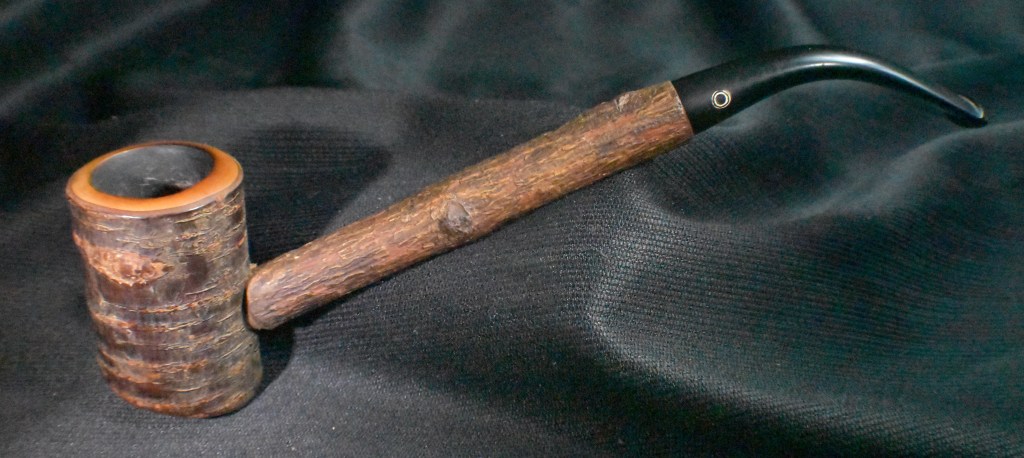
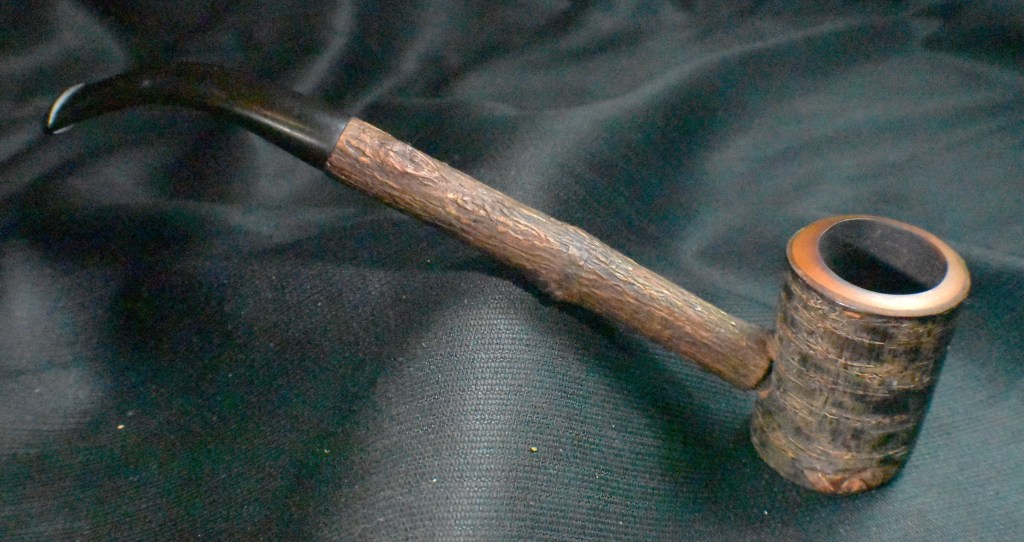
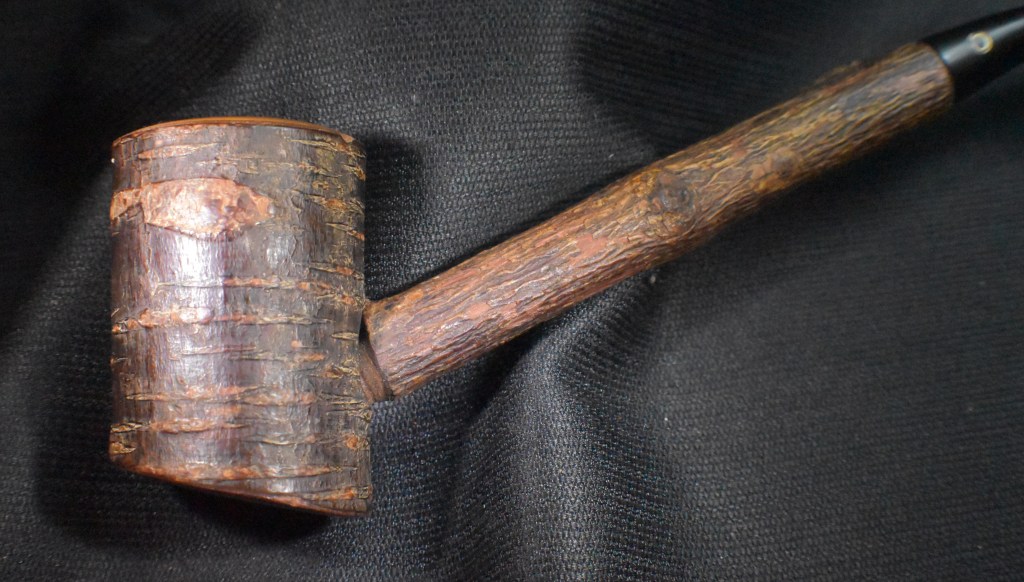
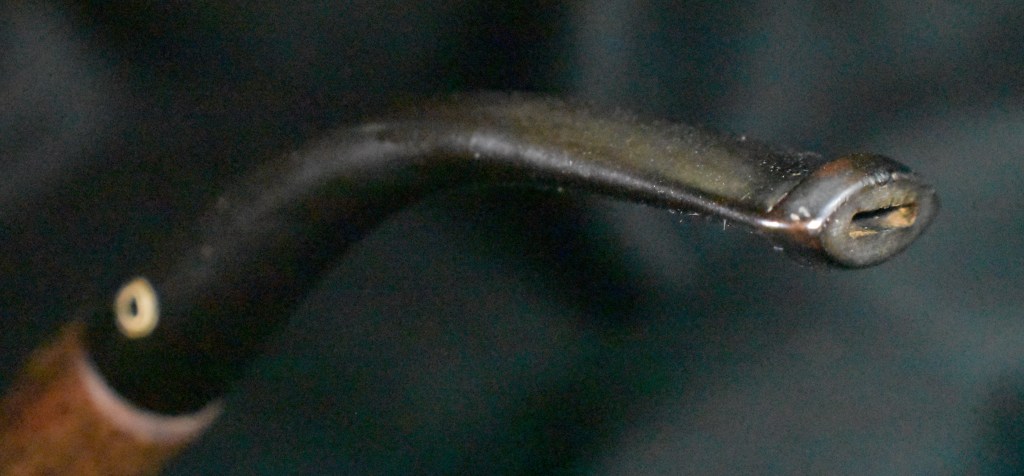
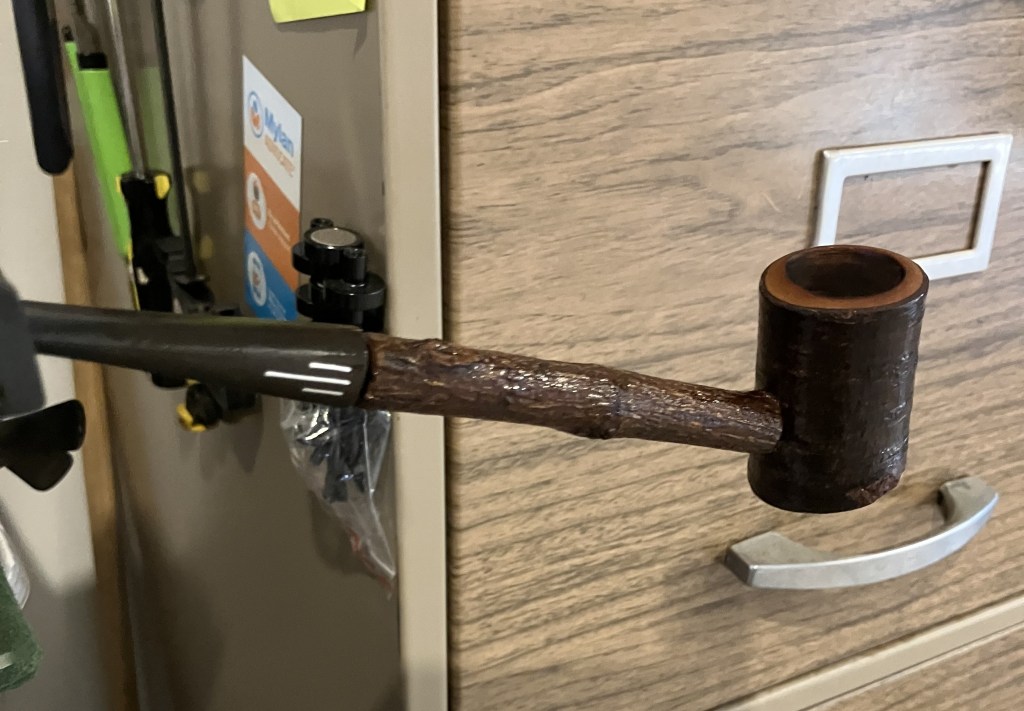
Back to the subject of this restoration blog, The French mMade Cherrywood Demichurchwarden. This pipe also came to me as part of an estate lot. The target of the lot was not this pipe. I wanted the Marxman Monk figural from a couple of blogs ago. This pipe did strike my fancy though. The sweeping curve of the stem and the long shank were both good looking and felt good while clenching. The pipe was only marked with a single stamp reading MADE IN FRANCE. Below are some photos of the pipe prior to working on it.
The Cherry Wood was in very good condition. This is most likely due to it having not been used. There was some chatter on the mouthpiece and the bowl had obviously seen fire and tobacco, but I would wager less than 5 times. The stem would require the most work and that was quite superficial. The tobacco chamber would be reamed and sanded and the airway cleaned, other than that this was more of a cleaning than a restoration.
Background
Ropp is the pipe maker that comes to my mind whenever I see one of these pipes. Lacking anything other than the “MADE IN FRANCE” stamp, I searched “Ropp” in pipedia.org and found the following:
“Eugène-Léon Ropp (1830 – 1907) had acquired a patent for a cherrywood pipe (wild cherry, lat.: Prunus avium) in 1869. In 1870 he established a workshop to manufacture such pipes in Büssingen (Bussang, Vosges mountains). Around 1893 the business moved into the former mill of Sicard (part of the community of Baume-les-Dames – Département Doubs, Upper Burgundy – from 1895 on).
The pipes were a big success in the export as well. Shortly before 1914 Ropp designated A. Frankau & Co. (BBB) in to be the exclusive distributor in the UK and it’s colonies.
Probably in 1917 a workshop in Saint-Claude in the Rue du Plan du Moulin 8 was acquired to start the fabrication of briar pipes. In 1923 a small building in the environment of Saint-Claude, serving as a workshop for polishing, was added.
Circa 1920’s 1930’s catalog in PDF, courtesy, Joseph Morris: Early Ropp Catalog
Even though cherrywood pipes were the mainstay of Ropp until the company finally closed down in September 1991. The company was taken over by Cuty-Fort Entreprises (Chacom, Jeantet, Vuillard, Jean Lacroix…) in 1994.” (Ropp – Pipedia). The entry did contain one advertisement which looked rather familiar.
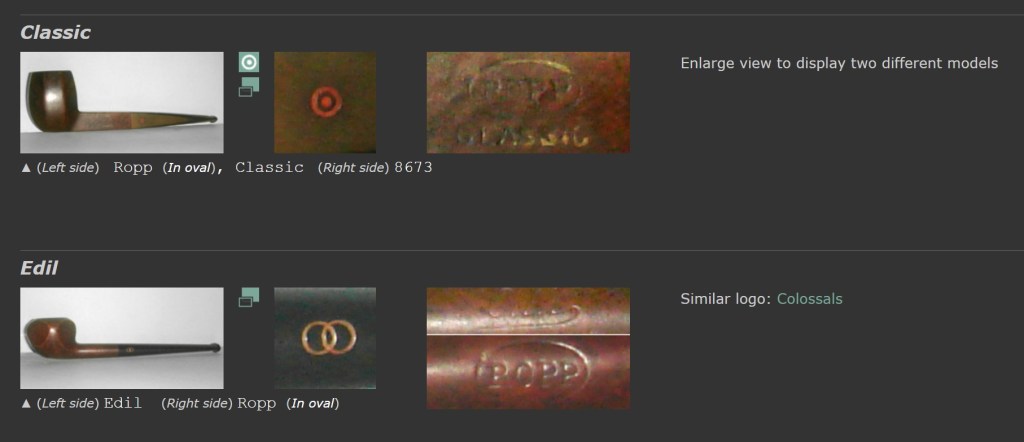
I wondered if the logo on the stem of this pipe would provide any additional information. The pipedia.org entry had several Ropp logos, but none of them were a match for this pipe. Sure this might be a replacement stem. The issue with that hypothesis is, “Why would you need to replace a stem on a pipe that has almost never been smoked?” I went to pipephil.eu, the source of all things “logo” and did a search for Ropp. There were only two photos of Ropp pipes with circle or bullseye logos:
Ropp was certainly the prominent cherry wood pipe maker but, after 20 years patents expired and pipe makers countrywide could copy Ropp’s style and cash in on the market for these pipes. I assume that is what this pipe represents. Ropp does not appear shy about stamping their name upon their pipes. There are a large and diverse set of Ropp stem logos but they always seemed to have stamped the name on their pipes.
The Restoration
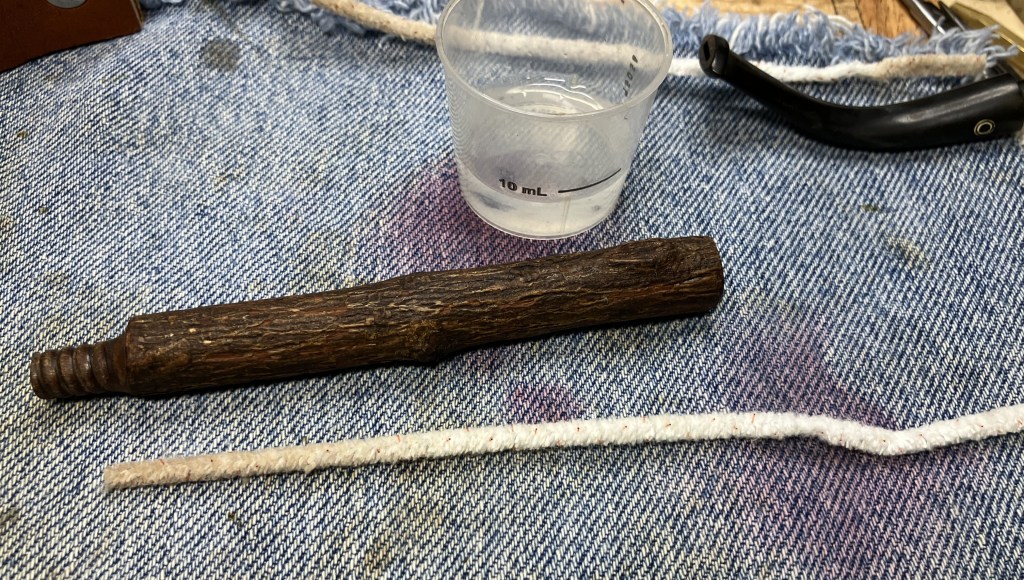
The restoration, if you can even call it that, began as usual with a clean denim piece.
Now before we begin, I have to start with some operational definitions. “What are those?” you ask. Operational definitions are words or phrases used in scientific writing where the author uses a specific definition of a word and how they will be using it in the article. As an example, I’ll refer to this mortise as the threaded mortise.
The shank tenon is also threaded. The stem has another tenon thus will be called the stem tenon.
Finally the shank mortise is unthreaded and fits with the stem tenon. Double the pleasure, double the fun.
As you can see from all those mortises and tenons, the pipe was really clean. I looked at the draft hole; it was drilled offset to the front of the pipe’s tobacco chamber.
Here it is with the stem attached allowing a better look at what I mean. Weird, but I suppose it does line-up well with the stem.
I started with the stem. It was very clean and only required a single alcohol dipped pipe cleaner.
Next I tried the shank. It too only needed a single pipe cleaner.
I had a foreboding feeling like something terrible was going to be discovered. Nope, it was just a barely smoked pipe. I started to scrape the tobacco chamber. I used the General triangular scraper. I rounded the tip of this frightening tool off on the neighbors grinder since I am far too lazy to swap out my buffing spindle for the grinding wheel. Lazy and honest.
After the scraping, I sanded the chamber with 320 sandpaper wrapped around a wood dowel and a couple of small pieces of sandpaper with the not-so-nimble fingertip.
The stem and stummel were taken to the sink for a scrubbing with a nylon brush and undiluted Murphy Oil Soap. Both pieces were rinsed of soap with warm water and then dried with a cotton hand towel.
I lightly sanded the surface of the stem with a 320 sanding sponge, while avoiding the stem logo.
The stem was then placed into Briarville’s Pipe Stem Oxidation Remover solution, also known as deox. I originally thought I’d leave it in for a couple of hours, but this turned into a 18 hour stay.
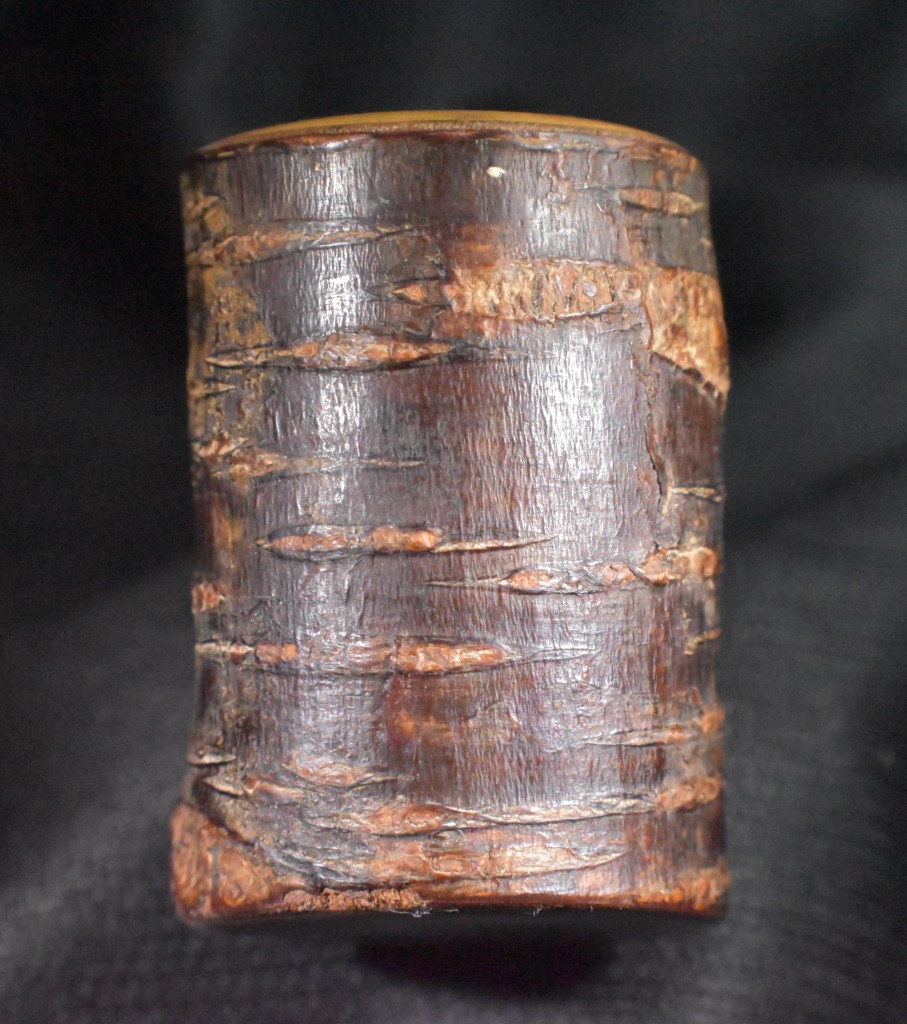
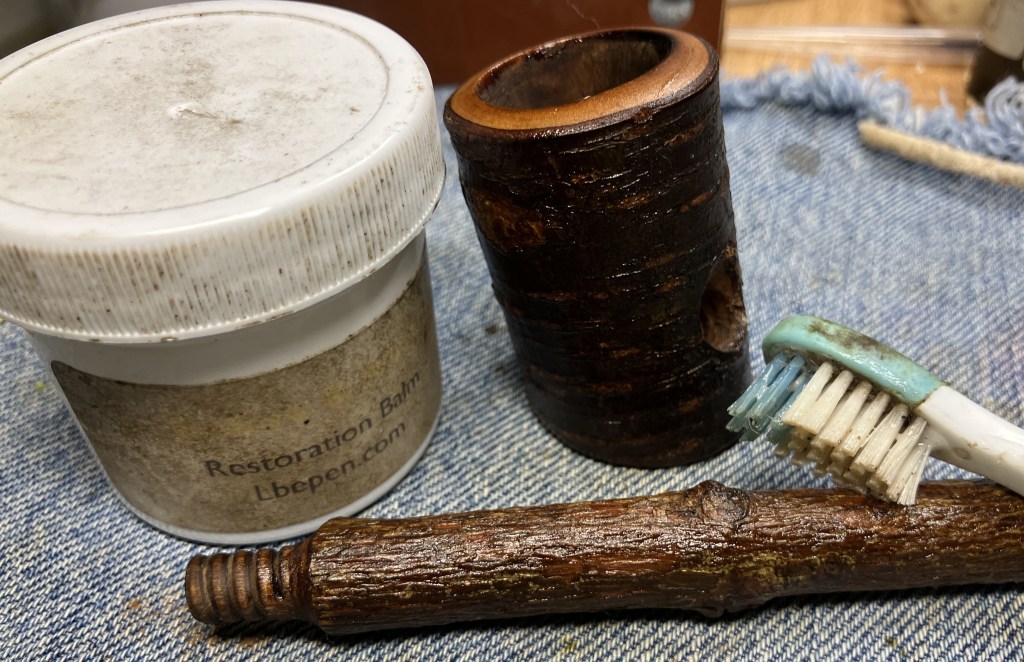
After the stem went into deox, I coated the stem and stummel with Before and After Restoration Balm. The dry cherry bark absorbed the balm very quickly, taking much more than I thought it would. The balm was applied with a baby toothbrush to work the product into the nooks and crannies of the bark.
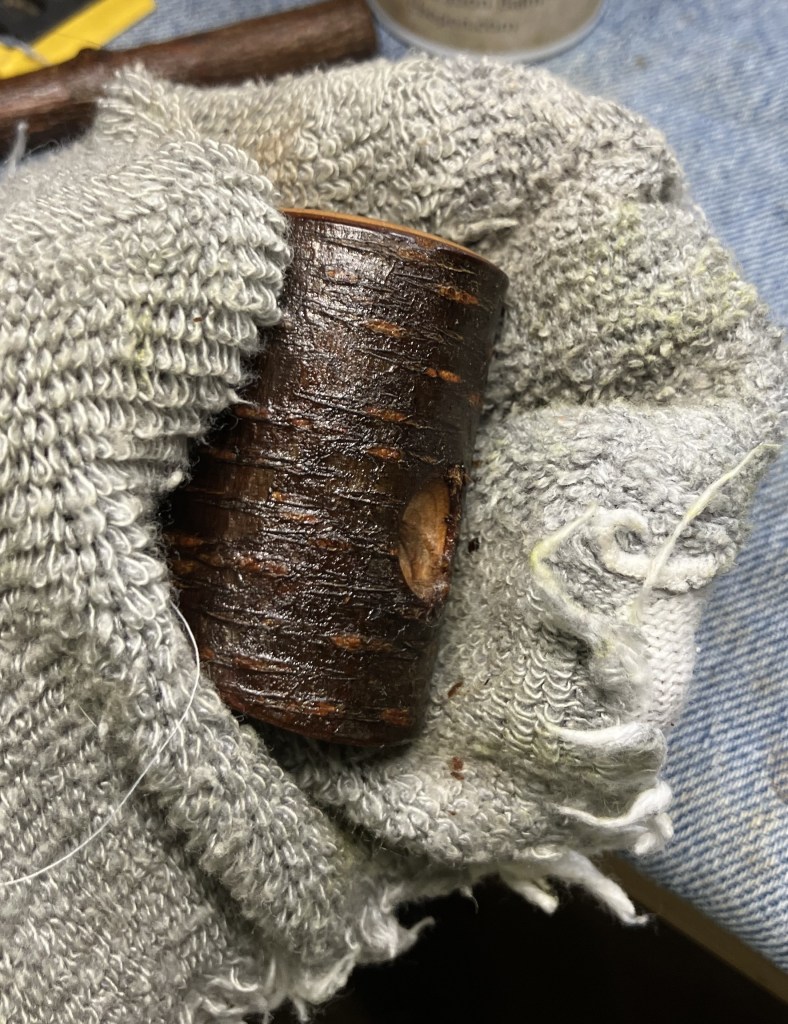
After about 20 minutes the surfaces of the stem and stummel were hand buffed with an inside out athletic sock to remove excess balm.
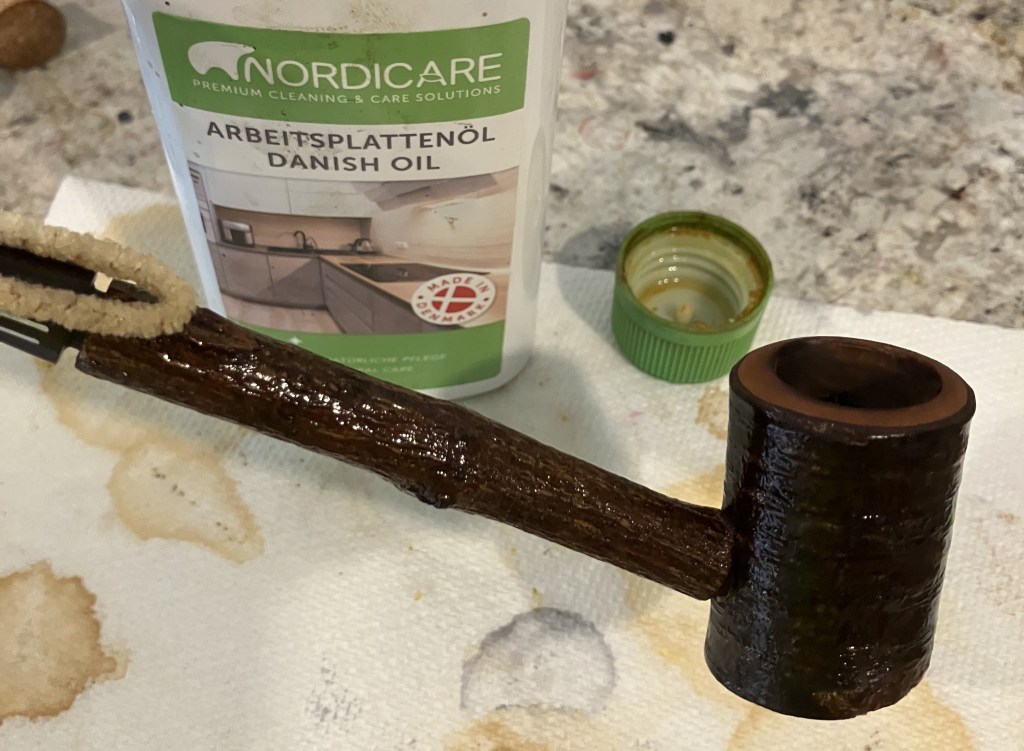
I wanted to coat the bark with something to hold up to frequent handling. I thought that a couple of coats of Danish Oil might be good. I found a spare stem that fit the stem mortise to act as a handle while I applied the oil.
The Danish Oil was applied with a folded pipe cleaner.
The spare stem was clamped in a vice to hold the pipe as the Danish Oil dried.
The next day, I removed the stem from deox and placed it on a coarse shop rag. The stem was vigorously rubbed with the rag to remove oxidized material which the deox had softened.
Back at the workbench the airway of the stem was cleaned with a pipe cleaner.
The stem was then sanded with a 400 grit sanding sponge and oiled with mineral oil to see how the deox had worked. The answer, very well.
I taped the shank and stem logo with masking tape after reinserting the sten into the shank. This was done to protect those two from the stem sanding.
The stem was then sanded with a series of sanding sponges in grits 400-3500. Between each sponge the stem was rubbed with mineral oil and wiped with a dry paper towel to remove sanding debris.
The stem was loose fitting. To address this I used a couple of drops of black cyanoacrylate (CA, super glue) applied to the tenn. The blac CA was spread evenly onto the tenon with the edge of a fly tying bodkin. Once the CA had dried I sanded the surface with a 1000 grit sanding sponge and tested the fit.
The fit was better, but still loose. I then switched to Thin CA applied and spread as before. This was also sanded with a 1000 grit sponge.
Better, but still loose. One more time. Perfect fit was achieved.
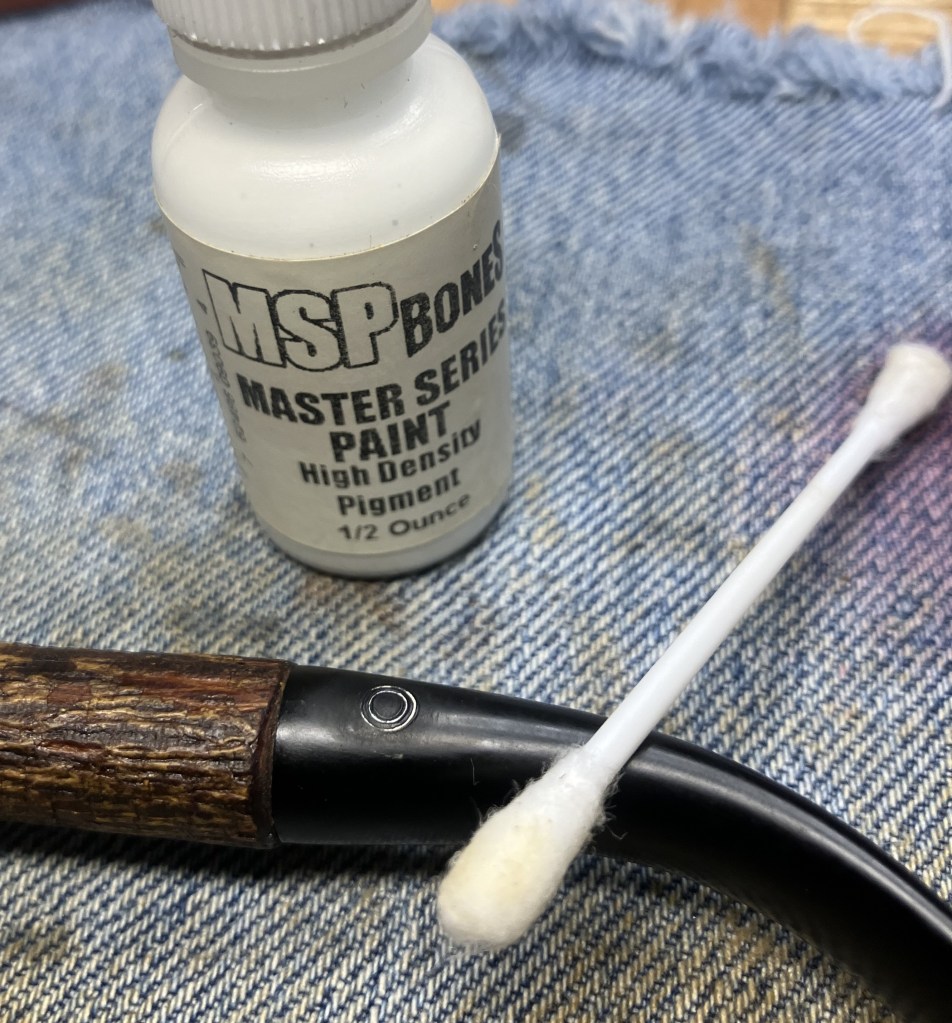
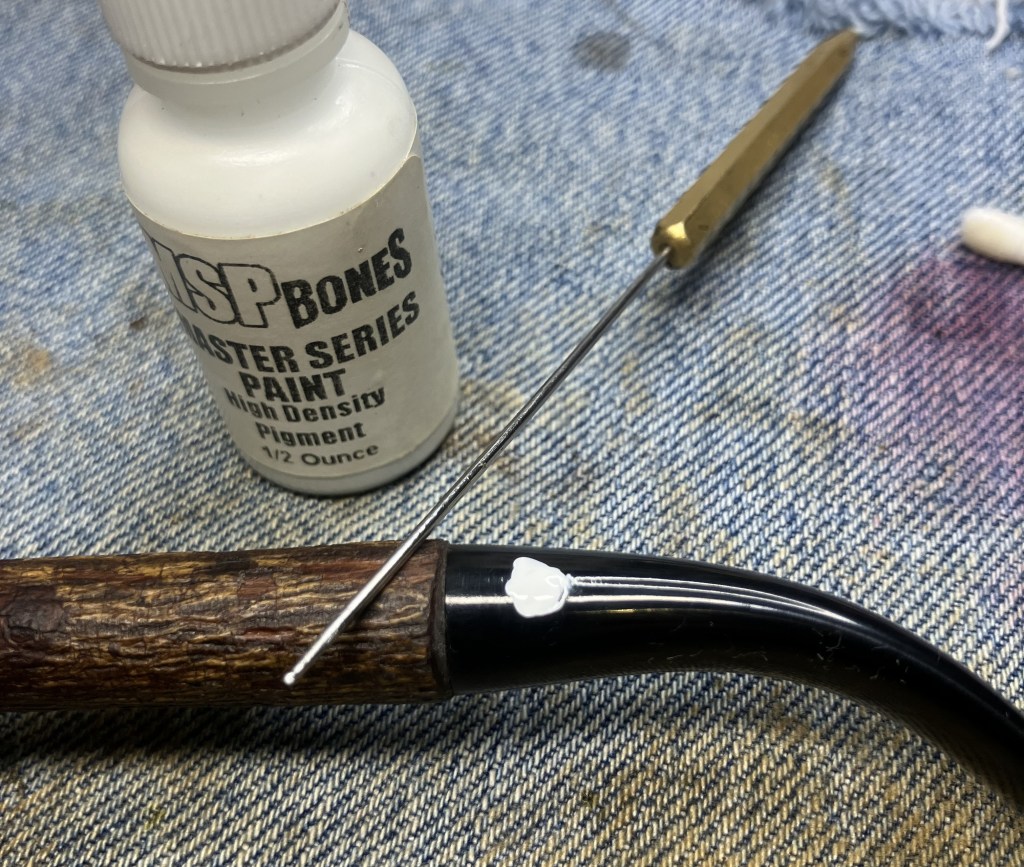
I took the stem to the buffer where it was buffed with a blue buffing compound and the dedicated blue compound wheel. The shine was great but the logo had suffered. Before repainting it with white acrylic model paint, I cleaned the logo with 99% ethyl alcohol on a cotton swab.
The paint was applied and worked into the stamp with the fly tying bodkin.
The acrylic paint dries quickly and was rubbed with a soft cotton rag to remove the excess paint.
I returned the pipe parts to the buffer where they were waxed with carnauba wax. I worked the wax into the bark with and against the grain. Using very light coatings of wax and working it into the slightly rough texture of the bark. The stem was also given several coats of wax.
I used a cotton hand towel to hand buff the stem and stummel to make sure there were no areas of wax build-up. The final step was a hand buffing, with a microfiber polishing cloth, of the stem, shank and stummel.
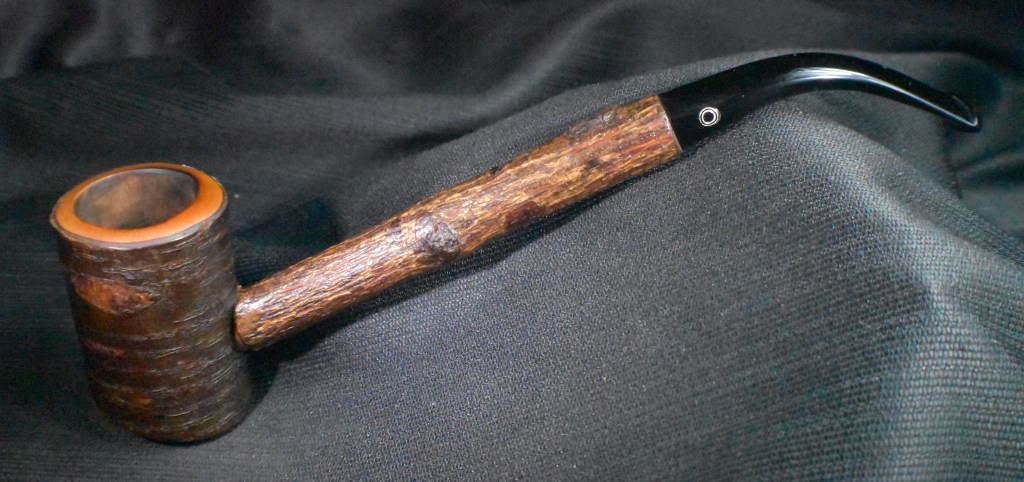
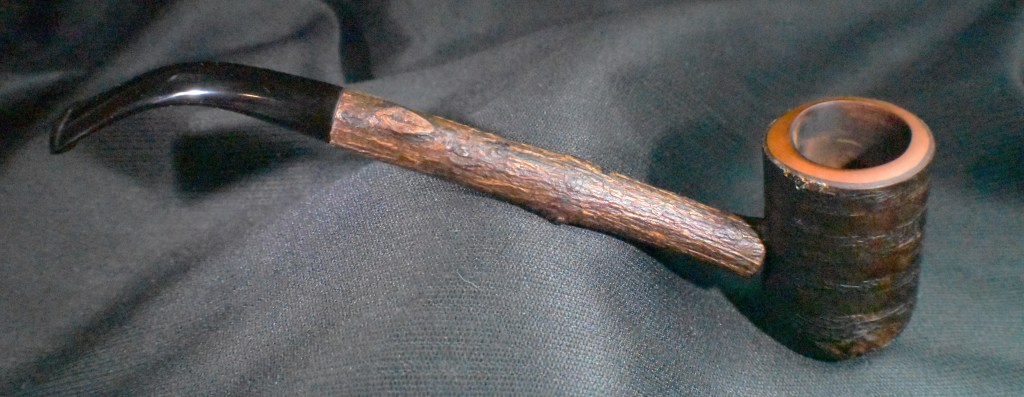
I think this Cherrywood demichurchwarden turned out very nicely. The pipe feels great in both the hand and between the teeth. The rustic look of the bark covered cherry wood is both attractive and functional. I find the rustic charm similar to a corn cob pipe but with a European flair. The relatively unused bowl should provide years of use. The stem polished beautifully and the high gloss black finish accentuates the rustic nature of the rest of the pipe. The dimensions of this French made Cherrywood pipe are:
Length: 7.34 in./ 186.44 mm.
Weight: 1.52 oz./ 43.09 g.
Bowl Height: 2.02 in./ 51.31 mm.
Chamber Depth: 1.02 in./ 25.91 mm.
Chamber Diameter: 0.70 in./ 17.78 mm.
Outside Diameter: 1.33 in./ 33.78 mm.
I do hope that you have found something here useful to your own pipe care, maintenance or restorations. If you like this sort of thing, please click the like and subscribe buttons. Thank you for reading the ramblings of an old pipe lover.
Loading…
Below are some photos of the finished French-made Cherrywood Demichurchwarden.
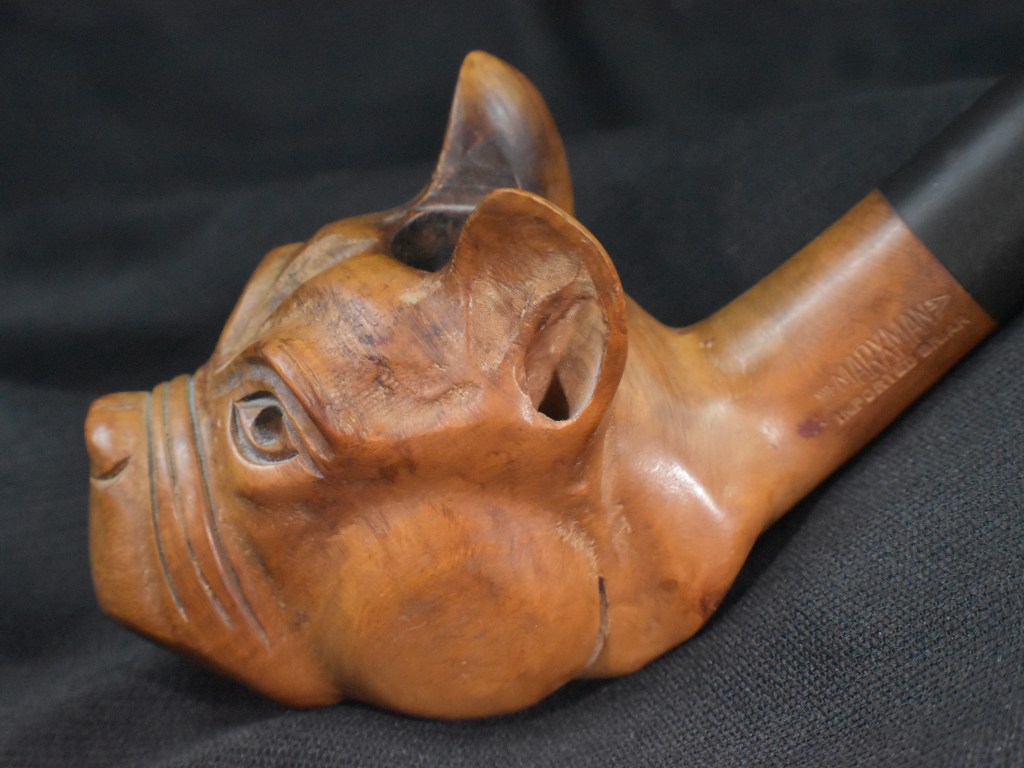
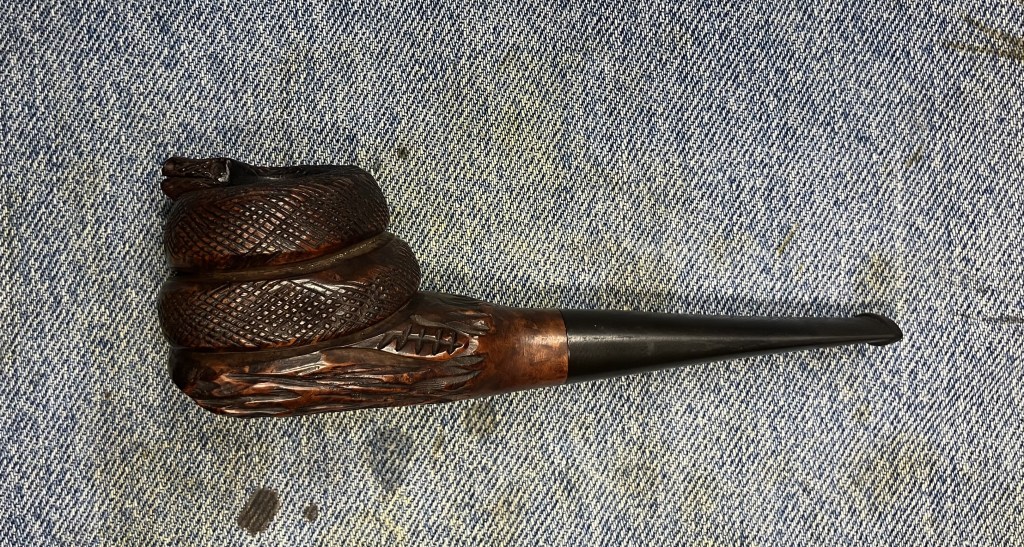
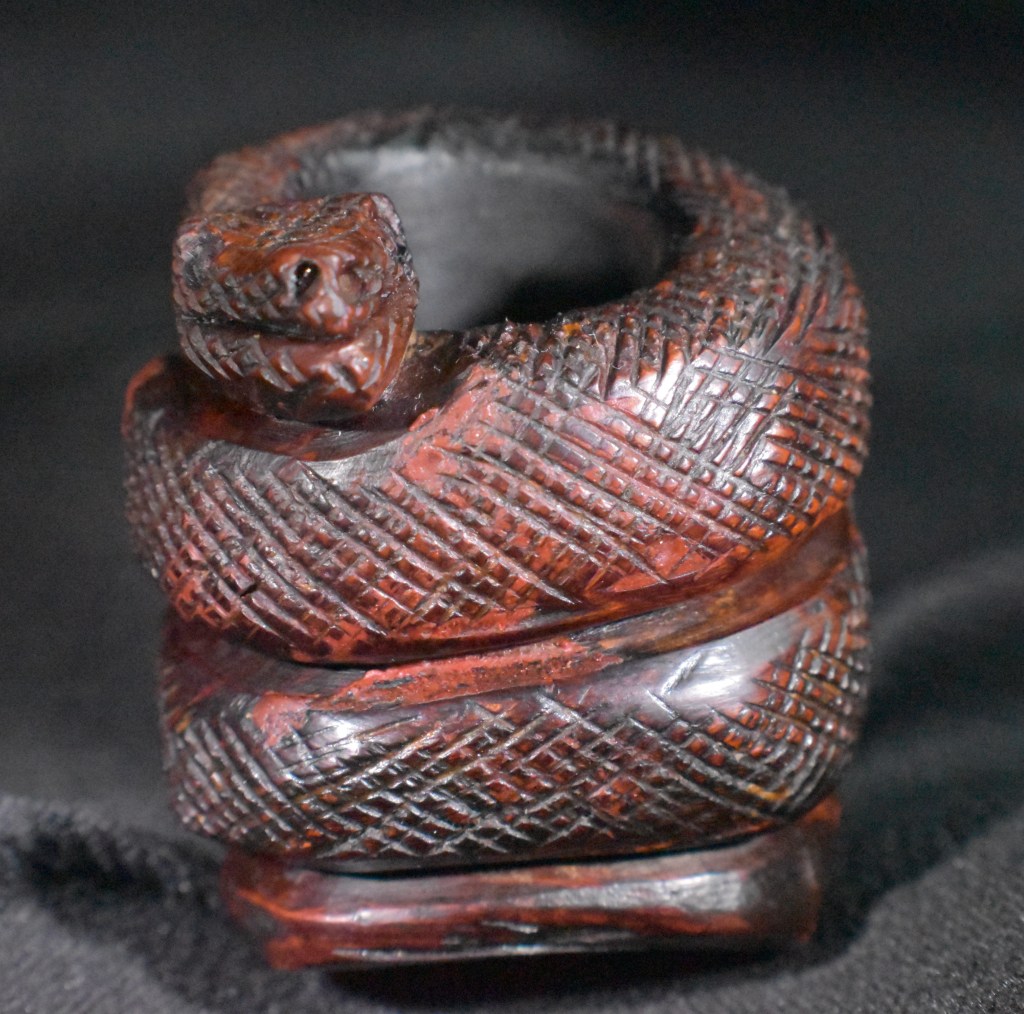
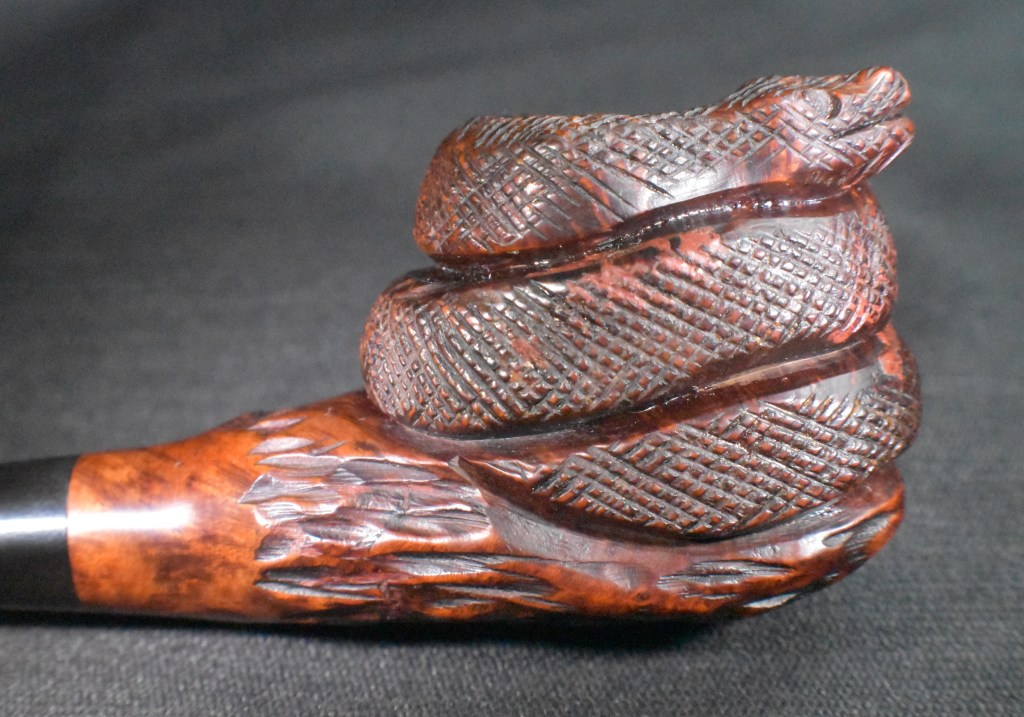
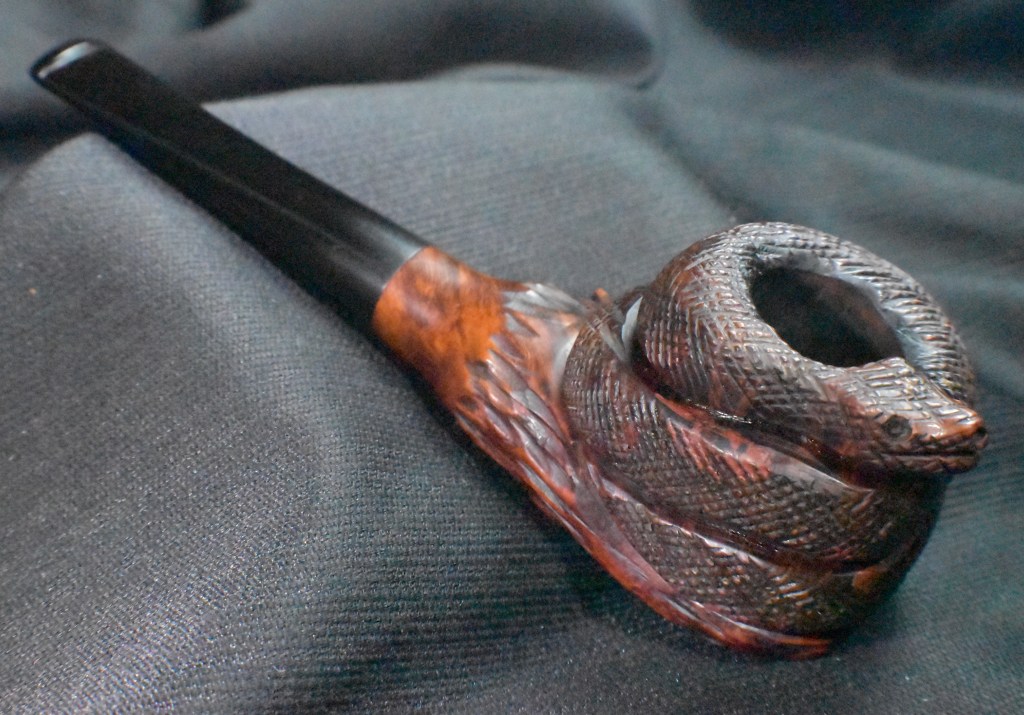
I am not only a pipe restorer but also a Nebraska Master Naturalist. “What the heck is that?” you ask. The Nebraska Master Naturalist Program was started by a longtime friend, Dennis Ferraro (PhD) the official Nebraska Herpetologist as a way to certify non-academic citizens and get them involved in citizen science, volunteering, education and promoting the wild flora and fauna of Nebraska. “Herpetology. What the heck is that?” you ask. Herpetology is the study of reptiles and amphibians. Since the mid-1980s I have pursued reptiles and amphibians across Kansas, Nebraska and Wyoming. My interest has always been more biogeography. “Biogeography, what the heck is that? You ask. Goodness, you ask a lot of questions. I’m interested in the geographic ranges of reptile and amphibian species within Nebraska. Believe it or not, Nebraska has a very diverse set of physical features with numerous isolated pieces of specific habitat removed from where they would normally be found. This leads to species also found outside of their expected or documented ranges. That is what I enjoy doing, field biology searching for and documenting reptile and amphibian ranges. So, when I saw this rattlesnake Marxman, I knew I had to have it even though it bears little resemblance to a real rattlesnake. Yeah, I help Dr. Ferrao out every spring and fall with Prairie Rattlesnake (Crotalus viridis) research in western Nebraska.
Here is what a researcher cabin looks like, every red bucket has one or more C. viridis in it.
The subject of this post is a figural Marxman pipe that showed up on eBay last August. Won and delivered for under $50, I was quite pleased. The pipe came from Newark, Delaware. The only rattlesnake in Delaware was the Timber Rattlesnake (Crotalus horridus) which is probably extirpated from the state (Snakes to Watch Out For – DNREC).
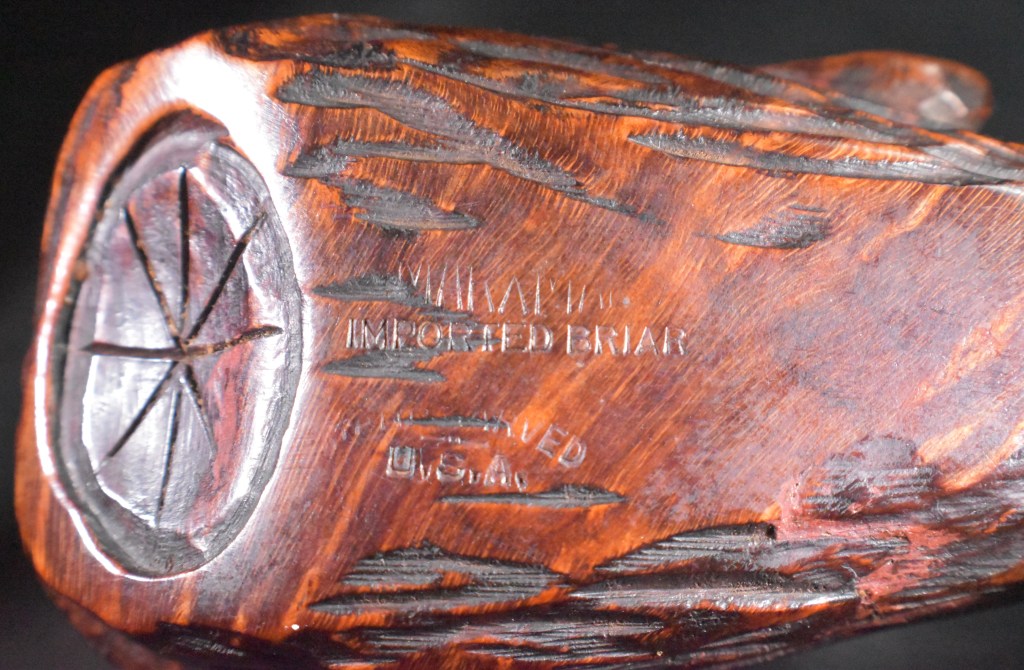
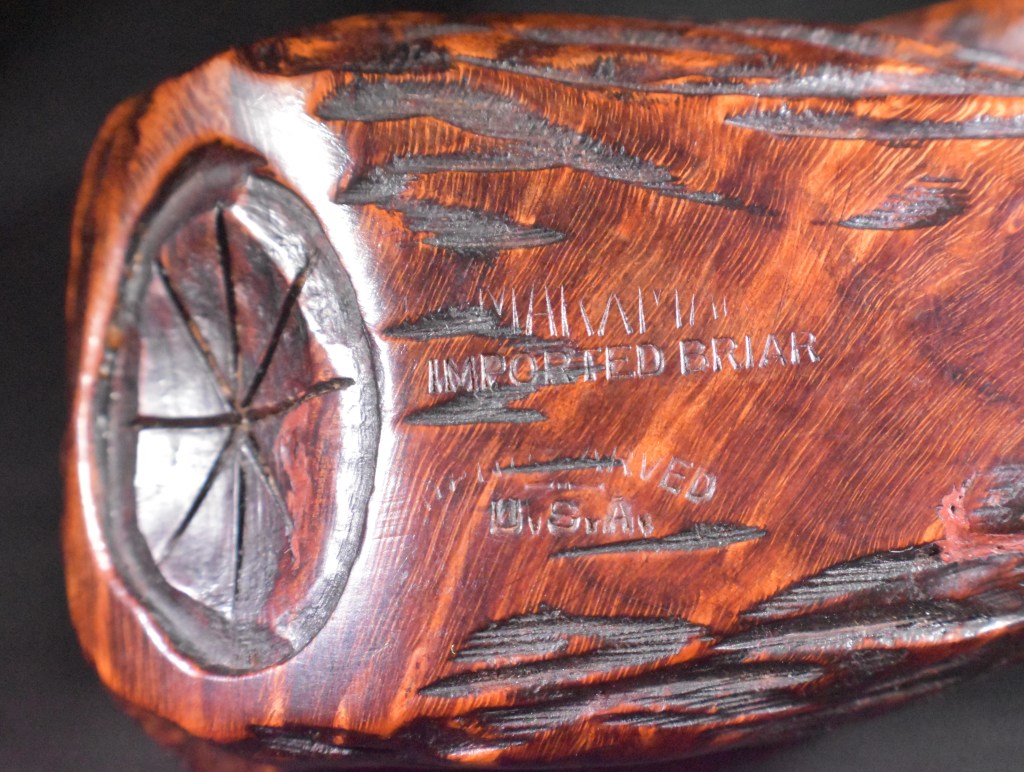
The stampings on the bottom of the pipe were MARXMAN (with the arrow passing through) over IMPORTED BRIAR over HAND CARVED (curved) over U.S.A.. The MARXMAN and the HAND CARVED were faint. There was also a carving at the heel of the pipe which I think, is supposed to represent the end of a log. This was an interesting feature. Below are several photos taken prior to any work done.
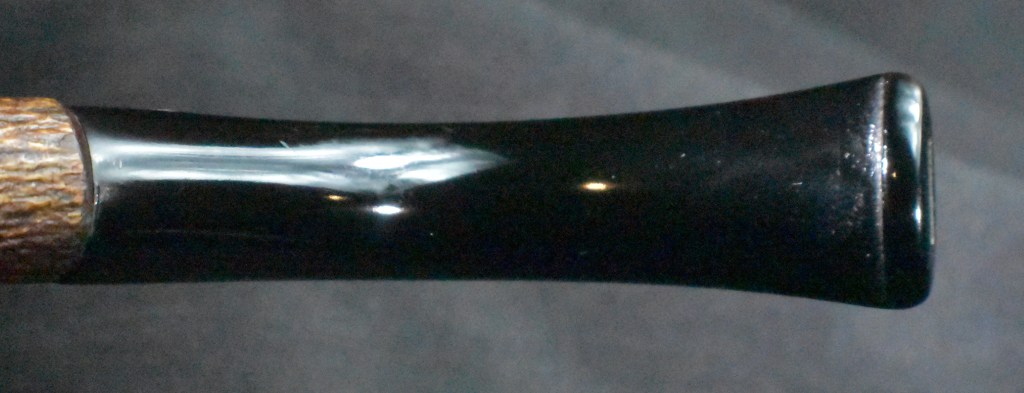
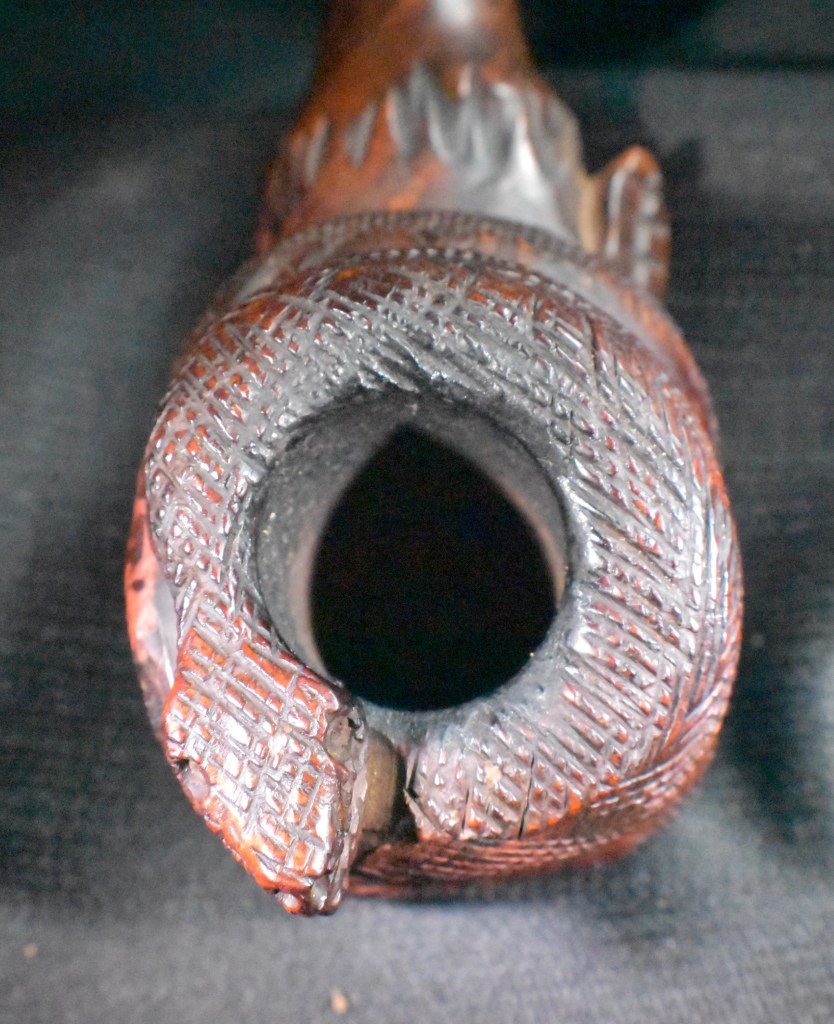
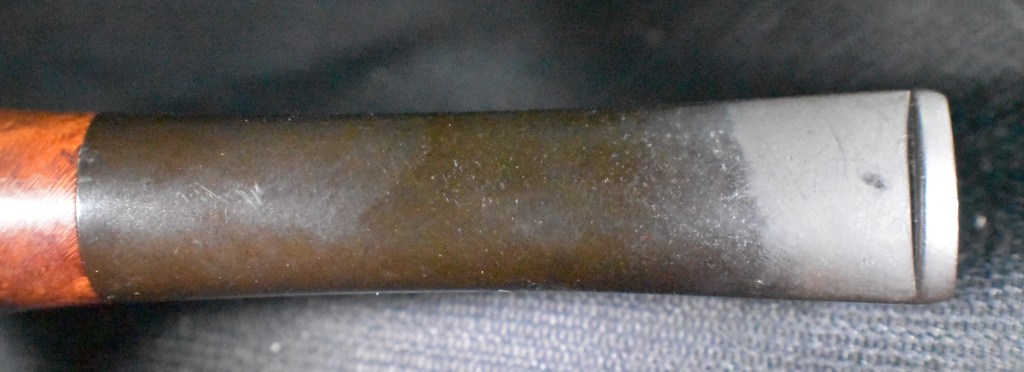
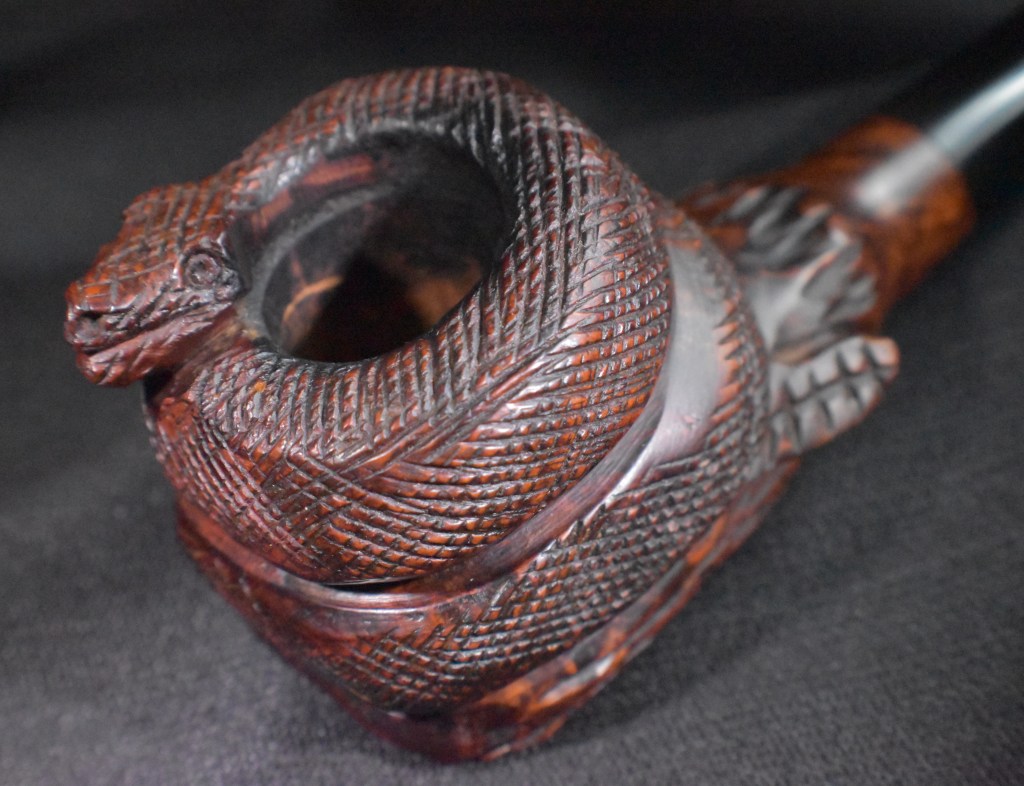
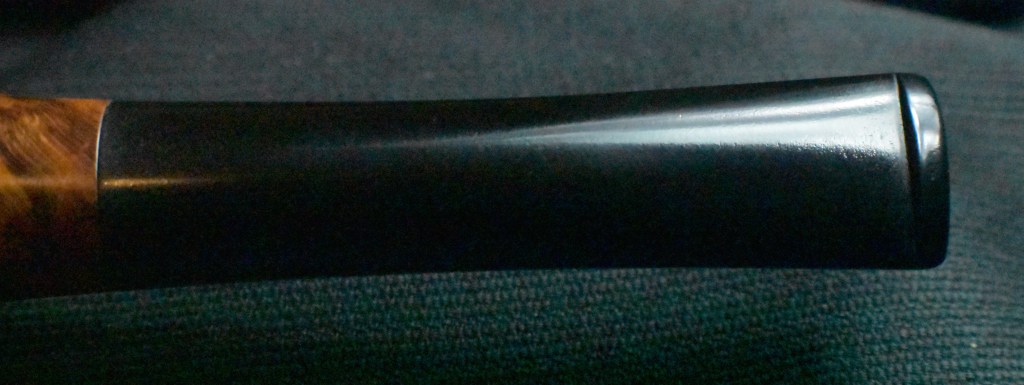
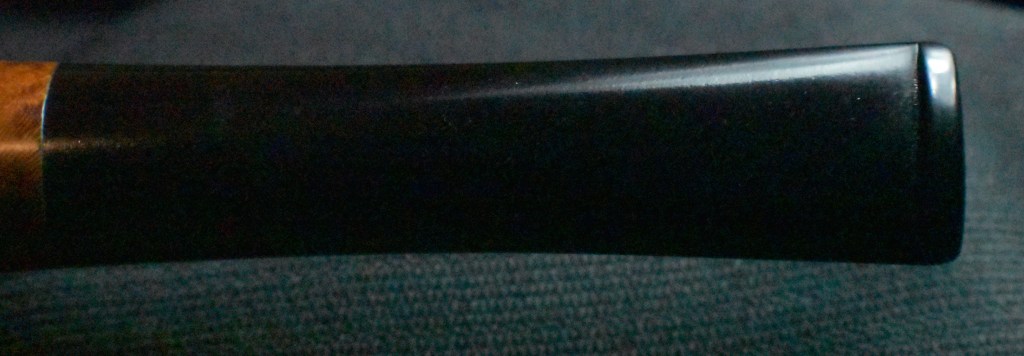
The pipe was in good shape. It had been smoked as evidenced by the light cake in the tobacco chamber, the light lava deposits on the snake’s head and the smoking residue on the stinger. I wondered if the stinger should be renamed fang? Anyway, the oxidation of the stem was not too bad. The pipe did show signs of having extensive fills done. This was seen as the pinkish red spots that were carved through but remained as discolored patches. I knew that I did not want to pick the old fill material out and redo the fills. The recarving would likely look atrocious.
Background
I have done a lot of Marxman restorations. Next to Peterson pipes I am sure Marxman pipes come close as to numbers. I have also written about the history of Robert Marx and how he formed and built up the company during World War Two, not an easy task considering the main material of his production was nearly inaccessible during the war years. If you would like more information I think I did an acceptable job on Marxman history in the following blog: A Marxman Dublin Gold Band Restoration – NebraskaPeteGeek. Yeah it’s still written by me, but it’s pretty good for a change.
As for Marxman figurals I have done a camel and a monk/friar. This is the first snake pipeI have gotten to work on. I am guessing this pipe was made in New York City. The home of Marxman during the years of production before Robert Marx sold the company to MasterCraft in 1953. Again guessing, but with conviction, the pipe was made between 1938 and 1953. Based on the inclusion of what looked like metal flecks in the rubber, I think the pipe was likely made during or shortly after WWII due to the recycling of rubber from tires and the accidental inclusion of metal in the stem.
The Restoration
After the before photos the pipe was taken to the workbench and a clean denim piece.
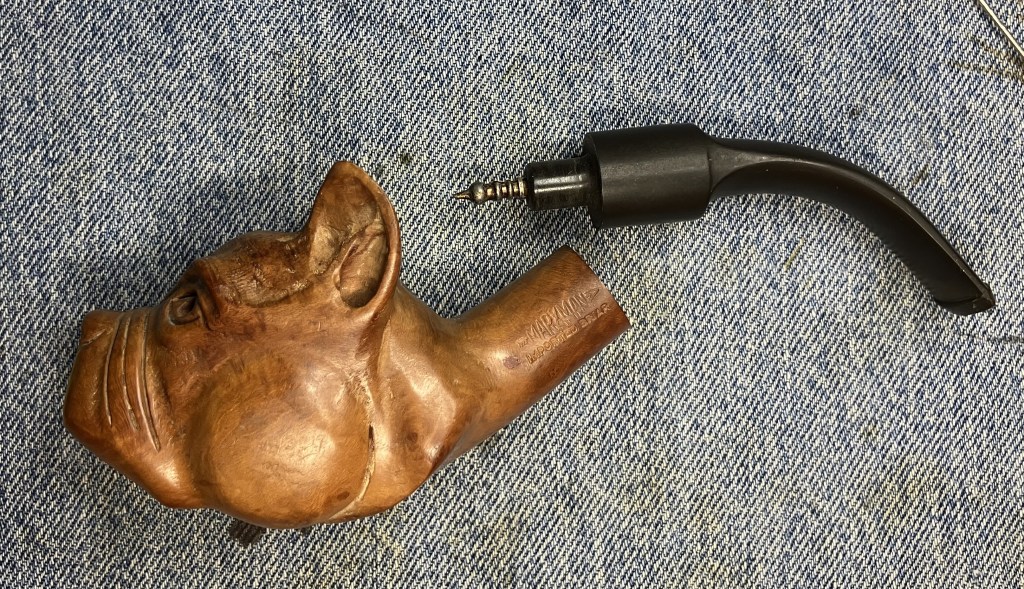
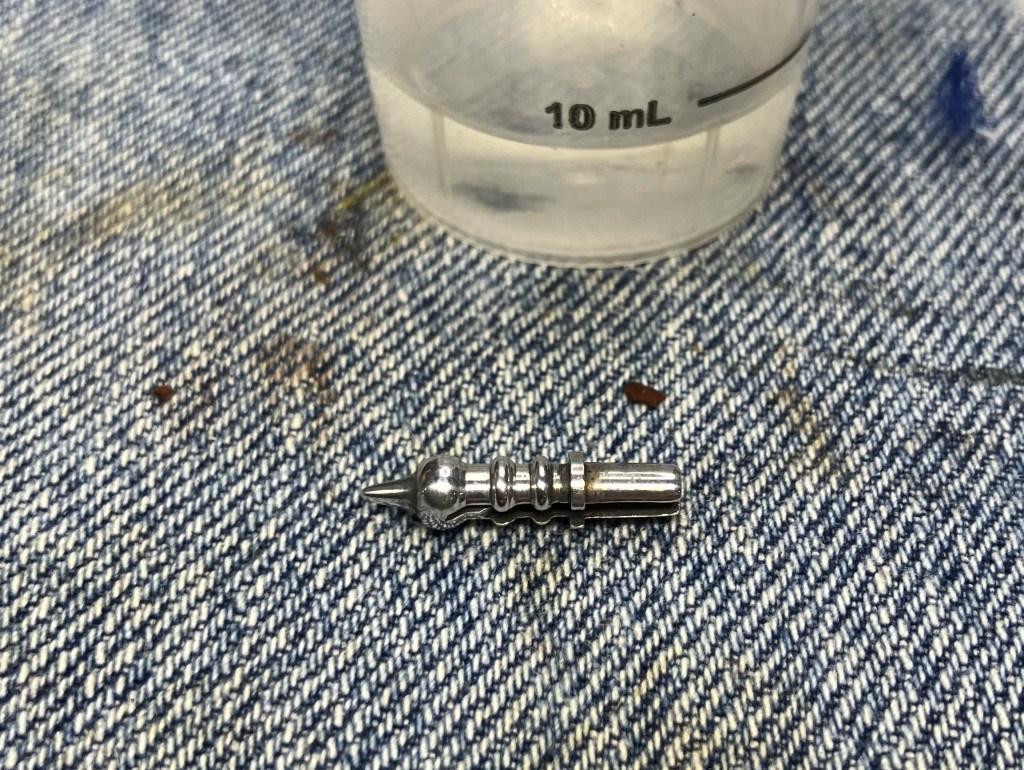
I removed the stem then pulled the stinger. It looked like it was coated in a brown lacquer of smoking residue. I placed the stinger in a medicine cup with 99% ethyl alcohol.
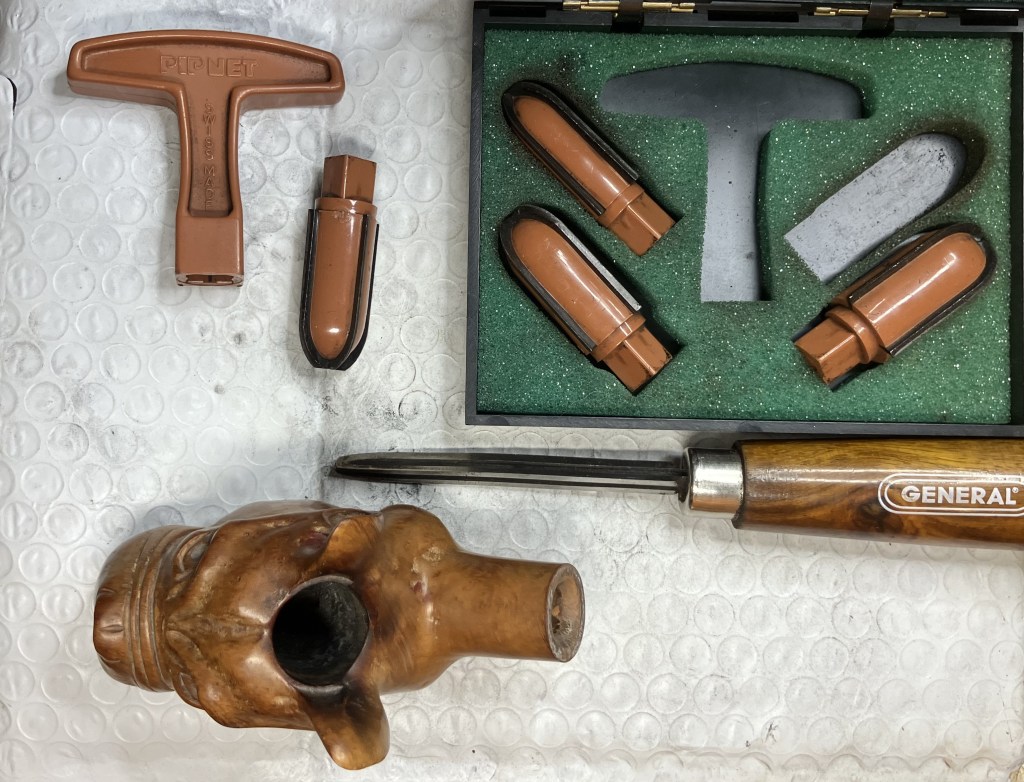
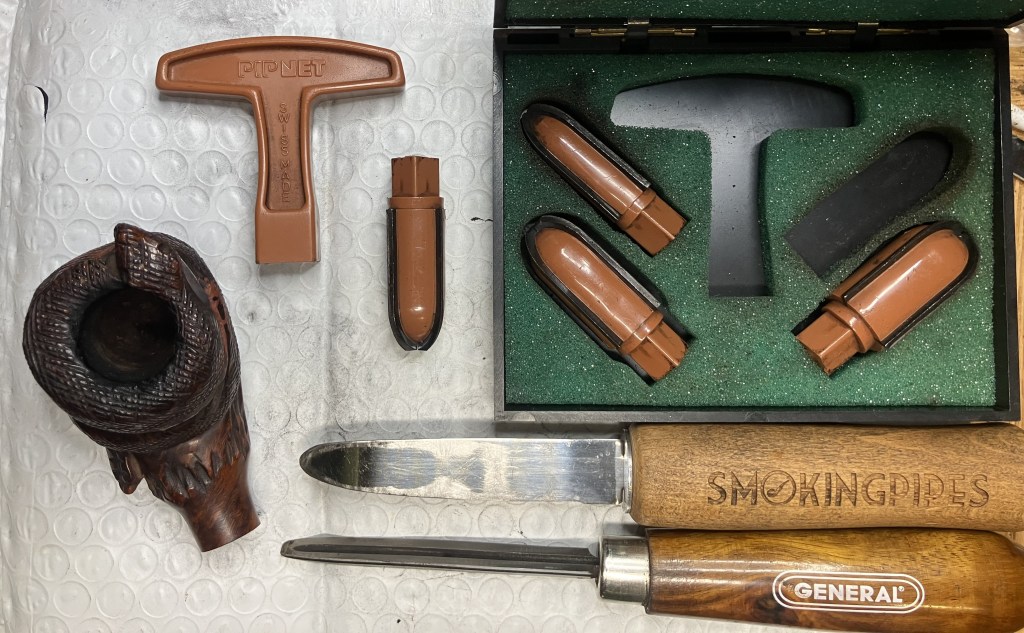
The ream team was gathered and consisted of the PipNet with the #2 blades, Smokingpipes Low Country reamer and the General triangular scraper.
There was very little cake to actually remove.
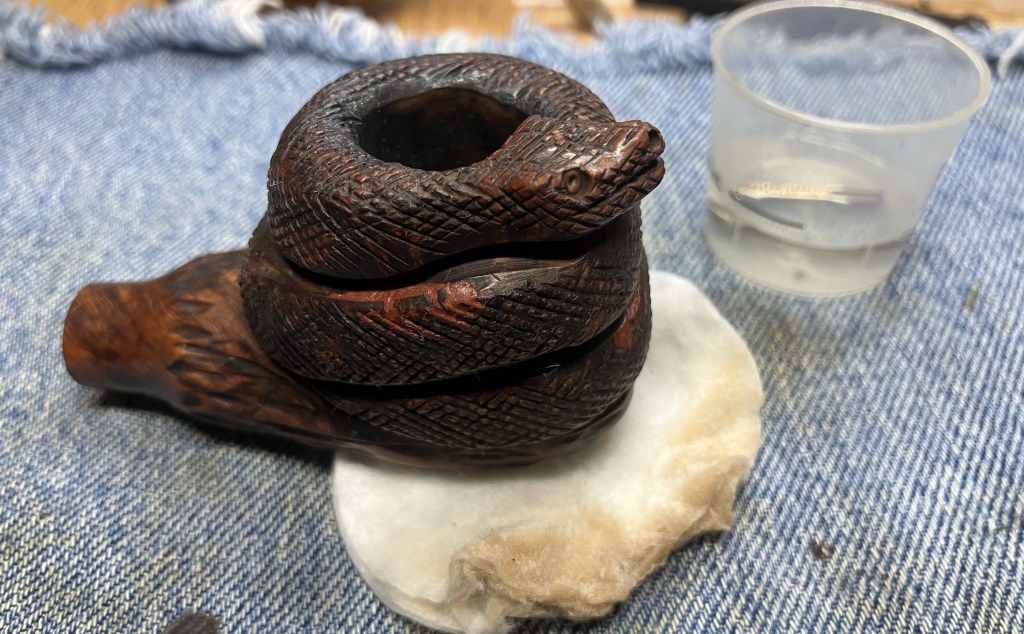
Below you can see the reamed tobacco chamber with some lava deposits around the inner edge of the rim.
The chamber was sanded with 320 sandpaper wrapped around a wood dowel. No damage to the tobacco chamber was noticed.
The shank was surprisingly clean and took only a couple of cotton swabs dipped in alcohol to remove the accumulated residue.
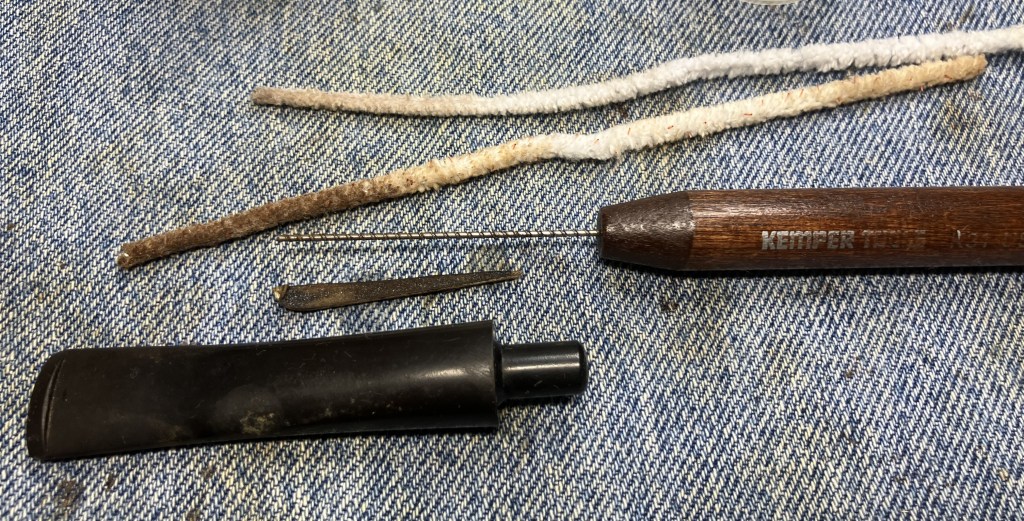
The airway was a little more dirty but again quickly cleaned with a nylon shank brush and bristle pipe cleaners dipped in alcohol.
The stummel was taken to the sink for a scrubbing with Murphy Oil Soap, undiluted and a nylon brush. The soap was rinsed with warm water and the stummel dried with a cotton hand towel.
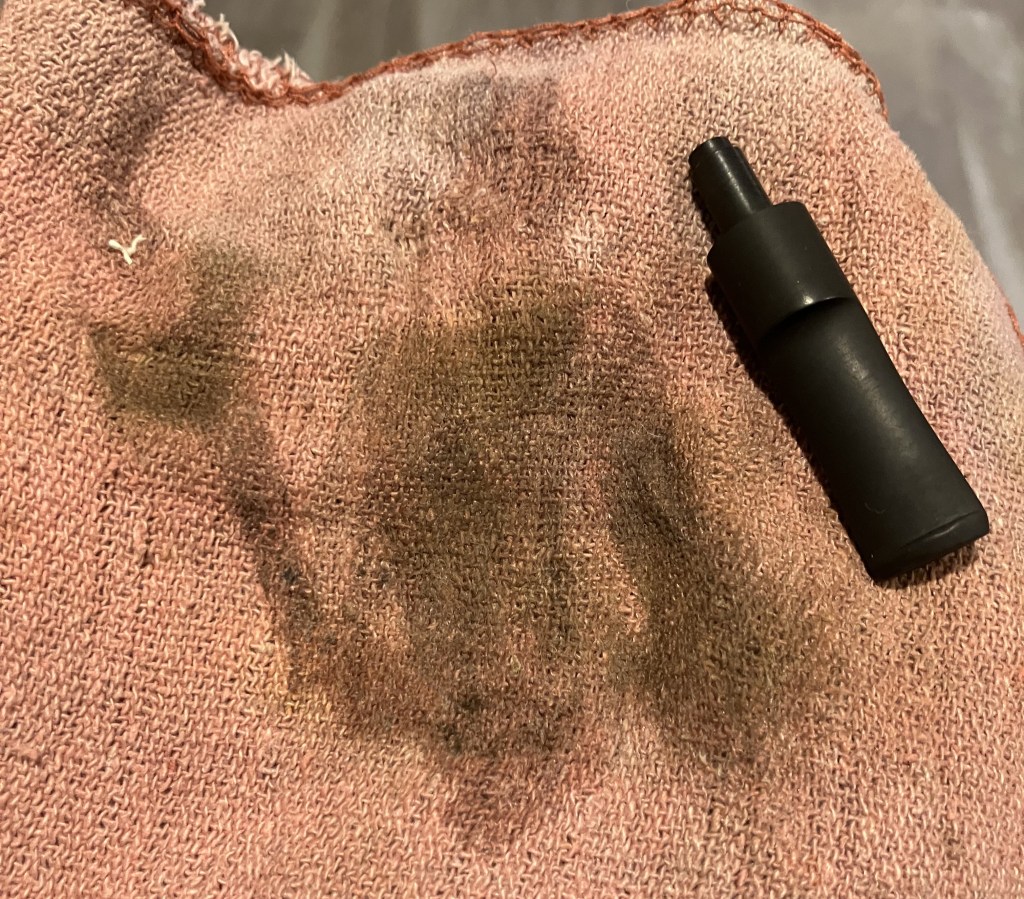
Back at the workbench the stummel was wiped and scrubbed with a make-up pad wetted with 99% ethyl alcohol. The discoloring of the make-up pad can be seen below. Very little stain came off the briar.
I removed the stinger from the alcohol and used the same make-up pad to clean the aluminum. The stinger left more yuck on the pad than the entire stummel did.
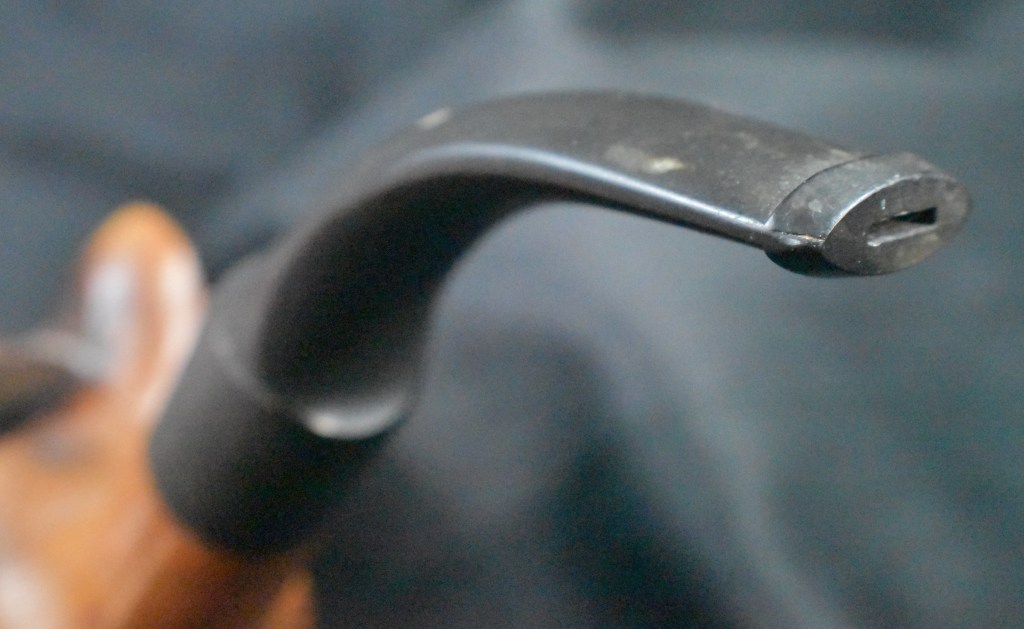
The stem was cleaned with bristle pipe cleaners and more alcohol. The button end of the airway drilling would not pass a pipe cleaner smoothly. I remedied this with a slot tool and a sliver of an emery board.
The outside of the stem was lightly sanded with a 320 grit sanding sponge in preparation for the Briarville Pipe Stem Oxidation Remover bath.
I placed a pipe cleaner in the tenon to aid in the retrieval of the stem. I figured that I would leave the stem in the solution until the next day.
In the photo below you can see the pink-stuff used as a filler. When I scrubbed the pipe I did not want to use a more aggressive brass brush for fear of removing too much of the filler.
Normally, I like to remove this unsightly pink-stuff but doing so with this pipe would mean that I would have to re-fill the material with cyanoacrylate and briar dust then carve the new fill to match the original carvings. I strongly doubted my ability to do that, so leaving it alone seemed my best option.
Well, there was another option: Use a furniture touch-up marker to dye the pink-stuff to mask its unsightly pinknocity. Wow, spellcheck thinks pinknocity is a word.
This is what the pink-stuff looked like with a walnut colored touch-up marker. Much better.
The side, too, looked dramatically better.
The following day, nearly 24 hours to the minute, I removed the stem from the Briarville solution. I like to call this deox, poking fun at the detox of drug or alcohol abuse. Yeah, been there, done that. I also like to use a coarse texture shop rag to vigorously rub the stem while it is still wet with the deox solution. This removes some of the oxidized vulcanite as can be seen in the photo below.
The stem had pits where the oxidized material was chemically softened and removed from the stem and fleck of metal.
I used several make-up pads doused with Soft Scrub cleanser to scrub away more of the oxidized vulcanite. The color was more of a dark greenish than the typical dark reddish brown of vulcanite.
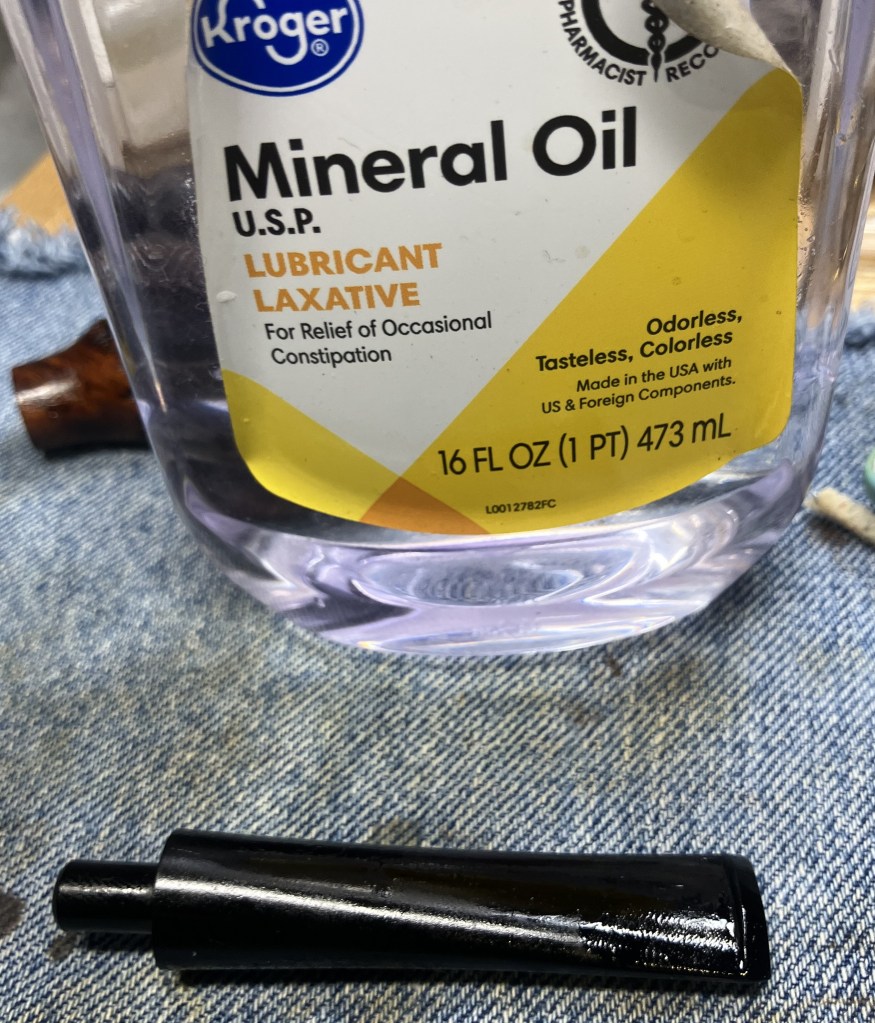
I oiled the stem with mineral oil and allowed it to soak in the oil for about 30 minutes.
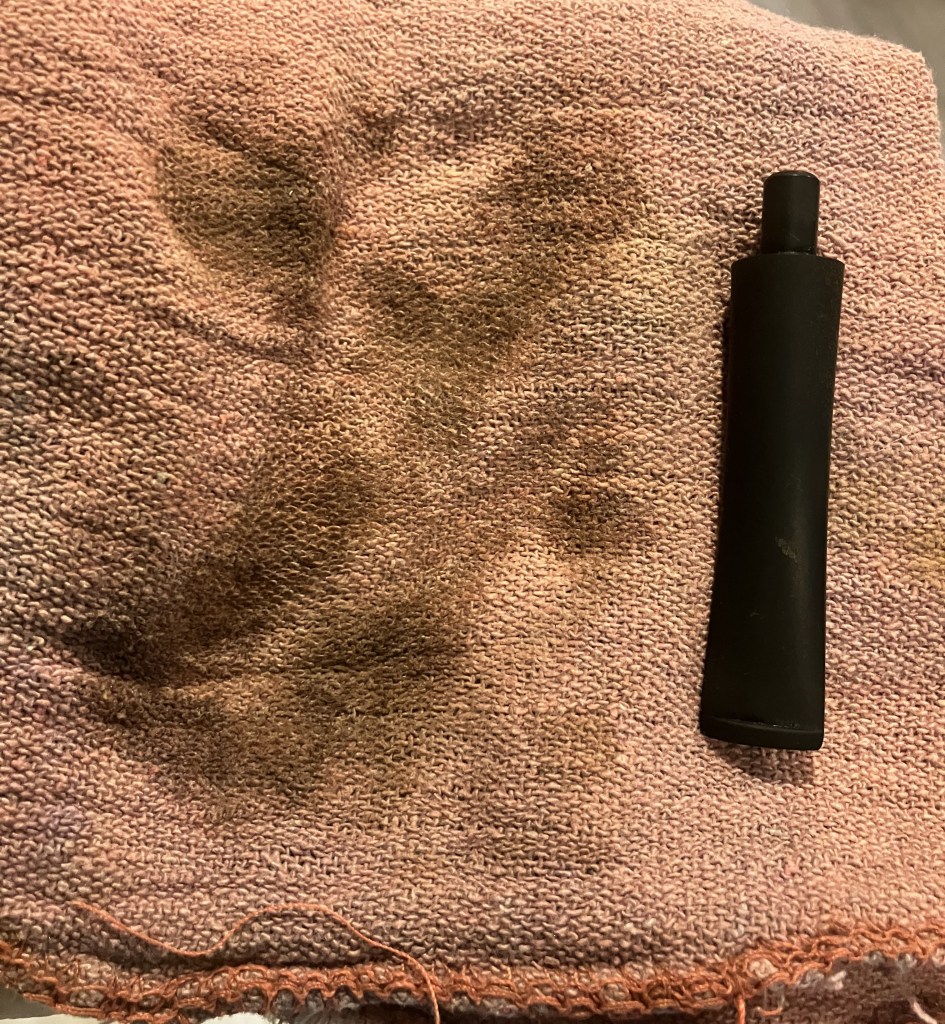
There was not much that I could do with the carvings of the stummel but give it a coating of Before and After Restoration Balm. I worked this wonder-product into the crevices of the briar with a baby toothbrush. The stummel then was set aside for 30 minutes.
The stummel was wiped and hand buffed with an inside out athletic sock to remove excess Restoration Balm.
I used masking tape to protect the shank from the sanding which the stem would undergo. The sanding was done with a series of sanding sponges in grits from 320-3500. Between each sponge I rubbed the stem with mineral oil and wiped it dry again with a paper towel. This removed any of the sanding debris. The stem looked better but the pitting was deep enough that the only way to remove it and retain the smooth feel from the shank to the stem would have been to also sand the shank briar. I did not want to do that and risk removing detail from the carving. Instead I took the pipe to the buffer and worked the stem with red buffing compound followed by blue buffing compound on their respective buffing wheels. The results looked better but not great.
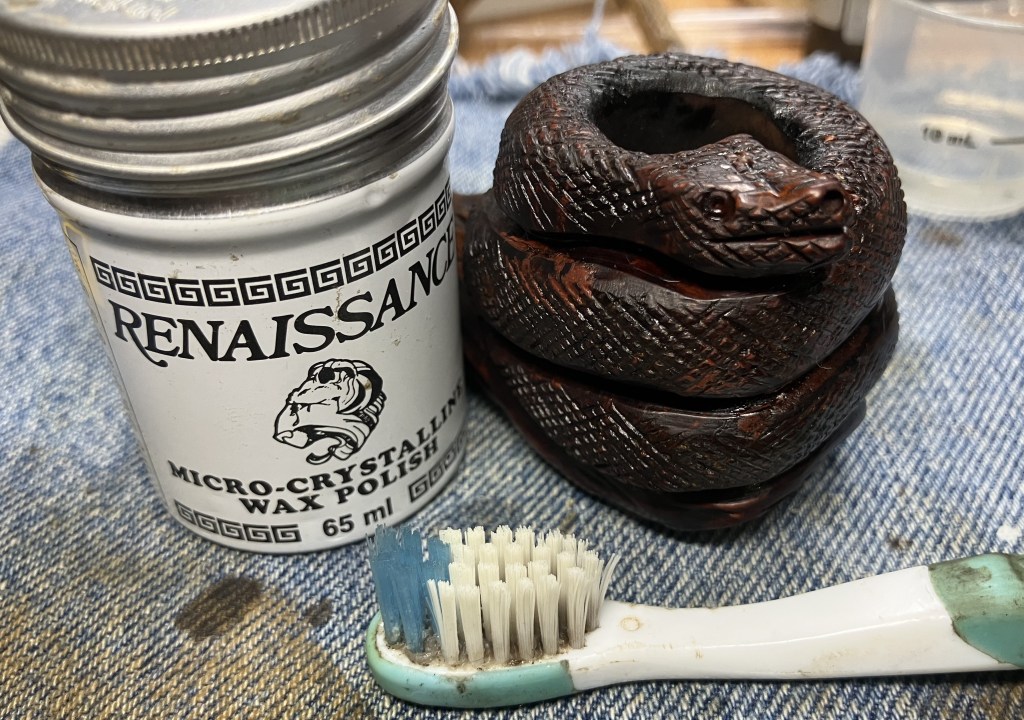
The stummel was waxed with Renaissance Micro-Crystalline wax again applied with a baby toothbrush. I did have to clean the baby toothbrush using alcohol before and after the wax.
The final step was a hand buffing with a microfiber polishing cloth.
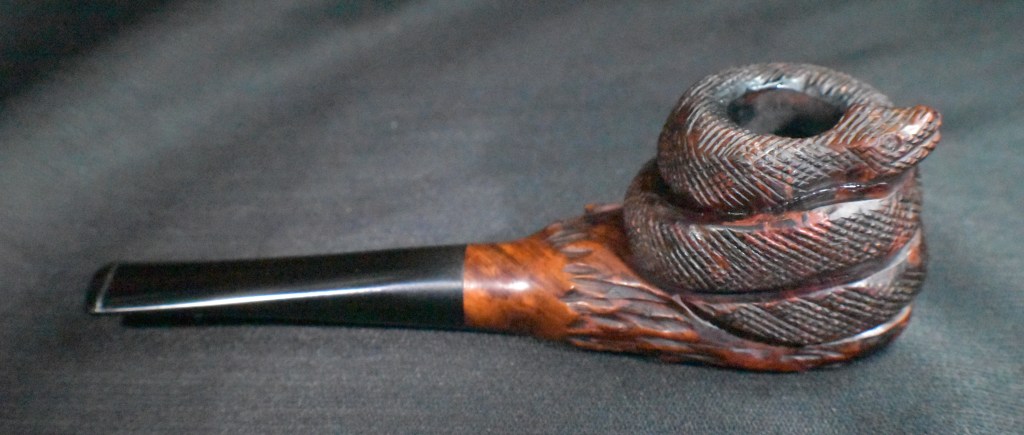
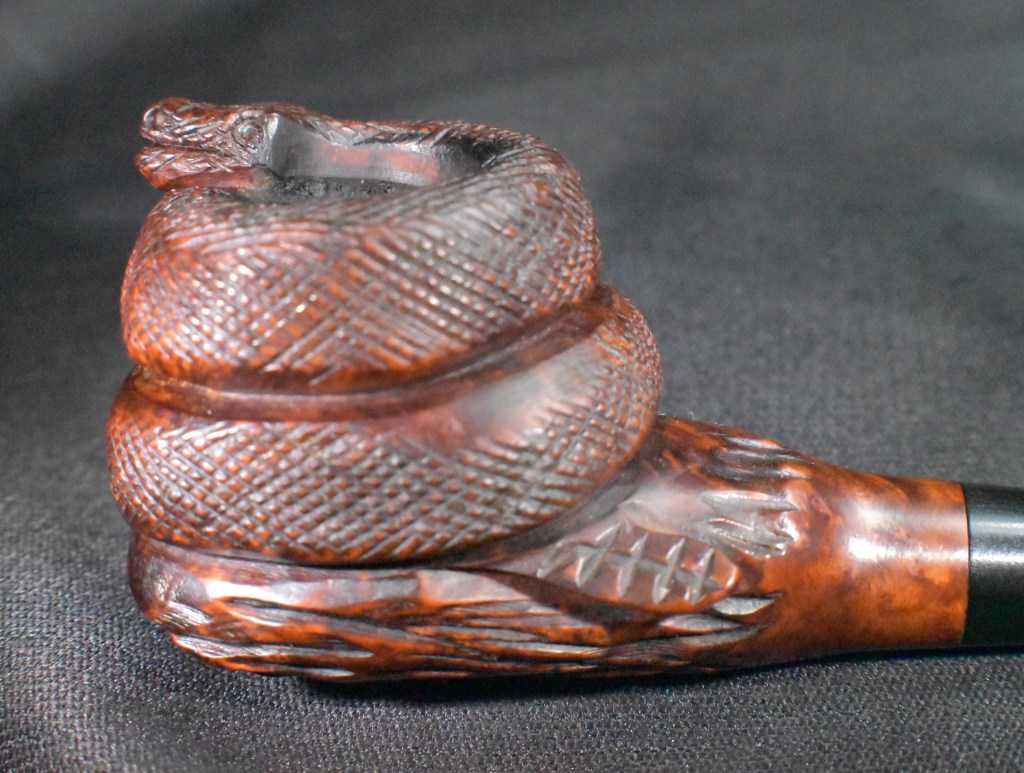
This Rattlesnake figural by Marxman, though anatomically incorrect, is still a fun pipe for me. Sure the stummel is full of the dreaded pink-stuff fills and the vulcanite of the stem is lower quality recycled tires, I still enjoy it. The dying of the pink-stuff did improve the look, some, and the stem did polish-up, some, they are still nothing to brag about. The carving of the snake is pretty impressive with the checkering over the entire curved body. That is impressive. The details like the rattle on the tail, the texture along the log and the end of the log are also quite impressive and well done. The snake is a caricature of the elegant serpent with the head being comically misshapen. I will say that the pipe feels very good and substantial in my hand and the weight is comfortable for short periods of clenching. The dimensions of the Marxman figural Rattlesnake pipe are:
Length: 5.58 in./ 141.73 mm.
Weight: 1.94 oz./ 55.00 g.
Bowl Height: 1.73 in./ 43.94 mm.
Chamber Depth: 1.56 in./ 39.62 mm.
Chamber Diameter: 0.73 in./ 18.54 mm.
Outside Diameter: 1.61 in./ 40.89 mm.
I do hope that you have found something here useful to your own pipe care, maintenance or restorations. If you like this sort of thing, please click the like and subscribe buttons. Thank you for reading the ramblings of an old pipe lover.
Loading…
Below are the finished photos of the Marxman Rattlesnake Figural Pipe.
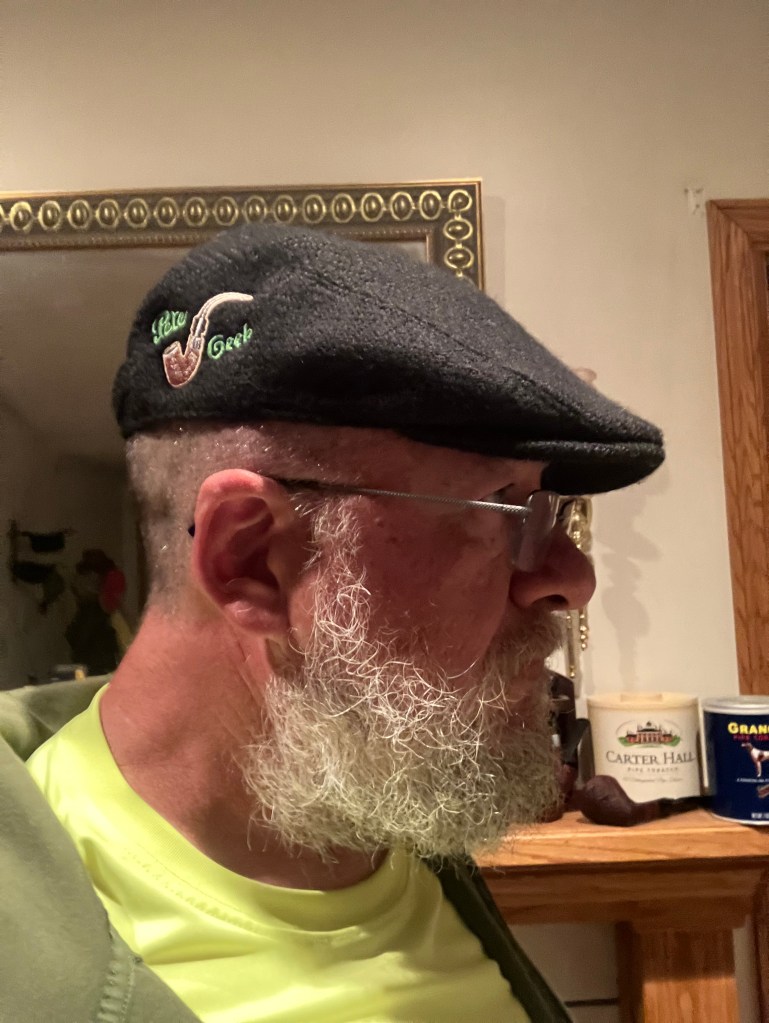
My affection toward Peterson pipes is hardly a secret, you could even say that I wear it on my sleeve. Though it is more literally on my hat.
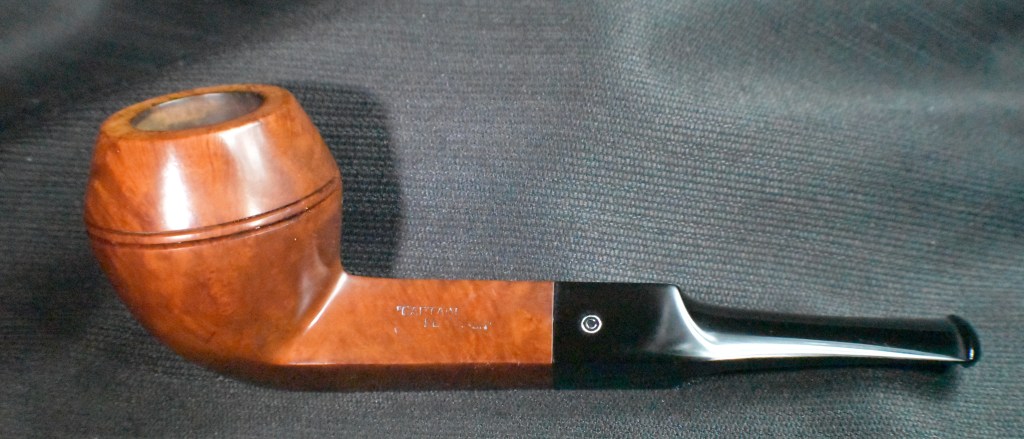
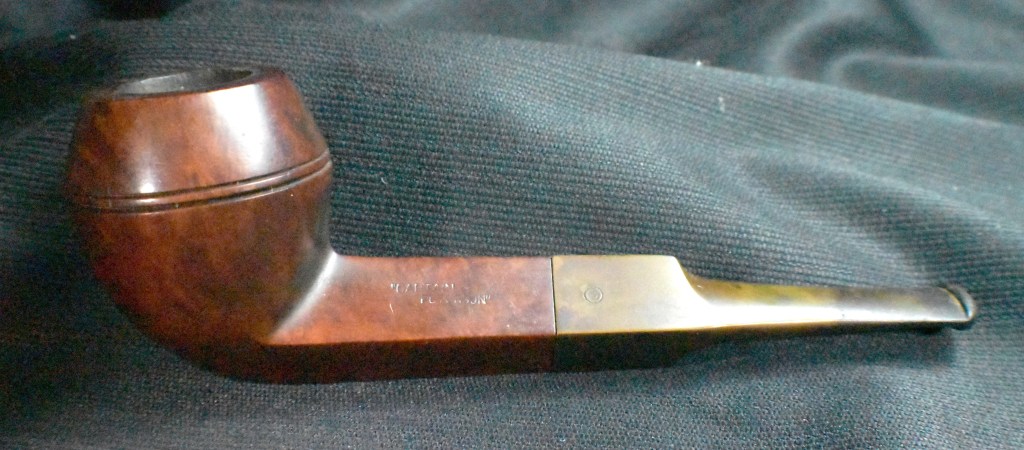
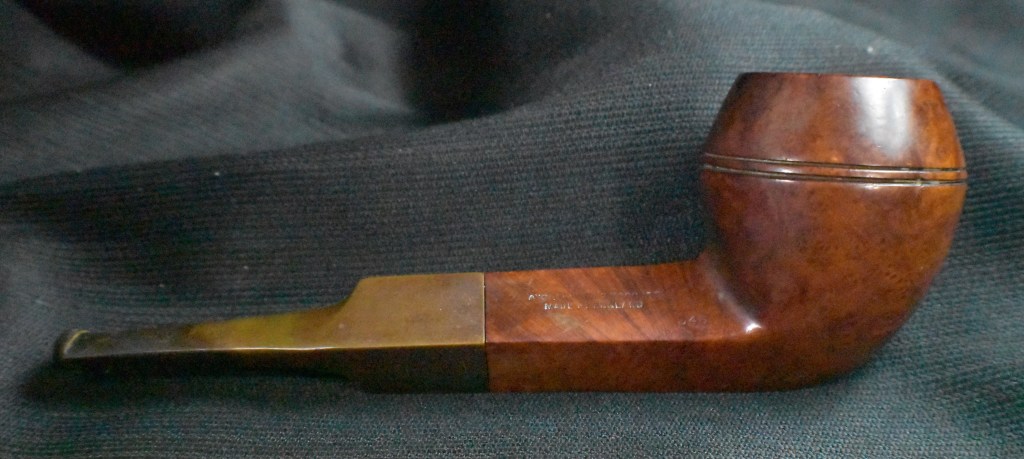
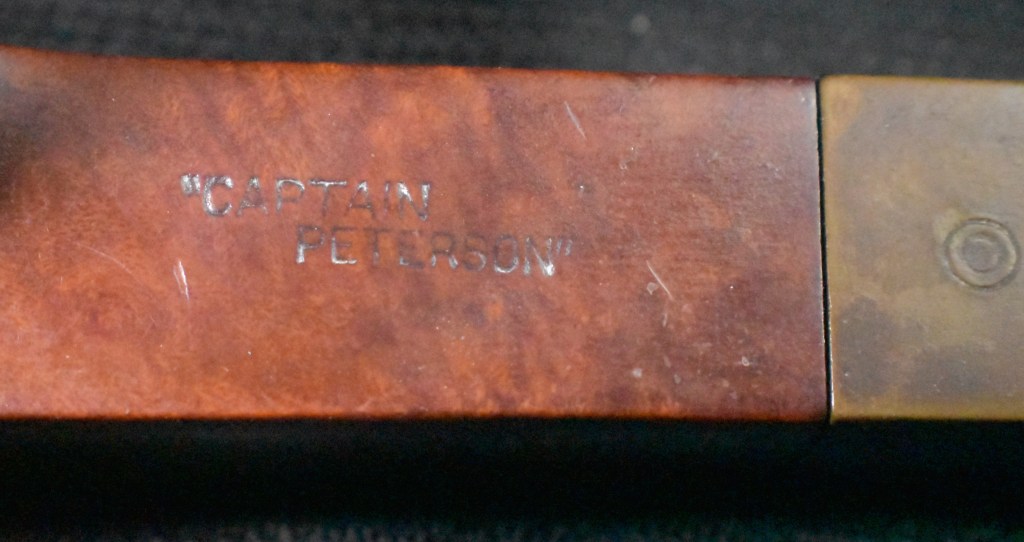
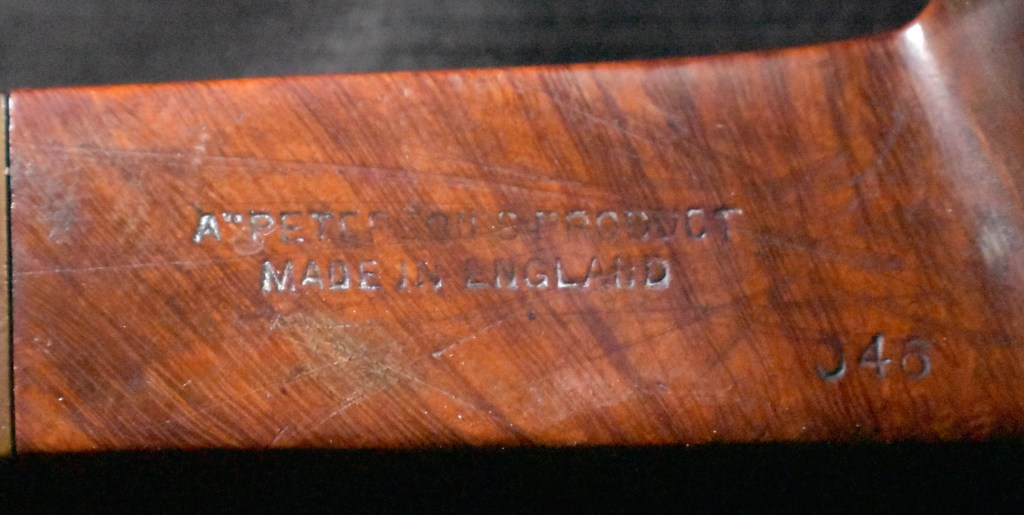
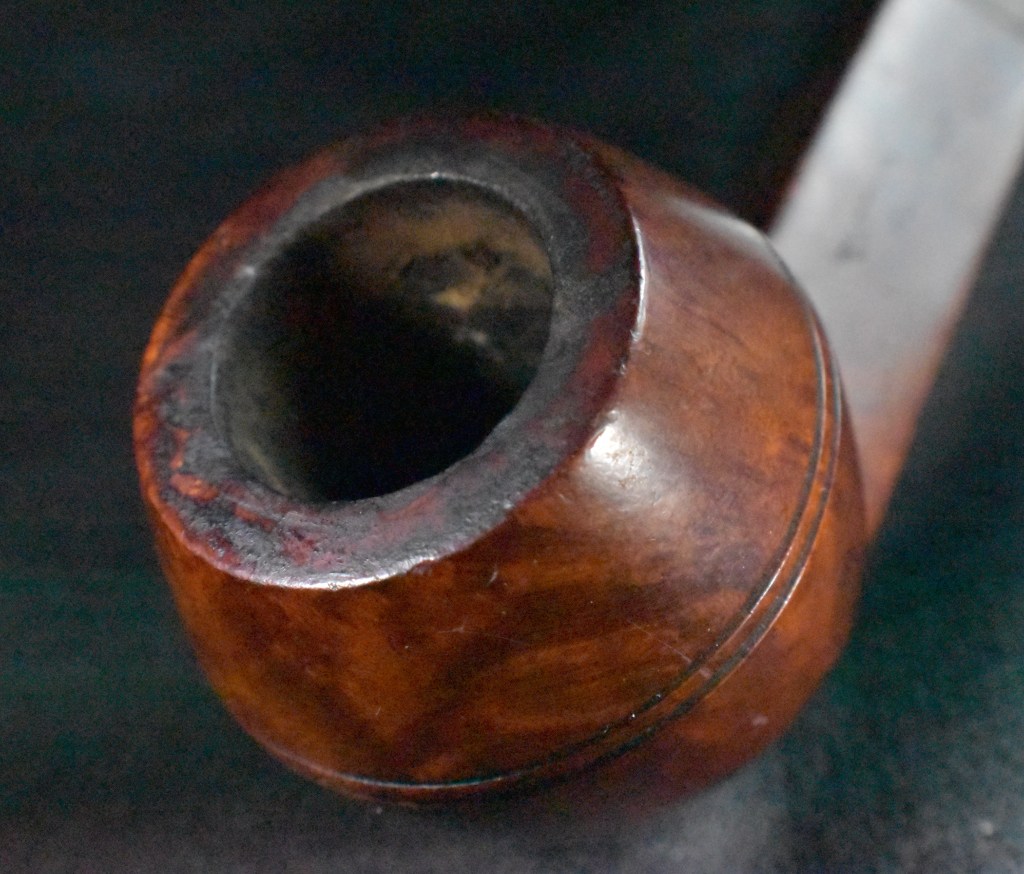
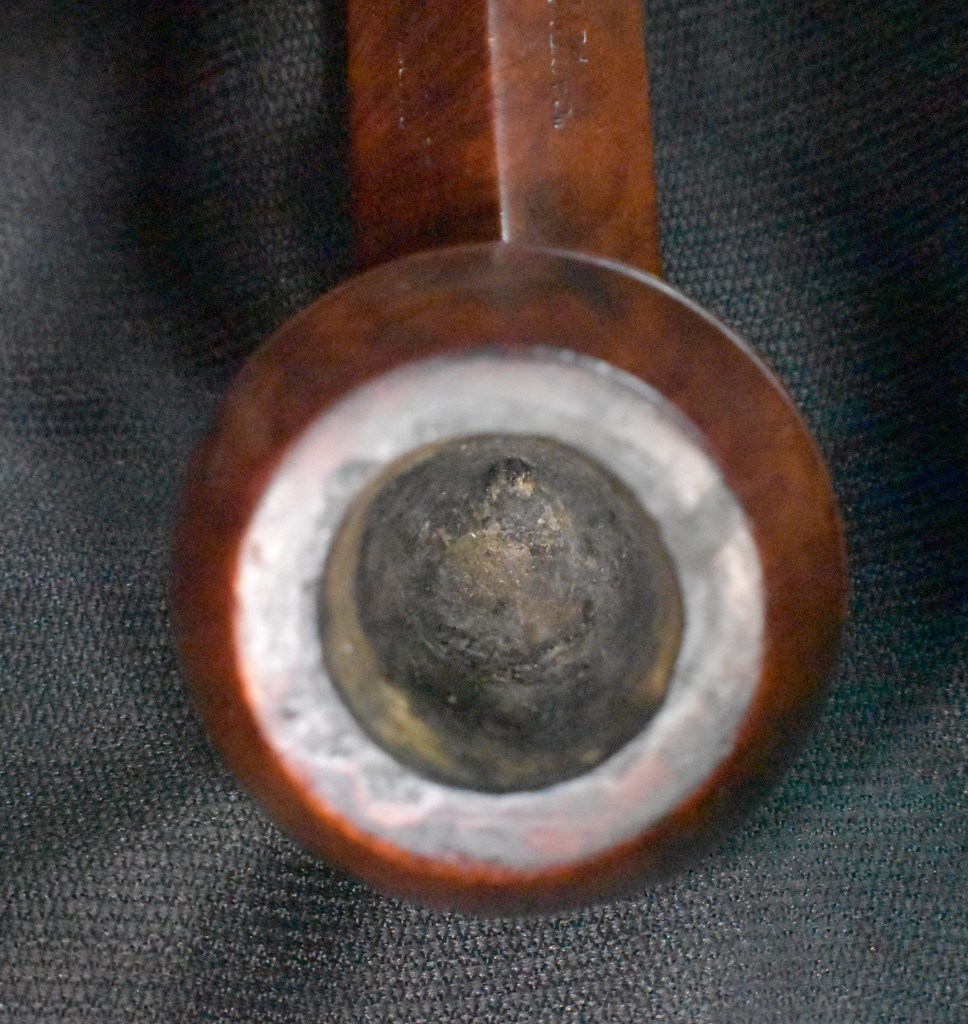
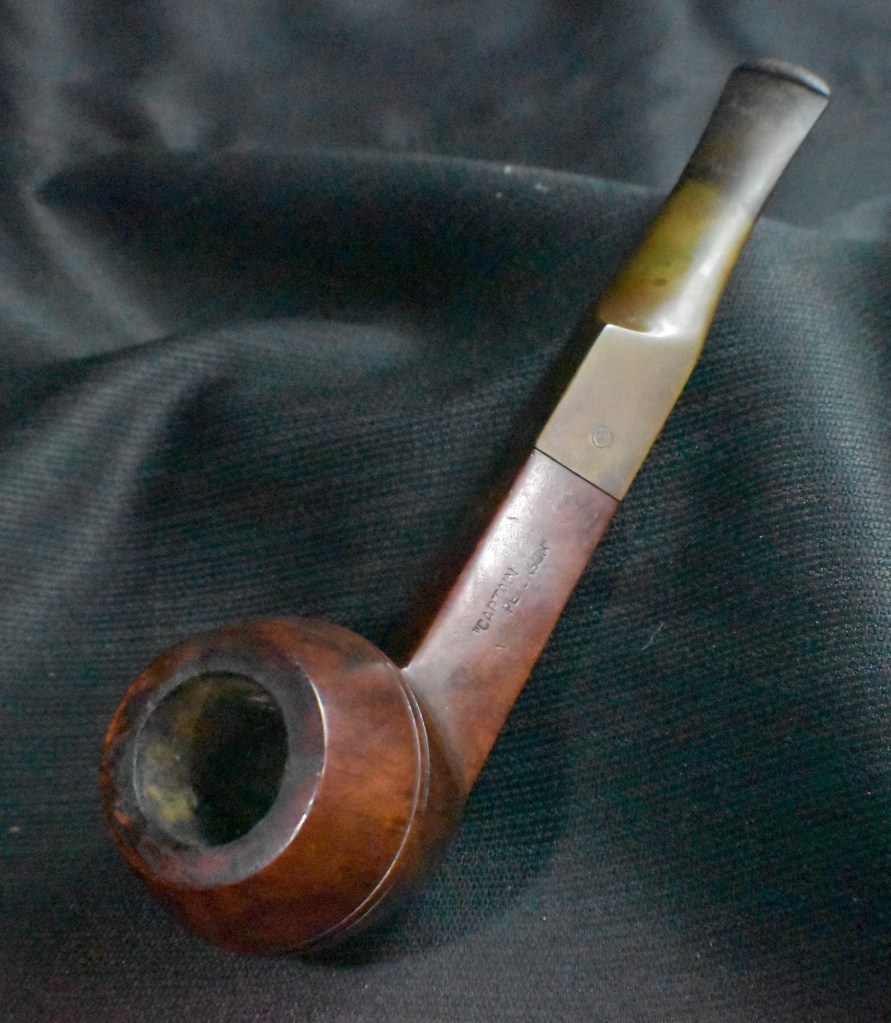
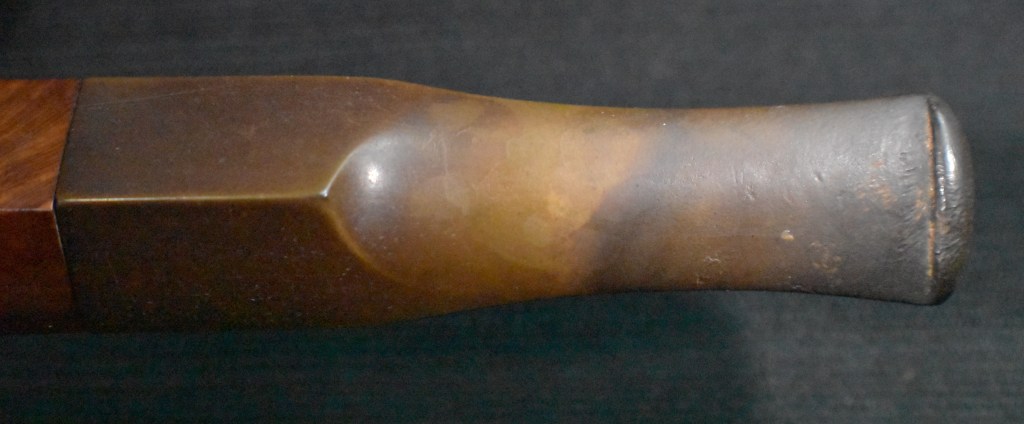
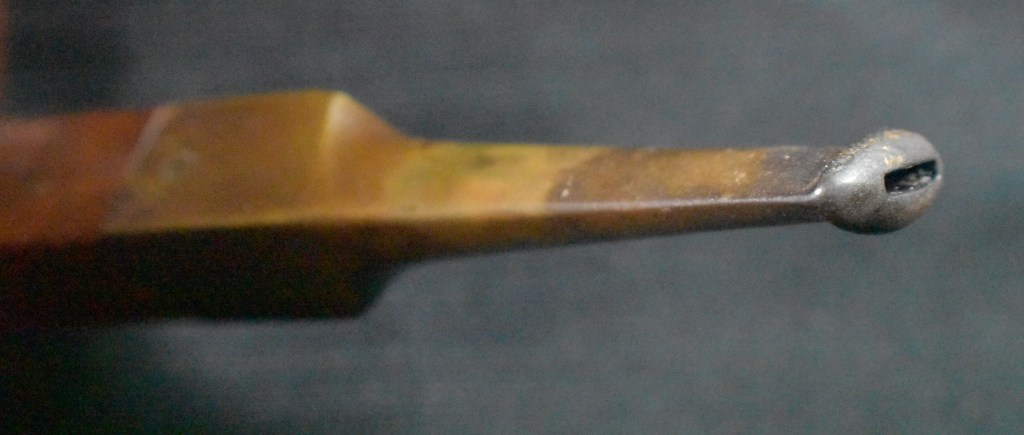
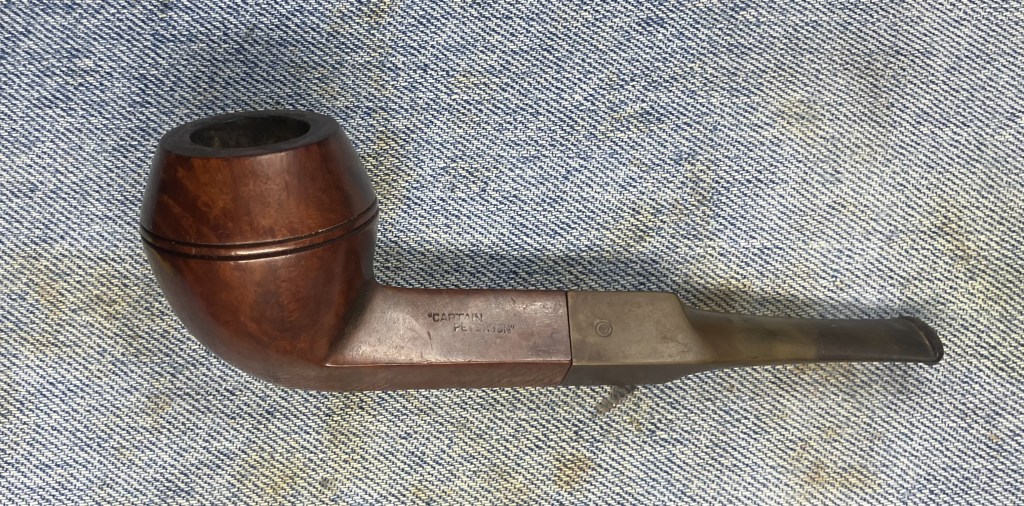
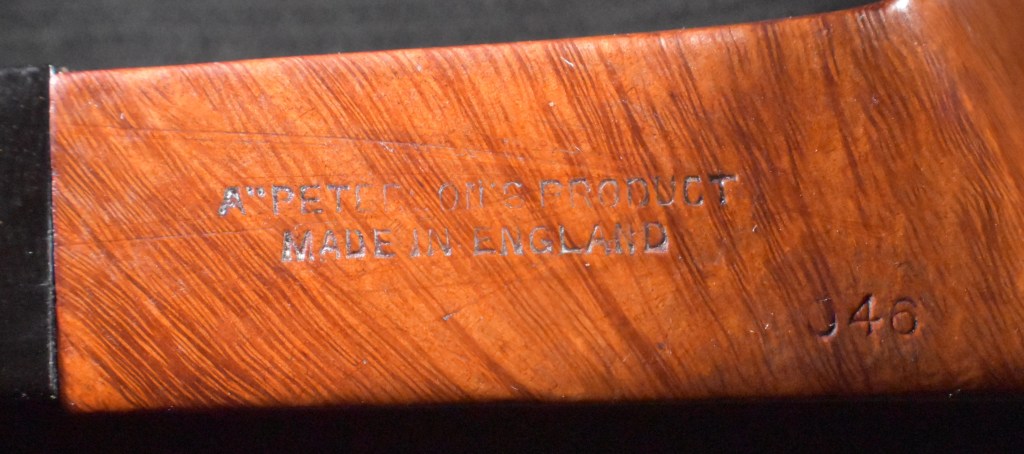
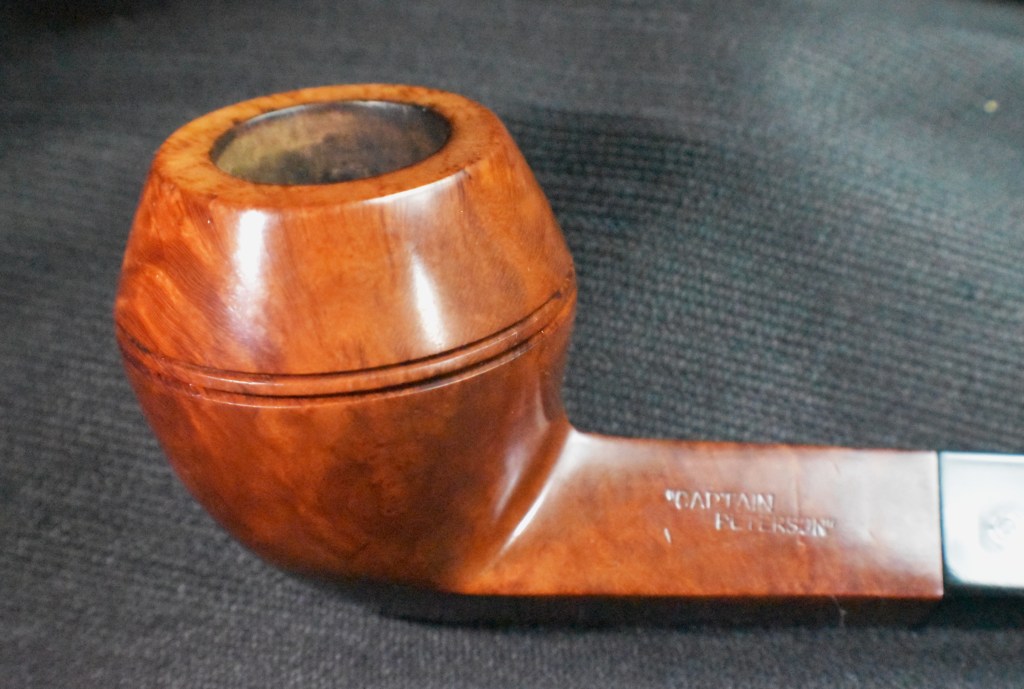
That said, I have restored dozens of Peterson pipes and I always enjoy doing it even when it is more of a pursuit of folly trying to salvage a very abused old implement rather than refreshing someone’s dear old frien.The subject of this blog is a Captain Pete I found last May on eBay. I probably paid more for it that I’d like to admit and certainly more than what I would have 3 years ago. Regardless, after a short trip from Englewood, Florida the not so lovely old pipe arrived. The stampings were mostly clear and read “CAPTAIN (0ver) PETERSON” on the top left shank. I’m not sure why the Peterson stamp folks like their quotation marks but they seem to. The stem was stamped with a worn and paint worn-off circled C. On the right shank the stamp read “A PETERSON PRODUCT” over MADE IN ENGLAND with an offset 046. The country of manufacture (COM) stamp is what intrigued me the most. More on that in the “Background”. The photos below show the pipe prior to any work.
This pipe appeared to look rough. The stem was severely oxidized, I feared saving the logo would be difficult at best. The bowl had been reamed but not very well. There was a layer of lava on the rim which looked like it had been removed and redeposited. I think what was thinking is that this l pipe appeared to have been smoked a lot but kind of kept up and cleaned on occasion.
Background
Back on December 21, 2023 I wrote a blog about a Captain Peterson apple. That blog is linked for those interested. In that blog I said the following about the Captain Peterson line:
“I highly recommend the book The Peterson Pipe, by authors Mark Irwin and Gary Malmberg as well as a reading of pipedia.com’s Peterson pages. According to Mark Irwin and Gary Malmberg, the Captain Pete:
“This line’s name was derived from the nickname of Charles Peterson, known affectionately as “Captain Peterson.” The first issue, c. 1940-62, was in a smooth finish produced for Rogers Imports with a white stamped P inside C, or a circled P on the mouthpiece. CAPTAIN over PETE on shank, and a MADE IN IRELAND in a circle. English made versions show CAPTAIN over PETE on shank or “CAPTAIN PETERSON” and A PETERSON PRODUCT over MADE IN ENGLAND or LONDON MADE over ENGLAND. The second issue (1998-), features an XL bowl with Sherlock Holmes shapes and compact stems, in rustic or combination of smooth and rustic, with a nickel band between two narrow brass bands.” (Irwin and Malmberg p.295)” (A Peterson Captain Pete Restoration – NebraskaPeteGeek)
This example of a Captain Peterson is described above and likely dates from 1940-62 and was made in London. These dates can be further narrowed down by reading p.149-150 in The Peterson Pipe, where the London production of pipes is discussed at length. Here, Irwin and Malmberg say, “Apparently, the London factory did not order a MADE IN ENGLAND die until after the war. Any Peterson stamped with an English COM must be no older than the later 1940s” (Irwin, p.150). This would mean that this pipe dates from 1945-1962 as 1962 was when Peterson shuttered the London factory.
The Restoration
After the before photos the pipe made its way to the workbench and a clean denim piece.
I began work with the stem due to thinking that the stem would require the greatest amount of time. The cleaning was done with bristle pipe cleaners and 95% ethyl alcohol. The stem was very fouled with tar and smoking residue.
The stem has some tooth chatter on the bit above the button on both the top and bottom surfaces as the two below photos show in all of their poorly focused glory.
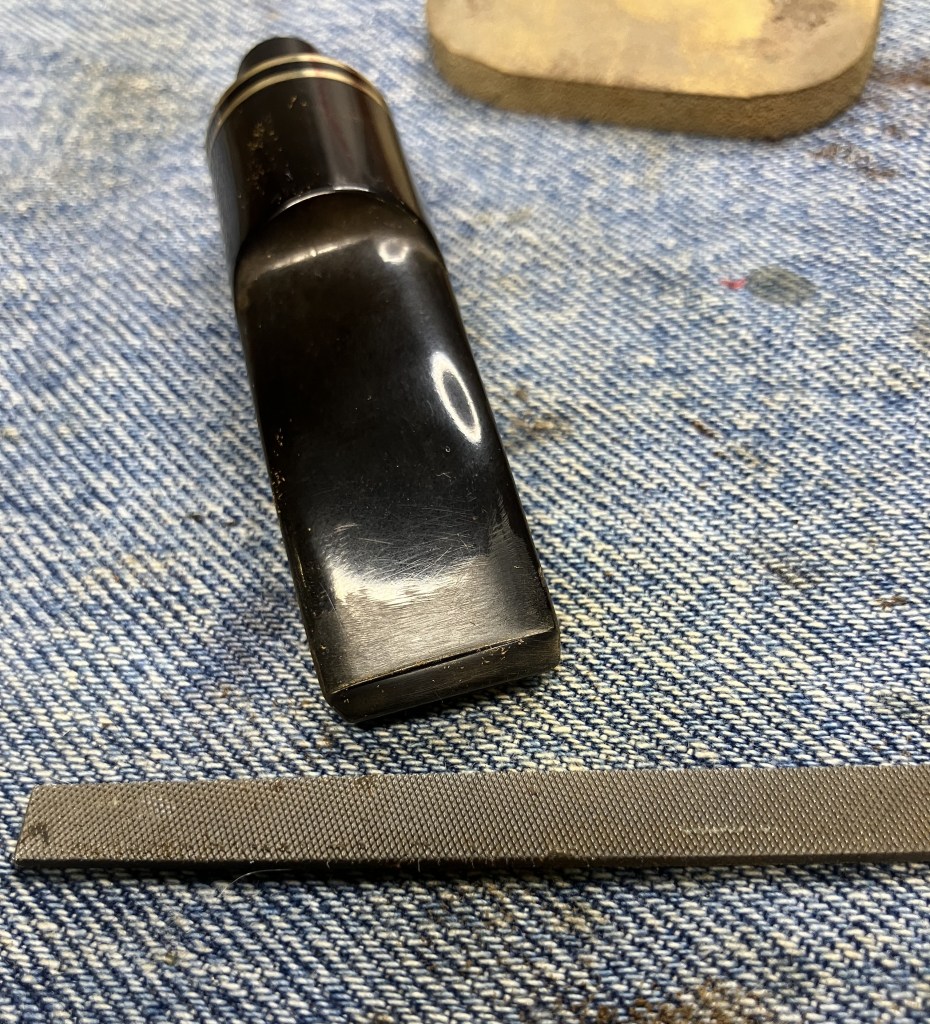
The bits of the top and bottom surface were filed with a small slat file to remove most of the chatter.
The stem was suspended in Briarville’s Pipe Stem Oxidation Remover solution and allowed to soak for 24 hours. This solution is lovingly referred to as deox.
The next day the stem was removed and rubbed with a coarse shop rag. This removed a great deal of the oxidized vulcanite and can be seen on the rag in the photo below.
The airway of the stem was again cleaned with alcohol dipped bristle pipe cleaners.
I was pleased to see that the logo stamped on the stem remained intact after the time in deox.
To further reduce the amount of oxidized vulcanite, I rubbed the stem with Soft Scrub cleanser on make-up pads. The oxidized vulcanite can be seen darkly coloring the pads.
The stem was oiled with mineral oil to keep the vulcanite from further oxidation.
The tooth chatter that was not filed from the bite zone was filled with black cyanoacrylate (CA, super glue). This was spritzed with a CA drying accelerator. The hardened CA was then filed with a small flat file to smooth and reshape the stem.
The shank of the pipe was wrapped with masking tape to protect the briar and allow me a handle while sanding. The stem logo was also masked for its protection. The stem was sanded with a series of sanding sponges from grits 400-2000. Between each sponge the stem was rubbed with mineral oil and wiped with a paper towel to remove sanding debris.
The sanding continued through the 3500 grit sponge with oiling and wiping as above.
The stem was buffed using blue buffing compound on a low speed buffer with a flannel wheel dedicated to the blue compound.
The stem was wiped of any residual buffing compound and the logo area cleaned with alcohol on a cotton swab. I used a white acrylic model paint to repaint the imprint of the logo.
The white acrylic dried quickly and was hand buffed with a soft cotton cloth to remove the paint from the stem outside of the stamp.
The sequence of this restoration had me a bit out of sorts, but it was apparently time for the reaming. The tools were gathered.
The Pipnet #2 blade was the only one that fit and did most of the reaming. Both the Smokingpipes Low Country reamer and the General triangular scraper were used but just for clean-up.
Below the reamed tobacco chamber can be seen.
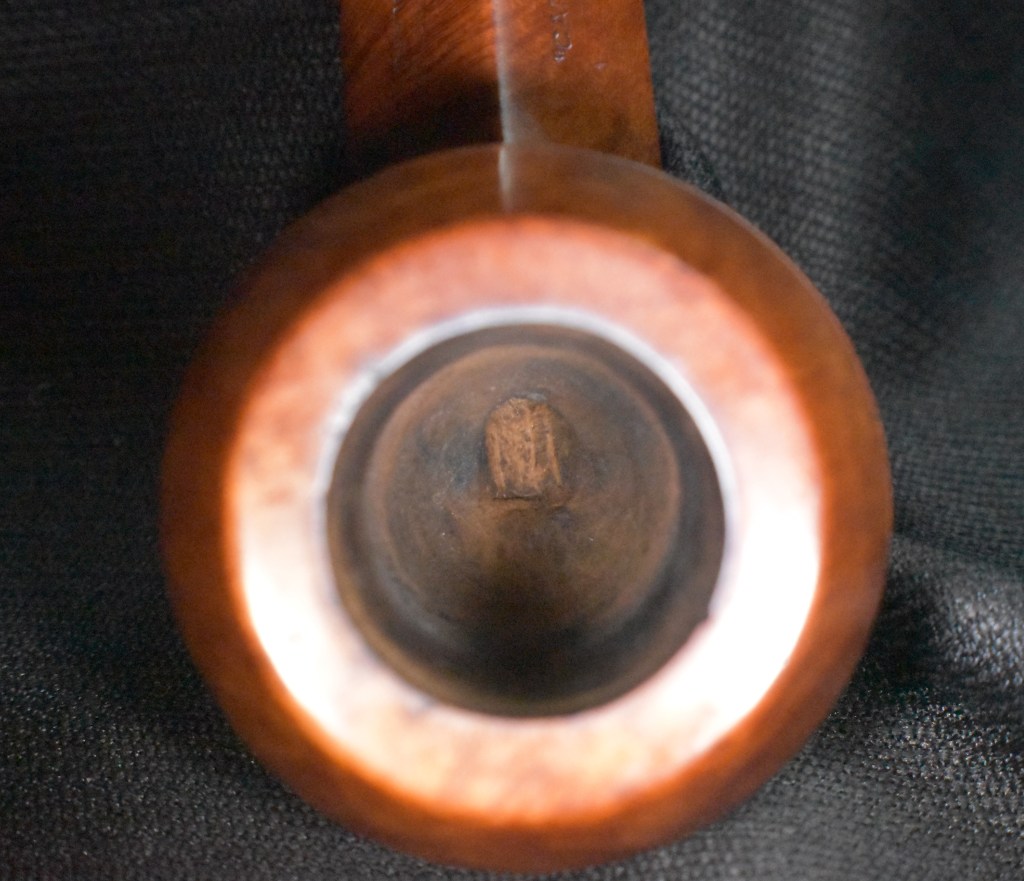
The chamber was sanded with 320 sandpaper wrapped around a wood dowel. I saw no signs of damage within the chamber. The lava on the rim was softened with saliva and allowed to soak for a couple minutes.
The rim was then scraped using the edge of a sharp pocket knife blade. There were some rough spots on the rim but they looked superficial and easily removed with a light topping.
The stummel was taken to the sink for a scrubbing with a nylon brush and undiluted Murphy Oil Soap. The soap was rinsed with warm water and the stummel dried with a cotton hand towel.
I packed the stummel with cotton and saturated it with 99% ethyl alcohol. This was allowed to sit overnight.
The next day the cotton was stained telling me the treatment had worked.
The cotton was removed and was far dirtier than I was used to. I could have sworn that I had cleaned the shank, yet I had no recollection of doing it. Remember when I said the sequence of this restoration had me out of sorts? It was apparently worse than I thought.
The airway was filthy and tar infested. The good news was that the tar was very soft due to the extended soaking in alcohol. The scraping with a dental scraper was very productive. The cotton swabs eventually started to lighten as more of the tars were removed.
I cannot say if this was a superior order to use than my normal sequence; reaming the chamber, then, clean the shank airway then alcohol/cotton treatment is needed for ghosting of severe dirtiness. In this case it worked well. The softening of the tar did make for easier cleaning.
There were several small dents, scratches or pits on the surface of the stummel. These revealed themselves more and I had started sanding. I had covered the stamps with masking tape for their protection. For the fills, I applied small amounts of thin CA using a long narrow applicator on the CA bottle. Immediately after application I used a dust sanding sponge to sand the fill area. The sanding sponge supplied the briar dust to join with the CA and for a fill. This method only works if the spots to be filled are very small and the sander has total disregard for their sanding sponges as some of the CA and briar dust will certainly get on the sponge making it have nonabrasive spots. I wonder if I will ever learn to use a piece of sandpaper like I did before I had sanding sponges. The next three photos show the fills.
The stummel was then sanded with the full series of sanding sponges from 400-3500 grit. The stummel was wiped with a make-up pad wetted with alcohol between each sponge
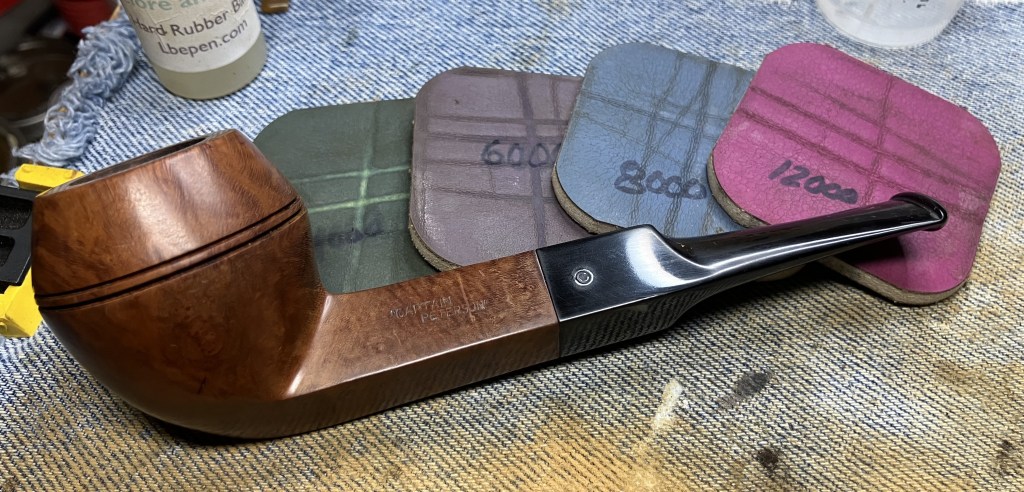
I removed the masking tape and cleaned any adhesive left behind by the tape. I then worked the stummel with micro-mesh pads 4000-12000. Again I wiped the stummel between pads with alcohol on a make-up pad.
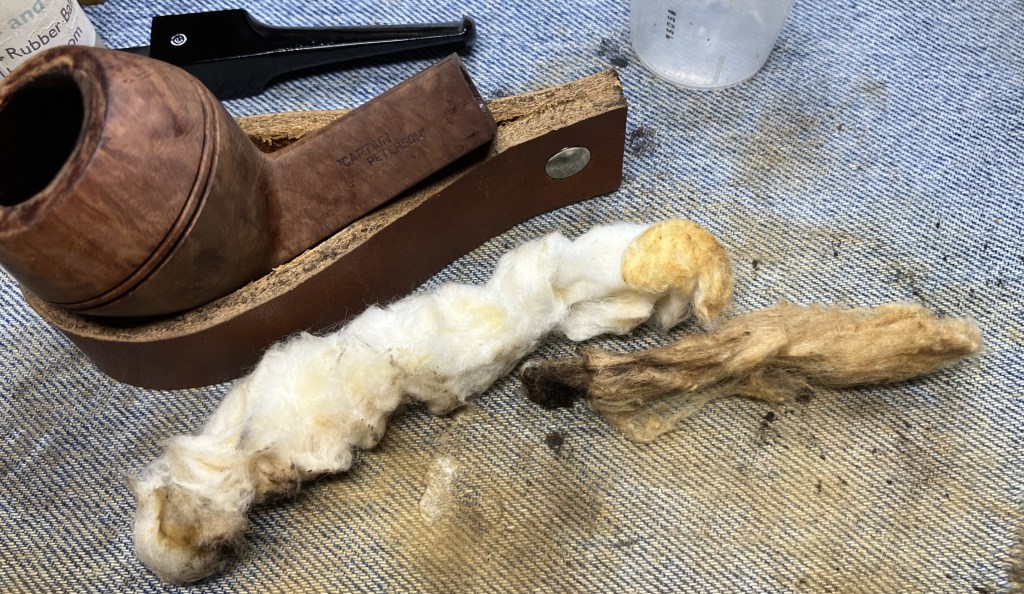
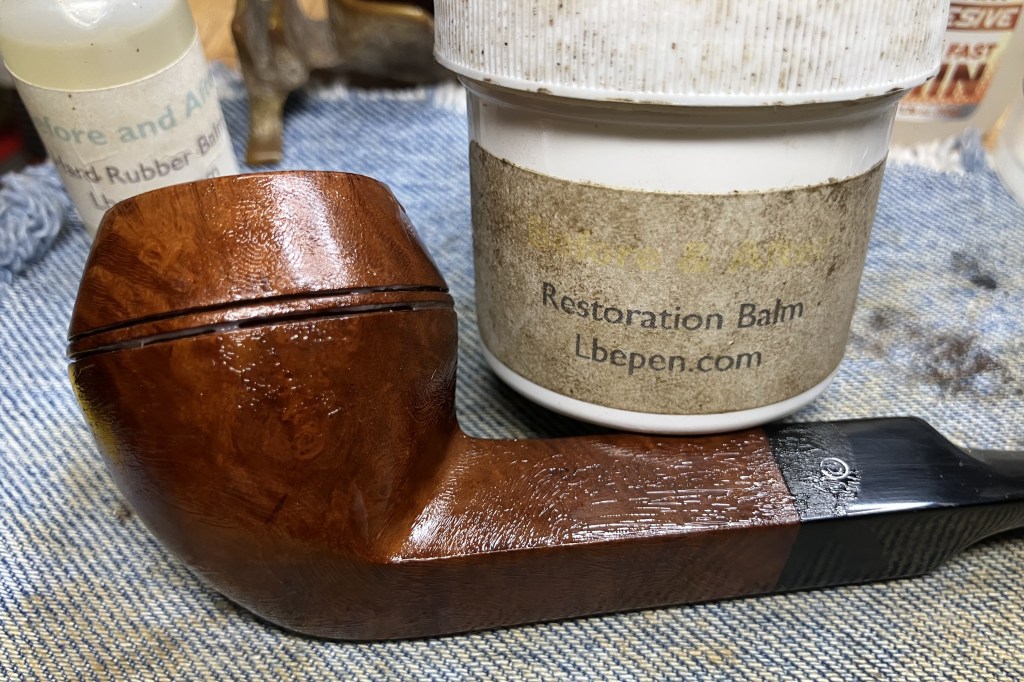
The stummel was coated with Before and After Restoration Balm and allowed to sit while I went out in search of a couple of evening Largemouth bass. This is also called my stroll with a pole and of course a pipe.
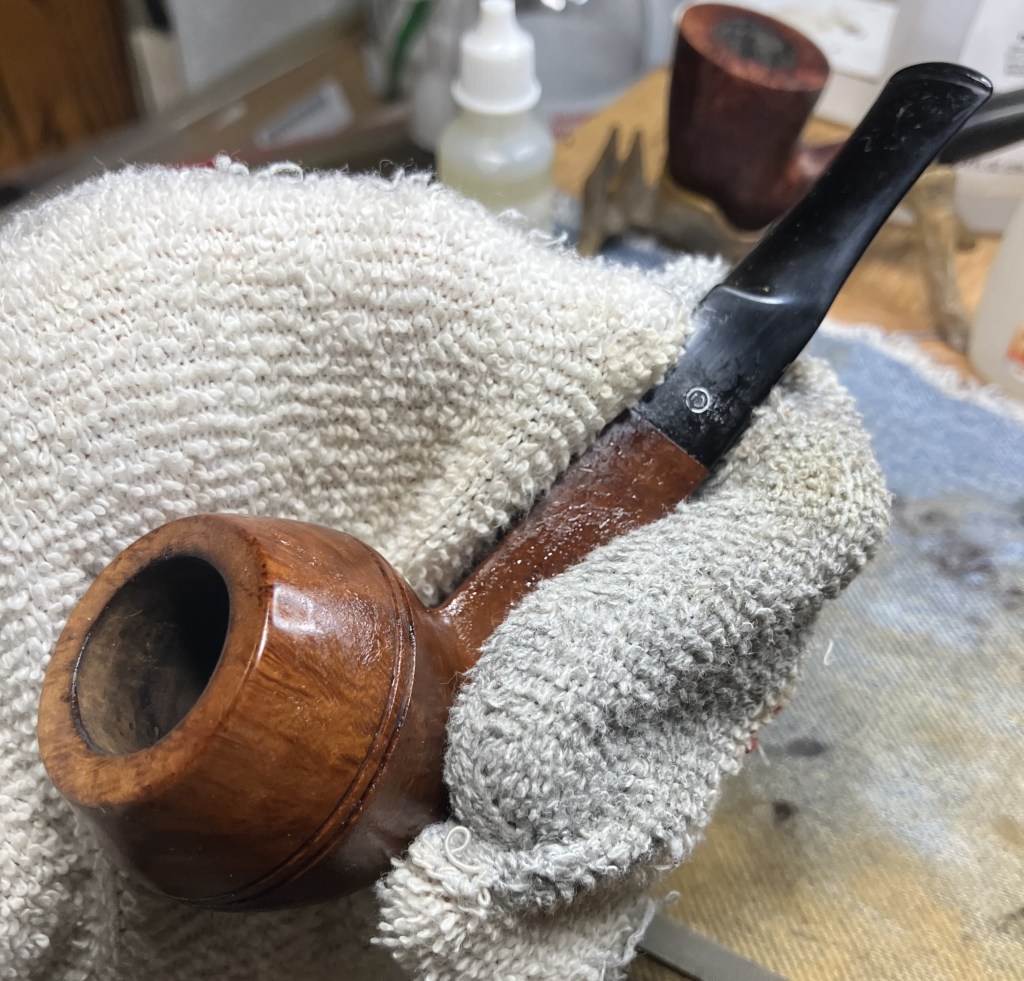
About an hour and a half later I returned and wiped the remaining Restoration Balm from the stummel with an inside out athletic sock. There is the photobombing fishing pipe lurking in the background. If you are curious it is a Peterson 127.
The pipe was taken to the buffer where a couple of coats of carnauba wax were applied.
I carefully dragged a knife blade around the beading to remove accumulated wax from the grooves. The final step was another hand buff with the microfiber polishing cloth then off to the final photo shoot.
This beautiful English made Captain Peterson 046 bulldog is a great example of post World War Two English workmanship. The walnut stain of the original pipe was maintained and was finished with careful sanding and just carnauba wax. The stem was deoxidized, sanded and polished to a gorgeous glossy luster. Though lacking any stunning briar grain the wood is solid and the few dents from wear were filled with minimal disruption to the original. The dimensions of the Peterson Captain Peterson Made in England 046 bulldog are:
Length: 5.71 in./ 145.03 mm.
Weight: 1.62 oz./ 45.93 g.
Bowl Height: 1.96 in./ 49.78 mm.
Chamber Depth: 1.65 in./ 41.91 mm.
Chamber Diameter: 0.73 in./ 18.54 mm.
Outside Diameter: 1.64 in./ 62.89 mm.
I do hope that you have found something here useful to your own pipe care, maintenance or restorations. If you like this sort of thing, please click the like and subscribe buttons. Thank you for reading the ramblings of an old pipe lover.
Loading…
Below are some photos of the finished Peterson Captain Peterson Made in England 046 bulldog.
I did not want to affect the stamps here, so the existing scratches were not sanded away like I would have preferred to do.
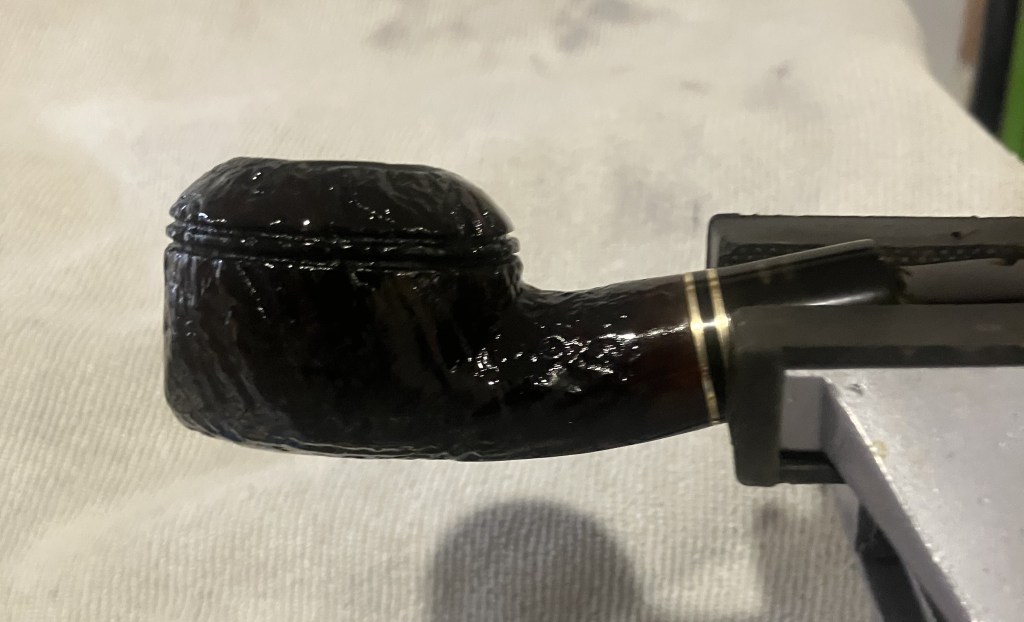
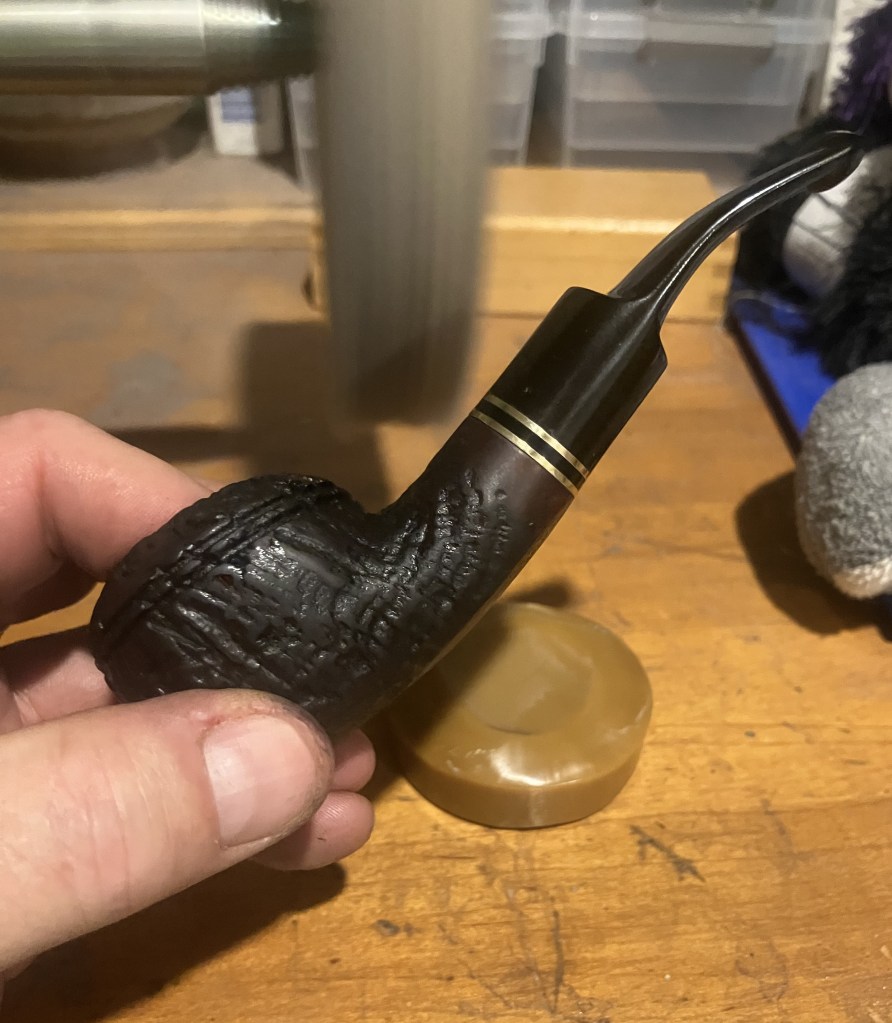
I had never worked on this shape before, some might call it a pot, others a bullnose. Either way I found it interesting and I have a soft spot for basket pipes with an interesting shape. The thick walls and wide acrylic stem were the clincher. And honestly, the double brass bands just were an elegant bonus. This beauty was spotted on eBay and I was able to collect the prize as I was the only bidder and a tough over $15 seemed like a good deal. After the obligatory wait for shipping, The chubby cherub arrived. The only stamps were MADE IN ITALY on the bottom of the pipe. Below are some photos of the pipe in the pre-work or before condition.
The stem looked to be in very good condition, slightly oxidized, maybe. The stummel on the other hand showed signs of extensive fills. The gloss clear coat was an obvious attempt to conceal the fills and perhaps to help “glue” them together. The tobacco chamber seemed quite out of round. I couldn’t tell by initial inspection that the rim was all filled, charred or just lava covered. Oh well, it would still be a fun project.
Background
Pipes like this are nearly impossible to research. No shape number and a very standard country of manufacture (COM) stamp provide little to work with. I thought maybe, the double brass band would provide a clue.
The Restoration
The pipe made it to the workbench and a clean denim piece.
I examined the drillings. The draft hole was well centered and looked good.
The hole through the stem was off centered, but there was a nice chamfer cut.
I assembled the ream team. This tobacco chamber was wide and would require the PipNet #3 blade and perhaps the #4.
It turned out that the #3 PipNet was sufficient. A little bit of clean-up was done with the General triangular scraper.
The chamber was sanded with 320 sandpaper wrapped around a wood dowel.
At the point I wondered if I should scrap the whole project. There were two surface cracks in the briar within the chamber. These would most likely be a source of chamber charring or burning with use.
There was a third pit within the chamber on the opposite side. This would be another spot where damage from smoking the pipe could lead to issues.
The “out of round” issue was mainly cosmetic and on the rim, not the tobacco chamber itself.
The rim looked to be encased in a layer of lava or smoking residue.
I moistened the rim with saliva and allowed it to soften the lava for a couple of minutes. The rim was then carefully scrapped with a sharp pocket knife blade. The result allowed me to see that the rim was indeed heavily filled with putty or filler.
I cleaned the shank with several cotton swabs, a nylon shank brush and a dental scraper. There was also copious amounts of 99% ethyl alcohol used.
The stummel was taken to the sink for a scrub with undiluted Murphy Oil Soap and a nylon brush. The soap was rinsed with warm water.
The stummel was dirty, so a second scrub with more Murphy’s and a brass brush was used. This was then rinsed with warm water and the stummel dried with a cotton hand towel.
Back at the workbench the stummel was wiped with a make-up pad wet with 99% ethyl alcohol. Little color was removed and the remaining finish seems to be unaffected by the alcohol.
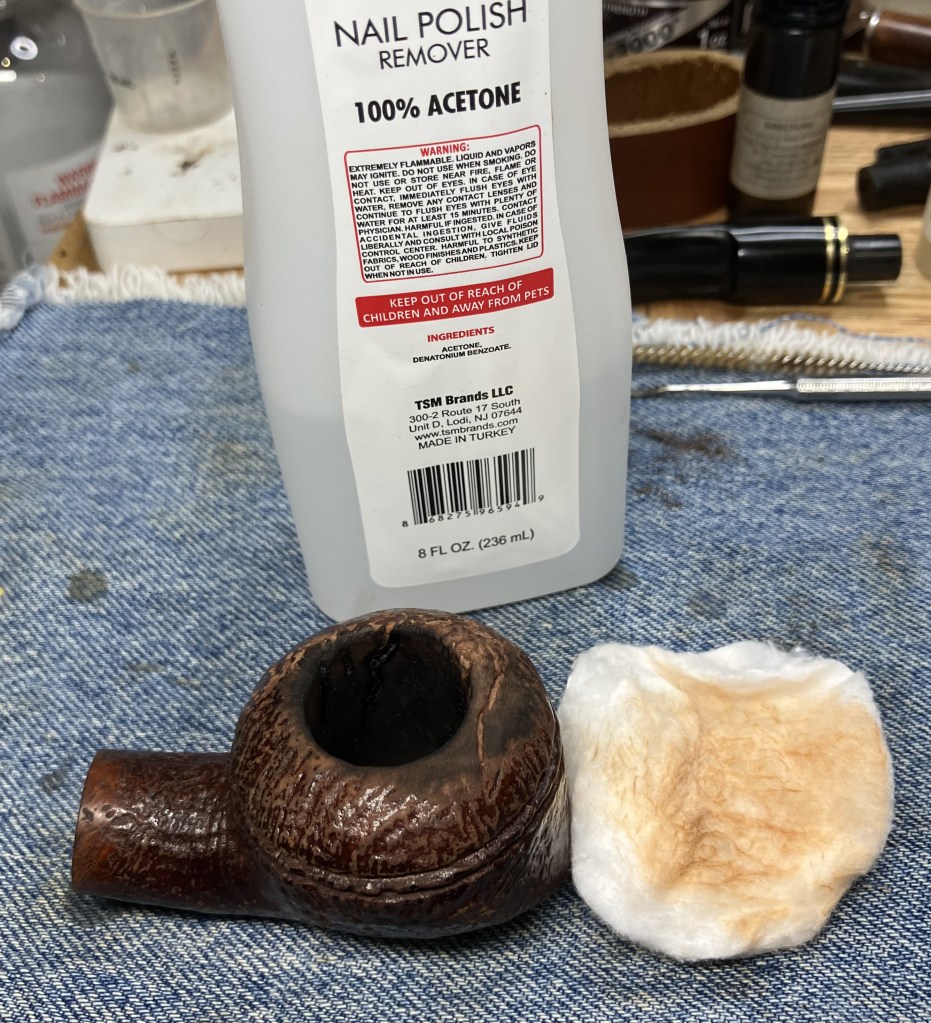
I tried a wipe with acetone on a make-up pad. This did have an effect on the finish.
I decided to let the stummel soak in an acetone bath for a couple of hours.
During this down time, I worked on cleaning the stem. The stem access through the slot was difficult, at best. I could barely get a pipe cleaner through. This was not due to dirtyness, just a poorly made draft. I used an emery board to sand the interior of the button and improve the daft.
I finally got the draft opened up with Falcon Extra Thin Pipe cleaner, the Vermont Freehand slot tool and more sanding with the emery board.
I filed the end of the stem above the button to smooth it on both the top and bottom sides.
The initial carving of the stem was not very smooth. After my file work it was much improved.
Below you can see the reshaped stem after sanding with 300 and 400 sanding sponges.
The stem was sanded with a series of sanding sponges from 320-1000 grits. Between sponges the stem was wiped with a paper towel to remove sanding debris.
After the sanding I reattached it to the pipe and took the stem to the buffer. Here I used red compound to polish the stem. I have been working on bettering my stem polishing skills. Like nearly everything, practice makes perfect. I will never claim perfection, but I am getting better at buffing and polishing stems.
After two hours in the acetone, I removed the stummel. The clear coat that the Italian maker used was some darn tough stuff. I rubbed the stummel with a make-up pad wetted with acetone.
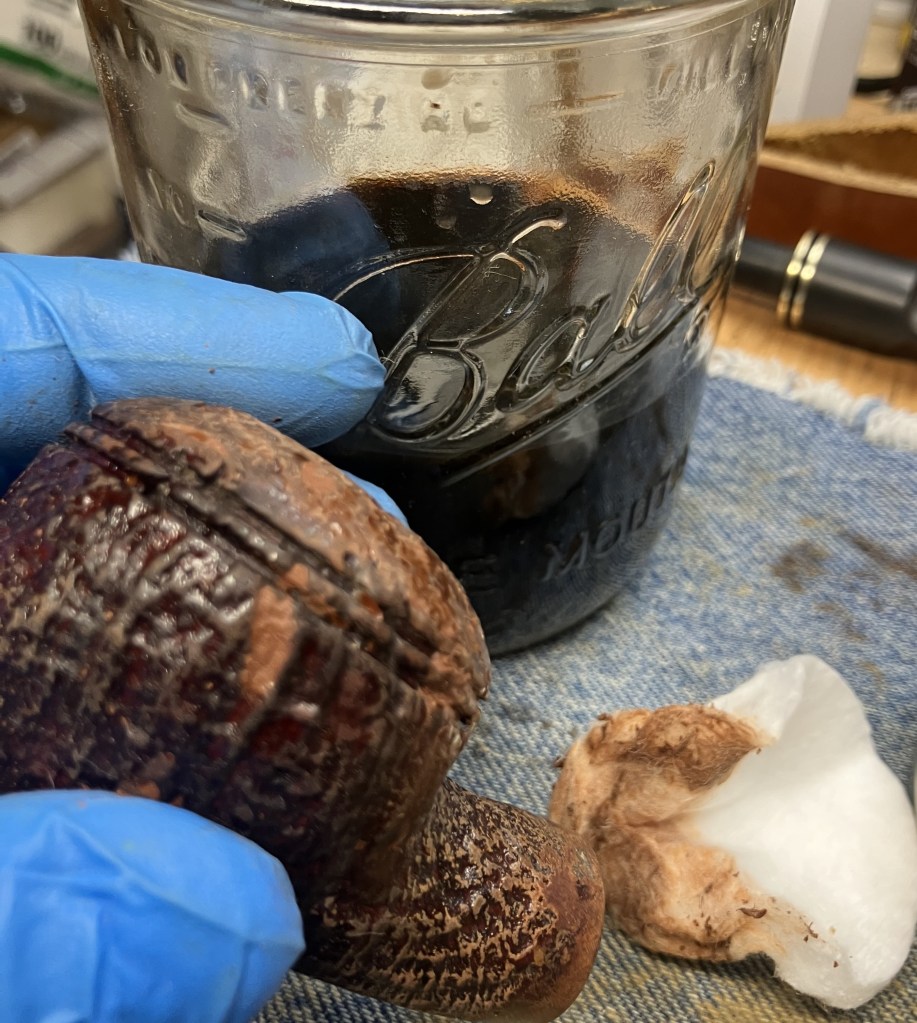
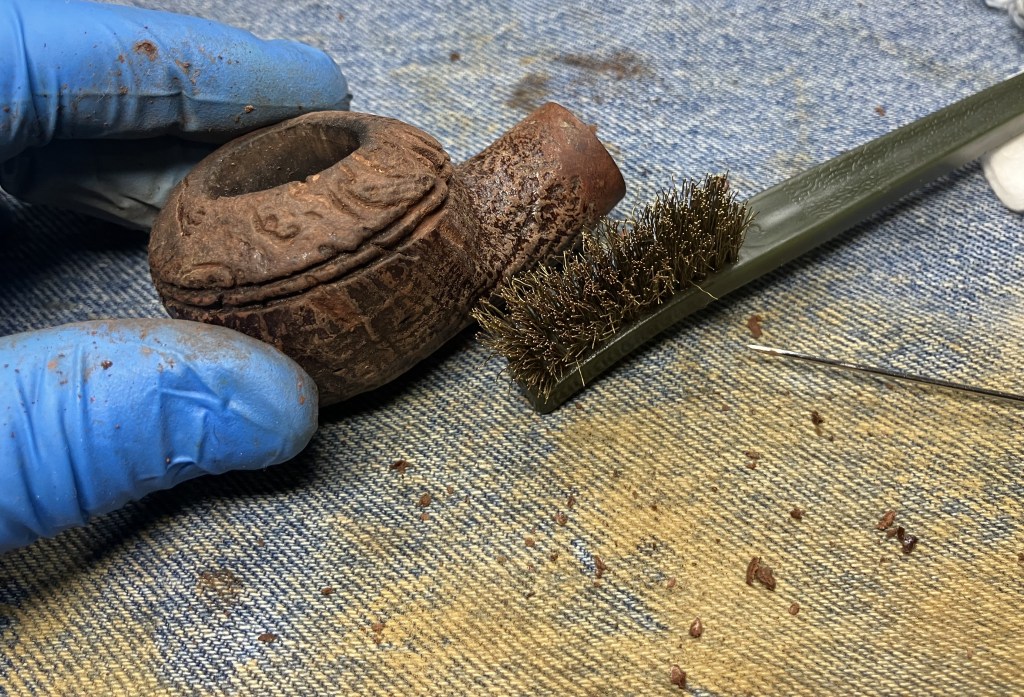
I then used the brass brush dipped in acetone to remove more of the clear coat as well as some of the fill material.
The fills were very soft and I picked out much of the material.
Below you can see more of the grooves left by picking out soft fill.
There was one large surface crack that was picked free of fill, seen below along the front rim. I decided to fill in the cracks and pit within the tobacco chamber with J-B Weld epoxy. I figured that I could do the same with the crack on the rim.
Below is the one pit in the chamber now filled with epoxy.
Below are the two cracks within the chamber also filled with epoxy. I also built up the rim with a bead of epoxy in an attempt at concealing the “out-of-round” rim.
24 hours later, I used a sharp knife to shave away most of the excess epoxy. I then sanded it smooth to the surface with 320 sandpaper.
The rim was re-beveled with a small wooden sphere wrapped in sandpaper.
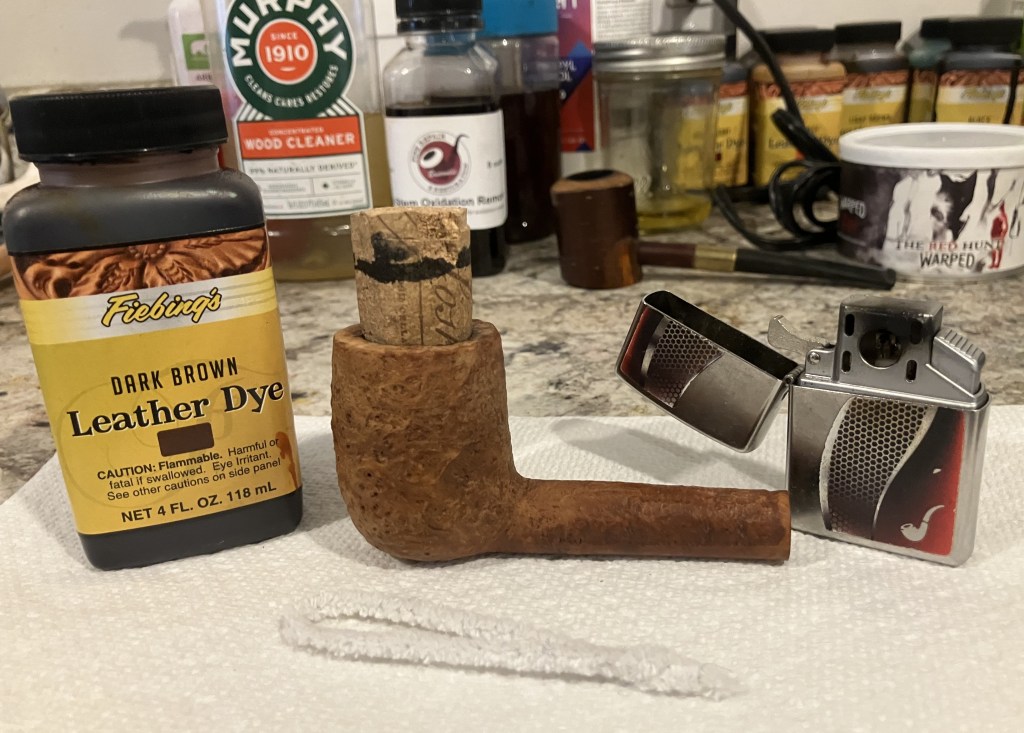
Once I was pleased with the sanding, I prepped for dying the briar. I know the original pipe was red with brown but I wanted to conceal all the fills so I went with an all black. Fiebing’s Black Leather Dye was the choice. A folded pipe cleaner was the applicator. A wine pottle cork was used to plug the bowl to keep dye from the tobacco chamber and a lighter was used to flame the dye, burning off the solvent/alcohol.
I left a bit of the original brown at the shank end. My plan was to lightly sand the high spots of the rustications allowing the brown to peek through the black. Three coats of dye were applied and flamed.
The dye was flamed then allowed to dry for an hour.
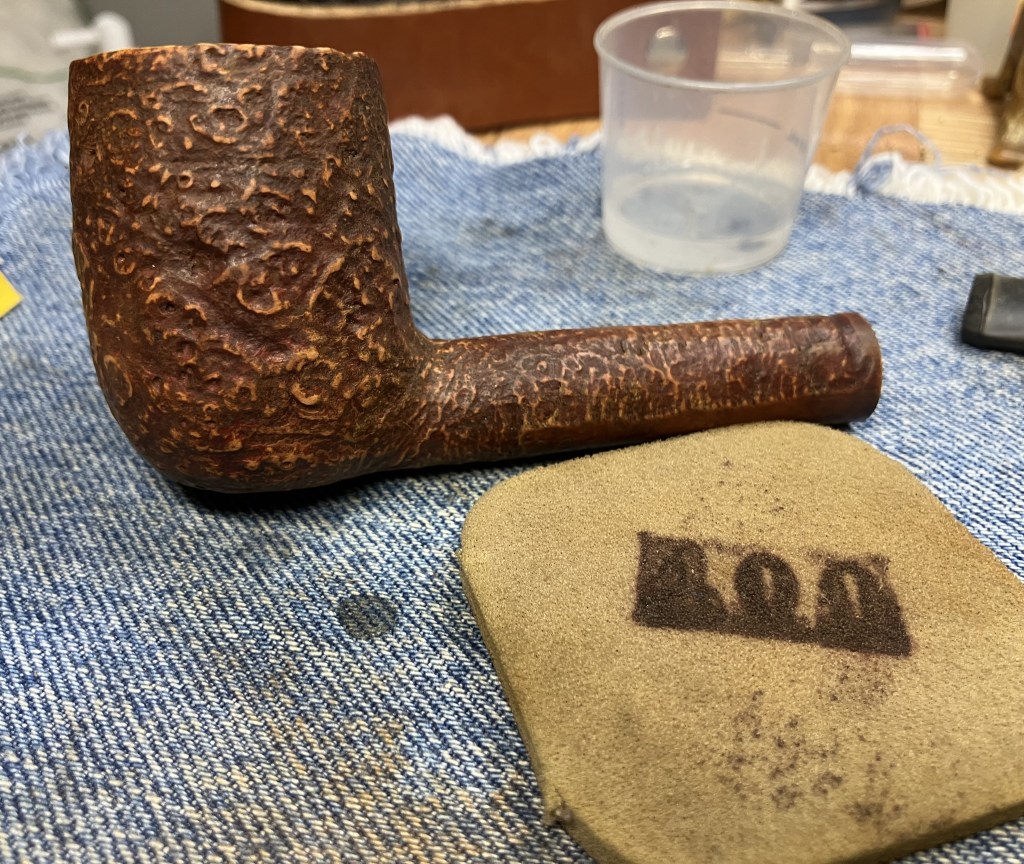
Once dried, I lightly sanded the stummel revealing the browns underlying the new black dye.
The stummel was then wiped with a make-up pad wetted with 99% ethyl alcohol.
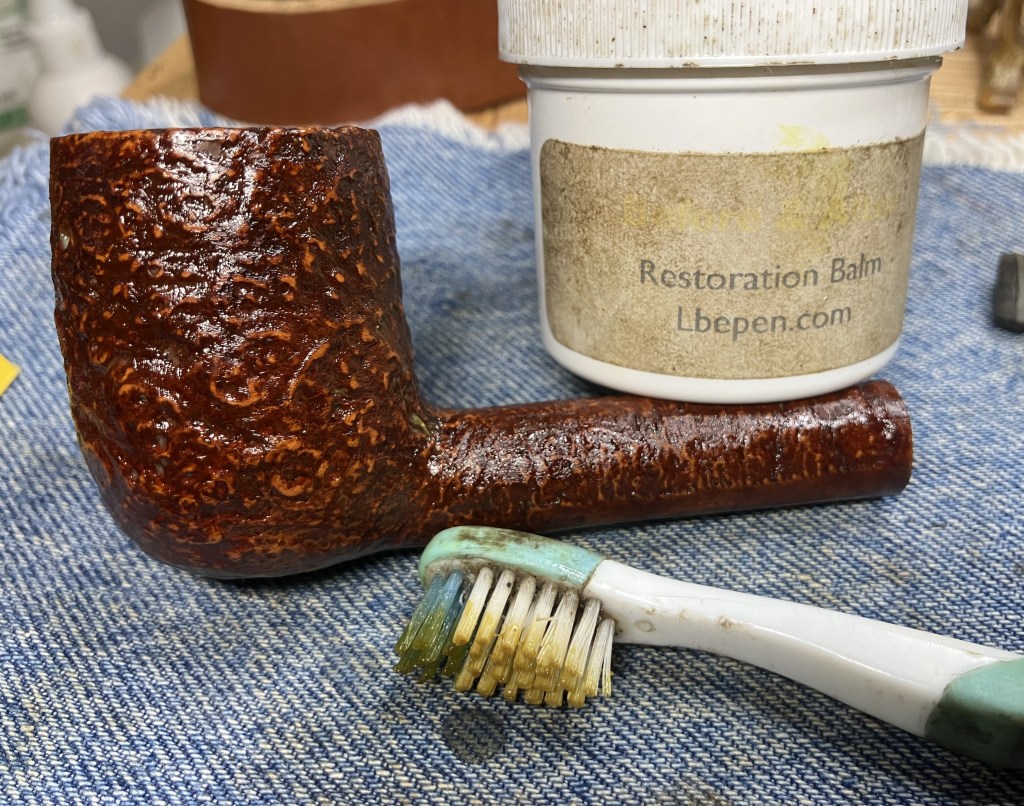
I gave the pipe a total of three coats of Danish oil applied with a cotton swab.
Below is the pipe and its first coat drying.
Below is the third coat drying.
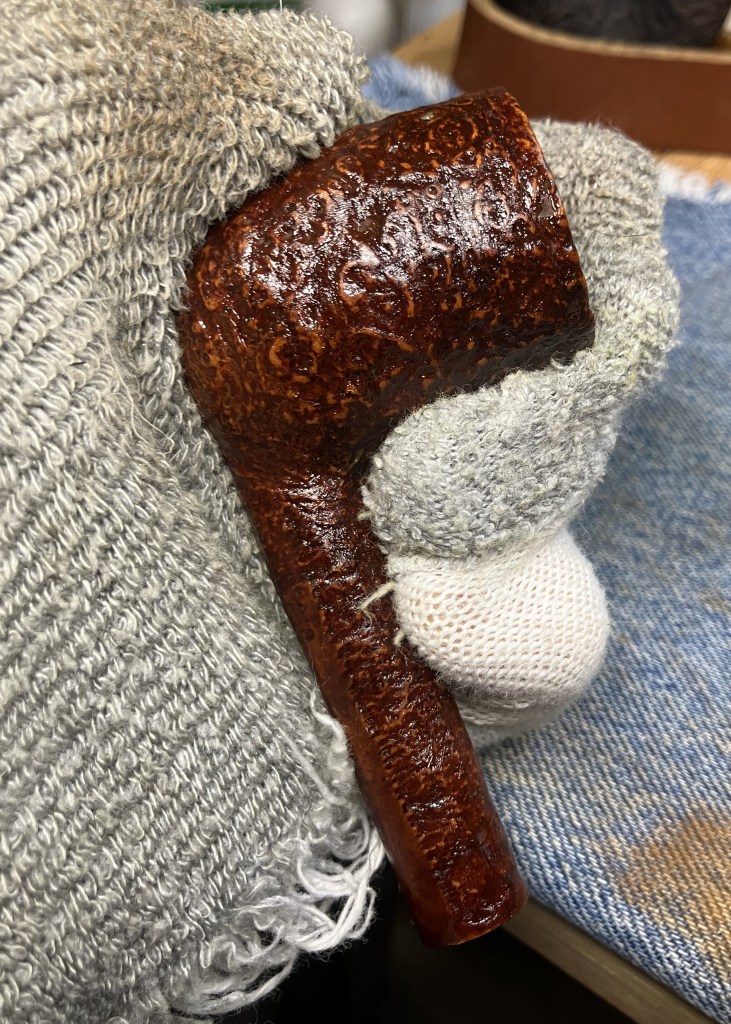
The pipe was then given a couple of coats of carnauba wax. Extra care was given to buff with the grain of the sandblast patterns to avoid building up wax in the grooves.
The final step was a hand buffing of the pipe with a microfiber polishing cloth.
This pipe with its various pits, cracks and flaws was nearly discarded. I am glad to say that it smokes wonderfully and has now become another fishing pipe. Yeah, that is hardly a great endorsement or title, but I spend a good deal of time fishing and typically do not want to subject my best quality pipes to those less hospitable conditions. The wide stem is very comfortable to clench and the bend makes it even better. I love the wide bowl for my favorite Balkan and English blends. This old pipe will not be a winner of a beauty pageant even with the beautifully polished stem and brass bands, but she is more than a utilitarian addition to the fishing pipe club.
The dimensions of this No Name Italian Bullnose are:
Length: 5.19 in./ 131.83 mm.
Weight: 2.06 oz./ 58.40 g.
Bowl Height: 1.51 in./ 40.64 mm.
Chamber Depth: 1.20 in./ 38.35 mm.
Chamber Diameter: 0.80 in./ 20.32 mm.
Outside Diameter: 1.75 in./ 44.45 mm.
I do hope that you have found something here useful to your own pipe care, maintenance or restorations. If you like this sort of thing, please click the like and subscribe buttons. Thank you for reading the ramblings of an old pipe lover.
Loading…
Below are some photos of the finished No Name Italian Bullnose.
I really like Brick and Mortar (B&M) pipe shops and the thought of major pipe manufactures stamping individual shop’s name on a pipe for their store is a walk into the past for me. I cannot imagine that pipe smoking has become so popular again as to allow pipe shops to place an order for a large number of pipes with the name of the shop stamped on them. Ah, the good old days. When I saw this pipe listed on eBay in June of
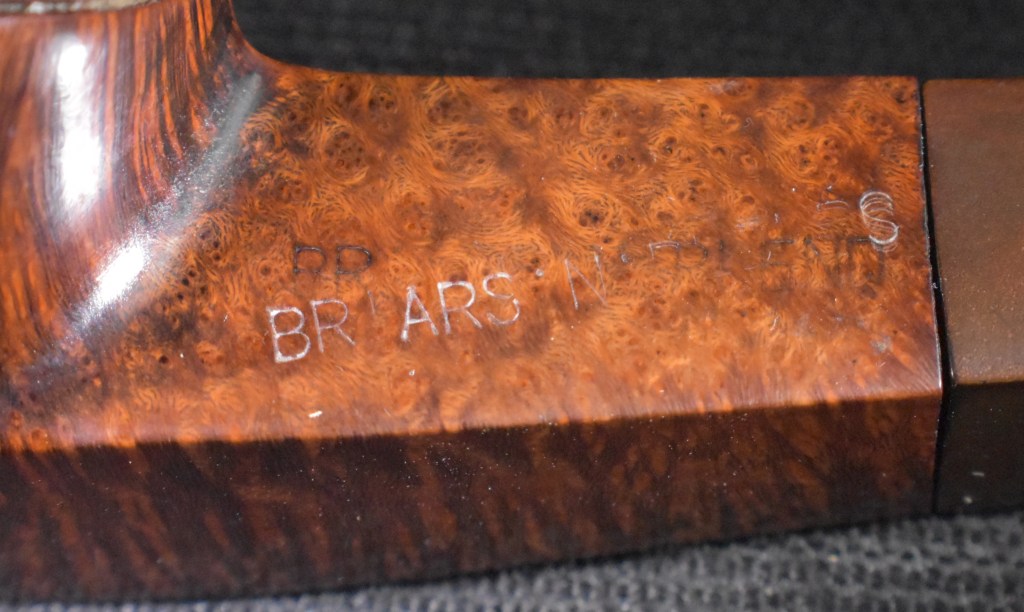
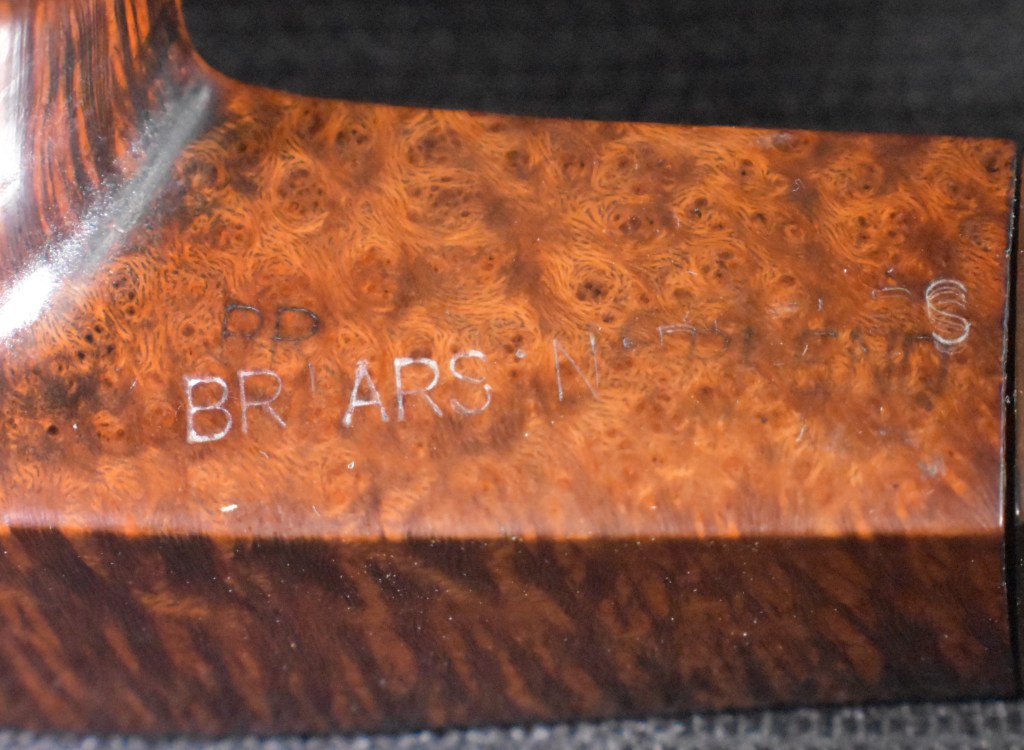
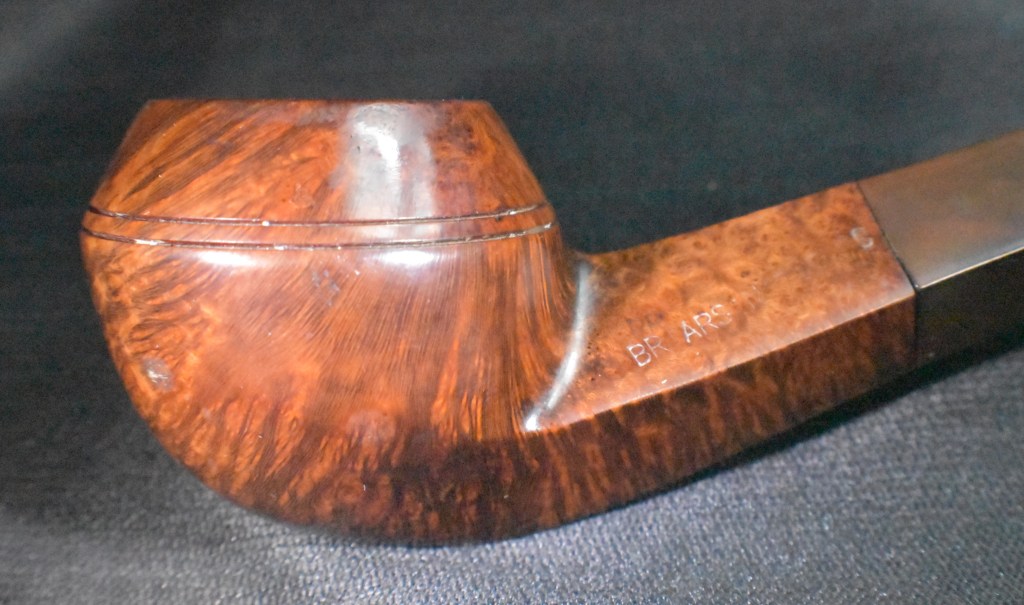
2025, I thought it looked interesting. I bid and won. I knew that Briars and Blends was not a pipe maker but the shape looked very familiar. It was a ¼ bent bulldog with classic English lines and an eye-catching grain. Upon arrival the pipe looked as though it had been pretty well cared for or cleaned. The seller made no claim to have cleaned nor restored the pipe, which is usually better for me. The stampings were kind of a confusing double stamp but BRIARS ‘N’ BLENDS could be made out on the left shank. I did use a hand lens in sunlight. On the right shank was the words MADE IN over LONDON as a circle, over ENGLAND. Offset toward the bowl was 409. Below are some photos of the pipe prior to any work.
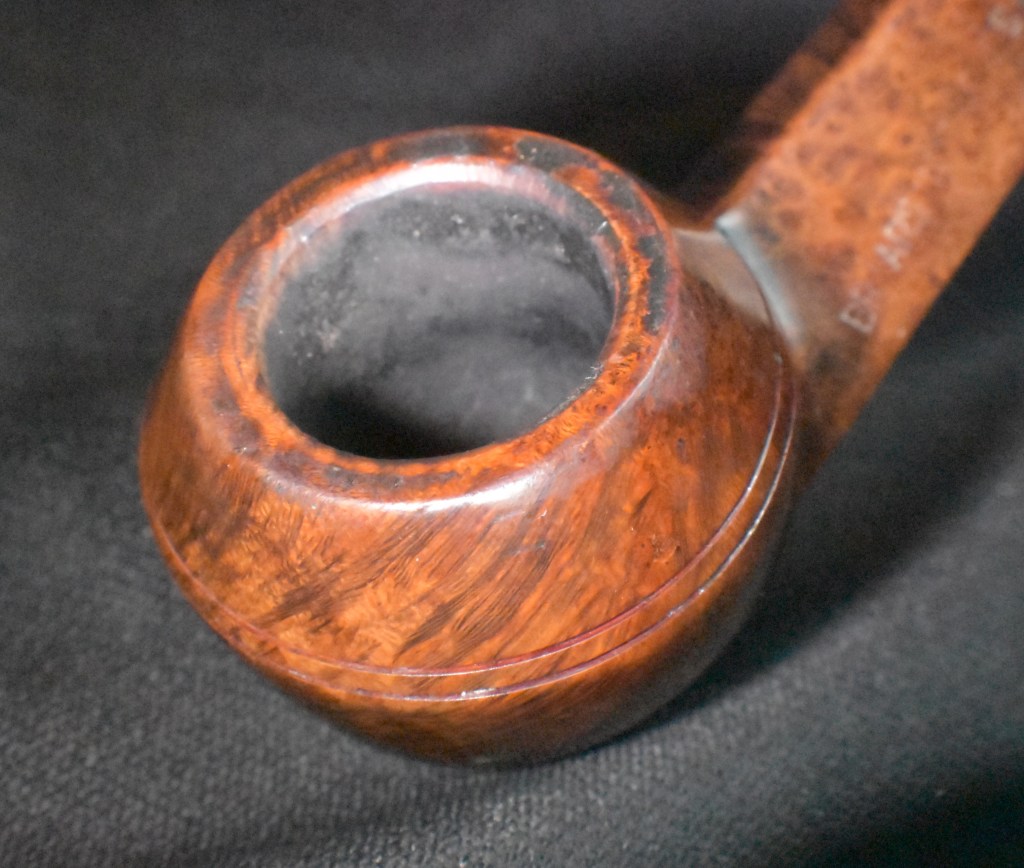
This looked like it would be a nice relaxing restoration. The stem was in need of the majority of the work. It was heavily oxidized, chewed on and had calcium deposits. The stumble looked great save for the faint double stampings.
Background
Last summer I worked on a Telford’s Canadian pipe (linked if you are interested). Telford’s is a pipe and tobacco B&M outside of San Francisco, CA. I talked to the owner on the phone and “He said that this pipe would have been for the 1970-1980s. During this time Comoy’s would offer lots, usually a gross, of their “seconds”. These were pipes that had imperfect blasts or fills which made them ineligible for sale as “Comoy’s” pipes. Mr. Telford explained that Comoys made a stamp for Telford’s and stamped the pipes for the shop (personal communication with Brian Telford 7-30-2024).” (A Telford’s Canadian Restoration – Google Docs). The “this pipe” referred to by Brian Telford was the Telford’s Canadian.
I thought that the Briar ‘N’ Blends pipe looked like a Comoy’s bulldog. It was just a feeling and though I have been quoted as saying, “feelings are irrelevant” by a daughter who is now okay, thanks to years of therapy, they can on occasion be useful. I used pipedia.org’s Comoy’s Shape Number Chart for the below screen shots:
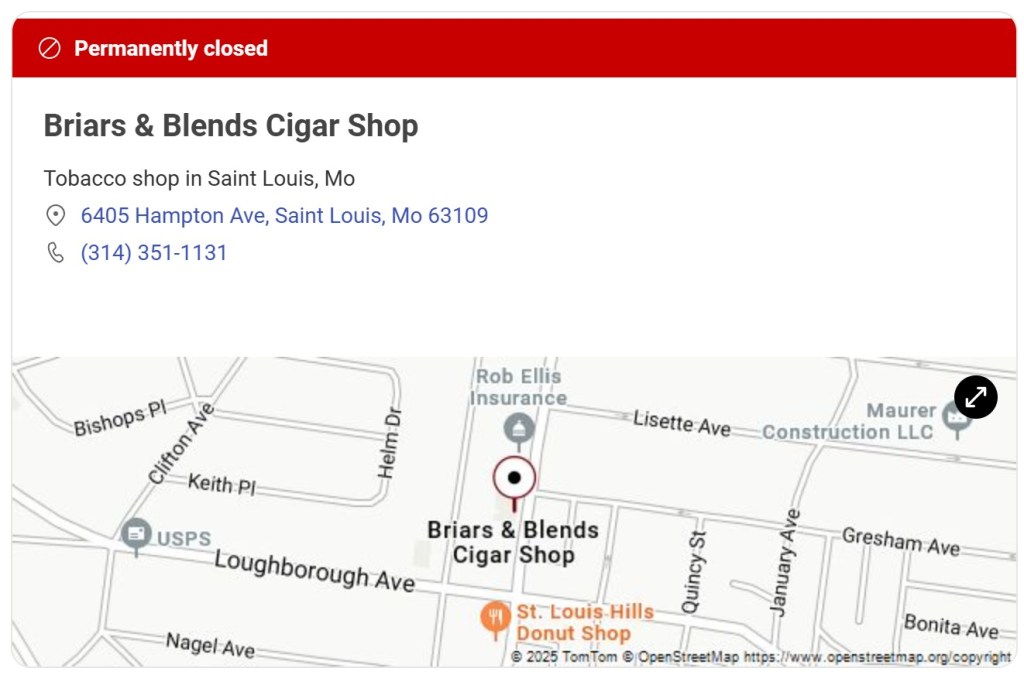
Next I wanted to find out anything I could about Briars ‘N’ Blends tobacconist. The only “hit” that I felt (oh no, another feeling) good about was one for Briars and Blends Cigar Shop of St. Louis, Missouri.
“Briars & Blends Cigar Shop LTD was founded in 1990. At this location, Briars & Blends Cigar Shop LTD employs approximately 3 people. This business is working in the following industry: Tobacco stores. Annual sales for Briars & Blends Cigar Shop LTD are around 807,000.
The “Permanently Closed” was saddening (ahh, another feeling). The date fell later than the 1970s-1980s referred to by Brian Telford as when his shop arranged to have Comoy’s stamp pipes for his shop, but it was fairly close. The 1990 were the boom years of the most recent cigar movement.
So, what does this tell us about the Briars’N’Blends bulldog? It is probably a Comoy’s 409 shape from the 1990s, made in London, England and was about to get a restoration.
The Restoration
I was really impressed by the grain of this pipe and was eager to get it restored.
The first task was to submerge this stem into the Briarville Pipe Stem Oxidation Remover. Before I could do that though I wanted to clean the airway and lightly sand the outermost oxidation from the stem. The airway was surprisingly clean. The calcium deposits were scraped with a sharp pocket knife and the stem sanded with a 320 grit sanding sponge.
I placed a pipe cleaner in the tenon for ease of removal from the Briarville solution (deox) after an overnight bath.
The ream team was collected. This pipe’s bowl was wider and would require the #2 and #3 PipNet blades.
There was not very much cake accumulated in the tobacco chamber and it was quickly removed.
Below is a photo of the reamed chamber.
The chamber was sanded with 320 sandpaper wrapped around a wood dowel. The bare briar showed no signs of any damage from use.
The rim had light deposits of smoking residue or lava and showed no signs of charring.
The lava was moistened with saliva and allowed to soften for a couple of minutes. The rim was then lightly scraped with a sharp blade of a pocket knife.
The shank was cleaned using 99% ethyl alcohol cotton swabs and bristle pipe cleaners. It was also quite clean. The first cotton swab below, blackened, was due to debris dislodged from the reaming and did not indicate a grimy airway.
The stummel was taken to the sink and scrubbed with a nylon brush and undiluted Murphy Oil Soap. The soap was rinsed with warm water and the stummel dried with a cotton hand towel.
Below is a photo of the stummel after being scrubbed. I thought that there may have been a clear coating on the briar, but it must have just been a layer of wax.
I wiped the stummel with a make-up pad wetted with 99% ethyl alcohol. Only a slight color came off the briar, probably some of the stain used in the manufacture of the pipe.
The next day, I removed the stem from deox. I vigorously rubbed it with a coarse shop rage. This rubbing helps to remove oxidized vulcanite and is left on the rag.
I ran a pipe cleaner through the airway to rid the stem of any deox solution. As it dried, there remained a stubborn layer of oxidized material on the stem. I wonder if it is time to replace my Briarville solution or, if this stem was just that badly oxidized.
To remove the oxidation I used Soft Scrub cleanser on make-up pads. The stem was energetically scrubbed with these pads and produced a good deal of oxidized vulcanite.
And more oxidized vulcanite.
Finger cramping from scrubbing, I switched to some sanding of the stem. I wanted to keep the joint where the stem met the shank crisp so I sanded the stem intact. I wrapped the shank with masking tape to protect the briar.
The freshly sanded stem was coated with mineral oil to keep further oxygen away. It was looking much better.
To deal with the bite marks I painted the dents with the flame of a lighter. The heating and expanding of the rubber can sometimes reduce the dent. It had little effect. Rather than filling these dents with cyanoacrylate, I decided to file the whole area flat and smooth. The stem material was thick enough and the dents were not severe.
In the below photo you can still see the slight indentations from the tooth dents but it was very minimal. The stem was sanded with a series of sanding sponges from 320-1500 grit. Between each sponge the stem was rubbed with mineral oil and wiped with a paper towel.
The sanding continued from 2000-3500 grit with the same oiling and wiping.
The stummel did not really need much sanding. There were no fills and only one little dent or pit which was so close to the shape number that I thought the risk of obscuring the stamping was worse than the pit. The stummel was sanded with a series of sanding sponges from 600-3500. I am not sure why the 3500 sanding sponge didn’t make the photograph, shy perhaps. The stummel was wiped with an alcohol wetted make-up pad between sponges to remove sanding debris. I should add that I did not sand the shank where there were any stampings. Only the bowl and lower shank was sanded.
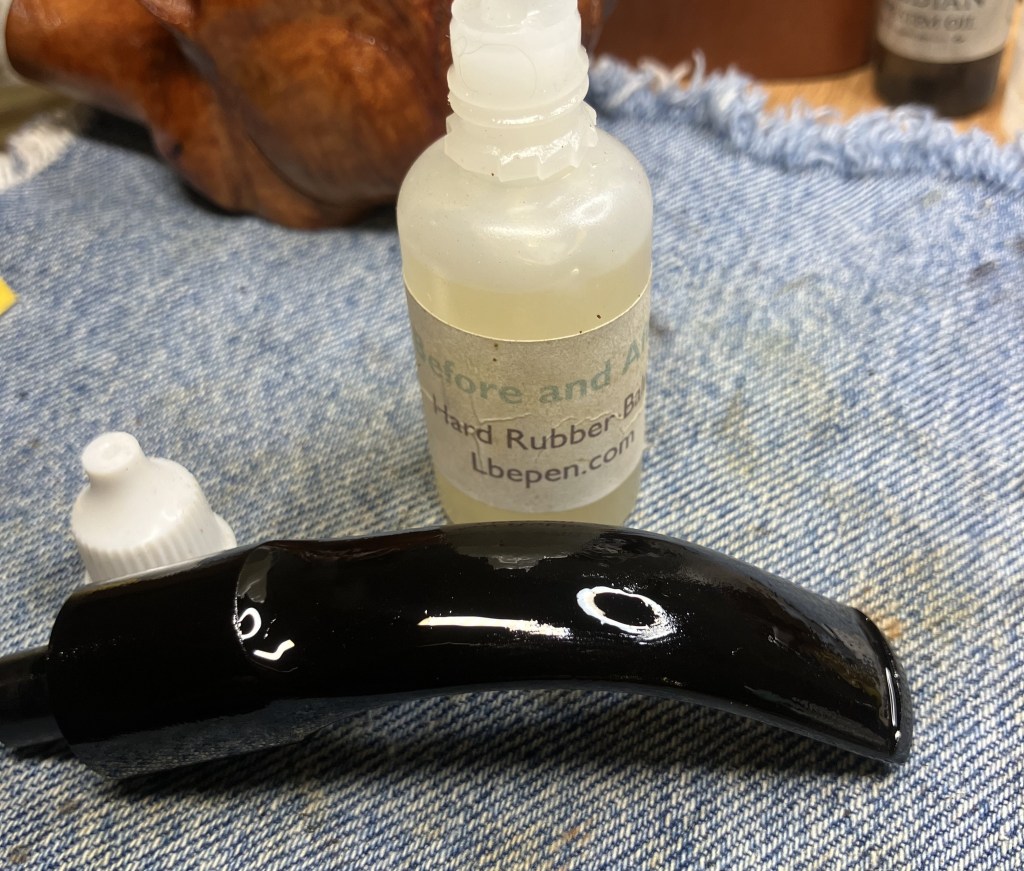
The stummel was then coated with Before and After Restoration balm while the stem was coated with Before and After Restoration Balm while the stem was coated with Before and After Hard Rubber Balm. These products remained on the pipe for about two hours as I had to go fishing for my evening attempt at catching catfish.
Upon my return, the Restoration Balm and the Hard Rubber Balm were hand buffed and wiped away with an inside out athletic sock.
The pipe was taken to the buffer for several coats of carnauba wax. After waxing I ran the flytying bodkin around the beading grooves to remove accumulated carnauba wax.
The final job was to hand buff the entire pipe with a microfiber polishing cloth.
I think that this Briars ‘N’ Blends Bulldog is a gorgeous pipe. The shape is great to look at and it has a wonderful feel in hand. The briar grain is truly beautiful with the tiger-stripe shank and flame grain bowl. The walnut color is darker but still is contrasted well. The glossy black vulcanite polished-up better than I thought it would and the 1/4 bend curves of the stem give the pipe a smooth flowing appearance. This pipe will serve a new owner for many years to come and shows why Comoy’s has a look all its own.
The dimensions of this Blends’N’Briars Bulldog are:
Length: 5.51 in./ 139.95 mm.
Weight: 1.38 oz./ 39.12 g.
Bowl Height: 1.60 in./ 40.64 mm.
Chamber Depth: 1.31 in./ 33.27 mm.
Chamber Diameter: 0.76 in./ 19.30 mm.
Outside Diameter: 1.61 in./ 40.89 mm.
I do hope that you have found something here useful to your own pipe care, maintenance or restorations. If you like this sort of thing, please click the like and subscribe buttons. Thank you for reading the ramblings of an old pipe lover.
Loading…
Below are some photos of the finished Blends’N’Briars Bulldog.
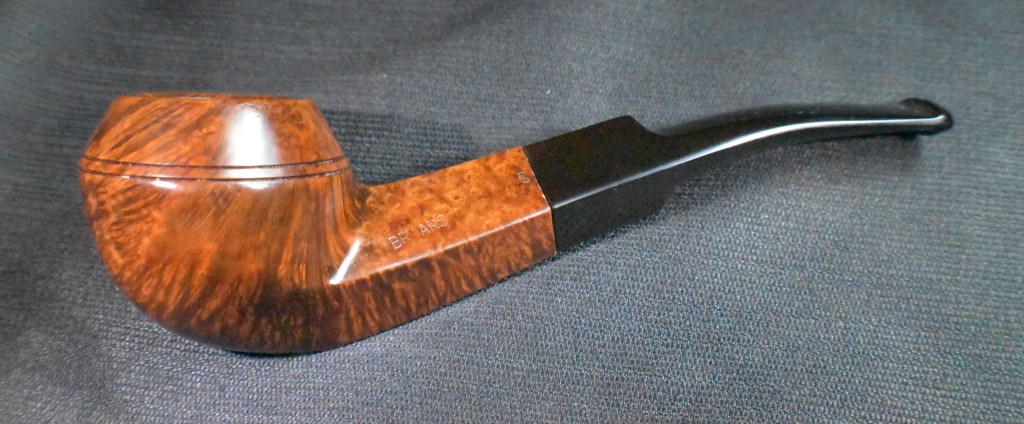
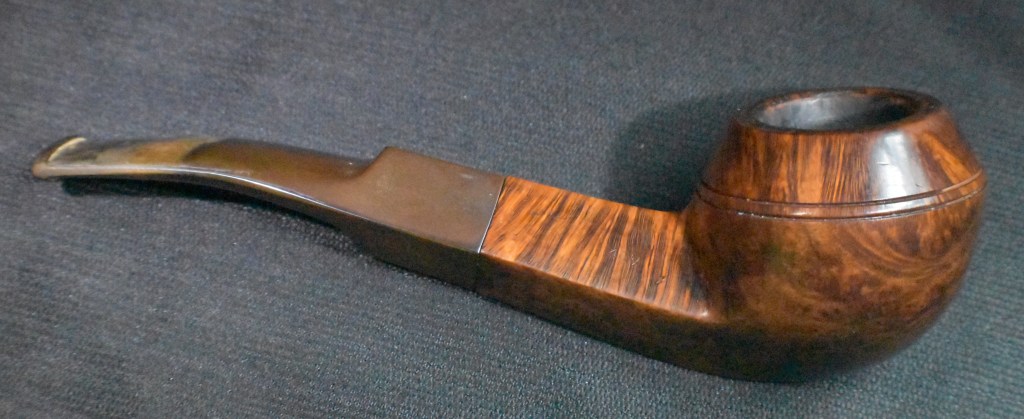
Decisions, decisions. I had the urge to work on a bulldog this week but which one from the queue would be the lucky victim?
I had worked on Peterson and Marxman pipes recently, so they were out of the running. That left the Briars and Blends pipe (bottom) and the Captain Fortune (top). Well, from the title of this blog you have probably surmised my choice. TheCaptain Fortune was a purchase made to help out a Nebraska antique dealer I came across while looking for restoration subjects. I don’t usually opt to lend a hand to specific businesses but these guys were new, from Nebraska and had a pipe that I found interesting. Below is the original listing:
After submitting an offer, which was accepted, The pipe was on its way from northeast to southeast Nebraska. Upon arrival the pipe looked like the below photos.
The pipe had definitely been used. The condition of the stem with its calcium deposits, discoloration and bite hole on the underside indicated that. The bowl, as well, showed substantial cake. The rim had a lava deposit and several chips indicating that the dottle was knocked out on hard rough surfaces. There was also an area on the inside front of the rim that looked like charring from lighting the pipe from the front with a non-pipe lighter. The stinger looked surprisingly clean but oxidized. Perhaps the previous owner loved this pipe and a clean airway. That would explain the lack of smoking residue on the stinger. I doubted that the additional markings of Rudy and 1977 were factory marks, but they did add some context to the age of the pipe and when it was being smoked.
Background
Captain Fortune is a brand of pipes made by John Redman Ltd. and British Empire Pipe company. According to pipedia.org’s brief entry,
“Other lines include Aristocrat, Buckingham, Buckingham Palace, Canberra, Captain Fortune, Dr John, Golden Square, Redonian, Richmond (not Sasieni), Twin Bore
Former factory located at 3-11 Westland Place, Hackney, London N1 7LP” (John Redman Ltd./British Empire Pipe Co. – Pipedia). That was not much to work with then I recalled working on another John Redman pipe back in December of 2024. I will link to that restoration here. The research for that pipe was more productive and I will include a quote from it below:
“My thirst for knowledge remained unfulfilled. I tried searching the internet without a guide and found a wonderful article by an anonymous author on the vkpipes.com site.
“This famous picture above is perhaps the only broad known illustration to materials about John Redman LTD & British Empire Pipe Co. And the majority of sources doesn’t move usually far beyond a couple of sentenses: this company did really exist, it was located at this address and there is their former building. However…
However, this Edwardian building on Westland Place was only an annex and no actual manufacturing was located there. The principle place of business and offices were located in Whitecross Street 123/5/7, within 15 minutes of slow walking from Westland Place. Therefore, one of their series was named Whitecross – you may find it in the catalogue below. The building on Whitecross St. still stands there and you may see it on the picture below. The crossing street is the Fortune St., so we have got an explanation of another Redman’s brand name – Captain Fortune.
Indeed, many Redman’s brands bear such toponomical signs: the “Golden Square” series comes from the Golden Square located between the Lower John and Upper John streets, “Dr. John” is the most probably related to the abovementioned John streets. There are also Canberra road and Canberra House in London (which might inspire stamping of the famous Canberra pipes) as well as Canterbury House (Canterbury series). Burlington pipes named after the Burlington Arcade (see also H. Simmons). The majority of them are located quite close to John Redman’s main office. No wide explanations are needed for the series Westminster and Kensington. And of course, some British imperial charm was added with names Aristocrat, Redman’s Royal, King’s Ransom.
John Redman (as it happened later to Eric Nording) was both a carver and an owner of a business of the same name. The first pipes were born in 1934, but personal efforts appeared soon to be insufficient, what inevitably led to emerging of the name John Redman LTD. Unfortunately, we don’t have artifacts, which could be unambiguously carried to the “pre-war” period. In the WWII years the company could hardly got to the list of lucky manufacturers, who received scarce briar from the state.
But by the end of 1950s John Redman’s firm offered a well balanced portfolio – from popular and practical “Captain Fortune”, “Dr John”, “Golden Square” to top graded Redman’s Royal made of best briar and almost without any stains (comparable to GBD Virgin, but the “Royals” were usually much larger and carved in their own unique style). And of course, we shouldn’t forget about qualitative and still affordable Redonians, Aristocrats and Canberras – a very strong middle (and upper middle) segment. More details, list of offered brands as well as presentation and gift sets can be seen in the catalogue.
It is known that in late sixties and later a part of the production was ordered from subcontractors, for example Blakemar Briars, and since 1992 trademarks of John Redman were taken over by Gerald Grudgings of Loughborough; this company wasn’t a top manufacturer, but many sources attribute the invention of the lovat shape to it.
As the conclusion we are proud to express our sincere and warmest thanks to Robert Deering, who worked for John Redman in 1960s and gave us a number of very important directions.
Now, the Captain Fortune pipe in hand has what I assume to be an owner’s autograph and a date etched into the briar along the underside of the shank. It reads “Rudy” and “1957”. I am going to go out on a limb here and say that those are not factory originated marks. I am also going to say that 1957 was the year that that date was inscribed. That would place this pipe squarely into the time quoted by the above article as of the , “end of 1950s John Redman’s firm offered a well balanced portfolio – from popular and practical “Captain Fortune…” This supposition and the apparent age of the pipe itself would make this Captain Fortune bulldog produced in London during the latter 1950s.
The Restoration
The captain Fortune made its way from the photo table to the workbench, a grueling 18 foot distance and to its denim piece.
Once at the workbench I removed the stem and gathered my official Stinger Extraction Device (SED). The SED is actually a strip of thick leather used to protect the aluminum of a stinger from the jaws of a pliers.
The suckedness of this stinger led to absolute failure in its removal. Not wanting to risk breaking the vulcanite, I devised plan B.
Being a big believer of Plan Bs, in general, I chose to soak the stinger and end of tenon in a medicine cup with 99% ethyl alcohol. Now, I know what you are thinking, “That stem is too heavy to stay in that little medicine cup.” Trust me, it will be fine.
PipNet led the ream team with the #1 blades.
That was until I realized that the cake was much thicker than I thought it was. The PipNet #2 blades came out and earned their keep. The Smoking pipes Low Country reamer was great for the curve at the bottom of the chamber and the General triangular scraper did cleanup on the interior walls.
The tobacco chamber looked much better and more spacious.
The chamber was sanded with 320 sandpaper wrapped around a wood dowel.
Now, normally sanding does create some shaking of the workbench. This shaking was just enough to tell me that the stinger was ready to come out of the stem. No, the top heavy stem did not tip over the medicine cup of alcohol and spill the alcohol all over the workbench. That would indicate that the restorer was a total clutz and perhaps an idiot. No, let’s just say that after some using alcohol to clean the top of the workbench the stinger was ready removed using the official SED.
Now, back to the sanding. Things looked pretty good until I used alcohol wetted cotton swabs to clean out the sanding debris from the tobacco chamber. As the alcohol evaporated I saw several spiderweb patterns of heat damage to the chamber.
The below photo shows the webbing while the alcohol was evaporating, making the lines look darker. There were more spider webs on the interior right than left. None of them were very bad nor deep. The chamber felt nice and smooth to my finger. I thought that I should give this pipe a bowl coating to protect it and aid in the formation of a light cake.
Cleaning the shank came next. This was done with several bristle pipe cleaners and cotton swabs all dipped in 95% ethyl alcohol. There was also some scraping with a dental scraper. Every successful scrape removed reduced the cotton swabs and pipe cleaners needed dramatically.
Next came the rim. I was a bit worried what I’d find under that layer of lava.
The lava was moistened with saliva and allowed to soak for a couple of minutes. Then I lightly scraped with a very sharp pocket knife. This did reveal some charring but not as bad as I had feared.
The stummel was taken to the sink for a scrubbing with a nylon brush and undiluted Murphy Oil Soap. The soap was rinsed with warm water and the stummel dried with a cotton hand towel.
Returning to the workbench, the stummel was wiped with an alcohol wetted make-up pad. This removed remaining wax and some lingering grime.
I turned my attention to the stem. This was cleaned with bristle pipe cleaners and 95% ethyl alcohol. The stem was surprisingly clean.
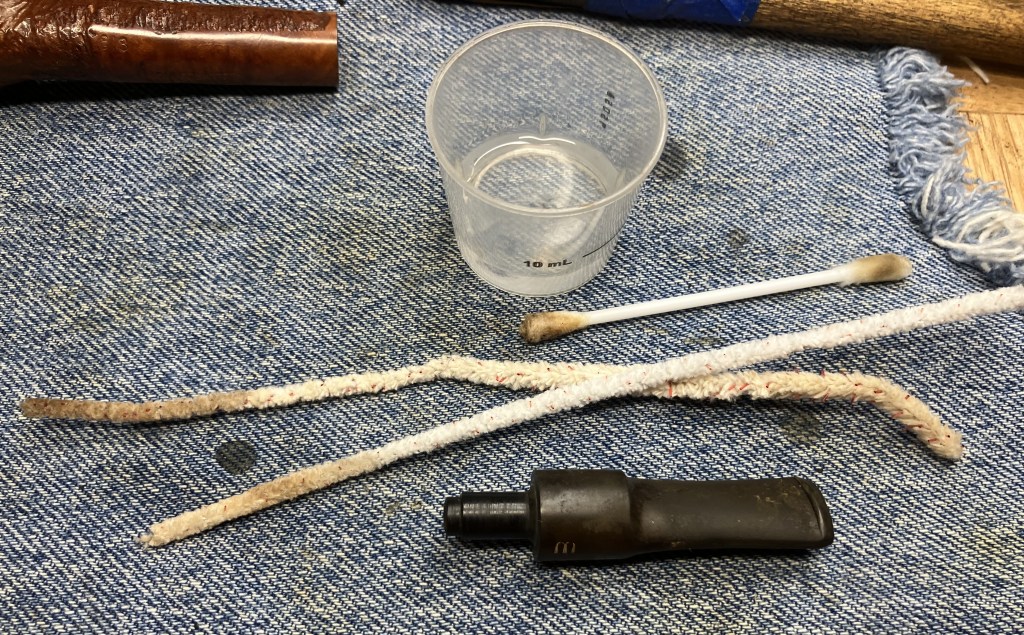
I inserted a pipe cleaner into the tenon for easier removal of the stem in the morning. The plan was to leave it in deox, that’s what I like to call time spent in Briarville’s Pipe Stem Oxidation Remover. I have to say, this product is a good one and is available here: Briarville Stem Oxidation Remover 8oz | Briarville, Inc. And no, your’s will not come looking like this, it will be a bright yellow.
I thought this pipe would benefit from an alcohol cotton treatment so I stuffed the bowl and the shank with cotton.
I then poured out 10 ml of 95% ethyl alcohol into a medicine cup, thinking that would be about the amount needed. A disposable pipette was used to transfer the alcohol to the cotton.
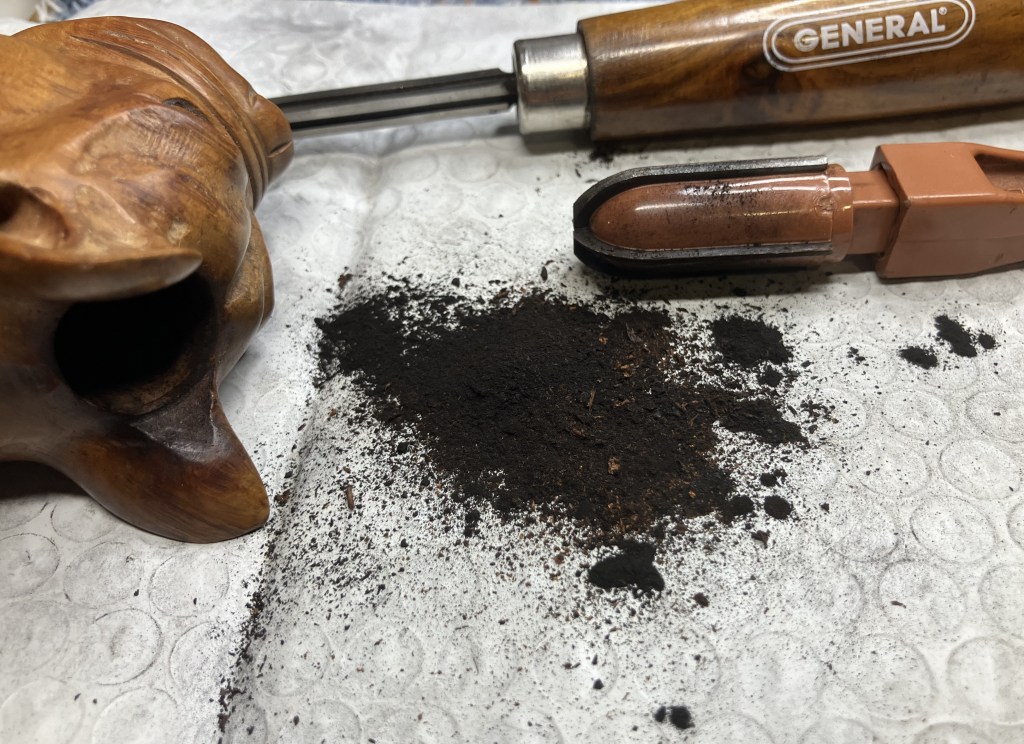
Lucky guess, you say. I say I missed it by 1 ml. This needed to sit and evaporate overnight and the stem was soaking overnight, I guessed it was time for me to end this session.
In the morning the cotton was no longer white. The evaporating alcohol had worked to dissolve the tar and smoking residues from the briar and move them into the cotton.
I removed the cotton and cleaned the airway with a cotton swab. It came back with minimal residue.
The stem was retrieved from deox and vigorously rubbed with a coarse shop rag. This removed quite a bit of the oxidized vulcanite.
The stem logo was still visible but it was more faint. Extra care would have to be used to keep this stamp.
I used a piece of a plastic lid to act as a dam to keep the cyanoacrylate (CA. super glue), that I planned on using to fill the hole, from entering the airway.
I added several layers of painters tape to thicken the dam to achieve a tight seal.
The Bob Smith black CA was the product of choice due to having rubberizing agents in the formula. This gives it a bit more flex than regular CA. I applied the CA to the gap with a fly tying bodkin. I intended to allow the CA to cure on its own but after 15 minutes, I got impatient and spritzed it with a CA drying accelerator. I removed the dam and squirted some accelerator into the airway as well to assist in speeding up the curing process.
Once hardened, I filed the fill with a small flat file. There remained a small depression and the button also showed signs of wear.
A second application of the black CA to both the depression and the button edge was done with the fly tying bodkin.
Again lacking patience I spritzed the wet CA and sped the curing along.
The small flat file was again used to smooth the fill and reshape the button and an emery board for getting the angle of the button right.. Ahh, much better.
In preparation of the stem sanding, I covered the stem logo with a small piece of painters tape.
The shank was also masked off to keep the briar stamps from the evils of sanding.
The sanding was done with a series of sanding sponges in grits of 400-1500. Between each sponge the stem was rubbed with mineral oil and wiped with a paper towel. Yeah, the stem logo protector had to be replaced more than once.
The sanding continued with sanding sponges 2000-3500. The oiling and wiping were continued as well.
The next step in sanding/polishing the stem was a series of micro-mesh pads 4000-12000. After the 4000 pad, I removed the masking tape from the logo and cleaned the logo with alcohol.
The 4000-12000 micro-meshing continued. After each pad, I rubbed the stem with Obsidian Oil and wiped the stem with a paper towel.
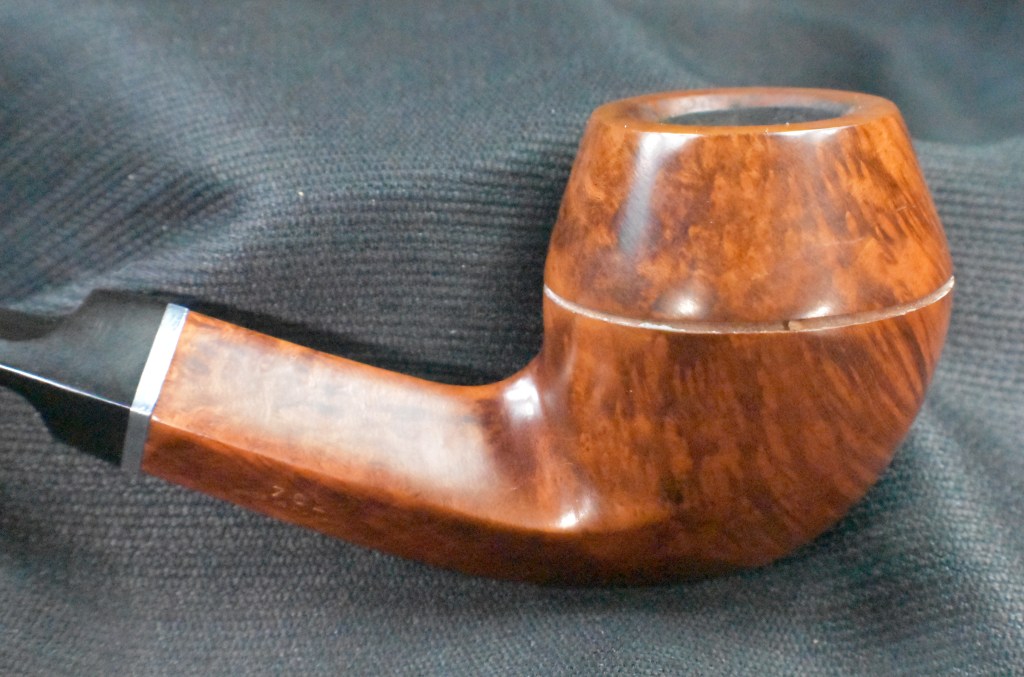
The stem was looking very good. I now turned to the stummel. There were no areas which required filling but there was a damaged rim to address. The inner front of the rim was charred from a flame and the outer rear was damaged from dottle knocking. I planned on addressing these with a three pronged attack:
Topping the rim.
Using a wooden ball and sandpaper to establish an inner rim bevel, and
Use CA and briardust to build up the damaged outer rim.
Here you can see how the triploid plan is progressing.
And a close-up of the outer rim reconstruction.
Time to sand the stummel. I used a series of sanding sponges here as well. O didn’t mask the shank as the stamping covered the whole length. What I did instead was not sand it. The sanding was only done on the bowl. Between sponges I wiped the sanding debris from the stummel with a make-up pad dipped in alcohol.
The final sanding was done with sponges 2500-3500 with the same wiping as earlier.
The briar was finally micro-meshed with pads 4000-12000. Between each pad I continued to wipe with the alcoholic make-up pad.
The stummel was then coated with Before and After Restoration Balm. This is another great product and since I gave a shout-out to Briarville, I feel I owe one to Mark Hoover as well. Restoration Balm can be found here: Restoration Balm | La Belle Epoque
I waited about 30 minutes for the balm to do its magic before wiping the excess away using an inside out athletic sock.
The pipe was then taken to the buffer where it received several coats of carnauba wax.
The final step was to hand buff the pipe with a microfiber polishing cloth. I then took the pipe to the photography table for the “finished” photos. Upon seeing that I forgot to do the bowl coating I immediately went back to the workbench. DOH! I used a cotton swab to apply a light coat of pure maple syrup to the interior of the tobacco chamber.
I then plugged the airway with a pipe cleaner and dumped about ½ of an activated charcoal capsule into the chamber. The rim was covered with a piece of painter’s tape. The stummel was then vigorously shaken for about a minute. The tape and pipe cleaner were removed then the stem reinserted and given a puff of air to clean excess carbon from the chamber.
The final touch was to hand buff the entire pipe with a microfiber polishing cloth, AGAIN.
This pipe turned out beautifully. I am sure Rudy would agree. I decided to leave the etched name and date because it told a bit of history about the pipe. I doubt any one named Rudy will buy this pretty Captain Fortune but, you never know. The briar has lovely grain and a rich color. The stem polished up beautifully and I think the repair will hold and enable years of faithful use. The dimensions of this Captain Fortune Bulldog are:
Length: 5.60 in./ 142.24 mm.
Weight: 1.02 oz./ 28.92 g.
Bowl Height: 1.64 in./ 41.66 mm.
Chamber Depth: 1.42 in./ 36.07 mm.
Chamber Diameter: 0.72 in./ 18.29 mm.
Outside Diameter: 1.43 in./ 36.32 mm.
I do hope that you have found something here useful to your own pipe care, maintenance or restorations. If you like this sort of thing, please click the like and subscribe buttons. Thank you for reading the ramblings of an old pipe lover.
Loading…
Below are some photos of the finished John Redman Captain Fortune Bulldog.
Yeah, those first two photos were taken before I realized that I had not done the bowl coating.
The above photo was also taken before the bowl coating was done.
As a little kid I used to sit with my father at his reloading bench while he reloaded rifle shells. It was my job to line up empty cases in straight little rows. Important work, to be sure. Later in life I too shared my father’s love of high power rifles, reloading and the study of reloading manuals. I remember shooting my first deer with a hand loaded 25-06 Remington. To this day, I can recall the load: 54 grains of 4831, Federal large rifle primer, 100 grain Nosler Boat Tail Ballisting Tip bullet. I cannot recall the muzzle velocity, like I used to but I still do have the Yugoslavian made Mauser rifle imported by Interarms. “What the heck does all that have to do with a du Pont Explosives promotional pipe?” you demand to know. Well, du Post explosives were not only the reason for the pipe but they also manufactured gun powder. A lot of it. Long before Dwight Eisenhower warned us against the influence of the military industrial complex du Pont was the largest US maker of black powder
Background
I have to admit that I was surprised that there was anything written about this pipe. The first place I looked was pipedia.org and low and behold, I got a hit. Below is the full text.
“du Pont Explosives pipes were given out as souvenir pipes by the Explosives Department of the du Pont Company between 1912 and 1933. (Source: Debra Hughes, Curator of Collections and Exhibits, Hagley Museum and Library, Wilmington, DE USA.) The original maker is unknown.
The shape is apparently intended to resemble an 18th or early 19th Century gunpowder barrel. Poker and bent shapes are represented. Some pipes may have ferrules. They are stamped with the duPont logo and “REG. US. PAT. OFF. EXPLOSIVES” on one side and “GENUINE FRENCH BRIAR” on the other side. Stems are vulcanite or similar material.”
Example du Pont Explosives pipe bowl
Example gunpowder keg with extra bands to prevent staving
An unsmoked example, courtesy Brian Robertson Collection
Well, that pretty much sums up everything I wanted to know. That dated the pipe to 1912-33 and put the production in the USA, probably. I can’t imagine a foreign carver being too concerned with US patent registration. The 1912-1933 dates would precede the briar shortages of World War 2. I have not read anything about briar shortages caused by World War 1 but I am certain that they would have existed. One other thing I found interesting was the painting of the indentations of the stamp, as seen in the photos above. There was no sign of any remnant paint in the stamp on the pipe in hand. I was not sure how to or if to replicate this on the restored du Pont pipe.
The Restoration
Much to my chagrin, I worked on two pipes simultaneously. I normally do not like to do this as I inevitably forget steps or the photographing of steps, but my schedule has included a couple of fishing tournaments as of late. Priorities, priorities… Both pipes shared a denim piece on the workbench.
The first task was to prepare the stem for a bath in Briarville Pipe Stem Oxidation Remover. To do this I wanted the stem clean. I first tried my standard treatment of 99% ethyl alcohol on pipe cleaners. The stem started to feel slick in my fingers. The ethyl alcohol was dissolving the surface material on the stem. “Okay”, I thought and remembered the quote from the pipedia.org, “Stems are vulcanite or similar material” (DuPont Explosives promotional pipes – Pipedia). Hmm, I switched over to a 91% isopropyl alcohol thinking that the larger molecule would be less likely to act on the rubber. It worked and after several bristled pipe cleaners dipped in the 91% isopropyl alcohol the stem was clean.
Both stems were dropped into the bottle of Briarville Pipe Stem Oxidation Remover. I will refer to this as deox from here out.
I thought back to April, 2025 after Briarville gave me a bottle of their product to try. Usage had discolored it severely but it was still working. Sorry, I digress. The stems were to be left in deox overnight.
The ream team was assembled. The PipNet #2 and #3 blades were the proper size.
The PipNet did its job of removing the cake, admirably. The General triangular scraper was just used to clean up at the bottom of the chamber.
The reamed chamber looked good but the rim definitely needed some work.
The lava on the rim was softened with saliva. After a couple of minutes the lava was scraped with a sharp pocket knife.
The cleaning of the shank airway was done with 99% ethyl alcohol on a nylon shank brush, bristle pipe cleaners and numerous cotton swabs. A dental scraper was also used.
After the shank cleaning, I sanded the tobacco chamber with 320 grit sandpaper wrapped around a wood dowel. The bare briar showed no sign of heat damage. Below are photos showing the left and right chamber walls.
Next, the stummel was taken to the sink where it was scrubbed with undiluted Murphy Oil Soap and a nylon brush. The soap was rinsed with warm water and the stummel dried with a cotton hand towel.
I wiped the surface of the stummel with a make-up pad dipped in 99% ethyl alcohol. The pad showed some sign of remaining grime. I wiped it a couple more times to remove whatever the scrubbing missed.
I was not convinced that the airway was completely rid of the smoking residues. The pipe also still had an aroma of old aromatic tobacco. Though not unpleasant, I wanted to remove them. TO do this I packed the tobacco chamber, airway and shank with cotton.
The cotton was saturated with about 10 ml 99% ethyl alcohol applied with a disposable pipette. This was allowed to evaporate overnight.
The next day revealed that the alcohol had worked at dissolving the yuck (technical term for smoking residue) from the walls of the airway and deposited said yuck into the cotton.
The yuckified (the technical term for cotton soiled with dissolved smoking residue) cotton was removed.
I ran an alcohol dipped bristle pipe cleaner through the airway and scrubbed with a cotton swab also alcohol fortified. Both devices returned with little yuck. Triumph!
The inner and out rims of the bowl showed signs of abuse. I lightly topped the rim but refused to top it severely enough to remove all trace of the damage. That would have shortened the height of the bowl by nearly an 1/8th inch or 3 mm. Instead, I slightly beveled the inner and outer edges with a file and sandpaper.
The stem was taken from deox and vigorously rubbed with a coarse shop rag. This removed a good deal of the oxidized material from the surface of the stem.
Below shows the pre-sanded but oiled stem and stummel.
I tried to paint the tooth dents on the stem with a soft flame lighter. This rarely makes a big difference but it’s fun to do.
The tooth chatter was filed with a small flat file and the edge of the button was slightly defined on both the top and bottom sides. These were also lightly sanded with a 320 sanding sponge.
Here is a great example of why I do not like to do two pipes simultaneously. I failed to document the application of the cyanoacrylate (CA, super glue) to fill in the deeper tooth dents. Rather, all you get to see is the filled and filed smooth result.
With the fills on the stem complete, I turned to the one big fill on the left rear of the stummel. The old fill material was picked out using a fly tying bodkin. This new fill would certainly leave a scar but it would be a smooth shiny scar.
I used a fine applicator tip on a bottle of Thin CA to apply a tiny bit of CA into the depressions. I then placed briar dust on top of the wet CA. The excess dust was brushed off. I topped the briar dust with additional Thin CA.
The new fill was sanded to see where additional CA and briar dust would be required. Oh yeah, the reason for the masking tape of the stamps was to protect them from my sanding.
The stem and stummel were sanded simultaneously with a series of sanding sponges in grits 400-3500. Between sponges the stummel was wiped with a make-up pad wetted with alcohol while the stem was rubbed with mineral oil and wiped with a paper towel.
After the sanding the pipe was worked with micro-mesh pads 4000-12000. The wiping between pads was done as with the sanding sponges except the stem was oiled with Obsidian Oil.
The stummel was then coated with Before and After Restoration Balm and allowed to soak in that balmy goodness for 20 minutes.
The remaining Restoration Balm was wiped from the stummel with an inside out athletic sock.
The pipe then received several coats of carnauba wax applied with the buffer.
The final step was a hand buffing with a microfiber polishing cloth.
This du Pont pipe was a fun restoration. Not only did it allow me to reminisce about my father and reloading but also gave me the chance to work on a pipe that was probably 100 years old. This old gal is still quite pretty and the bent poker, that’s what I am calling it, shape is intriguing and fun. The briar grain is mostly concealed by the ring carvings of the “gun powder barrel” but the shank sides show lovely bird’s eyes. The hard rubber of the stem did polish-up nicely and provides a fine accent to the natural color of the briar. This historical sitting pipe will make its next owner a fine and historical tobacco enjoyment tool. The dimensions of this du Pont Explosives promotional pipe are:
Length: 4.70 in./ 119.38 mm.
Weight: 1.53 oz./ 43.36 g.
Bowl Height: 1.79 in./ 4.47 mm.
Chamber Depth: 1.58 in./ 40.13 mm.
Chamber Diameter: 0.80 in./ 20.32 mm.
Outside Diameter: 1.30 in./ 33.02 mm.
I do hope that you have found something here useful to your own pipe care, maintenance or restorations. If you like this sort of thing, please click the like and subscribe buttons. Thank you for reading the ramblings of an old pipe lover.
Loading…
Below are some photos of the finished du Pont Explosives promotional pipe.