
Photographed and written by
John M. Young
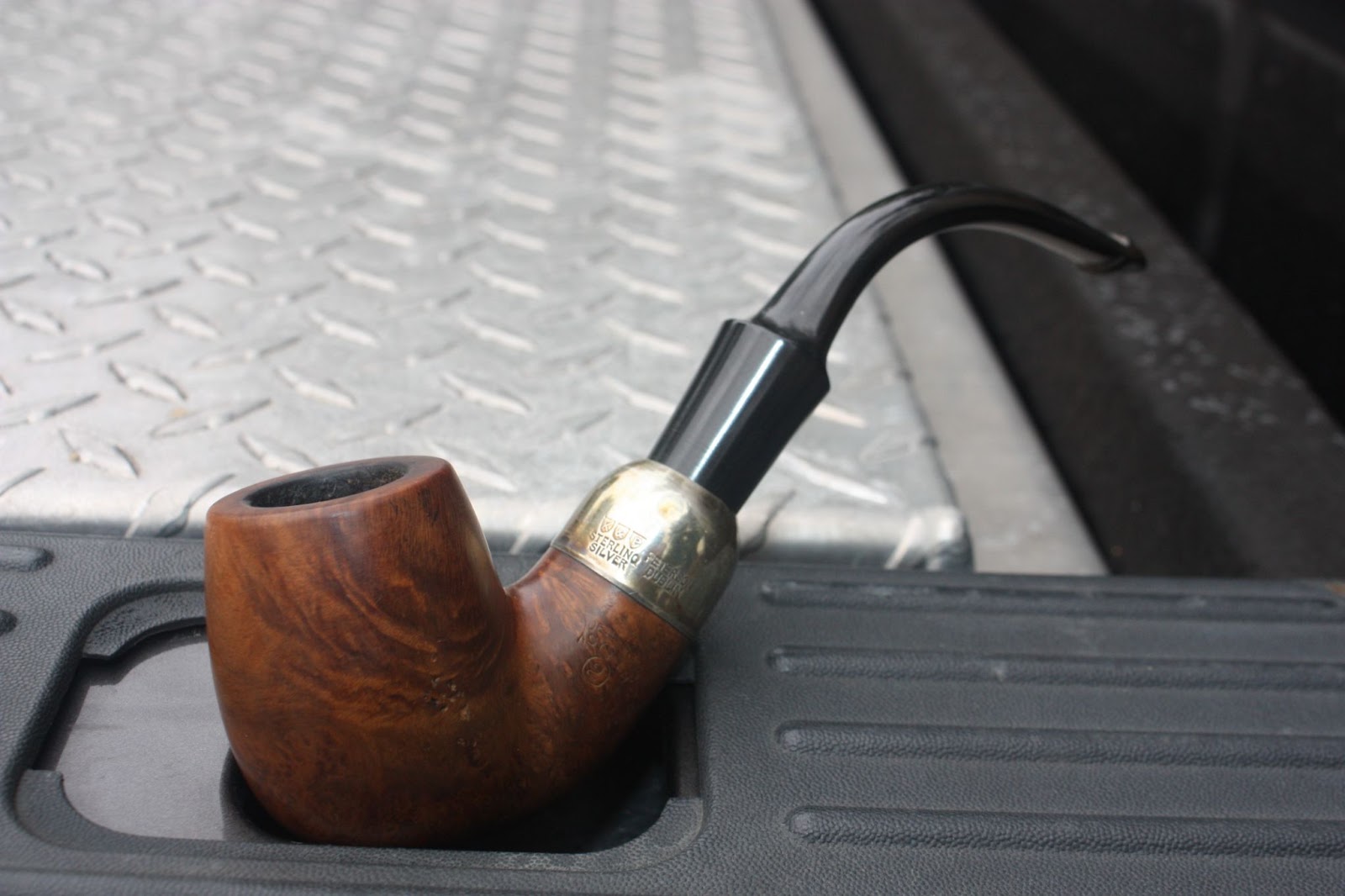
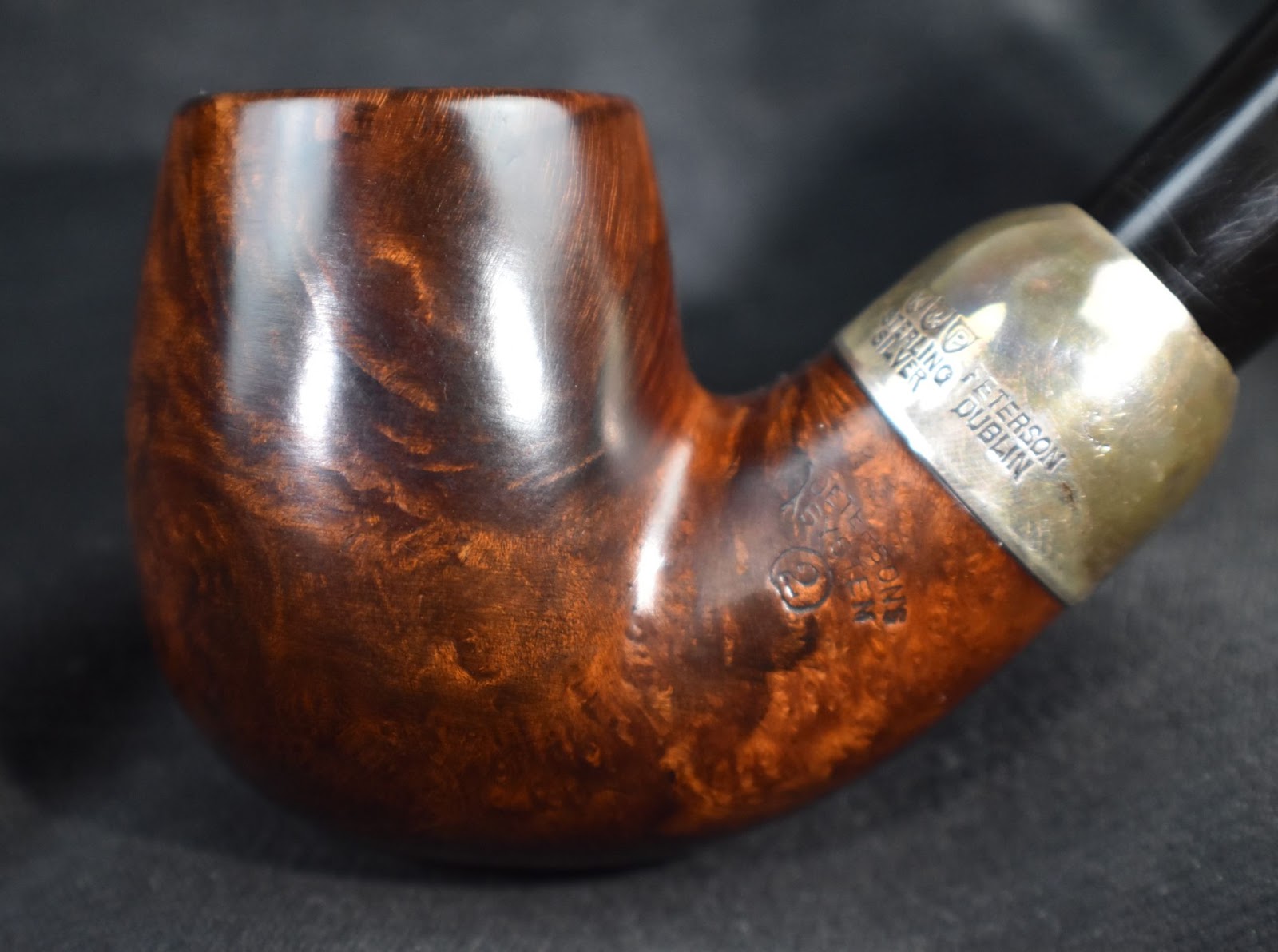
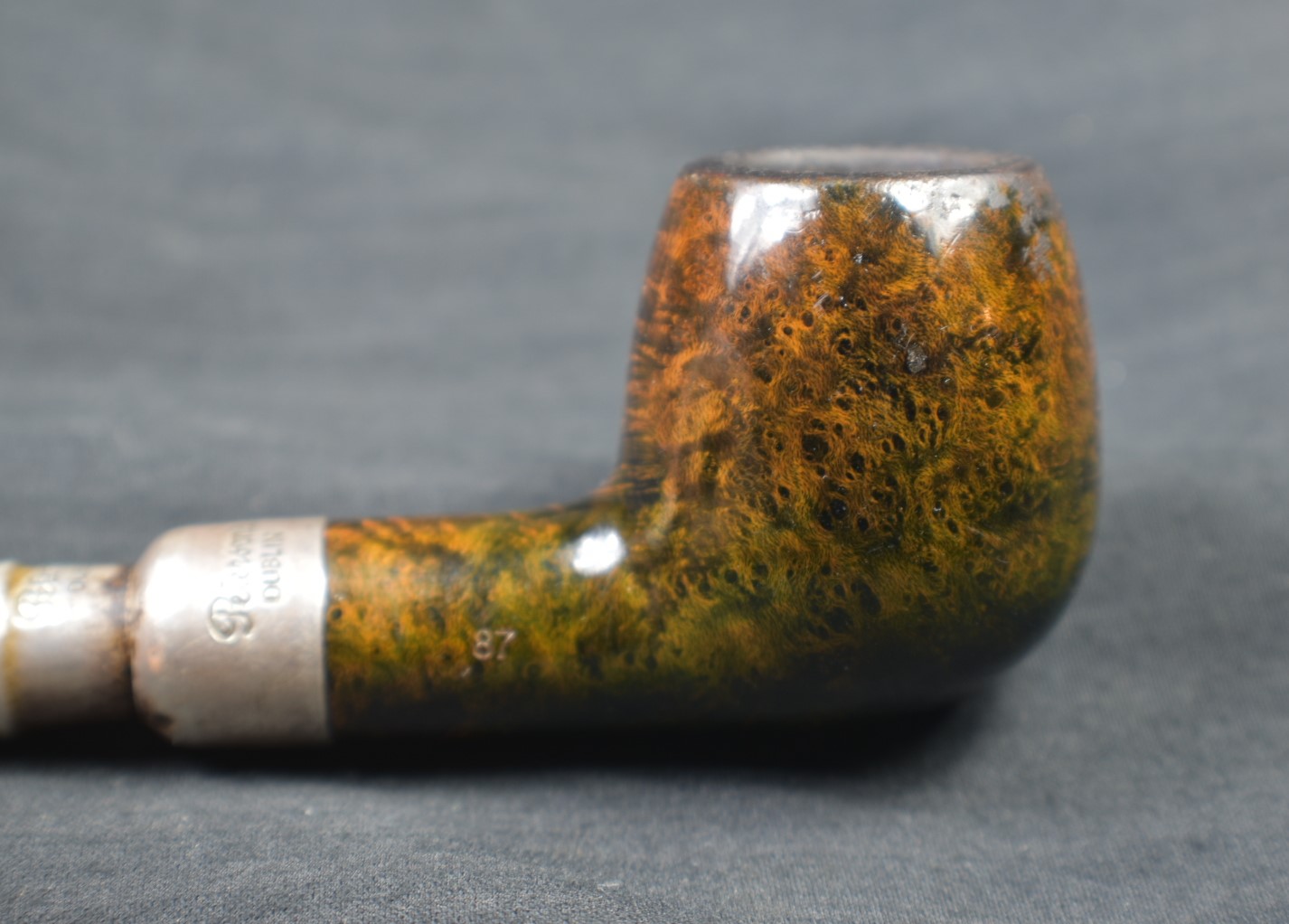
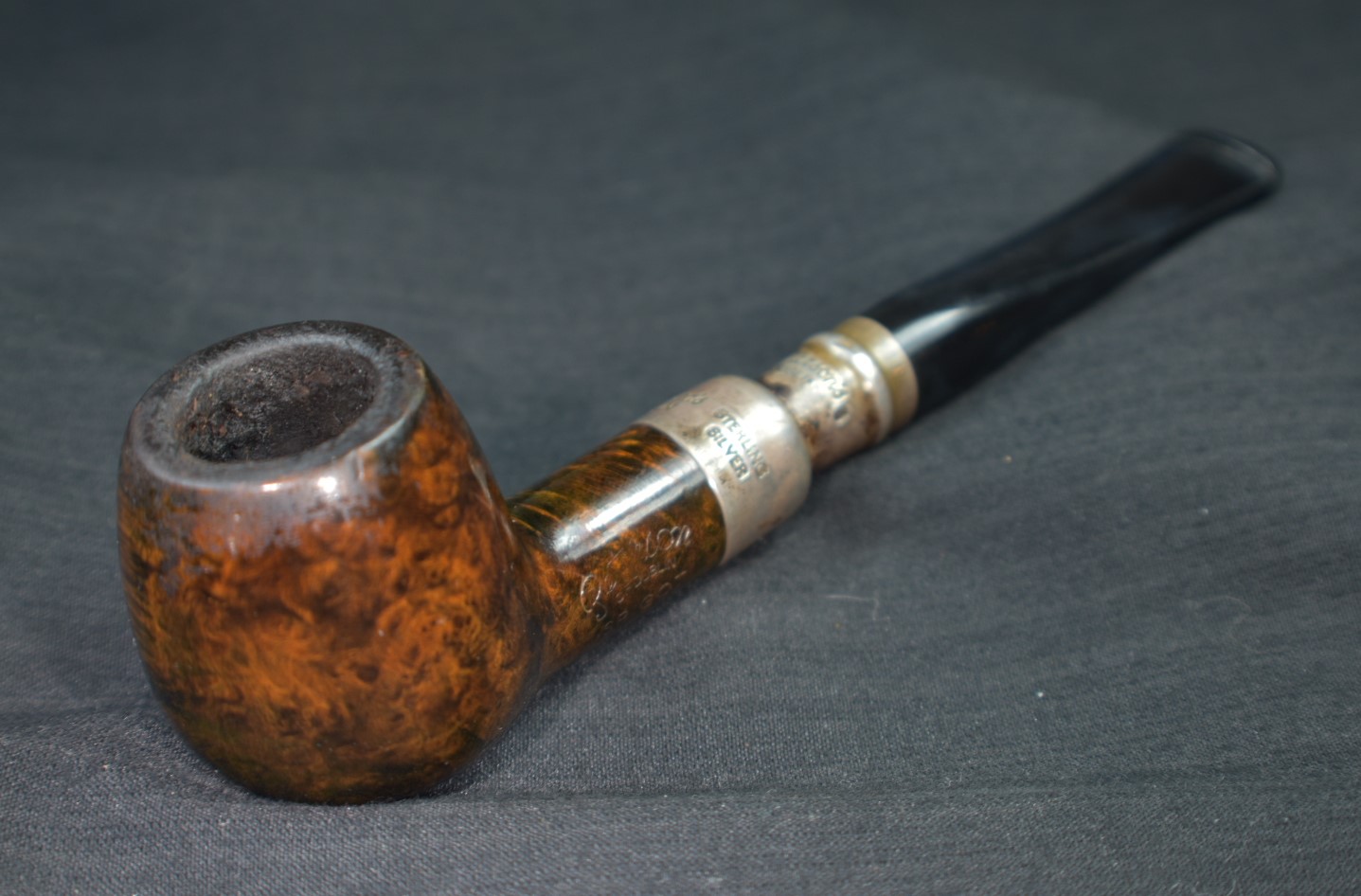
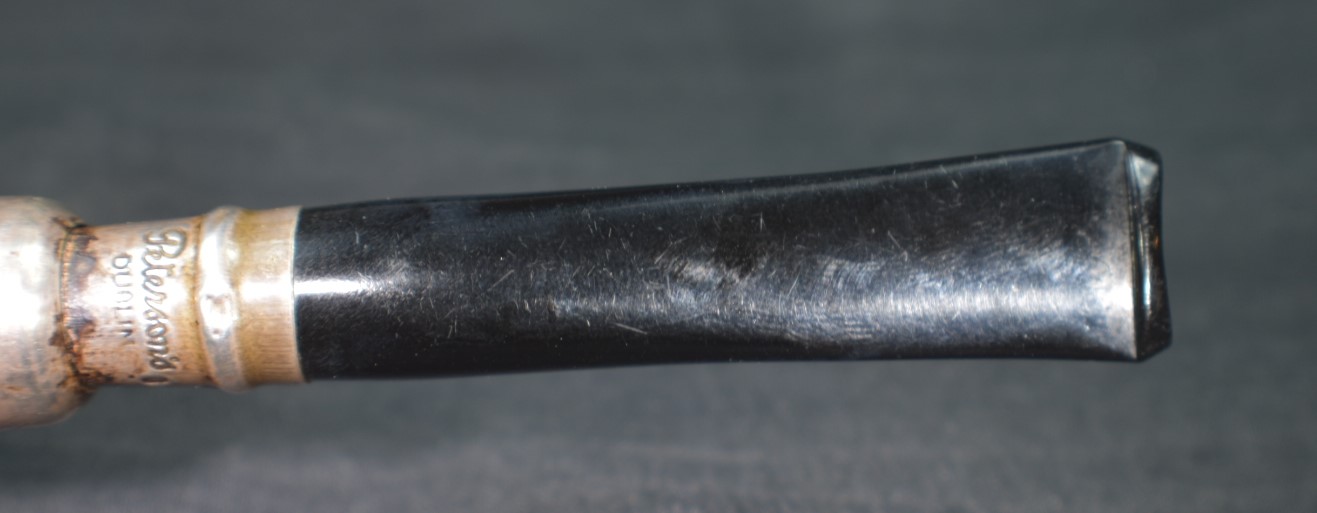
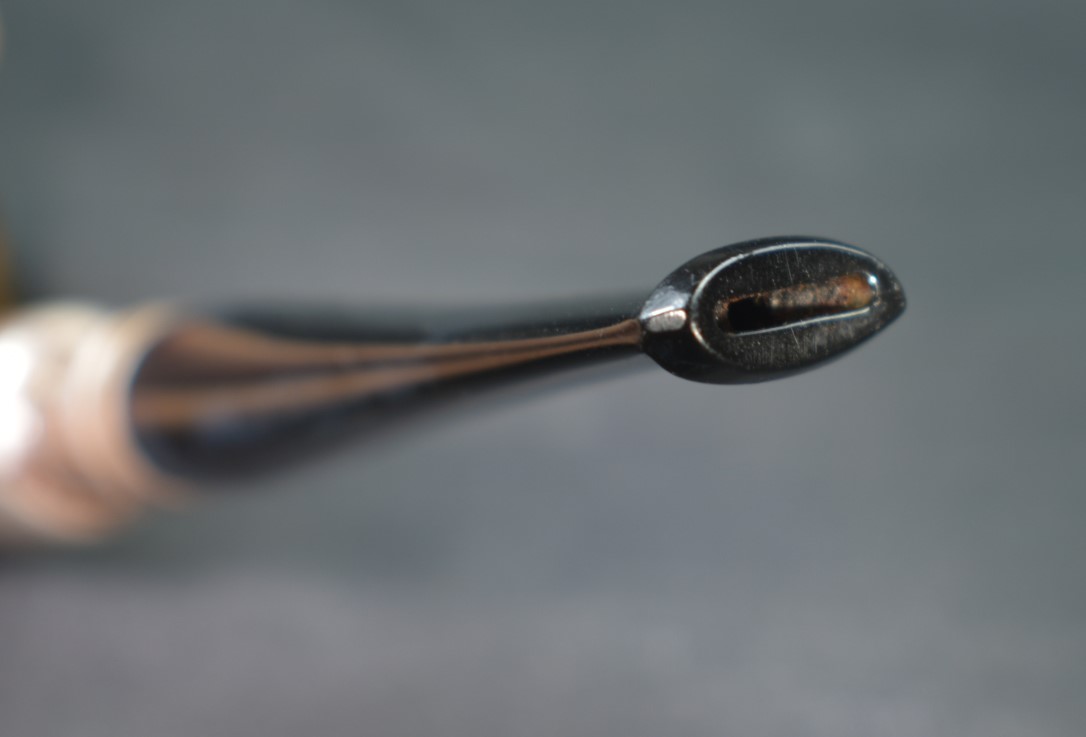
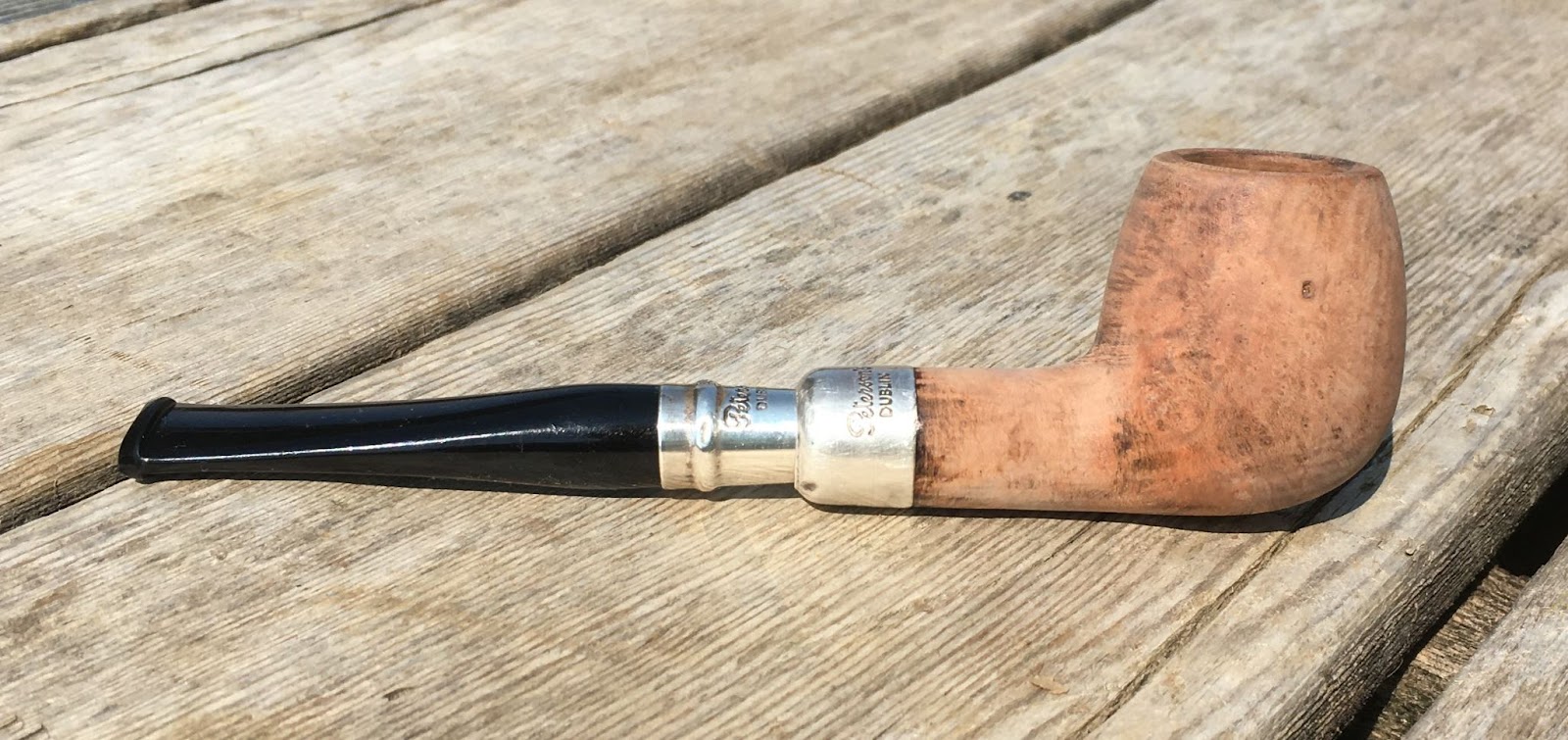
I probably do not need to tell you that with a nickname like Nebraska Pete Geek, I have a love for Peterson pipes. I also have a love affair with the Dublin shape in pipes. I know, I’ve said in the past that apples are my favorite but in checking my top 3 list of favorite shapes, I noticed that there are 5 on the list. Hmm, math was never my thing. Anyway, this dainty darling caught my eye from the auction block as it had a definite Dublin shape but a shaper number (417) that I was unfamiliar with. Winning the auction was surprisingly easy as I was the only person to bid. A few days later the demure Dublin Damselle arrived here in the wilds of southeast Nebraska. The stamps on the shank are crisp and clear except for the “1” in “417” and read as follows: PETERSON’S over DE LUXE over FOR SHANNON AIRPORT on the left shank. MADE IN THE over REPUBLIC over OF IRELAND and 417 on the right shank. The stem had a stamped Peterson’s script P with the paint completely worn away. Below are some photographs taken of the pipe prior to any work done.


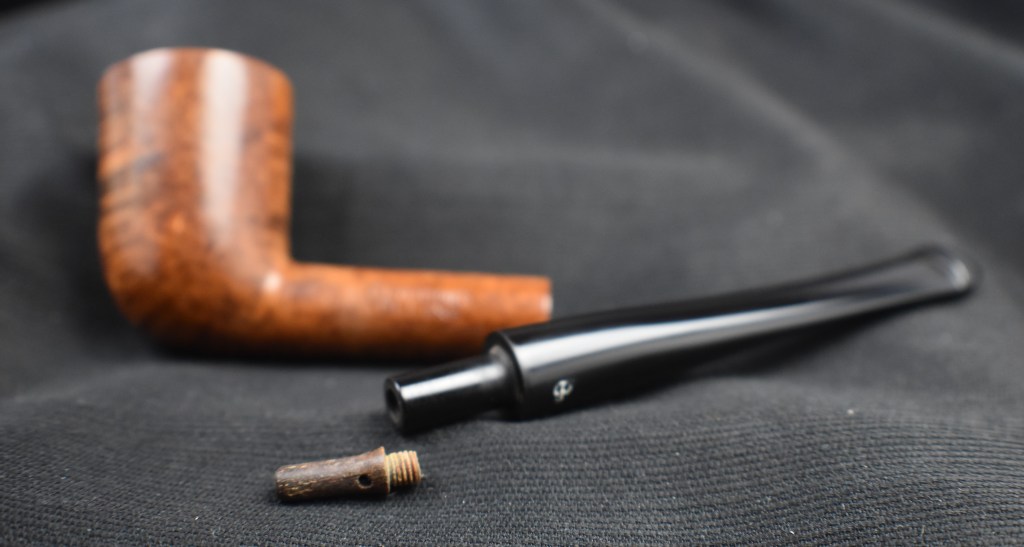
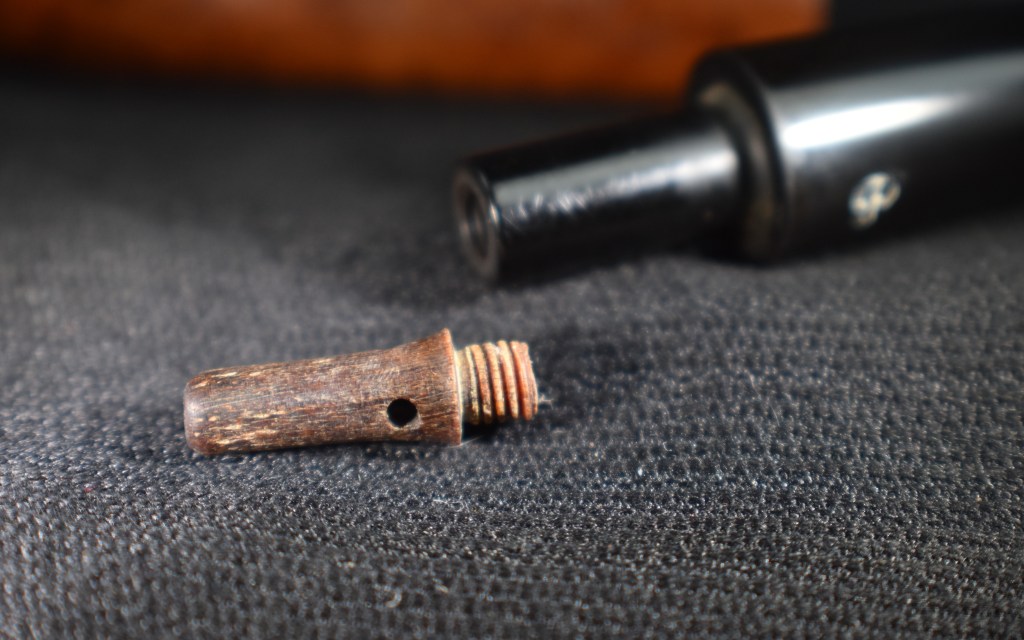
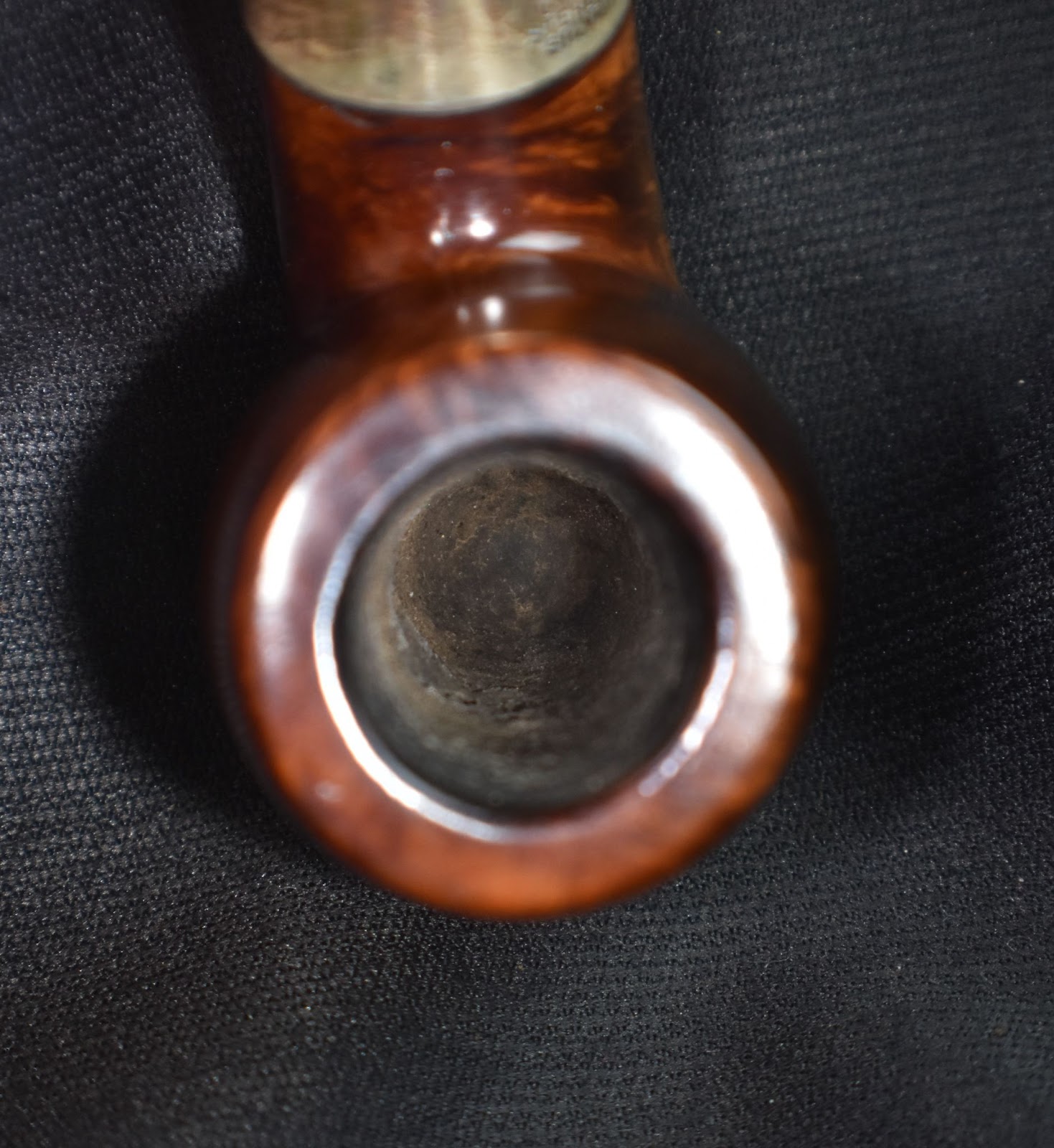
Looking at that rim made me want to cry. The charing was going to be a tough one to remedy. Then there is that oh so cute bone tenon extension (chimney in Pete Geek speak). It too would need some restorative love. The stem was not in bad shape, old and pitted but not heavily oxidized. The briar looked wonderful with not a fill to be seen. This looked to be an interesting restoration.
Background
I have written about the restorations of several Peterson pipes over the past 13 months. I will include here good sources of Peterson history for those who would like additional information:
For a great history Mark Irwin and Gary Marlburg’s book is a must read for a Pete Geek.

(Available at https://www.smokingpipes.com/accessories/books/moreinfo.cfm?product_id=471478) Given the price is a bit high but worth every penny for a Peterson aficionado.
The next site is pipedia.org’s History of Peterson by Jim Lilley (Peterson – Pipedia)
Lastly the pipephil.eu site for all things logo: Peterson: historical pipes — Pipes: Logos & Markings (pipephil.eu) They also have a few other links to things like the Peterson timeline and P-lip information.
This portion of the blog is only regarding the history of Peterson Dublins and this Peterson 417 in particular. I began with the research of Dublin shapes by Peterson with a wonderful history in Mark Irwin’s Peterson Pipe Notes #172 titled, “A Catalog of Peterson’s Dublin Shapes, 1896–2020”. I’ll not go into the details that Mark does due to a general lack of both knowledge and writing ability. Combined with the fact that I am a Generation -X slacker, I’ll just give you the link and Mark all the credit for this great history lesson. (https://petersonpipenotes.org/tag/peterson-dublin-shapes/).
I will pick up the story of the 417 shape from within Mark’s teatease,
“Irish Free State-Era Straight Dublins (1922-1937)

The IFS-Era added two new straight dublins to the 120, 121, and 122: the 120F (“Flat” or oval shank) and slender 417. The System straights seem to have disappeared by this time. The 120 “Flat” is a natural thought in Peterson’s design language, which always comes back to comfort and practicality, and I can imagine someone in bowl-turning or even a customer thinking how great it would be to set his straight dublin down in order to emphasize a point over a pint or a cuppa.
The first illustration of the 120F seems to be in the1937 “A Chat with the Smoker” pipe-box brochure issued not long after Peterson opened its London factory on White Lion Street. (It may well have been in production before then.) Examples of the shape appear as late as the 1965 catalog and may have been made for several years beyond that.

The 417, a small-bowled Dublin with a long shank, first appeared in the 1937 catalog, but with two shape numbers: 417 for the Kapet and DeLuxe and 2022 for the “K” and 1st quality. The 2022 number would be dropped by 1945. Like the 120F, the last sighting of the 417 was in the 1965 catalog. The bowl seems bit more forward in its cant than the 120F.” (https://petersonpipenotes.org/tag/peterson-dublin-shapes/)
In the introduction of this blog I referred to this 417 as both a “dainty darling” and a “demure Dublin damselle”. Why?, you ask. To illustrate the size difference of the 417 and the more standard 120, I compiled the below with data From Mark Irwin’s PPN 172. The differences, though slight, are definite. Our darling dainty demure Dublin damselle is indeed a bit longer while a slighter in overall build than her more robust siblings.
| Shape 417 Straight Dublin. | Shape 120 Patent Lip Straight Dublin. |
| Years of production: 1937 – 1965 | Years of production: 1906 – present. |
| Average Measurements: | Average Measurements: |
| Length: 6.21 in./157.73 mm. | Length: 6.16 in./156.46 mm. |
| Weight: 1.00 oz./28.35 g. | Weight: 1.40 oz./39.69 g. |
| Bowl Height: 1.74 in./44.20 mm. | Bowl Height: 1.94 in./49.28 mm. |
| Chamber Depth: 1.57 in./39.88 mm. | Chamber Depth: 1.63 in./41.40 mm. |
| Chamber Diameter: 0.67 in./17.02 mm. | Chamber Diameter: 0.83 in./21.08 mm. |
| Outside Diameter: 1.24 in./31.50 mm. | Outside Diameter: 1.38 in./35.05 mm. |
| P-Lip: Yes | P-Lip: Yes |
(https://petersonpipenotes.org/tag/peterson-dublin-shapes/)
The date two of production for this pipe is allowed by two particular pieces of information; the FOR SHANNON AIRPORT stamp and the bone chimney. According to Irwin in the Peterson Pipe,
““FOR SHANNON AIRPORT” (c.1947-c. 1983) Stamp on shank of pipes in several grades, indicates pipe was designated to be sold by duty free shops at Shannon Airport.” (Irwin, Mark and Malmberg, Gary (2018). The Peterson Pipe The Story of Kapp & Peterson, First edition, second printing 2021. Briar Books Press, Canada. p. 299)
This gives a fairly definitive time period for the production of this pipe. These dates can be further narrowed by the existence of the bone chimney or tenon extension. Again referring to The Peterson Pipe, “Vintage De Luxe or Premier Systems, those produced before about 1960, featured a bone extension, which will be white on an unsmoked pipe and gunmetal or dark brown on a smoked one. Nearly all of these seen on the estate market will have fused to their vulcanite stems, and many will have splits or cracks in them.” (p. 259). This fine tuning of production dates places this pipe as a product of the Dublin factory between 1947-1960.
The Restoration
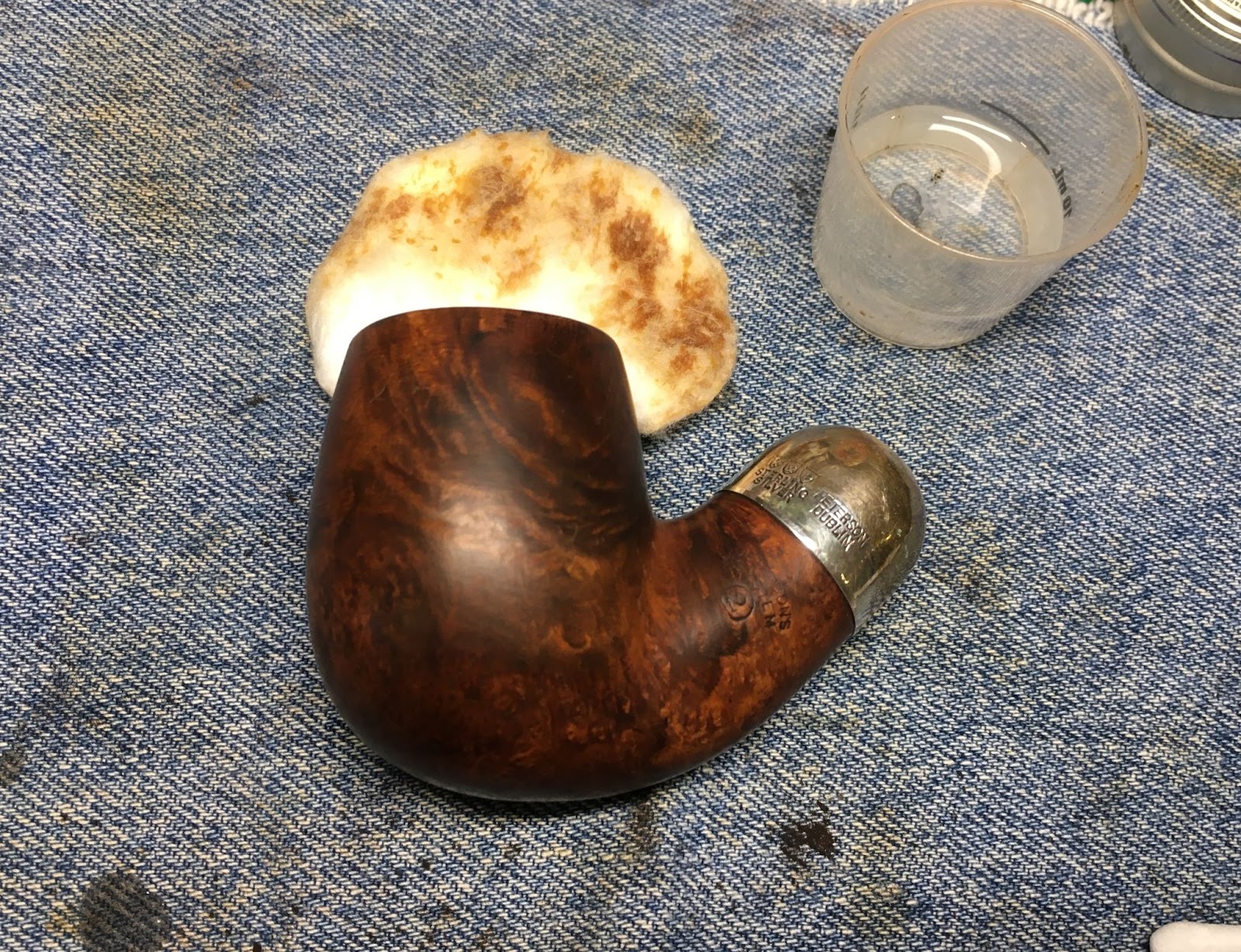
First off, let me thank Canada for the gift of cold air. Yesterday’s cold front dropped the temperature 30 degrees Fahrenheit and yes, it came with 24 mile per hour winds (gusts over 40mph). This did drive me into the basement for cover and allowed me to work on this lovely old pipe, thus the thank you. I began with a clean denim piece to protect the work surface.

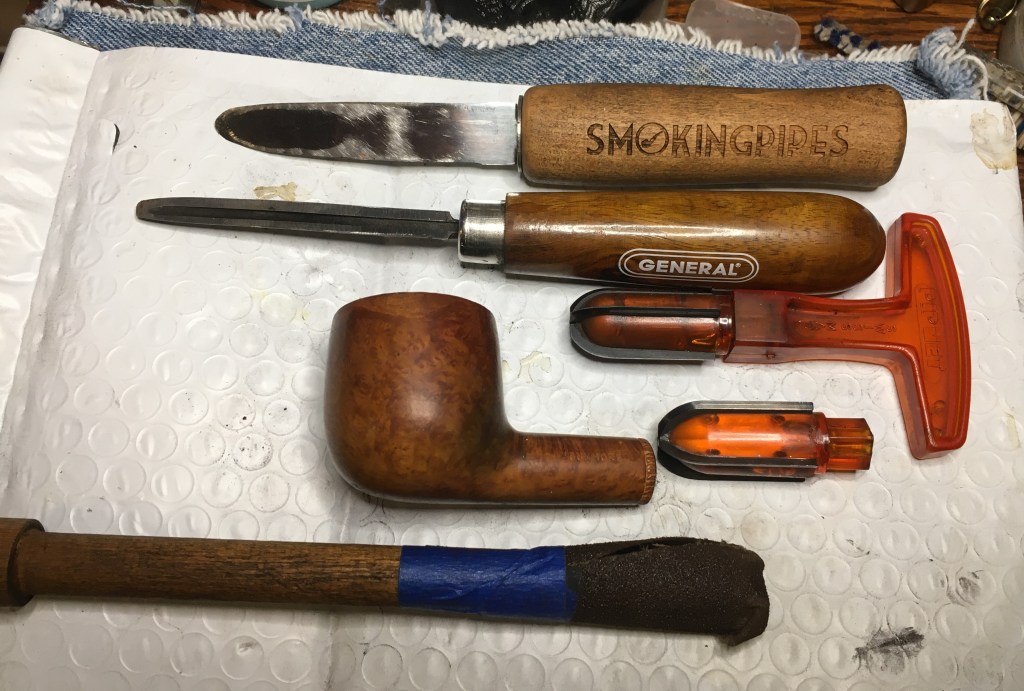
The reaming tools came out to play. These included the PipNet, SmokingpipesLow Country reamer, General triangular scraper (with the tip ground round) and a wood dowel wrapped in 220 sandpaper.

Reaming round one went to the PipNet with the #1 blades.

Round two, PipNet with #2 blades.

The tobacco chamber was drilled with a more conical drill, as appropriate for a Dublin. The reaming was finished with the Klee-Reem tool, for round three. The other scrapers wrapped up the scraping with the sandpaper finishing up.

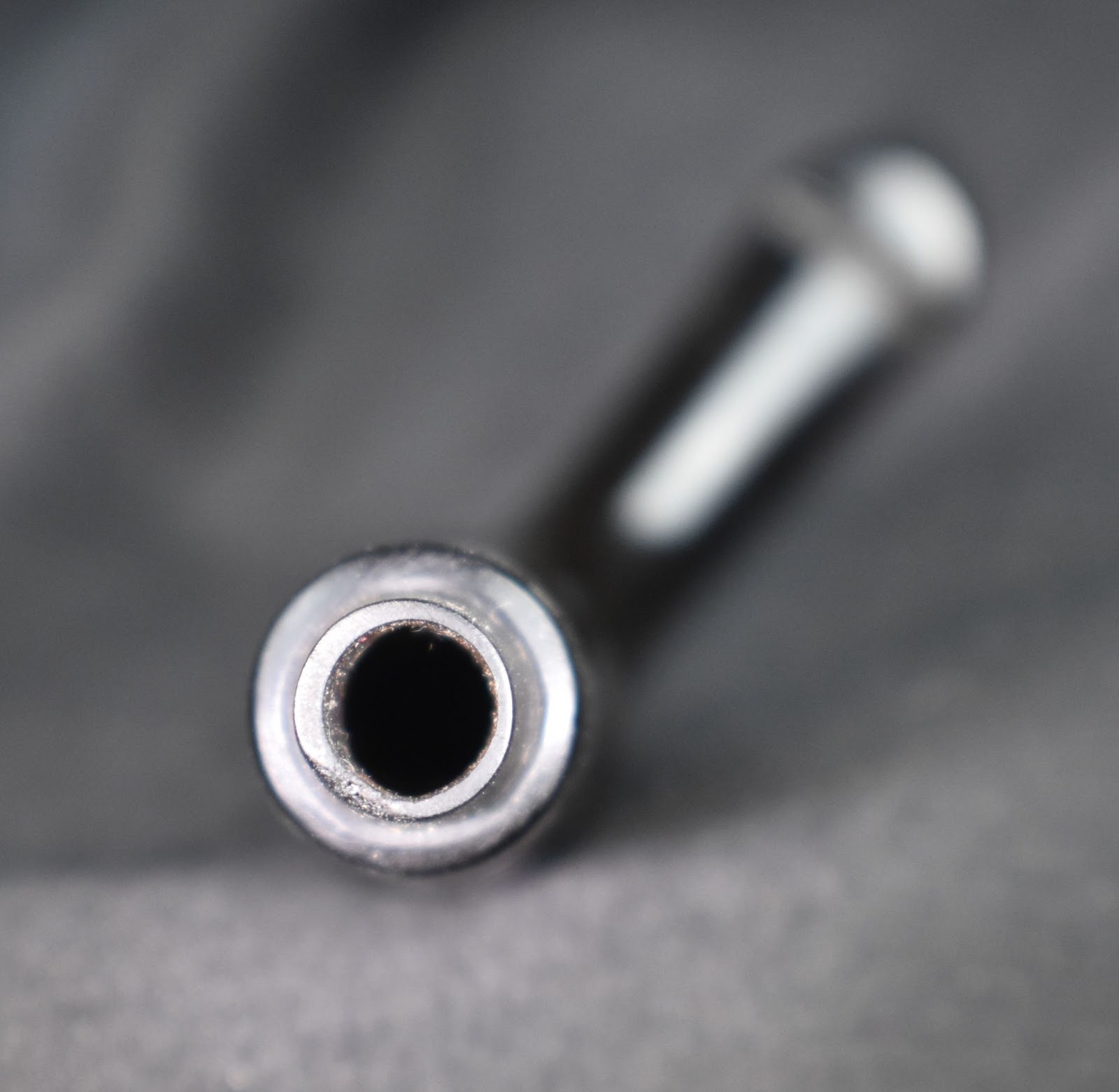
I used the airway drill from the Kleen-Reem to clear the airway.

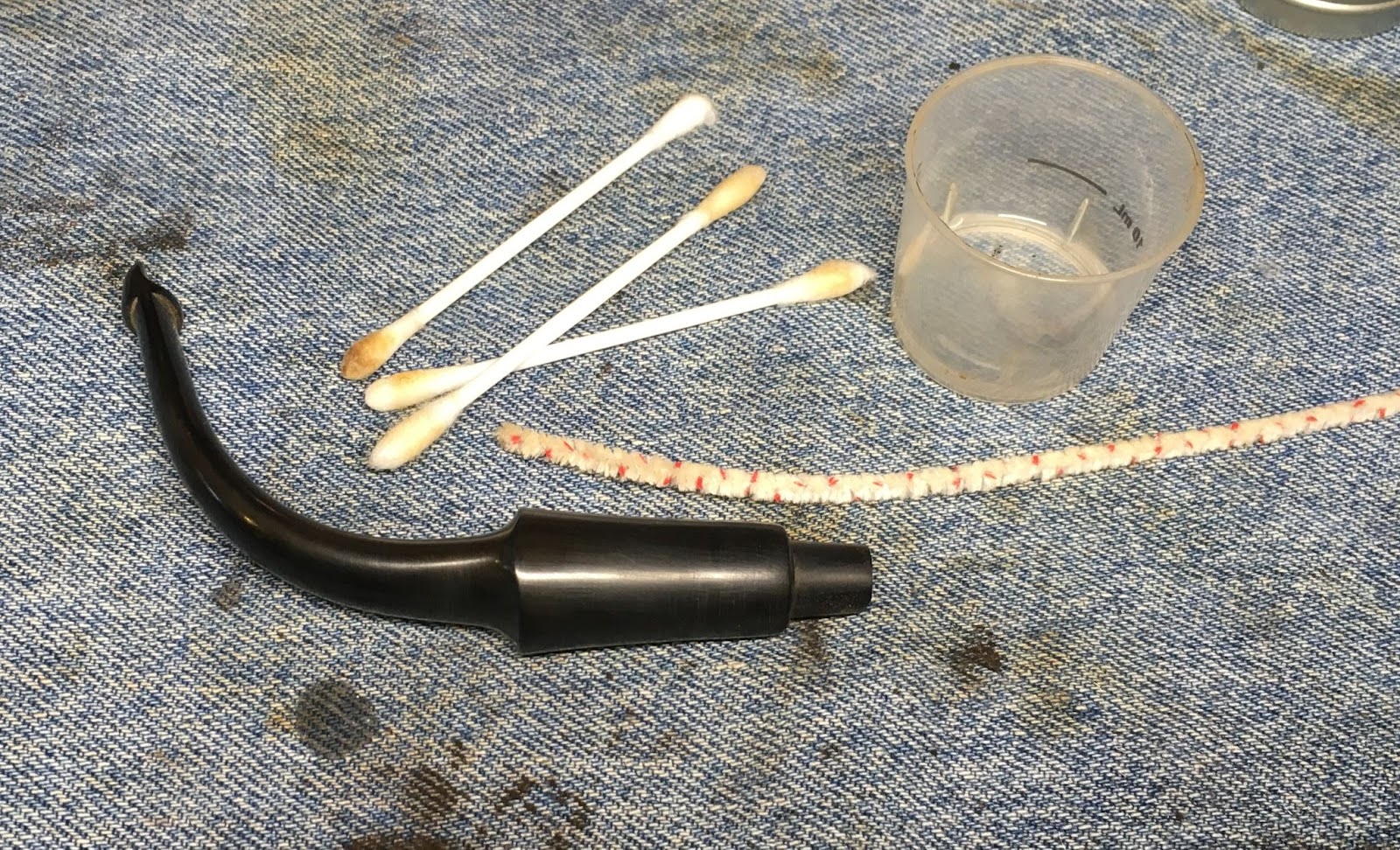
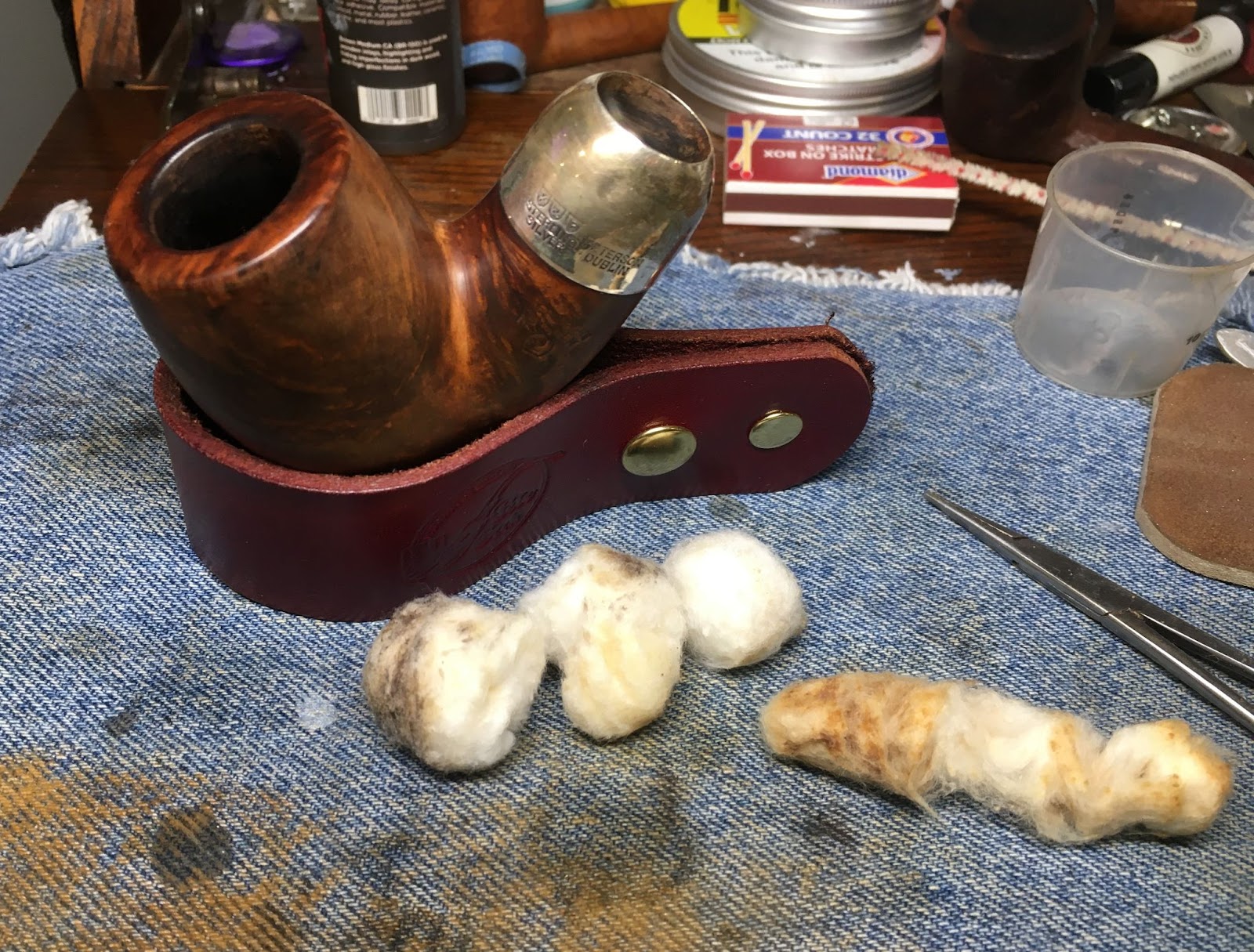
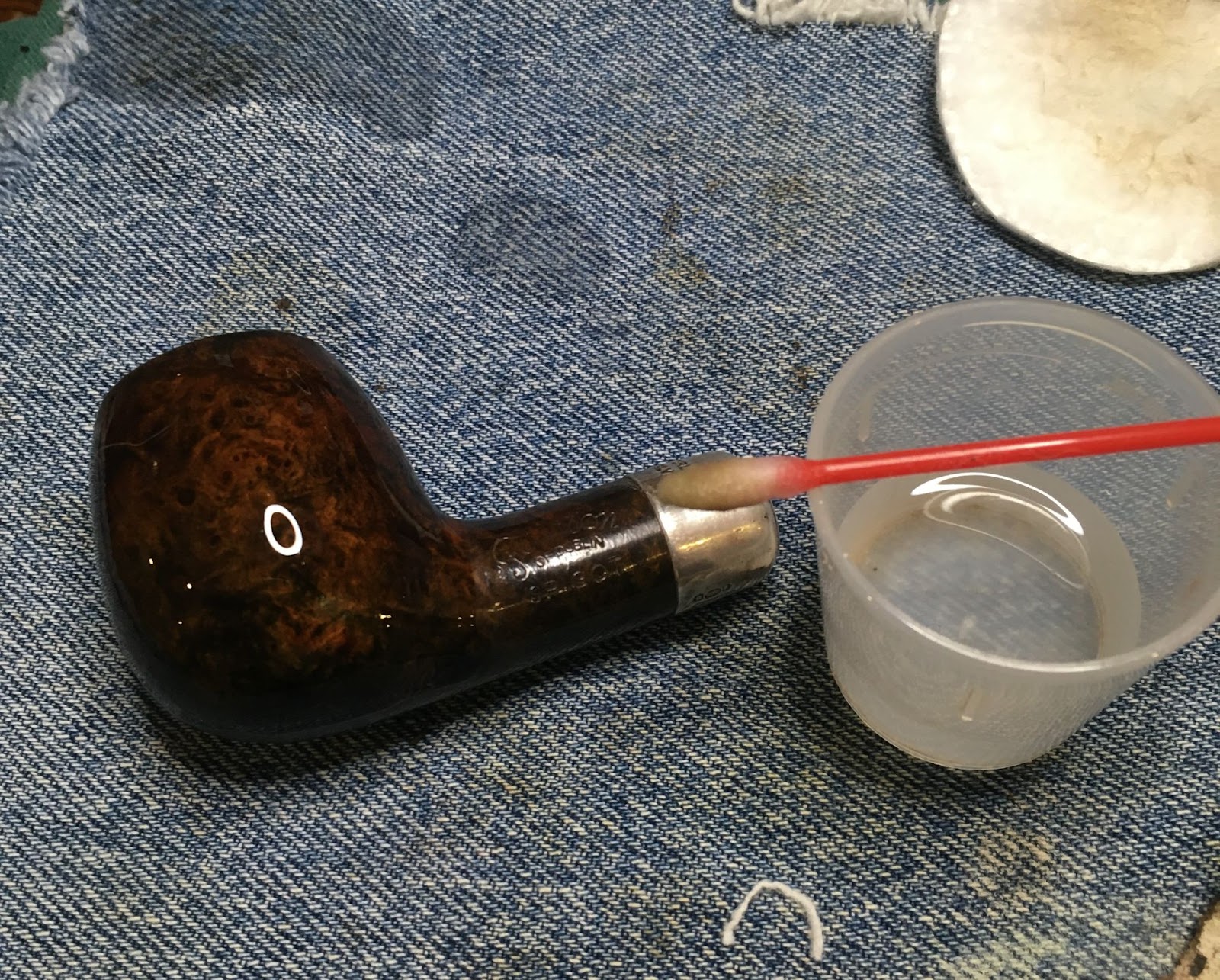
The bowl was wiped with a paper towel and scrubbed with a few cotton swabs dipped in 95% ethyl alcohol, shown below. No evidence of heat damage was observed within the bowl.

The shank cleaning went quickly after the Klee-Reem and only required a few folded bristle pipe cleaners and cotton swabs dipped in the ethyl alcohol.

The rim received a coating of Vaseline petroleum jelly and was scraped with a sharp pocket knife to remove both lava and charred briar.

After scraping the rim looked better but not nearly acceptable.

Topping the rim was required. I did this with 320 sandpaper laid flat on the countertop. The 320 paper was followed by a sheet of 400.

The topped rim can be seen in the photo below. It was getting more acceptable.

To sand and give the inner rim a bevel I used a 2 inch polyvinyl chloride (PVC) pipe cap wrapped with 320 sandpaper. The photo below shows two of these caps, one with sandpaper the other without.

The inner rin was sanded with the sandpaper wrapped cap, if you were wondering. Below is the resultant bevel.

There remained some charring on the outside rim edge. I did not want to remove too much material during the topping and risk changing the overall shape of the pipe. I returned to the sharp pocket knife and tried to scrape the edge and the side of the stummel to avoid a curved rim.

By scraping along the side, I was able to retain the sharp edge of the rim while still removing some of the char.

Next the stummel was taken to the sink for a scrub. This was done with undiluted Murphy Oil soap and a nylon scrub brush. The soap was rinsed with warm water and the stummel dried with a cotton hand towel.

Back at the workbench the stummel was wiped with a make-up pad dipped in 95% ethyl alcohol. Very little color came off the pipe and there did not appear to be any finish remaining on the briar.

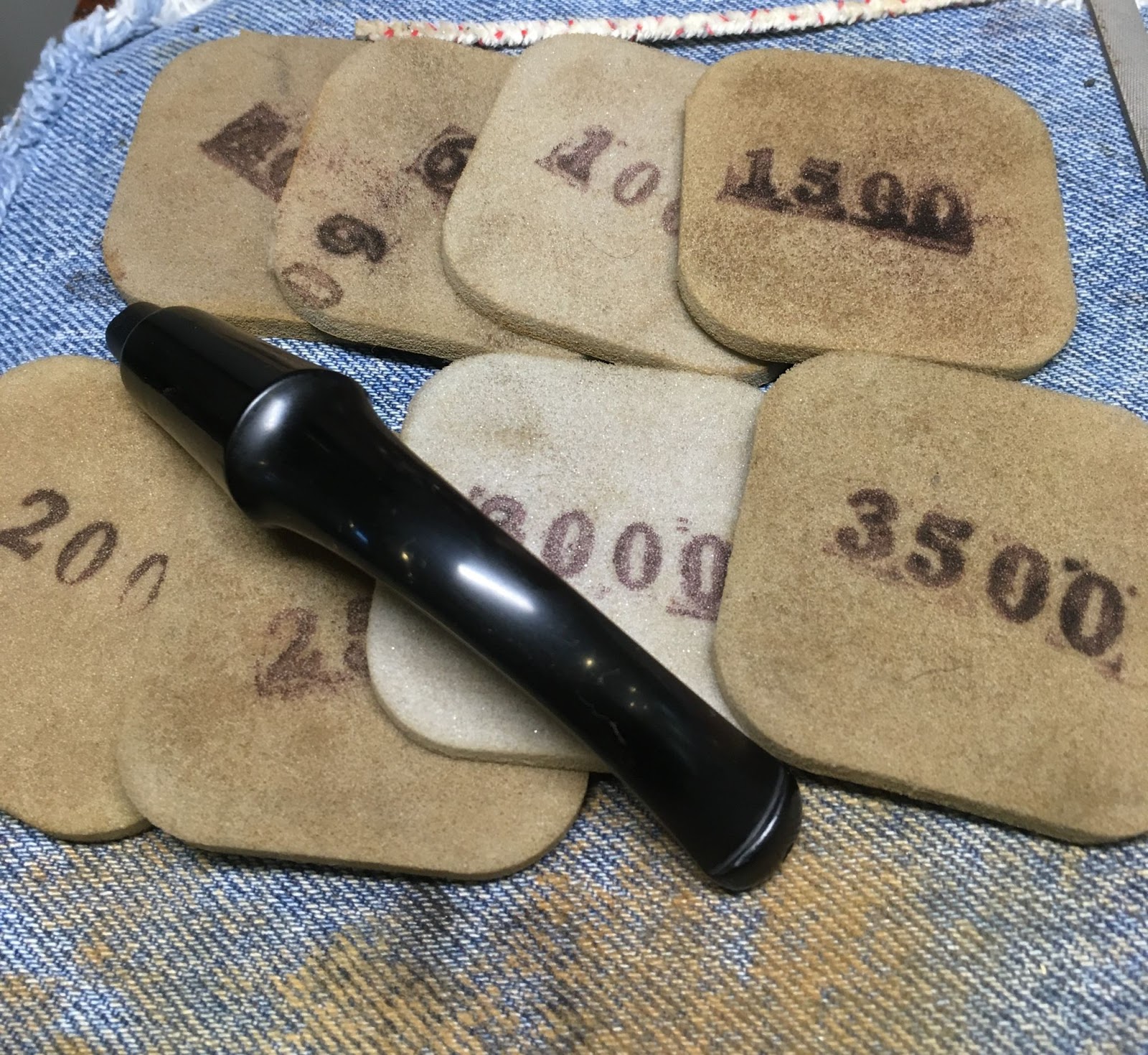
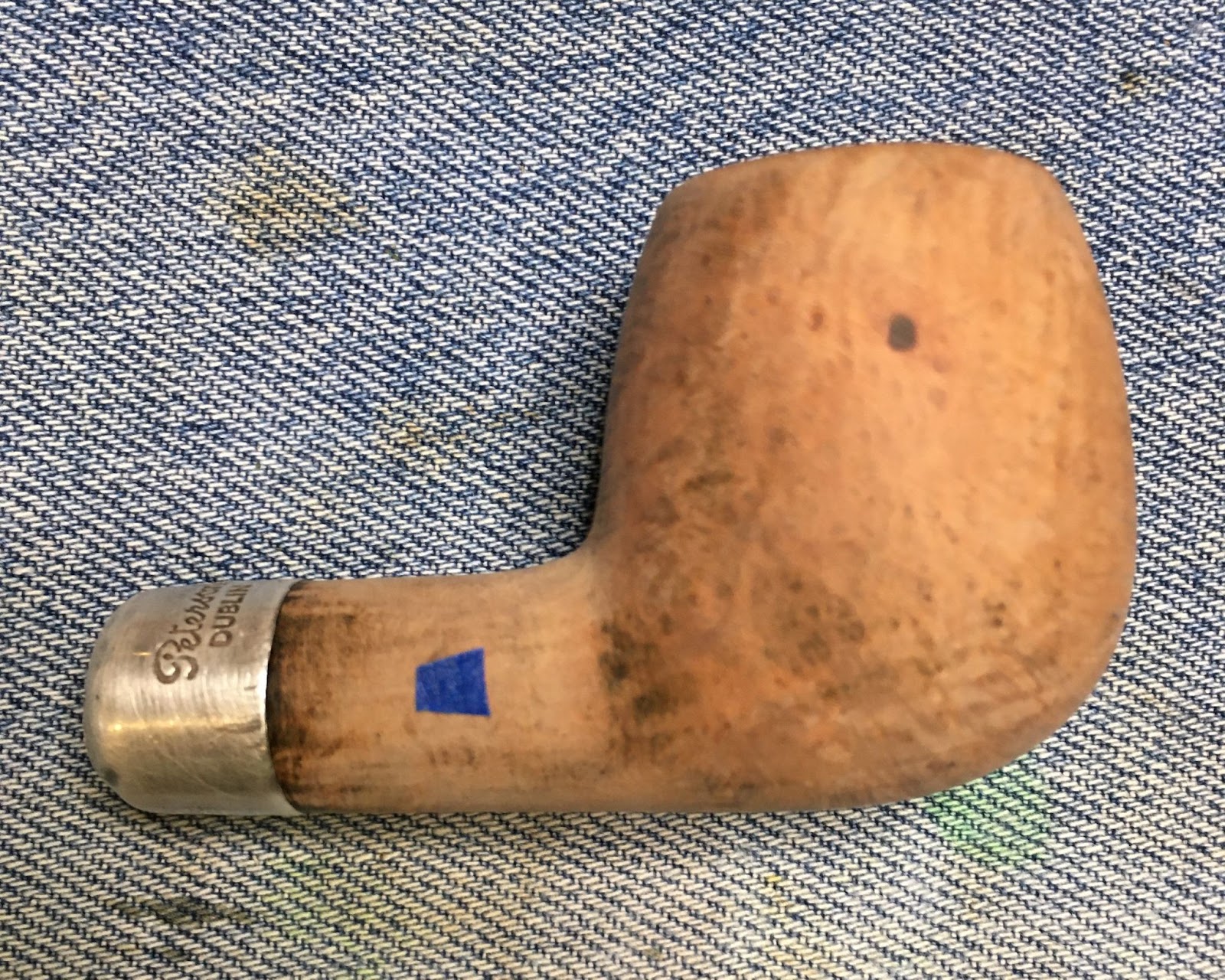
The stamps on the shank and the logo were taped with painters tape to protect them from sanding. The pipe was then sanded with a series of sanding sponges from 320-3500 grit. Between each sponge the stummel was wiped with a make-up pad wetted with ethyl alcohol. The stem was rubbed with mineral oil, applied by fingertip and wiped with a paper towel.

The pipe was then worked with micro-mesh pads 4000-12000. The stummel and stem wiping was done as with the sanding sponges except that Obsidian Oil was used in place of mineral oil.

I cleaned the stem logo with a cotton swab dipped in 95% ethyl alcohol to clear out debris and oil from the logo. I then painted the logo with a water based white acrylic paint. This paint is intended for miniatures used in gaming. The paint dries quickly and I scraped the excess from the logo using a plastic card. The logo surface was then lightly worked with the 8000 and 12000 micro-mesh pads.

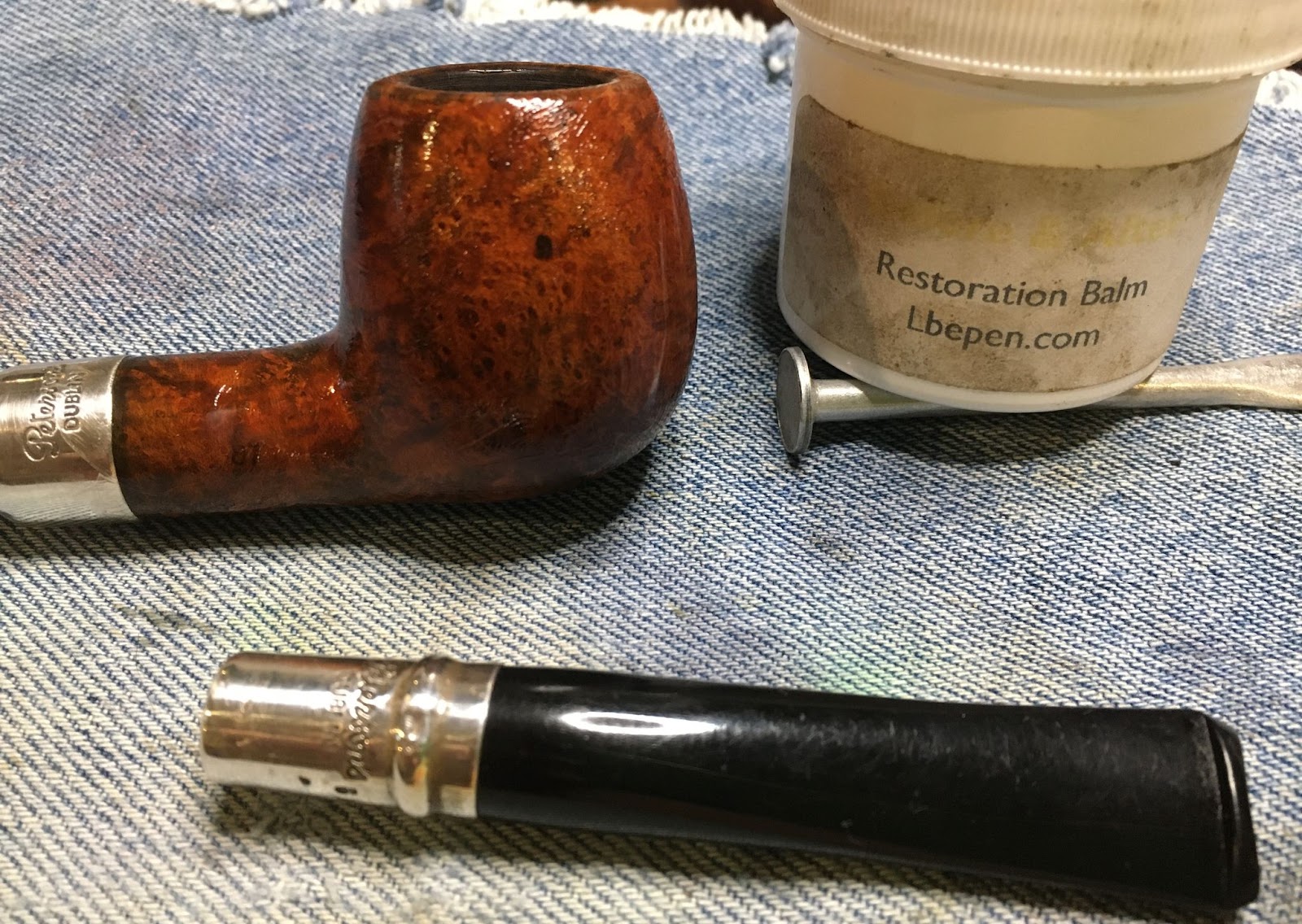
The stummel received a coating of Before and After Restoration Balm and was allowed to sit for 20 minutes.

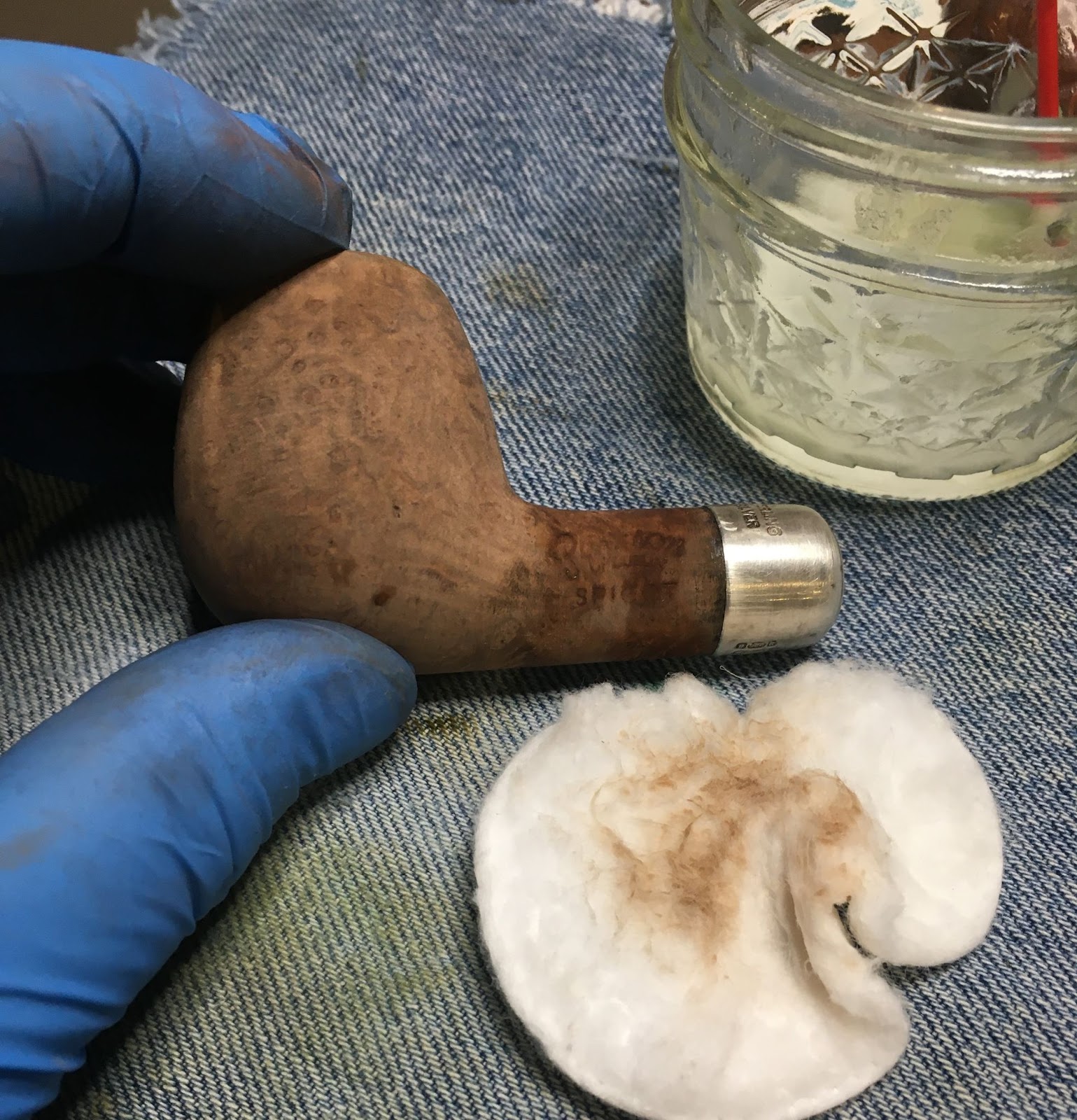
After the 20 minute timer beeped, I wiped the balm away with an inside out athletic sock. ANd finally got a look at the glory of the briar.

Next, I turned my attention to the bone tenon extension or as the Peterson factory folks call it, the chimney. This 65+ year old piece of bone had the tip and a bit of the side chipped. It also had a slight bulge at the tip back about 4 mm. The photos don’t show either of these pre-existing conditions very well. I decided to file it flat to remove the chipped area.


I used a small flat file to round the entire chimney. I then filed the tip down a bit removing about 1 mm of material. Instead of removing the entire chipped part and shortening the chimney, I opted to build up the tip using brown Cyanoacrylate (CA, super glue). The glue seemed to penetrate into the pores of the bone. I thought this would be good for strengthening the entire piece. The CA was spritzed with a drying accelerator. Then filed. The draft hole was opened up with a diamond needle file and the edges of the tip were slightly rounded with the flat file. The below two photos show the finished shape of the chimney.


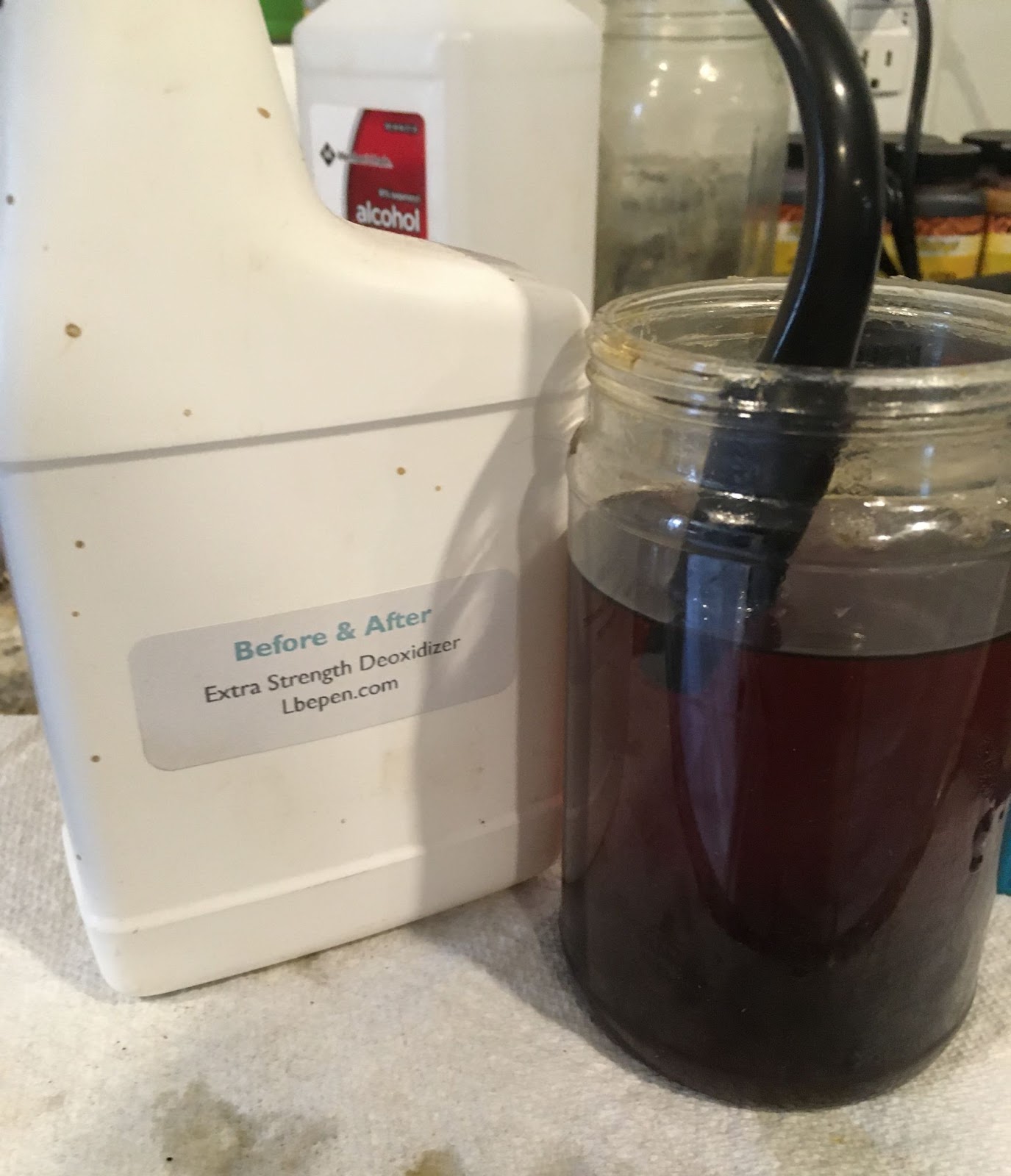
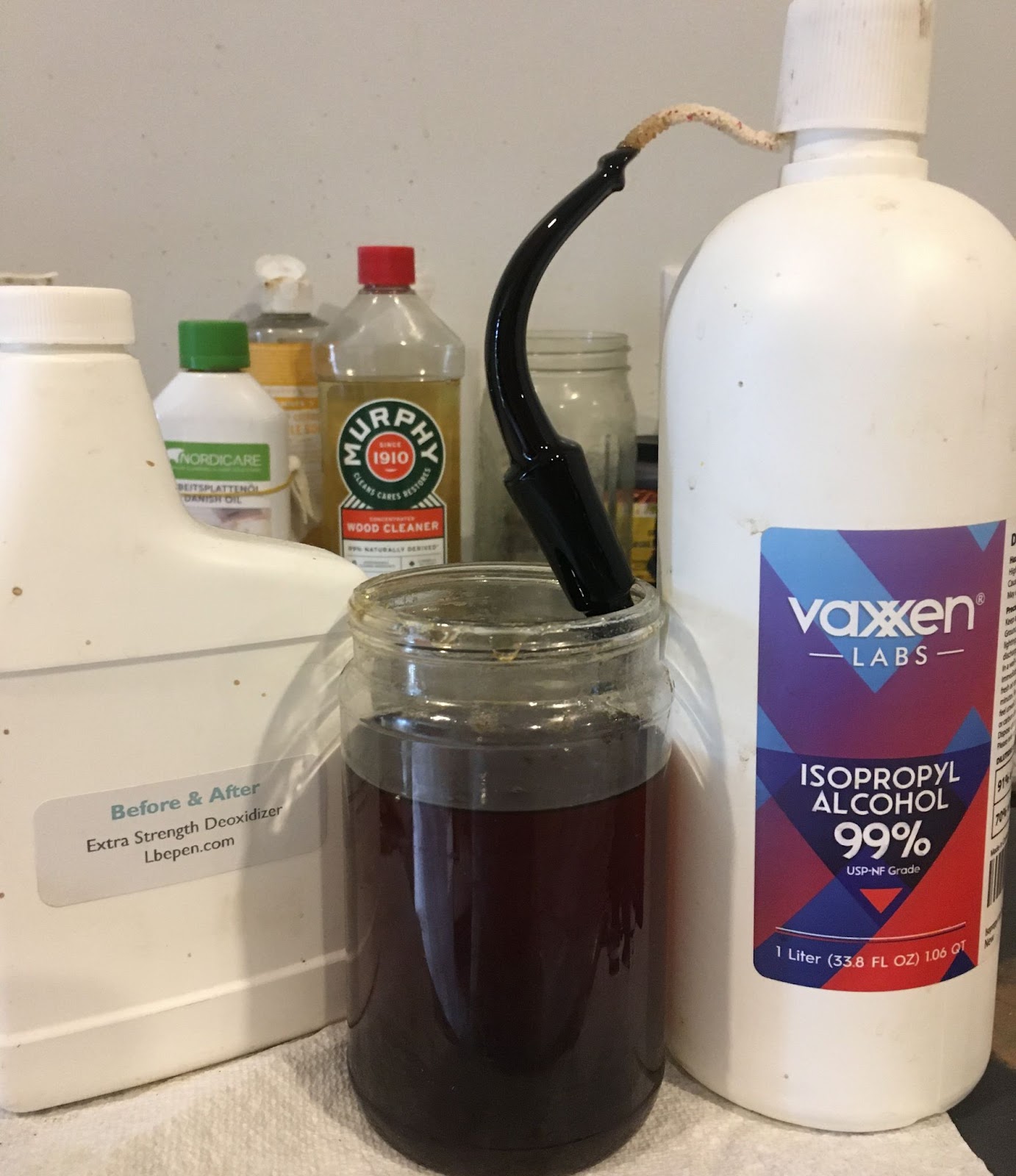
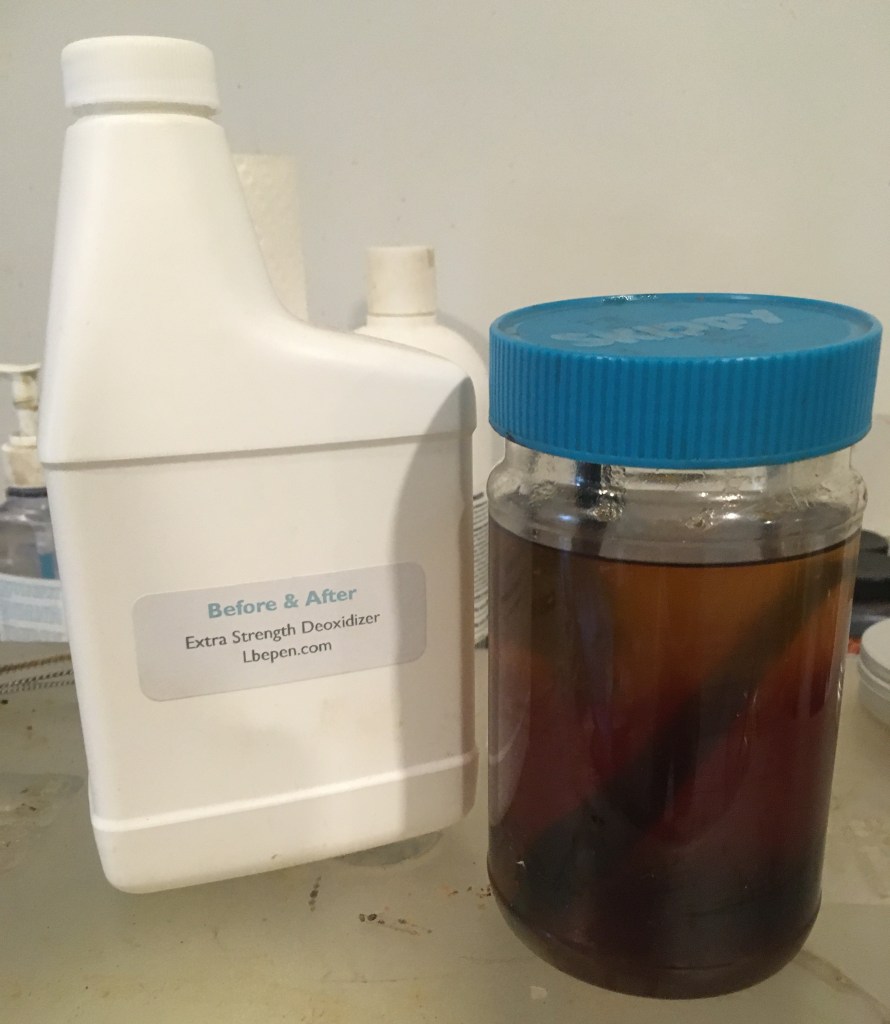
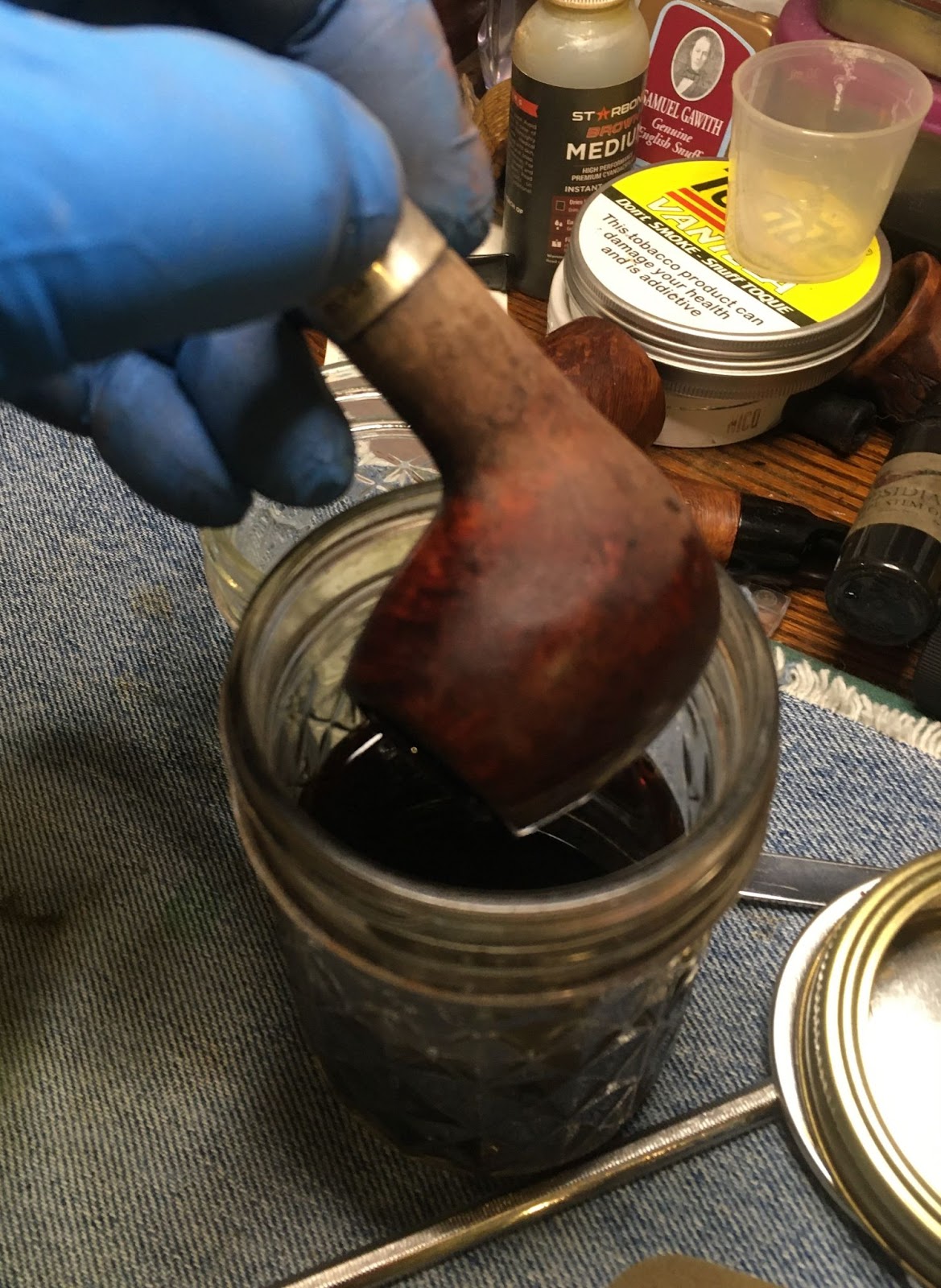
I was still not happy with the dark spots on the rim of the stummel. I thought that maybe a treatment of the spots with a saturated oxalic acid solution would effectively bleach the dark spots. I have a jar of saturated oxalic acid which I had mixed several months ago.

The solution was applied with a cotton swab to the darkened areas. It dried quickly so I continued to apply additional solution.

More solution was added as the already applied liquid dried. I did this several times over a span of 15 minutes. I then allowed the oxalic acid to sit for 30 minutes.

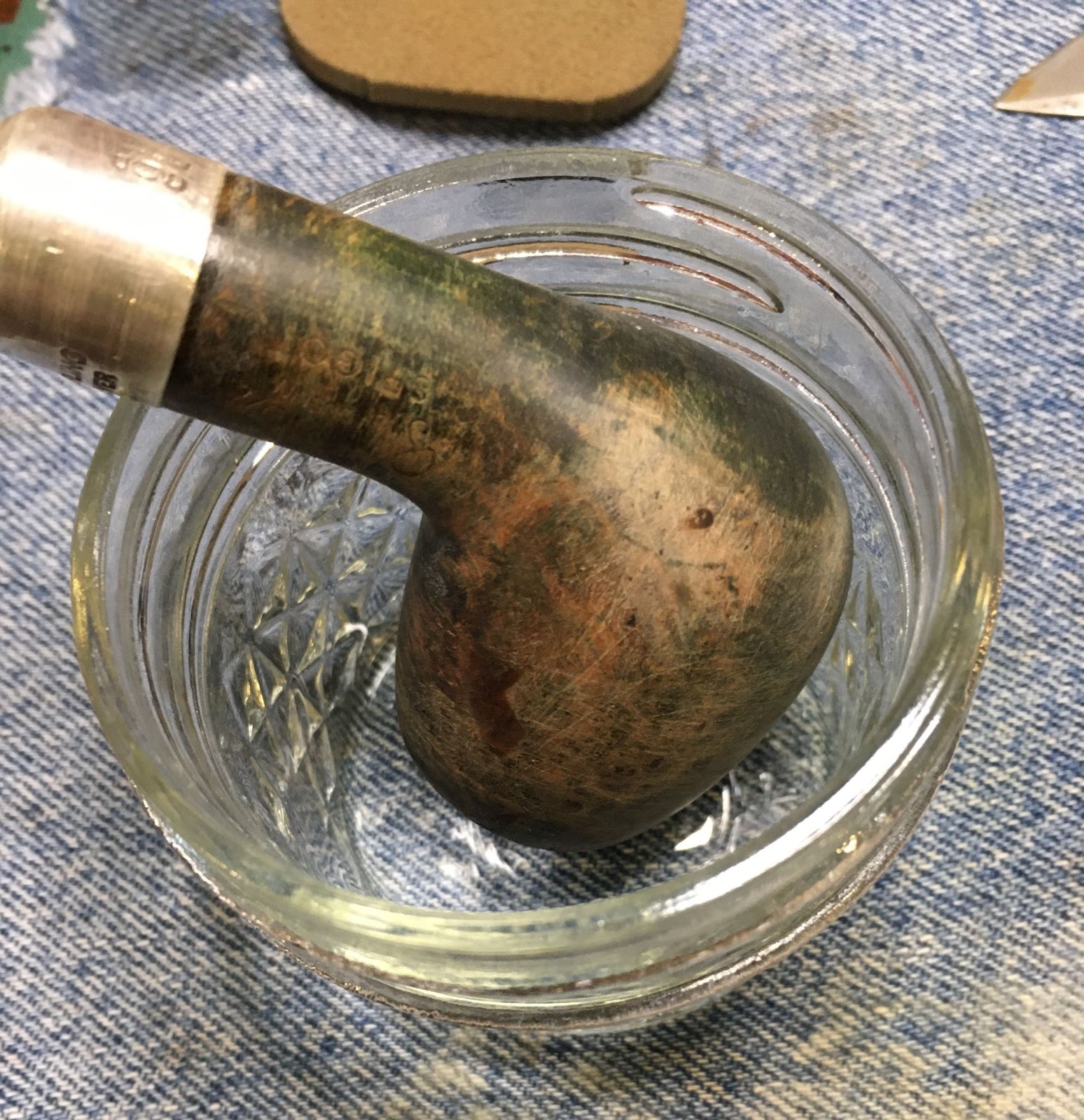
After 30 minutes I took the stummel to the sink and rinsed the briar with liberal amounts of water. I dabbed a bit of Dawn dish soap on my finger and worked that around the acid wetted areas also. My thought here was that the basic nature of soap would neutralize any remaining acid. The soap was also thoroughly rinsed. The photo below shows the dried rim. Much improved over the initial appearance.

The pipe was taken to the buffer where it received several coats of carnauba wax. The final step was a hand buffing with a microfiber polishing cloth.
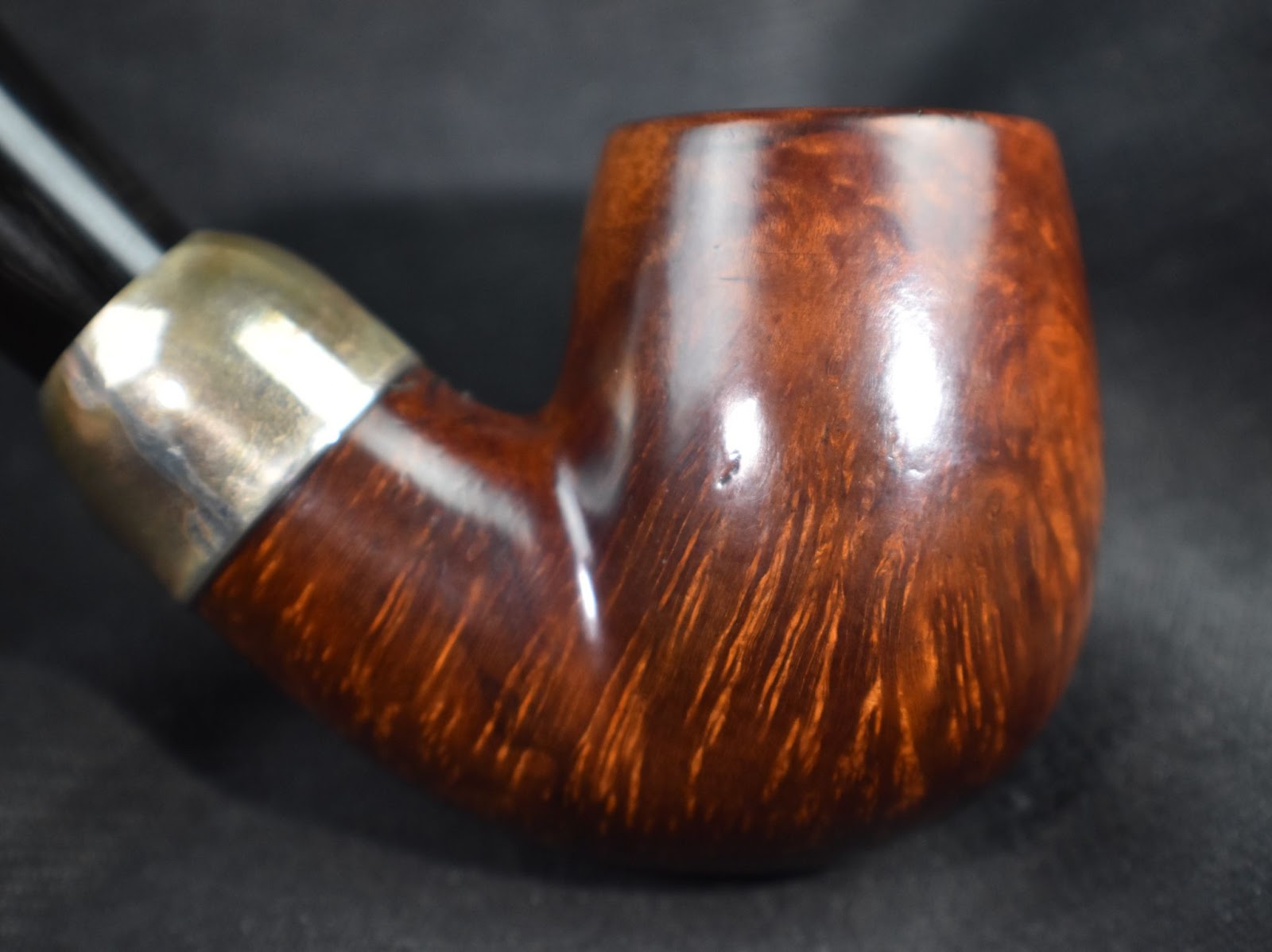
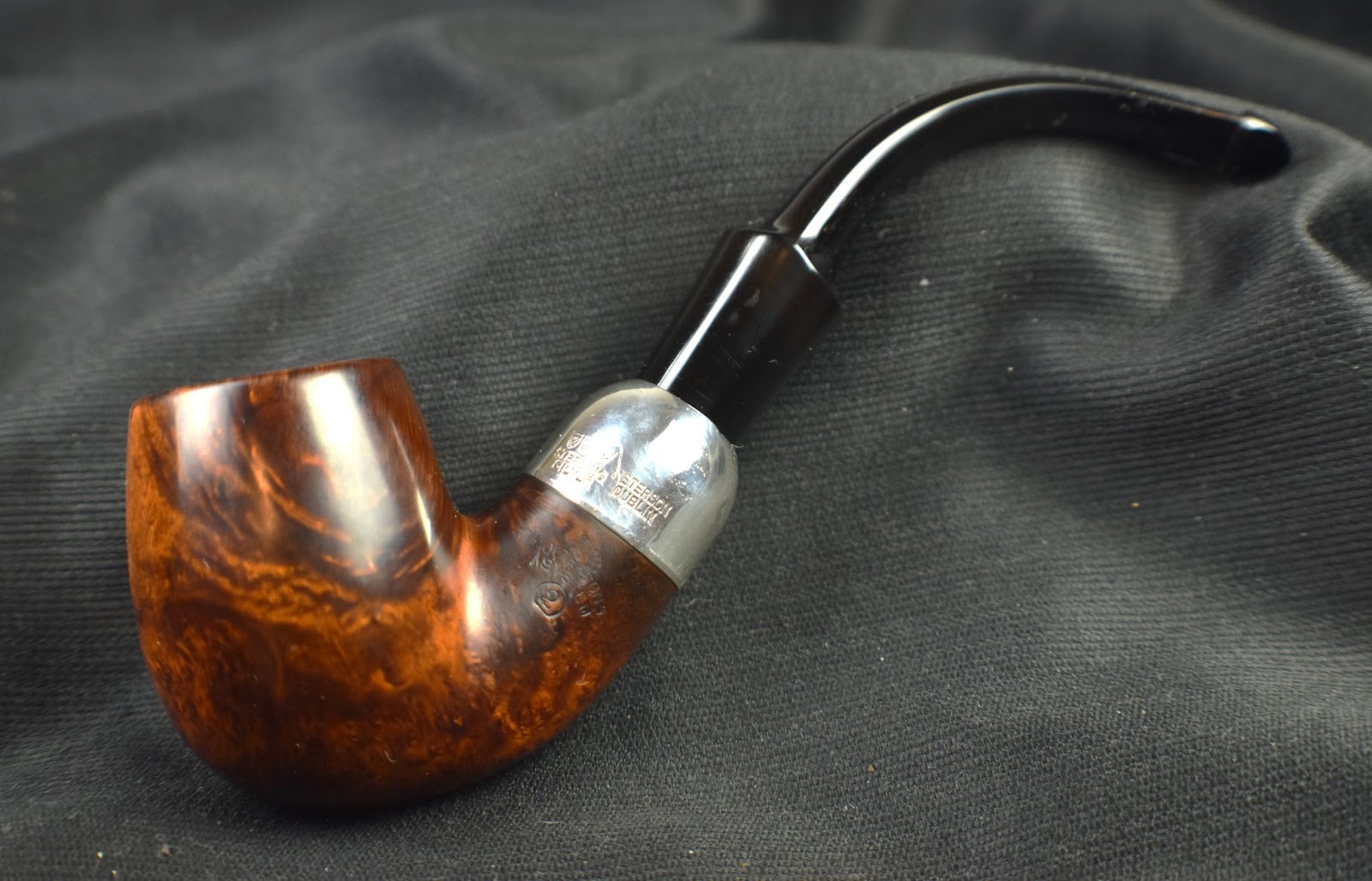
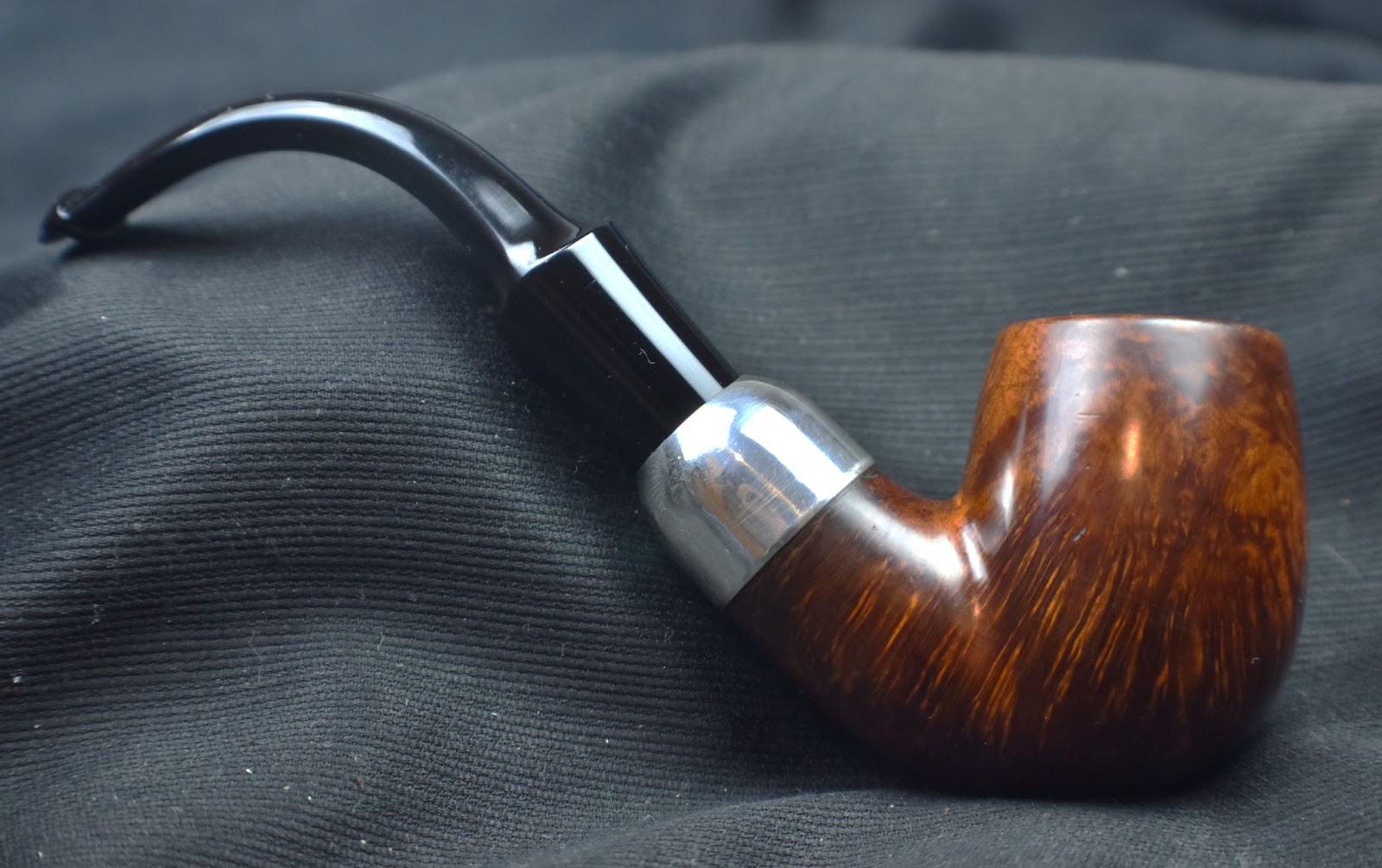
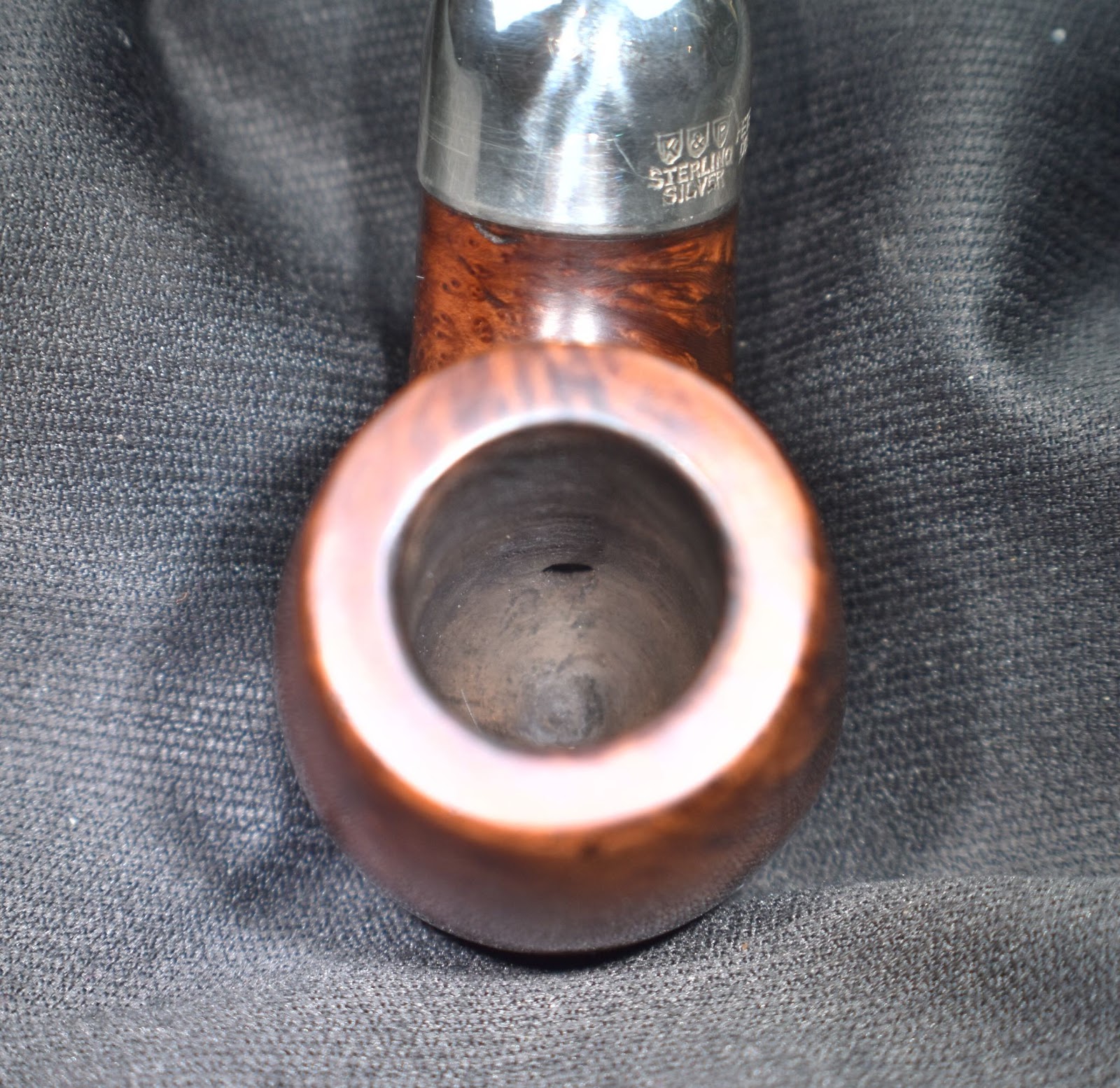
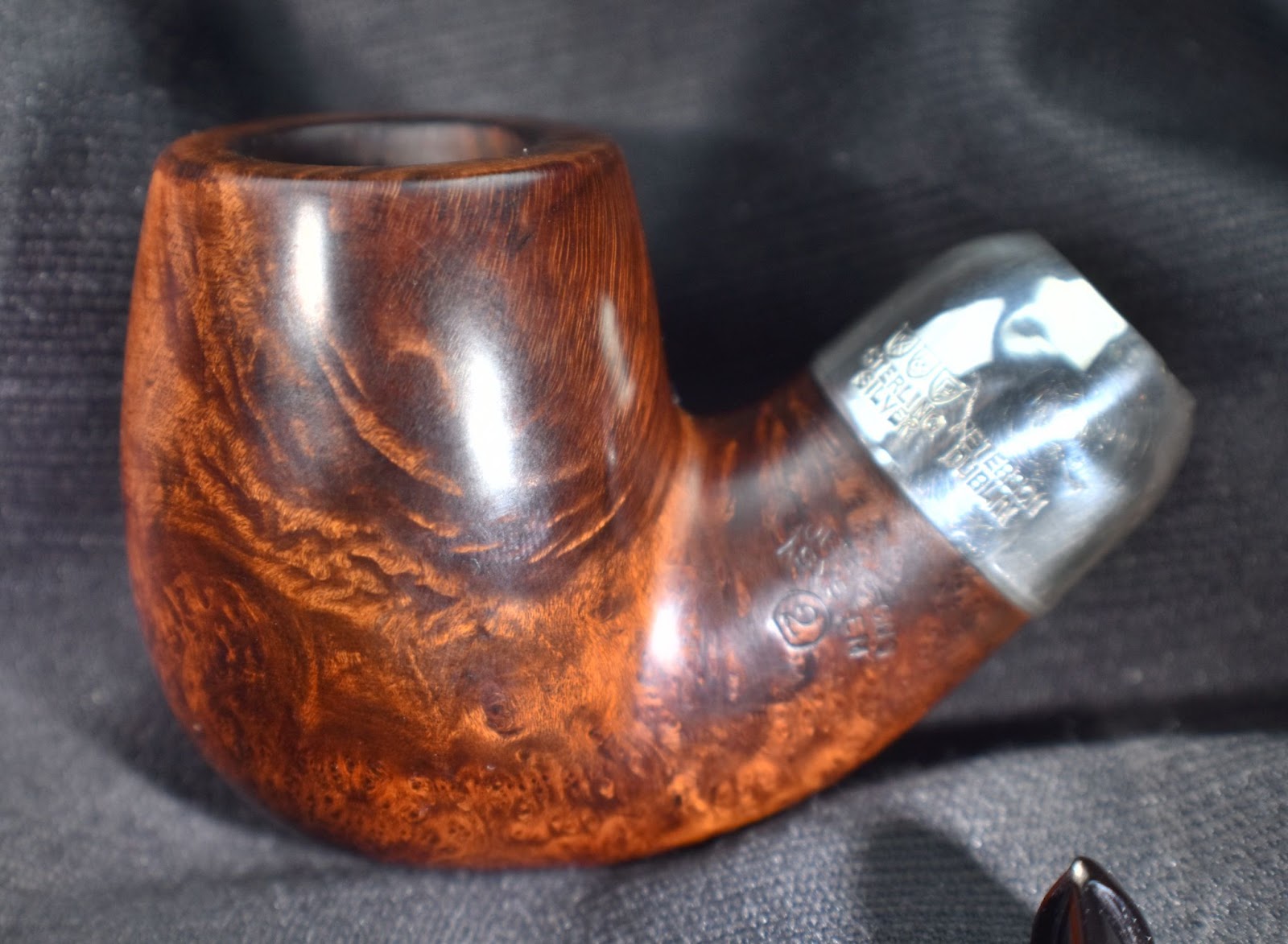
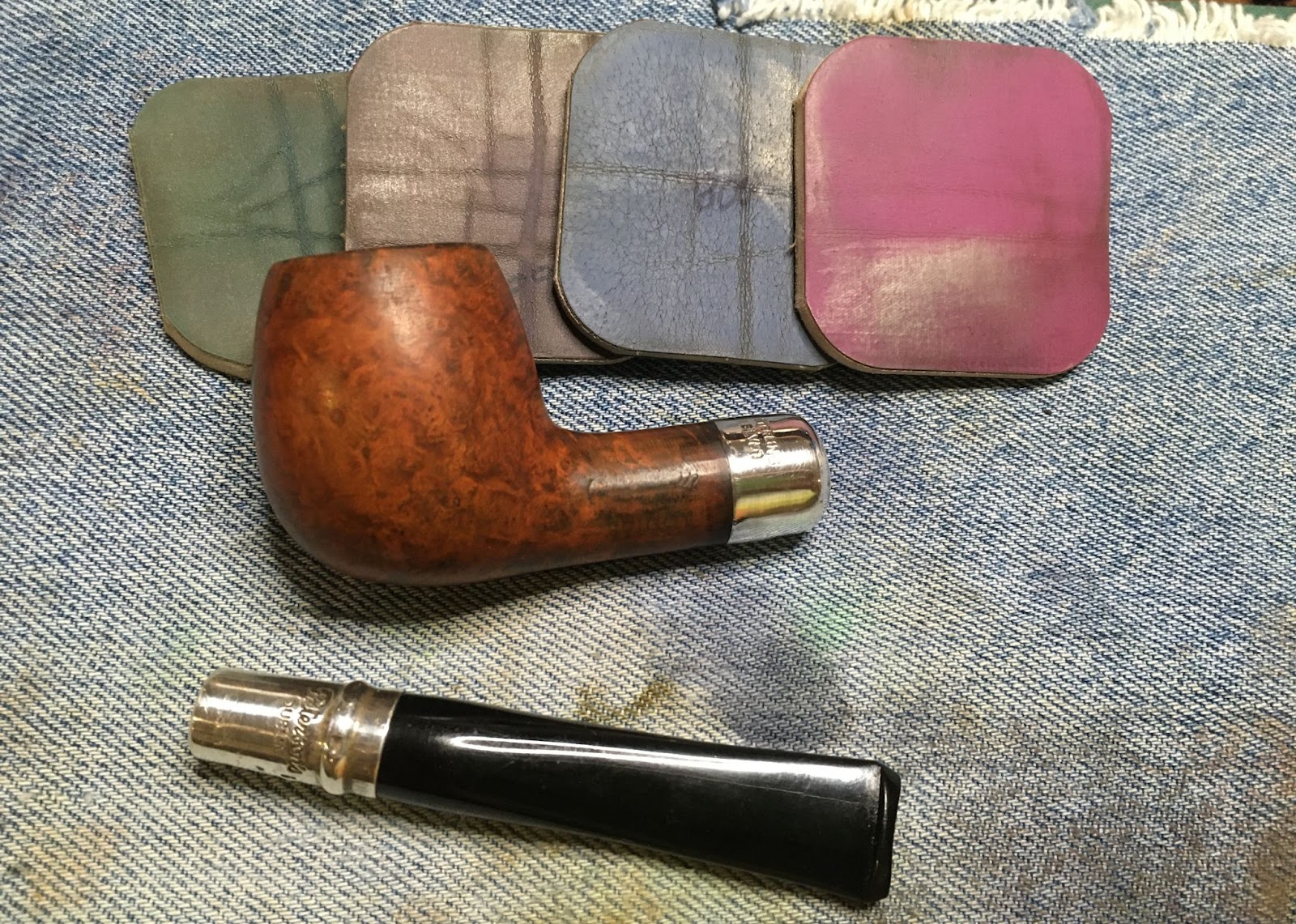
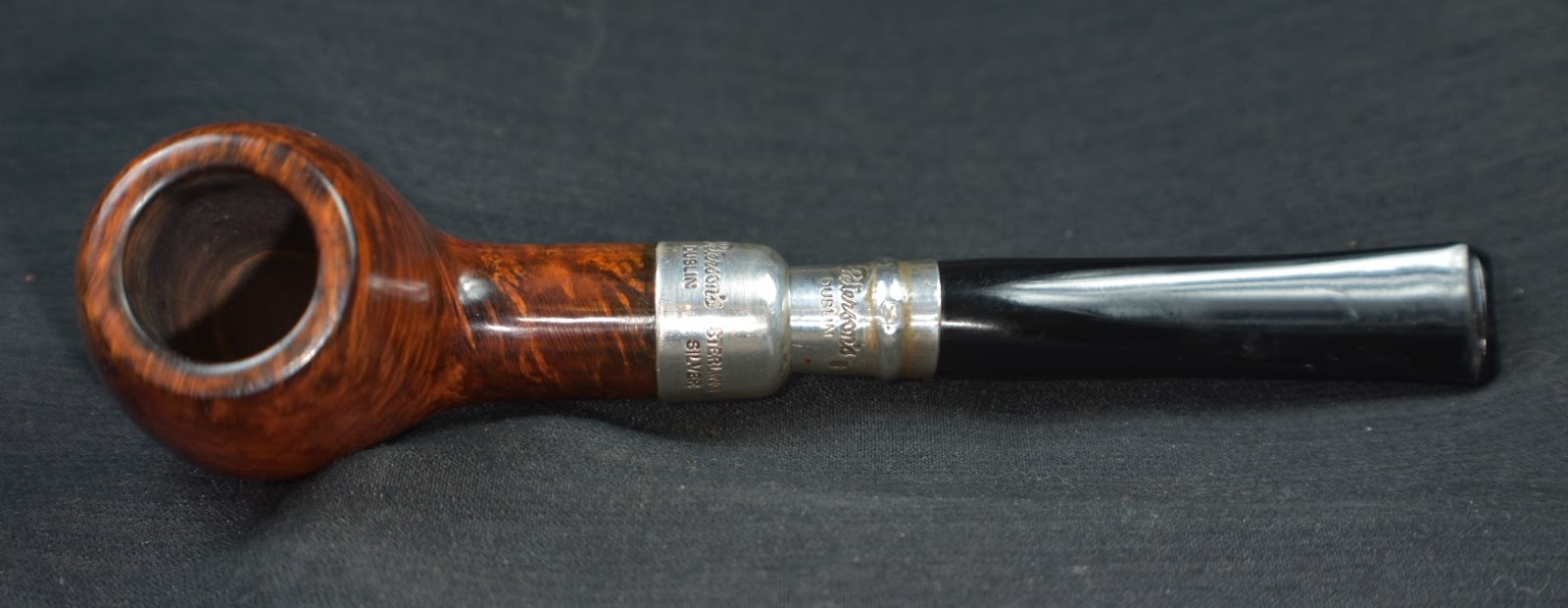
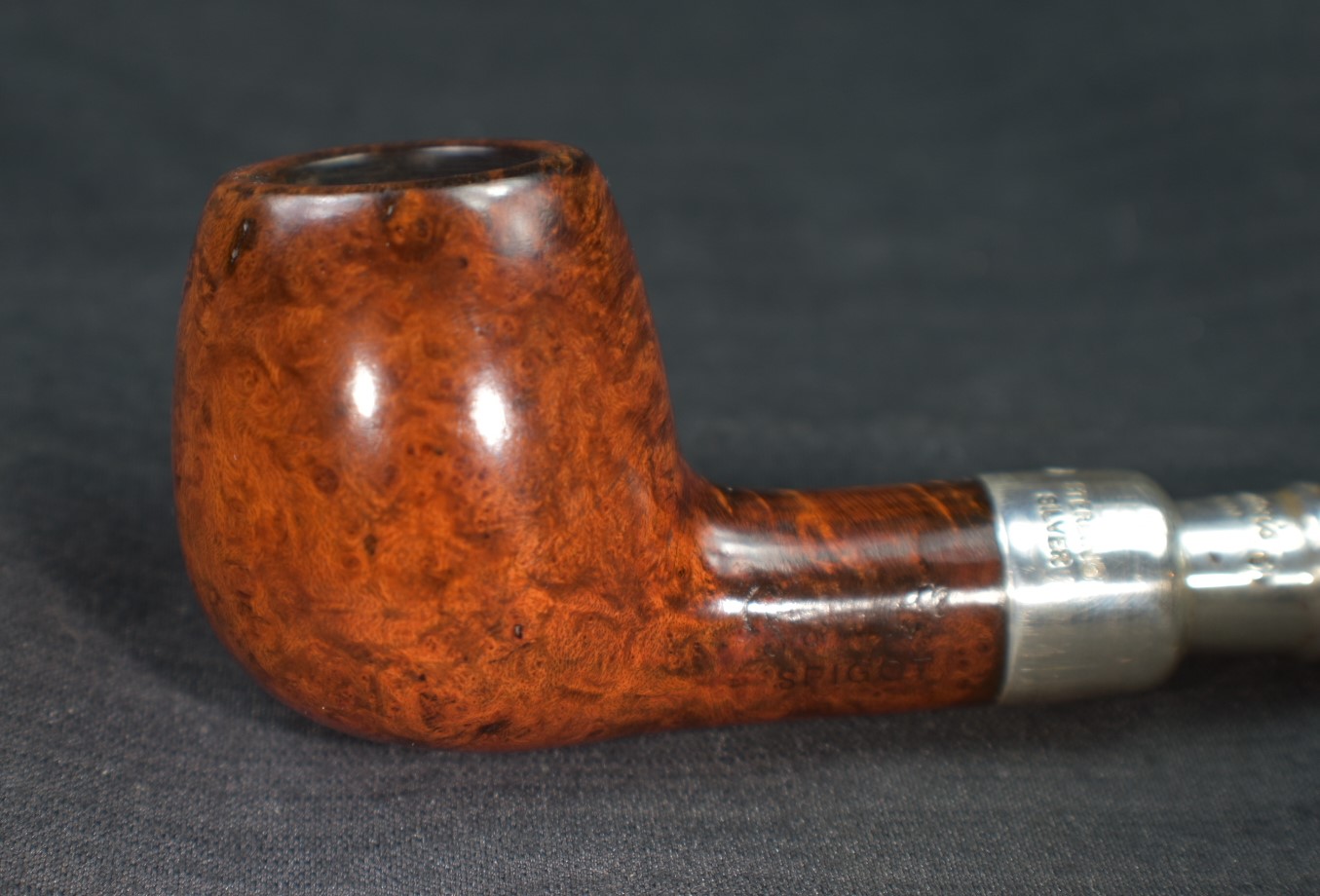
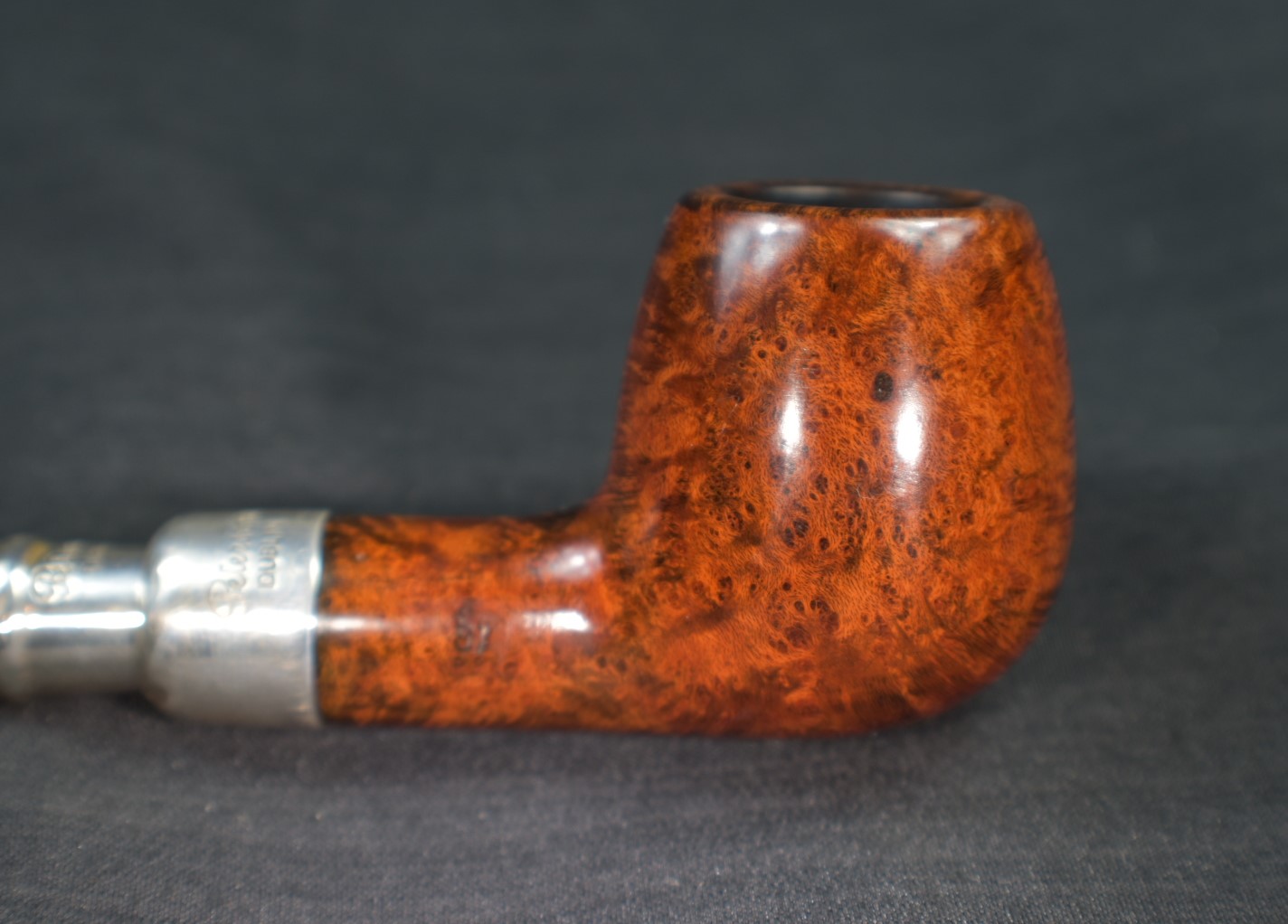
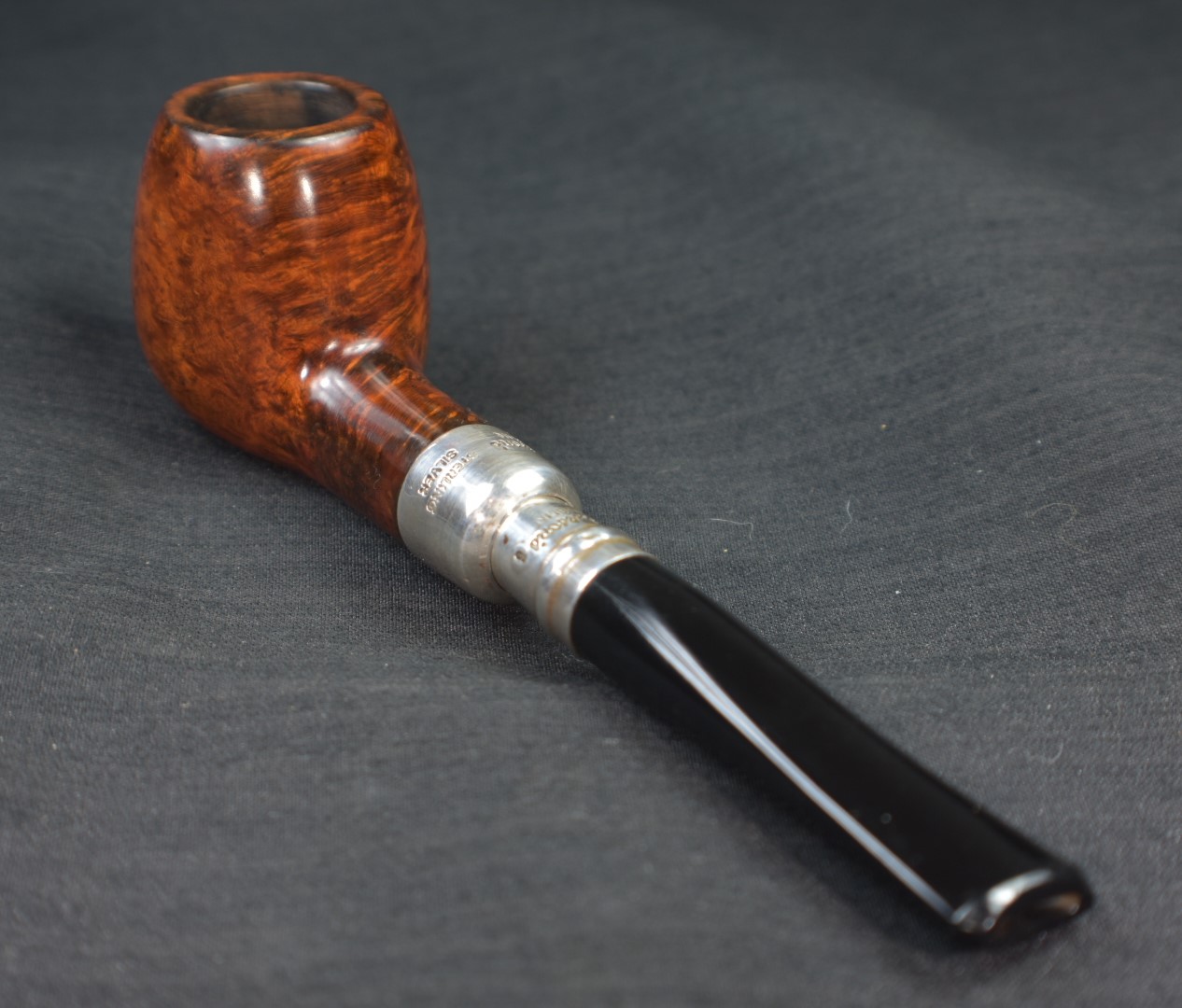
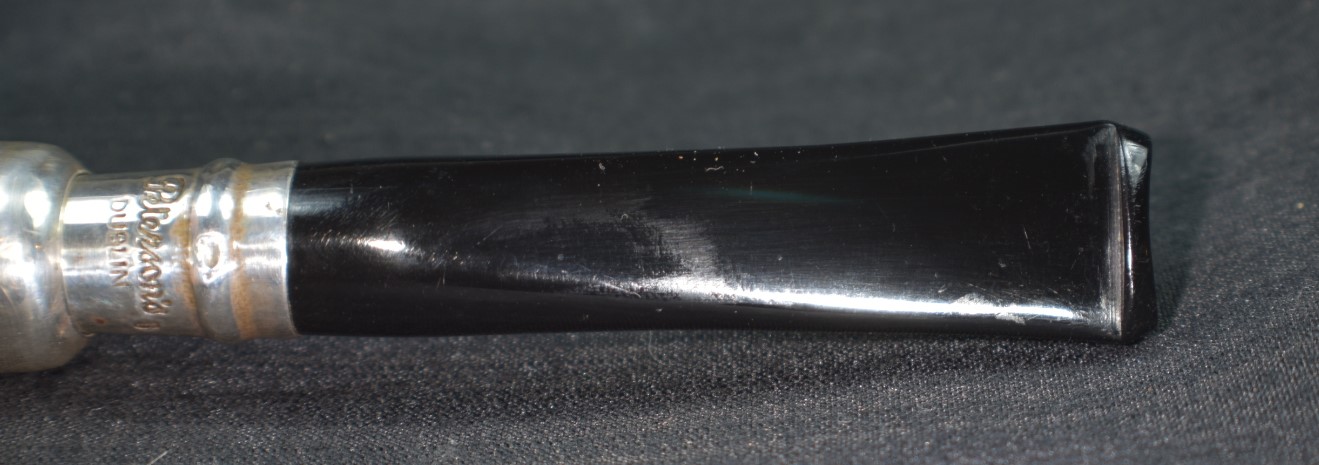
The Peterson De Luxe 417 Straight Dublin For Shannon Airport looks amazingly better than it did originally. I was finally happy with how the rim repair went. The oxalic acid treatment allowed me to remove nearly all signs of the charring without severely changing the shape of this wonderful old pipe. The briar grain of a Peterson De Luxe is on full display with this pipe. Beautiful bird’s eyes on both sides and lovely cross grain on the front and back. Though the cross grain is not quite centered it remains attractive. The stem was not severely oxidized leading me to believe this pipe was stored in a drawer and out of the light for a long time. The vulcanite polished up very well and the gloss black accentuates the briar grain. The dimensions of the Peterson De Luxe 417 Straight Dublin For Shannon Airport are:
- Length: 6.45 in./ 163.83 mm.
- Weight: 1.11 oz./ 31.47 g.
- Bowl Height: 1.81 in./ 45.97 mm.
- Chamber Depth: 1.54 in./ 39.12 mm.
- Chamber Diameter: 0.72 in./ 18.29 mm.
- Outside Diameter: 1.28 in./ 32.51 mm.
I do hope that you have found something here useful to your own pipe care, maintenance or restorations. If you like this sort of thing, please click the like and subscribe buttons. Thank you for reading the ramblings of an old pipe lover.
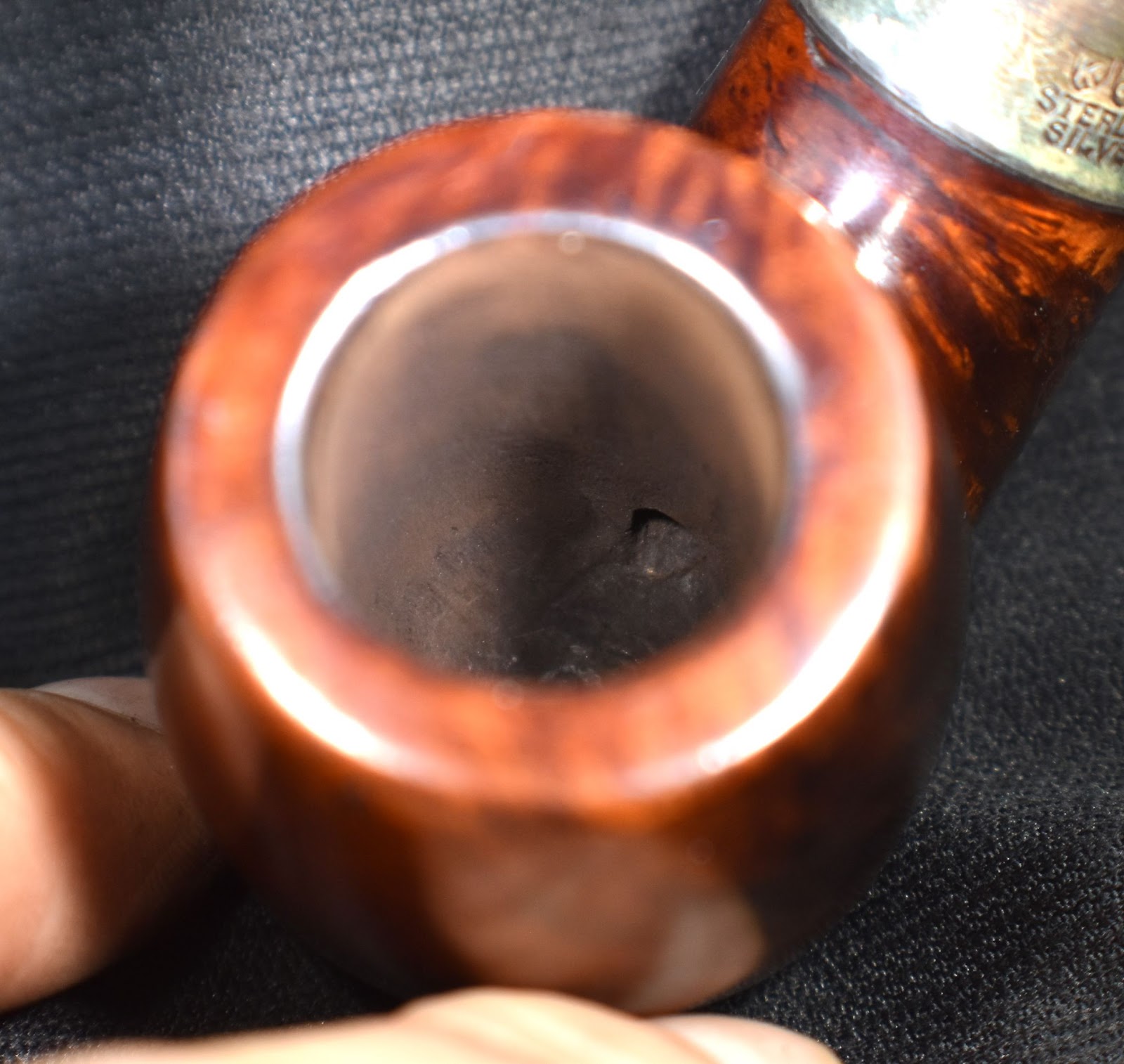
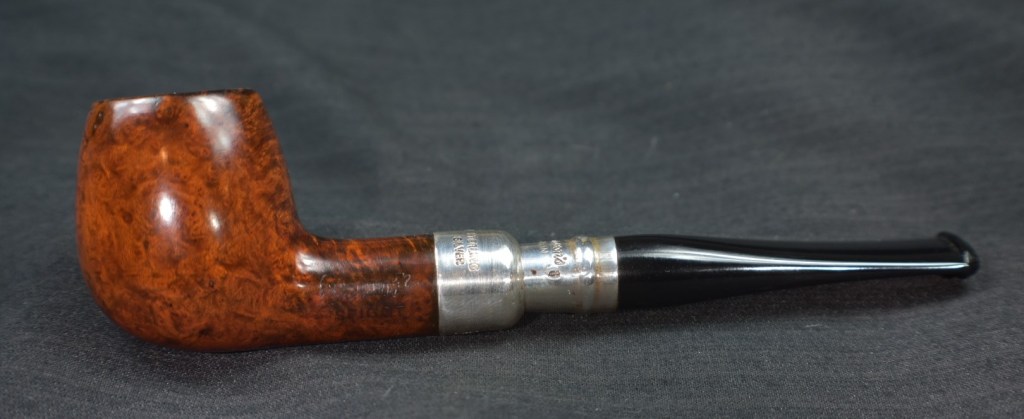
Below are some photos of the completed Peterson De Luxe 417 Straight Dublin For Shannon Airport.




 ” (Mark Irwin, personal email).






















 (
(


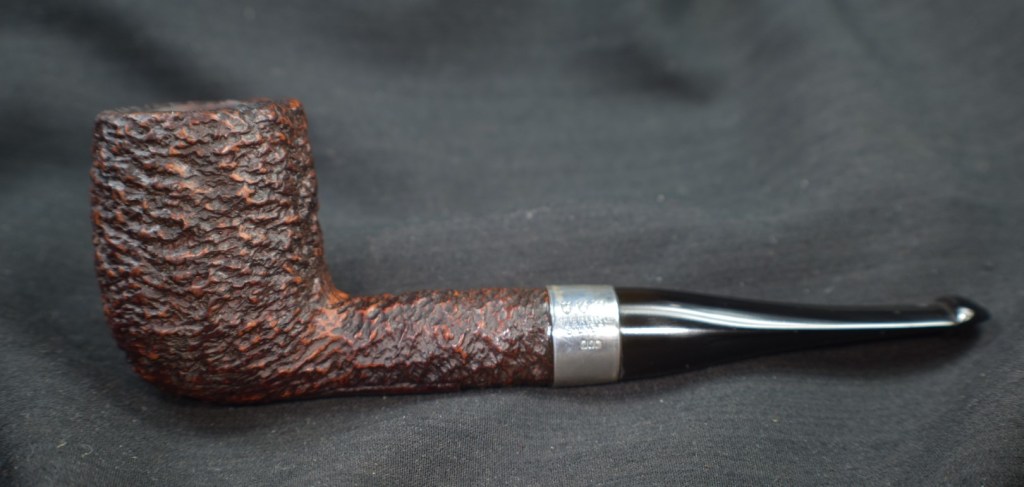


 The “Donegal Rocky” (in quotation marks), released in 1945 or so, was Kapp & Peterson’s first rusticated line. Not that K&P hadn’t rusticated pipes previously, they just that they hadn’t devoted an entire line to rustication. And they were apparently proud of it, because they gave it a sterling mount along with a black finish and white-stamped P on the mouthpiece.
 It was part of K&P’s “Product Line,” what I call gateway pipes and others might call an entry-level pipe, as you can see in this shape chart from the 1945 catalog. Like the Shamrock (European version) and “K,” it was originally a fishtail line.

 It’s worth remarking concerning the removable stinger. This spike-ended aluminum tube is easily removed, leaving the P-Lip mouthpiece strictly a graduated-bore regulation affair.


 Now an argument could be made for either an e, c or o. Respective dates would be 1972, 1970 and 1980. The o would move the pipe closer to the black/brown stain age range of 1981 as mentioned in the Mark Irwin blog above.








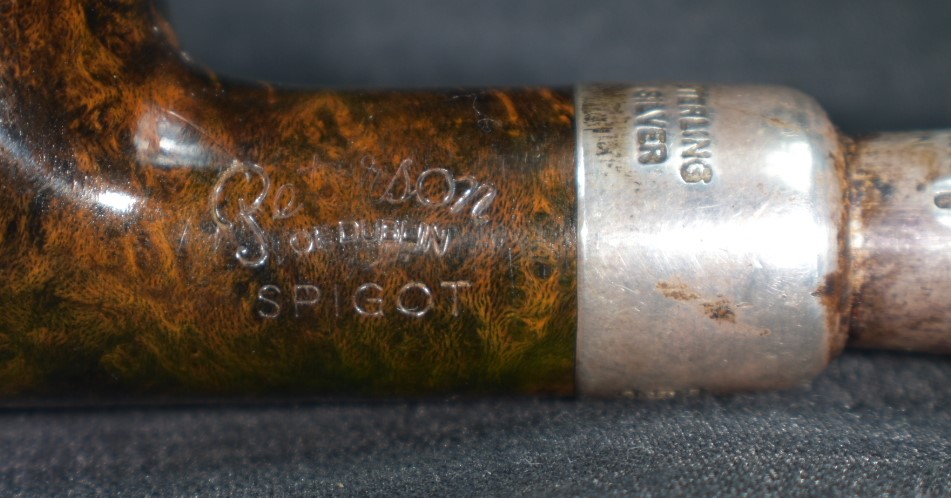
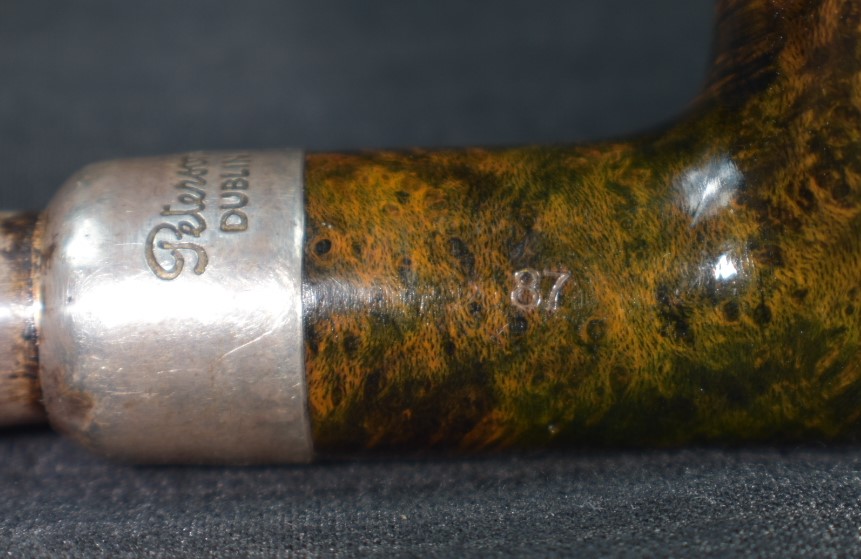
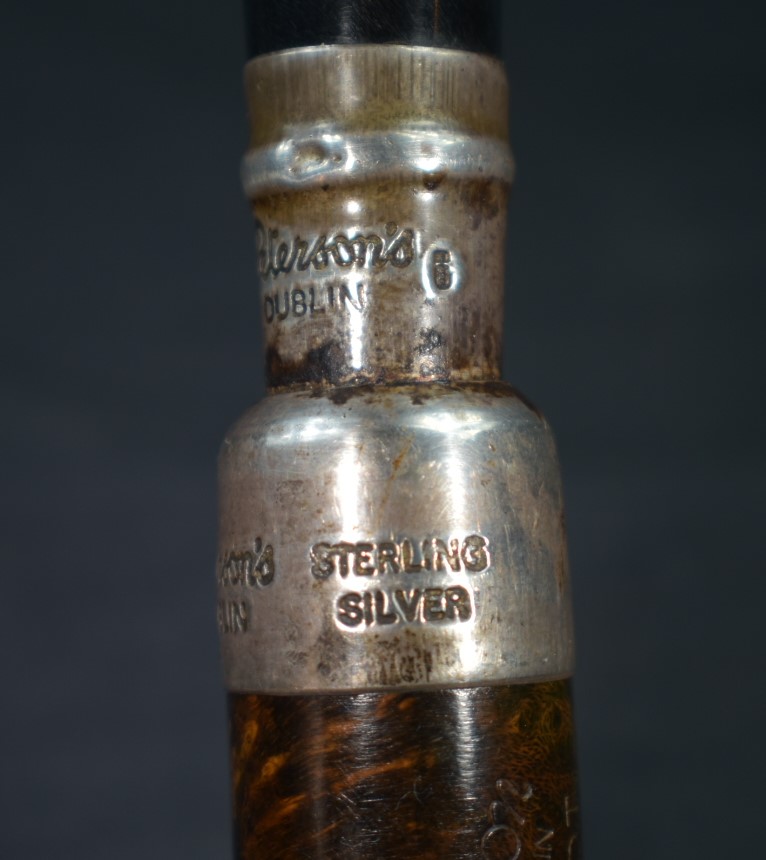


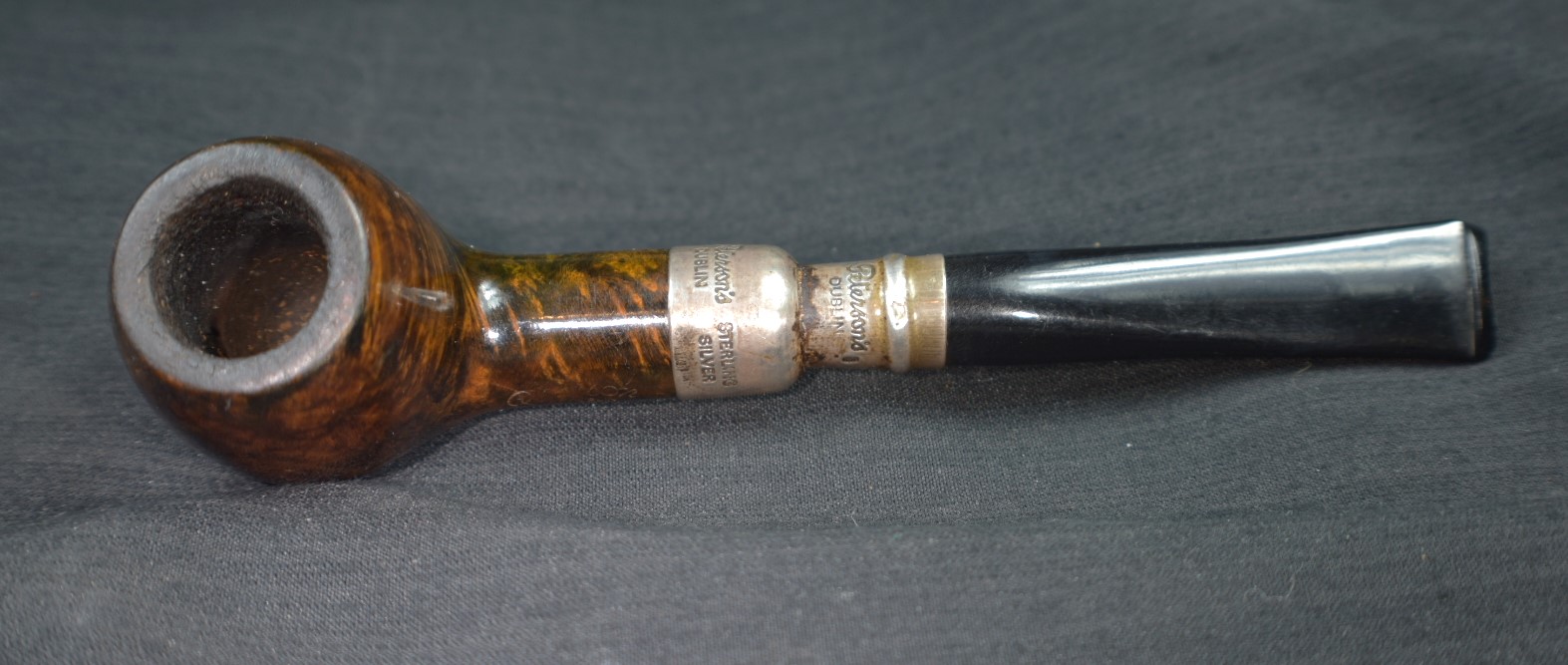






 The image to the left is a screen clip of the PPN-Hallmark-Chart. While the photo below is the hallmark of this pipe.


 (
(


















 NebraskaPeteGeek